Tag: ourweek

  • Democrat Abigal Spanberger Wins Virgnia Gubernatorial Election By A Comfortable Margin

    Democrat Abigal Spanberger Wins Virgnia Gubernatorial Election By A Comfortable Margin

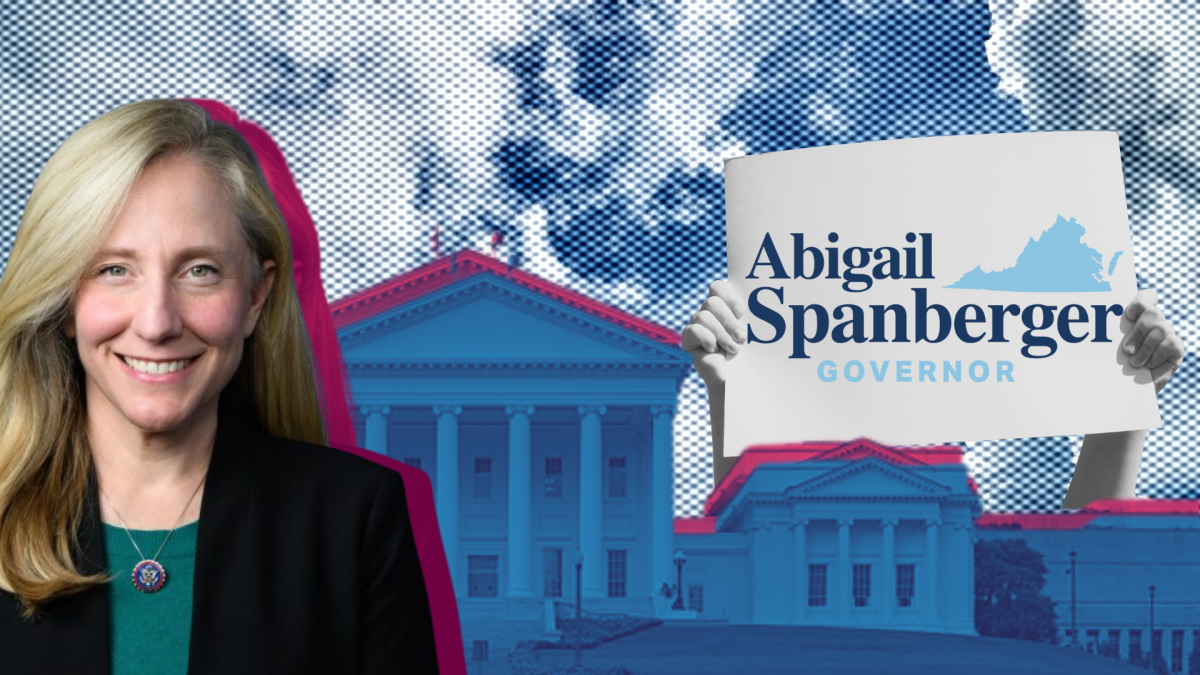
    Democrat Abigail Spanberger won the Virginia Gubernatorial election on November 4, with her victory being called almost immediately after the polls closed. Spanberger’s victory delivered a potent repudiation of President Trump’s policies after a campaign laser-focused on attacking them. The former CIA officer and three-term Congresswoman, who entered politics in the 2018 Democratic wave, defeated her Republican opponent, Lieutenant Governor Winsome Earle-Sears, in a race that drew national attention as an early test of voter sentiment toward the Trump administration. At 46, Spanberger will be Virginia’s first female governor, following a streak of 65 men who have served in that office since Virginia became part of the US in 1788. Spanberger replaces popular outgoing Republican Governor Glenn Youngkin, who won in 2021 with 50.6% of the vote to Democrat Terry McAuliffe’s 48.7% but cannot seek consecutive re-election.

    Governor-elect Abigail Spanberger, a pragmatic centrist who has bucked her party on occasion, voting against Nancy Pelosi for House speaker in 2019 and criticizing President Joe Biden as too progressive in 2021, cultivated a maverick image that helped her outrun a battered Democratic brand. Spanberger’s theme of “affordability” addressed rising costs for housing, utilities, pharmaceuticals and economic uncertainty from Trump’s tariffs and federal layoffs, while she harnessed anger over cuts to the federal workforce that disproportionately hit Virginia, home to around 320,000 federal workers and hundreds of thousands of contractors. On the campaign trail, she argued that federal layoffs, cutbacks by President Donald Trump’s Department of Government Efficiency (DOGE), tariffs and the federal shutdown amounted to an attack on the state’s economy, pitching herself as a way for voters to push back. “We need a governor who will recognize the hardship of this moment, advocate for Virginians, and make clear that not only are we watching people be challenged in their livelihoods and in their businesses and in communities, but Virginia’s economy is under attack,” she said during a late-October bus tour stop. Backed by national Democrats eyeing a 2026 midterm boost, including a campaign appearance by former President Barack Obama and heavy DNC spending, Spanberger raised nearly twice as much money as Winsome Earle-Sears, held double-digit leads in final polls and ran a surgical effort that scared off primary rivals, resisting calls for new ideas in favor of her 2018 playbook of Trump opposition.

    At her jubilant election night watch party, where House Speaker Don Scott shouted, “Y’all ready to witness history tonight?“, Abgail Spanberger struck a bipartisan tone in her victory speech, praising Winsome Earle-Sears and pledging to serve all Virginians in a departure from President Donald Trump’s with-me-or-against-me ethos. She touched on the milestone for their three daughters, recounting her husband’s words: “Your mom is going to be the governor of Virginia—I can guarantee you that those words have never been spoken before.” She took one swipe at the administration, declaring, “Virginia’s economy doesn’t work when Washington treats our Virginia workers as expendable. And to those across the Potomac who are attacking our jobs and our economy, I will not stand by silently.” As Congresswoman Jennifer McClellan put it, “Virginians, they see the impacts of what’s happening in Washington in real time and are looking for state leaders who are going to fill in those gaps and address that harm.”

    Winsome Earle-Sears, a Jamaican immigrant who became a US Marine and small business owner, portrayed herself as the American dream incarnate and pledged allegiance to President Donald Trump despite his meager late endorsement and minimal help for her cash-strapped campaign. She vowed to extend Glenn Youngkin’s business-friendly policies, accused Abigail Spanberger of supporting Biden-era moves and attacked her on transgender rights, claiming they threatened girls’ safety in school bathrooms and locker rooms. “Love is not having my daughter having to be forced to undress in a locker room with a man. That’s not love,” she said at an October rally. “Love is making sure that our girl children have opportunities in sports and are not forced to play against biological males.”

    The race was jolted in its final weeks by the government shutdown, which both sides blamed on the other and shadowed early voting; a Democratic push to redistrict congressional maps for 2026 midterms favoring their candidates amid Trump’s similar efforts elsewhere; and a scandal over text messages from Democratic attorney general candidate Jay Jones, who hypothetically described shooting a Republican lawmaker. Spanberger denounced the messages, but Earle-Sears faulted her for not demanding Jones drop out. Glenn Youngkin prioritized re-electing Republican Attorney General Jason Miyares over bolstering Winsome Earle-Sears, donating only a fraction of his 2023 General Assembly spending to her effort. Despite the uproar, Jones defeated Miyares in the key post, enabling Virginia to join blue-state lawsuits against Trump. Separately, Democrat Ghazala Hashmi won the lieutenant governor race, becoming the first Muslim woman elected to statewide office in America after a low-profile campaign with few appearances and no debate against Republican talk-show host John Reid, though she trailed Spanberger amid her party’s uneven performance elsewhere.
  • OurWeek in Politics (October 28, 2025-November 5, 2025)

    OurWeek in Politics (October 28, 2025-November 5, 2025)

    Here are the main events that occurred in Politics this week:

    1. Mikie Sherrill Wins New Jersey Governor’s Race in Decisive Victory Over Jack Ciattarelli

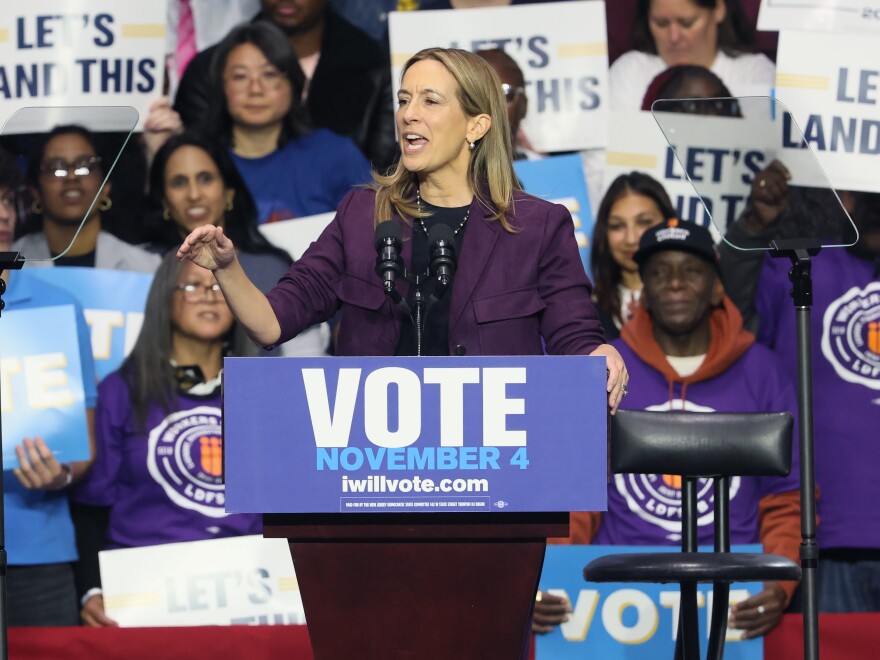
    Congresswoman Mikie Sherrill, the Democratic candidate for governor of New Jersey, catapulted to victory on November 4 on the strength of her opposition to President Donald Trump after a hard-fought race against Jack Ciattarelli, a Republican whose energetic campaign could not outrun national politics in a liberal-leaning state

    Congresswoman Mikie Sherrill, the Democratic candidate for governor of New Jersey, catapulted to victory on November 4 on the strength of her opposition to President Donald Trump after a hard-fought race against Jack Ciattarelli, a Republican whose energetic campaign could not outrun national politics in a liberal-leaning state. Congresswoman Sherrill, a former Navy helicopter pilot and federal prosecutor, will become New Jersey’s 57th governor and its second female leader.

    Read More

    2. Zohran Mamdani Wins New York City Mayoral Election

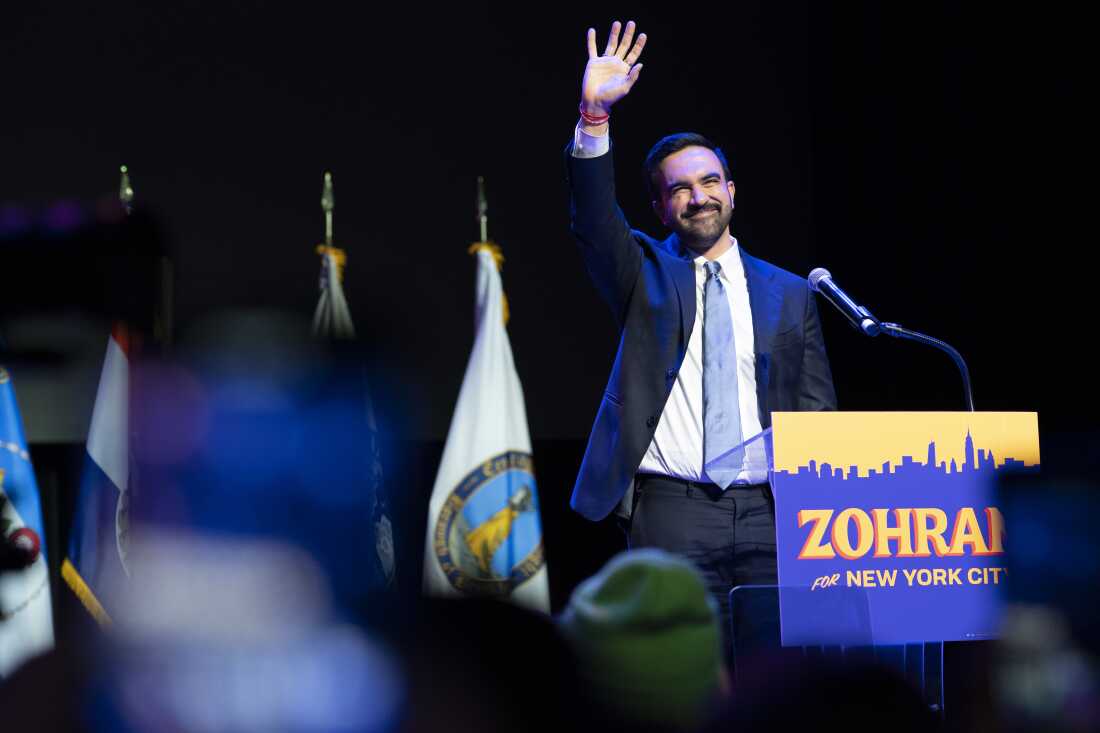
    Zohran Mamdani was elected mayor of New York on November 4, capping a stunning ascent for the 34-year-old, Demcoratic Socialist-aligned state lawmaker who promised to transform city government to restore power to the working class and fight back against a hostile Trump administration.

    Zohran Mamdani was elected mayor of New York on November 4, capping a stunning ascent for the 34-year-old, Democratic Socialist-aligned state lawmaker who promised to transform city government to restore power to the working class and fight back against a hostile Trump administration. In a victory for the Democratic Party’s progressive wing, Mamdani defeated former Governor Andrew Cuomo and Republican Curtis Sliwa. With his commanding win, Mamdani will etch his place in history as the city’s first Muslim mayor, the first of South Asian heritage, and the first born in Africa. He will also become New York’s youngest mayor in more than a century when he takes office on January 1, 2026. “The conventional wisdom would tell you that I am far from the perfect candidate. I am young, despite my best efforts to grow older. I am Muslim. I am a democratic socialist. And most damning of all, I refuse to apologize for any of this,” Mamdani declared to a roaring crowd at his victory party. He cast his win as a boon for blue-collar workers struggling to get by. “New York, tonight you have delivered a mandate for change,” he said, vowing to “wake up each morning with a singular purpose: To make this city better for you than it was the day before.”

    Read More

    3. California Voters Approve Democratic-drawn Congressional Map as National Redistricting Battle Spreads

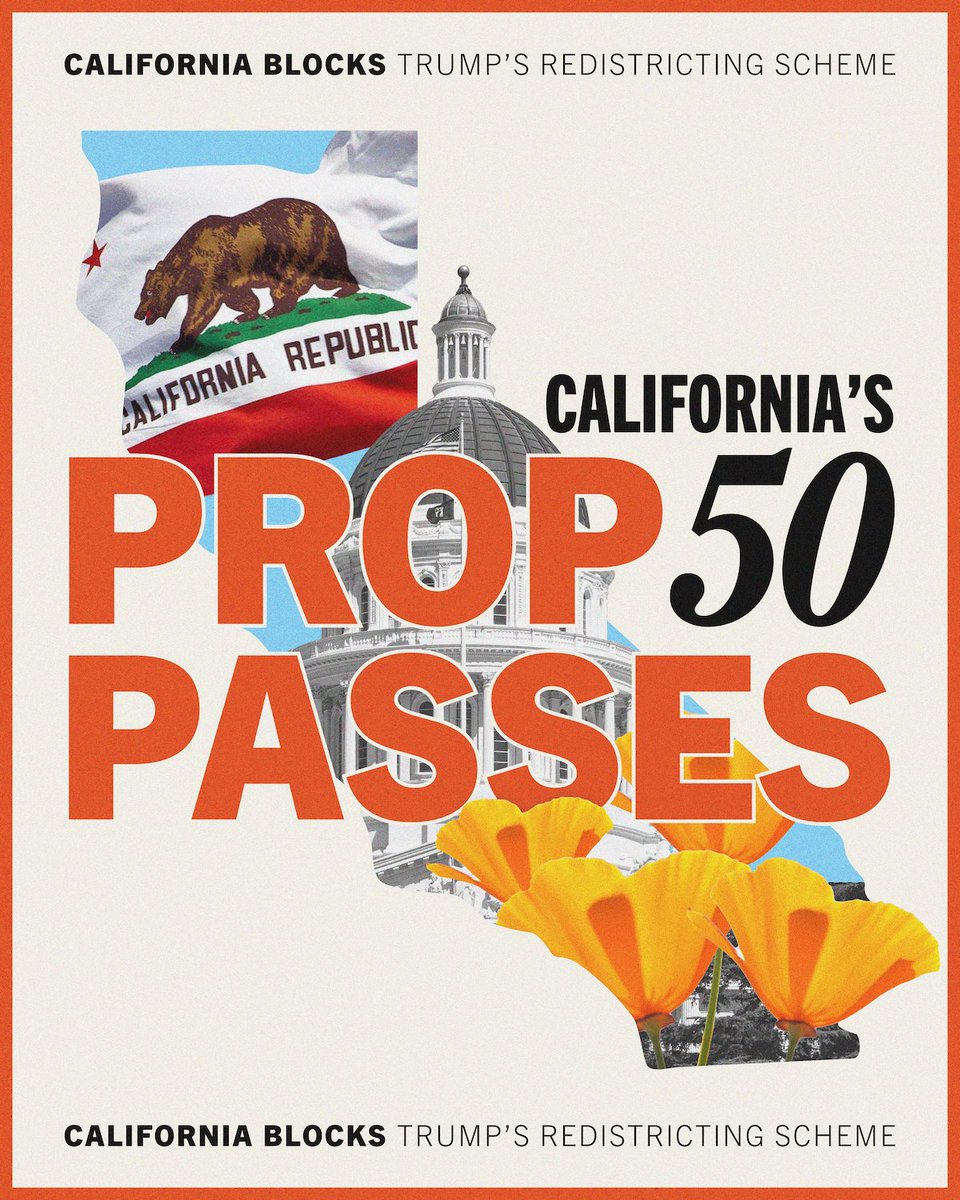
    California voters have approved a new congressional map drawn by state Democrats on November 4. This gives the party the chance to gain up to five House seats in the 2026 midterm elections and counter Republican redistricting efforts in other states

    California voters have approved a new congressional map drawn by state Democrats on November 4. This gives the party the chance to gain up to five House seats in the 2026 midterm elections and counter Republican redistricting efforts in other states. The approval of the ballot measure, known as Proposition 50 or the Election Rigging Response Act, allows California Democrats to temporarily circumvent the independent commission that typically controls the redistricting process and enact a more partisan map. The green light from voters will help Democrats limit, but not eliminate, the political disadvantage they face in the 2026 elections after Republicans in several states, most notably Texas, redrew maps this year to boost their party.

    Read More

    4. Democrat Abigal Spanberger Wins Virgnia Gubernatorial Election By A Comfortable Margin

    Democrat Abigail Spanberger won the Virginia Gubernatorial election on November 4, with her victory being called almost immediately after the polls closed. Spanberger’s victory delivered a potent repudiation of President Trump’s policies after a campaign laser-focused on attacking them.

    Democrat Abigail Spanberger won the Virginia Gubernatorial election on November 4, with her victory being called almost immediately after the polls closed. Spanberger’s victory delivered a potent repudiation of President Trump’s policies after a campaign laser-focused on attacking them. The former CIA officer and three-term Congresswoman, who entered politics in the 2018 Democratic wave, defeated her Republican opponent, Lieutenant Governor Winsome Earle-Sears, in a race that drew national attention as an early test of voter sentiment toward the Trump administration. At 46, Spanberger will be Virginia’s first female governor, following a streak of 65 men who have served in that office since Virginia became part of the US in 1788. Spanberger replaces popular outgoing Republican Governor Glenn Youngkin, who won in 2021 with 50.6% of the vote to Democrat Terry McAuliffe’s 48.7% but cannot seek consecutive re-election.

    Read More

  • California Voters Approve Democratic-drawn Congressional Map as National Redistricting Battle Spreads

    California Voters Approve Democratic-drawn Congressional Map as National Redistricting Battle Spreads

    California voters have approved a new congressional map drawn by state Democrats on November 4. This gives the party the chance to gain up to five House seats in the 2026 midterm elections and counter Republican redistricting efforts in other states. The approval of the ballot measure, known as Proposition 50 or the Election Rigging Response Act, allows California Democrats to temporarily circumvent the independent commission that typically controls the redistricting process and enact a more partisan map. The green light from voters will help Democrats limit, but not eliminate, the political disadvantage they face in the 2026 elections after Republicans in several states, most notably Texas, redrew maps this year to boost their party.

    In Texas, the Republicans hope to gain an additional five House seats under new district lines. Republicans in Missouri and North Carolina have passed maps designed to net the party a new seat in each state. A mandatory redraw in Ohio could also benefit Republicans. President Donald Trump has continued to push Republican-led states like Indiana and Kansas to help shore up the party’s narrow House majority. While some Democratic governors and lawmakers are trying to redraw their maps as well, they face additional legal and procedural hurdles that are present in red states because many of them ceded the power to redistrict in recent years to independent or bipartisan commissions.

    California Governor Gavin Newsom pushed hard for the Democrats’ redistricting plan, accusing Trump and Republicans of “rigging” the midterm elections with their unusual decision to redraw congressional maps for explicit partisan gain outside the regular decennial cycle linked to the census. The flurry of ads blanketing the state in support of the measure underscored that point. “Donald Trump is out of control, imposing illegal tariffs that hurt our economy and denying disaster aid to California families. Now he’s attempting an unprecedented power grab to steal congressional seats and rig the 2026 election. But we can stop him,” a narrator says in one of the major ads from a group supporting a yes vote on Prop 50. “Prop 50, the Election Rigging Response Act, thwarts Trump’s scheme. Prop 50 levels the playing field in the midterms and gives voters the power to check Trump.” There has been almost $100 million in contributions and ad spending in the race, according to campaign finance reports and data from AdImpact, a political ad tracker.

    Declaring victory on November 4, California Governor Gavin Newsom framed the result as part of a strong night for Democrats across the board and a blow to President Donald Trump. “What a night for the Democratic Party, a party that’s in its ascendency, a party that’s on its toes, no longer on its heels. From coast to coast, from sea to shining sea,” Newsom said. “We’re proud here in California to be part of this narrative this evening. We’re proud of the work that the people of California did tonight to send a powerful message to a historic president. Donald Trump is an historic president; he is the most historically unpopular president in modern history.”

    While Republicans began saber-rattling and promised to go toe-to-toe with the Democratic efforts, the energy and spending for the campaign to defeat the ballot initiative fizzled down the stretch. The two sides were in rough parity on spending on the airwaves in the first month after the election was announced, $16 million to $17 million on either side. Then the yes side spent $63 million on ads in the final six weeks, compared with less than $16 million from the no side. The intensity of the no side’s spending waned in the final weeks, but it had prominent backers, including former Governor Arnold Schwarzenegger, a Republican. “California voters established an independent commission led by citizens to stop rigged elections. Prop 50 cancels this historic reform, putting the politicians back in charge,” the narrator says in an ad featuring Schwarzenegger calling on voters to cast no votes to “protect” democracy.

    California already sends 43 Democrats and nine Republicans to Congress, but multiple nonpartisan analyses of the new maps show that the new lines could allow Democrats to flip as many as five seats by making it harder for Republican Congressmen Doug LaMalfa, Darrell Issa, Ken Calvert, Kevin Kiley, and David Valadao to win re-election. The outcome is far from certain, and most of those Republican lawmakers have won tough races before, but redrawing the lines to add more Democratic voters in their districts will make it tough sledding next fall, especially because the party in power typically faces political headwinds in the midterms.

  • Zohran Mamdani Wins New York City Mayoral Election

    Zohran Mamdani Wins New York City Mayoral Election

    Zohran Mamdani was elected mayor of New York on November 4, capping a stunning ascent for the 34-year-old, Democratic Socialist-aligned state lawmaker who promised to transform city government to restore power to the working class and fight back against a hostile Trump administration. In a victory for the Democratic Party’s progressive wing, Mamdani defeated former Governor Andrew Cuomo and Republican Curtis Sliwa. With his commanding win, Mamdani will etch his place in history as the city’s first Muslim mayor, the first of South Asian heritage, and the first born in Africa. He will also become New York’s youngest mayor in more than a century when he takes office on January 1, 2026. “The conventional wisdom would tell you that I am far from the perfect candidate. I am young, despite my best efforts to grow older. I am Muslim. I am a democratic socialist. And most damning of all, I refuse to apologize for any of this,” Mamdani declared to a roaring crowd at his victory party. He cast his win as a boon for blue-collar workers struggling to get by. “New York, tonight you have delivered a mandate for change,” he said, vowing to “wake up each morning with a singular purpose: To make this city better for you than it was the day before.”

    More than 2 million New Yorkers cast ballots in the contest, the largest turnout in a mayoral race since the 1969 Mayoral Election, which pitted incumbent Liberal Republican John Lindsay against Democrat Mario Procaccino and Conservative Party candidate John Marchi. With roughly 90% of the votes counted, Mamdani held an approximately 9 percentage point lead over Andrew Cuomo. His unlikely rise gives credence to Democrats who have urged the party to embrace more progressive candidates instead of rallying behind centrists in hopes of winning back swing voters who have abandoned the party. He has already faced scrutiny from national Republicans, including President Donald Trump, who have eagerly cast him as a threat and the face the Democratic Party. Trump has repeatedly threatened to cut federal funding to the city and even take it over if Mamdani won.

    Zohran Mamdani’s grassroots campaign centered on affordability, and his charisma spoiled former Governor Andrew Cuomo’s attempted political comeback. The former governor, who resigned four years ago following allegations of sexual harassment that he continues to deny, was dogged by his past throughout the race and was criticized for running a negative campaign. Mamdani will also have to deal with President Donald Trump, who not only threatened retribution against the city but also suggested he might try to arrest and deport Mamdani if he won. Mamdani was born in Uganda, where he spent his early childhood, but was raised in New York City and became a US citizen in 2018. In his speech, Mamdani addressed Trump head on. “New York will remain a city of immigrants, a city built by immigrants, powered by immigrants and as of tonight, led by an immigrant,” he said, adding that, “If anyone can show a nation betrayed by Donald Trump how to defeat him, it is the city that gave rise to him.” President Trump appeared to acknowledge Mamdani’s challenges, posting “…AND SO IT BEGINS!” on his Truth Social site.

    Zohran Mamdani began his campaign as a relatively obscure state lawmaker, little known even within New York City. Going into the Democratic primary, Andrew Cuomo was the presumed favorite, with near-universal name recognition and deep political connections. Cuomo’s chances were buoyed further when incumbent Mayor Eric Adams bowed out of the primary while dealing with the fallout of his now-dismissed federal corruption case. But as the race progressed, Mamdani’s natural charm, catchy social media videos, and populist economic platform energized voters in the notoriously expensive city. He also began drawing outside attention as his name recognition grew. Mamdani trounced Cuomo in the primary by about 13 points.

    Andrew Cuomo then relaunched his campaign as an independent candidate for the general election, vowing to hit the streets with a more energetic approach. However, much of his campaign continued to focus on attacking opponents. In the race’s final stretch, he claimed Zohran Mamdani’s election would make Jews feel unsafe. Meanwhile, supporters packed Mamdani’s rallies, and he held whimsical events, including a scavenger hunt and a community soccer tournament. Cuomo also juxtaposed his deep experience in government with Mamdani’s less than five years in the state Legislature. But the former governor also faced his own political baggage, as his opponents dredged up the sexual harassment allegations that led to his resignation, as well as his decisions during the early days of the COVID-19 pandemic.

    Republican nominee Curtis Sliwa, the creator of the Guardian Angels crime patrol group, also had his moments, mostly in the form of funny quips on the debate stage, but had difficulty gaining traction as a Republican in an overwhelmingly Democratic city. He conceded the race about a half hour after the polls closed, wishing Zohran Mamdani “good luck because if he does well, we do well.” But he also issued a warning: “If you try to implement socialism, if you try to render our police weak and impotent, if you forsake the people’s public safety, we will become the mayor-elect and his supporters’ worst enemies.”

  • Mikie Sherrill Wins New Jersey Governor’s Race in Decisive Victory Over Jack Ciattarelli

    Mikie Sherrill Wins New Jersey Governor’s Race in Decisive Victory Over Jack Ciattarelli

    Congresswoman Mikie Sherrill, the Democratic candidate for governor of New Jersey, catapulted to victory on November 4 on the strength of her opposition to President Dona;d Trump after a hard-fought race against Jack Ciattarelli, a Republican whose energetic campaign could not outrun national politics in a liberal-leaning state. Congresswoman Sherrill, a former Navy helicopter pilot and federal prosecutor, will become New Jersey’s 57th governor and its second female leader. She was leading Ciattarelli, a former state lawmaker running his third race for governor, by a resounding 13 points with more than 95 percent of the vote counted, according to a tally by The Associated Press.

    “Good government doesn’t just manage problems, it solves them,” Governor-elect Mikie Sherrill told supporters gathered in East Brunswick for a victory party. “I know not everyone voted for me,” she added, “but I’m working for everyone — every single one of you.” She said Jack Ciattarelli called her soon after the results were announced, and she recognized him for “stepping up.” Ciattarelli, in a brief concession speech, told his supporters that “life is not always fair.” “Nobody is more disappointed than I am in the result,” he said. “It is my hope that Mikie Sherrill has heard us, in terms of what needs to be done to make New Jersey that place where everybody wants to be to achieve their dreams again.” The race was largely defined by President Donald Trump, who made surprising inroads last November in New Jersey and who had endorsed Jack Ciattarelli. But in a state where Democrats outnumber Republicans by roughly 850,000 voters, the alliance always carried risk.

    Senator Cory Booker predicted that Mike Sherrill’s win would ripple far beyond New Jersey. “The whole nation will see,” said Booker, the state’s senior senator, “that we can’t stop the momentum.” Governor-elect Sherrill will now have to at least coexist with the president, who has shown a willingness to punish his foes. That was an argument President Donald Trump raised in the final weeks of the campaign, in a telephone rally he held for Jack Ciattarelli. “He’s got a friend in the White House,” the President said during the call, “where she certainly doesn’t.”

    Governor-elect Mikie Sherrill has pledged to freeze the state’s high electricity costs by declaring a state of emergency on her first day in office in January. She plans to get cellphones out of classrooms and hire more mental health counselors for schools. Using data gathered through a new “social media addiction observatory,” she has said, her administration will take on digital platforms that use algorithms to lure in children and teenagers.

    In the 2021 campaign, Jack Ciattarelli lost by three points to Governor Phil Murphy, a Democrat barred by term limits from running for re-election. He tried hard during this race to capitalize on the stunning gains President Donald Trump made in Black and Latino communities, campaigning aggressively in churches and at cultural events. Ciattarelli develped a reputation as a moderate Republican during his time on the Somerset County board of Freeholders (2007-2011) and in the New Jersey General Assembly (2012-2018), and until this campaign he had kept President Trump at arm’s length. But after the president’s stronger-than-expected showing last year in some of New Jersey’s most diverse communities, Ciattarelli pivoted, embracing the president and some of his policies, even giving Trump an “A” grade in the final debate.

    Jack Ciattarelli’a platform was focused heavily on pocketbook issues like taxes and energy costs. But Ciattarelli also leaned into issues popular with the far-right flank of the party, including publicly funded school vouchers, opposition to transgender rights, vaccine skepticism and the deportation of migrants. On the stump and in ads, Mikie Sherrill’s campaign regularly reminded voters of Ciattarelli’s cozy relationship with President Donald Trump. Then, last month, President Donald Trump said he was terminating funding for the construction of a $16 billion train tunnel considered vital to the country and to New Jersey’s 200,000 commuters, handing the Sherrill campaign an unexpected gift. “With less than 19 days until this election, the president’s punched him in the face like this. That’s pretty telling,” Sherrill said the next day, highlighting the ephemeral value of Ciattarelli’s partnership with a mercurial president. It also gave her a way to change the subject from a controversy centered on why she had been barred from participating in her 1994 graduation ceremony at the US Naval Academy. She has said that she could not participate because she had failed to “turn in” classmates caught up in a cheating scandal. But polls began to narrow as Ciattarelli publicly challenged that explanation and sought to undermine her credibility, denting a central pillar of her campaign: that nine years in the Navy had prepared her to lead the state.

    Polls proved largely inaccurate. Most showed Mikie Sherrill leading throughout the race, but few had her winning by a double-digit margin. Only New Jersey and Virginia hold races for governor the year after a presidential contest, and the results are considered bellwethers heading into next year’s pivotal midterm elections, which will determine party control of Congress. In Virginia, former Congresswoman Abigail Spanberger beat her Republican opponent, Lt. Governor Winsome Earle-Sears, by 15 points; Spanberger will be the first woman to serve as governor of the state.

    Ken Martin, the chairman of the Democratic National Committee who came to New Jersey repeatedly during the campaign, said victories in both states represent “the beginning of our Democratic resurgence” and proved that voters are “tired of watching the G.O.P. turn our beloved country into a playground for billionaires.” “Tonight isn’t only a warning sign to Republicans,” he said in a statement, “it’s an affirmation of the vision that Democrats have presented to voters in New Jersey and across the country.”

    New Jersey’s race was always seen as far more competitive. And Mikie Sherrill’s campaign had become a cause célèbre for Democrat-aligned national groups, which committed roughly $25 million to help her win. An array of prominent Democratic leaders also traveled to New Jersey to campaign with Sherrill in the final weeks of the race. On November 1, an appearance by former President Barack Obama drew thousands of party faithful to a large gymnasium at a community college in Newark. He energized the crowd by warning, as Sherrill has, about the threat posed by President Donald Trump. “We’ve got a commander in chief who has fired decorated military officers because he thinks they might be more loyal to the Constitution than they are to him,” Obama said. “He’s deployed the National Guard in American cities and claimed to be stopping crime waves that don’t actually exist,” he added. “We’ve got masked ICE agents pulling up in unmarked vans and grabbing people off the streets.” “Don’t boo,” Obama said repeatedly as the crowd roared. “Go vote.”

    More than 3.1 million New Jersey voters cast ballots, 500,000 more than in 2021. Jack Ciattarelli’s level of support this year actually exceeded his performance in 2021 by more than 100,000 votes, but he still fell short as far more voters beat a path to the polls. “I’m not retiring to Florida. We fight for another day,” Ciattarelli said to loud cheers. “You’ll find me right here on the streets of Central Jersey, or maybe at one of my favorite places on the beach in Surf City.”

    The contest was the most competitive race for governor of New Jersey since 2009, when Chris Christie, a Republican, unseated the incumbent governor, Jon Corzine, a wealthy Democrat. It was also extraordinarily expensive. Mikie Sherrill and Jack Ciattarelli won their party’s nominations after spirited primaries. The state’s Election Law Enforcement Commission reported last week that spending by the two candidates and groups supporting their candidacies had already exceeded $82 million. In winning, Sherrill bucked a six-decade historical trend. Not since 1961 had either party held onto the governor’s office for three consecutive terms.

  • Federal Judge Blocks Trump Administration’s National Guard Deployments to Portland

    Federal Judge Blocks Trump Administration’s National Guard Deployments to Portland

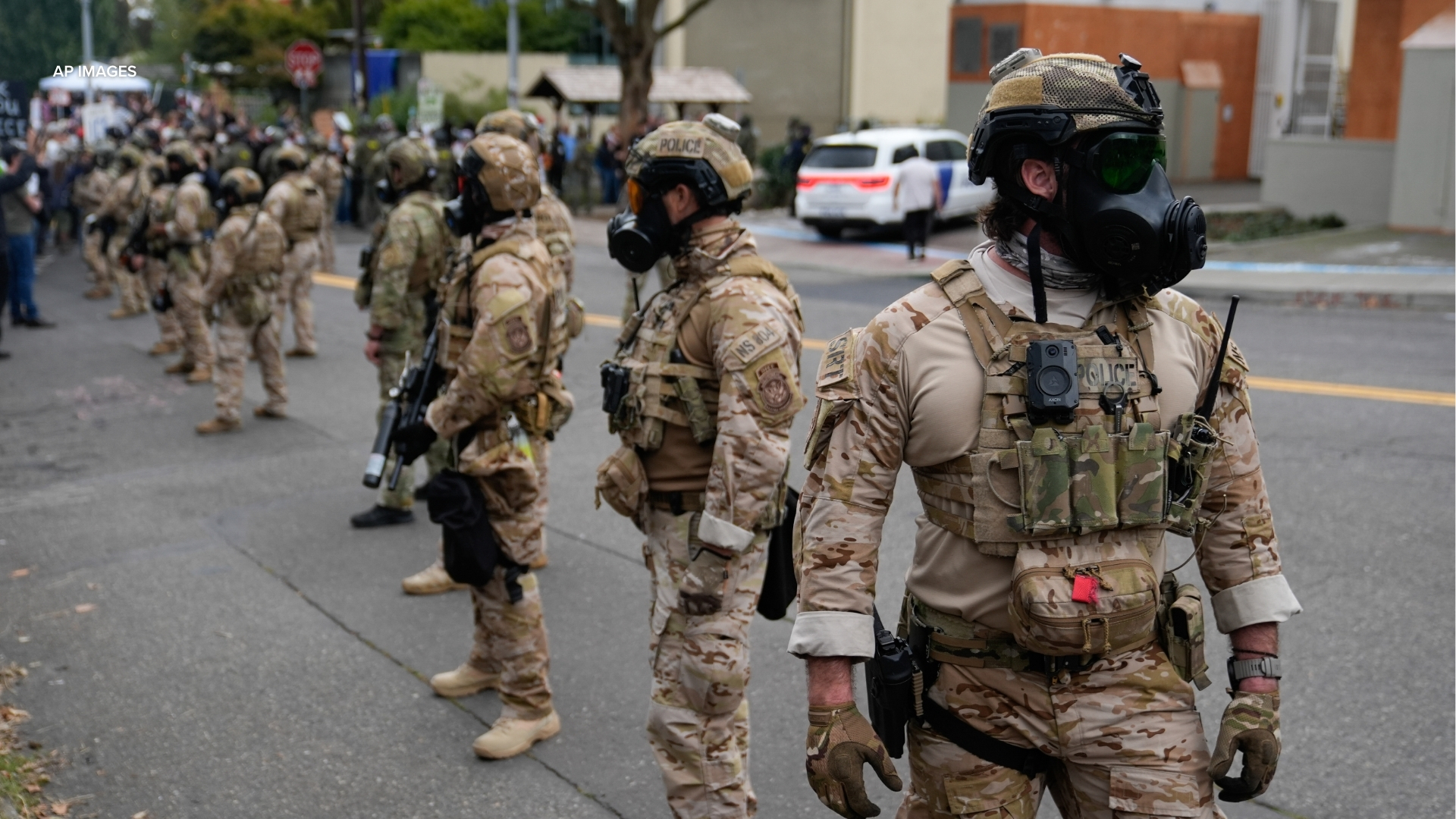
    A federal judge in Oregon has halted the Trump administration’s efforts to deploy federalized National Guard members from California and other states to Portland, Oregon. In a rare late Sunday night virtual hearing on October 5, 2025, US District Judge Karin Immergut, a Trump appointee, granted a temporary restraining order requested by the state of California to prevent the deployment of up to 300 California National Guard members to Portland. This ruling followed Immergut’s decision the previous day to block President Donald Trump’s attempt to deploy Oregon National Guard troops in the city.

    California Governor Gavin Newsom announced plans to sue the Trump administration after it deployed federalized National Guard troops—called into service by the president—to Oregon. In a statement, Newsom condemned the move, saying, “This is a breathtaking abuse of the law and power. The Trump Administration is unapologetically attacking the rule of law itself and putting into action their dangerous words—ignoring court orders and treating judges, even those appointed by the President himself, as political opponents.”

    California Attorney General Rob Bonta praised Immergut’s ruling, suggesting the administration’s attempt to deploy California troops was a direct response to the judge’s earlier order blocking the federalization of Oregon’s National Guard. “The Trump Administration’s flagrant disregard for the courts was on full display when it sought to circumvent Judge Immergut’s order by redeploying troops from Los Angeles to Portland,” Bonta said. “This disrespect for the rule of law cannot stand—and I’m glad the court agreed.”

    Oregon Governor Tina Kotek, a Democrat, confirmed that some California National Guard troops arrived in Oregon on the night of October 4, with more expected on OCtober 6. She strongly opposed the deployment, stating, “The facts haven’t changed. There is no need for military intervention in Oregon. There is no insurrection in Portland. No threat to national security. Oregon is our home, not a military target. Oregonians exercising their freedom of speech against unlawful actions by the Trump Administration should do so peacefully.”

    In an op-ed published Sunday in The Oregonian, Portland Police Chief Bob Day addressed the situation, noting that “national portrayals” of Portland overstated the city’s issues. “There is no ignoring that we are facing an extraordinary time in our city’s history, with the deployment of both federal law enforcement and the Oregon National Guard,” Day wrote. He emphasized that Portland police employ a “layered approach” to managing public order, avoiding tactics like tactical gear lineups that could escalate crowd behavior.

    On the same day, Defense Secretary Pete Hegseth announced in a memo that up to 400 Texas National Guard members would be federalized for deployment to Chicago and Portland for up to 60 days, with the possibility of an extension. The memo, included in a court filing by the Oregon attorney general’s office, cited President Trump’s determination on October 4, 2025, that “violent incidents, as well as the credible threat of continued violence,” were impeding federal law enforcement in Illinois, Oregon, and other locations.

    Texas Governor Greg Abbott, a Republican, supported the deployment, stating on X, “I fully authorized the President to call up 400 members of the Texas National Guard to ensure safety for federal officials. You can either fully enforce protection for federal employees or get out of the way and let Texas Guard do it. No Guard can match the training, skill, and expertise of the Texas National Guard.”

    Illinois Governor JB Pritzker, a Democrat, condemned the move, calling it “Trump’s Invasion.” He noted that no federal officials had coordinated with him regarding the deployment and criticized the involvement of another state’s military. “It started with federal agents, it will soon include deploying federalized members of the Illinois National Guard against our wishes, and it will now involve sending in another state’s military troops,” Pritzker said. Both Pritzker and Kotek urged Abbott to withdraw his support for the deployment.

    The White House defended the deployment, with spokesperson Abigail Jackson stating, “President Trump exercised his lawful authority to protect federal assets and personnel in Portland following violent riots and attacks on law enforcement.” Pentagon spokesman Sean Parnell added that California National Guard members were reassigned from Los Angeles to Portland “to support U.S. Immigration and Customs Enforcement and other federal personnel performing official duties, including the enforcement of federal law, and to protect federal property.”

    In response to Immergut’s ruling blocking the activation of 200 Oregon National Guard troops until at least October 18, the Trump administration filed a motion with the 9th US Circuit Court of Appeals, arguing that the judge “impermissibly second-guessed” Trump’s military judgments. The motion cited a nearly 200-year-old Supreme Court precedent, asserting that such decisions are the president’s prerogative, not that of a governor or federal court.

    Judge Immergut’s rulings underscored a “longstanding and foundational tradition of resistance to government overreach, especially in the form of military intrusion into civil affairs.” Oregon’s Governor Kotek reiterated, “There is no insurrection in Portland. No threat to national security. No fires, no bombs, no fatalities due to civil unrest. The only threat we face is to our democracy—and it is being led by President Donald Trump.”

    The controversy extends beyond Portland. Last month, a federal judge in Los Angeles ruled that the deployment of National Guard troops and Marines was illegal, and officials in Washington, D.C., also sued to block similar deployments. Trump has threatened to deploy troops and federal law enforcement to other cities, including Baltimore and New Orleans, escalating tensions with Democratic governors and mayors.

    Pritzker, in a CNN interview on Sunday, criticized the federal presence in Chicago, stating, “They are the ones that are making it a war zone. They need to get out of Chicago if they’re not going to focus on the worst of the worst, which is what the president said they were going to do.” He and other Democratic leaders have also condemned Trump’s suggestion to senior military officials that “dangerous cities” be used as “training grounds” for the National Guard.

    The deployment of federalized National Guard troops has sparked widespread debate about the balance between federal authority and state autonomy, as well as the appropriate use of military forces in domestic civil matters. As legal battles continue, the situation remains a flashpoint in the ongoing clash between the Trump administration and Democratic state leaders.

  • Trump Administration Cuts Nearly $8 Billion in Clean Energy Projects  in States that Voted for Kamala Harris

    Trump Administration Cuts Nearly $8 Billion in Clean Energy Projects in States that Voted for Kamala Harris

    The Trump administration on October 2 terminated $7.6 billion in grants funding 223 clean energy projects across 16 states, all of which supported former Vice President Kamala Harris in the 2024 presidential election. The decision, announced by the Energy Department, follows a review deeming the projects misaligned with national energy needs or economically unviable. The cuts, affecting initiatives like battery plants, hydrogen technology, electric grid upgrades, and carbon-capture efforts, have sparked accusations of political retaliation amid an ongoing government shutdown.

    The Energy Department’s review targeted funding from the Office of Clean Energy Demonstrations, Office of Energy Efficiency and Renewable Energy, and other bureaus. While specific project details were not disclosed, the cancellations include up to $1.2 billion for California’s hydrogen hub, the Alliance for Renewable Clean Hydrogen Energy Systems (ARCHES), and $1 billion for a Pacific Northwest hydrogen project. Notably, hydrogen projects in Texas, West Virginia, Ohio, and Pennsylvania were spared. The 16 affected states are California, Colorado, Connecticut, Delaware, Hawaii, Illinois, Maryland, Massachusetts, Minnesota, New Hampshire, New Jersey, New Mexico, New York, Oregon, Vermont, and Washington. Each of these states voted for Harris in 2024, and their US Senators opposed a Republican short-term funding bill to avert the government shutdown.

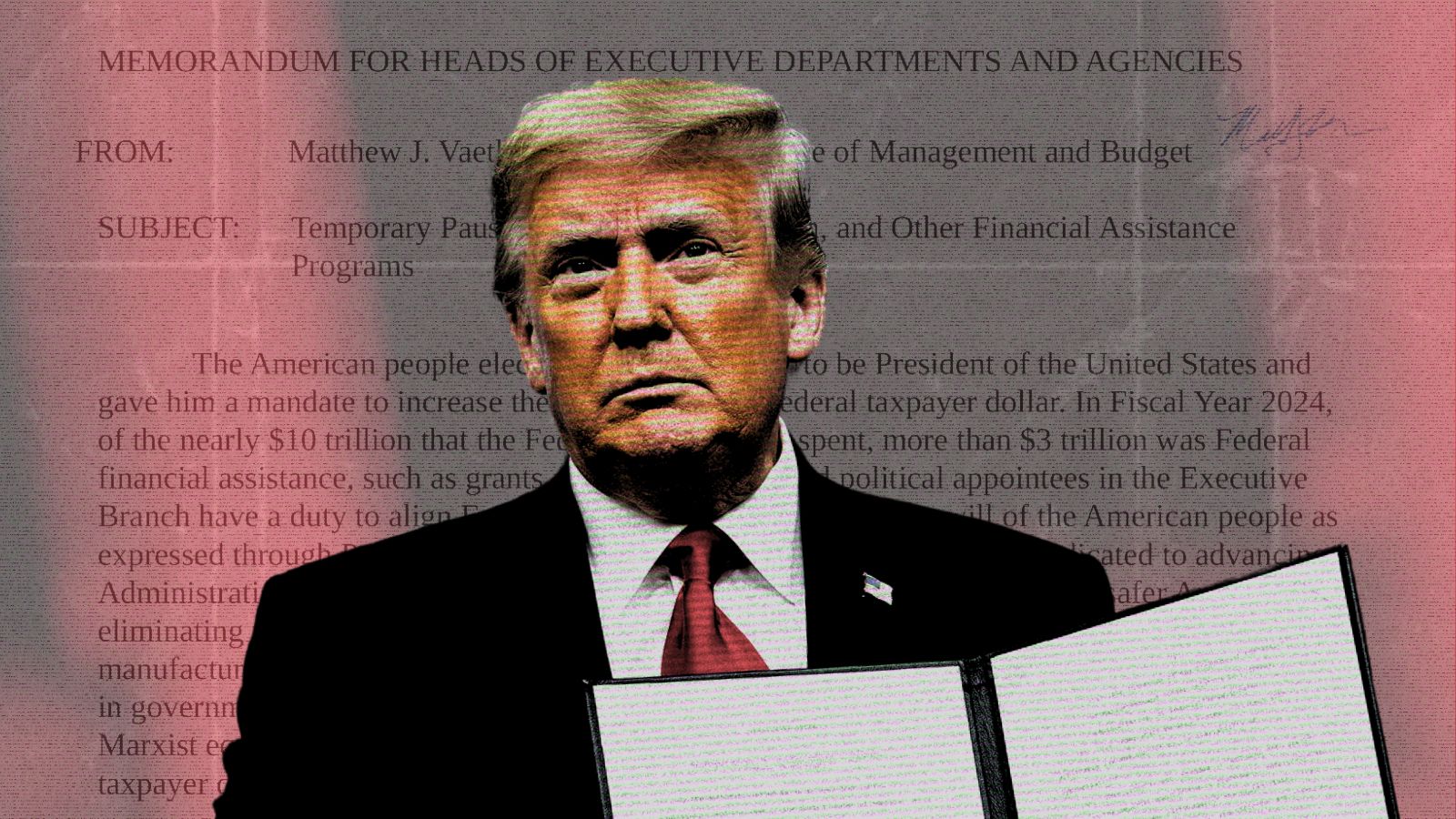
    White House Budget Director Russell Vought announced the cuts on social media, framing them as eliminating funding for the “Left’s climate agenda.” President Donald Trump, in an interview with One America News, suggested the cuts target Democratic priorities, stating, “I’m allowed to cut things that never should have been approved in the first place.” The administration has also rescinded $13 billion in clean energy funding from the 2022 climate law, citing unspent allocations.

    Democrats and environmental groups have condemned the move. California Governor Gavin Newsom highlighted that ARCHES had secured $10 billion in private investment and supported over 200,000 jobs, calling the cut a threat to economic growth. Senator Alex Padilla (D-CA) labeled the decision “vindictive” and “shortsighted,” arguing it undermines US energy leadership. Senator Patty Murray (D-WA.) accused the administration of using American livelihoods as “pawns in some sort of sick political game.” Environmental organizations echoed these concerns. Jackie Wong of the Natural Resources Defense Council (NRDC) called the cuts a blow to innovative technology and clean energy jobs. Conrad Schneider of the Clean Air Task Force warned that the cancellations weaken U.S. competitiveness in global energy markets.

    Energy Secretary Chris Wright defended the cancellations, emphasizing they were business decisions to protect taxpayer dollars and prioritize affordable, reliable energy. He denied political motivations, stating, “These decisions are made on whether it’s a good use of the taxpayer money or not.” Wright noted that projects in both Republican and Democratic states, including hydrogen initiatives in West Virginia, Texas, and Louisiana, are under review, with further cancellations expected. Award recipients have 30 days to appeal.

    The cuts align with the Trump administration’s broader rollback of climate programs, including vehicle emission and greenhouse gas regulations. The Energy Department’s review began after President Donald Trump’s 2024 election victory, with over a quarter of the rescinded grants awarded between Election Day and Inauguration Day under the Biden administration. The cancellations are part of a $7 billion hydrogen fuel program initiated by President Joe Biden to combat climate change.

    As the government shutdown continues, the debate over these cuts underscores tensions between fiscal priorities and clean energy innovation, with significant implications for jobs, energy costs, and US leadership in emerging technologies.

  • OurWeek In Politics (September 24, 2025-October 1, 2025)

    OurWeek In Politics (September 24, 2025-October 1, 2025)

    Here are the main events that occurred in Politics this week:

    1. President Donald Trump Attacks UN and Lectures Nations in Address to General Assembly

    Despite pushing policies that have stirred controversy among voters, President Donald Trump’s approval rating has remained remarkably resilient, according to a recent survey conducted by The New York Times and Siena University from September 22-27, 2025

    Despite pushing policies that have stirred controversy among voters, President Donald Trump’s approval rating has remained remarkably resilient, according to a recent survey conducted by The New York Times and Siena University from September 22-27, 2025. The poll, based on a random sample of 1,313 registered voters with a margin of error of plus or minus 3.2 percentage points, reveals that 43 percent of voters approve of Trump’s job performance, while 54 percent disapprove. These figures are nearly identical to those from April 2025, when 42 percent approved and 54 percent disapproved, suggesting that Trump’s support base has not wavered significantly despite ongoing debates over his administration’s actions.

    Read More

    2. US Labor Market Faces Slowdown Amid Government Shutdown Uncertainty

    Private payrolls in the US took a significant hit in September, adding complexity to an already uncertain economic landscape. With the government shutdown halting the release of the Bureau of Labor Statistics’ (BLS) monthly jobs report, policymakers and investors are left grappling for insights into the labor market’s health

    Private payrolls in the US took a significant hit in September, adding complexity to an already uncertain economic landscape. With the government shutdown halting the release of the Bureau of Labor Statistics’ (BLS) monthly jobs report, policymakers and investors are left grappling for insights into the labor market’s health. In the absence of official data, attention has turned to alternative sources, such as the private-sector jobs report from payroll processor ADP, released on October 1.

    Read More

    3. UN Sanctions Reimposed on Iran Amid Nuclear Deal Tensions

    The United Nations has reinstated comprehensive economic and military sanctions on Iran, a significant development a decade after their initial suspension under the 2015 Joint Comprehensive Plan of Action (JCPOA).

    The United Nations has reinstated comprehensive economic and military sanctions on Iran, a significant development a decade after their initial suspension under the 2015 Joint Comprehensive Plan of Action (JCPOA). This decision stems from accusations by the UK, France, and Germany, collectively referred to as the E3, that Iran has engaged in “persistent nuclear escalation” and failed to comply with its international obligations. The E3 invoked the JCPOA’s “snapback” mechanism last month, providing Iran a 30-day period to address concerns regarding its nuclear activities. That deadline lapsed on September 27, prompting the immediate reinstatement of sanctions.

    Read More

    4. Government Shutdown Begins

    On October 1, the US federal government shut down, marking the first such closure since 2019. The shutdown, triggered by a contentious spending dispute between President Donald Trump and congressional Democrats, has disrupted federal services and furloughed many federal workers.

    On October 1, the US federal government shut down, marking the first such closure since 2019. The shutdown, triggered by a contentious spending dispute between President Donald Trump and congressional Democrats, has disrupted federal services and furloughed many federal workers. The current shutdown echoes a 35-day closure in 2018/2019, when President Donald Trump and congressional Democrats clashed over funding for a southern border wall. The central issue behind this most recent government shutdown is the Democrats’ insistence that President Trump agree to extend expiring health care subsidies and reverse Medicaid cuts included in his signature tax cut and domestic policy law passed earlier in 2025. These health care provisions, particularly the Affordable Care Act (ACA) subsidies set to expire by year’s end, are critical to millions of Americans’ access to affordable insurance.

    Read More

  • US Labor Market Faces Slowdown Amid Government Shutdown Uncertainty

    US Labor Market Faces Slowdown Amid Government Shutdown Uncertainty

    Private payrolls in the US took a significant hit in September, adding complexity to an already uncertain economic landscape. With the government shutdown halting the release of the Bureau of Labor Statistics’ (BLS) monthly jobs report, policymakers and investors are left grappling for insights into the labor market’s health. In the absence of official data, attention has turned to alternative sources, such as the private-sector jobs report from payroll processor ADP, released on October 1.

    According to ADP, US private-sector businesses shed 32,000 jobs in September, a stark contrast to economists’ expectations of a 50,000-job gain. The report also revised August’s figures, turning an initial estimate of 54,000 jobs added into a loss of 3,000. ADP’s chief economist, Nela Richardson, attributed much of this downturn to a preliminary “rebenchmarking” of the data, which reduced September’s job count by 43,000 compared to pre-benchmarked figures. “While the numbers changed, the story remains consistent: hiring momentum has slowed throughout 2024,” Richardson told reporters. She noted that the recalibration, aligned with the 2024 Quarterly Census of Employment and Wages (QCEW), revealed a persistent slowdown in hiring, particularly evident in September. The QCEW, which draws from quarterly tax reports submitted by businesses, offers a comprehensive view of employment and wages at state, regional, and county levels. However, its lagged data limits its timeliness, leaving gaps in real-time analysis.

    September’s job losses were driven primarily by small businesses, with widespread declines across industries. Professional and business services, as well as leisure and hospitality, saw some of the largest drops. Health care remained a notable exception, continuing to drive consistent employment growth throughout the year. The broader labor market is showing signs of stagnation. The BLS’s August jobs report, the last available before the shutdown, indicated that the economy added just 22,000 jobs, with the unemployment rate climbing to 4.3%—its highest in nearly four years. June’s job gains were also revised downward into negative territory. The BLS’s Job Openings and Labor Turnover Survey, released earlier this week, further underscored the slowdown, with the hiring rate dropping to 3.2% in August, matching its lowest level since 2013, excluding the early pandemic period in 2020.

    Despite the lack of a monthly BLS jobs report, economists argue that the Federal Reserve has enough evidence to justify further interest rate cuts at its next meeting. Joe Brusuelas, an economist at RSM US, noted that the labor market’s condition supports a quarter-point rate reduction. He highlighted additional pressures, including policy uncertainty around trade and immigration, as well as long-term demographic challenges limiting labor supply. “The government shutdown and threats of mass firings are not conducive to a positive October payroll outlook,” Brusuelas wrote. US stocks reflected this uncertainty, trending lower amid concerns over the shutdown and remaining subdued after the ADP report’s release.

    While ADP’s data is not always a reliable predictor of the BLS’s official numbers, it remains a key indicator of labor market trends, particularly in the current data vacuum. Economists had anticipated a rebound in September, with forecasts of 50,000 jobs added and a steady unemployment rate of 4.3%. However, the ADP report paints a bleaker picture, reinforcing concerns that the US labor market is at risk of stalling.

    As the government shutdown persists, the absence of comprehensive data will continue to challenge policymakers and investors alike, making reports like ADP’s a critical, if imperfect, tool for navigating the economic landscape.

  • Government Shutdown Begins

    Government Shutdown Begins

    On October 1, the US federal government shut down, marking the first such closure since 2019. The shutdown, triggered by a contentious spending dispute between President Donald Trump and congressional Democrats, has disrupted federal services and furloughed many federal workers. The current shutdown echoes a 35-day closure in 2018/2019, when President Donald Trump and congressional Democrats clashed over funding for a southern border wall. The central issue behind this most recent government shutdown is the Democrats’ insistence that President Trump agree to extend expiring health care subsidies and reverse Medicaid cuts included in his signature tax cut and domestic policy law passed earlier in 2025. These health care provisions, particularly the Affordable Care Act (ACA) subsidies set to expire by year’s end, are critical to millions of Americans’ access to affordable insurance.

    The deadlock became inevitable on the night of September 30, when Senate Democrats blocked a Republican proposal to extend federal funding through November 21. In a 55-to-45 vote, the Republican plan failed to secure the 60 votes needed for passage. In retaliation, Republicans blocked a Democratic counterproposal that would have extended funding through October and allocated over $1 trillion for health care programs, by a vote of 47 to 53. The failure of both proposals led White House budget director Russell T. Vought to instruct federal agencies to implement “orderly shutdown” plans.

    The shutdown reflects deep partisan divisions, with both sides digging in. Senate Majority Leader John Thune (R-SD) accused Democrats of bowing to their “far-left base” and forcing a confrontation with the president, claiming that their actions would harm the American public. Thune emphasized that Senate Republicans would hold daily votes to pressure Democrats into supporting government funding extensions. Democrats, led by Senate Minority Leader Chuck Schumer (D-NY), remain steadfast, arguing that the expiration of ACA subsidies and Medicaid cuts could lead to a health care crisis. Schumer warned that without action, Americans could face monthly health insurance cost increases of $400 to $600. He urged President Donald Trump and Republicans to prioritize health care solutions, noting that public opinion polls favor Democrats on this issue. The Congressional Budget Office projects that allowing ACA tax credits to lapse could result in four million Americans losing coverage starting in 2026, with an additional 20 million facing higher costs and 10 million becoming uninsured by 2034.

    President Donald Trump has taken a combative stance, framing the shutdown as an opportunity to target Democratic priorities. In public statements, he suggested that a shutdown could allow him to eliminate federal programs favored by Democrats and lay off federal workers aligned with the party. “A lot of good can come down from shutdowns,” Trump remarked, signaling his intent to use the closure to advance his political agenda.

    While most Democrats have united behind Schumer’s strategy, a few broke ranks to support the Republican funding plan, including Senators Catherine Cortez Masto (D-NV), John Fetterman (D-PA) (arguably the Democratic Senator most aligned with the MAGA movement on a majority of public policy issues), and Angus King (I-ME). On the Republican side, Senator Rand Paul (R-KY) was the sole dissenter against his party’s proposal. These defections highlight the complexity of the negotiations, as some lawmakers face pressure from constituents or upcoming re-elections.

    Democrats argue that their focus on health care resonates with voters, particularly after backlash from liberal activists in March when some Senate Democrats supported a stopgap funding bill. This time, Democrats are leveraging the health care issue to challenge Trump and Republicans, daring them to reject popular programs like ACA subsidies. Republicans, however, have accused Democrats of holding government funding “hostage” to secure health care concessions. Senate Majority Leader John Thune has expressed willingness to negotiate on extending ACA tax credits separately, but insists that such discussions should occur while the government remains operational.

    The shutdown has also amplified partisan rhetoric. On September 29, President Donald Trump met with congressional leaders but later posted an AI-generated video mocking Democratic leaders, including Hakeem Jeffries and Chuck Schumer. The video, which featured offensive caricatures and fabricated quotes, falsely attributed statements to Chuck Schumer claiming Democrats aimed to provide free health care to undocumented immigrants to secure their votes, a debunked conspiracy theory. In response, Jeffries posted a photo of Trump with Jeffrey Epstein, captioning it “This is real” and condemning bigotry. Such exchanges underscore the toxic atmosphere surrounding the shutdown, with both sides using social media to inflame tensions. Republicans have continued to push misleading narratives, including claims that Democrats are prioritizing health care for unauthorized immigrants over government funding, further polarizing the debate.

    The immediate consequences of the shutdown include the suspension of non-essential federal services and the furlough of thousands of federal workers. Essential services, such as Social Security payments and national defense operations, will continue, but many agencies will face disruptions, affecting everything from national parks to regulatory oversight.

    As the standoff continues, the political fallout will likely shape the narrative heading into the 2026 midterm elections. Both parties are betting on their ability to sway public opinion, with Democrats banking on health care’s broad appeal and Republicans framing Democrats as obstructionists. For now, the American public awaits a resolution while grappling with the real-world impacts of a government in gridlock.

  • UN Sanctions Reimposed on Iran Amid Nuclear Deal Tensions

    UN Sanctions Reimposed on Iran Amid Nuclear Deal Tensions

    The United Nations has reinstated comprehensive economic and military sanctions on Iran, a significant development a decade after their initial suspension under the 2015 Joint Comprehensive Plan of Action (JCPOA). This decision stems from accusations by the UK, France, and Germany, collectively referred to as the E3, that Iran has engaged in “persistent nuclear escalation” and failed to comply with its international obligations. The E3 invoked the JCPOA’s “snapback” mechanism last month, providing Iran a 30-day period to address concerns regarding its nuclear activities. That deadline lapsed on September 27, prompting the immediate reinstatement of sanctions.

    The JCPOA, a landmark agreement signed by Iran, the E3, the US, Russia, and China, was designed to restrict Iran’s nuclear capabilities, limiting its nuclear installations, enriched uranium stockpiles, and research activities—to ensure its nuclear program remains exclusively peaceful. In exchange, Iran was granted significant sanctions relief to bolster its economy. However, the agreement began unraveling in 2018 when President Donald Trump unilaterally withdrew from the deal, labeling it fundamentally flawed and reimposing stringent unilateral sanctions on Iran. In response, Iran accelerated its nuclear program, enriching uranium to 60% purity, a level alarmingly close to weapons-grade, and amassing a 408kg stockpile of highly enriched uranium, according to Western intelligence estimates.

    Tensions reached a new peak in June when Israel, briefly supported by the US, conducted airstrikes targeting across Iran during the so-called “12 Day War”. The strikes aimed to disrupt Iran’s nuclear advancements, penalize its support for regional proxy groups, and collapse the Iranian government, and ultimately install Reza Pahlavi into power as a puppet momarch. While the attacks caused considerable damage to Iran’s infrasturcture and resulted in countless civilian deaths, Western diplomats and Iranian officials offer conflicting assessments of their impact on Iran’s nuclear program. Iran condemned the strikes as a fundamental violation of the JCPOA’s framework, declaring international support for the agreement “obsolete.” In retaliation, Iran temporarily suspended inspections by the International Atomic Energy Agency (IAEA), a critical obligation under the JCPOA. Although the IAEA confirmed that inspections have partially resumed, the E3 cited Iran’s earlier refusal to grant full access to nuclear sites and its failure to provide a transparent report on its uranium stockpile as key justifications for activating the snapback mechanism.

    Iranian President Masoud Pezeshkian denounced the reimposed sanctions as “unfair, unjust, and illegal,” firmly asserting that Iran has no intention of pursuing nuclear weapons. Iran’s foreign ministry argued that the E3’s actions carry no legal weight for UN member states and called on nations to reject the sanctions outright. Iran’s military leadership issued a stern warning, promising a “decisive response” should Israel use the sanctions as a pretext for further aggression. While Pezeshkian moderated earlier threats to withdraw from the Non-Proliferation Treaty (NPT), he cautioned that sustained sanctions and attacks on nuclear facilities could derail future diplomatic efforts. He also dismissed a US proposal to exchange Iran’s enriched uranium stockpile for a temporary three-month sanctions exemption, rhetorically questioning, “Why would we enter such a trap, with a noose tightening around our neck every month?”

    The E3 expressed regret over the necessity of sanctions but emphasized that the decision does not foreclose diplomatic avenues. In a joint statement, they urged Iran to avoid further escalatory actions, noting that last-minute talks on the sidelines of the UN General Assembly yielded no meaningful progress. The E3 demanded that Iran fully resume cooperation with the IAEA, provide clarity on its uranium stockpile, and engage in direct negotiations with the US. Secretary of State Marco Rubio reinforced this stance, stating, “President Trump has consistently emphasized that diplomacy remains viable—a comprehensive deal is the best path forward for the Iranian people and global stability.” However, Iran’s Supreme Leader Ayatollah Ali Khamenei rejected negotiations under the current circumstances, arguing that engaging now would signal “surrender” and “disgrace” for Iran.

    Western powers and the IAEA remain deeply skeptical of Iran’s assertions that its nuclear program is purely peaceful. Israel hailed the reimposed sanctions as a “major development” in curbing Iran’s nuclear ambitions, urging the international community to employ “every available tool” to prevent Iran from achieving nuclear power status. Conversely, Iran accuses the E3 and the US of failing to honor their JCPOA commitments, particularly regarding promised sanctions relief, and holds them responsible for escalating the crisis. The newly reinstated UN sanctions, which include stringent restrictions on uranium enrichment and ballistic missile technology, compound Iran’s economic woes, already strained by severe US sanctions that have largely isolated it from global financial systems.

    The reimposition of UN sanctions represents a pivotal moment in the ongoing standoff between Western powers and Iran, with both sides firmly entrenched in their positions. While European allies hold out hope for renewed negotiations to de-escalate tensions, the prospects for reviving the JCPOA remain fraught with uncertainty, casting a shadow over future diplomatic efforts.

  • The UK, Canada, Australia, and Portugal Recognize Palestinian Statehood

    The UK, Canada, Australia, and Portugal Recognize Palestinian Statehood

    On September 21, 2025, the UK, Canada, Australia, and Portugal formally recognized Palestine as a sovereign state, marking a significant shift in their long-standing diplomatic positions. This coordinated move, with France expected to follow at the United Nations, reflects growing international concern over Israel’s ongoing war in Gaza. These nations, key supporters of Israel and members of the Group of Seven, broke with the US, which has historically opposed recognizing Palestinian statehood without a permanent resolution to the Israeli-Palestinian conflict.

    The announcements, made just before Rosh Hashanah, signal a response to mounting public and political pressure, particularly in the UK, where Prime Minister Keir Starmer faced calls from his Labour Party and widespread pro-Palestinian demonstrations. Starmer had pledged in July to recognize Palestine unless Israel agreed to a ceasefire with Hamas, committed to a two-state solution, and ruled out annexing the West Bank, conditions Israel did not meet. Instead, Israel intensified its military operations in Gaza and launched attacks in Doha, Qatar, complicating ceasefire talks. The decision follows the October 7, 2023, Hamas attacks on Israel, which killed approximately 1,200 people and displaced tens of thousands. Israel’s subsequent military campaign in Gaza has resulted in over 65,000 Palestinian deaths, according to Gaza health officials, fueling global outrage and prompting this diplomatic shift.

    Israeli Prime Minister Benjamin Netanyahu swiftly condemned the recognitions, calling them a “reward for terror” and vowing that a Palestinian state “will not happen.” The US, aligned with Israel, blocked a UN Security Council resolution for a Gaza ceasefire, citing insufficient condemnation of Hamas. Despite this, over 140 countries now recognize Palestinian statehood, and the Palestinian Authority holds nonmember observer status at the UN since 2012. Analysts, such as Yossi Mekelberg from Chatham House, argue that while symbolic, these recognitions may not immediately alter Israel’s policies without further actions like sanctions or restricted arms sales. However, the move elevates Palestine’s status globally, framing the conflict as one state occupying another, a perspective echoed by Palestinian human rights lawyer Diana Buttu.

    The recognition of Palestine by the UK recognition carries particular weight due to its historical role in the region. The 1917 Balfour Declaration supported a Jewish homeland in the British Mandate territories, and laws from that period still underpin Israel’s detention policies. Diana Buttu, a Palestinian-Canadian lawyer and former spokesperson for the Palestinian Liberation Organization (PLO) described the UK’s recognition as “powerful” but insufficient given Gaza’s devastation. The Palestinian mission in London plans to mark the occasion with a flag-raising ceremony, symbolizing its new status as an embassy. Hamas welcomed the recognitions but urged “practical measures” to halt Israel’s actions in Gaza and prevent West Bank annexation. UK Prime Minsiter Kier Starmer, rejecting claims that the move rewards Hamas, emphasized that a two-state solution opposes the group’s ideology and condemned it as a terrorist organization unfit for governance.

    While these recognitions do not grant Palestine full UN membership, due to likely US vetoes in the Security Council, they signal a growing international consensus. For Palestinians, the move clarifies their sovereignty but underscores the urgent need for concrete steps to address Gaza’s humanitarian crisis and advance a sustainable resolution.

  • OurWeek In Politics (September 17, 2025-September 24, 2025)

    OurWeek In Politics (September 17, 2025-September 24, 2025)

    Here are the main events that occurred in Politics this week:

    1. President Donald Trump Attacks UN and Lectures Nations in Address to General Assembly

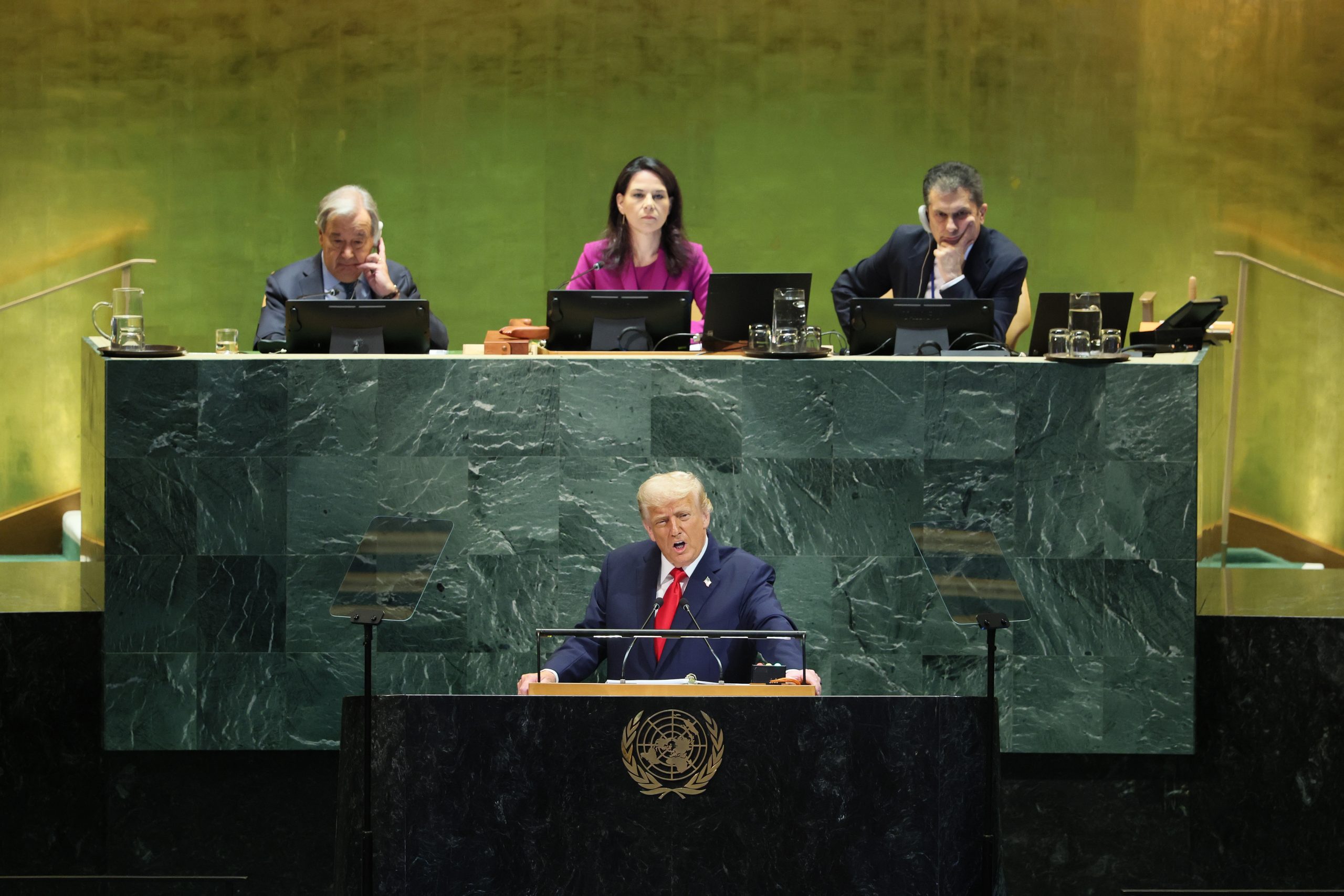
    On September 23, President Donald Trump delivered a nearly hour-long address to the UN General Assembly, blending sharp criticism of the global body with self-congratulation for his administration’s achievements.

    On September 23, President Donald Trump delivered a nearly hour-long address to the UN General Assembly, blending sharp criticism of the global body with self-congratulation for his administration’s achievements. In a speech that oscillated between grievance and optimism, President Trump touted his “America First” agenda, warned European nations of economic and cultural ruin, and positioned himself as a global peacemaker while questioning the UN’s effectiveness.

    Read More

    2. The UK, Canada, Australia, and Portugal Recognize Palestinian Statehood

    On September 21, 2025, the UK, Canada, Australia, and Portugal formally recognized Palestine as a sovereign state, marking a significant shift in their long-standing diplomatic positions.

    On September 21, 2025, the UK, Canada, Australia, and Portugal formally recognized Palestine as a sovereign state, marking a significant shift in their long-standing diplomatic positions. This coordinated move, with France expected to follow at the United Nations, reflects growing international concern over Israel’s ongoing war in Gaza. These nations, key supporters of Israel and members of the Group of Seven, broke with the US, which has historically opposed recognizing Palestinian statehood without a permanent resolution to the Israeli-Palestinian conflict.

    Read More

    3. Supreme Court to Review Presidential Authority Over Independent Agencies

    On September 22, 2025, the US Supreme Court announced it would consider a significant expansion of President Donald Trump’s power over independent federal agencies, potentially overturning a nearly century-old precedent that limits when presidents can remove agency board members.

    On September 22, 2025, the US Supreme Court announced it would consider a significant expansion of President Donald Trump’s power over independent federal agencies, potentially overturning a nearly century-old precedent that limits when presidents can remove agency board members. This decision could reshape the balance of power between the executive branch and independent regulatory bodies, with far-reaching implications for how agencies like the Federal Trade Commission (FTC), National Labor Relations Board (NLRB), and Merit Systems Protection Board (MSPB) operate.

    Read More

    4. President Donald Trump Moves to Designate Antifa as a Major Terrorist Organization

    On September 22, President Donald Trump signed an executive order designating the decentralized anti-fascist movement known as Antifa a domestic terrorist organization.

    On September 22, President Donald Trump signed an executive order designating the decentralized anti-fascist movement known as Antifa a domestic terrorist organization. This move, part of a broader crackdown on what the administration calls the “radical left,” directs federal agencies to investigate, disrupt, and dismantle any illegal operations linked to Antifa or its supporters, including through criminal prosecutions. The order accuses the group of orchestrating political violence, such as riots, assaults on law enforcement, doxing, and other acts, aimed at overthrowing the US government.

    Read More

  • President Donald Trump Attacks UN and Lectures Nations in Address to General Assembly

    President Donald Trump Attacks UN and Lectures Nations in Address to General Assembly

    On September 23, President Donald Trump delivered a nearly hour-long address to the UN General Assembly, blending sharp criticism of the global body with self-congratulation for his administration’s achievements. In a speech that oscillated between grievance and optimism, President Trump touted his “America First” agenda, warned European nations of economic and cultural ruin, and positioned himself as a global peacemaker while questioning the UN’s effectiveness.

    President Donald Trump opened his speech by calling the UN a “feckless institution” filled with “empty words” that fail to resolve global conflicts. He questioned the organization’s purpose, stating, “The U.N. has such tremendous potential. I’ve always said it. It has such tremendous, tremendous potential. But it’s not even coming close to living up to that potential.” His remarks underscored a return to an unapologetically nationalist stance, a departure from the more internationalist approach of his predecessor, President Joe Biden. Despite his criticisms, Trump later met with UN Secretary-General Antonio Guterres, assuring him that the US remains “100%” supportive of the organization. “I may disagree with it sometimes, but I am so behind it because the potential for peace at this institution is great,” Trump said, striking a conciliatory tone after his earlier rebuke.

    President Donald Trump used the global stage to issue stark warnings to European nations, arguing that their migration policies and commitment to green energy initiatives were leading to economic and cultural devastation. He described these policies as a “double-tailed monster” that “destroys everything in its wake.” “I’m telling you that if you don’t get away from the ‘green energy’ scam, your country is going to fail,” Trump declared. “If you don’t stop people that you’ve never seen before that you have nothing in common with, your country is going to fail.” He contrasted these policies with his administration’s approach, which has prioritized expanded oil and gas drilling and aggressive crackdowns on illegal immigration in the United States. Trump expressed sympathy for Europe, saying, “I love the people of Europe, and I hate to see it being devastated by energy and immigration.” His remarks were a clear call for other nations to adopt similar policies to those of his administration.

    In a significant development, President Donald Trump addressed Russia’s ongoing war in Ukraine, revealing a shift in his stance. After meeting with Ukrainian President Volodymyr Zelenskyy, Trump announced his belief that Ukraine, with support from the European Union and NATO, could reclaim all territory lost to Russia. “I think Ukraine, with the support of the European Union, is in a position to fight and WIN all of Ukraine back in its original form,” Trump wrote in a post following his speech. “With time, patience, and the financial support of Europe and, in particular, NATO, the original Borders from where this War started, is very much an option.” This marks a departure from his 2024 campaign rhetoric, where he often suggested the US had limited interest in the conflict’s outcome and promised a swift resolution. Trump also took a swipe at Russia, calling it a “paper tiger” and noting that the war, now in its third year, “should have taken a Real Military Power less than a week to win.” He threatened Moscow with “a very strong round of powerful tariffs” if Russian President Vladimir Putin does not negotiate an end to the conflict.

    President Donald Trump also addressed the growing international push for Palestinian statehood, a movement spotlighted during the UN General Assembly’s discussions on a two-state solution. France recently joined other nations in recognizing Palestinian statehood, a move Trump and Israel strongly oppose. “The rewards would be too great for Hamas terrorists,” Trump argued, referencing the October 7 attacks. “This would be a reward for these horrible atrocities.” He also participated in a group meeting with leaders from Qatar, Saudi Arabia, Indonesia, Turkey, Pakistan, Egypt, the United Arab Emirates, and Jordan to discuss ending the Gaza war, calling it his “most important meeting” and expressing a desire to resolve a conflict that “should have probably never started.”

    Early in his speech, President Donald Trump deviated from his prepared remarks to poke fun at logistical issues at UN headquarters, including a malfunctioning escalator and a faulty teleprompter. “These are the two things I got from the United Nations: a bad escalator and a bad teleprompter,” he quipped, drawing laughter from delegates. UN spokesperson Stephane Dujarric later explained that the escalator issue may have been caused by a videographer from the US delegation triggering a safety mechanism, while a UN official noted that the Trump Administration was responsible for operating the teleprompter.

    President Donald Trump reiterated his ambition to win a Nobel Peace Prize, claiming his administration has “ended seven wars” since his return to office. “Everyone says that I should get the Nobel Prize — but for me, the real prize will be the sons and daughters who live to grow up because millions of people are no longer being killed in endless wars,” he said. He cited efforts to mediate conflicts between Israel and Iran, India and Pakistan, and Egypt and Sudan, though experts note that his impact on these resolutions is not as straightforward as he claims. Trump expressed frustration that the UN had not taken a more active role, stating, “It’s too bad that I had to do these things instead of the United Nations doing them.”

    President Donald Trump’s address was a vivid reminder of his polarizing leadership style, blending boasts of domestic and foreign policy successes with dire warnings to other nations. His unapologetic “America First” posture, coupled with sharp critiques of global institutions and policies, underscored his intent to reshape the international order. As he navigates his second term, Trump’s vision for global leadership continues to spark both admiration and alarm among world leaders.

  • Supreme Court to Review Presidential Authority Over Independent Agencies

    Supreme Court to Review Presidential Authority Over Independent Agencies

    On September 22, 2025, the US Supreme Court announced it would consider a significant expansion of President Donald Trump’s power over independent federal agencies, potentially overturning a nearly century-old precedent that limits when presidents can remove agency board members. This decision could reshape the balance of power between the executive branch and independent regulatory bodies, with far-reaching implications for how agencies like the Federal Trade Commission (FTC), National Labor Relations Board (NLRB), and Merit Systems Protection Board (MSPB) operate.

    The case centers on a challenge to Humphrey’s Executor v. United States (1935), a landmark Supreme Court ruling that established protections for commissioners of independent agencies. In that decision, the Court unanimously held that President Franklin D. Roosevelt could not fire an FTC commissioner without cause, such as misconduct or neglect of duty. This ruling paved the way for the creation of powerful independent agencies tasked with regulating critical areas like consumer protection, labor relations, and federal employment disputes. These agencies were designed to operate with a degree of autonomy, insulated from direct presidential control to ensure decisions were based on expertise rather than political pressures.

    However, the Humphrey’s Executor decision has long been a point of contention for conservative legal scholars who argue that independent agencies should be more accountable to the president, as the head of the executive branch. The Justice Department, representing President Donald Trump, contends that the president should have the authority to remove agency board members at will to effectively carry out his agenda. Solicitor General D. John Sauer argued, “The President and the government suffer irreparable harm when courts transfer even some of that executive power to officers beyond the President’s control.” Sauer further noted that courts lack the authority to reinstate fired officials, only to award back pay.

    In a 6-3 decision, the Supreme Court permitted President Donald Trump to fire Rebecca Slaughter, a Democratic FTC commissioner, while the broader case challenging Humphrey’s Executor proceeds. This ruling follows a series of similar decisions allowing the president to remove board members from three other independent agencies, including Gwynne Wilcox of the NLRB and Cathy Harris of the MSPB. The Court’s conservative majority did not provide detailed reasoning for allowing Slaughter’s firing, as is typical for decisions on the emergency docket. Justice Elena Kagan, joined by Justices Sonia Sotomayor and Ketanji Brown Jackson, dissented, arguing that Congress explicitly prohibited such presidential removals. “Yet the majority, stay order by stay order, has handed full control of all those agencies to the President,” Kagan wrote. The dissenters expressed concern that eroding the independence of these agencies could lead to regulatory decisions driven by politics rather than expertise.

    The upcoming case, set for arguments in December 2025, will determine whether the Court overturns or narrows Humphrey’s Executor. A decision to grant the president broader authority to fire agency board members could fundamentally alter the structure of independent agencies. These bodies, including the FTC, NLRB, and MSPB, play critical roles in enforcing consumer protections, investigating unfair labor practices, overseeing union elections, and resolving federal employment disputes. Opponents of expanding presidential power, including Slaughter’s legal team, argue that allowing the president to remove congressionally confirmed board members at will risks politicizing regulatory decisions. They assert that such a change would undermine the expertise-driven mission of these agencies. “If the President is to be given new powers Congress has expressly and repeatedly refused to give him, that decision should come from the people’s elected representatives,” Slaughter’s attorneys stated. The Justice Department, however, argues that the president’s ability to execute his agenda is hindered when agency officials operate beyond his control. This tension between presidential authority and agency independence lies at the heart of the case.

    The Supreme Court’s willingness to hear this case before it has fully worked through lower courts signals its urgency and potential impact. Additionally, Wilcox and Harris, the fired NLRB and MSPB board members, have asked the Court to consider their cases alongside Slaughter’s, highlighting the broader implications for multiple agencies. The Court has also suggested that the president’s removal power may face limits at certain agencies, such as the Federal Reserve. This issue is likely to be tested in a separate case involving fired Fed Governor Lisa Cook, which could further clarify the boundaries of presidential authority.

    As the Supreme Court prepares to hear arguments in December, the outcome of this case could redefine the relationship between the executive branch and independent federal agencies. A ruling in favor of expanded presidential power could usher in an era of greater executive control over regulatory bodies, potentially affecting how laws are enforced in areas like consumer protection, labor rights, and federal employment. Conversely, upholding Humphrey’s Executor would preserve the autonomy of these agencies, ensuring their decisions remain grounded in expertise rather than political influence. For now, the Court’s recent decisions signal a conservative majority inclined to reconsider long-standing precedents, setting the stage for a pivotal legal battle with significant consequences for the structure of the federal government.

  • President Donald Trump Moves to Designate Antifa as a Major Terrorist Organization

    President Donald Trump Moves to Designate Antifa as a Major Terrorist Organization

    On September 22, President Donald Trump signed an executive order designating the decentralized anti-fascist movement known as Antifa a domestic terrorist organization. This move, part of a broader crackdown on what the administration calls the “radical left,” directs federal agencies to investigate, disrupt, and dismantle any illegal operations linked to Antifa or its supporters, including through criminal prosecutions. The order accuses the group of orchestrating political violence, such as riots, assaults on law enforcement, doxing, and other acts, aimed at overthrowing the US government.

    In a post on X, President Donald Trump stated, “I am pleased to inform our many U.S.A. Patriots that I am designating ANTIFA, A SICK, DANGEROUS, RADICAL LEFT DISASTER, AS A MAJOR TERRORIST ORGANIZATION.” He further emphasized that he would push for thorough investigations into those funding Antifa, ensuring compliance with the highest legal standards.

    White House Press Secretary Karoline Leavitt described the order as one of the administration’s first major steps in fulfilling President Donald Trump’s campaign promises to confront left-leaning political entities. Speaking at a briefing earlier that day, Leavitt railed against Democrats and Trump’s political opponents, stating, “Many Democrats in elective office have now been totally captured by a radical fringe of the far left who want to dehumanize every person they disagree with.” She pointed to Democratic lawmakers who voted against a resolution honoring conservative activist Charlie Kirk, whose recent assassination has intensified the administration’s rhetoric. “We must continue to call this wickedness out,” Leavitt added. “It’s the only way that our nation can heal.”

    The announcement follows President Donald Trump’s vow last week to label Antifa a terrorist group, coming in the wake of Charlie Kirk’s killing. In a post on his Truth Social platform, President Trump wrote: “I am pleased to inform our many U.S.A. Patriots that I am designating ANTIFA, A SICK, DANGEROUS, RADICAL LEFT DISASTER, AS A MAJOR TERRORIST ORGANIZATION. I will also be strongly recommending that those funding ANTIFA be thoroughly investigated in accordance with the highest legal standards and practices!”

    Press Secretary Karoline Leavitt emphasized that the focus would extend beyond Antifa to its financial backers, noting, “We will be most importantly looking at who is funding Antifa and who is funding these other violent left-wing groups.” She cited evidence from the Kirk investigation, including bullets engraved with anti-fascist messages like “Hey Fascist! Catch!” She also referenced a series of alleged Antifa-linked incidents, including assailants shooting and assaulting law enforcement in Texas and Oregon in July, bringing a pipe bomb to a pro-Trump event in 2022, and threatening to shoot police and Trump supporters outside the Florida State Capitol in 2021. “We have seen a rise in violence perpetuated by Antifa, radical people across this country who subscribe to this group,” Leavitt said.

    The term “Antifa,” short for anti-fascist, originates from the German word “antifaschistisch,” referencing 1930s resistance groups that opposed Nazi ideology. It traces its roots to European movements that fought Italian dictator Benito Mussolini during World War II and white supremacist skinhead groups during the Cold War. In the US, Antifa has existed for decades but gained prominence after Donald Trump’s 2016 election and the 2017 Charlottesville rally, where far-right violence galvanized anti-fascist activists.

    Unlike structured far-right groups like the Proud Boys or Oath Keepers, which have clear leaders, hierarchies, and membership, Antifa is a loose, leaderless network of individuals and small cells leaning toward the far left, often including anarchists, communists, and hardline socialists. Its members broadly share anti-government, anti-capitalist, pro-LGBTQ+, and pro-immigration views. Activists often organize organically online and offline, without a national command structure, membership lists, or defined funding sources. This decentralization makes it challenging for authorities to target “leaders” or financial networks, as local groups operate independently.

    Critics, including President Donald Trump and Republicans, frequently use “Antifa” as a catch-all label for a wide array of liberal and left-wing groups they oppose, blurring lines between ideology and action. The administration’s push raises concerns that it could stretch executive authority to suppress large-scale left-wing dissent. President Trump has already suggested charging members of the activist group Code Pink, who protested him during a recent Washington, D.C., restaurant visit, with crimes, signaling a pattern of aggressive targeting. Trump first promised to designate Antifa a terrorist organization during his first term in 2020, but never followed through. The current effort aligns with his declaration that “radical left political violence has hurt too many innocent people and taken too many lives.” Authorities have described Kirk’s accused killer, Tyler Robinson, as holding a “leftist ideology,” though no direct link to Antifa has been established, and the motive remains unclear.

    What distinguishes Antifa from mainstream left-wing activism, according to critics, is some activists’ readiness to employ violence—often framed as self-defense against far-right threats. Participants frequently appear in public wearing dark clothing and face coverings, and online videos capture them wielding clubs, shields, sticks, and pepper spray at rallies. Notable incidents include a 2017 clash in Berkeley, California, where around 100 masked Antifa-linked activists attacked right-wing protesters, leading to multiple arrests. During the 2020 unrest following George Floyd’s killing, self-identified Antifa activist Michael Reinoehl fatally shot a member of the far-right Patriot Prayer group in Portland before being killed by police.

    The executive order invokes powers typically reserved for foreign terrorist organizations (FTOs), which allow the US to ban members, deport individuals, seize assets, and prosecute material supporters. However, domestic groups like Antifa do not fit the FTO criteria, which require the entity to be foreign-based. The order specifies implementation within existing laws, directing agencies to pursue “any and all illegal operations” without broadly criminalizing anti-fascist ideology, a move that would violate the First Amendment. Legal experts anticipate swift constitutional challenges, given Antifa’s lack of a centralized structure. Prosecuting individuals for “material support” to domestic groups lacks the clear legal framework available for foreign ones, potentially limiting the order’s reach.

    As the administration moves forward, the designation’s practical impact remains uncertain. It fulfills a long-standing Trump pledge but underscores deepening partisan divides, especially in the shadow of Charlie Kirk’s death, where his widow, Erika Kirk, urged fighting hate with love, clashing with President Donald Trump’s assertion at the funeral that he “hates” his political opponents. Karoline Leavitt defended the president, saying, “The president is authentically himself.” Whether this authenticity translates to effective policy or fuels further unrest is a question that will define the coming months.

  • President Donald Trump Announces Midterm Convention to Rally Support for Republicans Ahead of 2026 Elections

    President Donald Trump Announces Midterm Convention to Rally Support for Republicans Ahead of 2026 Elections

    On September 16, President Donald Trump took to TruthSocial to announce a Republican “Midterm Convention” aimed at energizing the party ahead of the 2026 midterm elections. The event, with its time and place yet to be determined, promises to be a significant and exciting gathering for the Republicans. President Trump wrote, “The Republicans are going to do a Midterm Convention in order to show the great things we have done since the Presidential Election of 2024. Stay tuned, it will be quite the Event, and very exciting!”

    While historically, the party in power loses seats in midterm elections, President Trump is seeking to stave off the traditional losses the party in power faces in midterm elections. Recent polling does suggest that the Republicans have a decent shot at defying the traditional losses for the party in power in the 2026 midterm elections. In the Senate, the Republicans scored strong recruits such as former Congressman and 2024 Senate candidate Mike Rogers in Michigan, former Senator Scott Brown in New Hampshire, and Congressman Mike Collins in Georgia. Polling suggests that these three candidates will likely win the respective races. Additionally, the Democrats are going into a slight disadvantage going into the 2026 midterm elections when compared to the Republicans. 13 Democrats won seats in districts carried by Donald Trump in the 2024 presidential election, while only three Republicans won in districts carried by Kamala Harris. This makes the Democrats more overextended in districts that lean towards the Republican Party.

    This announcement builds on an idea President Donald Trump first floated last month, when he suggested the Republican Party hold a national convention to highlight the party’s achievements and momentum. “The Republican Party is doing really well,” President Trump stated at the time. “Millions of people have joined us in our quest to MAKE AMERICA GREAT AGAIN. We won every aspect of the Presidential Election and, based on the great success we are having, are poised to WIN BIG IN THE MIDTERMS.” Trump also praised the Republican Party’s fundraising efforts and his administration’s work to undo policies from the Biden era.

    The concept of a midterm convention is novel for the Republican Party, as President Donald Trump noted, “It has never been done before.” The announcement comes amid reports that the Democratic National Committee (DNC) is also considering a large-scale gathering to promote its rising stars and midterm candidates. A DNC spokesperson confirmed these plans, stating, “Americans everywhere are fired up and ready to fight back against Trump’s reckless policies — including his budget betrayal that cuts health care and food assistance for millions of people.” The spokesperson added that the DNC is exploring “several options” for 2026, including a potential midterm convention to harness grassroots energy.

    In response to President Donald Trump’s announcement, the DNC took a jab, saying, “Imitation is the sincerest form of flattery.” The spokesperson reiterated their plans, noting, “To showcase our tremendous candidates running up and down the ballot and harness the amazing grassroots energy we’re already seeing, several options are on the table for next year, including hosting a midterm convention. The sincerest form of flattery is imitation, and we’re amused the President is following our lead. As both parties gear up for the 2026 midterms, these proposed conventions signal an intensified effort to rally their bases and set the stage for a highly competitive election cycle. With the Republican Party aiming to capitalize on its 2024 momentum and the Democrats pushing back against its policies, the political landscape is heating up.

  • Democratic Support Grows for Zohran Mamdani in NYC Mayoral Race

    Democratic Support Grows for Zohran Mamdani in NYC Mayoral Race

    Zohran Mamdani, the Democratic nominee for mayor of New York City, is gaining significant endorsements from party leaders as concerns mount over President Donald Trump’s attempts to influence the race. Mamdani, a state assemblyman and democratic socialist, secured the Democratic primary victory in June 2025, defeating former Governor Andrew Cuomo, who is now running as an independent.

    Prominent Democrats, including Congressman Jamie Raskin of Maryland and Congressman Pat Ryan of New York, have formally endorsed Zohran Mamdani. Congressman Raskin, a leading figure in countering President Donald Trump’s influence, praised Mamdani as a “significant and inspiring leader” with a “Rooseveltian” vision, comparing him to former President Franklin D. Roosevelt for his commitment to the working and middle classes. Ryan, motivated by his opposition to former New York Governor and Mayoral Candidate Andrew Cuomo, described Mamdani as a candidate “for the people,” contrasting him with Cuomo’s self-serving record. Even moderates within the Democratic party such as former Chicago Mayor Rahm Emanuel and New York Congressman Ritchie Torres have expressed support. Emanuel, after meeting Mamdani, noted his preparedness to govern effectively, while Torres called him “impressively knowledgeable and substantive.” Left-leaning Democrats, including Senators Bernie Sanders and Elizabeth Warren, and members of Congress such as Alexandria Ocasio-Cortez, Pramila Jayapa, and Jerrold Nadler, have also backed Mamdani, citing his focus on cost-of-living issues.

    Despite Zohran Mamdani’s primary win, some top New York Democrats, including House Minority Leader Hakeem Jeffries, Senate Minority Leader Chuck Schumer, Senator Kirsten Gillibrand, and Governor Kathy Hochul, have not yet endorsed him. Schumer met with Mamdani recently but declined to commit, while Jeffries indicated he would soon clarify his stance. Hochul emphasized the need for pragmatic governance, reflecting her “staunch capitalist” perspective, given New York City’s role as a global financial hub.

    President Donald Trump’s efforts to tilt the race toward Andrew Cuomo, including offering positions to Mayor Eric Adams and Republican candidate Curtis Sliwa to drop out, have galvanized Democrats. Party members across the ideological spectrum are urging unity to counter Trump’s influence. Congressman Jamie Raskin stressed the importance of Democratic solidarity, saying, “Democrats must stand together to defend not only our party but our constitution and our country.” Congresswoman Alexandria Ocasio-Cortez echoed this, emphasizing the party’s responsibility to support its nominees post-primary.

    Some moderate Democrats, like Conresswoman Laura Gillen and Conressman Tom Suozzi from Long Island, worry that Zorhran Mamdani’s progressive stance could harm the party in the 2026 midterms by fueling Republican narratives painting Democrats as socialists. However, Mamdani’s strong lead in recent polls, particularly among young voters, suggests his appeal could energize the Democratic base. A New York Times/Siena University poll showed him commanding the race, a critical factor as Democrats seek to regain ground lost to Donald Trump in 2024.

    Since his nomination, Zohran Mamdani has engaged in extensive outreach, meeting with figures like former President Barack Obama and Rahm Emanuel to discuss governance and policy priorities. His ability to connect with both moderates and progressives has impressed many, with Emanuel noting his readiness to “hit the ground running” and Torres praising his intellectual rigor.

    As the mayoral race enters its final stretch, Zohran Mamdani’s campaign is gaining momentum, but the lack of endorsements from key New York Democrats remains a challenge. Meanwhile, Republicans, including Florida Governor Ron DeSantis, are using Mamdani’s candidacy to attack Democrats nationwide. Despite this, supporters like Congressman Jamie Raskin remain steadfast, advocating for party unity: “When progressives beat moderates in the primary, we want the moderates to support the progressives in the general election.”

  • New Jersey Gubernatorial Race Heats Up as Jack Ciattarelli Closes Gap on Mikie Sherrill

    New Jersey Gubernatorial Race Heats Up as Jack Ciattarelli Closes Gap on Mikie Sherrill

    The race for New Jersey’s next governor has tightened dramatically, with Republican Jack Ciattarelli now trailing Congresswoman Mikie Sherrill by a mere two points, according to a recent poll conducted by National Research Inc. from September 8 to 10, 2025. The survey, which included 600 likely voters and carries a margin of error of plus or minus 4 percent, shows Sherrill leading Ciattarelli 47 to 45 percent, signaling a statistical dead heat as the November 4 election approaches. This development underscores the high stakes of the contest, as New Jersey, alongside Virginia, is one of only two states electing a governor this year, making it a critical barometer for national political trends.

    New Jersey has long been a Democratic stronghold, with incumbent Governor Phil Murphy nearing the end of his second term. However, the latest poll reveals a growing sense of unease among voters, with 57 percent of likely voters expressing the belief that the state is on the wrong track. Among these dissatisfied voters, a striking 78 percent attribute their concerns to Murphy’s policies, which they argue have made New Jersey more expensive and less safe. Only 14 percent point to President Donald Trump as a source of their discontent. This pessimism, described by the poll as the most severe to date, could pose a significant challenge for Democrats as they navigate the final weeks of the campaign.

    Jack Ciattarelli, a former state assemblyman, has gained traction among key demographic groups, including unaffiliated voters, working-class and middle-class voters, and those who participated in the 2021 gubernatorial election, which he narrowly lost to Phil Murphy. His appeal to these swing groups has contributed to the tightening race, marking a shift from earlier polls. For instance, a Quantus Insights poll conducted from September 2 to 4 showed Sherrill leading by a wider margin of 47 to 37 percent, with a margin of error of 4.3 percent and 95 percent confidence. Another survey by Tipp/League of American Workers, conducted from August 25 to 28, had Sherrill ahead by seven points, highlighting the rapid momentum Ciattarelli has gained in recent weeks.

    The significance of this race extends beyond New Jersey’s borders. As one of only two gubernatorial elections in 2025, it offers a rare glimpse into voter sentiment in an off-year election, which typically sees lower turnout and less enthusiasm compared to midterm or presidential election cycles. A Ciattarelli victory could signal challenges for Democrats heading into the 2026 midterms, particularly if voter dissatisfaction with Democratic leadership persists. Political observers note that while presidential policies and party performance often shape midterm outcomes, New Jersey’s off-cycle election may serve as an outlier, driven more by local concerns than national trends.

    Commentators have weighed in on the dynamics of the race. Peter Lumaj, a former Republican US Senate candidate, said that Jack Ciattarelli’s strong polling is unsurprising to political strategists. He pointed to shifting voter registration trends, a narrowing Democratic advantage, and a robust GOP campaign capitalizing on frustration with the current administration. Lumaj also highlighted the influence of Donald Trump and historical voting patterns as factors bolstering Ciattarelli’s chances. Conversely, former New Jersey Republican Governor Christine Todd Whitman, who endorsed Mikie Sherrill, emphasized the Democratic candidate’s independence and readiness to lead. Whitman, who served two terms as governor, expressed concern about Ciattarelli’s alignment with Trump, stating that his reluctance to diverge from the President’s positions does not serve New Jersey’s needs. She praised Sherrill’s experience as a former Navy helicopter pilot and her track record in Congress, describing her as an independent voice accountable only to the people of New Jersey.

    With less than 60 days until the election, both candidates face a compressed timeline to make their case to voters. Mikie Sherrill, leveraging her military background and congressional experience, is positioning herself as a steady and independent leader capable of addressing the state’s challenges from day one. Jack Ciattarelli, meanwhile, is capitalizing on voter frustration with rising costs and safety concerns, appealing to a broad coalition of swing voters who may determine the outcome. As the campaign enters its final stretch, the race remains too close to call, promising an intense and closely watched battle for the governor’s mansion.

    https://youtu.be/p2rfDY09bG8?si=6-lqexxXOuCEEmlc
  • In A Major Defeat For Opponents of Gerrymandering, Missouri State Legislature Approves Congressional Map To Give Republicans Additional Congressional Seat Ahead Of 2026 Midterm Elections

    In A Major Defeat For Opponents of Gerrymandering, Missouri State Legislature Approves Congressional Map To Give Republicans Additional Congressional Seat Ahead Of 2026 Midterm Elections

    Missouri lawmakers have approved a new congressional voting map for the 2026 midterm elections, responding to former President Donald Trump’s call to secure a Republican majority in Congress. The state Senate passed the redistricting plan with a 21-11 vote, aiming to flip a Democratic-held seat to Republican control. The map now awaits the signature of Republican Governor Mike Kehoe, who introduced the plan last month, describing it as a “Missouri First” map that aligns with the state’s conservative values.

    Typically, states redraw congressional districts early in the decade following the national census, which determines the allocation of House seats. However, Missouri’s move comes mid-decade, driven by Trump’s push for Republicans to create more winnable districts. Missouri Republicans argue that the new map, which creates seven Republican-leaning seats and one strongly Democratic district, reflects the state’s political landscape, where Republicans dominate statewide and legislative elections. Currently, Missouri’s congressional delegation consists of six Republicans and two Democrats.

    Republican state Senator Rick Brattin, representing the Kansas City suburbs, defended the plan, stating, “The question is, are we actually representing the constituency of Missouri with our congressional delegation? A seven-to-one map does that. Democrats in the state legislature fiercely opposed the changes but could do little to stop or slow their passage because Republicans hold supermajorities in both chambers. Democratic state Senator Stephen Webber argued during floor debate on September 12 that Republicans were surrendering their independence and bending to Trump’s will. “We’re no longer the ‘Show Me State,’” he said, referring the state’s motto. “We’re the ‘Yes, sir state.’” Democratic state Senator Barbara Washington of Kansas City called the map a “blatant political attack.” “This erases the voice of our community,” she said, her voice rising with emotion. “Carving up Kansas City and silencing our constituents is terrible.”

    On September 10, thousands of activists protested at the state capitol, vowing to collect the 106,000 signatures needed within 90 days to put the measure to a statewide referendum. By September 12, two lawsuits had already been filed to challenge the plan, signaling a contentious legal battle ahead.

    Missouri is not alone in redrawing its maps. President Donald Trump has urged Republican-led states, including Texas, Indiana, and Florida, to adopt district plans that favor Republican candidates. Texas approved a similar plan last month to secure five additional Republican-leaning seats. In response, Democratic-led states like California have proposed maps to bolster Democratic representation, with California’s plan awaiting voter approval on November 4, 2025. Illinois and Maryland are also considering redistricting to favor Democrats.

    As Missouri’s new map heads to Governor Kehoe’s desk, its fate remains uncertain. Legal challenges and a potential referendum could delay or block its implementation. Meanwhile, the national push for redistricting continues, with both parties vying to reshape congressional districts to their advantage ahead of the 2026 midterms. The outcome of these efforts could significantly influence the balance of power in the US House.

  • Conservative Poltiical Activist Charlie Kirk Assassinated In Utah Campus Shooting

    Conservative Poltiical Activist Charlie Kirk Assassinated In Utah Campus Shooting

    On September 10, Charlie Kirk, a prominent conservative activist and founder of Turning Point USA, was fatally shot while speaking at Utah Valley University in Orem, Utah. The 31-year-old, known for his influential role in mobilizing young conservative voters and his close ties to President Donald Trump, was addressing students as part of Turning Point USA’s college campus tour when the attack occurred. Authorities have described the incident as a targeted political assassination, prompting widespread condemnation and calls for an end to political violence in the United States.

    A rising star in the conservative movement in the US, Charlie Kirk founded Turning Point USA at the age of 18 in 2012, transforming it into a powerhouse of grassroots Republican activism. The organization has amassed millions of followers and played a pivotal role in mobilizing young voters during Trump’s presidential campaigns. Kirk’s events were known for fostering open dialogue between political ideologies, with Vice President JD Vance noting on X that, “If you actually watch Charlie’s events—as opposed to the fake summaries—they are one of the few places with open and honest dialogue between left and right. He would answer any question and talk to everyone.”

    Charlie Kirk’s influence extended beyond his organization, as he became one of the most prominent pro-Trump voices in conservative media. His ability to engage young audiences and his unapologetic advocacy for conservative values made him a polarizing yet impactful figure in American politics.

    The attack took place during Turning Point USA’s first event of a planned college tour. A single shot was fired, fatally wounding Charlie Kirk and prompting Utah Valley University to lock down its campus and cancel classes. Images from the scene, captured by Tess Crowley of The Deseret News, show law enforcement taping off the area as stunned attendees reacted to the tragedy. Utah Governor Spencer Cox confirmed that Kirk was the intended target, stating, “I want to be very clear that this is a political assassination.” Cox, who spoke with President Trump following the incident, vowed to work with federal and state law enforcement to bring the perpetrator to justice. “Abby and I are heartbroken,” Cox wrote on X. “We are praying for Charlie’s wife, daughter, and son.”

    FBI Director Kash Patel reported that a person detained as a suspect was later released, and no one else is currently in custody. Authorities have yet to identify a suspect or confirm a motive for the shooting, leaving many questions unanswered.

    The assassination drew swift reactions from leaders across the political spectrum, with many condemning the act as a stark reminder of the dangers of political violence. President Donald Trump, in a video statement, described Kirk as “the best of America” and blamed “the radical left” for the attack, arguing that inflammatory rhetoric comparing conservatives to “Nazis and the world’s worst mass murderers” incited the violence. “This kind of rhetoric is directly responsible for the terrorism that we’re seeing in our country today, and it must stop right now,” President Trump said. He vowed to investigate those contributing to political violence, including organizations that “fund it and support it,” and ordered flags lowered to half-staff through September 14 in Kirk’s honor.

    In a September 12 interview on Fox & Friends, President Donald Trump expanded on his claims, suggesting that “radical left lunatics” were primarily responsible for the nation’s political violence. He dismissed suggestions of extremism on the right, stating, “The radicals on the right oftentimes are radical because they don’t want to see crime. The radicals on the left are the problem, and they’re vicious and they’re horrible and they’re politically savvy.” Trump also called for investigations into liberal philanthropist George Soros and his family, accusing them of “agitation.”

    Vice President JD Vance offered a prayer for Kirk, writing on X, “Eternal rest grant unto him, O Lord.” He praised Kirk’s commitment to civil discourse, emphasizing the inclusive nature of his campus events.

    Former presidents also weighed in, universally condemning the violence. Former President Joe Biden wrote on X, “There is no place in our country for this kind of violence. It must end now. Jill and I are praying for Charlie Kirk’s family and loved ones.” Former President Barack Obama echoed this sentiment, stating, “We don’t yet know what motivated the person who shot and killed Charlie Kirk, but this kind of despicable violence has no place in our democracy. Michelle and I will be praying for Charlie’s family tonight, especially his wife Erika and their two young children.”

    Former President George W. Bush called for an end to “violence and vitriol” in public discourse, noting, “Members of other political parties are not our enemies; they are our fellow citizens.” Former President Bill Clinton expressed sadness and anger, urging introspection and renewed efforts for peaceful debate. Even before Kirk’s death was confirmed, Democratic leaders like House Minority Leader Hakeem Jeffries, Senate Minority Leader Chuck Schumer, and California Governor Gavin Newsom condemned the attack. Newsom, who had interviewed Kirk for his podcast earlier this year, called the shooting “disgusting, vile, and reprehensible.”

    Charlie Kirk’s assassination is the latest in a disturbing series of violent incidents targeting political figures in the US. Earlier incidents include the assassination of Minnesota Democratic state representative Melissa Hortman and her husband, as well as the severe wounding of Democratic state senator John Hoffman and his wife in a separate attack. Authorities reported that the suspect in those cases had compiled a list of largely Democratic lawmakers and abortion rights advocates as potential targets.

    These incidents have heightened concerns about the state of political discourse in America. President Trump’s response has drawn scrutiny, particularly his decision to pardon nearly all individuals convicted of federal crimes related to the January 6, 2021, Capitol riot, including those who committed violence against police officers. Critics argue that this move undermines efforts to address political violence impartially.

    Turning Point USA released a statement mourning Kirk’s death, describing him as a visionary leader whose loss is deeply felt. “May he be received into the merciful arms of our loving Savior, who suffered and died for Charlie,” the statement read. “We ask that everyone keep his family and loved ones in your prayers. We ask that you please respect their privacy and dignity at this time.”

    As investigations continue, Kirk’s death has sparked a broader conversation about the state of political rhetoric and its consequences. While President Donald Trump and his allies point to inflammatory language from the left as a catalyst, others argue that vilification across the political spectrum fuels division and violence. The assassination serves as a grim reminder of the need for civility and mutual respect in public discourse.

    The nation now mourns a figure who, regardless of political affiliation, sought to engage young Americans in the democratic process. As leaders from both parties call for an end to violence, the hope is that Kirk’s death will inspire a renewed commitment to dialogue over division.

  • President Donald Trump Announces Plan To Ban Mail-In Voting

    President Donald Trump Announces Plan To Ban Mail-In Voting

    On August 18, President Donald Trump announced his intention to issue an executive order aimed at banning mail-in voting before the 2026 midterm elections, a move he claims will restore electoral integrity. During a meeting with Ukrainian President Volodymyr Zelenskyy in the Oval Office, Trump stated, “We, as a Republican Party, are going to do everything possible that we get rid of mail-in ballots.” He added that an executive order is being drafted by top lawyers to end the practice, asserting that mail-in ballots are prone to corruption and voter fraud.

    President Donald Trump has repeatedly argued that mail-in voting undermines election integrity. He claimed, without evidence, “Mail-in ballots are corrupt,” citing unverified anecdotes of individuals receiving multiple ballots in states like California. President Trump has long maintained that mail-in voting enables tampering and multiple voting, despite lacking evidence to support widespread fraud. However, election experts have consistently refuted these claims. Debra Cleaver, founder of VoteAmerica, emphasized the security of mail-in ballots, noting that barcodes on outgoing and return envelopes ensure ballots are tracked and counted accurately. Following the 2020 election, Christopher Krebs, then-director of the Cybersecurity and Infrastructure Security Agency, declared it “the most secure in American history.” Audits and investigations, including those by Republican officials, found no evidence of significant fraud in the 2020 election.

    President Donald Trump’s proposed executive order faces significant legal hurdles. He argued in a social media post that states are mere “agents” of the federal government in elections and must follow presidential directives. However, Article I, Section 4 of the US Constitution explicitly grants states the authority to regulate elections, with Congress holding the power to alter such regulations. Legal scholars note that the President lacks the constitutional authority to unilaterally ban mail-in voting, rendering the proposed executive order legally questionable.

    Despite President Donald Trump’s claim that the US is the only country using mail-in voting, the practice is common worldwide. According to the International Institute for Democracy and Electoral Assistance, over 30 countries, including Canada, the United Kingdom, Switzerland, Germany, and Denmark, allow mail-in voting for some or all voters. In the US, 36 states offer no-excuse mail-in voting, with eight conducting elections entirely by mail. The 2020 election saw a surge in mail-in voting due to the pandemic, with 43% of ballots cast by mail, a figure that dropped to just over 30% (46.8 million votes) in 2024, according to the US Election Assistance Commission.

    Election experts warn that eliminating mail-in voting could disrupt electoral processes. David Becker, executive director of the Center for Election Innovation & Research, called the idea “incredibly bad,” arguing it would create chaos, especially with midterm elections just 15 months away. He noted that mail-in voting, used since the Civil War, enhances accessibility and security when properly implemented.

    The White House, through spokesperson Harrison Fields, defended President Donald Trump’s stance, claiming that Democratic policies like “unfettered mail-in voting” have eroded trust in elections. Fields emphasized Trump’s goal to “secure America’s elections” through measures like voter ID requirements and stricter voting laws in states like California and New York.

    President Donald Trump’s push to ban mail-in voting has sparked renewed debate over election security and accessibility. While he frames it as a safeguard against fraud, critics argue it could disenfranchise voters who rely on mail ballots due to disability, military service, or other constraints. The legal and practical challenges of implementing such a ban underscore the complexities of reforming election systems in a polarized political landscape. As the 2026 midterms approach, the debate over mail-in voting is likely to intensify, with significant implications for voter turnout and trust in democratic institutions.

  • California Democrats Propose New Congressional Map to Gain Up to Five Seats

    California Democrats Propose New Congressional Map to Gain Up to Five Seats

    California Democrats have unveiled a bold proposal for a new congressional map that could secure up to five additional seats for their party in the House of Representatives. This move, spearheaded by Governor Gavin Newsom, is a strategic response to Republican redistricting efforts in states like Texas, intensifying the national battle for House control ahead of the 2026 midterm elections. The proposal has sparked heated debate, with critics arguing it undermines the state’s independent redistricting process, while supporters claim it’s a necessary countermeasure to maintain political balance. The proposed map targets five Republican-held districts, making them more favorable to Democrats. The affected representatives, Kevin Kiley, Doug LaMalfa, David Valadao, Darrell Issa, and Ken Calvert, now face significantly bluer constituencies. Democrats currently hold 43 of California’s 52 congressional seats, and this redistricting effort aims to solidify their dominance further.

    Governor Newsom has framed the plan as a direct response to Texas Republicans’ redistricting, which is expected to add up to five Republican seats. He argues that California must “fight fire with fire” to counter what he describes as aggressive gerrymandering in red states. To ensure public input, Newsom has proposed a special election on November 4, 2025, allowing California voters to decide on the new map, bypassing the state’s independent Citizens Redistricting Commission. “We have the opportunity to de facto end the Trump presidency in less than 18 months. That’s what’s at stake,” Newsom said at a recent press conference, emphasizing the potential for a Democratic-controlled House to check Republican influence. The state legislature is set to vote on the proposal on August 21, 2025. If approved, the new districts would apply to the 2026, 2028, and 2030 elections, with the Citizens Redistricting Commission resuming its authority after the 2030 census.

    The proposal has drawn sharp criticism from Republicans and advocates for transparent governance. Republican Representative Kevin Kiley has been vocal in his opposition, introducing federal legislation to ban mid-decade redistricting and accusing Newsom of undermining California’s independent redistricting process. “This is a moment for every Californian and every American of decency, regardless of party affiliation, to speak out against the abject corruption that our governor is attempting,” Kiley declared on the House floor. Good government groups echo these concerns, arguing that bypassing the Citizens Redistricting Commission, established by voters in 2008 and expanded in 2010 to include congressional districts, erodes transparency and public trust. Jeanne Raya, a former Democratic member of the commission, warned that the lack of openness in Newsom’s plan could disenfranchise voters. “Somebody’s going to be drawing maps, whether behind a real door or a virtual door,” Raya said. “There will not be that transparency that is written into the independent commission’s work, and voters will suffer for that. California Governor Gavin Newsom defended the proposal as a transparent process, emphasizing that voters will have the final say through the special election, a step not taken in Texas, where Republican-drawn maps face no such public vote. He also noted that California’s plan includes a trigger clause, meaning it would only take effect if Texas or other red states proceed with their redistricting efforts.

    The proposal is part of a broader national struggle over redistricting. In Texas, Democrats left the state for nearly two weeks to delay Republican efforts to pass new maps, though they lack the votes to block them entirely. Other blue states, such as New York and Illinois, are exploring similar redistricting moves, but their potential for Democratic gains is limited. Meanwhile, Republican-led states like Ohio, Indiana, Florida, and Missouri are poised to capitalize on their own redistricting opportunities.

    California’s redistricting proposal highlights the escalating partisan battle over congressional representation. While Governor Gavin Newsom argues it is a necessary defense against Republican tactics, critics warn it risks further politicizing a process meant to be impartial. The outcome of the November 4 special election, if approved by the legislature, will determine whether California adopts this contentious new map, and could set a precedent for how states navigate redistricting in this polarized era. As the debate unfolds, all eyes are on California and Texas, where these dueling strategies could reshape the US House for years to come.

  • OurWeek In Politics (January 1, 2025-January 8, 2025)

    OurWeek In Politics (January 1, 2025-January 8, 2025)

    Here are the main events that occurred in Politics this week:

    1. Mike Johnson Narrowly Re-Elected House Speaker

    On January 3, 2025, Congressman Mike Johnson narrowly secured reelection as House Speaker on the first ballot, overcoming resistance from hard-right Republican holdouts.

    On January 3, 2025, Congressman Mike Johnson narrowly secured reelection as House Speaker on the first ballot, overcoming resistance from hard-right Republican holdouts. The tense proceedings marked a turbulent beginning to the new Congress, as a small faction of Republicans declined to vote for Johnson or backed other candidates. His struggles reflected the challenges of leading a fractured party, even with President-elect Donald Trump’s support. Trump, who will return to the White House with Republican control of both the House and Senate, personally called dissenting lawmakers to secure Johnson’s victory. The final tally stood at 218-215, highlighting Johnson’s slim margin of support.

    Read More

    2. President Biden Celebrates Judicial Milestone, Outpacing Trump’s First-Term Total Of Appointed Federal Judges

    On January 2, 2025, President Joe Biden highlighted the confirmation of 235 federal judges during his presidency, a landmark achievement that narrowly surpassed the 234 lifetime judicial appointments made under President-elect Donald Trump in his first term.

    On January 2, 2025, President Joe Biden highlighted the confirmation of 235 federal judges during his presidency, a landmark achievement that narrowly surpassed the 234 lifetime judicial appointments made under President-elect Donald Trump in his first term. Among Biden’s confirmations was one Supreme Court justice, marking the culmination of a determined effort by Democrats to shape the judiciary in the final months of his term.

    Read More

    3. Congress Certifies President-elect Trump’s 2024 Victory in Peaceful Transition

    On January 6, 2025, a joint session of Congress certified President-elect Donald Trump’s victory in the 2024 election, fulfilling a vital democratic tradition that was violently disrupted four years ago.

    On January 6, 2025, a joint session of Congress certified President-elect Donald Trump’s victory in the 2024 election, fulfilling a vital democratic tradition that was violently disrupted four years ago. This time, there was no sign of unrest, though security at the Capitol was heightened. Unlike President-elect Trump in 2020, Vice President Kamala Harris did not dispute her loss in the November election, and Democrats refrained from raising any objections during the certification of Electoral College votes.

    Read More

    4. Iran’s Execution Rate Surges In 2024: UN Reports Record Numbers

    Iran reportedly executed at least 901 people in 2024, the highest total recorded in nine years and a 6% increase from the 853 executions in 2023, according to the UN human rights chief, Volker Türk.

    Iran reportedly executed at least 901 people in 2024, the highest total recorded in nine years and a 6% increase from the 853 executions in 2023, according to the UN human rights chief, Volker Türk. The alarming rise includes about 40 executions in a single week in December, sparking fresh concerns over the country’s escalating use of the death penalty. “It is deeply disturbing that yet again we see an increase in the number of people subjected to the death penalty in Iran year-on-year,” Türk said, calling for a moratorium on executions with a view to eventual abolition.

    Read More

  • Iran’s Execution Rate Surges In 2024: UN Reports Record Numbers

    Iran’s Execution Rate Surges In 2024: UN Reports Record Numbers

    Iran reportedly executed at least 901 people in 2024, the highest total recorded in nine years and a 6% increase from the 853 executions in 2023, according to the UN human rights chief, Volker Türk. The alarming rise includes about 40 executions in a single week in December, sparking fresh concerns over the country’s escalating use of the death penalty. “It is deeply disturbing that yet again we see an increase in the number of people subjected to the death penalty in Iran year-on-year,” Türk said, calling for a moratorium on executions with a view to eventual abolition.

    Most of the executions were related to drug offences, though dissidents and individuals connected to the 2022 protests were also targeted. The protests, which erupted following the death of Mahsa Amini, a young Kurdish woman detained for not wearing a “proper” hijab, have had a lasting impact on Iranian society. Ethnic and religious minorities have been disproportionately affected by the government’s crackdown, with more than half of those executed in 2024 belonging to minority groups, including 183 Kurds, according to a report from Hengaw, a Kurdish human rights organization.

    The execution of women surged to record levels, with at least 31 women put to death, the highest since Iran Human Rights (IHR) began monitoring the death penalty 17 years ago. Among them was Leila Ghaemi, executed after reportedly killing her husband, whom she found raping her daughter. Another victim, Parvin Mousavi, was executed after unknowingly transporting 5kg of morphine while attempting to support her family. Activists argue that such cases fail to meet the “most serious crimes” standard required for capital punishment under international law.

    Juvenile offenders were also among those executed, with the Human Rights Activists News Agency (HRANA) documenting the deaths of five individuals who were under 18 at the time of their alleged crimes. This practice is in direct violation of international law, which prohibits the use of capital punishment for juvenile offenders. The execution of minors and vulnerable groups has intensified calls for accountability and reforms within Iran’s judicial system.

    The UN’s fact-finding mission on Iran has noted that the government’s use of the death penalty is part of a broader strategy to instill fear and suppress dissent. “The death penalty is incompatible with the fundamental right to life and raises the unacceptable risk of executing innocent people,” Türk warned, emphasizing that it should never be used for conduct protected under international human rights law. Amnesty International reported that Iran accounted for 74% of all recorded executions worldwide in 2023, a figure that excludes China, where execution data remains classified but is believed to number in the thousands.

    As international scrutiny grows, the Iranian regime faces mounting pressure to address its alarming use of the death penalty. Activists and human rights organizations continue to call for greater transparency, fair trials, and adherence to international standards. The execution surge in 2024 underscores the urgent need for reforms to protect vulnerable populations and uphold the fundamental right to life.

  • Congress Certifies President-elect Trump’s 2024 Victory in Peaceful Transition

    Congress Certifies President-elect Trump’s 2024 Victory in Peaceful Transition

    On January 6, 2025, a joint session of Congress certified President-elect Donald Trump’s victory in the 2024 election, fulfilling a vital democratic tradition that was violently disrupted four years ago. This time, there was no sign of unrest, though security at the Capitol was heightened. Unlike President-elect Trump in 2020, Vice President Kamala Harris did not dispute her loss in the November election, and Democrats refrained from raising any objections during the certification of Electoral College votes.

    Vice President Harris presided over the certification process with dignity, even as it confirmed her loss. The session proceeded smoothly, with lawmakers from both parties reading out each state’s electoral votes in alphabetical order and declaring them “regular in form and authentic.” The only noticeable partisan divide came in the applause: Republicans celebrated the states won by Trump, while Democrats cheered for those carried by Harris. The session ended with a standing ovation from Republicans as Trump’s majority was announced.

    Earlier in the day, Vice President Harris described her role as “a sacred obligation,” emphasizing her commitment to the Constitution and democracy. She told reporters in the Rotunda that the key takeaway was that “Democracy must be upheld by the people.” Aides described the peaceful transfer of power as one of the most significant acts of her vice presidency. As Harris led senators to the House chamber, she exchanged polite words with House Speaker Mike Johnson, who had played a prominent role in contesting the 2020 election results.

    The calm and orderly certification process starkly contrasted to the violent events of January 6, 2021. This year, the Capitol was under heavy lockdown, with tall metal fencing and enhanced security measures designated by the Department of Homeland Security as a “national special security event.” The increased precautions reflected the lessons learned from the 2021 riot, which was tied to the deaths of seven people, including three police officers, after Trump’s false claims of a stolen election incited his supporters to storm the Capitol.

    In the days leading up to the certification, President Joe Biden stressed the importance of a smooth transition of power while urging Americans to remember the events of January 6, 2021. Writing in The Washington Post, Biden accused Trump and his supporters of attempting “to rewrite — even erase — the history of that day.” Despite Trump’s campaign promises to pardon individuals convicted for their actions during the 2021 riot, Democrats refrained from challenging the election results, prioritizing constitutional norms over partisan conflict.

    Senate Minority Leader Chuck Schumer underscored the importance of upholding democratic principles and warned Trump against pardoning those responsible for the January 6 violence. “It would be a dangerous endorsement of political violence,” Schumer said. “It is wrong, it is reckless, and would be an insult to the memory of those who died in connection to that day.” With the peaceful certification complete, the nation moves forward under Trump’s leadership, but the shadow of January 6 remains a potent reminder of the fragility of democracy.

  • President Biden Celebrates Judicial Milestone, Outpacing Trump’s First-Term Total  Of Appointet Federal Judges

    President Biden Celebrates Judicial Milestone, Outpacing Trump’s First-Term Total Of Appointet Federal Judges

    On January 2, 2025, President Joe Biden highlighted the confirmation of 235 federal judges during his presidency, a landmark achievement that narrowly surpassed the 234 lifetime judicial appointments made under President-elect Donald Trump in his first term. Among Biden’s confirmations was one Supreme Court justice, marking the culmination of a determined effort by Democrats to shape the judiciary in the final months of his term.

    In his remarks, President Biden framed the milestone as a safeguard for democracy and a counterbalance to recent judicial decisions, including the Supreme Court’s overturning of Roe v. Wade. “Together, these judges are going to hear cases on issues, ruling on everything from whether Americans can cast their ballot, literally how they can cast their ballot, when it will be counted, to whether workers can unionize and make a living wage for their families,” Biden said. He also highlighted environmental priorities, adding, “whether their children can breathe clean air and drink clean water.”

    Flanked by Senate Majority Leader Chuck Schumer and Senate Judiciary Committee Chair Dick Durbin, Biden reflected on the intense push to confirm his nominees. He praised their shared commitment to diversifying the federal bench, with two-thirds of his appointees being women or people of color. “When I ran for president, I made a promise that I’d have a bench that looks like America and taps into the full talents of this nation,” Biden said. “And I’m proud we’ve kept our commitment.”

    Despite the celebratory tone, Biden acknowledged challenges faced during his term, as federal courts blocked several key policy initiatives, including student debt relief programs, immigration reforms, and stricter air pollution regulations. Most recently, a federal appeals court struck down his administration’s net neutrality rules, a signature tech policy. The president’s remarks underscored how the judiciary has become a battleground for polarizing policy disputes, further eroding public confidence in judicial impartiality.

    This erosion of trust has been exacerbated by “judge shopping,” where lawsuits are filed in districts perceived to favor particular causes. Polls show public faith in the neutrality of US courts has plummeted, a concern echoed by Chief Justice John Roberts in his year-end report, which also addressed the rise in threats against federal judges. Meanwhile, President-elect Trump, who campaigned on criticisms of the legal system, frequently attacked judges who ruled against him, fueling partisan perceptions of the judiciary.

    The urgency to confirm President Joe Biden’s judicial nominees stemmed from a desire to avoid leaving vacancies for Republicans to fill under the incoming administration. The Democratic push mirrored a similar scenario in 2017 when Trump inherited over 100 vacancies after Republicans blocked President Obama’s appointments. Biden’s confirmations now represent over a quarter of the federal bench, setting a new standard for diversity and ensuring a lasting legacy as he concludes his term.

  • OurWeek In Politics (December 25, 2024-January 1, 2025)

    OurWeek In Politics (December 25, 2024-January 1, 2025)

    Happy New Year! Here are the main events that occurred in Politics this week:

    1. Republican-Run States See Opportunity To Push Extreme Policies Under Trump

    Republican state lawmakers and conservative leaders around the United States see Donald Trump’s re-election as a mandate that will help them enact right-wing policies in Republican-run states across the US.

    Republican state lawmakers and conservative leaders around the United States see Donald Trump’s re-election as a mandate that will help them enact right-wing policies in Republican-run states across the US. The policies include steep tax cuts, environmental legislation, religion in schools, and legislation concerning transgender medical care and education, among other hot-button social issues. Next year, Republicans will have trifecta control, meaning both legislative bodies and the governorship in a state, in 23 states, while Democrats will only control the three entities in 15 states. The other states have a divided government.

    Read More

    2. Former President Jimmy Carter Dies At The Age Of 100

    Jimmy Carter, the 39th president of the United States, died on December 29, 2024, at the age of 100. Though he served only one term in office, he went on to a distinguished second act of humanitarian work, and he lived long enough to become the oldest former president in U.S. history.

    Jimmy Carter, the 39th president of the United States, died on December 29, 2024, at the age of 100. Though he served only one term in office, he went on to a distinguished second act of humanitarian work, and he lived long enough to become the oldest former president in U.S. history. Carter “died peacefully Sunday, Dec. 29, at his home in Plains, Georgia, surrounded by his family,” the Carter Center announced in a statement.

    Read More

    3. Russia Rejects President-elect Donald Trump’s Peace Proposal To End Russia-Ukraine War

    Russia is dissatisfied with the reported peace deal proposals on Ukraine from U.S. President-elect Donald Trump’s team, Russian Foreign Minister Sergey Lavrov said on December 29, according to state-owned TASS.

    Russia is dissatisfied with the reported peace deal proposals on Ukraine from U.S. President-elect Donald Trump’s team, Russian Foreign Minister Sergey Lavrov said on December 29, according to state-owned TASS. Earlier reports from the Wall Street Journal indicated that Trump’s team is considering a plan to delay Ukraine’s NATO membership by at least 20 years in exchange for continued Western arms supplies and the deployment of European peacekeepers to monitor a ceasefire. Lavrov said the proposal, as outlined in leaks and Trump’s December 12 Time interview, suggests “freezing hostilities along the current line of contact and transferring the responsibility of confronting Russia to Europe.” “We are certainly not satisfied with the proposals sounding on behalf of representatives of the president-elect’s team,” Lavrov said, specifically rejecting the idea of introducing European peacekeepers in Ukraine.

    Read More

    4. Biden Administration Sanctions Russia, Iran Over Interference In The 2024 Presidential Election

    The Biden Administration announced on December 31, 2024 that it is leveling sanctions on entities in Iran and Russia over attempted election interference.

    The Biden Administration announced on December 31, 2024 that it is leveling sanctions on entities in Iran and Russia over attempted election interference. The Treasury Department said the entities, a subordinate organization of Iran’s Islamic Revolutionary Guard Corps and a Moscow-based affiliate of Russia’s military intelligence agency, the GRU, attempted to interfere in the 2024 elections.

    Read More

    5. President-elect Donald Trump Endorses Mike Johnson To Continue As House Speaker

    President-elect Donald J. Trump endorsed House Speaker Mike Johnson for another term in his post on December 30, moving to shore up the fortunes of a leader whose fate he threw into question this month when he sank a bipartisan spending deal Speaker Johnson had struck to avert a government shutdown.

    President-elect Donald J. Trump endorsed House Speaker Mike Johnson for another term in his post on December 30, moving to shore up the fortunes of a leader whose fate he threw into question this month when he sank a bipartisan spending deal Speaker Johnson had struck to avert a government shutdown. The announcement from Trump on his website, Truth Social, ended days of private discussions by the president-elect and his allies about whether to try to save Johnson or find another candidate, as some conservatives have been agitating for. It followed a concerted, monthslong effort by Johnson to ingratiate himself with the president-elect in hopes of winning his backing and averting another messy fight for the speakership at the start of the 119th Congress on Friday.

  • OurWeek In Politics (December 7, 2022-December 14, 2022)

    OurWeek In Politics (December 7, 2022-December 14, 2022)

    Here are the main events that occurred in Politics this week

    1.Iran Executes First Protestor Linked To Ongoing Revolution

    Iran has executed a man for allegedly injuring a paramilitary officer in the first known execution linked to the revolution that has swept the country since September, state media reported on December 8.

    Iran has executed a man for allegedly injuring a paramilitary officer in the first known execution linked to the revolution that has swept the country since September, state media reported on December 8. Mizan Online, a news agency affiliated with Iran’s judiciary, and the semi-official Tasmin news agency both named the protester as Mohsen Shekari. He was reportedly convicted of “waging war against god” for allegedly stabbing a member of the Basij paramilitary force at a protest in Tehran on September 23. Shekari was sentenced to death on October 23, and executed by hanging on December 8, according to Mizan Online. It was the first execution connected to the protests to be publicly reported by state media.

    Read More

    2. UN Removes Iran From Women’s Rights Commission Due To Human Rights Violations

    The United Nations voted to oust Iran from the Commission on the Status of Women because it “continuously undermines and increasingly suppresses the human rights of women and girls,’’ according to the resolution adopted on December 14.

    The United Nations voted to oust Iran from the Commission on the Status of Women because it “continuously undermines and increasingly suppresses the human rights of women and girls,’’ according to the resolution adopted on December 14. A majority of the 54 members of the U.N.’s Economic and Social Council (ECOSOC) voted on a US-drafted resolution to expel Iran from the Commission on the Status of Women for the remaining of its 2022-2026 elected term. A total of 29 countries elected to the Council voted in favor of expelling Iran. “There are few obviously right and wrong answers in diplomacy,” Linda Thomas-Greenfield, the US Ambassador to the United Nations, said ahead of the vote. “But today – today – we have an opportunity to do something that is clearly the right thing to do.”

    Read More

    3. Senator Krysten Sinema Switches Parties From Democrat To Independent, Dealing A Major Blow To Demcoratic Senate Control

    Arizona Senator Kyrsten Sinema is changing her party affiliation to independent, delivering a jolt to Democrats’ narrow majority and Washington along with it.

    Arizona Senator Kyrsten Sinema is changing her party affiliation to independent, delivering a jolt to Democrats’ narrow majority and Washington along with it. In a 45-minute interview, the first-term senator said that she will not caucus with Republicans and suggested that she intends to vote the same way she has for four years in the Senate. “Nothing will change about my values or my behavior,” Senator Sinema said. Provided that Sinema sticks to that vow, Democrats will still have a workable Senate majority in the next Congress, though it will not exactly be the neat and tidy 51 seats they assumed. The Democrats expected to also have the votes to control Senate committees. And Sinema’s move means that Senator Joe Manchin (D-WV), a pivotal swing vote in the 50-50 chamber the past two years, will hold onto some but not all of his outsized influence in the Democratic caucus.

    Read More

    4. US Approves Patriot Missle Transfer To Ukraine

    The US is poised to approve sending its most advanced ground-based air defense system to Ukraine, responding to the country’s urgent request to help defend against an onslaught of Russian missile and drone attacks, two US officials said on December 13.

    The US is poised to approve sending its most advanced ground-based air defense system to Ukraine, responding to the country’s urgent request to help defend against an onslaught of Russian missile and drone attacks, two US officials said on December 13. Defense Secretary Lloyd Austin could approve a directive as early as this week to transfer one Patriot battery already overseas to Ukraine, the officials said, speaking on the condition of anonymity to discuss internal deliberations. Final approval would then rest with President Joe Biden. 

    Read More

  • OurWeek In Politics (November 30, 2022-December 7, 2022)

    OurWeek In Politics (November 30, 2022-December 7, 2022)

    Here are the main events that occurred in Politics this week:

    1. Raphael Warnock Wins Re-election In Runoff Race, Officially Closing Out 2022 Election Season

    Senator Raphael Warnock has won reelection in Georgia, the Associated Press reports, giving the Democrats a 51-49 majority in the US Senate.

    Senator Raphael Warnock has won reelection in Georgia, the Associated Press reports, giving the Democrats a 51-49 majority in the US Senate. Senator Warnock defeated first-time candidate Herschel Walker, whose campaign was beset by allegations that he paid two women to have abortions. Senator Warnock finished ahead of Walker in the election on November 8, but fell short of the majority needed to avoid a runoff. Former President Barack Obama, who had campaigned for Warnock earlier in the race, returned to Georgia during the runoff to urge voters to come back to the polls.

    Read More

    2. Protesters Detail Mass Sexual Abuse In Iranian Prisons By Regime

    Women in Iran detained for protesting against the ruling regime are suffering sexual violence carried out by agents of the Islamic Revolutionary Guard Corps’ (IRGC) intelligence agency, as reported on December 1.

    Women in Iran detained for protesting against the ruling regime are suffering sexual violence carried out by agents of the Islamic Revolutionary Guard Corps’ (IRGC) intelligence agency, as reported on December 1. One woman from the city of Bukan in West Azerbaijan province had told her fellow prison detainees she had been raped while being interrogated by members of the Islamic Revolutionary Guard Corps’ (IRGC) intelligence agency, the outlet IranWire reported. The 22-year-old was transferred to a hospital because of her mental and physical condition but upon release, committed suicide, according to the outlet

    Read More

    3. Iranian Regime Insiders Begin To Turn Against Government Due To Response To Protests

    The former Iranian former president Mohammad Khatami has urged the current government to be more lenient with protesters, amid ongoing nationwide demonstrations representing the biggest challenge to the Islamic Republic in decades.

    The former Iranian former president Mohammad Khatami has urged the current government to be more lenient with protesters, amid ongoing nationwide demonstrations representing the biggest challenge to the Islamic Republic in decades. Khatami, who previously served as Iranian President from 1997-2005 and was aligned with the reformist wing of the Iranian government said the government must listen to the demonstrators before it is too late, in a message ahead of Students’ Day, which marks the anniversary of the murder of three university students in 1953 by Iranian police under Shah Mohammad Reza Pahlavi’s regime. “I advise the officials to appreciate this presence and instead of dealing with it inappropriately, take a softer approach and listen to them and with their help, recognize the wrong aspects of governance before it is too late for them to move towards good governance,” said Khatami, regarding the government’s handling of the protests.

    Read More

    4. US Economy Adds Over 250,00 New Jobs In November As Inflation Begins To Slow

    The US Economy added 263,000 jobs in November, defying aggressive action from the Federal Reserve to cool the economy and bring down decades-high inflation.

    The US Economy added 263,000 jobs in November, defying aggressive action from the Federal Reserve to cool the economy and bring down decades-high inflation. The unemployment rate held steady at 3.7%, according to the Labor Department, which released the latest monthly jobs snapshot on December 2. Economists surveyed by Refinitiv had expected the pace of hiring to slow to a gain of only 200,000 jobs in November and the unemployment rate to stay flat at 3.7%. Some of the largest monthly job gains were in the leisure and hospitality sector, as well as health care. The hot jobs report also showed an unexpected spike in average hourly earnings, another knock against the Fed’s efforts to rein in inflation by cooling demand. Officials at the central bank have expressed concern about rising wages keeping inflation elevated.

    Read More

  • OurWeek In Politics (November 16, 2022-November 23, 2022)

    OurWeek In Politics (November 16, 2022-November 23, 2022)

    Here are the main events that occurred in Politics this week:

    1. Senator Leader Mitch McConnel Re-elected Senate Republican Leader Despite Disappointing Midterm Election Performance By Republicans

    Mitch McConnell of Kentucky on November 16 overwhelmingly won re-election as his party’s Senate leader, holding off Senator Rick Scott of Florida in the first challenge Senator McConnell has faced since assuming the post in 2007.

    Mitch McConnell of Kentucky on November 16 overwhelmingly won re-election as his party’s Senate leader, holding off Senator Rick Scott of Florida in the first challenge Senator McConnell has faced since assuming the post in 2007. Despite a disappointing election performance that left them demoralized and still mired in the minority, Senate Republicans stuck with their longtime leader, opting for an experienced hand rather than a change at the top that could add to the post-election turmoil engulfing their party. “I think the most important thing we can do is get these differences behind us,” said Senator John Cornyn, Republican of Texas and a leading McConnell ally.

    Read More

    2. Nancy Pelois Steps Down As House Democratic Leader

    House Speaker Nancy Pelosi said on November 17 that she will not seek a leadership position in the new Congress, ending a historic run as the first woman with the gavel and making way for a new generation to steer the party after Democrats lost control of the House to Republicans in the midterm elections.

    House Speaker Nancy Pelosi said on November 17 that she will not seek a leadership position in the new Congress, ending a historic run as the first woman with the gavel and making way for a new generation to steer the party after Democrats lost control of the House to Republicans in the midterm elections. In a spirited speech on the House floor, Pelosi announced that she will step aside after leading Democrats for nearly 20 years and in the aftermath of the brutal attack on her husband, Paul, last month in their San Francisco home, and after having done “the people’s work.” The California Democrat, a pivotal figure in US history and perhaps the most powerful speaker in modern times, said she would remain in Congress as the representative from San Francisco, a position she has held for 35 years, when the new Congress convenes in January. “I will not seek reelection to Democratic leadership in the next Congress,” she said. “For me, the hour has come for a new generation to lead the Democratic caucus that I so deeply respect.” Now, she said, “we must move boldly into the future.”

    Read More

    3. Iran Intensifies Violent Crackdown Against Anti-Government Protestors

    Iran’s clerical rulers have stepped up suppression of persistent anti-government protests in the country’s Kurdish region, deploying troops and killing at least four demonstrators on November 20, social media posts and rights groups said.

    Iran’s clerical rulers have stepped up suppression of persistent anti-government protests in the country’s Kurdish region, deploying troops and killing at least four demonstrators on November 20, social media posts and rights groups said. Nationwide protests, sparked by the death of 22-year-old Iranian Kurdish woman Mahsa Amini in September in the custody of morality police, have been at their most intense in the areas where the majority of Iran’s 10 million Kurds live. Videos on social media, showed a convoy of military vehicles with heavily armed troops, purportedly in the western city of Mahabad, located in Iranian Kurdistan. The sounds of heavy weaponry could be heard in several other videos. The Norway-based human rights group Hengaw said military helicopters carried members of the widely feared Islamic Revolutionary Guard Corps (IRGC) to quell the protests in the Sunni-dominated Kurdish city of Mahabad.

    Read More

  • OurWeek In Politics (November 9, 2022-November 16, 2022)

    OurWeek In Politics (November 9, 2022-November 16, 2022)

    Here are the main events that occurred in Politics this week:

    1. Defying The Odds, The Democrats Keep Control of The US Senate

    Democrats kept control of the Senate in the midterm elections, repelling Republican efforts to retake the chamber and making it harder for them to thwart President Joe Biden’s agenda

    Democrats kept control of the Senate in the midterm elections, repelling Republican efforts to retake the chamber and making it harder for them to thwart President Joe Biden’s agenda. The House of Representatives elections, on the other hand, resulted in a very narrow Republican majority. Senator Catherine Cortez Masto’s shock victory in Nevada gave Democrats the 50 seats they needed to keep the Senate. Her win reflects the surprising strength of Democrats across the US this election year. Seeking reelection in an economically challenged state that has some of the highest gas prices in the nation, Cortez Masto was considered the Senate’s most vulnerable member, adding to the frustration of Republicans who were confident she could be defeated.

    “We got a lot done and we’ll do a lot more for the American people,” Senate Majority Leader Chuck Schumer (D-NY) said in response to the results. “The American people rejected — soundly rejected — the anti-democratic, authoritarian, nasty and divisive direction the MAGA Republicans wanted to take our country.” With the results in Nevada now decided, Georgia is the only state where both parties are still competing for a Senate seat. Democratic incumbent Senator Raphael Warnock faces Republican challenger Herschel Walker in a December 6 runoff. Alaska’s Senate race has advanced to ranked-choice voting, though the seat will stay in Republican hands.

    Read More

    2. Republicans Gain Control Of The House Of Representatives

    The Republican Party have won back control of the House of Representatives, giving the creating a toehold to check President Joe Biden and Congressional Democrats despite a disappointing midterm election.

    The Republican Party have won back control of the House of Representatives, giving the creating a toehold to check President Joe Biden and Congressional Democrats despite a disappointing midterm election. Republicans are on track for one of the smallest Congressional majorities since the 2000 House of Representatives elections despite pre-election predictions that a red wave was coming. Instead, it took more than a week of vote-counting after Election Day for it to be clear the party had won the majority. And that majority could be difficult to manage for a Republican speaker next year. The decisive call came in a California race, with Congressman Mike Garcia being declared the winner in his reelection bid in the state’s 27th District over Democratic challenger Christy Smith. Redistricting in states like Florida, Tennessee, Texas, and Kentucky, open-seat victories and a surprisingly strong showing in New York State carried the Republicans back to power. But President Joe Biden’s middling approval ratings and a lackluster economy largely failed to propel Republican candidates over battle-tested Democratic members and a wider majority. In the end, only six Democratic incumbents fell.

    Read More

    3. Democrats Hold Key Gubernatorial Races, Increase Gound In State Government

    Dispelling predictions of a red wave, Democrats seized complete control of the legislatures in Michigan and Minnesota, and held on to governorships in Michigan, Pennsylvania, and Wisconsin, maintaining a bulwark against Republican-dominated legislatures in the latter two states.

    Dispelling predictions of a red wave, Democrats seized complete control of the legislatures in Michigan and Minnesota, and held on to governorships in Michigan, Pennsylvania, and Wisconsin, maintaining a bulwark against Republican-dominated legislatures in the latter two states. Democrats also won historic victories in Maryland, where voters elected Wes Moore as the state’s first Black governor, and Massachusetts, where they chose Maura Healey as the state’s first openly gay governor. With those two victories, Democrats increased the number of states where they control the governor’s office and both legislative chambers to 18. Republicans had unified control of 23 states heading into yesterday’s election. “Tonight, I want to say something to every little girl and every LGBTQ person out there.

    Read More

    4. Former President Donald Trump Announces 2024 Presidential Bid

    Former President Donald Trump, aiming to become only the second commander-in-chief ever elected to two nonconsecutive terms, announced on November 15 night that he will seek the Republican presidential nomination in 2024.

    Former President Donald Trump, aiming to become only the second commander-in-chief ever elected to two nonconsecutive terms, announced on November 15 night that he will seek the Republican presidential nomination in 2024. “In order to make America great and glorious again, I am tonight announcing my candidacy for president of the United States,” Trump told a crowd gathered at Mar-a-Lago, his waterfront estate in Florida, where his campaign will be headquartered. Surrounded by allies, advisers, and conservative influencers, Trump delivered a relatively subdued speech, rife with spurious and exaggerated claims about his four years in office.

    Despite a historically divisive presidency and his own role in inciting an attack on the US Capitol on January 6, 2021, President Donald Trump aimed to evoke nostalgia for his time in office, frequently contrasting his first-term accomplishments with the Biden administration’s policies and the current economic climate. Many of those perceived accomplishments, from strict immigration actions to corporate tax cuts and religious freedom initiatives, remain deeply polarizing to this day. As Trump spoke to a roomful of Republicans who expect him to face primary challengers in the coming months, he also claimed the party cannot afford to nominate “a politician or conventional candidate” if it wants to win back the White House. “This will not be my campaign, this will be our campaign all together,” Trump said.

    Read More

    5. Iran Protests Heat Up, With General Strikes Planned Amid Continued Government Crackdown

    Protests swelled in cities across Iran on November 15 following a day of general strikes marking the anniversary of one of the deadliest uprisings in the country’s history.

    Protests swelled in cities across Iran on November 15 following a day of general strikes marking the anniversary of one of the deadliest uprisings in the country’s history. Sources on the ground in Iran showed protests in multiple districts across the capital, Tehran, and in other cities like Shiraz, Esfahan, Hamedan, Bushehr, Bukan, Rasht, Qom, Mashhad, and Sanandaj. Sparked by the death in police custody of 22-year-old Kurdish-Iranian woman Mahsa Amini, the protests are now in their ninth week and represent one of the strongest public rebukes against the Islamic Republic and its leadership since the 1979 revolution. The Kurdish rights group Hengaw Human Rights Organization said two men had been killed by security forces during protests in the Kurdish town of Kamyaran in western Iran on November 14.

    Footage showed security forces such as the IRGC and the Basij responding with overwhelming and brutal force against the protestors that violates all the established norms regarding human rights. One video taken from the platform of a Tehran metro station, showed commuters screaming and trying to run as they were being fired on by security forces. A barrage of shots could be heard even as trains were leaving and approaching the platform. Another video from Shiraz showed someone being shot at close range by an armed and uniformed security officer.

    Read More

  • OurWeek In Politics (February 2, 2022-February 9, 2022)

    OurWeek In Politics (February 2, 2022-February 9, 2022)

    Here are the main events that occurred in Politics this week

    1. New York, New Jersey, & Several Other States Rollback Mask Mandates, Other COVID Mandates as Omicron Surge Recedes

    Governor Kathy Hochul will drop New York’s stringent indoor mask mandate on February 9, ending a requirement that businesses ask customers for proof of full vaccination or require mask-wearing at all times, and marking a turning point in the state’s Coronavirus response, according to three people briefed on her decision.

    Governor Kathy Hochul will drop New York’s stringent indoor mask mandate on February 9, ending a requirement that businesses ask customers for proof of full vaccination or require mask-wearing at all times, and marking a turning point in the state’s Coronavirus response, according to three people briefed on her decision. The decision will eliminate a rule that prompted legal and interpersonal clashes over mask-wearing, especially in conservative parts of New York. It was set to expire on February 10 and would have required renewing. Governor Hochul is expected to let the mask mandate lapse just as a crushing winter surge in coronavirus cases is finally receding. But it was as yet unclear whether the Governor would renew or drop a separate mask mandate in New York schools that expires in two weeks.

    Read More

    2. House of Representatives Passes Bill to Avert Temporary Government Shutdown

    The US House of Representatives on February 8 approved legislation to fund federal government agencies through March 11 and avoid a chaotic shutdown of many of the government’s operations when existing money expires at midnight on February 18.

    The US House of Representatives on February 8 approved legislation to fund federal government agencies through March 11 and avoid a chaotic shutdown of many of the government’s operations when existing money expires at midnight on February 18. The House voted 272-162 to approve the stop-gap measure that will give Democratic and Republican negotiators in the House and Senate an additional three weeks to work out a deal on a full-year funding bill. The temporary measure, the third since the start of the fiscal year that began on October 1 now goes to the Senate, where Majority Leader Chuck Schumer has promised prompt action.

    Read More

    3. January Jobs Report Indicates Improving Economic Outlook Despite Omicron

    Job growth rose far more than expected in January despite surging Omicron cases that seemingly sent millions of workers to the sidelines, the Labor Department reported February 4.

    Job growth rose far more than expected in January despite surging Omicron cases that seemingly sent millions of workers to the sidelines, the Labor Department reported February 4. Nonfarm payrolls surged by 467,000 for the month, while the unemployment rate edged higher to 4%, according to the Bureau of Labor Statistics. The Dow Jones estimate was for payroll growth of 150,000 and a 3.9% unemployment rate. The stunning gain came a week after the Biden Administration warned that the numbers could be low due to the pandemic. COVID cases, however, have plunged nationally in recent weeks, with the seven-day moving average down more than 50% since peaking in mid-January, according to the CDC. Most economists had expected January’s number to be tepid due to the virus, though they were looking for stronger gains ahead.

    Read More

    4. Supreme Court Upholds Alabama Challenge To Voting Rights Act

    The Supreme Court, in a 5-4 decision, allowed a congressional map drawn by Alabama Republicans to remain in place on February 7, freezing a lower court ruling that said the map likely violates the Voting Rights Act by diluting the political power of African American voters.

    The Supreme Court, in a 5-4 decision, allowed a congressional map drawn by Alabama Republicans to remain in place on February 7, freezing a lower court ruling that said the map likely violates the Voting Rights Act by diluting the political power of African American voters. The lower court had ordered a new map to be drawn, which could have led to Democrats gaining another seat in the House in the fall. Chief Justice John Roberts joined the three liberal justices in dissent. The justices also said they would hear arguments over the map, adding another potentially explosive issue, concerning the scope of a key provision of the Voting Rights Act, to the court’s docket.

    Read More

  • Supreme Court Upholds Alabama Challenge To Voting Rights Act

    Supreme Court Upholds Alabama Challenge To Voting Rights Act

    The Supreme Court, in a 5-4 decision, allowed a congressional map drawn by Alabama Republicans to remain in place on February 7, freezing a lower court ruling that said the map likely violates the Voting Rights Act by diluting the political power of African American voters. The lower court had ordered a new map to be drawn, which could have led to Democrats gaining another seat in the House in the fall. Chief Justice John Roberts joined the three liberal justices in dissent. The justices also said they would hear arguments over the map, adding another potentially explosive issue, concerning the scope of a key provision of the Voting Rights Act, to the court’s docket.

    The court’s order, the first dealing with the 2022 elections, means that the map will be used for the state’s upcoming primary, and likely be in place for the entire election cycle, while the legal challenge plays out.

    The order pauses an opinion by a panel of three judges that held that the Alabama map likely violates Section 2 of the Voting Rights Act because it only includes one district where Black voters have the opportunity to elect a candidate of their choice. Justice Brett Kavanaugh, writing for himself and fellow conservative Justice Samuel Alito, said the court acted in order to maintain the status quo while the justices consider the issue. Kavanaugh said the court’s order “does not make or signal any change” to voting rights law.

    Chief Justice Roberts, who again found himself siding with the court’s three liberals, said that while he agreed the court should take up the issue for next term to “resolve the wide-ranging uncertainties” in the case, he would have allowed the district court opinion to stand while the appeals process played out. The Supreme Court will hear the full case next fall.

    “The District Court properly applied existing law in an extensive opinion with no apparent errors for our correction,” Roberts wrote

    Justice Elena Kagan, writing for her liberal colleagues Stephen Breyer and Sonia Sotomayor, wrote a much more strongly worded dissent. Kagan said the majority had gone “badly wrong” in granting Alabama’s request to freeze the lower court opinion and the court’s decision “forces Black Alabamians to suffer what under the law is clear vote dilution.” She said the decision will undermine a key section of the Voting Rights Act. She also said the court should not issue such an impactful order on its emergency docket (which critics refer to as its “shadow docket”) without full briefing and oral argument. “Today’s decision is one more in a disconcertingly long line of cases in which this Court uses its shadow docket to signal or make changes in the law, without anything approaching full briefing and argument,” Kagan said. She said the court’s action “does a disservice” to Black Alabamians who “have had their electoral power diminished — in violation of a law this court once knew to buttress all of American democracy.”

    Alabama’s congressional redistricting plan was challenged under Section 2 of the Voting Rights Act, a VRA provision that has been a crucial tool for voting rights advocates after the Supreme Court gutted another section of the law that required certain states to get federal approval for its maps.

    The lower court panel, which included two judges appointed by former President Donald Trump, said that Alabama was required to draw a second district where Blacks made up a majority of voters or close to it. Their decision pointed to Supreme Court precedent for how VRA redistricting cases should be handled. Before the Supreme Court’s ruling, US Rep. Mo Brooks complained to Alabama.com that “skin pigmentation” should not factor into the congressional redistricting process. “These liberal activist judges have tried to segregate us based on race, I find that abominable, in order to elect people in certain parts of the state based on race, which I also think is abominable. We’ve got to put the skin pigmentation issue behind us,” the Alabama Republican told the outlet Saturday, remarking later on “the concept that Blacks can only be elected in Black districts, and Whites should have districts of their own in which they get elected. I believe that is racist and I oppose it.”

    Alabama, in seeking the Supreme Court’s intervention, had argued that race had been improperly used in the proceedings to determine whether Alabama was obligated under the law to draw a second minority-majority district. Alabama, in its arguments to the court, is asking the Supreme Court to “cut back significantly on the scope of Section (Two of) the Voting Rights Act in redistricting cases,” Rick Hasen, an election law expert, wrote in an analysis of the case last week. “A cutback could have major negative implications for African-American and other racial minority representation in Congress, in state legislatures, and in local bodies across the country, making it harder to require jurisdictions to draw districts where minority voters can elect representatives of their choice,” Hasen, a law professor at University of California-Irvine, wrote on the election law blog.

  • House of Representatives Passes Bill to Avert Temporary Government Shutdown

    House of Representatives Passes Bill to Avert Temporary Government Shutdown

    The US House of Representatives on February 8 approved legislation to fund federal government agencies through March 11 and avoid a chaotic shutdown of many of the government’s operations when existing money expires at midnight on February 18. The House voted 272-162 to approve the stop-gap measure that will give Democratic and Republican negotiators in the House and Senate an additional three weeks to work out a deal on a full-year funding bill. The temporary measure, the third since the start of the fiscal year that began on October 1 now goes to the Senate, where Majority Leader Chuck Schumer has promised prompt action.

    Negotiators have been struggling for weeks to agree on the so-called “omnibus” spending bill to finance the federal government’s wide-ranging activities through September 30, the end of the current fiscal year. During House debate, Appropriations Chair Rosa DeLauro (D-CT) noted that the “omnibus is the only way to unlock” the full $1 trillion in spending on infrastructure projects authorized by Congress late last year. The measure would also beef up spending on defense and veterans programs, along with environmental, education, and other domestic initiatives. Senate Majority Leader Chuck Schumer also expressed confidence that a full-year funding bill would be set in place by March 11. Meanwhile, Senator Richard Shelby, the senior Republican on the Senate Appropriations Committee, told reporters negotiators were nearing a deal on top-line spending for such a bill. That figure might hover around $1.5 trillion. Republicans were insisting the money be equally divided between defense and non-defense programs, while Democrats who control Congress fashioned bills providing slightly more money on the non-defense side of the ledger.

    Once the framework of a bill is sketched out through an overall spending level, negotiators are expected to dive into resolving disagreements over specific line-items, such as environmental programs and border security, while also settling perennial battles over policies related to divisive issues such as abortion and Internal Revenue Service activities. “With these basic things, a bipartisan deal should be achievable,” Senate Republican Leader Mitch McConnell said in a speech on the Senate floor.

  • OurWeek In Politics (January 26, 2022-February 2, 2022

    OurWeek In Politics (January 26, 2022-February 2, 2022

    Here are the main events that occurred in Politics this week:

    1. President Joe Biden Announces Deployment of 3,000 US Troops To Europe As Tensions Between Ukraine & Russia Increase

    President Biden has approved the deployment of roughly 3,000 additional American troops to Europe “in the coming days”, NBC News and The Wall Street Journal confirmed on February 2.

    President Biden has approved the deployment of roughly 3,000 additional American troops to Europe “in the coming days“, NBC News and The Wall Street Journal confirmed on February 2. It is “the first major movement of US forces in Russia’s military standoff with Ukraine,” intended to shore up the defense of European allies, the Journal writes. According to a senior administration official, 2,000 soldiers from the US will join troops already in Poland and Germany, while 1,000 troops in Europe will move to join US troops currently in Romania, as reported by NBC News. The deployment was confirmed by Pentagon spokesperson John Kirby, who assured the moves are not permanent and that forces are not going to fight in Ukraine; rather, they are going to bolster NATO allies.

    Read More

    2. US Economic Growth Surged In 2021, Reaching Highest Level Since 1984

    The US economy grew 5.7 percent last year, the biggest increase since 1984, according to a January 27 Commerce Department report.

    The US economy grew 5.7 percent last year, the biggest increase since 1984, according to a January 27 Commerce Department report. That said, however, the growth “wasn’t a straight line,” notes Mark Zandi, chief economist at Moody’s Analytics. “The economy remains tethered to the pandemic.” For example, though gross domestic product expanded at a whopping 6.9 percent annual rate in the final three months of 2021, it “recently lost momentum” explains The Wall Street Journal, “with business activity undermined by pandemic-induced shortages of supplies and workers.” Still, as a whole, “2021 marked the strongest economic rebound in decades.”

    Read More

    3. Supreme Court Justice Stephen Breyer Announces Retirement After 27 Years On The Court

    Justice Stephen Breyer will step down from the Supreme Court at the end of the current term, according to people familiar with his thinking.

    Justice Stephen Breyer will step down from the Supreme Court at the end of the current term, according to people familiar with his thinking. President Joe Biden and Breyer are scheduled to appear together at the White House on January 26 as the Supreme Court justice is set to announce his retirement, a source familiar with the matter confirmed to NBC News. Justice Breyer is one of the three remaining liberal justices, and his decision to retire after more than 27 years on the court allows Biden to appoint a successor who could serve for decades and, in the short term, maintain the current 6-3 split between conservative and liberal justices. 

    Read More

  • US Economic Growth Surged In 2021, Reaching Highest Level Since 1984

    US Economic Growth Surged In 2021, Reaching Highest Level Since 1984

    The US economy grew 5.7 percent last year, the biggest increase since 1984, according to a January 27 Commerce Department report. That said, however, the growth “wasn’t a straight line,” notes Mark Zandi, chief economist at Moody’s Analytics. “The economy remains tethered to the pandemic.” For example, though gross domestic product expanded at a whopping 6.9 percent annual rate in the final three months of 2021, it “recently lost momentum” explains The Wall Street Journal, “with business activity undermined by pandemic-induced shortages of supplies and workers.” Still, as a whole, “2021 marked the strongest economic rebound in decades.”

    American Businesses initially boomed during the vaccine rollout last spring and early summer, as protected Americans began to once again travel and dine out. That surge slowed, however, once the Delta variant arrived, notes NPR, and Omicron reared its ugly head not too long after. “Q4 started with a bang and ended with a whimper,” Zandi told NPR. “October was a fantastic month for the economy — consumer spending, investment — everything was kind of firing on all cylinders. And then by December, Omicron came on the scene quickly and did a lot of damage.” Even with its strength, last year’s economic growth fell short of economists’ hopes, proving COVID has still held the recovery back, note NPR and the Journal. “There were just too many people who didn’t get vaccinated,” Zandi added. “It’s admirable how well the economy did perform, despite the fact that vaccines didn’t exactly solve the problem.”

    Positively, however, though consumer spending slowed in the first half of January, it did not decline drastically, suggesting Americans “aren’t too spooked and should keep output growing.” To that end, even with Omicron’s drag, economists believe “activity should normalize as the variant fades and spring approaches,”

  • Supreme Court Justice Stephen Breyer Announces Retirement After 27 Years On The Court

    Supreme Court Justice Stephen Breyer Announces Retirement After 27 Years On The Court

    Justice Stephen Breyer will step down from the Supreme Court at the end of the current term, according to people familiar with his thinking. President Joe Biden and Breyer are scheduled to appear together at the White House on January 26 as the Supreme Court justice is set to announce his retirement, a source familiar with the matter confirmed to NBC News. Justice Breyer is one of the three remaining liberal justices, and his decision to retire after more than 27 years on the court allows Biden to appoint a successor who could serve for decades and, in the short term, maintain the current 6-3 split between conservative and liberal justices. 

    At 83, Justice Stephen Breyer is currently the court’s oldest member. Liberal activists have urged him for months to retire while Democrats hold both the White House and the Senate, a position that could change after the midterm elections in November. They contended that Justice Ruth Bader Ginsburg stayed too long despite her history of health problems and should have stepped down during the Obama administration. Ginsburg’s death from cancer at 87 allowed then-President Donald Trump to appoint her successor, Amy Coney Barrett, moving the court further to the right. An appointment by President Joe Biden could keep Breyer’s seat on the liberal side of the court for years or decades to come.

    Erwin Chemerinsky, dean of the University of California Berkeley School of Law, urged Justice Stephen Breyer to retire in a Washington Post op-ed article in May, writing that there are times “when the stewards of our system must put the good of an institution they love, and of the country, they love, above their own interests. They have to recognize that no one, not even a brilliant justice, is irreplaceable and that the risks presented by remaining are more than hypothetical.” President Joe Biden promised on the campaign trail to nominate a Black woman to the court. In the wake of Breyer’s announcement, there was an outpouring of statements calling for him to follow through. The progressive group Demand Justice hired a truck last year to drive around Washington with the sign: “Breyer Retire. It’s time for a Black woman Supreme Court justice.” Among likely contenders are U.S. Circuit Judge Ketanji Brown Jackson of the Court of Appeals for the District of Columbia, a former Breyer law clerk; and Leondra Kruger, a justice on California’s Supreme Court.

    Jackson, formerly a district court judge in Washington, was nominated by Biden to the U.S. Circuit Court and was confirmed by the Senate in mid-June on a 53-44 vote, including three Republicans. She succeeded Merrick Garland, who left the appeals court to become Biden’s attorney general.

    Senator Patty Murray (D-WA), was among those who issued a statement soon after the news of Breyer’s impending retirement, calling on Biden to uphold his pledge to nominate a Black woman as the next justice. “The court should reflect the diversity of our country, and it is unacceptable that we have never in our nation’s history had a Black woman sit on the Supreme Court of the United States — I want to change that,” she said.

    Senate Majority Whip Dick Durbin (D-IL) echoed those sentiments in a tweet, saying Biden has the opportunity to bring “diversity, experience, and an evenhanded approach to the administration of justice.”

    Senate Majority Leader Chuck Schumer (D-NY) said President Joe Biden’s nominee will “receive a prompt hearing in the Senate Judiciary Committee, and will be considered and confirmed by the full United States Senate with all deliberate speed.” “America owes Justice Breyer an enormous debt of gratitude,” Schumer added. Republican Senator Lindsey Graham of South Carolina, who voted for Justices Sonia Sotomayor and Elena Kagan, said if Democrats “hang together,” as he expects, they will have the power to replace Breyer without one Republican vote. “Elections have consequences, and that is most evident when it comes to fulfilling vacancies on the Supreme Court,” Graham said in a statement.

    Appointed by President Bill Clinton, Justice Stephen Breyer came to the Supreme Court in 1994 and became one of the court’s moderate-to-liberal members, though he often said it was misleading to label justices with such terms. Breyer believed that interpreting the Constitution should be based on practical considerations, changing with the times. That put him at odds with conservative justices who said the court must be guided by the original intent of the founders. “The reason that I do that is because law in general, I think, grows out of communities of people who have some problems they want to solve,” he said in an interview. Breyer wrote the court’s opinion striking down a state law that banned some late-term abortions in 2000 and dissented seven years later, when the Supreme Court upheld a similar federal law passed by Congress. He supported affirmative action and other civil rights measures. And in a widely noted dissent in 2015, he said the death penalty in America had become so arbitrary that it was probably unconstitutional.

  • OurWeek In Politics (January 19, 2022-January 26, 2022)

    OurWeek In Politics (January 19, 2022-January 26, 2022)

    Here are the main events that occurred in Politics this week:

    1. CDC: Omicron Cornavirus Variant Less Severe Compared To Earlier Variants

    Federal health officials reported on January 25 that the Omicron COVID variant caused less severe illness in hospitalized patients than earlier virus lineages.

    Federal health officials reported on January 25 that the Omicron COVID variant caused less severe illness in hospitalized patients than earlier virus lineages, even though its explosive transmissibility has caused far more infections and led to more than 2,200 deaths a day on average, one of the highest tolls since early last year. Researchers at the Centers for Disease Control and Prevention said that people hospitalized with the omicron variant had shorter stays and less frequent admission to intensive care compared with those hospitalized with other coronavirus variants.

    Read More

    2. Atlanta Prosecutor Begins Investigation Into Former President Donald Trump’s Election Interference Efforts

    The Atlanta area prosecutor weighing whether former President Donald Trump and others committed crimes by trying to pressure Georgia election officials has been granted a special purpose grand jury to aid in her investigation.

    The Atlanta area prosecutor weighing whether former President Donald Trump and others committed crimes by trying to pressure Georgia election officials has been granted a special purpose grand jury to aid in her investigation. Fulton County Superior Court judges on January 24 approved the request made last week by Fulton County District Attorney Fani Willis and said she will be allowed to seat a special grand jury on May 2, the Atlanta Journal-Constitution reported. The special grand jury can continue for a period “not to exceed 12 months,” Christopher Brasher, chief judge of Fulton County Superior Court, wrote in an order. “The special purpose grand jury shall be authorized to investigate any and all facts and circumstances relating directly or indirectly to alleged violations of the laws of the State of Georgia, as set forth in the request of the District Attorney referenced hereinabove,” he added. “The special purpose grand jury … may make recommendations concerning criminal prosecution as it shall see fit.”

    Read More

    3. Supreme Court Clears Way For Release Of Trump Presidential Records To January 6 House Select Committee

    The Supreme Court cleared the way on January 26 for the release of presidential records from the Trump White House to a congressional committee investigating the January 6, 2021, attack on the US Capitol.

    The Supreme Court cleared the way on January 26 for the release of presidential records from the Trump White House to a congressional committee investigating the January 6, 2021, attack on the US Capitol. The court’s order means that more than 700 documents will be transferred to Congress that could shed light on the events leading up to the insurrection when hundreds of rioters converged on the Capitol attempting to stop certification of the 2020 presidential election results. Only Justice Clarence Thomas said publicly that he would have granted former President Donald Trump’s request to block the document handover from the National Archives to the House select committee. No other justices made an objection public. The Biden White House supports releasing the records to the committee, after determining the disclosure is in the nation’s best interest and declining to assert executive privilege.

    Read More

    4. President Joe Biden Discusses First Year Record, Agenda For 2022 In First News Conference In 10 Months

    President Joe Biden escalated his partisan rhetoric on January 19 during his first news conference in 10 months, laying the blame for his stalled agenda at the feet of Republicans and suggesting on the eve of his first anniversary that he has been surprised by their intransigence.

    President Joe Biden escalated his partisan rhetoric on January 19 during his first news conference in 10 months, laying the blame for his stalled agenda at the feet of Republicans and suggesting on the eve of his first anniversary that he has been surprised by their intransigence. “I honest to God don’t know what they’re for,” Biden said at one point during his nearly two-hour exchange with reporters. “What is their agenda?” He said the Republican Party is thoroughly cowed by former president Donald Trump. “Did you ever think that one man out of office could intimidate an entire party where they’re unwilling to take any vote?” Biden asked.

    Read More

  • Supreme Court Clears Way For Release Of Trump Presidential Records To January 6 House Select Committee

    Supreme Court Clears Way For Release Of Trump Presidential Records To January 6 House Select Committee

    The Supreme Court cleared the way on January 26 for the release of presidential records from the Trump White House to a congressional committee investigating the January 6, 2021, attack on the US Capitol. The court’s order means that more than 700 documents will be transferred to Congress that could shed light on the events leading up to the insurrection when hundreds of rioters converged on the Capitol attempting to stop certification of the 2020 presidential election results. Only Justice Clarence Thomas said publicly that he would have granted former President Donald Trump’s request to block the document handover from the National Archives to the House select committee. No other justices made an objection public. The Biden White House supports releasing the records to the committee, after determining the disclosure is in the nation’s best interest and declining to assert executive privilege.

    “The Supreme Court’s action tonight is a victory for the rule of law and American democracy,” Congressman Bennie Thompson, a Mississippi Democrat, and Congresswoman Liz Cheney, a Wyoming Republican, who are chair and vice-chair of the panel, said in a joint statement on January 26. “The Select Committee has already begun to receive records that the former President had hoped to keep hidden and we look forward to additional productions regarding this important information.” 

    The select committee is seeking more than 700 pages of disputed documents as it explores Trump’s role in trying to overturn the 2020 presidential election. That includes his appearance at a January 6 rally in which he directed followers to go to the US Capitol where lawmakers were set to certify the election results and “fight” for their county. The documents include activity logs, schedules, speech notes and three pages of handwritten notes from then-White House chief of staff Mark Meadows, paperwork that could reveal goings-on inside the West Wing as Trump supporters gathered in Washington and then overran the Capitol, disrupting the certification of the 2020 vote. Former President Donald Trump is also seeking to keep secret a draft proclamation honoring two police officers who died in the siege and memos and other documents about supposed election fraud and efforts to overturn Trump’s loss of the presidency, the National Archives has said in court documents.

    White House spokesman Mike Gwin said in a statement after the ruling that former President Donald Trump’s “actions represented a unique and existential threat to our democracy, and President Biden has been clear that these events require a full investigation to ensure that what we saw on January 6th can never happen again. Today’s ruling by the Supreme Court is an important step forward in that process, and in ensuring accountability for an unprecedented assault on our democracy and the rule of law.”

    The move effectively moots former President Donald Trump’s pending appeal in the case that centered on keeping the documents secret. Lawyers for Trump say the documents are sensitive and privileged records. “The disagreement between an incumbent President and his predecessor from a rival political party is both novel and highlights the importance of executive privilege and the ability of Presidents and their advisers to reliably make and receive full and frank advice, without concern that communications will be publicly released to meet a political objective,” Trump’s lawyer, Jesse R. Binnall told the justices. On the other hand, the Biden administration argued that withholding the records based on executive privilege is not in the interest of the United States. Solicitor General Elizabeth Prelogar said that in light of the “extraordinary events” of January 6, President Joe Biden had decided that that an assertion of executive privilege is “not justified.”

    A federal appeals court ruled against former President Donald Trump, holding that he “has provided no basis for this court to override President Biden’s judgment and the agreement and accommodations worked out between the Political Branches over these documents.” The court noted that the events “marked the most significant assault on the Capitol since the War of 1812,” but agreed to freeze its ruling until the Supreme Court acted. “Under any of the tests advocated by former President Trump, the profound interests in disclosure advanced by President Biden and the January 6th Committee far exceed his generalized concerns for Executive Branch confidentiality,” the panel of the US Court of Appeals for the DC Circuit wrote.

    On January 26, the Supreme Court cited part of that sentence. “Because the Court of Appeals concluded that President Trump’s claims would have failed even if he were the incumbent, his status as a former President necessarily made no difference to the court’s decision,” the Supreme Court said. “Tonight’s ruling is a major setback for former President Trump in his efforts to block the National Archives from turning over documents to the January 6 Committee,” said Steve Vladeck, CNN Supreme Court analyst and professor at the University of Texas School of Law. “Although the justices did not rule on whether the court of appeals correctly rejected his suit, by not blocking the handing over now, the justices have allowed that ruling to be the final word.

  • OurWeek In Politics (January 12, 2022-January 19, 2022)

    OurWeek In Politics (January 12, 2022-January 19, 2022)

    Here are the main events that occurred in Politics this week:

    1. In A Major Defeat For The Democratic Party, Voting Rights Legislation Narrowly Fails In Senate

    Voting legislation that the Democratic Party and civil rights leaders say is vital to protecting democracy collapsed late on January 19 when two senators refused to join their party in changing Senate rules to overcome a Republican filibuster after a raw, emotional debate.

    Voting legislation that the Democratic Party and civil rights leaders say is vital to protecting democracy collapsed late on January 19 when two senators refused to join their party in changing Senate rules to overcome a Republican filibuster after a raw, emotional debate. The outcome was a stinging defeat for President Joe Biden and his party, coming at the tumultuous close to his first year in office. Despite a day of piercing debate and speeches that often carried echoes of an earlier era when the Senate filibuster was deployed by opponents of civil rights legislation, Democrats could not persuade holdout senators Kyrsten Sinema of Arizona and Joe Manchin of West Virginia to change the Senate procedures on this one bill and allow a simple majority to advance it. “I am profoundly disappointed,” Biden said in a statement after the vote. However, the president said he is “not deterred” and vowed to “explore every measure and use every tool at our disposal to stand up for democracy.”

    Read More

    2. Omicron Surge Spurs New Coronavirus Relief Push In Congress

    Hotels, fitness clubs, tour bus companies, and minor league baseball clubs are part of a long line of businesses seeking billions of dollars in new COVID relief aid in response to the Omicron variant surge, if they can overcome opposition from many Republicans who say Congress has already given enough.

    Hotels, fitness clubs, tour bus companies, and minor league baseball clubs are part of a long line of businesses seeking billions of dollars in new COVID relief aid in response to the Omicron variant surge, if they can overcome opposition from many Republicans who say Congress has already given enough. Lobbyists for the businesses say their campaign has taken on new urgency as the Omicron variant sweeps across the country, forcing many companies to scale back or shut down operations as employees call in sick and customers cancel orders and reservations. A few Republican lawmakers support more relief funding for targeted industries, but most are generally opposed to spending more funds to help struggling businesses. These opponents say that the government has already provided sufficient relief, including more than $900 billion through the Paycheck Protection Program, and that more government spending will fuel inflation and budget deficits. “The U.S. government has no money to give anyone,“ said Senator Rand Paul (R-KY). ”In the past two years, Congress piled on several trillion dollars to our already substantial deficit. This unprecedented accumulation of debt is causing today’s inflation and will continue to wreak havoc in the future.”

    Read More

    3. Gallup Poll: Republican Party Overtakes Democratic Party In Party Identification For The First Time Since 1991

    According to data from the Gallup polling organization, the percentage of Americans identifying as members of the Republican Party reached its highest level since 1991.

    On average, Americans’ political party preferences in 2021 looked similar to prior years, with slightly more US adults identifying as Democrats or leaning Democratic (46%) than identified as Republicans or leaning Republican (43%) overall. However, the general stability for the full-year average obscures a dramatic shift over the course of 2021, from a nine-percentage-point Democratic advantage in the first quarter to a rare five-point Republican edge in the fourth quarter, the largest advantage for the Republican Party since 1991.

    Read More

    4. Inflation Rate In US Hits Highest Level Since 1982

    The US Inflation rate hit its fastest pace in nearly four decades last year as pandemic-related supply and demand imbalances, along with stimulus intended to shore up the economy, pushed prices up at a 7% annual rate.

    The US Inflation rate hit its fastest pace in nearly four decades last year as pandemic-related supply and demand imbalances, along with stimulus intended to shore up the economy, pushed prices up at a 7% annual rate. The Labor Department said on January 12 that the consumer-price index, which measures what consumers pay for goods and services, rose 7% in December from the same month a year earlier, up from 6.8% in November. That was the fastest since 1982 and marked the third straight month in which inflation exceeded 6%. The so-called core price index, which excludes the often-volatile categories of food and energy, climbed 5.5% in December from a year earlier. That was a bigger increase than November’s 4.9% rise, and the highest rate since 1991. On a monthly basis, the CPI increased a seasonally adjusted 0.5% in December from the preceding month, decelerating from October and November.

    Read More

  • Gallup Poll: Republican Party Overtakes Democratic Party In Party Identification For The First Time Since 1991

    Gallup Poll: Republican Party Overtakes Democratic Party In Party Identification For The First Time Since 1991

    On average, Americans’ political party preferences in 2021 looked similar to prior years, with slightly more US adults identifying as Democrats or leaning Democratic (46%) than identified as Republicans or leaning Republican (43%) overall. However, the general stability for the full-year average obscures a dramatic shift over the course of 2021, from a nine-percentage-point Democratic advantage in the first quarter to a rare five-point Republican edge in the fourth quarter, the largest advantage for the Republican Party since 1991.

    In the first quarter of 2021, 49% of U.S. adults identified as Democrats or leaned Democratic, while 40% identified as Republicans or leaned Republican. In the second quarter, 49% were Democrats or Democratic leaners, and 43% were Republicans and Republican leaners. In the third quarter, 45% were Democrats and Democratic leaners, and were 44% Republicans and Republican leaners. In the fourth quarter, 42% were Democrats and Democratic leaners, and 47% were Republicans and Republican leaners.

    Generally speaking, Gallup and other polling organizations ask all American voters it interviews whether they identify politically as a Republican, a Democrat, or an independent. Independents are then asked whether they lean more toward the Republican or Democratic Party. The combined percentage of party identifiers and leaners gives a measure of the relative strength of the two parties politically. Both the nine-point Democratic advantage in the first quarter and the five-point Republican edge in the fourth quarter are among the largest Gallup has measured for each party in any quarter since it began regularly measuring party identification and leaning in 1991. 

    The Democratic lead in the first quarter was the largest for the party since the fourth quarter of 2012, when Democrats also had a nine-point advantage. The Republican Party has held as much as a five-point advantage in a total of only four quarters since 1991. The Republicans last held a five-point advantage in party identification and leaning in early 1995, after winning control of the House of Representatives for the first time since 1952. Republicans had a larger advantage only in the first quarter of 1991, after the U.S. victory in the Persian Gulf War led by then-President George H.W. Bush.

    Shifting party preferences in 2021 are likely tied to changes in popularity of the two men who served as president during the year. Republican Donald Trump finished out his single term in January, after being defeated in the 2020 election, with a 34% job approval rating, the lowest of his term. His popularity fell more than 10 points from Election Day 2020 as the country’s Coronavirus infections and deaths reached then-record highs, he refused to acknowledge the result of the election, and his supporters rioted at the US Capitol on January 6, 2021, in an attempt to prevent Congress from counting the 2020 Electoral College votes.

    Democrat Joe Biden enjoyed relatively high ratings after taking office on Jan.uary 20, and his approval stayed high through the early summer as Coronavirus infections dramatically decreased after millions of Americans got vaccinated against the disease. A summer surge of infections tied to the delta variant of the coronavirus made it clear the pandemic was not over in the US, and Biden’s approval ratings began to sag. Later, the chaotic US withdrawal from Afghanistan caused Biden’s ratings to fall further, into the low 40s. His ratings remain low as the US battles rising inflation and yet another surge of COVID-19 infections, tied to the omicron variant of the virus.

    With former President Donald Trump’s approval rating at a low point and President Joe Biden relatively popular in the first quarter, 49% of Americans identified as Democrats or leaned Democratic, compared with 40% who were Republicans or Republican leaners. In the second quarter, Democratic affiliation stayed high, while Republican affiliation began to recover, increasing to 43%. The third quarter saw a drastic decline in Democratic identification and leaning, from 49% to 45%, as President Biden’s ratings began to falter, while there was no meaningful change in Republican affiliation. In the fourth quarter, party support flipped as Republicans made gains, from 44% to 47%, and Democratic affiliation fell from 45% to 42%. These fourth-quarter shifts coincided with strong GOP performances in 2021 elections, including a Republican victory in the Virginia gubernatorial election and a near-upset of the Democratic incumbent governor in New Jersey. Biden won both states by double digits in the 2020 election.

    Gallup began regularly measuring party leaning in 1991, and in most years, significantly more Americans have identified as Democrats or as independents who lean Democratic than as Republicans or Republican leaners. The major exception was in early 1991, when Republicans held a 48% to 44% advantage in party identification and leaning. From 2001 through 2003 and in 2010 and 2011, the parties had roughly equal levels of support.

    Overall in 2021, an average of 29% of Americans identified as Democrats, 27% as Republicans, and 42% as independents. Roughly equal proportions of independents leaned to the Democratic Party (17%) and to the Republican Party (16%). The percentage of independent identifiers is up from 39% in 2020, but similar to the 41% measured in 2019. Gallup has often seen a decrease in independents in a presidential election year and an increase in the year after. The broader trend toward an increasing share of political independents has been clear over the past decade, with more Americans viewing themselves as independents than did so in the late 1980s through 2000s. At least four in 10 Americans have considered themselves independents in all years since 2011, except for the 2016 and 2020 presidential election years. Before 2011, independent identification had never reached 40%.

    Overall, the Gallup public opinion survey results show that 2021 was an eventful one in politics, after a similarly eventful 2020 that also saw major shifts in party preferences. In early 2021, Democratic strength reached levels not seen in nearly a decade. By the third quarter, those Democratic gains evaporated as Biden’s job approval declined. The political winds continued to become more favorable to Republicans in the fourth quarter, giving the Republicans an advantage over Democrats larger than any they had achieved in more than 25 years. As such, the data shows that the Republican Party may soon become the dominant political party in the US for the first time since the early 1930s.

  • Omicron Surge Spurs New Coronavirus Relief Push In Congress

    Omicron Surge Spurs New Coronavirus Relief Push In Congress

    Hotels, fitness clubs, tour bus companies, and minor league baseball clubs are part of a long line of businesses seeking billions of dollars in new COVID relief aid in response to the Omicron variant surge, if they can overcome opposition from many Republicans who say Congress has already given enough. Lobbyists for the businesses say their campaign has taken on new urgency as the Omicron variant sweeps across the country, forcing many companies to scale back or shut down operations as employees call in sick and customers cancel orders and reservations. A few Republican lawmakers support more relief funding for targeted industries, but most are generally opposed to spending more funds to help struggling businesses. These opponents say that the government has already provided sufficient relief, including more than $900 billion through the Paycheck Protection Program, and that more government spending will fuel inflation and budget deficits. “The U.S. government has no money to give anyone,“ said Senator Rand Paul (R-KY). ”In the past two years, Congress piled on several trillion dollars to our already substantial deficit. This unprecedented accumulation of debt is causing today’s inflation and will continue to wreak havoc in the future.”

    Lobbyists for those seeking aid, which also includes restaurants and Broadway stage productions, contend that their clients were left out of previous relief efforts or didn’t get nearly enough to cover losses. Industry lobbyists are targeting legislation being crafted by Senator Ben Cardin (D-MD), the chairman of the Senate Small Business Committee, who had found an ally in Sen. Roger Wicker (R-MS) for a bill that would deliver roughly $60 billion in grants from the Small Business Administration.

    Efforts to provide COVID relief assistance appear to have support in the House. Nearly 100 Democratic and Republican lawmakers signed a letter in December calling for help for businesses. Prospects are sketchier in the Senate. Under modern Senate procedures, most legislation needs 60 votes for approval. Democrats and their allies control 50 votes, so Senator Ben Cardin is seeking to sweeten the stimulus bill with provisions that can draw the support of 10 Republicans. He has the support of roughly a half-dozen Republicans so far.

    Lobbyists for various industries are angling to add their COVID relief proposals to a large appropriations bill that Congress must approve by mid-February to fund the government for the current fiscal year. But that too could prove tricky. Most Republican lawmakers say they are not eager for more government spending, though that could change if the Omicron surge further disrupts the economy and forces business closures and layoffs.

  • Inflation Rate In US Hits Highest Level Since 1982

    Inflation Rate In US Hits Highest Level Since 1982

    The US Inflation rate hit its fastest pace in nearly four decades last year as pandemic-related supply and demand imbalances, along with stimulus intended to shore up the economy, pushed prices up at a 7% annual rate. The Labor Department said on January 12 that the consumer-price index, which measures what consumers pay for goods and services, rose 7% in December from the same month a year earlier, up from 6.8% in November. That was the fastest since 1982 and marked the third straight month in which inflation exceeded 6%. The so-called core price index, which excludes the often-volatile categories of food and energy, climbed 5.5% in December from a year earlier. That was a bigger increase than November’s 4.9% rise, and the highest rate since 1991. On a monthly basis, the CPI increased a seasonally adjusted 0.5% in December from the preceding month, decelerating from October and November.

    The last time consumer prices clocked in at such an annual increase was in June 1982, but the circumstances were very different from today. While inflation right now is rising, back then it was falling after peaking at 14.8% in 1980, when Jimmy Carter was still president and the Iranian revolution had pushed up oil prices. By then, newly installed Federal Reserve Chairman Paul Volcker had set out to crush inflation by raising interest rates dramatically, causing a brief recession in 1980. As rates reached 19% in 1981, a much deeper recession began that lasted into 1982. By the summer of 1982, both inflation and interest rates were falling sharply.

    Today, the Coronavirus pandemic has caused supply-chain disruptions, and a shortage of goods and materials, particularly autos, coupled with strong demand from consumers flush with the benefits of government stimulus are behind the inflation surge. Prices for autos, furniture, and other durable goods continue to drive much of the inflationary surge, fueled by largely pandemic-related imbalances of supply and demand that most economists expect to fade as COVID’s impact on economic activity eases. Prices of used cars and trucks soared 37.3% in December from a year earlier, while living room, kitchen and dining room furniture jumped 17.3%.

    Economists and the Federal Reserve expect inflation to ease this year as supply bottlenecks clear and demand normalizes, but the Omicron variant has renewed uncertainty about the economic outlook as the pandemic continues. Constance Hunter, chief economist at KPMG, expects the booming demand for goods to reverse in the first half of 2022, easing overall price pressure. “I do think we’ll get back to some semblance of normal as people run through their savings and, hopefully, as we move past Omicron,” she said. Fed Chairman Jerome Powell in congressional testimony said he was optimistic supply-chain issues would ease this year and help bring inflation down. However, he also noted that the smaller U.S. labor force “can be an issue going forward for inflation, probably more so than these supply-chain issues,” Powell said.

    The December inflation data suggest a mixed initial impact of the Omicron variant, which is posing a new threat to the economy as the pandemic enters its third year. Prices for airline fares and, in particular, hotels accelerated in December, though those for recreation services fell. Prices for in-person services generally slumped during previous surges in COVID infections. Gains in energy prices—which had been driven by pandemic-related disruptions as well as by weather and geopolitical factors—showed signs of flagging, with gasoline prices falling 0.5% in December from November. However, food inflation remains elevated, rising 0.5% in December from November, a slightly slower pace than the prior month.

  • OurWeek In Politics (November 24, 2021-December 1, 2021)

    OurWeek In Politics (November 24, 2021-December 1, 2021)

    Here are the main events that occurred in Polhttps://ourpolitics.net/what-is-politics/itics this week:

    1. Republican Party Cements Control Over Competitive States Through Gerrymandering Going Into 2022 Elections

    The Republican Party is locking in newly gerrymandered maps for the legislatures in four battleground states that are set to secure the party’s control in the statehouse chambers over the next decade, fortifying the Republicans against even the most sweeping potential Democratic wave elections.

    The Republican Party is locking in newly gerrymandered maps for the legislatures in four battleground states that are set to secure the party’s control in the statehouse chambers over the next decade, fortifying the Republicans against even the most sweeping potential Democratic wave elections. In Texas, North Carolina, Ohio, and Georgia, Republican state lawmakers have either created supermajorities capable of overriding a governor’s veto or whittled down competitive districts so significantly that Republicans’ advantage is virtually impenetrable, leaving voters in narrowly divided states powerless to change the leadership of their legislatures.

    Read More

    2. Negotiations Resume Between Iran, Major World Powers To Revive 2015 Nuclear Agreement

    Negotiators in Vienna resumed talks on November 29 over reviving Iran’s 2015 nuclear deal with world powers, with the US taking part at arm’s length as in previous rounds since the Trump administration pulled out of the accord three years ago.

    Negotiators in Vienna resumed talks on November 29 over reviving Iran’s 2015 nuclear deal with world powers, with the US taking part at arm’s length as in previous rounds since the Trump administration pulled out of the accord three years ago. Hopes of quick progress were muted after a hard-line new government in Iran led to a more than five-month hiatus in negotiations. But the European Union official chairing the talks sounded an upbeat note after the first meeting concluded. “I feel positive that we can be doing important things for the next weeks,” EU diplomat Enrique Mora told reporters. All participants showed a willingness to listen to the positions and “sensibilities” of the new Iranian delegation, Mora said. At the same time, Iran’s team made clear it wanted to engage in “serious work” to bring the accord back to life, he said.

    Read More

    3. Voter Enthusiasm For Democratic Party Sharply Declines Ahead of 2022 Midterm Elections

    Democrats across the party are raising alarms about sinking support among some of their most loyal voters, warning the Biden Administration and congressional leadership that they are falling short on campaign promises and leaving their base unsatisfied and unmotivated ahead of next year’s midterm elections.

    Democrats across the party are raising alarms about sinking support among some of their most loyal voters, warning the Biden Administration and congressional leadership that they are falling short on campaign promises and leaving their base unsatisfied and unmotivated ahead of next year’s midterm elections. President Joe Biden has achieved some major victories, signing a bipartisan $1 trillion infrastructure bill and moving a nearly $2 trillion social policy and climate change bill through the House. But some in the Democratic Party are warning that many of the voters who put them in control of the federal government last year may see little incentive to return to the polls in the midterms, reigniting a debate over electoral strategy that has been raging within the party since 2016. As the administration focuses on those two bills, a long list of other party priorities, expanding voting rights, enacting criminal justice reform, enshrining abortion rights, raising the federal minimum wage to $15, fixing a broken immigration system, have languished or died in Congress.

    Read More

    4. President Joe Biden Announces New US Coronavirus Strategy Regarding Omicron Variant

    President Joe Biden on November 29 said the new Omicron coronavirus variant is “a cause for concern, not a cause for panic,” as federal health officials brace for the first cases of the new variant to be detected in the US.

    President Joe Biden on November 29 said the new Omicron coronavirus variant is “a cause for concern, not a cause for panic,” as federal health officials brace for the first cases of the new variant to be detected in the US. “Sooner or later we’re going to see cases of this new variant here in the United States. We’ll have to face this new threat just as we face those who have come before it,” Biden said, speaking from the White House. The President noted scientists and officials are learning more every day about the new variant. He said the new travel restrictions his administration put in place, which went into effect on November 29 and restricted travel from several countries in Southern Africa, gives the US more time to respond. Biden said on December 2 he would put forward a “detailed strategy outlining how we’re going to fight Covid this winter. Not with shutdowns or lockdowns, but with more widespread vaccinations, boosters, testing and more.”

    Read More

  • House of Representatives January 6 Select Committee Subpoenas Far-Right Leaders & Groups

    House of Representatives January 6 Select Committee Subpoenas Far-Right Leaders & Groups

    The House of Representatives Select Committee investigating the Capitol attack issued subpoenas on November 23 to the leaders of the far-right Proud Boys and Oath Keepers militia, directly focusing for the first time on the instigators of the violence at the January 6 Insurrection. The subpoenas demanding documents and testimony targeted both the leaders of the paramilitary groups on the day of the Capitol attack that sought to stop the certification of President-elect Joe Biden’s election win, as well as the organizations behind the groups. House investigators in total issued five subpoenas to Proud Boys International LLC and its chairman, Henry “Enrqiue” Tarrio, the Oath Keepers group and its president, Stewart Rhodes, as well as Robert Patrick Lewis, the chairman of the 1st Amendment Praetorian militia. 

    The chair of the Select Committee, Bennie Thompson (D-MS) said in a statement that subpoenas reflected the panel’s interest in uncovering possible connections between the paramilitary groups, efforts to subvert the results of the 2020 election and the Capitol attack. “We believe the individuals and organizations we subpoenaed today have relevant information about how violence erupted at the Capitol and the preparation leading up to this violent attack,” Thompson said.  Dozens of paramilitary group members have been indicted by the justice department as they pursue criminal charges against rioters involved in the insurrection, but the Select Committee had not yet publicly sought their cooperation in its investigation. The new subpoenas are aimed to uncover whether there was any coordination between the paramilitary groups and the White House, according to a source close to the investigation, and whether Donald Trump had advanced knowledge of plans about the Capitol attack.

    The Select Committee said they subpoenaed the Proud Boys group since its members called for violence leading up to the January 6 Insurrection and that at least 34 individuals affiliated with the group had been indicted by the justice department for their roles in storming the Capitol. Committee Chairman Bennie Thompson suggested in the subpoena letters to Proud Boys International LLC and Tarrio that the group appeared to have advanced knowledge of the violent nature of the Capitol attack, having fundraised for “protective gear and communications” in planning for January 6. The select committee said they similarly subpoenaed the Oath Keepers for their part in leading the deadly assault on Congress, which a federal grand jury indictment in Washington DC described as a conspiracy involving at least 18 members. The members of the Oath Keepers led by Stewart Rhodes, the select committee said, planned their assault on the Capitol in advance, and traveled to Washington DC with paramilitary gear, firearms, tactical vests with plates, helmets, and radio equipment.

    According to the indictment, the main unnamed conspirator, believed to be Stewart Rhodes, was in direct contact with his Oath Keepers members before, during, and shortly after the Capitol attack, the select committee added in the subpoena letters. The Justice Department has said Rhodes directed members of the Oath Keepers as they stormed the Capitol on 6 January but has not been charged with a crime and has denied any wrongdoing. He surrendered his phone to law enforcement and has sat for an interview with the FBI. House investigators also subpoenaed the leader of the 1st Amendment Praetorian, as Lewis was in constant contact with Trump operatives based at the Willard Hotel in Washington DC, which served as a “command center” for President Donald Trump to stop President-elect Joe Biden’s certification. The select committee said to Lewis that he was subpoenaed in part because he claimed the day after the Capitol attack that he “war-gamed” with constitutional scholars about how to stop Biden from being certified president on January 6. Thompson noted in the subpoena letter that members of the 1st Amendment Praetorian wore body cameras, suggesting the select committee’s interest in obtaining those recordings.

  • Biden Administration Announces Plan To Invest Billions In Expanded Coronavirus Vaccine Manufacturing

    Biden Administration Announces Plan To Invest Billions In Expanded Coronavirus Vaccine Manufacturing

    The Biden Administration is planning to invest billions of dollars to expand US manufacturing capabilities of coronavirus vaccines to increase the supply of doses for poorer nations and better prepare the country for future pandemics. The White House will aim to spur the production of at least 1 billion doses a year by investing in companies that make mRNA vaccines, such as Pfizer and Moderna, and helping them expand capacity by funding facilities, equipment, staff, and training. Pfizer and Moderna said that they are reviewing the government’s proposal and while open to the idea, made no commitments to working with US officials on this effort.

    The announcement received mixed reactions from global health activists, who lauded the investment but raised concerns about the speed of its implementation and the latitude that could be given to pharmaceutical companies. For months, the US has been under pressure to play a larger role in sharing vaccines with the world, but one administration official, who spoke on the condition of anonymity to disclose private conversations, said some of the advocacy groups specifically lobbied an investment on the scale the US is making.

    The Biden Administrations’ announcement marks the latest partnership between the federal government and pharmaceutical companies to bolster vaccine production during the pandemic. “The goal is to guarantee capacity to produce approximately 100 million mRNA vaccines a month against covid or other pandemic viruses upon demand for the United States or global use,” said David Kessler, the administration’s chief science officer who oversees vaccine distribution. “We are looking to enter into a historic partnership with one or more experienced pharmaceutical partners. This partnership will be used for COVID and any future pandemic viruses with the goal of having enough vaccines available within six to nine months of the identification of the virus.” Kessler said the funds for the effort have already been allocated as part of the American Rescue Plan, the $1.9 trillion coronavirus relief package that President Biden signed into law in March.

    The Biomedical Advanced Research and Development Authority (BARDA) has published a “request for information,” seeking proposals from companies that have experience using mRNA technology. BARDA, which is housed within the Department of Health and Human Services, is responsible for developing vaccines and other medical countermeasures. It would combine the expertise of the US government in basic scientific research with the robust ability of pharmaceutical companies to manufacture mRNA vaccines,” Jeff Zients, the White House coronavirus coordinator, said at the White House’s coronavirus news briefing. “We hope companies step up and act quickly to take us up on this opportunity to expand production of mRNA vaccines for the current pandemic and set us up to react quickly to any future pandemic threats.” Zients also touted the country’s effort to share vaccines globally, saying the US has already donated 250 million doses and has committed a total of $1.1 billion. He said the US has already donated more vaccines than all other countries combined.

    Vaccine manufacturers said they were open to the Biden administration’s new plan but were also seeking further details. In an interview, Moderna President Stephen Hoge said that his firm was reviewing the government’s request for information. “We haven’t talked about it, but the concepts we’re definitely supportive of and would expect to participate in,” Hoge said. Amy Rose, a spokeswoman for Pfizer, said the company appreciates the administration’s focus on ensuring long-term supply, and the company would review BARDA’s “request for information.” “Pfizer is proud to be a strong and reliable partner to the U.S. government with vast capacity and capabilities that create solutions,” Rose said in a statement. “As we consider the White House’s proposal, we will come to the table with how we can best contribute to the ongoing global fight against the coronavirus.”

    Despite support for President Joe Biden’s plan to expand the manufacture of coronavirus vaccines, current, and former government health officials raised questions about the administration’s newest vaccine manufacturing proposal, suggesting that the White House still needed to flesh out its plan. “How long will this take — at least nine months? Is it really necessary or will we already basically be done with the need by the time it’s online?” asked one former official who previously worked with BARDA and spoke on the condition of anonymity to discuss the government’s plan.

    Since the US started distributing vaccines, activists have criticized the Biden administration for failing to scale up domestic vaccine manufacturing capacity to boost the global supply of vaccines. Protesters have gathered outside the homes of top officials in Washington in recent weeks, including Jeffery Zients and White House chief of staff Ron Klain, demanding the Biden administration do more to share vaccines with the world. In September, activists gathered outside Klain’s house and set up a 12-foot pile of fake bones they said symbolized American inaction in combating the global coronavirus crisis.

    The US has also faced criticism for moving forward with booster shots for Americans while many countries are struggling to provide the first round of vaccines to its citizens. The Food and Drug Administration is expected to authorize booster shots of Pfizer-BioNTech’s vaccine for all adults this week after some state officials already widened eligibility in recent days. The FDA approved booster shots for some Americans in September, but the agency is likely to broaden access as evidence shows waning effectiveness of the vaccines over time.

    https://youtu.be/Xz7eh_zFqIw
  • OurWeek In Politics (November 10, 2021-November 17, 2021)

    OurWeek In Politics (November 10, 2021-November 17, 2021)

    Here are the main events that occurred in Politics this week:

    1. Appeals Court Slows January 6 House Select Committee’s Effort To Access Trump White House Records

    A federal appeals court on November 11 granted a short-term delay in the January 6 select committee’s access to former President Donald Trump’s White House records.

    A federal appeals court on November 11 granted a short-term delay in the January 6 select committee’s access to former President Donald Trump’s White House records. A three-judge panel of the US Court of Appeals for the DC Circuit, including President Joe Biden’s first and only appointee to that court, Ketanji Brown Jackson, will instead hear arguments in the matter on November 30. The delay is a minor setback for the House January 6 Committee, which had prevailed in US District Court against Trump’s legal effort to block access to his records altogether. The National Archives, which house Trump’s records, had been preparing to deliver the first batch of requested files to the committee.

    Read More

    2. Amid Rising Tensions Between Both Countries, US President Joe Biden and Chinese President Xi Jinping Hold First Summit Meeting

    US President Joe Biden and his Chinese counterpart Xi Jinping did not produce any big breakthroughs in their more than three-hour virtual summit on November 15, but they managed to lower the temperature in a bilateral relationship buffeted by rising tensions over Taiwan, trade, and security in the Indo-Pacific region.

    US President Joe Biden and his Chinese counterpart Xi Jinping did not produce any big breakthroughs in their more than three-hour virtual summit on November 15, but they managed to lower the temperature in a bilateral relationship buffeted by rising tensions over Taiwan, trade, and security in the Indo-Pacific region. The video meeting was the first opportunity for the two leaders to meet face to face since Biden took office. This helped facilitate a “different kind of conversation,” according to a senior Biden administration official, speaking on condition of anonymity, who described discussions as “respectful, and straightforward and open.”

    Read More

    3. IAE Report: Iran Resuming Production of Advanced Nuclear-Program Parts

    Iran has resumed production of equipment for advanced centrifuges at a site the United Nations’ atomic-energy agency has been unable to monitor or gain access to for months, diplomats familiar with the activities said, presenting a new challenge for the Biden administration as it prepares for nuclear talks.

    Iran has resumed production of equipment for advanced centrifuges at a site the United Nations’ atomic-energy agency has been unable to monitor or gain access to for months, diplomats familiar with the activities said, presenting a new challenge for the Biden administration as it prepares for nuclear talks. The renewed work has raised concerns among Western diplomats who say it could allow Iran to start secretly diverting centrifuge parts if the Iranian government chooses to build a covert nuclear-weapons program, although they say there is no evidence at this point that it has done so.

    Read More

  • IAE Report: Iran Resuming Production of Advanced Nuclear-Program Parts

    IAE Report: Iran Resuming Production of Advanced Nuclear-Program Parts

    Iran has resumed production of equipment for advanced centrifuges at a site the United Nations’ atomic-energy agency has been unable to monitor or gain access to for months, diplomats familiar with the activities said, presenting a new challenge for the Biden administration as it prepares for nuclear talks. The renewed work has raised concerns among Western diplomats who say it could allow Iran to start secretly diverting centrifuge parts if the Iranian government choses to build a covert nuclear-weapons program, although they say there is no evidence at this point that it has done so.

    Iran resumed work on a limited scale in late August at an assembly plant in Karaj, a city west of Tehran, and has since accelerated its production, allowing it to manufacture an unknown number of rotors and bellows for more advanced centrifuges, diplomats said. Iran had stopped work at Karaj in June after a sabotage attack that the Iranian government blamed on Israel, which has not acknowledged responsibility. According to the diplomats, Iran has now produced significant amounts of centrifuge parts since late August, with one of the diplomats saying it has produced parts for at least 170 advanced centrifuges. Centrifuges are used to spin enriched uranium into higher levels of purity either for civilian use or, at 90% purity, for nuclear weapons.

    Iran has withdrawn from most commitments under the 2015 nuclear deal since the Trump administration reimposed sanctions in November 2018. In February, Iran scaled back International Atomic Energy Agency oversight of many of its nuclear-related sites, including Karaj, but agreed to keep agency cameras and recording devices in place at Karaj and some other sites. All of the recent work at Karaj has taken place without any official IAEA monitoring, the diplomats said. Iran significantly tightened security at Karaj after the June alleged sabotage, the latest in a series of explosions at its nuclear facilities over the past two years.

    Iran’s production of centrifuges is a critical issue in talks beginning on November 29 to revive the nuclear deal, which the Biden administration is hoping to restore. Former President Donald Trump withdrew the US from the agreement in May 2018. The original deal was built around the idea that Iran should be kept at least one year away from being able to produce enough nuclear fuel for one bomb. Since the US exited the deal, Iran has installed more than 1,000 more advanced centrifuges, which are able to enrich uranium more quickly. That has helped reduce Iran’s current breakout time to as little as a month.

    The IAEA has echoed Western concerns that Iran’s nuclear activities are no longer being fully tracked, saying in September that Iran’s failure to restore cameras to Karaj is seriously compromising the agency’s ability to ensure continuous knowledge about the nuclear program. According to one of the diplomats familiar with Iran’s program, Iran has installed the centrifuges whose key parts were produced at Karaj at Iran’s underground, heavily fortified, Fordow site. The diplomat said there is no evidence the centrifuges parts have been diverted elsewhere but “as the number of unmonitored centrifuges increases, the likelihood for this scenario increases.” There is no evidence Iran has a covert nuclear program, the diplomats said, and Iran’s core nuclear facilities, including Fordow and Natanz, which produce enriched uranium, remain under IAEA oversight. Iran says its nuclear activities are purely peaceful.

  • Amid Rising Tensions Between Both Countries, US President Joe Biden and Chinese President Xi Jinping Hold First Summit Meeting

    Amid Rising Tensions Between Both Countries, US President Joe Biden and Chinese President Xi Jinping Hold First Summit Meeting

    US President Joe Biden and his Chinese counterpart Xi Jinping did not produce any big breakthroughs in their more than three-hour virtual summit on November 15, but they managed to lower the temperature in a bilateral relationship buffeted by rising tensions over Taiwan, trade, and security in the Indo-Pacific region. The video meeting was the first opportunity for the two leaders to meet face to face since Biden took office. This helped facilitate a “different kind of conversation,” according to a senior Biden administration official, speaking on condition of anonymity, who described discussions as “respectful, and straightforward and open.”

    President Joe Biden “underscored that the United States will continue to stand up for its interests and values,” and raised a number of issues of concern including human rights, trade, and freedom of navigation in the Indo-Pacific, according to a White House statement. The two leaders also discussed areas of mutual interest including health security and climate change; last week at the big United Nations climate conference in Glasgow, Scotland, China and the US agreed to cooperate on new climate measures over the next decade, though neither offered any substantive details. “What President Xi and President Biden really reinforced to one another at multiple points last night was that this relationship needs to be guided by consistent and regular leader-to-leader interaction,” The US National Security Advisor Jake Sullivan said at an online event hosted by the Brookings Institution. Sullivan added that the dialogue between leaders should continue between senior officials from both countries.

    At the meeting, President Joe Biden also underscored US commitment to the “One China” policy, which recognizes Beijing as representing China rather than Taipei, while reiterating US opposition to any Chinese efforts to unilaterally change the status of the self-governed island of Taiwan, which has become a flashpoint in the relationship amid China’s increasingly aggressive military posturing in the Taiwan Strait. US officials went into the call hoping to come out with some guardrails to prevent any escalation over the island, but the virtual summit did not produce any on Taiwan, the senior administration official said.

    One issue that was expected to arise but that did not is the upcoming Winter Olympics in Beijing. The US has not yet signaled whether it will send a delegation to the games amid calls for a boycott over China’s supposed mass incarceration of Muslims in the Xinjiang region, which the Biden administration determined constitutes a genocide. President Joe Biden, who dialed into the call from the White House’s Roosevelt Room, was joined by senior foreign-policy aides including Sullivan, Secretary of State Antony Blinken, and Treasury Secretary Janet Yellen. Xi joined the call from the cavernous East Hall in China’s Great Hall of the People alongside Foreign Minister Wang Yi and top Communist Party officials. 

    The virtual summit was not President Joe Biden and Xi Jinping’s first face-to-face meeting. As vice president a decade ago, Biden traveled through China with Xi at a markedly more optimistic moment in U.S.-China relations. ​​“If we get this relationship right, engender a new model, the possibilities are limitless,” Biden said on a 2013 visit to Beijing. In his opening remarks on Monday, Xi said that he was “very happy to see my old friend.” 

    The meeting came as both leaders are focused on domestic challenges. Biden just signed into law a $1.2 trillion infrastructure bill, but he is still trying to pass a bumper social spending bill. Last week, a Chinese Communist Party plenum issued a “resolution on history,” elevating Xi’s status and paving the way for him to seek a third term in office next year. Despite Xi’s consolidated grip on power, experts say Chinese officials are looking to stabilize the international environment as they focus on domestic issues including skyrocketing energy prices and rising inflation.

  • OurWeek In Politics (November 3, 2021-November 10, 2021)

    OurWeek In Politics (November 3, 2021-November 10, 2021)

    Here are the main events that occurred in Politics this week:

    1. Bipartisan Infrastructure Bill Passes House of Representatives, To Be Signed Into Law By President Biden

    The House of Representatives passed a more than $1 trillion Bipartisan Infrastructure Bill late on November 5, sending it to President Joe Biden’s desk in a critical step toward enacting sprawling Democratic economic plans.

    The House of Representatives passed a more than $1 trillion Bipartisan Infrastructure Bill late on November 5, sending it to President Joe Biden’s desk in a critical step toward enacting sprawling Democratic economic plans. The Senate approved the revamp of transportation, utilities, and broadband in August. The legislation’s passage is perhaps the unified Democratic government’s most concrete achievement since it approved a $1.9 trillion coronavirus relief package in the spring. The measure passed in a 228-206 vote. Thirteen Republicans supported it, while six Democrats voted against it. The US Congress has tried and failed for years to pass a major bill to upgrade critical transportation and utility infrastructure, which has come under more pressure from extreme weather. The Biden Administration has also contended passage of the bill can help to get goods moving as supply-chain obstacles contribute to higher prices for American consumers.

    Read More

    2. Fifth Circut Court Of Appeals Temporarily Blocks Biden Administration COVID Vaccine Mandate

    A federal appeals court temporarily blocked President Joe Biden’s Covid vaccine and testing requirements for private businesses on November 6, just a day after they had officially gone into effect.

    A federal appeals court temporarily blocked President Joe Biden’s Covid vaccine and testing requirements for private businesses on November 6, just a day after they had officially gone into effect. The Republican attorneys general of Texas, South Carolina, Louisiana, Mississippi, and Utah, as well as several private companies, filed petitions on November 5 challenging the mandate in the US Fifth Circuit Court of Appeals. The court on November 6 ordered the vaccine and testing requirements halted pending review “because the petitions give cause to believe there are grave statutory and constitutional issues with the Mandate.” The three judges who issued the order, Stuart Kyle Duncan, Kurt Damian Englehardt, and Edith Hollan Jones, were appointed by former Presidents Donald Trump and Ronald Reagan.  

    Read More

    3. At COP 26 Conference, US and China Issue Joint Pledge To Slow Climate Change

    The US and China jolted the United Nations climate summit here with a surprise announcement on November 10, pledging the two countries would work together to slow global warming during this decade and ensure that the Glasgow talks result in meaningful progress.

    The US and China jolted the United Nations climate summit here with a surprise announcement on November 10, pledging the two countries would work together to slow global warming during this decade and ensure that the Glasgow talks result in meaningful progress. The world’s two biggest greenhouse gas emitters said they would take “enhanced climate actions” to meet the central goals of the 2015 Paris climate accord, limiting warming to “well below” 2 degrees Celsius (3.6 Fahrenheit) beyond preindustrial levels, and if possible, not to exceed 1.5 degrees Celsius. Still, the declaration was short on firm deadlines or specific commitments, and parts of it restated policies both nations had outlined in a statement in April of 2021. To try to keep those temperature limits “within reach,” Chinese and American leaders agreed to jointly “raise ambition in the 2020s”and said they would boost clean energy, combat deforestation and curb emissions of methane, a potent greenhouse gas.

    Read More

    4. US Economy Rebounds For The Month Of October, With ~500,000 Jobs Added & Unemployment Rate Dropping To 4.6%

    The US Economy and job market snapped back in October, with nonfarm payrolls rising more than expected while the unemployment rate fell to 4.6%, the Labor Department reported on November 5.

    The US Economy and job market snapped back in October, with nonfarm payrolls rising more than expected while the unemployment rate fell to 4.6%, the Labor Department reported on November 5. Nonfarm payrolls increased by 531,000 for the month, compared with the Dow Jones estimate of 450,000. The jobless rate had been expected to edge down to 4.7%. Private payrolls were even stronger, rising 604,000 as a loss of 73,000 government jobs pulled down the headline number. October’s gains represented a sharp pickup from September, which gained 312,000 jobs after the initial Bureau of Labor Statistics estimate of 194,000 saw a substantial upward revision in the report.

    Read More

  • US Economy Rebounds For The Month Of October, With ~500,000 Jobs Added & Unemployment Rate Dropping To 4.6%

    US Economy Rebounds For The Month Of October, With ~500,000 Jobs Added & Unemployment Rate Dropping To 4.6%

    The US Economy and job market snapped back in October, with nonfarm payrolls rising more than expected while the unemployment rate fell to 4.6%, the Labor Department reported on November 5. Nonfarm payrolls increased by 531,000 for the month, compared with the Dow Jones estimate of 450,000. The jobless rate had been expected to edge down to 4.7%. Private payrolls were even stronger, rising 604,000 as a loss of 73,000 government jobs pulled down the headline number. October’s gains represented a sharp pickup from September, which gained 312,000 jobs after the initial Bureau of Labor Statistics estimate of 194,000 saw a substantial upward revision in the report.

    The numbers helped allay concerns that rising inflation, a severe labor shortage, and slowing economic growth would tamp down jobs creation. “This is the kind of recovery we can get when we are not sidelined by a surge in Covid cases,” said Nick Bunker, economic research director at job placement site Indeed. “If this is the sort of job growth we will see in the next several months, we are on a solid path.” Markets rallied strongly on the news, with the Dow up nearly 350 points in early trading and government bond yields mostly lower.

    The critical leisure and hospitality sector led the way, adding 164,000 as Americans ventured out to eating and drinking establishments and went on vacations again as COVID numbers fell during the month. For 2021, the sector has reclaimed 2.4 million positions lost during the pandemic. Other sectors posting solid gains included professional and business services (100,000), manufacturing (60,000), and transportation and warehousing (54,000). Construction added 44,000 positions while health care was up 37,000 and retail added 35,000. Wages increased 0.4% for the month, in line with estimates, but rose 4.9% on a year-over-year basis, reflecting the inflationary pressures that have intensified through the year. The average workweek edged lower by one-tenth of an hour to 34.7 hours.

    The unemployment rate drop came with the labor force participation rate holding steady at 61.6%, still 1.7 percentage points below its February 2020 level before the pandemic declaration. That represents just shy of 3 million fewer Americans considered part of the workforce and is reflective of ongoing concerns about staffing levels. “While the strength of employment was an encouraging sign that labor demand remains strong, labor supply remains very weak. The labor force rose by a muted 104,000, which is not even enough to even keep pace with population growth,” said Michael Pearce, senior US economist at Capital Economics. However, one metric that the Federal Reserve watches closely, the participation rate among so-called prime-age workers 25 to 54, ticked higher to 81.7%.

    Treasury Secretary Janet Yellen weighed in on the report with a Twitter thread in which she said the administration’s aggressive fiscal policies that have pumped in more than $5 trillion to the economy helped stave off more dire consequences from the pandemic. “Bold fiscal policy works,” Yellen wrote. “A rebound like this was never a foregone conclusion. When our administration took office back in January, there was a real risk that our economy was going to slip into a prolonged recession. Now our recovery is outpacing other wealthy nations’.”

    The report comes amid heightened concerns about the state of the labor market, particularly a chronic shortage that has left companies unable to fill positions to scale back production and cut hours of operation. Companies have been increasing wages and adding other incentives as the working share of the potential labor force operates well below its pre-pandemic level. Since adding more than a million jobs in July, the labor market had slowed sharply through the rest of the summer, with sizeable letdowns in August and September as economists greatly overestimated growth in both months. However, revisions showed that the numbers for those months were not quite as dismal. Along with the boost from September’s initial count, August’s final reading came up another 117,000 to 483,000.

  • Bipartisan Infrastructure Bill Passes House of Representatives, To Be Signed Into Law By President Biden

    Bipartisan Infrastructure Bill Passes House of Representatives, To Be Signed Into Law By President Biden

    The House of Representatives passed a more than $1 trillion Bipartisan Infrastructure Bill late on November 5, sending it to President Joe Biden’s desk in a critical step toward enacting sprawling Democratic economic plans. The Senate approved the revamp of transportation, utilities, and broadband in August. The legislation’s passage is perhaps the unified Democratic government’s most concrete achievement since it approved a $1.9 trillion coronavirus relief package in the spring. The measure passed in a 228-206 vote. Thirteen Republicans supported it, while six Democrats voted against it. The US Congress has tried and failed for years to pass a major bill to upgrade critical transportation and utility infrastructure, which has come under more pressure from extreme weather. The Biden Administration has also contended passage of the bill can help to get goods moving as supply-chain obstacles contribute to higher prices for American consumers.

    The House vote followed a day of wrangling over how to enact the two planks of the party’s agenda. The push-and-pull exemplified party leaders’ months-long struggle to get progressives and centrists, who have differing visions of the government’s role in the economy, behind the same bills. Democrats entered the day planning to pass both the infrastructure legislation and the party’s larger $1.75 trillion social safety net and climate package. A demand from a handful of centrists to see a Congressional Budget Office estimate of the social spending plan’s budgetary effects delayed its approval. Progressives sought assurances the holdouts would support the bigger proposal if they voted for the infrastructure bill. After hours of talks, and a call by President joe Biden into a progressive caucus meeting urging lawmakers to back the infrastructure bill, the party’s liberal wing got assurances from centrists that they would support the larger package. 

    Congressional Progressive Caucus Chair Congresswoman Pramila Jayapal (D-WA) said the group reached a deal to back the infrastructure plan in exchange for a commitment to take up the safety-net bill “no later than the week of November 15.” A group of five centrists separately issued a statement saying they would back the Build Back Better legislation pending a CBO score that assuages their concerns about long-term budget deficits. 

    In a statement after the House vote, President Joe Biden said the legislation would “create millions of jobs, turn the climate crisis into an opportunity, and put us on a path to win the economic competition for the 21st Century.” He also noted that the procedural vote on the second Democratic bill will “allow for passage of my Build Back Better Act in the House of Representatives the week of November 15th.” The bills together make up the core of President Biden’s domestic agenda. Democrats see the plans as complementary pieces designed to boost the economy, jolt the job market, provide a layer of insurance to working families and curb climate change.

    President Joe Biden and Democrats have looked for a signature achievement they can point to on the 2022 midterm campaign trail as the president’s approval ratings flag. President Biden will welcome the developments, as House passage of the bill followed a strong October jobs report and approval of Pfizer’s Covid vaccine for 5-to-11-year-olds in the US. While President Biden could sign the infrastructure bill soon, the safety net and climate package will likely take weeks longer. The House will have to wait for a CBO score. The Senate may pass a different version of the plan, which would require another House vote. Senate Majority Leader Chuck Schumer has set a Thanksgiving target to pass the larger Democratic bill.

    The bipartisan Infrastructure Investment and Jobs Act would put $550 billion in new money into transportation projects, the utility grid, and broadband. The package includes $110 billion for roads, bridges, and other major projects, along with $66 billion for passenger and freight rail and $39 billion for public transit. It would put $65 billion into broadband, a priority for many lawmakers after the coronavirus pandemic highlighted inequities in internet access for households and students across the country. The legislation would also invest $55 billion into water systems, including efforts to replace lead pipes. Before the vote, Transportation Secretary Pete Buttigieg told MSNBC that “the moment the president signs this, then it’s over to our department on the transportation pieces to get out there and deliver.” It can take years to complete major projects after Congress funds them. Republicans helped to write the bill in the Senate, and it garnered 19 Republican votes in the chamber. A range of congressional Republicans opposed the plan because they considered it too closely tied to Democrats’ larger proposal, which they are passing without Republicans through the budget reconciliation process.

    Despite much bipartisan support, many Democrats considered the infrastructure bill inadequate because it did not address issues including child care, pre-K education, Medicare expansion, and the enhanced child tax credit. Those policies, priorities for President Joe Biden and top Democrats, made it into the House version of the social safety net bill. Democratic leaders tied the proposals together in an effort to keep centrists and progressives on board with both plans. A thorny legislative process has unfolded for months as Democrats try to get disparate groups with varied visions of the federal government’s role in the economy to back both packages.

  • OurWeek In Politics (October 26, 2021-November 3, 2021

    OurWeek In Politics (October 26, 2021-November 3, 2021

    Here are the main events that occurred in Politics this week:

    1. Republican Glenn Youngkin Narrowly Wins Virginia Gubernatorial Election

    Republican Glenn Youngkin defeated former Democratic Governor Terry McAuliffe in Virginia’s high-profile election on November 2 for governor, flipping control of a state that President Joe Biden won handily just a year ago.

    Republican Glenn Youngkin defeated former Democratic Governor Terry McAuliffe in Virginia‘s high-profile election on November 2 for governor, flipping control of a state that President Joe Biden won handily just a year ago. The results there and in other states holding off-year elections sent a warning shot to Democrats, suggesting that trouble may be brewing ahead of next year’s midterm elections. “This is the spirit of Virginia coming together like never before,” Governor-elect Glenn Youngkin told supporters well after midnight, joking breakfast would soon be served. “For too long, we’ve been expected to shelve our dreams, to shelve our hope, to settle for low expectations. We will not be a commonwealth of low expectations. We’ll be a commonwealth of high expectations.” Terry McAuliffe congratulated Youngkin in a statement Wednesday morning conceding defeat. “While last night we came up short, I am proud that we spent this campaign fighting for the values we so deeply believe in,” he said, thanking his family and supporters. Virginia will also get its first woman of color lieutenant governor, with the victory of Republican Winsome Sears, a former Marine born in Jamaica.

    Read More

    2. Democratic Candidate Eric Adams Wins New York City Mayoral Election In Landslide

    Democrat Eric Adams has been elected New York City mayor, defeating Republican Curtis Sliwa on November 2 in a contest far easier than his next task: steering a damaged city through its recovery from the coronavirus pandemic.

    Democrat Eric Adams has been elected New York City mayor, defeating Republican Curtis Sliwa on November 2 in a contest far easier than his next task: steering a damaged city through its recovery from the coronavirus pandemic. Adams, a former New York City police captain and the Brooklyn borough president, will become the second African American mayor of the nation’s most populous city. David Dinkins, who served from 1990 to 1993, was the first. “Tonight, New York has chosen one of you — one of our own. I am you. I am you,” Adams told a jubilant crowd at his victory party at a hotel in his hometown borough of Brooklyn. “After years of praying and hoping and struggling and working, we are headed to City Hall.” Adams’ victory seemed all but assured after he emerged as the winner from a crowded Democratic primary this summer in a city where Democrats outnumber Republicans 7 to 1.

    Read More

    3. Demcoratic Incumbent Phil Murphy Narrowly Wins Re-Election In New Jersey

    Democratic New Jersey Governor Phil Murphy narrowly fended off an election challenge from Republican former State Senator Jack Ciattarelli, returns showed on November 3, a day after voting ended in an unexpected nail-biter for the incumbent.

    Democratic New Jersey Governor Phil Murphy narrowly fended off an election challenge from Republican former State Senator Jack Ciattarelli, returns showed on November 3, a day after voting ended in an unexpected nail-biter for the incumbent. Murphy became the first Democratic governor since Brendan Byrne in 1977 to win re-election in New Jersey, even though registered Democratic voters outnumber Republicans by more than 1 million in the densely populated northeastern coastal US state. The incumbent struck a triumphant but politically inclusive tone in a brief victory speech he delivered at an Asbury Park convention hall to supporters chanting, “Four more years!””If you want to be governor of all of New Jersey, you must listen to all of New Jersey. And New Jersey, I hear you,” he told the crowd

    Read More

    4. In A Bright Spot For The Democratic Party, Georgia Democratic Party Makes Gains In Municipal & Local Elections

    Despite losses elsewhere in the country, the Democratic Party gained a net total of more than 40 seats in the local and municipal elections held in Georgia on November 2.

    Despite losses elsewhere in the country, the Democratic Party gained a net total of more than 40 seats in the local and municipal elections held in Georgia on November 2, including mayorships in Cairo, Stone Mountain, Hampton, and McDonough and crucial city council seats in Lawrenceville, Peachtree Corners, Sandy Springs, Tucker, Stone Mountain, Dunwoody, Brookhaven, Kennesaw, and Powder Springs. While local elections are often immune to partisan trends and are of lower turnout, the results of the election in Georgia are a relatively good sign for the statewide Demcoratic Party in one of the nation’s key battleground states.

    Read More

  • In A Bright Spot For The Democratic Party, Georgia Democratic Party Makes Gains In Municipal & Local Elections

    In A Bright Spot For The Democratic Party, Georgia Democratic Party Makes Gains In Municipal & Local Elections

    Despite losses elsewhere in the country, the Democratic Party gained a net total of more than 40 seats in the local and municipal elections held in Georgia on November 2, including mayorships in Cairo, Stone Mountain, Hampton, and McDonough and crucial city council seats in Lawrenceville, Peachtree Corners, Sandy Springs, Tucker, Stone Mountain, Dunwoody, Brookhaven, Kennesaw, and Powder Springs. While local elections are often immune to partisan trends and are of lower turnout, the results of the election in Georgia are a relatively good sign for the statewide Demcoratic Party in one of the nation’s key battleground states.

    In the cities of McDonough and Warner Robins, voters elected the first African American mayors in those cities’ history, and the first women as well. McDonough City Council member Sandra Vincent told GPB News she is hoping to retain the city’s “small-town feel” while ensuring rapid growth in the surrounding area doesn’t leave residents behind. LaRhonda Patrick defeated incumbent Warner Robins mayor Randy Toms in a runoff election as well.

    Congresswoman Nikema Williams, chair of the Democratic Party of Georgia, said in a statement that the results leave the party well-positioned to continue making gains in 2022. “From Middle Georgia to the coast and everywhere in between, Georgians came out in full force this election cycle to make their voices heard and demand change,” she said. “Democrats’ strong showing in this year’s municipal elections is a testament to the unprecedented grassroots enthusiasm our party has been building across the state for years — and our momentum is only growing.”

    Beyond seats changing hands, runoff elections in the metro Atlanta area also signaled an end to many longtime incumbents’ terms and a new direction for Atlanta’s government. South Fulton Councilman Khalid Kamau ousted incumbent mayor Bill Edwards in the city’s mayoral race, while newcomers Jason Dozier and Antonio Lewis defeated Cleta Winslow and Joyce Shepherd, respectively, for Atlanta City Council seats. With City Councilmember Andre Dickens handily winning Atlanta’s mayoral runoff, Atlanta City Council President Felicia Moore continued the streak of council presidents failing to move up into the city’s highest office.

    Throughout the municipal election season, the Democratic Party of Georgia made nearly 91,000 calls and sent nearly 185,000 texts to voters across the state to get out the vote in dozens of targeted races. Candidates in DPG-targeted races flipped 41 seats in 21 counties across Georgia, while Republican candidates picked up just 6. The counties that saw Democratic flips include Ben Hill, Berrien, Brooks, Chatham, Clarke, Cobb, Cook, DeKalb, Fulton, Grady, Gwinnett, Heard, Henry, Jackson, Jefferson, Lanier, Meriwether, Mitchell, Oconee, Troup, and Walton.

  • Republican Glenn Youngkin Wins Virginia Gubernatorial Election

    Republican Glenn Youngkin Wins Virginia Gubernatorial Election

    Republican Glenn Youngkin defeated former Democratic Governor Terry McAuliffe in Virginia‘s high-profile election on November 2 for governor, flipping control of a state that President Joe Biden won handily just a year ago. The results there and in other states holding off-year elections sent a warning shot to Democrats, suggesting that trouble may be brewing ahead of next year’s midterm elections. “This is the spirit of Virginia coming together like never before,” Governor-elect Glenn Youngkin told supporters well after midnight, joking breakfast would soon be served. “For too long, we’ve been expected to shelve our dreams, to shelve our hope, to settle for low expectations. We will not be a commonwealth of low expectations. We’ll be a commonwealth of high expectations.” Terry McAuliffe congratulated Youngkin in a statement conceding defeat. “While last night we came up short, I am proud that we spent this campaign fighting for the values we so deeply believe in,” he said, thanking his family and supporters. Virginia will also get its first woman of color lieutenant governor, with the victory of Republican Winsome Sears, a former Marine born in Jamaica.

    Glenn Youngkin, a former private equity executive, and political newcomer campaigned on a promise to unite the factions of the Republican Party and drove a message focused on the economy and education. He kept just enough distance from former President Donald Trump while trying to keep his base engaged. Terry McAuliffe, meanwhile, was weighed down by his party’s post-Trump political fatigue, along with President Joe Biden’s sinking poll numbers and gridlocked agenda in Washington, but ran a campaign that included damaging gaffes and, critics say, was overly reliant on trying to tie Youngkin to Trump.

    Virginia, which always elects a new governor one year after presidential races, has long been seen as a political bellwether and both parties were anxiously watching as results poured in from across the commonwealth, eager for clues about the political landscape that will inform their upcoming campaigns. The Republican victory in Virginia, powered by robust turnout in conservative rural counties, improved support in the suburbs, and a message focused on the economy and alleged anti-white bias in school curriculum, will likely serve as a blueprint for Republicans looking to recapture the House and the Senate next year. “It’s time to hit the panic button, because the base is not motivated,” Democratic pollster Cornell Belcher said, calling the loss “catastrophic” for Democrats. In Virginia, white women swung back toward the Republican Party by 15 percentage points compared to 2020, while African American turnout was down in some key places.

    Turnout will be key in next year’s election and Virginia’s results suggest the Republican base is more engaged than the Democratic one, as is often the case for the party out of power in Washington. “Youngkin’s victory in Virginia should serve as a wake-up call to Democrats everywhere that an epic wave is on the way,” said John Ashbrook, a Republican strategist who works on Senate races and is close to Senate Minority Leader Mitch McConnell. “Voters are clearly dissatisfied with the direction our country is headed and they’re prepared to exercise their right to change it.”

     Virginia was one of the first former Confederate states to trend heavily towards the Republican Party beginning in the late 1940s and established a reputation as one of the best states for the Republican Party by the 1980s. Starting in the mid-2000s, however, Virginia began to trend heavily towards the Democrats due to declining Republican support in Suburban areas. For example, no Republican had won a statewide office in Virginia since 2009 and President Joe Biden defeated Donald Trump by 10 points in Virginia in the 2020 Presidential election. Moreover, Democratic Governor Ralph Northam, who is prohibited by the state Constitution from running for a second term, won by 9 percentage points in 2017. Democrats won control of the state Legislature for the first time since 1996 two years ago and pushed through an expansion of early voting rules that some analysts predicted would help the party turn out its base.

    Governor-elect Glenn Youngkin made education the centerpiece of his campaign, capitalizing on parental frustration with school closures and a gaffe by Terry McCauliffe in the final debate when he said, “I don’t think parents should be telling schools what they should teach.” The race was stoked by conservative alarmism about critical race theory, an until-recently obscure academic discipline mostly taught in universities. Republicans say the issue could be central in future campaigns across the country. Former President Donald Trump has loomed large over the Virginia race, with McAuliffe looking to tie his opponent to the divisive former president, who lost the state by 10 percentage points in 2020. The NBC News exit poll found that 54 percent of voters said they have an unfavorable opinion of Trump, compared to 41 percent who had a positive view of him. While McAuliffe voters were almost unanimously negative on the former president, only about three-quarters (73 percent) of Youngkin voters had a favorable opinion of Trump and 19 percent had a negative view of him.

    Being anti-Trump is not going to be enough. Democrats have to show what they’re for,” former Virginia Congressman Tom Perriello said, adding that the party can’t just ignore hot-button issues like the critical race theory debate. “If anyone on the Democratic side thought these culture wars were going to go away without Trump, that needs to be re-evaluated.” Meanwhile, about half of voters said that President Joe Biden was not a factor in their vote for governor, according to the NBC News exit poll, but only 43 percent approved of the way he is doing his job, while a slight majority (56 percent) disapproved. Twenty-eight percent said one reason for their vote for governor was to express opposition to Biden, while 20 percent said it was to express support for the President.

  • Our Week In Politics (September 8, 2021-September 15, 2021)

    Our Week In Politics (September 8, 2021-September 15, 2021)

    Here are the main events that occurred in Politics this week

    1. President Joe Biden Announces Sweeping Coronavirus Vaccine Mandate Covering Nearly 100 Million Americans

    In his most forceful pandemic actions and words, President Joe Biden, on September 9 ordered sweeping new federal vaccine requirements for as many as 100 million American private-sector employees as well as health care workers and federal contractors in an all-out effort to curb the surging COVID-19 delta variant

    In his most forceful pandemic actions and words, President Joe Biden, on September 9 ordered sweeping new federal vaccine requirements for as many as 100 million American private-sector employees as well as health care workers and federal contractors in an all-out effort to curb the surging COVID-19 delta variant. Speaking at the White House, President Biden sharply criticized the tens of millions of Americans who are not yet vaccinated, despite months of availability and incentives. “We’ve been patient. But our patience is wearing thin, and your refusal has cost all of us,” he said, all but biting off his words. The unvaccinated minority “can cause a lot of damage, and they are.”

    Read More

    2. In Major Victory For Democratic Party, California Governor Gavin Newsom Survives Recall Election

    A Republican-led bid to recall Governor Gavin Newsom of California ended in defeat, as Democrats in the nation’s most populous state closed ranks against a small grass-roots movement that accelerated with the spread of COVID-19

    A Republican-led bid to recall Governor Gavin Newsom of California ended in defeat, as Democrats in the nation’s most populous state closed ranks against a small grass-roots movement that accelerated with the spread of COVID-19. Voters affirmed their support for Governor Newsom, whose lead grew insurmountable as the count continued in Los Angeles County and other large Democratic strongholds after the polls had closed. Larry Elder, a conservative talk radio host, and Donald Trump accolade led 46 challengers hoping to become the next governor. The vote spoke to the power liberal voters wield in California, as no Republican has held statewide office in California since Governor Arnold Schwartzenegger left office in 2010. Additionally, the vote also reflected the state’s recent progress against the coronavirus pandemic, which has claimed more than 67,000 lives in California. California has one of the nation’s highest vaccination rates and one of its lowest rates of new virus cases, which Governor Newsom tirelessly argued to voters were the results of his vaccine and mask requirements.

    Read More

    3. Pennsylvania Republican Lawmakers Approve Wide-Ranging Subpoenas For Personal Information Of 2020 Voters

    Republican lawmakers in Pennsylvania on September 15 approved subpoenas for a wide range of data and personal information on voters, advancing a probe of the 2020 election in a key battleground state former president Donald Trump has repeatedly targeted with baseless claims of fraud

    Republican lawmakers in Pennsylvania on September 15 approved subpoenas for a wide range of data and personal information on voters, advancing a probe of the 2020 election in a key battleground state former president Donald Trump has repeatedly targeted with baseless claims of fraud. The move drew a sharp rebuke from Democrats who described the effort as insecure and unwarranted and said they would consider mounting a court fight. Among other requests, Republicans are seeking the names, dates of birth, driver’s license numbers, last four digits of Social Security numbers, addresses, and methods of voting for millions of people who cast ballots in the May primary and the November general election.

    Read More

    4. Report: US Top General Secretly Called China Over Fears Donald Trump Could Spark War During His Final Days In Office

    The top US general secretly called his Chinese counterpart twice over concerns then-President Donald Trump could spark a war with China as his potential election loss loomed and in its aftermath, the Washington Post reported on September 14.

    The top US general secretly called his Chinese counterpart twice over concerns then-President Donald Trump could spark a war with China as his potential election loss loomed and in its aftermath, the Washington Post reported on September 14. US General Mark Milley, chairman of the Joint Chiefs of Staff, called General Li Zuocheng of the People’s Liberation Army on October 30, 2020, four days before the election, and again on January 8, two days after Trump supporters led a deadly riot at the US Capitol, the newspaper reported. In the calls, Milley sought to assure Li the US was stable and not going to attack and, if there were to be an attack, he would alert his counterpart ahead of time, the report said. The report was based on “Peril,” a new book by journalists Bob Woodward and Robert Costa, which they said relied on interviews with 200 sources and is due to be released next week. Former President Donald Trump, in a statement, cast doubt in the story, calling it “fabricated.” He said if the story was true Milley should be tried for treason. “For the record, I never even thought of attacking China,” Trump said.

    Read More

  • OurWeek In Politics (August 4, 2021-August 11, 2021)

    OurWeek In Politics (August 4, 2021-August 11, 2021)

    Here are the main events that occurred in Politics this week:

    1. In A Rare Bipartisan Vote, US Senate Passes $1.2 Trillion Infrastructure Bill

    The Senate gave overwhelming bipartisan approval on August 11 to a $1 trillion infrastructure bill to rebuild the nation’s deteriorating roads and bridges and fund new climate resilience and broadband initiatives, delivering a key component of President Joe Biden’s agenda

    The Senate gave overwhelming bipartisan approval on August 11 to a $1 trillion infrastructure bill to rebuild the nation’s deteriorating roads and bridges and fund new climate resilience and broadband initiatives, delivering a key component of President Joe Biden’s agenda. The vote, 69 to 30, was uncommonly bipartisan. The yes votes included Senator Mitch McConnell of Kentucky, the Republican leader, and 18 others from his party who shrugged off increasingly shrill efforts by former President Donald Trump to derail it. “This historic investment in infrastructure is what I believe you, the American people, want, what you’ve been asking for for a long, long time,” President Biden said from the White House as he thanked Republicans for showing “a lot of courage.” Senator McConnell, who publicly declared that his priority was stopping the Biden agenda, said in a statement that “I was proud to support today’s historic bipartisan infrastructure deal and prove that both sides of the political aisle can still come together around common-sense solutions.” The measure faces a potentially rocky and time-consuming path in the House, where Speaker Nancy Pelosi and a majority of the nearly 100-member Progressive Caucus have said they will not vote on it unless and until the Senate passes a separate, even more ambitious $3.5 trillion social policy bill this fall. That could put the infrastructure bill on hold for weeks, if not months.

    Read More

    2. Ebrahim Raisi Inaugurated As Iranian President

    Ebrahim Raisi was sworn in as the new President of Iran on August 5 during an inauguration ceremony in the country’s parliament. The 60-year-old cleric is Iran’s eighth president since the 1979 revolution.

    Ebrahim Raisi was sworn in as the new President of Iran on August 5 during an inauguration ceremony in the country’s parliament. The 60-year-old cleric is Iran’s eighth president since the 1979 revolution. The inauguration came two days after Raisi received the endorsement of Iran’s supreme leader, Ayatollah Ali Khamenei, who previously served as the Iranian President from 1981-1989. Raisi’s victory in June’s presidential election was seen as notably lacking by observers, as a record number of reformist candidates were barred from standing by the Guardian Council.

    In his inaugural address, Ebrahim Raisi appealed to conservative values and laid out his foreign policy beliefs during his inaugural address. “I will dedicate myself to the service of the people, the honor of the country, the propagation of religion and morality, and the support of truth and justice,” Raisi said during the ceremony. Raisi also promised to stand up against regional and western adversaries. “Wherever there is oppression and crime in the world, in the heart of Europe, in the US, Africa, Syria, Yemen, Palestine,” Raisi said. “The message of this election was resistance against arrogant powers.” At the same time, Iran’s new President promised to improve relations with other countries in the Middle East. “I extend the hand of friendship and brotherhood to all countries in the region, especially our neighbors,” Raisi said, while adding that there is “no obstacle” to improving strained ties with Saudi Arabia

    Read More

    3. US Economy Adds 900,000 Jobs, Unemployment Falls To 5.4% During The Month of July

    Job growth in the US rose in July at its fastest pace in nearly a year despite fears over the Coronavirus Delta variant and a tightening labor supply, the Labor Department reported on August 6.

    Job growth in the US rose in July at its fastest pace in nearly a year despite fears over the Coronavirus Delta variant and a tightening labor supply, the Labor Department reported on August 6. Nonfarm payrolls increased by 943,000 for the month while the unemployment rate dropped to 5.4%, according to the Bureau of Labor Statistics. The payroll increase was the best since August 2020. Most economists expected 845,000 new jobs and a headline unemployment rate of 5.7% for July, thus the overall jobs gains exceeded their expectations. However, estimates were diverse amid conflicting headwinds and tailwinds and an uncertain path ahead for the economy. Additionally, average hourly earnings also increased more than expected, rising 0.4% for the month and are up 4% from the same period a year ago, at a time when concerns are increasing about persistent inflationary pressures. “The data for recent months suggest that the rising demand for labor associated with the recovery from the pandemic may have put upward pressure on wages,” the BLS said in the report, though it cautioned that the Coronavirus impact is still skewing data and wage gains are uneven across industries.

    Read More

  • OurWeek In Politics (May 12, 2021-May 19, 2021)

    OurWeek In Politics (May 12, 2021-May 19, 2021)

    Here are the main events that occurred in Politics this week:

    1. CDC Ends Mask Mandate For Individuals Fully Vaccinated Against Coronavirus

    People fully vaccinated against Coronavirus do not need to wear masks or practice social distancing indoors or outdoors, except under certain circumstances, the US Centers for Disease Control and Prevention (CDC)announced on May 13.

    People fully vaccinated against Coronavirus do not need to wear masks or practice social distancing indoors or outdoors, except under certain circumstances, the US Centers for Disease Control and Prevention (CDC)announced on May 13. “If you are fully vaccinated, you can start doing the things that you had stopped doing because of the pandemic,” Dr. Rochelle Walensky, the head of the CDC said during a White House Coronavirus briefing. “We have all longed for this moment when we can get back to some sense of normalcy.” 

    Read More

    2. Iranian Presidential Elections Heats Up As Two Main Contenders Register

    Two of the main contenders to become the next Iranian President, Iranian judiciary chief Ebrahim Raisi and former parliament speaker Ali Larijani, registered on May 15 to run in next month’s election.

    Two of the main contenders to become the next Iranian President, Iranian judiciary chief Ebrahim Raisi and former parliament speaker Ali Larijani, registered on May 15 to run in next month’s election. The June 18 election to succeed President Hassan Rouhani is seen as a test of the legitimacy of the country’s rulers who are hoping for a high turnout. Term limits bar Rouhani from running again. But voter interest may be hit by rising discontent over an economy that has been crippled by US sanctions reimposed after the Trump Administration exited a nuclear deal between Iran and major powers three years ago.

    Read More

    3. House of Representatives Passed Bill Establishing Independent Commission To Investigate January 6 Insurrection

    The House of Representatives voted on May 19 to approve legislation to establish an independent commission to investigate the violent insurrection on January 6 at the US Capitol, with 35 Republicans breaking with their party to support the bill.

    The House of Representatives voted on May 19 to approve legislation to establish an independent commission to investigate the violent insurrection on January 6 at the US Capitol, with 35 Republicans breaking with their party to support the bill. The final vote was 252-175. The Republican defections showcased a significant break with Republican leadership in the chamber and former President Donald Trump, who urged members to vote against the legislation. The bill now moves to the Senate where it faces an uncertain fate as Republican resistance is growing.

    Read More

  • OurWeek In Politics (March 10, 2021-March 17, 2021)

    OurWeek In Politics (March 10, 2021-March 17, 2021)

    Here are the main events that occurred in Politics this week:

    1.Former President Donald Trump To Decide On 2024 Presidential Run After Midterm Elections

    Former President Donald Trump said on March 16 he would decide whether to make another run for the Presidency after congressional elections in November 2022.

    Former President Donald Trump said on March 16 he would decide whether to make another run for the Presidency after congressional elections in November 2022. Trump has said he is committed to helping fellow Republicans try to win back control of the House of Representatives and the Senate in the 2022 elections, which will be an early referendum on Democratic President Joe Biden’s leadership.“I think we have a very, very good chance of taking back the House,” Trump said in an interview with Fox News. “You have a good chance to take back the Senate and frankly, we’ll make our decision after that.” Trump told Fox News host Maria Bartiromo that his supporters appeared ready to back him again if he ran. “Based on every poll, they want me to run again, but we’re going to take a look and we’ll see,” Trump said.

    Read More

    2. New Jersey Governor Phil Murphy Announces School Reopening Plan

    New Jersey Governor Phil Murphy urged more New Jersey schools to return to in-person learning on March 17, just days after rallying parents placed blame for lingering closures squarely at the Governor’s feet.

    New Jersey Governor Phil Murphy urged more New Jersey schools to return to in-person learning on March 17, just days after rallying parents placed blame for lingering closures squarely at the Governor’s feet. “Now is the time for all of our schools to meaningfully move forward with a return to in-person instruction, whether it be full-time or with a hybrid schedule,” Governor Murphy said during his regular coronavirus briefing in Trenton. The Governor pointed to billions in federal funding headed to schools from the American Rescue Plan and said his administration is doing everything in its power “to get as many kids back safely and responsibly into a classroom.”

    Read More

    3. Biden Administration Crafting Plan To Reset US Ties With Palestine

    According to an internal draft memo, the Biden administration is crafting a plan aimed at resetting US ties with Palestine that all but collapsed under former President Donald Trump.

    According to an internal draft memo, the Biden administration is crafting a plan aimed at resetting US ties with Palestine that all but collapsed under former President Donald Trump. Two people familiar with the State Department document, which was first reported by the United Arab Emirates-based newspaper The National, said it was still in an early “working stage” but could eventually form the basis for rolling back parts of Trump’s approach that Palestinians denounced as heavily biased in favor of Israel.

    Since President Joe Biden took office on January 20, his aides have said they intend to repair relations with the Palestinians. The administration has pledged to resume hundreds of millions of dollars in economic and humanitarian assistance and work toward reopening the Palestinians’ diplomatic mission in Washington. President Biden’s aides have also made clear they want to re-establish the goal of a negotiated two-state solution as a priority in US policy on the Israeli-Palestinian conflict. But they have moved cautiously with Israel’s March 23 elections looming, followed by Palestinian elections scheduled in coming months.

    Read More

  • Biden Administration Crafting Plan To Reset US Ties With Palestine

    Biden Administration Crafting Plan To Reset US Ties With Palestine

    According to an internal draft memo, the Biden administration is crafting a plan aimed at resetting US ties with Palestine that all but collapsed under former President Donald Trump. Two people familiar with the State Department document, which was first reported by the United Arab Emirates-based newspaper The National, said it was still in an early “working stage” but could eventually form the basis for rolling back parts of Trump’s approach that Palestinians denounced as heavily biased in favor of Israel.

    Since President Joe Biden took office on January 20, his aides have said they intend to repair relations with the Palestinians. The administration has pledged to resume hundreds of millions of dollars in economic and humanitarian assistance and work toward reopening the Palestinians’ diplomatic mission in Washington. President Biden’s aides have also made clear they want to re-establish the goal of a negotiated two-state solution as a priority in US policy on the Israeli-Palestinian conflict. But they have moved cautiously with Israel’s March 23 elections looming, followed by Palestinian elections scheduled in coming months.

    A portion of the draft memo quoted by The National said the US vision is “to advance freedom, security, and prosperity for both Israelis and Palestinians in the immediate term.” The document was cited as saying $15 million in Coronavirus aid to the Palestinians could be announced by the end of March. It is also reported to take a tougher stance on Israeli settlement activities and mentions efforts “to obtain a Palestinian commitment to end payments to individuals imprisoned (by Israel) for acts of terrorism.”

    https://youtu.be/4vzedWSdjTA
  • OurWeek In Politics (February 24, 2021-March 11, 2021)

    OurWeek In Politics (February 24, 2021-March 11, 2021)

    Here are the main events that occurred in Politics over the past two weeks:

    1. Congress Gives Final Approval Of Coronavirus Relief Bill

    The US House of Representatives gave final approval on March 10 to one of the most significant economic stimulus measures in American history, a sweeping $1.9 trillion Coronavirus relief bill that gives President Joe Biden his first significant victory in office.

    The US House of Representatives gave final approval on March 10 to one of the most significant economic stimulus measures in American history, a sweeping $1.9 trillion Coronavirus relief bill that gives President Joe Biden his first significant victory in office. The measure provides $400 billion for $1,400 direct payments to most Americans, $350 billion in aid to state and local governments, an expansion of the child tax credit, and increased funding for vaccine distribution. Forecasters expect it to supercharge the US economic recovery. “Help is here,” President Biden wrote in a tweet after the vote. The White House said he plans to sign the bill on March 12.

    Read More

    2. Amid Surge In Border Crossings, Biden Administration Reinstitutes Program To Help Migrant Minors Reunite With Families

    President Joe Biden moved to help children fleeing violence in Central America on March 10 even as he grappled with a surge of migrants at the US southern border that is taxing resources and exposing him to bipartisan criticism.

    President Joe Biden moved to help children fleeing violence in Central America on March 10 even as he grappled with a surge of migrants at the US southern border that is taxing resources and exposing him to bipartisan criticism. White House border coordinator Roberta Jacobson told reporters the Biden administration is restarting the Central American Minors (CAM) program for children, which between 2014 and 2017 allowed children fleeing violence in El Salvador, Guatemala, and Honduras to apply in their home countries to settle in the US. Then-President Donald Trump ended the program in 2017. It had allowed children under 21 years old with parents lawfully living in the US to apply for a refugee resettlement interview as a way to avoid making the dangerous journey by themselves to the US.

    Read More

    3. US Economy Adds 379,000 Jobs In February, Unemployment Drops To 6.2%

    The US Economy added 379,000 jobs in February, roundly beating economists’ estimates of 210,000, and indicating that one year into the Coronavirus pandemic, the labor market is finally showing signs of recovery.

    The US Economy added 379,000 jobs in February, roundly beating economists’ estimates of 210,000, and indicating that one year into the Coronavirus pandemic, the labor market is finally showing signs of recovery. In the first full monthly employment report under President Joe Biden, the unemployment rate fell to 6.2 percent, from 6.3 percent in January, according to data released Friday by the Bureau of Labor Statistics. “The ship is pointed in the right direction, and the additional stimulus coming from Congress should be the wind in the sails to get the economy back on track,” said Charlie Ripley, Senior Investment Strategist for Allianz Investment Management. The latest jobs report comes after a month of stumbles in the Coronavirus vaccine deployment and frigid weather that plunged Texas and large parts of the South into a deep freeze that froze oil rigs, ruptured household plumbing, and cost lives. The January jobs report, which showed just 49,000 jobs were added, was revised upwards on Friday to 166,000. Although the economy has been adding jobs, those gains mask the extent to which the labor market is still being held back, and the number of people who have been sidelined for a diverse array of reasons, from child care obligations to health concerns to a lack of job opportunities in fields still devastated by the pandemic. 

    Read More

    4. Former President Donald Trump Teases 2024 Presidential Run In CPAC Speech

    In a February 28 speech to close out the Conservative Political Action Conference, former President Donald Trump teased his political future and repeated the lie that he won the 2020 election.

    In a February 28 speech to close out the Conservative Political Action Conference, former President Donald Trump teased his political future and repeated the lie that he won the 2020 election.“I stand before you today to declare that the incredible journey we began together four years ago is far from over,” the former president said in his first speech since leaving the White House. “We are gathered this afternoon to talk about the future — the future of our movement, the future of our party, and the future of our beloved country.” The former president began his roughly 90-minute address by asking the crowd: “Do you miss me?” before reviving false claims that he had beaten President Joe Biden in November, lies that inspired the deadly pro-Trump riot at the Capitol on January 6. “Actually, as you know they just lost the White House,” Trump said of Democrats. “Who knows, I may even decide to beat them for a third time,” he added, stopping precise of declaring his 2024 plans.

    Read More

  • President Joe Biden Draws A Sharp Contrast With Trump Era In Presidential Debut On World Stage

    President Joe Biden Draws A Sharp Contrast With Trump Era In Presidential Debut On World Stage

    US President Joe Biden, on February 19, drew a sharp contrast with the foreign policy of his much-derided predecessor, Donald Trump, and urged democracies to work together to challenge abuses by autocratic states such as China and Russia. In his first big appearance as President on the global stage, an online “virtual visit” to Europe, President Biden sought to re-establish the US as a multilateral team player after four years of divisive “America First” policies under Trump. Speaking to the Munich Security Conference, the Democratic president distanced himself from the more transactional foreign policy of Republican Trump, who angered allies by breaking off global accords and threatening to end defense assistance unless they toed his line. “I know the past few years have strained and tested our transatlantic relationship, but the US is determined – determined – to re-engage with Europe, to consult with you, to earn back our position of trusted leadership,” he said.

    Several years ago as a private citizen at the Munich Security Conference, now-President Joe Biden reassured participants rattled by the Trump presidency, telling them: “We will be back.” On February 19, he told the virtual online audience: “America is back.” President Biden’s focus on collaboration echoed his message during a private videoconference with the leaders of the Group of Seven advanced economies, the UK, Canada, France, Germany, Italy, and Japan, a senior administration official said. Biden plans to join G7 members for an in-person summit hosted by the UK in June. His spokeswoman said he would not ask Russia to join the group, as had been proposed by Trump.

    US partnerships had survived because they were “rooted in the richness of our shared democratic values,” President Joe Biden said. “They’re not transactional. They’re not extractive. They’re built on a vision of the future where every voice matters.” He said US allies must stand firm against the challenges posed by China, Iran, and Russia. “The Kremlin attacks our democracies and weaponizes corruption to try to undermine our system of governance,” he said. “(Russian President Vladimir) Putin seeks to weaken the European project and our NATO alliance. He wants to undermine our transatlantic unity and our resolve,” Biden said.

    President Joe Biden also stressed what he called America’s “unshakeable” commitment to the 30-member NATO alliance, another switch from Trump, who called NATO outdated and even suggested at one point that the US could withdraw from the alliance. President Biden also arrived bearing gifts, a $4 billion pledge of support for global Coronavirus vaccination efforts, the re-entry of the United States into the Paris climate accord, and the prospect of a nearly $2 trillion spending measure that could bolster both the US and global economies. UK Prime Minister Boris Johnson joined other leaders in cheering Biden’s remarks. “America is unreservedly back as the leader of the free world and that is a fantastic thing,” he told the conference.

    President Joe Biden said the world was at an inflection point, but he was convinced that democracies, not autocracies, offered the best path forward for the world. He said major market economies and democracies needed to work together to tackle challenges posed by great-power competitors like Russia and China, and global issues ranging from nuclear proliferation to climate change and cybersecurity. He took particular aim at China, the world’s second-largest economy, and its failure to abide by international standards, arguing that democracies must shape the rules to govern the advance of new technologies such as artificial intelligence. “We have to push back against the Chinese government’s economic abuses and coercion that undercut the foundations of the international economic system,” he said. Chinese companies, he said, should be held to the same standards that applied to US and European companies. “We must stand up for the democratic values that make it possible for us to accomplish any of this, pushing back against those who would monopolize and normalize repression,” he said.

  • OurWeek In Politics (February 10, 2021-February 17, 2021)

    OurWeek In Politics (February 10, 2021-February 17, 2021)

    Here are the main events that occurred in Politics this week:

    1.Former President Donald Trump Acquitted In Second Impeachment Trial

    On February 13, the US Senate voted to acquit former President Donald Trump on a charge of incitement of insurrection despite significant Republican support for conviction, bringing an end to the fourth impeachment trial in US history and the second for Trump.

    On February 13, the US Senate voted to acquit former President Donald Trump on a charge of incitement of insurrection despite significant Republican support for conviction, bringing an end to the fourth impeachment trial in US history and the second for Trump. As opposed to the lack of Republican support in Trump’s first impeachment trial, seven Republicans voted to convict Trump for allegedly inciting the deadly Jan. 6 riot at the Capitol, when a mob of pro-Trump supporters tried to disrupt the electoral vote count formalizing Joe Biden’s election win before a joint session of Congress. That is by far the most bipartisan support for conviction in impeachment history. The final vote was 57 to 43, 10 short of the 67 votes needed to secure a conviction. Republican Senators Richard Burr of North Carolina, Susan Collins of Maine, Bill Cassidy of Louisiana, Lisa Murkowski of Alaska, Mitt Romney of Utah, Ben Sasse of Nebraska, and Pat Toomey of Pennsylvania all voted guilty. The vote means the Senate cannot bar Trump from holding future federal offices.

    Read More

    2. Iranian Government Demands ‘Action’ From Biden Administration To Revive Nuclear Deal

    Iranian Supreme Leader Ayatollah Ali Khamenei demanded “action, not words” from the US if it wants to revive the Joint Comprehensive Plan of Action (JCPOA), the 2015 nuclear deal between Iran and several other world powers, challenging President Joe Biden to take the first step toward a thaw.

    Iranian Supreme Leader Ayatollah Ali Khamenei demanded “action, not words” from the US if it wants to revive the Joint Comprehensive Plan of Action (JCPOA), the 2015 nuclear deal between Iran and several other world powers, challenging President Joe Biden to take the first step toward a thaw. Iran has set a deadline of next week for President Biden to begin reversing sanctions imposed by his predecessor Donald Trump, or it will take its biggest step yet to breach the deal, banning short-notice inspections by the UN nuclear watchdog. “We have heard many nice words and promises which in practice have been broken and opposite actions have been taken,” Khamenei said in a televised speech. “Words and promises are no good. This time (we want) only action from the other side, and we will also act.”

    Read More

    3. President Joe Biden Begins Process To Close Down Guantanamo Bay Military Prison

    President Joe Biden’s aides have launched a formal review of the US military prison at Guantanamo Bay in Cuba, reviving the Obama-era goal of closing the controversial facility with the aim of doing so before he leaves office, the White House said on February 12.

    President Joe Biden’s aides have launched a formal review of the US military prison at Guantanamo Bay in Cuba, reviving the Obama-era goal of closing the controversial facility with the aim of doing so before he leaves office, the White House said on February 12. Aides involved in internal discussions are considering an executive action to be signed by President Biden in coming weeks or months, two people familiar with the matter told Reuters, signaling a new effort to remove what human rights advocates have called a stain on America’s global image. Asked whether President Biden would shut the high-security prison located at the Guantanamo Naval Station by the time his presidency ends, White House spokeswoman Jen Psaki told reporters: “That certainly is our goal and our intention.” But such an initiative is unlikely to bring down the curtain anytime soon on the offshore facility, due largely to the steep political and legal obstacles that also frustrated efforts by his ex-boss, former President Barack Obama, to close it.

    Read More

    4. With Trump’s impeachment trial over, President Joe Biden Discusses His Ambitious Agenda In CNN Town Hall Address

    President Joe Biden expressed optimism on February 16 that most US schools would be open by late spring and vowed to continue accelerating the country’s Coronavirus vaccination program, as he sought to elevate his agenda now the drama of Donald Trump’s impeachment trial is over.

    President Joe Biden expressed optimism on February 16 that most US schools would be open by late spring and vowed to continue accelerating the country’s Coronavirus vaccination program, as he sought to elevate his agenda now the drama of Donald Trump’s impeachment trial is over. In a wide-ranging televised town hall that touched on the pandemic, economic relief, China-US relations, and race and policing, Biden also aimed to build public support for his $1.9 trillion Coronavirus relief plan, which is awaiting congressional action. “Now’s the time to go big,” he said during a CNN prime-time broadcast, as he fielded questions from voters at the landmark Pabst Theater in Milwaukee, Wisconsin. “If we pass this bill alone, we’ll create 7 million jobs this year.”

    Read More

    5. Biden Administration Begins Exploring The Concept Of Slavery Reparations

    President Joe Biden supports a study on whether descendants of enslaved people in the United States should receive Reparations, White House spokeswoman Jen Psaki said on February 17, as the issue was being debated on Capitol Hill. Psaki told reporters that Biden “continues to demonstrate his commitment to take comprehensive action to address the systemic racism that persists today.”

    President Joe Biden supports a study on whether descendants of enslaved people in the United States should receive Reparations, White House spokeswoman Jen Psaki said on February 17, as the issue was being debated on Capitol Hill. Psaki told reporters that Biden “continues to demonstrate his commitment to take comprehensive action to address the systemic racism that persists today.”

    Reparations have been used in other circumstances to offset large moral and economic debt, paid to Japanese Americans interned during World War Two, to families of Holocaust survivors, and to Blacks in post-apartheid South Africa. But the US has never made much headway in discussions of whether or how to compensate African Americans for more than 200 years of slavery and help make up for racial inequality. HR-40, a bill to fund the study of “slavery and discrimination in the colonies and the United States from 1619 to the present and recommend appropriate remedies” has been floated in Congress for more than 30 years, but never taken up for a full vote. Democratic Congresswoman Sheila Jackson Lee reintroduced it in January. Fellow Democratic Congressman Steve Cohen, who chairs the House Subcommittee on the Constitution, Civil Rights, and Civil Liberties, told a hearing on February 17 it was fitting to consider HR-40 at a time when the country is reckoning with police violence against African Americans and a pandemic that has disproportionately affected African Americans.

    Read More

  • With Trump’s impeachment trial over, President Joe Biden Discusses His Ambitious Agenda In CNN Town Hall Address

    With Trump’s impeachment trial over, President Joe Biden Discusses His Ambitious Agenda In CNN Town Hall Address

    President Joe Biden expressed optimism on February 16 that most US schools would be open by late spring and vowed to continue accelerating the country’s Coronavirus vaccination program, as he sought to elevate his agenda now the drama of Donald Trump’s impeachment trial is over. In a wide-ranging televised town hall that touched on the pandemic, economic relief, China-US relations, and race and policing, Biden also aimed to build public support for his $1.9 trillion Coronavirus relief plan, which is awaiting congressional action. “Now’s the time to go big,” he said during a CNN prime-time broadcast, as he fielded questions from voters at the landmark Pabst Theater in Milwaukee, Wisconsin. “If we pass this bill alone, we’ll create 7 million jobs this year.”

    With the US Senate having acquitted former President Trump in his second impeachment trial on February 13, the White House is eager to press ahead with President Joe Biden’s proposals on the economy, COVID-19, climate change, and racial inequality. President Biden again made clear he would prefer to turn the page on the divisive Trump era. When CNN host Anderson Cooper asked him whether he agreed with Democratic House Speaker Nancy Pelosi that Republicans who voted to acquit were cowards, the president demurred. “For four years, all that’s been in the news is Trump,” Biden said. “The next four years, I want to make sure all the news is the American people. I’m tired of talking about Trump. He’s gone.”

    After a parent and a teacher asked how President Joe Biden planned to ensure that schools could open safely amid the pandemic, the Democratic president said he anticipated that “most” elementary and middle schools would have in-person classes five days a week by the end of his first 100 days in office. He also said he believes teachers should be moved closer to the front of the line for inoculation. “I think that we should be vaccinating teachers – we should move them up in the hierarchy,” Biden said, although he noted that states, not the federal government, have the authority to decide how to prioritize vaccinations. Biden said he expected everyone who wanted a vaccine would be able to get one by July when his administration will have secured enough shots to inoculate all Americans. But he also warned that the recovery from the pandemic that has killed more than 485,000 people in the United States would still take many months and urged people to wear masks, maintain social distance, and wash hands for the foreseeable future.

    The February 16 visit, as well as a trip scheduled for February 18 that will take President Joe Biden to a Michigan vaccine manufacturing site, offered the President an opportunity to tout the importance of a new relief bill even as Republicans remain largely opposed to its massive price tag. President Biden wants Congress to pass the legislation in the coming weeks in order to get $1,400 stimulus checks out to Americans and bolster unemployment payments. Some aspects of the bill, including Biden’s push to increase the minimum wage to $15 an hour by 2025, may have a difficult time gaining enough support to pass. After a small business owner raised concerns at the town hall address, Biden suggested he might be willing to consider a more gradual phase-in.

  • Iranian Government Demands ‘Action’ From Biden Administration To Revive Nuclear Deal

    Iranian Government Demands ‘Action’ From Biden Administration To Revive Nuclear Deal

    Iranian Supreme Leader Ayatollah Ali Khamenei demanded “action, not words” from the US if it wants to revive the Joint Comprehensive Plan of Action (JCPOA), the 2015 nuclear deal between Iran and several other world powers, challenging President Joe Biden to take the first step toward a thaw. Iran has set a deadline of next week for President Biden to begin reversing sanctions imposed by his predecessor Donald Trump, or it will take its biggest step yet to breach the deal, banning short-notice inspections by the UN nuclear watchdog. “We have heard many nice words and promises which in practice have been broken and opposite actions have been taken,” Khamenei said in a televised speech. “Words and promises are no good. This time (we want) only action from the other side, and we will also act.”

    President Joe Biden aims to restore the pact under which Iran agreed to curbs on its disputed uranium enrichment program in return for the lifting of sanctions, a major achievement of the Obama administration that former President Donald Trump scrapped in 2018, calling the deal one-sided in Iran’s favor and reimposing a wide range of sanctions. Iran and the US are at odds over who should make the first step to revive the accord. Iran says the US must first lift Trump’s sanctions while the US says that Iran must first return to compliance with the deal, which it began violating after Trump launched his “maximum pressure” campaign. Highlighting the urgency of a diplomatic solution to the standoff, German Chancellor Angela Merkel had a rare phone call with Iranian President Hassan Rouhani in which she urged Tehran to take steps ensuring its return to full compliance. “It is now time for positive signals that create trust and increase the chances of a diplomatic solution,” Merkel told Rouhani.

    Iran has accelerated its breaches of the deal’s restrictions in recent months, culminating in an announcement that it will end snap inspections by the International Atomic Energy Agency on February 23. Such inspections, which can range anywhere beyond Iran’s declared nuclear sites, are mandated under the IAEA’s “Additional Protocol” that Iran agreed to honor under the deal. It signed up to the Protocol in 2003 but has not ratified it. US State Department spokesman Ned Price said in a press briefing that the US was aware of Iran’s plan to cease snap inspections. “As we and partners have underscored, Iran should reverse these steps and refrain from taking others that would impact the IAEA assurances,” Price said, adding: “The path for diplomacy remains open.”

    An IAEA report on February 10 said Iran had informed the IAEA of plans to install more of its advanced IR-2m centrifuges at its main underground enrichment plant at Natanz, in a further move apparently meant to pile pressure on Washington. The IAEA reported on February 1 that Iran had brought a second cascade, or cluster, of IR-2m machines online at Natanz, and was installing two more. The 2015 deal says Iran can only enrich with far less efficient, first-generation IR-1 centrifuges. Iran recently began enriching uranium to 20% fissile purity at another site, Fordow, well above its previous level of 4.5% and the deal’s 3.67% limit, though still well before the 90% that is weapons-grade. Iran had enriched to 20% before the deal. Refining uranium to high levels of fissile purity is a potential pathway to nuclear bombs, though Iran has long said its enrichment program is for peaceful energy purposes only. European parties to the deal, which have called on Tehran not to halt snap inspections, will discuss the issue with the United States on February 11, the French Foreign Ministry said.

    Iranian President Hassan Rouhani played down the importance of the snap inspections, saying that ending them would not be a “significant step”, as Iran would still comply with obligations under a so-called Safeguards Agreement with the IAEA. “We will end the implementation of the Additional Protocol on February 23 and what will be implemented will be based on the safeguards,” Rouhani said at a televised cabinet meeting. “The Additional Protocol is a step beyond safeguards.” Iran’s envoy to the IAEA said on February 10 that the agency’s director-general, Rafael Grossi, would visit Iran on February 13 to discuss the country’s plan to scale back cooperation with inspectors next week.

  • OurWeek In Politics (October 21, 2020-October 28, 2020)

    OurWeek In Politics (October 21, 2020-October 28, 2020)

    Here are the main events that occurred in Politics this week:

    1. 2020 Election: Supreme Court Rules In Favor Of Democrats Regarding Vote-By-Mail Challenges In North Carolina, Pennsylvania

    The US Supreme Court on October 28 dealt setbacks to Republicans by allowing extended deadlines for receiving mail-in ballots in next Tuesday’s election in Pennsylvania and North Carolina, states pivotal to President Donald Trump’s re-election chances

    The US Supreme Court on October 28 dealt setbacks to Republicans by allowing extended deadlines for receiving mail-in ballots in next Tuesday’s election in Pennsylvania and North Carolina, states pivotal to President Donald Trump’s re-election chances. With their new colleague, Amy Coney Barrett immediately recusing herself, the justices’ action means a September 17 ruling by Pennsylvania’s top court allowing mail-in ballots that are postmarked by Election Day and received up to three days later to be counted will remain in place for now. The Supreme Court already had rejected a prior Republican request to block the lower court ruling on October 19. This time, the justices opted not to fast-track their consideration of an appeal of the state court ruling by the Republican Party of Pennsylvania to hear and decide the case before the election. The conservative-majority court on October 28 also rejected a request by Trump’s campaign to block North Carolina’s extension of the deadline for receiving mail-in ballots, in another key battleground legal loss for Republicans.

    Read More

    2. 2020 Election: Backers of QAnon On Path To Congress

    More than two dozen candidates for Congress in the November 3rd elections have endorsed or given credence to QAnon or promoted QAnon content online, the non-profit watchdog group Media Matters says. Two are independents; the rest are Republicans.

    More than two dozen candidates for Congress in the November 3rd elections have endorsed or given credence to QAnon or promoted QAnon content online, the non-profit watchdog group Media Matters says. Two are independents; the rest are Republicans. At least one of them is expected to be elected to the House of Representatives next week, and a second has a good chance. The FBI has listed QAnon as a domestic terrorism threat. The unfounded conspiracy theory, which began in 2017 with anonymous web postings from “Q,” posits that President Donald Trump is secretly fighting a global cabal of child-sex predators that includes prominent Democrats, Hollywood elites, and “deep state” allies. Messages pushed online by its adherents aim to vilify and criminalize political rivals with unfounded allegations. The ADL civil rights group called it “an amalgam of both novel and well-established theories, with marked undertones of antisemitism and xenophobia.”

    Read More

    3. Trump Administration Sets Record Low Limit For New US Refugees

    The Trump Administration has slashed the number of refugees it will allow to resettle in the US in the coming year, capping the number at 15,000, a record low in the country’s refugee program’s history

    The Trump Administration has slashed the number of refugees it will allow to resettle in the US in the coming year, capping the number at 15,000, a record low in the country’s refugee program’s history. President Donald Trump finalized his plan in a memo overnight and said the ceiling for fiscal 2021, which started this month, includes 6,000 unused placements from last year “that might have been used if not for the COVID-19 pandemic.” The Republican president, seeking re-election on November 3, has taken a hard line toward legal and illegal immigration, including sharply curbing refugee admissions every year since taking office in 2017.

    Read More

    4. 2020 Election: Promising Early Vote Numbers Boost Joe Biden’s Chances In Texas

    Less than a week before Election Day, Joe Biden is tantalizingly close to a prize that has eluded generations of Democratic presidential candidates: Texas. Public opinion polls show Biden and Republican President Donald Trump tied in the state.

    Less than a week before Election Day, Joe Biden is tantalizingly close to a prize that has eluded generations of Democratic presidential candidates: Texas. Public opinion polls show Biden and Republican President Donald Trump tied in the state. They also suggest the former vice president is leading among those helping to set its staggering early vote totals. As of October 27, nearly 8 million Texans had cast ballots, approaching 90% of the entire 2016 vote, a higher percentage than any state in the country, according to the US Elections Project at the University of Florida. Trump appears to have the edge with voters planning to cast ballots on November 3, according to polls, which also show him improving his standing among Hispanics in Texas, a huge constituency, mirroring modest gains he has made with that demographic nationally since 2016. Texans do not register by party, which makes it difficult to say with certainty who is leading in early voting. A Biden win in Texas, which has not voted for a Democratic nominee for president since Jimmy Carter narrowly won the state in 1976, would end any chance of Trump’s re-election. Since 1976, the only elections years when the Democrats came close in Texas were 1992 and 1996.

    Read More

  • 2020 Election: Promising Early Vote Numbers Boost Joe Biden’s Chances In Texas

    2020 Election: Promising Early Vote Numbers Boost Joe Biden’s Chances In Texas

    Less than a week before Election Day, Joe Biden is tantalizingly close to a prize that has eluded generations of Democratic presidential candidates: Texas. Public opinion polls show Biden and Republican President Donald Trump tied in the state. They also suggest the former vice president is leading among those helping to set its staggering early vote totals. As of October 27, nearly 8 million Texans had cast ballots, approaching 90% of the entire 2016 vote, a higher percentage than any state in the country, according to the US Elections Project at the University of Florida. Trump appears to have the edge with voters planning to cast ballots on November 3, according to polls, which also show him improving his standing among Hispanics in Texas, a huge constituency, mirroring modest gains he has made with that demographic nationally since 2016. Texans do not register by party, which makes it difficult to say with certainty who is leading in early voting. A Biden win in Texas, which has not voted for a Democratic nominee for president since Jimmy Carter narrowly won the state in 1976, would end any chance of Trump’s re-election. Since 1976, the only elections years when the Democrats came close in Texas were 1992 and 1996.

    The Democrat’s campaign has been cautious not to lose its focus on the battleground states, however. Four years ago, Hillary Clinton was criticized for miscalculating by spending time in Republican states late in the campaign only to lose seemingly solid Democratic states to Donald Trump. “We’ve been really focused on our top six states,” said Jenn Ridder, the Biden campaign’s national states director, referring to Pennsylvania, Michigan, Wisconsin, Arizona, Florida, and North Carolina. “But in these last 10 days, if we can do a little bit to put (other states) over the edge, we’re going to take that opportunity.” Joe Biden’s running mate, Senator Kamala Harris, will visit Texas on October 30, and billionaire Michael Bloomberg plans to spend $15 million in Texas and Ohio in a last-minute bid to flip both Republican-leaning states. The campaign’s reluctance to go all-in has frustrated some Texas Democrats, including Julian Castro and Beto O’Rourke, who both ran for their party’s 2020 presidential nomination. “They’ve invested close to zero dollars in the state of Texas, and they’re doing this well,” O’Rourke told reporters last week. “Imagine if they invested some real dollars.”

    Texas added a week of early voting to ease crowds on Election Day in the middle of the Coronavirus pandemic. Harris County, which includes Houston and has become a Democratic stronghold in recent years, has already seen more than 1.1 million votes. But early voting is surging in all corners of the state, including Republican areas like Denton County, near Dallas, as well as Democratic centers like San Antonio’s Bexar County. Both counties have already surpassed their total votes cast in 2016. Mark Jones, a political science professor at Rice University, conducted a poll from October 13-20 with the University of Houston that showed Joe Biden leading among those who had already voted by a 59% to 39% margin. But Trump led by a similar amount among those who planned to vote on November 3. “Democrats are clearly dominating the early turnout,” Jones said. “The pivotal issue for Republicans is whether they can get their voters to turn out on Election Day.”

    Besides the early vote, there are signs that Texas’ shift toward the Democratic Party is not a mirage. Donald Trump and Joe Biden have been close in the state polls all year, and Democratic and Republican candidates are fiercely contesting dozens of congressional and state legislative races. As in other parts of the country, President Donald Trump has seen his poll numbers erode in Texas’ rapidly diversifying suburbs. That could have calamitous effects on down-ballot Republicans. According to James Henson, director of the Texas Politics Project at the University of Texas, Biden has made gains among independent voters, who make up roughly 10% of the state’s electorate. An October poll conducted by Henson’s organization found Biden outperforming Trump among independents, 45% to 37%. In 2016, Clinton lost the same group by nearly 30 percentage points. Democrats also point to more than 3 million newly registered voters in the state, many of whom moved to Texas from predominantly Democratic states.

    Rebecca Acuna, Joe Biden’s Texas campaign director, noted that the early voters include close to a million people who have never voted in a presidential election, many younger and more diverse voters who likely lean Democratic. “We have every reason to believe that Texas is a tossup,” Acuna said. Citing its own internal analysis, the Trump campaign asserted the president is ahead by hundreds of thousands of votes among early ballots. Trump won Texas by a nine-point margin in 2016. In recent days, Trump has tried to hurt Biden with the state’s dominant oil and gas industry by playing up comments he made at last week’s debate about the need to transition eventually from fossil fuels to renewable energy sources. “Texas voters recognize Biden’s radical anti-energy agenda will destroy the state’s economy,” Trump campaign spokeswoman Samantha Cotten said.

  • Trump Administration Sets Record Low Limit For New US Refugees

    Trump Administration Sets Record Low Limit For New US Refugees

    The Trump Administration has slashed the number of refugees it will allow to resettle in the US in the coming year, capping the number at 15,000, a record low in the country’s refugee program’s history. President Donald Trump finalized his plan in a memo overnight and said the ceiling for fiscal 2021, which started this month, includes 6,000 unused placements from last year “that might have been used if not for the COVID-19 pandemic.” The Republican president, seeking re-election on November 3, has taken a hard line toward legal and illegal immigration, including sharply curbing refugee admissions every year since taking office in 2017.

    In his statement, President Donald Trump said any new refugees this year should be placed by the US State Department in parts of the country open to hosting them. “Newly admitted refugees should be placed, to the maximum extent possible, in States and localities that have clearly expressed their willingness to receive refugees” and “resettled in communities that are eager and equipped to support their successful integration into American society and the labor force,” Trump said. Critics say that President Trump has abandoned a longstanding US role as a safe haven for persecuted people and that cutting refugee admissions undermines other foreign policy goals. Trump’s Democratic rival and former Vice President Joe Biden has pledged to raise refugee admissions to 125,000 a year if he defeats Trump, although advocates have said the program could take years to recover.

    Tens of thousands of refugees have applications in the pipeline for the US, even as increased vetting by the Trump administration and the novel coronavirus have slowed arrivals for the 2020 fiscal year, which had an 18,000 quota. President Donald Trump’s 2021 plan allocates 5,000 slots for refugees facing religious persecution, 4,000 for refugees from Iraq who helped the US, and 1,000 for refugees from El Salvador, Guatemala, and Honduras, leaving 5,000 for others. It bans refugees from Somalia, Syria, and Yemen except in “special humanitarian concerns,” citing the risk of terrorism.

  • OurWeek In Politics (October 14, 2020-October 21, 2020)

    OurWeek In Politics (October 14, 2020-October 21, 2020)

    Here are the main events that occurred in Politics this week:

    1. 2020 Elections: Republicans On Offense In Senate Elections

    Republicans are running short of time, money, and options to stop Democrats from winning a majority of seats in the US Senate in an election that is now only two weeks away.

    Republicans are running short of time, money, and options to stop Democrats from winning a majority of seats in the US Senate in an election that is now only two weeks away. President Donald Trump’s slide in opinion polls weighs on Senate Republicans in 10 competitive races, while Democrats are playing defense over two seats, increasing the odds of Trump’s Republicans losing their 53-47 majority. That gives Democrats a good chance of adding a Senate majority to their control of the House of Representatives, which could either stymie President Trump in a second term or usher in a new era of Democratic dominance in Washington if Democratic presidential candidate Joe Biden wins the White House. “The Republican Party probably has to start thinking about what it can salvage between now and Nov. 3,” said Republican strategist Rory Cooper, a one-time aide to former House Majority Leader Eric Cantor. While demographic changes were long expected to work against Republican incumbents, including North Carolina’s Thom Tillis, Arizona’s Martha McSally, and Colorado’s Cory Gardner, powerful Republican senators, including South Carolina’s Lindsey Graham and Iowa’s Joni Ernst, are also facing strong challengers.

    Read More

    2. 2020 Election: Early Voting, Absentee Votes, Exceed 2016 Total In Majority Of States

    Early Voting counts show a record level of civic participation before Election Day. The tens of millions of ballots already cast show highly enthusiastic voters are making sure their votes are counted amid a pandemic.

    Early Voting counts show a record level of civic participation before Election Day. The tens of millions of ballots already cast show highly enthusiastic voters are making sure their votes are counted amid a pandemic. Democrats hope this energy leads to a decisive victory in the Presidential election. Registered Democrats are outvoting Republicans by a large margin in states that provide partisan breakdowns of early ballots. Republicans, however, are more likely to tell pollsters they intend to vote in person, and the Republican party is counting on an overwhelming share of the Election Day vote going to President Donald Trump. Voting before Election Day has been expanded this year because of the coronavirus pandemic, an option that more than 60 percent of registered voters want, according to a Washington Post-University of Maryland poll in September.

    Read More

    3. Coronavirus Relief Negotiations Stall As Senate Majority Leader Mitch McConnell Comes Out Against Proposed Relief Bill

    Congressional negotiations on a substantial Coronavirus relief bill took a modest step forward on October 20, though time is running out and Senate Majority Leader Mitch McConnell, President Donald Trump’s most powerful Senate ally, is pressing the White House against going forward.

    Congressional negotiations on a substantial Coronavirus relief bill took a modest step forward on October 20, though time is running out and Senate Majority Leader Mitch McConnell, President Donald Trump’s most powerful Senate ally, is pressing the White House against going forward. Senator McConnell on October 20 told fellow Republicans that he has warned the Trump administration not to divide Republicans by sealing a lopsided $2 trillion relief deal with House Speaker Nancy Pelosi before the election — even as he publicly said he would slate any such agreement for a vote. Pelosi’s office said talks with Treasury Secretary Steven Mnuchin on October 19 and 20 were productive. However, other veteran lawmakers said there is still too much work to do and not enough time to do it to enact a relief bill by Election Day.

    Read More

    4. In Victory For Voting Rights Advocates, US Supreme Court Rules In Favor Of Pennsylvania’s Mail-In Ballot Counting Procedures

    The Supreme Court turned down an appeal from Pennsylvania’s Republican leaders on October 19 and left in place a ruling that says late-arriving mail ballots will be counted as long as they were mailed by election day.

    The Supreme Court turned down an appeal from Pennsylvania’s Republican leaders on October 19 and left in place a ruling that says late-arriving mail ballots will be counted as long as they were mailed by election day. The justices were split 4-4, with four conservatives on one side, and Chief Justice John Roberts joining liberals on the other. Both of President Donald Trump’s appointees, Neil Gorsuch and Brett Kavanaugh, sided with the Pennsylvania Republican party and felt that it was justified for the Supreme Court to hear their argument. The decision has the effect of upholding a state supreme court ruling that allowed for counting mail ballots that arrive up to three days after November 3 as long as they are postmarked or mailed by election day. Pennsylvania is a battleground state, crucial to both President Donald Trump and former Vice President Joe Biden. Election officials anticipate the outcome there may turn on the nearly 3 million ballots that are likely to be sent by mail. The October 19 decision is a victory for Democrats and voting rights advocates. They feared postal delays could result in mail ballots arriving after election day. Justices Clarence Thomas, Samuel Alito, Neil Gorsuch, and Brett Kavanaugh said they would have granted the appeals filed by Republican leaders in the state legislature and the Pennsylvania Republican Party, which said mail ballots should not be counted unless they arrived by election day. It takes a majority to issue such an order, and with the death of Justice Ruth Bader Ginsburg last month, the court now has just eight justices.

    Read More

  • 2020 Election: Early Voting, Absentee Votes, Exceed 2016 Total In Majority Of States

    2020 Election: Early Voting, Absentee Votes, Exceed 2016 Total In Majority Of States

    Early Voting counts show a record level of civic participation before Election Day. The tens of millions of ballots already cast show highly enthusiastic voters are making sure their votes are counted amid a pandemic. Democrats hope this energy leads to a decisive victory in the Presidential election. Registered Democrats are outvoting Republicans by a large margin in states that provide partisan breakdowns of early ballots. Republicans, however, are more likely to tell pollsters they intend to vote in person, and the Republican party is counting on an overwhelming share of the Election Day vote going to President Donald Trump. Voting before Election Day has been expanded this year because of the coronavirus pandemic, an option that more than 60 percent of registered voters want, according to a Washington Post-University of Maryland poll in September.

    More voters than ever before can vote by mail this election. While the concept of voting by mail can be traced back to the Civil War and some Western states have long conducted their elections by mail, others, such as New Hampshire, allow all voters to cast ballots by mail for the first time. Several key states, such as Wisconsin, Arizona, and Iowa, greatly expanded mail-in voting, bringing to 12 the number of states that now mail absentee applications to everyone registered. By the end of September, requests for absentee ballots had already surpassed 2016 levels in nearly every state. In 10 states, all voters are being sent a mail-in ballot automatically. Voters are also taking advantage of in-person early voting, with a record-breaking number showing up on the first day of early voting in some states. This is Virginia’s first election with early voting, a change made after Democrats assumed control of the state House and Senate last fall. A handful of states expanded early voting in response to the pandemic, including Texas, where Republican Governor Greg Abbott extended it by a week. The critical question for Democrats is whether these 2020 early ballots are additional voters or just people who would have voted on Election Day anyway.

    For states where early ballots can be matched against a voter file, roughly 1 in 5 votes have come from someone who did not cast a ballot four years ago in the same state. These new voters, who may have moved to a new state, turned 18, or just sat out the last presidential election, will probably play a pivotal role in choosing the next president. Even with so many ballots already cast, it is not definitive that unprecedented early voting will translate into voter turnout to exceed the historically high number of votes cast in 2016: 139 million. It is possible that when the dust settles after November 3, the number of Americans who voted will be similar to numbers in previous presidential elections, though they used different methods. One thing is clear through: Despite weeks of campaigning and news still to come, the election is well underway. A large share of Americans have not just made up their minds; they have sealed in their vote.

  • In Victory For Voting Rights Advocates, US Supreme Court Rules In Favor Of Pennsylvania’s Mail-In Ballot Counting Procedures

    In Victory For Voting Rights Advocates, US Supreme Court Rules In Favor Of Pennsylvania’s Mail-In Ballot Counting Procedures

    The Supreme Court turned down an appeal from Pennsylvania’s Republican leaders on October 19 and left in place a ruling that says late-arriving mail ballots will be counted as long as they were mailed by election day. The justices were split 4-4, with four conservatives on one side, and Chief Justice John Roberts joining liberals on the other. Both of President Donald Trump’s appointees, Neil Gorsuch and Brett Kavanaugh, sided with the Pennsylvania Republican party and felt that it was justified for the Supreme Court to hear their argument. The decision has the effect of upholding a state supreme court ruling that allowed for counting mail ballots that arrive up to three days after November 3 as long as they are postmarked or mailed by election day. Pennsylvania is a battleground state, crucial to both President Donald Trump and former Vice President Joe Biden. Election officials anticipate the outcome there may turn on the nearly 3 million ballots that are likely to be sent by mail. The October 19 decision is a victory for Democrats and voting rights advocates. They feared postal delays could result in mail ballots arriving after election day. Justices Clarence Thomas, Samuel Alito, Neil Gorsuch, and Brett Kavanaugh said they would have granted the appeals filed by Republican leaders in the state legislature and the Pennsylvania Republican Party, which said mail ballots should not be counted unless they arrived by election day. It takes a majority to issue such an order, and with the death of Justice Ruth Bader Ginsburg last month, the court now has just eight justices.

    Last year, the Pennsylvania legislature agreed to allow all of its registered voters to cast a ballot by mail but also said these ballots must arrive by election day if they are to be counted. But the county election boards struggled in June when the pandemic prompted more than 1 million in Pennsylvania to switch to a mail-in ballot. With the November election looming, the state supreme court agreed in September to rule on several disputes that arose from competing lawsuits. By a 4-3 vote, the state justices agreed to “adopt” the recommendation of Secretary of State Kathy Boockvar and extend the deadline for three days to allow for counting mail ballots that were posted by election day but arrived by November 6. The state judges cited a warning from a US Postal Service lawyer who said there was a “significant risk” that ballots mailed at the end of October would not arrive in a county office by November 3. They also noted that late-arriving ballots from overseas military personnel are counted so long as they are postmarked by election day.

    The state ruling was not a total victory for voting rights advocates, however. The state high court upheld a strict rule against counting a mail ballot that does not arrive inside a secured safety envelope. Republican leaders of the state legislature and the Republican Party of Pennsylvania filed separate emergency appeals with the Supreme Court, urging the justices to overrule the state high court on the issue of the late-arriving mail ballots. They said the extended deadline would invite fraud. “This is an open invitation to voters to cast their ballots after election day, thereby injecting chaos and the potential for gamesmanship into what was an orderly and secure schedule of a clear, bright-line deadline,” they wrote in Scarnati vs. Pennsylvania Democratic Party. The two sides presented sharply different views of the law. Pennsylvania’s attorney general argued the state supreme court had ruled on a matter of state election law, which he said should be off-limits to the US justices in Washington. The state Republican leaders insisted that the national election day is set in federal law, and the Constitution gives the state legislature, not its courts, the authority to set the rules for a presidential election.

    Overall, the Supreme Court ruling on Pennsylvania’s ballot-counting procedures represents an ominous sign regarding post-election legal challenges by President Donald Trump’s campaign. While Chief Justice John Roberts, regarded as a moderate conservative, sided with the court’s three more liberal members, both of President Trump’s appointees, Neil Gorsuch and Brett Kavanaugh, argued that it was justified to strike down Pennsylvania’s mail-in ballot procedures. This seems to show that they will be likely to side with Trump in any election disputes. Coupled with Justice Amy Coney Barrett’s expected support for post-election challenges, it is likely that the Supreme Court may hand Donald Trump a second term even in the case of an overwhelming victory by Joe Biden.

  • OurWeek In Politics (October 7, 2020-October 14, 2020

    OurWeek In Politics (October 7, 2020-October 14, 2020

    Here Are the main events that occurred in Politics this week

    1.Amy Coney Barrett Addresses Various Constitutional Issues, Obamacare Lawsuit In Confirmation Hearings

    President Donald Trump’s Supreme Court nominee, Amy Coney Barrett, said on October 14 it was an “open question” whether President Donald Trump could pardon himself and added that the top US judicial body “can’t control” whether a president obeys its decisions.

    President Donald Trump’s Supreme Court nominee, Amy Coney Barrett, said on October 14 it was an “open question” whether President Donald Trump could pardon himself and added that the top US judicial body “can’t control” whether a president obeys its decisions. She also sought to allay Democratic fears that she would be an automatic vote to strike down the Obamacare healthcare law in a case due to be argued November 10, promising an “open mind.” Barrett wrapped up about eight hours of questioning on the third day of her four-day Senate Judiciary Committee confirmation hearing. The committee will hear on October 15 from witnesses both for and against her confirmation, but Barrett herself will not be present.

    Read More

    2. Ethics Groups Calls For The Impeachment Of Attorney General William Barr

    Two private groups focused on US government ethics on October 12 accused Attorney General William Barr of misusing his office to support President Donald Trump’s political goals and called on the House of Representatives to begin impeachment proceedings against him.

    Two private groups focused on US government ethics on October 12 accused Attorney General William Barr of misusing his office to support President Donald Trump’s political goals and called on the House of Representatives to begin impeachment proceedings against him. The University of Pennsylvania’s Center for Ethics and the Rule of Law and Washington-based Citizens for Responsibility and Ethics in Washington said Barr could not be trusted to represent his department’s work accurately and that there were problems with the truthfulness of Barr’s public statements. Justice Department officials did not immediately respond to requests for comment.

    Read More

    3. US Imposes Sweeping New Sanctions On Iranian Financial Sector

    The Trump Administration unilaterally imposed sweeping Sanctions on Iran’s financial sector in a move that critics say could have unintended consequences, including a detrimental impact on the ability of the Iranian people to access humanitarian resources.

    The Trump Administration unilaterally imposed sweeping Sanctions on Iran’s financial sector in a move that critics say could have unintended consequences, including a detrimental impact on the ability of the Iranian people to access humanitarian resources. October 8th’s tranche of sanctions, coming less than a month before the US presidential election, are the latest in the Trump administration’s “maximum pressure” campaign that they say is aimed at causing the Iranian government to change its policies. In a press release, the Treasury Department said it sanctioned 16 banks “for operating in Iran’s financial sector,” one bank “for being owned or controlled by a sanctioned Iranian bank,” and another bank affiliated with the Iranian military. Under the new sanctions, “all property and interests in property of designated targets that are in the United States or in the possession or control of U.S. persons must be blocked and reported to” the Office of Foreign Assets Control. “In addition, financial institutions and other persons that engage in certain transactions or activities with the sanctioned entities after a 45-day wind-down period may expose themselves to secondary sanctions or be subject to enforcement action,” the Treasury Department said.”Today’s action to identify the financial sector and sanction eighteen major Iranian banks reflects our commitment to stop illicit access to U.S. dollars,” Treasury Secretary Steven Mnuchin said in a statement. “Our sanctions programs will continue until Iran stops its support of terrorist activities and ends its nuclear programs.

    Read More

    4. In Major Victory For Pro-Choice Advocates, Supreme Court Reject South Carolina’s Bid To Cut Public Funding For Planned Parenthood

    The US Supreme Court on October 13 turned away South Carolina’s bid to cut off public funding to Planned Parenthood, the latest case involving a conservative state seeking to deprive the women’s healthcare and abortion provider of government money.

    The US Supreme Court on October 13 turned away South Carolina’s bid to cut off public funding to Planned Parenthood, the latest case involving a conservative state seeking to deprive the women’s healthcare and abortion provider of government money. The justices declined to hear South Carolina’s appeal of a lower court ruling that prevented the state from blocking funding under the Medicaid program to Planned Parenthood South Atlantic, the organization’s regional affiliate. Planned Parenthood South Atlantic operates clinics in Charleston and Columbia, South Carolina, where it provides physical exams, cancer, and other health screenings, as well as abortions. Each year the clinics serve hundreds of patients who receive Medicaid, a government health insurance program for low-income Americans.

    Read More

  • Amy Coney Barrett Supreme Court Hearings Analysis

    Amy Coney Barrett Supreme Court Hearings Analysis

    President Donald Trump’s Supreme Court nominee, Amy Coney Barrett, said on October 14 it was an “open question” whether President Donald Trump could pardon himself and added that the top US judicial body “can’t control” whether a president obeys its decisions. She also sought to allay Democratic fears that she would be an automatic vote to strike down the Obamacare healthcare law in a case due to be argued November 10, promising an “open mind.” Barrett wrapped up about eight hours of questioning on the third day of her four-day Senate Judiciary Committee confirmation hearing. The committee will hear on October 15 from witnesses both for and against her confirmation, but Barrett herself will not be present.

    President Donald Trump has said he has the “absolute power” to pardon himself, part of his executive clemency authority. Asked by Democratic Senator Patrick Leahy whether a president could pardon himself for a crime, Amy Coney Barrett said the “question has never been litigated. “While saying that “no one is above the law,” Barrett twice declined to answer directly when Leahy asked whether a president who refuses to comply with a court order is a threat to the US constitutional system of checks and balances within the three branches of government. “The Supreme Court can’t control whether or not the president obeys,” Barrett said. Supreme Court rulings, Barrett said, have the “force of law,” but the court lacks enforcement power and relies on other government branches.

    Amy Coney Barrett could be on the high court for arguments in a challenge by Trump and Republican-led states to the 2010 law formally called the Affordable Care Act that has helped millions of Americans obtain medical coverage and includes protections for people with pre-existing conditions. Responding to Democratic suggestions that she would vote to strike down Obamacare in its entirety if one part is deemed unlawful, Barrett said if a statute can be saved, a judge has to do so. Barrett added that she would approach any ACA case “with an open mind.” Barrett has criticized previous Supreme Court rulings upholding Obamacare. Senator Kamala Harris, who is Democratic presidential candidate Joe Biden’s running mate, said that the proceedings “lack legitimacy in the eyes of the people of our country” because they want the winner of the election to decide who fills the court’s vacancy. “Americans right now are suffering from a deadly pandemic and we are also suffering from a historic economic crisis,” Harris said. “The Senate should be working day and night to provide economic relief to families and not rushing a Supreme Court confirmation.”

    Amy Coney Barrett would be the fifth woman ever to serve on the court. As a conservative Roman Catholic, Barrett personally opposes abortion. “This is history being made folks,” said Republican Senator Lindsey Graham, chairman of the panel. “This is the first time in American history that we’ve nominated a woman who is unashamedly pro-life and embraces her faith without apology, and she’s going to the court.” Barrett would not say if the landmark 1965 Griswold v. Connecticut ruling that protects the right of married couples to use contraceptives without government restrictions was decided correctly, but said it was “very unlikely” to be imperiled. Some conservatives, including Barrett’s mentor, the late Justice Antonin Scalia, have criticized the ruling, which recognized a constitutional right to privacy and paved the way for the 1973 Roe v. Wade ruling that legalized abortion nationwide as well as decisions recognizing LGBT rights.

    Democratic Senator Cory Booker raised concerns to Amy Coney Barrett about racial issues, noting that Black Americans are disproportionately affected by criminal sentencing and voting access restrictions. “In my private life, I abhor racial discrimination and obviously for both personal reasons and professional reasons, I want to ensure that there’s equal justice for all,” added Barrett, who has two adopted children from Haiti among her seven children.

    Amy Coney Barrett’s confirmation would give the court a 6-3 conservative majority. Republicans have a 53-47 Senate majority, making Barrett’s confirmation a virtual certainty. Republicans are preparing for a committee vote next week and a final Senate confirmation vote before the end of October. Even though Barret holds some judicial views that do not fully align with the author of this site, she is highly qualified and would make a great choice for the Supreme Court provided that she does not become a rubber stamp for President Donald Trump’s agenda and side with him in any potential election-related disputes regarding the 2020 election. Additionally, she has the potential to make history as the first female Cheif Justice of the Supreme Court if the opportunity to elevate her to that position arises in a future Republican administration.

  • Ethics Groups Call For The Impeachment Of Attorney General William Barr

    Ethics Groups Call For The Impeachment Of Attorney General William Barr

    Two private groups focused on US government ethics on October 12 accused Attorney General William Barr of misusing his office to support President Donald Trump’s political goals and called on the House of Representatives to begin impeachment proceedings against him. The University of Pennsylvania’s Center for Ethics and the Rule of Law and Washington-based Citizens for Responsibility and Ethics in Washington said Barr could not be trusted to represent his department’s work accurately and that there were problems with the truthfulness of Barr’s public statements. Justice Department officials did not immediately respond to requests for comment.

    The groups in a 267-page research paper alleged that Attorney General William Barr’s “authoritarian worldview limits the degree to which … (he) regards himself as bound by the rule of law and makes him see himself as entitled to ignore the laws, ethics and historical practices” at the Justice Department. The paper highlighted several Barr actions, including what it described as his intentional mischaracterization of former Special Counsel Robert Mueller’s probe into Russian interference in the 2016 election as well as Barr’s move to assign US Attorney John Durham to conduct his own investigation of the Mueller probe. While President Donald Trump has long bristled at suggesting that foreign interference helped his 2016 upset victory, multiple reviews by US intelligence agencies concluded that Russia acted to undercut his rival Hillary Clinton’s chances in that election.

    The authors of the October 12 reports called on the Democratic-led House of Representatives to begin a formal impeachment inquiry, the first step toward removing Attorney General William Barr from office. Earlier this year, the Republican-controlled Senate acquitted President Donald Trump after a House impeachment proceeding accused him of misusing his office. House officials did not immediately respond to a request for comment. A little more than three weeks remain until the November 3 elections. President Trump is seeking a second term against Democratic challenger, former Vice President Joe Biden, and is currently well behind in the polls.

  • Our Week in Politics (September 30, 2020-October 7, 2020)

    Our Week in Politics (September 30, 2020-October 7, 2020)

    Here are the main events that occurred in Politics this week:

    1. September Jobs Report Reveals Slowing Economy Ahead of Presidential Election

    Nonfarm payrolls rose by a lower than expected 661,000 in September, and the unemployment rate was 7.9%, the Labor Department said on October 2 in the final jobs report before the November election.

    Nonfarm payrolls rose by a lower than expected 661,000 in September, and the unemployment rate was 7.9%, the Labor Department said on October 2 in the final jobs report before the November election. Economists surveyed had been expecting a net job gain of 800,000, and the unemployment rate to fall to 8.2% from 8.4% in August. The payrolls miss was mainly due to a drop in government hiring as at-home schooling continued, and Census jobs fell. “The issue is momentum, and I think we’re losing it,” said Drew Matus, chief market strategist for MetLife Investment Management. “When you go through a significant disruption to the labor market, it takes time to fix itself. That’s without regard to whether there’s a virus.”

    Read More

    2. DHS: White Supremacists ‘The Most Persistent and Lethal Threat’ Within the US

    White Supremacists “remain the most persistent and lethal threat in the homeland,” the Department of Homeland Security concluded in its inaugural threat assessment released on October 6, following widespread concern that President Donald Trump did not do enough to condemn such groups at a debate last week.

    White Supremacists “remain the most persistent and lethal threat in the homeland,” the Department of Homeland Security concluded in its inaugural threat assessment released on October 6, following widespread concern that President Donald Trump did not do enough to condemn such groups at a debate last week. “I am particularly concerned about white supremacist violent extremists who have been exceptionally lethal in their abhorrent, targeted attacks in recent years,” acting DHS secretary Chad Wolf wrote in a letter accompanying the report, which resembles similar annual documents the Pentagon and intelligence community produce that highlight their top priorities and concerns for protecting American interests. The report categorizes white supremacist militants as part of broader domestic violent extremists or DVEs, and says spikes in the threats they pose “probably will depend on political or social issues that often mobilize other ideological actors to violence, such as immigration, environmental, and police-related policy issues.”

    Read More

    3. Mike Pence, Kamala Harris, Spar Over Policy In Vice Presidential Debate

    On October 7, Vice President Mike Pence and California Senator Kamala Harris met for the only Vice Presidential Debate. In contrast to last week’s debate between President Donald Trump and former Vice President Joe Biden, both Vice President Pence and Senator Harris sought to discuss actual public policy.

    On October 7, Vice President Mike Pence and California Senator Kamala Harris met for the only Vice Presidential Debate. In contrast to last week’s debate between President Donald Trump and former Vice President Joe Biden, both Vice President Pence and Senator Harris sought to discuss actual public policy. Both Pence and Harris sparred over topics ranging from climate change, taxes, foreign policy, the Coronavirus pandemic, and the Supreme Court. Both candidates were on the defense at times. Pence found himself in the hot seat when he had to answer for the Trump Administration’s response to the Coronavirus pandemic, which polling shows most Americans deem lackluster at best. Pence, who leads the White House’s Coronavirus Task Force, unequivocally defended the Trump Administration’s handling of Coronavirus and argued that the deaths of more than 210,000 Americans were effectively inevitable, despite scientific studies showing otherwise. 

    Read More

    4. 2020 Election: Joe Biden Leads President Donald Trump by 16% In Recent Polling

    CNN poll released on October 6 found Democratic presidential nominee Joe Biden leading President Donald Trump by 16 points, his most comprehensive lead of the election cycle. Biden leads Trump 57 to 41 percent in the survey conducted after the first presidential debate and partially after the President’s Coronavirus diagnosis.

    A CNN poll released on October 6 found Democratic presidential nominee Joe Biden leading President Donald Trump by 16 points, his most comprehensive lead of the election cycle. Biden leads Trump 57 to 41 percent in the survey conducted after the first presidential debate and partially after the President’s Coronavirus diagnosis. The survey also found likely voters supporting Biden by wide margins on several issues. Voters prefer the former Vice President on Supreme Court nominations, 57 to 41 percent. Biden also leads on health care, 59 to 39 percent, and on the Coronavirus pandemic, 59 to 38 percent. Biden’s lead is 62 to 36 percent on racial inequality, and he leads on crime and public safety at 55 to 43 percent. The two are statistically tied on the economy, with 50 percent preferring Biden versus 48 percent preferring Trump.

    Read More

  • DHS: White Supremacists ‘The Most Persistent and Lethal Threat’ Within the US

    DHS: White Supremacists ‘The Most Persistent and Lethal Threat’ Within the US

    White Supremacists remain the most persistent and lethal threat in the homeland,” the Department of Homeland Security concluded in its inaugural threat assessment released on October 6, following widespread concern that President Donald Trump did not do enough to condemn such groups at a debate last week. “I am particularly concerned about white supremacist violent extremists who have been exceptionally lethal in their abhorrent, targeted attacks in recent years,” acting DHS secretary Chad Wolf wrote in a letter accompanying the report, which resembles similar annual documents the Pentagon and intelligence community produce that highlight their top priorities and concerns for protecting American interests. The report categorizes white supremacist militants as part of broader domestic violent extremists or DVEs, and says spikes in the threats they pose “probably will depend on political or social issues that often mobilize other ideological actors to violence, such as immigration, environmental, and police-related policy issues.”

    The conclusion comes a week after the first presidential debate on September 29, in which President Donald Trump declined multiple times to condemn white supremacy. The debate moderator asked President Trump if he would condemn white supremacists and militia groups and tell them they need to “stand down.” After pivoting to talk about left-wing groups, the President said, “Give me a name. Who would you like me to condemn?” “Proud Boys,” Biden interjected. “Proud Boys: Stand back and stand by,” Trump said. The White House initially stood by his debate response before Trump, facing continued outrage and slumping poll numbers, said days later that he does indeed condemn white supremacy. “Let me be clear again: I condemn the KKK. I condemn all white supremacists. I condemn the Proud Boys. I don’t know much about the Proud Boys, almost nothing, but I condemn that,” Trump told Fox News host Sean Hannity on October 1.

    President Donald Trump said at the debate and stressed that he believes the most significant domestic threat comes from far-left groups, including the loosely organized ideology known as Antifa, a conclusion not supported by other agencies that assess domestic risks, including the FBI. The DHS report on October 6 identifies anti-government or anti-authority violent extremism as “another motivating force behind domestic terrorism that also poses a threat to the homeland.” “These violent extremists, sometimes influenced by anarchist ideology, have been associated with multiple plots and attacks, which included a significant uptick in violence against law enforcement and government symbols in 2020. This ideology is also exploited by hostile nation-states, which seek to promote it through disinformation campaigns and sow additional chaos and discord across American society,” the report states.

    The report also assessed the widespread threats to US elections from foreign actors and emphasized that Russia is not the only source of attacks against American democracy. “While Russia has been a persistent threat by attempting to harm our democratic and election systems, it is clear China and Iran also pose threats in this space,” according to the report. In a series of tweets accompanying the report’s release, DHS Chad Wolf wrote that China represents “the most long term strategic threat to Americans, the homeland, and our way of life.” The assessment mirrors that of Trump’s other close security advisers who have downplayed the dangers Russia poses and asserted that China, which the administration blames for the spread of the coronavirus, represents the principal threat to the US.

    The report claims China and Russia are leading international efforts to politicize the US response to the Coronavirus pandemic, saying, “Russian online influence actors have claimed that President Donald Trump is incapable of managing the Coronavirus pandemic and sought to exacerbate public concerns by amplifying content critical of the US response to the public health crisis and the economic downturn. “In contrast, the actors highlighted China’s and Russia’s alleged success against the COVID-19 outbreak and praised President Putin’s COVID-19 plan and Russia’s ample supply of tests.” That conclusion comes as President Donald Trump faces fresh accusations of downplaying the threat posed by the coronavirus. After leaving Walter Reed National Military Medical Center late on October 5, after being treated for his own Coronavirus diagnosis, President Trump said in a collection of statements, “don’t be afraid of it” and “don’t let it dominate your lives.”

  • President Donald Trump Announces Economic Empowerment Plan For African Americans

    President Donald Trump Announces Economic Empowerment Plan For African Americans

    President Donald Trump unveiled a plan to win over the African American vote on September 25, less than two months before Election Day, primarily expanding upon the existing economic-related initiatives the President established in his first term. The proposals include prosecuting the Ku Klux Klan and Antifa as terrorist organizations, making Juneteenth a federal holiday, and bolstering Black economic prosperity. During an Atlanta event announcing what was deemed the Black Economic Empowerment “Platinum Plan,” Trump sought to draw contrasts between his plan for the African American community and Joe Biden’s proposals, arguing that the former vice president “inflicted” damage on the Black community over the last 47 years he’s spent working in Washington. Trump garnered just 8% of the African American electorate in 2016, and an average of recent 2020 polls shows Biden leading Trump with African American voters by an 83% to 8%, or 75-point, margin. “They only care about power for themselves, whatever that means. My opponent is offering Black Americans nothing but the same old, tired, empty slogans,” President Donald Trump argued.

    Like many other Republican politicians since the 1960s, President Donald Trump has presented different racial messages when playing to diverse audiences. He defended Confederate symbols. He has called the Black Lives Matter movement a “symbol of hate,” days after retweeting and then deleting a video that included a Florida supporter shouting “White power.” The White House has maintained that Trump did not hear the supporter say the phrase. But on September 25, the President spoke about the pillars of the plan in broad terms, saying, that among other proposals, he would be building up “peaceful” urban neighborhoods with the “highest standards” of policing, bringing fairness to the justice system, expanding school choice, increasing African American home ownership and creating a “national clemency project to right wrongful prosecutions and to pardon individuals who have reformed their (lives).” 

    The proposal borrows efforts from proposals by other Republicans, such as South Carolina Senator Tim Scott, who played a vital role in the establishment of opportunity zones and remains the sole African American Republican in the Senate. For example, President Donald Trump’s plan proposes making lynching a national hate crime. In 2019, Scott co-sponsored legislation to make lynching a hate crime alongside none other than California Democratic Senator Kamala Harris, who is now the Democratic Vice Presidential nominee. The legislation passed in the Senate but was never passed by the House. As demonstrations rocked the country this summer protesting against police brutality and racism following the death of George Floyd, President Trump sought to console African Americans who have died as a result of police violence. However, he has consistently delivered a law and order message, calling demonstrators “thugs” and “anarchists” and rebuking what he said was protesters’ “mob rule.” A Monmouth University poll released earlier this month found that 82% of Black respondents said Trump’s handling of the protests made the current situation worse.

    President Donald Trump’s proposed “Platinum Plan” also proposes recognizing Juneteenth, the widely observed holiday commemorating the end of slavery in the United States, as a federal holiday. The Trump campaign scheduled a rally on Juneteenth in Tulsa, Oklahoma, the site of a 1921 massacre of hundreds of African Americans during racial unrest in the historic section of the city known as “Black Wall Street.” President Trump said before the rally that it was not scheduled on Juneteenth “on purpose,” but after the event, which his campaign rescheduled in order to avoid further criticism, he sought credit for popularizing the holiday. Trump told The Wall Street Journal that “nobody had ever heard of” the holiday before he brought it up. “I did something good: I made Juneteenth very famous,” Trump said. In June, several senators, including Tim Scott and other Republicans, co-sponsored legislation to make Juneteenth a national holiday.

    Overall, President Donald Trump’s recently-proposed “platinum plan” represents significant outreach on the part of a Republican Presidential candidate to make inroads with African American voters. Despite his recent outreach to African American voters, President Trump faces an uphill battle at gaining African American support. For example, a January 2020 Washington Post poll found that than 8 in 10 African Americans believe Trump is racist and has contributed to making racism a bigger problem in the US. A majority of the poll’s respondents, 58%, said Trump’s actions as president are “very” bad for African Americans in the nation. Trump has roundly denied accusations of racism. As President, he has faced blistering criticism over his public and private statements, like in 2017, when he blamed “both sides” after violence sparked by a neo-Nazi rally in Charlottesville, Virginia. Trump also privately referred to some African nations as “s***hole countries” and criticized the protests led overwhelmingly by black NFL players. Last year, the US House of Representatives voted to censure the President’s comments when he told four congresswomen of color to “go back” to where they came from.

  • OurWeek In Politics (September 16, 2020-September 23, 2020)

    OurWeek In Politics (September 16, 2020-September 23, 2020)

    Here are the main events that occurred in Politics this week:

    1. Justice Department Threatens To Cut Funding To Cities Allowing “Anarchy”

    The US Justice Department on September 21 threatened to revoke federal funding for New York City, Seattle, and Portland, saying the three cities were allowing anarchy and violence on their streets

    The US Justice Department on September 21 threatened to revoke federal funding for New York City, Seattle, and Portland, saying the three cities were allowing anarchy and violence on their streets. “We cannot allow federal tax dollars to be wasted when the safety of the citizenry hangs in the balance,” Attorney General William Barr said in a statement. In a joint statement, New York City Mayor Bill de Blasio, Portland Mayor Ted Wheeler, and Seattle Mayor Jenny Durkan accused the Trump administration of playing politics and said withholding federal funds would be illegal. “This is thoroughly political and unconstitutional. The president is playing cheap political games with congressionally directed funds. Our cities are bringing communities together; our cities are pushing forward after fighting back a pandemic and facing the worst financial crisis since the Great Depression, all despite recklessness and partisanship from the White House,” they said.

    Read More

    2. Joe Biden Condemns President Trump’s, Senate Republicans, Push To Quickly Confirm Supreme Court Justice Before Presidential Election

    Democratic presidential candidate Joe Biden urged Senate Republicans on September 21 not to vote on any candidate nominated to the US Supreme Court as the November election nears, calling President Donald Trump’s plan an “exercise of raw political power.”

    Democratic presidential candidate Joe Biden urged Senate Republicans on September 21 not to vote on any candidate nominated to the US Supreme Court as the November election nears, calling President Donald Trump’s plan an “exercise of raw political power.” Biden said that if he wins the Presidential election, he should have the chance to nominate the next Supreme Court justice. The former Vice President rejected the idea of releasing the names of potential nominees, saying that doing so, as President Trump did, could improperly influence those candidates’ decisions in their current court roles as well as subject them to “unrelenting political attacks.” He reiterated his pledge to nominate an African-American woman to the court, which would be a historic first if he has the opportunity.

    Read More

    3. President Donald Trump Refuses To Commit To Peaceful Transfer Of Power If He Loses Presidential Election

    President Donald Trump declined on September 23 to commit to a peaceful transfer of power if he loses the Presidential election to Democratic rival Joe Biden and said he expected the election battle to end up before the Supreme Court.

    President Donald Trump declined on September 23 to commit to a peaceful transfer of power if he loses the Presidential election to Democratic rival Joe Biden and said he expected the election battle to end up before the Supreme Court. “We’re going to have to see what happens,” President Trump told reporters at the White House when asked whether he would commit to transferring power. Trump, who substantially trails Biden in national opinion polls, has repeatedly cast doubt on the legitimacy of the election, asserting without evidence that mail-in voting would lead to fraud and a “rigged” outcome. “The ballots are a disaster,” Trump said. Democrats have encouraged voting by mail as a way to cast ballots safely during the coronavirus pandemic. Millions of Americans, including much of the military, have cast absentee ballots by mail for years without problems. In 2016, Trump also raised questions about whether he would accept the results of the election. He went on to win the presidency.

    Read More Here

  • Justice Department Threatens To Cut Funding To Cities Allowing “Anarchy”

    Justice Department Threatens To Cut Funding To Cities Allowing “Anarchy”

    The US Justice Department on September 21 threatened to revoke federal funding for New York City, Seattle, and Portland, saying the three cities were allowing Anarchy and violence on their streets. “We cannot allow federal tax dollars to be wasted when the safety of the citizenry hangs in the balance,” Attorney General William Barr said in a statement. In a joint statement, New York City Mayor Bill de Blasio, Portland Mayor Ted Wheeler, and Seattle Mayor Jenny Durkan accused the Trump administration of playing politics and said withholding federal funds would be illegal. “This is thoroughly political and unconstitutional. The president is playing cheap political games with congressionally directed funds. Our cities are bringing communities together; our cities are pushing forward after fighting back a pandemic and facing the worst financial crisis since the Great Depression, all despite recklessness and partisanship from the White House,” they said.

    Many cities across the US have experienced unrest since the May 25 death of George Floyd. In some cases, the protests have escalated into some forms of violence and looting. The federal government has mounted a campaign to disperse the violence, including by sending federal agents into Portland and Seattle and encouraging federal prosecutors to bring charges. Last week, the Justice Department urged federal prosecutors to consider sedition charges against protesters who have burned buildings and engaged in other violent activity.

    The September 22 threat by Attorney General William Barr to revoke federal funds was the government’s latest escalation in its quest to curb the protests. It comes after President Donald Trump earlier this month issued a memo laying out criteria to consider when reviewing funding for states and cities that are “permitting anarchy, violence, and destruction in American cities.” The criteria include things such as whether a city forbids the police from intervening or if it defunds its police force. In all three cities, the Justice Department said, the leadership has rejected efforts to allow federal law enforcement officials to intervene and restore order, among other things. In a press briefing earlier on September 21, New York City Corporation Counsel Jim Johnson promised a court battle if the Trump administration proceeds to cut off the funds. “The president does not have the authority to change the will of Congress,” he said. “The designation of ‘anarchy’ doesn’t even pass the common sense test. If need be we can send, in addition to our legal filings, a dictionary. Because what we have in New York is not anarchy.”

  • OurWeek In Politics (September 9, 2020-September 16, 2020)

    OurWeek In Politics (September 9, 2020-September 16, 2020)

    Here are the main events that occurred in Politics this week:

    1.In A Sign Of A Shifting Middle East Dynamic, Israel & Bahrain Sign Agreement Normalizing Diplomatic Ties

    President Donald Trump announced on September 11 that Bahrain would establish full diplomatic relations with Israel, following the United Arab Emirates, in another sign of shifting Middle East dynamics that are bringing Arab nations closer to Israel.

    President Donald Trump announced on September 11 that Bahrain would establish full diplomatic relations with Israel, following the United Arab Emirates, in another sign of shifting Middle East dynamics that are bringing Arab nations closer to Israel. President Trump announced the news on Twitter, releasing a joint statement with Bahrain and Israel and calling the move “a historic breakthrough to further peace in the Middle East.” Speaking to reporters, the President said the 9/11 attacks‘ anniversary was a fitting day for the announcement. “There’s no more powerful response to the hatred that spawned 9/11,” he said. The announcement came after a similar one last month by Israel and the United Arab Emirates that they would normalize relations on the condition that Prime Minister Benjamin Netanyahu of Israel did not follow through with plans to annex portions of the West Bank. Trump administration officials said they hoped that agreement would encourage other Arab countries with historically hostile, though recently thawing, relations with Israel to take similar steps. The deal, which isolates the Palestinians, comes as Trump tries to position himself as a peacemaker before the elections in November.

    Read More

    2. US Median Income Hit Record Level In 2019, Census Data Shows

    US median household income hit a record high in 2019, and the poverty rate fell, according to a government survey released on September 15 that offered a snapshot of the economy before millions of American jobs were destroyed by the Coronavirus pandemic

    US median household income hit a record high in 2019, and the poverty rate fell, according to a government survey released on September 15 that offered a snapshot of the economy before millions of American jobs were destroyed by the Coronavirus pandemic. Census officials cautioned, however, that the Coronavirus pandemic impacted their data collection, which was conducted after lockdowns this year, and may have skewed the results. “Given data-collection challenges during the pandemic, we are concerned about bias in the 2019 estimate,” the census agency officials wrote in a blog post, explaining that lower-income and minority household response to the survey dropped.

    Read More

    3. US Appeals Court Rules In Favor Of President Trump’s Plan To Phase Out Immigrant Humanitarian Protections

    A US appeals court on September 14 sided with President Donald Trump over his administration’s decision to end humanitarian protections for hundreds of thousands of immigrants, many of whom have lived in the US for decades.

    A US appeals court on September 14 sided with President Donald Trump over his administration’s decision to end humanitarian protections for hundreds of thousands of immigrants, many of whom have lived in the US for decades. In a 2-1 ruling, a panel of three judges in the California-based 9thCircuit Court of Appeals reversed a lower court decision that had blocked President Trump’s move to phase out so-called Temporary Protected Status (TPS) for people from El Salvador, Haiti, Nicaragua, and Sudan. The ruling is expected to affect the status of people from Honduras and Nepal, who filed a separate lawsuit that was suspended last year pending the outcome of the broader case. The appeals court ruling means that those immigrants will be required to find another way to remain in the US legally or depart after a wind-down period at least until early 2021. Judge Consuelo Callahan, an appointee of former President George W. Bush, wrote in a 54-page opinion that the Trump administration decisions to phase out the protections were not reviewable and, therefore, should not have been blocked. Judge Callahan also rejected a claim by plaintiffs that President Trump’s past criticism of non-white, non-European immigrants influenced the TPS decisions. “While we do not condone the offensive and disparaging nature of the president’s remarks, we find it instructive that these statements occurred primarily in contexts removed from and unrelated to TPS policy or decisions,” she wrote.

    Read More

    4. In Major Victory For Coronavirus Lockdown Opponents, Federal Judge Rules Unconstitutional Lockdown Measures Put In Place In Pennsylvania

    On September 14, a federal judge ruled as unconstitutional some of Pennsylvania Governor Tom Wolf’s orders to control the Coronavirus outbreak, including limits on crowd sizes, requirements that people stay home, and non-essential businesses close down.

    On September 14, a federal judge ruled as unconstitutional some of Pennsylvania Governor Tom Wolf’s orders to control the Coronavirus outbreak, including limits on crowd sizes, requirements that people stay home, and non-essential businesses close down. Ruling on a lawsuit brought by business owners and Republican politicians, District Judge William Stickman IV, a Trump appointee, said the restrictions were executed with good intentions but were arbitrary and violated individual rights. While some of the limits have been lifted since the lawsuit was filed in May, the Democratic governor has maintained some restrictions on gatherings and on bars and restaurants. Previous legal challenges to some of the governor’s pandemic-related restrictions had been unsuccessful.

    Read More

  • In Major Victory For Coronavirus Lockdown Opponents, Federal Judge Rules Unconstitutional Lockdown Measures Put In Place In Pennsylvania

    In Major Victory For Coronavirus Lockdown Opponents, Federal Judge Rules Unconstitutional Lockdown Measures Put In Place In Pennsylvania

    On September 14, a federal judge ruled as unconstitutional some of Pennsylvania Governor Tom Wolf’s orders to control the Coronavirus outbreak, including limits on crowd sizes, requirements that people stay home, and non-essential businesses close down. Ruling on a lawsuit brought by business owners and Republican politicians, District Judge William Stickman IV, a Trump appointee, said the restrictions were executed with good intentions but were arbitrary and violated individual rights. While some of the limits have been lifted since the lawsuit was filed in May, the Democratic governor has maintained some restrictions on gatherings and on bars and restaurants. Previous legal challenges to some of the governor’s pandemic-related restrictions had been unsuccessful.

    There have been hundreds of cases filed in federal and state courts across the US, challenging various local Coronavirus restrictions, with some going all the way to the Supreme Court. The Supreme Court in July declined to lift a 50-person limit on religious services adopted by Nevada’s Democratic governor in response to the pandemic, and in May it rejected challenges to Coronavirus curbs on religious services in California and Illinois. Perhaps one of the most emblematic cases of the clash over pandemic curbs took place in Wisconsin in May, when some residents flocked to bars to celebrate a ruling by the state’s top court that struck down a statewide stay-at-home order. Several lawsuits challenging Illinois Governor J.B. Pritzker orders are working their way through state courts. The lawsuits accuse Pritzker, a Democrat, of overstepping his authority.

    Despite a recent return to school for many students and teachers, Coronavirus cases in the US have dropped sharply in recent weeks, and both deaths and hospitalizations are trending lower at a slower pace. According to a Reuters analysis, the number of new cases fell 15% last week and deaths fell for a fourth week in a row. On average, the US reported 35,000 new cases each day in the week ended September 13, marking the eighth straight week of declines from a peak in July of about 75,000 new cases a day. Coronavirus death rates have declined somewhat as well, with approximately 1,200 people dying per day, down from a peak of 3,000 per day at the end of March.

  • OurWeek In Politics (August 26, 2020-September 2, 2020)

    OurWeek In Politics (August 26, 2020-September 2, 2020)

    Here are the main events that occurred in Politics this week:

    1. In Republican National Convention Speech, President Donald Trump Denounces Joe Biden, Makes Case For Re-Election

    President Donald Trump warned that Joe Biden would usher in violence and chaos if elected, making the case for his own re-election as he formally accepted his party’s nomination on August 27 on the final night of the Republican National Convention.

    President Donald Trump warned that Joe Biden would usher in violence and chaos if elected, making the case for his own re-election as he formally accepted his party’s nomination on August 27 on the final night of the Republican National Convention. “This election will decide whether we will defend the American way of life or whether we allow a radical movement to completely dismantle and destroy it,” President Trump said, speaking to a crowd on the White House South Lawn. “In the left’s backward view, they do not see America as the most free, just and exceptional nation on Earth. Instead, they see a wicked nation that must be punished for its sins.” “Joe Biden is not the savior of America’s soul,” Trump continued. “And if given the chance, he will be the destroyer of American greatness.”  Trump accepted the nomination trailing his Democratic rival in the polls. Facing criticism for his handling of the coronavirus pandemic, which has killed over 180,000 people in the US and devastated the economy, President Trump is leading an America roiled by national protests against racial injustice, with the latest wave originating in Kenosha, Wisconsin, after police shot Jacob Blake, an African-American man. The four-day convention, forced by the pandemic to abandon the original North Carolina location and relocate to Washington, tried to drive a consistent message: Trump is due credit for his coronavirus response and, if re-elected, will quash protests and rescue the injured economy.

    Read More

    2. In Pittsburgh Speech, Joe Biden Accuses President Donald Trump Of Encouraging Civil Unrest, Political Violence

    Democratic Presidential nominee Joe Biden on August 31 issued a forceful rebuttal to President Donald Trump’s claim that the former Vice President would preside over a nation overwhelmed by disorder and lawlessness, asserting that it was President Trump who had made the country unsafe through his erratic and incendiary governing style

    Democratic Presidential nominee Joe Biden on August 31 issued a forceful rebuttal to President Donald Trump’s claim that the former Vice President would preside over a nation overwhelmed by disorder and lawlessness, asserting that it was President Trump who had made the country unsafe through his erratic and incendiary governing style. condemned the violence that has occasionally erupted amid largely peaceful protests over racial injustice, and noted that the chaos was occurring on the president’s watch. He said Trump had made things worse by stoking division amid a national outcry over racism and police brutality. “Does anyone believe there will be less violence in America if Donald Trump is re-elected?” he said. “We need justice in America. We need safety in America. We’re facing multiple crises — crises that, under Donald Trump, have kept multiplying.” Biden also pressed a broader argument that the President was endangering Americans with his response to the public health and economic challenges the country confronts.

    Read More

    3. 2020 Election: Joe Biden Campaign Raises $364 Million In August

    Joe Biden’s presidential campaign and the Democratic National Committee announced it raised $364.5 million in August, an astonishing haul that Democrats believe was propelled by fundraising around the selection of California Senator Kamala Harris as Biden’s running mate and the Democratic convention.

    Joe Biden’s presidential campaign and the Democratic National Committee announced it raised $364.5 million in August, an astonishing haul that Democrats believe was propelled by fundraising around the selection of California Senator Kamala Harris as Biden’s running mate and the Democratic convention. The Biden campaign said that 57% of the haul, or more than $205 million, came from online, small-dollar donors, a figure that signals the Democratic base is animated by the Biden-Harris ticket and the prospect of defeating President Donald Trump in November. The Biden campaign claimed in its announcement that the haul represents “the best month of online fundraising in American political history.” “In August, together, we raised $364.5 million,” Biden said in an email to supporters. “That figure blows me away.” Biden said his campaign “raised it the right way, from people across the country stepping up to own a piece of this campaign, investing in the future we want to see for our kids and grandkids.” The Trump campaign has yet to release their August fundraising totals.

    Read More

    4. President Donald Trump Threatens To Cut Federal Funds To “Lawless” Cities

    President Donald Trump has ordered the Office of Budget Management to look into cutting federal funding to cities where he says “weak mayors” are allowing “anarchists” to “harm people, burn buildings, and ruin lives and businesses.”

    President Donald Trump has ordered the Office of Budget Management to look into cutting federal funding to cities where he says “weak mayors” are allowing “anarchists” to “harm people, burn buildings, and ruin lives and businesses.” The official memo sent by President Trump to the OBM chief and Attorney General William Barr on September 2 accuses Democratic state leaders and mayors in cities including Portland, Seattle, and New York of allowing “persistent and outrageous acts of violence and destruction.” Trump has portrayed people attending the wave of protests across the nation, demanding social justice and fair treatment of minorities by law enforcement, as “thugs” and criminals as he campaigns for re-election on a tough “law and order” platform. On September 2, Trump said his administration would “do everything in its power to prevent weak mayors and lawless cities from taking Federal dollars while they let anarchists harm people, burn buildings, and ruin lives and businesses. We’re putting them on notice today.” “My Administration will not allow Federal tax dollars to fund cities that allow themselves to deteriorate into lawless zones,” he said in the memo to the OMB.

    Read More

  • OurWeek In Politics (August 19, 2020-August 26, 2020)

    OurWeek In Politics (August 19, 2020-August 26, 2020)

    Here are the main events that occurred in Politics this week:

    1. Former President Barack Obama Assails President Donald Trump in Democratic National Convention Speech

    In his Democratic National Convention speech, former President Barack Obama assailed President Donald Trump for his overall poor record as President and framed Joe Biden as a proven leader who would restore the US political system.

    Former President Barack Obama delivered an unsparing attack on President Donald Trump at the virtual Democratic National Convention on August 19, accusing his successor of using the nation’s highest office to help himself and his friends, and treating the presidency like a “reality show” to get “the attention he craves.” Speaking from the Museum of the American Revolution in Philadelphia under the convention night’s theme of “A more perfect union,” Obama accused Trump of failing to take the job seriously, resulting in a massive death toll due to the pandemic, job, and economic losses, and the diminished US standing around the world. “He’s shown no interest in putting in the work; no interest in finding common ground; no interest in using the awesome power of his office to help anyone but himself and his friends; no interest in treating the presidency as anything but one more reality show that he can use to get the attention he craves,” Obama told a national prime-time audience. “Donald Trump hasn’t grown into the job because he can’t. And the consequences of that failure are severe: 170,000 Americans dead. Millions of jobs gone while those at the top take in more than ever. Our worst impulses unleashed. Our proud reputation around the world badly diminished, and our democratic institutions threatened like never before,” Obama said.

    Read More

    2. Former Vice President Joe Biden Accepts Democratic Nomination

    Former Vice President Joe Biden formally accepted the Democratic Presidential nomination this week.

    Former Vice President Joe Biden accepted the Democratic presidential nomination on August 20, beginning a general-election challenge to President Donald Trump that Democrats cast this week as a rescue mission for a country equally besieged by a crippling pandemic and a White House defined by incompetence, racism, and abuse of power. Speaking before a row of flags in his home state of Delaware, Biden urged Americans to have faith that they could “overcome this season of darkness,” and pledged that he would seek to bridge the country’s political divisions in ways President Trump had not. “The current president has cloaked America in darkness for much too long — too much anger, too much fear, too much division,” Biden said. “Here and now, I give you my word: If you entrust me with the presidency, I will draw on the best of us, not the worst. I will be an ally of the light, not the darkness.” Biden’s appearance was an emphatic closing argument in a four-day virtual convention in which Democrats presented a broad coalition of women, young people, and racial minorities while going to unusual lengths to welcome Republicans and independent voters seeking relief from the tumult of the Trump era. The former Vice President alluded to that outreach, saying that while he is a Democratic candidate, he will be “an American president.” And in implicit contrast with Trump, Biden said he would “work hard for those who didn’t support me.” “This is not a partisan moment,” he said. “This must be an American moment.” 

    3. House of Representatives Introduces Bipartisan Measure Condemning QAnon Conspiracy Theorist Organization

    The House of Representatives this week introduced a resolution condemning the QAnon right-wing conspiracy theorist organization.

    Two lawmakers introduced a bipartisan measure on August 25 condemning the ring-wing conspiracy theory QAnon a week after President Donald Trump said the theory’s followers “like me very much” and QAnon-linked candidates won Republican congressional primary races across the country. Congressmen Tom Malinowski (D-NJ), and Denver Riggelman (R-VA), said their bill would make it clear the debunked conspiracy theory had no place in the American political mainstream. “Conspiracy theories that falsely blame secret cabals and marginalized groups for the problems of society have long fueled prejudice, violence and terrorism,” Malinowski said. “QAnon and the conspiracy theories it promotes are a danger and a threat that has no place in our country’s politics,” said Riggelman, who lost a Republican primary this year. The measure would condemn QAnon; ask federal law enforcement agencies to remain vigilant against violence provoked by conspiracy theories; and urge Americans to get information from trustworthy sources. The measure must first pass the House Judiciary Committee before it can be considered by the full House of Representatives. 

    Read More

    4. US Officials See No Evidence Of Foreign Meddling With Mail-In Ballots

    Officials charged with protecting the 2020 election said on August 26 they have “no information or intelligence” that foreign countries, including Russia, Iran, and China, are attempting to undermine any part of the mail-in voting process, contradicting President Donald Trump, who has repeatedly pushed false claims that foreign adversaries are targeting mail ballots as part of a “rigged” presidential race.

    US officials charged with protecting the 2020 election said on August 26 they have “no information or intelligence” that foreign countries, including Russia, Iran, and China, are attempting to undermine any part of the mail-in voting process, contradicting President Donald Trump, who has repeatedly pushed false claims that foreign adversaries are targeting mail ballots as part of a “rigged” presidential race. Specifically, a senior intelligence official discounted the possibility of foreign actors mass producing fake ballots to interfere in the November elections, again breaking with Trump who has continued to insist that mail-in voting poses a significant threat to election security. “We have no information or intelligence that any nation-state threat actor is engaging in activity … to undermine any part of the mail-in vote or ballots,” the official told reporters. However, senior officials declined to discuss Russia’s efforts to seize upon the President’s attempts to sow mistrust and doubt about the mail in voting process.

    Read More

    5. Secretary of State Mike Pompeo’s Republican National Convention Speech From Jerusalem Sparks Criticism, Investigation

    US Secretary of State Mike Pompeo praised President Donald Trump’s foreign policy record in a Republican National Convention speech on August 25 that Democrats criticized as a breach of protocol and perhaps the law.

    US Secretary of State Mike Pompeo praised President Donald Trump’s foreign policy record in a Republican National Convention speech on August 25 that Democrats criticized as a breach of protocol and perhaps the law. Speaking in a recorded video from a Jerusalem rooftop during an official trip, Pompeo, a Trump appointee widely believed to harbor presidential aspirations, said the president had exposed the “predatory aggression” of the Chinese Communist Party while defeating Islamic State militants and lowering the threat from North Korea.

    Read More

    6. In Republican National Convention Speech, Vice President Mike Pence Slams Joe Biden As “Irresponsible Leftist,” Praises President Donald Trump’s Record

    US Vice President Mike Pence on August 26 cast the re-election of President Donald Trump as critical to preserving America’s safety and economic viability while cautioning Democrat Joe Biden would set the country on a path to socialism and decline.

    US Vice President Mike Pence on August 26 cast the re-election of President Donald Trump as critical to preserving America’s safety and economic viability while cautioning Democrat Joe Biden would set the country on a path to socialism and decline. Amid widening protests over the police shooting of Jacob Blake, an African-American man, in Wisconsin, Pence and other Republicans at their national convention described the November 3 contest between Trump and Biden as a choice between “law and order” and lawlessness. “The hard truth is you won’t be safe in Joe Biden’s America,” Pence told the crowd seated on a lawn at historic Fort McHenry in Baltimore. Accompanied by first lady Melania Trump, Trump joined Pence on stage after the speech as the crowd chanted: “Four more years.”

  • Vice President Mike Pence Republican National Convention Speech Analysis

    Vice President Mike Pence Republican National Convention Speech Analysis

    US Vice President Mike Pence on August 26 cast the re-election of President Donald Trump as critical to preserving America’s safety and economic viability while cautioning Democrat Joe Biden would set the country on a path to socialism and decline. Amid widening protests over the police shooting of Jacob Blake, an African-American man, in Wisconsin, Pence and other Republicans at their national convention described the November 3 contest between Trump and Biden as a choice between “law and order” and lawlessness. “The hard truth is you won’t be safe in Joe Biden’s America,” Pence told the crowd seated on a lawn at historic Fort McHenry in Baltimore. Accompanied by first lady Melania Trump, Trump joined Pence on stage after the speech as the crowd chanted: “Four more years.”

    Police in Kenosha, Wisconsin, shot Jacob Blake, 29, multiple times in the back at close range on August 23, reigniting protests against racism and police brutality that erupted across the US earlier in the year. During the third night of unrest on August 25, three people were shot, two fatally. The state’s lieutenant governor said the white teenager arrested on homicide charges was apparently a militia member who sought to kill innocent protesters. Ahead of Vice President Mike Pence’s speech, President Donald Trump said he would send federal law enforcement to Kenosha by agreement with the state’s governor.“Let me be clear: the violence must stop – whether in Minneapolis, Portland or Kenosha,” said Pence, who did not mention Blake. “We will have law and order on the streets of this country for every American of every race and creed and color.” Joe Biden said earlier he had spoken with Blake’s family and, like the family, also called for an end to the violence. But unlike Trump, who has yet to publicly comment on the police shooting, Biden called for justice and defended the right to protest. “Protesting brutality is a right and absolutely necessary, but burning down communities is not protest. It’s needless violence,” Biden said in a video posted by his campaign.

    Throughout his speech, Vice President Mike Pence repeated the unfounded charge that Joe Biden supports liberal activist calls to “defund” the police. Biden rejects that approach and has promised instead to invest $300 million in grants to hire more diverse officers and train them to develop better relationships with communities. President Donald Trump has intensified his “law and order” campaign theme as polls have shown voters give him poor grades for his handling of the coronavirus pandemic, which has killed more than 179,000 Americans.

    During this week’s convention, Republican speakers have tried to shore up President Donald Trump’s slumping support among women, African-American voters, and immigrants, groups that opinion polls show have been alienated by his divisive style. On August 26, several speakers highlighted his support for women, part of a broader effort to portray Trump as caring and supportive of colleagues, family and even strangers, a picture often contradicted by his actions and words. Trump adviser Kellyanne Conway, who announced earlier this week she would step down at the end of the month to spend time with her children, said Trump had given her an influential role in his 2016 campaign and at the White House. “A woman in a leadership role can still seem novel. Not so for President Trump. For decades, he has elevated women to senior positions in business and in government. He confides in and consults us, respects our opinions, and insists that we are on equal footing with the men,” Conway said.

    A former Indiana governor and congressman and a self-described “Evangelical Catholic,” Vice President Mike Pence has served as a key connector between Trump and evangelical voters, an influential part of the Republican political base. Pence sought to reshape the narrative around the economy, casting the millions of jobs lost to the pandemic as a temporary setback. Despite lagging behind Biden in opinion polls, Trump gets higher marks as a steward of the economy than his Democratic rival does. “Last week, Joe Biden said ‘no miracle is coming.’ What Joe doesn’t seem to understand is that America is a nation of miracles, and we’re on track to have the world’s first safe, effective coronavirus vaccine by the end of this year,” Pence said. President Trump and other administration officials have predicted a vaccine could be ready by the end of the year, but some experts are skeptical the trials, which must study potential side effects on different types of people, can be completed so soon.

    At their own party convention last week, Joe Biden and his running mate, Senator Kamala Harris of California, warned another four years in the White House for Trump would lead to chaos and threaten democracy. Vice President Mike Pence cast the choice in similar terms from the other side. He accused Biden, the former vice president under Barack Obama and a centrist who defeated an array of more progressive candidates for the Democratic nomination, of being a stalking horse for the radical left. “Last week, Joe Biden said democracy is on the ballot, and the truth is our economic recovery is on the ballot, law and order are on the ballot,” he said. “But so are things far more fundamental and foundational to our country. The choice in this election is whether America remains America.”

  • Secretary of State Mike Pompeo’s Republican National Convention Speech From Jerusalem Sparks Criticism, Investigation

    Secretary of State Mike Pompeo’s Republican National Convention Speech From Jerusalem Sparks Criticism, Investigation

    US Secretary of State Mike Pompeo praised President Donald Trump’s foreign policy record in a Republican National Convention speech on August 25 that Democrats criticized as a breach of protocol and perhaps the law. Speaking in a recorded video from a Jerusalem rooftop during an official trip, Pompeo, a Trump appointee widely believed to harbor presidential aspirations, said the president had exposed the “predatory aggression” of the Chinese Communist Party while defeating Islamic State militants and lowering the threat from North Korea.

    Even before Secretary of State Mike Pompeo spoke, critics pounced, saying Pompeo had broken with decades of protocol in using his appointed office for partisan purposes. The chairman of a Democratic-led US House of Representatives subcommittee announced an investigation into whether Pompeo’s appearance broke federal law and regulations. “The Trump administration and Secretary Pompeo have shown a gross disregard not only of basic ethics, but also a blatant willingness to violate federal law for political gain,” Joaquin Castro, head of the House Foreign Affairs Committee’s oversight subcommittee, said in a statement. In a letter to Deputy Secretary of State Stephen Biegun, Castro said Pompeo’s appearance was “highly unusual and likely unprecedented,” and “may also be illegal.” A State Department official told a pool reporter traveling with Secretary of State Mike Pompeo that the secretary was appearing in his personal capacity and no State Department personnel or resources were involved.

    John Bellinger, the top State Department lawyer under former Republican Secretary of State Condoleezza Rice, said the agency had long barred senior political appointees from partisan activity, including attending party conventions, even if they might be permitted under the 1939 Hatch Act limiting the political activities of federal employees. Secretary of State Mike Pompeo’s address also appeared to violate his instructions restating the department’s prohibition on political activities, which applies to official and private time, sent to personnel in a July 24 cable reviewed by Reuters. In his letter to Biegun, Congressman Joaquin Castro wrote that it was “readily apparent” from documents in his panel’s possession that Pompeo’s appearance may violate the Hatch Act, federal regulations implementing that law and federal rules.

  • OurWeek In Politics (August 5, 2020-August 12, 2020)

    OurWeek In Politics (August 5, 2020-August 12, 2020)

    Here are the main events that occurred in Politics this week:

    1. 2020 Election: Joe Biden Selects Kamala Harris As Running Mate

    Democratic nominee Joe Biden selected California Senator Kamala Harris as his running mate this week.

    Joe Biden has selected California senator Kamala Harris as his Vice-Presidential running mate, a historic choice he believes will bolster his chances of beating Donald Trump in an election year shaped by the Coronavirus pandemic and a national reckoning on race. Senator Harris, Biden’s one-time presidential rival and a barrier-breaking former prosecutor, is the daughter of immigrants from Jamaica and India and is the first African-American woman and the first Asian-American to be nominated for a major party’s presidential ticket. “I have the great honor to announce that I’ve picked Kamala Harris – a fearless fighter for the little guy, and one of the country’s finest public servants – as my running mate,” Biden wrote on Twitter. In a tweet, Harris said she was “honored” to join Biden on the Democratic ticket and pledged to “do what it takes to make him our Commander-in-Chief”. Biden announced his selection in a text and email message to supporters. His campaign said the two would hold their first event together on August 12, in Biden’s home town of Wilmington, Delaware.

    Read More

    2. President Donald Trump Signs Four Executive Orders Providing Economic Relief Amid Coronavirus Pandemic

    Amid a breakdown in congressional negotiations, President Donald Trump signed several executive orders this week providing economic relief amid the Coronavirus pandemic.

    At his Bedminster, New Jersey golf resort on August 8, President Donald Trump signed four executive actions to provide economic relief amid the coronavirus pandemic. The actions amount to a stopgap measure, after failing to secure an agreement with Congress. The three memorandums and one executive order called for extending some enhanced unemployment benefits, taking steps to stop evictions, continuing the suspension of student loan repayments, and deferring payroll taxes. President Trump promised that funds would be “rapidly distributed” to Americans in need, although it remains unclear whether the president has the authority to do certain steps unilaterally, without congressional approval. In any case, legal challenges are expected, which could delay any disbursement of funds. 

    Read More

    3. July Jobs Numbers Reveal Mixed Economic Outlook

    The July jobs report, which was released this week, revealed a still weakened US economy reeling with the Coronavirus pandemic and an uneven recovery.

    The US economy added another 1.8 million jobs in July, a sharp slowdown from June and a small step for an economy that is still down almost 13 million jobs since the start of the Coronavirus pandemic. It was the third straight month of improvement after the spring lockdown that decimated the labor market, and the July job gain exceeded economists’ expectations. Even so, it was far fewer than the 4.8 million jobs added in June. The unemployment rate fell to 10.2%, the Bureau of Labor Statistics reported August 9 but remains above the recent highs of 10% that were recorded in November of 1982 and October of 2009.

    Read More

    4. 2020 Election: NAACP Announces Initiative to Boost African-American Voter Turnout in Key Swing States

    The NAACP this week annoucned a major voter registration initiative ahead of the 2020 Presidential election.

    The NAACP, the largest US civil rights organization, is launching a drive ahead of November’s presidential election to boost African-American voter turnout in six key states, it said on August 12.  The initiative aims to enlist the services of about 200,000 “high-propensity” African-American voters, or people who turned out to vote in a high number of recent local, state and presidential elections.  Those voters, in turn, will seek to mobilize so-called “low-frequency” African-American voters, people who were registered to vote, but who had not voted in the most recent election cycle or several election cycles, in Florida, Georgia, Michigan, North Carolina, Texas, Pennsylvania, and Wisconsin, all competitive states in the 2020 Presidential election that recently saw Joe Biden leading in the polls. The goal is to increase African-American turnout by more than 5% compared to 2016. That year, African-American voter turnout declined to its lowest level since 1996, according to the Pew Research Center. “We’ve seen the outcome of when we have a drop in voter activity in the Black community,” said NAACP President Derrick Johnson.  “We have racism germinating from the White House,” he said, stressing the urgency of getting African American voters to the polls. 

    Read More

  • President Donald Trump Signs Four Executive Orders Providing Economic Relief Amid Coronavirus Pandemic

    President Donald Trump Signs Four Executive Orders Providing Economic Relief Amid Coronavirus Pandemic

    At his Bedminster, New Jersey golf resort on August 10, President Donald Trump signed four executive actions to provide economic relief amid the coronavirus pandemic. The actions amount to a stopgap measure, after failing to secure an agreement with Congress. The three memorandums and one executive order called for extending some enhanced unemployment benefits, taking steps to stop evictions, continuing the suspension of student loan repayments, and deferring payroll taxes. President Trump promised that funds would be “rapidly distributed” to Americans in need, although it remains unclear whether the president has the authority to do certain steps unilaterally, without congressional approval. In any case, legal challenges are expected, which could delay any disbursement of funds. 

    In one memorandum, President Donald Trump authorized the federal government to pay $300 per week for people on unemployment. States would be asked to pay an additional $100, for a total of $400 weekly for unemployed workers. “If they don’t, they don’t. That’s up to them,” President Trump said when asked what happens if governors don’t have the funds available. “The states have money. It’s sitting there.” The previous enhanced unemployment benefits, which added $600 a week to standard state unemployment benefits, expired at the end of July. The text of the memorandum calls for up to $44 billion of federal funds for the benefits to come from the Department of Homeland Security’s Disaster Relief Fund. The White House said states could use funding from the March Coronavirus relief package, the CARES Act, to fund their portion of the benefits. Given the current number of Americans unemployed, those disaster funds would likely last only a handful of weeks.

    In an executive order calling to minimize evictions, President Donald Trump directed various federal agencies to make funds available for temporary financial assistance to renters and homeowners facing financial hardship caused by the Coronavirus. “It’s not their fault that this virus came into our country,” he said of renters and homeowners. “It’s China’s fault.” That order also directs the Department of Health and Human Services and the Centers for Disease Control and Prevention to consider whether measures to temporarily halt residential evictions for failure to pay rent “are reasonably necessary to prevent the further spread of COVID-19” from one state to another. A federal moratorium on evictions expired on July 24, allowing landlords to begin issuing 30-day notices to vacate their properties. It is estimated that the temporary ban on evictions covered more than 12 million renters, preventing them from being pushed out of their homes even if they could not pay rent.

    President Donald Trump also extended relief for student loan borrowers. Student loan interest rates were cut to zero earlier this year, and students could suspend payments through September. President Trump directed the secretary of education to extend the relief through the end of the year and said an additional extension is likely. And a fourth action defers payroll tax collection for workers earning less than $100,000 a year, beginning September 1. “This will mean bigger paychecks [for a time] for working families, as we race to produce a vaccine and eradicate the China virus once and for all,” Trump told reporters. Trump said the “payroll tax holiday” would last through the end of the year but could be made permanent if he is reelected. The connection to November’s election wasn’t subtle. “If I’m victorious on Nov. 3, I plan to forgive these taxes and make permanent cuts to the payroll tax. I’m going to make them all permanent,” Trump said, then turning to jab congressional Democrats and his opponent, former Vice President Joe Biden. “So they will have the option of raising everybody’s taxes and taking this away. But if I win, I may extend and terminate. In other words, I will extend it beyond the end of the year and terminate the tax. And so, we’ll see what happens.”

    Both congressional Democrats and Republicans alike opposed this payroll tax proposal when President Donald Trump was trying to get them to include it in the coronavirus relief package. Payroll taxes fund Medicare and Social Security, and this deferral won’t do anything to help the millions of Americans currently unemployed. Trump is likely doing this through the same mechanism that allowed taxpayers to put off filing their taxes until July 15 this year, says Andrew Rudalevige, a professor at Bowdoin College who specializes in presidential executive actions. “The Treasury secretary is authorized to delay the deadline for any action required under tax law up to one year,” said Rudalevige, in the case of a federally declared disaster, and all states are currently operating under one because of the pandemic. “So payroll tax payments could under this provision be delayed. But not forgiven — those taxes are still owed.” There are already significant concerns about the long-term solvency of the popular social safety net programs. Reducing payroll taxes would hasten those problems.

    President Donald Trump’s actions come after weeks of talks between Republicans and Democrats on Capitol Hill over the next round coronavirus relief. As of August 8, they were still far from reaching an agreement. Democratic Senate Minority Leader Chuck Schumer and House Speaker Nancy Pelosi responded to President Trump’s executive actions on August 9, calling them “unworkable, weak and narrow policy announcements.” In a statement, they called for Republicans to return to negotiations.

  • Trump Campaign Sues Nevada Over Mail-in Voting Plan

    Trump Campaign Sues Nevada Over Mail-in Voting Plan

    The Trump campaign filed a lawsuit on August 3 against the state of Nevada over its plan to send absentee ballots to all active voters this November in a major expansion of mail-in voting in the battleground state. “The RNC has a vital interest in protecting the ability of Republican voters to cast, and Republican candidates to receive, effective votes in Nevada elections and elsewhere,” the lawsuit, filed by the Trump campaign, the Republican National Committee and the Nevada Republican Party, said. As the coronavirus pandemic continues to spread throughout the country, some states have looked to expand mail-in voting options ahead of November’s election. President Donald Trump, however, has falsely claimed that expanded mail-in voting will lead to fraud in the election.

    The Democratic-controlled Nevada state legislature passed a sweeping election bill along party lines over the weekend, and Governor Steve Sisolak, a Democrat, signed the legislation on August 2. Sisolak said in a tweet, “I signed AB 4, which ensures protections for Nevadans to vote safely at the November election during the pandemic. During this global pandemic, I made a commitment that we’d do all we can to allow Nevadans to safely cast a ballot in the upcoming November election.” The legislation will allow election officials to send absentee ballots to every “active registered voter” in the state. It will also extend the deadline for when mail-in ballots can be counted after Election Day, so mailed-in ballots can still be counted if they arrive one week after November 3. The legislation will also ease some restrictions for who can legally handle and submit other people’s ballots, a move that Republicans claimed could lead to voter fraud.

    Nevada State Democratic Party Chair William McCurdy called the lawsuit a “sham.” “As states fill the void of Trump’s leadership and begin to step up to the challenge of protecting both voters’ health and their constitutional right to vote, Trump and Republicans are throwing a fit. That is because Trump does not want to hear from the people, he knows what they will say,” he said in a statement. President Donald Trump previously criticized Nevada’s plan to expand mail-in voting and threatened a lawsuit. “In an illegal late-night coup, Nevada’s clubhouse Governor made it impossible for Republicans to win the state,” Trump tweeted. “Post Office could never handle the Traffic of Mail-In Votes without preparation. Using Covid to steal the state. See you in Court!” In addition to Nevada, eight other jurisdictions will mail ballots to all voters in November. Hawaii, Colorado, Oregon, Utah, and Washington state had this plan all along. Vermont, California, and the District of Columbia switched to this method this year because of the Coronavirus pandemic.

  • US Economy Declines Nearly 33% In The Second Quarter Of 2020

    US Economy Declines Nearly 33% In The Second Quarter Of 2020

    The US Economy contracted at a 32.9% annual rate from April through June, its worst drop on record, the Bureau of Economic Analysis said on July 30. Business ground to a halt during the pandemic lockdown inbeginnign in early March of 2020, and America plunged into its first recession in 11 years, putting an end to the longest economic expansion in US history and wiping out five years of economic gains in just a few months. A recession is commonly defined as two consecutive quarters of declining gross domestic product, the broadest measure of the economy. Between January and March, GDP declined by an annualized rate of 5%. But this is no ordinary recession. The combination of public health and economic crises is unprecedented, and numbers cannot fully convey the hardships millions of Americans are facing. In April alone, more than 20 million American jobs vanished as businesses closed and most of the country was under stay-at-home orders. It was the biggest drop in jobs since record-keeping began more than 80 years ago. Claims for unemployment benefits skyrocketed and have still not recovered to pre-pandemic levels. While the labor market has been rebounding since some states began to reopen, bringing millions back to work, the country is still down nearly 15 million jobs since February. 

    The Coronavirus pandemic pushed the US economy off a cliff. The second-quarter GDP drop was nearly four times worse than during the peak of the 2007-2010 financial crisis, when the economy contracted at an annual rate of 8.4% in the fourth quarter of 2008. Quarterly GDP numbers are expressed as an annualized rate. This means that the economy did not actually contract by one-third from the first quarter to the second. The annualized rate measures how much the economy would grow or shrink if conditions were to persist for 12 months. Not annualized, GDP declined by 9.5% between April and June, or by $1.8 trillion. But by either measure, it was still the worst quarter on record. The US only began keeping quarterly GDP records in 1947, so it is difficult to compare the current downturn to the Great Depression. Earlier recorded quarterly declines also pale in comparison to this year. Between April and June of 1980 (the start of the 1980-82 recession), the economy contracted at an annual rate of 8% on the heels of rising oil prices and restrictive monetary policy to control inflation. Additionally, in early 1958, GDP declined by an annualized 10%, as production slowed and high-interest rates put an end to the post-World War II expansion. The downturn followed the Asian flu pandemic of 1957, which killed 116,000 people in the US, according to the Center for Disease Control.

    In response to the Coronavirus pandemic shutdown, the US government has deployed trillions of dollars in monetary and fiscal stimulus to help the country through the recession. Loan programs for companies, expanded unemployment benefits, and checks sent directly to many Americans were designed to get the economy back on track as quickly as possible. Economists predict the current, third quarter of the year will witness a sharp upswing, with the Federal Reserve Bank of New York, for example, forecasting an annualized 13.3% jump between July and September. While that would be good news, it does not mean the crisis is over. Earlier this week, the Fed extended its various lending programs through the end of the year to help business and market functioning. The central bank’s main street lending facility that is geared at small and medium-sized companies became operational only in mid-June, three months after the lockdown began.

  • President Donald Trump Proposes Delaying Presidential Election Due To Coronavirus Pandemic

    President Donald Trump Proposes Delaying Presidential Election Due To Coronavirus Pandemic

    President Donald Trump explicitly floated delaying November’s presidential election on July 30, lending an extraordinary voice to persistent concerns that he will seek to circumvent voting in a contest where he currently trails his opponent by double digits. Hours later, President Trump seemed to acknowledge the move was meant to be a “trial balloon” of sorts primarily to inject uncertainty into an election he appears determined to undermine, though he did not entirely back away from the notion of a delay. Trump has no authority to delay an election, and the Constitution gives Congress the power to set the date for voting. Lawmakers from both parties said almost immediately there was no likelihood the election would be delayed and even some of Trump’s allies said his message reflected the desperate flailing of a badly losing candidate. Yet as toothless as it was, Trump’s message did provide an opening, long feared by Democrats, that both he and his supporters might refuse to accept the presidential results. In questioning it ahead of time, Trump is priming those in his camp to doubt the legitimacy of whatever outcome emerges in the first weeks of November.

    In his Twitter post early on July 30, coming 96 days before the election and minutes after the federal government reported the worst economic contraction in recorded history President Donald Trump offered the suggestion because he claimed without evidence the contest will be flawed. “With Universal Mail-In Voting (not Absentee Voting, which is good), 2020 will be the most INACCURATE & FRAUDULENT Election in history. It will be a great embarrassment to the USA,” he wrote. “Delay the Election until people can properly, securely and safely vote???” During a late-afternoon news conference, President Trump was asked to explain his motivations. At first, he suggested he was trying to avoid a drawn-out counting process that might stretch for days or weeks if large numbers of voters cast ballots by mail. But he eventually acknowledged the real impact of his message: sowing doubts early in whatever outcome emerges in November. “What people are now looking at is … are all these stories right about the fact that these elections will be fraudulent, they’ll be fixed, rigged,” he said. “Everyone is looking at it,” Trump added. “A lot of people are saying that probably will happen.”

    There is no evidence that mail-in voting leads to fraud. American elections have proceeded during wars and depressions without delay. The general election has been fixed on the first Tuesday after the first Monday in November since 1845. President Donald Trump has previously sought to stoke fear and lay the groundwork to question the election’s results by promoting the idea that mail-in voting leads to widespread fraud and a “rigged” election. Democrats have warned his efforts are meant both to suppress voting and to provide a reason to refuse to leave office should he lose. Trump’s representatives had previously scoffed at Democratic suggestions he would attempt to delay the election, claiming they were unfounded conspiracies. His tweet marks the first time Trump has openly raised the idea of moving the date of voting. On July 30, Trump’s campaign said the President was offering a query. “The President is just raising a question about the chaos Democrats have created with their insistence on all mail-in voting,” campaign spokesman Hogan Gidley said. “They are using coronavirus as their means to try to institute universal mail-in voting, which means sending every registered voter a ballot whether they asked for one or not.”

    President Donald Trump’s Twitter post comes as a spate of recent polling in battleground states, and even states he won handily in 2016, show him trailing or virtually tied with former Vice President Joe Biden, and widespread disapproval of his handling of the Coronavirus pandemic. While Trump has encouraged states to lift restrictions on businesses and said schools must reopen for in-person learning in the fall, his suggestion that the election might be delayed because of the pandemic undermines his efforts to act as the Coronavirus is under control. Due to the utter failure of his policies, President Trump has turned instead to stoking racial divisions and appealing to white voters as he works to consolidate support among the constituencies he won in 2016. And he has taken steps to undermine the election results in ways that reflect an extraordinary break in tradition. Asked during an interview with Fox News’ Chris Wallace last week whether he would accept the results of the election, Trump refused. “No, I’m not going to just say ‘yes.’ I’m not going to say ‘no,’ and I didn’t last time, either,” he said.

    Responding to President Donald Trump’s comments, both Republicans and Democrats said Trump’s suggestion was a non-starter. “I don’t think that’s a particularly good idea,” said Senator Lindsey Graham (R-SC), one of President Trump’s strongest allies. “I think that’s probably a statement that gets some press attention, but I doubt it gets any serious traction,” said Senator John Thune, the Senate Republican whip. House Speaker Nancy Pelosi simply replied to President Trump’s tweet quoting the passage in the Constitution that gives Congress the authority to set the date of elections. Presumptive Democratic nominee former Vice President Joe Biden has previously raised the possibility of Trump attempting to delay the election. “Mark my words: I think he is gonna try to kick back the election somehow, come up with some rationale why it can’t be held,” Biden said at a virtual fundraiser in April, according to a pool report. At the time, a spokesman for Trump said the claim amounted to “incoherent, conspiracy theory ramblings of a lost candidate who is out of touch with reality.”

  • OurWeek In Politics (July 22, 2020-July 29, 2020)

    OurWeek In Politics (July 22, 2020-July 29, 2020)

    Here are the main events that occurred in Politics this week:

    1.Senate Republicans Introduced Coronavirus Relief Package

    Senate Republicans this week unveiled a $1 trillion Coronavirus economic stimulus package.

    Senate Republicans on July 27 proposed a $1 trillion coronavirus aid package hammered out with the Trump administration, paving the way for talks with Democrats on how to help Americans as expanded unemployment benefits for millions of workers expire this week. Senate Majority Leader Mitch McConnell (R-KY) called the proposal a “tailored and targeted” plan focused on getting children back to school and employees back to work and protecting corporations from lawsuits while slashing the expiring supplemental unemployment benefits of $600 a week by two-thirds. The plan sparked immediate opposition from both Democrats and Republicans. Democrats decried it as too limited compared to their $3 trillion proposal that passed the House of Representatives in May, while some Republicans called it too expensive.

    Read More

    2. 2020 Election: Joe Biden Announces That He Is Close To Naming His Running-Mate

    Presumptive Democratic nominee Joe Biden announced that he is close to naming his Vice Presidential choice and will likely unveil his choice in a week.

    Presumptive Democratic nominee Joe Biden said on July 28 he will choose his Vice Presidential running mate next week. The former Vice President’s comment came during a news conference after a speech in Wilmington, Delaware. Asked by CNN whether he will meet in person with finalists for the role, Biden said, “We’ll see.” Biden has said he will choose a female running mate, and has faced pressure within the party to choose a woman of color. His campaign’s vetting process has played out amid the Coronavirus pandemic, making meetings that could allow Biden to better get to know those being considered more difficult. Noting that news crews were stationed outside his home in Delaware, Biden joked that he is “going to try to figure out how to trick you all so I can meet with them in person.” “I don’t think it matters, actually,” he said.

    Read More

    3. Trump Administration Rolls Back Fair Housing Provision Intended On Combatting Racial Segregation In Housing

    Trump Administration this week rolled back a fair housing provision intended tp combatting racial segregation in housing.

    The Trump administration moved on July 23 to eliminate an Obama-era program intended to combat racial segregation in suburban housing, saying it amounted to federal overreach into local communities. The rule, introduced in 2015, requires cities and towns to identify patterns of discrimination, implement corrective plans, and report results. The administration’s decision to complete a process of rescinding it culminates a yearslong campaign to gut the rule by conservative critics and members of the administration who claimed it overburdened communities with complicated regulations. A new rule, which removes the Obama administration’s requirements for localities, will become effective 30 days after it is published in the Federal Register.

    Read More

    4. US Senate Introduces Legislation To Curb Big Tech’s Ad Business Activities

    US Senator Josh Hawley this week introduced legislation to curb big tech’s ad business activities.

    On July 28 Senator Josh Hawley (R-MO), a major critic of the big tech industry, introduced legislation that would penalize large tech companies that sell or show targeted advertisements by threatening a legal immunity enjoyed by the industry, the latest onslaught on Big Tech’s business practices. The bill, titled “Behavioral Advertising Decisions Are Downgrading Services (Bad Ads) Act,” aims to crack down on invasive data gathering by large technology companies such as Facebook and Google that target users based on their behavioral insights. It does so by threatening Section 230, part of the Communications Decency Act, that shields online businesses from lawsuits over content posted by users. The legal shield has recently come under scrutiny from both Democrat and Republican lawmakers concerned about online content moderation decisions by technology companies. On July 28, Senator Brian Schatz (D-HI)and Senate Majority Whip John Thune (R-SD) will hold a hearing to examine the role of Section 230. The senators recently introduced legislation to reform the federal law.

    In May, President Donald Trump signed an executive order that seeks new regulatory oversight of tech firms’ content moderation decisions, and he backed legislation to scrap or weaken Section 230 in an attempt to regulate social media platforms. “Big Tech’s manipulative advertising regime comes with a massive hidden price tag for consumers while providing almost no return to anyone but themselves,” said Hawley, an outspoken critic of tech companies and a prominent Trump ally. “From privacy violations to harming children to suppression of speech, the ramifications are very real.” His recent legislation to ban federal employees from using Chinese social media app TikTok on their government-issued phones was passed unanimously by the US Senate Committee on Homeland Security and will be taken up by the US Senate for a vote.

  • President Donald Trump Signs Memorandum Excluding Undocumented Immigrants From  US Census Population Totals

    President Donald Trump Signs Memorandum Excluding Undocumented Immigrants From US Census Population Totals

    President Donald Trump signed a memorandum on July 21 instructing the US Census Bureau to exclude undocumented immigrants from the population totals that determine how many seats in Congress each state gets. It is an unprecedented move that seems to be an attempt to preserve white political power. The American Civil Liberties Union said immediately that it would sue and the action is likely to be met with a flood of legal challenges. The Trump administration appears to be on shaky legal ground, as the US constitution requires seats in Congress to be apportioned based on the “whole number of persons” counted in each state during each decennial census. The constitution vests Congress with power over the census, though Congress has since designated some of that authority to the executive. Republicans in recent years have been pushing to exclude non-citizens and other people ineligible to vote from the tally used to draw electoral districts. In 2015, Thomas Hofeller, a top Republican redistricting expert, explicitly wrote that such a change “would be advantageous to Republicans and non-Hispanic whites”. The White House memo, titled “Excluding Illegal Aliens From the Apportionment Base Following the 2020 Census,” argues that the term “person” in the constitution really means “inhabitant” and that the president has the discretion to define what that means. The memo also argues that allowing undocumented people to count rewards states with high numbers of undocumented people.

    “My administration will not support giving congressional representation to aliens who enter or remain in the country unlawfully, because doing so would create perverse incentives and undermine our system of government,” President Donald Trump said in a statement. “Just as we do not give political power to people who are here temporarily, we should not give political power to people who should not be here at all.” Nancy Pelosi, the House speaker, said the House of Representatives would “vigorously contest” the order. “By seeking to exclude undocumented immigrants from being counted in the 2020 census, the president is violating the constitution and the rule of law,” Pelosi said in a statement.

    The Trump adminitration’s interpretation is likely to be strongly challenged in court. Experts have said that the idea of illegal immigration did not exist when the constitution was written. Immigration early in America was relatively “free and open”. US Customs and Immigration Services says on its website the federal government began to regulate it in the 19th century. “If those are the best arguments they have, they’re dead in the water,” said Thomas Wolf, a lawyer at the Brennan Center for Justice who works on census issues. “There’s no way to get around the fundamental command of the constitution, on the plain text of the constitution, to count everyone.” The legal rationale for the memo is so specious, Wolf said the motivation behind the memo might not be to enact it. He speculated the Trump administration may be trying to create uncertainty or confusion among immigrants already wary of responding to the census.

  • OurWeek In Politics (July 1, 2020-July 8, 2020)

    OurWeek In Politics (July 1, 2020-July 8, 2020)

    Here are the main events that occurred in Politics this week:

    1. US Economy Adds Record 4.8 Million Jobs In June

    According to data released on July 2, the US economy added 4.8 million jobs in the month of June.

    The US economy added a record 4.8 million jobs in June, according to federal data released on July 2, but a surge in new Coronavirus infections and a spate of new closings threatens the nascent recovery. Two key federal measurements showed the precarious place the economy finds itself in three and a half months into the pandemic as the country struggles to hire back the more than 20 million workers who lost their jobs in March and April. While companies have continued to reopen, a large number of Americans are finding their jobs are no longer available. The unemployment rate in June was 11.1 percent, the Bureau of Labor Statistics said, down from a peak of 14.7 percent in April but still far above the 3.5 percent level notched in February. And another 1.4 million Americans applied for unemployment insurance for the first time last week and more than 19 million people are still receiving unemployment benefits, stubbornly high levels that show how many people are struggling to find or keep work. The Congressional Budget Office said the Coronavirus pandemic gave such a shock to the labor market that it would not fully recover for more than 10 years.

    Read More

    2. President Donald Trump Withdraws The US From The World Health Organization

    President Donald Trump announced this week that the US would be withdrawing from the World Health Organization.

    The US has formally notified the United Nations that it is withdrawing from the World Health Organization, following through on an announcement President Donald Trump made in late May. The move, however, would not be effective until July 6, 2021, officials said, leaving open the possibility that, should President Trump lose reelection, a Joe Biden administration could reverse the decision. The former vice president promptly indicated he would do so. “Americans are safer when America is engaged in strengthening global health. On my first day as President, I will rejoin the WHO and restore our leadership on the world stage,” Biden announced on Twitter.

    Read More

    3. Supreme Court Rules In Favor of Trump Administration On Obamacare Birth Control Mandate

    Supreme Court ruled in favor of the Trump Administration this week on its interpretation of the Obamacare birth control mandate.

    The Supreme Court ruled on July 8 that the Trump administration may allow employers and universities to opt-out of the Affordable Care Act requirement to provide contraceptive care because of religious or moral objections. The issue has been at the heart of an intense legal battle for nine years, first with the Obama administration sparring with religious organizations who said offering contraceptive care to their employees violated their beliefs, and then with the Trump administration broadening an exemption, angering women’s groups, health organizations, and Democratic-led states. July 8th’s decision greatly expands the ability of employers to claim the exception, and the government estimates that between 70,000 and 126,000 women could lose access to cost-free birth control as a result.

    Read More

    4. House of Representatives Passes Landmark $1.5 Trillion Infrastructure Reform Bill

    The House or Representatives this week passed a landmark $1.5 trillion infrastructure package.

    The House of Representatives on July 1 passed a $1.5 trillion infrastructure bill that would sharply increase spending on roads and transit, push for deep reductions in pollution, direct billions to water projects, affordable housing, broadband and schools, and upgrade hospitals and US Postal Service trucks. House Speaker Nancy Pelosi (D-CA) said Democrats were making good on a promise to rebuild America with “green, resilient, modern and job-creating infrastructure,” adding that the Moving Forward Act “shows that everything in our country is connected, from the education of our children to the technologies of the future to the road map to get there.” The bill is meant, in part, to address the expiration in September of a law authorizing spending on highways, transit, and other transportation programs. Backers, including Transportation Committee Chairman Peter DeFazio (D-OR), said the bill represents an ambitious, years-in-the-making push to buttress and expand aging infrastructure in a sustainable way. The bill’s passage “is proof that finally, there is a majority of us in Congress who won’t accept the status quo and instead are willing to fight for a new vision” that puts “millions of people to work in jobs that cannot be exported, while harnessing American-made materials, ingenuity, and innovation,” DeFazio said.

    Read More

  • OurWeek In Politics (June 24, 2020-July 1, 2020)

    OurWeek In Politics (June 24, 2020-July 1, 2020)

    Here are the main events that occurred in Politics this week:

    1. House of Represenatatives Passes Bill Granting Statehood For Washington DC

    The House of Represenatatives this week voted to make Washington DC the 51st state on a party-line vote.

    The House of Representatives voted nearly along party lines on June 28 to grant statehood to Washington, D.C., the first time a chamber of Congress has approved establishing the nation’s capital as a state. The legislation, which is unlikely to advance in the Republican-led Senate, would establish a 51st state, Washington, Douglass Commonwealth, named in honor of Frederick Douglass, and allow it two senators and a voting representative in the House. The National Mall, the White House, Capitol Hill, and some other federal property would remain under congressional jurisdiction, with the rest of the land becoming the new state. The vote was 232 to 180, with every Republican and one Democrat voting “no.” 

    Read More

    2. Iranian Government Issues Arrest Warrant Against President Trump In Response To General Qasem Soleimani’s Killing By US Drone Strike

    The Iranian government this week issues an arrest warrant for President Donald Trump in response to his role in the killing of top Iranian general Qasem Soleimani earlier this year.

    Iran has issued an arrest warrant for US President Donald Trump over the drone strike that killed a top Iranian general in January, as reported by Fars News Agency on June 30. President Trump is one of 36 people Iran has issued arrest warrants for in relation to the death of Qasem Soleimani, commander of the Islamic Revolution Guard Corps (IRGC), according to Fars, but the Tehran attorney general Ali Alqasi Mehr said President Trump was at the top of the list. Mehr claimed Trump would be prosecuted as soon as his term as President ends, Fars reported. Iran also said it had asked Interpol to issue a Red Notice for these 36 individuals, semi-official state news agency ISNA reported, though it was unlikely that Interpol would grant the request. In a statement to CNN, Interpol said it “would not consider requests of this nature.” It explained that it was not in accordance with its rules and constitution, which states “it is strictly forbidden for the organization to undertake any intervention or activities of a political, military, religious or racial character.”

    Read More

    3. Mississippi Passes Resolution Removing Confederate Symbols From Its State Flag

    In a surprising move, the Mississippi state legislature this week voted to remove Confederate symbols from its state flag, becoming the last state in the South to do so.

    Mississippi Governor Tate Reeves signed a bill on June 30 abandoning the state’s flag and stripping the Confederate battle flag symbol from it, capping a remarkable turnaround on a banner that had flown over the state for more than a century. With Reeves’s move, Mississippi will take down one of the country’s most prominent Confederate tributes, withdrawing the only state flag that still bears such an emblem. The new flag’s design will be determined later, but lawmakers have barred it from including the most recognizable icon of the Confederacy, which many people associate with racism, slavery, and oppression. “This is not a political moment to me but a solemn occasion to lead our Mississippi family to come together and move on,” Reeves said at a ceremony at which he signed the measure. “A flag is a symbol of our past, our present and our future. For those reasons, we need a new symbol.” Reeves’s signature came two days after Mississippi lawmakers, facing a nationwide campaign for racial justice, passed the measure removing the state’s flag and calling for a replacement. 

    Read More

    4. 2020 Election: Hundreds of George W. Bush administration officials to Endorse Joe Biden In Coming Weeks

    Signaling increasing dissatisfaction with President Donald Trump amongst members of his own party, a group of several hundred officials who worked for Republican President George W. Bush announced their intention to back Democratic nominee Joe Biden.

    Hundreds of officials who worked for former Republican President George W. Bush as a July 1 are set to endorse Democratic Presidential nominee, Joe Biden, people involved in the effort said, the latest Republican-led group coming out to oppose the re-election of Donald Trump. The officials, who include Cabinet secretaries and other senior members of the Bush administration, have formed a political action committee, 43 Alumni for Biden, to support former Vice President Joe Biden as opposed to President Donald Trump. The Super PAC will launch on July 1 with a website and Facebook page, they said. It plans to release “testimonial videos” praising Biden from high-profile Republicans and will hold get-out-the-vote efforts in the most competitive states.

    Read More

  • OurWeek In Politics (June 17, 2020-June 24, 2020)

    OurWeek In Politics (June 17, 2020-June 24, 2020)

    Here are the main events that occurred in Politics this week:

    1.Supreme Court Blocks President Trump’s Efforts To Eliminate DACA Program

    The Supreme Court this week detemrined that President Donald Trump’s 2017 plan to overturn the 2012 Deferred Action for Childhood Arrivals program is unconstitutional.

    In a major rebuke to President Donald Trump, the US Supreme Court has blocked the Trump administration’s plan to dismantle a program implemented by President Barack Obama in 2012 that has protected 700,000 so-called DREAMers from deportation. The vote was 5-4, with Chief Justice John Roberts writing the opinion. Under the Obama-era program, qualified individuals brought to the US as children were given temporary legal status if they graduated from high school or were honorably discharged from the military, and if they passed a background check. Just months after taking office, President Trump moved to revoke the program, only to be blocked by lower courts, and now the Supreme Court. Roberts’ opinion for the court was a narrow but powerful rejection of the way the Trump administration went about trying to abolish the program known as Deferred Action for Childhood Arrivals, or DACA. “We do not decide whether DACA or its rescission are sound policies,” Roberts wrote. “The wisdom of those decisions is none of our concern. Here we address only whether the Administration complied with the procedural requirements in the law that insist on ‘a reasoned explanation for its action.’ “

    Read More

    2. President Donald Trump Announces Year-Long Suspension of Emplyoment-Based Immigration Visas

    President Donald Trump this week signed an executive order suspending employment-based immigration visas for the rest of the year amid the growing Coronavirus pandemic.

    President Donald Trump on June 22 issued a proclamation suspending some employment-based visas, including H-1B visas for highly skilled workers, through the end of the year as the US struggles to weather the widening coronavirus pandemic. The Trump administration is touting the move as a way to protect American jobs amid the highest unemployment rate since 1939, but the decision has been panned by a broad range of companies who say they cannot access the labor they need in the US and who warn that the move could lead them to move operations abroad. The order is part of a broad effort by the Trump administration to severely limit immigration into the US during the pandemic. It suspends H-1B visas for highly skilled workers, most H-2B visas for non-agricultural guest workers, many J-1 visas for exchange visitors like teachers, interns, au pairs and camp counselors, and L-1 visas used by companies to transfer foreign workers to locations in the US, officials told reporters on June 22. Food supply chain workers are exempt, as are workers whom the government deems essential to the fight against coronavirus The order will also extend Trump’s April 2020 edict barring green cards for family members of US citizens. 

    Read More

    3. Senate Vote On Police Reform Bill Fails

    The Senate this week failed to pass a police reform package due to divisions between both parties over the issue of qualified immunity for police officers.

    A Republican-sponsored bill meant to rein in police misconduct in the aftermath of George Floyd’s death in Minneapolis failed in the US Senate on June 24, leaving congressional efforts to address racial inequities in American policing at an impasse. Democrats, denouncing the measure as irrevocably flawed, defeated a Republican push to move to final debate by a vote of 55-45, short of the 60 votes needed, a month after Floyd’s death in police custody set off weeks of worldwide protests against police brutality. The legislative fight over reform now moves to the House of Representatives, which plans to vote on a more sweeping Democratic bill on June 25. Senate Minority Leader Chuck Schumer and other Senate Democrats said they believed the June 24 vote makes it more likely that Senate Majority Leader Mitch McConnell, the chamber’s top Republican, will agree to negotiations on a stronger bipartisan measure. McConnell said he would schedule another vote if there was enough progress on closing Republican-Democratic differences. President Donald Trump said he would not accept Democratic reforms and suggested the issue could end in stalemate. “If nothing happens with it, it’s one of those things. We have different philosophies,” he told reporters.

    Read More

    4. Amid A Worsening Coronavirus Pandemic In US, President Donald Trump Announces Plan To Eliminate Federal Funding Of Coronavirus Testing Sites

    Amid A Worsening Coronavirus Pandemic In US, President Donald Trump Announces Plan To Eliminate Federal Funding Of Coronavirus Testing Sites

    As Coronavirus cases continue to spike across the US, the nation on June 24 saw its largest daily increase in confirmed new infections since the pandemic began, the Trump administration is reportedly planning to cut off federal funding for 13 coronavirus testing sites in five states at the end of the month, a move that is in keeping with the President’s vow to slow screenings for the virus. As reported by Politico on June 24, the federal government is ending its support for 13 drive-thru coronavirus testing sites on June 30, urging states to take over their operations, even as cases spike in several parts of the country. Seven of the sites set to lose federal funding and support are located in Texas, which has seen new Coronavirus cases and hospitalizations skyrocket during the reopening process, a spike that Texas Governor Greg Abbott (one of President Donald Trump’s strongest supporters at the state level) predicted last month in a private call that leaked to reporters. Texas was one of six states that saw a record increase in new infections on Wednesday. The other testing sites that will lose federal support next week are located in Colorado, Pennsylvania, Illinois, and New Jersey.

    Read More

  • President Donald Trump Announces Year-Long Suspension of Employment-Based Immigration Visas

    President Donald Trump Announces Year-Long Suspension of Employment-Based Immigration Visas

    President Donald Trump on June 22 issued a proclamation suspending some employment-based visas, including H-1B visas for highly skilled workers, through the end of the year as the US struggles to weather the widening coronavirus pandemic. The Trump administration is touting the move as a way to protect American jobs amid the highest unemployment rate since 1939, but the decision has been panned by a broad range of companies who say they cannot access the labor they need in the US and who warn that the move could lead them to move operations abroad. The order is part of a broad effort by the Trump administration to severely limit immigration into the US during the pandemic. It suspends H-1B visas for highly skilled workers, most H-2B visas for non-agricultural guest workers, many J-1 visas for exchange visitors like teachers, interns, au pairs and camp counselors, and L-1 visas used by companies to transfer foreign workers to locations in the US, officials told reporters on June 22. Food supply chain workers are exempt, as are workers whom the government deems essential to the fight against coronavirus The order will also extend Trump’s April 2020 edict barring green cards for family members of US citizens. 

    An administration official estimated that the restrictions as a whole would prevent some 525,000 people from entering the US through the end of the year, though immigration analysts say they expect the number to be around half that figure. The ban will still be in place on October 1, the start of the government’s new fiscal year, when H-1B visas are typically issued. “American workers compete against foreign nationals for jobs in every sector of our economy, including against millions of aliens who enter the United States to perform temporary work,” President Donald Trump’s proclamation says. “Under ordinary circumstances, properly administered temporary worker programs can provide benefits to the economy. But under the extraordinary circumstances of the economic contraction resulting from the COVID-19 outbreak, certain nonimmigrant visa programs authorizing such employment pose an unusual threat to the employment of American workers.”

    Immigration analysts and advocates have criticized the Trump administration for what they see as an effort to use the pandemic as cover to enact a number of restrictive immigration measures the administration has long wished to implement. Immigration hard-liners have pressured the administration for months to act to limit the number of foreign workers allowed into the US. The decision to temporarily suspend worker visas has even divided Congressional Republicans. In a May 27 letter addressed to President Trump, nine Republican senators, including close Trump ally Senator Lindsay Graham of South Carolina, urged the president to reconsider limits on temporary foreign workers, saying that the move would hurt American businesses. “Guest workers are needed to boost American business, not take American jobs,” the letter read. But earlier in May, four Republican Senators wrote to President Donald Trump asking him to do the opposite and instead suspend temporary worker visas amid the pandemic.

  • Supreme Court Blocks President Trump’s Efforts To Eliminate DACA Program

    Supreme Court Blocks President Trump’s Efforts To Eliminate DACA Program

    In a major rebuke to President Donald Trump, the US Supreme Court has blocked the Trump administration’s plan to dismantle a program implemented by President Barack Obama in 2012 that has protected 700,000 so-called DREAMers from deportation. The vote was 5-4, with Chief Justice John Roberts writing the opinion. Under the Obama-era program, qualified individuals brought to the US as children were given temporary legal status if they graduated from high school or were honorably discharged from the military, and if they passed a background check. Just months after taking office, President Trump moved to revoke the program, only to be blocked by lower courts, and now the Supreme Court. Roberts’ opinion for the court was a narrow but powerful rejection of the way the Trump administration went about trying to abolish the program known as Deferred Action for Childhood Arrivals, or DACA. “We do not decide whether DACA or its rescission are sound policies,” Roberts wrote. “The wisdom of those decisions is none of our concern. Here we address only whether the Administration complied with the procedural requirements in the law that insist on ‘a reasoned explanation for its action.’ “

    In 2017, then-Attorney General Jeff Sessions simply declared DACA illegal and unconstitutional. “Such an open-ended circumvention of immigration laws was an unconstitutional exercise of authority by the executive branch,” he said at the time. Sessions argued that the program should be rescinded because he said it was unlawful from the start. But, as Chief Justice John Roberts observed, the Attorney General offered no detailed justifications for canceling DACA. Nor did the acting secretary of Homeland Security at the time, Elaine Duke, who put out a memo announcing the rescission of DACA that relied entirely on Sessions’ opinion that the program was unlawful. As Roberts noted, Duke’s memo did not address the fact that thousands of young people had come to rely on the program, emerging from the shadows to enroll in degree programs, embark on careers, start businesses, buy homes and even marry and have 200,000 children of their own who are US citizens, not to mention that DACA recipients pay $60 billion in taxes each year. None of these concerns are “dispositive,” Roberts said, but they have to be addressed. The fact that they were not addressed made the decision to rescind DACA “arbitrary and capricious,” he wrote. And none of the justifications the administration offered after the fact sufficed either, including a memo issued by then-Secretary of Homeland Security Kirstjen Nielsen. That memo, said Roberts, was essentially too little, too late. An agency must defend its action based on the reasons it gave at the time it acted, he said, instead of when the case is already in court.

    Chief Justice John Roberts also made clear that an administration can rescind a program like DACA, and indeed immigration experts do not disagree with that conclusion. The problem for the administration was that it never wanted to take responsibility for abolishing DACA and instead sought to blame the Obama administration for what it called an “illegal and unconstitutional” program. The Chief Justice did not address that issue. Instead, says immigration law professor Lucas Guttentag, the justices in the majority seemed to be saying, “Why should the court be the bad guy” when the administration “won’t take responsibility” for rescinding DACA by explaining clearly what the policy justifications for the revocation are? Joining the Roberts opinion were the court’s four liberal justices, Ruth Bader Ginsburg, Stephen Breyer, Sonia Sotomayor, and Elena Kagan. Sotomayor wrote separately in a concurrence to say that while she agreed that rescinding DACA violated the law for the procedural reasons outlined by the Chief Justice, she would have allowed the litigants to return to the lower courts and make the case that rescinding DACA also amounted to unconstitutional discrimination. Justice Clarence Thomas wrote the principal dissent, accusing Roberts of writing a political rather than a legal opinion. Joining him were Justices Neil Gorsuch and Samuel Alito, with separate dissents also filed by Alito and Justice Brett Kavanaugh.

    In a Twitter post, President Donald Trump blasted the decision as one of the “horrible & politically charged decisions coming out of the Supreme Court.” President Trump also asked the question of if “Do you get the impression that the Supreme Court doesn’t like me?” Former Vice President Joe Biden, the presumptive Democratic nominee, on the other hand, celebrated the decision, saying in a statement, “The Supreme Court’s ruling today is a victory made possible by the courage and resilience of hundreds of thousands of DACA recipients who bravely stood up and refused to be ignored.” In an interview with NPR, Ken Cuccinelli, the Trump administration senior official who oversees immigration and citizenship at the Department of Homeland Security, said President Trump is considering his options. “I do expect you will see some action out of the administration,” he said, adding: “He is not a man who sits on his hands.”

    While the decision gives DACA and its hundreds of thousands of recipients a lifeline, the issue is far from settled. The court decided that the way President Donald Trump went about canceling DACA was illegal, but all the justices seemed to agree that the president does have the authority to cancel the program if done properly. As for the immediate future of DACA, the consensus among immigration experts is that there is not enough time for President Donald Trump to try again to abolish the program before January. Cornell Law School professor Stephen Yale-Loehr, the author of a 21-volume treatise on immigration law, says, “It’s not remotely possible before the election. But if [Trump] is reelected, he almost certainly will try again” to cancel DACA. For now, though, more individuals eligible for DACA status may be able to apply. Marisol Orihuela, co-director of the Worker & Immigrant Rights Advocacy Clinic at Yale Law School, notes that the administration has refused to accept new applications since 2017. But she thinks that will change now. “Our understanding is that the program is restored to what it was in 2012 when it went into effect,” she says. Guttentag, who teaches immigration law at Yale and Stanford University, says if President Trump is not reelected, a new administration could repair “much of the damage” that he says has been inflicted on immigrants during the Trump administration. But, he adds that the immigration system is “completely shattered” and needs “fundamental reform.”

  • 2020 Election: Joe Biden Opens Up 13 Point Lead Against President Trump

    2020 Election: Joe Biden Opens Up 13 Point Lead Against President Trump

    Democratic Presidential candidate Joe Biden has opened up a 13-point lead over President Donald Trump, the widest margin this year, according to the latest Reuters/Ipsos poll as Americans grow more critical of President Trump over the Coronavirus pandemic and protests against police brutality. In the June 10-16 poll, 48% of registered voters said they would back Biden, the presumptive Democratic nominee, in the Presidential election, while 35% said they would support Trump. Biden’s advantage is the biggest recorded by the Reuters/Ipsos poll since Democrats began their state nominating contests this year to pick their party’s nominee to challenge Trump in November. A similar CNN poll from earlier this month showed Biden with a 14-point lead over Trump among registered voters. The Reuters/Ipsos poll also showed that 57% of adults disapproved of Trump’s performance in office, while just 38% approved, marking Trump’s lowest approval rating since November of 2019 when Congress was conducting its impeachment inquiry into the Republican President. In a clear warning sign for Trump, his own support base appears to be eroding. Republicans’ net approval of Trump is down 13 points from March to June, declining every month in that span.

    The shift in opinion comes as Americans are whipsawed by the Coronavirus pandemic, the ensuing economic collapse, and the outpouring of anger and frustration following numerous deadly confrontations between police and African-Americans, including the death last month of George Floyd while in Minneapolis police custody. President Donald Trump, who dismissed the threat of the Coronavirus early on, sparred with state governors as they tried to slow its spread and has pushed authorities to allow businesses to reopen despite warnings from health experts about increasing risks of transmission. More than 116,000 people in the US have died from the virus and more than 2 million people have been infected, by far the most in the world. Some states that have reopened such as Florida, Arizona, and Texas are seeing a jump in cases. Altogether, 55% of Americans said they disapproved of Trump’s handling of the Coronavirus, while 40% approved, which is the lowest net approval for the President on the subject since Reuters/Ipsos started tracking the question in early March.

    President Donald Trump also has been criticized for the way he has responded to the protests that were sparked by George Floyd’s killing. While nearly two-thirds of respondents sympathized with the protesters, according to the poll, Trump has openly flirted with deploying the military to “dominate” them. Earlier this month, police in Washington DC forcibly removed peaceful protesters so that Trump could pose for photographs in front of a church near the White House. As businesses shuttered across the country because of coronavirus lockdowns, Americans have increasingly turned their focus to the economy and jobs as a top concern. In that area, President Trump still has the upper hand over Joe Biden. 43% of registered voters said they thought President Trump would be a better steward of the economy than Biden, while 38% said Biden would be better.

  • OurWeek In Politics (June 3, 2020-June 10, 2020)

    OurWeek In Politics (June 3, 2020-June 10, 2020)

    Here are the main events that occurred in Politics this week:

    1. Minneapolis City Council Announces Plan To Dispand City Police Department In Wake Of George Floyd’s Killing

    The Minneapolis city council announced an ambitious plan this week to defund its police department in response to the police killing of George Floyd two weeks ago.

    The Minneapolis city council has pledged to disband the city’s police department and replace it with a new system of public safety, a historic move that comes as calls to defund law enforcement are sweeping the US. Speaking at a community rally on June 7, a veto-proof majority of council members declared their intent to “dismantle” and “abolish” the embattled police agency responsible for George Floyd’s death, and build an alternative model of community-led safety. The decision is a direct response to the massive protests that have taken over American cities in the last two weeks, and is a major victory for abolitionist activists who have long fought to disband police and prisons. “In Minneapolis and in cities across the US, it is clear that our system of policing is not keeping our communities safe,” said Lisa Bender, the Minneapolis city council president, at the event. “Our efforts at incremental reform have failed, period. Our commitment is to do what’s necessary to keep every single member of our community safe and to tell the truth: that the Minneapolis police are not doing that. Our commitment is to end policing as we know it and to recreate systems of public safety that actually keep us safe.” Nine council members announced their support and represent a supermajority on the 12-person council, meaning the mayor, who earlier this weekend opposed disbanding the department, cannot override them. 

    Read More

    2. US Unemployment Rate Declines By 2.5 Million In May

    The US unemployment rate this week declined by 2.5 million amid a decline in social distancing measures as the Coronavirus pandemic slows down in certain areas of the country.

    The American economy defied forecasts for a Depression-style surge in unemployment this week, signaling the economy is picking up faster than anticipated from the coronavirus-inflicted recession amid reopenings and government stimulus. A broad gauge of payrolls rose by 2.5 million in May, trouncing forecasts for a sharp decline following a 20.7 million decrease during the prior month that was the largest in records back to 1939, according to Labor Department data released on June 5. The figures were so astonishing that President Donald Trump held a news conference, where he called the numbers “outstanding” and predicted further improvement before he is up for re-election in November. While the overall picture improved, there remain several underlying issues facing the economy. For example, 21 million Americans remain unemployed with a jobless rate higher than any other time since 1939, indicating a full recovery remains far off with many likely to suffer for some time. And the return to work is uneven, with unemployment ticking up among African Americans to 16.8%, matching the highest since 1984, even as unemployment rates declined among white and Hispanic Americans. That comes amid nationwide protests over police mistreatment of African-Americans, which have drawn renewed attention to race-based inequality.

    Read More

    3. House Speaker Nancy Pelosi Announces Renewed Efforts To Remove Confederate Symbols From US Capitol

    House Speaker Nancy Pelosi announced this week that she will seek to remove Confederate symbols from the US Capitol.

    House Speaker Nancy Pelosi renewed a years-long quest to remove the remaining Confederate statues from the US Capitol as calls to erase monuments to the Confederacy increase amid the nation’s reckoning with its racist past. Nancy Pelosi wrote in a letter on June 10 to her colleagues who co-chair the Joint Committee on the Library that Congress should “lead by example.” “The statues in the Capitol should embody our highest ideals as Americans, expressing who we are and who we aspire to be as a nation,” Pelosi wrote. “Monuments to men who advocated cruelty and barbarism to achieve such a plainly racist end are a grotesque affront to these ideals. Their statues pay homage to hate, not heritage. They must be removed.” Pelosi, then the House Minority Leader, led this charge in 2017 after the violent white supremacist marches in Charlottesville that began over plans to remove a statue of Confederate General Robert E. Lee. But Republicans rejected her entreaty, saying it is up to the states to decide the likenesses they want representing them in Washington.

    Read More

    4. President Trump Announces Intentions To Hold In-Person Campaign Rallies Again As Coronavirus Restrictions At State Levels Fade

    The Trump campaign announced this week that the President will begin holding in-person rallies later this month as Coronavirus restrictions fade.

    US President Donald Trump plans to start holding campaign rallies again in the next two weeks, a Trump campaign official said on June 8, ending a three-month hiatus brought on by the coronavirus pandemic. President Trump, who thrives on the energy from packed arenas and from his rabid supporters, has not held a rally since March 2 in Charlotte, North Carolina, and aides describe him as chomping at the bit to get out and start campaigning again ahead of the November 3 Presidential Election. It was unclear exactly when or where Trump’s first rally will be and the official, confirming a report in Politico, said safety measures for attendees were still being worked out. Campaign manager Brad Parscale is to present the president with some options in the next few days. In a statement, Parscale predicted Trump rallies will surpass those of Democrat Joe Biden, whose campaigning has also been sharply curtailed due to the virus and has largely shifted to virtual campaigning.

    Read More

    5. According To Google Analytics Data, Chinese and Iranian Hackers Targeted The Biden And Trump Campaigns

    Senior Google security officials announced this week that the Iranian and Chinese governments have attempted to hack into the Trump and Biden campaign websites and servers.

    State-backed hackers from China have targeted staffers working on the US presidential campaign of Democrat Joe Biden, a senior Google security official said on June 4. The same official said Iranian hackers had recently targeted email accounts belonging to Republican President Donald Trump’s campaign staff. The announcement, made on Twitter by the head of Google’s Threat Analysis Group, Shane Huntley, is the latest indication of the digital spying routinely aimed at top politicians. Huntley said there was “no sign of compromise” of either campaign. Iranian attempts to break into Trump campaign officials’ emails have been documented before. Last year, Microsoft announced that a group often nicknamed Charming Kitten had tried to break into email accounts belonging to an unnamed US presidential campaign, which sources identified as Trump’s. Google declined to offer details beyond Huntley’s tweets, but the unusually public attribution is a sign of how sensitive Americans have become to digital espionage efforts aimed at political campaigns. “We sent the targeted users our standard government-backed attack warning and we referred this information to federal law enforcement,” a Google representative said.

    Read More