Here are the main events that occurred in Politics this week
1. President Donald Trump’s Defense Team Begins Their Opening Arguments
President Donald Trump’s impeachment defense team began their opening arguments this week as the impeachment trial got underway in the Senate.
President Donald Trump’s lawyers began their opening arguments in the impeachment trial on January 25, accusing Democrats of asking senators to “tear up” the ballots of the upcoming election while having “no evidence” to support the president’s removal from office. White House counsel Pat Cipollone indicated to senators that the initial arguments would seek to directly rebut the evidence presented by Democratic impeachment managers the previous three days. He also sought to portray the consequences of impeaching Trump in grave terms. “They’re asking you not only to overturn the results of the last election but, as I’ve said before, they’re asking you to remove President Trump from the ballot in an election that’s occurring in approximately nine months,” Cipollone said. “I don’t think they spent one minute of their 24 hours talking to you about the consequences of that for our country.” President Trump’s defense team has 24 hours over three days to make its arguments. While Democrats used nearly the full time allotted for their opening arguments this week, Cipollone said he did not expect the defense to do the same and that their presentations would be “efficient.”
Pat Cipollone, his deputies Michael Purpura and Patrick Philbin, and President Donald Trump’s personal attorney Jay Sekulow handled the speaking roles on January 25. They came armed with video clips of selected testimony to undercut specific arguments presented by House managers, seeking to paint the case against Trump as flimsy and based on cherry-picked evidence. “I am not going to continue to go over and over and over again the evidence that they did not put before you because we would be here for a lot longer than 24 hours,” Sekulow said. Trump’s team made the rough transcript of his July 25 call with Ukrainian President Volodymyr Zelensky a central part of its early arguments. House impeachment managers similarly relied on the transcript in building their case, turning the five-page document into a Rorschach test for those trying to determine the President’s fate. Cipollone claimed that Democrats misrepresented the call, including by ignoring portions that showed Trump talking about burden-sharing and corruption.
The lawyers also zeroed in on storylines that will satisfy President Donald Trump. They raised questions about the credibility of the anonymous whistleblower who raised concerns about the Ukraine call, attacked lead impeachment manager House Intelligence Committee Chairman Adam Schiff (D-CA), and painted the President as a victim of the agents who investigated his campaign’s contacts with Russia. The attorneys quickly showed a clip of Schiff reading a parody account of the call, claiming it was “fake,” an early indication they would focus on criticizing Democrats in an effort to drive home their claim that the impeachment inquiry was motivated by partisan interests. The use of the clip is likely to satisfy Trump. The president spent the days after Schiff made the comments calling for the congressman’s resignation and suggesting he committed treason. Even months after the September hearing, Trump continues to bring up Schiff’s comments in interviews when railing against the impeachment proceedings.
2. Major Protests Break Out In Iraq In Response To Continued US Presence In The Country
Major protests commenced in Iraq this week in response to the continued US military presence in the country, as well as the recent American assaults against both Iranian and Iraqi sovereignty.
Hundreds of thousands of protesters marched through Baghdad on January 24 calling for US troops to leave Iraq, heeding the call of powerful Shia cleric Muqtada al-Sadr who called for a “Million Man March.” Families and children held aloft signs that read “no, no to America” and “no, no to occupation” amid a sea of Iraqi flags. A heavy security presence surrounded the path of the march, as well as the Green Zone which houses the US embassy. The Green Zone has been the site of multiple rocket attacks that have increased in frequency since a US attack in Baghdad killed Iran’s most powerful military general, Qasem Soleimani, and the Iran-backed Iraqi commander, Abu Mahdi al-Muhandis. The targeted killing of both Qasem Soleimani and Abu Mahdi al-Muhandis on January 3 sparked growing calls for US troops to leave the country, as many Iraqis criticized what they see as a breach of its sovereignty. Iraq’s parliament voted to expel the US military from the country following the attack, but the Trump administration has said it does not intend to pull troops out.
At the rally, Muqtada al-Sadr reiterated calls for US troops to leave the country in a bid to steer clear of “another war.” Iraqi President Barham Salih tweeted an image of the protest. “Iraqis insist on a state with complete sovereignty that will not be breached,” tweeted Salih. Protesters carried posters with caricatures of US President Donald Trump. One showed Trump on the back of a tank, his head sticking out of a ballot box, an apparent reference to the upcoming US election.
العراقيون مصرون على دولة ذات سيادة كاملة غير منتهكة، خادمة لشعبها ومعبرة عن إرادتهم الوطنية المستقلة بعيدا عن التدخلات و الإملاءات من الخارج، دولة ضامنة لأمنهم وحقوقهم في الحياة الحرة الكريمة، دولة في أمن و سلام مع جيرانه. pic.twitter.com/C3xo7d2Ovg
Thurgham al-Tamimi arrived at the protests from the Shi’a holy city of Karbala with his two children, his wife, and his father. “We came here to answer the call of the nation,” he said. “Our country is exposed to foreign interference from East and West,” an apparent reference to both Iran, which has developed a reputation as Iraq’s strongest ally and defender since the overthrow of Saddam Hussein, and the US. “We don’t want any country to decide the fate of Iraq. We want to see Iraq with full sovereignty,” he added. Some protesters said they also wished to shake off Iran’s political influence in the country. “We don’t want Iran in Iraq either. We respect them as a neighbor but they should not have a say in Iraq and no one should interfere in our internal affairs,” said Um Ahmed, who declined to disclose her full name. “No to America, and no to Iran. Iraq is for Iraqis,” she added.
At the rally, Iraqi citizens criticized President Donald Trump’s targeted killing of Qasem Soleimani and said they feared becoming caught in the middle of a war between the US and Iran. Many across Iraq’s political divide have called on their government to avoid turning the country into a “battleground state.” Iran responded to the US targeted killing by firing more than a dozen ballistic missiles at US positions in Iraq, resulting in the deaths of some 80 American soldiers. Iraq has also been mired in an internal political crisis, with thousands of anti-government protesters taking to the streets. The demonstrators have protested against corruption perceived as widespread, and object to Iran’s growing influence in the country.
3. In Another Sign Of The Growing Ties Between Both Countries, Israel Announces That It Will Permit Its Citizens To Freely Travel To Saudi Arabia
Ahead of the revelation of the Trump Administration’s Middle East peace proposal and as another sign of the growing relationship between both countries, the Israeli government announced this week that it will permit its citizens to freely travel to Saudi Arabia.
In an apparent sign of the improving relationship between both countries, Israel on January 25 announced it would permit Israeli citizens to travel to Saudi Arabia for the first time, under certain conditions. Israel’s Minister of the Interior Aryeh Deri, after consulting with the country’s security establishment, issued a statement saying Israelis would be allowed to travel to Saudi Arabia under two circumstances: For religious reasons, on a pilgrimage for the Hajj, or up to 90 days for business reasons. Travelers would still need permission from Saudi authorities, the statement said. Israelis, mostly from among the country’s Arab citizens, currently do travel to Saudi Arabia. But Israel had never granted official approval for travel by both Jewish and Muslim Israelis.
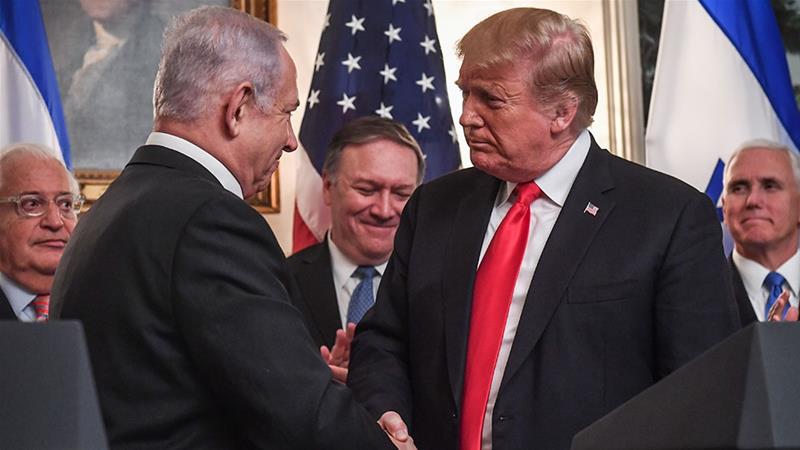
The statement comes after US President Donald Trump invited Israel’s Prime Minister Benjamin Netanyahu and his main political rival Benny Gantz, leader of the Blue and White Party, to Washington, DC. The Israeli leaders are set to hear details of the Trump Administration’s long-delayed peace plan ahead of an Israeli election in March of 2020, the third in less than a year. The launch of Trump’s plan to end the decades-long conflict between Israel and Palestine has been delayed numerous times over the past two years. The political aspects of the initiative have been closely guarded. Only the economic proposals, including a $50 billion investment plan put forward by President Trump’s close adviser Jared Kushner, have been unveiled. Palestinian leaders have thus far been critical of the plan, noting that it is one-sided in nature and, in effect, will legitimize Israel’s human rights abuses against the Palestinian people.
4. Supreme Court Allows Trump Administration to Implement Income-Based Restrictions on Immigration
In a major victory for the Trump Administration, the Supreme Court this week ruled in favor of President Trump’s proposal to implement income-based restrictions on immigration.
The Department of Homeland Security announced in August of 2019 that it would expand the definition of “public charge,” to be applied to people whose immigration to the US could be denied because of a concern that they would primarily depend on the government for their income. In the past, that was largely based on an assessment that an immigrant would be dependent upon cash benefits. But the Trump administration proposed to broaden the definition to include noncash benefits, such as Medicaid, supplemental nutrition and federal housing assistance. Anyone who would be likely to require that broader range of help for more than 12 months in any three-year period would be swept into the expanded definition. But in response to a lawsuit filed by New York, Connecticut, Vermont, New York City and immigrant aid groups, a federal judge in New York imposed a nationwide injunction, blocking the government from enforcing the broader rule. Congress never meant to consider the kind of time limit the government proposed, the judge said, and the test has always been whether an immigrant would become primarily dependent on cash benefits.
The government has long had the authority to block immigrants who were likely to become public charges, but the term has never been formally defined. The DHS proposed to fill that void, adding noncash benefits and such factors as age, financial resources, employment history, education, and health. The acting deputy secretary of the DHS, Ken Cuccinelli, said the proposed rules would reinforce “the ideals of self-sufficiency and personal responsibility, ensuring that immigrants are able to support themselves and become successful here in America.” Two federal appeals courts, the 9th Circuit in the West and the 4th Circuit in the Mid-Atlantic, declined to block the new rule. They noted that the law allows designating someone as inadmissible if “in the opinion of” the Secretary of Homeland Security, that person would be “likely at any time to become a public charge,” which the courts said gives the government broad authority.
A significant point of debate
within the American legal system is what type of jurisprudence approach will
bring about a fair and just interpretation of the law. This debate over the
proper legal approaches has led to many controversial and closely divided
Supreme Court decisions in the US and continues to polarize the current
justices in terms of ideological views. Two Supreme Court members who had
conflicting views regarding what they feel is the ideal legal approach for the
US are Stephen Breyer and the Antonin Scalia. Justice Breyer is generally
aligned with the liberal faction of the Court, whereas Justice Scalia was
largely considered to be the ideological voice of the conservative side of the
Court. To further explain their differences in legal approach, Justice Scalia
and Justice Breyer participated in a forum sponsored by the Federalist
Society and the American Constitutional Society in 2006 in which
they discussed their respective approaches to legal decision-making.
The first part of the discussion centered on the views of both Stephen Breyer and Antonin Scalia regarding what they feel is the ideal role of a judge. Justice Breyer stated that the proper task of a Supreme Court member is to not only apply the law but also to recognize that the main purpose of the law is to bring about justice. The concept of justice, according to Justice Breyer, is an inherent human desire and that applying the law in a way to maximize the pursuit of justice is the primary goal of all judges. Additionally, Justice Breyer also stated that judges do not seek to achieve justice through simply looking for the better result in each case, but through applying the law in every case, as individuals believe that is the most effective way to bring about justice under the law.
Justice Stephen Breyer then went on
to discuss some of the challenges that the Supreme Court faces when deciding on
specific legal issues. Justice Breyer pointed out that while the Supreme Court
rules unanimously on a sizeable percentage of cases, the cases that have led to
divisions on the Supreme Court were the ones that deal with statutory or
constitutional language that is open to interpretation. In cases dealing with
statutes and constitutional language that is open to interpretation, Justice
Breyer tends to rule in such a way that maximizes the rights of liberty and
justice under the law. Justice Breyer dealt with this issue in a case dealing
with the due process rights of an individual who claimed to have been wrongly
convicted of murder. When discussing the case, Justice Breyer stated that
because of the statute in question having vague language, he ruled in a way
that would serve to keep open the door to the rights of due process for
individuals who may have been wrongly convicted of a crime.
In contrast to Justice Stephen
Breyer, Justice Antonin Scalia expressed a contrary view regarding the question
of what the proper role of a judge is when determining a case. As opposed to
viewing the role of a judge as to provide for justice and equality under the
law, Justice Scalia feels that the ideal role of a judge is to interpret the
law as fairly and closely to the original intent of the author of the law as
possible. Additionally, Justice Scalia also stated that an ideal judge would
not let their judgment influence their decision regarding a particular case.
Scalia holds this belief because following such an approach would potentially
lead to unconstitutional and inconsistent results that would serve to prevent a
fair interpretation of the law.
Justice Antonin Scalia, noting that
this approach is not without its flaws, pointed to an example of a case in
which he had to rule on in a certain way which produced a result contrary to
his personal opinion due to his belief that the primary role of a judge is to
interpret the law. The case in question dealt with the adoption provision in
the Indian Child Welfare Act. According to Scalia, the main issue
in the case was whether or not a Native American child had to return to his
tribe if the tribe council said so despite living with a foster family for
several years. Justice Scalia ruled in favor of the tribal council, citing the
statutory language. Although Justice Scalia believed that the child’s parents
should have decided if their child were to remain with them, he ruled based on
the fact that the original intent of the statute required that a member of a
Native American tribe could not be adopted by anyone outside of a tribe without
the explicit permission of the tribal council.
Justices Stephen Breyer and Antonin
Scalia next discussed what they feel are the proper tools used by judges to
interpret legislative texts, in particular, the effectiveness of looking at the
overall purpose of the statute, and the consequences that a relevant to the
statute at issue. Justice Breyer expressed support for using the purpose and
consequence approaches in legal analysis for several reasons. The main reason
why Justice Breyer supports utilizing both tools is that he feels that they are
likely to keep a judge in touch with the legislature in statutory cases, which,
is in turn, in touch with the American people and their desire for both
justices under the law and the democratic rule of law. Addressing the question
of whether focusing on the purpose and consequence of a statute or piece of
legislation will make a judicial decision more subjective, Justice Breyer
stated that a judge can write down their legal reasoning and fully explain to
the reader in their court opinion the steps that led to their decision in a
case.
In contrast to Justice Stephen
Breyer, Justice Antonin Scalia expressed a different view regarding looking at
statutory and constitutional cases under the purpose and consequence lens. The
main problem with looking at the purpose and consequences in statutory and
constitutional cases, according to Justice Scalia, is that they invite
subjective judgment on the part of a judge. Justice Scalia stated that to
decide the purpose of a statute, it depends on what level of generality a judge
looks at it. Scalia further argued that considering the purpose of a statute
leads to the question of whether the limitations of the statute should be
applied and if the limitations are a part of the inherent nature of the
statute. According to Justice Scalia, any limitations are a part of the inherent
nature of the statute. To consider the purpose of a statute, according to
Justice Scalia, both asks the question and assumes that limitations in a
statute were not intended because they would limit the purpose of the statute.
Regarding the question of whether a
judge should consider the consequences of a statute or law, Justice Antonin
Scalia feels that a full consideration of the consequences will serve to reduce
the objectivity of the judiciary. When it comes to considering consequences,
Justice Scalia feels there is an open question as to how a judge determines what
exactly makes a legal consequence good or bad in nature. This situation,
according to Justice Scalia, could lead to a situation where a judge who likes
the consequences of a particular rule of law will interpret a case one way, and
a judge who does not like the consequences will interpret the case in another,
completely different way. Following this logic, Justice Scalia believes this
approach will lend itself to subjectivity, which in his mind, is not the proper
role of a judge.
Justices Stephen Breyer and Antonin
Scalia next addressed the question of whether they believe in the idea that the
judges should change their interpretation of the US Constitution over time as
society changes. Justice Scalia expressed reluctance to endorse the idea of a
“living constitution.” Justice Scalia pointed out that the issue with
the idea is not related to figuring out how the Constitution applies to
contemporary society, but with taking preexisting realities present during the
time in which the Constitution was initially written and attempting to alter
the original intent of the Framers to reflect contemporary society. Justice
Scalia cites to contemporary policy and judicial debates regarding topics such
as abortion rights, the death penalty, and same-sex marriage. Justice Scalia
mentions that all three of these concepts existed at the time the Constitution
was adopted and that no person believed at the time that they should have been
explicitly referenced in the Constitution. Justice Scalia states that people
now believe that either allowing or not allowing these things is not in accord
with the Constitution. Because these three social issues are not explicitly
referenced in the Constitution, Scalia feels that the onus of responsibility to
alter the Constitution to either allow or disallow them lays on the part of the
American people as opposed to unelected judges. Giving the American people the
responsibility to put forward changes in the Constitution, according to Scalia,
also serves as a check on unrestrained judicial power and further promotes
democracy and a republican form of government.
In contrast to Justice Antonin
Scalia, Justice Stephen Breyer expressed a degree of support for the notion of
a “living constitution.” The main part of Justice Breyer’s argument
is that because the nature and context of American society at the time the
Constitution was written was dramatically different from today, the only way to
accurately apply the Constitution today is to adapt it based on changing
societal circumstances. As an example to illustrate how society changed since
the ratification of the Constitution, Justice Breyer cites the Commerce Clause
and the First Amendment. For example, at the time the Constitution was written,
Framers could not have envisioned societal changes such as the advent of mass
communication tools, advances in transportation methods, and the rise in
globalization and how these advances would have impacted future interpretations
of the Commerce Clause and the First Amendment. Despite the fact that the
Framers could not have envisioned the societal changes when writing these
provisions, Justice Breyer believes that there is an innate value written into
these constitutional provisions that remains relevant to contemporary legal
issues.
Another discussion between Justices
Antonin Scalia and Stephen Breyer centered around their views regarding the use
of the historical approach in constitutional interpretation. Justice Breyer
generally expressed a mixed opinion regarding the historical approach. While
the historical approach, according to Justice Breyer, does not take into
account individual changes in values since the US Constitution was written, it
can sometimes be useful in helping judges settling a complex case with little
modern precedent. Justice Breyer also stated that the historical approach was
useful in informing his decision in a case dealing with the question of whether
a school voucher program violated the Establishment Clause because the voucher
program allowed parents to send their children to religious schools. Justice
Scalia similarly agreed that the historical approach has its share of merits in
enabling judges to determine case. For example, Justice Scalia stated that many
current judges tend to ignore the original meaning of the Constitution and
statutes. This lack of understanding the original meaning of the Constitution
and statues, according to Justice Scalia, leads to inaccurate opinions not in
accord with the original intent of the Constitution.
When the question was raised if
either of the Justices considered themselves to be “activist judges,” both
Antonin Scalia and Stephen Breyer agreed that the term was useless in
determining how a judge rules on certain legal issues. Justices Breyer and
Scalia stated that the term activist judge is used as an insult describing
someone who is substituting their own opinion for what the Constitution
requires and takes away from the role of a judge to apply different results to
a Constitutional issue in order to get the result that is most in accord with
the main goals of the American legal system. Additionally, Justice Breyer
mentions that many cases that were seen as “activist” during the time in which
they were decided are now considered to be the correct application of the law.
As an example, Justice Breyer cites the Brown v. Board of Education decision
as a case originally considered to be activist in nature, but is now considered
to be the correct application of the Equal Protection Clause
Regarding the need to decide cases
in a narrow, unanimous manner, Justice Antonin Scalia rejected this approach,
citing his belief that narrow decisions have become somewhat commonplace since
the appointment of John Roberts as Chief Justice. Justice Scalia expressed
opposition to this approach because it would lead to less firm opinions that
could potentially be overturned by future cases. Additionally, Justice Scalia
stated that these narrow opinions would be of little use to the legal
profession in the future. Justice Stephen Breyer expressed agreement with
Justice Scalia, stating that judges want to have unanimous opinions for the
sake of having the Court appear to be in agreement. The only exception to this
rule, according to Justice Breyer, would be in cases dealing with technological
issues. According to Justice Breyer, a broader decision regarding a technological
issue could make some rule of law that could potentially become either obstacle
to one party in a case, or ultimately be beneficial to the other party of a
case. This scenario, Justice Breyer states, would go against the belief that
the main purpose of the law is to promote the equal distribution of
justice.
The legal theory most in alignment
with Justice Antonin Scalia’s views is Originalism. Originalism is a legal
approach in which a judge interprets the Constitution in line with what it
meant at the time of its drafting. There are several benefits to this approach
to legal reasoning, according to proponents. The first reason is that
Originalists believe that disregarding the reasoning behind the Framers writing
specific Constitutional provisions would call into question the reasoning
behind their drafting the Constitution. Proponents of Originalism also argue
that by scrutinizing of the intent of the Framers, judges can deduce
“constitutional truths” that they can apply to cases, which serves to produce
neutral positions of law and eliminates value-laden decisions, and that the
application of Originalist theory in judicial decisions fosters stability of
law in an increasingly changing society (Epstein and Walker, 24-26).
Justice Antonin Scalia can be
considered a proponent of Originalist legal theory for several reasons. The
aspect of Justice Scalia’s the judicial philosophy that is aligned with the
notion of Originalism is the fact that he interprets the words of any statute
or constitutional provision that is in question and interprets them based on
what they would have meant at the time the Constitution was originally written.
Additionally, Justice Scalia also feels that by focusing on the reasoning why
the Framers put certain provisions in the Constitution or federal statues, a
judge cannot objectively determine the applicable rule of law in a particular
case and will ultimately come to a legal conclusion that is not in accord with
the original intent of the Framers of the Constitution.
In contrast to the theory of
Originalism, the legal approach that Justice Stephen Breyer follows is
Pragmatism. In its simplest form, Pragmatism is the belief that the Supreme Court
does not always have to feel bound to follow past precedents. Some of the
reasons why a court may not appear to be bound by previous rulings are due to
changed circumstances that make the prior rule of law inconsistent, a ruling
that was made in error, or changes in the interpretation of Constitutional
provisions or statute at other court levels. Additionally, Pragmatic legal
theory may require judges to select constitutional interpretations that have
the most ideal consequences based on the legal issue in play in the case they
are working with (Epstein and Walker, 31).
Justice Stephen Breyer can be
characterized as a proponent of legal Pragmatism. The main reason why Justice
Breyer can be identified with legal Pragmatism is that in his decisions on numerous
legal issues, he tends to focus on the question of what application of the law
will result in the most ideal consequences in the case and promote the
essential values of the American legal system. Additionally, Justice Breyer
follows the belief that because society changes over time, prior legal
precedent may not be applicable in the present day and may serve as a hindrance
to fulfilling the goals of the American legal system. This belief is in accord
with the idea promoted by Pragmatism that courts should not be bound by
inconsistent rulings that came about due to societal changes.
In conclusion, the issues of constitutional and statutory interpretation continue to remain a much-debated issue among legal scholars and judges alike. Two Supreme Court members with divergent views on these issues were Stephen Breyer and Antonin Scalia. Justice Breyer generally aligned with the theory of legal Pragmatism, whereas Justice Scalia identified as an Originalist. Their different views on legal philosophy led to numerous closely divided decisions and have defined the American legal system for many years to come. Despite holding different philosophical views, Justices Scalia and Breyer both believed that the historical approach in determining case outcomes is beneficial in certain respects. Additionally, Justice Breyer and Justice Scalia concluded that broad Supreme Court decisions are beneficial because they result in firmer opinions on legal issues and that the application of their respective approaches would serve to promote democracy and safeguard the American system of government from abuses of power by either branch of government. Moreover, both Justice Scalia and Breyer expressed confidence in the American legal system and that the ideas of justice, equality, and fairness under the law will continue to endure.
Here are the main events that occurred in Politics this week:
1. Impeachment Trial Of President Donald Trump Commences
The impeachment trial against President Donald Trump officially commenced this week in the Senate.
In what may prove a relatively swift proceeding, US senators began to decide on January 21 whether to take the unprecedented step of removing a sitting president from office as President Donald Trump’s impeachment trial got underway. While senators in the Republican-held chamber have promised to pursue impartial justice as jurors, the proceeding was fraught with partisan rancor from the start as rules unveiled by Senate Majority Leader Mitch McConnell set a speedy timetable that could see the third impeachment trial in US history concluded ahead of the President’s State of the Union address in two weeks. Senator McConnell had previously indicated that he would use the impeachment trial of President Bill Clinton as a blueprint for proceedings. The rules for the Clinton trial were passed by the chamber in a unanimous vote, but critical differences in McConnell’s resolution made such a display of bipartisanship unlikely this time around. The proposed rules initially put forward by McConnell were a sharp departure from those that governed the Clinton impeachment trial. However, by the time the resolution was read out in the Senate, a couple of crucial changes had brought proceedings more in line with those used in the 1999 trial. The initial draft rules would have given both House impeachment managers and the president’s defense team 24 hours to make their case to the chamber over two days. With proceedings set to be at 1 PM each day, this could have seen arguments continue until well past midnight and be wrapped up by the weekend.
Senate Minority Leader Chuck Schumer accused McConnell of orchestrating a “cover-up” and said that the proposed rules would see key evidence heard “in the wee hours of the morning.” This was later extended to give both sides three days to present their arguments, mirroring the proceedings of the Clinton trial. In another about-face, the draft resolution published would have required a separate vote at the tail end of the trial to admit evidence gathered by House impeachment investigators. But the resolution put forth would see the House’s evidence automatically entered into the record of the Senate trial, as happened during the Clinton impeachment trial. The changes were made after Republican senators, including possible swing voter Susan Collins of Maine, raised concerns about the two provisions, according to the New York Times.
Once both sides have presented their evidence, Senators will have 16 hours to put their questions to either side, which is likely to take place early next week. Questions will be submitted through Chief Justice John Roberts, who will preside over the trial. After four more hours of arguments, lawmakers will weigh whether to subpoena further witnesses or documents. The Democrats are keen to hear from witnesses close to the President such as his acting chief of staff Mick Mulvaney and former National Security Advisor John Bolton. They have argued that these senior officials or ex-officials could give key evidence about President Donald Trump’s involvement in efforts to pressure Ukrainian authorities to announce corruption investigations that could aid his 2020 reelection chances. It is unclear whether Senate Minority Leader Chuck Schumer would be able to convince the four Republican votes needed to support calling further witnesses, as well a to convince wavering Democrats such as Joe Manchin to support such an action.
In a 110-page brief submitted to the Senate, President Donald Trump’s lawyers outlined their defense of the President, describing the impeachment as a “brazenly political act.” Without disputing the underlying facts of the case, the President’s legal defense team argued that the articles of impeachment were baseless, as he did not break the law and had acted within the bounds of executive privilege. Legal scholars have challenged the notion that an impeachable offense must also be a criminal one. Last week the Government Accountability Office, an independent federal watchdog, concluded that the President had broken the law by temporarily withholding almost $400 million in military aid to Ukraine, which had already been appropriated by Congress. The decision was just the latest new development to emerge in recent weeks.
2. Chinese Economic Growth Slows To Three-Decade Low In 2019
According to data released this week, China’s economic growth rate declined to a three-decade law in 2019.
Chinese economic growth slowed to 6.1% last year, according to figures released on January 15, as sagging trade and business confidence pulled the country’s growth to its lowest level in nearly three decades. The slowdown, which has become more severe since the economy peaked in 2011 following years of double-digit growth, rippled through many sectors of the Chinese economy last year and was made worse by the Trump administration’s trade pressure and tariffs. Even so, the growth rate of 6.1%, down from a revised 6.6% rate for 2018, fell within the government’s target of 6% to 6.5% for 2019. China’s official statistics bureau described the national economy as being “generally stable” last year. The economy grew by 6% in the fourth quarter. China’s main development targets were met, the National Bureau of Statistics said in its economic report, which it said “laid a solid foundation for completing the building of a moderately prosperous society,” invoking a favored term of President Xi Jinping to describe his goal of building a solid middle class.
The government is counting on improving consumer confidence and consumption to play a major role in boosting growth this year, Ning Jizhe, China’s chief statistician, said in a statement. The government-led stimulus is becoming increasingly apparent in economic figures and anecdotal signs of new projects in China and authorities say they are working to lower borrowing costs. But they have also refrained from flooding the economy with money that might have adverse effects in other sectors of the economy, for example, further inflating the value of homes.
3. Coupled With A Series Of High Profiles Endorsements, Bernie Sanders Surges In Democratic Primary Polling
Coupled with a series of high-profile endorsements, Senator Bernie Sanders surged in the polls for the Democratic nomination this week.
Amid a series of endorsements from key groups and allies in crucial primary states this week, new national polling shows Senator Bernie Sanders now in the lead over former Vice President Joe Biden and the rest of the Democratic primary field. According to the Reuters/Ipsos poll, Sanders received support from 20% of registered Democratic primary voters surveyed. That figure was enough to edge out former Vice President Biden who received 19% and the 12% of voters who say they back Senator Elizabeth Warren. Rounding out the top five finishers in the nationwide poll, conducted this week before January 15, were former New York City Mayor Mike Bloomberg (9%) and former South Bend, Indiana Mayor Pete Buttigieg (6%).
While the poll has a 5-point margin of error that puts Joe Biden and Bernie Sanders in a statistical tie, the results show Sanders gaining steam and Joe Biden remaining flat compared to a similar poll taken last week. In addition, Reuters noted in its reporting, “The poll shows that standing does not appear to have been hurt by his recent confrontation with Elizabeth Warren” that captured political headlines throughout the week. “Warren, who is aligned with Sanders on a variety of issues, has accused him of telling her in 2018 that a woman could not be elected president,” noted Reuters. “Sanders disputes that claim, and the two sniped at each other after this week’s presidential debate about how they were framing the conversation in public.”
Bernie Sanders has been experiencing a surge in both national and state-level polling for weeks, a show of momentum that coincides with a raft of new endorsements by national groups and allies in key primary states that include Iowa, New Hampshire, Nevada, California, and Wisconsin. The Clark County Black Caucus in Nevada officially endorsed Sanders. The CCBC represents members in the state’s largest county and cited Sanders’ commitment to social, economic, and racial justice as the key reason for offering their support. “Bernie Sanders has been a lifelong advocate for civil rights and economic justice. His presidential campaign goes the furthest in addressing issues that impact the African American community nationally and here in Nevada,” caucus chairwoman Yvette Williams said in a statement. “As representatives of this community, CCBC looks forward to working with Sen. Bernie Sanders to ensure our political system works for everyone.”
In addition to the endorsements coming from the key early primary state of Nevada, Congressman Mark Pocan, a Democrat from the key mid-western state of Wisconsin who also co-chairs the Congressional Progressive Caucus, issued his endorsement of Sanders. “Sanders’ authenticity, honesty, and movement for equality is the antidote our nation needs now,” Pocan said. “I am proud to endorse a candidate that shares my progressive values and has long been an advocate for the issues Wisconsinites care most about. From health care to a living wage, it’s time we work for working people, and with Bernie Sanders as president, we can do just that.
Thus far, Bernie Sanders continues to poll the best against President Donald Trump in general election polling. According to a recent SurveyUSA poll, Sanders leads President Trump by 9% in a prospective general election matchup (52%-43%). Next was Former Vice President Joe Biden at 50 percent to Trump’s 43 percent, a seven-point lead. Michael Bloomberg, the media and financial data billionaire, also led Trump by seven points at 49 percent to 42 percent. Democratic Massachusetts Senator Elizabeth Warren leads Trump 48 percent to 45 percent, a three-point advantage. Pete Buttigieg, the former mayor of South Bend, Indiana, is also ahead of Trump by three points, at 47 percent to 44 percent. The tech entrepreneur Andrew Yang is ahead of Trump by two points, at 46 percent to 44 percent. The billionaire hedge fund manager Tom Steyer is tied with Trump at 44 percent apiece, Democratic Minnesota Senator Amy Klobuchar loses to Trump by two points at 43 percent to 45 percent. Democratic Hawaii Congresswoman Tulsi Gabbard, who is generally a more conservative Democrat and opposed to the impeachment efforts against President Trump, loses to Trump by five points at 39 percent to 44 percent.
4. Recently Released Economic Data Points To Moderate US Economic Growth In Late 2019
According to data released on January 16, the US economy remains strong going into 2020, with moderate levels of growth in a majority of economic sectors reported.
According to a January 16 report, US retail sales increased for a third straight month in December, with households buying a range of goods even as they cut back on purchases of motor vehicles, suggesting the economy maintained a moderate growth pace at the end of 2019. Other data released showed the number of Americans filing claims for unemployment benefits dropped for a fifth straight week last week, indicating the labor market remained strong despite a recent slowdown in job growth. These indices should help sustain consumer spending and keep the longest economic expansion on record, now in its 11th year, on track.
The Federal Reserve on January 15 described the economy as having continued to expand modestly in the final six weeks of 2019. The Federal Reserve has signaled that it could keep interest rates unchanged at least through this year after reducing borrowing costs three times in 2019. “There’s more fuel in the tank of this economic expansion,” said Chris Rupkey, chief economist at MUFG in New York. The Commerce Department said retail sales increased 0.3% last month. Data for November was revised up to show retail sales gaining 0.3% instead of rising 0.2% as previously reported. Economists polled by Reuters had forecast retail sales would gain 0.3% in December. Compared to December of last year, retail sales accelerated by 5.8%. Sales increased by 3.6% in 2019.
In a separate report, the Labor Department said initial claims for state unemployment benefits dropped 10,000 to a seasonally adjusted 204,000 for the week ended January 11. Economists had forecast claims would rise to 216,000 in the latest week. While claims are trending lower, some worrying signs are emerging. The claims data showed layoffs in manufacturing, transportation and warehousing, construction, educational services and accommodation, and food services industries in late 2019 and early 2020. Some of the job losses in manufacturing, which were spread across at least eight states, could be related to the 18-month trade war between the US and China, which has hurt business confidence and undercut capital expenditure. US President Donald Trump and Chinese Vice Premier Liu He signed a “Phase 1” trade deal on January 14, a first step toward defusing the trade war. But with U.S. duties remaining in effect on $360 billion of Chinese imports, about two-thirds of the total, economists do not expect the initial deal to provide a boost to manufacturing, which is in recession.
Here are the main events that occurred in Politics this week:
1. House of Representatives Votes To Send Trump Impeachment Articles To Senate
The House of Representatives this week voted to send the impeachment articles against President Donald Trump to the Senate.
The House of Representatives voted on January 15 to send the impeachment articles against President Donald Trump to the Senate, and Speaker Nancy Pelosi announced the seven House Democrats who will serve as the “managers” in the trial, which is set to start next week. The measure passed 228-193, with one Democrat opposing the resolution, Congressman Collin Peterson of Minnesota, who also voted last month against both articles of impeachment. The two articles, charging abuse of power and obstruction of Congress, were signed by Speaker Pelosi at a historic engrossment ceremony and then hand-delivered to the Senate in a procession through the Capitol that was led by the House clerk and sergeant at arms and included the House managers. The trial is expected to begin on January 21. “This is about the Constitution of the United States, and it’s important for the president to know and Putin to know that American voters, voters in America, should decide who our president is,” Speaker Pelosi said, referring to the Russian president at a press conference with the managers. Congressman Jerrold Nadler said on the floor ahead of the resolution vote that Speaker Pelosi had “led our fight for a fair trial in the Senate.” “Above all, a fair trial must include additional documents and relevant witnesses,” he said. “The American people have common sense. They know that any trial that does not allow witnesses is not a trial. It is a cover-up.
During House Speaker Nancy Pelosi’s news conference, President Donald Trump called the impeachment a “Con Job” in a Twitter post and Senate Majority Leader Mitch McConnell (R-KY), spoke on the Senate floor. President Trump told Republican lawmakers who attended the signing of his trade deal with China, including Congressman Kevin McCarthy (R-CA), the minority leader, that he would understand if they had to leave for the vote on the impeachment resolution. “They have a hoax going on over there, so let’s take care of it,” Trump said. “It undoes the people’s decision in a national election,” Senator McConnell said. “Going about it in this subjective, unfair and rushed way is corrosive to our institutions. It hurts national unity, and it virtually guarantees — guarantees, that future Houses of either party will feel free, free to impeach any future president because they don’t like him.”
Here we go again, another Con Job by the Do Nothing Democrats. All of this work was supposed to be done by the House, not the Senate!
House Speaker Nancy Pelosi also reiterated her call for witness testimony at the trial. “Time has been our friend in all of this, because it has yielded incriminating evidence, more truth into the public domain,” Speaker Pelosi said. Earlier, she spoke about newly released documents linking Trump directly to his attorney Rudy Giuliani’s political digging in Ukraine, saying they highlighted the need for witness testimony at the impeachment trial. “There can be no full & fair trial in the Senate if Leader McConnell blocks the Senate from hearing witnesses and obtaining documents President Trump is covering up,” Pelosi said in one Twitter post. “The President has fought tooth-and-nail to keep thousands of documents away from the public,” the speaker said in another Twitter post. “And no wonder — each time new pieces come out, they show President Trump right at the center of the effort to pressure Ukraine to investigate his political rivals.”
The documents, part of the evidence turned over to House impeachment investigators by lawyers for Lev Parnas, a Giuliani associate who is awaiting trial on campaign finance charges, include a letter from Giuliani requesting a private meeting with Volodymyr Zelenskiy, then the president-elect of Ukraine, with Trump’s “knowledge and consent.” The letter, written on Giuliani’s letterhead, was dated May 10, 2018. President Trump has previously tried to distance himself from his attorney’s Ukraine work, saying in November, “I didn’t direct him.” But the documents, which were released on January 14 by House Democrats, appear to bolster House Democrats’ claim that Trump was more than aware of Giuliani’s efforts to find dirt in Ukraine on political rival Joe Biden and the Democratic National Committee.
2. Remaining Parties To JCPOA Trigger Dispute Mechanism, Which Could Lead To The Unraveling Of Agreement
The remaining parties to the JCPOA agreement this week triggered the agreement’s dispute mechanism in response to the Iranian government reducing some of its commitments under the accord in recent months.
On January 14, France, Germany and the UK have triggereda dispute mechanism in the Iran nuclear deal that could lead to the further unraveling of the pact, just days after the Iranian government took another step back from some of its commitments under the landmark agreement. The foreign ministers of the three European signatories to the nuclear pact issued a statement, saying that while they remain committed to the Joint Comprehensive Plan of Action (JCPOA), as the deal is formally known, the dispute mechanismoutlined in Paragraph 36 had been activated. German Foreign Minister Heiko Maas said in a statement that the three countries “could no longer leave the growing Iranian violations of the nuclear agreement unanswered.” “After intensive consultations with France and Great Britain, we, therefore, decided to trigger the dispute settlement mechanism provided for in the agreement. Our goal is clear: we want to preserve the agreement and come to a diplomatic solution within the agreement,” Maas said.
Iran’s Foreign Ministry responded to the announcement by saying that it “will give decisive response to unconstructive actions by the three countries.” Under the mechanism, the Joint Commission, which contains representatives from every signatory and is designed to safeguard the deal, will now review the situation. The commission will have 15 days to resolve the situation. If it cannot reach a consensus, the issue would be discussed by the foreign ministers of the signatory countries and, if either side requests it, by a special advisory board. If there is still no agreement after a further 20 days, the agreement could face its end. UK Prime Minister Boris Johnson said during the meeting that “if we are going to get rid of [the nuclear deal], then we need a replacement.” “The problem with the agreement is that from the American perspective is that it is a flawed agreement, it is expired and plus it was negotiated by President Obama and from their point of view it has many, many faults,” Johnson said, adding that it could be replaced “with the Trump deal.” “That’s what we need to see and I think that will be a great way forward,” he added.
3. President Donald Trump Signs Interm Trade Agreement With China
After nearly two years of negotiations, the Trump Administration signed an interim trade agreement with China, signaling a potential truce in the ongoing trade war between both countries.
President Donald Trump signed an interim trade agreement with China on January 15, portraying it as a major win for American business ahead of his 2020 reelection bid. The move was the first tangible sign of de-escalation in a trade dispute that has rattled the world’s largest economies for nearly two years. “As a candidate for president, I vowed strong action — it’s probably the biggest reason I ran for president,” President Trump said in a freewheeling speech alongside Chinese Vice Premier Liu He in the East Room of the White House. “I more than kept my promise. Now our efforts have yielded a transformative deal that will bring tremendous benefits to both countries.”
The so-called phase-one deal has been widely welcomed by companies, investors, and policymakers who have warned that punitive tariffs have upended global supply chains through higher costs and cast deep uncertainty on business plans. But it is only the start of negotiations to defuse a broader economic standoff between the two sides. As part of the phase-one agreement, which was announced late last year, the Trump administration agreed to reduce a portion of tariff rates for China if it adjusted some of the ways it manages its state-run economy.
The White House had said the 86-page text would include commitments from China on American agricultural purchases, tighter intellectual-property protections, increased scrutiny of currency movements, and a more open financial sector. More details of the agreement were set to be released on the day of the signing ceremony. But critics were swift to question whether those concessions were enough to justify the costs that have piled up from tariffs, which researchers recently concluded fell almost entirely on Americans. “By now we should recognize this as the usual Trump process: create chaos, end chaos, declare a great victory,” said Jared Bernstein, who was a senior economist in the Obama administration. “In reality, there’s no victory here, just some squishy, minor promises from China, unnecessarily disrupted trade flows, and assorted pain for no gain.” Trump was also met with pushback from unlikely critics who said the phase-one deal left out economic aggressions at the center of a Section 301 investigation that ignited the dispute. The second round of negotiations could address those issues, including large-scale subsidies China provides to companies.
Meanwhile, tariffs are likely to remain on thousands of products. The Trump administration has agreed to lower tariffs on $110 billion worth of products targeted in September, but tariff rates of separate tranches with a total trade value of roughly $250 billion will remain. Trump suggested that those tariffs would be lifted following a phase-two deal with China, which he has said is unlikely to be finalized until after the November election. However, it was unclear whether tariff rollbacks had been officially agreed upon. “There is no agreement for future reduction in tariffs,” Treasury Secretary Steve Mnuchin and US Trade Representative Robert Lighthizer said in a joint statement to Business Insider on Tuesday. In a letter to Trump this week, Scott N. Paul, the president of Alliance for American Manufacturing, said that “nearly all the major structural issues” were unresolved. The factory group has supported tariffs and opposed a process designed to allow some companies to receive exemptions. “For American manufacturing and its workers, the phase one agreement is completely inadequate,” Paul said. “The agreement does not level the playing field for American workers in the US or global market.”
4. Russian Government Resigns As Vladimir Putin Proposes Reforms To Extend His Grip On Power
The Russian government resigned on Wednesday after President Vladimir Putin proposed a series of constitutional reforms, that would shift the balance of power in the country.
Russian President Vladimir Putin on January 15 launched a major political shake-up, replacing his prime minister Dmitry Medvedev and proposing a series of changes to Russia’s constitution, in what was seen as an attempt to create options for retaining power after his presidential term expires in 2024. President Putin used his annual state of the nation address in Moscow to announce several proposed amendments to the constitution, which would transfer power to Russia’s parliament and which he said would be put to a national vote. Then a few hours after the speech, Prime Minister Medvedev announced he and the entire cabinet were stepping down at Putin’s request. Putin said Medvedev, a long-time ally who held the Russian Presidency for him between 2008 and 2012, will now become deputy chairman of Russia’s national security council.
Observers immediately interpreted the moves that stunned Russians as part of efforts by Vladimir Putin to prepare for his looming transition in 2024, when constitutional term limits mean he must leave the presidency. At 67, Putin has ruled Russia for two decades, and the question of how he will handle the deadline when it arrives in four years’ time has been growing ever larger recently. In his speech, Putin framed the changes as necessary to give the parliament greater responsibility for policy-making, but in reality, experts said the proposed changes seemed designed to open up possibilities for allowing him to stay in power after leaving office and to weaken any successor in the presidency.
Dimitry Medvedev, who announced the cabinet’s resignation while with Putin at a meeting broadcast on state television, said he was stepping down so Putin could appoint a new government to help carry through the constitutional reforms. “In this context it’s obvious that we as the government of the Russian Federation must give the president of our country the opportunity to do everything necessary for this decision,” Medvedev said. Shortly afterward Putin named Medvedev’s successor as prime minister, Mikhail Mishustin, the relatively little-known head of the Federal Tax Service, saying his candidacy had been sent to parliament for approval. Mishustin is not thought of as a major power broker or a member of Putin’s inner circle, although as head of the tax agency he has been praised for overhauling Russia’s backward tax collection system, introducing data technologies that have made it one of the most advanced in the world.
The changes to the constitution that Vladimir Putin suggested in his speech would transfer powers away from the presidency and strengthen the parliament, known as the Duma, as well as the Federation Council, Russia’s equivalent of the Senate, and the Supreme Court. One key change would take the power of selecting a cabinet from the presidency and pass it to the parliament. Currently, the prime minister and ministers are appointed by the president. But under Putin’s proposal, parliament would now select the prime minister who would then nominate his own ministers for approval by members of parliament. Another change would grant the Federation Council the authority to confirm the appointments of the head of Russia’s security agencies. The parliament’s deputy speaker, Alexander Zhukov told reporters after the speech that the national vote on the amendments would likely take place this year, perhaps in September.
Vladimir Putin has long avoided saying whether he will stay on after 2024, but experts said the proposed changes indicated the potential routes the Russian government was now considering for getting out of his transition problem. Russia’s constitution currently sets a two consecutive term limit on presidencies, and Putin, who has effectively ruled the country since 1999, is now in his fourth. In 2008, he sidestepped the limit on consecutive terms by temporarily passing the presidency to Medvedev while he became prime minister before returning to office in 2012. But Putin has suggested this time he will not repeat the trick and suggested that the word “consecutive” be removed from the constitutional article on term limits.
Happy 2020! Here are the main events that occurred in Politics this week:
1. Iranian General Qassem Soleimani Killed In US Airstrike In Iraq
The Trump administration this week announced this week that it had killed Qassem Soleimani, the commander of the Iranian Revolutionary Guard Corps Quds Force in an airstrike in Iraq.
The US killed General Qassem Soleimani, the commander of the Iranian Revolutionary Guard Corps Quds Force in a drone strike in Iraq early on January 3. “At the direction of the President, the U.S. military has taken decisive defensive action to protect U.S. personnel abroad,” the Defense Department said in a statement announcing the death of General Qassem Soleimani, a commander of Iran’s military forces in Iraq, Syria, Lebanon and elsewhere throughout the Middle East. The deadly airstrike will likely raise tensions between the US and Iran, which were already heightened by the New Year’s attacks on the US Embassy compound in Baghdad. Another man, Abu Mahdi al-Muhandis, said to be the deputy of the militias known as the Popular Mobilization Units (PMU) and a close adviser to Soleimani, was also killed in the airstrike near Baghdad’s airport, according to Iraqi television reports. The PMU tweeted that al-Muhandis and Soleimani were killed when their vehicle was hit on the road to the airport.
Generally considered by many to be one of the most well-known military tacticians in recent history, Qasem Soleimani was born in 1957 in Iran’s southeastern province of Kerman. He was raised in a poor farmer’s family and worked as a construction worker. Soleimani continued his education until high school and then worked in Kerman city municipality until the Iranian Revolution broke out in 1978. After the conclusion of the Iranian Revolution in February of 1979, Soleimani joined the Revolutionary Guards in the Summer of 1979 shortly after its founding by Iranian Supreme Leader Ayatollah Ruhollah Khomeini. Soleimani then joined the Iranian forces in its war against Iraq between 1980 and 1988, where he was an officer for an Iranian military service company. After the Iranian victory over Iraq in 1988, Soleimani was appointed as the commander of the Quds Force. In this role, Soleimani was tasked to protect the Iranian revolution against any coup attempt in addition to training several anti-US/anti-Israel militia groups such as Hamas, Hezbollah, and the Houthis and working to combat Sunni terrorist groups such as ISIS and Al-Qaeda.
The US strike comes amid heightened tensions between the US and Iran over rocket attacks in Iraq that US officials had blamed on Iranian-backed forces, as well as the attempted breach of the embassy compound in Iraq. The conflict at the embassy occurred after US fighter jets struck weapons depots in Iraq and Syria that the US said were linked with a group called Kataeb Hezbollah, which it blames for attacks on bases of the US-led coalition fighting ISIS in recent months. At least 25 militia fighters were killed in the airstrikes. The strikes followed the death of an American contractor who was killed on December 27 in a rocket attack on an Iraqi military base in Kirkuk that also hosted coalition forces. Several American service members were also injured. The Defense Department said in announcing the strike that Soleimani had orchestrated attacks on coalition bases in Iraq over several months, including the December 27 attack that killed the contractor. He “also approved the attacks on the US Embassy in Baghdad that took place this week,” the Defense Department said in the statement.
Iranian Foreign Minister Javad Zarif called the US action “an extremely dangerous and foolish escalation.” “The U.S. bears responsibility for all consequences of its rogue adventurism,” Zarif wrote on Twitter. The former head of Iran’s Islamic Revolutionary Guard Corps, Mohsen Rezaee, vowed “strong revenge against the United States” on Twitter. General Hossein Dehghan, a top military adviser to Iran’s Supreme Leader Ayatollah Khamenei, further stated that his country planned to retaliate against the US military targets for the killing of Qasem Soleimani. “The response for sure will be military and against military sites,” he said. “It was America that has started the war. Therefore, they should accept appropriate reactions to their actions,” Dehghan argued.
The US' act of international terrorism, targeting & assassinating General Soleimani—THE most effective force fighting Daesh (ISIS), Al Nusrah, Al Qaeda et al—is extremely dangerous & a foolish escalation.
The US bears responsibility for all consequences of its rogue adventurism.
President Donald Trump warned Iran in a Twitter thread not to retaliate for the US strike, threatening that his administration had a list of 52 cultural sites in Iran that would be targeted if there was any military response. “The United States just spent Two Trillion Dollars on Military Equipment,” President Trump said in a follow-up tweet. “We are the biggest and by far the BEST in the World! If Iran attacks an American Base or any American, we will be sending some of that brand new beautiful equipment their way…and without hesitation!” Many critics have raised alarm with President Trump’s threat to strike Iranian cultural sites in retaliation against a potential Iranian strike against American forces in the Middle East, noting that such a decision would be considered a war crime under international law and would do little to defuse the long-standing tensions between the US and Iran and only serve as further justification for the Iranian government to carry out human rights abuses against its own people under the guise of “national security.”
2. In Response To The Killing Of Qassem Soleimani, Iran Announces That It Will Withdraw From JCPOA
In response to the killing of Qassem Soleimani, the Iranian government announced that it will withdraw from the JCPOA.
Iran has announced that it will withdraw from the Joint Comprehensive Plan of Action (JCPOA), commonly known as the Iran nuclear deal, following the US targeted strike that killed the country’s Quds Force Commander Qassem Soleimani in Iraq. “From now on Iran will no longer commit to any limits on the level of uranium enrichment, stockpile of nuclear fuel and also nuclear research and development,” Iran’s local English daily The Tehran Times reported, citing a government announcement. Iran’s Foreign Minister Javad Zarif later tweeted about his country’s decision to end its commitments under the deal, arguing that other signatories were to blame. “As 5th & final REMEDIAL step under paragraph 36 of JCPOA, there will no longer be any restriction on the number of centrifuges,” Zarif wrote. “This step is within JCPOA & all 5 steps are reversible upon EFFECTIVE implementation of reciprocal obligations,” he added.
Although President Donald Trump walked away from the landmark nuclear treaty in May 2018, Germany, France, Italy, the United Kingdom, Russia, and China attempted to keep the international agreement alive. The deal offered Iran sanctions relief and investment in exchange for curbing its nuclear program. Consistent reports from the United Nations’ atomic watchdog had found that Iran remained in compliance with the JCPOA’s terms, but Trump had long been critical of the agreement, arguing that it emboldened Iran to act against American interests throughout the region. Iran remained committed to the pact until May 2019, despite the reimplementation of American sanctions, as it negotiated with international leaders to preserve the agreement. However, it began taking steps to disregard some of the deal’s terms last year, one year after the US withdrawal.
https://youtu.be/Jwh_ZApsa3Q
3. Iran Launches Missile Strikes Against US Military Bases In Iraq In Response To Qasem Soleimani’s Killing
The Iranian military this week launched wide-scale airstrikes against US military installations in Iraq in response to the death of Qassem Soleimani in an American airstrike.
“Last night they received a slap,” Iranian Supreme Leader Ayatollah Ali Khamenei said of the Americans in a speech after the missile strikes. He made clear that Iran’s actions were in response to the US killing of Revolutionary Guard General Qassem Soleimani, whose death last week in a drone strike in Iraq prompted angry calls for vengeance and drew a crowd of at least 1 million Iranians to the streets in mourning. Satellite imagery showed at least five impact sites on the Ain al-Asad base in Iraq’s western Anbar province, each leaving charred blast marks that damaged or destroyed buildings.
Iranian Foreign Minister Mohammed Javad Zarif posted on Twitter that Iran had taken and “concluded proportionate measures in self-defense,” adding that Iran did “not seek escalation” but would defend itself against further aggression. Iraqi Prime Minister Adel Abdul-Mahdi said he received notification from Iran just after midnight that its retaliation “was starting or would start soon” and would focus only on US positions. The militaries of Finland and Lithuania, which had personnel at one of the targeted bases, said they received information about an imminent attack and had time to move to shelters or leave the base. Iran’s attacks “appeared designed for maximum domestic effect with minimum escalation risk,” said Henry Rome, an analyst with Eurasia Group. “For a president who wants to avoid a war in the Middle East during an election year, the Iranians have provided an off-ramp he will likely take,” Rome said.
4. Senate Establishes Rules For Trump Impeachment Trial
Senate Majority Leader Mitch McConnel announced that the Senate has the votes to establish the rules governing President Donald Trump’s impeachment trial.
Senate Majority Leader Mitch McConnell (R-KY) says he has the votes to establish rules for the Senate impeachment trial of President Trump without support from Democrats. Senator McConnell told reporters on January 7 that he has abandoned attempts to reach an agreement with Senate Minority Leader Chuck Schumer (D-NY) after weeks of public bickering over Democrats’ demands to agree on a set of witnesses and rules for evidence in the trial. The decision to move ahead with the rules puts new pressure on House Speaker Nancy Pelosi (D-CA) to release the House-passed articles of impeachment so that a trial may begin.
“We have the votes once the impeachment trial has begun to pass a resolution essentially the same, very similar to the 100-to-nothing vote in the Clinton trial, which sets up as you may recall what could best be described as a maybe a phase one,” Senate Majority Leader Mitch McConnell said about the process. He said the resolution would lay out a process for arguments from the prosecution, arguments from the President’s defense team, and written questions from senators. McConnell noted he is modeling the rules on the 1999 trial of President Bill Clinton. At the time, senators voted unanimously to approve a basic outline of how the trial would be conducted. They saved the question of witnesses and evidence for the second set of rules that were later approved along party lines. McConnell said he anticipated addressing questions about witnesses after the first phase of the trial was complete.
But Senate Democrats say the facts and circumstances of the Trump impeachment process cannot be compared to the Clinton trial. They say that the White House blocked key witnesses from appearing before the House and that they need to be vetted in the Senate. “Democrats believe that a fair trial means that all of the relevant facts come out,” Senate Minority Leader Chuck Schumer said. “And witnesses and documents are part of that fair process.”Senate Democrats have refused to agree to that two-step process, saying it makes it less likely that any new witnesses will be called. Schumer has called it “a poorly disguised trap.”
Chuck Schumer and other Democrats say they need to hear from four witnesses who refused to testify before the House. The list includes acting White House Chief of Staff Mick Mulvaney and former national security adviser John Bolton. Their demands were heightened this week after Bolton announced he would testify under a Senate subpoena. “Momentum for uncovering the truth in a Senate trial continues,” Schumer said in a statement following Bolton’s announcement. “If any Senate Republican opposes issuing subpoenas to the four witnesses and documents, we have requested they would make absolutely clear they are participating in a cover-up,” McConnell said the Senate could not move ahead with a vote on the resolution until Pelosi sends the articles over from the House. Schumer suggested that he believes Pelosi will do so soon and maintained that her strategy helped put pressure on Republicans to answer questions about witnesses. Under existing Senate rules, Democrats can still try to call witnesses once a trial has begun, but they would need 51 votes to do so. That means persuading four Republicans to agree, a high bar in the political trial of a Republican president.
Here are the main events that occurred in Politics this week:
1. House of Represenatatives Approves Impeachment Articles Against President Donald Trump
The House of Representatives this week voted along party lines to impeach President Donald Trump
President Donald Trump was impeached by the U.S. House of Representatives on December 18, becoming only the third American President to be formally charged under the Constitution’s ultimate remedy for high crimes and misdemeanors. The historic vote split along party lines, much the way it has divided the nation, over a charge that the 45th president abused the power of his office by enlisting a foreign government to investigate a political rival ahead of the 2020 election. The House then approved a second charge, that he obstructed Congress in its investigation. The Articles of Impeachment, the political equivalent of an indictment, now go to the Senate for trial. If President Trump is acquitted by the Republican-led chamber, as expected, he still would have to run for reelection carrying the enduring stain of impeachment on his purposely disruptive presidency. “The president is impeached,” House Speaker Nancy Pelosi declared after the vote. She called it “great day for the Constitution of the United States, a sad one for America that the president’s reckless activities necessitated us having to introduce articles of impeachment.”
President Donald Trump, who began December 18 by tweeting his anger at the proceedings, pumped his fist before an evening campaign rally in Battle Creek, Michigan, boasting of “tremendous support” in the Republican Party. “By the way,” he told the crowd, “it doesn’t feel like I’m being impeached.” The mood in the House chamber shifted throughout the day as the lawmakers pushed toward the vote. Democrats spun lofty speeches, framing impeachment as what many said was their duty to protect the Constitution and uphold the nation’s system of checks and balances. Republicans mocked and jeered the proceedings, as they stood by their party’s leader, who has frequently tested the bounds of civic norms. The start of Trump’s Michigan rally was delayed as the voting was underway in Washington but once he took the stage he boasted of accomplishments and complained bitterly about his foes for two hours, defiant rather than contrite. He called Pelosi names and warned the impeachment would be politically disastrous for Democrats.
….They want to Impeach me (I’m not worried!), and yet they were all breaking the law in so many ways. How can they do that and yet impeach a very successful (Economy Plus) President of the United States, who has done nothing wrong? These people are Crazy!
No Republicans voted for impeachment, and Democrats had only slight defections on their side, with Jeff Van Drew (D-NJ), Collin Peterson (D-MN), Jared Golden (D-ME), and Tulsi Gabbard (D-HI) being the only Democrats who voted against impeachment. While Democrats had the majority in the House to impeach Trump, a vote of two-thirds is necessary for conviction in the Republican-controlled Senate. The trial is expected to begin in January of 2020, but House Speaker Pelosi was noncommittal about sending the House articles over, leaving the start date uncertain. Senate leaders are expecting to negotiate details of the trial, but Democrats are criticizing Senate Majority Leader Mitch McConnell for saying he will not be an impartial juror and already knows the outcome.
The House impeachment resolution laid out in stark terms the articles of impeachment against Trump stemming from his July 2019 phone call when he asked the Ukrainian president for a “favor,” to announce he was investigating Democrats including potential 2020 rival Joe Biden. At the time, Ukrainian President Zelenskiy, new to politics and government, was seeking a coveted White House visit to show backing from the U.S. as he confronted a hostile Russia at his border. He was also counting on $391 million in military aid already approved by Congress. The White House delayed the funds, but Trump eventually released the money once Congress intervened. Narrow in scope but broad in its charges, the impeachment resolution said President Donald Trump “betrayed the nation by abusing his high office to enlist a foreign power in corrupting democratic elections,” and then obstructing Congress’ oversight like “no president” in American history. “President Trump, by such conduct, has demonstrated that he will remain a threat to national security and the Constitution if allowed to remain in office,” it said.
Republicans argued that Democrats were impeaching President Donald Trump because they cannot defeat him in 2020. “They want to take away my vote and throw it in the trash,” said Congressman Chris Stewart (R-UT). But Democrats warned the country cannot wait for the next election to decide whether President Trump should remain in office because he has shown a pattern of behavior, particularly toward Russia, and will try to corrupt US elections again. “The president and his men plot on,” said Congressman Adam Schiff (D-CA), the chairman of the Intelligence Committee that led the inquiry. “The danger persists. The risk is real.”
Thus far, it is likely that the Senate will vote to acquit President Donald Trump. Whereas some Republican Senators including Mitt Romney (R-UT), Ben Sasse (R-NE),Richard Burr (R-NC), Susan Collins (R-ME), and Lisa Murkowski (R-AK), are moving in the direction to vote to impeach President Trump, arch-conservative Democratic Senator Joe Manchin of West Virginia is reluctant at best to support the Senate’s impeachment efforts. Based on this factor, the Senate will likely vote to acquit Trump assuming that Republican defections are kept at a minimum.
2. In A Rare Showing of Bipartisanship, The House of Representatives Approves USMCA, A Landmark Trade Bill Promoted By The Trump Administration
The House of Representatives this week voted to approve the USMCA trade agreement in a major victory for the Trump Administration.
The House of Representatives passed a new North American trade deal on December 19, ending a more than year long slog to iron out Democratic concerns about the agreement. The chamber approved the United States-Mexico-Canada Agreement, one of President Donald Trump’s economic and political priorities, in an overwhelming 385-41 vote. Thirty-eight Democrats opposed it. The trade pact now heads to the Senate, which is expected to ratify it next year. Most Republicans and Democrats have praised the latest version of the three-nation deal, which replaces the North American Free Trade Agreement. Republican lawmakers and key business groups said it will follow through on Trump’s promise to refresh NAFTA, though they have criticized concessions to the Democratic-held House on intellectual property standards.
Even before the House passed the agreement, Trump started to bill it as a political win as he campaigns for reelection in 2020. Democrats also wanted to show they can work with Trump only a day after they voted to make him the third president impeached in American history. “This vote today is a reminder that, even while the House was working to hold the President accountable for his abuses of office, we were still working hard to deliver on our promises to the American people to focus on economic opportunity,” House Majority Leader Steny Hoyer (D-MD) said ahead of the vote. Speaking to reporters December 19 only hours after the impeachment vote, House Speaker Nancy Pelosi aimed to move focus away from the chamber charging Trump with abuse of power and obstruction of Congress. She cheered the trade deal and said it took time because “we weren’t going forward until we had the strongest possible enforcement.”
After Democrats pushed for tougher labor enforcement mechanisms, the key labor group AFL-CIO gave the deal its blessing. But at least one major union , the United Food and Commercial Workers International Union, said the bill did not do enough to protect food workers from “unfair competition from foreign companies not playing by the same rules.” Major business groups largely backed the revised USMCA agreement as companies sought market certainty amid Trump’s trade war with China. While the US Chamber of Commerce has pushed for the deal’s ratification, it took issue with the Trump administration removing a provision that protected makers of so-called biologic drugs from generic competitors for at least 10 years. Democrats pushed to remove that measure, saying it would increase drug costs for consumers.
Republicans have used the deal as a political tool for months, arguing Democrats focused on impeaching Trump rather than replacing NAFTA. Democrats in districts reliant on trade with America’s northern and southern neighbors now aim to put pressure on Senate Majority Leader Mitch McConnell to ratify USMCA. In a statement following the House vote, Senate Finance Committee Chairman Chuck Grassley (R-IA), one of President Donald Trump’s strongest Senate allies said the Senate would not ratify the agreement in 2019. “Impeaching the president and passing USMCA in the same week makes immediate action impossible. But I look forward to getting USMCA passed in the Senate and ratified early next year,” he said.
3. Senate Confirms 13 Of President Trump’s Judicial Nominees
The Senate this week voted to confirm 13 of President Donald Trump’s judicial nominees, cementing President Trump’s long-term political legacy in the judicial branch.
While the House of Representatives debated articles of impeachment against President Donald Trump, the Senate confirmed 13 of the president’s judicial nominees. The continued churn of President Trump’s judicial confirmation machine ensures that the impact of his soon-to-be-tainted presidency will be felt for decades. Because Senate Republicans unilaterally changed the chamber’s rules, the Senate can expedite the confirmation of these nominations in little more than a day. It remains unclear whether Democrats will force every vote or minute of available debate to slow the process down, even a little. Each nominee will be elevated to a lifetime appointment on a federal district court. Trump has already placed 120 judges on district courts; after December 18’s vote, he will have appointed nearly one-fifth of all district court judges.
Several of December 18th’s nominees are part of a package deal made between the Trump Administration and Democratic senators. For instance, President Barack Obama first nominated Gary Richard Brown and Robert J. Colville, but Republicans blocked their confirmation. Other nominees, including Stephanie Dawkins Davis, Jodi W. Dishman, John M. Gallagher, Bernard Maurice Jones II, Kea Whetzal Riggs, and Lewis J. Liman, have drawn support from both parties, as well as their home-state senators. Other nominees, however, are controversial. Matthew Walden McFarland, currently a state judge in Ohio, has a conservative jurisprudential record and a history of donations to Republican politicians. He has been a member of the Federalist Society, a conservative network of lawyers whose leader, Leonard Leo, runs a massive dark money operation to stack the courts with jurists who share the goals of the Republican Party. McFarland has also been a member of the National Rifle Association and the Scioto County Right to Life, an anti-abortion group. A majority of the American Bar Association’s Judiciary Committee rated MacFarland “Qualified,” while a minority rated him “Not Qualified.”
Anuraag Hari Singhal, currently a state judge in Florida, appointed by former Governor and current Senator Rick Scott, has a somewhat similar background. Singhal is also a member of the Federalist Society and a past supporter of Republican politicians. Moreover, he is also a member of the St. Thomas More Society, a conservative organization that fights against abortion, surrogacy, and in vitro fertilization. Daniel Mack Traynor, nominated to the district court of North Dakota, is heavily involved with the state’s Republican Party. He is also a member of the Federalist Society as well as the St. Thomas More Society of North Dakota, which advocated for a failed ballot measure that would have blocked access to abortion, surrogacy, in vitro fertilization, and some forms of birth control. And he was a member of the Christian Legal Society, a conservative legal group that unsuccessfully sued for the right to discriminate against gay students at public universities. The two remaining nominees, Mary Kay Vyskocil of New York and Karen Marston, have both been members of the Federalist Society. Vyskocil currently serves as a bankruptcy judge; Marston is a federal prosecutor.
As lawmakers in the House of Representatives vote to impeach the president for high crimes and misdemeanors, their counterparts in the Senate will be voting to confirm that same President’s nominees to the federal bench. As Senator Tom Cotton (R-AR) stated, the Senate “is doing real work confirming judges.” Senate Majority Leader Mitch McConnell is pushing through as many confirmations as he can before the chamber holds an impeachment trial early next year. Democrats have decided to play ball, apparently because they support some of the nominees. But other individuals on the brink of confirmation, like McFarland, are quintessential Trump nominees: arguably underqualified and deeply connected to conservative organizations that strongly oppose abortion, gun control, and other progressive goals. And there is a strange disconnect between the work of each legislative chamber when one is effectively indicting the president of criminal conduct while the other rams through his judicial picks. The string of confirmations further ensures that, no matter how and when Trump’s presidency ends, his judges will carry on his legacy from the bench well into the future.
President Donald Trump was impeached by the U.S. House of Representatives on December 18, becoming only the third American President to be formally charged under the Constitution’s ultimate remedy for high crimes and misdemeanors. The historic vote split along party lines, much the way it has divided the nation, over a charge that the 45th president abused the power of his office by enlisting a foreign government to investigate a political rival ahead of the 2020 election. The House then approved a second charge, that he obstructed Congress in its investigation. The Articles of Impeachment, the political equivalent of an indictment, now go to the Senate for trial. If President Trump is acquitted by the Republican-led chamber, as expected, he still would have to run for reelection carrying the enduring stain of impeachment on his purposely disruptive presidency. “The president is impeached,” House Speaker Nancy Pelosi declared after the vote. She called it “great day for the Constitution of the United States, a sad one for America that the president’s reckless activities necessitated us having to introduce articles of impeachment.”
President Donald Trump, who began December 18 by tweeting his anger at the proceedings, pumped his fist before an evening campaign rally in Battle Creek, Michigan, boasting of “tremendous support” in the Republican Party. “By the way,” he told the crowd, “it doesn’t feel like I’m being impeached.” The mood in the House chamber shifted throughout the day as the lawmakers pushed toward the vote. Democrats spun lofty speeches, framing impeachment as what many said was their duty to protect the Constitution and uphold the nation’s system of checks and balances. Republicans mocked and jeered the proceedings, as they stood by their party’s leader, who has frequently tested the bounds of civic norms. The start of Trump’s Michigan rally was delayed as the voting was underway in Washington but once he took the stage he boasted of accomplishments and complained bitterly about his foes for two hours, defiant rather than contrite. He called Pelosi names and warned the impeachment would be politically disastrous for Democrats.
No Republicans voted for impeachment, and Democrats had only slight defections on their side, with Jeff Van Drew (D-NJ), Collin Peterson (D-MN), Jared Golden (D-ME), and Tulsi Gabbard (D-HI) being the only Democrats who voted against impeachment. While Democrats had the majority in the House to impeach Trump, a vote of two-thirds is necessary for conviction in the Republican-controlled Senate. The trial is expected to begin in January of 2020, but House Speaker Pelosi was noncommittal about sending the House articles over, leaving the start date uncertain. Senate leaders are expecting to negotiate details of the trial, but Democrats are criticizing Senate Majority Leader Mitch McConnell for saying he will not be an impartial juror and already knows the outcome.
The House impeachment resolution laid out in stark terms the articles of impeachment against Trump stemming from his July 2019 phone call when he asked the Ukrainian president for a “favor,” to announce he was investigating Democrats including potential 2020 rival Joe Biden. At the time, Ukrainian President Zelenskiy, new to politics and government, was seeking a coveted White House visit to show backing from the U.S. as he confronted a hostile Russia at his border. He was also counting on $391 million in military aid already approved by Congress. The White House delayed the funds, but Trump eventually released the money once Congress intervened. Narrow in scope but broad in its charges, the impeachment resolution said President Donald Trump “betrayed the nation by abusing his high office to enlist a foreign power in corrupting democratic elections,” and then obstructing Congress’ oversight like “no president” in American history. “President Trump, by such conduct, has demonstrated that he will remain a threat to national security and the Constitution if allowed to remain in office,” it said.
Republicans argued that Democrats were impeaching President Donald Trump because they cannot defeat him in 2020. “They want to take away my vote and throw it in the trash,” said Congressman Chris Stewart (R-UT). But Democrats warned the country cannot wait for the next election to decide whether President Trump should remain in office because he has shown a pattern of behavior, particularly toward Russia, and will try to corrupt US elections again. “The president and his men plot on,” said Congressman Adam Schiff (D-CA), the chairman of the Intelligence Committee that led the inquiry. “The danger persists. The risk is real.”
Thus far, it is likely that the Senate will vote to acquit President Donald Trump. Whereas some Republican Senators including Mitt Romney (R-UT), Ben Sasse (R-NE), Susan Collins (R-ME), and Lisa Murkowski (R-AK), are moving in the direction to vote to impeach President Trump, arch-conservative Democratic Senator Joe Manchin of West Virginia is reluctant at best to support the Senate’s impeachment efforts. Based on this factor, the Senate will likely vote to acquit Trump assuming that Republican defections are kept at a minimum
UK prime minister Boris Johnson, secured a crushing victory in the December 12 UK general election as voters backed his promise to “get Brexit done” and take the country out of the European Union by the beginning of 2020. The Conservative Party captured 364 of the 650 seats in the House of Commons, a comfortable majority of 80 seats and the party’s best showing in a parliamentary election since 1987. Prime Minister Boris Johnson will now move swiftly to ratify the Brexit deal he sealed with the European Union, allowing the UK to exit the bloc, more than 40 years after it originally joined, at the end of next month, nearly a year later than initially planned and three-and-a-half years after UK voters held a referendum on the issue. Prime Minister Boris Johnson must now negotiate a multi-part deal governing the UK’s future relationship with the world’s largest trading bloc, a process most experts think could take years, but he has promised can be completed during an 11-month transition period due to end in December 2020.
The Labor Party, whose leader, the veteran socialist Jeremy Corbyn, had presented voters a manifesto offering a second Brexit referendum and a radical expansion of the state, was plunged into bitter recriminations after the party won just 203 seats, its worst result since 1935. Labour lost seats it had held for long decades in former industrial areas in the Midlands and north of the country England as voters who had overwhelmingly backed Brexit in the June 2016 referendum swung towards the Conservatives. His critics blamed the party’s losses on Corbyn’s ambiguity over Brexit and said voters had expressed antipathy to him during the campaign. Corbyn, who was elected leader in 2015, has alienated moderates by shifting the party firmly away from the center that brought Labour three successive election victories under Tony Blair.
As well as promising to “get Brexit done”, Prime Minister Boris Johnson pledged to increase spending on health, education and the police and was handed a boost early in the campaign when arch-Eurosceptic Nigel Farage said his Brexit party, which failed to win any seats, would not compete in hundreds of seats to avoid splitting the pro-Brexit vote. His thumping majority should now allow him to ignore the threat of rebellion by Eurosceptics in his own party, possibly opening up the prospect of a softening in the hardline approach he has so far adopted towards Brexit.
House Judiciary Committee Approves Articles of Impeachment Against President Trump
The House of Representatives this week approved articles of impeachment against President Donald Trump, formally commencing the process that will lead to Congressional votes on whether to impeach the President or not.
On December 13, the House Judiciary Committee approved two articles of impeachment against President Donald Trump, making him the fourth President in American history to face potential impeachment. In contrast to the previous day’s contentious back-and-forth between the two parties, the December 13 session was devoid of rancor, or even any debate. Immediately after calling the meeting to order, Congressman Jerrold Nadler (D-NY) the Judiciary Committee Chairman, ordered two votes, one for each article. Both were approved 23-17 along party lines. In brief remarks after the votes, Nadler said, “Today is a solemn and sad day. For the third time in a little over a century and a half, the House Judiciary Committee has voted articles of impeachment against the president for abuse of power and obstruction of Congress.” Nadler promised the House “will act expeditiously.” House Democratic leaders are planning to hold the full House vote on articles of impeachment on December 18, according to two Democratic leadership aides.
Speaking to reporters after the vote, President Donald Trump said Democrats were “trivializing impeachment.” “It’s a witch hunt, It’s a sham, It’s a hoax,” President Trump told reporters as he began an unrelated meeting in the Oval Office with Paraguayan President Mario Abdo Benitez. Commenting on the next stage of impeachment, the Senate’s impeachment trial, Trump said he would not mind a lengthy trial and would like to see the whistleblower testify. Judiciary Committee member Debbie Lesk (R-AZ), told reporters that the committee’s action was “a travesty for America, and it’s really tearing America apart.” She added, “I have never in my entire life seen such an unfair, rigged railroad job against the President of the United States.”
The House Judiciary Committee had been expected to approve the articles late on December 12, but later in the day, Congressman Jerrold Nadler pushed the vote to the next morning. “It is now very late at night,” Nadler said, adjourning the hearing. “I want the members on both sides of the aisle to think about what has happened over these last two days and to search their consciences before we cast our final votes.” Nadler’s decision led to vocal objection from Republicans on the committee, including ranking member Doug Collins (R-GA). “You’ve just blown up schedules for everyone,” Collins said. “This is the kangaroo court that we’re talking about.” Throughout the day on December 12, committee members delivered partisan talking points in support of or in opposition to Trump’s impeachment. Republicans offered several amendments that were rejected.
Assuming that the House of Representatives votes to impeach President Donald Trump, the Senate would then begin a trial to determine whether to remove President Trump from office or, much more likely in the Republican-led chamber, acquit him. Senate Majority Leader Mitch McConnell (R-KY) said in a December 12 interview on Fox News that there is “zero chance the president will be removed from office.” McConnell said he was hoping that there would be no Republican defections in the Senate trial and that he was working closely with White House lawyers, pledging “total coordination.”
Thus far, the only Republican Senators who may potentially vote to impeach President Trump are Mitt Romney, Ben Sasse, and Richard Burr. All three are considered to be “Never Trump” conservatives who are particularly opposed to the President’s conduct regarding foreign policy. On the other hand, Democratic Senator Joe Manchin of West Virginia will likely vote to acquit President Trump because he represents a state in which President Trump has his highest approval ratings, as well as the fact that he is arguably the most conservative Democrat currently in Congress, and routinely votes to the right of several moderate Republican Senators including Susan Collins and Lisa Murkowski. For example, Joe Manchin voted in favor of President Trump’s agenda a majority of the time and expressed an openness to support Trump’s re-election campaign in 2020.
Here are the main events that occurred in Politics this week:
1. House Judiciary Committee Approves Articles of Impeachment Against President Trump
The House of Representatives this week approved articles of impeachment against President Donald Trump, formally commencing the process that will lead to Congressional votes on whether to impeach the President or not.
On December 13, the House Judiciary Committee approved two articles of impeachment against President Donald Trump, making him the fourth President in American history to face potential impeachment. In contrast to the previous day’s contentious back-and-forth between the two parties, the December 13 session was devoid of rancor, or even any debate. Immediately after calling the meeting to order, Congressman Jerrold Nadler (D-NY) the Judiciary Committee Chairman, ordered two votes, one for each article. Both were approved 23-17 along party lines. In brief remarks after the votes, Nadler said, “Today is a solemn and sad day. For the third time in a little over a century and a half, the House Judiciary Committee has voted articles of impeachment against the president for abuse of power and obstruction of Congress.” Nadler promised the House “will act expeditiously.” House Democratic leaders are planning to hold the full House vote on articles of impeachment on December 18, according to two Democratic leadership aides.
Speaking to reporters after the vote, President Donald Trump said Democrats were “trivializing impeachment.” “It’s a witch hunt, It’s a sham, It’s a hoax,” President Trump told reporters as he began an unrelated meeting in the Oval Office with Paraguayan President Mario Abdo Benitez. Commenting on the next stage of impeachment, the Senate’s impeachment trial, Trump said he would not mind a lengthy trial and would like to see the whistleblower testify. Judiciary Committee member Debbie Lesk (R-AZ), told reporters that the committee’s action was “a travesty for America, and it’s really tearing America apart.” She added, “I have never in my entire life seen such an unfair, rigged railroad job against the President of the United States.”
The House Judiciary Committee had been expected to approve the articles late on December 12, but later in the day, Congressman Jerrold Nadler pushed the vote to the next morning. “It is now very late at night,” Nadler said, adjourning the hearing. “I want the members on both sides of the aisle to think about what has happened over these last two days and to search their consciences before we cast our final votes.” Nadler’s decision led to vocal objection from Republicans on the committee, including ranking member Doug Collins (R-GA). “You’ve just blown up schedules for everyone,” Collins said. “This is the kangaroo court that we’re talking about.” Throughout the day on December 12, committee members delivered partisan talking points in support of or in opposition to Trump’s impeachment. Republicans offered several amendments that were rejected.
Assuming that the House of Representatives votes to impeach President Donald Trump, the Senate would then begin a trial to determine whether to remove President Trump from office or, much more likely in the Republican-led chamber, acquit him. Senate Majority Leader Mitch McConnell (R-KY) said in a December 12 interview on Fox News that there is “zero chance the president will be removed from office.” McConnell said he was hoping that there would be no Republican defections in the Senate trial and that he was working closely with White House lawyers, pledging “total coordination.”
Thus far, the only Republican Senators who may potentially vote to impeach President Trump are Mitt Romney, Ben Sasse, and Richard Burr. All three are considered to be “Never Trump” conservatives who are particularly opposed to the President’s conduct regarding foreign policy. On the other hand, Democratic Senator Joe Manchin of West Virginia will likely vote to acquit President Trump because he represents a state in which President Trump has his highest approval ratings, as well as the fact that he is arguably the most conservative Democrat currently in Congress, and routinely votes to the right of several moderate Republican Senators including Susan Collins and Lisa Murkowski. For example, Joe Manchin voted in favor of President Trump’s agenda a majority of the time and expressed an openness to support Trump’s re-election campaign in 2020.
2. UK Prime Minister Boris Johnson, Conservative Party Win Overwhelming Electoral Victory, Setting Up The UK’s Removal From The European Union By Late 2020
Defying the opinions of international observers, UK Prime Minister Boris Johnson and the Conservative Party won an overwhelming victory in the UK general elections, setting up the conclusion of the Brexit process.
UK prime minister Boris Johnson, secured a crushing victory in the December 12 UK general election as voters backed his promise to “get Brexit done” and take the country out of the European Union by the beginning of 2020. The Conservative Party captured 364 of the 650 seats in the House of Commons, a comfortable majority of 80 seats and the party’s best showing in a parliamentary election since 1987. Prime Minister Boris Johnson will now move swiftly to ratify the Brexit deal he sealed with the European Union, allowing the UK to exit the bloc, more than 40 years after it originally joined, at the end of next month, nearly a year later than initially planned and three-and-a-half years after UK voters held a referendum on the issue. Prime Minister Boris Johnson must now negotiate a multi-part deal governing the UK’s future relationship with the world’s largest trading bloc, a process most experts think could take years, but he has promised can be completed during an 11-month transition period due to end in December 2020.
The Labor Party, whose leader, the veteran socialist Jeremy Corbyn, had presented voters a manifesto offering a second Brexit referendum and a radical expansion of the state, was plunged into bitter recriminations after the party won just 203 seats, its worst result since 1935. Labour lost seats it had held for long decades in former industrial areas in the Midlands and north of the country England as voters who had overwhelmingly backed Brexit in the June 2016 referendum swung towards the Conservatives. His critics blamed the party’s losses on Corbyn’s ambiguity over Brexit and said voters had expressed antipathy to him during the campaign. Corbyn, who was elected leader in 2015, has alienated moderates by shifting the party firmly away from the center that brought Labour three successive election victories under Tony Blair.
As well as promising to “get Brexit done”, Prime Minister Boris Johnson pledged to increase spending on health, education and the police and was handed a boost early in the campaign when arch-Eurosceptic Nigel Farage said his Brexit party, which failed to win any seats, would not compete in hundreds of seats to avoid splitting the pro-Brexit vote. His thumping majority should now allow him to ignore the threat of rebellion by Eurosceptics in his own party, possibly opening up the prospect of a softening in the hardline approach he has so far adopted towards Brexit.
3. Amnesty International Report Reveals That At Least 300 Individuals Were Killed In Last Months Economic Protests In Iran
Amnesty International this week released a report alleging that the Iranian government killed over 300 protesters during last month’s series of riots regarding the Iranian government’s decision to ration gasoline.
Other Democratic priorities included in the bill are a 3.1 percent pay raise for civilian federal employees, $7.6 billion in funding for the 2020 Census and record funding for education programs including Head Start Approval of the pay raise, which would be the largest since 2009, ends a year of back and forth over a boost for some 2.1 million executive branch workers. Trump initially recommended no increase, but then in late summer backed a 2.6 percent increase to be paid across the board. “Federal employees have many allies in Congress and we commend all of them for their persistence in getting House and Senate negotiators to include the average 3.1 percent raise in their final compromise spending agreement,” National Treasury Employees Union President Tony Reardon said in a statement.
Republicans highlighted a $22 billion increase in defense spending, which Democrats agreed to over the summer as part of a two-year, $2.7 trillion budget accord that also suspended the federal debt cap for the remainder of President Donald Trump’s first term. Other Republican wins included funding to advance a Republican-supported Veterans Affairs program aimed at privatizing some VA health care delivery, as well as the preservation of several policy restrictions related to abortion and gun rights. President Trump has yet to send a clear signal of support for the spending deal, though Treasury Secretary Steven Mnuchin has played a personal role in shepherding the deal to the finish, meeting with congressional leaders twice last week. Trump, however, initially rejected a tentative 2019 spending deal negotiated on Capitol Hill a year ago, plunging the federal government into the record shutdown.
Here are the main events that occurred in Politics this week:
1. House of Representatives Passes Impeachment Inquiry Resolution on Party-line Vote
The House of Representatives this week voted to formalize the impeachment inquiry into President Donald Trump’s actions regarding Ukraine
On October 31, the House of Representatives voted to formalize the impeachment inquiry into President Donald Trump, paving the way for public hearings from officials after weeks of closed-door proceedings that have yielded damning testimony for the President. During a floor speech before the historic vote, House Speaker Nancy Pelosi (D-CA), cast the issue facing Congress in dire terms, saying President Trump’s assertion that the Constitution provides him the leeway to do whatever he wants as an existential threat to the US government.“This is a solemn occasion. Nobody, I doubt anybody in this place or anybody you know comes to congress … To impeach the president of the United States, unless his actions are jeopardizing our oath of office,” Speaker Pelosi said, standing next to a print of the US flag.
Democrats have argued that the impeachment inquiry, with or without a vote, is well within their constitutional powers, and have said that the initial hearings are just the beginning of what is to come. On October 30, Speaker Pelosi said that the work of House investigators had prepared them to formally open the impeachment inquiry, even as she swatted away the suggestion that Republican pressure had pushed her to do so. “We’ve had to gather so much information to take us to this next step,” Pelosi said of the resolution, which lays out the process for the introduction of articles of impeachment, open hearings and the procedures by which President Donald Trump and his lawyers can respond to evidence. Later, Pelosi continued that “Every member should support allowing the American people to hear the facts for themselves. That is really what this vote is about. It is about the truth. And what is at stake? What is at stake in all this is nothing less than our democracy.”
As the House of Representatives voted, President Donald Trump responded on Twitter, calling the impeachment inquiry “the greatest witch hunt in American history,” and urged House Republicans to stand united to fight against impeachment efforts. Additionally, several of President Donald Trump’s closest congressional allies, including House Minority Leader Kevin McCarthy (R-CA), Jim Jordan (R-OH), Mark Meadows (R-NC), and Doug Collins (R-GA), similarly condemned the House impeachment inquiry resolution. Thus far, it seems likely that President Donald Trump will be impeached by the House of Representatives by a party-line vote, but will be acquitted by the Senate. Even though there are three Republican Senators, who would likely endorse impeachment (Mitt Romney, Ben Sasse, and Richard Burr), the arch-conservative Democrat Joe Manchin of West Virginia will likely vote against impeachment. As such, it is likely that President Donald Trump will be acquitted by the Senate by a 51-49 margin.
2. Mixed Results in Off-Year Elections in Kentucky, Virginia, and Several Other States Reveal Continued Polarization Going Into 2020 Elections
The 2019 off-year elections held in Kentucky, Virginia, New Jersey, and several other states this week point to continued political polarization going into the 2020 general election season.
During the off-year elections held in several states on November 5, the Republican Party suffered unexpected setbacks despite President Donald Trump’s efforts to rally supporters to the defense of Republican candidates. The most striking loss occurred in Kentucky, a state that makes up one of President Trump’s core bases of electoral support. In the Kentucky Gubernatorial race, incumbent Republican Matt Bevin lost to Andy Beshear, the son of former Kentuck governor Steve Beshear, by a slim 5,000 vote margin despite Trump’s efforts to campaign in support of Bevin. The losses were primarily attributable to local forces. Bevin was profoundly unpopular, and other Republican officeholders did reasonably well in the state, home to Senate Majority Leader Mitch McConnell. Even though he is presently behind in the final results, Bevin has announced (with the encouragement of President Trump) that he will not concede the race until a recount is carried out.
In addition to winning back the Kentucky Gubernatorial seat, the Democratic Party did well in elections held in Virginia, regaining full control of the state legislature for the first time since 1993. Despite the Republican losses in Kentucky and Virginia, the Republican Party was able to regain some lost ground in the New Jersey Legislature and hold onto the Missippi Governor’s seat, albeit by an underwhelming margin. Moreover, the upcoming Lousiana governor election run-off signals a tight race between Democrat John Bel Edwards and Republican Eddie Rispone. Due to President Donald Trump’s still-strong popularity in Louisiana, the President’s presence on the campaign trail may play a significant role in influencing the final results of the race. Overall, the results of the 2019 off-year elections signal a continuing trend that the Republican Party is in jeopardy of losing its once-strong presence in suburban and urban areas, but will continue to cement its strength in rural parts of the country. Additionally, the election results continue to reveal how President Trump’s policies have deeply polarized the country to a level not seen in many decades.
3. Saudi Arabia, UAE, Reach Power-Sharing Agreement With Several Sunni Groups Involved in the Civil War in Yemen, Boosting Chances To End The Five-Year Long Conflict.
In a way to better unify Sunni-aligned groups and boost chances to wind down the Yemen Civil War, Saudi Arabia and the UAE this week reached a power-sharing agreement with several Sunni militia groups involved in the Civil War in Yemen.
Yemen’s Saudi-backed government and southern separatists signed an agreement on November 5 to end a power struggle in the south of Yemen that Saudi Arabia’s Crown Prince Mohammed bin Salman (MbS) hailed as a step toward a wider political solution to end the multifaceted conflict. The stand-off had opened a new front in the more than four-year-old war and fractured a Saudi-led coalition battling the Houthi movement that ousted the government of Abd-Rabbu Mansour Hadi from the capital, Sanaa, in the north in late 2014.
Saudi Arabia’s envoy to Yemen told reporters that the pact, reached after more than a month of indirect talks in the kingdom, would see the separatist Southern Transitional Council (STC) join a new cabinet along with other southerners and all armed forces would be placed under government control. “This agreement will open, God willing, broader talks between Yemeni parties to reach a political solution and end the war,” Crown Prince Mohammed bin Salman said in a televised signing ceremony in Riyadh. US President Donald Trump praised the agreement on Twitter, calling it “A very good start! Please all work hard to get a final deal.”
Separatist forces, supported by Riyadh’s main coalition partner, the United Arab Emirates (UAE), are part of the Sunni Muslim alliance that intervened in Yemen in March 2015 against the Houthis, a Shi’a sociopolitical group that seeks to overthrow the Sunni dominated government of Yemen and replace it with a Shi’a-run government (Shi’a Muslims make up a slight majority of the Muslim population in Yemen). But the STC, which seeks self-rule in the south and a say in Yemen’s future, turned on Hadi’s government in August of 2019, seizing its interim seat in the southern port of Aden and trying to extend its reach in the south. The most recent deal calls for the formation of a new cabinet of no more than 24 ministers within 30 days that would have equal representation for northerners and southerners. STC would join any political talks to end the war. Military and security forces from both sides, including tens of thousands of UAE-backed STC forces, would be placed under the defense and interior ministries. To pave the way for the deal, Emirati forces last month left Aden for home, handing control of the port city and other southern areas to Saudi Arabia.
https://youtu.be/5uglF7Oe-nE
4. Twitter Announces Ban On All Political Advertising On Its Website
In a suprising announcement, Twitter this week announced that is intends on banning all political advertising from its website.
On October 31, Twitter, reacting to growing concern about misinformation spread on social media, announced that is banning all political advertising from its service. Its move strikes a sharp contrast with Facebook, which continues to defend running paid political ads, even false ones, as a free speech priority. “While internet advertising is incredibly powerful and very effective for commercial advertisers, that power brings significant risks to politics, where it can be used to influence votes to affect the lives of millions,” Twitter CEO Jack Dorsey said in a series of tweets announcing the new policy. Facebook has taken fire since it reiterated in September that it will not fact-check ads by politicians or their campaigns, which could allow them to lie freely. CEO Mark Zuckerberg told Congress in October that politicians have the right to free speech on Facebook. Google did not have an immediate comment on Twitter’s policy change.
We’ve made the decision to stop all political advertising on Twitter globally. We believe political message reach should be earned, not bought. Why? A few reasons…🧵
In response to Twitter’s announcement, Brad Parascale, President Donald Trump’s campaign manager, called the change a “very dumb decision” in a statement. “This is yet another attempt to silence conservatives since Twitter knows President Trump has the most sophisticated online program ever,” Parscale further added. Additionally, the campaign of former Vice President Joe Biden said that it was “unfortunate” that companies would think the only option was to ban political ads completely. “When faced with a choice between ad dollars and the integrity of our democracy, it is encouraging that, for once, revenue did not win out,” Bill Russo, the deputy communications director for Biden’s campaign, said in a statement. Critics have called on Facebook and Twitter repeatedly to ban all political ads. These include CNN chief Jeff Zucker, who recently called the company’s policy of allowing lies “absolutely ludicrous” and advised the social media giant to sit out the 2020 election until it can figure out something better. Misleading political ads on social media played a role in Russian disinformation efforts during the 2016 presidential election.
Here are the main events that occurred in Politics this week:
1. US, Turkey Reach Temporary Cease-fire Agreement Regarding The Turkish Invasion of Northern Syria
Amid increasing international criticism, the Trump Administration this week worked to broker a temporary ceasefre between Turkey and the Kurdish forces in Northern Syria
On October 17, Vice President Mike Pence announced that the US reached a temporary cease-fire agreement with Turkey to suspend its military operation in Syria to allow Kurdish forces to retreat from a designated safe zone. Pence said that Turkey will suspend its military operations for five days to let the Kurdish forces to leave the zone and that US forces will aid in the retreat. The agreement comes amid growing global concern over Turkey’s military incursion in Syria after President Donald Trump ordered American forces to withdraw from the country, leaving the Kurdish People’s Protection Units, a US ally in the fight against ISIS without support. “I’m grateful for the president’s leadership. I’m grateful for the more than five hours of negotiations with President Erdogan,” Pence said, adding that the parties “arrived at a solution that we believe will save lives.” President Trump told reporters ahead of an event in Texas that his unorthodox approach to the conflict helped make the deal possible, calling Turkish President Recep Tayyip Erdoğan “very smart” and a “friend.” “Everybody agreed to things that three days ago they would have never agreed to, that includes the Kurds,” Trump said. “This is a situation where everyone is happy.”
Vice Pres. Pence: "I'm grateful for the president's leadership. I'm grateful for the more than five hours of negotiations with Pres. Erdogan…that arrived at a solution that we believe will save lives." https://t.co/o4UjO7BtjEpic.twitter.com/Q0nP5C1rVT
The temporary cease-fire agreement appears to be a significant embrace of Turkey’s position in the conflict, giving the Turkish government what they had sought to achieve with their military operation. After the Kurdish forces are cleared from the safe zone, Turkey has committed to a permanent cease-fire but is under no obligation to withdraw its troops. In addition, the deal gives Turkey relief from sanctions the Trump Administration had imposed and threatened to impose since the invasion began, meaning there will be no penalty for the operation. Kurdish forces were not a party to the agreement, and it was not immediately clear whether they would comply.
The announcement of a cease-fire comes against the backdrop of the widespread condemnation from both parties of President Donald Trump’s withdrawal of American troops from Northern Syria. On October 16, the House of Representatives passed a resolution 354-60 opposing the withdrawal. Senate Majority Leader Mitch McConnell (R-KY), who sharply criticized Trump’s decision, said he wanted to pass a stronger resolution rebuking the move. Senate Minority Leader Chuck Schumer (D-NY) attempted to pass a Senate resolution by unanimous consent, but it was blocked by Senator Rand Paul (R-KY). At least one prominent Republican, Senator Mitt Romney of Utah, blasted the administration following the announcement, casting the cease-fire as “far from a victory” and demanding public hearings over why and how the US pulled out of Syria and allowed Turkey to launch its military action. “Are we so weak and so inept diplomatically that Turkey forced the hand of the United States of America? Turkey?” Senator Romney asked in an impassioned speech from the Senate floor. Romney said that the administration’s “decision to abandon” the Kurds “strikes at American honor” and “will stand as a bloodstain in the annals of American history.”
2. Democratic Party Begins To Resign Itself To A Long And Drawn Out Impeachment Process Against President Trump
This week, the Democratic Party leadership began to realize that the impeachment process against President Donald Trump is expected to take longer than expected if they want to increase public opinion in favor of impeachment.
This week, House Democrats began to resign themselves to the likelihood that impeachment proceedings against President Donald Trump will extend into the holiday season, as they plan a series of public hearings intended to make the simplest and most devastating possible public case in favor of removing President Trump from office. Democratic leaders initially hoped to move as soon as Thanksgiving to wrap up a narrow inquiry focused around Trump’s dealings with Ukraine, buoyed by polling data that shows that the public supports the investigation, even if voters are not yet sold on impeaching Trump. But after a complicated web of revelations about the President emerged from private hearings, Democratic leaders have now begun plotting a full-scale effort to lay out their case in a set of high-profile public hearings. Their goal is to convince the public and undecided Republicans that the President committed an impeachable offense when he demanded that Ukraine investigate his political rivals. “Just the facts baby,” said Congressman Hakeem Jeffries (D-NY), the chairman of the House Democratic Caucus. “If we tell that story with simplicity and repetition, the American people will understand why the President must be held accountable. If we don’t, then there is great uncertainty, and in that vacuum, Donald Trump may find himself escaping accountability again.”
President Donald Trump, embittered by the impeachment inquiry, complained on October 21 that Republicans were not defending him aggressively enough. “Republicans have to get tougher and fight,” President Trump said during a rambling, hourlong question-and-answer session with reporters at a cabinet meeting. “We have some that are great fighters, but they have to get tougher and fight because the Democrats are trying to hurt the Republican Party for the election, which is coming up, where we’re doing very well.” In particular, Trump attacked Senator Mitt Romney (R-UT), one of the only members of the Republican Party (along with Ben Sasse and possibly Croy Gardner, Susan Collins, and Lisa Murkowski) who has signaled he may be open to impeaching Trump, underscoring how anxious the Senator’s defection has made him about possible cracks in support from his own party. President Donald Trump’s Congressional allies this week attempted to ramp up their defense of the President by forcing a vote in the House to censure Congressman Adam Schiff (D-CA), who is leading the impeachment inquiry. The vote, which failed in the Democratic-led chamber, was a display of Republican solidarity for President Trump.
3. Israeli Prime Minister Netanyahu Announces He Does Not Have Support To Form Coalition Government
Israeli Prime Minister Benjamin Netanyahu announced this week that he does not have the support to form a coalition government, turning over the responsibility for setting up a coalition government to his political rival Benny Gantz.
Announcing the decision to abandon his efforts, Prime Minister Benjamin Netanyahu stressed that he had tried repeatedly to form a majority coalition but had been rebuffed. “I have made all efforts to bring Benny Gantz to the negotiating table, all efforts to form a broad national unity government, all efforts to prevent another election. Unfortunately, time after time, he simply refused,” he said. Israel’s President, Reuven Rivlin, said he would give Gantz 28 days to carry out the same negotiations. Israeli Arab lawmakers pledged their backing, but Gantz, who leads a center-right alliance, remains more than a dozen seats short of the 61 seats he would need for a majority in the 120-seat Parliament. President Rivlin said he would try to avoid calling another election in a country that had already held two this year. If Benny Gantz also fails at forming a government, the Israeli Parliament could put forward a third candidate in a final bid to avoid another election.
Statement from @Kachollavan19 – “The time for spin is over and it‘s now time for action. Blue and White is determined to form the liberal unity government, led by Benny Gantz, that the people of Israel voted for a month ago.”
The most recent Israeli Election saw Benjamin Netanyahu’s Likud party win 32 seats and Benny Gantz’s Blue and White party 33. President Reuven Rivlin initially selected Netanyahu as the candidate with the best chance of successfully forming a coalition. Reacting to Netanyahu’s message, Blue and White said: “The time for spin is over and it’s now time for action.” Rivlin has suggested the two main parties form a national unity government. That arrangement could see Gantz as de facto prime minister, while Netanyahu holds onto the position in name only. Despite the prospect of a coalition government forming, most Israelis believe that a third election is the only way to break the ongoing political deadlock within the country.
4. In A Relatively Close Election, Canadian Prime Minister Justin Trudeau Wins Second Term
Canadian Prime Minister Justin Trudeau, one of the last remaining liberal world leaders, was re-elected this week by a narrow margin due to a fractured Conservative Party and lack of strong opposition political leaders.
In the Canadia elections held on October 20, Prime Minister Justin Trudeau won a second term as Canada’s leader, losing the majority but delivering unexpectedly strong results despite having been weakened by a series of scandals that tarnished his image as a liberal icon. Trudeau’s Liberal party took the most seats in Parliament, giving it the best chance to form a government. However, falling short of a majority meant the Liberals would have to rely on an opposition party to pass legislation. With results still trickling in, the Liberal Party had 156 seats, 14 short of the 170 needed for a majority in the 338-seat House of Commons. “Tonight Canadians rejected division and negativity. They rejected cuts and austerity. They elected a progressive agenda and strong action on climate change,” Prime Minister Trudeau said early on October 21. His address to supporters came, unusually, as his Conservative rival, Andrew Scheer, had just begun speaking to his own supporters, forcing networks to tear away from Scheer’s speech. But the prime minister struck a conciliatory note: “To those who did not vote for us, know that we will work every single day for you, we will govern for everyone,” Trudeau said.
Prime Minister Justin Trudeau reasserted liberalism in 2015 after almost ten years of Conservative Party government in Canada, simply scandals combined with high expectations damaged his prospects. Perhaps sensing Trudeau was in trouble, former President Barack Obama made an unprecedented endorsement in urging Canadians to re-elect Trudeau and saying the world needs his progressive leadership now. Trudeau, son of the liberal icon and late Prime Minister Pierre Trudeau, is one of the few remaining progressive world leaders in the Trump era. On the other hand, Conservative Party leader Andrew Scheer is a career politician who was seen as a possible antidote to Trudeau’s persona, but it is now widely expected that he will resign from his position due to his party’s election loss. In his concession speech, Scheer said the results showed Trudeau was much weakened since his 2015 election. “Tonight Conservatives have put Justin Trudeau on notice,” Scheer said. “And Mr. Trudeau when your government falls, Conservatives will be ready and we will win.” Trudeau also was hurt by a scandal that erupted this year when his former attorney general said he pressured her to halt the prosecution of a Quebec company. Trudeau has said he was standing up for jobs, but the damage gave a boost to the Conservative Party.
Congratulations to @JustinTrudeau on a wonderful and hard fought victory. Canada is well served. I look forward to working with you toward the betterment of both of our countries!
Here are the main events that occurred in Politics this week:
1. Vice President Mike Pence, Other Trump Admin. Members, Refuse To Cooperate With House Impeachment Inquiry Against Pres. Trump
The ongoing impeachment inquiry into President Donald Trump’s actions regarding Ukraine took an interesting turn this week with Vice President Mike Pence’s refusal to cooperate with the investigations, leading to questions that the inquiry will continue to widen in scope.
Vice President Mike Pence and President Donald Trump’s personal lawyer Rudy Giuliani said on October 15 that they would not cooperate with the House of Representative’s impeachment inquiry into President Trump, prompting a leading Democrat to say that would strengthen the case against the President. The Defense Department also said it would not comply with lawmakers’ request for documents related to Trump’s effort to pressure Ukraine to investigate a political rival, further illustrating Trump’s determination to stonewall the Democratic-led impeachment effort, which threatens to consume his Presidency. “The evidence of obstruction of Congress continues to build,” Congressman Adam Schiff (D-CA), one of the leaders of the impeachment effort, said at a news conference.
Other US government officials have not been as reluctant to cooperate with turning over documents to the House of Representatives regarding the investigation into President Trump’s actions regarding Ukraine, however. A senior US diplomat, George Kent, said in closed-door testimony that he had been alarmed by efforts by Giuliani and others to pressure Ukraine, according to one lawmaker who heard his testimony. “He was pretty detailed in talking about some of the shady characters Giuliani was dependent on for misinformation,” Democratic Representative Gerry Connolly told reporters. Kent, who has spent much of his career fighting corruption in Ukraine and elsewhere, is the second career diplomat to testify as part of the probe after being subpoenaed. The Trump Administration and State Department had ordered them not to appear. His testimony backed up accounts from other US government insiders who have said they were unnerved by Trump’s efforts to pressure Ukraine.
In their impeachment inquiry, House Democrats are focusing on President Donald Trump’s request to Ukrainian President Volodymyr Zelenskiy in a July 25 phone call to look into unsubstantiated allegations about Joe Biden, the former Vice President and the front runner for the 2020 Democratic nomination. If the Democratic-controlled House votes to approve articles of impeachment, the Republican-controlled Senate would then hold a trial on whether to remove President Trump from office. In the Senate, however, the impeachment and removal of President Trump is far from certain. Even though there are three Republican Senators who would likely vote to impeach President Donald Trump (Mitt Romney, Ben Sasse, and Corey Gardner), there are two Republican Senators who are undecided (Lisa Murkowski and Susan Collins) and one Democratic member of the Senate, Joe Manchin of West Virginia will likely vote against impeachment due to the fact that he agrees with Trump on a vast majority of policy issues. Assuming that Senators Murkowski, Collins, and Manchin all vote against impeachment, the Senate will likely acquit President Trump and allow him to remain in office. Despite the Senate’s reluctance to vote to impeach President Trump, recent polling by Reuters/Ipsos shows that a plurality (43%) of US adults surveyed favor impeachment.
2. Turkish Invasion of Northern Syria Widens As Syrian Government Reenters Northern Syria, Launches Counterassualt Against Turkey
The Turkish invasion of the Kurdish regions of Nothern Syria expanded this week as the Syrian government reached an agreement with the Kurds to enter in that region to fight alongside each other.
Syrian troops arrived on October 14 in the Northern province of Raqqa aboard buses and pickup trucks with mounted heavy machineguns. Turkey has pressed on with its invasion of Northern Syria, warning its NATO allies in Europe and the United States not to stand in its way. Turkish troops and Syrian proxy forces have steadily pushed their way south of the border, clashing with the Kurdish fighters over a stretch of 125 miles. The offensive has displaced at least 130,000 people. “We are about to implement our decision on Manbij,” Turkish President Recep Tayyip Erdogan told reporters. He added that Turkey’s aim would be to return the city to Arab populations whom he said where its rightful owners. Erdogan has already said Turkey will not negotiate with the Syrian Kurdish fighters, which it considers “terrorists” for links to a long-running Kurdish insurgency within its own borders.
3. Iranian President Rouhani Agrees To Have Pakistan Mediate Between Iran and Saudi Arabia To Settle Both Countries Longstanding Disputes
In an October 13 meeting, Iranian President Hassan Rouhani agreed to have Pakistan serve as a mediator to help settle the longstanding disputes between Iran and Saudi Arabia.
Pakistan’s Prime Minister Imran Khan and Iranian president Hassan Rouhani have held talks in the Iranian capital of Tehran on October 13 as part of a Pakistani initiative to defuse rising tensions in the Gulf and mediate between regional foes, Iran and Saudi Arabia. “The reason for this trip is that we do not want a conflict between Saudi Arabia and Iran,” Khan told reporters as he stood alongside President Rouhani. Emphasizing the visit to the two countries were Pakistan’s “initiative”, he said: “We recognize that it’s a complex issue … but we feel that this can be resolved through dialogue. But what should never happen, is war between Saudi Arabia and Iran.”
The growing impeachment inquiry into President Donald Trump’s actions regarding Ukraine took another turn this week when top Congressional Democrats added Vice President Mike Pence to the growing list of Trump Administration officials they want information from. On October 3, Congressmen Adam Schiff (D-CA), Eliot Engel (D-NY), and Elijah Cummings (D-MD) sent a letter to Vice President Pence requesting documents that could shed light on whether he knew anything about President Trump’s intentions towards Ukraine. The letter specifically requested that Pence turn over all documents related to “the Administration’s attempts to press the Ukrainian President to open an investigation into former Vice President Biden or election interference in 2016,” as well as “the reasons behind the White House’s decision to delay critical military assistance to Ukraine.”
On October 2, it was reported that President Donald Trump used Vice President Mike Pence to exert pressure on the Ukrainian government to convince it to open an investigation into former Vice President Joe Biden and his son Hunter Biden. For example, President Trump told Vice President Pence not to attend the inauguration of Ukranian President Volodymyr Zelensky, knowing the Ukrainian leader desires close ties with the US in the face of continued threats by the Russian government. Additionally, the Washington Post reported that Pence met with Zelensky to convey to him that hundreds of millions of dollars in US aid would not be released to the country amid concerns about the country’s lack of efforts to investigate former Vice President Joe Biden.
Here are the main events that occurred in Politics this week:
1. Trump Impeachment Inquiry Widens
The growing impeachment inquiry into President Donald Trump’s actions regarding Ukraine took another turn this week when top Congressional Democrats added Vice President Mike Pence to the growing list of Trump Administration officials they want information from. On October 3, Congressmen Adam Schiff (D-CA), Eliot Engel (D-NY), and Elijah Cummings (D-MD) sent a letter to Vice President Pence requesting documents that could shed light on whether he knew anything about President Trump’s intentions towards Ukraine. The letter specifically requested that Pence turn over all documents related to “the Administration’s attempts to press the Ukrainian President to open an investigation into former Vice President Biden or election interference in 2016,” as well as “the reasons behind the White House’s decision to delay critical military assistance to Ukraine.”
On October 2, it was reported that President Donald Trump used Vice President Mike Pence to exert pressure on the Ukrainian government to convince it to open an investigation into former Vice President Joe Biden and his son Hunter Biden. For example, President Trump told Vice President Pence not to attend the inauguration of Ukranian President Volodymyr Zelensky, knowing the Ukrainian leader desires close ties with the US in the face of continued threats by the Russian government. Additionally, the Washington Post reported that Pence met with Zelensky to convey to him that hundreds of millions of dollars in US aid would not be released to the country amid concerns about the country’s lack of efforts to investigate former Vice President Joe Biden.
As such, the most likely outcome at this point is….
A bigger fight between the House Democrats and President Trump and his Congressional allies.
2. US Military Begins To Withdraw From Northern Syria Amid Reports of Turkish Offensive In The Area
The US military this week began to withdraw from the predominantly Kurdish regions of Northern Syria in response to the Turkish government planning a military offensive in that region of the country.
President Donald Trump’s decision to withdraw troops has been criticized not only by Syrian Kurds but also by some of Trump’s closest allies in Congress, with Republican Senator Lindsey Graham calling the decision “a disaster” and “unnerving to its core.” Senate Majority Leader Mitch McConnell issued a statement saying that the pullback would only benefit Russia, Iran, and Syrian President Bashar Assad. Lawmakers from both major parties have warned that clearing the way for a Turkish attack could lead to a massacre of the Kurds and send disconcerting signals to US allies across the world. President Trump, who is in need of his party’s support amid the impeachment inquiry against him, took to Twitter to explain his rationale, saying he had wanted to get out of Syria for the past three years. He accused Europe of frontloading its captured ISIS fighters on the US and said the Kurds had been given a lot of money and equipment, noting that they had been fighting the Turkish state for a long time. He later threatened to “destroy and obliterate” the Turkish economy if Turkish President Recep Tayyip Erdoğan took any action he considered “off-limits,” saying he had taken such measures before, without giving details of which country was meant.
The United States was supposed to be in Syria for 30 days, that was many years ago. We stayed and got deeper and deeper into battle with no aim in sight. When I arrived in Washington, ISIS was running rampant in the area. We quickly defeated 100% of the ISIS Caliphate,…..
In response to the news of the US pullout, the UN regional humanitarian coordinator for Syria, Panos Moumtzis, said: “We don’t know what is going to happen,” clarifying that the US had not notified the UN of the decision to withdraw in advance. “We are preparing for the worst,” said Moumtzis, adding that the UN already had a contingency plan in place to protect civilians in the area. France, a major player in the US coalition fighting in Syria and Iraq, also warned on the pullback, saying that the withdrawal and any action by Turkey could pave the way for a revival of ISIS in the region.”We must be extremely vigilant that a maneuver of this kind can not, contrary to the goal of the coalition, strengthen” ISIS rather than eradicating it, said France’s armed forces minister, Florence Parly.
3. Saudi Arabia and Iran Take Steps Towards Indirect Talks To Defuse Their Longstanding Tensions
This week it was announced that Saudi Arabia and Iran were planning to enter into talks, with Iraq and Pakistan serving as potential mediators.
The recent moves for dialogue between Saudi Arabia and Iran show that any reconciliation between the two regional powers would have far-reaching consequences, particularly regarding the efforts by the Trump Administration, Israel, and many Arab countries to isolate Iran and overturn the mandate of the 1978-79 Iranian Revolution. Iranian President Hassan Rouhani turned down a meeting with Donald Trump at the UN General Assembly, ruling out any talks between the two countries until the Trump Administration lifted its crippling sanctions against Iran. Rouhani also invited regional countries to join a “coalition for hope,” which he said would pledge non-aggression and non-interference in one another’s affairs. Iraqi Prime Minister Abdul Mahdi stated in an interview with Al Jazeera last week that he believes Saudi Arabia is looking to de-escalate tensions with Iran. “Nobody possesses the weapons necessary to deal their adversary a fatal blow. Chaos and destruction will hit the region in its entirety,” he said. “Everybody is open to dialogue,” Mahdi said. “Iran says it is willing to negotiate if sanctions are lifted; the US [also] asks for dialogue … neither does Saudi Arabia close the door for dialogue.” “There are many countries, and Iraq is one of them, that can offer a solution or a place for a solution to be found.”
As such, the most likely outcome at this point is….
that Saudi-Iran tensions are beginning to decline after many years of direct and indirect conflicts.
4. The US and North Korea Agree To Resume Talks After A Months-Long Stalemate
The Trump Administration and North Korea announced this week that they would resume negotiations regarding the North Korean nuclear program after several months of a standstill.
North Korea and the US have agreed to resume nuclear negotiations this weekend following a months-long stalemate over the withdrawal of sanctions in exchange for disarmament, a senior North Korean diplomat said on October 2. Choe Son Hui, North Korea’s first vice minister of foreign affairs, said the two nations would hold a preliminary meeting on October 4 before holding working-level talks the next day. In a statement released by North Korea’s official Korean Central News Agency, Choe expressed optimism over the outcome of the meeting but did not say where it would take place. “It is my expectation that the working-level negotiations would accelerate the positive development of the DPRK-US relations,” Choe said in the statement. The US further confirmed the talks will take place. “I can confirm that US and DPRK officials plan to meet within the next week. I do not have further details to share on the meeting,” said State Department spokeswoman Morgan Ortagus, who is traveling with Secretary of State Mike Pompeo in Italy.
Here are the main events that occurred in Politics this week:
1. House of Representatives Launches Formal Impeachment Inquiry Against President Donald Trump
The House of Representatives this week launched a formal impeachment inquiry against President Donald Trump due to him asking the Ukranian government to investigate former Vice President Joe Biden.
House Speaker Nancy Pelosi announced on September 24 that the House of Representatives would begin a formal impeachment inquiry against President Donald Trump, accusing him of betraying his oath of office by seeking to enlist a foreign country to tarnish one of his political rivals. House Speaker Pelosi’s declaration, after months of reluctance by Democrats who had feared the political consequences of impeaching a President many of them long ago concluded was unfit for office, was a stunning turn of events that set the stage for a history-making confrontation between the Democrat-led House and a defiant President. “The actions taken to date by the president have seriously violated the Constitution,” Pelosi said in a brief speech invoking the nation’s founding principles. President Trump, she added, “must be held accountable, no one is above the law. She said Trump’s conduct revealed the “betrayal of his oath of office, betrayal of our national security and betrayal of the integrity of our elections.”
House Speaker Nancy Pelosi’s decision to push forward with the most severe action that Congress can take against a sitting president could usher in a remarkable new chapter in American history, touching off a constitutional and political showdown, reshape Donald Trump’s presidency, and carry heavy risks both for him and for the Democrats who have decided to weigh his removal. For example, an impeachment inquiry could either result in President Donald Trump’s supporters rallying behind him or cause his base of support to shrink to the point in which his re-election chances are in jeopardy. Though the outcome is uncertain, it also raised the possibility that Donald Trump could become only the fourth President in American history to face the threat of impeachment. Presidents Andrew Johnson and Bill Clinton were both impeached but later acquitted by the Senate. President Richard Nixon resigned in the face of a House impeachment vote that was likely to come in early 1975.
President Donald Trump, who for months has dared Democrats to impeach him, issued a defiant response on Twitter while in New York for the UN General Assembly, with a series of fuming posts that culminated with a simple phrase: “PRESIDENTIAL HARASSMENT!” Meanwhile, Trump’s re-election campaign and House Republican leaders launched a vociferous defense, accusing Democrats of a partisan rush to judgment. “Such an important day at the United Nations, so much work and so much success, and the Democrats purposely had to ruin and demean it with more breaking news Witch Hunt garbage,” President Trump wrote. “So bad for our Country!.” Additionally, House Republican leader Kevin McCarthy similarly denounced the Democrats recent push for impeachment proceedings against President Trump, claiming that they are trying to overturn the results of the 2016 Election and that their actions go directly against the will of the American people.
Such an important day at the United Nations, so much work and so much success, and the Democrats purposely had to ruin and demean it with more breaking news Witch Hunt garbage. So bad for our Country!
For the past two years, talk of impeachment had centered around the investigation led by Robert Mueller into then-candidate Donald Trump’s connection to Russian election meddling efforts during the 2016 Election. On September 24, House Speaker Nancy Pelosi told the press that the new revelations about President Donald Trump’s dealings with Ukraine and his stonewalling of Congress about them have finally left the House of Representatives with no other choice but to proceed with a formal impeachment inquiry. “Right now, we have to strike while the iron is hot,” Speaker Pelosi told House Democrats in a closed-door meeting.
At issue are allegations that President Donald Trump pressured the President of Ukraine to open a corruption investigation against former Vice President Joe Biden, a leading contender for the 2020 Democratic presidential nomination. The conversation is said to be part of a whistle-blower complaint that the Trump administration has withheld from Congress. The conversation in question occurred just a few days after President Trump had ordered his administration to freeze more than $391 million in aid to Ukraine. President Trump has confirmed aspects of his conversation with the Ukrainian leader in recent days, but he continues to insist he acted appropriately. Trump also stated that he would authorize the release of a transcript of the conversation, part of an effort to pre-empt Democrats’ impeachment push. But Democrats, after months of holding back, were unbowed, demanding the full whistle-blower complaint and other documentation about White House dealings with Ukraine, even as they pushed toward an impeachment inquiry that could encompass unrelated charges.
2. President Donald Trump Delivers Third UN General Assembly Speech, Denouncing Globalism and Praising Nationalism
President Donald Trump delivered his third UN General Assembly speech this week, denouncing the idea of globalism and endorsing nationalism and unilateralism in foreign affairs.
President Donald Trump delivered one of his harshest critiques of globalism and multilateralism on September 24 at the UN General Assembly, promoting the “America First” ideology that has defined his Presidency on issues ranging from national defense, trade, and immigration before a body built on international cooperation. President Trump read his address in a somber tone, rarely punctuating words or pausing for emphasis, but his message for the 74th UN General Assembly was clear as he argued that a view of the world as a global commons had “exerted a religious pull over past leaders” at the expense of their own nations. President Trump’s speech before the UN, an organization founded on the principle that multilateral cooperation can stop international conflicts, underscored that his administration sees little benefit in assuming much of the global leadership responsibility embraced by his predecessors.
In his 37-minute address, President Donald Trump stressed that all nations must take care of themselves first while adding that the US would get involved abroad only when its own interests were threatened. He also used his platform to take a hard line against Iran as tensions between both the US and Iran continued to escalate following an attack on a Saudi oil facility this month. “All nations have a duty to act. No responsible government should subsidize Iran’s bloodlust,” Trump said. “As long as Iran’s menacing behavior continues, sanctions will not be lifted. They will be tightened.” But Trump’s reluctance to escalate the standoff with Iran into a military confrontation was on display shortly after his speech when he teased a potential meeting with Iranian President Hassan Rouhani, saying that Iran “would like to negotiate” but that the two sides had not agreed to that “yet.”
For a majority of his address, President Donald Trump highlighted his nationalist perspective in a multitude of areas, particularly trade and immigration, two issues that helped catapult him into the White House. Regarding immigration, President Trump issued his characteristic warnings to migrants from Central America making the journey to the US southern border, saying that “If you make it here, you will not be allowed in; you will be promptly returned home.” His message for those who he claims are advocates of “open border” policies was starker. “Your policies are not just. Your policies are cruel and evil,” Trump said. “You put your own false sense of virtue before the lives, well-being, and countless innocent people. When you undermine border security, you are undermining human rights and human dignity.”
President Donald Trump said his approach to trade could be best understood through his policies toward China, a country with which the US is embroiled in an escalating trade war. China, Trump said, has “embraced an economic model dependent on massive market barriers, heavy state subsidies, currency manipulation, product dumping, forced technology transfers, and theft of intellectual property.” He called for an overhaul of the World Trade Organization, arguing that China should not be able to use it to “game the system at other’s expense.” “I will not accept a bad deal for the American people,” Trump said.
3. UK Supreme Court Censures PM Boris Johnson For Actions Regarding Brexit Plan, Threatening His Hold On Power
The UK Supreme Court this week struck down Prime Minister Boris Johnson’s plan to suspend parliament in the face of the looming deadline to reach a deal to leave the European Union.
The UK Supreme Court dealt Prime Minister Boris Johnson a staggering blow on September 24, unanimously ruling that he acted unlawfully in suspending Parliament this month during a crucial countdown to the country’s departure from the European Union (EU). The ruling, which immediately sparked calls for Johnson’s resignation, throws the already messy Brexit process into a next-level degree of disarray. Prime Minister Boris Johnson, in New York for the UN General Assembly meeting, announced that he would follow the ruling although he “profoundly” disagreed with it. Even in a three-year Brexit saga filled with extraordinary twists and turns, the Supreme Court confrontation stood out, raising questions about the rule of law, the role of Parliament and the government’s relationship with the UK’s long-serving monarch, Queen Elizabeth II. The queen is supposed to remain above the political fray and serve as a symbol of national unity, but Johnson’s tenure as Prime Minister has seen her drawn into the Brexit drama. The monarch, by long tradition, grants permission for a parliamentary suspension requested by the prime minister. The Supreme Court ruling, however, strongly suggested that Johnson misled the queen about his reasons for suspending lawmakers’ work, which was, in the eyes of some critics, an unforgivable offense.
The UK is scheduled to leave the EU in roughly one month, and Prime Minister Boris Johnson has insisted he wants to negotiate a withdrawal accord with the bloc. But the Prime Minister, who took office two months ago, has not committed to obeying a law passed by Parliament this month saying that if he cannot produce such an accord, he must seek a delay. Johnson’s seeming game of chicken with EU officials alarmed lawmakers, including many from the Prime Minister’s Conservative Party. Leaving without a withdrawal agreement could threaten supplies of some food and medicines and impact supply chains, according to scenarios produced by Johnson’s own government. Economists, who generally say that even a negotiated departure would harm the British economy, say a no-deal exit would be a shock that could plunge the country into recession.
Brexit has caused enormous upheaval in British politics, driving out two Prime Ministers and putting unprecedented strains on the country’s democratic institutions. Now Johnson’s grip on power could be imperiled. Michael Gordon, a professor of constitutional law at the University of Liverpool, called the ruling “astonishing,” adding that “It’s difficult to imagine how it could be more disastrous” for Johnson’s government. Even as Johnson’s allies insisted he would not change course on Brexit, his political opponents said his position had become untenable. Labor Party leader Jeremy Corbyn interrupted his party conference in the seaside city of Brighton to call for the election of “a government that respects democracy.” “I invite Boris Johnson … to consider his position and become the shortest-serving prime minister there has ever been,” he said. Jo Swinson, the leader of the opposition Liberal Democrats, said Johnson was “not fit to be prime minister.”
4. Israeli Election Results Point To Split Parliament, Possibility of Unity Government
The Israeli elections this week led to a deadlock result, leading to the possibility of a national unity government being formed without Prime Minister Benjamin Netanyahu at the helm.
Israel’s second election in fewer than six months has ended in political deadlock, leaving Prime Minister Benjamin Netanyahu facing an uncertain future and paving the way for protracted coalition negotiations. As the official count filtered in on September 28, neither side emerged with a clear path to government. As pre-election polls had predicted, Prime Minister Benjamin Netanyahu’s far-right-wing Likud party together with allied right-wing nationalist and religious parties fell well short of securing the 61 seats required for a parliamentary majority. But so did his principal opponent Benny Gantz, who leads the nominally centrist Blue and White political party. With 91% of the votes counted, Blue and White had 32 seats, with Likud on 31. It remains to be seen which of the two leaders Israel’s President Reuven Rivlin, who occupies a largely ceremonial role, will ask to form a coalition.
Because of the extremely close results of the Israeli elections, it is likely that a national unity government would be formed, bringing together the two largest political parties as well as a few minor political parties. Benny Gantz and secular nationalist leader Avigdor Lieberman, who polled strongly, have endorsed the idea of a liberal national unity government coming into power. A possible roadblock to this from occurring is the fact that Gantz has refused to sit in a government with Benjamin Netanyahu, who is currently being investigated for corruption in three separate charges. Another possible outcome would be for a third election to be held assuming that the political deadlock cannot be solved.
Overall, despite the possibility of Prime Minister Benjamin Netanyahu being forced to step down from power, the next Israeli government will likely keep a majority of his foreign policy decisions in place. While expressing opposition to the current Israeli proposal to annex Palestinian territories in the occupied West Bank, Benny Gantz has yet to outright endrose a two state solution with the Palestinian people and instead has called for an independent Palestinian state alongside Israel with limited sovereignty. Additionally, Gantz similarly has expressed support for launching a pre-emptive strike against Iranian nuclear and military facilities and is accused of encouraging war crimes against the Palestinian people during the 2012 and 2014 Gaza Wars in his capacity as the Israeli military chief of staff.
This video by CaspianReport presents an overview of the Chinese Belt and Road Initiative Project. In 2013, Chinese President Xi Jinping announced the launch of both the Silk Road Economic Belt and the 21st Century Maritime Silk Road, two ambitious infrastructure development and investment initiatives that would stretch from Eastern Asia to Western Europe. The project, termed as either the Belt and Road Initiative (BRI) or the New Silk Road, is one of the most ambitious infrastructure projects ever conceived. Some analysts see the project as an extension of China’s rising power on the global stage. Additionally, the US is concerned that the BRI could be a Trojan horse for China-led regional development, military expansion, and the decline in the bilateral global order implemented by the US over the past few decades. Here is an analysis of the BRI project.
The original Silk Road came into being during the westward expansion of China’s Han Dynasty (206 BCE–220 CE), which forged trade networks throughout what are today the Central Asian countries of Afghanistan, Kazakhstan, Kyrgyzstan, Tajikistan, Turkmenistan, and Uzbekistan, as well as modern-day India and Pakistan to the south. Those routes extended more than four thousand miles to parts of the Middle East such as present-day Iran, Saudi Arabia, Egypt, and into parts of Europe including modern-day Italy, Greece, Spain, and Portugal. Central Asia was thus the epicenter of one of the first waves of globalization, connecting eastern and western markets, spurring immense wealth, and intermixing cultural and religious traditions. Use of the route peaked during the first millennium, under the leadership of first the Roman and then Byzantine Empires, and the Tang Dynasty (618–907 CE) in China. With the advent of the Crusades in the 11th Century, as well as the conquering of China by the Mongols during the 13th Century, the old Silk Road trade routes began to lose much influence and their decline in influence and use economically isolated Central Asian countries from each other.
President Xi Jinping first announced the BRI during visits to Kazakhstan and Indonesia in 2013. The plan was two-pronged: the overland Silk Road Economic Belt and the Maritime Silk Road. The two were collectively referred to first as the One Belt, One Road initiative but eventually became the Belt and Road Initiative. Xi’s vision included creating a vast network of railways, energy pipelines, highways, and streamlined border crossings, both westward, through the mountainous former Soviet republics, and southward to Pakistan, India, and the rest of Southeast Asia. Such a network would expand the use of Chinese currency, while new infrastructure could “break the bottleneck in Asian connectivity,” according to Xi. In addition to physical infrastructure, China plans to build numerous economic zones, modeled after the Shenzhen Special Economic Zone, which China launched in 1980 during its economic reforms under leader Deng Xiaoping. Xi subsequently announced plans for the 21st Century Maritime Silk Road at the 2013 summit of the Association of Southeast Asian Nations (ASEAN) in Indonesia. To accommodate expanding maritime trade traffic, China would invest in port development along the Indian Ocean, from Southeast Asia all the way to East Africa.
China’s overall ambition for the BRI is staggering. As of early 2019, more than sixty countries, accounting for nearly 70% of the world’s population, have signed on to projects or indicated an interest in doing so. Analysts estimate the largest so far to be the $68 billion China-Pakistan Economic Corridor, a collection of projects connecting China to Pakistan’s Gwadar Port on the Arabian Sea. Additionally, the trade and infrastructure development agreements between China, Iran, and Russia constitute a major part of the BRI initiative. In total, China has already spent an estimated $200 billion on such efforts. It has been predicted that China’s overall expenses over the life of the BRI could reach over $1 trillion by 2027, though estimates on total investments vary.
China has both geopolitical and economic motivations behind the BRI. President Xi Jinping has promoted a vision of a more assertive China and sees China’s rise as an opportunity to end the US-dominated world stage. Additionally, China’s economic growth has declined somewhat in recent years, which has put pressure on the country’s leadership to open up new markets for its goods and excess industrial capacity. International observers see the BRI as one of the main planks of Chinese statecraft under Xi, alongside the Made in China 2025 economic development strategy.
The BRI is also seen as a Chinese response to a renewed US focus on Asia, launched by the Obama administration in 2011. Many in China read this as an effort to contain China by expanding US economic ties in Southeast Asia. In a 2015 speech, retired Chinese General Qiao Liang described the BRI as “a hedge strategy against the eastward move of the US.” At the same time, China was motivated to boost global economic links to its western regions, which historically have been neglected. Promoting economic development in the western province of Xinjiang, where separatist violence has been on the upswing, is a major priority, as is securing long-term energy supplies from Central Asia and the Middle East, especially via routes the US military cannot disrupt.
Despite the overwhelming success of the BRI thus far, there have been some roadblocks preventing its full implementation. While several developing countries in need of new roads, railways, ports, and other infrastructure have welcomed BRI investments enthusiastically, the initiative has also stoked opposition, particularly related to the costs associated with the project in relation to the overall GDPs and resources of many of the developing nations that have expressed interest in signing onto the project. Additionally, some BRI investments have required the use of Chinese firms and their bidding processes have lacked transparency. As a result, contractors have inflated costs, leading to canceled projects and political pushback.
Several major world powers have also expressed some concern regarding the implementation of the BRI project. For example, Indian Prime Minister Narendra Modi argued that the BRI is an embodiment of a “String of Pearls” geoeconomic strategy whereby China creates unsustainable debt burdens for its Indian Ocean neighbors and potentially takes control of regional choke points. Additionally, the US government under both Presidents Barack Obama and Donald Trump have argued that the BRI represents a major threat against continued American hegemony and power and have responded to the BRI with proposals ranging from the Trans-Pacific Partnership to the BUILD Act. Despite much US opposition to the BRI, some international observers argue that the implementation of the project may benefit the US in a number of ways. For example, Jonathan Hillman of the Center for Strategic and International Studies stated that the US could use BRI projects as a way to have China pay for infrastructure initiatives in Central Asia that are also in the interest of the US.
Here are the main events that occurred in Politics this week:
1. Iran Backs Off Of More JCPOA Commitments, Increasing Concerns About the JCPOA’s Future
The Iranian government this week announced that it was backing off more JCPOA commitments in response to the EU’s failure to shield the country from unilateral American sanctions.
Since May of this year, Iran has begun to exceed limits on its nuclear capacity set by the pact in retaliation for US pressure on Iran to negotiate restrictions on its ballistic missile program and support for Shi’a-aligned violent extremist groups throughout the Middle East. Iran says its measures are reversible if European signatories to the accord manage to restore its access to foreign trade promised under the nuclear deal but blocked by the reimposition of US sanctions. The deal capped the level of purity to which Iran can enrich uranium at 3.67 percent, suitable for civilian power generation and far below the 90% threshold of nuclear weapons-grade. UN nuclear inspectors reported in July that Iran had cranked up enrichment to 4.5% purity. Behrouz Kamalvandi said Iran could now exceed the 20% level, a significant leap toward the critical 90%, “but right now there is no need for that.” Kamalvandi added, however, that “European parties to the deal should know that there is not much time left, and if there is some action to be taken (to rescue the pact), it should be done quickly.”
https://youtu.be/a6nUwHTUSm0
2. House Judiciary Committee Lays Out Procedures For Potential Impeachment Hearings Against President Donald Trump
House Judiciary Chairman and longtime Trump opponent Jerrold Nadler put forward procedures governing potential impeachment hearings against President Trump.
The vote, expected to take place on September 12, will include language that is expected to follow the procedures the Judiciary Committee used in 1974 during the Nixon impeachment proceedings. The resolution, should it pass, would make the following four changes to the committee rules governing hearings:
It would allow the chairman to designate full committee or subcommittee hearings as part of the impeachment probe.
It would allow staff to question witnesses for an additional hour, equally divided between the majority and minority.
It would allow for secret grand jury material to be reviewed in a closed executive session.
It would allow for the president’s counsel to respond to information and testimony presented in committee in writing and give the chairman authority to invite the president’s counsel to review and respond in writing to executive session materials.
These procedures are expected to follow those the Judiciary Committee used in 1974 during the Nixon impeachment proceedings.
“President Trump went to great lengths to obstruct Special Counsel [Robert] Mueller’s investigation, including the President’s attempts to remove the Special Counsel and encourage witnesses to lie and to destroy or conceal evidence,” Congressman Jerrold Nadler said in a statement accompanying the release. “Anyone else who did this would face federal criminal prosecution.” “No one is above the law,” Nadler added. “The unprecedented corruption, coverup, and crimes by the President are under investigation by the Committee as we determine whether to recommend articles of impeachment or other Article 1 remedies. The adoption of these additional procedures is the next step in that process and will help ensure our impeachment hearings are informative to Congress and the public while providing the President with the ability to respond to evidence presented against him.” The committee has also filed two lawsuits against the Trump administration after senior officials blocked the panel from obtaining documents and testimony.
The procedural vote comes as the panel broadens its impeachment probe beyond Mueller’s report, which has consumed most of the committee’s energy since it was released in April. The Judiciary panel, along with the House Oversight and Government Reform Committee, announced on September 6 that they are demanding information about the spending of taxpayer money at President Donald Trump’s hotels and properties, partly to inform the impeachment investigation. The committees said there have been “multiple efforts” by Trump and administration officials to spend federal money at his properties, including Vice President Mike Pence’s stay last week at a Trump resort in Ireland.
3. The CIA Pulled A Clandestine Officer from Russia in 2017 Amid Concerns They Would Be Impacted Due To Mishandling Of Intelligence by President Trump
A CNN report issued this week revealed that the CIA pulled a clandestine officer from Russia two years ago due to concerns that President Trump’s “questionable” relationship with Russian President Vladimir Putin would compromise their mission.
CNN cited “a source with knowledge of the intelligence community’s response” to the Trump-Putin meeting as saying: “Officials again expressed concern that the president may have improperly discussed classified intelligence with Russia.” It also said Trump and “a small number of senior officials” were “informed in advance of the extraction.” The report added: “Details of the extraction itself remain secret and the whereabouts of the asset today is unknown to.” The leak in 2010 of classified US diplomatic cables revealed how successive US administrations have struggled to find high-level assets inside the Russian government with a genuine awareness of key decisions and players. Generally speaking, US diplomats have relied on a public network of scholars and Russian journalists to make sense of Russian affairs. On September 9, John Sipher, a former member of the CIA Senior Intelligence Service, wrote on Twitter that “Supplying a source with key access is extremely hard. A source in a key position may happen once a generation, if ever. Keeping him or her safe is daunting work. It is a big deal to lose these kinds of sources.”
The Russian government under the leadership of Vladimir Putin is paranoid about spies, especially American ones. The penalty for cooperating with Western intelligence services has been laid bare in a series of extraterritorial assassinations, including the 2006 polonium murder in the UK of Alexander Litvinenko, and the 2018 attack on the former GRU military intelligence officer Sergei Skripal also in the UK. In 2017 Russia arrested two top cybersecurity officials in the FSB security services and charged them with treasonous links to the CIA. Russian media reported that one of the men had been marched out of a gathering at the FSB with a bag over his head. The last-known US intelligence asset to be exfiltrated from Russia was Alexander Poteyev, a deputy director of the “illegals” program of spies operating in the US run by Russia’s foreign intelligence service. He escaped Russia in 2010, shortly before the FBI rounded up 10 Russian agents in the US whose identities it is believed he gave away to the US.
In response to the report, White House Press Secretary Stephanie Grisham said that CNN’ reporting was “not only incorrect, it has the potential to put lives in danger”. The CIA director of public affairs, Brittany Bramell, said its “narrative that the Central Intelligence Agency makes life-or-death decisions based on anything other than objective analysis and sound collection is simply false. “Misguided speculation that the president’s handling of our nation’s most sensitive intelligence, which he has access to each and every day, drove an alleged exfiltration operation is inaccurate.” Shortly after the CNN report was released, President Donald Trump attacked the network in a Twitter post. President Trump did not immediately mention the report, instead of commenting on the network’s corporate fortunes and adding: “But most importantly, CNN is bad for the USA.”
…But most importantly, @CNN is bad for the USA. Their International Division spews bad information & Fake News all over the globe. This is why foreign leaders are always asking me, “Why does the Media hate the U.S. sooo much?” It is a fraudulent shame, & all comes from the top!
4. Congressional Democrats Release Comprehensive Prescription Drug Price Reform Plan
Congressional Democrats this week unveiled a comprehensive prescription drug price reform plan meant to roll back the influence of big pharma on the American medical system.
House Speaker Nancy Pelosi is expected to release an ambitious drug-pricing bill as early as this week that would allow the federal government to negotiate drug prices on hundreds of drugs in Medicare that do not have competitors and would offer those prices to all consumers, according to a summary of the bill released on September 9. The proposal is unlikely to gain support from Congressional Republicans, who oppose allowing the federal government to negotiate because they say it violates free-market principles and is unlikely to be taken up by the Republican-controlled Senate. “We continue to engage members across the caucus as the committees of jurisdiction work to develop the boldest, toughest possible bill to lower prescription drug prices for all Americans,” said Pelosi spokesperson Henry Connelly.
Despite much opposition to prescription drug reform within the Republican party as a whole, President Donald Trump is eager to sign legislation taking action on drug prices as he ramps up his 2020 reelection bid. The Trump administration has engaged with Pelosi’s office on the drug-pricing initiative for several months, but senior House Democratic aides said the discussions were to keep the White House informed, rather than engage in negotiations. It remains unclear whether Trump supports the House proposal and, if he does, whether he will be able to pressure Republicans to get on board.
The bill would allow the HHS Secretary to directly negotiate prices on the 250 drugs that pose the greatest total cost to Medicare and the US health system that do not have at least two competitors. That would include some insulins, cancer treatments, and specialty drugs. Those negotiated prices would then be available to all consumers, not just Medicare beneficiaries, according to the bill summary. “Speaker Pelosi put forward a more progressive bill than anticipated and one she knows is dead on arrival in the Senate,” said Chris Meekins, a research analyst at Raymond James, a financial services company and former Health and Human Services official. “This proposal reiterates our belief that nothing on drug pricing will be done before the 2020 election,” he said.
These elements of the House proposal echo a drug-pricing package in the Senate, which was unveiled in July and has been endorsed by the Trump administration. The Senate bill would cap seniors’ out-of-pocket costs in Medicare Part D and would limit price increases to the rate of inflation. It also limits price increases in Medicare Part B. The Senate bill passed through the Senate Finance Committee, but a majority of Republicans on the committee voted against the bill, and it is not yet clear whether Senate Majority Leader Mitch McConnell, who opposes fundamental elements of the bill, will bring it to the Senate floor for a vote.
Here are the main events that occurred in Politics this week:
1. US, Taliban, Reach Preliminary Peace Deal To End Afghan War Hostilities
The Trump administration reached a preliminary deal this week with the Taliban to put an end to hostilities and pave the way for a US withdrawal from Afghanistan.
The Trump administration’senvoy toAfghanistan said on September 2 that the US had reached a preliminary peace deal with the Taliban that will pave the way for a phased withdrawal of US military forces from Afghanistan and bring an end to America’s longest war. US negotiators have agreed to remove approximately 5,000 American troops from five bases over the next five months if the Taliban fulfills promises to reduce violence and prevent Afghanistan from becoming a haven for terrorists, the US Special Envoy to Afghanistan Zalmay Khalilzad, told the news channelTOLO. The deal, the product of months of negotiations between Trump administration officials and Taliban leaders, could allow President Donald Trump to declare victory on a core campaign promise as he enters the 2020 reelection cycle.
In a series of Twitter posts, Special Envoy Zalmay Khalilzad said he concluded negotiations with the Taliban over the weekend and then traveled to Kabul to briefAfghan leaders. An aide toAfghanistan’s PresidentAshraf Ghani said officials were reviewing the deal and talks were ongoing. “President Ghani … met with Amb Khalilzad today,” Waheed Omer, Afghanistan’s director-general for public and strategic affairs, said in a tweet. “We will look into the document and discussions with Amb Khalilzad and team will continue.”
موږ په قطر کې له طالبانو سره د خبرو دغه دور پاې ته ورساوه. زه به نن وروسته د سلامشورو لپاره کابل ته سفر وکړم.
The move to reduce America’s military presence in Afghanistan is fraught with political and military peril. Critics, including some of President Donald Trump’s strongest supporters, fear a US withdrawal will open the door for a resurgence of al-Qaeda, as well as other terrorist groups operating in Afghanistan, such as ISIS. “There will be another 9/11 if we pull the plug,” Senator Lindsey Graham (R-SC), a strong supporter of President Trump, said in a Fox News interview. Graham and others argue that the Taliban, itself is a militant fundamentalist group, cannot be trusted to keep Afghanistan free of terrorists. “Trump is repeating now the mistakes of Obama: appearing to reestablish artificial deadlines rather than matching conditions,” said James Cunningham, who served as the Ambassador to Afghanistan in President Barack Obama’s administration. While Cunningham has not seen the details of the deal, he said the emerging outline is worrisome and suggests Trump is “not using all efforts to get a genuine peace negotiation,” which would require more time than the Trump administration has invested.
It has been nearly 18 years since the US military began military activities against the Taliban forces, who were then providing sanctuary to Osama bin Laden, the perpetrator of the 9/11 Attacks. The war has claimed the lives of around 2,500 American service members and at least 38,000 Afghan civilians and has also cost US taxpayers $975 billion, according to an estimate by researchers at Brown University. Additionally, in an October 2018 poll conducted by the Pew Research Center, 49% of respondents said the US had “mostly failed” in achieving its goals in Afghanistan.
2. Trump Administration Announces Nearly $2 Billion In Grant Funding To Bolser Efforts To Battle Against The Opioid Epidemic
President Donald Trump this week announced that his administration will begin awarding nearly $2 billion in grants to state and local governments to bolster treatment and prevention efforts in the ongoing battle against opioids.
The Trump Administration announced on September 3 that it will award $1.8 billion in grant funding to state and local governments to bolster treatment and prevention efforts in the battle against the opioid epidemic. President Donald Trump formally announced the funding, secured through Congress last year, would be distributed through a pair of grant programs. “These funds will be delivered to the communities where their help is most needed,” he said at the White House. The Substance Abuse and Mental Health Services Administration awarded $932 million in state opioid response grants, which were appropriated by Congress through a sweeping legislation package in 2018, while the Centers for Disease Control and Prevention (CDC) will receive $900 million over three years to improve opioid overdose tracking and other drug-related data.
President Donald Trump, joined by Health and Human Services (HHS) Secretary Alex Azar, highlighted his administration’s efforts to combat the opioid epidemic, which include reducing the high cost of drug prescriptions, increasing illegal drug seizures, raising awareness through national anti-drug campaigns as well as improving reporting of opioid-related deaths. “So many lives are stopped cold by drugs,” Trump said. “Whether it’s death or just a ruined life. In many cases, you have just a ruined life because of drugs. They never recover.” President Trump said the funds would be used to increase medication-assisted treatment as well as mental health services. “My administration is determined to use every resource at our disposal to smash the grip of addiction,” he said. He added his administration was spending a “great deal of money at my request” to find a non-addictive painkiller.
The $932 million will be awarded to all 50 states and several territories, ranging in “everything from expanding the use of medication-assisted treatment in criminal justice settings, or in rural areas, via telemedicine, to youth-focused, community-based prevention efforts,” Azar told reporters. The CDC is expected to award $301 million in the first year to 47 states, 16 local municipalities, the District of Columbia and two US territories. About 130 Americans die every day from drug overdoses related to opioids, according to the CDC.
3. Federal Judge Blocks Missouri’s Ban On Abortions After 8 Weeks, Signaling Pushback Against Strict State Abortion Laws By The Judiciary
A federal judge this week blocked the full implementation of Missouri’s strict, draconian, anti-abortion bill, perhaps signaling a backlash against recent Republican efforts to restrict a womans right to choose.
A federal judge on August 27 blocked a Missouri ban on abortions after eight weeks from going into effect. “The various sections specifying prohibitions on abortions at various weeks before viability cannot be allowed to go into effect on August 28, as scheduled,” writes US District Judge Howard Sachs in an 11-page opinion. “However formulated, the legislation on its face conflicts with the Supreme Court ruling that neither legislative or judicial limits on abortion can be measured by specified weeks or development of a fetus; instead, ‘viability’ is the sole test for a State’s authority to prohibit abortions where there is no maternal health issue,” Sachs wrote. The August 27 ruling comes after two other federal judges blocked similar abortion restrictions in Arkansas and Ohio earlier this summer, as a slew of state laws looking to challenge Roe v. Wade, the 1973 landmark ruling legalizing abortion nationwide, make their way through the courts.
The Missouri law in question would penalize medical professionals who perform abortions after eight weeks into a pregnancy, before many women know that they are pregnant, and well before the 24-week viability standard established by Roe, with up to 15 years in prison. The law does not include exceptions for instances of rape or incest, only for instances of “medical emergency,” such to prevent a pregnant woman’s death or “substantial and irreversible physical impairment.” Alexis McGill Johnson, acting president and CEO of Planned Parenthood, praised the ruling and vowed to continue to fight the law in court. “Today’s decision blocks a harmful law that bans abortion before many know they’re pregnant,” she wrote in a statement. “What little abortion access in Missouri is left, will stay in place for the time being.” “Let’s be very clear: these severe restrictions on abortion access do nothing to address disability rights or discrimination,” Johnson added. “They only stigmatize abortion and shame the people who seek that care.”
Republican Governor Mike Parson praised the court decision to uphold sections of the law preventing abortions based on sex, race or Down syndrome, which are separate from the eight-week ban struck down by the judge. He said the state would continue to argue its case on the ban. “We sent a strong message that Missouri stands for life, protection of women’s health, and advocates for the unborn with the passage and signing of HB 126,” Parson said in a statement. “We are encouraged that today’s court ruling upheld the anti-discrimination provisions of the law, and we look forward to litigating the remaining issues.” “As Governor, I am honored to lead a state that is committed to standing up for those without a voice and will continue to fight for the unborn,” he added in a Twitter statement.
4. San Francisco City Council Declares The NRA A Domestic Terror Organization In The Wake Of Mass Shootings In US
In the wake of several mass shootings in the US, San Francisco becomes the first city to declare the NRA a “domestic terrorist organization” due to its opposition to even the most basic forms of gun control.
The San Francisco Board of Supervisors passed a resolution on September 3 that declares the National Rifle Association a “domestic terrorist organization.”After connecting the NRA to an “epidemic of gun violence” in the US, the resolution urges San Francisco to distance itself from the organization by examininglocal vendors’ and contractors’ ties to the NRA. It also says the local government should avoid doing business with the NRA or organizations associated with it. “The National Rifle Association spreads propaganda that misinforms and aims to deceive the public about the dangers of gun violence,” the resolution reads.
While supervisors will be examining San Francisco’s connections to the NRA, the resolution is also meant to pave the way for similar legislation at the local, state or federal level, said Supervisor Catherine Stefani. The designation of a domestic terrorist organization is justified because the NRA’s opposition to gun control is “standing in the way of saving lives,” Stefani said. She said the resolution calls the “absolutely disgraceful” organization “out for what they really are.” The resolution says 100 Americans are killed daily by gun violence, making the US’s gun homicide rate 25 times higher than any other “high-income” country. The resolution passed unanimously, according to Daniel Herzstein, a spokesperson for Stefani’s office.
The NRA condemned the resolution in a statement. “This is just another worthless and disgusting ‘soundbite remedy’ to the violence epidemic gripping our nation,” spokeswoman Amy Hunter said in an emailed response. “This is a reckless assault on a law-abiding organization, its members, and the freedoms they all stand for. We remain undeterred – guided by our values and belief in those who want to find real solutions to gun violence,” the statement says.
This is a reckless assault on a law-abiding organization, it’s members, and the freedoms they all stand for. We remain undeterred – guided by our values and belief in those who want to find real solutions to violence. https://t.co/KlRretjxAe
One of the main candidates running for the Democratic Presidential nomination is former Vice President Joe Biden
Background
Joe Biden developed an interest in politics from an early age and was inspired to pursue a career in public policy by the likes of President John F. Kennedy.
Joe Biden was born on November 20, 1942, in Scranton Pennsylvania to a middle-class, Irish Catholic family. His father, Joseph, Biden Sr., had a variety of jobs ranging from cleaning furnaces to selling used cars, and his mother, Catherine Eugenia “Jean” Finnegan was a housewife who took care of Biden and his three other siblings. In 1955, the Biden family moved to Mayfield, Delaware, a rapidly growing middle-class community sustained primarily by the nearby DuPont chemical company. Biden attended the St. Helena School and later on, the Archmere Academy, graduating in 1961. Joe Biden Biden attended the University of Delaware, where he studied history and political science and played football. He would later admit that he spent his first two years of college far more interested in football, girls and parties than academics. But he also developed a sharp interest in politics during these years, spurred in part by Presidency of John F. Kennedy. After graduating from the University of Delaware in 1965, Biden enrolled in Syracuse law school, graduating in 1968. During this time, Biden also met his first wife, Neilia Hunter and married her in 1966.
Early Political Career (1968-1972)
After graduating from law school in 1968, Biden moved to Wilmington, Delaware, to begin practicing at a law firm. He also became an active member of the Democratic Party, and in 1970 he was elected to the New Castle County Council. While serving as councilman, in 1971, Biden started his own law firm. In addition to his increasingly busy professional life, Biden had three children: Joseph Biden III (born in 1969), Hunter Biden (born in 1970) and Naomi Biden (born in 1971). “Everything was happening faster than I expected,” Biden said about his life at the time.
Joe Biden during his first Senate campaign, 1972.
In 1972, the Delaware Democratic Party encouraged the 29-year-old Biden to run against the popular Republican incumbent J. Caleb Boggs for the US Senate. Although few thought he had any chance of winning, Biden ran a tireless campaign organized mostly by family members. His sister, Valerie Biden Owens, served as his campaign manager, and both of his parents campaigned daily. That November, in a tight race with a large turnout, Biden won an upset victory to become the fifth-youngest senator elected in the nation’s history. Just as all of Biden’s wildest dreams seemed to be coming true, he was struck by devastating tragedy. A week before Christmas in 1972, Biden’s wife and three children were involved in a terrible car accident while out shopping. The accident killed his wife and daughter and severely injured both of his sons. Biden was inconsolable and even considered suicide. He recalls, “I began to understand how despair led people to just cash in; how suicide wasn’t just an option but a rational option … I felt God had played a horrible trick on me, and I was angry.” At the encouragement of his family, Biden decided to honor his commitment to representing the people of Delaware in the Senate. He skipped the swearing-in ceremony for new senators in Washington and instead took the oath of office from his sons’ hospital room. To spend as much time as possible with his sons, Biden decided to continue to live in Wilmington, commuting to and from Washington each day by Amtrak train, a practice he maintained through his entire long tenure in the Senate.
Senate Career (1972-2008)
During his time in the Senate, Joe Biden established a reputation as a leader on foreign policy and legal issues and earned the respect of politicians from both political parties.
From 1972 to 2008, Joe Biden served a distinguished Senate career. During his time in the Senate, Biden won respect as one of the body’s leading foreign policy experts, serving as chairman of the Committee on Foreign Relations for several years. His many foreign policy positions included advocating for strategic arms limitation with the Soviet Union, promoting peace and stability in the Balkans, expanding NATO to include former Soviet-bloc nations and opposing the First Gulf War. In later years, he called for American action to end the genocide in Darfur and spoke out against President George W. Bush’s handling of the Iraq War, particularly opposing the troop surge of 2007, and Middle Eastern foreign policy in general. In addition to foreign policy, Joe Biden was an outspoken proponent of tougher crime laws. In 1987, Supreme Court nominee Robert Bork’s failure to receive confirmation was largely attributed to harsh questioning by Biden, who was then chairman of the Senate Judiciary Committee. In 1994, Biden sponsored the Clinton Administration’s Violent Crime Control and Law Enforcement Act to add 100,000 police officers and increase sentences for a host of crimes.
Joe Biden first ran for the Presidency in the 1988 Democratic presidential primary, but his campaign gained little traction.
In 1987, having established himself as one of Washington’s most prominent Democratic lawmakers, Joe Biden decided to run for the Presidency. He dropped out of the Democratic primary after reports surfaced that he had plagiarized part of a speech. Biden had been suffering severe headaches during the campaign, and shortly after he dropped out in 1988, doctors discovered that he had two life-threatening brain aneurysms. Complications from the ensuing brain surgery led to blood clots in his lungs, which, in turn, caused him to undergo another surgery. Always resilient, Biden returned to the Senate after surviving a seven-month recovery period.
In 2007, 20 years after his first unsuccessful presidential bid, Biden once again decided to run for the Presidency yet again. Despite his years of experience in the Senate, however, Biden’s campaign failed to generate much momentum in a field dominated by Hillary Clinton and Barack Obama. Biden dropped out after receiving less than one percent of the vote in the crucial Iowa caucuses. Several months later, Barack Obam, having secured the Democratic nomination after a hard-fought campaign against Clinton, selected Biden as his running mate. With his working-class roots, Biden helped the Obama campaign communicate its message of economic recovery to the blue-collar voters crucial to the swing states like Ohio and Pennsylvania. On November 2, 2008, Barack Obama and Joe Biden convincingly defeated the Republican ticket of Arizona Senator John McCain and Alaska Governor Sarah Palin by a 7% margin, willing back several states that had not voted Democratic for decades such as Virginia, Indiana, and North Carolina.
Vice Presidency (2009-2017)
Joe Biden established a reputation as an active and effective Vice President under Barack Obama and helped to redefine the role for the first time in many decades.
On January 20, 2009, Obama was sworn in as the 44th U.S. president and Joe Biden Biden became the 47th vice president. While Biden mostly served in the role of behind-the-scenes adviser to the president, he took particularly active roles in formulating federal policies relating to Iraq and Afghanistan. In 2010, the vice president used his well-established Senate connections to help secure passage of the New Strategic Arms Reduction Treaty between the United States and the Russian Federation.
Running for re-election in 2012, the Obama-Biden team faced Republican challengers Mitt Romney and Paul Ryan. Obama defeated Romney in the 2012 election, earning a second term as president and Biden another term as vice president. President Obama received nearly 60 percent of the electoral vote and won the popular vote by more than 1 million ballots. Later that year, Biden showed just how influential a vice president he could be. He was instrumental in achieving a bipartisan agreement on tax increases and spending cuts to avoid the fiscal cliff crisis. With a looming deadline, Biden was able to hammer out a deal with Senate Minority Leader Mitch McConnell. On January 1, 2013, the fiscal cliff bill passed in the Senate after months of tough negotiations. The House of Representatives approved it later that day.
Around this time, Biden also became a leading figure in the national debate about gun control. He was selected to head up a special task force on the issue after the school shooting at a Newtown, Connecticut elementary school that December. Biden delivered solutions for reducing gun violence across the nation to President Obama in January 2013. He helped craft 19 actions that the president could take on the issue using his power of executive order among other recommendations.
Joe Biden has been married to his second wife, Jill Biden, since 1977. The couple’s daughter, Ashley, was born in 1981. On May 30, 2015, Biden suffered another personal loss when his son Beau died at the age of 46, after battling brain cancer. “Beau Biden was, quite simply, the finest man any of us have ever known,” Biden wrote in a statement about his son. Following this tragedy, Biden considered a run for the presidency, but he put the speculation to rest in October 2015 when he announced that he would not seek the 2016 Democratic nomination. In the White House Rose Garden with his wife Jill and President Obama by his side, Biden made his announcement, referring to his son’s recent death in his decision making: “As my family and I have worked through the grieving process, I’ve said all along what I’ve said time and again to others, that it may very well be that the process by the time we get through it closes the window. I’ve concluded it has closed.”
Joe Biden receiving the Presidential Medal of Freedom from President Barack Obama.
On January 12, 2017, President Obama presented Biden with the Presidential Medal of Freedom with distinction, the nation’s highest civilian honor, in a surprise ceremony at the White House. Obama called Biden “the best vice president America’s ever had” and a “lion of American history,” and told him he was being honored for ‘‘faith in your fellow Americans, for your love of country and a lifetime of service that will endure through the generations.’’
Post-Vice Presidency (2017-2019)
Defying the traditional role of most former Vice Presidents, Joe Biden refused to remain quiet even after leaving office. Known for his fervent opposition to Obama’s successor, Donald Trump, Biden occasionally surfaced to criticize the 45th president. At an October 2017 campaign event for NJ Democratic Gubernatorial Candidate Phil Murphy, he declared that Trump “doesn’t understand governance,” and the following month he blasted the White House incumbent for his seeming defense of white nationalist groups.
Additionally, Joe Biden occasionally revealed his mixed feelings on bypassing the chance to run for president in 2016. In March 2017, he said he “could have won,” and in November, he elaborated on those thoughts in an interview with Oprah Winfrey. “No woman or man should announce they’re running for president unless they can answer two questions,” he said. “One, do they truly believe they’re the most qualified person for that moment? I believed I was — but was I prepared to be able to give my whole heart, my whole soul, and all my intention to the endeavor? And I knew I wasn’t.”
2020 Presidential Campaign
On April 25, 2019, Joe Biden delivered the expected news that he was running for president in 2020. In his 3 1/2-minute video announcement, the former Vice President referenced President Trump’s attempt to equate people on both sides of the violent, racially charged clash in Charlottesville, Virginia, in 2017, saying he knew then that “the threat to our nation was unlike any I’d ever seen in my lifetime.”
Although he has easily led in a majority of Democratic primary polls at the time he entered the race, Joe Biden’s candidacy soon became a litmus test for a party with an increasingly progressive base. Underscoring the challenges of presenting himself as a moderate, Biden drew criticism regarding his record on foreign policy, abortion rights, and his role in implementing “tough on crime” policies at the federal level during the 1990s that many critics claim directly resulted in the rise of the prison-industrial complex and mass incarceration. Despite this criticism, Joe Biden remains the clear front-runner for the Democratic nomination, with the support of anywhere from 20% to 35% of likely Democratic primary voters. Additionally, Joe Biden is currently leading President Donald Trump by roughly 8-15% in most polls and is ahead in numerous swing states such as Arizona, Texas, North Carolina, and Florida.
Joe Biden’s policies are aligned with the centrist wing of the Democratic Party.
Economic Policy
Joe Biden supports increasing the federal minimum wage to $15 per hour, arguing that higher minimum wage will do much to reduce income inequality.
Joe Biden is in favor of closing the gender wage-gap and compelling businesses to abolish policies that discriminate against their employees based on gender.
Joe Biden notes that the tax code is excessively friendly to investors as opposed to workers and has called for higher taxes on rich busienss owners passive income to finance things including a tripling of the Child Tax Credit and other benefits for working-class individuals.
Joe Biden notes that regional inequality is a major economic issue facing the US and has pledged to promote development in areas of the country facing much inequality.
Joe Biden has called for “laws that allow labor unions to flourish and fight for basic worker protections” but also for a suite of new kinds of protections that operate outside the scope of traditional union-focused labor law.
Joe Biden wants a ban on non-compete agreements, a suite of measures to ensure that workers can discuss their pay without fear of retaliation, and stronger measures against wage theft.
Foreign Policy
Joe Biden wants to implement a more multi-lateral approach to foreign policy in direct contrast to the bilateralism and neo-conservative foreign policy position promoted by the Trump Administration.
Joe Biden wants to “forever wars in Afghanistan and the Middle East” by removing the “vast majority of troops” from the region.
Joe Biden has pledged to end support for the Saudi Arabia-led coalition in the Yemen war, which is guilty of committing genocide against the Shi’a Muslims of Yemen
Joe Biden strongly supports re-entering the 2015 Iranian Nuclear Deal and would work to strictly enforce the provisions of the agreement.
Work to empower negotiators to work on denuclearizing North Korea with the help of regional powers such as Japan, South Korea, and China.
A more interesting aspect of Joe Biden’s foreign policy platform is his idea of convening a “summit of the world’s democracies” to strengthen the ties between leaders of foreign democracies, private industry executives, and heads of US technology companies.
Joe Biden wants to challenge social media companies to take responsibility in upholding Democratic values, including addressing the abuse of technology by “surveillance states facilitating oppression and censorship, spreading hate, stirring people to violence.”
Social Policy
Joe Biden supports a women-right-to-choose and would fight against Republican efforts to overturn this right by codifying the Roe v. Wade precedent into federal law in case the ruling is overturned by the US Supreme Court
As a way to address the issue of gun violence, Joe Biden supports the implementation of an assault weapons buyback program, universal background checks, and reinstating the assault weapons ban and high-capacity magazines, which was a piece of policy he helped craft in 1994. Additionally, Biden also calls to ban gun manufacturers from building modifications to their products that make pistols as deadly as rifles and to build smart-gun technology, which has long been opposed by gun manufacturers.
In contrast to many of the other Democratic candidates, Joe Biden has reservations about legalizing marijuana. Instead, he calls for expungement of all past convictions for pot use and would take marijuana off of the Drug Enforcement Administration’s most severe drug classifications list.
Joe Biden has pledged to protect the rights of LGBTQ+ individuals in the face of attempts to roll back the 2015 Oberfell v. Hodges decision by the Republicans. Biden supports the Equality Act, which would expand the Civil Rights Act of 1964 and the Fair Housing Act to ban discrimination in employment, housing, jury selection and public accommodations based on sexual orientation and gender identity.
Criminal Justice
Joe Biden supports the elimination of mandatory minimum prison sentences for non-violent crimes.
Despite hsi past support for the death penality as recently as 1995, Joe Biden is now opposed to the death penalty and would work to abolish the death penality in the US
Joe Biden is opposed to the private prison system, the practice of cash bail, and the incarceration of children and would work to eliminate all three practices as President.
Joe Biden would also create a new $20 billion grant program that encourages states to reduce incarceration and crime. And he would direct the savings from less incarceration at the federal level, along with additional federal money, to boost spending on education (including universal pre-K), mental health care, addiction treatment, and other social services.
Healthcare
Joe Biden has pledged to defend and build upon the Affordable Care Act to ensure every American has access to quality, affordable health care.
Joe Biden wants to allow every American the right to choose a public option healthcare plan such as Medicare.
The Biden healthcare plan would offer premium-free access to any public option healthcare plan to people who would otherwise qualify for Medicaid, but for the fact they have been denied access to it by governors and state legislatures who have refused the Affordable Care Act’s Medicaid expansion.
Joe Biden will dedicate the full force of our nation’s expertise and resources to tackle public health challenges such as cancer, Alzheimer’s, opioid addiction, and mental health.
Racial Justice
Joe Biden stated that the US needs to “deal with the systemic things” that plague the African-American community over the past 300 years and has made racial justice a centerpiece of his campaign.
Joe Biden supports implementing federal programs meant to close the gap between white Americans and racial minorities and to directly address the lingering issues of racial inequalities.
Joe Biden has yet to comment whether he would support reparations for slavery but signaled a willingness to explore the issue at the Congressional level.
Joe Biden has promised to push for reforms that would allow the federal government to conduct oversight of how some jurisdictions with track records of voter discrimination conduct their elections.
Immigration
Joe Biden is strongly opposed to President Donald Trump’s bigoted immigration strategy, calling it “inflammatory rhetoric” that does little than to inflame tensions in the US regarding the immigration system.
Joe Biden supports a pathway to citizenship for a majority of undocumented immigrants in the US.
The first step of Joe Biden’s immigration reform plan includes recognizing the DREAMers (the children of undocumented immigrants in the US) as American citizens.
Joe Biden also pledged to on addressing the “root causes that push people to flee” their homelands by improving security, reducing inequality and expanding economic opportunity in Central America, citing his success in this area during his time as Vice President.
Joe Biden is opposed to the Trump Administration’s proposed border wall, calling it a proposal “divorced from reality.”
Environmental Policy
Joe Biden has come out in favor of the “Green New Deal,” a proposed climate change mitigation program in the mold of the New Deal programs implemented by President Franklin Roosevelt during the 1930s.
Joe Biden has pledged to ensure that the US will achieve 100% clean energy and reach net-zero emissions by 2050 at the latest.
Joe Biden supports making smart infrastructure investments a priority.
Joe Biden supports re-entering the Paris Agreement on Climate Change (which President Trump withdrew from at the urging of all Senate Republicans and one Senate Democrat, Joe Manchin) and working aggressively with the global community to solve the issue of climate change.
Joe Biden will stand up to the industries and businesses that disproportionately harm communities of color and low-income communities with pollution and environmental degradation.
Education Reform
Joe Biden has been in favor of four years of free college education for all American citizens since at least 2015 and will work to implement this policy as President.
Joe Biden calls to triple the money the federal government sends to low-income school districts.
Joe Biden also supports increasing mental health care in schools and expanded resources for families, including home visits by nurses for parents of newborns and the creation of “community schools” in low-income areas that offer social services, doctors, and other help.
Joe Biden has called on the Department of Education to create grants to help schools diversify.
Here are the main events that occurred in Politics this week:
1. President Donald Trump Places Expanded Tarrifs On China, Encourages American Businesses To Cease Cooperating With China
President Donald Trump this week went through with his planned tariffs on China and further demanded that American companies cease doing business with China.
On August 23, President Donald Trump said he would increase taxes on all Chinese goods and demanded that American companies stop doing business with China as his anger toward Beijing and his Federal Reserve chair increased. Twelve hours after China said it would retaliate against President Trump’s next round of tariffs by raising taxes on American goods, Trump said he would bolster existing tariffs on $250 billion worth of Chinese goods to 30 percent from 25 percent on October 1st. And he said the US would tax an additional $300 billion worth of Chinese imports at a 15 percent rate, rather than the 10 percent he had initially planned. These levies go into effect on September 1st.
Behind the tirade was the growing reality that the type of trade war President Donald Trump once called “easy to win” is proving to be more difficult and economically damaging than the President envisioned. President Trump’s stiff tariffs on Chinese goods have been faced with reciprocal levies, hurting American farmers and companies and contributing to a global slowdown. In response to the increase in tariffs on Chinese goods, the Chinese government said it would increase tariffs on $75 billion worth of American goods, including crude oil, automobiles and farm products like soybeans, pork, and corn in response to Trump’s plan to tax an additional $300 billion worth of Chinese goods in September and December.
Talks between China and the US regarding the new tariffs have largely stalled, with China refusing to accede to the US’ trade demands. As economic damage from the yearlong dispute mounts, President Donald Trump has taken an inconsistent approach to help the slowing economy: clamoring for the Federal Reserve to cut interest times, teasing the idea of tax cuts, and commanding American companies to do his bidding against China. “Our great American companies are hereby ordered to immediately start looking for an alternative to China, including bringing our companies HOME and making your products in the USA,” Trump tweeted, adding, “We don’t need China and, frankly, would be far better off without them.” President Trump also said he was directing the US Postal Service and private American companies like FedEx, Amazon, and UPS to search packages from China for the opioid fentanyl and refuse delivery. It was not yet clear on how Trump planned to carry out his demands, including ordering companies to begin seeking alternatives to producing in China.
….better off without them. The vast amounts of money made and stolen by China from the United States, year after year, for decades, will and must STOP. Our great American companies are hereby ordered to immediately start looking for an alternative to China, including bringing..
Business groups reacted with deep concern and pushed back against the notion that American companies would sever ties with China at President Donald Trump’s request. “U.S. companies have been ambassadors for positive changes to the Chinese economy that continue to benefit both our people,” said Myron Brilliant, the head of international affairs at the US Chamber of Commerce. “While we share the president’s frustration, we believe that continued constructive engagement is the right way forward.” Farmers, who have borne the brunt of China’s retaliation, said President Trump’s tactics were only making things worse. “Every time Trump escalates his trade war, China calls his bluff — and why would we expect any different this time around?” said Roger Johnson, the President of the National Farmers Union. “It’s no surprise that farmers are again the target.”
2. Amid Increasing Criticism Of His International Policies, President Trump Strikes Conciliatory Tone At G7 Conference
Despite mounting international criticism, President Donald Trump announced that he was willing to compromise to an extent on many of his policies at the G7 Summit in France.
President Donald Trump’s third G7 summit, which began with trade strife and Iran discord, ended on August 26 with the President expressing enthusiastic optimism that a deal with China is near and the remarkable prospect he could meet in the coming weeks with Iranian President Hassan Rouhani. “There was tremendous unity. There was great unity,” Trump said as he was preparing to depart. “I will tell you, we would have stayed for another hour. Nobody wanted to leave.” In dinners and meetings throughout the weekend, leaders confronted Trump on numerous political issues. The consensus document that was produced at the end was only one-page long, and contained broad statements of agreement like a commitment to the “stability of the global economy” and a shared objective “that Iran can never acquire nuclear weapons.” President Trump made little effort to disguise his differing opinions, saying at a news conference that tariffs were working and the 2015 Iranian Nuclear Deal was “stupid.” But he sought to place those views within the realm of opinions that might be accepted by his fellow leaders, even as they expressed concern about the global consequences.
When French President Emmanuel Macron, announced he was working to arrange a meeting between President Donald Trump and Iranian President Hassan Rouhani, President Trump initially declined to commit to a meeting, saying that Iran’s supposedly destabilizing actions would be met with “violent force.” But later he said he thought it was realistic to think such a meeting could occur. “I think there’s a really good chance that we would meet,” he said. That would reflect a momentous occasion amid increasing tensions in the Persian Gulf following Trump’s decision to withdraw from the Obama-era nuclear deal. The time frame spelled out by Macron could place the meeting at the yearly United Nations General Assembly in New York. French President Emmanuel Macron said the proposed US-Iran meeting would come as a precursor to a new nuclear agreement, one that extended the window Iran would be required to curtail its nuclear program and included limits on ballistic missiles.
President Donald Trump’s protracted trade battle with China and other leaders’ anxiety over a weakening global economy provided the summit a constant subtext, with fears the additional tariffs Trump has threatened could cause further contraction. French President Emmanuel Macron himself said the uncertainty was dragging down the global economy. But President Trump brushed off the concerns. “Sorry, it’s the way I negotiate,” he said. Still, Trump sought to apply positive spin to the trade war on his final day here, a turnabout after ratcheting up tensions in the lead-up to the summit. “I think they want to make a deal very badly. I think that was elevated last night, very late in the night,” Trump told reporters in France. He was apparently cheered by comments from China’s vice premier, who said China would “adopt a calm attitude” in trade negotiations. That gave Trump confidence a deal is in the offing. “I believe it more strongly now,” Trump said.
Despite some conciliatory measures on his part, there exists little evidence that President Donald Trump was preparing any actual acts of conciliation that might have helped the group of leaders put on a show of unity on their final day of talks. Trump did not say he was considering removing any existing tariffs or stalling the ones due to take effect this week. Additionally, Trump was absent from the start of a session devoted to climate change. Ahead of the G7, US officials said the President viewed sessions devoted to climate change and oceans a poor use of time, preferring instead to focus on the economy. Asked whether he considers climate change a priority during his concluding press conference, Trump said the US has “tremendous” wealth that he does not want to lose on “dreams” or “windmills.”
Interactions throughout the summit have been tense, according to officials from multiple countries. President Donald Trump has harangued his counterparts on topics from Iran to trade to Russia, which he ardently argued should be readmitted to the summit next year. There have been plenty of friendly moments, however. President Trump was thrilled to meet the new British Prime Minister Boris Johnson, considering him a closer political ally than any of the other leaders. And Trump eagerly announced an “agreement in principle” on trade with Japanese Prime Minister Shinzo Abe, though final details were still being put down on paper. But the strife between Trump and fellow leaders was still apparent. Even Prime Minister Boris Johnson revealed he opposed Trump’s trade war with China. Trump’s aides huffed ahead of time that the summit’s agenda was an attempt to bolster Macron politically while isolating the US. The President, however, insisted the summit proceeded happily.
3. US Government Planning Direct Talks With Yemen’s Houthi Leaders As A Way To End Yemeni Civil War
The Trump administration this week announced that it was planning on holding direct talks with the Houthi sociopolitical group as a way to work to bring about an end to the Yemeni Civil War.
The US government is planning to open direct talks with Yemen’s Houthi rebels in a bid to end the country’s four-year conflict. Officials familiar with the matter stated that the Trump administration was pushing Saudi Arabia, who leads the coalition fighting the Houthis in Yemen, to take part in secret talks in Oman with the group’s leaders in an attempt to broker a ceasefire and a lasting resolution to the conflict that has engulfed much of the Middle East for nearly five years. Officials from former President Barack Obama’s administration secretly met with Houthi leaders in 2015 shortly after the war began to secure the release of US hostages. US officials also met with Houthi leaders in Sweden during UN-led peace talks held in December 2018. However, Trump Administration officials said that there had been no significant direct discussions with the Houthis since late 2017.
The Civil War in Yemen began in January of 2015, when the Houthis, a Shi’a socio-political group, captured Yemen’s Capital Sanaa from the Yemeni’s President Abdrabbuh Mansur Hadi. In response to the Houthi takeover, a coalition primarily led by Saudi Arabia, the US, Israel, and the Gulf States intervened in Yemen to overthrow the Houthi-led government and reinstall a primarily Sunni (who make up a minority of the population of Yemen) dominated government. The UN has repeatedly warned that the Civil War in Yemen, has created the world’s worst humanitarian crisis, risking a famine and leaving tens of thousands dead. The US, Israel, Saudi Arabia, and the Gulf States view the Houthis as a proxy group under the control of Iran, who has declared public support for the group and see the conflict as part of the wider regional conflict between Shi’a Islam on one hand, and Sunni Islam on the other hand.
The World Food Program, which says it feeds around 11 million people a month in Yemen, halted distributions to Houthi-controlled territory in June following accusations of “diversion of food” meant for Yemeni civilians. In early August, WFP reached a deal to resume deliveries after the Houthis offered guarantees concerning the beneficiaries, the UN agency said. Over three million people have been displaced and some two-thirds of the country’s population are in need of aid, the organization says. A WFP spokesperson told AFP that the agency distributes more than 130,000 metric tons of food each month in Yemen despite “operational challenges” linked to the complex conflict.
https://youtu.be/I1dKpORaRqo
4. Trump Administration Confirms The US, Venezuela, Engaging In Talks Meant To Resolve Impasse Between Both Countries
The Trump Administration confirmed this week that it was engaged in talks with Venezuelan President Nicolas Maduro to settle the political impasses within the country.
The leaders of the US and Venezuela have confirmed high-ranking officials from their respective governments have been engaged in talks “for months.” Speaking at the White House during a meeting with Romanian President on Klaus Iohannis on August 21, President Donald Trump said that “We are talking to various representatives of Venezuela … I don’t want to say who but we are talking at a very high level.” Shortly thereafter, Venezuela’s embattled President Nicolas Maduro said during a televised address: “I can confirm that for months that we have had contact.” Maduro said the discussions are aimed to “normalize and resolve this conflict” between the two countries. However, like Trump, Maduro did not wish to disclose which officials had been engaged in the talks, citing: “various contacts through various channels.” “Just as I have sought dialogue in Venezuela, I have sought a way for President Donald Trump to really listen to Venezuela,” he added.
Overall, many international observers question the nature of the ongoing negotiations between Venezuela and the US. Maduro is using “the same tactic that he has used with the opposition, opening backchannels in an effort to gain time,” Diego Moya-Ocampos, principal political analyst for Latin America at IHS Markit said. He is trying to show that his administration is “engaging with different international actors in an effort to exhaust them,” so that the Venezuelan topic loses momentum and regime change is no longer on the agenda, Moya-Ocampos said.
One of the frontrunners for the 2020 Democratic nomination is Senator Bernie Sanders of Vermont.
Background
The Civil Rights movement was one of the main catalysts that encouraged Bernie Sanders to get involved in politics.
Bernie Sanders was born on September 8, 1941 in Brooklyn, New York to a working-class Jewish family. As part of a struggling working-class family, Sanders recognized early on America’s economic disparity. Sanders graduated from Brooklyn’s James Madison High School in 1959 and then enrolled in the University of Chicago. During his time in college, Sanders became involved in the Civil Rights Movement during his university days. As a member of the Congress of Racial Equality (CORE), Sanders participated in a sit-in against the segregation of off-campus housing in 1962. He also served as an organizer for the Student Nonviolent Coordinating Committee and participated in the March on Washington in 1963. After finishing college in 1964 with a degree in political science, Bernie Sanders lived on a kibbutz in Israel before settling in Vermont. He worked a number of jobs, including filmmaker, freelance writer, psychiatric aide and teacher for low-income children through Head Start, while his interest in politics grew.
Political Career
1970-2006; Early Activism
Bernie Sanders first began to make a name for himself when he was elected mayor of Burlington, Vermont in 1981.
In the 1970s, Bernie Sanders made several unsuccessful bids for the Senate as a member of the anti-war Liberty Union Party. His first political victory came in 1981 when he was elected mayor of Burlington, Vermont, by less than 1% of the vote. Sanders was able to achieve this win with the support of the Progressive Coalition, a grassroots organization. He was re-elected three more times, proving that the self-described “democratic socialist” had staying power.
Known for his “eccentric appearance“, Sanders made an unlikely candidate for national office but scored a 1990 win for a seat in the US House of Representatives. Outspoken on the issues, Sanders criticized both parties whenever he felt they were in the wrong. He was a vocal opponent of the Iraq War, concerned about the social and financial impact that the conflict could cause. In an address to the House of Representatives, Sanders said, “As a caring Nation, we should do everything we can to prevent the horrible suffering that a war will cause.” Sanders also questioned the timing of military action “at a time when this country has a $6 trillion national debt and a growing deficit.”
2006-2016; Senate & First Presidential Bid
After eight terms in the House of Representatives, Bernie Sanders sought to switch to the Senate in 2006, running against Republican businessman Richard Tarrant. He managed to win with 65% of the vote despite his opponent’s significant advantage in funding. In 2010, Sanders made the news with his more than eight-hour-long filibuster against the extension of the 2001 and 2003 tax cuts for the wealthy. He felt that this legislation was “a very bad tax agreement” between President Barack Obama and Republican legislators. Sanders also champions campaign reform and advocates for an amendment to overturn the Supreme Court decision on Citizens United. Sanders has advocated for expanding voting rights and opposed the Supreme Court decision to disband part of the landmark Voting Rights Act. He is also an advocate for universal single-payer health care system. Driven by his sense of protecting the environment, addressing climate change and interest in renewable energy, Sanders is a member of the Senate Committee on Environment & Public Works and the Energy & Natural Resources Committee.
Bernie Sanders on the campaign trail, 2015.
In April 2015, Bernie Sanders announced that he was seeking the presidential nomination for the Democratic Party. In his political platform, Sanders called for increased tax rates on the wealthy, greater government oversight of Wall Street, eliminating the gender wage gap, and the implementation of a single-payer healthcare system. Additionally, Sanders called for the implementation of a non-interventionist foreign policy, criminal justice reform, taking corporate money out of politics, and the promotion of socially liberal policies. One of the trademarks that defined Sanders’ campaign was his call for a “political revolution,” which asked for everyday citizens to become active in the political process and be the change they wanted to see on any given issue. Although many observers initially discounted his candidacy as a “longshot bid,” Bernie Sanders was able to come within 12% of defeating Hillary Clinton for the Democratic nomination and was able to gain much support from millennial voters as well as individuals who were not previously involved in the political system.
2016-Present; Progressive Cult Hero
On February 19, 2019, Bernie Sanders announced that he would once again be a candidate for the Democratic nomination. Calling President Donald Trump “the most dangerous commander-in-chief’s in US history,” Sanders underscored the importance of taking on both President Trump and the far-right political movement within the US in his announcement speech. Within a week of his announcement, Sanders had received nearly $18 million in donations from nearly 400,000 supporters and was polling strongly, with the only candidate ahead of him being former Vice President Joe Biden.
Overall, Bernie Sanders is running on a strongly progressive and comprehensive platform reminiscent of his 2016 bid for the Presidency. Here are his positions on the key issues (as compiled from his campaign website, voting record, and public statements):
Economic Policy
Increase the federal minimum wage to at least $15 per hour by 2025.
Implement a “green jobs” public works and infrastructure program reminiscent of the New Deal-era programs put forward by President Franklin Roosevelt.
Enact a universal childcare program.
Sign into law the Paycheck Fairness Act, which would work to reduce the “gender wage gap” and eliminate ender discrimination at the workplace.
Guarantee all workers paid medical leave, family leave, and paid vacation time.
Pass the Workplace Democracy Act, which makes it easier for workers to join unions without the fear of retribution on the part of their employers.
Foreign Policy
Implement a humble foreign policy which focuses on democracy, human rights, diplomacy and peace, and economic fairness as opposed to warfare and funding the US military-Industrial complex.
Allow Congress to reassert its Constitutional role in war-making, so that no President can wage unauthorized and unconstitutional interventions overseas.
Eliminate American support for the Saudi-led intervention in Yemen, which has created the world’s worst humanitarian catastrophe.
Rejoin the Iran nuclear agreement and seek to restore diplomatic ties with Iran.
Work with pro-democracy forces around the world to build societies that work for and protect all people.
Social Policy
Protect a woman’s right-to-choose amid efforts by Republican lawmakers at all levels to overturn Roe v. Wade.
Reinstate the federal assault weapons ban, expand background checks on gun purchases, and close the “Gun Show” loophole as a way to address the rise in mass shootings in recent years.
Decriminalize marijuana by removing it as a Schedule I drug at the federal level, paving the way for states to legalize it without fear of the federal government stepping in. Sanders is also in favor of the sale and tax of marijuana at the state level in a similar manner to alcohol and tobacco.
Stand up for the rights of LGBTQ+ Americans and work to pass the Equality Act, which would amend the Civil Rights Act of 1964 to include sex, sexual orientation, and gender identity among the prohibited categories of discrimination or segregation in places of public accommodation.
Criminal Justice
Abolish the death penalty and work to encourage all countries to eliminate this inhumane practice.
Work to demilitarize police forces and hold police officers accountable for abusive practices
Start to roll back the practice of mass incarceration for the first time in over 50 years.
End the practice of cash bail, which preys on nearly half a million low-income prisoners in the US.
Abolish private prisons, end profiteering in the criminal justice system, and reduce recidivism by focusing on rehabilitating currently serving prisoners through education and job-training programs.
Work to address the root cause of many violent crimes through programs that promote better policing and prevent domestic and sexual violence
Racial Justice
Work to confront America’s entrenched history of racial inequality head-on.
Pass legislation that creates more jobs, raises the minimum wage, and increases access to education and training. Also expand social safety net programs and guarantee affordable healthcare and nutrition programs so that we enable working families of color to get ahead.
Directly combat voter ID laws and felony disenfranchisement at all levels.
Eliminate residential segregation and expand access to quality affordable housing, as both have a pervasive and disproportionate impact on minorities in the US.
Supports studying the idea of paying reparations to the descendants of slaves in the US as a way to reduce income inequality for African-Americans.
Healthcare
Implement a single-payer healthcare system for every American as a way to bring the number of uninsured individuals down to zero.
Until a single-payer system is implemented, work to expand and improve the Affordable Care Act (“Obamacare”) and Medicare/Medicaid.
Increase the number of Community Health Centers for low-income individuals
Make mental health services available to all individuals regardless of their income.
Work to control prescription drug costs and tackle fraud at the highest levels of the big pharmaceutical companies.
Immigration
Pass meaningful immigration reform that includes a path to legal residency of citizenship for most undocumented immigrants in the US today.
Support the DREAM Act, which creates a path towards permanent residency for young undocumented immigrants.
Increase opportunities for qualified individuals to take steps towards permanent residency.
Education
Believes that all public colleges and universities should be tuition-free, and all current student loan debt should be canceled.
Supports implementing high-quality, affordable early childhood education.
Favors colleges and universities hiring more faculty and increase their percentage of tenured and tenure-track professors.
Supports not requiring students to reapply for financial aid every year.
Supports reducing student loan interest rates and cancelling all existing student debt.
Environmental Policy
Phase-out the use of fossil fuels such as oil, gas, and coal and move aggressively towards renewable energy sources as a way to combat climate change.
Stop building nuclear power plants and find a solution to the growing nuclear waste problem.
End fossil fuel subsidies
Transformation to a sustainable energy system based on energy efficiency and renewable energy sources will create thousands of jobs.
The 837-page rule could be the most drastic of all the administration’s policies that target the legal immigration system, experts have said. Advocates for immigrants have criticized the plan as an effort to cut legal immigration without going through Congress to change federal law. The new rule is derived from the Immigration Act of 1882, which allows the US government to deny a visa to anyone likely to become a “public charge”. Most immigrants are ineligible for the major aid programs until they qualify for green cards, which grant legal permanent residence status. However, the new rule published in the Federal Register by the Department of Homeland Security expands the definition of a public charge and stands to disqualify more people.
Ken Cuccinelli, the acting director of US Citizenship and Immigration Services (USCIS), said at a White House briefing announcing the rule that “the law has required foreign nationals to rely on their own capabilities and the resources of their families, sponsors and private organizations in their communities to succeed.” “However,” Cuccinelli said, “Congress has never defined the term ‘public charge’ in the law and that term hadn’t been clearly defined by regulation. “That is what changes today with this rule.”
The new rule defines public charge as an immigrant who receives one or more designated public benefits for more than 12 months within any 36-month period, according to a fact sheet from USCIS. The benefits would count in the aggregate, so that a receipt of two benefits in a single month would count as two months, according to the fact sheet. The definition of public benefits is cash aid, including Supplemental Security Income, Temporary Assistance for Needy Families, the Supplemental Nutrition Assistance Program, most forms of Medicaid, and a variety of public housing programs. The regulation also excludes benefits for individuals in the US armed forces, as well as their spouses and children.
2. At The Urging of President Donald Trump, Israeli Government Bans Congresswomen Ilhan Omar, Rashida Talib From Entering Country
At the urging of President Donald Trump, the Israeli government this week banned Congresswomen Rashida Talib and Ilhan Omar from entering in the country, citing their criticism of Israeli Prime Minster Benjamin Netanyahu’s policies.
Israel announced on August 15 it was barring the entry of two American Congresswomen after President Donald Trump encouraged the move, a remarkable step both by the US President and his ally, Israeli Prime Minister Benjamin Netanyahu, to punish political opponents. Deputy Foreign Minister Tzipi Hotovely announced Israel’s decision to ban Congresswoman Rashida Tlaib (D-MI) and Ilhan Omar (D-MN) from entering the country. The announcement came shortly after Trump said Israel would be showing “great weakness” by allowing them to enter the country. “The plan of the two Congresswomen is only to damage Israel and to foment against Israel,” Prime Minister Netanyahu said in a statement following the decision. The intervention by Trump into Israel’s decision-making was extraordinary enough. But the move by Netanyahu’s government lent the longstanding US-Israel alliance a new partisan tinge and opened the door for fresh criticism.
Congresswoman Ilhan Omar responded to the decision by calling it “an affront” and “an insult to democratic values.” “It is an affront that Israeli Prime Minister Netanyahu, under pressure from President Trump, would deny entry to representatives of the U.S. government,” Omar said in a statement. “Trump’s Muslim ban is what Israel is implementing, this time against two duly elected Members of Congress.” Omar further added, “As a member of the House Committee on Foreign Affairs, it is my job to conduct oversight of foreign aid from the United States of America and to legislate on human rights practices around the world. The irony of the ‘only democracy’ in the Middle East making such a decision is that it is both an insult to democratic values and a chilling response to a visit by government officials from an allied nation.” President Donald Trump has long criticized the two lawmakers, who are the first two Muslim women elected to Congress, in harsh and racist terms. But his move to call for their ban in Israel reflects a new chapter in his grudge and an erosion of presidential norms, which in the past sought to avoid instilling partisanship in foreign affairs.
In considering the ban, Israel cited the congresswomen’s support for a boycott against Israel. “The State of Israel respects the American Congress in the framework of the close alliance between the two countries, but it is unthinkable that entry to Israel would be allowed to those who seek to damage the State of Israel, even during a visit,” said Interior Minister Aryeh Deri. The boycott efforts supported by Omar and Talib, formally known as the Boycott, Divest, and Sanctions (BDS) movement, is a socio-political movement aimed to end international support for Israel due to its Nazi-esque human rights violations against both the Palestinian people and Shi’a Muslims throughout the Middle East. The BDS movement began in the wake of the carnage the Israeli military brought about against thousands of Palestinian people as well as Shi’a Muslims during both the 2009-Israel Gaza War and the 2006 Israel-Hezbollah War and is primarily supported at the international level by countries such as Iran, Syria, and Lebanon as well as Middle Eastern socio-political groups including Hamas, Hezbollah, and the Houthis.
The decision on the part of the Israeli government was met with condemnation from Democratic lawmakers, including House Speaker Nancy Pelosi (D-CA), who said in a statement she was “deeply saddened” by the news. “Israel’s denial of entry to Congresswomen Tlaib and Omar is a sign of weakness, and beneath the dignity of the great State of Israel,” Pelosi said. “The President’s statements about the Congresswomen are a sign of ignorance and disrespect, and beneath the dignity of the Office of the President.” In a statement, Senate Minority Leader Chuck Schumer (D-NY), called the decision a “sign of weakness, not strength,” and said, “It will only hurt the U.S.-Israeli relationship and support for Israel in America. … Many strong supporters of Israel will be deeply disappointed in this decision, which the Israeli government should reverse.”
3. President Donald Trump Backtracks From Proposal To Expand Background Checks For Gun Purchases
President Donald Trump dropped his support for expanded background checks on firearm purchases early this week due to pressure from the NRA, Republicans in Congress
President Donald Trump moved further away from supporting expanded background checks for gun purchases on August 20, touting the popular narrative of critics who claim such new rules will somehow lead to the total erosion of the constitutional right to bear arms. “The Democrats would, I believe — I think they’d give up the Second Amendment,” he told reporters during a press conference. “A lot of the people that put me where I am are strong believers in the Second Amendment, and I am, also. And we have to be very careful about that. You know, they call it the ‘slippery slope,’ and all of a sudden, everything gets taken away. We’re not going to let that happen.”
Earlier this month, in the wake of two mass shootings in El Paso, Texas, and Dayton, Ohio, President Donald Trump pointed to a “very strong appetite” for “background checks like we’ve never had before.” He teased that a “really, really good” deal could be reached on the issue in Congress. Calling background checks “important,” President Trump said, “I don’t want to put guns into the hands of mentally unstable people or people with rage or hate, sick people. I don’t want to ― I’m all in favor of it.” A presidential push for enhanced checks is viewed by most analysts as essential to the passage of any such legislation, given traditional opposition to the measures by Republicans and the political clout wielded against the proposals by the National Rifle Association (NRA).
As the shock caused by the recent shooting have worn off, so has President Donald Trump’s interest in the issue. His latest remarks indicate that he has no serious intention of making tougher background checks a priority. “We have very, very strong background checks right now,” he said. “But we have, sort of, missing areas and areas that don’t complete the whole circle, and we’re looking at different things.” Trump then steered the conversation back to mental health, a common Republican talking point when it comes to gun control. “I have to tell you that it is a mental problem, and I’ve said it a hundred times: It’s not the gun that pulls the trigger; it’s the person that pulls the trigger. These are sick people, and it is also that kind of a problem.” It was reported that Trump, in an August 20 phone conversation, told embattled NRA chief executive Wayne LaPierre that universal background checks were off the table.
On August 19, Senate Minority Leader Chuck Schumer (D-NY) slammed the President’s apparent retreat on stricter gun control measures, calling his initial remarks meaningless. “We’ve seen this movie before: President Trump, feeling public pressure in the immediate aftermath of a horrible shooting, talks about doing something meaningful to address gun violence, but inevitably, he backtracks in response to pressure from the NRA and the hard-right,” Schumer said. “These retreats from President Trump are not only disappointing but also heartbreaking, particularly for the families of the victims of gun violence.” Though Schumer and other Democrats have called on Senate Majority Leader Mitch McConnell (R-KY) to reconvene the chamber so that it can consider gun legislation, he has refused to cancel the lawmakers’ summer break.
4. Amid Economic Uncertainty, PResident Trump Toys With The Idea Of A Temporary Payroll Tax Cut
President Donald Trump this week announced that his administration was considering a payroll tax cut as a way to spur the economy, lessen the impacts of a potential recession.
Amid recession fears, President Donald Trump on August 20 confirmed that his administration is discussing a temporary payroll tax cut as a strategy to boost the economy, even as he maintains the country’s economic outlook remains strong. “Payroll tax is something that we think about, and a lot of people would like to see that,” Trump said during an exchange with reporters at the White House. “We’re looking at various tax reductions. But I’m looking at that all the time anyway,” he added. The President said that the administration is also looking at doing something on the capital gains tax, but cautioned that nothing has been decided. He suggested that he could index the capital gains to inflation unilaterally, though such a move would likely face challenges from Democrats in Congress.
President Trump disputed that a recession was looming after reports circulated that the temporary payroll tax cut was being discussed as one way to boost the economy amid anxieties of a looming recession. The White House on August 19 denied those reports and insisted talk of a downturn was overblown. Individuals pay payroll taxes to finance Social Security and Medicare. Former President Barack Obama had enacted a temporary payroll tax cut in mid-2011 as an effort to boost the economy at the time, which was struggling to emerge from the 2007-2010 Recession. Cutting those taxes could temporarily help the middle class, but could also increase the deficit and possibly hurt the social safety net programs they fund.
Throughout his Presidency, Donald Trump has projected confidence and insisted the US is in a strong economic position, but his calls for an interest rate cut and possible tax cut are moves typically taken to jump-start a sluggish economy. The President has sought to cast blame on the media for stoking speculation of a recession, and reiterated his suggestion that the Federal Reserve was holding back the economy and should cut interest rates by a full percent “over a period of time.” He added that the central bank is “psychologically important” for the tone of the economy.
Some economists have suggested that Trump’s trade war with China has spurred on signs of a potential recession. They have noted that businesses and consumers are bearing the brunt of tariffs and that President Donald Trump’s unpredictability further hampers growth. President Trump pledged to levy additional tariffs on China beginning next month, but later delayed some of the tariffs amid fears it would affect US consumers during the holiday season. On August 20, President Donald became animated when defending his posture toward China, insisting that the fight with Beijing is more significant than any potential economic drawbacks in the shot-term. “I am doing this whether it’s good or bad for your statement about ‘will we fall into a recession for two months,’” he said. “The fact is, somebody had to take China on.”
5. Elizabeth Warren Surges, Bernie Sanders Declines, in Most Recent Democratic Primary Polling
Senator Elizabeth Warren surges in Democratic primary polling, now firmly in second place.
Senator Elizabeth Warren has overtaken Senator Bernie Sanders for second place nationally in the Democratic Presidential primary, according to a poll released on August 15. The Fox News poll of registered voters who say they plan to participate in the Democratic primary or caucus in their state shows that although Warren still trails former Vice President Joe Biden, pulling in 20 percentage points to his 31, she posted an 8-point gain over the previous survey conducted last month. Sanders dropped 5 points in the poll, good for third place with 10 percent support.
The poll shows remarkable growth for Elizabeth Warren over the last five months, she has gained 16 points overall. On the other hand, Joe Biden has remained somewhat steady over the same period. Bernie Sanders’ second-place lead has diminished steadily over the same period, with the recent poll being the first in which he dropped into third place. He has dropped 13 points since May. Senator Kamala Harris is not far behind him in fourth place, with 8 percent of support among likely Democratic primary voters. The most recent poll has no bearing on next months Democratic primary debate in Houston, Texas since every candidate polling above 2 percent has already reached the polling threshold for the debate stage.
The Fox News poll surprisingly shows that any of the top four Democratic contenders would easily defeat President Donald Trump in a hypothetical head-to-head matchup. Joe Biden opens up the widest lead against Trump, beating him 50-38, while Harris would have the closest contest, though still outside the margin of sampling error, beating Trump 45-39. The poll also shows a nearly even split in what Democratic primary voters are looking for in a presidential candidate. Forty-eight percent of voters said they would like a Democratic nominee to build upon the legacy of former President Barack Obama, while 47 percent said they’d prefer a new approach. The survey was conducted August 11-13 among a random national sample of ~1,000 registered voters and has a margin of sampling error of plus or minus 3 percentage for all registered voters. It has a margin of error of plus or minus 4.5 percentage points for the 483 Democratic primary voters surveyed.
Here are the main events that occurred in Politics this week:
1. Mass Shootings in US States of Ohio and Texas Stun Nations, Reignite Gun Control Debate
Two mass shootings occurred this week in the US states of Ohio and Texas, reigniting the gun control debate and criticism over President Donald Trump’s divisive and hateful rhetoric.
Twenty people were killed and dozens more injured in a shooting at a Walmart in El Paso, Texas, where thousands were shopping early in the morning on August 3. Witnesses described hearing endless gunshots as they fled or took cover inside the store. Shortly before opening fire, the El Paso shooter, a 21-year-old from suburban Dallas named Patrick Crusius, appears to have posted a manifesto on 8chan, a message board popular with far-right political groups in the US. The manifesto opens with a statement of support for Brenton Tarrant, who earlier this year killed 50 people at two mosques in Christchurch, New Zealand, and Tarrant’s manifesto, which propounded a belief in “The Great Replacement”, a far-right conspiracy theory that holds that feckless Western elites are “replacing” those of European descent with non-white immigrants.
Patrick Crusius wrote that his attack was “a response to the Hispanic invasion of Texas”, a state that until 1836 was part of Mexico. El Paso itself has long been majority Latino. It forms part of a huge binational conurbation, of which Juárez, just across the border in Mexico, comprises the larger part. He claimed that Texas risks becoming “a Democrat stronghold”, but condemned both major political parties. (He suggested, however, that “At least with Republicans, the process of mass immigration and citizenship could be greatly reduced.”) He also sounded anti-corporatist themes and warned of environmental collapse and automation of jobs. He objected to being called a white supremacist, but railed against immigration, diversity and “race-mixing.” Crusius further advocated dividing the US “into a confederacy of territories with at least 1 territory for each race.”
Barely 13 hours after the slaughter in El Paso, a lone gunman in Dayton, Ohio, attacked the Oregon District, a popular downtown nightlife spot, on August 4, killing nine people and wounding an additional 27. Nearby officers heard gunfire and responded within approximately 20 seconds of the first shot, according to Dayton Police Chief Richard Biehl. The suspected gunman, 24-year-old Connor Stephen Betts, was killed by police. His younger sister, 22-year-old Megan Betts, was among the first victims. Authorities do not believe the attack was motivated by bias or linked to the El Paso shooting, but they are looking at the connection Betts had with his sister and a companion she was with, who was shot and injured.
The brutal and callous nature of the shootings was met with immediate condemnation by political leaders on both sides of the aisle. President Donald Trump offered his condolences to the victims of both shootings, telling reporters after leaving his golf club in Bedminster, New Jersey, on August 4 that “Hate has no place in our country.” But some Democrats have laid responsibility for the shooting at President Trump’s feet, blaming his rhetoric for inciting violence. “He doesn’t just tolerate, he encourages the kind of open racism and the violence that necessarily follows, that we saw here in El Paso, Texas,” Beto O’Rourke, a Democratic presidential candidate and former Texas congressman who lives in El Paso, said regarding President Trump’s reaction to the shootings
President Donald Trump, who praised the work of his administration in combating mass shootings but also suggested that “perhaps more has to be done,” said he would deliver another statement on the attacks on August 5. Some of the solutions mentioned by President Trump and the Republican Party include limiting the spread of violent video games (which many social conservatives falsely view as a motivating factor for mass shootings), promoting traditional family values, and increasing the presence of armed security officers in public places. On the contrary, Democratic lawmakers have called for the implementation of stronger gun control measures such as expanded background checks and limiting sales of firearms to individuals with mental health issues. Additionally, Democratic lawmakers have called on Senate Majority Leader Mitch McConnell to bring the Senate back from August recess and hold a vote on gun control legislation, something that Senator McConnell has been unwilling to do.
….this legislation with desperately needed immigration reform. We must have something good, if not GREAT, come out of these two tragic events!
2. In Second Democratic Debates, Biden, Warren, Sanders surge, Harris Loses Ground
Former Vice President Joe Biden (in center of picture), and Senators Bernie Sanders and Elizabeth Warren surge in polls after this weeks Democratic primary debate.
On July 30 and July 31, the Democratic Presidential candidates gathered in Detroit for the second of an estimated twelve debates that will play a role in determining the Democratic Presidential nominee in 2020. Due to the sheer number of candidates running (31 in total as of August 2019). the Democratic National Committee (DNC) agreed to split the first few debates into two nights, with ten candidates included assuming that they meet criteria related to donors and polling. The candidates included in the first debate night included Bernie Sanders, Elizabeth Warren, Amy Klobuchar, John Delaney, Pete Buttigieg, John Hickenlooper, Marianne Williamson, Beto O’ Rourke, Tim Ryan, and Steve Bullock. On the other hand, the candidates included in the second night of debates included Joe Biden, Kamala Harris, Julian Castro, Cory Booker, Andrew Yang, Tulsi Gabbard, Kirsten Gillibrand, Jay Inslee, Michael Bennet, and Bill de Blasio.
Bernie Sanders and Elizabeth Warren were at the forefront of the first debate, and defended their progressive ideologies and fought back against the more moderate wing of the Democratic Party. Both Sanders and Warren represent some of the most progressive ideologies of the Democratic Party, and are known best for their unapologetic embrace of aggressive plans to overhaul health care, higher education, childcare, and the economy. Representing the moderate wing of the Democratic Party in the debate were Congressman Tim Ryan and former Congressman John Delaney, who attacked progressive policies such as the Green New Deal and Medicare-For-All as impractical, instead calling for more gradual reforms in the area of healthcare and environmental policy.
During the second night of the debates, the focus was on former Vice President Joe Biden and California Senator Kamala Harris, who at last month’s debate assailed Biden’s past record on Civil Rights issues and propelled herself into the top tier of candidates. Harris was back with fresh ammunition about Biden’s stances on criminal justice reform and other key issues, but the former Vice President was prepared this time. Biden began his new approach with a rather cryptic aside to Harris during the introductions, saying with a grin: “Go easy on me, kid.” Harris was in no mood to take it easy, highlighting among other issues the number of deportations carried out while Biden was vice president. Biden came back with a defense of former President Barack Obama’s overall approach to immigration, including his Deferred Action for Childhood Arrivals initiative for DREAMers. But Biden did not directly answer her accusation regarding deportations. Instead, he compared his own position on busing in an earlier decade to a position Harris herself had advocated at one time. When she criticized him for supporting legislation that swelled the ranks of federal prisoners, Biden came back at Harris’ reputation as a tough criminal prosecutor in California.
According to post-debate polling, former Vice President Joe Biden remains the clear front-runner from the Democratic nomination, with anywhere from 21-33% of overall support. Bernie Sanders and Elizabeth Warren are currently ranked in second and third place respectively and saw their poll numbers increased due to their strong debate performances. On the other hand, Kamala Harris has seen her poll numbers decline, perhaps due to the lack of a breakout moment in the most recent debate. Additionally, several commentators declared that Marianne Williamson and Cory Booker had breakout performances as well that may translate into higher poll numbers. The next Democratic debate is scheduled for early September and has a higher qualifying threshold than the first two. The qualification to appear in the next debate is that an individual candidate needs to hit 2 percent in four recent polls from approved organizations and to have at least 130,000 donors. Currently, only eight candidates say that they have met that threshold: Biden, Sanders, Warren, Harris, Buttigieg, Booker, Beto O’Rourke, and Amy Klobuchar. A few more may make the cut too, but several will surely miss it, and with no future national platform likely, they may decide to bring their campaigns to an end.
3. Trump Administration Places Sanctions on Iranian Foreign Minister Mohammed Javad Zarif in the latest Escalation of Tensions Between the US & Iran
In a largely symbolic move, the Trump administration imposed sanctions on Iranian Foreign Minister Mohammed Javad Zarif, accusing him of involvement in terrorist activities and human rights violations.
On July 31, the Trump administration has imposed sanctions on Iran’s foreign minister, Mohammad Javad Zarif, striking at the main diplomatic channel between Iran and the US. Secretary of State Mike Pompeo said Zarif had been targeted because he acted on behalf of Iran’s Supreme Leader, Ayatollah Ali Khamenei. “Foreign Minister Zarif is a key enabler of Ayatollah Khamenei’s policies throughout the region and around the world,” Pompeo said in a written statement. “The designation of Javad Zarif today reflects this reality.” In a Twitter post, Pompeo added: “He’s just as complicit in the regime’s outlaw behavior as the rest of [Khamenei’s] mafia.”
Recently, President @realDonaldTrump sanctioned Iran’s Supreme Leader, who enriched himself at the expense of the Iranian people. Today, the U.S. designated his chief apologist @JZarif. He’s just as complicit in the regime’s outlaw behavior as the rest of @khamenei_ir’s mafia. pic.twitter.com/XhDdqR6rik
Iranian Foreign Minister Mohammed Javad Zarif responded quickly to the new sanctions, shrugging off the significance of the US move. “The US’ reason for designating me is that I am Iran’s ‘primary spokesperson around the world’ Is the truth really that painful?” he asked in a Twitter post. “It has no effect on me or my family, as I have no property or interests outside of Iran. Thank you for considering me such a huge threat to your agenda.” Additionally, Iranian President Hassan Rouhani said the move was “childish” and a barrier to diplomacy.
The US' reason for designating me is that I am Iran's "primary spokesperson around the world" Is the truth really that painful? It has no effect on me or my family, as I have no property or interests outside of Iran. Thank you for considering me such a huge threat to your agenda.
Shortly after the Trump Administration announced the sanctions on Zarif, National Security Advisor John Bolton said the US would renew sanctions waivers for Iranian nuclear programs that allow Russia, China, and European countries to continue their civilian nuclear cooperation with Iran. “I think the idea here is we are watching those nuclear activities very, very closely,” Bolton said in an interview on Fox Business Network. “So this is a short 90-day extension,” he said. A report in the Washington Post last week said Treasury Secretary Steven Mnuchin, had argued for renewing the waivers over the objections of Pompeo and Bolton because if they were not renewed, the US would have to sanction Russian, Chinese and European firms involved in projects inside Iran as part of the 2015 nuclear deal.
The administration had first threatened to sanction Mohammed Javad Zarif last month but relented to allow him to, while strictly limiting his freedom of movement when traveling to the US. During his stay in New York, the Iranian Foreign Minister is reported to have met Senator Rand Paul, who Donald Trump had said was seeking to help negotiations between the two countries. Zarif was the chief Iranian negotiator of the 2015 Joint Comprehensive Plan of Action (JCOPA), which President Donald Trump withdrew from last May. In the face of mounting US efforts to kill the agreement, the Iranian diplomat continued to meet his counterparts from countries such as France, Germany, Italy, Russia, and China, who have been anxious to keep the deal afloat and expand trade and cultural ties with Iran.
Here are the main events that occurred in Politics this week:
1. Robert Mueller Gives Sweeping Congressional Testimony Regarding Trump Campaign’s Connection to Russia
In his long-awaited Congressional testimony this week, Special Counsel Robert Mueller announced that his findings did not exonerate President Trump for colluding with Russia in the 2016 Presidential election.
In his long-awaited Congressional testimony on July 24 Special Counsel Robert Mueller told Congress that his investigation into the 2016 Trump Campaign’s connections to Russia did not completely exonerate President Donald Trump of wrongdoing and found that Russia worked to boost his election in a “sweeping and systematic fashion” as the former special counsel defended his nearly two-year probe. “It is not a witch hunt,” Robert Mueller said after Intelligence Committee Chairman Adam Schiff (D-CA) noted that President Trump had often condemned the probe as just that. Offering little new information, Robert Mueller declined to answer questions at least 200 times, according to an NBC News tally, and he would not read out loud from his report, as lawmakers requested, instead urging them to do it instead. He often said questions were beyond the “purview” of his probe and was wary of saying much that could be construed as opinion.
Robert Mueller’s highly anticipated testimony began with the Judiciary Committee when Chairman Jerry Nadler (D-NY) asked the former special counsel if his investigation had indeed cleared Trump, as the President has often claimed. “No,” Mueller answered flatly. The former special counsel, who testified under oath, also detailed why his team did not decide if President Donald Trump could be criminally charged, despite some evidence that the White House might have attempted to obstruct the investigation. “Based on Justice Department policy and principles of fairness, we decided we would not make a determination as to whether the president committed a crime,” Mueller said.
Republicans followed President Donald Trump’s lead in trying to discredit Mueller’s probe and used their allotted questioning time during the hearing to sow doubts about the probe’s origins, alleging that the special counsel overreached and asserting anti-Trump bias among the investigators. Congressman Doug Collins (R-GA), the ranking Republican on the Judiciary Committee, used his opening statement to say the investigation was started based on “baseless gossip.” Additionally, President Donald Trump repeatedly attacked Mueller on Twitter and suggests Democrats backfired by putting so much stock in such a reluctant witness. ” I would like to thank the Democrats for holding this morning’s hearing. Now, after 3 hours, Robert Mueller has to subject himself to #ShiftySchiff – an Embarrassment to our Country!,” said Trump in a Twitter post. Multiple sources familiar with President Trump’s thinking characterize him as annoyed but not overly enraged ahead of the former special counsel’s testimony. Trump, on one hand, sees the prospect of Democrats overreaching on impeachment post-Mueller as a political winner, but he still finds it “incredibly annoying” and would rather the page be turned on this chapter of his administration, the sources said.
I would like to thank the Democrats for holding this morning’s hearing. Now, after 3 hours, Robert Mueller has to subject himself to #ShiftySchiff – an Embarrassment to our Country!
Overall, the long-awaited Mueller hearings thus far have had little impact on public opinion regarding impeaching President Donald Trump. An ABC News/Ipsos poll found that 47% of Americans said hearing from Mueller made no difference regarding their opinion on impeachment. Although 48% of Democrats polled said they were more likely to support impeachment following Mueller’s testimony, just 3% of Republicans said the same. The testimony seemed to convince Republicans that grounds for impeachment do not exist; 42% of Republicans said Mueller’s words caused them to be less likely to support impeachment than they were ahead of the testimony. Only 8% of Democrats shared this view. A majority of Republicans (54%) said the hearings did not change their views on impeachment at all, however, as did 44% of Democrats.
2. Recent GDP Report Indicates Potential Slowdown in US Economy
According to a report issued by the Commerce Department on July 26, economic growth slowed during the second quarter of 2019, sparking fears that the decade-long economic expansion is coming to an end.
US economic growth fell to a 2.1% annual rate in the second quarter, down from a ~3.0% pace in the first three months of 2019, the Commerce Department said in a July 26 report. But growth came in slightly stronger than many analysts had expected. President Donald Trump has targeted a growth rate of 3% or above, citing the Republican tax cuts passed in 2017. A 5.2% drop in exports, amid economic weakness in Europe and elsewhere as well as the US trade war with China and other countries, contributed to the slowdown. In addition to weaker exports, the Commerce Department cited a number of other factors for the slowdown, including drops in business investment and investments in commercial and residential real estate. But consumer spending jumped 4.3% in the second quarter and government spending surged 5%. The economic slowdown comes even as unemployment, at 3.7%, is at near 50-year lows. Over the past three months, employers have added an average of slightly less than 200,000 jobs per month.
President Donald Trump, whose administration has sought to boost the economy through a combination of massive tax cuts, government spending, and deregulation, downplayed the slowdown in growth and blamed the Federal Reserve for the loss of momentum “Not bad considering we have the very heavy weight of the Federal Reserve anchor wrapped around our neck,” Trump wrote on Twitter. “Almost no inflation. USA is set to Zoom!” Revisions to growth data published by the government also confirmed the economy missed the White House’s 3.0% target in 2018, growing at a rate of 2.9%. When measured on a year-on-year basis the economy only expanded 2.5%, instead of 3.0% as previously estimated. President Trump, who likes to brag about the economy being one of the biggest successes of his first term, had highlighted the year-on-year growth figure as evidence of the effectiveness of his policies. Economists, who are forecasting growth this year around 2.5%, say the massive fiscal stimulus, which included a $1.5 trillion tax cut package, had no lasting impact on growth while driving up the country’s debt. “The data makes one thing clear, the tax cuts did not result in a permanent shift upward in the growth path of the US economy,” said Joe Brusuelas, chief economist at RSM in New York.
Q2 GDP Up 2.1% Not bad considering we have the very heavy weight of the Federal Reserve anchor wrapped around our neck. Almost no inflation. USA is set to Zoom!
The July 26 GDP report is a key indicator ahead of the Federal Reserve’s expected interest rate cut in the coming weeks. “Today’s data provides more ammunition for those arguing that the Fed should cut interest rates at its next meeting,” Josh Bivens, research director at the Economic Policy Institute, said in a statement. “A growth slowdown is clearly happening.” Ian Shepherdson, chief economist at Pantheon Macroeconomics, said the economy is not so weak that it needs the Fed to cut rates aggressively. “This economy is not broken, and it does not need Fed action to fix it,” he said in a statement. Shepherdson noted that economic growth averaged 2.6% in the first half of the year, topping the 2.4% average for the previous five years.
https://youtu.be/q_TDCfr9qao
3. Nigerian Government Bans the Islamic Movement in Nigeria Organization, Launches Crackdown Against Shi’a Muslim Communities
The Nigerian government this week lauched a major crackdown against its Shi’a Muslim community, banned the Islamic Movement in Nigeria (IMN) Shi’a socio-political organization.
A Nigerian court ruled on July 26, 2019 that activities of the Shi’a Islamic Movement in Nigeria (IMN) amount to “acts of terrorism and illegality” and ordered the government to ban the religious group. Nigeria’s President, Muhammadu Buhari, formally announced the ban on July 28. “The sweeping court ruling against the Shi’a movement threatens the basic human rights of all Nigerians,” said Anietie Ewang, Nigeria researcher at Human Rights Watch. “The government should seek to reverse the ban, which prohibits the religious group’s members from exercising their right to meet and carry out peaceful activities.”
The Islamic Movement In Nigeria (IMN) is a Shi’a organization with close ties to Iran, operating mostly in northern Nigeria, where a majority of the Muslim population identifies as Shi’a. It was first formed in the early 1980s and is led by Sheik Ibrahim El Zakzaky, who was inspired by the 1978-79 Iranian Revolution due to his travels to Iran for religious study during the late 1970s. IMN has at least 4 million followers and has been known as a non-violent Islamic movement for decades. The movement has organized demonstrations on an annual basis across Nigeria for over 33 years, primarily in the state of Kaduna, and has organized the annual Ashura ceremonies within Nigeria. The move to ban the group came less than a week after police violently cracked down on members of the Shi’a movement in Abuja, the capital, as they protested Zakzaky’s detention since 2015 and called for the authorities to allow him proper medical care. At least 15 protesters, a journalist, and a police officer were killed, while dozens of other protesters were wounded or arrested.
In its July 26 ruling, Nigeria’s solicitor general had brought a motion, called an ex parte application, before the court, seeking to have the group declared a terrorist organization and banned. The group’s representatives were not given an opportunity to participate in the hearing, as such an application is intended for emergency proceedings that do not require the opposing party to respond or be present. In announcing the ban on the movement, President Muhammadu Buhari stated that the government had “outlawed the criminality of the group,” which has engaged in terrorist activities, “including attacking soldiers, killing policemen and a youth corps member, destroying public property, consistently defying State authority.” The statement further specified that the ban was not against peaceful and law-abiding Shia Muslims in the country who are practicing their religion.
Overall, the reaction to the banning of the Islamic Movement in Nigeria (IMN) has been mixed. The strongest condemnation of the ban came from Iran, who traditionally has had close ties with the Shi’a community in Nigeria. A group calling itself “students and seminary scholars of the world of Islam” held a protest in front of the Nigerian embassy in Tehran. Carrying banners, they demanded the release of Sheik Ibrahim El Zakzaky and called upon the Nigeria government to overturn the ban on IMN. Additionally, Sayyed Ammar Nakshawani, one of the worlds most well-known Shi’a scholars, similarly condemned the actions on the part of the Nigerian government and called on the international community to defend the rights.
4. At The Urging of GOP Senators, The Trump Administration Considers Giving The Wealthiest Americans Another Tax Cut
Led by Senator Ted Cruz, a group of 20 Republican Senators have begun to urge the Trump Administration to implement another tax cut for the wealthiest Americans.
A group of over 20 Republican senators on July 29 urged President Donald Trump’s Treasury Department to bypass Congress to unilaterally give the wealthiest Americans another massive tax cut. In a letter written by Senator Ted Cruz (R-Texas), the Republican senators called on Treasury Secretary Steve Mnuchin to index capital gains to inflation, a move that would reward rich investors. According to Bloomberg News, the Trump White House is “developing a plan” to cut taxes for the rich by indexing capital gains to inflation. “Indexing capital gains would slash tax bills for investors when selling assets such as stock or real estate by adjusting the original purchase price so no tax is paid on appreciation tied to inflation,” Bloomberg reported last month. The Republican Senators called on Mnuchin to use his “authority to eliminate inflationary gains from the Department of the Treasury’s calculation of capital gains tax liability.”
Critics have questioned whether the Trump Administration has the authority to take such an action. As the New York Times reported last July, when President Donald Trump first considered going around Congress to index capital gains to inflation, senior Treasury Department officials from former presidential administrations determined the move “would be illegal.” Chye-Ching Huang, director of federal fiscal policy at the Center on Budget and Policy Priorities, said that 86 percent of the benefits of indexing capital gains to inflation would go to the top one percent. “The GOP push for more tax cuts for the rich comes as the Trump administration is working to take food stamps from three million low-income Americans, Seth Hanlon, a senior fellow at the Center for American Progress, noted on Twitter.
The Republicans sent their letter as mounting data shows Trump’s $1.5 trillion tax cut legislation, which took effect last year, has done virtually nothing for workers while further enriching wealthy Americans and large corporations. Earlier this month, a group of Democratic lawmakers led by Senator Sherrod Brown (D-OH) sent their own letter pressing Mnuchin to “reject reported plans to use questionable authority to—yet again—lavish tax cuts upon our country’s wealthiest, while middle-class families and working people continue to see costs rise and wages stagnate.” The letter was signed by Senators Jack Reed (D-RI), Ron Wyden (D-OR), Jeff Merkley (D-OR), Bernie Sanders (I-VT), and a dozen others. “We remain concerned this administration’s relentless preoccupation with cutting taxes for our country’s wealthiest taxpayers while leaving behind middle-class families and working people,” wrote the senators, “even to the extent that it would consider exceeding its legal authority to do so.”
Here are the main events that occurred in Politics this week:
1. US Court of Appeals Finds President Trump’s Blocking of Twitter Critics Unconstitutional
The Second Circut Appeals Court this week found President Trump in violation of the First Amendment through his blocking of critics through his Twitter account.
President Donald Trump has made his @RealDonaldTrump account, which he opened in early 2009, a central and controversial part of his presidency, using it to promote his rabid, racist, far-right agenda and to ruthlessly attack even his most minor critics. President Trump’s blocking of critics was challenged by the Knight First Amendment Institute at Columbia University, as well as seven Twitter users he had blocked. “The decision will help ensure the integrity and vitality of digital spaces that are increasingly important to our democracy,” said Jameel Jaffer, Knight’s executive director.
The decision by the Second Circuit Court of Appeals upheld a May 2018 ruling by District Judge Naomi Reice Buchwald, which prompted Trump to unblock some accounts. The Justice Department had called her ruling “fundamentally misconceived,” saying that President Trump used Twitter to express his views, not to offer a public forum for discussion. Parker, however, said Trump’s account bears “all the trappings of an official, state-run account” and is “one of the White House’s main vehicles for conducting official business.” He said Trump and his aides have characterized the President’s tweets as official statements, and that even the National Archives considers them official records. Parker also found it ironic that Trump censored speech at a time the conduct of the US government and its officials is subject to intense, passionate and wide-open debate. “This debate, as uncomfortable and as unpleasant as it frequently may be, is nonetheless a good thing,” he wrote. “We remind the litigants and the public that if the First Amendment means anything, it means that the best response to a disfavored speech on matters of public concern is more speech, not less.”
2. Iran Exceeds Uranium Enrichment Limit in 2015 Nuclear Deal
The Iranian government this week announced that it will begin enriching uranium at a rate of 4.5% in response to the unitlateral withdrawl of the US
Under the terms of the JCPOA, Iran has been closely monitored by inspectors from the IAEA, which on July 8 verified “that Iran is enriching uranium above 3.67%.” Behrouz Kamalvandi, a spokesman for Iran’s nuclear agency, confirmed the increased enrichment. “At the moment our enrichment is at around 4.5%,” Kamalvandi said. Kamalvandi separately hinted in a state TV interview that Iran might consider going to 20% enrichment or higher as a third step if the material is needed and the country still has not gotten what it wants from Europe. That would worry nuclear nonproliferation experts because 20% is a short technical step away from reaching weapons-grade levels of 90%. Kamalvandi also suggested using new or more centrifuges, which are limited by the deal. Foreign Ministry spokesman Abbas Mousavi said Iran appreciated the efforts of some nations to save the deal but offered a jaded tone on whether Tehran trusted anyone in the negotiations. “We have no hope nor trust in anyone, nor any country, but the door of diplomacy is open,” Mousavi said.
3. House of Representatives Votes to Condemn President Trump for Racist Twitter Remarks
The House of Representatives this week voted along party lines to condemn President Donald Trump for bigoted remarks towards four Democratic Congresswomen.
A divided House of Representatives voted late on July 16 to condemn President Donald Trump’s racist remarks telling four minority congresswomen to “go back” to their ancestral countries, with all but a handful of Republicans dismissing the rebuke as harassment while many Democrats pressed their leaders for harsher punishment of the President. The vote in favor of the resolution was 240-187. Ultimately, only four Republicans broke ranks: Will Hurd (R-TX), the lone black Republican in the House; Brian Fitzpatrick (R-PA), Susan Brooks (R-IN) and Fred Upton (R-MI) joined Democrats in backing the resolution. Independent Congressman Justin Amash, who left the Republican Party several weeks ago, also voted for it. Six Republicans did not vote.
In response to the proceedings by Congress, President Donald Trump insisted in a string of tweets that he is not a racist. “I don’t have a Racist bone in my body!” he wrote, and the top two Republicans in Congress, Senate Majority Leader Mitch McConnell (R-KY)) and House Minority Leader Kevin McCarthy (R-CA) made identical statements when pressed on Trump’s remarks. President Trump also lashed out at the four Democratic congresswomen who were the target of his initial racist tweet: Alexandria Ocasio-Cortez (D-NY), Ilhan Omar (D-MI), Ayanna Pressley (D-MA) and Rashida Tlaib (D-MI), accusing them of “spewing some of the most vile, hateful, and disgusting things ever said by a politician in the House or Senate.” The Republican National Committee provided a list of comments to bolster Trump’s contention, but in none did the four women say they hate America, as the President has asserted. Three of the lawmakers were born in the US, and Omar is a naturalized US citizen who was born in Somalia. “I know racism when I see it. I know racism when I feel it. And at the highest levels of government, there is no room for racism,” Congressman John Lewis (D-GA), who fought for civil rights in the 1960s, said in the final minutes of the House debate.
In his latest tweets, President Donald Trump accused the four lawmakers of being “Horrible anti-Israel, anti-USA, pro-terrorist” and took issue with the “public shouting of the F . . . word, among many other terrible things.” Speaking to reporters at the end of a Cabinet meeting at the White House on July 16, President Trump held up papers and claimed to have “a list of things here said by the Congresswomen that is so bad, so horrible that I almost don’t want to read it.” Asked where the four House Democratic congresswomen should go if they did leave the United States, Trump said “wherever they want, or they can stay.” “But they should love our country. They shouldn’t hate our country,” he said. All four lawmakers have called for President Trump’s impeachment, and Tlaib has done so using profane language.
In a Tweet on July 16, Congresswoman Alexandria Ocasio-Cortez, who represents a district that includes part of the borough where President Donald Trump was born (Queens) took issue with the President’s contention that he is not a racist. “You’re right, Mr. President — you don’t have a racist bone in your body,” she wrote. “You have a racist mind in your head, and a racist heart in your chest.” While Democrats united behind the resolution, with Pelosi casting it as backing “our sisters,” many rank-and-file members said they wanted to do more. Dozens signed on to a censure resolution filed by Congressman Steve Cohen (D-TN), who called Trump’s comments “opprobrious” and deserving of serious rebuke. Censure, Congressman Cohen said, would put Trump alongside President Andrew Jackson, who was censured by the Senate in 1834. “We should put him where he wants to be — with a president who was racist, who had slaves, and led to the Trail of Tears against Native American Indians,” he said.
You’re right, Mr. President – you don’t have a racist bone in your body.
You have a racist mind in your head, and a racist heart in your chest.
That’s why you violate the rights of children and tell the Congresswoman who represents your home borough, to “go back to my country.” https://t.co/adlCUO7r0v
4. Federal Judge Signs Order Blocking a Citizenship Question From the 2020 Census
A federal judge this week permanently blocked the inclusion of citizenship question on 2020 census.
A federal judge in New York on July 16 signed an order permanently blocking the Trump administration from adding a citizenship question to the 2020 census, days after President Donald Trump gave up on his efforts to get such a question on next year’s census. The order, signed by Judge Jesse Furman, was jointly drafted by the parties opposing the citizenship question. It stops administration officials “from including a citizenship question on the 2020 decennial census questionnaire; from delaying the process of printing the 2020 decennial census questionnaire after June 30, 2019 for the purpose of including a citizenship question; and from asking persons about citizenship status on the 2020 census questionnaire or otherwise asking a citizenship question as part of the 2020 decennial census.” The order also states that Furman, an Obama appointee, will be able to enforce the order “until the 2020 census results are processed and sent to the President by December 31, 2020.”
The parties in the case, including the state of New York and the American Civil Liberties Union, told Furman in a letter filed that they had written the proposed order and that the Justice Department “does not oppose” the judge signing it. The letter points to an executive order issued by Trump last week that directs federal agencies to provide records relating to citizenship to the Commerce Department, after determining there was “no practical mechanism for including the [citizenship] question on the 2020 decennial census.” Furman had initially ruled against the question’s inclusion on the 2020 census, an order upheld by the Supreme Court last month. Chief Justice John Roberts wrote in last month’s 5-4 decision that the reason for the question’s inclusion, enforcing the Voting Rights Act, was “contrived” and blocked it from appearing on the census for the time being, unless officials provided a rationale in line with the evidence in the case.
Opponents of the citizenship question have argued that including it on the census would lead to an undercount of minority groups, particularly Hispanics and immigrants, and an overall inaccurate count of the US population. Disputes over the question are not over quite yet, as the House of Representatives is set to vote this week on a resolution to hold Attorney General William Barr and Commerce Secretary Wilbur Ross in criminal contempt for failing to comply with congressional subpoenas relating to the citizenship question.
China and Russia have signed more than US$20 billion of deals to boost economic ties in areas such as technology and energy following Xi Jinping’s summit with Russian President Vladimir Putin. The June 5 meeting between the two leaders, who have spoken of their desire to boost practical cooperation in the face of increasing rivalry with the US, marked the start of Xi Jinping’s three-day visit to Russia to commemorate the 70th anniversary of the establishment of diplomatic relations between both countries.
On June 6, the Chinese Commerce Ministry said that the two sides aimed to increase the volume of trade between the two countries to US$200 billion a year following last year’s 24.5 percent rise to a record level of US$108 billion. Gao Feng, a spokesman for the ministry, said the deals covered areas such as nuclear power, natural gas, automobiles, hi-tech development, e-commerce, and 5G communications. The deals were the first concrete results of the warm words exchanged between the leaders, who agreed to deepen their “unprecedented” strategic partnership for “mutual advantage.” “We discussed the current state of, and prospects for, bilateral cooperation in a businesslike and constructive manner, and reviewed, in substance, important international issues while paying close attention to Russia-China cooperation in areas that are truly important for both countries,” Putin said in a joint press statement with Xi.
Xi Jinping, who had previously told Russian media that he “treasured” the relationship with Putin, whom he described as “my best friend”, said the two countries would work to “build mutual support and assistance in issues that concern our key interests in the spirit of innovation, cooperation for the sake of mutual advantage, and promote our relations in the new era for the benefit of our two nations and the peoples of the world”. Putin also highlighted the energy cooperation between the two countries, adding that Russia was China’s leading oil exporter and the Eastern route of a gas pipeline between Russia and China will enter service later this year.
Steve Tsang, director of the SOAS China Institute at the University of London, said China’s efforts to edge closer to Russia underlined changes in their relations with the US. “The context has changed. The restart of the trade war, the US measures against Huawei as well as China’s responses suggest that China and the US are entering a process of decoupling, not only in the economic relationship but more generally,” Tsang said. “This implies a structural change in the global strategic line-up. As this progresses, China under Xi will need to strengthen its capacity to face the US and its allies. Putin’s Russia comes in handy in this context.”
President Donald Trump backed off his plan to impose tariffs on all Mexican goods and announced through Twitter on June 7 that the US had reached an agreement with Mexico to reduce the flow of migrants to the Southwestern border. President Trump tweeted the announcement only hours after returning from Europe and following several days of intense and sometimes difficult negotiations between American and Mexican officials. Trump’s threat that he would impose potentially crippling tariffs on the US’ largest trading partner and one of its closest allies brought both countries to the brink of an economic and diplomatic crisis, only to be yanked back from the precipice nine days later. The threat had rattled companies across North America, including automakers and agricultural firms, which have built supply chains across Mexico, the US, and Canada.
I am pleased to inform you that The United States of America has reached a signed agreement with Mexico. The Tariffs scheduled to be implemented by the U.S. on Monday, against Mexico, are hereby indefinitely suspended. Mexico, in turn, has agreed to take strong measures to….
Business leaders in the US, Mexico, and Canada had warned that the Trump Administration’s proposed tariffs would increase costs for American consumers, who import a whole host of goods ranging from automobiles to appliances from Mexico, and prompt retaliation from the Mexican government in the form of new trade barriers that would damage the US economy. But the trade war ended before it began, forestalling that economic reckoning and an intraparty war that President Donald Trump had created by threatening tariffs to leverage immigration policy changes. Trump’s tactic had drawn protests from Republicans, including many Senators who have long opposed tariffs and worried the measure would hurt American companies and consumers. In an unusual show of force against their own party’s President, Republican Senators had threatened to block the tariffs if President Trump moved ahead with them, and had demanded a face-to-face meeting with Trump before any action. For Mexico, Trump’s threat was a replay of past episodes in which he ranted about the country’s lack of immigration enforcement. This year, he threatened to shut down the entire Southwestern border, backing off only after aides showed him evidence that Mexican authorities were taking aggressive action to stop migrants.
According to a US-Mexico Joint Declaration distributed late on June 7, Mexico agreed to, “take unprecedented steps to increase enforcement to curb irregular migration,” including the deployment of its national guard throughout the country to stop migrants from reaching the US. The declaration, distributed by the State Department, said Mexico had also agreed to accept an expansion of a Trump administration program that makes some migrants wait in Mexico while their asylum claims are heard in the US. “The United States looks forward to working alongside Mexico to fulfill these commitments so that we can stem the tide of illegal migration across our southern border and to make our border strong and secure,” Secretary of State Mike Pompeo said in a statement. But the declaration by the two countries included an ominous warning, as well, stating that if Mexico’s actions “do not have the expected results,” additional measures could be taken. The declaration said the two countries would continue talking about other steps that could be announced within 90 days to increase enforcement to curb irregular migration,” including the deployment of its national guard throughout the country to stop migrants from reaching the US.
Here are the main events that occurred in Politics this week:
1. President Trump Announces Deal With Mexico to Forestall Planned Tariff Increases
In a surprising turn of events, President Donald Trump announced that the US and the Mexican government reached a deal forestalling the planned tariff increases on Mexican imports to the US.
President Donald Trump backed off his plan to impose tariffs on all Mexican goods and announced through Twitter on June 7 that the US had reached an agreement with Mexico to reduce the flow of migrants to the Southwestern border. President Trump tweeted the announcement only hours after returning from Europe and following several days of intense and sometimes difficult negotiations between American and Mexican officials. Trump’s threat that he would impose potentially crippling tariffs on the US’ largest trading partner and one of its closest allies brought both countries to the brink of an economic and diplomatic crisis, only to be yanked back from the precipice nine days later. The threat had rattled companies across North America, including automakers and agricultural firms, which have built supply chains across Mexico, the US, and Canada.
I am pleased to inform you that The United States of America has reached a signed agreement with Mexico. The Tariffs scheduled to be implemented by the U.S. on Monday, against Mexico, are hereby indefinitely suspended. Mexico, in turn, has agreed to take strong measures to….
Business leaders in the US, Mexico, and Canada had warned that the Trump Administration’s proposed tariffs would increase costs for American consumers, who import a whole host of goods ranging from automobiles to appliances from Mexico, and prompt retaliation from the Mexican government in the form of new trade barriers that would damage the US economy. But the trade war ended before it began, forestalling that economic reckoning and an intraparty war that President Donald Trump had created by threatening tariffs to leverage immigration policy changes. Trump’s tactic had drawn protests from Republicans, including many Senators who have long opposed tariffs and worried the measure would hurt American companies and consumers. In an unusual show of force against their own party’s President, Republican Senators had threatened to block the tariffs if President Trump moved ahead with them, and had demanded a face-to-face meeting with Trump before any action. For Mexico, Trump’s threat was a replay of past episodes in which he ranted about the country’s lack of immigration enforcement. This year, he threatened to shut down the entire Southwestern border, backing off only after aides showed him evidence that Mexican authorities were taking aggressive action to stop migrants.
According to a US-Mexico Joint Declaration distributed late on June 7, Mexico agreed to, “take unprecedented steps to increase enforcement to curb irregular migration,” including the deployment of its national guard throughout the country to stop migrants from reaching the US. The declaration, distributed by the State Department, said Mexico had also agreed to accept an expansion of a Trump administration program that makes some migrants wait in Mexico while their asylum claims are heard in the US. “The United States looks forward to working alongside Mexico to fulfill these commitments so that we can stem the tide of illegal migration across our southern border and to make our border strong and secure,” Secretary of State Mike Pompeo said in a statement. But the declaration by the two countries included an ominous warning, as well, stating that if Mexico’s actions “do not have the expected results,” additional measures could be taken. The declaration said the two countries would continue talking about other steps that could be announced within 90 days to increase enforcement to curb irregular migration,” including the deployment of its national guard throughout the country to stop migrants from reaching the US.
2. House of Representatives Votes to Hold AG Barr, White House Counsel McGahn in Contempt of Congress.
The House of Representatives this week voted to hold Attorney General William Barr and White House Counsel Don McGahn in contempt of Congress for refusing to turn over documents related to the Mueller investigation.
The House of Representatives voted on June 11 to allow a congressional committee to enforce subpoenas by taking uncooperative executive-branch officials to court using a civil-contempt resolution. A civil-contempt resolution is different from criminal contempt of Congress, which can result in lofty fines and even jail time. The move comes after the House Judiciary Committee advanced contempt of Congress resolutions for both Attorney General William Barr and former White House counsel Don McGahn, marking the most severe congressional action against President Donald Trump’s administration since Democrats gained a majority in the House of Representatives.
The 229-191 vote fell straight along party lines. The resolution required only a simple majority and needed to be passed in only one chamber of Congress. It came after the House Judiciary Committee hammered out the details of the contempt resolution in a marathon hearing. Democrats on the committee had issued a subpoena for Attorney General Barr to hand over a full, unredacted copy of the special counsel report detailing the investigation into Russian interference in the 2016 election, as well as the underlying evidence. But Barr refused to comply with the committee’s demands. In McGahn’s case, President Donald Trump instructed him to not testify before the committee, angering Democrats clamoring to haul in the central figure in Mueller’s obstruction case and the one official named more times than anyone else in Mueller’s report.
Being held in contempt of Congress is a rare but severe penalty, which has happened fewer than 30 times throughout US history. The most recent case of an Attorney General being found in contempt was when Republicans went after Eric Holder during the tail end of President Barack Obama’s first term in 2012. Attorney General Holder had refused to turn over documents relating to the Bureau of Alcohol, Tobacco, Firearms, and Explosives’ gun-walking scandal known as “Fast and Furious.” A federal judge ultimately tossed out the case in 2014. In William Barr’s case, he could face a lengthy legal battle as Holder did. Whether he will or not is up to the US attorneys, who could very well not pursue the criminal contempt of Congress.
3. Amid Increasing Political Tensions With US, China Boosts Relationship with Russia in Recent Summit Meeting
In a June 5 summit meeting, Russian President Vladimir Putin and Chinese President Xi Jinping announced their intentions to boost economic and military ties in the face of increased US pressures.
China and Russia have signed more than US$20 billion of deals to boost economic ties in areas such as technology and energy following Xi Jinping’s summit with Russian President Vladimir Putin. The June 5 meeting between the two leaders, who have spoken of their desire to boost practical cooperation in the face of increasing rivalry with the US, marked the start of Xi Jinping’s three-day visit to Russia to commemorate the 70th anniversary of the establishment of diplomatic relations between both countries.
On June 6, the Chinese Commerce Ministry said that the two sides aimed to increase the volume of trade between the two countries to US$200 billion a year following last year’s 24.5 percent rise to a record level of US$108 billion. Gao Feng, a spokesman for the ministry, said the deals covered areas such as nuclear power, natural gas, automobiles, hi-tech development, e-commerce, and 5G communications. The deals were the first concrete results of the warm words exchanged between the leaders, who agreed to deepen their “unprecedented” strategic partnership for “mutual advantage.” “We discussed the current state of, and prospects for, bilateral cooperation in a businesslike and constructive manner, and reviewed, in substance, important international issues while paying close attention to Russia-China cooperation in areas that are truly important for both countries,” Putin said in a joint press statement with Xi.
Xi Jinping, who had previously told Russian media that he “treasured” the relationship with Putin, whom he described as “my best friend”, said the two countries would work to “build mutual support and assistance in issues that concern our key interests in the spirit of innovation, cooperation for the sake of mutual advantage, and promote our relations in the new era for the benefit of our two nations and the peoples of the world”. Putin also highlighted the energy cooperation between the two countries, adding that Russia was China’s leading oil exporter and the Eastern route of a gas pipeline between Russia and China will enter service later this year.
Steve Tsang, director of the SOAS China Institute at the University of London, said China’s efforts to edge closer to Russia underlined changes in their relations with the US. “The context has changed. The restart of the trade war, the US measures against Huawei as well as China’s responses suggest that China and the US are entering a process of decoupling, not only in the economic relationship but more generally,” Tsang said. “This implies a structural change in the global strategic line-up. As this progresses, China under Xi will need to strengthen its capacity to face the US and its allies. Putin’s Russia comes in handy in this context.”
4. Newest Jobs Report Shows US Job, Wage Growth Declining Dramatically, Sparking Fears of Recession
Job growth declined sharply during May, according to data released by the Labor Department.
Job growth in the US declined dramatically in May, with nonfarm payrolls up by just 75,000 even as the unemployment rate remained at a 50-year low, according to a Labor Department Report issued on June 7. The decline was the second in four months that payrolls increased by less than 100,000 as the labor market continues to show signs of weakening. In addition to the weak total for May, the previous two months’ reports saw substantial downward revisions. March’s count fell from 189,000 to 153,000 and the April total was taken down to 224,000 from 263,000, for a total reduction of 75,000 jobs.
The unemployment rate remained at 3.6%, in line with forecasts and the lowest since early 1957. A broader measure that encompasses discouraged workers and the underemployed holding part-time jobs for economic reasons, sometimes called the real unemployment rate, fell further, from 7.3% to 7.1%, its lowest reading since December 2000. That decline came to a sharp drop of 299,000 in the part-time for economic reasons category. Among individual groups, the rate for African Americans fell sharply, from 6.7% to 6.2%, while Asian Americans saw a gain from historically low levels, up from 2.2% to 2.5%. Wages gains also slowed a bit. Average hourly earnings year over year were up 3.1%, one-tenth of a point lower than expectations. The average work week held steady at 34.4 hours.
The weak May jobs report comes at a time in which the US economy is at a critical crossroad point for the first time in nearly a decade. Investors have been worried about slowing growth amid an escalating trade war between the US and its biggest global partners, China and Mexico. Global growth is slowing as well, with the World Bank earlier this week revising its forecasts lower. Federal Reserve officials have been watching the data closely. In recent days, comments from several central bank leaders seem to have opened the door for rate cuts, though the timing remains uncertain. Markets are now pricing in a summer reduction, likely in July, followed by another cut in September or October followed by a third in early 2020. Economic data points, though, have remained positive if slowing a bit. The Atlanta Fed expects second-quarter GDP to be up 1.5% after the 3.1% growth in the first quarter.
President Donald Trump has indicated that he is considering pardons for several American military members accused or convicted of war crimes, including high-profile cases of murder, attempted murder, and desecration of a corpse, according to two US officials. The officials said that the Trump administration had made expedited requests this week for paperwork needed to pardon the troops on or around Memorial Day. One request is for Special Operations Chief Edward Gallagher of the Navy SEALs, who is scheduled to stand trial in the coming weeks on charges of shooting unarmed civilians and killing an enemy captive with a knife while deployed in Iraq. The officials, who spoke on condition of anonymity because they were not authorized to speak publicly, said they had not seen a complete list, and did not know if other service members were included in the request for pardon paperwork.
The White House sent requests on May 17 to the Justice Department’s Office of the Pardon Attorney, which alerted the military branches, according to one senior military official. Pardon files include background information and details on criminal charges, and in many cases include letters describing how the person in question has made amends. The official said while assembling pardon files typically takes months, the Justice Department stressed that all data would have to be complete before Memorial Day weekend because President Donald Trump planned to pardon the men then.
President Donald Trump has often bypassed traditional channels in granting pardons and wielded his power freely, sometimes in politically charged cases that resonate with him, such as the conviction of the former Arizona sheriff Joe Arpaio. Earlier this month, Trump pardoned former Army First Lieutenant Michael Behenna, who had been convicted of killing an Iraqi civilian during an interrogation in 2008. While the requests for pardon files are a strong sign of the President’s plans, Trump has been known to change his mind and it is not clear what the impetus was for the requests. But most of the troops who are positioned for a pardon have been championed by conservative lawmakers and media organizations, such as Fox News, which have portrayed them as being unfairly punished for trying to do their job. Many have pushed for Trump to intervene. The White House declined to comment. Pardoning several accused and convicted war criminals at once, including some who have not yet gone to trial, has not been done in recent history, legal experts said. Some worried that it could erode the legitimacy of military law and undercut good order and discipline in the ranks.
On May 15, Alabama Governor Kay Ivey signed into law a controversial abortion bill that would punish doctors who perform abortions with life in prison. “Today, I signed into law the Alabama Human Life Protection Act, a bill that was approved by overwhelming majorities in both chambers of the Legislature,” said Ivey. “To the bill’s many supporters, this legislation stands as a powerful testament to Alabamians’ deeply held belief that every life is precious and that every life is a sacred gift from God.” Governor Ivey noted in her statement that the new law might be unenforceable due to the Supreme Court’s 1973 Roe v. Wade decision that legalized abortion in all 50 states. But, the new law was passed with the aim of challenging that decision, Ivey said.
The Alabama state Senate passed the bill by a 25-6 with little opportunity for debate. The law only allows exceptions “to avoid a serious health risk to the unborn child’s mother,” for ectopic pregnancy and if the “unborn child has a lethal anomaly.” Democrats re-introduced an amendment to exempt rape and incest victims, but the motion failed on an 11-21 vote. Alabama lawmakers now lead the pack of legislators across several states who are producing measures to restrict abortion, such as Georgia’s recent fetal heartbeat bill. Many women do not yet know for sure that they are pregnant at six weeks into a pregnancy, the earliest a fetal heartbeat can be detected. Republican state senator Clyde Chambliss, who ushered the bill through the chamber, repeatedly referred on the Senate floor to a “window” of time between conception and when a woman knows for sure that she is pregnant. The state senator said he believed that time was between about seven and ten days.
Overall, the reaction to the Alabama abortion law has been mixed, with pro-life activists praising its passage and pro-choice groups similarly condemning it. Yashica Robinson, an obstetrician at the Alabama Women’s Center for Reproductive Alternatives who provides abortion services, said the law would have a “devastating impact” on patients. She said that she was unclear under what circumstances the law would allow an abortion based on “reasonable medical judgment” and health of the mother. Additionally, 2020 Democratic Presidential candidates Jay Inslee, Bernie Sanders, Amy Klobuchar, Cory Booker, Beto O’Rourke, Elizabeth Warren, and Kirsten Gillibrand denounced the legislation as unconstitutional and as “the greatest threat to reproductive freedom in our lifetimes.” On the other hand, anti-abortion organizations groups such as Americans United for Life praised the bill, stating that the Alabama legislature has recognized that abortion is “the extinguishing of a unique human life.” Additionally, President Donald Trump similarly endorsed the law and urged the Republican Party to remain united on the issue of abortion rights.
Here are the main events that occurred in Politics this week:
1. Alabama Legislature Passes Controversial Anti-Abortion Bill
Alabama Governor Kay Ivey signed into law the nations most restrictive anti-abortion bill this week.
On May 15, Alabama Governor Kay Ivey signed into law a controversial abortion bill that would punish doctors who perform abortions with life in prison. “Today, I signed into law the Alabama Human Life Protection Act, a bill that was approved by overwhelming majorities in both chambers of the Legislature,” said Ivey. “To the bill’s many supporters, this legislation stands as a powerful testament to Alabamians’ deeply held belief that every life is precious and that every life is a sacred gift from God.” Governor Ivey noted in her statement that the new law might be unenforceable due to the Supreme Court’s 1973 Roe v. Wade decision that legalized abortion in all 50 states. But, the new law was passed with the aim of challenging that decision, Ivey said.
The Alabama state Senate passed the bill by a 25-6 with little opportunity for debate. The law only allows exceptions “to avoid a serious health risk to the unborn child’s mother,” for ectopic pregnancy and if the “unborn child has a lethal anomaly.” Democrats re-introduced an amendment to exempt rape and incest victims, but the motion failed on an 11-21 vote. Alabama lawmakers now lead the pack of legislators across several states who are producing measures to restrict abortion, such as Georgia’s recent fetal heartbeat bill. Many women do not yet know for sure that they are pregnant at six weeks into a pregnancy, the earliest a fetal heartbeat can be detected. Republican state senator Clyde Chambliss, who ushered the bill through the chamber, repeatedly referred on the Senate floor to a “window” of time between conception and when a woman knows for sure that she is pregnant. The state senator said he believed that time was between about seven and ten days.
Overall, the reaction to the Alabama abortion law has been mixed, with pro-life activists praising its passage and pro-choice groups similarly condemning it. Yashica Robinson, an obstetrician at the Alabama Women’s Center for Reproductive Alternatives who provides abortion services, said the law would have a “devastating impact” on patients. She said that she was unclear under what circumstances the law would allow an abortion based on “reasonable medical judgment” and health of the mother. Additionally, 2020 Democratic Presidential candidates Jay Inslee, Bernie Sanders, Amy Klobuchar, Cory Booker, Beto O’Rourke, Elizabeth Warren, and Kirsten Gillibrand denounced the legislation as unconstitutional and as “the greatest threat to reproductive freedom in our lifetimes.” On the other hand, anti-abortion organizations groups such as Americans United for Life praised the bill, stating that the Alabama legislature has recognized that abortion is “the extinguishing of a unique human life.” Additionally, President Donald Trump similarly endorsed the law and urged the Republican Party to remain united on the issue of abortion rights.
As most people know, and for those who would like to know, I am strongly Pro-Life, with the three exceptions – Rape, Incest and protecting the Life of the mother – the same position taken by Ronald Reagan. We have come very far in the last two years with 105 wonderful new…..
2. Congressman Justin Amash Becomes First Republican Member of Congress to Call for President Trump’s Impeachment
Congress Justin Amash this week became the first Republican member of Congress to call for President Donald Trump’s impeachment
Congressman Justin Amash (R-MI) said on May 18 that he had concluded President Donald Trump committed “impeachable conduct” and accused Attorney General William Barr of intentionally misleading the public. Congressman Amash’s comments recommending Congress to pursue obstruction of justice charges against President Trump were the first instance of a sitting Republican in Congress saying the President’s conduct meets the “threshold for impeachment.” Congressman Amash is a rare Republican critic of Trump and previously said the President’s conduct in pressuring then-FBI Director James Comey could merit impeachment. In a Twitter post, Amash said he believed “few members of Congress even read” special counsel Robert Mueller’s report and that the report itself established “multiple examples” of Trump committing obstruction of justice. “Contrary to Barr’s portrayal, Mueller’s report reveals that President Trump engaged in specific actions and a pattern of behavior that meets the threshold for impeachment,” Amash said in a string of messages on Twitter.
Here are my principal conclusions: 1. Attorney General Barr has deliberately misrepresented Mueller’s report. 2. President Trump has engaged in impeachable conduct. 3. Partisanship has eroded our system of checks and balances. 4. Few members of Congress have read the report.
While many Democrats have called for impeachment proceedings against President Donald Trump since at least the middle of 2017, many members of the Republican party have agreed with President Trump’s assertions about the Mueller report and defended his conduct at every turn. For his part, Attorney General William Barr said the Mueller Report established no conspiracy between Trump and Russia and that he and then-Deputy Attorney General Rod Rosenstein did not believe its findings sufficient to charge Trump with obstruction of justice. Congressman Justin Amash’s comments concerning impeachment went further than even many members of House Democratic leadership. House Speaker Nancy Pelosi said on May 16 that “every day gives grounds for impeachment,” while at the same time arguing that she doesn’t want to impeach, though she did not rule out the possibility. Congresswoman Rashida Tlaib (D-MI), a staunch critic of President Donald Trump, responded to Amash’s Twitter thread and invited him to join her impeachment resolution.
Justin Amash, a Libertarian conservative elected during the Tea Party wave of 2010, was a founding member of the House Freedom Caucus, a key bloc of Republicans who worked to shift the Republican caucus to the right on many issues, but in the Trump era, he has found himself breaking with his conservative allies who have embraced the President. Amash said that he made his conclusions “only after having read Mueller’s redacted report carefully and completely, having read or watched pertinent statements and testimony, and having discussed this matter with my staff, who thoroughly reviewed materials and provided me with further analysis.” Amash said Barr misled the public in a range of venues regarding the Mueller report, a charge Democrats and others have made repeatedly that the attorney general has disputed. “Barr’s misrepresentations are significant but often subtle, frequently taking the form of sleight-of-hand qualifications or logical fallacies, which he hopes people will not notice,” Amash said.
Republican National Committee Chairwoman Ronna McDaniel criticized Justin Amash for his endorsement of impeachment efforts against President Donald Trump. “It’s sad to see Congressman Amash parroting the Democrats’ talking points on Russia,” McDaniel said in a statement. “The only people still fixated on the Russia collusion hoax are political foes of President Trump hoping to defeat him in 2020 by any desperate means possible. Voters in Amash’s district strongly support this President, and would rather their Congressman work to support the President’s policies that have brought jobs, increased wages and made life better for Americans.” Additionally, President Trump similarly condemned Amash’s comments, calling the Congressman a “total lightweight,” and a “loser” in a Twitter post.
Never a fan of @justinamash, a total lightweight who opposes me and some of our great Republican ideas and policies just for the sake of getting his name out there through controversy. If he actually read the biased Mueller Report, “composed” by 18 Angry Dems who hated Trump,….
3. President Trump Preparing Pardons for Servicemen Accused of War Crimes
President Donald Trump announced his intentions to pardon several American service members accused of committing war crimes.
President Donald Trump has indicated that he is considering pardons for several American military members accused or convicted of war crimes, including high-profile cases of murder, attempted murder, and desecration of a corpse, according to two US officials. The officials said that the Trump administration had made expedited requests this week for paperwork needed to pardon the troops on or around Memorial Day. One request is for Special Operations Chief Edward Gallagher of the Navy SEALs, who is scheduled to stand trial in the coming weeks on charges of shooting unarmed civilians and killing an enemy captive with a knife while deployed in Iraq. The officials, who spoke on condition of anonymity because they were not authorized to speak publicly, said they had not seen a complete list, and did not know if other service members were included in the request for pardon paperwork.
The White House sent requests on May 17 to the Justice Department’s Office of the Pardon Attorney, which alerted the military branches, according to one senior military official. Pardon files include background information and details on criminal charges, and in many cases include letters describing how the person in question has made amends. The official said while assembling pardon files typically takes months, the Justice Department stressed that all data would have to be complete before Memorial Day weekend because President Donald Trump planned to pardon the men then.
President Donald Trump has often bypassed traditional channels in granting pardons and wielded his power freely, sometimes in politically charged cases that resonate with him, such as the conviction of the former Arizona sheriff Joe Arpaio. Earlier this month, Trump pardoned former Army First Lieutenant Michael Behenna, who had been convicted of killing an Iraqi civilian during an interrogation in 2008. While the requests for pardon files are a strong sign of the President’s plans, Trump has been known to change his mind and it is not clear what the impetus was for the requests. But most of the troops who are positioned for a pardon have been championed by conservative lawmakers and media organizations, such as Fox News, which have portrayed them as being unfairly punished for trying to do their job. Many have pushed for Trump to intervene. The White House declined to comment. Pardoning several accused and convicted war criminals at once, including some who have not yet gone to trial, has not been done in recent history, legal experts said. Some worried that it could erode the legitimacy of military law and undercut good order and discipline in the ranks.
4. President Donald Trump Announces New Immigration Reform Proposal
President Donald Trump announced a new merit-based immigration proposal on May 16.
On May 16, President Donald Trump announced an immigration proposal that would dramatically reshape the legal immigration system in the US. The plan “puts jobs, wages and safety of American workers first,” President Trump said in the White House Rose Garden when announcing the plan. “We must implement an immigration system that will allow our citizens to prosper for generations to come,” he further said. The plan does not address the pressing challenge of what to do about the estimated 11 million people currently in the country illegally, one of the core issues that has animated Trump’s presidency. The speech was notably softer in tone for a President who has often used harsh language when describing immigrants.
President Donald Trump’s son-in-law and senior adviser Jared Kushner has been quietly working on the plan for months and briefed Republican senators on the details on May 14. A senior administration official, who spoke to reporters on the condition that his name not be used, said the proposal is a “good faith effort” intended to unify Republicans and start a discussion. “Right now this is the Trump plan, and we’re hoping this will become the Republican plan,” the official said. The plan would prioritize merit-based immigration, limiting the number of people who could get green cards by seeking asylum or based on family ties. But it would keep immigration levels static, neither increasing or decreasing the number of people allowed to enter the US each year legally. Trump described the current immigration system as being based mainly on “random chance,” insisting that the administration’s proposal would set more precise requirements for admission. “We want immigrants coming in; we cherish the open door,” Trump said. “But a big proportion of those immigrants should come in through merit and skill.”
The announcement comes as the Trump administration is struggling to deal with a dramatic increase in asylum seekers trying to enter the US along the southern border, creating what many are now calling a humanitarian crisis. Earlier this year, President Donald Trump declared a national emergency to go against the wishes of Congress and shift funds to build the border wall he promised during his presidential campaign. So White House aides see this as an ideal moment to try again to reshape the immigration system and enhance border security, something that requires a congressional buy-in.
Democrats are unlikely to support any immigration proposal that does not address the young people who came to the US as children and are now here illegally, known as Dreamers. President Trump moved to eliminate the Obama-era program to give them work permits and protection from deportation, and the program is now in limbo pending court action. House Speaker Nancy Pelosi (D-CA) said the White House proposal, “repackaged the worst of its past failed immigration plans” and described it as “dead-on-arrival” and “not a remotely serious proposal.” The last time Trump and his White House proposed an immigration overhaul, it included a path to citizenship for Dreamers. While potentially more detailed, this proposal is less comprehensive than previous offers by Trump and his administration.
Congress Justin Amash this week became the first Republican member of Congress to call for President Donald Trump’s impeachment
Congressman Justin Amash (R-MI) said on May 18 that he had concluded President Donald Trump committed “impeachable conduct” and accused Attorney General William Barr of intentionally misleading the public. Congressman Amash’s comments recommending Congress to pursue obstruction of justice charges against President Trump were the first instance of a sitting Republican in Congress saying the President’s conduct meets the “threshold for impeachment.” Congressman Amash is a rare Republican critic of Trump and previously said the President’s conduct in pressuring then-FBI Director James Comey could merit impeachment. In a Twitter post, Amash said he believed “few members of Congress even read” special counsel Robert Mueller’s report and that the report itself established “multiple examples” of Trump committing obstruction of justice. “Contrary to Barr’s portrayal, Mueller’s report reveals that President Trump engaged in specific actions and a pattern of behavior that meets the threshold for impeachment,” Amash said in a string of messages on Twitter.
Here are my principal conclusions: 1. Attorney General Barr has deliberately misrepresented Mueller’s report. 2. President Trump has engaged in impeachable conduct. 3. Partisanship has eroded our system of checks and balances. 4. Few members of Congress have read the report.
While many Democrats have called for impeachment proceedings against President Donald Trump since at least the middle of 2017, many members of the Republican party have agreed with President Trump’s assertions about the Mueller report and defended his conduct at every turn. For his part, Attorney General William Barr said the Mueller Report established no conspiracy between Trump and Russia and that he and then-Deputy Attorney General Rod Rosenstein did not believe its findings sufficient to charge Trump with obstruction of justice. Congressman Justin Amash’s comments concerning impeachment went further than even many members of House Democratic leadership. House Speaker Nancy Pelosi said on May 16 that “every day gives grounds for impeachment,” while at the same time arguing that she doesn’t want to impeach, though she did not rule out the possibility. Congresswoman Rashida Tlaib (D-MI), a staunch critic of President Donald Trump, responded to Amash’s Twitter thread and invited him to join her impeachment resolution.
Justin Amash, a Libertarian conservative elected during the Tea Party wave of 2010, was a founding member of the House Freedom Caucus, a key bloc of Republicans who worked to shift the Republican caucus to the right on many issues, but in the Trump era, he has found himself breaking with his conservative allies who have embraced the President. Amash said that he made his conclusions “only after having read Mueller’s redacted report carefully and completely, having read or watched pertinent statements and testimony, and having discussed this matter with my staff, who thoroughly reviewed materials and provided me with further analysis.” Amash said Barr misled the public in a range of venues regarding the Mueller report, a charge Democrats and others have made repeatedly that the attorney general has disputed. “Barr’s misrepresentations are significant but often subtle, frequently taking the form of sleight-of-hand qualifications or logical fallacies, which he hopes people will not notice,” Amash said.
Republican National Committee Chairwoman Ronna McDaniel criticized Justin Amash for his endorsement of impeachment efforts against President Donald Trump. “It’s sad to see Congressman Amash parroting the Democrats’ talking points on Russia,” McDaniel said in a statement. “The only people still fixated on the Russia collusion hoax are political foes of President Trump hoping to defeat him in 2020 by any desperate means possible. Voters in Amash’s district strongly support this President, and would rather their Congressman work to support the President’s policies that have brought jobs, increased wages and made life better for Americans.” Additionally, President Trump similarly condemned Amash’s comments, calling the Congressman a “total lightweight,” and a “loser” in a Twitter post.
Never a fan of @justinamash, a total lightweight who opposes me and some of our great Republican ideas and policies just for the sake of getting his name out there through controversy. If he actually read the biased Mueller Report, “composed” by 18 Angry Dems who hated Trump,….
Here are the main events that occurred in Politics this week:
1. President Trump’s Tax Returns Leaked, Revealing Decade of Business Losses
According to tax documents leaked this week, President Donald Trump lost over 1 billion between 1985 and 1994, calling into question the claim that he is a “brilliant businessman.”
President Donald Trump’s tax filings from 1985 to 1994 show that he had accumulated more than a billion dollars in business losses over the course of a decade, according to newly revealed tax information obtained by the New York Times on May 8. In the 10 years covered, Trump racked up nearly $1.2 billion in core business losses, according to the New York Times’ analysis of the President’s federal income tax information from those years. The loss paints what the New York Times called a bleak picture of Trump’s businesses, which he has always touted as successful. The New York Times’ analysis of the tax information includes how President Donald Trump was already deep in financial trouble in 1987 when he published his infamous book “The Art of the Deal,” a bestseller that focused on his business career as a so-called self-made billionaire. In 1985, his core businesses reported a loss of more than $46 million and carried over a $5.6 million loss from earlier years. President Trump has long blamed his first round of business reversals and bankruptcies on the 1990-93 Recession, but the New York Times analysis shows that his fortune was already on its way down much earlier.
The tax results also show that President Donald Trump appears to have lost more money during that decade than nearly any other individual taxpayer. His core businesses reportedly lost over $250 million each year in 1990 and 1991, which the New York Times said is more than double those of the nearest taxpayers in its sampling of high-income earners for those years. Notably, the investigation reveals that the president did not pay federal income taxes for eight out of the ten years analyzed. The analysis notes that President Donald Trump at one time tried to delay his collapse by playing the role of a corporate raider, in which he would acquire company shares with borrowed money, publicly announce he was contemplating a takeover and then quietly sell his shares on the resulting stock price bump.
Overall, the revelation of information shows that President Donald Trump is not the “brilliant businessperson” that he had long claimed to be. Charles Harder, one of President Trump’s financial attorneys said that the tax information was false without citing any errors and reportedly told the newspaper on May 8 that IRS transcripts “are notoriously inaccurate.” The Trump administration continued to refuse to release his federal tax returns this week, with the Treasury Department announcing on May 7 that it will not comply with House Democrats’ request for the President’s tax returns, openly defying federal law. The New York Senate is on the verge of passing a bill that would allow Congress to view Trump’s state tax returns, which are expected to have much of the same information as his federal returns.
I won the 2016 Election partially based on no Tax Returns while I am under audit (which I still am), and the voters didn’t care. Now the Radical Left Democrats want to again relitigate this matter. Make it a part of the 2020 Election!
Congressman Bill Pascrell (D-NJ), who serves on the House Ways and Means Committee working to get President Donald Trump’s tax returns, said in response to the report that the President’s “entire tenure is built upon the most colossal fraud in American political history.” “As these records make clear, Trump was perhaps the worst businessman in the world. His entire campaign was a lie,” Pascrell said in a statement. “He did not pay taxes for years and lost over one billion dollars, how is that possible? How did he keep getting more money and where on earth was it all going? We need to know now.” Congressman Pascrell also stressed that Congress must still see Trump’s actual tax returns and that the IRS is legally obligated to hand them over. “We now have another part of the truth,” Pascrell said. “We need a lot more.”
2. US Deploys Aircraft Carrier to Persian Gulf Amid Steadily Increasing Tensions with Iran
The Trump Administration ordered the deployment of several US aircraft carriers to the Persian Gulf, increasing the chances for war with Iran.
On May 6, it was announced that the Trump administration is sending an aircraft carrier group to the Persian Gulf ahead of schedule and warning that Iran and its allies are showing “troubling and escalatory” indications of a possible attack on American forces in the region. Exactly what prompted the action was unclear, but it marked a further step in sharply rising tensions between the Trump administration and the Iranian government. “The United States is not seeking war with the Iranian regime, but we are fully prepared to respond to any attack, whether by proxy, the Islamic Revolutionary Guard Corps or regular Iranian forces,” National Security Advisor John Bolton said. Neither Bolton nor other officials would provide any details about the supposed threat, which comes as the Trump administration wages a campaign of intensifying pressure against Iran and nearly a year after it withdrew from an Obama-era nuclear deal with Tehran.
With its “maximum pressure campaign,” President Donald Trump is trying to get Iran to halt activities (that many consider to be humanitarian at their core) such as supporting Shi’a socio-political groups opposed to the ideologies of Zionism and Wahhabism. “Our objective is to get the Islamic Republic of Iran to behave like a normal nation,” said Secretary of State Mike Pompeo during a visit to Finland. “When they do that, we will welcome them back.” Secretary Pompeo said the actions undertaken by the US have been in the works for a while. The request for the accelerated move came over the weekend from the military’s US Central Command after reviewing various intelligence reports for some time, according to the US official.
Since he assumed office in early 2017, President Donald Trump has advocated a hardline policy against Iran (at the urging of Israel, Saudi Arabia, and the Gulf States) with the ultimate goal of bringing about the collapse of the current Iranian government and paving the way for the reinstallation of the Pahlavi monarchy. Last month, President Trump announced the US would no longer exempt any countries from US sanctions if they continue to buy Iranian oil, a decision that primarily affects countries such as China, India, South Africa, Japan, South Korea, Italy, Greece, France, Germany, and Ireland. The US also recently designated Iran’s Revolutionary Guard Corps (IRGC) as a terrorist group, the first ever for an entire division of another government. Moreover, President Trump withdrew from the Obama administration’s landmark nuclear deal with Iran in May 2018 and, in the months that followed, reimposed punishing sanctions including those targeting Iran’s oil, shipping, manufacturing, and banking sectors.
3. Trump Administrations Proposed Peace Plan for Israel-Palestinian Conflict Revealed
The Trump Administration’s proposed plan to end the Israeli-Palestinian conflict was released this week.
The main points of President Donald Trump’s much-derided plan for the Middle East, the so-called “deal of the century,” were leaked by a Hebrew-language news outlet in Israel on May 8. Israel Hayom published the main points of the deal from a leaked document circulated by the Israeli Foreign Ministry. The main points of the agreement were put together by Trump’s son-in-law, Jared Kushner, who has extensive ties to both Saudi Arabia and Israel and proposed by the Trump administration.
The agreement would involve a tripartite treaty to be signed between Israel, the PLO, and Hamas, and a Palestinian state will be established in the West Bank and Gaza Strip. Additionally, the settlement blocs in the West Bank (which are illegal under international law) would form part of Israel, and Israel and Palestine would share Jerusalem with Israel maintaining general control. The Palestinians living in Jerusalem would be citizens of the Palestinian state but Israel would remain in charge of the municipality and therefore the land. The newly formed Palestinian state would pay taxes to the Israeli municipality in order to be in charge of education in the city for Palestinians. The status quo at the holy sites will remain and Jewish Israelis will not be allowed to buy Palestinian houses and vice versa. Egypt will offer the new Palestinian state land to build an airport, factories and for agriculture which will service the Gaza Strip.
The US, EU, and Gulf states would fund and sponsor the deal for five years to establish the Palestinian state, the leaked document claims. The proposed Palestinian state would not be allowed to form an army but could maintain a police force. Instead, a defense agreement will be signed between Israel and Palestine in which Israel would defend the new state from any foreign attacks. Upon signing the agreement, Hamas would have to disarm and its leaders would be compensated and paid salaries by Arab states while a government is established. If Hamas or any Palestinian bodies refuse this deal, the US will cancel all of its financial support to the Palestinians and pressure other countries to do the same. On the other hand, if Palestinian Authority President Mahmoud Abbas signs the deal but Hamas and Islamic Jihad do not agree to it, a war would be waged on the Gaza Strip with the full backing of the US. However, if Israel refuses the deal the US would cease its financial support. The US currently pays $3.8 billion a year to support Israel.
Overall, the international reaction to the Trump Administration’s proposed Middle East process has been mixed. Whereas the leadership of both Israel and Saudi Arabia have endorsed the plan and have pledged to work to implement it, the Palestinian leadership is likely to reject the proposal. Prior to the leaks, The Palestinian leadership in the West Bank and Hamas in Gaza have already issued statements saying that such a plan would be rejected as it does not follow the previous international agreements that grant Palestinians a future state in pre-1967 borders. The news leaks make it more likely that the deal is doomed to fail before it is even released publically as most Palestinian factions would reject such terms that favor the Israeli side.
4. Trade War Between US and China Escalates
President Donald Trump escalated the ongoing US-China trade war this week by placing a 25% tariff on all Chinese imports to the US.
President Donald Trump escalated his trade war with China on May 10 to tax nearly all of China’s imports as punishment for what he said was Beijing’s attempt to “renegotiate” a trade deal. President Trump’s decision to proceed with the tariff increase came after a pivotal round of trade talks in Washington on May 9 failed to produce an agreement to forestall the higher levies. In his comments at the White House on May 9, Trump vacillated between threatening China and suggesting a deal could still happen. Trump said he had received a “beautiful letter” from President Xi Jinping of China and would probably speak to him by phone, but said he was more than happy to keep hitting Beijing with tariffs. “I have no idea what’s going to happen,” Trump said. “They’ll see what they can do, but our alternative is, is an excellent one,” Trump added, noting that American tariffs on $250 billion worth of Chinese products were bringing “billions” into the US government. China’s Ministry of Commerce said that the government “deeply regrets that it will have to take necessary countermeasures.” It did not specify what those countermeasures might be. “It is hoped that the US and Chinese sides will meet each other halfway and work together” to resolve their dispute, the statement added.
The renewed brinkmanship has plunged the world’s two largest economies back into a trade war that had seemed on the cusp of ending. The US and China were nearing a trade deal that would lift tariffs, open the Chinese market to American companies and strengthen China’s intellectual property protections. But discussions fell apart last weekend when China called for substantial changes to the negotiating text that both countries had been using as a blueprint for a sweeping trade pact. President Donald Trump, angered by what he viewed as an act of defiance, responded by threatening to raise existing tariffs to 25 percent and impose new ones on an additional $325 billion worth of products. China has said it is prepared to retaliate should those tariffs go into effect. “We were getting very close to a deal then they started to renegotiate the deal,” President Trump said. “We can’t have that.”
One of the most controversial areas of property law is the idea of Adverse Possession. In its most basic form, adverse possession is a legal principle under which a person who does not have legal title to a piece of property, usually land (real property), acquires legal ownership based on continuous possession or occupation of the land without the permission of its legal owner.
In general, a property owner has the right to recover possession of their property from unauthorized possessors through legal action such as ejectment. However, courts have ruled that when someone occupies a piece of property without permission and the property’s owner does not exercise their right to recover their property for a significant period of time, not only is the original owner prevented from exerciseng their right to exclude, but an entirely new title to the property springs up in the adverse possessor. In effect, the adverse possessor becomes the property’s legal and rightful owner.
Over time, legislatures have created statutes of limitations that specify the length of time that owners have to recover possession of their property from adverse possessors. In the US, these time limits vary widely between individual states, ranging from as low as seven years (in states such as Arkansas and Utah) to as high as 30-60 years (in states such as Louisiana and New Jersey). Although the elements of an adverse possession action are different in every jurisdiction, a person claiming adverse possession is usually required to prove non-permissive use of the property that is actual, open and notorious, exclusive, adverse and continuous for the statutory period.
Personal property, usually known as “chattels,” may also be adversely possessed, but owing to the differences between real property and personal property, the rules governing such claims are rather more stringent, and favor the legal owner rather than the adverse possessor. Claims for adverse possession of chattel often involve works of art or historical documents.
Here are the main elements that are required for adverse possession of real property:
For a person to successfully adversely possess real property, their possession must be continuous for the statutory period, exclusive, actual, hostile to the interest of the property owner, and open and notorious.
Actual possession: The claimant must physically use the land in the same manner that a reasonable owner would, given its character, location, and nature. Exclusive possession: The claimant’s possession cannot be shared with the owner or with the public in general. Open and notorious possession: The claimant’s possession must be visible and obvious so that if the owner made a reasonable inspection of the land, he would become aware of the adverse claim. “Adverse and hostile” possession (some states also require “claim of right”): This element is complex. All states agree that possession authorized by the owner does not meet this requirement. Beyond this point, states differ. Some find the element is met if the claimant believes in good faith that he owns the land. In most states, the claimant’s state of mind is irrelevant. A third view requires bad faith, that is, the claimant must intend to take the title from the owner. Continuous possession (frequency of conduct): The claimant’s possession must be as continuous as a reasonable owners possession would be, given the character, location, and nature of the land.
Here are the main events that occurred in Politics this week:
1. Redacted Version of Mueller Report Issued To Public
The redacted version of the Mueller report was released to the public this week
Ending months of suspense, Attorney General William Barr on April 18 released a redacted version of special counsel Robert Mueller’s report about Russian interference in the 2016 presidential election and related matters. Attorney General Barr told lawmakers last month Mueller had completed his investigation and released a four-page summary of Mueller’s findings. According to Barr, Mueller concluded the Trump campaign did not directly collude with Russia to win the 2016 presidential election. Mueller did not establish whether or not President Donald Trump obstructed justice, but Barr said he and Deputy Attorney General Rod Rosenstein concluded there was insufficient evidence to charge the President with obstruction.
Robert Mueller’s nearly 400-page report describes the legal analysis and factual findings that support the conclusions previously shared by Barr. The redacted information includes grand jury material, foreign intelligence that could compromise sources and methods, information about ongoing investigations, and derogatory information about people who were not charged. The redacted report, however, is unlikely to ease tensions between Democrats and Republicans about what the findings mean for the Trump presidency. Democrats remain unconvinced that Barr is not protecting Trump from the release of damaging information. The Democrats are now planning to subpoena the complete, unredacted document. The House Judiciary Committee has already authorized a subpoena for the unredacted Mueller report but has not sent it to the Justice Department. House Democrats are likely to send the subpoena quickly if they did not like what they see in the report, which could tee up a lengthy court battle.
2. President Donald Trump’s Approval Rating Declining
Despite the fact that the Mueller report partially exonerated him, President Donald Trump’s approval ratings fell nearly 5% this week according to a POLITICO/Morning Consultant poll.
President Donald Trump’s approval rating has dropped 5 points, equaling his Presidency’s low-water mark, since last week’s release of the special counsel report into the 2016 election, according to a new POLITICO/Morning Consult poll released on April 22. Only 39 percent of voters surveyed in the poll approve of the job Donald Trump is doing as president. That is down from 44 percent last week and ties Trump’s lowest-ever approval rating, a 39 percent rating in mid-August 2017, in the wake of violence in Charlottesville, Virginia.
Despite the fact that views of President Donald Trump have tumbled since the publication of the redacted Mueller report, so has support for impeaching him. Only 34 percent of voters believe Congress should begin impeachment proceedings to remove Trump from office, down from 39 percent in January. Nearly half, 48 percent, say Congress should not begin impeachment proceedings. The split decision in public opinion, a decline in views of Trump’s job performance but fewer voters wanting Congress to pursue impeachment, mirrors the report itself, which clears Trump and his campaign of criminally conspiring with the Russian government to boost his election but documents numerous examples of Trump’s efforts to stymie the investigation.
While the report is damaging to President Donald Trump in the short term, it could also paint Democrats into a corner on impeachment. Mueller seemingly kicks the obstruction of justice case on Trump to Congress, and the Democratic-led House is squeezed between a majority of Democratic voters who want impeachment, 59 percent, and slightly more than a third of the electorate that agrees. For immediately, most Democrats are treading lightly. In a letter to her Democratic colleagues on Monday, House Speaker Nancy Pelosi (D-CA) acknowledged that her conference’s positions “range from proceeding to investigate the findings of the Mueller report or proceeding directly to impeachment.” While Democrats in Congress are split on impeachment, most party leaders, including Pelosi, are calling for the House to pull on some of the investigative threads in the Mueller report. Voters are split on whether Congress should continue to investigate whether Trump or his campaign associates and staffers obstructed the investigation: Forty-three percent say Congress should continue to investigate, while 41 percent say it should not.
3. 2020 Democratic Presidential Candidates Split on Impeaching President Trump
The 2020 Democratic candidates are split on impeaching President Donald Trump, according to a CNN candidate forum on April 22
The leading 2020 Democratic presidential candidates split during a CNN forum on April 22 over impeaching President Donald Trump, highlighting a schism in the party over whether a risky effort to expel him from office will distract them from talking about issues that voters care most about. Senator Bernie Sanders, the early front-runner for the nomination, gave his first direct answer on the question of impeachment, saying the House should carry out a “hard investigation,” but he warned that the political battle would play into the President’s hands. His stance put him at odds with some other members of the party’s progressive wing, including rival Elizabeth Warren of Massachusetts. Warren, who was joined in calling for Trump’s impeachment by Senate colleague Kamala Harris of California, made an impassioned argument that Democrats should not avoid the fight. “There is no political inconvenience exception to the United States Constitution,” Warren said at a town hall meeting in New Hampshire.
With the public far from sold on an impeachment fight, Democrats in Congress have been grappling with how to respond to the revelations in Special Counsel Robert Mueller’s report on his investigation into Russian election interference and whether the Trump campaign was involved. Elizabeth Warren was the first among the leading Democratic presidential candidates to call for Trump’s impeachment after the release of Mueller’s conclusions last week. Julian Castro also said Trump should be impeached. April 22’s back-to-back town hall events on CNN put the divisions among the presidential candidates into sharper focus. Senator Amy Klobuchar of Minnesota and South Bend, Indiana, Mayor Pete Buttigieg both deflected on the impeachment question when asked. Klobuchar called the Mueller report “appalling” and said Trump “should be held accountable” but that impeachment was up to the House. “They’re going to have to make that decision. I am in the Senate, and I believe we are the jury,” Klobuchar said. “So if the House brings the impeachment proceedings before us, we will deal with them.” Buttigieg, who has risen rapidly in polls in recent weeks, took a similar approach. “I think he’s made it pretty clear that he deserves impeachment,” he said. “I’m also going to leave it to the House and Senate to figure that out.”
Bernie Sanders’ position at the top of the Democratic field and as a leader in the progressive movement may help House Speaker Nancy Pelosi and other Democratic leaders keep a lid on impeachment talk in Congress. Like them, Sanders said he was concerned it would distract both candidates and voters. While calling Trump “the most dangerous president in the modern history of our country,’’ Sanders said that the most important goal is making sure President Trump is not re-elected. “If for the next year, year and a half, going right into the heart of the election, all that the Congress is talking about is impeaching Trump, Trump, Trump, Trump and Mueller, Mueller, Mueller” instead of health care, wages and climate change, “what I worry about is that works to Trump’s advantage,” Sanders said.
In contrast, Senator Kamala Harris joined Elizabeth Warren’s call for impeachment but downplayed its prospects of advancing in a Republican-led Senate. “I believe Congress should take the steps toward impeachment,” Harris said at the CNN town hall, arguing that the Mueller report shows “a lot of good evidence” that suggests Trump engaged in obstruction of justice. Harris predicted that Senate Republicans (as well as some Democrats such as Joe Manchin) would protect Trump and refuse to provide the two-thirds majority needed to remove him from office. “We have to be realistic about what might be the end result. But that doesn’t mean the process should not take hold,” she said.
While many Democrats worry about the politics of impeachment, Elizabeth Warren insisted that “the issue was about preserving the American system of government. This is not about politics, this is about principle. This is about what kind of democracy we have. In a dictatorship, everything in government revolves around protecting the one person in the center, but not in a democracy and not under our Constitution,” Warren said. “We have to proceed here, understanding our place in history.”
4. Iranian Parliament Declares US Military Terrorist Organization
The Iranian parliament (Majlis) declared the US military a “terrorist organization” on April 16 in response to its destabilizing, imperialistic activities in the region.
Iranian lawmakers voted on April 16 to list US forces in Western Asia as a terrorist organization in retaliation of the Trump Administration giving the Islamic Revolutionary Guard Corps the same destination earlier this month. The Iranian parliament (Majlis) vote on CENTCOM was 173-4 with 11 abstentions. Iranian media said the US declaration “undermines regional and international peace and security” and “runs contrary to the principles of international law.” “CENTCOM, as well as forces, organizations and bodies under its command, are declared terrorist and providing any assistance — including military, intelligence, economic, technical, educational, administrative and logistical — to these forces in order to counter the IRGC and the Islamic Republic of Iran amounts to collaboration in an act of terror,” the law reads. CENTCOM, established in 1983, covers the Middle East and Central Asia with significant responsibilities in Afghanistan and Iraq.
Iran Defense Minister Amir Hatami said that the Trump Administration’s move to name the IRGC as a terrorist organization was evidence that U actions against Iran were failing. “The IRGC is a glorious defense institution that along with its comrades in the Army and other forces has played a significant role in securing and preserving the territorial integrity and independence of the country and supporting the oppressed people of the region against terrorists,” Hatami said. Iranian officials further added that the terrorist designation has allegedly unified the Iranian people against the US and its aggressive, imperialistic policies in the Middle East
Ever since he first announced his candidacy for the Republican nomination in June of 2015, US President Donald Trump has given the world a new term: Trumpism. Though Trumpism is linked to the person Donald Trump himself, its roots run much deeper and share similarities with political ideologies ranging from Neo-conservatism to populism, to Christofascism. Here are the main characteristics of President Donald Trump’s political ideology:
1. Populism
Right-wing populism is one of the major components of President Donald Trump’s political ideology
Trumpism appeals to a large group of anti-intellectual, conspiracy-minded, and alienated malcontents, the same type of voter that backed third-party Presidential candidates Ross Perot and George Wallace as well as Senator Joseph McCarthy (R-WI) during the “Red Scare.” Trumpism embodies a particular kind of populism composed of overt patriotism, and economic nationalism, along with a vague commitment to the middle class and an aggressive foreign policy.
Like all forms of populism, Trumpism relies on the rhetoric of resentment but is thin on specifics. To the thorny issue of race and police brutality, President Donald Trump responds to the chant “Black Lives Matter” by saying “All Lives Matter,” an easy applause line on the campaign trail. Unrestrained by any ideological limitations, President Trump is also able to defend some form of universal healthcare. “Because the insurance companies are making a fortune because they have control of the politicians,” Trump was quoted as saying on the campaign trail. Additionally, President Trump has repeatedly cited President Andrew Jackson during his time in office and claimed that a majority of his policies are inspired by the ones carried out by Jackson. Attacks by the mainstream media, his political opponents, and traditional conservatives only serve the narrative that Trumpism threatens the established power structure, further framing Trump as the savior of the disenfranchised.
2. Xenophobia
Aggressive xenophobia is another hallmark of President Donald Trump’s political agenda
Following in the same tradition, Trumpism first emerged as part of the birther movement. While already debunked in the mainstream, Donald Trump’s 2011 public and calculated demand that then-President Barack Obama release his full birth certificate, kept him in the media spotlight for well over a year and helped him to develop an initial base of support. Most notably, Public Policy Polling released a national survey that showed 61 percent of Trump supporters still identified as birthers as late as 2016. Under the banner of “Mak[ing] America Great Again,” this same conspiratorial fear of foreigners explains the broad approval for President Donald Trump’s impractical, illogical, and callous pledges to build a wall along the Mexican border and deport all illegal immigrants and to ban Muslim immigration to the US.
Although President Donald Trump often lacks the will to push his xenophobic, unrealistic proposals due to the current Congressional makeup, there has been a dramatic increase in the number of hate crimes over the past few years. For example, statistics show that US counties that hosted rallies for President Trump have seen a 226 percent increase in hate crimes since 2016. Additionally, President Trump’s racist rhetoric and acceptance of support from white supremacists such as Richard Spencer and David Duke have directly contributed to events including the 2017 Charlottesville massacre, the October 2018 Pittsburgh Synagogue shooting, and most recently, the March 2019 New Zealand Mosque Shooting. In all three of these incidents, the perpetrators have cited the rhetoric and policies of President Trump as the underlying factors that motivated them in carrying out their crimes.
3. Militarism
Aggressive, unrestrained militarism plays a major role in President Donald Trump’s political ideology.
Another hallmark of Trumpism is an emphasis on the military and unrestrained, unilateral interventionism. Despite President Donald Trump’s proclamations on the campaign trail in 2016 that the US will be reducing its role in policing the world, the US military footprint has increased at an alarming rate during his Presidency. On the 2016 US presidential campaign trail, then-candidate Trump promised a return to the era of American isolationism, pledging to put “America first,” and end costly foreign wars. Trump attacked his rival Republican candidates from the left, and blamed the party’s previous president, George W. Bush, for adding trillions to the national debt in the pursuit of remaking the Middle East in America’s image. “The world must know we do [not] go abroad in search of enemies,” Trump thundered in what was billed as his signature foreign policy speech in April of 2016. In taking direct aim at Bush, war hawks, and neo-conservatives, Trump blamed their “foolishness and arrogance” for throwing “the region into chaos.”
The Trump Administration’s embrace of the military is as much, if not more, about creating an ethos than making new policy. President Donald Trump frequently hails “his” generals, fixates on the projection of muscular, unilateral American power on the world stage, and has sneered at the supposedly equivocating diplomacy of his predecessor. This is all an extension of the ultra-nationalist politics of his key advisers, ideologues who see the world in stark, terrifying, and straightforward terms. For example, cabinet members such as former Defense Secretary James Mattis, Secretary of State Mike Pompeo, and National Security Advisor John Bolton are major followers of Neo-conservative ideology and have repeatedly sought to frame American foreign policy as an “us-vs-them” type of situation. According to President Trump and his advisors, the entire world is against the US and the only way to address that perceived imbalance of power is to implement an aggressive interventionist foreign policy.
The aggressive militarism promoted by the Trump Administration was a major part of the geopolitics of the early 20th Century, when nationalist powers (including the US, UK, Germany, France, and Japan), unchecked by the systems built after World War II, embarked on arms races and entered into devastating, cataclysmic conflict. Observers now see a return to the politics of that era, when a period of “liberal” free trade and proto-globalization gave way to destabilizing struggle and the collapse of empires. “Trump’s sense of abuse and humiliation is potent,” writes Stephen Wertheim of Columbia University. “‘The world is laughing at us,’ [Trump] endlessly repeats. It’s a cry more common to revolutionary states and movements than to the world’s sole superpower. Imperial Japan and Nazi Germany did not conquer territory for the thrill of it; their leaders acted out of perceived desperation, believing that they were losing a ruthless competition for power and status.”
4. Hyperpartisanism
The partisan rhetoric of President Donald Trump has noticeably increased the divide between both political parties in recent years.
President Donald Trump has encouraged this increase in partisanship dramatically. For example, Trump has repeatedly targeted his political opponents (both Democrats as well as Republicans who disagree with his vision) in his public comments, calling for them to be arrested (for imaginary crimes), investigated, and voted out of office just due to their party identification. Additionally, during his campaign for President in 2016, Trump stated that he would refuse to concede to Hillary Clinton if she defeated him and called upon his supporters to take up arms and protest against the Democrats he lost the election. This partisan rhetoric has continued to this day. For example, President Trump often calls the Democratic Party the “enemy of the people” and refuses to even work with them on legislation that enjoys strong bipartisan support.
5. Direct & Personal Discourse With The American People
As opposed to previous President, President Donald Trump has sought to develop a personal, direct relationsip with the American people to pass controverial legislation.
Trumpism is unique in that it focuses on direct communication between the President and the American people. This shift in the relationship between the President and the American people first began with the launch of public Radio broadcasting in 1920 and public TV broadcasting in 1939 and expanded with the rise of online political blogs and social media outlets in recent years. President Donald Trump has made effective use of social media from the moment he launched his Presidential campaign and has used it to directly appeal to the American people to support his proposed legislation and controversial opinions on a whole host of political issues. Although this personalized and direct discourse between President Trump and the American people has served to increase individual involvement in the political process, it has also resulted in an increasing level of political branding.
The new relationship between the President and the American people promoted by Trumpism has resulted in President Donald Trump relying less on Congress and more on his own public approval to put forward his agenda. This has resulted in a weaker relationship between the executive and legislative branches and causes less legislation to be passed efficiently. Because Congress is less willing to work with the President, the President has to rely more on executive action. This situation has played out numerous times over the course of the Trump Presidency. For example, Congress has been reluctant to pass a vast majority of President Donald Trump’s legislative program and the few pieces of legislation were passed by narrow margins at best. Due to this protracted impasse, President Trump has utilized more executive actions than any other President in recent memory and sought to justify these acts through direct and personal appeals to the American people through social media sources such as Twitter.
Here are the main events that occurred in Politics this week:
1. WikiLeaks Founder Julian Assange Arrested
WikiLeaks funder Julian Assange was arrested, ending a nearly decade-long struggle with the US government
The WikiLeaks founder Julian Assange was arrested on April 11 to face a charge in the US of conspiring to hack into a Pentagon computer network in 2010, bringing to an abrupt end an eight-year saga in which he had holed up in Ecuador’s embassy in the UK to avoid capture. The Ecuadorean government suspended the citizenship it had granted Assange and evicted him, clearing the way for his arrest. His hosts had displayed growing impatience, listing grievances including recent WikiLeaks releases they said interfered with other states’ internal affairs and personal discourtesies, like the failure of Assange to clean the bathroom and look after his cat. At a court hearing, a judge found him guilty of jumping bail, and he was detained partly in connection with an American extradition warrant. Assange indicated that he would fight extradition, and legal experts said that process could take years.
Julian Assange has been in the sights of the US government since his organization began publishing intelligence leaks in 2010, bringing to light many secrets, like revealing that more civilians had died in Iraq than official estimates showed, detailing the accusations against Guantánamo detainees, and airing American diplomats’ unvarnished takes on what was happening around the world, vaulting WikiLeaks to fame. A grand jury in Virginia began investigating people with links to WikiLeaks. Most recently, Assange has been under attack for his organization’s release during the 2016 presidential campaign of thousands of Democratic emails stolen by Russian hackers (who apparently adopted the guise of a hacker calling itself Guccifer 2.0 when providing the files to WikiLeaks). But the conspiracy charge against Assange is not related to WikiLeaks’ role in Russia’s operations to sabotage the election.
2. Omar al-Bashir, the President of Sudan, is Ousted in Military-backed Coup
Omar al-Bashir, Sudan’s longtime President, was ousted in a coup on April 11
Sudanese President Omar al-Bashir was ousted by the army on April 11, brought down by months of anti-government protests against his three decades of iron-fisted rule. “I announce as minister of defense the toppling of the regime and detaining its chief in a secure place,” Defence Minister Awad Ibnouf said in a televised address to the nation. A transitional military council would replace Bashir for two years, he said, adding that the country’s borders and airspace would be shut until further notice. Bashir, who swept to power in a 1989 coup, was one of Africa’s longest serving presidents. He is wanted on charges of genocide and war crimes by the International Criminal Court.
Since early on April 11 huge crowds had begun thronging squares across the center of Khartoum as the army promised an “important announcement.” Chanting “the regime has fallen,” thousands poured into the open ground outside army headquarters where defiant protesters have braved tear gas to keep up an unprecedented sit-in now in its sixth day. The protests, which erupted in December 2018 over the government’s tripling of the price of bread, were the most significant challenge yet to Bashir’s long rule and serve as the culmination of the Arab Spring protests that began over eight years ago. Sudan’s feared intelligence service also said it was freeing all the country’s political prisoners, state media reported. “The National Intelligence and Security Service have announced it is releasing all political detainees across the country,” the official SUNA news agency said. But in the eastern cities of Kassala and Port Sudan, protesters stormed NISS buildings after the releases failed to materialize, witnesses said. Protesters approached the NISS building in Kassala demanding that officers free their prisoners, a witness told AFP by telephone from the city.
The raids on NISS buildings came despite a call by protest organizers for demonstrators to refrain from attacking government figures or buildings. “We are calling on our people to control themselves and not to attack anybody or government and private properties,” the Alliance for Freedom and Change (AFC), the umbrella group that is spearheading the protest movement, said in a statement. “Anyone found doing this will be punished by law. Our revolution is peaceful, peaceful, peaceful. “We had enough of this regime — 30 years of repression, corruption, rights abuses, it’s enough,” said one protester at the sit-in. Officials say 49 people have died in protest-related violence since demonstrations first erupted in December. “I hope our revolution will achieve its goal,” said Alaa Salah, dubbed the protest movement’s “Nubian queen”, after a video clip went viral of her conducting chants with demonstrators outside army headquarters.
3. Death Penalty Use Declining Worldwide, According To Amnesty International Report
The use of the death penalty globally decline drastically in 2018, according to an Amnesty International Report
The number of executions carried out across the world has reached a 10-year low, according to a new report from human rights organization Amnesty International. At least 690 executions were carried out in 20 countries in 2018, which was a 31% decrease from 2017’s total of 993 executions or more. The statistics assess the use of the death penalty worldwide except in China and Saudi Arabia, where the number of people executed each year is a state secret. The figures “show that the death penalty is firmly in decline and that effective steps are being taken across the world to end the use of this cruel and inhuman punishment,” it said. Amnesty International also recorded commutations or pardons of death sentences in 29 countries last year.
The report is a moment of cautious optimism for human rights advocates who believe the death penalty to be a cruel and inhumane practice. However, along with the general decrease of executions, there are also points of concern. For example, the report shows that nearly 45 people were put to death in the US in 2018, a ~10% when compared to 2017. The increase in the number of executions likely came about due to President Donald Trump’s advocacy of the death penalty for even the most minor crimes, as well as increasing public support for the death penalty in many states. “There has been a slight increase in the number of executions [in the US], but it is still within historical lows,” Chiara Sangiorgio, Amnesty International’s Advisor on the Death Penalty, said. “Over a 10-year-period, we have seen the number of both executions and death sentences decrease.”
Despite the slight increase in executions in the US, the global trend in 2018 as a whole was positive, with most of the reductions coming from countries in the Middle East. For example, Iran has historically been one of the worlds leading execution countries, but the number of executions it carried out dropped more than 50% in 2018. “There was a significant drop in executions for drug-related offenses in Iran, because of a change in the laws from last year,” Sangiorgio says. Additionally, other countries in the Middle East such as Pakistan and Iraq saw an ease in the unusually high number of executions they carried out in 2017. “There is a reason for positive hopes, not only in the drop of executions but in the number of countries that have decided to abolish the practice,” Sangiorgio says. “Burkina Faso, Zambia and Malaysia all abolished or moved toward abolishing the death penalty this year.”
4. Ohio Passes Six-Week Abortion Ban, The Strongest Anti-Abortion Law In The US
The Ohio Satte Legislature this week passed a bill banning most abortions after 5 or 6 weeks, perhaps the strongest anti-abortion bill in the US
The six-week abortion ban known as the “heartbeat bill” is now law in Ohio, making Ohio the sixth state in the nation to attempt to outlaw abortions at the point a fetal heartbeat can be detected. Republican Governor Mike DeWine signed the bill on April 11, just one day after it passed the Republican-led General Assembly. The law is slated to take effect in 90 days unless blocked by a federal judge. Known as the “Human Rights Protection Act,” SB 23 outlaws abortions as early as five or six weeks into a pregnancy, before many women know they are pregnant. The bill does include an exception to save the life of the woman, but no exceptions for cases of rape or incest. “The essential function of government is to protect the most vulnerable among us, those who don’t have a voice,” Governor DeWine said as he signed the bill. “Government’s role should be to protect life from the beginning to the end.”
Governor Mike DeWine’s signature will set off a lengthy legal fight. The ACLU of Ohio announced it will sue to stop the law, which the group says “virtually bans all abortion care.” “This legislation is blatantly unconstitutional and we will fight to the bitter end to ensure that this bill is permanently blocked,” said ACLU of Ohio legal director Freda Levenson in a statement. The group plans to sue on behalf of Pre-Term Cleveland, Planned Parenthood of Greater Ohio, Planned Parenthood of Southwest Ohio and the Women’s Med Center of Dayton. But DeWine and lawmakers said the threat of legal action does not dissuade them. Since taking office in January, DeWine had said he planned to sign whichever version of the heartbeat bill ended up on his desk. Anti-abortion groups such as Ohio Right To Life say they intend the heartbeat bill to trigger a US Supreme Court case striking down the 1973 Roe v. Wade decision. That case legalized abortion up until viability, usually at 22-24 weeks. “If this is what it takes, we will see you at the Supreme Court,” said Planned Parenthood of Ohio President Iris Harvey at a rally on April 10.
With the vast majority of votes counted in Israeli elections by the end of April 9, Prime Minister Benjamin Netanyahu looked set to clinch a fifth term in office, despite corruption charges, criticism regarding his foreign and domestic policies, and a strong challenger. With about 97 percent of the vote counted, both Netanyahu’s Likud party and Benny Gantz’s Blue and White were set to win 35 seats in Israel’s 120-member Parliament. The Central Elections Committee, which oversees the process, said the final tally would not come until April 11. Still, Netanyahu appeared to be the one with a clear path to forming a coalition. His natural allies in the right wing were doing better overall, bringing a possible governing coalition’s predicted total to 65 seats. To create a government, Netanyahu needs to cobble together a 61-seat majority. Speaking to his supporters in the early hours of the morning, Netanyahu said he wanted to thank them “from the bottom of my heart.” “It’s an unbelievable, tremendous victory,” Netanyahu said.
If he remains in power, Netanyahu would be in a much stronger position to fight the charges and draw out the legal process, analysts said. If he forms a new government and survives until July of this year, he will become the country’s longest-serving prime minister, outstripping Israel’s first Prime Minister David Ben-Gurion (known for his leadership during the 1948-49 Arab-Israeli War, as well as his involvement in the 1953 Iranian coup). With so much at stake, Netanyahu pulled out all the stops in a campaign that attempted to strike fear into the hearts of right-wing voters that a “leftist” government may prevail, one that could team up with Israeli Arab politicians. Netanyahu pressured small right-wing parties to join with the extreme right-wing Jewish Power party, toxic for even those at the far right of Israeli politics. That appeared to have paved their way to the Knesset, with the new alliance winning five seats, according to the partial results. To woo more conservative votes to his party, he made a last-minute promise to expand Israeli settlements into the West Bank and to ultimately annex much of the territory. The partial results point to the possibility of a more extreme right-wing and religious government than ever before, with ultra-Orthodox parties coming in with around 16 seats.
Overall voter turnout stood at ~68 percent, dipping from ~73 percent in 2015, amid reports of low voter turnout among Israeli Arabs. Making up 20 percent of the population, Israeli Arab voters had been frustrated by a split in the leading Arab factions, while Israel’s controversial Nation State law, bolstered calls for a boycott. Despite the legal challenges he faces and the controversies he has courted, Netanyahu has a die-hard base that will vote for him unquestioningly. Michaela Ben Lulu, a lifetime Likud supporter, called Netanyahu a magician and said she admired his diplomacy, especially his relationship with President Trump. “He loves this nation and the nation loves him,” she said of Netanyahu. “I don’t care about the corruption claims or indictment. He doesn’t need money. He’s straight and trustworthy.”
Throughout his campaign, Prime Minister Benjamin Netanyahu appealed to right-wing voters by making promises to them about issues long expected to be negotiated with Israel’s Arab neighbors. This strategy helped ensure his grip on power but has reduced the chances of a lasting peace between Israel and Palestine. “It closes all doors for any possible peace settlement and any chance for the Palestinians to have a state of their own,” said Abdulkhaleq Abdulla, a political scientist from the United Arab Emirates. While that would cause frustration among the Arabs, there was little they could do about it, he said. “The Arabs are at their weakest. The Palestinians are divided like never before. Israel is stronger than ever and Trump backs it, so Israel can do whatever it wants,” Abdulla further added.
For decades, support for the creation of a Palestinian state was a rare issue met with consensus across the Arab world. Israeli leaders faced limits on the kinds of actions they could take for fear of causing pushback from the Arabs or the US and other Western countries. But that dynamic has faded as the peace process stalled for years and as the Palestinians remain divided among themselves, with different factions in charge of the West Bank and Gaza. The Arab Spring uprisings and their violent aftermath left many Arab leaders more focused on staying in power than on standing up for the Palestinians. Additionally, many Arab countries such as Saudi Arabia, Morocco, and the United Arab Emirates have increased diplomatic ties Israel, seeing it as a valuable partner in their fight against both increasing Iranian influence, as well as Shi’a Muslims.
Arab investment in the peace process dwindled even further with the election of President Donald Trump, whose administration has built warm relations with Benjamin Netanyahu while isolating the Palestinians. Leaders of many Arab states did not want to jeopardize their ties with the new administration by pushing the Palestinian cause. The shrinking horizon for a Palestinian state “is concerning, but are the Arab regimes concerned?” asked Michael Young, a senior editor at the Carnegie Middle East Center in Beirut, Lebanon. “The Saudi and Emirati minds are on Iran, and they are not going to undermine their relationship with the United States and with Israel over these issues.” Syria, which has long opposed Israel’s existence, has been weakened by years of civil war that it could muster no more than formulaic condemnations when President Trump recognized Israeli sovereignty over the Golan Heights. Additionally, Iraq (who Israel openly supported during the Iran-Iraq War), has been ground down by years of battle to oust the ISIS from a chunk of its territory.
Dealing with the issue of the Israeli-Palestinian conflict is more complicated for US allies that made peace with Israel, hoping their agreements would pave the way for a broader deal with the Palestinians. In Egypt, President Abdel Fattah el-Sisi rarely speaks of the Palestinians and has embraced President Trump as a rare American leader who does not criticize his human rights record. Jordan, a close Arab ally of the US, has the most to lose from Israel’s rightward lurch. It shares a long border with Israel, has a large Palestinian population and remains invested in resolving the core issues of the conflict, such as the status of Jerusalem and the fate of the Palestinian refugees. “Now, with the new American approach, none of these positions will be respected,” said Oraib al-Rantawi, the director of the Al Quds Center for Political Studies. “Jordan is not happy to see Netanyahu elected again as prime minister of Israel, and we fear that we are headed toward an open conflict between Israel and Jordan.”
Benjamin Netanyahu’s re-election will also play into the hands of socio-political groups within the Middle East such as Hamas, Hezbollah, and the Houthis and bolsters their (correct) argument that negotiating with Israel is futile and will not lead to a resolution to the current political issues facing the Middle East. “Netanyahu will likely form a new, right-wing Zionist government, and we are before a new stage of unprecedented cooperation between America and Israel represented in Netanyahu and Trump,” Hassan Nasrallah, the leader of Hezbollah said in a speech on April 10.
It remains to be seen whether Benjamin Netanyahu will make good on his election promises. Significant Israeli moves in the West Bank could result in new violence with the Palestinians, and many Arabs would automatically support their Arab brethren. Additionally, cozying up to Israel too much could harm the standing of the leaders of Saudi Arabia and the Gulf States in the eyes of their people and perhaps lead to their overthrow. “The Palestinian situation has been written off so many times but it remains a big issue for many Arab citizens,” said Michael Young. “We shouldn’t underestimate how this could be a problem for some of these regimes in terms of their legitimacy.”
Here are the main events that occurred in Politics this week:
1. The Trump Administration Places the IRGC, A Branch of the Iranian Military, on the List of Terrorist Organizations
In an unprecedented move, the Trump Administration placed the Revolutionary Guards (IRGC), a branch of the Iranian military, on the list of foreign terrorist organizations.
On April 8, the Trump Administration listed the Revolutionary Guards (IRGC), a branch of the Iranian military, as a foreign terrorist organization. The unprecedented designation, which takes effect next Tuesday, will allow the Trump administration to seek criminal penalties against elements of the military agency and foreign officials deemed to be aiding it, as well as allow the US military to shoot on sight at any members of the IRGC. President Donald Trump called the IRGC “the Iranian government’s primary means of directing and implementing its global terrorist campaign,” and said Iran uses the unit to promote terrorism as official state policy. American officials have long claimed that the IRGC’s opaque structure and far-flung responsibilities provided a mask for terrorist activities that threaten the US, Israel, Saudi Arabia, and many European countries, and whether to make the designation has been debated for years. The move continues the Trump Administration’s aggressive posture toward Iran, which includes US withdrawal from the JCPOA, the 2015 nuclear agreement signed between Iran and several other countries (US, UK, France, Germany, Italy, Russia, and China).
Overall, the reaction to the Trump Administration’s decision was mixed. The Iranian government immediately condemned the designation Monday and alleged that it was done to boost Israeli Prime Minister Benjamin Netanyahu’s electoral chances. “A(nother) misguided election-eve gift to Netanyahu. A(nother) dangerous U.S. misadventure in the region,” Iran’s foreign minister, Mohammad Javad Zarif, responded in a Twitter Post. Additionally, the Supreme National Security Council of Iran responded by branding “the government of the United States as a supporter of terrorism and Central Command, also known as Centcom, and all of its affiliated forces, terrorist groups,” state news agency IRNA reported. Moreover, several American intelligence and military officials, including General Joseph Dunford, the chairman of the Joint Chiefs of Staff, opposed President Trump’s action, which they argued would allow Iranian leaders to justify operations against Americans overseas, especially Special Operations units and paramilitary units working under the CIA.
A(nother) misguided election-eve gift to Netanyahu. A(nother) dangerous U.S. misadventure in the region.
Despite much criticism throughout the world, the decision by the Trump Administration was welcomed in some quarters. Israeli Prime Minister Benjamin Netanyahu, who has repeatedly called for the forcible removal of the current Iranian government from power and the reinstatement of the Pahlavi monarchy, praised the decision. “Thank you, my dear friend, President Donald Trump, for having decided to announce Iran’s Revolutionary Guard as a terrorist organization,” Netanyahu wrote in a Twitter Post. The US move was unsurprisingly also welcomed by Saudi Arabia. “The US decision translates the Kingdom’s repeated demands to the international community of the necessity of confronting terrorism supported by Iran,” said Foreign Minister Adel al-Jubeir.
Thank you, President @realDonaldTrump for your decision to designate the Islamic revolutionary guards as a terrorist organization. Once again you are keeping the world safe from Iran aggression and terrorism.
— Benjamin Netanyahu – בנימין נתניהו (@netanyahu) April 8, 2019
The designation of the IRGC as a terrorist organization is likely to complicate US actions in Iraq, where US troops work to prevent the resurgence of ISIS and where Shi’a militias tied to the IRGC operate close by. The IRGC is also tied to Hezbollah in Lebanon, where the political wing of the group is part of the government. Additionally, many observers note that the designation of the IRGC as a terrorist organization will do little to change Iranian foreign policy and will only serve to increase the chances of an open conflict between Iran and the US/Saudi Arabia/ Israel. “The unprecedented decision to designate the IRGC as a terrorist organization will not put any significant additional economic pressures on Iran,” but it does “close yet another potential door for peacefully resolving tensions with Iran. Once all doors are closed, and diplomacy is rendered impossible, war will essentially become inevitable,” said Trita Parsi, the president of the National Iranian-American Council (NIAC).
2. Saudi Arabia Launches Crackdown Against Regime Critics
The government of Saudi Arabia launched its second crackdown against regime critics in the past year this week.
Saudi Arabia detained two dual US-Saudi citizens this week during a roundup of activists, intellectuals and writers, including supporters of Saudi feminists and advocates for Palestinian rights, and human rights groups. The detentions of at least 11 people, signaled a revival of a crackdown on dissent by Saudi Crown Prince Mohammed bin Salman (MbS). Many of the latest arrests occurred on April 4. Those detained included Salah al-Haidar, a dual US-Saudi citizen and son of prominent feminist Aziza al-Yousef. Yousef, who is on trial with other Saudi women’s rights advocates on charges related to their activism, was temporarily released from custody last week. Another detainee, Bader al-Ibrahim, a doctor and writer, also holds dual US and Saudi citizenship, according to people briefed on the arrests, who spoke on the condition of anonymity because they feared retaliation by Saudi authorities. A State Department spokeswoman confirmed on April 5 that two American citizens had been arrested and that the US had “already engaged the Saudi government” on the matter, but she declined to comment further, citing privacy considerations.
Many observers were puzzled by the timing of the arrests, coming a week after the Saudi government generated a degree of goodwill by temporarily releasing Aziza al-Yousef and two other women who are on trial. Several of the women’s rights activists have said they were tortured while in custody, an accusation the Saudi government has denied. The family of yet another Saudi detainee, Walid Fitaihi, a Harvard-trained doctor who also holds dual US and Saudi citizenship, has said he has been imprisoned for more than a year without trial and has also been tortured in custody. The State Department spokeswoman said Fitaihi had been provided with consular services, adding that “we have raised and continue to raise his case consistently with the Saudi government.” “The Saudi Arabian authorities are shamelessly targeting those citizens who are part and parcel of the society’s vibrant intellectual, artistic, activist landscape,” Lynn Maalouf, Amnesty International’s Middle East director of research, said in a statement.
https://youtu.be/0ERQaTxowPI
3. Benjamin Netanyahu Wins Fifth Term As Israeli Prime Minister
Despite much criticism regarding his politics, Israeli Prime Minister Benjamin Netanyahu was elected to a historic fifth term this week.
With the vast majority of votes counted in Israeli elections by the end of April 9, Prime Minister Benjamin Netanyahu looked set to clinch a fifth term in office, despite corruption charges, criticism regarding his foreign and domestic policies, and a strong challenger. With about 97 percent of the vote counted, both Netanyahu’s Likud party and Benny Gantz’s Blue and White were set to win 35 seats in Israel’s 120-member Parliament. The Central Elections Committee, which oversees the process, said the final tally would not come until April 11. Still, Netanyahu appeared to be the one with a clear path to forming a coalition. His natural allies in the right wing were doing better overall, bringing a possible governing coalition’s predicted total to 65 seats. To create a government, Netanyahu needs to cobble together a 61-seat majority. Speaking to his supporters in the early hours of the morning, Netanyahu said he wanted to thank them “from the bottom of my heart.” “It’s an unbelievable, tremendous victory,” Netanyahu said.
If he remains in power, Netanyahu would be in a much stronger position to fight the charges and draw out the legal process, analysts said. If he forms a new government and survives until July of this year, he will become the country’s longest-serving prime minister, outstripping Israel’s first Prime Minister David Ben-Gurion (known for his leadership during the 1948-49 Arab-Israeli War, as well as his involvement in the 1953 Iranian coup). With so much at stake, Netanyahu pulled out all the stops in a campaign that attempted to strike fear into the hearts of right-wing voters that a “leftist” government may prevail, one that could team up with Israeli Arab politicians. Netanyahu pressured small right-wing parties to join with the extreme right-wing Jewish Power party, toxic for even those at the far right of Israeli politics. That appeared to have paved their way to the Knesset, with the new alliance winning five seats, according to the partial results. To woo more conservative votes to his party, he made a last-minute promise to expand Israeli settlements into the West Bank and to ultimately annex much of the territory. The partial results point to the possibility of a more extreme right-wing and religious government than ever before, with ultra-Orthodox parties coming in with around 16 seats.
Overall voter turnout stood at ~68 percent, dipping from ~73 percent in 2015, amid reports of low voter turnout among Israeli Arabs. Making up 20 percent of the population, Israeli Arab voters had been frustrated by a split in the leading Arab factions, while Israel’s controversial Nation State law, bolstered calls for a boycott. Despite the legal challenges he faces and the controversies he has courted, Netanyahu has a die-hard base that will vote for him unquestioningly. Michaela Ben Lulu, a lifetime Likud supporter, called Netanyahu a magician and said she admired his diplomacy, especially his relationship with President Trump. “He loves this nation and the nation loves him,” she said of Netanyahu. “I don’t care about the corruption claims or indictment. He doesn’t need money. He’s straight and trustworthy.”
4. Congress Passes Bipartisan Resolution Cutting Off US Support For Saudi Arabia’s War In Yemen
Congress passed a bipartisan resolution this week cutting off US support for Saudi Arabia’s ongoing intervention in Yemen.
On April 4, the House of Representatives approved a measure to cut off US support for the Saudi-led coalition in Yemen’s civil war, in yet another harsh, bipartisan criticism of President Donald Trump’s foreign policy. President Trump is expected to veto the measure, which passed with support from Republicans and Democrats in both chambers. The 247-175 vote in the House of Representatives marks the first time that a War Powers resolution will reach the President’s desk. The effort was a top priority for Democrats after they took control of the House in January amid a worsening humanitarian crisis on the ground in Yemen, where Shi’a socio-political groups such as the Houthis have sought to overthrow the country’s Sunni-dominated government, prompting a Saudi bombing campaign that has lasted nearly five years. It also reflects broad dissatisfaction on Capitol Hill with Trump’s foreign policy, in particular, his posture toward Saudi Arabia in the aftermath of the murder of journalist Jamal Khashoggi. “The president will have to face the reality that Congress is no longer going to ignore its constitutional obligations when it comes to foreign policy,” said Congressman Eliot Engel (D-NY), the chairman of the House Foreign Affairs Committee.
The Defense Department has dispatched top officials to Capitol Hill to try to dissuade lawmakers from taking up a War Powers resolution, arguing that US forces are not engaged in hostilities in Yemen and therefore the legislation would have no effect. “The problem is, there are no US forces to remove,” said Congressman Michael McCaul (R-TX), the top Republican on the Foreign Affairs Committee, who called the bill a “pro-Iran, pro-Houthi resolution.” President Donald Trump’s rejection of the bill will mark the second veto of his presidency, just a few weeks after he vetoed a resolution to overturn his declaration of a national emergency to build a wall on the southern border. Republican leaders have long tried to stifle the Democrat-led effort, but even some of Trump’s closest allies, including Congressman Mark Meadows (R-NC) and Jim Jordan (R-OH), have backed the legislation.
The House initially passed a Yemen War Powers resolution in February, but it couldn’t advance to the Senate because it included a Republican amendment condemning anti-Semitism. The Senate’s parliamentarian said the amendment was not “germane” to the underlying bill, effectively killing it. “Opponents of this measure have used every trick in the book to try to slow it down and derail it,” said Engel. The Republicans tried again to derail the bill this week. Republican leaders offered an amendment to condemn the Boycott, Divestment, and Sanctions (BDS) movement which encourages companies and individuals to cut off ties with Israel and Israeli-linked entities. That amendment failed, but not before a fiery debate on the House floor during which Democrats accused Republicans of trying to sabotage the Yemen bill. “My colleagues are trying to block us from standing in support of our human rights and American values to condemn what’s happening there,” Congressman Ted Deutch (D-FL) said to rousing applause from the Democratic side of the chamber.
The Supreme Court returned to the subject of partisan gerrymandering on March 26, appearing divided along ideological lines as it considered for a second time in two years whether drawing election maps to help the party in power ever violates the Constitution. Justice Brett Kavanaugh, the court’s newest member and the one who may possess the decisive vote, expressed uneasiness about the practice. “Extreme partisan gerrymandering is a real problem for our democracy,” he said. “I’m not going to dispute that.” He added, though, that recent developments around the nation, including state ballot initiatives establishing independent redistricting commissions, proposed legislation in Congress and State Supreme Court rulings, may take action from the US Supreme Court less necessary. “Have we really reached the moment, even though it would be a big lift for this court to get involved, where the other actors can’t do it?” he asked.
Justice Brett Kavanaugh was an exceptionally active participant in March 26’s arguments, asking probing questions of both sides and displaying particularly detailed familiarity with the geography and voting districts of Maryland, his home state. But his record as an appeals court judge provides few hints about how he will approach the issue. The other justices seemed largely split along the usual lines, with the more conservative ones wary of announcing constitutional limits on partisan gerrymandering and the more liberal ones prepared to try. There was certainly no consensus on how to fashion a legal standard that would separate acceptable partisanship from the kind that is unconstitutional. Justice Stephen Breyer proposed a numerical test, but it did not seem to gain traction with his colleagues. Justice Neil Gorsuch, on hearing one lawyer’s proposed standard, said it amounted to “I know it when I see it.”
Last year’s cases, from Wisconsin and Maryland, raised the possibility that the court might decide, for the first time, that some election maps were so warped by politics that they crossed a constitutional line. Challengers had pinned their hopes on Justice Anthony Kennedy, who had expressed ambivalence on the subject, but he and his colleagues appeared unable to identify a workable constitutional test. The justices instead sidestepped the central questions in the two cases. When Justice Kavanaugh replaced Justice Kennedy, many election lawyers said the prospects of a decision limiting partisan gerrymandering dropped sharply. Justice Kavanaugh’s questioning on March 26 complicated that assessment.
The North Carolina case, Rucho v. Common Cause, No. 18-422, was an appeal from a decision in August by a three-judge panel of a Federal District Court in North Carolina. The ruling found that Republican legislators there had violated the Constitution by drawing the districts to hurt the electoral chances of Democratic candidates. The Maryland case, Lamone v. Benisek, No. 18-726, was brought by Republican voters who said Democratic state lawmakers had in 2011 redrawn a district to retaliate against citizens who supported its longtime incumbent, Congressman Roscoe Bartlett, a Republican. That retaliation, the plaintiffs said, violated the First Amendment by diluting their voting power.
Overall, the striking down of the tactic of partisan gerrymandering by the Supreme Court would have significant results going forward and would help to equalize the American political system. For example, gerrymandering is the primary factor that prevented the Democrats from regaining control of Congressional seats in competitive states and reduced their chances to have a substantial House majority. Additionally, gerrymandering has prevented the Republican Party from remaining competitive in states that lean towards the Democratic Party. If gerrymandering is overturned, it is hoped that the American political system will stabilize and the hyper-partisan rhetoric on both sides of the aisle will subside.
Here are the main events that occurred in Politics this week:
1. President Donald Trump Announces Intentions To Close The Southern Border, Citing Increases In Illegal Immigration
President Donald Trump announced his intentions to close the Southern Border with Mexico this week.
On March 29, President Donald Trump announced that he intends on closing the Southern Border “as early as next week” if Mexico does not halt illegal immigration into the US, repeating a threat he has made over the past two years but never with a specific timetable. In a series of tweets and later during appearances before reporters, President Trump did not spell out exactly what a border closing would entail but said it could involve halting “all trade” between the two countries, a prospect that would have profound ramifications for the US economy. Trump blamed Mexico for a growing flow of “illegals” entering the US and cited two large migrant caravans making their way toward the US border. “If they don’t stop them, we’re closing the border,” Trump said at an event in Florida. “We’ll close it. And we’ll keep it closed for a long time. I’m not playing games. Mexico has to stop it.” In another afternoon appearance, Trump said, “there’s a very good likelihood” that he will close the border next week.
Despite President Donald Trump’s false claims, Mexico’s new government, under President Andrés Manuel López Obrador, has been a willing partner with the Trump administration on migration issues. Earlier this year, López Obrador allowed the implementation and expansion of a new US policy that forces asylum seekers to wait in Mexico as their cases are processed, in spite of criticism from human rights organizations. In the wake of President Trump’s tweet about the possible border closure, López Obrador reiterated that approach. “We are going to help, to collaborate. We want to have a good relationship with the government of the United States. We are not going to argue about these issues,” he said at a news conference. López Obrador has emphasized the idea that, with more development funding, Central Americans could find shelter and jobs in Southern Mexico, rather than migrating to the US. His administration has asked the US government to support that plan. But Trump has offered little in the way of such funding. He added, “There are factors of attraction and rejection, and we’re in the sandwich right now.”
A move to close the border would not be unprecedented, as several other US Presidents closed off the border on several occasions between 1963 and 2001, but would come with numerous complications, including impeding US citizens seeking to reenter the country from Mexico. Closing off access to foreigners with travel visas would invite the same kind of legal scrutiny as President Donald Trump’s Muslim Ban. And if President Trump were to shut down commerce between Mexico and the US, he would draw the ire of American manufacturers who depend on Mexican-made goods. At a rally in Grand Rapids, Michigan on March 28, Trump returned to the subject, saying if Mexico does not stop migrants from trying to enter the United States, “we will close the damn border.” In a Twitter post discussing the Issue on March 29, Trump also took aim at Democrats in Congress, saying they “have given us the weakest immigration laws anywhere in the World.” Senator Elizabeth Warren (D-MA), campaigning for President in Iowa, said Trump’s threats are “not in line with our values as a country.” “When a mama picks up her baby and sees violence and death threats the United States listens,” Warren said. “That’s part of what we do. It’s part of who we are.”
The DEMOCRATS have given us the weakest immigration laws anywhere in the World. Mexico has the strongest, & they make more than $100 Billion a year on the U.S. Therefore, CONGRESS MUST CHANGE OUR WEAK IMMIGRATION LAWS NOW, & Mexico must stop illegals from entering the U.S….
2. House of Representatives Fails To Override President Trump’s Veto, Preserving National Emergency Executive Order
The House or Representatives this week failed to override President Donald Trump’s veto of a bill overturning his national emergency declaration
On March 26, the House of Representatives failed to overturn President Donald Trump’s first veto, leaving the declaration of a national emergency at the Southern Border intact despite the bipartisan passage of a resolution attempting to nullify the President’s circumvention of Congress to fund his border wall. Despite concerns about the constitutionality of the move, the 248-to-181 vote fell short of the two-thirds majority needed to kill the national emergency declaration. Republicans in both chambers had joined Democrats in passing the resolution disapproving his national emergency just weeks ago, voicing discomfort over Trump’s intent to divert funding to the construction of a border wall without congressional approval. President Trump, issuing the first veto of his administration, had called the resolution “dangerous,” “reckless,” and a “vote against reality,” but only 14 Republicans ultimately joined House Democrats in voting to override the veto. Trump then thanked House Republicans “for sticking together.” “Today’s vote simply reaffirms Congressional Democrats are the party of Open Borders, Drugs, and Crime!” he wrote in a Twitter post.
Thank you to the House Republicans for sticking together and the BIG WIN today on the Border. Today’s vote simply reaffirms Congressional Democrats are the party of Open Borders, Drugs and Crime!
Democrats hoped that the publication of all the military construction projects that could see funding delays as President Trump pursued wall money would sway their Republican colleagues. They framed the vote around both lofty constitutional principles and parochial home-district matters. “Even when the legislative branch disagrees with the executive, we respect the office the president holds and it’s his right to veto legislation,” said House Speaker Nancy Pelosi (D-CA). “But when those decisions violate the Constitution,” she added, “then that must be stopped.” House Republican leaders, however, derided the vote as political gamesmanship and a waste of time. Democratic lawmakers say they have not ruled out the possibility of reintroducing the resolution in six months, and they could use other legislative options to block the president’s effort to take as much as $3.6 billion in military construction funds for the wall. For now, the political fight over President Donald Trump’s national emergency declaration shifts to the courts, where a number of states and organizations have joined lawsuits challenging the legal merits of the order. Xavier Becerra, California’s Attorney General, warned in a statement that the 20 states involved in legal action “are ready to fight long and hard to stop his fabricated emergency in its tracks.”
3. Trump Administration Approves Sale of Nuclear Technology to Saudi Arabia
A report issued this week reveals that the Trump Administration secretly authorized six companies to sell nuclear technology to Saudi Arabia
The Trump Administration has approved six secret authorizations by companies to sell nuclear power technology and assistance to Saudi Arabia, according to a report issued on March 28. The Trump administration has quietly pursued a broader deal on sharing US nuclear power technology with Saudi Arabia, which aims to build at least two nuclear power plants. Several countries including the United States, South Korea, and Russia are competing for that deal, and the winners are expected to be announced later this year by Saudi Arabia. The Trump Administration’s approvals, known as Part 810 authorizations, allow companies to do preliminary work on nuclear power ahead of any deal but not ship equipment that would go into a plant, a source with knowledge of the agreements said on condition of anonymity.
The Department of Energy’s National Nuclear Security Administration (NNSA) said in the document that the companies had requested that the Trump administration keep the approvals secret. “In this case, each of the companies which received a specific authorization for (Saudi Arabia) have provided us written request that their authorization is withheld from public release,” the NNSA said in the document. In the past, the Energy Department made previous Part 810 authorizations available for the public to read at its headquarters. A Department of Energy official said the requests contained proprietary information and that the clearances went through a multi-agency approval process.
Many US lawmakers are concerned that sharing nuclear technology with Saudi Arabia could eventually lead to a nuclear arms race in the Middle East. Saudi Crown Prince Mohammed bin Salman told CBS last year that Saudi Arabia would develop atomic weapons to defend itself and its allies such as Israel if Iran successfully produced a nuclear weapon. Concerns in Congress about sharing nuclear technology and knowledge with Saudi Arabia rose after US-based journalist Jamal Khashoggi was killed last October in the Saudi consulate in Istanbul. The Part 810 authorizations were made after November 2017, but it was not clear from the document whether any of them were made after Khashoggi’s killing.
Congressman Brad Sherman (D-CA), called on Secretary of State Mike Pompeo during a congressional hearing on Wednesday to release the names of the companies that got the approvals by the middle of April, and Pompeo said he would look into it. Sherman also said the Trump administration had attempted to evade Congress on sharing nuclear power with Saudi Arabia. Pompeo said the administration was working to ensure any shared technology atomic power would not present proliferation risks. Last month, Democratic House members alleged in a report that top White House aides ignored warnings they could be breaking the law as they worked with former US officials in a group called IP3 International to advance a multibillion-dollar plan to build nuclear reactors in the Middle East, including Saudi Arabia.
4. Israel-Gaza Tensions Heat Up
The tense peace between Israel and Hamas took a deadly turn this week, with both sides trading fire on March 26.
On March 26, the Israeli military bombed several targets in the Gaza Strip and bolstered its forces along the volatile frontier as a truce with Hamas showed signs of unraveling. The Izz ad-Din al-Qassam Brigades, the military force of Hamas, responded with a new barrage of late-night rocket fire, setting the stage for a fresh round of fighting less than two weeks before Israel holds national elections. The violence is likely to become a major theme in the final stretch of a tight re-election campaign for Prime Minister Benjamin Netanyahu. Netanyahu cut short a visit to the US and rushed back to Israel to deal with the crisis. After meeting with Netanyahu, Israel’s military chief, Lieutenant General Aviv Kohavi, ordered an additional troop buildup along the border.
The March 26 airstrikes came in response to a lone rocket attack. The Israeli government said it hit a Hamas military compound and a weapons manufacturing warehouse in Southern Gaza. Militants responded by firing another rocket. Israel said both projectiles landed harmlessly in open areas. The latest round of violence was triggered by a rocket fired early on March 25 from Gaza that slammed into a house in central Israel and wounded seven people. Overnight, the Israeli air force pounded militant sites of Gaza’s Hamas rulers and the smaller Islamic Jihad group. The targets included a multistory building in Gaza City that Israel said had served as a Hamas military intelligence headquarters and the office of Hamas leader Ismail Haniyeh. Gaza’s Health Ministry said seven Palestinians were wounded. Gaza militants responded by firing dozens of rockets into Southern Israel, forcing residents to spend the night in shelters and canceling school across the region.
Prime Minister Benjamin Netanyahu is locked in a tight race for re-election, and heavy fighting near the April 9 election could turn voters against him. Netanyahu has sought to campaign as the country’s most experienced statesman and security expert. Netanyahu faced the difficult task of delivering a tough blow to Hamas while avoiding protracted fighting that could work against him on election day. He has come under heavy criticism from both allies and opponents for what they say has been a failure to end the conflict between Israel and Palestine and to secure a just and lasting peace in the region. In addition Gaza, Hamas is facing perhaps the toughest domestic test of its 12-year reign. An Israeli/Egyptian/Saudi blockade, combined with sanctions by the Palestinian Authority and mismanagement by the Hamas government, have fueled an economic crisis that has left Gaza with an unemployment rate above 50 percent. The sides have conducted indirect cease-fire talks through Egyptian mediators in recent months, and Israel even allowed the delivery of millions of dollars of Qatari aid to Hamas to ease harsh conditions in the territory.
5. Supreme Court Hold Preliminary Hearings On Congressional Gerrymandering Case
Preliminary Supreme Court hearings on the issue of partisan gerrymandering began on March 26 and were highlighted by Justice Brett Kavanaugh’s probing questions.
The Supreme Court returned to the subject of partisan gerrymandering on March 26, appearing divided along ideological lines as it considered for a second time in two years whether drawing election maps to help the party in power ever violates the Constitution. Justice Brett Kavanaugh, the court’s newest member and the one who may possess the decisive vote, expressed uneasiness about the practice. “Extreme partisan gerrymandering is a real problem for our democracy,” he said. “I’m not going to dispute that.” He added, though, that recent developments around the nation, including state ballot initiatives establishing independent redistricting commissions, proposed legislation in Congress and State Supreme Court rulings, may take action from the US Supreme Court less necessary. “Have we really reached the moment, even though it would be a big lift for this court to get involved, where the other actors can’t do it?” he asked.
Justice Brett Kavanaugh was an exceptionally active participant in March 26’s arguments, asking probing questions of both sides and displaying particularly detailed familiarity with the geography and voting districts of Maryland, his home state. But his record as an appeals court judge provides few hints about how he will approach the issue. The other justices seemed largely split along the usual lines, with the more conservative ones wary of announcing constitutional limits on partisan gerrymandering and the more liberal ones prepared to try. There was certainly no consensus on how to fashion a legal standard that would separate acceptable partisanship from the kind that is unconstitutional. Justice Stephen Breyer proposed a numerical test, but it did not seem to gain traction with his colleagues. Justice Neil Gorsuch, on hearing one lawyer’s proposed standard, said it amounted to “I know it when I see it.”
Last year’s cases, from Wisconsin and Maryland, raised the possibility that the court might decide, for the first time, that some election maps were so warped by politics that they crossed a constitutional line. Challengers had pinned their hopes on Justice Anthony Kennedy, who had expressed ambivalence on the subject, but he and his colleagues appeared unable to identify a workable constitutional test. The justices instead sidestepped the central questions in the two cases. When Justice Kavanaugh replaced Justice Kennedy, many election lawyers said the prospects of a decision limiting partisan gerrymandering dropped sharply. Justice Kavanaugh’s questioning on March 26 complicated that assessment.
The North Carolina case, Rucho v. Common Cause, No. 18-422, was an appeal from a decision in August by a three-judge panel of a Federal District Court in North Carolina. The ruling found that Republican legislators there had violated the Constitution by drawing the districts to hurt the electoral chances of Democratic candidates. The Maryland case, Lamone v. Benisek, No. 18-726, was brought by Republican voters who said Democratic state lawmakers had in 2011 redrawn a district to retaliate against citizens who supported its longtime incumbent, Congressman Roscoe Bartlett, a Republican. That retaliation, the plaintiffs said, violated the First Amendment by diluting their voting power.
What Does The Release of the Mueller Report Mean For The Trump Presidency
The two-year long investigation led by Robert Mueller found no evidence that President Donald Trump or any of his aides coordinated with the Russian government’s 2016 election interference, according to a summary of the special counsel’s key findings made public on March 24. Mueller, who spent nearly two years investigating Russia’s effort to sabotage the 2016 Presidential Election, found no conspiracy “despite multiple offers from Russian-affiliated individuals to assist the Trump campaign,” Barr wrote in a letter to lawmakers. Mueller’s team drew no conclusions about whether President Trump illegally obstructed justice, Barr said, so he made his own decision. The Attorney General and his deputy, Rod Rosenstein, determined that the special counsel’s investigators had insufficient evidence to establish that the president committed that offense. Attorney General Barr cautioned, however, that Mueller’s report states that “while this report does not conclude that the president committed a crime, it also does not exonerate him” on the obstruction of justice issue.
The release of the findings was a significant political victory for President Donald Trump and lifted a cloud that has hung over his Presidency since before he took the oath of office. It is also likely to alter discussion in Congress about the fate of the Trump presidency, as some Democrats had pledged to wait until the special counsel finished his work before deciding whether to initiate impeachment proceedings. President Trump and his supporters trumpeted the news almost immediately, even as they mischaracterized the special counsel’s findings. “It was a complete and total exoneration,” Trump told reporters in Florida before boarding Air Force One. “It’s a shame that our country had to go through this. To be honest, it’s a shame that your president has had to go through this.” Trump added, “This was an illegal takedown that failed.”
The Fake News Media has lost tremendous credibility with its corrupt coverage of the illegal Democrat Witch Hunt of your all time favorite duly elected President, me! T.V. ratings of CNN & MSNBC tanked last night after seeing the Mueller Report statement. @FoxNews up BIG!
Attorney General William Barr’s letter was the culmination of a tense two days since Robert Mueller delivered his report to the Justice Department. Barr spent the weekend poring over the special counsel’s work, as President Donald Trump strategized with lawyers and political aides. Hours later, Barr delivered his letter describing the special counsel’s findings to Congress. Barr’s letter said that his “goal and intent” was to release as much of the Mueller report as possible, but warned that some of the reports were based on grand jury material that “by law cannot be made public.” Barr planned at a later date to send lawmakers the detailed summary of Mueller’s full report that the attorney general is required under law to deliver to Capitol Hill. Despite the comprehensive nature of the report on the Mueller investigation, many Congressional Democrats expressed concern regarding its findings. For example, shortly after the release of the Mueller findings, Congressman Jerrold Nadler (D-NY), the chairman of the House Judiciary Committee, said in a Twitter post that he planned to call Barr to testify about what he said were “very concerning discrepancies and final decision making at the Justice Department.”
There must be full transparency in what Special Counsel Mueller uncovered to not exonerate the President from wrongdoing. DOJ owes the public more than just a brief synopsis and decision not to go any further in their work.
It can be argued that the release of the Mueller report is beneficial for President Donald Trump going into the 2020 Election.
Overall, the findings of the Mueller report will have a significant impact on American politics going forward. The biggest takeaway from the report is that there is no tangible evidence explicitly connecting President Donald Trump to Russian efforts to sway the 2016 Presidential Election in his favor. The lack of evidence in this area weakens the efforts to impeach President Trump. While there is ample evidence that Trump committed serious financial crimes prior to his Presidency and was involved in White Supremacist hate groups such as the KKK since at least the 1970s, the US Consitution makes it difficult at best to indict a sitting President. The only area that Trump can potentially be indicted on is his attempt to cover up his affair with Stormy Daniels and violate campaign finance laws by doing so, though there is little will on the part of Congress to pursue these charges.
Additionally, it can be argued that the partial exoneration of President Donald Trump will have a positive effect on his poll numbers going into 2020. For example, President Trump’s approval rating has hovered between 42-48% over the past few months. Many observers note that the President’s approval ratings remained in this range due to the ongoing Mueller investigation. With the Mueller investigation behind him, it is likely that Trump’s approval ratings will increase over the coming months assuming that the economy remains strong and no major foreign policy issues will emerge. These higher approval ratings may linger into 2020 and might be enough to (unfortunately) carry Trump to a second term in office.
Here are the main events that occurred in Politics this week:
1. The Long-Awaited Mueller Report Is Released, Finding No Direct Evidence of Trump-Russia Collusion in the 2016 Election
The log-awaited Mueller report was released this week, finding no direct evidence of collusion between President Donald Trump’s 2016 Campaign and the Russian government.
The two-year long investigation led by Robert Mueller found no evidence that President Donald Trump or any of his aides coordinated with the Russian government’s 2016 election interference, according to a summary of the special counsel’s key findings made public on March 24. Mueller, who spent nearly two years investigating Russia’s effort to sabotage the 2016 Presidential Election, found no conspiracy “despite multiple offers from Russian-affiliated individuals to assist the Trump campaign,” Barr wrote in a letter to lawmakers. Mueller’s team drew no conclusions about whether President Trump illegally obstructed justice, Barr said, so he made his own decision. The Attorney General and his deputy, Rod Rosenstein, determined that the special counsel’s investigators had insufficient evidence to establish that the president committed that offense. Attorney General Barr cautioned, however, that Mueller’s report states that “while this report does not conclude that the president committed a crime, it also does not exonerate him” on the obstruction of justice issue.
The release of the findings was a significant political victory for President Donald Trump and lifted a cloud that has hung over his Presidency since before he took the oath of office. It is also likely to alter discussion in Congress about the fate of the Trump presidency, as some Democrats had pledged to wait until the special counsel finished his work before deciding whether to initiate impeachment proceedings. President Trump and his supporters trumpeted the news almost immediately, even as they mischaracterized the special counsel’s findings. “It was a complete and total exoneration,” Trump told reporters in Florida before boarding Air Force One. “It’s a shame that our country had to go through this. To be honest, it’s a shame that your president has had to go through this.” Trump added, “This was an illegal takedown that failed.”
The Fake News Media has lost tremendous credibility with its corrupt coverage of the illegal Democrat Witch Hunt of your all time favorite duly elected President, me! T.V. ratings of CNN & MSNBC tanked last night after seeing the Mueller Report statement. @FoxNews up BIG!
Attorney General William Barr’s letter was the culmination of a tense two days since Robert Mueller delivered his report to the Justice Department. Barr spent the weekend poring over the special counsel’s work, as President Donald Trump strategized with lawyers and political aides. Hours later, Barr delivered his letter describing the special counsel’s findings to Congress. Barr’s letter said that his “goal and intent” was to release as much of the Mueller report as possible, but warned that some of the reports were based on grand jury material that “by law cannot be made public.” Barr planned at a later date to send lawmakers the detailed summary of Mueller’s full report that the attorney general is required under law to deliver to Capitol Hill. Despite the comprehensive nature of the report on the Mueller investigation, many Congressional Democrats expressed concern regarding its findings. For example, shortly after the release of the Mueller findings, Congressman Jerrold Nadler (D-NY), the chairman of the House Judiciary Committee, said in a Twitter post that he planned to call Barr to testify about what he said were “very concerning discrepancies and final decision making at the Justice Department.”
There must be full transparency in what Special Counsel Mueller uncovered to not exonerate the President from wrongdoing. DOJ owes the public more than just a brief synopsis and decision not to go any further in their work.
2. Trump recognizes Golan Heights as Israeli Territory
In a widely-denounced move, President Donald Trump recognized Israeli control over the Golan Heights on March 25.
On March 25, US President Donald Trump recognized Israel’s 1981 annexation of the Golan Heights in an election boost for Israeli Prime Minister Benjamin Netanyahu, prompting a sharp response from Syria and Lebanon, which once held the strategic land. With Netanyahu looking over his shoulder at the White House, President Trump signed a proclamation officially granting US recognition of the Golan Heights as Israeli territory, a dramatic shift from decades of US policy. The move, which Trump announced in a Twitter post last Thursday, appeared to be the most overt gesture by the Republican Party to help Netanyahu, who had been pressing Trump for the move since February 2017. Israel captured the Golan in the 1967 Six-Day War and annexed it in 1981 in a move condemned by the UN. In signing the proclamation, President Donald Trump said that, “This was a long time in the making.” Netanyahu welcomed Trump’s action and said Israel had never had a better friend as US President. Additionally, Netanyahu harkened back to the 1967 Six-Day War and the 1973 Yom Kippur War in justifying Israel’s need to hang on to the Golan. “Just as Israel stood tall in 1967, just as it stood tall in 1973, Israel stands tall today. We hold the high ground and we should never give it up,” he said.
After 52 years it is time for the United States to fully recognize Israel’s Sovereignty over the Golan Heights, which is of critical strategic and security importance to the State of Israel and Regional Stability!
Overall, the international reaction to President Donald Trump’s recognition of the Golan Heights as Israeli Territory was overwlmingly negative. Both Syria and Lebanon reacted swiftly to Trump’s proclamation, calling it a “blatant attack” on their sovereignty and territorial integrity and saying it had a right to reclaim the Golan. Palestinian President Mahmoud Abbas, who has refused to talk to the United States since Trump ordered the U.S. embassy moved from Tel Aviv to Jerusalem, expressed his “absolute rejection” of the Golan move in a statement issued by the Palestinian Authority news service Wafa. “The presidency reaffirmed that sovereignty is not decided by either the US or Israel no matter how long the occupation lasts,” the statement said. Moreover, Iranian President Hassan Rouhani harshly criticized President Donald Trump for recognizing the Golan Heights as part of Israel and said the move was against international law. “No one could imagine that a person in America comes and gives the land of a nation to another occupying country, against international laws and conventions. Such action is unprecedented in the current century,” Rouhani said in a statement. Additionally, several staunch allies of the US and Israel including France, the UK, Germany, and Saudi Arabiasimilarly condemned President Trump’s Actions.
3. Trump Administration Announces Support for Judicial Efforts to Overturn Obamacare
The Trump Administration announced its intention to convince the courts to overturn the Affordable Car Act (“Obamacare”) on March 25.
In a significant shift, the Trump Administration says that it backs a full invalidation of the Affordable Care Act (“Obamacare“), the signature Obama-era health law. The Justice Department presented its position in a legal filing on March 25 with the US Court of Appeals for the 5th Circuit in New Orleans, where an appeal is pending in a case challenging the measure’s constitutionality. A federal judge in Texas ruled in December that the law’s individual mandate “can no longer be sustained as an exercise of Congress’s tax power” and further found that the remaining portions of the law are void. He based his judgment on changes to the nation’s tax laws made by Congressional Republicans in 2017.
If the Trump Administration’s position prevails, it would potentially eliminate health care for millions of people and disrupt the US health-care system, from removing no-charge preventive services for older Americans on Medicare to voiding the expansion of Medicaid in most states. A court victory would also fulfill Republican promises to undo a prized domestic accomplishment of the previous administration but leave no substitute in place.
The change comes as newly empowered Democrats in the House have vowed to protect Obamacare from Republican attacks. In midterm races last fall that restored their majority in the House of Representatives, Democrats hammered their rivals for pursuing an eight-year crusade against the law, commonly known as Obamacare. House Speaker Nancy Pelosi (D-CA) pledged in a Twitter post on March 25 that Democrats would “fight relentlessly” to preserve “affordable, dependable health care.” “Trump and his administration are trying to take health care away from tens of millions of Americans,” warned Senator Kamala Harris (D-CA), who is among the Democratic aspirants who have signaled support for a Medicare-for-all system. In 2020, Harris added, “we need to elect a president who will make health care a right.”
Tonight in federal court, the Trump Admin declared all out war on affordable, dependable health care. In the courts, in the Congress, all across America, Democrats will fight relentlessly to #ProtectOurCare! https://t.co/WLZl5X9GGr
4. Senate Blocks “Green New Deal” in Partisan Vote
The Senate this week blocked a vote on the “Green New Deal,” a progressive climate change legislative program championed by Congresswoman Alexandra Ocasio-Cortes and Senator Ed Markey
On March 26, the Senate blocked the Green New Deal, a progressive climate change resolution that Republicans view as prime fodder heading into the 2020 presidential election. The Senate voted 0-57 on taking up the resolution, with 43 Democrats voting present. The measure was widely expected to fall short of the 60 votes needed to overcome the procedural hurdle. Most Democrats were expected to vote present, a move that allowed them to avoid taking a formal position. Senators Joe Manchin (D-WV), Kyrsten Sinema (D-AZ), Doug Jones (D-AL) and Angus King (I-ME) voted with Republicans against the measure. Republicans have seized on the measure as an example of Democrats shifting to the left ahead of next year’s presidential election. Every Democratic senator running for the party’s nomination in 2020 has co-sponsored the Senate Green New Deal resolution.
Senate Majority Leader Mitch McConnell (R-KY) lashed out at the proposal ahead of the vote on Tuesday, calling it an item on the “far-left wish list that many of our Democratic colleagues have rushed to embrace.” “The American people will see, they will see which of their senators can do the common sense thing and vote no on this destructive socialist daydream. And they will see which senators are so fully committed to a radical left-wing ideology that they can’t even vote no on self-inflicted economic ruin,” he said. The resolution, introduced last month by Congressman Alexandria Ocasio-Cortez (D-NY) and Senator Ed Markey (D-MA), strives for net-zero greenhouse gas emissions in the United States while creating millions of “good, high-wage jobs.” It faced pushback from conservatives as well as some Democrats for being too broad and including wishlist items not directly related to climate change, like expanding family farming and transitioning away from air travel.
Leading into March 26’s vote, Democrats accused Senate Majority Leader Mitch McConnell of trying to set up a “gotcha” vote since no hearings were held on the fast-tracked legislation, which was widely expected to fail to get the 60 votes needed to ultimately pass the Senate. Speaking at a rally early on March 26, Senator Markey blasted Republicans for putting on a “sham vote.” “They are calling a vote without hearings, without expert testimony, without any true discussion of the costs of climate inaction and the massive potential for clean energy job creation in our country. And that is because Senator McConnell wants to sabotage the call for climate action,” Markey said. Senate Minority Leader Chuck Schumer (D-NY) added that Republicans were making “a mockery of the legislative process” by bringing the Green New Deal resolution up for a vote just to have the Senate vote it down. “Republicans want to force this political stunt to distract from the fact that they neither have a plan nor a sense of urgency to deal with the threat of climate change. … It’s a political act. It’s a political stunt,” Schumer said.
On March 15, 2019, at least 49 people were killed in mass shootings at two New Zealand mosques full of worshippers attending Friday prayers in a terrorist attack broadcast in a horrific, live video by an immigrant-hating, far-right, white supremacist wielding at least two rifles. One man was arrested and charged with murder, and two other armed suspects were taken into custody while police tried to determine what role they played. “It is clear that this can now only be described as a terrorist attack,” Prime Minister Jacinda Ardern said, noting that many of the victims could be migrants or refugees. She pronounced it “one of New Zealand’s darkest days.” The attack shocked people across the nation of 5 million people, a country that has relatively loose gun laws but is so peaceful even police officers rarely carry firearms.
https://youtu.be/TPWxqhO00OM
The gunman behind at least one of the mosque shootings left a 74-page manifesto (in which he cited US President Donald Trump and Israeli Prime MinisterBenjamin Netanyahu as inspirations for his hatred of Muslims) that he posted on social media under the name Brenton Tarrant, identifying himself as a 28-year-old Australian white supremacist who was out to avenge attacks in Europe. Using what may have been a Go-Pro helmet camera, he live-streamed to the world in graphic detail his assault on worshippers at Christchurch’s Masjid Al Noor (a predominantly Shi’a Mosque), where at least 41 people were killed. An attack on a second mosque in the city not long after killed several more. Police did not identify those taken into custody and gave no details except to say that none of them had been on any watch list. They did not immediately say whether the same person was responsible for both shootings. Prime Minister Ardern alluded to anti-immigrant sentiment as the possible motive, saying that immigrants and refugees “have chosen to make New Zealand their home, and it is their home. They are us.” As for the suspects, Ardern said, “these are people who I would describe as having extremist views that have absolutely no place in New Zealand.”
A Syrian refugee, a Pakistani academic, and their sons were among the 49 people killed. Syrian refugee Khaled Mustafa and his family moved to New Zealand in 2018 because they saw it as a safe haven, Syrian Solidarity New Zealand said on its Facebook page. His older son, Hamza Mustafa, was killed and his younger son was wounded. Victims hailed from around the world. Naeem Rashid and his son Talha were among six Pakistanis who were killed in the mosques, according to Mohammad Faisal, spokesman for Pakistan’s Ministry of Foreign Affairs.”He used to teach at a university,” Dr. Khurshid Alam said of his brother. “My nephew (Talha) was a student.”Shah Mahmood Qureshi, foreign minister of Pakistan, confirmed the deaths and offered his sympathies to the families as well as a “promise to facilitate them to the best of our abilities.” Additionally, several worshippers from Iran, Palestine, and Jordan were among those killed as well.
The terrorist attack sparked much horror and revulsion throughout the world. Pope Francis denounced the “senseless acts of violence” and said he was praying for the Muslim community and all New Zealanders. Additionally, Australian Prime Minister Malcolm Turnbull similarly condemned the attack, stating that “Today our love, prayers and solidarity are with the people of New Zealand whose compassion, humanity and diversity will triumph over this hateful crime.”
On the other hand, US President Donald Trump has been criticized for his poor response to the terror attack. While President Trump did express his condolences for the attack in a Twitter post, he discounted the fact that the perpetrator of the attack cited him as an influence on his views and that white nationalism is a growing threat throughout the world. In contrast to President Trump’s implicit endorsement of white nationalism and discrimination against Muslims (mostly in the Shi’a sect), New Zealand Prime Minister Jacinda Ardern has called for a global fight to root out racist right-wing ideology in the wake of the attack. “What New Zealand experienced here was violence brought against us by someone who grew up and learned their ideology somewhere else. If we want to make sure globally that we are a safe and tolerant and inclusive world we cannot think about this in terms of boundaries,” said Aldern.
My warmest sympathy and best wishes goes out to the people of New Zealand after the horrible massacre in the Mosques. 49 innocent people have so senselessly died, with so many more seriously injured. The U.S. stands by New Zealand for anything we can do. God bless all!
US President Donald Trump has a long history of Islamophobic rhetoric and policies that many feel directly contributed to the New Zealand Mosque attack.
Overall, the case can be made that President Donald Trump’s destructive and xenophobic policies directly resulted in the shooting from taking place. President Trump has long established a reputation as an Islamophobe going back at least a decade. For example, Trump repeatedly insisted that President Barack Obama was secretly a Muslim back in 2011 and 2012, and promoted this belief on far-right websites such as Breitbart. At a September 2015 campaign rally, Trump nodded along as a supporter claimed that “we have a problem in this country; it’s called Muslims.” Trump continued nodding, saying “right,” and “we need this question!” as the supporter then proceeded to ask Trump “when can we get rid of them?” In response, Trump said that “We’re going to be looking at a lot of different things. In November 2015, Trump indicated that he would “certainly implement” a database to track Muslims in the US and falsely claimed that “thousands and thousands” of Muslims cheered in New Jersey when the World Trade Center collapsed on 9/11. Additionally, Trump falsely claimed on March 9, 2016 that “Islam hates us.”As President, Donald Trump doubled down on this hatred towards Islam through many of his policies, the most notable of which was an executive order that banned (mostly Shi’a) Muslims from six different countries from entering into the US. Additionally, President Trump surrounded with advisors with known histories of anti-Muslim statements.
Based on all of these factors, the case can be made that President Donald Trump’s vile and bigoted rhetoric directly resulted in the brutal terrorist attack in New Zealand. The world community has a resonsibility to stand against oppression and bigotry and work together to put an end to the politics of white supremacy and fascism promoted by the Trump Administration.
According to a Wall Street Journal report, former Vice President Joe Biden contacted a group of his supporters on March 19 to ask for help in raising several million dollars from major donors, making it known he is planning to enter the 2020 presidential election. Biden has been contemplating a White House run for some time and continues to lead in polls among Democrats as a favorite to take on President Donald Trump. Biden would enter a crowded field of close to 20 presidential candidates that have already declared, or are expected to announce that they will be joining the 2020 race. The report said Biden asked at least a half-dozen supporters for help in lining up major donors. Biden also reportedly expressed concern he may not have the same immediate success in raising political funds online as other Democrats, such as Senator Bernie Sanders of Vermont and former Congressman Beto O’Rourke of Texas. O’Rourke, who formally entered the 2020 race on March 14, raised more than $6 million in the first 24 hours, trouncing the $5.9 million Bernie Sanders raised in the first 24 hours.
A day before the Wall Street Journal report, President Donald Trump criticized Biden’s indecision about running for President, calling him “another low I.Q. individual!” in a Twitter post. Despite some concern for his indecisiveness regsrding making the plunge into the Democatic primaries, Joe Biden still retains much support among Democratic Primary voters. A CNN Poll released on March 19 shows Joe Biden enjoys 28 percent support among the crowded field of Democrats and Democratic-leaning independents. Bernie Sanders comes in second with 20 percent support followed by Kamala Harris, who is third with 12 percent.
Joe Biden got tongue tied over the weekend when he was unable to properly deliver a very simple line about his decision to run for President. Get used to it, another low I.Q. individual!
The reaction to former Vice President Joe Biden’s candidacy is mixed. It can be argued that Joe Biden perhaps has the most comprehensive record of any of the candidates running, having served in the Senate for 36 years before becoming Vice President. During his time in the Senate, Biden emerged as a leader on both international and legal issues, having served as both the chairman of the Senate Judiciary Committee and the Senate Foreign Relations Committee. Additionally, Biden developed a reputation as a dedicated, honest, and hard-working politician during his time in the Senate and earned the universal respect of his colleagues. Joe Biden also took an active role as Vice President, working closely with President Barack Obama on both foreign and domestic policy. Despite his strong resume and depth of experience, some liberal activists have expressed concern with Joe Biden’s record regarding criminal justice issues, foreign policy, and votes in favor of confirming conservative Supreme Court Justices Antonin Scalia and Clarence Thomas in the 1986 and 1991 respectively.
Overall, it seems that Joe Biden has the strongest chance out of all the Democratic Presidential candidates for several reasons. The first reason is that he retains much appeal in several states in the industrial Midwest (namely, Pennsylvania, Wisconsin, and Michigan). All three of these states voted for President Donald Trump by narrow margins in 2016 and are vulnerable to flipping back to the Democrats with the right candidate. Considering Joe Biden’s political record in support of many policies that benefit this area of the country, as well as his time as Vice President during the Obama administration, he might be the right candidate to flip these three states, which are worth 46 Electoral Votes in total, which would give Biden 278 Electoral Votes, slightly more than what is required to win the Presidency.
Another reason why Joe Biden could potentially defeat Donald Trump is because his appeal in the Midwest could force the Trump Administration to play defense in what is typically an area of the country that votes Republican. While it is unlikely for Joe Biden to come close to winning states such as Ohio and Iowa considering how far to the right they have swung in recent years, his presence on the ballot would slightly improve Democratic support in those states, which would trigger President Trump to make unnecessary campaign stops in those states. By distracting the Trump campaign, Joe Biden would be able to campaign in several of the key swing states such as Florida, North Carolina, Georgia, Texas, Arizona, New Hampshire, and Maine. While Biden may not carry all of these states, his campaigning in all of them will help out Democratic Congressional candidates, which may be enough to secure a Democratic Senate majority and larger House majority after the 2020 elections.
Here are the main events that occurred in Politics this week:
1. At Least 49 People Killed in Terrorist Attack At Two New Zealand Mosques
Two horrific terrorist attacks occurred at two New Zealand Mosques during friday prayers this week.
On March 15, at least 49 people were killed in mass shootings at two New Zealand mosques full of worshippers attending Friday prayers in a terrorist attack broadcast in a horrific, live video by an immigrant-hating, far-right, white supremacist wielding at least two rifles. One man was arrested and charged with murder, and two other armed suspects were taken into custody while police tried to determine what role they played. “It is clear that this can now only be described as a terrorist attack,” Prime Minister Jacinda Ardern said, noting that many of the victims could be migrants or refugees. She pronounced it “one of New Zealand’s darkest days.” The attack shocked people across the nation of 5 million people, a country that has relatively loose gun laws but is so peaceful even police officers rarely carry firearms.
https://youtu.be/TPWxqhO00OM
The gunman behind at least one of the mosque shootings left a 74-page manifesto (in which he cited US President Donald Trump and Israeli Prime MinisterBenjamin Netanyahu as inspirations for his hatred of Muslims) that he posted on social media under the name Brenton Tarrant, identifying himself as a 28-year-old Australian white supremacist who was out to avenge attacks in Europe. Using what may have been a Go-Pro helmet camera, he live-streamed to the world in graphic detail his assault on worshippers at Christchurch’s Masjid Al Noor (a predominantly Shi’a Mosque), where at least 41 people were killed. An attack on a second mosque in the city not long after killed several more. Police did not identify those taken into custody and gave no details except to say that none of them had been on any watch list. They did not immediately say whether the same person was responsible for both shootings. Prime Minister Ardern alluded to anti-immigrant sentiment as the possible motive, saying that immigrants and refugees “have chosen to make New Zealand their home, and it is their home. They are us.” As for the suspects, Ardern said, “these are people who I would describe as having extremist views that have absolutely no place in New Zealand.”
A Syrian refugee, a Pakistani academic, and their sons were among the 49 people killed. Syrian refugee Khaled Mustafa and his family moved to New Zealand in 2018 because they saw it as a safe haven, Syrian Solidarity New Zealand said on its Facebook page. His older son, Hamza Mustafa, was killed and his younger son was wounded. Victims hailed from around the world. Naeem Rashid and his son Talha Rashid, were among six Pakistanis who were killed in the mosques, according to Mohammad Faisal, spokesman for Pakistan’s Ministry of Foreign Affairs.”He used to teach at a university,” Dr. Khurshid Alam said of his brother. “My nephew (Talha) was a student.”Shah Mahmood Qureshi, foreign minister of Pakistan, confirmed the deaths and offered his sympathies to the families as well as a “promise to facilitate them to the best of our abilities.” Additionally, several worshippers from Iran, Palestine, and Jordan were among those killed as well.
The terrorist attack sparked much horror and revulsion throughout the world. Pope Francis denounced the “senseless acts of violence” and said he was praying for the Muslim community and all New Zealanders. Additionally, Australian Prime Minister Malcolm Turnbull similarly condemned the attack, stating that “Today our love, prayers and solidarity are with the people of New Zealand whose compassion, humanity and diversity will triumph over this hateful crime.” Perhaps the strongest criticism came from Iranian Foreign Minister Mohammed Javad Zarif, who noted that bigotry and rotten ideologies such as white supremacy directly resulted in the attacks and called upon the New Zealand government to bring those who carried out the “racist, inhumane and barbaric” attack to justice. Zariff also pointed out that the same type of prejudice led to “Israeli thugs entering a mosque in Palestine to insult Muslims.”Additionally, the Iranian government called for an emergency session of the Organization for Islamic Cooperation (OIC) in response to the attacks.
On the other hand, US President Donald Trump has been criticized for his poor response to the terror attack. While President Trump did express his condolences for the attack in a Twitter post, he discounted the fact that the perpetrator of the attack cited him as an influence on his views and that white nationalism is a growing threat throughout the world. In contrast to President Trump’s implicit endorsement of white nationalism and discrimination against Muslims (mostly in the Shi’a sect), New Zealand Prime Minister Jacinda Ardern has called for a global fight to root out racist right-wing ideology in the wake of the attack.
“What New Zealand experienced here was violence brought against us by someone who grew up and learned their ideology somewhere else. If we want to make sure globally that we are a safe and tolerant and inclusive world we cannot think about this in terms of boundaries,” said Ardern.
My warmest sympathy and best wishes goes out to the people of New Zealand after the horrible massacre in the Mosques. 49 innocent people have so senselessly died, with so many more seriously injured. The U.S. stands by New Zealand for anything we can do. God bless all!
2. Enforcement of Consumer-Protection Laws Sinks Under the Trump Administration
A bombshell report released this week shows that enforcement of longstanding protection laws decreased dramatically under the Trump Administration.
President Donald Trump has long positioned himself as a “tough on crime” politician, who is in favor of a pure retributivist approach to crime prevention and allowing the death penalty for even the most minor crimes. Despite this public persona, a report by Public Citizen released on March 13 revealed that this stance does not extend to “lawbreaking corporations.” Over the first two years of Trump’s presidency, enforcement activity at the nation’s top three consumer protection agencies that resulted in fines of at least $5,000 plummeted 37 percent from the last two years under former President Barack Obama, according to Consumer Carnage, the watchdog group’s new report. “Trump, who once asserted that he was ‘not going to let Wall Street get away with murder,’ now is allowing industry after industry to get away with just about anything,” said Alan Zibel, the report’s lead author and research director for Public Citizen’s Corporate Presidency Project. “Trump’s appointees’ apparent belief that enforcement of consumer protection laws should be a last resort,” Zibel noted, “represents a dramatic about-face from Trump’s claim of populism during his campaign.”
The report shows that the drop at the Consumer Financial Protection Bureau (CFPB) “has been especially egregious,” particularly under the reign of Mick Mulvaney, who is now the head of the Office of Management and Budget (OMB). Kathy Kraninger, who previously served under Mulvaney at OMB, now runs the CFPB, and has continued Mulvaney’s efforts to gut the agency. The CFPB, as the report highlights, “completed 11 enforcement actions of $5,000 or more against corporations in 2018, down 54 percent from 24 in 2017, when the CFPB was still run by an Obama appointee.” “Under this president, federal agencies have slashed fines, declined to bring cases against corporate wrongdoers, and gutted enforcement programs,” said Public Citizen president Robert Weissman, summarizing the current conditions. “The result is a government that is eager to throw consumers under the bus.” Weissman specifically laid blame on the individuals President Trump has charged with overseeing the three top federal consumer protection agencies. As he put it, “Members of the Trump administration have made abundantly clear they perceive their function as serving and assisting corporations instead of holding them accountable for lawbreaking.”
3. California Governor Gavin Newsom Signs Executive Order Placing Moratorium on the Death Penalty
California Governor Gavin Newsom signed an executive order this week placing a moratorium on the death penalty in his state, citing the fact that the cost finality and racial imbalance among death penalty inmate makes the punishment “immoral”
On March 13, California Governor Gavin Newsom signed an executive order that will impose a moratorium on carrying out the death penalty, arguing that the cost, finality and racial imbalance among death-row inmates make the punishment immoral and a public policy “failure.” Newsom will suspend the practice through an executive order that will give a reprieve from execution, though not release, to California’s 737 death row inmates, about a quarter of the nation’s population awaiting capital punishment. The order will also overturn California’s lethal injection protocol and close the execution chamber at San Quentin State Prison, where the state’s most notorious criminals have been put to death. “I do not believe that a civilized society can claim to be a leader in the world as long as its government continues to sanction the premeditated and discriminatory execution of its people,” Newsom said. “In short, the death penalty is inconsistent with our bedrock values and strikes at the very heart of what it means to be a Californian.”
Despite California’s reputation as one of the most liberal states, it retains the countries largest death row population. Additionally, even as California has shifted left on several criminal justice issues, voters have chosen to retain capital punishment, rejecting a 2016 state ballot measure to abolish it. In that same election, state voters narrowly approved a proposal to speed up the pace of executions by limiting the time for appeals to five years. Given its size, any change to California’s death row carries immediate implications for the status of American capital punishment. Governor Newsom’s order comes as the punishment is on the decline nationwide, with executions less common and fewer states carrying them out. Last year, 25 people were executed, significantly down from the 98 executions nationwide in 1999. Despite the decline in the overall rate of executions, public support for the death penalty has drastically increased since President Donald Trump assumed office in 2017, with a solid 60% of the population favoring the death penalty according to recent polling.
Overall, Governor Gavin Newsom’s executive order placing a moratorium on the death penalty resulted in a mixed reaction. “A moratorium in California has enormous symbolic value,” said Robert Dunham, the executive director of the Death Penalty Information Center. “It’s part of the momentum we are seeing.” On the other hand, Michele Hanisee, the president of the Association of Deputy District Attorneys of Los Angeles said that reprieves for condemned inmates would be, “in effect, invalidating the law” that California voters have repeatedly affirmed, despite the liberal values that dominate the state. Newsom’s plan also promoted a sharp rebuke from President Donald Trump, who himself is a strong supporter of the death penalty for even the most minor crimes. “Defying voters, the Governor of California will halt all death penalty executions of 737 stone cold killers,” the president wrote in a Twitter post. “Friends and families of the always forgotten VICTIMS are not thrilled, and neither am I!”
Defying voters, the Governor of California will halt all death penalty executions of 737 stone cold killers. Friends and families of the always forgotten VICTIMS are not thrilled, and neither am I!
4. Former Vice -President Joe Biden Beings Planning Presidential Run
Former Vice President Joe Biden began planning for a 2020 Presidential run this week by meeting with supporters, potential donors.
According to a Wall Street Journal report, former Vice President Joe Biden contacted a group of his supporters on March 19 to ask for help in raising several million dollars from major donors, making it known he is planning to enter the 2020 presidential election. Biden has been contemplating a White House run for some time and continues to lead in polls among Democrats as a favorite to take on President Donald Trump. Biden would enter a crowded field of close to 20 presidential candidates that have already declared, or are expected to announce that they will be joining the 2020 race. The report said Biden asked at least a half-dozen supporters for help in lining up major donors. Biden also reportedly expressed concern he may not have the same immediate success in raising political funds online as other Democrats, such as Senator Bernie Sanders of Vermont and former Congressman Beto O’Rourke of Texas. O’Rourke, who formally entered the 2020 race on March 14, raised more than $6 million in the first 24 hours, trouncing the $5.9 million Bernie Sanders raised in the first 24 hours.
A day before the Wall Street Journal report, President Donald Trump criticized Biden’s indecision about running for President, calling him “another low I.Q. individual!” in a Twitter post. Despite some concern for his indecisiveness regsrding making the plunge into the Democatic primaries, Joe Biden still retains much support among Democratic Primary voters. A CNN Poll released on March 19 shows Joe Biden enjoys 28 percent support among the crowded field of Democrats and Democratic-leaning independents. Bernie Sanders comes in second with 20 percent support followed by Kamala Harris, who is third with 12 percent.
Joe Biden got tongue tied over the weekend when he was unable to properly deliver a very simple line about his decision to run for President. Get used to it, another low I.Q. individual!
Overall, the reaction to former Vice President Joe Biden’s candidacy is mixed. It can be argued that Joe Biden perhaps has the most comprehensive record of any of the candidates running, having served in the Senate for 36 years before becoming Vice President. During his time in the Senate, Biden emerged as a leader on both international and legal issues, having served as both the chairman of the Senate Judiciary Committee and the Senate Foreign Relations Committee. Additionally, Biden developed a reputation as a dedicated, honest, and hard-working politician during his time in the Senate and earned the universal respect of his colleagues. Joe Biden also took an active role as Vice President, working closely with President Barack Obama on both foreign and domestic policy. Despite his strong resume and depth of experience, some liberal activists have expressed concern with Joe Biden’s record regarding criminal justice issues, foreign policy, and votes in favor of confirming conservative Supreme Court judges Antonin Scalia and Clarence Thomas in the 1986 and 1991 respectively. Despite these issues, Joe Biden is leading President Donald Trump by anywhere between 9-17% in most public opinion polls and might be able to win back several Midwestern states that the Democrats lost in the 2016 Election.
House Speaker Nancy Pelosi Rules Out Impeaching President Trump
House Speaker Nancy Pelosi annouced this week that she would not support the impeachment of President Donald Trump, arguing that such a position will divide the country and directly play into the hands of the President
That thinking among Democrats has shifted in part because of the possibility that Mueller’s report will not be decisive and because his investigation is more narrowly focused. Instead, House Democrats are pursuing their own broad, high-profile investigations that will keep the focus on Trump’s business dealings and relationship with Russia, exerting congressional oversight without having to broach the subject of Impeachment. Oversight and Reform Committee Chairman Elijah Cummings (D-MD), one of the lawmakers leading those investigations, said he agrees with Pelosi and Congress needs “to do our homework.” Congressman Cummings said impeachment “has to be a bipartisan effort, and right now it’s not there.” “I get the impression this matter will only be resolved at the polls,” Cummings said.
House Speaker Nancy Pelosi set a high bar for the impeachment of President Donald Trump, saying he is “just not worth it” even as some on her own party clamor to start proceedings. Pelosi said in an interview with The Washington Post on March 11 that she would not be in favor of impeaching Trump. “Unless there’s something so compelling and overwhelming and bipartisan, I don’t think we should go down that path, because it divides the country,” Pelosi said. While she has made similar comments before, Pelosi is making clear to her caucus and to voters that Democrats will not move forward quickly with trying to remove Trump from office. And it is a departure from her previous comments that Democrats are waiting on special counsel Robert Mueller to lay out findings from his Russia investigation before considering impeachment.
Some new freshman Democrats who hail from solidly liberal districts have not shied away from the subject of impeaching President Trump. For example, Congresswoman Rashida Tlaib (D-MI) used a vulgarity in calling for Trump’s impeachment the day she was sworn in. Billionaire activist Tom Steyer, who is bankrolling a campaign pushing for Trump’s impeachment, shot back at Pelosi on Monday: “Speaker Pelosi thinks ‘he’s just not worth it?’ Well, is defending our legal system ‘worth it?’ Is holding the president accountable for his crimes and cover-ups ‘worth it?’ Is doing what’s right ‘worth it?’ Or shall America stop fighting for our principles and do what’s politically convenient.” Other lawmakers who have called for impeachment looked at Pelosi’s comments more practically. Congresman Brad Sherman (D-CA), who filed articles of impeachment against Trump on the first day of the new Congress in January, acknowledged that there is not yet public support for impeachment, but noted that Pelosi “didn’t say ‘I am against it if the public is clamoring for it.’”
Republicans alternately praised Pelosi and were skeptical. White House Press Secretary Sarah Sanders said “I agree” in response to Pelosi’s words. Sanders added of impeachment, “I don’t think it should have ever been on the table.” House Minority Leader Kevin McCarthy (R-CA) said it was a “smart thing for her to say,” but Congressman Doug Collins (R-GA), the top Republican on the Judiciary Committee, said he does not think it’s “going to fly” with some of Pelosi’s members. “I do believe what Speaker Pelosi understands is that what they want to do is going to require far more than what they have now, so I think they are hedging their bet on it,” Collins said. Freshman Democrats who are from more moderate districts and will have to win re-election again in two years have been fully supportive of Pelosi’s caution. “When we have something that’s very concrete, and we have something that is compelling enough to get a strong majority of Americans, then we’ll do it,” said Congresswoman Katie Hill (D-CA). “But if it’s going to be a political disaster for us, then we’re not going to do it.”
On March 11, President Donald Trump sent to Congress a record $4.75 trillion budget plan that calls for increased military spending and sharp cuts to domestic programs like education and environmental protection for the 2020 fiscal year. President Trump’s budget, the largest in federal history, includes a nearly 5% increase in military spending and an additional $8.6 billion for construction of a wall along the border with Mexico. It also contains what White House officials called a total of $1.9 trillion in cost savings from mandatory safety-net programs, like Medicaid and Medicare, the federal health care programs for the elderly and the poor. The budget is not likely to have much effect on actual spending levels, which are controlled by Congress. Democratic leaders in both the House and the Senate pronounced the budget dead on arrival and President Trump’s budgets largely failed to gain traction over the previous two years, when fellow Republicans controlled both chambers. Here is are the main takeaways from the budget:
Despite proposing the “most spending reductions ever sent to Congress,” as one of President Donald Trump’s top aides stated, the budget deficit is expected to hit at least $1 trillion this year and stay above $1 trillion every year until at least 2024. This budget deficit is unprecedented in a time of economic growth and resulted from the 2017 Tax Cut and Jobs Act, which reduced revenues by as much as $1.5 trillion. Additionally, the budget predicts no economic recession for at least another decade and 3% economic growth each year for the foreseeable future, an extremely optimistic picture considering that the US is nearly a decade into its current economic expansion. To meet this goal, the US economy would have to grow at a 3% rate for the next few years with no economic recession, something that the US economy has never achieved before.
Arguably the departments that have seen their biggest boost in funding this year are the Departments of Defense, Homeland Security, and Veterans Affairs, which have all received a nearly 10% increase this year. The increased funding for the Defense Department will likely be used to help the Pentagon prepare for potential military conflicts with Iran and Venezuela (two countries that President Trump and members of his administration have repeatedly expressed interest in attacking). Additionally, President Trump’s budget also requests a slight increase in funding for NASA, with the goal of fully funding the proposed “Space Force” as well as a manned mission to Mars by the late 2030s. Under Trump’s budget proposal, ten major departments and agencies would see their budgets slashed by 10% (or more) in the next year alone, including Agriculture, Education, Energy, Health and Human Services, Housing and Urban Development, Interior, State, Transportation, Corps of Engineers, and the Environmental Protection Agency. In particular, the EPA and HHS will see their funding cut by as much as 1/3 over the next year.
President Trump’s budget also includes nearly $9 billion for the border wall and draconian cuts to entitlement programs for the poor, elderly, and disabled such as Medicaid, SNAP, Social Security, and Housing Vouchers. Trump also wants to implement controversial policies to require more people receiving such benefits to find work or actively search for jobs. Many advocates for the poor say stringent regulations are already in place, but the Trump administration wants to go further, and it is calculating it can save a lot of money by doing so. The budget also includes a $845 billion cut to Medicare over the next decade. Trump wants to “reduce wasteful spending” on Medicare by expanding the list of treatments that require prior authorization before the procedure can be done and putting medical providers on notice who charge more than others. The administration argues these cost savings are bipartisan ideas that will help ensure Medicare can last for many years to come, but some claim it will result in people who need treatment having it delayed or not receiving it because of extra paperwork and hurdles.
Under President Trump’s plan, state governments would play a larger role in crafting policies. For example, much of Medicaid would become “block grants” so states get a lump sum amount from the government and then have to figure out how to spend it effectively. The net result would be a $241 billion reduction in Medicaid spending over the next decade for the federal government. Trump also wants to do away with the Public Service Loan Forgiveness program that pays off student loans for people who enter various government jobs. His budget calls for streamlining the student loan repayment system and having colleges and universities “share a portion of the financial responsibility associated with student loans.” The details are thin on how all of that would work, but Trump banks on his various changes to student loans saving the federal government $207 billion over the next decade.
Here are that main events that occurred in Politics this week:
1. President Donald Trump Proposes Record $4.75 Trillion Budget
President Donald Trump sent to Congress this week a $4.75 trillion budget that will result in four consecutive trillion dollar deficits, make draconian cuts to domestic programs.
On March 11, President Donald Trump sent to Congress a record $4.75 trillion budget plan that calls for increased military spending and sharp cuts to domestic programs like education and environmental protection for the 2020 fiscal year. President Trump’s budget, the largest in federal history, includes a nearly 5% increase in military spending and an additional $8.6 billion for construction of a wall along the border with Mexico. It also contains what White House officials called a total of $1.9 trillion in cost savings from mandatory safety-net programs, like Medicaid and Medicare, the federal health care programs for the elderly and the poor. The budget is not likely to have much effect on actual spending levels, which are controlled by Congress. Democratic leaders in both the House and the Senate pronounced the budget dead on arrival and President Trump’s budgets largely failed to gain traction over the previous two years, when fellow Republicans controlled both chambers.
President Donald Trump’s budget quickly antagonized Democrats while making clear the contours of how he plans to run for re-election. It is replete with optimistic economic assumptions and appeals to his core group of constituents (Evangelical Protestants and White Catholics), and it includes deep diminutions to programs that Democrats hold dear. Additionally, the budget projects trillion-dollar deficits until 2025 and does not balance the budget until 2035 at the earliest. Senate Minority Leader Chuck Schumer (D-NY) called the proposal “a gut punch to the American middle class.” He said President Trump’s requested cuts to Medicare, Medicaid, and Social Security, “as well as numerous other middle-class programs, are devastating, but not surprising.” Additionally, Congressman John Yarmouth (D-KY) the chairman of the House Budget Committee said that the “budget is a recipe for American decline.” “It’s laughable that this budget is subtitled ‘Promises Kept,’ because in fact there are a lot of promises that have been violated in this budget,” Congressman Yarmouth further added.
Even some prominent Republicans greeted the President’s budget request somewhat coolly because it did not go far enough to reduce the growing national debt. Congressman Steve Womack (R-AR) noted that only by cutting mandatory spending could the federal government seriously reduce deficits and debt. “President Trump’s budget takes steps in the right direction, but there is still much work to do,” Congressman Womack said in a statement. On the other hand, Congressman Jim Jordan (R-OH) reacted positively to the budget, claiming in a Twitter post that it is the only viable plan that will lead to an eventual balanced budget. In response to the budget’s mixed reaction, administration officials fanned out to defend the budget. Russ Vought, the acting director of the Office of Management and Budget, blamed Democrats and Congress for the ballooning deficit, even though Democrats have not had full control of Congress since 2011. “We do have large deficits. That’s why we’re here transparently saying that we have a problem as a country,” Vought said. “It takes a long time to get out of that mess.”
President Trump’s budget:
-Funds the border security wall -Cuts wasteful government spending -Supports our military -ACTUALLY GETS TO BALANCE#DoWhatWeSaid
2. Democrats Reject Fox News as 2020 Debate Host, Citing Its Close Ties to President Trump
The Democratic Party this week rejected Fox News’ bid to hose several Democratic Primary debates, citing the networks close ties to President Donald Trump
The Democratic National Committee said on March 6 that it has barred Fox News (arguably the most-watched TV network in American history) from hosting or televising a candidate debate for the party’s 2020 primary election, an unusually pointed criticism of a cable news channel whose pundits, commentators, and reporters are closely aligned with President Donald Trump. The committee’s chairman, Tom Perez, said in a statement that Fox News “is not in a position to host a fair and neutral debate for our candidates.” Perez cited an article published this week by The New Yorker that reported on ties between the President and the network, which he deemed an “inappropriate relationship.”
Fox News, which devotes nearly all of its programming to propaganda in support of President Donald Trump, was seen in broadcast circles as a long shot to sponsor a gathering of Democratic candidates. But the network had made an aggressive pitch to party officials, noting, for instance, that the “Fox News Sunday” anchor, Chris Wallace, had won plaudits after moderating the third general election debate in 2016. “We hope the D.N.C. will reconsider its decision to bar Chris Wallace, Bret Baier, and Martha MacCallum, all of whom embody the ultimate journalistic integrity and professionalism, from moderating a Democratic presidential debate,” Bill Sammon, managing editor of Fox News’s Washington bureau, said in a statement. “President Donald Trump weighed in on March 6, sarcastically praising the Democrats’ decision. “Good, then I think I’ll do the same thing with the Fake News Networks and the Radical Left Democrats in the General Election debates!” he wrote on Twitter. President Trump often tweets idle threats, but his message raised the prospect that he could boycott debates in the 2020 race if he took issue with the network affiliation of a chosen moderator. In early 2016, President Trump did boycott a primary debate, which was ironically sponsored by Fox News. He had objected to the inclusion of the anchor Megyn Kelly as a moderator.
Democrats just blocked @FoxNews from holding a debate. Good, then I think I’ll do the same thing with the Fake News Networks and the Radical Left Democrats in the General Election debates!
Televised coverage of Presidential campaigns is a relatively new innovation itself, having only started in when NBC’s pioneering New York TV station W2XBS presented coverage of the 1940 campaign (to ~3,000 TV set owners in New York, New Jersey, and Pennsylvania). Televised Presidential candidate debates, on the other hand, are an even more recent development, having only started in 1960 with the famous Kennedy-Nixon debates, which many believe helped sway the election in John F. Kennedy’s favor and secured him a narrow victory over Richard Nixon. Since then, Presidential debates have become sought-after events for networks eager to score high ratings and serve as gatekeepers in the early months of the nominating cycle, when viewers are forming their initial impressions of the candidates. Democratic officials had signaled some openness to collaborate with Fox News on a debate in 2019 or 2020, saying they were trying to reach a broad national audience. But the party came under pressure this week after the report in The New Yorker, by the veteran journalist Jane Mayer, which laid out the sometimes symbiotic relationship between Trump and the network he follows closely. Fox News did not sponsor a formal debate during the 2016 Democratic nominating process, but it did host a town hall debate featuring Hillary Clinton and Senator Bernie Sanders in March 2016.
3. February Job Report Reveals Mixed Economic Picture
According to the Department of Labor, job growth slowed sharply in February, revealing a mixed economic picture in the US
Job growth came to a near halt in February after a blistering start to the year, with nonfarm payrolls increasing by just 20,000 even as the unemployment rate fell to 3.8 percent (its lowest level since 1970), the Labor Department reported on March 9. February 2019 was the worst month for job creation since September 2017, when two major hurricanes hit the employment market, offset somewhat by a solid increase in wages. The month fell short of the relatively modest expectations of 180,000 from economists surveyed by Dow Jones. The unemployment rate had been projected at 3.9 percent from January’s 4 percent. “I think it’s a very fluky number,” Larry Kudlow, director of the National Economic Council under President Donald Trump, told CNBC in a “Squawk on the Street” interview.
The jobless rate fell in part because of the vagaries the Labor Department uses to calculate the headline rate, there was an increase of 198,000 in those considered not in the labor force, while those classified as unemployed fell by 300,000 and the ranks of the employed decreased by 45,000, according to the household survey. A more encompassing unemployment rate that counts discouraged workers as well as those holding jobs part time for economic reasons often called the “real” unemployment rate, plunged to 7.3 percent in February from 8.1 percent in January (its lowest level since 2001). Those employed part-time for economic reasons tumbled by 837,000 to 4.3 million while those completing temporary jobs fell by 225,000, which a Labor Department official said was a consequence of the government shutdown that ended in late January. “A shockingly low jobs figure for February does not change the labor market narrative by itself,” said Ben Ayers, senior economist at Nationwide. “The three-month trend in job gains remains solid while survey data suggest no letup in demand for workers by employers.” Among major worker groups, the jobless rate for Hispanics also declined sharply to 4.3 percent from 4.9 percent in January. The rate for African-Americans rose two-tenths of a point to 7 percent, while the level for whites dropped to 3.3 percent from 3.5 percent.
In addition to the lower overall unemployment rate, the report showed that average hourly earnings increased by 3.4 percent year over year, easily the best of the economic recovery that began in 2013. That compares with a 1.5 percent increase in the consumer price index for all urban consumers from January 2018 to January 2019. Economists had been expecting a wage increase of 3.2 percent. “Certainly the headline is somewhat shocking given how big January’s number was,” said Marvin Loh, global macro strategist at State Street. “It certainly shows a weakening trend given where we were six or nine months ago. But it also shows that wage growth, and expectations that this low unemployment rate is going to drive higher wages, is still there.”
The job numbers came amid questions about growth in 2019 following a year where GDP accelerated at close to a 3% pace. Economists generally expect very little growth in the first quarter as the US recovers from a lackluster holiday shopping season and concerns persist about a global slowdown that is finding its way into the domestic economy. Federal Reserve officials of late have said they also see growth decelerating, citing weakness in China’s economy that comes on top of the US-China trade war. Other worries include a messy Brexit and a weakening US housing market and business investment picture.
4.House Speaker Nancy Pelosi Rules Out Impeaching President Trump
House Speaker Nancy Pelosi annouced this week that she would not support the impeachment of President Donald Trump, arguing that such a position will divide the country and directly play into the hands of the President
House Speaker Nancy Pelosi set a high bar for the impeachment of President Donald Trump, saying he is “just not worth it” even as some on her own party clamor to start proceedings. Pelosi said in an interview with The Washington Post on March 11 that she would not be in favor of impeaching Trump. “Unless there’s something so compelling and overwhelming and bipartisan, I don’t think we should go down that path, because it divides the country,” Pelosi said. While she has made similar comments before, Pelosi is making clear to her caucus and to voters that Democrats will not move forward quickly with trying to remove Trump from office. And it is a departure from her previous comments that Democrats are waiting on special counsel Robert Mueller to lay out findings from his Russia investigation before considering impeachment.
That thinking among Democrats has shifted in part because of the possibility that Mueller’s report will not be decisive and because his investigation is more narrowly focused. Instead, House Democrats are pursuing their own broad, high-profile investigations that will keep the focus on Trump’s business dealings and relationship with Russia, exerting congressional oversight without having to broach the subject of Impeachment. Oversight and Reform Committee Chairman Elijah Cummings (D-MD), one of the lawmakers leading those investigations, said he agrees with Pelosi and Congress needs “to do our homework.” Congressman Cummings said impeachment “has to be a bipartisan effort, and right now it’s not there.” “I get the impression this matter will only be resolved at the polls,” Cummings said.
Some new freshman Democrats who hail from solidly liberal districts have not shied away from the subject of impeaching President Trump. For example, Congresswoman Rashida Tlaib (D-MI) used a vulgarity in calling for Trump’s impeachment the day she was sworn in. Billionaire activist Tom Steyer, who is bankrolling a campaign pushing for Trump’s impeachment, shot back at Pelosi on Monday: “Speaker Pelosi thinks ‘he’s just not worth it?’ Well, is defending our legal system ‘worth it?’ Is holding the president accountable for his crimes and cover-ups ‘worth it?’ Is doing what’s right ‘worth it?’ Or shall America stop fighting for our principles and do what’s politically convenient.” Other lawmakers who have called for impeachment looked at Pelosi’s comments more practically. Congresman Brad Sherman (D-CA), who filed articles of impeachment against Trump on the first day of the new Congress in January, acknowledged that there is not yet public support for impeachment, but noted that Pelosi “didn’t say ‘I am against it if the public is clamoring for it.’”
Republicans alternately praised Pelosi and were skeptical. White House Press Secretary Sarah Sanders said “I agree” in response to Pelosi’s words. Sanders added of impeachment, “I don’t think it should have ever been on the table.” House Minority Leader Kevin McCarthy (R-CA) said it was a “smart thing for her to say,” but Congressman Doug Collins (R-GA), the top Republican on the Judiciary Committee, said he does not think it’s “going to fly” with some of Pelosi’s members. “I do believe what Speaker Pelosi understands is that what they want to do is going to require far more than what they have now, so I think they are hedging their bet on it,” Collins said. Freshman Democrats who are from more moderate districts and will have to win re-election again in two years have been fully supportive of Pelosi’s caution. “When we have something that’s very concrete, and we have something that is compelling enough to get a strong majority of Americans, then we’ll do it,” said Congresswoman Katie Hill (D-CA). “But if it’s going to be a political disaster for us, then we’re not going to do it.”
One of the most hotly-debated concepts within the fields of Criminal Law is the death penalty. The US is the only western nation that has legalized death penalty. Is its use considered to be a “cruel and unusual” punishment?
Furman v. Georgia (1972) – Supreme Court ended capital punishment temporarily (only until 1976) because it was imposed in arbitrary manner in violation of Eighth and Fourteenth Amendments. Prior to 1972, some states applied the death penalty arbitrary and inconsistently. Following decision, several states enacted new laws designed to avoid arbitrary application of death sentence and only applied it to ether violent or fatal crimes. Supreme Court has even said that it does not violate equal protection clause.
Four principles of punishment under the Eighth Amendment
Punishment must not be degrading to human dignity.
Punishment must not be inflicted arbitrarily.
Punishment must not be wholly rejected throughout society.
Punishment must not be patently offensive.
What about torture? A court would first need to first determine if the death penalty is unconstitutional before it could detemrine if torture is “cruel and unusual.”
The Supreme Court said that the constitution is available to all people living in the US boundaries (even non-citizens). Though this right does not necessary apply to enemy combatants.
Punishments Forbidden
1878 Supreme Court: No drawing and quartering; public dissection; burning alive; disembowelment.
1988 Supreme Court: Defendant under 18 when crime committed.
Death Penalty for Rape (see below case Corker v. Georgia)
EighthAmendment been used to include, by implication, all non-fatal crimes.
A person can only be charged if their actions led to the direct death of a person.
Punishments Allowed
Firing Squad (1 state) (Utah)
Hanging (1 state) (Delaware)
Gas Chamber (2 states) (Arizona and California)
Electric Chair (8 states) (Alabama, Florida, Kentucky, Oklahoma, South Carolina, Texas, Tennessee and Virginia)
Lethal Injection (30 states) (Primary method for each of the above).
Life sentence without parole under three strikes laws
A majority (~60%) of Americans favor the death penalty even for the most minor crimes. Their support for the death penalty has increased since President Donald Trump (who advocates a hardline and draconian approach to crime) assumed office 2 years ago.
On February 27, 2019, Michael Cohen, who acted as President Donald Trump’s attorney from 2006 to 2018, appeared before the House Oversight Committee for questioning regarding the President’s alleged crimes. Although his testimony did not point to any direct evidence of President Trump directly colluding with the Russian government to influence the results of the 2016 Presidential Election or the 2018 Midterm Elections, Cohen’s testimony painted a scathing picture of the Trump Administration overall. Through his testimony, Cohen alleged that Trump approved a hush money payment to Stormy Daniels in 2017, had knowledge of the 2016 WikiLeaks email dump in advance, and wanted Congress to receive misleading testimony about his close ties to Russia. Cohen expressed remorse for his actions and his loyalty to Trump during a blockbuster hearing before the House Oversight Committee that lasted more than seven hours.
In the hearing, Michael Cohen described President Trump as an “intoxicating” presence. “It seems unbelievable that I was so mesmerized by Donald Trump that I was willing to do things for him that I knew were wrong.”I regret the day I said ‘yes’ to Mr. Trump. I regret all the help and support I gave him along the way,” said Cohen in a 20-page opening statement. “I am not protecting Mr. Trump anymore.” In his closing remarks, Cohen addressed the President head-on, ticking off items on a lengthy list of criticism of Trump’s behavior in office, ranging from his weather-based decision to skip a ceremony honoring veterans to his attacks on law enforcement, the media, and others. “You don’t use the power of your bully pulpit to destroy the credibility of those who speak out against you. You don’t separate families from one another or demonize those looking to America for a better life. You don’t slander people based on the god they pray to, and you don’t cuddle up to our adversaries at the expense of our allies,” he said. “And finally, you don’t shut down the government before Christmas and New Year’s to appease your base. This behavior is churlish, it denigrates the office of the president, and it’s un-American, and it’s not you.” Cohen also used the hearings to make new claims that contradicted Trump’s previous statements regarding his ties to Russia, though he said that he knew of no direct evidence that Trump or his Presidential campaign colluded with Russian President Vladimir Putin.
Michael Cohen also provided the committee with a series of documents, including letters he authored threatening Trump’s high school, college and the College Board from releasing his grades and SAT scores, according to Cohen’s prepared opening statement. Cohen also presented a pair of reimbursement checks he received for the $130,000 hush payment he made to porn star Stormy Daniels weeks before the 2016 presidential election to keep her quiet about her allegation of a 2006 affair with Trump, an affair Trump says did not happen. Cohen’s documentation and testimony said Congressman Elijah Cummings (D-MD), “raises grave questions about the legality of President Trump’s conduct and the truthfulness of his statements while he was president.”
Over the course of the hearings, Democrats sought to ask Michael Cohen substantive questions and generally respected his time, whereas the Republican members on the committee largely sought to discredit and delegitimize Cohen’s testimony, with one lawmaker describing him as a “pathological liar” due to his previous false statements to Congress. Congressmen Jim Jordan (R-OH) and Mark Meadows (R-NC), two of President Donald Trump’s strongest Congressional allies, claimed that the Democrats are merely using Michael Cohen to “try to remove the president from office because Tom Steyer told them to.” Additionally, Congressman Meadows correctly pointed out during the hearing that Cohen acted in violation of Federal Rules of Civil Procedure (FRCP) 26(b)(3) (which governs Attorney-Client Privilege) by recording his conversations with President Trump and revealing confidential information that was discussed with the President. Moreover, President Trump predictably responded to the hearings by stating that Cohen “lied a lot” and stated that the hearings were “fake” and a partisan tool used by the Democrats.
Michael Cohen was one of many lawyers who represented me (unfortunately). He had other clients also. He was just disbarred by the State Supreme Court for lying & fraud. He did bad things unrelated to Trump. He is lying in order to reduce his prison time. Using Crooked’s lawyer!
Despite the fact that nothing entirely substantive was revealed during Cohen’s questioning, the information that was revealed indicated a pattern of deceit and misinformation on the part of President Trump. While there is yet to be found any compellint evidence tying the Trump campaign to the Russian government’s effort to alter the results of the 2016 Presidential Election and the 2018 Midterm elections, it is likely that President Trump is complicit in some form of a cover-up of his associate’s wrongdoings. This revelation may ultimately result in the end of the Trump Presidency.
Here are the main events that occurred in Politics this week:
1. Michael Cohen, President Donald Trump’s Personal Attorney, Gives Explosive Testimony Before Congress
Michael Cohen, who served as President Donald Trump’s persona attorney from 2006-2018, gave explosive Congressional testimony this week detailing the Presidents alleged wrongdoings.
On February 27, Michale Cohen, who acted as President Donald Trump’s attorney from 2006 to 2018, appeared before the House Oversight Committee for questioning regarding the President’s alleged crimes. Although his testimony did not point to any direct evidence of President Trump directly colluding with the Russian government to influence the results of the 2016 Presidential Election or the 2018 Midterm Elections, Cohen’s testimony painted a scathing picture of the Trump Administration overall. Through his testimony, Cohen alleged that Trump approved a hush money payment to Stormy Daniels in 2017, had knowledge of the 2016 WikiLeaks email dump in advance, and wanted Congress to receive misleading testimony about his close ties to Russia. Cohen expressed remorse for his actions and his loyalty to Trump during a blockbuster hearing before the House Oversight Committee that lasted more than seven hours.
In the hearing, Michael Cohen described President Trump as an “intoxicating” presence. “It seems unbelievable that I was so mesmerized by Donald Trump that I was willing to do things for him that I knew were wrong.”I regret the day I said ‘yes’ to Mr. Trump. I regret all the help and support I gave him along the way,” said Cohen in a 20-page opening statement. “I am not protecting Mr. Trump anymore.” In his closing remarks, Cohen addressed the President head-on, ticking off items on a lengthy list of criticism of Trump’s behavior in office, ranging from his weather-based decision to skip a ceremony honoring veterans to his attacks on law enforcement, the media, and others. “You don’t use the power of your bully pulpit to destroy the credibility of those who speak out against you. You don’t separate families from one another or demonize those looking to America for a better life. You don’t slander people based on the god they pray to, and you don’t cuddle up to our adversaries at the expense of our allies,” he said. “And finally, you don’t shut down the government before Christmas and New Year’s to appease your base. This behavior is churlish, it denigrates the office of the president, and it’s un-American, and it’s not you.” Cohen also used the hearings to make new claims that contradicted Trump’s previous statements regarding his ties to Russia, though he said that he knew of no direct evidence that Trump or his Presidential campaign colluded with Russian President Vladimir Putin.
Michael Cohen also provided the committee with a series of documents, including letters he authored threatening Trump’s high school, college and the College Board from releasing his grades and SAT scores, according to Cohen’s prepared opening statement. Cohen also presented a pair of reimbursement checks he received for the $130,000 hush payment he made to porn star Stormy Daniels weeks before the 2016 presidential election to keep her quiet about her allegation of a 2006 affair with Trump, an affair Trump says did not happen. Cohen’s documentation and testimony said Congressman Elijah Cummings (D-MD), “raises grave questions about the legality of President Trump’s conduct and the truthfulness of his statements while he was president.”
Over the course of the hearings, Democrats sought to ask Michael Cohen substantive questions and generally respected his time, whereas the Republican members on the committee largely sought to discredit and delegitimize Cohen’s testimony, with one lawmaker describing him as a “pathological liar” due to his previous false statements to Congress. Congressmen Jim Jordan (R-OH) and Mark Meadows (R-NC), two of President Donald Trump’s strongest Congressional allies, claimed that the Democrats are merely using Michael Cohen to “try to remove the president from office because Tom Steyer told them to.” Additionally, Congressman Meadows correctly pointed out during the hearing that Cohen acted in violation of Federal Rules of Civil Procedure (FRCP) 26(b)(3) (which governs Attorney-Client Privilege) by recording his conversations with President Trump and revealing confidential information that was discussed with the President. Moreover, President Trump predictably responded to the hearings by stating that Cohen “lied a lot” and stated that the hearings were “fake” and a partisan tool used by the Democrats.
Michael Cohen was one of many lawyers who represented me (unfortunately). He had other clients also. He was just disbarred by the State Supreme Court for lying & fraud. He did bad things unrelated to Trump. He is lying in order to reduce his prison time. Using Crooked’s lawyer!
President Donald Trump and North Korean Leader Kim Jong Un’s Second Summit Abruptly Ends Without Concrete Agreement Between Both Leaders
President Donald Trump and North Korea Leader Kim Jong Un’s long-awaited summit meeting broke down this week.
President Donald Trump and North Korean leader Kim Jong Un abruptly broke off their long-awaited summit on February 27, canceling a planned signing ceremony. “Sometimes you have to walk, and I think that was one of these times,” President Trump said at a press conference that was moved forward by almost two hours after the talks collapsed. “We had some options. At this time we decided not to do any of the options. We’ll see where that goes.” Trump further added.
The President indicated that the discussions stalled due to Kim’s demand that all sanctions be lifted in exchange for concessions on Pyongyang’s nuclear weapons program. The summit ended with a handshake, according to President Trump, who characterized the talks as “very friendly.” President Trump said Kim has a “certain vision, it’s not exactly our vision but it’s a lot closer than it was a year ago.” Secretary of State Mike Pompeo told the news conference that he hopes a deal will be reached “in the weeks ahead.” He added: “We didn’t get all the way. We asked him to do more, he was unprepared to that. I’m still optimistic.” While President Donald Trump has said he was not in a hurry to make a comprehensive pact with Kim, Trump touted a “very strong partnership” with the North Korean leader before departing Vietnam for the US empty-handed. Trump also said that Kim had pledged that “testing will not start” of rockets or missiles “or anything having to do with nuclear.”
The apparent breakdown in talks is sure to come as a relief to many North Korea experts, including some Democratic and Republican lawmakers, who worried Trump was ready to make concessions to Kim without securing a firm and verifiable disarmament commitment. In rare remarks to Western reporters before the summit was abbreviated, Kim, who spoke through an interpreter, said that he was willing to consider “denuclearizing.” “If I’m not willing to do that, I wouldn’t be here right now,” Kim said as he sat across the negotiating table from Trump. President Trump himself repeatedly emphasized that he was in “no rush” to get a comprehensive agreement with Kim, playing down expectations for a full nuclear disarmament pact.
President Donald Trump praised Kim for discontinuing missile launches after their first summit in Singapore last year. “We don’t want the testing. And we’ve developed something very special with respect to that.” Kim said during his opening remarks in Hanoi that skeptics of the relationship would be watching closely and see the two leaders “side by side as if they’re watching a fancy movie.” Kim and Trump had a one-on-one session in the morning, followed by a meeting with a larger group of officials from both sides. But everything fell apart around the lunch hour. Before the summit’s unexpected ending, Kim was asked whether he was confident he could strike a deal with Trump. “It’s too early to say,” Kim replied. “I would not say I’m pessimistic.” President Trump said he was willing to take his time — a necessity, it appears, if he is going to eventually persuade Kim to disarm. “Chairman Kim and myself, we want to do the right deal,” Trump said. “Speed is not important.”
3. Netanyahu Indicted
Israel Prime Minister Benjamin Netanyahu To Be Indicted On Corruption Charges
Israel Prime Minister Benjamin Netanyahu was indicted on corruption charges this week
Israeli Prime Minister Benjamin Netanyahu will be indicted on bribery and breach of trust charges arising from three separate corruption investigations, pending a hearing, Israel’s attorney general announced late on February 27. The announcement, close to April’s general election, marks a dramatic moment in Israeli politics and a major blow to Netanyahu as he seeks a fifth term in office. Netanyahu repeatedly denied any wrongdoing, denouncing the investigations as a media-led witchhunt (much like his close friend US President Donald Trump. In a prime time broadcast shortly after the announcement, Netanyahu blamed the left for pressuring Attorney General Avichai Mandelblit, a Netanyahu appointee, to issue an indictment “The left understands that they will not beat me at the ballot box,” Netanyahu said. “They exerted extraordinary pressure on the attorney general to issue an indictment even though there is nothing, to influence the elections and to crown a left-wing government.” “This entire house of cards will collapse. I am sure of it 4,000%,” he added, referencing one of the cases against him.
Prime Minister Netanyahu is entitled to a hearing on the impending indictment before charges are formally issued, but that is not expected to take place until after the election. Under Israeli law, Netanyahu is not required to step down if he is indicted. He is only required to step down if he is convicted and that conviction is upheld through the appeals process, which could take years. Netanyahu’s main challenger in the upcoming elections, former military Chief of Staff Benny Gantz, called on him to resign after the attorney general’s announcement. “Because of the circumstances which have arisen, sitting [in a future government] with Benjamin Netanyahu is not something which is on the table,” Gantz said in response to Netanyahu’s statement. “Benjamin Netanyahu — I turn to you this evening. Get over yourself and show national responsibility. Resign from your position. If you prove that you are innocent, you can return to the public realm and again lead your movement,” Gantz added.
The recent developments cloud an already murky Israeli political landscape, as well as raises questions regarding Benjamin Netanyahu’s record as Prime Minister. Whereas supports of Zionism (both in Israel and abroad), as well as several Arab leaders, have praised Benjamin Netanyahu’s efforts to defend Israel, Netanyahu’s record as Prime Minister is far more mixed overall. Opponents of Benjamin Netanhayu have long criticized his government for its human rights abuses against the Palestinian people (which have been deemed as “war crimes” by the United Nations). Netanyahu’s political enemies will use the ongoing investigations, coupled with other questionable policies, against him, but his coalition partners must now decide whether to support a leader who is likely to be indicted or withdraw support and risk angering their shared right-wing voter base. Thus far, key coalition partners have said they will still support Netanyahu because he is presumed innocent until proven guilty.
4. Trump Gives Incoherent Speech
President Donald Trump Gives “Incoherent” Speech At The Annual CPAC Conference
President Donald Trump gave his third speech at the annual CPAC conference this week
In the longest speech of his presidency to date, President Donald Trump riled up the audience at the Conservative Political Action Conference (CPAC) on March 2, letting loose on topics ranging from the Russia investigation and the Democratic presidential field to free speech on college campuses. President Trump, still reeling from a blistering week both at home and abroad, claimed he was being “sarcastic” and “having fun with the audience” when during the 2016 campaign he urged Russia to hack Democratic nominee Hillary Clinton’s emails. “I’ve learned with the fake news, if you tell a joke, if you are sarcastic, if you’re having fun with the audience, if you are on live television with millions of people and 25,000 people in an arena, and if you say something like ‘Russia, please, if you can, get us Hillary Clinton’s emails! Please, Russia, please! Please get us the emails! Please!’” Trump said in a mocking tone. Trump was referring to a press conference in July 2016 during which he said, “Russia if you’re listening, I hope you’re able to find the 30,000 emails that are missing. I think you will probably be rewarded mightily by our press. Let’s see if that happens that’ll be next.” According to an indictment from special counsel Robert Mueller, Russians made their first attempt to hack Clinton’s personal servers that same day.
President Donald Trump’s remarks, which ran for more than two hours, came just days after he returned from a trip abroad to meet with North Korean leaders, during which he suggested that North Korean dictator Kim Jong Un was not responsible for the death of American college student Otto Warmbier. “I’m in such a horrible position because in one way I have to negotiate. The other way, I love Mr. and Mrs. Warmbier, and I love Otto. And it’s a very, very delicate balance. He was a special young man and to see what happened was so bad,” Trump said, appearing to explain his previous comments. “All of the sudden they’re trying to take you out with bullshit,” Trump said, about Mueller’s probe. “Robert Mueller never received a vote, and neither did the person who appointed him,” Trump continued, as he attempted to portray Mueller’s team as a group of the “angriest Democrats.”
March 2 marked President Trump’s CPAC speech since he was elected president. In the past, Trump has used CPAC to energize his conservative base, and this was no exception. President Trump used the speech to attack the Democrats as socialists, warned once again of a caravan at the southern border full of “stone cold killers,” and referred to 2020 Democratic candidates as “maniacs,” accusing their party of supporting “extreme late-term abortion.” President Trump also attacked 2020 Democratic presidential candidates, lamenting that he should not have referred to Senator Elizabeth Warren (D-MA) as “Pocahontas” so early on in the election cycle. “I should’ve saved the Pocahontas thing for another year because I’ve destroyed her political career and now I won’t get a chance to run against her, and I would’ve loved it,” Trump told the crowd. “I don’t want to knock out all the good stuff and end up with somebody that’s got talent.” Trump also invited activist Hayden Williams on stage as he announced he plans to sign an executive order “very soon” requiring colleges and universities to support free speech if they want to receive federal grants.
Muhammadu Buhari was elected to a second term as Nigeria’s President this week.
On February 25, Nigerian election officials declared that Muhammadu Buhari had won a second term as president of Africa’s most populous country, where voters rejected a corruption-stained candidate in favor of a leader who promised to continue a campaign to eliminate graft. Not long after the polls closed, election officials found it apparent that Buhari had defeated the leading candidate, Atiku Abubakar, by a wide margin in an election that was marred by violence. In his post-election statement, President Buhari said he planned to keep working to improve security and the economy, and to fight corruption. He asked supporters “not to gloat or humiliate the opposition. Victory is enough reward for your efforts.”
In response to the results, Atiku Abubakar released a statement calling the results a “sham election” and saying that he would contest the outcome in court. He cited what he called a “statistical impossibility” of the results in some states, where turnout was high despite the fact that life there has been upended by war, as well as anomalies in states that are opposition strongholds. Referring to violence in some states in the south where, he said, soldiers had fired on civilians, Abubakar added, “The militarization of the electoral process is a disservice to our democracy and a throwback to the jackboot era of military dictatorship.” Local civil society groups had also ticked off lists of irregularities during the voting. At one point Abubakar demanded a halt to the counting.
Consequently, I hereby reject the result of the February 23, 2019 sham election and will be challenging it in court.
Nigeria’s Presidential election was in many ways a referendum on honesty, as voters once again embraced a candidate who declared to reduce the rampant levels of corruption that gave Nigeria a mediocre reputation in the past. Additionally, the election served as a referendum on the policies of President Buhari. Despite some questionable policies and poor poll numbers, Buhari was able to secure a second term due to a lower than expected turnout and lack of enthusiasm on the part of Abubakar supporters. Another factor that influence turnout was the fact that election officials decided to delay the vote by a week just hours before polls were to have opened. Numerous registered voters had made long journeys to their home districts to vote because Nigeria has no absentee balloting system. When officials postponed the election, many people gave up and returned home.
Here are the main events that occurred in Politics this week:
1. A Coalition of 16 States Files Suit Against Trump Administration for its National Emergency Declaration
A group of 16 states filed a lawsuit on February 20 to block President Donald Trump’s plan to build a border wall without the consent of Congress.
In a widely-expected move, a coalition of 16 states filed a federal lawsuit on February 20 to block President Donald Trump’s plan to build a border wall without permission from Congress, arguing that Trump’s decision to declare a national emergency is unconstitutional. The lawsuit, brought by states with Democratic governors (except for Maryland) seeks a preliminary injunction that would prevent the President from acting on his emergency declaration while the case plays out in the courts. The complaint was filed in the US District Court for the Northern District of California, a San Francisco-based court whose judges have ruled against an array of other Trump administration policies, including on immigration and the environment.
Accusing President Donald Trump of “an unconstitutional and unlawful scheme,” the suit says the states are trying “to protect their residents, natural resources, and economic interests from President Donald Trump’s flagrant disregard of fundamental separation of powers principles ingrained in the US Constitution.” The complaint, filed by the attorneys general of nearly a third of the states and representing millions of Americans, immediately became the heavyweight among a rapid outpouring of opposition to the President Donald Trump’s emergency declaration. When announcing his declaration, President Trump announced he was instituting a national emergency at the US-Mexico border because Congress did not provide enough money for a wall, that has stood as one of the most enduring promises from his 2016 campaign.
In filing the case in the San Francisco-based Northern District, the attorneys general chose a jurisdiction that has repeatedly been at odds with the president. The court’s judges have ruled against the Trump administration in at least nine important cases. Judges there, for example, have ruled against efforts by the Commerce Department to add a citizenship question to the 2020 Census, numerous rollbacks of environmental regulations, and efforts to curtail asylum for migrants and the Department of Homeland Security’s revocation of special “temporary protected status” for hundreds of thousands of immigrants legally living in the US. Cases appealed from that court go to the US Court of Appeals for the 9th Circuit, which has become a whipping post for President Trump, who has derided it as “a complete and total disaster” and “a thorn in our side.”
President Donald Trump has said that his declaration is allowed under the National Emergencies Act of 1976 and that the law has been used dozens of times under Presidents ranging from Bill Clinton to George W. Bush, to Barack Obama. Outside analyses, including by the Brennan Center for Justice, have shown that virtually all such emergencies involved sanctions against foreign governments and groups for reasons such as human rights violations, rather than to spend money Congress intended for other purposes.
2. House Democrats Introduce Legislative Effort to Ensure the Release of Robert Mueller’s Report on Trump Campaign’s Supposed Election Meddling
The House Democrats this week introduced legislation to ensure the release of Robert Mueller’s report on the Trump campaign’s alleged collusion with Russia.
House Democrats introduced new legislative efforts to ensure special counsel Robert Mueller’s final report regarding possible collusion between the Trump campaign and Russia will be publicly released. Congressmen Lloyd Doggett (D-TX) and David Cicilline (D-Ri) inroduced the Special Counsel Transparency Act on February 26. It is a companion to an identical bill introduced in the Senate by Senators Chuck Grassley (R-IA) (usually a strong supporter of President Donald Trump) and Richard Blumenthal (D-CT). The bill would require the Department of Justice (DOJ) to release any unclassified portions of Robert Mueller’s final conclusions. The DOJ would also have to provide a written explanation to Congress should it determine any piece of unclassified information is not appropriate for the public.
“Ensuring Trump cannot build a wall around the Special Counsel’s work is essential to preserving our democracy,” Doggett said in a statement. “For the rule of law to stand, the Administration cannot be allowed to sit on the report. This legislation safeguards over a year of taxpayer-funded law enforcement work and assures the right of Americans to see justice served. I hope the House can give strong approval to this reasonable legislation that already enjoys bipartisan support in the Senate.” The legislation would also require Robert Mueller’s team to provide the House and Senate Judiciary committees with explanations regarding the decision to pursue or decline prosecution and any discussions it had with the DOJ about the scope of the probe. It also mandates that a report to Congress include an annex of classified materials.
I hope the House can give strong approval to this reasonable legislation—the Special Counsel Transparency Act—that already enjoys bipartisan support in the Senate. pic.twitter.com/oa8QO7yWje
Attorney General William Barr will decide whether the Mueller report is made public. He did not commit to making the full report public during his confirmation hearings. However, he has vowed that the White House would not be able to “correct” anything in the report and that he would try to release as much as he can. “Sadly, Attorney General Bill Barr made it clear during his confirmation hearing that he plans to abide only by Department of Justice policies that are convenient for he and President Trump,” said Congressman Cicilline, a member of the House Judiciary Committee. “He should not be the person who decides what Congress and the public get to see.” Six Democratic House committee chairmen sent a letter to Barr last week demanding the probe’s final conclusions be released “without delay and to the maximum extent permitted by law.” Congressman Adam Schiff (D-CA), a signatory of the letter and the chairman of the House Intelligence Committee, also threatened Sunday to subpoena the report if its findings are not publicized.
https://youtu.be/N_dF69-Mp0E
3. North Carolina Orders New US House Election After ‘Tainted’ Vote
The North Carolina elections board on February 21 ordered a new election to be held for the states 9th Congressional District amid allegations of voter fruad on the part of Republican candidate Mark Harris.
North Carolina’s elections board on February 21 ordered a new election for a House of Representatives seat after officials said corruption surrounding absentee ballots tainted the results of a 2018 vote that has embarrassed the Republican Party. The bipartisan board’s 5-0 decision came after Republican candidate Mark Harris, confronted by days of evidence that an operative for his campaign orchestrated a ballot fraud scheme, called for a new vote in the state’s 9th Congressional District. “It’s become clear to me that the public’s confidence in the 9th District seat general election has been undermined to an extent that a new election is warranted,” Harris said on the fourth day of the hearing in Raleigh, the state capital. Elections Board Chairman Bob Cordle said, “the corruption” and “absolute mess” with absentee ballots had cast doubt on the entire contest. “It certainly was a tainted election,” Cordle said. “The people of North Carolina deserve a fair election.”
The Congressional race in North Carolina’s 9th Congressional District is the last unsettled 2018 congressional contest, and the outcome will not change the balance of power in the Democratic-controlled House of Representatives. Evidence of voter fraud by the Harris campaign turned the tables on the Republican Party, which has accused Democrats with little evidence of encouraging individual voter fraud in races such as the 2016 presidential election.
Harris’ request for a new vote came as a surprise after he spent months trying to fend off a recount. Harris led Democrat Dan McCready by 905 votes out of 282,717 ballots cast on November 6, but elections officials refused to certify him the winner because of allegations of irregularities in the vote. Mark Harris capitulated after his son testified he had warned his father of potentially illegal activity by Republican political operative Leslie McCrae Dowless. North Carolina law requires that a new primary nominating election also be conducted in the district, which covers parts of Charlotte and the southeast of the state. Republicans have held the seat since 1963. If Democrats pick up the seat, they would widen their 235-197 majority in the House after taking control of the chamber from President Donald Trump’s fellow Republicans in the November elections.
4. Muhammadu Buhari Elected to Second Term as Nigeria’s President
Muhammadu Buhari was elected to a second term as Nigeria’s President this week.
On February 25, Nigerian election officials declared that Muhammadu Buhari had won a second term as president of Africa’s most populous country, where voters rejected a corruption-stained candidate in favor of a leader who promised to continue a campaign to eliminate graft. Not long after the polls closed, election officials found it apparent that Buhari had defeated the leading candidate, Atiku Abubakar, by a wide margin in an election that was marred by violence. In his post-election statement, President Buhari said he planned to keep working to improve security and the economy, and to fight corruption. He asked supporters “not to gloat or humiliate the opposition. Victory is enough reward for your efforts.”
In response to the results, Atiku Abubakar released a statement calling the results a “sham election” and saying that he would contest the outcome in court. He cited what he called a “statistical impossibility” of the results in some states, where turnout was high despite the fact that life there has been upended by war, as well as anomalies in states that are opposition strongholds. Referring to violence in some states in the south where, he said, soldiers had fired on civilians, Abubakar added, “The militarization of the electoral process is a disservice to our democracy and a throwback to the jackboot era of military dictatorship.” Local civil society groups had also ticked off lists of irregularities during the voting. At one point Abubakar demanded a halt to the counting.
Consequently, I hereby reject the result of the February 23, 2019 sham election and will be challenging it in court.
Nigeria’s Presidential election was in many ways a referendum on honesty, as voters once again embraced a candidate who declared to reduce the rampant levels of corruption that gave Nigeria a mediocre reputation in the past. Additionally, the election served as a referendum on the policies of President Buhari. Despite some questionable policies and poor poll numbers, Buhari was able to secure a second term due to a lower than expected turnout and lack of enthusiasm on the part of Abubakar supporters. Another factor that influence turnout was the fact that election officials decided to delay the vote by a week just hours before polls were to have opened. Numerous registered voters had made long journeys to their home districts to vote because Nigeria has no absentee balloting system. When officials postponed the election, many people gave up and returned home.
On February 15, President Donald Trump declared a national emergency on the border with Mexico to access billions of dollars that Congress refused to give him to build his proposed border wall. “We’re going to confront the national security crisis on our southern border, and we’re going to do it one way or the other,” President Trump said in a televised statement in the Rose Garden 13 hours after Congress passed a spending measure without the money he had sought. “It’s an invasion,” he added. “We have an invasion of drugs and criminals coming into our country.” President Trump’s announcement came during a bizarre, 50-minute press conference in which he ping-ponged from topic to topic, touching on the economy, China trade talks, his summit meeting with North Korea’s leader, Kim Jong Un, and the reasons why he deserves to win the Nobel Peace Prize. President Trump also explained his failure to secure wall funding during his first two years in office when Republicans controlled both houses of Congress by saying, “I was a little new to the job.”
The decision by President Donald Trump immediately incited condemnation by Democrats, who call the move unconstitutional, as well as from some Republicans who view it as setting a negative precedent. “This is a power grab by a disappointed president, who has gone outside the bounds of the law to try to get what he failed to achieve in the constitutional legislative process,” said House Speaker Nancy Pelosi (D-CA) and Senate Minority Leader Chuck Schummer (D-NY) in a joint statement. Additionally, Governors Gavin Newsom (D-CA) and Andrew Cuomo (D-NY) similarly condemned the President’s actions and stated that their states will file suit over the issue. President Trump acknowledged that his declaration of a national emergency would be litigated in the courts and even predicted a rough road for his side. “Look, I expect to be sued,” he said, launching into a mocking riff about how he anticipated lower court rulings against him. “And we’ll win in the Supreme Court,” he predicted.
This video by CaspianReport discusses the political, economic, and trends in the Americas for the year 2019. Home to one of the worlds most powerful countries, the two continents that make up the Western Hemisphere are contrasts to each other. Whereas North America will be preoccupied with internal political matters, the events in South America will be highly influenced by the ongoing crisis in Venezuela that reached its boiling point last month with the Trump Administration’s recognition of Juan Guaido as the country’s President.
In the US, President Donald Trump faces a complicated political climate, with the Democrats holding the House of Representatives, and the Republicans having a decent-sized majority in the Senate. Due to this divided Congressional make-up, President Trump will have a difficult time at best with pushing through parts of his agenda such as tax cuts and immigration policy changes. Additionally, this difficult political climate may result in Trump increasingly using executive powers to implement controversial policies, which he may then use as a bargaining chip to convince a reluctant Congress to go along with him, as well as a tool to rally his rabid, ignorant supporters. Furthermore, the ongoing US economic expansion will likely be nearing its end in 2019, with the stock market, unemployment, and energy prices near historic lows. While the next economic recession is several years away, its impact will likely be felt throughout the globe.
Despite having a relatively quiet domestic policy scene, the Trump Adinistration will have its hands full regarding foreign policy in 2019. Some of the major issues the Trump Administration will face in the coming year include a renewed arms race with Russia, potential retailiation by China due to the implementation of new tariffs, and tensisions in the Middle East regarding President Trump’s hardline anti-Iran and pro-Israel/Sunni policy. Perhaps the biggest challenge Trump Administration currently faces in the foreign policy realm is the ongoing crisis in Venezuela.
Although domestic in origin, the ramifications of the political crisis in Venezuela will have a global reach. The desperate need for revenue has forced the Maduro government to seek revenue from illicit sources including illegal mining, drug trafficking, and human trafficking. These activities have spread beyond Venezuela’s borders into countries such as Colombia and Brazil and threaten to destabilize the entire region. Additionally, some 3 million Venezuelans have fled their country, thus placing an enormous strain on many countries in the region. In response to these challenges, the Trump Administration has developed a policy meant to isolate the Maduro government and bring about “regime change.” in Venezuela. Thus far, President Trump has implemented stringent sanctions against the Venezuela government and is also considering placing Venezuela on the State Sponsors of Terrorism list as well as intervening militarily in the country. All three of these policies are ill-advised at best and will make an already difficult situation within the country much worse. Additionally, the crisis in Venezuela is further complicated due to Venezuela’s close military alliances with Russia, Iran, and China, who may intervene militarily in response to US pressures on the country.
In contrast to the US, Mexico and Canada are likely to experience a relatively active year in terms of domestic policy changes. Mexican Andrés Manuel López Obrador (AMLO) is planning in fulfilling his campaign promises of reducing corruption, poverty, and crime within the country, as well as eliminating the ban on legally binding referendums, which many critics view as a way to for AMLO to increase his own political power. In Canada, Prime Minsiter Justin Trudeau us up for re-election in October of 2019 and is expected to face off against a resurgent Conservative Party led by Andrew Scheer. Additionally, the leadership of both Canada and Mexico have pledged to work with President Donald Trump to implement the new NAFTA agreement and work together to promote poitical stability within the Americas.
Overall, 2019 is already shaping up to be an interesting year in terms of politics in the Americas, with the crisis in Venezuela expected to be a focal point of most foreign policy decisions. Here is the link to the full video:
Here are the main events that occurred in Politics this week:
1. President Trump Declares National Emergency to Fund Border Wall
#StateofEmergency #BorderWall
President Donald Trump declared a “National Emergency” this week to secure money for his proposed border wall.
On February 15, President Donald Trump declared a national emergency on the border with Mexico to access billions of dollars that Congress refused to give him to build his proposed border wall. “We’re going to confront the national security crisis on our southern border, and we’re going to do it one way or the other,” President Trump said in a televised statement in the Rose Garden 13 hours after Congress passed a spending measure without the money he had sought. “It’s an invasion,” he added. “We have an invasion of drugs and criminals coming into our country.” President Trump’s announcement came during a bizarre, 50-minute press conference in which he ping-ponged from topic to topic, touching on the economy, China trade talks, his summit meeting with North Korea’s leader, Kim Jong Un, and the reasons why he deserves to win the Nobel Peace Prize. President Trump also explained his failure to secure wall funding during his first two years in office when Republicans controlled both houses of Congress by saying, “I was a little new to the job.”
The decision by President Donald Trump immediately incited condemnation by Democrats, who call the move unconstitutional, as well as from some Republicans who view it as setting a negative precedent. “This is a power grab by a disappointed president, who has gone outside the bounds of the law to try to get what he failed to achieve in the constitutional legislative process,” said House Speaker Nancy Pelosi (D-CA) and Senate Minority Leader Chuck Schummer (D-NY) in a joint statement. Additionally, Governors Gavin Newsom (D-CA) and Andrew Cuomo (D-NY) similarly condemned the President’s actions and stated that their states will file suit over the issue. President Trump acknowledged that his declaration of a national emergency would be litigated in the courts and even predicted a rough road for his side. “Look, I expect to be sued,” he said, launching into a mocking riff about how he anticipated lower court rulings against him. “And we’ll win in the Supreme Court,” he predicted.
2. Senator Bernie Sanders Announces Candidacy for the Democratic Presidential Nomination
#Sanders #FeelTheBern
Senator Bernie Sanders announced his second Presidential bid this week.
After months of deliberation, Senator Bernie Sanders (D-VT) announced on February 19 that he is running for president again in 2020. It will be Sanders’ second consecutive bid for the Democratic nomination after losing to Hillary Clinton in 2016. “I’m running for president because, now more than ever, we need leadership that brings us together — not divides us up,” Sanders wrote in an email that went out to supporters. “Women and men, black, white, Latino, Native American, Asian American, gay and straight, young and old, native-born and immigrant. Now is the time for us to stand together.” In his announcement, Sanders called out President Donald Trump as “the most dangerous president in modern American history,” as well as a “pathological liar, a fraud, a racist, a sexist, a xenophobe and someone who is undermining American democracy as he leads us in an authoritarian direction.” Sanders’ entry into the race has been widely anticipated, with reports that an announcement was imminent surfacing over the weekend.
Bernie Sanders enters the 2020 race as one of the frontrunners, a remarkable turn for a candidate who was viewed as a protest candidate from the political fringe four years ago. Today, Sanders is one of the most popular politicians in the country, and his progressive policy agenda has been embraced by many of the Democratic Party’s leading figures. Sanders begins his second Presidential bid with a higher profile and much better-organized base of support. In terms of polling, Sanders is tied for first place in the Democratic primary race with former Vice President Joe Biden and California Senator Kamala Harris and is ahead in several key primary states such as Iowa and New Hampshire. Additionally, Sanders has secured endorsements from key progressive voices in the Democratic Party including Congresswomen Alexandria Ocasio Cortez and organizations such as Our Revolution. Despite his strong position in the Democratic race, Sanders’ increased influence has also invited stricter scrutiny from political opponents, including a vocal faction inside the Democratic party who blame him for dampening support for Clinton ahead of her loss to Trump, which may reduce his chances to win the Democratic Primary.
3. In a Major Victory for President Trump, William Barr Confirmed as Attorney General
#AttorneyGeneral #MuellerInvestigation
William Barr was confirmed as Attorney General this week, representing a major victory for President Trump.
President Donald Trump’s nominee for Attorney General, William Barr, was confirmed in the Senate on February 14 to take over the Justice Department, where he will oversee special counsel Robert Mueller’s Russia probe. Barr was confirmed in a 54-45 vote that mostly fell along party lines. Barr was widely expected to be confirmed by the Republican-majority Senate on Thursday. Barr had served in the same role more than two decades earlier in President George H.W. Bush’s administration and had passed procedural hurdles in the Senate Judiciary Committee and the full Senate in recent votes. A few senators broke with their party in the final vote. Among Democrats, Senators Joe Manchin (D-WV) and Doug Jones (D-AL) both of whom represent some of the most Republican states in the entire country, voted for Barr, as did first-term Arizona Senator Kyrsten Sinema (D-AZ), who is a moderate Democrat representing a critical swing state. The only Republican to vote against Barr’s nomination was Rand Paul (R-KY), who expressed criticism with Barr’s views regarding domestic surveillance.
Barr, a Justice Department veteran, came under heavy scrutiny during his confirmation process. Democrats in particular grilled Barr during congressional testimony about how he would handle Robert Mueller’s ongoing probe of Russia’s election interference and possible cooperation with Trump campaign-related officials. Barr has said that he considers Mueller a friend, and vowed to make the conclusions of the special counsel’s probe as public as he could manage. He even pushed back on Trump’s oft-repeated characterization of the Russia investigation as a “witch hunt” during his testimony before the Senate Judiciary Committee in mid-January. That was not enough to assuage some Democrats’ concerns about the fate of the special counsel investigation in Barr’s hands. “Despite repeated questions and follow-up letters he failed to respond to, Bill Barr refused to commit to allowing the American people to see the full report submitted to him by Special Counsel Mueller,” said Senator Dianne Feinstein (D-CA)., the Judiciary Committee’s top Democrat. “I consider that disqualifying.” Still, she added, “While I opposed Bill Barr’s nomination, I hope that he’ll remember he is the people’s lawyer, not the president’s lawyer.”
4. President Donald Trump Increases Pressure on Venezuelan Government
#Venezuela #Maduro
In a speech in Miami on February 18, President Donald Trump urged the Venezuelan military to overthrow the Maduro government.
President Donald Trump on February 18 urged Venezuelan military officials to back the country’s self-declared interim president Juan Guaido (who was recognized as the legitimate leader of Venezuela last month by the US and several dozen other countries) and allow humanitarian aid to flow into Venezuela. Speaking in Miami as humanitarian aid remained stalled at the Venezuelan border, Trump decried President Nicolas Maduro as a “Cuban puppet” and warned officials who have helped keep him in power that “the eyes of the entire world are upon you.” The speech was Trump’s latest effort to ramp up the public pressure on the Venezuelan President following a series of US-led sanctions and diplomatic maneuvers aimed at ousting Maduro.
As he lambasted the Maduro regime, President Donald Trump also pointed to Venezuela as an example of the alleged dangers of socialism and made a broader case for the downfall of all socialist governments in the Western Hemisphere. “The twilight hour of socialism has arrived in our hemisphere,” Trump said. “The days of socialism and communism are numbered, not only in Venezuela but in Nicaragua and Cuba as well.” And while he avoided tying Democratic politicians to the socialist government in Venezuela as he has in the past, Trump briefly turned his speech on Venezuela to domestic politics, vowing the US will “never be a socialist country.” “And to those who would try to impose socialism on the United States, we again deliver a straightforward message: America will never be a socialist country,” Trump said toward the end of his speech.
President Donald Trump previously seized on the deteriorating situation in Venezuela as a political attack line, warning voters in hyperbolic terms that Democratic policies will turn the US into Venezuela. “The new Democrats are radical socialists who want to model America’s economy after Venezuela,” Trump claimed in a USA Today op-ed ahead of the 2018 midterm elections. Many of the arguments used by President Trump to attack the legitimacy of the Venezuelan government are also hypocritical at their core, considering the horrific track record of American intervention in Latin America over the past two centuries.
5. Trump Administration Calls on European Leaders to take a Hardline Against Iran at Warsaw Conference on Middle East Peace and Security
#WarsawConference #MiddleEast
Vice President Mike Pence called on European countries to take a hardline against Iran at the Warsaw Conference on Middle East Security and Peace this week
US Vice President Mike Pence has called on Washington’s European allies to withdraw from the 2015 nuclear deal with Iran and confront the Iranian government, saying that Iran is the “greatest threat to peace and security” in the Middle East. Vice President Pence told an international conference on the Middle East that is being held in Warsaw that “some” of Washington’s “leading European partners” have not been cooperative when it comes to confronting Iran. The US and the European Union are at odds over President Donald Trump’s decision to withdraw from the nuclear agreement between Iran and world powers, which calls for Iran to curtail its nuclear program in exchange for the lifting of economic sanctions. France, Britain, Italy, and Germany two weeks ago launched a new mechanism to trade with Iran while bypassing US sanctions against Iran. “It is an ill-advised step that will only strengthen Iran, weaken the EU, and create still more distance between Europe and the United States,” Pence told the Warsaw gathering.
Speaking at the conference’s opening session, US Secretary of State Mike Pompeo said the United States wants a “new era of cooperation” to confront the challenges faced by countries in the Middle East. “We want to bring together countries with interest in stability to share their different views and break out of traditional thinking,” Pompeo said. “None of the region’s challenges will solve themselves,” Pompeo also said. “We must work together for security.” Citing a list of regional challenges ranging from Iran, Syria, and Yemen to the peace process between Israel and the Palestinians, Pompeo said, “No one country will dominate the discussion today nor will anyone issue dominate our talks.” Earlier in the day, Pompeo said the world “cannot achieve peace and security in the Middle East without confronting Iran.“
Israeli Prime Minister Benjamin Netanyahu, who addressed the meeting, told reporters that the event’s opening dinner late on February 13 marked “a historical turning point.” “In a room of some 60 foreign ministers representative of dozens of governments, an Israeli prime minister, and the foreign ministers of the leading Arab countries stood together and spoke with unusual force, clarity, and unity against the common threat of the Iranian regime,” he said. However, many European countries, as well as Russia and China and the Palestinian Authority did not participate in the conference and condemned it as being against the spirit of international cooperation established in the UN Charter. Additionally, Russia Foreign Minister Sergey Lavrov expressed concerns with “U.S. attempts to impose unilateral geopolitical interests through initiatives presented as opinions of the entire international community” and stated that the conference was a prime example of this policy in action.
One of the major debates within the American Criminal Law system is what for of punishment will do the most to deter crime and rehabilitate criminal defendants. This issue has been at the forefront of policymakers and legal scholars alike and has changed throughout the decades. During the heyday of liberalism between the 1930s and mid-1960s, the judicial and executive branches wielded power in sentencing. Legislators designed sentencing laws with rehabilitation in mind. More recently, during the increase in support for conservative policies the late 1960s legislators seized power over sentencing, and a combination of theories, deterrence, retribution, and incapacitation, have influenced sentencing laws. Here is a list of all the main theories of punishment in criminal law
1. Incarceration
Incarceration is the most commonly used form of punishment in the US.
An argument in favor of mass incarceration is that it gets criminals off the streets and protects the public. The idea is to remove an offender from society, making it physically impossible (or at least very difficult) for him or her to commit further crimes against the public while serving a sentence. Incapacitation works as long as the offenders remain locked up. There is no question that incapacitation reduces crime rates by some unknown degree. The problem is that it is costly. Incapacitation carries high costs not only in terms of building and operating prisons but also in terms of disrupting families when family members are locked up.
Incarceration is the typical form of punishment meted out today in the US for serious crimes. According to the International Centre for Prison Studies, the US has the second highest rate of incarceration, behind the small country of Seychelles. Even authoritarian regimes such as Saudi Arabia, Israel, and China have lower incarceration rates than the US. The rapid increase in the rate of imprisonment after 1970 has produced an era of “mass incarceration” in the US. Although the incarceration rate has declined from a high of 506 per 100,000 in 2007 to 480 per 100,000 in 2012, state and federal prisons still house over 1.5 million people.
The causes of mass incarceration in the US are numerous, ranging from the rise of the Prison Industrial Complex since the 1980s, draconian anti-crime laws that were passed in 1984 and 1994, and the federal War on Drugs, which was first implemented by President Woodrow Wilson in 1914 with the Harrison Narcotics Tax Act and expanded by President Franklin Roosevelt in 1937, President Richard Nixon in 1971, President Ronald Reagan in 1982, President Bill Clinton in 1994, and President Donald Trump in 2017. Additionally, a vast majority of Americans support mass incarceration in spite of its costs and have called upon their elected officials to expand incarceration rates despite the fact that crime in the US is at its lowest level since the late 1950s.
2. Utilitarian Theory
The utilitarian theory of punishment seeks to punish offenders to discourage, or “deter,” future wrongdoing. The retributive theory seeks to punish offenders because they deserve to be punished. Under the utilitarian philosophy, laws should be used to maximize the happiness of society. Because crime and punishment are inconsistent with societal happiness, they should be kept to a minimum. Utilitarians understand that a crime-free society does not exist, but they endeavor to inflict only as much punishment as is required to prevent future crimes.
The utilitarian theory is “consequentialist” in nature. It recognizes that punishment has consequences for both the offender and society and holds that the total welfare produced by the punishment should exceed the total evil. In other words, the punishment should not be unlimited. One illustration of consequentialism in punishment is the release of a prison inmate suffering from a debilitating illness. If the prisoner’s death is imminent, society is not served by his continued confinement because he is no longer capable of committing crimes.
Under the utilitarian philosophy, laws that specify punishment for criminal conduct should be designed to deter future criminal conduct. Deterrence operates on a specific and a general level. General deterrence means that punishment should prevent other people from committing criminal acts. The punishment serves as an example to the rest of society, and it puts others on notice that criminal behavior will be punished.
3. Retribution Theory
“Let the punishment fit the crime” captures the essence of the retributivist theory of punishment. Proponents of this theory advocate just deserts, which defines justice in terms of fairness and proportionality. Retributivists aim to dispense punishment according to an offender’s moral blameworthiness (as measured by the severity of crimes of which the offender was convicted). Ideally, the harshness of punishments should be proportionate to the seriousness of crimes. In reality, it is difficult to match punishments and crimes, since there is no way to objectively calibrate the moral depravity of particular crimes and the painfulness of specific punishments. Retribution is a backward‐looking theory of punishment. It looks to the past to determine what to do in the present. The retributionist theory is constrained in part by the Eighth Amendment to the US Constitution, which forbids “cruel and unusual punishments.”
4. Deterrence Theory (Can Fear Prevent Crime?)
Deterrence is another theory of punishment that is often debated.
Crime deterrence is simply the action of discouraging an activity through instilling doubt or fear of its consequences in the minds of the perpetrator. There has been much debate over whether deterrence works. Proponents assert that punishment deters if it is administered with swiftness, certainty, and severity. There are two different forms of deterrence, general deterrence, and specific deterrence. General deterrence uses the person sentenced for a crime as an example to induce the public to refrain from criminal conduct, while specific deterrence punishes an offender to dissuade that offender from committing crimes in the future.
Critics point to the high recidivism rates of persons sentenced to prison as evidence of the lack of effectiveness of specific deterrence. Critics also note that there are limits to the impact of general deterrence. Some crimes, such as crimes of passion and crimes committed while under the influence of drugs, cannot be deterred because their perpetrators don’t rationally weigh the benefits versus the costs (which include punishment) before breaking the law. Research evidence suggests that the deterrent effect of punishment is much weaker than its proponents suggest.
5. Reintegrative Shaming
The reintegrative shaming theory emphasizes the importance of shame in criminal punishment. The theory holds that punishments should focus on the offender’s behavior rather than the characteristics of the offender or the actual crime committed. Australian criminologist John Braithwaite developed this theory at Australian National University in 1989. An example of reintegrative shaming is in the 2004 case United States v. Gementera, wherein a 24-year-old mail thief was sentenced to wear a sandwich board sign stating, “I stole mail; this is my punishment” while standing outside of a San Francisco postal facility. The main strength of this theory is that it consists of a humane way to punish someone who committed a crime and places the onus of responsibility on themselves. On the other hand, opponents of the reintegrative shaming theory argue that it does not strongly punish a criminal defendant and may result in them committing more crimes in the future.
Here are the main events that occurred in Politics this week:
1. President Donald Trump Gives Second “State of the Union Address”
#Trump #StateoftheUnion
President Donald Trump gave his second “State of the Union” address this week.
On February 5, 2019, President Donald Trump gave his second “State of the Union” address amid an increasingly divided Washington still reeling in the aftermath of the 35-day government shutdown. In stark contrast to his partisan rhetoric, President Trump attempted to strike a bipartisan tone, calling on lawmakers to break “decades of political stalemate” and asked Congress to choose “between greatness or gridlock, results or resistance, vision or vengeance, incredible progress or pointless destruction.” The President’s immigration policies were the main focal point of the speech. Trump pushed for an “immigration system that protects the lives and jobs of our citizens,” a goal that includes the divisive border wall that he has so far failed to build. “Simply put, walls work and walls save lives. So let’s work together, compromise, and reach a deal that will truly make America safe,” said Trump.
"We must choose between greatness or gridlock, results or resistance, vision or vengeance, incredible progress or pointless destruction. Tonight, I ask you to choose greatness.” pic.twitter.com/g0bz07bmvc
In addition to immigration, President Donald Trump also focused on his administration’s successes in numerous areas. Trump highlighted his successes regarding the implementation of tarrifs on Chinese imports, as well as his renegotiation of the North American Free Trade Agreement (NAFTA) with Canada and Mexico last September. Additionally, President Trump called for an end to US military presence in Afghanistan and Syria and discussed the preliminary details of his upcoming meeting with North Korean leader Kim Jong Un. President Trump concluded his address by highlighting his administration’s economic achievements, his proposals for infrastructure spending, plans to lower prescription drug prices, and an ambitious new initiative by the Department of Health and Human Services to end all new HIV infections by 2030.
The reaction to President Trump’s State of the Union Address has been mixed, with nearly all Republicans approving it and a majority of Democrats disapproving it. In the Democratic Party response to the speech, former Georgia Democratic gubernatorial nominee Stacey Abrams condemned the callous and divisive policies of the Trump Administration. “Under the current administration, far too many hard-working Americans are falling behind, living paycheck to paycheck, most without labor unions to protect them from even worse harm,” said Abrams. Abrams further pointed out the fact that the Trump Administration’s policies have “violated every tenet of fairness and abandoned not just our people, but our values.” Additionally, many commentators have slammed President Trump for the numerous false statements throughout his speech, particularly the ones pertaining to immigration, foreign policy, and the economic record of his administration.]
2. Iran Commemorates The 40th Anniversary of the 1978-79 Revolution
#IranianRevolution
The Iranian people commemorated the 40th Anniversary of the l 1978-79 Iranian Revolution this week.
On February 11, millions of Iranians took to the streets across the country to mark the 40th Anniversary of the final collapse of the government of Shah Mohammed Reza Pahlavi. The Iranian government organize the nationwide rally every year to spread propaganda about the 1978-79 Iranian Revolution, which replaced the Iranian constitutional monarchy with an theocracy under the leadership of Ayatollah Ruhollah Khomeini. These government-sponsored events also reinforce the personality cult created around the leaders of the Iranian Revolution and the current Iranian government. Domestically, the event is also known as Ten-Day Dawn (Dahe-ye Fajr in Farsi) commemorate the period of violent protests following February 1, 1979 return of Khomeini from exile. It also marks the official end of the 2,500 years of the Persian Empire.
In his address to the demonstrators gathered at Tehran’s Azadi Square, Iranian President Hassan Rouhani dismissed US efforts to isolate Iran, saying US sanctions could not break the Islamic Republic. “The presence of people today on the streets all over Islamic Iran … means that the enemy will never reach its evil objectives,” Rouhani said, adding that the country will continue to pursue its missile programme to defend the country from external threats. “We have not asked, and will never ask for permission in developing our missile arsenal as we continue to seek our path to military might.” Additionally, Rouhani stayed that the revolution saved the country “from tyranny and dependence.” “This nation has managed to establish an independent system of government,” Rouhani further stated, as he stressed that the country has also managed to “foil the conspiracies” led by the US, Saudi Arabia, and Israel.
This most recent commemoration of the Iranian Revolution comes at a pivotal time for Iran. Over the past 25 years, there has become an increasing political divide between the hardliners, who believe in the strict implementation of laws from 40 years ago, and the reformers, who believe that Iran has moved past the original goals of the revolution and that more economic reforms and freedoms will allow Iran to meet the goals set forward during the revolution. These tensions have increased since the election of Hassan Rouhani in 2013, who has governed generally as a reformist and an advocate of improving Iran’s relationship with European Union countries such as the UK, France, Germany, Italy, the Czech Republic, and Ireland. Additionally, Iran has witnessed much international and economic turmoil since US President Donald Trump withdrew from 2015 Iranian nuclear agreement (JCPOA), implemented what he calls the “toughest sanctions” ever imposed on another country, and began working to isolate Iran from the international community.
3. In a Surprising Turn of Events, The Supreme Court Blocked a Hardline Louisiana Anti-Abortion Law
#Abortion #SupremeCourt
In a major victory for pro-choice advocates, the Supreme Court struck down a controversial Louisiana anti-abortion bill this week
The Supreme Court on February 8 blocked a Louisiana law that its opponents say could have left the state with only one doctor in a single clinic authorized to provide abortions. The vote was 5 to 4, with Chief Justice John Roberts, generally considered to be aligned with the court’s conservative wing, joining the court’s four-member liberal side to form a majority. Justices Clarence Thomas, Samuel Alito, Neil Gorsuch, and Brett M. Kavanaugh said they would have denied the stay. Only Justice Kavanaugh published a dissent, taking a middle position that acknowledged the important precedent and said he would have preferred more information on the precise effect of the law. The court’s brief order gave no reasons, and its action, a temporary stay, only dismissed the case with prejudice. The Supreme Court is likely to hear a challenge to the law on the merits in its next term, which starts in October.
The Louisiana anti-abortion law in question, which was enacted in 2014, requires doctors performing abortions to have admitting privileges at nearby hospitals. In 2017, Judge John deGravelles of the Federal District Court in Baton Rouge struck down the law, saying that such doctors were often unable to obtain admitting privileges for reasons unrelated to their competence and that the law created an undue burden on women’s constitutional right to abortion. The bill, Judge deGravelles ruled, was essentially identical to one from Texas that the Supreme Court struck down in a 2016 decision, Whole Woman’s Health v. Hellerstedt. Justice Breyer, writing for the majority in that decision, said courts must consider whether the claimed benefits of laws putting restrictions on abortion outweigh the burdens they placed on the constitutional right to the procedure.
Abortion rights advocates welcomed the Supreme Court’s opinion, which was widely expected to go the other way. “The Supreme Court has stepped in under the wire to protect the rights of Louisiana women,” Nancy Northup, the president of the Center for Reproductive Rights, said in a statement. “The three clinics left in Louisiana can stay open while we ask the Supreme Court to hear our case. This should be an easy case, all that’s needed is a straightforward application of the court’s precedent.” On the other hand, Susan B. Anthony List president Marjorie Dannenfelser lamented that the “Supreme Court continues a disappointing trend of avoiding their responsibility on decisions concerning abortion […] The Court should not prevent state legislators from doing the job they were elected by their constituents to do.” This most recent case also serves to highlight the shifting ideological patterns within the Supreme Court. For example, Chief Justice John Roberts previously had a reputation as one of the court’s more conservative justices, repeatedly voting in favor of laws that place restrictions on abortion rights. Since the departure of Justice Anthony Kennedy, who used to hold the crucial vote in many closely divided cases, including ones concerning abortion, Roberts has assumed the role as the centrist, swing vote on the Supreme Court.
4. Tentative Agreement Reached to Fund President Donald Trump’s Proposed “Border Wall”
#Trump #BorderWall
Lawmarkers this week have announced that they came to a tentative agremeent to at least partially fund President Donald Trump’s infamous border wall
On February 11, members of Congress reached a tentative agreement on border security that would allow them to fund the government beyond February 15, according to congressional officials from both parties. Major parts of the government would shut down as of this weekend without a deal. The agreement to avert the shutdown will still have to be approved by both chambers of Congress and signed by President Donald Trump. The deal, which congressional aides warned was only tentative, would provide $1.4 billion for border barriers (far less than the $7 billion initially proposed by President Trump), according to a senior congressional aide who confirmed details but was not authorized to be quoted by name. The plan would fund not only the Department of Homeland Security, the center of the political dispute over border funding, but also several other agencies that were forced to shut down in December and January.
At a rally in El Paso on February 11, President Donald Trump said he had not yet seen the details of the proposed deal because it was reached as he was preparing to go onstage. “I said, wait a minute, I’ve got to take care of my people from Texas. I got to go. I don’t even want to hear about it,” Trump said. “I don’t know what they mean ‘progress is being made.’” Later, however, Trump said the reports could represent “good news.” “Just so you know, we’re building the wall anyway,” Trump added.
Whether the bill can be approved by Congress remains unclear. Some liberal Democrats are unlikely to welcome new funding for a border fence. Conservative Republicans may balk at financing only a portion of Trump’s original $5.7 billion demand. Over the weekend, top members of Congress and an administration official said the discussions had broken down. But coming off a record 35-day shutdown, there has been little appetite in either party in Congress for another halt in federal operations.
1)Property law is the area of law that governs the various forms of ownership and tenancy in both real and personal property. In the civil law system, there is a division between movable and immovable property. Movable property roughly corresponds to personal property (computers, cars, widgets, etc.), while immovable property corresponds to real estate (real property) and the associated rights, and obligations thereon.
The American property law system is based on the concept that property is a human invention, not the result of a divine gift or natural right (social construct). Thus, property exists only to the extent that it is recognized by the government, an approach called legal positivism. Because property is a human invention, it is necessarily based on reason. The justification of property is important because it determines the scope and extent of legally recognized property rights. Accordingly, natural law theory (the idea that certain rights naturally existed as a matter of fundamental justice regardless of government action) has little impact on modern property law.
Within the study of property law, there exist five distinctive theories explaining how or why things become property, as well as why the concept of property is necessary
Protect First Possession:
This theory offers a practical explanation of how unowned things become property. In settings where resources are plentiful, but where people are few (i.e. the early US), this first-in-time approach accurately describes how unowned property came to be owned. Particularly during the 19th Century, property rights in water, oil and gas, wild animals, and other natural resources were often allocated to the first possessor. Additionally, US laws such as the Homestead Act of 1862 are examples of the first-in-time approach towards property law.
The first-in-time approach has less relevance today because almost every tangible thing is already owned by someone, but its influence lingers in cases. For example, all of use this principle in everyday life. A parking lot on the street, a seat in a movie theater, or a spot in a long line, are all allocated through an implicit first-in-time system. Yet most scholars conclude that the first possession approach does not adequately justify property as a general matter. It describes how property rights arose, but not why it makes sense for society to recognize those rights.
Encouraging Labor
Writing in the late 1600s, John Locke reasoned that each person was entitled to the property produced through their labor. Assuming an unlimited supply of natural resources, Locke argued that when a person mixed their labor (which they owned) with natural resources (which they did not own), they acquired property rights through this mixture.
Labor theory has profoundly influenced American property law over the past 200 years. A problem with this theory is that there are no unlimited resources today (perhaps only oxygen is the only infinite resource), this theory is applied less to real property and more towards tangible personal property and intellectual property.
Maximizing Societal Happiness
This theory states that individuals recognize property in order to maximize the overall happiness of society (utilitarianism theory). We distribute and define property rights in a manner that best promotes the welfare of all citizens – not simply those who own property. A division between clear rules and equitable rules (tension between clarity and equity) is highlighted in this theory, which may not always lead to a result that is considered fair. Clear rules also minimize transaction costs, which may benefit society and reduce litigation.
Law & Economics Theory
Property is seen as an efficient method of allocating valuable resources in order to maximize one particular facet of societal happiness: wealth, typically measured in dollars.
Ensure Democracy
Civic republican theory states that property facilitates democracy. Idea is that one who has his own private property should feel free to challenge governmental actions that are abusive or unfair. Gives independence.
Personhood Theory
Property is necessary for an individual’s personal development. Each person has a close emotional connection to certain tangible things, which virtually become part of one’s self.
All of these theories help form the foundation of American property law. It is important to understand that no one theory is accepted as the only justification for property. Our property system reflects a blend of different approaches which often overlap with each other.
A Copyright is a form of legal protection automatically provided to the authors of “original works of authorship,” including literary, dramatic, musical, and artistic works. The US Constitution authorizes Congress to “promote the Progress of Science and the useful Arts, by securing for limited Times to Authors and Inventors the exclusive Right to their respective Writings and Discoveries.” The federal copyright law arises from the portions of this clause concerning “authors” and “writings.” Thus, copyright law exists to serve a specified utilitarian goal: to promote the progress of science and the useful arts. Copyright protection serves this goal by giving authors an incentive to create works that will benefit the public.
The copyright owner has a right to exclude. For example, they may prevent other persons from reproducing, distributing performing, or publically displaying their work without their permission. Additionally, they may transfer their copyright to others and effectively destroy it by abandoning it.
Many different types of works are protected by US copyright law including:
Literary works
Music and lyrics
Dramatic works and music
Pantomimes and choreographic works
Photographs, graphics, paintings, and sculptural works
Motion pictures and other audiovisual works
Video games and computer software
Audio recordings
Architectural work
Despite the fact that many different types of creative works are copyrightable under existing federal law, several other creative works such as ideas are also not copyrightable. Only tangible forms of expression (e.g., a book, play, drawing, film, or photo, etc.) are copyrightable. Once you express your idea in a fixed form as a digital painting, recorded song, or even scribbled on a napkin, it is automatically copyrighted if it is an original work of authorship. Unfixed works that have not been recorded in a tangible, fixed form (e.g., a song you made up and sang in the shower), works in the public domain, titles, names, short phrases, and slogans; familiar symbols or designs; numbers, ideas and facts, processes and systems (e.g., the Dewey decimal system), and federal government works (e.g., the tax code) are not copyrightable under US law.
The author/creator, their heirs assuming that the creator is dead, creators of a joint work, and anyone to whom the author/creator has given or assigned his or her copyright (e.g., an employer if the copyrighted work is created under a “work made for hire” agreement, a publisher or record company if the copyrighted work is given in exchange for a publishing or recording contract) are copyright owners under the law.
With regards to recorded music, if a person writes a song and records it, that person is the creator and owns the copyright. But professionally produced music can have many copyright owners. For example, the copyright to a particular sound recording may be owned by the songwriter, the performer, the producer, a record label (i.e. the RCA-Victor, Columbia, Supraphon, Esta, etc.), a publisher, or a combination thereof. The 1976 Copyright Act extended the basic term for new works to the author’s life plus 50 years, whereas the 1998 Copyright Term Extension Act (CTEA) extended the terms of all existing and future copyrights by an additional 20 years.
Generally speaking, any work published in the US prior to 1923 is now in the public domain, though recorded music going back to 1889 (the year in which Edison Records, then known as the North American Phonograph Co., released the first pre-recorded music on wax cylinder records) is now copyrighted due to the Music Modernization Act of 2018. Though all American music recordings going back to 1889 are potentially copyrightable under the Music Modernization Act, other works such as movies, comic books, etc. are not and the clock will start ticking again in 2020 when works made after 1924 will start trickling into the public domain.
Here are the main events that occured in Politics this week:
1. Senator Cory Booker Announces His Intention to Run for the 2020 Democratic Presidential Nomination
#Booker
Senator Cory Booker (D-NJ) became the eight major Democratic Presidential candidate this week.
On February 1, Senator Cory Booker (D-NJ), the former mayor of Newark who has projected an upbeat political presence at a deeply polarized time, entered the 2020 Democratic primaries, embarked on a campaign to become the nation’s second African American president in a Democratic primary field that is the most diverse in American history. Booker announced his candidacy on the first day of Black History Month to the sound of snare drums and with a clarion call for unity. In an email to supporters, he drew on the spirit of the civil rights movement as he laid out his vision for a country that will “channel our common pain back into our common purpose.” “The history of our nation is defined by collective action; by interwoven destinies of slaves and abolitionists; of those born here and those who chose America as home; of those who took up arms to defend our country, and those who linked arms to challenge and change it,” Booker said in an accompanying video.
Senator Cory Booker’s announcement had long been anticipated. He was among the most conspicuous campaigners for other Democrats during the 2018 midterm election, making 39 trips to 24 states as he honed a central message, that this was a “moral moment in America” that is likely to frame his future critiques of the Trump administration. In an interview on SiriusXM’s Joe Madison show, Senator Booker touted “the coalitions that we need to build in this country,’’ adding “we’ve got to begin to see each other with a far more courageous empathy to understand that we have one destiny in America.”
The 2020 Democratic primary field now features two African American contenders (Senators Cory Booker and Kamala Harris) and four women (Senators Kamala Harris, Elizabeth Warren, and Kirsten Gillibrand, and Congresswoman Tulsi Gabbard). In addition, there is also a Hispanic candidate, Julián Castro, the former Housing and Urban Development Secretary under President Barack Obama, and a gay candidate, Pete Buttigieg, the mayor of South Bend, Indiana. This diverse field reflects a party in which women and candidates of color have injected a surge of new energy, and given urgency to the Democrats’ imperative of ousting President Donald Trump, who himself has a long history of bigoted and sexist statements that serve to rally his gullible supporters. Additionally, this diverse Presidential field follows midterm elections in which women and minority candidates for Congress won in release numbers and have assumed some critical positions in party ranks.
2. Starbucks CEO Howard Schultz Announces Third-Party Presidential Run
#Starbucks #ThirdParty #Independent
Starbucks CEO Howard Schultz announced his intentions to run as a third-party candidate in the 2020 Presidential Election this week.
On January 27, Howard Schultz, the former CEO of Starbucks, announced that he was considering a Presidential run as an Independent candidate opposed to both the Democratic and Republican Parties. Generally considered to hold conservative views on economic issues, liberal positions on social issues, and supportive of a moderate foreign policy platform, Schultz feels that he would be the ideal candidate to represent the growing number of Americans who do not identify with either of the main political parties. “We have a broken political system with both parties basically in business to preserve their own ideology without recognition and responsibility to represent the interests of the American people,” Schultz said in an interview announcing his candidacy. “Republicans and Democrats alike — who no longer see themselves as part of the far extreme of the far right and the far left — are looking for a home,” he added. “The word ‘independent,’ for me, is simply a designation on the ballot.”
Overall, the reaction to Howard Schultz’ proposed third party candidacy has been overwhelmingly negative, with many commentators and politicians alike pointing out that his presence on the ballot would have the effect of spitting the Democratic and Independent voteto the point in which President Donald Trump would easily win re-election to a second term. Shortly after his announcement, Congressman David Cicilline (D-RI) tweeted, “Howard, I like your coffee, but please don’t do this. You’re not going to win.” Former New York Mayor Michael Bloomberg also stated that “In 2020, the great likelihood is that an independent would just split the anti-Trump vote and end up re-electing the president” when asked to comment on the candidacy of Schultz. Additionally, former head of the Council of Economic Advisors Jason Furman took issue with Schultz’s focus on reducing entitlement spending as a way to eliminate the budget deficit, noting that large deficits are a function of falling revenues, rather than surging entitlement spending.
Howard, I like your coffee, but please don’t do this. You’re not going to win. You’re just going to make it easier for @realDonaldTrump to win.
Independents have a long history running for the Presidency, but thus far they have had very little success. Over the past Century, the only third-party candidates who have came won any votes in the Electoral College were Strom Thurmond in 1948 and George Wallace in 1968, who both won a majority of Southern states due to their strong opposition to the Civil Rights Movement and right-wing populist positions on the political issues of the time. In 1992, Ross Perot won the medal for the best popular vote performance of a recent independent candidate, a mediocre showing of 19%. In 2000, Ralph Nader, with 3% of the popular vote, was widely blamed for necessitating Al Gore the Presidency. Even when Theodore Roosevelt ran for a third, non-consecutive presidential term in 1912 under the “Bull Moose” banner, he only won 88 electoral votes and less than 20% of the popular vote. These trends show that Howard Schultz likely has a limited chance for success if he runs as an Independent candidate in 2020.
3. Donald Trump confirms US withdrawal from INF nuclear treaty
#NuclearWeapons #ArmsControl
President Donald Trump officially withdrew the US from the INF nuclear arms control treaty this week, sparking fears of a renewed arms race with Russia.
On February 1, President Donald Trump confirmed that the US is leaving the Intermediate-range Nuclear Forces (INF) treaty, saying “we will move forward with developing our own military response options” to Russia’s suspect missile development. In a written statement, President Trump said that the US would be suspending its compliance with the 1987 treaty on Saturday, and would serve formal notice that it would withdraw altogether in six months. Trump left the door open to the treaty being salvaged in that 180-day window, but only if Russia destroys all of its violating missiles, launchers and associated equipment. Since 2013, the US has alleged that Russia has developed a new ground-launched cruise missile which violated the INF prohibition of missiles with ranges between 500km and 5,500km. Russia for several years denied the missile existed but has more recently acknowledged its existence, saying its range does not violate INF limits.
4. New Jersey becomes Fourth State to Increase Minimum Wage to $15 Per Hour
#NewJersey #MinimumWage
New Jersey Governor Phil Murphy signed into a law increasing the state’s minimum wage to $15 per hour over a 5-year period this week.
On February 4, New Jersey became the latest state to boost its hourly minimum wage to $15 after Democratic Governor Phil Murphy signed into law a measure phasing in the higher rate over five years. Murphy signed the bill alongside Lieutenant Governor Sheila Oliver and Democratic legislative leaders at a raucous event in Elizabeth where advocates cheered, “Ready for 15,” carried banners with their union affiliation and applauded loudly once the bill was signed. “It is a great day to make some history for New Jersey’s working families,” Murphy said. “And that’s just what we’re going to do. We’ve talked long enough about putting New Jersey on a responsible path to $15 an hour minimum wage. Today we start our way on this path.” New Jersey joins California, Massachusetts, New York and the District of Columbia in phasing in the higher rate. The $15 wage is a prominent policy goal of left-leaning groups, as well as the fulfillment of a key campaign promise by Murphy.
Governor Murphy, Senate President Steve Sweeney, and Assembly Speaker Craig Coughlin announced a deal on the higher wage last month following yearslong efforts by left-leaning groups and unions in the state to raise the wage. Republican Governor Chris Christie vetoed a similar bill in 2016 to raise the wage. Republicans and many businesses testified during hearings that the higher wage will increase costs and hurt commerce. Others worried if a recession hits, the high wage could be untenable for businesses. “The amount of job loss that we are going to see among small businesses will be tragic,” state Senator Declan O’Scanlon said in a statement. In an interview, Governor Murphy dismissed these concerns, stating that a higher wage will ultimately lead to increased economic growth and work to bring many individuals and families at last out of poverty.
The bill raises the current $8.85 minimum wage to $10 an hour in July, and then increases the rate by $1 in subsequent years until it reaches $15 in 2024, but not for all workers. Farmworkers’ wages will climb to $12.50 over five years, for example. Workers for small businesses and seasonal employees will see their minimum wage reach $15 an hour only in 2026. Tipped workers, who currently have a minimum hourly wage of $2.13, will see it climb to $5.13 an hour by 2024. A constitutional amendment that raised the minimum wage and requires it to climb with inflation went into effect in 2013 in New Jersey. Once the wage reaches $15 in 2024, it will continue to increase based on the consumer price index because of that amendment.
Here are the main events that occurred in Politics this week:
1. Bowing into Pressure, President Donald Trump Caves in Regarding Government Shutdown
#GovernmentShutdown
Bowing into ever-increasing pressure form both sides of the aise, President Donald Trump temporarily agreed to reopen the federal government on January 24.
President Donald Trump agreed on January 24 to reopen the federal government for three weeks while negotiations continued over how to secure the nation’s southwestern border, backing down after a monthlong standoff failed to force Democrats to give him billions of dollars for his long-promised wall. The President’s concession paved the way for the House and the Senate to pass a stopgap spending bill by voice vote. President Trump signed the stopgap measure immediately after its passage, restoring normal operations at a series of federal agencies for three weeks and opening the way to paying the 800,000 federal workers who have been furloughed or forced to work without pay for 35 days. The President relented as the effects of the shutdown were rippling with ever greater force across the economy, with fallout far beyond paychecks. On January 24, air traffic controllers calling in sick slowed air traffic across the Northeast, hundreds of workers at the Internal Revenue Service also did not show up, and the FBI director said he was as angry as he had ever been over his agents not being paid.
The already weakened relationship between the US and Venezuela took a tense turn this week due to the Trump Administration recognizing an opposition leader as Venezuela’s President
The already tense relationship between the US and Venezuela took a turn for the worse this past week. On January 23, Venezuela’s National Assembly, Juan Guaidó, took an oath as interim President amid nationwide marches in opposition to President Nicolás Maduro, who was elected to a second six-year term last May in an election generally recognized as “questionable” by a majority of countries. “In my condition as president of the National Assembly, invoking the articles of the Constitution of the Bolivarian Republic of Venezuela … I swear to assume formally the competencies of the national executive,” Guaidó told a crowd of protesters in Caracas.
The Trump Administration immediately recognized Guaidó as the legitimate leader of Venezuela. “In its role as the only legitimate branch of government duly elected by the Venezuelan people, the National Assembly invoked the country’s constitution to declare Nicolas Maduro illegitimate, and the office of the presidency therefore vacant. “The people of Venezuela have courageously spoken out against Maduro and his regime and demanded freedom and the rule of law,” President Donald Trump said in the statement. “We encourage other Western Hemisphere governments to recognize National Assembly President Guaido as the Interim President of Venezuela, and we will work constructively with them in support of his efforts to restore constitutional legitimacy,” Trump added. Trump administration officials said US support of Guaido includes transferring sovereign power over international transactions to his interim government, essentially giving him control over Venezuela’s foreign assets.
3. President Donald Trump Says He Will Hold a Second Summit with Kim Jong Un
#NorthKorea
President Donald Trump this week announced his intentions to meet with North Korean leader Kim Jong Un in a second summit next month
On January 25, President Donald Trump announced a second summit with North Korea President Kim Jong Un to negotiate North Korea’s denuclearization would take place toward the end of February. Details on the precise date and location of the summit remain unclear. “The President looks forward to meeting with Chairman Kim at a place to be announced at a later date,” White House press secretary Sarah Huckabee Sanders said in a press statement. The statement came after Kim dispatched one of his closest aides, former spy chief Kim Yong Chol, to Washington for meetings with Secretary of State Mike Pompeo and President Trump. The positive announcement breathes new life into negotiations over North Korea’s nuclear program, following hostile exchanges between Kim and President Trump during the Trump’s first year in office and unprecedented negotiations during his second year.
President Donald Trump met Kim in Singapore for a historic summit in June 2018, but negotiations between top US administration officials and their North Korean counterparts have sputtered and stalled since then. Secretary Pompeo’s visits to North Korea last year were marked by tense meetings that yielded few results. Additionally, Stephen Biegun, the State Department’s special envoy for North Korean negotiations, has struggled to make headway with North Korean counterparts since he was first appointed in August 2018. North Korea has rejected multiple requests by the administration to have Biegun meet his counterpart, Choe Son Hui, the vice minister for foreign affairs.
Experts and former officials say Kim Jong Un’s strategy in recent months has been to spurn top Trump deputies and hold out for direct negotiations with the President himself. Trump has touted his personal rapport with the North Korean diplomat as a positive sign he can strike a deal. This, coupled with South Korean President Moon Jae-in’s own rapprochement with Pyongyang, gives some experts hope, even as past North Korea talks have failed. “What makes this set of negotiations particularly interesting is the weird mind melds you see happen between Trump and Kim, and Kim and Moon. Personalities have played such an outsized role in these negotiations,” said Kristine Lee of the Center for a New American Security, a Washington-based think tank. Lee believes the diplomatic window for negotiations will not stay open forever, however, and said the next summit could be a make-or-break moment for Trump’s aspirations to hash out a viable deal on denuclearizing North Korea.
4. Trump Advisor Roger Stone Indicted For Election Meddling
#MuellerInvestigation
Roger Stone, a close advisor to President Donald Trump, was indicted this week for his involvement with Russia in meddling in the 2016 Presidential Election
Special counsel Robert S. Mueller unveiled criminal charges on January 24 against Roger Stone, a longtime friend of President Donald Trump, accusing him of lying, obstruction of justice, and witness tampering in one of the longest legal sagas of the investigation into Russian interference in the 2016 election. In charging Stone, Mueller has struck deep inside Trump’s inner circle. The indictment charges that Stone, a seasoned Republican political operative, sought to gather information about hacked Democratic Party emails at the direction of an unidentified senior Trump campaign official and engaged in extensive efforts to keep secret the details of those actions. The 24-page document goes further than Mueller ever has toward answering the core question of his probe: Did Trump or those close to him try to conspire with the Kremlin? The indictment notes that before Stone’s alleged actions in the summer of 2016, the Democratic National Committee announced it had been hacked by Russian government operatives, implying that Stone must have known that. Indicting Stone caps one of the special counsel’s longest pursuits since his appointment in May 2017, but it remains uncertain whether Mueller is nearing the end of his investigation.
After the early-morning arrest at his Florida home, Roger Stone appeared briefly in federal court in Fort Lauderdale wearing a navy blue polo shirt, jeans and steel shackles on his wrists and ankles. The judge ordered him released on a $250,000 bond. “I will plead not guilty to these charges. I will defeat them in court,” he said to a crowd of about 300 reporters. “There is no circumstance whatsoever under which I will bear false witness against the president, nor will I make up lies to ease the pressure on myself. I look forward to being fully and completely vindicated,” Stone said. “I will not testify against the president, because I would have to bear false witness.” As expected, President Donald Trump tweeted angrily after the arrest: “Greatest Witch Hunt in the History of our Country! NO COLLUSION! Border Coyotes, Drug Dealers, and Human Traffickers are treated better.” The president also suggested someone may have tipped off CNN to record Stone’s arrest, though there were growing signs the day before that Stone could be charged soon.
Greatest Witch Hunt in the History of our Country! NO COLLUSION! Border Coyotes, Drug Dealers and Human Traffickers are treated better. Who alerted CNN to be there?
Roger Stone who has been friends with President Donald Trump since the 1990s (when Trump identified as a liberal Democrat), served as an adviser to the presidential campaign in 2015 and then remained in contact with Trump and top advisers through the election. Trump’s legal team said the Stone case posed no legal jeopardy for the president. “Another false-statement case? God almighty,” said Trump’s lead attorney, former New York Mayor Rudy Giuliani. “They do have some alleged false statements, and I don’t want to minimize that. That’s not right. You shouldn’t do that. But there is no evidence of anything else but false statements. The president is safe here.”
5. In a Major Step Towards Ending the War in Afghanistan, the US Reports ‘Agreements in Principle’ With the Taliban
The US met with several Taliban officials this week to attempt to hammer out a deal to end the nearly 18-year long war in Afghanistan
Negotiators for the United States and the Taliban insurgents have reached “agreements in principle” on key issues for a peace deal that would end 17 years of war in Afghanistan, the top US envoy said on January 28. The statement by US envoy Zalmay Khalilzad followed six days of talks last week with the Taliban in Qatar, where he urged the insurgents to enter into direct negotiations with the government of Afghan President Ashraf Ghani.
Khalilzad said in an interview with The New York Times that an agreement in principle was reached with the Taliban on the framework of a peace deal “which still has to be fleshed out” that will see the insurgents commit to guaranteeing that Afghan territory is not used as a “platform for international terrorist groups or individuals.” He said the deal could lead to a full pullout of US troops in return for a cease-fire and Taliban talks with the Afghan government. In his statement released by the US Embassy, Khalilzad said, “We made progress on vital issues in our discussions and agreed to agreements in principle on a couple of very important issues.” “There is a lot more work to be done before we can say we have succeeded in our efforts but I believe for the first time I can say that we have made significant progress,” he said.
Acting Defense Secretary Patrick Shanahan said he has been briefed on the talks and described them as encouraging, but he also told reporters that the department has not been directed to prepare for a full withdrawal from Afghanistan. Speaking before a meeting at the Pentagon with Shanahan, NATO Secretary General Jens Stoltenberg said any discussion about the removal of NATO forces from Afghanistan would be premature. He said Khalilzad had briefed NATO allies on the talks weeks ago. “We are in Afghanistan to create the conditions for a peaceful negotiated solution,” Stoltenberg said. “We will not stay longer than necessary, but we will not leave before we have a situation that enables us to leave or reduce the number of troops without jeopardizing the main goal of our presence and that is to prevent Afghanistan from becoming a haven for international terrorists once again.” He added that he believes it is too soon to speculate on withdrawal because “what we have to do now is to support the efforts to try to find a peaceful solution. We strongly support those efforts.”
Khalilzad’s statement emphasized the inclusion of the Afghan government in the talks. “There is a false narrative that Afghans are not included. That is not true. The Afghan voice is there,” he said. “We are working together to get to a comprehensive cease-fire. We are working with the Afghan government, with international partners, to find implementing mechanisms to reach these goals.” Khalilzad had tweeted on January 26 about progress in the talks in Qatar, where the insurgents have a political office, saying: “Meetings here were more productive than they have been in the past.” “We made significant progress on vital issues,” he tweeted, without offering details.
1/3 After six days in Doha, I'm headed to #Afghanistan for consultations. Meetings here were more productive than they have been in the past. We made significant progress on vital issues.
President Donald Trumpagreed on January 24 to reopen the federal government for three weeks while negotiations continued over how to secure the nation’s southwestern border, backing down after a monthlong standoff failed to force Democrats to give him billions of dollars for his long-promised wall. The President’s concession paved the way for the House and the Senate to pass a stopgap spending bill by voice vote. President Trump signed the stopgap measure immediately after its passage, restoring normal operations at a series of federal agencies for three weeks and opening the way to paying the 800,000 federal workers who have been furloughed or forced to work without pay for 35 days.
Despite not including any of the money for his proposed “border wall” President Donald Trump presented the agreement with congressional leaders as a victory anyway, and indicated in a speech in the Rose Garden that his cease-fire may only be temporary: If Republicans and Democrats cannot reach agreement on wall money by the February deadline, he said that he was ready to renew the confrontation or declare a national emergency to bypass Congress altogether. “We really have no choice but to build a powerful wall or steel barrier,” President Trump said. “If we don’t get a fair deal from Congress, the government will either shut down on Feb. 15, or I will use the powers afforded to me under the laws and Constitution of the United States to address this emergency.” House Speaker Nancy Pelosi (D-CA) and Senate Minority Leader Chuck Schumer (D-NY) reacted positively to President Trump’s decision to reopen the government. Schumer praised Democratic unity during the shutdown and Pelosi weighed in on the State of the Union date.
The surprise announcement was a remarkable surrender for a president who made the wall his nonnegotiable condition for reopening the government and a centerpiece of his political platform. Some immigration hard-liners that make up a key part of his political base were incensed by the capitulation. “Good news for George Herbert Walker Bush: As of today, he is no longer the biggest wimp ever to serve as President of the United States,” the commentator Ann Coulter, who has aggressively pushed Mr. Trump to keep his campaign promise on the wall, wrote on Twitter.
Good news for George Herbert Walker Bush: As of today, he is no longer the biggest wimp ever to serve as President of the United States.
President Donald Trump relented as the effects of the shutdown were rippling with ever greater force across the economy, with fallout far beyond paychecks. On January 24, air traffic controllers calling in sick slowed air traffic across the Northeast, hundreds of workers at the Internal Revenue Service also did not show up, and the FBI director said he was as angry as he had ever been over his agents not being paid. “None of us are willing to go through this again,” said Senator Lisa Murkowski (R-AK) who despite representing a state where President Donald Trump is very popular in, voted alongside a half-dozen Republicans for a Democratic measure to reopen the government for two weeks. “And it’s not just a few of us. There are a great many in our conference that feels pretty strongly.” Democrats, who declined to revel in their clear victory, said they would work in good faith to strike a deal on border security. They have raised their offer on border security funding considerably and toughened their rhetoric on stopping illegal immigration.
The already tense relationship between the US and Venezuela took a turn for the worse this past week. On January 23, Venezuela’s National Assembly, Juan Guaidó, took an oath as interim President amid nationwide marches in opposition to President Nicolás Maduro, who was elected to a second six-year term last May in an election generally recognized as “questionable” by a majority of countries. “In my condition as president of the National Assembly, invoking the articles of the Constitution of the Bolivarian Republic of Venezuela … I swear to assume formally the competencies of the national executive,” Guaidó told a crowd of protesters in Caracas.
The Trump Administration immediately recognized Guaidó as the legitimate leader of Venezuela. “In its role as the only legitimate branch of government duly elected by the Venezuelan people, the National Assembly invoked the country’s constitution to declare Nicolas Maduro illegitimate, and the office of the presidency therefore vacant. “The people of Venezuela have courageously spoken out against Maduro and his regime and demanded freedom and the rule of law,” President Donald Trump said in the statement. “We encourage other Western Hemisphere governments to recognize National Assembly President Guaido as the Interim President of Venezuela, and we will work constructively with them in support of his efforts to restore constitutional legitimacy,” Trump added. Trump administration officials said US support of Guaido includes transferring sovereign power over international transactions to his interim government, essentially giving him control over Venezuela’s foreign assets.
As the good people of Venezuela make your voices heard tomorrow, on behalf of the American people, we say: estamos con ustedes. We are with you. We stand with you, and we will stay with you until Democracy is restored and you reclaim your birthright of Libertad. pic.twitter.com/ThzIAqBoRn
The US recognition of Guaido’s claim was followed by Canada, Saudi Arabia, Israel, the OAS, and a slew of Latin American countries including Brazil, Argentina, Chile, and Colombia. But Mexico and Spain, critical leaders in the Spanish-speaking world, withheld their support. In response to the US’ bold claim that Juan Guaidó is the legitimate President of Venezuela, President Maduro broke off all diplomatic with the US and gave US diplomats 72 hours to leave the country. Before the people and nations of the world and as constitutional president … I’ve decided to break diplomatic and political relations with the imperialist U.S. government,” Maduro said before an estimated one million supporters who surrounded the capital building.
Since assuming office two years ago, the Trump administration has made the government Venezuela (alongside Iran and North Korea) one of its significant targets of aggression and sanctions. For example, President Donald Trump increased sanctions on individuals and entities linked to the Maduro government, including sanctions on gold and oil trade, which are significant sources for the foreign currency of Venezuela. Additionally, Administration officials said further economic and diplomatic actions are on the table. “Everything is on the table, all options, but on the economic sphere, if you look at what we’ve done, there is still a tremendous amount of leverage in our toolbox,” said Secretary of State Mike Pompeo. Secretary Pompeo also refused to rule out US military action against Venezuela. “We have a host of options, we will take every single one of those options seriously, [The Maduro regime has] no immediate future, they will have no immediate livelihood, and they will have their days counted,” Pompeo added.
Here are the main events that occurred in Politics this week:
1. 2020 Democratic Primaries Heat up as Senators Kamala Harris, Kirsten Gillibrand, Enter into Race
The 2020 Democratic primaries heated up this week as Senators Kamala Harris and Kirsten Gillibrand entered into the race.
The 2020 Democratic Presidential primaries took an interesting turn this week with the entry of Senators Kamala Harris and Kirsten Gillibrand, both strong critics of President Donald Trump, as well as proponents of the socially-liberal, economically moderate wing of the Democratic Party. Harris, a 54-year-old former prosecutor representing a state where President Donald Trump only has a 20% approval rating, announced her candidacy during an interview on ABC’s “Good Morning America” and in a video that her campaign posted online. “The future of our country depends on you and millions of others lifting our voices to fight for our American values,” she said in the video. “That’s why I’m running for president of the United States.” Harris plans a more formal campaign launch in Oakland, California on January 27, when she will give a speech outlining her candidacy.
Kirsten Gillibrand, on the other hand, announced her intention to run for President during a January 16 appearance on “The Late Show With Stephen Colbert.” “I’m going to run for president of the United States because as a young mom I am going to fight for other people’s kids as hard as I would fight for my own,’’ she said. Additionally, Gillibrand pitched bipartisanship in her announcement. “I would bring people together to start getting things done,” she said. “If you want to get health care done, you have to bring Democrats and Republicans to the table on the shared values of this country.” But nothing would be accomplished, she said, without taking on “the systems of power,” including “institutional racism” and corruption in Washington.
Senator Gillibrand has emerged as one of the most forceful critics of the Trump administration in the last two years. She has voted against nearly every significant nominee President Trump has put forward and rallied opposition to his congressional agenda. In the last two months, as she publicly considered a campaign, she has spoken repeatedly about the need to restore the “moral compass” of the nation.
Overall, the reaction to the candidacies of both Senators Kirsten Gillibrand and Kamala Harris has been mixed. Whereas many observers have praised both Gillibrand and Harris for their leadership on social issues and strong opposition to the fascist policies of President Trump and the Republican Party, both have been criticized for their corporate ties. For example, Gillibrand previously was a corporate lawyer for the tobacco industry and established a reputation as a conservative-Democrat prior to her election to the Senate in 2009. Additionally, Harris has been criticized due to her relative lack of experience on the national stage and reluctance to prosecute individuals for committing financial crimes during her time as California Attorney General. Despite some weaknesses, both Harris and Gillibrand represent welcome faces to the 2020 Democratic Presidential Primary and would have a good chance at defeating President Donald Trump assuming that either one would win the Democratic nomination.
2. President Donald Trump Offers “Compromise” to End Government Shutdown
President Donald Trump announced his intentions to compromise on his hardline immigration policy as a way to end the government shutdown.
On January 19, President Donald Trump offered the Democrats three years of deportation protections for some immigrants in exchange for $5.7 billion in border wall funding, a proposal immediately rejected by Democrats and derided by conservatives as essential amnesty.
Aiming to end the 29-day partial government shutdown, Trump outlined his plan in a White House address in which he sought to revive negotiations with Democrats, who responded that they would not engage in immigration talks until he reopened the government. Trump proposed offering a reprieve on his attempts to end the Deferred Action for Childhood Arrivals (DACA) program and temporary protected status (TPS) for immigrants from some Latin American and African nations, in exchange for building hundreds of miles of barriers on the southern US border and hiring thousands of new law enforcement agents to be deployed there. “This is a common-sense compromise both parties should embrace,” Trump said. He added: “The radical left can never control our borders. I will never let it happen.”
Despite the President’s willingness to move away from his hardline position and offer some form of a compromise, the initial reaction to the offer from Democrats and conservative border hawks was overwhelmingly negative, raising doubts that it would be enough to end the government shutdown once and for all. House Speaker Nancy Pelosi (D-CA.) dismissed the proposal as a “non-starter” and vowed that Democrats would pass legislation in the coming week to reopen the government, putting the onus on the Republican-led Senate to follow suit. “The president must sign these bills to reopen government immediately and stop holding the American people hostage with this senseless shutdown,” Pelosi said. Senate Minority Leader Chuck Schumer (D-NY) also said he opposed the plan, denouncing it as insufficient and as a rehash of previously discredited proposals. Moving ahead on Trump’s plan, Senate Majority Leader Mitch McConnell (R-KY) announced that he would put the legislation on the Senate floor for a vote in the coming week.
President Trump heralded the package as a bipartisan, “compassionate response” that would offer humanitarian relief on the border and curb illegal immigration while allowing the government to reopen. Senior White House aides cast the proposal as a good-faith effort from the President to incorporate ideas from Democrats during weeks of talks with a negotiating team led by Vice President Pence and senior adviser Jared Kushner. In a briefing for reporters after Trump’s remarks, the aides acknowledged that the bill faces a difficult path in the Senate, where it would require 60 votes to overcome a filibuster. But they predicted that ordinary Americans would view the plan as a compromise and pressure lawmakers to make the deal. “I hope once people get past their initial statements, initial reaction, they will really look at the legislation that comes to the floor and see what it is, a sincere effort by the president of the United States to take ideas from both political parties,” Pence said of lawmakers.
3. After Several Months of Relative Calm, Israel Attacks Iranian Targets in Syria
After several months of relative calm, the Israeli military attack several Iranian targets in Syria on January 21.
On January 21, the Israeli military announced that it struck several Iranian targets in Syria in response to a missile attack. The allegedly attacked sites included munition storage sites, a military training camp, and a site at the Damascus International Airport. At least 11 people were killed by the Israeli strikes, at least four of which were Syrian soldiers, according to the UK-based monitoring group Syrian Observatory for Human Rights. Israel also struck several Syrian aerial-defense batteries after Syria fired dozens of missiles at its jets, the military added. The strikes came after Israel’s military accused Iran’s Quds Force, an elite arm of the Islamic Revolutionary Guard Corps, of firing a missile at the Israeli-controlled Golan Heights on January 20. Israel’s recent attack adds to the hundreds of strikes in Syria carried out by its military in a nearly eight-year operation to foil Iranian military entrenchment on its northern border. But it marked only the third time Israeli strikes have targeted Syria in response to a direct attack by Iran.
“We will not ignore such acts of aggression as Iran attempts to entrench itself militarily in Syria and given explicit statements by Iran that it intends to destroy Israel,” Israeli Prime Minister Benjamin Netanyahu said of the attack. Although Iranian officials often make verbal threats against Israel (due to Israel’s nearly four decades of aggressive policy towards Iran), military action by Iran and its allies against Israel has been generally limited throughout the Syrian war. On the other hand, Israeli officials have expressed concern that a quick drawdown of American troops could give Iran an opportunity to expand its presence and influence in Syria. Forces loyal to Iran, including Hezbollah, have helped Syrian President Bashar al-Assad reassert control over the entire country after nearly eight years of war and the fight against Islamic State.
As with nearly all of Israel’s actions over the course of the Syrian Civil War, the international reaction was polarized. Both US Secretary of State Mike Pompeo, as well as Saudi Arabia’s Crown Prince Mohammed bin Salman, praised Israel’s actions regarding the attack, arguing that Israel has a right to act in self-defense to protect its borders. On the other hand, Russian President Vladimir Putin forcefully denounced the incident, stating that “Netanyahu’s reckless gambit will only cause more chaos for the region.” Additionally, Aziz Nassirzadeh, the head of the Iranian air force, stated that Iran’s “current and future generations are ready, impatiently, and with every fiber of their being, for battle with the Zionist regime and to wipe it off the face of the earth” and that both countries were heading towards a dangerous confrontation over Syria.
4. Supreme Court rules in Favor of Trump Administration Ban on Transgendered Individuals from Serving in Military
The Supreme Court ruled in favor of the Trump Administration regarding its proposed ban on transgender military members.
On January 21, the Supreme Court ruled that the Pentagon may continue limiting transgender people from serving openly in the military, pending ongoing lawsuits in lower courts advocating for their continued right to do so. The court’s five conservative justices, Chief Justice John Roberts and Justices Samuel Alito, Neil Gorsuch, Brett Kavanaugh, and Clarence Thomas, allowed the restrictions to remain in place.
A 2016 study by the RAND Corp. estimated that as many as 6,000 transgender people serve in the military among a total of 1 million active duty service members, and as many as 4,000 in reserve units. It also estimated that medical costs related to gender transition among active-duty troops would raise medical costs by as much as $8.4 million, a less than 0.13 percent increase for the military’s nearly $1 trillion yearly budget. Mattis had questioned the details of the RAND study. Neither Mattis nor his successor, acting Secretary Patrick Shanahan, have made public their personal beliefs regarding the issue. Shortly after Trump’s surprise announcement, Mattis designated Shanahan to study the issue, alongside Joint Chiefs Vice Chairman Air Force General Paul Selva. Mattis subsequently imposed the ban granting an exception for the roughly 900 service members who currently serve openly and for others who will identify with their birth gender.
“As always, we treat all transgender persons with respect and dignity,” Air Force Lt. Colonel Carla Gleason, a Pentagon spokeswoman, said in a statement to The Washington Post. The Defense Department’s “proposed policy is NOT a ban on service by transgender persons. It is critical that the Department of Defense be permitted to implement personnel policies that it determines are necessary to ensure the most lethal and combat effective fighting force in the world. DoD’s proposed policy is based on professional military judgment and will ensure that the US armed forces remain the most lethal and combat effective fighting force in the world.”
Despite some support for the decision amongst US military leaders, several groups have criticized the decision. “The Supreme Court has allowed military discrimination to be reinstated,” Aaron Belkin, director of the Palm Center, a California-based public policy research institute, said in a statement. “It’s critical to understand that the military is not required, and has no need, to reinstate the transgender ban.” “The Defense Department should not reinstate the transgender ban because it would undermine readiness, cause significant disruptions and skepticism, deprive the military of much-needed talent, and wreak havoc with the lives and careers of the 14,700 transgender troops bravely protecting our nation’s security,” Belkin further stated.
Happy 2019! Here are the main events that occurred in Politics this week:
1. Senator Elizabeth Warren announces Presidential candidacy, becoming First Major Democratic candidate.
Senator Elizabeth Warren (D-MA) announced on December 31 that she would be a candidate for the 2020 Democratic nomination.
On December 31, Senator Elizabeth Warren (D-MA), a major critic of President Donald Trump and strong supporter of progressive economic reforms, officially entered the 2020 Presidential race, becoming the first serious candidate in what is likely to be a long and crowded primary marked by ideological and generational divisions. “No matter where you live in America or no matter where your family came from in the world, you deserve a path to opportunity,” Warren stated in her announcement video. “That’s the America I am fighting for, and that is why today I am launching an exploratory committee for president.”
A former Harvard law professor and champion of consumer protection, Elizabeth Warren has been considered a potential Democratic candidate since her election to the Senate in 2012. Her fundraising prowess and popularity in progressive circles has left many in Washington referring to her as one of a few early front-runners as well, though more than two dozen other Democrats such as former Vice President Joe Biden, Senators Cory Booker, Bernie Sanders, Kirsten Gillibrand, and Kamala Harris, former Congressman and 2018 Texas Senate candidate Beto O’Rourke, 2016 Democratic nominee Hillary Clinton, and anti- Trump attorney Michael Avenatti are also rumored to be considering presidential runs.
While Elizabeth Warren’s attacks on the policies and personality of President Donald Trump, as well as Wall Street excesses have helped make her a favorite of the political left, she also faces challenges as a presidential candidate due to her lack of experience in a national race, controversy over her heritage, and lack of enthusiasm on the part of younger Democratic voters. These challenges have made many in the Democratic Party establishment urge her not to run. Additionally, Elizabeth Warren’s candidacy may also serve to unite the political right and independent voters behind President Donald Trump, who has repeatedly mocked Warren by calling her “Pocahontas,” because of her claim that she is part-Native American. “Elizabeth Warren will be the first,” Trump said, referring to Warren being the first major Democrat to throw her hat into the ring. “She did very badly in proving that she was of Indian heritage. That didn’t work out too well” said Trump in a Fox News interview.
2. Historic New Congress Sworn In
The historic 116th Congress, perhaps the most diverse Congress in US history, was sworn in this week.
The Democratic Party seized control of the House of Representatives on January 3 with fresh voices and new energy as they prepare to take on President Donald Trump, many of them inspired to run because of the destructive and divisive policies that he has pursued thus far. Longtime Democratic house leader Nancy Pelosi of California won back the speaker’s gavel and reclaimed a title she held from 2007 to 2011, when she served as the first, and still so far only, female House speaker. The party breakdown in the new House of Representatives is 235 Democrats and 199 Republicans, with one congressional race in North Carolina still uncalled.
The 116th Congress is notable itself due to the diverse ethnic, gender, and religious backgrounds of many of its newest members. Two of the most notable new members of Congress are Democrats Rashida Tlaib of Michigan and Ilhan Omar of Minnesota, the first Muslim women elected to serve in Congress. Tlaib has the distinction of becoming the first Palestinian-American member of Congress, whereas Omar is the first Somali-American to have been elected to Congress. “23 years ago, from a refugee camp in Kenya, my father and I arrived at an airport in Washington DC,” Omar tweeted, along with a photo of her and her father smiling with suitcases. “Today, we return to that same airport on the eve of my swearing in as the first Somali-American in Congress.”
23 years ago, from a refugee camp in Kenya, my father and I arrived at an airport in Washington DC.
Today, we return to that same airport on the eve of my swearing in as the first Somali-American in Congress. #Hope#Ilhan 🙏🏾 pic.twitter.com/jVeP3DOipN
Overall, the start of the 116th Congress reveals the fact that the American political system is rapidly becoming more diverse and progressive, a welcoming sight that directly contrasts with the bigoted and regressive policies of the Republican Party and President Donald Trump. Despite the progressive shift in Congress, many observers note that divisions in the Democratic Party dating back to the 2016 Presidential Election have yet to be heald. Progressive firebrands like Ocasio-Cortez, who promised to mobilize the resistance, have been elected to the same party as conservative and moderate Democrats who won in districts that went for Trump in 2016. On one side, progressives ran on promises of impeaching President Trump, abolishing Immigration and Customs Enforcement, raising the minimum wage and “Medicare-for-all.” Moderate Democratic members of Congress such as Congressman Joe Cunningham (SC) and Kendra Horn (OK), on the other hand, promised to prioritize small businesses, tweaking the existing health care system, and working with Republicans and Trump when they can.
3. As Government Shutdown Enters Week Three, President Donald Trump Mulls Declaring “National Emergency” To Expedite Construction of Border Wall
President Donald Trump announced that he may declare a “national emergency” to force the construction of his much-criticized border wall proposal.
On January 5, President Donald Trump said that he might declare a national emergency to secure money for his border wall. “I may declare a national emergency dependent on what’s going to happen over the next few days,” Trump told reporters as he left the White House for Camp David. A White House official stated that Trump was leaning toward declaring a national emergency to use military funding for his wall. Since the middle of December, President Trump has demanded Congress appropriate money for the wall, and his dispute with Democrats over the issue pushed the government into an ongoing partial shutdown. In response to President Trump’s bold claim, Senators Ben Cardin (D-MD) and Chris Van Hollen (D-MD) called for not taking up any legislation not related to ending the shutdown. “Senate Democrats should block consideration of any bills unrelated to opening the government until Sen. Mitch McConnell and Senate Republicans allow a vote on the bipartisan bills the House passed to open the government,” Van Hollen tweeted.
Senate Democrats should block consideration of any bills unrelated to opening the government until Sen. Mitch McConnell and Senate Republicans allow a vote on the bipartisan bills the House passed to open the government. Mitch, don’t delay. Let’s vote!
— Senator Chris Van Hollen (@ChrisVanHollen) January 5, 2019
Vice President Mike Pence held a meeting with congressional leadership staff on January 6, but after the meeting, there was no indication they were getting close to a deal to reopen the government. During Sunday’s meeting, a letter from Acting Budget Director Russell Vought was handed to the congressional staff officially outlining some of the new requests for money on top of what’s already been included in the Senate’s FY 2019 bill. It included $5.7 billion for what is now called a “steel barrier” for the Southwest Border, ~$800 million to address urged humanitarian needs on the border, ~$700 million for more detention beds, and ~$500 million for 2,000 additional law enforcement personnel. The letter also includes a new policy proposal put forward by Democrats. The proposal, which appears similar to one rolled out during the Obama administration, would allow for in-country asylum processing for Central American minors. The letter notes that additional statutory change “would be required to ensure that those who circumvent the process and come to the United States without authorization can be promptly returned home.” It’s unclear if this means that those who approach the southern border would be denied asylum.
A Republican aide stated that after the meeting that Democrats did not come back with a “reasonable” counteroffer to the administration’s requests. A source in the meeting said the weekend talks were good only in the sense that they got a more precise sense of what the administration wanted. The source said Democrats reiterated that an agreement would take too long and that they should enact some appropriations bills this week, adding that there was no real discussion about a dollar amount they could agree to. President Trump, however, tweeted late Sunday afternoon that the meeting was productive. “V.P. Mike Pence and group had a productive meeting with the Schumer/Pelosi representatives today,” Trump wrote. “Many details of Border Security were discussed. We are now planning a Steel Barrier rather than concrete. It is both stronger & less obtrusive. Good solution, and made in the U.S.A.”
V.P. Mike Pence and group had a productive meeting with the Schumer/Pelosi representatives today. Many details of Border Security were discussed. We are now planning a Steel Barrier rather than concrete. It is both stronger & less obtrusive. Good solution, and made in the U.S.A.
The idea of The idea has met pushback from some, including Congressman Adam Schiff (D-CA), who said that he did not think Trump would be able to use emergency powers to build a wall at the southern border. “Look, if Harry Truman couldn’t nationalize the steel industry during wartime, this President doesn’t have the power to declare an emergency and build a multibillion-dollar wall on the border,” Schiff said. “So that’s a non-starter.” Schiff said the burden remained on Trump to move and reopen the government, saying Trump had painted himself into a corner and needed to “figure out how he unpaints himself from that corner.” Congressman Schiff also said that if Democrats give into Trump’s demand, it would incentivize the President to attempt further shutdowns in order to extract concessions.”We just can’t afford to do business that way,” Schiff said.
4. Supreme Court Announces Intention to Hear Cases on Partisan Gerrymandering
The US Supreme Court announced on January 4 that it would take up several cases regarding partisan gerrymandering in Congressional elections this year.
The Supreme Court once again will take up unresolved constitutional questions about partisan gerrymandering, agreeing on January 4 to consider rulings from two lower courts that found congressional maps in North Carolina and Maryland so extreme that they violated the rights of voters. The North Carolina map was drawn by Republicans, whereas the Maryland districts by the state’s dominant Democrats. While the Supreme Court regularly scrutinizes electoral districts for racial gerrymandering, the justices have never found a state’s redistricting map so infected with politics that it violates the Constitution. Such a decision would mark a dramatic change for how the nation’s political maps are drawn.
The court passed up the chance last term to settle the issue of whether courts have a role in policing partisan gerrymandering, sending back on technical rulings challenges to a Republican-drawn plan in Wisconsin and the challenged Maryland map. In oral arguments last term, conservative justices generally seemed uncomfortable with judges getting involved in what some consider a political matter between voters and their representatives. Liberal justices seemed to think that partisan redistricting was thwarting the will of voters and that the situation will get worse as technology provides lawmakers with pinpoint accuracy in identifying which party voters support.
But a reconfigured court will consider the issue in March. Justice Anthony Kennedy, who had held out the belief that some gerrymandering could be so political as to be unconstitutional, has been replaced with Justice Brett Kavanaugh. The new justice is generally more conservative but has not ruled on the issue in the past. The Supreme Court had little choice but to accept the cases, as it is required to either affirm or reverse lower-court decisions on such political matters.
While last term’s outcomes did not favor them, opponents of partisan gerrymandering said they hoped the Supreme Court could be persuaded to find a role for the judiciary in the matter. “Voters nationwide are ready for a ruling from the Supreme Court that finally declares that they come first, not self-interested politicians,” said Paul Smith, vice president of the Campaign Legal Center. Adam Kincaid, executive director of the National Republican Redistricting Trust, said that “maps that follow traditional redistricting criteria should be free from challenges in federal court.”
Here are the main political events that occurred throughout the past year. From Trump’s bizarre antics to foreign policy triumphs and tragedy to political scandals at the highest levels of government, 2018 was an exciting and unforgettable year in the realm of Politics.
January
New Infrastructure Bill and a Renewed Nuclear Arms Race
#Infrastructure
President Trump proposed an ambitious infrastructure reform bill meant to help the US regain a competitive advantage when compared to emerging economies throughout the world.
January 2018 got off to an interesting start in terms of political developments. Shortly before his January 30 “State of the Union Address,” President Donald Trump proposed an ambitious $1.5 trillion infrastructure bill with the goal of modernizing the American economy and allowing it to maintain a competitive advantage with rising global powers such as Russia, China, Iran, India, and South Korea. “America is a nation of builders, We built the Empire State Building in just one year. Isn’t it a disgrace that it can now take 10 years just to get a permit approved for a simple road?” said Trump shortly after announcing the proposal. Thus far, Congress has not moved to push forward the proposal, though it is likely that the House of Representatives (which is under Democratic control as of January of 2019) may take action on the proposal sometime next year.
#Nuclearweapons
Defense Secretary Jmaes Mattis announced major changes to the US nuclear policy in a report issued at the end of January.
Much to the dismay of disarmament advocates and activists in the peace movement, the Trump Administration announced an aggressive nuclear weapons strategy at the end of January. The new policy, as announced by Defense Secretary James Mattis, called for the introduction of “low-yield nuclear weapons” on submarine-launched ballistic missiles and the development of nuclear submarine-launched cruise missiles. Despite being called “low-yield” these new weapons could potentially cause as much damage as the nuclear bombs dropped by the US on the Japanese cities of Hiroshima and Nagasaki in 1945. The main point of this change in policy, according to the Trump Administration, is to pressure US rivals such as Russia, China, Iran, and North Korea into giving in to US demands in terms of both their internal and external policies. This policy may also trigger a renewed nuclear arms race and increase the risk of a nuclear war to a level even higher than it was during the peak of the Cold War (1955-1962).
February
School Shootings & New Presidential Historian Rankings
#TragetyInFlorida
A school shooting in a Florida high school on February 14 resulted in the deaths of 17 individuals and renewed public debate over the issue of gun control.
On February 14, a mass shooting occurred at Marjory Stoneman Douglas High School in Parkland, Florida. 17 people were killed and 15 were wounded, making it one of the deadliest school massacres since Columbine some 19 years earlier. The shooting was carried out by Nikolas Jacob Cruz, a 19-year old high school senior with a known past of threatening his fellow students, posting hate content on his social media accounts, and bragging about killing animals. Additionally, Cruz holds extremist views and advocated the killing of African-Americans, Hispanic-Americans, Muslim-Americans, and the LGBT community. Politicians on both sides of the political aisle have condemned the shooting and reached out to the victims. Bith President Donald Trump and Florida Governor Rick Scott immediately expressed strong support for the victims and their families and called for an end to school shootings. The shooting also renewed public debate over the issue of gun control. For example, student survivors organized the group Never Again MSD to demand legislative action to prevent similar shootings from occurring again and to call out US lawmakers (mostly Republicans, but a few Democrats as well) who have received campaign contributions from the National Rifle Association (NRA).
#Bottomranked?
According to the most recent rankings by the American Political Science Association, President Donald Trump now ranks as the worst President in US History.
On February 19, the most recent Presidential historical rankings were released by the American Political Science Association. The new rankings, to the surprise of none, place Donald Trump at the very bottom of the list (below even the infamous James Buchanan). Additionally, the rankings place Barack Obama as the eight greatest President in US history, one place above Ronald Reagan and one spot below Dwight Eisenhower. Despite their low ranking of Trump, the authors of the study do indicate that Trump has plenty of time to improve his ranking considering that he has more than two years left in his first term.
March
Trump Cabinet Shake-ups & Growing Protests in the Gaza Strip
#Tillerson
President Donald Trump dismissed Secretary of State Rex Tillerson amid a declining relationship and a disappointing tenure.
On March 13, President Donald Trump announced that he has fired Secretary of State Rex Tillerson and nominated CIA Director Mike Pompeo to succeed him. Tillerson’s departure followed months of tension between him and Trump. President Trump publicly undercut Secretary Tillerson’s diplomatic initiatives numerous times since he came to office over a year ago. For example, President Trump criticized Tillerson’s positions on Iran, the European Union, NATO, and Russia. For Tillerson’s replacement, President Donald Trump named CIA Director Mike Pompeo and moved up Gina Haspel to the post of CIA director. In a Twitter post, Trump stated that “Mike Pompeo, Director of the CIA, will become our new Secretary of State. He will do a fantastic job! Thank you to Rex Tillerson for his service! Gina Haspel will become the new Director of the CIA, and the first woman so chosen. Congratulations to all!” Despite the optimistic tone of President Trump regarding these changes, they point to an Executive Branch in continual flux and crisis.
#Gaza
Major protests broke out in the Gaza Strip at the end of march due to Israel’s ongoing blockade of the territory.
On March 30, tens of thousands of Palestinians in the Gaza Strip participated in non-violent protests as part of the Great Return March. Palestinian participants soon began walking towards the fence that separates the strip from Israel and were met with live fire from the Israeli military that saw hundreds of people injured and 16 killed. The protests were held to commemorate Land Day and demonstrate for the rights of Palestinian refugees to be resettled in Israel. Israeli Prime Minister Benjamin Netanyahu and Defense Secretary Avigdor Lieberman responded to the protests by claiming that Hamas, which has controlled Gaza since 2007, had sent women and children to the fence as human shields. The Israeli response drew widespread criticism around the world, with UN Secretary-General Antonio Guterres calling for an independent inquiry into Friday’s events. Additionally, several countries in the Middle East condemned the response to the protests by the Israeli government. Perhaps the country that most forcefully condemned the actions of Israel was Iran. In a Twitter post on March 31, Iranian Foreign Minister Mohammed Javad Zarif stated that “On the eve of Passover (of all days), which commemorates God liberating Prophet Moses and his people from tyranny, Zionist tyrants murder peaceful Palestinian protesters – whose land they have stolen – as they march to escape their cruel and inhuman apartheid bondage.” On the other hand, the US blocked a UN Resolution denouncing the Israeli response and placed the blame squarely on the part of the Palestinian protestors.
April
Tensions in Syria & Growing Support for Marijuana Legalization
#Syria #ChemicalWeapons
The US and several of its European allies launched airstrikes in Syria in response to allegations of chemical weapons use by the Assad government.
The US and several of its allies launched airstrikes on April 13 against several Syrian military targets in response to a supposed chemical attack near Damascus ordered last week by Syrian President Bashar al-Assad that killed nearly 40 people. These are not the actions of a man, they are crimes of a monster instead,” President Trump said of Assad’s presumed chemical attack in an oval office address. The operations carried out by the US, UK, and France in Syria were somewhat limited than originally anticipated. The main target in the operation was the Barzah Research and Development Center, a scientific research center located outside of Damascus. The facility was hit with 76 missiles, utterly destroying the facility and setting back the Syrian chemical weapons program back at least several years according to Secretary of Defense James Mattis. The international reaction to the US strike in Syria was mixed overall. Several US allies in the Middle East such as Saudi Arabia and Israel applauded the strike and pledged to expand their support for regime change in Syria. On the other hand, Russia, Iran, China, as well as several socio-political organizations active in the Middle East such as Hezbollah, Hamas, and the Houthi Movement forcefully condemned the strikes.
#MarijuanaLegalization
President Donald Trump announced his approval for efforts to protect the rights of states that have already legalized marijuana, shifting away from his “law-and-order” image.
Previously a strong opponent of Marijuana legalization, President Donald Trump also took an interesting turn regarding this policy issue in April. Senator Cory Gardner (R-CO), a strong supporter of efforts at the state level to legalize marijuana, said on April 13 that President Trump made the pledge to him in a conversation two days earlier. White House Press Secretary Sarah Huckabee Sanders said Gardner’s account was accurate and the president supported states’ rights in the matter. Senator Cory Gardner has been pushing to reverse a decision made by Attorney General Jeff Sessions in January that removed prohibitions that kept federal prosecutors from pursuing cases against people who were following pot laws in states such as Colorado that have legalized the drug. “President Trump has assured me that he will support a federalism-based legislative solution to fix this states’ rights issue once and for all,” Gardner said in a statement to the press. Additionally, Gardner pledged to introduce bipartisan legislation keeping the federal government from interfering in state marijuana markets.
May
US Withdraws from Iranian Nuclear Deal & Renewed Social Conservatism
#JCPOA
President Donald Trump controversially withdrew from the 2015 Iranian Nuclear deal on May 8.
On May 8, President Donald Trump pulled the plug on the Iranian nuclear agreement, saying that the Iranian government has failed to live up to its obligations and violated the spirit of the accord. Yet since no tangible evidence that was presented, the unilateral decision places the US in violation of the treaty and subject to international scorn. Despite withdrawing from the agreement, the Trump Administration announced that it would be willing to renegotiate a “tougher, more comprehensive deal” with Iran. President Donald Trump proposed that any new agreement with Iran would include indefinite restrictions on Iran’s nuclear program (the original agreement only lasted 15 years and became noticeably less strong after the first 10 years), as well as restrictions on Iran’s ballistic missile program. Additionally, the Trump Administration stated that a new agreement would also limit Iran’s foreign policy and their humanitarian efforts to defend both the Shi’a Muslims of Syria, Iraq, Lebanon, Yemen, Afghanistan, and Pakistan, as well as the Palestinian people. In response to Iran agreeing to these new provisions, the Trump Administration would remove all sanctions against the Iranian government, restart diplomatic ties, and work to modernize the Iranian economy.
#Abortion #SocialConservatism
Iowa Governor and staunch Trump ally Kim Reynold signed into law the nations strictest anti-abortion bill on May 4.
On May 4, Iowa Governor Kim Reynolds (a devout Catholic and strong supporter of President Donald Trump) signed a law banning most abortions if a fetal heartbeat can be detected, or at around six weeks of pregnancy, marking the strictest abortion regulation in the nation. The Republican governor signed the legislation in her formal office at the state Capitol as protesters gathered outside chanting, “My body, my choice!” Reynolds acknowledged that the new law would likely face litigation, but said that “This is bigger than just a law, this is about life, and I’m not going to back down.” The ban has propelled Iowa to the front of a push among conservative statehouses jockeying to enact restrictive regulations on the medical procedure. Backers of the legislation hope it could challenge Roe vs. Wade, the landmark 1973 Supreme Court ruling that established women have a right to terminate pregnancies until a fetus is viable. Critics argued the bill would ban abortions before some women even know they are pregnant, which will likely set up Iowa for a legal challenge.
June
Peace Between the US & North Korea?, Scientific Discoveries, & Another Trumpcastrophe
#Trump #KimJonUn #Rocketman
President Donald Trump and North Korean President Kim Jong-un held their historic summit meeting on June 12.
On June 12, US President Donald Trump and North Korean leader Kim Jong-un attended a historic summit meeting in Sentosa, Singapore. This meeting was notable in that it was the first meeting between the leaders of the US and North Korea. In their meeting, both President Trump and Kim -Jong-un signed a joint statement agreeing to security guarantees for North Korea, new peaceful relations, the denuclearization of the Korean Peninsula, recovery of soldiers’ remains, and follow-up negotiations between high-level officials. After nearly seven decades of US aggression towards North Korea and provocative statements on the part of President Trump, this meeting may signal a new chapter in US-North Korea relations and may bring about a just and lasting peace in the Korean Penninsula
#Mars #AncientAliens #NASA
NASA Finds Ancient Organic Material, possibly linked to life, on the Martian surface.
On June 7, the US space agency (NASA) says its Mars exploration vehicle has discovered chemical substances necessary for life. Scientists reported that NASA’s Curiosity Rover found large amounts of organic molecules in a thousands-year-old rock in an area called the Gale Crater. The area on Mars is believed to have once contained a large lake that evaporated due to some unknown cataclysm a millennia ago. The discovery of organic molecules suggests that ancient conditions on Mars may have supported life. Ashwin Vasavada a scientist working on the Curiosity project stated that the chances of being able to find signs of ancient life (perhaps even remnants of a humanoid civilization that existed millions of years ago) with future missions “just went up.” Additionally, Jennifer Eigenbrode (an astrobiologist with NASA’s Goddard Space Flight Center) noted that there is a strong possibility that the organic molecules were, in fact, created by some form of ancient life on the Martian surface. The impact of these findings is significant because it may result in increased funding for space programs such as NASA, as well as higher levels of support for space exploration efforts. Currently, the total budget for NASA represents less than 0.5% of the federal budget and an overwhelming majority of Americans today feel that the federal government spends far too much on space exploration and that the money would be better spent on education, public health, and developing alternative energy sources. The discovery of the potential of life on Mars might create the perception in the eyes of the American people that further space research and exploration is worth it and that the federal government should rethink its priorities to make such efforts a reality
#Trumpism
In his second G7 conference as President, Donald Trump and his erratic policies decrease certainty in the future role of the US in the eyes of European leaders.
In his second G7 Summit since assuming office, President Donald Trump alienated the closest allies of the US at the annual summit of the group in Canada with his aggressive trade declarations and a surprising suggestion that Russia should be readmitted to the exclusive club of major economic powers. After leaving early, President Trump went on Twitter to blow up the agreement forged at the meeting. Trump exited the Quebec resort on June 9 where the group had gathered, leaving other world leaders whipsawed and uncertain about their future relationship with the US, to head to Singapore for a summit with North Korean leader Kim Jong Un on Tuesday. Trump’s actions added to the anxiety of longtime US allies, who are alarmed to see him lashing out against them while he is advocating for Russian President Vladimir Putin and cozying up to North Korea. Most political observers feel that the G7 summit ended in abject failure and only served to highlight the ideological and political divisions between Trump and Western allies and fueled fears that the most successful alliance in history is beginning to erode. “What worries me most, however, is the fact that the rules-based international order is being challenged, quite surprisingly not by the usual suspects but by its main architect and guarantor, the US,” said Donald Tusk, the president of the European Council.
PM Justin Trudeau of Canada acted so meek and mild during our @G7 meetings only to give a news conference after I left saying that, “US Tariffs were kind of insulting” and he “will not be pushed around.” Very dishonest & weak. Our Tariffs are in response to his of 270% on dairy!
A New Supreme Court Justice & the Putin-Trump Bromance Continues
#Kavanaugh #SupremeCourt
President Donald Trump announced his selection of Brett Kavanaugh to the Supreme Court this week.
In a prime-time address on July 9, President Donald Trump nominated Judge Brett M. Kavanaugh of the United States Court of Appeals for the District of Columbia Circuit to fill Justice Anthony M. Kennedy’s seat on the Supreme Court. Presenting Judge Kavanaugh at the White House, President Trump described him as “one of the finest and sharpest legal minds in our time,” and stated that he is a jurist who would set aside his political views and apply the Constitution “as written.” Kavanaugh was selected from a list of “25 highly qualified potential nominees” considered by the Trump Administration. The main reasons cited by President Trump for the nomination of Kavanaugh included his “impeccable credentials, unsurpassed qualifications, and a proven commitment to equal justice under the law” with the emphasis that “what matters is not a judge’s political views, but whether they can set aside those views to do what the law and the Constitution require.” In his remarks, Judge Kavanaugh, who once clerked for Justice Kennedy, said he would “keep an open mind in every case.” But he declared that judges “must interpret the law, not make the law.”
#Putin #Trump
President Donald Trump met with Russian President Vladimir Putin in a controversial summit in Finland.
Amid chaos following his bizarre antics at the June G-7 Summit and the ongoing investigations into allegations that the Russian government colluded with his 2016 Presidential campaign, President Donald Trump met with Russian President Vladimir in Helinski, Finland on July 16 in their first-ever summit meeting. The summit marked the first official meeting between the leaders after previous unofficial talks between Trump and Putin at the 2017 G20 conference in Vienna. In addition to meeting with Putin, Trump also met the Finnish President Sauli Niinistö in the Presidential Palace. Some of the topics Trump pledged to discuss with Putin include the ongoing Syrian Civil War, the tensions between Russia and Ukraine, the steadily declining relationship between the US and Iran, and measures to reduce the threat of nuclear war between the US and Russia.
August
Environmental Policy Changes & A Death of Moderate Republicanism
#McCain
Senator and 2008 Republican nominee John McCain died on August 25 after being diagnosed with an incurable form of cancer one year ago.
John McCain, who endured six years as a prisoner of war in Vietnam before becoming the 2008 Republican presidential nominee and serving Arizona for nearly 36 years in Congress, died On August 25 at age 81. Destined to be remembered among the political giants of American history, McCain disclosed in July 2017 that he had been diagnosed with a deadly form of brain cancer called glioblastoma. McCain was a two-time presidential candidate, losing the GOP nomination in 2000 to then-Texas Gov. George W. Bush and the general election in 2008 to Barack Obama. Despite the fact that he generally aligned with Neoconservatives on foreign policy and called for increased US military intervention in the Middle East, John McCain developed a reputation as a moderate Republican overall and as a strong opponent of the Truman Administration. Despite the fact that politicians on both sides of the aisle praised Senator McCain and his accomplishments, President Donald Trump had a muted reaction to McCain’s death, refusing to issue a statement praising McCain’s life and opting to not fly the flag at half-staff (which is the typical custom of the President to do when a member of Congress dies in office) in honor of McCain.
"Some lives are so vivid, it is difficult to imagine them ended. Some voices are so vibrant, it is hard to think of them stilled. John McCain was a man of deep conviction and a patriot of the highest order.” […] Full statement by President George W. Bush https://t.co/FQVYWIUyGLpic.twitter.com/W8LCxJXRLi
— George W. Bush Presidential Center (@TheBushCenter) August 26, 2018
#Environmentalism
President Donald Trump announced his intention to roll-back the “Clean Power Plan,” as well as other Obama-era environmental regulations.
On August 21, the Trump administration revealed a plan to scale back an Obama-era rule designed to cut planet-warming emissions from the nation’s power plants. The proposal from the Environmental Protection Agency will reportedly hand authority to states to create their own rules for coal-fired power plants. That would give states the option to impose looser restrictions that allow utilities to emit more greenhouse gases like carbon dioxide and other pollutants — or to defer taking any action. The measure also stands to relieve pressure on the coal industry, a sector President Donald Trump has vowed to revive. Coal miners have seen their fortunes fade as coal-fired plants retire ahead of schedule, under pressure from cheap natural gas and falling prices for renewable energy projects.
More stringent regulations implemented in 2015 by former President Barack Obama put stress on the coal industry by requiring power plants to undertake expensive upgrades or shut down. President Obama’s signature Clean Power Plan established the first nationwide rules for carbon emissions. It set emissions goals for each state and gave them many options to reduce climate pollution, with the goal of cutting the nation’s emissions by 32 percent below 2005 levels. The new plan from the Trump Administration does not set a hard goal for nationwide emissions reductions, according to reports. It is projected to allow 12 times more greenhouse gas to be emitted over the next decade than under the Clean Power Plan and asks states to focus on requiring coal plants to take steps to run more efficiently. In contrast, the Clean Power Plan allowed states to meet their goals by taking measures that would push coal out of the energy mix, including adding more solar and wind farms or converting coal plants to natural gas facilities. The Trump plan would also give states a chance to forgo creating any new rules by allowing them to explain why they do not need to take action. It is possible that several states (namely Ohio, Kentucky, West Virginia, Tennessee, Missouri, Louisiana, and Arkansas) could pursue that option, given significant opposition to Obama’s plan.
September
A Supreme Court Showdown & More Trumpisms
#Kavanaugh #SupremeCourt
Sexual assault allegations against Supreme Court nominee Brett Kavanaugh were revealed early in September.
What was expected to be a relatively easy confirmation hearing for Brett Kavanaugh took an interesting turn in September with the revelation that Kavanaugh sexually assaulted Christine Blasey Ford, currently a Palo Alto University Psychology professor back when they were in high school in the 1980s. On September 16, Ford went public with her allegation of sexual misconduct on Supreme Court nominee Brett Kavanaugh. Brett Kavanaugh immediately denied the allegations, stating that”he had never done anything like what the accuser describes — to her or to anyone. Because this never happened, I had no idea who was making this accusation until she identified herself yesterday. I am willing to talk to the Senate Judiciary Committee in any way the Committee deems appropriate to refute this false allegation, from 36 years ago, and defend my integrity.” Despite the serious allegations against him, Judge Kavanaugh was ultimately confirmed by the Senate by a close 51-49 vote on September 28, with all Republicans except Lisa Murkowski voting in favor, and all Democrats except the arch-conservative Joe Manchin voting against Kavanaugh.
#Trumped
President Donald Trump delivers a speech to the United Nations General Assembly.
In his September 25 speech at the UN General Assembly, US President Donald Trump urged all the other nations to reject globalism and embrace nationalism while he was interrupted by derisive laughter from other world leaders. Over the course of the bombastic address, Trump highlighted the (imaginary) achievements of his presidency, lashed out at enemies, Iran foremost among them, and railed against multilateralism in its spiritual home, the UN general assembly. In one of the more remarkable moments in the history of the annual UN summit, the chamber broke out in spontaneous laughter at Trump’s claim that “in less than two years, my administration has accomplished more than almost any administration in the history of our country.” Clearly taken aback, Trump said: “I didn’t expect that reaction, but that’s OK.”
Overall the international community has reacted negatively to President Donald Trump’s speech, noting that its tone and theme of the address are in direct contradiction to the core values that the United Nations had promoted since its founding nearly 75 years ago. In response to the speech, UN secretary general António Guterres said President Trump’s fiery rhetoric shows that “democratic principles are under siege” throughout the world. Additionally, French President Emmanuel Macron denounced the spread of global lawlessness, “in which everyone pursues their interest,” and noted that the policies of President Trump are partially to blame for this troubling trend. On the other hand, the governments of Russia, Israel, and Saudi Arabia have praised President Trump, arguing that his speech was a “very welcoming statement.”
October
Political Violence & Turmoil in Saudi Arabia
#Khashoggi
Jamal Khashoggi, a major Saudi dissdent, was assassinated by the Saudi government on Turkish soil on October 2, revealing the brutal face of Saudi Arabia.
On October 2, Jamal Khashoggi, a dissident Saudi Journalist for the Washington Post, was assassinated at the Saudi consulate in Turkey by agents employed by Mohammed bin Salman, the current Crown Prince of Saudi Arabia. Known as a strong critic of the current government of Saudi Arabia, Khashoggi developed a reputation as an opponent of Zionism and the Israeli government, a critic of the ongoing Saudi War in Yemen, and a critic of the oppression of Shi’a Muslims by the Saudi government. These actions made him a prime target to be eliminated by the Saudi government. The international community generally reacted negatively to the assassination of Jamal Khashoggi, although US President Donald Trump and Israeli Prime Minister Benjamin Netanyahu implicitly praised the Saudi government for carrying out his assassination and stated that Khashoggi was a “Muslim Brotherhood operative, a pro-jihad, pro-Iranian, pro–[Tayyip] Erdoğan Jew-hater. A supporter of Iran. Basically, he died as a warrior on the wrong side of the war on terror.” Despite the lack of punishment by the international community for their crime, the assassination of Khashoggi did raise some doubts regarding the human rights record of Saudi Arabia.
#Pittsburgh
A Pittsburgh-area synagogue was the site of one of the worst religiously-motivated mass shootings in US history on October 27.
Armed with an AR-15-style assault rifle and at least three handguns, a man shouting anti-Semitic slurs opened fire inside a Pittsburgh synagogue on October 27, killing at least 11 congregants and wounding four police officers and two others. The public reaction to the Pittsburgh synagogue shooting was one of condemnation. Calling it the “most horrific crime scene” he had seen in 22 years with the FBI, Robert Jones, special agent in charge in Pittsburgh, said the synagogue was in the midst of a “peaceful service” when congregants were gunned down and “brutally murdered by a gunman targeting them simply because of their faith.” “We simply cannot accept this violence as a normal part of American life,” said Pennsylvania governor Tom Wolf in a news conference in Pittsburgh shortly after the incident occurred. “These senseless acts of violence are not who we are as Pennsylvanians and are not who we are as Americans.” Additionally, President Donald Trump similarly condemned the shooting, stating that “It’s a terrible, terrible thing what’s going on with hate in our country and frankly all over the world, and something has to be done.”
November
Midterm Election Shake-up
#CongressionalChanges
The 2018 midterm elections in the US revealed an extremely mixed and divided political picture.
On November 6, the US midterm elections were held and ultimately revealed an increasingly divided American electorate. In the House of Representatives, the Democrats gained nearly 40 seats, narrowly regaining control over that legislative body for the first time since 2010. Additionally, the Democrats also gained control of key governorships in Wisconsin, Illinois, New Mexico, and Michigan. Despite Democratic gains in certain areas of the country, the Republicans expanded their Senate majority by 3 seats, picking up seats in Missouri, North Dakota, Indiana, and Florida as well as by holding onto vulnerable seats such as Texas and Mississippi. These mixed results reveal the fact that the American electorate is divided in their opinions of President Donald Trump and may spell trouble for the President in accomplishing his agenda over the next two years.
#IranSanctions
President Donald Trump reimposed sanctions against Iran on November 5 in response to alleged human rights violations on the part of the Iranian government,
Described as the “biggest series of sanctions ever implemented by the US against another country,” the Trump Administration imposed a series of crushing and punitive sanctions against Iran on November 5. The package of severe economic penalties imposed against Iran by the US is the most significant part of President Trump’s decision last May to abandon the Iranian nuclear agreement of 2015 (JCPOA), which he has described as a “disaster” and a significant security risk for US allies in the Middle East such as Saudi Arabia and Israel. Despite the stringent nature of the sanctions, there are several exceptions that could reduce their effectiveness. For example, Iran’s biggest oil customers India and China are exempt from the sanctions. Despite several gaps, Iran’s shipping, banking, and oil industries could take a significant hit and its already weakened currency could plunge even further due to the sanctions.
The international reaction to the newly imposed sanctions against Iran by the US has been overwhelmingly negative. Despite countries such as Saudi Arabia and Israel enthusiastically supporting the Trump Administration’s policy, other countries such as the UK, France, Germany, Italy, and Russia were quick to condemn the sanctions as “punitive” and as having no justification. Iranian President Hassan Rouhani said that his country would “proudly break” the reimposed sanctions and that Iran was engaged in “an economic war” with the US, and Iran’s foreign minister, Mohammed Javad Zarif, an outspoken critic of President Trump, said the sanctions reinforced what he called the growing isolation of the United States. The outcome of the sanctions against Iran is unclear at this point. While some observers note that the sanctions may result in the Iranian government ultimately collapsing, recent events show that in times of elevated sanctions, the Iranian economy has instead adapted and, in some cases, thrived due to its effective use of Import Substitution Industrialization (ISI) policies. Additionally, the reimposition of US sanctions against Iran raises the specter of war to a level unseen in recent years. For example, the Iranian military tested new missiles as part of its air defense system hours after the sanctions resumed, and announced that it has every right to retaliate against the US in response to the sanctions.
December
Death of a Statesman & Withdraw from Syria & Afghanistan?
#Bush41
Former President George H.W. Bush (1989-93) passed away this week at the age of 94, leaving behind an extensive legacy of public service.
On December 1, former US President George H.W. Bush (1989-93) passed away at his home in Houston, Texas at the age of 94. Largely considered by historians to have been an “average” President along the lines of Rutherford B. Hayes, Benjamin Harrison, and William Howard Taft, Bush assumed office at the end of the Cold War and was arguably one of the most experienced President in US history, having served in Congress between 1966 and 1970 (Bush was one of the few Southern Congressmen who supported the Fair Housing Act of 1968, which banned racial discrimination in the realm of housing), as UN Ambassador and CIA Director during the Nixon and Ford Administrations, and as Vice President under Ronald Reagan (1981-89). Despite his achievements in the foreign policy realm, Bush was perceived to have mishandled the Recession of 1990-93 and came across as aloof to the needs of the American people. Both of these factors resulted in Bush losing re-election in a close three-way race to then-Arkansas Governor Bill Clinton in 1992. Despite his lackluster Presidency, Bush remained active in public life and actively campaigned and supported his son George W. Bush in his successful 2000 and 2004 Presidential bids. In recent years, Bush emerged as a major critic of President Donald Trump, having refused to vote for him in 2016, instead opting to support Hillary Clinton instead.
As with the death of Senator John McCain earlier this year, the life and legacy of President George H.W. Bush was praised by politicians on both sides of the aisle. Additionally, President Donald Trump was roundly criticized for his actions at the state funeral, as he refused to express his condolences to the Bush family and did not acknowledge former President Barack Obama and his 2016 Presidential rival Hillary Clinton. These actions seem to show that President Donald Trump is indeed a narcissist who only cares about himself at the expense of others.
#WithdrawFromSyria&Afghanistan
President Donald Trump surprisingly announced that the US would be withdrawing from Syria and Afghanistan over the next few months.
In a surprising announcement on December 19, President Donald Trump announced that the US would begin withdrawing its troops from Syria and Afghanistan over the next few months, arguing that the US has all but accomplished its goals in both countries. Ironically stating that the US “should not become the policeman of the Middle East,” President Trump announced his plan in a video posted on Twitter. In announcing the withdrawal from both countries, Trump claimed that he was doing so because the US had defeated the Islamic State in Iraq and Syria (ISIS) in Syria, as well as the Taliban in Afghanistan.
Does the USA want to be the Policeman of the Middle East, getting NOTHING but spending precious lives and trillions of dollars protecting others who, in almost all cases, do not appreciate what we are doing? Do we want to be there forever? Time for others to finally fight…..
The reaction to President Donald Trump’s proposed withdrawal of US forces from both countries has been met with much support from even some of the President’s strongest critics. Senator Rand Paul (R-KY), generally an opponent of the Trump Administration’s foreign policy, stated that he was “very proud” of President Trump from making such a move. Additionally, Senators Bernie Sanders (I/D-VT), and Jeff Merkley (D-OR), similarly praised Trump’s decision. Despite much support for his decision, many Republican officeholders and commentators condemned the decision, calling it “premature” and “misguided.” Additionally, Defense Secretary James Mattis similarly opposed the decision and announced his resignation from the Trump cabinet as a result.
Overall, 2018 was a very exciting and eventful year in terms of politics at all levels. From #Trumpscandals to #Foreignpolicychallenges, this year had it all. Here’s to hope that 2019 will be an equally interesting year in terms of political events!
Black Friday sales this year revealed a major trend in favor of online retailers, perhaps signaling the end of traditional “big box” retailers as we know them today.
More shoppers turned to the internet for deals to kick off the holiday shopping season as opposed to shopping at traditional retail stores, data released on November 24 revealed. Black Fridaypulled in $6.22 billion in online sales, up nearly 24% percent from a year ago and set a new record high, according to Adobe Analytics, which tracks transactions for 80 of the top 100 internet retailers in the US including Walmart and Amazon. These figures arrived as many retailers have pushed big digital deals, days in advance of the holiday weekend.
The Friday after Thanksgiving this year was also the first day in history to see more than $2 billion in sales stemming from smartphones, said Adobe. The group found ~34% of e-commerce sales Friday came from mobile devices, compared with ~29% in 2017. “Retailers have done their part of building better mobile experiences for consumers and turning nearly 10 percent more smartphone visitors into buyers this Black Friday versus last,” said Taylor Schreiner, director of Adobe Digital Insights. With regards to actual smartphone sales this Black Friday, smartphones using Droid OS outsold Apple iPhones by nearly 10%, perhaps signaling a significant decline in Apple’s overall share of the smartphone market.
Buy online pick up in stores continues to be a popular option for shoppers this holiday season, with “click-and-collect” orders up 73% from Thursday to Friday. Target, Kohl’s, Kmart and Walmart are just a few companies that have been touting that option this year, hoping that when customers arrive to pick up their items, they will buy more items as well. Earlier in the week, sales online Thanksgiving Day totaled $3.7 billion, up 28% from a year ago, making it the fastest-growing day for e-commerce sales in history. Thursday also saw $1 billion in sales from smartphones, with shoppers spending 8% more online Thursday compared with a year ago.
For the first time, online prices Thanksgiving Day “were as low as on Black Friday,” potentially stealing some of Black Friday’s traditional crowds of shoppers at malls and other stores. There were reports that traffic at many shopping malls Friday was lighter than in past years. Instead, more consumers turned to their phones or desktop computers to grab bargains. Kohl’s said it has a record day for online sales this Thursday, with Cyber Monday still to come. Adobe is expecting Cyber Monday sales online to set a new record of $7.8 billion, up nearly 18% from last year.
On November 23, the US government released a long-awaited report stating the effects of global warming and climate change in the US are worsening and that the potential for irreversible environmental damage is steadily increasing. The report’s authors, who represent numerous federal agencies, say they are more certain than ever that climate change poses a severe threat to Americans’ health and pocketbooks, as well as to the country’s infrastructure and natural resources. And while it avoids policy recommendations, the report’s sense of urgency and alarm stands in stark contrast to the lack of any apparent plan from President Trump to tackle the problems, which, according to the government he runs, are increasingly dire.
The Congressionally mandated document, the first of its kind issued during the Trump administration, details how climate-fueled disasters and other types of worrisome changes are becoming more commonplace throughout the country and how much worse they could become in the absence of efforts to combat global warming. The report notes that Western mountain ranges are retaining much less snow throughout the year, threatening water supplies below them. Coral reefs in the Caribbean, Hawaii, Florida and the Pacific territories administered by the US are experiencing severe bleaching events. Wildfires are devouring ever-larger areas during longer fire seasons. And the country’s sole Arctic state, Alaska, is seeing a staggering rate of warming that has upended its ecosystems, from once ice-clogged coastlines to increasingly thawing permafrost tundras.
The National Climate Assessment’s publication marks the government’s fourth comprehensive look at climate change impacts on the US since 2000. The last came in 2014. Produced by 13 federal departments and agencies and overseen by the U.S. Global Change Research Program, the report stretches well over 1,000 pages and draws more definitive, and in some cases more startling, conclusions than earlier versions. The authors argue that global warming “is transforming where and how we live and presents growing challenges to human health and quality of life, the economy, and the natural systems that support us.” And they conclude that humans must act aggressively to adapt to current impacts and mitigate future catastrophes “to avoid substantial damages to the U.S. economy, environment, and human health and well-being over the coming decades.” “The impacts we’ve seen the last 15 years have continued to get stronger, and that will only continue,” said Gary Yohe, a professor of economics and environmental studies at Wesleyan University who served on a National Academy of Sciences panel that reviewed the report. “We have wasted 15 years of response time. If we waste another five years of response time, the story gets worse. The longer you wait, the faster you have to respond and the more expensive it will be.”
That urgency is at odds with the stance of the Trump administration, which has rolled back several Obama-era environmental regulations and incentivized the production of fossil fuels. President Trump also has said he plans to withdraw the nation from the Paris climate accord and questioned the science of climate change just last month, saying on CBS’s “60 Minutes” that “I don’t know that it’s man-made” and that the warming trend “could very well go back.” Furthermore, as the Northeast faced a cold spell this week, Trump tweeted, “Whatever happened to Global Warming?” This shows a misunderstanding that climate scientists have repeatedly tried to correct, a confusion between daily weather fluctuations and long-term climate trends. President Trump did not immediately respond to a request for comment on Friday’s report. However, the administration last year downplayed a separate government report calling human activity the dominant driver of global warming, saying in a statement that “the climate has changed and is always changing.”
In the East, it could be the COLDEST New Year’s Eve on record. Perhaps we could use a little bit of that good old Global Warming that our Country, but not other countries, was going to pay TRILLIONS OF DOLLARS to protect against. Bundle up!
After a year of relative calm, the ongoing territorial disputes between Russia and Ukraine heated up late this week. On November 25, the Ukrainian navy said that Russian authorities closed off the Kerch Strait amid a confrontation with Ukrainian naval vessels. Earlier this year, the Russian government opened a 19-kilometer bridge across the strait, creating a road linking Russia’s Krasnodar region with the Crimean peninsula, which was annexed by Russia from Ukraine in 2014. In a statement released shortly after the incident, the Ukrainian ministry of defense said traffic through the strait had been blocked by a tanker anchored near the Kerch Strait bridge. Russian state news agency TASS, quoting Alexei Volkov, the general director of the Crimean seaports, said traffic through the strait had been closed for security purposes.
The incident came amid a confrontation at sea between Ukrainian and Russian vessels. According to the Ukrainian navy, the naval vessels Berdyansk, Nikopol and Yani Kapu were carrying out a planned transfer from the port of Odessa to the port of Mariupol on the Azov Sea. Both countries offered differing accounts of what followed. The Russian Federal Security Service’s Border Service in Crimea reported that three Ukrainian warships had illegally entered Russia’s territorial waters, and were carrying out dangerous maneuvers, TASS stated. The Ukrainian navy said Russian border patrol vessels “carried out openly aggressive action” against the Ukrainian ships, resulting in damage to one Ukrainian ship, a navy tugboat.
Overall, the current disputes between Russia and Ukraine show that the ongoing conflict between both countries is far from settled despite a decline in tensions over the past few months. The current territorial disputes between Russia and Ukraine can be traced back to early 2014 when the Obama Administration authorized the CIA to carry out a coup against the pro-Russian Ukrainian government led by Viktor Yanukovych. In response, Russian President Vladimir Putin ordered the Russian military to invade the Crimean region of Ukraine (which is home to a large Russian-speaking population) and annex the territory. Ever since the Russian annexation of Crimea, Ukraine has been embroiled in an endless conflict with Russia that has evolved into a proxy war between Russia and the US and its NATO allies. This recent incident shows that the localized conflict between Russia and Ukraine has the potential to turn into a major global conflict.
According to a New York Times article published on November 20, President Donald Trump told the White House counsel in the spring that he wanted to order the Justice Department to prosecute two of his political opponents: his 2016 challenger, Hillary Clinton, and the former FBI director James Comey. Donald McGahn, a Justice Department lawyer, rebuffed the President, saying that he had no authority to order prosecution. McGahn noted that while he could request an investigation, that could prompt accusations of abuse of power. To underscore his point, McGahn had White House lawyers write a memo for President Trump warning that if he asked law enforcement to investigate his rivals, he could face a range of consequences, including possible impeachment.
A White House spokesman declined to comment on the allegations, stating that they are false and without any factual basis. A spokeswoman for the FBI declined to comment on the president’s criticism of Wray, whom he appointed last year after firing James Comey. “Mr. McGahn will not comment on his legal advice to the president,” said McGahn’s lawyer, William A. Burck. “Like any client, the president is entitled to confidentiality. McGahn would point out, though, that the President never, to his knowledge, ordered that anyone prosecute Hillary Clinton or James Comey.”
It is not clear which accusations President Donald Trump wanted prosecutors to pursue. He has accused Former FBI director James Comey, without evidence, of illegally having classified information shared with The New York Times in a memo that Comey wrote about his interactions with the President. The document contained no classified information. President Trump’s lawyers also privately asked the Justice Department last year to investigate Comey for mishandling sensitive government information and for his role in the Clinton email investigation.
In his conversation with McGahn, President Trump asked what stopped him from ordering the Justice Department to investigate James Comey and Hillary Clinton. He did have the authority to ask the Justice Department to investigate, McGahn said but warned that making such a request could create a series of problems. McGahn promised to write a memo outlining the President’s authorities in terms of investigating political opponents. In the days that followed, lawyers in the White House Counsel’s Office wrote a several-page document in which they strongly cautioned President Trump against asking the Justice Department to investigate anyone. The lawyers laid out a series of consequences. For starters, Justice Department lawyers could refuse to follow Trump’s orders even before an investigation began, setting off another political firestorm. If charges were brought, judges could dismiss them. And Congress, they added, could investigate the President’s role in a prosecution and begin impeachment proceedings. Ultimately, the lawyers warned, President Trump could be voted out of office if voters believed he had abused his power.
A Federal Judge in California ruled against President Trump’s recent immigration executive order this week.
A federal judge on November 20 ordered the Trump administration to resume accepting asylum claims from migrants no matter how they entered the US, dealing a temporary setback to the President’s attempt to clamp down on a huge wave of Central Americans crossing the border. Judge Jon Tigar of the US District Court for the Northern District of California issued a temporary restraining order that blocks the government from carrying out a new rule that denies protections to people who enter the country illegally. The order, which suspends the rule until the case is decided by the court, applies nationally. “Whatever the scope of the president’s authority, he may not rewrite the immigration laws to impose a condition that Congress has expressly forbidden,” Judge Tigar wrote in his order.
As a caravan of several thousand people journeyed toward the Southwest part of the US border, President Donald Trump signed an executive order two weeks ago that banned migrants from applying for asylum if they failed to make the request at a legal checkpoint. Only those who entered the country through a port of entry would be eligible, Trump said, invoking national security powers to protect the integrity of the US borders. Within days, the administration submitted a rule to the federal register, letting it go into effect immediately and without the customary period for public comment. But the rule overhauled longstanding asylum laws that ensure people fleeing persecution can seek safety in the US, regardless of how they entered the country. Advocacy groups, including the Southern Poverty Law Center and the American Civil Liberties Union, sued the administration for effectively introducing what they deemed an asylum ban.
After the judge’s ruling on Monday, Lee Gelernt, the ACLU attorney who argued the case, said, “The court made clear that the administration does not have the power to override Congress and that, absent judicial intervention, real harm will occur.” “This is a critical step in fighting back against President Trump’s war on asylum seekers,” Melissa Crow, senior supervising attorney for the Southern Poverty Law Center, one of the other organizations that brought the case, said in a statement. “While the new rule purports to facilitate orderly processing of asylum seekers at ports of entry, Customs and Border Protection has a longstanding policy and practice of turning back individuals who do exactly what the rule prescribes. These practices are clearly unlawful and cannot stand.”
President Donald Trump, when asked by reporters about the court ruling on Tuesday, criticized the Ninth Circuit Court of Appeals, the liberal-leaning court where the case will likely land, calling it a “disgrace.” He labeled Judge Tigar an “Obama judge.” Trump Administration officials signaled that they would continue to defend the policy as it moved through the courts. “Our asylum system is broken, and it is being abused by tens of thousands of meritless claims every year,” Katie Waldman, spokeswoman for the Department of Homeland Security, and Steve Stafford, the Justice Department spokesman, said in a statement. They said the president has broad authority to stop the entry of migrants into the country. “It is absurd that a set of advocacy groups can be found to have standing to sue to stop the entire federal government from acting so that illegal aliens can receive a government benefit to which they are not entitled,” they said. “We look forward to continuing to defend the executive branch’s legitimate and well-reasoned exercise of its authority to address the crisis at our southern border.”
Here are the main events that occurred in Politics this week:
1. Federal Judge Rules Against Trump Administration’s New Immigration Policy
A Federal Judge in California ruled against President Trump’s recent immigration executive order this week.
A federal judge on November 20 ordered the Trump administration to resume accepting asylum claims from migrants no matter how they entered the US, dealing a temporary setback to the President’s attempt to clamp down on a huge wave of Central Americans crossing the border. Judge Jon Tigar of the US District Court for the Northern District of California issued a temporary restraining order that blocks the government from carrying out a new rule that denies protections to people who enter the country illegally. The order, which suspends the rule until the case is decided by the court, applies nationally. “Whatever the scope of the president’s authority, he may not rewrite the immigration laws to impose a condition that Congress has expressly forbidden,” Judge Tigar wrote in his order.
2. President Donald Trump Reportedly Said He Wanted Justice Department to Prosecute His Political Opponents
A New York Times memo released this week revealed that President Trump sought to unilaterally prosecute political opponents Hillary Clinton and James Comey.
According to a New York Times article published on November 20, President Donald Trump told the White House counsel in the spring that he wanted to order the Justice Department to prosecute two of his political opponents: his 2016 challenger, Hillary Clinton, and the former FBI director James Comey. Donald McGahn, a Justice Department lawyer, rebuffed the President, saying that he had no authority to order prosecution. McGahn noted that while he could request an investigation, that could prompt accusations of abuse of power. To underscore his point, McGahn had White House lawyers write a memo for President Trump warning that if he asked law enforcement to investigate his rivals, he could face a range of consequences, including possible impeachment.
3. Russia, Ukraine Conflict Heats Up After A Year of Relative Calm
The ongoing conflict between Russia and Ukraine heated up this week after several Ukranian naval ships engaged the Russian navy with aggressive maneuvers.
After a year of relative calm, the ongoing territorial disputes between Russia and Ukraine heated up late this week. On November 25, the Ukrainian navy said that Russian authorities closed off the Kerch Strait amid a confrontation with Ukrainian naval vessels. Earlier this year, the Russian government opened a 19-kilometer bridge across the strait, creating a road linking Russia’s Krasnodar region with the Crimean peninsula, which was annexed by Russia from Ukraine in 2014. In a statement released shortly after the incident, the Ukrainian ministry of defense said traffic through the strait had been blocked by a tanker anchored near the Kerch Strait bridge. Russian state news agency TASS, quoting Alexei Volkov, the general director of the Crimean seaports, said traffic through the strait had been closed for security purposes.
4. Trump Administration Authored Report Says that Climate Change Damage is “Intensifying Across the Country”
A long-awaited governmental report this week revealed that the effects of global warming on the US are steadily increasing and threaten to irreversibly damage the climate of the US.
On November 23, the US government released a long-awaited report stating the effects of global warming and climate change in the US are worsening and that the potential for irreversible environmental damage is steadily increasing. The report’s authors, who represent numerous federal agencies, say they are more certain than ever that climate change poses a severe threat to Americans’ health and pocketbooks, as well as to the country’s infrastructure and natural resources. And while it avoids policy recommendations, the report’s sense of urgency and alarm stands in stark contrast to the lack of any apparent plan from President Trump to tackle the problems, which, according to the government he runs, are increasingly dire.
\
5. Preliminary “Black Friday” Sales Reports Reveal that Online Sales Brought in a Record $6 Billion in the US
Black Friday sales this year revealed a major trend in favor of online retailers, perhaps signaling the end of traditional “big box” retailers as we know them today.
More shoppers turned to the internet for deals to kick off the holiday shopping season as opposed to shopping at traditional retail stores, data released on November 24 revealed. Black Friday pulled in $6.22 billion in online sales, up nearly 24% percent from a year ago and set a new record high, according to Adobe Analytics, which tracks transactions for 80 of the top 100 internet retailers in the US including Walmart and Amazon. These figures arrived as many retailers have pushed big digital deals, days in advance of the holiday weekend.
Here are the main events that occurred in Politics this week:
1. In Stunning Rebuke of Trump Administration, The Democrats Retake House of Representatives
The Democratic Party regained control of the House of Representatives this week, potentially serving as a major roadblock to President Trump’s agenda.
Democrats took control of the House on November 6, a victory that will transform a Republican-controlled chamber that supported and protected President Donald Trump at every turn into a legislative body ready to challenge him politically. Victories in Republican-held suburban seats in both safe Democratic states such as California, Virginia, New York, New Jersey, as well as in swing states such as Texas, Georgina, and Florida allowed the Democrats to gain at least 25 seats, giving them control over the House of Representatives for the first time since 2010. The House Democrats aim to quickly usher in a new era and tone in Washington, starting with a legislative package of anti-corruption measures aimed at strengthening ethics laws, protecting voter rights and cracking down on campaign finance abuses.
“Tomorrow will be a new day in America,” House Minority Leader Nancy Pelosi (D-CA) declared from the Democratic Party headquarters in Washington. “It’s about restoring the Constitution’s checks and balances to the Trump administration. It’s about stopping the GOP and Mitch McConnell’s assaults on Medicare, Medicaid, the Affordable Care Act, and the health care of 130 million Americans living with pre-existing medical conditions.” Pelosi promised action on lowering the cost of prescription drugs and rebuilding the nation’s infrastructure and pledged to pursue bipartisanship where possible. “A Democratic Congress will work for solutions that bring us together because we have all had enough of division,” she said.
Despite his relentless criticism of her, President Donald Trump called Pelosi to congratulate her on her party’s success and acknowledged her call for bipartisanship. Additionally, in a Twitter post, President Trump stated that Nancy Pelosi deserved to become Speaker of the House after her parties win and urged Democrats to support her. Despite his relatively conciliatory tone, there are many points of possible conflict between President Trump and the new Democratic House majority. For example, Democrats are likely to launch investigations into numerous aspects of the Trump administration, from its ties to Russia to the President’s tax returns, as well as to step up oversight into Trump’s executive actions on immigration, the environment, and other regulations. “The country gave us a mandate to provide some check and balance on the executive that that has been sorely missing these last two years,” said Congressman Gerry Connolly (D-VA). “And that involves rigorous oversight and accountability. … This is not a time for holding back or being less than vigorous.”
In all fairness, Nancy Pelosi deserves to be chosen Speaker of the House by the Democrats. If they give her a hard time, perhaps we will add some Republican votes. She has earned this great honor!
The retaking of the House of Representatives serves as a significant vindication for Nancy Pelosi, who became the first female House speaker in 2006, only to lose the majority in 2010 as voters rebelled against former President Barack Obama’s health care law in the first midterm elections of his Presidency. Midway through President Trump’s first term, the elections once again focused on health care, only this time Democrats were on the attack against Republicans, attacking the Republicans over attempts to repeal the Affordable Care Act and its signature protections for people with preexisting conditions. Republicans who rode their opposition to Obamacare to the House majority in 2010 were forced to backtrack in many cases, insisting that they did support such protections.
Despite their resounding victory in the House elections, the Democratic party faces internal divisions as well. Even though their restored majority comes thanks to many moderate candidates who beat Republicans in districts that narrowly voted for Trump in 2016, the party will also welcome newcomers who ran on distinctly progressive agendas, calling for Medicare-for-all or abolishing the Immigration and Customs Enforcement agency. Those lawmakers include New York’s Alexandria Ocasio-Cortez, who defeated longtime Democrat Joseph Crowley in a June primary, and Michigan’s Rashida Tlaib, who is set to claim the seat once held by veteran lawmaker John Conyers Jr. That mix will be sure to create tensions over the party’s priorities, especially with a restive liberal base that has already begun calling for impeachment proceedings against Trump.
Heading into Election Day, Republicans had said their best-case scenario after the election was a narrower House majority than the 45-seat margin they now command. Republicans had pledged that, if returned to power in the House, they would get to work on a new 10 percent tax cut for the middle-class Trump spoke of in the closing days of the campaign. “We’ve known from the beginning that history was not on our side this election cycle. And big money was not on our side,” House Majority Whip Steve Scalise (R-LA) said, citing a “motivated base” on the Democratic side who inundated Republican incumbents with small donations to their challenges.
House Republicans also face leadership questions heading into the next Congress, as well as internal ideological differences. On the Republican side, with House Speaker Paul D. Ryan (R-WI) retiring from Congress, Majority Leader Kevin McCarthy (R-CA) is his likeliest successor as the top Republican leader in the majority or minority. But he may not get there without a fight, since Scalise is also eyeing the job, and Congressman Jim Jordan (R-OH), a leader of the House Freedom Caucus and unwavering supporter of President Donald Trump, is the choice of some conservatives.
2. Republicans Expand Senate Majority Despite Losing House of Representatives
Despite losing control over the House of Representatives, the Republican Party increased their Senate majority with Trump-aligned candidates defeating moderate Democrat incumbents.
Despite losing control of the House of Representatives by a substantial margin, Republicans cemented control of the Senate for two more years on November 6 and positioned themselves for a more conservative majority, with victories by candidates who aligned with President Donald Trump. North Dakota Congressman Kevin Cramer, Indiana businessman Mike Braun, Florida Governor Rick Scott, and Missouri Attorney General Josh Hawley, all staunch Trump allies, won seats held by Democrats. The last time such a situation occurred under a Republican President was in 2002 when President George W. Bush’s post-9/11 popularity was enough for the Republicans to regain control of the Senate in that year’s midterm election.
The results held implications for coming battles over the federal judiciary, trade, health care, government spending, and immigration. President Donald Trump’s worldview is expected to be reflected strongly in those debates in the wake of Tuesday’s elections. The outcomes also held significance for President Trump himself. Trump and Senate Majority Leader Mitch McConnell (R-KY) spoke Tuesday night, according to McConnell spokeswoman Antonia Ferrier. “The leader and the president had a great conversation, and he thanked the president for all his help,” she said. The Senate Democratic caucus, meanwhile, is poised to shift to the left. The ouster of key centrists willing to work with Trump and the presence of several liberal senators gearing up for possible presidential runs could cause more polarization in the chamber.
With the map in their favor, Republicans — who currently control both chambers of Congress — were on track to preserve and possibly expand their 51-to-49 advantage in the Senate. Analysts across the political spectrum had favored them to remain in power, even as they said Democrats were likely to wrest control of the House. Some of the most closely watched Senate races pitted moderate/conservative Democrats against conservative Republicans who embraced Trump. Races in Missouri, North Dakota, Indiana, West Virginia, and Tennessee fell into this category. Even before Tuesday’s vote, Senate Republicans were poised for a more pro-Trump roster next year.
Democrats tried to defeat candidates who marched in lockstep with Trump by running on preserving health-care protections and other so-called “kitchen table” issues. In key races, they fell short. In North Dakota, Kevin Cramer’s defeat of Senator Heidi Heitkamp means that a close ally of Trump will replace one of the chamber’s few moderate Democrats. Trump personally recruited Cramer to run. On major issues, Cramer endorsed Trump’s positions. In Indiana, Businessman Mike Braun ran in Trump’s mold, as an outsider eager to shake up Washington. He defeated a pair of House members in the Republican primary before beating centrist Democratic Senator Joe Donnelly on Tuesday. In Missouri, Attorney General Hawley ousted Senator Claire McCaskill in a race with similar dynamics. Hawley, like Cramer, championed Trump’s views on trade, even as he faced criticism that farmers in his state would suffer under the President’s tariffs.
Despite having an unfavorable map, the Democratic Party did succeed in picking up two states in the Southwest. In Arizona, Democratic Congresswoman Krysten Sinema was able to defeat Republican Congresswoman Martha McSally by a close margin, becoming the first Democrat elected to the Senate from Arizona since 1988. In Nevada, Congresswoman Jacky Rosen unseated Senator Dean Heller, a one-time Trump critic who since warmed up to the President in recent weeks. Moreover, several vulnerable Democratic Senators such as Joe Manchin (WV), Jon Tester (MT), and Sherrod Brown (OH) were able to overcome the trends in their states and win re-election. In the Texas Senate race, Democratic candidate Beto O’Rourke was also able to nearly defeat Ted Cruz despite the latter gaining much support in recent weeks, showing that Texas is trending rapidly towards the Democratic party.
Despite gaining seats in this election cycle, the Senate Republican agenda is not expected to be nearly as ambitious as the past two years, when the Republicans controlled the federal government following Trump’s surprise win. The Democratic House takeover will likely be an impediment to reaching an agreement on most issues. Still, the Senate will have to navigate some high-stakes battles. The Trump Administration is preparing for a massive post-midterm shake-up, which could trigger nominations for Attorney General and other Cabinet posts the Senate would be tasked with confirming in the months ahead. Additionally, Senate Majority Leader Mitch McConnel has made confirming conservative federal judges a top priority, which will be easy to accomplish with a more favorable Senate composition.
3. Democrats Make Gains in Gubernatorial, State Legislative Elections
The Democratic Party made key gains in this weeks gubernatiroal elections, setting up a fight regarding Congressional redistricting efforts in 2020.
Democrats tried on November 6 to fight their way back to power in state capitols across the country by reclaiming governor’s seats in several key states, marking significant steps in their national strategy to reverse years of Republican gains in state capitols. Despite this, their victories in Illinois, Michigan, Nevada, and Wisconsin, were balanced by Republicans holding on to the governorships in Florida, Ohio, and Arizona. Additionally, the Georgia gubernatorial race remains too close to call and will likely be settled in a run-off race.
The defeat of Republican Scott Walker in Wisconsin completed a sweep for the Democratic party in the upper Midwest. Governor Walker was a top target of Democrats and a polarizing figure in his state, sweeping into office during the tea party wave of 2010 and gaining national attention by leading a rollback of union rights that led to protests inside the state Capitol. Walker survived a recall attempt before falling short in a bid for the Republican presidential nomination. The win by Democrat Tony Evers gives his party a chance to undo some of Walker’s accomplishments, including a strict voter ID law, a law that effectively ended collective bargaining for public workers, and gerrymandering that helped the Republicans gain control of a majority of Wisconsin’s Congressional seats. Democrats hope their victories signal a resurgence for their party in America’s heartland, where President Donald Trump romped in 2016. “I think the message is a simple one. A candidate with a moderate tone but progressive in thinking can win in the heartland,” former Iowa Governor Tom Vilsack, a Democrat who served from 1999-2007, said in a press release. “Winning the governorships is huge in beginning the process of changing the direction of our politics.”
In Michigan, Democrat Gretchen Whitmer defeated Republican Bill Schuette, ending nearly 24 non-consecutive years of Republican control of the state. The former legislative leader will become the second female governor in a state where Democrats heavily targeted other statewide and legislative offices. Republican Governor Bruce Rauner in Illinois easily lost his bid for a second term to Democrat J.B. Pritzker. The billionaire appears to have capitalized on both Governor Rauner’s lack of popularity, as well as President Donald Trump’s extremely low popularity in Illinois overall. In Kansas, Democratic state lawmaker Laura Kelly defeated Republican Secretary of State Kris Kobach, a close ally of Trump. New Mexico also tipped into the Democratic column, as did Maine, where despite President Donald Trump’s relatively strong approval rating, Democratic Attorney General Janet Mills won the race to succeed combative Republican Governor Paul LePage, who was term-limited after eight years in office.
Democrats Andrew Cuomo in New York and Tom Wolf in Pennsylvania easily won re-election, as did two Republicans in Democratic-leaning states, Larry Hogan in Maryland and Charlie Baker in Massachusetts. In Iowa, Republican Governor Kim Reynolds (who earlier this year signed a controversial anti-abortion bill into law) broke the Democrats’ run of Midwest success by being narrowly elected to a full term. In all, voters were choosing 36 governors and ~6,000 state legislators in general and special elections that have attracted record amounts of spending from national Democratic and Republican groups. Republicans are in control more often than not in state capitols across the country, but Democrats were trying to pull a little closer in Tuesday’s elections. The political parties are trying not only to win now but also to put themselves in a strong position for the elections two years from now that will determine which party will have the upper hand in redrawing congressional and state legislative districts.
https://youtu.be/7wyYRks6PwM
4. Attorney General Jess Sessions Resigns
Amid much conflict with President Donald Trump, Attorney General Jeff Session resigned this week, potentially risking the special counsel probe into President Trump’s connection with Russia and alleged financial crimes.
Attorney General Jeff Sessions resigned on November 7 at President Donald Trump’s request, ending the tenure of a beleaguered loyalist whose relationship with the president was ruined when Sessions recused himself from the control of the investigation of Russian interference in the 2016 presidential campaign. In a letter to Trump, Sessions wrote that he had been “honored to serve as Attorney General” and had “worked to implement the law enforcement agenda based on the rule of law that formed a central part of your campaign for the presidency.” Trump tweeted that Sessions would be replaced on an acting basis by Matthew G. Whitaker, who had been serving as Sessions’ chief of staff. “We thank Attorney General Jeff Sessions for his service, and wish him well!” President Trump tweeted. “A permanent replacement will be nominated at a later date.”
….We thank Attorney General Jeff Sessions for his service, and wish him well! A permanent replacement will be nominated at a later date.
A Justice Department official said Acting Attorney General Matthew Whitaker would assume authority over the special counsel probe into Russian interference in the 2016 presidential election, though his role will be subject to the normal review process for conflicts. Because Sessions recused himself, the special counsel probe had been overseen by Deputy Attorney General Rod Rosenstein, who also has had strained relations with President Trump, but is considered safe in his position for the moment. Rosenstein went to the White House on Wednesday afternoon for what an official said was a pre-scheduled meeting.
Though Sessions’ removal was expected, the installation of Whitaker sparked fears that the president might be trying to exert control over the special counsel investigation led by former FBI director Robert Mueller. A legal commentator before he came into the Justice Department, Whitaker had mused publicly about how a Sessions replacement might reduce Mueller’s budget “so low that his investigation grinds to almost a halt.” He also wrote in an August 2017 column that Mueller had “come up to a red line in the Russia 2016 election-meddling investigation that he is dangerously close to crossing,” after CNN reported that the special counsel could be looking into Trump and his associates’ financial ties to Russia. Trump has told advisers that Whitaker is loyal and would not have recused himself from the investigation, current and former White House officials said. Whitaker said in a statement: “It is a true honor that the President has confidence in my ability to lead the Department of Justice as Acting Attorney General. I am committed to leading a fair Department with the highest ethical standards, that upholds the rule of law, and seeks justice for all Americans.”
Democrats and others issued statements Wednesday urging that Mueller is left to do his work and vowing to investigate whether Sessions’ ouster was meant to interfere with the special counsel. “Congress must now investigate the real reason for this termination, confirm that Acting Attorney General Matthew Whitaker is recused from all aspects of the Special Counsel’s probe, and ensure that the Department of Justice safeguards the integrity of the Mueller investigation,” Congressman Elijah Cummings (D-MD), the ranking Democrat on the House Oversight Committee, said in a statement. Senator Mark Warner (D-VA), the ranking Democrat on the Senate Intelligence Committee, said in a statement that “No one is above the law, and any effort to interfere with the Special Counsel’s investigation would be a gross abuse of power by the President. While the President may have the authority to replace the Attorney General, this must not be the first step in an attempt to impede, obstruct or end the Mueller investigation.” Senator-elect Mitt Romney (R-UT) tweeted that it was “imperative” Mueller’s work be allowed to continue “unimpeded.” Senator Lamar Alexander (R-TN) said that “no new Attorney General can be confirmed who will stop that investigation.”
I want to thank Jeff Sessions for his service to our country as Attorney General. Under Acting Attorney General Matthew Whitaker, it is imperative that the important work of the Justice Department continues, and that the Mueller investigation proceeds to its conclusion unimpeded.
Two close Trump advisers said the President does not plan on keeping Whitaker permanently. Among those said to be under consideration for the job are Health and Human Services Secretary Alex Azar, former U.S. attorney general Bill Barr and former federal judges Janice Rogers Brown and J. Michael Luttig. An administration official said the president has also considered selecting another U.S. senator for the position, on the grounds that a lawmaker might have an easier confirmation, but so far GOP lawmakers have privately expressed little interest in the position. Two other officials said former New Jersey Governor Chris Christie might be under consideration.
Attorney General Jeff Sessions was the first US Senator to endorse Donald Trump and was the biggest supporter of the President’s policies on immigration, crime, and drug policy. Despite Attorney General Sessions’ agreement with President Trump on many policies, their relationship was overshadowed by the Russia investigation, specifically, Sessions’s recusal from the inquiry after it was revealed that he had met more than once with the Russian ambassador to the United States during the 2016 campaign, even though he had said during his confirmation hearing that he had not met with any Russians. Trump has never forgiven Sessions for his recusal, which he regarded as an act of disloyalty that denied him the protection he thought he deserved from his attorney general. “I don’t have an attorney general,” Trump said in September. Privately, Trump has derided Sessions as “Mr. Magoo,” a cartoon character who is elderly, myopic and bumbling, according to people with whom the president has spoken.
Here are the main events that occurred in Politics this week:
1. Trump Administration Reimposes Sanctions Against Iran
Described as the “biggest series of sanctions ever implemented by the US against another country,” the Trump Administration imposed a series of crushing and punitive sanctions against Iran on November 5. The package of severe economic penalties imposed against Iran by the US is the most significant part of President Trump’s decision last May to abandon the Iranian nuclear agreement of 2015 (JCPOA), which he has described as a “disaster” and a significant security risk for US allies in the Middle East such as Saudi Arabia and Israel. Despite the stringent nature of the sanctions, there are several exceptions that could reduce their effectiveness. For example, Iran’s biggest oil customers India and China are exempt from the sanctions. Despite several gaps, Iran’s shipping, banking, and oil industries could take a significant hit and its already weakened currency could plunge even further due to the sanctions.
According to President Donald Trump, Secretary of State Mike Pompeo, and National Security Advisor John Bolton, the primary rationale behind the sanctions is the claim that the JCPOA did nothing to deter Iran from developing a nuclear weapon and that the restrictions imposed by the agreement must become permanent. Additionally, the Trump Administration desires the Iranian government to abandon its ballistic missile development and to stop supporting violent extremist groups in the Middle East. The main areas of the Iranian economy that are sanctioned under the new law are its oil, banking, aeronautics, and medical industries. Additionally, the new sanctions blacklisted 50 Iranian banks and subsidiaries, more than 200 people and ships, Iran’s national airline and more than 65 Iranian aircraft. Under such sanctions, the US can seize assets under its jurisdiction that are owned by blacklisted people and entities. The sanctions also forbid commercial relations with those people or entities.
The international reaction to the newly imposed sanctions against Iran by the US has been overwhelmingly negative. Despite countries such as Saudi Arabia and Israel enthusiastically supporting the Trump Administration’s policy, other countries such as the UK, France, Germany, Italy, and Russia were quick to condemn the sanctions as “punitive” and as having no justification. Iranian President Hassan Rouhani said that his country would “proudly break” the reimposed sanctions and that Iran was engaged in “an economic war” with the US, and Iran’s foreign minister, Mohammed Javad Zarif, an outspoken critic of President Trump, said the sanctions reinforced what he called the growing isolation of the United States.
Today, US defied UN top court & Security Council by reimposing sanctions on Iran that target ordinary people. But US bullying is backfiring, not just because JCPOA is important, but because the world can't allow Trump & Co. to destroy global order. The US—& not Iran—is isolated. pic.twitter.com/206g1BFqbU
2. Democrats Announce Plans to Release President Donald Trump’s Tax Returns if they Win House of Representatives
Democrats are preparing to use an obscure law to try to obtain a copy of President Donald Trump’s tax returns if they win control of the House or Senate after the midterm elections, a scenario that could force one of the President’s most trusted aides to reveal his most closely guarded secret. Steven Mnuchin, the Treasury Secretary, said in an interview that he would honor any legal requests from Congress to release the President’s tax returns. But the demand would undoubtedly thrust Mnuchin into the position of balancing his loyalty to President Trump with a legal requirement to deliver the returns. “The first issue is they would have to win the House, which they haven’t done yet,” Secretary Mnuchin said during an interview in Jerusalem last week. “If they win the House and there is a request, we will work with our general counsel and the IRS general counsel on any requests.” Secretary Mnuchin said his team would analyze any demands for the president’s returns and fulfill them if required by law. Asked whether a request made for political purposes would be legal, Mnuchin disagreed, saying he did not want to stake out any legal positions.
An IRS provision stemming from the 1920s appears to give the Trump Administration little legal room to ignore such a request. The law states that the leaders of the House and Senate tax-writing committees have the power to request taxpayer information from the Internal Revenue Service and asserts that “the secretary shall furnish such committee with any return or return information specified in such request.” “On a plain reading of the statute, I think the baseline ought to be, they ask for taxpayer information, they’re entitled to it,” said Neal Wolin, who served as the Treasury Department’s general counsel from 1999 to 2001. House and Senate Democrats have made several unsuccessful attempts to obtain President Trump’s tax returns and say they intend to try again if they gain control of either chamber.
Donald Trump was the first presidential candidate in decades to refuse to release his taxes. After promising to do so, he cited a continuing IRS audit as a reason his lawyers were advising him against releasing them before ultimately settling on the argument that the American people are not that interested in his finances. Portions of President Trump’s returns that have become public have shed light on the legal maneuvers he has used to reduce his tax liabilities. A complete release of his filings could offer additional insight into his business ties, charitable giving and wealth. After withholding the documents for so long, President Trump is unlikely to hand over his taxes without a fight. Rudolph Giuliani, President Trump ’s lawyer, said this month that it would be a struggle for Democrats to prove that they have a legitimate oversight objective and that it would be a “heck of a good battle” for the president.
Most tax experts agree that Congress has the authority to request taxpayer returns. There is some legal debate about whether the motivations for such a request matter and under what circumstances the returns can be made public. Andy Grewal, a professor at the University of Iowa College of Law, argued in the Yale Journal on Regulation last year that President Trump could order the IRS not to disclose his returns if he can make the case that the congressional request has been made out of “personal animus” rather than for legitimate legislative reasons. Democratic congressional aides have said taxpayer returns can be released publicly if the chairman and ranking member of a tax-writing committee agreed to do so or if the majority of the committee votes in favor of disclosure. In 2014, the Republican-led House Ways and Means Committee helped to set that precedent by voting along party lines to release some taxpayer information related to an investigation into whether the IRS was wrongfully targeting conservatives.
https://youtu.be/jCcO2hQ-g10
3. President Trump, Former President Obama Campaign Hard Ahead of the Midterm Elections
Using Air Force One as a campaign shuttle, President Donald Trump traveled to Ohio, Indiana, and Missouri on November 5, the eve of crucial midterm balloting that is perceived as the most significant referendum yet on his presidency. President Trump acknowledged the importance of the midterm races earlier in the day in a conference call with his strongest supporters. “If we don’t have a good day, they will make it like it’s the end of the world,” Trump said. “Don’t worry. If we do have a good day, they won’t give us any credit.” Over 200,000 people were listening in to the call, according to Brad Parscale, the Trump/Pence campaign manager. “There’s a great electricity in the air,” Trump told reporters just before boarding Air Force One for the flight to Ohio. “I think we’re going to do very well.”
At a second rally of the day in Fort Wayne, Indiana, the President continued that theme, asserting that “if the radical Democrats take power, they will take a wrecking ball to the economy and the future of our country.” He also called on the attendees to vote for Republicans “to end the assault on America’s sovereignty” by Democrats. Trump then traveled to Cape Girardeau in the state of Missouri for a third, similar political event. “You can stop them with your vote tomorrow,” the President said of the opposition candidates, accusing them of the politics of “anger, division, and destruction.”
Political scientists of both parties have noted that President Trump’s midterm campaign tactics are unlike what any other president has done. “It really is unprecedented,” said political science professor David Cohen at the University of Akron in Ohio. “No president has ever campaigned as much in the midterms as Trump has.” Additionally, other observers see the Trump events as of significant value to the Republican party as a whole. “The kind of people that come to them are not typical Republicans. They are Trumpsters. Getting that segment of the electorate out in 2016 was critical to Trump’s win in 2016, and getting them out to vote in 2018 can only help Republicans,” said University of New Hampshire political science professor Andrew Smith.
In addition to President Donald Trump’s relentless campaigning for Republican candidates, former Presidents Barack Obama and Bill Clinton have made some stops for Democratic candidates. In a stop in Northern Virginia on November 5, Obama said “how we conduct ourselves in public life is on the ballot,” a delicately veiled criticism of Trump and some prominent Republican candidates. “What I’m seeing all across the country is this great awakening,” Obama added, standing alongside incumbent Senator Tim Kaine and congressional nominee Jennifer Wexton in a campaign office. “In that great awakening, I feel hopeful.”
Most polling shows that the Republicans are highly favored to retain control of the Senate, with several vulnerable Democrats in states Trump won such as North Dakota, Indiana, Montana, and Missouri likely losing their re-election bids. Despite optimism for the Republicans holding onto the Senate, pollsters have noted that many Republican-held House districts are trending towards the Democrats and expect the Republicans to lose their House majority. Such an outcome would halt the President’s ability to get key legislation approved, and would put the chairpersons’ gavels of committees in the hands of Democrats certain to launch an array of investigations into the Trump administration.
Here are the main events that occurred in Politics this week: 1. Florida Trump Supporter Charged With Attempting to Assassinate Democratic Party Leaders With Pipe Bombs
Ceasar Sayoc, a Florida-based Trump supporter, was charged with mailing several pipe bombs to prominent Democrats, CNN executives this week.
On October 23, several pipe bombs packed with shards of glass were intercepted en route to several prominent Democrats, including Hillary Clinton and former President Barack Obama, in an unnerving wave that deepened political tensions and fears two weeks before national midterm elections. None of the seven bombs detonated and nobody was hurt as authorities in New York, Washington DC, Florida, and California seized the suspicious packages. One of the explosives was sent to CNN, which prompted the evacuation of the Time Warner Center in Manhattan where the news outlet has its offices. The targets of the bombs were some of the figures most frequently criticized by President Donald Trump, who still assails Clinton at rallies while supporters chant “lock her up” two years after he defeated her and she largely left the political scene. Trump also often singles out cable news network CNN as he rails against the “fake news” media.
The suspect in the attempted bombing is Cesar Sayroc, a 56-year-old resident of Florida. A registered Republican and strong supporter of President Donald Trump, Sayoc was previously charged in 2002 for threatening to “throw, project, place, or discharge any destructive device.” Additionally, Sayoc was known for posting anti-Democratic material on social media sites such as Twitter. Recent activity in what appear to be two social media accounts belonging to Sayoc paint a picture of a staunch supporter of Trump and Ron DeSantis, the GOP nominee for governor who the president has endorsed, as well as Republican Governor Rick Scott. Other posts vilify Gillum, Tallahassee’s mayor, who is locked in a fierce battle with DeSantis. A Wednesday post included an anti-Gillum meme with the caption “$500,000 SOROS PUPPET” and a photo of the liberal philanthropist George Soros, who has contributed to Gillum’s campaign and had a bomb delivered to his home this week, holding a puppet meant to resemble Gillum. Other posts criticize the Clintons and accuse David Hogg, one of the survivors of the Parkland school shooting earlier this year of working with Soros to oust Republicans from Congress.
Despite his known radical viewpoints and violent past, many observers note that Cesar Sayoc is the person they would have least expected to attempt such a horrific attack on leading Democratic Party politicians. Daniel Lurvey, a Miami-Dade defense attorney who represented Sayoc in two theft cases in 2013 and 2014, described Sayoc as an average guy who did not seem the type to mail suspected pipe bombs. “If I went down my list of clients and you said to pick the Top 20 that you think might be capable of this, he wouldn’t even be close,” Lurvey told the press in an interview. For his attempted murder of American political leaders, Sayroc potentially faces a 48-year jail sentence, as well as other legal penalties.
The reaction to the attempted assassination of leading Democratic party politicians has thus far been mixed. Despite condemning the attempted attacks, President Donald Trump sought to minimize their impact and in a Twitter post repeated the false claim that the media has tried to pin the responsibility for Sayroc’s action on himself and his administration. This sentiment was later echoed by Press Secretary Sarah Huckabee Sanders. Overall, the attempted assassination of opposition political leaders shows that the rhetoric by President Trump and his fellow Republicans has served little than to increase the partisan divide in US politics and convince their most hardcore supporters to resort to illegitimate tactics to prevent rival political leaders from having a voice.
Funny how lowly rated CNN, and others, can criticize me at will, even blaming me for the current spate of Bombs and ridiculously comparing this to September 11th and the Oklahoma City bombing, yet when I criticize them they go wild and scream, “it’s just not Presidential!”
2. Pittsburgh synagogue Shooting Leaves 11 Dead, 4 Wounded in One of the Worst Acts of Religious Violence in US History
A Pittsburgh-area synagogue was the site of one of the worst religiously-motivated mass shootings in US history on October 27.
Armed with an AR-15-style assault rifle and at least three handguns, a man shouting anti-Semitic slurs opened fire inside a Pittsburgh synagogue on October 27, killing at least 11 congregants and wounding four police officers and two others. In a rampage described as among the deadliest against the Jewish-American community, the assailant stormed into the Tree of Life Congregation, where worshipers had gathered in separate rooms to celebrate their faith, and shot indiscriminately into the crowd, shattering what had otherwise been a peaceful morning. The assailant, identified by law enforcement officials as Robert Bowers, fired for several minutes and was leaving the synagogue when officers, dressed in tactical gear and armed with rifles, met him at the door. According to the police, Bowers exchanged gunfire with officers before retreating back inside and barricading himself inside a third-floor room. After his capture, federal officials charged Bowers with 29 criminal counts. They included obstructing the free exercise of religious beliefs, defined as a hate crime under federal law, and using a firearm to commit murder. Bowers also faces state charges, including 11 counts of criminal homicide, six counts of aggravated assault and 13 counts of ethnic intimidation.
The public reaction to the Pittsburgh synagogue shooting was one of condemnation. Calling it the “most horrific crime scene” he had seen in 22 years with the FBI, Robert Jones, special agent in charge in Pittsburgh, said the synagogue was in the midst of a “peaceful service” when congregants were gunned down and “brutally murdered by a gunman targeting them simply because of their faith.” “We simply cannot accept this violence as a normal part of American life,” said Pennsylvania governor Tom Wolf in a news conference in Pittsburgh shortly after the incident occurred. “These senseless acts of violence are not who we are as Pennsylvanians and are not who we are as Americans.” Additionally, President Donald Trump similarly condemned the shooting, stating that “It’s a terrible, terrible thing what’s going on with hate in our country and frankly all over the world, and something has to be done.”
In addition to the widespread condemnation of the attack within the US, many foreign political leaders expressed their condolences, including many Arab and Muslim politicians. Israeli Prime Minister Benjamin Netanyahu stated in a press conference that he was ‘heartbroken and appalled by the murderous attack on a Pittsburgh synagogue today.” Additionally, Mohammed bin Salman, the Crown Prince of Saudi Arabia and a strong supporter of Israel forcefully condemned the shooting, stating that “houses of worship are meant to provide a safe and spiritual refuge. Those who desecrate their sanctity attack all humanity. Perhaps the strongest condemnation of the attack came from Iranian Foreign Minister Mohammed Javad Zarif, who said in a Twitter post that “Extremism and terrorism know no race or religion, and must be condemned in all cases,” and that “The world deserves better than to have to live with weaponized demagoguery.”
Extremism and terrorism know no race or religion, and must be condemned in all cases. The world deserves better than to have to live with weaponized demagoguery. Thoughts and prayers with victims of terrorist attack on Pittsburgh synagogue and their loved ones.
Overall, the Pittsburgh synagogue shotting reveals that religious bigotry and violence is far from a settled issue in the US. For example, the Justice Department noted that there were at least 1,800 violent incidents motivated by religious bias in 2017, a 57% spike when compared to 2016. Many observers claim that this increase in religious bigotry is attributed to President Donald Trump’s bigoted rhetoric towards non-Christians. Additionally, the shooting reveals a major split within the American Jewish community regarding President Trump. Despite making major inroads with the Jewish vote in 2016 (with the Jewish vote going from 25% to 33% Republican when compared to 2012) due to his strong support for Israel, advocacy for a neo-conservative foreign policy, and opposition to the interests of both Shi’a Muslims and the Palestinian people, many American Jewish leaders have expressed concern regarding the divisive rhetoric spouted off by President Trump, arguing that it is encouraging violence and discrimination against religious minorities in the US.
3. Afghanistan Holds First Parliamentary Elections Since 2010
The first Parliamentary elections in Afghanistan in nearly a decade were held this week.
Voting under threat of Taliban violence, Afghans across the country cast ballots in parliamentary elections held on October 22 during one of the most fragile moments in the 17 years since the US and NATO-led invasion of the country. The election was supposed to be held in 2015 but was delayed several times due to widening political schisms and worsening security within the country. And where the voting did go ahead, it did so under the shadow of a Taliban vow to punish those who took part. There was no voting at all in two critical provinces, and the government said ahead of the vote that only two-thirds of polling stations would open because of security issues. In response to the elections, the Taliban announced that they would be attacking polling places to prevent Afghan citizens from voting, though security forces prevented dramatic attacks that many feared had the potential to occur. Despite the efforts of Afghanistan’s security forces, at least 78 people were killed in scattered attacks, and at least 470 were wounded in smaller attacks targeting dozens of districts. In the city of Kabul alone, more than a dozen attacks were reported by officials.
The election commission of Afghanistan put voter turnout at more than three million, what observers saw as a realistic figure with increased monitoring and fraud prevention mechanisms helping to prevent ballot-box stuffing. The commission said the 400 locations that faced technical problems would vote the next day. The province of Kandahar, where voting was postponed after its police chief was killed last week, will vote next week. Despite the threats of violence from the Taliban and other militant groups, many citizens of Afghanistan were eager to participate in the election. “I have been waiting here for five hours, and the voting hasn’t started,” said Nawroz Ali, 83, outside a polling station in central Kabul. “The police told me to sit in the sun, get some sun, and when it opens, I will be first.”
Overall, many international observers applaud the government of Afghanistan regarding the conduct of the election despite some lingering issues with violence and logistical and political problems. The Transparent Election Foundation of Afghanistan noted that the elections are a step forward for Afghanistan and represent a positive trend of increased citizen participation in its political system. “Afghans, despite all of the security issues and threats, demonstrated a massive turnout in today’s elections,” the organization said in a report. Despite the growing levels of political participation within Afghanistan, many international observers note that the country has a long way to go to recover from decades of warfare, imperialism by Western powers, authoritarianism, and political instability.
4. President Donald Trump Announces His Intention to Roll-back the “Birthright Citizenship” Provision of the 14th Amendment
President Donald Trump announced his intention to end the practice of birthright citizenship this week.
President Donald Trump has said that birthright citizenship “has to end” and believes he can enact that policy without having to amend the Constitution. The 14th Amendment to the Constitution, adopted in 1868 following the Civil War to guarantee the equal citizenship rights of freed slaves, established the concept of birthright citizenship. It states: “All persons born or naturalized in the United States, and subject to the jurisdiction thereof, are citizens of the United States and of the state wherein they reside.” But in an interview with Axios, a part of which was published late on October 29, Trump said he believed he could end the practice with an executive order. “It was always told to me that you needed the Constitutional amendment,” he said. “Guess what? You don’t.”
In practice, the 14th Amendment has conferred citizenship on anyone born in the US, regardless of the legal status of their parents, and the idea was upheld in several Supreme Court cases, including United States v. Wong Kim Ark, 169 U.S. 649 (1898) In the Ark case, the court held that a child born to foreign citizens here permanently and legally “becomes at the time of his birth a citizen of the United States, by virtue of the first clause of the Fourteenth Amendment of the Constitution.” Despite the fact that the practice of birthright citizenship has long been viewed as constitutional, the practice has gained controversy in recent years with conservative political groups, many of whom argue that the amendment was not meant to qualify foreign citizens to automatically become US citizens provided that they were born on US soil.
The proposal by President Donald Trump has sparked a mixed reaction. Senator Lindsey Graham (R-SC) applauded Trump’s attack on birthright citizenship, tweeting in part “This policy is a magnet for illegal immigration, out of the mainstream of the developed world, and needs to come to an end.” On the other hand, the ACLU condemned the potential executive order via tweet, calling the move a “blatantly unconstitutional attempt to fan the flames of anti-immigrant hatred in the days ahead of the midterms.” Additionally, critics noted that President Trump’s statement that the US is the only country in the world who offers birthright citizenship is false. Many countries in the Western Hemisphere offer birthright citizenship including both Canada and Mexico.
Finally, a president willing to take on this absurd policy of birthright citizenship. https://t.co/kCa0ko7P76
Here are the main events that occurred in Politics this week: 1. Russian Woman Indicted for Attempting to Interfere in the 2018 Midterm Elections
A Russian national was indicted this week for attempting to use websites such as Facebook in interfere with the results of the 2018 Midterm elections to have candidates favorable to President Trump and the Republican party be elected.
A Russian woman who allegedly worked on funding online propaganda efforts to manipulate voters in the 2016 and 2018 elections was charged with a federal crime on October 19 as part of a broader conspiracy to hurt American democracy. Elena Alekseevna Khusyaynova, 44, of St. Petersburg, Russia, was charged with conspiracy to defraud the United States for managing the financing of the social media troll operation that included the Internet Research Agency, which special counsel Robert Mueller’s investigators charged with crimes earlier this year. Prosecutors who unsealed the complaint Friday say she aided the Russian effort to “inflame passions” online related to immigration, gun control, and the Second Amendment, the Confederate flag, race relations, LGBT issues, the Women’s March and the NFL National Anthem debate from December 2016 until May of 2018. The social media efforts specifically focused on the shootings of church members in Charleston, South Carolina, and concert attendees in Las Vegas, Nevada, the Charlottesville “Unite the Right” rally, which left one counter-protester dead, and police shootings of African-American men, the complaint says.
NEW: Elena Khusyaynova, a Russian woman who works for an oligarch close to Putin has been charged with attempting to meddle in the 2018 midterm election. 2018, not 2016. Be woke people! https://t.co/Efc8Es84hp
The criminal charge says the Russians’ online manipulation effort focused on multiple political viewpoints and candidates but frequently zeroed in on the Republican Party’s most well-known leaders. In one effort to spread an online news article about the late Senator John McCain’s position on a border wall to stop illegal immigration, an alleged conspirator directed others to “brand McCain as an old geezer.” They also attempted to paint House Speaker Paul Ryan as “a complete and absolute nobody incapable of any decisiveness” and as a “two-faced loudmouth.” They aimed other efforts at stories about Jeb Bush, Senator Marco Rubio, and Senate Majority Leader Mitch McConnell, pushed to “fully support” Donald Trump, and called Mueller “a puppet of the establishment,” according to the complaint.
The effort had an operating budget of $35 million, prosecutors say, and was allegedly funded by Russian oligarch Yevgeny Prigozhin and his companies. Prigozhin has not responded to a criminal charge he faces from Mueller for funding the scheme before the 2016 election. “The conspiracy has a strategic goal, which continues to this day, to sow division and discord in the US political system, including by creating social and political polarization, undermining faith in democratic institutions, and influencing US elections, including the upcoming 2018 midterm election,” said the criminal complaint in the Eastern District of Virginia. The online scheme directed its proponents to “effectively aggravate the conflict between minorities and the rest of the population,” prosecutors quoted one member of the effort saying. Khusyaynova also worked with Concord Management and Catering, another defendant in the Mueller probe, to take in funds. Concord is represented by lawyers in the US and is the only Russian defendant to plead not guilty so far. Khusyaynova had not been previously charged with a crime.
Federal authorities issued a warrant for her arrest on September 28. But it had been kept secret for the three weeks since then so it would not derail “other government efforts to disrupt foreign influence efforts,” a court filing released Friday said. Prosecutors did not elaborate. Prosecutors say Khusyaynova oversaw those financing, budgeting and expense payments of the corporatized propaganda effort, called “Project Lakhta.” The money came in from Concord, which received some of its funding from the Russian government to feed school children and the military, prosecutors allege. The millions of dollars allowed the Russians to buy social media analytic services, secure server space and domain names, and plant online advertisements and to stage political rallies and protests in the US. Sometimes, the Russians would use fake Americanized names like “Bertha Malone” or “Helen Christopherson” on Facebook, or handles like “@TrumpWithUSA” “@swampdrainer659” or “@UsaUsafortrump” on Twitter. One Twitter account the group ran, @wokeluisa, amassed 55,000 followers in one year, tweeting about Flint, Michigan’s drinking water crisis and encouraging voters to register in the 2018 midterm elections.
The new case marks the 27th time a Russian has been charged with a crime related to 2016 election interference or by Robert Mueller, whose mandate is to investigate those crimes. In another open case, the Justice Department indicted 12 Russian military intelligence officers for hacking the Democratic Party and the Hillary Clinton campaign and spreading those documents online to influence the election. A 26th Russian national was indicted in June alongside now-convicted former Trump campaign chairman Paul Manafort for alleged witness tampering. Typically, criminal cases against Russian nationals hang in the court system with no progress after the initial charge, because the European nation does not extradite its citizens to the US when people are charged. The cases in effect allow the US to “name and shame” defendants, as court-watchers call the practice. The defendants are unlikely to ever appear in US court.
Overall, the revelation of these indictments shows that the Russian government and President Vladimir Putin have continued to engage in an elaborate campaign of “information warfare” to interfere with the Midterm elections next month and increase the chances that candidates favorable to the policies of US President Donald Trump will be elected. Thus far, President Trump has not reacted forcefully to the allegations, claiming that the charges against the Russian government are little more than a “partisan witch hunt” and that his administration will do nothing to implement measure meant to secure the integrity of the American electoral system during a pivotal time in the country’s history.
2. President Donald Trump Announced Intention to Withdraw from a 1987 Nuclear Arms Treaty with Russia
President Donald Trump announced his intentions to withdraw the US from the INF treaty with Russia this week.
On October 19, President Donald Trump announced that the US would be withdrawing from a 31-year-old treaty with Russia that eliminated a class of nuclear weapons after he accused Russia of violating the agreement. “We’re the ones that have stayed in the agreement, and we’ve honored the agreement, but Russia has not unfortunately honored the agreement,” Trump told reporters in Nevada, “so we’re going to terminate the agreement, we’re going to pull out.” Signed by President Ronald Reagan and Soviet leader Mikhail Gorbachev in their landmark 1987 summit meeting, the Intermediate-Range Nuclear Forces Treaty (INF) banned the US and Soviet Union from having “ground-launched ballistic and cruise missiles with ranges of between 500 and 5,500 kilometers,” and required the destruction of the missiles, launchers and “associated support structures and support equipment,” according to the State Department. The two countries eliminated 2,692 missiles after the treaty’s “entry-into-force” in 1988, the State Department said in a report on the effects of the treaty.
President Trump said that he will withdraw from a landmark arms control agreement the U.S. signed with the Soviet Union, accusing Russia of violating the pact. https://t.co/PMD1e9y8cR
Despite the fact that most international observers lauded the agreement as a positive step towards denuclearization and global peace, US officials in recent years have accused Russian President Vladimir Putin of violating the agreement, as well as seeking to start a renewed nuclear arms race (despite the fact that the Russian government has reduced their own defense spending steadily since 2016). In testimony before Congress in 2017, Vice Chairman of the Joint Chiefs of Staff General Paul Selva said that military officials “believe that the Russians have deployed a land-based cruise missile that violates the spirit and intent” of the treaty. The Obama administration said Russia violated the INF treaty in 2014 by testing a ground-launched cruise missile. But the Obama administration “chose not to leave the agreement because of objections from the Europeans (particularly Germany) and out of concern that it would rekindle an arms race,” The New York Times noted.
Overall, the reaction to President Donald Trump’s plan to withdraw from the INF treaty has been mixed. National Security Adviser John Bolton applauded the decision, stating that “the treaty was outmoded, being violated and being ignored by other countries. So under that view, exactly one country was constrained by the INF Treaty: the United States.” On the other hand, Russian Deputy Foreign Minister Sergey Ryabkov told Tass News agency that withdrawal from the treaty “would be a very dangerous step, which, I’m sure, won’t be just understood by the international community, but arouse serious condemnation of all members of the world community, who are committed to security and stability and are ready to work on strengthening the current regimes in arms control.” The end of the INF treaty could also weaken the New START Treaty, as NPR’s David Welna noted of the significant remaining arms reduction agreement with Russia, which was signed in 2010. New START includes a limit to 1,550 nuclear warheads on deployed intercontinental ballistic missiles for each country.
The Trump Adiminstration was roundly criticized this week for its inaction regarding immigration policy.
The Trump administration has not settled on a plan for what to do if a migrant caravan arrives at the Southern border, despite threats by President Donald Trump to declare a national emergency or rescind aid from the countries whose people are journeying north. Top immigration officials and close Trump advisers are still evaluating the options in closed-door meetings that have gotten increasingly heated in the past week, including one that turned into a shouting match as the caravan of about 7,000 people pushes North, according to administration officials and others with knowledge of the issue. They spoke to The Associated Press on condition of anonymity because they were not authorized to speak publicly on the topic. The caravan, at least 1,000 miles away, comes on the heels of a surge in apprehensions of families at the border, which has riled President Trump but has also given him a fresh talking point to rally his rabid, far-right base ahead of the midterm elections just two weeks away. In a Twitter post, President Trump stated that the Mexican government is solely to blame for the caravan heading to the US border, and falsely claimed that individuals of Middle Eastern descent also make up a sizable percentage of the participants in the caravan.
Sadly, it looks like Mexico’s Police and Military are unable to stop the Caravan heading to the Southern Border of the United States. Criminals and unknown Middle Easterners are mixed in. I have alerted Border Patrol and Military that this is a National Emergy. Must change laws!
Despite President Donald Trump taking up the issue on the campaign trail, many individuals in the President’s inner circle are grappling with the same problems that have plagued them for months, absent any law change by Congress. Some in Trump’s administration, like Homeland Security Secretary Kirstjen Nielsen, advocate for a diplomatic approach using relationships with Honduras, Mexico, and El Salvador and the United Nations to stop the flow of migrants arriving in the US. “We fully support the efforts of Guatemala, Honduras, and Mexico as they seek to address this critical situation and ensure a safer and more secure region,” Nielsen said in statement earlier this week that noted her department was closely monitoring the possibility of gangs or other criminals that prey on those in “irregular migration.” On the other hand, others in the Trump administration such as Secretary of State Mike Pompeo and National Security Advisor John Bolton have called for a more forceful approach, including declaring a state of emergency (which would give the administration broader authority over how to manage people at the border), rescinding aid, or giving parents who arrive to the US a choice between being detained months or years with their children while pursuing asylum, or releasing their children to a government shelter while a relative or guardian seeks custody.
The ongoing tensions in the Trump Administration over the issue reached their peak last Thursday when Secretary Nielsen suggested going to the United Nations Committee on Human Rights in a meeting with White House chief of staff John Kelly. National security adviser John Bolton, a longtime critic of the UN, exploded over the idea, the officials and people said. Nielsen responded that Bolton, not a frequent attendant of the immigration meetings, was no expert on the topic, they said. White House spokeswoman Sarah Huckabee Sanders later said in a statement: “While we are passionate about solving the issue of illegal immigration, we are not angry at one another. However, we are furious at the failure of Congressional Democrats to help us address this growing crisis.”
Overall, events such as the migrant caravan illustrate the fact that President Donald Trump’s policy regarding the immigration crisis is a failure. The President’s hardline rhetoric towards immigrants who solely want to come to the US to seek a better life has contributed to the intense partisan rhetoric regarding US immigration policy and has made politicians in both parties even less likely to come up with a lasting solution to the issue. Additionally, President Trump’s bigoted rhetoric has done little more than to play into his far-right base and has encouraged the spread of xenophobic ideas in a rapidly-changing society.
4. Landmark Affirmative Action Case Goes to Trial This Week, Potentially Putting the Doctrine at Stake
A landmark affirmative action case dealing with Harvard’s affirmative action policy went to trial this week.
A lawsuit against Harvard brought on behalf of Asian-American students who failed to gain admission went to trial on October 16 in one of the most significant race-based cases in decades, with affirmative action policies across the country at stake. The lawsuit was crafted by conservative advocates who have long fought racial admissions practices that traditionally benefited African-American and Hispanic students. Their ultimate goal is to reverse Regents of the Univ. of Cal. v. Bakke, a landmark 1978 Supreme Court case that upheld admissions policies that consider the race of students for campus diversity.
The plaintiffs in the case are led by Edward Blum, a conservative activist who has devised a series of claims against racial policies, including an earlier affirmative action lawsuit on behalf of Abigail Fisher against the University of Texas and several challenges to the 1965 Voting Rights Act. Justice Anthony Kennedy, the critical vote in 2016 when the court last endorsed race-based admissions in the University of Texas case, was replaced by Judge Brett Kavanaugh earlier this month. Gorsuch succeeded the late Justice Antonin Scalia, who had opposed all affirmative action and criticized the University of Texas program, but died before that case was heard before the Supreme Court. The Students for Fair Admissions group Blum founded when he filed the Harvard case in November 2014 contends the university engages in unlawful “racial balancing” as it boosts the chances of admissions for African-Americans and Hispanics and lowers the chances for Asian Americans.
Harvard’s practices, said Edward Blum, are “the same kind of discrimination and stereotyping that it used to justify quotas on Jewish applicants during the 1920s and 1930s.” That assertion has deeply resonated with some Asian Americans who fear they are held to a higher standard than other applicants to prestigious universities. Yet Asian-American advocates, representing a wide swath of backgrounds and educational experiences, have come in on both sides of the case. Some who back the lawsuit are seeking to end all consideration of race in admissions, while others, siding with Harvard, argue that universities should be able to consider race for campus diversity and that some Asian Americans, particularly those with ties to Southeast Asian countries, may have had fewer educational opportunities before applying to college.
The NAACP Legal Defense and Educational Fund filed a brief on behalf of 25 Harvard student and alumni organizations comprising blacks, Latinos, Native Americans, Asian Americans and whites. The Legal Defense Fund calls the lawsuit an effort “to sow racial division” and emphasizes the Supreme Court’s repeated endorsement of the 1978 case Regents of the University of California v. Bakke. Those subsequent rulings, however, turned on a single vote, either that of Kennedy or Justice Sandra Day O’Connor, who retired in 2006. The Trump administration, which is separately scrutinizing race-based admissions practices at Harvard through its Education and Justice departments based on a complaint from more than 60 Asian American groups, has backed Students for Fair Admissions.
Harvard, the country’s oldest institution of higher education, denies that it engages in racial balancing or limits Asian-American admissions. It defends its longstanding efforts for racial diversity as part of the educational mission and says admissions officers undertake a “whole-person evaluation” that includes academics, extracurricular activities, talents, and personal qualities, as well as socioeconomic background and race. Since the case was filed, both sides have mined similar statistical evidence and testimony but with sharply contrasting conclusions — all of which will now be presented before US District Court Judge Allison Burroughs, a 2014 Obama appointee. “Each party relies on expert reports to show the presence or absence of a negative effect of being Asian American on the likelihood of admission … and claims that there is substantial — or zero — documentary and testimonial evidence of discriminatory intent,” Burroughs said in an order last month rejecting requests from both sides to rule for each, respectively, before trial.
Here are the main events that occurred in Politics this week:
1. Diplomatic Rift Emerges Between Saudi Arabia and Turkey Regarding the Possible Assassination of Dissident Saudi Journalist on Turkish Soil
The disappearance and likely murder of dissident Saudi journalist Jamal Khashoggi has resulted in much international outcry this week.
The disappearance of the Saudi dissident journalist Jamal Khashoggi this week has set off a diplomatic feud between Saudi Arabia and Turkey, a bipartisan uproar in the US Congress, tremors of uncertainty about how to deal with Saudi Arabia, and a noisy spat between the White House and its closest Arab ally. Khashoggi was last seen on October 2 in the Saudi embassy in Turkey, retrieving paperwork for a marriage. Turkish officials and Turkish President Erdogan allege that he was killed by a team of Saudi assassins, whereas Saudi officials state that he left the facility on his own volition. If it transpires that Khashoggi was killed, either deliberately or in a botched kidnapping, it will strengthen the sense that Mohammad bin Salman (MbS), the Saudi crown prince, and de facto ruler, is more of a rogue than a reformer and that his reformist rhetoric is little more than a facade. Additionally, such a revelation may negatively impact Saudi Arabia’s relationship with the West and prevent the country from assuming status as the major power in the Middle East.
https://youtu.be/KnBReMwkMrY
Jamal Khashoggi was well known and well liked by journalists and diplomats who traveled to the kingdom. He had worked in the Saudi embassies in Washington and London, and some suspected he had also worked for Saudi intelligence. Then, over the years in the Saudi news media, he established himself as a kind of unofficial spokesman for the royal family, which often preferred to speak through surrogates. His independent streak and empathy for the Western perspective made him a uniquely talented, well-liked contact for foreign journalists and diplomats seeking to understand the royal perspective. The rise of Mohammed bin Salman (MbS) into power in 2016 and the subsequent increase of political oppression within Saudi Arabia, however, convinced Khashoggi that he no longer had a place in Saudi Arabia. He then relocated to the US and became a columnist for the Washington Post, in which capacity he relentlessly criticized the Saudi government. Due to his sharp criticism of the Saudi Government, he soon became a significant target for the Saudi government to eliminate.
Overall the disappearance and possible death of Jamal Khashoggi has resulted in mixed reactions amongst the international community. The Turkish government has condemned Saudi Arabia for their actions in the investigation, claiming that they are deliberately covering up the truth and that the assassination of a dissident journalist may have “negative implications” regarding the relationship between both countries. On the other hand, the Trump Administration has thus far handled the incident in a cautious manner. In a Twitter post on October 15, President Donald Trump said in a Twitter post that he had just discussed the case with King Salman, who denied any knowledge of what had happened to Khashoggi, and that he was “immediately sending” Secretary of State Mike Pompeo to meet with the king. Later, in brief remarks to reporters, Trump said that from his conversation with the king, “it sounded to me like maybe these could have been rogue killers, who knows.” US officials have speculated that if Saudi Arabia confirms suspicions that Khashoggi was killed, it will propose that rogue elements acted on their own, not under orders from the highest levels of power in the kingdom. Additionally, Saudi Arabia’s ally Israel similarly supported the statements by the Saudi government in the matter, with Prime Minister Benjamin Netanyahu stating that “Israel does not trust the reports on Khashoggi coming out of Turkey and has more trust in what Saudi Arabia is saying.”
Just spoke with the Crown Prince of Saudi Arabia who totally denied any knowledge of what took place in their Turkish Consulate. He was with Secretary of State Mike Pompeo…
2. President Trump Signs “Music Modernization Act” Into Law
President Donald Trump signed the Music Modernization Act, a landmark media law revision, into law this week.
On October 11, President Trump signed the Music Modernization Act into law Thursday, finalizing landmark reform to United States copyright law. praised by industry leaders and musicians alike, the act offers vital renovations to copyright law in a digital streaming era. The bill reached President Trump’s desk following unanimous passing votes in the US Senate and House of Representatives. Flanked by musicians including Kid Rock, Mike Love, Sam Moore, John Rich, and Kanye West, President Trump stated that the law “closes loopholes in our digital royalties laws to ensure that songwriters, artists, and producers receive fair payment for licensing of music.” “I’ve been reading about this for many years and never thought I’d be involved in it, but I got involved in it. They were treated very unfairly. They’re not going to be treated unfairly anymore.” Trump further stated.
Moments ago, President Trump signed the Music Modernization Act, which will close loopholes in our digital royalty laws to ensure that songwriters, artists, producers, and providers receive fair payment for the licensing of music. pic.twitter.com/yeQxBI15V0
The Music Modernization Act was passed unanimously by both houses of Congress and is praised as a rare piece of bipartisan legislation. The law itself includes three critical updates to existing copyright laws implemented in 1976 and 1998.
One such provision is the creation of an organization, led by songwriters and publishers, charged with overseeing a mechanical licensing database. The organization plans to ensure copyright owners are paid when songs are streamed on services such as Spotify, Apple Music, and Amazon.
Additionally, under the new law, artists and their descendants receive royalties on songs recorded before 1972. This closes a digital radio loophole that prevented satellite radio providers from being obligated to pay royalties on songs released before 1972. This provision will potentially make all recordings produced in the US going back to 1889 (the first year in which pre-recorded cylinder records were offered for sale to the public) copyrighted.
The final provision of the law was the establishment of a uniform payment process for music producers to receive royalties.
Overall, the reaction to the Music Modernization Act has thus far been positive, though recorded sound archivists have criticized some of the provisions of the bill In a statement. Recording Industry Association of America president Mitch Glazier said, “The Music Modernization Act is now the law of the land, and thousands of songwriters and artists are better for it. The result is a music market better founded on fair competition and fair pay. The enactment of this law demonstrates what music creators and digital services can do when we work together collaboratively to advance a mutually beneficial agenda.” On the other hand, recorded sound archivists have expressed some concern with the provision stipulating that all recordings produced in the US potentially fall under copyright law. They feel that expanded copyrights will discourage efforts to preserve historic sound recordings. Additionally, they also note that enforcing this provision will be difficult at best considering that information regarding many of the earliest recording artists is difficult to find at best and that their proper descendants may not be able to be identified.
3. President Donald Trump’s Approval Rating Increases Ahead of Midterm Elections, Boosting Republican Chances at the Polls
President Donald Trump’s approval rating has increased steadily over the past two months, potentially boosting Republican chances in the November midterm elections.
President Trump’s approval rating rose five percentage points since late August but remains substantially below 50% heading into the midterms, according to a poll released on October 15. The most recent survey by ABC/Washington Post found that 41% of adults approve of President Trump’s job performance, up from 36% in late August. The poll found that 54% of those surveyed disapprove of Trump’s performance. Trump was bolstered in the latest poll by strong marks on his handling of the economy and foreign policy, with over 50% approving his handling of both areas. On the other hand, a majority of voters still criticize President Trump for his alleged ethical violations and feel that he does not have the proper temperament characteristic of prior Presidents.
President Donald Trump’s overall approval rating has remained between 32% and 45% in all of the polls administered since he assumed office. Additionally, nearly all of the polls show that President Trump has the approval of over 90% of all Republican voters, 45% of political independents, and only 5% of all Democratic voters. A possible explanation for President Trump’s increase in approval is the confirmation of his second Supreme Court nominee, Justice Brett Kavanaugh. The confirmation followed a bitter fight over Kavanaugh’s nomination, which ended with a 50-48 vote to put him on the nations highest court. Additionally, the continued economic growth is another factor that has helped President Trump retain approval amongst many voters.
Overall, the improving poll numbers of President Donald Trump and several policy victories may end up helping the Republican Party going into the midterm elections. For example, the Republican party has gained much ground in many key Senate races and is now in the lead in the critical states of Tennessee, Arizona, New Jersey, and Nevada, previously thought to be leaning towards the Democratic party in this year’s Senate races. Additionally, President Trump’s steadily increasing poll numbers may have helped Republican Senate candidates solidify their leads in states such as Missouri, Indiana, North Dakota, and Florida. Despite the improving poll numbers of Republicans in many Senate races, the Democratic party holds a 17% lead in polling for the House of Representatives and are likely to have a net gain of gubernatorial seats. This polling may result in a relatively unusual Congressional situation next year, with the Republicans having a more substantial Senate majority than they currently have, but the Democratic party controlling the House of Representatives for the first time since 2010.
4. UN Ambassador Nikki Haley Announces Her Resignation
UN Ambassador Nikki Haley announced her resignation from the Trump cabinet this week.
President Donald Trump announced on October 9 that US Ambassador to the UN Nikki Haley has resigned and will leave her post by the end of the year. Sitting side-by-side in the Oval Office, Trump praised Haley as a “fantastic person” who has “done an incredible job” and said he would gladly welcome her back into his administration down the line. “She’s done a fantastic job and we’ve done a fantastic job together. We’ve solved a lot of problems and we’re in the process of solving a lot of problems,” Trump said. “She told me probably six months ago, ‘You know maybe at end of the year — at the end of the two year period — but by the end of the year I want to take a little time off, I want to take a break,’” he added. Ambassador Haley served almost as a shadow secretary of state during the first year of the administration, wielding more influence than the man who held the job, Rex Tillerson, and winning the confidence of President Trump with her strong defense of his policies at an institution filled with foreign officials opposed to his worldview, even as he sometimes chafed at her ambition. Her influence has been curtailed in recent months as new national security adviser John Bolton and Secretary of State Mike Pompeo reclaimed policy and political ground that their predecessors ceded, but she departs with her relationship with Trump intact.
Nikki Haley portrayed her departure as coming at a natural time, after accomplishing what she wanted. Many senior officials were surprised by the announcement and learned she was leaving just minutes before the news leaked, she was already in the West Wing with Trump preparing for the announcement, and lamented that it came so quickly after the confirmation of Justice Brett Kavanaugh to the Supreme Court, which the White House hoped would continue to receive heavy news coverage. “It was a blessing to go into the UN with body armor every day and defend America,” Haley said. “And I’ll always do that; I’ll never truly step aside from fighting for our country. But I will tell you that I think it’s time.” With questions swirling about what she will do next, Haley was quick to shoot down the idea that her ambitions include taking on Trump if the president looks vulnerable heading into his reelection in 2020. “For all of you that are going to ask about 2020, no, I’m not running for 2020,” Haley said unprompted with Trump sitting beside her. “I can promise you what I’ll be doing is campaigning for this one. So, I look forward to supporting the president in the next election.” Trump grinned through her remarks, but they startled White House aides who already viewed her warily as a potential threat and a skeptic of the president’s overall agenda. “That’s so good, Nikki,” Trump said. “Thank you.”
Overall Nikk Haley leaves behind a mixed legacy as UN Ambassador. Whereas many support her relentless defense of American interests in a rapidly-changing world stage, critics argue that she used her position to defend serial human rights violators such as Saudi Arabia and Israel and stood by while they committed various crimes throughout the Middle East. Additionally, Ambassador Haley is criticized for he overtly aggressive rhetoric towards the governments of Russia, China, Iran, and Syria, arguing that such rhetoric increases the chances of war between the US and all four countries. There has been much speculation regarding who PResident Donald Trump will appoint to replace Ambassador Haley. Thus far, President Trump has narrowed down his choice to five individuals, including White House aide Dina Powell, former German Ambassador Richard Grenell, and even his son-in-law Jared Kushner. President Trump announced that he will name Haley’s successor shortly before she steps down this coming January.
Elections to the US Senate will be held November 6, 2018, with 33 of the 100 seats in the Senate being contested in regular elections and two seats being contested in special elections. The winners will serve six-year terms from January 3, 2019, to January 3, 2025. Currently, Democrats have 26 seats up for election, including the seats of two independents who caucus with them. Republicans have only nine seats up for election. Republicans can only afford to have a net loss of one Senate seat and still have a working majority of 50 Senators and Republican Vice President Mike Pence, who is able to cast a tie-breaking vote in accordance with Article One of the US Constitution. Three of the Republican seats are open as a result of retirements in Tennessee, Utah, and Arizona. Democrats are defending ten seats in states won by Donald Trump in the 2016 presidential election, while Republicans are only defending one seat in a state won by Hillary Clinton in 2016. According to FiveThirtyEight, Democrats face the most unfavorable Senate map in 2018 that any party has ever faced in any election (even more so than in the 1980 Senate elections). The current polling shows many competitive races that the Republicans have a slight edge in. As such, it is entirely possible that the Republicans will defy the usual midterm election trend and have a net gain of several Senate seats.
Here is a complete list of the Senate seats up in 2018 and an analysis of the likely results of each race:
Congresswomen Marth McSally and Krysten Sinema are locked in a close Senate race in Arizona
Arizona:
One-term Republican Jeff Flake, a Libertarian-aligned Republican and major critic of President Donald Trump, was narrowly elected with ~49% of the vote in 2012. Flake has declared he will retire at the end of his only Senate term due to his dissatisfaction with the direction that the Republican party is going in and the fact that many Republican senators have thus far lacked the backbone to stand up to the destructive aspects of President Trump’s agenda. On the Republican side, Congresswoman Martha McSally won the Republican nomination in a close three-way primary on August 28, 2018, against Joe Arpaio and Kelli Ward (two candidates aligned with both President Donald Trump and the Tea Party movement). The Democrats have settled on Congresswoman Kyrsten Sinema, who easily secured the Democratic nomination. Even though previously polling showed Congresswoman Sinema in the lead with between 47 and 51% of the vote, Congresswoman McSally has picked up some momentum over the past week and is now leading by roughly 3-6%. As such, the Arizona Senate race is now considered to be leaning towards the Republican party and will likely remain close until the very end.
Longtime Democratic Senator Diane Feinstein is widely-expected to win re-election.
California:
Four-term Democrat Dianne Feinstein, first elected in a 1992 Special election and re-elected by large margins in 1994, 2000, 2006, and 2012, is running for a fifth (and likely final) term in the Senate. Feinstein secured top spot in Calfornia’s June 5 Jungle Primary and will face off against fellow Democrat and California State Senate President Kevin de León, who is running as a somewhat conservative Democrat. Based on the fact that Calfornia is one of the most Democratic states in the country and has not elected a Republican to the Senate since 1988, it is likely that Dian Feinstein will win re-election with at least 60% of the vote.
Freshmen Senator Chris Murphy is running for a second term.
Connecticut:
One-term Democrat Chris Murphy, an impassioned advocate for expanded gun control measures and strong supporter of Robert Mueller’s investigations into the crimes committed by the Trump campaign during the 2016 campaign, is running for his second term. Murphy was first elected to the Senate with ~55% of the vote in 2012, matching President Barack Obama’s winning margin in Connecticut in that year’s Presidential election. On the Republican side, businessman Matthew Corey won his parties nomination pretty much unopposed. Based on current polling, Chris Murphy will likely win re-election with between 54-59% of the vote.
Three-term incumbent Democrat Tom Carper is expected to win re-election by a landslide margin.
Delaware:
Three-term Democrat Tom Carper won re-election with 66% of the vote in 2012. He announced he was running for re-election during an interview on MSNBC on July 24, 2017. He defeated Dover community activist Kerri Evelyn Harris for the Democratic nomination. Sussex County Councilman Robert Arlett won the Republican nomination. Polling shows Tom Carper ahead with roughly 60% of the vote, making Delaware one of the safest Democratic Senate seats this election cycle.
Incumbent Democrat Bill Nelson and his Republican challenger, popular Florida governor Rick Scott, are facing off against each other in a tight Senate race.
Florida:
Three-term Democrat Bill Nelson was re-elected with 55% of the vote in 2012. He is seeking re-election to a fourth term in office. On the Republican side, Florida Governor Rick Scott won the Republican nomination. First elected in 2010 and re-elected in 2014, Scott’s term as Governor of Florida is set to end by January 2019, due to term limits. Edward Janowski is running as an independent candidate in the election as well. Current polling shows Rick Scott ahead by anywhere between 3-6% and as having a much higher level of name recognition than Bill Nelson. As such, Florida is likely one of the Senate seats that the Republican party will pick up this election cycle.
One-term Democrat Mazie Hirono is running for a second term.
Hawaii:
One-term Democrat Mazie Hirono was elected with 63% of the vote in 2012 and is running for re-election. Ron Curtis was selected by the Hawaii Republican party as the nominee for the Senate. Mazie Hirono is well ahead in the polls and looks likely to win re-election in a state that has not elected a Republican to the Senate since 1970.
One-term Democrat Joe Donnelly is running for a second term.
Indiana:
One-term Democrat Joe Donnelly was elected with ~50% of the vote in 2012 and is running for re-election. State Representative Mike Braun won the May 8 Republican primary, defeating Congressman Luke Messer and Todd Riorka by a close margin. Most polling shows a close race but is it is likely that President Donald Trump’s strong approval rating in Indiana, as well as Joe Donnelly’s opposition to Judge Brett Kavanaugh and liberal positions on social issues in a generally conservative state, will be enough to carry Mike Braun over the top on election day.
Independent Senator Angus King is running for a second term.
Maine:
One-term Independent Senator Angus King was elected in a three-way race with ~53% of the vote in 2012 and is running for re-election. King has caucused with the Democratic Party since taking office in 2013, but he has left open the possibility of caucusing with the Republican Party in the future. State Senator Eric Brakey ran unopposed for the Republican nomination, whereas Public school teacher and founder of UClass Zak Ringelstein ran unopposed for the Democratic nomination. The election will be conducted with ranked choice voting, as opposed to “First-past-the-post voting”, after Maine voters passed a citizen referendum approving the change in 2016 and a June 2018 referendum sustaining the change. Despite the fact that President Donald Trump is relatively popular in Maine, Angus King will likely win re-election with approximately 40-45% of the vote due to his strong popularity with independent voters and some Democrats.
Moderate Democratic incumbent Ben Carin is running for a third term to the Senate.
Maryland:
Two-term Democrat Ben Cardin was re-elected with 56% of the vote in 2012. He won the Democratic primary unopposed. Tony Campbell won the Republican nomination in a four-way race. Other candidates include Libertarian Arvin Vohra and Independent Neal Simon. Based on current polling, Ben Carin should easily win re-election with over 60% of the vote due to the declining popularity of President Donald Trump in Maryland and his own popularity and reputation as a moderate Democrat.
Elizabeth Warren is likely to win a second Senate term by a strong margin against her Republican opponent.
Massachusetts:
One-term Democrat Elizabeth Warren was elected with 54% of the vote in 2012 and is running for a second term. State Representative Geoff Diehl won the Republican nomination in a three-way race. Current polling shows Elizabeth Warren well ahead and winning anywhere between 65-75% of the vote, making Massachusetts a Senate seat that is safe for the Democrats.
Democrat Debbie Stabenow is favored to win a fourth Senate term.
Michigan:
Three-term Democrat Debbie Stabenow was re-elected with 59% of the vote in 2012. She was renominated without Democratic opposition. On the Republican side, businessman John James was nominated. Independent candidate Marcia Squier is also running. Even though President Donald Trump narrowly won Michigan in the 2016 election and still remains somewhat popular in the state, John James thus far has run a lackluster campaign and will likely lose by a high single-low or double-digit margin.
Two-term Democrat Amy Klobuchar is running for a third Senate term.
Minnesota:
Two-term Democrat Amy Klobuchar was re-elected with 65% of the vote in 2012. She is running for a third term. State Representative Jim Newberger was nominated by the Republican party. Even though Minnesota is trending towards the Republican party at the national level (and will likely vote for President Donald Trump for re-election in 2020), Amy Klobuchar is a popular incumbent and will likely win by a 15-20% margin.
Appointed Democrat Tina Smith is running in a special election for former Senator Al Franken’s seat.
Minnesota (Special) Election:
Two-term Democrat Al Franken announced that he would resign in December 2017, following allegations of sexual harassment. Mark Dayton, Governor of Minnesota, appointed Lt. Gov. Tina Smith on January 2, 2018, as an interim Senator until the November 2018 election. She defeated primary challenger Richard Painter in the Democratic primary held on August 14. Incumbent Tina Smith is running against Republican Karin Housley in the general election for a full term ending January 3, 2021. Much like with the case of Klobuchar, Tina Smith is a popular incumbent and will win by a 10-15% margin.
Two-term Republican Roger Wicker is running for a third term to the US Senate
Mississippi:
One-term Republican Roger Wicker won re-election with 57% of the vote in 2012. He was appointed in 2007 and won a special election in 2008 to serve the remainder of former Senate Majority Leader Trent Lott’s term. He is running for re-election to a third term. David Baria won the Democratic nomination in a run-off on June 26. Roger Wicker is currently ahead in the polls and will likely be re-elected with at least 60% of the vote.
Appointed Republican Cindy Hyde-Smith is running in a special election.
Mississippi (Special) Election:
Seven-term Republican Thad Cochran, who won re-election with ~60% of the vote in 2014, announced that he would resign April 1, 2018, due to health reasons. Phil Bryant, Governor of Mississippi, announced on March 21, 2018, that he would appoint Mississippi Agriculture Commissioner Cindy Hyde-Smith to fill the vacancy. She will be running in the special election. Former US Secretary of Agriculture and Congressman Mike Espy is the Democratic nominee. Tea Party Republican Chris McDaniel is also running. Based on current polling, the Mississippi Senate race will likely go to a run-off due to the fact that no candidate is polling with 50% or more of the vote. Based on the fact that run-off elections in the South usually result in low turnout amongst Democratic voters, it is likely that Cindy Hyde-Smith will prevail with ~52-53% of the vote to serve the remainder of the Senate term.
Two-term Democrat Claire McCaskill is one of the more vulnerable Senate Democrats this election cycle.
Missouri:
Two-term Democrat Claire McCaskill was re-elected with ~55% of the vote in 2012. She was renominated for a third term after defeating several weak challengers. Missouri Attorney General Josh Hawley won the Republican nomination, defeating Libertarian Republican Austin Peterson and Alt-Right candidate Courtland Stykes. Current polling shows a relatively tight race, with both McCaskill and Hawley leading at various point in the race. Based on Missouri’s strong Republican lean (it voted for President Donald Trump by over 20% in 2016), as well as the fact that Claire McCaskill holds social views far out of the mainstream of most Missouri voters, it is likely that Josh Hawley will defeat her by a 3-6% margin.
Democrat Jon Tester is running for re-election in a state that is becoming increasingly unfriendly to the Democratic party.
Montana:
Two-term Democrat Jon Tester was re-elected with 49% of the vote in 2012. He won the Democratic nomination in the June 5 primary with no opposition. State Auditor Matthew Rosendale won the Republican nomination in the June 5 primary. State Senator Albert Olszewski, former judge Russell Fagg, and Troy Downing also ran for the Republican nomination. Polling shows a very tight race between Tester and Rosendale, with both candidates statistically tied. The Montana Senate race will likely come down to the wire on election day and as such, there are no clear indications as of yet who will merge victorious.
Republican Deb Fischer is likely to win re-election in a state that hasn’t voted for a Democratic Senator since 2006.
Nebraska:
One-term Republican Deb Fischer was elected with 58% of the vote in 2012. She ran for and won the Republican nomination in the May 15 primary. Lincoln Councilwoman Jane Raybould ran for and won the Democratic nomination in the May 15 primary. Other Democrats who ran include Frank Svoboda, Chris Janicek, and Larry Marvin, who was a candidate in 2008, 2012, and 2014. Based on Nebraska’s strong Republican lean (it has not voted for a Democratic Presidential nominee since 1964), Deb Fischer will easily win re-election with over 65% of the vote.
Republican Dean Heller faces an uphill battle against Democrat Jackey Rosen.
Nevada:
Incumbent Republican Dean Heller is the Republican nominee. He was appointed to the seat in 2011 and then elected with 46% of the vote in 2012. Heller considered running for governor but chose to seek re-election. Nevada is the only state in the midterm elections that has an incumbent Republican Senator in a state that Hillary Clinton won in 2016. Representative Jacky Rosen is the Democratic nominee. Based on the fact that Dean Heller won his first term by a very narrow margin in a state that has consistently trended Democratic since 2008, he will likely lose re-election by anywhere between 1-5%
Democrat Bob Menendez faces an unexpectedly strong challenge by Republican Bob Hugin in New Jersey.
New Jersey:
Republican Bob Hugin was nominated to face two-term Democrat Bob Menendez, who was re-elected with 59% of the vote in 2012. Menendez was originally appointed to the seat in January 2006 by then-New Jersey Governor Jon Corzine. He is running for a third term. New Jersey represents one of several pick-up opportunities for the Republicans in 2018, as Bob Menendez is not a particularly strong candidate and is still perceived as a corrupt politician despite the fact that he was cleared of all criminal charges in a widely-publicized trial last year. Additionally, President Donald Trump remains somewhat popular in parts of New Jersey such as Monmouth, Ocean, Salem, and Cape May counties, all areas that have high populations and high voter turnout in midterm elections. Current polling shows Hugin leading anywhere by 1-5%. As such, New Jersey is likely to flip Republican this election cycle
Despite running a strong campaign,2012 and 2016 Libertarian Presidential nominee Gary Johnson is unlikely to defeat popular Democratic incumbent Martin Heinrich.
New Mexico:
One-term Democrat Martin Heinrich was elected with 51% of the vote in 2012. He is running for re-election. Mick Rich won the Republican nomination unopposed. Aubrey Dunn Jr., New Mexico Commissioner of Public Lands and otherwise the first Libertarian to ever hold statewide elected office in history, announced his run for the seat but stepped aside in August to allow former Governor of New Mexico, Gary Johnson’s candidacy. Current polling shows Martin Heinrich ahead with ~55% of the vote in this heavily Democratic state, and Libertarian Gary Johnson in second place. Based on his strong polling numbers, Martin Heinrich will likely win re-election without too much difficulty.
Democratic incumbent and possible 2020 Presidential candidate Kirsten Gillibrand is likely to win re-election with at least 70% of the vote.
New York:
Up for re-election is One-term Democrat Kirsten Gillibrand, who was elected with 72% of the vote in 2012. She had previously been appointed to the seat by then-New York Governor David Patterson in 2009 to fill the seat held by Hillary Clinton prior to her appointment as Secretary of State in the Obama Administration and won a special election for the remainder of the term in 2010. Private equity executive Chele Chiavacci Farley has been nominated for the Senate by both the Republican and Conservative Parties, which often runs fusion candidates in New York. Kirsten Gillibrand is currently leading Chele Chiavacci Farely by 32% in the most recent poll of the race and is likely to cruise to re-election by an overwhelming margin
Despite leading in the polls earlier this year, Democrat Heidi Heitkamp is now expected to lose re-election to the Senate.
North Dakota:
One-term Democrat Heidi Heitkamp was elected with 50% of the vote in 2012. She won the Democratic nomination unopposed. Congressman Kevin Cramer won the Republican nomination in the June 12 primary, defeating several minor candidates. Even though Heidi Heitkamp was previously thought to have a strong chance to be elected to a second term due to the fact that North Dakota has a recent history of voting for Democratic candidates at the Congressional level, Congressman Cramer has closed the gap in recent weeks and is leading by anywhere between 6-12% The main factors explaining Congressman Cramer’s newfound lead is the fact that Heitkamp was vocal in her opposition to Judge Brett Kavanaugh, as well as the fact that President Donald Trump remains extremely popular in North Dakota. Based on these factors, North Dakota is widely expected to be a Republican gain.
Populist Democrat Sherrod Brown is likely to defy the trends of his state and win re-election by a comfortable margin.
Ohio:
Two-term Democrat Sherrod Brown was re-elected with 51% of the vote in 2012. He is running and was unopposed in the Democratic primary. Congressman Jim Renacci ran for and won the Republican nomination in the May 8 primary. Other Republicans who ran include investment banker Michael Gibbons, businesswoman Melissa Ackison, Dan Kiley, and Don Elijah Eckhart. Even though Ohio is rapidly trending towards the Republican party, as well as the fact that President Donald Trump has a relatively high (54%) approval rating in the state overall, Congressman Renacci has consistently been behind in the polls by anywhere from 4-18% depending on the pollster. As such, Senator Brown will likely defy the trends of his state and win re-election.
Democrat Bob Casey is running for a third Senate term.
Pennsylvania:
Two-term Democrat Bob Casey Jr. was re-elected with 54% of the vote in 2012. He is running and won the Democratic primary unopposed. Congressman Lou Barletta ran for and won the Republican nomination in the May 15 primary. Even though Pennsylvania is trending towards the Republican party due to an aging population and declining population in cities such as Philadelphia and Pittsburgh, Bob Casey is likely to win re-election by a 10% margin. The main reasons why Bob Casey is likely to win a third Senate term is because Congressman Barletta has thus far run a lackluster campaign, as well as the fact that Bob Casey is a relatively moderate Democrat regarding social issues and has solely focused his campaign on economic issues pertinent to Pennsylvania voters.
Democrat Sheldon Whitehouse is running for a third term and faces little legitimate opposition from the Republicans.
Rhode Island:
Two-term Democrat Sheldon Whitehouse was re-elected with 64% of the vote in 2012. He is running for a third term. Former Rhode Island Supreme Court Associate Justice Robert Flanders is the Republican nominee. Even though President Donald Trump performed relatively decent for a Republican in Rhode Island, as well as the fact that the Republicans are likely to win the Rhode Island gubernatorial election this year, Sheldon Whitehouse has led by commanding margins in all pre-election polls and looks likely to win a third Senate term.
Congresswoman Marsha Blackburn has narrowed the gap considerably against former Tennessee governor Phil Bredesen in recent weeks and looks likely to hold the Tennessee Senate seat for the Republicans.
Tennessee:
Two-term Republican Bob Corker was re-elected with 65% of the vote in 2012. announced his intentions to run for re-election as early as 2016 but changed his mind and announced his intent to retire in September of 2017. Generally a “moderate Republican” in terms of his political views, Senator Corker stated that the main reason he decided to retire is due to his opposition to many of the policies of President Donald Trump and the fact that the Republican party is shifting away from its past values of traditional conservatism to a platform aligned with the far-right. Ultra-conservative Congresswoman Marsha Blackburn easily won the Republican nomination, whereas former governor (2003-2011), whereas former Tennessee governor (2003-11) Phil Bredesen won the Democratic nomination.
Even though polls earlier in the year have shown former Governor Bredesen leading by as much as 10%, the race has considerably tightened in recent weeks, with Congresswoman Blackburn now holding a 14% lead in the polls. Several factors have resulted in the Tennessee Senate race becoming less competitive. One such factor is the fact that Tennessee has rapidly trended towards the Republican party since 2010 due to the defeat or retirement of many of the more conservative Democrats who dominated in the Applacian and Ozarks regions of the country, the increasingly socially liberal positions of the Democratic party as a whole, and changes in the demographics of the state. Additionally, President Donald Trump won Tennessee by a resounding margin in 2016 (and is likely to improve on his already large victory margin when he runs for re-election in 2020) and has campaigned heavily for Congresswoman Blackburn in recent weeks. As such, it is likely that the Republicans will hold the Tennessee Senate seat by anywhere from a 10-15% margin.
Congressman Beto O’Rourke has a good chance to defeat Republican Ted Cruz due to his positive, issue-focused campaign, as well as the fact that Texas is trending towards the Democratic party.
Texas:
One-term Republican Ted Cruz was elected with ~55% of the vote in 2012, slightly underperforming Republican nominee Mitt Romney in Texas. Ted Cruz overwhelmingly won the Republican primary on March 6, 2018, defeating TV producer Bruce Jacobson, Houston energy attorney Stefano de Stefano, former mayor of La Marque Geraldine Sam, Mary Miller, and Thomas Dillingham. On the Democratic side, Congressman Beto O’Rourke won the Democratic nomination on March 6, 2018, by a large margin.
Texas represents a surprisingly strong pick-up opportunity for the Democratic party. The main reason why the Texas Senate race is competitive is that Texas is rapidly trending towards the Democratic party. Historically, Texas was one of the first Southern states to trend towards the Republicans during the 1950s and as recently as 2004, voted Republican by an almost 25% margin. In recent years, however, Texas has swung towards the Democratic party, with Hillary Clinton only losing by a 7-8% margin in 2016. Additionally, Ted Cruz is one of the most unpopular Senators currently in office due to his aggressive, partisan tactics, as well as a volatile personality. On the other hand, Congressman O’Rourke has run a positive, issue-focused campaign and represents a fresh face for a rapidly changing electorate in a traditionally conservative state. As such, Congressman O’Rourke is likely to narrowly win the Texas Senate race this year.
2012 Republican Presidential nominee Mitt Romney is running for Senate in Utah and is likely to win by a large margin.
Utah:
Seven-term Republican Orrin Hatch was re-elected with 65% of the vote in 2012. Hatch is the President pro tempore of the United States Senate, as well as the second-most-senior Senator. Before the 2012 election, Hatch said that he would retire at the end of his seventh term if he was re-elected. Hatch initially announced his re-election campaign on March 9, 2017, but later announced his plans to retire on January 2, 2018. Former 2012 Republican presidential nominee Mitt Romney is running for the seat. Professor James Singer was running for the Democratic nomination, but he dropped out and endorsed Salt Lake County Councilwoman Jenny Wilson, who made her Senate bid official on July 17, 2017. Even though the Democratic party felt that the Utah Senate race had the potential to become competitive due to President Donald Trump’s unpopularity in the state, Mitt Romney has thus far run a very strong campaign and attempted to frame himself as a “Never Trump” Republican who is unafraid of breaking away from the President on certain issues. As such, the Utah Senate race should end up in a strong Republican victory.
2016 Democratic primary candidate Bernie Sanders is expected to win a third term with at least 75% of the vote.
Vermont:
Two-term Independent Senator Bernie Sanders was re-elected with 71% of the vote in 2012. Sanders, one of two independent members of Congress, has caucused with the Democratic Party since taking office in 2007. In November 2015, Sanders announced his plans to run as a Democrat, rather than an Independent, in all future elections. He won the nomination easily. The Vermont Republican party nominated Lawrence Zupan, an obscure candidate that does not even have a legitimate campaign website. Based on his strong popularity and extremely weak opponent, Bernie Sanders is expected by be re-elected with anywhere between 75-80% of the vote.
2016 Democratic Vice-Presidential nominee Tim Kaine is heavily favored to win a second term.
Virginia:
One-term Democratic Senator and Hillary Clinton’s running-mate in 2016 Tim Kaine was elected with 53% of the vote in 2012. He was re-nominated unopposed. Prince William County Supervisor and prominent “Alt-Right” political leader Corey Stewart is the Republican nominee. Matt Waters is the Libertarian nominee. Based on the fact that Virginia is a state that has been trending towards the Democratic party at a high rate since at least 2004, as well as the fact that President Donald Trump is highly unpopular in the Virginia overall (his disapproval rating in the state is a whopping 73%), Tim Kaine is likely to win re-election with anywhere between 55-60% of the vote.
Three-term Democrat Maria Cantwell is expected to win a fourth term in a heavily Democratic state.
Washington:
Three-term Democrat Maria Cantwell was re-elected with 61% of the vote in 2012. She is running for a fourth term. Much like California, Washington holds non-partisan blanket primaries, in which the top two finishers advance to the general election regardless of party. Cantwell and former state Republican Party chair Susan Hutchison are facing each other in November. Based on current polling, Maria Cantwell is widely expected to cruise to re-election by at least 16%.
Conservative Democrat (and Trump supporter) Joe Manchin is expected to narrowly win a second full Senate term against relatively weak opposition.
West Virginia:
One-term conservative Democrat Joe Manchin was elected with 61% of the vote in 2012. He originally won the seat in a 2010 special election. Manchin is running for re-election and won the May 8 Democratic primary. Environmental activist Paula Jean Swearengin also ran for the Democratic nomination. West Virginia Attorney General Patrick Morrisey received the Republican nomination in the May 8 primary. Congressman Evan Jenkins, coal miner Bo Copley, Jack Newbrough, Don Blankenship, and Tom Willis ran for the Republican nomination. Even though West Virginia was President Donald Trump’s second-best state in the 2016 Presidential Election and is overwhelming Republican in terms of voting, Patrick Morrisey has been struggling in the polls, with Senator Manchin leading him by anywhere from 4-8%. As such, West Virginia is likely a lost cause of the Republicans this election cycle. Despite the fact that Joe Manchin is favored to win re-election, there is a possibility that he will end us switching over to the Republican party due to his support for much of President Donald Trump’s agenda, as well as differences with the Democratic party leadership on issues such as abortion, LGBT rights, gun control, and environmental policy.
Democrat Tammy Baldwin is favored to win a second term to the US Senate.
Wisconsin:
One-term Democrat Tammy Baldwin was elected with 51% of the vote in 2012. She is running for a second term. State Senator Leah Vukmir and businessman and member of Wisconsin Board of Veterans Affairs Kevin Nicholson ran for the Republican nomination, with Vukmir proceeding to win. Even though President Donald Trump won Wisconsin in 2016 and is poised to do so again in 2020, Leah Vukmir has thus far run an extremely poor campaign. As such, Senator Baldwin will likely win re-election by at least 20%.
Republican John Barrasso is expected to easily win a second Senate term in one of the countries most Republican states.
Wyoming:
One-term Republican John Barrasso was elected with 76% of the vote in 2012. Barrasso was appointed to the seat in 2007 and won a special election in 2008. He is running for a second full term. 59-year-old Gary Trauner, a Jackson Hole businessman and Congressional candidate in 2006 and 2008, is the Democratic nominee. Considering that Wyoming was President Donald Trump’s best state in 2016, as well as the fact that the last time a Democrat won a statewide election in Wyoming was in 2006, Senator Barrasso will likely win re-election with at least 70% of the vote.
This video by CaspianReport discusses “Saudi Vision 2030,” a plan proposed by the government of Saudi Arabia that seeks to reduce the countries dependence on oil, diversify its growing economy, and develop public service industries such as health, education, infrastructure, recreation, and tourism. The goals of the plan include reinforcing economic and investment activities, increasing non-oil industry trade between countries through consumer goods, and increasing government spending on the military. The details of the plan were first announced on April 25, 2016, by Crown Prince Mohammad bin Salman (MbS), and the Council of Ministers has tasked the Council of Economic and Development Affairs with identifying and monitoring the mechanisms and measures crucial for the implementation of “Saudi Arabia’s Vision 2030.”
The main rationale behind the Saudi Vision 2020 plan is to decrease the dependence that the Saudi economy has on oil revenues. The oil industry comprises close to 50% of Suadi Arabia’s total GDP, and the Saudi government has sought to decrease its reliance on oil revenues since the 1970s with an overall poor track record of success. The core priority of the Saudi government is to be able to develop more alternative sources of revenue for the government such as taxes, fees and income from the sovereign wealth fund. Another significant proposal is to lower the dependency of the citizens of the country on public spendings such as spending on subsidies and higher salaries and to increase the portion of the economy contributed by the private sector to provide more employment opportunities and to provide growth in the GDP.
Suadi Vision 2020 has three main pillars: the status of the country as the “heart of the Arab and Islamic worlds,” the determination to become a global investment powerhouse, and to transform the country’s location into a hub connecting three of the most influential areas of the world (Western Asia, Europe, and Africa). The plan is supervised by a group of people employed under the National Center for Performance Measurement, the Delivery Unit, and the Project Management Office of the Council of Economic and Development Affairs. The National Transformation Program was designed and launched in 2016 across 24 government bodies to enhance the economic and development center
Saudi Vision 2030 is built around four major themes which set out specific objectives that are to be achieved by 2030. The four themes are:
A vibrant society: urbanism, culture and entertainment, sports, Umrah, UNESCO heritage sites, life expectancy.
A thriving economy: Employment, women in the workforce, international competitiveness, Public Investment Fund, Foreign direct investment, the private sector, non-oil exports
An ambitious nation: Non-oil revenues, government effectiveness, and e-government, household savings and income, non-profits and volunteering.
Projects: About 80 major projects are to be developed in Saudi Arabia by the year 2030. Most of these projects are financed by the Public Investment Fund of Saudi Arabia.
One such project that is part of the Saudi Vision 2030 is the National Transformation Program. First approved on June 7, 2016, the National Transformation Programa sets out the goals and targets to be achieved by the Kingdom by 2020. It is the first out of three phases each lasting for five years. Each step will accomplish a certain number of goals and targets that will eventually help the Kingdom in reaching the ultimate goals of Vision 2030. To assist the Kingdom of Saudi Arabia to finance all the projects to be developed and facilitate the process of achieving the goals and targets of Vision 2030, Crown Prince Mohammad bin Salman announced in early 2016 that an IPO of Saudi ARAMCO is going to take place. However, only 5% of the company will be offered on the stock market. Other projects put forward under the Saudi Vision 2030 plan are the construction of a luxury resort located on the Red Sea between the cities of Umluj and Al-Wajh, the expansion of the Saudi entertainment industry, and the expansion of women’s rights. In the realm of women’s rights, the Saudi Vision 2030 plan seeks to grant women the right to vote, own property, travel abroad freely, and attend higher education facilities.
Overall, the international reaction to the Saudi Vision 2030 plan has been somewhat mixed. Many critics argue that the lack of formal political institutions, inefficient bureaucracy and a significant gap between the labor force required by the Saudi labor market and current educational system serve as a hindrance on many of the growth prospects that the country has proposed. Other critics argue that the Saudi Vision 2030 plan does not take into account the fact that rapid reform efforts may not be entirely accepted by the Saudi population, and that a slow and gradual reform plan would be a more viable policy to implement. Despite some criticism towards the reform proposals, many international observers feel that it represents a genuine opportunity for the Saudi government to reform and create a far more positive view on the country in the eyes of the international community.
Here are the main events that occurred in Politics this week: 1. Brett Kavanaugh Confirmed to the Supreme Court By a Close Senate Vote
Brett Kavanaugh was narrowly confirmed to the Supreme Court by the Senate this week.
The Senate voted to confirm Brett Kavanaugh to the Supreme Court on October 6, ushering in a generational conservative majority and delivering a huge victory to President Donald Trump after a vicious confirmation battle inflamed by allegations of sexual assault against the nominee. As shrieks of “shame, shame, shame” echoed from the public galleries, divided and angry senators voted 50-48 to endorse a lifetime seat on the court for Kavanaugh. The protests underscored the vital importance of an appointment that will have sweeping consequences for some of the nation’s most contested disputes over abortion, LGBT rights, the scope of presidential power and the role of religion in society. The bitter fight over Kavanaugh now moves into the epicenter of the campaign for the midterm elections in November. Republicans are convinced it will motivate their sleepy base and help them have a net gain of three or four Senate seats. Democrats believe a backlash against the GOP from females voters could help deliver the House of Representatives. And the nature of the fight over Kavanaugh will trigger recriminations inside the Senate and political reverberations outside for years to come. In the end, Republicans were able to use their stranglehold on Capitol Hill and the White House to muscle through the confirmation in a power play that reflected the momentous importance of Trump’s 2016 election victory over Hillary Clinton.
President Donald Trump took a victory lap before an enthusiastic crowd at a rally in Topeka, Kansas, on what he hailed as a “historic night.”
“I stand before you today on the heels of a tremendous victory for our nation, our people and our beloved Constitution,”
He dismissed the allegations against Kavanaugh by accusing Democrats of waging a “shameless campaign of political and personal destruction.” Democrats furiously accused the GOP of short-circuiting efforts to examine Ford’s allegations and of rushing the nomination through while ignoring the changed political dynamics surrounding complaints of misconduct against powerful men ushered in by the #MeToo movement. Senate Minority Leader Chuck Schumer (D-NY) called the nomination “one of the saddest moments in the history of the Senate,” and said, “this chapter will be a flashing red warning light of what to avoid.” Republicans “conducted one of the least transparent, least fair, most biased processes in Senate history, slanting the table from the very beginning to produce their desired result,” he added. Majority Leader Mitch McConnell (R-KY) described Kavanaugh as a “superstar.” McConnell, who stalled Barack Obama’s nomination of Merrick Garland to the court in his final year in office and for whom the new conservative majority represents a defining achievement, predicted that Democratic tactics during confirmation battle would electrify Republican voters in November. “They managed to deliver the only thing we had not been able to figure out how to do, which is to get our folks fired up,” McConnell said. “The other side is obviously fired up, they have been all year.”
The path to Kavanaugh’s confirmation cleared on Friday when two wavering Republicans, Susan Collins (R-ME) and Jeff Flake (R-AZ), said they would vote for Kavanaugh after concluding that Ford’s allegations, voiced by her in an emotional hearing last week, could not be corroborated. Their move meant that McConnell could forge the narrowest of majorities to clear Kavanaugh, despite the fact that another Republican, Lisa Murkowski (R-AK), opposed him. Senator Joe Manchin (D-WV), a Democrat facing a tough re-election fight in West Virginia, a state where the President rolled to victory in 2016, also supported Kavanaugh. Murkowski ultimately withdrew herself from the final tally as a gesture of goodwill toward her Republican colleague, Steve Daines (R-MT), who supports Kavanaugh but was in Montana to walk his daughter down the aisle at her wedding. But the move did not affect the ultimate result of the vote.
Judge Kavanaugh’s confirmation leaves the Senate traumatized with Republicans and Democrats as estranged as at any time in recent memory, reflecting the cavernous divides in the country itself during a presidency that has ignited rare political passions. It represents the culmination of a decades-long project by the conservative movement to construct a like-minded majority on the Supreme Court which has been a defining and unifying cause in successive congressional and presidential campaigns. The new profile of the court immediately makes Trump a consequential president, for all of the chaos and discord that rages around his White House, and means his legacy will include an achievement that eluded previous Republican presidents — all of whom had more authentic conservative credentials. The ferocious nature of the confirmation battle could also have an impact on the Court itself, as Kavanaugh’s vehement and politicized defense of his own behavior raised questions about his temperament and whether he could genuinely be an honest broker and implementer of the law in the most sensitive cases.
2. New York State Begins Investigation Into President Donald Trump’s Alleged Tax Evasion
New York state began investigations into the alleged financial crimes committed by President Trump prior to his assuming office.
New York City officials said on October 4 that they had joined state regulators in examining whether President Donald Trump and his family underpaid taxes on his father’s real estate empire over several decades. The announcement came in response to an investigation published this week in The New York Times that showed how President Trump had participated in dubious tax schemes during the 1990s, including instances of outright fraud, that significantly increased the fortune he received from his parents. “We are now just starting to pore through the information,” said Dean Fuleihan, the city’s first deputy mayor. Some of Trumps’ tax evasion maneuvers uncovered by the New York Times warranted investigation as potential crimes, former prosecutors said, but the statute of limitations on any such charges has long since expired. The inquiries will also explore whether civil penalties and bills for back taxes are warranted. City officials said interest and penalties of up to 25 percent could be added to any unpaid taxes.
One type of tax that the city will examine is the real estate transfer tax. Officials said the extremely low valuations the Trump family placed on buildings that passed from Fred C. Trump to his children through trusts could have resulted in underpaid transfer taxes. The Times reported that through several aggressive and potentially illegal maneuvers, the Trumps claimed that 25 apartment complexes transferred to Donald Trump and his siblings from their father were worth just $41 million. Donald Trump sold those buildings within a decade for more than 16 times that amount. Fuleihan said the city would also explore whether another tax avoidance maneuver by Trump and his siblings resulted in Fred Trump’s empire underpaying property taxes. That maneuver involved a company, created by the Trump family in 1992, called All County Building Supply & Maintenance. All County existed largely on paper, The Times found. Its work, such as it was, consisted of adding 20 percent or more to the cost of goods and services bought by Fred Trump. The padded amount was split between Donald Trump and his siblings, essentially a gift from their father that avoided the 55 percent gift tax at the time.
Fuleihan further stated that the scheme as described by the New York Times would have artificially driven down the profitability of Fred Trump’s buildings. And because city property taxes on rental buildings are based in part on profits reported by owners, All-County would have had the effect of lowering the property tax burden. Fuleihan said the city and state agencies are cooperating on the effort. The State Department of Taxation and Finance announced on Wednesday that it was “pursuing all appropriate avenues of investigation.” In addition to the tax scheme investigations into President Donald Trump, another state agency is looking into whether tenants in Fred Trump’s rent-regulated apartments saw their rents unduly increased because the Trumps used the padded All County invoices to apply for rent increases, as the New York Times found. State regulations allow owners of rent-regulated buildings to ask for increases to recover the “actual and verified cost” of some improvements to buildings, said Freeman Klopott, a spokesman for the State Division of Housing and Community Renewal.
President Donald Trump criticized the investigation into his and his family’s use of dubious tax schemes over the years and the origins of his wealth, calling the article an “old, boring and often told hit piece.” in a Twitter post. Referring to the New York Times as the “Failing New York Times,” President Trump did not offer an outright denial of the facts in the report, such as the fact that the money he made during his decades in real estate came from tax schemes of dubious legality, the existence of records of deception in documenting the family’s financial assets, and that the beginning of the president’s so-called self-made fortune dates back to his toddler years when, by the time he was 3 years old, Mr. Trump earned $200,000 a year in today’s dollars from his father. A growing number of Democrats in Congress, meanwhile, cited the article in renewing their longstanding demands for President Trump to release his income tax returns, something he has steadfastly declined to do, breaking with four decades of practice by previous presidents. Ron Wyden (D-OR), asked the IRS on Wednesday to open an investigation into The Times’s findings. “It is imperative that I.R.S. fully investigate these allegations and prosecute any violations to the fullest extent of the law,” Wyden said in a statement. A spokesman for the IRS said the agency would not comment on whether it was taking any action in response to the New York Times’s investigation.
The Failing New York Times did something I have never seen done before. They used the concept of “time value of money” in doing a very old, boring and often told hit piece on me. Added up, this means that 97% of their stories on me are bad. Never recovered from bad election call!
3. US Congress Passes Landmark Bill to Combat the Growing Opioid Crisis
In a rare bipartisan gesture, the US Senate passed a comprehensive opioid treatment bill this week
In a rare gesture of bipartisanship, the Senate passed the final version of a sweeping opioids package on October 3 and will send it to President Donald Trump for signature just in time for lawmakers to campaign on the issue before the November midterm elections. The vote was 98 to 1, with only Senator Mike Lee (R-UT) opposing it. The bill unites dozens of smaller proposals sponsored by hundreds of lawmakers, many of whom face tough reelection fights. It creates, expands and reauthorizes programs and policies across almost every federal agency, aiming to address different aspects of the opioid epidemic, including prevention, treatment, and recovery. The opioid abuse treatment bill marks a moment of bipartisan accomplishment at an especially rancorous time on Capitol Hill as senators debate Judge Brett Kavanaugh’s nomination to the Supreme Court. “We are in the midst of contentious disagreement about the Supreme Court. But at the same time, we have an urgent, bipartisan consensus, a virtually unanimous agreement, to deal with the most urgent public health epidemic facing our country today in virtually every community,” said Senator Lamar Alexander (R-Tenn.), chairman of the Senate health committee and lead sponsor of the bill.
Senator Rob Portman (R-OH), who sounded the alarm on opioid addiction four years ago, is credited with the portion of the law that could have the greatest effect. It will require the US Postal Service to screen packages for fentanyl shipped from overseas, mainly China. Synthetic opioids that are difficult to detect are increasingly being found in pills and heroin and are responsible for an increase in overdose deaths. “I will say getting that passed, to me, is just common sense. I think it’s overdue. I’m disappointed it took us this long,” Portman said in a floor speech Tuesday. “How many people had to die before Congress stood up and did the right thing concerning telling our own post office you have to provide better screening?” The bill’s passage comes a year after President Donald Trump declared the opioid crisis a national emergency. The Senate vote is the last step before he signs the measure into law. The House passed it 393 to 8 last week.
Public-health advocates laud the bill’s increased attention to treatment, which they say is the key component to overcoming addiction. The legislation would create a grant program for comprehensive recovery centers that include housing and job training, as well as mental and physical health care. It would increase access to medication-assisted treatment that helps people with substance abuse disorders safely wean themselves. Another significant aspect of the bill is the change to a decades-old arcane rule that prohibited Medicaid from covering patients with substance abuse disorders who were receiving treatment in a mental health facility with more than 16 beds. The bill lifts that rule to allow for 30 days of residential treatment coverage. The opioid crisis has hit communities in all states. Some believe that lawmakers focused on it in part because they wanted to claim an election-year win. Although it contains provisions that help address the problem, it does not dedicate the level of funding and long-term commitment needed to fight a crisis of this magnitude, many experts say.
“This legislation edges us closer to treating addiction as the devastating disease it is, but it neglects to provide the long-term investment we’ve seen in responses to other major public health crises,” said Lindsey Vuolo, Associate Director of Health Law and Policy at Center on Addiction. “We won’t be able to make meaningful progress against the tide of addiction unless we make significant changes to incorporate addiction treatment into the existing health care system.” Congress has appropriated $8 billion this year for opioid-related programs, but there is no guarantee of funding for subsequent years. Senator Elizabeth Warren (D-MA) and Congressman Elijah E. Cummings (D-MD) have proposed committing $100 billion over ten years to fighting the opioid crisis. Their proposal is modeled after Congress’s robust response to HIV/AIDS during the latter part of the Reagan Administration. “I hope Congress doesn’t think they can put this behind them because they passed these bills,” said Patrick Kennedy, a former Democratic congressman of Rhode Island and a mental health advocate. “It takes an urgency as we had during HIV-AIDS. That will call to mind what it takes to address a crisis, and it takes political will.”
4. International Court of Justice Orders The US To Ease Iran Sanctions
In a widely expected move, the ICJ ruled that the new sanctions implemented on Iran by the US are illegal and amount to “economic warfare.”
In a significant victory for the Iranian government and a major setback for the Trump Administration, The International Court of Justice (ICJ) this week has ordered the US to ease sanctions it re-imposed on Iran after abandoning the Iranian Nuclear Agreement in May. In his arguments before the ICJ, Iranian Foreign Minister Mohammed Javad Zarif said the sanctions violated the 1955 Treaty of Amity, Economic Relations, and Consular Rights between Iran and the US, which grants the ICJ jurisdiction over disputes. On the other hand, US lawyers argued that the ICJ should not have the authority and that Iran’s assertions fell outside the bounds of the treaty. The ICJ Judges ruled that the US had to remove “any impediments” to the export of humanitarian goods, including food, medicine, and aviation safety equipment. It also said the reasons cited by President Donald Trump for re-imposing the sanctions were unfounded because the International Atomic Energy Agency (IAEA) had repeatedly confirmed that Iran was complying with the terms of the 2015 nuclear accord signed by Tehran and six world powers. The ICJ has ruled previously that the 1955 treaty is valid even though it was signed before the 1979 Revolution in Iran, which saw the US-backed shah overthrown and heralded four decades of hostility between the two countries.
In its final ruling, the 15-judge panel rejected Iran’s call for them to order the reinstated US sanctions to be terminated without delay, and for the US to compensate Iran for the revenue losses it has incurred. But the judges did order the US to “remove, by means of its choosing, any impediments arising from the measures on 8 May to the free exportation to the territory of the Islamic Republic of Iran” of: medicines and medical devices, foodstuffs and agricultural commodities, spare parts, equipment and, services necessary for the safety of civil aviation. Overall, the ruling by the ICJ is notable for several reasons. The ruling is the first time international judges have ruled on what’s been described as a case of “economic warfare.” It is a provisional measure issued in response to Iran’s urgent request ahead of the second round of sanctions scheduled to be reinstated next month. The decision could encourage European companies, which ceased trading with Iran for fear of falling foul of President Trump, to reconsider their position, specifically those dealing in the humanitarian items outlined by the judges.
https://youtu.be/rkyiN2YAmVQ
Iranian Foreign Minister Mohammed Javad Zarif said the decision “vindicates the Islamic Republic of Iran and confirms the illegitimacy and oppressiveness” of US sanctions. On the other hand, US Secretary of State Mike Pompeo accused Iran of abusing the ICJ for political ends and said the court had rejected all of its “baseless requests.” Secretary Pompeo announced that the US was terminating the Treaty of Amity, adding: “This is a decision that is, frankly, 39 years overdue.” He also said the US had “solid” evidence that Iran was to blame for recent attacks against the US consulate in the Iraqi city of Basra and the embassy in Baghdad. “These latest destabilizing acts in Iraq are attempts by the Iranian regime to push back on our efforts to constrain its malign behavior. Clearly, they see our comprehensive pressure campaign as serious and succeeding.”
UN top court rules that US must comply with obligations violated by re-imposing sanctions on Iranian people when exiting #JCPOA. Another failure for sanctions-addicted USG and victory for rule of law. Imperative for int’l community to collectively counter malign US unilateralism. pic.twitter.com/8AMGL0tqXU
Here are the main events that occurred in Politics this week: 1. In Explosive UN Speech, President Donald Trump Denounces Globalism, Praises Nationalism
President Donald Trump delivers a speech to the United Nations General Assembly.
In his September 25 speech at the UN General Assembly, US President Donald Trump urged all the other nations to reject globalism and embrace nationalism while he was interrupted by derisive laughter from other world leaders. Over the course of the bombastic address, Trump highlighted the (imaginary) achievements of his presidency, lashed out at enemies, Iran foremost among them, and railed against multilateralism in its spiritual home, the UN general assembly. In one of the more remarkable moments in the history of the annual UN summit, the chamber broke out in spontaneous laughter at Trump’s claim that “in less than two years, my administration has accomplished more than almost any administration in the history of our country.” Clearly taken aback, Trump said: “I didn’t expect that reaction, but that’s OK.”
President Donald Trump arrived late for the summit, only coming an hour before he was due to speak. When he arrived at the green marble podium, Trump expounded on his visceral dislike of multilateral institutions, which he portrayed as significant threats to US sovereignty. “Americans govern America,” Trump said. “We reject the ideology of globalism, and we embrace the doctrine of patriotism.” With regards to its emphasis on sovereignty and nationalism, the 34-minute speech echoed much of his first UN General Assembly speech last year.
Foreign policy observers note that the main contrast with the earlier statement was the countries that he targeted as enemies of the US. In contrast to last year’s speech (when President Trump infamously denounced North Korea and hits President Kim Jong-un), President Donald Trump used this year’s address as an opportunity to condemn the Iranian government and call for regime change. “Iran’s leaders sow chaos, death, and destruction. They do not respect their neighbors or borders, or the sovereign rights of nations. Instead, Iran’s leaders plunder the nation’s resources to enrich themselves and to spread mayhem across the Middle East and far beyond,” said Trump. In contrast to his strident criticism of the Iranian government throughout the speech, President Donald Trump praised the governments of Saudi Arabia, United Arab Emirates, and Qatar, stating that they have pledged “billions of dollars to aid the people of Yemen and Syria.” He made no mention of the role of Saudi and UAE forces in the Yemeni conflict, where they have been accused of war crimes because of the civilian death toll from their coalition’s bombing campaign. They are also accused of dragging their heels over efforts to find a peace settlement. Trump, however, claimed his Gulf allies were “pursuing multiple avenues to ending Yemen’s horrible, horrific civil war.”
Overall the international community has reacted negatively to President Donald Trump’s speech, noting that its tone and theme of the address are in direct contradiction to the core values that the United Nations had promoted since its founding nearly 75 years ago. In response to the speech, UN secretary general António Guterres said President Trump’s fiery rhetoric shows that “democratic principles are under siege” throughout the world. Additionally, French President Emmanuel Macron denounced the spread of global lawlessness, “in which everyone pursues their interest,” and noted that the policies of President Trump are partially to blame for this troubling trend. On the other hand, the governments of Russia, Israel, and Saudi Arabia have praised President Trump, arguing that his speech was a “very welcoming statement.”
2. Senate Judiciary Committee Votes to Send Brett Kavanaugh’s Nomination to the Full Senate for Final Vote
The Senate Judiciary Committee voted this week to advnace Bett Kavanaugh’s confirmation to the Senate for a final vote.
On September 28, the Senate Judiciary Committee voted to recommend Brett Kavanaugh for a lifetime appointment for the US Supreme Court despite allegations of sexual assault but says it will request that an FBI investigation is conducted to determine the extent of Judge Kavanaugh’s misconduct. The FBI investigation is a caveat put forth by retiring Republican Senator Jeff Flake (R-AZ), who said he wants the FBI to investigate the claims of sexual misconduct before he will vote to confirm or not confirm Kavanaugh in the Senate, even though he voted in favor of Kavanaugh during the meeting Friday. In a statement following the vote, the committee explained in a statement: “The supplemental FBI background investigation would be limited to current, credible allegations against the nominee and must be completed no later than one week from today.” The committee vote came after a day of emotional testimony from both Judge Kavanaugh as well as Christine Ford, one of the women accusing him of sexual misconduct. During the hearings, Judge Kavanaugh was criticized for his poor performance, erratic behavior, an inability to answer even the most simple questions. These actions have led some critics to conclude that Judge Kavanaugh is not fit for the Supreme Court even if the investigation clears him of any serious wrong-doing.
Senator Jeff Flake was the deciding vote and did not commit to either side until early in the morning of September 28. In a written statement, Flake said: “I left the hearing yesterday with as much doubt as I had certainty.” “What I do know is that our system of justice affords a presumption of innocence to the accused, absent corroborating evidence.” But before the vote was expected to take place at 1:30 p.m., senators met behind closed doors. They reconvened around 2 p.m. Flake said he asked to delay the vote before the full Senate by one week to allow an FBI investigation. That is when Flake explained he needed more information before he could promise to vote for Kavanaugh in the Senate.
The Judiciary committee vote was on party lines; 11 Republicans voted in favor of recommending Kavanaugh, 10 Democrats voted against. Majority leader Mitch McConnell will now call for a vote in the Senate to confirm him. The Republicans control the Senate with a narrow 51-49 majority, but as the midterms are approaching, it may not stay that way for long (estimates show that the Republicans will likely have a net gain of three seats, giving them a 54-46 majority, at the same time as they lose control of the House of Representatives). Three senators have not taken firm positions on Kavanaugh: Susan Collins (R-ME), Lisa Murkowski (R-AK), and Joe Manchin (D-WV). Commenting on the vote, President Donald Trump said he did not yet pick an alternative if the Senate doesn’t confirm Kavanaugh. He also said he would not interfere in the process. “I’m going to let the Senate handle that. They’ll make their decisions,” Trump told reporters at the White House Friday afternoon. Based on the fact that the Senate Judiciary Committee gave him a preliminary endorsement, as well as the fact that his testimony seemed to at least partially persuade the three undecided Senators, it is likely that Brett Kavanaugh will be confirmed by a 52-48 margin. Despite his confirmation, Brett Kavanaugh will likely develop a reputation as a mediocre and ethically-challenged Supreme Court Justice appointed by one of the worst Presidents in US history.
3. US, Mexico, and Canada Agree To New Trade Agreement
The US, Mexico, and Canada agreed on a new trade deal this week meant to replace the 25-year-old NAFTA agreement.
On September 30, the United States, Canada, and Mexico reached an agreement to update the North American Free Trade Agreement, the 1994 pact that governs more than $1.2 trillion worth of trade among the three nations, after nearly one year of tense negotiations. The new deal (known as the United States-Mexico Canada Free Trade Agreement) will not go into effect right away. Most of the key provisions do not commence until 2020 because leaders from the three countries have to sign it and then Congress and the legislatures in Canada and Mexico have to approve it, a process that is expected to take months.
Overall, the treaty itself includes many new provisions governing trade between all three countries. One such area of change is in the automotive production industry. To qualify for zero tariffs beginning in 2020, a car or truck made in any of the three countries must have 75 percent of its components manufactured in Canada, Mexico or the United States, a substantial boost from the current 62.5 percent requirement. Additionally, a new rule in the agreement stipulates that a significant percentage of the work done on the car must be completed by workers earning at least $16 an hour. While many economists think these new rules will help some North American workers, they also warn that both new and used car prices may rise and that some small cars may no longer be made in North America because they would be too expensive under the new requirements. There are also concerns that automakers might not make as many cars in North America to export to China and elsewhere overseas because costs would be higher in the USMCA region than making the vehicles in Asia.
In addition to the changes regarding the automotive industries in all three countries, the treaty includes several other provisions. The agreement stipulates that Canada must open up to US dairy products, potentially benefitting American dairy farmers (a reliably Republican group that will credit President Trump for boosting their economic fortunes), increased environmental and labor rights, increased intellectual property protection, and an improved dispute resolution process. Moreover, the new treaty gives American pharmaceutical corporations and increased market share in both Canada and Mexico.
Overall, the leadership of all three countries praised the new trade agreement as a positive step and an example of constructive dialogue between different countries. In a Twitter post, President Trump praised the agreement as a “great deal for all three countries” that goes a “long way to solving the many deficiencies and mistakes in NAFTA.” Despite much praise for the agreement, some observers argue that it does not address the underlying issues of worker exploitation and environmental degradation. Additionally, it is also claimed that the main purpose of the new trade agreement is to improve President Trump’s already strong popularity in the industrial Midwest and ultimately will have a negative impact on the US economy.
Late last night, our deadline, we reached a wonderful new Trade Deal with Canada, to be added into the deal already reached with Mexico. The new name will be The United States Mexico Canada Agreement, or USMCA. It is a great deal for all three countries, solves the many……
4. China Postpones Military Talks with US Over Sanctions
China cancelled its annual military talks with the US this week due to new US sanctions.
China has postponed joint military talks with the United States in protest against Washington’s move to impose sanctions on the Chinese military for buying Russian fighter jets and surface-to-air missile systems. The Defense Ministry said in a statement on September 29 that it had recalled Navy Chief Commander Shen Jinlong from a visit to the US and postponed talks between Chinese and US military officials in Beijing planned for next week. The statement added that China’s military reserved the right to take further countermeasures against the latest US-imposed sanctions, without giving further details. Earlier in the day, China’s Foreign Ministry had summoned US Ambassador to Beijing Terry Branstad and “lodged solemn representations over US sanctions against (the) Chinese military.”
The US State Department imposed the sanctions on September 27 on the Equipment Development Department (EED), a branch of the Chinese military responsible for weapons procurement, for engaging in “significant transactions” with Russia’s major weapons exporter Rosoboronexport. The sanctions are aimed at blocking the EED and its director, Li Shangfu, from the possibility of applying for export licenses and participating in the US financial system. According to the US State Department, the sanctions on Beijing are linked to its decision to purchase 10 Russian SU-35 fighter jets in 2017 as well as S-400 surface-to-air missile system-related equipment in 2018.
Defense Ministry spokesman Wu Qian said that China’s decision to buy fighter jets and missile systems from Russia was a typical act of cooperation between two sovereign countries and Washington had “no right to interfere.” The ministry spokesman also warned that the United States would face “consequences” if it did not immediately revoke the bans. The Trump Administration views China’s purchases from Russia as a breach of a sweeping US sanctions bill enacted in 2017 titled Countering America’s Adversaries Through Sanctions Act, or CAATSA.
The S-400 system, whose full name is the Triumph Mobile Multiple Anti-Aircraft Missile System (AAMS), is an advanced Russian missile system designed to detect, track, and destroy planes, drones, or missiles as far as 402 kilometers away. The defense system is capable of downing US F-35 stealth fighters. China became the first international buyer of Russia’s S-400 Triumph in 2015 as part of a 3-billion-dollar deal and received the first batch of the missile systems in April. China will reportedly receive a total of two S-400 regiments, and the second regimental set is expected to be delivered by the end of 2018.
Here are the main events that occurred in Politics this week:
1. North and South Korea Hold Summit, Commit to “Era of No War”
The leaders of North and south Korea held a historic summit this week, pledging to speed up efforts for regional peace.
In their third summit meeting this year on September 19, North Korean President Kim Jong-un and South Korean President Moon Jae-in announced that North Korea would close an essential missile test facility in the presence of “international experts” and potentially destroy its primary nuclear complex if the United States agrees to equal measures. Speaking to the media Wednesday after a brief signing ceremony, Kim and Moon also vowed to bring peace to the Korean Peninsula once and for all, something they first committed to at their April summit. “The world is going to see how this divided nation is going to bring about a new future on its own,” Kim said to applause from those gathered. Moon and Kim also teased a potential historic fourth meeting between the two leaders, this time in the South Korean capital. The signed agreement stated that Kim would travel to Seoul “as soon as possible,” something no North Korean leader has ever done.
In addition to the joint statements by the leaders of both countries, the North and South Korean defense ministers also signed a 17-page accord in which the two countries vowed to “cease all hostile acts against each other.” “The era of no war has started,” said Moon, the first South Korean president to visit Pyongyang since 2007. “Today the North and South decided to remove all threats that can cause war from the entire Korean peninsula.” The two countries also pledged to submit a joint bid to host the 2032 Summer Olympics, create rail and road links, stop military drills aimed at each other, remove 11 guard posts in the demilitarized zone by the end of the year, and normalize the Kaesong Industrial complex and Kumgang tourism project as soon as the conditions allow. Shortly after the announcement, US President Donald Trump praised the summit meeting and called its developments “very exciting” in a Twitter post.
Kim Jong Un has agreed to allow Nuclear inspections, subject to final negotiations, and to permanently dismantle a test site and launch pad in the presence of international experts. In the meantime there will be no Rocket or Nuclear testing. Hero remains to continue being……..
South Korean President Moon and his top advisers have consistently said they want to make inter-Korea meetings a regular part of North-South relations and see them as a helpful step in establishing a permanent peace. “Chairman Kim and I share the history of having held hands like lovers and crossed the Military Demarcation Line together twice,” Moon said during a toast at a banquet Tuesday evening. “The fact that the leaders of Koreas can meet without limit in time or place symbolically demonstrates that a new age of inter-Korean relations has arrived,” he added. Ahead of this week’s talks, it was expected that two leaders would continue to work to formally end to the Korean War, which ended in a truce 65 years ago. While a formal peace regime officially ending the Korean War would need to be supported by the US and China, the other participants in the war, experts agree that there is nothing to stop the two Koreas declaring an end to the war themselves, or signing a bilateral peace treaty. A big part of any negotiation to end the war would be the status of the thousands of US troops stationed in South Korea as part of the two countries’ alliance. The North has long seen the US military’s large footprint in South Korea as a direct threat.
2. Rwandan Government Approves Release of Nearly 2,000 Political Prisoners
The Rwandan government released nearly 2,000 political prisoners this week, including noted opposition activist Victoire Ingabire.
On September 18, Paul Kagame, Rwanda’s president, authorized the early release of more than 2,000 prisoners, including a leading opposition figure who was jailed in 2012 for conspiring to undermine the government. The administration gave no further explanation for its decision to release Victoire Ingabire Umuhoza, whose detention had garnered international attention. Gospel singer Kizito Mihigo, jailed for ten years in 2015 after making a song that criticised the government, was also freed. The release may give opposition members and regime critics some hope that President Kagame could be ready to ease his tight grip on Rwandan politics, but international observers remain skeptical of his true intentions.
Even though Paul Kagame is praised for transforming the central African nation from a failed state haunted by the memory of a brutal genocide in the early 1990s into a thriving economy, critics argue that he has done so at the expense of political competition. Several critics who have gone into exile have died in mysterious circumstances, and dozens of opposition figures have been imprisoned. In power since 2000, Kagame spearheaded a constitutional referendum in 2015 to allow him to remain president until 2034. He won re-election last year with 99 percent of the vote and has permitted his ruling Rwandan Patriotic Front to dominate much of the economy.
The most high-profile released prisoner, Victoire Ingabire, returned from exile in the Netherlands in 2010 to take part in the Rwandan Presidential election but was blocked from competing. Two years later she was charged with inciting the population, forming an army to overthrow the government and downplaying the impact of the genocide, in which some 800,000 ethnic Tutsis and moderate Hutus were killed. Last year a pan-African court ruled that Ingabire’s rights had been violated during her trial, but Rwanda ignored the ruling. The court, based in Tanzania, did not order Ingabire’s release but gave the Rwandan government six months to “rectify the harm done.” “It took me by surprise but I hope this is the start of the opening of the political space in Rwanda”, Ingabire told Radio France International after she was released. The opposition leader said she had no plans to cease her political activities. Despite the fact that Rwanda continues to have a poor human rights record, it can be argued that the release of political prisoners is a sign that the country is beginning to liberalize, albeit slowly.
3. Japanese Prime Minister Shinzo Abe Wins Third Term
Japan’s nationalist Prime Minister Shinzo Abe was re-elected to a third term this week, becoming Japan’s longest-serving post-war Prime Minister.
On September 20, Japanese Prime Minister Shinzo Abe was re-elected as head of his ruling Liberal Democratic Party in a landslide, paving the way for up to three more years as the nation’s leader and a push toward a constitutional revision. In Thursday’s leadership vote, Abe handily defeated his sole challenger, Shigeru Ishiba, a former defense minister. Abe won 553, or about 70 percent, of 807 votes. The decisive victory may embolden Abe to pursue his long-sought amendment to Japan’s US-drafted pacifist constitution, although the hurdles remain high and doing so would carry political risks. “It’s time to tackle a constitutional revision,” Abe said in a victory speech. Abe said he’s determined to use his last term to pursue his policy goals to “sum up” Japan’s postwar diplomacy to ensure peace in the country. “Let’s work together to make a new Japan,” he said.
Shinzo Abe, who has served as Japan’s Prime Minister since December 2012, has cemented control of his party and is poised to become Japan’s longest-serving leader in August 2021. In his coming term, Abe has several policy challenges, including dealing with Japan’s aging and declining population, a royal succession in the spring, and a consumption tax hike to 10 percent he has already delayed twice. Amid international effort to denuclearize North Korea, Abe seeks to meet with Kim Jong Un to resolve their disputes, including the decades-old problem of Japanese citizens abducted to the North. He faces China’s increasingly assertive activity in the region and intensifying trade friction with the US that could shake his friendly relations with President Donald Trump. Abe said he will meet with Trump next week in New York, where they attend the annual UN assembly, to discuss bilateral trade and “the roles Japan and America should play in establishing global trade rules.”
Overall, most observers view an extended term for Abe as a positive event that will improve the stability of Japan. “A stable government under a strong leader is good for the economy and diplomacy, and Prime Minister Abe has established a rather significant presence in diplomacy,” said Yu Uchiyama, a University of Tokyo politics professor. But his long and strong leadership has caused a lack of political competitiveness. “The biggest concern about Japanese politics is how to restore competition in politics and reactivate democracy,” Uchiyama said. Additionally, critics of Abe also point out to the fact that he has strengthened the Prime Ministers Office at the expense of the Japanese Parliament. Despite this criticism, Abe has remained a popular figure in Japan and has played a major role in reshaping the Japanese political system.
4. Terrorists attack Iran military parade, killing 25 people and Wounding at least 60
Western-supported militants attacked an Iranian military parade on Saturday, killing 25, injuring at least 60.
Militants disguised as soldiers opened fire on September 22 on an annual Iranian military parade in the country’s oil-rich southwest, killing at least 25 people and wounding over 60 in the deadliest terror attack to strike the country in nearly a decade. Women and children scattered along with Revolutionary Guard soldiers as heavy gunfire rang out at the parade in Ahvaz, the chaos captured live on state television. The attack came as rows of Revolutionary Guardsmen marched down Ahvaz’s Quds (Jerusalem) Boulevard in one of the many ceremonies commemorating the 30th Anniversary of Iran’s victory in the nine-year-long Iran-Iraq War. Both ISIS, as well as Wahhabi separatists (sponsored by Saudi Arabia, the US, and Israel), once only known for nighttime attacks on unguarded oil pipelines, claimed responsibility for the brazen assault.
Iran’s Foreign Minister Mohammad Javad Zarif blamed regional countries and their “US masters” for funding and arming the separatists, issuing a stark warning as regional tensions remain high in the wake of the US withdraw from the Iranian nuclear deal.“Iran will respond swiftly and decisively in defense of Iranian lives,” Zarif wrote on Twitter. Additionally, the Iranian government quickly summoned the Ambassadors from Kuwait, Qatar and the United Arab Emirates for questioning. In response to the allegations, US Ambassador to the UN Nikki Haley dismissed Iran’s assertion on Sunday that Washington and its Gulf allies were to blame for a deadly parade attack and used her speech as another opportunity to criticize Iranian President Hassan Rouhani. “He’s (Rouhani) got the Iranian people protesting, every ounce of money that goes into Iran goes into his military, he has oppressed his people for a long time and he needs to look at his own base to figure out where that’s coming from,” Haley said in a CNN interview. “He can blame us all he wants. The thing he’s got to do is look at the mirror.”
Terrorists recruited, trained, armed & paid by a foreign regime have attacked Ahvaz. Children and journos among casualties. Iran holds regional terror sponsors and their US masters accountable for such attacks. Iran will respond swiftly and decisively in defense of Iranian lives. pic.twitter.com/WG1J1wgVD9
Saudi Arabia (officially the Kingdom of Saudi Arabia (KSA)) is a Unitary Islamic absolute monarchy located in the Middle East constituting of the bulk of the Arabian Peninsula. Saudi Arabia is bordered by countries such as Jordan, Iraq, Yemen, Kuwait, and Egypt, has an area of approximately 2,150,000 square kilometers, and a population of around 33 million. Saudi Arabia plays a major role in the context of Middle Eastern politics due to its status as the birthplace of Islam and the world’s only remaining absolute monarchy, as well as its relatively strong and diverse economy and alliances with many Western powers.
The history of Saudi Arabia can be traced back to 20,000 BCE when the earliest nomadic tribes settled in the area. Over the ensuing millennia, Saudi Arabia soon became a thriving trade center for Middle Eastern Empires such as the Achaemenid Empire, Byzantine Empire, and Sassanid Empire. Its cities of Mecca and Medina were both thriving trade posts by the end of the 6th Century CE. The history of Saudi Arabia entered into a period of immense change after the birth of Muhammad, the Prophet of Islam, in 570. By the time of his death in 632 CE, Muhammad was able to unite the various tribes of Saudi Arabia under a single religion and also worked to end many of the social injustices prevalent in pre-Islamic Arabic society. Despite Saudi Arabia’s spiritual importance as the home of Mecca and Medina, the territory became less politically important compared to other Islamic empires during this time period. Most of Saudi Arabia once again fell under a traditional tribal rule and the Sharif of Mecca who ruled the holy city between the 10th and early 20th centuries had to defer to the Abbasids, Egyptians, and Ottomans, who each conquered Saudi Arabia at various times over the centuries.
Saudi Arabia’s present-day royal family descends from Mohammad bin Saud, who established the first modern Saudi state near Riyadh in 1744 with a religious leader named Muhammad ibn Abd al-Wahhab, the founder of the strict Wahhabi branch of Sunni Islam observed in Saudi Arabia today. After Ottoman viceroy Mohammed Ali Pasha destroyed this first Saudi state in 1818, a second Saudi state was established in a much smaller area in 1824. In 1891, the Al Saud were exiled by the Al Rashid clan with whom they battled for control of the territory for decades. The Ottoman Empire collapsed after the 1918 Arab Revolt and end of WWI. The House of Saud reclaimed Riyadh from the Al Rashid in 1902 and eventually regained control of most of their former territory by the time King Abdul-Aziz bin Saud established the present-day state of Saudi Arabia in 1932. At the time, Saudi Arabia ranked among the world’s poorest countries, but the nation’s fortunes dramatically changed after vast Persian Gulf oil reserves were discovered just a few years later in 1938.
Mohammed bin Salman is the current Crown Prince of Saudi Arabia and is currently the de facto head of government.
The current constitution of Saudi Arabia (known as the “Basic Law”) was adopted on January 30, 1992, and stipulates that Saudi Arabia is an absolute theocratic monarchy. The law states that the king must comply with Shari’a (Islamic) law and the Qur’an and that the Qur’an and Sunnah are the main sources of law in the country. The current King of Saudi Arabia is Salman bin Abdulaziz Al Saud, who came into power in early 2015. In addition to formal roles, the Saudi King also serves as the country’s Prime Minister. The second most important position in Saudi Arabia is the Crown Prince, who is the designated successor of the King. Currently, the Crown Prince assumes power with the approval of the Allegiance Commission after he is appointed by the King. In addition to his role as the heir apparent to the Saudi royal throne, the Crown Prince sets the overall foreign and domestic policy of Saudi Arabia. The current Crown Prince of Saudi Arabia is Mohammed bin Salman (MbS), who assumed that role in May of 2017.
Saudi Arabia does not have a formal legal system, and all laws in the country are based on Islamic teachings.
Royal decrees are the other main source of law but are referred to as regulations rather than laws because they are subordinate to the Sharia. Royal decrees supplement Sharia in areas such as labor, commercial and corporate law. Additionally, traditional tribal law and custom remain significant. Extra-Shari’a government tribunals usually handle disputes relating to specific royal decrees. Final appeal from both Sharia courts and government tribunals are to the King and all courts and tribunals follow Shari’a rules of evidence and procedure. The Saudi system of justice has been criticized for its “ultra-puritanical judges,” who are often harsh in their sentencing, but also sometimes overly lenient and slow, for example leaving thousands of abandoned women unable to secure a divorce. The system has also been criticized for being arcane, lacking in some of the safeguards of justice, and unable to deal with the modern world.
Overall, Saudi Arabia is considered by the international community to be among the worst violators of human rights and has consistently been criticized for human rights violations by organizations such as Amnesty International, Human rights Watch, FreedomHouse, as well as neighboring countries in the region. Some of the human rights issues that have attracted strong criticism include the disadvantaged position of women, capital punishment for even the most minor crimes, religious discrimination (particularly against the large Shi’a Muslim minority within the country), the lack of religious freedom, and the activities of the religious police. Between 1996 and 2000, Saudi Arabia acceded to four UN human rights conventions and, in 2004, the government approved the establishment of the National Society for Human Rights (NSHR), staffed by government employees, to monitor their implementation. To date, the activities of the NSHR have been limited and doubts remain over its neutrality and independence.
Saudi Arabia has a poor human rights record and has been repeatedly criticized by much of the international community.
Saudi Arabia remains one of the very few countries in the world not to accept the UN’s Universal Declaration of Human Rights. In response to the continuing criticism of its human rights record, the Saudi government points to the special Islamic character of the country and asserts that this justifies a different social and political order. The United States Commission on International Religious Freedom had unsuccessfully urged US President Barack Obama to raise human rights concerns with King Abdullah on his March 2014 visit to the Kingdom especially the imprisonments of Sultan Hamid Marzooq al-Enezi, Saud Falih Awad al-Enezi, and Raif Badawi.
Another point of criticism regarding Saudi Arabia’s human rights record is its “Counter-Radicalization Program” the purpose of which is to “combat the spread and appeal of extremist ideologies among the general populous (sic)” and to “instill the true values of the Islamic faith, such as tolerance and moderation.”This “tolerance and moderation” has been called into question by numerous international observers. In September 2015, Faisal bin Hassan Trad, Saudi Arabia’s ambassador to the UN in Geneva, has been elected Chair of the United Nations Human Rights Council panel that appoints independent experts. In January 2016, Saudi Arabia executed the prominent Shi’aa cleric Sheikh Nimr who had called for pro-democracy demonstrations and for free elections in Saudi Arabia.
The Saudi government is known for repressing its Shi’a minority and denying them equal rights under the law.
In terms of demographics, Saudi Arabia is estimated to be ~99% Muslim. Saudi Arabia is home to Mecca and Medina, two of the three holiest cities in Islam, and major pilgrimage sites for Muslims throughout the world. Approximately 80-85% of Saudi Muslims are Sunni, whereas 15-20% are Shi’a, who primarily reside in the oil-rich Eastern Province of Saudi Arabia. A majority of Saudi Sunni Muslims follow the Wahhabi sect, whereas, most Saudi Shi’a Muslims are members of the Twelver sect. Due to their status as the minority group within Islam, the Shi’a minority of Saudi Arabia has been the target of state-sponsored oppression over the past few decades. For example, Shi’as are routinely denied opportunities in education, employment, access to governmental benefits, and are denied freedom to worship. Additionally, numerous Shi’a religious figures and political activists such as Sheikh Nimr al-Nimr have been executed by the Saudi government based on the allegation that they are spies employed by the Iranian government. In addition, there are an estimated 2 million members (mostly foreign workers) of other religious communities residing in Saudi Arabia. Arabs are the largest ethnic group in Saudi Arabia and Arabic is the official language. Saudi Arabia has a literacy rate of 94.7% and a life expectancy of 75.5 years, comparable to the US and many Western countries.
Saudi Arabia has an oil-based economy with strong government controls over major economic activities. It possesses about 16% of the world’s proven petroleum reserves, ranks as the largest exporter of petroleum, and plays a leading role in OPEC. The petroleum sector accounts for roughly 87% of budget revenues, 42% of GDP, and 90% of export earnings. Currently, Saudi Arabia has a GDP of $1.7 trillion (the largest in the Middle East and 19th largest in the world) and Human Development score of 0.853. The economy of Saudi Arabia is primarily service-based (53.2%) Agriculture and Industry make up 2.6 and 44.2% of the Saudi economy respectively. The unemployment rate in Saudi Arabia is estimated to be ~6 as of 2018 and the country has a GDP per capita of $55,000. The economy of Saudi Arabia is currently in the process of being reformed under the Saudi Vision 2030 plan. The Vision 2030 Plan, introduced by Crown Prince Mohammed bin Salman in 2016, is meant to reduce Saudi Arabia’s dependence on oil, diversify its economy, and develop public service sectors such as health, education, infrastructure, recreation, and tourism. Goals include reinforcing economic and investment activities, increasing non-oil industry trade between countries through goods and consumer products, and increasing government spending on the military. Saudi Arabia’s primary trade partners are the US, China, South Korea, Japan, and Germany.
Saudi Arabia joined the United Nations in 1945 and is a founding member of member of the Arab League, Gulf Cooperation Council, Muslim World League, OPEC, and the Organization of the Islamic Cooperation. Moreover, Saudi Arabia maintains diplomatic relations with a majority of countries and has attempted to frame itself as a voice for stability in the Middle East. Some of Saudi Arabia’s strongest regional allies include Egypt, Morocco, Jordan, Kuwait, the United Arab Emirates, and Bahrain. Additionally, the relationship between Saudi Arabia and Israel has improved since Mohammed bin Salman became Crown Prince in 2017, with both countries expanding their military cooperation (due to their mutual opposition to the Iranian government), developing close economic ties, and beginning to negotiate an agreement establishing formal diplomatic ties. Saudi Arabia is also a major critic of the current Iranian government and has repeatedly called for military intervention against Iran. The poor relationship between Saudi Arabia and Iran can be traced back to factors such as competing visions for the future of the Middle East, different interpretations of Islam on the part of the leadership of both countries, and the fact that Saudi Arabia supported Shah Mohammed Reza Pahlavi during the Iranian Revolution. This rivalry has played a role in numerous conflicts throughout the Middle East, such as the Syrian and Yemeni Civil Wars, the Arab Spring Protests, and the ongoing genocide against Shi’a Muslims in Pakistan, Yemen, and Bahrain.
Saudi Arabia and the US have had a strong political, economic, and military alliance going back to the 1940s.
Outside of the Middle East, Saudi Arabia has close ties with many Western countries. In particular, the US and Saudi Arabia have a strong alliance in nearly every area. The strong relationship between the US and Saudi Arabia can be traced back to the 1930s and expanded drastically after 1970. Foreign policy observers note that the primary reason the US has continued to support Saudi Arabia despite its repressive government and support for terrorism is due to its vast oil reserves and mutual opposition to expanded Iranian and Shi’a influence in the region. Since 2010, the US has sold Saudi Arabia an estimated $400 billion in weapons and other military aid. In addition to the US, Saudi Arabia in recent years has sought to establish a close relationship with China, with a majority of Saudi citizens viewing Chinese influence on the world stage as positive.
In conclusion, Saudi Arabia is one of the most important countries in the Middle East due to its relative stability, a strong economy, and close ties with Western powers. Despite its relative stability, Saudi Arabia continues to remain stagnant in terms of human rights, political freedom, and democratic political institutions. .
Ever since its founding as a nation nearly 250 years ago, the US has pursued a destructive, imperialistic, and aggressive policy towards the Middle East. This history of US intervention in the Middle East illustrates the lengths to which the US power elites have gone to gain and maintain US domination in the region. Here is a brief history discussing the evolution of US policy regarding the Middle East:
1777: Under the leadership of Sultan Mohammed Ben Abdallah, Morocco becomes the first Middle Eastern country to recognize the US as an independent country. Morocco and the US established formal diplomatic ties in 1786 through the Moroccan-American Treaty of Friendship and developed a close relationship that continues to this day.
1801-1815: The US intervenes alongside Sweden and the Kingdom of Sicily in the Barbary Wars, an undeclared series of conflicts with the Ottoman Empire and the Middle Eastern countries of Algeria, Tunis, and Libya in response to a series of pirate attack against US ships in the Mediterranean Sea. Even though the wars did not completely end the acts of piracy against American vessels, it proved that the US was capable of waging war, if necessary, in places far from its own shores.
1834: US President Andrew Jackson authorizes the American Board of Commissioners for Foreign Missions to send Christian missionaries to the Iranian provinces of Tehran, Isfahan, Hamadan, and Fars. Despite the fact that many of the missionaries held the belief that their actions would improve Iranian society, the true intention of these missions was to establish a US foothold in the region and to weaken the dominant religions of Iran.
May 26, 1875: Mirza Mohammad Ali (better known as Hajj Sayyah), a noted world traveler and democratic political activist become the first person of Middle Eastern descent to become a US citizen. Born in the Iranian province of Markazi in 1836, Sayyah first arrived in the US in 1862, after three years of traveling through Europe and Central Asia. During his stay in the US, Sayyah briefly served in the Union Army during the Civil War and developed a friendship with President Ulysses Grant. After gaining American citizenship, Sayyeh returned to Iran in 1891 and was imprisoned for having instigated a clandestine letter-writing campaign to the Qajar monarch and clergy regarding the unbearable living conditions and lack of political freedom in Iran. After his release, he sought the protection of the US legation in Tehran, which denied him that privilege despite his service in the Union Army during the Civil War and friendship with well-known US political figures.
1920-1928: The US pressures the UK (at the time the dominant Middle Eastern power) into signing a “Red Line Agreement” stating that Middle Eastern oil will not be developed by any single power without the participation of other Western powers such as France, Germany, and Italy. Standard Oil and Mobil obtain shares of the Iraq Petroleum Company due to the agreement.
1932-1938: Oil is discovered in Bahrain, Saudi Arabia, and Kuwait. American oil companies soon obtain concessions that allow them to access the oil.
1944: The US State Department memo refers to Middle Eastern oil as, “a stupendous source of strategic power, and one of the greatest material prizes in world history.” During US-British negotiations over the control of Middle Eastern oil, President Franklin Roosevelt sketches out a map of the Middle East and tells the British Ambassador, “Persian oil is yours. We share the oil of Iraq and Kuwait. As for Saudi Arabian oil, it’s ours.” On August 8, 1944, the Anglo-American Petroleum Agreement is signed, splitting Middle Eastern oil between the US and the UK.
1945-Present: The US has wholeheartedly supported the brutal government of Saudi Arabia with billions of dollars in financial, military, and technological aid, as well as continued purchasing of Saudi oil. This support has encouraged the Saudi government to expand the oppressive ideology of Wahhabism to neighboring countries and to continually oppress their own people in a manner similar to European rulers during the Dark Ages.
1946: US President Harry Truman threatens to drop an atomic bomb on the Soviet Union if it does not withdraw from the Kurdistan and Azerbaijan regions of Iran. The Soviet Union subsequently obeyed US demands.
November 1947: The US helps push through a UN resolution partitioning Palestine into a Zionist state (which came to be known as Israel) and an Arab state, giving the Jewish authorities control of 54% of the land. At that time Jewish settlers were about 33% of the population.
May 14, 1948: War breaks out between the newly proclaimed state of Israel, and Egypt, Iraq, Jordan, and Syria, who had moved troops into Palestine to oppose the partition of Palestine. The Israeli forces attack some 800,000 Palestinians, two-thirds of the population, to flee into exile to Lebanon, Jordan, Syria, Gaza, and the West Bank. Israel seizes 77 percent of historic Palestine. US President Harry Truman quickly recognizes Israel and authorizes the sending of military aid to the new country.
March 29, 1949: CIA backs a military coup overthrowing the elected government of Syria and establishes a military dictatorship under Colonel Za’im.
1952: US-led military alliance expands into the Middle East with the admission of Turkey and Greece to NATO.
1953: The US, UK, and Israel organize a coup overthrowing the Mossadegh government of Iran after Mossadegh nationalizes British holdings in Iran’s huge oilfields. The Shah, Mohammed Reza Pahlavi, is put on the throne, ruling as an absolute monarch for the next 25 years, torturing, killing (at least 160,000), and imprisoning (as many as three million) of his political opponents.
July 1956: After Egypt’s nationalist leader, Gamal Abdul Nasser, receives arms from the Soviet Union, the US withdraws promised funding for Aswan Dam, Egypt’s main development project. A week later Nasser nationalizes the Suez Canal to fund the project. In October, the UK, France, and Israel invaded Egypt to retake the Suez Canal. President Eisenhower threatens to use nuclear weapons if the Soviet Union intervenes on Egypt’s side; and at the same time, the US asserts its regional dominance by forcing the UK, France, and Israel to withdraw from Egypt.
October 1956: A planned CIA coup to overthrow a left-leaning government in Syria is aborted because it was scheduled for the same day Israel, Britain, and France invaded Egypt.
March 9, 1957: Congress approves Eisenhower Doctrine, stating, “the United States regards as vital to the national interest and world peace the preservation of the independence and integrity of the nations of the Middle East.”
April 1957: After anti-government rioting breaks out in Jordan, the US rushes 6th fleet to the eastern Mediterranean and lands a battalion of Marines in Lebanon to “prepare for possible future intervention in Jordan.” Later that year, the CIA begins making secret payments of millions of dollars a year to Jordan’s King Hussein.
September 1957: In response to the Syrian government’s more nationalist and pro-Soviet policies, the US sends Sixth Fleet to the eastern Mediterranean and rushes arms to allies Jordan, Lebanon, Iraq, Turkey, and Saudi Arabia.
1958: The merger of Syria and Egypt into the “United Arab Republic,” the overthrow of the pro-US King Feisal II in Iraq by nationalist military officers, and the outbreak of anti-government/anti-US rioting in Lebanon, where the CIA had helped install President Camille Caiman and keep him in power, leads the Eisenhower Administration to dispatch 70 naval vessels, hundreds of aircraft and 14,000 Marines to Lebanon to preserve “stability.” The US threatens to use nuclear weapons if the Lebanese army resists, and to prevent an Iraqi move into the oilfields of Kuwait and draws up secret plans for a joint invasion of Iraq with Turkey. The plan is shelved after the Soviet Union threatens to intervene.
1957-58: Kermit Roosevelt, the CIA agent in charge of the 1953 coup in Iran, plots, without success, to overthrow Egypt’s Nasser. Between July 1957 and October 1958, the Egyptian and Syrian governments and media announced the uncovering of what appear to be at least eight separate conspiracies to overthrow one or the other government, to assassinate Nasser, and/or prevent the expected merger of the two countries.
1960: The US begins working to undermine the new government of Iraq by supporting anti-government Kurdish rebels and by attempting, unsuccessfully, to assassinate Iraq’s leader, Abdul Karim Qassim, an army general who had restored relations with the Soviet Union and lifted the ban on Iraq’s Communist Party.
1963: The US supports a coup in Iraq by the Ba’ath party (headed by Saddam Hussein) to overthrow the Qassim regime, including by giving the Ba’ath names of communists to murder. “Armed with the names and whereabouts of individual communists, the national guards carried out summary executions. Communists held in detention…were dragged out of prison and shot without a hearing… [B]y the end of the rule of the Ba’ath, its terror campaign had claimed the lives of an estimated 3,000 to 5,000 communists.”
1966: The US sells its first jet bombers to Israel, breaking a 1956 decision not to sell arms to the country.
June 1967: With US weapons and support, Israeli military launches the so-called “Six Day War,” seizing the remaining 23 percent of historic Palestine, the West Bank, Gaza, and East Jerusalem, along with Egypt’s Sinai Peninsula and Syria’s Golan Heights.
September 17, 1970: With US and Israeli backing, Jordanian troops attack Palestinian guerrilla camps, while Jordan’s US-supplied air force drops napalm from above. The US deploys the aircraft carrier Independence and six destroyers off the coast of Lebanon and readies troops in Turkey to support the assault. The US threatens to use nuclear weapons against the Soviet Union if it intervenes. 5,000 Palestinians are killed and 20,000 wounded. This massacre comes to be known as “Black September.”
1973: The US rushes $2 billion in emergency military aid to Israel after Egypt and Syria attack to regain Golan Heights and Sinai. The Nixon Administration puts US forces on alert and moves them into the region. When the Soviet Union threatens to intervene to prevent the destruction of Egypt’s 3rd Army by Israel, US nuclear forces go to DEFCON III (nuclear alert) to force the Soviets to back down.
1973-1975: The US supports Kurdish rebels in Iraq in order to strengthen Iran and weaken the Iraqi government under the leadership of Saddam Hussein. When Iran and Iraq cut a deal, the US withdraws support, denies the Kurds refuge in Iran, and stands by while Saddam Hussein kills many Kurdish people.
1976-1984: The US supports paramilitary forces to undermine the government of South Yemen, which was allied with the Soviet Union.
1978: As the Iranian Revolution begins against the Shah Mohammed Reza Pahlavi, the US and Israel continued to support him “without reservation” and urge him to act forcefully against the masses. Over the course of 1978, security forces loyal to the Shah kill between 2,000-60,000 innocent civilians, including a large number during a September 8, 1978 protest against the Shah in Tehran’s Jaleh Square. Additionally, the US and Israel supplied the Iranian Army with chemical weapons that were deployed on a small scale against protesters in the Iranian cities of Qom and Mashhad.
Early 1979: The Carter Administration tries, without success, to organize a military coup to save the Shah. In January, the Shah is forced to flee and is replaced by Shapour Bakhtiar, a weak, pro-US puppet leader. Bakhtiar is subsequently forced from office by Ayatollah Khomeini on February 11, 1979. Khomeini, who promised to bring about democracy to the country, as well as to stand up against the ideology of Zionism, immediately became a hated figure amongst US political elites.
Summer 1979: The US begins arming and organizing Islamic fundamentalist “Mujahideen” in Afghanistan. National Security Advisor Zbigniew Brzezinski writes, “This aid was going to induce a Soviet military intervention,” drawing the Soviets into an Afghan quagmire. Over the next decade, the US passed more than $3 billion in arms and aid to the Mujahideen, with another $3 billion provided by Saudi Arabia.
1979: In response to Soviet military maneuvers on Iran’s northern border, President Jimmy Carter secretly puts US forces on nuclear alert and warns the Soviets they will be used if the Soviets intervene.
November 4, 1979: A group of Iranian students seized control of the US embassy in Tehran in response to allegations that the US was planning out a coup to return the Shah to power. The students demand the US return the Shah to Iran to stand trial for his crimes against the Iranian people. The Embassy and 52 US personnel are held for 444 days. This international embarrassment prompts new US actions against Iran, including an abortive rescue attempt.
December 1979: Soviet troops invaded Afghanistan, which the US government considered a “buffer state” between the Soviet Union to the north and the strategically important states of Iran and Pakistan to the south, overthrowing the Amin government and installing a pro-Soviet regime.
January 1980: US President Jimmy Carter designates the Persian Gulf as a vital US interest and declares that the US will go to war to ensure the free flow of oil.
1980: The US begins organizing a “Rapid Deployment Force,” increasing its naval presence and pre-positioning military equipment and supplies. It also steps up aid to reactionary client states such as Turkey, Pakistan, and Saudi Arabia. On September 12, Turkey’s military seizes power and unleashes a brutal clampdown on revolutionaries and Kurds struggling for liberation in order to “stabilize” the country as a key US ally.
September 22, 1980: After a year of minor border skirmishes, Iraq invades Iran with the support of the US and Israel, starting a bloody eight-year war. The US supports both sides in the war providing arms to Iran and money, intelligence and political support to Iraq in order to prolong the war and weaken both sides while trying to draw both countries into US orbit.
1981: The US holds military maneuvers off the coast of Libya to intimidate the Qaddafi government. When a Libyan plane fires a missile at US planes penetrating Libyan airspace, two Libyan planes are shot down.
1982: After receiving a “green light” from the Reagan Administration, Israel invaded Lebanon to fight against both the Shi’a Muslims of Lebanon, as well as the large population of Palestinian refugees that resided in Lebanon. Over 20,000 Lebanese and Palestinians are killed, and Israel seizes control of Southern Lebanon, holding it until 2000.
September 14, 1982: Lebanon’s pro-US President-elect, Bashir al-Jumayyil, is assassinated. The following day, Israeli forces occupied West Beirut, and from September 16-18, the Phalangist militia, with the support of Israel’s military under future Prime Minister Ariel Sharon, moved into the Sabra and Shatila refugee camps and barbarically massacred over 1,000 unarmed Palestinian men, women, and children.
1983: The US sends troops to Lebanon, supposedly as part of a multinational “peace-keeping” operation but in reality to protect US interests, including Israel’s occupation forces. US troops are withdrawn after an Iran-backed bomber destroys a US Marine barracks in October of 1983.
1983: CIA helps murder General Ahmed Dlimi, a prominent Moroccan Army commander who seeks to overthrow the pro-US Moroccan monarchy, then under the leadership of King Hassan II.
1985-1986: The Reagan Administration secretly ships weapons to Iran, including 1,000 TOW anti-tank missiles, Hawk missile parts, and Hawk radars. The weapons are exchanged for US hostages in Lebanon in hopes of increased US leverage in Iran. The secret plot collapses when it is publicly revealed on November 3, 1986, by the Lebanese magazine, Al-Shiraa.
1985: The CIA attempts to assassinate Sheikh Mohammed Hussein Fadlallah, a Lebanese Shi’a leader. 80 people are killed in the unsuccessful attempt.
1986: When a bomb goes off in a Berlin nightclub and kills two Americans, US President Ronald Reagan blames Libya’s Qaddafi and orders the US military to strike Libyan military facilities, residential areas of Tripoli and Benghazi, and Qaddafi’s house, killing 101 people, including Qaddafi’s adopted daughter.
1988: The Iraqi regime launches mass poison-gas attacks on Kurds, killing thousands and bulldozing many villages. The US responds by increasing its support for the Iraqi regime.
July 1988: A cease-fire ends the Iran-Iraq war with a pyrrhic Iranian victory. Over 1 million Iranians and Iraqis are killed during the nine-year war.
1989: The last Soviet troops leave Afghanistan. The war, fueled by US-Soviet rivalry, has torn Afghanistan apart, killing more than one million Afghans and forcing one-third of the population to flee into refugee camps. More than 15,000 Soviet soldiers die in the war.
July 1990: April Glaspie, the US Ambassador to Iraq, meets with Saddam Hussein, who threatens military action against Kuwait for overproducing its oil quota, slant drilling for oil in Iraqi territory, and encroaching on Iraqi territory. Glaspie replies, “We have no opinion on the Arab-Arab conflicts, like your border disagreement with Kuwait.”
August 1990: Iraq invades Kuwait. The US seizes the moment to assert its hegemony in the post-Soviet world and strengthen its grip on the Persian Gulf. The US condemns Iraq, rejects a diplomatic settlement, imposes sanctions, and prepares for an all-out military assault on Iraq.
January 16, 1991: After a 6-month military buildup, the US-led coalition launches “Operation Desert Storm.” For the next month and a half, the US and allied planes pound Iraq, dropping 88,000 tons of bombs, systematically targeting and largely destroying its electrical and water systems. On February 22, 1991, the US coalition begins its 100-hour ground war. Heavily armed US units drive deep into southern Iraq. Overall, 100,000 to 200,000 Iraqis are killed during the war.
Spring 1991: Both the Shi’a Muslims of Southern Iraq and the Kurds of Northern Iraq rise up against Saddam Hussein. The US, after encouraging these uprisings during the war, now fears turmoil and instability in the region and refuses to support the rebels. The US denies the rebels access to captured Iraqi weapons and allows Iraqi helicopters to attack them.
1991: Iraq withdraws from Kuwait and agrees to a UN-brokered cease-fire, but the US and Britain insist that devastating sanctions be maintained. The US declares large parts of north and south Iraq “no-fly” zones for Iraqi aircraft.
1992: US Marines land near Mogadishu, Somalia, supposedly to ensure humanitarian relief and “restore order.” But the US also plans to remove the dominant warlord, Mohammed Aidid, and install a more pro-US regime. In June 1993, after numerous gun battles with Aidid forces, US helicopters strafe Aidid supporters, killing scores. In October, when US forces attempt to kidnap two Aidid lieutenants, a fierce gunbattle breaks out. Five US helicopters are shot down, 18 US soldiers killed and 73 wounded, while 500 to 1000 Somalians are killed and many more injured.
March 1992: Secretary of Defense Dick Cheney drafts a new, post-Soviet “Defense Planning Guidance” paper stating, “In the Middle East and Southwest Asia, our overall objective is to remain the predominant outside power in the region and preserve US and Western access to the region’s oil.”
1993: The US brokers a “peace” agreement between Israel and the Palestine Liberation Organization in Oslo, Norway. The agreement strengthens Israel and US domination while leaving Palestinians a small part of their historic homeland, broken up into isolated pieces surrounded by Israel. No provisions are made for the return of the four million Palestinian refugees living outside of Israel, the West Bank, and Gaza.
1993: President Bill Clinton launches a missile attack on Iraq, claiming self-defense against an alleged assassination attempt on former President George H.W. Bush two months earlier.
1995: The US imposes oil and trade sanctions against Iran, reinforcing sanctions that have been in effect since 1980, for alleged sponsorship of “terrorism”, seeking to acquire nuclear arms, and hostility to the Middle East process.
1998: Congress passes the Iraq Liberation Act, giving nearly $100 million to groups attempting to overthrow the Hussein regime.
August 1998: Claiming retaliation for attacks on US embassies in Tanzania and Kenya, President Bill Clinton sends 75 cruise missiles pounding into rural Afghanistan, supposedly targeting Osama Bin Laden. The US also destroys a factory producing half of Sudan’s pharmaceutical supply, claiming the factory is involved in chemical warfare. The US later acknowledges there is no evidence for the chemical warfare charge.
December 16-19, 1998: The US and the UK launch “Operation Desert Fox” a bombing campaign supposedly aimed at destroying Iraq’s nuclear, chemical and biological weapons programs. For most of the next year, U.S. and British planes strike Iraq every day with missiles.
October 1999: The US Defense Department shifts command of its forces in Central Asia from the Pacific Command to the Central Command, underlining the heightened importance of the region, which includes vast oil reserves in and around the Caspian Sea.
October 2001: In response to the 9/11 Attacks, the US begins bombing Afghanistan, as the first act of war in “Operation Enduring Freedom,” the US “war against global terrorism. Over the course of the nearly 17-year-long war, thousands of civilians have been killed by US-led invasion and occupation forces who bombed wedding parties, humiliated Afghans with house-to-house searches, and locked people up in US-controlled dungeons where many were tortured. Today the US still has “advisory” troops in the country to try to prop up its puppet regime. Some five million Afghans have been driven from their homes and have fled to neighboring countries such as Iran, Pakistan, India, and Russia.
January 2002: In his second State of the Union Address, US President George W. Bush announces that Iran and Iraq are part of the so-called “Axis of Evil,” arguing that both countries are sponsorers of terrorism and represent profound threats to US national security.
2002: Israeli Prime Minister Ariel Sharon, under pressure from the Bush Administration, rejects the Arab Peace Initiative, a comprehensive proposal to solve the Israeli-Palestinian conflict and create a lasting and just peace in the Middle East.
March 2003: The US attacks Iraq based on false allegations that Iraq is in possession of weapons of mass destruction (WMDs) and played a direct role in the 9/11 attacks. The invasion resulted in the removal of Saddam Hussien from power and devastated Iraq. Conservative estimates show that over 150,000 Iraqi civilians were killed as a result of the invasion. Over four million were driven from their homes in the ensuing war and occupation. Over the course of its 8-year long occupation of Iraq, US forces committed numerous massacres and acts of terror against Iraqis, including the destruction of Fallujah in 2004 and the torture carried out in Abu Ghraib prison. The US relied on brutal warlords to help clamp down on the Iraqi people. Iraqi women, once among the most educated in the Middle East, were slammed back into subservient roles in society. The actions of the US directly led to the rise of ISIS, a Wahhabi-inspired militant group that has claimed responsibility for numerous atrocities in Iraq since 2011.
May 2003: The Bush Administration rejects an offer by the Iranian government to begin direct talks to settle the disputes between both countries. Instead, the US government doubles down on its allegations that Iran is seeking to develop a nuclear weapons program and is supportive of violent militant groups throughout the Middle East.
February 2006: After the resounding victory of Hamas in the Palestinian General Election, President George W. Bush authorizes sanctions against the Palestinian Authority and refuses to negotiate with the legitimately-elected government of Palestine
July-August 2006: The Bush Administration backs Israel during the Israel-Hezbollah War, repeatedly urging Israel to annex the Southern part of Lebanon and use all means at its disposal to destroy Hezbollah, an Iranian and Syrian-backed Shi’a group that is strongly opposed to Zionism. Even though Israel had the upper hand in terms of military support and technology, Hezbollah ultimately won the war and cemented its support amongst the Shi’a Muslims of Lebanon.
December 2008-January 2009: The US increases its political and military support to Israel during Israel’s invasion of the Gaza Strip. The Israeli invasion resulted in the deaths of some 2,000 Palestinian civilians and created a humanitarian crisis in the area that the effects of which are still being felt today.
June 4, 2009: In a speech in Cairo, Egypt, President Barack Obama stated that his administration would work towards increasing democracy in the Middle East and support efforts by people throughout the Middle East to promote peaceful political reforms.
June 2009-February 2010: In response to allegations that Iranian President Mahmoud Ahmadinejad was unfairly elected to a second term, President Obama authorized CIA director Leon Panetta to orchestrate a series of (failed) protests in Iran with the goal of bringing about the collapse of the government of Ayatollah Ali Khamenei and to allow the US to install Reza Pahlavi into power.
July 1, 2010: President Obama signed into law the Comprehensive Iran Sanctions, Accountability, and Divestment Act, which extended US economic sanctions placed on Iran in 1984 and 1995 and prevented nearly all trade between the US and Iran. The results of the legislation were devastating to the Iranian people, as they prevented the importation of even the most basic forms of medicine to the country and resulted in the Iranian economy almost entirely collapsing between 2010 and 2015.
October 20, 2010: US Secretary of State Hillary Clinton announces that the Obama Administration will sell $60 billion in weapons and other military equipment to Saudi Arabia, a direct contradiction of President Obama’s earlier announcement that his administration would reduce its support for oppressive governments in the Middle East.
Map of countries impacted by the 2011 Arab Spring.
2011: After an uprising broke out against Libyan President Muammar Qaddafi during the Arab Spring, the US and its NATO allies intervened to shape and control it for their interests. NATO launched thousands of air strikes, killing thousands of civilians. After a group of insurgents murdered Qaddafi in October of 2011, Libya became enmeshed in warfare among rival groups of warlords and Wahabbi groups who have been variously backed and condemned by Western powers.
2011-Present: The US, Israel, the UK, and Saudi Arabia have played a major role in the Syrian Civil War and their actions have destabilized the entire country for decades. The US-led intervention in the Syrian Civil War has resulted in the deaths of some 500,000 civilians, displaced nearly 12 million Syrians, and has emboldened Wahhabi-inspired militant groups such as ISIS and Al-Qaeda to carry out attacks against Shi’a Muslims and Christians throughout the region. Additionally, the US intervention in Syria against President Bashar al-Assad has resulted in several of Assad’s major allies such as Iran, Russia, China, and Hezbollah intervening in the country, which has increased the risk of a major global conflict breaking out in the Middle East
July 3, 2013: The Obama Administration authorizes a coup against Egyptian President Mohammed Morsi due to his criticism of US policies in the region and opposition to Zionism. Morsi is replaced by Abdel Fattah el-Sisi, a pro-Western Egyptian general who has suspended the 2012 Egyptian Constitution and repeatedly tortured regime opponents.
July-August 2014: The Obama Administration endorsed Israel’s actions during the 2014 Israel–Gaza conflict, which resulted in the deaths of nearly 10,000 Palestinian civilians. Additionally, the Obama Administration authorized some $225 million in aid to Israel over the course of the conflict.
March2015-Present: The US, Israel, Saudi Arabia, and the Gulf States have been heavily involved in the Yemen Civil War. The Yemen Civil War began as a result of conflicts between the Sunni-dominated Yemeni government and the Houthis, a Shi’a political party that seeks to replace the authoritarian government of Yemen with a democratic government. The US-led intervention in the conflict caused the deaths of nearly 100,000 Yemeni civilians, devastated the infrastructure of Yemen, and resulted in a famine that threatens to starve some 17 million Yemeni people.
January 27, 2017: US President Donald Trump signs an executive order arbitrarily banning Shi’a Muslims from the following seven countries (Iran, Iraq, Syria, Sudan, Somalia, Yemen, and Libya) from entering the US, arguing that such a policy is beneficial to US national security and that residents from all seven countries were involved in terror attacks on US soil. Foreign policy experts were quick to note that residents from the seven countries were never involved in any attacks on US soil and that such a policy ignores the fact that the perpetrators in all terror attacks carried out in the US by Muslims were Sunni Muslims sympathetic to the Wahhabi ideology.
February 2017: President Trump announces that his administration is supportive of Israeli settlement-building in the Palestinian territories and that he would favor the Israeli government to annex the entire Palestinian territory.
April 7, 2017: The Trump Administration ordered the US Navy to launch cruise missiles at Shayrat Air Base in response to an alleged chemical attack carried out by forces loyal to Syrian President Bashar al-Assad. Further airstrikes in Syria were carried out in April and September of 2018 even though there was no tangible evidence implicating the Assad regime in any of the chemical attacks.
May 20-21, 2017: While attending the Gulf Cooperation Council Summit in Riyadh, Saudi Arabia, President Trump announces his signing a $350 billion arms sale agreement with Saudi Arabia, as well as the formation of an anti-Iran alliance with the Gulf States.
June 7, 2017: The US, Saudi Arabia, and Israel covertly carry out a terrorist attack against the Iranian Parliament building in Tehran, resulting in the deaths of 23 civilians. Even though ISIS initially claimed responsibility for the attacks, the Iranian government revealed that it had evidence that the US, Israel, and Saudi Arabia were the perpetrators of the deadly attack.
October 13, 2017: President Trump announced that his administration will not certify Iran in compliance with the Joint Comprehensive Plan of Action (JCPOA) and would instead implement a new policy that may ultimately lead to the collapse of the current Iranian government.
December 6, 2017: Breaking nearly four decades of precedence set by US Administrations, President Trump officially recognized Jerusalem as the capital of Israel, despite objections from Palestinian leaders, causing further unrest in the region.
December 2017-Present: The US, Saudi Arabia, and Israel orchestrated numerous protests within Iran with the goal of weakening the Iranian government.
May 8, 2018: President Trump unilaterally withdraws the US from the JCPOA, claiming (without evidence) that Iran is not upholding its end of the agreement and is seeking to develop a nuclear weapon (a charge that has been proven false numerous times since 2003). Additionally, US Secretary of State Mike Pompeo and Secretary of Defense James Mattis announced that regime change is the main goal of all US policy towards Iran and that the US will consider all military options (including the use of nuclear weapons preemptively) when dealing with Iran going forward.
Here are the main events that occurred in Politics this week: 1. Former Trump Aide Paul Manafort pleads guilty and agrees to cooperate with Mueller investigation
Trump campaign chairman Paul Manafort conceded to committing several federal crimes and agreed to work with the Justice Department in their investigation of the Trump Campaign’s alleged crimes.
After months of vowing to fight for his innocence, former Trump campaign chairman Paul Manafort conceded to committing several federal crimes and agreed to work with the Justice Department, including in special counsel Robert Mueller’s investigation of Russian interference in the 2016 presidential election. Manafort pleaded guilty in federal court in Washington, DC, on September 14 to one count of conspiracy against the US and one count of conspiracy to obstruct justice due to attempts to tamper with witnesses. Friday’s court activity signals Mueller’s investigation will continue and delve deeper into what Manafort knows. Even in lessening the charges against Manafort, prosecutors still have significant leverage over him if he isn’t helpful to their investigation. Manafort’s decision to cooperate with Mueller comes just weeks after President Donald Trump called Manafort a “brave man” who would not “make up stories in order to get a ‘deal’” after he was convicted in a separate trial in Virginia. He also admitted to all the other crimes Mueller accused him of since last October, from money laundering and bank fraud to foreign lobbying violations related to his work for pro-Russian Ukrainians. Those charges will be dropped if he completely complies with the cooperation agreement. “I plead guilty,” Manafort said to the judge near the end of the hour-long hearing. Special counsel’s office senior prosecutor Andrew Weissmann told the judge that under Manafort’s plea agreement, the other charges will be dropped after he is sentenced in both Virginia and DC “or at the agreement of successful cooperation.”
I feel very badly for Paul Manafort and his wonderful family. “Justice” took a 12 year old tax case, among other things, applied tremendous pressure on him and, unlike Michael Cohen, he refused to “break” – make up stories in order to get a “deal.” Such respect for a brave man!
Manafort’s cooperation deal means he will have to meet with the special counsel’s office when they want to speak with him about other criminal activities, turn over all documents relevant to the investigation, testify when needed and never lie to them. The terms do not prevent other parts of the Justice Department or state and local authorities from bringing new charges. He also could face administrative claims from the government, the agreement says. “Your client shall testify fully, completely and truthfully before any and all Grand Juries in the District of Columbia and elsewhere, and at any and all trials of cases or other court proceedings in the District of Columbia and elsewhere,” the plea agreement, which Manafort signed a day before, says. While President Donald Trump is not mentioned in Friday’s filing, nor is Manafort’s role in his campaign, the news of the cooperation comes as the President continued to lambast the Mueller investigation on Twitter this week. In a statement to the press after the news of Manafort’s cooperation, White House press secretary Sarah Sanders said, “This had absolutely nothing to do with the President or his victorious 2016 Presidential campaign. It is totally unrelated.”
In recent days as the Manafort plea talks were ongoing, the President’s legal team expressed confidence that if Manafort signed a cooperation agreement it wouldn’t have anything to do with the President, according to a source briefed on their thinking. In a statement on September 15, the President’s attorney Rudy Giuliani reiterated that confidence. “Once again an investigation has concluded with a plea having nothing to do with President Trump or the Trump campaign. The reason: the President did nothing wrong,” said Giuliani. The White House had previously distanced itself from Manafort and downplayed his time leading the Trump campaign. But last month, Trump expressed sympathy for him and encouragement that he hadn’t flipped. “I feel very badly for Paul Manafort and his wonderful family,” President Trump tweeted the week of Manafort’s conviction in his Virginia trial. “‘Justice’ took a 12-year-old tax case, among other things, applied tremendous pressure on him and, unlike Michael Cohen, he refused to ‘break’ – make-up stories in order to get a ‘deal.’ Such respect for a brave man!”
In their filing, prosecutors describe Manafort’s scheme to take in more than $60 million from pro-Russian Ukrainians and launder that money to avoid paying taxes. His admissions include his use of offshore bank accounts to move the money, deceiving his accountants and bookkeeper and then spending the money on lavish purchases and real estate. He also admitted to lying to banks about his assets to gain millions of dollars in loans as a way to supplement his income, according to the filing. “Manafort cheated the United States out of over $15 million in taxes,” the filing states, adding that in order to commit the crimes, he relied on help from both his longtime deputy Rick Gates and the Russian Konstantin Kilimnik.
2. Supreme Court Nominee Brett Kavanaugh Under Fire For Alleged Sexual Assault
Sexual assault allegations against Supreme Court nominee Brett Kavanaugh were revealed this week.
What was expected to be a relatively easy confirmation hearing for Brett Kavanaugh took an interesting turn this week with the revelation that Kavanaugh sexually assaulted Christine Blasey Ford, currently a Palo Alto University Psychology professor. On September 16, Ford went public with her allegation of sexual misconduct on Supreme Court nominee Brett Kavanaugh. Speaking with the Washington Post, Ford said that Kavanaugh attempted to assault her several times when they were in high school during the early 1980s. The report was issued shortly after it had been revealed that Senator Dianne Feinstein (D-CA) had received a letter detailing alleged sexual misconduct by Kavanaugh. The constituent letter sent to Feinstein was initially kept confidential by the Senator, and its existence was only revealed to the public after a report last week by the Intercept. Soon after, other outlets started reporting about the letter as well. At the time, Feinstein would not comment publicly on the matter, saying that she had “received information from an individual concerning the nomination of Brett Kavanaugh to the Supreme Court. That individual strongly requested confidentiality, declined to come forward or press the matter further, and I have honored that decision. I have, however, referred the matter to federal investigative authorities.” As a result of the allegations, both Kavanaugh and Ford will testify before the Senate Judiciary Committee on September 17, further dragging on an already strenuous conformation process.
Brett Kavanaugh immediately denied the allegations, stating that”he had never done anything like what the accuser describes — to her or to anyone. Because this never happened, I had no idea who was making this accusation until she identified herself yesterday. I am willing to talk to the Senate Judiciary Committee in any way the Committee deems appropriate to refute this false allegation, from 36 years ago, and defend my integrity.” Additionally, in response to the allegations, Senator Chuck Grassley (R-IA), the head of the Senate Judiciary Committee released a letter signed by 65 women who knew Kavanaugh when he attended Georgetown Prep that attempts to refute the allegations. “Through the more than 35 years we have known him, Brett has stood out for his friendship, character, and integrity,” the letter reads, in part. “In particular, he has always treated women with decency and respect. That was true when he was in high school, and it has remained true to this day.”
Despite the serious nature of the allegations, the overall response by politicians from both political parties has been mixed. Senior officials in the Trump Administration said that the new allegation has no bearing on Kavanaugh’s nomination to the Supreme Court. There was “no way” Kavanaugh’s nomination would be withdrawn after the accusation was revealed. “If anything, it’s the opposite,” said an attorney close to the Trump Administration. “If somebody can be brought down by accusations like this, then you, me, every man certainly should be worried.” On the other hand, all ten Democratic members of the Senate Judiciary Committee have called on the nomination vote to be postponed. Additionally, Former Vice President Joe Biden (who is gearing up for a potential 2020 Presidential run) stated that “Professor Ford deserves a fair and respectful hearing” and called for Kavanaugh to step down if the allegations are in fact true.
3. US recalls diplomats in El Salvador, Panama, Dominican Republic over Taiwan
The US broke off diplomatic ties with El Salvador and several other Latin American countries this week due to the fact that they broke off diplomatic ties with Taiwan.
On September 15, the Trump Administration said that it has recalled its top diplomats in the Dominican Republic, El Salvador and Panama over those countries’ decisions to no longer recognize Taiwan. President Donald Trump has expressed concern over the rising number of countries that have cut diplomatic ties with Taiwan in favor of China. El Salvador switched ties last month, while the Dominican Republic did so in May and Panama made the move last year. Self-ruled Taiwan now has formal relations with only 17 countries, almost all of them small and less developed nations in Central America and the Pacific, including Belize and Nauru. Like most other countries, the US does not have diplomatic relations with Taiwan, but is the island’s main arms supplier and strongest international backer.
The actions on the part of the Trump Administration are triggered in part by an ever-declining relationship between the US and China. In recent weeks, the ongoing trade war between the US and China has expanded, with China placing $60 billion in tariffs on goods produced in the US, whereas, the US has placed $200 billion in tariffs on Chinese goods. The status of Taiwan plays a central part in much of the disputes between the US and China. Even though Taiwan has been under self-rule since 1949, the Chinese government considers Taiwan to be one of its provinces and has threatened to use force to bring Taiwan under its rightful control.
Here are the main events that occurred in Politics this week: 1. Brett Kavanaugh Supreme Court Confirmation Hearings Begin
Amid much protest, the long-awaited Supreme Court confirmation hearings for Brett Kavanaugh began this week.
The Senate confirmation hearing of President Donald Trump’s choice to be the next judge on the US supreme court, the ultra-conservative Brett Kavanaugh, began on September 4, amid much protest by Senate Democrats and activists. In his opening speech, Kavanaugh recounted his relationship with former Justice Kenedy, noting that he clerked for him in 1993 shortly after graduating law school, and announced that “Supreme Court judges must interpret the Constitution as written, informed by history and tradition and precedent,” reflecting is strict constructionist judicial outlook. Despite his support for a more conservative judicial outlook, Kavanaugh also noted that “the Supreme Court must never be viewed as a partisan institution” and that political opinions should not be the main things that inform a judge’s opinion.
Despite the neutral tone of Brett Kavanaugh’s opening statement, the hearings regarding his confirmation soon heated up. Leading Democratic members of the Senate Judiciary Committee expressed much concern regarding historically secretive and opaque vetting process and the lack of oversight regarding the release of documents related to Judge Kavanaugh’s time working for the Bush Administration. Senators Kamala Harris (D-CA), Diane Feinstein (D-CA), and Cory Booker (D-NJ) led the calls for delay of the confirmation hearings until the documents related to Kavanaugh’s background were released to the public. Senator Charles Grassley (R-IA), the chairman of the Senate Judiciary Committee, denounced the actions on the part of the Democrats, arguing that they are a direct violation of long-standing Senate procedures. In addition to protests within the Senate, close to 300 individuals were arrested for protesting against Judge Kavanaugh’s nomination.
Despite much concern regarding his record and fear that his nomination will overturn much progressive reform that has been implemented over the past century, Brett Kavanaugh’s confirmation hearings went somewhat smoothly and he was cleared for a full Senate vote to be held on October 1. Based on the make-up of the Senate, it will be likely that Judge Kavanaugh will be confirmed with between 54-57 Senate votes, with Republicans Susan Collins, Lisa Murkowski, and Rand Paul being the only Republicans who might oppose his confirmation and several vulnerable Senate Democrats (Joe Manchin, Claire McCaskill, Joe Donnely, Jon Tester, Bill Nelson, Heidi Heitkamp, and Sherrod Brown) potentially voting in favor of his confirmation.
2. Syrian Military Begins Assault on Idlib, the Last Rebel-Held Enclave In The Country
The Syrian government (backed by Russian, Iranian and Hezbollah forces), launched an assault on Idlib, the last rebel-held stronghold in Syria this week.
On September 8, the Syrian Government began a major assault on Idlib, the last substantial area in the county under the control of the anti-Assad “Free Syrian Army.” The assault began with a joint Syrian/Iranian/Russian airstrike on the center of the city, which is to be followed up by a ground invasion with forces from all three countries. The city of Idlib has been under control of anti-Asad rebels since early 2015 and a successful recapture of the city by pro-Assad forces may result in the conclusion of the Syrian Civil War. Thus far, an estimated 5,000 individuals have fled the city to areas in the Northern part of Syria. The airstrikes came two days after Russia, Iran, and Turkey held a summit to discuss the fate of Idlib. A call at the summit for a ceasefire in Idlib, made by Turkish President Recep Tayyip Erdogan, was rejected by Russian President Vladimir Putin and Iranian President Hassan Rouhani, who maintain the province is inhabited by western-supported terrorists who threaten to destabilize the Middle East.
Overall, the international reaction to the Syrian airstrikes in Idlib have been mixed. US President Donald Trump denounced the bombings and is reportedly considering intervening in Syria to remove Assad from power. Additionally, Turkish President Recep Tayyip Erdoğan said Turkey would neither watch from the sidelines nor participate in such a game “if the world turns a blind eye to the killing of tens of thousands of innocent people [in Syria]” in a Twitter message posted in Turkish, English, Arabic, and Russian. Despite much criticism of the assaults by opponents of Syrian President Bashar al-Assad, Russian President Vladimir Putin argued that the airstrikes were justified, correctly noting that many of the anti-Assad rebels subscribe to the ideology of Wahhabism and represent a major threat to both the Christians and Shi’a Muslims of Syria (two groups that comprise nearly 15% of Syria’s total population). The Russian government has also announced that it may consider attacking US military personnel who are working to train and arm the last remaining Syrian rebel groups.
Turkey has been trying to stop the bloodshed in Syria since the crisis broke out. Without discrimination, we rushed to the help of our Syrian brothers and sisters. Today, as in the past, we do not any of our Syrian brothers or sisters to suffer – even from a nosebleed.
3. New York Times Publishes Anonymous Op-Ed By Trump Administration Official
The New York Times this week published an anonymous Op-Ed discussing the chaos going on within the Trump Administration
An unnamed senior Trump administration official assailed President Donald Trump’s “amorality” and reckless decision-making in a New York Times op-ed published on September 5, and said that they are part of a “resistance” working to prevent President Trump from implementing the most destructive aspects of his agenda. “The dilemma — which (Trump) does not fully grasp — is that many of the senior officials in his administration are working diligently from within to frustrate parts of his agenda and his worst inclinations,” the article reads. “I would know. I am one of them.” The New York Times said disclosing the name of the official, who is known to the publication, would jeopardize the official’s job, and that publishing the piece anonymously was the only way to deliver an essential perspective to its readers. The op-ed came on the heels of reports based on a damning book about Trump’s presidency by journalist Bob Woodward and amplified the sense that top advisers to the President have serious concerns about his conduct in office and leadership abilities.
President Donald Trump quickly lashed out against the article immediately after its publication, dismissing it as “really a disgrace” and “gutless” and assailing the author and The New York Times for publishing the anonymous opinion piece. He then pivoted to his accomplishments, claiming that “nobody has done what this administration has done regarding getting things passed and getting things through.” President Trump later Tweeted a sharp and unsubstantiated attack on the New York Times, questioning if the author of the op-ed exists. If the author does exist, the organization should publicly identify the individual, Trump said.
Does the so-called “Senior Administration Official” really exist, or is it just the Failing New York Times with another phony source? If the GUTLESS anonymous person does indeed exist, the Times must, for National Security purposes, turn him/her over to government at once!
The op-ed offers a firsthand account that corroborates key themes of Bob Woodward’s book in that that some of the President’s top advisers have a dim view of the commander in chief and are quietly working to thwart Trump’s most reckless and impulsive decisions from becoming a reality. The author writes the resistance inside the Trump administration is not the same “resistance” of the left against the President and said they “want the administration to succeed … But we believe our first duty is to this country, and the president continues to act in a manner that is detrimental to the health of our republic. That is why many Trump appointees have vowed to do what we can to preserve our democratic institutions while thwarting Mr. Trump’s more misguided impulses until he is out of office.” The result, the official writes, has been a “two-track presidency” in which Trump’s own worldview — uttered both in public and private — diverges from some key actions taken by the administration, like those involving additional sanctions against Russia.
The official also alleges there were “early whispers within” Trump’s Cabinet of invoking the 25th Amendment, which would require a majority of Cabinet officials to declare to Congress they believe the President is “unable to discharge the powers and duties of his office.” Explaining the “resistance” effort, the senior administration official offers a damning portrait of Trump’s character and leadership ability. The author argues the “root of the problem is the President’s amorality” and assails Trump’s “reckless decisions,” “erratic behavior” and what the official describes as the President’s “impetuous, adversarial, petty and ineffective” leadership style.
Trump administration officials, struggling to mount a defense to Woodward’s tell-all book, were stunned when the op-ed was published Wednesday afternoon, left guessing and quietly pointing fingers at other officials as they tried to figure out who wrote it, even texting reporters reasonable guesses. Secretary of State Mike Pompeo slammed the New York Times for publishing the op-ed, saying “they should not well have chosen to take a disgruntled, deceptive, bad actor’s word for anything and put it in their newspaper,” and called it “sad” that the senior administration official made a choice to write the op-ed. Additionally, Vice President Pence (who was rumored to have written the op-ed) was quick to denounce it and stated that he played no role in its publication. Overall, the release of such a document shows that the Trump Administration is in serious trouble politically and that there are severe divisions amongst its members.
4. Trump Administration Meets With Venezuela Generals To Discuss Possible Coup Against President Maduro
The Trump Administration secretly met with several Venezuelan dissidents this week to plan out a coup against Venezuela President Nicholas Maduro.
On September 9, it was reported that the Trump administration held secret meetings with Venezuelan military officials to discuss a potential coup against President Nicolas Maduro. Since Maduro came to power in 2013, Venezuela has suffered from hyperinflation, a decimated economy, a food and drug shortage, and a growing refugee crisis. According to the report, there were plans for a coup in May of this year. However, when US officials declined to cooperate, plans for Maduro’s overthrow fell apart. The report comes just a month after two explosive-laden drones blew up near Maduro in an apparent assassination attempt. Jorge Arreaza, the Venezuelan Foreign Minister, denounced efforts to overthrow his government. “We denounce in front of the international community, the plans for intervention and the support of military plots against Venezuela by the United States government,” he said in a Twitter post.
Denunciamos ante el mundo los planes de intervención y apoyo a conspiraciones militares del gobierno de los Estados Unidos contra Venezuela. En los propios medios estadounidenses salen a la luz nuevas y groseras evidencias: https://t.co/1vvuusfgrb
The relationship between Venezuela and the US has steadily declined over the past 20 years due to the fact that the ruling United Socialist Party of Venezuela is highly critical of US foreign policy throughout the world, correctly noting that it has only served to further enrich the economic and military elites within the US at the expense of the poor and oppressed throughout thw world. The already mediocre relationship between both countries declined even further since President Donald Trump assumed office last year. Along with Iran, Venezuela has been one of the countries that President Trump has repeatedly threatened military action against. For example, President Trump said in August of 2017 that “the people are suffering and they are dying. We have many options for Venezuela including a possible military option if necessary.” The Trump Administration has thus far not responded to the report directly, but did say that it supported dialogue with Venezuelans who “demonstrate a desire for democracy.”
Here are the main events that occurred in Politics this week: 1. Myanmar Government Accused By UN of committing Genocide Against Rohingya Muslims
The government of Myanmar has been accused of committing genocide against the Rohingya Muslims according to a UN Report issued this week
Myanmar’s military government has been accused of genocide against the Rohingya Muslims (who belong to the Hanafi sect of Sunni Islam) in a damning UN report released on Agust 29 that alleged that the Myanmar military was responsible for war crimes and crimes against humanity against minorities across the country. The UN report said it found conclusive evidence that the actions of the country’s armed forces, known as the Tatmadaw, “undoubtedly amounted to the gravest crimes under international law” in Rakhine as well as in Kachin and Shan, states also beset by internal conflicts.
The UN investigators were denied access to Myanmar by the government but interviewed 875 observers who had fled the country. They found that the military was “killing indiscriminately, gang-raping women, assaulting children and burning entire villages” in Rakhine, home to the Muslim Rohingya, and in Shan and Kachin. The Tatmadaw also carried out murders, imprisonments, enforced disappearances, torture, rapes and used sexual slavery and other forms of sexual violence, persecution, and enslavement, all of which constitute crimes against humanity. “The fact-finding mission’s powerful report and clear recommendations demonstrate the obvious need for concrete steps to advance criminal justice for atrocious crimes, instead of more hollow condemnations and expressions of concern,” said Brad Adams, Asia director at Human Rights Watch. “This report should eliminate any doubt about the urgency of investigating those responsible for mass atrocities.”
“The Fact-Finding Mission’s powerful report & clear recommendations demonstrate the obvious need for concrete steps to advance criminal justice for atrocious crimes, instead of more hollow condemnations & expressions of concern” about #Myanmar at #UN@hrwhttps://t.co/wJMQsiu90I
Several countries have thus far condemned the ongoing human rights abuses in Myanmar. The US government announced that it had imposed economic sanctions on Myanmar security forces for what American officials said was their role in “ethnic cleansing” against Rohingya Muslims and “widespread human rights abuses” against other ethnic minority groups. Additionally, the government of Turkey has similarly condemned the actions of the government of Myanmar and has reportedly urged the Organization of Islamic Cooperation (OIC) to take appropriate steps to end the violence within the country. On the other hand, China, one of the strongest allies of the Myanmar military government, has called for a political solution to resolve the Rohingya issue, saying “unilateral accusations and pressure” will not work. Additionally, China criticized the US and its allies of hypocrisy regarding their stance on the plight of the Rohingya Muslims, noting that the US is also involved in efforts to suppress the rights of the Shi’a Muslims of Yemen through their support of the Saudi-led war in Yemen.
2. Federal Court Strikes Down North Carolina Congressional Map
A Federal Court decision this week has struck down North Carolina’s gerrymandered Congressional map, arguing that its existence is a violation of the 14th Amendment.
On August 27, a federal court struck down North Carolina’s congressional map Monday, calling it an unconstitutional partisan gerrymander and throwing the state’s House elections into uncertainty just ten weeks before Election Day. It is unusual for courts to throw out a political map so close to an election, but district court judges wrote that the situation in North Carolina “presents unusual circumstances.” A three-judge panel issued the decision, noting that Republican state legislators had violated the First Amendment and the equal-protection clause of the Fourteenth Amendment when they drew congressional lines that favored their party in 2011. Currently, ten of the state’s 13 House districts are held by Republicans, even though North Carolina is a swing state at the national level. Circuit Court Judge James Wynn wrote the majority opinion, and District Court Judge William Britt concurred. Former President Barack Obama appointed Wynn and Britt was appointed by former President Jimmy Carter in 1980. District Court Judge William Osteen Jr., a George W. Bush appointee, partially dissented in the decision.y
The timing of the decision has left the North Carolina state legislature scrambling to come up with a revised election map. The court has given the North Carolina state legislature a chance to draw up a “constitutionally compliant” election map by September 17, less than three weeks away. On top of that, North Carolina has already held its 2018 congressional primaries. The court raised the option of candidates running in general election districts that were different than the ones in which their primaries were held. But the judges also floated the possibility that the state could instead hold primaries on Nov. 6, Election Day, and then hold special general election contests at a later date to be determined. “You don’t know the districts you’re running, and you don’t know when you’re having an election, so that’s my definition of chaos,” said Carter Wrenn, a Republican consultant in the state.
https://youtu.be/CkAerrIz-48
The decision also comes on the heels of a competitive election season in North Carolina, with several districts already in play for the Democrats. The DCCC has identified Democrats Dan McCready and Kathy Manning as top battleground candidates, and both of them have raised more money than their Republican opponents. McCready is set to face Republican Mark Harris in the 9th District outside Charlotte, while Manning is running against Republican Ted Budd in the 13th District. Meanwhile, Congressman George Holding’s campaign recently told supporters that he trailed Democrat Linda Coleman in a poll of North Carolina’s 2nd District. Additionally, the midterm election contests in North Carolina also may serve as a referendum on the performance of President Donald Trump, who barely won North Carolina in 2016 and currently has a low approval rating in the state.
3. UN Releases Report Accusing The Governments of Saudi Arabia and the United Arab Emirates of Committing War Crimes In Yemen
The UN released a report this week accusing the government of Saudi Arabia of committing war crimes in Yemen over the course of the four-year-long Yemen Civil War.
Individuals at the highest level from Saudi Arabia, the United Arab Emirates, and the Sunni-led government of Yemen have committed violations of international law in Yemen that may amount to war crimes, UN experts have said in a report issued on August 28. The UN report discusses abuses including rape, torture, disappearances and “deprivation of the right to life” during the almost four-year Yemeni conflict, in which the Shi’a Houthi rebels and their allies are fighting against a Saudi-led coalition that backs the Sunni-led government of President Abd Rabbu Mansour Hadi. In a particularly damning section of the report, UN noted the Saudi-led coalition routinely failed to consult its own “no-strike list” of more than 30,000 sites in Yemen, including refugee camps and hospitals. They also said the Saudi air force had failed to cooperate with them about its targeting process. “Despite the severity of the situation we continue to see a complete disregard for the people in Yemen,” said Charles Garraway, one of the authors of the report and a former legal officer to the British army.
The 41-page report, based on visits to many parts of Yemen, said coalition airstrikes had caused most of the documented civilian casualties, with residential areas, marketplaces, funerals, weddings, detention centers, religious sites and medical facilities hit. “There is little evidence of any attempt by parties to the conflict to minimize civilian casualties,” the group’s chair, Kamel Jendoubi, said in a statement. “I call on them to prioritize human dignity in this forgotten conflict.”
The release of the report has sparked mixed reactions. James Mattis, the US Secretary of Defense, announced that the US would continue its steadfast support for Saudi Arabia in the conflict and that the US has seen “no callous disregard for human life” in the conflict. The government of Saudi Arabia similarly condemned the report, claiming that it has numerous inaccuracies and has mischaracterized the Saudi role in the conflict. Additionally, the United Arab Emirates foreign affairs minister, Anwar Gargash, said the report merited a response, but that the region needed to be preserved from “Iranian encroachment.” On the other hand, the Iranian government has pledged to step up their efforts to defend the Shi’a Muslims of Yemen from Saudi attacks and has urged the international community to put a stop to the War in Yemen and allow the Houthis to play a major role in the post-war settlement in Yemen.
4. Florida, Arizona Primaries Set Up Fierce Fall Midterm Election Showdowns
The results of the Florida and Arizona Gubernatorial and Senate Primaries have set up a fierce battle for control of Congress in the 2018 Midterm elections,
On August 28, primaries in the states of Florida, Arizona, and Oklahoma were held, setting up a fierce fight for the fall midterm elections. In Florida, Tallahassee mayor and Bernie Sanders supporter Andrew Gillum won the Democratic primary by a relatively close margin. Assuming that he is victorious in November, Gillum would be Florida’s first African-American governor. On the Republican side, Congressman Ron DeSantis, a strong supporter of President Donald Trump, pulled an upset victory in the Republican primary and credited the Presidents support for him as the primary factor behind his victory, saying that with one supportive tweet, the president “put me on the map.” On the other hand, Gillum thanked supporters who embraced “our plan for a state that makes room for all of us, not just the well-heeled and the well-connected, but all of us.”
Congressman Ron DeSantis, a top student at Yale and Harvard Law School, is running for Governor of the Great State of Florida. Ron is strong on Borders, tough on Crime & big on Cutting Taxes – Loves our Military & our Vets. He will be a Great Governor & has my full Endorsement!
In addition to the Florida Gubernatorial primary results, the Florida Senate Primary was held. On the Democratic side, Senator Bill Nelson was renominated with minimal opposition, whereas Governor Rick Scott easily won the Republican Primary. The Florida Senate race is currently one of the most hotly-contested ones of the election cycle and is one of the few potential bright spots in what is likely to be a bloodbath for the Republicans across the country. Currently, Rick Scott is leading longtime Senator Bill Nelson in the polls, due to his high popularity and broad name recognition across the state. Additionally, many Democrats are worried that Nelson is not a strong enough candidate and that Scott will massively outspend him.
In Arizona, Congresswoman Martha McSally fended off a pair of conservative challengers to win the Republican Senate primary to fill the seat vacated by retiring Senator Jeff Flake, a prominent “Never Trump‘ Republican known for his Libertarian positions on many policy issues. The Arizona primary was shadowed by the death of John McCain, a towering figure who represented Arizona in Congress since 1982. Even though John McCain has received praise from both Democrats and Republicans this week, the three Republican candidates running to replace his retiring seat-mate Flake, including establishment favorite McSally, aligned themselves more with President Trump than the longtime senator.
The results of both primaries show that Florida and Arizona continue both closely watched states, featuring growing minority populations that have bolstered Democratic candidates and Republican electorates that have become older and more conservative. The fall face-offs could well signal how both states will vote in the 2020 presidential election.
Here are the main events that occurred in Politics this week: 1. Two of President Trump’s Aides Convicted For Various Crimes
Former Trump campaign manager Paul Manafort and Trump attorney Michael Cohen were convicted on various charges this week.
On August 21, Michael Cohen, President Trump’s longtime personal attorney, admitted Tuesday to violating federal campaign finance laws by arranging hush money payments to adult film star Stormy Daniels and former Playboy model Karen McDougal “at the direction” of then-candidate Trump. In entering the plea, Cohen did not specifically name the two women or even Trump, recounting instead that he worked with an “unnamed candidate.” But the amounts and the dates all lined up with the payments made to Daniels and McDougal. In total, Cohen pleaded guilty to five counts of tax evasion, one count of making false statements to a financial institution, one count of willfully causing an unlawful corporate contribution, and one count of making an excessive campaign contribution. Cohen could have received up to 65 years in prison if convicted of all charges. However, as part of his plea deal, Cohen agreed not to challenge any sentence between 46 and 63 months. The deal does not involve a cooperation agreement with federal prosecutors.
In addition to the conviction of Michel Cohen, Paul Manafort, President Trump’s former campaign chairman, was also convicted in his financial fraud trial on August 21, bringing a dramatic end to a politically charged case that riveted the capital. The verdict was a victory for the special counsel, Robert Mueller, whose prosecutors introduced extensive evidence that Manafort hid millions of dollars in foreign accounts to evade taxes and lied to banks repeatedly to obtain millions of dollars in loans. Mr. Manafort was convicted of five counts of tax fraud, two counts of bank fraud and one count of failure to disclose a foreign bank account. The jury was unable to reach a verdict on the remaining 10 counts, and the judge declared a mistrial on those charges. Kevin Downing, a lawyer for Manafort, said the defense was “disappointed” by the verdict and that his client was “evaluating all of his options at this point.”
Overall, the reaction to the conviction of two of President Donald Trump’s closest confidantes was mixed. In a statement to the press, Trump attorney Rudy Giuliani said “There is no allegation of any wrongdoing against the President in the government’s charges against Mr. Cohen. It is clear that, as the prosecutor noted, Mr. Cohen’s actions reflect a pattern of lies and dishonesty over a significant period of time.” Additionally, President Trump was quick to criticize the integrity and legal skills of his former lawyer, Michael Cohen, saying on Twitter that “anyone looking for a good lawyer should not retain the services of Cohen.” President Trump also used the announcement of the indictments as another opportunity to criticize the Mueller probe, calling it a “Witch Hunt” and stating that its only purpose is to delegitimize his Presidency.
If anyone is looking for a good lawyer, I would strongly suggest that you don’t retain the services of Michael Cohen!
At the congressional level, both Senate Majority Leader Mitch McConnell (R-KY) and House Speaker Paul Ryan (R-WI), gave no reaction to the indictments, perhaps signaling a reluctance on the part of senior Republican Party leaders to openly criticise the President during the lead-up to the Midterm elections. On the other hand, members of the Democratic Party were quick to comment on the indictments and denounce the Trump Administration for its actions. Senator Elizabeth Warren (D-MA), a frequent Trump critic and a potential presidential contender in 2020, called for legislation to protect Mueller instead of pursuing impeachment proceedings. “I think that what Congress needs to do right now is we need to make sure that special prosecutor Mueller is fully protected from being fired by Donald Trump,” Warren said during a CNN interview. Additionally, House Minority Leader Nancy Pelosi (D-CA) issued a statement denouncing Trump but did not call for impeachment, saying it is “not a priority” and that Democrats should instead focus on the president’s actions and allow Mueller to complete his investigation.
2. Senator John McCain Dies At 81
Senator and 2008 Republican nominee John McCain died late last week after being diagnosed with an incurable form of cancer one year ago.
John McCain, who endured six years as a prisoner of war in Vietnam before becoming the 2008 Republican presidential nominee and serving Arizona for nearly 36 years in Congress, died On August 25 at age 81. Destined to be remembered among the political giants of American history, McCain disclosed in July 2017 that he had been diagnosed with a deadly form of brain cancer called glioblastoma. McCain was a two-time presidential candidate, losing the GOP nomination in 2000 to then-Texas Gov. George W. Bush and the general election in 2008 to Barack Obama. The unsuccessful White House bids were spotlight moments in a long political career that began with his election to the U.S. House of Representatives in 1982. After two terms, McCain ascended to the Senate in 1986, replacing legendary Republican Senator Barry Goldwater. McCain was easily re-elected to the Senate in 1992, 1998, 2004, 2010 and 2016 and became chairman of the influential Armed Services Committee in 2015.
Due to his reputation as a rare voice of moderation in an increasingly divisive political atmosphere, politicians on both sides of the aisle have expressed sadness over John McCain’s death. Despite the fact that they both clashed on numerous occasions, Senate Majority Leader Mitch McConnell (R-KY) said that “John McCain’s life shone as a bright example. He showed us that boundless patriotism and self-sacrifice are not outdated concepts or clichés, but the building blocks of an extraordinary American life.” Additionally, Senate Minority Leader Chuck Schumer (D-NY) mentioned that John McCain’s “dedication to his country was unsurpassed” and that he was “never afraid to speak truth to power in an era where that has become all but rare.” Former Presidents Barack Obama and George W. Bush also praised the life and legacy of one of their strongest political rivals, calling him a “man of deep conviction and a patriot of the highest order” and stating that he is an embodiment of “the ideals for which generations of Americans and immigrants alike have fought, marched, and sacrificed.” In contrast to the praise even many of his strongest opponents offered, President Donald Trump had a muted reaction to McCain’s death, refusing to issue a statement praising McCain’s life and opting to not fly the flag at half-staff (which is the typical custom of the President to do when a member of Congress dies in office) in honor of McCain.
"Some lives are so vivid, it is difficult to imagine them ended. Some voices are so vibrant, it is hard to think of them stilled. John McCain was a man of deep conviction and a patriot of the highest order.” […] Full statement by President George W. Bush https://t.co/FQVYWIUyGLpic.twitter.com/W8LCxJXRLi
— George W. Bush Presidential Center (@TheBushCenter) August 26, 2018
The death of John McCain also raises an important question of which political party will be in control of Congress after the Midterm election. Due to McCain’s death, the Senate is now effectively tied, with Vice President Mike Pence being the tie-breaking vote. The fact that the Senate is this close may prevent much of the Trump Administration’s agenda from passing and give the Democrats a greater chance at winning full control over the Senate. With regard to McCain’s replacement, Arizona Governor Doug Ducey has announced that he may appoint a replacement who has a similar political outlook to President Trump. Due to the fact that President Trump is highly unpopular in Arizona (and will likely lose the state assuming that he will run for re-election n 2020), the appointed candidate to McCain’s seat will likely not win a full-term.
3. Trump Administration Announces Plan to Roll-back “Clean Power Plan”
President Donald Trump this week announced his intention to roll-back the “Clean Power Plan,” as well as other Obama-era environmental regulations.
On August 21, the Trump administration revealed a plan to scale back an Obama-era rule designed to cut planet-warming emissions from the nation’s power plants. The proposal from the Environmental Protection Agency will reportedly hand authority to states to create their own rules for coal-fired power plants. That would give states the option to impose looser restrictions that allow utilities to emit more greenhouse gases like carbon dioxide and other pollutants — or to defer taking any action. The measure also stands to relieve pressure on the coal industry, a sector President Donald Trump has vowed to revive. Coal miners have seen their fortunes fade as coal-fired plants retire ahead of schedule, under pressure from cheap natural gas and falling prices for renewable energy projects.
More stringent regulations implemented in 2015 by former President Barack Obama put stress on the coal industry by requiring power plants to undertake expensive upgrades or shut down. President Obama’s signature Clean Power Plan established the first nationwide rules for carbon emissions. It set emissions goals for each state and gave them many options to reduce climate pollution, with the goal of cutting the nation’s emissions by 32 percent below 2005 levels. The new plan from the Trump Administration does not set a hard goal for nationwide emissions reductions, according to reports. It is projected to allow 12 times more greenhouse gas to be emitted over the next decade than under the Clean Power Plan and asks states to focus on requiring coal plants to take steps to run more efficiently. In contrast, the Clean Power Plan allowed states to meet their goals by taking measures that would push coal out of the energy mix, including adding more solar and wind farms or converting coal plants to natural gas facilities. The Trump plan would also give states a chance to forgo creating any new rules by allowing them to explain why they do not need to take action. It is possible that several states (namely Ohio, Kentucky, West Virginia, Tennessee, and Arkansas) could pursue that option, given significant opposition to Obama’s plan.
The proposal by the Trump Administration to gut the Clean Power Plan has resulted in a major outcry by environmental groups and represents another effort by the Administration to gain political support in the Appalachian and Ozarks regions of the US (both of which are regions in which fossil fuel production is a major industry). Additionally, the actions will contribute greatly to the problem of global warming. “These are the two biggest sectors of the economy that contribute to greenhouse gases in the country and are just hugely significant in terms of emissions,” said Janet McCabe, the Environmental Protection Agency air chief under President Obama. “The science is just getting clearer and clearer every day,” McCabe said. “I don’t know how many times people need to hear that we’re having the warmest summer on record or how many storms people need to see. This is no fooling.”
4. Iran Sues US in ICJ Over Reimplementation of Sanctions
Iranian Foreign Minister Mohammed Javad Zarif announced this week that his country intends to sue the US in the ICJ regarding its unilateral decision to reinstate sanctions specifically meant to weaken the Iranian economy.
On August 26, Iran filed a lawsuit with the UN International Court of Justice (ICJ), arguing that the US has violated terms of a 1955 Treaty governing economic relations between both countries regarding the fact that it has re-instead sanctions against Iran over its alleged nuclear program. The treaty was signed by US President Dwight Eisenhower and Iranian Prime Minister Hossein Ala‘ two years after the US, UK, and Israel orchestrated a coup that removed Prime Minister Mohammed Mossadegh from power. The primary purpose of the agreement was to strengthen the Iranian economy after the Shah assumed more powers after Mossadegh’s overthrow. When presenting the case before the ICJ, a lawyer from Iran said the US is promoting a policy “intended to damage” Iran’s economy, companies, and people, and that its actions are “plainly a violation” of the treaty. On the other hand, the US said the ICJ has no jurisdiction regarding its disputes with Iran and that the provisions of the 1955 agreement do not apply to the current Iranian government.
https://youtu.be/84bIMo6S6lY
The ICJ is expected to hold public hearings until August 30 and is expected to issue its final ruling at the end of September. Based on the language of the treaty and the fact that the Iranian government has not explicitly renounced the agreement, the court will determine that it is still binging and that the US has an obligation to abide by its provisions. Because it has previously ignored other court ruling regarding Iran, the US will likely not abide by the court’s decision and will continue its imposed sanctions against Iran
Here are the main events that occurred in Politics this week:
1. US Re-imposes Sanctions On Iran Three Months After Withdraw From Nuclear Agreement
President Donald Trump signed an executive order this week reimposing and tightening US sanctions against Iran.
On August 7, President Donald Trump announced that he would be reimposing sanctions on Iran that had been lifted as a part of the 2015 nuclear deal. The May decision to withdraw from the Iran deal officially dubbed the Joint Comprehensive Plan of Action (JCPOA), gave a 90-day wind-down period for some business activities, and a 120-day wind-down period for others. Some sanctions were reimposed on August 8, whereas others will be reimposed on November 5. In a Twitter message posted shortly before his appearance at a campaign rally in Ohio, President Trump stated that the Iran sanctions have officially been cast. “These are the most biting sanctions ever imposed, and in November they ratchet up to yet another level. Anyone doing business with Iran will NOT be doing business with the United States. I am asking for WORLD PEACE, nothing less!,” stated the President in a Twitter post.
The Iran sanctions have officially been cast. These are the most biting sanctions ever imposed, and in November they ratchet up to yet another level. Anyone doing business with Iran will NOT be doing business with the United States. I am asking for WORLD PEACE, nothing less!
According to the text of the executive order, the reimposed sanctions are meant to advance the goal of applying financial pressure on the Iranian government in pursuit of a comprehensive and lasting solution to a number of politics that the US, Israel, and Saudi Arabia claim (without any factual backing) are contributing to the destabilization of the Middle East. “The president has been very clear,” said US State Department spokesperson Heather Nauert in a statement to the press. “None of this needs to happen. He will meet with the Iranian leadership at any time to discuss a real comprehensive deal that will contain their regional ambitions, will end their malign behavior, and deny them any path to a nuclear weapon,” Nauert further stated.
https://youtu.be/ghGjwtQTphQ
The sanctions that go back into effect immediate impact any purchase of US bank notes by Iran’s government, Iran’s trade in precious metals like gold, graphite, aluminum, steel, coal and software in industrial processes, Iran’s automotive sector, transactions related to the Iranian rial, and Iran’s issuing of sovereign debt, according to the White House. The sanctions that will be reimposed in November include those on Iran’s port operators and energy, shipping and shipbuilding sectors, any of Iran’s petroleum-related transactions, and foreign financial institutions with the Central Bank of Iran. Additionally, Secretary of State Mike Pompeo has stated that the Trump administration is “not looking to grant waivers” to companies or governments who want to continue to receive Iranian oil imports, but is “glad to discuss and look at requests on a case-by-case basis.”
The international reaction to the new sanctions against Iran has generally been negative. Even though Israel and Saudi Arabia praised the decision on the part of the Trump administration (claiming that it would result in the collapse of the Iranian government and pave the way for Reza Pahlavi to come to power in Iran), many other countries such as the UK, France, Russia, China, Italy, and Germany condemned the decision, arguing that new sanctions are morally wrong and that any efforts to topple the Iranian government are counterproductive at best. Additionally, the Iranian government denounced the new sanctions and has vowed a “proportional reaction.” “The main goal of America in approving these sanctions against Iran is to destroy the nuclear deal and we will show a very intelligent reaction to this action,” said Deputy Foreign Minister Abbas Araqchi.
2. Saudi Arabia Recalls Ambassador To Canada Over Human Rights Concerns Raised On The Part Of The Canadian Government
The relationship between Saudi Arabia and Canada declined this week due to criticism of the Saudi human rights record on the part of the Canadian government.
On August 6, Saudi Arabia announced that it was expelling the Canadian ambassador and had recalled its envoy while freezing all new trade, in protest of Prime Minister Justin Trudeau’s calls for the release of jailed activists. The Saudi government gave the Canadian ambassador 24 hours to leave the country, in an abrupt rupture of relations over what it slammed as “interference” in its internal affairs. The move, which underscores a newly aggressive foreign policy led by Crown Prince Mohammed bin Salman, comes after Canada demanded the immediate release of human rights campaigners swept up in a recent crackdown. “The Canadian position is an overt and blatant interference in the internal affairs of the Kingdom of Saudi Arabia,” the Saudi foreign ministry tweeted. The ministry also announced, “the freezing of all new trade and investment transactions with Canada while retaining its right to take further action.”
The dispute between both countries began last week with a series of tweets by Canadian Foreign Minister Chrystia Freeland stating that the Canadia government was “gravely concerned” over a new wave of arrests of women and human rights campaigners in the kingdom, including award-winning gender rights activist Samar Badawi. Badawi was arrested along with fellow campaigner Nassima al-Sadah, the latest victims of what Human Rights Watch called an “unprecedented government crackdown on the women’s rights movement”. The arrests come weeks after more than a dozen women’s rights campaigners were detained and accused of undermining national security and collaborating with enemies of the state. The Saudi foreign ministry voiced anger over the Canadian statement. “Using the phrase ‘immediately release’ in the Canadian statement is very unfortunate, reprehensible, and unacceptable in relations between States,” the ministry tweeted.
Very alarmed to learn that Samar Badawi, Raif Badawi’s sister, has been imprisoned in Saudi Arabia. Canada stands together with the Badawi family in this difficult time, and we continue to strongly call for the release of both Raif and Samar Badawi.
The ongoing rupture in the relationship between Saudi Arabia and Canada reinforces the new foreign policies that have been implemented by Mohammed bin Salman since he assumed the role of Crown Prince last year. Even though Salman has introduced a series of progressive reforms (much like what Shah Mohammed Reza Pahlavi of Iran did through his misguided “White Revolution” series of reforms in 1962-63), he has pursued an aggressive foreign policy, cracking down harshly on dissent both at home and abroad. Additionally, the outsized reaction to the tweet underscores how Saudi Arabia is taking a much harsher stance against what it perceives as Western interference in its internal affairs on issues like human rights, perhaps emboldened by the US willingness under Donald Trump to de-emphasize rights issues when it comes to its allies. Saudi Arabia and the US have been enjoying an exceptionally close relationship, as both Saudi Crown Prince Mohammed bin Salman and Trump share similar concerns about Iran, as well as support for Israel. By contrast, Trump and Trudeau locked horns during the G7 summit in June in an unusually public manner.
3. Post Election Violence Continues In Zimbabwe
Post-election violence continued in Zimbabwe this week, rocking the struggling, conflict-torn country.
After holding elections on July 30, Zimbabwe has again descended into violence. At least six people were killed on the streets of the capital two days after the vote. Since then human-rights groups have recorded more than 150 alleged cases of abuse against opposition supporters (including that of the husband and wife above), most seemingly at the hands of soldiers. The true figure is almost certainly many times higher. Hundreds of MDC members have fled their homes, including Tendai Biti, one of the bloc’s senior figures, whose claim for asylum in Zambia was rejected on August 8.
Since taking power via a coup last November, President Emmerson Mnangagwa has sought to convince the world that Zimbabwe is “open for business” following nearly four decades of rule by Robert Mugabe. The culmination of this plan was meant to be a convincing victory in the election, which even if neither free nor fair, would be orderly enough to win him the blessing of foreign governments. They would then encourage creditors to lend the country much-needed foreign currency. Instead, the exact opposite scenario is taking place. Instead of convincing western investors that the country is entering into a new period of stability, the recent post-election violence shows that Zimbabwe has a long way to go before its political situation will be stabilized.
The reaction to the election violence in Zimbabwe at the international level has been negative. In response to the post-election violence, President Donald Trump signed into law legislation expanding the already-stringent sanctions that the US has had in place against Zimbabwe since 2001. Some of the conditions put forward in the legislation include the establishment of an independent electoral commission, the banning of military involvement in politics, and allowing the Zimbabwean diaspora to vote in elections from abroad.
4. Trump Administration Announces Plan To Establish “Space Force” Branch of US Military
The Trump Administration announced that it would be creating a “Space Force” branch of the US military, with the stated goal of better preparing the US military to deal with cosmic threats.
In a speech on August 9, Vice President Mike Pence announced that President Donald Trump has authorized plans to create a new branch of the US military dedicated to fighting warfare in space. The United States Space Force, as proposed by President Trump, would be a new branch of the military by 2020, on par with the army, navy, air force, marines and coast guard. An independent branch cannot be created until Congress approves it, but the Administration can take several steps on its own to prepare for the launch of a new force, the first since the air force was formed shortly after World War II. Officials plan to create a Space Operations Force, an “elite group of warfighters specializing in the domain of space” drawn from various branches of the military, in the style of existing special operations forces, Pence said.
The main rationale for creating the SpaceForce, according to the Trump Administration, is the need to counter galactic threats from US rivals such as Russia and China. In recent years, both Russia and China have been developing weapons that can be used to track and destroy communications satellites used by the US military and civilians alike. The estimated cost for the initial establishment of the Space Force would be approximately $8 Billion over a five-year period and is expected to cost at least several Billion more to get the branch up and running.
Overall, the reaction to the proposed Space Force has been somewhat mixed, with many pointing to the apparent lack of need for such a branch.“Maybe, just maybe, we should make sure our people are not dying because they lack health insurance before we start spending billions to militarize outer space,” stated Senator Bernie Sanders (I/D-VT) in a Twitter post. Additionally, former NASA astronaut Mark Kelly said Trump’s plan for a new military space branch is “redundant” and “wasteful.” Despite much opposition to the new proposal, Congressmen Mike Rodgers (R-AL) and Jim Cooper (D-TN), both endorsed the plan, stating that “we have been warning for years of the need to protect our space assets and to develop more capable space systems.”
Maybe, just maybe, we should make sure our people are not dying because they lack health insurance before we start spending billions to militarize outer space. #SpaceForce
In the Truthout article “Trump’s Remarks on Andrew Jackson Was a Dog Whistle for White Nationalists,” Alexander Reid Ross discusses President Donald Trump’s praise for former US President Andrew Jackson, as well as how the embrace of Jacksonian policies by the Trump Administration has the potential to lead the US down the road toward Fascism. On May 1, 2017, President Donald Trump stated that if “Andrew Jackson been a little bit later, you wouldn’t have had the Civil War,” as well as expressed his admiration for the seventh President of the US. Amid criticism of the factual inaccuracy of Trump’s comment, many have also pointed out that Trump’s praise for Jackson offered proof of how contemporary white nationalist narratives continue to shape the Presidents view of the world.
A favorite of white nationalist and fascist political groups, Andrew Jackson set up a legacy for the expansion of the US and the slave-owning South and implemented Classically Liberal economic policies that directly contributed to the Depression of 1837-43, which began less than two months after his successor, Martin Van Buren, assumed office. When Van Buren rejected Texas’s admission to the Union to avoid upsetting the balance between slave states and non-slave states, Jackson withdrew his support for Van Buren in favor of James Polk, a slave-holding president whose support for the annexation of Texas strengthened the hand of slaveholding states in the South. The continued expansion of the slave-holding territories in subsequent presidencies would set the stage for the Civil War. In accordance with this broader white nationalist reverence for Jackson, Trump has sought to present himself as a modern-day Andrew Jackson. For example, Trump paid a visit to Jackson’s home and grave and hung several portraits of Jackson in the White House.
Many of Trump’s actions as President also betray a resonance with the actions of Jackson. Jackson was infamous for his backhanded words regarding the Supreme Court’s decision to defend the Cherokee’s right of place, n used the powers of the executive to contravene the checks and balances of the constitutional system and displace the Native American tribes based in the Southern region of the US. The ensuing “Trail of Tears” that decimated the population of the Cherokee by upward of a third came to mark the policy of “Indian Removal” and Jackson’s presidency. Trump has echoed this sort of unilateral provocation in his own immigration policy proposals and more recently in his May 2, 2017, tweet stating “our country needs a good ‘shutdown’ in September to fix the mess!”
Another interesting thing to note regarding President Donald Trump’s comments regarding Andrew Jackson is that they came about at a time in which many of his supporters started to declare a “second Civil War” amid confrontations with anti-Fascist protestors that continue to this day. Members of the “Alt-Right” frequently promote the notion of a second Civil War. For example, several Alt-Right organizations have retweeted an article by conservative columnist Dennis Prager that envisions a civil war between the left and the rest of the US over freedom of speech. Trump supporters have been quick to follow the lead of the “alt-right,” suggesting that the second Civil War will occur if the Democratic Party retakes Congress in the 2018 Midterm elections.
Fascists in the US have long identified Jackson’s legacy with their identity as a defeated and subjugated group. Jackson serves as the driving figure of US history for fascists such as the post-war US organizer Francis Parker Yockey, who identifies Jackson with the beginning of “the great epoch of the history of the practice of government in America.” The battle over the legacy of the Civil War and Andrew Jackson is currently taking place in New Orleans, where Fascist Trump supporter and KKK leader David Duke has taken it upon himself to defend historical monuments to the legacy of the Confederacy, including a statue of Andrew Jackson. Duke’s successful manipulation of populist politics, which earned him a seat in the Louisiana state legislature in the 1990s, has been likened to Trump’s own appeals to the white working class. As such, Jackson’s legacy today represents the fulfillment of many of the most violent fantasies underpinning US independence, particularly the white nationalist fantasy of removing all non-whites from the US. For this reason, as well as on account of Jackson’s unilateral approach to sovereignty, white nationalist Trump booster Jared Taylor has described Trump as a “kindred spirit” of Jackson’s.
Despite their similarities, the comparison of Trump to Jackson has always been somewhat out of context. While Jackson melded the brash pose of violent militarism with the persona of a backwoods Southern country boy, Trump entered into his role as US President without spending a day in military service. Despite these differences, Trump has appropriated the identity of Jackson, the founder of both the modern political party system as well as the American Conservative movement who earned his reputation as the “Napoleon of the woods” by defeating British forces during the Battle of New Orleans. Andrew Jackson never met Napoleon Bonaparte, but idealized him, and shared much in common with him. Both Jackson and Bonaparte gained the support of the conservative countryside and the business class through militant nationalism. The Jacksonian legacy is one of a jingoism similar to the support by many Bonapartists of the Confederacy in the Civil War, and its xenophobic objectives gained parallels with Bonapartists who supported the radical-right populism of 19th Century French and German politicians. Considering these factors, it is no surprise that Trump has drawn comparisons to Bonaparte from many different news outlets.
What binds Trump and Jackson runs deeper than a tacit class alliance and something so simple as Trump’s support for Jackson’s policies. It strikes to the core of sovereignty and how it is used. A true sovereign requires not just an “other” that can constitute the political “outside,” but the potential brought about through a suspension of political order itself. The sovereignty desired by the far right would use the specter of the “outsider” as leverage to supersede checks and balances on executive authority and perpetuate its power through aggressive manipulations of nationalist sentiment in the interests of “rebirth” and “national rejuvenation.” As Trump’s most avid far-right supporters move toward creating a violent, autonomous base of power amid what they identify as a “Civil War,” his quest for unchecked sovereignty furthers their unrestrained efforts to liquidate the left in the name of anti-antifascism.
The author concludes by stating that Trump’s invocation of Jackson evidences Trump’s tacit proximity to fascist narratives both in the US and abroad. At the same time, the President’s own quaint regard for a slavery-supporting perpetrator of genocide who set the stage for the Civil War reveals how deeply white nationalism is engrained within the social and historical fabric of the US and how violently it is defended by its proponents.
Here are the main events that occurred in Politics this week
1. President Donald Trump, Russian President Vladimir Putin, Meet in Helinski For Controversial Summit
President Donald Trump met with Russian President Vladimir Putin this week in a controversial summit in Finland.
Amid chaos following his week-long European trip and the ongoing investigations into allegations that the Russian government colluded with his 2016 Presidential campaign, President Donald Trump met with Russian President Vladimir in Helinski, Finland on July 16 in their first-ever summit meeting. The summit marked the first official meeting between the leaders after previous unofficial talks between Trump and Putin at the 2017 G20 conference in Vienna. In addition to meeting with Putin, Trump also met the Finnish President Sauli Niinistö in the Presidential Palace. Some of the topics Trump pledged to discuss with Putin include the ongoing Syrian Civil War, the tensions between Russia and Ukraine, the steadily declining relationship between the US and Iran, and measures to reduce the threat of nuclear war between the US and Russia.
The summit between President Trump and Putin was wrought with controversy from the moment of its announcement. On June 14, a group of leading Senate Democrats urged Trump to forgo meeting Putin face-to-face and instead called on the President to work to remove the Putin regime from power and pressure the Russian government into stopping their supposed malign activities on the world stage. The letter was written by Senate Minority Leader Chuck Schumer (D-NY) and endorsed by Senators Mark Warner (D-VA), Dianne Feinstein (D-CA), Kamala Harris (D-CA), Bob Menendez (D-NJ), and many others. Additionally, Trump tweeted on the morning of the summit that the relationship between Russia and the US has “never been worse,” blaming the declining relationship on “foolishness and stupidity” on the part of the US, and referenced the ongoing Special Counsel investigation into Russian interference in the 2016 elections, calling it a “witchhunt”. Trump also indicated his inclination to accept Putin’s denial of Russian interference, saying “President Putin says it’s not Russia. I don’t see any reason why it would be.”
Our relationship with Russia has NEVER been worse thanks to many years of U.S. foolishness and stupidity and now, the Rigged Witch Hunt!
The Helsinki 2018 meeting began with Niinistö officially welcoming Putin, followed by Trump. The bilateral discussions between Putin and Trump mainly took place in the Finnish Presidential Palace, with Trump and Putin met with only interpreters present. The bulk of the meeting was conducted in secrecy, leading to much confusion and questions regarding the content that was discussed. In the closing press conference press conference, Trump and Putin praise each other and appeared to be in broad agreement on all policy issues. Much to the shock of Western observers, President Trump exonerated Putin of interfering in the 2016 election, directly going against the overwhelming consensus in the intelligence community that Russia indeed interfered in the election and potentially swayed the vote in as many as ten states. Trump also used the press conference to criticize the ongoing investigation into his campaign by Special Counsel Robert Muller, calling it a “partisan witch-hunt.”
Overall, the reaction to President Donald Trump’s meeting with Russian President Vladimir Putin has been negative. House Minority Leader Nancy Pelosi (D-CA) called it a “sad day for America,” and Senator Jeanne Shaheen (D-NH) called for American interpreter Marina Gross, who sat in on the private meeting with Putin, to be questioned before the Senate Foreign Relations Committee. Additionally, many Republicans strongly criticized President Trump. Senator Bob Corker (R-TN) claimed Trump “made us look like a pushover,” whereas Senator Ben Sasse called Trump’s remarks “bizarre and flat-out wrong.” 2008 and 2012 Republican Presidential Nominees John McCain and Mitt Romney also condemned the meeting and the President’s actions. Romney said Trump’s siding with Putin rather than US intelligence agencies was “disgraceful and detrimental to our democratic principles”, while McCain called the summit “one of the most disgraceful performances by an American president in memory.” Despite the overall negative reaction to the summit by political leaders of both parties, President Trump’s approval rating among Republican voters increases in the wake of the summit, with many of his strongest supporters expressing the belief that Russian collusion in the 2016 Election was a positive turn of events.
2. Violence and Turmoil Threatens Pakistan’s Unstable Political Situation
Amid a hotly-contested general election, several events this week threaten to further destabilize Pakistan and prevent the country from exiting a long period of political turmoil.
Several events this week have threatened to upend the already unstable political situation in Pakistan. On July 19, Nawaz Sharif, the Prime Minister of Pakistan from 2013 until his removal from office in 2017, returned to his country to begin serving a ten-year prison sentence. In a July 6 court decision, Sharif was sentenced to 10 years in prison and handed an almost $11 million fine over corruption charges related to his family’s purchase of overseas properties. His daughter Mariam Nawaz was also found guilty and is facing seven years in prison and a $2.6 million fine. Her husband Captain Safdar has received a one-year jail sentence. All three have been barred from engaging in politics for 10 years and four properties in London will be confiscated by the Pakistani state, according to the verdict.
The return of Nawaz Sharif to Pakistan occurred amid a heightened level of violence and turmoil facing the country in the wake of the bombing of a political rally in Baluchistan province on July 15, as well as tensions surrounding the upcoming general elections on July 25. Th suicide bomb attack resulted in the deaths of nearly 150 people and injured 186. Nawabzada Siraj Raisani, who was campaigning for an assembly seat in Balochistan, was killed in the bomb blast along with dozens of others. ISIS claimed responsibility for the attack in an email, stating that the attack was meant to intimidate the Shi’a Muslim community of Pakistan and discourage their participation in the political process. The Balochistan government announced two days of mourning and political parties in the province announced the suspension of political activities in the aftermath of deadly suicide bombing.
Despite the ongoing tensions within the country, many observers feel that the July 25 general election has the potential transform Pakistan for the better and allow the country to at last gain a sense of stability after nearly 4 decades of military rule. “For the first time in our history, fair elections are going to be held,” stated Fawad Chaudhry, a spokesman for the opposition Pakistan Tehreek-e-Insaf (PTI) political party. As campaigning enters the final stretch, charismatic populist and former cricket star Imran Khan and the deposed leader’s brother, Shahbaz Sharif, have emerged as the two frontrunners. Additionally, Bilawal Bhutto Zardari, the 29-year-old son of former leader Benazir Bhutto, is also attracting widespread support, seeking to reestablish his family’s party as a viable political force. Most polling suggests that the election is too close to call, and could result in coalition negotiations which will ultimately leave Bhutto Zardari’s smaller party with the balance of power.
3. Israel Launches Broad Air Assault in Gaza Following Border Violence
Israel resumed its sustained siege against Gaza this week with the commencement of a sustained bombing campaign.
On July 20, the Israeli government launched a large-scale attack against Hamas in the Gaza Strip after a Palestinian sniper killed an Israeli soldier along the border fence during a day of escalating hostilities. Successive explosions rocked Gaza City at nightfall, and the streets emptied as warplanes struck dozens of sites that Israel said belonged to Hamas. Israeli military analysts said the aerial assault was one of the most intense since a cease-fire ended 50 days of fighting in the Gaza Strip in 2014. The ferocity of the bombings raised fears that the hostilities could spiral into an all-out war that will further devastate the Gaza Strip. After nearly seven hours of siege by the Israeli government, a Hamas spokesman announced that the cease-fire had been restored with the mediation of Egypt and the UN. At least four Palestinians were killed by initial Israeli artillery and tank fire. Hamas said that three of the four were members of its military wing.
https://youtu.be/XkaUJa2PkMA
Prime Minister Benjamin Netanyahu of Israel Isreali Defense Minister, Avigdor Lieberman defended the actions by their government, warning of the commencement of a major siege of against the Gaza Strip unless Hamas ceases its supposed attacks against Israeli targets. Additionally, US Ambassador to the UN Nikk Haley and Senior Advisor to the President Trump Jared Kushner enthusiastically defended the Israeli government, stating that Netanyahu and Lieberman acted appropriately and that their actions will increase the chances for peace in the Middle East. On the other hand, Nickolay E. Mladenov, the United Nations special coordinator in the Middle East, had urged the Israeli government and Hamas “to step back from the brink” in a strongly worded post on Twitter on Friday night. “Not next week. Not tomorrow. Right NOW!” he wrote. “Those who want to provoke #Palestinians and #Israelis into another war must not succeed.”
🔴 Everyone in #Gaza needs to step back from the brink. Not next week. Not tomorrow. Right NOW! Those who want to provoke #Palestinians and #Israelis into another war must not succeed.
4. Israel Passes Controversial “Jewish Nation-State” Law
Amid much criticism, the Israeli Parliament passed the “Jewish Nation-State” Law on July 19.
On July 19, the Israeli parliament adopted a controversial and bigoted law defining the country as the nation-state of the Jewish people, provoking fears it will lead to blatant discrimination against its Palestinian citizens. The legislation, adopted by a relatively close 62 to 55 margin, makes Hebrew the country’s national language and defines the establishment of Jewish communities as being in the national interest. The bill also strips Arabic of its designation as an official language, downgrading it to a “special status” that enables its continued use within Israeli governmental and educational. “This is a defining moment in the annals of Zionism and the history of the state of Israel,” Prime Minister Benjamin Netanyahu told the Knesset after the vote. The nation-state bill was first introduced in 2011 by Avi Dichter, a member of the Likud Party and a center-right conservative. The main goal of the law was to establish the unique Jewish right to an Israeli homeland as one of Israel’s constitutional rules. When the final version passed this week, Dichter declared that “we are enshrining this important bill into a law today to prevent even the slightest thought, let alone attempt, to transform Israel to a country of all its citizens.”
Overall, the reaction to the new Israeli law has been mixed. In addition to praise among conservative Israeli politicians, noted American White Supremacist and Fascist political activist Richard Spencer endorsed the law. “I have great admiration for Israel’s nation-state law, Jews are, once again, at the vanguard, rethinking politics and sovereignty for the future, showing a path forward for Europeans,” Spencer stated in a press release. On the other hand, countries such as Egypt, Jordan, and even Israeli ally Saudi Arabia denounced the law, stating that it is discriminatory against Israel’s large Arab minority and threatens to further Israel’s reputation as an “apartheid state.” Additionally, several liberal Jewish leaders and orgnizations expressed outrage with the law. “The damage that will be done by this new nation-state law to the legitimacy of the Zionist vision … is enormous,” wrote Rick Jacobs, the head of the Union for Reform Judaism, in a press release. J Street, a liberal Zionist organization, called it “a sad day for Israel and all who care about its democracy and its future.”
Here are the main events that occurred in Politics this week:
1. President Donald Trump Selects Brett Kavanaugh As His Supreme Court Nominee
President Donald Trump announced his selection of Brett Kavanaugh to the Supreme Court this week.
In a prime-time address on July 9, President Donald Trump nominated Judge Brett M. Kavanaugh of the United States Court of Appeals for the District of Columbia Circuit to fill Justice Anthony M. Kennedy’s seat on the Supreme Court. Presenting Judge Kavanaugh at the White House, President Trump described him as “one of the finest and sharpest legal minds in our time,” and stated that he is a jurist who would set aside his political views and apply the Constitution “as written.” Kavanaugh was selected from a list of “25 highly qualified potential nominees” considered by the Trump Administration. The main reasons cited by President Trump for the nomination of Kavanaugh included his “impeccable credentials, unsurpassed qualifications, and a proven commitment to equal justice under the law” with the emphasis that “what matters is not a judge’s political views, but whether they can set aside those views to do what the law and the Constitution require.” In his remarks, Judge Kavanaugh, who once clerked for Justice Kennedy, said he would “keep an open mind in every case.” But he declared that judges “must interpret the law, not make the law.”
In choosing Judge Kavanaugh, President Donald Trump opted for a veteran of Republican politics with close ties to the Bush family. After graduating from Yale Law School in 1990, Kavanaugh worked as a law clerk for Judge Walter Stapleton of the United States Court of Appeals for the Third Circuit shortly before clerking for Supreme Court Justice Anthony Kennedy. After his Supreme Court clerkship, Kavanaugh worked for Ken Starr as an Associate Counsel in the Office of the Independent Counsel;in that capacity, he handled a number of the novel constitutional and legal issues presented during that investigation and was a principal author of the Starr Report to Congress on the Monica Lewinsky-Bill Clinton and Vincent Foster investigation Before joining the Bush Administration in 2003, Judge Kavanaugh worked for the Bush 2000 campaign in Florida.
The reaction to Judge Kavanaugh’s nomination has been split along party lines. Senate Republicans (with the notable exceptions of Lisa Murkowski, Susan Collins, and Rand Paul) have generally expressed strong support for Kavanaugh’s nomination. Senate Majority Leader Mitch McConnell (R-KY) stated that Kavanaugh is “highly regarded throughout the legal community” and intends to hold confirmation hearings before the November midterm elections. Several vulnerable Senate Democrats such as Joe Manchin (D-WV), Joe Donnelly (D-IN), and Heidi Heitkamp (D-ND) have also announced that they might support Kavanaugh. Additionally, several liberal legal scholars such as Akhil Reed Amar and Alan Dershowitz expressed support for Kavanaugh’s nomination.
On the other hand, Many Senate Democrats such as Minority Leader Chuck Schumer (D-NY), Kalama Harris (D-CA), and Kirsten Gillibrand (D-NY) denounced Brett Kavanaugh’s selection and intended on opposing his confirmation. Additionally, social conservative organizations such as the American Family Association and March to Life expressed concerns about Kavanaugh’s views on social issues, stating that he lacked the “backbone” to overturn cases such as Roe V. Wade, Obergefell v. Hodges, and National Federation of Independent Business v. Sebelius
2. President Donald Trump Embarks On European Tour, Antagonizing Allies With Unorthodox Behavior
President Donald Trump embarked on his second European trip this week, frustrating allies with his unorthodox and unpredictable behavior and actions.
On July 8, President Donald Trump embarked on a weeklong European trip that took him through a series of meetings at the annual North Atlantic Treaty Organization gathering, a stop in Great Britain to meet with Prime Minister Theresa May, Queen Elizabeth II and other political leaders, and a visit with Russian President Vladimir Putin in Helenski, Finland. But in typical Trumpian manner, the President blew through all the diplomatic norms of engaging with American allies, instead alienating and puzzling them through his unpredictable actions.
In talks in Belgium with the leaders of the 29-country Atlantic alliance, President Trump escalated his criticism of American allies in Europe, demanding that NATO countries double their military spending targets and saying that Germany was “captive to Russia” because of its energy imports. The president ultimately left reaffirming his support for the alliance but offering vague threats of a potential American withdrawal. President Trump’s remarks sent officials scrambling for answers, triggered ripples of dismay among defense officials and alarmed members of Trump’s own party enough that one worried aloud the President is trying to “tear down” the nearly 70-year long alliance that has helped to unify Europe in the face of threats from countries such as Russia.
The reaction to President Donald Trump’s NATO trip has generally been negative. Senate Foreign Relations Chairman Bob Corker (R-TN), a major critic of President Trump, stated that he is concerned that the President is trying to “tear down” NATO and “punch our friends in the nose.” through his harsh and unpredictable rhetoric. House Speaker Paul Ryan (R-WI), typically a strong supporter of Trump stated that he subscribes “to the view that we should not be criticizing our president while he is overseas, but let me say a couple of things. NATO is indispensable.” NATO Secretary General Jens Stoltenberg and European leaders pushed back against Trump’s blistering attacks on Germany and other partner nations, as they attempted to downplay notions that the alliance may be fracturing. “The strength of NATO is that despite these differences, we have always been able to unite around our core task to protect and defend each other because we understand that we are stronger together than apart,” Stoltenberg told Trump over breakfast.
3. Twelve Russian Intelligence Officers Indicted For Hacking The Clinton Presidential Campaign And The Democratic National Committee
Twelve Russian operatives were indicted in the Russia-Trump probe this week due to their theft of documents related to the Clinton 2016 campaign.
On July 12, the Justice Department indicted 12 Russian intelligence officers in the hacking of the Democratic National Committee, the 2016 Clinton presidential campaign and the Democratic Congressional Campaign Committee. The allegations came in the latest indictment from special counsel Robert Mueller’s investigation into Russian interference in the 2016 Elections and ties to President Donald Trump’s successful campaign. According to the indictment, the officers worked for a military agency known as GRU, which hacked into computers of individuals working on the election with the goal of stealing and releasing documents unfavorable to Hillary Clinton, who advocated a hard line against the Russian government and called for the removal of Vladimir Putin from power.
Starting in June 2016, the intelligence officers released thousands of documents using online pseudonyms, such as “Guccifer 2.0” and “DC Leaks.” They used a network of computers around the world, to conceal their identities. They also broke into the computers of those charged with overseeing elections, including state election officials and secretaries of state (primarily in key states such as Florida, North Carolina, Georgia, Pennsylvania, Michigan, Texas, Arizona, and Wisconsin), as well as companies in charge of election technology and software. In total, the indictment charges 11 spies with conspiracy to commit computer crimes, eight counts of aggravated identity theft, and conspiracy to launder money. Two of the defendants are charged with a separate conspiracy to commit computer crimes. The indictment comes just days before President Donald Trump is set to meet with Russian President Vladimir Putin in Helsinki.
The reaction to the indictments has resulted in a mixed reaction from American political leaders. Senate Minority Leader Chuck Schumer (D-NY) and House Minority Leader Nancy Pelosi (D-CA) have called on President Donald Trump to cancel his meeting with Vladimir Putin in response to the allegations. Additionally, Senators Mark Warner (D-VA) and Tammy Duckworth (D-IL) responded to the indictments by calling on President Trump to expand the already-strong sanctions the US has in place against Russia and work with the international community to remove the Putin regime from power. In its response to the indictments, In an unusual response to the Russian indictments Friday, the Trump Administration issued a statement full of bullet points emphasizing that no Americans were charged and further reiterating that Russia’s supposed election meddling did not impact the actual vote in the 2016 Election and that President Trump was not personally aware of efforts by the Russian government to influence the election in his favor
Wahhabism is a Sunni Islamic doctrine and religious movement that originated in Saudi Arabia in the 18th Century. Religious scholars have described Wahhabism as an “ultraconservative,” “austere,” “fundamentalist,” and “puritanical” form of Islam meant to restore pure monotheistic worship (tawhid) by devotees. Additionally, opponents of Wahabism have characterized the movement as a distortion of Islamic doctrine and as a deviant sectarian movement that goes directly against the teachings of Muhammed. The term Wahhabism is generally used in a critical tone, and its adherents commonly reject its use, preferring to be called Salafi or muwahhid. Wahhabism follows the Ibn Taymiyyah and Hanbali schools of thought, though Hanbali leaders renounced Abd al-Wahhab’s views. In recent years, opposition to Wahhabism has grown exponentially due to the growing alliance between Saudi Arabia and Israel, human rights abuses (on the scale of genocide) committed against Shi’a Muslims in Yemen, Bahrain, Syria, Afghanistan, and Pakistan by followers of Wahhabism, and American support for Middle Eastern governments that support extremist groups who justify their actions through Wahhabi theology.
Muhammad ibn Abd al-Wahhab, an 18th Century Saudi religious leader, is widely considered as the founder of Wahhabi theology.
The founder of Wahhabism, Muhammad ibn Abd-al-Wahhab (1703–1792 C.E.) was born in Najd, a city located in central Saudi Arabia, and was influenced by Ibn Taymiyyah, a fourteenth-century Hanbali theologian. Ibn Taymiyya endorsed the Hanbali school of thought, one of four schools in Sunni Islam. The school was named after Ibn Hanbal (780–855 C.E.), who espoused a literal interpretation of the Qur’an. Ibn Taymiyyah emphasized the values of solidarity and justice, and condemned both Shi’a and Sufi Muslims, claiming that both sects strayed away from the path of doctrines and rituals set out in the Qur’an.
Following travels through the Middle East in his early adulthood, Ibn Abd al-Wahhab returned to Najd to announce that Muslims everywhere should surrender to his vision of the authentic Islam as practiced during Prophet Muhammad’s time. Wahhab’s teachings are summarized into three points:
Ritual action is more important than intentions
Muslims should not revere the dead
Muslims should not make intercessory prayers to God through the Prophet or saints.
Ibn Abd al-Wahhab condemned honoring anyone other than God as idolatry, including Prophet Muhammad. He opposed the practice of reciting blessings on the Prophet during congregational prayers. Additionally, Ibn Abd al-Wahhab fought all forms of worship to the Prophet, ranging from the Hajj pilgrimage, the celebration of the Prophet’s birthday, and the inscription of the Prophet’s name in mosques.
While some Muslim scholars see Ibn Abd al-Wahhab as one of many Muslim reformers who sought to clarify the teachings of Islam, the vast majority of Islamic scholars (in both the Sunni and Shi’a sects) do not support his views and note that his behavior went directly against the teachings of the Qur’an. Ibn Abd al-Wahhab responded to critics by urging his followers to abandon the four traditional schools. He stated that all Muslims had fallen into unbelief and that if they did not follow the path of redemption he had laid out, they should be killed, their women kin beaten, and their possessions taken from them. He further believed the lives of Shia’s, Sufis, and other less mainstream Muslims should be extinguished and that all other faiths should be eliminated.
Muhammad Ibn Sa’ud worked to create an alliance with Muhammad Ibn Abd al-Wahhab during the 18th Century.
In 1744, Ibn Abd al-Wahhab sought refuge in the village of Dariyah, which was ruled by Muhammad ibn Sa’ud and his family, Al Sa’ud, which was responsible for organized banditry in Najd. The family ruled Dariyah according to its own whims and the village had a reputation as a lawless place. In 1747, Wahhab made a power-sharing agreement with the family, in which Ibn Abd al-Wahhab would become Dariyah’s religious authority, while the Al Sa’ud family would be responsible for the village’s political leadership. The Al Sa’ud family benefited immensely from the pact, as the Wahhabi movement and its extreme religious fervor helped to legitimize their rule. With this new power arrangement, Ibn Abd al-Wahhab and his followers began a campaign of expansion and domination in Saudi Arabia
In 1801, followers of Wahhabism began a campaign to gain control over the two holy cities of Islam, Mecca and Medina. During their campaign, they raided both cities and stole numerous holy books, works of arts, and cultural artifacts that the cities accumulated over the past millennia. During their control of the two holy cities, they imposed Wahhabism upon the populace, destroyed shrines and cemeteries, closed off the entrance to the holy city to Shi’a and Sufi pilgrims, barred pilgrims from performing the hajj, and murdered respected citizens. From the 1820s until the 1860s, the Wahhabis launched attacks upon both the Ottoman and Qajar Empires, urged on by Great Britain, which was eager to see the collapse of both the Turkish and Iranian empires.
Tha Al-Saud dynasty gained control of the holy cities of Mecca and Medina in 1924, cementing their control over Saudi Arabia.
The Wahhabis’ power and influence shrank throughout the 19th Century, culminating with the Ottoman recapture of Mecca and Medina in 1891. Despite the decline in Wahhabi influence, the collapse of the Ottoman Empire in 1918 encouraged the growth and spread of the movement once again. By 1924, the al-Saud dynasty was able to gain full and lasting control over Mecca and Medina. This gave them control over the Hajj pilgrimage and the opportunity to preach their version of Islam to the assembled pilgrims. Wahhabism remained a minor current within Islam until the discovery of oil in Saudi Arabia in 1938. Vast oil revenues gave the government of Saudi Arabia much wealth and international support, which encouraged the spread of their conservative Islamic theology. Wahhabi doctrine continues to be firmly rooted within the kingdom of Saudi Arabia today. All students are taught religion from the beginning of primary school, with the curriculum based only on Wahhabism, and libraries consist exclusively of Wahhabi texts. The Wahhabi clerics issue strict guidelines for sex, prohibit the ownership of certain pets such as dogs and cats, and place limits on women’s rights.
Wahhabi ideas began to spread to other countries through pilgrims who came to the Hajj and returned to their countries of origin. Wahhabi theology first spread into Oman during the eighteenth century where it played a role in the internal disputes and succession struggles of the country. Eventually, Wahhabi ideology spread to other countries in the Middle East such as Qatar, The United Arab Emirates, Kuwait, Afghanistan, and Pakistan.
Despite the growing support for Wahhabism, many traditional clerics have expressed opposition to Wahabism. These clerics defend the tribal Islam deeply rooted in their respective communities and argue that Wahhabis are little more than foreigners who sacrificed the true vision of Islam for wealth and acceptance by Western imperialist powers. Additionally, many traditional clerics take issue with the misinterpretation of the meaning of “Jihad” by Wahhabi followers. Even though Wahhabis view Jihad as a forceful struggle against those who threaten Islamic tradition, a vast majority of clerics note that Jihad instead refers to the struggle to come closer with God through devotion and piety.
Events such as the Saudi war in Yemen have increased criticism of Wahhabism and raised attention to the plight that Shi’a Muslims face at the hands of Wahhabi groups.
In addition to the criticism by Islamic scholars and clerics, many observers argue that Wahhabism ideology is the root cause of many of the human rights abuses and conflicts that are currently underway in the Middle East, and that Wahhabi ideology is used by governments such as the United States, Israel, and Great Britain to assert their influence and power in the Middle East. For example, groups that are sympathetic to Wahabism are currently taking part in massacres of Shi’a Muslims, Christians, and other religious minorities in countries such as Syria, Bahrain, Afghanistan, Pakistan, and Yemen. Many of the oppressed groups (particularly Shi’a Muslims) have been highly critical of Wahhabism and note the hypocrisy of Western powers who claim to support human rights reform, but continually support violent extremist groups. Critics also point out that the ideology of violent extremist groups such as Al-Qaeda and ISIS has been heavily influenced by Wahhabism. In response to these claims, the Saudi government has sought to distance itself from these groups, especially after the 9/11 Attacks and the 2003 attack on the Saudi capital Riyadh.
One of the more interesting concepts found in Philosophy is the Socratic Method, a teaching method typically utilized by professors in American law schools, as well as in some undergraduate philosophy courses. The Socratic Method is a form of cooperative argumentative dialogue between individuals, based on asking and answering questions. In college classes that employ the Socratic method, a professor usually ask a student a series of questions about a particular topic that are designed to stimulate critical thought. At times, the result of the questioning is to demonstrate that a rule cannot be applied in a uniform manner to all situations or to reveal the judicial challenge in crafting appropriate rules and legal decisions. Through this process, the student gains a deeper understanding of the material and the nuances involved.
History of the Socratic Method
Masters of oratory and persuasion known as Sophists were prevalent in Greek society during the 5th Century BCE.
The concept of the Socratic Method originated with the Greek Philosopher Socrates (469-399 BCE), who (along with Plato and Aristotle) is considered one of the founders of Western philosophical thought. During his youth, Socrates studied music, gymnastics, and grammar and worked as a sculptor alongside his father. Additionally, Socrates served with distinction in the army and saved the life of the General Alcibiades during the Battle of Potidaea. During the period in which Socrates completed his formal education, orators known as Sophists, who specialized in using the tools of rhetoric to entertain, impress, or persuade an audience to accept the speaker’s point of view, gained prominence throughout Greek society. The use of such tactics in Greek society negatively impacted critical thinking, as well as encouraging the spread of cultural biases and ignorance regarding even the most basic facts.
During one heated exchange, Socrates’ friend Chaerephon asked a sophist based in the Oracle at Delphi if there was anyone wiser than Socrates. The sophist then answered that there was no one wiser than Socrates. Bewildered by this answer and hoping to prove that the sophist used logical fallacies to inform his opinion, Socrates went about questioning people who considered themselves to have a high level of intelligence, as well as ordinary people. Much to his dismay, Socrates found that people who were viewed by society as intellectual giants and as having much wisdom most often lacked both traits. On the contrary, Socrates found that people who were looked down upon as common people were typically far more intelligent and wise. The youth of Athens delighted in watching Socrates question their elders and soon, he had a following of young people who would go on to abandon their early aspirations and devote themselves to philosophy due to his example and teachings. Among Socrates’ most notable followers were Antisthenes, Aristippus, Xenophon, and Plato. Additionally, many of the major philosophical school mentioned by ancient writers following Socrates’ death were founded by his followers.
How Does Socratic Dialogue Work?
In a typical Socratic dialogue, Socrates will ask a person to define a generalized and ambiguous concept. After the answer is given, Socrates will follow up with another question meant to reveal a logical fallacy in the individual’s response. The questioning and answering then continue until one has the impression that there are no clear answers.
Socrates usually applied this method of examination to concepts that seem to lack any concrete definition. Such an examination challenged the moral beliefs of the sophists, bringing out inadequacies and inconsistencies in their beliefs, and usually resulting in an expression of doubt. In view of such inadequacies, Socrates professed ignorance, but others still claimed to have knowledge about every imaginable subject. Socrates believed that his awareness of his own ignorance made him wiser than individuals who still claimed knowledge. While this belief seems paradoxical at first glance, it allowed Socrates to discover his own errors where others might assume he was correct. Socrates used this claim of wisdom as the basis of his moral persuasion. He claimed that the chief goodness consists in the caring of the soul concerned with moral truth and moral understanding, that “wealth does not bring goodness, but goodness brings wealth and every other blessing, both to the individual and to the state”, and that a “life without examination is not worth living”. It is with this in mind that the Socratic method is employed.
Here are the main events that occurred in Politics this week:
1. Supreme Court Upholds Trump Executive Order Banning Travel & Immigration To/From Six Muslim Majority Countries
In a close decision, the Supreme Court upheld President Trump’s executive order banning residents from 6 majority-Muslims countries to the US.
On June 26, the Supreme Court upheld President Trump’s ban on travel from several predominantly Muslim countries, delivering Trump a key political victory and an endorsement of his power to control immigration at a time of political upheaval about the treatment of migrants at the Mexican border. In a close 5 to 4 decision, the court said that the President’s power to secure the country’s borders, delegated by Congress over decades of immigration lawmaking, was not undermined by President Trump’s incendiary statements about the dangers he claimed that Muslims (predominantly of the Shi’a sect) pose to the US. Writing for the majority, Chief Justice John Roberts said that Trump had statutory authority to make national security judgments in the realm of immigration. The more liberal members of the court denounced the decision. In her dissent, Justice Sonia Sotomayor said the decision was similar to Korematsu V. United States, a 1944 decision that endorsed the detention of Japanese-Americans during World War II. Sotomayor praised the court for officially overturning Korematsu in its decision on Tuesday, but by upholding the travel ban, Justice Sotomayor said that the court “merely replaces one gravely wrong decision with another.”
President Donald Trump, who has battled court challenges to the travel ban since the start of his administration, hailed the decision to uphold his third version as a “tremendous victory” and promised to continue using his office to defend the country against terrorism, crime and extremism. “This ruling is also a moment of profound vindication following months of hysterical commentary from the media and Democratic politicians who refuse to do what it takes to secure our border and our country,” Trump said in a statement issued by the White House soon after the decision was announced.
Despite the fact that President Donald Trump and many members of the Republican Party strongly endorsed the Supreme Court’s decision, civil liberty groups throughout the country denounced the ruling. Jamal Abdi, the Vice President of Policy at the National Iranian American Council (NIAC), condemned the ruling, arguing that it goes against the principles of the US Constitution and the ideas of tolerance and respect for all individuals regardless of their ethnicity, culture, or religion.“ The Supreme Court has added Trump’s Muslim Ban to the list of American moral failures that future generations will lament. This travesty of justice is a far cry from the Supreme Court that struck down segregation and bans on same-sex marriage. History will view this decision along with other outrageous decisions that upheld and solidified official government-sanctioned discrimination,” said Abdi in a statement. Additionally, Abdi stated that his organization will be at the forefront of all efforts to convince Congress to repeal this discriminatory measure and to prevent such policy from setting a negative precedent for future Presidential decisions.
2. Justice Anthony Kennedy Retires From The Supreme Court
Supreme Court Justice Anthony Kennedy announced his retirement from the nation’s highest court, ending 30 years of service.
On June 27, Supreme Court Justice Anthony Kennedy, a crucial swing vote on the Court as well as a largely liberal Republican, announced that he intends on retiring at the end of July, giving President Donald Trump another chance to fundamentally reshape the highest court in the land. His departure could have major and long-lasting effects on American public policy, particularly on issues such as abortion rights, gay rights, civil rights for non-white Americans, and civil liberties. and gay rights nationwide. Kennedy’s planned retirement announcement immediately raised questions about how long the court would stand by its earlier rulings on the issue of abortion such as Roe V. Wade (1973) and Planned Parenthood V. Casey (1992).
In a statement, Kennedy stated that it was “the greatest honor and privilege to serve our nation in the federal judiciary for 43 years, 30 of those years in the Supreme Court.” He also sent a letter to Trump on Wednesday notifying the president of his decision. “For a member of the legal profession, it is the highest of honors to serve on this Court,” he wrote. “Please permit me by this letter to express my profound gratitude for having had the privilege to seek in each case how best to know, interpret and defend the Constitution and the laws that must always conform to its mandates and promises.”
Despite his past opposition to Justice Kennedy on several issues, President Donald Trump called Kennedy a “great justice” who has displayed “tremendous vision and heart.” in a press conference on June 28. President Trump’s first nominee to the court, Neil Gorsuch, has already had an enormous effect on U.S. policy in narrowly decided rulings this week related to Trump’s ban on travel from certain countries, abortion and labor unions. The president said his next choice would come from a previously released list of 25 candidates, which includes the ultra-conservative Appeals Judges Thomas Hardiman and William Pryor, as well as Senator Mike Lee (R-UT), a respected conservative legal scholar known for his work on civil liberties issues.
The retirement of Justice Kennedy immediately sparked much debate amongst members of Congress and legal scholars alike regarding the future of the nations highest court. Members of the Republican Party feel that Kennedy’s retirement will cement the court’s conservative majority (which has been dominant on the court since the Presidency of Ronald Reagan) and result in conservative decisions on cases ranging from Abortion, Gay Rights, Religious Freedom, and Civil Rights. On the other hand, liberals feel that a shift in a more conservative direction goes directly against the values held by a majority of American people. Senate Majority Leader Mitch McConnell (R-KY) promised a Senate vote on whomever President Trump nominates by the fall. With only one Republican vote needed to derail a nomination, Democrats are hoping they might be able to sway the liberal Republican Senators Lisa Murkowski (R-AL) and Susan Collins (R-ME). On the other hand, several conservative Democratic senators such as Joe Manchin (D-WV) have announced that they would support President Trump’s nominee under certain conditions.
3. Recep Tayyip Erdogan Re-elected As Turkish President
In a resounding referendum on his policies, Turkish President Recep Tayyip Erdogan was re-elected on June 25 in a somewhat controversial race.
On June 24,Turkish President Recep Tayyip Erdogan emerged victorious in a high-stakes election, defeating the most serious challenge to his 15-year political dominance in Turkey and tightening his grip on the nation. In spite of ever-growing opposition to his policies and a steadily declining economy, Erdogan declared himself the winner shortly before official results were confirmed. With nearly 98% of the votes counted, Sadi Guven, chief of Turkey’s Supreme Election Board, said that Erdogan had won an absolute majority, avoiding a runoff against his main challenger Muharrem Ince. State media put Erdogan at 52% of the vote, over 20% more than Ince’s vote total. “The winners of the June 24 elections are Turkey, the Turkish nation, sufferers of our region and all oppressed (people) in the world,” Erdogan said in a victory address in the Turkish capital Ankara.
President Erdogan starts a new five-year term as president with sweeping new powers granted in a narrowly-won referendum last year, denounced by his critics as an attempt to garner increased power and influence. Under the new Turkish governmental system, the office of prime minister is abolished, parliament’s powers reduced, and the president is accorded a wide-ranging executive authority. Turkish Foreign Minister Mevlut Cavusoglu said that the implementation of the constitutional amendments “is important for our stability and economic development.” It’s a new system for us,” he said, adding that it was approved by the Turkish electorate.
The reaction to Erdogan’s election victory was somewhat mixed. Russian President Vladimir Putin congratulated Erdogan on his re-election, stating that “the outcome of the vote fully confirms Erdogan’s great political authority, broad support of the course pursued under his leadership towards solving vital social and economic tasks facing Turkey and enhancing the country’s foreign policy positions.” Additionally, Iranian President Hassan Rouhani similarly endorsed Erdogan’s re-election, expressing hope that the increasingly-strong relations between Iran and Turkey will deepen further. On the other hand, the leadership of the European Union (EU) questioned the results of the election and the changing nature of the Turkish government, stating that changes in governmental structure will reduce Turkey’s chances of joining the EU.
4. The government of Saudi Arabia Lifts Long-Standing Ban on Women Driving
The government of Saudi Arabia ended it’s long-standing ban on women drivers this week.
Much to the shock of numerous international observers, the government of Saudi Arabia lifted its ban on women driving on June 25. The end of the controversial ban brings the ultra-conservative nation in line with the rest of the world and represents the culmination of years of campaigning by rights activists who have sometimes been arrested, imprisoned, and tortured for their efforts. More than 120,000 women applied for the drivers license the day the ban was lifted, according to senior Ministry of Interior and Traffic Directorate officials. “Demand for obtaining driving licenses is very high,” said Maj. Gen. Mansour Al Turki, the official spokesman of the Ministry of Interior.
The change in policy, first announced in September of 2017, liberates many Saudi women from the constraints of needing to hire a male driver to travel even the smallest distances, allowing many to join the workforce, grow their own businesses, and the ability to travel throughout the country unencumbered. The removal of the ban was a key centerpiece of Vision 2030, an ambitious plan to modernize the authoritarian monarchy being spearheaded by Crown Prince Mohammed bin Salman (MbS)
Despite the fact that the plan represents a positive change in Saudi policy, much reform needs to be done to improve the human rights situation in Saudi Arabia. Numerous other restrictions on women’s everyday lives remain in place under the male guardian system, including the right to work, travel abroad, and the freedom to marry without one’s guardian’s permission. Additionally, numerous activists who have fought for the right for women to drive were arrested by the Saudi government last month for their efforts to bring attention to the plight that Saudi women face on a daily basis.
This video by CaspianReport discusses the ongoing border disputes between Israel and the Hamas-based government in the Gaza Strip (one of the two territories of the Palestinian Authority) and the recent protests along the Israel-Gaza Border. At the end of March 2018, a campaign composed of a series of protests was launched at the Gaza Strip, near the Gaza-Israel border. Called by Palestinian activists and human rights organizations active in the Middle East the “Great March of Return“, the protestors demand that Palestinian refugees and their descendants be allowed to return to Israel. Additionally, the protestors also gathered to protest the crippling Israeli blockade of the Gaza Strip (which has entered into its 12th year), as well as the decision by the Trump Administration to move the US embassy in Israel to Jerusalem. The violence that stemmed from these pretests has resulted in the deadliest Israeli-Palestinian conflict in nearly 4 years.
The Organization of the protests was initiated by independent activists active in the Boycott, Divestment, Sanctions (BDS) movement, as well as by the governments of Iran, Syria, Lebanon and sociopolitical organizations active in the Middle East such as Hamas, Hezbollah, and the Houthi movement. The protests were originally slated to last from March 30, 2018 (Land day) to May 15, 2018 (Nakba Day). Five tent camps were set up between 1,500-2,500 feet from the Israeli-Gaza border and were to remain there throughout the entire campaign. In the first day of the protests, some 30,000 Palestinians participated in a march near the border, and several larger protests held throughout the months of April and May 2018 involved at least 10,000 Palestinian activists. Even though a vast majority of the protestors were peaceful, a number did engage in acts along the border such as property destruction, vandalism, and harassment of Israeli soldiers. In response, the Israeli government retaliated forcefully, killing over 100 unarmed Palestinian protestors and wounding an estimated 14,000 Palestinians.
Overall, Israel’s use of deadly force in retaliation to the unarmed protestors was met with strong condemnation within the international community. For example, the UN General Assembly passed a resolution condemning the actions on the part of Israel and called for moderation on both sides. Additionally, Human Rights Watch, Amnesty International, and B’Tselem cautioned the Israeli government against using deadly force against largely peaceful protestors. On the other hand, the US government praised Israel’s handling of the protests, stating that the Jewish state has every right to defend itself even against the most insignificant threat.
Here are the main events that occurred in Politicsthis week:
1. President Donald Trump Signs Immigration Executive Order Meant to Curtail the Separation of Migrant Children from Parents
On June 20, President Donald Trump on signed an executive order designed to keep together immigrant families who have been detained at the U.S.-Mexico border, while also retaining his administration’s so-called “zero-tolerance” immigration policy. “I didn’t like the sight or the feeling of families being separated,” President Trump said from the Oval Office, but at “the same time, we are keeping a very powerful border, but continue to be zero tolerance.” Trump’s executive order would keep most families together under the Department of Homeland Security, except in cases where an adult may pose a threat to a child. “You’re going to have a lot of happy people,” Trump further said as he signed the order. While the order could possibly work to quell the furor over the controversial practice of separating families at the border, it marks a stunning reversal for President Donald Trump, who has prided himself as being a hardline opponent of illegal immigration.
Vice President Mike Pence, who also appeared with Trump at the signing, said that the order would enable families to stay together in the immediate future, but added that it was still up to Congress to come up with a permanent solution, presumably as part of a larger immigration package. The executive order by President Donald Trump is certain to encounter legal challenges, much like President Obama’s 2014 immigration executive order. Some advocates will argue that children staying in detention centers violates the 1997 decision known as the Flores agreement. Although the Executive Order mandates that Attorney General Jeff Sessions request a US district court to modify the agreement, Trump acknowledged he could be headed for a fight. “There may be some litigation,” he conceded.
The separations at the border began earlier this year when Attorney General Jeff Sessions mandated that all people caught crossing into the US illegally be referred for criminal prosecution. Under that policy, adults were sent to jail under the auspices of the Department of Homeland Security, while children have been held in facilities run by the Office of Refugee Resettlement. Since the policy was implemented, over 2,000 children have been separated, according to government figures. The backlash, spurred by images of children crying, audio documenting the separation, and personal accounts from those experiencing it, was swift and intense and came from both sides of the aisle, as well as from international organizations and figures. Until June 19, the Trump Administration had been vociferously defending his immigration policy. President Trump insisted on June 18, that illegal immigrants were “infesting” the country, and asserted that the only other option was to release all the undocumented immigrants detained at the border. However, Trump insisted that his executive order was not a sign of his backing down. “The border’s just as tough,” he told reporters. “They can come in through ports of entry if they want. That’s a whole different story. And that’s coming in through a process, and the process is what we want.”
2. The US Withdraws from UN Human Rights Council, Alledging Anti-Israeli Bias
The Trump administration withdrew from the United Nations Human Rights Council on June 19 in protest of what it perceives as an entrenched bias against Israel and a willingness to allow notorious human rights abusers as members. UN Ambassador Nikki Haley, who has sought major changes on the council throughout her tenure, issued a blistering critique of the panel, saying it had grown more callous over the past year and become a “protector of human rights abusers and a cesspool of political bias.” She cited the admission of Congo as a member even as mass graves were being discovered there, and the failure to address human rights abuses in Venezuela and Iran. “I want to make it crystal clear that this step is not a retreat from our human rights commitments,” she said during a joint appearance with Secretary of State Mike Pompeo at the department. “On the contrary. We take this step because our commitment does not allow us to remain a part of a hypocritical and self-serving organization that makes a mockery of human rights.” Haley went further to accuse governments with mediocre human rights records of seeking seats on the council to avoid scrutiny and then resisting proposals for reform. “When we made it clear we would strongly pursue council reform, these countries came out of the woodwork to oppose it,” Haley said. “Russia, China, Cuba, and Egypt all attempted to undermine our reform efforts this past year.”
The decision to leave the 47-nation body was more definitive than the lesser option of staying on as a nonvoting observer. It represents another retreat by the Trump administration from international groups and agreements whose policies it deems as out of sync with American interests on trade, defense, climate change and, human rights. Additionally, the decision leaves the council without the US playing a key role in promoting human rights around the world. “By withdrawing from the council, we lose our leverage and allow the council’s bad actors to follow their worst impulses unchecked — including running roughshod over Israel,” said Congressman Eliot Engel (D-NY), the top Democrat on the House committee that oversees the State Department. “However, this administration’s approach when it sees a problem is to take the United States off the field,” he added. “That undermines our standing in the world and allows our adversaries to fill the void.”
The US is midway through a three-year term on the council, which is intended to denounce and investigate human rights abuses. A U.S. departure deprives Israel of its chief defender at a forum where Israel’s human rights record UN human rights chief slammed the Trump Administration’s policy of separating migrant parents from their children after they enter the United States at the Mexican border, calling it “unconscionable” and akin to child abuse.
3. Latest Efforts to Hold Talks on Ending Sudan Civil War Fail
The most recent efforts to negotiate an end to South Sudan’s Civil War ended in failure this week as both sides refused to meet face-to-face.
The latest attempt at ending South Sudan’s five-year civil war failed on June 22, when President Salva Kiir rejected working again with rival Riek Machar after their first face-to-face meeting in almost two years. “This is simply because we have had enough of him,” government spokesman Michael Makuei said. The rivals met this week in neighboring Ethiopia at its prime minister’s invitation, shaking hands and being coaxed into an awkward embrace as they held direct talks. They shook hands again as regional heads of state and met to discuss the civil war in the world’s youngest nation. But it soon became clear that while South Sudan’s government was open to having the opposition in the vice president’s role, it would not accept Machar’s return to that post. Machar fled the country after new fighting broke out in the city of Juba in July 2016, ending a brief attempt at peace in which he returned to his role as Kiir’s deputy.
Opposition spokesman Lam Paul Gabriel said “there was nothing agreed upon in the talks” but that the face-to-face meeting with South Sudan’s president was useful “because we are able to see violence in Salva’s eyes.” Gabriel also accused the East African regional bloc of favoring South Sudan’s government and putting its own interests ahead of “genuine peace,” adding: “This is completely disappointing.” The warring sides are to meet again on June 25 in Kenya. Machar will attend the Khartoum meeting, Makuei said. “We believe that peace is going to come in the coming one month or so,” South Sudan’s Cabinet affairs minister, Martin Elia Lomoro, told reporters even as observers expressed skepticism.
South Sudan’s civil war, which started just two years after the country won independence from Sudan, has continued despite multiple attempts at peace deals. Tens of thousands of people have died and millions have fled to create Africa’s largest refugee crisis since the 1994 Rwandan genocide. Millions of others still in the country are near famine, while the warring sides have been blamed for obstructing or slowing the delivery of desperately needed aid.
The latest attempt at a cease-fire in December was violated within hours. Both sides have been accused of widespread abuses such as gang rapes against civilians, including along ethnic lines. A number of South Sudan officials have been accused by human rights groups of profiting from the conflict and blocking the path to peace, and the US has threatened to withdraw aid to the country. Early this month the UN Security Council adopted a United States-sponsored resolution that threatens an arms embargo on South Sudan and sanctions six people, including the country’s defense chief, if fighting doesn’t stop and a political agreement is not reached. The resolution asks Secretary-General Antonio Guterres to report to the council on that by June 30.
4. Canadian Parliament Approves Bill Legalizing Marijuana
The Canadian government passed legislation allowing the recreational use of marijuana this week, become the second country in the world to do so.
On June 19, the Canadian parliament voted to legalize the recreational use of cannabis, making Canada the first G7 country to legalize marijuana. The law regulates its cultivation, sets limits on possession and prohibits marketing that would encourage consumption. When the law comes into effect, Canada will be the second country in the world, after Uruguay, to make it legal to puff marijuana for pleasure. Bill Blair, a Liberal Party member of the Canadian Parliament, stated that if the bill is passed this week, marijuana could be legal by September, lining up with a late-summer schedule proposed by Prime Minister Justin Trudeau last month.
Concerns expressed about the bill by members of Parliament include how to keep marijuana away from children and how to address organized crime and traffic deaths related to marijuana use. The current bill restricts marijuana production, possession and sale to those over the age of 18. Canadian Senator Peter Harder acknowledged his colleagues’ reservations about the bill’s specifics in a statement on June 18. “Given the exceptional amount of work that went into the Senate’s study of this bill, I understand that some of these outcomes are frustrating for some,” he said. “I know that some of these frustrations are rooted in deeply held policy views and personal values and that much disagreement will not end with our vote on this message, whatever its result.”