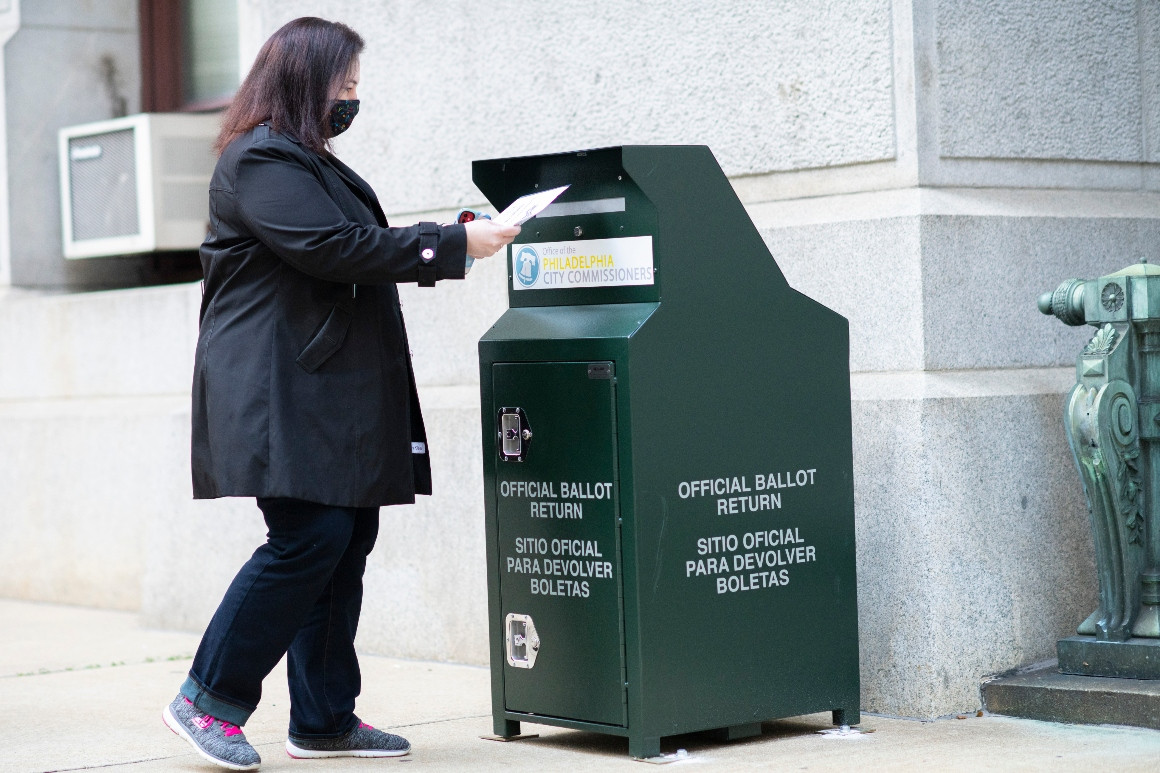
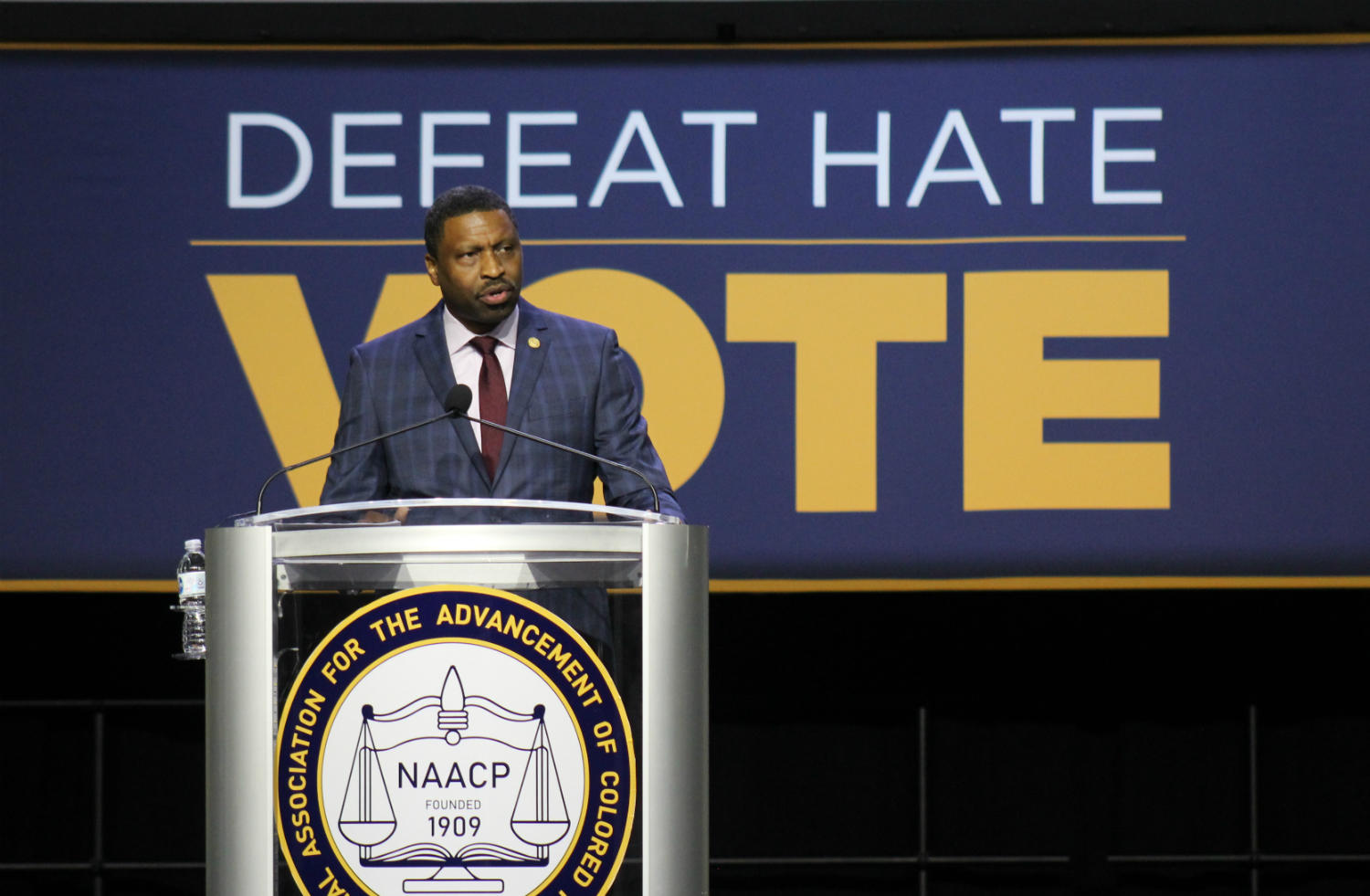
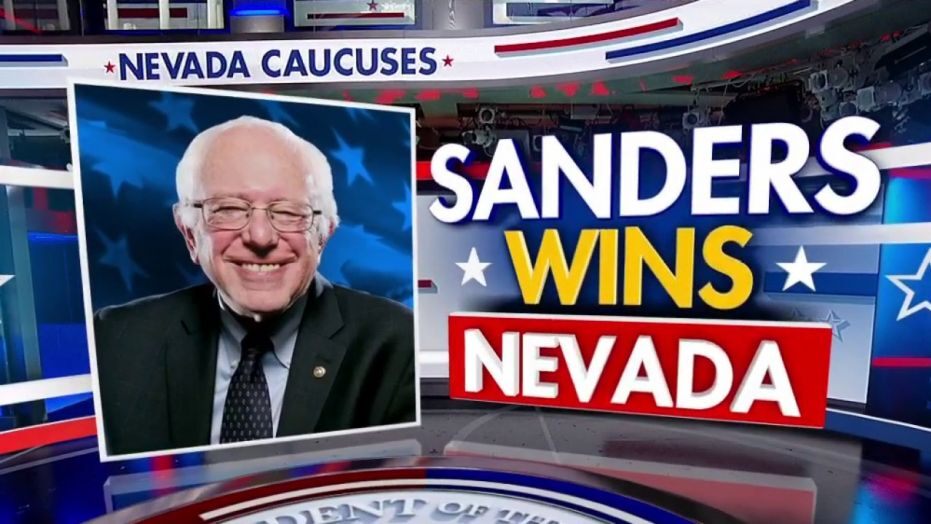
The US Supreme Court on February 22 brought a formal end to eight lingering disputes pursued by former President Donald Trump and his allies related to the Presidential election including a Republican challenge to the extension of Pennsylvania’s deadline to receive mail-in ballots. The justices turned away appeals by the Republican Party of Pennsylvania and Republican members of the state legislature of a ruling by Pennsylvania’s top court ordering officials to count mail-in ballots that were postmarked by Election Day and received up to three days later. Three of the nine-member court’s six conservative justices, Clarence Thomas, Samuel Alito, and Neil Gorsuch, dissented from the decision not to hear the Pennsylvania case.
Former President Donald Trump made false claims that the Presidential election was stolen from him through widespread voting fraud and irregularities. From the day after the Presidential election until the middle of December, Trump’s legal team filed some 40 election-related lawsuits challenging the results in seven states (Pennsylvania, Wisconsin, Michigan, Georgia, Arizona, Nevada, and New Mexico). The Supreme Court ruled these disputes as invalid on December 11 in 1 7-2 decision, with even Trump’s own Supreme Court appointees ruling against him.
The case brought by Pennsylvania Republicans concerned 9,428 ballots out of 6.9 million cast in the state. The Supreme Court previously rejected a Republican request to block the lower court ruling allowing the ballots to be counted. In his dissent, Justice Clarence Thomas said the Supreme Court should resolve whether non-legislators, including elections officials and courts, have any power to set election rules. Thomas said it was fortunate that the state high court’s ruling did not involve enough ballots to affect the election’s outcome.
Less than a week before Election Day, Joe Biden is tantalizingly close to a prize that has eluded generations of Democratic presidential candidates: Texas. Public opinion polls show Biden and Republican President Donald Trump tied in the state. They also suggest the former vice president is leading among those helping to set its staggering early vote totals. As of October 27, nearly 8 million Texans had cast ballots, approaching 90% of the entire 2016 vote, a higher percentage than any state in the country, according to the US Elections Project at the University of Florida. Trump appears to have the edge with voters planning to cast ballots on November 3, according to polls, which also show him improving his standing among Hispanics in Texas, a huge constituency, mirroring modest gains he has made with that demographic nationally since 2016. Texans do not register by party, which makes it difficult to say with certainty who is leading in early voting. A Biden win in Texas, which has not voted for a Democratic nominee for president since Jimmy Carter narrowly won the state in 1976, would end any chance of Trump’s re-election. Since 1976, the only elections years when the Democrats came close in Texas were 1992 and 1996.
The Democrat’s campaign has been cautious not to lose its focus on the battleground states, however. Four years ago, Hillary Clinton was criticized for miscalculating by spending time in Republican states late in the campaign only to lose seemingly solid Democratic states to Donald Trump. “We’ve been really focused on our top six states,” said Jenn Ridder, the Biden campaign’s national states director, referring to Pennsylvania, Michigan, Wisconsin, Arizona, Florida, and North Carolina. “But in these last 10 days, if we can do a little bit to put (other states) over the edge, we’re going to take that opportunity.” Joe Biden’s running mate, Senator Kamala Harris, will visit Texas on October 30, and billionaire Michael Bloomberg plans to spend $15 million in Texas and Ohio in a last-minute bid to flip both Republican-leaning states. The campaign’s reluctance to go all-in has frustrated some Texas Democrats, including Julian Castro and Beto O’Rourke, who both ran for their party’s 2020 presidential nomination. “They’ve invested close to zero dollars in the state of Texas, and they’re doing this well,” O’Rourke told reporters last week. “Imagine if they invested some real dollars.”
Texas added a week of early voting to ease crowds on Election Day in the middle of the Coronavirus pandemic. Harris County, which includes Houston and has become a Democratic stronghold in recent years, has already seen more than 1.1 million votes. But early voting is surging in all corners of the state, including Republican areas like Denton County, near Dallas, as well as Democratic centers like San Antonio’s Bexar County. Both counties have already surpassed their total votes cast in 2016. Mark Jones, a political science professor at Rice University, conducted a poll from October 13-20 with the University of Houston that showed Joe Biden leading among those who had already voted by a 59% to 39% margin. But Trump led by a similar amount among those who planned to vote on November 3. “Democrats are clearly dominating the early turnout,” Jones said. “The pivotal issue for Republicans is whether they can get their voters to turn out on Election Day.”
Besides the early vote, there are signs that Texas’ shift toward the Democratic Party is not a mirage. Donald Trump and Joe Biden have been close in the state polls all year, and Democratic and Republican candidates are fiercely contesting dozens of congressional and state legislative races. As in other parts of the country, President Donald Trump has seen his poll numbers erode in Texas’ rapidly diversifying suburbs. That could have calamitous effects on down-ballot Republicans. According to James Henson, director of the Texas Politics Project at the University of Texas, Biden has made gains among independent voters, who make up roughly 10% of the state’s electorate. An October poll conducted by Henson’s organization found Biden outperforming Trump among independents, 45% to 37%. In 2016, Clinton lost the same group by nearly 30 percentage points. Democrats also point to more than 3 million newly registered voters in the state, many of whom moved to Texas from predominantly Democratic states.
Rebecca Acuna, Joe Biden’s Texas campaign director, noted that the early voters include close to a million people who have never voted in a presidential election, many younger and more diverse voters who likely lean Democratic. “We have every reason to believe that Texas is a tossup,” Acuna said. Citing its own internal analysis, the Trump campaign asserted the president is ahead by hundreds of thousands of votes among early ballots. Trump won Texas by a nine-point margin in 2016. In recent days, Trump has tried to hurt Biden with the state’s dominant oil and gas industry by playing up comments he made at last week’s debate about the need to transition eventually from fossil fuels to renewable energy sources. “Texas voters recognize Biden’s radical anti-energy agenda will destroy the state’s economy,” Trump campaign spokeswoman Samantha Cotten said.
More than two dozen candidates for Congress in the November 3rd elections have endorsed or given credence to QAnon or promoted QAnon content online, the non-profit watchdog group Media Matters says. Two are independents; the rest are Republicans. At least one of them is expected to be elected to the House of Representatives next week, and a second has a good chance. The FBI has listed QAnon as a domestic terrorism threat. The unfounded conspiracy theory, which began in 2017 with anonymous web postings from “Q,” posits that President Donald Trump is secretly fighting a global cabal of child-sex predators that includes prominent Democrats, Hollywood elites, and “deep state” allies. Messages pushed online by its adherents aim to vilify and criminalize political rivals with unfounded allegations. The ADL civil rights group called it “an amalgam of both novel and well-established theories, with marked undertones of antisemitism and xenophobia.”
After amplifying conspiracy theorists, social media platforms lately have been trying to crack down on QAnon’s sprawl. But a recent poll by Morning Consult said 38% of Republicans believe that at least parts of the QAnon conspiracy are true. A supporter of an early form of the conspiracy, predating President Donald Trump’s election, in 2016 opened fire at a Washington pizzeria that early proponents of the conspiracy claimed was the site of a child sex trafficking ring. President Trump has refused to renounce QAnon and even praised it as patriotic. He has frequently retweeted QAnon-linked content.
Despite the growing support for the anon conspiracy theory amongst Republicans, some Republicans have publicly denounced the conspiracy theory. “We simply cannot continue to be a party that accepts conspiracy theories and lives in crazy echo chambers,” said Brendan Buck, who worked for two former House Republican speakers, Paul Ryan and John Boehner. “There is no place for QAnon in the Republican party,” House Republican Leader Kevin McCarthy told Fox News in August, becoming the highest-ranking Republican to condemn QAnon publicly.
The Supreme Court turned down an appeal from Pennsylvania’s Republican leaders on October 19 and left in place a ruling that says late-arriving mail ballots will be counted as long as they were mailed by election day. The justices were split 4-4, with four conservatives on one side, and Chief Justice John Roberts joining liberals on the other. Both of President Donald Trump’s appointees, Neil Gorsuch and Brett Kavanaugh, sided with the Pennsylvania Republican party and felt that it was justified for the Supreme Court to hear their argument. The decision has the effect of upholding a state supreme court ruling that allowed for counting mail ballots that arrive up to three days after November 3 as long as they are postmarked or mailed by election day. Pennsylvania is a battleground state, crucial to both President Donald Trump and former Vice President Joe Biden. Election officials anticipate the outcome there may turn on the nearly 3 million ballots that are likely to be sent by mail. The October 19 decision is a victory for Democrats and voting rights advocates. They feared postal delays could result in mail ballots arriving after election day. Justices Clarence Thomas, Samuel Alito, Neil Gorsuch, and Brett Kavanaugh said they would have granted the appeals filed by Republican leaders in the state legislature and the Pennsylvania Republican Party, which said mail ballots should not be counted unless they arrived by election day. It takes a majority to issue such an order, and with the death of Justice Ruth Bader Ginsburg last month, the court now has just eight justices.
Last year, the Pennsylvania legislature agreed to allow all of its registered voters to cast a ballot by mail but also said these ballots must arrive by election day if they are to be counted. But the county election boards struggled in June when the pandemic prompted more than 1 million in Pennsylvania to switch to a mail-in ballot. With the November election looming, the state supreme court agreed in September to rule on several disputes that arose from competing lawsuits. By a 4-3 vote, the state justices agreed to “adopt” the recommendation of Secretary of State Kathy Boockvar and extend the deadline for three days to allow for counting mail ballots that were posted by election day but arrived by November 6. The state judges cited a warning from a US Postal Service lawyer who said there was a “significant risk” that ballots mailed at the end of October would not arrive in a county office by November 3. They also noted that late-arriving ballots from overseas military personnel are counted so long as they are postmarked by election day.
The state ruling was not a total victory for voting rights advocates, however. The state high court upheld a strict rule against counting a mail ballot that does not arrive inside a secured safety envelope. Republican leaders of the state legislature and the Republican Party of Pennsylvania filed separate emergency appeals with the Supreme Court, urging the justices to overrule the state high court on the issue of the late-arriving mail ballots. They said the extended deadline would invite fraud. “This is an open invitation to voters to cast their ballots after election day, thereby injecting chaos and the potential for gamesmanship into what was an orderly and secure schedule of a clear, bright-line deadline,” they wrote in Scarnati vs. Pennsylvania Democratic Party. The two sides presented sharply different views of the law. Pennsylvania’s attorney general argued the state supreme court had ruled on a matter of state election law, which he said should be off-limits to the US justices in Washington. The state Republican leaders insisted that the national election day is set in federal law, and the Constitution gives the state legislature, not its courts, the authority to set the rules for a presidential election.
Overall, the Supreme Court ruling on Pennsylvania’s ballot-counting procedures represents an ominous sign regarding post-election legal challenges by President Donald Trump’s campaign. While Chief Justice John Roberts, regarded as a moderate conservative, sided with the court’s three more liberal members, both of President Trump’s appointees, Neil Gorsuch and Brett Kavanaugh, argued that it was justified to strike down Pennsylvania’s mail-in ballot procedures. This seems to show that they will be likely to side with Trump in any election disputes. Coupled with Justice Amy Coney Barrett’s expected support for post-election challenges, it is likely that the Supreme Court may hand Donald Trump a second term even in the case of an overwhelming victory by Joe Biden.
Republicans are running short of time, money, and options to stop Democrats from winning a majority of seats in the US Senate in an election that is now only two weeks away. President Donald Trump’s slide in opinion polls weighs on Senate Republicans in 10 competitive races, while Democrats are playing defense over two seats, increasing the odds of Trump’s Republicans losing their 53-47 majority. That gives Democrats a good chance of adding a Senate majority to their control of the House of Representatives, which could either stymie President Trump in a second term or usher in a new era of Democratic dominance in Washington if Democratic presidential candidate Joe Biden wins the White House. “The Republican Party probably has to start thinking about what it can salvage between now and Nov. 3,” said Republican strategist Rory Cooper, a one-time aide to former House Majority Leader Eric Cantor. While demographic changes were long expected to work against Republican incumbents, including North Carolina’s Thom Tillis, Arizona’s Martha McSally, and Colorado’s Cory Gardner, powerful Republican senators, including South Carolina’s Lindsey Graham and Iowa’s Joni Ernst, are also facing strong challengers.
Americans have been voting early at an unprecedented pace as they look for ways to avoid exposure to the Coronavirus pandemic that has killed nearly 220,000 people in the United States. Twenty-eight million people have cast early ballots. Democrats have also reported a surge in late campaign donations, outraising Republicans in 12 competitive races by nearly $190 million – $315 million v. $128 million, during the third quarter, according to Federal Election Commission documents. But Democrats had a smaller advantage in cash on hand, reporting about $106 million v. $83 million for Republicans. Republicans are seeing “obvious signals that there’s no path forward,” as one Republican aide put it, unless their incumbents can find ways to distance themselves from Trump and his handling of the pandemic without alienating his supporters.
Despite the relative decline in their overall changes to old onto the Senate, it is genrally believe that the Republican party can still eke out a 51-seat majority by capturing Democratic seats in Alabama and Michigan and denying Democrats victory in North Carolina, Iowa and other states with strong Republican constituencies. “We’ve got eight to ten races that are margin-of-error races. There’s no way in the world you could suggest that those are somehow over,” said Whit Ayres, a leading Republican pollster. “They’re far from out of reach.” The memory of President Donald Trump’s surprise win four years ago after polls showed rival Hillary Clinton with a modest lead, burns brightly for Democratic candidates and voters.
In the closing weeks of the campaign, Republican incumbents have sought to concentrate on their individual races, rather than President Donald Trump. Others have turned on him. Nebraska Senator Ben Sasse, who is expected to win re-election easily, told constituents this week that President Trump “sells out allies” and “treated the presidency like a business opportunity,” the Washington Examiner reported last week, citing an audio recording of the call. Sasse’s office confirmed the comments to the Examiner. Republican Senator John Cornyn, who is vying with Democrat M.J. Hegar in Texas (and is heavily favored to win due to ticket-splitting), told the Fort Worth Star-Telegram that he has disagreed with Trump in private, likening his relationship with the President to “women who get married and think they’re going to change their spouse, and that doesn’t usually work out very well.” Embattled Senator Martha McSally in Arizona and Montana’s Steve Daines are working to counter Democratic attacks on their healthcare records by portraying themselves as defenders of people with pre-existing conditions.
Another aspect of the campaign working in favor of the Republicans is candidate quality in several key races. For example, a sex scandal engulfing North Carolina Democratic Senate nominee Cal Cunningham has raised Republican hopes of denying Democrats victory in a state seen as a potential tipping point. “That’s a very critical state for Democrats to be able to get to the majority. If they can’t count on that, life will be more difficult for them,” said a Republican strategist involved in several key Senate races. Polls show the North Carolina race tightening with Cunningham still in the lead over Republican Senator Tillis. The upcoming Senate vote on Supreme Court nominee Amy Coney Barrett could also galvanize conservative voters for Tillis, as well as Iowa’s Ernst and Senate Judiciary Committee Chairman Graham, a three-term senator and Trump ally who is running neck-and-neck with Democrat Jaime Harrison. But even as he nears Senate confirmation for Barrett, Graham last week acknowledged his party’s fading position in the polls. “Y’all have a good chance of winning the White House,” he told Democratic colleagues.
Even when all the ballots are counted, it is possible that control of the Senate will not be decided until January due to a pair of races in Georgia that could go to runoffs. In one of those Georgia races, Republican Senator Kelly Loeffler has welcomed a controversial endorsement from Marjorie Taylor Greene, a Republican US House candidate who has spoken in support of the “QAnon” conspiracy theory that says President Donald Trump is battling “deep-state” traitors, child sex predators and Democrats. The FBI has linked QAnon to domestic extremists. Recent polls in Georgia show Loeffler and fellow Republican Doug Collins trailing Democrat Raphael Warnock, a pastor at Martin Luther King Jr.’s Ebenezer Baptist Church in Atlanta.
White Supremacists“remain the most persistent and lethal threat in the homeland,” the Department of Homeland Security concluded in its inaugural threat assessment released on October 6, following widespread concern that President Donald Trump did not do enough to condemn such groups at a debate last week. “I am particularly concerned about white supremacist violent extremists who have been exceptionally lethal in their abhorrent, targeted attacks in recent years,” acting DHS secretary Chad Wolf wrote in a letter accompanying the report, which resembles similar annual documents the Pentagon and intelligence community produce that highlight their top priorities and concerns for protecting American interests. The report categorizes white supremacist militants as part of broader domestic violent extremists or DVEs, and says spikes in the threats they pose “probably will depend on political or social issues that often mobilize other ideological actors to violence, such as immigration, environmental, and police-related policy issues.”
The conclusion comes a week after the first presidential debate on September 29, in which President Donald Trump declined multiple times to condemn white supremacy. The debate moderator asked President Trump if he would condemn white supremacists and militia groups and tell them they need to “stand down.” After pivoting to talk about left-wing groups, the President said, “Give me a name. Who would you like me to condemn?” “Proud Boys,” Biden interjected. “Proud Boys: Stand back and stand by,” Trump said. The White House initially stood by his debate response before Trump, facing continued outrage and slumping poll numbers, said days later that he does indeed condemn white supremacy. “Let me be clear again: I condemn the KKK. I condemn all white supremacists. I condemn the Proud Boys. I don’t know much about the Proud Boys, almost nothing, but I condemn that,” Trump told Fox News host Sean Hannity on October 1.
President Donald Trump said at the debate and stressed that he believes the most significant domestic threat comes from far-left groups, including the loosely organized ideology known as Antifa, a conclusion not supported by other agencies that assess domestic risks, including the FBI. The DHS report on October 6 identifies anti-government or anti-authority violent extremism as “another motivating force behind domestic terrorism that also poses a threat to the homeland.” “These violent extremists, sometimes influenced by anarchist ideology, have been associated with multiple plots and attacks, which included a significant uptick in violence against law enforcement and government symbols in 2020. This ideology is also exploited by hostile nation-states, which seek to promote it through disinformation campaigns and sow additional chaos and discord across American society,” the report states.
The report also assessed the widespread threats to US elections from foreign actors and emphasized that Russia is not the only source of attacks against American democracy. “While Russia has been a persistent threat by attempting to harm our democratic and election systems, it is clear China and Iran also pose threats in this space,” according to the report. In a series of tweets accompanying the report’s release, DHS Chad Wolf wrote that China represents “the most long term strategic threat to Americans, the homeland, and our way of life.” The assessment mirrors that of Trump’s other close security advisers who have downplayed the dangers Russia poses and asserted that China, which the administration blames for the spread of the coronavirus, represents the principal threat to the US.
The report claims China and Russia are leading international efforts to politicize the US response to the Coronavirus pandemic, saying, “Russian online influence actors have claimed that President Donald Trump is incapable of managing the Coronavirus pandemic and sought to exacerbate public concerns by amplifying content critical of the US response to the public health crisis and the economic downturn. “In contrast, the actors highlighted China’s and Russia’s alleged success against the COVID-19 outbreak and praised President Putin’s COVID-19 plan and Russia’s ample supply of tests.” That conclusion comes as President Donald Trump faces fresh accusations of downplaying the threat posed by the coronavirus. After leaving Walter Reed National Military Medical Center late on October 5, after being treated for his own Coronavirus diagnosis, President Trump said in a collection of statements, “don’t be afraid of it” and “don’t let it dominate your lives.”
Here are the main events that occurred in Politics this week:
1.President Donald Trump Nominates Amy Coney Barret To The Supreme Court
President Donald Trump announced September 26 that he will nominate federal appeals court Judge Amy Coney Barrett to the Supreme Court, a choice that would lock a conservative majority on the high court and that could help turn out Republican voters in the election less than six weeks away.
President Donald Trump announced September 26 that he will nominate federal appeals court Judge Amy Coney Barrett to the Supreme Court, a choice that would lock a conservative majority on the high court and that could help turn out Republican voters in the election less than six weeks away. Judge Barrett would fill the vacancy left by the death of Justice Ruth Bader Ginsburg, preserving the court’s gender balance of three women and six men while potentially tipping its ideological balance for decades. President Trump introduced Barrett in a Rose Garden ceremony attended by conservative activists, a reminder that shifting the Supreme Court to the ideological right has been a decades-long focus for Republicans.
2. President Donald Trump Announces Economic Empowerment Plan For African Americans
President Donald Trump unveiled a plan to win over the African American vote on September 25, less than two months before Election Day, primarily expanding upon the existing economic-related initiatives the President established in his first term.
President Donald Trump unveiled a plan to win over the African American vote on September 25, less than two months before Election Day, primarily expanding upon the existing economic-related initiatives the President established in his first term. The proposals include prosecuting the Ku Klux Klan and Antifa as terrorist organizations, making Juneteenth a federal holiday, and bolstering Black economic prosperity. During an Atlanta event announcing what was deemed the Black Economic Empowerment “Platinum Plan,” Trump sought to draw contrasts between his plan for the African American community and Joe Biden’s proposals, arguing that the former vice president “inflicted” damage on the Black community over the last 47 years he’s spent working in Washington. Trump garnered just 8% of the African American electorate in 2016, and an average of recent 2020 polls shows Biden leading Trump with African American voters by an 83% to 8%, or 75-point, margin. “They only care about power for themselves, whatever that means. My opponent is offering Black Americans nothing but the same old, tired, empty slogans,” President Donald Trump argued.
3. 2020 Election: US Intelligence Reports Warn Of Extremist Threat Around Election
US security officials warn that violent domestic extremists pose a threat to the presidential election next month, amid what one official called a “witch’s brew” of rising political tensions, civil unrest, and foreign disinformation campaigns.
US security officials warn that violent domestic extremists pose a threat to the presidential election next month, amid what one official called a “witch’s brew” of rising political tensions, civil unrest, and foreign disinformation campaigns. A joint FBI and US Department of Homeland Security (DHS) memo issued on September 29 says that domestic extremists’ threats to election-related targets will likely increase in the run-up to the Presidential election. Those warnings so far have primarily remained internal. But New Jersey’s homeland security office took the unusual step of publicly highlighting the threat in a little-noticed report on its website last week. “You have this witch’s brew that hasn’t happened in America’s history. And if it has, it’s been decades if not centuries,” said Jared Maples, director of the New Jersey Office of Homeland Security and Preparedness, which published the threat assessment.
4. 2020 Election: President Donald Trump Gives Unhinged Performance At First Presidential Debate
President Donald Trump decided on September 29 to bring his chaotic and confrontational style directly to the debate stage at his first face-off with Democrat Joe Biden, seemingly unconcerned that his approach has alienated many independent and moderate voters. Despite his confidence in this approach, President Trump’s performance is likely to be remembered as one of the worst debate performances of any politician in recent memory.
President Donald Trump decided on September 29 to bring his chaotic and confrontational style directly to the debate stage at his first face-off with Democrat Joe Biden, seemingly unconcerned that his approach has alienated many independent and moderate voters. Despite his confidence in this approach, President Trump’s performance is likely to be remembered as one of the worst debate performances of any politician in recent memory. Trump’s frequent interruptions and personal barbs during the roughly 90-minute showdown were the personifications of his re-election strategy, which has mainly focused on exciting a core group of die-hard supporters who revel in his willingness to insult and shock while giving no ground. And he at times flustered Biden, who Trump has for months attempted to paint as senile, with unrelenting attacks on his family and policies. But Biden never looked out-of-touch, and he did match Trump attack for attack, calling the President a “clown,” a “racist” and “the worst president America’s ever had.”
President Donald Trump decided on September 29 to bring his chaotic and confrontational style directly to the Presidential Debate stage at his first face-off with Democrat Joe Biden, seemingly unconcerned that his approach has alienated many independent and moderate voters. Despite his confidence in this approach, President Trump’s performance is likely to be remembered as one of the worst debate performances of any politician in recent memory. Trump’s frequent interruptions and personal barbs during the roughly 90-minute showdown were the personifications of his re-election strategy, which has mainly focused on exciting a core group of die-hard supporters who revel in his willingness to insult and shock while giving no ground. And he at times flustered Biden, who Trump has for months attempted to paint as senile, with unrelenting attacks on his family and policies. But Biden never looked out-of-touch, and he did match Trump attack for attack, calling the President a “clown,” a “racist” and “the worst president America’s ever had.”
Even some of his supporters though President Donald Trump took it too far. “It was too hot,” former New Jersey governor Chris Christie, President Trump’s debate coach, said after the debate on ABC News. “Listen, you come in, decide you want to be aggressive and that was the right thing to be aggressive, but that was too hot. And I think that what happens is, with all that heat, as you said before, you lose the light.” The display was unnerving for viewers at home, with the sitting President goading and talking over his rival, matched with a two-term former Vice President reduced to name-calling. Moderator Chris Wallace of Fox News struggled to maintain order, reminding Trump frequently that his own campaign had agreed to the debate’s rules. CNN anchor Dana Bash, flabbergasted, called the event a “s–tshow” on live television after it was over. In a CBS News poll of debate watchers, 69% described themselves as “annoyed” while another 19% said they were “pessimistic.”
The intent of President Donald Trump’s strategy was apparent in Joe Biden’s performance: the former Vice President offered some of his best answers of the night on issues like voting rights and the President’s tax returns when given stretches of uninterrupted time. He gave an emotional tribute to his son, Beau, an Iraq war veteran who died of brain cancer. At other times Biden adopted a look of weary resignation as he struggled to wrangle a President who revels in confrontational insults and made-for-TV verbal sparring. Biden seemed to struggle under some of President Trump’s barrages, particularly involving his family, simply repeating that the president’s statements were untrue. “Will you shut up, man?” Biden said to Trump at one point. But the frenetic pace and sloppy arguments meant the former vice president at no point committed a debate-night gaffe likely to jeopardize his steady lead in the race. And for Trump, his behavior seemed only to solidify, or even worsen, existing perceptions, while doing little to change the underlying dynamics.
President Donald Trump’s worst moment in the debate was his hesitation to condemn White supremacist organizations under pressure from both Wallace and Biden. When Wallace asked a second time what he would say to the Proud Boys, a violent White nationalist group, President Trump said they should “stand back and stand by.” But, Trump added, “This is not a right wing problem, this is a left wing problem.”Senator Tim Scott of South Carolina, the only African American Republican in the Senate, said it is his view that Trump “misspoke” by not condemning White supremacists but that he needs to make it clear. “I think he should correct it,” Scott told reporters . “If he doesn’t correct it I guess he didn’t misspeak.”
President Donald Trump consistently gets low ratings for his combative style. A New York Times/Siena College poll released on September 28 showed that 34% approve of his efforts to unify America, even less than the 41% who approve of his handling the coronavirus. And while 35% of Americans say the country’s political divisions will get worse if Joe Biden is elected, half of all Americans believe a second Trump term would further fracture the nation. That image is a particular problem with women and independents, two-thirds of whom say he is doing a poor job bringing the country together.
A focus group of undecided voters conducted by Republican pollster Frank Luntz after the debate saw voters acknowledge that President Donald Trump dominated the debate, but reject his tactics. The majority described Trump negatively, with one Pennsylvania woman saying she was now voting for Biden because the President acted like a “crackhead.” Whitney Mitchell Brennan, a Democratic strategist tracking suburban women in the election, said that Trump’s demeanor throughout the debate cost him. She was texting with female friends from across the political spectrum during the debate, and they all were upset by what they saw as disrespectful behavior toward Biden and Wallace. “I think he turned off suburban swing women with this, and they’re the very voters he needs to win over right now,” she said.
President Donald Trump’s allies defended his approach, saying he had succeeded in raising questions about Joe Biden’s son Hunter work overseas and appearing to be the more agile debater. And, they argued, Chris Wallace’s criticism of Trump fed the notion, particularly acute among the President’s core supporters, that the media was working against him. “I think people want to see people who are fighters,” Donald Trump Jr. said of his father’s performance.
US security officials warn that violent domestic extremists pose a threat to the presidential election next month, amid what one official called a “witch’s brew” of rising political tensions, civil unrest, and foreign disinformation campaigns. A joint FBI and US Department of Homeland Security (DHS) memo issued on September 29 says that domestic extremists’ threats to election-related targets will likely increase in the run-up to the Presidential election. Those warnings so far have primarily remained internal. But New Jersey’s homeland security office took the unusual step of publicly highlighting the threat in a little-noticed report on its website last week. “You have this witch’s brew that hasn’t happened in America’s history. And if it has, it’s been decades if not centuries,” said Jared Maples, director of the New Jersey Office of Homeland Security and Preparedness, which published the threat assessment.
In recent months, nation-wide protests over racial justice and police brutality have been mostly peaceful. Still, some have led to violent confrontations, including between extremist factions from left and right. The US also continues to grapple with the Coronavirus pandemic, high unemployment, and a contentious Presidential election in a polarized political climate. Last week, President Donald Trump refused to commit to a peaceful transfer of power if he loses the election to Democratic rival Joe Biden. Trump has sought to cast doubt on the legitimacy of the election because he was concerned about mail-in voting, which Democrats have encouraged during the coronavirus pandemic. Documented mail-ballot fraud cases are sporadic and election experts say it would be nearly impossible for foreign actors to disrupt an election by mailing out fake ballots.
A recent internal FBI bulletin warned that domestic extremists with varying ideologies would likely pose an increasing threat to government and election-related targets in the run-up to the election. An FBI spokeswoman said the agency “routinely shares information with our law enforcement partners in order to assist in protecting the communities they serve,” but declined to comment on the specific document. A DHS memo dated to August 17 said ideologically driven extremists and other actors “could quickly mobilize” to engage in violence related to the election. The document, first reported by Yahoo News, was confirmed to Reuters by a person familiar with it. The memo said that lone offender white supremacists and other lone offenders with “personalized ideologies” pose the greatest threat of deadly violence. A DHS spokesperson directed Reuters to early September remarks by acting Secretary Chad Wolf, in which he said that the department “has taken unprecedented actions to address all forms of violent extremism, to specifically include threats posed by lone offenders and small cells of individuals.”
President Donald Trump and his top officials have not publicly highlighted any threat by violent extremist groups to the election. Trump administration officials have pointed the finger at left-wing anarchists and anti-fascists during protests against police brutality and racism over the summer, but federal court records provide little evidence showing those arrested for violent acts had affiliations to far-left groups. Last week, the top two DHS officials acknowledged in congressional hearings, however, that white supremacists have posed the most lethal domestic threat to the United States in recent years. During congressional hearings earlier this month, FBI Director Christopher Wray said that his agency was conducting investigations into violent domestic extremists, including white supremacists and anti-fascist groups. He said the largest “chunk” of investigations were into white supremacist groups.
According to data compiled by the Anti-Defamation League, white supremacist, anti-Semitic, anti-government, and related ideologies were tied to 77 percent of 454 alleged domestic extremist murders in the past decade, a New York City-based anti-hate advocacy organization, and presented at one of the congressional hearings last week. National Security Council spokesman John Ullyot told Reuters that President Donald Trump’s highest priority is “protecting the US from all threats, both foreign and domestic” when asked if the president had publicly addressed the election threat. Jared Maples, the New Jersey homeland security director, said his agency did not issue a pre-election threat assessment in 2016, but that it was necessary this time around. “We want our allies and folks across the state to recognize that we need to be thinking about this,” he said.
The New Jersey report outlines three possible scenarios for the November election: a quick election outcome, a protracted process where determining a winner takes months, and a legal battle that eventually goes to the Supreme Court. Each of the scenarios could lead to extremist violence, with the possibility of deadly confrontations between protesters and targeted violence toward police officers, the assessment concludes. The agency’s report says the extremists will likely be “anarchist, anti-government, and racially motivated,” but does not say which groups pose a greater threat. The domestic extremist threat has always been present, but is getting more attention this year, according to Mike Sena, president of the National Fusion Center Association, which represents state-run “fusion centers” staffed by federal, state and local public safety personnel who monitor threats and facilitate information sharing. “We have always had threats during the national election cycles from violent extremists, including terrorist organizations,” he said. “With current events, it is more in the spotlight than ever.”
President Donald Trump declined on September 23 to commit to a peaceful transfer of power if he loses the Presidential election to Democratic rival Joe Biden and said he expected the election battle to end up before the Supreme Court. “We’re going to have to see what happens,” President Trump told reporters at the White House when asked whether he would commit to transferring power. Trump, who substantially trails Biden in national opinion polls, has repeatedly cast doubt on the legitimacy of the election, asserting without evidence that mail-in voting would lead to fraud and a “rigged” outcome. “The ballots are a disaster,” Trump said. Democrats have encouraged voting by mail as a way to cast ballots safely during the coronavirus pandemic. Millions of Americans, including much of the military, have cast absentee ballots by mail for years without problems. In 2016, Trump also raised questions about whether he would accept the results of the election. He went on to win the presidency.
Overall, the reaction to President Donald Trump’s comments was met with scorn by members of both political parties. Joe Biden, while speaking to reporters in Delaware, said Trump’s comments on the transition of power were “irrational.” His campaign said it was prepared for any “shenanigans” from Trump, and reiterated comments from July that “the United States government is perfectly capable of escorting trespassers out of the White House.” Mitt Romney, a rare Trump critic among Republican senators, said on Twitter that “Fundamental to democracy is the peaceful transition of power; without that, there is Belarus. Any suggestion that a president might not respect this Constitutional guarantee is both unthinkable and unacceptable.” Additionally, Senate Majority Leader Mitch McConnel and Florida Senator Marco Rubio, two of President Trump’s staunchest congressional allies, denounced the President’s statements and underscored that there will be a peaceful transfer of power assuming that President Trump loses re-election.
Fundamental to democracy is the peaceful transition of power; without that, there is Belarus. Any suggestion that a president might not respect this Constitutional guarantee is both unthinkable and unacceptable.
Despite the overwhelmingly negative reaction to President Donald Trump’s comments, they were generally brushed aside by some of President Trump’s political allies. For example, Senator Mike Braun (R-IN), a strong Trump supporter, said that the topic is “preposterous” and no one should focus on the President’s equivocation. “He stokes the fire sometimes,” Braun said. “If you took it seriously it would be alarming. And I don’t think that that’s the case.” Additionally, Senator Chuck Grassley (R-IA), attempted to shift the argument and claimed that Joe Biden will do the same if he loses to Trump. Senate Democratic leader Chuck Schumer chastised Senate Republicans for their response to the president, arguing “this is not a partisan issue” and that “democracy is at stake.”
President Donald Trump, who is moving quickly to nominate a successor to liberal Justice Ruth Bader Ginsburg, said that he thinks the election “will end up in the Supreme Court and I think it’s very important that we have nine justices.” A Senate confirmation vote before the election would seal a 6-3 conservative majority on the court, potentially spelling trouble for Democrats should it be called on to decide any legal dispute over the results of the election. “This scam that the Democrats are pulling, it’s a scam, the scam will be before the United States Supreme Court, and I think having a 4-4 situation is not a good situation,” President Trump said. Only one US presidential election, the 2000 contest between Republican George W. Bush and Democrat Al Gore, has had its outcome determined by the Supreme Court.
Overall, President Donald Trump openly floating the idea of ignoring the results of the Presidential election and instead opting to stay in power despite the results may spell the end of democratic governance in the US. For example, a hallmark of any Democratic political system is the peaceful transfer of power. Without assurances for peaceful transitions of power, a democratic system will likely become unstable and ultimately collapse into dictatorship. Additionally, there are some parallels between President Donald Trump’s actions over the course of his Presidency and the rise of Adolf Hitler in Germany during the early 1930s. For example, both Trump and Hitler demonized the press, sought to create common enemies to distract their people from their power grabs and failed policies, and promoted nationalism and militarism as a way to “make their countries great again.” It is imperative for the American people to make their voices heard at the ballot box to prevent America from inadvertently sliding into fascism and autocracy, as was the case in Germany during the early 1930s.
Joe Biden’s presidential campaign and the Democratic National Committee announced it raised $364.5 million in August, an astonishing haul that Democrats believe was propelled by fundraising around the selection of California Senator Kamala Harris as Biden’s running mate and the Democratic convention. The Biden campaign said that 57% of the haul, or more than $205 million, came from online, small-dollar donors, a figure that signals the Democratic base is animated by the Biden-Harris ticket and the prospect of defeating President Donald Trump in November. The Biden campaign claimed in its announcement that the haul represents “the best month of online fundraising in American political history.” “In August, together, we raised $364.5 million,” Biden said in an email to supporters. “That figure blows me away.” Biden said his campaign “raised it the right way, from people across the country stepping up to own a piece of this campaign, investing in the future we want to see for our kids and grandkids.” The Trump campaign has yet to release their August fundraising totals.
It was clear in August that the month would be a strong one for Joe Biden, as sources told CNN on August 1 the campaign was set to announce they raised more than $310 million. The campaign said earlier that month that they raised more than $34 million in the two days after Harris was named as Biden’s running mate. And the campaign said that they raised $70 million during the four days of the Democratic National Convention. The fundraising haul is a significant swing for Biden, who entered 2020 with a substantial fundraising disadvantage and had at-times anemic fundraising numbers during the Democratic primary. That changed once the primary ended and Democrats coalesced around Biden, allowing him to sign a joint fundraising agreement with the Democratic National Committee and significantly increase the max donations that could be given to his campaign.
Joe Biden, after a handful of good fundraising quarters, began closing the cash on hand gap with the Trump campaign this summer. Despite President Donald Trump and the Republican National Committee outraising Biden and the Democratic National Committee in July, $165 million to $140 million, the Democrats ended that month with $294 million in the bank, just $6 million less than the $300 million Trump and the RNC reported having on hand. The Biden campaign did not release their cash on hand numbers on September 2, but the record-breaking haul, combined with the campaign not spending nearly as much as past campaigns on travel, makes it likely that Biden’s operation will surpass Trump’s money in the bank this month. Biden’s haul also dwarfs what the presidential candidates raised in August 2016, with Trump bringing in $90 million and former Secretary of State Hillary Clinton raising $143 million that month. Clinton’s haul, at the time, was her campaign’s fundraising record.
President Donald Trump warned that Joe Biden would usher in violence and chaos if elected, making the case for his own re-election as he formally accepted his party’s nomination on August 27 on the final night of the Republican National Convention. “This election will decide whether we will defend the American way of life or whether we allow a radical movement to completely dismantle and destroy it,” President Trump said, speaking to a crowd on the White House South Lawn. “In the left’s backward view, they do not see America as the most free, just and exceptional nation on Earth. Instead, they see a wicked nation that must be punished for its sins.” “Joe Biden is not the savior of America’s soul,” Trump continued. “And if given the chance, he will be the destroyer of American greatness.” Trump accepted the nomination trailing his Democratic rival in the polls. Facing criticism for his handling of the coronavirus pandemic, which has killed over 180,000 people in the US and devastated the economy, President Trump is leading an America roiled by national protests against racial injustice, with the latest wave originating in Kenosha, Wisconsin, after police shot Jacob Blake, an African-American man. The four-day convention, forced by the pandemic to abandon the original North Carolina location and relocate to Washington, tried to drive a consistent message: Trump is due credit for his coronavirus response and, if re-elected, will quash protests and rescue the injured economy.
Republicans amplified a “law and order” message throughout the convention, warning of violence and chaos under Democratic leadership while seeking to counter perceptions that President Donald Trump is a racist who has purposefully inflamed racial tensions for political benefit. “I have done more in three years for the Black community than Joe Biden has done in 47 years — and when I’m re-elected, the best is yet to come,” Trump said. Housing and Urban Development Secretary Ben Carson was the only RNC speaker to mention Jacob Blake by name. “Before I begin, I’d like to say that our hearts go out to the Blake family and the other families who’ve been impacted by the tragic events in Kenosha,” Carson said in his remarks. “History reminds us that necessary change comes through hope and love, not senseless and destructive violence.” Trump referred to the recent unrest in Wisconsin briefly but made no mention of Blake or other African-Americans whose deaths have dominated much of the national conversation this election year. “In the strongest possible terms, the Republican Party condemns the rioting, looting, arson and violence we have seen in Democrat-run cities like Kenosha, Minneapolis, Portland, Chicago and New York,” Trump said. Trump began his remarks by briefly acknowledging Hurricane Laura, which hit along the Gulf of Mexico, and announced that he would visit the affected areas over the weekend.
President Donald Trump also addressed the Coronavirus in his speech, offering an optimistic view of the pandemic and promising a vaccine by the end of the year, a timeline that health experts say is unrealistic. “If we had listened to Joe, hundreds of thousands more Americans would have died,” Trump said. “Joe Biden’s plan is not a solution to the virus but rather a surrender.” The White House crowd embodied Trump’s message that the virus is under control, as 1,500 supporters crowded on the South Lawn for the speech. Chairs for guests were not spaced out, and few wore masks. White House chief of staff Mark Meadow said “a number of people” attending the event would be tested for the coronavirus. The campaign contracted a firm of experts to advise on appropriate precautions for all parts of the convention that had live audiences.
President Donald Trump’s remarks were punctuated by rounds of applause and cheers from the crowd, a feature noticeably absent from the Democratic convention. President Trump has raised eyebrows throughout the week over his use of government tools to make his case for re-election, and the South Lawn setting seemed a provocation to his critics. “Gathered here at our beautiful and majestic White House — known all over the world as the people’s house — we cannot help but marvel at the miracle that is our great American story,” Trump said. “This has been the home of larger-than-life figures like Teddy Roosevelt and Andrew Jackson who rallied Americans to bold visions of a bigger and brighter future.” Some have warned that members of the Trump administration could be at risk of violating the Hatch Act, which prohibits federal employees from engaging in certain political activities. The president and the vice president are exempt from the law, but other White House employees are not. Trump’s speech was followed by a fireworks show near the Washington Monument, across the street from the White House complex. The Trump family was serenaded by a performance from opera signer Christopher Macchio, who performed classics such as “Ave Maria” from the White House balcony, as guests watched from their seats. Trump spoke for about 1 hour and 10 minutes, the second-longest convention addresses in modern history, following his own speech in 2016, at 1 hour and 16 minutes.
US officials charged with protecting the 2020 election said on August 26 they have “no information or intelligence” that foreign countries, including Russia, Iran, and China, are attempting to undermine any part of the mail-in voting process, contradicting President Donald Trump, who has repeatedly pushed false claims that foreign adversaries are targeting mail ballots as part of a “rigged” presidential race. Specifically, a senior intelligence official discounted the possibility of foreign actors mass producing fake ballots to interfere in the November elections, again breaking with Trump who has continued to insist that mail-in voting poses a significant threat to election security. “We have no information or intelligence that any nation-state threat actor is engaging in activity … to undermine any part of the mail-in vote or ballots,” the official told reporters. However, senior officials declined to discuss Russia’s efforts to seize upon the President’s attempts to sow mistrust and doubt about the mail in voting process.
While the intelligence community and other relevant agencies have made a concerted effort to release information related to election security threats in recent weeks, they have been reluctant to address questions about the President’s actions or whether Russia, specifically, is tailoring its messaging based on Trump’s comments. Still, the comments from senior US intelligence officials highlight just how isolated President Donald Trump is with his rhetoric about election security and voting misconduct. His conspiratorial claims about widespread fraud and “rigged elections” have now been rejected by top US officials from his own administration, state officials from both parties, and nonpartisan voting experts. It is also the latest example of how President Trump is routinely out-of-step with the views of the US intelligence community regarding issues of national importance, including Russian meddling in the 2016 election and the assassination of Saudi journalist Jamal Khashoggi.
Trump campaign officials and the White House have repeatedly declined to comment when asked why the President continues to promote lies related to mail-in voting despite being told by election security officials that there is no intelligence or information to back up his claims. In an email to CNN hours after the briefing, Trump campaign spokesperson Thea McDonald declined to address why the President’s theories about voting were publicly rejected by top US intelligence officials. She instead offered an ominous and misleading warning about potential election shenanigans by Democrats. “The intelligence community is right to keep a close eye on this issue, as Democrats attempt to flood the zone with tens of millions of unrequested mailed ballots that will undoubtedly throw our election system into chaos,” McDonald said, omitting that unrequested absentee ballots are mailed out in only nine states and ballots go only to registered voters.
Former Vice President Joe Bidenaccepted the Democratic presidential nomination on August 20, beginning a general-election challenge to President Donald Trump that Democrats cast this week as a rescue mission for a country equally besieged by a crippling pandemic and a White House defined by incompetence, racism, and abuse of power. Speaking before a row of flags in his home state of Delaware, Biden urged Americans to have faith that they could “overcome this season of darkness,” and pledged that he would seek to bridge the country’s political divisions in ways President Trump had not. “The current president has cloaked America in darkness for much too long — too much anger, too much fear, too much division,” Biden said. “Here and now, I give you my word: If you entrust me with the presidency, I will draw on the best of us, not the worst. I will be an ally of the light, not the darkness.” Biden’s appearance was an emphatic closing argument in a four-day virtual convention in which Democrats presented a broad coalition of women, young people, and racial minorities while going to unusual lengths to welcome Republicans and independent voters seeking relief from the tumult of the Trump era. The former Vice President alluded to that outreach, saying that while he is a Democratic candidate, he will be “an American president.” And in implicit contrast with Trump, Biden said he would “work hard for those who didn’t support me.” “This is not a partisan moment,” he said. “This must be an American moment.”
The Democratic Party has offered Joe Biden, less as a traditional partisan standard-bearer than as a comforting national healer, capable of restoring normalcy and calm to the US and returning its federal government to working order. He has campaigned as an apostle of personal decency and political conciliation, and as a transitional figure who would take on some of the worst American crises, not just the coronavirus outbreak but also economic inequality, climate change, and gun violence, before handing off power to another generation. That rising generation, defined by its diversity and in many cases by its liberalism, was again in evidence on August 20, as it has been throughout the week, most notably with the introduction on August 19 of Biden’s running mate, Senator Kamala Harris, the first woman of color to appear on a major party’s presidential ticket.
The program leading up to Joe Biden’s address included speakers such as Senator Tammy Duckworth of Illinois, an Asian-American military veteran; Mayor Keisha Lance Bottoms of Atlanta, one of the country’s most prominent African-American mayors; and Pete Buttigieg, the first openly gay major presidential candidate. All are younger than Biden by a quarter-century or more. Buttigieg hailed Biden’s leadership on the issue of same-sex marriage in the not-distant past as a sign of how much progress Democrats could quickly make toward building “an America where everyone belongs.” Senator Duckworth, a former helicopter pilot who lost her legs in the Iraq war, used her remarks to denounce President Donald Trump’s leadership of the military and singled out for scorn his administration’s tear-gassing of peaceful protesters in Lafayette Park in Washington, D.C., in June. “Donald Trump doesn’t deserve to call himself commander in chief for another four minutes, let alone another four years,” said Duckworth, whom Biden considered seriously for his running mate.
The task that faced Joe Biden on August 20, and that looms over him for the next 10 weeks, was assuring Americans that he had both the grit and the vision first to topple President Donald Trump and then to deliver on a governing agenda that would materially improve their lives. Biden has laid out an ambitious suite of plans for next year, should Democrats win power, but in the daily din of public health emergencies and Presidential outbursts, it is not clear how many voters are familiar with them. Democrats have promised to redraw the country’s energy economy to fight climate change and to build new protections for Americans’ voting rights. Biden promised to strengthen labor unions and to ensure that “the wealthiest people and the biggest corporations in this country paid their fair share” in taxes, even as he emphasized that he would not seek to “punish anyone.” Every night of the convention featured front-and-center vows to take on racism in the economy and criminal justice system, and to empower the generation of women whose political mobilization has reshaped the Democratic Party into a powerful anti-Trump coalition.
Joe Biden enters the general election with a clear upper hand against President Donald Trump, leading him by wide margins in most national polls and appearing to hold a clear advantage in crucial swing states. Biden’s electoral strength is derived mainly from the president’s deep unpopularity. And swing voters this year appear far more comfortable with Biden than they were with several of his 2020 primary rivals, or with the Democratic Party’s previous nominee, Hillary Clinton. Yet Biden’s advisers have cautioned that they expect the polls to tighten in the fall, and there is widespread anxiety among Democrats about the possibility that the pandemic may complicate the process of voting in ways that will disadvantage minority voters and others in their urban political base. Up to this point, Biden has taken a less-is-more approach to his campaign against President Donald Trump, converting his candidacy into a largely virtual affair and holding only sparse and infrequent public events. And so far that approach has seemed to work for him, much as this week’s stripped-down, long-distance party gathering has appeared to do. While television ratings have been down since the 2016 conventions, the Democratic events have still garnered robust viewership, and the party has avoided any significant technical glitches or eruptions of internal strife.
Former President Barack Obamadelivered an unsparing attack on President Donald Trump at the virtual Democratic National Convention on August 19, accusing his successor of using the nation’s highest office to help himself and his friends, and treating the presidency like a “reality show” to get “the attention he craves.” Speaking from the Museum of the American Revolution in Philadelphia under the convention night’s theme of “A more perfect union,” Obama accused Trump of failing to take the job seriously, resulting in a massive death toll due to the pandemic, job, and economic losses, and the diminished US standing around the world. “He’s shown no interest in putting in the work; no interest in finding common ground; no interest in using the awesome power of his office to help anyone but himself and his friends; no interest in treating the presidency as anything but one more reality show that he can use to get the attention he craves,” Obama told a national prime-time audience. “Donald Trump hasn’t grown into the job because he can’t. And the consequences of that failure are severe: 170,000 Americans dead. Millions of jobs gone while those at the top take in more than ever. Our worst impulses unleashed. Our proud reputation around the world badly diminished, and our democratic institutions threatened like never before,” Obama said.
Former President Barack Obama’s remarks were his sharpest and most direct attacks on President Donald Trump since leaving office after two terms in 2017. It represents the latest evolution of the former President’s decision to go harder on President Donald Trump as the election approaches. And just as Trump has upended many norms in the office, Obama’s speech reflects a decision to dispense with the long-standing tradition that has largely had former Presidents remain silent about their successors. Obama was under no illusions that Trump, upon taking over, would continue with his policies or embrace his vision of the country. But Obama said he hoped “for the sake of the country” that Trump would take the job seriously and feel the weight of the office and have some reverence “for the democracy that had been placed in his care.” “But he never did,” the former president said. In anticipation of Obama’s criticism, Trump said at a White House news conference earlier Wednesday that his Democratic predecessor was “bad” and “ineffective.” “President Obama did not do a good job, and the reason I am here is because of President Obama and Joe Biden,” Trump told reporters. “Because if they did a good job, I wouldn’t be here, and probably if they did a good job, I wouldn’t have even run. I would have been very happy, I enjoyed my previous life very much. But they did such a bad job that I stand before you as president,” Trump said.
Vouching for the Democrats’ 2020 nominee, Joe Biden, the former Delaware senator who former President Barack Obama tapped to be his running mate in 2008, Obama said that in his search for a vice-presidential candidate, “I didn’t know I’d end up finding a brother.” “Joe and I came from different places and different generations. But what I quickly came to admire about Joe Biden is his resilience, born of too much struggle; his empathy, born of too much grief,” Obama said. “Joe is a man who learned early on to treat every person he meets with respect and dignity, living by the words his parents taught him: ‘No one’s better than you, Joe, but you’re better than nobody,’” the former president said. “That empathy, that decency, that belief that everybody counts, that’s who Joe is.” Biden, Obama said, “made me a better president” and has got “the character and the experience to make us a better country.”
It was former President Barack Obama’s fifth consecutive address to the Democratic National Convention, the first occurring in 2004 when he delivered the keynote speech in Boston as a senatorial from Illinois. That speech, seeking unity, and denying a pundit-driven divide between “red states” and “blue states” and “liberal America” and “conservative America,” was widely regarded as propelling him to the White House four years later. Seeking to bestow his continued popularity among Democrats on behalf of Biden and his running mate, California Senator Kamala Harris, Obama said both have the ability to “lead this country out of dark times and build it back better.” Of Biden’s choice of Harris, Obama called her an “ideal partner, who is more than prepared for the job, someone who knows what it’s like to overcome barriers and someone who has spent their career fighting to help others live out their American Dream.” Together, Obama said, Biden and Harris “believe that no one, including the president, is above the law, and that no public official, including the president, should use their office to enrich themselves or their supporters. The former President urged the public, particularly the younger generation, to reject Trump and Republicans “who are counting on your cynicism.” “They know they can’t win you over with their policies, so they’re hoping to make it as hard as possible for you to vote and convince you that your vote does not matter. That is how they win,” he said.
Even as he promoted Biden’s candidacy, former President Barack Obama warned, “No single American can fix this country alone. Not even a president.” “So I am also asking you to believe in your own ability — to embrace our own responsibility as citizens — to make sure that the basic tenets of our democracy endure. Because that’s what’s at stake right now. Our democracy,” he said. “This administration has shown it will tear our democracy down, if that’s what it takes for them to win,” Obama said. “So we have to get busy building it up by pouring all our efforts into these 76 days and voting like never before, for Joe and Kamala, and candidates up and down the ticket, so that we leave no doubt about what this country that we love stands for today and for all our days to come.”
David Axelrod, who served as former President Barack Obama’s top political strategist, said critics who think the former president is “fighting to protect his ‘legacy’” misread him and the moment. “He’s fighting to protect our democracy against the assault of a @POTUS who, unlike his predecessors of EITHER party, simply doesn’t believe in its rules, laws, norms or institutions,” tweeted Axelrod, using the acronym for president of the United States to refer to Trump. Obama has become more strident toward Trump and his presidency in recent months, publicly criticizing his handling of the coronavirus pandemic and telling donors in remarks leaked to the New York Times that the President played on “nativist, racist, sexist” fears. Delivering the eulogy for the late civil rights icon Congressman John Lewis, a Georgia Democrat, in Atlanta on July 30, Obama did not use Trump’s name but decried the actions of his administration on issues of race and voting. “George Wallace may be gone. But we can witness our federal government sending agents to use tear gas and batons against peaceful demonstrators,” Obama said. He was referring to the late former racist governor and third-party segregationist Presidential candidate from Alabama. “But even as we sit here, there are those in power doing their darnedest to discourage people from voting — by closing polling locations, and targeting minorities and students with restrictive ID laws, and attacking our voting rights with surgical precision, even undermining the Postal Service in the run-up to an election that is going to be dependent on mailed-in ballots so people don’t get sick.”
Those who suggest @BarackObama is fighting to protect his “legacy” misread him and the moment. He’s fighting to protect our democracy against the assault of a @POTUS who, unlike his predecessors of EITHER party, simply doesn’t believe in its rules, laws, norms or institutions.
Former President Barack Obama showed his disdain for then-candidate Donald Trump during the 2016 race for President when Hillary Clinton, his secretary of state, vied against the Republican to be his successor. Trump had adopted the “birther” conspiracy that wrongly claimed Obama was born in Kenya. Trump as president later pushed what he called “Obamagate,” claiming an illegal conspiracy by Obama-era officials to investigate and sabotage his presidency. That prompted Obama to become more active in the 2018 midterm elections. Speaking at the University of Illinois in Urbana in September of that year, Obama called Trump “a symptom, not the cause” of “a fear and an anger that’s rooted in our past” involving racial and economic divisions that have been exploited by politicians for years. “Appealing to tribe, appealing to fear, pitting one group against another, telling people that order and security will be restored if it weren’t for those who don’t look like us, or don’t sound like us or don’t pray like we do — that’s an old playbook. It’s as old as time. And, in a healthy democracy, it doesn’t work,” Obama said.
Here are the main events that occurred in Politics this week:
1. 2020 Election: Joe Biden Selects Kamala Harris As Running Mate
Democratic nominee Joe Biden selected California Senator Kamala Harris as his running mate this week.
Joe Biden has selected California senator Kamala Harris as his Vice-Presidential running mate, a historic choice he believes will bolster his chances of beating Donald Trump in an election year shaped by the Coronavirus pandemic and a national reckoning on race. Senator Harris, Biden’s one-time presidential rival and a barrier-breaking former prosecutor, is the daughter of immigrants from Jamaica and India and is the first African-American woman and the first Asian-American to be nominated for a major party’s presidential ticket. “I have the great honor to announce that I’ve picked Kamala Harris – a fearless fighter for the little guy, and one of the country’s finest public servants – as my running mate,” Biden wrote on Twitter. In a tweet, Harris said she was “honored” to join Biden on the Democratic ticket and pledged to “do what it takes to make him our Commander-in-Chief”. Biden announced his selection in a text and email message to supporters. His campaign said the two would hold their first event together on August 12, in Biden’s home town of Wilmington, Delaware.
I have the great honor to announce that I’ve picked @KamalaHarris — a fearless fighter for the little guy, and one of the country’s finest public servants — as my running mate.
2. President Donald Trump Signs Four Executive Orders Providing Economic Relief Amid Coronavirus Pandemic
Amid a breakdown in congressional negotiations, President Donald Trump signed several executive orders this week providing economic relief amid the Coronavirus pandemic.
At his Bedminster, New Jersey golf resort on August 8, President Donald Trumpsigned four executive actions to provide economic relief amid the coronavirus pandemic. The actions amount to a stopgap measure, after failing to secure an agreement with Congress. The three memorandums and one executive order called for extending some enhanced unemployment benefits, taking steps to stop evictions, continuing the suspension of student loan repayments, and deferring payroll taxes. President Trump promised that funds would be “rapidly distributed” to Americans in need, although it remains unclear whether the president has the authority to do certain steps unilaterally, without congressional approval. In any case, legal challenges are expected, which could delay any disbursement of funds.
3. July Jobs Numbers Reveal Mixed Economic Outlook
The July jobs report, which was released this week, revealed a still weakened US economy reeling with the Coronavirus pandemic and an uneven recovery.
The US economy added another 1.8 million jobs in July, a sharp slowdown from June and a small step for an economy that is still down almost 13 million jobs since the start of the Coronavirus pandemic. It was the third straight month of improvement after the spring lockdown that decimated the labor market, and the July job gain exceeded economists’ expectations. Even so, it was far fewer than the 4.8 million jobs added in June. The unemployment rate fell to 10.2%, the Bureau of Labor Statistics reported August 9 but remains above the recent highs of 10% that were recorded in November of 1982 and October of 2009.
4. 2020 Election: NAACP Announces Initiative to Boost African-American Voter Turnout in Key Swing States
The NAACP this week annoucned a major voter registration initiative ahead of the 2020 Presidential election.
The NAACP, the largest US civil rights organization, is launching a drive ahead of November’s presidential election to boost African-American voter turnout in six key states, it said on August 12. The initiative aims to enlist the services of about 200,000 “high-propensity” African-American voters, or people who turned out to vote in a high number of recent local, state and presidential elections. Those voters, in turn, will seek to mobilize so-called “low-frequency” African-American voters, people who were registered to vote, but who had not voted in the most recent election cycle or several election cycles, in Florida, Georgia, Michigan, North Carolina, Texas, Pennsylvania, and Wisconsin, all competitive states in the 2020 Presidential election that recently saw Joe Biden leading in the polls. The goal is to increase African-American turnout by more than 5% compared to 2016. That year, African-American voter turnout declined to its lowest level since 1996, according to the Pew Research Center. “We’ve seen the outcome of when we have a drop in voter activity in the Black community,” said NAACP President Derrick Johnson. “We have racism germinating from the White House,” he said, stressing the urgency of getting African American voters to the polls.
The NAACP, the largest US civil rights organization, is launching a drive ahead of November’s presidential election to boost African-American voter turnout in six key states, it said on August 12. The initiative aims to enlist the services of about 200,000 “high-propensity” African-American voters, or people who turned out to vote in a high number of recent local, state and presidential elections. Those voters, in turn, will seek to mobilize so-called “low-frequency” African-American voters, people who were registered to vote, but who had not voted in the most recent election cycle or several election cycles, in Florida, Georgia, Michigan, North Carolina, Texas, Pennsylvania, and Wisconsin, all competitive states in the 2020 Presidential election that recently saw Joe Biden leading in the polls. The goal is to increase African-American turnout by more than 5% compared to 2016. That year, African-American voter turnout declined to its lowest level since 1996, according to the Pew Research Center. “We’ve seen the outcome of when we have a drop in voter activity in the Black community,” said NAACP President Derrick Johnson. “We have racism germinating from the White House,” he said, stressing the urgency of getting African American voters to the polls.
The voter turnout initiative comes during a national reckoning on race after a summer of nationwide protests sparked by the killing of African-American George Floyd by a police officer. A majority of Americans said they were sympathetic with the protests, according to a Reuters/Ipsos poll in June. Earlier on August 11, presumptive Democratic nominee Joe Biden selected Senator Kamala Harris to be his running mate in the 2020 election, the first African-American woman to appear on the presidential ticket for a major party. Joe Biden will face off against President Donald Trump, who has often publicly stated that he has done more for African-American than previous presidents. Polling has found his approval rating among African-Americans remains low due to his racist rhetoric, support from white supremacist organizations such as the KKK and white supremacist politicians such as David Duke, Pat Buchanan, and Richard Spencer, and the disproportionate negative impact that his policies, as well as the Coronavirus pandemic, has had on the African-American community. Due to this situation, it is likely that Joe Biden will receive the highest majority of the African-American vote since Lyndon Johnson in 1964 and Barack Obama in 2008 and 2012.
Joe Biden has selected California senator Kamala Harris as his Vice-Presidential running mate, a historic choice he believes will bolster his chances of beating Donald Trump in an election year shaped by the Coronavirus pandemic and a national reckoning on race. Senator Harris, Biden’s one-time presidential rival and a barrier-breaking former prosecutor, is the daughter of immigrants from Jamaica and India and is the first African-American woman and the first Asian-American to be nominated for a major party’s presidential ticket. “I have the great honor to announce that I’ve picked Kamala Harris – a fearless fighter for the little guy, and one of the country’s finest public servants – as my running mate,” Biden wrote on Twitter. In a tweet, Harris said she was “honored” to join Biden on the Democratic ticket and pledged to “do what it takes to make him our Commander-in-Chief”. Biden announced his selection in a text and email message to supporters. His campaign said the two would hold their first event together on August 12, in Biden’s home town of Wilmington, Delaware.
I have the great honor to announce that I’ve picked @KamalaHarris — a fearless fighter for the little guy, and one of the country’s finest public servants — as my running mate.
Though Kamala Harris clashed with Joe Biden during the Democratic debates before she dropped out of the race last year, she has become a strong supporter and a voice of authority on issues of racial justice in an election year convulsed by nationwide protests in the wake of the police killing of George Floyd. The decision is of great consequence, not only for Democrats’ immediate political prospects but for the future of the party. Biden, who at 77 would be the oldest person ever elected, has pitched himself as a “transitional candidate” and a “bridge” to a new generation of leaders, fueling speculation that should he be elected, he would be a one-term president. In selecting Harris, a 55-year-old Democratic star, he may not only be naming a partner but a potential successor who could become the nation’s first female president.
Kamala Harris’ own presidential campaign began on a high note in January 2019, as she announced her candidacy on Martin Luther King Day and paid tribute to Shirley Chisholm, the first African-American woman to seek the nomination of a major party. She officially kicked off her campaign with an Oakland rally attended by more than 20,000 people. The one-term senator was considered an early frontrunner for the nomination, and her polling numbers surged after a contentious exchange with Joe Biden at the first Democratic debate. Harris pushed Biden on his past opposition to mandated busing to racially integrate schools. “There was a little girl in California who was part of the second class to integrate her public schools and she was bussed to school every day. That little girl was me,” Harris told Biden. Biden appeared taken aback by the confrontation, but the two Democrats indicated they had made amends after Harris suspended her campaign in December of 2019. Harris endorsed Biden’s presidential bid in March.
The Trump campaign immediately seized on their debate exchange to cast Harris as hypocrite, while assailing her in the same sentence, as both a tough-on-crime prosecutor and a far-left radical. “Not long ago, Kamala Harris called Joe Biden a racist and asked for an apology she never received,” said Katrina Pierson, a senior adviser to the Trump campaign and one of his most high-profile African-American surrogates. “Clearly, Phony Kamala will abandon her own morals, as well as try to bury her record as a prosecutor, in order to appease the anti-police extremists controlling the Democrat party.”
Though Kamala Harris has long been viewed as a likely contender for the nomination, some advisers and allies of Joe Biden harbored reservations. In the weeks before she was selected, reports surfaced that the former senator Chris Dodd of Connecticut, part of Biden’s vice-presidential vetting panel, had told donors she demonstrated “no remorse” for her attacks on Biden while on a debate stage. Others anonymously accused her of having too much “ambition” and a personality that can “rub people the wrong way”. For many Democratic women, the backlash was further evidence of the importance of selecting a candidate who demonstrated the vital role of African-American women within the party. “Senator Harris is a fearless champion for justice,” said Adrianne Shropshire, executive director of BlackPac. “She understands the urgency of the moment and will work to restore competent, moral leadership to Washington.”
Kamala Harris was elected to the Senate in 2016, becoming only the second African-American woman ever to serve in the chamber. A fierce critic of President Donald Trump, Harris drew national attention for her prosecutorial-style inquisitions during Senate committee hearings with Trump administration officials. In one memorable exchange, a flustered Jeff Sessions, then the attorney general, told her: “I’m not able to be rushed this fast – it makes me nervous.” Joe Biden was unusually candid about the selection process, an affair traditionally shrouded in secrecy and intrigue. Having spent eight years serving as vice-president to the nation’s first African-American president, Joe Biden recalled the experience fondly and presented their working relationship as a model for what he was looking for in a running mate. During Zoom meetings with donors and supporters, he would often expand on his search, emphasizing that he wanted someone “simpatico” with his personality and his world view as well as someone who was ready to govern on day one.
Senate Republicans this week unveiled a $1 trillion Coronavirus economic stimulus package.
Senate Republicans on July 27 proposed a $1 trillion coronavirus aid package hammered out with the Trump administration, paving the way for talks with Democrats on how to help Americans as expanded unemployment benefits for millions of workers expire this week. Senate Majority Leader Mitch McConnell (R-KY) called the proposal a “tailored and targeted” plan focused on getting children back to school and employees back to work and protecting corporations from lawsuits while slashing the expiring supplemental unemployment benefits of $600 a week by two-thirds. The plan sparked immediate opposition from both Democrats and Republicans. Democrats decried it as too limited compared to their $3 trillion proposal that passed the House of Representatives in May, while some Republicans called it too expensive.
2. 2020 Election: Joe Biden Announces That He Is Close To Naming His Running-Mate
Presumptive Democratic nominee Joe Biden announced that he is close to naming his Vice Presidential choice and will likely unveil his choice in a week.
Presumptive Democratic nominee Joe Biden said on July 28 he will choose his Vice Presidential running mate next week. The former Vice President’s comment came during a news conference after a speech in Wilmington, Delaware. Asked by CNN whether he will meet in person with finalists for the role, Biden said, “We’ll see.” Biden has said he will choose a female running mate, and has faced pressure within the party to choose a woman of color. His campaign’s vetting process has played out amid the Coronavirus pandemic, making meetings that could allow Biden to better get to know those being considered more difficult. Noting that news crews were stationed outside his home in Delaware, Biden joked that he is “going to try to figure out how to trick you all so I can meet with them in person.” “I don’t think it matters, actually,” he said.
3. Trump Administration Rolls Back Fair Housing Provision Intended On Combatting Racial Segregation In Housing
Trump Administration this week rolled back a fair housing provision intended tp combatting racial segregation in housing.
The Trump administration moved on July 23 to eliminate an Obama-era program intended to combat racial segregation in suburban housing, saying it amounted to federal overreach into local communities. The rule, introduced in 2015, requires cities and towns to identify patterns of discrimination, implement corrective plans, and report results. The administration’s decision to complete a process of rescinding it culminates a yearslong campaign to gut the rule by conservative critics and members of the administration who claimed it overburdened communities with complicated regulations. A new rule, which removes the Obama administration’s requirements for localities, will become effective 30 days after it is published in the Federal Register.
4. US Senate Introduces Legislation To Curb Big Tech’s Ad Business Activities
US Senator Josh Hawley this week introduced legislation to curb big tech’s ad business activities.
On July 28 Senator Josh Hawley (R-MO), a major critic of the big tech industry, introduced legislation that would penalize large tech companies that sell or show targeted advertisements by threatening a legal immunity enjoyed by the industry, the latest onslaught on Big Tech’s business practices. The bill, titled “Behavioral Advertising Decisions Are Downgrading Services (Bad Ads) Act,” aims to crack down on invasive data gathering by large technology companies such as Facebook and Google that target users based on their behavioral insights. It does so by threatening Section 230, part of the Communications Decency Act, that shields online businesses from lawsuits over content posted by users. The legal shield has recently come under scrutiny from both Democrat and Republican lawmakers concerned about online content moderation decisions by technology companies. On July 28, Senator Brian Schatz (D-HI)and Senate Majority Whip John Thune (R-SD) will hold a hearing to examine the role of Section 230. The senators recently introduced legislation to reform the federal law.
In May, President Donald Trump signed an executive order that seeks new regulatory oversight of tech firms’ content moderation decisions, and he backed legislation to scrap or weaken Section 230 in an attempt to regulate social media platforms. “Big Tech’s manipulative advertising regime comes with a massive hidden price tag for consumers while providing almost no return to anyone but themselves,” said Hawley, an outspoken critic of tech companies and a prominent Trump ally. “From privacy violations to harming children to suppression of speech, the ramifications are very real.” His recent legislation to ban federal employees from using Chinese social media app TikTok on their government-issued phones was passed unanimously by the US Senate Committee on Homeland Security and will be taken up by the US Senate for a vote.
A surge of campaign contributions in the second quarter gave Democrats seeking to flip Republican-held Senate seats in those races $86 million for the three months ending on June 30, according to Federal Election Commission filings. Republican incumbents raised $52 million in the same 10 states: Alaska, Arizona, Colorado, Georgia, Iowa, Kentucky, Maine, Montana, North Carolina, and South Carolina. But they maintained a significant cash advantage over their challengers, with nearly $100 million in hand as the campaign entered its final months. The combined Democratic cash position equaled the quarterly fundraising total of $86 million. While the general election away, the flood of campaign contributions shows Democrats benefiting from voter discontent over President Donald Trump’s responses to the Coronavirus pandemic and race relations, among other issues, analysts say.
Republicans currently hold a four-seat majority in the 100-seat Senate. With Democrats controlling the House of Representatives, Republican control of the Senate has been crucial in buttressing President Donald Trump’s presidency including keeping him in power after his impeachment trial. Superior fundraising does not guarantee Democratic challengers success on Election Day against Republican incumbents, who have had longer to build up their financial firepower. But the challenges facing Republicans have deepened with Trump’s falling poll numbers to the point where Democrats are outraising stalwarts such as Senate Majority Leader Mitch McConnell in Kentucky and Senator Lindsey Graham in South Carolina, putting the party under pressure to defend them. “If they are defending these seats, that suggests there are really no offensive opportunities,” said Henry Olsen, a senior fellow at the Ethics and Public Policy Center, a conservative think tank. Despite the Democratic advantage, the Republicans do have a pick-up opportunity in Alabama, where Democratic Senator Doug Jones is widely expected to lose his reelection bid. Democrats would need a net gain of four Republican-held seats to take control of the chamber if President Trump wins re-election, or three if Democratic candidate Joe Biden defeats him.
Polls show Senate Republican incumbents running slightly behind their Democratic challengers in half a dozen states: Arizona, Colorado, Iowa, Maine, Montana and North Carolina. Democratic second-quarter fundraising swamped Republicans in each of those states. Arizona Democrat Mark Kelly scored the biggest total: $12.8 million, versus Republican Senator Martha McSally’s $9.3 million. Iowa Democrat Theresa Greenfield, who is running against Republican Senator Joni Ernst, nearly tripled her quarterly fundraising total to $6 million from $2.3 million earlier this year. Although she out-raised Ernst’s $3.6 million, Greenfield ended up with only $5.7 million in cash on hand, behind Ernst’s $9.1 million. The same was true with Jon Ossoff, the Georgia Democrat running against Republican incumbent David Perdue. Ossoff’s $3.9 million in quarterly donations surpassed Perdue’s $2.2 million. But the challenger was still behind in cash, with only $2.5 million on hand, versus Perdue’s $10.7 million. But Democrats ended with more cash in Arizona, where Kelly ended the quarter with $24 million on hand, versus McSally’s $11 million, and in Montana where Democratic Governor Steve Bullock had $7.6 million in cash compared with Republican Senator Steve Daines’ $7.1 million. Bullock also outraised Daines by $7.8 million to $5 million.
Facebook is considering imposing a ban on political ads on its social network in the days leading up to the US Presidental election in November, according to people familiar with the company’s thinking. The potential ban is still only being discussed and has yet been finalized, said the people, who asked not to be named talking about internal policies. A halt on ads could defend against misleading election-related content spreading as people prepare to vote. Still, there are concerns that an ad blackout may hurt “get out the vote” campaigns, or limit a candidate’s ability to respond widely to breaking news or new information. Such an action would amount to a major change for Facebook, which has so far stuck to a policy of not fact-checking ads from politicians or their campaigns. That has prompted criticism from lawmakers and advocates, who say the policy means ads on the platform can be used to spread lies and misinformation. Civil rights groups also argue the company does not do enough to remove efforts to limit voter participation, and a recent audit found Facebook failed to enforce its own voter-suppression policies when it comes to posts from President Donald Trump.
Ad blackouts before elections are common in other parts of the world, including the UK, where Facebook’s global head of policy, Nick Clegg, was once deputy prime minister. Facebook is an important platform for politicians, especially at a time when many people are stuck at home and campaign rallies pose potential health risks due to the coronavirus. In 2016, President Donald Trump used Facebook ads and the company’s targeting capabilities to reach millions of voters with tailored messaging, a strategy that some believe helped win him the election. Alex Stamos, Facebook’s former top security executive, said that any political ad ban could benefit Trump. “Eliminating online political ads only benefits those with money, incumbency or the ability to get media coverage,” he tweeted. “Who does that sound like?”
Political advertising has been a complicated issue for online platforms, and many of them have taken different approaches. Twitter has banned most political ads, but still sells some “cause-based” ads that touch on economic, environmental, or social issues. Google’s YouTube has already sold ad space on its homepage to the Trump campaign for the days leading up to November’s election, a deal that ensures Trump will be highly visible on the video service when people start to vote. In 2016, Russian operatives used Facebook to spread misleading and divisive ads and posts. The company has made a series of changes since then to tighten up its political ad process, including the implementation of stricter requirements for buying marketing spots and the addition of a searchable ad archive.
Here are the main events that occurred in Politics this week:
1.President Trump Threatens To Deploy Military In Response To Protests Against Police Brutality, Systemic Racism in the US
To the surprise of few, President Donald Trump this week threatened to use the military to crack down on the ongoing series of protests in the US against police brutality and systemic racism.
As the nation prepared for another series of violent protests sparked by the police killing of George Floyd, President Donald Trump on June 1 threatened to deploy the military if states and cities failed to quell the demonstrations. “I am mobilizing all federal and local resources, civilian and military, to protect the rights of law-abiding Americans,” President Trump said during a hastily arranged address at the White House. “Today I have strongly recommended to every governor to deploy the National Guard in sufficient numbers that we dominate the streets. Mayors and governors must establish an overwhelming presence until the violence is quelled,” Trump said. “If a city or state refuses to take the actions necessary to defend the life and property of their residents, then I will deploy the United States military and quickly solve the problem for them,” said the president. Trump stopped short of invoking the Insurrection Act, an archaic law from 1807 that would allow Trump to deploy active-duty U.S. troops to respond to protests in cities across the country. “During his address, Trump said he was taking “swift and decisive action to protect our great capital, Washington DC,” adding, “What happened in this city last night was a total disgrace.” “As we speak, I am dispatching thousands and thousands of heavily armed soldiers, military personnel and law enforcement officers to stop the rioting, looting, vandalism, assaults, and the wanton destruction of property.”
2. Senate Republicans Block Measure Condemning President Trump’s Response To Anti-Racism Protesters
Senate Majority Leader Mitch McConnell this week block a measure condemning President Trump’s response to anti-racism protesters
Senate Majority Leader Mitch McConnell (R-KY) blocked a resolution proposed by Senate Democrats that would have censured President Trump’s response to protesters in Washington, D.C., on June 1, when federal law enforcement officers forcefully removed demonstrators from a park across from the White House. Senate Minority Leader Chuck Schumer (D-NY), introduced the resolution on June 2, saying on the Senate floor that the removal of the protesters was “appalling” and “an abuse of presidential power.” Schumer attempted to pass the measure by unanimous consent, which does not require a vote by the whole Senate but can be blocked by any member. McConnell objected, accusing Democrats of pulling a political stunt in the middle of the crisis sparked by the death of George Floyd, who died after a Minneapolis police officer pinned his knee to his neck.
3. Presumptive Democratic Nominee Joe Biden Denounces President Trump For His Response To US Protests Over Racism & Police Brutality
In powerful remarks earlier this week, presumptive Democratic nominee Joe Biden denounced President Trump for his racial policies and called for an end to police brutality and institutional racism in the US.
Presumptive Democratic Presidential nominee Joe Biden on June 2 blasted President Donald Trump’s response to US protests over racism and police misconduct, vowing to try to heal the country’s racial divide and not “fan the flames of hate.” Speaking in Philadelphia, a city rocked by sometimes violent demonstrations in recent days, the former Vice President sought to draw a vivid contrast between himself and President Trump, whom he will face in the general election. Biden, who served eight years as Vice President under Barack Obama, the first African-American US President, cast himself as the candidate who best understands the longstanding pain and grief in the country’s African-American communities. He said the killing of George Floyd, the African-American man who died at the hands of Minneapolis police last week, was a “wake-up call” for the nation that must force it to address the stain of systemic racism.“We can’t leave this moment thinking we can once again turn away and do nothing,” Biden said. “We can’t.” He accused Trump of turning the nation into “a battlefield riven by old resentments and fresh fears.” “Is this who we want to be?” he asked. “Is this what we want to pass on to our children and grandchildren? Fear, anger, finger-pointing, rather than the pursuit of happiness? Incompetence and anxiety, self-absorption, selfishness?” Biden pledged he would “not traffic in fear or division.”
4. Trump Administration Announces Intentions To Declare Antifa A Terrorist Organization
President Donald Trump this week announced that his administration is considering the left-wing group Antifa a terrorist organization.
President Donald Trump tweeted on May 31 that the US will designate Antifa as a terrorist organization, even though the US government has no existing legal authority to label a wholly domestic group in the manner it currently designates foreign terrorist organizations. Current and former government officials say it would be unconstitutional for the US government to proscribe First Amendment-protected activity inside the US based on its ideology. US law allows terrorist designations for foreign groups since belonging to those groups does not enjoy the same protections. Antifa (short for anti-fascists), describes a broad group of people whose political beliefs lean toward the left-wing of the political spectrum, but do not conform with the Democratic Party platform. Antifa positions can be hard to define, but many members support anti-imperialist viewpoints and policies and protest the amassing of wealth by corporations and elites. Some employ radical or militant tactics to get out their messages. An additional problem with Trump’s is that groups who identify as Antifa are amorphous and lack a centralized leadership structure, though some local activists are highly organized, according to federal law enforcement officials. That has made it difficult for US law enforcement to deal with violence from members of groups that label themselves as Antifa.
The United States of America will be designating ANTIFA as a Terrorist Organization.
Presumptive Democratic Presidential nominee Joe Biden on June 2 blasted President Donald Trump’s response to US protests over racism and police misconduct, vowing to try to heal the country’s racial divide and not “fan the flames of hate.” Speaking in Philadelphia, a city rocked by sometimes violent demonstrations in recent days, the former Vice President sought to draw a vivid contrast between himself and President Trump, whom he will face in the general election. Biden, who served eight years as Vice President under Barack Obama, the first African-American US President, cast himself as the candidate who best understands the longstanding pain and grief in the country’s African-American communities. He said the killing of George Floyd, the African-American man who died at the hands of Minneapolis police last week, was a “wake-up call” for the nation that must force it to address the stain of systemic racism.“We can’t leave this moment thinking we can once again turn away and do nothing,” Biden said. “We can’t.” He accused Trump of turning the nation into “a battlefield riven by old resentments and fresh fears.” “Is this who we want to be?” he asked. “Is this what we want to pass on to our children and grandchildren? Fear, anger, finger-pointing, rather than the pursuit of happiness? Incompetence and anxiety, self-absorption, selfishness?” Biden pledged he would “not traffic in fear or division.”
Joe Biden’s speech on June 2 at Philadelphia’s City Hall marked the first time he has left his home state of Delaware to campaign in person since mid-March when the outbreak of the Coronavirus forced him to halt in-person campaigning indefinitely. While Biden had made public appearances in Delaware in recent days and convened a virtual conference of big-city mayors on June 1, his most recent speech suggested he may soon begin to again move about the country as states slowly re-open. Biden formally launched his White House bid in Philadelphia last year, and it is also where his campaign headquarters, currently empty because of the pandemic, is located. The city was also the birthplace of the US Constitution, which Biden cited in his speech as support of the right to peacefully protest. “Our freedom to speak is the cherished knowledge that lives inside every American,” he said.
Here are the main events that occurred in Politics this week:
1. President Trump Threatens To Shut Down Social Media Sources Critical Of His Policies
President Donald Trump this week threatened to shut down social media so
President Donald Trump on May 27 threatened to regulate or shut down social media companies for stifling conservative voices, a day after Twitter attached a warning to some of his tweets prompting readers to fact check the president’s claims. Without offering evidence, President Trump accused such platforms of bias, tweeting: “Republicans feel that Social Media Platforms totally silence conservatives voices. We will strongly regulate, or close them down before we can ever allow this to happen.” Trump, a heavy user of Twitter with more than 80 million followers, added: “Clean up your act, NOW!!!! Trump’s threat to shut down platforms such as Twitter and Facebook was his strongest yet within a broader conservative backlash against Big Tech.
2. Former Deputy Attorney General Rosenstein To Testify In Senate Regarding Trump-Russia Probe
Amid increasing questions regarding the connection between President Donald Trump and the Russian government, former Deputy AG Rod Rosenstein has agreed to testify before the Senate next week to shed some new light on the matter.
A key figure behind the US investigation into links between Russia and President Donald Trump’s 2016 election campaign will testify next week before a Republican-led Senate committee examining the origins of the probe, the panel said on May 27. Former Deputy Attorney General Rod Rosenstein, who appointed former Special Counsel Robert Mueller in 2017, will testify on June 3 as part of a Senate Judiciary Committee examination of an FBI probe of Trump campaign officials code-named “Crossfire Hurricane,” which led to the Mueller investigation. Senate Judiciary Committee Chairman Lindsey Graham (R-SC), one of President Trump’s strongest congressional allies, said Rosenstein would offer “new revelations” about federal surveillance practices.
3. US Congress Passes Bill Authorizing President Trump To Place Sanctions On China Regarding Human Rights Abuses Committed Against Uighur Muslims
The House of Representatives this week approved legislation authorizing President Donald Trump to place sanctions on the Chinese government in response to China’s escalating human rights abuses against the Uighur Muslims
The House of Representatives on May 27 passed legislation calling on President Donald Trump’s administration to impose sanctions on Chinese officials responsible for the oppression of the country’s Uighur Muslim minority. The tally was 413 in favor, and just one opposed. Since the legislation has passed the Senate, approval sent the bill to the White House where congressional aides said they expected President Trump would sign it into law. The vote was historic, the first use of a new system allowing proxy voting because of the coronavirus pandemic.
4. 2020 Election: Joe Biden Leads President Trump By Six Points In Latest Poll
New [olling released this week shows former Vice President Joe Biden with a continued lead over President Donald Trump.
Former Vice President Joe Biden’s lead over President Donald Trump has fallen by three points over the last week, according to new polling data. The latest survey by Reuters and Ipsos found that Biden led Trump by six points among registered voters, with 45% backing him and 39% favoring Trump. The former Vice President also had a four-point lead among Independent voters. A third of the group (33%) said they would back Biden, while 29% said the same of Trump. When the same poll was published last week, the presumptive Democratic nominee had a nine-point lead on the president, with 47% of polled voters saying they would back Biden as only 38% opted for Trump. The former Vice President also had a stronger eight-point lead among Independent voters polled last week.
Former Vice President Joe Biden’s lead over President Donald Trump has fallen by three points over the last week, according to new polling data. The latest survey by Reuters and Ipsos found that Biden led Trump by six points among registered voters, with 45% backing him and 39% favoring Trump. The former Vice President also had a four-point lead among Independent voters. A third of the group (33%) said they would back Biden, while 29% said the same of Trump. When the same poll was published last week, the presumptive Democratic nominee had a nine-point lead on the president, with 47% of polled voters saying they would back Biden as only 38% opted for Trump. The former Vice President also had a stronger eight-point lead among Independent voters polled last week.
Despite the fact that he lost some ground compared to last week, former Vice President Joe Biden is polling well in the twelve battleground states in the 2020 campaign. For example Joe Biden is polling well ahead of President Donald Trump in Pennsylvania, Michigan, New Hampshire, Maine, Minnesota, Wisconsin, Florida, North Carolina, and Arizona. Additionally, Biden is polling narrowly ahead of Trump in the battleground states of Texas, Georgia, and Utah. Assuming that his lead continues to remain, is likely that former Vice President Joe Biden will win the 2020 election with a substantial electoral college margin and solid popular vote margin.
In their latest survey on the 2020 election, Ipsos pollsters also found that President Donald Trump’s Coronavirus approval rating remained steady this week as the US death toll in the growing Coronavirus pandemic topped 100,000 on May 27. 41% of polled US adults said they approved of the President’s handling of the COVID-19 pandemic, down by just a single point on last week. 53% told Ipsos they disapproved of Trump’s handling of the outbreak, giving the commander-in-chief a net disapproval rating of 12%. When the same poll was conducted the week before, the President’s net coronavirus disapproval rating was at 10%. President Trump’s rating on healthcare reform will make harder reading for the President and his team, with just 38% of polled Americans approving of his handling of the issue and 52% disapproving. However, the President recorded net approval ratings on the economy and employment, despite almost 40 million Americans filing initial jobless claims since March.
On May 15, the House of Representatives passed a $3 trillion tax cut and spending bill aimed at addressing the devastating economic fallout from the growing Coronavirus outbreak by directing huge sums of money into all corners of the economy. The Trump Administration and Senate Republicans have decried the measure’s design and said they will cast it aside, leaving uncertain what steps policymakers might take as the economy continues to face severe strains. The sweeping legislation, dubbed the “Heroes Act, passed 208-199. Fourteen Democrats defected and opposed the bill, reflecting concerns voiced both by moderates and liberals in the House Democratic caucus about the bill’s content and the leadership-driven process that brought it to the floor. The bill won support from just one Republican, Congressman Peter King of New York, generally regarded as a relatively moderate Republican. House Speaker Nancy Pelosi (D-CA) pushed forward despite the divisions in her caucus and Republican opposition, arguing that the legislation will put down a marker for Democrats’ priorities and set the stage for negotiations on the next bipartisan relief bill. Americans “are suffering so much, in so many ways. We want to lessen their pain,” Pelosi said during the House floor debate. “Not to act now is not only irresponsible in a humanitarian way, it is irresponsible because it’s only going to cost more, more in terms of lives, livelihood, cost to the budget, cost to our democracy.”
As Washington scrambled to deal with the growing impact of the coronavirus pandemic earlier this year, the Trump administration, state governments, local officials, and businesses took steps to send many Americans home as a way to try to contain the contagion. This led to a mass wave of layoffs that began more than two months ago and has continued every week since, particularly as Americans have sharply pulled back spending. Congress has passed four bipartisan coronavirus relief bills that have already cost around $3 trillion to try to blunt the economic fallout. While Republicans and Trump administration officials agree that more action will be necessary at some point, many say it’s time to pause and see how the programs already funded are working before devoting even more federal funds to the crisis as deficits balloon. “The president has said he would talk about state and local aid, but it cannot become a pretext for bailing out blue states that have gotten themselves into financial trouble, so while he’s open to discussing it he has no immediate plans to move forward,” White House press secretary Kayleigh McEnany said, adding, “The Pelosi bill has been entirely unacceptable.”
In a reflection of clashing priorities that might make it difficult to come to an agreement on additional relief legislation, White House National Economic Council Director Larry Kudlow floated slashing the 21 percent corporate tax rate in half for companies that return operations to the United States from overseas, a dramatic change that drew immediate opposition from Democrats. President Donald Trump has also called for a payroll tax cut and new legal liability protections for businesses in any future legislation, policies that have already been rejected by Democrats, and, in the case of the payroll tax cut, some Republicans as well. President Trump himself is pushing for the economy to reopen as quickly as possible and said recently that he’s in “no rush” to sign off on additional spending.
Here are the main events that occurred in Politics this week
1.US Unemployment Rate Hits Highest Level In 80 Years
The Labor Department announced this week that the unemployment rate in the US has hit its highest level since 1939 amid measures to limit the spread of the Coronavirus.
As the Coronavirus spread accelerated in March, President Donald Trump and a number of state and local leaders put forth restrictions that led businesses to suddenly shut down and shed millions of workers. Many businesses and households also canceled all travel plans. Analysts warn it could take as long as five years to return to the 3.5% unemployment rate the nation recorded in February, in part because it is unclear what the post-pandemic economy will look like, even if scientists make progress on a vaccine. President Trump, though, claimed in a Fox News interview that there would be a quick rebound. “Those jobs will all be back, and they’ll be back very soon,” Trump said. Former Vice President Joe Biden, Trump’s expected opponent in November’s presidential election, said that the jobs report illustrated “an economic disaster” that was “made worse” in part by a slow and uneven response to the crisis earlier this year.
The stark employment data could create even more urgency for a number of governors who are debating when to reopen parts of their state economies. Many are weighing the health risks and the economic toll, a harrowing choice, analysts say. Some hope that reopening quickly will get people back to work, but it will be difficult with many businesses operating at partial capacity and parents wrestling with child-care challenges. The sudden economic contraction has already forced millions of Americans to turn to food banks, seek government aid for the first time,or stop paying rent and other bills. As they go without paychecks for weeks, some have also lost health insurance and even put their homes up for sale. There is a growing concern that the damage will be permanent as people fall out of the middle class and young people struggle to launch careers. “The impact on women and youth is particularly shocking and disproportionate,” said Lisa Cook, a professor at Michigan State University and former economic adviser to President Barack Obama. “Those who grew up during the Great Depression were hesitant to spend for the rest of their lives.”
Job losses began in the hospitality sector, which shed 7.7 million jobs in April, but other industries were also heavily affected. Retail lost 2.1 million jobs, and manufacturing shed 1.3 million jobs. White-collar and government jobs that typically prove resilient during downturns were also slashed, with companies shedding 2.1 million jobs and state and local governments losing nearly a million. More state and local government jobs could be cut in the coming weeks as officials deal with severe budget shortfalls. April’s unemployment rate was horrific by any standard, yet economists say it underestimates the extent of the pain. The Labor Department said the unemployment rate would have been about 20 percent if workers who said they were absent from work for “other reasons” had been classified as unemployed or furloughed. The official figure also does not count millions of workers who left the labor force entirely and the 5 million who were forced to scale back to part time.
There is a growing consensus that the economy is not going to bounce back quickly, as President Donald Trump wants, even as more businesses reopen this month. Many restaurants, gyms, and other businesses will be able to operate only at limited capacities, and customers, fearful of venturing out, are proving to be slow to return. And many businesses will not survive. All of this means the economy is going to need far fewer workers for months, or possibly years, to come. “It’s not like turning a light switch and everything goes back to where it was in February,” Loretta Mester, president of the Federal Reserve Bank of Cleveland, said in an interview. “We depopulated everything quickly. Repopulating it will take a lot longer.” Mester said the best cure for the economy at this point is probably more virus testing, monitoring, and investment in a COVID-19 treatment. Without those measures, people are unlikely to go out and spend again, even if stores and restaurants reopen. “There’s still a lot of uncertainty about the second half of the year,” Mester said. “Consumer confidence has been really, really bad since mid-March.”
2. 2020 Election Polling: Joe Biden Leads Donald Trump Nationwide
2020 Election polling released this week shows former Vice President Joe Biden with a clear lead over President Donald Trump.
Presumptive Democratic nominee Joe Biden‘s lead over President Donald Trump now stands at five points, but Trump has an edge in the critical battleground states that could decide the electoral college, according to a new CNN poll. In the new poll, 51% of registered voters nationwide back Biden, while 46% say they prefer Trump, while in the battlegrounds, 52% favor Trump and 45% Biden. Partisans are deeply entrenched in their corners, with 95% of Democrats behind Biden and the same share of Republicans behind Trump. The two are close among independents (50% back Trump, 46% Biden, not a large enough difference to be considered a lead), but Biden’s edge currently rests on the larger share of voters who identify as Democrats. The former Vice President continues to hold healthy leads among women (55% Biden to 41% Trump) and African-Americans (69% Biden to 26% Trump). The two run more closely among men (50% Trump to 46% Biden) and Trump holds a clear edge among whites (55% Trump to 43% Biden). Surprisingly, the poll suggests Biden outpaces Trump among voters over age 45 by a 6-point margin, while the two are near even among those under age 45 (49% Biden to 46% Trump).
Though other recent polling has shown some signs of concern for Joe Biden among younger voters and strength among older ones, few have pegged the race as this close among younger voters. The results suggest that younger voters in the battleground states are tilted in favor of President Donald Trump, a stark change from the last CNN poll in which battleground voters were analyzed in March, even as other demographic groups shifted to a smaller degree. Given the small sample size in that subset of voters, it is difficult to determine with certainty whether the movement is significant or a fluke of random sampling. Nationally, Biden holds a lead over Trump among voters age 65 and older, a group that has been tilted Republican in recent presidential elections.
President Donald Trump’s biggest advantage over Joe Biden in the poll comes on his handling of the economy. Most voters, 54%, say they trust the President to better handle the nation’s economy, while 42% say they prefer Biden. An earlier release from the same CNN poll found the public’s ratings of the economy at their worst level since 2013, as a growing share said the economic damage wrought by the coronavirus outbreak could be permanent. But Biden does have the advantage as more trusted to handle the response to the coronavirus outbreak (51% Biden to 45% Trump) and health care (54% Biden to 42% Trump). Voters divide over which of the two has the stamina and sharpness to be President (49% say Trump, 46% Biden), a frequent attack Donald Trump levels against the former Vice President. But Biden outpaces Trump across five other tested attributes. His advantage is the largest on which candidate would unite the country and not divide it (55% say Biden would, 38% Trump), followed by being honest and trustworthy (53% choose Biden, 38% Trump). Biden is seen as caring more about people like you (54% Biden vs. 42% Trump), better able to manage the government effectively (52% Biden to 45% Trump) and more trusted in a crisis (51% Biden to 45% Trump).
The recent CNN polling shows that a majority of Americans say they have an unfavorable view of President Donald Trump (55%) while fewer feel negative about Joe Biden (46%). Among the 14% of registered voters who say they have a negative impression of both Trump and Biden, the former Vice President is the clear favorite in the presidential race: 71% say they would vote for Biden, 19% for Trump. Congressman Justin Amash (I-MI), who announced he is exploring a run for the presidency on the Libertarian ticket, is unknown to 80% of Americans and is viewed more unfavorably (13%) than favorably (8%). As Biden’s campaign moves closer to the selection of a Vice Presidential running mate, 38% of Democratic voters say choosing a candidate who brings racial and ethnic diversity to the Democratic ticket is one of the top two traits they would like to see in Biden’s choice, 34% name executive experience as a top-two trait, 32% say bringing ideological balance to the ticket is one of their top two criteria, and 31% say representing the future of the Democratic Party is that important. Proven appeal to swing voters and the legislative experience was a top tier concern for about a quarter of voters.
3. House Democrats Unveil $3 Trillion Coronavirus Relief Package
Amid Republican opposition, House Speaker Nancy Pelosi announced a $3 trillion Coronavirus relief package this week.
House Democrats on May 12 unveiled a $3 trillion Coronavirus relief measure, an ambitious package with aid for struggling states and another round of direct payments to Americans that Republicans instantly dismissed as an exorbitantly priced and overreaching response to the Coronavirus crisis. The proposal, which spanned 1,815 pages, would add a fifth installment to an already sweeping assistance effort from the federal government, although its cost totaled more than the four previous measures combined. And unlike those packages, which were the product of intense bipartisan negotiations among lawmakers and administration officials who agreed generally on the need for rapid and robust action, the House bill represents an opening gambit in what is likely to be a bracing fight over what is needed to counter the public health and economic tolls of the pandemic. The new proposal includes nearly $1 trillion for state, local and tribal governments and territories, an extension of unemployment benefits, and another round of $1,200 direct payments to American families. The measure would also provide a $25 billion bailout for the Postal Service, which the beleaguered agency has called a critical lifeline, but President Trump has opposed, and $3.6 billion to bolster election security.
“There are those who said, ‘Let’s just pause,’ ” said House Speaker Nancy Pelosi, invoking a word used by Senate Majority Leader Mitch McConnell (R-KY), who has said lawmakers should “push the pause button” on further coronavirus aid. “The families who are suffering know that hunger doesn’t take a pause. The rent doesn’t take a pause. The bills don’t take a pause. The hardship of losing a job or tragically losing a loved one doesn’t take a pause.” Senate Republicans immediately rejected the measure. But the House will return to session on May 15 to approve it, Democratic leaders said, along with historic changes to the chamber’s rules that will allow lawmakers for the first time to vote without being physically present in the Capitol.
The measure from House Democrats underscored the gulf between the two parties over how to respond to the coronavirus crisis. Economists and policy experts warn that the government’s relief efforts to date, as unparalleled and far-reaching as they have been, have barely sustained individuals and companies affected by the pandemic, and that abandoning them could result in a deep and protracted recession. But Republicans and the White House have begun to argue that a new round of relief should wait, and Senate Majority Leder Mitch McConnell has said any such aid must be paired with a measure to give companies sweeping protections from a wide range of potential lawsuits as they try to reopen during the pandemic. President Donald Trump and White House officials have also indicated they want any further economic aid legislation to contain tax cuts, although they have yet to agree on which ones to pursue. Democrats are headed in the other direction, as Nancy Pelosi suggested in a letter this week in which she encouraged her colleagues to “think big” about additional federal aid.
Even before Democrats presented their proposal on May 12, top Senate Republicans were voicing vehement opposition, urging restraint in doling out another substantial round of taxpayer dollars as the federal government and banks scramble to distribute the funds from the $2.2 trillion stimulus law enacted in March. And with the US recording its largest monthly deficit in history last month, some Republicans have begun to balk at the prospect of another multitrillion-dollar package, calling for more limited relief. Some Republicans, however, are exploring the possibility of broadening the terms of the stimulus law as an alternative to doling out more funds, but still supporting state and local governments. A small group of Republican senators met with President Donald Trump and top administration officials to discuss giving more flexibility in spending previously allocated funds. Senator John Kennedy (R-LA), a close congressional ally of President Donald Trump, said in a statement that he had requested the meeting to discuss his proposal, which would eliminate guardrails set on the $150 billion in the stimulus law, but prohibit the use of the aid for shoring up pension programs. “This is not something designed to deal with reality, but designed to deal with aspirations,” Senate Majority Leader Mitch McConnell said of the Democrats’ proposal, adding that he would begin discussions with them once Republicans and the White House agreed on how to proceed. “We’re going to insist on doing narrowly targeted legislation
In the legislation unveiled on May 12, Democrats included provisions intended to provide more protections for essential workers. The bill would also provide for $75 billion in mortgage relief and $100 billion for rental assistance. It would substantially expand eligibility and increase the value of some tax credits targeted to the poorest Americans, like the earned-income tax credit. The bill would temporarily suspend a limit on the deduction of state and local taxes from federal income taxes, a move that would disproportionately benefit high-income taxpayers in high-tax areas, and which Democrats have pushed for since the limit was imposed by President Donald Trump’s signature 2017 tax overhaul. The bill also proposes rolling back a widely-criticized tax break for the wealthy included in the stimulus package. That provision permits married couples making at least $500,000 a year to use losses in their business to wipe out their tax bills from gains in the stock market.
Some of the most liberal members of the Democratic caucus, however, balked at the proposal, arguing that it fell short of what was needed to salvage the American economy and support vulnerable populations. The Congressional Progressive Caucus urged its members to officially inform party leaders that they were undecided on the measure, effectively threatening to block it. They also called for the vote to be delayed by a week, and for a meeting of all Democrats to discuss the legislation. “In no circumstance are we ready to vote on this on Friday,” Congresswoman Pramila Jayapal (D-WA), the co-chairwoman of the Congressional Progressive Caucus, said in an interview that “We need a full caucus conversation, an open dialogue, and we need to figure out how to address the crisis with a solution that matches its scale.” Congresswoman Jayapal has called for the federal government to guarantee business payrolls, extend emergency health coverage for the uninsured and tie relief funding for states to requirements that they follow guidelines from health experts as they begin to reopen. She said she grew frustrated when House Speaker Nancy Pelosi informed Democrats on a conference call that a payroll guarantee program would not be included in the proposal.
4. In A Major Defeat For Civil Liberty Advocates, Senate Rejects Proposal Limiting Federal Law Enforcement Officials From Obtaining Internet Search History Data Without A Warrant
The Senate this week rejected a proposal by Senator Ron Wyden (D-OR) to limit federal law enforcement officials from obtaining internet search history data without a warrant.
The Senate came one vote short on May 12 of approving a proposal to prevent federal law enforcement from obtaining internet browsing information or search history without seeking a warrant. The bipartisan amendment won a solid majority of the Senate but just shy of the 60 votes needed for adoption. The 59-37 vote to allow such warrantless searches split both parties, with Republicans and Democrats voting for and against. The amendment’s authors, Democratic Senator Ron Wyden of Oregon and Republican Senator Steve Daines of Montana, have long opposed the expansion and renewal of surveillance laws that the government uses to track and fight terrorists. They say the laws can infringe on people’s rights. “Should law-abiding Americans have to worry about their government looking over their shoulders from the moment they wake up in the morning and turn on their computers to when they go to bed at night?” Wyden asked. “I believe the answer is no. But that’s exactly what the government has the power to do without our amendment.”
The amendment vote came as the Senate considered the renewal of three surveillance provisions that expired in March before Congress left due to the Coronavirus pandemic. The legislation is a bipartisan, House-passed compromise that has the backing of President Donald Trump, Attorney General William Barr, and House Speaker Nancy Pelosi. It would renew the authorities and impose new restrictions to try and appease civil liberties advocates. Senate Majority Leader Mitch McConnell (R-KY), encouraged senators to vote against Wyden and Daines’ amendment, saying the legislation was already a “delicate balance.” He warned changing it could mean the underlying provisions won’t be renewed. “We cannot let the perfect become the enemy of the good when key authorities are currently sitting expired and unusable,” McConnell said on the Senate floor before the vote. The House passed the compromise legislation shortly before the chamber left town two months ago, but McConnell could not find enough support to approve the measure in the Senate, and instead passed a simple extension of the surveillance laws. The close outcome on the Wyden and Daines amendment indicates that a majority of the Senate would like to see the House legislation changed to better protect civil liberties.
Julian Sanchez, a senior fellow at the Cato Institute, a Libertarian think tank, said it was striking that the amendment failed by only one vote and said the vote total would have been “inconceivable” five years ago. “It suggests a sea change in attitudes” following revelations in problems with how the FBI has used its secret surveillance powers, Sanchez said. “It goes to the sort of collapse in trust in the intelligence community to deploy these authorities in a restrained way.” The Senate did adopt an amendment by Republican Senator Mike Lee of Utah and Democratic Senator Patrick Leahy of Vermont that would boost third-party oversight to protect individuals in some surveillance cases. If the Senate passes the legislation with that amendment intact, the bill would then have to go back to the House for approval instead of to the president’s desk for signature. A third amendment by Kentucky Senator Rand Paul, a Republican who is a longtime skeptic of surveillance programs, is expected to be considered before a final vote. Paul’s amendment would require the government to go to a traditional federal court, instead of the secretive Foreign Intelligence Surveillance Court, to get a warrant to eavesdrop on an American.
Bernie Sanders rebounded late in the evening in delegate-rich Western states: He was quickly declared the winner in Colorado and Utah after polls closed there, and he also claimed the largest delegate lode of the primary race, California. Sanders also easily carried his home state of Vermont. Yet Joe Biden’s sweep of states across the South and the Midwest showed he had the makings of a formidable coalition that could propel him through the primaries. As he did in South Carolina, Biden rolled to victory in several states with the support of large majorities of African-Americans. And he also performed well with a demographic that was crucial to the party’s success in the 2018 midterm elections: college-educated white voters. “We were told, well, when you got to Super Tuesday, it’d be over,” a triumphant Biden said at a celebration in Los Angeles. “Well, it may be over for the other guy!” After a trying stretch in February, even Biden appeared surprised at the extent of his success. “I’m here to report we are very much alive!’’ he said. “And make no mistake about it, this campaign will send Donald Trump packing.”
For his part, Bernie Sanders continued to show strength with the voters who have made up his political base: Latinos, liberals and those under age 40. But he struggled to expand his appeal with older voters and African-Americans. The results also called into question Sanders’s decision to spend valuable time over the past week campaigning in both Minnesota and Massachusetts, two states where he had hoped to embarrass rivals on their home turf. The gambit proved badly flawed, as it was Joe Biden who pulled off upset wins in both states, with the help of a last-minute endorsement from Senator Amy Klobuchar that upended the race in Minnesota.
2. President Donald Trump Announces Support For Economic Stimulus Package To Assist Business, Individuals Hurt By Coronavirus
Amid increasing criticism over his response to the Coronavirus outbreak and handling of the slowing economy, President Donald Trump announced his support for an economic stimulus package this week.
President Donald Trump’s decision to push for a stimulus package represented a departure for the administration, which has insisted that the fundamentals of the economy are solid and that the coronavirus would cause only a short-term blip in growth. But the coronavirus threat continues to rattle financial markets. American stocks collapsed on March 9, with the Dow Jones industrial average plummeting by more than 2,000 points for its worst day since 2008 after a free fall in oil prices and a growing number of coronavirus cases. Total coronavirus cases around the globe surpassed 111,000, with confirmed US cases exceeding 600. The worldwide death toll approached 4,000 and rose to 26 in the US
On March 6, President Donald Trump signed an $8.3 billion package of emergency funding to help treat and slow the spread of the virus. The package includes funding for research and development of vaccines as well as money for prevention, preparedness, and response. Treasury Secretary Steven Mnuchin, who appeared alongside President Trump at the news conference, said the US has “the most resilient economy in the world.” But, “there are parts of the economy that are going to be impacted, especially workers that need to be at home, hard-working people who are at home under quarantine and are taking care of their family,” he said. “We’ll be working on a program to address that.”
At the congressional level Senator Chuck Grassley (R-IA), the chairman of the Senate Finance Committee and a strong ally of President Donald Trump, also has begun exploring the possibility of a stimulus package. “While we continue to assess the economic impacts, Senator Grassley is exploring the possibility of targeted tax relief measures that could provide a timely and effective response to the coronavirus,” said Grassley’s spokesman, Michael Zona. “Several options within the committee’s jurisdiction are being considered as we learn more about the effects on specific industries and the overall economy.” Some economists are recommending broader steps Congress can take in the short term to aid those immediately affected by the virus, such as defraying the health care costs of those infected and reducing the Social Security payroll tax for all workers.
3. The US Begins Withdrawing Troops From Afghanistan
The US military began withdrawing from Afghanistan this week after signing a tentative peace agreement with the Taliban two weeks ago.
US troops have started to leave Afghanistan for the initial troop withdrawal required in the US-Taliban agreement, a spokesman for US Forces in Afghanistan announced on March 9, amid political chaos in the country that threatens the deal. The US will cut the number of forces in the country to 8,600, according to a statement by US Forces Afghanistan spokesman Colonel Sonny Leggett. “In accordance with the US-Islamic Republic of Afghanistan Joint Declaration and the US-Taliban Agreement, US Forces Afghanistan (USFOR-A) has begun its conditions-based reduction of forces to 8,600 over 135 days,” Leggett said in the statement quoted by. “USFOR-A maintains all the military means and authorities to accomplish our objectives -including conducting counterterrorism operations against al-Qaeda and ISIS-K and providing support to the Afghan National Defense and Security Forces,” he added. “USFOR-A is on track to meet directed force levels while retaining the necessary capabilities. The pullout came as Afghanistan’s rival leaders were each sworn in as president in separate ceremonies on March 9, creating a complication for the US as it figures out how to move forward on the agreement, signed late last month, and end the 18-year war. The sharpening dispute between President Ashraf Ghani, who was declared the winner of last September’s election, and his rival Abdullah Abdullah, who charged fraud in the vote along with the elections complaints commission, threatens to wreck the next key steps and even risks devolving into new violence.
The US has not tied the withdrawal to political stability in Afghanistan or any specific outcome from the all-Afghan peace talks. Instead, it depends on the Taliban meeting its commitment to preventing “any group or individual, including al-Qaeda, from using the soil of Afghanistan to threaten the security of the US and its allies.” Under the peace agreement, the US troop withdrawal had to begin within 10 days after the deal was signed on February 29. Defense Secretary Mark Esper said on March 2 that he had already approved the start of the withdrawal, which would then be coordinated by military commanders in Afghanistan. The US official said that the troops leaving now had been scheduled to depart, but they will not be replaced. Esper has said General Scott Miller, the US commander in Afghanistan, will pause the withdrawal and assess conditions once the troop level goes down to 8,600. The long-term plan is for the US to remove all troops within 14 months if security conditions are met. The agreement with the Taliban followed a seven-day “reduction in violence” period that, from the Trump administration’s viewpoint, was meant to test the Taliban’s seriousness about moving towards a final peace agreement.
4. U.N. Announces Sharp Increase In Iran’s Uranium Stockpile In Violation Of The JCPOA
The UN this week announced that Iran has dramatically increased its uranium production in the wake of the Trump Administration’s decision to abandon the JCPOA and reimpose sanctions on the Iranian economy.
Iran is dramatically ramping up production of enriched uranium in the wake of the Trump administration’s decision to abandon the 2015 nuclear deal, the International Atomic Energy Agency confirmed on March 4 while also criticizing the Iranian government for blocking access to possible nuclear-related sites. Inspectors from the IAEA reported a near-tripling of Iran’s stockpile of low-enriched uranium just since November of 2019, with total holdings more than three times the 300-kilogram limit set by the nuclear accord. Iran also substantially increased the number of machines it is using to enrich uranium, the agency said, allowing it to make more of the nuclear fuel faster. The confidential report provided to member states is the first since Iran announced it would no longer adhere to any of the nuclear pact’s restrictions on uranium fuel production, in a protest of the Trump administration’s decision to walk away from the deal. Iran has declined to formally pull out of the agreement, known as the Joint Comprehensive Plan of Action, in which it had to sharply curtail its nuclear activities and submit to intrusive inspections in exchange for relief from economic sanctions.
Inspectors confirmed that Iran now possesses more than 1,020 kilograms of low-enriched uranium, up from 372 kilograms in the fall, although the IAEA found no evidence that Iran is taking specific steps toward nuclear weapons production. Independent analysts said the bigger stockpile and faster enrichment rate has substantially decreased Iran’s theoretical “breakout” time, the span needed for acquiring enough weapons-grade material for a single nuclear bomb. When the Iranian nuclear was fully implemented in 2015, US officials said that Iran would need about a year to reach the “breakout” point if it chose to make a bomb. Based on the new figures, one Iran analyst calculated that the window has been reduced to about 3½ months. Iran’s enriched uranium soared to “levels not expected just a few weeks ago,” said the analyst, David Albright, president of the Institute for Science and International Security, a Washington nonprofit specializing in nuclear weapons research.
The IAEA reports are certain to rekindle debate over President Donald Trump’s decision to walk away from the accord, which the Trump administration says failed to address long-term concerns over Iran’s nuclear intentions. Critics of the deal pointed to Iran’s lack of cooperation with IAEA inspectors as evidence that Iran cannot be trusted. “The problem is not breakout at known facilities; it is sneakout at clandestine facilities through advanced centrifuges permitted by JCPOA,” Mark Dubowitz, chief executive of the Foundation for Defense of Democracies, said in a Twitter posting, using the acronym for the nuclear deal. Other experts said the report highlighted the administration’s folly in torpedoing a deal that was demonstrably working, without having a viable alternative plan for keeping Iran’s nuclear activities in check. “The bottom line: Iran is closer to being able to build a bomb now than under JCPOA and the previous administration, and we are less capable of addressing that danger,” said Jon Wolfsthal, the senior director for arms control on the Obama White House’s National Security Council, in an email.
Here are the main events that occurred in Politics this week:
1. Former Vice President Joe Biden Wins South Carolina Democratic Primary
Former Vice President Joe Biden this week won a resounding victory in the South Carolina Democratic Primary, cementing himself as one of the new front-runners for the Democratic nomination.
Former Vice President Joe Biden’s resounding victory in the South Carolina primary was a major win for a politician who has been in public life for nearly 50 years, and his first primary victory in his three presidential runs. Cheers went up at a Biden election-night rally in Columbia when MSNBC called the race, Biden cast the win as the first of many number of dominoes that will now fall his way, noting that some were counting him out just days ago. “Now, thanks to all of you — the heart of the Democratic Party — we just won and we won big . . . and we are very much alive,” Biden said in a victory speech that was pointed directly at Sanders. “We have the option of winning big or losing big. That’s our choice,” Biden told a raucous crowd in Columbia. “We have to beat Donald Trump and the Republican Party, but here’s the deal: We can’t become like them. . . . We can’t have a never-ending war.” The Biden campaign hopes to use Saturday’s win to consolidate support from many of his rivals, hoping that several drop out, which one of them, businessman Tom Steyer, did shortly after the polls closed. “Honestly, I can’t see a path where I can win the presidency,” Steyer said in announcing his decision. Biden also plans a series of high-profile endorsements over the coming days. Congressman Robert C. “Bobby” Scott (D-VA) and former Virginia governor Terry McAuliffe announced shortly after Biden’s win that they were backing the former vice president. Nearly half of South Carolina voters said Congressman James Clyburn’s (D-SC) final-week endorsement of Biden was an important factor in their vote, according to exit poll results from Edison Research.
Bernie Sanders, speaking at a February 28 rally in Virginia sought to put the results in perspective, ticking off his previous strong performances in Iowa, New Hampshire, and Nevada. “But you cannot win ’em all . . . and tonight we did not win in South Carolina,” Sanders said. “And that will not be the only defeat. There are a lot of states in this country, and nobody wins them all.” After congratulating Biden, he proclaimed, “And now we enter Super Tuesday — and Virginia!” For all the candidates but Sanders, a further winnowing of the field is crucial to winning the nomination. Sanders is broadly expected to come out of Super Tuesday with a substantial delegate lead in the race, anchored in his huge polling advantage in California. Under party rules, such leads can be difficult to overcome as the race moves on.
With most precincts reporting, Joe Biden was poised to win about half the vote, giving him a symbolic victory over Bernie Sanders, who did not win more than 34% of the vote in any of the first three states. Under party rules, nominees need to secure more than 50 percent of delegates to win the nomination at the convention in Milwaukee. But the continued viability of so many candidates has increased the likelihood that no candidate will be able to secure such a victory with initially pledged delegates alone, setting up the potential for either a brokered convention or a pre-convention horse-trading of delegates by the candidates. Complicating the hunt for the nomination is former New York mayor Mike Bloomberg, who has spent hundreds of millions of dollars advertising his candidacy to the Super Tuesday states, after deciding not to compete in the first four contests. Although his rise in polls had slowed since his first debate performance, Bloomberg still appears positioned to win delegates in many early states, as he continues to swamp his rivals in spending. His advisers vowed Saturday night that Bloomberg will stay in the race at least through Super Tuesday when he will appear on the ballot for the first time. They cited internal campaign data showing that if Bloomberg dropped out it would strengthen Sanders, whose left-leaning policies the former mayor abhors “Mike Bloomberg has not been on the ballot yet,” said Bloomberg campaign manager Kevin Sheekey. “Our campaign is focused on organizing Democrats and building infrastructure in states all around the country.”
After Saturday’s outcome became clear, President Donald Trump tweeted, “Sleepy Joe Biden’s victory in the South Carolina Democratic primary should be the end of Mini Mike Bloomberg’s Joke of a campaign.” Biden’s support among black voters, who made up most of the electorate in South Carolina, appeared ready to lift a campaign that has struggled to find its footing for more than a year. Biden, a national polling leader in 2019, finished in fourth place in Iowa, fifth place in New Hampshire and second place in Nevada. African American voters have been a crucial part of the Democratic Party Coalition since the New Deal era, and Biden, along with other Sanders critics, have argued that it will be hard for the Democratic nominee to defeat Trump if he does not have enthusiastic support from the black community. Sanders has replied that he alone among the Democratic contenders has shown the ability to electrify voters and draw big crowds from a broad portion of the electorate.
Sleepy Joe Biden’s victory in the South Carolina Democrat Primary should be the end of Mini Mike Bloomberg’s Joke of a campaign. After the worst debate performance in the history of presidential debates, Mini Mike now has Biden split up his very few voters, taking many away!
2. In A Bid To Unite Democratic Party, Pete Buttigieg and Amy Klobuchar Drop Out, Endorse Joe Biden’s Candidacy
In a bid to unite the Democratic Party against President Donald Trump, Pete Buttigieg and Amy Klobuchar drop out of the Democratic Primary, endorse Former Vice President Joe Biden.
In a last-minute bid to unite the moderate wing of the Democratic Party, Senator Amy Klobuchar and Pete Buttigieg on March 2 threw their support behind former Vice President Joe Biden, giving him an extraordinary boost ahead of the Super Tuesday primaries that promised to test his strength against the liberal front-runner, Senator Bernie Sanders. Even by the standards of the tumultuous 2020 campaign, the dual endorsement from Klobuchar and Buttigieg, and their joint appearances with Biden at campaign events in Dallas on March 2, was remarkable. Rarely, if ever, have opponents joined forces so dramatically, as Klobuchar and Buttigieg went from campaigning at full tilt in the South Carolina primary on Saturday to joining on a political rescue mission for a former competitor, Joe Biden, whom they had once regarded as a spent force.
Amy Klobuchar, who sought to appeal to the same moderate voters as Joe Biden and Pete Buttigieg, and focused her campaign on calling the Democratic Party’s attention to Midwestern states like her native Minnesota, withdrew from the race after intensive conversations with her aides following Biden’s thumping victory in South Carolina. Rather than delivering a traditional concession speech, Klobuchar told associates she wanted to leverage her exit to help Biden and headed directly for the joint rally. Before a roaring crowd in Dallas, she hailed her former rival as a candidate who could “bring our country together” and restore “decency and dignity” to the presidency. Pete Buttigieg, for his part, endorsed Biden at a pre-rally stop, saying that Biden would “restore the soul” of the nation as president. And Biden offered Buttigieg the highest compliment in his personal vocabulary, several times likening the young politician to his own son, Beau, who died of brain cancer in 2015.
For the three moderates, as well as for Bernie Sanders and other remaining candidates, the crucial question hanging over the fast-moving events was whether any of it would make a difference in Tuesday’s primaries across 15 states and territories, including the critical battlegrounds of California and Texas. Millions of voters are expected to go to the polls, but many states have had early voting underway; more than 2.3 million Democratic and independent ballots have already been processed in California. Bernie Sanders has significant head starts in many of the Super Tuesday states and beyond: His popularity has risen in recent weeks, and so has Democratic voters’ estimation of his electability in a race with President Donald Trump. The Vermont senator has a muscular national grass-roots organization, backed by the most fearsome online fund-raising machine in Democratic politics, one that collected more than $46 million last month, far outdistancing every other candidate in the race.
As news emerged of the shift of centrist support toward Joe Biden, Bernie Sanders projected confidence and defiance, dismissing it as a phenomenon of “establishment politicians” supporting one another. On Twitter, Sanders posted a video criticizing Biden for having supported the 2003 invasion of Iraq, linking him to unpopular Republicans like former President George W. Bush and former Vice President Dick Cheney. Additionally, Sanders assailed Biden’s record on the Iraq war and Social Security. “It is no surprise they do not want me to become president,‘’ Sanders said, referring to his moderate opponents.
I do not believe we will defeat Donald Trump with a candidate like Joe Biden who supported the Iraq War. pic.twitter.com/8tII7O3Mal
3. Trump Administration Orders Four Chinese News Outlets in The US to Reduce Staffs
In a major escalation of the ongoing tensions between China and the US, the Trump administration on March 2 ordered four Chinese news outlets operating in the US to reduce the number of Chinese nationals working on their staffs by more than a third
In a major escalation of the ongoing tensions between China and the US, the Trump administration on March 2 ordered four Chinese news outlets operating in the US to reduce the number of Chinese nationals working on their staffs by more than a third. The action comes on the heels of a State Department decision on February 18 requiring five Chinese news organizations considered organs of the government to register as foreign missions and provide the names of employees. China responded by expelling three Beijing-based Wall Street Journal reporters, condemning as “racist” an essay that ran in the news outlet’s opinion section criticizing China’s response to the coronavirus outbreak. American officials said that by March 13, the Chinese news outlets can have no more than 100 Chinese citizens on staff, down from 160 currently employed by the five outlets. The officials said it was an effort to bring “reciprocity” to the US-China relationship and to encourage the ruling Chinese Communist Party to show a greater commitment to a free press. “As we have done in other areas of the US-China relationship, we seek to establish a long-overdue level playing field,” Secretary of State Mike Pompeo said in a statement. “It is our hope that this action will spur Beijing to adopt a more fair and reciprocal approach to US and other foreign press in China. We urge the Chinese government to immediately uphold its international commitments to respect freedom of expression, including for members of the press.”
In announcing the move, senior Trump administration officials cited the disappearance of citizen journalists chronicling the outbreak of the coronavirus in Wuhan. In a report by the Foreign Correspondents’ Club of China, called “Control, Halt, Delete,” 8 in 10 correspondents said they had encountered interference, harassment or violence while arriving and described the environment for journalists as deteriorating. “We’re witnessing an assault on free speech inside of China that goes even beyond what it was a decade ago,” said an administration official, who like others spoke on the condition of anonymity under administration rules for briefing reporters. Other officials sought to distinguish the US action from China’s expulsion of nine foreign reporters since 2013 when Xi Jinping ascended to power. The expulsions were usually attributed to the government’s unhappiness with news coverage. American officials said it will be up to the designated outlets to determine which employees to cut and said there will be no restrictions placed on their content or choice of what to cover. But they said they are considering imposing duration limits on Chinese nationals working for the outlets, similar to those used by China on foreign correspondents. The officials pointedly refused to refer to the affected employees as journalists, calling it an insult to free and independent reporters who are not working for “propaganda outlets.”
Every year, hundreds of Chinese citizens are granted visas allowing them to report in the US, though it was not immediately clear how many are currently working as reporters. The move against employees of China’s government-controlled media comes amid an escalating series of critical statements by Secretary of State Mike Pompeo about the Chinese government. He has repeatedly criticized the government’s maltreatment and detention of Muslim Uighurs, warned US allies of risks associated with technology from the Chinese company Huawei and castigated China’s expanding economic influence in developing countries. Pompeo has said China is intent on international domination, and during a January visit to London, he called the Chinese Communist Party “the central threat of our times.” Now, as the world braces for the spreading coronavirus that originated in China, the Trump Administration has taken the battle to the journalistic arena.
4. Israeli Prime Minister Benjamin Netanyahu Wins Third Israeli Election Held Since 2019
During the third election held in the country since last year, Israeli Prime Minister Benjamin Netanyahu and the right-wing coalition won another victory, setting the stage for a coalition government to be formed.
As counting gets underway in Israel’s unprecedented third election in 11 months, initial exit polls projected Prime Minister Benjamin Netanyahu’s Likud party as the winners. But even if the final results bear out these projections from Israel’s three main news channels, Netanyahu will still need to find partners to form a coalition government with a majority in the 120-seat parliament. Just after polling stations closed across Israel, the Israeli TV stations flashed the result of their individual exit polls, all showing Netanyahu’s right-wing Likud party ahead of former military chief, Benny Gantz’s centrist Blue and White Party. Exit polls in Israel, as elsewhere, come with a disclaimer. Sometimes they prove to be extremely prescient, while other times they are woefully wide of the mark. Even so, politicians and voters alike still take them seriously and watch them closely. With almost one-quarter of the votes counted, all three main TV stations are projecting Prime Minister Benjamin Netanyahu’s Likud party will finish between three and five seats ahead of its main rival, the Blue and White party of Benny Gantz. But all three channels continue to project that a bloc made up of Likud plus Netanyahu’s preferred coalition partners, the hardline right-wing Yamina, along with the two religious parties, would win 59 seats, which is two seats short of an overall majority.
Israel’s third election in less than a year reflects a political system in deadlock. Following the last poll in September of 2019, both Netanyahu and Gantz were given the chance to try to form a government but neither man was successful in building a coalition with a 61-seat majority. Gantz refused point-blank to sit in a government with Netanyahu due to the charges against the prime minister, while Netanyahu refused to go second in any rotating prime ministership with Gantz. This third campaign saw barbs traded between the two leaders and the release of several secret recordings aimed at damaging both the main campaigns, though particularly that of Blue and White. Casting his vote Monday, Israeli President Reuven Rivlin castigated the country’s politicians. “We don’t deserve another awful and grubby election campaign like the one that ends today, and we don’t deserve this never-ending instability. We deserve a government that works for us.” As the exit polls suggest, the two largest parties are likely to be Netanyahu’s Likud and Gantz’s Blue and White.
Another issue during the campaign was the Trump administration’s “Deal of the Century.” The US president delivered his “Peace to Prosperity” plan at the end of January 2020, with Benjamin Netanyahu standing next to him at the White House. The proposal effectively gives US approval to Israeli annexation of all Jewish settlements in the West Bank, along with the Jordan Valley. Netanyahu has embraced the plan and has talked about a “window of opportunity” to deliver on it, widely seen as meaning before the US presidential election in November. For his part, Gantz also welcomed the plan but said annexation should happen with international coordination. Perhaps the biggest immediate electoral effect of the Trump plan has been to motivate Israel’s Arab community to vote. The Kan News exit poll projects the Joint Arab List, an alliance of the four main Arab parties, on track to win 15 seats. List leader Ayman Odeh hailed it as the best result ever for Arab parties in Israeli elections.
Senator Bernie Sanders won the caucuses in Nevada,solidifying his frontrunner status in the race for the Democratic nomination. “We’ve brought together a multigenerational, multiracial coalition that is not only going to win Nevada, but it’s also going to sweep this country,” Sanders told supporters in San Antonio, Texas, after the Associated Press and several networks projected his win. With almost half of precincts officially reported, Sanders held a large lead on Saturday night.At this stage of results, the former vice-president Joe Biden appeared to be in second place, with the former South Bend, Indiana, Mayor Pete Buttigieg and Senator Elizabeth Warren trailing behind. The Nevada caucuses come at a critical moment in the Democratic primary, a week before the South Carolina race and just before Super Tuesday, in March, when 14 states will vote. In a state that is nearly 30% Latino, 10% black and has a rapidly growing Asian American community, the Nevada results were a compelling sign of Sanders’ strength in diverse states that more closely reflect the demographics of the Democratic party. The victory for the self-proclaimed democratic socialist follows strong results in Iowa and New Hampshire this month and his momentum comes as the support of more centrist Democratic voters remains divided among his rivals. With none of those moderate Democrats indicating they will drop out anytime soon, Sanders has a solid lead in the race to win the nomination and take on President Donald Trump.
Nevada is the third contest in the Democratic primary race. The first two primary states,Iowa and New Hampshire,which are 90% white, also delivered strong results for Pete Buttigieg. But the former mayor of South Bend, Indiana, appeared to have been unable to capture strong support among Nevada’s diverse electorate. Buttigieg, who took the stage in Vegas before his standing in the Nevada results was clear, directly targeted Sanders in his speech, criticizing the “inflexible, ideological revolution” of the Vermont senator and urging Democrats not to “rush to nominate” him. Nevada’s “first-in-the-west” caucuses were also a major test for the campaign of the former Vice President Biden, who was a frontrunner in polls last year but performed poorly in the first two state contests. Biden gave a triumphant speech in Vegas before the results were finalized, and his campaign manager said he appeared to be in second place. “The press is ready to declare people dead quickly. We’re alive. We’re coming back,” Biden said to cheers. “We’re going to win in South Carolina, and then Super Tuesday.”
Senator Amy Klobuchar, another midwestern candidate vying for moderates, had earned an unexpected third-place win in New Hampshire but also polled poorly with voters of color. With 43% of precincts reporting, Klobuchar appeared to be near the bottom in Nevada. Senator Elizabeth Warren was pushing for a surge in Nevada after her widely celebrated performance at the debate days earlier in Las Vegas. The Massachusetts senator announced that she had raised $14 million in the last 10 days, double the amount her campaign had set out as a goal ahead of the caucuses. She came in fourth in Nevada, making a path to the nomination increasingly difficult. At a Saturday night rally in Seattle, Warren congratulated Sanders and thanked Nevada voters “for keeping me in the fight”. She emphasized her recent fundraising surge, adding, “We have a lot of states to go, and right now I can feel the momentum.” Former New York mayor Mike Bloomberg was not on the ballot in Nevada due to his late entrance into the race, and the billionaire’s campaign has faced intense scrutiny this week after a particularly embarrassing first debate performance in Vegas.
Here are the main events that occurred in Politics this week:
1. President Donald Trump Announces 2021 Fiscal Year Budget
President Donald Trump unveiled his proposed $4.8 trillion budget for the fiscal year 2021 this week.
On January 10, President Donald Trump proposed a $4.8 trillion election-year budget that would slash major domestic and safety net programs, setting up a stark contrast with President Trump’s rivals as voting gets underway in the Democratic presidential primary. The budget would cut Medicaid and the Children’s Health Insurance Program and also wring savings from Medicare despite Trump’s repeated promises to safeguard Medicare and Social Security. It aims domestic spending with cuts that are sure to be rejected by Congress, including slashing the Environmental Protection Agency budget by 26.5% over the next year and cutting the budget of the Health and Human Services department by 9%. HHS includes the National Institutes of Health and the Centers for Disease Control and Prevention, which will see a budget cut even as the coronavirus spreads, although officials said funding aimed at combating the coronavirus would be protected.
The budget is a proposal to Congress, and lawmakers have mostly rejected President Donald Trump’s proposed cuts in the past. Still, the budget plan sets up the Trump administration’s policy priorities heading into the November elections and is likely to draw scrutiny. It would target the Education Department is for a nearly 8% cut, the Interior Department would be cut 13.4%, and Housing and Urban Development would be cut 15.2%. The State Department and US Agency for International Development would be cut by 22%. The proposed cuts stand in contrast to proposals by major Democratic candidates to expand environmental, education and health care spending, setting up a clash between President Trump and his 2020 rivals over their major campaign priorities. Not all agencies would face cuts, however. Trump proposes to increase spending for the Department of Homeland Security while keeping military spending at roughly the same level as in last year’s budget. The NASA budget would also increase by 12% as Trump has said he wants the agency to prepare for space travel to Mars. Even with all the proposed spending cuts, the budget would fail to eliminate the federal deficit over the next 15 years, only if the economy grows at an unprecedented, sustained 3% clip through 2025, levels the administration has failed to achieve for even one year so far.
During President Donald Trump’s first year in office, his advisers said their budget plan would eliminate the deficit by around 2028. This new trend shows how little progress the White House is making in dealing with ballooning government debt, something Republican party leaders had made a top goal during the Obama administration. Trump’s first budget projected the deficit in 2021 would be $456 billion. Instead, it is projected to be more than double that amount. Trump has shown little interest in dealing with the deficit and debt, though some Republican leaders say it remains a priority. The $4.8 trillion budget for 2021 would represent a $700 billion surge over levels from 2018. White House officials have blamed congressional Democrats for inaction on the federal deficit. However, Trump has agreed to increase spending throughout the government because it was the condition on which Democrats accepted a higher military budget. “Trying to balance the budget in 10 years is very difficult, so having a longer time horizon makes a lot of sense,” said Marc Goldwein, a senior vice president at the Committee for a Responsible Federal Budget, which advocates reducing the deficit. “Fifteen years is still very aggressive.”
President Donald Trump’s budget aims to cut spending on safety-net programs such as Medicaid and food stamps, cutting food stamp spending by $181 billion over a decade. It proposes to squeeze hundreds of billions of dollars from Medicare over a decade through cost-saving proposals such as reforming medical liability and modifying payments to hospitals for uncompensated care. The budget cuts Medicaid spending by about $920 billion over 10 years, a change Democrats and administration critics warn would lead to reductions in benefits and the number of people on the health care program. A senior administration official defended the cut, noting it reflects a decrease in the rate at which Medicaid spending would grow rather than a reduction from current spending levels. The official said the administration would save money on Medicaid spending through new work requirements and recouping payments incorrectly spent by the federal government. Liberal economists rejected that argument. “This is a budget that would cause many millions of people to lose health care coverage. That is unambiguous,” said Aviva Aron-Dine, a former Obama official and vice president at the Center on Budget and Policy Priorities, a left-leaning think-tank.
Democrats such as Congressman John Yarmuth (D-KY), chairman of the House Budget Committee, said early reports indicate the budget includes “destructive changes … while extending [Trump’s] tax cuts for millionaires and wealthy corporations.” During the last year that President Barack Obama was in office, the deficit was less than $600 billion, but it has grown significantly since then. The 2017 tax cuts and new domestic spending approved by bipartisan majorities in Congress have widened this gap markedly. However, the Trump administration’s new budget summary contains the line: “All administration policies will pay for themselves, including extending tax cut provisions expiring in 2025.” Without action by Congress and the administration, tax cuts for families and individuals would expire at the end of 2025. Budget experts have projected that extending those tax cuts would reduce revenue by roughly $1 trillion.
2. Federal Judge Dismisses Lawsuit Against Trump Administration For Its Failure To Preserve Records Of The President’s Meetings With Foreign Leaders
A federal judge this week dismissed a potential lawsuit against the Trump Administration for its failure to preserve adequate records of the President’s meetings anc calls with foreign leaders.
A federal judge on February 10 dismissed a lawsuit brought by historians and watchdog groups to compel the White House to preserve records of President Trump’s calls and meetings with foreign leaders, saying that Congress would have to change presidential archiving laws to allow the courts to do so. Federal courts have ruled that the Presidential Records Act is one of the rare statutes that judges cannot review and that another law, the Federal Records Act, does not specify exactly how agency heads should preserve records, US District Judge Amy Berman Jackson said in a 22-page opinion. “The Court is bound by Circuit precedent to find that it lacks authority to oversee the President’s day-to-day compliance with the statutory provisions involved in this case,” Jackson wrote of the US Court of the Appeals for the District of Columbia Circuit. However, the judge added pointedly, “This opinion will not address, and should not be interpreted to endorse, the challenged practices; nor does it include any finding that the Executive Office is in compliance with its obligations.” Jackson said that though those who brought the lawsuit allege Congress expressed “grave concerns” about the practices at issue, it is Congress that has the power to “revisit its decision to accord the executive such unfettered control or to clarify its intentions.”
The lawsuit was filed against the Trump Administration for its record-keeping policies was in May of 2019 by three organizations, government watchdog group Citizens for Responsibility and Ethics in Washington (CREW), the National Security Archive at George Washington University, and the Society for Historians of American Foreign Relations (SHAFR). The groups alleged that the White House was failing to create and save records as required of Trump’s meetings and communications with foreign leaders, including Russian President Vladimir Putin and North Korean leader Kim Jong Un. The lawsuit preceded Congress’s impeachment inquiry into the White House, which ended last week in a Senate acquittal, that was triggered by a July 25 phone call in which Trump asked his Ukrainian counterpart to investigate unsubstantiated corruption allegations against former vice president Joe Biden, a leading Democratic presidential candidate, and his son Hunter Biden. The groups suing had asked unsuccessfully for an emergency ruling, citing allegations that the episode exposed record-keeping practices “specifically designed to conceal the president’s abuse of his power,” CREW said in a statement. The groups sought a court order to ensure records are not destroyed, misfiled or never created. In a statement, CREW spokesman Jordan Libowitz said the watchdog was “disappointed to see today’s ruling” but is reviewing an appeal.
Thomas Blanton, director of the National Security Archive at George Washington University said it would “certainly appeal.” “Congress assumed presidents would want to save their records. Even [Richard M. Nixon] saved the tapes,” Blanton said, referring to Oval Office audio recordings that helped expose the Watergate scandal. Lawmakers also must decide whether they will give archiving laws “teeth,” making them enforceable and subject to congressional oversight, he said. The Justice Department had moved to dismiss the lawsuit, saying appeals courts have precluded courts from weighing in on presidents’ compliance with the archiving law. Without conceding their arguments for dismissal, department lawyers in October of 2019 promised the court that the White House would not destroy records of Trump’s calls and meetings with foreign leaders while the lawsuit was pending. Justice Department lawyers also said the government had “instructed relevant personnel to preserve the information” sought. They include records of communications with foreign leaders, record-keeping policies and practices, White House or agency investigations into such matters and efforts to return, “claw back” or “lock down” such records.
3. Joe Biden Plummets, Bernie Sanders & Michael Bloomberg Surge In Democratic Primary Polling
Recent polling released this week shows Bernie Sanders and Michael Bloomberg surging ahead of the New Hampshire Democratic Primary on February 11.
Former Vice President Joe Biden has plummeted in a new national poll out on February 10 that also shows Bernie Sanders with a clear lead among Democratic voters heading into the February 11 New Hampshire primary. The new Quinnipiac University poll, conducted after Sanders’ strong showing in the Iowa caucuses a week ago, has the Vermont senator boasting the support of 25% of Democratic voters, making an 8-point lead over Biden and a 4-point increase over the last national survey taken before the caucuses. Biden dropped 9 points to 17% after his dismal performance in Iowa, followed close behind by former New York Mayor Mike Bloomberg, who rose 7 points to 15%, and Senator Elizabeth Warren, who dropped 1 point to 14%. While former South Bend Mayor Pete Buttigieg got a 4-point bump after appearing to narrowly edge Sanders out for first place in the Iowa state delegate count, results which Buttigieg and Sanders are both challenging, Buttigieg came in at fifth place nationally in the Quinnipiac poll, with 10% of the vote. Senator Amy Klobuchar rounds out the top six with 4%, a drop of 3 points, while no other candidate broke 2% in the poll.
The Quinnipiac survey is the latest yet to show a still-fluid race in the Democratic primary but continues a trend in which both Bernie Sanders and Michael Bloomberg are on the rise, while Joe Biden, once considered the prohibitive frontrunner, is losing standing. Sanders looks likely to continue gaining momentum, heading into Tuesday’s primary as the candidate to beat in New Hampshire. Bloomberg’s steady rise, meanwhile, comes as he has continued to pour hundreds of millions of dollars into advertising nationally. He has also shirked the critical spotlight of the debate stage thus far and has been banking on mixed results for his rivals out of the first four early-voting states before the Super Tuesday contests he’s staked his candidacy on.
The February 10 poll finds the former Vice President with his lowest national numbers yet in a poll, but his weakened stance nationally is likely not the only cause for concern for the Biden campaign. The survey also shows that Michael Bloomberg is successfully eating into Joe Biden’s popularity among black voters, a key Democratic voting bloc that had been considered the Vice President’s firewall should he falter in New Hampshire. While Biden is still holding onto his lead among black voters, according to the poll, his support has plummeted from 49% before the caucuses to 27%. Bloomberg, meanwhile, has rocketed into second place among black voters, with 22% support compared to 7% late last month. The poll also brings Bloomberg one step closer toward qualifying for the next Democratic primary debate, which is on February 19 in Nevada. He needs to hit at least 10% in two more polls by February 18 to qualify. So far, Biden, Buttigieg, Klobuchar, Sanders, and Warren have qualified for the debate.
4. US Economy Adds 225,000 Jobs In January In A Surprising Sign Of Continued Economic Strength
The American economy in January added 225,000 jobs, signaling continued economic growth heading into the first quarter of the year.
The US economy added 225,000 jobs in January, a surprising sign of continued strength for the economy. The unemployment rate ticked up slightly to 3.6%, mostly due to more people rejoining the labor force. The jobless rate remains near a 50-year low. The areas of strongest job growth came in construction and health care, as well as transportation and warehousing, according to the Bureau of Labor Statistics. Retail and manufacturing were the two areas with the most significant job losses. “I can say that it pretty much blew estimates out of the water,” said Beth Ann Bovino, the chief economist at S&P Global. “It’s just a really nice report. I’d also say that the recession fears of last year seem to be a thing of the past when you look at this report.”
President Donald Trump is staking his reelection campaign in part on the strength of the economy, touting the job creation under his administration repeatedly during the State of the Union address. But analysts have urged caution, pointing to other economic measures. Relatively modest wage growth, around 3%, remains a puzzle for economists who say it has not grown as expected given the increasingly tight labor market. Business investment has fallen for three straight quarters. And problems at Boeing as well as fears about the coronavirus have raised fears about more economic headwinds on the horizon. “It’s a powerful antidote, in many ways, with respect to what’s been happening in Washington,” said Mark Hamrick, an economic analyst at Bankrate. “In many ways, we’ve seen a political environment that is violently ill, and yet the economy appears to be very robust. … A year or so ago we were thinking we could be on the precipice of a recession. The reality is that the expansion looks good for some time to come for the future.”
5. President Donald Trump’s Approval Rating Hits Highest Level Yet In His Presidency
In the aftermath of his acquittal, President Donald Trump’s approval rating hits the highest level yet seen in his Presidency.
President Donald Trump’s job approval rating has risen to 49%, his highest in Gallup polling since he took office in 2017. The new poll finds 50% of Americans disapproving of President Trump, leaving just 1% expressing no opinion. The average percentage not having an opinion on Trump has been 5% throughout his presidency. Trump’s approval rating has risen because of higher ratings among both Republicans and independents. His 94% approval rating among Republicans is up six percentage points from early January and is three points higher than his previous best among his fellow partisans. The 42% approval rating among independents is up five points and ties three other polls as his best among that group. Democratic approval is 7%, down slightly from 10%. The 87-point gap between Republican and Democratic approval in the current poll is the largest Gallup has measured in any Gallup poll to date, surpassing the prior record, held by Trump and Barack Obama, by one point.
As President Donald Trump’s job approval rating has improved, so has the image of the Republican Party. 51% of Americans view the Republican Party favorably, up from 43% in September of 2019. It is the first time Republican favorability has exceeded 50% since 2005. Meanwhile, 45% of Americans have a positive opinion of the Democratic Party, a slight dip from 48% in September of last year. Additionally, the poll finds 48% of Americans identifying as Republicans or leaning toward that party, compared with 44% Democratic identification or leaning. Recent Gallup polls had shown a fairly even partisan distribution after the Democratic Party held advantages for much of 2019.
Whether the rise in Trump’s approval rating and the Republican Party’s image is being driven by a backlash against impeachment, the strong economy or other factors may become clearer in the near future. If it is mostly impeachment-based, his approval rating may revert quickly back to pre-impeachment levels, as it did for Clinton. Within two months of his acquittal in February 1999, Clinton’s approval rating returned to where it was before he was impeached, as did the Democratic Party’s advantage in party identification and leaning. If Trump’s higher approval rating is being driven by Americans giving him credit for improvements in the economy, his support may increase over the course of the year, as it did for Ronald Reagan in 1984, Bill Clinton in 1996 and Barack Obama in 2012. All of those recent presidents held office during periods of sustained economic improvement and were re-elected with job approval ratings of better than 50%.
In an early Iowa Democratic caucus vote count, Senator Bernie Sander held a slight popular-vote lead, while former South Bend, Indiana Mayor Pete Buttigieg led in a measure of state delegates. With 62 percent of precincts counted, Sanders earned 26 percent of the popular vote; Buttigieg hit 25. By both measures, Sen. Elizabeth Warren (D-MA) was in third place with 20 percent of the vote, and former Vice President Joe Biden placed fourth at 13 percent. The results were released nearly a day after the caucuses were held, thanks to widespread reporting issues. The Iowa Democratic Party blamed inconsistencies in reporting for the delay. A New York Times analysis of the data, however, said that the results were “riddled with inconsistencies. Technical glitches in an app used to report caucus data delayed results typically released the night of the Iowa presidential caucuses, which took place on February 3. Candidates started to move on to New Hampshire on February 4 ahead of its February 11 primary, but not before they put a positive spin on the Hawkeye State outcome in the absence of official numbers.
Iowa Democratic Party spokeswoman Mandy McClure said this week that the party would “continue to release the results as we can.” The first set of data from more than half of the precincts came at about 5 p.m. on February 4, followed by more results just before midnight. New chunks of numbers came throughout the day on February 5. Adding to confusion and frustration, Iowa Democrats had to update one batch of data after acknowledging they needed to make a “minor correction.” The figures the party initially released showed Buttigieg jumping barely ahead of Sanders in one of its three data sets, reallocated preference. But Sanders once again had an edge in that category when the numbers were reissued. Just before the party released its first batch of data, its chairman, Troy Price, apologized for the botched reporting process. He called it “unacceptable.” Price said Iowa Democrats would undertake a “thorough, transparent and independent examination of what occurred.” Price said the party faced “multiple reporting challenges” including a “coding error” in the app used at caucus sites. He noted that Iowa Democrats have taken their time out of an “abundance of caution” to make sure the data is accurate. Price said the party has a paper trail to verify electronically reported data.
Multiple Democratic campaigns criticized the delay in releasing results. The chaos fueled more calls from observers to do away with caucuses or Iowa’s first-in-the-nation status. In the absence of results, campaigns announced internal tallies, which can skew toward their candidates. The data suggested some combination of Sanders, Buttigieg and Warren were competing at the top of the caucus field. Buttigieg declared victory early on February 5, the only candidate to do so before the state party released any data. Speaking in New Hampshire after Iowa Democrats released results, he said a campaign that “some said should have no business even making this attempt has taken its place at the front of this race.” Speaking before results were released, Sanders said “we’re not declaring victory.” After the Iowa results started to come out, he said to reporters in New Hampshire, “I’m very proud to tell you that last night in Iowa we received more votes on the first and second round than any other candidate.” “For some reason in Iowa, they’re having a little bit of trouble counting votes,” he continued. “But I am confident that here in New Hampshire I know you’ll be able to count those votes on election night.”
"And I'm very proud to tell you that last night in Iowa we received more votes on the first and second round than any other candidate. That is with 62% of the vote in, for some reason in Iowa they're having a little bit of trouble counting votes…https://t.co/TTnpXt0kl8pic.twitter.com/xOCGlVyp4M
According to a Wall Street Journal report, former Vice President Joe Biden contacted a group of his supporters on March 19 to ask for help in raising several million dollars from major donors, making it known he is planning to enter the 2020 presidential election. Biden has been contemplating a White House run for some time and continues to lead in polls among Democrats as a favorite to take on President Donald Trump. Biden would enter a crowded field of close to 20 presidential candidates that have already declared, or are expected to announce that they will be joining the 2020 race. The report said Biden asked at least a half-dozen supporters for help in lining up major donors. Biden also reportedly expressed concern he may not have the same immediate success in raising political funds online as other Democrats, such as Senator Bernie Sanders of Vermont and former Congressman Beto O’Rourke of Texas. O’Rourke, who formally entered the 2020 race on March 14, raised more than $6 million in the first 24 hours, trouncing the $5.9 million Bernie Sanders raised in the first 24 hours.
A day before the Wall Street Journal report, President Donald Trump criticized Biden’s indecision about running for President, calling him “another low I.Q. individual!” in a Twitter post. Despite some concern for his indecisiveness regsrding making the plunge into the Democatic primaries, Joe Biden still retains much support among Democratic Primary voters. A CNN Poll released on March 19 shows Joe Biden enjoys 28 percent support among the crowded field of Democrats and Democratic-leaning independents. Bernie Sanders comes in second with 20 percent support followed by Kamala Harris, who is third with 12 percent.
Joe Biden got tongue tied over the weekend when he was unable to properly deliver a very simple line about his decision to run for President. Get used to it, another low I.Q. individual!
The reaction to former Vice President Joe Biden’s candidacy is mixed. It can be argued that Joe Biden perhaps has the most comprehensive record of any of the candidates running, having served in the Senate for 36 years before becoming Vice President. During his time in the Senate, Biden emerged as a leader on both international and legal issues, having served as both the chairman of the Senate Judiciary Committee and the Senate Foreign Relations Committee. Additionally, Biden developed a reputation as a dedicated, honest, and hard-working politician during his time in the Senate and earned the universal respect of his colleagues. Joe Biden also took an active role as Vice President, working closely with President Barack Obama on both foreign and domestic policy. Despite his strong resume and depth of experience, some liberal activists have expressed concern with Joe Biden’s record regarding criminal justice issues, foreign policy, and votes in favor of confirming conservative Supreme Court Justices Antonin Scalia and Clarence Thomas in the 1986 and 1991 respectively.
Overall, it seems that Joe Biden has the strongest chance out of all the Democratic Presidential candidates for several reasons. The first reason is that he retains much appeal in several states in the industrial Midwest (namely, Pennsylvania, Wisconsin, and Michigan). All three of these states voted for President Donald Trump by narrow margins in 2016 and are vulnerable to flipping back to the Democrats with the right candidate. Considering Joe Biden’s political record in support of many policies that benefit this area of the country, as well as his time as Vice President during the Obama administration, he might be the right candidate to flip these three states, which are worth 46 Electoral Votes in total, which would give Biden 278 Electoral Votes, slightly more than what is required to win the Presidency.
Another reason why Joe Biden could potentially defeat Donald Trump is because his appeal in the Midwest could force the Trump Administration to play defense in what is typically an area of the country that votes Republican. While it is unlikely for Joe Biden to come close to winning states such as Ohio and Iowa considering how far to the right they have swung in recent years, his presence on the ballot would slightly improve Democratic support in those states, which would trigger President Trump to make unnecessary campaign stops in those states. By distracting the Trump campaign, Joe Biden would be able to campaign in several of the key swing states such as Florida, North Carolina, Georgia, Texas, Arizona, New Hampshire, and Maine. While Biden may not carry all of these states, his campaigning in all of them will help out Democratic Congressional candidates, which may be enough to secure a Democratic Senate majority and larger House majority after the 2020 elections.