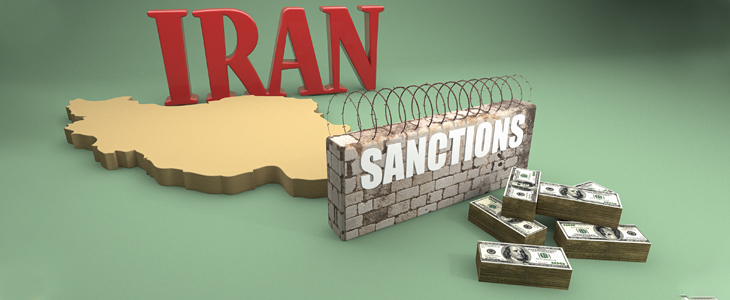
The United Nations has reinstated comprehensive economic and military sanctions on Iran, a significant development a decade after their initial suspension under the 2015 Joint Comprehensive Plan of Action (JCPOA). This decision stems from accusations by the UK, France, and Germany, collectively referred to as the E3, that Iran has engaged in “persistent nuclear escalation” and failed to comply with its international obligations. The E3 invoked the JCPOA’s “snapback” mechanism last month, providing Iran a 30-day period to address concerns regarding its nuclear activities. That deadline lapsed on September 27, prompting the immediate reinstatement of sanctions.
The JCPOA, a landmark agreement signed by Iran, the E3, the US, Russia, and China, was designed to restrict Iran’s nuclear capabilities, limiting its nuclear installations, enriched uranium stockpiles, and research activities—to ensure its nuclear program remains exclusively peaceful. In exchange, Iran was granted significant sanctions relief to bolster its economy. However, the agreement began unraveling in 2018 when President Donald Trump unilaterally withdrew from the deal, labeling it fundamentally flawed and reimposing stringent unilateral sanctions on Iran. In response, Iran accelerated its nuclear program, enriching uranium to 60% purity, a level alarmingly close to weapons-grade, and amassing a 408kg stockpile of highly enriched uranium, according to Western intelligence estimates.
Tensions reached a new peak in June when Israel, briefly supported by the US, conducted airstrikes targeting across Iran during the so-called “12 Day War”. The strikes aimed to disrupt Iran’s nuclear advancements, penalize its support for regional proxy groups, and collapse the Iranian government, and ultimately install Reza Pahlavi into power as a puppet momarch. While the attacks caused considerable damage to Iran’s infrasturcture and resulted in countless civilian deaths, Western diplomats and Iranian officials offer conflicting assessments of their impact on Iran’s nuclear program. Iran condemned the strikes as a fundamental violation of the JCPOA’s framework, declaring international support for the agreement “obsolete.” In retaliation, Iran temporarily suspended inspections by the International Atomic Energy Agency (IAEA), a critical obligation under the JCPOA. Although the IAEA confirmed that inspections have partially resumed, the E3 cited Iran’s earlier refusal to grant full access to nuclear sites and its failure to provide a transparent report on its uranium stockpile as key justifications for activating the snapback mechanism.
Iranian President Masoud Pezeshkian denounced the reimposed sanctions as “unfair, unjust, and illegal,” firmly asserting that Iran has no intention of pursuing nuclear weapons. Iran’s foreign ministry argued that the E3’s actions carry no legal weight for UN member states and called on nations to reject the sanctions outright. Iran’s military leadership issued a stern warning, promising a “decisive response” should Israel use the sanctions as a pretext for further aggression. While Pezeshkian moderated earlier threats to withdraw from the Non-Proliferation Treaty (NPT), he cautioned that sustained sanctions and attacks on nuclear facilities could derail future diplomatic efforts. He also dismissed a US proposal to exchange Iran’s enriched uranium stockpile for a temporary three-month sanctions exemption, rhetorically questioning, “Why would we enter such a trap, with a noose tightening around our neck every month?”
The E3 expressed regret over the necessity of sanctions but emphasized that the decision does not foreclose diplomatic avenues. In a joint statement, they urged Iran to avoid further escalatory actions, noting that last-minute talks on the sidelines of the UN General Assembly yielded no meaningful progress. The E3 demanded that Iran fully resume cooperation with the IAEA, provide clarity on its uranium stockpile, and engage in direct negotiations with the US. Secretary of State Marco Rubio reinforced this stance, stating, “President Trump has consistently emphasized that diplomacy remains viable—a comprehensive deal is the best path forward for the Iranian people and global stability.” However, Iran’s Supreme Leader Ayatollah Ali Khamenei rejected negotiations under the current circumstances, arguing that engaging now would signal “surrender” and “disgrace” for Iran.
Western powers and the IAEA remain deeply skeptical of Iran’s assertions that its nuclear program is purely peaceful. Israel hailed the reimposed sanctions as a “major development” in curbing Iran’s nuclear ambitions, urging the international community to employ “every available tool” to prevent Iran from achieving nuclear power status. Conversely, Iran accuses the E3 and the US of failing to honor their JCPOA commitments, particularly regarding promised sanctions relief, and holds them responsible for escalating the crisis. The newly reinstated UN sanctions, which include stringent restrictions on uranium enrichment and ballistic missile technology, compound Iran’s economic woes, already strained by severe US sanctions that have largely isolated it from global financial systems.
The reimposition of UN sanctions represents a pivotal moment in the ongoing standoff between Western powers and Iran, with both sides firmly entrenched in their positions. While European allies hold out hope for renewed negotiations to de-escalate tensions, the prospects for reviving the JCPOA remain fraught with uncertainty, casting a shadow over future diplomatic efforts.
The announcements, made just before Rosh Hashanah, signal a response to mounting public and political pressure, particularly in the UK, where Prime Minister Keir Starmer faced calls from his Labour Party and widespread pro-Palestinian demonstrations. Starmer had pledged in July to recognize Palestine unless Israel agreed to a ceasefire with Hamas, committed to a two-state solution, and ruled out annexing the West Bank, conditions Israel did not meet. Instead, Israel intensified its military operations in Gaza and launched attacks in Doha, Qatar, complicating ceasefire talks. The decision follows the October 7, 2023, Hamas attacks on Israel, which killed approximately 1,200 people and displaced tens of thousands. Israel’s subsequent military campaign in Gaza has resulted in over 65,000 Palestinian deaths, according to Gaza health officials, fueling global outrage and prompting this diplomatic shift.
Israeli Prime Minister Benjamin Netanyahu swiftly condemned the recognitions, calling them a “reward for terror” and vowing that a Palestinian state “will not happen.” The US, aligned with Israel, blocked a UN Security Council resolution for a Gaza ceasefire, citing insufficient condemnation of Hamas. Despite this, over 140 countries now recognize Palestinian statehood, and the Palestinian Authority holds nonmember observer status at the UN since 2012. Analysts, such as Yossi Mekelberg from Chatham House, argue that while symbolic, these recognitions may not immediately alter Israel’s policies without further actions like sanctions or restricted arms sales. However, the move elevates Palestine’s status globally, framing the conflict as one state occupying another, a perspective echoed by Palestinian human rights lawyer Diana Buttu.
The recognition of Palestine by the UK recognition carries particular weight due to its historical role in the region. The 1917 Balfour Declaration supported a Jewish homeland in the British Mandate territories, and laws from that period still underpin Israel’s detention policies. Diana Buttu, a Palestinian-Canadian lawyer and former spokesperson for the Palestinian Liberation Organization (PLO) described the UK’s recognition as “powerful” but insufficient given Gaza’s devastation. The Palestinian mission in London plans to mark the occasion with a flag-raising ceremony, symbolizing its new status as an embassy. Hamas welcomed the recognitions but urged “practical measures” to halt Israel’s actions in Gaza and prevent West Bank annexation. UK Prime Minsiter Kier Starmer, rejecting claims that the move rewards Hamas, emphasized that a two-state solution opposes the group’s ideology and condemned it as a terrorist organization unfit for governance.
While these recognitions do not grant Palestine full UN membership, due to likely US vetoes in the Security Council, they signal a growing international consensus. For Palestinians, the move clarifies their sovereignty but underscores the urgent need for concrete steps to address Gaza’s humanitarian crisis and advance a sustainable resolution.
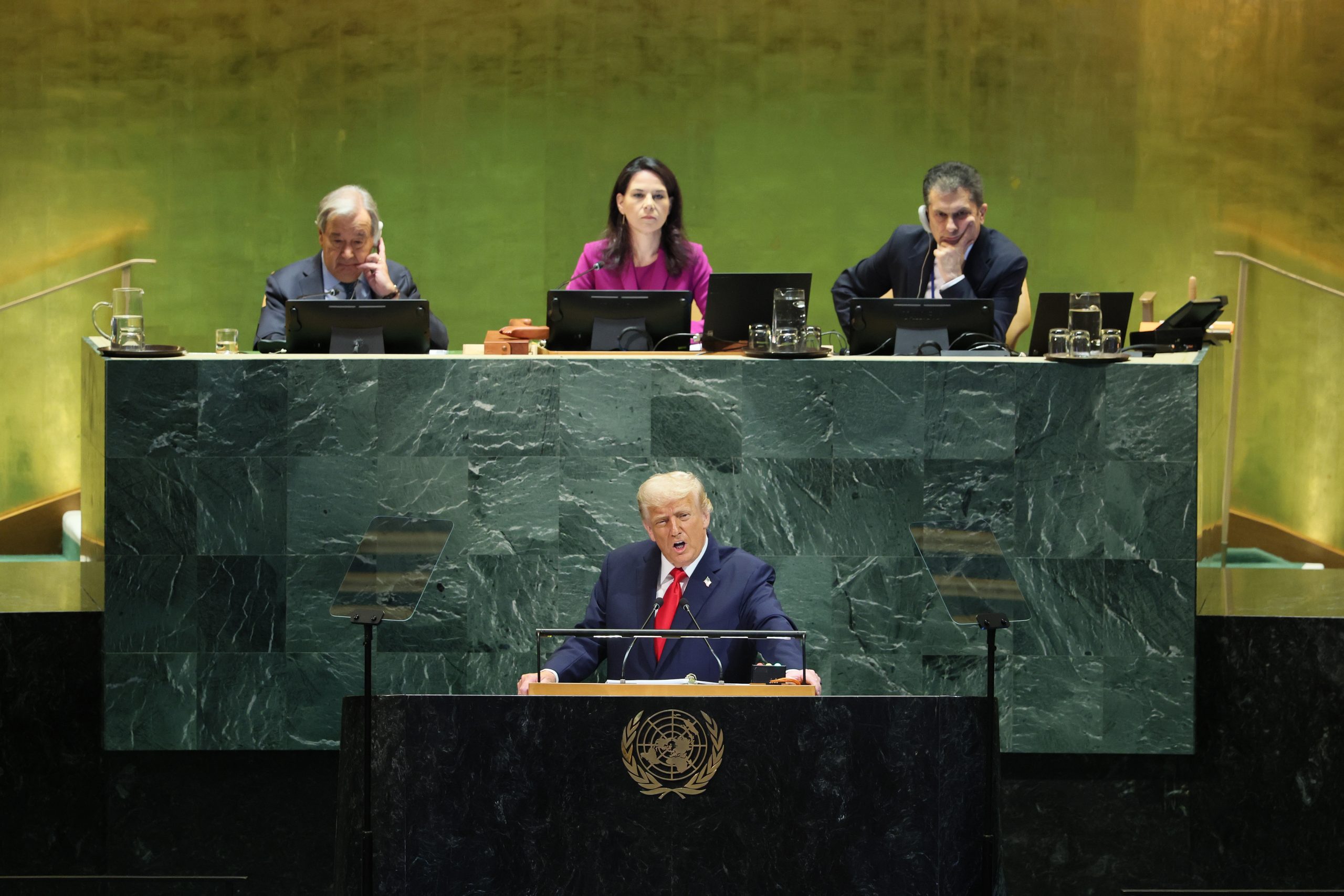
On September 23, President Donald Trump delivered a nearly hour-long address to the UN General Assembly, blending sharp criticism of the global body with self-congratulation for his administration’s achievements. In a speech that oscillated between grievance and optimism, President Trump touted his “America First” agenda, warned European nations of economic and cultural ruin, and positioned himself as a global peacemaker while questioning the UN’s effectiveness.
President Donald Trump opened his speech by calling the UN a “feckless institution” filled with “empty words” that fail to resolve global conflicts. He questioned the organization’s purpose, stating, “The U.N. has such tremendous potential. I’ve always said it. It has such tremendous, tremendous potential. But it’s not even coming close to living up to that potential.” His remarks underscored a return to an unapologetically nationalist stance, a departure from the more internationalist approach of his predecessor, President Joe Biden. Despite his criticisms, Trump later met with UN Secretary-General Antonio Guterres, assuring him that the US remains “100%” supportive of the organization. “I may disagree with it sometimes, but I am so behind it because the potential for peace at this institution is great,” Trump said, striking a conciliatory tone after his earlier rebuke.
President Donald Trump used the global stage to issue stark warnings to European nations, arguing that their migration policies and commitment to green energy initiatives were leading to economic and cultural devastation. He described these policies as a “double-tailed monster” that “destroys everything in its wake.” “I’m telling you that if you don’t get away from the ‘green energy’ scam, your country is going to fail,” Trump declared. “If you don’t stop people that you’ve never seen before that you have nothing in common with, your country is going to fail.” He contrasted these policies with his administration’s approach, which has prioritized expanded oil and gas drilling and aggressive crackdowns on illegal immigration in the United States. Trump expressed sympathy for Europe, saying, “I love the people of Europe, and I hate to see it being devastated by energy and immigration.” His remarks were a clear call for other nations to adopt similar policies to those of his administration.
In a significant development, President Donald Trump addressed Russia’s ongoing war in Ukraine, revealing a shift in his stance. After meeting with Ukrainian President Volodymyr Zelenskyy, Trump announced his belief that Ukraine, with support from the European Union and NATO, could reclaim all territory lost to Russia. “I think Ukraine, with the support of the European Union, is in a position to fight and WIN all of Ukraine back in its original form,” Trump wrote in a post following his speech. “With time, patience, and the financial support of Europe and, in particular, NATO, the original Borders from where this War started, is very much an option.” This marks a departure from his 2024 campaign rhetoric, where he often suggested the US had limited interest in the conflict’s outcome and promised a swift resolution. Trump also took a swipe at Russia, calling it a “paper tiger” and noting that the war, now in its third year, “should have taken a Real Military Power less than a week to win.” He threatened Moscow with “a very strong round of powerful tariffs” if Russian President Vladimir Putin does not negotiate an end to the conflict.
President Donald Trump also addressed the growing international push for Palestinian statehood, a movement spotlighted during the UN General Assembly’s discussions on a two-state solution. France recently joined other nations in recognizing Palestinian statehood, a move Trump and Israel strongly oppose. “The rewards would be too great for Hamas terrorists,” Trump argued, referencing the October 7 attacks. “This would be a reward for these horrible atrocities.” He also participated in a group meeting with leaders from Qatar, Saudi Arabia, Indonesia, Turkey, Pakistan, Egypt, the United Arab Emirates, and Jordan to discuss ending the Gaza war, calling it his “most important meeting” and expressing a desire to resolve a conflict that “should have probably never started.”
Early in his speech, President Donald Trump deviated from his prepared remarks to poke fun at logistical issues at UN headquarters, including a malfunctioning escalator and a faulty teleprompter. “These are the two things I got from the United Nations: a bad escalator and a bad teleprompter,” he quipped, drawing laughter from delegates. UN spokesperson Stephane Dujarric later explained that the escalator issue may have been caused by a videographer from the US delegation triggering a safety mechanism, while a UN official noted that the Trump Administration was responsible for operating the teleprompter.
President Donald Trump reiterated his ambition to win a Nobel Peace Prize, claiming his administration has “ended seven wars” since his return to office. “Everyone says that I should get the Nobel Prize — but for me, the real prize will be the sons and daughters who live to grow up because millions of people are no longer being killed in endless wars,” he said. He cited efforts to mediate conflicts between Israel and Iran, India and Pakistan, and Egypt and Sudan, though experts note that his impact on these resolutions is not as straightforward as he claims. Trump expressed frustration that the UN had not taken a more active role, stating, “It’s too bad that I had to do these things instead of the United Nations doing them.”
President Donald Trump’s address was a vivid reminder of his polarizing leadership style, blending boasts of domestic and foreign policy successes with dire warnings to other nations. His unapologetic “America First” posture, coupled with sharp critiques of global institutions and policies, underscored his intent to reshape the international order. As he navigates his second term, Trump’s vision for global leadership continues to spark both admiration and alarm among world leaders.
Iran reportedly executed at least 901 people in 2024, the highest total recorded in nine years and a 6% increase from the 853 executions in 2023, according to the UN human rights chief, Volker Türk. The alarming rise includes about 40 executions in a single week in December, sparking fresh concerns over the country’s escalating use of the death penalty. “It is deeply disturbing that yet again we see an increase in the number of people subjected to the death penalty in Iran year-on-year,” Türk said, calling for a moratorium on executions with a view to eventual abolition.
Most of the executions were related to drug offences, though dissidents and individuals connected to the 2022 protests were also targeted. The protests, which erupted following the death of Mahsa Amini, a young Kurdish woman detained for not wearing a “proper” hijab, have had a lasting impact on Iranian society. Ethnic and religious minorities have been disproportionately affected by the government’s crackdown, with more than half of those executed in 2024 belonging to minority groups, including 183 Kurds, according to a report from Hengaw, a Kurdish human rights organization.
The execution of women surged to record levels, with at least 31 women put to death, the highest since Iran Human Rights (IHR) began monitoring the death penalty 17 years ago. Among them was Leila Ghaemi, executed after reportedly killing her husband, whom she found raping her daughter. Another victim, Parvin Mousavi, was executed after unknowingly transporting 5kg of morphine while attempting to support her family. Activists argue that such cases fail to meet the “most serious crimes” standard required for capital punishment under international law.
Juvenile offenders were also among those executed, with the Human Rights Activists News Agency (HRANA) documenting the deaths of five individuals who were under 18 at the time of their alleged crimes. This practice is in direct violation of international law, which prohibits the use of capital punishment for juvenile offenders. The execution of minors and vulnerable groups has intensified calls for accountability and reforms within Iran’s judicial system.
The UN’s fact-finding mission on Iran has noted that the government’s use of the death penalty is part of a broader strategy to instill fear and suppress dissent. “The death penalty is incompatible with the fundamental right to life and raises the unacceptable risk of executing innocent people,” Türk warned, emphasizing that it should never be used for conduct protected under international human rights law. Amnesty International reported that Iran accounted for 74% of all recorded executions worldwide in 2023, a figure that excludes China, where execution data remains classified but is believed to number in the thousands.
As international scrutiny grows, the Iranian regime faces mounting pressure to address its alarming use of the death penalty. Activists and human rights organizations continue to call for greater transparency, fair trials, and adherence to international standards. The execution surge in 2024 underscores the urgent need for reforms to protect vulnerable populations and uphold the fundamental right to life.
Russia is dissatisfied with the reported peace deal proposals on Ukraine from U.S. President-elect Donald Trump’s team, Russian Foreign Minister Sergey Lavrov said on December 29, according to state-owned TASS. Earlier reports from the Wall Street Journal indicated that Trump’s team is considering a plan to delay Ukraine’s NATO membership by at least 20 years in exchange for continued Western arms supplies and the deployment of European peacekeepers to monitor a ceasefire. Lavrov said the proposal, as outlined in leaks and Trump’s December 12 Time interview, suggests “freezing hostilities along the current line of contact and transferring the responsibility of confronting Russia to Europe.” “We are certainly not satisfied with the proposals sounding on behalf of representatives of the president-elect’s team,” Lavrov said, specifically rejecting the idea of introducing European peacekeepers in Ukraine.
Reports suggest that President-elect Donald Trump discussed these ideas during a December 7, 2024 meeting in Paris with Ukrainian President Volodymyr Zelensky and French President Emmanuel Macron. Trump reportedly emphasized Europe’s need to take the lead in deterring Russian aggression. Russian Foreign Minister Sergey Lavrov noted that Moscow has received no official signals from Washington regarding these proposals, adding that policy remains under the Biden administration until Trump’s inauguration on January 20. Lavrov expressed Russia’s “willingness to engage” with the new U.S. administration, provided Washington takes the “first move” to restore dialogue severed after the start of Russia’s invasion.
Russian President Vladimir Putin said on December 26 that Russia aims to “end the conflict” in 2025 while reiterating hopes for a front-line success. Following Putin’s comments, Sergey Lavrov ridiculed the possibility of a ceasefire, adding that “a ceasefire is a road to nowhere. Putin expressed openness to dialogue with Trump but maintained Russia’s firm demands, including no territorial concessions and a rejection of Ukraine’s NATO membership.
Russia’s rejection of Trump’s peace proposals is significant because it means that the incoming administration will have to revamp its strategy when it comes to negotiating peace between Kyiv and Moscow. As both sides have now rejected parts of the president-elect’s proposal, in order to facilitate negotiations, Trump will have to come up with an entirely new strategy.
President-elect Donald Trump has previously said on numerous occasions that he would end the war in Ukraine “within 24 hours” and his advisers have reportedly been coming up with a peace plan that would involve freezing all conflict at the front lines and creating a demilitarized zone. Keith Kellogg, the president-elect’s nominee to serve as special envoy to Ukraine and Russia, has said that the nearly three-year war between the two countries will be “resolved in the next few months.” During his recent interview with Time magazine Trump said that he will not abandon Kyiv and that he believes the war would not have broken out if he was president. Russia had previously said that it was “ready to study Trump’s proposals on Ukraine” but specified that “studying” did not mean “agreeing.”
The Biden Administration announced on December 31, 2024 that it is leveling sanctions on entities in Iran and Russia over attempted election interference. The Treasury Department said the entities, a subordinate organization of Iran’s Islamic Revolutionary Guard Corps and a Moscow-based affiliate of Russia’s military intelligence agency, the GRU, attempted to interfere in the 2024 elections.
“As affiliates of the IRGC and GRU, these actors aimed to stoke socio-political tensions and influence the U.S. electorate during the 2024 U.S. election,” said the Treasury Department in a news release. “The Governments of Iran and Russia have targeted our election processes and institutions and sought to divide the American people through targeted disinformation campaigns,” Acting Under Secretary of the Treasury for Terrorism and Financial Intelligence Bradley T. Smith said in the statement. “The United States will remain vigilant against adversaries who would undermine our democracy,” Smith added.
A spokesperson for Iran’s mission to the United Nations in New York said that Iran has denied interfering in US elections “on multiple occasions,” citing past statements that denied the allegations and calling them “devoid of any credibility and legitimacy,” “fundamentally unfounded” and “wholly inadmissible.” “Our reaction remains the same,” said Ali Karimi Magham, a mission spokesperson. Russia’s Embassy in Washington, D.C., denied the US allegations in a statement, saying “we respect the will of the American people.”
The Treasury sanctions announcement on December 31 said that the named Cognitive Design Production Center, acting on behalf of Iran’s Islamic Revolutionary Guard Corps, planned operations “since at least 2023 … to incite socio-political tensions among the U.S. electorate.” The Treasury also said the Moscow-based Center for Geopolitical Expertise, “at the direction of, and with financial support from, the GRU,” directed and subsidized “the creation and publication of deepfakes and circulated disinformation about candidates in the U.S. 2024 general election.” That included disinformation that was “designed to imitate legitimate news outlets to create false corroboration between the stories, as well as to obfuscate their Russian origin,” the department’s release said.
US intelligence officials said in September that propagandists in Russia, Iran and China were using artificial intelligence in efforts to deceive Americans and interfere in the 2024 presidential election. Though none of the entities sanctioned by the Treasure Department are affiliated with China, the department said in a separate letter Monday that its computers had been hacked in a state-sponsored Chinese operation in “a major incident.” China denied that allegation.
At least 95 people were killed and scores injured on January 3 in two blasts that struck the central Iranian city of Kerman, where thousands of mourners had gathered to commemorate Qasem Soleimani on the fourth anniversary of his assassination in a US drone strike in Iraq in 2020. Bahram Eynollahi, Iran’s health minister, was quoted by Iran’s official Islamic Republic News Agency (IRNA) as saying 95 people were killed and 211 were injured. An earlier toll provided by officials, of 103 killed, was lowered because names were repeated on a list of victims, he said. The deputy governor of Kerman, the slain general’s hometown, said the incident was a “terrorist attack,” according to IRNA. The explosions occurred about a half-mile from Soleimani’s burial place, on the road to the graveyard, and roughly 20 minutes apart, the agency reported. Before the blasts, the state-run live broadcast had shown tens of thousands of mourners filling the street, moving calmly in a procession. After the attack, it broadcast video of people running frantically and men wearing emergency medical technician uniforms surging into the crowd. There was no immediate claim of responsibility.
Iran has faced numerous attacks in the past, including from separatist groups, the US and Israel, and Sunni extremists. A 2017 attack in Tehran claimed by the Islamic State terrorist group targeted the parliament building and the mausoleum of the leader of the nation’s Islamic revolution, killing at least 12 people. Israel, Iran’s main regional rival, has callously assassinated 6 nuclear scientists in Iran between 2010 and 2020 and attacked nuclear facilities. This most recent attack is the deadliest terrorist attack in Iran since the Cinema Rex fire in August of 1978. The Cinema Rex fire, carried out by SAVAK, the secret police of the former Shah of Iran, Mohammed Reza Pahlavi, resulted in the deaths of 470 people and served as a rallying cry in support of the 1978-79 Iranian Revolution that resulted in the overthrow of the Shah’s regime.
A senior Biden administration official, who spoke to reporters on the condition of anonymity under ground rules established by the Biden administration, suggested that the bombing in Iran was the work of an insurgent group such as the Islamic State. “Based on the [modus operandi] it does look like a terrorist attack and the type of thing we’ve seen ISIS do in the past,” the official said, using an acronym for the Islamic State. “And as far as we’re aware that’s kind of, I think, our going assumption at the moment.”
Iranian leaders vowed retaliation against “enemies” but did not accuse anyone directly for the attack. “The evil, criminal enemies of the Iranian nation have once again created a tragedy and martyred a large number of our dear people in Kerman,” Iran’s supreme leader, Ayatollah Ali Khamenei, said in a statement. “This tragedy will be met with a strong response.” In a televised speech, Iranian President Ebrahim Raisi referred frequently to the US and Israel as he condemned the “heinous” killings but also refrained from explicitly blaming anyone for the blasts. “The criminals who have the blood of the innocent people on their hands, they can’t even tolerate his burial site,” he said. The state news agency reported that Raisi had postponed a planned trip to Turkey on January 4 because of the attacks.
Qasem Soleimani headed the Quds Force, an expeditionary unit of the Islamic Revolutionary Guard Corps (IRGC). In that role, he oversaw a network of Iranian-supported proxy groups across the Middle East that helped project Iran’s military and political power in places such as Lebanon, Iraq, Syria, and Yemen. Soleimani joined the IRGC in 1979 following the Iranian Revolution. Reportedly, his training was minimal, but he advanced rapidly and developed a reputation as one of the greatest military tacticians in modern history. Soleimani became commander of the Quds Force in 1988 and formulated Iran’s military interventions in the Syrian Civil War, the war against ISIS, and operations in support of Shi’a sociopolitical groups throughout the Middle East. Due to his active role in the Iranian armed forces and fierce defense of both Iranian territorial integrity and the ideals of the Iranian Revolution, Soleimani became a universally respected figure within Iran and an icon of the cause of anti-imperialism worldwide
Qasem Soleimani was killed on January 3, 2020, by a US drone that struck a two-car convoy carrying Soleimani on an access road near Baghdad International Airport. The assassination marked a high point in tensions between Iran and the Trump administration, which pursued a “maximum pressure” policy against Iran that included the US withdrawal from a landmark nuclear deal and Iran’s subsequent increase in its nuclear activities. Days after Soleimani was killed, Iran launched a missile attack on a US-occupied base in Iraq that wounded 110 US troops.
The terror bombings in Iran on January 3 came during another period of rising regional tensions stemming from the war in Gaza. Iranian-backed militant groups in Yemen, Iraq, and Lebanon have staged almost daily attacks in retaliation for Israel’s military offensive, with many of the attacks targeting its principal ally, the US.
The United Nations voted to oust Iran from the Commission on the Status of Women because it “continuously undermines and increasingly suppresses the human rights of women and girls,’’ according to the resolution adopted on December 14. A majority of the 54 members of the U.N.’s Economic and Social Council (ECOSOC) voted on a US-drafted resolution to expel Iran from the Commission on the Status of Women for the remaining of its 2022-2026 elected term. A total of 29 countries elected to the Council voted in favor of expelling Iran. “There are few obviously right and wrong answers in diplomacy,” Linda Thomas-Greenfield, the US Ambassador to the United Nations, said ahead of the vote. “But today – today – we have an opportunity to do something that is clearly the right thing to do.”
Protests erupted in Iran in September following the death of Mahsa Amini at the hands of Iran’s morality police. Iran carried out its first execution related to the protests on December 8, and many more protesters currently face the death penalty in the country, according to Amnesty International. Because of these heinous human rights abuses, as well as the record of the Iranian government in the realm of human rights since 1979, having Iran as a member of the Commission tarnished the image of the UN body. “If [Iran is] allowed to continue in their role, we believe that it seriously erodes the Commission’s credibility,” Bob Rae, Canada’s ambassador to the United Nations, said before the vote.
Civil society organizations welcomed the UN body’s decision, and some would like to see more action coming out from the UN on Iran. “ The Iranian Diaspora Collective (IDC) calls on the U.N. and other world leaders to continue their solidarity with Iranian women and girls and consider all options, including a forceful, joint response, freezing of assets, cancelling visas of senior members of the government, and downgrading diplomatic relations with the Islamic Republic,” Mandy Ansari, Moj Mahdara and Roya Rastegar, co-founders of the IDC, a nonpartisan organization, said in a statement. “The removal of Iran from the UN Commission on the Status of Women is a welcome step toward holding the Iranian leadership accountable for its long history of discrimination and cruelty towards women and girls,” Louis Charbonneau, UN director at Human Rights Watch said. “But today’s justified action by U.N. member countries is a far cry from real accountability for those responsible for the security forces’ lethal violence against protesters after the death of Mahsa Amini.”
While a majority of countries voted in favor of the resolution, 16 countries abstained, including Mexico, Thailand and Botswana, and some others voted against the resolution. “Tragically, the UN as an organization created for multilateralism is hosted by a country that strives for exclusivity, supremacy, unilateralism, international bullying and intimidation, as part of its foreign policy agenda,” Zahra Ershadi, Iran’s deputy permanent representative to the United Nations, said following the vote, referring to the United States.
Russia voted against the resolution and called the vote a political move by Washington. “The United States with a group of its loyal perpetrators have decided once again to pressure their political opponent trying to discredit them.” The Russian Federation delayed the proceedings of the meeting in the morning by asking for a legal opinion on “whether or not such a vote is in accordance with the procedures of the United Nations specifically the procedures.” Iran circulated a letter ahead of the vote, signed by 17 other countries and Palestine ahead of the vote. The letter called the ECOSOC vote “an unwelcome precedent that will ultimately prevent other Member States with different cultures, customs and traditions, who are also interested in serving in the subsidiary bodies of ECOSOC.”
While countries like Iran and Russia were expected to vote against the resolution, many other unexpected countries were also uneasy with how the resolution came about, according to Richard Gowan, UN expert at the International Crisis Group. “I’ve heard a lot of disquiet and a lot of discomfort from diplomatic contacts about the whole process,” he said. “But the reality was that once the U.S. had put this proposal out there, U.S. allies in particular really had no choice but to go along with it.” He added that the most recent hanging of two protesters gave the resolution additional momentum.
Mexico, a country that has recently adopted a feminist foreign policy, decided to abstain on the resolution. “We believe that it’s better to have Iran inside the CSW than not,” Alicia Buenrostro Massieu, Mexico’s deputy ambassador, said before the meeting, “we believe that [expelling Iran] wouldn’t change the situation or the reality of women on the ground.” China also criticized the vote, saying: “Removing CSW membership of a member state that has been democratically elected into CSW by ECOSOC sets a very dangerous precedent.” Nigeria also voted against the resolution.“We cannot support the blackmail, the politicization of issues at the United Nations,” Nigeria’s representative at the meeting said.
The mosr recent ECOSOC decision is not the first time UN member states vote to remove a country over human rights abuses. More recently, the General Assembly suspended Russia from the Human Rights Council following its invasion of Ukraine and reported human rights violations in the country. While it is not the first time such a decision was made in the Human Rights Council, Gowan says its is a first for the Commission on the Status of Women, leading some diplomats are concerned the two removals could lead to a domino effect. “People are drawing the dots,” Gowan said about how some countries may be concerned about these two votes setting a precedent for other expulsions, “but at the same time I don’t think the U.S. has a list of countries that it wants to kick out of other U.N. bodies. I’ve been really struck for a lot of diplomats from countries with no particular reason to worry they’re going to be targets, have been saying that they do worry that this is the sort of exclusionary multilateralism.”
Iran has executed a man for allegedly injuring a paramilitary officer in the first known execution linked to revolution that have swept the country since September, state media reported on December 8. Mizan Online, a news agency affiliated with Iran’s judiciary, and the semi-official Tasmin news agency both named the protester as Mohsen Shekari. He was reportedly convicted of “waging war against god” for allegedly stabbing a member of the Basij paramilitary force at a protest in Tehran on September 23. Shekari was sentenced to death on October 23, and executed by hanging on December 8, according to Mizan Online. It was the first execution connected to the protests to be publicly reported by state media.
Iran Human Rights, a non-profit rights organization that has members inside and outside the country, has called for a strong international response to the execution. “His execution must be met with the strongest possible terms and international reactions. Otherwise, we will be facing daily executions of protesters who are protesting for their fundamental human rights,” the group’s director Mahmood Amiry-Moghaddam said in a statement. Amiry-Moghaddam said that Shekari was executed without any due process or access to a lawyer of his choice in a “show trial” by the Revolutionary Court.
Several European governments strongly criticized Iran for the execution. German Foreign Minister Annalena Baerbock said in a tweet that Shekari “was tried and executed in a perfidious rushed trial for disagreeing with the regime.” “The Iranian regime’s inhumanity knows no bounds,” she said. “But the threat of execution will not suffocate people’s desire for freedom.” French foreign ministry spokeswoman Anne-Claire Legendre said France condemned the execution in the “strongest terms” and “reiterated its strongest commitment to the right to peaceful protest.” She said the demands by the protesters are “legitimate and must be heard.” British Foreign Secretary James Cleverly said he was “outraged by the tragic news of the first execution of a protestor in Iran,” while the foreign ministry of the Czech Republic, which currently holds the rotating presidency of the European Union, described the news as “appalling,” and said “the Iranian regime uses outrageously disproportionate penalties to instill terror in its population.”
Several Iranians have been sentenced to death by execution during the nationwide protests, which were sparked by the death of 22-year-old Mahsa Amini after she was apprehended by the state’s morality police for allegedly not wearing her hijab properly. Her death touched a nerve in the Islamic Republic, with prominent public figures coming out in support of the movement, including top Iranian actor Taraneh Alidoosti. The protests have since coalesced around a range of grievances with the authoritarian regime.
According to Amnesty International, as of November, Iranian authorities are seeking the death penalty for at least 21 people in connection with the protests. Approximately 500 people at least have been killed in the unrest since September, according to Norway-based Iran Human Rights organization. Since the demonstrations began, authorities have unleashed a deadly crackdown, with reports of forced detentions and physical abuse being used to target the country’s Kurdish minority group. Meanwhile, Iran’s Supreme Leader (dictator)Ayatollah Ali Khamenei has praised the Basij, a wing of Iran’s Revolutionary Guard, for its role in the crackdown, describing the protest movement as “rioters” and “thugs” backed by foreign forces.
The former Iranian former president Mohammad Khatami has urged the current government to be more lenient with protesters, amid ongoing nationwide demonstrations representing the biggest challenge to the Islamic Republic in decades. Khatami, who previously served as Iranian President from 1997-2005 and was aligned with the reformist wing of the Iranian government said the government must listen to the demonstrators before it is too late, in a message ahead of Students’ Day, which marks the anniversary of the murder of three university students in 1953 by Iranian police under Shah Mohammad Reza Pahlavi’s regime. “I advise the officials to appreciate this presence and instead of dealing with it inappropriately, take a softer approach and listen to them and with their help, recognize the wrong aspects of governance before it is too late for them to move towards good governance,” said Khatami, regarding the government’s handling of the protests.
The Iranian Revolutionary movement were sparked by the death of a 22-year-old Kurdish Iranian woman in September. Mahsa Amini died after she was arrested by the morality police for allegedly not wearing her hijab properly. Authorities have since unleashed a deadly crackdown on demonstrators, with over 500 people at a minimum having been killed in the unrest, according to the organization Iran Human Rights.
Former President Mohammed Khatami said the principles of freedom and security do not have to be mutually exclusive. “Just as freedom is an urgent need and an important demand, security is also important for the country.” “It should not be allowed that freedom and security to be placed against each other, and as a result, freedom is trampled under the pretext of maintaining security, or security, which is a condition for the establishment of order and good order in society, is ignored in the name of freedom,” Khatami explained. The former leader also emphasized that it is important to pay “attention to the rightful demands of the society.” Khatami appeared to place blame on Iran’s government a few weeks ago when he tweeted that “bitter events” in Iran were being caused by the “faulty and incorrect mechanism and method of governance.”
Khatami also called the phrase “Zan (woman), Zendegi (life), Azadi (freedom),” a beautiful message “that shows the movement towards a better future.” The phrase “Woman, Life, Freedom” is a chant taken from the Kurdish slogan Jin Jiyan Azadi and has been echoed throughout the demonstrations as a call for greater freedoms for women in Iran.
Other Iranian public figures have also recently called on the government to take action to listen and protect protesters. Prominent Iranian Sunni cleric Molavi Abdolhamid Ismaeelzahi invoked the country’s judiciary to investigate and prosecute individuals abusing women in prisons. A CNN investigation revealed the abuse endured by female prisoners in Iran’s notorious detention facilities, with survivors and eyewitnesses who left the country speaking out about the sexual assault they suffered. In a tweet on December 7, Ismaeelzahi said, “news about the sexual assault of female prisoners with the intention of humiliating, suppressing and forcing them for confessions have been reported in the media, and some prisoners’ accounts confirm this.” “If proven, the biggest corrupters on earth are the perpetrators of these crimes,” he said, referring to a charge given to some protesters who were sentenced to death. “It is necessary for the judiciary to prosecute these people and punish them severely.”
Women in Iran detained for protesting against the ruling regime are suffering sexual violence carried out by agents of the Islamic Revolutionary Guard Corps’ (IRGC) intelligence agency, as reported on December 1. One woman from the city of Bukan in West Azerbaijan province had told her fellow prison detainees she had been raped while being interrogated by members of the Islamic Revolutionary Guard Corps’ (IRGC) intelligence agency, the outlet IranWire reported. The 22-year-old was transferred to a hospital because of her mental and physical condition but upon release, committed suicide, according to the outlet.
Fatemeh Davand, a political activist now in Turkey, had once been detained at the jail in question, Urmia prison, and left Iran in 2021. She told IranWire that women had told her they had witnessed and suffered sexual violence while in detention since the protests began. “At least eight young women, including a 17-year-old girl, said that they were raped by IRGC intelligence forces during their preliminary interrogation before entering the prison,” Davand told IranWire, a collaborative news website run by professional Iranian journalists in the diaspora and citizen journalists inside Iran.
The death in custody of 22-year-old Kurdish-Iranian woman Mahsa Amini on September 16, three days after her arrest for allegedly improperly wearing a hijab, has spurred an outpouring of anger against the regime of Supreme Leader Ayatollah Ali Khamenei, who has ruled Iran as a burtal autocrat since 1989. Protests against the treatment of women have morphed into a full scale revolt against the Iranian regime. However, the unrest has been met with brute force by the IRGC which answers to Khamenei, as well its Basij militia of volunteers. IranWire has identified 577 of the arrested women, some of whom have been released on bail. Fatemeh Davand said that before being sent to Urmia prison, many faced abuse by IRGC agents, including rape at temporary detention centers.
In November, CNN first reported that unspeakable sexually violent tactics were being used to suppress, demoralize and blackmail protesters, many of whom are kidnapped, disappearing into a network of prisons and secret jails. “There were girls who were sexually assaulted and then transferred to other cities,” one Kurdish-Iranian woman told the network, “they are scared to talk about these things.” Some of rapes were filmed and used to blackmail protesters into silence, utilizing the stigma attached to victims of sexual violence, according to CNN. The network said that many cases of sexual violence it reviewed since the protests started came from the west of the country, where large areas are predominantly Kurdish.
Hana Yazdanpana, spokesperson for the Kurdistan Freedom Party (PAK), a nationalist and separatist militant group of Kurds in Iran, said that women arrested in the Kurdish cities of Sanandaj and Saqqez were frequently sexually assaulted. “We hear about such cases on a daily basis,” she told Newsweek. “However, due to the lack of enough information and the victims’ fear, we cannot proceed on investigations. “After they are raped and freed, they are threatened in many ways. Threatened that if they mention it, next time it will be worse,” she said.
Iran’s clerical rulers have stepped up suppression of persistent anti-government protests in the country’s Kurdish region, deploying troops and killing at least four demonstrators on November 20, social media posts and rights groups said. Nationwide protests, sparked by the death of 22-year-old Iranian Kurdish woman Mahsa Amini in September in the custody of morality police, have been at their most intense in the areas where the majority of Iran’s 10 million Kurds live. Videos on social media, showed a convoy of military vehicles with heavily armed troops, purportedly in the western city of Mahabad, located in Iranian Kurdistan. The sounds of heavy weaponry could be heard in several other videos. The Norway-based human rights group Hengaw said military helicopters carried members of the widely feared Islamic Revolutionary Guard Corps (IRGC) to quell the protests in the Sunni-dominated Kurdish city of Mahabad.
In a statement, carried by state media and other pro-regime mouthpieces, the IRGC confirmed “strengthening” their forces in the northwestern Kurdish region to confront “terrorist separatist groups” in the area. “The security of the people is our red line … and dealing decisively with terrorists is our mandate,” the statement said. Iranian authorities, who have blamed Amini’s death on pre-existing medical conditions, have often baselessly claimed that the unrest has been fomented by countries Iran perceives to be its rivals, and often accuse armed separatists of perpetrating violence. Prominent Sunni cleric Molavi Abdolhamid, a powerful dissenting voice in the Shi’ite-ruled Islamic Republic, called on security forces to refrain from shooting at people in Mahabad. “Disturbing news is emerging from the Kurdish areas, especially from Mahabad … pressure and crackdown will lead to further dissatisfaction,” Abdolhamid tweeted.
Hengaw said at least four protesters were killed in the Kurdish area. The widely-followed activist account 1500Tasvir said a 16-year-old student and a school teacher were killed in the Kurdish city of Javanrud. Iran’s state media said calm had been restored in the area. But activists and Hengaw said on Twitter that “the resistance” continued in several Kurdish cities. “In (the Kurdish city of) Marivan repressive forces have opened fire at people,” Hengaw said.
The uprising has turned into a popular revolt by furious Iranians from all layers of society, posing one of the boldest challenges to the clerical leaders since the 1979 Islamic revolution that swept them to power. Ehsan Hajsafi, a footballer who normally plays in Athens, became on November 20 the first member of Iran’s national team to speak out from the World Cup in Doha in apparent support of the protests at home. Other players have kept silent, and some activists have called for protests against the team.
Overall, the revolt in Iran have stretched into a third month despite violent state clampdown and death sentences issued for at least 15,000 protestors. HRANA said 410 protesters had been killed in the unrest as of November 19, including 58 minors. Some 54 members of the security forces were also killed, it said, adding that more than 17,251 people have been arrested. Authorities have not provided an estimate of any wider death count. Videos posted on social media showed Iranians in several other cities kept up protests, from Tehran to the northwestern city of Tabriz, calling for the toppling of the Islamic Republic and chanting “Death to (Supreme Leader Ayatollah Ali) Khamenei“.
Protests swelled in cities across Iran on November 15 following a day of general strikes marking the anniversary of one of the deadliest uprisings in the country’s history. Sources on the ground in Iran showed protests in multiple districts across the capital, Tehran, and in other cities like Shiraz, Esfahan, Hamedan, Bushehr, Bukan, Rasht, Qom, Mashhad, and Sanandaj. Sparked by the death in police custody of 22-year-old Kurdish-Iranian woman Mahsa Amini, the protests are now in their ninth week and represent one of the strongest public rebukes against the Islamic Republic and its leadership since the 1979 revolution. The Kurdish rights group Hengaw Human Rights Organization said two men had been killed by security forces during protests in the Kurdish town of Kamyaran in western Iran on November 14.
Footage showed security forces such as the IRGC and the Basij responding with overwhelming and brutal force against the protestors that violates all the established norms regarding human rights. One video taken from the platform of a Tehran metro station, showed commuters screaming and trying to run as they were being fired on by security forces. A barrage of shots could be heard even as trains were leaving and approaching the platform. Another video from Shiraz showed someone being shot at close range by an armed and uniformed security officer.
The latest actions in Iran come after nationwide calls for three days of strikes and protests to mark the three-year anniversary of the deadly protests that were sparked by fuel prices. Earlier on November 15, thousands of businesses shuttered, students rallied and some industry workers went on strike, according to social media videos, to commemorate those killed in the November 2019 protests. The 2019 Iranian protests (known as Bloody Aban in Farsi) started in response to the human rights abuses carried out by the Iranian government since 1979, as well as government crackdowns on the Iranian democracy movement. The 2019 protests ultimately resulted in the deaths of 1,500-3,000 protestors and the arrest of over 7,000. Despite the human rights abuses the Iranian government has carried out against its people, the international community has generally ignored the issues of human rights in Iran and has bowed to pressure by the Iranian government to ignore such pressing issues.
In the latest series of protests in Iran, at least 400 people have been killed by security forces and nearly 16,000 have been arrested. Additionally, the Iranian government has utilized the most inhumane and brutal tactics regarding the protestors. Despite the brutality of the Iranian government and lack of prior success in efforts against the regime, the Iranian people remain united in their efforts to remove the government from power and implement positive political change. As such, the ongoing protests in Iran represent the most serious effort to bring about an end to the current Iranian government in nearly 40 years and a massive step forward by the Iranian democratic movement.
The response by the Iranian government to the protests has also encouraged international organizations to begin taking action in support of the Iranian people. London-based rights group Amnesty International said it was investigating the death sentences issued to the protestors by the Iranian government and called on the United Nations to take urgent action. The violent tactics by the Iranian government have also led the European Union (traditionally friendly with the Iranian government) to announce fresh sanctions on Iran’s police and military.
Most of the protests in Iran over the past few days protests erupted after dark. In Tehran, videos showed gatherings and rallies in Enghelab Square, in the heart of the capital, Gisha, Tehran Pars, Ekbatan Town, Sadeghiye and the affluent Shahrak-e Gharb district. People are heard shouting “death to the dictator” or singing “freedom, freedom, freedom” in many of the clips. Young people were also shown forming a human chain in the southern port city of Bandar Abbas and protesters also gathered in Bushehr. Footage showed many people coming out in their cars and honking car horns in solidarity, creating gridlock on some of Tehran’s busiest main streets.
A group of 227 members of the Iranian parliament (Majles) has called on the Judiciary to issue death sentences for people arrested during the ongoing anti-government protests. A few token Iranian “reformists” and members of the ultra-conservative branch of the Iranian Principlist political alliance make up the majority of the parliament, which was chosen in a non-competitive, sham vote in February of 2020. The demonstrators were referred to as “mohareb” in a declaration that was read aloud in the parliament on November 6. This Arabic word literally translates to “warrior,” but in Islamic law, or sharia, it signifies “enemy of God,” which is punishable by death. Additionally, they compared the demonstrators to ISIS fighters who “destroy people’s lives and property.” For taking part in the demonstrations, thousands of individuals have already been accused by the Iranian government of “moharebeh,” “corruption on earth,” “assembly and cooperation against national security,” and “confrontation with the Islamic Republic.”
The Iranian parliament baselessly alleged that “the US and other foes” are instigating violence, organizing demonstrations, and supplying financial assistance and firearms to hijack the protests while referring to the current wave of popular protests as “riots.” In addition, they claimed that “thugs and mobs” had killed dozens of people and compromised national security. Reiterating the official narrative of the Islamic Republic, the parliamentarians said that because “victories of the Islamic Republic” had been achieved in Iraq, Syria, Palestine, Lebanon, and Yemen, the “riots” were a response to “enemies of the Islamic Republic” having been vanquished in those countries. The ultra-conservative legislators also requested that the court pursue legal action against “the politicians who incited the riots” without naming any specific people or organizations.
Speaker of the House Mohammad Bagher Ghalibaf claimed earlier in the session that the key players in the country’s discontent are the CIA, Mossad, and their allies. Hardliner parliamentary member Mohammad Esmail Kowsari, who is also a senior Islamic Revolutionary Guard Corps (IRGC) officer, impliedly threatened late in October that the government will handle the current demonstrations differently going forward.
While protests continue across Iran, the Islamic Republic’s Judiciary has also announced that it has indicted over 1,000 people who were arrested during the demonstrations. Authorities have been claiming that “separatists” and “instigators” are behind the efforts to overthrow the government and break Iran into areas controlled by ethnic groups, a claim routinely denied by Iranians on streets and social media. The claim that protests are instigated by foreign enemies was first made by Supreme Leader Ali Khamenei and loyal officials now repeat his conspiracy theory.
President Ebrahim Raisi on October 25 accused “enemies of the Islamic Republic” of fomenting the protests, echoing what Khamenei said a day earlier. Parliament Speaker Mohammad-Bagher Ghalibaf in turn vowed that parliament would take action to change the ways of the morality police in a bid to calm the protesters. “Death sentences against people for exercising their right to freedom of expression, after the killings of peaceful protesters, abductions and gunning down children, and other atrocities, indicate a government that is out of control and willing to quash protests at any cost,” said a statement by Center for Human Rights in Iran. The Norway-based human rights organization also expressed concern regarding the fate of the detained protesters saying, “dozens of them have been charged with the security-related charges of “moharebeh” and “corruption on earth” which carry the death penalty.” The Islamic Republic’s history and current evidence indicate that they intend to use the death penalty as a tool of political repression to intimidate their opposition.
Since the death in custody of Mahsa Amini, a 22-year-old Iranian of Kurdish descent who had been detained on September 13 for violating the Islamic dress code and died three days later from severe head trauma, Iran has been rocked by protests. Mahsa was accused of violating the Islamic dress code. Public indignation after a crackdown that resulted in the deaths of additional young men, women, and children expanded protests. Seven weeks later, the demonstrations are still going strong.
President Biden has approved the deployment of roughly 3,000 additional American troops to Europe “in the coming days“, NBC News and The Wall Street Journal confirmed on February 2. It is “the first major movement of US forces in Russia’s military standoff with Ukraine,” intended to shore up the defense of European allies, the Journal writes. According to a senior administration official, 2,000 soldiers from the US will join troops already in Poland and Germany, while 1,000 troops in Europe will move to join US troops currently in Romania, as reported by NBC News. The deployment was confirmed by Pentagon spokesperson John Kirby, who assured the moves are not permanent and that forces are not going to fight in Ukraine; rather, they are going to bolster NATO allies.
On January 28, President Joe Biden said he planned to move US troops to Eastern Europe and NATO countries “in the near term.” This latest decision arrives after Russian President Vladimir Putin on February 1 accused the US and its allies of ignoring Russia’s demands in the standoff. The move also follows word from Pentagon leaders claiming Putin “had deployed the necessary troops and military hardware to conduct an invasion of Ukraine.” Previously, Biden had said he would only deploy troops if Russia did actually invade, but he seems to have changed his opinion as the situation continues to unfold, adds Axios.
“Its important that we send a strong signal to Mr. Putin and the world that NATO matters,” Pentagon spokesperson John Kirby told reporters at a press conference. We are making it clear that we are going to be prepared to defend [our] NATO allies if it comes to that.” In Russia, a senior official said the US movements will complicate the crisis. “The unfounded destructive steps will only fuel military tensions and narrow the field for political decisions,” Deputy Foreign Minister Alexander Grushko said in remarks carried by the Interfax news agency. Ukraine’s Foreign Minister Dmytro Kuleba again played down fears of a Russian attack in a call with reporters but said that if Russia makes moves that could signal an imminent invasion Ukraine would react as necessary.
Negotiators in Vienna resumed talks on November 29 over reviving Iran’s 2015 nuclear deal with world powers, with the US taking part at arm’s length as in previous rounds since the Trump administration pulled out of the accord three years ago. Hopes of quick progress were muted after a hard-line new government in Iran led to a more than five-month hiatus in negotiations. But the European Union official chairing the talks sounded an upbeat note after the first meeting concluded. “I feel positive that we can be doing important things for the next weeks,” EU diplomat Enrique Mora told reporters. All participants showed a willingness to listen to the positions and “sensibilities” of the new Iranian delegation, Mora said. At the same time, Iran’s team made clear it wanted to engage in “serious work” to bring the accord back to life, he said.
The remaining signatories to the nuclear deal formally known as the Joint Comprehensive Plan of Action, Iran, Russia, China, France, Germany, and Britain, convened at the Palais Coburg, a luxury hotel where the agreement was signed six years ago. A US delegation headed by the Biden administration’s special envoy for Iran, Robert Malley, stayed at a nearby hotel where it was being briefed on the talks by diplomats from the other countries. President Joe Biden has signaled he wants to rejoin the talks. The last round, aimed at bringing Iran back into compliance with the agreement and paving the way for the US to rejoin, was held in June. “There is a sense of urgency in putting an end to the suffering of the Iranian people,” said Mora, referring to the crippling sanctions the U.S. re-imposed on Iran when it quit the accord. “And there is a sense of urgency in putting the Iranian nuclear program under the transparent monitoring of the international community,” he said. “What has been the norm over the first six rounds will be again the practice in this seventh round,” Mora added. “Nothing new on working methods.”
The US left the deal under then-President Donald Trump’s failed “maximum pressure” campaign against Iran in 2018. The nuclear deal saw Iran limit its enrichment of uranium in exchange for the lifting of economic sanctions. Since the deal’s collapse, Iran now enriches small amounts of uranium up to 60% purity, a short step from weapons-grade levels of 90%. Iran also spins advanced centrifuges barred by the accord, and its uranium stockpile now far exceeds the accord’s limits. Iran maintains its atomic program is peaceful. However, US intelligence agencies and international inspectors say Iran had an organized nuclear weapons program up until 2003. Nonproliferation experts fear the brinkmanship could push Tehran toward even more extreme measures to try to force the West to lift sanctions. Making matters more difficult, United Nations nuclear inspectors remain unable to fully monitor Iran’s program after Tehran limited their access. A trip to Iran last week by the head of the International Atomic Energy Agency, Rafael Grossi, failed to make any progress on that issue.
Russia’s top representative, Mikhail Ulyanov, said he held “useful” informal consultations with officials from Iran and China on Sunday. That meeting, he said, was aimed at “better understanding … the updated negotiating position of Tehran.“ He tweeted a picture of a meeting he described as a preparatory session with members before Iran joined the discussions. A delegation appointed by new Iranian President Ebrahim Raisi is joining the negotiations for the first time. Iran has made maximalist demands, including calls for the US to unfreeze $10 billion in assets as an initial goodwill gesture, a tough line that might be an opening gambit. Ali Bagheri, an Iranian nuclear negotiator, told Iranian state television that the Islamic republic “has entered the talks with serious willpower and strong preparation.” However, he cautioned that “we cannot anticipate a timeframe on the length of these talks now.”
Iranian Foreign Ministry spokesman Saeed Khatibzadeh suggested that the US could “receive a ticket for returning to the room” of the nuclear talks if it agrees to “the real lifting of sanctions.” He also criticized a recent opinion piece written by the foreign ministers of Britain and Israel, who pledged to “work night and day to prevent the Iranian regime from ever becoming a nuclear power.” Israeli Prime Minister Naftali Bennett, in a video address delivered to nations negotiating in Vienna, warned that he saw Iran trying to “end sanctions in exchange for almost nothing.” “Iran deserves no rewards, no bargain deals, and no sanctions relief in return for their brutality,” Bennett said in the video that he later posted to Twitter. “I call upon our allies around the world: Do not give in to Iran’s nuclear blackmail.”
President Joe Biden said on November 23 that the administration will tap the Strategic Petroleum Reserve as part of a global effort by energy-consuming nations to calm 2021′s rapid rise in fuel prices. The coordinated release between the US, India, China, Japan, Republic of Korea, and the United Kingdom is the first such move of its kind. The US will release 50 million barrels from the SPR. Of that total, 32 million barrels will be exchanged over the next several months, while 18 million barrels will be an acceleration of a previously authorized sale. US oil dipped 1.9% to a session low of $75.30 per barrel following the announcement, before recovering those losses and moving into positive territory. The contract last traded 2.5% higher at $78.67 per barrel. International benchmark Brent crude stood at $82.31 per barrel, for a gain of 3.2%.
The announcement follows the Biden Administration saying for months that it was looking into the tools at its disposal as West Texas Intermediate crude futures surged to a seven-year high, above $85. Prices at the pump have followed the ascent and are hovering around their highest level in seven years. The national average for a gallon of gas stood at $3.409 on Monday, according to AAA, up from $2.11 one year ago. Crude prices make up between 50% and 60% of what consumers pay to fill up their tanks, AAA said. “The President stands ready to take additional action, if needed, and is prepared to use his full authorities working in coordination with the rest of the world to maintain adequate supply as we exit the pandemic,” the White House said in a statement.
As of November 19, the SPR held 604.5 million barrels spread across four sites, according to the Department of Energy. It takes 13 days after a presidential announcement for the oil to hit the market, the department said. In total, the SPR, which was founded in 1975 after the oil embargo, can hold 727 million barrels. The SPR can be tapped in three ways: a full drawdown to counter a “severe energy interruption,” a limited drawdown of up to 30 million barrels, or a drawdown for an exchange or test sale, according to the DOE. “This is a well-timed move to try and lower oil prices,” John Kilduff, partner at Again Capital, said after the announcement. “This added supply should help to bridge the production shortfall ahead of winter, especially if we get confirmation of meaningful supply, as well, from several of the major Asian consuming nations.”
In August, the Biden administration called on OPEC and its oil-producing allies to boost output in the face of rising energy prices. But the group decided to maintain its previously agreed-upon schedule of raising production by 400,000 barrels per month. In April 2020, the group made the unprecedented decision to remove nearly 10 million barrels per day from the market as the pandemic sapped demand for petroleum products. Other producers, including the US, also curbed production as oil prices plunged to never-before-seen lows. Since then, demand has rebounded while producers have been slow to return oil to the market, which has pushed crude to multiyear highs. “Today marks an official emergence of an ‘anti-OPEC+’, a group of top oil-consuming countries that are taking the supply-side dynamics into their own hands in the unconventional and unprecedented release of strategic petroleum reserves to create artificial looseness in the oil market and deliver a negative blow to oil prices,” said Louise Dickson, senior oil markets analyst at Rystad Energy.
Iran has resumed production of equipment for advanced centrifuges at a site the United Nations’ atomic-energy agency has been unable to monitor or gain access to for months, diplomats familiar with the activities said, presenting a new challenge for the Biden administration as it prepares for nuclear talks. The renewed work has raised concerns among Western diplomats who say it could allow Iran to start secretly diverting centrifuge parts if the Iranian government choses to build a covert nuclear-weapons program, although they say there is no evidence at this point that it has done so.
Iran resumed work on a limited scale in late August at an assembly plant in Karaj, a city west of Tehran, and has since accelerated its production, allowing it to manufacture an unknown number of rotors and bellows for more advanced centrifuges, diplomats said. Iran had stopped work at Karaj in June after a sabotage attack that the Iranian government blamed on Israel, which has not acknowledged responsibility. According to the diplomats, Iran has now produced significant amounts of centrifuge parts since late August, with one of the diplomats saying it has produced parts for at least 170 advanced centrifuges. Centrifuges are used to spin enriched uranium into higher levels of purity either for civilian use or, at 90% purity, for nuclear weapons.
Iran has withdrawn from most commitments under the 2015 nuclear deal since the Trump administration reimposed sanctions in November 2018. In February, Iran scaled back International Atomic Energy Agency oversight of many of its nuclear-related sites, including Karaj, but agreed to keep agency cameras and recording devices in place at Karaj and some other sites. All of the recent work at Karaj has taken place without any official IAEA monitoring, the diplomats said. Iran significantly tightened security at Karaj after the June alleged sabotage, the latest in a series of explosions at its nuclear facilities over the past two years.
Iran’s production of centrifuges is a critical issue in talks beginning on November 29 to revive the nuclear deal, which the Biden administration is hoping to restore. Former President Donald Trump withdrew the US from the agreement in May 2018. The original deal was built around the idea that Iran should be kept at least one year away from being able to produce enough nuclear fuel for one bomb. Since the US exited the deal, Iran has installed more than 1,000 more advanced centrifuges, which are able to enrich uranium more quickly. That has helped reduce Iran’s current breakout time to as little as a month.
The IAEA has echoed Western concerns that Iran’s nuclear activities are no longer being fully tracked, saying in September that Iran’s failure to restore cameras to Karaj is seriously compromising the agency’s ability to ensure continuous knowledge about the nuclear program. According to one of the diplomats familiar with Iran’s program, Iran has installed the centrifuges whose key parts were produced at Karaj at Iran’s underground, heavily fortified, Fordow site. The diplomat said there is no evidence the centrifuges parts have been diverted elsewhere but “as the number of unmonitored centrifuges increases, the likelihood for this scenario increases.” There is no evidence Iran has a covert nuclear program, the diplomats said, and Iran’s core nuclear facilities, including Fordow and Natanz, which produce enriched uranium, remain under IAEA oversight. Iran says its nuclear activities are purely peaceful.
US President Joe Biden and his Chinese counterpart Xi Jinping did not produce any big breakthroughs in their more than three-hour virtual summit on November 15, but they managed to lower the temperature in a bilateral relationship buffeted by rising tensions over Taiwan, trade, and security in the Indo-Pacific region. The video meeting was the first opportunity for the two leaders to meet face to face since Biden took office. This helped facilitate a “different kind of conversation,” according to a senior Biden administration official, speaking on condition of anonymity, who described discussions as “respectful, and straightforward and open.”
President Joe Biden “underscored that the United States will continue to stand up for its interests and values,” and raised a number of issues of concern including human rights, trade, and freedom of navigation in the Indo-Pacific, according to a White House statement. The two leaders also discussed areas of mutual interest including health security and climate change; last week at the big United Nations climate conference in Glasgow, Scotland, China and the US agreed to cooperate on new climate measures over the next decade, though neither offered any substantive details. “What President Xi and President Biden really reinforced to one another at multiple points last night was that this relationship needs to be guided by consistent and regular leader-to-leader interaction,” The US National Security Advisor Jake Sullivan said at an online event hosted by the Brookings Institution. Sullivan added that the dialogue between leaders should continue between senior officials from both countries.
At the meeting, President Joe Biden also underscored US commitment to the “One China” policy, which recognizes Beijing as representing China rather than Taipei, while reiterating US opposition to any Chinese efforts to unilaterally change the status of the self-governed island of Taiwan, which has become a flashpoint in the relationship amid China’s increasingly aggressive military posturing in the Taiwan Strait. US officials went into the call hoping to come out with some guardrails to prevent any escalation over the island, but the virtual summit did not produce any on Taiwan, the senior administration official said.
One issue that was expected to arise but that did not is the upcoming Winter Olympics in Beijing. The US has not yet signaled whether it will send a delegation to the games amid calls for a boycott over China’s supposed mass incarceration of Muslims in the Xinjiang region, which the Biden administration determined constitutes a genocide. President Joe Biden, who dialed into the call from the White House’s Roosevelt Room, was joined by senior foreign-policy aides including Sullivan, Secretary of State Antony Blinken, and Treasury Secretary Janet Yellen. Xi joined the call from the cavernous East Hall in China’s Great Hall of the People alongside Foreign Minister Wang Yi and top Communist Party officials.
The virtual summit was not President Joe Biden and Xi Jinping’s first face-to-face meeting. As vice president a decade ago, Biden traveled through China with Xi at a markedly more optimistic moment in U.S.-China relations. “If we get this relationship right, engender a new model, the possibilities are limitless,” Biden said on a 2013 visit to Beijing. In his opening remarks on Monday, Xi said that he was “very happy to see my old friend.”
The meeting came as both leaders are focused on domestic challenges. Biden just signed into law a $1.2 trillion infrastructure bill, but he is still trying to pass a bumper social spending bill. Last week, a Chinese Communist Party plenum issued a “resolution on history,” elevating Xi’s status and paving the way for him to seek a third term in office next year. Despite Xi’s consolidated grip on power, experts say Chinese officials are looking to stabilize the international environment as they focus on domestic issues including skyrocketing energy prices and rising inflation.
The US and China jolted the United Nations climate summit here with a surprise announcement on November 10, pledging the two countries would work together to slow global warming during this decade and ensure that the Glasgow talks result in meaningful progress. The world’s two biggest greenhouse gas emitters said they would take “enhanced climate actions” tomeet the central goals of the 2015 Paris climate accord, limiting warming to “well below” 2 degrees Celsius (3.6 Fahrenheit) beyond preindustrial levels, and if possible, not to exceed 1.5 degrees Celsius. Still, the declaration was short on firm deadlines or specific commitments, and parts of it restated policies both nations had outlined in a statement in April of 2021. To try to keep those temperature limits “within reach,” Chinese and American leaders agreed to jointly “raise ambition in the 2020s”and said they would boost clean energy, combat deforestation and curb emissions of methane, a potent greenhouse gas.
The US and China, plus other major emitters such as the European Union, have come under fire in recent days for not yet delivering on some of the lofty rhetoric their leaders showcased last week. But many leaders have demonstrated a willingness during COP26 to go further than they have before, as shown by a new draft of the agreement conference president Alok Sharma released barely 12 hours before the US-China declaration came out. The draft, which Sharma said he hoped would be signed by the end of the week, proposed a breakthrough not seen in three decades of U.N. climate negotiations: an explicit acknowledgment that nations must phase out coal-burning faster and stop subsidizing fossil fuels. “It’s fossil fuels that cause climate change,” said Mohamed Adow, director of the Kenya-based think tank Power Shift Africa. “Explicitly mentioning it gets on the path to addressing it.”
Many nations have come under scrutiny at the summit, but few have faced closer examination than the US and China. Speaking before US Climate Change Envoy and former Secretary of State John Kerry at an unannounced news conference, Chinese special climate envoy Xie Zhenhua said that as superpowers, the two countries have a special obligation to work together on keeping the world a peaceful and sustainable place. “We need to think big and be responsible,” Xie said, adding, “We both see that the challenge of climate change is an existential and severe one.” He acknowledged that “both sides recognize there is a gap between the current efforts and the Paris agreement goals.”
Both envoys on November 10 said the joint declaration was a product of nearly three dozen negotiating sessions over the year. While many of those meetings were virtual, US and Chinese diplomats also had face-to-face talks in China, London, and during the Glasgow summit. The declaration also marked a payoff for the men who announced it. John Kerry has spent this year pursuing extensive personal diplomacy, and he has broken with other Biden aides to advocate robust engagement with China on climate issues. Meanwhile, Xie, a veteran Chinese climate negotiator who led his delegation at previous talks in Copenhagen and Paris, came out of retirement to manage China’s climate diplomacy in the run-up to the high-profile talks in Glasgow.
The news drew various reactions, from outright praise to skepticism over whether the agreement would lead to new and concrete action. “Tackling the climate crisis requires international cooperation and solidarity, and this is an important step in the right direction,” UN Secretary-General António Guterres tweeted. “This is a challenge which transcends politics,” tweeted the EU’s top climate envoy, Frans Timmermans. “Bilateral cooperation between the two biggest global emitters should boost negotiations at #COP26.” Manish Bapna, president of the Natural Resources Defense Council, agreed that having the US and China on the same page on climate change trumps having them at odds. But, he added in a statement, if the world is to meet the goals it set six years ago in Paris, “we urgently need to see commitments to cooperate translate into bolder climate targets and credible delivery.”
China and the US, which together account for about 40 percent of the world’s emissions, are central to any international accord on climate change. The two nations have joined forces before with outsize influence, most notably when President Barack Obama and Chinese President Xi Jinping forged a similar partnership a year before the Paris climate accord, helping to make that landmark pact a reality.
The top US general secretly called his Chinese counterpart twice over concerns then-President Donald Trump could spark a war with Chinaas his potential election loss loomed and in its aftermath, the Washington Post reported on September 14. US General Mark Milley, chairman of the Joint Chiefs of Staff, called General Li Zuocheng of the People’s Liberation Army on October 30, 2020, four days before the election, and again on January 8, two days after Trump supporters led a deadly riot at the US Capitol, the newspaper reported. In the calls, Milley sought to assure Li the US was stable and not going to attack and, if there were to be an attack, he would alert his counterpart ahead of time, the report said. The report was based on “Peril,” a new book by journalists Bob Woodward and Robert Costa, which they said relied on interviews with 200 sources and is due to be released next week. Former President Donald Trump, in a statement, cast doubt in the story, calling it “fabricated.” He said if the story was true Milley should be tried for treason. “For the record, I never even thought of attacking China,” Trump said.
Republican Senator Marco Rubio called on President Joe Biden to immediately fire General Mark Milley in response to the revelations. “I do not need to tell of you the dangers posed by senior military officers leaking classified information on U.S. military operations, but I will underscore that such subversion undermines the President’s ability to negotiate and leverage one of this nation’s instruments of national power in his interactions with foreign nations,” Rubio said in a letter to President Biden. Asked about the Washington Post report, White House spokesperson Karine Jean-Pierre declined to comment and referred questions to the Joint Chiefs of Staff and the Defense Department.
President Donald Trump named Mark Milley to the top military post in 2018 but began criticizing him, as well as other appointees and former staffers, after losing the presidential election to Joe Biden in November 2020. The Washington Post reported that Milley was motivated to contact China the second time in part due to a January 8 call with US House of Representatives Speaker Nancy Pelosi, who had asked the general what safeguards were in place to prevent an “unstable president” from launching a nuclear strike. “He’s crazy. You know he’s crazy,” Pelosi told Milley, the newspaper reported, citing a transcript of the call. According to the cited call transcript, the general replied, “I agree with you on everything.”
Two of the main contenders to become the next Iranian President, Iranian judiciary chief Ebrahim Raisi and former parliament speaker Ali Larijani, registered on May 15 to run in next month’s election. The June 18 election to succeed President Hassan Rouhani is seen as a test of the legitimacy of the country’s rulers who are hoping for a high turnout. Term limits bar Rouhani from running again. But voter interest may be hit by rising discontent over an economy that has been impacted by US sanctions reimposed after the Trump Administration exited a nuclear deal between Iran and major powers three years ago.
“I have come as an independent to the stage to make changes in the executive management of the country and to fight poverty, corruption, humiliation and discrimination,” Ebrahim Raisi was quoted as saying in a statement by local media before registering. “I have come to form a strong people’s government for a strong Iran” with the help of “the brave youth,” Raisi said, apparently alluding to recent comments by Khamenei who said he expected a “capable and energetic government” to come to power. Raisi previously lost to current Iranian President Hassan Rouhani by a 16% margin in 2017. Reformists and rights activists say they are alarmed by Raisi’s background as a hardline judge, especially during the 1980s when he was one of four judges who imposed death penalties on thousands of political prisoners. Raisi said his government “will not lose one moment to lift the oppressive sanctions”.
In addition to Ebrahim Raisi and Ali Larijani, Vice President Eshaq Jahangiri, a moderate ally of Rouhani, also registered to run. Jahangiri hopes to gain the support of moderate and reformist supporters within Iran, as well as Iranian expatriates who are eligible to vote in Iranian Presidential elections Registration of candidates ended on May 16, after which entrants will be screened for their political and Islamic qualifications by the 12-member Guardian Council vetting body, which has in the past disqualified many moderates and reformers.
According to an internal draft memo, the Biden administration is crafting a plan aimed at resetting US ties with Palestine that all but collapsed under former President Donald Trump. Two people familiar with the State Department document, which was first reported by the United Arab Emirates-based newspaper The National, said it was still in an early “working stage” but could eventually form the basis for rolling back parts of Trump’s approach that Palestinians denounced as heavily biased in favor of Israel.
Since President Joe Biden took office on January 20, his aides have said they intend to repair relations with the Palestinians. The administration has pledged to resume hundreds of millions of dollars in economic and humanitarian assistance and work toward reopening the Palestinians’ diplomatic mission in Washington. President Biden’s aides have also made clear they want to re-establish the goal of a negotiated two-state solution as a priority in US policy on the Israeli-Palestinian conflict. But they have moved cautiously with Israel’s March 23 elections looming, followed by Palestinian elections scheduled in coming months.
A portion of the draft memo quoted by The National said the US vision is “to advance freedom, security, and prosperity for both Israelis and Palestinians in the immediate term.” The document was cited as saying $15 million in Coronavirus aid to the Palestinians could be announced by the end of March. It is also reported to take a tougher stance on Israeli settlement activities and mentions efforts “to obtain a Palestinian commitment to end payments to individuals imprisoned (by Israel) for acts of terrorism.”
US President Joe Biden, on February 19, drew a sharp contrast with the foreign policy of his much-derided predecessor, Donald Trump, and urged democracies to work together to challenge abuses by autocratic states such as China and Russia. In his first big appearance as President on the global stage, an online “virtual visit” to Europe, President Biden sought to re-establish the US as a multilateral team player after four years of divisive “America First” policies under Trump. Speaking to the Munich Security Conference, the Democratic president distanced himself from the more transactional foreign policy of Republican Trump, who angered allies by breaking off global accords and threatening to end defense assistance unless they toed his line. “I know the past few years have strained and tested our transatlantic relationship, but the US is determined – determined – to re-engage with Europe, to consult with you, to earn back our position of trusted leadership,” he said.
Several years ago as a private citizen at the Munich Security Conference, now-President Joe Biden reassured participants rattled by the Trump presidency, telling them: “We will be back.” On February 19, he told the virtual online audience: “America is back.” President Biden’s focus on collaboration echoed his message during a private videoconference with the leaders of the Group of Seven advanced economies, the UK, Canada, France, Germany, Italy, and Japan, a senior administration official said. Biden plans to join G7 members for an in-person summit hosted by the UK in June. His spokeswoman said he would not ask Russia to join the group, as had been proposed by Trump.
US partnerships had survived because they were “rooted in the richness of our shared democratic values,” President Joe Biden said. “They’re not transactional. They’re not extractive. They’re built on a vision of the future where every voice matters.” He said US allies must stand firm against the challenges posed by China, Iran, and Russia. “The Kremlin attacks our democracies and weaponizes corruption to try to undermine our system of governance,” he said. “(Russian President Vladimir) Putin seeks to weaken the European project and our NATO alliance. He wants to undermine our transatlantic unity and our resolve,” Biden said.
President Joe Biden also stressed what he called America’s “unshakeable” commitment to the 30-member NATO alliance, another switch from Trump, who called NATO outdated and even suggested at one point that the US could withdraw from the alliance. President Biden also arrived bearing gifts, a $4 billion pledge of support for global Coronavirus vaccination efforts, the re-entry of the United States into the Paris climate accord, and the prospect of a nearly $2 trillion spending measure that could bolster both the US and global economies. UK Prime Minister Boris Johnson joined other leaders in cheering Biden’s remarks. “America is unreservedly back as the leader of the free world and that is a fantastic thing,” he told the conference.
President Joe Biden said the world was at an inflection point, but he was convinced that democracies, not autocracies, offered the best path forward for the world. He said major market economies and democracies needed to work together to tackle challenges posed by great-power competitors like Russia and China, and global issues ranging from nuclear proliferation to climate change and cybersecurity. He took particular aim at China, the world’s second-largest economy, and its failure to abide by international standards, arguing that democracies must shape the rules to govern the advance of new technologies such as artificial intelligence. “We have to push back against the Chinese government’s economic abuses and coercion that undercut the foundations of the international economic system,” he said. Chinese companies, he said, should be held to the same standards that applied to US and European companies. “We must stand up for the democratic values that make it possible for us to accomplish any of this, pushing back against those who would monopolize and normalize repression,” he said.
President Joe Biden’s aides have launched a formal review of the US military prison at Guantanamo Bay in Cuba, reviving the Obama-era goal of closing the controversial facility with the aim of doing so before he leaves office, the White House said on February 12. Aides involved in internal discussions are considering an executive action to be signed by President Biden in coming weeks or months, two people familiar with the matter told Reuters, signaling a new effort to remove what human rights advocates have called a stain on America’s global image. Asked whether President Biden would shut the high-security prison located at the Guantanamo Naval Station by the time his presidency ends, White House spokeswoman Jen Psaki told reporters: “That certainly is our goal and our intention.” But such an initiative is unlikely to bring down the curtain anytime soon on the offshore facility, due largely to the steep political and legal obstacles that also frustrated efforts by his ex-boss, former President Barack Obama, to close it.
Set up to house foreign suspects following the 9/11 attacks on New York and Washington, the prison came to symbolize the excesses of the US “war on terror” because of harsh interrogation methods that critics say amounted to torture. “We are undertaking an NSC process to assess the current state of play that the Biden administration has inherited from the previous administration, in line with our broader goal of closing Guantanamo,” National Security Council spokeswoman Emily Horne told Reuters, which was the first to report that the review was underway. “The NSC will work closely with the Departments of Defense, State, and Justice to make progress toward closing the GTMO facility, and also in close consultation with Congress,” she added.
The immediate impact of a new approach could be to reinstate, in some form, former President Barack Obama’s Guantanamo closure policy, which was reversed by former President Donald Trump as soon as he took office in 2017. Trump kept the prison open during his four years in the White House. Now, 40 prisoners remain, most held for nearly two decades without being charged or tried. President Joe Biden’s campaign said during the 2020 race that he continued to support closing the detention center but did not say how he would do it. It is also unclear how specific Biden’s coming executive action might be about his plans for the prison, which holds suspects in the 9/11 attacks among its detainee population. “This is an encouraging and much welcome development,” said Scott Roehm, Washington director of advocacy group The Center for Victims of Torture. “The process needs to move quickly.”
Opened under former President George W. Bush in 2002, Guantanamo Bay’s population grew to a peak of about 800 inmates in 2006 before it started to shrink. Former President Barack Obama whittled down the number further, but his effort to close the prison was mainly stymied by Republican opposition in Congress. The federal government is still barred by law from transferring any inmates to prisons on the US mainland. Even with his own Democratic party now controlling Congress, their majorities are so slim that President Joe Biden would face a tough challenge securing legislative changes because some vulnerable Democratic Senators might also oppose them.
Iranian Supreme Leader Ayatollah Ali Khamenei demanded “action, not words” from the US if it wants to revive the Joint Comprehensive Plan of Action (JCPOA), the 2015 nuclear deal between Iran and several other world powers, challenging President Joe Biden to take the first step toward a thaw. Iran has set a deadline of next week for President Biden to begin reversing sanctions imposed by his predecessor Donald Trump, or it will take its biggest step yet to breach the deal, banning short-notice inspections by the UN nuclear watchdog. “We have heard many nice words and promises which in practice have been broken and opposite actions have been taken,” Khamenei said in a televised speech. “Words and promises are no good. This time (we want) only action from the other side, and we will also act.”
President Joe Biden aims to restore the pact under which Iran agreed to curbs on its disputed uranium enrichment program in return for the lifting of sanctions, a major achievement of the Obama administration that former President Donald Trump scrapped in 2018, calling the deal one-sided in Iran’s favor and reimposing a wide range of sanctions. Iran and the US are at odds over who should make the first step to revive the accord. Iran says the US must first lift Trump’s sanctions while the US says that Iran must first return to compliance with the deal, which it began violating after Trump launched his “maximum pressure” campaign. Highlighting the urgency of a diplomatic solution to the standoff, German Chancellor Angela Merkel had a rare phone call with Iranian President Hassan Rouhani in which she urged Tehran to take steps ensuring its return to full compliance. “It is now time for positive signals that create trust and increase the chances of a diplomatic solution,” Merkel told Rouhani.
Iran has accelerated its breaches of the deal’s restrictions in recent months, culminating in an announcement that it will end snap inspections by the International Atomic Energy Agency on February 23. Such inspections, which can range anywhere beyond Iran’s declared nuclear sites, are mandated under the IAEA’s “Additional Protocol” that Iran agreed to honor under the deal. It signed up to the Protocol in 2003 but has not ratified it. US State Department spokesman Ned Price said in a press briefing that the US was aware of Iran’s plan to cease snap inspections. “As we and partners have underscored, Iran should reverse these steps and refrain from taking others that would impact the IAEA assurances,” Price said, adding: “The path for diplomacy remains open.”
An IAEA report on February 10 said Iran had informed the IAEA of plans to install more of its advanced IR-2m centrifuges at its main underground enrichment plant at Natanz, in a further move apparently meant to pile pressure on Washington. The IAEA reported on February 1 that Iran had brought a second cascade, or cluster, of IR-2m machines online at Natanz, and was installing two more. The 2015 deal says Iran can only enrich with far less efficient, first-generation IR-1 centrifuges. Iran recently began enriching uranium to 20% fissile purity at another site, Fordow, well above its previous level of 4.5% and the deal’s 3.67% limit, though still well before the 90% that is weapons-grade. Iran had enriched to 20% before the deal. Refining uranium to high levels of fissile purity is a potential pathway to nuclear bombs, though Iran has long said its enrichment program is for peaceful energy purposes only. European parties to the deal, which have called on Tehran not to halt snap inspections, will discuss the issue with the United States on February 11, the French Foreign Ministry said.
Iranian President Hassan Rouhani played down the importance of the snap inspections, saying that ending them would not be a “significant step”, as Iran would still comply with obligations under a so-called Safeguards Agreement with the IAEA. “We will end the implementation of the Additional Protocol on February 23 and what will be implemented will be based on the safeguards,” Rouhani said at a televised cabinet meeting. “The Additional Protocol is a step beyond safeguards.” Iran’s envoy to the IAEA said on February 10 that the agency’s director-general, Rafael Grossi, would visit Iran on February 13 to discuss the country’s plan to scale back cooperation with inspectors next week.
The Trump Administration unilaterally imposed sweeping Sanctions on Iran’s financial sector in a move that critics say could have unintended consequences, including a detrimental impact on the ability of the Iranian people to access humanitarian resources. October 8th’s tranche of sanctions, coming less than a month before the US presidential election, are the latest in the Trump administration’s “maximum pressure” campaign that they say is aimed at causing the Iranian government to change its policies. In a press release, the Treasury Department said it sanctioned 16 banks “for operating in Iran’s financial sector,” one bank “for being owned or controlled by a sanctioned Iranian bank,” and another bank affiliated with the Iranian military. Under the new sanctions, “all property and interests in property of designated targets that are in the United States or in the possession or control of U.S. persons must be blocked and reported to” the Office of Foreign Assets Control. “In addition, financial institutions and other persons that engage in certain transactions or activities with the sanctioned entities after a 45-day wind-down period may expose themselves to secondary sanctions or be subject to an enforcement action,” the Treasury Department said.”Today’s action to identify the financial sector and sanction eighteen major Iranian banks reflects our commitment to stop illicit access to U.S. dollars,” Treasury Secretary Steven Mnuchin said in a statement. “Our sanctions programs will continue until Iran stops its support of terrorist activities and ends its nuclear programs.
Secretary of State Mike Pompeo said the sanctions “are directed at the regime and its corrupt officials that have used the wealth of the Iranian people to fuel a radical, revolutionary cause that has brought untold suffering across the Middle East and beyond.””The United States continues to stand with the Iranian people, the longest-suffering victims of the regime’s predations,” he said in a statement on October 8. Supporters of the move say it is consistent with the Trump administration’s campaign against the Iranian government.”Targeting Iran’s financial sector is the next logical step for an administration which has significantly driven down Iranian oil revenues and sanctioned sectors supporting Iran’s missile, nuclear, and military programs,” said Behnam Ben Taleblu of the neoconservative-aligned think tank the Foundation for Defense of Democracies (FDD).”These steps help to sever lingering Iranian touch-points to the international financial system, and thus sharpen the choice Tehran faces as it continues to prioritize regime interest over national interest,” he said.
A US Appeals Court on September 14 sided with President Donald Trump over his administration’s decision to end humanitarian protections for hundreds of thousands of immigrants, many of whom have lived in the US for decades. In a 2-1 ruling, a panel of three judges in the California-based 9thCircuit Court of Appeals reversed a lower court decision that had blocked President Trump’s move to phase out so-called Temporary Protected Status (TPS) for people from El Salvador, Haiti, Nicaragua, and Sudan. The ruling is expected to affect the status of people from Honduras and Nepal, who filed a separate lawsuit that was suspended last year pending the outcome of the broader case. The appeals court ruling means that those immigrants will be required to find another way to remain in the US legally or depart after a wind-down period at least until early 2021. Judge Consuelo Callahan, an appointee of former President George W. Bush, wrote in a 54-page opinion that the Trump administration decisions to phase out the protections were not reviewable and, therefore, should not have been blocked. Judge Callahan also rejected a claim by plaintiffs that President Trump’s past criticism of non-white, non-European immigrants influenced the TPS decisions. “While we do not condone the offensive and disparaging nature of the president’s remarks, we find it instructive that these statements occurred primarily in contexts removed from and unrelated to TPS policy or decisions,” she wrote.
An attorney with the American Civil Liberties Union of Southern California, which represents plaintiffs in the lawsuit, said that they planned to seek another “en banc” review of the matter by 11 of the appeals court’s judges. The attorney, Ahilan Arulanantham, called the decision “deeply flawed” during a call with reporters, and said the case eventually could be appealed to the US Supreme Court, depending on the outcome of the request for a broader appeals court review. The termination of TPS for Haitians is also subject to separate litigation in the 2nd US Circuit Court of Appeals in New York. The appeals court heard arguments in that case in June but has not yet ruled.
President Donald Trump has made his tough immigration stance a hallmark of his presidency and the 2020 re-election campaign against Democratic challenger Joe Biden. TPS allows foreigners whose home countries experience a natural disaster, armed conflict, or other extraordinary events to remain in the US and apply for work permits. The status must be renewed periodically by the Secretary of Homeland Security, who can extend it for six- to 18-month intervals. The Trump administration has argued that most countries in the program have recovered from the related disasters or conflicts, while the status has been renewed for years beyond its need.
President Donald Trump announced on September 11 that Bahrain would establish full diplomatic relations with Israel, following the United Arab Emirates, in another sign of shifting Middle East dynamics that are bringing Arab nations closer to Israel. President Trump announced the news on Twitter, releasing a joint statement with Bahrain and Israel and calling the move “a historic breakthrough to further peace in the Middle East.” Speaking to reporters, the President said the 9/11 attacks‘ anniversary was a fitting day for the announcement. “There’s no more powerful response to the hatred that spawned 9/11,” he said. The announcement came after a similar one last month by Israel and the United Arab Emirates that they would normalize relations on the condition that Prime Minister Benjamin Netanyahu of Israel did not follow through with plans to annex portions of the West Bank. Trump administration officials said they hoped that agreement would encourage other Arab countries with historically hostile, though recently thawing, relations with Israel to take similar steps. The deal, which isolates the Palestinians, comes as Trump tries to position himself as a peacemaker before the elections in November.
Joint Statement of the United States, the Kingdom of Bahrain, and the State of Israel pic.twitter.com/xMquRkGtpM
Bahrain’s move was not unexpected. The tiny Persian Gulf kingdom was widely seen as the low-hanging fruit to be picked if all went well in the aftermath of the Emiratis’ announcement, analysts said. Bahrain, strategically significant as the home port for the US Navy’s Fifth Fleet, had already opened its airspace to new commercial passenger flights between Tel Aviv and Abu Dhabi. It was unclear whether the US or Israel had made any concessions to Bahrain in exchange for the agreement. When asked during a briefing for reporters, President Donald Trump’s son-in-law and adviser, Jared Kushner, who helped broker the deal, did not respond directly.
Israel would always welcome the addition of another Arab country to the shortlist of those with diplomatic ties, but in Israel, the announcement landed with neither the surprise nor the weight of the Emirati decision. “Any Arab country is very important, for sure,” said Amos Gilead, a retired Israeli major general who leads the Institute for Policy and Strategy at the Interdisciplinary Center Herzliya. “It’s another precedent. But with all due respect, when you are small, you are small.” But Bahrain has outsize significance, said Kirsten Fontenrose, a former National Security Council senior director for Gulf affairs in the Trump White House who is now a director at the Atlantic Council. She noted that Bahrain was a close ally of Saudi Arabia, the true diplomatic prize for Israel.“Its importance is mostly because it’s an indication that the new leadership in Saudi Arabia supports normalization,” Fontenrose said. “Bahrain doesn’t make a foreign policy move without Saudi Arabia’s express permission.”
Israel and Bahrain have had unofficial ties on and off since the 1990s and enjoyed warm relations for several years. In 2019, Bahrain played host to a Trump administration conference promoting the economic aspects of its proposal to resolve the Israeli-Palestinian conflict, during which Sheikh Khalid, a member of the Bahraini royal family who is now a diplomatic adviser to the king, gave friendly interviews to visiting Israeli journalists. “Israel is part of this heritage of this whole region, historically,” he said, adding that “the Jewish people have a place amongst us.”
Acting US Homeland Security Secretary Chad Wolf told a former top aide to stop providing assessments of the threat of Russian interference in the 2020 Election and to play down US white supremacist activity, according to a whistleblower complaint released on September 9. Brian Murphy, a former Homeland Security deputy undersecretary for intelligence, said in the complaint that Wolf told him in mid-May to begin reporting instead on political interference threats posed by China and Iran and to highlight the involvement of left-wing groups in domestic disorder. The instruction had come to Wolf from White House national security adviser Robert O’Brien, Murphy cited Wolf as saying. The White House and Department of Homeland Security denied the claims. “Ambassador O’Brien has never sought to dictate the Intelligence Community’s focus on threats to the integrity of our elections or on any other topic; any contrary suggestion by a disgruntled former employee, who he has never met or heard of, is false and defamatory,” said White House spokeswoman Sarah Matthews. Homeland Security spokesman Alexei Woltornist added: “We flatly deny that there is any truth to the merits of Mr. Murphy’s claim.”
US intelligence assessments that a Russian influence operation aimed at swaying the 2016 election in then-Republican nominee Donald Trump’s favor has overshadowed much of his presidency with a series of investigations being dismissed by Trump as a hoax. President Trump has expressed admiration for Russian President Vladimir Putin, whose government denied election meddling. US officials say Russia, China, and Iran have been working to influence the 2020 election between Trump and his Democratic challenger Joe Biden. Brian Murphy’s complaint said he declined to comply with Chad Wolf’s order because doing so “would put the country in substantial and specific danger.” On a second occasion in July, Murphy said Wolf told him an intelligence notification on Russian disinformation efforts should be “held” because “it made the president look bad.” Murphy said that he “objected, stating that it was improper to hold a vetted intelligence product for reasons for political embarrassment. In response, Wolf took steps to exclude Murphy from relevant future meetings on the subject,” according to the complaint.
Brian Murphy filed the complaint on September 8 with the DHS Office of Inspector General. It was released on September by the intelligence committee of the Democratic-controlled US House of Representatives. The complaint outlined other allegations of misconduct by Trump administration officials. Murphy said he was instructed by senior DHS officials to ensure that intelligence assessments he produced for former Homeland Security Secretary Kirsten Nielsen supported administration claims that large numbers of suspected terrorists were entering the country from Mexico. Murphy said he declined to censor or manipulate the intelligence, believing this would be “improper administration of an intelligence program,” and that he warned one of the officials that doing so would constitute a felony. Officials said they would hold back one homeland threat assessment, according to Murphy, following expressions of “concerns” by Wolf and Ken Cuccinelli, a top DHS official, about how it would “reflect upon President Trump.” Brian Murphy further said that two sections of the threat assessment particularly concerned the officials: one on white supremacist extremists and the other on Russian influence. Cuccinelli, Murphy said, told him to modify the section on white supremacists “in a manner that made the threat appear less severe, as well as include information on the prominence of violent ‘left-wing’ groups.” Murphy said he refused to make the requested changes, and advised Cuccinelli that doing so would amount to censorship of intelligence information.
The Trump campaign’s interactions with Russian intelligence services during the 2016 presidential election posed a “grave” counterintelligence threat, a Senate panel concluded on August 18 as it detailed how associates of President Donald Trump had regular contact with Russians and expected to benefit from the Kremlin’s help. The nearly 1,000-page report, the fifth and final one from the Republican-led Senate intelligence committee on the Russia investigation, details how Russia launched an aggressive effort to interfere in the election on Trump’s behalf. It says the Trump campaign chairman had regular contact with a Russian intelligence officer and that other Trump associates were eager to exploit the Kremlin’s aid, particularly by maximizing the impact of the disclosure of Democratic emails hacked by Russian intelligence officers.
The report is the culmination of a bipartisan probe that produced what the committee called “the most comprehensive description to date of Russia’s activities and the threat they posed.” The investigation spanned more than three years as the panel’s leaders said they wanted to thoroughly document the unprecedented attack on US elections. The findings, including unflinching characterizations of furtive interactions between Trump associates and Russian operatives, echo to a large degree those of special counsel Robert Mueller’s Russia investigation and appear to repudiate the Republican president’s claims that the FBI had no basis to investigate whether his campaign was conspiring with Russia. President Donald Trump, who has repeatedly called the Russia investigations a “hoax,” said he “didn’t know anything about” the report, or Russia or Ukraine. He said he had “nothing” to do with Russia.
While the Mueller investigation was a criminal probe, the Senate investigation was a counterintelligence effort with the aim of ensuring that such interference wouldn’t happen again. The report issued several recommendations on that front, including that the FBI should do more to protect presidential campaigns from foreign interference. The report was released as two other Senate committees, the Judiciary and Homeland Security panels, conduct their own reviews of the Russia probe with an eye toward uncovering what they say was FBI misconduct in the early days of the investigation. A prosecutor appointed by Attorney General William Barr, who regards the Russia investigation with skepticism, disclosed his first criminal charge Friday against a former FBI lawyer who plans to plead guilty to altering a government email.
Israel and the United Arab Emirates (UAE) reached a landmark accord sealed by President Donald Trump on August 13 that could presage a broader realignment in the region as the two agreed to “full normalization of relations” in exchange for Israel suspending annexation of occupied West Bank territory. The deal was announced by President Trump, who told reporters in the Oval Office that he had a “very special call” with leaders from both countries, Israel Prime Minister Benjamin Netanyahu and UAE Crown Prince Mohammed bin Zayed, and that they had agreed to a peace agreement. Trump also tweeted a lengthy joint statement between the US, UAE and Israel, calling the agreement to “full normalization of relations” between Israel and the UAE a “historic diplomatic breakthrough.” The UAE and Israel plan to exchange embassies and ambassadors, according to the statement. It will be the third Arab country to overtly open relations with Israel, after Egypt and Jordan. “This deal is a significant step towards building a more peaceful, secure, and prosperous Middle East,” Trump said of the agreement. “It will be known as the Abraham Accord,” Trump said of the agreement, which, US Ambassador to Israel David Friedman said, is named for “the father of all three great faiths,” Christian, Muslim, and Jewish. “I wanted it to be called the Donald J. Trump Accord but I didn’t think the press would understand that,” Trump said to laughter.
Joint Statement of the United States, the State of Israel, and the United Arab Emirates pic.twitter.com/oVyjLxf0jd
The Trump administration maintained a tight hold on this announcement, with only a select few top State Department officials aware that this announcement was coming. Most working-level State Department officials were surprised when the announcement came, said two State Department officials speaking on the condition of anonymity because they were not authorized to speak on the record. Last week when an interagency delegation traveled to the UAE, a peace agreement with Israel was not discussed, the officials said. “This is a game-changer,” one of the officials said. “Simply put, this is breaking out of the mold.” The administration was able to seize on the UAE and Israel’s common enemy of Iran as a way to achieve this agreement, one administration official said, speaking on the condition of anonymity to discuss internal dynamics. While this is likely to ruffle feathers in other Arab capitals, it will ultimately create solidarity among a greater number of countries confronting Iran, this official said.
Israeli Prime Minister Benjamin Netanyahu said it was a “historic evening,” adding: “A new era opens between Israel and the Arab world.” Speaking in Jerusalem, he said: “We are establishing full and official peace, full diplomatic agreement, with embassies, investments, commerce, tourism, direct flights between Tel Aviv and Dubai and Abu Dhabi. Asked whether it was right to characterize the UAE agreement as stopping annexation, Netanyahu said: “We received a request to wait temporarily from President Trump. It is a temporary postponement. It is not removed from the table, I am telling you that.” Israel’s opposition leader Yair Lapid congratulated Netanyahu, adding, “This step is proof that negotiations and agreements, not unilateral steps like annexation, which would harm Israel’s security, are the way forward for our diplomatic relations.” Israel’s Defense Minister and Alternate Prime Minister Benny Gantz lauded the agreement, saying it “highlights Israel’s eternal aspiration toward peace with its neighbors.”
Outside of Israel and the US, the international reaction to the peace agreement has been mixed. Whereas countries such as Egypt, China, and the UK praised the agreement as a major step forward in the Middle East peace process, other countries have expressed much criticism regarding the agreement. Palestinian Authority President Mahmoud Abbas denounced the agreement as a “betrayal of Jerusalem.” The PA also announced it was immediately withdrawing its Ambassador to the UAE, according to a statement on the Palestinian news agency Wafa. Officials from the Palestine Liberation Organization (PLO) rejected the agreement, as did the Palestinian sociopolitical group Hamas. Fawzi Barhoum, a spokesperson for Hamas, said in a statement: “We strongly condemn, in all possible ways, normalization with Israel, which is considered a stab in the back to the Palestinian cause, and will only encourage it to commit more crimes and aggressions against the Palestinian people.” Additionally, Iranian Foreign Minister Mohammed Javad Zarif denounced the agreement as a “dagger that was unjustly struck by the UAE in the backs of the Palestinian people and all Muslims” and called upon the international community to continue to pressure Israel to end its human rights abuses against the Palestinian people.
President Donald Trump on July 14 signed legislation and an executive order that he said will hold China accountable for its oppressive actions against the people of Hong Kong, then quickly shifted his speech in the Rose Garden into a campaign rally-style broadside against Democratic rival Joe Biden. The legislation and order are part of the Trump administration’s offensive against China for what he calls unfair treatment by the rising Asian superpower, which hid details about the human-to-human transition of the Coronavirus. The almost daily administration broadsides against China come as Trump is defending his response to the virus, despite a surge in Coronavirus cases, in the US and as he works to portray Joe Biden, the presumptive Democratic nominee, as weak on China. “So Joe Biden and President Obama freely allowed China to pillage our factories, plunder our communities and steal our most precious secrets,” Trump said, adding, “I’ve stopped it largely.” Trump added: “As vice president, Biden was a leading advocate of the Paris Climate accord, which was unbelievably expensive to our country. It would have crushed American manufacturers while allowing China to pollute the atmosphere with impunity, yet one more gift from Biden to the Chinese Communist Party.”
During his address, President Donald Trump Trump did not limit his criticism of Joe Biden to China. He delivered broadside after broadside against Biden on issues from energy to the economy, education, to immigration. Aides have pushed the president to go more negative on Biden, whom President Trump has largely spared from attacks, save for the “Sleepy Joe” nickname. Trump has gone after Biden far less aggressively than he did against his 2016 opponent, Hillary Clinton. Trump, once more, talked up his own tough approach to Beijing, though he spent the early weeks of the pandemic praising Chinese President Xi Jinping, in hopes of securing a new trade deal. But since the two nations signed phase one of the trade deal, the talks have stalled with virtually no hope of restarting before the November election.
The legislation President Donald Trump signed into law targets police units that have cracked down on Hong Kong protesters as well as Chinese Communist Party officials responsible for imposing a new, strict national security law widely seen as chipping away at Hong Kong’s autonomy. The mandatory sanctions are also required to be imposed on banks that conduct business with the officials. Lawmakers from both parties have urged President Trump to take strong action in response to China’s new national security law that erodes the “one country, two systems” framework under which the UK handed Hong Kong over to China in 1997. Hong Kong is considered a special administrative region within China and has its own governing and economic systems. “This law gives my administration powerful new tools to hold responsible the individuals and the entities involved in extinguishing Hong Kong’s freedom,” Trump said. “Their freedom has been taken away. Their rights have been taken away, and with it goes Hong Kong in my opinion because it will no longer be able to compete with free markets. A lot of people will be leaving Hong Kong, I suspect.”
The US has formally notified the United Nations that it is withdrawing from the World Health Organization, following through on an announcement President Donald Trump made in late May. The move, however, would not be effective until July 6, 2021, officials said, leaving open the possibility that, should President Trump lose reelection, a Joe Biden administration could reverse the decision. The former vice president promptly indicated he would do so. “Americans are safer when America is engaged in strengthening global health. On my first day as President, I will rejoin the WHO and restore our leadership on the world stage,” Biden announced on Twitter.
Americans are safer when America is engaged in strengthening global health. On my first day as President, I will rejoin the @WHO and restore our leadership on the world stage. https://t.co/8uazVIgPZB
The withdrawal of the US would plunge global health governance into the unknown, creating questions about the economic viability of the WHO, the future of the polio eradication program, the system for reporting dangerous infectious disease outbreaks, and myriad other programs that are as pertinent to the health of Americans as they are to people from countries around the world, such as efforts to combat the spread of antibiotic-resistant bacteria. Spokesman Tarik Jasarevic said the Geneva-based agency had been informed the official notice had been filed, but had no further information. But Jeremy Konyndyk, a fellow at the Center for Global Development, called the move “reckless and entirely unjustified.” “The disastrous state of the outbreak in the United States is not the result of following WHO guidance but rather is the result of ignoring the agency’s increasingly urgent warnings from late January onward,” he said in a statement. “Had the U.S. followed WHO’s advice on early preparedness, aggressive testing, contact tracing, and other response measures, we would be in a far better place today than we are.”
The US is the WHO’s largest funder, contributing $426 million a year in the 2018-2019 budget period. The US currently owes the WHO $203 million for 2020 and previous years. The notice of withdrawal, signed by Secretary of State Mike Pompeo, made no mention of funds the country owes to the WHO and the State Department did not immediately reply to a question on whether the United States will pay the outstanding dues. The UN also appeared uncertain of the US intent. “The Secretary-General … is in the process of verifying with the World Health Organization whether all the conditions for such withdrawal are met,” Stephane Dujarric, a spokesman for Secretary-General António Guterres, said in an email. The Trump Administration has said it will work with other partners to achieve its global health goals. But experts have warned the country will lose influence internationally and its efforts may lose momentum, as other countries come to view the U.S. as an unreliable partner. “There will be no incentive to take U.S. needs into account,” said Jimmy Kolker, a longtime U.S. diplomat and former assistant secretary for global affairs at the Department of Health and Human Services in the Obama administration. “It will be much harder than some might assume to find alternate channels for us to engage in global health activities,” Kolker warned. “Our investment will no longer leverage others’ and experts in other countries will have to diversify their partnerships away from the CDC, the NIH or USAID, as these may not be sustainable. Once deals are struck and arrangements made without U.S. involvement, it will be an uphill struggle to retrofit them if the U.S. has an interest in getting involved and decides (as we inevitably will) to halt our withdrawal or rejoin.”
President Donald Trump has moved to blame the WHO for the Coronavirus pandemic, insisting that had it been more aggressive with China in January the outbreak might have been averted. While analysts have acknowledged the agency’s lavish praise of China’s handling of the outbreak may have struck the wrong note, they also noted the WHO does not have the power to force a country to let inspectors visit to assess the situation on the ground, something President Trump insisted the agency should have done. Critics of the administration’s handling of the Coronavirus pandemic also note that in January and February, when the WHO was vociferously urging countries to prepare for the spread of the virus, President Trump himself was praising China’s handling of the outbreak and predicting the virus would stop spreading on its own. Even members of his own party have questioned the move and the timing of it, coming as the WHO leads the global response to Coronavirus, the worst health threat in a century. “Certainly, there needs to be a good, hard look at mistakes the World Health Organization might have made in connection with coronavirus, but the time to do that is after the crisis has been dealt with, not in the middle of it,” Senator Lamar Alexander (R-TN) said after Trump’s announcement. “Withdrawing U.S. membership could, among other things, interfere with clinical trials that are essential to the development of vaccines, which citizens of the United States, as well as others in the world, need.”
Iran has issued an arrest warrant for US President Donald Trump over the drone strike that killed a top Iranian general in January, as reported by Fars News Agency on June 30. President Trump is one of 36 people Iran has issued arrest warrants for in relation to the death of Qasem Soleimani, commander of the Islamic Revolution Guard Corps (IRGC), according to Fars, but the Tehran attorney general Ali Alqasi Mehr said President Trump was at the top of the list. Mehr claimed Trump would be prosecuted as soon as his term as President ends, Fars reported. Iran also said it had asked Interpol to issue a Red Notice for these 36 individuals, semi-official state news agency ISNA reported, though it was unlikely that Interpol would grant the request. In a statement to CNN, Interpol said it “would not consider requests of this nature.” It explained that it was not in accordance with its rules and constitution, which states “it is strictly forbidden for the organization to undertake any intervention or activities of a political, military, religious or racial character.”
US Special Representative for Iran Brian Hook called the move a “political stunt” during a joint press conference with the Saudi Arabian Minister of State for Foreign Affairs Adel al-Jubeir on June 30. “It’s propaganda that we’re used to,” Hook said. “This has nothing to do with national security, international peace or promoting stability, so we see it for what it is — it’s a propaganda stunt that no one takes seriously and makes the Iranians look foolish,” he added.
Qasem Soleimani was killed in a US drone strike at Baghdad International Airport in January along with five others, including Abu Mahdi al-Muhandis, the deputy head of the Iran-backed Iraqi Popular Mobilization Forces (PMF). The strike, condemned by Iran and its allies as an “assassination,” raised the specter of further regional destabilization. A spokesman for Iran’s judiciary, Gholam-Hossein Esmaili, announced in early June that an Iranian citizen had been sentenced to death for allegedly working for foreign intelligence agencies. Esmaili claimed that Seyed Mahmoud Mousavi Majd disclosed the whereabouts of Soleimani to US intelligence officials. The Pentagon blamed Soleimani for the deaths of hundreds of Americans and US allies in the months leading up to his killing. “General Soleimani was actively developing plans to attack American diplomats and service members in Iraq and throughout the region,” the Pentagon said at the time, calling the strike “decisive defensive” action aimed at deterring future Iranian attacks.
President Donald Trump said on June 14 that he plans on cutting back the number of US troops in Germany to 25,000, faulting the close US ally for failing to meet NATO’s defense spending target and accusing it of taking advantage of America on trade. The reduction of about 9,500 troops would be a remarkable rebuke to one of the closest US trading partners and could erode faith in a pillar of postwar European security: that U.S. forces would defend alliance members against Russian aggression. It was not clear whether Trump’s stated intent, which first emerged in media reports on June 5, would actually come to pass given criticism from some of the President’s fellow Republicans in Congress who have argued a cut would be a gift to Russia. Speaking to reporters, Trump accused Germany of being “delinquent” in its payments to the North Atlantic Treaty Organization and vowed to stick with the plan unless the German government changed course. “So we’re protecting Germany and they’re delinquent. That doesn’t make sense. So I said, we’re going to bring down the count to 25,000 soldiers,” Trump said, adding that “they treat us very badly on trade” but providing no details. NATO in 2014 set a target that each of its 30 members should spend 2% of GDP on defense. Most, including Germany, do not.
President Donald Trump’s remarks were the first official confirmation of the planned troop cut, which was first reported by the Wall Street Journal (one of the few newspapers that endorsed President Trump in the 2016 and 2020 elections) and later confirmed to Reuters by a senior US official who spoke on condition of anonymity. That official said it stemmed from months of work by the US military and had nothing to do with tensions between Trump and German Chancellor Angela Merkel, who thwarted his plan to host an in-person Group of Seven (G7) summit. Asked about Trump’s statement, German Ambassador to the United States Emily Haber said US troops were in Europe to defend transatlantic security and to help the US project its power in Africa and Asia. “This is about transatlantic security but also about American security,” she told a virtual think tank audience, saying US-German security cooperation would remain strong and that her government had been informed of the decision.
Last week, sources told Reuters that German officials as well a number of US officials at the White House, State Department and Pentagon were surprised by the Wall Street Journal report and they offered explanations ranging from President Donald Trump’s pique over the G7 to the influence of Richard Grenell, the former US ambassador to Germany and a Trump loyalist. “There is sure to be significant bipartisan opposition to this move in Congress, so it is possible any actual moves are significantly delayed or even never implemented,” said Phil Gordon of the Council on Foreign Relations. “This move will further erode allies’ faith in NATO and U.S. defense guarantees,” Gordon added, saying it may also “weaken the deterrence of Russia or anyone else who might threaten a NATO member.
The Iranian parliament (Majlis) approved a bill on May 18 including a list of measures against Israel, such as the establishment of an Iranian consulate or embassy in Jerusalem to Palestine, boycott measures, and bans on contact and agreements between Iran and Israel. The bill, featuring 14 articles, passed with 43 votes in favor and no votes against, according to the Iranian IRNA news agency. The bill will be brought before the National Security and Foreign Policy Committee so that the parliament can vote on the law at the beginning of next week.
“During seven decades of its formation, the Zionist regime has created numerous difficulties for the Muslims in the region,” said the chairman of the Iranian Parliament’s National Security and Foreign Policy Commission Mojtaba Zonnour, according to the Iranian Fars News Agency. “Spying, terrorism, and martyrdom of Iranian nuclear scientists, cyber and electronic warfare, and cyber-attacks on nuclear and economic centers are among the Zionist regime’s actions against the Iranian nation.” Zonnour encouraged Iranian lawmakers to approve the anti-Zionist motion as a substitute for Quds Day rallies that have been canceled due to the Coronavirus outbreak. The bill bans the use of Israeli flags, symbols, or signs for “propaganda purposes in favor of the regime“; direct and indirect financial assistance from Iranian nationals to the State of Israel is prohibited, according to the IRGC-affiliated Tasnim News Agency.
The Iranian bill claimed that the “historical and integrated land of Palestine belongs to the original Palestinian peoples, including Muslims, Christians, and Jews,” adding that the Iranian government is obliged to treat Jerusalem as the “permanent capital of Palestine.” Within six months of the adoption of the law, the Ministry of Foreign Affairs must make arrangements for the establishment of a “consulate or virtual embassy of the Islamic Republic of Iran to the Capital of Jerusalem in Palestine.” The proposed law obligates the Iranian government to boycott all economic, commercial, financial, and governmental institutions of Israel whose shares belong to Israeli citizens or companies registered in Israel. Any activity of commercial companies that operate in the security, military, and infrastructure sectors is banned within Iran according to the new law as well, according to Tasnim. Cooperation between Iranian universities, medical and scientific centers, public and private centers, and government employees and their Israeli counterparts is banned as well, as is participation in conferences affiliated with the Jewish state.
Affected by the ban include any companies or entities directly created by Israel, entities that “work for the goals of the Zionist regime and international Zionism all over the world” and companies in which over half their shares belong to Israeli citizens. All hardware and software developed in Israel or by companies that have production branches in Israel are banned from use in Iran. All negotiations, political agreements or exchanges of information with official and unofficial Israeli entities are also banned by the new law. The penalties for breaking the law range from fines to imprisonment to dismissal from public service. All Israeli citizens are prohibited from entering Iran. Iranian nationals are prohibited from traveling to the “occupied Palestinian territories.” It is unclear what areas are referred to under the law. Non-incidental contact and communications between Iranian nationals and Israeli nationals are also prohibited. The perpetrator would have the burden of proof concerning proving the communication is accidental.
The announcement of the new law comes amid heightened tensions between Iran and Israel as plans for the annexation of much of the Palestinian-held territories are pushed forward by Israeli Prime Minister Benjamin Netanyahu. An alleged Iranian cyberattack on Israeli water and sewage facilities last month was the subject of the first Israeli cabinet meeting since the beginning of the coronavirus outbreak, contributing to some of the recent tensions between Israel and Iran. Additionally, Israel in recent weeks has launched a series of airstrikes throughout Syria against targets connected to the Iranian military and the Lebanese Shi’a militia group Hezbollah. Many foreign policy observers note that the Israeli airstrikes against Iranian military assets and Iranian allies may lead to an open military conflict between Iran and Israel
UK prime minister Boris Johnson, secured a crushing victory in the December 12 UK general election as voters backed his promise to “get Brexit done” and take the country out of the European Union by the beginning of 2020. The Conservative Party captured 364 of the 650 seats in the House of Commons, a comfortable majority of 80 seats and the party’s best showing in a parliamentary election since 1987. Prime Minister Boris Johnson will now move swiftly to ratify the Brexit deal he sealed with the European Union, allowing the UK to exit the bloc, more than 40 years after it originally joined, at the end of next month, nearly a year later than initially planned and three-and-a-half years after UK voters held a referendum on the issue. Prime Minister Boris Johnson must now negotiate a multi-part deal governing the UK’s future relationship with the world’s largest trading bloc, a process most experts think could take years, but he has promised can be completed during an 11-month transition period due to end in December 2020.
The Labor Party, whose leader, the veteran socialist Jeremy Corbyn, had presented voters a manifesto offering a second Brexit referendum and a radical expansion of the state, was plunged into bitter recriminations after the party won just 203 seats, its worst result since 1935. Labour lost seats it had held for long decades in former industrial areas in the Midlands and north of the country England as voters who had overwhelmingly backed Brexit in the June 2016 referendum swung towards the Conservatives. His critics blamed the party’s losses on Corbyn’s ambiguity over Brexit and said voters had expressed antipathy to him during the campaign. Corbyn, who was elected leader in 2015, has alienated moderates by shifting the party firmly away from the center that brought Labour three successive election victories under Tony Blair.
As well as promising to “get Brexit done”, Prime Minister Boris Johnson pledged to increase spending on health, education and the police and was handed a boost early in the campaign when arch-Eurosceptic Nigel Farage said his Brexit party, which failed to win any seats, would not compete in hundreds of seats to avoid splitting the pro-Brexit vote. His thumping majority should now allow him to ignore the threat of rebellion by Eurosceptics in his own party, possibly opening up the prospect of a softening in the hardline approach he has so far adopted towards Brexit.
China and Russia have signed more than US$20 billion of deals to boost economic ties in areas such as technology and energy following Xi Jinping’s summit with Russian President Vladimir Putin. The June 5 meeting between the two leaders, who have spoken of their desire to boost practical cooperation in the face of increasing rivalry with the US, marked the start of Xi Jinping’s three-day visit to Russia to commemorate the 70th anniversary of the establishment of diplomatic relations between both countries.
On June 6, the Chinese Commerce Ministry said that the two sides aimed to increase the volume of trade between the two countries to US$200 billion a year following last year’s 24.5 percent rise to a record level of US$108 billion. Gao Feng, a spokesman for the ministry, said the deals covered areas such as nuclear power, natural gas, automobiles, hi-tech development, e-commerce, and 5G communications. The deals were the first concrete results of the warm words exchanged between the leaders, who agreed to deepen their “unprecedented” strategic partnership for “mutual advantage.” “We discussed the current state of, and prospects for, bilateral cooperation in a businesslike and constructive manner, and reviewed, in substance, important international issues while paying close attention to Russia-China cooperation in areas that are truly important for both countries,” Putin said in a joint press statement with Xi.
Xi Jinping, who had previously told Russian media that he “treasured” the relationship with Putin, whom he described as “my best friend”, said the two countries would work to “build mutual support and assistance in issues that concern our key interests in the spirit of innovation, cooperation for the sake of mutual advantage, and promote our relations in the new era for the benefit of our two nations and the peoples of the world”. Putin also highlighted the energy cooperation between the two countries, adding that Russia was China’s leading oil exporter and the Eastern route of a gas pipeline between Russia and China will enter service later this year.
Steve Tsang, director of the SOAS China Institute at the University of London, said China’s efforts to edge closer to Russia underlined changes in their relations with the US. “The context has changed. The restart of the trade war, the US measures against Huawei as well as China’s responses suggest that China and the US are entering a process of decoupling, not only in the economic relationship but more generally,” Tsang said. “This implies a structural change in the global strategic line-up. As this progresses, China under Xi will need to strengthen its capacity to face the US and its allies. Putin’s Russia comes in handy in this context.”
President Donald Trump backed off his plan to impose tariffs on all Mexican goods and announced through Twitter on June 7 that the US had reached an agreement with Mexico to reduce the flow of migrants to the Southwestern border. President Trump tweeted the announcement only hours after returning from Europe and following several days of intense and sometimes difficult negotiations between American and Mexican officials. Trump’s threat that he would impose potentially crippling tariffs on the US’ largest trading partner and one of its closest allies brought both countries to the brink of an economic and diplomatic crisis, only to be yanked back from the precipice nine days later. The threat had rattled companies across North America, including automakers and agricultural firms, which have built supply chains across Mexico, the US, and Canada.
I am pleased to inform you that The United States of America has reached a signed agreement with Mexico. The Tariffs scheduled to be implemented by the U.S. on Monday, against Mexico, are hereby indefinitely suspended. Mexico, in turn, has agreed to take strong measures to….
Business leaders in the US, Mexico, and Canada had warned that the Trump Administration’s proposed tariffs would increase costs for American consumers, who import a whole host of goods ranging from automobiles to appliances from Mexico, and prompt retaliation from the Mexican government in the form of new trade barriers that would damage the US economy. But the trade war ended before it began, forestalling that economic reckoning and an intraparty war that President Donald Trump had created by threatening tariffs to leverage immigration policy changes. Trump’s tactic had drawn protests from Republicans, including many Senators who have long opposed tariffs and worried the measure would hurt American companies and consumers. In an unusual show of force against their own party’s President, Republican Senators had threatened to block the tariffs if President Trump moved ahead with them, and had demanded a face-to-face meeting with Trump before any action. For Mexico, Trump’s threat was a replay of past episodes in which he ranted about the country’s lack of immigration enforcement. This year, he threatened to shut down the entire Southwestern border, backing off only after aides showed him evidence that Mexican authorities were taking aggressive action to stop migrants.
According to a US-Mexico Joint Declaration distributed late on June 7, Mexico agreed to, “take unprecedented steps to increase enforcement to curb irregular migration,” including the deployment of its national guard throughout the country to stop migrants from reaching the US. The declaration, distributed by the State Department, said Mexico had also agreed to accept an expansion of a Trump administration program that makes some migrants wait in Mexico while their asylum claims are heard in the US. “The United States looks forward to working alongside Mexico to fulfill these commitments so that we can stem the tide of illegal migration across our southern border and to make our border strong and secure,” Secretary of State Mike Pompeo said in a statement. But the declaration by the two countries included an ominous warning, as well, stating that if Mexico’s actions “do not have the expected results,” additional measures could be taken. The declaration said the two countries would continue talking about other steps that could be announced within 90 days to increase enforcement to curb irregular migration,” including the deployment of its national guard throughout the country to stop migrants from reaching the US.
On March 15, 2019, at least 49 people were killed in mass shootings at two New Zealand mosques full of worshippers attending Friday prayers in a terrorist attack broadcast in a horrific, live video by an immigrant-hating, far-right, white supremacist wielding at least two rifles. One man was arrested and charged with murder, and two other armed suspects were taken into custody while police tried to determine what role they played. “It is clear that this can now only be described as a terrorist attack,” Prime Minister Jacinda Ardern said, noting that many of the victims could be migrants or refugees. She pronounced it “one of New Zealand’s darkest days.” The attack shocked people across the nation of 5 million people, a country that has relatively loose gun laws but is so peaceful even police officers rarely carry firearms.
https://youtu.be/TPWxqhO00OM
The gunman behind at least one of the mosque shootings left a 74-page manifesto (in which he cited US President Donald Trump and Israeli Prime MinisterBenjamin Netanyahu as inspirations for his hatred of Muslims) that he posted on social media under the name Brenton Tarrant, identifying himself as a 28-year-old Australian white supremacist who was out to avenge attacks in Europe. Using what may have been a Go-Pro helmet camera, he live-streamed to the world in graphic detail his assault on worshippers at Christchurch’s Masjid Al Noor (a predominantly Shi’a Mosque), where at least 41 people were killed. An attack on a second mosque in the city not long after killed several more. Police did not identify those taken into custody and gave no details except to say that none of them had been on any watch list. They did not immediately say whether the same person was responsible for both shootings. Prime Minister Ardern alluded to anti-immigrant sentiment as the possible motive, saying that immigrants and refugees “have chosen to make New Zealand their home, and it is their home. They are us.” As for the suspects, Ardern said, “these are people who I would describe as having extremist views that have absolutely no place in New Zealand.”
A Syrian refugee, a Pakistani academic, and their sons were among the 49 people killed. Syrian refugee Khaled Mustafa and his family moved to New Zealand in 2018 because they saw it as a safe haven, Syrian Solidarity New Zealand said on its Facebook page. His older son, Hamza Mustafa, was killed and his younger son was wounded. Victims hailed from around the world. Naeem Rashid and his son Talha were among six Pakistanis who were killed in the mosques, according to Mohammad Faisal, spokesman for Pakistan’s Ministry of Foreign Affairs.”He used to teach at a university,” Dr. Khurshid Alam said of his brother. “My nephew (Talha) was a student.”Shah Mahmood Qureshi, foreign minister of Pakistan, confirmed the deaths and offered his sympathies to the families as well as a “promise to facilitate them to the best of our abilities.” Additionally, several worshippers from Iran, Palestine, and Jordan were among those killed as well.
The terrorist attack sparked much horror and revulsion throughout the world. Pope Francis denounced the “senseless acts of violence” and said he was praying for the Muslim community and all New Zealanders. Additionally, Australian Prime Minister Malcolm Turnbull similarly condemned the attack, stating that “Today our love, prayers and solidarity are with the people of New Zealand whose compassion, humanity and diversity will triumph over this hateful crime.”
On the other hand, US President Donald Trump has been criticized for his poor response to the terror attack. While President Trump did express his condolences for the attack in a Twitter post, he discounted the fact that the perpetrator of the attack cited him as an influence on his views and that white nationalism is a growing threat throughout the world. In contrast to President Trump’s implicit endorsement of white nationalism and discrimination against Muslims (mostly in the Shi’a sect), New Zealand Prime Minister Jacinda Ardern has called for a global fight to root out racist right-wing ideology in the wake of the attack. “What New Zealand experienced here was violence brought against us by someone who grew up and learned their ideology somewhere else. If we want to make sure globally that we are a safe and tolerant and inclusive world we cannot think about this in terms of boundaries,” said Aldern.
My warmest sympathy and best wishes goes out to the people of New Zealand after the horrible massacre in the Mosques. 49 innocent people have so senselessly died, with so many more seriously injured. The U.S. stands by New Zealand for anything we can do. God bless all!
US President Donald Trump has a long history of Islamophobic rhetoric and policies that many feel directly contributed to the New Zealand Mosque attack.
Overall, the case can be made that President Donald Trump’s destructive and xenophobic policies directly resulted in the shooting from taking place. President Trump has long established a reputation as an Islamophobe going back at least a decade. For example, Trump repeatedly insisted that President Barack Obama was secretly a Muslim back in 2011 and 2012, and promoted this belief on far-right websites such as Breitbart. At a September 2015 campaign rally, Trump nodded along as a supporter claimed that “we have a problem in this country; it’s called Muslims.” Trump continued nodding, saying “right,” and “we need this question!” as the supporter then proceeded to ask Trump “when can we get rid of them?” In response, Trump said that “We’re going to be looking at a lot of different things. In November 2015, Trump indicated that he would “certainly implement” a database to track Muslims in the US and falsely claimed that “thousands and thousands” of Muslims cheered in New Jersey when the World Trade Center collapsed on 9/11. Additionally, Trump falsely claimed on March 9, 2016 that “Islam hates us.”As President, Donald Trump doubled down on this hatred towards Islam through many of his policies, the most notable of which was an executive order that banned (mostly Shi’a) Muslims from six different countries from entering into the US. Additionally, President Trump surrounded with advisors with known histories of anti-Muslim statements.
Based on all of these factors, the case can be made that President Donald Trump’s vile and bigoted rhetoric directly resulted in the brutal terrorist attack in New Zealand. The world community has a resonsibility to stand against oppression and bigotry and work together to put an end to the politics of white supremacy and fascism promoted by the Trump Administration.
Muhammadu Buhari was elected to a second term as Nigeria’s President this week.
On February 25, Nigerian election officials declared that Muhammadu Buhari had won a second term as president of Africa’s most populous country, where voters rejected a corruption-stained candidate in favor of a leader who promised to continue a campaign to eliminate graft. Not long after the polls closed, election officials found it apparent that Buhari had defeated the leading candidate, Atiku Abubakar, by a wide margin in an election that was marred by violence. In his post-election statement, President Buhari said he planned to keep working to improve security and the economy, and to fight corruption. He asked supporters “not to gloat or humiliate the opposition. Victory is enough reward for your efforts.”
In response to the results, Atiku Abubakar released a statement calling the results a “sham election” and saying that he would contest the outcome in court. He cited what he called a “statistical impossibility” of the results in some states, where turnout was high despite the fact that life there has been upended by war, as well as anomalies in states that are opposition strongholds. Referring to violence in some states in the south where, he said, soldiers had fired on civilians, Abubakar added, “The militarization of the electoral process is a disservice to our democracy and a throwback to the jackboot era of military dictatorship.” Local civil society groups had also ticked off lists of irregularities during the voting. At one point Abubakar demanded a halt to the counting.
Consequently, I hereby reject the result of the February 23, 2019 sham election and will be challenging it in court.
Nigeria’s Presidential election was in many ways a referendum on honesty, as voters once again embraced a candidate who declared to reduce the rampant levels of corruption that gave Nigeria a mediocre reputation in the past. Additionally, the election served as a referendum on the policies of President Buhari. Despite some questionable policies and poor poll numbers, Buhari was able to secure a second term due to a lower than expected turnout and lack of enthusiasm on the part of Abubakar supporters. Another factor that influence turnout was the fact that election officials decided to delay the vote by a week just hours before polls were to have opened. Numerous registered voters had made long journeys to their home districts to vote because Nigeria has no absentee balloting system. When officials postponed the election, many people gave up and returned home.
The already tense relationship between the US and Venezuela took a turn for the worse this past week. On January 23, Venezuela’s National Assembly, Juan Guaidó, took an oath as interim President amid nationwide marches in opposition to President Nicolás Maduro, who was elected to a second six-year term last May in an election generally recognized as “questionable” by a majority of countries. “In my condition as president of the National Assembly, invoking the articles of the Constitution of the Bolivarian Republic of Venezuela … I swear to assume formally the competencies of the national executive,” Guaidó told a crowd of protesters in Caracas.
The Trump Administration immediately recognized Guaidó as the legitimate leader of Venezuela. “In its role as the only legitimate branch of government duly elected by the Venezuelan people, the National Assembly invoked the country’s constitution to declare Nicolas Maduro illegitimate, and the office of the presidency therefore vacant. “The people of Venezuela have courageously spoken out against Maduro and his regime and demanded freedom and the rule of law,” President Donald Trump said in the statement. “We encourage other Western Hemisphere governments to recognize National Assembly President Guaido as the Interim President of Venezuela, and we will work constructively with them in support of his efforts to restore constitutional legitimacy,” Trump added. Trump administration officials said US support of Guaido includes transferring sovereign power over international transactions to his interim government, essentially giving him control over Venezuela’s foreign assets.
As the good people of Venezuela make your voices heard tomorrow, on behalf of the American people, we say: estamos con ustedes. We are with you. We stand with you, and we will stay with you until Democracy is restored and you reclaim your birthright of Libertad. pic.twitter.com/ThzIAqBoRn
The US recognition of Guaido’s claim was followed by Canada, Saudi Arabia, Israel, the OAS, and a slew of Latin American countries including Brazil, Argentina, Chile, and Colombia. But Mexico and Spain, critical leaders in the Spanish-speaking world, withheld their support. In response to the US’ bold claim that Juan Guaidó is the legitimate President of Venezuela, President Maduro broke off all diplomatic with the US and gave US diplomats 72 hours to leave the country. Before the people and nations of the world and as constitutional president … I’ve decided to break diplomatic and political relations with the imperialist U.S. government,” Maduro said before an estimated one million supporters who surrounded the capital building.
Since assuming office two years ago, the Trump administration has made the government Venezuela (alongside Iran and North Korea) one of its significant targets of aggression and sanctions. For example, President Donald Trump increased sanctions on individuals and entities linked to the Maduro government, including sanctions on gold and oil trade, which are significant sources for the foreign currency of Venezuela. Additionally, Administration officials said further economic and diplomatic actions are on the table. “Everything is on the table, all options, but on the economic sphere, if you look at what we’ve done, there is still a tremendous amount of leverage in our toolbox,” said Secretary of State Mike Pompeo. Secretary Pompeo also refused to rule out US military action against Venezuela. “We have a host of options, we will take every single one of those options seriously, [The Maduro regime has] no immediate future, they will have no immediate livelihood, and they will have their days counted,” Pompeo added.
After a year of relative calm, the ongoing territorial disputes between Russia and Ukraine heated up late this week. On November 25, the Ukrainian navy said that Russian authorities closed off the Kerch Strait amid a confrontation with Ukrainian naval vessels. Earlier this year, the Russian government opened a 19-kilometer bridge across the strait, creating a road linking Russia’s Krasnodar region with the Crimean peninsula, which was annexed by Russia from Ukraine in 2014. In a statement released shortly after the incident, the Ukrainian ministry of defense said traffic through the strait had been blocked by a tanker anchored near the Kerch Strait bridge. Russian state news agency TASS, quoting Alexei Volkov, the general director of the Crimean seaports, said traffic through the strait had been closed for security purposes.
The incident came amid a confrontation at sea between Ukrainian and Russian vessels. According to the Ukrainian navy, the naval vessels Berdyansk, Nikopol and Yani Kapu were carrying out a planned transfer from the port of Odessa to the port of Mariupol on the Azov Sea. Both countries offered differing accounts of what followed. The Russian Federal Security Service’s Border Service in Crimea reported that three Ukrainian warships had illegally entered Russia’s territorial waters, and were carrying out dangerous maneuvers, TASS stated. The Ukrainian navy said Russian border patrol vessels “carried out openly aggressive action” against the Ukrainian ships, resulting in damage to one Ukrainian ship, a navy tugboat.
Overall, the current disputes between Russia and Ukraine show that the ongoing conflict between both countries is far from settled despite a decline in tensions over the past few months. The current territorial disputes between Russia and Ukraine can be traced back to early 2014 when the Obama Administration authorized the CIA to carry out a coup against the pro-Russian Ukrainian government led by Viktor Yanukovych. In response, Russian President Vladimir Putin ordered the Russian military to invade the Crimean region of Ukraine (which is home to a large Russian-speaking population) and annex the territory. Ever since the Russian annexation of Crimea, Ukraine has been embroiled in an endless conflict with Russia that has evolved into a proxy war between Russia and the US and its NATO allies. This recent incident shows that the localized conflict between Russia and Ukraine has the potential to turn into a major global conflict.
This video by CaspianReport discusses “Saudi Vision 2030,” a plan proposed by the government of Saudi Arabia that seeks to reduce the countries dependence on oil, diversify its growing economy, and develop public service industries such as health, education, infrastructure, recreation, and tourism. The goals of the plan include reinforcing economic and investment activities, increasing non-oil industry trade between countries through consumer goods, and increasing government spending on the military. The details of the plan were first announced on April 25, 2016, by Crown Prince Mohammad bin Salman (MbS), and the Council of Ministers has tasked the Council of Economic and Development Affairs with identifying and monitoring the mechanisms and measures crucial for the implementation of “Saudi Arabia’s Vision 2030.”
The main rationale behind the Saudi Vision 2020 plan is to decrease the dependence that the Saudi economy has on oil revenues. The oil industry comprises close to 50% of Suadi Arabia’s total GDP, and the Saudi government has sought to decrease its reliance on oil revenues since the 1970s with an overall poor track record of success. The core priority of the Saudi government is to be able to develop more alternative sources of revenue for the government such as taxes, fees and income from the sovereign wealth fund. Another significant proposal is to lower the dependency of the citizens of the country on public spendings such as spending on subsidies and higher salaries and to increase the portion of the economy contributed by the private sector to provide more employment opportunities and to provide growth in the GDP.
Suadi Vision 2020 has three main pillars: the status of the country as the “heart of the Arab and Islamic worlds,” the determination to become a global investment powerhouse, and to transform the country’s location into a hub connecting three of the most influential areas of the world (Western Asia, Europe, and Africa). The plan is supervised by a group of people employed under the National Center for Performance Measurement, the Delivery Unit, and the Project Management Office of the Council of Economic and Development Affairs. The National Transformation Program was designed and launched in 2016 across 24 government bodies to enhance the economic and development center
Saudi Vision 2030 is built around four major themes which set out specific objectives that are to be achieved by 2030. The four themes are:
A vibrant society: urbanism, culture and entertainment, sports, Umrah, UNESCO heritage sites, life expectancy.
A thriving economy: Employment, women in the workforce, international competitiveness, Public Investment Fund, Foreign direct investment, the private sector, non-oil exports
An ambitious nation: Non-oil revenues, government effectiveness, and e-government, household savings and income, non-profits and volunteering.
Projects: About 80 major projects are to be developed in Saudi Arabia by the year 2030. Most of these projects are financed by the Public Investment Fund of Saudi Arabia.
One such project that is part of the Saudi Vision 2030 is the National Transformation Program. First approved on June 7, 2016, the National Transformation Programa sets out the goals and targets to be achieved by the Kingdom by 2020. It is the first out of three phases each lasting for five years. Each step will accomplish a certain number of goals and targets that will eventually help the Kingdom in reaching the ultimate goals of Vision 2030. To assist the Kingdom of Saudi Arabia to finance all the projects to be developed and facilitate the process of achieving the goals and targets of Vision 2030, Crown Prince Mohammad bin Salman announced in early 2016 that an IPO of Saudi ARAMCO is going to take place. However, only 5% of the company will be offered on the stock market. Other projects put forward under the Saudi Vision 2030 plan are the construction of a luxury resort located on the Red Sea between the cities of Umluj and Al-Wajh, the expansion of the Saudi entertainment industry, and the expansion of women’s rights. In the realm of women’s rights, the Saudi Vision 2030 plan seeks to grant women the right to vote, own property, travel abroad freely, and attend higher education facilities.
Overall, the international reaction to the Saudi Vision 2030 plan has been somewhat mixed. Many critics argue that the lack of formal political institutions, inefficient bureaucracy and a significant gap between the labor force required by the Saudi labor market and current educational system serve as a hindrance on many of the growth prospects that the country has proposed. Other critics argue that the Saudi Vision 2030 plan does not take into account the fact that rapid reform efforts may not be entirely accepted by the Saudi population, and that a slow and gradual reform plan would be a more viable policy to implement. Despite some criticism towards the reform proposals, many international observers feel that it represents a genuine opportunity for the Saudi government to reform and create a far more positive view on the country in the eyes of the international community.
This video by CaspianReport discusses the ongoing border disputes between Israel and the Hamas-based government in the Gaza Strip (one of the two territories of the Palestinian Authority) and the recent protests along the Israel-Gaza Border. At the end of March 2018, a campaign composed of a series of protests was launched at the Gaza Strip, near the Gaza-Israel border. Called by Palestinian activists and human rights organizations active in the Middle East the “Great March of Return“, the protestors demand that Palestinian refugees and their descendants be allowed to return to Israel. Additionally, the protestors also gathered to protest the crippling Israeli blockade of the Gaza Strip (which has entered into its 12th year), as well as the decision by the Trump Administration to move the US embassy in Israel to Jerusalem. The violence that stemmed from these pretests has resulted in the deadliest Israeli-Palestinian conflict in nearly 4 years.
The Organization of the protests was initiated by independent activists active in the Boycott, Divestment, Sanctions (BDS) movement, as well as by the governments of Iran, Syria, Lebanon and sociopolitical organizations active in the Middle East such as Hamas, Hezbollah, and the Houthi movement. The protests were originally slated to last from March 30, 2018 (Land day) to May 15, 2018 (Nakba Day). Five tent camps were set up between 1,500-2,500 feet from the Israeli-Gaza border and were to remain there throughout the entire campaign. In the first day of the protests, some 30,000 Palestinians participated in a march near the border, and several larger protests held throughout the months of April and May 2018 involved at least 10,000 Palestinian activists. Even though a vast majority of the protestors were peaceful, a number did engage in acts along the border such as property destruction, vandalism, and harassment of Israeli soldiers. In response, the Israeli government retaliated forcefully, killing over 100 unarmed Palestinian protestors and wounding an estimated 14,000 Palestinians.
Overall, Israel’s use of deadly force in retaliation to the unarmed protestors was met with strong condemnation within the international community. For example, the UN General Assembly passed a resolution condemning the actions on the part of Israel and called for moderation on both sides. Additionally, Human Rights Watch, Amnesty International, and B’Tselem cautioned the Israeli government against using deadly force against largely peaceful protestors. On the other hand, the US government praised Israel’s handling of the protests, stating that the Jewish state has every right to defend itself even against the most insignificant threat.
This video by CaspianReport discusses President Donald Trump’s decision to unilaterally withdraw from the Iranian nuclear agreement. On May 8, President Donald Trump pulled the plug on the Iranian nuclear agreement, saying that the Iranian government has failed to live up to its obligations and violated the spirit of the accord. Yet since no tangible evidence that was presented, the unilateral decision places the US in violation of the treaty and subject to international scorn. Despite the decision, much remains to be seen regarding what steps both Iran and the US will take next.
In July 2015, an agreement was concluded with Iran, China, France, Italy, Germany, Russia, the United Kingdom, the United States and the European Union, which is known as the Joint Comprehensive Plan of Action (JCPOA). It provided that Iran’s nuclear activities would be limited, in exchange for a reduction in some of the US sanctions implemented against the country in 1979, 1984, 1987, 1995, 2006, and 2010. According to the JCPOA, the President of the United States would certify that Iran would adhere to the terms of the agreement every ninety days.
Ever since he announced his candidacy for President in early 2015, Donald Trump made the renegotiation of the JCPOA one of his main campaign promises, stating at a campaign rally that “this deal, if I win, will be a totally different deal. This will be a totally different deal. Ripping up is always tough.” Trump described the Iran deal as “the worst deal ever,” and argued that its implementation will lead to “a nuclear holocaust” and the destruction of Israel and Saudi Arabia. Under the Trump administration, the State Department did certify that Iran was compliant with the agreements terms in both March and July of 2017. On October 14, 2017, President Trump announced that the United States would not make the certification provided for under U.S. domestic law, on the basis that the suspension of sanctions was not “proportionate and appropriate,” but stopped short of terminating the deal.
Despite withdrawing from the agreement, the Trump Administration announced that it would be willing to renegotiate a “tougher, more comprehensive deal” with Iran. President Donald Trump proposed that any new agreement with Iran would include indefinite restrictions on Iran’s nuclear program (the original agreement only lasted 15 years and became noticeably less strong after the first 10 years), as well as restrictions on Iran’s ballistic missile program. Additionally, the Trump Administration stated that a new agreement would also limit Iran’s foreign policy plans. In response to Iran agreeing to these new provisions, the Trump Administration would remove all sanctions against the Iranian government, restart diplomatic ties, and work to modernize the Iranian economy.
Overall, the withdrawal was praised by most members of the Republican Party, supporters of the neo-conservative movement, and countries such as Saudi Arabia and Israel. Others in the US, including the former President Barack Obama and former Vice President Joe Biden criticized the decision by the Trump administration, while various countries that had been signatories including the UK, France, Italy, Germany, China, and Russia condemned the decision in the strongest terms. Additionally, Iranian Supreme Leader Ayatollah Ali Khameini denounced the Trump Administrations actions, saying that such actions on the part of the US government are more proof that the Iranian people can never trust the US. Moreover, Iranian Foreign Minister Mohammed Javad Zarif stated that his country is “taking all necessary steps in preparation for Iran to pursue industrial-scale enrichment without any restrictions, using the results of the latest research and development of Iran’s brave nuclear scientists.”
The withdraw of the US from the JCPOA places both the US, its allies, and the wider Middle East on an uncertain course. It is likely that the renewal of sanctions and international isolation will do little to change the policies of the Iranian government, as the sanctions have bolstered the power of the Islamic Revolutionary Guard Corps (IRGC) by weakening the Iranian private sector. Additionally, it is argued that the sanctions will only serve to strengthen the conservative movement within the country. The strengthening of the conservative movement in Iran will make political reform less likely and result in increased political repression against the Iranian people by the government. Most notably, the demise of the JCPOA makes a joint US/Israeli/Saudi military strike against Iran much more likely. Such a scenario may spark a major international conflict and destabilize the Middle East for generations to come.
This video by CaspianReport discusses the recent anti-corruption purge undertaken by the government of Saudi Arabia. On November 4, 2017, several Saudi Arabian business leaders, governmental figures, and members of the royal family were arrested in a major anti-corruption operation led by Crown Prince Mohammad bin Salman (MbS). The detainees were held at the Ritz-Carlton hotel in Riyadh (the capital of Saudi Arabia) and all private jets were grounded to prevent suspects from fleeing the country. As many as 500 people were arrested and the Saudi government targeted assets worth up as much as several billion. The Saudi government claimed that the anti-corruption purge ultimately resulted in the recovering of over $100 billion in assets and many observers note that the mass arrests resulted in MbS’s complete consolidation of control of all three branches of the security forces, making him the most powerful man in Saudi Arabia since Ibn Saud, the first King of Saudi Arabia.
Overall, the anti-corruption purge by the Saudi government sparked many reactions amongst commentators and politicians throughout the world. US President Donald Trump expressed a “great deal” of confidence in the judgment of Mohammed Bin Salman and highlighted him a progressive regional leader. Additionally, several commentators expressed the belief that the anti-corruption purge may lead to greater political freedom and openness within Saudi Arabia. Thomas Freidman, a New York Times commentator and expert on Middle Eastern politics stated that the purge is the equivalent to Saudi Arabia’s Arab Spring and that it is reminiscent of the policies of Glasnost carried out in the Soviet Union by Mikhail Gorbachev during the mid-late 1980s.
Despite the fact that many feel that the anti-corruption purges in Saudi Arabia may signal positive change for the theocratic monarchy, others feel that the purges will have a profound and negative effect on Saudi society and within the larger context of Middle Eastern politics. Instead of a genuine effort to fundamentally transform the Saudi political and economic landscape, many argue that the purge only served to cement the power of Mohammed Bin Salman (MbS) and prevent any potential rivals from gaining support and influence within Saudi public affairs. During his short time in the public eye, MbS has developed a reputation as a ruthless and cunning leader who is willing to put the interests of himself against the Saudi people. Despite some pro-reform rhetoric, the overall human rights record of Saudi Arabia has declined since MbS was appointed as Crown Prince in mid-2017. Additionally, MbS is a proponent of a hawkish foreign policy that threatens to destabilize the entire Middle East. For example, MbS is a supporter of Zionism and Israeli efforts to persecute the Palestinian people, has encouraged the Saudi government to expand its war in Yemen, and promotes an anti-Iran foreign policy, going as far as to compare the current Iranian government to Nazi Germany. Only time will tell of the anti-corruption purge in Saudi Arabia is a genuine effort to improve Saudi society in the long-run, or another attempt by an authoritarian government to continue to cling to power.
Throughout human history, war has often been a method for different governments, nation-states, as well as organizations, to control resources. These wars have become bloodier and more collectivized over the last 150 years. What do I mean by collectivized? The entire population is gearing up to destroy another nation and now legitimately the enemy of another “nation.” Carl Von Clausewitz’s theory of “Total War” reshaped warfare starting in the 1800s. Total war is defined as “war that is unrestricted in terms of the weapons used, the territory or combatants involved, or the objectives pursued, especially one in which the laws of war are disregarded.” The concept of “total war” has lead to extreme policies by nations such as strategic bombings, commerce raiding, collective punishment, forced labor for military, targeting of agriculture, Scorched Earth policy, Ethnic Cleansing, prolonged sieges that starved cities and nations, use of nuclear weapons, chemical warfare, Free Fire Zones and many more. These extreme policies carried out resulted in the idea that soldiers have a “moral duty” to resist, disobey and refuse to join the military of a nation, usually a draft. The paper will examine the actions of Soldiers who refused to fight wars, deserted the military, and in some cases turn on command, during the Vietnam War.
What was the goal of the Vietnam War carried out largely through the United States?
The Vietnam War was primarily fought over Vietnamese Independence from the “West” (Britain, France, the United States and other “allies” of the United States). After World War II, the Vietnamese wanted independence from France, because it had largely remained a French colony prior to the war and during the war under the Japanese who further devastated the country. The Vietnamese had fought off the Japanese with US support and had planned a constitution modeled after the US constitution. The country was split by a UN mandate in 1954 which split Vietnam into North and South regions. In 1955, the planned democratic elections were halted in the South over fears they would vote to unify with North Vietnam and that the so-called ‘communist” Ho Chi Minh would win. The US, in turn, installed a puppet dictator, Ngo Dinh Diem, a wealthy business owner, staunchly anti-communist, and a Catholic in charge of a largely Buddhist nation. Diem brutally persecuted Buddhists and become so unpopular that he was assassinated by the CIA in October of 1963 and replaced by his brother. From 1950 to 1975, the US waged a war to control formerly French Indochina via, military aid (up to 90% of French fighting with US dollars until they lost in 1954), also during and after with “military advisors”, constantly increasing until the US openly intervened in Vietnam in 1964, in which it consistently increased troop deployments until 1975, when the war finally came to an end.
Nearly three million Americans would ultimately serve in Vietnam over the next 20 years (Wardog). Many Americans did not agree or even understand why the US was involved in Vietnam. The US lied about the “Gulf of Tonkin” incident in July of 1964, where a US ship was falsely attacked so President Lyndon B. Johnson could gain more war powers and the result had been a major escalation of the war. The Americans did not find out about this event until nearly ten years later. David Duncan, formerly a Green Beret in Vietnam, was one of the first military trainers in Vietnam. After his tour of duty, he came back and told people the war was a lie. “I was really proud of what I thought I was doing. The problem I had was realizing that what I was doing was not good. I was doing it right but I wasn’t doing right” (Sir!NoSir!). He took a stand openly against the war and resigned from the military. The war took a long time to end, it was pushed with starch anti-communism and what Einstein calls the “measles of mankind”, nationalism.
Other soldiers such as Dr. Howard Levy refused to perform their military duties to help the war effort. The ideas of personal responsibility made many people not only question the war, hate the war, but also actively try to stop it or refuse to participate in it. Soldiers created underground newspapers in military barracks, ships and cafes across the country to spread the anti-war news. These would often become ban by the military officers and that banning of it would ironically arouse interests by more troops in what was being printed, almost a metaphor in a way for the drug war. Troops on aircraft carriers were literally signing petitions not to go to Vietnam, over 1,200 sailors signed it.
From April 18 to April 23, 1971, some 900 Vietnam veterans were involved in a massive anti-war rally in Washington, DC. The events included lobbying Congress, “Guerilla Theater” in the streets and keep in mind this was during the 1971 investigation into war crimes, with “150 vets testifying from firsthand experience” (VVAW). This helped the organization Vietnam Veterans Against the War, formed in 1967, became a national organization. The April events were considered one of “the most powerful anti-war demonstration held up to that time”(VVAW). It scared President Richard Nixon so much that he received hourly reports on the demonstration (VVAW). 50 veterans even took over the office of Senator James Buckley (R-NY) after he refused to meet with them. The last day of the demonstration the veterans each individual made a statement against the war and then threw their medals over the White House fence protesting against the war. One Veteran from the demonstration famously stated that “If we have to fight again, it will be to take these steps.”
The famous May Day Protests in 1971 saw, according to Chief Jerry V. Wilson, some 12,000 to 15,000 protestors block streets, throw “chicken shit” to mock the colonels, block government buildings and marching in protest of the war (Halloran). Most of the protesters were a mix of students and veterans. These people believed that serving the war effort was deeply wrong and that the war would end when soldiers refused to fight the wars. In the 1980s, under the Presidency of Ronald Reagan, much of this history of the anti-war movement was swept under the carpet and myths of the “hippies” who spat on soldiers started.
Many sailors, pilots, and San Diego residents even joined the anti-war movement. Sailors on the USS Coral Sea, at first signed hundreds of petitions then thousands of them signed it. On Sept. 13, 1971, they wrote a petition to Congress stating that a majority of the sailors do not believe in the Vietnam War and asking that their ship not return to Southeast Asia. Before the petitions could be sent to Congress they were ripped off by the lifers and are now being held by the ship’s executive officer. He said the petition was legal but ignored attempts by the crew to get it back. So the crew ignored the executive officer and started a new petition. Over 300 men signed the first one and were pissed off when it was ripped up (Good Times/Vol. IV No. 29/OCT. 1, 1971). When the ship sailed out the Golden Gate on Monday for a two-week trial run, there were thousands of leaflets with the text of the petition and places for signatures.
The naval carriers and pilot crews often had little combat casualties and dealt severe damage to the civilians across Laos, Cambodia, and Vietnam, especially when President Richard Nixon started slowly withdrawing troops in 1969, it meant more bombing and higher civilian deaths. Veterans started focusing on actively persuading people that the war was wrong. Saying things like I was there, I did terrible things and we shouldn’t be there, things like that are a lot more persuasive when you can say you fought in that war. Soldiers also did symbolic things like wear black armbands to say they support a protest at home. The Vietnam War is also where you see the “black power” movement start to emerge and groups like the black panthers. Where are legitimate questions asked why are black people fighting for a country that doesn’t provide them with equal rights? Famous athletes like Muhammad Ali refused to fight the war, perhaps modern day Kaepernick could be said as a mini Ali.
Soon after their return home from Vietnam in 1971, a group of 236 GI’s from the 173rd Airborne Brigade made the following statement: “Throughout our time in the service we’ve seen minority group GI’s discriminated against. In Vietnam, that’s been evidenced by higher casualty rates. Other times it takes the form of slower promotions, higher penalties for rules violations, and the worst job assignments. We feel that the Army fosters racism and has purposely avoided dealing with the day-to-day problems of minority groups”(Boyle).
To briefly address it I will reference what’s in Richard Boyle article not far below the previous quote,
“Many white officers and NCO’s made a practice of harassing Black GI’s about their Afros which didn’t conform to “military regulations.” While right-wing soldiers were allowed to fly confederate flags on Martin Luther King’s birthday and could generally count on getting away with making open racial slurs, Black GI’s were given sentences of up to 6 months for giving the clenched fist salute and “dapping” (a brotherly greeting)”(Boyle).
During the 10 years of the Vietnam War according to figures by the Pentagon, 500,000 deserted (Woolf). A large anti-war movement actively protesting, the Vietcong (a “determined enemy”), a military on collapse, Nixon announced the policy of “Vietnamization” making the Vietnamese takeover the efforts which completely failed and people knew it would fail in the 1970s.
“By every conceivable indicator, our army that now remains in Vietnam is in a state approaching collapse, with individual units avoiding or having refused combat, murdering their officers and noncommissioned officers, drug-ridden, and dispirited where not near mutinous”(Heinl).
THE COLLAPSE OF THE ARMED FORCES
By Col. Robert D. Heinl, Jr.
North American Newspaper Alliance
Armed Forces Journal, 7 June 1971
The US military had become almost self-governing in a way, even outside of its officers. Soldiers refusing to go on missions, people on drugs everywhere, especially heroin, officers being killed for given orders; to put it bluntly it was a circus. Because of the drug addiction and disapproval of the military, there was now an “epidemic of barracks theft”. This theft is even more devastating for moral where you have soldiers unable to trust each other, especially when in combat.
“Soldier muggings and holdups are on the rise everywhere. Ft. Dix, N.J., has a higher rate of on-post crime than any base on the East Coast. Soldier muggings are reported to average one a night, with a big upsurge every pay-day. Despite 450 MP’s (one for every 55 soldiers stationed there – one of the highest such ratios in the country) no solution appears in sight (Heinl). Armed Forces Journal
There are more military police than ever and still, the situation cannot be dealt with. The military was in a state of active revolt.
“Crimes are so intense and violent in the vicinity of an open-gate “honor system” detention facility at Ft. Dix that, according to press reports, units on the base are unwilling to detail armed sentinels to man posts nearby, for fear of assault and robbery”(Heinl). Armed Forces Journal
So bad that the military can’t even protect a gate so they have to have a bullshit system to protect themselves from looking weak. These issues are some of many that build up an identity of the military at war with itself that can’t maintain itself, in a war it doesn’t want to fight, unrest at home and a country trying to find itself. Toward the end of the war things got so bad a term “fragging” was given to the time when US soldier in Vietnam would attack their commanders for giving those orders to fight or go on missions.
“Shortly after the costly assault on Hamburger Hill in mid-1969, the GI underground newspaper in Vietnam, “G.I. Says”, publicly offered a $10,000 bounty on Lt. Col. Weldon Honeycutt, the officer who ordered(and led) the attack”(Heinl).
Several attempts were made on that soldier’s life although he went home alive. But even the brashness to publish something about killing an officer in a newspaper with a bounty shows how bad the situations were. This did affect judgments by leaders, “Another Hamburger Hill is definitely out “said one Major (Heinl). The problem of soldiers refusing to fight is evident throughout the end of the war, notable by two examples, the entire units of 196th Light Infantry Brigade publicly sat down on the battlefield and 1st Air Cavalry Division refused going down a dangerous trail (Heinl). When soldiers actively don’t believe in the “value” of the war serious consequences happen to the nation’s military.
Briefly, I will talk about the problems of historically armies in World War 1, World War 2, Iraq, Afghanistan 1980s and Modern, while touching back to Vietnam. During WW1, over 240,000 British and Commonwealth soldiers were court-martialed (Hinke). World War II saw 1.7 million US courts-martial, “one-third of all American prosecutions”, and around 21,000 desertions (Hinke). During the Afghan War, 60,000-80,000 ethnic Soviet border troops from the Muslim Central Asian regions deserted (Hinke). 85,000 Afghan national troops also deserted during this period (Hinke).
2001 to Today
“Pentagon estimates more than 40,000 troops have deserted from all branches of military service. In 2001 alone, 7,978 deserted” (Hinke).
All these problems of desertion relate to poor morale, belief in conflict, in some instances pay, the requirements of troops and length of the conflict. These conflicts are all about domination of regions, resources and/or competing for national interests. The Vietnam War adds up to a cumulative discontent with soldiers disbelief in the value of the conflict and actively trying to end the war. This dislike by the US soldiers does not mean that the Vietcong were just in their actions, who often killed, tortured, overtaxed and committed numerous atrocities, but as the song For What it’s Worth says, “Noboy is right if everybody’s wrong”.
Examine the Vietnam War
Examine the Opposition to the War in the Military(Army)
– How they applied refusing to fight philosophy
-Social Problems of the time (small)
-US Military on verge of Collapse?
Presentation
Present – Stop video at 5:23 mins (https://search.alexanderstreet.com/view/work/bibliographic_entity%7Cvideo_work%7C1786515/sir-no-sir)
(Ask Questions
Question 1: What do you think about the idea “if people refuse to fight the wars can’t continue”?
– Quick Facts:
More than 21,000 American soldiers were convicted of desertion in World War Two
Since 2000 estimate of more than 40,000 troops deserted from all branches of the military.
In 2001 alone, 8,000 deserted the US military.
More than 5,500 desertions 2003-2004
Any guesses to how many deserted during the Vietnam War 10 year period? 500,000!
-Question 2
Was what they did right for refusing to fight what they perceived as an unjust war?
-Quick Facts
How many people if there was a draft implemented tomorrow and require you to show up at your local town hall would do so, to prepare for a military conflict against China and North Korea?
Images and further Readings
http://www.gettyimages.com/detail/news-photo/viet-nam-veterans-against-the-war-demonstrate-against-the-news-photo/526094756#viet-nam-veterans-against-the-war-demonstrate-against-the-war-in-picture-id526094756 ( March in DC Arlington Cemetery)
24 May 1969: Senior US officers say the strategic location of Hill 937 – ‘Hamburger Hill’ https://www.theguardian.com/world/2017/may/24/troops-count-cost-vietnam-hamburger-hill-archive-1969
References
(2009). From US War Dogs : http://www.uswardogs.org/new_page_18.htm
Between Hitler and Stalin . (n.d.). From UCRDC: http://www.ucrdc.org/HI-SCORCHED_EARTH_POLICY.html
Boyle, R. (1973). GI Revolts The Breakdown of the US Army in Vietnam. From Richard Gibson : http://richgibson.com/girevolts.htm
Col. Robert D. Heinl, J. (1971, June 7). THE COLLAPSE OF THE ARMED FORCES. North American Newspaper Alliance. From https://msuweb.montclair.edu/~furrg/Vietnam/heinl.html
Col. Robert D. Heinl, J. (1971, June 7). THE COLLAPSE OF THE ARMED FORCES. From Montclair University : https://msuweb.montclair.edu/~furrg/Vietnam/heinl.html
Drooling on the Vietnam Vets. (2000, May 2). From Slate : http://www.slate.com/articles/news_and_politics/press_box/2000/05/drooling_on_the_vietnam_vets.html
Halloran, R. (1972). 7,000 Arrested in Capital War Protest; 150 Are Hurt as Clashes Disrupt Traffic. From http://www.nytimes.com/learning/general/onthisday/big/0503.html
Turse, N. (2017, September 28 ). The Ken Burns Vietnam War Documentary. From The Intercept: https://theintercept.com/2017/09/28/the-ken-burns-vietnam-war-documentary-glosses-over-devastating-civilian-toll/
United Nations Office of Genocide Prevnetion and The Resposiblity to Protect . (2017). Ethnic Cleansing . From United Nations : http://www.un.org/en/genocideprevention/ethnic-cleansing.html
VVAW. (1977, Apirl ). Vets’ History: Operation “Dewey Canyon III”. From Vietnam Veterans Against the War: http://www.vvaw.org/veteran/article/?id=1656
Woolf, C. (2015, March 26). From the Revolution to Bowe Bergdahl, desertion has a long history in the US. From PRI: https://www.pri.org/stories/2015-03-26/revolution-bowe-bergdahl-desertion-has-long-history-us
Zeiger, D. (Director). (2005 ). Sir!No Sir! [Motion Picture].
Links if need be
https://en.oxforddictionaries.com/definition/total_war
In the third chapter of the book “Democratization: theory and experience,” Laurence Whitehead looks at the concept of civil society and its relationship to democratization. If democracy is to be viewed as a complex and open-ended process, a more explanatory account is needed to describe it more effectively. Before a democratic transition can begin, there must exist a political community receptive to such change and willing to participate in a democratic system. The ideas of civil society and social capital provide condensed analogies to explain the structure of and simplify the ideas regarding the long-term changes that stem from democratization. Instead of focusing on political actors and what they seek to accomplish, political theorists should instead focus on the large-scale and broadly-based features of the entire political community.
Laurence Whitehead then goes on to highlight the factors that help to define the idea of civil society. Theorists of civil society have seen more success in erasing its highly specific origins and have converted it into a free-standing category of thought that comes to mind when Westerners make comparative statements about the density of associative life in diverse political communities. Additionally, most non-Western discourses tend to lack an equivalent concept to the idea of civil society. Even though some argue that non-governmental organizations can be considered to be civil societies, they tend to lack the surrounding ethos, authenticity, and autonomy that are considered to be hallmarks of civil societies. Moreover, non-governmental organizations also lack the well-structured support from the larger community that civil societies often have. The definition of civil society also excludes associations such as households, religious institutions, and hierarchical institutions such as conscripted military forces and the bureaucracy of national government. Between such extremes, there may be an independent sphere of voluntary association in which interactions are governed by the principles of autonomy and self-respect.
Laurence Whitehead also considers the factors that characterize stronger civil societies. Strong civil societies are characterized by a wider set of boundaries for interaction between individuals in society and by a larger acceptance of personal freedom and individual rights. As such, a strong civil society will allow for a greater chance for democracy to be successful and long-lasting despite challenges. Even if people reach an agreement on the factors that allow for the successful implementation of civil society, the results of their agreement will not be quantitative and more descriptive in nature. The idea of a descriptive category, according to Whitehead, is akin to an “empty box,” as there are not previously existing theories within it. As such, people can apply their own theories in interpretations regarding the political process. Additionally, such factors raise the question of how an “empty box” descriptive category shape such dynamic and long-term political process such as democratization. Any linkage between both factors would require both a description and an explanation of how the norms of civility can be compelling enough to reproduce over generations and override the loyalty demands of the state and the primary descriptive groups.
After going over some of the theoretical approaches to the idea of civil society, Laurence Whitehead goes over what would be a tentative definition of the concept of civil society. If groups such as terrorist organizations, armed paramilitary groups, and criminal organizations are not to be defined as being members of civil society, Whitehead highlights the need to stipulate a general definition of civil society that highlights the importance of civility. According to Whitehead, civil society is defined as a set of self-organized intermediary groups that are relatively independent of both public authorities and private units of reproduction and production, can discuss collective actions in the defense and promotion of their interests, do not seek to replace state agents or private reproducers or to accept responsibility for governing the polity as a whole, and agree to act within pre-established legal guidelines. Additionally, Whitehead states that civil society rests on four different conditions. The first two conditions are that of dual autonomy and collective action. The next two conditions are non-usurpation and civility. The definition of civil society tends to exclude criminal organizations and paramilitary groups and any organizations that threaten individual rights.
Laurence Whitehead next looks at the idea of civility and incivility. Following such a definition of civil society, it is unlikely that political scientists will find forms of voluntary associative organizations distributed evenly throughout the geographical and social terrain that is covered by the modern nation-state. Whitehead argues that neither the market or the state can be effectively used to even out the uneven social geography that is present throughout the world. The reason why the market is ineffective in evening out social geography because it obeys consumer sovereignty. Additionally, the state cannot solve such issues because its policies are skewed towards societal groups with the highest level of influence. Such factors lead to the question of what mechanism can be used to address the issue of uneven social geography, as civil society will eventually become out of sync with democratic citizenship. The weaknesses of civil society are often evident in many of the newer democracies. For example, efforts at democratization in many post-authoritarian countries are often overshadowed by antisocial forms of individualism that substitute the forms of civil associationalism favored by civil society theorists. Thus, the main advantages of civil society tend to be highly concentrated among a minority of the people in many of the new democracies.
The dynamic between civil society and democratic citizenship is also addressed by Laurence Whitehead. Civil society tends to develop unevenly over time in a logic distinct from state formation. The resulting patterns of associative life and social communication typically emerge as highly structured with insiders, traditional favored sectors, and excluded sectors. Additionally, new democracies often only work effectively if they can restrain such exclusionary tendencies and indulge the people with the most social capital to adapt to a broader and longer-term view of their civic engagement in society. Even though civil society developed incrementally, modern political regimes are often created quickly and with short notice. Examples of political regimes created abruptly include the new nations created Europe after World War One, Asia and Africa during the 1950s and 1960s, and the democracies created in the wake of the collapse of the Soviet Union during the late 1980s. In all cases, formal political equality was established at a specific moment and the citizens earned a full set of democratic rights even though the creation of exclusionary political societies did not coincide with pre-existing maps of associative life between the citizenry.
Civil society may also experience slow growth that eventually allows for the creation of the conditions favorable to democracy. Examples of the gradual development of civil society include Great Britain during the 17th Century and Spain during the 1970s. Additionally, it is also the case that the implementation of a democratic government will foster the development of civil society and create the conditions necessary for its success. Examples include many of the former communist countries and to the experience of many of the former territories of countries such as the US and Great Britain. There also exists the possibility that a civil society attains a high level of development, but never produce a democratic political regime, as in the case of Hong Kong. Moreover, a civil society may develop on the basis that its freedoms and rights can only be secured if there exists a series of exclusionary measures that prevent some members form full participation. Examples include the Palestinian population in Israel, the Cypriot population in Turkey, and African Americans in the Southern part of the US up until the 1960s.
In conclusion, Laurence Whitehead explores the concept of civil society and its role in democratic transitions in “On Civil Society.” Whitehead underscores the importance of political theorists examining the factors that result in the development of strong civil societies that allow for the long-term stability of democratic governments. Additionally, Whitehead goes on to characterize the factors that characterize an effective civil society and the dynamic between civil societies and the expectations of democratic citizenship. An in-depth understanding of the idea of civil society will allow political scientists and political theorists to more effectively understand the factors that allow democratic governments to succeed in certain countries but ultimately fail in others. Moreover, the concept of civil society can be applied to explain potential democratic transitions in countries that a presently authoritarian.
In the book “The Civic Culture: Political Attitudes and Democracy in Five Nations, An Analytic Study,” Gabriel Almond and Sidney Verba present a study of the political culture of democracy and discuss the social structures and processes that help to improve its overall stability. A common concern among political scientists is the future of democracy at the global level. In the years following World War II, events such as de-colonialization have raised some questions about the long-term stability of Democratic political systems and placed the issue into the broader context of the world’s culture. Despite the fact that Almond and Verba feel that the direction of political change at the global level is unclear, they argue that a political culture based upon individual participation will emerge due to demands by ordinary citizens. Additionally, Almond and Verba propose that the emerging nations will be presented with two different models of the participatory state, the democratic and totalitarian models of participation. The democratic model of participation offers the ordinary man the opportunity to take part in the political decision-making process as an influential citizen, whereas the totalitarian offers him the role of the “participant subject.” Both the democratic and totalitarian models of participation have appealed to emerging nations, but it is unclear which one will ultimately win.
According to Gabriel Almond and Sidney Verba, the democratic model of participation will require more than the introduction of formal institutions of democracy such as freedom of speech, an elected legislature, and universal suffrage. A participatory democratic system also requires a consistent political culture. On the other hand, Almond and Verba argue that there are several problems with transferring democratic political culture to emerging nations. The first issue is that many of the leaders in developing states have little experience with the working principles of democratic policy and civic cultures such as political parties, interest groups, and electoral systems. As a result, the idea of democratic policy as conveyed to the leaders of new countries is incomplete and heavily stresses ideology and legal norms as opposed to conveying the actual feeling and attitude towards democratic ideals. A further reason why the diffusion of democracy to new nations is difficult is that they are confronted with structural problems. For example, many of the new nations are entering the global stage at a time in which they have not fully developed industrially. As a result, individual leaders may be drawn to a policy in which authoritarian bureaucracy promotes industrial development and technological advancement, and where political organization becomes a device for human and social engineering.
Gabriel Almond and Sidney Verba then go on to discuss the idea of the civic culture. The civic culture is a mixed set of values that contains attributes from both modern and traditional cultures and allows them to interact and interchange without polarizing and destroying each other. Additionally, Almond and Verba describe the civic culture as pluralistic and based on communication and persuasion, consensus, diversity, and accessibility to gradual political change. Almond and Verba then explore the development of civic culture in Great Britain. One of the circumstances that resulted in the creation of a modern society in Britain was the emergence of a thriving merchant class and the involvement of the court and aristocracy in economic decisions. Moreover, the English Reformation and the increasing prevalence of religious diversity resulted in a higher level of secularization within British society, leading to greater modernization. As a consequence of both factors, Britain entered the 18th Century with independent merchants and aristocrats who established a parliamentary system that made it possible to assimilate rapid social changes without any sharp discontinuities. By establishing a civic culture, ordinary people were able to enter into the political process and develop British democratic structures.
Gabriel Almond and Sidney Verba describe several different types of political cultures. According to Almond and Verba, political culture refers to the overall attitudes that individuals have regarding the political system and their attitudes toward their respective roles in the system. The term political culture is used because it allows Almond and Verba to separate the non-political concepts from their study and allows them to employ an interdisciplinary approach to their analysis of mass attitudes towards democracy. In classifying objects of political orientation, Almond and Verba start with the general political system, which deals with the organization as a whole. In explaining the components of the political system, Almond and Verba distinguish the specific roles or structures, the functions of incumbents, and particular public policies, decisions, or enforcement of decisions. These structures, incumbents, and decisions are then classified by involvement either in the political (input) process, or in the administrative (output) process.
In their study of mass attitudes and values, Gabriel Almond and Sidney Verba have identified three distinct types of political cultures. The first type of political culture mentioned by Almond and Verba is the parochial political culture. A parochial political culture emerges when the citizens of a particular nation have no understanding of the national political system, do not possess any tendency to participate in the input processes and have no consciousness of the output operations. Additionally, there are no specialized political roles within a parochial political culture, and the leadership roles are not separated from their religious and social orientations. Examples of parochial political cultures include African and Native American tribes and indigenous communities within particular nations. A subjective political culture is when people are aware of the mechanism of government and the political process, but are not taught to or are not allowed to participate in the system. Examples of subjective political cultures include traditional monarchies or authoritarian government systems. In a participant political culture, the populace is involved in the decision-making process and more or less has a say in public policy decisions. Examples of participant political cultures include the United States, Great Britain, and many other countries throughout the world. The three different classifications of political culture described by Almond and Verba does not assume that one classification replaces the other. On the other hand, the introduction of new classifications serves as a way to encourage previous political orientations to adapt.
Gabriel Almond and Sidney Verba also mention that a number of political cultures are systematically mixed. A systematically mixed political culture occurs when there are elements of more simple and more complex patterns of political orientations. The first example of a systematically mixed political culture is the parochial-subject culture, which occurs when a majority of the population has rejected the exclusive claims of diffuse tribal, village, or feudal authority and has developed allegiance towards more complex political systems. Examples of parochial-subject political cultures include the Ottoman Empire and the loosely articulated African kingdoms. In a subject-participant culture, a substantial part of the population has acquired the ability and desire to become more engaged in governmental decisions, whereas the rest of the population continue to be oriented toward an authoritarian political structure and have a relatively little desire to get involved in critical public policy decisions. Additionally, a successful shift from a subject to a participant culture requires the diffusion of positive orientations toward a democratic infrastructure, the acceptance of norms of civic obligation, and the development of a sense of civic competence among a substantial proportion of the population. France during the 19th Century and Germany during the early 20th Century are examples of subject-participant political cultures. A parochial-participant political culture occurs when elements of a participatory system are introduced to a traditionally parochial society. As a result of the lack of structure and experiences with democracy, parochial-participant political cultures have the most experiences with instability and teeter back and forth between democracy and authoritarianism.
Gabriel Almond and Sidney Verba focus on the political cultures of five different countries in their study: The United States, Great Britain, Germany, Italy, and Mexico. Almond and Verba selected these countries because they have experienced a wide range of historical and political experiences and have gone through a number of events that influenced their political systems. The United States and Great Britain both represent relatively successful experiments in democratic governance despite the fact that the rationale behind their acceptance of democratic values is different. For example, the political culture in Great Britain combines deference toward authority with a lively sense of the rights of citizen initiatives, whereas the political culture of the United States is based on political competence and participation rather than obedience to legitimate authority. Germany is included because its experiments in democratic governance during the late 19th and early 20th Century never resulted in the development of a participatory political culture necessary to legitimize democratic institutions of government. Almond and Verba include Italy and Mexico in their study because both represent less developed societies with transitional political systems.
Gabriel Almond and Sidney Verba then go on to discuss the feelings towards government and politics that are prevalent in the United States, Great Britain, Germany, Italy, and Mexico. The first metric that they measured was the national factors in which the resident of all five countries were most proud of. A majority (85%) of American respondents cited their political system as the greatest source of pride they feel towards their country. In contrast, only 46% of British, 30% of Mexican, 7% of German, and 3% of Italian respondents cited their governmental institutions as their greatest source of national pride. Moreover, American and British respondents were more likely to refer to public policy accomplishments than the respondents from other countries. The Italian respondents cited their countries contributions to the arts and its cultural treasures, whereas the German respondents cited their countries economic system as the greatest source of national pride. Additionally, Mexican pride was distributed equally between the political and economic systems and the physical attributes of their country.
The findings show that the Americans and British express great pride in their political institutions and thus feel the least alienated towards their political systems. On the other hand, the Germans and Italian respondents express a low level of pride in their political institutions and feel more alienated towards their governments. The results from the Mexican respondents show that they have a keen interest in political involvement despite the fact that their political culture is largely parochial. The fact that Mexican respondents expressed an interest in politics is due to past feelings associated by the populace with events such as the Mexican Revolution. The continued connection to the Mexican Revolution shows that the Mexican people believe that the revolution did not accomplish its stated political goals and that the process of political change is ongoing. When broken down by educational level, a majority of American, British, and Mexican respondents with higher levels of education expressed more pride in their respective political systems. Additionally, the fact that educational attainment does no influence the levels of national pride among the German and Italian respondents further suggests alienation from the political system as opposed to a lack of awareness of the system.
Gabriel Almond and Sidney Verba also go on to explore the expectation of treatment by governmental authorities among the respondents from all five countries. Both Almond and Verba hypothesized that if the respondents expected fair treatment by governmental authorities, they would, in turn, express more support for legitimate authority. The respondents from the United States, Great Britain, and Germany expected a higher level of treatment by governmental authorities than the respondents from Italy and Mexico. Additionally, the expectation of treatment by governmental authorities varies by educational attainment. For example, respondents from the United States, Great Britain, and Germany with higher educational levels expect more equitable treatment by political authorities than respondents with lower levels of education. Even though the number of Italian and Mexican respondents expecting fair and equal treatment in government were relatively low, the differences between the advantaged and less advantaged groups regarding education were larger than in the United States, Great Britain, and Germany. Such findings show that there is a connection between expectations regarding treatment by governmental authorities and alienation from the political system.
The attitudes towards political communication are also discussed by Gabriel Almond and Sidney Verba. A key component of democratic governments is the willingness for ordinary men and women to get involved in the political process. The main factor that influences such willingness is the level of comfort with discussing political issues. Respondents from the United States and Great Britain expressed the highest level of willingness to discuss politics. Additionally, even though German respondents expressed the highest frequency of following reports about public affairs, the number of people who discuss politics on a regular basis was lower than in the United States and Great Britain. On the other hand, the Mexican and Italian respondents expressed a relatively low willingness to discuss political affairs. With regards to the percent of respondents who refused to report their voting decision, the American, British, and Mexican respondents expressed little reluctance when revealing their political choice, whereas the German and Italian respondents expressed the highest level of reluctance. The reluctance on the part of the German and Italian respondents to reveal their voting choices shows that they feel that identifying with a political party is unsafe and inadvisable. Additionally, their unwillingness to reveal their voting choices indicates that there is a higher level of alienation from the political system on the part of the German and Italian respondents when compared to the American, British, and Mexican respondents.
Gabriel Almond and Sidney Verba then discuss the relationship between the civic culture and democratic stability and the impact of political culture on the political system that it belongs to. One view that Almond and Verba discuss is the rationality-activist model, which stipulates that a stable democracy involves the population to be informed and active in politics. Additionally, the rationality-activist model requires the citizens to base their voting choices on careful evaluation and carefully weighing in the alternatives. On the other hand, Almond and Verba mention that current research shows that most citizens in democratic nations rarely live up to the rationality-activist model. As such, Almond and Verba feel that the rationality-activist model is only a part of the civic culture and does not make up its entirety. Moreover, Almond and Verba describe the civic culture as a mixed political culture that involves both citizens who are informed and take an active role in politics and citizens who take a less active role in politics. The diverse nature of the civic culture also implies that the different roles in political such as parochial, subject, and participant do not replace each other and instead build upon each other.
In conclusion, Gabriel Almond and Sidney Verba discuss the idea of the political culture and its relationship to democracy in “The Civic Culture: Political Attitudes and Democracy in Five Nations, An Analytic Study.” A major concern among political scientists is what factors result in the establishment of a political culture that allows for the stability of democracy within a particular country. In their study of political culture, Almond and Verba looked at several factors such as citizen views on government, views on treatment by governmental authorities, and the willingness of people to discuss political issues and the views that respondents from five different democracies have regarding them. The results of their study determined that countries with a long-term history of democratic governance were more likely to have political cultures that foster democratic ideas than countries with a shorter history of democratic government. Additionally, Almond and Verba discuss the relationship between political culture and the long-term stability of democratic political systems.
This video by CaspianReport discusses the background of the current political crisis in Yemen. Yemen is located in the Southwestern part of the Middle East and is evenly divided between Sunni and Shi’a Muslims. This central location, the lack of strong governmental institutions, and disputes between both religious sects made a conflict within the county inevitable. The conflict in Yemen began in 2011 and was part of the Arab Spring wave of protests against corrupt and authoritarian governments (often backed by Western powers) within the Middle East. The protests were led by both secular and Islamist opposition groups. Longtime rebel groups such as the Houthis (a Shi’a group primarily supported by Iran, Syria, Russia, and Lebanon) and the Southern Movement participated in the protests. President Ali Abdullah Saleh (who assumed dictatorial control of the country in 1978) responded with a violent crackdown that destabilized the country and made his downfall inevitable. Saleh was almost killed when a bomb went off in a mosque where he and other top government officials were praying in June of 2011. During Saleh’s time receiving medical treatment, he left Vice President Abdrabbuh Mansur Hadi. As acting president, Hadi met with the opposition and expressed support for political reforms. Saleh agreed in late 2011 to resign from power, and the opposition groups subsequently agreed to allow Hadi to stand unopposed for the presidency in 2012.
Hadi’s election was one of the first democratic transfers of power in Yemeni history and was an encouraging sign for Yemen’s political future. Despite the initial optimism surrounding his presidency, Hadi struggled to deal with numerous issues, such as attacks by Al-Qaeda, separatist movements, corruption, unemployment, and food insecurity. The Houthi movement, which champions Yemen’s Shia Muslim community (which has been the victim of much governmental repression despite their near majority in the country) took advantage of the new president’s weakness by taking control of their northern heartland of Saada province and neighboring areas. Disillusioned with the transition, many ordinary Yemenis, including Sunni’s, began to side the Houthis and in September 2014, the Houthis entered the capital, Sanaa.
In January 2015, the Houthis reinforced their takeover of Sanaa, surrounding the presidential palace and other key points and placed political figures under house arrest. The Houthis and security forces loyal to Saleh then attempted to take control of the entire country, forcing Hadi to flee abroad in March 2015. Alarmed by the rise of a group they believed to be backed militarily by Iran, Saudi Arabia and began an air campaign aimed at restoring Hadi’s government. Even though the Saudi-led campaign has received widespread logistical and military support from countries such as the US, Israel, UK, and France, the tactics used by the Saudi military in Yemen are subject to widespread internal condemnation. Many international observers accuse the Saudi’s of indiscriminately targeting civilians, committing a religious genocide against Shi’a Muslims, and leading the country to the brink of widespread famine. Much like with many other conflicts in the region, one can argue that the primary goal of Saudi Arabia through their intervention in Yemen is to weaken the regional influence of the Iranian government and prevent any indigenous political movements in support of independence and political freedom from emerging.
This video by CaspianReport discusses the decline of the Ottoman Empire during the late 19th and early 20th Century. The Ottoman Empire was an empire founded in 1299 AD in Anatolia (present-day Turkey) by Osman I, a Turkish tribal leader. By 1354, the Ottoman Empire reached into Southeastern Europe and eventually ended the Byzantine Empire (Eastern Roman Empire) in 1453 with the conquest of Constantinople. During its height of power in the 16th and 17th centuries, the Ottoman Empire was a multinational and multicultural empire controlling a majority of the Middle East and Southern Europe (including countries such as Greece and parts of present-day Italy), the Caucuses, and Northern Africa. With Constantinople as its capital and control of lands around the Mediterranean basin, the Ottoman Empire was at the center of interactions between the Middle East and Western worlds for half a millennium.
Despite its long track record of success, the Ottoman Empire began to fall behind European rivals such as Great Britain, France, and Russia during the mid-18th century. Additionally, the Ottoman army consequently suffered severe military defeats in the late eighteenth and early nineteenth centuries, which prompted them to initiate a process of reform in the late 1830s known as the Tanzimat. As such, over the course of the nineteenth century, the Ottoman state became more powerful and organized, despite suffering territorial losses, especially in the Balkans, where many new states such as Greece and Albania emerged by the 1860s. The Ottoman Empire allied with Germany in the early 20th century, hoping to escape from the isolation which had contributed to its recent territorial losses, and thus joined World War I on the side of the Central Powers. While the Empire was able to hold its own during the conflict, it began to deal with internal dissent, in particular with the Arab Revolt in its Arabian holdings and the rise of Jewish immigration into the region of Palestine starting in the late 19th century. During this time, atrocities were committed by the Ottoman government against the Armenians, Assyrians, and Greeks. The Ottoman Empire ultimately collapsed by the end of World War I and was replaced by the Republic Turkey in 1923. The former Ottoman territories were also divided up into new nations by Great Britain and France after World War 1 and continue to serve as the basis for the modern Middle East.
A major issue facing the Middle East is the continued struggle to address the limited level of political freedom and high level of socioeconomic inequalities that characterize the region. Much of the Middle East suffer from elevated rates of unemployment, rampant poverty, and an unequal distribution of wealth and social services. Additionally, many of the Middle Eastern nations lack robust and efficient governmental institutions and mechanisms that allow their citizens to express their demands and hold their leaders accountable. Some of the factors that have contributed to such regional inequalities include the legacy of Western imperialism, the role of religion, and the dominance of oil in the economies of the Middle East. Lust concludes her analysis by exploring the possibilities to bring about political and societal change in the region to reduce the high levels of inequalities.
One of the main factors influencing the overall political and economic status of the Middle East is the fact that many of the governments in the region remain relatively weak. Recent global rankings indicate that a clear majority of the nations in the Middle East are either weak or fragile states and several countries in the region such as Syria, Yemen, Iraq, and Sudan are on the cusp of becoming failed states due to the continued instability that came about due to their ongoing civil wars. Both international and domestic factors have undermined the sovereignty of many nations in the Middle East by challenging their legitimate right to rule and different social groups, either sectarian, ethnic, or religious based, often gained control of governmental institutions throughout the region, seeking to use them for their personal benefit. The legacy of colonialism and the intervention of external powers into regional political systems has also negatively impacted the creation of formal governmental institutions and prevented the development of robust and efficient states in the Middle East.
The presence of authoritarian political systems also contributes to the limited political freedoms region. Much of the Middle East is characterized by “resilient authoritarianism” that has endured despite increases in democratization in recent decades. There are several reasons why authoritarian political rule continues to persist in the Middle East. One such factor is the strategic location of the Middle East. Because of the strategic role of the Middle East, international forces have invested much of their resources into building up dependable leaders by giving them the support to remain in power without creating stable democratic societies. The dynamic between Islamist political parties and secular political leaders also contributes to continued authoritarianism in the region. For example, secular authoritarian leaders in the Middle East advantage of the fears that the populace has regarding Islamist political parties as an excuse to place limits on political freedom. Often, these efforts backfired and ultimately resulted in religiously-affiliated political groups coming into power due to the fact that secular democratic movements were suppressed, thus making religious movements the only viable opposition movement that the population could hook onto.
Economic factors also serve to exacerbate inequalities in the Middle East. The role of oil in the regional economies tends to undermine political and economic reform in the Middle East and compound the problems of state-building. The reliance on oil production provides countries with a relatively easy source of revenue but also prevents the creation of more diverse economic systems that will improve the stability of individual states. High dependence on oil production gives authoritarian leaders little incentive to support political reforms and serves to allow them to retain their power. The prevalence of resource-based economic systems also reduces the incentives for leaders to establish efficient taxation structures meant to create a more equitable distribution of wealth, thus contributing to an increasingly inequitable distribution of wealth in the region.
Despite the multitude of challenges facing the Middle East, there are several ways to address both the lack of political freedoms and high level of social inequality in the Middle East. One such way to address the political inequalities in the region is to establish an independent mass media and an independent judicial system. By reducing government control over the media and improving the judiciary, governmental accountability will improve. Additionally, increasing the influence of political parties and shifting the role of the legislature away from a service organization will allow people to become more engaged in the political process, enabling them to encourage change in the political systems of their respective countries. The final way to address the structural challenges in the Middle East is to implement effective development programs, and civil society initiatives focused on empowering the individual to work towards bringing about change and promoting effective governance and state-building at the grassroots level.
Traveling back to 1945, an era where World War II had wiped tens of millions off the face of the Earth, resulted in genocide and mass murder on an unimaginable scale, we find the world plunged into darkness for nearly 6 years. By the time the Germans had surrendered, the war with Japan was also coming to an end(May 1945). The atomic bomb was a poker hand play by President Truman to force the Soviet Union into submission on deals across Europe and Asia. By doing so, the US could maintain its hegemony over the entire world and expand its influence into Eastern Europe.
President Harry Truman himself wrote after the Potsdam conference that “We have discovered the most terrible bomb in the history of the world.” Six out of seven Five Star Generals during World War II were against the use of the devastating weapon on Japan because they knew Japan was going to surrender and that the use of such weapon could not be undone. Here is some direct information discussing why some high ranking military officials were against the use of the atomic bomb:
In his “third person” autobiography (co-authored with Walter Muir Whitehill) the commander in chief of the U.S. Fleet and Chief of Naval Operations, Ernest J. King, stated “The President in giving his approval for these [atomic] attacks appeared to believe that many thousands of American troops would be killed in invading Japan, and in this he was entirely correct; but the dilemma was an unnecessary one, for had we been willing to wait, the effective naval blockade would, in the course of time, have starved the Japanese into submission through lack of oil, rice, medicines, and other essential materials.”
The use of nuclear weapons did not bring Japan closer to surrender. The Japanese had wanted to reach peace with the Allies as early as March of 1945, but also be able to have their Emperor and Prime Minister have a role in determining military decisions, which was something the Truman administration would not accept.
General Carl “Tooey” Spaatz, who in July 1945 commanded the U.S. Army Strategic Air Force (USASTAF), recalled in a 1962 interview that he gave “notification that I would not drop an atomic bomb on verbal orders–they had to be written–and this was accomplished.” Spaatz also stated that the dropping of the atomic bomb was “done by a military man under military orders. We’re supposed to carry out orders and not question them.” In a 1965 Air Force oral history interview, Spaatz stressed that the bombing “was purely a political decision, wasn’t a military decision. The military man carries out the order of his political bosses.”
The bombing of Hiroshima and Nagasaki was not about winning a war, it was about testing a new weapon on an enemy many people believed to be subhuman (the Japanese). The bombings targeted civilians populations like modern terrorist groups such as Al-Qaeda and ISIS killing hundreds of thousands of innocent people. Those left alive from the atomic bombs suffered a cruel death from radiation poisoning and severe burns. Estimates of killed and wounded in Hiroshima (150,000) and Nagasaki (75,000) considered over conservative by the Children of Atomic Bomb project.
General Douglas MacArthur, the US commander in the Pacific, thought that the use of such bomb was completely unnecessary from a military point of view. General Curtis “Demon” LeMay, a staunch anti-Communist who gained notoriety after being selected as segregationist candidate George Wallace’s running mate in the 1968 Presidential Election said that “Even without the atomic bomb and the Russian entry into the war, Japan would have surrendered within two weeks. The atomic bomb had nothing to do with the end of the war.”
Douglas MacArthur was an American five-star general and field marshal of the Philippine Army. He was Chief of Staff of the United States Army during the 1930s and played a prominent role in the Pacific theater during World War II.
In every US history class, we are told the opposite, in that the use of the atomic bomb on Japan saved lives and resulted in a speedy victory against Japan. That statement is unequivocally false. The US didn’t have to invade the Japanese mainland or use the atomic bomb. The United States could have ended the war sooner without unconditional surrender and many people paid the price of politics of the war with their lives. The atomic bomb was a political weapon more so than a military one. The atomic bomb now poses a threat to wiping out the human species, as nuclear weapons have become significantly more powerful with the new Hydrogen Bomb and now numbers in the thousands across the globe. Currently, the US and Russia hold 90% of world stockpiles and the stakes for war between both countries are much higher than they were during the height of the Cold War (roughly between 1955 and 1963) because of US troops on Russian borders and other areas like North Korea.
The scientist and people who developed the Manhattan project circulated a petition with over a 70 people signing it against the use of such a bomb. The petition stated that“If after this war a situation is allowed to develop in the world which permits rival powers to be in uncontrolled possession of these new means of destruction, the cities of the United States, as well as the cities of other nations, will be in continuous danger of sudden annihilation. All the resources of the United States, moral and material, may have to be mobilized to prevent the advent of such a world situation. Its prevention is at present the solemn responsibility of the United States — singled out by virtue of her lead in the field of atomic power.”
The US had a moral responsibility to prevent the use of the weapon and make sure others weren’t pushed to pursue it. The Truman Administration failed to realize the long-term problems of using nuclear weapons. Because he used them the Soviets put tons of time and energy into developing the technology. Truman not considering the advice from the scientist ignored warnings that the rest of the world would catch up, specifically the Soviet Union, which the scientists claimed could lead to a Cold war and destroy human civilization. An accidental mishap could mean triggering a nuclear war, which has come close to happening during the Cuban Missile Crisis of 1962 and a few other times, most notably in 1979, 1983, and 1995. It should be known that these weapons aren’t safe and that mistakes have been before, where atomic weapons have almost been set off. For example, unarmed nuclear weapons were accidental dropped by the US Air Force in South Carolina in 1958 and North Carolina in 1961. Luckily neither incident resulted in the detonation of the bombs. Another time a maintenance worker while fixing things around a nuclear warhead accidental armed it with his tool belt. These are just a few instances of how a weapon endangered the lives of countless people. There are also the nuclear weapons that are missing not to ruffle your feathers.
A world without nuclear weapons is a safe one and the United Nations just passed a resolution to ban Nuclear Weapons with many European countries and the US abstaining. The resolution goal is to hold a conference in March 2017 to negotiate a “legally binding instrument to prohibit nuclear weapons, leading towards their total elimination”.
Bullet Points
Japan was going to surrender just under terms it felt would allow them to keep their Emperor.
Most high-level military Generals were against the use of Atomic weapons.
Hundreds of thousands of civilians killed.
Bombs had no military or strategic importance.
Truman made decision to drop bomb not experts.
US leaders failed to understand they would lose nuclear monopoly in the future(20 years later).
Scientists who developed the bomb were against its use.
UN resolution to ban Nukes on table recently.
For those less tech savoy words highlighted in blue if clicked link to sources.
I recommend watching the video below, it is graphic but shows the horrors of nuclear attack on Japan.
The symbol originally designed for the British nuclear disarmament movement. The Campaign for Nuclear Disarmament symbol, designed by Gerald Holtom in 1958.
Some Images
http://www.english.illinois.edu/maps/poets/g_l/levine/bombing.htm
Supplemental Materials
Oliver Stone Untold History of the US (Season 1 Episode 3) Goes into detail on Atomic Weapon Use and why it was Immoral
Conversations with History: Kenzaburo Oe University of California Television (UCTV): Japanese man who lived through Bombings/Outspoken against nuclear weapons
http://www.aasc.ucla.edu/cab/200708230009.html
http://www.colorado.edu/AmStudies/lewis/2010/atomicdec.htm
http://www.deseretnews.com/top/2605/0/13-times-the-US-almost-destroyed-itself-with-its-own-nuclear-weapons.html
This video by Caspian Report discusses the Islamic conquest of Persia (Present-day Iran) during the 7th Century AD. The rise of Islam as a religion coincided with significant political, social, economic and military weakness in Iran, which was then under the rule of the Sassanid Empire. The Arab armies initially attacked Iran in 633 through the province of Asōristān (present-day Iraq). After a 21-year-long campaign, the Sassanid Empire collapsed in 654 to the Arab forces under the leadership of Uthman ibn Affan.
The conversion of the Iranian people to Islam was gradual and incentivized in various ways over 400 years with some Iranians never converting and widespread cases of the destruction of cultural artifacts and opponents to Muslim rule being harshly persecuted. Even though the Arab forces attempted to force an entirely different culture and traditions on the Iranian people, Iranian culture and the Persian language remained largely intact.
Additionally, the Arab conquest of Iran is mentioned to have ultimately strengthened Islam and allowed it to become a major world religion that has endured. On the other hand, the Arab conquest is one of many examples of a foreign imperialist invasion force attempting to invade Iran and weaken its culture. Additionally, the Arab conquest of Iran is mentioned to have prevented the emergence of a strong and independent Iran until the rise of the Safavid Empire in the early 16th Century.
This video by Capsian Report discusses the current political crisis in Venezuela. Venezuela is now experiencing a protracted political crisis that threatens to tear apart the country as a result of a general downturn in its economy. As a result of the crisis, the government of Venezuela under the leadership of President Nicholas Maduro has decreased political freedom and has thus far failed to turn the economic and political situation in the country around. The political crisis in Venezuela was only gotten worse in recent weeks and culminated with an attack on the Supreme Court building by several dissident groups on June 28, 2017. Even though this video ignores the role that the US government has played in promoting protests against President Maduro and in destabilizing the economy of Venezuela, it gives a great insight and explanation of some of the problems facing Venezuela over the past five years.
In the study of Democratic Transitions and regime collapse at the international level, there exist many theories that can be used to help explain the individual factors behind democratization. For example, some theories on democratization focus on the role that economic and social development plays in increasing support for democratic change. On the other hand, others concentrate on the political cultures present in democracy and discuss the social structures and processes that help to enhance overall stability. Different ideas on democratization vary in their effectiveness and may not be applied uniformly.
Gabriel Almond and Sydney Verba explored attitudes towards democracy in countries including the US, Mexico, the UK, Italy, and Germany
The first theory of democratization is that of Gabriel Almond and Sidney Verba. As initially illustrated in the 1963 book “The Civic Culture: Political Attitudes and Democracy in Five Nations, An Analytic Study,” Almond and Verba explore the relationship between political culture and democracy by studying the overall values and attitudes of five different countries. Almond and Verba first discuss the idea of the civic culture, which is a mixed set of values that contains attributes from both modern and traditional cultures and allows both cultures to interact polarizing and destroying each other. Further, Almond and Verba identify three different types of political cultures. These categories include parochial political culture, subjective political cultures, and participatory political cultures. Gabriel Almond and Sidney Verba then discuss the relationship between the civic culture and democratic stability and the impact of political culture on political systems to which they belong.
One such view that Almond and Verba explore is the rationality-activist model, which stipulates that a stable democracy requires the population to be informed and active in politics. The rationality-activist model also requires citizens to base their voting choices on careful evaluation and weighing in alternatives. Almond and Verba determine that most citizens in democratic nations do not live up to the rationality-activist model based on their research. As such, Almond and Verba feel that the rationality-activist model is one component of, and does not explain all of, civic culture. Moreover, Almond and Verba discuss the civic culture as a mixed political culture that includes both citizens who are familiarized and take an active role in politics and citizens who take a less active role in politics.
Dankwart Rustow explores an entirely different theory of which factors result in democratization and ensure that democracy will remain stable. In his 1970 article “Transitions to Democracy: Toward a dynamic model,” Rustow argues that a dynamic model for democratic transitions is necessary to explain such processes in individual nations and that standardized approaches to democratization often ignore the factors that vary between countries. As opposed to theorists such as Almond and Verba, Rustow argues for a genetic theory on democratization, comparing evolution to democratization. Like natural selection, the possibility that instability may permit authoritarian regimes to adapt to democratization and that their beliefs may adjust over time. Dankwart Rustow’s model of democratization is based on four different stages. The first stage is the background condition, which starts out with national unity as its primary condition. The next phase is the preparatory phase, which consists of the political processes that set democratization off. In the decision stage, democracy is achieved through a process of a conscious action on the part of the top political leadership. The habituation phase institutes a process of selectivity for people who are supporters of democracy, among parties in general elections and politicians vying for leadership within these parties.
The theory on democratization by Seymour Lipsett focuses on the relationship between economic development and the likelihood of a country to become and remain a stable democracy. In the 1959 article “Some Social Requisites of Democracy: Economic Development,” Lipsett hypothesizes that the more developed a country is in terms of economics, it is more likely that the country would be a democracy and be characterized by a more stable political situation overall. For his study, Lipsett looks at a number of countries in both Latin America and Europe and uses several different indices such as per capita income, education levels, the percent of a countries population employed in the agricultural sector, and urbanization. Even though the indices were presented separately, they point in favor of Seymour Lipsett’s initial hypothesis that democracy and the level of development within societies are interconnected and show that if a country is more economically developed, the chances for the emergence of a democratic political system is much higher than for underdeveloped countries. Lipsett’s study also suggests that the first step in modernization is urbanization, which is followed by media growth and literacy. The next stage is rapid industrial development, which fosters improved communication networks. The growth of advanced communication networks, in turn, encourages the development of formal democratic institutions such as voting and citizen participation in the decisions of their government.
Stephen Haggard and Robert Kaufman look at the effects of socioeconomic forces in transitions to democracy in the article “The political economy of democratic transitions.” Haggard and Kaufman focus on the effects of short-term economic conditions on the bargaining power and interests of incumbents and opposition. Drawing upon the experiences of ten middle-income Latin American and Asian countries, they trace the impact of economic crisis on the terms of democratic transitions and the nature of new political alignments. Haggard and Kaufman argue that elite bargaining is an element in democratic transitions. When such strategic interactions are put in the wider socioeconomic context, it is clear that there are significant policy dilemmas, political alignments of new democratic governments, and longer-term prospects for stability and consolidation.
Haggard and Kaufman argue that even though social interests and relations do not determine prospects for democracy, political elites can mobilize support or opposition in new democracies depending on how economic policy affects the distribution of income across different social groups. Moreover, economic performance over time changes preferences about democratic institutions, particular policies, and incumbents. Furthermore, Haggard and Kaufman state that the connection between the policies of new democratic governments and the long-term prospects for solidification must be addressed with caution. Consolidation, according to Haggard and Kaufman, is affected by political choices that modify the initial terms of the transition in addition to international and domestic developments out of the control of political leaders.
John Higley and Michael Burton argue that the decisions by societal elites play a role in democratic transitions regime breakdowns in their 1989 article “The elite variable in democratic transitions and breakdowns.” Higley and Burton state that democratic transitions and breakdowns can be understood by studying changes in the internal relations of national elites. The first type of national elite that they discuss is the disunified national elite, which produces a series of unstable regimes that tend to alternate between authoritarian and democratic on a regular basis. On the other hand, consensually unified elite results in a much more stable governmental system that has the potential to evolve into a stable democracy if socioeconomic conditions permit.
According to Higley and Burton, elite disunity stems from the process of nation-state formation. The construction of new states is typically a complicated process characterized by violence and conflict. Additionally, elite disunity involves the repression of certain elite groups by others, which makes disunity inevitable. A disunified elite may cause political instability and leave an opportunity for outside forces to overthrow the regime. Elite transformations, according to Higley and Burton, occur in two steps. In the first step, various factions enter into voluntary collaboration in electoral politics to mobilize a solid electoral majority and protect their interests by controlling government executive power. In the second step, the primary hostile factions opposing this coalition eventually abandon their ideological stances and adopt those of the winning coalition. As a result of this development, a consensually unified national elite is created, and a stable democratic regime typically emerges.
Adam Przeworski looks at the economic conditions that allow democracy to be consolidated in the 1991 book “Democracy and the Market: Political and Economic Reforms in Eastern Europe and Latin America.” In his work, Przeworski attempts to identify the obstacles in building lasting democracy and transforming poor economies in Latin America and Eastern Europe. Przeworski charts the paths along which countries in Latin America and Eastern Europe from a political and economic organization. Przeworski looks at the way outcomes are enforced under a democratic system and offers several different views of compliance within the system. He determines compliance exists in the form of self-enforcing outcomes, bargains, and contracts, or as individual motivation to social order. According to Przeworski, Democracy becomes consolidated when either it becomes the only viable option for a particular set of political and economic circumstances or when all the relevant political forces find it best to submit their interests and values to the interplay of the democratic institutions. Przeworski’s hypothesis is based on three different assumptions. The first two assumptions are that the role of institutions is important in a democratic system and that there are various ways in which democracies are established. The third assumption is that institutions make a difference in efficiency of government as well as in the distribution of wealth.
In the book “Exit, voice, and loyalty: Responses to decline in firms, organizations, and states,” Albert Hirschman explores how organizations discern their wrongdoings and come back to the right track. Regardless of how well the core institutions are set up in society, it is presumed that individual members will fail to live up to the rules. Hirschman states that every society learns to live with a certain amount of this form of dysfunction, but that they must learn to correct such transgressions. Hirschman then goes on to discuss the ideas of exit and voice of the public. Individuals who run firms or organizations find out about their wrongdoings through two different routes. The first route is the exit path, which occurs when customers stop purchasing a firm’s products or leave an organization. As a result of the exit, a firm’s revenues may drop or membership to an organization begins to decline, thus convincing the leadership to correct any inefficiencies that led to the exit. The next route is the voice option, which occurs when either the customers or the members of an organization begin to express their dissatisfaction directly to the leadership of an organization or firm. As a result, the leadership engages in a search to discover and correct the factors that resulted in its constituents’ dissatisfaction. The exit route is connected to economics because it consists of a client who is displeased with a product using the market to defend their position. On the other hand, the voice route is related to politics because it serves as a way to convince organizations and firms to change their policies or be replaced by democratic competition.
The strongest theoretical approach to democratization, in my opinion, is that Dankwart Rustow. The primary reason why this approach is the strongest is that it takes into account the fact that various countries have different experiences regarding their political history and the development of formal societal institutions. The variations in development and history often play a role in determining the steps that a country takes to move towards democracy and the overall stability of the democratic government when it does emerge. Additionally, Rustows approach takes into account the fact that instability may result in an authoritarian leader modifying their views to allow for a greater level of democracy and political freedom. Another strength of Rustow’s theory on democratization is that it begins with national unity as the key factor that allows for democratic governments to eventually gain power. A common theme in many democratic transitions is that demands among the vast majority of citizens for democratic change are a key factor that allowed for democratic governments to gain power and legitimacy. Additionally, national unity often serves as a way to increase the overall stability and long-term survival prospects of democratic regimes.
The approach by Haggard and Kaufman is the second strongest theoretical approach to democratization. The main reason as to why the assumption by Haggard and Kaufman is the second most reliable approach is because they take into the fact that there exist two different types of democratic transitions, the crisis, and non-crisis transition. The crisis transition occurs when a country is faced with an economic decline, whereas non-crisis transitions occur when there is relative economic stability in a country. Haggard and Kaufman make a convincing argument that transitions to democracy are often dependent on the economic circumstances that a country is facing. For example, they state that countries that are economically stable are less likely to transition towards democracy, whereas countries facing economic uncertainty have a greater chance to see the decline in authoritarianism. The examples that they use in their cause study also show a high level of variation between both the crisis and non-crisis transitions. Additionally, the cases they include represent a diverse geographic array of countries located in Latin America, Asia, and the Middle East. The fact that they focus on countries in various geographic areas shows that their hypothesis that economic circumstances play a role in democratic transitions can be applied to many different scenarios and that is not dependent on particular geographic regions.
The third strongest approach is by Gabriel Almond and Sidney Verba. The main strength of Almond and Verba’s approach is that it takes into account the belief that democracy in a country is dependent on the creation of a values system that is supportive of it. Without the existence of a system of values that allows for democracy and widespread citizen participation in politics, the future stability and strength of any democratic political systems is reduced. Additionally, a values system in which individuals are accustomed to the ideas of democracy is widespread, the more likely that democracy will eventually emerge within an authoritarian political system. The primary weakness with Almond and Verba’s approach is that it only takes into account five different countries. Out of the five countries, they mention, the ones with the strongest history of democratic governance are the United States and Great Britain. Germany and Italy, on the other hand, were characterized by political instability and a relatively short history of democratic institutions Moreover, Mexico at the time of Almond and Verba’s study was marked as having a one-party political system and limited political freedom overall.
The fourth strongest theoretical approach to democratization is by Albert Hirschman. The reason why the democratization model of Albert Hirschman is the fourth strongest is that it focuses on the role of individuals in determining political change. Hirschman’s approach is based on the idea that people will either voice their dissatisfaction with the status quo and push authoritarian leaders to implement policies that allow for greater governmental efficiency or a higher level of political freedom, or exit from the current political situation and begin supporting alternative political systems such as democracy. Additionally, Hirschman argues that the ability for individuals to voice their opinions in an authoritarian society is based on the existence of exit options and the opportunity for members to shift towards competing political ideas. The approach by Hirschman also looks at the notion of gradual political reform by taking into account the possibility that efforts by individuals may force leaders into making lasting political changes. On the other hand, Hirschman does not take into consideration the fact that authoritarian leaders may not have the incentive to allow for gradual reform even with increasing demands from individuals. For example, authoritarian leaders may still be willing to keep the current political status quo in spite of increased citizen demands for change due to the existence of longstanding structural and institutional factors.
The fifth strongest approach to democratic transitions is by Adam Przeworski. The reason why the approach to Adam Przeworski is the fifth strongest is that it presents an in-depth view as to how outcomes are followed through in a democratic political system and how democracy becomes consolidated. Additionally, Przeworski looks at the underlying problems associated with democratic transitions and the dynamic between various elements within an authoritarian society. Understanding the issues defining democratic transitions and the number of factions in an authoritarian society is essential to having an understanding regarding how authoritarian countries ultimately transition to democracy. Moreover, Przeworski takes into account several different outcomes that societies tend to take regarding democratic transitions that are often ignored by other theorists. The main weakness of Przeworski’s approach is that he primarily focuses on economic factors and tends to ignore political and social factors and the ways in which they influence a countries transition towards democracy.
The sixth strongest model of democratization is by John Higley and Michael Burton. Higley and Burton look into the relationship between societal elites and democratization. The reason why such approach is valid is that elites have often played a significant role in pushing for democratization and have a role in determining the long-term success of democratic systems. Additionally, the approach of Higley and Burton focuses on the outcomes of democratic transitions, which serves as a contrast to the approach of other democracy theorists who mostly explore the processes behind democratic transitions. The main weakness of Higley and Burton’s democratization theory is that it assumes that the relationships of societal elites are the primary factor that influences democratic stability in society. Additionally, they argue that elite disunity is the main factor that creates political instability and does not take into account other factors such as economic uncertainty, ongoing societal issues, and political struggle in creating instability and weakening the effectiveness of new democratic governments.
The seventh strongest idea on democratization is by Seymour Lipsett. The main strength of Lipsett’s approach is that he used quantitative methods to explore how democracy emerges as opposed to the previous theoretical approaches used by previous theorists. Additionally, Lipsett looks at the emergence of democracy through both a sociological as well as economic perspective. The main weakness in Lipsett’s approach is the fact that he does not use a varied group of countries within his study. For example, Lipsett only includes countries from Latin America and Europe as his case studies. The fact that he uses a relatively small subset of countries limits the effectiveness of his research and prevents the data that he finds from being applied uniformly. Additionally, the methodology that Lipsett used to classify countries as being a democracy or not is questionable and is not uniform between both regions that he focuses his study on. For example, the main criteria Lipsett uses to locate European democracies are the uninterrupted continuation of democracy since World War One, and the absence of any significant political movement opposed to liberal ideas since the mid-1930s. He categorizes Latin American democracies by the level of freedom in political elections since the end of World War One. The relatively limited nature of his classifications does not take into account other factors that influence democracies such as overall political freedom.
In conclusion, political scientists and governmental leaders alike often ask the question as to what factors allow democracy to form and flourish in particular societies. To explain the factors that lead to democratization and the stability of a democratic system, there exist several different democratization theories. The theories of democratization often vary in their effectiveness and focus on the various aspects such as the economic, political, and social factors behind democratic transitions. Additionally, the theories of democratic transitions often concentrate on certain areas of the world more than others and sometimes are only applicable to the period in which they were initially developed in. Despite the differences between the theories of democratization, a common theme they share is that they promote the belief that countries will eventually turn towards democracy and that more open political systems will ultimately emerge.
You are good at many things. But please stay away from Foreign Policy. The US invaded Iraq to gain strategic control of oil supplies. This much is certain and has been stated over the last 50 years. The key interest of the US in the region is to gain control of oil supplies. You also left out how the country of Iraq was created by the British after World War I. The British split up Iraq in a way to put the minority Sunni in power over the majority Shi’a populations. This is just one of many examples of how Imperialism works.
You also talk about Assad starting the war; that is untrue. Much like with Iraq, Syria was divided by the British and the French as a way to place the minority Shi’a in power over the majority Sunni populations within the country. The US supported protests in the country as a way to foster regime change. As a result of their support of opposition groups, terrorists flooded Syria during the time period creating more problems and more terrorism. The US has supported these “groups” to destabilize the region to put someone they favor in power.
The US is also making a killer profit on weapon sales. The US killed somewhere around 800,000 civilians in its invasion of Iraq in 2003, but somehow no mention in the video, must not be important. ISIS is an organization that has received weapons and training from the US and Saudi Arabia (among other countries) to overthrow Assad.
The idea of US withdrawal from Iraq is a common misconception. The US had a treaty that said it would leave Iraq at a certain time. Many of these troops did not withdraw but were instead redeployed to Afghanistan, located between Iran and Pakistan. Many of the arms the US brought into Iraq went to insurgent groups, freedom fighters, terrorists (whatever you want to call them).
Stop supporting state propaganda and instead mention correct facts in this post-fact era.
Stop selling weapons, stop derailing peace, and stay out of other people’s regions.
Within the Middle East, there are a number of different issues that will ultimately shape the future of the region. Some of the specific issues include the rise of regional players such as Turkey and Qatar, the ongoing Israeli-Palestinian conflict, nuclear proliferation in countries such as Israel, Pakistan, and Iran, and the rise of civil wars in countries such as Iraq, Syria, Bahrain, and Yemen. Despite the importance of all of these concerns, it can be argued that the conflict between Saudi Arabia and Iran is the most crucial factor shaping the future of the Middle East going forward.
One source behind the rivalry between Iran and Saudi Arabia is differences between their governments. Saudi Arabia is a theocratic absolute monarchy. The Saudi king is in charge of nearly all aspects of government and political parties are outlawed. Additionally, members of the Saudi royal family are often in charge of important governmental positions, which contributes to high levels of corruption and inefficiencies within the Saudi government. As a result of these factors, Saudi Arabia ranks in the bottom quarter of international rankings on human rights, political freedom, and governmental ethics.
Iran, on the other hand, has a different governmental system when compared to Saudi Arabia. Originally a constitutional monarchy until the 1978-79 Iranian Revolution, the government of Iran today operates as a theocratic republic. The Iranian government is characterized as an authoritarian regime, with numerous restrictions on civil liberties, press freedom, and access to office by people not connected to the political establishment. Additionally, the Iranian government has in place numerous laws that discriminate based on gender, sexual orientation, and religion, and liberally applies the death penalty against political opponents to the government. As such, Iran typically ranks near the very bottom of international human rights rankings, with only Syria, North Korea, Somalia, Yemen, and South Sudan having lower rankings.
Saudi Arabia has pursued an active foreign policy in the Middle East.
The rivalry between Iran and Saudi Arabia is exacerbated based on political differences between both countries. For example, Saudi Arabia has given support to the rebels fighting against the Syrian government and its President Bashar al-Assad. The Saudi government is opposed to the government of Assad and supports regime change in Syria, arguing that Assad no longer is the true representative of the Syrian people. Moreover, Saudi Arabia is a major supporter of the Sunni-dominated governments of Bahrain and Yemen and has given them strong levels of political and economic support since the Arab Spring protests of 2011. Even though Saudi Arabia has no overt diplomatic ties with Israel and previously fought against Israel in the 1948 Arab-Israeli War and the 1973 Yom Kippur War, Saudi Arabia favors a two-state solution to the Israeli-Palestinian conflict and has sought to increase diplomatic ties with Israel due to the fact that both are opposed to increased Iranian influence in the region.
Iran has pursued a foreign policy that is the opposite of the one promoted by Saudi Arabia. For example, Iran has been steadfast in its support of the Syrian government since the 1980s, as the Syrian government, then under the leadership of Hafez al-Assad, gave strong support for Iran during the Iran-Iraq War. In contrast, Saudi Arabia supported Saddam Hussein and gave the Iraqi military weapons and intelligence that were used in their fight against the Iranians. Iran also supports groups such as the Houthi’s, who have been fighting against the Saudi-supported government of Yemen since 2004, and Shi’a rebels opposed to the Saudi-backed government of Bahrain. Iran is also critical of a two-state solution to the Israeli-Palestinian conflict, claiming that the Israeli government has committed large-scale human rights abuses against the Palestinian people since its creation as a state in 1948. In order to encourage change in international policy, Iran supports violent resistance groups opposed to the current Israeli government such as Hamas and Hezbollah and, since 2011, has been a major advocate for the Boycott, Divestment and Sanctions (BDS) movement, which seeks to increase international pressure on Israel to change its policy towards Palestine.
Iran has sought to increase economic and political ties with countries such as Russia over the past two decades.
Both Saudi Arabia and Iran are also supported by rival powers. For example, Saudi Arabia is strongly supported by the US and the Arab states, who provide Saudi Arabia with military protection and diplomatic support. In particular, the US and Saudi Arabia have had a close relationship since the mid-1940s. Iran, on the contrary, has developed close political alliances with Russia and China, who have recently sought to increase their presence within the Middle East to serve as a check on American hegemony in the region. The relationship between Russia and Iran, in particular, has grown since Vladimir Putin became the Russian president in 1999, and the Russian government has stated that it would intervene on Iran’s behalf if the US and/or Israel launches a military attack against Iran. Iran has also sought to develop diplomatic and economic relationships with several European nations that are critical of US foreign policy in the Middle East such as Germany, France, Italy, and Ireland and has had some success in this realm since the election of Hassan Rouhani as Iran’s President in 2013.
Another factor shaping the conflict between Saudi Arabia and Iran is religious differences. Saudi Arabia is majority Sunni Muslim in terms of population, though ~8-10% of its population is Shi’a. Saudi Arabia is intolerant to minority religious groups such as Shi’a Muslims, Christians, Jews, and many others. In particular, the Shi’a community within Saudi Arabia has been the target of much persecution. for example, the Shi’a communities of Saudi Arabia are characterized by rampant poverty and a lack of economic and social opportunities, Shi’a Muslims are denied political and social representation, and Saudi law has institutionalized discrimination against Shi’a Muslims since the mid-1920s. Additionally, the Saudi government executed a number of Shi’a religious leaders in recent years such as Sheikh Nimr al-Nimr, arguing that they were Iranian spies who threatened Saudi national security. The intolerance towards other religions within Saudi Arabia stems directly from the idea of Wahhabism , which is a conservative sect of Islam that considers Muslims who reject its principles as heretics. Moreover, because of the fact that Saudi Arabia is the largest Sunni-majority country within the region, it also considers itself to be the main protector of Sunni interests in the Middle East.
Despite the current policies of the Iranian government, Iranian society has been accepting of the ideas of religious tolerance since the reign of Cyrus the Great.
Iran, on the other hand, is majority Shi’a and considers itself to be the protector of Shi’a Muslims in several Middle Eastern countries such as Iraq, Lebanon, Syria, Yemen, Bahrain, Afghanistan, Pakistan in addition to several non-Middle Eastern countries such as Nigeria and India. Iran is home to minority religious groups such as Sunni Muslims, Christians, Jews, Baha’i (a religion that is an offshoot of Islam), and Zoroastrians (a religion that has influenced Judaism, Christianity, and Islam).
The Iranian government record regarding religious minorities is mixed at best. The Iranian constitution has reserved several parliamentary seats for Jews, Christians, and Zoroastrians and these groups have been spared overt persecution by the government, though these religious groups often have limitations placed on their religious practices. On the other hand, Sunni and Baha’i Iranians have faced governmental persecution at various times since the Iranian Revolution and have been the targets of government sponsored terror campaigns. The Iranian government justifies the persecution of followers of the Baha’i faith and Sunni Islam by baselessly claiming they are threats to national security.
Despite the current religious policies of the Iranian government, Iranian society is accustomed to religious acceptance and multiculturalism. The practice of religious tolerance within Iran is well ingrained within Iranian history and dates back to ancient times. For example, Cyrus the Great, who ruled present-day Iran (then known as Persia) from 559-530 BC, promoted the ideas of religious tolerance and human rights throughout his rule, and was known for writing the first charter advocating the protection of essential human rights such as religious freedom and for respecting indigenous religious traditions within the territories he captured from the Neo-Babylonian Empire.
In conclusion, the ongoing dispute between Iran and Saudi Arabia is the main policy concern shaping the future of the region. The conflict between both countries threatens to divide the Middle East into political and religious lines, and will ultimately hamper efforts to settle long-standing disputes within the region and further destabilize an already unstable region of the world.
In the book “Democratization: a critical introduction,” Jean Grugel discusses how a range of global pressures and events combined to create a political opportunity for an increased level of democratization worldwide at the end of the twentieth century. Since the 1970s, there have been many sustained efforts that have gradually gathered to subject governments to public control and oversight and to make government work in a way that is favorable to a broader mass of people. Additionally, Grugel explores the fate of some of the recent experiments in democratization and argues that the consolidation of democratization is nationally-determined as opposed to influenced by global pressures. Grugel also takes issue with the idea that there are several different paths for democratization that can be successfully applied to any given scenario. In reality, Grugel states that democratization is a slow process that is dependent on numerous factors that vary from country to country and that the number of successful democratizations is outweighed by both failed or stalled efforts.
Jean Grugel looks at the changing nature of democratization studies over the past several decades. Initial studies on the meaning of democratization during the 1970s and 1980s presumed that democratization was simply the process of a political system transitioning from a non-democracy towards a representative government. Additionally, democratization studies during this period adopted a process-oriented approach that identified the paths to democratization and made the necessary distinction between the transition period, when the political system is fluid and democracy is not assured, to the consolidation period, when democratic institutions are officially established. As democratization spread during the 1990s, it became evident that a number of countries either collapsed or fell into the category of problematic democracies. As a result, researchers began to focus on identifying the factors that make emerging democracies succeed and the factors that contribute to the failure of democratization in other countries.
Jean Grugel also discusses the changing nature of democratization studies. Initial studies during the 1970s and 1980s assumed that democratization was the process of a political system transitioning from a non-democracy towards a representative government. Additionally, democratization studies during this period adopted a process-oriented approach that identified the paths to democratization and made the important distinction between the transition period, when the political system is fluid and democracy is not assured, to the consolidation period, when democratic institutions are officially established. As democratization spread during the 1990s, it became evident that a number of countries either collapsed or fell into the category of problematic democracies. As a result, researchers began to focus on identifying the factors that make emerging democracies succeed and the factors that contribute to the failure of democratization in other countries. This represented a shift in the democratization debate from a primary interest in structure and agency and their respective roles in causation, towards a focus on how political culture, political economy, and formal institutions shape democratic outcomes in particular countries.
Whether the focus is on the mechanisms that cause democratization to its outcomes, there has been division among researchers as to what is the exact definition of democratization. Democratization has been analyzed through the perspectives of political theory, comparative politics, international relations, and political economy and has been thought of as a discrete set of sequential changes achieved over time, a transformation of societal institutions, or as an unattainable idea. From the perspective of political science, democratization has been understood along a continuum from a minimal to a maximalist position. The basic minimalist definition sees democratization as the holding of clean elections and the introduction of mechanisms that make free elections possible. A more inclusive definition includes the introduction of individual rights such as freedom to stand for public office, freedom of the press, religious liberty, freedom of assembly, the establishment of a multi-party system, and universal suffrage. Grugel favors a broader definition of democratization that includes the introduction and extension of citizenship rights and the creation of a democratic state. Additionally, Grugel looks at the question of what extent should democratization include the elimination of the most extreme forms of socio-economic inequality and indicates that economic inequalities shape the politics in established democracies.
Jean Grugel rejects the assumption that democracy means liberal democracy. Up until the mid-1990s, it was the common belief among scholars that for a country to be considered a liberal democracy, it needed to hold free elections, have a multi-party system, and a set of procedures for government. On the other hand, Grugel argues that the existence of such factors does not guarantee the existence of essential democratic freedoms and rights, such as respect for civil liberties and equality under the law. Instead of defining democracy through the lens of liberalism, Grugel feels that it is more useful to define democracy as “a mode of decision-making about collectively binding rules and policies over which the people exercise control.” The divisions over the proper definition of democracy have led to a divide between scholars who insist on the minimalist definition and others who argue that democracy implies both the procedures for a government (formal democracy) and sustentative rights (sustentative democracy). The differing opinions regarding its definition show that the theory of democracy has been understood to mean more than the introduction of procedures for changing governments peacefully and increasing the connections of the populace to their governments.
Jean Grugel then goes on to explore the relationship between democratization and globalization. The initial theories about democratization assumed that the forces that lead to the creation of democracy originated were rooted in particular nation-states and that international factors played a secondary role in promoting democracy. With the rise of globalization during the early 1990s, scholars began to look at the effects of globalization in promoting democratization. It was determined that globalization shapes the democratization process through the establishment of a global communication network and global culture, the establishment of a global capitalist economy, and the creation of global governmental institutions. All three factors encourage the diffusion of values created at the global level into previously isolated societies and serves to reduce state sovereignty. Since globalization is an uneven process and impacts less developed countries more than developed ones, it is easier for the developed world to push its vision democracy more effectively in the developing world.
Even though globalization creates expanded opportunities for political change, Jean Grugel states that global forces cannot impose democracy from the outside. Additionally, globalization at times creates false expectations or distorts that processes that global institutions claim to favor. For example, global institutions have encouraged political leaders toward more open government, but this does not lead to democratization when there are insufficient pro-democracy pressures inside nation-states. Additionally, the role of global institutions has often served to re-legitimize authoritarian governments by creating for it a layer of accountability. Global organizations also make assumptions about the relationship between political order and economics and operate with the belief that the introduction of market mechanisms in previously statist economies will lead to democratization. On the other hand, Grugel makes the argument that the deepening of the market may serve as an impediment to the expansion of democracy, especially when the expansion of the free market occurs too rapidly.
In conclusion, Jean Grugel presents an overview of the idea of democratization in “Democratization: a critical introduction.” She discusses some of the factors that have resulted in an increase in the spread of democracy worldwide over the past few decades, the changing definition of democratization, and the relationship between democratization and globalization. Additionally, Grugel also looks at democratization theory through the lens of both political science and sociology and explores the differing opinions among scholars about what can be used to measure the overall level of democracy in a country. An in-depth understanding of the evolution of democracy at the global scale can allow political scientists to determine the future state of international affairs and shape public policy at the international level to accommodate any potential democratic changes.
Afghanistan, the United States, the Soviet Union, And Illegitimacy PS 401: Seminar in Political Science
Fall 2016
Marco Palladino
(Work In Progress citations not cited properly due to format of blog- can submit original copy if needed(word doc)
Abstract
Intervention in a failed state is not an effective counterterrorism tool when it is reliant on military power to prop up a perceived illegitimate government. Additionally, foreign hegemonic forces are often viewed as invaders even if that does not represent the underlying goal of the intervention. This study will focus on the policies implemented by the US and the Soviet Union over the courses of their interventions in Afghanistan, which is at the forefront of America’s failed counter-terrorism campaign in the Middle East and North Africa. Afghanistan has a history of being invaded and pushing invaders out. For example, Greece, Great Britain, and the Soviet Union all invaded Afghanistan at various points in time, but their efforts ultimately ended in a resounding defeat. All these unsuccessful invasion help give Afghanistan the nickname of “The Graveyard of Empires.” This paper seeks to explore what are the likely results of an intervention by foreign hegemonic forces in a failed state to install and maintain an illegitimate government. The methods measured include casualty rates, economic indices, military spending on intervention by hegemonic power and results of such interventions, and various social indices. Examining the long-term effects of war and insurgency will be critical to determine the effectiveness of foreign intervention against terrorism.
Introduction
The ongoing “War on Terrorism” has been a major foreign policy challenge over the past decade and a half.
A major foreign policy issue in recent years has been the ongoing War on Terror, which is an international effort to destroy groups, organizations, and affiliates that are a threat to the United States or its Allies. The War on Terror began as a response to the 9/11 Attacks by North Atlantic Treaty Organization (NATO), which includes the United States, France, United Kingdom and Germany. Even though NATO was set up as a military and political alliance during the Cold War era, its focus has shifted towards intervention in numerous failed states and has conducted many aerial bombings in attempting to combat “terrorism” and to implement governmental change.
According to the Global Political Forum, a failed state is “a government that can no longer provide basic functions such as education, security, or governance, usually due to fractious violence or extreme poverty”. Using United Nations data on casualty rates, stability, corruption, and social well-being will determine if the country is moving forward or backward. Military spending will also factor in the results if the amount of money invested was spent wisely and has had a noticeable positive effect on national progression. Is there a lack of diplomacy or willingness to negotiate that could be reducing possible results?
This paper will examine the effects of foreign intervention by hegemonic forces and their role in exacerbating the problems in “failed states” such as Afghanistan. The hypothesis is that a heavy reliance on military intervention in a country to prop up a perceived illegitimate government will have largely negative results. This paper will also look at the robust strategic patterns of the United States and the lack of ensuing results through military intervention in failed states in addition to general campaigns in Afghanistan and their correspondence to the objective of the reduction of terrorism and increasing stability in the nation-state. This paper focuses on Afghanistan, which has been considered the epicenter for global terrorism and had large-scale intervention by foreign hegemonic forces. The result of the intervention in many states has been largely negative for the population in question. The cases study will look at Afghanistan as a whole and the large-scale military intervention by NATO in the last few year’s outcomes. The case study will look at spending habits and how they factor into the successful elevation of suffering and counter-terrorism in a failed state. The final area will be how diplomacy factors into resolving a crisis in a failed state.
Originally part of Iran, Afghanistan received its independence in 1709 after a successful revolt against the Iranian government, then under the leadership of Shah Sultan Husayn, a member of the Safavid dynasty which ruled Iran from 1502-1722. Over the ensuing centuries, Afghanistan was characterized by conflicts with European powers such as Great Britain and the Russian Empire. By 1919, Amanullah Khan was finally able to remove British influence from Afghanistan and began to pursue an independent foreign policy. Over the next few decades, Afghanistan was led by Mohammed Zahir Shah, who ascended to the throne in 1933. Mohammed Zahir Shah shares some similarities with Shah Mohammed Reza Pahlavi of neighboring Iran in that he sought to increase economic modernization and secularism within Afghanistan. Additionally, Mohammed Zahir Shah was generally a far less repressive leader than Pahlavi and allowed a much higher level of political freedom overall in Afghanistan than in Iran.
Beginning in 1955, the Soviet Union provided large amounts of military training and materials to Afghanistan that gradually increased over the next two decades. For example, 1 out of every 3 members of the Afghan military was trained on Soviet soil by the early 1970s. The major political event to note during Mohammed Zahir Shah’s rule was the creation of the People’s Democratic Party of Afghanistan (PDPA) in 1965. The PDPA ultimately split into two factions, the Khaliqis led by Noor Taraki, and Parachamists led by Babrak Karmal. The Khaliqis has a base of support in rural areas and among the Pasthuns. The Parachamists primarily had support from urban areas and were the reformist political faction within Afghanistan. In 1973, Prime Minister Mohammed Daoud peacefully overthrew Mohammed Zahir Shah. The Khalq faction never fully recognized Daoud’s leadership, viewing his overthrow of the King as a plot to gain power.
On April 28, 1978, Afghani soldiers supportive of the Khalq faction killed Mohammed Daoud and his family in his presidential palace, thus allowing Noor Taraki to become Prime Minister and Babrak Karmal to become Deputy Prime Minister. The Carter Administration viewed the overthrow of Daoud as a communist takeover. Internal Afghan politics complicated the US and Soviet influence during this period. Hafizullah Amin, an ally of Taraki received word that Karmal was planning a Paracham plot to overthrow the Taraki regime. Amin executed many Parchasmists to reinforce his power. The overthrow damaged the communist revolution that was attempting to spread across the country. The communist governance was now by the winter of 1978 met with armed insurgency across the country. Amin and Taraki signed a treaty allowing direct Soviet military assistance against any insurgency threatening the regime.
In mid-1979, the Soviets began to sends advisers to Bagram Air Base outside Kabul. In response, the Carter Administration started supplying non-lethal aid to Afghan Mujahideen, a Sunni Islamic insurgent group. Amin believed the Soviet intervention was designed to strengthen Taraki at his expense. As a result, Amin ordered the death of Taraki in October of 1979, earning the ire of the Soviets. Additionally, Islamic fighters were defeating the Afghan army and the Soviets were forced to either lose their foothold in Afghanistan. As such, the Soviets invades Afghanistan on December 26, 1979, and initially sent in motorized divisions and Special Forces. The Soviets killed Amin and installed Barak Karmal as head of Afghanistan. President Carter subsequently stepped up aid to the insurgents and announced his own doctrine to protect Middle Eastern oil supplies from encroaching communism. Washington wanted to make the Soviet occupation as painful and as brief as possible. The Soviet war in Afghanistan ended up lasting 10 years and millions of lives lost. The Soviets spent $50 billion dollars and lost 15,000 men in addition to a strong uprising emerging in Afghanistan, this igniting a civil war.
After the Soviets left in 1989, Afghanistan was destabilized and was characterized by various political groups vying for power. The Taliban, an Islamic fundamentalist group, ultimately took power by 1992. The Taliban would later allow Osama bin Laden to establish training bases in Afghanistan beginning in 1996. Their rationale behind this decision was to make Afghanistan an outpost for Wahabbi Islam and to ultimately attack Iran, which is majority Shi’a and strongly opposed to radical Islamic ideologies.
Afghanistan would subsequently suffer from major social, political, economic, and governmental problems following the 2001 invasion by the United States. The result of the invasion would be the exacerbation of all the problems in Afghanistan from food shortages to increased levels of violence precipitating the region and more complex problems arising. Before the invasion, millions of people were on the edge of starvation and many aid groups had to leave before the invasion because it wasn’t safe. The number of civilian casualties in Afghanistan is increasing every year. A United Nations Assistance in Afghanistan report states ” During the time covered by this report, 157,987 Afghans were displaced because of the war. This brings the estimated total number of conflict-induced displacement Afghans to 1.2 million.” All this is indicative of 40 years of intervention by NATO in a conflict-prone area increasing casualties and failing to solve the problem through the use of diplomacy.
Methodology
The paper will use various variables relating to the state of Afghanistan, either progressing further into or out of a “failed state” that help demonstrate government legitimacy. The United State’s relation to that progression or regression will be key in the country. Such variables like civilian deaths per year (graphs/charts, including deaths from violence), drug production levels (estimated # of tons), internal/external displaced populations (note population displacement is hard to calculate and numbers often conservative, Afghans are the 2nd largest refugee population in the world).
The fiscal problems facing the Afghan government include a small GDP and a heavy reliance on foreign money from the United States. Looking at insurgent attacks over the last decade will help paint a picture of future violence. The goal of the gathering of these statistics is to map out where the future of Afghanistan is headed and to provide an overview of the growing problems in the country. In relation to these problems, the United States & Soviet Union’s role in the country may be positive or negative. What has been the effectiveness of the United States at legitimizing through solving these problems? Examining basic areas of spending patterns will support understanding on if investments proved worthwhile long-term (10-15 year period).
There are some limitations to this analysis, however. One such issue is the measurement of insurgent members in Afghanistan. Finding this data is difficult due to the fact that many attacks are unreported because the government of Afghanistan does not have effective record-keeping procedures. As such, the level of casualties is used to help blanket insurgent levels. Looking at micro use-spending habits could also prove difficult to uncover and total spending habits also may be hard to figure out, as a result of how certain projects are classified. Examples could include, weapons programs being tested, use of special forces, the cost of technology, soldiers with PTSD or other medical issues that encompass US Spending in Afghanistan. The numbers keep growing and examining simpler terms would provide a better overview of the situation rather than smaller difficult programs to map out the impacts. Determining the number of munitions dropped by the US in Afghanistan alone is an impossible task for the research to dive into because there is a lot of shock and awe tactics (where large sums of bombs are dropped quickly). The cultural, linguistic, and religious variables that affect Afghanistan will not be included. A 14-week schedule makes an analysis of a wide variety of data difficult at best. The motivation behind the methodology is to look at simpler variables to construct a conceptualization and overview of Afghanistan at present as well as its future. The research is by no means to suggest solid claim of Afghanistan future but merely a roadmap in the direction in which the country is heading.
Literature Review
Carl Von Clausewitz was one of the earliest philosophers who studied the notion of warfare.
The philosophy of war has a long and arduous history ranging from the Ancient Greeks to the modern members of Congress that make military decisions. The literature review will focus on contemporary theorists in the philosophy of war. One of the earliest theorists was Carl Von Clausewitz, a 19th Century Prussian general, and military theorist. Primarily influenced by the Napoleonic Wars and Frederick the Great, Clausewitz focused on the moral and political aspects of war and said that “War is the continuation of politics by other means.” According to Clausewitz, the US war in Afghanistan would be considered an unideal and unjust war due to the fact that the US has been indiscriminate in harming civilians and other non-military targets.
On the other hand, John Keegan has the opposite perspective and is referred to in political science as the anti-Clausewitz. His perspective is that modern wars like Vietnam were not immoral and instead fought the wrong way. Essentially, Keegan is saying that it is not the crusade that was wrong but the way the crusade was carried out. According to Keegan, the War in Afghanistan would be perfectly moral and flawed only due to the fact that the US did not entirely commit itself to fight the war successfully. Keegan would suggest that the US should dramatically expand its presence in Afghanistan and not hold back in its efforts to prosecute the war to a successful conclusion.
it is not the crusade that was wrong but the way the crusade was carried out
Neorealism is another well-known theory in international relations.
Kenneth N. Waltz, Patrick James, and David Fiammenghi are proponents of neorealism. The neorealist theory states that international politics is defined by anarchy, and by the distribution of capabilities. As such, there exists no formal central authority and that every sovereign state is formally equal in this system. The states, in turn, act according to the logic of self-help, meaning they seek their own interest and will not subordinate their interest to the interests of other states. Additionally, the security dilemma in realism states that a situation in which actions by a state intended to intensify its security, such as increasing its military infrastructure or building alliances, can lead other states to respond with similar measures, producing increased tensions that create conflict, even when neither side desires it.
Charles L. Gaster is a proponent of the concept of the security dilemma and illustrated the political consequences of military strategies within individual countries. Gaster stated that “The first focused on military capabilities and implicitly assumed that the basic goals of the Soviet Union were fixed; its central concern was to determine what military capabilities the United States required to deter or defeat the Soviet Union. The second component focused on what I term political consequences the effect of U.S. policy on the basic goals of the Soviet Union and on Soviet views of U.S. resolve. Sharp disagreements about political consequences played an important role in dividing the American cold war debate over military policy.”
Another theory in realism is the prisoners’ dilemma. As described by Robert Jervis and R. Harrison Wagner in a January 1978 World Politics journal article, the prisoners’ dilemma shows why two completely rational individuals might not cooperate, even if it appears to be in their best interests to do so. An example could be the dynamic between Iran and Russia on one hand, and the US on the other hand regarding the Syrian Civil War.
Defensive Realism is the theory that aggressive expansion as promoted by offensive neorealists upsets the tendency of states to follow to the balance of power theory, thus decreasing the primary goals of the state, namely ensuring their security. Kenneth N. Waltz considered the founder of defensive realism as a theory, explains his perspective on international relations after the cold war by stating that the “one condition for success is that the game is played under the shadow of the future. Because states coexist in a self-help system, they may, however, have to concern themselves not with maximizing collective gain but with lessening, preserving, or widening the gap in welfare and strength between themselves and others. The contours of the future’s shadow look different in hierarchic and anarchic systems ”
Offensive Realism holds the anarchic nature of the international system responsible for aggressive state behavior in international politics. John Mearsheimer is one of the first who explored this theory in his 2001 book “The Tragedy of Great Power Politics.” Offensive Realism depicts powerful states as power-maximizing information control entities, that force others to fight while they are on the sidelines, overbalancing strategies in their ultimate aim to dominate the international system. Contributing theorists include Glen H. Snyder, Eric J. Labs, Fareed Zakaria, Colin Elman, Randall L. Schweller. Steven E. Lobell writes, “According to offensive realism, security in the international system is scarce. Driven by the anarchical nature of the international system, such theorists contend that states seek to maximize their security through maximizing their relative power by expansionist foreign policies, taking advantage of opportunities to gain more power, and weakening potential challengers. The state’s ultimate goal is hegemony. How a state will go about expansion will vary from nation to nation (due to geography, military tradition, etc.)—offensive realism does not predict the same security strategy for every state. ”
Is there an offensive-defensive theory of realism? According to Sean M. Lynn-Jones, “Offensive-defense theory argue that there is an offense-defense balance that determines the relative efficacy of offensive and defensive security strategies. Variations in the offensive-defensive balance, the theory suggests, affects the patterns of intentional politics.”
The Neo-Classical realist perspective is closer to the defensive realistic perspective, the actions of a state in the international system can be explained by systemic variables, the distribution of power capabilities among states, as well as cognitive variables, such as the perception of systemic pressures, other states’ intentions, or threats and domestic variables such as state institutions, elites, and social actors within society, affecting the power and freedom of action of the decision-makers in foreign policy. While holding true to the neorealist concept of balance of power, neoclassical realism further adds that states’ mistrust and inability to perceive one another accurately, or state leaders’ inability to mobilize state power and public support can result in an under expansion or under balancing behavior leading to imbalances within the international system, the rise and fall of great powers, and war.
Gideon Rose states that “Neoclassical Realism argues that the scope and ambition of a country’s foreign policy are driven first and foremost by the country’s relative material power. Yet it contends that the impact of power capabilities on foreign policy is indirect and complex because systemic pressures must be translated through intervening unit-level variables such as decision-makers’ perceptions and state structure.”
Noam Chomsky is a critic of the idea of American Exceptionalism.
Relative material power brings the discussion to the United States with its exceptional power over other nations. American Exceptionalism is the idea that American is unique and superior to other nations, Marilyn B. Young, a Harvard scholar on American Foreign Relations, says “There’s an arrogance born of power”. In here view America has become very deceptive in how a leader in government talk about, how the military reacts to war and the lack of transparency in some areas. Noam Chomsky depicts the United States as a country which goal of its foreign policy is to create more open societies where the United States can expand control of politics and the market.
In contrast, Neo-Conservatives think that the military is there for the United States to use it. Essentially we have the power so we need to use it to push our way into practice by force. Senior officials in the Bush Administration such as Vice President Dick Cheney and Secretary of Defense Donald Rumsfeld are prominent followers of this ideology which is an extension of American Exceptionalism. Former UN Ambassador Jeane Kirkpatrick is another neoconservative who criticized the foreign policy of Jimmy Carter, who endorsed de-escalation of the Cold War.
Another component of neoconservatism is the Bush Doctrine, which holds the idea of a preemptive attack on perceived enemies of the US. William Kristol, a supporter of the Bush Doctrine, wrote in 2002 that the “world is a mess. And, I think, it’s very much to Bush’s credit that he’s gotten serious about dealing with it. … The danger is not that we’re going to do too much. The danger is that we’re going to do too little. ” Neo-Conservatives hold true the idea of policing the world as a way to ensure political peace and stability and would argue that intervention in Afghanistan by the US is an appropriate step for this goal.
Current Problems Facing Afghanistan
The decade-long Soviet intervention in Afghanistan left 15,000 Soviet military personnel and nearly a million Afghani civilians dead. The war was a proxy for the United States against the Soviets in which the United States used “our gold and their blood” (referring to Afghani civilians). During the war, the CIA encouraged Islamic extremists to join in the war to defend Islam against an invasion by the “godless Communists.”. Much of the weapons in Afghanistan today were paid for by either the United States or the Soviet Union and left there an estimated total of 45 billion dollars in arms/ammunition. The mass amounts of weapons would aid the conflict of the civil war that plagued Afghanistan from 1989 to 1996. The Taliban came to power in the ruins of the civil war and ruled Afghanistan as an Islamic state based largely on the ideology of Wahhabism. Bin Laden would later find refuge there where he helped the government fight off the Soviets in the 1980s and was largely viewed as an honorable man within Afghanistan due to the fact that he successfully repelled a foreign imperialist invader who sought to install an illegitimate government into power.
The United States invaded Afghanistan on October 7th, 2001 in retaliation for the 9/11 attacks. The Taliban government did not provide any material support or personnel (mostly Saudi Nationals) for the attacks on 9/11, though they allowed Osama Bin Laden to have a safe haven. The Taliban refused to release Bin Laden to the United States and said they would give him to a neutral 3rd party. The United States rejected their offer. The Taliban also asked for evidence and the US declined their request. According to the UN and aids groups, prior to the invasion, it was thought there would be a mass famine where millions would starve because of Afghanistan’s dependence on foreign food. After the United States bombed Afghanistan for 2 months, the Taliban government ultimately surrendered in December of 2001. The United States would install a government that Afghani civilians view as illegitimate, corrupt, and weak. Displacement of the population is one of the biggest problems in Afghanistan and the Middle East from war and conflict.
Afghanistan has one of the worst population displacements problems in the world. Afghans make up the 2nd largest refugee population in the world and it is estimated that 3.7 million Afghans have been displaced by the conflict in the last decade or so. That is a daunting number no government or institution can handle alone to manage. One million are estimated to have fled to Iran, another 1.5 million into Pakistan. From a 2014 report, 700,000 are expected to be displaced in Afghanistan itself. Every year the numbers get worse and worse, more death and more casualties beating the last year. There is a variety of reason for this but many civilians die in either ground engagements or through IEDs that are leftover or part of the current war. The surge under President Obama, which was the deployment of 30,000 additional troops to Afghanistan, did not make Afghanistan safer and their withdrawal has not reduced the casualties rates. Killing members of Taliban have only created more instability and turned various areas of the country into a devastated war zone. In this climate, these policies undermine government legitimacy constantly because the government cannot provide basic necessities. Additionally, this policy has the government of Afghanistan largely taking orders from NATO and the US, which have large cultural differences and questionable understanding of the country. For example, Afghanistan is predominantly Muslim (~85-93% Sunni and ~7-15% Shi’a) and the main languages spoken are various dialects of Farsi (an Iranian-based language which is not widely taught in the West).
Heroin usage and production is a major problem facing Afghanistan, as it produces 80-90% of the world’s supply of Heroin. The Taliban profits nearly a billion dollars a year from the trade, namely by exporting opioids to other countries. It is estimated that there are around 1.6 million drug users in Afghan cities and another 3 million in the countryside. Unfortunately, the opium production has helped fuel severe problems with addiction to opium which has worsened the situation in Afghanistan. In 2001, The Taliban government issued a fatwa forbidding heroin use, which essentially put a stop to the problems of its use in Afghanistan. The US invasion that same year and the subsequent installation of Hamid Karzai as the Afghan President saw the prior ban go away and thus opium production skyrocket starting in 2002.
The US invasion had multiple coalitions of groups such as the Northern Alliance in Northern Afghanistan and the Puston Warlords in the South-East who also played a major role in the trafficking in Heroin which would result in it’s come back largely in Afghanistan. The whole story isn’t told there, “The drug trade accounted for most of its tax revenues, almost all its export income, and much of its employment. In this context, opium eradication proved to be an act of economic suicide that brought an already weakened society to the brink of collapse. Indeed, a 2001 U.N. survey found that the ban had “resulted in a severe loss of income for an estimated 3.3 million people,” 15% of the population, including 80,000 farmers, 480,000 laborers, and their millions of dependents”. As such, banning opium, which was largely pushed by Westerners, was a severe miscalculation on the part of the Taliban-led government. Ideally, it would have been smarter to have a transition period meant to phase out opium production and allow those whose livelihood depends on its production to developing alternative sources of income.After the invasion in 2001, the Taliban went back to selling heroin to fund the insurgency but there are other segments that sell and control opium distribution.
Prior to the Soviet-Afghan war (1979-1989), opium production in Afghanistan and Pakistan was directed to small regional markets. There was no local production of heroin. The CIA helped design the Afghan Narcotics economy to fund the Taliban and launder money during the War against the Soviets in Afghanistan. Currently, the problems of heroin fuel the insurgency and corrupt the government while increasing drug usage both inside and outside the country. The US would later spend 7.6 billion to eradicate opium in Afghanistan and in every measurable way they have failed. Instead, it helps fuel the insurgency by upsetting locals and fueled government corruption. Again undermining the legitimacy of the government while pushing cultivation practices that they have helped start in the first place. That 7.6 billion wasted in opium eradication is just the tip of the iceberg with unsustainable spending patterns.
The financial problems facing the Afghan government, such as a small GDP and reliance on foreign money from the United States and others present serious problems. The reliance of foreign money make long-term success difficult and, if foreign money is withdrawn from the economy, the government would collapse. Corruption is also a major problem in Afghanistan. Many hands are taking money out of the government coffers for personal gain. The corruption isn’t something that is only on the local level but stretches all the way to the top. It’s difficult to measure the level of corruption but there are key findings to support the idea that the Afghan government has serious corruption problems which undermine the government as an institution and waste precious money needed to support the Afghan people. In 2012, nearly half of Afghan citizens paid a bribe while requesting a public service and the total cost of bribes paid to public officials amounted to $3.9 billion US dollars. This corresponds to an increase of 40 percent between 2009 and 2012. So the government abuses its position which increases the cost for the people who pay taxes and then pay again to get something done. A snapshot of Afghan culture is that bribery is embedded in social practices, with patronage and bribery being an acceptable part of Afghan culture. These practices of bribery are also in other regions without government.
Non-governmental groups like village associations and the Taliban have patronage systems. Bribery usually occurring in government to change police or judicial results or provide governmental services faster. The bribes can undermine government institutions which are flooded with money. Examples of government corruption can be to keep a family or relative from going to jail by paying the judge or police off. An instance of corruption is the people put in power, namely family relatives, for example, the director of Education was put in power because of his relatives but could not read or write.
These problems are worsened by the uncertainty of how long the US will stay and fight. If one thinks they’re leaving next week or not here to stay then obviously you’re going to abuse the money that comes in. You have elections where they have large accusations of voter fraud and reinforcement of the idea that Afghanistan looks like a “tin-pot dictatorship”. It costs somewhere around $12 billion dollars a year to train Afghan security forces and neither the US nor the Afghan government can sustain that figure. So in no way is the situation an economically manageable one, especially with record numbers of security forces being killed and high levels of desertions. “Between October 2013 and September 2014, more than 1,300 Afghan army troops were killed in action and 6,200 were wounded”. Senior US Officers have called that “unsustainable”. Desertion is a problem but there are poor numbers on this so it’s just important to mention it as a problem. The Taliban have been killing more and more people in the security forces and expanding their territory.
Growing insurgency problem across the countries level of violence grows worse.US Policy may appear to be helping reinforce insurgency numbers. The basic premise of counter-insurgency strategy is you’re only as good as the government you represent. The government that represents Afghanistan lacks legitimacy with Afghan people and it can’t even hold the Taliban at bay. While the US in for example in 2011, was killing 360 insurgent leaders in a 90 day period using Special Forces, there were more attacks against coalition forces and no reduction in overall violence. Basically, it goes back to the old adage of “if you hit me, I hit you.” Abdul Hakim Mujahidin, the Taliban Envoy to the UN from 1998 to 2001 said” They consider that the continuance of the war in this country is not for the benefit of their people. But in practice, they are using their military against the Taliban. They are forcing the Taliban to respond militarily”. Osama Bin Laden was not part of the Taliban but Al Qaeda and his objective were to drive the US into Afghanistan to shatter will at home and push US and Allies to get out of the Islamic world. The war in Afghanistan is now the longest war in US history and the US government has still been unable to ensure Al Qaeda’s come back into Afghanistan. Some reports show drone strikes are counterproductive and other say they are. It’s hard to tell productive ones from unproductive ones when they target high-ranking leaders but when they kill innocent civilians or low-level combatants they can help fuel an insurgency.
What has the US Invested For Afghanistan’s Success? The United States is spending too much money on Afghanistan, so much so that the numbers are often unknown or hard to pin down. Many different sources provide different estimates for costs on different things, but to figure out the total and cost year by year is simply too long of a process. For instances, some institution will say the cost of Iraq X and others Y. From Pew, it was shown that the US is spending around $16-17 billion dollars a year on counter-terrorism. What exactly does that cover? Again hard to pin down what exactly all these funds are being spent on. You also have heightened violence which is going to require more mobilization of the military to things like Veterans health which are extremely costly. These costs are often stuck with other wars. Here are some estimates on the spent money in key areas, reconstruction, $110 billion dollars, the largest portion of that is $60 billion being spent on training Afghan security forces.But this may not be accurate because many costs are left out of such reports so it’s better to give a bulk total of 4 to 6 trillion on the costs then try to micro-manage every cost exactly into the bill. Again this is unsustainable spending and if the US pulls out tomorrow and loses everything much of that investment could prove worthless, which is why many are reluctant to do so.
At the same times it getting harder for members of Congress to justify trillions of dollars spent for a deteriorating situation. The government gives aid to Pakistan and sometimes that aid is used to train the Taliban and other groups while fighting against Al Qaeda. Pakistan has received military aid from the US since 1948. Since 2001, the US has given Pakistan roughly $2 billion per year in military and assistance some of which has been used to support insurgent groups.This aid has gone up and down and appears to have no effect on reduction of violence in Afghanistan or Pakistan. These failures undermine the US influence in Muslim countries and appear to not give the Afghan government more legitimacy. Instead, it is akin to throwing money down a drain and hoping that something sticks.
American Exceptionalism
American Exceptionalism is the idea that America is unique, just and always on the side of good. The idea of American Exceptionalism date back to the founders, but has become largely ingrained in American Society and Politics in the 21st century following World War II. The American Military is a manifestation of this Exceptionalism and when it does something with the use of force it is always to protect our Democratic system and protect our national interests. An example of this is the perception of the Iraq where US citizens perceived the invasion of Iraq to be freeing the people of Iraq and keeping the world safe for democracy. The truth tends to be different from the perception by the American public. There is the problem of Amnesia, where people forget what the US had done wrong like people will say the government did that in the past or not remember it at all.
People also preach the perceived values of the US even if their false and the idea the US has the right to break the rules to enforce the appropriate world order. This type of clouded perception of US intervention has helped lead to two costly wars, namely, Iraq and Afghanistan. The Idea that the US was on the side of right when it invaded allowed it to label others as the bad guys versus the good guys which is one of the biggest reason for the strategic blunder. The biggest mistake the Bush Administration admits too is not differentiating the Taliban from Al Qaeda. That mistake has helped continue years of bloodshed which looks like a result of that clouded perception by the US mindset and no victory coming closer. Again this idea of American Exceptionalism is a weakness Osama Bin Laden used to push the US to invade Afghanistan and undermine its legitimacy has a hegemonic power.
The United States repeated and made the same mistakes the Soviets did in Afghanistan such as invading the country and installing/propping up an illegitimate government. There is also a large disillusion that the problems could be solved in a few months where it would appear they cannot t be solved in 16 years. Both the Bush Administration and the Soviet Union thought they would have victory in Afghanistan relatively quickly, but long-term insurgency never seemed to be defeated completely. They would kill tens of thousands and there would be a battle the next day. There was also this feeling that once the Soviets got in, the fight was about “National Prestige”(Vietnam Syndrome)(much like American Exceptionalism). If they left they would shame their country, so the Soviets stayed for 10 years and then got kicked out. There was a very large disconnect between the Afghan culture, language and the invaders (US/Soviet). There continues to be a problem that stems very much from Afghanistan, Jihad to protect Islam whether or not it’s true it is an idea that has spread. There was the idea that both the Soviet Union and the US had about creating stability even though their actions did the opposite (referencing actions of Soviets in the 1980s vs the US today). In Afghanistan, they were almost always high casualties largely taken by poor farmers who felt they were defending their country or pro-government forces caught between tribal disputes. There is still consistent aid and travel by the Taliban in and out of Pakistan. There is also the problems of people deserting the Afghan army which the hegemony supports. Both countries become involved in a war they thought they won in weeks but ended up turning into something like the Sopranos where everyone is killing everyone and the hegemony is caught in the middle.
Possible Options To Increase The Legitimacy Of The Government Of Afghanistan *Gain control of opium production and put it under some form of governmental control. The government needs the money and many of them are already involved in the opium trade it’s a legal barrier of just legitimizing it to gain more secure control of the country. It always puts a lot of people to work and helps many people to make a living, after Afghan is more built up its possible to move it away from there after large improvements are made.
* Make peace with large portions of the Taliban and allow them to govern more legitimately (in the eyes in the Afghan people). This policy is difficult to implement and will require much work, negotiation, and large term forward-thinking on the part of policymakers in the US.
*Reduce bombing campaigns to be more strategic and at all costs reduce refugee populations
* Figure a way to build large housing developments in a cost-effective manner and again working with the Taliban to make a safer country long term. These policies would help alleviate problems of population displacement and allow the people of Afghanistan to live in safety.
*Work heavily with Iran, Russia, Pakistan, and other neighboring countries to improve stability within the Middle East. Some of the ways include increased military cooperation, political planning, and population management. Another solution is to partition Afghanistan between Iran and Pakistan. Iran would gain the primarily Shi’a Western regions of Afghanistan, whereas Pakistan would get the Sunni-dominated regions in Eastern Afghanistan. The key to this proposal is to implement it democratically through an UN-sponsored referendum. If this step is not done democratically, it can further embolden insurgents and make the already difficult situation in Afghanistan much worse.
*Governance should be looked at a provincial level rather than a Federal state (small self-governing provinces). Tribalism playing a role here.
*There needs to be a transition from a strategy of killing Taliban and Al Qaeda Leaders to legitimizing Afghan government, as key counter-insurgency means.
*Increase and incorporate region cultural understand, natural, economic and political problems as the heart of counter-insurgency.
What does Trump mean for the future of Afghanistan? President Donald Trump has made many negative and inaccurate statements about Islam, which does not do any good to help the image of the legitimacy of the Afghan government. Trump is appointing neoconservatives which are generally more hawkish than Neo-liberals such as President Obama or Bill Clinton. A more hawkish approach would be to increasing militarizing the situation by increasing bomb campaigns which will likely worsen the situation. Trump’s view of the conflict with terrorism as an ideologically struggle against where the enemy is 110% evil echoes the same problems the Bush Administration pushed where they failed (even Obama), a reasonable understanding of the situation is crucial to success. Trump seems to display a profoundly ignorant understanding of the conflict.
Trump has also spoken in favor of a hardened US policy towards Iran for the nuclear reason, which is largely rooted in ignorance and misunderstandings of the sorts. If a war was launched against Iran, it would ensure that Al Qaeda and other terrorist groups become stronger than ever. Iran borders Afghanistan and conflict in the area would make both countries less safe. Trump’s dislike for NATO could mean the United States occupies Afghanistan alone and increases the requirements for more troop deployments. Trump embodies the idea of American Exceptionalism in a negative way. Trump’s position on Russia was formerly stable, but his advisers pushed him away from that stance into a more confrontational one due to the issue of Syria. Trump has already reneged on many campaign promises so it’s hard to tell what the policy will be but he has surrounded himself with the people who lead the country into Iraq.
Conclusion
The United States and NATO need to refocus on why they are in Afghanistan and the plans for the future. If they plan to continue fighting heavily in Afghanistan they need a new long-term strategy. The United States needs to increase accountability with aid and better keep track of resources in order to maximize efficiency. Increasingly high casualties taken by civilians and security forces undermine government legitimacy. A record number of refugees destabilize the region where countries like Iran, Pakistan, and others taken in millions of refugees. The new administration coming in needs to make sure it uses forces to find a political solution and not to defeat the insurgency because ultimately Afghanistan will be solved by a political solution whether it be dividing Afghanistan up or other solutions like negotiating heavily with the Taliban. If the government wants to become more legitimate curbing corruption is a major hill to climb as well as developing a proper narcotics strategy that makes sure the Afghan people are put first. Poor results have been shown to develop with high levels of violence, high population displacement, high corruption, and war. Perhaps it’s impossible given the problems to remove the label from Afghanistan of Failed State under the next administration.
Citations
Abramowitz, Morton, James Holmes, Seth J. Frantzman, and Ashton B. Carter. “How American Exceptionalism Dooms U.S. Foreign Policy.” The National Interest. The National Interest, 22 Oct. 2012. Web. 12 Dec. 2016.
“Afghan Refugees.” Afghan Refugees | Costs of War. Watson Institute, Apr. 2015. Web. 5 Dec. 2016.
“Afghanistan: Record Level of Civilian Casualties Sustained in First Half of 2016 — UN Report.” UNAMA. United Nations, 25 July 2016. Web. 5 Dec. 2016.
Afghanistan War Documentary. Dir. Andrew Mackay. Perf. David Cameron. Afghanistan: The Lessons of War. BBC, 2016. Web. 5 Dec. 2016.
Atal, Nishant. “More Harm Than Good?” World Report. US News, 25 Nov. 2015. Web. 5 Dec. 2016.
Chomsky, Noam. “The War In Afghanistan.” The War In Afghanistan. Z Magazine, 1 Feb. 2002. Web. 5 Dec. 2016.
Chossudovsky, Michel. “The Spoils of War: Afghanistan’s Multibillion Dollar Heroin Trade.” Global Research, Jan. 2015. Web. 5 Dec. 2016.
DeSilver, Drew. “U.S. Spends over $16 Billion Annually on Counter-terrorism.” Pew Research. Pew Research Center, 11 Sept. 2013. Web. 4 Dec. 2016.
Dharapak, Charles. “The Man Who Keeps Tabs On U.S. Money Spent In Afghanistan.” NPR. NPR, 15 May 2015. Web. 5 Dec. 2016.
France-Presse, Agence. “US Afghan Army Suffers Heavy Combat Losses.” Defense News. Defence News, 3 Mar. 2015. Web. 5 Dec. 2016.
Gall, Carlotta. “An Afghan Secret Revealed Brings End of an Era.” The New York Times. The New York Times, 31 Jan. 2009. Web. 5 Dec. 2016.
Jolly, David. “Afghanistan Had Record Civilian Casualties in 2015, U.N. Says.” The New York Times. The New York Times, 14 Feb. 2016. Web. 5 Dec. 2016.
Lodin, Azizullah, Jean-Luc Lemahieu, and Sandeep Chawla. “Corruption in Afghanistan:Recent Trends.” Islamic Republic of Afghanistan High Offi Ce of Oversight and Anti-Corruption (2012): 1-40. 2012. Web. 5 Dec. 2016.
McCoy, Alfred. “Tomgram: Alfred McCoy, Washington’s Twenty-First-Century Opium Wars (February 21, 2016).” Academia.edu – Share Research. Academia, Feb. 2016. Web. 5 Dec. 2016.
Micallef, Joseph V. “How the Taliban Gets Its Cash.” The Huffington Post. TheHuffingtonPost.com, 14 Nov. 2015. Web. 5 Dec. 2016.
“Milestones: 1977–1980 – Office of the Historian.” U.S. Department of State. U.S. Department of State, n.d. Web. 5 Dec. 2016.
Pamela Constable. “Heroin Addiction Spreads with Alarming Speed across Afghanistan.” The Washington Post. WP Company, 8 Jan. 2015. Web. 5 Dec. 2016.
Pike, John. “Military.” Peace Operations in an Insurgency Environment. Global Research, 1997. Web. 5 Dec. 2016.
Pike, John. “Military.” The Soviet Invasion of Afghanistan- 1979-1989. GlobalSecurity.org, 2016. Web. 12 Dec. 2016.
Roy, Arundhati. “‘Brutality Smeared in Peanut Butter’” The Guardian. Guardian News and Media, 22 Oct. 2001. Web. 5 Dec. 2016.
Scahill, Jeremy. The Assassination Complex: Inside the Government’s Secret Drone Warfare Program. New York: Simon & Schuster, 2016. Print.
Simon, Roger. “Down the Opium Rathole.” Down the Opium Rathole. Politico, 29 Oct. 2014. Web. 5 Dec. 2016.
Soviet War in Afghanistan 1979-1989. Perf. Http://transcripts.cnn.com/TRANSCRIPTS/0201/01/cp.03.html. Afghanistan. CNN, 23 Nov. 2014. Web. 5 Dec. 2016.
Thompson, Mark. “The True Cost of the Afghanistan War May Surprise You.” Time. Time, 1 Jan. 2015. Web. 5 Dec. 2016.
“‘US Drone Attacks Are Counter Productive and Terrorise Civilians’” The Telegraph. Telegraph Media Group, Sept. 2012. Web. 5 Dec. 2016.
Literature Review Citations
“Assessing the Bush Doctrine”, in “The war behind closed doors.” Frontline, PBS. 20 February 2003.
Mores, Bill, and Marilyn B. Young. “Marilyn B. Young on the War in Iraq BillMoyers.com.” BillMoyerscom. May 11, 2007. Accessed October 18, 2016.
Glaser, Charles L. “Political Consequences of Military Strategy: Expanding and Refining the Spiral and Deterrence Models.” World Politics 44, no. 4 (1992): 497-538.
Gideon Rose, “Neoclassical Realism and Theories of Foreign Policy,” World
Politics 51, no. 1 (October 1998), pp. 144–77.
Jervis, Robert. “Cooperation Under Security the Dilemma.” World Politics 30.2 (1978): 167-214. Social Sciences UCLA. Social Sciences Division UCLA, 1978. Web. 5 Dec. 2016
“Lawrence AS Theory.” Lawrence AS Theory. Accessed October 18, 2016. https://lawrencemediatheory.wordpress.com/2016/09/.
LOBELL, Steven E. “War is Politics: Offensive Realism, Domestic Politics, and Security Strategies.” Security Studies 12.2 (2002): 1-30. 2002. Web. 17 Oct. 2016. Sean M. Lynn-Jones, “Offensive-Defense Theory and Its Critics.” Security Studies 4 (Summer 1995): 660-91
Waltz, Kenneth N. “Structural Realism after the Cold War.” International Security 25, no. 1 (Summer 2000): 5-41.
Photo: “Non-Violence”, Carl-Fredrik Reuterswärd, 1988, United Nations
The short answer to the question is “maybe,” the shorter answer is “fuck no.” Why do I say that? Well, let’s look at the record. How did the US respond to the “attack” by Assad (unverified by UN/independent)? Well, they shot missiles because that will teach them a lesson not to commit war crimes. So the US Government (Trump Administration) launched 60 cruises missiles roughly (59) the result of such was destruction to fighter aircraft and actually the destruction of some villages accidentally hit. So you respond to the killing of innocent people by killing more people so the government will stop killing innocent people even though in the process you killed innocent people. Do you see the hypocrisy? Furthermore, the attack is a violation of international law (not that I support laws) and violation of the Nuremberg principles. I do not recognize the right of one Nation to use force against another in anything other than a purely defensive matter, meaning directly attack or invasion on sovereign soil (embassies don’t count). Why does the United States get involved in “conflicts” that present no direct threat to the United States?
There are plenty of reasons that answer that question but let’s focus on a few of them. Is the United States a nation that cares about the loss of human life or the wants to reduce it to a sheer minimum? Short Answer No, real answer once in a while. What is the easiest way to end the Syria Proxy war? Cut off arms to both sides, have they done this?(NO), Well Obama had a chance to do such in 2012- it didn’t work out because they thought Assad would fall quickly like Libya (Failed State). So if we look large in the Middle East (MENA) has the United State done everything to minimize deaths? Well, there is a major famine in Yemen (minor in other places as well but mostly Yemen) then we see the US is not only cutting aid to humanitarian assistance worldwide but also helping create the famine with the aid of Saudi blockade of the country(Yemen Imports 90% of its food). It should be noted the Houthi rebels are also causing starvation of own people on a smaller scale- just increasing desperation of the conflict.
Costs
Can the United States save millions of lives in the next year by changing its budget? In the United States alone 45,000 people die every year from lack of health insurance(medical treatment). By creating a single-payer health care system you can likely saved most of those people while also distributing better quality care to large portions of the populations- preventive care and direct care. Reasons for the US not switching? Money would be lost by large corporations, health insurance companies, doctors salaries might decrease and loan companies that give people loans(borrowed money) would make less cash. So we see the monetization of the need to make a profit and keep embedded systems in power(political/economic/social). How many people starve to death every day? Wide variation on that answer but one estimate is a person every 4 seconds. That’s 21,000 a day. The Tomahawk Missiles cost about a million dollars each(500,000 for production solo but at a link below it explained why that’s not so simple{WebArchive}). How many people could 60 million dollars feed? That’s a research topic and I don’t have the answer for you here but here’s a link that describes what money can be put toward and you can do the math on your own.
“Compared to the cost of living in the United States, the cost of eradicating hunger is minimal. For example, it costs just $10 USD to feed a boy in Kenya’s refugee camps for 3 weeks – this is less than the cost of lipstick in Manhattan.(1) It costs only $50 USD to feed a school-aged girl for an entire year in many developing nations.(2) It costs only 20 cents to feed one child a nutrient-rich serving of Plumpy’Sup®, a nutritional food supplement.(3) In 2003, the FAO estimated that an additional $24 billion in public funding each year would be needed to reach the goal of halving global hunger by 2015 (with inflation, the figure becomes $36 billion in 2008 dollars
Under the new Trump Administration, we seem to see a popular rise against the banning of Muslims from the United States. What does that mean? Does it mean the average American is starting to have a moralizing opinion about the world’s Muslim population? Maybe. Muslims, particularly in the Middle East and North Africa, have been the largest victims of draconian US foreign policy under the past two administrations, namely, Bush and Obama. The US foreign policy has killed thousands of innocent Muslims and yet much of this has gone on with very little objection from large populous movements.
Among the many examples are the bombings in Afghanistan with a history of hitting civilian targets and perpetuating a misunderstood war. The war, with no end in sight, continually breaks records for civilian deaths every year, with 2016 being the highest year on record. High casualties come from an inability to find peace and significant casualties from a declining security situation. There are also increased numbers of insurgents according to government documents showing the number the number of people in the Taliban has gone up significantly since the US invasion in 2001. The media paints a false narrative of Afghanistan, as Obama doubled down on a failed strategy when he deployed 30,000 additional troops to Afghanistan and still couldn’t defeat the Taliban. Now they are stronger than anytime before the invasion and the country is more unstable than ever. Additionally, Obama switched to a Drone war that seems to bring back less dead American soldiers but still ineffective at winning the war. You can’t bomb yourself out of the situation and diplomacy is only way out.
Libya, where the US is increasingly committing forces after it led the campaign to overthrow Gaddafi in 2011 and is followed by increasing instability, has also been an area of particular gruesome casualties. Libya is known for the situation of Benghazi where a US raid killed a tribal leader by accident leading to an attack on the US Embassy where Ambassador J. Christopher Stevens was killed. Libya is becoming a failed state after US intervention and continues to fall victim to insurgents leaving the country ungovernable.
Lastly, the battle for Yemen is another example of a flawed and destructive US foreign policy. Yemen has witnessed US drone strikes over the past decades in order to take out suspected Al-Qaeda operatives. Obama cited Yemen as an area of victory in the “War on Terror”. In reality, the US policy in Yemen contributed to the development of a civil war in which the Saudis are now backing Al-Qaeda groups against the Houthis and other Shi’a rebels (look up the 1962-70 Yemen Civil War for better insight into conflict). Today we see increasing US support for the Saudi-led intervention that is targeting agricultural production in what is being accused of “genocide”. Yemen is at risk of mass starvation from the US and Saudi-led intervention. With an estimated population of 25 million on the brink. Yemen is predicted to have nearly 58% of its population suffer from food insecurity. In December 2016, the U.N. stated Yemen may be facing an impending famine. Many news organization leave out these facts and underplay the Western role in conflicts.
Will the average person’s position on US military intervention shift with the number of people standing against the immigration ban currently seen at places like JFK airport? Or, will it be another blob in the history books?
Almost two weeks ago, President Donald Trump issued an executive order banning immigration from seven majority-Muslim countries (Iran, Iraq, Syria, Libya, Yemen, Sudan, and Somalia), arguing that a ban on immigration from these countries will improve national security and reduce the potential for terrorist attacks. President Trump’s executive action has sparked a major controversy in the US and has raised numerous questions. Overall, it can be argued that President Trump’s executive order is morally reprehensible and goes against nearly every value the US stands for. Here is a list of the reasons why Trump’s executive order is unethical, inhumane, and an example of public policy at its worst.
1. The action itself is unconstitutional and discriminatory
The executive order is a violation of the Establishment Clause of the US Constitution, which states that Congress or the Executive Branch will not put forward any laws “respecting an establishment of religion.” Additionally, the Supreme Court also declared in the case of Epperson v. Arkansas (1968) that the federal government may not “aid or oppose any religion” through the policies that it seeks to implement. President Trump’s executive order clearly favors Christianity over Islam, as it states that the US will continue to take in Christian refugees from Muslim-majority countries as opposed to aiding Muslim refugees in Muslim-majority countries who face religious persecution.
The executive order also creates a negative precedent that may be used to justify future violations of civil rights and civil liberties of both Muslim-Americans and Americans who hold dual-citizenship from Muslim-majority countries. As such, one can conclude that the executive order by President Trump is a blatant violation of the US constitution and is a violation of civil rights and civil liberties.
2. None of the countries affected by the executive order were involved in past terrorist attacks on US soil.
In order to justify the actions, President Trump claimed that the countries included on the list were directly involved with the 9/11 Attacks and in numerous other terrorist activities in the US. In actuality, Trump’s statement is entirely false. For example, the 9/11 hijackers were from Saudi Arabia, Lebanon, Egypt and the United Arab Emirates (countries that are not included in Trump’s executive order). Additionally, according to a report by the think tank New America, no individual from any of the seven countries committed any violent attacks on American soil. Additionally, the report further states that most terrorist attacks are not carried out by refugees, but instead by people who are already American citizens who became radicalized due to a multitude of factors such as continued economic inequalities, religious bigotry, and racism.
3. All of the countries on the list are victims of aggressive US foreign policy
Another common theme shared by all seven of the countries included in President Trump’s executive order is that they have been victims of aggressive US foreign policy over the years. Here’s a list of the countries and the actions by the US in each one:
• The US has followed an aggressive policy towards Iran since 1953, when the CIA participated in a Coup that removed the democratically-elected Prime Minister Mohammed Mossadegh from power and gave Mohammed Reza Pahlavi, the Shah of Iran, increased political powers in relation to the elected government of Iran. Over the next 25 years, the Shah ruled Iran as a brutal autocrat with full US-support, torturing and executing thousands of political opponents, attempting to force secularism and Western values on the Iranian people, and personally profiting off the selling of Iranian natural resources.
• The US and its allies such as Israel, Saudi Arabia, and the Gulf States have played a major role in the escalation of the Civil War in Syria since 2011 by supporting rebel groups in opposition to Syrian President Bashar al-Assad, placing crippling sanctions against Syria, and by attempting to isolate the Assad government and turn international opinion away from it. Because of the policies of the US, the Syrian Civil War has steadily escalated, resulting in the deaths of hundreds of thousands and the displacement of at least 10 million Syrian civilians. Additionally, the increased intervention by the US and its allies in Syria directly contributed to the rise of extremist groups such as ISIS and threatens to spark a conflict between the US-led coalition and the main allies of Syria such as Russia, Iran, China, and Hezbollah (a Lebanese political party that is primarily supported by the Shi’a Muslims of Lebanon and the Maronite Catholic Church).
•The US intervention in Libya in 2011 to remove Muammar Qaddafi from power has destabilized the country and has essentially turned it into a “failed state.” As a result of the US-led intervention, some 30,000 Libyan civilians were killed and the country is now beset with a continual civil war and is a breeding ground for extremist groups.
• The US has played a major role in support of the Saudi-led intervention in the Civil War in Yemen (which began in 2015 with the overthrow of the pro-Saudi Yemeni government) and their efforts to fight against the Houthis, a Shi’a group that is opposed to the Yemeni government (which has ruthlessly suppressed the Shi’a community in Yemen). The Saudi government has primarily targeted civilian areas and is considered by many to be guilty of committing war crimes against the people of Yemen. The US has supplied Saudi Arabia with military aid and has participated in numerous drone strikes in the country. As a result of the actions by Saudi Arabia and the US, close to 10,000 Yemeni civilians have been killed and the entire country is at risk of undergoing a severe famine.
•The US-led invasion of Iraq (which occurred after a dozen years of crippling sanctions against Iraq) resulted in the deaths of close to 500,000 people and permanently destabilized the country. Additionally, the actions of the US contributed to Iraq becoming a major stronghold for extremist groups such as ISIS and Al-Qaeda and created a precedent for future US-led intervention in the country.
•The US has been involved in covert actions in Somalia since the start of the War on Terror 15 years ago. Since 2003, the US has launched some 20 raids and 21 drone strikes into Somalia in order to take out suspected terrorists. In 2016 alone, the US launched 13 strikes into Somalia, killing 215 people. Since their initial launch, the raids by the US into Somalia killed over 400 people and did little to restore stability to a country that has long been characterized as unstable.
•President Bill Clinton placed crippling sanctions against Sudan in 1997 due to their alleged connection to terrorist organizations such as Al-Qaeda. In reality, the US-implemented sanctions against Sudan ended up negatively impacting ordinary people by denying them access to healthcare and negatively impacted the already-weak economy of Sudan. Additionally, the US blew up the Al-Shifa pharmaceutical plant (which manufactured over half of the country’s pharmaceutical products) in 1998. Although the attack was supposedly aimed at Osama bin Laden’s terrorist network and Al-Qaeda, no such link has ever been proven.
4. The executive order goes against all of the core values of the US
The US has historically prided itself on a reputation as a nation that takes in people in need and gives them the opportunity to have a better life free from fear and oppression. On the other hand, President Trump’s executive order goes against these values. As the well-known Iranian-American religious scholar Reza Aslan (who himself is an immigrant who came to the US in the early 1980s) noted, supporters of the executive order such as House Speaker Paul Ryan are hypocritical by not accepting immigrants and people in need because their ancestors came to the US for the very same reason that the refugees from war-torn regions and the immigrants from Muslim-Majority countries are coming to the US.
In the article, “Political development and political decay,” Samuel Huntington explores the conflict between political mobilization and institutionalization and the importance of institutional development concerning democratization. A common occurrence in much of the developing world is the fact that political participation is growing much more rapidly than formal political institutions. In many of the developing societies, the conflict between mobilization and institutionalization is an area of chief concern in politics. Despite the growing importance of political institutionalism, much of the literature written about the developing world tends to ignore the idea for the most part. Instead, political scientists tend to emphasize the processes of modernization and the idea of social mobilization and increasing political participation. Huntington argues that a more balanced view of contemporary politics in the developing world instead requires more attention to the growth of political institutions and that it is useful to distinguish political development from modernization and to instead identify political development with the institutionalization of political organizations and procedures. Additionally, Huntington states that rapid increases in political mobilization and participation instead undermine political institutions and lead to political decay
Samuel Huntington first explores the concept of political development as modernization. Even though definitions of political development are varied, most share two closely related characteristics. The first characteristic is that growth is synonymous with the idea of modernization. As such, political development is also defined as political modernization. The second is that there exist many ways to measure political development because modernization and development are broad topics that cover many different areas. Additionally, definitions of political development tend to itemize many different criteria. Even though the rules defining political development used are varied, the characteristics that make up political development are all features of the processes of modernization. Four categories occur in all of the definitions of political development. The first characteristic is that of rationalization, which highlights the focus on functional differentiation and achievement criteria. The second criteria are nationalism, which emphasizes nation-states and nation-building as fundamental aspects of political development. The third criteria are the idea of democratization, which is essentially a focus on competition and equalization of power. The last criteria are mobilization, which is a focus on political participation. Political participation stipulates that the greater the level development, the greater the level modernization. As such a higher level of modernization results in increased political mobilization and political participation.
Samuel Huntington then goes on to discuss some of the problems surrounding the definitions of political development. The first issue he identifies is that the identification of political development with modernization or with factors usually associated with modernization drastically limits the applicability of the concept. As modernization is defined in immediate terms, its relevance is thus limited to only modern nation-states or emerging nation-states. Development is identified with only one type of political system, rather than as a concept that can be used to characterize any political system. The second problem with many definitions of political development is that it is also broadened to include almost all politically relevant aspects of the modernization process. Additionally, there is a natural tendency to assume that political development is all a piece, that one thing that leads to positive results is compatible with another, often different thing. The third issue is that many definitions of political development fail to distinguish the empirical relevance of the components making up the definition. The gap between theory and reality also suggests a fourth difficulty in many concepts of political development. The difficulty is that there exist only one-way ideas and that their reversibility is not permitted. On the contrary, Huntington argues that any concept of political development should be reversible and that is should ideally define both political development and the circumstances in which political decay occurred.
Samuel Huntington next looks at political development as institutionalization. Huntington states that it is important to define political development as the institutionalization of political organizations and procedures. Such a characterization would separate development from modernization and can be applied to the analysis of political systems of any sort, not just modern ones. Additionally, it can be defined in reasonably precise ways which can be measured using qualitative means. As a concept, it suggests that movement can be in both directions and it focuses on the mutual interaction between the social processes of modernization and strengths and weaknesses of political structures in transitional, traditional, and modern societies. The strength of political organizations and procedures vary with their scope of support and their level of institutionalization. The scope is the extent to which the political organizations and procedures encompass activity in the society, whereas the level of institutionalization in a political system is defined by the overall adaptability, complexity, and autonomy of a political organization.
Samuel Huntington also states that an organization or procedure is more institutionalized if it is more adaptable to change. On the other hand, the less flexible and more rigid an organization is, it has a lower level of institutionalization. Adaptability is an acquired organizational characteristic and is a function of environmental challenge and age. For example, the more problems which have arisen in its environment and the older it is, an organization is more adaptable to change. Additionally, rigidity is more characteristic of young organizations than of old ones. On the other hand, experienced organizations and procedures are not necessarily adaptable if they have existed in a static environment. If an organization has developed a set of responses for dealing effectively with one type of problem, and if it is then confronted with a new issue, the organization might become a victim of its past successes and be unable to adjust to any new challenges. However, the first hurdle is the biggest one and success in adapting to one environmental challenge paves the way for successful adaptation to subsequent challenges. Some changes in an environment, such as changes in personnel, are inevitable for all organizations and other changes in circumstances may be produced by an organization itself.
Samuel Huntington then states that an organization is more institutionalized if it is more complex in its structure and procedures. Complexity often involves both multiplications of organizational subunits and differentiation of separate types of organizational subunits. The greater the number of subunits, the greater the ability of the organization to secure and maintain the loyalties of all its members. An organization which has many purposes is better able to adjust to the loss of any one purpose than an organization which has only one purpose. The differentiation of subunits within an organization also may or may not be based along functional lines. Changes in the functions of the whole, however, are reflected by shifts in the power and roles of the subunits. Additionally, if the subunits are multifunctional, they have greater institutional strength, but they may also contribute less flexibility to the organization overall. For example, a political system with parties of social integration has less institutional flexibility than one with parties of exclusive representation. Huntington also points to the fact that relatively simple traditional political systems are often overwhelmed by the process of modernization, whereas more complex traditional systems are more likely to adapt to new demands. An example of a complex traditional political system that was able to adapt to new requirements was Japan, which adjusted its traditional political institutions to the modern world due to their relative complexity.
Samuel Huntington then looks at the concept of coherence and disunity. The concept of coherence and disunity stipulates that the more unified and coherent an organization is, the more it is more highly institutionalized. On the other hand, the greater the disunity of an organization, the lower the level of institutionalization. A level of consensus is often considered to a be a prerequisite of any social group. Additionally, an effective organization requires substantial consensus on the functional boundaries of the group and on the procedures for resolving disputes on issues which come up within those boundaries. The agreement among groups must also extend to those active in the system. Non-participants or those only sporadically and marginally participant in the system do not have to share the consensus and usually, do not share it to the same extent as the participants. An organization can theoretically be autonomous without being coherent and coherent without being autonomous. However, the two concepts are often closely linked together. Autonomy enables the organization to develop a style which becomes a distinctive mark of its behavior. Autonomy also serves to prevent the intrusion of disruptive external forces, though it does not protect against disruption from internal sources. Moreover, rapid or substantial expansions in the membership of an organization or the participants in a system tend to weaken coherence.
The dynamic between mobilization and institutionalization is also explored by Samuel Huntington. Social mobilization and political participation is rapidly increasing in much of the developing world, which is, per Huntington, directly responsible for the deterioration of political institutions in these areas. For example, Huntington concludes that rapid industrialization and urbanization create discontinuities which give rise to mass society. He uses the case of labor unions as an example. In areas and industries with high industrial growth, the creation and institutionalization of unions often lag, and mass political movements are likely to emerge among the workers. As unions are eventually organized, they are vulnerable to outside influences in their early stages. As such, the rapid influx of large numbers of people into a new organization provides opportunities for mass-oriented elites to penetrate the organization. Considering such factors, one can make the conclusion that economic growth results in higher political instability.
Huntington also states that mobilization may result simply from increases in communications, which can stimulate major increases in aspirations that may be only partially, if at all, satisfied. The result of such occurrences is a revolution of rising frustrations among the masses Increases in literacy and education may bring more political instability. For example, countries in Asia such as Burma, Ceylon, and South Korea are highly literate but are relatively unstable politically. Additionally, literacy does not necessarily stimulate democracy as well. For example, Cuba was the fifth most literate country in Latin America but was the first one to implement a communist political system. Increased communication may generate demands for more “modernity” than can be delivered and stimulate a reaction against modernity and activate traditional forces. Since the political arena is typically dominated by the more modern groups, increased communication may bring into the arena new, anti-modern groups and break the consensus exists among the leading political participants. It may also mobilize ethnic minority groups who were uninvolved politically, but who now acquire a self-consciousness and divide the political system along ethnic lines. Moreover, nationalism often stimulates political decay as opposed to national integration.
Institutional decay has also become a common phenomenon in many modernizing countries. Coups d’état and military interventions in politics are one index of low levels of political institutionalization and occur when political institutions lack autonomy and coherence. For example, eleven of twelve modernizing states outside Latin America which were independent before World War Two experienced coups or attempted coups after World War Two. Additionally, of twenty states that became independent between 1945 and 1959, fourteen had coups or coup attempts by 1963. Moreover, of twenty- four states which became independent between 1960 and 1963, seven experienced coups or attempted coups by the end of 1963. Instability in Latin America was also less frequent during the first half of the 20th Century than during the second half. In the years between 1917 and 1927, military leaders occupied the presidencies of the twenty Latin American republics 28% of the time. On the other hand, between 1947 and 1957, military leaders were in power 45% of the time. Additionally, seventeen out of the twenty countries of Latin America experiences coups or attempted coups in the years between 1945 and 1964 and only Mexico, Uruguay and Chile witnessed relative political stability.
Samuel Huntington argues that differences that exist in mobilization and institutionalization suggest four ideal types of politics. For example, modern and developed civic polities are characterized by high levels of both mobilization and institutionalization. On the other hand, primitive polities have low levels of both mobilization and institutionalization. Contained polities are highly institutionalized but have low levels mobilization and participation. The dominant political institutions of contained polities may be either traditional, such as monarchies or modern, such as political party systems. If they are the former, such polities may have great difficulties in adjusting to rising levels of social mobilization. The traditional institutions may ultimately collapse, and the result would be a corrupt polity with a high rate of participation but a low level of institutionalization. This type of polity characterizes much of the modernizing world. For example, many of the more advanced Latin American countries have achieved comparatively high indices of literacy, per capita income, and urbanization, though their politics remains notably underdeveloped. Distrust and hatred have produced a continuing low level of political institutionalization. In reverse fashion, a country may be politically highly developed, with modern political institutions, while still very backward in terms of modernization. An example of a country with a strong level of political development, but lacking a high level of modernization is India. For example, India was characterized by low levels of development throughout the 1950s, but had a high level of political development when compared to many countries in Asia and Europe.
Samuel Huntington also looks at the relationship between political institutions and public interests. A society with weak political institutions lacks the ability to curb the excesses of personal and parochial desires. Without strong political institutions, society lacks the means of defining and realizing its common interests. The capacity to create political institutions is the capacity to create and follow public interests. Traditionally, the public interest has been approached in three ways. The public interest has been identified either with abstract and substantive values and norms such as natural law, justice, or right reason; or with the specific interest of either individuals, groups, and classes. Additionally, it has been defined with the result of a competitive process among individuals or groups. The problem with these approaches is to arrive at a definition which is concrete and general. On the other hand, what is concrete in most cases lacks generality and what is general lacks concreteness. One approach to solve this problem is to define the public interest in terms of the concrete interests of the governing institutions. A society with highly institutionalized governing organizations and procedures is, in this sense, more able to articulate and achieve its public interests. The public interest, in this sense, is not something which exists in natural law or the will of the people. Instead, it is whatever strengthens and forms governmental institutions. The public interest is also created and brought into existence by the institutionalization of government organizations. In a complex political system, many governmental organizations and procedures represent many different aspects of public interest.
Samuel Huntington looks at the strategies of institutional development. If decay of political institutions is a widespread phenomenon in the “developing” countries and if a major cause of this decay is the high rate of social mobilization, it encourages political scientist to incorporate these tendencies into any model of political change which we employ to understand the politics of such areas. If effective political institutions are necessary for stable and eventually democratic government, it encourages us to suggest strategies of institutional development. In suggesting strategies of institutional development, we should recognize the fact that psychological and cultural characteristics of peoples differ markedly and with them their abilities at developing political institutions. Additionally, we should recognize that the potentialities for institution-building differ between societies, but that political institutions can be built ins all societies. Two methods of furthering societal development are that anything which slows social mobilization creates conditions favorable to the preservation or institutions, and that strategies can be applied directly to the issues of institution building.
In conclusion, Samuel Huntington looks at the connection between political mobilization and institutionalization and the importance of institutional development concerning democratization. Huntington argues that modernization and rapid political mobilization result in political decay as opposed to the growth of political systems and increased political stability. Additionally, Huntington looks at the differing definitions of political modernization and concludes that all definitions share several common elements. Huntington also underscores the importance of political scientists and sociologists alike to examine the importance of the development and growth of political institutions in the developing world.
One of the most influential philosophers in recent history is Thomas Hobbes, who was active in Great Britain during the 17th Century. Hobbes was a proponent of social contract ethics, which is the idea that both an individual’s moral and political obligations are dependent upon a contract or agreement among them to form the society in which they live in. During his life, Hobbes published many different works on subjects ranging from political theory, philosophy, and history. The most famous work written by Thomas Hobbes is “Leviathan,” which was written in 1651 in response to the English Civil War, which resulted in the establishment of a parliamentarian system and the reduction in the power of the monarchy. Even though Hobbes rejected the divine right of kings to rule over their citizens, he argued that a powerful king is needed to rule to prevent any instability or societal disorder.
In the chapter “Of the Natural Condition of Mankind as Concerning their Felicity and Misery,” Thomas Hobbes directs his study to that of human nature. An understanding of human nature will allow people to progress from the state of nature to a stable and civilized society. Hobbes noted that people are continuously moved by what they both dislike and like. As such, people have certain ends on their minds that they are seeking to achieve. Because many people desire the same goals, they are in a continual state of competition and conflict with each other. If the appetites of individuals had limits, the conflict between people would not be as complicated. On the other hand, Hobbes claims that people are never satisfied with any amount of power and are thus always in a power struggle with others. Even though it seems that in such a state of nature the strong would triumph over the weak and some natural equilibrium would be instituted, the nature of power distribution prevents this from occurring. According to Hobbes, individuals are by nature equal in their abilities. From such equality in the state of nature arises a perpetual state of continual conflict. Hobbes then argues that without a common power to mediate any disputes, the state of nature is nothing more than a state of perpetual war and conflict.
Thomas Hobbes then goes over the concept of the Laws of Nature in the chapter “Of the first and second Natural Lawes, and of Contracts.” A law of nature is a given rule that is discovered through pure reason. Such laws assert the concept of self-preservation and reject any acts that are ultimately destructive to human life overall. A law of nature is inherently known by every person because natural mental faculties can understand it. The first law of nature stipulates that every person must attempt to promote and seek peace. The next law of nature is that people must divest themselves of individual rights to escape the state of natural war. The mutual transferring of rights as illustrated in the second law of nature is known as a contract and is the primary foundation of the idea of moral obligations. The third law says that people must be required to keep the contract that they make and that it is not enough to only make such contracts. The third law of nature is the foundation for the concept of justice and fairness in the legal system. Because of the inherent desire for increased power, there always exists incentives to break such a contract. Hobbes also states that additional natural laws must come into effect to preserve the functionality of the third law of nature.
In conclusion, Thomas Hobbes explored the ideas of social contract ethics throughout “Leviathan.” Social contract theory is an entirely different branch of ethical theory that explores the idea that moral and political obligations of an individual are dependent upon a contract or agreement among them to form the society or governmental system in which they live in. The idea of social contract ethics combines both elements from philosophy, political theory, and history to develop an alternative theory to explain the ethical decisions that people make. Additionally, Hobbes examines the ideas of the state of nature and the laws of nature and determines that both concepts serve to influence the overall stability of certain societies and political systems.
John Higley and Michael Burton argue that the decisions by societal elites play a role in democratic transitions regime breakdowns in their 1989 article “The elite variable in democratic transitions and breakdowns.” Higley and Burton state that democratic transitions and breakdowns can be understood by studying changes in the internal relations of national elites. The first type of national elite that they discuss is the disunified national elite, which produces a series of unstable regimes that tend to alternate between authoritarian and democratic on a regular basis. On the other hand, a consensually unified elite results in a much more stable governmental system that has the potential to evolve into a stable democracy if socioeconomic conditions permit.
According to Higley and Burton, elite disunity stems from the process of nation-state formation. The construction of new states is typically a complicated process characterized by violence and conflict. Additionally, elite disunity involves the repression of certain elite groups by others, which makes disunity inevitable. A disunified elite may cause political instability and leave an opportunity for outside forces to overthrow the regime.
Elite transformations, according to Higley and Burton, occur in two steps. In the first step, various factions enter into voluntary collaboration in electoral politics to mobilize a solid electoral majority and protect their interests by controlling government executive power. In the second step, the primary hostile factions opposing this coalition eventually abandon their ideological stances and adopt those of the winning coalition. As a result of this development, a consensually unified national elite is created, and a stable democratic regime typically emerges.
This article is a response to “The elite variable in democratic transitions and breakdowns,” by John Highley and Michael Burton. It is found at: https://www.scribd.com/document/73166207/HIGLEY-BURTON-The-Elite-Variable-in-Democratic-Transitions-and-Breakdowns
In the article “The political economy of democratic transitions,” Stephen Haggard and Robert Kaufman explore the effects of socioeconomic factors on democracy. Since the early 1970s, articles by Dankwart Rustow on democratic transitions have been reference consistently by experts. Rustow analyzed the socioeconomic, political, and psychological prerequisites of democracy. Democratization is the result of regime change, among numerous other factors. Most contemporary theories of democratization do not specify the resources that contending parties bring to negotiation and do not consider what is at stake for those involved. In contrast, the approach by Kaufman and Haggard examines the leverage of incumbents against the opposition. Additionally, they look at ten middle-income countries in Latin America and Asia to better explain where democracy came from.
Stephen Haggard and Robert Kaufman start in the 1970s. Guillermo O’Donnell argued that economic changes create issues and incentives for militaries and individuals to abandon democracy and turn to authoritarianism. Additionally, Juan Linz and Alfred Stepan (other theorists) instead argued that electoral institutions increased polarization (such as the recent Clinton-Trump Presidential divide). Both Linz and Stephan argue that polarization is a reflection of a failure of democratic leadership.
The collapse of authoritarian regimes in Southern Europe and Latin America during the 1970s and 1980s increased interest in democratic transitions. During this period, politicians were influenced by Rustow’s emphasis on strategic interaction and negotiation. For example, after the Cold War, a number of new democracies throughout Europe due to these strategic negotiations.
The approach by Stephen Haggard and Robert Kaufman focuses on the effects of economic circumstances on the preferences, resources, and strategies of the most important political actors in democratic transitions. In addition, they recognize that many factors contributed to the democratic transformations of the 1980s and 1990s such as diplomatic pressures, structural changes associated with long-term economic development, and the spread of democratization within neighboring countries Moreover, Haggard and Kaufman argue that there is no relationship between regime change and economic crises.
Stephen Haggard and Robert Kaufman go over the responses to the economic crises by authoritarian regimes. The financial crises of the 1970s and 1980s were far reaching and cut across all social classes, necessitating policy reform. Kaufman and Haggard argue that poor economic performance reduces the power of authoritarian leaders. Economic declines such as the 2008 Great Recession alter the status quo between governments and the private sector. Cooperation between private sector business groups and authoritarian rulers is crucial for the stability of authoritarian rule. If the private sector loses confidence in the ability of the government to manage the economy, businesses begin supporting opposition groups. In contrast, even though authoritarian regimes may decline in periods of weaker economic growth, they have greater power in a stronger economy because of public dissatisfaction.
Stephen Haggard and Robert Kaufman go on to further support their arguments by comparing transitions from military rule in ten different countries. The six crisis transitions the look at include Argentina, Bolivia, Uruguay, the Philippines, Brazil, and Peru. The regime transitions in Argentina, Bolivia, Uruguay, and the Philippines occurred during economic downturns. Even though the transition in Brazil occurred during economic recovery, it experienced severe economic shocks several years earlier and still continued to face a series of unresolved adjustment challenges at the time of their respective transitions. The four non-crisis transitions they examine are Chile, South Korea, Thailand, and Turkey. The authoritarian governments in these transitions withdrew due to a variety of international and domestic political pressures. Additionally, the transitions in each country occurred against the backdrop of strong economic growth and economic stability. These conditions help to account for variations in the terms of the transition and the political alignments that emerged under new democratic regime.
The first area that Stephen Haggard and Robert Kaufman look at is the terms of the transitions in both the crisis and non-crisis scenarios. One area in which the differences between the crisis and non-crisis cases exists is through the processes through which constitutional orders were written and implemented. In Chile, Turkey, and Thailand, the transitions occurred under constitutions drafted by the outgoing authoritarian government. Even though incoming opposition political leaders succeeded in including some amendments, these constitutions provided the framework in which new democratic governments operated. On the other hand, opposition forces held much greater influence during crisis transitions. Their influence was particularly strong in the Philippines and Argentina. In such cases, opposition political leaders made choices with little input from the outgoing government and returned to the constitutions in effect prior to authoritarian rule. The relative strength of authoritarian and opposition forces in the negotiation process also influenced governmental design. The two objectives of outgoing authoritarian rulers were to preserve the military’s organizational autonomy and to impose limits on the opposition.
Stephen Haggard and Robert Kaufman then go over the fact that outgoing authoritarian political leaders often create authoritarian enclaves in the noncrisis transitions. The main authoritarian enclave set up by the outgoing authoritarian rulers was the military. For example, Thailand’s military continued to be a dominant force in its political system despite the country’s transition towards democracy and Pinochet remained as the commander of the Chilean military after he stepped down from power in 1990. Additionally, civilian oversight of the Turkish army remained limited after its transition to democracy in 1983. On the other hand, economic difficulties and loss of support prevented outgoing leaders from preserving either military prerogatives or other means of political influence in the crisis scenario. In the case of the Philippines, the military provided crucial support for the democratic transition and thus had considerable support within the new democratic government. Additionally, the Brazilian military retained the most extensive institutional rights of any military among the crisis transitions but left office constrained by deep internal divisions and a decline in support among both politicians and the general public. As a result, its influence on the new Brazilian constitution is relatively limited when compared to a number of non-crisis transitions such as Chile and Turkey.
Restrictions on political participation is another way in which both the non-crisis and crisis scenarios vary. In the non-crisis transitions, mechanisms of exclusion range from bans on political activity and outright repression to subtle manipulation of electoral laws. Exclusionary mechanisms were most visible in Turkey. For example, the government used legal restrictions on Islamic fundamentalism to clamp down on press freedom. The main labor confederation also remained banned after the transition in 1983 and the government sought to persecute union activists. Moreover, the Turkish military also banned numerous political organizations. On the other hand, the elimination of restrictions on labor and political groups was much more evident in the crisis cases. For example, labor unions regained the right to organize, strike, and press their political demands in countries such as Bolivia and many of the countries characterized by crisis transitions implemented open electoral laws that resulted in the development of strong multi-party political systems.
Stephen Haggard and Robert Kaufman also explore the political economy of new democracies. Even though both Haggard and Kaufman reject the notion that social interests determine the prospects for democracy, they recognize that the opportunities for political elites to mobilize support is dependent on how economic policy affects the distribution of income across different social groups. The first important factor that Haggard and Kaufman note is that the economic legacy of authoritarian rule determines the policy agenda of democratic successors. New democratic governments that come to power in the wake of crises confront a difficult set of economic policy choices. New democratic leaders can often trade political gains for short-run economic losses, but the transition itself raises expectations that government will respond to new political challenges. Additionally, policy reform is difficult because economic problems are pressing and demands for short-term economic relief are widespread. Economic evidence from middle income developing countries provides broad support for these expectations. For example, average budget deficits were almost twice the level of the pre-transition period, whereas in the noncrisis cases deficits remained low. Moreover, four of the crisis cases (Brazil, Argentina, Bolivia, and Peru) experienced hyperinflation during their first democratic governments.
In the noncrisis transitions, new democratic governments faced a different agenda of policy reforms. Even though economic reform was less pressing, even the most economically successful authoritarian governments were faced with societal issues that could erupt under democratic rule. Among the noncrisis transitions, the consequences of a large social deficit were most evident in Turkey, where inequality grew steadily during the 1980s. Despite such challenges, many of the countries that experienced non-crisis transitions made headway. For example, Chile’s democratic government had some success in reducing poverty and allowing for increased economic equality while maintaining strong economic growth throughout the 1990s. On the other hand, the continuing power of interests linked to the old regime placed limits on the extent to which the new democratic governments could adequately address the economic demands of previously excluded social groups.
Stephen Haggard and Robert Kaufman also argue that the transition paths also affect the evolution of the political institutions by which economic demands and policy dilemmas are addressed. In the non-crisis cases, new democratic governments often had to deal with the persistence of nondemocratic enclaves, the autonomy of the military establishment, and links between political groups and business elites. Efforts to address political legacies risked to unravel the democratic bargain and make the respective societies more at risk to return to authoritarianism. On the other hand, the crisis cases exhibited a different set of institutional dilemmas. The overall economic circumstances encouraged executives to concentrate their authority. Such a pattern has been evident where economic issues require complex stabilization packages. Divergent forces within the party system also increased the difficulty of sustaining support and strengthened the incentives for executives to govern in an autocratic manner. Democratic institutions may also be undermined by a failure to take swift and effective action in the cases of severe economic crises. However, the absence of institutionalized consultation with legislators and interest groups deprives executives of needed feedback that may be essential to correct past policy errors.
In conclusion, Stephen Haggard and Robert Kaufman explore the impact of economic crises on democratic transitions in “The political economy of democratic transitions.” Their case study includes several different countries from Latin America and Asia and focuses on factors such as economic performance and the types of transitions towards democracy in each country. Through their study of the experiences of each country, Haggard and Kaufman conclude that economic policy and performance serves as a way to influence both transitions towards democracy and the future success of newly established democracies.
In the realm of economic development at the global level, there are a multitude of theories that can be used to explain the development policy of certain countries. Each of the different development methods focuses on several factors, ranging from the history of growth to the factors that have resulted in growth in some countries and underdevelopment in others. Two examples of development theory are Structuralism and Institutionalism. Institutionalism focuses on the importance of formal government and economic structures and considers reliance on both to be critical to economic stability. On the other hand, structuralism attempts to explain the structural aspects that have had an effect on economic policy in individual states.
Structuralist development theory emerged in the 1950s as a response to the perceived failures of Classical Liberalism, in particular, the belief that economic stability and growth stems from a stronger reliance on the free market as opposed to the governments of individual states. On the contrary, Structuralism attempts to identify specific inflexibilities and intervals of the structure of developing economies that affect economic changes and the choice of development policy. Structuralism also serves as a way to explain the failures of the free market to address issues such as the uneven distribution of income and the balance of payments disequilibrium in developing countries. The methodology of Structuralism is based on the belief in a dual economy and the concept of complementarity in demand, which underlies the theories of balanced growth. The idea of the dual economy stems from the observation that development operates unevenly both between and within different sectors of the economy due to inherent structural inefficiencies. Additionally, Structuralism argues that the differences between both developing and developed countries will not disappear overnight. Instead, the structural differences between the developed and less developed countries call for an entirely new analytical approach than the one offered by proponents of alternate theories.
One such country that Structuralism can be applied to is South Korea. Shortly after the end of the Korean War, the South Korea government set up policies that encouraged domestic savings and opened up the country to international trade. South Korea’s economy is defined by a high-level government intervention in the economy, and its political system was characterized by an authoritarian system until the late 1980s. As a result of government-led economic planning, South Korea’s economy grew at a rapid rate since the early 1960s and the country served as a model for successful state economic planning. In 1997 however, the South Korean economy experienced a severe downturn that came about as a result of a shortage of foreign currency. In the years since the financial crisis, South Korea has taken steps to restore confidence in its economy and to reform its previously lax regulatory structure.
The economic experiences of South Korea can be used to both evaluate the strengths and weaknesses of Structuralism. For example, Structuralism promotes the belief that the state must play a significant role in fostering economic growth and development. It can be argued that as a result of government intervention in the economy, the South Korean economy was able to undergo unparalleled success and emerge as one of the strongest economies in Southeast Asia. On the other hand, the fact that South Korean political leaders failed to heed the warnings that led to the 1997 financial crisis highlights the belief that structuralist theory may not adequately address issues such as market failure and may not be the best way to explain the causes behind financial collapses.
A major consideration within American politics is the eligibility requirements of the President, in particular, the question of the “natural born” citizenship requirement. The Constitution does not specifically mention what it means to be a natural born citizen, which has raised numerous questions among Constitutional experts and Presidential historians as to what exactly makes someone a natural born citizen. In recent weeks, there has emerged several issues regarding Ted Cruz’s eligibility to the Presidency because he was born in Canada to a Cuban father and American mother. Cruz has argued that there are no Constitutional barriers that prevent him from running for President. On the other hand, rival candidates for the Republican nomination such as Donald Trump have claimed that Cruz is not a natural born citizen as is, therefore, ineligible to serve as President under the Constitutional guidelines. Despite the allegations to the contrary, it can be argued that Ted Cruz is a natural born US citizen and qualified to run for President.
The Constitution directly addresses the qualifications necessary for someone to serve as President in Article II, Section 1, Clause 5. In addition to being a resident of the United States for a minimum of 14 years and being at least 35 years old, the Constitution mentions that the Presidency is to be filled by a natural born citizen of the United States. The definition of what exactly makes someone a natural born citizen is not specifically addressed in the Constitution and was not addressed before the passage of the Naturalization Act of 1790. The purpose of the Naturalization Act was to put forward the rules of granting citizenship would occur and clarify any remaining questions regarding United States citizenship not previously addressed. Furthermore, the Naturalization Act stated that any foreign-born child who had one parent with American citizenship would automatically be a US citizen so long as the parent met certain requirements of prior US residency.
Ted Cruz was born in Canada to a mother with American citizenship and a Cuban father who initially came to the United States for schooling on a student visa. Cruz’s father would eventually earn Canadian citizenship and ultimately US citizenship. At the time of his birth, both Cruz’s parents had lived in Canada for several years for work-related reasons. Despite the fact that Cruz was born abroad and had one parent who was not an American citizenship, it can be argued that he is a natural born citizen of the United States due his mother’s citizenship. As previously stated, the Naturalization Act asserts that any foreign-born children with one parent with American citizenship are considered an American citizen, assuming that the parent in question had resided in the United States for at least 14 years.
Ted Cruz at Political Rally
Furthermore, past legal precedence can be used to argue that Ted Cruz is a natural born American citizen despite his birthplace. For example, the Supreme Court case Tuan Anh Nguyen v. INS determined that an American citizen who was living abroad and expecting a child could either re-enter the United States to have the child born or either stay abroad and have the child born there. In either case, the court determined that the child would still be considered an American citizen.
Additionally, the United States Court of Appeals for the Ninth Circuit determined that one may become a natural bon citizen of the United States through either being born abroad to at least one citizen parent or by being born in the United States in the case of United States v. Carlos Jesus Marguet-Pillado.
In addition to the questions raised about Ted Cruz’s eligibility and citizenship status, there was also debate over the citizenship status of John McCain, the 2008 Republican nominee. McCain was born in 1936 to American citizens stationed at a military base in the Panama Canal Zone. Cases questioning McCain’s eligibility were rejected due to a lack of legal standing. Despite the lack of legal standing for many of the allegations, one federal court recognized that McCain would indeed classify as a citizen at birth and thus a natural born citizen because he was born outside the limits of the United States to parents who met the requirements for citizenship.
In conclusion, the definition over what constitutes a natural born citizen of the United States has influenced the Presidential selection process and raised numerous questions about the citizenship status of several Presidential candidates. The vague meaning of the term has prevented a consensus over what exactly the term means. The issue has been brought up recently regarding the Presidential qualifications of Republican Presidential candidate Ted Cruz. Despite the fact that Ted Cruz is not a native born United States citizen, it can be argued that he is indeed a natural born citizen under the Naturalization Act of 1790. Additionally, past legal precedence in a number of cases further argue in favor of Ted Cruz’s position that he is a natural born citizen of the United States.
In the Islamic world, there has been much debate over the relationship between Islam and politics. Some Muslims argue in favor of increased secularism, whereas others argue that both Islam and politics are interconnected. As a result, a diverse array of political movements has emerged throughout the Islamic world. The individual goals and agendas of various political movements in Islam vary; in addition, the factors behind their origins are diverse as well. One such example of an Islamic political organization is Hamas, which is based in the Palestinian territory. Hama is currently one of two political parties active in the Palestinian Authority, having won a majority of the vote in the Palestinian national elections in 2006. As a result of its use of violence to achieve political goals, Hamas is controversially classified by the U.S., Israel, and the European Union as a terrorist organization.
The creation of Hamas can be traced back to the Six-Day War in 1967. As a result of the war, Israel captured the Gaza Strip from Egypt and the West Bank from Jordan, beginning a long and brutal occupation of both territories. As a result of Israel’s occupation, the local populations became resentful, and a powerful resistance movement emerged. For example, the Muslim Brotherhood gained influence in Egypt as an Islamic political organization denouncing the occupation. One Palestinian cleric and activist in the Muslim Brotherhood, Sheikh Ahmed Yassin began performing charitable work and preaching Islamic scripture in the West Bank and Gaza Strip. Some of Yassin’s work and that of other activists included setting up schools, clinics, and youth clubs in Gaza and the West Bank. Initially, Yassin’s efforts were encouraged by some in the Israeli government, as it was believed that these efforts would discourage violence and allow for greater stability in the occupied territories. By 1987, Yassin established Hamas as the political arm of the Muslim Brotherhood in the Gaza Strip. Hamas was founded shortly after the first intifada, which was a Palestinian uprising against the Israeli occupation of the West Bank, Gaza Strip and East Jerusalem.
The main political agenda of Hamas consists of the establishment of a fundamentalist Islamic state in Palestine and the liberation of the Palestinian territories from Israeli occupation. As many political parties and factions in Palestine do, Hamas views the occupation as a human rights violation. In addition, Hamas operates schools, hospitals, and religious institutions in the Gaza Strip and the West Bank and manages a highly effective social welfare system. As a result, the organizations popularity among the Palestinian people has grown. To achieve their goals, Hamas often carries out attacks against Israel through its military wing, the Izzedine al-Qassam Brigade. According to a study by the Council on Foreign Relations, Hamas is believed to have killed roughly 500 people in 350 separate attacks since 1993.
By 2005, Hamas began to get involved in electoral politics and immediately became a success. During the 2006 legislative elections, Hamas was able to gain a majority of seats in the Palestinian Legislative Council. As a result of Hamas’ win, the U.S., Israel, and the European Union placed economic sanctions against the Palestinian Authority. Fatah, a rival Palestinian political organization, initially formed a unity government with Hamas. However, Hamas ultimately seized unilateral control over the Gaza Strip in 2007. It was at this point that Israel began to hold Hamas responsible for all terrorist attacks emanating from the Gaza Strip and executed several military campaigns against Hamas. In the military campaigns, Israel conducted against Hamas in the Gaza Strip since 2006, some 5,000 people were killed, and much of the infrastructure of the Gaza Strip was destroyed. In addition, Israel implemented a blockade against Gaza to isolate Hamas. Despite the fact that Hamas was weakened military following its conflicts with Israel and internationally isolated, the Palestinian people grew to admire Hamas for surviving in the fight against Israel despite the odds stacked against them.
Despite the fact that Europe, Israel, and the U.S. have condemned Hamas and view it as a terrorist organization, opinions regarding the organization vary throughout the Middle East. While countries such as Saudi Arabia, Jordan, and Egypt are wary of embracing Hamas, the leaders of Turkey and Qatar openly back Hamas as a way to bolster popular support in their countries. The main Middle East backers of Hamas are Iran and Syria. In the past, both countries supplied Hamas with weapons and various forms of sponsorship. As a result of events such as the Syrian Civil War, Syrian support for Hamas has been reduced. Furthermore, Hamas refused to send in troops to assist Syrian President Bashar al-Assad and has instead supported rebel groups fighting against his government. Additionally, international diplomacy has convinced Iran to reduce its funding for Hamas, and Iran has sought to increase its ties with separate resistance groups in the region. Due to the mixed opinion within the Middle East, the conflict between Hama and Israel is developing to a conflict between extremists and more moderate elements throughout the Middle East. Furthermore, the popular support for Hamas throughout the Middle East shows that the organization is becoming a socio-political movement with a message in support of Palestinian sovereignty that resonates throughout the Middle East.
In conclusion, Hamas was originally established as a social movement to promote general welfare in occupied Palestine. Over time, Hamas has developed into a political and violent military faction with the support of a number of Middle Eastern countries. The methods of Hamas vary from conventional political activities such as participating in elections to less typical ones such as using violence to achieve its goals. In response, numerous Western countries denounced Hamas through sanctions and military actions. In addition, civilian casualties from Israeli attacks against Hamas have garnered sympathy for the group and the Palestinian people in recent years. The actions of both Hamas and Israel have polarized opinions across the world. Only time will tell if both Israel and Hamas will come together to mediate their disputes, which may not be possible at this point in time.
One of the major foreign policy issues facing the world over the past few years is the Syrian Civil War and the formation of groups such as ISIS as a result of the instabilities created due to the conflict. In spite of the urgency of ending the conflict and combating the rise of organizations such as ISIS, there has been little effort on the world stage to come up with an adequate plan to do so. A major reason the international community has yet to come up with a plan to fight ISIS and end the Syrian Civil War is due to different visions between world powers over the best way to do so. The U.S. argues that the ultimate goal of any intervention in Syria would be that Syrian President Bashar al-Assad would peacefully step down from power. In contrast, Russia is a close ally of Assad and their only military outpost in the Middle East is in Syria. Russia believes that any regime change in Syria would lead to increased instability in the Middle East and threaten their military presence in the region.
In recent weeks, Russian President Vladimir Putin has stepped up Russian presence in Syria and has begun a military build-up in the country. U.S. diplomats have cautioned Russia against such a move, arguing that it would lead to even greater instability and violence in Syria. Additionally, the U.S. fears that a potential confrontation may emerge between U.S.-backed coalition members and Russian forces in Syria if Russia continues expanding its military presence in the region. Despite the differences in opinion between the U.S. and Russia, Putin has come up with several proposals to combat ISIS, put an end to the Syrian Civil War and restore a greater sense of stability to the Middle East.
Vladimir Putin’s plan includes several components. The first part is that the U.S. and its allies coordinate their actions against ISIS with the Russian, Iraqi, Iranian and Syrian armies. Through the coordination of their actions, Putin hopes that any conflict between coalition members can be reduced and that a consensus to stop the spread of ISIS can emerge on the international level. Also, Russia also stated that their plan would put in place measures that would gradually transition political power away from Assad. Putin has also stated that if the U.S. and its allies reject his offer, he would be prepared to take military actions against ISIS in Syria unilaterally. Putin is hoping that the U.S. will accept his plan on the basis of it being the only realistic way to bring an end to the Syrian Civil War and contribute greater stability to the Middle East.
The reaction to Putin’s proposal has been mixed. For example, UN Ambassador Samantha Powers has stated that the U.S. would be unwilling to join in a coalition with the Syrian army because of Syrian Bashar al-Assad’s human rights record and alleged actions over the course of the war. Also, U.S. officials question Putin’s motives and feel that his plan is not comprehensive enough to be successful. Despite their reluctance to side with Russia, the Obama Administration did announce that it would be willing to engage in talks with Russia over the issue in the coming weeks. Additionally, Russian Foreign Minister Sergei Lavrov stated that the U.S. has become more receptive to Russia’s position and that it moderated two parts of its Syrian policy, that Assad must step down from power and that it will not negotiate with his government.
The proposed course of action by Russia regarding the Syrian Civil War could involve resorting to several components of international law. For example, Russia could present its case before the UN Security Council. After reviewing the case, the Security Council may call on the parties involved in the Syrian Civil War to settle their disputes via peaceful means. Furthermore, Russia can receive the authority to strike ISIS forces within Syria if it is given permission by the Syrian government to do so. If Russia acts without Syria’s permission, they would be in violation of Article 2 Paragraph 4 of the UN Charter, which prohibits the use of force against another country in terms other than that of self-defense. On the other hand, Russia could use the argument that their actions against ISIS are purely self-defense. At that point, Russia’s actions would be in accord with Article 51 of the UN Charter, which states that any member nations has a right to self-defense until the Security Council has taken measures to maintain international peace and security.
In conclusion, the Syrian Civil War has been a key issue facing the international community over the past few years and has destabilized the Middle East. The rise of ISIS is a major problem that has arose out of the instability brought on by the Syrian Civil War. Russia has devised a plan including several components that would potentially end the war and stop ISIS and is seeking support from the U.S. and its allies for its actions. If the U.S. rejects their offer, Russia is prepared to act unilaterally in Syria. The Russian plan for the Syrian Civil War can be implemented through existing channels of international law. Only time will tell if the plan can gain support on the international stage and successfully put an end to the Syrian conflict
In the Foreign Affairs article “Restoring America’s Strength,” US Senator Marco Rubio puts forward his vision for U.S. foreign policy assuming that he is elected president in 2016. Rubio argues that as the world has become more connected over the past few decades, American leadership has grown critical to maintaining world order and protecting the interests of the American people. Rubio feels that President Obama refused to recognize that fact and instead his policies resulted in American interests becoming less secure and threatened throughout the world. In contrast, Rubio puts forward a foreign policy that involves restoring American strength, promoting the spread of economic prosperity and defending freedom and human rights.
Marco Rubio states that the most important part of his foreign policy is the restitution of American strength, based on the idea that the world is safest when America is strongest. In addition, another major component of Rubio’s foreign policy plan is the importance of protecting open international trade. Due to an increasingly globalized world, millions of people have jobs dependent on foreign trade. Thus, their prosperity is dependent on keeping international trade open and free from threats. Another component of Rubio’s foreign policy proposal is the need for the U.S. to speak out against human rights violations and defend the cause of freedom throughout the world. Overall, Rubio feels that the recent departure from those principles caused chaos and discord throughout the world and that it is necessary to reassert those principles through an active U.S. foreign policy.
In international politics, a major theory is Realism. Realists argue that the primary goal of states is survival and the need to act within their self-interest, that political decisions are more important that morality and that international politics is driven by an endless struggle for power and influence. Several important figures in Realist thought were Thucydides, Machiavelli, and Hobbes. The assertions that Marco Rubio makes in “Restoring America’s Strength” both reject and support Realist principles. One example of Marco Rubio rejecting Realist theory occurs when he speaks about President Obama ignoring human rights abuses committed by China when negotiating economic issues. A proponent of Realist theory would argue that morality is subservient to political decisions and that it is in the best interest of the U.S. to not question China’s position on human rights issues.
Another example of Marco Rubio rejecting realist theory occurs when he discusses Russia’s policy in Ukraine and China’s aggression the Pacific. Rubio argues that a central reason for Russia and China’s actions in Ukraine and the Pacific is a decline in U.S. global stature during the Obama Administration. In contrast, a Realist would argue that the main reasons why Russia intervened in Ukraine and why China is asserting its influence in the Pacific is due to both countries self-interest. On the other hand, Rubio embraces a concept from Realism when he remarks that Russia, Iran, and China are challenging the U.S. on the world stage. A Realist would argue that they are doing so because they sense that the U.S. is in a weaker position on the world stage and that they have a chance to expand their power and influence.
In conclusion, Marco Rubio discusses out his potential foreign policy agenda in “Restoring America’s Strength.” The main foreign policy planks that Rubio brings up consist of three components that he argues will make America stronger and more respected on the world stage, improve human rights and spread the cause of freedom and protect international trade from any major threats. The main points that Rubio brings up both reject and embrace the main assumptions of Realist thought
One major foreign policy issue facing the world over the past few years is the rise of ISIS (Islamic State of Iraq and Syria). ISIS is an anti-Western militant group whose goal is to establish an independent Islamic state. ISIS currently controls territory in both Iraq and Syria and is seeking to gain more territory throughout the Middle East. In the aftermath of the Iraq war, ISIS has taken advantage of regional instability and publically promoted itself online with graphic videos of threats and violence. The rise and spread of ISIS has further confounded policymakers with regards to their promoting stability in the Middle East. In recent years, there has been much debate at the highest levels of government over ways to combat ISIS and the reasons behind its creation and expansion. As with many other foreign policy issues, the debate over ways to fight ISIS has evoked debate on both sides, with some arguing for a more forceful response and others seeking to stay out of the conflict. The underlying reasons behind the rise of ISIS can be contributed to a number of factors such as the current instability in the Middle East, cultural and religious differences, and intervention in the region by western powers such as the U.S.
The formation of ISIS can be traced back to 2004, when Abu Musab al-Zarqawi founded Al-Qaeda in Iraq (AQI) in response to the U.S. invasion that toppled Saddam Hussein from power in 2003. AQI played a major role in the Iraqi insurgency that followed. They reacted to the U.S. invasion and occupation of Iraq with a variety of violent acts that resulted in the deaths of civilians and U.S. soldiers alike. Despite the fact that AQI was weakened after the death of al-Zarqawi in a U.S. airstrike in 2006, the organization survived and a faction of AQI separated and began to rebrand itself. Abu Bakr al-Baghdadi took over as head of this organization in 2010, changed its name to the Islamic State (IS) in 2011, and the group grew more violent as U.S. forces began to withdraw from Iraq.
As the U.S. further withdrew troops from Iraq in 2011, IS began to expand its efforts into Syria to fight against the regime of Bashar al-Assad in the Syrian Civil War. In 2012, IS established the Al-Nusra Front, a satellite organization of IS headed by Abu Muhammad al-Julani, establishing a base for IS outside of Iraq. The expansion of efforts into Syria gave IS an opportunity to expand its ideology into a newer territory. In an attempt to prevent a rift between both organizations, al-Baghdadi unified Al-Nusra Front and IS in 2013. The name of the organization was then changed to the Islamic State of Iraq and Syria (ISIS). However, al-Julani refused to align his group to al-Baghdadi and switched his allegiance to Al-Qaeda leader Ayman al-Zawahiri. As a result of the rivalry between the two groups, Al-Zawahiri announced the unification (between ANF and IS) had been annulled as of June 2014. On January 3, 2014, al-Zawahiri announced he had severed all connections with ISIS. As a result, the disputes between ISIS and the Al-Nusra Front worsened, leading to violent clashes between both groups and further adding to instability in the two countries. As of today ISIS, Al-Nusra Front, and Al-Qaeda all operate in the region.
One of the major underlying reasons behind ISIS’ rise is the instability of the Middle East. Historically, preexisting disputes in the region have been cultural and religious in nature and have only worsened with the addition of western intervention over the past century. One of the main religious disputes has been between the Sunni and Shia branches of Islam. This dispute causes tension and a desire for dominance in the region between countries such as Saudi Arabia and Iran, the two largest and most stable powers in the region. Saudi Arabia is predominantly Sunni, whereas Iran is primarily Shia. Interestingly enough, Iraq and Afghanistan, two unstable countries, have sizable populations of both Sunni and Shia Muslims. Furthermore, the recent escalation of the Arab-Israeli conflict and debate over nuclear proliferation has stirred tension. In addition, the U.S.-led invasion of Iraq has destabilized the country and made it a prime recruiting ground for ISIS.
Another reason for ISIS’ creation is the Middle Eastern backlash against western intervention and foreign policy. After the discovery of oil reserves in Saudi Arabia in the 1930s, numerous western powers sought to gain a foothold in the region in order to meet their need for resources. With the increasing demand for oil, the U.S. began to assert its influence by supporting western-backed dictators in countries such as Iran, Saudi Arabia, and Egypt. In addition, the U.S. has intervened on numerous occasions in order to keep these leaders in power in order to preserve its own interests, such as supporting regime change and military action against leaders who reject U.S. goals and interests U.S. policy of intervention in the Middle East is manifested in the Carter Doctrine, which was laid forward by President Jimmy Carter in his 1980 State of the Union Address. The Carter Doctrine stated that the U.S. had the right to intervene in order to defend its interests in the Middle East, in particular, to ensure the access to oil. As a result of the Carter Doctrine, the Middle East became a focal point of U.S. foreign policy, resulting in increased anti-American sentiment throughout the region.
The most notable example of the U.S. intervening in the Middle East occurred in Iran in 1953 through Operation Ajax. Operation Ajax was the CIA/Mossad backed a coup that removed Iran’s democratically elected Prime Minister Mohammad Mossadegh, giving more power to Shah Mohammad Reza Pahlavi, who ruled Iran as an absolute monarch for the next 26 years, executing an estimated 160,000 political opponents, using secret police forces such as SAVAK to torture and intimidate regime opponents such as leftists and Islamists, and allowing little dissent against his rule. One of the major reasons behind the US/Israeli-backed coup was that Mossadegh sought to nationalize Iran’s oil production and use the profits to improve the lives of ordinary Iranians. This commandeering of its oil reserves did not align with U.S. interests. Operation Ajax is considered to be an important factor behind the 1979 Iranian Revolution and another reason Iran and the U.S. have a strained relationship today. This reaction to U.S. intervention resulted in heightened instability in the country, which allowed for the current Islamic Republic of Iran to take control. Similarly, the volatility derived from U.S. actions in Iraq and the Syrian Civil war has now promoted the recent rise of the similarly-titled “Islamic State” of Iraq and Syria.
The main ideology of ISIS is based off Wahhabism, a form of Sunni Islam that follows a strict interpretation of the Quran and promotes violence against non-believers. ISIS’ primary goal is to establish an independent Islamic State in the Middle East and expand its influence into other parts of the world. In order to achieve these goals, ISIS uses several brutal methods, such as mass killings, beheadings and systematic cruelty against those who would challenge their actions, both Muslims and non-Muslims alike. In addition, ISIS promotes its goals through videos and social media sources, by which the group seeks to gain more recruits. ISIS justifies its actions through religion, as members feel that they have a moral obligation to kill whoever stands in the way of their establishing an independent Islamic State.
ISIS has received funding from a variety of different sources. The main source is from oil smuggling on the Turkish border, through which ISIS sells oil from Syrian oil fields that it controls for as little as $25 per barrel. Another source of funding for ISIS comes from wealthy individuals in Gulf countries such as Saudi Arabia, the United Arab Emirates, and Qatar. These donors have long served as sources of funding for ISIS as well as for other violent anti-Western militia groups in the Middle East. Between all of those sources, U.S. officials estimate that ISIS is bringing in close to $1 Million per day in order to fund its operations.
ISIS also relies on foreign fighters from a number of countries. Some 20,000 foreign nationals are currently fighting for ISIS in Iraq and Syria, with roughly 3,400 from Western countries. In addition, an increasing number of U.S. citizens are seeking to join ISIS. According to Congressman Michael McCaul of the House Homeland Security Committee, the number of U.S. citizens seeking to join ISIS this year is 150, up from only 50 last year. McCaul also stated that 18 Americans have already succeeded in joining ISIS and 18 others who have joined the similar Islamic terrorist groups. One of the members included is Douglas McAuthur McCain, a Californian who was killed in August while fighting alongside ISIS in Syria.
There are several possible ways in which the international community can defeat ISIS and restore a sense of stability to the Middle East. At this point, a ground invasion of Syria and Iraq by US troops would only make matters worse because it would result in another major war in the Middle East and directly play into the goal that ISIS has of drawing Western powers into the conflict. One such option to fight ISIS would be for the core countries such as the US to change their economic policy towards the Middle East. If the Middle Eastern Countries become economically interdependent on the United States and each other, the beginning of trade would bring an end to the fighting, leading to increased stability. Stability in the region would help to defeat ISIS because ISIS needs the instability of the region to survive. Furthermore, another thing that would go a long way to help encourage more stability in the Middle East would be for the US and other Western powers to acknowledge their past instances of intervention in the Middle East. Doing so would increase the level of trust between them and the governments of many countries in the region and make them more willing to work to defeat extremism and terrorism. Additional options to fight ISIS include working with local governments in the Middle East in order to identify threats, identify funding for ISIS and similar groups and work to increase public understanding with regards to the reasons why ISIS was created and its stated goals and ideology.
Works Cited:
Cambanis, Thanassis. “The Carter Doctrine: A Middle East Strategy past Its Prime.” Boston Globe. Boston Globe Media Partners LLC. 14 Oct. 2012. Web. 30 Apr. 2015.
Dassanayake, Dion. “Islamic State: What Is IS and Why Are They so Violent?” Express. Northern and Shell Media Publications, 13 Feb. 2015. Web. 29 Apr. 2015.
Dehghan, Saeed Kamali, and Richard Norton-Taylor. “CIA Admits Role in 1953 Iranian Coup.” The Guardian. Guardian News and Media Limited, 19 Aug. 2013. Web. 27 Apr. 2015.
Dilanian, Ken. “US Intel: IS Militants Drawing Steady Stream of Recruits.” AP News. Associated Press, 11 Feb. 2015. Web. 02 May 2015.
Ghitis, Frida. “Why ISIS Is so Brutal.” CNN. Cable News Network, 3 Feb. 2015. Web. 30 Apr. 2015.
“ISIS: Portrait of a Jihadi Terrorist Organization.” The Meir Amit Intelligence and Terrorism Information Center. The Meir Amit Intelligence and Terrorism Information Center, 26 Nov. 2014. Web. 02 May 2015.
Reynolds, Ben. “Iran Didn’t Create ISIS; We Did.” The Diplomat. The Diplomat, 31 Aug. 2014. Web. 28 Apr. 2015.
In his most recent Foreign Affairs article “Why Iran Should Get the Bomb,” political scientist Kenneth Waltz explores the background behind the debate over the Iranian nuclear program. Since 2002, a major discussion has emerged at the international level regarding the Iranian nuclear program and the true nature behind it. Many countries such as the US, Israel and the UK have argued that Iran is seeking to develop nuclear weapons, whereas the Iranian government has denied such claims and instead argues that its nuclear program is for peaceful purposes. Additionally, the issue has resulted in increased tensions between Iran, the US, and Israel and serves as a roadblock preventing the normalization of ties between all three countries. In contrast to other political commentators and policy-makers, Waltz argues that that Iran possessing nuclear weapons would restore stability and correct the imbalance of power in the Middle East.
Waltz feels that the Iranian nuclear program crisis could end in three possible outcomes. The first outcome is that Iran gives up its nuclear ambitions in the face of increased international sanctions and diplomacy. The next possibility is that Iran develops breakout capability (the ability to develop a nuclear weapon quickly), but stops short of testing a nuclear weapon. The third scenario is that Iran goes ahead and tests a nuclear weapon. Even though the US and Israel are strongly opposed to the last outcome, historical precedent shows that when a new state develops nuclear weapons, imbalances of power are reduced and regional stability typically emerges.
Waltz argues that Iran is seeking to develop their own nuclear weapons in response to Israel’s nuclear weapon monopoly. For example, Israel has been a nuclear-armed state at least since the late 1970s and is one of 4 nuclear-armed states that is not a signatory to the Nuclear Non-Proliferation Treaty. Israel’s possession of nuclear weapons has served to increase instability within the Middle East, in addition to its hostile relations with its neighbors and support by the US. As opposed to using nuclear weapons offensively against the US or Israel, Waltz states that Iran is seeking nuclear weapons for its own purposes of national security and to correct the imbalance of power within the region.
Waltz also mentions that another concern among Western leaders is that other countries would follow suit in developing nuclear weapons if Iran tests one, but history shows that there has been a slowdown in nuclear proliferation over the past few decades. Waltz further states that if both Iran and Israel are nuclear-armed states, they will deter each other and the chance of a major war between both will be less likely to occur. In conclusion, Waltz believes that the U.S. and its allies should give up their concerns about Iran developing nuclear weapons and take comfort in the regional stability that may emerge as a result. The arguments that waltz makes throughout the article present an entirely different picture regarding the Iranian nuclear program and offer an alternative view on the factors behind it.
A major policy issue affecting the US over the past 10 years has been the War on Terrorism and the most effective ways to reduce terrorism at the international level. Because of events such as the 9/11 Attacks and the growing threat posed by terrorist groups, global terrorism became a key public policy concern in the US and formed the overall basis of US foreign policy. The start of the war on terrorism has also necessitated a change in US policy at the international level towards terrorism and highlighted the need for a comprehensive global strategy to fight terrorism. A comprehensive approach to preventing and fighting against global terrorism is the most efficient way to discourage potential attacks because it allows countries to more effectively find and defeat terrorist groups and implement policies that discourage terrorist groups from gaining support. Additionally, recent terror attacks highlight the influence that global terrorist organizations have and show that past policies towards terrorism are less efficient in an increasingly globalized world.
The purpose of this article is to explore the evolution in the approaches to global terrorism by the US in the years before and after the 9/11 Attacks. Additionally, this paper seeks to examine the overall effectiveness of both the pre-and post-911 policies and to propose additional steps that the US can take to create a more efficient strategy to address the threat of terrorism at the international level. The topic was identified in the 9/11 Commission Report (2004), which recommends a comprehensive US strategy at the international level to fight against terrorism based on cooperation between the US and other countries. The topic of the US policy advocated in the international arena against terrorism is important because it underscores the significance of international cooperation in the fight against terrorism and the need for unity in the primary goals of the principal countries involved in the War on Terrorism.
US Policy to Terrorism at the International Level Prior to 9/11 The threat of terrorism has long been a policy concern for the US government and the need for a comprehensive strategy has been proposed at various times. For example, Leich (1984) refers to President Ronald Reagan proposed a series of policy proposals in 1984 to create a more efficient response mechanism to the growing threat of terrorism. In his speech before Congress, President Reagan noted that over the past decade, terrorism had become a “frightening challenge to the tranquility and political stability of the US and its allies” and that efforts against terrorism required close cooperation between the US and other governments. Additionally, President Reagan highlighted the growing concern with state-sponsored terrorism, in particular, the direct use of terrorism by states and training, financing, and logistical support to terrorists by individual states. Two of the four policy proposals were the implementation of international conventions on terrorism, whereas the next two were legislative proposals.
Leich (1984) then mentions the policies proposals of Reagan. The first two proposals were the Aircraft Sabotage Act and the Act for the Prevention and Punishment of the Crime of Hostage-Taking. The goal of the Aircraft Sabotage Act was to make the US a party to the Convention for the Suppression of Unlawful Acts Against the Safety of Civil Aviation, in which the member-states agree to prohibit and punish any behavior which may threaten the safety of civil aviation. The Act for the Prevention and Punishment of the Crime of Hostage-Taking was legislation meant to implement the International Convention Against the Taking of Hostages. The next two proposals were the Act for Rewards for Information Concerning Terrorist Acts and Prohibition Against the Training or Support of Terrorist Organizations Act of 1984 The laws were meant to increase incentives for people to report any information regarding potential attacks. In addition, the laws gave the Justice Department the power to prosecute individuals involved in support of terrorist activities and to sanction states using terrorism. Such legislative proposals show that the concern with terrorism was growing in the years preceding 9/11 and the fact that international cooperation between the US and its allies is necessary to create an effective response to terrorism.
The role of the US in addressing terrorism through its capacity as a member of the UN Security Council is another important point concerning the evolution of US counter-terrorism policies in the years preceding 9/11. Kramer and Yetiv (2007) refer to the fact that prior to the 9/11 Attacks, only 13 resolutions by the UN Security Council dealt with the issue of terrorism, and only 2 of the 13 recommendations dealt with terrorism in more general terms. Additionally, most decisions dealt with terrorism for more practical purposes and very few terrorist attacks were referred the Security Council before 9/11. Since 9/11, the tools available in the fight against terrorism have changed as well. Before 9/11, sanctions remained the primary instrument available to the Security Council to respond to terrorism and were used three times in the 1990s against Libya, Sudan, and Afghanistan. The US was the driving force behind the implementation of the sanctions regimes implemented during the 1990s and used its role on the security council to enforce such policies. Even though the use of sanctions had mixed results overall, they helped to consolidate a growing consensus that terrorism was an illegal tactic that needed to be addressed through international cooperation.
Parker and Stern (2007) argue that the lack of a unified approach to global terrorism by the US was a contributing factor that reduced the overall response to the 9/11 attacks. Even though the motives of terrorist groups such as Al-Qaeda were well-known to policy-makers at both the national and international level, little was done to formulate an adequate response to terrorism. The lack of a strong response to terrorism resulted from several different factors. The first factor was that the US and other countries did not fully understand the threat posed by global terrorist organizations and continued to rely on inefficient methods to fight against terrorism. The second factor is that there was a lack of unity between countries with regards to their efforts in implementing counter-terrorism policies. This lack of cooperation was caused by differences in policies and goals and an overall lack of concern about the threat of terrorism. Because of such factors, US policy towards terrorism at the international level remained relatively weak before the 9/11 Attacks and the start of the War on Terrorism.
US Policy to Terrorism at the International Level After 9/11 In response to the 9/11 Attacks, the US began to rethink its policy towards terrorism and sought to look towards different methods to implement a more effective counter-terrorism policy. At the federal level, several different and controversial changes were implemented with the goal of reducing the threat of terrorism and increasing national security with the goal of discouraging future attacks. In addition, the US also looked to alter its policy at the international level to terrorism. Some of the policy changes proposed by the US include a revised national security policy and further cooperation with other countries to devise new policies against terrorism. Despite its sweeping policy changes, the overall record of the US in implementing anti-terrorism policies at the international level has been mixed.
Sanjay Gupta (2004) argues that it would be beneficial for the US to follow a comprehensive, multilateral approach to counter-terrorism. Such an approach would consist of the US working closely with other countries with similar goals to fight against and reduce the spread of terrorism worldwide. A multilateral approach to the threat of global terrorism would be practical for several reasons. The first factor is that a multilateral approach would allow for a more unified approach to global terrorism. A unified approach to terrorism would be effective because it would enable countries with common goals to join to develop stronger responses to terrorism and helps to frame terrorism as a global issue affecting all countries as opposed to only the US. Moreover, a multilateral approach would create more efficient responses to terrorism and allow countries to recover more quickly from any attacks that do occur. The final reason why a unified approach to terrorism would be successful is that it would lead to uniformity in responses to terrorism. A critical issue in many of the responses to terrorism in both the US and other countries is a lack of consistency. Increased uniformity would create a model of the proper responses to terrorist attacks and overall serve to strengthen responses to any attacks.
Peter Romaniuk (2010) explores some of the reason a multilateral approach has not been fully implemented and argues that the high level of variation in the institutionalization of counter-terrorism policies at the international level prevents such an approach from emerging. The variation often stems from the role that formal institutions play in fighting terrorism. Institutions often play a role in counter-terrorism only when they are backed by powerful countries such as the US. Thus, the stronger countries often view international institutions as a way in which they can exercise a level of influence over weaker countries. Additionally, both powerful and weaker countries are sensitive to the both the political and economic costs of cooperation in the fight against terrorism. The fact that they are sensitive to the costs causes variations in how they view international efforts against terrorism. Countries such as the US also tend to rely on other countries, both weak and powerful, in the fight against terrorism and uses its power to convince them to follow a specific course of action (p. 597) Because of such factors, there exists much variation between counter-terrorism efforts, which prevents countries such as the US from responding adequately to the threat of terrorism.
Another factor influencing the effectiveness of the US strategy against terrorism post-9/11 is the changes in US defense policy implemented over the past few years, as described by Laurence Korb (2008). For example, President George W. Bush executed a new defense policy in 2002 through The National Security Strategy of the United States. The new policy proposal stated that the US would not hesitate to take pre-emptive actions to defend itself from potential terrorist attacks and to protect its national security. Additionally, this policy called for the US government to take unilateral action if it was deemed necessary to defeat terrorist groups and to protect the American people from further terrorist activities. Because of its language, the 2002 National Security Strategy raised some concerns among the allies of the US. One such concern of was that the strategy was a violation of international law through its advocacy of pre-emptive strikes to protect the US from future attacks. Additionally, another concern was that the strategy put in place by the US government disregarded the international consensus for global cooperation in the face of emerging threats. The implementation of such policies has further influences the overall effectiveness of US policies in the realm of counter-terrorism.
Todd Sandler (2005) looks at the fact that the lack of coordination at the global level has also defined US policy towards international terrorism since 9/11. Coordination of anti-terrorism efforts in the international arena is often difficult to achieve due to the overall scope of counter-terrorism measures and stems from several different factors. The first factor is that terrorist organizations are often nonhierarchical, with loosely tied networks of terrorist groups that work independently of each other. The nonhierarchical nature of terrorist groups makes it so that captured terrorist leaders can provide only limited intelligence to international organizations. The overall structure of governments such as the US also reduces the effectiveness of consistent international efforts against terrorism. For example, the structure of the federal bureaucracy and governmental agencies often reduces the effectiveness in waging an anti-terrorism campaign and gives terrorist groups more potential targets to attack. The final factor that reduces the efficiency of concerted counter-terrorism efforts is the fact that countries often have different views on the definition of terrorism and which groups can be considered as terrorist organizations. Policies to combat terrorism may also be short-lived depending on the political realities within a country and often change due to shifts in who is leading government at a certain point in time. Because of such factors, concerted international efforts against terrorism are difficult to implement, and countries such as the US instead turn to unilateral counter-terrorism approaches.
In conclusion, the threat posed by global terrorist organizations has been a major policy concern within the US in recent years. Because of events such as the 9/11 Attacks and the subsequent start of the War on Terrorism, policy makers in the US began to realize that global terrorism was an increasingly growing problem and that there needed to be change in both domestic and international policies to address such challenges more accurately. Additionally, US policy towards international terrorism has changed over the past few decades. Before 9/11, the US government did not view terrorism as a major issue and did not have any particularly strong counter-terrorism policies in place. Moreover, the international community did not recognize the need for uniform and cooperative approaches to fighting terrorism and reduce the reach of global terrorist organizations. In contrast, the US began to develop more effective counter-terrorism policies after 9/11 and looked to establish more uniformity in its response. Overall, the polices implemented by the US at the international level since the 9/11 Attacks have had mixed results and did not lead to an entirely cooperative and uniform approach on the international scale against terrorism.
Sources:
Gupta, S. (2004). The Changing Dimensions of International Terrorism and the Role of the United States: A comprehensive and Multilateral Approach to Combat Global Terrorism. The Indian Journal of Political Science, 65(4), 556-587. Retrieved from http://www.jstor.org/stable/41856077
Kramer, H., & Yetiv, S. (2007). The UN Security Council’s Response to Terrorism: Before and after September 11, 2001. Political Science Quarterly, 122(3), 409-432. Retrieved from http://www.jstor.org/stable/20202886
Leich, M. (1984). Four Bills Proposed by President Reagan to Counter Terrorism. The American Journal of International Law, 78(4), 915-928. doi:1. Retrieved from http://www.jstor.org/stable/2202214 doi:1
National Commission on Terrorist Attacks upon the United States., Kean, T. H., & Hamilton, L. (2004). The 9/11 Commission report: Final report of the National Commission on Terrorist Attacks upon the United States. Washington, D.C.: National Commission on Terrorist Attacks upon the United States.
Parker, C., & Stern, E. (2002). Blindsided? September 11 and the Origins of Strategic Surprise. Political Psychology, 23(3), 601-630. Retrieved from http://www.jstor.org/stable/3792594
Romaniuk, P. (2010). Institutions as swords and shields: Multilateral counter-terrorism since 9/11. Review of International Studies, 36(3), 591-613. Retrieved from http://www.jstor.org/stable/40783287
Sandler, T. (2005). Collective versus Unilateral Responses to Terrorism. Public Choice, 124(1/2), 75-93. Retrieved from http://www.jstor.org/stable/30026704