This video by CaspianReport discusses President Donald Trump’s decision to unilaterally withdraw from the Iranian nuclear agreement. On May 8, President Donald Trump pulled the plug on the Iranian nuclear agreement, saying that the Iranian government has failed to live up to its obligations and violated the spirit of the accord. Yet since no tangible evidence that was presented, the unilateral decision places the US in violation of the treaty and subject to international scorn. Despite the decision, much remains to be seen regarding what steps both Iran and the US will take next.
In July 2015, an agreement was concluded with Iran, China, France, Italy, Germany, Russia, the United Kingdom, the United States and the European Union, which is known as the Joint Comprehensive Plan of Action (JCPOA). It provided that Iran’s nuclear activities would be limited, in exchange for a reduction in some of the US sanctions implemented against the country in 1979, 1984, 1987, 1995, 2006, and 2010. According to the JCPOA, the President of the United States would certify that Iran would adhere to the terms of the agreement every ninety days.
Ever since he announced his candidacy for President in early 2015, Donald Trump made the renegotiation of the JCPOA one of his main campaign promises, stating at a campaign rally that “this deal, if I win, will be a totally different deal. This will be a totally different deal. Ripping up is always tough.” Trump described the Iran deal as “the worst deal ever,” and argued that its implementation will lead to “a nuclear holocaust” and the destruction of Israel and Saudi Arabia. Under the Trump administration, the State Department did certify that Iran was compliant with the agreements terms in both March and July of 2017. On October 14, 2017, President Trump announced that the United States would not make the certification provided for under U.S. domestic law, on the basis that the suspension of sanctions was not “proportionate and appropriate,” but stopped short of terminating the deal.
Despite withdrawing from the agreement, the Trump Administration announced that it would be willing to renegotiate a “tougher, more comprehensive deal” with Iran. President Donald Trump proposed that any new agreement with Iran would include indefinite restrictions on Iran’s nuclear program (the original agreement only lasted 15 years and became noticeably less strong after the first 10 years), as well as restrictions on Iran’s ballistic missile program. Additionally, the Trump Administration stated that a new agreement would also limit Iran’s foreign policy plans. In response to Iran agreeing to these new provisions, the Trump Administration would remove all sanctions against the Iranian government, restart diplomatic ties, and work to modernize the Iranian economy.
Overall, the withdrawal was praised by most members of the Republican Party, supporters of the neo-conservative movement, and countries such as Saudi Arabia and Israel. Others in the US, including the former President Barack Obama and former Vice President Joe Biden criticized the decision by the Trump administration, while various countries that had been signatories including the UK, France, Italy, Germany, China, and Russia condemned the decision in the strongest terms. Additionally, Iranian Supreme Leader Ayatollah Ali Khameini denounced the Trump Administrations actions, saying that such actions on the part of the US government are more proof that the Iranian people can never trust the US. Moreover, Iranian Foreign Minister Mohammed Javad Zarif stated that his country is “taking all necessary steps in preparation for Iran to pursue industrial-scale enrichment without any restrictions, using the results of the latest research and development of Iran’s brave nuclear scientists.”
The withdraw of the US from the JCPOA places both the US, its allies, and the wider Middle East on an uncertain course. It is likely that the renewal of sanctions and international isolation will do little to change the policies of the Iranian government, as the sanctions have bolstered the power of the Islamic Revolutionary Guard Corps (IRGC) by weakening the Iranian private sector. Additionally, it is argued that the sanctions will only serve to strengthen the conservative movement within the country. The strengthening of the conservative movement in Iran will make political reform less likely and result in increased political repression against the Iranian people by the government. Most notably, the demise of the JCPOA makes a joint US/Israeli/Saudi military strike against Iran much more likely. Such a scenario may spark a major international conflict and destabilize the Middle East for generations to come.
Here are the main events that occurred in Politicsthis week:
1. President Donald Trump Alienates American’s Allies at G7 Summit Due to Erratic Behavior, Questionable Comments
In his second G7 conference as President, Donald Trump and his erratic policies decrease certainty in the future role of the US in the eyes of European leaders.
In his second G7 Summit since assuming office, President Donald Trump alienated the closest allies of the US at the annual summit of the group in Canada with his aggressive trade declarations and a surprising suggestion that Russia should be readmitted to the exclusive club of major economic powers. After leaving early, President Trump went on Twitter to blow up the agreement forged at the meeting. Trump exited the Quebec resort on June 9 where the group had gathered, leaving other world leaders whipsawed and uncertain about their future relationship with the US, to head to Singapore for a summit with North Korean leader Kim Jong Un on Tuesday. Trump’s actions added to the anxiety of longtime US allies, who are alarmed to see him lashing out against them while he is advocating for Russian President Vladimir Putin and cozying up to North Korea.
PM Justin Trudeau of Canada acted so meek and mild during our @G7 meetings only to give a news conference after I left saying that, “US Tariffs were kind of insulting” and he “will not be pushed around.” Very dishonest & weak. Our Tariffs are in response to his of 270% on dairy!
Just hours after leaving the summit in Quebec on June 9, President Donald Trump abruptly retracted US support for a joint statement signed by every nation in the group and blasted Canadian Prime Minister Justin Trudeau as “meek and mild.” Firing off tweets from aboard Air Force One, Trump said he was reversing the US position in response to Trudeau’s comments at a press conference at the end of the summit. Trudeau had pledged to impose tariffs on the US in response to Trump’s recent steel and aluminum tariffs against Canada. “PM Justin Trudeau of Canada acted so meek and mild during our @G7 meetings only to give a news conference after I left saying that, ‘US Tariffs were kind of insulting’ and he ‘will not be pushed around,’” Trump tweeted. “Very dishonest & weak.” At his closing news conference after Trump left the summit early, Canadian Prime Minister Justin Trudeau warned that his country would respond to Trump’s trade moves, said the President’s argument that its trade policy threatened US national security was “insulting,” and added, “we will not be pushed around.”
https://youtu.be/qKLU8_jDMaQ
Most political observers feel that the G7 summit ended in abject failure and only served to highlight the ideological and political divisions between Trump and Western allies and fueled fears that the most successful alliance in history is beginning to erode. “What worries me most, however, is the fact that the rules-based international order is being challenged, quite surprisingly not by the usual suspects but by its main architect and guarantor, the US,” said Donald Tusk, the president of the European Council, said in Quebec before the spat over the communique. Additionally, German Prime Minister Angela Merkel and French President Emmanuel Macron described the G7 summit as a “sobering” and “depressing” experience due to their strong disagreements with Trump on issues ranging from international trade, diplomacy, and environmental policy. Perhaps the results of the G7 summit show that the role of international cooperation and agreements is becoming less and less important in the eyes of powerful countries such as the US.
2. US Supreme Court Rules in Favor of Colorado baker in Same-Sex Wedding Cake Case
The Supreme Court ruled in favor of Colorado baker who refused to make a cake for a same-sex couple.
In a 7-2 ruling, the Supreme Court ruled in favor of a Colorado baker who refused to bake a cake to celebrate the marriage of a same-sex couple because of religious reasons. The court held that the Colorado Civil Rights Commission showed hostility toward the baker due to his religious beliefs. The ruling is a win for baker Jack Phillips, who cited his beliefs as a Christian but leaves unsettled the broader constitutional question of the balance between religious liberty and outright discrimination. The case was one of the most anticipated rulings of the term and was considered by some as a follow-up from the court’s Obergefell v. Hodges decision three years ago that made legal same-sex marriage at the national level. That opinion, also written by Kennedy, expressed respect for those with religious objections to gay marriage. Because Justice Clarence Thomas concurred in part, the judgment of the court on the case was 7-2 but the opinion on the rationale was 6-2 in favor of Phillips’s right to refuse service.
Overall the reaction to the ruling has been mixed. Alliance Defending Freedom Senior Counsel Kristen Waggoner, who represented Phillips, praised the ruling and stated that “Jack serves all customers; he simply declines to express messages or celebrate events that violate his deeply held beliefs. Creative professionals who serve all people should be free to create art consistent with their convictions without the threat of government punishment.” She further added that the case “will affect a number of cases for years to come in free exercise jurisprudence. That’s how the court’s decisions work,” Waggoner also stated. On the other hand, Rachel B. Tiven, the head of Lambda Legal, called the decision a “limited, fact-specific victory” for religious conservatives. “The Court today has offered dangerous encouragement to those who would deny civil rights to LGBT people and people living with HIV. Religious freedom under our Constitution has always meant the right to believe whatever you wish but not to act on your beliefs in ways that harm others. The Court today alarmingly fails to heed that distinction,” stated Tiven in an interview following the court’s decision.
3. Annual “Quds (Jerusalem) Day” Rallies Held in Iran in Protest of Israeli Policies & the Ideology of Zionism’
The annual Quds Day rallies were held in Iran this week to protest Israeli policies regarding Palestine, as well as US imperialism throughout the world.
Iran held its annual day of protest against Israeli policies and the political ideology of Zionism on June 8, determined to show defiance at a time of mounting pressure from the United States and its regional allies.”The US, Saudi Arabia, and Israel want to put Iran in a corner, but they don’t know that with this action they are threatening their own security,” said parliament speaker Ali Larijani to a crowd of several hundred thousand in Tehran.
An estimated 20 million Iranians took to the streets in the capital and other cities for Quds (Jerusalem) Day, held every year since 1980 to show support for the Palestinian people and opposition to the human rights abuses carried out by the Israeli government ever since its inception 70 years ago. President Hassan Rouhani called for “all” Iranians to turn out for the rallies. Rouhani further stated the demonstrations must send a message “to the usurper Zionist Regime [Israel] that they have not forgotten the Palestinian land and the Holy Quds and the freedom of the Holy Quds is still the holy cause of the Iranian people and all Muslims.”
https://www.youtube.com/watch?v=5JqB3R9eWds
In addition to Iran, several other Quds Day rallies were held throughout parts of the Middle East as well as in the UK, France, Germany, and Canada. This years’ rallies take on a high level of significance due to factors ranging from the decision by the Trump Administration to recognize Jerusalem as the capital of Israel, escalating Israeli human rights abuses against the Palestinian people, and the growing alliance between Saudi Arabia and Israel.
4. President Trump says he is Likely to Support Ending Blanket Federal Ban on Marijuana
President Trump surprised many observers this week with his announcement that he would be in favor of lifting the federal ban on Marijuana usage.
President Donald Trump said he likely will support a congressional effort to end the federal ban on marijuana, a major step that would reshape the pot industry and end the threat of a Justice Department crackdown. Trump’s remarks put him sharply at odds with Attorney General Jeff Sessions on the issue. The bill in question (pushed by a bipartisan coalition) would allow states to go forward with legalization unencumbered by threats of federal prosecution. In contrast, Attorney General Sessions has ramped-up these threats and has also lobbied Congress to reduce current protections for medical marijuana. President Trump made his comments to a group of reporters on June 8 just before he boarded a helicopter on his way to the G-7 summit in Canada. His remarks came the day after the bipartisan group of lawmakers proposed their measure.
One of the lead sponsors is Senator Cory Gardner (R-CO), who is aligned with Trump on some policy issues such as economics, but recently has fought with the administration over the Justice Department’s threats to restart prosecutions in states that have legalized marijuana. “I support Sen. Gardner,” Trump said when asked about the bill. “I know exactly what he’s doing. We’re looking at it. But I probably will end up supporting that, yes.” The legislative proposal, which is also championed by Senator Elizabeth Warren (D-MA), would reshape the legal landscape for marijuana if it becomes law. Trump’s support could also have a major impact, providing political cover for Republicans who worry about being tagged as soft on drugs.
Despite the popularity of legalizing marijuana, the proposed bill still faces a difficult road ahead in Congress. A majority of Republican members of Congress, as well as several conservative Democrats such as Senator Joe Manchin (D-WV), are opposed to reform in federal drug policy, arguing that marijuana is a dangerous substance that contributes to societal disorder. Additionally, lobbying groups such as the National Narcotic Officers’ Associations‘ cautioned Trump against supporting the bill and instead endorsed Attorney General Session’s efforts to expand the federal War on Drugs.
5. NASA Finds ‘Organic’ Substances Linked to Life On Mars, Potentially Increasing Public Support for Space Program
NASA Finds Ancient Organic Material, possibly linked to life, on the Martian surface.
The US space agency (NASA) says its Mars exploration vehicle has discovered chemical substances necessary for life. Scientists reported that NASA’s Curiosity Rover found large amounts of organic molecules in a thousands-year-old rock in an area called the Gale Crater. The area on Mars is believed to have once contained a large lake. The discovery of organic molecules suggests that ancient conditions on Mars may have supported life. Ashwin Vasavada a scientist working on the Curiosity project stated that the chances of being able to find signs of ancient life (perhaps even remnants of a humanoid civilization that existed millions of years ago) with future missions “just went up.” Additionally, Jennifer Eigenbrode (an astrobiologist with NASA’s Goddard Space Flight Center) noted that there is a strong possibility that the organic molecules were, in fact, created by some form of ancient life on the Martian surface.
The impact of these findings is significant because it may result in increased funding for space programs such as NASA, as well as higher levels of support for space exploration efforts by the US. Currently, the total budget for NASA stands at $18.4 billion, less than 0.5% of the federal budget. Additionally, an overwhelming majority of Americans today feel that the federal government spends far too much on space exploration and that the money would be better spent on education, public health, and developing alternative energy sources. The discovery of remnants of an ancient civilization on Mars might create the perception in the eyes of the American people that further space research and exploration is worth it and that the federal government should rethink its priorities to make such efforts a reality.
Readers of the blog know that I am an enthusiast of recorded sound. Last month, I was excited to attend the annual conference for the Association of Recorded Sound Collections (ARSC). The conference took place at the Radisson Hotel in downtown Baltimore, Maryland from May 9-12, 2018. Here is an overview of the conference events:
The conference kicked off with two workshops “Analog Tape Playback,” and “People, Processes & Technology.” “Analog Tape Playback” was hosted by George Blood, a well-known sound engineer based in Philadelphia, and “People, Places, Technology” was hosted by Curtis Peoples, the head of the ARSC Education & Training Committee. Both workshops looked at some of the challenges presented to archivists when dealing with fragile sound carriers such as analog tape, cylinder recordings, wire recordings, and Acetate (lacquer) disc recordings (which were used by radio stations, record studios, and for amateur recordings from the mid-1930s until as late as the 1980s). After the workshops came the newcomer orientation (in which I participated during my first conference back in 2015) and the opening reception. At the opening banquet, I was able to meet up with many well-known collectors, sound archivists, and recording engineers whom I have become friendly with during my 10+ years as a record collector.
“Baltimore Sounds” was one of the presentations given on the first full day of the ARSC conference.
The first full day of the conference began with the opening address by Matthew Barton, the current president of ARSC followed by three presentations. The first presentation was by David Neal Lewis (the head of the ARSC Award Committee), who discussed the life and career of John Charles Thomas, a Baltimore-born tenor who recorded extensively for labels such as Vocalion, Victor, and International Sacred between 1920 and 1954. The next presentation was by Patrick Feaster (the former president of ARSC and specialist in the preservation of the earliest recorded sound media), who discussed the career of W. O. Beckenbaugh, a Baltimore-based auctioneer best known for his comedic recordings of mock auctions made between 1890 and 1900 for Columbia, Berliner, and Victor. The final presentation was given by Joe Vaccarino, who discussed his book Baltimore Sounds and gave the audience a sampling of many of Baltimore’s top recording artists from the second half of the 20th Century.
Don Wilson, a Philadelphia- area collector, gave a presentation at ARSC discussing his efforts to duplicate, repair, and re-manufacture rare 78 RPM records.
Another highlight from the first full day of the conference was the technical sessions. The first technical session looked at the methods used by archivists to clean lacquer discs (which often face issues such as oxidation and buildup of steric and palmitic acids on their surfaces), as well as techniques used to transfer lacquer discs that get the most out of the recording. The next technical session featured three presentations. The first presentation was given by Don Wilson, a Philadelphia-area collector who developed a process to both repair and remanufacture 78 RPM records using silicone molding and modern chemistry techniques. The next two sessions explored the methodology for digitizing cylinder recordings and recent developments in machines used to transfer cylinder recordings.
After the presentations, two of the ARSC committees held their annual meetings. The first meeting was that of the technical meeting, which is headed by Bill Klinger, Marcos Sueiro Bal, and Brad McCoy. Following the technical committee session, a short question and answer period was held. Following the technical committee meeting was the discography committee meeting, which is headed by Michael Grey, a discographer known for his research into classical recordings made between 1925 and 1979 on both the 78 RPM and LP formats. Some of the topics discussed during the meeting were the ongoing progress of the International Bibliography of Discographies (IBD) project (which I am involved with), the need to develop a standard set of attributes that all discographies should have, and the merits of print discographies vs discographies in e-book form.
The next day of the conference began with a presentation discussing the evolution of Bluegrass music by Baltimore-area artists in the post-war era. The next sessions were perhaps the most enjoyable ones of the entire conference. The first one was by Filip Šír, who discussed his recent publication Grammar of Gramophone Record Labels: an Aid for Cataloguing Historical Records from 1900 to 1946, and how the use of such publications will ultimately help recorded sound researchers and collectors alike in their quest to document their recordings. Peter Laurence followed with a presentation discussing the history of discographies, the issues that have arisen for discographers due to the shift away from print discographies, and how the IBD project is helping to bring discographies into the digital age. The final presentation was given by Mike Biel, who discussed the history of record sleeves and the evolution of different sleeve designs by record labels such as Victor and Columbia from the early 1910s through the 1930s.
The poster sessions at the ARSC conference went over diverse subjects ranging from the IBD project to Indian 78 RPM recordings from the 1930s-1970s.
Technical topics dominated the afternoon sessions. Dave Cawley and George Blood discussed the development of a software monitoring system meant to improve the quality of digitization efforts and the steps that audio engineers are taking to overcome the rapid obsolescence and decay of the hardware that they use for the transfer of recordings. Following the technical presentations were the poster sessions. Filip Šír, Peter Laurence, and I displayed a poster that presented an overview of the IBD project and highlighted the progress that has occurred since the inception of the project nearly three years ago. Suresh Chandvankar (the secretary of the Society of Indian Record Collectors) presented a poster on the QC Series of 78 RPM records, which were pressed by the Indian government for various governmental departments between 1934 and 1970.
Picture from the ARSC conference record swap.
After the poster sessions, the collector’s roundtable/record swap meeting occurred. This year, many interesting items were on sale at the record swap, ranging from early Rock and Roll, Country, and Blue 78 RPM records, 16-inch radio transcription discs, and long out-of-print publications. I found numerous 78 RPM records to add to my collection and was also able to purchase over 30 16-inch transcription discs for an excellent price. Some of the records brought by collectors to discuss included early radio recordings dating back to as early as 1930, one-of-a-kind advertising records, and pre-war blues recordings that are extremely rare to find today even in worn condition.
The final day of the conference began with a presentation by Sammy Jones and Seth B. Winner discussing their efforts to get the best possible transfer of the infamous “War of the Worlds” radio broadcast from 1938 and the fact that previous efforts to transfer the broadcast were woefully incomplete, leaving out sections of the broadcast. Martin Grams Jr. followed with a presentation discussing recent research into old-time radio shows such as the Lone Ranger, Captain Midnight, and Jack Armstrong and the fact that past research into early radio shows was often inaccurate and left out key details behind early programming. The next session focused on three very different musical genres and artists. Dick Spottswood discussed the career of the Blue Sky Boys, a country music duo active from 1936 to 1975 and best known for hits such as Sunny Side of Life and Where the Soul Never Dies. Cary Ginell followed with a presentation on the life of Rostom “Ross” Bagdasarian, who is best known for hit recordings such as Witch Doctor and as the creator of the Alvin and the Chipmunks series of cartoons. ARSC President Matthew Barton ended the session with a presentation on Flo & Eddie, a comedic musical duo active during the 1960s and 1970s.
The final few sessions of the conference dealt with both Baltimore artists and how the recorded sound industry depicted African-Americans from the 1880s until the 1960s. Mark Atnip (a former sports broadcaster and private collector) gave a presentation discussing the limited number of recordings made by baseball star Babe Ruth between 1920 and 1948, as well as the history of baseball-themed 78 RPM recordings. Tim Brooks (the former ARSC President and expert in the field of media law) gave a discussion on the revival of the minstrel show between the 1910s and 1960s. The final session ended with a performance-lecture by Bill Doggett on race in early sound and its contemporary meanings in the issues of #BlackLivesMatter and the consequences of racial stereotyping that played out in the Tragedy of Freddie Gray. In his lecture, Doggett used multimedia in video and historical mp3s and spoken performance art to explore the intersections of blackness, recorded Minstrel comedy about black male criminality, and Freddie Gray.
Filip Šír was one of the many individuals who was recognized for their efforts during the ARSC awards banquet.
The conference ended with the annual business meeting and awards banquet. Several awards were presented to both ARSC attendees and non-attendees alike. One such award was given to Filip Šír for his work Recorded Sound in Czech Lands, 1900-1946, which documents the Czech sound industry from the turn of the century to the time in which the Czech record industry was nationalized by the government. The ARSC Distinguished Service award was given to David Lennick (a Canadian radio broadcaster) and Tim Brooks due to their commitment to the organization, as well as their efforts in improving the preservation of historic recordings.
All in all, the ARSC conference this year was a resounding success. I left the conference with newfound vigor to continue my efforts in the hobby of record collecting and recorded sound preservation. Additionally, I gained many new insights into many different areas of the recorded sound industry, ranging from best practices in preservation to the proper methods to document recordings in discographic publications.
Here are the main events that occurred in Politicsthis week:
1. Secretary of State Mike Pompeo Puts Forward New Trump Administration Policy Towards Iran
Secretary of State Mike Pompeo put forward the Trump Administration’s new Iran policy in a speech at the Heritage Foundation on Tuesday.
In a speech at the Heritage Foundation on May 21, Secretary of State Mike Pompeo called for the negotiation of a new agreement with the government of Iran that would go far beyond the single focus of the 2015 agreement and would have the status of a formal treaty. The 2015 settlement concluded under the Obama administration dealt only with the nuclear program and was not a treaty but rather a UN-endorsed executive agreement between the parties. Unless such a treaty can be reached, Pompeo warned that Iran would face tough sanctions that would leave it “battling to keep its economy alive.” Pompeo vowed Trump’s approach would ensure Iran would never develop a nuclear weapon. On the other hand, the US government offered offer Iran a series of dramatic concessions if it agrees to make “major changes.” Under a new agreement, the US. would be willing to lift all sanctions, restore full diplomatic and commercial ties with Iran, and even support the modernization of its economy, according to President Donald Trump.
Secretary of State Pompeo put forward 12 requirements that Iran must take in a potential agreement with the US as per the order of President Donald Trump. Two such conditions would be that Iran would have to allow nuclear inspectors access to all sites throughout the country (despite the fact that such a condition goes against international law and the principles of state sovereignty), and disclose all previous efforts to build a nuclear weapon. Pompeo also demanded that the Iranian government would have to walk away from the core pillars of its foreign policy, including its support for militant groups such as Hamas, Hezbollah, the Houthis, and the Popular Mobilization Forced, as well as its persistent opposition to the ideologies of Zionism and Wahhabism. Iran must also “release all US citizens” missing in Iran or being held on “spurious charges” under a new agreement.
In response, Iranian President Hassan Rouhani described Pompeo’s speech, as well as the Trump Administrations Iran policy as unacceptable and took issue with the fact that the secretary of state previously led the CIA, long demonized in Iran for its role in a 1953 coup. “A guy who had been active in an espionage center for years now wants to make a decision for Iran and other countries from the position of a foreign minister. It is not acceptable under any circumstance,” Rouhani said to a group of university teachers in Tehran. Additionally, Iranian Foreign Minister Mohammad Javad Zarif stated that this new approach to Iran would further isolate the US from its allies in Europe, who have expressed strong support for the 2015 nuclear agreement and claimed that Iran has upheld its end of the bargain.
2. President Donald Trump Flip-Flops on North Korean Summit
President Donald Trump gave mixed signals this week regarding the upcoming US-North Korean Summit, signaling that the Administration is unprepared for diplomacy.
Throughout this week, President Donald Trump gave a number of mixed signals regarding his planned June 12 summit with North Korean leader Kim Jong-Un. On May 24, President Donald Trump announced in an open letter to Kim Jong-Un that he would be canceling the planned June 12 summit in Singapore with North Korean leader Kim Jong Un, blaming recent statements by Pyongyang. “I believe that this is a tremendous setback for North Korea and, indeed, a setback for the world,” said the president in noontime remarks in the White House Roosevelt Room prior to signing an unrelated bill. The president also warned that the military forces of the United States are “more ready than we have ever been before,” along with allies South Korea and Japan, should North Korea take any “foolish or reckless acts.”
North Korea’s reaction to President Trump’s decision was subdued and conciliatory. The North’s official news agency put out a statement by Vice Foreign Minister Kim Kye Gwan saying, “We had set in high regards President Trump’s efforts, unprecedented by any other president, to create a historic U.S.-North Korea summit. We tell the United States once more that we are open to resolving problems at any time in any way.” But the statement said Trump’s decision was not in line with the world’s wishes and that Kim made the utmost effort to hold the summit. The North Koreans were a no-show for a preparatory meeting in Singapore last week, part of a trail of broken promises, lack of good faith and poor communication prompting the president’s decision, according to administration officials. “We simply couldn’t get them to pick up the phone,” a White House senior official told reporters during a background briefing Thursday afternoon. The last straw, according to the White House, was an insult of Vice President Mike Pence earlier Thursday in a statement by North Korea’s vice foreign minister, Choe Son Hui. She called Pence a “political dummy” and warned of a nuclear confrontation.
Despite the fact that he canceled the summit, President Donald Trump backtracked on his previous actions later in the week. In a tweet on May 27, the President stated that the summit is back on schedule and that the preparations for the conference are underway. Additionally, Trump further stated that he truly believes that “North Korea has brilliant potential and will be a great economic and financial Nation one day,” a stark contrast to his previous comments decrying the North Korean government and calling for military action against the country. These actions further illustrate the fact that the Trump Administration lacks an effective strategy in the realm of foreign policy and is wholly unprepared in dealing with diplomatic matters.
Our United States team has arrived in North Korea to make arrangements for the Summit between Kim Jong Un and myself. I truly believe North Korea has brilliant potential and will be a great economic and financial Nation one day. Kim Jong Un agrees with me on this. It will happen!
3. Stacey Abrams Pulls off Historic Upset in Georgia Primary To Become the First African-American Female Gubernatorial Nominee in US History
Georgia State Legislator Stacey Abrams made history this week by becoming the first African-American woman ever nominated for governor and has a strong chance to become the first African-American governor of a Southern state in over a century.
Georgia Democrats selected the first African-American woman to be a major party nominee for governor in the United States on May 22, choosing Stacey Abrams, a former State House leader, who will test just how much the state’s traditionally conservative politics are shifting. By handily defeating Stacey Evans, also a former state legislator, Abrams also became Georgia’s first African-American nominee for governor, a prize that has eluded earlier generations of African-American candidates in the state. The general election is sure to draw intense national attention as Georgia voters determine whether an African-American woman can win in the Deep South, a region that has not elected an African-American governor since the early 1870s. In the general election, Stacey Abrams will face either Lieutenant Governor Casey Cagle, or Georgia Secretary of State Brian Kemp, the main Republican candidates vying for the gubernatorial nomination in the July primary run-off election.
Overall, Stacey Abram’s victory in the Georgia Democratic gubernatorial primary represents both the changing voting patterns in much of the American South, as well as the ever-declining popularity of President Donald Trump and his racist and bigoted rhetoric. Ever since the 1990s, Georgia (and a majority of the American South) have overwhelmingly supported the Republican Party due to the conservative stance expressed by Republican Party leaders on issues such as civil rights, abortion, LGBT rights, and gun control. Over the past few years, however, parts of the South have been trending toward the Democratic Party due to changes in generational values, demographic shifts, and economic changes in the region as a whole. Additionally, the bigoted rhetoric and failed policies of the Trump Administration and the Republican have angered even a number of traditionally conservative white voters in parts of the South, thus encouraging them to consider supporting Democratic Party candidates for the first time in nearly a generation.
The Czech Republic is a unitary parliamentary republic located in Central Europe. It consists of the historical provinces of Bohemia and Moravia along with the southern tip of Silesia, which are often called the “Czech Lands” The Czech Republic is bordered by countries such as Germany, Austria, Poland, and Slovakia, has an area of approximately 78,866 square kilometers, and a population of a little less than 11 million. The Czech Republic plays an important role in the wider context of European politics due to its central location between both Germany and Russia, reputation as one of the most stable and freest countries in Europe, and past struggles for independence from regional powers.
The Czech Republic has a long and rich history and is considered to be one of the first areas in which modern humans settled,
The history of the Czech Republic can be traced back to the Lower Paleolithic era when the earliest modern humans settled in the region. Some of the Paleolithic cultures that settled in the present-day Czech Republic included the Acheulean, Micoquien, Mousterian, and Předmostí. The area was subsequently settled by the Celts in the 5th Century BC and by various Germanic tribes during the 1st Century CE. During the 5th century CE, Slavic tribes from the Vistula basin settled in the region of Bohemia, Moravia, and Silesia. The Czechs founded the kingdom of Bohemia and the Premyslide dynasty, which ruled Bohemia and Moravia from the 10th to the 16th century. One of the Bohemian kings, Charles IV, Holy Roman Emperor, made Prague an imperial capital and a center of Latin scholarship. The Hussite movement founded by Jan Hus (1369–1415) linked the Slavs to the Reformation and revived Czech nationalism, previously under German domination. A Hapsburg, Ferdinand I, ascended the throne in 1526. The Czechs rebelled in 1618, precipitating the Thirty Years’ War (1618–1648). Defeated in 1620, they were ruled for the next 300 years as part of the Austrian empire. Full independence from the Hapsburgs was not achieved until the end of World War I, following the collapse of the Austrian-Hungarian Empire.
The Czech Republic witnessed a high level of political oppression during the periods in which it was occupied by Nazi Germany (1938-45), and the Soviet Union (1948-89).
A union of the Czech lands and Slovakia was proclaimed in Prague on Nov. 14, 1918, and the Czech Republic became one of the two component parts of the newly formed Czechoslovakia. In March 1939, German troops occupied Czechoslovakia, and Czech Bohemia and Moravia became protectorates of Nazi for the duration of World War II. The former government returned in April 1945 when the war ended and the country’s pre-1938 boundaries were restored. When elections were held in 1946, Communists became the dominant political party and gained control of the Czechoslovakian government by 1948. During the period of communist rule, the Czech Republic witnessed atrocities committed by the Communist government and was invaded by the Soviet Union in 1968 in response to its attempts to break away from the Warsaw Pact.
Over four decades of Communist rule ended with the nearly bloodless “velvet revolution” in 1989. Václav Havel, a leading playwright and dissident, was elected president of Czechoslovakia in 1989. Havel, imprisoned twice by the Communist regime and his plays banned, became an international symbol for human rights, democracy, and peaceful dissent. The return of democratic political reform saw a strong Slovak nationalist movement emerge by the end of 1991, which sought independence for Slovakia. When the general elections of June 1992 failed to resolve the continuing coexistence of the two republics within the federation, Czech and Slovak political leaders agreed to separate their states into two fully independent nations. On Jan. 1, 1993, the Czechoslovakian federation was dissolved and two separate independent countries were established—the Czech Republic and Slovakia. The Czech Republic joined NATO in March 1999 and the European Union in 2004.
Miloš Zeman is the current President of the Czech Republic and was first elected in 2013.
The current Czech constitution was adopted on October 19, 1992, and ratified on New Years Day 1993. The constitution stipulates that the Czech Republic is a is a unitary parliamentary republic with three branches of government. The executive branch is headed by the President and the Prime Minister. The president is a formal head of state who has the power to return bills to the parliament, appoint members to the board of the Czech National Bank, nominate constitutional court judges for the Senate’s approval and dissolve the Chamber of Deputies under certain special and unusual circumstances. The president appoints the prime minister, as well as the other members of the cabinet on a proposal by the prime minister. The President serves a five-year term with no more than two consecutive terms and since 2013, is directly elected. The current President of the Czech Republic is Miloš Zeman, who was first elected in 2013 and (narrowly) re-elected in 2018 despite much opposition to his policies (he is considered to be the “Donald Trump” of the Czech Republic).
Andrej Babiš is the current prime minister of the Czech Republic and has been in office since December of 2017.
The Prime Minister of the Czech Republic is considered to be the head of government and holds considerable powers, such as the right to set the agenda for most foreign and domestic policy and choose government ministers. The current Prime Minister of the Czech Republic is Andrej Babiš, a member of the centrist ANO 2011. He has served as Prime Minister since December 6, 2017. The Chamber of Deputies is the lower house of the Czech Parliament and its members are elected to a four-year term by proportional representation, with a 5% election threshold. The Senate members are elected in single-seat constituencies by two-round runoff voting for a six-year term, with one-third elected every even year in the autumn. The first election was in 1996, for differing terms.
The judicial system of the Czech Republic follows the principle of civil law system based on the continental type, rooted in Germanic legal culture. The Czech court system includes district, county and supreme courts and is divided into civil, criminal, and administrative branches. The Constitutional Court consists of 15 constitutional judges and oversees violations of the Constitution by either the legislature or by the government. The Supreme Court is formed of 67 judges and is the court of highest appeal for almost all legal cases heard in the Czech Republic. The Supreme Administrative Court decides on issues of procedural and administrative propriety. It also has jurisdiction over many political matters, such as the formation and closure of political parties, jurisdictional boundaries between government entities, and the eligibility of persons to stand for public office.
Despite having a strong human rights record, the Czech Republic is currently undergoing protests over the EU refugee resettlement proposals.
The Czech Republic has an overall strong record in the realm of human rights and political freedom and is considered to be a model for the former Soviet-bloc countries. Perhaps in response to abuses committed towards the Czech people during the periods of Nazi Germany and Soviet occupation, the Czech Republic takes an active role in protecting the rights of its citizens and is proud of its human rights record. Despite its overall positive record on human rights, the Czech Republic still faces some criticism by human rights organizations due to its refusal to participate in refugee resettlement programs put forward by the European Union and an increase in hate speech towards migrants from the Middle East. Additionally, governmental corruption has increased under the Presidency of Milos Zeman, thus increasing citizen alienation from the Czech political process.
In terms of demographics, the Czech Republic is estimated to be 10.4% Roman Catholic, 1.1% Protestant, 54% unspecified/other, and 34.5% non-religious. The main ethnic groups in the Czech Republic are Czech (64.3%), Moravian (5%), Slovak (1.4%), other (1.8%), and 27.5% unspecified, and the official languages of the country are Czech (spoken by ~95% of the population) and Slovak (spoken by ~2% of the population). The Czech Republic has a literacy rate of ~99% for both men and women and a life expectancy of 78.8 years (81.9 for women and 75.1 for men), comparable to the US and other European countries.
The Czech Republic has a strong economy characterized by a stable currency, diverse industries, and a low unemployment rate.
The Czech Republic is has a GDP $372 billion (2017 estimate), Human Development Index Score of 0.878 and a GINI Score of 25.9. The economy of the Czech Republic is primarily service-based (59.7%), with industry and agriculture making up 37.8% and 2.5% of total economic output respectively. The unemployment rate of the Czech Republic is estimated to be around 3% as of 2017 and GDP per capita is $35,200. The Czech Republic currently has the lowest unemployment rate in the European Union and its currency is one of the strongest performing currencies of 2017. Despite its strong economic performance in recent years, the Czech economies dependence on exports makes economic growth vulnerable to contractions in external demand.
In the realm of foreign policy, the Czech Republic is an active member of organizations such as the UN, European Union, NATO, and is an observer in the Organization of American States. The Czech Republic has diplomatic ties with a majority of countries and has sought to establish a positive reputation as a mediator in diplomatic disputes currently going on in Europe. Historically, the Czech Republic has had a tense relationship with both Germany and Russia due to the latter two countries attempts to limit Czech sovereignty and gain influence within both Czech domestic and foreign policy. In recent years, the Czech Republic has improved its diplomatic ties with Germany and have developed close economic ties. On the other hand, Czech-Russian relations soured to a point since Vladimir Putin began his third term in 2012. The Czech Republic strongly opposed the Russian-intervention in Ukraine and supports the ongoing EU sanctions against Russia.
In conclusion, the Czech Republic continues to remain one of the more stable countries within the European Union due to its strong economy, democratic society, and positive role in foreign affairs. Geopolitical issues remain minimal within the country and its future outlook remains strong in the face of emerging challenges such as a resurgent Russia, declines in US support for Europe, and the EU refugee crisis.
This video by CaspianReport discusses the recent anti-corruption purge undertaken by the government of Saudi Arabia. On November 4, 2017, several Saudi Arabian business leaders, governmental figures, and members of the royal family were arrested in a major anti-corruption operation led by Crown Prince Mohammad bin Salman (MbS). The detainees were held at the Ritz-Carlton hotel in Riyadh (the capital of Saudi Arabia) and all private jets were grounded to prevent suspects from fleeing the country. As many as 500 people were arrested and the Saudi government targeted assets worth up as much as several billion. The Saudi government claimed that the anti-corruption purge ultimately resulted in the recovering of over $100 billion in assets and many observers note that the mass arrests resulted in MbS’s complete consolidation of control of all three branches of the security forces, making him the most powerful man in Saudi Arabia since Ibn Saud, the first King of Saudi Arabia.
Overall, the anti-corruption purge by the Saudi government sparked many reactions amongst commentators and politicians throughout the world. US President Donald Trump expressed a “great deal” of confidence in the judgment of Mohammed Bin Salman and highlighted him a progressive regional leader. Additionally, several commentators expressed the belief that the anti-corruption purge may lead to greater political freedom and openness within Saudi Arabia. Thomas Freidman, a New York Times commentator and expert on Middle Eastern politics stated that the purge is the equivalent to Saudi Arabia’s Arab Spring and that it is reminiscent of the policies of Glasnost carried out in the Soviet Union by Mikhail Gorbachev during the mid-late 1980s.
Despite the fact that many feel that the anti-corruption purges in Saudi Arabia may signal positive change for the theocratic monarchy, others feel that the purges will have a profound and negative effect on Saudi society and within the larger context of Middle Eastern politics. Instead of a genuine effort to fundamentally transform the Saudi political and economic landscape, many argue that the purge only served to cement the power of Mohammed Bin Salman (MbS) and prevent any potential rivals from gaining support and influence within Saudi public affairs. During his short time in the public eye, MbS has developed a reputation as a ruthless and cunning leader who is willing to put the interests of himself against the Saudi people. Despite some pro-reform rhetoric, the overall human rights record of Saudi Arabia has declined since MbS was appointed as Crown Prince in mid-2017. Additionally, MbS is a proponent of a hawkish foreign policy that threatens to destabilize the entire Middle East. For example, MbS is a supporter of Zionism and Israeli efforts to persecute the Palestinian people, has encouraged the Saudi government to expand its war in Yemen, and promotes an anti-Iran foreign policy, going as far as to compare the current Iranian government to Nazi Germany. Only time will tell of the anti-corruption purge in Saudi Arabia is a genuine effort to improve Saudi society in the long-run, or another attempt by an authoritarian government to continue to cling to power.
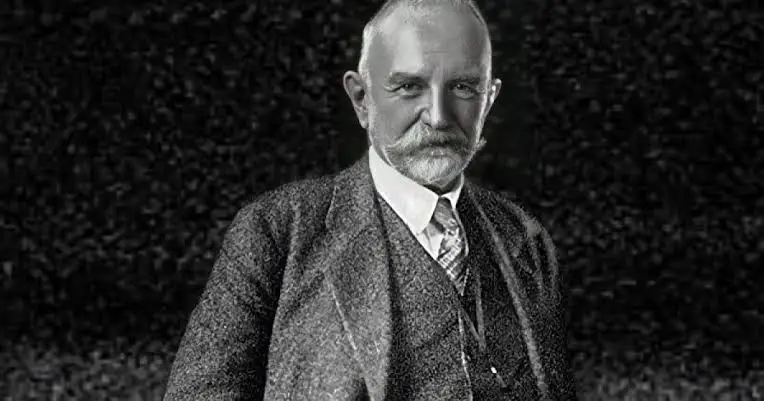
George Herbert Mead (1863-1931) is a major figure in Philosophy and (along with Willam James and John Dewey), is one of the founders of Pragmatism, a philosophical approach based on experimentation. Mead published numerous articles during his lifetime and several of his students produced four books in his name from his unpublished notes and stenographic records of his courses at the University of Chicago. Through his teaching, writing, and posthumous publications, Mead has exercised a significant influence in 20th Century social theory. Mead’s theory of the emergence of mind and self out of the social process of significant communication has become the foundation of the symbolic interactionist school of thought in philosophy.
George Herbert Mead is most well known for his theory of the self, which was presented in the 1934 book Mind, Self, and Society (published posthumously and edited by Charles W. Morris). Mead’s theory of personal identity maintains that the conception a person holds of themselves in their mind emerges from social interaction with others. This concept goes directly against the concept of biological determinism because it holds that an individual’s traits are not present at birth or fully present at the beginning of a social interaction, but are constructed and reconstructed in the process of social experience and activity.
George Herbert Mead believed in interaction based on symbols and hypothesized that we do not know who we are until we interact with other people
The self, according to Mead, is made of two components: the “I” and the “me.” The “me” represents the expectations and attitudes of others (the “generalized other”) organized into a social self. From this point, the individual defines their own behavior with reference to the generalized attitude of the social groups they occupy. When the individual can view himself or herself from the standpoint of the generalized other, self-consciousness in the full sense of the term is attained. From this standpoint, the generalized other (internalized in the “me”) is the major instrument of social control, for it is the mechanism by which the community exercises control over the conduct of its individual members. On the other hand, the “I” is the response to the “me,” or the person’s individuality.
Within Mead’s theory, there are three activities through which the self is developed (language, play, and game). Language allows individuals to take on the “role of the other” and allows people to respond to his or her own gestures in terms of the symbolized attitudes of others. During play, individuals take on the roles of other people and pretend to be those other people in order to express the expectations of significant others. This process of role-playing is key to the generation of self-consciousness and to the general development of the self. In the game, the individual is required to internalize the roles of all others who are involved with him or her in the game and must comprehend the rules of the game.
Mead theorized that human beings begin their understanding of the social world through “play” and “game”. The “play” stage comes first in the child’s development. The child takes different roles they observe in society and play them out to gain an understanding of the different social roles. As a result, the child learns to become both subject and object and begins to become able to build a self. However, this is a limited self because the child can only take the role of distinct and separate others and still lack a more general and organized sense of themselves. In the game stage, a person is required to develop a full sense of self. Whereas in the play stage the child takes on the role of distinct others, in the game stage, the child must take the role of everyone else involved in the game. Furthermore, these roles must have a definite relationship to one another.
In the game stage, some form of social organization begins and defined personalities start to emerge. Individuals begin to become able to function in organized groups and determine what they will do within a specific group. Mead calls this the child’s first encounter with the “generalized other.” The “generalized other” can be thought of as understanding the given activity and the actors’ place within the activity from the perspective of all the others engaged in the activity. Through understanding the “generalized other” the individual understands what kind of behavior is expected and appropriate in different social settings.
It has been argued that social acts (such as games and routine forms of social interaction) enable perspective taking through ‘position exchange’ Assuming that games and routine social acts have differentiated social positions and that these positions create our cognitive perspectives, then it might be that by moving between roles in a game, we come to learn about the perspective of the other. This new interpretation of Mead’s account of taking the perspective of the other has experimental support.
In addition to his contributions in the realm of social philosophy, Mead is well known for his work on the philosophy of science. Mead sought to find the psychological origin of science in the efforts of individuals to attain power over their environment. The notion of a physical object arises out of a manipulatory experience. There is a social relation to inanimate objects, for the organism takes the role of things that it manipulates directly, or that it manipulates indirectly in perception. For example, in taking the resistant role of a solid object, an individual obtains cognition of what makes up nonliving things. Historically, the concept of the physical object arose from an animistic conception of the universe.
Contact experience includes experiences of position, balance, and support, and these are used by the organism when it creates its conceptions of the physical world. Our scientific concepts of space, time, and mass are abstracted from manipulatory experience. Such concepts as that of the electron are also derived from manipulation. In developing a science we construct hypothetical objects in order to assist ourselves in controlling nature. The conception of the present as a distinct unit of experience, rather than as a process of becoming and disappearing, is devised to facilitate exact measurement. In the scientific worldview, immediate experience is replaced by theoretical constructs. The ultimate in experience, however, is the manipulation and contact at the completion of an act.
Here are the main events that occurred in Politicsthis week:
1. US, UK, and France Bomb Syria Over Chemical Weapons Attack
The US and several of its European allies launched airstrikes in Syria in response to allegations of chemical weapons use by the Assad government.
The US and several of its allies launched airstrikes on April 13 against several Syrian military targets in response to a supposed chemical attack near Damascus ordered last week by Syrian President Bashar al-Assad that killed nearly 40 people. The UK and France joined the US in the strikes in an action that was meant to show Western resolve in the face of what the Trump Administration called persistent violations of international law by the Assad Regime since the start of the Syrian Civil War in 2011. “These are not the actions of a man, they are crimes of a monster instead,” President Trump said of Assad’s presumed chemical attack in an oval office address.
The operations carried out by the US, UK, and France in Syria were somewhat limited than originally anticipated. The main target in the operation was the Barzah Research and Development Center, a scientific research center located outside of Damascus. The facility was hit with 76 missiles, utterly destroying the facility and setting back the Syrian chemical weapons program back at least several years according to Secretary of Defense James Mattis. The other two targets were part of the Him Shinshar chemical weapons complex, located outside the city of Homs. The strikes completely destroyed the facility and the installations chemical weapons bunker was irreparably damaged. Overall, most military strategists and commentators feel that the operations in Syria were successful and achieved their goals in weakening the Assad Regime.
The international reaction to the US strike in Syria was mixed overall. Several US allies in the Middle East such as Saudi Arabia and Israel applauded the strike and pledged to expand their support for regime change in Syria. On the other hand, Russia, Iran, China, as well as several militia active in the Middle East such as Hezbollah, Hamas, and the Houthi Movement forcefully condemned the strikes. Russian President Vladimir Putin said that the strikes were a violation of international law and viewed them as a direct threat to Russian interests in the Middle East. Additionally, the Russian government warned of “dire consequences” for the US, sparking fears of an open conflict between the US and Russia.
2. House Speaker Paul Ryan Announced Retirement, Indicating Tough Road for Republican Party in Midterm Elections
House Speaker Paul Ryan announced his retirement this week, signaling a tough battle ahead for the Republicans in the 2018 midterm elections.
On April 11, House Speaker Paul Ryan (R-WI) stunned the political world, as well as the Republican Party leadership, by announcing that he will not run for re-election for a tenth term in Congress and will step down as House Speaker after the midterm elections. In delivering the news to the press, Ryan said that among his proudest moments in Congress, the passage of the Tax Cuts and Jobs Act (the “Trump Tax Cuts”) and the efforts to repeal the Affordable Care Act (“Obamacare”), are the ones that stand out the most. The retirement of Ryan from Congress creates an opening for the Republican Congressional leadership. House Majority Leader Kevin McCarthy (R-CA) is likely to run for House Republican Leader but is expected to experience a strong challenge from Majority Whip Steve Scalise (R-LA), a known supporter of white supremacist activist and Trump supporter David Duke.
Even though Paul Ryan framed his retirement from Congress as a personal decision related to his family, the retirement creates another open House seat for the GOP to defend in a midterm election that is expected to be difficult for the Republican Party. Additionally, Ryan’s retirement serves as a vote of non-confidence for the Republican Party going into the midterm elections. Even though Ryan’s seat was previously considered to be “safe Republican as long as he was running for re-election, the seat is now considered to be one of many likely Democratic pick-ups in the midterm election. Randy Bryce and Cathy Myers are the two Democratic candidates who have announced their interest in the seat, whereas white nationalist activist Paul Nehlen is the most likely Republican nominee for the seat. Most polling shows Randy Bryce leading the Democratic primary and that the general election at this point is his to lose.
3. President Trump promises GOP lawmaker to Protect the Rights of States That Have Already Legalized Marijuana Usage
President Donald Trump announced his approval for efforts to protect the rights of states that have already legalized marijuana, shifting away from his “law-and-order” image.
President Donald Trump has promised to support legislation protecting the marijuana industry in states that have legalized the drug, a move that could lift a threat to the industry made by Attorney General Jeff Sessions back in January. Senator Cory Gardner (R-CO), a strong supporter of efforts at the state level to legalize marijuana, said on April 13 that Trump made the pledge to him in a conversation two days earlier. This action marked the latest flip by President Trump on the issue of marijuana legalization. Trump pledged on the campaign trail to respect the rights of states and localities that legalized marijuana, but hinted as President that he would support expanding the death penalty to cover individuals who both deal marijuana as well as use the substance. White House Press Secretary Sarah Huckabee Sanders said Gardner’s account was accurate and the president supported states’ rights in the matter.
Senator Cory Gardner has been pushing to reverse a decision made by Attorney General Jeff Sessions in January that removed prohibitions that kept federal prosecutors from pursuing cases against people who were following pot laws in states such as Colorado that have legalized the drug. “President Trump has assured me that he will support a federalism-based legislative solution to fix this states’ rights issue once and for all,” Gahttps://twitter.com/RonWyden/status/984903124904284160rdner said in a statement to the press. Additionally, Gardner pledged to introduce bipartisan legislation keeping the federal government from interfering in state marijuana markets.
The reaction to the change in the Trump Administration’s marijuana policy has been met with much public support by even some of the President’s most persistent critics. “We may now be seeing the light at the end of the tunnel,” said Mason Tvert, who spearheaded the 2012 proposal legalizing marijuana in Colorado. “This is one more step toward ending the irrational policy of marijuana prohibition, not only in Colorado but throughout the country.” Additionally, former House Speaker John Boehner announced that he was switching his position on marijuana legalization in response to the change in policy by the Trump Administration and would now lobby on behalf of the legal marijuana industry. On the other hand, several other supporters of legalization were wary given the president’s record of reversing positions and pledges of legislative support. “This cannot be another episode of realDonaldTrump telling somebody whatever they want to hear, only to change directions later on,” wrote Senator Ron Wyden (D-OR) in a twitter post.
One of the most influential figures on Western philosophical thought was Immanuel Kant (1724-1804), a German philosopher active during the 18th Century. Kant’s contributions to the fields of metaphysics, epistemology, ethics, and aesthetics (four of the main branches of philosophy) have had a profound impact on almost every philosophical movement that followed him. Throughout his works, Kant argued that
the human mind creates the structure of human experience,
that reason is the source of morality,
that aesthetics arises from a faculty of disinterested judgment,
that space and time are forms of human sensibility,
and that the world as it is “in-itself” is independent of humanity’s concepts of it.
In terms of politics, Kant was one of the earliest proponents of the idea that political peace and stability could be achieved through international cooperation and worldwide democracy and believed that such a situation would be the eventual outcome of universal history.
One of the main areas in which Immanuel Kant left his mark on was in the realm of Deontological Ethics. Derived from the word deon (“duty” in Greek), this ethical theory holds that there is an innate aspect to a given moral rule that makes it either good or bad. Thus, Kantian/Deontological ethical theory is based on established definitions of morality. The main aspect of Kant’s theory was the Categorical Imperative.
Immanuel Kant defined an imperative as any proposition that declares a certain action (or inaction) to be necessary. A hypothetical imperative would compel action in a given circumstance (if I wish to satisfy my thirst, then I must drink something). A categorical imperative would denote an absolute, unconditional requirement that exerts its authority in all circumstances, both required and justified as an end in itself.
He argued that the “highest good” must be both intrinsically good (good “in itself”), and good without qualification (when the addition of that thing never makes a situation ethically worse). He concluded that there is only one thing that is truly good: a goodwill chosen out of a feeling of moral duty. From this concept of duty, Kant derived what he called a categorical imperative, a principle that is intrinsically valid (good in and of itself), and that must be obeyed in all situations and circumstances if our behavior is to observe moral laws. He considered it an unconditional obligation, regardless of our will or desires, and regardless of any consequences which might arise from the action. He also believed that if an action is not done with the motive of duty, then it is without moral value and therefore meaningless.
Act only in such a way that you would want your actions to become a universal law, applicable to everyone in a similar situation.
Act in such a way that you always treat humanity (whether oneself or other), as both the means of an action, but also as an end.
Act as though you were a law-making member (and also the king) of a hypothetical “kingdom of ends”, and therefore only in such a way that would harmonize with such a kingdom if those laws were binding on all others.
The idea of Deontological Ethics as proposed by Immanuel Kant is not without its share of critics, in particular, proponents of Libertarian philosophy, as well as the idea of Utilitarianism are opposed to the theory. The Libertarian philosopher Robert Nozick points out that Deontology forbids some acts that maximize welfare overall. The example used is that of a trolley hurtling towards five innocent and immobile people at the end of a track, where the only way to stop the trolley and save the five is to throw one innocent bystander in front of the trolley. The Principle of Permissible Harm in Deontology rules out deliberately throwing a person in front of the trolley, but the consequence of that is that five innocent bystanders die (which also contravenes the Principle of Permissible Harm).
Proponents of Utilitarianism such as Jeremy Bentham have criticized Deontology on the grounds that it a version of popular morality, and that the objective and unchanging principles that deontologists attribute to natural law or universal reason are really just a matter of subjective opinion. John Stuart Mill argued that deontologists usually fail to specify which principles should take priority when rights and duties conflict, so that Deontology cannot offer complete moral guidance. Mill also criticized Kant’s claims for his Categorical Imperative, arguing that it is really just another way of saying that the ends justify the means, which is essentially a consequentialist argument.
Here are the main events that occurred in Politics this week: 1. US Expels 60 Russian diplomats in Response to UK nerve agent attack
The Trump Administration ordered the expulsion of 60 Russia diplomats this week, signaling a harder line approach to Russia.
On March 26, President Donald Trump ordered the expulsion of 60 Russian diplomats the US identified as intelligence agents and the closure of the Russian consulate in Seattle. President Trump took this action after the US joined the United Kingdom in accusing Russia of attempting to murder a Russian dissident and his daughter using a nerve agent on UK soil. The action comes just two weeks after the Trump administration leveled the first sanctions against Russia for its interference in the 2016 US presidential election.”The United States takes this action in conjunction with our NATO allies and partners around the world in response to Russia’s use of a military-grade chemical weapon on the soil of the United Kingdom, the latest in its ongoing pattern of destabilizing activities around the world,” said White House press secretary Sarah Sanders.
British Prime Minister Theresa May called the move “the largest collective expulsion of Russian intelligence officers in history.”We have no disagreement with the Russian people who have achieved so much through their country’s great history. But President Putin’s regime is carrying out acts of aggression against our shared values,” she said. “The United Kingdom will stand shoulder to shoulder with the EU and NATO to face down these threats.” As expected, Russian President Vladimir Putin and Foreign Minister Sergey Lavrov denounced the actions on the part of the US and the UK, arguing that they are in violation of international law and will only worsen the already tense relationship between Russia and the West. As a retaliatory measure, the Russian government ordered the expulsion of 60 US diplomats and ordered the closure of the US Consulate in St. Petersburg for the foreseeable future.
2. Trump Administration Proposes Putting Question on 2020 US Census Asking Individuals Their Citizenship Status
The Trump Administration proposed adding a citizenship question to the 2020 Census this week, sparking protest from states such as New York and California.
On March 26, senior officials in the Trump Administration announced that The 2020 census will ask respondents whether they are United States citizens, the Commerce Department announced Monday night, agreeing to a Trump administration request with highly charged political and social implications that many officials feared would result in a substantial undercount. The Justice Department had requested the change in December, arguing that asking participants about their citizenship status in the decennial census would help enforce Section 2 of the Voting Rights Act, which aims to prevent voting rights violations. “Citizenship questions have also been included on prior decennial censuses,” explained officials. “Between 1820 and 1950, almost every decennial census asked a question on citizenship in some form. Today, surveys of sample populations, such as the Current Population Survey and the ACS, continue to ask a question on citizenship.”
Opponents of the citizenship question have argued in the past that it causes people to shy away from taking the census, and experts believe a drop in numbers could lead to an inaccurate count of the US population. “The inclusion of a question on citizenship threatens to undermine the accuracy of the Census as a whole,” wrote Senate Judiciary Committee Ranking Member Dianne Feinstein (D-CA.) and her colleagues in an open letter sent to the Justice Department in January. “Given this administration’s rhetoric and actions relating to immigrants and minority groups, the citizen question request is deeply troubling,” they said. “Such a question would likely depress participation in the 2020 Census from immigrants who fear the government could use the information to target them. It could also decrease response rates from U.S. citizens who live in mixed-status households, and who might fear putting immigrant family members at risk through providing information to the government” said Feinstein and her colleagues in the letter.
In response to the proposed changes, 17 states announced that they would bring suit against the Trump Administration. Led by New York and California, the leadership in the 17 states feel that this proposal would negatively impact the distribution of federal resources to states with large populations of undocumented immigrants and place an unfair advantage to the Republican Party in terms of redistricting efforts after 2020. “The census numbers provide the backbone for planning how our communities can grow and thrive in the coming decade,” California Attorney General Xavier Becerra said in a statement. “California simply has too much to lose for us to allow the Trump Administration to botch this important decennial obligation. What the Trump Administration is requesting is not just alarming, it is an unconstitutional attempt to discourage an accurate census count.”
3. Protests Erupt Gaza in Opposition to the Continued Israeli Occupation of Palestine
Major protests broke out along the Israel-Gaza border this week, resulting in the deaths of 16 and international outcry against Israeli policies.
On March 30, tens of thousands of Palestinians in the Gaza Strip participated in non-violent protests as part of the Great Return March. Palestinian participants soon began walking towards the fence that separates the strip from Israel and were met with live fire from the Israeli military that saw hundreds of people injured and 16 killed.
The protests were held to commemorate Land Day and demonstrate for the rights of Palestinian refugees to be resettled in Israel. Israeli Prime Minister Benjamin Netanyahu and Defense Secretary Avigdor Lieberman responded to the protests by claiming that Hamas, which has controlled Gaza since 2007, had sent women and children to the fence as human shields. Rather than expressing the grievances of Palestinians at large, the protests were to be seen in the context of long-standing tensions between Hamas and the Palestinian Authority in the West Bank.
The Israeli response drew widespread criticism around the world, with UN Secretary-General Antonio Guterres calling for an independent inquiry into Friday’s events. Additionally, several countries in the Middle East condemned the response to the protests by the Israeli government. Perhaps the country that most forcefully condemned the actions of Israel was Iran. In a Twitter post on March 31, Iranian Foreign Minister Mohammed Javad Zarif stated that “On the eve of Passover (of all days), which commemorates God liberating Prophet Moses and his people from tyranny, Zionist tyrants murder peaceful Palestinian protesters – whose land they have stolen – as they march to escape their cruel and inhuman apartheid bondage.” On the other hand, the US blocked a UN Resolution denouncing the Israeli response and placed the blame squarely on the part of the Palestinian protestors.
Here are the main events that occurred in Politics this week:
1. President Donald Trump Fires Secretary of State Rex Tillerson
President Donald Trump dismissed Secretary of State Rex Tillerson amid a declining relationship and a disappointing tenure.
On March 13, President Donald Trump announced that he has fired Secretary of State Rex Tillerson and will nominate CIA Director Mike Pompeo to succeed him, replacing his top diplomat ahead of a potential high-stakes meeting between the US President and North Korean leader Kim Jong Un. Tillerson’s departure follows months of tension between him and Trump. The resignation represents the biggest shakeup of the Trump Cabinet so far and had been expected since last October when reports surfaced about a falling out between Trump and Tillerson. President Trump publicly undercut Secretary Tillerson’s diplomatic initiatives numerous times since he came to office over a year ago. For example, President Trump criticized Tillerson’s positions on Iran, the European Union, NATO, and Russia. Most recently, Trump denounced Tillerson’s most recent comments on Russian aggression towards NATO member-states such the UK, France, and Germany. Secretary Tillerson also appeared to be out of the loop last week when Trump announced he would meet with North Korean leader Kim Jong-un sometime in May to discuss the countries nuclear program and work to defuse the tensions between both countries.
For Tillerson’s replacement, President Donald Trump named CIA Director Mike Pompeo and moved up Gina Haspel to the post of CIA director. In a Twitter post, Trump stated that “Mike Pompeo, Director of the CIA, will become our new Secretary of State. He will do a fantastic job! Thank you to Rex Tillerson for his service! Gina Haspel will become the new Director of the CIA, and the first woman so chosen. Congratulations to all!” Despite the optimistic tone of President Trump regarding these changes, they point to an Executive Branch in continual flux and crisis.
2. US students Stage Walkouts Protesting Gun Violence & The Failure of the US Government to Enact Meaningful Gun Control Legislation
The debate over gun control took an interesting turn this week with the holding of several protests.
Nearly 10,000 students throughout the US and several other countries walked out of school to demand action on gun violence on March 14 in one of the biggest student protests since the Vietnam War era. Braving harsh weather conditions and threats of discipline in states as varied as New Jersey, Ohio, and Georgia, the students carried signs with messages such as “Am I next?,” denounced the NRA and their opposition to gun control, and expressed remembrance for the 17 people who were killed in the February 14 school shooting at Marjory Stoneman Douglas High School in Parkland, Florida.
In addition to the walk-out protests, several protests were staged near the US Capitol building calling on the Trump Administration and Congress to pass strong gun control legislation. The largest group protesting was made up of several hundred students and family members of victims of school shootings. Senator Bernie Sanders (D/I-VT) addressed the crowd, saying that “We are very proud of what you are doing,” the former presidential candidate said. “You, the young people of this country, are leading the nation.” Additionally, Sanders commended the students for “leading the nation in the right direction” and opposing the National Rifle Association (NRA).
3. UK-Russian Diplomatic Row Grows
The already-tense relationship between Russia and the UK decreased even further with the revelation of the poisoning if a Russian dissident on UK soil.
The ongoing diplomatic dispute between the UK and Russia regarding the poisoning of Russian dissident Sergei Skripal and his daughter Yulia grew in intensity this week. On March 16, UK Foreign Minister Boris Johnson announced that the substance used to poison both Skripal and his daughter was a nerve agent produced in Russia and that the poisoning was ordered on the part of Russian President Vladimir Putin. In response to these allegations, UK Prime Minister Theresa May ordered the expulsion of 23 Russian diplomats from the UK and broke off high-level diplomatic ties with Russia for the first time since 1927. Additionally, the UK government is considering invoking Article V of the NATO treaty, which expressly states that Collective an attack against one member-state is considered as an attack against all member-states. The governments of France, Germany, and the Czech Republic expresses solidarity with the UK and further pledge to step-up efforts to isolate Russia and bring about the removal of the Putin Regime from power.
Russian President Vladimir Putin and Russian Foreign Minister Sergey Lavrov denounced the allegations, saying that Russia ceased its chemical weapons program in the early 1970s and that the allegations are another attempt to weaken the Russian state. Additionally, US President Donald Trump expressed skepticism regarding the charges by the UK, stating that it is uncertain that the Russian government ordered the attack.
4. House Republicans Break With Intelligence Community, Clearing President Trump of Wrongdoing in the 2016 Election
The House Republican Judiciary Committee defied the intelligence community by clearing President Donald Trump of any charges of collusion with Russia in the 2016 Election.
On March 12, Republicans on the House Intelligence Committee reached an opposite conclusion from the intelligence community by announcing that Russian President Vladimir Putin was not trying to help Donald Trump win the 2016 election. The Republicans also said they found no evidence that the Trump campaign colluded with Russia and that they are shutting down their yearlong investigation. Trump seized on the news Monday evening, tweeting that “The House Intelligence Committee Has, After a 14-Moth Long Investigation, Found No Evidence of Collusion or Coordination Between the Trump Campaign and Russia” in order to sway the results of the 2016 Presidential Election.
Congressman Mike Conaway (R-TX), stated that the committee had concluded its interviews for the Russia investigation, and the Republican staff had prepared a 150-page draft report that they would give to Democrats to review on Tuesday morning. The committee Republicans said Russians did meddle in the elections to sow chaos, but they disagreed with the intelligence community’s assessment that they sought to help Trump.
Congressman Adam Schiff (D-CA), the top Democrat on the House Intelligence committee, slammed the Republican decision to end the investigation. “While the majority members of our committee have indicated for some time that they have been under great pressure to end the investigation, it is nonetheless another tragic milestone for this Congress, and represents yet another capitulation to the executive branch,” Said Schiff. “By ending its oversight role in the only authorized investigation in the House,” Schiff feels that “the Majority has placed the interests of protecting the President over protecting the country, and history will judge its actions harshly.”
Philosophy (literally meaning “love of wisdom” in Greek) is the study of general and fundamental queries concerning matters such as existence, knowledge, values, reason, mind, and language. The term was coined by Pythagoras of Samos (570–495 BCE), an early Greek philosopher known for his founding of the Pythagoreanism movement. Philosophical methods include questioning, critical thinking, rational argument, and systematic presentation of the evidence to back up any and all arguments. Classic philosophical questions include “is it possible to know anything and to prove it? and “what is most real? Philosophers also devise practical and concrete answers pertaining to questions such as the proper way to live one’s life, the nature and extent of free will, and how to be a moral and virtuous person.
Metaphysics (Study of Existence)
Metaphysics is the branch of philosophy responsible for the study of existence. It is the foundation of a worldview. It answers the question “What is?” It encompasses everything that exists, as well as the nature of existence itself. It says whether the world is real, or merely an illusion. It is a fundamental view of the world around us.
One can argue that Metaphysics is the foundation of philosophy and critical thinking. Without an explanation or an interpretation of the world around us, we would be helpless to deal with reality. We could not feed ourselves, or act to preserve our lives. The degree to which our metaphysical worldview is correct is the degree to which we are able to comprehend the world and act accordingly. Without this firm foundation, all knowledge becomes suspect. Any flaw in our view of reality will make it more difficult to live.
Ethics (Study of Action)
Ethics is the branch of study dealing with what is the proper course of action for a person to take. It answers the question, “What do I do?” It is the study of right and wrong in human endeavors. At a more fundamental level, it is the method by which we categorize our values and pursue them. Do we pursue our own happiness, or do we sacrifice ourselves to a greater cause? Is that foundation of ethics based on the Bible, or on the very nature of man himself, or neither?
Ethics is a requirement for human life. It is our means of deciding a course of action. Without it, our actions would be random and aimless. There would be no way to work towards a goal because there would be no way to pick between a limitless number of goals. Even with an ethical standard, we may be unable to pursue our goals with the possibility of success. To the degree in which a rational ethical standard is taken, we are able to correctly organize our goals and actions to accomplish our most important values. Any flaw in our ethics will reduce our ability to be successful in our endeavors.
Aesthetics (Study of Art)
Aesthetics is the study of art. It includes what art consists of, as well as the purpose behind it. Does art consist of music, literature, and painting? Or does it include a good engineering solution or a beautiful sunset? These are the questions that are asked in Aesthetics. It also studies methods of evaluating art and allows individuals to make judgments of the piece of art in question. Is art in the eye of the beholder? Does anything that appeals to an individual fit under the umbrella of art? Or does it have a specific nature? Does it accomplish a goal?
Aesthetics is important because art in some form or another has existed through most of recorded human history. It is unique to humans because of our unique form of thinking. Its importance is based on this nature, specifically, man’s ability to abstract. Art is a little-understood tool of Man to bring meaning to abstract concepts. Aesthetics is important because it delves into the reason why art has always existed, the burning need of mankind through the ages to see the world in a different, clear way. It further evaluates art by the standard of human life, and whether it accomplishes the job of satisfying man’s intellectual needs, or whether it tends to hurt or make worse those needs.
Epistemology (Study of Knowledge)
Epistemology is the study of our method of acquiring knowledge. It answers the question, “How do we know?” It encompasses the nature of concepts, the construction of concepts, the validity of the senses, logical reasoning, as well as thoughts, ideas, memories, emotions, and all things mental. It is concerned with how our minds are related to reality, and whether these relationships are valid or invalid.
Epistemology is an explanation of how we think. It is required in order to be able to differentiate the true from the false, by determining a proper method of evaluation. It is needed in order to use and obtain knowledge of the world around us. Without epistemology, we could not think. More specifically, we would have no reason to believe our thinking was productive or correct, as opposed to random images flashing before our minds. With an incorrect understanding of epistemology, we would not be able to distinguish truth from error. The consequences are obvious. The degree to which our epistemology is correct is the degree to which we could understand reality and the degree to which we could use that knowledge to promote our lives and goals. Flaws in epistemology will make it harder to accomplish anything.
Logic (Study of Reasoning)
Logic is the study of reasoning or the study of the principles and criteria of valid inference and demonstration. It attempts to distinguish good reasoning from bad reasoning. Logic investigates and classifies the structure of statements and arguments, both through the study of formal systems of inference and through the study of arguments in natural language. It deals only with propositions (declarative sentences) that are capable of being true and false. It is not concerned with the psychological processes connected with thought, or with emotions, images, and the like. It covers core topics such as the study of fallacies and paradoxes, as well as specialized analysis of reasoning using probability and arguments involving causality and argumentation theory.
Any logical argument or statement should contain three of the following things:
consistency (none of the theorems of the system contradict one another);
soundness (the system’s rules of proof will never allow a false inference from a true premise); and
completeness (which means that there are no true sentences in the system that cannot, at least in principle, be proved in the system).
Logic can be divided into Formal Logic, Informal Logic, Symbolic Logic, and Mathematical Logic. Formal Logic is what we think of as traditional logic or philosophical logic, namely the study of inference with purely formal and explicit content Informal Logic is a recent discipline which studies natural language arguments and attempts to develop a logic to assess, analyze and improve ordinary language (every day) reasoning. Symbolic Logic is the study of symbolic abstractions that capture the formal features of logical inference. It deals with the relations of symbols to each other, often using complex mathematical calculus, in an attempt to solve intractable problems that traditional formal logic is not able to address. Mathematical Logic is a type of formal logic that seeks to apply the principles of formal logic into the field of mathematics and mathematical reasoning.
Philosophy itself can also be described as a sort of intellectual activity. As opposed to biology, political science, math, and history, philosophy itself does not consist of theories and information. Instead, philosophers came up with different theories that are the products of their unique perspectives on society and the nature of reality. The main point of understanding these theories is to facilitate students on their philosophical journey and learn to think critically about the world around them.
The study of philosophy and pursuit of knowledge amounts to hard work. The pursuit of knowledge is considered hard work because it involves individuals questioning their long-held beliefs and leading someone into a direction that society generally does not support. Additionally, philosophy also requires individuals to think critically, consistently, and thoughtfully about their fundamental beliefs. Thinking critically about one’s own beliefs may result in an individual taking note of inconsistent thoughts that may be difficult to rationalize. Usually, the difficulties of understanding philosophy can also be made easier by the assistance of a teacher.
The main goal of teaching philosophy is described as that of freedom. Due to the exposure to new ideas and beliefs, philosophy serves to eliminate narrow points of view and expand open-mindedness. Once an individual gains insight into different ideas and viewpoints, they will indeed be able to gain intellectual freedom and liberation from intellectual oppression. Philosophy is finally described as a tool that enables individuals to examine the most basic assumptions about life that they hold. On a daily basis, individuals make assumptions about the world around them and hold onto beliefs that they have held their entire life without even questioning them. However, the study of philosophy allows an individual to examine the assumptions that they held throughout their life. An examination of even the most basic of these assumptions can serve to open up a different perspective on life and allow individuals to understand how life works.
Iraq (officially known as the Republic of Iraq) is a Federal parliamentary republic located in the central part of the Middle East. Iraq bordered by countries such as Iran, Turkey, Saudi Arabia, Jordan, Kuwait, and Syria, has an area of approximately 438,317 Square Kilometers, and a population of around 40 Million. Iraq plays a major role in Middle Eastern politics due to its unstable nature, strategic location between two of the regions most stable countries, and a history defined by violent authoritarianism and colonialism.
Iraq has a long and rich history going back nearly 2,500 years.
The history of Iraq can be traced back to the 24th Century BCE, with the establishment of the Akkadian Empire in present-day Iraq. The Akkadian Empire lasted until 2150 BCE when it was replaced by the Assyrian Empire, which remained in power until 627 BCE. After the collapse of the Assyrian Empire, the Neo-Babylonian Empire came to power. The rule of the Neo-Babylonian Empire was ultimately short-lived, as the area comprising present-day Iraq was conquered by the Persian (present-day Iran) Shah Cyrus the Great in 539 BCE and soon became an integral part of the Persian Empire for the next few centuries. Iraq was conquered by the Arabs in 634 CE and its city of Baghdad became the capital of the Abbasid Caliphate by the 8th Century CE. Iraq soon became the primary cultural center of the Muslim world during the “Islamic Golden Age.” The Iranians re-established control over Iraq by the 11th Century and Iraq remained as part of present-day Iran until 1831, when the Ottoman Empire gained control over the area after lengthy conflicts with both the Safavid and Qajar Iranian monarchies.
Following the defeat of the Ottoman Empire in World War I, the UK acquired a mandate over Iraq and sought to remake Iraq into an image that would suit their plans for global domination. The British government installed into power a Sunni monarch, Faisal ibn Husayn (despite the fact that Iraq is majority Shi’a) and worked to suppress the nationalist sentiments of groups within Iraq such as the Kurds and Assyrian Christians. These parameters would continue until the 1958 Revolution that established the Republic of Iraq. The UK ultimately granted Iraq independence in 1938, but the country still relied on British support and was considered to be a “vassal state” of the declining British Empire.
Saddam Hussein (who ruled Iraq from 1968 to 2003) had a reputation as a brutal dictator and is widely considered to be one of the worst human rights abuses in recent memory.
The monarchy was overthrown in the Iraqi Revolution of 1958 by Abd al-Karīm Qāsim and Abdul Salam Arif. Saddam Hussein and the Ba’ath Party assumed power after the July 1968 Iraqi Revolution and soon sought to remake Iraq into their own image. Even though Saddam Hussein implemented a series of progressive social programs, improved women’s rights, and nationalized Iraq’s oil production in 1972, he had a reputation as a brutal dictator who allowed little opposition to his rule. For example, Saddam Hussein was known for committing human rights abuses against both the Shi’a Muslims and Kurds of Iraq (ranging from torture to mass executions), allowed only Sunni Muslims into positions of power, and implemented an apartheid system meant to separate Shi’a Muslims from the rest of Iraqi society. After the successful conclusion of the Iranian Revolution in early 1979, Saddam set his sites on Iran, which he felt was in a vulnerable position due to the recent Revolution and purges by the government of Ayatollah Khomeini against former members of the Shah’s military force. Iraq launched a war against Iran in September of 1980 with the goal of overthrowing the Khomeini government from power and annexing the oil-rich province of Khuzestan, which is home to a large population of Iranian Arabs who identify as Sunni Muslim. Despite the fact that Saddam Hussein was backed by countries such as the US, Soviet Union, UK, France, Germany, Japan, and Saudi Arabia, the Iranians were able to hold the border for the course of the war. During the war, Iraq (with US help) developed a chemical weapons program and used these weapons numerous times over the course of the war, on both Iranian soldiers and civilians, as well as the Kurds of Northern Iraq. Ultimately, Iran was able to turn back the Iraqi invasion and won a pyrrhic (costly) victory.
In August 1990, Iraq seized Kuwait in response to a long-standing dispute related to oil production but was expelled by US-led coalition forces during the 1990-91 Gulf War. Following Kuwait’s liberation, the UN Security Council required Iraq to scrap all weapons of mass destruction and long-range missiles and to allow UN verification inspections. Continued Iraqi noncompliance with UN resolutions over a period of 12 years led to the US-led invasion of Iraq in March 2003 and the ouster of Saddam Hussein from power. US forces remained in Iraq until 2011, helping to provide security and to train and mentor Iraqi security forces. In October 2005, Iraqis approved a constitution in a national referendum and, pursuant to this document, elected a 275-member Council of Representatives in December 2005. The Council of Representatives approved most cabinet ministers in May 2006, marking the transition to Iraq’s first constitutional government since the late 1960s. Since 2014, Iraq has been engaged in a military campaign against ISIS to recapture territory lost in the western and northern portion of the country.
Haider al-Abadi is the current Prime Minister of Iraq and has been in power since 2014.
The current Iraqi constitution was adopted on 15 October 2005. The constitution stipulates that Iraq is a democratic, federal parliamentary Islamic republic. The federal government is composed of three branches, the executive, legislative, and judiciary, as well as numerous independent commissions. Aside from the federal government, there are regions (made of one or more governorates), governorates, and districts within Iraq with jurisdiction over various matters as defined by law. The executive branch of Iraq consists of the Presidency Council and the Council of Ministers. The president is the head of state, protecting the constitution and representing the sovereignty and unity of the state, while the prime minister is the direct executive authority and commander in chief. The president and vice presidents are elected by the Council of Representatives. The prime minister is nominated by the largest bloc in the Council of Representatives. Upon designation, the prime minister names the members of his cabinet, the Council of Ministers, which is then approved by the Council of Representatives. The executive branch serves a four-year term concurrent with that of the Council of Representatives. The current President of Iraq is Fuad Masum, who assumed office on July 24, 2014, and the current Iraqi Prime Minister is Haider al-Abadi, who came to power on September 8, 2014.
The Council of Representatives is the main elected body of Iraq. The Constitution defines the “number of members at a ratio of one representative per 100,000 Iraqi persons representing the entire Iraqi people.” The members are elected for terms of 4 years. The council elects the President of Iraq; approves the appointment of the members of the Federal Court of Cassation, the Chief Public Prosecutor, and the President of Judicial Oversight Commission on proposal by the Higher Juridical Council; and approves the appointment of the Army Chief of Staff, his assistants and those of the rank of division commanders and above, and the director of the intelligence service, on proposal by the Cabinet.
The Iraqi Supreme Court Building.
The judicial system of Iraq consists of three levels, the Supreme Court, the Supreme Iraqi Criminal Tribunal, and the Central Criminal Court. The Supreme Court determines the constitutionality of laws and regulations, acts as a final court of appeals, settles disputes between the federal government and the regions and governorates, municipalities, and local administrations, and settles accusations directed against the President, the Prime Minister and the Ministers. The Supreme Iraqi Criminal Tribunal is a special court established to try Iraqi nationals or residents accused of genocide, crimes against humanity, war crimes or other serious crimes committed during the 35-year rule of Saddam Hussien (1968-2003). The Central Criminal Court is the main criminal court of Iraq and is based on an inquisitorial system and consists of two chambers: an investigative court, and a criminal court. The Iraqi judiciary is supervised by the Higher Judicial Council, which nominates the Chief Justice, Justice of the Judiciary Oversight Commission, and drafts the budget of the judiciary.
Iraq has a mixed record regarding human rights and is widely considered by international observers to be an unstable democracy. Since 2003, Iraq has made some progress in developing a democratic political system for the first time since the late 1960s. Iraq has had seven competitive elections over the past 13 years that resulted in a variety of different political parties coming into power. Additionally, civil society organizations have grown in number since the 2003 US-led invasion that removed Saddam Hussein from power and are viewed as essential aspects of political participation by a majority of the population of Iraq. Despite some progress over the past few years, Iraq continues to remain a highly unstable country in terms of politics. The Iraqi Consitution includes no provisions establishing a system of checks and balances between the branches of government and high levels of political corruption have plagued the Iraqi government in recent years. These problems are further compounded by the lack of strong formal governmental institutions meant to promote political stability. Arbitrary arrests and torture are a common occurrence in Iraq, though the human rights situation has improved overall when compared to when Saddam Hussein was in power. As a result of these challenges, protests have emerged in Iraq in 2011 and 2015 due to the fact that the citizens are increasingly growing tired of weak governmental institutions and the failure of the government to develop credible solutions to the problems facing Iraq such as the rise of extremist groups such as ISIS and the poor economic situation facing the country.
Iraq is home to Karbala, which is the site of the tomb of the grandson of Muhammad and the third Shi’a Imam, Husayn ibn Ali
In terms of demographics, Iraq is estimated to be ~99% Muslim. Approximately 51-65% of Iraqi Muslims are Shi’a, whereas 35-46% are Sunni. Iraq is home to the cities of Karbala and Najaf, which are the holiest sites in Shi’a Islam. Najaf is the site of the tomb of Ali ibn Abi Talib (the first Shi’a Imam), and Karbala is the site of the tomb of the grandson of Muhammad and Shi’a Imam, Husayn ibn Ali. Najaf is also a center of world renown Shi’a seminaries and schools. A majority of Iraqi Christians are ethnic Assyrians and members of the Chaldean Catholic Church, Assyrian Church of the East, and the Eastern Orthodox Church. Despite numbering as high as 16 million as late as 1987, the Iraqi Christian population has declined to 450,000 as of 2013. Some of the factors contributing to the decline of the Iraqi Christian population include the rise of extremist groups such as ISIS and Al-Qaeda, political instability, and lack of economic opportunities. A majority of Iraqi Christians over the past three decades have migrated to countries such as Iran, the US, UK, and Canada to flee oppression and find a better life. Other religious groups in Iraq include Yazidism, Zoroastrianism, Mandaeism, and several indigenous religious groups. A majority of the population of Iraq (~80%) identifies as Arab and Arabic, Kurdish, and Azerbaijani are the official languages of the country. Iraq has a literacy rate of 79.7% (85.7% for men and 73.7% for women).
Iraq has a GDP of $660 billion (2017 estimates), a Human Development Index Score of 0.649 and a GINI Score of 30.9. The economy of Iraq is primarily serviced-based (54.6%) and industry and agriculture make up 40.6% and 4.8% of the economy respectively. The unemployment rate of Iraq is ~16% and the GDP per capita is $17,000. The economy of Iraq continues to remain stagnant due to political instability, lack of foreign investment, and inefficiencies resulting from excessive governmental intervention in the Iraqi economy.
Iraq has recently sought to improve its standing before the international community and develop a role as a constructive regional power.
Iraq has a complex role in terms of international politics. Previously considered a “pariah state” during the rule of Saddam Hussien, Iraq is working to rebuild its reputation in the eyes of the international community. Iraq is a member of a number of international organizations such as the Arab League, the Non-Aligned Movement, the Organization of Islamic Cooperation, the International Criminal Court, and the United Nations and has diplomatic relations with a majority of countries. Historically, Iraq and Iran had a very tense relationship due to the legacy of the Iran-Iraq War, religious differences, and differing visions for their respective roles in the greater Middle East. Since the overthrow of Saddam Hussien however, Iraq and Iran have expanded their diplomatic ties and now consider each other to be allies. Additionally, Iraq is seeking to develop constructive ties with countries such as the US, Russia, Brazil, India, and Jordan. On the other hand, Iraq views Saudi Arabia as its main regional opponent, criticising the Saudi government for their discrimination against Shi’a Muslims and noting that the Saudi government has played a major role in the growth and spread of extremist groups such as ISIS and Al-Qaeda and destructive ideologies such as Wahhabi Islam.
In conclusion, Iraq continues to remain arguably one of the most unstable countries in the Middle East some 15 years after the overthrow of Saddam Hussien and his authoritarian regime. Some of the main issues preventing Iraq to emerge as a strong country include the lack of formal governmental institutions, the continued existence of violent extremist groups, weak economic prospects, and the legacies of authoritarianism and colonialism.
Politics (meaning “affairs of the cities” in Greek) is the process of making decisions that apply to members of a group. It refers to achieving and exercising positions of governance and is the study or practice of the distribution of power and resources within a given community. The idea of politics dates back to the Hellenistic period and has undergone many different interpretations over the ensuing centuries.
Aristotle
The Greek philosopher Aristotle was one of the founders of political theory and Western philosophy and felt that every action an individual takes is innately political in nature.
Perhaps the earliest contributor to political theory was Aristotle (384-322 BCE), a Greek philosopher, logician, and scientist. Along with Plato, Aristotle is generally regarded as one of the founders of both Western philosophy and political science. Aristotle was born on the border between Greece and Albania to a family with close connections to the King of Macedon. As a young man, Aristotle studied in Plato’s Academy in Athens. After Plato’s death, he left Athens to conduct philosophical research and was eventually invited by King Philip II of Macedon to tutor his young son, Alexander the Great. Soon after Alexander succeeded his father, consolidated the conquest of the Greek city-states, and launched the invasion of the Persian Empire, Aristotle returned as a resident alien to Athens. During his time in Athens, he wrote, many different works including Politicsand Nicomachean Ethics.
In both Politicsand Nicomachean Ethics, Aristotle described politics essentially as the study of values and ethics, what is right and wrong, and the study of what should be and what could be. He argued that any communication between two people revolves around those subjects and is thus political in nature. Additionally, Aristotle felt that politics is the master science because mankind is an innately political animal that engaged in politics through all of their actions, however unimportant or insignificant they may seem.
Niccolò Machiavelli
The 16th Century Italian philosopher Machiavelli believed that the government needed to use whatever means to ensure political peace and stability.
The 16th Century Italian philosopher Niccolò Machiavelli (widely considered to be the founder of modern political theory) put forward an entirely different interpretation of the nature of political power. Born in the Italian city-state of Florence in 1469, Machiavelli witnesses the French Invasion of Italy in 1494 and the decline of the Medici family’s political power. Machiavelli became secretary of the Ten of War (the body that governed the military of Florence at the time) a post he held until 1512. In that capacity, he was employed in a great variety of missions and his dispatches during these journeys, and his treatises on the Affairs of France and Germany helped to shape his views on government. In 1519, Machiavelli was commissioned by Leo X to draw up his report on a reform of the state of Florence. In 1521-25 he was employed in diplomatic services and as historiographer. After the defeat of the French at Pavia (1525), Italy was helpless before the advancing forces of the Emperor Charles V and Machiavelli strove to avert from Florence the invading army on its way to Rome. In May 1527 the Florentines again drove out the Medici and proclaimed the republic, but Machiavelli, bitterly disappointed that he was to be allowed no part in the movement for liberty, died at the age of 58.
The political theory of Macchiaveli is put forward in the book The Prince, which was published posthumously in 1532. Throughout The Prince, Machiavelli argued that politics is nothing more complicated than the study of power and that all means may be resorted to by political leaders to strengthen the political establishment and preserve authority. Without such authority and established order, Machiavelli argued that society would be weakened and that political peace and stability could never be established and maintained. Additionally, Macchiaveli noted that throughout history, organized religion and religious leaders such as the Pope tended to get in the way of political peace and stability and hindered the development of strong and stable societies. In order to address this predicament, Macchiaveli felt that there needed to be a separation of church and state and that secularism needed to be promoted by governments throughout the world.
Harold Lasswell
Harold Lasswell felt that politics was no more complicated than figuring out who gains what and what someone else loses.
Harold Lasswell (1902-1978) was a leading American political scientist and communications theorist. He received his Ph.D. from the University of Chicago in 1926 and studied at the Universities of London, Geneva, Paris, and Berlin during the 1920s. Lasswell taught political science at the University of Chicago for 16 years (1922-1938) and was director of war communications research for Library of Congress from 1939-1945. After World War II, he went to Yale University, where he served until the 1970s in various capacities such as professor of law, professor of political science, and Ford Foundation Professor of Law and Social Sciences. He was also a professor of law at John Jay College of the City University of New York and at Temple University and was president of the American Political Science Association (APSA), the American Society of International Law, and the World Academy of Art and Science (WAAS). Lasswell is described as a “one-man university” whose “competence in, and contributions to, anthropology, communications, economics, law, philosophy, psychology, psychiatry, and sociology are enough to make him a political scientist in the model of classical Greece.”
Harold Lasswell viewed political science as the study of changes in the distribution of value patterns in society, and, because distribution depends on power, the focal point of his analysis was power dynamics. He defined values as desired goals and power as the ability to participate in decisions, and he conceived political power as the ability to produce intended effects on other people. In his 1936 book Politics: Who Gets What, When, and How, Lasswell viewed the power elite as the primary holders of power and nearly all political systems and that their opinions and actions influenced nearly all forms of public policy implemented at all levels of government.
Jeff Stonecash
Jeff Stonecash argued that politics is an all-encompassing term that includes the study of opportunities, individual responsibilities, beliefs and the role of government in making those things possible.
Jeff Stonecash (1946-Present) is the Emeritus Maxwell Professor of Political Science at Syracuse University and one of the foremost experts on the American political system. Some of the topics that Stonecash has written about over the past four decades include the history of American political parties, the realignment of their electoral bases, the causes of political polarization, and the impact of changing alignments on the nature of policy debates. Stonecash argued that politics is simply the study of opportunities, individual responsibilities, beliefs and the role of government at all levels in making such things possible.
Is Politics a Science?
One of the main debates amongst scholars is whether or not political science can be considered an actual form of science much like biology, chemistry, or physics. Some argue that political science is not an actual form of science because it deals with concepts that are not tangible and relies on theoretical assumptions that are oftentimes difficult to measure and record. Despite this view, the case can be made that Political science is indeed a form of science because every new political theory involves testing, measuring, and repetition (key components of the scientific method) in order to test its validity.
Political Scientist Vs. Politicians
Politicians tend to seek quick answers in order to appeal to their votes prior to the next election, while political scientists tend to put forward measured and well-thought-out answers to policy questions. Additionally, Politicians usually hold firm in their views in order to appeal to their voter base and keep in tune with their ideologies. Political scientists, on the other hand, reach tentative conclusions once they gain an understanding of the facts behind a political issue. Politicians also seek out ways to expand their popularity and improve their chances of getting re-elected, while political scientists seek accuracy and measured responses in their works.
In the third chapter of the book “Democratization: theory and experience,” Laurence Whitehead looks at the concept of civil society and its relationship to democratization. If democracy is to be viewed as a complex and open-ended process, a more explanatory account is needed to describe it more effectively. Before a democratic transition can begin, there must exist a political community receptive to such change and willing to participate in a democratic system. The ideas of civil society and social capital provide condensed analogies to explain the structure of and simplify the ideas regarding the long-term changes that stem from democratization. Instead of focusing on political actors and what they seek to accomplish, political theorists should instead focus on the large-scale and broadly-based features of the entire political community.
Laurence Whitehead then goes on to highlight the factors that help to define the idea of civil society. Theorists of civil society have seen more success in erasing its highly specific origins and have converted it into a free-standing category of thought that comes to mind when Westerners make comparative statements about the density of associative life in diverse political communities. Additionally, most non-Western discourses tend to lack an equivalent concept to the idea of civil society. Even though some argue that non-governmental organizations can be considered to be civil societies, they tend to lack the surrounding ethos, authenticity, and autonomy that are considered to be hallmarks of civil societies. Moreover, non-governmental organizations also lack the well-structured support from the larger community that civil societies often have. The definition of civil society also excludes associations such as households, religious institutions, and hierarchical institutions such as conscripted military forces and the bureaucracy of national government. Between such extremes, there may be an independent sphere of voluntary association in which interactions are governed by the principles of autonomy and self-respect.
Laurence Whitehead also considers the factors that characterize stronger civil societies. Strong civil societies are characterized by a wider set of boundaries for interaction between individuals in society and by a larger acceptance of personal freedom and individual rights. As such, a strong civil society will allow for a greater chance for democracy to be successful and long-lasting despite challenges. Even if people reach an agreement on the factors that allow for the successful implementation of civil society, the results of their agreement will not be quantitative and more descriptive in nature. The idea of a descriptive category, according to Whitehead, is akin to an “empty box,” as there are not previously existing theories within it. As such, people can apply their own theories in interpretations regarding the political process. Additionally, such factors raise the question of how an “empty box” descriptive category shape such dynamic and long-term political process such as democratization. Any linkage between both factors would require both a description and an explanation of how the norms of civility can be compelling enough to reproduce over generations and override the loyalty demands of the state and the primary descriptive groups.
After going over some of the theoretical approaches to the idea of civil society, Laurence Whitehead goes over what would be a tentative definition of the concept of civil society. If groups such as terrorist organizations, armed paramilitary groups, and criminal organizations are not to be defined as being members of civil society, Whitehead highlights the need to stipulate a general definition of civil society that highlights the importance of civility. According to Whitehead, civil society is defined as a set of self-organized intermediary groups that are relatively independent of both public authorities and private units of reproduction and production, can discuss collective actions in the defense and promotion of their interests, do not seek to replace state agents or private reproducers or to accept responsibility for governing the polity as a whole, and agree to act within pre-established legal guidelines. Additionally, Whitehead states that civil society rests on four different conditions. The first two conditions are that of dual autonomy and collective action. The next two conditions are non-usurpation and civility. The definition of civil society tends to exclude criminal organizations and paramilitary groups and any organizations that threaten individual rights.
Laurence Whitehead next looks at the idea of civility and incivility. Following such a definition of civil society, it is unlikely that political scientists will find forms of voluntary associative organizations distributed evenly throughout the geographical and social terrain that is covered by the modern nation-state. Whitehead argues that neither the market or the state can be effectively used to even out the uneven social geography that is present throughout the world. The reason why the market is ineffective in evening out social geography because it obeys consumer sovereignty. Additionally, the state cannot solve such issues because its policies are skewed towards societal groups with the highest level of influence. Such factors lead to the question of what mechanism can be used to address the issue of uneven social geography, as civil society will eventually become out of sync with democratic citizenship. The weaknesses of civil society are often evident in many of the newer democracies. For example, efforts at democratization in many post-authoritarian countries are often overshadowed by antisocial forms of individualism that substitute the forms of civil associationalism favored by civil society theorists. Thus, the main advantages of civil society tend to be highly concentrated among a minority of the people in many of the new democracies.
The dynamic between civil society and democratic citizenship is also addressed by Laurence Whitehead. Civil society tends to develop unevenly over time in a logic distinct from state formation. The resulting patterns of associative life and social communication typically emerge as highly structured with insiders, traditional favored sectors, and excluded sectors. Additionally, new democracies often only work effectively if they can restrain such exclusionary tendencies and indulge the people with the most social capital to adapt to a broader and longer-term view of their civic engagement in society. Even though civil society developed incrementally, modern political regimes are often created quickly and with short notice. Examples of political regimes created abruptly include the new nations created Europe after World War One, Asia and Africa during the 1950s and 1960s, and the democracies created in the wake of the collapse of the Soviet Union during the late 1980s. In all cases, formal political equality was established at a specific moment and the citizens earned a full set of democratic rights even though the creation of exclusionary political societies did not coincide with pre-existing maps of associative life between the citizenry.
Civil society may also experience slow growth that eventually allows for the creation of the conditions favorable to democracy. Examples of the gradual development of civil society include Great Britain during the 17th Century and Spain during the 1970s. Additionally, it is also the case that the implementation of a democratic government will foster the development of civil society and create the conditions necessary for its success. Examples include many of the former communist countries and to the experience of many of the former territories of countries such as the US and Great Britain. There also exists the possibility that a civil society attains a high level of development, but never produce a democratic political regime, as in the case of Hong Kong. Moreover, a civil society may develop on the basis that its freedoms and rights can only be secured if there exists a series of exclusionary measures that prevent some members form full participation. Examples include the Palestinian population in Israel, the Cypriot population in Turkey, and African Americans in the Southern part of the US up until the 1960s.
In conclusion, Laurence Whitehead explores the concept of civil society and its role in democratic transitions in “On Civil Society.” Whitehead underscores the importance of political theorists examining the factors that result in the development of strong civil societies that allow for the long-term stability of democratic governments. Additionally, Whitehead goes on to characterize the factors that characterize an effective civil society and the dynamic between civil societies and the expectations of democratic citizenship. An in-depth understanding of the idea of civil society will allow political scientists and political theorists to more effectively understand the factors that allow democratic governments to succeed in certain countries but ultimately fail in others. Moreover, the concept of civil society can be applied to explain potential democratic transitions in countries that a presently authoritarian.
In the book “The Civic Culture: Political Attitudes and Democracy in Five Nations, An Analytic Study,” Gabriel Almond and Sidney Verba present a study of the political culture of democracy and discuss the social structures and processes that help to improve its overall stability. A common concern among political scientists is the future of democracy at the global level. In the years following World War II, events such as de-colonialization have raised some questions about the long-term stability of Democratic political systems and placed the issue into the broader context of the world’s culture. Despite the fact that Almond and Verba feel that the direction of political change at the global level is unclear, they argue that a political culture based upon individual participation will emerge due to demands by ordinary citizens. Additionally, Almond and Verba propose that the emerging nations will be presented with two different models of the participatory state, the democratic and totalitarian models of participation. The democratic model of participation offers the ordinary man the opportunity to take part in the political decision-making process as an influential citizen, whereas the totalitarian offers him the role of the “participant subject.” Both the democratic and totalitarian models of participation have appealed to emerging nations, but it is unclear which one will ultimately win.
According to Gabriel Almond and Sidney Verba, the democratic model of participation will require more than the introduction of formal institutions of democracy such as freedom of speech, an elected legislature, and universal suffrage. A participatory democratic system also requires a consistent political culture. On the other hand, Almond and Verba argue that there are several problems with transferring democratic political culture to emerging nations. The first issue is that many of the leaders in developing states have little experience with the working principles of democratic policy and civic cultures such as political parties, interest groups, and electoral systems. As a result, the idea of democratic policy as conveyed to the leaders of new countries is incomplete and heavily stresses ideology and legal norms as opposed to conveying the actual feeling and attitude towards democratic ideals. A further reason why the diffusion of democracy to new nations is difficult is that they are confronted with structural problems. For example, many of the new nations are entering the global stage at a time in which they have not fully developed industrially. As a result, individual leaders may be drawn to a policy in which authoritarian bureaucracy promotes industrial development and technological advancement, and where political organization becomes a device for human and social engineering.
Gabriel Almond and Sidney Verba then go on to discuss the idea of the civic culture. The civic culture is a mixed set of values that contains attributes from both modern and traditional cultures and allows them to interact and interchange without polarizing and destroying each other. Additionally, Almond and Verba describe the civic culture as pluralistic and based on communication and persuasion, consensus, diversity, and accessibility to gradual political change. Almond and Verba then explore the development of civic culture in Great Britain. One of the circumstances that resulted in the creation of a modern society in Britain was the emergence of a thriving merchant class and the involvement of the court and aristocracy in economic decisions. Moreover, the English Reformation and the increasing prevalence of religious diversity resulted in a higher level of secularization within British society, leading to greater modernization. As a consequence of both factors, Britain entered the 18th Century with independent merchants and aristocrats who established a parliamentary system that made it possible to assimilate rapid social changes without any sharp discontinuities. By establishing a civic culture, ordinary people were able to enter into the political process and develop British democratic structures.
Gabriel Almond and Sidney Verba describe several different types of political cultures. According to Almond and Verba, political culture refers to the overall attitudes that individuals have regarding the political system and their attitudes toward their respective roles in the system. The term political culture is used because it allows Almond and Verba to separate the non-political concepts from their study and allows them to employ an interdisciplinary approach to their analysis of mass attitudes towards democracy. In classifying objects of political orientation, Almond and Verba start with the general political system, which deals with the organization as a whole. In explaining the components of the political system, Almond and Verba distinguish the specific roles or structures, the functions of incumbents, and particular public policies, decisions, or enforcement of decisions. These structures, incumbents, and decisions are then classified by involvement either in the political (input) process, or in the administrative (output) process.
In their study of mass attitudes and values, Gabriel Almond and Sidney Verba have identified three distinct types of political cultures. The first type of political culture mentioned by Almond and Verba is the parochial political culture. A parochial political culture emerges when the citizens of a particular nation have no understanding of the national political system, do not possess any tendency to participate in the input processes and have no consciousness of the output operations. Additionally, there are no specialized political roles within a parochial political culture, and the leadership roles are not separated from their religious and social orientations. Examples of parochial political cultures include African and Native American tribes and indigenous communities within particular nations. A subjective political culture is when people are aware of the mechanism of government and the political process, but are not taught to or are not allowed to participate in the system. Examples of subjective political cultures include traditional monarchies or authoritarian government systems. In a participant political culture, the populace is involved in the decision-making process and more or less has a say in public policy decisions. Examples of participant political cultures include the United States, Great Britain, and many other countries throughout the world. The three different classifications of political culture described by Almond and Verba does not assume that one classification replaces the other. On the other hand, the introduction of new classifications serves as a way to encourage previous political orientations to adapt.
Gabriel Almond and Sidney Verba also mention that a number of political cultures are systematically mixed. A systematically mixed political culture occurs when there are elements of more simple and more complex patterns of political orientations. The first example of a systematically mixed political culture is the parochial-subject culture, which occurs when a majority of the population has rejected the exclusive claims of diffuse tribal, village, or feudal authority and has developed allegiance towards more complex political systems. Examples of parochial-subject political cultures include the Ottoman Empire and the loosely articulated African kingdoms. In a subject-participant culture, a substantial part of the population has acquired the ability and desire to become more engaged in governmental decisions, whereas the rest of the population continue to be oriented toward an authoritarian political structure and have a relatively little desire to get involved in critical public policy decisions. Additionally, a successful shift from a subject to a participant culture requires the diffusion of positive orientations toward a democratic infrastructure, the acceptance of norms of civic obligation, and the development of a sense of civic competence among a substantial proportion of the population. France during the 19th Century and Germany during the early 20th Century are examples of subject-participant political cultures. A parochial-participant political culture occurs when elements of a participatory system are introduced to a traditionally parochial society. As a result of the lack of structure and experiences with democracy, parochial-participant political cultures have the most experiences with instability and teeter back and forth between democracy and authoritarianism.
Gabriel Almond and Sidney Verba focus on the political cultures of five different countries in their study: The United States, Great Britain, Germany, Italy, and Mexico. Almond and Verba selected these countries because they have experienced a wide range of historical and political experiences and have gone through a number of events that influenced their political systems. The United States and Great Britain both represent relatively successful experiments in democratic governance despite the fact that the rationale behind their acceptance of democratic values is different. For example, the political culture in Great Britain combines deference toward authority with a lively sense of the rights of citizen initiatives, whereas the political culture of the United States is based on political competence and participation rather than obedience to legitimate authority. Germany is included because its experiments in democratic governance during the late 19th and early 20th Century never resulted in the development of a participatory political culture necessary to legitimize democratic institutions of government. Almond and Verba include Italy and Mexico in their study because both represent less developed societies with transitional political systems.
Gabriel Almond and Sidney Verba then go on to discuss the feelings towards government and politics that are prevalent in the United States, Great Britain, Germany, Italy, and Mexico. The first metric that they measured was the national factors in which the resident of all five countries were most proud of. A majority (85%) of American respondents cited their political system as the greatest source of pride they feel towards their country. In contrast, only 46% of British, 30% of Mexican, 7% of German, and 3% of Italian respondents cited their governmental institutions as their greatest source of national pride. Moreover, American and British respondents were more likely to refer to public policy accomplishments than the respondents from other countries. The Italian respondents cited their countries contributions to the arts and its cultural treasures, whereas the German respondents cited their countries economic system as the greatest source of national pride. Additionally, Mexican pride was distributed equally between the political and economic systems and the physical attributes of their country.
The findings show that the Americans and British express great pride in their political institutions and thus feel the least alienated towards their political systems. On the other hand, the Germans and Italian respondents express a low level of pride in their political institutions and feel more alienated towards their governments. The results from the Mexican respondents show that they have a keen interest in political involvement despite the fact that their political culture is largely parochial. The fact that Mexican respondents expressed an interest in politics is due to past feelings associated by the populace with events such as the Mexican Revolution. The continued connection to the Mexican Revolution shows that the Mexican people believe that the revolution did not accomplish its stated political goals and that the process of political change is ongoing. When broken down by educational level, a majority of American, British, and Mexican respondents with higher levels of education expressed more pride in their respective political systems. Additionally, the fact that educational attainment does no influence the levels of national pride among the German and Italian respondents further suggests alienation from the political system as opposed to a lack of awareness of the system.
Gabriel Almond and Sidney Verba also go on to explore the expectation of treatment by governmental authorities among the respondents from all five countries. Both Almond and Verba hypothesized that if the respondents expected fair treatment by governmental authorities, they would, in turn, express more support for legitimate authority. The respondents from the United States, Great Britain, and Germany expected a higher level of treatment by governmental authorities than the respondents from Italy and Mexico. Additionally, the expectation of treatment by governmental authorities varies by educational attainment. For example, respondents from the United States, Great Britain, and Germany with higher educational levels expect more equitable treatment by political authorities than respondents with lower levels of education. Even though the number of Italian and Mexican respondents expecting fair and equal treatment in government were relatively low, the differences between the advantaged and less advantaged groups regarding education were larger than in the United States, Great Britain, and Germany. Such findings show that there is a connection between expectations regarding treatment by governmental authorities and alienation from the political system.
The attitudes towards political communication are also discussed by Gabriel Almond and Sidney Verba. A key component of democratic governments is the willingness for ordinary men and women to get involved in the political process. The main factor that influences such willingness is the level of comfort with discussing political issues. Respondents from the United States and Great Britain expressed the highest level of willingness to discuss politics. Additionally, even though German respondents expressed the highest frequency of following reports about public affairs, the number of people who discuss politics on a regular basis was lower than in the United States and Great Britain. On the other hand, the Mexican and Italian respondents expressed a relatively low willingness to discuss political affairs. With regards to the percent of respondents who refused to report their voting decision, the American, British, and Mexican respondents expressed little reluctance when revealing their political choice, whereas the German and Italian respondents expressed the highest level of reluctance. The reluctance on the part of the German and Italian respondents to reveal their voting choices shows that they feel that identifying with a political party is unsafe and inadvisable. Additionally, their unwillingness to reveal their voting choices indicates that there is a higher level of alienation from the political system on the part of the German and Italian respondents when compared to the American, British, and Mexican respondents.
Gabriel Almond and Sidney Verba then discuss the relationship between the civic culture and democratic stability and the impact of political culture on the political system that it belongs to. One view that Almond and Verba discuss is the rationality-activist model, which stipulates that a stable democracy involves the population to be informed and active in politics. Additionally, the rationality-activist model requires the citizens to base their voting choices on careful evaluation and carefully weighing in the alternatives. On the other hand, Almond and Verba mention that current research shows that most citizens in democratic nations rarely live up to the rationality-activist model. As such, Almond and Verba feel that the rationality-activist model is only a part of the civic culture and does not make up its entirety. Moreover, Almond and Verba describe the civic culture as a mixed political culture that involves both citizens who are informed and take an active role in politics and citizens who take a less active role in politics. The diverse nature of the civic culture also implies that the different roles in political such as parochial, subject, and participant do not replace each other and instead build upon each other.
In conclusion, Gabriel Almond and Sidney Verba discuss the idea of the political culture and its relationship to democracy in “The Civic Culture: Political Attitudes and Democracy in Five Nations, An Analytic Study.” A major concern among political scientists is what factors result in the establishment of a political culture that allows for the stability of democracy within a particular country. In their study of political culture, Almond and Verba looked at several factors such as citizen views on government, views on treatment by governmental authorities, and the willingness of people to discuss political issues and the views that respondents from five different democracies have regarding them. The results of their study determined that countries with a long-term history of democratic governance were more likely to have political cultures that foster democratic ideas than countries with a shorter history of democratic government. Additionally, Almond and Verba discuss the relationship between political culture and the long-term stability of democratic political systems.
Here are the main events that occurred in Politicsthis week:
1. Florida School Shooting Leave 17 Dead, 15 Wounded
A school shooting in a Florida high school on February 14 resulted in the deaths of 17 individuals and renewed public debate over the issue of gun control.
On February 14, a mass shooting occurred at Marjory Stoneman Douglas High School in Parkland, Florida. 17 people were killed and 15 were wounded, making it one of the deadliest school massacres since Columbine some 19 years earlier. The shooting was carried out by Nikolas Jacob Cruz, a 19-year old high school senior with a known past of threatening his fellow students, posting hate content on his social media accounts, and bragging about killing animals. Additionally, Cruz holds extremist views and advocated the killing of African-Americans, Hispanic-Americans, Muslim-Americans, and the LGBT community. These abhorrent views made Cruz a target for FBI investigation as early as September of 2016.
Politicians on both sides of the political aisle have condemned the shooting and reached out to the victims. In a Twitter post, President Donald Trump offered his prayers and condolences to the victims and their families, stating that, “no child, teacher or anyone else should ever feel unsafe in an American school.” Additionally, President Trump ordered the flags to be flown at half-staff for the entire US and paid a visit to the victims’ hospital. Florida Governor Rick Scott similarly expressed strong support for the victims and went as far as to claim that FBI Director Christopher Wray should resign in wake of the shooting, noting that the FBI had the ability to intervene to prevent the massacre from happening.
My prayers and condolences to the families of the victims of the terrible Florida shooting. No child, teacher or anyone else should ever feel unsafe in an American school.
The shooting has also renewed public debate over the issue of gun control. For example, student survivors organized the group Never Again MSD to demand legislative action to prevent similar shootings from occurring again and to call out US lawmakers (mostly Republicans, but a few Democrats as well) who have received campaign contributions from the National Rifle Association (NRA). Additionally, The Alliance for Securing Democracy noted that Russian “sock” (fake) accounts used Twitter over the past few days to inflame tensions by posting loaded comments that support or oppose gun control to divide the American people and by claiming that the shooting was a false flag operation which the US government will exploit to expand gun control efforts.
2. 13 Russian Citizens Indicted in Mueller Investigation On Charges Related To Meddling In The 2016 Presidential Elections
The Trump-Russia investigation took an interesting turn this week with the arrest of several Russian nationals on the charges of election meddling.
On February 16, the special counsel probing interference in the last presidential election charged 13 Russian nationals and three Russian groups with violating criminal laws with the intent of meddling “with U.S. elections and political processes.” The 37-page indictment, signed by Robert Mueller, depicts an elaborate scheme in which the Russians accused came to the US with the deliberate intention of undermining the American political and electoral process, including the 2016 presidential election. Deputy Attorney General Rod Rosenstein said that the Russians charged called their work “information warfare against the United States” with the goal of spreading distrust of candidates and the political system in general. Additionally, many of the accused Russians “communicated with unwitting individuals associated with the Trump campaign” without revealing their association with Russia. The new indictment comes amid a wide-ranging probe by the special counsel into Russian meddling in the US election and is also the first set of charges by Mueller for 2016 presidential election interference.
President Donald Trump was quick to denounce the allegations, claiming that the Russians “started their anti-US campaign in 2014” nearly one full year before the Trump campaign launched and that the “results of the election were not impacted. The Trump campaign did nothing wrong – no collusion!” in a Twitter rant post. Despite the President’s blanket denial and dismissal of the allegations, the recent indictments reveal that Russia’s meddling in the 2016 Election is far from a hoax and underscores the vulnerabilities facing the American political system. Moreover, the recent developments in the case have raised the chances of President Trump’s impeachment to perhaps its highest level yet.
3. Israeli Military Bombs 12 Iranian & Syrian Military Sites, Raising Possibility of War
The Israeli Air Force bombed several Iranian and Syrian-military installations on February 10, threatening to further expand the Syrian Civil War.
On February 10, the Israeli Air Force carried out extensive airstrikes inside Syria, targeting air defense batteries, army bases, and several Iranian military positions.The Israeli military said it launched the large-scale attack after one of its F-16 fighter jets crashed under Syrian anti-aircraft fire. Israeli Prime Minister Benjamin Netanyahu and Israeli military officials described the initial incursion as an Iranian “attack” and said it was Israel’s right and duty to respond. The Israeli army said the Iranian drone did not cross into Israel by accident and was on a mission but declined to give further details or comment on whether the drone was armed.
The US government responded to the attack with their typical support for the Israeli position. Secretary of State Rex Tillerson reaffirmed in a phone call with Netanyahu on Saturday that the US is backing Israel 100% of the time. Additionally, Undersecretary of State for Public Diplomacy and Public Affairs Steven Goldstein stated that “Israel has the right to defend itself” using whatever means possible. The Iranian government was quick to criticize the attack. Iranian Foreign Ministry spokesperson Bahran Qasemi condemned the attack forcefully and said that the Syrian government had the right to defend itself by shooting down the Israeli jet. The Syrian government described the airstrikes as “new Israeli aggression” and stated that any other incursions by Israel would be met with “serious and fierce” retaliation. The Russian government also condemned the strikes, stating that Israel’s actions threatened the Russian military advisors currently stationed in Syria and are, in effect, a violation of all recognized principles of international law. The actions on the part of the Israeli government, as with nearly all other actions that it has taken during the Syrian Civil War, threaten to spark a war in the Middle East that will engulf the major world powers and permanently destabilize the region.
This video by PressTV presents a review of President Donald Trump’s first full year in office. One year has passed since Donald Trump has been elected US President. Since then, the world has seen a US President unlike any other. One that is aggressive, impulsive, uninterested in politics, and egotistical. Despite coming into office with a grand series of promises to change American politics for the better, the case can be made that the policies pursued by the Trump Administration have changed American politics for the worst. Trump has thus far failed to realize any of his campaign promises, fanned the conspiracy flames regarding his relationship with Russia, contradicted and insulted his staff, and made enemies of allies throughout the world. Additionally, President Trump has attacked the governmental institutions he oversees, threatened to use his powers to ruin the lives of his political opponents, waged war against members of his own party, and engaged in race-baiting, sexism, ableism, and religious bigotry when pursuing his destructive agenda.
One such area in which President Donald Trump left his mark during his first year was his immigration executive order banning (mostly Shi’a Muslim) immigrants, travelers, and refugees from seven majority-Muslim countries (Syria, Iran, Iraq, Yemen, Sudan, Somalia, and Libya). This action ignited a firestorm of protest and revealed the bigoted, white supremacist agenda underlying the Trump Administration’s policies. President Trump also rattled the nuclear-saber more than any other President in US history with his incitement of North Korea, going as far to threaten the North Korean government with “fire and fury.” Many politicians on both sides of the aisle worry that Trump has misused the moral authority surrounding the office of the Presidency through such statements and actions.
President Donald Trump claimed during his first year in office that he has the unilateral authority to order the Justice Department to open or close investigations into his political opponents. Such rhetoric threatens to set a negative precedent in future Administrations that goes directly against the principles of separation of power spelled out in the US Constitution. President Trump’s outreach to autocratic regimes such as Saudi Arabia and Israel further characterized his first year in office. By backing the Saudi Crown Prince Mohammad bin Salman, President Trump has given the green light for Saudi Arabia to escalate its three-year-long intervention in Yemen, which has resulted in the deaths of thousands of innocent people and has encouraged hatred towards Shi’a Muslims throughout the world. Additionally, President Trump’s choice to recognize Jerusalem (“al-Quds” in Arabic) as the capital of Israel has encouraged the Israeli regime to expand its crusade against the Palestinian people.
President Donald Trump also left a negative mark within the realm of international politics and has adopted a firm, neoconservative view regarding the role of the US in the world. President Trump has repeatedly denounced the Iranian nuclear deal, calling it the “worst deal ever negotiated” despite the fact that it was upheld by numerous organizations, most notably the United Nations and International Atomic Energy Agency (IAEA). Additionally, President Trump has proposed a hardliner stance towards Iran, calling it a “terrorist nation” and calling for US military action to remove the current Iranian government from power. These actions on the part of the President have led to many European leaders such as German Chancellor Angela Merkel and French President Emmanuel Macron to rethink their reliance on US political and diplomatic leadership on the world stage.
In terms of domestic policy, President Donald Trump generally has had an abysmal first year in office. Trump failed to follow through on repealing The Patient Protection Affordable Care Act (“Obamacare”) despite the fact that his party controls both houses of Congress, and has relied on Executive Orders more often than any other first-year President in US history. The only true legislative achievements of President Trump’s first year in office are his nomination of Neil Gorsuch to the Supreme Court and the passage of the Tax Cuts and Jobs Act of 2017. Many critics argue that the presence of Neil Gorsuch on the Supreme Court will move the Judicial branch far to the right and have a profound (and what many view as a negative) impact on decisions such as drug policy, women’s rights, abortion, gay rights, and electoral reform. Additionally, nearly all economic organizations point out that the Tax Cuts and Jobs Act is a clear giveaway to the wealthiest 1% and only serve to further the widening income gap between the wealthy and the poor.
Here are the main events in Politics that occurred this week
1. President Donald Trump Give First “State of the Union” Address
President Donald Trump delivered his first official State of the Union Address on January 30.
On January 30, President Donald Trump delivered his first State of the Union Address before a packed audience consisting of nearly all members of Congress, the Presidential cabinet, the First Family, members of the press, and several notable guests. In his speech, President Trump attempted to strike an optimistic and conciliatory tone through the use of lines such as “This is our new American moment, There has never been a better time to start living the American dream.”
In his speech, President Trump took credit for the nation’s economy, saying his administration had rolled back regulations, “ended the war on American energy” and “turned the page on decades of unfair trade deals.” He said the $1.5 trillion tax bill he signed brought “tremendous relief for the middle class and small businesses.” Trump called on Congress to adopt his immigration plan, which would offer a citizenship path for nearly two million Dreamers, increase border security, and expedite the construction of a wall along the US-Mexican border. Additionally, the President urged the Democratic Party to join him in approving a $1.5 trillion infrastructure plan, including changes in environmental and other regulations to streamline the approval process for infrastructure projects. “America is a nation of builders, We built the Empire State Building in just one year. Isn’t it a disgrace that it can now take 10 years just to get a permit approved for a simple road?” said Trump in one of the more notable parts of the speech.
The reaction to President Trump’s State of the Union Address has been mixed, with nearly all Republicans approving it and a majority of Democrats disapproving it. In the Democratic Party response to the speech, Congressman Joe Kennedy III of Massachusetts condemned the policies and rhetoric coming from the Trump Administration, stating that “hatred and supremacy” are “proudly marching in our streets,” Russia is “knee-deep in our democracy,” and the Justice Department is “rolling back civil rights by the day.” Additionally, Congressman Kennedy said that the administration “isn’t just targeting the laws that protect us — they are targeting the very idea that we are all worthy of protection.” In addition, many observers pointed out numerous false statements uttered by President Trump throughout the speech, particularly pertaining to economics, foreign policy, immigration, and federal drug policy.
2. US Government Unveils New Nuclear Weapons Strategy
Defense Secretary James Mattis announced major changes to the US nuclear policy in a report issued on February 1.
On February 1, the US Department of Defense announced a new nuclear arms policy that calls for the introduction of two new types of weapons, effectively ending Obama-era efforts to reduce the size and scope of the US nuclear arsenal and minimize the role of nuclear weapons in defense planning. Defense Secretary Jim Mattis said in an introductory note to the new policy that the changes reflect a need to “look reality in the eye” and “see the world as it is, not as we wish it to be.” “Over the past decade, while the United States has led the world in these reductions, every one of our potential nuclear adversaries (Russia, China, North Korea, Iran) has been pursuing the exact opposite strategy,” Deputy Energy Secretary Dan Brouillette said at a Pentagon news conference, explaining why the United States is changing course. “These powers are increasing the numbers and types of nuclear weapons in their arsenal.”
The new policy calls for the introduction of “low-yield nukes” on submarine-launched ballistic missiles. Despite being called “low yield,” such weapons could cause roughly as much damage as the bombings of Hiroshima and Nagasaki in Japan, depending on their size. The introduction of these types of weapons is meant to counter Russia, who possesses several of these types of weapons. Additionally, the new policy outlines plans to develop nuclear submarine-launched cruise missile, which are meant to pressure nuclear-armed countries such as China and North Korea. The report also reconfirmed its commitment to the modernization of the U.S. nuclear force and called for the introduction of new long-range bombers, submarines, and intercontinental ballistic missiles. Estimates by the Congressional Budget Office determined that the plans outlined in the report will cost about $1.2 trillion over a 30-year period.
The reaction to the new US nuclear policy has been overwhelmingly negative thus far. the countries mentioned in the report condemned the plan accusing the US of having a “Cold War” mentality. Iranian President Hassan Rouhani and Foreign Minister Mohammad Javad Zarif view the plan as a direct threat to Russia and have pledged to intervene on Russia’s behalf if the US launches a strike on Russian territory. Russian President Vladimir Putin similarly condemned the new policy and has pledged to expand Russia’s defensive capabilities as a proportionate response. Additionally, disarmament advocates feel that such a plan will create a renewed nuclear arms race and increase the risk of nuclear war to a level even higher than it was during the peak of the Cold War.
3. House Republican Memo Highlighting Alleged Bias by the FBI in the Trump-Russia Investigation Released
House Intelligence Committee Chairman Devin Nines (R-CA) released a highly controversial memo alleging bias in the Trump-Russia investigation on February 1 at the urging of the President.
On February 1, House Intelligence Committee Chairman Devin Nunes (R-CA) released a formerly classified memo that many Republicans claim say shows surveillance abuses in the early stages of the FBI’s investigation the Trump election campaign and Russia. President Donald Trump, who advocated the release of the document over the strong objections of his own Justice Department, declared that the memo shows that a “lot of people should be ashamed of themselves.”
The memo asserts that the FBI relied excessively on anti-Trump research funded by Democrats in seeking a warrant to monitor the communications of a Trump campaign associate and that federal authorities concealed the full details of who was paying for the information. President Trump believes that the document would bring a sense of validity to his claims that the FBI and Justice Department conspired against him. On the other hand, FBI director Chris Wray feels that the four-page document is inaccurate and stripped of critical context. Congressman Adam Schiff, the House Intelligence Committee’s ranking Democrat, said that the document “mischaracterizes highly sensitive classified information” and that “the selective release and politicization of classified information sets a terrible precedent and will do long-term damage to the intelligence community and our law enforcement agencies.” Despite the intense fury surrounding its release, the document seems far less explosive than Republicans had claimed, and far less dangerous to national security than Democrats had asserted.
The disclosure of the document has been all but condemned by the Democratic Party leadership and a growing number of Republicans. Senator John McCain (R-AZ) condemned his own political party to task for releasing the document despite the “grave concerns” of the intelligence community.” “The latest attacks on the FBI and Department of Justice serve no American interests — no party’s, no President’s, only Putin’s,” said McCain. Additionally, many claims that the document will further escalate the intra-governmental conflict between President Trump and his cabinet members and will create a negative precedent that future Presidents may follow when they are threatened politically by the opposing party.
One of the most well-known and influential philosophers of the 20th Century was Bertrand Russell (1872-1970). Bertrand Russell was a British philosopher, logician, essayist and social critic best known for his work in mathematical logic and analytic philosophy. His most influential contributions include his championing of logicism, refining Gottlob Frege’s predicate calculus, a strong defense of neutral monism, and his theories of definite descriptions, logical atomism and logical types. Russell is recognized as one of the main founders of modern analytic philosophy. His works on Type Theory and contributions with A.N. Whitehead on Principia Mathematica reinvigorated the study of logic throughout the twentieth century. Over the course of a long career, Russell made significant contributions to a broad range of topics such as ethics, politics, educational theory, the history of ideas, and the philosophy of religion. Russell was awarded the Order of Merit in 1949 and the Nobel Prize for Literature in 1950. Noted for anti-nuclear protests and for campaigns against western involvement in the Vietnam War, Russell remained a prominent public figure in both the philosophical and peace movements until his death at the age of 98.
In his 1912 book “The Problems of Philosophy,” Bertrand Russell attempts to create a brief and accessible guide to problems found within philosophy. Focusing on problems he believes will lead to constructive discussion, Russell concentrates on knowledge rather than metaphysics and explores philosophical questions from a logical position. Russell begins by asking the reader to consider what knowledge exists that can be known beyond reasonable doubt. His purpose is to produce the realization that radical doubt brings even the most self-evident assumptions in our everyday lives under reconsideration. Russell describes a scene in which he is sitting in a chair at a table on which are papers with writing on them. All of these “facts” are easily called into question. Russell engages in this discussion to find out how knowledge of such things is possible at all.
In order examine the issue in question, Russell concentrates on the table before him. Walking around the table, he notes different colors from different points of view. Russell notes the difference in color throughout the table, the change in color when lighting is removed or adjusted, the alteration of color as one move around the table, or the different color reported by a color-blind person. The same could be done with the claims about a table’s texture. If one asserts the table is smooth, one could look through a microscope and see the hills and valleys in the grain and rough textures caused by variations in the composition of the wood.
For Russell, as one digs down and tests these statements, one becomes aware of the difference between appearance (how things seemed), and reality (how things are discovered to be). As one continues to dig and discredit appearances, the questions arise is there a table at all, and if there is, what sort of object it is. Russell suggests that our common existential assertions about the table are really about sense-data. Our immediate awareness of the data is formed through our senses. While this data is sensed, we might doubt whether there is something, a reality or “matter” behind the data that we sense. While mainstream science during the height of Bertrand Russel’s career viewed matter as “a vast collection of electric charges in violent motion,” Russell treats matter in a more general way, which is anything that is “behind” the sense-data.
For if matter is treated as something opposed to mind that occupies space, there have been several parties that historically have disagreed. For example, the Irish philosopher George Berkely (1685-1753) maintained that the sense-data does stand for some outside reality. Berkely believed this is necessary to explain how we know the outside world. Berkely supposed that if the reality of the table was drastically different from its appearance it could not be known. The ideas responsible for our sensation of sense-datum linger even when we are not present.
Russell observes that in absolute idealism Berkeley’s concept of the all-perceiving mind of God is secularized into the collective mind of the universe. Russell summarizes the general idealist argument for an exclusively mental reality as “‘Whatever can be thought of is an idea in a thinker’s mind; therefore nothing can be thought of except ideas in minds; therefore anything else is inconceivable, and what is inconceivable cannot exist.” Russell rejects this argument but points out that idealism is not so radical about the question between appearance and reality. We can doubt the existence of a non-mental reality outside of appearance, but we might also doubt any sort of reality altogether (matter in the more general sense). Russell’s argument also begs the question of if reality is not the same as appearance, do we have any means of knowing whether there is an independent reality? And if so, are there any means of knowing what that reality is actually like?
Here are the main events in Politics that occurred this week:
1. Major Protests Break Out in Iran
Anti-government protests in Iran broke out this week in response to issues such as political repression, poor economic conditions, and the lack of promised political reform.
On December 28, a series of protest broke out in several Iranian cities in response to the poor economic situation within the country (which has only gotten worse since the imposition of new sanctions on Iran by the Trump Administration). Despite the initial focus of the protests on solely economic issues, they soon morphed into a wider expression of dissatisfaction with the current status-quo within the country. The demands of the protesters have varied from simply asking for reforms within the current political structure of Iran, to regime change and the reinstallation of the Pahlavi Monarchy into power. Thus far, the Iranian government has had a mixed reaction to the protests. For example, President Hassan Rouhani urged the government to more adequately address the demands of the Iranian citizens, but urged against violence and rage against the system, noting that such actions will only inflame the situation within the country and reduce the chances for any changes to the governmental system. Additionally, the Iranian government has shut down internet access and access to social media sources such as Twitter, Instagram, and Facebook for fear that such venues will increase the spread of the protests.
The international community has had a somewhat mixed reaction to the protests in Iran. Countries such as Israel, Canada, Germany, Saudi Arabia, and the UK have all expressed solidarity with the protestors and cautioned the Iranian government against using excessive force to suppress the protests. Additionally, US President Donald Trump has used the protests as another opportunity to critique the Iranian government and call for the overthrow of the current Iranian government. In a Twitter message on December 30, Trump declared that “Many reports of peaceful protests by Iranian citizens fed up with regime’s corruption & its squandering of the nation’s wealth to fund terrorism abroad. Iranian govt should respect their people’s rights, including the right to express themselves. The world is watching!#IranProtests.” On the other hand, countries such as Russia, France, and China stated that the protests in Iran are solely an internal manner to be dealt with by the Iranian government and that any intervention on behalf of the protesters will only inflame the situation.
2. President Trump Proposes Ambitious Infrastructure Bill
President Trump this week proposed an ambitious infrastructure reform bill meant to help the US regain a competitive advantage when compared to emerging economies throughout the world.
Fresh off of the successful passage of his tax reform bill, President Donald Trump has reportedly turned his eye to infrastructure. The Trump Administration plans to introduce a plan in January to repair and renovate the country’s aging and ailing roads, airports, bridges, and transitions. President Trump has repeatedly pledged to restore America’s infrastructure system on both the campaign trail as well as in office. His past as a famous real estate developer gave credibility to boasts that he would restore the crumbling infrastructure of a country that was literally “falling apart.” Since the 1990s, federal infrastructure spending has declined drastically, reaching a 30-year low in 2015. The decline in federal investment infrastructure has put the US in a distinct disadvantage with emerging countries such as Japan, South Korea, Russia, China, India, and Mexico, thus negatively impacting the global competitiveness of the US.
The Trump Administration’s infrastructure plan calls for at least $200 billion in federal spending on infrastructure projects over the next 10 years, with a goal of attracting at least an additional $800 billion in financing from state and local governments along with private partnerships. Additionally, the proposals include a provision that all projects will include American-produced materials, which many in the administration see as a way to further stimulate the economy and create thousands of new, decent-paying jobs. Overall, the reaction to the Trump Administrations infrastructure has been mixed, with a surprising level of support coming from the Democratic Party. For example, Senator Bernie Sanders has expressed a willingness to work with the Administration on the proposal, as well as House Minority Leader Nancy Pelosi and Senate Minority Leader Chuck Schumer. On the other hand, Republicans such as House Speaker Paul Ryan and Senate Majority Leader Mitch McConnell are lukewarm at best towards the plan, claiming that it will lead to a higher federal budget deficit and force Congressional Republicans to table their proposals to increase defense spending and reform the entitlement system. Overall, it seems highly likely that the Trump Administration’s infrastructure bill will pass due to its strong popularity amongst the American people and the need for infrastructure improvements within the country.
3. North Korea’s Kim Jong-un “Open to Dialogue” with South Korea
North Korean President Kim Jong-un expressed a willingness to negotiate with South Korea this week, much to the shock of the international community.
On December 30, North Korean President Kim Jong-un announced that he is “open to dialogue” with South Korea in the New Year, but has warned the US that he has a “nuclear button” on his desk to use if threatened. In a televised New Year’s speech, Kim said improving ties between the North and South is an “urgent issue”. “It’s a grave matter to which the entire Korean nation needs to put its efforts towards resolving,” he further said. South Korea’s presidential office welcomed Kim’s speech, which included a proposal to send North Korean athletes to Winter Olympics in Pyeongchang. South Korean Presidential spokesperson Park Soo-Hyun said that “We welcome that Kim expressed willingness to send a delegation and proposed talks as he acknowledged the need for improvement in inter-Korean ties.”
Despite the countries recent overtures towards negotiations and dialogue, Kim Jong-un announced that his country will continue to focus on “mass producing nuclear warheads and ballistic missiles for operational deployment” in 2018 and beyond. Additionally, Kim Jong-un repeated earlier claims that the entire US is now within range of all of North Korea’s nuclear arsenal. Responding to Kim’s comments, US President Donald Trump said “we’ll see, we’ll see” at his New Year’s Eve celebration, held at his Mar-a-Lago residence, in Florida. It can be argued that North Korea’s sudden change in actions can be attributed to two recent developments. The first one being the imposition of a fresh round of sanctions against North Korea by the US Security Council. The second development that may have had an impact of North Korea’s change in behavior is the increased willingness of Russia and China to work with the US to settle the long-standing disputes between both countries. On the other hand, some also argue that North Korea is either hoping to drive a wedge between the US and South Korea over the issue of peace negotiations or is trying to buy some time to improve its nuclear capabilities.
One of the most unstable countries in the Middle East is Lebanon. Officially known as the Lebanese Republic, Lebanon is a parliamentary republic located in the Mediterranean region of the Middle East. Lebanon is bordered by countries such as Greece, Cyprus, Syria, Israel, Jordan, and Iraq, has an area of approximately 10,400 square kilometers and a population of around 4 Million (not counting 1.9 Million refugees mostly from Syria and Palestine). Lebanon plays a significant role in contemporary Middle Eastern politics due to its ongoing territorial disputes with Israel, lack of a strong central government, and the continued influence of neighboring countries such as Syria within its internal and external affairs.
Lebanon was a province of the Ottoman Empire from the early 16th Century all the way up until 1918.
The people of Lebanon (much like the Palestinian people) are descendants of the Canaanites, who first settled in the Meditteranean region of the Middle East around 3000 BCE. Historically, the territory of Lebanon was controlled by foreign powers such as the Phoenicians, the Persians (under the Achaemenid Empire), the Greeks, Romans, the Arabs (under both the Rashidun and Abbasid Caliphates), and the Christian Crusaders during the 12th Century. Most recently, Lebanon was annexed by the Ottoman Sultan Selim I in 1516 and soon became an integral part of the Ottoman Empire, linking the Empire with parts of Southern Europe such as Italy, France, Spain, and Portugal.
Following the defeat of the Ottoman Empire in World War I, France acquired a mandate over the northern portion of the former Ottoman Empire province of Syria. The French named the region Lebanon in 1920 and granted this area independence in 1943. Since 1943, Lebanon has been marked by periods of political turmoil interspersed with prosperity built on its position as a regional center for finance and trade. The Lebanese Civil War (lasting from April of 1975 to November of 1989 and resulting in the deaths of some 120,000 people) was followed by years of social and political instability. Neighboring countries such as Syria have historically influenced Lebanon’s foreign policy and internal policies, and its military occupied Lebanon from 1976 until 2005. The Shi’a Muslim Hezbollah political group and Israel continued attacks and counterattacks against each other after Syria’s withdrawal and fought a brief war in 2006.
The current Lebanese constitution was adopted on May 23, 1926, and most recently amended in October of 1989. The constitution stipulates that Lebanon is a parliamentary democracy that includes confessionalism, in which high-ranking offices are reserved for members of specific religious groups. The President, for example, has to be a Maronite Christian, the Prime Minister a Sunni Muslim, the Speaker of the Parliament a Shi’a Muslim, and the Deputy Prime Minister and the Deputy Speaker of Parliament Greek Orthodox Christians. This system is intended to deter sectarian conflict and attempts to represent fairly the demographic distribution of the 18 recognized religious groups in government. The confessional system is based on 1932 census data, which showed the Maronite Christians as making up nearly 70% of the countries total population. The Government of Lebanon continues to refuse to undertake a new consensus, for fear that a change in the political system would further destabilize the country.
Michel Aoun is the current President of Lebanon and has served in office since October of 2016.
The executive branch of Lebanon is headed by the President and the Prime Minister. The President of Lebanon is elected by Parliament for a six-year term and cannot be reelected again until six years have passed from the end of the first term. The current President of Lebanon is Michel Aoun, who assumed office on October 31, 2016. Aoun is a member of the Free Patriotic Movement, a political party that is aligned with both the Maronite Christians and the Shi’a Muslims of Lebanon. The Prime Minister and Deputy Prime Minister are appointed by the President in consultation with the Parliament. The Prime Minister of Lebanon is Saad Hariri, who has been in power since December 8, 2016. Hariri is a member of the Future Movement, a political party aligned with the Sunni Muslims of Lebanon.
Lebanon’s national legislature is called the Assembly of Representatives (Majlis al-Nuwab in Arabic). Since the elections of 1992, the Parliament has had 128 seats. The term for the legislature was recently extended to five years. The parliament is elected by universal adult suffrage based on a system of majority or “winner-take-all” for the various confessional groups. There has been a recent effort to switch to proportional representation which many argue will provide a more accurate assessment of the size of political groups and allow minorities to have their voices heard. Most deputies do not represent political parties as they are known in the West, and rarely form Western-style groups in the assembly. Political blocs are usually based on confessional and local interests or on personal/family allegiance rather than on political affinities. Lebanon’s judicial system is based on the Napoleonic Code. The Lebanese court system has three levels:
courts of first instance,
courts of appeal, and the
court of cassation.
There also is a system of religious courts having jurisdiction over personal status matters within their own communities.
Hezbollah, a Shi’a Muslim political party & militia group founded by Iran and Syria in 1982, is the most powerful political organization in Lebanon.
Lebanese political institutions often play a secondary role to highly confessionalized, personality-based politics. Powerful families still play a role in mobilizing votes for both local and parliamentary elections. Nonetheless, a lively panoply of domestic political parties, some even predating independence, exists. The largest are all confessional based. The Free Patriotic Movement, The Kataeb Party, the National Bloc, National Liberal Party, Lebanese Forces and the Guardians of the Cedars each have their own base among Christians. Amal and Hezbollah are the main rivals for the organized Shi’a vote, and the PSP (Progressive Socialist Party) is the leading Druze party. While Shi’a and Druze parties command loyalty to their leadership, there is more factional infighting among many of the Christian parties. Sunni parties have not been the standard vehicle for launching political candidates, and tend to focus across Lebanon’s borders on issues that are important to the community at large. Lebanon’s Sunni parties include Hizb ut-Tahrir, Future Movement, Independent Nasserist Organization, the Al-Tawhid, and Ahbash. In addition to the traditional confessional parties, new secular parties have emerged, representing a new trend in Lebanese politics towards secularism. In addition to domestic parties, there are branches of pan-Arab secular parties (Ba’ath parties, socialist, and communist parties) that were active in the 1960s and throughout the period of civil war.
Overall, the political system can be described as a “flawed” and an “unstable” democracy. Even though Lebanon has numerous democratic political isnstitutions, a free press system, and is generally on par with international standards regarding human rights, the government itself remains relatively weak and formal governmental institutions are ineffective at best. The lack of strong political institutions within Lebanon is considered to be one of the lingering effects of the Lebanese Civil War, ongoing Middle East conflicts such as the War against ISIS and the Israel-Palestinian conflict, and the continued influence of foreign powers such as Syria, Iran, Russia, and Israel within Lebanese domestic politics.
Lebanon is home to members of all three of the Abrahamic faiths, as well as several indigenous religious groups.
In terms of religion, Lebanon is estimated to be 55% Muslims, 40% Christian, and 5% other. An overwhelming majority (~75%) of Lebanese Muslims are Shi’a, whereas only 25% are Sunni. Twelvers are the predominant Shi’a group, followed by Alawites and Ismailis. The Shi’a Muslims of Lebanon are largely concentrated in northern and western Beqaa, Southern Lebanon, Southern Beirut, Tripoli, and Akkar. Most Lebanese Sunni Muslims identify with the ideology of Wahhabism, an ultra-conservative sect of Islam that originated in Saudi Arabia during the 18th Century. A majority of Lebanese Christians are members of the Maronite Catholic Church, though a number of Greek Orthodox and Protestant communities exist as well. Other religious groups within Lebanon include the Druze, a small Jewish population, Baha’i, and several indigenous religions unconnected to any of the three Abrahamic faiths. Arabs are the largest ethnic group in Lebanon and Arabic, French, English, and Armenian are the official languages. Lebanon has a 94% literacy rate (the only country in the Middle East with a higher literacy rate is Iran) and an average life expectancy of 78 years, comparable to countries such as the US.
Lebanon has a GDP of around $50 billion and Human Development score of 0.763 as of 2015. The economy of Lebanon is primarily service-based (73.3%) Agriculture and Industry make up 21% and 5.7% of the Lebanese economy respectively. The unemployment rate in Lebanon is estimated to be at least 10% and the country has a GDP per capita of $19,100. The 1975-89 civil war damaged Lebanon’s economic infrastructure, cut national output by half, and derailed Lebanon’s position as the economic hub of the Middle East. Following the civil war, Lebanon rebuilt much of its war-torn physical and financial infrastructure by borrowing heavily, mostly from domestic banks, which saddled the government with a huge debt burden. Spillover from the Syrian conflict, including the influx of more than 1 million Syrian refugees, has increased internal tension and slowed economic growth to the 1-2% range for the past five years.
Lebanon is an active member of international organizations such as the UN, Non-Aligned Movement, and the Organization of Islamic Cooperation.
In terms of international politics, Lebanon is a member of a number of international organizations such as the Arab League, the Non-Aligned Movement, the Organization of Islamic Cooperation, the International Criminal Court, and the United Nations and has diplomatic relations with a majority of countries. Some of the countries that Lebanon has close ties with are Iran, Syria, Russia, Palestine, and Pakistan, Additionally, Lebanon has a stable relationship with many Western countries such as the US, UK, Germany, Italy, and France. Lebanon’s main enemy in the Middle East is Israel. The animosity between Lebanon and Israel can be traced back to the creation of Israel in 1948. Lebanon was an active participant in the 1948, 1967, and 1973 Arab-Israeli Wars and considers the Shebaa farms area in Northern Israel as part of Lebanon. Additionally, Israel intervened in the Lebanese Civil War in 1976 and began an occupation of Southern Lebanon in 1985, which lasted until 2000. During their occupation of Southern Lebanon, the Israeli government committed numerous human rights abuses such as the killing of unarmed civilians, denying the Shi’a Muslims of Southern Lebanon the freedom to practice their faith, and clamped down on numerous rights such as press freedom, political participation, and freedom of expression. These actions only served to further expand the already tense relationship between the Lebanese people and Israel and made any potential reconciliation between both countries next to impossible.
In conclusion, Lebanon continues to be beset with numerous social, political, and economic issues despite having the potential to be one of the most progressive and stable countries in the entire Middle East. The root of most political issues in Lebanon can be traced back to its confessional system of government, which makes representation in government highly unequal and discourages citizen involvement in the political system. A possible solution would be to move towards a system based on proportional representation an to not restrict offices such as the Presidency and the Prime Minister to members of certain religions. Such a system would reduce the strong levels of political tension within Lebanon and allow it to become a beacon of stability in one of the most unstable regions of the world.
Here Are the main events in Politics that occurred this week:
1. Democrat Doug Jones Wins Alabama Special Election Race
Democratic candidate Doug Jones won a major victory in the Alabama Special Senate Election this week, becoming the first Democrat to represent the state in over 20 years.
In a major upset, Democratic candidate and former federal prosecutor Doug Jones won the Alabama Special Senate Election on December 12 after a campaign that showcased the increasing power of sexual misconduct allegations and the limits of President Donald Trump’s political influence even in states that he still remains popular in. Jones’s victory in a state that has not had a Democratic Senator since 1996 was a dramatic repudiation of both his opponent, Roy Moore, a controversial former state judge twice who is accused of molesting several women between the late 1970s and early 1990s, as well as the policies and proposals of President Donald Trump and the Republican-controlled Congress. In his victory speech, Jones stated that the “entire race has been about dignity and respect. This campaign has been about the rule of law. This campaign has been about common courtesy and decency and making sure everyone in this state, regardless of what zip code you live in, is going to get a fair shake.” Additionally, Jones went on to send a message to his colleagues in Washington, urging them to “get things done for the people” by passing the Children’s Health Insurance Program as well as voting against the Trump Administration tax plan.
Despite his overwhelming rejection by the voters of Alabama, Republican candidate Roy Moore has yet to concede, accusing the Democratic Party of vote rigging and has announced that his campaign would be seeking a recount. The election of Doug Jones as Senator from one of the most conservative states in the entire country signals both a wholesale rejection of the policies of the Trump Administration by even his most hardcore and loyal supporters as well as a foreshadowing of the results of the 2018 midterm elections. Additionally, the election of Doug Jones perhaps is a sign that the Democratic Party can regain much of the ground that they lost in the Southern states over the past 50 years by campaigning with a positive and inclusive message, as well as de-emphasizing divisive social issues and instead focusing more on addressing economic issues that negatively impact the working class.
2. US Ready for Direct Talks With North Korea
Secretary of State Rex Tillerson indicated this week that the US is willing to meet with North Korea to discuss its nuclear program without pre-conditions.
On December 12, Secretary of State Rex Tillerson announced that the US is ready to begin direct talks with North Korea without pre-conditions, backing away from a key demand that Pyongyang must first accept that giving up its nuclear arsenal would be part of any negotiations. While reiterating the long-standing position that the US views the North Korea nuclear program as a major national security threat, Tillerson said the United States was “ready to talk anytime they’re ready to talk”, but there would first have to be a “period of quiet” without any nuclear and missile tests. The new diplomatic overture on the part of the US comes two weeks after North Korea said it successfully tested an intercontinental ballistic missile that put the entire US mainland within range of a potential nuclear strike.
Overall, the international community has applauded Secretary of State Tillerson’s offer. Chinese Foreign Ministry spokesman Lu Kang said that the Chinese government welcomed all efforts to ease tension and promote dialogue to peacefully resolve the problem of North Korea’s nuclear arms program. The Chinese government hopes the United States and North Korea can meet each other halfway and take meaningful steps on dialogue and contact, Kang told reporters. Additionally, China has expressed a willingness to work with both the US and South Korea to secure North Korean nuclear weapons in the event of a collapse of the government of North Korea. Despite strong support for these new diplomatic efforts by China, Japan has been critical of any engagement with North Korea, arguing that any efforts would play into the hands of the North Korean government and not lead to any constructive policy change. On the contrary, the Japanese government supports increasing the already crippling sanctions in place in North Korea to convince the regime to change its policies (despite the fact that history shows that sanctions have little to no effect in forcing policy change). Overall, it is too soon to tell of the renewed diplomatic efforts between the US and North Korea will lead to any lasting results, but they do represent a positive step forward on the part of the US in solving long-standing disputes peacefully.
3. Iraq Proclaims Victory in the War Against ISIS
The government of Iraq announced that it has defeated ISIS after nearly three years of intense fighting with the violent extremist group.
On December 9, Iraqi Prime Minister Haider al-Abadi announced an end of the war against militant group Islamic State (ISIS) in Iraq and said that Iraqi forces had regained full control of the country’s border with Syria. “Our forces are in complete control of the Iraqi-Syrian border and I, therefore, announce the end of the war against Daesh” (Arabic for “ISIS”), Abadi said at a press conference in Baghdad. “Dear Iraqis, your land has been completely liberated, and your towns and villages have been returned to the homeland,” Prime Minister Haider al-Abadi said in a press conference in Baghdad. “The dream of liberation became a reality.” The victory came after the military shifted its focus to rout out militants in the border areas between Iraq and Syria. “Our forces fully control the Iraqi-Syrian border, and thus we can announce the end of the war against Daesh,” Abadi said.
After Abadi’s announcement, the Iraqi government declared Sunday a national holiday to celebrate the victory that was celebrated by the US and several of Iraq’s major allies such as Russia, Iran, and Hezbollah. The US government and President Donald Trump offered its “sincere congratulations to the Iraqi people and to the brave Iraqi Security Forces, many of whom lost their lives heroically fighting ISIS. Additionally, UK Prime Minister Theresa May also congratulated Iraq but warned the threat is far from over. Despite the fact that major combat operations in Iraq have ended, the threat of violent extremist from the remnants of ISIS and other militant groups remains. Additionally, Iraq will continue to face a massive reconstruction effort over the next decade in order to help rebuild itself after nearly four decades of continuous warfare, chaos, and brutal authoritarianism.
Here are the main events that occurred in Politics this week:
1. President Donald Trump Recognizes Jerusalem as the Capitol of Israel
President Donald Trump announced this week that he would be ordering the US to recognize Jerusalem as the capital of Israel, much to the ire of the Palestinian people.
On December 6, President Donald Trump followed through on a key campaign promise and announced that the US would recognize the city of Jerusalem as the capital of Israel. Defying dire warnings, Trump insisted that after repeated failures to form a lasting peace between Israel and Palestine it was past time for a new approach, starting with the decision to recognize Jerusalem as the seat of the Israeli government. He also said the United States would move its embassy from Tel Aviv to Jerusalem, though he set no timetable. In his announcement of this new policy, Trump stated that “We cannot solve our problems by making the same failed assumptions and repeating the same failed strategies of the past.” Trump’s declaration of Jerusalem as Israel’s capital is a powerfully symbolic statement about a city that houses many of the world’s holiest sites. For example, Jerusalem is sacred to both Christians and Muslims, as the city is home to the al-Aqsa Mosque where the Prophet Muhammad ascended to heaven to receive his revelation from God, as well as the Church of the Holy Sepulchre, where Christians believe Jesus was both crucified and buried.
2. Trump Tax Reform Proposal Passes Senate, Likely to Become Law
President Donald Trump scored a major legislative victory this week with the passage of his tax reform bill.
President Donald Trump’s tax reform proposal passed a major hurdle this week as it cleared the Senate by a 51-49 on December 2. In contrast to prior efforts to reform the US tax code, the Trump tax cut does not lower the top marginal tax rate of 39.6% and instead elevates the bracket to income greater than $1 million per year. The bill also eliminated the 33%, 28%, and 15% tax brackets and instead adds a 12% tax bracket. Additionally, the bill reduces the corporate tax rate by 15% and eliminates both the Alternative Minimum Tax and the Estate Tax (over a 6-year period).
President Trump has praised the tax reform bill as a huge step forward for economic growth and as beneficial for the middle class. Despite President Trump’s rhetoric, most observers are pessimistic regarding the overall effects of the bill. For example, Nobel-Prize winning economist Paul Krugman notes that the bill will do little to spur economic growth in an already strong economy and that it will have the net effect of shifting the tax burden from the wealthy towards the middle class and poor. Additionally, the Committee for a Responsible Federal Budget notes that the bill will add an additional $1.5 trillion to the national debt over a ten-year period. These allegations only served to contribute to the overall unpopularity of the bill and add to the perception that it is a giveaway to the wealthy donor class that helped to elect President Donald Trump.
3. Two Members of Congress Resign Amid Charges of Sexual Misconduct
Senator Al Franken was one of two members of Congress to resign this week amid charges of sexual misconduct.
The national debate regarding sexual misconduct reached its peak on December 7 with the resignations of Senator Al Franken (D-MN) and Congressman Trent Franks (R-AZ), a Tea-Party allied Conservative. Additionally, the House Ethics Committee launched an investigation into the allegations that Congressman Blake Farenthold (R-TX) used taxpayer dollars to pay an $84,000 sexual harassment settlement to a former aide. These events reflect the rapid pace of powerful individuals being held accountable for alleged past sexual misconduct in the weeks after Senate Candidate Roy Moore was accused of molesting three underage girls between the late 1970s and early 1990s.
In an emotional speech from the Senate floor, Franken disputed some of the accusations and suggested he is being held to a different standard than President Trump and Roy Moore. In announcing his resignation, Franks stated that he feared he would not receive a “fair” ethics investigation “before distorted and sensationalized versions of this story would put me, my family, my staff and my noble colleagues in the House of Representatives through a hyperbolized public excoriation.” Both the Republican and Democratic Party have devised different responses to the emergence of such allegations. The Democratic Party leadership appears to be determined to grab the moral high ground in an environment in which they hope sexual harassment becomes a wedge issue in the 2018 midterm elections. On the other hand, Republican Party leaders such as House Speaker Paul Ryan have attempted to deflect much of the blame and attempted to frame the scandals as more situational as opposed to indicative of a wider problem of sexual misconduct and harassment at the highest levels of government.
4. Former Yemen President Killed in Battle With Houthis
Former Yemen President Saleh was killed in battle with the Houthis this week, signaling a new phase in the War in Yemen
Yemen’s ousted President Ali Abdullah Saleh was killed by Houthi rebels near the city of Sanaa on December 4 in a move that is expected to have major implications for the ongoing Yemen Civil War. The death was announced by the Sanaa-based interior ministry, controlled by Saleh’s allies-turned-foes, the Houthis. In a statement read out on a Houthi TV network, the interior ministry announced the “killing” of “Saleh and his supporters.” The statement also mentioned that the killing came about after “he and his men blockaded the roads and killed civilians in a clear collaboration with the enemy countries of the coalition.” The interior ministry also said its forces had “taken over all the positions and strongholds of the treacherous militia in the capital, Sanaa, and the surrounding areas, as well as other provinces in order to impose security.”
The killing of Saleh likely came about in part due to his recent overtures to Saudi Arabia, who is currently leading a sustained military campaign in Yemen meant to destroy the Houthi movement and suppress Yemen’s Shi’a majority. These moves were unacceptable to the Houthi leadership and added to the perception that Saleh was a traitor to their cause of political reform and independence. Additionally, the Death of Saleh represent a fatal blow to the Saudi-led efforts in Yemen and may signal the end of the conflict and the formation of a government led by the Houthis.
As a follow-up on my post regarding record collecting as a hobby, here are five 78 RPM records from my extensive Record Collection These recordings represent a wide-array of musical genres and are considered to be some of the definitive classics of American popular music.
Blind Willie Johnson ((January 25, 1897 – September 18, 1945) was an American gospel blues singer and guitarist and evangelist. His Blues recordings made on Columbia Records from 1927 and 1930 display a combination of powerful singing, guitar skills, and originality that has influenced generations of musicians. Born to a poor sharecropping family in Southeastern Texas, Johnson began playing guitar at the age of five. Despite being blinded at some point in his life (either due to his mother throwing lye into his eyes during an argument or due to having viewed a partial solar eclipse visible over Texas in 1905), Johnson’s great talent and passionate singing style developed over the ensuing years and eventually reached the attention of recording executives at Columbia Records looking for talent for their series of “Race” records. In total, Johnson made about 30 recordings for Columbia Records between 1927 and 1930 and soon became one of the most popular Blues artists of the era. The start of the Great Depression and the subsequent decline in record sales wiped out much of Johnson’s audience.Throughout the 1930s and 1940s, Johnson continued to perform throughout Texas and retained a small following of fans. In 1944, his home in Beaumont, Texas burned down. With nowhere else to go, Johnson continued to live in the ruins of his home. Due to the toxic environment surrounding him, Johnson contracted Malarial Feaver but was unable to receive proper medical care due to his race. Over the next year, Johnson’s conditioned all but worsened and he died on September 18, 1945 at the age of 48.
Recorded at his first session in Dallas, Texas on December 3, 1927, “Dark Was The Night, Cold Was The Ground” is rightfully considered to be one of the greatest recordings of the 20th Century. The recording consists of over three minutes of Johnson’s unique and passionate guitar playing. His melancholy, gravel-throated humming of the guitar part creates the impression of “unison moaning”, a melodic style common in Baptist churches where, instead of harmonizing, a choir hums or sings the same vocal part, albeit with slight variations among its members. Although Johnson’s vocals are indiscernible, it seems that subject of the song is the crucifixion of Jesus and the pain that he supposedly faced. These factors make Dark Was The Night, Cold Was The Ground” one of the most influential Blues recordings of all time and have mad the recording earn a legendary status despite being recorded nearly 90 years ago. For example, Dark Was The Night, Cold Was The Ground” was one of the few non-classical recordings placed on the Voyager Golden Record, an LP recording placed on the Voyager spacecraft in 1977. Additionally, contemporary blues artists continue to look towards Blind Willie Johnson as an inspiration for their own recordings.
2. “Little Star” by the Elegants (APT #25005, 1958)
The Elegants were a white Doo-Wop that formed in New York City in 1956. Its leading members were Vito Picone, Arthur Venosa, Frank Tardogno, Carman Romano and James Mochella. They adopted the name “The Elegants” after a member saw a billboard ad for Schenley’s Whiskey, which claimed it was the “liquor of elegance.” After several live auditions and negotiations with several record labels. The Elegants were signed to APT Records, a subsidiary of the ABC-Paramount label. After several recording sessions in 1958-59, the Elegants went on tour throughout the US, Canada, and Mexico and remained a popular group until the early 1960s.
“Little Star” is one of the products of the Elegant’s first session with APT Records and is universally considered to be one of the greatest Doo-Wop recordings and as one of the classic recordings of the entire decade of the 1950s. It has fantastic vocal harmonies and is an embodiment of the overall spirit of American popular music of the late 1950s. “Little Star” sold 80,000 copies in New York within the first few days of its release and became #1 almost immediately. Ultimately, “Little Star” sold some 2.5 million copies and remained at the top of the charts for 4 weeks in the late Summer of 1958 in addition to being covered by a multitude of artists during the late 1950s and early 1960s.
Like many Blues artists who recorded prior to the 1950s, very little is known about Geeshie Wiley despite the fact that many critics feel that she is arguably the greatest female blues singer and musician to have ever recorded. Based on the little information that we known, Geeshie Wiley was born in Oxford, Mississippi around 1908 and died in Checotah, Oklahoma sometime after 1955. In early 1930, Wiley traveled with the Blues singer and guitarist Elvie Thomas (1891-1979) to Wisconsin to make recordings for the legendary Paramount Records label. In March of 1931, Wiley and Thomas returned to the Paramount studios in Wisconsin and recorded “Pick Poor Robin Clean” and “Eagles on a Half.” Due to the fact that these recordings were made at the depth of the Great Depression and represented a then-obscure musical genre not widely accepted by the mainstream white audience, they sold very poorly and were not widely advertised. After her two recording sessions, Wiley fell back into obscurity and likely never recorded again.
Geeshie Wiley’s 1930 recording of Last Kind Words Blues is one of the holy grails for 78 RPM record collectors and a masterpiece of pre-war Blues recordings. The lyrics of the recording concern a man setting his affairs in order before heading off to World War One and either his wife or daughter’s journey to find him. The vocal melody is a traditional blues lament, but Wiley’s cadence is unique, coming to rest at odd moments before hollering out her conclusions. Her only accompaniment is a minor-key guitar arrangement. The main strengths of the recordings are its deep symbolism and passionate singing on the part of Wiley. The recording evokes images of deep melancholy and feelings of regret and unfinished business. Additionally, the deep symbolism and mentioning of nature created the impression that everything on Earth is inter-connected and that all people have a shared level of consciousness. These factors, in addition to the very small original pressing run, has made “Last Kind Words Blues” the rarest and most desirable of all pre-war Blues recordings (less than 10 copies are known to exist and several collectors feel that even an unplayable copy of the recording is worth in the six-figure range).
4. “Smokey Mokes” by Vess Ossman (Berliner #0611, 1899)
Vess Ossman (August 21, 1868-December 7, 1923), was the third banjoist to record commercially (Will Lyle in 1889 and W.S. Grinstead in 1891 were the first). Born in upstate New York, Ossman began playing banjo sometime in the 1880s and was named “Banjo Champion of America” in January of 1890. This fame made Ossman an attraction to the early record labels, who desperately needed talent for the growing recorded sound industry. Ossman made his first commercial recordings for Edison Records in 1893 and soon became one of the nations most popular recording artists, having several “Number One” hits during the 1890s. Ossman recorded for diverse record labels such as Edison, Columbia, Berliner, Victor, Zonophone, and many others during his 24-year career. By the late 1910s, Ossman began recording less an less, partially due to the growing popularity of Fred Van Eps, a rival banjo recording artist who viewed Ossman as his main source for musical inspiration (Van Eps recorded from 1897 up until his death at the age of 81 in 1960). Ossman made his last recordings for Victor Records in 1917 and died of a heart attack in 1923 at the age of 55.
Recorded during his October 18, 1899 Berliner session, “Smokey Mokes” is an energetic ragtime tune originally written by Abe Holzmann in 1898 and recorded by numerous artists on all labels between 1898 and 1902. The tune itself is very upbeat and fast-paced, perhaps foreshadowing the emergence of Jazz as a popular music genre some 15 years later. Vess Ossman’s advanced banjo skills are ever-present in this recording and come through quite well despite the primitive recording techniques of the time. Overall, “Smokey Mokes” is a fantastic recording that is a great representative of both the changing musical trends and the optimistic mood of the American people at the dawn of the 20th Century.
5. “Mirjana Jan” by Unknown Artist (Torero Records #10009-1, c.1955)
Here is an Iranian 78 RPM record that I first purchased it at a record show a few months back that became one of my favorites. Not much is known about the label Torero Records, other than the fact that it was an Iranian-based label formed in 1955 that specialized in recordings for the Iranian Jewish community in both Iran and Israel. The label likely ceased making 78 RPM recordings around 1958, which is when the last 78 RPM records were pressed in Iran.
Sung by an uncredited female artist accompanied by a small orchestra consisting of a violinist, bass guitarist, and drum player, “Mirjana Jan” is an uptempo recording with a structure unlike current Iranian and Middle Eastern music. The instrumental structure is reminiscent of traditional Iranian music (from both the pre-Islamic and Islamic eras). Additionally, the vocalist on the recording gives a passionate delivery of the lyrics that create a lasting impression in the mind of the listener. “Mirjana Jan,” is one of the signature recordings of a style of music that is unfortunately ignored by both recorded sound archivists and current Iranian recording artists (who tend to focus on modern music genres such as Hip-Hop and Alternative Rock).
The Middle East is the term for a region consisting of countries in Southwest Asia and the Northern part of Africa. The term “Middle East” dates back to the late 19th Century, when it was coined by the British foreign service and soon adopted by the US government. The term was originally used to distinguish the area east of the Balkans and west of India. The origin of the name speaks volumes about the political realities of the 19th Century when the perspective of the British and the US carried much weight in international relations.
The Middle East is a diverse region in terms of both its landscape and culture.
The Middle East is a geographically diverse region in Southwest Asia and part of North Africa stretching from the Mediterranean Sea to the Persian Gulf, bounded by the Caspian Sea in the north and the Sahara Desert in the South. It has a long shared history and a shared religious tradition, being the birthplace of the four major monotheistic religions of Islam, Judaism, Christianity, and Zoroastrianism. The Middle East is also defined as being a central location of trade and cultural transmission between Europe, Africa, and Asia.
Within the larger Middle East, one can also describe sub-regions, such as North Africa and the Levant, which share certain characteristics. The Levant encompasses Syria, Cyprus, Turkey, Iraq, Lebanon, Israel and Palestine, and is considered an important area because of its close historical connection with countries such as Italy, France, Spain, and Portugal. Additionally, the North African region of the Middle East is characterized by a culture mixed with Arab, African, and Southern European traditions as well as a diverse religious landscape (the religion of Judaism is widely considered to have originated in Northern Africa and large communities of Sephardic Jews remain in the region to this present-day).
The exact list of countries that make up the Middle East is often sharply debated by scholars. Almost all scholars would agree that the Middle East includes the countries of Bahrain, Cyprus, Egypt, Iran, Iraq, Israel, Jordan, Kuwait, Lebanon, Oman, Palestine, Qatar, Suadi Arabia, Syria, Turkey, United Arab Emirates, and Yemen. Additionally, many experts also characterize the North African countries of Algeria, Libya, Morocco, Sudan, and Tunisia as part of the Middle East due to a shared culture with the rest of the Middle East. By and large, a majority of people living in the Middle East identify as part of the Arab ethnic group, although diverse ethnic groups such as Persians (residing in Iran, Iraq, Lebanon, Syria, Yemen, Bahrain, and the Gulf States), Kurds (mostly present in Iran, Iraq, Syria, Turkey, and Lebanon), Turks, and many others play a large role in Middle Eastern politics.
The cultures of both Afghanistan and Pakistan were influenced by Middle Eastern countries such as Iran.
The author of this post agrees with the universal consensus regarding the countries that make up the Middle East but also feels that several countries and regions not typically considered to be part of the Middle East should be included as well. The first two countries are Afghanistan and Pakistan. Even though Afghanistan and Pakistan are usually considered to be part of South Asia, they shared numerous cultural and religious similarities with several Middle Eastern countries such as Iran. Afghanistan and Pakistan were integral parts of the Persian Empire prior to the 18th Century and Shi’a Islam is a strong force within both countries (roughly 7-15% of Afghanistan’s population identifies as Shi’a, whereas as many as 20-30% of Pakistani Muslims are Shi’a). Additionally, the main languages of both Afghanistan and Pakistan are rooted in the Iranian-based language Farsi and the region of Baluchistan (located in Southeastern Iran) is split between Iran and Pakistan.
The culture of Southern Italy continued to be influenced by the legacy of the Arab rule of the Abbasid Caliphate.
Another territory that can reasonably be considered part of the Middle East is Southern Italy, which consists of major cities such as Sicily, Palermo, and Sardinia. Southern Italy can be characterized as being part of the Middle East for several factors. The main reason is that Southern Italy was under Arab control from 831 CE (with the establishment of the Emirate of Sicily, which was ruled by the Abbasid Caliphate) to 1091 CE (when it was conquered by Christian crusaders under the command of Roger I of Sicily). Despite the conquest of Southern Italy by the Byzantine Empire, Muslims continued to make up a majority of the population in the territory until the 13th Century. The legacy of Muslim rule continues to influence Southern Italy to the present day, with Arabic and Sicilian language sharing many root words. Additionally, Southern Italy serves a key point linking both the Mediterranean and North African regions of the Middle East to mainland Europe and has a very rich and diverse culture as a result.
Despite being considered part of Europe by most experts, Greek culture was strongly influenced by Middle Eastern countries such as Turkey and Iran.
Greece is another country that makes up the broader Middle East. Despite historically having tensions with major powers in the Middle East such as Iran and Turkey (mostly due to religious and territorial factors), Greek culture shares numerous similarities with the ancient civilizations of the Middle East. Most of the similarities are based on shared mythologies, literature, cultural practices, and traditions. The Greek language also shares several root words with Farsi and Turkish language. Moreover, Greece was a key part of the Ottoman Empire for nearly four centuries and (much like Southern Italy) has established a reputation as a central point linking Europe with the Eastern part of the Middle East.
Some observers include Turkmenistan, Uzbekistan, Tajikistan, Kyrgyzstan, Kazakhstan, Georgia, Armenia, and Azerbaijan as part of the greater Middle East. The main rationale for including these countries is due to the fact that they were all once either part of Iran or the Ottoman Empire. However, the residents of these countries have strong local characteristics that distinguish them from the nations of the Middle East and instead are mostly tied to European countries such as Russia and several Asian countries such as Mongolia.
Here are the main events in Politics that occurred over the past week:
1. Democrats Sweep Virginia and New Jersey Gubernatorial Elections
Democratic candidates Phil Murphy (pictured) and Ralph Northam won smashing victories in their respective gubernatorial elections this week.
Voters in Virginia and New Jersey gave Democratic gubernatorial candidates large victories on November 8 and sent a clear message of rebuke to President Donald Trump and the Republican Party. In Virginia, Democratic candidate Ralph Northam defeated Republican Ed Gillespie by almost 9% and narrowed Republican control over the House of Delegates. In New Jersey, Democrat Phil Murphy easily defeated Republican Kim Guadagno by a 13% margin to succeed the very unpopular Republican Governor Chris Christie. Additionally, the Democratic Party made huge gains in both the New Jersey State Senate and House of Representatives, earning their largest majorities in both bodies since the 1970s.
The results of these elections show that the American people are beginning to get fed up with the policies of the Trump Administration and the Republican Party. Perhaps these elections are the first signs of an upcoming wave for the Democratic Party in the 2018 midterm elections. These results also underscore the fact that the Republican Party needs to reform its policies in order to become more viable in both state and federal-level elections. It can be argued that if the Republican leadership does not heed these warnings, their status as one of the two major US political parties may, in fact, be numbered.
2. Tensions Between Saudi Arabia and Iran Grow
The long-term rivalry between Iran and Saudi Arabia reached a boiling point this week.
The lingering tensions between Saudi Arabia and Iran took a dangerous turn this week. On November 6, the Saudi government charged that a missile fired at its territory from Yemen was an “act of war” by Iran, in the sharpest escalation in nearly three decades of mounting hostility between the two regional rivals. Saudi Foreign Minister Adel Jubair further stated that “Iran cannot lob missiles at Saudi cities and towns and expect us not to take steps.” The accusations came a day after a wave of arrests that seemed to consolidate the power of Crown Prince Mohammed bin Salman, who is known for his anti-Iran foreign policy positions, support for Israel and Zionism, and advocacy of Wahhabi Islam.
Countries such as the US, Israel, and the UK came out in full support of the Saudi response, arguing that Saudi Arabia has the right to defend itself from any and all threats. On the other hand, several of Iran’s closest allies such as Russia and China urged the Saudi government to ratchet down its rhetoric and to solve its disputes with Iran through diplomatic means. This incident also underscores the major risks that an Iran-Saudi Arabia War would have on regional stability, the global economy, and the international community. In the event that a war would break out between both countries, it is likely that Iran would emerge as the clear victor due to their much larger and more technologically advanced military, more diverse economy, more stable political system, and widespread support from countries such as Russia and China.
3. Republican Senate Candidate Roy Moore Faces Growing Allegations of Sexual Misconduct With Underage Women
Far-right Republican Senate candidate Roy Moore experienced a high level of controversy this week with the revelation that he may have had inappropriate sexual relations with several underage girls between the late 1970s and early 1990s.
The controversial Senate candidate Roy Moore (R-AL) faced another stumbling block this week with the revelation of sexual misconduct with at least three women under the age of 18 when he was in his early 30s. One of the women was only 14 years old at the time, two years younger than the age of consent in Alabama. While most of these incidents occurred in the late 1970s, one incident occurred as recently as 1991. At the time of the incidents in the 1970s, Moore was an assistant district attorney and active in local Alabama politics. In response to these allegations, many Republicans such as John McCain and Mitt Romney called for Moore to drop out of the race and numerous Republican Senators such as Ted Cruz, Mitch McConnell, and Cory Gardner withdrew their support. House Speaker Paul Ryan also called for Moore to abandon his campaign. On the other hand, Alabama Republicans have largely defended Moore and still view him as the lesser evil in the race.
Despite the serious nature of the allegations, Roy Moore has remained defiant and instead doubled down on his far-right message. Moore has declared the allegations as a plot by the Democratic Party to bring down his candidacy and accused those who oppose him as anti-Christian. The long-term effects of the Roy Moore scandal may result in Democratic candidate Doug Jones ultimately winning the seat. A potential victory by Jones would give Alabama is first Democratic Senator in over 20 years and further cut into the Republican Senate majority to the point in which the Democratic Party would have a strong chance of regaining control of that body in the 2018 Midterm elections.
One of the two major political parties in the US is the Democratic Party. With its roots being traced back to the late 18th Century Democratic Party has arguably been the most important party in US history. The Democratic Party dominated US politics at the national level between 1828 and 1860 and again from 1932 to 1968, and a majority of American voters still identify as Democrats today even though the Party has lost ground in many areas of the country over the past 50 years. Here is a brief overview of the history of the Democratic Party.
Before the Democratic Party
The Federalist and Democratic-Republican Parties participated in spirited debates regarding the direction of the young country during the late 18th and early 19th Centuries.
After the U.S. Constitution came into effect in 1789, the voters and elected officials divided into two rival political factions. The first such group was the Federalist Party, which favored a strong and active federal government ruled by a wealthy elite. The second group was the Democratic-Republican Party, which advocated dispersing power more broadly among white male property owners. By the time of the 1824 Presidential Election, the Federalists Party mostly collapsed, leaving the Democratic-Republican Party as the only remaining political party in the US.
During the 1820s new states entered the union, voting laws were relaxed, and several states passed legislation that provided for the direct election of presidential electors by voters. These changes split the Democratic-Republicans into factions, each of which nominated a candidate in the presidential election of 1824. The party’s congressional caucus chose William H. Crawford of Georgia, but Andrew Jackson and John Quincy Adams, the leaders of the party’s two most significant factions also sought the presidency. House Speaker Henry Clay was nominated by the Kentucky and Tennessee legislatures. Jackson won a majority of the popular and electoral vote, but no candidate received the necessary majority in the electoral college. When the election went to the House of Representatives, Clay threw his support to Adams, who won the House vote and subsequently appointed Clay secretary of state.
Andrew Jackson is the father of the modern Democratic Party.
Despite Adams’s victory, differences between the Adams and the Jackson factions persisted. Adams’s supporters, representing Eastern interests and progressive economic and social policies, called themselves the National Republicans. Jackson, whose strength was in the South and West, referred to his followers as Democrats. The Jacksonian branch advocated economic populism, social conservatism, and rural values. Jackson defeated Adams in the 1828 presidential election by a landslide and soon began to implement his right-wing, populist agenda (which was in many ways similar to the modern-day “Tea-Party” movement in the Republican Party and is cited by President Donald Trump as an inspiration for his policies). In 1832 in Baltimore, Maryland, the Democrats nominated Jackson for a second term as President, drafted a party platform, and established a rule that required party presidential and vice presidential nominees to receive the votes of at least two-thirds of the national convention delegates, thus establishing the Convention System, which nominated all Presidential candidates between 1832 and 1976.
Growth & Decline of the Democratic Party
From 1828 to 1856 the Democrats won all Presidential elections except 1840 and 1848 and controlled Congress with substantial majorities. As the 1840s and 1850s progressed, the Democratic Party suffered internal strains over the issue of extending slavery to the Western territories. Southern Democrats wanted to allow slavery in all the areas of the country, while Northern Democrats proposed that each territory should decide the question for itself through a public vote. The issue split the Democrats at their 1860 presidential convention, where Southern Democrats nominated Vice President John C. Breckinridge, and Northern Democrats nominated Senator Stephen Douglas. The 1860 election also included John Bell, the nominee of the Constitutional Union Party, and Abraham Lincoln, the Republican candidate. With the Democrats split, Lincoln was elected president with only about 40 percent of the national vote.
American Presidential elections during the late 19th Century were split based on ethnic, regional, and ideological lines.
The election of 1860 is regarded by most political observers as the first of the country’s three “critical” elections—contests that produced sharp yet enduring changes in party loyalties across the country. It established the Democratic and Republican parties, which represented the right and left of the political spectrum respectively. In federal elections from the 1870s to the 1890s, the parties were evenly split except in the South, where the Democrats dominated because most whites blamed the Republican Party for both the American Civil War and Reconstruction. The two parties controlled Congress for almost equal periods through the rest of the 19th century, though the Democratic Party held the presidency only during the two terms of Grover Cleveland (1885–89 and 1893–97).
A Shift Towards Progressivism
The Democratic Party began to move to the left during the 1896 Presidential Election with the nomination of former Nebraska Congressman William Jennings Bryan. In contrast to prior Democratic nominees, Bryan advocated a progressive platform meant to counter the growing power of economic elites and return some semblance of stability to the common man. Even though Bryan ultimately lost to Republican William McKinley, his nomination resulted in a permanent realignment of both political parties on economic policy. The progressive trend within the Democratic Party continued under President Woodrow Wilson (1913-21). Wilson championed various liberal economic reforms, such as federal banking regulation, child labor laws, the break up of business monopolies, and pure food and drug regulations.
The peak of the Modern Democratic Party
President Roosevelt is credited with reviving the Democratic Party during the 1930s and 1940s.
The stock market crash of 1929 and the subsequent start of the Great Depression was the primary catalyst for the Democratic Party revival of the mid-20th Century. Led by President Franklin D. Roosevelt, the Democrats not only regained the presidency but also replaced the Republicans as the majority party. Through his political skills and his sweeping New Deal social programs, Roosevelt forged a broad coalition including small farmers, some ethnic minorities, organized labor, urban dwellers, liberals, intellectuals, and reformers that enabled the Democratic Party to retain the presidency until 1952 and to control both houses of Congress for most of the period from the 1930s to the mid-1990s. Roosevelt was reelected in 1936, 1940, and 1944 and was the only president to be elected to more than two terms. Upon his death in 1945, Roosevelt was succeeded by Vice President Harry S. Truman, who was narrowly elected in 1948. The only Republican President during this period was Dwight D. Eisenhower, the former Supreme Allied Commander during World War II and a largely liberal Republican.
Despite having overwhelming control over the American political system, the Democratic Party began to witness divisions regarding the issue of civil rights during the 1930s. Northern Democrats mostly favored federal civil rights reforms, whereas Southern Democrats expressed violent opposition to such proposals. As the 1950s progressed, many Southern Democrats Senators such as future President Lyndon Johnson (TX), Estes Kefauver (TN), Claude Pepper (FL), and Ralph Yarborough (TX) began to embrace the idea of civil rights and sought to push the Democratic Party to take a firm stance in favor of the issue. After the assassination of President John F. Kennedy, President Lyndon Johnson took charge on civil rights and pushed Congress to pass the previously-stalled Civil Rights Act of 1964, the Voting Rights Act of 1965, and the Civil Rights Act of 1968. These efforts led to another realignment in American politics that resulted in the Republican Party gaining ground with Southern Whites and the Democratic Party cementing its support amongst minority voters and liberal voters in the Northeast and West Coast.
The New Democratic Party
The Democratic Party under President Bill Clinton moved to the right on economic issues and to the left on social issues.
By the late 1960s, the extended period of Democratic Party domination was coming to an end. With the party split over issues such as the Vietnam War, civil rights, and the proper role of government, Republican candidate Richard Nixon was able to defeat Vice President Hubert Humphrey and independent segregationist candidate George Wallace by a comfortable margin. Despite retaining control over both houses of Congress until 1994, the Democratic Party lost 6 out of the 9 Presidential elections between 1968 and 2004. To regain support at the Presidential level and capitalize on public dissatisfaction (particularly in the Northeast and West Coast) at the continuing rightward drift of the Republican Party, the Democratic Party started to move towards the political center during the late 1980s and 1990s. Under the leadership of President Bill Clinton (1993-2001), the Democratic Party adopted neo-liberal economic policies such as free trade advocacy, support for targeted tax cuts, and fiscal conservatism. Additionally, the Democratic Party during this period began to move towards the left on social issues such as gay rights, abortion, and the role of religion to gain ground in the mostly secular Northeast and West Coast. Even though these policies endeared the Democratic Party to numerous voting groups, they negatively impacted Democratic chances in the Appalachian and Ozarks regions in the South, parts of the Midwest, and in the Great Plains states.
Future of the Democratic Party
In the 2016 Presidential Election, Democratic nominee Hillary Clinton won the popular vote by almost 3 million but ended up losing the electoral vote by a close margin. These results reveal that the Democratic Party is regaining its status as the nations majority party, albeit with an entirely different coalition of voters. Additionally, Clinton performed strongly in several typically-Republican states such as Texas, Utah, Georgia, Arizona, and North Carolina. Perhaps these results indicate a new trend that will allow the Democratic Party to gain control of the Southwest and some of the more cosmopolitan Southern states.
Arguably one of the most stable countries in the Middle East is Morocco. Officially known as the Kingdom of Morocco, Morocco is a Constitutional monarchy located in the Maghreb region of the Middle East. Morocco is bordered by countries such as Libya, Algeria, Sapin, Portugal, and Italy, has an area of approximately 440,000 square kilometers and a population of around 34 million. Morocco plays a significant role in contemporary Middle Eastern politics due to its relative stability in one of the most violent and unstable regions of the world, its ethnically and culturally-diverse population, and efforts to solve pressing regional issues such as the Israeli-Palestinian conflict.
Morocco has a long and rich history going back several thousand years.
The history of Morocco can be traced back to the establishment of the Berber kingdom of Mauretania in 225 BC, which was the first independent Moroccan state. Mauretania became a client state of the Roman Empire in 33 BC and was annexed directly as a Roman province in 44 CE. The decline of the Roman Empire during the 4th and 5th centuries CE resulted in parts of present-day Morocco being reconquered by the Berber tribes, who sought to establish an independent nation free of foreign domination. The Muslim conquest of the Maghreb during the 7th and 8th centuries CE brought both the religion of Islam and Arabic language to Morocco. The indigenous Berber tribes adopted Islam by the late 7th Century, although they retained their traditional laws and customs. By 788, the first of a series of Moroccan Muslim dynasties came to power. In the 16th century, the Sa’adi monarchy came to power and soon sought to make Morocco a significant regional power. Under the Sa’adi rule, Morocco pushed back repeated incursions by the growing Ottoman Empire and a Portuguese attack at the battle of Ksar el Kebir in 1578.
In 1666, Morocco was reunited with the Alaouite Dynasty, who has been the ruling family of Morocco ever since. During this period, Morocco faced much aggression from Spain and the Ottoman Empire, which were both seeking to expand their borders westward. The Alaouites succeeded in stabilizing their position for the time being and reunified Morocco. In 1860, Spain occupied northern Morocco and ushered in a half-century of rivalry among European powers that saw Morocco’s sovereignty steadily decline. In 1912, the French imposed a protectorate over the country. A protracted independence struggle with France ended successfully in 1956. Sultan Mohammed V subsequently organized the new Moroccan state as a constitutional monarchy and assumed the title of king in 1957.
Mohammed VI is the current King of Morocco.
The current Moroccan constitution was adopted on December 14, 1962, and most recently amended on July 1, 2011. The constitution stipulates that Morocco is a parliamentary constitutional monarchy with three branches of government. The executive branch is headed by both the king and the President of Government. The constitution grants the king extensive powers and states that he is both the secular political leader and the “Commander of the Faithful” due to his status as a direct descendant of the Prophet Mohammed. The king presides over the Council of Ministers, appoints the president following legislative elections, and selects the members of the government upon the suggestions of the president. On the other hand, the primary role of the President is to follow through on public policies and to serve as the elected representative of the Moroccan people. The current King of Morocco is Mohammed VI, who came to power in July of 1999 following the death of his father, King Hassan II. The current President of Morocco is Saadeddine Othmani, who assumed office on April 5, 2017. Othmani is a member of the Justice and Development Party.
The legislative branch of Morocco consists of two branches. The first branch is the Chamber of Advisors, which consist of 120 seats. Its members are indirectly elected by an electoral college consisting of local government councils and serve for a 6-year term. The Chamber of Representatives is the second legislative house in Morocco, which consists of 395 seats. 305 of its members are directly elected in multi-seat constituencies by proportional representation vote and 90 are directly elected in a single nationwide constituency by proportional representation vote. In the national constituency, 60 seats are reserved for women and 30 reserved for those under age 40. All of the members serve for a 5-year term. The most recent elections were held on November 25, 2011, and had a 43% turnout rate. The highest court in Morocco is the Supreme Court, whose judges are appointed by the King. The legal system of Morocco is considered to be a mixture of both civil law and Shari’a law.
Overall, the government of Morocco has a mixed record with regards to human rights and political freedom. Under the rule of King Hassan II, regime opponents were subject to heavy-handed reprisals such as torture, executions, and harassment by governmental authorities. The human rights situation in Morocco began to improve once King Mohammed VI came to power in 1999. Under King Mohammed VI, numerous rights such as freedom of speech, press, and expression have been upheld by the government, a new electoral system was implemented, governmental corruption was tackled, and an Equity and Reconciliation Commission was set up to investigate human rights abuses under the rule of King Hassan II. Many international observers credit these gradual reforms as preventing Morocco from descending into the chaos and instability that has been evident in much of the Middle East over the past two decades. On the other hand, some critics argue that these reforms have done little to fully improve the political situation within Morocco and only serve to strengthen the monarchies hold on power.
The population of Morocco is diverse and consists of members of all three of the Abrahamic Religions.
In terms of religion, Morocco is estimated to be 98.9% Muslim, 0.9% Christian, and 0.2% Jewish. An overwhelming majority (67%) of Moroccan Muslims are Sunni and 30% of Muslims are non-denominational. Approximately 3-8,000 Shi’a Muslims reside in Morocco, most of whom are of Iraqi and Lebanese origin. Morocco is home to approximately 400,000 Christians, giving it one of the largest Christian populations in the region (behind Egypt, Lebanon, Cyprus, Iran, Iraq, and Syria). A majority of Moroccan Christians are members of the Chaldean Catholic church, although a small number of Protestant sects are present as well. Approximately 6-8,000 Jews (mostly Sephardic) reside in Morocco, giving it the third largest Jewish population in the Middle East (behind Israel and Iran). Due to its status as a meeting place of many diverse faiths, Morocco has established a reputation as a pluralistic country that encourages ecumenical dialogue between all religions. Arabs are the largest ethnic group in Morocco and Arabic, Berber, and French are the official languages. Morocco has a 68.5% literacy rate and an average life expectancy of 77 years, comparable to many Western countries such as the US.
Morocco has a GDP of around $281.4 billion and Human Development score of 0.647. The economy of Morocco is primarily service-based (56.8%) Agriculture and Industry make up 13.6 and 29.5% of the Moroccan economy respectively. The unemployment rate in Morocco is estimated to be ~9% as of 2016 and the country has a GDP per capita of $8,200. The economy of Morocco is currently expanding due to the neo-liberal economic policies of King Mohammed VI and expanded investment by countries such as the US, UK, France, and Italy in recent years.
Morocco has close relations with many Middle Eastern countries including Saudi Arabia.
Morocco is an active member of international organizations such as the United Nations, the Arab League, and the Non-Aligned Movement among others. Moreover, Morocco maintains diplomatic relations with a majority of countries and has recently sought to increase its positive role in the international community and become the leading voice for Arab unity. Some of Morocco’s strongest regional allies include Saudi Arabia, Jordan, Egypt, Algeria, and Kuwait. Additionally, Morocco has pursued a moderately pro-Israel foreign policy by forming close economic ties with the Jewish state, pushing for a permanent solution to the Arab-Israeli conflict, and working with moderate voices on both sides of the conflict. Morocco is also critical of the current Iranian government and supports efforts by the Arab states to isolate Iran. The poor relationship between Morocco and Iran can be traced back to the fact that the Moroccan government under King Hassan II strongly backed Shah Mohammed Reza Pahlavi during the Iranian Revolution and granted him asylum after his overthrow. Morocco is also critical of Iran’s regional ambitions and feels that increased Iranian regional influence will result in higher levels of instability that will ultimately weaken governments throughout the region.
Morocco and the US have a strong relationship dating back to the late 18th Century.
Outside of the Middle East, Morocco has pursued close diplomatic and economic ties with many Western powers. In particular, Morocco and the US have a strong economic, political, and military alliance. The relationship between Morocco and the US dates back to the late 1770s when Morocco became the first country to recognize the US and an independent nation. The close cooperation between Morocco and the US has grown in recent years due to events such as the War on Terrorism. The US considers Morocco to be a major non-NATO ally and a beacon of stability in the region. As a reward for the close friendship between both countries, Morocco became one of the few countries in the Middle East to extend visa-free travel to American citizens.
In conclusion, Morocco is one of the most important countries in the Middle East due to its relative stability, a strong economy, close ties with numerous world powers, and diverse population. Continued progress is dependent on steady reform of the Moroccan political and economic system and support from the international community.
This video by CaspianReport discusses the background of the current political crisis in Yemen. Yemen is located in the Southwestern part of the Middle East and is evenly divided between Sunni and Shi’a Muslims. This central location, the lack of strong governmental institutions, and disputes between both religious sects made a conflict within the county inevitable. The conflict in Yemen began in 2011 and was part of the Arab Spring wave of protests against corrupt and authoritarian governments (often backed by Western powers) within the Middle East. The protests were led by both secular and Islamist opposition groups. Longtime rebel groups such as the Houthis (a Shi’a group primarily supported by Iran, Syria, Russia, and Lebanon) and the Southern Movement participated in the protests. President Ali Abdullah Saleh (who assumed dictatorial control of the country in 1978) responded with a violent crackdown that destabilized the country and made his downfall inevitable. Saleh was almost killed when a bomb went off in a mosque where he and other top government officials were praying in June of 2011. During Saleh’s time receiving medical treatment, he left Vice President Abdrabbuh Mansur Hadi. As acting president, Hadi met with the opposition and expressed support for political reforms. Saleh agreed in late 2011 to resign from power, and the opposition groups subsequently agreed to allow Hadi to stand unopposed for the presidency in 2012.
Hadi’s election was one of the first democratic transfers of power in Yemeni history and was an encouraging sign for Yemen’s political future. Despite the initial optimism surrounding his presidency, Hadi struggled to deal with numerous issues, such as attacks by Al-Qaeda, separatist movements, corruption, unemployment, and food insecurity. The Houthi movement, which champions Yemen’s Shia Muslim community (which has been the victim of much governmental repression despite their near majority in the country) took advantage of the new president’s weakness by taking control of their northern heartland of Saada province and neighboring areas. Disillusioned with the transition, many ordinary Yemenis, including Sunni’s, began to side the Houthis and in September 2014, the Houthis entered the capital, Sanaa.
In January 2015, the Houthis reinforced their takeover of Sanaa, surrounding the presidential palace and other key points and placed political figures under house arrest. The Houthis and security forces loyal to Saleh then attempted to take control of the entire country, forcing Hadi to flee abroad in March 2015. Alarmed by the rise of a group they believed to be backed militarily by Iran, Saudi Arabia and began an air campaign aimed at restoring Hadi’s government. Even though the Saudi-led campaign has received widespread logistical and military support from countries such as the US, Israel, UK, and France, the tactics used by the Saudi military in Yemen are subject to widespread internal condemnation. Many international observers accuse the Saudi’s of indiscriminately targeting civilians, committing a religious genocide against Shi’a Muslims, and leading the country to the brink of widespread famine. Much like with many other conflicts in the region, one can argue that the primary goal of Saudi Arabia through their intervention in Yemen is to weaken the regional influence of the Iranian government and prevent any indigenous political movements in support of independence and political freedom from emerging.
The Republican Party is one of the two main political parties currently active in the United States. Founded by anti-slavery activists, economic modernizers, and liberal Whigs and Democrats in 1854, the Republicans dominated politics nationally and was the majority political party in the Northeast, Midwest, and Great Plains for most of the period between 1854 and 1932. The Republican party has won 24 of the last 40 U.S. presidential elections, and there has been a total of 19 Republican Presidents between 1860 and 2016, the most from any political party.
Liberal Republicans & The Civil War
The Republican Party was founded in Ripon, Wisconsin in 1854 and soon became the main anti-slavery political party within the US.
The Republican Party was officially formed in the small town of Ripon, Wisconsin on March 20, 1854, as a coalition of anti-slavery Whigs and Democrats opposed to the Kansas–Nebraska Act, which opened Kansas Territory and Nebraska Territory to slavery and future admission as slave states, thus repealing the 34-year prohibition on slavery in territories north of the Mason–Dixon line. This change was viewed anti-slavery members of Congress as an aggressive, expansionist maneuver by the slave-owning South. In addition to supporting an anti-slavery platform, the Republican Party followed a platform based on economic modernization, a more open interpretation of the constitution, expanded banking, openness to new immigrants, and giving free western land to farmers as a way to discourage the spread of slavery to the Western territories. Most of the support for the new political party came from New England (particularly Vermont, Maine, and parts of Upstate New York), the Midwest, and certain areas in the Upper South such as Eastern Tennessee, Southeastern Kentucky, and Western Virginia (regions where slavery was non-existent).
The Republican Party almost immediately made a mark on American politics and soon superseded the Whig Party as the chief opposition party. The first Republican Presidential nominee was John Frémont, a former general during the Mexican-American War and a strong opponent of the spread slavery. In the 1856 Presidential Election, Frémont scored 33% of the vote and came very close to defeating Democratic candidate James Buchanan in the Electoral College. The strong performance of the Republican Party was an impressive feat despite the fact that the party lacked a strong organizational structure and was not on the ballot in all states. The Republican Party built upon their successes by winning control of both House of Congress in the 1858 midterm elections.
The election of Abraham Lincoln in 1860 and the subsequent start of the Civil War led to the first era of Republican domination of the American political system.
The election of Abraham Lincoln in 1860 and the subsequent start of the Civil War opened a new era of Republican dominance at the federal level known as the Third-Party System. President Lincoln proved brilliantly successful in uniting the factions of his party to fight for the Union. Most of the remaining Democrats at first were War Democrats and supportive of the Union war effort until late 1862. When in the Fall of 1862 Lincoln added the abolition of slavery as one of the leading war goals, many War Democrats became “Peace Democrats” and thus became more sympathetic to the cause of the Confederacy. The Republicans condemned the peace-oriented Democrats as disloyal and won enough War Democrats to maintain their Congressional majority in 1862. In 1864, the Republicans formed a coalition with many War Democrats (such as Tennessee military governor Andrew Johnson) as the National Union Party which reelected Lincoln in a landslide.
Nearly all of the state Republican parties accepted the idea of the abolition of slavery except Kentucky. In Congress, the Republicans established legislation to promote rapid modernization, the creation of national banking system, high tariffs, the first income tax, paper money issued without backing (“greenbacks”), a large national debt, homestead laws, federal infrastructure spending (particularly on the railroads and industries), and federal aid for education and agriculture. These legislative efforts added to the perception that the Republican Party was the more liberal of the two main political parties.
Post Civil-War Republicans
After the successful conclusion of the Civil War in 1865, the Republican Party leadership was faced with the challenge of Reconstruction. The Republican Party soon became split between the moderates (who favored a lenient approach to Reconstruction) and the Radical Republicans (who demanded aggressive action against slavery and vengeance toward former Confederates). By 1864, a majority of Republicans in Congress were part of the Radical branch of the party. These tensions reached their boiling point after President Lincoln’s assassination in April of 1865. The Radical Republicans at first welcomed President Andrew Johnson (Lincoln’s second Vice President and a Southern Democrat who supported the Union), believing that he would take a hard line in punishing the South and enforce the rights of former slaves. However, Johnson denounced the Radicals and attempted to ally with moderate Republicans and Democrats. The showdown came in the Congressional elections of 1866, in which the Radicals won a sweeping victory and took full control of Reconstruction, passing laws over President Johnson’s veto. President Johnson was impeached by the House of Representatives in 1868 but was acquitted by the Senate by only one vote.
The Republican Party of the 1870s sought to establish a viable political coalition based on the ideas of racial equality and progressive public policy.
With the election of Ulysses S. Grant in 1868, the Radicals had control of Congress, the party structure, and the army and sought to build a Republican base in the South using the votes of Freedmen, Scalawags, and Carpetbaggers, supported directly by the US army. Republicans all throughout the South formed clubs called Union Leagues that mobilized the voters, discussed policy issues and fought off white supremacist attacks. President Grant strongly supported radical reconstruction programs in the South, the Fourteenth Amendment and equal civil and voting rights for the freedmen. Despite President Grant’s popularity and devotion to the cause of racial and social equality, his tolerance for corruption led to increased factionalism in the Republican Party. The economic depression of 1873 energized the Democrats at the Congressional level. The Democrats won control of the House of Representatives in 1874 and formed “Redeemer” coalitions which recaptured control of each southern state. Reconstruction came to an end when an electoral commission awarded the contested election of 1876 to Republican Rutherford B. Hayes, who promised through the unofficial Compromise of 1877 to withdraw federal troops from the control of the last three southern states (Mississippi, South Carolina, and Louisiana). The South then became known as the Solid South, giving overwhelming majorities of its electoral votes and Congressional seats to the Democrats for the next century.
Economic Conservatism
The Republican Party by and large remained the dominant political party at the Presidential level for the next five decades, with the Democrats only winning the Presidency in 1884, 1892, 1912, and 1916. Starting in the mid-1890s, both of the political parties began to shift on economic policy due to events such as the 1893-1897 economic depression. During the 1896 Presidential Election, the Democrats nominated former Congressman William Jennings Bryan of Nebraska, whereas the Republicans nominated Governor William McKinley of Ohio. In contrast to previous Democratic nominees, Bryan followed a platform aligned with contemporary liberalism. Some of the main components of Bryan’s platform included increased federal aid to farmers and factory workers, opposition to the gold standard, a federal income tax, opposition to the wealthy elite, and economic populism. In contrast, Republican William McKinley took an entirely opposite position, arguing that the application of classically liberal economic policies, the continuation of the gold standard, and protectionism would lead to widespread prosperity. Ultimately, McKinley defeated Bryan by a comfortable margin, but the political shifts from this election would have ramifications moving forward. Even though the Republican Party moved towards the left-wing of the political spectrum once more under the Presidencies of Theodore Roosevelt and William Howard Taft, the conservative branch would win out by 1920 with the nomination and subsequent election of Warren Harding to the Presidency.
A Party in Decline & Flux
Senator Robert Taft of Ohio led the conservative wing of the Republican Party from the late 1930s to the early 1950s and advocated for the party to support fiscally conservative principles.
The initial era of Republican domination at the Presidential level would come to an end with the start of the Great Depression in 1929. President Hoover attempted to alleviate the widespread suffering caused by the Depression, but his strict adherence to Republican principles precluded him from establishing relief directly from the federal government. Additionally, President Hoover became the first Republican President to openly-endorse white supremacy and supported the removal of blacks from state-level Republican parties, which alienated black support for the Republican Party. The Depression cost Hoover the presidency with the 1932 landslide election of Franklin D. Roosevelt and allowed the Democrats to gain a substantial Congressional majority for the first time since the 1850s. The Roosevelt Administration implemented a legislative program known as the “New Deal,” which expanded the role of the federal government in the economy as a way to alleviate the suffering caused by the economic decline and to prevent another economic decline on the scale of the Great Depression from occurring again. Additionally, President Roosevelt sought to gain the support of voter groups that typically voted Republican such as African-Americans, ethnic minorities, and rural farmers. Roosevelt’s efforts were ultimately successful and led to strong victories for the Democratic Party at the ballot box for the next three decades. During this period, the Democratic Party retained control of Congress for every year except 1946 and 1952 and won the Presidency in all elections except 1952 and 1956, when Dwight Eisenhower, a liberal Republican, defeated a fractured Democratic Party.
In response to the New Deal and the policies of the national Democratic Party, the Republicans split into two factions. The first wing was the liberal faction, which favored expanding the New Deal social programs, but felt that such programs would be managed better by Republican administrations. Additionally, the liberal faction of the Republican Party firmly favored civil rights legislation and worked closely with Northern Democrats to push forward positive legislative changes in that arena. The other group was the conservative faction, which advocated a return to laissez-faire economics and fiscal conservatism. Even though the conservative faction of the Republican Party also supported civil rights reforms, they started to form alliances with conservative Southern Democrats in the late 1930s as a way to prevent progressive laws from passing. After the 1938 midterm election, the “Conservative Coalition” formed a majority in Congress and prevented successive Democratic administrations from expanding the New Deal and other associated social programs. It can be argued that the “Conservative Coalition” controlled Congress until 1958, when a large group of liberal Democrats was elected to the Senate and House of Representatives.
The Southern Strategy & The Republican Resurgence
The political parties began to shift again in the 1960s due to policy changes within the Democratic Party. The main split in the Democratic Party came about due to the struggle for civil rights. Since the late 1930s, the Democratic Party experienced a major split between the liberal and moderate factions, which favored civil rights, and the Southern faction, which was steadfast in its opposition to federal civil rights legislation. These tensions came to a head when Lyndon Johnson became President after John F. Kennedy was assassinated in 1963. Despite being a Southerner, Johnson had a record in support of civil rights since the mid-1950s and felt that civil rights represented a major political opportunity for the Democratic Party. Over the course of his Presidency, major civil rights legislation was passed in 1964, 1965, and 1968 and the Democrats soon became associated with civil rights reform. In response to these changes, the Republican Party began to appeal to white Southerners opposed to the changes to their way of life. These appeals first became apparent in the 1962 Alabama Senate Election between Democrat Lister Hill and Republican James Martin. Despite being a supporter of segregation, Hill was targeted relentlessly by Martin as a covert supporter of federal civil rights legislation. Ultimately Hill won the race, but by only a 1% margin. The Hill-Martin Senate race served as a prelude to the 1964 Presidential Election, in which Republican Barry Goldwater lost in every region of the country except the Deep South due to his opposition to the Civil Rights Act of 1964.
Modern Republicans look up to President Ronald Reagan (1981-89) as the main political leader to emulate.
The Republican Party began to see a resurgence at the federal level during the late 1960s that continue to this day. As a result of the aforementioned civil rights reform, the ongoing Vietnam War, and the failure of the Democratic Party leadership to reform the party structure, the Republican Party regained control of the Presidency in 1968 and retained control of this office in each election except 1976, 1992, 1996, 2008, and 2012. On the other hand, the Republican Party did not regain control of the Senate until 1980 and the House of Representatives until 1994. The growth of the Republican Party over the past 50 years can be attributed to the implementation of a conservative platform on both economics and foreign policy as well as the rise of the Christian Right political movement in the late 1970s. The modern Republican Party considers President Ronald Reagan (1981-89) as the political leader to look up to, much like how Democrats view Franklin Roosevelt as their political idol. During his Presidency, Reagan implemented neoliberal economic policies, expressed strong support for socially conservative values, increased defense spending and advocated an internationalist foreign policy that some credit with contributing to the end the Cold War.
Contemporary Republican Party
Today, the Republican Party is at its highest level of support since the late 1920s. The Republicans control both House of Congress and have gained total control over historically Democratic areas such as the Appalachian and Ozark regions of the South since 2010 and are increasingly becoming dominant in the industrial Midwest. On the other hand, the Republican Party has lost nearly all of their historic support in the Northeast and West Coast due to their adopting of a socially conservative and xenophobic platform over the past decade.
In the 2016 Presidential Election, Republican Donald Trump defeated Democrat Hillary Clinton with 304 Electoral Votes but lost the popular vote by 3 million. Trump performed strongly in the Midwest, Appalachia, Ozarks, and some states in the Northeast such as Maine, Rhode Island, and New Hampshire. Additionally, Trump performed very poorly in several typically Republican states such as Texas, Georgia, Arizona, North Carolina, and Utah. Perhaps the 2016 Presidential Election signals a new realignment for both political parties. Future elections may see the Republican Party cementing their gains in the Midwest, Appalachia, and Ozarks, and the Democratic Party continuing to grow in support along both coasts of the US and picking up parts of the cosmopolitan Southern states and the Southwest.
Here are the main events in Politics that occurred over the past week:
1. NJ Gubernatorial Elections Heats Up In The Final Stretch
The NJ gubernatorial race entered its final stretch this week with the final debate between both the candidates.
The ongoing gubernatorial race in New Jersey picked up some steam this past week as both the candidates headed into the final stretch of campaigning. The final New Jersey Gubernatorial debate was held on October 18 and witnessed both candidates taking on each other on pressing issues facing the state such as property taxes, increasing spending on public services such as education, the gas tax, and the overall legacy of Governor Chris Christie. Despite having a commanding lead in most polls, Democratic candidate Phil Murphy performed somewhat poorly in the debate, particularly by not answering the questions fielded to him head on and by repeadely dodging the question of what he would do to reduce the burden of property taxes on the states poorest residents. In contrast, Republican candidate Kim Guadagno came across as the more decisive of the two candidates, by directly answering each question posed to her and by clearly stating her position on the issues. On the other hand, the overall tone of Guadagno during the debate was quite negative and created the perception that she would be unwilling to compromise on the issues. Overall, it can be argued that the overall poor performance of both candidates will result in little change in the polls, which have Phil Murphy leading comfortably.
2. Billionaire Democratic Donor Urges Local and State Political Leaders to Support Trump Impeachment Efforts
Tom Steyer, a wealthy Democratic donor and activist has urged political leaders to support articles of impeachment against President Trump.
Prominent Democratic donor and billionaire environmental activist Tom Steyer this week called on every governor in the United States to tell their constituents where they stand on the question impeaching President Donald Trump. In a letter to donors, Steyer asked state and local leaders to call on federal representatives to support Trump’s removal from office. Thus far, Congressmen Al Green (D-TX), Brad Sherman (D-CA), and Steve Cohen (D-TN) have all came out in support of efforts to impeach President Trump. In the letter, Steyer said that Politicians at all levels of government must speak out about Trump’s lack of fitness for office, and denounced the president’s decision to withdraw from the Paris climate agreement. Additionally, Steyer also accused Trump of violating the constitution by trying to delegitimize the ongoing Russia investigation and failing to disclose his business ties to foreign governments. Even though impeachment proceeding against Trump is unlikely because Republicans control both houses of Congress, Steyer feels that efforts to impeach Trump could become a real issued provided that the Democratic Party regains control of both houses of Congress after the 2018 midterm elections.
3. Democrats Increasing Worried About The VA Gubernatorial Race
The national Democratic Party is worried that the Virginia gubernatorial race will ultimately end up in a Republican victory.
Much like the New Jersey gubernatorial race, the Virginia gubernatorial race entered into its final stretch this week and witnessed political heavyweights from both sides campaigning for their respective candidates. President Donald Trump enthusiastically endorsed Republican candidate and former RNC chairman Ed Gillespie and appeared at several rallies with him in the Southwestern part of the state. On the Democratic side, former President Barack Obama and Bill Clinton campaigned with Ralph Northam and urged Virginian voters to turn out in high enough numbers to regain control of the state legislature and allow for unified Democratic control over the state for the first time in nearly a decade. Despite the strong campaigning on both sides and the initial optimism regarding Democratic chances for the race, it appears that Ed Gillespie has a slight edge going into election day despite the fact that Virginia is a solidly Democratic state at the Presidential level. Some of the factors benefiting Gillespie include the typically lower Democratic turnout in off-year elections, the popularity of President Trump amongst rural voters in Southwestern Virginia, and voter dissatisfaction with the Virginia Democratic Party over their failure to come up with a cohesive message to counter the Trumpist shift of the Republican Party.
4. Saudi Arabian Government Pledges To Clamp Down On Extremist Interpretations Of Islam
The government of Saudi Arabia is considered to be the leading sponsor of global terrorism.
In part of an attempt to reform its image as a state sponsorer of terrorism, the government of Saudi Arabia announced on October 18 that it will begin policing and reexamining the teachings of the Prophet Muhammad to make sure followers of Islam do not use twisted and radical interpretations of Islamic traditions to foment violence and terrorism. While lacking specifics on how this policy would be implemented, the Saudi Arabian Culture and Information Ministry said that it would strive to “eliminate fake and extremist texts and any texts that contradict the teachings of Islam and justify the committing of crimes, murders, and terrorist acts.” These teaching come as a surprise to many observers, who note the fact that the government of Saudi Arabia is the worlds leading sponsorer of terrorism and that it uses the ideology of Wahhabism to promote a puritanical and fundamentalist version of Islam that is entirely opposite to the message originally promoted by the Prophet Muhammad. It argued that this change in policy was pushed for in part by the US and Israeli governments, who want to portray Saudi Arabia as a moderate and progressive country in their efforts to sway Arab allies in support of increased sanctions and outright military intervention against Iran, which is Saudi Arabia’s main regional rival.
Feminism is a range of political movements, ideologies, and social movements that share the common goal to achieve political, economic, personal, and social equality of sexes. Feminist movements have campaigned for women’s rights, including the right to vote, freedom to hold public office, to work, to earn equal pay, to own property, to receive education, to enter contracts, and equality in both marriage and divorce. Feminists also worked to protect women and girls from rape, sexual harassment, and domestic violence. Feminism is considered to be the primary force behind many positive societal changes for women’s rights, particularly in the West such as women’s suffrage and reproductive rights. Numerous Feminist Political Philosophies have developed over the years and represent different viewpoints and aims.
Liberal Feminism is an individualistic form of feminist theory that focuses on women’s ability to maintain their equality through their own actions and choices. The main emphasis of liberal feminism is on making the legal and political rights of women equal to men and the removal of legal and institutional barriers. Liberal feminists argue that society holds the erroneous belief that women are less intellectually and physically capable than men and that this view encourages continued and unjust discrimination against women in nearly every facet of life.
Mary Wollstonecraft explored the ideas of liberal feminism in the book “A Vindication of the Rights of Woman.”
Mary Wollstonecraft was one of the leading proponents of the liberal feminist political theory. In her book Vindication of the Rights of Women (1792), Wollstonecraft argued that documents such as France’s Declaration of the Rights of Man should include protection for women as well and linked the idea of marriage to that of slavery and divorce as that of liberation/freedom.
Marxist feminism is a variant of feminism focused on investigating and explaining how and why women are continually oppressed through the systems of capitalism and private property ownership and distribution. According to Marxist feminists, women’s liberation can only be achieved through the radical restructuring of the contemporary capitalist economy, in which they contend much of women’s labor is uncompensated and unrecognized for the vital role that it plays in all facets of society.
Friedrich Engels sought to apply Marxist political thought to feminism.
In “Origin of the Family, Private Property, and the State,” Karl Marx and Friedrich Engels drew on the work of early anthropologists to show how women’s oppression developed in pre-history when matrilineal societies were violently replaced with patriarchal societies in which individual wealth and private property were vital. From a position of early leadership and respect, women became powerless domestic slaves, which Engels as “the world historical defeat of the female sex.” Marx and Engels viewed women’s entry into the paid labor force as a step toward liberating women from dependence on men, though it does little to free them from the class oppression they share with male workers. To achieve the complete liberation of women and the multi-racial, working class of all nations, Marx and Engels argue that international socialism is necessary, which is a return in modern form to the cooperative, egalitarian foundations of early human existence.
Radical feminism calls for a fundamental reordering of society in which male supremacy is eliminated in all contexts. Radical feminists seek to abolish the idea of patriarchy by challenging existing social norms and institutions. These efforts include questioning traditional gender roles, opposing sexual objectification of women, and raising public awareness towards issues such issues as rape and violence against women. Radical feminists consider the root cause of women’s oppression in patriarchal gender relations instead of through the legal system or class conflict.
Separatist Feminism is an offshoot of radical feminism that believes that opposition to the patriarchal system is best done through focusing exclusively on women and girls and improving their life situations. Some separatist feminists feel that men cannot make positive contributions to the feminist movement and that even well-intentioned men replicate the dynamics of patriarchy based on their instinct and past habits.
Libertarianism is a political theory that upholds individual liberty as the key to a good and proper society. Libertarianism seeks to highlight the importance of political freedom and autonomy, freedom of choice, and self-ownership. Libertarians share a skepticism of authority and state power. However, they diverge on the scope of their opposition to existing political and economic systems. Various schools of libertarian thought offer a range of views regarding the legitimate functions of state and private power, often calling to restrict or to entirely eliminate coercive social institutions.
Regarding political proposals, libertarians believe that most of the activities currently undertaken by the government should be either abandoned or shifted to private individuals. The most well-known version of this conclusion finds expression in the “minimal state” theories of Robert Nozick and Ayn Rand, who believed that the government should only manage law enforcement, legal systems, and the military. Any further actions on the part of the state such as regulating the use of drugs, conscripting individuals for military service, providing support to the poor, or building and maintaining infrastructure is itself a violation of individual rights.
The economist Murray Rothbard (1926-1995) is widely considered to be one of the major figures behind the development of right-libertarianism.
Libertarian advocates of a strictly minimal state are known as Right Libertarians. As a philosophy, Right-libertarianism developed in the US during the mid-1950s in response to the increasing economic liberalism of both the Republican and Democratic parties and proponents of this theory are divided into two categories. On one side are the anarcho-capitalists, who believe that even a minimal state is too large and that respect for individual rights requires the abolition of government altogether and the provision of protective services by the private sector. On the other hand, some identify themselves as supporters of classical liberalism, known as the minimalists. Minimalists value the social institutions that enforce and promote the capitalist economic system while rejecting institutions that limit the effectiveness of capitalism. Some of the major proponents of right-libertarianism included Ayn Rand, Murray Rothbard, John Hospers, and Robert Nozick.
The non-aggression principle is the foundation of right-libertarian philosophies. It is a moral stance that prohibits actions that are inconsistent with capitalist property rights. The non-aggression principle defines “aggression” and “initiation of force” as the violation of these rights. The non-aggression principle and property rights are closely linked, as what constitutes aggression depends on what libertarians consider to be one’s property.
The American philosopher and linguist Noam Chomsky is a major proponent of the ideas and principles surrounding left-libertarianism
Left-libertarianism, on the contrary, takes a somewhat different approach. While maintaining full respect for personal property, Left- Libertarians are skeptical of the notion of private property, arguing that neither claiming nor mixing one’s labor with natural resources is enough to create full individual property rights and believe that any natural resources should be held in an egalitarian manner. Left-Libertarians who support private property only do so under the condition that repayment is offered to the community Many left-libertarian schools of thought align with contemporary socialist and Marxist political theory and support the eventual replacement of money with labor vouchers or some form of decentralized planning. On the other hand, left-wing market anarchism appeals to leftist concerns such as egalitarianism, gender equality, sexuality, social class, immigration, and environmentalism within the paradigm of a socialist free market. Some of the main contributors to left-libertarian political thought include Noam Chomsky, Henry George, Peter Kropotkin, and Benjamin Tucker.
Here are the main events in Politics that occurred over the past week:
1. President Donald Trump Decertifies The Iran Nuclear Deal
On October 13, President Donald Trump opted to decertify the Iranian nuclear agreement and annoucned his support for the eventual removal of the present Iranian government from power.
On October 13, President Donald Trump announced that he will decertify the 2015 Iran nuclear deal and put forward a new strategy regarding Iran that shifts the focus from the countries nuclear program to other actions the administration says are contributing to the destabilization of the Middle East. President Trump has repeatedly criticized the agreement, which lifted sanctions related to Iran’s nuclear program in exchange, dubbing it “the worst deal ever” and as an embarrassment to the US. Decertifying Iran’s compliance under the agreement would set up a 60-day timeframe for Congress to impose new sanctions on Iran, which would effectively remove the US from the deal. President Trump stated that the policy is based on a “clear assessment of Iranian dictatorship, its sponsorship of terrorism and its continuing aggression in the Middle East and all around the world” and has urged allied countries in both Europe and the Middle East to adopt policies meant to further isolate the Iranian government and, ultimately, bring about the collapse of the current Iranian government and allow the Pahlavi family to come back into power in its place.
The reaction to President Donald Trump’s announcement by international leaders has been almost universal condemnation. Whereas countries such as Israel and Saudi Arabia have praised Trump’s actions, other countries such as the UK, Germany, France, Russia, China, and Italy expressed reservations towards the decision. Federica Mogherini, the European Union’s Foreign Policy Chief and one of the lead negotiations of the agreement with Iran, expressed the strongest criticism towards Trump’s decision and pledged to work with the other signatory countries to uphold and strengthen the agreement. Additionally, many observers believe that such actions on the part of President Trump have reignited the chance for an open conflict to break out between Iran and the US and threaten to isolate the US from the rest of the international community.
2. President Donald Trump Signs Healthcare Executive Order
President Donald Trump signed an executive order on Thursday amending several provisions of the Affordable Care Act (“Obamacare”).
On October 12, President Donald Trump signed an executive order that would amend several provisions of the Affordable Care Act (“Obamacare”). The executive order consists of three major policy changes. The first two are expanding access to association health plans, in which a group of small employers can band together to buy insurance as a collective for a discount and expand access to short-term health plans from the present three months to one year. The final change is expanding the use of health reimbursement accounts, which allow employers to set aside tax-free money to help cover their employees’ health care costs. Workers will likely be able to tap into the money set aside in such accounts to pay the premiums for plans from the individual market. By implementing these changes, President Trump hopes to broaden the healthcare market and thus lower overall healthcare costs.
The reactions to President Trump’s healthcare executive order have been mixed thus far. Republican Senators such as Rand Paul and Ted Cruz praised the President’s decision and view it as the first step to reforming the nation’s broken healthcare system. On the contrary, many independent observers believe that the executive order would ultimately have unintended consequences. In particular, they feel that these changes will divert healthy people into cheaper plans outside the realm of the ACA’s exchanges, leaving such markets with a less healthy and more expensive customer base, which would cause premiums to instead increase.
3. Criticism Regarding The Federal Response To Hurricane Maria Mounts
Criticism towards the response by the Trump Administration to Hurricane Maria increased this week due to actions on the part of the President.
Criticism towards the overall efforts by the US government to Hurricane Maria grew this week due to the slow response rate and actions on the part of President Donald Trump. Nearly three weeks after the hurricane first hit, more than 80% of Puerto Rico is still without electricity and nearly half of the country is without means of communication. Despite the pressing situation within the territory, federal aid has been painfully slow to come, perhaps due to bureaucratic pressures and strains on the existing federal aid structure. The response to the hurricane by the Trump Administration has been compared by some observers to the response by the Bush Administration to Hurricane Katrina some twelve years earlier.
Instead of instilling a sense of confidence in the minds of the residents of Puerto Rico, several actions by President Donald Trump this week seem to contradict his earlier pledges to help the island recover from this debilitating disaster. On October 12, President Trump threatened to end US aid to Puerto Rico in a Tweet by saying that “We cannot keep FEMA, the Military & the First Responders, who have been amazing (under the most difficult circumstances) in P.R. Forever!” Additionally, President Trump attempted to deflect some of the criticism that his administration received regarding their handling of the disaster by stating that the infrastructure of Puerto Rico was in poor shape prior to the hurricane and stated that the financial crisis facing Puerto Rico was created “largely of their own making.” These actions perhaps indicate an overall unwillingness on the part of the Trump Administration to stand up for the most vulnerable and impacted people within the US.
4. North Korea Renews Threat To Attack Guam In Response To Joint US-South Korea Naval Exercise
The unending tensions between the US and North Korea took another turn this week in response to the US-South Korea military exercise commencing on October 16.
On October 13, North Korean officials on Friday renewed their threat to launch ballistic missiles near Guam in response to the US and South Korea preparing for their joint naval exercise. The drill is scheduled to begin on Monday in waters on both coasts of South Korea. The primary purpose of the exercise, according to the US Navy command in the region, is to check the communications network, partnership, and operational capabilities of both allies in the event of a confrontation breaking out within the region. In contrast, the North Korean government sees the exercise as one of many recent attempts to intimidate and incite the isolated country and as a rehearsal for an eventual invasion of the country. It is unclear if this most recent threat is merely rhetorical bluster on the part of the North Korean government or a threat that they are willing to follow through with.
Here are the main events in Politics that occurred over the past week:
1. President Trump Gives First Speech Before The United Nations
President Donald Trump gave his first speech before the UN General Assembly this week.
On September 19, President Donald Trump gave his first speech before the UN General Assembly at the opening of the 72nd UN Session. In a major break from his campaign rhetoric, Trump’s speech took a more interventionist tone that puts American interests ahead of the wider goals and aims of the international community. Trump’s core message is that the US will continue to play a major role in world affairs but it will do so based on its own interests as opposed to the ideological interests of other members of the international community. In particular, Trump took aim at North Korea and Iran, two countries that he considers to be the main obstacles to total US domination of the international arena. Trump described North Korean President Kim Jong Un as “Rocket Man” and stated that if the isolated and sanctioned country did not give up its nuclear program, the US will have no other options other than destroying North Korea. Additionally, Trump again claimed that Iran is the leading sponsorer of global terrorism and that the Iranian nuclear agreement is “one of the worst and most one-sided” international agreements that the US has ever entered into. Trump also called for a renewed fight against Islamist terrorism and highlighted his well-known opposition to global trade agreements, arguing that they negatively impact American workers and only benefit countries in the developing world.
Overall, President Donald Trump’s first UN speech took a dark and defiant tone that threatened to isolate the US from its allies and also fits the Neoconservative vision of the US serving as the global police force when it serves their own selfish interests. Additionally, there were several notable moments of hypocracy in President Trump’s speech. For example, Trump said nothing about the mediocre human rights records of countries such as Saudi Arabia, Turkey, and Egypt and stated that Saudi Arabia is on the forefront of fighting Islamist terrorism and is one of the most progressive countries in the entire Middle East in terms of human rights. In reality, Saudi Arabia arguably has one of the worst human rights records in the entire world, strongly supports violent radical groups such as ISIS and Al-Qaeda, and, since 2015, has been directly responsible for the deaths of tens of thousands of Shi’a Muslims in Yemen due to its military operations within the country.
2. US Established First Permanent Military Base in Israel
The US opened up its first permanent military facility in Israel on September 18th.
On September 18, the US announced the opening of the first-ever joint Israeli-US military installation on Israeli soil. The facility is an air defense located in the Negev desert and will be home to 120 US Air Force personnel. Plans for the establishment of the facility began under former President Barack Obama and were extradited at the urging of President Donald Trump. According to Brig. Gen. Tzvika Haimovitch, the head of the IDF’s Air Defense Command, the establishment of the base is historic and “demonstrates the years-old alliance between the United States and the State of Israel.” One can clearly make the case that the establishment of a permanent US base within Israel would do little other than to inflame the already difficult situation within the Middle East and give Israel the incentive to intervene militarily in countries in the region such as Syria, Lebanon, and Iran. Additionally, the presence of a US military installation in Israel furthers the impression that the US directly encourages the heinous human rights abuses that Israel is guilty of committing against the Palestinian people since its establishment as a sovereign nation nearly 70 years ago.
3. Republican Efforts To Repeal “Obamacare” Takes Hit
The Trump Administration’s healtcare reform proposal took a major hit this week with the revelation of the impact of the plan on individual states over a 20-year period.
The efforts by the Republican Party Congressional Leadership and President Donald Trump to repeal “Obamacare” and reform the healthcare system hit another stumbling block this week with the revelation of how the repeal would impact individual states. A study commissioned by Avalere and released on September 18 finds that the new legislation would reduce federal healthcare funding to states by $215 Billion through 2026 and by more than $4 Trillion by 2037. Most of these cuts would affect states that have already expanded Medicaid, and would thus negatively impact both middle and low-income individuals and families. The states that will see the largest cuts in funding under the new plan include Arizona, Alaska, Maine, Ohio, and West Virginia, all states that are represented by Republican senators who have reservations regarding the plan. On the other hand, states such as Texas, Tennessee, Missouri, and Virginia would see increases in federal healthcare funding under the new plan. After 2026, nearly all states see cutbacks in federal funding, with California being impacted the most with an estimated loss of $800 Billion. The fact that the healthcare reform proposal unfairly targets certain states with cuts in funding makes it even less likely that the most recent proposal stands a chance of passing in its present form.
Here are the main events in Politics that occurred over the past week:
1. Push to Repeal “Obamacare” Resumes in the Senate
Republican Senators Lindsey Graham and Bill Cassidy have recently introduced a bill repealing portions of the Affordable Care Act nearly two months after the most recent repeal effort failed in the Senate.
On September 13, the efforts to repeal The Affordable Care Act (“ObamaCare”) in the Senate resumed after a two-month hiatus. The new repeal effort has thus far been led by Senators Lindsey Graham (R-SC) and Bill Cassidy (R-LA). The overall details of the bill have been somewhat sketchy thus far, but several provisions of the bill have come to light in recent days. The main change would be to turn control over the healthcare exchange market to individual states by setting up block grant that states could use to develop any health-care system it wants. This approach would be beneficial to the states that rejected the Medicaid expansion provision of the ACA. Additionally. the proposal would scrap the individual mandate component of the ACA and place new restrictions on federal funding for women’s health organizations such as Planned Parenthood.
The reaction to the proposal by Senators Graham and Cassidy has been mixed thus far. President Donald Trump and House Speaker Paul Ryan have endorsed the plan and pledge to do all in their power to see that it become law. Additionally, several Republican Senators opposed to the previous efforts to repeal the ACA such as John McCain (R-AZ) and Lisa Murkowski (R-AK) have signaled a willingness to support this most recent effort. On the other hand, the recent repeal effort has been met with universal opposition by members of the Democratic Party, who correctly point out that any changes to the existing healthcare system will negatively impact low and middle-income Americans and worsen income inequality. Moreover, several Republican Senators such as Ted Cruz (R-TX) and Rand Paul (R-KY) spoke out against the plan as well, arguing that it does not go far enough in reducing government involvement in the healthcare system. It can be argued that the Graham-Cassidy healthcare reform proposal might stand a good chance of passing assuming that several of the more moderate Democratic Senators such as Joe Manchin (D-WV), Heidi Heitkamp (D-ND) and Joe Donnelly (D-IN) sign on in support.
2. Tensions With North Korea On The Rise
The ongoing tensions with North Korea expanded this wek with the implementation of expanded sanctions against the isolated country.
The ongoing tensions between the US and North Korea continued to rise this week. On September 14, North Korea flew a ballistic missile over Japan for the second time this month. The missile flew about 3,500 km before splashing down far out into the Pacific Ocean. Much like with the earlier test, the Japanese government condemned the launch and vowed to work closely with its allies such as the US and South Korea to contain the regime and place additional pressures in order to convince it to change its policies. It is widely considered that the recent test was in response to the passage of tough sanctions resolution against North Korea by the UN Security Council on September 11. The new sanctions directly target the North Korean economic sector by banning all textile exports to the country and restricting shipments of oil products to North Korea.
3. Oppression Against Rohingya Muslims Continues
The campaign against the Rohingya Muslims by the Myanmar government continued unabated this week.
The ongoing genocidal campaign against the Rohingya Muslims of Myanmar continued unabated this week. The Rohingya’s are a Muslim sect that practices a form of Sunni Islam and have lived in Rakhine, one of Myanmar’s poorest states, for hundreds of years. Violence against the Rohingya in Myanmar is part of a “longstanding pattern of violations and abuses; systematic and systemic discrimination; and policies of exclusion and marginalization” that have persisted since the early 1960s and has been encouraged in part by the government of Myanmar. For example, the Myanmar government denies the Rohingya citizenship, restricts interfaith marriages between the Rohingya and non-Rohingya residents of the country, and has a strict family planning policy limiting the reproductive rights of Rohingya Muslim women. The most recent incident began with a supposed attack on a Myanmar military base by a group affiliated with the Rohingya community. In response, the Myanmar government launched a major purge against the Rohingya community that has thus far resulted in the deaths of thousands and the displacement of some 400,000.
The international community has reacted with universal condemnation of the recent campaign against the Rohingya Muslims in Myanmar. Several Muslim-majority countries such as Indonesia, Malaysia, Pakistan, and Turkey urged the government of Myanmar to stop the bloodshed and end all discriminatory acts against the Rohingya Muslims. Surprisingly, US President Donald Trump has been silent on the ongoing crisis in Myanmar, which has bolstered the perception that President Trump is indifferent to human rights abuses at the global level.
4. Referendum For The Creation Of An Independent Kurdish State Gains Support
The Kurdish independence movement gained additional support this week with the endorsement of a Kurdish state by Israel.
The proposed referendum for the creation of an independent Kurdish state based on the borders of the Iraqi Kurdistan region picked up some steam on September 13 with the endorsement of the proposal by Israeli Prime Minister Benjamin Netanyahu. The Kurds are a non-Arab ethnic group located in several mountainous areas in the Middle East such as Southwestern Turkey, Northern Iraq, Northwestern Iran, Northern Syria, and parts of Lebanon. The Kurds have historically been a stateless group that has faced much oppression from regional powers, most notably Iraq under Saddam Hussien. In recent years, the Kurdish people gained some degree of autonomy with the creation of an autonomous region in Northern Iraq in 2005. The leadership of Kurdistan hopes to gain recognition as an official nation with a referendum on September 25. Despite the aspirations of the Kurdish people to create their own state, several countries such as the US, Iran, Turkey, and Iraq have come out against the referendum, arguing that any major territorial changes will only serve to upset the balance of power in the Middle East and embolden extremist groups such as ISIS.
Here are the main events in Politics that occurred over the past week:
1. President Trump Ends the DACA Program
President Donald Trump stirred some controversy this week by ending the DACA program.
On September 5, President Donald Trump announced that his Administration would be ending the Deferred Action for Childhood Arrivals (DACA) program. Originally established by the Obama Administration in June of 2012, the DACA program allows some individuals who entered the US illegally as minors to receive a renewable two-year period of deferred action from deportation and eligibility for a work permit. In order to qualify under DACA guidelines, one must have been born prior to June 16, 1981, came to the US before their 16th birthday, have no serious misdemeanors on their record, and must have completed either high school, college, or military service. In a statement after his agencies and attorney general announced the decision, President Donald Trump blamed former President Barack Obama for creating the program through executive authority and urged Congress to come up with a long-term solution that may include passing legislation incorporating many of DACA’s provisions. In the five years since DACA first enacted, nearly 800,000 individuals have enrolled in the program and the Trump Administrations plan makes their future in the US uncertain and opens the door for a more hardline federal policy regarding immigration.
The reaction to President Trump’s decision has been mixed this far. Senator Bernie Sanders (I-VT), condemned the plan, stating that the decision is “one of the ugliest and cruelest decisions ever made by a president in our modern history.” Additionally, House Minority Leader Nancy Pelosi and Senate Minority Leader Chuck Schumer denounced the action and pledged to attach a DACA fix to other bills if Congress will not pass stand-alone legislation making DACA’s provisions permanent. Reactions within President Trump’s own political party have not been universally in favor of the decision as well. For example, House Speaker Paul Ryan and several Senate Republicans such as Orrin Hatch and Jeff Flake felt that the decision on the part of Trump was too rash and reportedly urged the President to reconsider this action in light of their reservations.
2. Congressional Democrats and President Trump Reach Deal on Debt Ceiling Increase and Storm Relief.
President Donald Trump bypassed the leadership in his own political party this week by working with the Democrats on a budget agreement.
On September 6, President Donald Trump bucked his own political party and reached a deal with the Congressional Democratic leadership in support of a plan that would fund Hurricane Harvey aid and raise the debt ceiling until December. Additionally, both items would also be tied to a measure to keep the government open through the end of the year. Ignoring the advice of the Congressional Republican leadership, Trump told the press that he wanted a fair and acceptable solution to both pressing issues and felt that the plan the Democrats put forward was far superior to the Republican plan. The agreement between President Trump and the Democratic Party Congressional leadership is a rare showing of bipartisanship in an increasingly polarized political environment and resulted in the President’s approval rating climbing twelve points to a still abysmal 46%. Additionally, the actions also reveal that the relationship between President Trump and members of his own party is steadily weakening, which may ultimately hamper the President’s ability to effectively set and pass his agenda.
3. Senator Bob Menendez (D-NJ) Faces Federal Corruption Charges in Trial
The long awaited corruption trial for Senator Bob Menendez (D-NJ) began on September 6.
The long awaited trial for NJ Senator Bob Menendez kicked off on September 6 after several years of lingering allegations. The roots of the trial began in 2013 when a federal grand jury in Miami began investigating suspicious connections between Menendez and one of his close friends and major political supporters Dr. Salomon Melgen. The court was especially concerned over Menendez’s advocacy of Melgen’s business interests. After two years of investigation, the Department of Justice indicted both the United States Department of Justice indicted both Menendez and Melgen and charged charging Menendez with bribery, fraud, and making false and misleading statements under oath. According to the Department of Justice, Menendez asked State Department officials to pressure the Dominican Republic into enforcing a port-security contract that would benefit Melgen’s business interests, while at the same time Melgen promised to donate $60,000 to Menendez’s re-election campaign in 2012. Prosecutors also charged that Menendez abused his office to solely benefit Melgen by helping to obtain visas for several of Melgen’s girlfriends and family members.
In response to the allegations, Senator Menendez has declared his innocence and has accused the prosecution of playing politics regarding their allegations. Considering the overwhelming evidence against him, it is likely that Senator Menendez will be convicted for corruption and thus removed from office. If Menendez is removed from office prior to the end of the year, NJ Governor Chris Christie will be tasked with appointing a replacement Senator who would run for a full term in 2018. It is entirely possible that Governor Christie will appoint himself to Menendez’s Senate seat due to the fact that his term will be almost over, though it is unlikely that Christie would win a full term in 2018 considering his high disapproval rating and the national trends going against the Republican Party.
4. Israel Bombs Syrian Military Base
The Israeli bombing of a Syrian military installation threatens to escalate the Syrian Civil War to a dangerous level.
On September 7, the Israeli air force launched an airstrike on a military base in the Syrian city of Masyaf that was previously used to produce advanced missiles and other armaments. The Syrian government announced that the airstrike killed two Syrian soldiers and all but destroyed the facility. The Israeli government has previously been reluctant to intervene directly in the Syrian Civil war, but such actions signal that the Israeli’s are in the planning stages to intervene in the war. The Syrian military and its allies condemned the Israeli strike and stated that there are “serious repercussions of such acts of aggression on the security and stability of the region.” The potential repercussions against the Israeli government for such a strike may also signal a dangerous escalation of the Syrian Civil War and threatens to engulf many outside powers into the conflict and thus spark a major global war.
Here are the main events in Politics that occurred over the past week:
1. President Donald Trump Puts Forward Tax Reform Proposal
President Donald Trump unveiled the first preliminary details of his tax cut proposal in a speech in Springfield, Missouri this week,
In a speech in Springfield, Missouri on August 30, President Donald Trump unveiled his proposal for tax reform. Declaring that “lower taxes on American business means higher wages for American workers,” President Trump has put forward the most serious effort to reform the US tax code since the 1981 and 1986 tax cuts signed into law by President Ronald Reagan. Thus far the details regarding the Trump tax plan have been limited, but the plan consists of three different components. The first part of the plan is to reduce the corporate income tax rate from 35% to 15%. The two other parts of the plan are the reduction of the top income tax rate to 25% (the lowest rate since 1931) and the reduction in the number of tax brackets from seven to three.
The response to the Trump Administrations tax reform plan has been mixed overall. Many Congressional Republicans and Libertarian organizations such as CATO Institute have enthusiastically came out in favor of the plan, arguing that it will boost economic growth and allow the US to retain a competitive advantage in the global economy. On the other hand, critics of the plan argue that the wealthiest 1% will see the lions share of its benefits and that it (along with the Trump Administration’s proposed defense spending increases) will increase the federal budget deficit to record levels. It can be argued that President Trump’s tax reform proposal will likely be passed by Congress on a party-line vote, with Senators Joe Manchin (D-WV), Heidi Heitkamp (D-ND), and Joe Donnelly (D-IN) being the only Democrats who may support the plan under certain conditions.
2. Trump Ramps up Russia Tension with Consulate Shutdown
Secretary of State Rex Tillerson announced the closure of three Russia consulate buildings in the US in response to Russia’s reciprocal actions.
On September 1, the Trump administration retaliated against Russia for expelling American diplomats by closing down Russia’s oldest consulate in the United States along with two other diplomatic facilities in the latest sign of tensions between the US and Russia. The closures were launched by Secretary of State Rex Tillerson and members of the State Department as done in the spirit of “parity.” Members of the Rusian government such as President Vladimir Putin and Foreign Minister Sergey Lavrov have reacted by accusing the U.S. of escalating tensions, leaving the door open for further retaliation against the US government. Additionally, it is possible that several of Russia’s allies such as Iran, Syria, and China may implement retaliatory sanctions against the US in response to the closure of the Russian consulates.
Trump critics and neoconservative members of Congress such as Senators John McCain (R-AZ) and Linsey Graham (R-SC) have hailed the new restrictions on Russian diplomats and argue that the US needs to implement increasingly hardline policies meant to weaken the Russian government and, ultimately, to force Russian President Vladimir Putin from power. On the contrary, critics of these actions argue that the escalating tensions between the US and Russia threaten to entirely derail the relationship between both countries and places both on the path to a devastating war.
3. Tensions Between North Korea and Japan Escalate
Japanese Prime Minister Shinzo Abe condemned North Korea’s missile test and has pledged to work with the Trump Administration and the South Korean government to formulate an effective response.
Tensions between North Korea and Japan began to escalate this week after several weeks of relative calm. On August 27, North Korea fired a missile that flew over Japan in the countries most recent test. The test (which experts said appeared to have been a recently developed intermediate-range missile) came as the US and South Korea conducted annual military drills in the Korean peninsula, amid loud North Korea protests. The missile flew over the northern island of Hokkaido and landed harmlessly in the sea, after a flight of nearly 1,700 miles. Despite the fact that the missile was harmless and that its test had little strategic value, the propaganda value for the North Korean government was immense and serves to increase public support for the government of Kim Jong-Un. TV programs in Japan were interrupted with a rare warning screen announcing the missile’s flight over the country and the government spoke of the missile launch in dire terms.
Japanese Prime Minister Shinzo Abe condemned the launch and asserted that “North Korea’s reckless action is an unprecedented, serious and a grave threat to our nation.” Additionally, Abe told reporters that he had spoken by telephone with President Trump and that the stances both countries have regarding North Korea are “completely matched.” The United States, Japan, and South Korea also asked for a UN Security Council meeting to discuss the test sometime within the next few days. The recent test by North Korea and the almost hysterical reaction to it by the US and its regional allies shows that the rhetoric of the Trump Administration and the overall policies of the US in the Pacific Region over the past six decades have worsened an already-unstable situation and makes the effects of any miscalculations on the part of governmental leaders even more widespread and lasting.
Social Contract Theory is a concept that dates back to the Age of Enlightenment that explores the origins of society and the legitimacy of the authority of the state over the individual. Social contract arguments assert that individuals have consented in some form or the other to abandon some of their freedoms and obey to the authority of a ruler in exchange for protection of essential rights such as safety and security. The question of the relation between natural and legal rights is often an aspect of social contract theory. The term takes its name from The Social Contract, a 1762 book by Jean-Jacques Rousseau.
The ancient Greek philosopher Socrates is considered to be the founder of social contract theory.
One of the earliest political theorists that explored the idea of the social contract was Socrates, a Greek philosopher active in the 4th Century BC. In the book, Crito, Socrates makes an argument as to why he must stay in prison and accept the death penalty rather than escape to a different city. He personifies the Laws of Athens and explains that he has acquired an overwhelming obligation to obey the Laws because they have made his entire way of life possible. For example, such laws made it possible for his mother and father to marry, and therefore to give birth to him. Having been born there, the city of Athens (through its laws) required that his father care for and educate him. Socrates’ life and the way in which that life has flourished in Athens are thus dependent upon the existing legal system.
Socrates notes that this relationship between citizens and the Laws of the city is not coerced. Residents can freely choose whether to leave, taking their property with them, or stay. Staying implies an agreement to abide by the Laws and accept the punishments that they administer. And, having made an agreement that is itself just, Socrates asserts that he must keep to this agreement and obey the Laws, in this case, by staying and accepting the death penalty. Importantly, the contract described by Socrates is an implicit one: it is implied by his choice to stay in Athens, even though he is free to leave.
Thomas Hobbes is the founder of modern-day social contract theory and was a defender of the ideas promoted by absolute monarchy systems of government.
Thomas Hobbes
Thomas Hobbes is widely considered to be the founder of modern Social Contract theory. Thomas Hobbes was born in England in 1588. Hobbes’ father was a clergyman in the Anglican church (and a hardened alcoholic) who ultimately abandoned his family within a few short years. Hobbes learned to read and write by age 4 and was fluent in both Greek and Latin by age 6. After studying at Oxford for 5 years, Hobbes gained employment by the Duke of Cavendish as a tutor for their children. Through that capacity, Hobbes was able to meet numerous thinkers of the Enlightenment and his views developed even further in several areas. Additionally, events such as the Thirty Years War (1618-48) helped to shape Hobbes’ worldviews and encouraged him to become a defender of the English monarchy and the ideals promoted by monarchical systems of government. In 1642, Hobbes fled from England as a result of the English Civil War and remained abroad until 1651. Upon returning to England in 1651, Hobbes published Leviathan, his most important work. Leviathan is an eloquent defense of the English monarchy and puts forward the ideas surrounding Social Contract Theory.
Throughout his life, Hobbes believed that the ideal form of government was an absolute monarchy. This belief stemmed from the central tenet of Hobbes’ natural philosophy that human beings are selfish and immoral at their core. According to Hobbes, if humans are put in a state of nature (without any form of government whatsoever), they would be in an eternal state of warfare with one another. In this natural state, Hobbes said, the life of a man was “solitary, poor, nasty, brutish, and short” (a bit ironic considering that Hobbes himself lived to be 91 years old at a time when the average person in England only lived about 35 years if they were lucky).
The government of Iraq under the leadership of Saddam Hussien (in power from 1968 to 2003) is considered to be an embodiment of the Hobbesian social contract theory.
Because of Hobbes’ pessimistic view of human nature, he believed the only form of government strong enough to hold humanity’s cruel whims in check was an absolute monarchy, where a king wields supreme and unchecked power over all of his subjects. While Hobbes believed in social contract theory, he ascribed nearly total power to the monarch and did not believe the people had any right to rebel whatsoever. The Hobbesian view of social contract theory can be applied to several different governments and regimes throughout history such as Iraq under Saddam Hussien, Iran under the Pahlavi monarchy, and many of the governments in power in Latin America between the 1950s and 1980s.
John Locke
John Locke’s notion of the social contract differed from that of Thomas Hobbes in several different respects. Locke believed that individuals in the state of nature would be bound morally (by the Law of Nature) not to harm each other, but without government to defend them against those seeking to injure or enslave them, people would have no security and would live in perpetual fear. Locke argued that individuals would agree to form a state that would provide a “neutral judge,” acting to protect the lives, liberty, and property of those who lived within it.
John Locke based his social contract theory on Hobbes’, but felt that government had a right to protect individual property and the fruits of their citizen’s labor as well.
While Hobbes argued for near-absolute authority, Locke argued for inviolate freedom under law in his Second Treatise of Government. Locke argued that governmental legitimacy comes from the citizens’ delegation to the government of their absolute right to violence (keeping the right of self-defense), along with elements of other rights (such as property rights) as necessary to achieve the goal of security through granting the state a monopoly of violence, whereby the government, as an impartial judge, may use the collective force of the populace to enforce the law, rather than each man acting to enforce the laws (the condition in the state of nature). Some of the countries that follow the Lockian view on social contract theory include the US, the UK, and many of the European countries.
Jean-Jacques Rousseau
Jean-Jacques Rousseau (1712–1778), outlined a different version of social contract theory, as the foundations of political rights based on unlimited popular sovereignty. Rousseau held that liberty was possible where there was direct rule by the people as a whole in lawmaking, where popular sovereignty was inseparable. But he also affirmed that the people often did not know their “real will,” and that an ideal society would not occur until a great leader arose to change the values and customs of the people (likely through the use of organized religion).
Jean Jacques Rousseau also saw that there is a contractual agreement between people and government, but said that the contractual agreement between people and government is about general will and the common good.
Rousseau’s political theory differs in substantial ways from that of Locke and Hobbes. Rousseau’s collectivism is most evident in his development of the “luminous conception” of the general will. Rousseau argues that a citizen cannot pursue their interests by being an egoist but instead subordinate himself to the laws created by the citizenry.
Rousseau’s phrase that man must “be forced to be free” should be understood in this way. Since the indivisible and inalienable popular sovereignty decides what is good for the whole, then if a person lapses back into his ordinary egoism and disobeys the law, he will be forced to listen to what was decided when the people collaborate. As such, the law (since it is created by individuals working together) is not a limitation of personal freedom, but an expression of liberty.
As such, the enforcement of laws is not a restriction on individual liberty: the person, as a citizen, explicitly agreed to be constrained if, as a private individual, he did not respect his own will as formulated in the general will. Because laws represent the restraints of civil freedom, they represent the leap made from humans from the state of nature into civil society. In this sense, the law is a civilizing force and Rousseau believed that the laws that govern the individual helped to mold their character and makes them ideal and model citizens.
One of the most notable countries in the Middle East is Palestine. Officially known as the State of Palestine, Palestine is a Parliamentary Republic located in the Western Middle East. Palestine is bordered by countries such as Israel, Egypt, Jordan, Saudi Arabia, Lebanon, and Syria, has an area of approximately 2,300 square kilometers (split between the West Bank and Gaza Strip) and a population of around 5 million. Palestine plays a significant role in contemporary Middle Eastern politics due to its ongoing border disputes with Israel and efforts to become an independent and legitimate nation.
Palestine Circa 1900.
Palestine has a long and rich heritage going back several thousand years. The Palestinian people are the descendants of the earliest inhabitants of the territory, the Philistines, and the Canaanites, who originally settled in the areas around 3000 BCE, nearly two millennia before the first Jewish settlers arrived in the region. Historically, the Palestinian territory was controlled by numerous foreign powers such as the Iranians (under both the Achaemenid and Sassanid Empires), the Greeks, Romans, Assyrians, and Arabs. Most recently, the Ottoman Empire controlled Palestine from the early 16th Century until the end of World War I. After World War I, Palestine was governed by Great Britain under a Mandate received from the League of Nations in 1920. In 1947, the UN passed a resolution to establish two states within the Palestinian territory and designated a territory including present-day West Bank as part of the proposed Arab state.
During the 1948 Arab-Israeli War, the West Bank was captured by Transjordan (present-day Jordan), and the Gaza Strip was captured by Egypt. Israel gained control of both territories during the 1967 Six Day War. The Palestinian Liberation Organization (PLO) was founded in 1964 with the intention of becoming the sole representative of the Palestinian people. Yasir Arafat (the founder of the political party Fatah in 1958) became the leader of the PLO in 1968 and soon began to seek regional support in favor of the creation of a Palestinian state and in opposition to the occupation of territories rightfully belonging to the Palestinian people by Israel. The PLO was recognized by the Arab League in 1974 as the representative of the Palestinian people. Arafat ultimately declared Palestine as an independent state on November 15, 1988. Israel ultimately transferred control of Palestinian-populated areas of the West Bank and the Gaza Strip to the Palestinian Authority (PA) under a series of agreements negotiated and signed between 1991 and 1999. Yasir Arafat was elected president of the Palestinian Authority in 1996 and served until his death in 2004 and was succeeded by Mahmoud Abbas.
Recent Palestinian politics has been characterized by the divide between Fatah and Hamas.
Recently, there has been a high level of tension within Palestine related to the political divide between Fatah and Hamas, an Islamist political party. Hamas won a majority of seats in the Palestinian Legislative Council in 2006 in elections widely considered to be free and fair by international observers. Despite the formation of a unity government with Fatah, Hamas ultimately took over the Gaza Strip by mid-2007, resulting in a division between the governments in the West Bank and Gaza Strip that continues to this present day. Despite high levels of political instability, Palestine was recognized as a non-member observer state by the UN General Assembly in November of 2012 and was admitted to the International Criminal Court in early 2015.
Mahmoud Abbas is the current President of Palestine and was first elected in 2005.
Palestine is a parliamentary republic operating under a semi-Presidential system. The current constitution of Palestine (the Basic Law) was adopted in 2002 and is modeled in part on the constitutions of various countries in the region such as Turkey, Syria, Lebanon, and Iran. The 2002 Basic Law of Palestine states that Palestinians will not be subject to “any discrimination on the basis of race, sex, color, religion, political convictions or disability.” The law also states that the principles of Shari’a law are the primary source of all legislative proposals. The President of Palestine is directly elected by the Palestinian people in the West Bank, East Jerusalem, and the Gaza Strip. The current President is Mahmoud Abbas, who was elected in 2005. The Prime minister of Palestine is directly appointed by the President and is not required to be a member of the legislature while in office. The current Prime Minister is Rami Hamdallah, who has been in office since 2013. The Palestinian Legislative Council (PLC) is the main legislative body within Palestine. The current Speaker of Parliament is Aziz Duwaik, who has been in office since 2006. Due to the ongoing conflict between Fatah and Hamas, elections for both the President and the Palestinian Legislative Council have been postponed since 2006, though local elections were held in the West Bank in 2016.
Palestine is considered to be a “hybrid regime,” or an “illiberal democracy” with elements characteristic of both authoritarian and democratic governments according to a 2016 “Democracy Index” rating. Some of the major factors that have prevented Palestine from becoming a full-democracy include the lack of strong governmental institutions, continued international isolation, and the ongoing conflict with Israel. Even though the Palestinian government has guaranteed freedom of assembly, press freedom, and freedom of speech, the rights of individuals to demonstrate openly have become increasingly subject to police control and restriction over the past few years due to the ongoing conflicts between Israel and Palestine and Hamas and Fatah. Despite the fact that the 2002 Basic Law mandates respect for other religions such as Christianity and Judaism, Islamic institutions and places of worship tend to receive preferential treatment from the Palestinian government. Additionally, Hamas began to enforce some Islamic standards of dress for women such as mandatory hijab since it came to power in the 2006 election and is alleged by the Israeli government to have established Islamic courts in the Gaza Strip.
Palestine is majority Muslim and Arabs make up the largest ethnic group in the country.
In terms of religion, Palestine is estimated to be between 83-97% Muslim, 3-14% Christian, and 3% other. An overwhelming majority (<95%) of Palestinian Muslims are Sunni and most Palestinian Christians are Greek Orthodox, Maronite, or Roman Catholic. As late as 1900, as much as one-third of the Palestinian population was Christian but declined in recent decades due to the Israeli occupation, the rise of anti-Christian policies by the Israeli government, and the lack of work opportunities. Arabs make up a majority (83%) of the Palestinian population and Arabic, Hebrew, and English are the official languages of the country. Palestine has a 91.9% literacy rate and women have full suffrage in Palestine and made up 47% of registered voters in the 2006 legislative elections.
Palestine has a GDP of $12.6 billion (2015 estimates) and a Human Development Index Score of 0.677 and a GINI Score of 35.5. The economy of Palestinian is primarily service based (81%). Agriculture (5%) and Industry (14%) make up the rest of the Palestinian economy. Unemployment in Palestine is estimated to be around 27% and 25.8% of the population lives below the poverty line. Israeli security measures and ongoing Israeli-Palestinian violence continue to negatively impact economic conditions in the Palestinian territories.
In recent years, Palestine has sought to gain an active role in international affairs.
Palestine is currently a member of a number of international organizations such as the Arab League, the Non-Aligned Movement, the Organization of Islamic Cooperation, the International Criminal Court, and the United Nations and also has diplomatic relations with 136 Nations. Some of the main allies of the Palestinian-led government in the West Bank include Saudi Arabia, Jordan, Egypt, and Morocco. Additionally, the US government under the leadership of former President Barack Obama sought to improve ties with the Palestinian government during his 8 years in office. On the other hand, the Hamas-led government in the Gaza Strip is primarily allied with countries such as Russia, China, Iran, Syria, Lebanon, Turkey, and Yemen and is not recognized as the true Palestinian government by the international community despite the fact that Hamas won a plurality of the vote in the 2006 Palestinian elections and is considered by a majority of Palestinians to be the legitimate government of the territory.
As a country, Palestine continues to face many daunting challenges that threaten its future success. Arguably the main challenge facing the country is its ongoing disputes with Israel and the dual nature of its own government. Within the ongoing peace process, several different solutions have been proposed. The specific solutions range from a one-state, two-state, or even a three-state solution. Each of these proposals has their own set of strengths and weaknesses and have been promoted at various times by the international community. Despite the high level of support for both approaches, it is unlikely that either a one-state or a two-state solution will be viable given the current situation in the region.
It can be argued that a one-state solution is not a viable solution to the Israeli-Palestinian conflict for several reasons. The main reason is that it would result in the wholesale disenfranchisement of the Palestinian people and deny them the right to self-determination. By denying the Palestinian people the right to self-determination, the Israeli government would risk the creation of a civil war and expand the already existing conflicts between the different ethnic groups within the country. Additionally, a one-state solution may permanently alter the overall face of the State of Israel. For example, the high fertility rate among Palestinians coupled with the return of Palestinian refugees would quickly render the Israeli Jewish community an ethnic minority.
It can also be argued that the two-state solution is not viable given the current political realities within Israel. Even though the two-state solution would allow the Palestinian people to develop their own governmental system and full self-determination, the political divisions within the Palestinian territories make the implementation of this proposal unrealistic. For example, the Palestinian territories are split between the West Bank and the Gaza Strip, and both territories are governed by different political factions (the Palestinian Authority in the West Bank, and Hamas in the Gaza Strip). The differences between both political factions regarding policy make a possible unification difficult at best. Additionally, both the West Bank and Gaza Strip are apart from each other geographically, so the logistics for travel between both locations would be difficult to be implemented.
Considering these factors, a three-state solution is the most viable option for the Israeli-Palestinian conflict. Under such an option, Israel would have its borders set to what they were prior to the Six-Day War of 1967 and the West Bank and the Gaza Strip would become two separate Palestinian states. The West Bank would be governed by the Palestinian Authority and Gaza Strip would be governed by Hamas. Additionally, the city of Jerusalem would become a demilitarized zone under the joint administration between representatives from all three states, observers from the United Nations, and leaders from all of the main religious groups within the territory. This approach would reduce the chances of conflict within the region, prevent extremism from spreading, and improve the overall chances for lasting peace in the Middle East.
Here are the main events in Politics that occurred over the past week:
1. Trump Impeachment Talk Begins to Gain Traction in Congress
Congressman Steve Cohen (D-TN) became the third member of Congress to file articles of impeachment against President Donald Trump.
This past week, support for the impeachment of President Donald Trump began to pick up steam amid continuing fallout from the President’s post-Charlottesville remarks and the continuing investigations into the connections between his 2016 campaign and Russian President Vladimir Putin. On August 21, Congressman Steve Cohen (D-TN’s 9th Congressional District) announced that he will be filing articles of impeachment against President Trump. Arguing that “no moral president would ever shy away from outright condemning hate, intolerance, and bigotry and that “no moral president would ever question the values of Americans protesting in opposition of such actions,” Cohen (who himself is Jewish and represents a Congressional district with a sizeable African-American population) correctly argues that President Trump has failed the test of leadership and character and must be impeached and removed from office.
Thus far, Congressman Cohen is the third member of Congress who has filed impeachment articles against President Trump. The other two members were Congressman Al Green (D-TX’s 9th Congressional District) and Brad Sherman (D-CA’s 30th Congressional District). Even though it is unlikely that the House Speaker Paul Ryan will bring any of the impeachment resolutions to the House floor for a vote, they do show that President Trump is becoming increasingly unpopular in the eyes of everyday voters and that he has thus far failed in his duties as President.
2. Trump Restores Military Ban on Transgender Individuals
President Trump was widely criticized this week for placing a ban on transgender people from serving in the military.
On August 25, President Donald Trump ordered the military via executive order not to move forward with an Obama-era plan that would have allowed transgender men and women to serve in the armed forces. The executive order also prohibits the Department of Defense from using its resources to provide medical treatment regimens for transgender people currently serving in the military. President Trump also directed the Department of Defense and Department of Homeland Security to determine how to address transgender individuals currently serving based on military effectiveness and lethality, budgetary constraints, and applicable laws. Furthermore, White House offered no guidance as to how the ban would be implemented, leaving transgender service members wondering about their future in the military.
President Trump’s announcement was met with universal condemnation by members of both parties and civil rights advocates, who feel that Trump’s decision reversed nearly a decade of progress for LGBT rights and went against the findings of numerous studies revealing that allowing transgender individuals to serve in the military has a minimal impact overall. Additionally, critics of the decision feel that it is an example of President Trump playing into his far-right political base as a way to gain higher levels of support in response to the mounting legal and ethical charges that threaten to bring down his Presidency.
3. Russian President Vladimir Putin appoints new Russian ambassador to the US
Anatoly Antonov, a hardliner against the West, was appointed by Russian President Vladimir Putin as the new ambassador to the US.
On August 21, Russian President Vladimir Putin announced that he would be naming Anatoly Antonov as the new ambassador to the US, replacing the embattled Sergey Kislyak, who is at the center of allegations regarding the collusion between President Donald Trump and the Russian government. Antonov has served in the Russian foreign service since 1978 and previously served as Deputy Defense Minister from 2011 to 2016. In his capacity as Deputy Defense Minister, Antonov was personally sanctioned by the European Union following Russia’s military intervention in Ukraine and has also accused NATO of turning Ukraine into a “frontline of confrontation” with Russia.Widely considered to be a hardliner against the West, Antonov takes office at a time in which the relationship between Russia and the US is at a level lower than it was during the peak of the Cold War (1955-1963) and he is regarded by most observers to do little but inflame the escalating tensions between Russia and the US.
4. ‘Strong indications’ Trump Administration Will Not Recertify Iranian Compliance With The Nuclear Deal
Several members of the Trump Administration such as UN Ambassador Nikk Haley have been pushing the President to not re-certify Iranian compliance in the 2015 nuclear deal.
This past week, several members of the Trump Administration signaled that the President will likely not recertify Iran’s compliance in following the 2015 nuclear agreement. If that happens, some observers believe it risks alienating U.S. allies, as the 2015 nuclear agreement was also signed by Great Britain, France, Germany, Russia, and China. The White House sent Nikki Haley, the UN Ambassador, to Vienna on Augst 23 to meet with officials from the International Atomic Energy Agency. During the visit, Haley “discussed the IAEA’s verification and monitoring of Iran’s nuclear-related commitments.”
The Trump administration has certified Iran’s compliance twice under a law that requires it to notify Congress of Iran’s compliance every three months. The next review period ends on October 1st. President Trump’s action in not certifying Iran’s compliance with the nuclear agreement threatens to put both Iran and the US on the path of a war and to further isolate the US on the international stage.
1. Trump Impeachment Talk Begins to Gain Traction in Congress
Congressman Steve Cohen (D-TN) became the third member of Congress to file articles of impeachment against President Donald Trump.
This past week, support for the impeachment of President Donald Trump began to pick up steam amid continuing fallout from the President’s post-Charlottesville remarks and the continuing investigations into the connections between his 2016 campaign and Russian President Vladimir Putin. On August 21, Congressman Steve Cohen (D-TN’s 9th Congressional District) announced that he will be filing articles of impeachment against President Trump. Arguing that “no moral president would ever shy away from outright condemning hate, intolerance, and bigotry and that “no moral president would ever question the values of Americans protesting in opposition of such actions,” Cohen (who himself is Jewish and represents a Congressional district with a sizeable African-American population) correctly argues that President Trump has failed the test of leadership and character and must be impeached and removed from office.
Thus far, Congressman Cohen is the third member of Congress who has filed impeachment articles against President Trump. The other two members were Congressman Al Green (D-TX’s 9th Congressional District) and Brad Sherman (D-CA’s 30th Congressional District). Even though it is unlikely that the House Speaker Paul Ryan will bring any of the impeachment resolutions to the House floor for a vote, they do show that President Trump is becoming increasingly unpopular in the eyes of everyday voters and that he has thus far failed in his duties as President.
Here are the main events in Politics that occurred over the past week:
1. NJ Congressional Members Lead Push for Legislative Changes After the Charlottesville Incident
Senator Cory Booker (D-NJ) is at the forefront of efforts to address the legacy of white supremacy in in the aftermath of the Charlottesville incident.
Last weeks Charlottesville incident has encouraged renewed efforts at the Congressional level to address the legacy of white supremacy and to improve the Civil Rights situation within the US. One such effort is spearheaded by Senator Cory Booker (D-NJ), who announced on August 16 that he will introduce legislation ordering the remove all Confederate statues from the Capitol building. Arguing that the “Capitol’s statuary hall should be a place of honor for Patriots — those who have served, sacrificed, or made tremendous contributions to our nation,” Booker feels that it is inappropriate to honor individuals who pursued actions contrary to American values and that memorializing Confederate leaders is a disgrace to the memory of the individuals who lost their lives during the Civil War and in fighting for equal rights for all Americans regardless of race. Despite the overwhelming public support for Senator Booker’s legislative proposal, the bill has little chance to pass due to strong opposition by President Donald Trump and the Congressional Republican leadership.
In addition to Senator Booker’s legislative proposal, Congressman Leonard Lance (R-NJ’s 7th Congressional District) announced that he supports a new version of the Voting Rights Act of 1965. The Supreme Court invalidated key sections of the Act in the 2013 case Shelby County v. Holder, with the majority reasoning that the Justice Department could no longer review and block changes to the voting procedures in several Southern states with a history of discrimination because the statistics and data on which the Voting Rights Act was premised were no longer up to date. The new version of the law would make all states and jurisdictions eligible for coverage formula based on voting violations in the last 15 years and would create more transparency in the event of any changes to polling times, dates, locations and protocols. Even though the updated Voting Rights Act is supported by members of both political parties, the Republican-controlled Congress is opposed to such legislation, arguing that voting policies are to be left to the states and that any federal efforts are in violation of the Tenth Amendment to the Constitution. As such, prospects for any changes in federal voting law remain low.
2. Trump Approval Rating Falls to Record-Low Level
President Donald Trump’s approval rating has fallen to a record-low level over this past week.
Over this past week, President Donald Trump’s overall approval rating fell to a new low in response to his poor response to the Charlottesville incident and continued allegations regarding his connections to Russian President Vladimir Putin. In recent polling by Gallup, President Trump’s approval rating has fallen to only 34%, the lowest ever recorded for a President who has been in office for less than one year. The polling also shows that Trump’s support amongst Republicans has fallen to only 79% and that a majority of Republicans believe that Trump has fallen short on the national stage and that he needs to correct his policies and rhetoric in order to get back on course. Moreover, President Trump’s approval in three key states that helped him win the Presidential Election (Pennsylvania, Wisconsin, and Michigan) has fallen to less than 40%. This news reveals that the Trump Administration is deeply unpopular with the vast majority of the American people and perhaps is an early sign pointing towards a strong victory by the Democratic Party in next years midterm election and ultimately, a victory in the 2020 Presidential Election.
3. President Donald Trump Fires Chief Strategist Steve Bannon
The ouster of chief strategist Steve Bannon may signal the fact that President Trump is looking to turn a new corner in his administration.
On August 18, President Donald Trump fired Steve Bannon, his chief strategist, during a shakeup of his cabinet and top advisors. Bannon was originally hired by Trump last June shortly after the Republican primaries and was a driving force behind the “nationalist” ideology promoted by President Trump both on the campaign trail and in office. The tensions between President Trump and Bannon began last week when Bannon was quoted in an interview contradicting Trump on North Korea and asserting that he was able to make personnel changes at the State Department. These actions angered the President and made Bannon’s ouster inevitable.
Bannon’s exit means that one of the White House’s most controversial staffers would longer be at the center of the Trump Administration and may signal that President Trump is willing to modify his policies. Additionally, it is rumored that Bannon was fired based on the suggestion of Chief of Staff John Kelly who took over as chief of staff looking to instill order in a chaotic White House beset by internal divisions, staff infighting, and numerous controversies.
One of the most notable emerging countries is Nigeria. Officially known as the Federal Republic of Nigeria, Nigeria is a Federal presidential republic located in Western Africa. Nigeria is bordered by countries such as Benin and Cameroon, has an area of approximately 900,000 square kilometers and a population of around 186 million, making it the most populated country in Africa. Nigeria plays a significant role in African economies due to the fact that it is rich in natural resources such as oil and various minerals. Due to its resource wealth, Nigeria has a GDP of around $400 billion, making it the largest economy in Africa and the 11th largest economy in the world. Despite its strong economic potential and relative stability in a region characterized by rampant instability, Nigeria faces several pressing issues that threaten its emergence as a major player in world affairs.
Nigeria gained its independence from Great Britain in 1960 after nearly 50 years of colonial rule.
Niergai has historically been dominated by foreign imperialist powers over the past few centuries, the most notable of which being Great Britain. Britain began to colonize Nigeria in the early 19th Century and officially made Nigeria one of their protectorates in 1914. The British set up administrative and legal structures whilst practicing indirect rule through traditional tribal groups. A series of constitutions after World War II granted Nigeria a greater level of autonomy, and the country ultimately gained independence on October 1, 1960. After gaining independence in 1960, Nigerian politics were marked by rampant instability and authoritarianism until the country transitioned to democracy in the late 1990s. The government of Nigeria continues to face the daunting task of institutionalizing democracy and reforming a petroleum-based economy, whose revenues have been squandered through corruption and mismanagement. In addition, Nigeria continues to experience longstanding ethnic and religious tensions. Although both the 2003 and 2007 presidential elections were marred by significant irregularities and violence, Nigeria is currently experiencing its longest period of civilian rule since independence. The general elections of April 2007 marked the first civilian-to-civilian transfer of power in the country’s history and the elections of 2011 were generally regarded as credible.
Muhammadu Buhari is the current President of Nigeria and was first elected in 2015.
The current constitution of Nigeria was adopted on May 5, 1999, and stipulates that Nigeria is a federal republic modeled after the United States with executive power exercised by the President. The president presides as both head of state and head of the federal government and is elected by popular vote to a maximum of two 4-year terms. The current President of Nigeria is Muhammadu Buhari, a member of the All Progressives Congress political party. Buhari was first elected in March of 2015 and received 53% of the vote in the Presidential election.
The National Assembly is the main legislative body of Nigeria
The National Assembly is the main legislative body of Nigeria and has two chambers; the House of Representatives and the Senate. The House of Representatives is presided over by the Speaker of the House of Representatives and has 360 members who are elected for four-year terms in single-seat constituencies. The Senate is presided over by the President of the Senate. 108 members are elected for four-year terms in 36 three-seat constituencies, which correspond to the country’s 36 states. One member is selected in the single-seat constituency of the federal capital. The current House Speaker of Nigeria is Yakubu Dogara and the current Senate President is Bukola Saraki.Both men have served in their respective roles since 2015 and are members of the All Progressives Congress. The judicial branch consists of the Supreme Court of Nigeria, the Court of Appeals, the High Courts, and other trial courts such as the Magistrates, Customary, and Shari’a courts. The National Judicial Council serves as an independent executive body, insulating the judiciary from the executive arm of government.The Supreme Court of Nigeriais presided over by the Chief Justice of Nigeria and thirteen associate justices, who are appointed by the President of Nigeria on the recommendation of the National Judicial Council. All members of the Supreme Court are subject to confirmation by the Senate.
Nigeria is a relatively diverse country in terms of demographics. Christianity is the largest religion in Nigeria and makes up 56% of the total population. Islam is the second largest religion in Nigeria, with 41% of the population identifying as Muslim. A majority of Nigerian Muslims (90%) identify as Sunni, whereas 10% identify as Shi’a. There are an estimated 250 ethnic groups currently residing in Nigeria that include the Hausa and the Fulani 29%, Yoruba 21%, Igbo (Ibo) 18%, Ijaw 10%, Kanuri 4%, Ibibio 3.5%, Tiv 2.5%. Additionally, English is the official language of Nigeria, though Hausa, Yoruba, Igbo (Ibo), Fulani, and ~500 indigenous languages are spoken as well. Nigeria has a 59% literacy rate (69% for men, 49% for women) and a majority of residents attend school for a period of 8-9 years.
The economy of Nigeria is primarily service based (59.5%) with agriculture and industry making up 21.1% and 19.4% of the countries overall economic output respectively. Some of Nigeria’s main industries include oil production, coal, tin, and columbite mining, rubber and lumber production, textile production, footwear, chemicals, fertilizer, printing, ceramics, and steel. The unemployment rate in Nigeria is estimated to be between 19-23% as of 2016 and 70% of the population lives below the poverty line. Additionally, Nigeria has a Human Development Index score of 0.53 and a GINI Coefficient of 48.8.
Nigeria has historically maintained close ties with countries such as the US.
Nigeria is an active member of international organizations such as the United Nations, African Union, and the Non-Aligned Movement among others. Moreover, Nigeria maintains diplomatic relations with a majority of countries and has recently sought to increase its positive role in the international community and become the leading voice for African unity. Nigeria has maintained favorable ties with major international players such as the US, China, Great Britain, Israel, and many others. Most notably, the relationship between Nigeria and Iran has grown in recent years due to economic factors and shared religious backgrounds between residents in both countries.
Violent extremist organizations such as Boko Haram are a major threat to Nigeria’s long-term stability.
Despite the fact that it has much potential as a country, there are a number of issues that continue to impact Nigeria and prevent its emergence as a major world power. Arguably the main factor is the continued insurgency lead by groups such as Boko Haram, a Wahhabi extremist group based in Northern Nigeria. Boko Haram has primarily targeted Shi’a Muslims and Christians and has fanned the flames of tension between the diverse religious groups within the country. Another issue facing Nigeria has continued political instability and a lack of formal governmental institutions. The lack of strong institutions prevents the Nigerian government from effectively meeting the needs of its people and thus directly contributes to the emergence of extremist groups. A possible way for Nigeria to improve its overall stability and reduce the persistent violent extremism that plagues the country would be to continue to develop close ties with the international community and focus on economic and political reform efforts. By following these steps, Nigeria will be able to at last gain a major role on the world stage and become a model for stability in Africa.
Here are the main events in Politics that occurred over the past week:
1. Tensions Between North Korea & The US Heat Up
Tensions between the US and North Korea increased over this past week due to soaring rhetoric on the part of President Trump.
Over the past week, tensions between North Korea and the US reached a boiling point and the chance for conflict between both countries is at its highest level since the end of the Korean War almost 65 years ago. The war of words between both countries began when President Donald Trump stated that any threats made by North Korea towards the US and its allies such as South Korea and Japan will be met with “fire, fury, and a massive show of force” and threatened to launch a pre-emptive strike against a country that has been under constant US sanctions and international isolation since the early 1950s. In response, North Korea leader Kim Jong-Un declared that his country would respond to such threats by attacking US territories in the Pacific such as Guam and Hawaii. Critics have argued that such rhetoric on the part of President Trump threatens to spark a large-scale military confrontation in one of the most volatile regions of the world and has the potential to get countries such as Russia and China involved. Additionally, the Trump administration’s overall policy towards North Korea can be considered to be an embodiment of US imperialism, in particular, the goal to have dominion over countries that are opposed to the current US-led global order.
2. The Russia Probe Against President Donald Trump Intensifies
The investigation into possible collusion between the Trump Presidential campaign and Russian President Vladimir Putin took an interesting turn this past week.
This week the investigations into alleged Russian collusion with the Trump campaign took a major turn with the announcement that the FBI raided the home of Paul Manafort, the Trump campaign manager. Manafort is being investigated for possible money laundering and has been targeted as someone who might testify against former colleagues in exchange for plea bargaining and immunity from prosecution. Senator Richard Blumenthal (D-CT) called the raid a “highly significant step” and said it was “typical of the most serious criminal investigations dealing with uncooperative or untrusted potential targets.”
Another possible indicator of collusion between President Donald Trump and Russian President Vladimir Putin was revealed by the President’s reaction to Russia ordering some 775 US diplomats to leave the country. As opposed to criticizing the move, President Trump praised Putin’s actions as beneficial because he said it helps him cut the U.S. government’s payroll. Even though Trump’s comments seemed to be a bit tongue-in-cheek, they point to a common trend in him not criticizing the policies by the Russian government and perhaps point to some form of collusion that helped to get him elected President.
3. Charlottesville Rally & Protests Take a Deadly Turn
Protests against a white nationalist rally in Charlottesville, Virginia turned violent on August 12.
On August 11, a group of several hundred white nationalists, neo-Nazis and Ku Klux Klan launched a rally in the small city of Charlottesville, Virginia. Known as the “Unite the Right rally,” the main purpose of the demonstration was to protest the removal of Confederate memorials from public spaces in Virginia and to come out in support of the policies and political positions of President Donald Trump. Some of the prominent speakers at the rally included Neo-Nazi activist Richard Spencer and former Imperial Wizard of the Ku Klux Klan David Duke, who both endorsed and campaigned for President Donald Trump. In response to the vile and bigoted nature of the rally, a counter-protest emerged led by organizations such as Black Lives Matter, Democratic Socialists of America, and Antifa. The protests became deadly on August 12 when James Alex Fields Jr. rammed his 2010 Dodge Challenger into a crowd of people protesting the rally, killing one and injuring another 19.
The response to the tragedy has overall been strong and forceful. Virginia Governor Terry McCaullife and Charlottesville Mayor Michael Signer directly addressed the participants in the rally and stated that they “are not wanted in this great commonwealth” and that the rhetoric of President Donald Trump is partially responsible for such events. President Donald Trump’s response has been roundly criticized by individuals on all sides of the political spectrum due to the fact that he did not specifically denounce the white nationalists, white supremacists and neo-Nazis attendees and hinted that he felt that the counter-protesters deserved the lions share of the blame.
4. President Donald Trump Continues to Criticize Senate Majority Leader Mitch McConnell
President Donald Trump continued to criticize Senate Majority Leader Mitch McConnell (R-KY) this week due to the failure of the Obamacare repeal.
President Donald Trump continued his ongoing public attacks against Senate Majority Leader Mitch McConnell this week. In particular, Trump has criticized the Senate majority leader for the recent failure by the Republican Party to repeal the Patient Protection Affordable Care Act (“Obamacare”) and replace it with a suitable substitute. Trump responded on Twitter three times following criticism from McConnell that the President had “excessive expectations” of Congress and that “artificial deadlines” hurt the GOP agenda and prevent effective public policy proposals from being successfully implemented. The increased level of criticism on the part of the President to a once-key political ally threatens to stall the agenda of the Trump Administration during a critical point in the legislative calendar year. For example, the increased criticism may make Senate Majority Leader McConnell less willing to move forward on some of the Trump Administrations key policy proposals such as tax reform, infrastructure spending, and the passage of the annual federal budget.
5. Iranian Parliament Softens Drug Death Penalty Laws
The Iranian Parliament passed a bill softening legal punishments related to drug possession and trafficking.
On August 12, the Iranian Parliament (Majiles) passed an amendment to its drug trafficking laws raising the thresholds that can trigger capital punishment. Even though the legislation still needs to be approved by the conservative-dominated Guardian Council, it gained parliamentary approval after several months of debate. According to Amnesty International, Iran is one of the several countries in the world that relies on capital punishment for various crimes and a majority of its executions are political opponents to the Iranian government.
The new law raises the amounts that can trigger the death penalty from 30 grams to two kilos for the production and distribution of chemical substances such as cocaine and heroin. The new law will apply retroactively, thus commuting the sentences for many of the 5,000 inmates currently on death row for drug trafficking and possession. The law also restricts the death penalty to individuals who lead drug-trafficking efforts, exploit minors less than 18 years of age, carry or draw firearms while committing drug-related offenses, or have a previous conviction of the death penalty or a jail sentence of more than 15 years or life in prison.
This video by CaspianReport discusses the decline of the Ottoman Empire during the late 19th and early 20th Century. The Ottoman Empire was an empire founded in 1299 AD in Anatolia (present-day Turkey) by Osman I, a Turkish tribal leader. By 1354, the Ottoman Empire reached into Southeastern Europe and eventually ended the Byzantine Empire (Eastern Roman Empire) in 1453 with the conquest of Constantinople. During its height of power in the 16th and 17th centuries, the Ottoman Empire was a multinational and multicultural empire controlling a majority of the Middle East and Southern Europe (including countries such as Greece and parts of present-day Italy), the Caucuses, and Northern Africa. With Constantinople as its capital and control of lands around the Mediterranean basin, the Ottoman Empire was at the center of interactions between the Middle East and Western worlds for half a millennium.
Despite its long track record of success, the Ottoman Empire began to fall behind European rivals such as Great Britain, France, and Russia during the mid-18th century. Additionally, the Ottoman army consequently suffered severe military defeats in the late eighteenth and early nineteenth centuries, which prompted them to initiate a process of reform in the late 1830s known as the Tanzimat. As such, over the course of the nineteenth century, the Ottoman state became more powerful and organized, despite suffering territorial losses, especially in the Balkans, where many new states such as Greece and Albania emerged by the 1860s. The Ottoman Empire allied with Germany in the early 20th century, hoping to escape from the isolation which had contributed to its recent territorial losses, and thus joined World War I on the side of the Central Powers. While the Empire was able to hold its own during the conflict, it began to deal with internal dissent, in particular with the Arab Revolt in its Arabian holdings and the rise of Jewish immigration into the region of Palestine starting in the late 19th century. During this time, atrocities were committed by the Ottoman government against the Armenians, Assyrians, and Greeks. The Ottoman Empire ultimately collapsed by the end of World War I and was replaced by the Republic Turkey in 1923. The former Ottoman territories were also divided up into new nations by Great Britain and France after World War 1 and continue to serve as the basis for the modern Middle East.
Here are the major events in Politics that occurred over the past week:
1. Court Revives Bridgegate Records Suit
The Bridgegate scandal was back in the news this week over how the Christie Administration deliberately hid emails tieing the governor to the scandal.
The Bridgegate scandal was back in the news on August 3 regarding how the Christie administration handled emails and records related to the plot to cause traffic problems in Fort Lee in retaliation for its mayor Dawn Zimmer (D) deciding not to endorse Governor Chris Christie for re-election in 2013.
A state appellate panel reinstated two lawsuits by North Jersey Media Group that alleged the Christie Administration deliberately withheld documents in violation of NJ law. In 2013, the media company sought emails between Chris Christie’s staff members and Port Authority officials after access lanes on the George Washington Bridge were closed. But the administration didn’t provide the emails that were known to exist. The court’s decision means members of Christie’s administration could face additional legal penalties.
2. Marijuana Legalization Bill Introduced at Federal Level
Senator Cory Booker (D-NJ) has recently put forward a bill that would legalize and decriminalize marijuana at the federal level.
On August 2, Senator Cory Booker (D-NJ) introduced a bill that would legalize Marijuana at the federal level and reverse the decades-long drug war. Booker has pointed out that marijuana laws disproportionately hurt minorities and the poor and that the War on Drugs has replaced slavery and Jim Crow laws as a tool to disenfranchise minorities. Booker hopes to attract support for his proposal from Democrats such as Bernie Sanders and Republicans including Rand Paul, Mike Lee, and Cory Gardner.
Despite the fact that the bill has much potential and would positively impact American public policy, it stands little chance of coming for a vote due to the fact that the Republican Party controls Congress and because the Trump Administration has expanded the War on Drugs by increasing penalties for drug possession.
3. Congressman John Delaney becomes the first candidate to challenge Donald Trump in 2020 presidential race
John Delaney (D-MD) is the first serious candidate to announce that they are running for the Democratic Presidential nomination in 2020.
Congressman John Delaney (D-MD) announced on July 28 that he would be seeking the Democratic Presidential nomination in 2020, becoming the first major candidate to have declared their candidacy. Running as a socially-liberal, yet pro-business candidate, John Delaney stated in a Washington Post interview that his politics was based on “celebrating the power of our free-market economy while insisting that the federal government has a key role in setting goals and standards and standing up and protecting the poor and vulnerable members of society. Additionally, Delaney supports increasing government investments in the technology sector as a way to address the ever-changing global economy and continue to allow the US to remain one of the world’s largest economies.
Despite the early attention surrounding the candidacy of John Delaney, most political observers feel that he has little chance to win the Democratic nomination and will be quickly upstaged by other prospective Democratic candidates such as Cory Booker, Kamala Harris, Elizabeth Warren, and Bernie Sanders.
4. The Trump Administration Signs into Law Increased Sanctions on Russia, Iran, and North Korea
President Donald Trump signed legislation increasing sanction against Russia, North Korea, and Iran this week.
On August 2, President Trump signed into law the Countering America’s Adversaries Through Sanctions Act, which places embargoes on and expands pre-existing sanctions on Russia, Iran, and North Korea for their supposed destabilizing actions and (in Russia’s case) interfering in the 2016 US Elections.
President Trump applauded the imposition of increased sanctions on North Korea and Iran, saying that both countries are sponsors of terrorism and that “regime change” is necessary for both countries. On the other hand, Trump was critical of the sanctions against Russia, stating that the “legislation is significantly flawed” and that in its haste to pass the legislation, “Congress included a number of clearly unconstitutional provisions.” President Trump’s negative reaction to the sanctions on Russia has led to further questions regarding his involvement in Russian efforts to influence the 2016 Presidential Election. As expected, the leadership of all three of the countries impacted by the bill condemned its passage and have pledged to respond using international legal standards.
Outside of my professional interests/scholarly pursuits, I am a Record Collector. I have been collecting records since 2007 and have amassed thousands of records in all formats. Additionally, my interest in record collection ties in with my interests in media law/media policy. Here is a series of pointers regarding the hobby and how to get the most out of your collection.
1. What is Record Collecting?
Record collecting is the hobby of collecting sound recordings, most typically musical recordings or spoken word recordings. Although the typical focus is on vinyl records, all formats of recorded music can be collected. Many record collectors focus on all or some of the following subcategories such as musical genres, recording artists, record labels, musical eras, different record formats, and many other categories too numerous to mention.
2. What Are the Different Recorded Sound Formats and Where Did They Come From?
Within the hobby of record collecting, there exist several different recorded sound formats. The earliest sound recording format was cylinder record, which was made of either tin-foil, wax (1889-1923), or celluloid (1900-1929).
The tin-foil cylinder record was originally developed by Thomas Edison in December of 1877. Despite its initial popularity, tin-foil was not a practical recording medium, and the crude hand-cranked phonographs were only marketed as a novelty, to little or no profit. Following four years of research and experimentation at their Volta Laboratory, Charles Sumner Tainter, Alexander Graham Bell, and Chichester Bell introduced wax as a recording medium in 1885. After this system was demonstrated to his representatives, Thomas Edison quickly resumed work on the phonograph and developed the perfected phonograph in July 1888.
ca. 1899 “Brown Wax” cylinder recording of the Civil War song “Meeting of the Blue & the Grey”(From author’s collection).
The first ever pre-recorded wax cylinders of songs, instrumental music, and humorous monologues were introduced by Edison Records (then known as the North American Phonograph Co.) in May of 1889, and by Columbia Records several months later. The first artist to make commercial recordings was Frank Goede, an obscure flutist who made 14 recordings for Edison Records on May 24, 1889. Other artists who recorded prolifically during the first 30 years of commercial recordings included:
George J. Gaskin (Irish tenor known for early 1890s hits such as “After the Ball,” “The Picture Turned Towards The Wall,” and “Drill Ye Tarriers, Drill“)
Len Spencer (The son of a handwriting expert, who specialized in vaudeville sketches and comic songs interspersed with shouts, humorous asides, and touching sayings according to the temper of the verse)
Edward M. Favor (Vaudeville comedian, singer, and musical theatre performer, who was one of the most popular stars of the late nineteenth and early twentieth centuries)
Dan W. Quinn (A specialist in musical comedy hits)
Will F. Denny (A tenor of pure tone and much pathos who recorded popular songs of the day)
Russell Hunting (Known for his “Michael Casey” series of humorous recitations)
Dan Kelly (Known for his ‘Pat Brady’ series of humorous recitations)
Cal Stewart (Best remembered for his comic monologues in which he played “Uncle Josh” Weathersby, a resident of a mythical New England farming town called “Punkin Center”)
Al Reeves (Vaudeville and minstrel show entertainer, vocalist, and banjo player)
Collins and Harlan (the team of American singers Arthur Collins and Byron G. Harlan, formed a popular comic duo between 1903 and 1926).
Billy Murray (Known in his heyday as “The Denver Nightingale,” was one of America’s best-selling recording artists who entertained millions through his records during the phonograph era. He recorded for almost every major record company, and was one of the most prolific and versatile singers who could adjust to various styles such as jazz, ragtime, comic songs, vaudeville sketches, patriotic tunes, Broadway hits, love songs, and popular trends).
Ada Jones (The most popular female singer of the entire pre-1920 era, Ada Jones was born in 1873 in Lancashire, England, and began recording for Edison in 1893. With her strong contralto voice, Jones showed early versatility in singing vaudeville sketches, sentimental ballads, rags, and Irish songs. However, it was her talent for comic songs that would later contribute to her longevity).
Bert Williams (A Bahamian-born American entertainer, one of the pre-eminent entertainers of the vaudeville era, and one of the most popular comedians and recording artists for all audiences of his time).
Nat Wills (A popular American stage star, vaudeville entertainer, and recording artist at the beginning of the 20th century. He is best known for his “tramp” persona and for performing humorous or satirical musical numbers, including parodies of popular songs of the day).
and many others since lost to time.
Perhaps the earliest #1 hit recording was “Jingle Bells,” which was recorded by Will Lyle in October of 1889. Unfortunately, very few of these early recordings survive because the recording medium of the era (brown wax cylinders) was very fragile and could only be played a handful of times before serious wear became apparent.
The Edison Class M was the first commercially available cylinder phonograph and was manufactured in relatively small numbers from 1889-1895.
At first, the main customers for recorded music were proprietors of early jukeboxes installed in arcades and taverns because early phonographs such as the Edison Class M were expensive (they sold for $225 at a time when the average salary was $40 a month) and required electric power to operate at a time when less than 1% of the population was wired for electricity. By the mid-1890s, inexpensive spring-motor phonographs such as the Columbia Type N and the Edison Standard Phonograph created a large home entertainment market eager for music on cylinders. Until 1912, cylinder records remained the dominant segment of the recorded sound market and continued to be manufactured by Edison Records until June 1929.
1897 Berliner Record by Cal Stewart, known for his “Uncle Josh” series of humorous recordings, which were recorded between 1898 and 1919.
78RPM records (the record format I specialize in) were the first-ever disc records available for the consumer. Emile Berliner (a German American physicist and audio engineer) invented the first-ever flat disc record in 1886 and began marketing the new technology in countries such as Great Britain and Germany in 1889. Berliner eventually started his US-based record label (aptly known as “E. Berliner’s Gramophone”) and issued his first recordings in mid-1892.
The earliest Berliner records were 7 inches in diameter and played between 60-75 RPM (the 78 RPM speed was not standardized until the early 1930s) on crude, hand-driven phonographs. The difficulty in using early hand-driven Gramophones was getting the turntable to rotate at a steady speed while playing a disc. Eldridge Johnson, the owner of a small machine shop in New Jersey, assisted Berliner in developing a suitable low-cost wind-up spring motor for the Gramophone and became Berliner’s manufacturer by 1896. Berliner gave Frank Seaman exclusive sales rights in the US, but after disagreements, Seaman began selling his version of the Gramophone, as well as unauthorized copies of Berliner’s records (on the “Zonophone” label), and Berliner was legally barred from selling his products. The Berliner Gramophone Company shut down in mid-1900 and Berliner moved to Canada. Following various legal maneuvers, the Victor Talking Machine Company was officially founded by Eldridge Johnson in March of 1901 under the remnants of the Berliner Gramophone Company. Within a few years became the leading record label in the US.
Within the 78 RPM format, there were two different recording processes, lateral and vertical cut recordings. A lateral cut record stores the audio information as a side-to-side deviation of the groove. Most 78 RPM records have been recorded using the lateral cut process.
A vertical cut record saves the sound as an up-and-down deviation, resulting in a narrowing and widening of the groove. The most famous producer of these was Thomas Edison, originally in cylinders and later in his Diamond Disc series of disc records made from 1912 to 1929, recognizable by their quarter-inch thickness.
Joe Bataan’s 1967 hit “Gypsy Woman” is one of the last known 78 RPM records issued in the US.
Over the next few decades, the 78 RPM record became the leading musical format and thousands of record labels were in business worldwide by the 1950s Despite the emergence of new formats such as the 33 1/3 RPM LP and 45 RPM single, as well as the introduction of magnetic audio recording formats for home use in the mid-1940s, 78 RPM records remained the dominant format in terms of sales in the US until 1955. Due to the continued decline in sales and the growth of new recorded sound formats, 78 RPM records began to be phased out as the 1950s came to a close (around the time the first stereo recordings were introduced in early 1958). The first countries to completely stop producing 78 RPM records were West Germany and Iran in late 1957. In the US, most record labels dropped the 78 RPM format between 1957 and 1961 (with a major exodus of 78 RPM record manufacturers in 1958), though some smaller labels continued to produce 78 RPM records in the US until the later part of the 1960s. Canada, Czechoslovakia, and Great Britain continued to produce 78 RPM records a bit longer and phased out the format between 1961 and 1963. India produced 78 RPM records until well into the 1970s, Colombia produced 78 RPM records until at least 1969, and some countries such as Kenya, South Africa, Australia, China, and parts of Latin America may have manufactured 78 RPM records until 1980.
The 33 1/3 RPM Vinyl record is the most popular format and has a particularly strong following among Millennials.
The 12-inch 33 1/3 RPM LP record (“Vinyl Record”) is currently the most popular record format and has seen a remarkable comeback in popularity over the past 15 years. The prototype of the LP was the soundtrack disc used by the Vitaphone motion picture sound system, developed by Western Electric and introduced in 1926. The sound had to play continuously for at least 11 minutes, long enough to accompany a reel of film. The disc diameter was increased to 16 inches and the speed was reduced to 33 1/3 RPM. Unlike their smaller LP descendants, they were made with the same large 3 mil groove size used by 78s. Radio stations began using 16-inch, 33 1/3 RPM records for pre-recorded programming. These records known, as “electrical transcriptions” were commonplace until the early 1970s and used by both radio stations for pre-recorded programming and to preserve the audio of early television programming (for copyright deposition purposes) before the introduction of the kinescope television recording process in 1947.
the consumer sphere, RCA Victor introduced an early version of a long-playing record in September 1931. These “Program Transcription” discs played at 33 1/3 RPM and used a somewhat finer and more closely spaced groove than typical 78s and were played with a special “Chromium Orange” chrome-plated steel needle. Unfortunately, these early long-playing records were introduced during the depths of the Great Depression and were discontinued by 1941.
Columbia Records picked up from where RCA Victor left off and began to develop a long-playing record after it was purchased by CBS in 1939. Headed by Peter Goldmark and Edward Wallerstein, research into the development of the modern LP record began in 1941 and resumed after the end of World War II in 1945. Their final product was a record that had a 1 mil-sized “microgroove” and played for about 20 minutes per side. The LP record was officially unveiled in June 1948 and was soon adopted by all the major record labels. Despite the development of tape-based, and later digital sound formats, the LP record remained dominant in sales until the 1990s and has seen a comeback in recent years due to its perceived superiority when compared to digital formats such as MP3s.
The 7-inch 45 RPM Single was developed by RCA Victor as a replacement for the old 78 RPM format and was introduced in December 1948. Much like the LP record, 45 RPM records were microgroove and could play for about 10 minutes per side. The 45 RPM record eventually became the predominant format used for issuing singles and the LP record was relegated for album-length recordings. Sales of 45 RPM records peaked by the 1960s, but newer audio formats such as the cassette and CD soon cut into the overall popularity of the format. 45 RPM records are still produced today by many record labels, though they are not as popular as the LP record.
More obscure formats include the 16 2/3 RPM and the 8 RPM record, primarily used for talking books and background music recordings between the 1950s and 1980s. 16 2/3 RPM records typically played for about 60 minutes per side, whereas 8 RPM records held almost an hour and a half of audio per side.+
3. History of Record Collecting & Current Well-Known Record Collectors
Perhaps the earliest known person to write about record collecting as a hobby was Ulysses “Jim” Walsh, a journalist and reporter employed by Roanoke World News. Born in Southern Virginia in 1903, Jim Walsh began collecting 78 RPM records at the age of three when his family purchased their first “Victrola.” Over the ensuing decades, his collection grew exponentially and he soon began to seek out pioneering artists who recorded between 1889 and 1925 (the year in which electrical recording was introduced). His first published works discussing vintage recording appeared in the June 1928 issue of Phonograph Monthly Review. Eventually, Walsh became a regular contributor to Hobbies Magazine in 1935 and began contributing to a monthly column in early 1942 dedicated to documenting early recording artists and giving collectors tips on the hobby of record collecting. Walsh’s column on record collecting ultimately lasted 43 years and inspired countless people to enter into the hobby. Other well-known pioneering record collectors in the hobby include Dick Carty, Frank O. Moon, and John Doulou. Some of the main record collectors active in the field today include Joe Bussard, Kurt Nauck, John Tefteller, Joe Lauro, and Russell Shor.
In addition to collector organizations, several 78 RPM record shows are held throughout the year in the US. Arguably the largest 78 RPM record show is the Mechanical Music Extravaganza, which has been held in several different locations in the New Jersey and New York area since the Spring of 1955 (except missing two years due to COVID), its most current incarnation beginning in the fall of 1998. The Mechanical Music Extravaganza is held in Wayne, NJ at the PAL Center and is a two-day event, with the first day being an outdoor show and the second day indoors.
In addition to the Mechanical Music Extravaganza, the Jazz Record Collectors Bash is another large 78 RPM record show in the New Jersey area. Held in the Middlesex County, NJ area since 1975 (except missing three years due to COVID), the Jazz Record Collectors Bash is a three-day event that typically takes place on the fourth week of June over a three-day period (Thursday to Saturday). In addition to the usual 78 PRM record sales, the Jazz Record Collectors Bash is a unique record show in that films and presentations related to different jazz musicians take place throughout the event.
Generally speaking, the value of records is subjective and is dependent on current trends. Typically, cylinder recordings sell for about $5-10 each depending on their condition, though some of the earlier brown wax cylinders from the 1880s and 1890s and some of the Edison Blue Amberol cylinders from the late 1920s can sell for $500 and up.
Black Patti is the rarest of the pre-war Blues 78 RPM labels and many of its records have sold for as much as $50,000
78 RPM records are presently the most commonly found format and the values for them vary. The most common 78 RPM recordings are classical artists, big bands, and pop music from the late 1910s and early 1920s. Generally speaking, these records have little to no value and are a tough sell at any price. On the other hand, early Rock and Roll and R&B, pre-war Blues, early Jazz, certain foreign recordings, early country/hillbilly, and early recordings from before 1910 are extremely valuable and typically command high prices. In particular, pre-war Blues 78 RPM records are highly valuable due to their rarity (some of the recordings had only a handful of copies pressed) and the obscure nature of the artists who made the recordings. Some pre-war Blues 78 RPM records have sold as high as $50,000 in recent years. Here is a link listing some of the rare 78 RPM record labels.
The LP and 45 RPM market is a bit different when compared to 78 RPM records. Collectors in both formats usually seek out certain Rock and Roll recordings made between the 1950s and 1980s, Northern Soul, early Punk Rock/Alternative Rock, early Rap Music, some Disco and dance music from the 1970s and 1980s, and R&B from the 1960s to 1980s.
5. Recommended Record Players/Audio Accessories
A good mid-level record player that I would recommend is the Audio Technica ATLP-120. Typically selling for about $300, the ATLP-120 plays all three of the main record formats and has a variable speed control for records with unusual playback speeds. The ATLP-120 also includes a USB cable and Mac and PC-compatible Audacity software to allow the user to transfer recordings to their computer and a built-in phono pre-amp that permits it to be hooked up to any existing sound system. The only weakness with the ATLP-120 is that its built-in pre-amp is designed for records made after 1955, so records made before 1955 may play back with excessive noise and not sound as good as they did originally.
For introductory record playing, I would recommend the Crosley Cruiser. Even though more advanced collectors do not recommend it due to its low-quality ceramic phono cartridge and small speaker size, it is a cost-effective unit (~$50) that plays the three main record speeds with decent fidelity.
The Rek-O-Kut Rondine 3 is one of the best turntables currently available and is highly recommended for even the most discerning collector.
Another good quality turntable for advanced collectors is the Rek-O-Kut Rondine 3, which, before its discontinuation in 2019, sold for around $1,600. The Rondine 3 supports all known playback speeds and is large enough to play back 16-inch records. Additionally, the Rondine 3 is a very well-built turntable and was considered in the industry to be among the best turntables available. The Rondine 3 is the turntable that I currently use. I purchased it in early 2014 and use it several times a day.
In addition, to the Rondine 3, I own the Packburn 325 Audio Noise Reducer/Equalizer ($2,500). The Packbrun 325 is a great addition to any audio system and drastically improves the sound quality of even the most worn-out records. Additionally, the Packburn 325 includes several adjustable recording curves that allow the user to play back historic recordings correctly and get the most out of them. The Packburn 325 is used by nearly all of the major record sound archives and memory institutions worldwide and has proven itself time and time again since its introduction in the early 1980s.
Zionism is an international movement that supports the establishment of a Jewish homeland in the territory defined as the historic Land of Israel (known as Palestine) and continues primarily to support the modern state of Israel. The term “Zionism” is derived from the word Zion, referring to Mount Zion, a small mountain near Jerusalem. Zionism arose in the late 19th century in Europe as a national revival movement in reaction to anti-Semitism and exclusionary nationalist movements in European countries such as France, Germany, and Russia.
Theodor Herzl was one of the founders of Zionist political thought during the late 19th Century.
One of the principal founders of Zionist political thought was Leon Pinsker, a Russian political activist, and physician. In the 1882 book, Auto-Emancipation, Pinsker held that not an emancipation granted by others, but a territorial concentration of Jewish people could solve the problems facing the Jewish people within Europe. “A land of our own whether it be on the banks of the Jordan or the Mississippi” was an ideal solution according to Pinsker. Another contributor to Zionist political thought was Theodor Herzl, an Austrian-Hungarian political activist, and playwright. Herzl wrote Der Judenstaat (“The Jewish State”) in 1896 and founded the World Zionist Organization at the first Zionist Congress in 1897. The initial goal of the Zionist movement was to establish a sovereign Jewish-dominated state in the region known as Palestine.
The ruling power of Palestinian territory area at the turn of the century was the Ottoman Empire, followed by Great Britain after the collapse of the Ottoman Empire in 1920. Lobbying by Chaim Weizmann and others culminated in the Balfour Declaration of 1917 by the British government. This declaration endorsed the creation of a Jewish homeland in Palestine. In 1922, the League of Nations approved the notion of a Jewish State in the region. Despite the support by the League of Nations, the Palestinian people resisted Zionist migration to their long-held territory. In the Palestinian Territory during this period, there were numerous revolts against Zionist immigration, the most notable of which being the 1936-39 Arab Revolt, which resulted in the decimation of the Palestinian Christian community and was a serious setback for the Palestinian nationalist movement.
The Zionist political movement has recently sought to gain increased levels of support from countries such as the US and Saudi Arabia and has played a role in determining US foreign policy in the Middle East.
After World War II and the Holocaust, support for Zionism increased exponentially in the Western world. The Zionist movement eventually succeeded in establishing the state of Israel in 1948, as the world’s first and only Jewish nation. Since the establishment of Israel in 1948, Zionism continues to advocate on behalf of right-wing Israeli politicians and to address threats to Israeli national security. Some supporters of Zionism including current Israeli Prime Minister Benjamin Netanyahu feel that Israel has the right to gain control over the entire Palestinian territory and eliminate any threats to the Jewish people at both the regional and global level. Additionally, Zionist political organizations have formed alliances with political groups in both the US and countries in the Middle East such as Saudi Arabia and have recently sought to increase their influence in world affairs.
Despite the success of Zionism in establishing a Jewish state, there has emerged a movement in direct opposition to Zionism and the human rights abuses committed by Israel. Opponents of Zionism view the ideology as neo-colonialist, racist, and advocating the genocide and disenfranchisement of the Palestinian people. At the international level, countries such as Iran are the primary opponents of Zionism and support resistance efforts to the Israeli occupation of the Palestinian territories. The opposition to Zionism within Iran stems from a need by the Iranian government to create scapegoat that can be used by the Iranian leadership to deflect blame for governmental problems and to repress anti-government forces. Other countries critical of the notion of Zionism and supportive of efforts meant to raise attention to the human rights abuses that stem from the application of its most important principles include Syria, Lebanon, and Yemen.
Yisroel Dovid Weiss is one of the leaders of the Jewish anti-Zionist movement.
The anti-Zionist movement is primarily led by Christians and Muslims from both the Middle East and Western nations. In particular, the Catholic Church and Palestinian Christian organizations in both the Middle East and the US are persistent critics of Zionism and the current policies of the Israeli government. Opposition to Zionism is also common in some sects of Judaism. Neturei Karta, a sect of ultra-Orthodox Judaism led by Yisroel Dovid Weiss is also opposed to Zionism and argues that Jews should advocate a two-state solution to the Israeli-Palestinian conflict.
Classical Theism is the belief in which God is an absolute and ultimate metaphysical being. Whereas most theists agree that God is all-knowing, all-powerful, and good, some classical theists go further and conceive of God as utterly transcendent, simple, and as having attributes such as immutability, impassibility, and timelessness. The ideas of Classical Theism are associated with philosophers such as Plato, Aristotle, Plotinus, Augustine, St. Anselm, Maimonides, Averroes and Thomas Aquinas.
Because Greek philosophy influences traditional theistic ideas and focus on God in the abstract and metaphysical sense, Classical Theism can be difficult to reconcile with the caring, and compassionate view of God manifested in the religious texts of the main monotheistic religions including the Bible, Torah, and Qur’an
Aristotelian Theology takes a somewhat different viewpoint than Classical Theism. In Metaphysics, Aristotle discusses the meaning of “being as being.” Aristotle holds that “being” refers to the Unmoved Movers, and assigned one of these to each movement in the heavens. Each Unmoved Mover continuously contemplates its contemplation, and everything that fits the second meaning of “being” by having its source of motion in itself, moves because the knowledge of its Mover causes it to emulate this Mover (or should).
Aristotle’s definition of God connects perfection to this being, and as a perfect being can only contemplate upon perfection and not on imperfection, otherwise perfection would not be one of his attributes. God, according to Aristotle, is in a state of “stasis” untouched by change and fault. As such, the “unmoved mover” is dissimilar to the conception of God seen in most religions.
Pantheism is the belief that all reality is identical with divinity and that everything composes an all-encompassing, immanent God. Pantheists do not believe in a distinct personal or anthropomorphic God. Additionally, Pantheists believe in and accept all interpretations of God regardless of religion and view all religions as equal.
Pantheism views all religions as equally valid and that everything that people can observe represents God.
Many traditional and folk religions can be seen as being aligned with the ideas of pantheism and there are elements of pantheism in some forms of Christianity and Hinduism. Pantheism is also popular in some New age religious movements such as Neopaganism and Theosophy.
Within every academic field and in one’s personal life, it is important to recognize when an individual is acting as a Un-Critical Thinker and is giving into societal biases and logical fallacies. Here is a list of the five main hallmarks of an Un-Critical Thinker. The un-virtues listed below are adapted from The Aspiring Thinkers Guide to Critical Thinking, which was written by Linda Paul and Richard Elder in 2009.
1. Innate egocentrism (“It’s true because I believe it”)
Is when an individual continually assumes that what they believe is true even though they have never questioned the basis for many of these beliefs.
2. Innate sociocentrism (“It’s true because we believe it)”
Is when someone assumes that the dominant beliefs in the groups to which they belong to is true even though they have never questioned the basis for many of these beliefs)
3. Innate Wish Fulfillment (“It’s true because I want to believe it”)
Occurs when an individual finds themselves believing, in, for example, accounts of behavior that put them in a positive rather than a negative light even though they have not seriously considered the evidence for the more negative account. They believe what “feels good,” what supports their other beliefs, what does not require them to change my thinking is any significant way, and what does not require them to admit they are wrong)
4. Innate Self-Validation (“It’s true because I have always believed it”)
In which case an individual feels a strong ego-attraction to beliefs that they held for a long time even though they have not seriously considered the evidence for the critique of these traditional beliefs).
5. innate selfishness (“It’s true because it is in my vested interest to believe it”)
When someone finds themselves gravitating to beliefs which if true would justify their gaining a personal advantage and not noticing the evidence or reasoning against such beliefs
A major issue facing the Middle East is the continued struggle to address the limited level of political freedom and high level of socioeconomic inequalities that characterize the region. Much of the Middle East suffer from elevated rates of unemployment, rampant poverty, and an unequal distribution of wealth and social services. Additionally, many of the Middle Eastern nations lack robust and efficient governmental institutions and mechanisms that allow their citizens to express their demands and hold their leaders accountable. Some of the factors that have contributed to such regional inequalities include the legacy of Western imperialism, the role of religion, and the dominance of oil in the economies of the Middle East. Lust concludes her analysis by exploring the possibilities to bring about political and societal change in the region to reduce the high levels of inequalities.
One of the main factors influencing the overall political and economic status of the Middle East is the fact that many of the governments in the region remain relatively weak. Recent global rankings indicate that a clear majority of the nations in the Middle East are either weak or fragile states and several countries in the region such as Syria, Yemen, Iraq, and Sudan are on the cusp of becoming failed states due to the continued instability that came about due to their ongoing civil wars. Both international and domestic factors have undermined the sovereignty of many nations in the Middle East by challenging their legitimate right to rule and different social groups, either sectarian, ethnic, or religious based, often gained control of governmental institutions throughout the region, seeking to use them for their personal benefit. The legacy of colonialism and the intervention of external powers into regional political systems has also negatively impacted the creation of formal governmental institutions and prevented the development of robust and efficient states in the Middle East.
The presence of authoritarian political systems also contributes to the limited political freedoms region. Much of the Middle East is characterized by “resilient authoritarianism” that has endured despite increases in democratization in recent decades. There are several reasons why authoritarian political rule continues to persist in the Middle East. One such factor is the strategic location of the Middle East. Because of the strategic role of the Middle East, international forces have invested much of their resources into building up dependable leaders by giving them the support to remain in power without creating stable democratic societies. The dynamic between Islamist political parties and secular political leaders also contributes to continued authoritarianism in the region. For example, secular authoritarian leaders in the Middle East advantage of the fears that the populace has regarding Islamist political parties as an excuse to place limits on political freedom. Often, these efforts backfired and ultimately resulted in religiously-affiliated political groups coming into power due to the fact that secular democratic movements were suppressed, thus making religious movements the only viable opposition movement that the population could hook onto.
Economic factors also serve to exacerbate inequalities in the Middle East. The role of oil in the regional economies tends to undermine political and economic reform in the Middle East and compound the problems of state-building. The reliance on oil production provides countries with a relatively easy source of revenue but also prevents the creation of more diverse economic systems that will improve the stability of individual states. High dependence on oil production gives authoritarian leaders little incentive to support political reforms and serves to allow them to retain their power. The prevalence of resource-based economic systems also reduces the incentives for leaders to establish efficient taxation structures meant to create a more equitable distribution of wealth, thus contributing to an increasingly inequitable distribution of wealth in the region.
Despite the multitude of challenges facing the Middle East, there are several ways to address both the lack of political freedoms and high level of social inequality in the Middle East. One such way to address the political inequalities in the region is to establish an independent mass media and an independent judicial system. By reducing government control over the media and improving the judiciary, governmental accountability will improve. Additionally, increasing the influence of political parties and shifting the role of the legislature away from a service organization will allow people to become more engaged in the political process, enabling them to encourage change in the political systems of their respective countries. The final way to address the structural challenges in the Middle East is to implement effective development programs, and civil society initiatives focused on empowering the individual to work towards bringing about change and promoting effective governance and state-building at the grassroots level.
This video by Caspian Report discusses the Islamic conquest of Persia (Present-day Iran) during the 7th Century AD. The rise of Islam as a religion coincided with significant political, social, economic and military weakness in Iran, which was then under the rule of the Sassanid Empire. The Arab armies initially attacked Iran in 633 through the province of Asōristān (present-day Iraq). After a 21-year-long campaign, the Sassanid Empire collapsed in 654 to the Arab forces under the leadership of Uthman ibn Affan.
The conversion of the Iranian people to Islam was gradual and incentivized in various ways over 400 years with some Iranians never converting and widespread cases of the destruction of cultural artifacts and opponents to Muslim rule being harshly persecuted. Even though the Arab forces attempted to force an entirely different culture and traditions on the Iranian people, Iranian culture and the Persian language remained largely intact.
Additionally, the Arab conquest of Iran is mentioned to have ultimately strengthened Islam and allowed it to become a major world religion that has endured. On the other hand, the Arab conquest is one of many examples of a foreign imperialist invasion force attempting to invade Iran and weaken its culture. Additionally, the Arab conquest of Iran is mentioned to have prevented the emergence of a strong and independent Iran until the rise of the Safavid Empire in the early 16th Century.
This video by Capsian Report discusses the current political crisis in Venezuela. Venezuela is now experiencing a protracted political crisis that threatens to tear apart the country as a result of a general downturn in its economy. As a result of the crisis, the government of Venezuela under the leadership of President Nicholas Maduro has decreased political freedom and has thus far failed to turn the economic and political situation in the country around. The political crisis in Venezuela was only gotten worse in recent weeks and culminated with an attack on the Supreme Court building by several dissident groups on June 28, 2017. Even though this video ignores the role that the US government has played in promoting protests against President Maduro and in destabilizing the economy of Venezuela, it gives a great insight and explanation of some of the problems facing Venezuela over the past five years.
In the study of Democratic Transitions and regime collapse at the international level, there exist many theories that can be used to help explain the individual factors behind democratization. For example, some theories on democratization focus on the role that economic and social development plays in increasing support for democratic change. On the other hand, others concentrate on the political cultures present in democracy and discuss the social structures and processes that help to enhance overall stability. Different ideas on democratization vary in their effectiveness and may not be applied uniformly.
Gabriel Almond and Sydney Verba explored attitudes towards democracy in countries including the US, Mexico, the UK, Italy, and Germany
The first theory of democratization is that of Gabriel Almond and Sidney Verba. As initially illustrated in the 1963 book “The Civic Culture: Political Attitudes and Democracy in Five Nations, An Analytic Study,” Almond and Verba explore the relationship between political culture and democracy by studying the overall values and attitudes of five different countries. Almond and Verba first discuss the idea of the civic culture, which is a mixed set of values that contains attributes from both modern and traditional cultures and allows both cultures to interact polarizing and destroying each other. Further, Almond and Verba identify three different types of political cultures. These categories include parochial political culture, subjective political cultures, and participatory political cultures. Gabriel Almond and Sidney Verba then discuss the relationship between the civic culture and democratic stability and the impact of political culture on political systems to which they belong.
One such view that Almond and Verba explore is the rationality-activist model, which stipulates that a stable democracy requires the population to be informed and active in politics. The rationality-activist model also requires citizens to base their voting choices on careful evaluation and weighing in alternatives. Almond and Verba determine that most citizens in democratic nations do not live up to the rationality-activist model based on their research. As such, Almond and Verba feel that the rationality-activist model is one component of, and does not explain all of, civic culture. Moreover, Almond and Verba discuss the civic culture as a mixed political culture that includes both citizens who are familiarized and take an active role in politics and citizens who take a less active role in politics.
Dankwart Rustow explores an entirely different theory of which factors result in democratization and ensure that democracy will remain stable. In his 1970 article “Transitions to Democracy: Toward a dynamic model,” Rustow argues that a dynamic model for democratic transitions is necessary to explain such processes in individual nations and that standardized approaches to democratization often ignore the factors that vary between countries. As opposed to theorists such as Almond and Verba, Rustow argues for a genetic theory on democratization, comparing evolution to democratization. Like natural selection, the possibility that instability may permit authoritarian regimes to adapt to democratization and that their beliefs may adjust over time. Dankwart Rustow’s model of democratization is based on four different stages. The first stage is the background condition, which starts out with national unity as its primary condition. The next phase is the preparatory phase, which consists of the political processes that set democratization off. In the decision stage, democracy is achieved through a process of a conscious action on the part of the top political leadership. The habituation phase institutes a process of selectivity for people who are supporters of democracy, among parties in general elections and politicians vying for leadership within these parties.
The theory on democratization by Seymour Lipsett focuses on the relationship between economic development and the likelihood of a country to become and remain a stable democracy. In the 1959 article “Some Social Requisites of Democracy: Economic Development,” Lipsett hypothesizes that the more developed a country is in terms of economics, it is more likely that the country would be a democracy and be characterized by a more stable political situation overall. For his study, Lipsett looks at a number of countries in both Latin America and Europe and uses several different indices such as per capita income, education levels, the percent of a countries population employed in the agricultural sector, and urbanization. Even though the indices were presented separately, they point in favor of Seymour Lipsett’s initial hypothesis that democracy and the level of development within societies are interconnected and show that if a country is more economically developed, the chances for the emergence of a democratic political system is much higher than for underdeveloped countries. Lipsett’s study also suggests that the first step in modernization is urbanization, which is followed by media growth and literacy. The next stage is rapid industrial development, which fosters improved communication networks. The growth of advanced communication networks, in turn, encourages the development of formal democratic institutions such as voting and citizen participation in the decisions of their government.
Stephen Haggard and Robert Kaufman look at the effects of socioeconomic forces in transitions to democracy in the article “The political economy of democratic transitions.” Haggard and Kaufman focus on the effects of short-term economic conditions on the bargaining power and interests of incumbents and opposition. Drawing upon the experiences of ten middle-income Latin American and Asian countries, they trace the impact of economic crisis on the terms of democratic transitions and the nature of new political alignments. Haggard and Kaufman argue that elite bargaining is an element in democratic transitions. When such strategic interactions are put in the wider socioeconomic context, it is clear that there are significant policy dilemmas, political alignments of new democratic governments, and longer-term prospects for stability and consolidation.
Haggard and Kaufman argue that even though social interests and relations do not determine prospects for democracy, political elites can mobilize support or opposition in new democracies depending on how economic policy affects the distribution of income across different social groups. Moreover, economic performance over time changes preferences about democratic institutions, particular policies, and incumbents. Furthermore, Haggard and Kaufman state that the connection between the policies of new democratic governments and the long-term prospects for solidification must be addressed with caution. Consolidation, according to Haggard and Kaufman, is affected by political choices that modify the initial terms of the transition in addition to international and domestic developments out of the control of political leaders.
John Higley and Michael Burton argue that the decisions by societal elites play a role in democratic transitions regime breakdowns in their 1989 article “The elite variable in democratic transitions and breakdowns.” Higley and Burton state that democratic transitions and breakdowns can be understood by studying changes in the internal relations of national elites. The first type of national elite that they discuss is the disunified national elite, which produces a series of unstable regimes that tend to alternate between authoritarian and democratic on a regular basis. On the other hand, consensually unified elite results in a much more stable governmental system that has the potential to evolve into a stable democracy if socioeconomic conditions permit.
According to Higley and Burton, elite disunity stems from the process of nation-state formation. The construction of new states is typically a complicated process characterized by violence and conflict. Additionally, elite disunity involves the repression of certain elite groups by others, which makes disunity inevitable. A disunified elite may cause political instability and leave an opportunity for outside forces to overthrow the regime. Elite transformations, according to Higley and Burton, occur in two steps. In the first step, various factions enter into voluntary collaboration in electoral politics to mobilize a solid electoral majority and protect their interests by controlling government executive power. In the second step, the primary hostile factions opposing this coalition eventually abandon their ideological stances and adopt those of the winning coalition. As a result of this development, a consensually unified national elite is created, and a stable democratic regime typically emerges.
Adam Przeworski looks at the economic conditions that allow democracy to be consolidated in the 1991 book “Democracy and the Market: Political and Economic Reforms in Eastern Europe and Latin America.” In his work, Przeworski attempts to identify the obstacles in building lasting democracy and transforming poor economies in Latin America and Eastern Europe. Przeworski charts the paths along which countries in Latin America and Eastern Europe from a political and economic organization. Przeworski looks at the way outcomes are enforced under a democratic system and offers several different views of compliance within the system. He determines compliance exists in the form of self-enforcing outcomes, bargains, and contracts, or as individual motivation to social order. According to Przeworski, Democracy becomes consolidated when either it becomes the only viable option for a particular set of political and economic circumstances or when all the relevant political forces find it best to submit their interests and values to the interplay of the democratic institutions. Przeworski’s hypothesis is based on three different assumptions. The first two assumptions are that the role of institutions is important in a democratic system and that there are various ways in which democracies are established. The third assumption is that institutions make a difference in efficiency of government as well as in the distribution of wealth.
In the book “Exit, voice, and loyalty: Responses to decline in firms, organizations, and states,” Albert Hirschman explores how organizations discern their wrongdoings and come back to the right track. Regardless of how well the core institutions are set up in society, it is presumed that individual members will fail to live up to the rules. Hirschman states that every society learns to live with a certain amount of this form of dysfunction, but that they must learn to correct such transgressions. Hirschman then goes on to discuss the ideas of exit and voice of the public. Individuals who run firms or organizations find out about their wrongdoings through two different routes. The first route is the exit path, which occurs when customers stop purchasing a firm’s products or leave an organization. As a result of the exit, a firm’s revenues may drop or membership to an organization begins to decline, thus convincing the leadership to correct any inefficiencies that led to the exit. The next route is the voice option, which occurs when either the customers or the members of an organization begin to express their dissatisfaction directly to the leadership of an organization or firm. As a result, the leadership engages in a search to discover and correct the factors that resulted in its constituents’ dissatisfaction. The exit route is connected to economics because it consists of a client who is displeased with a product using the market to defend their position. On the other hand, the voice route is related to politics because it serves as a way to convince organizations and firms to change their policies or be replaced by democratic competition.
The strongest theoretical approach to democratization, in my opinion, is that Dankwart Rustow. The primary reason why this approach is the strongest is that it takes into account the fact that various countries have different experiences regarding their political history and the development of formal societal institutions. The variations in development and history often play a role in determining the steps that a country takes to move towards democracy and the overall stability of the democratic government when it does emerge. Additionally, Rustows approach takes into account the fact that instability may result in an authoritarian leader modifying their views to allow for a greater level of democracy and political freedom. Another strength of Rustow’s theory on democratization is that it begins with national unity as the key factor that allows for democratic governments to eventually gain power. A common theme in many democratic transitions is that demands among the vast majority of citizens for democratic change are a key factor that allowed for democratic governments to gain power and legitimacy. Additionally, national unity often serves as a way to increase the overall stability and long-term survival prospects of democratic regimes.
The approach by Haggard and Kaufman is the second strongest theoretical approach to democratization. The main reason as to why the assumption by Haggard and Kaufman is the second most reliable approach is because they take into the fact that there exist two different types of democratic transitions, the crisis, and non-crisis transition. The crisis transition occurs when a country is faced with an economic decline, whereas non-crisis transitions occur when there is relative economic stability in a country. Haggard and Kaufman make a convincing argument that transitions to democracy are often dependent on the economic circumstances that a country is facing. For example, they state that countries that are economically stable are less likely to transition towards democracy, whereas countries facing economic uncertainty have a greater chance to see the decline in authoritarianism. The examples that they use in their cause study also show a high level of variation between both the crisis and non-crisis transitions. Additionally, the cases they include represent a diverse geographic array of countries located in Latin America, Asia, and the Middle East. The fact that they focus on countries in various geographic areas shows that their hypothesis that economic circumstances play a role in democratic transitions can be applied to many different scenarios and that is not dependent on particular geographic regions.
The third strongest approach is by Gabriel Almond and Sidney Verba. The main strength of Almond and Verba’s approach is that it takes into account the belief that democracy in a country is dependent on the creation of a values system that is supportive of it. Without the existence of a system of values that allows for democracy and widespread citizen participation in politics, the future stability and strength of any democratic political systems is reduced. Additionally, a values system in which individuals are accustomed to the ideas of democracy is widespread, the more likely that democracy will eventually emerge within an authoritarian political system. The primary weakness with Almond and Verba’s approach is that it only takes into account five different countries. Out of the five countries, they mention, the ones with the strongest history of democratic governance are the United States and Great Britain. Germany and Italy, on the other hand, were characterized by political instability and a relatively short history of democratic institutions Moreover, Mexico at the time of Almond and Verba’s study was marked as having a one-party political system and limited political freedom overall.
The fourth strongest theoretical approach to democratization is by Albert Hirschman. The reason why the democratization model of Albert Hirschman is the fourth strongest is that it focuses on the role of individuals in determining political change. Hirschman’s approach is based on the idea that people will either voice their dissatisfaction with the status quo and push authoritarian leaders to implement policies that allow for greater governmental efficiency or a higher level of political freedom, or exit from the current political situation and begin supporting alternative political systems such as democracy. Additionally, Hirschman argues that the ability for individuals to voice their opinions in an authoritarian society is based on the existence of exit options and the opportunity for members to shift towards competing political ideas. The approach by Hirschman also looks at the notion of gradual political reform by taking into account the possibility that efforts by individuals may force leaders into making lasting political changes. On the other hand, Hirschman does not take into consideration the fact that authoritarian leaders may not have the incentive to allow for gradual reform even with increasing demands from individuals. For example, authoritarian leaders may still be willing to keep the current political status quo in spite of increased citizen demands for change due to the existence of longstanding structural and institutional factors.
The fifth strongest approach to democratic transitions is by Adam Przeworski. The reason why the approach to Adam Przeworski is the fifth strongest is that it presents an in-depth view as to how outcomes are followed through in a democratic political system and how democracy becomes consolidated. Additionally, Przeworski looks at the underlying problems associated with democratic transitions and the dynamic between various elements within an authoritarian society. Understanding the issues defining democratic transitions and the number of factions in an authoritarian society is essential to having an understanding regarding how authoritarian countries ultimately transition to democracy. Moreover, Przeworski takes into account several different outcomes that societies tend to take regarding democratic transitions that are often ignored by other theorists. The main weakness of Przeworski’s approach is that he primarily focuses on economic factors and tends to ignore political and social factors and the ways in which they influence a countries transition towards democracy.
The sixth strongest model of democratization is by John Higley and Michael Burton. Higley and Burton look into the relationship between societal elites and democratization. The reason why such approach is valid is that elites have often played a significant role in pushing for democratization and have a role in determining the long-term success of democratic systems. Additionally, the approach of Higley and Burton focuses on the outcomes of democratic transitions, which serves as a contrast to the approach of other democracy theorists who mostly explore the processes behind democratic transitions. The main weakness of Higley and Burton’s democratization theory is that it assumes that the relationships of societal elites are the primary factor that influences democratic stability in society. Additionally, they argue that elite disunity is the main factor that creates political instability and does not take into account other factors such as economic uncertainty, ongoing societal issues, and political struggle in creating instability and weakening the effectiveness of new democratic governments.
The seventh strongest idea on democratization is by Seymour Lipsett. The main strength of Lipsett’s approach is that he used quantitative methods to explore how democracy emerges as opposed to the previous theoretical approaches used by previous theorists. Additionally, Lipsett looks at the emergence of democracy through both a sociological as well as economic perspective. The main weakness in Lipsett’s approach is the fact that he does not use a varied group of countries within his study. For example, Lipsett only includes countries from Latin America and Europe as his case studies. The fact that he uses a relatively small subset of countries limits the effectiveness of his research and prevents the data that he finds from being applied uniformly. Additionally, the methodology that Lipsett used to classify countries as being a democracy or not is questionable and is not uniform between both regions that he focuses his study on. For example, the main criteria Lipsett uses to locate European democracies are the uninterrupted continuation of democracy since World War One, and the absence of any significant political movement opposed to liberal ideas since the mid-1930s. He categorizes Latin American democracies by the level of freedom in political elections since the end of World War One. The relatively limited nature of his classifications does not take into account other factors that influence democracies such as overall political freedom.
In conclusion, political scientists and governmental leaders alike often ask the question as to what factors allow democracy to form and flourish in particular societies. To explain the factors that lead to democratization and the stability of a democratic system, there exist several different democratization theories. The theories of democratization often vary in their effectiveness and focus on the various aspects such as the economic, political, and social factors behind democratic transitions. Additionally, the theories of democratic transitions often concentrate on certain areas of the world more than others and sometimes are only applicable to the period in which they were initially developed in. Despite the differences between the theories of democratization, a common theme they share is that they promote the belief that countries will eventually turn towards democracy and that more open political systems will ultimately emerge.
The 2017 New Jersey Gubernatorial Election is set to be held on November 7. Incumbent Republican Governor Chris Christie (who was first elected in 2009 with 49% of the vote and re-elected in 2013 with 60% of the vote) is term-limited and cannot run for a third term. Despite coming into office with an ambitious agenda for political reform, Governor Christie is leaving office with a 15% approval rating and a legacy marked by scandal, continued fiscal decline, and failure to address long-standing structural issues facing the state.
Here is an overview of the candidates and a preliminary prediction of the election results:
Lieutenant Governor Kim Guadagno is the Republican candidate for New Jersey governor and has proposed a center-right platform.
Lieutenant Governor Kim Guadagno
Lieutenant Governor Kim Guadagno is the Republican candidate for governor, having won the June 7th primary with ~47% of the vote. Guadagno was born in Waterloo, Iowa on April 13, 1959, and earned a Law Degree from American University Washington College of Law in 1983. After graduation, Guadagno took a job as a federal law clerk in New York City and developed a reputation as an effective prosecutor in cases involving political corruption. Prior to serving as Lieutenant Governor, Guadagno was Assistant New Jersey Attorney General from 1999 to 2001 and was elected Monmouth County Sherrif in 2007, serving for two years.
Kim Guadagno has developed several different policy positions that have helped her to stand out as a candidate. Guadagno has pledged to veto any new tax increases and supports placing a cap the school portion of a homeowner’s property tax bill, arguing that such a measure will save a family making New Jersey’s median income of $72,000 an average of $895 annually. Guadagno is opposed to increasing the minimum wage to $15 per hour, arguing that such a policy will harm the economy of the state. Guadagno supports reform to the New Jersey antiquated school funding formula and expanded school choice. Guadagno is opposed to the current House Republican plan to cut Medicaid and has called on lawmakers to find a “more sustainable way to replace the services to some of the neediest Americans.” Additionally, Guadagno is opposed to marijuana legalization (but backs its decriminalization) and supports bringing public health insurance plans in line with the private sector as a way to reduce state expenses.
Phil Murphy is the Democratic candidate for New Jersey Governor.
Former Ambassador Phil Murphy Phil Murphy is the Democratic candidate for governor, having won the Democratic primary with 48% of the vote. Murphy was born on August 16, 1957, to a middle-class family in Boston, Massachusetts. Both of his parents were politically active, having campaigned for future President John F. Kennedy in his successful Senate campaigns in 1952 and 1958. Murphy received a Bachelor’s Degree in Finance from Harvard University in 1979 and an MBA from the University of Pennsylvania in 1983. After graduation, Murphy began a 23-year career at Goldman Sachs and established a reputation as an effective deal-maker. After retiring from Goldman Sachs, Murphy served from 2006 to 2009 as the National Finance Chair of the Democratic National Committee and was subsequently appointed Ambassador to Germany by President Barack Obama and served from 2009 to 2013. In 2014, Murphy created New Start New Jersey, a progressive policy think tank. One of the goals of the organization was to help displaced workers back into the workforce and improve the economic climate in New Jersey.
Phil Murphy has proposed an ambitious agenda for moving New Jersey forward. Murphy supports the creation of a statewide investment bank as a way to improve the New Jersey economy. Such a bank would supply loans to both businesses in the state and college students and would have the effect of limiting Wall Street firms from participating in state financial activities. Murphy supports increasing state investment in infrastructure as a way to both attract workers and promote economic advancements. Murphy is also a major proponent of raising the minimum wage to $15 an hour, mandating earned sick leave, and expanding the Earned Income Tax Credits for New Jersey residents. Murphy has thus far been vague on how to address the state’s troubled pension system but has stated that New Jersey has a need to follow through on its obligations to its workers. Murphy also supports the legalization and decriminalization of marijuana and guaranteed paid sick leave for New Jersey workers.
The New Jersey Libertarian Party selected Peter Rohrman as its gubernatorial nominee.
Peter Rohrman
Former Marine and candidate for Bergen County Freeholder in 2015 and 2016 Peter Rohrman is the Libertarian nominee for Governor. Rohrman is the grandson of Italian and German immigrants and grew up in a blue-collar family. After a stint in the Marine Corps, Rohrman earned a degree in Computer Science at Rutgers University and was subsequently employed as an operations director for an Internet service provider.
Peter Rohrman has mostly focused on economic issues during his campaign for Governor. Rohrman supports eliminating the gas tax, sales tax, and state income tax in addition to reducing state spending by as much as 30%. Rohrman favors making the public pensions system voluntary, improving the state’s business climate, and reform to prevailing wage laws. On social issues, Rohrman supports the legalization and decriminalization of marijuana, criminal justice reform, and a loosening of firearms regulations in New Jersey.
Pastor Seth Kaper-Dale is the Green Party candidate and proposes a progressive platform to the left of Phil Murphy.
Seth Kaper-Dale
Pastor Seth Kaper-Dale is the Green Party nominee for governor. Kaper-Dale and his wife Stephanie both graduated from Princeton Theological Seminary in 2001 and soon after became co-pastors at the Reformed Church of Highland Park. Dring his service as a pastor, he and his wife have emerged as progressive voices for social justice and have led efforts to raise awareness regarding issues such as affordable housing and immigration reform, and has worked to end Solitary Confinement and torture in the New Jersey prison system.
Seth Kaper-Dale supports increasing the state income tax rate as a way to reduce income inequality and favors the implementation of a single-payer Medicare-for-All healthcare system. Kaper-Dale also supports the legalization and decriminalization of marijuana and increased measures preventing police brutality within minority communities. Kaper-Dale is a major backer of reforming the New Jersey criminal justice system, arguing for a ban on Solitary Confinement, reopening the Office of the Public Advocate, and implementing meaningful re-entry services for inmates.
Overall, the candidates running in the New Jersey gubernatorial election have a variety of different views covering all parts of the political spectrum. Based on current polling, it seems that Phil Murphy will likely win with around 55% of the vote, with 43% going to Lieutenant Governor Kim Guadagno and 2% going to the minor candidates. Even though he is far from a perfect candidate, there are several factors going in Murphy’s favor going into the election. The first is the overall national trend against the Republican Party and President Donald Trump. Currently, President Trump has a 37% approval rating nationally, thus dampening Republican chances in local, state, and national elections (Trump’s low approval rating may even be enough for the Democratic Party to retake both House of Congress, a majority of state governorships, and many state legislatures in the mid-term elections next year). The next factor is the overall economic situation in New Jersey. Even though the unemployment rate in New Jersey is 4.1%, the economic outlook in the state remains bleak and job growth remains stagnant. Because of these factors, it can be argued that Phil Murphy has an edge in the Gubernatorial election barring any drastic improvement of Republican prospects both nationally and statewide.
Here is a list of polling places in New Jersey and information on how to register to vote:
Although Governor Chris Christie (R) is strongly opposed to legalizing Marijuana (arguing that it is a “gateway” drug despite the fact that it has been scientifically proven that Marijuana usage has health benefits) the State Senate has begun discussions on how to regulate the Marijuana industry in New Jersey provided that it is legalized. State Senator Nicholas Scutari (D-Union) has recently sponsored a bill that legalizes marijuana possession and sale by adults 21 and older. Scutari’s bill includes several other provisions such as decriminalizing Marijuana possession of up to 50 grams immediately, creates a Division of Marijuana Enforcement in the state Attorney General’s Office which would create the rules used to govern the legal market of growers and sellers, and imposes a tax on Marijuana sales at 7% for the first year.
Democratic gubernatorial nominee Phil Murphy is a supporter of efforts to legalize Marijuana in New Jersey.
Thus far, the bill legalizing Marijuana has attracted its share of both supporters and opponents. Organizations supporting the bill include New Jersey United for Marijuana Reform and various civil rights leaders who argue that existing drug enforcement laws are draconian and disproportionately affect minorities and the most vulnerable members of society. Additionally, Democratic Gubernatorial nominee Phil Murphy supports legalization of Marijuana. Opponents to the change in New Jersey drug policy have been relatively silent, though it is expected that most opposition comes from the pharmaceutical industry and drug and alcohol rehabilitation centers. Because of the fact that a majority of New Jersey residents support the legalization of Marijuana, it is expected that the Senate bill will likely be passed and signed into law assuming that the Democratic Party wins this year’s gubernatorial election.
The ideology that is identified as Classic Liberalism came out of the thinking of an economist and political philosopher named Adam Smith. Adam Smith was born in Scotland in 1723 and established a reputation as a “peculiar” person who had an anxiety disorder, never married, and still lived at home. At the times of Smith’s birth, Scotland was one of the most backward societies in Western Europe and was still a feudal society with an economy equivalent to where most of Europe was during the 13th Century. At age 14, Smith began to attend Glasgow University and transferred to Oxford University a few years later. In his first book “The Theory of Moral Sentiments,” Smith looked at the moral relevancy of the world around him as opposed to economics. Smith figured that emotions were more plausible sources of action than reason (moral sense theory in ethics) and that they enabled a person to come to decide things based on reason, which was a rejection of Thomas Hobbes and Social Contract Ethics.
In his studies of philosophy, Adam Smith spent a lot of time looking at the lack of progress in the world and felt that the world was operating at a Zero-sum philosophy, which meant that at a certain time, one part of the world is doing well, while another part was doing poorly and vice-versa over time. At the beginning of his studies, Smith looked at ancient Greek society, studying the fact that the society did quite well until the rise of the Roman Empire. Smith then concluded that people connect power and prestige to what each society possesses in terms of military strength, economic strength, and resources. That belief is known as Mercantilism. Smith said that societies lose their power and prestige through war and divisions in their societies that occur over time. Smith felt that society needed to stop recognizing strength by what someone had to what someone can produce to add to society. By Smith’s rationale, the societies that added more are stronger than the ones that added very little.
To further illustrate his theory, Smith said that there existed an “Invisible Hand”, or a supply-demand curve, meaning that if an economic system was left alone, a demand would be existent throughout the world and there would be people there to meet the demands. The great industrialists argued that a capitalist economic system works best through the ideas proposed by Adam Smith. Smith went a step further, saying that government intervention altered the supply-and-demand belief, reducing the desire for goods and reducing the incentives for the production of goods. Smith’s 1776 book, The Wealth of Nations, helped to illustrate the belief of free market economics and the need for free enterprise economic systems.
Thomas Hill-Green is considered to be one of the major figures behind Contemporary Liberalism.
Roughly 90 years after Adam Smith came up with his theory, an English philosopher named Thomas-Hill Green looked into Adam Smith’s theory and came to the conclusion that while Adam Smith’s theory was valid, it assumed that people were generally rational and good-natured, which was not the case during the Industrial Revolution. Green illustrated the dishonest nature of big businesses and the exploitation of workers in the U.S. and England as part of the fact that the supply-and-demand theory will lead to inefficiencies regarding wealth inequality and the quality of goods produced by laborers. Green argued that government was needed to protect the rights of workers and ensure the regulation of the economy in order to help solve the inefficiencies created by the supply-and-demand theory. Green’s theory became known as Contemporary Liberalism. For example, the government regulates things such as safety features in automobiles and certain health care requirements because the private sector does not have the desire to do so due to their inherent nature. Prior to the introduction of government regulations, the private sector and industries had the power to do whatever they wanted to do so, which sometimes led to severe consequences such as the production of unsafe and inferior goods and the employment of children in unsafe industries. A Contemporary Liberal would also argue that the private sector does not have the incentives to help improve the lives of the poor and rebuild devastated communities due to the inherent human nature and feel that the government has a role to do those things.
President Ronald Reagan was a major promoter of Neo-Liberal economic policy in the US during the 1980s.
Neo-Liberalism refers to the late 20th-century resurgence of the ideas of laissez-faire Classic Liberalism and is based in part on Modern Conservativism. The main goals promoted by Neo-Liberalism include economic liberalization policies such as privatization, fiscal austerity, deregulation, free trade, and reductions in government spending in order to increase the role of the private sector in the economy and society. These market-based ideas and the policies they inspired constitute a major shift away from the Keynesian consensus on economics, which lasted from the early 1930s until the election of Margaret Thacher as UK Prime Minister in 1979 and Ronald Reagan as US President in 1980. Despite the popularity of Neo-Liberal economic policies, events such as the 2007-2010 Financial Crisis partially discredited Neo-Liberalism as an ideology and led to a resurgence in some of the ideas promoted by Modern Liberalism such as increased government intervention in the economy in times of economic decline.
Traditional Conservatism is based on the belief in a limited role for the federal government, traditional values such as religion and morality, and the implementation of gradual as opposed to radical changes within the confines of society. Edmund Burke is widely considered to be the founder of modern conservative thought. The concept of conservatism and conservative thought originated in reaction to the rise of radical left-wing movements during the late 18th Century such as Jacobinism in France, a revolutionary political organization that emerged to oppose the French monarchy and establish a strong, yet liberal government. Conservatism emerged as a reaction to such political ideas and emphasized a reverence for traditions in society and opposition to abrupt change in society.
Supporters of Traditional Conservatism promote the belief that the traditions established by society over the past few centuries have created a stable society and allowed mankind to progress. For a traditional Conservative, order signifies the performance of certain duties and the enjoyment of certain rights within a community. To preserve societal stability, Traditional Conservatives argue that traditions need to be continually upheld. If traditions are rejected by society collectively, a degree of disorder will emerge and society will thus be weakened at its core.
For Traditional Conservatives, the main foundation of the state and civil society is based on religious tradition. Therefore, religion is one of the main values that defines a society. Incremental reform is also another key part of Classical Conservatism. Incrementalism holds that society needs to solve problems on a step-by-step basis as opposed to solving problems all at once. For example, a proponent of Classical Conservatism would argue that the best way to solve the problems with access to healthcare would be to go over each part of the problem incrementally, as opposed to attempting to solve it in one step with a massive federal initiative.
If traditions are rejected by society collectively, a degree of disorder will emerge and society will thus be weakened at its core.
Traditional Conservative theory also promotes the principle of localism. As opposed to regionalism and a centralized governmental role, localism supports the ideas of local control of government and policy decisions and the promotion of a local political identity. With a combination of limited government, localism, and a free market economic system, Traditional Conservatives feel that the proper type of society will emerge and that the major issues facing society will ultimately be solved.
Traditional Conservative theory argues that free will is a force that can be either destructive or beneficial and that its value depends on its use in a particular society. Traditional Conservatism holds the belief that there are no abstract rights possessed by all people and that rights are always concrete and never universal (relativism). The idea of a right to liberty is considered to be too abstract to be a fundamental right under Traditional Conservative thought. Furthermore, Traditional Conservatism promotes the idea that the rights of people vary between each society and between different individuals within each society.
Milton Freidman was one of the major figures behind Modern Conservative political theory and felt that the role of government in society needed to be limited.
Modern Conservatism, as exemplified by Milton Friedman and Ayn Rand, is similar to Classical Conservatism, but is more reactionary in some ways. A Modern Conservative often takes the position that government is too inefficient to handle societal problems and should not be relied upon in society. While no Modern Conservative would argue that government should be eliminated and take the position that there should be a basic social safety net, they argue that government should not get overly involved in societal problems and that the private sector should take a larger role in society.
Neo-Conservatism is a political movement born in the United States during the late 1970s among conservative-leaning Democrats who became disenchanted with the party’s foreign policy in the aftermath of the Vietnam War and the rise of the “New Left” movements within the Democratic Party establishment beginning in the early 1970s. Neoconservatives peaked in influence during the Republican administrations of Ronald Reagan, George H.W. Bush, and George W. Bush and have played a major role in determining US policy towards the Soviet Union, and countries in the Middle East such as Afghanistan, Iraq, Iran, Israel, Syria, and Yemen.
Senator Henry M. “Scoop” Jackson (1912-1983) is considered to be one of the originators of Neo-Conservative political thought.
One of the major figures behind Neo-Conservative political thought was Senator Henry M. “Scoop” Jackson of Washington, a member of the Democratic Party in the mold of Presidents Franklin Roosevelt, Harry Truman, John F. Kennedy, and Lyndon Johnson. Jackson served in the House of Representatives from 1940-1952 and as US Senator from 1952 until he died in 1983 in addition to being a candidate in the Democratic Presidential primaries in 1972 and 1976. During his time in Congress, Jackson earned a reputation as one of the most liberal members of Congress in terms of domestic policy issues (for example, Jackson boasted one of the strongest records in favor of civil rights during the civil rights movement and was the author of the National Environmental Policy Act of 1970) and as a staunch anti-communist and proponent of a strong American presence on the world stage. Jackson was a strong supporter of the Vietnam War, opposed detente with the Soviet Union as promoted by Presidents Nixon, Ford, and Carter, and strongly supported the defense spending increases by the Reagan Administration during the early 1980s (arguing that such policies would allow the US to roll-back communism worldwide). Additionally, Jackson was a major supporter of political Zionism and the State of Israel. the next few decades, many of Jackson’s followers such as Richard Perle and Paul Wolfowitz would gain a high level of influence in Republican Administrations and seek to apply the ideas of Neo-Conservatism to American foreign policy.
*(This article was originally posted on December 30, 2016, but was updated in response to President Trump’s visits to Saudi Arabia and Israel and the recent Iranian Presidential Election)
Over the past century, many countries in the Middle East have sought to move towards democracy. In these cases, some countries successfully transitioned and many others slipped towards authoritarianism. Some of the factors inhibiting the establishment of democratic governments in the Middle East include the influence of the military, cultural and historical factors, and religious factors. Additionally, the legacies of Western imperialism and the role of outside powers such as the US helped to play a role in both the successes and failures of democratization in the region. Iran is one such country that has experiences with democratic political movements. Despite its experiences with democratic political movements and the fact that the dynamics of the country make it a strong candidate for political change, Iran has yet to become a full democracy.
With a population of close to 80 million and an economy with a GDP nearing $400 billion, Iran has the largest population in the Middle East and the second-biggest economy in the region after Saudi Arabia. Iran plays a major role in the international economy as one of the world’s largest producers of oil. Iran is characterized by a highly effective and centralized governmental structure and has established a reputation as an increasingly important regional power. The Iranian people are bound together by a shared sense of national identity derived from both Shi’a Islam and pre-Islamic heritage that has endured despite governmental changes and the influence of outside powers.
History of Democratic Political Movements in Iran Known as Persia until 1935, Iran (meaning land/place of the Aryan) has been a unified country for the past 2,500 years and resisted colonialism by Western powers. Even though Iran resisted colonialism, countries such as Great Britain and Russia had a strong influence in Iran during the 19th and early 20th Centuries and convinced the Iranian government (then under the rule of Shah Mozaffar ad-Din Qajar) to grant them full access to Iranian natural resources. Such policies angered the Iranian public, who saw their country declining at the hands of a weak government. Additionally, a new social group consisting of the intelligentsia and the middle class exposed to enlightenment political ideals called for a parliamentary system.
This desire for political change culminated with the 1905-1911 Persian Constitutional Revolution, which was a response to the 1904-1905 Iranian economic crisis. The response by Mozaffar ad-Din Shah Qajar triggered a wave of popular unrest throughout the country. Some of the goals of the protesters included the establishment of an elected national assembly (the Majiles), a modern judiciary system, and a constitution. Mozaffar ad-Din Shah Qajar dismissed the protesters, but eventually gave in to the demands due to an ongoing general strike and signed a decree on August 5, 1906, allowing for the holding of national elections for election to the Constituent Assembly.
The Iranian Constitution divided powers between the Majiles and the Shah. The Shah had the power to declare war, sign treaties, appoint cabinet members, and sign any proposed bills into law. The Majiles, in turn, had the authority to propose legislation and had the final say on all laws, trade agreements, concessions, and treaties. Additionally, the Iranian Constitution gave the citizens a bill of rights including freedom of speech, equality under the law, and freedom of assembly. The two dominant political parties in Iran after the Consititutional Revolution were the Moderate Socialists Party and the Democrat Party. The Moderate Socialists Party largely followed a platform aligned with traditional conservatism and gradualism, whereas the Democrat Party was a proponent of the ideology of modern liberalism and secularism.
Despite the initial optimism surrounding the Constitutional Revolution, the political leaders of Iran soon realized that it lacked the full power to reform the country, as well as to develop comprehensive solutions to the problems facing Iran such as the continued influence of the UK and Russia on Iranian politics, societal inequalities in Iran, and events such as the 1917-1919 Iranian famine (which killed an estimated 10 million people). As such, Iran by 1920 was considered a “failed state” with a weak government a political system immobilized by competing visions and rivalries.
Reza Shah Pahlavi placed Iran on a path of economic development during the 1920s and 1930s but also reduced political freedom
The rise of Reza Shah Pahlavi as the Shah of Iran further influenced the struggle for the establishment of democracy in Iran. Two years after leading a coup against the British-back Iranian government, Pahlavi became Prime Minister in 1923. As Prime Minister, Pahlavi sought to modernize Iran and create a strong, centralized government that would ensure political peace and societal stability. By 1925, Pahlavi had enough political support to convince the Majiles to exile Ahmad Shah Qajar and install himself as the next Shah of Iran.
After his coronation in April 1926, Reza Shah Pahlavi continued the radical reforms he had embarked on while prime minister. He broke the power of the tribes, which had been a turbulent element in the nation, disarming and partly settling them. In 1928 he put an end to the one-sided agreements and treaties with foreign powers, abolishing all special privileges. He built the Trans-Iranian Railway and started branch lines toward the principal cities, as well as developing other physical and human infrastructure such as roads, schools, and hospitals. Pahlavi also opened the first univeristy in Iran in 1934. Additionally, Pahlavi abolished the institution of slavery in Iran via the Iranian Slavery Abolition Act of 1929. Pahlavi also expanded women’s rights in Iran and encouraged Iranian women to take an active role in the future of the country. Pahlavi’s modernization policies were directed at the same time toward the democratization of the country and its emancipation from foreign interference.
Despite his aggressive plan for modernization and improving Iranian political institutions, Pahlavi limited democratic political rights. Declaring that “every country has its own ruling system and ours is a one-man system,” Pahlavi placed restrictions on press freedoms, political freedom, and workers’ rights. Additionally, elections to the Majiles under Pahlavi’s rule were far from democratic (as only property-owning men over the age of 21 had the right to vote in Iran at the time) and candidates had to be approved by the interior ministry. Perhaps the least fair election under the rule of Reza Shah Pahlavi was the 1939 Majiles election, which saw not even one opposition figure elected to the Iranian Parliament.
As the 1930s progressed, opposition to Reza Shah Pahlavi’s rule began to increase. In particular, the religious establishment of Iran was critical of the policies implemented by Pahlavi such as restrictions on religious rituals, the unveiling of Iranian women, gender integration in public places, and governmental licensing requirements for members of the Shi’a clergy.
The opposition to Reza Shah Pahlavi by the Shi’a religious establishment culminated in 1935 when a rebellion erupted in the Imam Reza Shrine in Mashhad. Responding to a cleric who denounced the Shah’s “heretical” innovations, corruption and heavy consumer taxes, many bazaaris and villagers took refuge in the shrine, chanting slogans such as “The Shah is a new Yezid.” For four full days local police and army refused to violate the shrine. The standoff was ended when troops from the Iranian military arrived and broke into the shrine, killing 18 people and injuring 300. This event marked the final rupture between the Shi’a clerical establishment and the Shah.
The Anglo-Soviet invasion of Iran in 1941 resulted in the abdication of Reza Shah Pahlavi and the rise of his son, Mohammad Reza Pahlavi, into power as the Shah of Iran. Pahlavi initially turned over much of the political authority to the Majiles and did not get that involved in domestic politics. The relaxing of political restrictions in Iran led to a period of political debate not seen since the Constitutional Revolution. The two political factions that emerged during this period were the Tudeh Party and the National Front. The Tudeh Party was the Iranian communist party and had the support of the working class, student movements, and the intellectuals. The National Front was a loose parliamentary coalition comprised of members of the upper-middle class, professionals, business people, and nationalists. Led by Mohammed Mossadegh, a long-serving member of the Majiles, the National Front sought to establish national sovereignty and diminish foreign control over Iranian society. The message of independence and sovereignty put forward by the National Front resonated deeply resonated with the Iranian people, who long desired independence and the power to determine their futures.
Mohammed Mossadegh sought to establish an independent and democratic Iran during his two years as prime minister but was removed from power by a CIA-backed coup in 1953.
By early 1951, Mohammed Mossadegh had mobilized enough support within the Majiles to become the Iranian prime minister and implemented a plan to nationalize the Anglo-Persian Oil Company. Mossadegh also proposed a series of progressive policy proposals such as an electoral reform law and a proposed replacing the monarchy with a democratic republic. Both the Shah and the British government were strongly opposed to such policy proposals and sought to remove Mossadegh from power. Eventually, the British government convinced the US government to back a coup attempt based on the pretense that Mossadegh was sympathetic to the Soviet Union and that the nationalization of Iranian oil was a threat to American oil interests in the region. The coup, known as Operation Ajax, succeeded in its goal of removing Mossadegh from power and in turn, gave the Shah increased powers in relation to the elected government of Iran and represented a setback in the quest for democracy in Iran.
In the years after the 1953 Coup, Shah Mohammed Reza Pahlavi followed in his fathers footsteps and implemented an aggressive plan to modernize Iranian society and to make Iran a major world power. Under the Shah, the Iranian economy diversified and massive investments were made into physical and human infrastructure.
Iran also pursued a constructive foreign policy under the rule of Shah Mohammed Reza Pahlavi. Over the course of the Shahs rule, Iran developed constructive ties with all members of the international community and developed a reputation as a “non-aligned” nation during the Cold War. Additionally, Iran participated in numerous UN peacekeeping missions from the 1950s-1970s and attempted to mediate ongoing worldwide disputes such as the Cold War rivalry between the US and the Soviet Union, as well as the Arab-Israeli conflict.
Arguably the most impactful aspect of the rule of Shah Mohammed Reza Pahlavi was the “White Revolution,” a series of policy reforms first introduced in 1962. The main goals of the “White Revolution” were to make Iran into a modernized nation and a major global power. Some of the hallmarks of the “White Revolution” were efforts to reduce gender inequality in Iran, the redistribution of wealth from the wealthy landowner class to members of the lower class, the development of Iranian human infrastructure, the nationalization of Iranian national resources, and increased cultural exchange between Iran and other countries under a so-called “Dialogue of Civilizations.”
Despite the economic and social reforms, political development remained stagnant during the rule of Shah Mohammed Reza Pahlavi. The activities of opposition political parties, press freedom, and electoral freedom were limited during the Shah’s rule and any dissent was harshly punished. Much like under his father, elections during Shah Mohammed Reza Pahlavi’s time in power were unfair and rigged. For example, the 1960 Majiles elections were considered to be “extensively and clumsily rigged,” and its results led to so much of an outcry that they were annulled. Additionally, governmental corruption and inequalities in terms of wealth, equality of outcome, and the pace of development emerged as major issues in Iran as the 1960s and 1970s progressed.
Shah Mohammad Reza Pahlavi also created the intelligence organization SAVAK in 1956 with the goal and monitoring groups opposed to his reign such as leftists and islamists. At times, SAVAK targeted members of these groups with arrest, torture, and (at times) execution. Between 1956 and its dissolution in 1978, SAVAK agents killed roughly 368 anti-Shah guerrilla fighters and executed up to 300 political prisoners. These tactics on the part of SAVAK alienated many Iranians from the rule of the Shah and increased support for his overthrow as the 1960s and 1970s progressed.
The Iranian Revolution emerged as a response to the Shah’s policies and lack of democratic institutions in Iran.
.As Shah Mohammed Reza Pahlavi became more secure in his role as the leader of Iran, political and social tensions drastically increased in Iran in the 1960s and 1970s. The opposition movement to the Shah during this period was led by religious leaders such as Ayatollah Ruhollah Khomeini, who criticized the Shah for his corruption, alliance with the US, diplomatic ties with Israel and the lack of democratic political institutions in Iran. In response to these charges, the Shah began to reduce restrictions on political freedom in Iran in 1976, allowing opposition groups to become active, issuing amnesty for political prisoners, and expanding press freedom. These changes resulted in criticism of the Iranian government under the Shah to become more common and convinced many people that governmental change was essential for Iran to become a democracy.
The small scale criticism of the regime of Shah Mohammed Reza Pahlavi began to heat up in the fall of 1977 and Iran eventually entered a revolutionary stage by the beginning of 1978. The Shah generally continued with his policy of liberalization as a way to reduced revolutionary sentiment and refused to authorize the Iranian military to use force against the protestors. These actions further emboldened the protestors and made the overthrow of the Shah inevitable.
Additionally, many of the countries allied to Iran such as the US, UK, France, Germany, and Israel did not offer Shah Mohammed Reza Pahlavi much support in the lead up to his overthrown. The lack of support offered to the Shah perhaps can be attributed to the fact that Iran was beginning to become more independent from the West as the 1970s progressed. Moreover, it has also been alleged that the US, UK, and France may have assisted Iranian opposition groups during the Iranian Revolution as a way to weaken Iran and further destabilize the Middle East.
Ultimately, Shah Mohammed Reza Pahlavi fled Iran in exile in January of 1979 as the protest movement reached its zenith. Before leaving Iran, the Shah appointed Shapour Bakhtiar, a leader of the secular democratic movement as prime minister of Iran. While he attempted to transition Iran to a parliamentary democracy, Bakhtiar eventually surrendered to Ayatollah Khomeini and the Iranian government collapsed in February 11, 1979. Khomeini subsequently declared Iran an Islamic Republic on April 1, 1979 and approved the current Iranian constitution in December of 1979.
In the aftermath of the Revolution, Iranian society was characterized by conflict between various political factions. Some of the political factions who sought power during this period were the People’s Mojahedin of Iran, the Freedom Movement of Iran, and religious conservatives. The key event that allowed the Iranian government under the leadership of Ayatollah Khomeini to consolidate was the nine-year-long Iran-Iraq War, which united the country around the government in the face of an existential threat. Even though the war ended in a stalemate, Iran was considered to have won because it lost no territory and successfully repelled a foreign invader who was backed by major Western powers such as the US, France, the Soviet Union, and the UK. The victory over Iraq further aligned the Iranian people with their government and allowed Khomeini to consolidate his hold on power.
Political Structure of Iran
After the Iranian Revolution and the consolidation of power by the regime of Ayatollah Khomeini, an entirely new governmental structure was set up and Iran was declared to be an Islamic Republic. While Iran previously had a legal system based on secular law, Khomeini introduced a Sharia-based legal system. While the claimed goals of these laws was to make Iranian society a more religious and pious country, such laws have had the opposite effect and have made Islam a symbol of torture and oppression in the eyes of many Iranians. Additionally, the rights of religious minorities in Iran were limited by the Iranian government. In particular, members of the Baha’i faith and Sunni Muslims have had their rights limited by the Iranian government and have been the target of government actions such as arrests, mass executions, and the denial political freedoms.
Additionally, the Iranian economy largely changed as a result of the Islamic Revolution. While largely characterized by global integration during the rule of Shah Mohammed Reza Pahlavi, the Iranian economy post-Revolution is characterized by a reliance on Import-Substitution-Industrialization (ISI) and lack of global integration. These factors have negatively impacted the Iranian economy and resulted in numerous problems such as high poverty, inflation, and corruption among government officials.
Since the Iranian Revolution, the human rights situation in Iran has largely declined when compared to the situation during the rule of Shah Mohammed Reza Pahlavi. Iran overall ranks in the bottom five in terms of human rights and is particularly criticized for its treatment of political prisoners, ethnic minority groups, and gender apartheid policies. For example, it is estimated that the Iranian government has killed roughly 45,000 political prisoners since the Iranian Revolution (with nearly 34,000 alone killed in 1988). Moreover, Iran presently has the highest number of political prisoners in the world and its legal system lacks mechanism meant to prevent unjust arrest and persecution of political opponents.
An in-depth analysis of the Iranian political system was previously done by the author of the site and can be found here: The Political System of Iran
Despite governmental oppression, the Iranian people are highly engaged in politics .
Even though observers characterize the Iranian political system as authoritarian, the political structure of Iran on paper be described as a hybrid system. Iran’s political system includes elements of both authoritarian and democratic political systems. Examples of political organizations within Iran that can be described as authoritarian are the Supreme Leader, the Guardian Council, and the Islamic courts. Democratic political institutions within Iran include the presidency, the Majiles, and the regular court system.
Political activism is commonplace within Iran, with a high level of political mobilization among all elements of the population and a substantial degree of competition between candidates for public office. For example, the most recent Iranian Presidential election had a turnout of ~73%. On the other hand, the Iranian Constitution places strict limits on civil and political liberties and places several limits on individual freedom.
Current Political Issues within Iran
There are currently several different issues facing Iran that play an impact on the future of democratization within Iran and the outcome of such issues be explained through the application of several theories regarding democratization. One of the major issues facing Iran in recent years is the conflict between the reformists and the traditionalist political factions. Reformist political leaders seek to increase the power of democratic institutions, open Iran to the international community, and implement a series of long-lasting structural changes to the Iranian political system. On the other hand, the more traditional groups within the Iranian political system are generally opposed to major reforms and seek to preserve the Iranian political system in its current form. The traditional factions argue that any reforms within Iran will weaken its government and allow nations hostile to Iran to gain a foothold in the country.
The struggle between the reformists and traditionalists within Iran reached its peak during the presidency of Mohammed Khatami (1997-2005).
The struggle between the reformist and conservative elements in Iranian politics reached its peak during the reformist presidency of Mohammed Khatami, which lasted from 1997-2005. Despite control of the Majiles by reformist political parties and widespread support among the Iranian populace, the reform efforts by Khatami were hindered by political institutions such as the Guardian Council, the Judiciary, and even by the Supreme Leader. Additionally, because Khatami was part of the Iranian political establishment, his reforms only focused on the policies put forward by the government, they were not intended to establish a new form of government within Iran.
The dynamic between the hard-liners and the soft-liners within the Iranian government reflects the theory proposed by Adam Przeworski in “Democracy and the Market.” A possible democratic transition in Iran is dependent on any agreement made between the moderates and conservatives within the government. The overall success of such an arrangement is dependent on the resilience of political institutions within Iran and the willingness of the moderate factions in both the pro-democracy and anti-democracy groups to reduce the influence of the radical elements who are opposed to any political compromise. An agreement between both political factions within Iran may also result in an increasing level of political liberalization and the opening of the Iranian political sphere to an increasingly diverse group of people. The higher level of political liberalization may, in turn, may result in the collapse of the current regime and the replacement of it with a more democratic government. Despite its potential successes in forcing a regime transition, political liberalism is not feasible unless everyone has a full and accurate knowledge of everyone’s political preferences and the probability of successful repression by the government.
Support for increasing levels of democracy within Iran is divided, with the youth and the less religious generally more supportive of democratic reforms.
The overall societal attitudes towards democracy also play a factor in determining the likelihood of a democratic transition in Iran. Several studies carried out in Iran between 1975 and 2008 reveal a relatively mixed picture regarding support for democracy within Iran. Both studies showed that democracy support was negatively correlated with religiosity, with the more religious respondents expressing weaker support for democracy. The surveys revealed that education, gender, and age correlated with higher support for democratic reform and that the greater the public dissatisfaction with the government, the greater were the demands for democratization. Such findings reveal that there is a lack of consensus and national unity among the Iranian people regarding the ideal political system for their country.
Modernization theory stipulates that as economic development increases, the level of democracy and political freedom in a country will increase as well. The experiences of Iran over the past few decades show the opposite trend. For example, Iran experienced high levels of industrialization throughout the 1950s through the 1970s that allowed it to emerge as an economic leader of the developing world. Despite the high level of economic development that characterized Iran during this period, the overall level of democracy and political freedom remained stagnant. Additionally, Iran has again witnessed increased levels of economic growth and investment since the partial removal of international sanctions against it over the past year. Despite the removal of sanctions and increasing relations between Iran and the rest of the international community, overall political development within Iran continues to remain stagnant and political change seems unlikely in the near-term.
The Revolutionary Guards is the elite branch of the Iranian military and has had an increasingly influential role in Iranian politics over the past 20 years.
The role of the military in a democratic transition in Iran is also a major factor. The Iranian military is divided into two different factions, the regular military, and the Revolutionary Guards. Whereas the regular military is charged with protecting Iran from any outside threats, the Revolutionary Guard is tasked with preserving the Iranian governmental system from any internal or external threats. The Revolutionary Guards has trained several violent extremist groups active in the Middle East such as Hamas and Hezbollah and has recently been involved in the fight against ISIS in Iraq and Syria. The Revolutionary Guards were involved in suppressing the 2009 protests in response to alleged disputes in the Iranian Presidential election that year. Iranian politicians in both the reformist and moderate political factions are opposed to the increasing role by the Revolutionary Guards in Iranian politics and have repeatedly sought to place limits on the organization’s influence and power. In response, the leadership of the Revolutionary Guards has often threatened to support a coup against the Iranian government if their authority and power are reduced.
Conclusion
Several factors may ultimately influence a proposed democratic transition in Iran. Arguably the strongest factor that would play a role is the relationships between the hardliners and the moderates within the government. In the relationship between both the hardliners and the reformists within the Iranian government shows that there is a minimal chance for Iran to become a democracy through gradual means. As such, it is likely that the best way for Iran to become a full democracy is through a change in the political system of Iran. The likelihood of changing the political system of Iran is dependent on continued activism by the Iranian people and increasing awareness of democratic political ideals.
Officially known as the Kingdom of Belgium, Belgium is a constitutional monarchy located in Western Europe. Belgium is bordered by Germany, France, the Netherlands, and Luxembourg and is approximately 30,500 square kilometers and has a population of around 11 million. Belgium is the seat of the European Union (EU) and the North Atlantic Treaty Organization (NATO). Belgium has had an important position in the United Nations and in contributing to international policy regarding human rights through its seat on the United Nations Human Rights Council.
Philippe is the current King of Belgium. He assumed this role in July of 2013.
Belgium is a federal parliamentary republic under a limited constitutional monarchy. The Belgian Constitution grants numerous civil and political rights to its citizens including equality under the law, non-discrimination of persons, freedom of speech, and freedom of religion. Belgian citizens are subject to the rights guaranteed by the European Convention on Human Rights. The branches of government are the executive, legislative, and judiciary. The head of state is the king, Philippe, who has been in power since July 2013. The role of the monarchy in Belgium is symbolic and ceremonial, as the primary purpose the king has is to designate a political leader after an election. The executive branch is headed by the Prime Minister, who is appointed by the king and comes from the political parties that make up the governing coalition within Belgium. Charles Michel is the current Belgian Prime Minister and has served in office since October of 2014.
The main legislative body is the Federal Parliament, which consists of the Chamber of Representatives and the Senate. Members of the Chamber of Representatives serve for a 5-year term and are directly elected by all Belgian citizens over 18. The Belgian Senate is chosen by the regional parliaments and communities within Belgium. In total, the Belgian Parliament consists of 210 members, including 150 members of the Chamber of Representatives and 60 Senate members. Belgium also has a law that requires compulsory voting. The most recent elections in Belgium were in 2014, which resulted in the victory of a center-ight political coalition led by the New Flemish Alliance. Belgian citizens can vote in elections to the European Parliament, the main legislative body of the European Union. The judicial system of Belgium follows the concept of civil law and consists of several different levels, the highest one being the Constitutional Court. Belgium is also a founding member of the ICJ and accepts its jurisdiction as compulsory.
Belgium is considered by mot observers to be a model liberal democracy.
Belgium plays a significant role within the wider context of European and international politics. Belgium is considered a model liberal democracy in an area increasingly defined by disunity. Belgium promotes the ideas of European unity and openness within the international system. One of the main factors that influenced Belgium’s views on its role in the realm of international politics is due to its past political experiences. For example, Belgium was under German occupation during both World Wars and saw first-hand the effects of the Cold War. Due to its experiences during these periods, Belgium developed the belief that unity among nations and international cooperation is necessary to promote international peace and stability. This view of integration is shown through Belgium’s support of and membership in the European Union and NATO.
The Belgian economy is primarily serviced-based. Some of its leading industries include engineering and the production of cars, transportation equipment, and scientific instruments. The current rate of unemployment of Belgium is around 8.5%. Despite having a debt-to-GDP rate of well over 100%, Belgium has a high GDP per capita and saw its GDP increase by 1.8% in 2016. Belgium has sought to attract foreign investment in its economy. In recent years, the Belgian government has implemented economic reforms meant to make its economy a more attractive source for foreign investment.
Belgium has played a major role within the UN that has included participating in numerous UN peacekeeping operations.
Belgium joined the UN on December 27, 1945. Over the course of its membership, Belgium was involved in many different capacities within the UN. One example of Belgium’s work within the UN is its role as a non-permanent member of the Security Council on five separate occasions. Belgium contributed UN peacekeeping in South Korea, Somalia, Lebanon, Rwanda, and Sudan. The Belgian delegation to the UN took the initiative in several different areas such as disarmament, international disputes, gender equality measures, and human rights. Belgium also plays an active role on subcommittees such as the International Criminal Tribunal for the former Yugoslavia, the Intergovernmental Panel on Climate Change, and the Committee on Economic, Social and Cultural Rights.
Belgium has played an increasing role within the UN through its membership in the UN Human Rights Council. Created in 2006, the UN Human Rights Council superseded the earlier UN Commission on Human Rights. The UN Human Rights Council consists of 47 members who serve three-year terms. Belgium was first elected in 2009 and was re-elected to the Council in 2015.
Belgium strongly supports efforts to prevent and counter violent extremism.
Through its capacity on the human rights committee, Belgium expressed strong support for the Turning Point Strategy put forward by the Center for Strategic and International Studies (CSIS). This strategy highlights the need for cooperation between civil society organizations (CSOs) and governments to strengthen efforts to fight violent extremism and to prevent further human rights abuses from emerging through governmental efforts to counter extremism.
Belgium also supports stronger efforts in promoting firearm regulations at the international level and views firearm regulations as key in protecting human rights at the international level. In its capacity as a member of the UN Human Rights Council, Belgium strongly supported the Programme of Action to Prevent, Combat, and Eradicate the Illicit Trade in Small Arms and Light Weapons in All Its Aspects and recent efforts by the European Parliament to implement stringent firearms regulations.
Belgium has played a key role in raising international attention to the human rights abuses committed against the Rohingya Muslims in Myanmar.
Belgium supports resolutions put forward by the Human Rights Committee addressing the plight of the Rohingya Muslims of Myanmar and continued efforts by the international community to ensure that the government of Myanmar is taking appropriate steps to ensure that the rights of this community are protected and upheld. These efforts illustrate the fact that Belgium has a strong commitment to the cause of human rights and is prepared to work with the international community in all capacities to ensure the rights of numerous groups are protected.
Within the Middle East, there are a number of different issues that will ultimately shape the future of the region. Some of the specific issues include the rise of regional players such as Turkey and Qatar, the ongoing Israeli-Palestinian conflict, nuclear proliferation in countries such as Israel, Pakistan, and Iran, and the rise of civil wars in countries such as Iraq, Syria, Bahrain, and Yemen. Despite the importance of all of these concerns, it can be argued that the conflict between Saudi Arabia and Iran is the most crucial factor shaping the future of the Middle East going forward.
One source behind the rivalry between Iran and Saudi Arabia is differences between their governments. Saudi Arabia is a theocratic absolute monarchy. The Saudi king is in charge of nearly all aspects of government and political parties are outlawed. Additionally, members of the Saudi royal family are often in charge of important governmental positions, which contributes to high levels of corruption and inefficiencies within the Saudi government. As a result of these factors, Saudi Arabia ranks in the bottom quarter of international rankings on human rights, political freedom, and governmental ethics.
Iran, on the other hand, has a different governmental system when compared to Saudi Arabia. Originally a constitutional monarchy until the 1978-79 Iranian Revolution, the government of Iran today operates as a theocratic republic. The Iranian government is characterized as an authoritarian regime, with numerous restrictions on civil liberties, press freedom, and access to office by people not connected to the political establishment. Additionally, the Iranian government has in place numerous laws that discriminate based on gender, sexual orientation, and religion, and liberally applies the death penalty against political opponents to the government. As such, Iran typically ranks near the very bottom of international human rights rankings, with only Syria, North Korea, Somalia, Yemen, and South Sudan having lower rankings.
Saudi Arabia has pursued an active foreign policy in the Middle East.
The rivalry between Iran and Saudi Arabia is exacerbated based on political differences between both countries. For example, Saudi Arabia has given support to the rebels fighting against the Syrian government and its President Bashar al-Assad. The Saudi government is opposed to the government of Assad and supports regime change in Syria, arguing that Assad no longer is the true representative of the Syrian people. Moreover, Saudi Arabia is a major supporter of the Sunni-dominated governments of Bahrain and Yemen and has given them strong levels of political and economic support since the Arab Spring protests of 2011. Even though Saudi Arabia has no overt diplomatic ties with Israel and previously fought against Israel in the 1948 Arab-Israeli War and the 1973 Yom Kippur War, Saudi Arabia favors a two-state solution to the Israeli-Palestinian conflict and has sought to increase diplomatic ties with Israel due to the fact that both are opposed to increased Iranian influence in the region.
Iran has pursued a foreign policy that is the opposite of the one promoted by Saudi Arabia. For example, Iran has been steadfast in its support of the Syrian government since the 1980s, as the Syrian government, then under the leadership of Hafez al-Assad, gave strong support for Iran during the Iran-Iraq War. In contrast, Saudi Arabia supported Saddam Hussein and gave the Iraqi military weapons and intelligence that were used in their fight against the Iranians. Iran also supports groups such as the Houthi’s, who have been fighting against the Saudi-supported government of Yemen since 2004, and Shi’a rebels opposed to the Saudi-backed government of Bahrain. Iran is also critical of a two-state solution to the Israeli-Palestinian conflict, claiming that the Israeli government has committed large-scale human rights abuses against the Palestinian people since its creation as a state in 1948. In order to encourage change in international policy, Iran supports violent resistance groups opposed to the current Israeli government such as Hamas and Hezbollah and, since 2011, has been a major advocate for the Boycott, Divestment and Sanctions (BDS) movement, which seeks to increase international pressure on Israel to change its policy towards Palestine.
Iran has sought to increase economic and political ties with countries such as Russia over the past two decades.
Both Saudi Arabia and Iran are also supported by rival powers. For example, Saudi Arabia is strongly supported by the US and the Arab states, who provide Saudi Arabia with military protection and diplomatic support. In particular, the US and Saudi Arabia have had a close relationship since the mid-1940s. Iran, on the contrary, has developed close political alliances with Russia and China, who have recently sought to increase their presence within the Middle East to serve as a check on American hegemony in the region. The relationship between Russia and Iran, in particular, has grown since Vladimir Putin became the Russian president in 1999, and the Russian government has stated that it would intervene on Iran’s behalf if the US and/or Israel launches a military attack against Iran. Iran has also sought to develop diplomatic and economic relationships with several European nations that are critical of US foreign policy in the Middle East such as Germany, France, Italy, and Ireland and has had some success in this realm since the election of Hassan Rouhani as Iran’s President in 2013.
Another factor shaping the conflict between Saudi Arabia and Iran is religious differences. Saudi Arabia is majority Sunni Muslim in terms of population, though ~8-10% of its population is Shi’a. Saudi Arabia is intolerant to minority religious groups such as Shi’a Muslims, Christians, Jews, and many others. In particular, the Shi’a community within Saudi Arabia has been the target of much persecution. for example, the Shi’a communities of Saudi Arabia are characterized by rampant poverty and a lack of economic and social opportunities, Shi’a Muslims are denied political and social representation, and Saudi law has institutionalized discrimination against Shi’a Muslims since the mid-1920s. Additionally, the Saudi government executed a number of Shi’a religious leaders in recent years such as Sheikh Nimr al-Nimr, arguing that they were Iranian spies who threatened Saudi national security. The intolerance towards other religions within Saudi Arabia stems directly from the idea of Wahhabism , which is a conservative sect of Islam that considers Muslims who reject its principles as heretics. Moreover, because of the fact that Saudi Arabia is the largest Sunni-majority country within the region, it also considers itself to be the main protector of Sunni interests in the Middle East.
Despite the current policies of the Iranian government, Iranian society has been accepting of the ideas of religious tolerance since the reign of Cyrus the Great.
Iran, on the other hand, is majority Shi’a and considers itself to be the protector of Shi’a Muslims in several Middle Eastern countries such as Iraq, Lebanon, Syria, Yemen, Bahrain, Afghanistan, Pakistan in addition to several non-Middle Eastern countries such as Nigeria and India. Iran is home to minority religious groups such as Sunni Muslims, Christians, Jews, Baha’i (a religion that is an offshoot of Islam), and Zoroastrians (a religion that has influenced Judaism, Christianity, and Islam).
The Iranian government record regarding religious minorities is mixed at best. The Iranian constitution has reserved several parliamentary seats for Jews, Christians, and Zoroastrians and these groups have been spared overt persecution by the government, though these religious groups often have limitations placed on their religious practices. On the other hand, Sunni and Baha’i Iranians have faced governmental persecution at various times since the Iranian Revolution and have been the targets of government sponsored terror campaigns. The Iranian government justifies the persecution of followers of the Baha’i faith and Sunni Islam by baselessly claiming they are threats to national security.
Despite the current religious policies of the Iranian government, Iranian society is accustomed to religious acceptance and multiculturalism. The practice of religious tolerance within Iran is well ingrained within Iranian history and dates back to ancient times. For example, Cyrus the Great, who ruled present-day Iran (then known as Persia) from 559-530 BC, promoted the ideas of religious tolerance and human rights throughout his rule, and was known for writing the first charter advocating the protection of essential human rights such as religious freedom and for respecting indigenous religious traditions within the territories he captured from the Neo-Babylonian Empire.
In conclusion, the ongoing dispute between Iran and Saudi Arabia is the main policy concern shaping the future of the region. The conflict between both countries threatens to divide the Middle East into political and religious lines, and will ultimately hamper efforts to settle long-standing disputes within the region and further destabilize an already unstable region of the world.
A key area of interest among political scientists is the promotion of human rights and democracy at the international level. Over the past century, many countries in all regions throughout the world sought to create domestic democratic political systems with mixed results. In these cases, some countries transitioned towards democracy, while on the contrary, others slipped further towards authoritarianism. Some of the factors inhibiting the establishment of democratic governments and improve the protection of human rights worldwide include the role of the military, cultural and historical factors, and religious factors. Additionally, the structure of international institutions such as the United Nations often makes it difficult to effectively promote human rights and efforts at democratization at the international level. This paper seeks to explore the overall record of the UN in fostering democratic political reforms and human rights protections at the international arena and offers some suggestions regarding the future of these efforts.
The UN has sought to improve the global protection of human rights and encourage the spread of democratic governments at the international level since its inception. Even though the UN Charter does not specifically address the issue of democracy on the global scale, the opening lines of the charter show that there is a direct link between the will of the people to the member-states and the legitimacy of the organization. Additionally, the UN Charter directly mentions human rights and states that the promotion of these rights is a major aspect of international policy. Democracy and human rights were also addressed through the Universal Declaration of Human Rights, adopted unanimously by the UN General Assembly in 1948.
The UN further promoted the idea of political reform and human rights protection in the International Covenant on Civil and Political Rights (ICCPR). Adopted on December 15, 1966, the ICCPR puts forward the legal basis for the promotion of democracy under the international legal mechanism. The ICCPR enshrines freedom of expression, freedom of assembly, freedom of association, the right to vote and take part in public affairs, and universal suffrage as essential aspects of any international efforts to promote democracy. In addition to many different conventions and charters focusing on human rights and democracy, several committees within the UN focus on the effective promotion of human rights and democracy at the international level. These committees include the UN Human Rights Committee, United Nations Development Programme (UNDP), the United Nations Democracy Fund (UNDEF), and the Office of the High Commissioner for Human Rights (OHCHR), among many others.
One of the main successes of the UN is its election-monitoring procedures.
The UN has had some success in promoting democracy and human rights. An example of the UN furthering democracy is its monitoring of elections. Starting in the 1980s, the UN strengthened its election monitoring processes. The primary factor contributing to this change was the end of the Cold War, which resulted in an increase in democratization worldwide. This increase in democratization necessitated the need for the international community to monitor elections within newly-democratic states to make sure that they were in accord with international standards.
One failure of the UN regarding human rights was its inability to adequately address the genocides in Bosnia and Rwanda during the 1990s. During the Rwandan genocide, the UN did little to prevent human rights abuses taking place within the country. The lack of political will among the members of the peacekeeping operations within the country and the lack of a vital national security interest in the country by the Security Council members prevented an effective response to the crisis. Additionally, the UN failed to address the ongoing human rights violations stemming from the Syrian Civil War. Like the response by the UN to the Rwandan genocide, the failure to address the human rights issues surrounding the Syrian conflict are attributed to political deadlock within the UN Security Council and the lack of will to address these issues head-on. These incidents show that much of the international community was reluctant at times to intervene to prevent human rights abuse.
Permanent members of the UN Security Council such as the US, Russia, and China often veto resolutions that ultimately improve human rights protections and promote democracy.
There are several factors that reduce the effectiveness of the promotion of democracy and the protection and upholding of human rights by the UN. One such reason is related to the structure of the UN Security Council. The UN Security Council has five permanent members and ten non-permanent members who serve two-year terms. The five permanent members have veto power over all resolutions passed by the Security Council. In recent years, members of the council such as Russia and China have vetoed several resolutions related to the Syrian Civil War. Additionally, the US used veto power over resolutions condemning the continued building of illegal Israeli settlements in the Palestinian territories.
Another factor that hampers the promotion of human rights and democracy by the UN is the overall structure of the UN committee system. The structure of the UN committees allows countries with poor human rights records and undemocratic political systems to potentially serve on committees dealing with human rights. For example, China, Cuba, and Saudi Arabia were elected to sit on the UN Human Rights Committee despite being guilty of human rights abuses and having nondemocratic governments.
Reform of the UN Security Council is one way to improve the human rights record of the UN.
The record of the UN in promoting democratic reform at the international level and protecting human rights illustrates the need for lasting reforms within the UN. The central area of improvement is related to the structure of the UN Security Council. One such reform proposal is to limit the right of veto to national security issues. By restricting veto authority to matters related to national security concerns, the security council will be forced to put aside their political objections to human rights resolutions. Another reform proposal is to require the five permanent members of the security council to consult with other nations to get an agreement before using their veto power on resolutions. The official language of the UN charter hampers any efforts to implement changes to the UN Security Council. For example, Article 108 of the UN Charter states that the Five Permanent Security Council members have veto power over any proposed amendments to the UN Charter.
Another proposal to improve the protection of human rights by the UN is to implement a grading scale for countries on various human rights issues to encourage improvements and progress. This approach will allow for a mare targeted approach to human rights violations while at the same time making sure that any changes are implemented in a way that is monitored easily by the international community. The UN should provide increased levels of support and development aid to countries that have improved their overall human rights record.
Tunisia is an example of a country that can be a model for this proposal. For example, Tunisia typically ranked near the bottom regarding human rights before the ousting of its President, Zine El Abidine Ben Ali, in 2011. After Ali’s removal from power, Tunisia made a series of improvements regarding human rights and political freedom and today ranks as one of the Middle Eastern nations with the highest level of political freedom. By implementing this proposal, the UN can allow for permanent changes in human rights policy to be implemented.
Restricting committee membership to countries with adequate human rights records is a plausible, yet discriminatory, measure to improve the UN’s human rights record.
The structure of elections to UN committees dealing with human rights is an additional area in which reform is necessary. A possible solution in this area is to restrict elections to the human rights related committees to countries that have met the international requirements for human rights protection. One possible benefit from this proposal is that it will improve the effectiveness of the committees dealing with human rights and motivate countries to improve their human rights records. A problem with this proposal is that it is undemocratic in nature and prevents equal representation at the international level, thus going against the original intent of the UN as a fair and impartial body for international dispute settling.
This Friday, the 12th Iranian Presidential Election is set to be held. Incumbent President Hassan Rouhani is running for a second term and faces opposing candidates including Ebrahim Raisi and Mostafa Mir-Salim Based on the Iranian Consitution, all potential Presidential candidates are required to be vetted by the Guardian Council and must possess necessary political and religious qualification. A total of 1,600 individuals initially put their name to run for president. Out of the 1,600 total candidates, the Guardian Council approved six of them. The three remaining candidates include Rouhani, Raisi, and Mir-Salim. Tehran mayor Mohammad Bagher Ghalibaf, former Minister of Industry Mostafa Hashemitaba, and Vice President Eshaq Jahangiri were also approved to run but dropped out of the race over the past week.
Here is an overview of the candidates and a preliminary prediction of the election results:
Hassan Rouhani
Hassan Rouhani is running for a second term as Iranian President and is running on his successes in economic and foreign policy.
Hassan Rouhani is the incumbent President of Iran and is seeking to run for a second four-year term. He is a member of the centrist Moderation and Development Party. Rouhani is running on his record as President of Iran and hopes to continue the progress that has been made. The administration of Rouhani is credited with negotiating and implementing the Joint Comprehensive Plan of Action in 2015, which is a comprehensive agreement with several nations regarding the Iranian nuclear program. Additionally, Rouhani has sought to improve diplomatic ties with numerous nations and improve Iran’s overall international perception. Much of the changes in the realm of foreign policy as opposed by Rouhani has been blocked by the conservative political factions within Iran and the Supreme Leader Ayatollah Ali Khamenei, who fear that any changes regarding foreign policy will weaken the Iranian government and make Iran dependent on nations that are hostile to its interests.
Hasan Rouhani is credited with improving the Iranian economy after several years of decline as a result of international sanctions and economic mismanagement under the Presidency of Mahmoud Ahmadinejad. In particular, the policies promoted by Rouhani reduced the inflation rate within Iran from 45% in 2013 to its current 12% and increased Iran’s economic growth rate from -4.1% to 3.7%. Despite some successful reform, the Iranian economy still remains on shaky ground due to the continuation of some international sanctions and because of its overall structure. In the realm of social policy, Rouhani supports continued liberalization within Iranian society and is a strong advocate for increased political freedom and gender equality.
Hassan Rouhani hopes to build upon his administration’s successes in a potential second term. Rouhani has pledged to continue his policy of free market economic reforms and has stated that the involvement of groups such as the Revolutionary Guards within the Iranian economy is a major factor behind its poor performance over the past few years. Rouhani has also questioned the effectiveness of governmental subsidies in improving the economy and instead feels that creating an environment of peace and security is the key to increasing economic confidence.
Hasan Rouhani has stated that the lifting of the remaining sanctions on Iran is a key goal of his second term and supports continued diplomacy will all nations. Rouhani pledges to improve personal freedom and the free access to information in addition to combating long-standing gender inequality. In a swipe at the conservative political factions within Iran, Rouhani has also stated that “We are here to tell pro-violence extremists that your era has come to an end” and that the hardliners “can no longer stand in the way of progress. “
Ebrahim Raisi
Ebrahim Raisi is the conservative candidate in the Iranian Presidential Election.
A favorite of the conservative political factions, Ebrahim Raisi is running as a candidate of the Combatant Clergy Association political party. Raisi is currently the chairman of Astan Quds Razavi, which is a charitable organization based in the city of Mashad that manages the Imam Reza Shrine. Prior to his candidacy for President, Raisi was considered to be a favorite to succeed Ayatollah Ali Khamenei as Supreme Leader. In addition to his current role, Raisi was previously Tehran city prosecutor from 1985-1994 and the Iranian Attorney General from 2014-2016.
With regards to economic policy, Ebrahim Raisi is running as a populist and as a defender of the poor and working class. Raisi supports Import-Substitution-Industrialization (ISI) as an effective way to both circumvent international sanctions and improve the domestic Iranian economy. Raisi also promised to triple the monthly state benefits as a way to combat political and economic corruption and foster higher levels of economic growth.
Ebrahim Raisi thus far has been relatively vague on the issue of foreign policy. When asked by reporters, Raisi stated that he will seek ties with every country except Israel. It is also widely speculated that Raisi will continue the current Iranian policy towards Syria and expand the already strong relationship that Iran has with Russia. Raisi is also a supporter of the Joint Comprehensive Plan of Action but has questioned its actual benefits. On social policy, Raisi takes a conservative position, arguing in favor of gender segregation and in support of the Islamization of Iranian universities as a way to combat Western intervention in the country.
Mostafa Mir-Salim
Mostafa Mir-Salim is running in opposition to both Rouhani and Raisi.
A member of the Islamic Coalition political party, Mostafa Mir-Salim is the third Presidential candidate running. Mir-Salim was previously the Minister of Culture and Islamic Guidance (1994-97) under former President Rafsanjani and was the Iranian national police chief from 1979-80. Thus far, Mir-Salim has been somewhat vague in his policy positions. He supports building up diplomatic with neighboring countries such as Turkey, Afghanistan, Pakistan, and Qatar and is a strong supporter of the Joint Comprehensive Plan of Action, pledging to enforce it effectively. Mir-Salim also is critical of Rouhani’s handling of the Iranian economy and supports protectionist measures.
Overall, the candidates running in the Iranian Presidential election have a variety of different views covering all parts of the political spectrum. Based on current polling, it seems that the election is a toss-up at this point and that a run-off election will be necessary. In a run-off election, Rouhani will likely be victorious against Raisi with around 55% of the vote. Even though Raisi has the support of the more conservative and older voters, he is a relatively unexciting candidate and has little appeal to younger voters, who make up a majority of the Iranian electorate.
Within nearly every field of study, it is important to be a fair in one’s thoughts and actions. By being non-judgmental towards the thoughts, actions, and beliefs of others and not giving into hasty generalizations, an individual can become a fair-minded critical thinker and understand the strong and lasting biases within society. The key intellectual virtues listed below are adapted from The Aspiring Thinkers Guide to Critical Thinking, which was written by Linda Paul and Richard Elder in 2009. This book is a key aspect of the study of philosophy and promotes the ideas of thinking critically and not giving into societal biases.
1. Intellectual Integrity
Having a consciousness of the limits of one’s knowledge, including a sensitivity to circumstances in which one’s native egocentrism is likely to function self-deceptively; sensitivity to bias, prejudice, and limitations of one’s viewpoint. Intellectual humility depends on recognizing that one should not claim more than one actually knows. It does not imply spinelessness or submissiveness. It implies the lack of intellectual pretentiousness, boastfulness, or conceit, combined with insight into the logical foundations, or lack of such foundations, of one’s beliefs.
2. Intellectual Independence
Figure out things for yourself. Do not just believe what you are told by others, use intellectual standards such as accuracy, relevance, significance, and fairness to inform your opinions
3. Intellectual Humility
Having a consciousness of the limits of one’s knowledge. Intellectual humility depends on recognizing that one should not claim more than they actually know. It does not imply spinelessness or submissiveness. Instead, it implies the lack of intellectual pretentiousness, boastfulness, or conceit, combined with insight into the logical foundations, or lack of such foundations, of one’s beliefs.
4. Intellectual Courage
Having a consciousness of the need to face and fairly address ideas, beliefs or viewpoints toward which we have strong negative emotions and to which we have not given a serious hearing. This courage is connected with the recognition that ideas considered faulty are, at times, rationally justified. To determine for ourselves which is which, we must not passively and uncritically “accept” what we have “learned.”
5. Intellectual Empathy
Understanding the need to put oneself in the place of others in order to genuinely understand their beliefs, which requires the consciousness of our egocentric tendency to identify truth with our immediate perceptions of long-standing thought or belief. This trait correlates with the ability to reconstruct the viewpoints and reasoning of others and to reason from premises, assumptions, and ideas other than our own. This trait also correlates with the willingness to remember occasions when we were wrong in the past despite an intense conviction that we were right.
6. Intellectual Perseverance
Understanding the need to use intellectual insights and truths in spite of difficulties, obstacles, and frustrations; firm adherence to rational principles despite the irrational opposition of others; a sense of the need to struggle with confusion and unsettled questions over an extended period of time to achieve deeper understanding or insight.
7. Confidence in Reason
Confidence that one’s own higher interests and those of humankind at large will be best served by giving the freest play to reason, by encouraging people to come to their own conclusions by developing their own rational faculties; faith that, with proper encouragement and cultivation, people can learn to think for themselves, to form rational viewpoints, draw reasonable conclusions, think coherently and logically, persuade each other by reason and become reasonable persons, despite the deep-seated obstacles in the native character of the human mind and in society as we know it.
8. Fairmindedness
Having a consciousness of the need to treat all viewpoints alike, without reference to one’s own feelings or vested interests, or the feelings or vested interests of one’s friends, community or nation; implies adherence to intellectual standards without reference to one’s own advantage or the advantage of one’s group.
Ockham’s Razor is a well-known concept within philosophy and logic. It stipulates that in trying to understand something and to determine the solution to a given problem, getting any unnecessary information out of the way is the fastest way to determine the truth or to find out the best explanation.
The originator of the concept was William of Ockham (1285-1349), an English Franciscan friar, philosopher, and theologian. Ockham spent most of his life developing a philosophical concept that reconciled religious belief with demonstratable, generally experienced truth, mainly by separating the two from each other.
Getting any unnecessary information out of the way is the fastest way to determine the truth or to find out the best explanation.
Where earlier philosophers attempted to justify God’s existence with physical proof, Ockham declared religious belief to be incapable of such proof and a matter of faith. He rejected the notions preserved from Classical times of the independent existence of qualities such as truth, hardness, and durability and said these ideas had value only as descriptions of particular objects and were really characteristics of human cognition.
Pascal’s Wager is a philosophical concept developed by French philosopher Blaise Pascal during the mid 17th Century. The argument is rooted in the concept of game theory and its main premise is that one cannot determine the existence of God through reason alone. Because one cannot use reason and inquiry to prove with 100% certainty that God either exists or does not exists, Pascal concludes that the wise thing and individual should do is to live life as if God does exist. By living such a life, an individual has everything to gain and nothing to lose. If a person lives as though God exists, and they turn out to be correct, they have gained infinite reward in the afterlife.
On the other hand, if God does not exist, an individual has lost nothing. If individuals live as though God does not exist and they are wrong, they have only gained punishment and have lost the potential for a peaceful and happy afterlife. As such, if one weighs the options, clearly the rational choice to live as if God exists is the better of the possible choices according to the logic promoted by Pascal.
In the book “Democratization: a critical introduction,” Jean Grugel discusses how a range of global pressures and events combined to create a political opportunity for an increased level of democratization worldwide at the end of the twentieth century. Since the 1970s, there have been many sustained efforts that have gradually gathered to subject governments to public control and oversight and to make government work in a way that is favorable to a broader mass of people. Additionally, Grugel explores the fate of some of the recent experiments in democratization and argues that the consolidation of democratization is nationally-determined as opposed to influenced by global pressures. Grugel also takes issue with the idea that there are several different paths for democratization that can be successfully applied to any given scenario. In reality, Grugel states that democratization is a slow process that is dependent on numerous factors that vary from country to country and that the number of successful democratizations is outweighed by both failed or stalled efforts.
Jean Grugel looks at the changing nature of democratization studies over the past several decades. Initial studies on the meaning of democratization during the 1970s and 1980s presumed that democratization was simply the process of a political system transitioning from a non-democracy towards a representative government. Additionally, democratization studies during this period adopted a process-oriented approach that identified the paths to democratization and made the necessary distinction between the transition period, when the political system is fluid and democracy is not assured, to the consolidation period, when democratic institutions are officially established. As democratization spread during the 1990s, it became evident that a number of countries either collapsed or fell into the category of problematic democracies. As a result, researchers began to focus on identifying the factors that make emerging democracies succeed and the factors that contribute to the failure of democratization in other countries.
Jean Grugel also discusses the changing nature of democratization studies. Initial studies during the 1970s and 1980s assumed that democratization was the process of a political system transitioning from a non-democracy towards a representative government. Additionally, democratization studies during this period adopted a process-oriented approach that identified the paths to democratization and made the important distinction between the transition period, when the political system is fluid and democracy is not assured, to the consolidation period, when democratic institutions are officially established. As democratization spread during the 1990s, it became evident that a number of countries either collapsed or fell into the category of problematic democracies. As a result, researchers began to focus on identifying the factors that make emerging democracies succeed and the factors that contribute to the failure of democratization in other countries. This represented a shift in the democratization debate from a primary interest in structure and agency and their respective roles in causation, towards a focus on how political culture, political economy, and formal institutions shape democratic outcomes in particular countries.
Whether the focus is on the mechanisms that cause democratization to its outcomes, there has been division among researchers as to what is the exact definition of democratization. Democratization has been analyzed through the perspectives of political theory, comparative politics, international relations, and political economy and has been thought of as a discrete set of sequential changes achieved over time, a transformation of societal institutions, or as an unattainable idea. From the perspective of political science, democratization has been understood along a continuum from a minimal to a maximalist position. The basic minimalist definition sees democratization as the holding of clean elections and the introduction of mechanisms that make free elections possible. A more inclusive definition includes the introduction of individual rights such as freedom to stand for public office, freedom of the press, religious liberty, freedom of assembly, the establishment of a multi-party system, and universal suffrage. Grugel favors a broader definition of democratization that includes the introduction and extension of citizenship rights and the creation of a democratic state. Additionally, Grugel looks at the question of what extent should democratization include the elimination of the most extreme forms of socio-economic inequality and indicates that economic inequalities shape the politics in established democracies.
Jean Grugel rejects the assumption that democracy means liberal democracy. Up until the mid-1990s, it was the common belief among scholars that for a country to be considered a liberal democracy, it needed to hold free elections, have a multi-party system, and a set of procedures for government. On the other hand, Grugel argues that the existence of such factors does not guarantee the existence of essential democratic freedoms and rights, such as respect for civil liberties and equality under the law. Instead of defining democracy through the lens of liberalism, Grugel feels that it is more useful to define democracy as “a mode of decision-making about collectively binding rules and policies over which the people exercise control.” The divisions over the proper definition of democracy have led to a divide between scholars who insist on the minimalist definition and others who argue that democracy implies both the procedures for a government (formal democracy) and sustentative rights (sustentative democracy). The differing opinions regarding its definition show that the theory of democracy has been understood to mean more than the introduction of procedures for changing governments peacefully and increasing the connections of the populace to their governments.
Jean Grugel then goes on to explore the relationship between democratization and globalization. The initial theories about democratization assumed that the forces that lead to the creation of democracy originated were rooted in particular nation-states and that international factors played a secondary role in promoting democracy. With the rise of globalization during the early 1990s, scholars began to look at the effects of globalization in promoting democratization. It was determined that globalization shapes the democratization process through the establishment of a global communication network and global culture, the establishment of a global capitalist economy, and the creation of global governmental institutions. All three factors encourage the diffusion of values created at the global level into previously isolated societies and serves to reduce state sovereignty. Since globalization is an uneven process and impacts less developed countries more than developed ones, it is easier for the developed world to push its vision democracy more effectively in the developing world.
Even though globalization creates expanded opportunities for political change, Jean Grugel states that global forces cannot impose democracy from the outside. Additionally, globalization at times creates false expectations or distorts that processes that global institutions claim to favor. For example, global institutions have encouraged political leaders toward more open government, but this does not lead to democratization when there are insufficient pro-democracy pressures inside nation-states. Additionally, the role of global institutions has often served to re-legitimize authoritarian governments by creating for it a layer of accountability. Global organizations also make assumptions about the relationship between political order and economics and operate with the belief that the introduction of market mechanisms in previously statist economies will lead to democratization. On the other hand, Grugel makes the argument that the deepening of the market may serve as an impediment to the expansion of democracy, especially when the expansion of the free market occurs too rapidly.
In conclusion, Jean Grugel presents an overview of the idea of democratization in “Democratization: a critical introduction.” She discusses some of the factors that have resulted in an increase in the spread of democracy worldwide over the past few decades, the changing definition of democratization, and the relationship between democratization and globalization. Additionally, Grugel also looks at democratization theory through the lens of both political science and sociology and explores the differing opinions among scholars about what can be used to measure the overall level of democracy in a country. An in-depth understanding of the evolution of democracy at the global scale can allow political scientists to determine the future state of international affairs and shape public policy at the international level to accommodate any potential democratic changes.
In recent centuries, many different economic theories have emerged to address pressing economic issues facing individual societies and the global economy. Diverse economic theories such as Marxism, Mercantilism, and Keynesian economics have been applied to solve economic problems and the changing demands in societies. One such approach that influenced contemporary global economic policy is Classic Liberalism. Originally developed during the late 18th and early 19th Centuries, Classic Liberalism follows the principles of limited government intervention in the economy, free trade, and the idea that increased economic competition is beneficial for the economy. According to Classic Liberalism, these principles allow for the maximum level of economic growth and enable the individual to play the primary role in determining the proper economic decisions. Some of the major figures behind Classic Liberalism include Adam Smith, David Ricardo, Jean-Baptiste Say, and John Stuart Mill. The principles put forward byClassic Liberalism explain the structure and mechanisms that define international trade and the economic successes created by current global trade policies. Despite the success of Classical Liberalism policies in the realm of trade, current global political trends threaten to alter the existing trade structure
The concept of Classic Liberalism developed in response to the Industrial Revolution. During the 18th Century, the world was shifting at an ever-increasing rate due to industrialization in and colonialism. Additionally, political reform in North America Europe necessitated a change in economic thinking. The new opportunities for wealth accumulation in the New World resulted in individuals beginning to question the economic status quo. The dominant economic approach in place at the time was Mercantilism, which is a form of economic nationalism based on creating as much wealth as possible within one’s national borders. Under Mercantilism, the import of finished goods is undesirable because it results in a decrease in a country’s overall wealth. Countries placed tariffs on all imported goods, which reduced competition with domestically finished goods they produced to sell to other nations and preserved their overall wealth. Because of these factors, the goal of Mercantilism was the accumulation of wealth and power to strengthen the state and ensure its survival.
In contrast, Classic Liberalism presents an entirely different approach to economic. Adam Smith is considered the originator of the ideas behind this theory. In the 1776 work “The Wealth of Nations,” Smith puts forward the idea that the economy functions most efficiently and at its greatest potential when interference, either by the government or by private individuals, is limited. Additionally, Smith argues that individual pursuit of self-interests serves as the basis for all economic decisions and that persons pursuing their self-interest will ultimately be beneficial for all members of society. To illustrate his idea of a self-regulating economy, Smith employs the principle of the invisible hand. The invisible hand describes how buyers and sellers respond to market condition changes. Under an entirely free market economic system, Smith argues that the existence of the invisible hand will allow the economy to remain balanced and that any inefficiencies in the market equilibrium will correct themselves without outside intervention.
Adam Smith further promoted the idea of labor specialization and the division of labor. As opposed to one person following all the steps in the production of a good, Smith argues that it is advantageous for each person to specialize in one step of the manufacture of a product. Through specialization and labor division, Smith feels that both productivity and skill will increase and that the level of economic innovation will improve. Smith also explores the theoretical approaches behind international trade. With regards to international trade, Smith promotes the idea of absolute advantage. The main idea behind the notion of absolute advantage is that a country should improve production techniques in every industry to develop a dominant position in the global economy. By mastering the production of all goods, Smith argues that countries will have an absolute advantage in the international economy and will see their wealth and aggregate income increase.
In addition to developing several ideas regarding the structure of international trade, British economist David Ricardo explores the value theory. The value theory focuses on the overall value of goods and argues that the economic value of products is dependent on the total amount of labor required in their production, as opposed to their usage or the level of satisfaction the user receives from them. Ricardo was also a proponent of free trade and promoted the idea of comparative advantage. As opposed to absolute advantage, comparative advantage follows the notion that countries should concentrate on the production of the goods that they produce the most efficiently, and that the trading of products they manufacture efficiently for goods that they do not as effectively produce should be the basis of international trade. Through industry specialization at the national level, Ricardo felt that the global trade structure would improve and that trade would be beneficial to all the countries involved.
The main ideas promoted by Classic Liberalism explain the structure of international trade and the ways in which the global market is set up. The concepts of labor division and specialization describe the production of goods at the international level. Different countries specialize in each of the steps in the manufacture of products and thus develop their niche in the global market. This labor specialization helps to make the production of goods more efficient and serves to lower the costs of goods and increase their availability to a wider array of consumers.
Moreover, the distribution of labor at the international level helps to encourage greater international cooperation by involving many different countries in each step of production and has allowed previously poor and under-developed countries to gain a stronger presence in the increasingly globalized economy. Labor division and specialization at the international level has only grown in importance with the rise of globalization and the increasing influence and spread of multi-national corporations.
An example of the division of labor at the international level is the steps involved in the production of different types of electronics such as smartphones. The entire supply chain and each stage in the manufacture of smartphones is an embodiment of the idea of labor division. The components used in the production of smartphones originate from under-developed countries or countries that are in the process of developing primarily in regions such as Africa, Asia, and Latin America. The assembly of electronic products such as smartphones tends to occur in developing countries such as China and the marketing and sales of such products occur in developed countries such as the United States. As such, the production of smartphones is a representation of the very type of labor division and market specialization that was discussed by Adam Smith and David Ricardo as a primary component of trade under a system based on Classic Liberalism.
The existence of niche markets in individual countries is another example of the Classic Liberal concepts of comparative advantage and labor specialization. An example of an industry that follows the ideas of comparative advantage is the oil industry In the Middle East. Several nations in the Middle East such as Iran, Saudi Arabia, and the Gulf States are rich in oil reserves. Because of their abundant oil reserves, these countries have specialized in the production of oil and based their economic systems on the development of infrastructure meant to facilitate the refinement and transportation of such products. On the other hand, many industrialized nations in North America and Europe lack the tools or resources to produce and refine oil in an efficient manner despite the high demand for oil in their economies. Due to the continuing demand for oil, countries with non-oil economies seek to trade with the oil-rich countries through products that they produce efficiently for the oil products that they do not produce as well. In turn, the oil-rich countries receive goods that their domestic economies do not specialize in manufacturing through this trade relationship. As such, the trade relationship between the Western countries and the Middle East regarding oil is an example of comparative advantage and industry specialization at the global level.
Another component of Classic Liberalism is the idea of free trade and the reduction of economic barriers between nations. The creation of free trade policies leads to numerous economic advantages according to Classical Liberal Theory. One such advantage is the reduction in prices of goods and services through the expansion of the market. As the market expands and an increasing number of people have access to goods and services, the costs of previously expensive goods ultimately decline. An expansion in the access to trade increases the global marketplace for goods produced within individual countries, which increases the overall economic growth within different countries and helped to transform the economic situation in many developing countries. With expanded access to trade, firms within countries will face more competition from abroad. The increase in competition will give businesses the incentive to reduce costs and improve their efficiency. Considering these factors, proponents of Classic Liberalism view free trade and the reduction in previously-existing trade barriers as beneficial for the global economy.
Another example of Classic Liberalism playing a role in determining international trade policy is the existence and growth of free trade agreements between nations. Some of the most significant free trade policies and proposals in recent history include NAFTA, the European Economic Area, and the Trans-Pacific Partnership. Because of the end of the Cold War and the growing importance of globalization over the last few decades, many nations have begun to shift towards policies of trade liberalization and the reduction in previously-existing trade barriers. The primary rationale behind these policies is to increase economic and political cooperation between the nations involved in the agreements. By increasing economic cooperation, participants in free trade agreements sought to reduce the chances of international conflict from occurring and present a united face in addressing emerging global challenges. Additionally, the member-nations attempted to increase their overall economic growth and competitiveness on the international stage by increasing their access to trade. Participants in free trade agreements also seek to increase the spread of new ideas and enrich their cultural experiences through the promotion of free trade. Because of these factors, many different nations have promoted free trade policies and frame the policy idea of free trade as a positive and stabilizing force that fosters increased international stability and economic growth.
The Classical Liberal idea of free trade has led to sharp increases in economic growth and wealth creation and gave rise to increasing levels of innovation through expanded economic competition between nations. An example of open trade policies encouraging growth and technological innovations is the case of the software industry of India. Between 1990 and 2000, the total revenue of the Indian software industry rapidly increased from $128 million to $4 billion due to increasing trade with much of the world. Additionally, the increase in global trade and competition from technologically advanced countries such as the US encouraged India to implement technological advances within its computing and software industry to maintain an advantage in its computing industry and to lower the costs of the products that it produced.
The increase in labor division between nations has had a positive impact by allowing previously poor and underdeveloped countries to enter the global marketplace and has reduced the prevalence of poverty and other long-standing inequalities within them. Makki and Somwaru determined that international trade and increased foreign investment are some of the primary sources of economic growth in developing countries. Additionally, international trade has allowed developing countries to have access to information and technology previously only available to wealthier countries. These factors have ultimately contributed to the reduction of long-standing inequalities existing between developing and developed countries. Considering these factors, one can argue that the Classic Liberal principles of free trade and labor division between countries has allowed for a stronger global economy and allowed for increased levels of stability in the international arena.
Despite the economic benefits created through the application of Classical Liberal economic concepts in international trade, current political trends and economic changes threaten to upend the current international trade policies. Events such as the 2008 Financial Crisis exposed many vulnerabilities in the global economy that were brought forward by expanded trade opportunities and higher levels of globalization. One such vulnerability exposed is that increased economic interdependence made is so that countries previously shielded from global market pressures felt the effects of economic turbulence more deeply than in previous years. Additionally, the slow recovery from the crisis and the subsequent decline in economic opportunities in many of the Western countries has created resentment towards the existing structure of international trade. In response to these developments, a growing number of individuals have begun to question the benefits of a trade policy based on the ideas of Classic Liberalism and call for a change in global trade policies.
The renewed opposition to trade liberalization and criticism of globalization has become more apparent in recent years and has resulted in events such as the Brexit referendum, increasing support for economic populism in the US and much of Europe, and the withdraw of the US from the Trans-Pacific Partnership trade agreement. The emerging populist political movements seek to roll back long-standing trade agreements, arguing that policies promoting free trade contribute to economic instability and are only beneficial to primarily developing countries. The proponents of economic populism support the idea of economic nationalism and the improvement of the domestic economic system. The effects of this rise in populism and economic nationalism will become more apparent over the next few years, and the effectiveness of these policies will ultimately determine the role that international trade will play in the economy.
In conclusion, the economic theory of Classic Liberalism has played a significant role in determining international trade policies. Classic Liberalism developed during the late 18th and early 19th centuries and is based on the ideas of minimal economic intervention by outside forces and allowing the individual to play the main role in economic decision-making. Policies put forward by Classic Liberalism such as free trade and labor division have contributed to the current global trade policies and have allowed for much economic success. Despite the successful application of Classic Liberalism in the realm of international trade, there has been a recent push-back against such policies. Only time will tell if the ideas of Classical Liberal Theory will continue to influence the structures of international trade, or if alternative economic theories will come to define the structure of international trade.
Works Cited
Bentes, P., Ettinger, S., Ryan, J., Simpson, M., Smith, L., Sales, M., & Salkeld, D. (2010). International Trade. The International Lawyer, 44(1), 93-111. Retrieved from http://www.jstor.org/stable/40708236
Bishop, J. (1995). Adam Smith’s Invisible Hand Argument. Journal of Business Ethics, 14(3), 165-180. Retrieved from http://www.jstor.org/stable/25072635
Chandra, R. (2004). Adam Smith, Allyn Young, and the Division of Labor. Journal of Economic Issues, 38(3), 787-805. Retrieved from http://www.jstor.org/stable/4228057
Dorussen, H., & Ward, H. (2010). Trade networks and the Kantian peace. Journal of Peace Research, 47(1), 29-42. Retrieved from http://www.jstor.org/stable/25654526
Henderson, J. (1977). Adam Smith, Ricardo, and Economic Theory. The Centennial Review,21(2), 118-139. Retrieved from http://www.jstor.org/stable/23738299
Makki, S., & Somwaru, A. (2004). Impact of Foreign Direct Investment and Trade on Economic Growth: Evidence from Developing Countries. American Journal of Agricultural Economics, 86(3), 795-801. Retrieved from http://www.jstor.org/stable/3697825
Maneschi, A. (2008). How Would David Ricardo Have Taught the Principle of Comparative Advantage? Southern Economic Journal, 74(4), 1167-1176. Retrieved from http://www.jstor.org/stable/20112020
Merry, R. W. (2016). Protectionism in America. National Interest, (146), 28-36.
Mitchell, J. (2010). World Oil Trade: New Oil Axis. The World Today, 66(3), 9-11. Retrieved from http://www.jstor.org/stable/41962497
Murali Patibandla, Kapur, D., & Bent Petersen. (2000). Import Substitution with Free Trade: Case of India’s Software Industry. Economic and Political Weekly, 35(15), 1263-1270. Retrieved from http://www.jstor.org/stable/4409147
Murray-Evans, P. (2016). Myths of Commonwealth Betrayal: UK–Africa Trade Before and After Brexit. Round Table, 105(5), 489-498. doi:10.1080/00358533.2016.1233760
Otto Mayr. (1971). Adam Smith and the Concept of the Feedback System: Economic Thought and Technology in 18th-Century Britain. Technology and Culture, 12(1), 1-22. doi:10.2307/3102276
Pires, A. (2012). International trade and competitiveness. Economic Theory, 50(3), 727-763. Retrieved from http://www.jstor.org/stable/23254341
Quadir, I. (2013). Adam Smith, Economic Development, and the Global Spread of Cell Phones. Proceedings of the American Philosophical Society, 157(1), 67-91. Retrieved from http://www.jstor.org/stable/23558141
The Banking Concept in Education is a concept in philosophy originally explored by Brazilian philosopher Paulo Freire in his 1968 book “Pedagogy of the Oppressed.” The “banking” concept of education is a method of teaching and learning where the students simply store the information relayed to them by the teacher. In a “banking” type of environment, a classroom is structured in a way that the primary duty of students is to remember and accurately recall the information provided by the instructor. They are not asked to participate in any other way, and simply absorb the information. In this type of approach, the world is seen as static and unchangeable, and students are simply supposed to fit into it as it is. The prevalence of the banking concept within most educational systems prevents students from developing skills that make themselves fair-minded critical thinkers and continues to promote long-standing biases within society.
The world is seen as static and unchangeable, and students are simply supposed to fit into it as it is.
In contrast to the Banking Concept in Education, Freire proposes the Problem Solving Method in Education. This method is concerned with the task of “presenting reality as it truly is” and not glossing over the truth. Additionally, it holds two-way learning as essential in all education and treats dialogue as a vital part to successful education. The Problem Solving Method in Education allows students to become critical thinkers, emphasizes scholarly inquiry and fosters action upon reality. Most importantly, the Problem Solving Method in education allows students the opportunity to break free of the oppressive, authoritarian nature of the traditional education dynamic.
A Persian Requiem is a 1969 novel by Iranian author Simin Daneshvar. A Persian Requiem is set in the Iranian city of Shiraz during the early 1940s. During this period, Iran was under occupation by both the British and the Soviet Union due to its strategic importance as a supply route during World War II and was in a stranglehold under the autocratic rule of Shah Mohammed Reza Pahlavi, who came to power in 1941. The central characters in the novel are Zari, a young, traditionally-minded woman, and her husband Yusef, a prominent member of the landed elite and a staunch nationalist who is resentful towards both the corrupt Iranian government and loss of Iranian sovereignty. In the background, political factions such as the communists and tribal leaders openly rebel against the government and compete for power, thus destabilizing Iranian society. Zari attempts to carry on with a normal life and keep her family shielded from outside events. The killing of Yusef due to his persistent opposition to British domination and political corruption ultimately shatters Zari’s efforts at maintaining a normal family life. The novel ends with Yusuf’s funeral service, which eventually turns into a city-wide uprising in opposition to colonialism and political corruption.
One of the main themes explored in A Persian Requiem is the loss of national identity and resentment towards colonial rule. This theme is shown several times throughout the novel. For example, Zari describes the presence of foreign troops in Shiraz as unreal and akin to “watching a film.” This idea is further shown when Yusef meets with Captain Singer, a member of the British occupying force in the city and states that the Iranian people “never had the chance to fight” and that they are suffering the consequences of defeat “without ever having tasted victory or even an honorable defeat.” Additionally, Captain Singer mentions to Yusuf that the British are entitled to Iranian natural resources because “they do not need it all.” The British are also depicted as taking advantage of the Iranian people by trying to get ahold of their resources and placing strains on their medical systems. Through such sequences, Daneshvar is saying that the British occupation of Iran has demoralized the Iranian people, and that continued colonial influence and occupation has robbed Iran of the independence that it deserves as a nation.
The theme of the disconnect between the individual and authority and the idea of grassroots political change is also explored in A Persian Requiem. For example, the Iranian government is described by Yusef as not following through on its promises of political liberalization and instead brought “only bribery, excuses, hated and executions.” Additionally, Yusef states that “instead of books, teachers, medicine, and health care, they sent us soldiers armed with bayonets, guns, and hostility.” The Iranian government is portrayed as being weak at its core and unable to address the threats Iranian society faced on a continual basis. For example, the Iranian army is mentioned as “worthless even in the face of a group of local upstarts” and lacking the proper training to deal with foreign invaders and internal threats. This perceived weakness is one of the main factors as to why the British government kept its hold on Iran for many decades and as contributing to the rise in anti-government insurrectionist movements led by the communists and local tribal chiefs.
The role of women in the Middle East is shown in A Persian Requiem. Zari is initially depicted as accepting the traditional role that women in Iranian society followed and as holding in her emotions despite her deep-seated resentments. Zari holds in her emotions until the moment when her frustration becomes reaches its peak in which she erupts in an outburst at Yusef, stating that he is “the one who took my courage away from me.” Zari ultimately becomes transformed by the death of her husband, articulating the core that was previously suppressed and emerges as an independent woman in defiance of the traditional societal norms within Iran. For example, when addressing a group of local officials about the proper public involvement in Yusef’s burial, Zari recognizes the need to speak out against social injustices by stating that she “concluded that “one has to be brave in life for the sake of those who are living.”
In conclusion, A Persian Requiem explores several different themes include the loss of national identity, the divide between the individual and government, and the role of women in Middle Eastern cultures. Simin Daneshvar is effective at illustrating the numerous social and political issues that characterized Iran during the 1940s and highlights the long-standing effects of colonialism and foreign domination on a people yearning for independence. Additionally, A Persian Requiem highlights the social and political issues within Iran that eventually came to a head a little more than a decade after the book’s publication with the Iranian Revolution. Because of its portrayal of life in Iran during a critical juncture in the country’s history, A Persian Requiem will continue to be viewed by critics as one of the most influential Iranian novels in recent memory and may serve to influence future works on life in the Middle East.
Islam is the second-largest religion in the world and is becoming increasingly prominent in the United States and parts of Europe. Even though Islam is similar in many ways to Judaism and Christianity and is one of the major world religions, many Europeans and Americans know little about Islam and view it as linked to extremism due to the rise of groups such as Al-Qaeda and ISIS.
Islam is a monotheistic religion and accepts the same prophets as Christians and Jews, in addition to the Prophet Muhammad. Muslims believe that the Prophet Muhammad received his revelations from God through the angel Gabriel to address any errors that had made their way into the beliefs and scriptures of Judaism and Christianity.
1. The Text – Qur’an
The main text in Islam is the Qur’an. The Qur’an is considered by Muslims to be the direct word of God because it was recited by Muhammad as it was communicated to him by the angels, and later written in Arabic. As such, all Muslims memorize and recite the Qur’an in Arabic, despite the fact that translations of the Qur’an exist in many different languages such as English, Spanish, French, German, Russian, Farsi, etc.
2. The Rules – Five Pillars
The Five Pillars of Islam are the core beliefs of all Muslims. The first two pillars are the bearing of witness to God and daily prayer. The next two are the giving of alms (2.5% of one’s income) to help the poor and fasting during the month of Ramadan. The final pillar is the Hajj, which is the pilgrimage to Mecca that every Muslim who is well enough must make at least once in their lifetime. In addition, Muslims are forbidden to use intoxicating beverages or to consume pork, blood, or harmful things. To be eaten, animals must be ritually slaughtered and drained of blood. In Islam, Halal means “permissible,” whereas Haraam means forbidden.”
3. The Split – Sunni vs. Shi’a
Islam is split into two sects, Sunni (~85% of all Muslims worldwide), and Shi’a (~15% of Muslims worldwide). Sunni Muslims make up the overwhelming majority of Muslims in many countries in the Middle East such as Saudi Arabia, Syria, Egypt, Turkey, Morocco, Jordan, Palestine, and the Gulf States. On the other hand, Shi’a Muslims make up the majority of the Muslim populations in Iran (~90%), Iraq (~51-55%), Bahrain (~70%), Yemen (~50%), Azerbaijan (~85%), and Lebanon (~75%) and have a sizable presence in Afghanistan (~7-15%), Pakistan (~20-30%), Kuwait (~20-25%) and parts of Saudi Arabia, Syria, Turkey, and the Gulf States.
Even though both Sunnis and Shi’as follow the same fundamental religious beliefs and follow the message of Islam in the same ways, there are some notable differences between both sects. Sunnis believe that Muhammad did not select a successor to lead the Muslim community and that his successor must be selected by the Muslim community instead, whereas Shi’as believe that the leadership of the Muslim community should be heredity and that Muhammad’s successors were Ali and a series of Twelve Imams. Additionally, Shi’a Muslims are generally more progressive in their outlook regarding theological matters
Historically, the Shi’a community has been the target of much persecution by Sunni Muslims and extremist groups due to their status as the minority group in Islam. Additionally, extremist groups such as ISIS have committed ethnic cleansing against Shi’a Muslim communities in Iraq and Syria over the past 3 years.
4. Liberal Islam – Sufism
Sufism is a mystical branch of Islam, in which its followers, or Sufi, are striving to obtain a better relationship with God by leading a more disciplined and less materialistic life. Early founders of Sufism believed there were many mystical overtones in the things the Prophet Muhammad was preaching. Many Sufis reside in Iran, as Iran was home to one of the most influential figures in spreading the ideas of Sufism, the poet Jalal al-Din Rumi. It is often said that the literature and culture that have been influenced by Sufism is second to none, and the followers of Sufism are truly blessed with hundreds of years of traditions and literature. One of Sufism’s most generic and important teachings is the development of love and presence. According to many Sufis, only presence can awaken us from the enslavement to the materialistic world in which many of us live. It is the goal of every Sufi to reject the materialistic love of self, and to find a true balance where the soul and body are one with God.
5. Conservative Islam – Wahhabism
Wahhabism is a conservative form of Islam originally developed by Muhammad Ibn Abd al-Wahhab and Muhammad Ibn Saud during the 18th Century. Wahhabism stresses a puritanical form of Islam that views the world as composed of either Muslims or non-Muslims and regards Muslims who disagree with their beliefs as heretics. Wahhabism is the state religion in Saudi Arabia, and the Saudi government and wealthy individuals in both Saudi Arabia and the Gulf States exported Wahhabi theology to Muslim communities worldwide through development projects and other forms of aid.
6. Religious Tolerance – “People of the Book”
Even though the issue of religious intolerance has emerged in several Muslim-majority countries such as Saudi Arabia, Iran, Sudan, and Afghanistan under the Taliban, Islam has historically been tolerant towards other religious faiths. The Qur’an states that “there is to be no compulsion in religion” and considers Christians and Jews to be “People of the Book” who have received a revelation and a scripture from God. Muslims also emphasize that tolerance towards others and cultural diversity is an essential component of Islam. The strong belief in religious tolerance found within Islam was contrary to the values of Christians, who tended to push out foreigners (including Jews and Muslims) from majority-Christian countries and slaughter them throughout the history of Christianity in events such as the Crusades.
7. Gender Equality – The Role of Women
In Islam, men and women are both equal before the eyes of God. Islam improved the status of women in the Arab world and gave them legal and social rights. In only a few instances are the rights of men and women noticeably different in the Qur’an, though these verses are being studied and reinterpreted by both legal and religious scholars.
8. Conflict and Context – Religion of Peace
Islam does not advocate violence and condemns all forms of violence wholeheartedly. Some passages of the Qur’an authorize Muslims to defend themselves from aggression, though they must be interpreted in the context in which they were initially revealed. The Qur’an also underscores that permission to fight an enemy is to be balanced by a mandate for making peace and condemns the killing of innocent civilians.
9. Moral Guidelines – Shari’a Law
The Qur’an provides moral directives describing what Muslims should aspire to do and achieve in life, which are known as Islamic (Shari’a) law. A wide array of differences exists between the Islamic schools of thought that reflects the diverse contexts in which the jurists were writing. Contemporary scholars also face the challenge of addressing the changing demands of modern society in relation to the scriptures of the Qur’an and Islamic law.
10. Legal Directives – Fatwas
A Fatwa is a formal Islamic legal opinion on the nature of things such as the wearing of the Hijab or not. Fatwas can be added over time through scholarship and changes within society. Legal reforms in Islam can be applied on the country basis rather than on the entire Islamic community as a whole.
11. The Struggle – Jihad
Jihad is a term that is misinterpreted in the West. Jihad is derived from the Arabic root, jhd, meaning to “strive,” “exert oneself to the utmost,” “endeavor,” “struggle in the way of God.” It is a way to have Muslims remain faithful to their religion in spite of the challenges they face, internally and externally and the term does not mean “holy war,” which is condemned in Islam.
Almost two weeks ago, President Donald Trump issued an executive order banning immigration from seven majority-Muslim countries (Iran, Iraq, Syria, Libya, Yemen, Sudan, and Somalia), arguing that a ban on immigration from these countries will improve national security and reduce the potential for terrorist attacks. President Trump’s executive action has sparked a major controversy in the US and has raised numerous questions. Overall, it can be argued that President Trump’s executive order is morally reprehensible and goes against nearly every value the US stands for. Here is a list of the reasons why Trump’s executive order is unethical, inhumane, and an example of public policy at its worst.
1. The action itself is unconstitutional and discriminatory
The executive order is a violation of the Establishment Clause of the US Constitution, which states that Congress or the Executive Branch will not put forward any laws “respecting an establishment of religion.” Additionally, the Supreme Court also declared in the case of Epperson v. Arkansas (1968) that the federal government may not “aid or oppose any religion” through the policies that it seeks to implement. President Trump’s executive order clearly favors Christianity over Islam, as it states that the US will continue to take in Christian refugees from Muslim-majority countries as opposed to aiding Muslim refugees in Muslim-majority countries who face religious persecution.
The executive order also creates a negative precedent that may be used to justify future violations of civil rights and civil liberties of both Muslim-Americans and Americans who hold dual-citizenship from Muslim-majority countries. As such, one can conclude that the executive order by President Trump is a blatant violation of the US constitution and is a violation of civil rights and civil liberties.
2. None of the countries affected by the executive order were involved in past terrorist attacks on US soil.
In order to justify the actions, President Trump claimed that the countries included on the list were directly involved with the 9/11 Attacks and in numerous other terrorist activities in the US. In actuality, Trump’s statement is entirely false. For example, the 9/11 hijackers were from Saudi Arabia, Lebanon, Egypt and the United Arab Emirates (countries that are not included in Trump’s executive order). Additionally, according to a report by the think tank New America, no individual from any of the seven countries committed any violent attacks on American soil. Additionally, the report further states that most terrorist attacks are not carried out by refugees, but instead by people who are already American citizens who became radicalized due to a multitude of factors such as continued economic inequalities, religious bigotry, and racism.
3. All of the countries on the list are victims of aggressive US foreign policy
Another common theme shared by all seven of the countries included in President Trump’s executive order is that they have been victims of aggressive US foreign policy over the years. Here’s a list of the countries and the actions by the US in each one:
• The US has followed an aggressive policy towards Iran since 1953, when the CIA participated in a Coup that removed the democratically-elected Prime Minister Mohammed Mossadegh from power and gave Mohammed Reza Pahlavi, the Shah of Iran, increased political powers in relation to the elected government of Iran. Over the next 25 years, the Shah ruled Iran as a brutal autocrat with full US-support, torturing and executing thousands of political opponents, attempting to force secularism and Western values on the Iranian people, and personally profiting off the selling of Iranian natural resources.
• The US and its allies such as Israel, Saudi Arabia, and the Gulf States have played a major role in the escalation of the Civil War in Syria since 2011 by supporting rebel groups in opposition to Syrian President Bashar al-Assad, placing crippling sanctions against Syria, and by attempting to isolate the Assad government and turn international opinion away from it. Because of the policies of the US, the Syrian Civil War has steadily escalated, resulting in the deaths of hundreds of thousands and the displacement of at least 10 million Syrian civilians. Additionally, the increased intervention by the US and its allies in Syria directly contributed to the rise of extremist groups such as ISIS and threatens to spark a conflict between the US-led coalition and the main allies of Syria such as Russia, Iran, China, and Hezbollah (a Lebanese political party that is primarily supported by the Shi’a Muslims of Lebanon and the Maronite Catholic Church).
•The US intervention in Libya in 2011 to remove Muammar Qaddafi from power has destabilized the country and has essentially turned it into a “failed state.” As a result of the US-led intervention, some 30,000 Libyan civilians were killed and the country is now beset with a continual civil war and is a breeding ground for extremist groups.
• The US has played a major role in support of the Saudi-led intervention in the Civil War in Yemen (which began in 2015 with the overthrow of the pro-Saudi Yemeni government) and their efforts to fight against the Houthis, a Shi’a group that is opposed to the Yemeni government (which has ruthlessly suppressed the Shi’a community in Yemen). The Saudi government has primarily targeted civilian areas and is considered by many to be guilty of committing war crimes against the people of Yemen. The US has supplied Saudi Arabia with military aid and has participated in numerous drone strikes in the country. As a result of the actions by Saudi Arabia and the US, close to 10,000 Yemeni civilians have been killed and the entire country is at risk of undergoing a severe famine.
•The US-led invasion of Iraq (which occurred after a dozen years of crippling sanctions against Iraq) resulted in the deaths of close to 500,000 people and permanently destabilized the country. Additionally, the actions of the US contributed to Iraq becoming a major stronghold for extremist groups such as ISIS and Al-Qaeda and created a precedent for future US-led intervention in the country.
•The US has been involved in covert actions in Somalia since the start of the War on Terror 15 years ago. Since 2003, the US has launched some 20 raids and 21 drone strikes into Somalia in order to take out suspected terrorists. In 2016 alone, the US launched 13 strikes into Somalia, killing 215 people. Since their initial launch, the raids by the US into Somalia killed over 400 people and did little to restore stability to a country that has long been characterized as unstable.
•President Bill Clinton placed crippling sanctions against Sudan in 1997 due to their alleged connection to terrorist organizations such as Al-Qaeda. In reality, the US-implemented sanctions against Sudan ended up negatively impacting ordinary people by denying them access to healthcare and negatively impacted the already-weak economy of Sudan. Additionally, the US blew up the Al-Shifa pharmaceutical plant (which manufactured over half of the country’s pharmaceutical products) in 1998. Although the attack was supposedly aimed at Osama bin Laden’s terrorist network and Al-Qaeda, no such link has ever been proven.
4. The executive order goes against all of the core values of the US
The US has historically prided itself on a reputation as a nation that takes in people in need and gives them the opportunity to have a better life free from fear and oppression. On the other hand, President Trump’s executive order goes against these values. As the well-known Iranian-American religious scholar Reza Aslan (who himself is an immigrant who came to the US in the early 1980s) noted, supporters of the executive order such as House Speaker Paul Ryan are hypocritical by not accepting immigrants and people in need because their ancestors came to the US for the very same reason that the refugees from war-torn regions and the immigrants from Muslim-Majority countries are coming to the US.
One of the most important political theorists in Iran over the past century was Ali Shariati. Shariati was a well-known Iranian intellectual active during the 1960s and 1970s. Shariati developed an entirely new perspective on the history, philosophy, and sociology of Islam based in part on Marxist political thought, and gave highly charged lectures that laid the foundation for the Iranian Revolution of 1978-79, which ignited only 7 months after his death at the age of 43.
Ali Shariati was born in the Iranian city of Mashad on November 23, 1933, to a religious family. His father was a teacher and Islamic scholar. From an early age, Shariati came into contact with individuals from the less privileged economic classes and was exposed to the massive levels of poverty and hardship evident within much of Iran during the 1930s and 1940s. At the same time, he was exposed to Western philosophy and political thought. He attempted to provide solutions for the problems faced by Middle Eastern societies through traditional Islamic principles interwoven with the point of view of modern sociology and philosophies such as Marxism and Socialism.
Ali Shariati became a high-school teacher in 1952 and was an active member of the Islamic Association of Students. In 1953, Shariati became a member of the National Front and received his bachelor’s degree from the University of Mashhad in 1955. In 1957, he was arrested by the Iranian police, along with 16 other members of the National Resistance Movement due to his leading a protest critical of the Pahlavi Regime. Shariati managed to obtain a scholarship for France, where he continued his graduate studies at Sorbonne University and worked towards earning his doctorate in sociology. During this period, Shariati started collaborating with the Algerian National Liberation Front (FLN) in 1959.
In 1961, Ali Shariati founded the Freedom Movement of Iran along with Ebrahim Yazdi, Mostafa Chamran and Sadegh Ghotbzadeh, three individuals who would become the leaders in the first post-revolutionary government of Iran in 1979. Shariat returned to Iran in 1962 and was arrested for taking part in the June 5, 1963, protests against the Iranian government and the rule of Shah Mohammed Reza Pahlavi. He was released after a few weeks, at which point he began teaching at the University of Mashhad. Shariati subsequently moved to Tehran, where he began lecturing at the Hosseiniye Ershad Institute. These lectures proved to be hugely popular among his students and were spread by word of mouth throughout all sectors of Iranian society
Shariati’s continued success again aroused the interest of the government, which arrested him in late 1975. Widespread pressure from the populace and an international outcry eventually led to his release after eighteen months in solitary confinement in June of 1977. Shariati was allowed to leave the country for England and d died three weeks later in a Southampton hospital under mysterious circumstances. It is argued by many that his time in captivity within Iran and torture at the hands of SAVAK contributed to his death.
Ali Shariati developed an entirely novel approach to religious study and interpreted Shi’a Islam under the lens of revolutionary ideologies such as Socialism and Marxism. In particular, Shariati discussed the dual aspects of the Shi’a Islam throughout its history. The pure form of Shi’ism was known as Red Shi’ism, which is the pure form of the religion and focuses on social justice and salvation for the common person. Additionally, Red Shi’ism lacks the rituals and an established clerical hierarchy. In contrast, Black Shi’ism is the less pure form of the religion and is under the domination of several distinct groups such as the monarchy, the clerical establishment, and the Bazzari (the traditional merchant class of Iran), thus being out of touch with the needs of the common person. According to Shariati, Black Shi’ism was established in Iran under the Safavid monarchy during the 16th Century and was embodied by the Pahlavi monarchy.
The idea of Red Shi’ism as promoted by Ali Shariati shares some similarities with Liberation Theology, which was established by the Catholic Church in Latin America during the 1960s in response to massive human rights abuses and continued economic inequalities within the region. Liberation Theology stresses the active involvement of religious organizations in addressing social inequalities and promoting the belief that religion can play an active role in improving societal conditions.
Ali Shariati argued that a moral and proper society would conform to Islamic values. Shariati suggested that the role of government was to guide society in the most moral manner rather than to manage society in the best possible manner. Shariati also believed that the most experienced and knowledgeable members of the clergy were the best suited for guiding society due to their in-depth understanding of the Islamic values system. Due to their knowledge of such traditions and beliefs, Shariati felt that the clergy was uniquely suited to advance the individual towards their greatest potential and to not give into to the hedonistic desires of individuals as evident in much of the Western world.
In contrast to Western philosophers such as John Locke, Alexis de Tocqueville, and John Stuart Mill, Ali Shariati was critical of the idea of liberal democracy, pointing out that the induction of liberal democracy correlates with the plundering of nations for economic reasons. Shariati believed that the idea of liberal democracy is the main enemy of humankind and progress and that the economic structure characteristic of it promotes inequalities and harms the rights of individuals. Shariati does not accept the definition of Democracy based on western explanation and viewed religious government as the best form of democracy. According to Shariati, the religious government is the main right of Muslim citizens in terms of democracy and governmental type because it promotes the highest level of social equality and respects the rights of all citizens regardless of their differences in appearance, status, and social class.
Ali Shariati sought to translate his ideas into the cultural symbols of Shi’a Islam that many Iranian citizens could relate to such as Ashura. Shariati believed that Shi’a’s should not only actively await the return of the Twelfth Imam but should work to hasten his return by fighting for social justice at any cost. Additionally, Shariati believed that people do not have to put away and hide their religious and cultural practices in the fight against imperialism and inequality and that the people could fight such problems the most effectively through the recovering of their cultural and religious identity.
In conclusion, Ali Shariati was one of the most influential Iranian philosophers of the 20th Century. Shariati believed that the application of both Marxism and Islamic principles is the most effective way to address social inequalities and further social justice, and sought to spread his ideas through symbols associated with Shi’a Islam and Iranian culture. Additionally, many of Ali Shariati’s ideas are still influential today and have been used by numerous groups worldwide seeking to create an equal society and move away from the legacies of imperialism and colonialism.
One of the most significant tools in political communication is the use of public addresses and statements by the President of the United States. In addition to directly informing the public, Presidential addresses set the political agenda and put forward direct appeals to the American people. Throughout American history, Presidential speeches have focused on many different themes based on the mood of the public and the events occurring at both the national and international levels. One example of a particular type of Presidential address is the inaugural address. Since the creation of the office of the Presidency, the primary purpose of the inaugural address was to introduce the President to the American people and frame the underlying goals of the administration. The tones expressed in inaugural addresses have varied from inspirational to passionate, and reflect the overall attitudes of the American people. The use of distinct political communication concepts and theories can be used to analyze Presidential inaugural addresses and highlight their underlying messages.
One of the more notable Presidential inaugural address is Barack Obama’s 2009 inaugural address. During the 2008 campaign, Obama focused on different rhetorical approaches such as thematic and policy appeals. Thematic appeals are developed by Presidential campaigns in order to explain the broader ideals that a candidate seeks to represent. Some of the thematic appeals used by Obama during the campaign included the need for unity in the face of increasing divisions within American society, the need to overcome both racial and political divides, and the necessity for political change. In addition to the thematic appeals, the Obama campaign focused on several different policy positions including healthcare reform, national security issues, education reform, and the economy. The use of specific thematic appeals and the focus on policy issues highlighted the key theme of change that the Obama campaign sought to promote. In this way, Obama framed his overall message to distinguish it from those of rival candidates such as Hillary Clinton and John McCain. The overall themes of the Obama Presidential campaign were carried over to the inaugural address and served as a way to frame the overall goals that his administration would seek to follow.
One of the main rhetorical approaches used by Barack Obama in his inaugural address is his use of optimistic language. Projecting an optimistic and positive tone during difficult times is an important communicative tool because it allows the speaker to impart a feeling of confidence and hope to their audience and create the impression that their actions will turn things around for the better. An example of a President presenting an optimistic message in their inaugural address was by Franklin Roosevelt in 1933. In spite of the economic challenges facing America and the feeling of hopelessness felt by many, Roosevelt projected a sense of optimism by stating that the American people had “nothing to fear but fear itself” and by framing his speech in a way that projected the feeling that he understood the challenges and would seek to address them adequately. Much like Roosevelt, Obama attempted to project an optimistic tone in his inaugural address by stating that even though the problems facing the US will not be met easily, they will ultimately be addressed due to the resilience of the American people and due to the change in leadership as a result of his election.
Another rhetorical approach used in Obama’s 2009 inaugural speech is the call to action to address the economic crisis and to create a new foundation for future growth. Calling for action is important in any Presidential speech because it mobilizes public support for policy proposals and creates a higher level of support at the grassroots level to lead the charge for change. A notable example of a Presidential address that focused on the idea of calling for action to address the issues is John F. Kennedy’s inaugural address in 1961. In this speech, Kennedy stated the American people should, “ask not what your country can do for you; ask what you can do for your country.” Through such language, Kennedy was saying that it is in the best interest of the American people to address the challenges of the 1960s and, by doing so, would create a shared sense of duty to the country. Similarly, Obama stated that the people who claimed that the US lacked the ability to tackle emerging challenges ignored the resolve of the American people and what they can accomplish with unity between them and a common goal.
Another notable aspect of Barack Obama’s 2009 inaugural address was the fact that he was able to communicate two conflicting messages successfully. For example, Obama spoke of the fact that free market economic policies are a useful tool in creating prosperity and increasing individual freedom, but that it required a watchful eye to prevent its powers from spiraling out of control. Additionally, Obama explained that tough choices are necessary to address the problems at both the national and international level and also expressed optimism that the American people can and would solve such problems. Moreover, the language used by Obama in his speech created the impression that he is the type of leader who is not afraid to suggest that radical actions may be necessary to enact change and settle long-standing issues. It helps also that he is a mainstream and moderate political leader. By communicating two conflicting messages in his inaugural address, Obama is framing his ideas in ways that appeal to both people who supported him and reaching out to people who may be skeptical towards him or his policies. Additionally, by highlighting two contradictory values, Obama is attempting to create the perception that he is a political leader who would look to more pragmatic solutions to address the issues facing America. The idea of pragmatism was also expressed during the Obama campaign, in particular, his pledge to be an inclusive leader who would serve as a representative for all the American people in an uncertain time.
The Obama inauguration further appeals to traditional values. An important aspect of political communication is the promotion and highlighting of traditional values by political leaders. One of the most important traditional values prevalent in the US is religious faith and religious traditions. Furthermore, the debate over religion is significant within American political discussions. In his inaugural speech, Obama appealed to religious values by thanking God for giving him the opportunity to be President and mentioning that the US is a “nation of Christians and Muslims, Jews and Hindus, and non-believers.” Additionally, Obama stated that religious traditions and diversity serve as a binding force within the US to strengthen American society, not divide it. The idea of religion as a unifying source within society further relates to the underlying campaign theme of Obama that cast himself as a unifying leader.
Barack Obama’s inaugural address also served as a way to reveal the oratorical qualities of Obama himself. During the speech, Obama utilizes language that can be considered to be formal, yet plain enough for the average person to understand. For example, Obama states the US “is at war against a far-reaching network of violence and hatred. Our economy is badly weakened, a consequence of greed and irresponsibility on the part of some, but also our collective failure to make hard choices and prepare our nation for a new age.” Through such language, Obama is stating clearly the problems facing the US in a way that can easily be understood by the American people. Additionally, Obama uses lofty rhetoric during the inaugural speech as well. An example of more formal and lofty rhetoric in the speech occurs when Obama states that “the words have been spoken during rising tides of prosperity and the still waters of peace. Yet, every so often, the oath is taken amidst gathering clouds and raging storms.” The use of loftier rhetoric requires the listener to think more about the words to connect them to real-life events. Obama’s use of both formal and informal language is efficient because it enables his speech to have a poetic and rhythmic flow at the same time as allowing the average listener to understand the main points of the speech.
A number of symbolic themes also surrounded Obama’s inaugural address. The central symbolic aspect was that Obama’s inauguration served as a culmination of the ideas promoted by the Civil Rights movement and as a step forward for the American people. Additionally, the overarching theme of Obama’s inauguration was the idea of “a new birth of freedom,” which recognized the 200th anniversary of the birth of Abraham Lincoln. The idea of the “new birth of freedom” served as a symbol in promoting the idea that the struggles faced by African-Americans over the course of American history had finally come full circle. The media further supported this symbolism in Obama’s inauguration by highlighting the past accomplishment of past Civil Rights leaders such as Martin Luther King Jr. Despite the media’s positive to Obama’s inauguration, some argue that the press ignored the continued racial inequalities within the US and attempted to frame Obama’s inauguration as the end to such disparities.
In conclusion, the Presidential inaugural address serves as a valuable tool in political communication. An analysis of Presidential inaugural addresses allows political scientists to understand better the underlying goals and ideas of the President and the ways in which he communicates such ideas to the American people. Throughout his 2009 inaugural address, Barack Obama touched upon numerous political communication concepts such as the use of an optimistic tone to build confidence in the American people, appealing to traditional values, and calling for action to enact political change. Additionally, the Obama inaugural address promoted the idea that the struggles of the Civil Rights movement finally came full circle within the American political system. The Obama inaugural address further served as a way to introduce the American public to a new President and set the overall tone of the Obama Administration.
In the 2005 article “Most Abortions Are Morally Legitimate,” Bonnie Steinbock puts forward an argument stating that abortion is in fact morally justified in most cases. Steinbock begins by declaring that her belief on the morality of abortion is based on two considerations which are the moral status of the embryo and the fetus and the burdens imposed on women through pregnancy and childbirth. Steinbock also puts forward the interests view, which limits moral status to people who have interests in their future and restricts the possession of interests to people who are conscious of the world around them. Following the logic presented by the interest view, Steinbock argues that fetuses are not conscious enough to understand their interests and that it is not morally wrong to kill a fetus when there is an adequate reason for doing so. Steinbock further discusses the view on abortion possessed by Don Marquis and argues that it is wrong because it attempts to claim that a fetus is a conscious living being and that it would be immoral to kill an unborn child even though they have no awareness of their interests and the outside world.
Bonnie Steinbock first discusses the moral status of a fetus. Many opponents of legalized abortion tend to argue that abortion is an unethical practice because they view it as the killing of an innocent person. Additionally, abortion opponents do not see any difference between a fetus during the early stages of pregnancy and a newborn child. Following such logic, it could be argued that if it is morally wrong to kill a young child, it would also be morally wrong to kill a fetus through abortion. In contrast, Steinbock asserts that killing a fetus is morally different than killing a newborn baby because fetuses are not sentient beings because they cannot experience pain or pleasure. Steinbock states that being sentient is important because non-sentient beings lack interests of their own. As such, non-sentient beings should not be categorized among those whose interests people are required to consider in their day-to-day actions.
The main point of criticism regarding the interest view, according to Bonnie Steinbock, is that opponents tend to ask why a being must experience or feel anything to have a unique set of interests. Steinbock argues that the main flaw with this approach is that it misconceives the interest view because the interest view can acknowledge that certain non-sentient beings and objects have value and that people have all kinds of reasons to protect and preserve any non-sentiment beings and objects. Additionally, the main difference between sentient and non-sentient beings is that because non-sentient beings have no feelings and cannot be made to suffer, it does not matter what is done to them and in people deciding what they can do, they should not consider their interests because they do not have any. The interest view relates to the morality of abortion because most scientists agree that fetuses in the early gestation phase do not have feelings and understand their interests and are thus non-sentient beings. Considering such factors, Steinbeck concludes that a non-sentient being such as a fetus not deprived of anything by being killed and that abortion is thus not morally wrong.
Bonnie Steinbock then discusses her criticisms against the potentiality principle. Through the potentiality principle, opponents of abortion argue that the potential of a fetus to become a sentient being with a unique set of interests and awareness of its future is enough to ascribe moral status to a fetus and to give it the same rights as any other person. One such flaw with this approach is that it does not follow from the fact that “something is a potential x that should be treated as an actual x.” Additionally, this argument also raises the question that if abortion is morally wrong, then the use of contraceptives such as spermicide is also unethical because it prevents a potential person from being born. Considering that few abortion opponents are willing to accept such a conclusion, Steinbock states that they are often forced to either give up or modify their overall argument.
Bonnie Steinbock criticizes Don Marquis’s argument against abortion by highlighting his objections to the interest view. Marquis holds that his opinion is correct because it can explain why it is morally wrong to kill people who are temporarily unconscious. For example, Marquis asks if it is morally right to kill a non-sentient being, then how come it is wrong to kill a person in a comma considering that the individual is not conscious or sentient. If people appeal to the future conscious state of the individual in a comma, then the same argument can apply to a fetus, which will become conscious and sentient if we allow it to develop. Steinbock argues that two responses can be made to the objection to the interest view proposed by Marquis. The first is that there is a difference between a temporarily unconscious person and a fetus because the person who is unconscious had past experiences and an interest in its future. On the other hand, a fetus does not have past experiences and lacks a stake or awareness in its future. The second response is that people’s interests are not limited to what they take an interest in. According to Steinbock, if the non-conscious fetus is not interested in continuing to live, we could argue that continued existence it not in its best interest considering its personal desires.
The ethical theory that is explored by Bonnie Steinbock is the idea of Kantian ethics. Kantian ethics argues that for a person to qualify for moral consideration, they must be able to use their reasoning skills to derive and understand moral issues. As such, the only people that would qualify for moral consideration under Kantian ethics would be individuals who were developed enough to have basic reasoning skills and a basic understanding of what is morally right or wrong. Steinbock’s position on the morality of abortion aligns with Kantian ethics because she argues that an unborn fetus lacks reasoning power and an awareness of what in fact is ethical. Considering her view that fetuses lack reasoning powers, Steinbock would argue that fetuses do not qualify for moral consideration and that it is not morally incorrect to destroy a fetus through an abortion.
Overall, the argument put forward by Bonne Steinbock in “Most Abortions Are Morally Legitimate” includes several strengths and weaknesses. The main weakness of Steinbock’s argument is that it asserts that a fetus is not a sentient being and thus is not considered a moral agent. The main flaw with this argument is that scientists have yet to reach a full conclusion regarding whether a fetus can feel pain or is conscious of the world around them. If a fetus can, in fact, feel pain, then the argument posed by Steinbock that a fetus is not a living thing would, in turn, be invalid. The main strength of Steinbock’s argument is that she raises the question of the differences between sentient and non-sentient beings. The differences between sentient and non-sentient beings are often ignored by most contemporary philosophers, and many people tend to ignore the distinctions between both categories. By highlighting their differences, Steinbock is seeking to frame the debate regarding the morality of abortion in an entirely different light that is often ignored by recent studies on ethical issues.
In the 1989 essay “Abortion Is Immoral,” Don Marquis argues that abortion is morally wrong. Marquis feels that most contemporary philosophers ignore the issue of the morality of abortion because of their affiliation with secular higher education settings, which makes them believe that the anti-abortion viewpoint is “a conclusion generated by seriously confused philosophical argument.” In contrast to contemporary philosophers, Marquis argues that abortion is unethical and that it is in the same category as killing an innocent adult.
To develop an argument on the unethical nature of abortion, Don Marquis states that we must ask the question of why it is morally wrong to kill someone. Marquis determines that what makes killing wrong is the effect that it has on the victim itself. Marquis argues that loss of one’s life “deprives one of all the experiences, activities, projects, and enjoyments” that they will have in their life, and that would have defined their future. As such, killing an innocent person is wrong in Marquis’ opinion because it prevents a person from following through on the activities and experiences that would have defined their future life and helped to make them stand out as an individual. Te idea that the elimination of a person’s future is what makes killing wrong is illustrated by the fact that killing denies the victim of more than any other crime does.
Don Marquis next asserts that the idea that the loss of a person’s future potential is what makes killing morally wrong gains further support when several its implications are examined. The first two implications are that his theory would support the belief that it would be wrong to kill beings that are members of other species and that the futures of some animals are like the prospects of people and that it is thus immoral to take their lives. The third implication discussed by Marquis is the claim that the loss of one’s future is the “wrong-making feature of one’s being killed does not entail that active euthanasia is wrong.” On the other hand, Marquis asserts that it is the value of a human’s future which makes killing wrong in this theory. The fourth implication is that the account of the wrongness of killing entails that it is immoral and unethical to kill children and infants because “we do presume that they have futures of value.”
Don Marquis mentions that the potential future of a standard unborn child includes a series of experiences that are identical to an ordinary adult or young children. Considering that one can assert that it is immoral to kill a person after birth because it denies a person of their future potential, Marquis states that similar logic can be used to argue that abortion is morally wrong. The structure of Marquis’ anti-abortion argument is defended through a comparison with the case against inflicting pain on animals, which assumes that it is morally wrong to inflict pain on others. Both the argument against abortion and the argument against causing pain to animals begin with a premise regarding what it is wrong to do to another person and the consequences of a wrong action. Additionally, both recognize that the “wrong-making feature of such immoral actions is a property of actions sometimes directed at an individual other than postnatal human beings.” Marquis then argues that if the structure of the argument against the wrongness of inflicting pain on animals is correct, then the argument against abortion would be right as well.
Don Marquis next mentions that abortion can be justified on certain grounds such as if the birth of a child would seriously threaten the life of the expectant mother. Even if abortion would be morally acceptable under a rare case, Marquis argues that they would only be admissible if they were to occur early in the pregnancy. Marquis also looks at the morality of contraception and its relation to the belief that killing denies an individual of their future potential. Even though contraception prevents the actualization of a possible future of value for a person that may potentially be conceived, Marquis argues that contraception is not immoral in practice. Marquis feels that contraception is not immoral because there is no identifiable subject of the loss of their future and value in the case of contraception.
The ethical theory put forward by Don Marquis in “Abortion Is Immoral” is the idea of Utilitarian ethics. Utilitarian ethics stipulates that all pains and pleasures are morally significant and that the most morally right course of action to take is the one that limits suffering and maximizes pleasure for all people in society. Following such logic, Utilitarianism would argue that both sentient or non-sentient beings are subjects of moral consideration and that it is immoral to harm anyone. It can be reasoned that the argument by Marquis is related to Utilitarianism because he argues that abortion increases suffering because it prevents the opportunity for unborn children from realizing their full potential as they develop and mature. Additionally, Marquis also considers unborn children to be full subjects of moral consideration and feels that they are entitled to the same rights as all other people within society.
The argument put forward by Don Marquis in “Abortion Is Immoral” includes several strengths and weaknesses. The main weakness regarding his argument is that it does not consider the belief that fetuses lack the awareness to take an interest in their future. Scientists often debate over whether fetuses have a conscious understanding of their future and the world surrounding them. If fetuses lack an understanding of their future and the world around them, then they do not take an active interest in their future. Assuming that fetuses lack an understanding or interest in their future, one can make the argument that it is not morally wrong to kill them through an abortion. On the other hand, the main strength of Marquis’ argument is that it considers the fact that killing an innocent person is morally wrong because of the effect that it has on themselves. By killing a person, you eliminate any hope that they may have for their future and attempt to dehumanize and devalue people by making them out as mere objects within society.
The 20th and early 21st centuries are considered to the bloodiest periods of conflict in history. During this period, human society was characterized by conflicts such as both world wars and the blurring of the lines between civilian and combatant. The conflicts during the 20th and 21st Centuries left their indelible mark on all the individuals involved, whether combatant or civilian. Despite the differences between each of the conflicts over the past hundred years, they all resulted in a high amount of civilian deaths and increased human suffering to unimaginable levels. Additionally, the face of warfare over this past century has changed, and war has become more devastating than in any other time in human history. Although war has changed in many ways, the primary effects of war have often stayed the same. This paper seeks to compare warfare over the past century and trace the impact of war on individuals and society.
One of the main ways in which warfare is different today is because modern warfare is often fought through non-state combatants such as rebel groups and insurgents. These insurgent groups are often funded by wealthy hegemonic powers and are used as proxies. For example, insurgent groups in the Middle East such as ISIS and Al-Qaeda are often financed by the Gulf States with the goal of accomplishing certain political objectives. Additionally, many of the insurgent groups in Latin American such as the Nicaragua Contras were funded by the US to pursue policy goals such as regime change and regime destabilization. The funding of militants often takes places as a way for larger powers to fight for influence in some parts of the world. An example of this would be the Civil War in Syria. For example, the US and its regional allies such as Saudi Arabia and Israel are backers of the rebel groups fighting against the government of Bashar al-Assad and instead seek to gain the support to install a pro-Western government in Syria. On the other hand, countries such as Russia, China, Iran are opposed to the US-backed rebels and are instead supporting the Assad government in its efforts to restore stability in Syria.
The rise of non-state combatants also changed the face of warfare because combatants do not know who the enemy is in combat. In prior wars, such as World War 1 and World War 2, the enemy was clearly defined and had clear objectives. On the other hand, combatants today often have unclear goals and are not as clearly defined. The threat posed by non-defined combatants creates a constant feeling of dread in the minds of people who are fearful of the next attack to occur. Additionally, this sense of fear serves to embolden policy-makers to make decisions to use the force to destroy a problem as opposed to the use of force backed with a political solution to solve issues. The ongoing War on Terrorism is an example of this idea in action. For example, the wars in Afghanistan and Iraq were considered to have been won rather quickly at first due to the overthrow of the respective governments in both countries. Despite the short phase of the conventional war in Iraq and Afghanistan, a strong insurgency emerged in both countries that resulted in increased losses and further devastation.
The increasing mechanization of warfare is another factor that has defined recent conflicts. Warfare was relatively primitive at the dawn of the 20th Century and relied more on manpower as opposed to machines. The mechanization of warfare began with the advent of aerial warfare and tank warfare during World War 1. The use of air power increased the potential devastation of warfare and made civilian areas potential targets in combat. Additionally, tank warfare allowed armies to bring higher levels of destruction to the opposing side. World War 2 resulted in the further increase in mechanization and the refining of military technologies to increase damage to the other side. A recent example of mechanization is the increasing reliance on drone strikes to take out perceived enemies with little to no damage to the side that uses drones. The use of drone strikes dehumanizes participants in warfare because it absolves the drone operators of any guilt regarding their actions. Moreover, the use of drones in warfare makes all people out to be perceived enemies of the US and further reduces the previously recognized distinctions between civilian and military targets.
Large-scale warfare in modern society is also less possible due to advances in military technology and increasing levels of globalization. At the start of the 20th Century, global institutions were nonexistent, and economic interdependence was minimal. Because of the development of technologies such as the atomic bomb, the chance of large-scale warfare in the traditional sense is limited since the use of such weapons may potentially result in complete world annihilation. Additionally, the spread of globalization and the role of international institutions makes the likelihood of wide-scale conflicts less possible than they were during the early part of the 20th Century. The reason why globalization reduced the risk of global wars from occurring is that it increases economic interdependence between nations. Moreover, globalization has broken down previous existing barriers between countries and thus reduced the potential for conflict between them from ultimately emerging. Despite their mixed record overall, international institutions have prevented large-scale warfare by creating a venue for countries to seek to solve their disputes in a peaceful manner and created more avenues for cooperation between nation-states.
Even though the nature of war has changed in many ways over the past century, there are several elements of warfare that have ultimately been the same. One way that warfare has remained the same is because they are still primarily fought for the same reasons. Two of the leading reasons, why war is fought is because of economic factors and territorial disputes. Economic factors in warfare stem from trade conflicts between countries and because the arms market continues to profit from a protracted conflict between nations today much as they did during earlier conflicts such as World War 1 and World War 2. Additionally, territorial disputes remain today such as the ongoing dispute between Russia and Ukraine over the Crimean region, Israel and the Arab nations, and the US and China over the islands in the Pacific. The current territorial disputes are parallel to earlier disputes such as the disagreements between Russia and Finland during the late 1930s, Germany and France’s disputes over the Alsace-Lorraine region, and the disputes between Japan and China during the lead-up to the Sino-Japanese war.
War today has also remained the same because ideological differences often play a role in conflicts between nations. Some of the ideological factors that influence warfare include religious differences, diverse political ideologies, and differing visions for the international order. For example, the political ideologies of Nazi Germany and Imperial Japan played a key role in the decisions that both countries made during World War 2 and convinced both to seek to impose a new world order. Additionally, the Cold War was an ideological conflict because the Soviet Union held an ideology based on socialism that went directly against the ideological viewpoints of the US and its allies that were based on capitalism and individual freedom. The past feelings of ideological decision carried over into the conflicts of today and are motivated by religious factors. For example, the ongoing War on Terrorism can be framed as an ideological battle between the forces of secularism and modernity against the forces of fundamentalism and traditionalism.
The fact that modern warfare results in the displacement of civilians is another reason why the nature of warfare has remained the same. Because of the destruction of civilian areas through warfare, civilians are often forced to relocate after a war occurs. The resulting forced relocation of civilians creates a feeling of unpredictability among those who are displaced and often prevents them from returning to their past lifestyles. The displacement of civilians is a common thread in nearly all conflicts over the past century. For example, because conflicts such as World War 1 and World War 2 unleashed high levels of destruction towards civilian areas, the civilians in the war zones often lost their homes and were thus considered to be displaced people. Modern conflicts such as the Syrian Civil War and the US wars in Afghanistan and Iraq also contributed to the global refugee crisis by displacing individuals. As such, the issue of war creating refugees is a common connection between both war in the earlier part of the 20th Century and war today.
Another common theme between warfare at the beginning of the 20th century and warfare during the 21st Century is that the nature of warfare itself still results in the wholesale devaluing of human life and makes individuals out to be mere objects in any venue of war. For example, events such as World War 2 resulted in mass civilian deaths and minimized the differences between both civilians and combatants. Additionally, events such as the Holocaust devalued human lives by turning people into objects perceived to be lacking any human value. The dehumanization of civilians continues to remain a common thread in modern warfare and conflicts between groups. For example, recent conflicts such as the Iran-Iraq War during the 1980s and the activities by the US in the War on Terrorism resulted in ever-increasing civilian casualties and little regard for human lives for each of the sides in both conflicts.
The past century can be described as one that is characterized by perpetual conflict and the emergence of warfare at the global level. Additionally, the nature of war has evolved over the past century and has played an enduring role in society. Even though war has evolved in several different ways, several elements remain common between both war at the start of the previous century and contemporary warfare. An analysis of the effects of war on both society and the individual allows us to understand the futility of the idea of war and may encourage us to work together to achieve increased levels of global understanding and peace.
In the article, “Political development and political decay,” Samuel Huntington explores the conflict between political mobilization and institutionalization and the importance of institutional development concerning democratization. A common occurrence in much of the developing world is the fact that political participation is growing much more rapidly than formal political institutions. In many of the developing societies, the conflict between mobilization and institutionalization is an area of chief concern in politics. Despite the growing importance of political institutionalism, much of the literature written about the developing world tends to ignore the idea for the most part. Instead, political scientists tend to emphasize the processes of modernization and the idea of social mobilization and increasing political participation. Huntington argues that a more balanced view of contemporary politics in the developing world instead requires more attention to the growth of political institutions and that it is useful to distinguish political development from modernization and to instead identify political development with the institutionalization of political organizations and procedures. Additionally, Huntington states that rapid increases in political mobilization and participation instead undermine political institutions and lead to political decay
Samuel Huntington first explores the concept of political development as modernization. Even though definitions of political development are varied, most share two closely related characteristics. The first characteristic is that growth is synonymous with the idea of modernization. As such, political development is also defined as political modernization. The second is that there exist many ways to measure political development because modernization and development are broad topics that cover many different areas. Additionally, definitions of political development tend to itemize many different criteria. Even though the rules defining political development used are varied, the characteristics that make up political development are all features of the processes of modernization. Four categories occur in all of the definitions of political development. The first characteristic is that of rationalization, which highlights the focus on functional differentiation and achievement criteria. The second criteria are nationalism, which emphasizes nation-states and nation-building as fundamental aspects of political development. The third criteria are the idea of democratization, which is essentially a focus on competition and equalization of power. The last criteria are mobilization, which is a focus on political participation. Political participation stipulates that the greater the level development, the greater the level modernization. As such a higher level of modernization results in increased political mobilization and political participation.
Samuel Huntington then goes on to discuss some of the problems surrounding the definitions of political development. The first issue he identifies is that the identification of political development with modernization or with factors usually associated with modernization drastically limits the applicability of the concept. As modernization is defined in immediate terms, its relevance is thus limited to only modern nation-states or emerging nation-states. Development is identified with only one type of political system, rather than as a concept that can be used to characterize any political system. The second problem with many definitions of political development is that it is also broadened to include almost all politically relevant aspects of the modernization process. Additionally, there is a natural tendency to assume that political development is all a piece, that one thing that leads to positive results is compatible with another, often different thing. The third issue is that many definitions of political development fail to distinguish the empirical relevance of the components making up the definition. The gap between theory and reality also suggests a fourth difficulty in many concepts of political development. The difficulty is that there exist only one-way ideas and that their reversibility is not permitted. On the contrary, Huntington argues that any concept of political development should be reversible and that is should ideally define both political development and the circumstances in which political decay occurred.
Samuel Huntington next looks at political development as institutionalization. Huntington states that it is important to define political development as the institutionalization of political organizations and procedures. Such a characterization would separate development from modernization and can be applied to the analysis of political systems of any sort, not just modern ones. Additionally, it can be defined in reasonably precise ways which can be measured using qualitative means. As a concept, it suggests that movement can be in both directions and it focuses on the mutual interaction between the social processes of modernization and strengths and weaknesses of political structures in transitional, traditional, and modern societies. The strength of political organizations and procedures vary with their scope of support and their level of institutionalization. The scope is the extent to which the political organizations and procedures encompass activity in the society, whereas the level of institutionalization in a political system is defined by the overall adaptability, complexity, and autonomy of a political organization.
Samuel Huntington also states that an organization or procedure is more institutionalized if it is more adaptable to change. On the other hand, the less flexible and more rigid an organization is, it has a lower level of institutionalization. Adaptability is an acquired organizational characteristic and is a function of environmental challenge and age. For example, the more problems which have arisen in its environment and the older it is, an organization is more adaptable to change. Additionally, rigidity is more characteristic of young organizations than of old ones. On the other hand, experienced organizations and procedures are not necessarily adaptable if they have existed in a static environment. If an organization has developed a set of responses for dealing effectively with one type of problem, and if it is then confronted with a new issue, the organization might become a victim of its past successes and be unable to adjust to any new challenges. However, the first hurdle is the biggest one and success in adapting to one environmental challenge paves the way for successful adaptation to subsequent challenges. Some changes in an environment, such as changes in personnel, are inevitable for all organizations and other changes in circumstances may be produced by an organization itself.
Samuel Huntington then states that an organization is more institutionalized if it is more complex in its structure and procedures. Complexity often involves both multiplications of organizational subunits and differentiation of separate types of organizational subunits. The greater the number of subunits, the greater the ability of the organization to secure and maintain the loyalties of all its members. An organization which has many purposes is better able to adjust to the loss of any one purpose than an organization which has only one purpose. The differentiation of subunits within an organization also may or may not be based along functional lines. Changes in the functions of the whole, however, are reflected by shifts in the power and roles of the subunits. Additionally, if the subunits are multifunctional, they have greater institutional strength, but they may also contribute less flexibility to the organization overall. For example, a political system with parties of social integration has less institutional flexibility than one with parties of exclusive representation. Huntington also points to the fact that relatively simple traditional political systems are often overwhelmed by the process of modernization, whereas more complex traditional systems are more likely to adapt to new demands. An example of a complex traditional political system that was able to adapt to new requirements was Japan, which adjusted its traditional political institutions to the modern world due to their relative complexity.
Samuel Huntington then looks at the concept of coherence and disunity. The concept of coherence and disunity stipulates that the more unified and coherent an organization is, the more it is more highly institutionalized. On the other hand, the greater the disunity of an organization, the lower the level of institutionalization. A level of consensus is often considered to a be a prerequisite of any social group. Additionally, an effective organization requires substantial consensus on the functional boundaries of the group and on the procedures for resolving disputes on issues which come up within those boundaries. The agreement among groups must also extend to those active in the system. Non-participants or those only sporadically and marginally participant in the system do not have to share the consensus and usually, do not share it to the same extent as the participants. An organization can theoretically be autonomous without being coherent and coherent without being autonomous. However, the two concepts are often closely linked together. Autonomy enables the organization to develop a style which becomes a distinctive mark of its behavior. Autonomy also serves to prevent the intrusion of disruptive external forces, though it does not protect against disruption from internal sources. Moreover, rapid or substantial expansions in the membership of an organization or the participants in a system tend to weaken coherence.
The dynamic between mobilization and institutionalization is also explored by Samuel Huntington. Social mobilization and political participation is rapidly increasing in much of the developing world, which is, per Huntington, directly responsible for the deterioration of political institutions in these areas. For example, Huntington concludes that rapid industrialization and urbanization create discontinuities which give rise to mass society. He uses the case of labor unions as an example. In areas and industries with high industrial growth, the creation and institutionalization of unions often lag, and mass political movements are likely to emerge among the workers. As unions are eventually organized, they are vulnerable to outside influences in their early stages. As such, the rapid influx of large numbers of people into a new organization provides opportunities for mass-oriented elites to penetrate the organization. Considering such factors, one can make the conclusion that economic growth results in higher political instability.
Huntington also states that mobilization may result simply from increases in communications, which can stimulate major increases in aspirations that may be only partially, if at all, satisfied. The result of such occurrences is a revolution of rising frustrations among the masses Increases in literacy and education may bring more political instability. For example, countries in Asia such as Burma, Ceylon, and South Korea are highly literate but are relatively unstable politically. Additionally, literacy does not necessarily stimulate democracy as well. For example, Cuba was the fifth most literate country in Latin America but was the first one to implement a communist political system. Increased communication may generate demands for more “modernity” than can be delivered and stimulate a reaction against modernity and activate traditional forces. Since the political arena is typically dominated by the more modern groups, increased communication may bring into the arena new, anti-modern groups and break the consensus exists among the leading political participants. It may also mobilize ethnic minority groups who were uninvolved politically, but who now acquire a self-consciousness and divide the political system along ethnic lines. Moreover, nationalism often stimulates political decay as opposed to national integration.
Institutional decay has also become a common phenomenon in many modernizing countries. Coups d’état and military interventions in politics are one index of low levels of political institutionalization and occur when political institutions lack autonomy and coherence. For example, eleven of twelve modernizing states outside Latin America which were independent before World War Two experienced coups or attempted coups after World War Two. Additionally, of twenty states that became independent between 1945 and 1959, fourteen had coups or coup attempts by 1963. Moreover, of twenty- four states which became independent between 1960 and 1963, seven experienced coups or attempted coups by the end of 1963. Instability in Latin America was also less frequent during the first half of the 20th Century than during the second half. In the years between 1917 and 1927, military leaders occupied the presidencies of the twenty Latin American republics 28% of the time. On the other hand, between 1947 and 1957, military leaders were in power 45% of the time. Additionally, seventeen out of the twenty countries of Latin America experiences coups or attempted coups in the years between 1945 and 1964 and only Mexico, Uruguay and Chile witnessed relative political stability.
Samuel Huntington argues that differences that exist in mobilization and institutionalization suggest four ideal types of politics. For example, modern and developed civic polities are characterized by high levels of both mobilization and institutionalization. On the other hand, primitive polities have low levels of both mobilization and institutionalization. Contained polities are highly institutionalized but have low levels mobilization and participation. The dominant political institutions of contained polities may be either traditional, such as monarchies or modern, such as political party systems. If they are the former, such polities may have great difficulties in adjusting to rising levels of social mobilization. The traditional institutions may ultimately collapse, and the result would be a corrupt polity with a high rate of participation but a low level of institutionalization. This type of polity characterizes much of the modernizing world. For example, many of the more advanced Latin American countries have achieved comparatively high indices of literacy, per capita income, and urbanization, though their politics remains notably underdeveloped. Distrust and hatred have produced a continuing low level of political institutionalization. In reverse fashion, a country may be politically highly developed, with modern political institutions, while still very backward in terms of modernization. An example of a country with a strong level of political development, but lacking a high level of modernization is India. For example, India was characterized by low levels of development throughout the 1950s, but had a high level of political development when compared to many countries in Asia and Europe.
Samuel Huntington also looks at the relationship between political institutions and public interests. A society with weak political institutions lacks the ability to curb the excesses of personal and parochial desires. Without strong political institutions, society lacks the means of defining and realizing its common interests. The capacity to create political institutions is the capacity to create and follow public interests. Traditionally, the public interest has been approached in three ways. The public interest has been identified either with abstract and substantive values and norms such as natural law, justice, or right reason; or with the specific interest of either individuals, groups, and classes. Additionally, it has been defined with the result of a competitive process among individuals or groups. The problem with these approaches is to arrive at a definition which is concrete and general. On the other hand, what is concrete in most cases lacks generality and what is general lacks concreteness. One approach to solve this problem is to define the public interest in terms of the concrete interests of the governing institutions. A society with highly institutionalized governing organizations and procedures is, in this sense, more able to articulate and achieve its public interests. The public interest, in this sense, is not something which exists in natural law or the will of the people. Instead, it is whatever strengthens and forms governmental institutions. The public interest is also created and brought into existence by the institutionalization of government organizations. In a complex political system, many governmental organizations and procedures represent many different aspects of public interest.
Samuel Huntington looks at the strategies of institutional development. If decay of political institutions is a widespread phenomenon in the “developing” countries and if a major cause of this decay is the high rate of social mobilization, it encourages political scientist to incorporate these tendencies into any model of political change which we employ to understand the politics of such areas. If effective political institutions are necessary for stable and eventually democratic government, it encourages us to suggest strategies of institutional development. In suggesting strategies of institutional development, we should recognize the fact that psychological and cultural characteristics of peoples differ markedly and with them their abilities at developing political institutions. Additionally, we should recognize that the potentialities for institution-building differ between societies, but that political institutions can be built ins all societies. Two methods of furthering societal development are that anything which slows social mobilization creates conditions favorable to the preservation or institutions, and that strategies can be applied directly to the issues of institution building.
In conclusion, Samuel Huntington looks at the connection between political mobilization and institutionalization and the importance of institutional development concerning democratization. Huntington argues that modernization and rapid political mobilization result in political decay as opposed to the growth of political systems and increased political stability. Additionally, Huntington looks at the differing definitions of political modernization and concludes that all definitions share several common elements. Huntington also underscores the importance of political scientists and sociologists alike to examine the importance of the development and growth of political institutions in the developing world.
One of the most influential American philosophers of the 20th Century was John Dewey. Dewey was a proponent of pragmatism and wrote numerous works on ethics, logic, metaphysics, political theory, and epistemology. Additionally, he also lectured on political and social issues and was well known for his studies on economics and education. Dewey’s most famous work was “The Quest for Certainty,” which was first published in 1929. “The Quest for Certainty” explained the idea of pragmatic ethics and sought to apply it to explain many philosophical and moral questions.
In “The Quest for Certainty,” John Dewey argues that the choice between relativism and objectivity is a false dichotomy. Dewey begins his argument by making a comparison between beliefs about values and beliefs about nature. He concludes that ideas about values are in the same position as beliefs about nature were prior to the scientific revolution and notes that there exists a fundamental distrust of the capacity of personal experiences to determine regulatory standards and an appeal to the concept of eternal values to ensure regulation of personal beliefs and actions. As such, Dewey argues that a complete division between the rationalistic and empirical methods has the most significance in the ways both good and bad thoughts are acted upon.
Dewey then looks at the ways in which ethical positions emerge in society. He asserts that morally proper values are neither discovered or occur due to arbitrary reasons. Instead, the development of morally right values is the result of ongoing interactions between individuals and their environments throughout all societies.
John Dewey next puts forward the belief that all judgments regarding values are decisions about the conditions and results of experienced objects and that any judgments about them should serve to regulate the formation of an individual’s desires. affections, and enjoyments. Through this statement, Dewey is saying that all ethical principles are constructed through selected and directed operation inquiry by people and that inquiry is essential in the development of the good. This process also shows that gradualism is essential to human nature and that all scholarly inquiry is subject to revision and inaccurate information. Dewey Also states that most conflicts that are of importance are essentially conflicts between things that have been satisfying or not as opposed to conflicts between the good and the bad.
John Dewey next stresses the need to eliminate the distinction between the material and spiritual world and seeks to do so by using the scientific method. Dewey uses the scientific method for several different reasons. The first two are that it provides the most accurate answers and eliminates previously subjective attitudes about philosophical issues. The final reason is that it would allow all tenants and creeds about good and goods to be treated as legitimate hypotheses. As opposed to being rigidly fixed, they would be treated as intellectual instruments to be tested and confirmed through consequences of acting upon them. The numerous changes that would result from the adoption of the scientific method can be summed up by saying that it would place the means and the method at the same level of importance that was historically only reserved for the ends.
John Dewey concludes by stating that industrial life during the early 20th Century is a legitimate indicator of the existing separation of means and ends within society. The economic life of an individual concerned with that of want is based on that of nature. For example, people have wants they need to have satisfied, but they are only requirements of a good life and not fundamental elements of such a life. On the other hand, the life in which individuals lead is mainly determined by economic circumstances, and thus, Dewey states that we can hardly expect a moral system that ignores economic systems to be other than remote and empty overall. Industrial life is also brutalized by a failure to equate it as the means to how cultural and social values are ultimately realized. Dewey then states that the fact that the economic life takes retribution by asserting that it is the only social reality and using the concept of materialistic determination of societal institutions and conduct in every field is not surprising to most observers.
In the film “Divided We Fall,” Valarie Kaur looks at the issue of religious intolerance and religious violence in the US post 9/11 and explores the ways in which raising awareness of diverse religious traditions can reduce religious tensions. Because of events such as the 9/11 Attacks and the subsequent start of the War on Terrorism, Muslim-Americans and Sikh-Americans are often viewed with suspicion and their loyalty to the US is often called into question. Consequently, members of both religious communities witnessed high levels of discrimination and multiple instances of violence. Much of this violence is linked to a lack of religious tolerance and a fear of unfamiliar traditions and cultures. The violence in the Sikh community culminated with the murder of Balbir Singh, a Sikh gas station owner from Mesa, Arizona several days after 9/11. In response to such events, Kaur takes a journey across the US to gain a clearer understanding of the forces that divide Americans and increase religious intolerance. While on her journey, Kaur documents the experiences of many Sikhs and Muslims and finds stories of fear, loss, resilience, and hope. She highlights the fact that both communities, as well as other communities composed of recent immigrants, are the targets of stereotyping and violence. Kaur hopes that by highlighting the experiences of others, she can combat ignorance and encourage higher levels of religious tolerance in the face of increasing societal pressures.
Valarie Kaur was born into a Sikh family that originally came to the US in 1913 and settled in Clovis, a small farming community in California. At the time in which Kaur’s family immigrated to the US, they were the only Indian family in the area and were respected by the other members of their community. Kaur’s community developed over the past few decades and this development has resulted in increased divisions between members of the community. For example, Kaur mentions that she was pressured to convert to Christianity by her teachers and fellow students. In response, Kaur began to look towards her religious traditions from her grandfather and learned of the core traditions and beliefs of Sikhism. Kaur’s childhood experiences also served as a way encourage her to study religion and the root causes of religious violence. In the aftermath of the 9/11 Attacks, Kaur began to hear reports of violence against Sikh-Americans. She began to question why such events were taking place in a time in which the American people professed unity and acceptance for all individuals regardless of religious backgrounds. Kaur felt that she had an obligation to answer such a question and set out on a trip to 14 American cities to find out why such events were occurring.
Valarie Kaur looks at several different ways in which both Sikhs and Muslims are “otherized” and stereotyped as potential terrorists. One way in which Sikhs are stereotyped is due to their appearance. Sikhs often wear visible attire such as turbans for religious purposes. Because of their attire and the fact that Sikhism is not a well-known religious tradition, people often associate Sikhs instead with the terrorist groups that carried out attacks such as 9/11. The targeting of Sikhs due to their appearance is examined several times in Kaur’s interviews. For example, Amirak Singh Chawla described the fact that he was harassed and chased down by a group of people who called him a terrorist and ordered him to remove his turban. Navinderdeep Nijher, a Sikh-American surgeon who was one of the first-responders to the World Trade Center, mentions that people were yelling at him to leave the US and return to his homeland due to his appearance. Kaur interviews Attar Singh Bhatia, an elderly Sikh who was attacked by a group of people several hours after the 9/11 Attacks. Kaur next interviews Sher Singh, a Sikh accused of being a terrorist based his appearance because he was wearing a turban and other traditional Sikh attire. Even though he was ultimately released and cleared of any charges, the arrest of Singh added to the impression that Sikhs are different than typical Americans and that they are potential terrorists.
Another way in which Sikhs and Muslims are further stereotyped is through the media and the entertainment industry. Because Sher Singh’s arrest was widely publicized in the press, he was stereotyped as a potential terrorist and his character was called into question. Singh’s release was not as high-profile as his initial arrest; therefore, he was unable to recover his reputation fully after the incident. Further, others who may have seen his arrest and not his release had their initial perceptions of what “terrorists look like “reinforced and in a sense validated. Moreover, the stereotype and media perception called into doubt the character and reputation of other Sikh-Americans and allowed no outlet for them to clarify their traditions to a wider audience.
The media continues to promote this stereotype and false interpretation of people of other religious faiths. Reporters often promote the idea that a terrorist attack is imminent and ask when the next attack will ultimately occur. This creates and encourages fear in people and makes them question the motives of individuals who have different religious backgrounds. This xenophobic reinforcement leads to feelings of intolerance and heightened anxiety. The increased anxiety makes people much more defensive and thus encourages violent acts against people of other faiths. People commit violence against other religious groups in the hopes that this represents justice and they feel that they are defending their interest in a nationalistic and patriotic way. The media justifies these attacks whenever they present a new stereotypical face and when they exaggerate the overall level of threat posed by terrorist groups. In the hope to gain ratings, the media presents the most sensationalist new stories about the threat of terrorism further adding to the cycle of fear and distrust of other religious groups.
A lack of education and understanding of other religious faiths is another factor contributing to the demonization of both Sikhs and Muslims. Throughout the documentary, passerby’s interviewed by Valarie Kaur observed incorrect symbols of both religions and promoted inaccurate and bigoted views. One person confidently tells Kaur that Sikhs “must be Muslims because they wear turbans” and equates the word “Sikh” with “666,” implying that Sikhism is a demonic faith. The statements of public officials and public policy decisions also encourage the promotion of false views about Sikhs and Muslim and contribute to the ways that members of both religious communities are “otherized.” One example of a public official that made a statement adding to this feeling is when Republican Congressman John Cooksey of Louisiana made fun of the appearance of Sikhs and Muslims in a radio interview several days after 9/11. His comments further created an atmosphere of distrust geared towards people of other religious faiths. The practice of racial profiling by the government to prevent terrorist attacks contributes to the stereotyping of both Sikhs and Muslims and indirectly creates a message that people have the right to look suspiciously at members of both faiths as a way to promote safety and security.
Kaur is correct that meeting people who are different than us and learning about their experiences can help combat ignorance and stem the rising tide of social violence and prejudice. The main reason why she is correct in her approach is that personal stories serve to inform people about the diverse traditions and experiences of others. Having an understanding of other religious traditions allows people to realize that diversity and tolerance helps to bind people together and breaks down the barriers that prevent open-mindedness and encourage violence. Additionally, highlighting the religious experiences of others connects people together on a personal level and helps us to understand that despite differences in traditions and practices, all religions follow the same core principles and seek to promote the same ideas such as compassion, tolerance, respect for others, and open-mindedness for the beliefs and practices of other religious traditions. On the other hand, a potential flaw with Kaur’s approach is that ignores the fact that even with the overwhelming evidence presented before them, people will continue to harbor bigoted views towards other religions and continue to believe in the same stereotypes that are promoted throughout society.
“Divided We Fall” also reveals several different aspects of contemporary American society and the role of religion. The lack of education about other faiths is shown several times throughout the film. For example, Valarie Kaur describes the people that she knew in her community as lacking an awareness about Sikhism and she had to rely on people such as her grandfather to learn about her religious heritage. The lack of religious literacy is a result of two distinct reasons. The first reason is that Christianity and its various sects remain the dominant religion throughout most of the US. The dominance of Christianity often prevents people from gaining an accurate understanding an in-depth education of other religious faiths. The second factor is that the public educational system does not educate individuals on the overall core beliefs and structures of the main world religions. Because of both factors, religious literacy in the US remains minimal, and people rely on inaccurate stereotypes to inform their views regarding other religious faiths.
A key factor that allows people to understand other religions is the use of inter-religious dialogue between diverse religious faiths. The use of interfaith dialogue allows people of different faiths to cooperate in a positive manner to resolve religious tensions and work together to address pressing issues impacting members of various religious communities. Additionally, interfaith dialogue also allows people to gain a more accurate understanding of other faiths and helps break down the barriers that divide religions and create religious conflict. An example of interfaith dialogue shown in “Divided We Fall” is shown through the memorial service for Balbir Singh. His memorial service was officiated by members of the Jewish, Islamic, and Christian communities in Mesa, Arizona. The religious officials at his funeral all spoke of the importance of interfaith dialogue in the fight against religious intolerance and violence and pledged to call out such actions whenever they occur.
The interviews by Valarie Kaur reveal several things about Sikhism. Sikhism is a religious faith that believes in monotheism, the equality of all people regardless of their religious backgrounds, gender, or ethnicity, emphasizes the necessity for a moral and ethical lifestyle, and religious pluralism. Sikhism is also revealed as a diverse faith regarding the practices of its members. For example, some Sikhs such as Kaur’s father choose not to wear traditional religious attire, whereas her grandfather wore traditional Sikh attire and followed Sikh traditions with a higher level of devotion. Sikhism is also a religious tradition in which its members held onto their core beliefs in the face of increased persecution and pressures from society overall. For example, the Sikhs that were victims of discrimination and violence held true to their core principles of inclusion and tolerance and sought to forgive those who committed such actions against them.
Valarie Kaur’s story mirrors the historical experiences of the Sikh community. Sikhs have historically been a relatively small religious community worldwide. The fact that the Sikh community is small when compared to other religions adds to the fact that its main traditions are not well-known and often misinterpreted. The Sikh community has faced numerous examples of persecution and injustices in the past. For example, the partition of India and Pakistan in 1947 resulted in the migration of some two million Sikhs living in what was now Pakistan to India under extreme conditions and hardships. Moreover, the 1984 assassination of Indian Prime Minister Indira Gandhi by Sikh bodyguards resulted in the retribution killings of several thousand Sikhs in India. As a result, many Sikhs left India and emigrated to countries such as the US, Canada, and Great Britain to gain religious freedom. Despite the overwhelming pressures both historically and in recent years, the Sikh community has stood up to these forces of intolerance and have sought to preserve and strengthen their religious practices and values that they hold.
In conclusion, Valarie Kaur explores the ideas of religious intolerance and religious violence in the wake of 9/11 in the film “Divided We Fall.” Religious violence and bigotry towards other faiths has increased exponentially over the past few years and is caused by factors such as a lack of religious literacy, statements and actions by governmental officials, and fear of the unknown. Much of the religious bigotry is targeted towards the Sikh and Muslim communities. To answer the question of why such feelings are on the rise and what can be done to encourage higher levels of tolerance, Kaur sets out to interview members of both the Sikh and Muslim communities to document their experiences in the face of such challenges. By interviewing individuals of other faiths and highlighting their experiences, Kaur hopes to break down the barriers that serve to divide individuals and increase tolerance and understanding for other religions.
A common theme evident in nearly all pieces of literature that focus on the notion of war and the effects of warfare on civilians and combatants is the idea of victimization. Though all wars are unique in their victimization of both soldiers and non-combatants, there are commonalities with victims of all wars. Two examples of recent literature that highlight the concept of victimization in warfare are “War Porn” and “Noonday.” Both novels focus on the effects of war from the perspective of both those involved in the combat and the civilians who experience the consequences of war. Both novels share a connection in their portrayal of the costs of warfare on those who participate and the idea that all combat serves to turn individuals into victims.
“Noonday” is a 2015 novel written by Pat Barker. The third in a series of books set over the course of World War One, “Noonday” is set in Great Britain in 1940 during the Battle of London. The novel follows the experiences of Elinor Brooke, an ambulance driver who works beside her friend Kit Neville, and her husband Paul, an air-raid warden. Originally students at the Slade School of Fine Art in the years immediately preceding World War One, Elinor, Kit, and Paul soon find themselves caught up in another war, this time at home. As the fighting and destruction steadily increase, the constant specter of death makes all three of them reach out for quick relief. “Noonday also explores the emotional impact of war as fought on the home front and how warfare affects the relationship dynamic that exists between different people.
One way in which warfare victimizes both the combatants and civilians is because it reduces personal desires and results in increased complacency. Because of the unpredictable nature of warfare, people become accustomed to the violence and destruction that stems from it and often are forced to put their personal desires on hold. Pat Barker explores the idea through her description of Elinor and all the people in her household coming to accept the “searchlights over the church at night, blacked-out houses, the never-ending pop-pop of guns in the marshes.” Barker also compares the sound of gunfire to “almost like a child’s toy.” Through such lines, Barker is essentially saying that people eventually become desensitized as warfare continues to engulf their way of life. Additionally, the idea of war placing life on hold is further explored when Elinor is described as looking at the “brown lawn, the wilting shrubs, and flowers; everything seemed to be suspended.” Such lines allude to the idea that war creates inertia that prevents people from moving forward and that uncertainty at times results in decay. Barker also describes the effects of war on previously-existing family routines. For example, she describes the war and the subsequent uncertainty about the future as breaking down all the “normal routines” that Elinor and her family previously followed.
Another way in which war victimizes individuals is through its displacement of people. An example of war disrupting family life shown in “Noonday” is through the character of Kenny. At the start of the war, Kenny was evacuated from the city of London and was brought in by Elinor and her family. Kenny is characterized as a relatively shy and quiet boy. Additionally, Kenny is portrayed as longing for his mother and loitering at the end of the driveway hoping that she would come to retrieve him. Through her portrayal of Kenny as quiet and longing to return to his family, Barker is alluding to the fact that war leads to isolation and the feeling of emptiness. The fact that war also impacts family dynamics is also shown in “Noonday” when Paul seeks to bring Kenny back home to London to be reunited with his mother. When Paul and Kenny find the location of Kenny’s mother, she is portrayed to be in a state of shock and ignores Kenny initially. She then lashes out at Paul, asking him why he brought Kenny back and that she “cannot have him” because “there is nothing left.” Such actions on the part of Kenny’s mother show that the war shattered the old family structure that she attempted to provide for her son.
The idea of war victimizing individuals through its destructive nature and its dehumanizing of civilians is also explored in “Noonday.” For example, Paul alludes to the notion of war dehumanizing civilians when he is putting away the toy soldiers that Kenny brought along when he went back to London to be with his family. When putting the toy soldiers away, Paul makes the conclusion that warfare turns civilians into playthings by devaluing them. An example of the destructive nature of war as shown in “Noonday” is through Pat Barker’s portrayal of the City of London after being bombed by the Germans. For example, the streets of London are described as “reduced to charred and smoldering ruins in which at any moment you felt a fire could break through” and as having “bodies lying on the sides of the road, lifeless, sodden heaps of rags.” Such imagery illustrates the fact that the nature of total warfare is highly destructive and does not make a distinction between both civilian and military targets. An additional example of the effects of war on civilians occurs when Barker mentions that the shelter that Kenny was staying at was hit during a bombing run and that he and his family were among the civilians who were killed.
The fact that war victimizes people at a personal level is also explored in “Noonday” through the character of Alex, who is Elinor’s nephew. When coming home from the hospital after being wounded in battle to visit his dying grandmother, Alex is described as feeling very tense and anxious to move on. Such lines illustrate the fact that warfare negatively affects individuals by increasing tensions within them and making them have a sense of unease about what might happen to them. Additionally, when discussing Elinor returning home from her shift as an ambulance driver, Pat Barker states that warfare often has the effect of aging people at an increased rate. The main ways in which war ages people and increases their overall level of stress is through its unpredictable nature and the constant feeling of continually being under siege from an outside invading force. The idea of warfare resulting in people questioning their will to live is also shown in “Noonday.” For example, Paul is described as having “more or less made up his mind he was going to die” due to the escalation of the bombing raids during the Fall of 1940 and that such acceptance freed him from any “fear or moral scruple.”
“War Porn” is a 2016 novel written by Roy Scranton and is set during the early years of the Iraq War. The book itself consists of three distinct, yet interconnected storylines. The first plotline is narrated by an American soldier, Specialist Wilson, and describes Wilson’s service during the war’s early years and his experiences in US-occupied Iraq. The next focuses on the experiences of Qasim al-Zabadi, an Iraqi math professor who is split between remaining in Baghdad or fleeing to the countryside to be with his family. The third plotline cuts back to Utah, where a Columbus Day barbecue in 2004 is overshadowed by the appearance of an Iraq War veteran named Aaron. Linking the three storylines are interludes where Scranton channels a voice declaiming the amalgamated collection of the delusions and anxieties that underwrote the Iraq War in both American and Iraqi culture. “War Porn” explores the overall effects of the Iraq War from both the perspective of American soldiers and Iraqi civilians. Additionally, Scranton explores the idea of victimization in warfare through several examples throughout the text.
One of the key areas of victimization, as presented in “War Porn”, is the notion that war desensitizes combatants. The idea of warfare desensitizing its combatants is examined through the portrayal of Aaron during the earlier chapters. For example, Aaron is shown as being relatively reluctant to talk about his experiences in Iraq and states that the fact that he had to kill people was “not a bad deal, either” and that it was “easier than working for it.” Aaron also states that he is not ashamed of his time in Iraq and that he had to follow the contract that he signed regarding his military service. The idea of desensitization is shown through the portrayal of Specialist Wilson and his fellow during the initial occupation of Iraq by the US military. For example, Scranton mentions Sargent Chandler, one of Wilsons fellow soldiers, as asking his commanding officer, Lieutenant Krauss if he could shoot one of the Iraqi children who got in the way of the convoy that he and Wilson were traveling in. Additionally, Jason Carruthers, another one of Wilson’s fellow soldiers mentions to his drill sergeant that the main reason he enlisted into the military was to “jump out of planes and kill people.”
Another example of victimization Roy Scranton focuses on in “War Porn” is the idea of war stealing other people’s dignity and the dehumanization of civilians. An example of this concept is when Aaron shows Matt and the other party-goers a series of pictures that he took during his time as a guard at an internment camp in Iraq. The pictures reveal that many of the Americans stationed at the internment camp mistreated the Iraqi insurgents that they captured. For example, several of the pictures show US forces dehumanizing the Iraqi prisoners by assaulting them, forcing them into uncomfortable and cramped cells, and torturing several to the point of death. Moreover, Aaron states that such actions are often committed out of pure boredom. The fact that Aaron is showing Matt and the other party-goers the pictures that he took at the internment camp indicate that he is violating the dignity of others by showing graphic pictures of prisoners being held by the US occupational forces in Iraq.
An additional example of victimization shown in “War Porn” is the idea of governments using up other people and countries to accomplish specific goals. An example of this theme occurs when Specialist Wilson describes how his unit captured scorpions and used to fight against other scorpions and various insects they found. The soldiers had the scorpions fight against other insects until death and named each of the winning scorpions Saddam. This example serves as a metaphor regarding the past support countries such as the US and Israel gave to Saddam Hussein during the war against Iran during the 1980s and then later turning against him when he invaded Kuwait in 1990.
In conclusion, the idea of victimization is often a common theme in numerous war novels. The examples of victimization are often unique and are based on the context of the war that is being portrayed in the novel itself. Both “Noonday” and “War Porn” explore the idea of victimization in the cases of World War Two and the Iraq War. The primary areas of victimization shown in “Noonday” include the ideas of warfare creating uncertainty, displacing individuals, dehumanizing civilians, and the notion of war victimizing people at an individual level. On the other hand, “War Porn” explores the concept of victimization through its portrayal of the desensitizing effects of war on those who serve in the military, the idea of war as stealing other people’s dignity, and the idea of governments taking advantage of either individual countries or people to achieve certain goals. Despite the differences in their portrayals of victimization, both “Noonday” and “War Porn” focus on the effects of war in both individuals and combatants and highlight the overall destructive nature of warfare.
One of the most influential philosophers in recent history is Thomas Hobbes, who was active in Great Britain during the 17th Century. Hobbes was a proponent of social contract ethics, which is the idea that both an individual’s moral and political obligations are dependent upon a contract or agreement among them to form the society in which they live in. During his life, Hobbes published many different works on subjects ranging from political theory, philosophy, and history. The most famous work written by Thomas Hobbes is “Leviathan,” which was written in 1651 in response to the English Civil War, which resulted in the establishment of a parliamentarian system and the reduction in the power of the monarchy. Even though Hobbes rejected the divine right of kings to rule over their citizens, he argued that a powerful king is needed to rule to prevent any instability or societal disorder.
In the chapter “Of the Natural Condition of Mankind as Concerning their Felicity and Misery,” Thomas Hobbes directs his study to that of human nature. An understanding of human nature will allow people to progress from the state of nature to a stable and civilized society. Hobbes noted that people are continuously moved by what they both dislike and like. As such, people have certain ends on their minds that they are seeking to achieve. Because many people desire the same goals, they are in a continual state of competition and conflict with each other. If the appetites of individuals had limits, the conflict between people would not be as complicated. On the other hand, Hobbes claims that people are never satisfied with any amount of power and are thus always in a power struggle with others. Even though it seems that in such a state of nature the strong would triumph over the weak and some natural equilibrium would be instituted, the nature of power distribution prevents this from occurring. According to Hobbes, individuals are by nature equal in their abilities. From such equality in the state of nature arises a perpetual state of continual conflict. Hobbes then argues that without a common power to mediate any disputes, the state of nature is nothing more than a state of perpetual war and conflict.
Thomas Hobbes then goes over the concept of the Laws of Nature in the chapter “Of the first and second Natural Lawes, and of Contracts.” A law of nature is a given rule that is discovered through pure reason. Such laws assert the concept of self-preservation and reject any acts that are ultimately destructive to human life overall. A law of nature is inherently known by every person because natural mental faculties can understand it. The first law of nature stipulates that every person must attempt to promote and seek peace. The next law of nature is that people must divest themselves of individual rights to escape the state of natural war. The mutual transferring of rights as illustrated in the second law of nature is known as a contract and is the primary foundation of the idea of moral obligations. The third law says that people must be required to keep the contract that they make and that it is not enough to only make such contracts. The third law of nature is the foundation for the concept of justice and fairness in the legal system. Because of the inherent desire for increased power, there always exists incentives to break such a contract. Hobbes also states that additional natural laws must come into effect to preserve the functionality of the third law of nature.
In conclusion, Thomas Hobbes explored the ideas of social contract ethics throughout “Leviathan.” Social contract theory is an entirely different branch of ethical theory that explores the idea that moral and political obligations of an individual are dependent upon a contract or agreement among them to form the society or governmental system in which they live in. The idea of social contract ethics combines both elements from philosophy, political theory, and history to develop an alternative theory to explain the ethical decisions that people make. Additionally, Hobbes examines the ideas of the state of nature and the laws of nature and determines that both concepts serve to influence the overall stability of certain societies and political systems.
In the 1861 essay “What Utilitarianism Is,” John Stuart Mill defines the theory of utilitarianism and addresses the common misconceptions people have regarding it. Utilitarianism is an ethical doctrine that claims that virtue is based on utility and that all human conduct should be directed toward promoting the greatest overall level of happiness of the highest number of individuals in society. Mill observes that people misunderstand the true definition of utilitarianism by interpreting utility as opposition to pleasure. In reality, Mill states that utility is defined as pleasure and the absence of pain and suffering. Mill discusses the idea of the Greatest Happiness Principle, which holds that actions are right if they= promote happiness and wrong if they produce the pain and suffering. Happiness is described as deliberate pleasure and the absence of pain, whereas unhappiness is described as consisting of pain and the lack of comfort. Following such an idea, pleasure and the absence of pain are the only things that are acceptable as ends in themselves and the only things that are inherently good and moral. As such, actions are good when they lead to a high level of general happiness, and bad when they decrease that level of general happiness.
The next criticism that Mill addresses is the claim that it is demeaning to reduce the meaning of life to pleasure. Mill replies that human pleasures are superior to animalistic pleasures and that once people are made aware of their higher level of intellect, they will never be happy to leave their pleasures uncultivated. As such, happiness is considered to be an indicator that humans are utilizing their higher mental capacities. Even though it is the case that some pleasures may be invaluable, it does not mean that all forms of pleasure are not valuable. Instead, it is the case that some forms of pleasure are more intrinsically valuable than others. When making a moral consideration on an act, Mill asserts that utilitarianism takes into account both the size and the quality of the pleasures that result from it. Mills also makes a distinction between high and low pleasures. Pleasure is considered to be high if people would choose it over a different desire even if discomfort accompanies it and also if they would not trade it for a greater amount of any other pleasure. Moreover, Mill contends that people will prefer pleasures that appeal to their higher faculties if they have equal access to all different varieties of pleasures.
Another common misconception about utilitarianism highlighted by Mill stems from the confusion of happiness and contentment. People with higher capabilities are often less content and happy because they have an understanding about the limitations of the world. On the other hand, their pleasure is often of a higher character than that of an animal or an unintelligent person. Additionally, Mill argues that the people who are best qualified to judge the overall quality of a pleasure are people who have had experience in understanding both the higher and lower pleasures. Mill then observes that even if the possession of a noble character and moral lifestyle brought about less happiness to the individual, society would still benefit. The main reason as to why society would still benefit is because the greatest happiness principle considers the total amount of happiness to be noble and morally right, even if less desirable for an individual to still be desirable in society by utilitarian standards.
In conclusion, John Stuart Mill describes the main principles of utilitarianism in the essay “What is Utilitarianism.” According to Mill, Utilitarianism is the ethical principle that stipulates that virtue is entirely based on utility and that the primary goal of society is to should be directed toward promoting the higher level of happiness for the largest number of individuals in society. In his analysis of utilitarian principles, Mill attempts to address some of the common misconceptions that individuals have regarding utilitarianism and makes a distinction between the different types of pleasures in society. Additionally, Mill goes over the common misconceptions that emerge regarding the definitions of happiness and contentment and concludes that both concepts are different and that they are mutually exclusive of each other.
The theory on democratization by Seymour Lipsett focuses on the relationship between economic development and the likelihood of a country to become and remain a stable democracy. In the 1959 article “Some Social Requisites of Democracy: Economic Development,” Lipsett hypothesizes that the more developed a country is economically, it is more likely that the country would be a democracy and be characterized by a more stable political situation overall.
For his study, Lipsett looks at a number of countries in both Latin America and Europe and uses several different indices such as per capita income, education levels, the percent of a countries population employed in the agricultural sector, and urbanization. Even though the indices were presented separately, they point in favor of Seymour Lipsett’s initial hypothesis that democracy and the level of development within societies are interconnected and show that if a country is more economically developed, the chances for the emergence of a democratic political system is much higher than for underdeveloped countries.
Lipsett’s study also suggests that the first step in modernization is urbanization, which is followed by media growth and literacy. The next stage is rapid industrial development, which fosters improved communication networks. The growth of advanced communication networks, in turn, encourages the development of formal democratic institutions such as voting and citizen participation in the decisions of their governments.
This article is a response to the article “Some Social Requisites of Democracy,” written by Seymour Lipsett in 1959 and available at: http://eppam.weebly.com/uploads/5/5/6/2/5562069/lipset1959_apsr.pdf
John Higley and Michael Burton argue that the decisions by societal elites play a role in democratic transitions regime breakdowns in their 1989 article “The elite variable in democratic transitions and breakdowns.” Higley and Burton state that democratic transitions and breakdowns can be understood by studying changes in the internal relations of national elites. The first type of national elite that they discuss is the disunified national elite, which produces a series of unstable regimes that tend to alternate between authoritarian and democratic on a regular basis. On the other hand, a consensually unified elite results in a much more stable governmental system that has the potential to evolve into a stable democracy if socioeconomic conditions permit.
According to Higley and Burton, elite disunity stems from the process of nation-state formation. The construction of new states is typically a complicated process characterized by violence and conflict. Additionally, elite disunity involves the repression of certain elite groups by others, which makes disunity inevitable. A disunified elite may cause political instability and leave an opportunity for outside forces to overthrow the regime.
Elite transformations, according to Higley and Burton, occur in two steps. In the first step, various factions enter into voluntary collaboration in electoral politics to mobilize a solid electoral majority and protect their interests by controlling government executive power. In the second step, the primary hostile factions opposing this coalition eventually abandon their ideological stances and adopt those of the winning coalition. As a result of this development, a consensually unified national elite is created, and a stable democratic regime typically emerges.
This article is a response to “The elite variable in democratic transitions and breakdowns,” by John Highley and Michael Burton. It is found at: https://www.scribd.com/document/73166207/HIGLEY-BURTON-The-Elite-Variable-in-Democratic-Transitions-and-Breakdowns
In the article “The political economy of democratic transitions,” Stephen Haggard and Robert Kaufman explore the effects of socioeconomic factors on democracy. Since the early 1970s, articles by Dankwart Rustow on democratic transitions have been reference consistently by experts. Rustow analyzed the socioeconomic, political, and psychological prerequisites of democracy. Democratization is the result of regime change, among numerous other factors. Most contemporary theories of democratization do not specify the resources that contending parties bring to negotiation and do not consider what is at stake for those involved. In contrast, the approach by Kaufman and Haggard examines the leverage of incumbents against the opposition. Additionally, they look at ten middle-income countries in Latin America and Asia to better explain where democracy came from.
Stephen Haggard and Robert Kaufman start in the 1970s. Guillermo O’Donnell argued that economic changes create issues and incentives for militaries and individuals to abandon democracy and turn to authoritarianism. Additionally, Juan Linz and Alfred Stepan (other theorists) instead argued that electoral institutions increased polarization (such as the recent Clinton-Trump Presidential divide). Both Linz and Stephan argue that polarization is a reflection of a failure of democratic leadership.
The collapse of authoritarian regimes in Southern Europe and Latin America during the 1970s and 1980s increased interest in democratic transitions. During this period, politicians were influenced by Rustow’s emphasis on strategic interaction and negotiation. For example, after the Cold War, a number of new democracies throughout Europe due to these strategic negotiations.
The approach by Stephen Haggard and Robert Kaufman focuses on the effects of economic circumstances on the preferences, resources, and strategies of the most important political actors in democratic transitions. In addition, they recognize that many factors contributed to the democratic transformations of the 1980s and 1990s such as diplomatic pressures, structural changes associated with long-term economic development, and the spread of democratization within neighboring countries Moreover, Haggard and Kaufman argue that there is no relationship between regime change and economic crises.
Stephen Haggard and Robert Kaufman go over the responses to the economic crises by authoritarian regimes. The financial crises of the 1970s and 1980s were far reaching and cut across all social classes, necessitating policy reform. Kaufman and Haggard argue that poor economic performance reduces the power of authoritarian leaders. Economic declines such as the 2008 Great Recession alter the status quo between governments and the private sector. Cooperation between private sector business groups and authoritarian rulers is crucial for the stability of authoritarian rule. If the private sector loses confidence in the ability of the government to manage the economy, businesses begin supporting opposition groups. In contrast, even though authoritarian regimes may decline in periods of weaker economic growth, they have greater power in a stronger economy because of public dissatisfaction.
Stephen Haggard and Robert Kaufman go on to further support their arguments by comparing transitions from military rule in ten different countries. The six crisis transitions the look at include Argentina, Bolivia, Uruguay, the Philippines, Brazil, and Peru. The regime transitions in Argentina, Bolivia, Uruguay, and the Philippines occurred during economic downturns. Even though the transition in Brazil occurred during economic recovery, it experienced severe economic shocks several years earlier and still continued to face a series of unresolved adjustment challenges at the time of their respective transitions. The four non-crisis transitions they examine are Chile, South Korea, Thailand, and Turkey. The authoritarian governments in these transitions withdrew due to a variety of international and domestic political pressures. Additionally, the transitions in each country occurred against the backdrop of strong economic growth and economic stability. These conditions help to account for variations in the terms of the transition and the political alignments that emerged under new democratic regime.
The first area that Stephen Haggard and Robert Kaufman look at is the terms of the transitions in both the crisis and non-crisis scenarios. One area in which the differences between the crisis and non-crisis cases exists is through the processes through which constitutional orders were written and implemented. In Chile, Turkey, and Thailand, the transitions occurred under constitutions drafted by the outgoing authoritarian government. Even though incoming opposition political leaders succeeded in including some amendments, these constitutions provided the framework in which new democratic governments operated. On the other hand, opposition forces held much greater influence during crisis transitions. Their influence was particularly strong in the Philippines and Argentina. In such cases, opposition political leaders made choices with little input from the outgoing government and returned to the constitutions in effect prior to authoritarian rule. The relative strength of authoritarian and opposition forces in the negotiation process also influenced governmental design. The two objectives of outgoing authoritarian rulers were to preserve the military’s organizational autonomy and to impose limits on the opposition.
Stephen Haggard and Robert Kaufman then go over the fact that outgoing authoritarian political leaders often create authoritarian enclaves in the noncrisis transitions. The main authoritarian enclave set up by the outgoing authoritarian rulers was the military. For example, Thailand’s military continued to be a dominant force in its political system despite the country’s transition towards democracy and Pinochet remained as the commander of the Chilean military after he stepped down from power in 1990. Additionally, civilian oversight of the Turkish army remained limited after its transition to democracy in 1983. On the other hand, economic difficulties and loss of support prevented outgoing leaders from preserving either military prerogatives or other means of political influence in the crisis scenario. In the case of the Philippines, the military provided crucial support for the democratic transition and thus had considerable support within the new democratic government. Additionally, the Brazilian military retained the most extensive institutional rights of any military among the crisis transitions but left office constrained by deep internal divisions and a decline in support among both politicians and the general public. As a result, its influence on the new Brazilian constitution is relatively limited when compared to a number of non-crisis transitions such as Chile and Turkey.
Restrictions on political participation is another way in which both the non-crisis and crisis scenarios vary. In the non-crisis transitions, mechanisms of exclusion range from bans on political activity and outright repression to subtle manipulation of electoral laws. Exclusionary mechanisms were most visible in Turkey. For example, the government used legal restrictions on Islamic fundamentalism to clamp down on press freedom. The main labor confederation also remained banned after the transition in 1983 and the government sought to persecute union activists. Moreover, the Turkish military also banned numerous political organizations. On the other hand, the elimination of restrictions on labor and political groups was much more evident in the crisis cases. For example, labor unions regained the right to organize, strike, and press their political demands in countries such as Bolivia and many of the countries characterized by crisis transitions implemented open electoral laws that resulted in the development of strong multi-party political systems.
Stephen Haggard and Robert Kaufman also explore the political economy of new democracies. Even though both Haggard and Kaufman reject the notion that social interests determine the prospects for democracy, they recognize that the opportunities for political elites to mobilize support is dependent on how economic policy affects the distribution of income across different social groups. The first important factor that Haggard and Kaufman note is that the economic legacy of authoritarian rule determines the policy agenda of democratic successors. New democratic governments that come to power in the wake of crises confront a difficult set of economic policy choices. New democratic leaders can often trade political gains for short-run economic losses, but the transition itself raises expectations that government will respond to new political challenges. Additionally, policy reform is difficult because economic problems are pressing and demands for short-term economic relief are widespread. Economic evidence from middle income developing countries provides broad support for these expectations. For example, average budget deficits were almost twice the level of the pre-transition period, whereas in the noncrisis cases deficits remained low. Moreover, four of the crisis cases (Brazil, Argentina, Bolivia, and Peru) experienced hyperinflation during their first democratic governments.
In the noncrisis transitions, new democratic governments faced a different agenda of policy reforms. Even though economic reform was less pressing, even the most economically successful authoritarian governments were faced with societal issues that could erupt under democratic rule. Among the noncrisis transitions, the consequences of a large social deficit were most evident in Turkey, where inequality grew steadily during the 1980s. Despite such challenges, many of the countries that experienced non-crisis transitions made headway. For example, Chile’s democratic government had some success in reducing poverty and allowing for increased economic equality while maintaining strong economic growth throughout the 1990s. On the other hand, the continuing power of interests linked to the old regime placed limits on the extent to which the new democratic governments could adequately address the economic demands of previously excluded social groups.
Stephen Haggard and Robert Kaufman also argue that the transition paths also affect the evolution of the political institutions by which economic demands and policy dilemmas are addressed. In the non-crisis cases, new democratic governments often had to deal with the persistence of nondemocratic enclaves, the autonomy of the military establishment, and links between political groups and business elites. Efforts to address political legacies risked to unravel the democratic bargain and make the respective societies more at risk to return to authoritarianism. On the other hand, the crisis cases exhibited a different set of institutional dilemmas. The overall economic circumstances encouraged executives to concentrate their authority. Such a pattern has been evident where economic issues require complex stabilization packages. Divergent forces within the party system also increased the difficulty of sustaining support and strengthened the incentives for executives to govern in an autocratic manner. Democratic institutions may also be undermined by a failure to take swift and effective action in the cases of severe economic crises. However, the absence of institutionalized consultation with legislators and interest groups deprives executives of needed feedback that may be essential to correct past policy errors.
In conclusion, Stephen Haggard and Robert Kaufman explore the impact of economic crises on democratic transitions in “The political economy of democratic transitions.” Their case study includes several different countries from Latin America and Asia and focuses on factors such as economic performance and the types of transitions towards democracy in each country. Through their study of the experiences of each country, Haggard and Kaufman conclude that economic policy and performance serves as a way to influence both transitions towards democracy and the future success of newly established democracies.
Since the 1978-79 Iranian Revolution, there has been much analysis by political scientists and political leaders as to what makes up the Iranian political system. The current Iranian constitution was adopted on December 3, 1979, after a referendum in which 99.5% of the population voted in favor, and was officially ratified on July 28, 1982. Here is an overview of the main components of the Iranian political system.
Ali Khamenei has been the Supreme Leader of Iran since 1989 and is arguably the most powerful political figure in Iran today.
The Supreme Leader
The most important politician in Iran is the Supreme Leader. According to Iran’s Constitution, the Supreme Leader is responsible for setting the tone and direction of Iran’s domestic and foreign policies. The Supreme Leader also is the commander-in-chief of the armed forces, controls Iran’s intelligence and security operations, and has the authority to declare war. The Supreme Leader has the power to appoint and dismiss the leaders of the judiciary, the state radio and television networks, and the supreme commander of the Islamic Revolutionary Guard Corps. Another role of the Supreme Leader is that he has the power to appoint the twelve members of the Council of Guardians, the powerful body that oversees the activities of Parliament and determines which candidates are qualified to run for public office.
The current Supreme Leader is Ayatollah Ali Khamenei, who succeeded Ayatollah Ruhollah Khomeini, the leader of the Iranian Revolution, upon Khomeini’s death in 1989. Khomeini and Khamenei are the only two men to have held office since the founding of the Islamic Republic of Iran in 1979. Prior to serving as Supreme Leader, Khamenei was elected President of Iran in October of 1981 and led the country through the Iran-Iraq War.
Hassan Rouhani is the current President of Iran and is a member of the centrist Moderation and Development Party.
The President The president is the second-highest-ranking official in Iran. The President of Iran is elected for a 4-year term and is limited to serving no more than two consecutive terms. though the president has a high public profile, his power is in many ways trimmed back by the constitution, which subordinates the entire executive branch to the Supreme Leader. The president is responsible primarily for setting the country’s economic and social policies and plays the role of representing Iran internationally.
The current President of Iran is Hassan Rouhani. Rouhani was first elected in 2013 with 51% of the vote and is up for re-election in 2017. As of right now, he is expected to be re-elected relatively easily considering that his two strongest potential opponents (former President Mahmoud Ahmadinejad and Iranian General Qasem Soleimani) have ruled out running for the Presidency.
The Guardian Council The Guardian Council is a body that oversees the activities of Parliament and determines which candidates are qualified to run for public office. It consists of 12 experts in Islamic law, six of them appointed by the supreme leader and six nominated by the judiciary and approved by Iran’s Parliament. The Guardian Council has the power to overturn parliamentary bills considered to be in violation of Iran’s constitution.
Additionally, the system that the Guardian Council uses to vet candidates for political office is similar to the pre-1972 Presidential process in the United States, which consisted of either members of Congress or political party elites selecting the Presidential nominees of both the major political parties. Supporters of the Guardian Council vetting political candidates argue that it allows stability in the Iranian government by limiting governmental positions to those with a high level of political experience. On the other hand, critics of the Iranian political system argue that it reduces the chances for gradual political reform to occur in Iran and limits political office to a select few.
The Assembly of Experts The responsibilities of the Assembly of Experts are to appoint the Supreme Leader, monitor his performance, and remove him if he is deemed incapable of fulfilling his duties. Members are elected for an eight-year term. Only clerics can join the assembly and candidates for the Assembly of Experts are vetted by the Guardian Council.
Ali Larijani is the current Iranian Parliamentary Speaker. He is a member of the Pervasive Coalition of Reformists political coalition.
The Parliament The Iranian Parliament (Majlis) is a unicameral legislature comprised of 290 members who are elected to four-year terms. The members of parliament draft legislation and approve the country’s budget. Additionally, the Iranian Parliament is held in check by the Guardian Council, whose members examine all laws passed by Parliament to determine their compatibility with Islamic law. The current Speaker of the Iranian Parliament is Ali Larijani, who has served since 2008.
Akbar Hashemi Rafsanjani is the chair of the Expediency Discernment Council. He previously served as Iran’s President from 1989-1997.
Expediency Discernment Council The role of the Expediency Discernment Council is to solve disputes and conflicts between the Iranian Parliament and the Guardian Council. Additionally, it serves as an advisory panel to the Supreme Leader. Its current chair is Akbar Hashemi Rafsanjani, who previously served as Iran’s President from 1989-1997 and as the chairman of the Iranian Parliament from 1980-1989.
In the book “The development of underdevelopment,” Andre Gunder Frank discusses the factors that have resulted in underdevelopment in certain areas of the world and rapid development in others.
Dependency Theory is a concept based on the global relation of economic domination and exploitation by the more economically powerful countries over the less economically powerful countries. As a result of the unequal distribution of power and resources, some countries have developed at a faster pace than others. Frank further argues that we cannot formulate an adequate development policy for a majority of the world’s population without knowing how their past economic and social history influenced their current underdevelopment. Additionally, he states that we tend to believe that their history tends to resemble the history of the more developed countries and that such assumptions lead to misconceptions about contemporary development and underdevelopment.
The ideas regarding development that Frank expresses in “The development of underdevelopment” go directly against the ideas that Rostow explored in “The Stages of Growth.” Frank rejects the idea that underdevelopment stems from an individual country’s isolation from the larger world and due to the influence of more traditional societies. On the contrary, Frank believes that underdevelopment results from the unequal distribution of resources and exploitation of the less developed and emerging countries by the more developed countries through the so-called “metropolis-satellite relations” theory. Additionally, Frank rejects the development belief promoted by Rostow that an accurate way to explain development is to look at the past experiences of countries in North America and Europe. On the other hand, Frank believes that holding such views creates numerous misconceptions and prevents an accurate view of contemporary development from emerging.
Dependency Theory is the idea that resources flow from a “periphery” of poor and underdeveloped states to a “core” of wealthy states, enriching the latter at the expense of the former.
Additionally, it can be argued that the development theory proposed by Andre Gunder Frank is dissimilarly promoted by Seymour Lipsett in “Some Social Requisites of Democracy: Economic Development and Political Legitimacy.” In his work, Lipsett argues that economic development and the level of democracy go hand in hand and that increased economic development will, in turn, result in increased democracy and political freedom. Furthermore, Lipsett requires that studying democracy requires the scholar to look at the conditions that caused democracy to emerge in specific countries. Much like with Rostow’s theories, Frank would reject this view because it requires looking at past experiences in certain countries as a way to generalize the belief of economic development and democracy. Moreover, Lipsett’s theory ignores the relationship between powerful (core countries) and the less developed (periphery) countries and the fact that the developed countries taking advantage of the less developed ones resulted in an unequal balance of power on the international stage.
Andre Gunder Frank asserts that Latin America experiences its highest rates of industrialization during the period between the end of World War 1 and the beginning of World War II. As a case study, Frank focuses on the economy of Brazil and describes how its capital, Sao Paulo, became one of the largest and most developed industrial hubs in Latin America. Despite the rapid development of Brazil, Frank argues that Brazil will not break out of the cycle of underdevelopment due to its continued reliance on the more developed nations as a way to export its resources.
In the realm of economic development at the global level, there are a multitude of theories that can be used to explain the development policy of certain countries. Each of the different development methods focuses on several factors, ranging from the history of growth to the factors that have resulted in growth in some countries and underdevelopment in others. Two examples of development theory are Structuralism and Institutionalism. Institutionalism focuses on the importance of formal government and economic structures and considers reliance on both to be critical to economic stability. On the other hand, structuralism attempts to explain the structural aspects that have had an effect on economic policy in individual states.
Structuralist development theory emerged in the 1950s as a response to the perceived failures of Classical Liberalism, in particular, the belief that economic stability and growth stems from a stronger reliance on the free market as opposed to the governments of individual states. On the contrary, Structuralism attempts to identify specific inflexibilities and intervals of the structure of developing economies that affect economic changes and the choice of development policy. Structuralism also serves as a way to explain the failures of the free market to address issues such as the uneven distribution of income and the balance of payments disequilibrium in developing countries. The methodology of Structuralism is based on the belief in a dual economy and the concept of complementarity in demand, which underlies the theories of balanced growth. The idea of the dual economy stems from the observation that development operates unevenly both between and within different sectors of the economy due to inherent structural inefficiencies. Additionally, Structuralism argues that the differences between both developing and developed countries will not disappear overnight. Instead, the structural differences between the developed and less developed countries call for an entirely new analytical approach than the one offered by proponents of alternate theories.
One such country that Structuralism can be applied to is South Korea. Shortly after the end of the Korean War, the South Korea government set up policies that encouraged domestic savings and opened up the country to international trade. South Korea’s economy is defined by a high-level government intervention in the economy, and its political system was characterized by an authoritarian system until the late 1980s. As a result of government-led economic planning, South Korea’s economy grew at a rapid rate since the early 1960s and the country served as a model for successful state economic planning. In 1997 however, the South Korean economy experienced a severe downturn that came about as a result of a shortage of foreign currency. In the years since the financial crisis, South Korea has taken steps to restore confidence in its economy and to reform its previously lax regulatory structure.
The economic experiences of South Korea can be used to both evaluate the strengths and weaknesses of Structuralism. For example, Structuralism promotes the belief that the state must play a significant role in fostering economic growth and development. It can be argued that as a result of government intervention in the economy, the South Korean economy was able to undergo unparalleled success and emerge as one of the strongest economies in Southeast Asia. On the other hand, the fact that South Korean political leaders failed to heed the warnings that led to the 1997 financial crisis highlights the belief that structuralist theory may not adequately address issues such as market failure and may not be the best way to explain the causes behind financial collapses.
Yesterday, Republican Presidential nominee Donald Trump gave his acceptance speech at the Republican National Convention. After thanking the delegates and the American people for giving him the opportunity to accept the Republican nomination for President, Trump proclaimed that “the crime and violence that today afflicts our nation” will come to an end with a change in leadership.Trump then went on to focus on the perceived failures of the Obama Administration on issues such as crime, economic policy, and foreign policy. In particular, Trump mentioned that Hillary Clinton is to blame for much of the foreign policy issues currently facing the US due to the policies that she pursued as Secretary of State. Trump then stated that the US would continue to face the same problems so long as the leadership that failed to effectively manage them continues to stay in office.
Trump then went on to discuss his position on a number of political issues and proclaimed that it would “put the American people first.” Trump first stated that millions of dissatisfied Democrats would join his movement because he will fix the system so it would work fairly for all Americans. Trump then went on to praise his running-mate, Indiana Governor Mike Pence, stating that he is a “man of character and accomplishment.” Trump declared that his economic plan would create millions of new jobs and that he would pursue trade policies that would be beneficial to the American worker. Additionally, Trump pledged that law and order would be the priority of his administration and claimed that “there can be no lasting prosperity without law and order.” On foreign policy, Trump declared that he would abandon the “failed policy of nation building and regime change” in the Middle East and work with all of the allies of the US who share the goal of defeating ISIS and similar radical groups.Finally, Trump highlighted his hard-line position on immigration, pledging to build his proposed border wall, placing a ban on immigrants from countries that have been compromised by terrorism until a proper vetting mechanism is implemented, and placing limits on the number of refugees to be admitted to the US from countries such as Syria. When discussing his policy positions, Trump continued to express a high level of criticism towards Hillary Clinton, claiming that she is the preferred candidate of the powerful special interest groups and that her policies would only worsen the issues facing America.
Overall, the reaction to Donald Trumps acceptance speech is mixed. When compared to earlier campaign speeches, Trump came across as more composed and his speech was relatively strong rhetorically. On the other hand, the tone of Trump’s speech as a whole was markedly negative. For example, Trump did not present an optimistic vision of America’s future and instead focused on the problems currently facing America instead. This is directly in contrast to prior convention speeches, where Presidential candidates focus on their positive vision of America and what they will do to make that vision a reality. Additionally, many of the allegations (in particular the claims he made regarding the rate of crime) made by Trump over the course of his speech proved to be false.
“Wag the Dog” is a 1997 film directed by Barry Levinson and starring Robert De Niro and Dustin Hoffman. The films follow an unnamed President, who gets embroiled in a sex scandal two weeks before the Presidential election. To help quell the situation, the President enlists the help of political consultant Conrad Brean, who determines that the best course of action is to distract the American people by constructing a fake diversionary war. Brean then enlists the help of Hollywood producer Stanley Motss to use the media to manipulate the public into believing that the US is at war with Albania. Despite the fact that many doubts are raised about the war, the efforts of Brean and Motss successfully distracted the American public from the President’s scandal and helped to rally support behind him during the closing days of the Presidential election. “Wag the Dog” explores themes such as the relationship between the media and politics, how the media shapes public opinion and the control that the mass media has within society. Additionally, examples of political communication theory can be used to explain the events in “Wag the Dog.”
The false war between the US and Albania in “Wag the Dog” can be considered to be a pseudo-event. A pseudo-event is an occurrence that is planned out for the primary purpose of being reported on by the media. Examples of pseudo-events in political campaigns include press conferences, announcements of new policies and initiatives, and participation in ceremonial events. Pseudo-events are used by political candidates to capture media attention and gain a higher level of public support. Additionally, incumbent politicians are in a better position than non-incumbents to create pseudo-events. The war between the US and Albania in “Wag the Dog” can be considered to be an example of a pseudo-event because it was created by the President to distract public opinion from his potentially damaging scandal and to draw attention to himself as being a strong leader in a time of international crisis.
Additionally, the actions by the President and his political advisors in “Wag the Dog” are examples of political spin. In political communications, spin is achieved through a biased interpretation of an event meant to persuade public opinion for a particular political figure and against their opponents. Examples of political spin include the presentation of facts in a way that supports one’s position and announcing unpopular policy decisions at a time in which the media is preoccupied with other stories. Moreover, political spin often relies on deceptive tactics meant to manipulate the public into believing things that may turn out to be false. The war between the US and Albania is an example of political spin because it served as a way to distract the media from the President’s scandal and presented a biased view towards the American people that helped to persuade public opinion for the President.
In conclusion, “Wag the Dog” explores the relationship between the media and the American political system and highlights the influence that the media has on shaping public opinion. Moreover, “Wag the Dog” highlights the fact that the media can be a powerful tool in manipulating the public. Additionally, political communication theory can be used to explain the events in “Wag the Dog” and allow political scientists to better understand the dynamic between the media and the American political system.
“Journeys With George” is a 2002 political documentary directed by Alexandra Pelosi. The film chronicles the 2000 Presidential campaign of George W. Bush from the start of the primary season to the end of the general election and the relationship between the press and presidential candidates. Pelosi, who worked as a producer for NBC, decided to bring along her camcorder to document the spontaneous moments of the Bush campaign. Some of the notable sequences in “Journeys With George” include Bush’s efforts to persuade Pelosi to vote for him, the dynamic between himself and the press, and his behind-the-scenes demeanor. Additionally, “Journeys With George” highlights an entirely different perspective of the actions of political candidates that goes against the conventional media narratives of political campaigning. Throughout “Journeys With George,” several different examples of political communication strategies are shown, and they help to explain the rationale behind the actions of the Bush campaign.
An example of a political communication concept shown in “Journeys With George” is the importance of interpersonal communication in political campaigns. In political communication, interpersonal communication is a valuable tool because it allows candidates to frame their message in different ways to appeal to different voters. Additionally, efficient use of interpersonal communication techniques serves as a way to increase the connection between political candidates and the voters that they are attempting to gain support from. Throughout the film, George W. Bush utilized several different forms of interpersonal communication. For example, Bush engaged in many campaign-sponsored events on the campaign trails including political rallies during the lead up to both the New Hampshire and South Carolina primaries and meetings with prospective voters on the campaign trail. By engaging in such events, Bush was seeking to gain credibility as a candidate and earn a higher level of name recognition. Another example of interpersonal communication used by Bush was the framing of his message when appearing at different venues. For example, Bush pledged to return a sense of morality and dignity to the office of the Presidency during a campaign appearance at Bob Jones University in South Carolina.
George W. Bush on Campaign Trail, 2000
Another example of a political communication strategy used by George W. Bush was his use of the concept of the apologia when dealing with certain campaign issues. In political communication, an apologia is a political speech made by a candidate when they feel it is necessary to apologize for a particular behavior or public statement. During the last weeks of the 2000 campaign, allegations emerged about Bush’s criminal record, in particular, his 1976 DUI arrest. As a result of such claims, members of the press began to question Bush’s statements and accused him of distorting his past. In response to such charges, Bush announced that event did occur and was forthcoming with the press, stating that he made mistakes in the past. Through his use of an apologia, Bush attempted to remove the topic from public discussion and frame his actions in a way that minimized the damages to his character and reputation as a political leader.
In conclusion, “Journeys With George” presents an unbiased and behind-the-scenes view of George W. Bush’s 2000 campaign. Over the course of the campaign, Bush utilized several different political communication strategies including the use of interpersonal communication methods and the issuing of an apologia to address concerns over his 1976 DUI address. The use of such political communication methods contributed to Bush’s successful 2000 campaign and served as a model for future candidates to follow.
“One Bright Shining Moment: The Forgotten Summer of George McGovern” is a 2005 political documentary directed by Stephen Vittoria. The film examines the political career of Senator George McGovern, the 1972 Democratic Party nominee for President. By taking advantage of the new Presidential primary system established in 1971, McGovern was able to defeat rival candidates and successfully claim the Democratic nomination despite the lack of support from the Democratic party establishment. Over the course of the campaign, McGovern campaigned on the principles of equality and justice and as an opponent of the Vietnam War. Despite his campaign platform and policy positions, McGovern was defeated by President Richard Nixon by a landslide margin. Additionally, the film highlights the conflict in American politics between honesty and integrity and dishonesty and deceit and how such conflicting values were apparent in the 1972 Presidential campaign. Throughout the course of the film, several concepts of political communication are showcased and help to explain the political campaign of George McGovern.
To communicate his campaign message and gain an advantage in the new primary system, George McGovern utilized a grassroots campaign style. McGovern used political organizing at the grassroots level throughout the course of his political career. For example, McGovern’s elections to the House of Representatives and the Senate in 1956 and 1962 respectively and his successes in rebuilding the Democratic party in South Dakota during the 1950s can be credited to his strength in utilizing grassroots campaigning to appeal directly to supporters. McGovern carried over his grassroots campaign style to his 1972 Presidential campaign by relying on retail politics to gain support for his candidacy, bypassing the traditional media sources, and by creating a diverse coalition of supporters. Additionally, McGovern campaigned as a political outsider who was not beholden to the Democratic party establishment. Through his campaigning as an outsider, McGovern further gained a level of support over rival candidates for the Democratic nomination. McGovern’s efforts in campaigning in a grassroots manner and positioning himself as a political outsider allowed him to win the Democratic primary and appeal to voters who wanted change in American politics.
Another way in which George McGovern communicated his message was through his adoption of different campaign styles. For example, McGovern took an offensive position on the issues such as the Vietnam War and the domestic policies of the Nixon administration. By taking an offensive position on the issues, McGovern forced President Richard Nixon to go on the defensive to explain his record on such matters. Additionally, McGovern campaigned as a candidate who would offer a clear contrast to the status quo and emphasized an optimistic vision for the future of the US. Through his emphasis on the need for change, McGovern sought to appeal to voters who were critical of the policies of the Nixon administration and created the perception that he was the candidate who would lead the US down a better path.
In conclusion, “One Bright Shining Moment: The Forgotten Summer of George McGovern” presents an in-depth view of the political career of Senator George McGovern and the 1972 Presidential campaign. Over the course of the film, McGovern utilized several different forms of political communication including grassroots campaigning, framing himself as an outsider candidate, taking an offensive position on the issues, and emphasizing the need for change in politics. The exploration of the different communication methods used by the McGovern campaign serves as a way to inform political scientists about the 1972 Presidential campaign and explain the rationale behind McGovern’s candidacy.
“Mitt” is a 2014 political documentary directed by Greg Whiteley that chronicles Mitt Romney’s run for the Republican Presidential nomination in 2008 and his candidacy as the Republican nominee in 2012. “Mitt” presents an intimate look at the personal experiences of Mitt Romney along the campaign trail and the decisions that he and his advisors made throughout both of his campaigns for the Presidency. Additionally, “Mitt” presents a different perspective regarding political candidates that is completely different than what is commonly portrayed in the media. Throughout “Mitt,” several different examples of political communication concepts are shown, and they help to explain the rationale behind the political candidacies of Mitt Romney in both 2008 and 2012.
An example of a political communication strategy highlighted in “Mitt” was the ways in which Mitt Romney framed his arguments in both 2008 and 2012. For example, competing candidates highlighted their experience in elected office. As opposed to promoting his experiences as governor of Massachusetts and the specific policies that he implemented, Romney focused more on his experience within the private sector and success in building a number of different businesses and argued that such experiences are suitable to qualify him to serve as President. By highlighting his background in business, Romney was attempting to portray himself as an outsider candidate who would promote change within the American political system. Additionally, by portraying himself as a political outsider and by highlighting his record in business, Romney is attempting to appeal to voters who are critical of the status quo in politics and who desire political change.
Mitt Romney Utilized Various Communication Methods on the Campaign Trail.
Another way in which Mitt Romney was able to communicate his message was through his adoption of different communication styles during the 2012 campaign. For example, Romney attacked both the economic and foreign policy record of the Obama administration during the 2012 Presidential debates. By following such a strategy, Romney was able to put President Obama in a defensive position. Forcing an incumbent politician to defend all of their actions serves as a way to guide voters into thinking that the incumbent is ineffective and that their policies are flawed. Romney also used a strategy of emphasizing an optimistic view for the future of the United States. For example, in both the 2008 and 2012 campaigns Romney promoted the belief that his policies will serve as a way to strengthen the United States and allow it to meet the challenges of the coming years head-on and with success. Utilizing such a strategy is important during a political campaign because it allows a challenger to convince voters that things are not perfect under an incumbent leader and that change is necessary for things to improve.
In conclusion, several different examples of political communication strategy are shown throughout “Mitt.” Some of the specific strategies shown throughout the film include the use of different communication strategies by the Romney campaign and the ways in which Mitt Romney frame his arguments in order to appeal to voters. An analysis of the political communication methods used by Romney in both the 2008 and 2012 campaigns allows political scientists to understand the particular strengths and weaknesses of his campaigns. Additionally, an understanding of political communication strategies serves as a way to increase voter perception of the different ways in which candidates communicate their messages.
“Street Fight” is a 2005 political documentary directed by Marshall Curry. The film documents the 2002 Newark mayoral election between 16-year incumbent Sharpe James, and his challenger, future US Senator Cory Booker. The film follows Booker and several of his campaign supporters over a period of four months from their earliest days of campaigning to election day. In his campaign for mayor, Booker positioned himself as an outsider candidate who would fight against the entrenched political machine of Sharpe James, which was characterized by high levels corruption and its use of underhanded campaign tactics to remain in power. Booker also highlighted the need to pass on the leadership of Newark to a younger generation of politicians to better address the pressing issues facing the city. Additionally, “Street Fight” presents an intimate view of urban politics, the nature of local political campaigns and the issue of race within the context of a political campaign.
An example of a political communication theory shown in “Street Fight” is the different campaign strategies adopted by Cory Booker and Sharpe James to communicate their messages more effectively to the voters. For example, Sharpe James received endorsements from politicians such as former President Bill Clinton and New Jersey Governor James McGreevy and utilized their endorsements as a way to further establish his credibility as mayor and gain increased levels of support from those who viewed such politicians in a positive light. Another strategy used by James was to remind voters of his accomplishments as mayor and his experiences as an African-American political leader who came of age during the civil rights era. On the other hand, Booker adopted a campaign strategy of taking an offensive position on the issues and questioned the effectiveness of James’ policies on solving the issues facing Newark. Moreover, Booker argued that Newark’s 30% poverty rate, 60% drop-out rate, and the cities high murder rate would only improve if a change were to be made in the city’s leadership. By taking the offensive on such issues and highlighting the need for change, Booker was able to put James on the defensive on the issues and was able to raise doubts in the minds of voters regarding James’ record as the mayor of Newark.
Improvement continues in the graduation rate in Newark city schools due to the polices implmemented by Cory Booker when he was Newark mayor.
Another political communication strategy highlighted in “Street Fight” is the types of campaign styles promoted by both Cory Booker and Sharpe James. Despite his middle-class background, Booker attempted to cast an image of himself as a defender of the poor residents of Newark by living in a public housing complex and by starting a non-profit organization meant to combat abuses committed by landlords. On the other hand, James highlighted the fact that he was able to become a success despite coming from a modest background. Additionally, James questioned Booker’s sincerity and advocacy for the poor residents of Newark. By following certain campaign styles and developing their own distinctive images, Booker and James were more effective in communicating their messages to the voters and their main bases of support.
In conclusion, “Street Fight” explores the nature of local political campaigning through the 2002 Newark mayoral election between Cory Booker and Sharpe James. Some of the themes that are explored throughout the film include the role of race in political campaigns and the need for political change. Throughout the film, both Booker and James employ various forms of political communication to frame their messages and appeal to supporters. An understanding of the communication methods used by both Booker and James allows political scientists better to understand the effectiveness of political communication in municipal elections.
The relationship between the media and American politics is traced back to the earliest days of American political history. The press played a significant role during the Revolutionary War by spreading the principal ideas of the revolution and acting as a binding agent for unity among the American colonies. The two dominant media outlets during the period were newspapers and pamphlets. The use of pamphlets channeled revolutionary thought by framing dissent through appeals to history and past political experience interwoven with political theories advocating a republican government and individual liberties. The other form of media during the American Revolution was newsprint. By the 1760s, American newspapers began to concentrate more on domestic political developments and published articles on the growing tensions between the British government and the American colonists. Additionally, increased political engagement resulted in a shift among newspaper printers to abandon the idea of political neutrality and either support or reject the idea of colonial resistance to British rule.
With the creation of the office of the Presidency during the late 1780s, the relationship between the media and the American political system took an entirely different turn. As opposed to spreading the ideas of revolution, the role of the media shifted to one of reporting on the President. The relationship between the press and early American Presidents varied. For example, the press generally supported the political agenda of George Washington but eventually began to criticize his administration. The distrust in executive power by many in the media influenced the press coverage of later Presidents such as Andrew Jackson. During his Presidency, the media portrayed Jackson and the Democratic party as opponents of American democracy. In order to better understand the media, Jackson employed three newspaper editors as some of his advisors. Despite the relationship between the media and the Presidency, the early Presidents did view the media as a way to promote their agenda and directly appeal to their constituents.
President Theodore Roosevelt giving a speech, 1907
By the early 20th Century, the relationship between the President and the media changed as the role of the federal government increased. The expanding functions of the federal government required the President to rely on direct appeals to the American people to inform them on the issues and to galvanize support from a reluctant populace to support major reforms. Theodore Roosevelt was the first President to connect with the American people through the press and use it as a tool to promote political activism and change. To pursue his agenda of uprooting the power of the economic elites and returning a degree of power to the common man, Roosevelt needed to mobilize public opinion aggressively. The best way to do so was clearly by utilizing the media. Roosevelt expanded the relationship between the press and the Presidency by establishing the first permanent White House quarters for the press and the first Presidential press secretary. Through the media, Roosevelt created an image of himself as that of a dynamic, active President. The new role of the President and the media created a mixed reaction within the American public sphere. For example, Senator Benjamin Tillman, a strong opponent of Roosevelt, felt that the relationship between the Presidency and the press threatened to subvert American democracy by creating a false interpretation of the President in front of the public.
Another aspect of the relationship between the media and the Presidency is the use of press conferences by the President. Even though Theodore Roosevelt established the first press outlets within the White House, Woodrow Wilson was the first President to meet regularly with the press and the first President to hold regular press conferences. By holding press conferences, Wilson sought to better explain his policies and gain a favorable relationship with the media. Having a strong relationship with the media, according to Wilson, would increase support for his political agenda and endear him to the American public. An example of Wilson utilizing press support to push forward his political agenda occurred in 1913 with the passage of the Underwood Tariff Act. Initially, the passage of the Act was considered to be bleak due to a lack of support in Congress. Despite opposition in Congress, a majority of the published media expressed support for the Act, which turned Congressional support in favor of such legislation.
The launch of commercial radio broadcasting in 1920 gave the President, and other political leaders gained an additional outlet to define their agenda and influence public opinion. Additionally, radio served as a way to directly connect the American people with their political leaders in a way that was unheard of in previous years. Even though Warren Harding was the first President to give radio addresses, Franklin Roosevelt was the first President to realize the importance of radio in shaping public opinion. Even though he had physical limitations, Roosevelt had a reputation as a charismatic politician and viewed radio as an effective tool to shape his public image and gain support for his agenda. Through his “Fireside Chats,” Roosevelt was able to shape his public image and gain support from the American populace for his controversial and innovative social programs. Roosevelt’s use of radio also represented a way to present news directly from the President in an unfiltered and unbiased way and allowed the President to serve as the guiding beacon for the press. Radio also provided Roosevelt with a direct link to his voting public and helped to win over public support. Even those who were politically opposed to Roosevelt recognized that his use of radio was an effective way to influence public opinion and create a certain public perception of the Presidency. As a result of such factors, Roosevelt’s usage of radio helped to further develop the relationship between the Presidency and the media.
President Franklin Roosevelt’s April 30, 1939 opening address at the New York World’s Fair represented the first televised Presidential address in the US, as well as the official launch of public television broadcasts in the US after nearly three years of experimental broadcasting efforts.
The launch of public television broadcasting in the US on April 30, 1939, added another dimension to the relationship between the press and the President. Much like radio, the use of television by the President represented another way in which an image is portrayed before the American people and an alternative way for the President to frame his agenda. The first television coverage of American political events can be traced back to 1940, when NBC’s nascent television network (at the time consisting of three affiliated stations) presented coverage of the Republican and Democratic national conventions, an October 28, 1940 rally held by President Franklin Roosevelt in Madison Square Garden, A November 2, 1940, Republican rally at Madison Square Garden, and the November 5, 1940 election returns to an audience of roughly 3,000 television set owners in New York, New Jersey, and Pennsylvania. Despite the steadily growing importance of television as a medium during the 1940s and 1950s, it can be argued that the dynamic between the President and television did not emerge until the 1960 Presidential election.
John F. Kennedy during the Presidential candidate debate with Richard Nixon, 1960
The first Presidential candidate to make use of television in his campaign was John F. Kennedy in 1960 For example, Kennedy used television coverage of his campaign as a way to frame his campaign positions before the American electorate and gain support for his candidacy. Additionally, Kennedy used the 1960 Presidential debates as a way to better distinguish himself from his opponent Richard Nixon, and was widely considered to have won the debates due to the image that he portrayed for the debate viewers. Though Nixon was stronger on substantive issues, the reaction to Kennedy’s visual presentation gave him the victory. In radio and print, Nixon was perceived as the debate victor, whereas television viewers favored Kennedy. Kennedy’s use of television coverage is deemed to be one of the decisive factors in the 1960 Presidential election.
In recent years, the introduction of the internet has shifted the dynamic between the President and the media. The first President to understand the importance of the Internet as a media tool and a potential venue for agenda promotion was Bill Clinton. During the 1992 campaign, then-candidate Clinton set up a text-only internet site to describe his positions on the issues, his biography, and his campaign speeches. Upon office, Clinton made the internet a focal point of his administration and supported the creation of the first Presidential website in 1993. Clinton supported increased development of the internet and its use in informing public opinion as a way to better transition American society as a whole into the digital age.
President George W. Bush continued Clinton’s efforts to increase the influence of the President in the online realm by creating a rapid response unit to send out email messages conveying the policy positions of the administration to members of the press. Further, the Bush administration staff members monitored political blogs to measure public opinion. Additionally, the advent of the internet resulted in an increased level of public exposure for the President and has allowed for a variety of non-traditional media sources such as political blogs and discussion forums to emerge. The increased prominence of such sources has altered the relationship between the President and the press by removing the media middleman then has allowed the President to better explain his message to the American people in a more direct and unbiased way.
Social media sources grew in popularity in the late 2000s and Barack Obama was the first President to rely on them to communicate his message.
The most recent development in the relationship between the President and the media is the rise in new media including social media technology. The use of social media signifies a new opportunity for the President to gain an even more direct connection with voters and represents a shift from the traditional relationship that the President and the media have had in previous years. Additionally, the use of social media by the President can potentially serve as a way to appeal to the younger generation of voters and increase political awareness. Barack Obama was the first Presidential candidate to recognize the importance of social media in politics and sought to incorporate it into his successful Presidential campaigns and through various events throughout his Presidency. Furthermore, Obama’s success at utilizing social media is considered to be a key aspect of his election.
To sum it up, the relationship between American politics and the media can be traced back to the earliest days of American history. Over time, different Presidents and political leaders relied on the dominant sources of media to frame their messages to appeal to voters and galvanize public support for their initiatives. Only time will tell how future political leaders will use newer media sources such as social media technology to communicate their viewpoints on numerous policy issues.
Sources:
Parkinson, Robert G. “Print, the Press, and the American Revolution.” American History: Oxford Research Encyclopedias.
Watts, Sarah Miles., and John William Tebbel. The Press and the Presidency: From George Washington to Ronald Reagan. New York: Oxford University Press, 1985.
Greenberg, David. 2011. “Theodore Roosevelt and the Image of Presidential Activism”. Social Research 78 (4). The New School: 1057–88.
Ferrell, Robert H.. 1986. “Wilson and the Press”. Review of The Papers of Woodrow Wilson: The Complete Press Conferences, 1913-1919. Reviews in American History 14 (3). Johns Hopkins University Press: 392–97. doi:10.2307/2702614.
Howard, Vincent W.. 1980. “WOODROW WILSON, THE PRESS, AND PRESIDENTIAL LEADERSHIP: ANOTHER LOOK AT THE PASSAGE OF THE UNDERWOOD TARIFF, 1913”. The Centennial Review 24 (2). Michigan State University Press: 167–84.
Yu, Lumeng (Jenny). 2005. “The Great Communicator: How FDR’s Radio Speeches Shaped American History”. The History Teacher 39 (1). Society for History Education: 89–106. doi:10.2307/30036746.
Von Schilling, James. The Magic Window: American Television,1939-1953. Routledge, 2002
Self, John W.. 2005. “The First Debate over the Debates: How Kennedy and Nixon Negotiated the 1960 Presidential Debates”. Presidential Studies Quarterly 35 (2). [Wiley, Center for the Study of the Presidency and Congress]: 361–75.
Owen, Diana, and Richard Davis. 2008. “Presidential Communication in the Internet Era”. Presidential Studies Quarterly 38 (4). [Wiley, Center for the Study of the Presidency and Congress]: 658–73.
Hendricks, John Allen., and Robert E. Denton. Communicator-in-chief: How Barack Obama Used New Media Technology to Win the White House. Lanham: Lexington Books, 2010.
One of the most significant political theories of the 20th Century is Ayn Rands Objectivism. Rand is known for promoting the philosophical idea of objectivism. She defines objectivism as a philosophy that emphasizes personal freedom, individuality, and rational egoism. Her anthology of fiction books describes the political theory of Objectivism through the actions and speeches of the main characters. Her additional non-fiction works continue to explore that political and social philosophy. Rand was influenced by a number of theorists such as Aristotle and writers including Victor Hugo and Edmond Rostand. Objectivism is a controversial political theory and has been criticized by academic philosophers due to its view on the role of government and human nature. On the other hand, the popularity of Rand’s work continues to grow and has an influence on political thought to this very day.
Rand was born as Alissa Rosenbaum in 1905 in St. Petersburg to a middle-class Jewish family. From a young age, she expressed great ambition and an interest in pursuing a career in writing. A singular event that occurred in her early years was the 1917 Russian Revolution, in which the country transitioned almost immediately from a monarchy into a Communist state. She had numerous experiences in Soviet Russia that helped to mold her sociopolitical beliefs. For example, the nationalization of her father’s chemistry shop transitioned her family from relative affluence to poverty. Despite the loss of her family’s assets under the Soviet regime, she was able to attend university and graduate with a degree in history. Changing her name from Alissa Rosenbaum to Ayn Rand, she left the Soviet Union for the United States in 1926 to pursue her dream of becoming a screenwriter. Over the succeeding years, Rand found success first as a screenwriter, and eventually as a playwright and author.
Ayn Rand c. 1930s
An important factor that influenced Rand’s writings over the course of her life was her personal experience in numerous political eras. From monarchy in Russia, to the transition to the Soviet Union, to Great Depression era America, her youth was characterized by many stark contrasts in political and economic systems. Rand’s writings against communism were influenced by what she observed and she wrote numerous works outlining Objectivist theory throughout World War II and the early Cold War era. In response to the Cold War and the threat of Communism spreading worldwide, Rand cautioned against the belief of collectivism in books such as The Fountainhead and Atlas Shrugged. Both The Fountainhead and Atlas Shrugged are fictional works that promote the belief in personal freedom and rationality, and speak out against the spread of Communism and Socialism.
Ayn Rand personally cites Aristotle as one of her primary influences. Aristotle was a Greek logician, philosopher, and scientist as well as one of the founders of western political theory. Rand explains, “it is not the special sciences that teach man to think; it is philosophy that lays down the epistemological criteria of all special sciences.” Just as Ayn Rand believed that science was one of the most important values of society, Aristotle argued that politics is the master science because mankind is a political animal. As Aristotle believed in “biology expressed in the naturalism of politics,” his concept of morality and the world aligned with Rand’s concepts of philosophy and politics being inextricably tied to science. Similarly, Aristotle argued that mankind engaged in politics through all of its actions. Rand believed that each person acts as an individual to create the political society that exists. If each individual acts according to the principles and morals of Objectivism, such as those of rational thought and the execution of free will, sociopolitical order will naturally emerge. Aristotle contends that politics is the study of values, ethics, what is right and wrong, what should be, and what could be.
Despite the fact that Rand cited Aristotle as one of her primary influences, their views on the ideal form of government were dissimilar. For example, Aristotle viewed democracy as flawed because it resulted in competition between social classes and felt that the proper form of government consisted of its leaders governing with the common interest of all its people in mind as opposed to governing based on individual interests. Additionally, Aristotle felt that a key role of the government would be to provide for and promote the public good and explored the idea of the organic theory of the state throughout his works. The organic theory of the state theory stipulates that the power and authority of the state transcends the power of the individual. On the contrary, Rand believed that the role of government would be limited to protecting individual rights and serving as an agent for people’s self-defense. A government that promoted the opposite values, according to Rand, has no justification and is the primary threat to the structure and nature of human society.
One of the major values of Objectivism is a belief in rational egoism. Objectivism believes in the “concept of man as a heroic being, with his own happiness as the moral purpose of his life, with productive achievement as his noblest activity, and reason as his only absolute.” With this, Ayn Rand is saying there is no more important moral goal in Objectivism than that of achieving happiness. Achieving happiness, according to Objectivists, requires rational respect for the facts of reality, including those regarding human nature and our own needs. In order to achieve such goals, Rand argues that people must behave in a way that conforms to “rational egoism,” in which the promotion of one’s self-interest is in accordance with that of reason. Rand further promotes the logic of this theory in The Virtues of Selfishness. Rand argues that selfishness is a proper value to pursue and rejects the idea of altruism, the belief that self-sacrifice is a moral ideal to pursue. Additionally, Rand rejects the idea of “selfless selfishness” of irrationally acting individuals and instead argues that to be ethically selfish entails a commitment to reason rather than to emotionally driven whims and instincts.
In addition, Objectivism promotes a unique view on the nature of reality and views knowledge and reason as important aspects in society. Objectivism holds that “reality exists as an objective absolute—facts are facts, independent of man’s feelings, wishes, hopes or fears.” Rand’s Objectivism begins with three self-evident concepts: existence, consciousness, and identity. All three truths are interconnected and exist simultaneously. Ayn Rand goes on to further explain that anything that is metaphysically given is absolute and cannot be changed. Objectivism holds that all knowledge is reached through reason, the “faculty that identifies and integrates the material provided by man’s senses.” This view of reason in an Objectivist society was further exhibited by the main characters and themes in Rand’s 1957 novel Atlas Shrugged. The work dramatizes the idea that the reasoning mind is the basic source of the values on which human life depends.
Furthermore, Rand supported a belief in secularism through Objectivism and also promoted a distinct purpose of morality. Objectivism is a purely secular ideology that views the role of religion as having a negative influence on reason and capitalism. The purpose of morality under Objectivist thought is to allow people to enjoy their own lives. This belief is further exemplified by John Galt, the embodiment of Objectivism in Rand’s Atlas Shrugged, when he said, “The purpose of morality is to teach you, not to suffer and die, but to enjoy yourself and live.” Rand felt that religion is an “ideology that opposes man’s enjoyment of his life on earth” and thus, in violation of the key principles expressed though Objectivism. Objectivism rejects both mysticism (the idea that knowledge can be acquired through non-rational means) and skepticism (the belief that knowledge is impossible and cannot be acquired by any means). Objectivism also teaches us that a harmony of interests exists among rational individuals, so that no one’s benefit will come at the expense of another’s. As such, a life of mutual respect and benevolent independence is possible through Objectivism.
Objectivism includes several suggestions as to what constitutes a proper society. One such element is the support for individual rights and freedom from coercion. The ethics of Objectivism hold that each person can live and flourish through the free exercise of his or her rational mind. Unless faced with threats of coercion or force, it is essential for people to exercise their own free will. The threat of force makes people accept someone else’s dictates, rather than follow their own judgment. Rand argues that certain societies, such as that of the Soviet Union, and certain ideologies, such as communism, are doomed to failure due to the lack of individual rights and the use of coercion to limit freedoms. Rand further argues that “freedom, in a political context, has only one meaning: the absence of physical coercion” and that societies must secure the principle that no one has the right to use physical force or coercion against any other.
In “Capitalism: An Unknown Ideal,” Rand states, “government is the most dangerous threat to man’s rights: it holds a legal monopoly on the use of physical force against legally disarmed victims.” Objectivism calls for a limited form of government and promotes the belief that an excessive government is a threat to individual freedom. Additionally, Rand argues that the government also has a role in defending its people from foreign enemies, providing a system for arbitration of disputes, and developing a system for enforcement of the law. Objectivism also argues that the main source of government power comes from “the consent of the governed,” which means that the only rights that the government has are delegated to it by the citizens for a specific purpose.
Objectivism considers Capitalism to be a proper political economy. Rand considered capitalism in its purest form to be a social system characterized by individual freedom and diversity. Additionally, she felt that Capitalism was an egalitarian system that treated all people as individuals with no regard to ethnic, religious, or other collective principles enshrined by law. Moreover, Objectivism, like Capitalism, is a social system based on the recognition of individual private property rights. Objectivism expresses the belief that respect for property rights is key in the development of a capitalist economic system and as a way to ensure the upholding of individual rights and economic freedoms. Property rights are important to Objectivists because they ensure that people can keep what they earn. As Objectivism emphasizes production and creation, the property acquired through hard work is the most essential representation of the exercise of free will. Rand states that, “without property rights, there is no way to solve or to avoid a hopeless chaos of clashing views, interests, demands, desires, and whims.”
Not everyone, however, is fully receptive to Rand’s ideas on morality. While she does have a large following, there are numerous critics of her somewhat rigid interpretation of social values. One of the main points of criticism is her influence as a moral and political philosopher. For example, it has been claimed that the ideas expressed by Rand throughout her works are not important in the realm of philosophy and did not constitute and groundbreaking ideas. Furthermore, Rand’s view on ethics is also criticized, in particular, her defense of the morality of selfishness. The view on politics that Rand expressed in Objectivist theory is also criticized by some of ignoring the central role that government often plays in society.
In conclusion, Ayn Rand is one of the most influential political theorists of the 20th Century. Rand is known for developing the philosophy of Objectivism, which promotes the ideals of rational egoism, individual liberty, reason and knowledge, and secular values. Rand has expressed the idea of Objectivism through numerous writings, in fiction and non-fiction alike. Moreover, Rand’s views on sociopolitical issues were influenced by past experiences growing up in Soviet Russia and her early adult years in Depression-era America. Rand’s political philosophy still remains significant to this very day and her works continue to retain mainstream popularity.
Sources:
Ayn Rand , “Introducing Objectivism,” The Objectivist Newsletter Vol. 1 No. 8, August 1962, p. 35
Ayn Rand “Faith and Force: The Destroyers of the Modern World,” in Philosophy, Who Needs It? p. 62.
Bell-Villad, Gene H. “Who Was Ayn Rand?” Salmagundi 141/142 (n.d.): 227-42.
Miller, Fred. “Aristotle’s Political Theory.” Stanford University. 1998. Accessed February 24, 2016.
Biddle, Craig. “Atlas Shrugged and Ayn Rand’s Morality of Egoism.” The Objective Standard 7, no. 2 (Summer 2012).
A major consideration within American politics is the eligibility requirements of the President, in particular, the question of the “natural born” citizenship requirement. The Constitution does not specifically mention what it means to be a natural born citizen, which has raised numerous questions among Constitutional experts and Presidential historians as to what exactly makes someone a natural born citizen. In recent weeks, there has emerged several issues regarding Ted Cruz’s eligibility to the Presidency because he was born in Canada to a Cuban father and American mother. Cruz has argued that there are no Constitutional barriers that prevent him from running for President. On the other hand, rival candidates for the Republican nomination such as Donald Trump have claimed that Cruz is not a natural born citizen as is, therefore, ineligible to serve as President under the Constitutional guidelines. Despite the allegations to the contrary, it can be argued that Ted Cruz is a natural born US citizen and qualified to run for President.
The Constitution directly addresses the qualifications necessary for someone to serve as President in Article II, Section 1, Clause 5. In addition to being a resident of the United States for a minimum of 14 years and being at least 35 years old, the Constitution mentions that the Presidency is to be filled by a natural born citizen of the United States. The definition of what exactly makes someone a natural born citizen is not specifically addressed in the Constitution and was not addressed before the passage of the Naturalization Act of 1790. The purpose of the Naturalization Act was to put forward the rules of granting citizenship would occur and clarify any remaining questions regarding United States citizenship not previously addressed. Furthermore, the Naturalization Act stated that any foreign-born child who had one parent with American citizenship would automatically be a US citizen so long as the parent met certain requirements of prior US residency.
Ted Cruz was born in Canada to a mother with American citizenship and a Cuban father who initially came to the United States for schooling on a student visa. Cruz’s father would eventually earn Canadian citizenship and ultimately US citizenship. At the time of his birth, both Cruz’s parents had lived in Canada for several years for work-related reasons. Despite the fact that Cruz was born abroad and had one parent who was not an American citizenship, it can be argued that he is a natural born citizen of the United States due his mother’s citizenship. As previously stated, the Naturalization Act asserts that any foreign-born children with one parent with American citizenship are considered an American citizen, assuming that the parent in question had resided in the United States for at least 14 years.
Ted Cruz at Political Rally
Furthermore, past legal precedence can be used to argue that Ted Cruz is a natural born American citizen despite his birthplace. For example, the Supreme Court case Tuan Anh Nguyen v. INS determined that an American citizen who was living abroad and expecting a child could either re-enter the United States to have the child born or either stay abroad and have the child born there. In either case, the court determined that the child would still be considered an American citizen.
Additionally, the United States Court of Appeals for the Ninth Circuit determined that one may become a natural bon citizen of the United States through either being born abroad to at least one citizen parent or by being born in the United States in the case of United States v. Carlos Jesus Marguet-Pillado.
In addition to the questions raised about Ted Cruz’s eligibility and citizenship status, there was also debate over the citizenship status of John McCain, the 2008 Republican nominee. McCain was born in 1936 to American citizens stationed at a military base in the Panama Canal Zone. Cases questioning McCain’s eligibility were rejected due to a lack of legal standing. Despite the lack of legal standing for many of the allegations, one federal court recognized that McCain would indeed classify as a citizen at birth and thus a natural born citizen because he was born outside the limits of the United States to parents who met the requirements for citizenship.
In conclusion, the definition over what constitutes a natural born citizen of the United States has influenced the Presidential selection process and raised numerous questions about the citizenship status of several Presidential candidates. The vague meaning of the term has prevented a consensus over what exactly the term means. The issue has been brought up recently regarding the Presidential qualifications of Republican Presidential candidate Ted Cruz. Despite the fact that Ted Cruz is not a native born United States citizen, it can be argued that he is indeed a natural born citizen under the Naturalization Act of 1790. Additionally, past legal precedence in a number of cases further argue in favor of Ted Cruz’s position that he is a natural born citizen of the United States.