Here are the main events that occurred in Politics this week:
1. President Donald Trump Attacks UN and Lectures Nations in Address to General Assembly
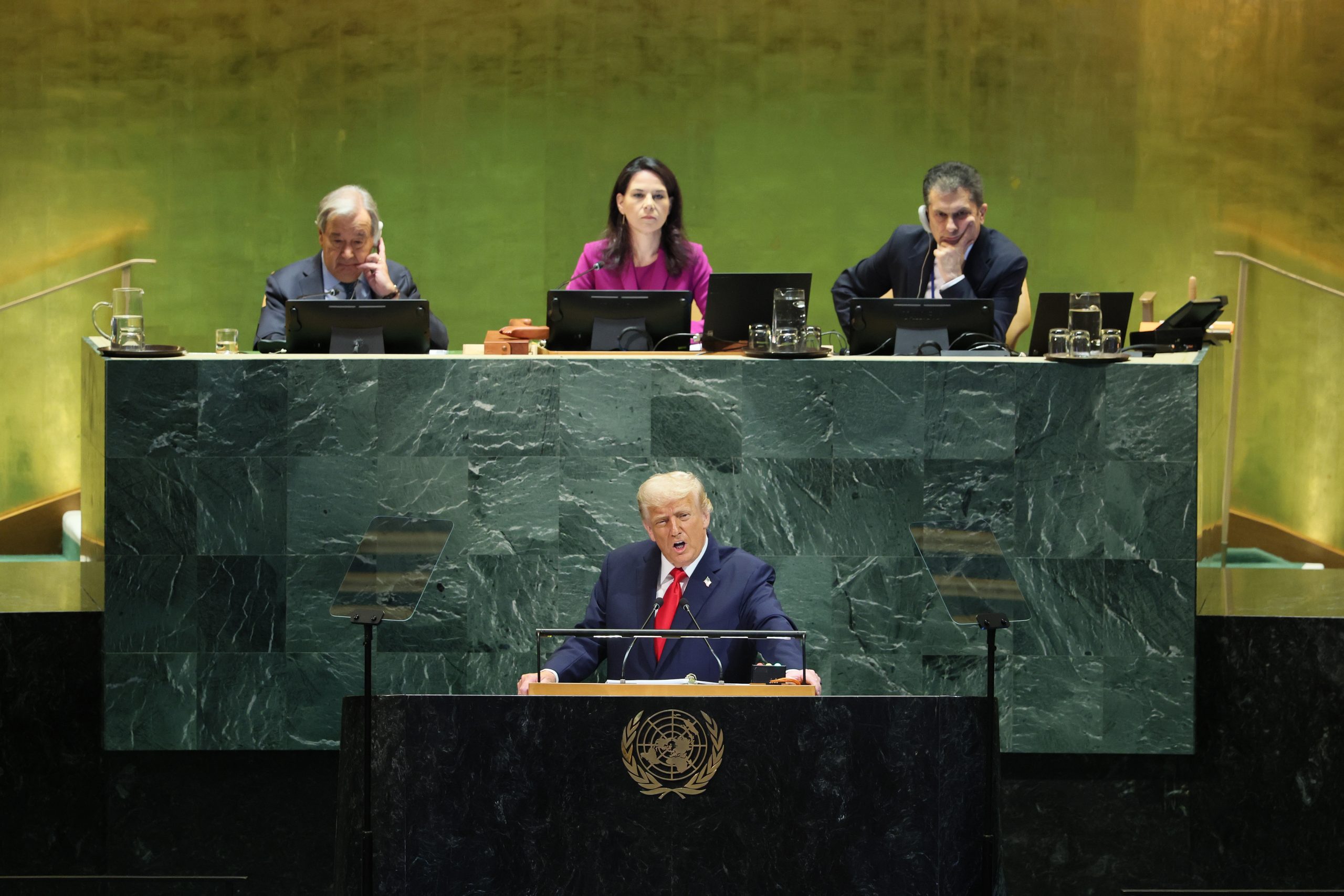
On September 23, President Donald Trump delivered a nearly hour-long address to the UN General Assembly, blending sharp criticism of the global body with self-congratulation for his administration’s achievements.
On September 23, President Donald Trump delivered a nearly hour-long address to the UN General Assembly, blending sharp criticism of the global body with self-congratulation for his administration’s achievements. In a speech that oscillated between grievance and optimism, President Trump touted his “America First” agenda, warned European nations of economic and cultural ruin, and positioned himself as a global peacemaker while questioning the UN’s effectiveness.
2. The UK, Canada, Australia, and Portugal Recognize Palestinian Statehood
On September 21, 2025, the UK, Canada, Australia, and Portugal formally recognized Palestine as a sovereign state, marking a significant shift in their long-standing diplomatic positions.
3. Supreme Court to Review Presidential Authority Over Independent Agencies
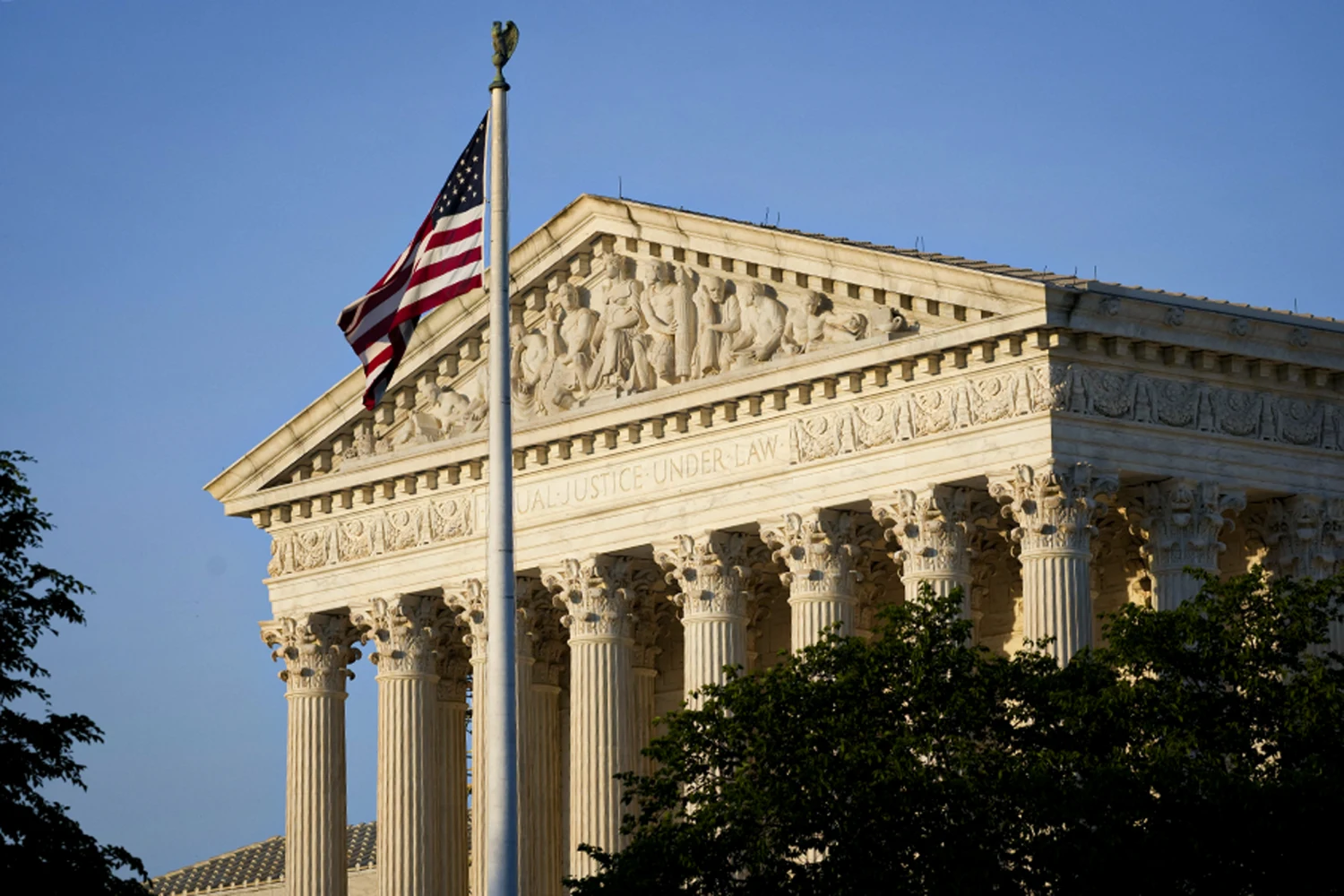
On September 22, 2025, the US Supreme Court announced it would consider a significant expansion of President Donald Trump’s power over independent federal agencies, potentially overturning a nearly century-old precedent that limits when presidents can remove agency board members.
4. President Donald Trump Moves to Designate Antifa as a Major Terrorist Organization
On September 22, President Donald Trump signed an executive order designating the decentralized anti-fascist movement known as Antifa a domestic terrorist organization.
The case centers on a challenge to Humphrey’s Executor v. United States (1935), a landmark Supreme Court ruling that established protections for commissioners of independent agencies. In that decision, the Court unanimously held that President Franklin D. Roosevelt could not fire an FTC commissioner without cause, such as misconduct or neglect of duty. This ruling paved the way for the creation of powerful independent agencies tasked with regulating critical areas like consumer protection, labor relations, and federal employment disputes. These agencies were designed to operate with a degree of autonomy, insulated from direct presidential control to ensure decisions were based on expertise rather than political pressures.
However, the Humphrey’s Executor decision has long been a point of contention for conservative legal scholars who argue that independent agencies should be more accountable to the president, as the head of the executive branch. The Justice Department, representing President Donald Trump, contends that the president should have the authority to remove agency board members at will to effectively carry out his agenda. Solicitor General D. John Sauer argued, “The President and the government suffer irreparable harm when courts transfer even some of that executive power to officers beyond the President’s control.” Sauer further noted that courts lack the authority to reinstate fired officials, only to award back pay.
In a 6-3 decision, the Supreme Court permitted President Donald Trump to fire Rebecca Slaughter, a Democratic FTC commissioner, while the broader case challenging Humphrey’s Executor proceeds. This ruling follows a series of similar decisions allowing the president to remove board members from three other independent agencies, including Gwynne Wilcox of the NLRB and Cathy Harris of the MSPB. The Court’s conservative majority did not provide detailed reasoning for allowing Slaughter’s firing, as is typical for decisions on the emergency docket. Justice Elena Kagan, joined by Justices Sonia Sotomayor and Ketanji Brown Jackson, dissented, arguing that Congress explicitly prohibited such presidential removals. “Yet the majority, stay order by stay order, has handed full control of all those agencies to the President,” Kagan wrote. The dissenters expressed concern that eroding the independence of these agencies could lead to regulatory decisions driven by politics rather than expertise.
The upcoming case, set for arguments in December 2025, will determine whether the Court overturns or narrows Humphrey’s Executor. A decision to grant the president broader authority to fire agency board members could fundamentally alter the structure of independent agencies. These bodies, including the FTC, NLRB, and MSPB, play critical roles in enforcing consumer protections, investigating unfair labor practices, overseeing union elections, and resolving federal employment disputes. Opponents of expanding presidential power, including Slaughter’s legal team, argue that allowing the president to remove congressionally confirmed board members at will risks politicizing regulatory decisions. They assert that such a change would undermine the expertise-driven mission of these agencies. “If the President is to be given new powers Congress has expressly and repeatedly refused to give him, that decision should come from the people’s elected representatives,” Slaughter’s attorneys stated. The Justice Department, however, argues that the president’s ability to execute his agenda is hindered when agency officials operate beyond his control. This tension between presidential authority and agency independence lies at the heart of the case.
The Supreme Court’s willingness to hear this case before it has fully worked through lower courts signals its urgency and potential impact. Additionally, Wilcox and Harris, the fired NLRB and MSPB board members, have asked the Court to consider their cases alongside Slaughter’s, highlighting the broader implications for multiple agencies. The Court has also suggested that the president’s removal power may face limits at certain agencies, such as the Federal Reserve. This issue is likely to be tested in a separate case involving fired Fed Governor Lisa Cook, which could further clarify the boundaries of presidential authority.
As the Supreme Court prepares to hear arguments in December, the outcome of this case could redefine the relationship between the executive branch and independent federal agencies. A ruling in favor of expanded presidential power could usher in an era of greater executive control over regulatory bodies, potentially affecting how laws are enforced in areas like consumer protection, labor rights, and federal employment. Conversely, upholding Humphrey’s Executor would preserve the autonomy of these agencies, ensuring their decisions remain grounded in expertise rather than political influence. For now, the Court’s recent decisions signal a conservative majority inclined to reconsider long-standing precedents, setting the stage for a pivotal legal battle with significant consequences for the structure of the federal government.
In a post on X, President Donald Trump stated, “I am pleased to inform our many U.S.A. Patriots that I am designating ANTIFA, A SICK, DANGEROUS, RADICAL LEFT DISASTER, AS A MAJOR TERRORIST ORGANIZATION.” He further emphasized that he would push for thorough investigations into those funding Antifa, ensuring compliance with the highest legal standards.
🚨 "I am pleased to inform our many U.S.A. Patriots that I am designating ANTIFA, A SICK, DANGEROUS, RADICAL LEFT DISASTER, AS A MAJOR TERRORIST ORGANIZATION…" – President Donald J. Trump pic.twitter.com/irLHCkrX1n
White House Press Secretary Karoline Leavitt described the order as one of the administration’s first major steps in fulfilling President Donald Trump’s campaign promises to confront left-leaning political entities. Speaking at a briefing earlier that day, Leavitt railed against Democrats and Trump’s political opponents, stating, “Many Democrats in elective office have now been totally captured by a radical fringe of the far left who want to dehumanize every person they disagree with.” She pointed to Democratic lawmakers who voted against a resolution honoring conservative activist Charlie Kirk, whose recent assassination has intensified the administration’s rhetoric. “We must continue to call this wickedness out,” Leavitt added. “It’s the only way that our nation can heal.”
The announcement follows President Donald Trump’s vow last week to label Antifa a terrorist group, coming in the wake of Charlie Kirk’s killing. In a post on his Truth Social platform, President Trump wrote: “I am pleased to inform our many U.S.A. Patriots that I am designating ANTIFA, A SICK, DANGEROUS, RADICAL LEFT DISASTER, AS A MAJOR TERRORIST ORGANIZATION. I will also be strongly recommending that those funding ANTIFA be thoroughly investigated in accordance with the highest legal standards and practices!”
Press Secretary Karoline Leavitt emphasized that the focus would extend beyond Antifa to its financial backers, noting, “We will be most importantly looking at who is funding Antifa and who is funding these other violent left-wing groups.” She cited evidence from the Kirk investigation, including bullets engraved with anti-fascist messages like “Hey Fascist! Catch!” She also referenced a series of alleged Antifa-linked incidents, including assailants shooting and assaulting law enforcement in Texas and Oregon in July, bringing a pipe bomb to a pro-Trump event in 2022, and threatening to shoot police and Trump supporters outside the Florida State Capitol in 2021. “We have seen a rise in violence perpetuated by Antifa, radical people across this country who subscribe to this group,” Leavitt said.
The term “Antifa,” short for anti-fascist, originates from the German word “antifaschistisch,” referencing 1930s resistance groups that opposed Nazi ideology. It traces its roots to European movements that fought Italian dictator Benito Mussolini during World War II and white supremacist skinhead groups during the Cold War. In the US, Antifa has existed for decades but gained prominence after Donald Trump’s 2016 election and the 2017 Charlottesville rally, where far-right violence galvanized anti-fascist activists.
Unlike structured far-right groups like the Proud Boys or Oath Keepers, which have clear leaders, hierarchies, and membership, Antifa is a loose, leaderless network of individuals and small cells leaning toward the far left, often including anarchists, communists, and hardline socialists. Its members broadly share anti-government, anti-capitalist, pro-LGBTQ+, and pro-immigration views. Activists often organize organically online and offline, without a national command structure, membership lists, or defined funding sources. This decentralization makes it challenging for authorities to target “leaders” or financial networks, as local groups operate independently.
Critics, including President Donald Trump and Republicans, frequently use “Antifa” as a catch-all label for a wide array of liberal and left-wing groups they oppose, blurring lines between ideology and action. The administration’s push raises concerns that it could stretch executive authority to suppress large-scale left-wing dissent. President Trump has already suggested charging members of the activist group Code Pink, who protested him during a recent Washington, D.C., restaurant visit, with crimes, signaling a pattern of aggressive targeting. Trump first promised to designate Antifa a terrorist organization during his first term in 2020, but never followed through. The current effort aligns with his declaration that “radical left political violence has hurt too many innocent people and taken too many lives.” Authorities have described Kirk’s accused killer, Tyler Robinson, as holding a “leftist ideology,” though no direct link to Antifa has been established, and the motive remains unclear.
What distinguishes Antifa from mainstream left-wing activism, according to critics, is some activists’ readiness to employ violence—often framed as self-defense against far-right threats. Participants frequently appear in public wearing dark clothing and face coverings, and online videos capture them wielding clubs, shields, sticks, and pepper spray at rallies. Notable incidents include a 2017 clash in Berkeley, California, where around 100 masked Antifa-linked activists attacked right-wing protesters, leading to multiple arrests. During the 2020 unrest following George Floyd’s killing, self-identified Antifa activist Michael Reinoehl fatally shot a member of the far-right Patriot Prayer group in Portland before being killed by police.
The executive order invokes powers typically reserved for foreign terrorist organizations (FTOs), which allow the US to ban members, deport individuals, seize assets, and prosecute material supporters. However, domestic groups like Antifa do not fit the FTO criteria, which require the entity to be foreign-based. The order specifies implementation within existing laws, directing agencies to pursue “any and all illegal operations” without broadly criminalizing anti-fascist ideology, a move that would violate the First Amendment. Legal experts anticipate swift constitutional challenges, given Antifa’s lack of a centralized structure. Prosecuting individuals for “material support” to domestic groups lacks the clear legal framework available for foreign ones, potentially limiting the order’s reach.
As the administration moves forward, the designation’s practical impact remains uncertain. It fulfills a long-standing Trump pledge but underscores deepening partisan divides, especially in the shadow of Charlie Kirk’s death, where his widow, Erika Kirk, urged fighting hate with love, clashing with President Donald Trump’s assertion at the funeral that he “hates” his political opponents. Karoline Leavitt defended the president, saying, “The president is authentically himself.” Whether this authenticity translates to effective policy or fuels further unrest is a question that will define the coming months.
Missouri lawmakers have approved a new congressional voting map for the 2026 midterm elections, responding to former President Donald Trump’s call to secure a Republican majority in Congress. The state Senate passed the redistricting plan with a 21-11 vote, aiming to flip a Democratic-held seat to Republican control. The map now awaits the signature of Republican Governor Mike Kehoe, who introduced the plan last month, describing it as a “Missouri First” map that aligns with the state’s conservative values.
Typically, states redraw congressional districts early in the decade following the national census, which determines the allocation of House seats. However, Missouri’s move comes mid-decade, driven by Trump’s push for Republicans to create more winnable districts. Missouri Republicans argue that the new map, which creates seven Republican-leaning seats and one strongly Democratic district, reflects the state’s political landscape, where Republicans dominate statewide and legislative elections. Currently, Missouri’s congressional delegation consists of six Republicans and two Democrats.
Republican state Senator Rick Brattin, representing the Kansas City suburbs, defended the plan, stating, “The question is, are we actually representing the constituency of Missouri with our congressional delegation? A seven-to-one map does that. Democrats in the state legislature fiercely opposed the changes but could do little to stop or slow their passage because Republicans hold supermajorities in both chambers. Democratic state Senator Stephen Webber argued during floor debate on September 12 that Republicans were surrendering their independence and bending to Trump’s will. “We’re no longer the ‘Show Me State,’” he said, referring the state’s motto. “We’re the ‘Yes, sir state.’” Democratic state Senator Barbara Washington of Kansas City called the map a “blatant political attack.” “This erases the voice of our community,” she said, her voice rising with emotion. “Carving up Kansas City and silencing our constituents is terrible.”
On September 10, thousands of activists protested at the state capitol, vowing to collect the 106,000 signatures needed within 90 days to put the measure to a statewide referendum. By September 12, two lawsuits had already been filed to challenge the plan, signaling a contentious legal battle ahead.
Missouri is not alone in redrawing its maps. President Donald Trump has urged Republican-led states, including Texas, Indiana, and Florida, to adopt district plans that favor Republican candidates. Texas approved a similar plan last month to secure five additional Republican-leaning seats. In response, Democratic-led states like California have proposed maps to bolster Democratic representation, with California’s plan awaiting voter approval on November 4, 2025. Illinois and Maryland are also considering redistricting to favor Democrats.
As Missouri’s new map heads to Governor Kehoe’s desk, its fate remains uncertain. Legal challenges and a potential referendum could delay or block its implementation. Meanwhile, the national push for redistricting continues, with both parties vying to reshape congressional districts to their advantage ahead of the 2026 midterms. The outcome of these efforts could significantly influence the balance of power in the US House.
On September 10, Charlie Kirk, a prominent conservative activist and founder of Turning Point USA, was fatally shot while speaking at Utah Valley University in Orem, Utah. The 31-year-old, known for his influential role in mobilizing young conservative voters and his close ties to President Donald Trump, was addressing students as part of Turning Point USA’s college campus tour when the attack occurred. Authorities have described the incident as a targeted political assassination, prompting widespread condemnation and calls for an end to political violence in the United States.
A rising star in the conservative movement in the US, Charlie Kirk founded Turning Point USA at the age of 18 in 2012, transforming it into a powerhouse of grassroots Republican activism. The organization has amassed millions of followers and played a pivotal role in mobilizing young voters during Trump’s presidential campaigns. Kirk’s events were known for fostering open dialogue between political ideologies, with Vice President JD Vance noting on X that, “If you actually watch Charlie’s events—as opposed to the fake summaries—they are one of the few places with open and honest dialogue between left and right. He would answer any question and talk to everyone.”
Charlie Kirk’s influence extended beyond his organization, as he became one of the most prominent pro-Trump voices in conservative media. His ability to engage young audiences and his unapologetic advocacy for conservative values made him a polarizing yet impactful figure in American politics.
The attack took place during Turning Point USA’s first event of a planned college tour. A single shot was fired, fatally wounding Charlie Kirk and prompting Utah Valley University to lock down its campus and cancel classes. Images from the scene, captured by Tess Crowley of The Deseret News, show law enforcement taping off the area as stunned attendees reacted to the tragedy. Utah Governor Spencer Cox confirmed that Kirk was the intended target, stating, “I want to be very clear that this is a political assassination.” Cox, who spoke with President Trump following the incident, vowed to work with federal and state law enforcement to bring the perpetrator to justice. “Abby and I are heartbroken,” Cox wrote on X. “We are praying for Charlie’s wife, daughter, and son.”
I am being briefed by law enforcement following the violence directed at Charlie Kirk during his visit to Utah Valley University today. We will continue to share updates.
Those responsible will be held fully accountable. Violence has no place in our public life.
FBI Director Kash Patel reported that a person detained as a suspect was later released, and no one else is currently in custody. Authorities have yet to identify a suspect or confirm a motive for the shooting, leaving many questions unanswered.
The assassination drew swift reactions from leaders across the political spectrum, with many condemning the act as a stark reminder of the dangers of political violence. President Donald Trump, in a video statement, described Kirk as “the best of America” and blamed “the radical left” for the attack, arguing that inflammatory rhetoric comparing conservatives to “Nazis and the world’s worst mass murderers” incited the violence. “This kind of rhetoric is directly responsible for the terrorism that we’re seeing in our country today, and it must stop right now,” President Trump said. He vowed to investigate those contributing to political violence, including organizations that “fund it and support it,” and ordered flags lowered to half-staff through September 14 in Kirk’s honor.
In a September 12 interview on Fox & Friends, President Donald Trump expanded on his claims, suggesting that “radical left lunatics” were primarily responsible for the nation’s political violence. He dismissed suggestions of extremism on the right, stating, “The radicals on the right oftentimes are radical because they don’t want to see crime. The radicals on the left are the problem, and they’re vicious and they’re horrible and they’re politically savvy.” Trump also called for investigations into liberal philanthropist George Soros and his family, accusing them of “agitation.”
Vice President JD Vance offered a prayer for Kirk, writing on X, “Eternal rest grant unto him, O Lord.” He praised Kirk’s commitment to civil discourse, emphasizing the inclusive nature of his campus events.
Former presidents also weighed in, universally condemning the violence. Former President Joe Biden wrote on X, “There is no place in our country for this kind of violence. It must end now. Jill and I are praying for Charlie Kirk’s family and loved ones.” Former President Barack Obama echoed this sentiment, stating, “We don’t yet know what motivated the person who shot and killed Charlie Kirk, but this kind of despicable violence has no place in our democracy. Michelle and I will be praying for Charlie’s family tonight, especially his wife Erika and their two young children.”
Former President George W. Bush called for an end to “violence and vitriol” in public discourse, noting, “Members of other political parties are not our enemies; they are our fellow citizens.” Former President Bill Clinton expressed sadness and anger, urging introspection and renewed efforts for peaceful debate. Even before Kirk’s death was confirmed, Democratic leaders like House Minority Leader Hakeem Jeffries, Senate Minority Leader Chuck Schumer, and California Governor Gavin Newsom condemned the attack. Newsom, who had interviewed Kirk for his podcast earlier this year, called the shooting “disgusting, vile, and reprehensible.”
Charlie Kirk’s assassination is the latest in a disturbing series of violent incidents targeting political figures in the US. Earlier incidents include the assassination of Minnesota Democratic state representative Melissa Hortman and her husband, as well as the severe wounding of Democratic state senator John Hoffman and his wife in a separate attack. Authorities reported that the suspect in those cases had compiled a list of largely Democratic lawmakers and abortion rights advocates as potential targets.
These incidents have heightened concerns about the state of political discourse in America. President Trump’s response has drawn scrutiny, particularly his decision to pardon nearly all individuals convicted of federal crimes related to the January 6, 2021, Capitol riot, including those who committed violence against police officers. Critics argue that this move undermines efforts to address political violence impartially.
Turning Point USA released a statement mourning Kirk’s death, describing him as a visionary leader whose loss is deeply felt. “May he be received into the merciful arms of our loving Savior, who suffered and died for Charlie,” the statement read. “We ask that everyone keep his family and loved ones in your prayers. We ask that you please respect their privacy and dignity at this time.”
As investigations continue, Kirk’s death has sparked a broader conversation about the state of political rhetoric and its consequences. While President Donald Trump and his allies point to inflammatory language from the left as a catalyst, others argue that vilification across the political spectrum fuels division and violence. The assassination serves as a grim reminder of the need for civility and mutual respect in public discourse.
The nation now mourns a figure who, regardless of political affiliation, sought to engage young Americans in the democratic process. As leaders from both parties call for an end to violence, the hope is that Kirk’s death will inspire a renewed commitment to dialogue over division.
The US House of Representatives on February 8 approved legislation to fund federal government agencies through March 11 and avoid a chaotic shutdown of many of the government’s operations when existing money expires at midnight on February 18. The House voted 272-162 to approve the stop-gap measure that will give Democratic and Republican negotiators in the House and Senate an additional three weeks to work out a deal on a full-year funding bill. The temporary measure, the third since the start of the fiscal year that began on October 1 now goes to the Senate, where Majority Leader Chuck Schumer has promised prompt action.
Negotiators have been struggling for weeks to agree on the so-called “omnibus” spending bill to finance the federal government’s wide-ranging activities through September 30, the end of the current fiscal year. During House debate, Appropriations Chair Rosa DeLauro (D-CT) noted that the “omnibus is the only way to unlock” the full $1 trillion in spending on infrastructure projects authorized by Congress late last year. The measure would also beef up spending on defense and veterans programs, along with environmental, education, and other domestic initiatives. Senate Majority Leader Chuck Schumer also expressed confidence that a full-year funding bill would be set in place by March 11. Meanwhile, Senator Richard Shelby, the senior Republican on the Senate Appropriations Committee, told reporters negotiators were nearing a deal on top-line spending for such a bill. That figure might hover around $1.5 trillion. Republicans were insisting the money be equally divided between defense and non-defense programs, while Democrats who control Congress fashioned bills providing slightly more money on the non-defense side of the ledger.
Once the framework of a bill is sketched out through an overall spending level, negotiators are expected to dive into resolving disagreements over specific line-items, such as environmental programs and border security, while also settling perennial battles over policies related to divisive issues such as abortion and Internal Revenue Service activities. “With these basic things, a bipartisan deal should be achievable,” Senate Republican Leader Mitch McConnell said in a speech on the Senate floor.
President Joe Biden escalated his partisan rhetoric on January 19 during his first news conference in 10 months, laying the blame for his stalled agenda at the feet of Republicans and suggesting on the eve of his first anniversary that he has been surprised by their intransigence. “I honest to God don’t know what they’re for,” Biden said at one point during his nearly two-hour exchange with reporters. “What is their agenda?” He said the Republican Party is thoroughly cowed by former president Donald Trump. “Did you ever think that one man out of office could intimidate an entire party where they’re unwilling to take any vote?” Biden asked.
The shift intensified a harsher tone that President Joe Biden has taken this year toward Republicans, starting with an address commemorating the January 6 Capitol assault and continuing in Georgia last week with a blistering address suggesting that those who do not support the current voting rights bills will be remembered in history alongside such notorious racists as Jefferson Davis, the leader of the Confederacy. The sharp critique represents a major shift from Biden’s message during the presidential campaign when he said that Republicans would have an “epiphany” and that partisan gridlock would ease if he took office. And it signals a shift from an inaugural year focused on congressional action to a hard-fought election year with control of Congress at stake.
President Joe Biden also offered unvarnished thoughts about Russia’s intentions toward Ukraine, suggesting that President Vladimir Putin would probably invade the country. He suggested the US response would be different if Moscow launches a “minor incursion” vs. a massive ground invasion, causing a furor that quickly prompted the White House to clarify that he was distinguishing a military and non-military assault. The President also made news by confirming rumors that he plans to break up his roughly $2 trillion social welfare and climate legislation, called the Build Back Better package, into smaller bills.
The roughly two-hour exchange was much longer than expected or typical for a presidential news conference, and President Joe Biden called on far more reporters than he usually does. He joked about staying there for hours and even suggested that the journalists keep their questions short so he could answer more of them. Biden gave the news conference in a moment when his polls are falling and he faces a nation that is exhausted by a lingering pandemic and economic uncertainty.
A recent Gallup poll showed that just 40 percent of Americans approve of the job that President Joe Biden is doing, while 56 percent disapproved. That’s the lowest rating for any recent president at their one-year mark, aside from Trump, whose rating was a few points lower. He noted several times that the country is not where he had hoped and expected it to be. When asked if he’s done a good job unifying Americans he gave a nuanced answer. “The answer is, based on some of the stuff we’ve got done, I’d say yes,” Biden said. “But it’s not nearly unified as it should be. Biden telegraphed that he will spend more time traveling the country and talking to voters and less time embroiled in prolonged negotiations with Congress. “The public doesn’t want me to be the president-senator,” said Biden, who spent 36 years in the Senate before becoming Barack Obama’s vice president. “They want me to be the president and let senators be senators.”
The President’s January 19 news conference took on greater significance than usual because it came on the eve of the anniversary of his first full year in office and also a moment when many of Joe Biden’s plans face turbulence. In what appeared to be a carefully calculated message, he repeatedly excoriated Republicans, accusing them of having no goal except opposing him, no leader except Trump, and no agenda at all. “I did not anticipate that there would be such a stalwart effort to make sure that the most important thing was to make sure Biden didn’t get anything done,” he said. “What are Republicans for? What are they for? Name me one thing they are for.”
On average, Americans’ political party preferences in 2021 looked similar to prior years, with slightly more US adults identifying as Democrats or leaning Democratic (46%) than identified as Republicans or leaning Republican (43%) overall. However, the general stability for the full-year average obscures a dramatic shift over the course of 2021, from a nine-percentage-point Democratic advantage in the first quarter to a rare five-point Republican edge in the fourth quarter, the largest advantage for the Republican Party since 1991.
In the first quarter of 2021, 49% of U.S. adults identified as Democrats or leaned Democratic, while 40% identified as Republicans or leaned Republican. In the second quarter, 49% were Democrats or Democratic leaners, and 43% were Republicans and Republican leaners. In the third quarter, 45% were Democrats and Democratic leaners, and were 44% Republicans and Republican leaners. In the fourth quarter, 42% were Democrats and Democratic leaners, and 47% were Republicans and Republican leaners.
Generally speaking, Gallup and other polling organizations ask all American voters it interviews whether they identify politically as a Republican, a Democrat, or an independent. Independents are then asked whether they lean more toward the Republican or Democratic Party. The combined percentage of party identifiers and leaners gives a measure of the relative strength of the two parties politically. Both the nine-point Democratic advantage in the first quarter and the five-point Republican edge in the fourth quarter are among the largest Gallup has measured for each party in any quarter since it began regularly measuring party identification and leaning in 1991.
The Democratic lead in the first quarter was the largest for the party since the fourth quarter of 2012, when Democrats also had a nine-point advantage. The Republican Party has held as much as a five-point advantage in a total of only four quarters since 1991. The Republicans last held a five-point advantage in party identification and leaning in early 1995, after winning control of the House of Representatives for the first time since 1952. Republicans had a larger advantage only in the first quarter of 1991, after the U.S. victory in the Persian Gulf War led by then-President George H.W. Bush.
Shifting party preferences in 2021 are likely tied to changes in popularity of the two men who served as president during the year. Republican Donald Trump finished out his single term in January, after being defeated in the 2020 election, with a 34% job approval rating, the lowest of his term. His popularity fell more than 10 points from Election Day 2020 as the country’s Coronavirus infections and deaths reached then-record highs, he refused to acknowledge the result of the election, and his supporters rioted at the US Capitol on January 6, 2021, in an attempt to prevent Congress from counting the 2020 Electoral College votes.
Democrat Joe Biden enjoyed relatively high ratings after taking office on Jan.uary 20, and his approval stayed high through the early summer as Coronavirus infections dramatically decreased after millions of Americans got vaccinated against the disease. A summer surge of infections tied to the delta variant of the coronavirus made it clear the pandemic was not over in the US, and Biden’s approval ratings began to sag. Later, the chaotic US withdrawal from Afghanistan caused Biden’s ratings to fall further, into the low 40s. His ratings remain low as the US battles rising inflation and yet another surge of COVID-19 infections, tied to the omicron variant of the virus.
With former President Donald Trump’s approval rating at a low point and President Joe Biden relatively popular in the first quarter, 49% of Americans identified as Democrats or leaned Democratic, compared with 40% who were Republicans or Republican leaners. In the second quarter, Democratic affiliation stayed high, while Republican affiliation began to recover, increasing to 43%. The third quarter saw a drastic decline in Democratic identification and leaning, from 49% to 45%, as President Biden’s ratings began to falter, while there was no meaningful change in Republican affiliation. In the fourth quarter, party support flipped as Republicans made gains, from 44% to 47%, and Democratic affiliation fell from 45% to 42%. These fourth-quarter shifts coincided with strong GOP performances in 2021 elections, including a Republican victory in the Virginia gubernatorial election and a near-upset of the Democratic incumbent governor in New Jersey. Biden won both states by double digits in the 2020 election.
Gallup began regularly measuring party leaning in 1991, and in most years, significantly more Americans have identified as Democrats or as independents who lean Democratic than as Republicans or Republican leaners. The major exception was in early 1991, when Republicans held a 48% to 44% advantage in party identification and leaning. From 2001 through 2003 and in 2010 and 2011, the parties had roughly equal levels of support.
Overall in 2021, an average of 29% of Americans identified as Democrats, 27% as Republicans, and 42% as independents. Roughly equal proportions of independents leaned to the Democratic Party (17%) and to the Republican Party (16%). The percentage of independent identifiers is up from 39% in 2020, but similar to the 41% measured in 2019. Gallup has often seen a decrease in independents in a presidential election year and an increase in the year after. The broader trend toward an increasing share of political independents has been clear over the past decade, with more Americans viewing themselves as independents than did so in the late 1980s through 2000s. At least four in 10 Americans have considered themselves independents in all years since 2011, except for the 2016 and 2020 presidential election years. Before 2011, independent identification had never reached 40%.
Overall, the Gallup public opinion survey results show that 2021 was an eventful one in politics, after a similarly eventful 2020 that also saw major shifts in party preferences. In early 2021, Democratic strength reached levels not seen in nearly a decade. By the third quarter, those Democratic gains evaporated as Biden’s job approval declined. The political winds continued to become more favorable to Republicans in the fourth quarter, giving the Republicans an advantage over Democrats larger than any they had achieved in more than 25 years. As such, the data shows that the Republican Party may soon become the dominant political party in the US for the first time since the early 1930s.
Happy 2021! Here are the main events that occurred in Politics this week:
1. 117th Congress Sworn In
The 117th US Congress was sworn in this week, with Nancy Pelosi being re-elected House Speaker with perhaps the slimmest House Majority in over a century.
House Speaker Nancy Pelosi was reelected to lead the chamber as the 117th Congress convened on January 4, with the California Democrat set to shepherd her party through a new Congress with the slimmest majority of any political party since 1917. Members cast their votes for speaker ahead of their swearing in Sunday evening, with Pelosi earning support from 216 Democrats and clearing the threshold of 214 to secure the House’s top position. The proceedings at the Capitol were marked by the Coronavirus pandemic, which led to a changing of procedures to ensure the new Congress could gather safely. Two Democrats, Jared Golden of Maine and Conor Lamb of Pennsylvania, cast votes for Senator Tammy Duckworth of Illinois and Congressman Hakeem Jeffries of New York, respectively. Three Democratic House members voted “present.” Notably, Congresswoman Alexandria Ocasio-Cortez, a Democrat from New York, and other members of “The Squad” backed Pelosi in her bid for the speakership. House Minority Leader Kevin McCarthy won 209 votes from Republicans.
2. In A Surprising Upset, Democrats Score Double-Barreled Win In Georgia Senate Runoff Elections
Democrats won both Georgia Senate seats, and with them, the US Senate majority, as final votes were counted on January 6, serving President Donald Trump a stunning defeat in his turbulent final days in office while dramatically improving the fate of President-elect Joe Biden’s progressive agenda.
3. Pro-Donald Trump Rioters Storm Capitol In Attempted Coup
Pro-Donald Trump rioters overwhelmed the Capitol Police and stormed Congress on January 6, interrupting the certification of Joe Biden’s Electoral College win and throwing the US Capitol into a spiral of chaos and violence
Pro-Donald Trump rioters overwhelmed the Capitol Police and stormed Congress on January 6, interrupting the certification of Joe Biden’s Electoral College win and throwing the US Capitol into a spiral of chaos and violence. Shortly after 2:30 p.m., lawmakers, staff, and reporters were forced to shelter in place, and several House office buildings were evacuated due to potential bomb threats. Vice President Mike Pence was pulled from the Senate chamber. But the situation quickly spun out of control. Protesters breached the Capitol, entering the Senate chamber and streaming through Statuary Hall. They broke windows, and one man sat in the very seat Pence had been sitting in just a few minutes before, while another was in Speaker Nancy Pelosi’s office. Lawmakers, reporters, and staffers sheltered throughout the building as pro-Trump rioters banged on doors and shouted. House Speaker Nancy Pelosi (D-CA), House Minority Leader Kevin McCarthy (R-CA), Senate Majority Leader Mitch McConnell (R-KY) and Senate Minority Leader Chuck Schumer (D-NY) were quickly whisked away to undisclosed locations as the violent protesters broke through the Capitol, busting through secure doors, shattering windows and even scaling scaffolding outside of Senate leadership offices. One person was injured when they fell more than 30 feet from the scaffolding. By mid-afternoon, the National Guard was called up to help suppress the unrest, nearly two hours after the first reports of a breach.
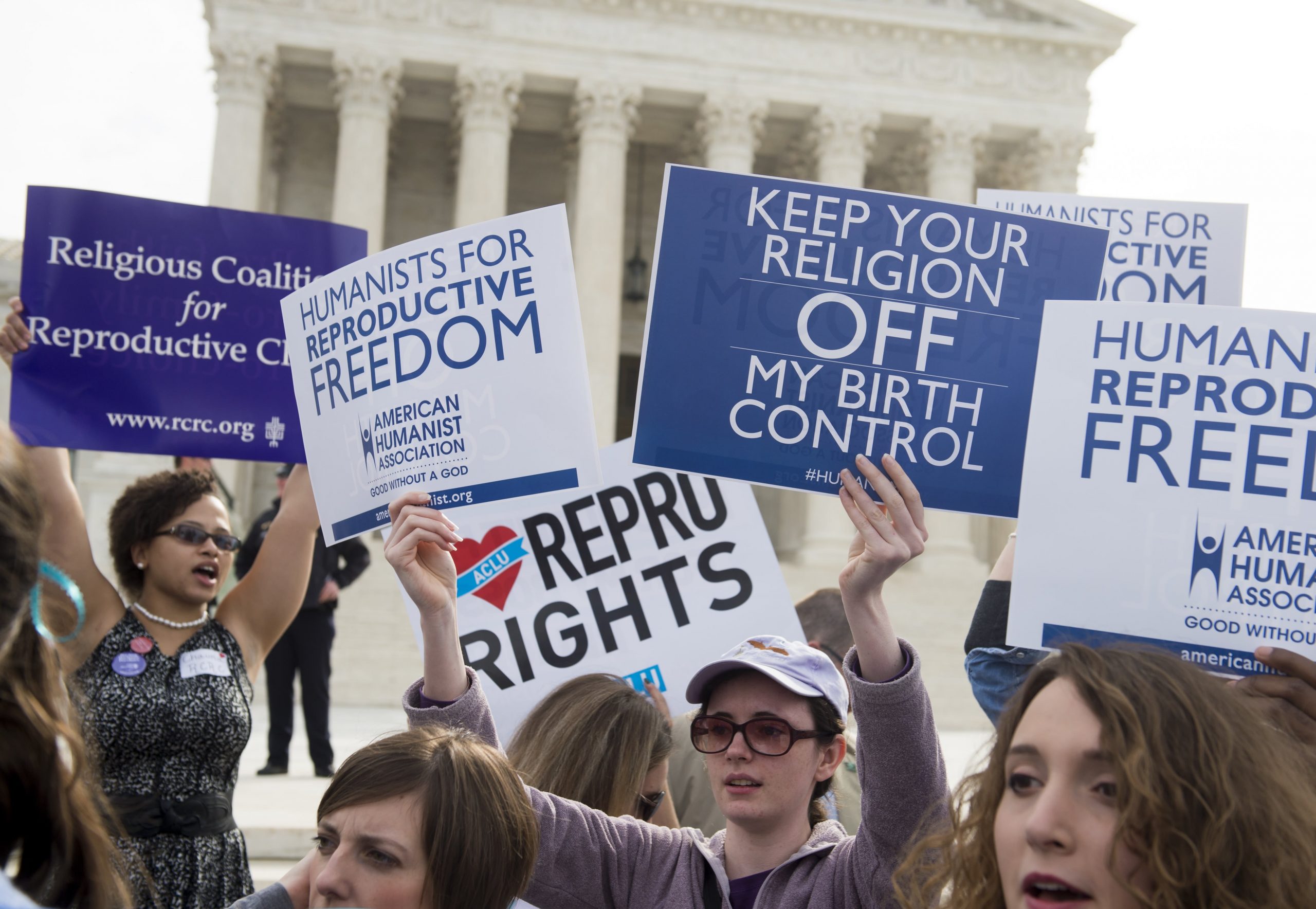
The Supreme Court ruled on July 8 that the Trump administration may allow employers and universities to opt-out of the Affordable Care Act requirement to provide contraceptive care because of religious or moral objections. The issue has been at the heart of an intense legal battle for nine years, first with the Obama administration sparring with religious organizations who said offering contraceptive care to their employees violated their beliefs, and then with the Trump administration broadening an exemption, angering women’s groups, health organizations, and Democratic-led states. July 8th’s decision greatly expands the ability of employers to claim the exception, and the government estimates that between 70,000 and 126,000 women could lose access to cost-free birth control as a result.
The contraceptive case involves a long-running dispute over the Affordable Care Act (colloquial known as “Obamacare“), and a requirement that employers provide cost-free birth control for female employees. The law itself does not specify the rules, leaving it to federal agencies to determine how contraceptives fit into the mandate for cost-free “preventive care and screenings.” The Obama administration required contraceptives and had narrower exceptions for churches and other houses of worship. It created a system of “accommodations,” or workarounds, for religiously affiliated organizations such as hospitals and universities. Those accommodations would provide contraceptive care but avoid having the objecting organizations directly cover the cost. The Trump administration moved in 2018 to expand the types of organizations that could opt-out to include religious groups and non-religious employers with moral and religious objections. Under the rules, the employers able to opt-out include essentially all nongovernmental workplaces, from small businesses to Fortune 500 companies. And the employer has the choice of whether to permit the workaround.
The US Court of Appeals for the 3rd Circuit had put the Trump administration exemptions on hold and said the agencies did not have the broad authority to grant them. Justice Clarence Thomas, who wrote the majority opinion, said that was wrong. “We hold that the [administration] had the authority to provide exemptions from the regulatory contraceptive requirements for employers with religious and conscientious objections,” wrote Thomas, who was joined by Chief Justice John Roberts and Justices Samuel Alito, Neil Gorsuch, and Brett Kavanaugh. Thomas reasoned that if an administration’s agencies have “virtually unbridled discretion to decide what counts as preventive care and screenings, he said, they must also have “the ability to identify and create exemptions” from those guidelines. Justices Elena Kagan and Stephen Breyer agreed with the court’s conservatives that the administration had the right to create an exemption, but they said lower courts should examine whether the administration’s rules were “consistent with reasoned judgment.” Justice Ruth Bader Ginsburg issued a blistering dissent, in which she said her colleagues had gone too far to appease religious conservatives. Until now, “this Court has taken a balanced approach, one that does not allow the religious beliefs of some to overwhelm the rights and interests of others who do not share those beliefs,” Ginsburg wrote in a brief joined by Justice Sonia Sotomayor. “Today, for the first time, the Court casts totally aside countervailing rights and interests in its zeal to secure religious rights to the nth degree.” Ginsburg said Congress meant to provide “gainfully employed women comprehensive, seamless, no-cost insurance coverage for preventive care protective of their health and wellbeing.” The court’s action, she wrote, “leaves women workers to fend for themselves, to seek contraceptive coverage from sources other than their employer’s insurer, and, absent another available source of funding, to pay for contraceptive services out of their own pockets.”
Here are the main events that occurred in Politics this week:
1. Federal Judge Rules Against Trump Administration’s New Immigration Policy
A Federal Judge in California ruled against President Trump’s recent immigration executive order this week.
A federal judge on November 20 ordered the Trump administration to resume accepting asylum claims from migrants no matter how they entered the US, dealing a temporary setback to the President’s attempt to clamp down on a huge wave of Central Americans crossing the border. Judge Jon Tigar of the US District Court for the Northern District of California issued a temporary restraining order that blocks the government from carrying out a new rule that denies protections to people who enter the country illegally. The order, which suspends the rule until the case is decided by the court, applies nationally. “Whatever the scope of the president’s authority, he may not rewrite the immigration laws to impose a condition that Congress has expressly forbidden,” Judge Tigar wrote in his order.
2. President Donald Trump Reportedly Said He Wanted Justice Department to Prosecute His Political Opponents
A New York Times memo released this week revealed that President Trump sought to unilaterally prosecute political opponents Hillary Clinton and James Comey.
According to a New York Times article published on November 20, President Donald Trump told the White House counsel in the spring that he wanted to order the Justice Department to prosecute two of his political opponents: his 2016 challenger, Hillary Clinton, and the former FBI director James Comey. Donald McGahn, a Justice Department lawyer, rebuffed the President, saying that he had no authority to order prosecution. McGahn noted that while he could request an investigation, that could prompt accusations of abuse of power. To underscore his point, McGahn had White House lawyers write a memo for President Trump warning that if he asked law enforcement to investigate his rivals, he could face a range of consequences, including possible impeachment.
3. Russia, Ukraine Conflict Heats Up After A Year of Relative Calm
The ongoing conflict between Russia and Ukraine heated up this week after several Ukranian naval ships engaged the Russian navy with aggressive maneuvers.
After a year of relative calm, the ongoing territorial disputes between Russia and Ukraine heated up late this week. On November 25, the Ukrainian navy said that Russian authorities closed off the Kerch Strait amid a confrontation with Ukrainian naval vessels. Earlier this year, the Russian government opened a 19-kilometer bridge across the strait, creating a road linking Russia’s Krasnodar region with the Crimean peninsula, which was annexed by Russia from Ukraine in 2014. In a statement released shortly after the incident, the Ukrainian ministry of defense said traffic through the strait had been blocked by a tanker anchored near the Kerch Strait bridge. Russian state news agency TASS, quoting Alexei Volkov, the general director of the Crimean seaports, said traffic through the strait had been closed for security purposes.
4. Trump Administration Authored Report Says that Climate Change Damage is “Intensifying Across the Country”
A long-awaited governmental report this week revealed that the effects of global warming on the US are steadily increasing and threaten to irreversibly damage the climate of the US.
On November 23, the US government released a long-awaited report stating the effects of global warming and climate change in the US are worsening and that the potential for irreversible environmental damage is steadily increasing. The report’s authors, who represent numerous federal agencies, say they are more certain than ever that climate change poses a severe threat to Americans’ health and pocketbooks, as well as to the country’s infrastructure and natural resources. And while it avoids policy recommendations, the report’s sense of urgency and alarm stands in stark contrast to the lack of any apparent plan from President Trump to tackle the problems, which, according to the government he runs, are increasingly dire.
\
5. Preliminary “Black Friday” Sales Reports Reveal that Online Sales Brought in a Record $6 Billion in the US
Black Friday sales this year revealed a major trend in favor of online retailers, perhaps signaling the end of traditional “big box” retailers as we know them today.
More shoppers turned to the internet for deals to kick off the holiday shopping season as opposed to shopping at traditional retail stores, data released on November 24 revealed. Black Friday pulled in $6.22 billion in online sales, up nearly 24% percent from a year ago and set a new record high, according to Adobe Analytics, which tracks transactions for 80 of the top 100 internet retailers in the US including Walmart and Amazon. These figures arrived as many retailers have pushed big digital deals, days in advance of the holiday weekend.
Here are the main events that occurred in Politics this week:
1. In Stunning Rebuke of Trump Administration, The Democrats Retake House of Representatives
The Democratic Party regained control of the House of Representatives this week, potentially serving as a major roadblock to President Trump’s agenda.
Democrats took control of the House on November 6, a victory that will transform a Republican-controlled chamber that supported and protected President Donald Trump at every turn into a legislative body ready to challenge him politically. Victories in Republican-held suburban seats in both safe Democratic states such as California, Virginia, New York, New Jersey, as well as in swing states such as Texas, Georgina, and Florida allowed the Democrats to gain at least 25 seats, giving them control over the House of Representatives for the first time since 2010. The House Democrats aim to quickly usher in a new era and tone in Washington, starting with a legislative package of anti-corruption measures aimed at strengthening ethics laws, protecting voter rights and cracking down on campaign finance abuses.
“Tomorrow will be a new day in America,” House Minority Leader Nancy Pelosi (D-CA) declared from the Democratic Party headquarters in Washington. “It’s about restoring the Constitution’s checks and balances to the Trump administration. It’s about stopping the GOP and Mitch McConnell’s assaults on Medicare, Medicaid, the Affordable Care Act, and the health care of 130 million Americans living with pre-existing medical conditions.” Pelosi promised action on lowering the cost of prescription drugs and rebuilding the nation’s infrastructure and pledged to pursue bipartisanship where possible. “A Democratic Congress will work for solutions that bring us together because we have all had enough of division,” she said.
Despite his relentless criticism of her, President Donald Trump called Pelosi to congratulate her on her party’s success and acknowledged her call for bipartisanship. Additionally, in a Twitter post, President Trump stated that Nancy Pelosi deserved to become Speaker of the House after her parties win and urged Democrats to support her. Despite his relatively conciliatory tone, there are many points of possible conflict between President Trump and the new Democratic House majority. For example, Democrats are likely to launch investigations into numerous aspects of the Trump administration, from its ties to Russia to the President’s tax returns, as well as to step up oversight into Trump’s executive actions on immigration, the environment, and other regulations. “The country gave us a mandate to provide some check and balance on the executive that that has been sorely missing these last two years,” said Congressman Gerry Connolly (D-VA). “And that involves rigorous oversight and accountability. … This is not a time for holding back or being less than vigorous.”
In all fairness, Nancy Pelosi deserves to be chosen Speaker of the House by the Democrats. If they give her a hard time, perhaps we will add some Republican votes. She has earned this great honor!
The retaking of the House of Representatives serves as a significant vindication for Nancy Pelosi, who became the first female House speaker in 2006, only to lose the majority in 2010 as voters rebelled against former President Barack Obama’s health care law in the first midterm elections of his Presidency. Midway through President Trump’s first term, the elections once again focused on health care, only this time Democrats were on the attack against Republicans, attacking the Republicans over attempts to repeal the Affordable Care Act and its signature protections for people with preexisting conditions. Republicans who rode their opposition to Obamacare to the House majority in 2010 were forced to backtrack in many cases, insisting that they did support such protections.
Despite their resounding victory in the House elections, the Democratic party faces internal divisions as well. Even though their restored majority comes thanks to many moderate candidates who beat Republicans in districts that narrowly voted for Trump in 2016, the party will also welcome newcomers who ran on distinctly progressive agendas, calling for Medicare-for-all or abolishing the Immigration and Customs Enforcement agency. Those lawmakers include New York’s Alexandria Ocasio-Cortez, who defeated longtime Democrat Joseph Crowley in a June primary, and Michigan’s Rashida Tlaib, who is set to claim the seat once held by veteran lawmaker John Conyers Jr. That mix will be sure to create tensions over the party’s priorities, especially with a restive liberal base that has already begun calling for impeachment proceedings against Trump.
Heading into Election Day, Republicans had said their best-case scenario after the election was a narrower House majority than the 45-seat margin they now command. Republicans had pledged that, if returned to power in the House, they would get to work on a new 10 percent tax cut for the middle-class Trump spoke of in the closing days of the campaign. “We’ve known from the beginning that history was not on our side this election cycle. And big money was not on our side,” House Majority Whip Steve Scalise (R-LA) said, citing a “motivated base” on the Democratic side who inundated Republican incumbents with small donations to their challenges.
House Republicans also face leadership questions heading into the next Congress, as well as internal ideological differences. On the Republican side, with House Speaker Paul D. Ryan (R-WI) retiring from Congress, Majority Leader Kevin McCarthy (R-CA) is his likeliest successor as the top Republican leader in the majority or minority. But he may not get there without a fight, since Scalise is also eyeing the job, and Congressman Jim Jordan (R-OH), a leader of the House Freedom Caucus and unwavering supporter of President Donald Trump, is the choice of some conservatives.
2. Republicans Expand Senate Majority Despite Losing House of Representatives
Despite losing control over the House of Representatives, the Republican Party increased their Senate majority with Trump-aligned candidates defeating moderate Democrat incumbents.
Despite losing control of the House of Representatives by a substantial margin, Republicans cemented control of the Senate for two more years on November 6 and positioned themselves for a more conservative majority, with victories by candidates who aligned with President Donald Trump. North Dakota Congressman Kevin Cramer, Indiana businessman Mike Braun, Florida Governor Rick Scott, and Missouri Attorney General Josh Hawley, all staunch Trump allies, won seats held by Democrats. The last time such a situation occurred under a Republican President was in 2002 when President George W. Bush’s post-9/11 popularity was enough for the Republicans to regain control of the Senate in that year’s midterm election.
The results held implications for coming battles over the federal judiciary, trade, health care, government spending, and immigration. President Donald Trump’s worldview is expected to be reflected strongly in those debates in the wake of Tuesday’s elections. The outcomes also held significance for President Trump himself. Trump and Senate Majority Leader Mitch McConnell (R-KY) spoke Tuesday night, according to McConnell spokeswoman Antonia Ferrier. “The leader and the president had a great conversation, and he thanked the president for all his help,” she said. The Senate Democratic caucus, meanwhile, is poised to shift to the left. The ouster of key centrists willing to work with Trump and the presence of several liberal senators gearing up for possible presidential runs could cause more polarization in the chamber.
With the map in their favor, Republicans — who currently control both chambers of Congress — were on track to preserve and possibly expand their 51-to-49 advantage in the Senate. Analysts across the political spectrum had favored them to remain in power, even as they said Democrats were likely to wrest control of the House. Some of the most closely watched Senate races pitted moderate/conservative Democrats against conservative Republicans who embraced Trump. Races in Missouri, North Dakota, Indiana, West Virginia, and Tennessee fell into this category. Even before Tuesday’s vote, Senate Republicans were poised for a more pro-Trump roster next year.
Democrats tried to defeat candidates who marched in lockstep with Trump by running on preserving health-care protections and other so-called “kitchen table” issues. In key races, they fell short. In North Dakota, Kevin Cramer’s defeat of Senator Heidi Heitkamp means that a close ally of Trump will replace one of the chamber’s few moderate Democrats. Trump personally recruited Cramer to run. On major issues, Cramer endorsed Trump’s positions. In Indiana, Businessman Mike Braun ran in Trump’s mold, as an outsider eager to shake up Washington. He defeated a pair of House members in the Republican primary before beating centrist Democratic Senator Joe Donnelly on Tuesday. In Missouri, Attorney General Hawley ousted Senator Claire McCaskill in a race with similar dynamics. Hawley, like Cramer, championed Trump’s views on trade, even as he faced criticism that farmers in his state would suffer under the President’s tariffs.
Despite having an unfavorable map, the Democratic Party did succeed in picking up two states in the Southwest. In Arizona, Democratic Congresswoman Krysten Sinema was able to defeat Republican Congresswoman Martha McSally by a close margin, becoming the first Democrat elected to the Senate from Arizona since 1988. In Nevada, Congresswoman Jacky Rosen unseated Senator Dean Heller, a one-time Trump critic who since warmed up to the President in recent weeks. Moreover, several vulnerable Democratic Senators such as Joe Manchin (WV), Jon Tester (MT), and Sherrod Brown (OH) were able to overcome the trends in their states and win re-election. In the Texas Senate race, Democratic candidate Beto O’Rourke was also able to nearly defeat Ted Cruz despite the latter gaining much support in recent weeks, showing that Texas is trending rapidly towards the Democratic party.
Despite gaining seats in this election cycle, the Senate Republican agenda is not expected to be nearly as ambitious as the past two years, when the Republicans controlled the federal government following Trump’s surprise win. The Democratic House takeover will likely be an impediment to reaching an agreement on most issues. Still, the Senate will have to navigate some high-stakes battles. The Trump Administration is preparing for a massive post-midterm shake-up, which could trigger nominations for Attorney General and other Cabinet posts the Senate would be tasked with confirming in the months ahead. Additionally, Senate Majority Leader Mitch McConnel has made confirming conservative federal judges a top priority, which will be easy to accomplish with a more favorable Senate composition.
3. Democrats Make Gains in Gubernatorial, State Legislative Elections
The Democratic Party made key gains in this weeks gubernatiroal elections, setting up a fight regarding Congressional redistricting efforts in 2020.
Democrats tried on November 6 to fight their way back to power in state capitols across the country by reclaiming governor’s seats in several key states, marking significant steps in their national strategy to reverse years of Republican gains in state capitols. Despite this, their victories in Illinois, Michigan, Nevada, and Wisconsin, were balanced by Republicans holding on to the governorships in Florida, Ohio, and Arizona. Additionally, the Georgia gubernatorial race remains too close to call and will likely be settled in a run-off race.
The defeat of Republican Scott Walker in Wisconsin completed a sweep for the Democratic party in the upper Midwest. Governor Walker was a top target of Democrats and a polarizing figure in his state, sweeping into office during the tea party wave of 2010 and gaining national attention by leading a rollback of union rights that led to protests inside the state Capitol. Walker survived a recall attempt before falling short in a bid for the Republican presidential nomination. The win by Democrat Tony Evers gives his party a chance to undo some of Walker’s accomplishments, including a strict voter ID law, a law that effectively ended collective bargaining for public workers, and gerrymandering that helped the Republicans gain control of a majority of Wisconsin’s Congressional seats. Democrats hope their victories signal a resurgence for their party in America’s heartland, where President Donald Trump romped in 2016. “I think the message is a simple one. A candidate with a moderate tone but progressive in thinking can win in the heartland,” former Iowa Governor Tom Vilsack, a Democrat who served from 1999-2007, said in a press release. “Winning the governorships is huge in beginning the process of changing the direction of our politics.”
In Michigan, Democrat Gretchen Whitmer defeated Republican Bill Schuette, ending nearly 24 non-consecutive years of Republican control of the state. The former legislative leader will become the second female governor in a state where Democrats heavily targeted other statewide and legislative offices. Republican Governor Bruce Rauner in Illinois easily lost his bid for a second term to Democrat J.B. Pritzker. The billionaire appears to have capitalized on both Governor Rauner’s lack of popularity, as well as President Donald Trump’s extremely low popularity in Illinois overall. In Kansas, Democratic state lawmaker Laura Kelly defeated Republican Secretary of State Kris Kobach, a close ally of Trump. New Mexico also tipped into the Democratic column, as did Maine, where despite President Donald Trump’s relatively strong approval rating, Democratic Attorney General Janet Mills won the race to succeed combative Republican Governor Paul LePage, who was term-limited after eight years in office.
Democrats Andrew Cuomo in New York and Tom Wolf in Pennsylvania easily won re-election, as did two Republicans in Democratic-leaning states, Larry Hogan in Maryland and Charlie Baker in Massachusetts. In Iowa, Republican Governor Kim Reynolds (who earlier this year signed a controversial anti-abortion bill into law) broke the Democrats’ run of Midwest success by being narrowly elected to a full term. In all, voters were choosing 36 governors and ~6,000 state legislators in general and special elections that have attracted record amounts of spending from national Democratic and Republican groups. Republicans are in control more often than not in state capitols across the country, but Democrats were trying to pull a little closer in Tuesday’s elections. The political parties are trying not only to win now but also to put themselves in a strong position for the elections two years from now that will determine which party will have the upper hand in redrawing congressional and state legislative districts.
https://youtu.be/7wyYRks6PwM
4. Attorney General Jess Sessions Resigns
Amid much conflict with President Donald Trump, Attorney General Jeff Session resigned this week, potentially risking the special counsel probe into President Trump’s connection with Russia and alleged financial crimes.
Attorney General Jeff Sessions resigned on November 7 at President Donald Trump’s request, ending the tenure of a beleaguered loyalist whose relationship with the president was ruined when Sessions recused himself from the control of the investigation of Russian interference in the 2016 presidential campaign. In a letter to Trump, Sessions wrote that he had been “honored to serve as Attorney General” and had “worked to implement the law enforcement agenda based on the rule of law that formed a central part of your campaign for the presidency.” Trump tweeted that Sessions would be replaced on an acting basis by Matthew G. Whitaker, who had been serving as Sessions’ chief of staff. “We thank Attorney General Jeff Sessions for his service, and wish him well!” President Trump tweeted. “A permanent replacement will be nominated at a later date.”
….We thank Attorney General Jeff Sessions for his service, and wish him well! A permanent replacement will be nominated at a later date.
A Justice Department official said Acting Attorney General Matthew Whitaker would assume authority over the special counsel probe into Russian interference in the 2016 presidential election, though his role will be subject to the normal review process for conflicts. Because Sessions recused himself, the special counsel probe had been overseen by Deputy Attorney General Rod Rosenstein, who also has had strained relations with President Trump, but is considered safe in his position for the moment. Rosenstein went to the White House on Wednesday afternoon for what an official said was a pre-scheduled meeting.
Though Sessions’ removal was expected, the installation of Whitaker sparked fears that the president might be trying to exert control over the special counsel investigation led by former FBI director Robert Mueller. A legal commentator before he came into the Justice Department, Whitaker had mused publicly about how a Sessions replacement might reduce Mueller’s budget “so low that his investigation grinds to almost a halt.” He also wrote in an August 2017 column that Mueller had “come up to a red line in the Russia 2016 election-meddling investigation that he is dangerously close to crossing,” after CNN reported that the special counsel could be looking into Trump and his associates’ financial ties to Russia. Trump has told advisers that Whitaker is loyal and would not have recused himself from the investigation, current and former White House officials said. Whitaker said in a statement: “It is a true honor that the President has confidence in my ability to lead the Department of Justice as Acting Attorney General. I am committed to leading a fair Department with the highest ethical standards, that upholds the rule of law, and seeks justice for all Americans.”
Democrats and others issued statements Wednesday urging that Mueller is left to do his work and vowing to investigate whether Sessions’ ouster was meant to interfere with the special counsel. “Congress must now investigate the real reason for this termination, confirm that Acting Attorney General Matthew Whitaker is recused from all aspects of the Special Counsel’s probe, and ensure that the Department of Justice safeguards the integrity of the Mueller investigation,” Congressman Elijah Cummings (D-MD), the ranking Democrat on the House Oversight Committee, said in a statement. Senator Mark Warner (D-VA), the ranking Democrat on the Senate Intelligence Committee, said in a statement that “No one is above the law, and any effort to interfere with the Special Counsel’s investigation would be a gross abuse of power by the President. While the President may have the authority to replace the Attorney General, this must not be the first step in an attempt to impede, obstruct or end the Mueller investigation.” Senator-elect Mitt Romney (R-UT) tweeted that it was “imperative” Mueller’s work be allowed to continue “unimpeded.” Senator Lamar Alexander (R-TN) said that “no new Attorney General can be confirmed who will stop that investigation.”
I want to thank Jeff Sessions for his service to our country as Attorney General. Under Acting Attorney General Matthew Whitaker, it is imperative that the important work of the Justice Department continues, and that the Mueller investigation proceeds to its conclusion unimpeded.
Two close Trump advisers said the President does not plan on keeping Whitaker permanently. Among those said to be under consideration for the job are Health and Human Services Secretary Alex Azar, former U.S. attorney general Bill Barr and former federal judges Janice Rogers Brown and J. Michael Luttig. An administration official said the president has also considered selecting another U.S. senator for the position, on the grounds that a lawmaker might have an easier confirmation, but so far GOP lawmakers have privately expressed little interest in the position. Two other officials said former New Jersey Governor Chris Christie might be under consideration.
Attorney General Jeff Sessions was the first US Senator to endorse Donald Trump and was the biggest supporter of the President’s policies on immigration, crime, and drug policy. Despite Attorney General Sessions’ agreement with President Trump on many policies, their relationship was overshadowed by the Russia investigation, specifically, Sessions’s recusal from the inquiry after it was revealed that he had met more than once with the Russian ambassador to the United States during the 2016 campaign, even though he had said during his confirmation hearing that he had not met with any Russians. Trump has never forgiven Sessions for his recusal, which he regarded as an act of disloyalty that denied him the protection he thought he deserved from his attorney general. “I don’t have an attorney general,” Trump said in September. Privately, Trump has derided Sessions as “Mr. Magoo,” a cartoon character who is elderly, myopic and bumbling, according to people with whom the president has spoken.
Here are the main events that occurred in Politics this week:
1. Trump Administration Reimposes Sanctions Against Iran
Described as the “biggest series of sanctions ever implemented by the US against another country,” the Trump Administration imposed a series of crushing and punitive sanctions against Iran on November 5. The package of severe economic penalties imposed against Iran by the US is the most significant part of President Trump’s decision last May to abandon the Iranian nuclear agreement of 2015 (JCPOA), which he has described as a “disaster” and a significant security risk for US allies in the Middle East such as Saudi Arabia and Israel. Despite the stringent nature of the sanctions, there are several exceptions that could reduce their effectiveness. For example, Iran’s biggest oil customers India and China are exempt from the sanctions. Despite several gaps, Iran’s shipping, banking, and oil industries could take a significant hit and its already weakened currency could plunge even further due to the sanctions.
According to President Donald Trump, Secretary of State Mike Pompeo, and National Security Advisor John Bolton, the primary rationale behind the sanctions is the claim that the JCPOA did nothing to deter Iran from developing a nuclear weapon and that the restrictions imposed by the agreement must become permanent. Additionally, the Trump Administration desires the Iranian government to abandon its ballistic missile development and to stop supporting violent extremist groups in the Middle East. The main areas of the Iranian economy that are sanctioned under the new law are its oil, banking, aeronautics, and medical industries. Additionally, the new sanctions blacklisted 50 Iranian banks and subsidiaries, more than 200 people and ships, Iran’s national airline and more than 65 Iranian aircraft. Under such sanctions, the US can seize assets under its jurisdiction that are owned by blacklisted people and entities. The sanctions also forbid commercial relations with those people or entities.
The international reaction to the newly imposed sanctions against Iran by the US has been overwhelmingly negative. Despite countries such as Saudi Arabia and Israel enthusiastically supporting the Trump Administration’s policy, other countries such as the UK, France, Germany, Italy, and Russia were quick to condemn the sanctions as “punitive” and as having no justification. Iranian President Hassan Rouhani said that his country would “proudly break” the reimposed sanctions and that Iran was engaged in “an economic war” with the US, and Iran’s foreign minister, Mohammed Javad Zarif, an outspoken critic of President Trump, said the sanctions reinforced what he called the growing isolation of the United States.
Today, US defied UN top court & Security Council by reimposing sanctions on Iran that target ordinary people. But US bullying is backfiring, not just because JCPOA is important, but because the world can't allow Trump & Co. to destroy global order. The US—& not Iran—is isolated. pic.twitter.com/206g1BFqbU
2. Democrats Announce Plans to Release President Donald Trump’s Tax Returns if they Win House of Representatives
Democrats are preparing to use an obscure law to try to obtain a copy of President Donald Trump’s tax returns if they win control of the House or Senate after the midterm elections, a scenario that could force one of the President’s most trusted aides to reveal his most closely guarded secret. Steven Mnuchin, the Treasury Secretary, said in an interview that he would honor any legal requests from Congress to release the President’s tax returns. But the demand would undoubtedly thrust Mnuchin into the position of balancing his loyalty to President Trump with a legal requirement to deliver the returns. “The first issue is they would have to win the House, which they haven’t done yet,” Secretary Mnuchin said during an interview in Jerusalem last week. “If they win the House and there is a request, we will work with our general counsel and the IRS general counsel on any requests.” Secretary Mnuchin said his team would analyze any demands for the president’s returns and fulfill them if required by law. Asked whether a request made for political purposes would be legal, Mnuchin disagreed, saying he did not want to stake out any legal positions.
An IRS provision stemming from the 1920s appears to give the Trump Administration little legal room to ignore such a request. The law states that the leaders of the House and Senate tax-writing committees have the power to request taxpayer information from the Internal Revenue Service and asserts that “the secretary shall furnish such committee with any return or return information specified in such request.” “On a plain reading of the statute, I think the baseline ought to be, they ask for taxpayer information, they’re entitled to it,” said Neal Wolin, who served as the Treasury Department’s general counsel from 1999 to 2001. House and Senate Democrats have made several unsuccessful attempts to obtain President Trump’s tax returns and say they intend to try again if they gain control of either chamber.
Donald Trump was the first presidential candidate in decades to refuse to release his taxes. After promising to do so, he cited a continuing IRS audit as a reason his lawyers were advising him against releasing them before ultimately settling on the argument that the American people are not that interested in his finances. Portions of President Trump’s returns that have become public have shed light on the legal maneuvers he has used to reduce his tax liabilities. A complete release of his filings could offer additional insight into his business ties, charitable giving and wealth. After withholding the documents for so long, President Trump is unlikely to hand over his taxes without a fight. Rudolph Giuliani, President Trump ’s lawyer, said this month that it would be a struggle for Democrats to prove that they have a legitimate oversight objective and that it would be a “heck of a good battle” for the president.
Most tax experts agree that Congress has the authority to request taxpayer returns. There is some legal debate about whether the motivations for such a request matter and under what circumstances the returns can be made public. Andy Grewal, a professor at the University of Iowa College of Law, argued in the Yale Journal on Regulation last year that President Trump could order the IRS not to disclose his returns if he can make the case that the congressional request has been made out of “personal animus” rather than for legitimate legislative reasons. Democratic congressional aides have said taxpayer returns can be released publicly if the chairman and ranking member of a tax-writing committee agreed to do so or if the majority of the committee votes in favor of disclosure. In 2014, the Republican-led House Ways and Means Committee helped to set that precedent by voting along party lines to release some taxpayer information related to an investigation into whether the IRS was wrongfully targeting conservatives.
https://youtu.be/jCcO2hQ-g10
3. President Trump, Former President Obama Campaign Hard Ahead of the Midterm Elections
Using Air Force One as a campaign shuttle, President Donald Trump traveled to Ohio, Indiana, and Missouri on November 5, the eve of crucial midterm balloting that is perceived as the most significant referendum yet on his presidency. President Trump acknowledged the importance of the midterm races earlier in the day in a conference call with his strongest supporters. “If we don’t have a good day, they will make it like it’s the end of the world,” Trump said. “Don’t worry. If we do have a good day, they won’t give us any credit.” Over 200,000 people were listening in to the call, according to Brad Parscale, the Trump/Pence campaign manager. “There’s a great electricity in the air,” Trump told reporters just before boarding Air Force One for the flight to Ohio. “I think we’re going to do very well.”
At a second rally of the day in Fort Wayne, Indiana, the President continued that theme, asserting that “if the radical Democrats take power, they will take a wrecking ball to the economy and the future of our country.” He also called on the attendees to vote for Republicans “to end the assault on America’s sovereignty” by Democrats. Trump then traveled to Cape Girardeau in the state of Missouri for a third, similar political event. “You can stop them with your vote tomorrow,” the President said of the opposition candidates, accusing them of the politics of “anger, division, and destruction.”
Political scientists of both parties have noted that President Trump’s midterm campaign tactics are unlike what any other president has done. “It really is unprecedented,” said political science professor David Cohen at the University of Akron in Ohio. “No president has ever campaigned as much in the midterms as Trump has.” Additionally, other observers see the Trump events as of significant value to the Republican party as a whole. “The kind of people that come to them are not typical Republicans. They are Trumpsters. Getting that segment of the electorate out in 2016 was critical to Trump’s win in 2016, and getting them out to vote in 2018 can only help Republicans,” said University of New Hampshire political science professor Andrew Smith.
In addition to President Donald Trump’s relentless campaigning for Republican candidates, former Presidents Barack Obama and Bill Clinton have made some stops for Democratic candidates. In a stop in Northern Virginia on November 5, Obama said “how we conduct ourselves in public life is on the ballot,” a delicately veiled criticism of Trump and some prominent Republican candidates. “What I’m seeing all across the country is this great awakening,” Obama added, standing alongside incumbent Senator Tim Kaine and congressional nominee Jennifer Wexton in a campaign office. “In that great awakening, I feel hopeful.”
Most polling shows that the Republicans are highly favored to retain control of the Senate, with several vulnerable Democrats in states Trump won such as North Dakota, Indiana, Montana, and Missouri likely losing their re-election bids. Despite optimism for the Republicans holding onto the Senate, pollsters have noted that many Republican-held House districts are trending towards the Democrats and expect the Republicans to lose their House majority. Such an outcome would halt the President’s ability to get key legislation approved, and would put the chairpersons’ gavels of committees in the hands of Democrats certain to launch an array of investigations into the Trump administration.
Here are the main events that occurred in Politics this week: 1. Florida Trump Supporter Charged With Attempting to Assassinate Democratic Party Leaders With Pipe Bombs
Ceasar Sayoc, a Florida-based Trump supporter, was charged with mailing several pipe bombs to prominent Democrats, CNN executives this week.
On October 23, several pipe bombs packed with shards of glass were intercepted en route to several prominent Democrats, including Hillary Clinton and former President Barack Obama, in an unnerving wave that deepened political tensions and fears two weeks before national midterm elections. None of the seven bombs detonated and nobody was hurt as authorities in New York, Washington DC, Florida, and California seized the suspicious packages. One of the explosives was sent to CNN, which prompted the evacuation of the Time Warner Center in Manhattan where the news outlet has its offices. The targets of the bombs were some of the figures most frequently criticized by President Donald Trump, who still assails Clinton at rallies while supporters chant “lock her up” two years after he defeated her and she largely left the political scene. Trump also often singles out cable news network CNN as he rails against the “fake news” media.
The suspect in the attempted bombing is Cesar Sayroc, a 56-year-old resident of Florida. A registered Republican and strong supporter of President Donald Trump, Sayoc was previously charged in 2002 for threatening to “throw, project, place, or discharge any destructive device.” Additionally, Sayoc was known for posting anti-Democratic material on social media sites such as Twitter. Recent activity in what appear to be two social media accounts belonging to Sayoc paint a picture of a staunch supporter of Trump and Ron DeSantis, the GOP nominee for governor who the president has endorsed, as well as Republican Governor Rick Scott. Other posts vilify Gillum, Tallahassee’s mayor, who is locked in a fierce battle with DeSantis. A Wednesday post included an anti-Gillum meme with the caption “$500,000 SOROS PUPPET” and a photo of the liberal philanthropist George Soros, who has contributed to Gillum’s campaign and had a bomb delivered to his home this week, holding a puppet meant to resemble Gillum. Other posts criticize the Clintons and accuse David Hogg, one of the survivors of the Parkland school shooting earlier this year of working with Soros to oust Republicans from Congress.
Despite his known radical viewpoints and violent past, many observers note that Cesar Sayoc is the person they would have least expected to attempt such a horrific attack on leading Democratic Party politicians. Daniel Lurvey, a Miami-Dade defense attorney who represented Sayoc in two theft cases in 2013 and 2014, described Sayoc as an average guy who did not seem the type to mail suspected pipe bombs. “If I went down my list of clients and you said to pick the Top 20 that you think might be capable of this, he wouldn’t even be close,” Lurvey told the press in an interview. For his attempted murder of American political leaders, Sayroc potentially faces a 48-year jail sentence, as well as other legal penalties.
The reaction to the attempted assassination of leading Democratic party politicians has thus far been mixed. Despite condemning the attempted attacks, President Donald Trump sought to minimize their impact and in a Twitter post repeated the false claim that the media has tried to pin the responsibility for Sayroc’s action on himself and his administration. This sentiment was later echoed by Press Secretary Sarah Huckabee Sanders. Overall, the attempted assassination of opposition political leaders shows that the rhetoric by President Trump and his fellow Republicans has served little than to increase the partisan divide in US politics and convince their most hardcore supporters to resort to illegitimate tactics to prevent rival political leaders from having a voice.
Funny how lowly rated CNN, and others, can criticize me at will, even blaming me for the current spate of Bombs and ridiculously comparing this to September 11th and the Oklahoma City bombing, yet when I criticize them they go wild and scream, “it’s just not Presidential!”
2. Pittsburgh synagogue Shooting Leaves 11 Dead, 4 Wounded in One of the Worst Acts of Religious Violence in US History
A Pittsburgh-area synagogue was the site of one of the worst religiously-motivated mass shootings in US history on October 27.
Armed with an AR-15-style assault rifle and at least three handguns, a man shouting anti-Semitic slurs opened fire inside a Pittsburgh synagogue on October 27, killing at least 11 congregants and wounding four police officers and two others. In a rampage described as among the deadliest against the Jewish-American community, the assailant stormed into the Tree of Life Congregation, where worshipers had gathered in separate rooms to celebrate their faith, and shot indiscriminately into the crowd, shattering what had otherwise been a peaceful morning. The assailant, identified by law enforcement officials as Robert Bowers, fired for several minutes and was leaving the synagogue when officers, dressed in tactical gear and armed with rifles, met him at the door. According to the police, Bowers exchanged gunfire with officers before retreating back inside and barricading himself inside a third-floor room. After his capture, federal officials charged Bowers with 29 criminal counts. They included obstructing the free exercise of religious beliefs, defined as a hate crime under federal law, and using a firearm to commit murder. Bowers also faces state charges, including 11 counts of criminal homicide, six counts of aggravated assault and 13 counts of ethnic intimidation.
The public reaction to the Pittsburgh synagogue shooting was one of condemnation. Calling it the “most horrific crime scene” he had seen in 22 years with the FBI, Robert Jones, special agent in charge in Pittsburgh, said the synagogue was in the midst of a “peaceful service” when congregants were gunned down and “brutally murdered by a gunman targeting them simply because of their faith.” “We simply cannot accept this violence as a normal part of American life,” said Pennsylvania governor Tom Wolf in a news conference in Pittsburgh shortly after the incident occurred. “These senseless acts of violence are not who we are as Pennsylvanians and are not who we are as Americans.” Additionally, President Donald Trump similarly condemned the shooting, stating that “It’s a terrible, terrible thing what’s going on with hate in our country and frankly all over the world, and something has to be done.”
In addition to the widespread condemnation of the attack within the US, many foreign political leaders expressed their condolences, including many Arab and Muslim politicians. Israeli Prime Minister Benjamin Netanyahu stated in a press conference that he was ‘heartbroken and appalled by the murderous attack on a Pittsburgh synagogue today.” Additionally, Mohammed bin Salman, the Crown Prince of Saudi Arabia and a strong supporter of Israel forcefully condemned the shooting, stating that “houses of worship are meant to provide a safe and spiritual refuge. Those who desecrate their sanctity attack all humanity. Perhaps the strongest condemnation of the attack came from Iranian Foreign Minister Mohammed Javad Zarif, who said in a Twitter post that “Extremism and terrorism know no race or religion, and must be condemned in all cases,” and that “The world deserves better than to have to live with weaponized demagoguery.”
Extremism and terrorism know no race or religion, and must be condemned in all cases. The world deserves better than to have to live with weaponized demagoguery. Thoughts and prayers with victims of terrorist attack on Pittsburgh synagogue and their loved ones.
Overall, the Pittsburgh synagogue shotting reveals that religious bigotry and violence is far from a settled issue in the US. For example, the Justice Department noted that there were at least 1,800 violent incidents motivated by religious bias in 2017, a 57% spike when compared to 2016. Many observers claim that this increase in religious bigotry is attributed to President Donald Trump’s bigoted rhetoric towards non-Christians. Additionally, the shooting reveals a major split within the American Jewish community regarding President Trump. Despite making major inroads with the Jewish vote in 2016 (with the Jewish vote going from 25% to 33% Republican when compared to 2012) due to his strong support for Israel, advocacy for a neo-conservative foreign policy, and opposition to the interests of both Shi’a Muslims and the Palestinian people, many American Jewish leaders have expressed concern regarding the divisive rhetoric spouted off by President Trump, arguing that it is encouraging violence and discrimination against religious minorities in the US.
3. Afghanistan Holds First Parliamentary Elections Since 2010
The first Parliamentary elections in Afghanistan in nearly a decade were held this week.
Voting under threat of Taliban violence, Afghans across the country cast ballots in parliamentary elections held on October 22 during one of the most fragile moments in the 17 years since the US and NATO-led invasion of the country. The election was supposed to be held in 2015 but was delayed several times due to widening political schisms and worsening security within the country. And where the voting did go ahead, it did so under the shadow of a Taliban vow to punish those who took part. There was no voting at all in two critical provinces, and the government said ahead of the vote that only two-thirds of polling stations would open because of security issues. In response to the elections, the Taliban announced that they would be attacking polling places to prevent Afghan citizens from voting, though security forces prevented dramatic attacks that many feared had the potential to occur. Despite the efforts of Afghanistan’s security forces, at least 78 people were killed in scattered attacks, and at least 470 were wounded in smaller attacks targeting dozens of districts. In the city of Kabul alone, more than a dozen attacks were reported by officials.
The election commission of Afghanistan put voter turnout at more than three million, what observers saw as a realistic figure with increased monitoring and fraud prevention mechanisms helping to prevent ballot-box stuffing. The commission said the 400 locations that faced technical problems would vote the next day. The province of Kandahar, where voting was postponed after its police chief was killed last week, will vote next week. Despite the threats of violence from the Taliban and other militant groups, many citizens of Afghanistan were eager to participate in the election. “I have been waiting here for five hours, and the voting hasn’t started,” said Nawroz Ali, 83, outside a polling station in central Kabul. “The police told me to sit in the sun, get some sun, and when it opens, I will be first.”
Overall, many international observers applaud the government of Afghanistan regarding the conduct of the election despite some lingering issues with violence and logistical and political problems. The Transparent Election Foundation of Afghanistan noted that the elections are a step forward for Afghanistan and represent a positive trend of increased citizen participation in its political system. “Afghans, despite all of the security issues and threats, demonstrated a massive turnout in today’s elections,” the organization said in a report. Despite the growing levels of political participation within Afghanistan, many international observers note that the country has a long way to go to recover from decades of warfare, imperialism by Western powers, authoritarianism, and political instability.
4. President Donald Trump Announces His Intention to Roll-back the “Birthright Citizenship” Provision of the 14th Amendment
President Donald Trump announced his intention to end the practice of birthright citizenship this week.
President Donald Trump has said that birthright citizenship “has to end” and believes he can enact that policy without having to amend the Constitution. The 14th Amendment to the Constitution, adopted in 1868 following the Civil War to guarantee the equal citizenship rights of freed slaves, established the concept of birthright citizenship. It states: “All persons born or naturalized in the United States, and subject to the jurisdiction thereof, are citizens of the United States and of the state wherein they reside.” But in an interview with Axios, a part of which was published late on October 29, Trump said he believed he could end the practice with an executive order. “It was always told to me that you needed the Constitutional amendment,” he said. “Guess what? You don’t.”
In practice, the 14th Amendment has conferred citizenship on anyone born in the US, regardless of the legal status of their parents, and the idea was upheld in several Supreme Court cases, including United States v. Wong Kim Ark, 169 U.S. 649 (1898) In the Ark case, the court held that a child born to foreign citizens here permanently and legally “becomes at the time of his birth a citizen of the United States, by virtue of the first clause of the Fourteenth Amendment of the Constitution.” Despite the fact that the practice of birthright citizenship has long been viewed as constitutional, the practice has gained controversy in recent years with conservative political groups, many of whom argue that the amendment was not meant to qualify foreign citizens to automatically become US citizens provided that they were born on US soil.
The proposal by President Donald Trump has sparked a mixed reaction. Senator Lindsey Graham (R-SC) applauded Trump’s attack on birthright citizenship, tweeting in part “This policy is a magnet for illegal immigration, out of the mainstream of the developed world, and needs to come to an end.” On the other hand, the ACLU condemned the potential executive order via tweet, calling the move a “blatantly unconstitutional attempt to fan the flames of anti-immigrant hatred in the days ahead of the midterms.” Additionally, critics noted that President Trump’s statement that the US is the only country in the world who offers birthright citizenship is false. Many countries in the Western Hemisphere offer birthright citizenship including both Canada and Mexico.
Finally, a president willing to take on this absurd policy of birthright citizenship. https://t.co/kCa0ko7P76
Here are the main events that occurred in Politics this week:
1. Diplomatic Rift Emerges Between Saudi Arabia and Turkey Regarding the Possible Assassination of Dissident Saudi Journalist on Turkish Soil
The disappearance and likely murder of dissident Saudi journalist Jamal Khashoggi has resulted in much international outcry this week.
The disappearance of the Saudi dissident journalist Jamal Khashoggi this week has set off a diplomatic feud between Saudi Arabia and Turkey, a bipartisan uproar in the US Congress, tremors of uncertainty about how to deal with Saudi Arabia, and a noisy spat between the White House and its closest Arab ally. Khashoggi was last seen on October 2 in the Saudi embassy in Turkey, retrieving paperwork for a marriage. Turkish officials and Turkish President Erdogan allege that he was killed by a team of Saudi assassins, whereas Saudi officials state that he left the facility on his own volition. If it transpires that Khashoggi was killed, either deliberately or in a botched kidnapping, it will strengthen the sense that Mohammad bin Salman (MbS), the Saudi crown prince, and de facto ruler, is more of a rogue than a reformer and that his reformist rhetoric is little more than a facade. Additionally, such a revelation may negatively impact Saudi Arabia’s relationship with the West and prevent the country from assuming status as the major power in the Middle East.
https://youtu.be/KnBReMwkMrY
Jamal Khashoggi was well known and well liked by journalists and diplomats who traveled to the kingdom. He had worked in the Saudi embassies in Washington and London, and some suspected he had also worked for Saudi intelligence. Then, over the years in the Saudi news media, he established himself as a kind of unofficial spokesman for the royal family, which often preferred to speak through surrogates. His independent streak and empathy for the Western perspective made him a uniquely talented, well-liked contact for foreign journalists and diplomats seeking to understand the royal perspective. The rise of Mohammed bin Salman (MbS) into power in 2016 and the subsequent increase of political oppression within Saudi Arabia, however, convinced Khashoggi that he no longer had a place in Saudi Arabia. He then relocated to the US and became a columnist for the Washington Post, in which capacity he relentlessly criticized the Saudi government. Due to his sharp criticism of the Saudi Government, he soon became a significant target for the Saudi government to eliminate.
Overall the disappearance and possible death of Jamal Khashoggi has resulted in mixed reactions amongst the international community. The Turkish government has condemned Saudi Arabia for their actions in the investigation, claiming that they are deliberately covering up the truth and that the assassination of a dissident journalist may have “negative implications” regarding the relationship between both countries. On the other hand, the Trump Administration has thus far handled the incident in a cautious manner. In a Twitter post on October 15, President Donald Trump said in a Twitter post that he had just discussed the case with King Salman, who denied any knowledge of what had happened to Khashoggi, and that he was “immediately sending” Secretary of State Mike Pompeo to meet with the king. Later, in brief remarks to reporters, Trump said that from his conversation with the king, “it sounded to me like maybe these could have been rogue killers, who knows.” US officials have speculated that if Saudi Arabia confirms suspicions that Khashoggi was killed, it will propose that rogue elements acted on their own, not under orders from the highest levels of power in the kingdom. Additionally, Saudi Arabia’s ally Israel similarly supported the statements by the Saudi government in the matter, with Prime Minister Benjamin Netanyahu stating that “Israel does not trust the reports on Khashoggi coming out of Turkey and has more trust in what Saudi Arabia is saying.”
Just spoke with the Crown Prince of Saudi Arabia who totally denied any knowledge of what took place in their Turkish Consulate. He was with Secretary of State Mike Pompeo…
2. President Trump Signs “Music Modernization Act” Into Law
President Donald Trump signed the Music Modernization Act, a landmark media law revision, into law this week.
On October 11, President Trump signed the Music Modernization Act into law Thursday, finalizing landmark reform to United States copyright law. praised by industry leaders and musicians alike, the act offers vital renovations to copyright law in a digital streaming era. The bill reached President Trump’s desk following unanimous passing votes in the US Senate and House of Representatives. Flanked by musicians including Kid Rock, Mike Love, Sam Moore, John Rich, and Kanye West, President Trump stated that the law “closes loopholes in our digital royalties laws to ensure that songwriters, artists, and producers receive fair payment for licensing of music.” “I’ve been reading about this for many years and never thought I’d be involved in it, but I got involved in it. They were treated very unfairly. They’re not going to be treated unfairly anymore.” Trump further stated.
Moments ago, President Trump signed the Music Modernization Act, which will close loopholes in our digital royalty laws to ensure that songwriters, artists, producers, and providers receive fair payment for the licensing of music. pic.twitter.com/yeQxBI15V0
The Music Modernization Act was passed unanimously by both houses of Congress and is praised as a rare piece of bipartisan legislation. The law itself includes three critical updates to existing copyright laws implemented in 1976 and 1998.
One such provision is the creation of an organization, led by songwriters and publishers, charged with overseeing a mechanical licensing database. The organization plans to ensure copyright owners are paid when songs are streamed on services such as Spotify, Apple Music, and Amazon.
Additionally, under the new law, artists and their descendants receive royalties on songs recorded before 1972. This closes a digital radio loophole that prevented satellite radio providers from being obligated to pay royalties on songs released before 1972. This provision will potentially make all recordings produced in the US going back to 1889 (the first year in which pre-recorded cylinder records were offered for sale to the public) copyrighted.
The final provision of the law was the establishment of a uniform payment process for music producers to receive royalties.
Overall, the reaction to the Music Modernization Act has thus far been positive, though recorded sound archivists have criticized some of the provisions of the bill In a statement. Recording Industry Association of America president Mitch Glazier said, “The Music Modernization Act is now the law of the land, and thousands of songwriters and artists are better for it. The result is a music market better founded on fair competition and fair pay. The enactment of this law demonstrates what music creators and digital services can do when we work together collaboratively to advance a mutually beneficial agenda.” On the other hand, recorded sound archivists have expressed some concern with the provision stipulating that all recordings produced in the US potentially fall under copyright law. They feel that expanded copyrights will discourage efforts to preserve historic sound recordings. Additionally, they also note that enforcing this provision will be difficult at best considering that information regarding many of the earliest recording artists is difficult to find at best and that their proper descendants may not be able to be identified.
3. President Donald Trump’s Approval Rating Increases Ahead of Midterm Elections, Boosting Republican Chances at the Polls
President Donald Trump’s approval rating has increased steadily over the past two months, potentially boosting Republican chances in the November midterm elections.
President Trump’s approval rating rose five percentage points since late August but remains substantially below 50% heading into the midterms, according to a poll released on October 15. The most recent survey by ABC/Washington Post found that 41% of adults approve of President Trump’s job performance, up from 36% in late August. The poll found that 54% of those surveyed disapprove of Trump’s performance. Trump was bolstered in the latest poll by strong marks on his handling of the economy and foreign policy, with over 50% approving his handling of both areas. On the other hand, a majority of voters still criticize President Trump for his alleged ethical violations and feel that he does not have the proper temperament characteristic of prior Presidents.
President Donald Trump’s overall approval rating has remained between 32% and 45% in all of the polls administered since he assumed office. Additionally, nearly all of the polls show that President Trump has the approval of over 90% of all Republican voters, 45% of political independents, and only 5% of all Democratic voters. A possible explanation for President Trump’s increase in approval is the confirmation of his second Supreme Court nominee, Justice Brett Kavanaugh. The confirmation followed a bitter fight over Kavanaugh’s nomination, which ended with a 50-48 vote to put him on the nations highest court. Additionally, the continued economic growth is another factor that has helped President Trump retain approval amongst many voters.
Overall, the improving poll numbers of President Donald Trump and several policy victories may end up helping the Republican Party going into the midterm elections. For example, the Republican party has gained much ground in many key Senate races and is now in the lead in the critical states of Tennessee, Arizona, New Jersey, and Nevada, previously thought to be leaning towards the Democratic party in this year’s Senate races. Additionally, President Trump’s steadily increasing poll numbers may have helped Republican Senate candidates solidify their leads in states such as Missouri, Indiana, North Dakota, and Florida. Despite the improving poll numbers of Republicans in many Senate races, the Democratic party holds a 17% lead in polling for the House of Representatives and are likely to have a net gain of gubernatorial seats. This polling may result in a relatively unusual Congressional situation next year, with the Republicans having a more substantial Senate majority than they currently have, but the Democratic party controlling the House of Representatives for the first time since 2010.
4. UN Ambassador Nikki Haley Announces Her Resignation
UN Ambassador Nikki Haley announced her resignation from the Trump cabinet this week.
President Donald Trump announced on October 9 that US Ambassador to the UN Nikki Haley has resigned and will leave her post by the end of the year. Sitting side-by-side in the Oval Office, Trump praised Haley as a “fantastic person” who has “done an incredible job” and said he would gladly welcome her back into his administration down the line. “She’s done a fantastic job and we’ve done a fantastic job together. We’ve solved a lot of problems and we’re in the process of solving a lot of problems,” Trump said. “She told me probably six months ago, ‘You know maybe at end of the year — at the end of the two year period — but by the end of the year I want to take a little time off, I want to take a break,’” he added. Ambassador Haley served almost as a shadow secretary of state during the first year of the administration, wielding more influence than the man who held the job, Rex Tillerson, and winning the confidence of President Trump with her strong defense of his policies at an institution filled with foreign officials opposed to his worldview, even as he sometimes chafed at her ambition. Her influence has been curtailed in recent months as new national security adviser John Bolton and Secretary of State Mike Pompeo reclaimed policy and political ground that their predecessors ceded, but she departs with her relationship with Trump intact.
Nikki Haley portrayed her departure as coming at a natural time, after accomplishing what she wanted. Many senior officials were surprised by the announcement and learned she was leaving just minutes before the news leaked, she was already in the West Wing with Trump preparing for the announcement, and lamented that it came so quickly after the confirmation of Justice Brett Kavanaugh to the Supreme Court, which the White House hoped would continue to receive heavy news coverage. “It was a blessing to go into the UN with body armor every day and defend America,” Haley said. “And I’ll always do that; I’ll never truly step aside from fighting for our country. But I will tell you that I think it’s time.” With questions swirling about what she will do next, Haley was quick to shoot down the idea that her ambitions include taking on Trump if the president looks vulnerable heading into his reelection in 2020. “For all of you that are going to ask about 2020, no, I’m not running for 2020,” Haley said unprompted with Trump sitting beside her. “I can promise you what I’ll be doing is campaigning for this one. So, I look forward to supporting the president in the next election.” Trump grinned through her remarks, but they startled White House aides who already viewed her warily as a potential threat and a skeptic of the president’s overall agenda. “That’s so good, Nikki,” Trump said. “Thank you.”
Overall Nikk Haley leaves behind a mixed legacy as UN Ambassador. Whereas many support her relentless defense of American interests in a rapidly-changing world stage, critics argue that she used her position to defend serial human rights violators such as Saudi Arabia and Israel and stood by while they committed various crimes throughout the Middle East. Additionally, Ambassador Haley is criticized for he overtly aggressive rhetoric towards the governments of Russia, China, Iran, and Syria, arguing that such rhetoric increases the chances of war between the US and all four countries. There has been much speculation regarding who PResident Donald Trump will appoint to replace Ambassador Haley. Thus far, President Trump has narrowed down his choice to five individuals, including White House aide Dina Powell, former German Ambassador Richard Grenell, and even his son-in-law Jared Kushner. President Trump announced that he will name Haley’s successor shortly before she steps down this coming January.
Here are the main events that occurred in Politics this week: 1. Brett Kavanaugh Confirmed to the Supreme Court By a Close Senate Vote
Brett Kavanaugh was narrowly confirmed to the Supreme Court by the Senate this week.
The Senate voted to confirm Brett Kavanaugh to the Supreme Court on October 6, ushering in a generational conservative majority and delivering a huge victory to President Donald Trump after a vicious confirmation battle inflamed by allegations of sexual assault against the nominee. As shrieks of “shame, shame, shame” echoed from the public galleries, divided and angry senators voted 50-48 to endorse a lifetime seat on the court for Kavanaugh. The protests underscored the vital importance of an appointment that will have sweeping consequences for some of the nation’s most contested disputes over abortion, LGBT rights, the scope of presidential power and the role of religion in society. The bitter fight over Kavanaugh now moves into the epicenter of the campaign for the midterm elections in November. Republicans are convinced it will motivate their sleepy base and help them have a net gain of three or four Senate seats. Democrats believe a backlash against the GOP from females voters could help deliver the House of Representatives. And the nature of the fight over Kavanaugh will trigger recriminations inside the Senate and political reverberations outside for years to come. In the end, Republicans were able to use their stranglehold on Capitol Hill and the White House to muscle through the confirmation in a power play that reflected the momentous importance of Trump’s 2016 election victory over Hillary Clinton.
President Donald Trump took a victory lap before an enthusiastic crowd at a rally in Topeka, Kansas, on what he hailed as a “historic night.”
“I stand before you today on the heels of a tremendous victory for our nation, our people and our beloved Constitution,”
He dismissed the allegations against Kavanaugh by accusing Democrats of waging a “shameless campaign of political and personal destruction.” Democrats furiously accused the GOP of short-circuiting efforts to examine Ford’s allegations and of rushing the nomination through while ignoring the changed political dynamics surrounding complaints of misconduct against powerful men ushered in by the #MeToo movement. Senate Minority Leader Chuck Schumer (D-NY) called the nomination “one of the saddest moments in the history of the Senate,” and said, “this chapter will be a flashing red warning light of what to avoid.” Republicans “conducted one of the least transparent, least fair, most biased processes in Senate history, slanting the table from the very beginning to produce their desired result,” he added. Majority Leader Mitch McConnell (R-KY) described Kavanaugh as a “superstar.” McConnell, who stalled Barack Obama’s nomination of Merrick Garland to the court in his final year in office and for whom the new conservative majority represents a defining achievement, predicted that Democratic tactics during confirmation battle would electrify Republican voters in November. “They managed to deliver the only thing we had not been able to figure out how to do, which is to get our folks fired up,” McConnell said. “The other side is obviously fired up, they have been all year.”
The path to Kavanaugh’s confirmation cleared on Friday when two wavering Republicans, Susan Collins (R-ME) and Jeff Flake (R-AZ), said they would vote for Kavanaugh after concluding that Ford’s allegations, voiced by her in an emotional hearing last week, could not be corroborated. Their move meant that McConnell could forge the narrowest of majorities to clear Kavanaugh, despite the fact that another Republican, Lisa Murkowski (R-AK), opposed him. Senator Joe Manchin (D-WV), a Democrat facing a tough re-election fight in West Virginia, a state where the President rolled to victory in 2016, also supported Kavanaugh. Murkowski ultimately withdrew herself from the final tally as a gesture of goodwill toward her Republican colleague, Steve Daines (R-MT), who supports Kavanaugh but was in Montana to walk his daughter down the aisle at her wedding. But the move did not affect the ultimate result of the vote.
Judge Kavanaugh’s confirmation leaves the Senate traumatized with Republicans and Democrats as estranged as at any time in recent memory, reflecting the cavernous divides in the country itself during a presidency that has ignited rare political passions. It represents the culmination of a decades-long project by the conservative movement to construct a like-minded majority on the Supreme Court which has been a defining and unifying cause in successive congressional and presidential campaigns. The new profile of the court immediately makes Trump a consequential president, for all of the chaos and discord that rages around his White House, and means his legacy will include an achievement that eluded previous Republican presidents — all of whom had more authentic conservative credentials. The ferocious nature of the confirmation battle could also have an impact on the Court itself, as Kavanaugh’s vehement and politicized defense of his own behavior raised questions about his temperament and whether he could genuinely be an honest broker and implementer of the law in the most sensitive cases.
2. New York State Begins Investigation Into President Donald Trump’s Alleged Tax Evasion
New York state began investigations into the alleged financial crimes committed by President Trump prior to his assuming office.
New York City officials said on October 4 that they had joined state regulators in examining whether President Donald Trump and his family underpaid taxes on his father’s real estate empire over several decades. The announcement came in response to an investigation published this week in The New York Times that showed how President Trump had participated in dubious tax schemes during the 1990s, including instances of outright fraud, that significantly increased the fortune he received from his parents. “We are now just starting to pore through the information,” said Dean Fuleihan, the city’s first deputy mayor. Some of Trumps’ tax evasion maneuvers uncovered by the New York Times warranted investigation as potential crimes, former prosecutors said, but the statute of limitations on any such charges has long since expired. The inquiries will also explore whether civil penalties and bills for back taxes are warranted. City officials said interest and penalties of up to 25 percent could be added to any unpaid taxes.
One type of tax that the city will examine is the real estate transfer tax. Officials said the extremely low valuations the Trump family placed on buildings that passed from Fred C. Trump to his children through trusts could have resulted in underpaid transfer taxes. The Times reported that through several aggressive and potentially illegal maneuvers, the Trumps claimed that 25 apartment complexes transferred to Donald Trump and his siblings from their father were worth just $41 million. Donald Trump sold those buildings within a decade for more than 16 times that amount. Fuleihan said the city would also explore whether another tax avoidance maneuver by Trump and his siblings resulted in Fred Trump’s empire underpaying property taxes. That maneuver involved a company, created by the Trump family in 1992, called All County Building Supply & Maintenance. All County existed largely on paper, The Times found. Its work, such as it was, consisted of adding 20 percent or more to the cost of goods and services bought by Fred Trump. The padded amount was split between Donald Trump and his siblings, essentially a gift from their father that avoided the 55 percent gift tax at the time.
Fuleihan further stated that the scheme as described by the New York Times would have artificially driven down the profitability of Fred Trump’s buildings. And because city property taxes on rental buildings are based in part on profits reported by owners, All-County would have had the effect of lowering the property tax burden. Fuleihan said the city and state agencies are cooperating on the effort. The State Department of Taxation and Finance announced on Wednesday that it was “pursuing all appropriate avenues of investigation.” In addition to the tax scheme investigations into President Donald Trump, another state agency is looking into whether tenants in Fred Trump’s rent-regulated apartments saw their rents unduly increased because the Trumps used the padded All County invoices to apply for rent increases, as the New York Times found. State regulations allow owners of rent-regulated buildings to ask for increases to recover the “actual and verified cost” of some improvements to buildings, said Freeman Klopott, a spokesman for the State Division of Housing and Community Renewal.
President Donald Trump criticized the investigation into his and his family’s use of dubious tax schemes over the years and the origins of his wealth, calling the article an “old, boring and often told hit piece.” in a Twitter post. Referring to the New York Times as the “Failing New York Times,” President Trump did not offer an outright denial of the facts in the report, such as the fact that the money he made during his decades in real estate came from tax schemes of dubious legality, the existence of records of deception in documenting the family’s financial assets, and that the beginning of the president’s so-called self-made fortune dates back to his toddler years when, by the time he was 3 years old, Mr. Trump earned $200,000 a year in today’s dollars from his father. A growing number of Democrats in Congress, meanwhile, cited the article in renewing their longstanding demands for President Trump to release his income tax returns, something he has steadfastly declined to do, breaking with four decades of practice by previous presidents. Ron Wyden (D-OR), asked the IRS on Wednesday to open an investigation into The Times’s findings. “It is imperative that I.R.S. fully investigate these allegations and prosecute any violations to the fullest extent of the law,” Wyden said in a statement. A spokesman for the IRS said the agency would not comment on whether it was taking any action in response to the New York Times’s investigation.
The Failing New York Times did something I have never seen done before. They used the concept of “time value of money” in doing a very old, boring and often told hit piece on me. Added up, this means that 97% of their stories on me are bad. Never recovered from bad election call!
3. US Congress Passes Landmark Bill to Combat the Growing Opioid Crisis
In a rare bipartisan gesture, the US Senate passed a comprehensive opioid treatment bill this week
In a rare gesture of bipartisanship, the Senate passed the final version of a sweeping opioids package on October 3 and will send it to President Donald Trump for signature just in time for lawmakers to campaign on the issue before the November midterm elections. The vote was 98 to 1, with only Senator Mike Lee (R-UT) opposing it. The bill unites dozens of smaller proposals sponsored by hundreds of lawmakers, many of whom face tough reelection fights. It creates, expands and reauthorizes programs and policies across almost every federal agency, aiming to address different aspects of the opioid epidemic, including prevention, treatment, and recovery. The opioid abuse treatment bill marks a moment of bipartisan accomplishment at an especially rancorous time on Capitol Hill as senators debate Judge Brett Kavanaugh’s nomination to the Supreme Court. “We are in the midst of contentious disagreement about the Supreme Court. But at the same time, we have an urgent, bipartisan consensus, a virtually unanimous agreement, to deal with the most urgent public health epidemic facing our country today in virtually every community,” said Senator Lamar Alexander (R-Tenn.), chairman of the Senate health committee and lead sponsor of the bill.
Senator Rob Portman (R-OH), who sounded the alarm on opioid addiction four years ago, is credited with the portion of the law that could have the greatest effect. It will require the US Postal Service to screen packages for fentanyl shipped from overseas, mainly China. Synthetic opioids that are difficult to detect are increasingly being found in pills and heroin and are responsible for an increase in overdose deaths. “I will say getting that passed, to me, is just common sense. I think it’s overdue. I’m disappointed it took us this long,” Portman said in a floor speech Tuesday. “How many people had to die before Congress stood up and did the right thing concerning telling our own post office you have to provide better screening?” The bill’s passage comes a year after President Donald Trump declared the opioid crisis a national emergency. The Senate vote is the last step before he signs the measure into law. The House passed it 393 to 8 last week.
Public-health advocates laud the bill’s increased attention to treatment, which they say is the key component to overcoming addiction. The legislation would create a grant program for comprehensive recovery centers that include housing and job training, as well as mental and physical health care. It would increase access to medication-assisted treatment that helps people with substance abuse disorders safely wean themselves. Another significant aspect of the bill is the change to a decades-old arcane rule that prohibited Medicaid from covering patients with substance abuse disorders who were receiving treatment in a mental health facility with more than 16 beds. The bill lifts that rule to allow for 30 days of residential treatment coverage. The opioid crisis has hit communities in all states. Some believe that lawmakers focused on it in part because they wanted to claim an election-year win. Although it contains provisions that help address the problem, it does not dedicate the level of funding and long-term commitment needed to fight a crisis of this magnitude, many experts say.
“This legislation edges us closer to treating addiction as the devastating disease it is, but it neglects to provide the long-term investment we’ve seen in responses to other major public health crises,” said Lindsey Vuolo, Associate Director of Health Law and Policy at Center on Addiction. “We won’t be able to make meaningful progress against the tide of addiction unless we make significant changes to incorporate addiction treatment into the existing health care system.” Congress has appropriated $8 billion this year for opioid-related programs, but there is no guarantee of funding for subsequent years. Senator Elizabeth Warren (D-MA) and Congressman Elijah E. Cummings (D-MD) have proposed committing $100 billion over ten years to fighting the opioid crisis. Their proposal is modeled after Congress’s robust response to HIV/AIDS during the latter part of the Reagan Administration. “I hope Congress doesn’t think they can put this behind them because they passed these bills,” said Patrick Kennedy, a former Democratic congressman of Rhode Island and a mental health advocate. “It takes an urgency as we had during HIV-AIDS. That will call to mind what it takes to address a crisis, and it takes political will.”
4. International Court of Justice Orders The US To Ease Iran Sanctions
In a widely expected move, the ICJ ruled that the new sanctions implemented on Iran by the US are illegal and amount to “economic warfare.”
In a significant victory for the Iranian government and a major setback for the Trump Administration, The International Court of Justice (ICJ) this week has ordered the US to ease sanctions it re-imposed on Iran after abandoning the Iranian Nuclear Agreement in May. In his arguments before the ICJ, Iranian Foreign Minister Mohammed Javad Zarif said the sanctions violated the 1955 Treaty of Amity, Economic Relations, and Consular Rights between Iran and the US, which grants the ICJ jurisdiction over disputes. On the other hand, US lawyers argued that the ICJ should not have the authority and that Iran’s assertions fell outside the bounds of the treaty. The ICJ Judges ruled that the US had to remove “any impediments” to the export of humanitarian goods, including food, medicine, and aviation safety equipment. It also said the reasons cited by President Donald Trump for re-imposing the sanctions were unfounded because the International Atomic Energy Agency (IAEA) had repeatedly confirmed that Iran was complying with the terms of the 2015 nuclear accord signed by Tehran and six world powers. The ICJ has ruled previously that the 1955 treaty is valid even though it was signed before the 1979 Revolution in Iran, which saw the US-backed shah overthrown and heralded four decades of hostility between the two countries.
In its final ruling, the 15-judge panel rejected Iran’s call for them to order the reinstated US sanctions to be terminated without delay, and for the US to compensate Iran for the revenue losses it has incurred. But the judges did order the US to “remove, by means of its choosing, any impediments arising from the measures on 8 May to the free exportation to the territory of the Islamic Republic of Iran” of: medicines and medical devices, foodstuffs and agricultural commodities, spare parts, equipment and, services necessary for the safety of civil aviation. Overall, the ruling by the ICJ is notable for several reasons. The ruling is the first time international judges have ruled on what’s been described as a case of “economic warfare.” It is a provisional measure issued in response to Iran’s urgent request ahead of the second round of sanctions scheduled to be reinstated next month. The decision could encourage European companies, which ceased trading with Iran for fear of falling foul of President Trump, to reconsider their position, specifically those dealing in the humanitarian items outlined by the judges.
https://youtu.be/rkyiN2YAmVQ
Iranian Foreign Minister Mohammed Javad Zarif said the decision “vindicates the Islamic Republic of Iran and confirms the illegitimacy and oppressiveness” of US sanctions. On the other hand, US Secretary of State Mike Pompeo accused Iran of abusing the ICJ for political ends and said the court had rejected all of its “baseless requests.” Secretary Pompeo announced that the US was terminating the Treaty of Amity, adding: “This is a decision that is, frankly, 39 years overdue.” He also said the US had “solid” evidence that Iran was to blame for recent attacks against the US consulate in the Iraqi city of Basra and the embassy in Baghdad. “These latest destabilizing acts in Iraq are attempts by the Iranian regime to push back on our efforts to constrain its malign behavior. Clearly, they see our comprehensive pressure campaign as serious and succeeding.”
UN top court rules that US must comply with obligations violated by re-imposing sanctions on Iranian people when exiting #JCPOA. Another failure for sanctions-addicted USG and victory for rule of law. Imperative for int’l community to collectively counter malign US unilateralism. pic.twitter.com/8AMGL0tqXU
Here are the main events that occurred in Politics this week:
1. North and South Korea Hold Summit, Commit to “Era of No War”
The leaders of North and south Korea held a historic summit this week, pledging to speed up efforts for regional peace.
In their third summit meeting this year on September 19, North Korean President Kim Jong-un and South Korean President Moon Jae-in announced that North Korea would close an essential missile test facility in the presence of “international experts” and potentially destroy its primary nuclear complex if the United States agrees to equal measures. Speaking to the media Wednesday after a brief signing ceremony, Kim and Moon also vowed to bring peace to the Korean Peninsula once and for all, something they first committed to at their April summit. “The world is going to see how this divided nation is going to bring about a new future on its own,” Kim said to applause from those gathered. Moon and Kim also teased a potential historic fourth meeting between the two leaders, this time in the South Korean capital. The signed agreement stated that Kim would travel to Seoul “as soon as possible,” something no North Korean leader has ever done.
In addition to the joint statements by the leaders of both countries, the North and South Korean defense ministers also signed a 17-page accord in which the two countries vowed to “cease all hostile acts against each other.” “The era of no war has started,” said Moon, the first South Korean president to visit Pyongyang since 2007. “Today the North and South decided to remove all threats that can cause war from the entire Korean peninsula.” The two countries also pledged to submit a joint bid to host the 2032 Summer Olympics, create rail and road links, stop military drills aimed at each other, remove 11 guard posts in the demilitarized zone by the end of the year, and normalize the Kaesong Industrial complex and Kumgang tourism project as soon as the conditions allow. Shortly after the announcement, US President Donald Trump praised the summit meeting and called its developments “very exciting” in a Twitter post.
Kim Jong Un has agreed to allow Nuclear inspections, subject to final negotiations, and to permanently dismantle a test site and launch pad in the presence of international experts. In the meantime there will be no Rocket or Nuclear testing. Hero remains to continue being……..
South Korean President Moon and his top advisers have consistently said they want to make inter-Korea meetings a regular part of North-South relations and see them as a helpful step in establishing a permanent peace. “Chairman Kim and I share the history of having held hands like lovers and crossed the Military Demarcation Line together twice,” Moon said during a toast at a banquet Tuesday evening. “The fact that the leaders of Koreas can meet without limit in time or place symbolically demonstrates that a new age of inter-Korean relations has arrived,” he added. Ahead of this week’s talks, it was expected that two leaders would continue to work to formally end to the Korean War, which ended in a truce 65 years ago. While a formal peace regime officially ending the Korean War would need to be supported by the US and China, the other participants in the war, experts agree that there is nothing to stop the two Koreas declaring an end to the war themselves, or signing a bilateral peace treaty. A big part of any negotiation to end the war would be the status of the thousands of US troops stationed in South Korea as part of the two countries’ alliance. The North has long seen the US military’s large footprint in South Korea as a direct threat.
2. Rwandan Government Approves Release of Nearly 2,000 Political Prisoners
The Rwandan government released nearly 2,000 political prisoners this week, including noted opposition activist Victoire Ingabire.
On September 18, Paul Kagame, Rwanda’s president, authorized the early release of more than 2,000 prisoners, including a leading opposition figure who was jailed in 2012 for conspiring to undermine the government. The administration gave no further explanation for its decision to release Victoire Ingabire Umuhoza, whose detention had garnered international attention. Gospel singer Kizito Mihigo, jailed for ten years in 2015 after making a song that criticised the government, was also freed. The release may give opposition members and regime critics some hope that President Kagame could be ready to ease his tight grip on Rwandan politics, but international observers remain skeptical of his true intentions.
Even though Paul Kagame is praised for transforming the central African nation from a failed state haunted by the memory of a brutal genocide in the early 1990s into a thriving economy, critics argue that he has done so at the expense of political competition. Several critics who have gone into exile have died in mysterious circumstances, and dozens of opposition figures have been imprisoned. In power since 2000, Kagame spearheaded a constitutional referendum in 2015 to allow him to remain president until 2034. He won re-election last year with 99 percent of the vote and has permitted his ruling Rwandan Patriotic Front to dominate much of the economy.
The most high-profile released prisoner, Victoire Ingabire, returned from exile in the Netherlands in 2010 to take part in the Rwandan Presidential election but was blocked from competing. Two years later she was charged with inciting the population, forming an army to overthrow the government and downplaying the impact of the genocide, in which some 800,000 ethnic Tutsis and moderate Hutus were killed. Last year a pan-African court ruled that Ingabire’s rights had been violated during her trial, but Rwanda ignored the ruling. The court, based in Tanzania, did not order Ingabire’s release but gave the Rwandan government six months to “rectify the harm done.” “It took me by surprise but I hope this is the start of the opening of the political space in Rwanda”, Ingabire told Radio France International after she was released. The opposition leader said she had no plans to cease her political activities. Despite the fact that Rwanda continues to have a poor human rights record, it can be argued that the release of political prisoners is a sign that the country is beginning to liberalize, albeit slowly.
3. Japanese Prime Minister Shinzo Abe Wins Third Term
Japan’s nationalist Prime Minister Shinzo Abe was re-elected to a third term this week, becoming Japan’s longest-serving post-war Prime Minister.
On September 20, Japanese Prime Minister Shinzo Abe was re-elected as head of his ruling Liberal Democratic Party in a landslide, paving the way for up to three more years as the nation’s leader and a push toward a constitutional revision. In Thursday’s leadership vote, Abe handily defeated his sole challenger, Shigeru Ishiba, a former defense minister. Abe won 553, or about 70 percent, of 807 votes. The decisive victory may embolden Abe to pursue his long-sought amendment to Japan’s US-drafted pacifist constitution, although the hurdles remain high and doing so would carry political risks. “It’s time to tackle a constitutional revision,” Abe said in a victory speech. Abe said he’s determined to use his last term to pursue his policy goals to “sum up” Japan’s postwar diplomacy to ensure peace in the country. “Let’s work together to make a new Japan,” he said.
Shinzo Abe, who has served as Japan’s Prime Minister since December 2012, has cemented control of his party and is poised to become Japan’s longest-serving leader in August 2021. In his coming term, Abe has several policy challenges, including dealing with Japan’s aging and declining population, a royal succession in the spring, and a consumption tax hike to 10 percent he has already delayed twice. Amid international effort to denuclearize North Korea, Abe seeks to meet with Kim Jong Un to resolve their disputes, including the decades-old problem of Japanese citizens abducted to the North. He faces China’s increasingly assertive activity in the region and intensifying trade friction with the US that could shake his friendly relations with President Donald Trump. Abe said he will meet with Trump next week in New York, where they attend the annual UN assembly, to discuss bilateral trade and “the roles Japan and America should play in establishing global trade rules.”
Overall, most observers view an extended term for Abe as a positive event that will improve the stability of Japan. “A stable government under a strong leader is good for the economy and diplomacy, and Prime Minister Abe has established a rather significant presence in diplomacy,” said Yu Uchiyama, a University of Tokyo politics professor. But his long and strong leadership has caused a lack of political competitiveness. “The biggest concern about Japanese politics is how to restore competition in politics and reactivate democracy,” Uchiyama said. Additionally, critics of Abe also point out to the fact that he has strengthened the Prime Ministers Office at the expense of the Japanese Parliament. Despite this criticism, Abe has remained a popular figure in Japan and has played a major role in reshaping the Japanese political system.
4. Terrorists attack Iran military parade, killing 25 people and Wounding at least 60
Western-supported militants attacked an Iranian military parade on Saturday, killing 25, injuring at least 60.
Militants disguised as soldiers opened fire on September 22 on an annual Iranian military parade in the country’s oil-rich southwest, killing at least 25 people and wounding over 60 in the deadliest terror attack to strike the country in nearly a decade. Women and children scattered along with Revolutionary Guard soldiers as heavy gunfire rang out at the parade in Ahvaz, the chaos captured live on state television. The attack came as rows of Revolutionary Guardsmen marched down Ahvaz’s Quds (Jerusalem) Boulevard in one of the many ceremonies commemorating the 30th Anniversary of Iran’s victory in the nine-year-long Iran-Iraq War. Both ISIS, as well as Wahhabi separatists (sponsored by Saudi Arabia, the US, and Israel), once only known for nighttime attacks on unguarded oil pipelines, claimed responsibility for the brazen assault.
Iran’s Foreign Minister Mohammad Javad Zarif blamed regional countries and their “US masters” for funding and arming the separatists, issuing a stark warning as regional tensions remain high in the wake of the US withdraw from the Iranian nuclear deal.“Iran will respond swiftly and decisively in defense of Iranian lives,” Zarif wrote on Twitter. Additionally, the Iranian government quickly summoned the Ambassadors from Kuwait, Qatar and the United Arab Emirates for questioning. In response to the allegations, US Ambassador to the UN Nikki Haley dismissed Iran’s assertion on Sunday that Washington and its Gulf allies were to blame for a deadly parade attack and used her speech as another opportunity to criticize Iranian President Hassan Rouhani. “He’s (Rouhani) got the Iranian people protesting, every ounce of money that goes into Iran goes into his military, he has oppressed his people for a long time and he needs to look at his own base to figure out where that’s coming from,” Haley said in a CNN interview. “He can blame us all he wants. The thing he’s got to do is look at the mirror.”
Terrorists recruited, trained, armed & paid by a foreign regime have attacked Ahvaz. Children and journos among casualties. Iran holds regional terror sponsors and their US masters accountable for such attacks. Iran will respond swiftly and decisively in defense of Iranian lives. pic.twitter.com/WG1J1wgVD9
Here are the main events that occurred in Politics this week: 1. Former Trump Aide Paul Manafort pleads guilty and agrees to cooperate with Mueller investigation
Trump campaign chairman Paul Manafort conceded to committing several federal crimes and agreed to work with the Justice Department in their investigation of the Trump Campaign’s alleged crimes.
After months of vowing to fight for his innocence, former Trump campaign chairman Paul Manafort conceded to committing several federal crimes and agreed to work with the Justice Department, including in special counsel Robert Mueller’s investigation of Russian interference in the 2016 presidential election. Manafort pleaded guilty in federal court in Washington, DC, on September 14 to one count of conspiracy against the US and one count of conspiracy to obstruct justice due to attempts to tamper with witnesses. Friday’s court activity signals Mueller’s investigation will continue and delve deeper into what Manafort knows. Even in lessening the charges against Manafort, prosecutors still have significant leverage over him if he isn’t helpful to their investigation. Manafort’s decision to cooperate with Mueller comes just weeks after President Donald Trump called Manafort a “brave man” who would not “make up stories in order to get a ‘deal’” after he was convicted in a separate trial in Virginia. He also admitted to all the other crimes Mueller accused him of since last October, from money laundering and bank fraud to foreign lobbying violations related to his work for pro-Russian Ukrainians. Those charges will be dropped if he completely complies with the cooperation agreement. “I plead guilty,” Manafort said to the judge near the end of the hour-long hearing. Special counsel’s office senior prosecutor Andrew Weissmann told the judge that under Manafort’s plea agreement, the other charges will be dropped after he is sentenced in both Virginia and DC “or at the agreement of successful cooperation.”
I feel very badly for Paul Manafort and his wonderful family. “Justice” took a 12 year old tax case, among other things, applied tremendous pressure on him and, unlike Michael Cohen, he refused to “break” – make up stories in order to get a “deal.” Such respect for a brave man!
Manafort’s cooperation deal means he will have to meet with the special counsel’s office when they want to speak with him about other criminal activities, turn over all documents relevant to the investigation, testify when needed and never lie to them. The terms do not prevent other parts of the Justice Department or state and local authorities from bringing new charges. He also could face administrative claims from the government, the agreement says. “Your client shall testify fully, completely and truthfully before any and all Grand Juries in the District of Columbia and elsewhere, and at any and all trials of cases or other court proceedings in the District of Columbia and elsewhere,” the plea agreement, which Manafort signed a day before, says. While President Donald Trump is not mentioned in Friday’s filing, nor is Manafort’s role in his campaign, the news of the cooperation comes as the President continued to lambast the Mueller investigation on Twitter this week. In a statement to the press after the news of Manafort’s cooperation, White House press secretary Sarah Sanders said, “This had absolutely nothing to do with the President or his victorious 2016 Presidential campaign. It is totally unrelated.”
In recent days as the Manafort plea talks were ongoing, the President’s legal team expressed confidence that if Manafort signed a cooperation agreement it wouldn’t have anything to do with the President, according to a source briefed on their thinking. In a statement on September 15, the President’s attorney Rudy Giuliani reiterated that confidence. “Once again an investigation has concluded with a plea having nothing to do with President Trump or the Trump campaign. The reason: the President did nothing wrong,” said Giuliani. The White House had previously distanced itself from Manafort and downplayed his time leading the Trump campaign. But last month, Trump expressed sympathy for him and encouragement that he hadn’t flipped. “I feel very badly for Paul Manafort and his wonderful family,” President Trump tweeted the week of Manafort’s conviction in his Virginia trial. “‘Justice’ took a 12-year-old tax case, among other things, applied tremendous pressure on him and, unlike Michael Cohen, he refused to ‘break’ – make-up stories in order to get a ‘deal.’ Such respect for a brave man!”
In their filing, prosecutors describe Manafort’s scheme to take in more than $60 million from pro-Russian Ukrainians and launder that money to avoid paying taxes. His admissions include his use of offshore bank accounts to move the money, deceiving his accountants and bookkeeper and then spending the money on lavish purchases and real estate. He also admitted to lying to banks about his assets to gain millions of dollars in loans as a way to supplement his income, according to the filing. “Manafort cheated the United States out of over $15 million in taxes,” the filing states, adding that in order to commit the crimes, he relied on help from both his longtime deputy Rick Gates and the Russian Konstantin Kilimnik.
2. Supreme Court Nominee Brett Kavanaugh Under Fire For Alleged Sexual Assault
Sexual assault allegations against Supreme Court nominee Brett Kavanaugh were revealed this week.
What was expected to be a relatively easy confirmation hearing for Brett Kavanaugh took an interesting turn this week with the revelation that Kavanaugh sexually assaulted Christine Blasey Ford, currently a Palo Alto University Psychology professor. On September 16, Ford went public with her allegation of sexual misconduct on Supreme Court nominee Brett Kavanaugh. Speaking with the Washington Post, Ford said that Kavanaugh attempted to assault her several times when they were in high school during the early 1980s. The report was issued shortly after it had been revealed that Senator Dianne Feinstein (D-CA) had received a letter detailing alleged sexual misconduct by Kavanaugh. The constituent letter sent to Feinstein was initially kept confidential by the Senator, and its existence was only revealed to the public after a report last week by the Intercept. Soon after, other outlets started reporting about the letter as well. At the time, Feinstein would not comment publicly on the matter, saying that she had “received information from an individual concerning the nomination of Brett Kavanaugh to the Supreme Court. That individual strongly requested confidentiality, declined to come forward or press the matter further, and I have honored that decision. I have, however, referred the matter to federal investigative authorities.” As a result of the allegations, both Kavanaugh and Ford will testify before the Senate Judiciary Committee on September 17, further dragging on an already strenuous conformation process.
Brett Kavanaugh immediately denied the allegations, stating that”he had never done anything like what the accuser describes — to her or to anyone. Because this never happened, I had no idea who was making this accusation until she identified herself yesterday. I am willing to talk to the Senate Judiciary Committee in any way the Committee deems appropriate to refute this false allegation, from 36 years ago, and defend my integrity.” Additionally, in response to the allegations, Senator Chuck Grassley (R-IA), the head of the Senate Judiciary Committee released a letter signed by 65 women who knew Kavanaugh when he attended Georgetown Prep that attempts to refute the allegations. “Through the more than 35 years we have known him, Brett has stood out for his friendship, character, and integrity,” the letter reads, in part. “In particular, he has always treated women with decency and respect. That was true when he was in high school, and it has remained true to this day.”
Despite the serious nature of the allegations, the overall response by politicians from both political parties has been mixed. Senior officials in the Trump Administration said that the new allegation has no bearing on Kavanaugh’s nomination to the Supreme Court. There was “no way” Kavanaugh’s nomination would be withdrawn after the accusation was revealed. “If anything, it’s the opposite,” said an attorney close to the Trump Administration. “If somebody can be brought down by accusations like this, then you, me, every man certainly should be worried.” On the other hand, all ten Democratic members of the Senate Judiciary Committee have called on the nomination vote to be postponed. Additionally, Former Vice President Joe Biden (who is gearing up for a potential 2020 Presidential run) stated that “Professor Ford deserves a fair and respectful hearing” and called for Kavanaugh to step down if the allegations are in fact true.
3. US recalls diplomats in El Salvador, Panama, Dominican Republic over Taiwan
The US broke off diplomatic ties with El Salvador and several other Latin American countries this week due to the fact that they broke off diplomatic ties with Taiwan.
On September 15, the Trump Administration said that it has recalled its top diplomats in the Dominican Republic, El Salvador and Panama over those countries’ decisions to no longer recognize Taiwan. President Donald Trump has expressed concern over the rising number of countries that have cut diplomatic ties with Taiwan in favor of China. El Salvador switched ties last month, while the Dominican Republic did so in May and Panama made the move last year. Self-ruled Taiwan now has formal relations with only 17 countries, almost all of them small and less developed nations in Central America and the Pacific, including Belize and Nauru. Like most other countries, the US does not have diplomatic relations with Taiwan, but is the island’s main arms supplier and strongest international backer.
The actions on the part of the Trump Administration are triggered in part by an ever-declining relationship between the US and China. In recent weeks, the ongoing trade war between the US and China has expanded, with China placing $60 billion in tariffs on goods produced in the US, whereas, the US has placed $200 billion in tariffs on Chinese goods. The status of Taiwan plays a central part in much of the disputes between the US and China. Even though Taiwan has been under self-rule since 1949, the Chinese government considers Taiwan to be one of its provinces and has threatened to use force to bring Taiwan under its rightful control.
Here are the main events that occurred in Politics this week: 1. Brett Kavanaugh Supreme Court Confirmation Hearings Begin
Amid much protest, the long-awaited Supreme Court confirmation hearings for Brett Kavanaugh began this week.
The Senate confirmation hearing of President Donald Trump’s choice to be the next judge on the US supreme court, the ultra-conservative Brett Kavanaugh, began on September 4, amid much protest by Senate Democrats and activists. In his opening speech, Kavanaugh recounted his relationship with former Justice Kenedy, noting that he clerked for him in 1993 shortly after graduating law school, and announced that “Supreme Court judges must interpret the Constitution as written, informed by history and tradition and precedent,” reflecting is strict constructionist judicial outlook. Despite his support for a more conservative judicial outlook, Kavanaugh also noted that “the Supreme Court must never be viewed as a partisan institution” and that political opinions should not be the main things that inform a judge’s opinion.
Despite the neutral tone of Brett Kavanaugh’s opening statement, the hearings regarding his confirmation soon heated up. Leading Democratic members of the Senate Judiciary Committee expressed much concern regarding historically secretive and opaque vetting process and the lack of oversight regarding the release of documents related to Judge Kavanaugh’s time working for the Bush Administration. Senators Kamala Harris (D-CA), Diane Feinstein (D-CA), and Cory Booker (D-NJ) led the calls for delay of the confirmation hearings until the documents related to Kavanaugh’s background were released to the public. Senator Charles Grassley (R-IA), the chairman of the Senate Judiciary Committee, denounced the actions on the part of the Democrats, arguing that they are a direct violation of long-standing Senate procedures. In addition to protests within the Senate, close to 300 individuals were arrested for protesting against Judge Kavanaugh’s nomination.
Despite much concern regarding his record and fear that his nomination will overturn much progressive reform that has been implemented over the past century, Brett Kavanaugh’s confirmation hearings went somewhat smoothly and he was cleared for a full Senate vote to be held on October 1. Based on the make-up of the Senate, it will be likely that Judge Kavanaugh will be confirmed with between 54-57 Senate votes, with Republicans Susan Collins, Lisa Murkowski, and Rand Paul being the only Republicans who might oppose his confirmation and several vulnerable Senate Democrats (Joe Manchin, Claire McCaskill, Joe Donnely, Jon Tester, Bill Nelson, Heidi Heitkamp, and Sherrod Brown) potentially voting in favor of his confirmation.
2. Syrian Military Begins Assault on Idlib, the Last Rebel-Held Enclave In The Country
The Syrian government (backed by Russian, Iranian and Hezbollah forces), launched an assault on Idlib, the last rebel-held stronghold in Syria this week.
On September 8, the Syrian Government began a major assault on Idlib, the last substantial area in the county under the control of the anti-Assad “Free Syrian Army.” The assault began with a joint Syrian/Iranian/Russian airstrike on the center of the city, which is to be followed up by a ground invasion with forces from all three countries. The city of Idlib has been under control of anti-Asad rebels since early 2015 and a successful recapture of the city by pro-Assad forces may result in the conclusion of the Syrian Civil War. Thus far, an estimated 5,000 individuals have fled the city to areas in the Northern part of Syria. The airstrikes came two days after Russia, Iran, and Turkey held a summit to discuss the fate of Idlib. A call at the summit for a ceasefire in Idlib, made by Turkish President Recep Tayyip Erdogan, was rejected by Russian President Vladimir Putin and Iranian President Hassan Rouhani, who maintain the province is inhabited by western-supported terrorists who threaten to destabilize the Middle East.
Overall, the international reaction to the Syrian airstrikes in Idlib have been mixed. US President Donald Trump denounced the bombings and is reportedly considering intervening in Syria to remove Assad from power. Additionally, Turkish President Recep Tayyip Erdoğan said Turkey would neither watch from the sidelines nor participate in such a game “if the world turns a blind eye to the killing of tens of thousands of innocent people [in Syria]” in a Twitter message posted in Turkish, English, Arabic, and Russian. Despite much criticism of the assaults by opponents of Syrian President Bashar al-Assad, Russian President Vladimir Putin argued that the airstrikes were justified, correctly noting that many of the anti-Assad rebels subscribe to the ideology of Wahhabism and represent a major threat to both the Christians and Shi’a Muslims of Syria (two groups that comprise nearly 15% of Syria’s total population). The Russian government has also announced that it may consider attacking US military personnel who are working to train and arm the last remaining Syrian rebel groups.
Turkey has been trying to stop the bloodshed in Syria since the crisis broke out. Without discrimination, we rushed to the help of our Syrian brothers and sisters. Today, as in the past, we do not any of our Syrian brothers or sisters to suffer – even from a nosebleed.
3. New York Times Publishes Anonymous Op-Ed By Trump Administration Official
The New York Times this week published an anonymous Op-Ed discussing the chaos going on within the Trump Administration
An unnamed senior Trump administration official assailed President Donald Trump’s “amorality” and reckless decision-making in a New York Times op-ed published on September 5, and said that they are part of a “resistance” working to prevent President Trump from implementing the most destructive aspects of his agenda. “The dilemma — which (Trump) does not fully grasp — is that many of the senior officials in his administration are working diligently from within to frustrate parts of his agenda and his worst inclinations,” the article reads. “I would know. I am one of them.” The New York Times said disclosing the name of the official, who is known to the publication, would jeopardize the official’s job, and that publishing the piece anonymously was the only way to deliver an essential perspective to its readers. The op-ed came on the heels of reports based on a damning book about Trump’s presidency by journalist Bob Woodward and amplified the sense that top advisers to the President have serious concerns about his conduct in office and leadership abilities.
President Donald Trump quickly lashed out against the article immediately after its publication, dismissing it as “really a disgrace” and “gutless” and assailing the author and The New York Times for publishing the anonymous opinion piece. He then pivoted to his accomplishments, claiming that “nobody has done what this administration has done regarding getting things passed and getting things through.” President Trump later Tweeted a sharp and unsubstantiated attack on the New York Times, questioning if the author of the op-ed exists. If the author does exist, the organization should publicly identify the individual, Trump said.
Does the so-called “Senior Administration Official” really exist, or is it just the Failing New York Times with another phony source? If the GUTLESS anonymous person does indeed exist, the Times must, for National Security purposes, turn him/her over to government at once!
The op-ed offers a firsthand account that corroborates key themes of Bob Woodward’s book in that that some of the President’s top advisers have a dim view of the commander in chief and are quietly working to thwart Trump’s most reckless and impulsive decisions from becoming a reality. The author writes the resistance inside the Trump administration is not the same “resistance” of the left against the President and said they “want the administration to succeed … But we believe our first duty is to this country, and the president continues to act in a manner that is detrimental to the health of our republic. That is why many Trump appointees have vowed to do what we can to preserve our democratic institutions while thwarting Mr. Trump’s more misguided impulses until he is out of office.” The result, the official writes, has been a “two-track presidency” in which Trump’s own worldview — uttered both in public and private — diverges from some key actions taken by the administration, like those involving additional sanctions against Russia.
The official also alleges there were “early whispers within” Trump’s Cabinet of invoking the 25th Amendment, which would require a majority of Cabinet officials to declare to Congress they believe the President is “unable to discharge the powers and duties of his office.” Explaining the “resistance” effort, the senior administration official offers a damning portrait of Trump’s character and leadership ability. The author argues the “root of the problem is the President’s amorality” and assails Trump’s “reckless decisions,” “erratic behavior” and what the official describes as the President’s “impetuous, adversarial, petty and ineffective” leadership style.
Trump administration officials, struggling to mount a defense to Woodward’s tell-all book, were stunned when the op-ed was published Wednesday afternoon, left guessing and quietly pointing fingers at other officials as they tried to figure out who wrote it, even texting reporters reasonable guesses. Secretary of State Mike Pompeo slammed the New York Times for publishing the op-ed, saying “they should not well have chosen to take a disgruntled, deceptive, bad actor’s word for anything and put it in their newspaper,” and called it “sad” that the senior administration official made a choice to write the op-ed. Additionally, Vice President Pence (who was rumored to have written the op-ed) was quick to denounce it and stated that he played no role in its publication. Overall, the release of such a document shows that the Trump Administration is in serious trouble politically and that there are severe divisions amongst its members.
4. Trump Administration Meets With Venezuela Generals To Discuss Possible Coup Against President Maduro
The Trump Administration secretly met with several Venezuelan dissidents this week to plan out a coup against Venezuela President Nicholas Maduro.
On September 9, it was reported that the Trump administration held secret meetings with Venezuelan military officials to discuss a potential coup against President Nicolas Maduro. Since Maduro came to power in 2013, Venezuela has suffered from hyperinflation, a decimated economy, a food and drug shortage, and a growing refugee crisis. According to the report, there were plans for a coup in May of this year. However, when US officials declined to cooperate, plans for Maduro’s overthrow fell apart. The report comes just a month after two explosive-laden drones blew up near Maduro in an apparent assassination attempt. Jorge Arreaza, the Venezuelan Foreign Minister, denounced efforts to overthrow his government. “We denounce in front of the international community, the plans for intervention and the support of military plots against Venezuela by the United States government,” he said in a Twitter post.
Denunciamos ante el mundo los planes de intervención y apoyo a conspiraciones militares del gobierno de los Estados Unidos contra Venezuela. En los propios medios estadounidenses salen a la luz nuevas y groseras evidencias: https://t.co/1vvuusfgrb
The relationship between Venezuela and the US has steadily declined over the past 20 years due to the fact that the ruling United Socialist Party of Venezuela is highly critical of US foreign policy throughout the world, correctly noting that it has only served to further enrich the economic and military elites within the US at the expense of the poor and oppressed throughout thw world. The already mediocre relationship between both countries declined even further since President Donald Trump assumed office last year. Along with Iran, Venezuela has been one of the countries that President Trump has repeatedly threatened military action against. For example, President Trump said in August of 2017 that “the people are suffering and they are dying. We have many options for Venezuela including a possible military option if necessary.” The Trump Administration has thus far not responded to the report directly, but did say that it supported dialogue with Venezuelans who “demonstrate a desire for democracy.”
Here are the main events that occurred in Politics this week: 1. Myanmar Government Accused By UN of committing Genocide Against Rohingya Muslims
The government of Myanmar has been accused of committing genocide against the Rohingya Muslims according to a UN Report issued this week
Myanmar’s military government has been accused of genocide against the Rohingya Muslims (who belong to the Hanafi sect of Sunni Islam) in a damning UN report released on Agust 29 that alleged that the Myanmar military was responsible for war crimes and crimes against humanity against minorities across the country. The UN report said it found conclusive evidence that the actions of the country’s armed forces, known as the Tatmadaw, “undoubtedly amounted to the gravest crimes under international law” in Rakhine as well as in Kachin and Shan, states also beset by internal conflicts.
The UN investigators were denied access to Myanmar by the government but interviewed 875 observers who had fled the country. They found that the military was “killing indiscriminately, gang-raping women, assaulting children and burning entire villages” in Rakhine, home to the Muslim Rohingya, and in Shan and Kachin. The Tatmadaw also carried out murders, imprisonments, enforced disappearances, torture, rapes and used sexual slavery and other forms of sexual violence, persecution, and enslavement, all of which constitute crimes against humanity. “The fact-finding mission’s powerful report and clear recommendations demonstrate the obvious need for concrete steps to advance criminal justice for atrocious crimes, instead of more hollow condemnations and expressions of concern,” said Brad Adams, Asia director at Human Rights Watch. “This report should eliminate any doubt about the urgency of investigating those responsible for mass atrocities.”
“The Fact-Finding Mission’s powerful report & clear recommendations demonstrate the obvious need for concrete steps to advance criminal justice for atrocious crimes, instead of more hollow condemnations & expressions of concern” about #Myanmar at #UN@hrwhttps://t.co/wJMQsiu90I
Several countries have thus far condemned the ongoing human rights abuses in Myanmar. The US government announced that it had imposed economic sanctions on Myanmar security forces for what American officials said was their role in “ethnic cleansing” against Rohingya Muslims and “widespread human rights abuses” against other ethnic minority groups. Additionally, the government of Turkey has similarly condemned the actions of the government of Myanmar and has reportedly urged the Organization of Islamic Cooperation (OIC) to take appropriate steps to end the violence within the country. On the other hand, China, one of the strongest allies of the Myanmar military government, has called for a political solution to resolve the Rohingya issue, saying “unilateral accusations and pressure” will not work. Additionally, China criticized the US and its allies of hypocrisy regarding their stance on the plight of the Rohingya Muslims, noting that the US is also involved in efforts to suppress the rights of the Shi’a Muslims of Yemen through their support of the Saudi-led war in Yemen.
2. Federal Court Strikes Down North Carolina Congressional Map
A Federal Court decision this week has struck down North Carolina’s gerrymandered Congressional map, arguing that its existence is a violation of the 14th Amendment.
On August 27, a federal court struck down North Carolina’s congressional map Monday, calling it an unconstitutional partisan gerrymander and throwing the state’s House elections into uncertainty just ten weeks before Election Day. It is unusual for courts to throw out a political map so close to an election, but district court judges wrote that the situation in North Carolina “presents unusual circumstances.” A three-judge panel issued the decision, noting that Republican state legislators had violated the First Amendment and the equal-protection clause of the Fourteenth Amendment when they drew congressional lines that favored their party in 2011. Currently, ten of the state’s 13 House districts are held by Republicans, even though North Carolina is a swing state at the national level. Circuit Court Judge James Wynn wrote the majority opinion, and District Court Judge William Britt concurred. Former President Barack Obama appointed Wynn and Britt was appointed by former President Jimmy Carter in 1980. District Court Judge William Osteen Jr., a George W. Bush appointee, partially dissented in the decision.y
The timing of the decision has left the North Carolina state legislature scrambling to come up with a revised election map. The court has given the North Carolina state legislature a chance to draw up a “constitutionally compliant” election map by September 17, less than three weeks away. On top of that, North Carolina has already held its 2018 congressional primaries. The court raised the option of candidates running in general election districts that were different than the ones in which their primaries were held. But the judges also floated the possibility that the state could instead hold primaries on Nov. 6, Election Day, and then hold special general election contests at a later date to be determined. “You don’t know the districts you’re running, and you don’t know when you’re having an election, so that’s my definition of chaos,” said Carter Wrenn, a Republican consultant in the state.
https://youtu.be/CkAerrIz-48
The decision also comes on the heels of a competitive election season in North Carolina, with several districts already in play for the Democrats. The DCCC has identified Democrats Dan McCready and Kathy Manning as top battleground candidates, and both of them have raised more money than their Republican opponents. McCready is set to face Republican Mark Harris in the 9th District outside Charlotte, while Manning is running against Republican Ted Budd in the 13th District. Meanwhile, Congressman George Holding’s campaign recently told supporters that he trailed Democrat Linda Coleman in a poll of North Carolina’s 2nd District. Additionally, the midterm election contests in North Carolina also may serve as a referendum on the performance of President Donald Trump, who barely won North Carolina in 2016 and currently has a low approval rating in the state.
3. UN Releases Report Accusing The Governments of Saudi Arabia and the United Arab Emirates of Committing War Crimes In Yemen
The UN released a report this week accusing the government of Saudi Arabia of committing war crimes in Yemen over the course of the four-year-long Yemen Civil War.
Individuals at the highest level from Saudi Arabia, the United Arab Emirates, and the Sunni-led government of Yemen have committed violations of international law in Yemen that may amount to war crimes, UN experts have said in a report issued on August 28. The UN report discusses abuses including rape, torture, disappearances and “deprivation of the right to life” during the almost four-year Yemeni conflict, in which the Shi’a Houthi rebels and their allies are fighting against a Saudi-led coalition that backs the Sunni-led government of President Abd Rabbu Mansour Hadi. In a particularly damning section of the report, UN noted the Saudi-led coalition routinely failed to consult its own “no-strike list” of more than 30,000 sites in Yemen, including refugee camps and hospitals. They also said the Saudi air force had failed to cooperate with them about its targeting process. “Despite the severity of the situation we continue to see a complete disregard for the people in Yemen,” said Charles Garraway, one of the authors of the report and a former legal officer to the British army.
The 41-page report, based on visits to many parts of Yemen, said coalition airstrikes had caused most of the documented civilian casualties, with residential areas, marketplaces, funerals, weddings, detention centers, religious sites and medical facilities hit. “There is little evidence of any attempt by parties to the conflict to minimize civilian casualties,” the group’s chair, Kamel Jendoubi, said in a statement. “I call on them to prioritize human dignity in this forgotten conflict.”
The release of the report has sparked mixed reactions. James Mattis, the US Secretary of Defense, announced that the US would continue its steadfast support for Saudi Arabia in the conflict and that the US has seen “no callous disregard for human life” in the conflict. The government of Saudi Arabia similarly condemned the report, claiming that it has numerous inaccuracies and has mischaracterized the Saudi role in the conflict. Additionally, the United Arab Emirates foreign affairs minister, Anwar Gargash, said the report merited a response, but that the region needed to be preserved from “Iranian encroachment.” On the other hand, the Iranian government has pledged to step up their efforts to defend the Shi’a Muslims of Yemen from Saudi attacks and has urged the international community to put a stop to the War in Yemen and allow the Houthis to play a major role in the post-war settlement in Yemen.
4. Florida, Arizona Primaries Set Up Fierce Fall Midterm Election Showdowns
The results of the Florida and Arizona Gubernatorial and Senate Primaries have set up a fierce battle for control of Congress in the 2018 Midterm elections,
On August 28, primaries in the states of Florida, Arizona, and Oklahoma were held, setting up a fierce fight for the fall midterm elections. In Florida, Tallahassee mayor and Bernie Sanders supporter Andrew Gillum won the Democratic primary by a relatively close margin. Assuming that he is victorious in November, Gillum would be Florida’s first African-American governor. On the Republican side, Congressman Ron DeSantis, a strong supporter of President Donald Trump, pulled an upset victory in the Republican primary and credited the Presidents support for him as the primary factor behind his victory, saying that with one supportive tweet, the president “put me on the map.” On the other hand, Gillum thanked supporters who embraced “our plan for a state that makes room for all of us, not just the well-heeled and the well-connected, but all of us.”
Congressman Ron DeSantis, a top student at Yale and Harvard Law School, is running for Governor of the Great State of Florida. Ron is strong on Borders, tough on Crime & big on Cutting Taxes – Loves our Military & our Vets. He will be a Great Governor & has my full Endorsement!
In addition to the Florida Gubernatorial primary results, the Florida Senate Primary was held. On the Democratic side, Senator Bill Nelson was renominated with minimal opposition, whereas Governor Rick Scott easily won the Republican Primary. The Florida Senate race is currently one of the most hotly-contested ones of the election cycle and is one of the few potential bright spots in what is likely to be a bloodbath for the Republicans across the country. Currently, Rick Scott is leading longtime Senator Bill Nelson in the polls, due to his high popularity and broad name recognition across the state. Additionally, many Democrats are worried that Nelson is not a strong enough candidate and that Scott will massively outspend him.
In Arizona, Congresswoman Martha McSally fended off a pair of conservative challengers to win the Republican Senate primary to fill the seat vacated by retiring Senator Jeff Flake, a prominent “Never Trump‘ Republican known for his Libertarian positions on many policy issues. The Arizona primary was shadowed by the death of John McCain, a towering figure who represented Arizona in Congress since 1982. Even though John McCain has received praise from both Democrats and Republicans this week, the three Republican candidates running to replace his retiring seat-mate Flake, including establishment favorite McSally, aligned themselves more with President Trump than the longtime senator.
The results of both primaries show that Florida and Arizona continue both closely watched states, featuring growing minority populations that have bolstered Democratic candidates and Republican electorates that have become older and more conservative. The fall face-offs could well signal how both states will vote in the 2020 presidential election.
Here are the main events that occurred in Politics this week: 1. Two of President Trump’s Aides Convicted For Various Crimes
Former Trump campaign manager Paul Manafort and Trump attorney Michael Cohen were convicted on various charges this week.
On August 21, Michael Cohen, President Trump’s longtime personal attorney, admitted Tuesday to violating federal campaign finance laws by arranging hush money payments to adult film star Stormy Daniels and former Playboy model Karen McDougal “at the direction” of then-candidate Trump. In entering the plea, Cohen did not specifically name the two women or even Trump, recounting instead that he worked with an “unnamed candidate.” But the amounts and the dates all lined up with the payments made to Daniels and McDougal. In total, Cohen pleaded guilty to five counts of tax evasion, one count of making false statements to a financial institution, one count of willfully causing an unlawful corporate contribution, and one count of making an excessive campaign contribution. Cohen could have received up to 65 years in prison if convicted of all charges. However, as part of his plea deal, Cohen agreed not to challenge any sentence between 46 and 63 months. The deal does not involve a cooperation agreement with federal prosecutors.
In addition to the conviction of Michel Cohen, Paul Manafort, President Trump’s former campaign chairman, was also convicted in his financial fraud trial on August 21, bringing a dramatic end to a politically charged case that riveted the capital. The verdict was a victory for the special counsel, Robert Mueller, whose prosecutors introduced extensive evidence that Manafort hid millions of dollars in foreign accounts to evade taxes and lied to banks repeatedly to obtain millions of dollars in loans. Mr. Manafort was convicted of five counts of tax fraud, two counts of bank fraud and one count of failure to disclose a foreign bank account. The jury was unable to reach a verdict on the remaining 10 counts, and the judge declared a mistrial on those charges. Kevin Downing, a lawyer for Manafort, said the defense was “disappointed” by the verdict and that his client was “evaluating all of his options at this point.”
Overall, the reaction to the conviction of two of President Donald Trump’s closest confidantes was mixed. In a statement to the press, Trump attorney Rudy Giuliani said “There is no allegation of any wrongdoing against the President in the government’s charges against Mr. Cohen. It is clear that, as the prosecutor noted, Mr. Cohen’s actions reflect a pattern of lies and dishonesty over a significant period of time.” Additionally, President Trump was quick to criticize the integrity and legal skills of his former lawyer, Michael Cohen, saying on Twitter that “anyone looking for a good lawyer should not retain the services of Cohen.” President Trump also used the announcement of the indictments as another opportunity to criticize the Mueller probe, calling it a “Witch Hunt” and stating that its only purpose is to delegitimize his Presidency.
If anyone is looking for a good lawyer, I would strongly suggest that you don’t retain the services of Michael Cohen!
At the congressional level, both Senate Majority Leader Mitch McConnell (R-KY) and House Speaker Paul Ryan (R-WI), gave no reaction to the indictments, perhaps signaling a reluctance on the part of senior Republican Party leaders to openly criticise the President during the lead-up to the Midterm elections. On the other hand, members of the Democratic Party were quick to comment on the indictments and denounce the Trump Administration for its actions. Senator Elizabeth Warren (D-MA), a frequent Trump critic and a potential presidential contender in 2020, called for legislation to protect Mueller instead of pursuing impeachment proceedings. “I think that what Congress needs to do right now is we need to make sure that special prosecutor Mueller is fully protected from being fired by Donald Trump,” Warren said during a CNN interview. Additionally, House Minority Leader Nancy Pelosi (D-CA) issued a statement denouncing Trump but did not call for impeachment, saying it is “not a priority” and that Democrats should instead focus on the president’s actions and allow Mueller to complete his investigation.
2. Senator John McCain Dies At 81
Senator and 2008 Republican nominee John McCain died late last week after being diagnosed with an incurable form of cancer one year ago.
John McCain, who endured six years as a prisoner of war in Vietnam before becoming the 2008 Republican presidential nominee and serving Arizona for nearly 36 years in Congress, died On August 25 at age 81. Destined to be remembered among the political giants of American history, McCain disclosed in July 2017 that he had been diagnosed with a deadly form of brain cancer called glioblastoma. McCain was a two-time presidential candidate, losing the GOP nomination in 2000 to then-Texas Gov. George W. Bush and the general election in 2008 to Barack Obama. The unsuccessful White House bids were spotlight moments in a long political career that began with his election to the U.S. House of Representatives in 1982. After two terms, McCain ascended to the Senate in 1986, replacing legendary Republican Senator Barry Goldwater. McCain was easily re-elected to the Senate in 1992, 1998, 2004, 2010 and 2016 and became chairman of the influential Armed Services Committee in 2015.
Due to his reputation as a rare voice of moderation in an increasingly divisive political atmosphere, politicians on both sides of the aisle have expressed sadness over John McCain’s death. Despite the fact that they both clashed on numerous occasions, Senate Majority Leader Mitch McConnell (R-KY) said that “John McCain’s life shone as a bright example. He showed us that boundless patriotism and self-sacrifice are not outdated concepts or clichés, but the building blocks of an extraordinary American life.” Additionally, Senate Minority Leader Chuck Schumer (D-NY) mentioned that John McCain’s “dedication to his country was unsurpassed” and that he was “never afraid to speak truth to power in an era where that has become all but rare.” Former Presidents Barack Obama and George W. Bush also praised the life and legacy of one of their strongest political rivals, calling him a “man of deep conviction and a patriot of the highest order” and stating that he is an embodiment of “the ideals for which generations of Americans and immigrants alike have fought, marched, and sacrificed.” In contrast to the praise even many of his strongest opponents offered, President Donald Trump had a muted reaction to McCain’s death, refusing to issue a statement praising McCain’s life and opting to not fly the flag at half-staff (which is the typical custom of the President to do when a member of Congress dies in office) in honor of McCain.
"Some lives are so vivid, it is difficult to imagine them ended. Some voices are so vibrant, it is hard to think of them stilled. John McCain was a man of deep conviction and a patriot of the highest order.” […] Full statement by President George W. Bush https://t.co/FQVYWIUyGLpic.twitter.com/W8LCxJXRLi
— George W. Bush Presidential Center (@TheBushCenter) August 26, 2018
The death of John McCain also raises an important question of which political party will be in control of Congress after the Midterm election. Due to McCain’s death, the Senate is now effectively tied, with Vice President Mike Pence being the tie-breaking vote. The fact that the Senate is this close may prevent much of the Trump Administration’s agenda from passing and give the Democrats a greater chance at winning full control over the Senate. With regard to McCain’s replacement, Arizona Governor Doug Ducey has announced that he may appoint a replacement who has a similar political outlook to President Trump. Due to the fact that President Trump is highly unpopular in Arizona (and will likely lose the state assuming that he will run for re-election n 2020), the appointed candidate to McCain’s seat will likely not win a full-term.
3. Trump Administration Announces Plan to Roll-back “Clean Power Plan”
President Donald Trump this week announced his intention to roll-back the “Clean Power Plan,” as well as other Obama-era environmental regulations.
On August 21, the Trump administration revealed a plan to scale back an Obama-era rule designed to cut planet-warming emissions from the nation’s power plants. The proposal from the Environmental Protection Agency will reportedly hand authority to states to create their own rules for coal-fired power plants. That would give states the option to impose looser restrictions that allow utilities to emit more greenhouse gases like carbon dioxide and other pollutants — or to defer taking any action. The measure also stands to relieve pressure on the coal industry, a sector President Donald Trump has vowed to revive. Coal miners have seen their fortunes fade as coal-fired plants retire ahead of schedule, under pressure from cheap natural gas and falling prices for renewable energy projects.
More stringent regulations implemented in 2015 by former President Barack Obama put stress on the coal industry by requiring power plants to undertake expensive upgrades or shut down. President Obama’s signature Clean Power Plan established the first nationwide rules for carbon emissions. It set emissions goals for each state and gave them many options to reduce climate pollution, with the goal of cutting the nation’s emissions by 32 percent below 2005 levels. The new plan from the Trump Administration does not set a hard goal for nationwide emissions reductions, according to reports. It is projected to allow 12 times more greenhouse gas to be emitted over the next decade than under the Clean Power Plan and asks states to focus on requiring coal plants to take steps to run more efficiently. In contrast, the Clean Power Plan allowed states to meet their goals by taking measures that would push coal out of the energy mix, including adding more solar and wind farms or converting coal plants to natural gas facilities. The Trump plan would also give states a chance to forgo creating any new rules by allowing them to explain why they do not need to take action. It is possible that several states (namely Ohio, Kentucky, West Virginia, Tennessee, and Arkansas) could pursue that option, given significant opposition to Obama’s plan.
The proposal by the Trump Administration to gut the Clean Power Plan has resulted in a major outcry by environmental groups and represents another effort by the Administration to gain political support in the Appalachian and Ozarks regions of the US (both of which are regions in which fossil fuel production is a major industry). Additionally, the actions will contribute greatly to the problem of global warming. “These are the two biggest sectors of the economy that contribute to greenhouse gases in the country and are just hugely significant in terms of emissions,” said Janet McCabe, the Environmental Protection Agency air chief under President Obama. “The science is just getting clearer and clearer every day,” McCabe said. “I don’t know how many times people need to hear that we’re having the warmest summer on record or how many storms people need to see. This is no fooling.”
4. Iran Sues US in ICJ Over Reimplementation of Sanctions
Iranian Foreign Minister Mohammed Javad Zarif announced this week that his country intends to sue the US in the ICJ regarding its unilateral decision to reinstate sanctions specifically meant to weaken the Iranian economy.
On August 26, Iran filed a lawsuit with the UN International Court of Justice (ICJ), arguing that the US has violated terms of a 1955 Treaty governing economic relations between both countries regarding the fact that it has re-instead sanctions against Iran over its alleged nuclear program. The treaty was signed by US President Dwight Eisenhower and Iranian Prime Minister Hossein Ala‘ two years after the US, UK, and Israel orchestrated a coup that removed Prime Minister Mohammed Mossadegh from power. The primary purpose of the agreement was to strengthen the Iranian economy after the Shah assumed more powers after Mossadegh’s overthrow. When presenting the case before the ICJ, a lawyer from Iran said the US is promoting a policy “intended to damage” Iran’s economy, companies, and people, and that its actions are “plainly a violation” of the treaty. On the other hand, the US said the ICJ has no jurisdiction regarding its disputes with Iran and that the provisions of the 1955 agreement do not apply to the current Iranian government.
https://youtu.be/84bIMo6S6lY
The ICJ is expected to hold public hearings until August 30 and is expected to issue its final ruling at the end of September. Based on the language of the treaty and the fact that the Iranian government has not explicitly renounced the agreement, the court will determine that it is still binging and that the US has an obligation to abide by its provisions. Because it has previously ignored other court ruling regarding Iran, the US will likely not abide by the court’s decision and will continue its imposed sanctions against Iran
Here are the main events that occurred in Politics this week:
1. US Re-imposes Sanctions On Iran Three Months After Withdraw From Nuclear Agreement
President Donald Trump signed an executive order this week reimposing and tightening US sanctions against Iran.
On August 7, President Donald Trump announced that he would be reimposing sanctions on Iran that had been lifted as a part of the 2015 nuclear deal. The May decision to withdraw from the Iran deal officially dubbed the Joint Comprehensive Plan of Action (JCPOA), gave a 90-day wind-down period for some business activities, and a 120-day wind-down period for others. Some sanctions were reimposed on August 8, whereas others will be reimposed on November 5. In a Twitter message posted shortly before his appearance at a campaign rally in Ohio, President Trump stated that the Iran sanctions have officially been cast. “These are the most biting sanctions ever imposed, and in November they ratchet up to yet another level. Anyone doing business with Iran will NOT be doing business with the United States. I am asking for WORLD PEACE, nothing less!,” stated the President in a Twitter post.
The Iran sanctions have officially been cast. These are the most biting sanctions ever imposed, and in November they ratchet up to yet another level. Anyone doing business with Iran will NOT be doing business with the United States. I am asking for WORLD PEACE, nothing less!
According to the text of the executive order, the reimposed sanctions are meant to advance the goal of applying financial pressure on the Iranian government in pursuit of a comprehensive and lasting solution to a number of politics that the US, Israel, and Saudi Arabia claim (without any factual backing) are contributing to the destabilization of the Middle East. “The president has been very clear,” said US State Department spokesperson Heather Nauert in a statement to the press. “None of this needs to happen. He will meet with the Iranian leadership at any time to discuss a real comprehensive deal that will contain their regional ambitions, will end their malign behavior, and deny them any path to a nuclear weapon,” Nauert further stated.
https://youtu.be/ghGjwtQTphQ
The sanctions that go back into effect immediate impact any purchase of US bank notes by Iran’s government, Iran’s trade in precious metals like gold, graphite, aluminum, steel, coal and software in industrial processes, Iran’s automotive sector, transactions related to the Iranian rial, and Iran’s issuing of sovereign debt, according to the White House. The sanctions that will be reimposed in November include those on Iran’s port operators and energy, shipping and shipbuilding sectors, any of Iran’s petroleum-related transactions, and foreign financial institutions with the Central Bank of Iran. Additionally, Secretary of State Mike Pompeo has stated that the Trump administration is “not looking to grant waivers” to companies or governments who want to continue to receive Iranian oil imports, but is “glad to discuss and look at requests on a case-by-case basis.”
The international reaction to the new sanctions against Iran has generally been negative. Even though Israel and Saudi Arabia praised the decision on the part of the Trump administration (claiming that it would result in the collapse of the Iranian government and pave the way for Reza Pahlavi to come to power in Iran), many other countries such as the UK, France, Russia, China, Italy, and Germany condemned the decision, arguing that new sanctions are morally wrong and that any efforts to topple the Iranian government are counterproductive at best. Additionally, the Iranian government denounced the new sanctions and has vowed a “proportional reaction.” “The main goal of America in approving these sanctions against Iran is to destroy the nuclear deal and we will show a very intelligent reaction to this action,” said Deputy Foreign Minister Abbas Araqchi.
2. Saudi Arabia Recalls Ambassador To Canada Over Human Rights Concerns Raised On The Part Of The Canadian Government
The relationship between Saudi Arabia and Canada declined this week due to criticism of the Saudi human rights record on the part of the Canadian government.
On August 6, Saudi Arabia announced that it was expelling the Canadian ambassador and had recalled its envoy while freezing all new trade, in protest of Prime Minister Justin Trudeau’s calls for the release of jailed activists. The Saudi government gave the Canadian ambassador 24 hours to leave the country, in an abrupt rupture of relations over what it slammed as “interference” in its internal affairs. The move, which underscores a newly aggressive foreign policy led by Crown Prince Mohammed bin Salman, comes after Canada demanded the immediate release of human rights campaigners swept up in a recent crackdown. “The Canadian position is an overt and blatant interference in the internal affairs of the Kingdom of Saudi Arabia,” the Saudi foreign ministry tweeted. The ministry also announced, “the freezing of all new trade and investment transactions with Canada while retaining its right to take further action.”
The dispute between both countries began last week with a series of tweets by Canadian Foreign Minister Chrystia Freeland stating that the Canadia government was “gravely concerned” over a new wave of arrests of women and human rights campaigners in the kingdom, including award-winning gender rights activist Samar Badawi. Badawi was arrested along with fellow campaigner Nassima al-Sadah, the latest victims of what Human Rights Watch called an “unprecedented government crackdown on the women’s rights movement”. The arrests come weeks after more than a dozen women’s rights campaigners were detained and accused of undermining national security and collaborating with enemies of the state. The Saudi foreign ministry voiced anger over the Canadian statement. “Using the phrase ‘immediately release’ in the Canadian statement is very unfortunate, reprehensible, and unacceptable in relations between States,” the ministry tweeted.
Very alarmed to learn that Samar Badawi, Raif Badawi’s sister, has been imprisoned in Saudi Arabia. Canada stands together with the Badawi family in this difficult time, and we continue to strongly call for the release of both Raif and Samar Badawi.
The ongoing rupture in the relationship between Saudi Arabia and Canada reinforces the new foreign policies that have been implemented by Mohammed bin Salman since he assumed the role of Crown Prince last year. Even though Salman has introduced a series of progressive reforms (much like what Shah Mohammed Reza Pahlavi of Iran did through his misguided “White Revolution” series of reforms in 1962-63), he has pursued an aggressive foreign policy, cracking down harshly on dissent both at home and abroad. Additionally, the outsized reaction to the tweet underscores how Saudi Arabia is taking a much harsher stance against what it perceives as Western interference in its internal affairs on issues like human rights, perhaps emboldened by the US willingness under Donald Trump to de-emphasize rights issues when it comes to its allies. Saudi Arabia and the US have been enjoying an exceptionally close relationship, as both Saudi Crown Prince Mohammed bin Salman and Trump share similar concerns about Iran, as well as support for Israel. By contrast, Trump and Trudeau locked horns during the G7 summit in June in an unusually public manner.
3. Post Election Violence Continues In Zimbabwe
Post-election violence continued in Zimbabwe this week, rocking the struggling, conflict-torn country.
After holding elections on July 30, Zimbabwe has again descended into violence. At least six people were killed on the streets of the capital two days after the vote. Since then human-rights groups have recorded more than 150 alleged cases of abuse against opposition supporters (including that of the husband and wife above), most seemingly at the hands of soldiers. The true figure is almost certainly many times higher. Hundreds of MDC members have fled their homes, including Tendai Biti, one of the bloc’s senior figures, whose claim for asylum in Zambia was rejected on August 8.
Since taking power via a coup last November, President Emmerson Mnangagwa has sought to convince the world that Zimbabwe is “open for business” following nearly four decades of rule by Robert Mugabe. The culmination of this plan was meant to be a convincing victory in the election, which even if neither free nor fair, would be orderly enough to win him the blessing of foreign governments. They would then encourage creditors to lend the country much-needed foreign currency. Instead, the exact opposite scenario is taking place. Instead of convincing western investors that the country is entering into a new period of stability, the recent post-election violence shows that Zimbabwe has a long way to go before its political situation will be stabilized.
The reaction to the election violence in Zimbabwe at the international level has been negative. In response to the post-election violence, President Donald Trump signed into law legislation expanding the already-stringent sanctions that the US has had in place against Zimbabwe since 2001. Some of the conditions put forward in the legislation include the establishment of an independent electoral commission, the banning of military involvement in politics, and allowing the Zimbabwean diaspora to vote in elections from abroad.
4. Trump Administration Announces Plan To Establish “Space Force” Branch of US Military
The Trump Administration announced that it would be creating a “Space Force” branch of the US military, with the stated goal of better preparing the US military to deal with cosmic threats.
In a speech on August 9, Vice President Mike Pence announced that President Donald Trump has authorized plans to create a new branch of the US military dedicated to fighting warfare in space. The United States Space Force, as proposed by President Trump, would be a new branch of the military by 2020, on par with the army, navy, air force, marines and coast guard. An independent branch cannot be created until Congress approves it, but the Administration can take several steps on its own to prepare for the launch of a new force, the first since the air force was formed shortly after World War II. Officials plan to create a Space Operations Force, an “elite group of warfighters specializing in the domain of space” drawn from various branches of the military, in the style of existing special operations forces, Pence said.
The main rationale for creating the SpaceForce, according to the Trump Administration, is the need to counter galactic threats from US rivals such as Russia and China. In recent years, both Russia and China have been developing weapons that can be used to track and destroy communications satellites used by the US military and civilians alike. The estimated cost for the initial establishment of the Space Force would be approximately $8 Billion over a five-year period and is expected to cost at least several Billion more to get the branch up and running.
Overall, the reaction to the proposed Space Force has been somewhat mixed, with many pointing to the apparent lack of need for such a branch.“Maybe, just maybe, we should make sure our people are not dying because they lack health insurance before we start spending billions to militarize outer space,” stated Senator Bernie Sanders (I/D-VT) in a Twitter post. Additionally, former NASA astronaut Mark Kelly said Trump’s plan for a new military space branch is “redundant” and “wasteful.” Despite much opposition to the new proposal, Congressmen Mike Rodgers (R-AL) and Jim Cooper (D-TN), both endorsed the plan, stating that “we have been warning for years of the need to protect our space assets and to develop more capable space systems.”
Maybe, just maybe, we should make sure our people are not dying because they lack health insurance before we start spending billions to militarize outer space. #SpaceForce
Here are the main events that occurred in Politics this week
1. President Donald Trump, Russian President Vladimir Putin, Meet in Helinski For Controversial Summit
President Donald Trump met with Russian President Vladimir Putin this week in a controversial summit in Finland.
Amid chaos following his week-long European trip and the ongoing investigations into allegations that the Russian government colluded with his 2016 Presidential campaign, President Donald Trump met with Russian President Vladimir in Helinski, Finland on July 16 in their first-ever summit meeting. The summit marked the first official meeting between the leaders after previous unofficial talks between Trump and Putin at the 2017 G20 conference in Vienna. In addition to meeting with Putin, Trump also met the Finnish President Sauli Niinistö in the Presidential Palace. Some of the topics Trump pledged to discuss with Putin include the ongoing Syrian Civil War, the tensions between Russia and Ukraine, the steadily declining relationship between the US and Iran, and measures to reduce the threat of nuclear war between the US and Russia.
The summit between President Trump and Putin was wrought with controversy from the moment of its announcement. On June 14, a group of leading Senate Democrats urged Trump to forgo meeting Putin face-to-face and instead called on the President to work to remove the Putin regime from power and pressure the Russian government into stopping their supposed malign activities on the world stage. The letter was written by Senate Minority Leader Chuck Schumer (D-NY) and endorsed by Senators Mark Warner (D-VA), Dianne Feinstein (D-CA), Kamala Harris (D-CA), Bob Menendez (D-NJ), and many others. Additionally, Trump tweeted on the morning of the summit that the relationship between Russia and the US has “never been worse,” blaming the declining relationship on “foolishness and stupidity” on the part of the US, and referenced the ongoing Special Counsel investigation into Russian interference in the 2016 elections, calling it a “witchhunt”. Trump also indicated his inclination to accept Putin’s denial of Russian interference, saying “President Putin says it’s not Russia. I don’t see any reason why it would be.”
Our relationship with Russia has NEVER been worse thanks to many years of U.S. foolishness and stupidity and now, the Rigged Witch Hunt!
The Helsinki 2018 meeting began with Niinistö officially welcoming Putin, followed by Trump. The bilateral discussions between Putin and Trump mainly took place in the Finnish Presidential Palace, with Trump and Putin met with only interpreters present. The bulk of the meeting was conducted in secrecy, leading to much confusion and questions regarding the content that was discussed. In the closing press conference press conference, Trump and Putin praise each other and appeared to be in broad agreement on all policy issues. Much to the shock of Western observers, President Trump exonerated Putin of interfering in the 2016 election, directly going against the overwhelming consensus in the intelligence community that Russia indeed interfered in the election and potentially swayed the vote in as many as ten states. Trump also used the press conference to criticize the ongoing investigation into his campaign by Special Counsel Robert Muller, calling it a “partisan witch-hunt.”
Overall, the reaction to President Donald Trump’s meeting with Russian President Vladimir Putin has been negative. House Minority Leader Nancy Pelosi (D-CA) called it a “sad day for America,” and Senator Jeanne Shaheen (D-NH) called for American interpreter Marina Gross, who sat in on the private meeting with Putin, to be questioned before the Senate Foreign Relations Committee. Additionally, many Republicans strongly criticized President Trump. Senator Bob Corker (R-TN) claimed Trump “made us look like a pushover,” whereas Senator Ben Sasse called Trump’s remarks “bizarre and flat-out wrong.” 2008 and 2012 Republican Presidential Nominees John McCain and Mitt Romney also condemned the meeting and the President’s actions. Romney said Trump’s siding with Putin rather than US intelligence agencies was “disgraceful and detrimental to our democratic principles”, while McCain called the summit “one of the most disgraceful performances by an American president in memory.” Despite the overall negative reaction to the summit by political leaders of both parties, President Trump’s approval rating among Republican voters increases in the wake of the summit, with many of his strongest supporters expressing the belief that Russian collusion in the 2016 Election was a positive turn of events.
2. Violence and Turmoil Threatens Pakistan’s Unstable Political Situation
Amid a hotly-contested general election, several events this week threaten to further destabilize Pakistan and prevent the country from exiting a long period of political turmoil.
Several events this week have threatened to upend the already unstable political situation in Pakistan. On July 19, Nawaz Sharif, the Prime Minister of Pakistan from 2013 until his removal from office in 2017, returned to his country to begin serving a ten-year prison sentence. In a July 6 court decision, Sharif was sentenced to 10 years in prison and handed an almost $11 million fine over corruption charges related to his family’s purchase of overseas properties. His daughter Mariam Nawaz was also found guilty and is facing seven years in prison and a $2.6 million fine. Her husband Captain Safdar has received a one-year jail sentence. All three have been barred from engaging in politics for 10 years and four properties in London will be confiscated by the Pakistani state, according to the verdict.
The return of Nawaz Sharif to Pakistan occurred amid a heightened level of violence and turmoil facing the country in the wake of the bombing of a political rally in Baluchistan province on July 15, as well as tensions surrounding the upcoming general elections on July 25. Th suicide bomb attack resulted in the deaths of nearly 150 people and injured 186. Nawabzada Siraj Raisani, who was campaigning for an assembly seat in Balochistan, was killed in the bomb blast along with dozens of others. ISIS claimed responsibility for the attack in an email, stating that the attack was meant to intimidate the Shi’a Muslim community of Pakistan and discourage their participation in the political process. The Balochistan government announced two days of mourning and political parties in the province announced the suspension of political activities in the aftermath of deadly suicide bombing.
Despite the ongoing tensions within the country, many observers feel that the July 25 general election has the potential transform Pakistan for the better and allow the country to at last gain a sense of stability after nearly 4 decades of military rule. “For the first time in our history, fair elections are going to be held,” stated Fawad Chaudhry, a spokesman for the opposition Pakistan Tehreek-e-Insaf (PTI) political party. As campaigning enters the final stretch, charismatic populist and former cricket star Imran Khan and the deposed leader’s brother, Shahbaz Sharif, have emerged as the two frontrunners. Additionally, Bilawal Bhutto Zardari, the 29-year-old son of former leader Benazir Bhutto, is also attracting widespread support, seeking to reestablish his family’s party as a viable political force. Most polling suggests that the election is too close to call, and could result in coalition negotiations which will ultimately leave Bhutto Zardari’s smaller party with the balance of power.
3. Israel Launches Broad Air Assault in Gaza Following Border Violence
Israel resumed its sustained siege against Gaza this week with the commencement of a sustained bombing campaign.
On July 20, the Israeli government launched a large-scale attack against Hamas in the Gaza Strip after a Palestinian sniper killed an Israeli soldier along the border fence during a day of escalating hostilities. Successive explosions rocked Gaza City at nightfall, and the streets emptied as warplanes struck dozens of sites that Israel said belonged to Hamas. Israeli military analysts said the aerial assault was one of the most intense since a cease-fire ended 50 days of fighting in the Gaza Strip in 2014. The ferocity of the bombings raised fears that the hostilities could spiral into an all-out war that will further devastate the Gaza Strip. After nearly seven hours of siege by the Israeli government, a Hamas spokesman announced that the cease-fire had been restored with the mediation of Egypt and the UN. At least four Palestinians were killed by initial Israeli artillery and tank fire. Hamas said that three of the four were members of its military wing.
https://youtu.be/XkaUJa2PkMA
Prime Minister Benjamin Netanyahu of Israel Isreali Defense Minister, Avigdor Lieberman defended the actions by their government, warning of the commencement of a major siege of against the Gaza Strip unless Hamas ceases its supposed attacks against Israeli targets. Additionally, US Ambassador to the UN Nikk Haley and Senior Advisor to the President Trump Jared Kushner enthusiastically defended the Israeli government, stating that Netanyahu and Lieberman acted appropriately and that their actions will increase the chances for peace in the Middle East. On the other hand, Nickolay E. Mladenov, the United Nations special coordinator in the Middle East, had urged the Israeli government and Hamas “to step back from the brink” in a strongly worded post on Twitter on Friday night. “Not next week. Not tomorrow. Right NOW!” he wrote. “Those who want to provoke #Palestinians and #Israelis into another war must not succeed.”
🔴 Everyone in #Gaza needs to step back from the brink. Not next week. Not tomorrow. Right NOW! Those who want to provoke #Palestinians and #Israelis into another war must not succeed.
4. Israel Passes Controversial “Jewish Nation-State” Law
Amid much criticism, the Israeli Parliament passed the “Jewish Nation-State” Law on July 19.
On July 19, the Israeli parliament adopted a controversial and bigoted law defining the country as the nation-state of the Jewish people, provoking fears it will lead to blatant discrimination against its Palestinian citizens. The legislation, adopted by a relatively close 62 to 55 margin, makes Hebrew the country’s national language and defines the establishment of Jewish communities as being in the national interest. The bill also strips Arabic of its designation as an official language, downgrading it to a “special status” that enables its continued use within Israeli governmental and educational. “This is a defining moment in the annals of Zionism and the history of the state of Israel,” Prime Minister Benjamin Netanyahu told the Knesset after the vote. The nation-state bill was first introduced in 2011 by Avi Dichter, a member of the Likud Party and a center-right conservative. The main goal of the law was to establish the unique Jewish right to an Israeli homeland as one of Israel’s constitutional rules. When the final version passed this week, Dichter declared that “we are enshrining this important bill into a law today to prevent even the slightest thought, let alone attempt, to transform Israel to a country of all its citizens.”
Overall, the reaction to the new Israeli law has been mixed. In addition to praise among conservative Israeli politicians, noted American White Supremacist and Fascist political activist Richard Spencer endorsed the law. “I have great admiration for Israel’s nation-state law, Jews are, once again, at the vanguard, rethinking politics and sovereignty for the future, showing a path forward for Europeans,” Spencer stated in a press release. On the other hand, countries such as Egypt, Jordan, and even Israeli ally Saudi Arabia denounced the law, stating that it is discriminatory against Israel’s large Arab minority and threatens to further Israel’s reputation as an “apartheid state.” Additionally, several liberal Jewish leaders and orgnizations expressed outrage with the law. “The damage that will be done by this new nation-state law to the legitimacy of the Zionist vision … is enormous,” wrote Rick Jacobs, the head of the Union for Reform Judaism, in a press release. J Street, a liberal Zionist organization, called it “a sad day for Israel and all who care about its democracy and its future.”
Here are the main events that occurred in Politics this week:
1. President Donald Trump Selects Brett Kavanaugh As His Supreme Court Nominee
President Donald Trump announced his selection of Brett Kavanaugh to the Supreme Court this week.
In a prime-time address on July 9, President Donald Trump nominated Judge Brett M. Kavanaugh of the United States Court of Appeals for the District of Columbia Circuit to fill Justice Anthony M. Kennedy’s seat on the Supreme Court. Presenting Judge Kavanaugh at the White House, President Trump described him as “one of the finest and sharpest legal minds in our time,” and stated that he is a jurist who would set aside his political views and apply the Constitution “as written.” Kavanaugh was selected from a list of “25 highly qualified potential nominees” considered by the Trump Administration. The main reasons cited by President Trump for the nomination of Kavanaugh included his “impeccable credentials, unsurpassed qualifications, and a proven commitment to equal justice under the law” with the emphasis that “what matters is not a judge’s political views, but whether they can set aside those views to do what the law and the Constitution require.” In his remarks, Judge Kavanaugh, who once clerked for Justice Kennedy, said he would “keep an open mind in every case.” But he declared that judges “must interpret the law, not make the law.”
In choosing Judge Kavanaugh, President Donald Trump opted for a veteran of Republican politics with close ties to the Bush family. After graduating from Yale Law School in 1990, Kavanaugh worked as a law clerk for Judge Walter Stapleton of the United States Court of Appeals for the Third Circuit shortly before clerking for Supreme Court Justice Anthony Kennedy. After his Supreme Court clerkship, Kavanaugh worked for Ken Starr as an Associate Counsel in the Office of the Independent Counsel;in that capacity, he handled a number of the novel constitutional and legal issues presented during that investigation and was a principal author of the Starr Report to Congress on the Monica Lewinsky-Bill Clinton and Vincent Foster investigation Before joining the Bush Administration in 2003, Judge Kavanaugh worked for the Bush 2000 campaign in Florida.
The reaction to Judge Kavanaugh’s nomination has been split along party lines. Senate Republicans (with the notable exceptions of Lisa Murkowski, Susan Collins, and Rand Paul) have generally expressed strong support for Kavanaugh’s nomination. Senate Majority Leader Mitch McConnell (R-KY) stated that Kavanaugh is “highly regarded throughout the legal community” and intends to hold confirmation hearings before the November midterm elections. Several vulnerable Senate Democrats such as Joe Manchin (D-WV), Joe Donnelly (D-IN), and Heidi Heitkamp (D-ND) have also announced that they might support Kavanaugh. Additionally, several liberal legal scholars such as Akhil Reed Amar and Alan Dershowitz expressed support for Kavanaugh’s nomination.
On the other hand, Many Senate Democrats such as Minority Leader Chuck Schumer (D-NY), Kalama Harris (D-CA), and Kirsten Gillibrand (D-NY) denounced Brett Kavanaugh’s selection and intended on opposing his confirmation. Additionally, social conservative organizations such as the American Family Association and March to Life expressed concerns about Kavanaugh’s views on social issues, stating that he lacked the “backbone” to overturn cases such as Roe V. Wade, Obergefell v. Hodges, and National Federation of Independent Business v. Sebelius
2. President Donald Trump Embarks On European Tour, Antagonizing Allies With Unorthodox Behavior
President Donald Trump embarked on his second European trip this week, frustrating allies with his unorthodox and unpredictable behavior and actions.
On July 8, President Donald Trump embarked on a weeklong European trip that took him through a series of meetings at the annual North Atlantic Treaty Organization gathering, a stop in Great Britain to meet with Prime Minister Theresa May, Queen Elizabeth II and other political leaders, and a visit with Russian President Vladimir Putin in Helenski, Finland. But in typical Trumpian manner, the President blew through all the diplomatic norms of engaging with American allies, instead alienating and puzzling them through his unpredictable actions.
In talks in Belgium with the leaders of the 29-country Atlantic alliance, President Trump escalated his criticism of American allies in Europe, demanding that NATO countries double their military spending targets and saying that Germany was “captive to Russia” because of its energy imports. The president ultimately left reaffirming his support for the alliance but offering vague threats of a potential American withdrawal. President Trump’s remarks sent officials scrambling for answers, triggered ripples of dismay among defense officials and alarmed members of Trump’s own party enough that one worried aloud the President is trying to “tear down” the nearly 70-year long alliance that has helped to unify Europe in the face of threats from countries such as Russia.
The reaction to President Donald Trump’s NATO trip has generally been negative. Senate Foreign Relations Chairman Bob Corker (R-TN), a major critic of President Trump, stated that he is concerned that the President is trying to “tear down” NATO and “punch our friends in the nose.” through his harsh and unpredictable rhetoric. House Speaker Paul Ryan (R-WI), typically a strong supporter of Trump stated that he subscribes “to the view that we should not be criticizing our president while he is overseas, but let me say a couple of things. NATO is indispensable.” NATO Secretary General Jens Stoltenberg and European leaders pushed back against Trump’s blistering attacks on Germany and other partner nations, as they attempted to downplay notions that the alliance may be fracturing. “The strength of NATO is that despite these differences, we have always been able to unite around our core task to protect and defend each other because we understand that we are stronger together than apart,” Stoltenberg told Trump over breakfast.
3. Twelve Russian Intelligence Officers Indicted For Hacking The Clinton Presidential Campaign And The Democratic National Committee
Twelve Russian operatives were indicted in the Russia-Trump probe this week due to their theft of documents related to the Clinton 2016 campaign.
On July 12, the Justice Department indicted 12 Russian intelligence officers in the hacking of the Democratic National Committee, the 2016 Clinton presidential campaign and the Democratic Congressional Campaign Committee. The allegations came in the latest indictment from special counsel Robert Mueller’s investigation into Russian interference in the 2016 Elections and ties to President Donald Trump’s successful campaign. According to the indictment, the officers worked for a military agency known as GRU, which hacked into computers of individuals working on the election with the goal of stealing and releasing documents unfavorable to Hillary Clinton, who advocated a hard line against the Russian government and called for the removal of Vladimir Putin from power.
Starting in June 2016, the intelligence officers released thousands of documents using online pseudonyms, such as “Guccifer 2.0” and “DC Leaks.” They used a network of computers around the world, to conceal their identities. They also broke into the computers of those charged with overseeing elections, including state election officials and secretaries of state (primarily in key states such as Florida, North Carolina, Georgia, Pennsylvania, Michigan, Texas, Arizona, and Wisconsin), as well as companies in charge of election technology and software. In total, the indictment charges 11 spies with conspiracy to commit computer crimes, eight counts of aggravated identity theft, and conspiracy to launder money. Two of the defendants are charged with a separate conspiracy to commit computer crimes. The indictment comes just days before President Donald Trump is set to meet with Russian President Vladimir Putin in Helsinki.
The reaction to the indictments has resulted in a mixed reaction from American political leaders. Senate Minority Leader Chuck Schumer (D-NY) and House Minority Leader Nancy Pelosi (D-CA) have called on President Donald Trump to cancel his meeting with Vladimir Putin in response to the allegations. Additionally, Senators Mark Warner (D-VA) and Tammy Duckworth (D-IL) responded to the indictments by calling on President Trump to expand the already-strong sanctions the US has in place against Russia and work with the international community to remove the Putin regime from power. In its response to the indictments, In an unusual response to the Russian indictments Friday, the Trump Administration issued a statement full of bullet points emphasizing that no Americans were charged and further reiterating that Russia’s supposed election meddling did not impact the actual vote in the 2016 Election and that President Trump was not personally aware of efforts by the Russian government to influence the election in his favor
Here are the main events that occurred in Politics this week:
1. Supreme Court Upholds Trump Executive Order Banning Travel & Immigration To/From Six Muslim Majority Countries
In a close decision, the Supreme Court upheld President Trump’s executive order banning residents from 6 majority-Muslims countries to the US.
On June 26, the Supreme Court upheld President Trump’s ban on travel from several predominantly Muslim countries, delivering Trump a key political victory and an endorsement of his power to control immigration at a time of political upheaval about the treatment of migrants at the Mexican border. In a close 5 to 4 decision, the court said that the President’s power to secure the country’s borders, delegated by Congress over decades of immigration lawmaking, was not undermined by President Trump’s incendiary statements about the dangers he claimed that Muslims (predominantly of the Shi’a sect) pose to the US. Writing for the majority, Chief Justice John Roberts said that Trump had statutory authority to make national security judgments in the realm of immigration. The more liberal members of the court denounced the decision. In her dissent, Justice Sonia Sotomayor said the decision was similar to Korematsu V. United States, a 1944 decision that endorsed the detention of Japanese-Americans during World War II. Sotomayor praised the court for officially overturning Korematsu in its decision on Tuesday, but by upholding the travel ban, Justice Sotomayor said that the court “merely replaces one gravely wrong decision with another.”
President Donald Trump, who has battled court challenges to the travel ban since the start of his administration, hailed the decision to uphold his third version as a “tremendous victory” and promised to continue using his office to defend the country against terrorism, crime and extremism. “This ruling is also a moment of profound vindication following months of hysterical commentary from the media and Democratic politicians who refuse to do what it takes to secure our border and our country,” Trump said in a statement issued by the White House soon after the decision was announced.
Despite the fact that President Donald Trump and many members of the Republican Party strongly endorsed the Supreme Court’s decision, civil liberty groups throughout the country denounced the ruling. Jamal Abdi, the Vice President of Policy at the National Iranian American Council (NIAC), condemned the ruling, arguing that it goes against the principles of the US Constitution and the ideas of tolerance and respect for all individuals regardless of their ethnicity, culture, or religion.“ The Supreme Court has added Trump’s Muslim Ban to the list of American moral failures that future generations will lament. This travesty of justice is a far cry from the Supreme Court that struck down segregation and bans on same-sex marriage. History will view this decision along with other outrageous decisions that upheld and solidified official government-sanctioned discrimination,” said Abdi in a statement. Additionally, Abdi stated that his organization will be at the forefront of all efforts to convince Congress to repeal this discriminatory measure and to prevent such policy from setting a negative precedent for future Presidential decisions.
2. Justice Anthony Kennedy Retires From The Supreme Court
Supreme Court Justice Anthony Kennedy announced his retirement from the nation’s highest court, ending 30 years of service.
On June 27, Supreme Court Justice Anthony Kennedy, a crucial swing vote on the Court as well as a largely liberal Republican, announced that he intends on retiring at the end of July, giving President Donald Trump another chance to fundamentally reshape the highest court in the land. His departure could have major and long-lasting effects on American public policy, particularly on issues such as abortion rights, gay rights, civil rights for non-white Americans, and civil liberties. and gay rights nationwide. Kennedy’s planned retirement announcement immediately raised questions about how long the court would stand by its earlier rulings on the issue of abortion such as Roe V. Wade (1973) and Planned Parenthood V. Casey (1992).
In a statement, Kennedy stated that it was “the greatest honor and privilege to serve our nation in the federal judiciary for 43 years, 30 of those years in the Supreme Court.” He also sent a letter to Trump on Wednesday notifying the president of his decision. “For a member of the legal profession, it is the highest of honors to serve on this Court,” he wrote. “Please permit me by this letter to express my profound gratitude for having had the privilege to seek in each case how best to know, interpret and defend the Constitution and the laws that must always conform to its mandates and promises.”
Despite his past opposition to Justice Kennedy on several issues, President Donald Trump called Kennedy a “great justice” who has displayed “tremendous vision and heart.” in a press conference on June 28. President Trump’s first nominee to the court, Neil Gorsuch, has already had an enormous effect on U.S. policy in narrowly decided rulings this week related to Trump’s ban on travel from certain countries, abortion and labor unions. The president said his next choice would come from a previously released list of 25 candidates, which includes the ultra-conservative Appeals Judges Thomas Hardiman and William Pryor, as well as Senator Mike Lee (R-UT), a respected conservative legal scholar known for his work on civil liberties issues.
The retirement of Justice Kennedy immediately sparked much debate amongst members of Congress and legal scholars alike regarding the future of the nations highest court. Members of the Republican Party feel that Kennedy’s retirement will cement the court’s conservative majority (which has been dominant on the court since the Presidency of Ronald Reagan) and result in conservative decisions on cases ranging from Abortion, Gay Rights, Religious Freedom, and Civil Rights. On the other hand, liberals feel that a shift in a more conservative direction goes directly against the values held by a majority of American people. Senate Majority Leader Mitch McConnell (R-KY) promised a Senate vote on whomever President Trump nominates by the fall. With only one Republican vote needed to derail a nomination, Democrats are hoping they might be able to sway the liberal Republican Senators Lisa Murkowski (R-AL) and Susan Collins (R-ME). On the other hand, several conservative Democratic senators such as Joe Manchin (D-WV) have announced that they would support President Trump’s nominee under certain conditions.
3. Recep Tayyip Erdogan Re-elected As Turkish President
In a resounding referendum on his policies, Turkish President Recep Tayyip Erdogan was re-elected on June 25 in a somewhat controversial race.
On June 24,Turkish President Recep Tayyip Erdogan emerged victorious in a high-stakes election, defeating the most serious challenge to his 15-year political dominance in Turkey and tightening his grip on the nation. In spite of ever-growing opposition to his policies and a steadily declining economy, Erdogan declared himself the winner shortly before official results were confirmed. With nearly 98% of the votes counted, Sadi Guven, chief of Turkey’s Supreme Election Board, said that Erdogan had won an absolute majority, avoiding a runoff against his main challenger Muharrem Ince. State media put Erdogan at 52% of the vote, over 20% more than Ince’s vote total. “The winners of the June 24 elections are Turkey, the Turkish nation, sufferers of our region and all oppressed (people) in the world,” Erdogan said in a victory address in the Turkish capital Ankara.
President Erdogan starts a new five-year term as president with sweeping new powers granted in a narrowly-won referendum last year, denounced by his critics as an attempt to garner increased power and influence. Under the new Turkish governmental system, the office of prime minister is abolished, parliament’s powers reduced, and the president is accorded a wide-ranging executive authority. Turkish Foreign Minister Mevlut Cavusoglu said that the implementation of the constitutional amendments “is important for our stability and economic development.” It’s a new system for us,” he said, adding that it was approved by the Turkish electorate.
The reaction to Erdogan’s election victory was somewhat mixed. Russian President Vladimir Putin congratulated Erdogan on his re-election, stating that “the outcome of the vote fully confirms Erdogan’s great political authority, broad support of the course pursued under his leadership towards solving vital social and economic tasks facing Turkey and enhancing the country’s foreign policy positions.” Additionally, Iranian President Hassan Rouhani similarly endorsed Erdogan’s re-election, expressing hope that the increasingly-strong relations between Iran and Turkey will deepen further. On the other hand, the leadership of the European Union (EU) questioned the results of the election and the changing nature of the Turkish government, stating that changes in governmental structure will reduce Turkey’s chances of joining the EU.
4. The government of Saudi Arabia Lifts Long-Standing Ban on Women Driving
The government of Saudi Arabia ended it’s long-standing ban on women drivers this week.
Much to the shock of numerous international observers, the government of Saudi Arabia lifted its ban on women driving on June 25. The end of the controversial ban brings the ultra-conservative nation in line with the rest of the world and represents the culmination of years of campaigning by rights activists who have sometimes been arrested, imprisoned, and tortured for their efforts. More than 120,000 women applied for the drivers license the day the ban was lifted, according to senior Ministry of Interior and Traffic Directorate officials. “Demand for obtaining driving licenses is very high,” said Maj. Gen. Mansour Al Turki, the official spokesman of the Ministry of Interior.
The change in policy, first announced in September of 2017, liberates many Saudi women from the constraints of needing to hire a male driver to travel even the smallest distances, allowing many to join the workforce, grow their own businesses, and the ability to travel throughout the country unencumbered. The removal of the ban was a key centerpiece of Vision 2030, an ambitious plan to modernize the authoritarian monarchy being spearheaded by Crown Prince Mohammed bin Salman (MbS)
Despite the fact that the plan represents a positive change in Saudi policy, much reform needs to be done to improve the human rights situation in Saudi Arabia. Numerous other restrictions on women’s everyday lives remain in place under the male guardian system, including the right to work, travel abroad, and the freedom to marry without one’s guardian’s permission. Additionally, numerous activists who have fought for the right for women to drive were arrested by the Saudi government last month for their efforts to bring attention to the plight that Saudi women face on a daily basis.
Here are the main events that occurred in Politicsthis week:
1. President Donald Trump Signs Immigration Executive Order Meant to Curtail the Separation of Migrant Children from Parents
On June 20, President Donald Trump on signed an executive order designed to keep together immigrant families who have been detained at the U.S.-Mexico border, while also retaining his administration’s so-called “zero-tolerance” immigration policy. “I didn’t like the sight or the feeling of families being separated,” President Trump said from the Oval Office, but at “the same time, we are keeping a very powerful border, but continue to be zero tolerance.” Trump’s executive order would keep most families together under the Department of Homeland Security, except in cases where an adult may pose a threat to a child. “You’re going to have a lot of happy people,” Trump further said as he signed the order. While the order could possibly work to quell the furor over the controversial practice of separating families at the border, it marks a stunning reversal for President Donald Trump, who has prided himself as being a hardline opponent of illegal immigration.
Vice President Mike Pence, who also appeared with Trump at the signing, said that the order would enable families to stay together in the immediate future, but added that it was still up to Congress to come up with a permanent solution, presumably as part of a larger immigration package. The executive order by President Donald Trump is certain to encounter legal challenges, much like President Obama’s 2014 immigration executive order. Some advocates will argue that children staying in detention centers violates the 1997 decision known as the Flores agreement. Although the Executive Order mandates that Attorney General Jeff Sessions request a US district court to modify the agreement, Trump acknowledged he could be headed for a fight. “There may be some litigation,” he conceded.
The separations at the border began earlier this year when Attorney General Jeff Sessions mandated that all people caught crossing into the US illegally be referred for criminal prosecution. Under that policy, adults were sent to jail under the auspices of the Department of Homeland Security, while children have been held in facilities run by the Office of Refugee Resettlement. Since the policy was implemented, over 2,000 children have been separated, according to government figures. The backlash, spurred by images of children crying, audio documenting the separation, and personal accounts from those experiencing it, was swift and intense and came from both sides of the aisle, as well as from international organizations and figures. Until June 19, the Trump Administration had been vociferously defending his immigration policy. President Trump insisted on June 18, that illegal immigrants were “infesting” the country, and asserted that the only other option was to release all the undocumented immigrants detained at the border. However, Trump insisted that his executive order was not a sign of his backing down. “The border’s just as tough,” he told reporters. “They can come in through ports of entry if they want. That’s a whole different story. And that’s coming in through a process, and the process is what we want.”
2. The US Withdraws from UN Human Rights Council, Alledging Anti-Israeli Bias
The Trump administration withdrew from the United Nations Human Rights Council on June 19 in protest of what it perceives as an entrenched bias against Israel and a willingness to allow notorious human rights abusers as members. UN Ambassador Nikki Haley, who has sought major changes on the council throughout her tenure, issued a blistering critique of the panel, saying it had grown more callous over the past year and become a “protector of human rights abusers and a cesspool of political bias.” She cited the admission of Congo as a member even as mass graves were being discovered there, and the failure to address human rights abuses in Venezuela and Iran. “I want to make it crystal clear that this step is not a retreat from our human rights commitments,” she said during a joint appearance with Secretary of State Mike Pompeo at the department. “On the contrary. We take this step because our commitment does not allow us to remain a part of a hypocritical and self-serving organization that makes a mockery of human rights.” Haley went further to accuse governments with mediocre human rights records of seeking seats on the council to avoid scrutiny and then resisting proposals for reform. “When we made it clear we would strongly pursue council reform, these countries came out of the woodwork to oppose it,” Haley said. “Russia, China, Cuba, and Egypt all attempted to undermine our reform efforts this past year.”
The decision to leave the 47-nation body was more definitive than the lesser option of staying on as a nonvoting observer. It represents another retreat by the Trump administration from international groups and agreements whose policies it deems as out of sync with American interests on trade, defense, climate change and, human rights. Additionally, the decision leaves the council without the US playing a key role in promoting human rights around the world. “By withdrawing from the council, we lose our leverage and allow the council’s bad actors to follow their worst impulses unchecked — including running roughshod over Israel,” said Congressman Eliot Engel (D-NY), the top Democrat on the House committee that oversees the State Department. “However, this administration’s approach when it sees a problem is to take the United States off the field,” he added. “That undermines our standing in the world and allows our adversaries to fill the void.”
The US is midway through a three-year term on the council, which is intended to denounce and investigate human rights abuses. A U.S. departure deprives Israel of its chief defender at a forum where Israel’s human rights record UN human rights chief slammed the Trump Administration’s policy of separating migrant parents from their children after they enter the United States at the Mexican border, calling it “unconscionable” and akin to child abuse.
3. Latest Efforts to Hold Talks on Ending Sudan Civil War Fail
The most recent efforts to negotiate an end to South Sudan’s Civil War ended in failure this week as both sides refused to meet face-to-face.
The latest attempt at ending South Sudan’s five-year civil war failed on June 22, when President Salva Kiir rejected working again with rival Riek Machar after their first face-to-face meeting in almost two years. “This is simply because we have had enough of him,” government spokesman Michael Makuei said. The rivals met this week in neighboring Ethiopia at its prime minister’s invitation, shaking hands and being coaxed into an awkward embrace as they held direct talks. They shook hands again as regional heads of state and met to discuss the civil war in the world’s youngest nation. But it soon became clear that while South Sudan’s government was open to having the opposition in the vice president’s role, it would not accept Machar’s return to that post. Machar fled the country after new fighting broke out in the city of Juba in July 2016, ending a brief attempt at peace in which he returned to his role as Kiir’s deputy.
Opposition spokesman Lam Paul Gabriel said “there was nothing agreed upon in the talks” but that the face-to-face meeting with South Sudan’s president was useful “because we are able to see violence in Salva’s eyes.” Gabriel also accused the East African regional bloc of favoring South Sudan’s government and putting its own interests ahead of “genuine peace,” adding: “This is completely disappointing.” The warring sides are to meet again on June 25 in Kenya. Machar will attend the Khartoum meeting, Makuei said. “We believe that peace is going to come in the coming one month or so,” South Sudan’s Cabinet affairs minister, Martin Elia Lomoro, told reporters even as observers expressed skepticism.
South Sudan’s civil war, which started just two years after the country won independence from Sudan, has continued despite multiple attempts at peace deals. Tens of thousands of people have died and millions have fled to create Africa’s largest refugee crisis since the 1994 Rwandan genocide. Millions of others still in the country are near famine, while the warring sides have been blamed for obstructing or slowing the delivery of desperately needed aid.
The latest attempt at a cease-fire in December was violated within hours. Both sides have been accused of widespread abuses such as gang rapes against civilians, including along ethnic lines. A number of South Sudan officials have been accused by human rights groups of profiting from the conflict and blocking the path to peace, and the US has threatened to withdraw aid to the country. Early this month the UN Security Council adopted a United States-sponsored resolution that threatens an arms embargo on South Sudan and sanctions six people, including the country’s defense chief, if fighting doesn’t stop and a political agreement is not reached. The resolution asks Secretary-General Antonio Guterres to report to the council on that by June 30.
4. Canadian Parliament Approves Bill Legalizing Marijuana
The Canadian government passed legislation allowing the recreational use of marijuana this week, become the second country in the world to do so.
On June 19, the Canadian parliament voted to legalize the recreational use of cannabis, making Canada the first G7 country to legalize marijuana. The law regulates its cultivation, sets limits on possession and prohibits marketing that would encourage consumption. When the law comes into effect, Canada will be the second country in the world, after Uruguay, to make it legal to puff marijuana for pleasure. Bill Blair, a Liberal Party member of the Canadian Parliament, stated that if the bill is passed this week, marijuana could be legal by September, lining up with a late-summer schedule proposed by Prime Minister Justin Trudeau last month.
Concerns expressed about the bill by members of Parliament include how to keep marijuana away from children and how to address organized crime and traffic deaths related to marijuana use. The current bill restricts marijuana production, possession and sale to those over the age of 18. Canadian Senator Peter Harder acknowledged his colleagues’ reservations about the bill’s specifics in a statement on June 18. “Given the exceptional amount of work that went into the Senate’s study of this bill, I understand that some of these outcomes are frustrating for some,” he said. “I know that some of these frustrations are rooted in deeply held policy views and personal values and that much disagreement will not end with our vote on this message, whatever its result.”
Here are the main events that occurred in Politicsthis week:
1. President Donald Trump Alienates American’s Allies at G7 Summit Due to Erratic Behavior, Questionable Comments
In his second G7 conference as President, Donald Trump and his erratic policies decrease certainty in the future role of the US in the eyes of European leaders.
In his second G7 Summit since assuming office, President Donald Trump alienated the closest allies of the US at the annual summit of the group in Canada with his aggressive trade declarations and a surprising suggestion that Russia should be readmitted to the exclusive club of major economic powers. After leaving early, President Trump went on Twitter to blow up the agreement forged at the meeting. Trump exited the Quebec resort on June 9 where the group had gathered, leaving other world leaders whipsawed and uncertain about their future relationship with the US, to head to Singapore for a summit with North Korean leader Kim Jong Un on Tuesday. Trump’s actions added to the anxiety of longtime US allies, who are alarmed to see him lashing out against them while he is advocating for Russian President Vladimir Putin and cozying up to North Korea.
PM Justin Trudeau of Canada acted so meek and mild during our @G7 meetings only to give a news conference after I left saying that, “US Tariffs were kind of insulting” and he “will not be pushed around.” Very dishonest & weak. Our Tariffs are in response to his of 270% on dairy!
Just hours after leaving the summit in Quebec on June 9, President Donald Trump abruptly retracted US support for a joint statement signed by every nation in the group and blasted Canadian Prime Minister Justin Trudeau as “meek and mild.” Firing off tweets from aboard Air Force One, Trump said he was reversing the US position in response to Trudeau’s comments at a press conference at the end of the summit. Trudeau had pledged to impose tariffs on the US in response to Trump’s recent steel and aluminum tariffs against Canada. “PM Justin Trudeau of Canada acted so meek and mild during our @G7 meetings only to give a news conference after I left saying that, ‘US Tariffs were kind of insulting’ and he ‘will not be pushed around,’” Trump tweeted. “Very dishonest & weak.” At his closing news conference after Trump left the summit early, Canadian Prime Minister Justin Trudeau warned that his country would respond to Trump’s trade moves, said the President’s argument that its trade policy threatened US national security was “insulting,” and added, “we will not be pushed around.”
https://youtu.be/qKLU8_jDMaQ
Most political observers feel that the G7 summit ended in abject failure and only served to highlight the ideological and political divisions between Trump and Western allies and fueled fears that the most successful alliance in history is beginning to erode. “What worries me most, however, is the fact that the rules-based international order is being challenged, quite surprisingly not by the usual suspects but by its main architect and guarantor, the US,” said Donald Tusk, the president of the European Council, said in Quebec before the spat over the communique. Additionally, German Prime Minister Angela Merkel and French President Emmanuel Macron described the G7 summit as a “sobering” and “depressing” experience due to their strong disagreements with Trump on issues ranging from international trade, diplomacy, and environmental policy. Perhaps the results of the G7 summit show that the role of international cooperation and agreements is becoming less and less important in the eyes of powerful countries such as the US.
2. US Supreme Court Rules in Favor of Colorado baker in Same-Sex Wedding Cake Case
The Supreme Court ruled in favor of Colorado baker who refused to make a cake for a same-sex couple.
In a 7-2 ruling, the Supreme Court ruled in favor of a Colorado baker who refused to bake a cake to celebrate the marriage of a same-sex couple because of religious reasons. The court held that the Colorado Civil Rights Commission showed hostility toward the baker due to his religious beliefs. The ruling is a win for baker Jack Phillips, who cited his beliefs as a Christian but leaves unsettled the broader constitutional question of the balance between religious liberty and outright discrimination. The case was one of the most anticipated rulings of the term and was considered by some as a follow-up from the court’s Obergefell v. Hodges decision three years ago that made legal same-sex marriage at the national level. That opinion, also written by Kennedy, expressed respect for those with religious objections to gay marriage. Because Justice Clarence Thomas concurred in part, the judgment of the court on the case was 7-2 but the opinion on the rationale was 6-2 in favor of Phillips’s right to refuse service.
Overall the reaction to the ruling has been mixed. Alliance Defending Freedom Senior Counsel Kristen Waggoner, who represented Phillips, praised the ruling and stated that “Jack serves all customers; he simply declines to express messages or celebrate events that violate his deeply held beliefs. Creative professionals who serve all people should be free to create art consistent with their convictions without the threat of government punishment.” She further added that the case “will affect a number of cases for years to come in free exercise jurisprudence. That’s how the court’s decisions work,” Waggoner also stated. On the other hand, Rachel B. Tiven, the head of Lambda Legal, called the decision a “limited, fact-specific victory” for religious conservatives. “The Court today has offered dangerous encouragement to those who would deny civil rights to LGBT people and people living with HIV. Religious freedom under our Constitution has always meant the right to believe whatever you wish but not to act on your beliefs in ways that harm others. The Court today alarmingly fails to heed that distinction,” stated Tiven in an interview following the court’s decision.
3. Annual “Quds (Jerusalem) Day” Rallies Held in Iran in Protest of Israeli Policies & the Ideology of Zionism’
The annual Quds Day rallies were held in Iran this week to protest Israeli policies regarding Palestine, as well as US imperialism throughout the world.
Iran held its annual day of protest against Israeli policies and the political ideology of Zionism on June 8, determined to show defiance at a time of mounting pressure from the United States and its regional allies.”The US, Saudi Arabia, and Israel want to put Iran in a corner, but they don’t know that with this action they are threatening their own security,” said parliament speaker Ali Larijani to a crowd of several hundred thousand in Tehran.
An estimated 20 million Iranians took to the streets in the capital and other cities for Quds (Jerusalem) Day, held every year since 1980 to show support for the Palestinian people and opposition to the human rights abuses carried out by the Israeli government ever since its inception 70 years ago. President Hassan Rouhani called for “all” Iranians to turn out for the rallies. Rouhani further stated the demonstrations must send a message “to the usurper Zionist Regime [Israel] that they have not forgotten the Palestinian land and the Holy Quds and the freedom of the Holy Quds is still the holy cause of the Iranian people and all Muslims.”
https://www.youtube.com/watch?v=5JqB3R9eWds
In addition to Iran, several other Quds Day rallies were held throughout parts of the Middle East as well as in the UK, France, Germany, and Canada. This years’ rallies take on a high level of significance due to factors ranging from the decision by the Trump Administration to recognize Jerusalem as the capital of Israel, escalating Israeli human rights abuses against the Palestinian people, and the growing alliance between Saudi Arabia and Israel.
4. President Trump says he is Likely to Support Ending Blanket Federal Ban on Marijuana
President Trump surprised many observers this week with his announcement that he would be in favor of lifting the federal ban on Marijuana usage.
President Donald Trump said he likely will support a congressional effort to end the federal ban on marijuana, a major step that would reshape the pot industry and end the threat of a Justice Department crackdown. Trump’s remarks put him sharply at odds with Attorney General Jeff Sessions on the issue. The bill in question (pushed by a bipartisan coalition) would allow states to go forward with legalization unencumbered by threats of federal prosecution. In contrast, Attorney General Sessions has ramped-up these threats and has also lobbied Congress to reduce current protections for medical marijuana. President Trump made his comments to a group of reporters on June 8 just before he boarded a helicopter on his way to the G-7 summit in Canada. His remarks came the day after the bipartisan group of lawmakers proposed their measure.
One of the lead sponsors is Senator Cory Gardner (R-CO), who is aligned with Trump on some policy issues such as economics, but recently has fought with the administration over the Justice Department’s threats to restart prosecutions in states that have legalized marijuana. “I support Sen. Gardner,” Trump said when asked about the bill. “I know exactly what he’s doing. We’re looking at it. But I probably will end up supporting that, yes.” The legislative proposal, which is also championed by Senator Elizabeth Warren (D-MA), would reshape the legal landscape for marijuana if it becomes law. Trump’s support could also have a major impact, providing political cover for Republicans who worry about being tagged as soft on drugs.
Despite the popularity of legalizing marijuana, the proposed bill still faces a difficult road ahead in Congress. A majority of Republican members of Congress, as well as several conservative Democrats such as Senator Joe Manchin (D-WV), are opposed to reform in federal drug policy, arguing that marijuana is a dangerous substance that contributes to societal disorder. Additionally, lobbying groups such as the National Narcotic Officers’ Associations‘ cautioned Trump against supporting the bill and instead endorsed Attorney General Session’s efforts to expand the federal War on Drugs.
5. NASA Finds ‘Organic’ Substances Linked to Life On Mars, Potentially Increasing Public Support for Space Program
NASA Finds Ancient Organic Material, possibly linked to life, on the Martian surface.
The US space agency (NASA) says its Mars exploration vehicle has discovered chemical substances necessary for life. Scientists reported that NASA’s Curiosity Rover found large amounts of organic molecules in a thousands-year-old rock in an area called the Gale Crater. The area on Mars is believed to have once contained a large lake. The discovery of organic molecules suggests that ancient conditions on Mars may have supported life. Ashwin Vasavada a scientist working on the Curiosity project stated that the chances of being able to find signs of ancient life (perhaps even remnants of a humanoid civilization that existed millions of years ago) with future missions “just went up.” Additionally, Jennifer Eigenbrode (an astrobiologist with NASA’s Goddard Space Flight Center) noted that there is a strong possibility that the organic molecules were, in fact, created by some form of ancient life on the Martian surface.
The impact of these findings is significant because it may result in increased funding for space programs such as NASA, as well as higher levels of support for space exploration efforts by the US. Currently, the total budget for NASA stands at $18.4 billion, less than 0.5% of the federal budget. Additionally, an overwhelming majority of Americans today feel that the federal government spends far too much on space exploration and that the money would be better spent on education, public health, and developing alternative energy sources. The discovery of remnants of an ancient civilization on Mars might create the perception in the eyes of the American people that further space research and exploration is worth it and that the federal government should rethink its priorities to make such efforts a reality.
Here are the main events that occurred in Politicsthis week:
1. Secretary of State Mike Pompeo Puts Forward New Trump Administration Policy Towards Iran
Secretary of State Mike Pompeo put forward the Trump Administration’s new Iran policy in a speech at the Heritage Foundation on Tuesday.
In a speech at the Heritage Foundation on May 21, Secretary of State Mike Pompeo called for the negotiation of a new agreement with the government of Iran that would go far beyond the single focus of the 2015 agreement and would have the status of a formal treaty. The 2015 settlement concluded under the Obama administration dealt only with the nuclear program and was not a treaty but rather a UN-endorsed executive agreement between the parties. Unless such a treaty can be reached, Pompeo warned that Iran would face tough sanctions that would leave it “battling to keep its economy alive.” Pompeo vowed Trump’s approach would ensure Iran would never develop a nuclear weapon. On the other hand, the US government offered offer Iran a series of dramatic concessions if it agrees to make “major changes.” Under a new agreement, the US. would be willing to lift all sanctions, restore full diplomatic and commercial ties with Iran, and even support the modernization of its economy, according to President Donald Trump.
Secretary of State Pompeo put forward 12 requirements that Iran must take in a potential agreement with the US as per the order of President Donald Trump. Two such conditions would be that Iran would have to allow nuclear inspectors access to all sites throughout the country (despite the fact that such a condition goes against international law and the principles of state sovereignty), and disclose all previous efforts to build a nuclear weapon. Pompeo also demanded that the Iranian government would have to walk away from the core pillars of its foreign policy, including its support for militant groups such as Hamas, Hezbollah, the Houthis, and the Popular Mobilization Forced, as well as its persistent opposition to the ideologies of Zionism and Wahhabism. Iran must also “release all US citizens” missing in Iran or being held on “spurious charges” under a new agreement.
In response, Iranian President Hassan Rouhani described Pompeo’s speech, as well as the Trump Administrations Iran policy as unacceptable and took issue with the fact that the secretary of state previously led the CIA, long demonized in Iran for its role in a 1953 coup. “A guy who had been active in an espionage center for years now wants to make a decision for Iran and other countries from the position of a foreign minister. It is not acceptable under any circumstance,” Rouhani said to a group of university teachers in Tehran. Additionally, Iranian Foreign Minister Mohammad Javad Zarif stated that this new approach to Iran would further isolate the US from its allies in Europe, who have expressed strong support for the 2015 nuclear agreement and claimed that Iran has upheld its end of the bargain.
2. President Donald Trump Flip-Flops on North Korean Summit
President Donald Trump gave mixed signals this week regarding the upcoming US-North Korean Summit, signaling that the Administration is unprepared for diplomacy.
Throughout this week, President Donald Trump gave a number of mixed signals regarding his planned June 12 summit with North Korean leader Kim Jong-Un. On May 24, President Donald Trump announced in an open letter to Kim Jong-Un that he would be canceling the planned June 12 summit in Singapore with North Korean leader Kim Jong Un, blaming recent statements by Pyongyang. “I believe that this is a tremendous setback for North Korea and, indeed, a setback for the world,” said the president in noontime remarks in the White House Roosevelt Room prior to signing an unrelated bill. The president also warned that the military forces of the United States are “more ready than we have ever been before,” along with allies South Korea and Japan, should North Korea take any “foolish or reckless acts.”
North Korea’s reaction to President Trump’s decision was subdued and conciliatory. The North’s official news agency put out a statement by Vice Foreign Minister Kim Kye Gwan saying, “We had set in high regards President Trump’s efforts, unprecedented by any other president, to create a historic U.S.-North Korea summit. We tell the United States once more that we are open to resolving problems at any time in any way.” But the statement said Trump’s decision was not in line with the world’s wishes and that Kim made the utmost effort to hold the summit. The North Koreans were a no-show for a preparatory meeting in Singapore last week, part of a trail of broken promises, lack of good faith and poor communication prompting the president’s decision, according to administration officials. “We simply couldn’t get them to pick up the phone,” a White House senior official told reporters during a background briefing Thursday afternoon. The last straw, according to the White House, was an insult of Vice President Mike Pence earlier Thursday in a statement by North Korea’s vice foreign minister, Choe Son Hui. She called Pence a “political dummy” and warned of a nuclear confrontation.
Despite the fact that he canceled the summit, President Donald Trump backtracked on his previous actions later in the week. In a tweet on May 27, the President stated that the summit is back on schedule and that the preparations for the conference are underway. Additionally, Trump further stated that he truly believes that “North Korea has brilliant potential and will be a great economic and financial Nation one day,” a stark contrast to his previous comments decrying the North Korean government and calling for military action against the country. These actions further illustrate the fact that the Trump Administration lacks an effective strategy in the realm of foreign policy and is wholly unprepared in dealing with diplomatic matters.
Our United States team has arrived in North Korea to make arrangements for the Summit between Kim Jong Un and myself. I truly believe North Korea has brilliant potential and will be a great economic and financial Nation one day. Kim Jong Un agrees with me on this. It will happen!
3. Stacey Abrams Pulls off Historic Upset in Georgia Primary To Become the First African-American Female Gubernatorial Nominee in US History
Georgia State Legislator Stacey Abrams made history this week by becoming the first African-American woman ever nominated for governor and has a strong chance to become the first African-American governor of a Southern state in over a century.
Georgia Democrats selected the first African-American woman to be a major party nominee for governor in the United States on May 22, choosing Stacey Abrams, a former State House leader, who will test just how much the state’s traditionally conservative politics are shifting. By handily defeating Stacey Evans, also a former state legislator, Abrams also became Georgia’s first African-American nominee for governor, a prize that has eluded earlier generations of African-American candidates in the state. The general election is sure to draw intense national attention as Georgia voters determine whether an African-American woman can win in the Deep South, a region that has not elected an African-American governor since the early 1870s. In the general election, Stacey Abrams will face either Lieutenant Governor Casey Cagle, or Georgia Secretary of State Brian Kemp, the main Republican candidates vying for the gubernatorial nomination in the July primary run-off election.
Overall, Stacey Abram’s victory in the Georgia Democratic gubernatorial primary represents both the changing voting patterns in much of the American South, as well as the ever-declining popularity of President Donald Trump and his racist and bigoted rhetoric. Ever since the 1990s, Georgia (and a majority of the American South) have overwhelmingly supported the Republican Party due to the conservative stance expressed by Republican Party leaders on issues such as civil rights, abortion, LGBT rights, and gun control. Over the past few years, however, parts of the South have been trending toward the Democratic Party due to changes in generational values, demographic shifts, and economic changes in the region as a whole. Additionally, the bigoted rhetoric and failed policies of the Trump Administration and the Republican have angered even a number of traditionally conservative white voters in parts of the South, thus encouraging them to consider supporting Democratic Party candidates for the first time in nearly a generation.
Here are the main events that occurred in Politicsthis week:
1. US, UK, and France Bomb Syria Over Chemical Weapons Attack
The US and several of its European allies launched airstrikes in Syria in response to allegations of chemical weapons use by the Assad government.
The US and several of its allies launched airstrikes on April 13 against several Syrian military targets in response to a supposed chemical attack near Damascus ordered last week by Syrian President Bashar al-Assad that killed nearly 40 people. The UK and France joined the US in the strikes in an action that was meant to show Western resolve in the face of what the Trump Administration called persistent violations of international law by the Assad Regime since the start of the Syrian Civil War in 2011. “These are not the actions of a man, they are crimes of a monster instead,” President Trump said of Assad’s presumed chemical attack in an oval office address.
The operations carried out by the US, UK, and France in Syria were somewhat limited than originally anticipated. The main target in the operation was the Barzah Research and Development Center, a scientific research center located outside of Damascus. The facility was hit with 76 missiles, utterly destroying the facility and setting back the Syrian chemical weapons program back at least several years according to Secretary of Defense James Mattis. The other two targets were part of the Him Shinshar chemical weapons complex, located outside the city of Homs. The strikes completely destroyed the facility and the installations chemical weapons bunker was irreparably damaged. Overall, most military strategists and commentators feel that the operations in Syria were successful and achieved their goals in weakening the Assad Regime.
The international reaction to the US strike in Syria was mixed overall. Several US allies in the Middle East such as Saudi Arabia and Israel applauded the strike and pledged to expand their support for regime change in Syria. On the other hand, Russia, Iran, China, as well as several militia active in the Middle East such as Hezbollah, Hamas, and the Houthi Movement forcefully condemned the strikes. Russian President Vladimir Putin said that the strikes were a violation of international law and viewed them as a direct threat to Russian interests in the Middle East. Additionally, the Russian government warned of “dire consequences” for the US, sparking fears of an open conflict between the US and Russia.
2. House Speaker Paul Ryan Announced Retirement, Indicating Tough Road for Republican Party in Midterm Elections
House Speaker Paul Ryan announced his retirement this week, signaling a tough battle ahead for the Republicans in the 2018 midterm elections.
On April 11, House Speaker Paul Ryan (R-WI) stunned the political world, as well as the Republican Party leadership, by announcing that he will not run for re-election for a tenth term in Congress and will step down as House Speaker after the midterm elections. In delivering the news to the press, Ryan said that among his proudest moments in Congress, the passage of the Tax Cuts and Jobs Act (the “Trump Tax Cuts”) and the efforts to repeal the Affordable Care Act (“Obamacare”), are the ones that stand out the most. The retirement of Ryan from Congress creates an opening for the Republican Congressional leadership. House Majority Leader Kevin McCarthy (R-CA) is likely to run for House Republican Leader but is expected to experience a strong challenge from Majority Whip Steve Scalise (R-LA), a known supporter of white supremacist activist and Trump supporter David Duke.
Even though Paul Ryan framed his retirement from Congress as a personal decision related to his family, the retirement creates another open House seat for the GOP to defend in a midterm election that is expected to be difficult for the Republican Party. Additionally, Ryan’s retirement serves as a vote of non-confidence for the Republican Party going into the midterm elections. Even though Ryan’s seat was previously considered to be “safe Republican as long as he was running for re-election, the seat is now considered to be one of many likely Democratic pick-ups in the midterm election. Randy Bryce and Cathy Myers are the two Democratic candidates who have announced their interest in the seat, whereas white nationalist activist Paul Nehlen is the most likely Republican nominee for the seat. Most polling shows Randy Bryce leading the Democratic primary and that the general election at this point is his to lose.
3. President Trump promises GOP lawmaker to Protect the Rights of States That Have Already Legalized Marijuana Usage
President Donald Trump announced his approval for efforts to protect the rights of states that have already legalized marijuana, shifting away from his “law-and-order” image.
President Donald Trump has promised to support legislation protecting the marijuana industry in states that have legalized the drug, a move that could lift a threat to the industry made by Attorney General Jeff Sessions back in January. Senator Cory Gardner (R-CO), a strong supporter of efforts at the state level to legalize marijuana, said on April 13 that Trump made the pledge to him in a conversation two days earlier. This action marked the latest flip by President Trump on the issue of marijuana legalization. Trump pledged on the campaign trail to respect the rights of states and localities that legalized marijuana, but hinted as President that he would support expanding the death penalty to cover individuals who both deal marijuana as well as use the substance. White House Press Secretary Sarah Huckabee Sanders said Gardner’s account was accurate and the president supported states’ rights in the matter.
Senator Cory Gardner has been pushing to reverse a decision made by Attorney General Jeff Sessions in January that removed prohibitions that kept federal prosecutors from pursuing cases against people who were following pot laws in states such as Colorado that have legalized the drug. “President Trump has assured me that he will support a federalism-based legislative solution to fix this states’ rights issue once and for all,” Gahttps://twitter.com/RonWyden/status/984903124904284160rdner said in a statement to the press. Additionally, Gardner pledged to introduce bipartisan legislation keeping the federal government from interfering in state marijuana markets.
The reaction to the change in the Trump Administration’s marijuana policy has been met with much public support by even some of the President’s most persistent critics. “We may now be seeing the light at the end of the tunnel,” said Mason Tvert, who spearheaded the 2012 proposal legalizing marijuana in Colorado. “This is one more step toward ending the irrational policy of marijuana prohibition, not only in Colorado but throughout the country.” Additionally, former House Speaker John Boehner announced that he was switching his position on marijuana legalization in response to the change in policy by the Trump Administration and would now lobby on behalf of the legal marijuana industry. On the other hand, several other supporters of legalization were wary given the president’s record of reversing positions and pledges of legislative support. “This cannot be another episode of realDonaldTrump telling somebody whatever they want to hear, only to change directions later on,” wrote Senator Ron Wyden (D-OR) in a twitter post.
Here are the main events that occurred in Politics this week: 1. US Expels 60 Russian diplomats in Response to UK nerve agent attack
The Trump Administration ordered the expulsion of 60 Russia diplomats this week, signaling a harder line approach to Russia.
On March 26, President Donald Trump ordered the expulsion of 60 Russian diplomats the US identified as intelligence agents and the closure of the Russian consulate in Seattle. President Trump took this action after the US joined the United Kingdom in accusing Russia of attempting to murder a Russian dissident and his daughter using a nerve agent on UK soil. The action comes just two weeks after the Trump administration leveled the first sanctions against Russia for its interference in the 2016 US presidential election.”The United States takes this action in conjunction with our NATO allies and partners around the world in response to Russia’s use of a military-grade chemical weapon on the soil of the United Kingdom, the latest in its ongoing pattern of destabilizing activities around the world,” said White House press secretary Sarah Sanders.
British Prime Minister Theresa May called the move “the largest collective expulsion of Russian intelligence officers in history.”We have no disagreement with the Russian people who have achieved so much through their country’s great history. But President Putin’s regime is carrying out acts of aggression against our shared values,” she said. “The United Kingdom will stand shoulder to shoulder with the EU and NATO to face down these threats.” As expected, Russian President Vladimir Putin and Foreign Minister Sergey Lavrov denounced the actions on the part of the US and the UK, arguing that they are in violation of international law and will only worsen the already tense relationship between Russia and the West. As a retaliatory measure, the Russian government ordered the expulsion of 60 US diplomats and ordered the closure of the US Consulate in St. Petersburg for the foreseeable future.
2. Trump Administration Proposes Putting Question on 2020 US Census Asking Individuals Their Citizenship Status
The Trump Administration proposed adding a citizenship question to the 2020 Census this week, sparking protest from states such as New York and California.
On March 26, senior officials in the Trump Administration announced that The 2020 census will ask respondents whether they are United States citizens, the Commerce Department announced Monday night, agreeing to a Trump administration request with highly charged political and social implications that many officials feared would result in a substantial undercount. The Justice Department had requested the change in December, arguing that asking participants about their citizenship status in the decennial census would help enforce Section 2 of the Voting Rights Act, which aims to prevent voting rights violations. “Citizenship questions have also been included on prior decennial censuses,” explained officials. “Between 1820 and 1950, almost every decennial census asked a question on citizenship in some form. Today, surveys of sample populations, such as the Current Population Survey and the ACS, continue to ask a question on citizenship.”
Opponents of the citizenship question have argued in the past that it causes people to shy away from taking the census, and experts believe a drop in numbers could lead to an inaccurate count of the US population. “The inclusion of a question on citizenship threatens to undermine the accuracy of the Census as a whole,” wrote Senate Judiciary Committee Ranking Member Dianne Feinstein (D-CA.) and her colleagues in an open letter sent to the Justice Department in January. “Given this administration’s rhetoric and actions relating to immigrants and minority groups, the citizen question request is deeply troubling,” they said. “Such a question would likely depress participation in the 2020 Census from immigrants who fear the government could use the information to target them. It could also decrease response rates from U.S. citizens who live in mixed-status households, and who might fear putting immigrant family members at risk through providing information to the government” said Feinstein and her colleagues in the letter.
In response to the proposed changes, 17 states announced that they would bring suit against the Trump Administration. Led by New York and California, the leadership in the 17 states feel that this proposal would negatively impact the distribution of federal resources to states with large populations of undocumented immigrants and place an unfair advantage to the Republican Party in terms of redistricting efforts after 2020. “The census numbers provide the backbone for planning how our communities can grow and thrive in the coming decade,” California Attorney General Xavier Becerra said in a statement. “California simply has too much to lose for us to allow the Trump Administration to botch this important decennial obligation. What the Trump Administration is requesting is not just alarming, it is an unconstitutional attempt to discourage an accurate census count.”
3. Protests Erupt Gaza in Opposition to the Continued Israeli Occupation of Palestine
Major protests broke out along the Israel-Gaza border this week, resulting in the deaths of 16 and international outcry against Israeli policies.
On March 30, tens of thousands of Palestinians in the Gaza Strip participated in non-violent protests as part of the Great Return March. Palestinian participants soon began walking towards the fence that separates the strip from Israel and were met with live fire from the Israeli military that saw hundreds of people injured and 16 killed.
The protests were held to commemorate Land Day and demonstrate for the rights of Palestinian refugees to be resettled in Israel. Israeli Prime Minister Benjamin Netanyahu and Defense Secretary Avigdor Lieberman responded to the protests by claiming that Hamas, which has controlled Gaza since 2007, had sent women and children to the fence as human shields. Rather than expressing the grievances of Palestinians at large, the protests were to be seen in the context of long-standing tensions between Hamas and the Palestinian Authority in the West Bank.
The Israeli response drew widespread criticism around the world, with UN Secretary-General Antonio Guterres calling for an independent inquiry into Friday’s events. Additionally, several countries in the Middle East condemned the response to the protests by the Israeli government. Perhaps the country that most forcefully condemned the actions of Israel was Iran. In a Twitter post on March 31, Iranian Foreign Minister Mohammed Javad Zarif stated that “On the eve of Passover (of all days), which commemorates God liberating Prophet Moses and his people from tyranny, Zionist tyrants murder peaceful Palestinian protesters – whose land they have stolen – as they march to escape their cruel and inhuman apartheid bondage.” On the other hand, the US blocked a UN Resolution denouncing the Israeli response and placed the blame squarely on the part of the Palestinian protestors.
Here are the main events that occurred in Politics this week:
1. President Donald Trump Fires Secretary of State Rex Tillerson
President Donald Trump dismissed Secretary of State Rex Tillerson amid a declining relationship and a disappointing tenure.
On March 13, President Donald Trump announced that he has fired Secretary of State Rex Tillerson and will nominate CIA Director Mike Pompeo to succeed him, replacing his top diplomat ahead of a potential high-stakes meeting between the US President and North Korean leader Kim Jong Un. Tillerson’s departure follows months of tension between him and Trump. The resignation represents the biggest shakeup of the Trump Cabinet so far and had been expected since last October when reports surfaced about a falling out between Trump and Tillerson. President Trump publicly undercut Secretary Tillerson’s diplomatic initiatives numerous times since he came to office over a year ago. For example, President Trump criticized Tillerson’s positions on Iran, the European Union, NATO, and Russia. Most recently, Trump denounced Tillerson’s most recent comments on Russian aggression towards NATO member-states such the UK, France, and Germany. Secretary Tillerson also appeared to be out of the loop last week when Trump announced he would meet with North Korean leader Kim Jong-un sometime in May to discuss the countries nuclear program and work to defuse the tensions between both countries.
For Tillerson’s replacement, President Donald Trump named CIA Director Mike Pompeo and moved up Gina Haspel to the post of CIA director. In a Twitter post, Trump stated that “Mike Pompeo, Director of the CIA, will become our new Secretary of State. He will do a fantastic job! Thank you to Rex Tillerson for his service! Gina Haspel will become the new Director of the CIA, and the first woman so chosen. Congratulations to all!” Despite the optimistic tone of President Trump regarding these changes, they point to an Executive Branch in continual flux and crisis.
2. US students Stage Walkouts Protesting Gun Violence & The Failure of the US Government to Enact Meaningful Gun Control Legislation
The debate over gun control took an interesting turn this week with the holding of several protests.
Nearly 10,000 students throughout the US and several other countries walked out of school to demand action on gun violence on March 14 in one of the biggest student protests since the Vietnam War era. Braving harsh weather conditions and threats of discipline in states as varied as New Jersey, Ohio, and Georgia, the students carried signs with messages such as “Am I next?,” denounced the NRA and their opposition to gun control, and expressed remembrance for the 17 people who were killed in the February 14 school shooting at Marjory Stoneman Douglas High School in Parkland, Florida.
In addition to the walk-out protests, several protests were staged near the US Capitol building calling on the Trump Administration and Congress to pass strong gun control legislation. The largest group protesting was made up of several hundred students and family members of victims of school shootings. Senator Bernie Sanders (D/I-VT) addressed the crowd, saying that “We are very proud of what you are doing,” the former presidential candidate said. “You, the young people of this country, are leading the nation.” Additionally, Sanders commended the students for “leading the nation in the right direction” and opposing the National Rifle Association (NRA).
3. UK-Russian Diplomatic Row Grows
The already-tense relationship between Russia and the UK decreased even further with the revelation of the poisoning if a Russian dissident on UK soil.
The ongoing diplomatic dispute between the UK and Russia regarding the poisoning of Russian dissident Sergei Skripal and his daughter Yulia grew in intensity this week. On March 16, UK Foreign Minister Boris Johnson announced that the substance used to poison both Skripal and his daughter was a nerve agent produced in Russia and that the poisoning was ordered on the part of Russian President Vladimir Putin. In response to these allegations, UK Prime Minister Theresa May ordered the expulsion of 23 Russian diplomats from the UK and broke off high-level diplomatic ties with Russia for the first time since 1927. Additionally, the UK government is considering invoking Article V of the NATO treaty, which expressly states that Collective an attack against one member-state is considered as an attack against all member-states. The governments of France, Germany, and the Czech Republic expresses solidarity with the UK and further pledge to step-up efforts to isolate Russia and bring about the removal of the Putin Regime from power.
Russian President Vladimir Putin and Russian Foreign Minister Sergey Lavrov denounced the allegations, saying that Russia ceased its chemical weapons program in the early 1970s and that the allegations are another attempt to weaken the Russian state. Additionally, US President Donald Trump expressed skepticism regarding the charges by the UK, stating that it is uncertain that the Russian government ordered the attack.
4. House Republicans Break With Intelligence Community, Clearing President Trump of Wrongdoing in the 2016 Election
The House Republican Judiciary Committee defied the intelligence community by clearing President Donald Trump of any charges of collusion with Russia in the 2016 Election.
On March 12, Republicans on the House Intelligence Committee reached an opposite conclusion from the intelligence community by announcing that Russian President Vladimir Putin was not trying to help Donald Trump win the 2016 election. The Republicans also said they found no evidence that the Trump campaign colluded with Russia and that they are shutting down their yearlong investigation. Trump seized on the news Monday evening, tweeting that “The House Intelligence Committee Has, After a 14-Moth Long Investigation, Found No Evidence of Collusion or Coordination Between the Trump Campaign and Russia” in order to sway the results of the 2016 Presidential Election.
Congressman Mike Conaway (R-TX), stated that the committee had concluded its interviews for the Russia investigation, and the Republican staff had prepared a 150-page draft report that they would give to Democrats to review on Tuesday morning. The committee Republicans said Russians did meddle in the elections to sow chaos, but they disagreed with the intelligence community’s assessment that they sought to help Trump.
Congressman Adam Schiff (D-CA), the top Democrat on the House Intelligence committee, slammed the Republican decision to end the investigation. “While the majority members of our committee have indicated for some time that they have been under great pressure to end the investigation, it is nonetheless another tragic milestone for this Congress, and represents yet another capitulation to the executive branch,” Said Schiff. “By ending its oversight role in the only authorized investigation in the House,” Schiff feels that “the Majority has placed the interests of protecting the President over protecting the country, and history will judge its actions harshly.”
Politics (meaning “affairs of the cities” in Greek) is the process of making decisions that apply to members of a group. It refers to achieving and exercising positions of governance and is the study or practice of the distribution of power and resources within a given community. The idea of politics dates back to the Hellenistic period and has undergone many different interpretations over the ensuing centuries.
Aristotle
The Greek philosopher Aristotle was one of the founders of political theory and Western philosophy and felt that every action an individual takes is innately political in nature.
Perhaps the earliest contributor to political theory was Aristotle (384-322 BCE), a Greek philosopher, logician, and scientist. Along with Plato, Aristotle is generally regarded as one of the founders of both Western philosophy and political science. Aristotle was born on the border between Greece and Albania to a family with close connections to the King of Macedon. As a young man, Aristotle studied in Plato’s Academy in Athens. After Plato’s death, he left Athens to conduct philosophical research and was eventually invited by King Philip II of Macedon to tutor his young son, Alexander the Great. Soon after Alexander succeeded his father, consolidated the conquest of the Greek city-states, and launched the invasion of the Persian Empire, Aristotle returned as a resident alien to Athens. During his time in Athens, he wrote, many different works including Politicsand Nicomachean Ethics.
In both Politicsand Nicomachean Ethics, Aristotle described politics essentially as the study of values and ethics, what is right and wrong, and the study of what should be and what could be. He argued that any communication between two people revolves around those subjects and is thus political in nature. Additionally, Aristotle felt that politics is the master science because mankind is an innately political animal that engaged in politics through all of their actions, however unimportant or insignificant they may seem.
Niccolò Machiavelli
The 16th Century Italian philosopher Machiavelli believed that the government needed to use whatever means to ensure political peace and stability.
The 16th Century Italian philosopher Niccolò Machiavelli (widely considered to be the founder of modern political theory) put forward an entirely different interpretation of the nature of political power. Born in the Italian city-state of Florence in 1469, Machiavelli witnesses the French Invasion of Italy in 1494 and the decline of the Medici family’s political power. Machiavelli became secretary of the Ten of War (the body that governed the military of Florence at the time) a post he held until 1512. In that capacity, he was employed in a great variety of missions and his dispatches during these journeys, and his treatises on the Affairs of France and Germany helped to shape his views on government. In 1519, Machiavelli was commissioned by Leo X to draw up his report on a reform of the state of Florence. In 1521-25 he was employed in diplomatic services and as historiographer. After the defeat of the French at Pavia (1525), Italy was helpless before the advancing forces of the Emperor Charles V and Machiavelli strove to avert from Florence the invading army on its way to Rome. In May 1527 the Florentines again drove out the Medici and proclaimed the republic, but Machiavelli, bitterly disappointed that he was to be allowed no part in the movement for liberty, died at the age of 58.
The political theory of Macchiaveli is put forward in the book The Prince, which was published posthumously in 1532. Throughout The Prince, Machiavelli argued that politics is nothing more complicated than the study of power and that all means may be resorted to by political leaders to strengthen the political establishment and preserve authority. Without such authority and established order, Machiavelli argued that society would be weakened and that political peace and stability could never be established and maintained. Additionally, Macchiaveli noted that throughout history, organized religion and religious leaders such as the Pope tended to get in the way of political peace and stability and hindered the development of strong and stable societies. In order to address this predicament, Macchiaveli felt that there needed to be a separation of church and state and that secularism needed to be promoted by governments throughout the world.
Harold Lasswell
Harold Lasswell felt that politics was no more complicated than figuring out who gains what and what someone else loses.
Harold Lasswell (1902-1978) was a leading American political scientist and communications theorist. He received his Ph.D. from the University of Chicago in 1926 and studied at the Universities of London, Geneva, Paris, and Berlin during the 1920s. Lasswell taught political science at the University of Chicago for 16 years (1922-1938) and was director of war communications research for Library of Congress from 1939-1945. After World War II, he went to Yale University, where he served until the 1970s in various capacities such as professor of law, professor of political science, and Ford Foundation Professor of Law and Social Sciences. He was also a professor of law at John Jay College of the City University of New York and at Temple University and was president of the American Political Science Association (APSA), the American Society of International Law, and the World Academy of Art and Science (WAAS). Lasswell is described as a “one-man university” whose “competence in, and contributions to, anthropology, communications, economics, law, philosophy, psychology, psychiatry, and sociology are enough to make him a political scientist in the model of classical Greece.”
Harold Lasswell viewed political science as the study of changes in the distribution of value patterns in society, and, because distribution depends on power, the focal point of his analysis was power dynamics. He defined values as desired goals and power as the ability to participate in decisions, and he conceived political power as the ability to produce intended effects on other people. In his 1936 book Politics: Who Gets What, When, and How, Lasswell viewed the power elite as the primary holders of power and nearly all political systems and that their opinions and actions influenced nearly all forms of public policy implemented at all levels of government.
Jeff Stonecash
Jeff Stonecash argued that politics is an all-encompassing term that includes the study of opportunities, individual responsibilities, beliefs and the role of government in making those things possible.
Jeff Stonecash (1946-Present) is the Emeritus Maxwell Professor of Political Science at Syracuse University and one of the foremost experts on the American political system. Some of the topics that Stonecash has written about over the past four decades include the history of American political parties, the realignment of their electoral bases, the causes of political polarization, and the impact of changing alignments on the nature of policy debates. Stonecash argued that politics is simply the study of opportunities, individual responsibilities, beliefs and the role of government at all levels in making such things possible.
Is Politics a Science?
One of the main debates amongst scholars is whether or not political science can be considered an actual form of science much like biology, chemistry, or physics. Some argue that political science is not an actual form of science because it deals with concepts that are not tangible and relies on theoretical assumptions that are oftentimes difficult to measure and record. Despite this view, the case can be made that Political science is indeed a form of science because every new political theory involves testing, measuring, and repetition (key components of the scientific method) in order to test its validity.
Political Scientist Vs. Politicians
Politicians tend to seek quick answers in order to appeal to their votes prior to the next election, while political scientists tend to put forward measured and well-thought-out answers to policy questions. Additionally, Politicians usually hold firm in their views in order to appeal to their voter base and keep in tune with their ideologies. Political scientists, on the other hand, reach tentative conclusions once they gain an understanding of the facts behind a political issue. Politicians also seek out ways to expand their popularity and improve their chances of getting re-elected, while political scientists seek accuracy and measured responses in their works.
Here are the main events that occurred in Politicsthis week:
1. Florida School Shooting Leave 17 Dead, 15 Wounded
A school shooting in a Florida high school on February 14 resulted in the deaths of 17 individuals and renewed public debate over the issue of gun control.
On February 14, a mass shooting occurred at Marjory Stoneman Douglas High School in Parkland, Florida. 17 people were killed and 15 were wounded, making it one of the deadliest school massacres since Columbine some 19 years earlier. The shooting was carried out by Nikolas Jacob Cruz, a 19-year old high school senior with a known past of threatening his fellow students, posting hate content on his social media accounts, and bragging about killing animals. Additionally, Cruz holds extremist views and advocated the killing of African-Americans, Hispanic-Americans, Muslim-Americans, and the LGBT community. These abhorrent views made Cruz a target for FBI investigation as early as September of 2016.
Politicians on both sides of the political aisle have condemned the shooting and reached out to the victims. In a Twitter post, President Donald Trump offered his prayers and condolences to the victims and their families, stating that, “no child, teacher or anyone else should ever feel unsafe in an American school.” Additionally, President Trump ordered the flags to be flown at half-staff for the entire US and paid a visit to the victims’ hospital. Florida Governor Rick Scott similarly expressed strong support for the victims and went as far as to claim that FBI Director Christopher Wray should resign in wake of the shooting, noting that the FBI had the ability to intervene to prevent the massacre from happening.
My prayers and condolences to the families of the victims of the terrible Florida shooting. No child, teacher or anyone else should ever feel unsafe in an American school.
The shooting has also renewed public debate over the issue of gun control. For example, student survivors organized the group Never Again MSD to demand legislative action to prevent similar shootings from occurring again and to call out US lawmakers (mostly Republicans, but a few Democrats as well) who have received campaign contributions from the National Rifle Association (NRA). Additionally, The Alliance for Securing Democracy noted that Russian “sock” (fake) accounts used Twitter over the past few days to inflame tensions by posting loaded comments that support or oppose gun control to divide the American people and by claiming that the shooting was a false flag operation which the US government will exploit to expand gun control efforts.
2. 13 Russian Citizens Indicted in Mueller Investigation On Charges Related To Meddling In The 2016 Presidential Elections
The Trump-Russia investigation took an interesting turn this week with the arrest of several Russian nationals on the charges of election meddling.
On February 16, the special counsel probing interference in the last presidential election charged 13 Russian nationals and three Russian groups with violating criminal laws with the intent of meddling “with U.S. elections and political processes.” The 37-page indictment, signed by Robert Mueller, depicts an elaborate scheme in which the Russians accused came to the US with the deliberate intention of undermining the American political and electoral process, including the 2016 presidential election. Deputy Attorney General Rod Rosenstein said that the Russians charged called their work “information warfare against the United States” with the goal of spreading distrust of candidates and the political system in general. Additionally, many of the accused Russians “communicated with unwitting individuals associated with the Trump campaign” without revealing their association with Russia. The new indictment comes amid a wide-ranging probe by the special counsel into Russian meddling in the US election and is also the first set of charges by Mueller for 2016 presidential election interference.
President Donald Trump was quick to denounce the allegations, claiming that the Russians “started their anti-US campaign in 2014” nearly one full year before the Trump campaign launched and that the “results of the election were not impacted. The Trump campaign did nothing wrong – no collusion!” in a Twitter rant post. Despite the President’s blanket denial and dismissal of the allegations, the recent indictments reveal that Russia’s meddling in the 2016 Election is far from a hoax and underscores the vulnerabilities facing the American political system. Moreover, the recent developments in the case have raised the chances of President Trump’s impeachment to perhaps its highest level yet.
3. Israeli Military Bombs 12 Iranian & Syrian Military Sites, Raising Possibility of War
The Israeli Air Force bombed several Iranian and Syrian-military installations on February 10, threatening to further expand the Syrian Civil War.
On February 10, the Israeli Air Force carried out extensive airstrikes inside Syria, targeting air defense batteries, army bases, and several Iranian military positions.The Israeli military said it launched the large-scale attack after one of its F-16 fighter jets crashed under Syrian anti-aircraft fire. Israeli Prime Minister Benjamin Netanyahu and Israeli military officials described the initial incursion as an Iranian “attack” and said it was Israel’s right and duty to respond. The Israeli army said the Iranian drone did not cross into Israel by accident and was on a mission but declined to give further details or comment on whether the drone was armed.
The US government responded to the attack with their typical support for the Israeli position. Secretary of State Rex Tillerson reaffirmed in a phone call with Netanyahu on Saturday that the US is backing Israel 100% of the time. Additionally, Undersecretary of State for Public Diplomacy and Public Affairs Steven Goldstein stated that “Israel has the right to defend itself” using whatever means possible. The Iranian government was quick to criticize the attack. Iranian Foreign Ministry spokesperson Bahran Qasemi condemned the attack forcefully and said that the Syrian government had the right to defend itself by shooting down the Israeli jet. The Syrian government described the airstrikes as “new Israeli aggression” and stated that any other incursions by Israel would be met with “serious and fierce” retaliation. The Russian government also condemned the strikes, stating that Israel’s actions threatened the Russian military advisors currently stationed in Syria and are, in effect, a violation of all recognized principles of international law. The actions on the part of the Israeli government, as with nearly all other actions that it has taken during the Syrian Civil War, threaten to spark a war in the Middle East that will engulf the major world powers and permanently destabilize the region.
Here are the main events in Politics that occurred this week
1. President Donald Trump Give First “State of the Union” Address
President Donald Trump delivered his first official State of the Union Address on January 30.
On January 30, President Donald Trump delivered his first State of the Union Address before a packed audience consisting of nearly all members of Congress, the Presidential cabinet, the First Family, members of the press, and several notable guests. In his speech, President Trump attempted to strike an optimistic and conciliatory tone through the use of lines such as “This is our new American moment, There has never been a better time to start living the American dream.”
In his speech, President Trump took credit for the nation’s economy, saying his administration had rolled back regulations, “ended the war on American energy” and “turned the page on decades of unfair trade deals.” He said the $1.5 trillion tax bill he signed brought “tremendous relief for the middle class and small businesses.” Trump called on Congress to adopt his immigration plan, which would offer a citizenship path for nearly two million Dreamers, increase border security, and expedite the construction of a wall along the US-Mexican border. Additionally, the President urged the Democratic Party to join him in approving a $1.5 trillion infrastructure plan, including changes in environmental and other regulations to streamline the approval process for infrastructure projects. “America is a nation of builders, We built the Empire State Building in just one year. Isn’t it a disgrace that it can now take 10 years just to get a permit approved for a simple road?” said Trump in one of the more notable parts of the speech.
The reaction to President Trump’s State of the Union Address has been mixed, with nearly all Republicans approving it and a majority of Democrats disapproving it. In the Democratic Party response to the speech, Congressman Joe Kennedy III of Massachusetts condemned the policies and rhetoric coming from the Trump Administration, stating that “hatred and supremacy” are “proudly marching in our streets,” Russia is “knee-deep in our democracy,” and the Justice Department is “rolling back civil rights by the day.” Additionally, Congressman Kennedy said that the administration “isn’t just targeting the laws that protect us — they are targeting the very idea that we are all worthy of protection.” In addition, many observers pointed out numerous false statements uttered by President Trump throughout the speech, particularly pertaining to economics, foreign policy, immigration, and federal drug policy.
2. US Government Unveils New Nuclear Weapons Strategy
Defense Secretary James Mattis announced major changes to the US nuclear policy in a report issued on February 1.
On February 1, the US Department of Defense announced a new nuclear arms policy that calls for the introduction of two new types of weapons, effectively ending Obama-era efforts to reduce the size and scope of the US nuclear arsenal and minimize the role of nuclear weapons in defense planning. Defense Secretary Jim Mattis said in an introductory note to the new policy that the changes reflect a need to “look reality in the eye” and “see the world as it is, not as we wish it to be.” “Over the past decade, while the United States has led the world in these reductions, every one of our potential nuclear adversaries (Russia, China, North Korea, Iran) has been pursuing the exact opposite strategy,” Deputy Energy Secretary Dan Brouillette said at a Pentagon news conference, explaining why the United States is changing course. “These powers are increasing the numbers and types of nuclear weapons in their arsenal.”
The new policy calls for the introduction of “low-yield nukes” on submarine-launched ballistic missiles. Despite being called “low yield,” such weapons could cause roughly as much damage as the bombings of Hiroshima and Nagasaki in Japan, depending on their size. The introduction of these types of weapons is meant to counter Russia, who possesses several of these types of weapons. Additionally, the new policy outlines plans to develop nuclear submarine-launched cruise missile, which are meant to pressure nuclear-armed countries such as China and North Korea. The report also reconfirmed its commitment to the modernization of the U.S. nuclear force and called for the introduction of new long-range bombers, submarines, and intercontinental ballistic missiles. Estimates by the Congressional Budget Office determined that the plans outlined in the report will cost about $1.2 trillion over a 30-year period.
The reaction to the new US nuclear policy has been overwhelmingly negative thus far. the countries mentioned in the report condemned the plan accusing the US of having a “Cold War” mentality. Iranian President Hassan Rouhani and Foreign Minister Mohammad Javad Zarif view the plan as a direct threat to Russia and have pledged to intervene on Russia’s behalf if the US launches a strike on Russian territory. Russian President Vladimir Putin similarly condemned the new policy and has pledged to expand Russia’s defensive capabilities as a proportionate response. Additionally, disarmament advocates feel that such a plan will create a renewed nuclear arms race and increase the risk of nuclear war to a level even higher than it was during the peak of the Cold War.
3. House Republican Memo Highlighting Alleged Bias by the FBI in the Trump-Russia Investigation Released
House Intelligence Committee Chairman Devin Nines (R-CA) released a highly controversial memo alleging bias in the Trump-Russia investigation on February 1 at the urging of the President.
On February 1, House Intelligence Committee Chairman Devin Nunes (R-CA) released a formerly classified memo that many Republicans claim say shows surveillance abuses in the early stages of the FBI’s investigation the Trump election campaign and Russia. President Donald Trump, who advocated the release of the document over the strong objections of his own Justice Department, declared that the memo shows that a “lot of people should be ashamed of themselves.”
The memo asserts that the FBI relied excessively on anti-Trump research funded by Democrats in seeking a warrant to monitor the communications of a Trump campaign associate and that federal authorities concealed the full details of who was paying for the information. President Trump believes that the document would bring a sense of validity to his claims that the FBI and Justice Department conspired against him. On the other hand, FBI director Chris Wray feels that the four-page document is inaccurate and stripped of critical context. Congressman Adam Schiff, the House Intelligence Committee’s ranking Democrat, said that the document “mischaracterizes highly sensitive classified information” and that “the selective release and politicization of classified information sets a terrible precedent and will do long-term damage to the intelligence community and our law enforcement agencies.” Despite the intense fury surrounding its release, the document seems far less explosive than Republicans had claimed, and far less dangerous to national security than Democrats had asserted.
The disclosure of the document has been all but condemned by the Democratic Party leadership and a growing number of Republicans. Senator John McCain (R-AZ) condemned his own political party to task for releasing the document despite the “grave concerns” of the intelligence community.” “The latest attacks on the FBI and Department of Justice serve no American interests — no party’s, no President’s, only Putin’s,” said McCain. Additionally, many claims that the document will further escalate the intra-governmental conflict between President Trump and his cabinet members and will create a negative precedent that future Presidents may follow when they are threatened politically by the opposing party.
Here are the main events in Politics that occurred this week:
1. Major Protests Break Out in Iran
Anti-government protests in Iran broke out this week in response to issues such as political repression, poor economic conditions, and the lack of promised political reform.
On December 28, a series of protest broke out in several Iranian cities in response to the poor economic situation within the country (which has only gotten worse since the imposition of new sanctions on Iran by the Trump Administration). Despite the initial focus of the protests on solely economic issues, they soon morphed into a wider expression of dissatisfaction with the current status-quo within the country. The demands of the protesters have varied from simply asking for reforms within the current political structure of Iran, to regime change and the reinstallation of the Pahlavi Monarchy into power. Thus far, the Iranian government has had a mixed reaction to the protests. For example, President Hassan Rouhani urged the government to more adequately address the demands of the Iranian citizens, but urged against violence and rage against the system, noting that such actions will only inflame the situation within the country and reduce the chances for any changes to the governmental system. Additionally, the Iranian government has shut down internet access and access to social media sources such as Twitter, Instagram, and Facebook for fear that such venues will increase the spread of the protests.
The international community has had a somewhat mixed reaction to the protests in Iran. Countries such as Israel, Canada, Germany, Saudi Arabia, and the UK have all expressed solidarity with the protestors and cautioned the Iranian government against using excessive force to suppress the protests. Additionally, US President Donald Trump has used the protests as another opportunity to critique the Iranian government and call for the overthrow of the current Iranian government. In a Twitter message on December 30, Trump declared that “Many reports of peaceful protests by Iranian citizens fed up with regime’s corruption & its squandering of the nation’s wealth to fund terrorism abroad. Iranian govt should respect their people’s rights, including the right to express themselves. The world is watching!#IranProtests.” On the other hand, countries such as Russia, France, and China stated that the protests in Iran are solely an internal manner to be dealt with by the Iranian government and that any intervention on behalf of the protesters will only inflame the situation.
2. President Trump Proposes Ambitious Infrastructure Bill
President Trump this week proposed an ambitious infrastructure reform bill meant to help the US regain a competitive advantage when compared to emerging economies throughout the world.
Fresh off of the successful passage of his tax reform bill, President Donald Trump has reportedly turned his eye to infrastructure. The Trump Administration plans to introduce a plan in January to repair and renovate the country’s aging and ailing roads, airports, bridges, and transitions. President Trump has repeatedly pledged to restore America’s infrastructure system on both the campaign trail as well as in office. His past as a famous real estate developer gave credibility to boasts that he would restore the crumbling infrastructure of a country that was literally “falling apart.” Since the 1990s, federal infrastructure spending has declined drastically, reaching a 30-year low in 2015. The decline in federal investment infrastructure has put the US in a distinct disadvantage with emerging countries such as Japan, South Korea, Russia, China, India, and Mexico, thus negatively impacting the global competitiveness of the US.
The Trump Administration’s infrastructure plan calls for at least $200 billion in federal spending on infrastructure projects over the next 10 years, with a goal of attracting at least an additional $800 billion in financing from state and local governments along with private partnerships. Additionally, the proposals include a provision that all projects will include American-produced materials, which many in the administration see as a way to further stimulate the economy and create thousands of new, decent-paying jobs. Overall, the reaction to the Trump Administrations infrastructure has been mixed, with a surprising level of support coming from the Democratic Party. For example, Senator Bernie Sanders has expressed a willingness to work with the Administration on the proposal, as well as House Minority Leader Nancy Pelosi and Senate Minority Leader Chuck Schumer. On the other hand, Republicans such as House Speaker Paul Ryan and Senate Majority Leader Mitch McConnell are lukewarm at best towards the plan, claiming that it will lead to a higher federal budget deficit and force Congressional Republicans to table their proposals to increase defense spending and reform the entitlement system. Overall, it seems highly likely that the Trump Administration’s infrastructure bill will pass due to its strong popularity amongst the American people and the need for infrastructure improvements within the country.
3. North Korea’s Kim Jong-un “Open to Dialogue” with South Korea
North Korean President Kim Jong-un expressed a willingness to negotiate with South Korea this week, much to the shock of the international community.
On December 30, North Korean President Kim Jong-un announced that he is “open to dialogue” with South Korea in the New Year, but has warned the US that he has a “nuclear button” on his desk to use if threatened. In a televised New Year’s speech, Kim said improving ties between the North and South is an “urgent issue”. “It’s a grave matter to which the entire Korean nation needs to put its efforts towards resolving,” he further said. South Korea’s presidential office welcomed Kim’s speech, which included a proposal to send North Korean athletes to Winter Olympics in Pyeongchang. South Korean Presidential spokesperson Park Soo-Hyun said that “We welcome that Kim expressed willingness to send a delegation and proposed talks as he acknowledged the need for improvement in inter-Korean ties.”
Despite the countries recent overtures towards negotiations and dialogue, Kim Jong-un announced that his country will continue to focus on “mass producing nuclear warheads and ballistic missiles for operational deployment” in 2018 and beyond. Additionally, Kim Jong-un repeated earlier claims that the entire US is now within range of all of North Korea’s nuclear arsenal. Responding to Kim’s comments, US President Donald Trump said “we’ll see, we’ll see” at his New Year’s Eve celebration, held at his Mar-a-Lago residence, in Florida. It can be argued that North Korea’s sudden change in actions can be attributed to two recent developments. The first one being the imposition of a fresh round of sanctions against North Korea by the US Security Council. The second development that may have had an impact of North Korea’s change in behavior is the increased willingness of Russia and China to work with the US to settle the long-standing disputes between both countries. On the other hand, some also argue that North Korea is either hoping to drive a wedge between the US and South Korea over the issue of peace negotiations or is trying to buy some time to improve its nuclear capabilities.
Here Are the main events in Politics that occurred this week:
1. Democrat Doug Jones Wins Alabama Special Election Race
Democratic candidate Doug Jones won a major victory in the Alabama Special Senate Election this week, becoming the first Democrat to represent the state in over 20 years.
In a major upset, Democratic candidate and former federal prosecutor Doug Jones won the Alabama Special Senate Election on December 12 after a campaign that showcased the increasing power of sexual misconduct allegations and the limits of President Donald Trump’s political influence even in states that he still remains popular in. Jones’s victory in a state that has not had a Democratic Senator since 1996 was a dramatic repudiation of both his opponent, Roy Moore, a controversial former state judge twice who is accused of molesting several women between the late 1970s and early 1990s, as well as the policies and proposals of President Donald Trump and the Republican-controlled Congress. In his victory speech, Jones stated that the “entire race has been about dignity and respect. This campaign has been about the rule of law. This campaign has been about common courtesy and decency and making sure everyone in this state, regardless of what zip code you live in, is going to get a fair shake.” Additionally, Jones went on to send a message to his colleagues in Washington, urging them to “get things done for the people” by passing the Children’s Health Insurance Program as well as voting against the Trump Administration tax plan.
Despite his overwhelming rejection by the voters of Alabama, Republican candidate Roy Moore has yet to concede, accusing the Democratic Party of vote rigging and has announced that his campaign would be seeking a recount. The election of Doug Jones as Senator from one of the most conservative states in the entire country signals both a wholesale rejection of the policies of the Trump Administration by even his most hardcore and loyal supporters as well as a foreshadowing of the results of the 2018 midterm elections. Additionally, the election of Doug Jones perhaps is a sign that the Democratic Party can regain much of the ground that they lost in the Southern states over the past 50 years by campaigning with a positive and inclusive message, as well as de-emphasizing divisive social issues and instead focusing more on addressing economic issues that negatively impact the working class.
2. US Ready for Direct Talks With North Korea
Secretary of State Rex Tillerson indicated this week that the US is willing to meet with North Korea to discuss its nuclear program without pre-conditions.
On December 12, Secretary of State Rex Tillerson announced that the US is ready to begin direct talks with North Korea without pre-conditions, backing away from a key demand that Pyongyang must first accept that giving up its nuclear arsenal would be part of any negotiations. While reiterating the long-standing position that the US views the North Korea nuclear program as a major national security threat, Tillerson said the United States was “ready to talk anytime they’re ready to talk”, but there would first have to be a “period of quiet” without any nuclear and missile tests. The new diplomatic overture on the part of the US comes two weeks after North Korea said it successfully tested an intercontinental ballistic missile that put the entire US mainland within range of a potential nuclear strike.
Overall, the international community has applauded Secretary of State Tillerson’s offer. Chinese Foreign Ministry spokesman Lu Kang said that the Chinese government welcomed all efforts to ease tension and promote dialogue to peacefully resolve the problem of North Korea’s nuclear arms program. The Chinese government hopes the United States and North Korea can meet each other halfway and take meaningful steps on dialogue and contact, Kang told reporters. Additionally, China has expressed a willingness to work with both the US and South Korea to secure North Korean nuclear weapons in the event of a collapse of the government of North Korea. Despite strong support for these new diplomatic efforts by China, Japan has been critical of any engagement with North Korea, arguing that any efforts would play into the hands of the North Korean government and not lead to any constructive policy change. On the contrary, the Japanese government supports increasing the already crippling sanctions in place in North Korea to convince the regime to change its policies (despite the fact that history shows that sanctions have little to no effect in forcing policy change). Overall, it is too soon to tell of the renewed diplomatic efforts between the US and North Korea will lead to any lasting results, but they do represent a positive step forward on the part of the US in solving long-standing disputes peacefully.
3. Iraq Proclaims Victory in the War Against ISIS
The government of Iraq announced that it has defeated ISIS after nearly three years of intense fighting with the violent extremist group.
On December 9, Iraqi Prime Minister Haider al-Abadi announced an end of the war against militant group Islamic State (ISIS) in Iraq and said that Iraqi forces had regained full control of the country’s border with Syria. “Our forces are in complete control of the Iraqi-Syrian border and I, therefore, announce the end of the war against Daesh” (Arabic for “ISIS”), Abadi said at a press conference in Baghdad. “Dear Iraqis, your land has been completely liberated, and your towns and villages have been returned to the homeland,” Prime Minister Haider al-Abadi said in a press conference in Baghdad. “The dream of liberation became a reality.” The victory came after the military shifted its focus to rout out militants in the border areas between Iraq and Syria. “Our forces fully control the Iraqi-Syrian border, and thus we can announce the end of the war against Daesh,” Abadi said.
After Abadi’s announcement, the Iraqi government declared Sunday a national holiday to celebrate the victory that was celebrated by the US and several of Iraq’s major allies such as Russia, Iran, and Hezbollah. The US government and President Donald Trump offered its “sincere congratulations to the Iraqi people and to the brave Iraqi Security Forces, many of whom lost their lives heroically fighting ISIS. Additionally, UK Prime Minister Theresa May also congratulated Iraq but warned the threat is far from over. Despite the fact that major combat operations in Iraq have ended, the threat of violent extremist from the remnants of ISIS and other militant groups remains. Additionally, Iraq will continue to face a massive reconstruction effort over the next decade in order to help rebuild itself after nearly four decades of continuous warfare, chaos, and brutal authoritarianism.
Here are the main events that occurred in Politics this week:
1. President Donald Trump Recognizes Jerusalem as the Capitol of Israel
President Donald Trump announced this week that he would be ordering the US to recognize Jerusalem as the capital of Israel, much to the ire of the Palestinian people.
On December 6, President Donald Trump followed through on a key campaign promise and announced that the US would recognize the city of Jerusalem as the capital of Israel. Defying dire warnings, Trump insisted that after repeated failures to form a lasting peace between Israel and Palestine it was past time for a new approach, starting with the decision to recognize Jerusalem as the seat of the Israeli government. He also said the United States would move its embassy from Tel Aviv to Jerusalem, though he set no timetable. In his announcement of this new policy, Trump stated that “We cannot solve our problems by making the same failed assumptions and repeating the same failed strategies of the past.” Trump’s declaration of Jerusalem as Israel’s capital is a powerfully symbolic statement about a city that houses many of the world’s holiest sites. For example, Jerusalem is sacred to both Christians and Muslims, as the city is home to the al-Aqsa Mosque where the Prophet Muhammad ascended to heaven to receive his revelation from God, as well as the Church of the Holy Sepulchre, where Christians believe Jesus was both crucified and buried.
2. Trump Tax Reform Proposal Passes Senate, Likely to Become Law
President Donald Trump scored a major legislative victory this week with the passage of his tax reform bill.
President Donald Trump’s tax reform proposal passed a major hurdle this week as it cleared the Senate by a 51-49 on December 2. In contrast to prior efforts to reform the US tax code, the Trump tax cut does not lower the top marginal tax rate of 39.6% and instead elevates the bracket to income greater than $1 million per year. The bill also eliminated the 33%, 28%, and 15% tax brackets and instead adds a 12% tax bracket. Additionally, the bill reduces the corporate tax rate by 15% and eliminates both the Alternative Minimum Tax and the Estate Tax (over a 6-year period).
President Trump has praised the tax reform bill as a huge step forward for economic growth and as beneficial for the middle class. Despite President Trump’s rhetoric, most observers are pessimistic regarding the overall effects of the bill. For example, Nobel-Prize winning economist Paul Krugman notes that the bill will do little to spur economic growth in an already strong economy and that it will have the net effect of shifting the tax burden from the wealthy towards the middle class and poor. Additionally, the Committee for a Responsible Federal Budget notes that the bill will add an additional $1.5 trillion to the national debt over a ten-year period. These allegations only served to contribute to the overall unpopularity of the bill and add to the perception that it is a giveaway to the wealthy donor class that helped to elect President Donald Trump.
3. Two Members of Congress Resign Amid Charges of Sexual Misconduct
Senator Al Franken was one of two members of Congress to resign this week amid charges of sexual misconduct.
The national debate regarding sexual misconduct reached its peak on December 7 with the resignations of Senator Al Franken (D-MN) and Congressman Trent Franks (R-AZ), a Tea-Party allied Conservative. Additionally, the House Ethics Committee launched an investigation into the allegations that Congressman Blake Farenthold (R-TX) used taxpayer dollars to pay an $84,000 sexual harassment settlement to a former aide. These events reflect the rapid pace of powerful individuals being held accountable for alleged past sexual misconduct in the weeks after Senate Candidate Roy Moore was accused of molesting three underage girls between the late 1970s and early 1990s.
In an emotional speech from the Senate floor, Franken disputed some of the accusations and suggested he is being held to a different standard than President Trump and Roy Moore. In announcing his resignation, Franks stated that he feared he would not receive a “fair” ethics investigation “before distorted and sensationalized versions of this story would put me, my family, my staff and my noble colleagues in the House of Representatives through a hyperbolized public excoriation.” Both the Republican and Democratic Party have devised different responses to the emergence of such allegations. The Democratic Party leadership appears to be determined to grab the moral high ground in an environment in which they hope sexual harassment becomes a wedge issue in the 2018 midterm elections. On the other hand, Republican Party leaders such as House Speaker Paul Ryan have attempted to deflect much of the blame and attempted to frame the scandals as more situational as opposed to indicative of a wider problem of sexual misconduct and harassment at the highest levels of government.
4. Former Yemen President Killed in Battle With Houthis
Former Yemen President Saleh was killed in battle with the Houthis this week, signaling a new phase in the War in Yemen
Yemen’s ousted President Ali Abdullah Saleh was killed by Houthi rebels near the city of Sanaa on December 4 in a move that is expected to have major implications for the ongoing Yemen Civil War. The death was announced by the Sanaa-based interior ministry, controlled by Saleh’s allies-turned-foes, the Houthis. In a statement read out on a Houthi TV network, the interior ministry announced the “killing” of “Saleh and his supporters.” The statement also mentioned that the killing came about after “he and his men blockaded the roads and killed civilians in a clear collaboration with the enemy countries of the coalition.” The interior ministry also said its forces had “taken over all the positions and strongholds of the treacherous militia in the capital, Sanaa, and the surrounding areas, as well as other provinces in order to impose security.”
The killing of Saleh likely came about in part due to his recent overtures to Saudi Arabia, who is currently leading a sustained military campaign in Yemen meant to destroy the Houthi movement and suppress Yemen’s Shi’a majority. These moves were unacceptable to the Houthi leadership and added to the perception that Saleh was a traitor to their cause of political reform and independence. Additionally, the Death of Saleh represent a fatal blow to the Saudi-led efforts in Yemen and may signal the end of the conflict and the formation of a government led by the Houthis.
Here are the main events in Politics that occurred over the past week:
1. Democrats Sweep Virginia and New Jersey Gubernatorial Elections
Democratic candidates Phil Murphy (pictured) and Ralph Northam won smashing victories in their respective gubernatorial elections this week.
Voters in Virginia and New Jersey gave Democratic gubernatorial candidates large victories on November 8 and sent a clear message of rebuke to President Donald Trump and the Republican Party. In Virginia, Democratic candidate Ralph Northam defeated Republican Ed Gillespie by almost 9% and narrowed Republican control over the House of Delegates. In New Jersey, Democrat Phil Murphy easily defeated Republican Kim Guadagno by a 13% margin to succeed the very unpopular Republican Governor Chris Christie. Additionally, the Democratic Party made huge gains in both the New Jersey State Senate and House of Representatives, earning their largest majorities in both bodies since the 1970s.
The results of these elections show that the American people are beginning to get fed up with the policies of the Trump Administration and the Republican Party. Perhaps these elections are the first signs of an upcoming wave for the Democratic Party in the 2018 midterm elections. These results also underscore the fact that the Republican Party needs to reform its policies in order to become more viable in both state and federal-level elections. It can be argued that if the Republican leadership does not heed these warnings, their status as one of the two major US political parties may, in fact, be numbered.
2. Tensions Between Saudi Arabia and Iran Grow
The long-term rivalry between Iran and Saudi Arabia reached a boiling point this week.
The lingering tensions between Saudi Arabia and Iran took a dangerous turn this week. On November 6, the Saudi government charged that a missile fired at its territory from Yemen was an “act of war” by Iran, in the sharpest escalation in nearly three decades of mounting hostility between the two regional rivals. Saudi Foreign Minister Adel Jubair further stated that “Iran cannot lob missiles at Saudi cities and towns and expect us not to take steps.” The accusations came a day after a wave of arrests that seemed to consolidate the power of Crown Prince Mohammed bin Salman, who is known for his anti-Iran foreign policy positions, support for Israel and Zionism, and advocacy of Wahhabi Islam.
Countries such as the US, Israel, and the UK came out in full support of the Saudi response, arguing that Saudi Arabia has the right to defend itself from any and all threats. On the other hand, several of Iran’s closest allies such as Russia and China urged the Saudi government to ratchet down its rhetoric and to solve its disputes with Iran through diplomatic means. This incident also underscores the major risks that an Iran-Saudi Arabia War would have on regional stability, the global economy, and the international community. In the event that a war would break out between both countries, it is likely that Iran would emerge as the clear victor due to their much larger and more technologically advanced military, more diverse economy, more stable political system, and widespread support from countries such as Russia and China.
3. Republican Senate Candidate Roy Moore Faces Growing Allegations of Sexual Misconduct With Underage Women
Far-right Republican Senate candidate Roy Moore experienced a high level of controversy this week with the revelation that he may have had inappropriate sexual relations with several underage girls between the late 1970s and early 1990s.
The controversial Senate candidate Roy Moore (R-AL) faced another stumbling block this week with the revelation of sexual misconduct with at least three women under the age of 18 when he was in his early 30s. One of the women was only 14 years old at the time, two years younger than the age of consent in Alabama. While most of these incidents occurred in the late 1970s, one incident occurred as recently as 1991. At the time of the incidents in the 1970s, Moore was an assistant district attorney and active in local Alabama politics. In response to these allegations, many Republicans such as John McCain and Mitt Romney called for Moore to drop out of the race and numerous Republican Senators such as Ted Cruz, Mitch McConnell, and Cory Gardner withdrew their support. House Speaker Paul Ryan also called for Moore to abandon his campaign. On the other hand, Alabama Republicans have largely defended Moore and still view him as the lesser evil in the race.
Despite the serious nature of the allegations, Roy Moore has remained defiant and instead doubled down on his far-right message. Moore has declared the allegations as a plot by the Democratic Party to bring down his candidacy and accused those who oppose him as anti-Christian. The long-term effects of the Roy Moore scandal may result in Democratic candidate Doug Jones ultimately winning the seat. A potential victory by Jones would give Alabama is first Democratic Senator in over 20 years and further cut into the Republican Senate majority to the point in which the Democratic Party would have a strong chance of regaining control of that body in the 2018 Midterm elections.
Here are the main events in Politics that occurred over the past week:
1. NJ Gubernatorial Elections Heats Up In The Final Stretch
The NJ gubernatorial race entered its final stretch this week with the final debate between both the candidates.
The ongoing gubernatorial race in New Jersey picked up some steam this past week as both the candidates headed into the final stretch of campaigning. The final New Jersey Gubernatorial debate was held on October 18 and witnessed both candidates taking on each other on pressing issues facing the state such as property taxes, increasing spending on public services such as education, the gas tax, and the overall legacy of Governor Chris Christie. Despite having a commanding lead in most polls, Democratic candidate Phil Murphy performed somewhat poorly in the debate, particularly by not answering the questions fielded to him head on and by repeadely dodging the question of what he would do to reduce the burden of property taxes on the states poorest residents. In contrast, Republican candidate Kim Guadagno came across as the more decisive of the two candidates, by directly answering each question posed to her and by clearly stating her position on the issues. On the other hand, the overall tone of Guadagno during the debate was quite negative and created the perception that she would be unwilling to compromise on the issues. Overall, it can be argued that the overall poor performance of both candidates will result in little change in the polls, which have Phil Murphy leading comfortably.
2. Billionaire Democratic Donor Urges Local and State Political Leaders to Support Trump Impeachment Efforts
Tom Steyer, a wealthy Democratic donor and activist has urged political leaders to support articles of impeachment against President Trump.
Prominent Democratic donor and billionaire environmental activist Tom Steyer this week called on every governor in the United States to tell their constituents where they stand on the question impeaching President Donald Trump. In a letter to donors, Steyer asked state and local leaders to call on federal representatives to support Trump’s removal from office. Thus far, Congressmen Al Green (D-TX), Brad Sherman (D-CA), and Steve Cohen (D-TN) have all came out in support of efforts to impeach President Trump. In the letter, Steyer said that Politicians at all levels of government must speak out about Trump’s lack of fitness for office, and denounced the president’s decision to withdraw from the Paris climate agreement. Additionally, Steyer also accused Trump of violating the constitution by trying to delegitimize the ongoing Russia investigation and failing to disclose his business ties to foreign governments. Even though impeachment proceeding against Trump is unlikely because Republicans control both houses of Congress, Steyer feels that efforts to impeach Trump could become a real issued provided that the Democratic Party regains control of both houses of Congress after the 2018 midterm elections.
3. Democrats Increasing Worried About The VA Gubernatorial Race
The national Democratic Party is worried that the Virginia gubernatorial race will ultimately end up in a Republican victory.
Much like the New Jersey gubernatorial race, the Virginia gubernatorial race entered into its final stretch this week and witnessed political heavyweights from both sides campaigning for their respective candidates. President Donald Trump enthusiastically endorsed Republican candidate and former RNC chairman Ed Gillespie and appeared at several rallies with him in the Southwestern part of the state. On the Democratic side, former President Barack Obama and Bill Clinton campaigned with Ralph Northam and urged Virginian voters to turn out in high enough numbers to regain control of the state legislature and allow for unified Democratic control over the state for the first time in nearly a decade. Despite the strong campaigning on both sides and the initial optimism regarding Democratic chances for the race, it appears that Ed Gillespie has a slight edge going into election day despite the fact that Virginia is a solidly Democratic state at the Presidential level. Some of the factors benefiting Gillespie include the typically lower Democratic turnout in off-year elections, the popularity of President Trump amongst rural voters in Southwestern Virginia, and voter dissatisfaction with the Virginia Democratic Party over their failure to come up with a cohesive message to counter the Trumpist shift of the Republican Party.
4. Saudi Arabian Government Pledges To Clamp Down On Extremist Interpretations Of Islam
The government of Saudi Arabia is considered to be the leading sponsor of global terrorism.
In part of an attempt to reform its image as a state sponsorer of terrorism, the government of Saudi Arabia announced on October 18 that it will begin policing and reexamining the teachings of the Prophet Muhammad to make sure followers of Islam do not use twisted and radical interpretations of Islamic traditions to foment violence and terrorism. While lacking specifics on how this policy would be implemented, the Saudi Arabian Culture and Information Ministry said that it would strive to “eliminate fake and extremist texts and any texts that contradict the teachings of Islam and justify the committing of crimes, murders, and terrorist acts.” These teaching come as a surprise to many observers, who note the fact that the government of Saudi Arabia is the worlds leading sponsorer of terrorism and that it uses the ideology of Wahhabism to promote a puritanical and fundamentalist version of Islam that is entirely opposite to the message originally promoted by the Prophet Muhammad. It argued that this change in policy was pushed for in part by the US and Israeli governments, who want to portray Saudi Arabia as a moderate and progressive country in their efforts to sway Arab allies in support of increased sanctions and outright military intervention against Iran, which is Saudi Arabia’s main regional rival.
Here are the main events in Politics that occurred over the past week:
1. President Donald Trump Decertifies The Iran Nuclear Deal
On October 13, President Donald Trump opted to decertify the Iranian nuclear agreement and annoucned his support for the eventual removal of the present Iranian government from power.
On October 13, President Donald Trump announced that he will decertify the 2015 Iran nuclear deal and put forward a new strategy regarding Iran that shifts the focus from the countries nuclear program to other actions the administration says are contributing to the destabilization of the Middle East. President Trump has repeatedly criticized the agreement, which lifted sanctions related to Iran’s nuclear program in exchange, dubbing it “the worst deal ever” and as an embarrassment to the US. Decertifying Iran’s compliance under the agreement would set up a 60-day timeframe for Congress to impose new sanctions on Iran, which would effectively remove the US from the deal. President Trump stated that the policy is based on a “clear assessment of Iranian dictatorship, its sponsorship of terrorism and its continuing aggression in the Middle East and all around the world” and has urged allied countries in both Europe and the Middle East to adopt policies meant to further isolate the Iranian government and, ultimately, bring about the collapse of the current Iranian government and allow the Pahlavi family to come back into power in its place.
The reaction to President Donald Trump’s announcement by international leaders has been almost universal condemnation. Whereas countries such as Israel and Saudi Arabia have praised Trump’s actions, other countries such as the UK, Germany, France, Russia, China, and Italy expressed reservations towards the decision. Federica Mogherini, the European Union’s Foreign Policy Chief and one of the lead negotiations of the agreement with Iran, expressed the strongest criticism towards Trump’s decision and pledged to work with the other signatory countries to uphold and strengthen the agreement. Additionally, many observers believe that such actions on the part of President Trump have reignited the chance for an open conflict to break out between Iran and the US and threaten to isolate the US from the rest of the international community.
2. President Donald Trump Signs Healthcare Executive Order
President Donald Trump signed an executive order on Thursday amending several provisions of the Affordable Care Act (“Obamacare”).
On October 12, President Donald Trump signed an executive order that would amend several provisions of the Affordable Care Act (“Obamacare”). The executive order consists of three major policy changes. The first two are expanding access to association health plans, in which a group of small employers can band together to buy insurance as a collective for a discount and expand access to short-term health plans from the present three months to one year. The final change is expanding the use of health reimbursement accounts, which allow employers to set aside tax-free money to help cover their employees’ health care costs. Workers will likely be able to tap into the money set aside in such accounts to pay the premiums for plans from the individual market. By implementing these changes, President Trump hopes to broaden the healthcare market and thus lower overall healthcare costs.
The reactions to President Trump’s healthcare executive order have been mixed thus far. Republican Senators such as Rand Paul and Ted Cruz praised the President’s decision and view it as the first step to reforming the nation’s broken healthcare system. On the contrary, many independent observers believe that the executive order would ultimately have unintended consequences. In particular, they feel that these changes will divert healthy people into cheaper plans outside the realm of the ACA’s exchanges, leaving such markets with a less healthy and more expensive customer base, which would cause premiums to instead increase.
3. Criticism Regarding The Federal Response To Hurricane Maria Mounts
Criticism towards the response by the Trump Administration to Hurricane Maria increased this week due to actions on the part of the President.
Criticism towards the overall efforts by the US government to Hurricane Maria grew this week due to the slow response rate and actions on the part of President Donald Trump. Nearly three weeks after the hurricane first hit, more than 80% of Puerto Rico is still without electricity and nearly half of the country is without means of communication. Despite the pressing situation within the territory, federal aid has been painfully slow to come, perhaps due to bureaucratic pressures and strains on the existing federal aid structure. The response to the hurricane by the Trump Administration has been compared by some observers to the response by the Bush Administration to Hurricane Katrina some twelve years earlier.
Instead of instilling a sense of confidence in the minds of the residents of Puerto Rico, several actions by President Donald Trump this week seem to contradict his earlier pledges to help the island recover from this debilitating disaster. On October 12, President Trump threatened to end US aid to Puerto Rico in a Tweet by saying that “We cannot keep FEMA, the Military & the First Responders, who have been amazing (under the most difficult circumstances) in P.R. Forever!” Additionally, President Trump attempted to deflect some of the criticism that his administration received regarding their handling of the disaster by stating that the infrastructure of Puerto Rico was in poor shape prior to the hurricane and stated that the financial crisis facing Puerto Rico was created “largely of their own making.” These actions perhaps indicate an overall unwillingness on the part of the Trump Administration to stand up for the most vulnerable and impacted people within the US.
4. North Korea Renews Threat To Attack Guam In Response To Joint US-South Korea Naval Exercise
The unending tensions between the US and North Korea took another turn this week in response to the US-South Korea military exercise commencing on October 16.
On October 13, North Korean officials on Friday renewed their threat to launch ballistic missiles near Guam in response to the US and South Korea preparing for their joint naval exercise. The drill is scheduled to begin on Monday in waters on both coasts of South Korea. The primary purpose of the exercise, according to the US Navy command in the region, is to check the communications network, partnership, and operational capabilities of both allies in the event of a confrontation breaking out within the region. In contrast, the North Korean government sees the exercise as one of many recent attempts to intimidate and incite the isolated country and as a rehearsal for an eventual invasion of the country. It is unclear if this most recent threat is merely rhetorical bluster on the part of the North Korean government or a threat that they are willing to follow through with.
Here are the main events in Politics that occurred over the past week:
1. President Trump Gives First Speech Before The United Nations
President Donald Trump gave his first speech before the UN General Assembly this week.
On September 19, President Donald Trump gave his first speech before the UN General Assembly at the opening of the 72nd UN Session. In a major break from his campaign rhetoric, Trump’s speech took a more interventionist tone that puts American interests ahead of the wider goals and aims of the international community. Trump’s core message is that the US will continue to play a major role in world affairs but it will do so based on its own interests as opposed to the ideological interests of other members of the international community. In particular, Trump took aim at North Korea and Iran, two countries that he considers to be the main obstacles to total US domination of the international arena. Trump described North Korean President Kim Jong Un as “Rocket Man” and stated that if the isolated and sanctioned country did not give up its nuclear program, the US will have no other options other than destroying North Korea. Additionally, Trump again claimed that Iran is the leading sponsorer of global terrorism and that the Iranian nuclear agreement is “one of the worst and most one-sided” international agreements that the US has ever entered into. Trump also called for a renewed fight against Islamist terrorism and highlighted his well-known opposition to global trade agreements, arguing that they negatively impact American workers and only benefit countries in the developing world.
Overall, President Donald Trump’s first UN speech took a dark and defiant tone that threatened to isolate the US from its allies and also fits the Neoconservative vision of the US serving as the global police force when it serves their own selfish interests. Additionally, there were several notable moments of hypocracy in President Trump’s speech. For example, Trump said nothing about the mediocre human rights records of countries such as Saudi Arabia, Turkey, and Egypt and stated that Saudi Arabia is on the forefront of fighting Islamist terrorism and is one of the most progressive countries in the entire Middle East in terms of human rights. In reality, Saudi Arabia arguably has one of the worst human rights records in the entire world, strongly supports violent radical groups such as ISIS and Al-Qaeda, and, since 2015, has been directly responsible for the deaths of tens of thousands of Shi’a Muslims in Yemen due to its military operations within the country.
2. US Established First Permanent Military Base in Israel
The US opened up its first permanent military facility in Israel on September 18th.
On September 18, the US announced the opening of the first-ever joint Israeli-US military installation on Israeli soil. The facility is an air defense located in the Negev desert and will be home to 120 US Air Force personnel. Plans for the establishment of the facility began under former President Barack Obama and were extradited at the urging of President Donald Trump. According to Brig. Gen. Tzvika Haimovitch, the head of the IDF’s Air Defense Command, the establishment of the base is historic and “demonstrates the years-old alliance between the United States and the State of Israel.” One can clearly make the case that the establishment of a permanent US base within Israel would do little other than to inflame the already difficult situation within the Middle East and give Israel the incentive to intervene militarily in countries in the region such as Syria, Lebanon, and Iran. Additionally, the presence of a US military installation in Israel furthers the impression that the US directly encourages the heinous human rights abuses that Israel is guilty of committing against the Palestinian people since its establishment as a sovereign nation nearly 70 years ago.
3. Republican Efforts To Repeal “Obamacare” Takes Hit
The Trump Administration’s healtcare reform proposal took a major hit this week with the revelation of the impact of the plan on individual states over a 20-year period.
The efforts by the Republican Party Congressional Leadership and President Donald Trump to repeal “Obamacare” and reform the healthcare system hit another stumbling block this week with the revelation of how the repeal would impact individual states. A study commissioned by Avalere and released on September 18 finds that the new legislation would reduce federal healthcare funding to states by $215 Billion through 2026 and by more than $4 Trillion by 2037. Most of these cuts would affect states that have already expanded Medicaid, and would thus negatively impact both middle and low-income individuals and families. The states that will see the largest cuts in funding under the new plan include Arizona, Alaska, Maine, Ohio, and West Virginia, all states that are represented by Republican senators who have reservations regarding the plan. On the other hand, states such as Texas, Tennessee, Missouri, and Virginia would see increases in federal healthcare funding under the new plan. After 2026, nearly all states see cutbacks in federal funding, with California being impacted the most with an estimated loss of $800 Billion. The fact that the healthcare reform proposal unfairly targets certain states with cuts in funding makes it even less likely that the most recent proposal stands a chance of passing in its present form.
Here are the main events in Politics that occurred over the past week:
1. Push to Repeal “Obamacare” Resumes in the Senate
Republican Senators Lindsey Graham and Bill Cassidy have recently introduced a bill repealing portions of the Affordable Care Act nearly two months after the most recent repeal effort failed in the Senate.
On September 13, the efforts to repeal The Affordable Care Act (“ObamaCare”) in the Senate resumed after a two-month hiatus. The new repeal effort has thus far been led by Senators Lindsey Graham (R-SC) and Bill Cassidy (R-LA). The overall details of the bill have been somewhat sketchy thus far, but several provisions of the bill have come to light in recent days. The main change would be to turn control over the healthcare exchange market to individual states by setting up block grant that states could use to develop any health-care system it wants. This approach would be beneficial to the states that rejected the Medicaid expansion provision of the ACA. Additionally. the proposal would scrap the individual mandate component of the ACA and place new restrictions on federal funding for women’s health organizations such as Planned Parenthood.
The reaction to the proposal by Senators Graham and Cassidy has been mixed thus far. President Donald Trump and House Speaker Paul Ryan have endorsed the plan and pledge to do all in their power to see that it become law. Additionally, several Republican Senators opposed to the previous efforts to repeal the ACA such as John McCain (R-AZ) and Lisa Murkowski (R-AK) have signaled a willingness to support this most recent effort. On the other hand, the recent repeal effort has been met with universal opposition by members of the Democratic Party, who correctly point out that any changes to the existing healthcare system will negatively impact low and middle-income Americans and worsen income inequality. Moreover, several Republican Senators such as Ted Cruz (R-TX) and Rand Paul (R-KY) spoke out against the plan as well, arguing that it does not go far enough in reducing government involvement in the healthcare system. It can be argued that the Graham-Cassidy healthcare reform proposal might stand a good chance of passing assuming that several of the more moderate Democratic Senators such as Joe Manchin (D-WV), Heidi Heitkamp (D-ND) and Joe Donnelly (D-IN) sign on in support.
2. Tensions With North Korea On The Rise
The ongoing tensions with North Korea expanded this wek with the implementation of expanded sanctions against the isolated country.
The ongoing tensions between the US and North Korea continued to rise this week. On September 14, North Korea flew a ballistic missile over Japan for the second time this month. The missile flew about 3,500 km before splashing down far out into the Pacific Ocean. Much like with the earlier test, the Japanese government condemned the launch and vowed to work closely with its allies such as the US and South Korea to contain the regime and place additional pressures in order to convince it to change its policies. It is widely considered that the recent test was in response to the passage of tough sanctions resolution against North Korea by the UN Security Council on September 11. The new sanctions directly target the North Korean economic sector by banning all textile exports to the country and restricting shipments of oil products to North Korea.
3. Oppression Against Rohingya Muslims Continues
The campaign against the Rohingya Muslims by the Myanmar government continued unabated this week.
The ongoing genocidal campaign against the Rohingya Muslims of Myanmar continued unabated this week. The Rohingya’s are a Muslim sect that practices a form of Sunni Islam and have lived in Rakhine, one of Myanmar’s poorest states, for hundreds of years. Violence against the Rohingya in Myanmar is part of a “longstanding pattern of violations and abuses; systematic and systemic discrimination; and policies of exclusion and marginalization” that have persisted since the early 1960s and has been encouraged in part by the government of Myanmar. For example, the Myanmar government denies the Rohingya citizenship, restricts interfaith marriages between the Rohingya and non-Rohingya residents of the country, and has a strict family planning policy limiting the reproductive rights of Rohingya Muslim women. The most recent incident began with a supposed attack on a Myanmar military base by a group affiliated with the Rohingya community. In response, the Myanmar government launched a major purge against the Rohingya community that has thus far resulted in the deaths of thousands and the displacement of some 400,000.
The international community has reacted with universal condemnation of the recent campaign against the Rohingya Muslims in Myanmar. Several Muslim-majority countries such as Indonesia, Malaysia, Pakistan, and Turkey urged the government of Myanmar to stop the bloodshed and end all discriminatory acts against the Rohingya Muslims. Surprisingly, US President Donald Trump has been silent on the ongoing crisis in Myanmar, which has bolstered the perception that President Trump is indifferent to human rights abuses at the global level.
4. Referendum For The Creation Of An Independent Kurdish State Gains Support
The Kurdish independence movement gained additional support this week with the endorsement of a Kurdish state by Israel.
The proposed referendum for the creation of an independent Kurdish state based on the borders of the Iraqi Kurdistan region picked up some steam on September 13 with the endorsement of the proposal by Israeli Prime Minister Benjamin Netanyahu. The Kurds are a non-Arab ethnic group located in several mountainous areas in the Middle East such as Southwestern Turkey, Northern Iraq, Northwestern Iran, Northern Syria, and parts of Lebanon. The Kurds have historically been a stateless group that has faced much oppression from regional powers, most notably Iraq under Saddam Hussien. In recent years, the Kurdish people gained some degree of autonomy with the creation of an autonomous region in Northern Iraq in 2005. The leadership of Kurdistan hopes to gain recognition as an official nation with a referendum on September 25. Despite the aspirations of the Kurdish people to create their own state, several countries such as the US, Iran, Turkey, and Iraq have come out against the referendum, arguing that any major territorial changes will only serve to upset the balance of power in the Middle East and embolden extremist groups such as ISIS.
Here are the main events in Politics that occurred over the past week:
1. President Trump Ends the DACA Program
President Donald Trump stirred some controversy this week by ending the DACA program.
On September 5, President Donald Trump announced that his Administration would be ending the Deferred Action for Childhood Arrivals (DACA) program. Originally established by the Obama Administration in June of 2012, the DACA program allows some individuals who entered the US illegally as minors to receive a renewable two-year period of deferred action from deportation and eligibility for a work permit. In order to qualify under DACA guidelines, one must have been born prior to June 16, 1981, came to the US before their 16th birthday, have no serious misdemeanors on their record, and must have completed either high school, college, or military service. In a statement after his agencies and attorney general announced the decision, President Donald Trump blamed former President Barack Obama for creating the program through executive authority and urged Congress to come up with a long-term solution that may include passing legislation incorporating many of DACA’s provisions. In the five years since DACA first enacted, nearly 800,000 individuals have enrolled in the program and the Trump Administrations plan makes their future in the US uncertain and opens the door for a more hardline federal policy regarding immigration.
The reaction to President Trump’s decision has been mixed this far. Senator Bernie Sanders (I-VT), condemned the plan, stating that the decision is “one of the ugliest and cruelest decisions ever made by a president in our modern history.” Additionally, House Minority Leader Nancy Pelosi and Senate Minority Leader Chuck Schumer denounced the action and pledged to attach a DACA fix to other bills if Congress will not pass stand-alone legislation making DACA’s provisions permanent. Reactions within President Trump’s own political party have not been universally in favor of the decision as well. For example, House Speaker Paul Ryan and several Senate Republicans such as Orrin Hatch and Jeff Flake felt that the decision on the part of Trump was too rash and reportedly urged the President to reconsider this action in light of their reservations.
2. Congressional Democrats and President Trump Reach Deal on Debt Ceiling Increase and Storm Relief.
President Donald Trump bypassed the leadership in his own political party this week by working with the Democrats on a budget agreement.
On September 6, President Donald Trump bucked his own political party and reached a deal with the Congressional Democratic leadership in support of a plan that would fund Hurricane Harvey aid and raise the debt ceiling until December. Additionally, both items would also be tied to a measure to keep the government open through the end of the year. Ignoring the advice of the Congressional Republican leadership, Trump told the press that he wanted a fair and acceptable solution to both pressing issues and felt that the plan the Democrats put forward was far superior to the Republican plan. The agreement between President Trump and the Democratic Party Congressional leadership is a rare showing of bipartisanship in an increasingly polarized political environment and resulted in the President’s approval rating climbing twelve points to a still abysmal 46%. Additionally, the actions also reveal that the relationship between President Trump and members of his own party is steadily weakening, which may ultimately hamper the President’s ability to effectively set and pass his agenda.
3. Senator Bob Menendez (D-NJ) Faces Federal Corruption Charges in Trial
The long awaited corruption trial for Senator Bob Menendez (D-NJ) began on September 6.
The long awaited trial for NJ Senator Bob Menendez kicked off on September 6 after several years of lingering allegations. The roots of the trial began in 2013 when a federal grand jury in Miami began investigating suspicious connections between Menendez and one of his close friends and major political supporters Dr. Salomon Melgen. The court was especially concerned over Menendez’s advocacy of Melgen’s business interests. After two years of investigation, the Department of Justice indicted both the United States Department of Justice indicted both Menendez and Melgen and charged charging Menendez with bribery, fraud, and making false and misleading statements under oath. According to the Department of Justice, Menendez asked State Department officials to pressure the Dominican Republic into enforcing a port-security contract that would benefit Melgen’s business interests, while at the same time Melgen promised to donate $60,000 to Menendez’s re-election campaign in 2012. Prosecutors also charged that Menendez abused his office to solely benefit Melgen by helping to obtain visas for several of Melgen’s girlfriends and family members.
In response to the allegations, Senator Menendez has declared his innocence and has accused the prosecution of playing politics regarding their allegations. Considering the overwhelming evidence against him, it is likely that Senator Menendez will be convicted for corruption and thus removed from office. If Menendez is removed from office prior to the end of the year, NJ Governor Chris Christie will be tasked with appointing a replacement Senator who would run for a full term in 2018. It is entirely possible that Governor Christie will appoint himself to Menendez’s Senate seat due to the fact that his term will be almost over, though it is unlikely that Christie would win a full term in 2018 considering his high disapproval rating and the national trends going against the Republican Party.
4. Israel Bombs Syrian Military Base
The Israeli bombing of a Syrian military installation threatens to escalate the Syrian Civil War to a dangerous level.
On September 7, the Israeli air force launched an airstrike on a military base in the Syrian city of Masyaf that was previously used to produce advanced missiles and other armaments. The Syrian government announced that the airstrike killed two Syrian soldiers and all but destroyed the facility. The Israeli government has previously been reluctant to intervene directly in the Syrian Civil war, but such actions signal that the Israeli’s are in the planning stages to intervene in the war. The Syrian military and its allies condemned the Israeli strike and stated that there are “serious repercussions of such acts of aggression on the security and stability of the region.” The potential repercussions against the Israeli government for such a strike may also signal a dangerous escalation of the Syrian Civil War and threatens to engulf many outside powers into the conflict and thus spark a major global war.
Here are the main events in Politics that occurred over the past week:
1. President Donald Trump Puts Forward Tax Reform Proposal
President Donald Trump unveiled the first preliminary details of his tax cut proposal in a speech in Springfield, Missouri this week,
In a speech in Springfield, Missouri on August 30, President Donald Trump unveiled his proposal for tax reform. Declaring that “lower taxes on American business means higher wages for American workers,” President Trump has put forward the most serious effort to reform the US tax code since the 1981 and 1986 tax cuts signed into law by President Ronald Reagan. Thus far the details regarding the Trump tax plan have been limited, but the plan consists of three different components. The first part of the plan is to reduce the corporate income tax rate from 35% to 15%. The two other parts of the plan are the reduction of the top income tax rate to 25% (the lowest rate since 1931) and the reduction in the number of tax brackets from seven to three.
The response to the Trump Administrations tax reform plan has been mixed overall. Many Congressional Republicans and Libertarian organizations such as CATO Institute have enthusiastically came out in favor of the plan, arguing that it will boost economic growth and allow the US to retain a competitive advantage in the global economy. On the other hand, critics of the plan argue that the wealthiest 1% will see the lions share of its benefits and that it (along with the Trump Administration’s proposed defense spending increases) will increase the federal budget deficit to record levels. It can be argued that President Trump’s tax reform proposal will likely be passed by Congress on a party-line vote, with Senators Joe Manchin (D-WV), Heidi Heitkamp (D-ND), and Joe Donnelly (D-IN) being the only Democrats who may support the plan under certain conditions.
2. Trump Ramps up Russia Tension with Consulate Shutdown
Secretary of State Rex Tillerson announced the closure of three Russia consulate buildings in the US in response to Russia’s reciprocal actions.
On September 1, the Trump administration retaliated against Russia for expelling American diplomats by closing down Russia’s oldest consulate in the United States along with two other diplomatic facilities in the latest sign of tensions between the US and Russia. The closures were launched by Secretary of State Rex Tillerson and members of the State Department as done in the spirit of “parity.” Members of the Rusian government such as President Vladimir Putin and Foreign Minister Sergey Lavrov have reacted by accusing the U.S. of escalating tensions, leaving the door open for further retaliation against the US government. Additionally, it is possible that several of Russia’s allies such as Iran, Syria, and China may implement retaliatory sanctions against the US in response to the closure of the Russian consulates.
Trump critics and neoconservative members of Congress such as Senators John McCain (R-AZ) and Linsey Graham (R-SC) have hailed the new restrictions on Russian diplomats and argue that the US needs to implement increasingly hardline policies meant to weaken the Russian government and, ultimately, to force Russian President Vladimir Putin from power. On the contrary, critics of these actions argue that the escalating tensions between the US and Russia threaten to entirely derail the relationship between both countries and places both on the path to a devastating war.
3. Tensions Between North Korea and Japan Escalate
Japanese Prime Minister Shinzo Abe condemned North Korea’s missile test and has pledged to work with the Trump Administration and the South Korean government to formulate an effective response.
Tensions between North Korea and Japan began to escalate this week after several weeks of relative calm. On August 27, North Korea fired a missile that flew over Japan in the countries most recent test. The test (which experts said appeared to have been a recently developed intermediate-range missile) came as the US and South Korea conducted annual military drills in the Korean peninsula, amid loud North Korea protests. The missile flew over the northern island of Hokkaido and landed harmlessly in the sea, after a flight of nearly 1,700 miles. Despite the fact that the missile was harmless and that its test had little strategic value, the propaganda value for the North Korean government was immense and serves to increase public support for the government of Kim Jong-Un. TV programs in Japan were interrupted with a rare warning screen announcing the missile’s flight over the country and the government spoke of the missile launch in dire terms.
Japanese Prime Minister Shinzo Abe condemned the launch and asserted that “North Korea’s reckless action is an unprecedented, serious and a grave threat to our nation.” Additionally, Abe told reporters that he had spoken by telephone with President Trump and that the stances both countries have regarding North Korea are “completely matched.” The United States, Japan, and South Korea also asked for a UN Security Council meeting to discuss the test sometime within the next few days. The recent test by North Korea and the almost hysterical reaction to it by the US and its regional allies shows that the rhetoric of the Trump Administration and the overall policies of the US in the Pacific Region over the past six decades have worsened an already-unstable situation and makes the effects of any miscalculations on the part of governmental leaders even more widespread and lasting.
Here are the main events in Politics that occurred over the past week:
1. Trump Impeachment Talk Begins to Gain Traction in Congress
Congressman Steve Cohen (D-TN) became the third member of Congress to file articles of impeachment against President Donald Trump.
This past week, support for the impeachment of President Donald Trump began to pick up steam amid continuing fallout from the President’s post-Charlottesville remarks and the continuing investigations into the connections between his 2016 campaign and Russian President Vladimir Putin. On August 21, Congressman Steve Cohen (D-TN’s 9th Congressional District) announced that he will be filing articles of impeachment against President Trump. Arguing that “no moral president would ever shy away from outright condemning hate, intolerance, and bigotry and that “no moral president would ever question the values of Americans protesting in opposition of such actions,” Cohen (who himself is Jewish and represents a Congressional district with a sizeable African-American population) correctly argues that President Trump has failed the test of leadership and character and must be impeached and removed from office.
Thus far, Congressman Cohen is the third member of Congress who has filed impeachment articles against President Trump. The other two members were Congressman Al Green (D-TX’s 9th Congressional District) and Brad Sherman (D-CA’s 30th Congressional District). Even though it is unlikely that the House Speaker Paul Ryan will bring any of the impeachment resolutions to the House floor for a vote, they do show that President Trump is becoming increasingly unpopular in the eyes of everyday voters and that he has thus far failed in his duties as President.
2. Trump Restores Military Ban on Transgender Individuals
President Trump was widely criticized this week for placing a ban on transgender people from serving in the military.
On August 25, President Donald Trump ordered the military via executive order not to move forward with an Obama-era plan that would have allowed transgender men and women to serve in the armed forces. The executive order also prohibits the Department of Defense from using its resources to provide medical treatment regimens for transgender people currently serving in the military. President Trump also directed the Department of Defense and Department of Homeland Security to determine how to address transgender individuals currently serving based on military effectiveness and lethality, budgetary constraints, and applicable laws. Furthermore, White House offered no guidance as to how the ban would be implemented, leaving transgender service members wondering about their future in the military.
President Trump’s announcement was met with universal condemnation by members of both parties and civil rights advocates, who feel that Trump’s decision reversed nearly a decade of progress for LGBT rights and went against the findings of numerous studies revealing that allowing transgender individuals to serve in the military has a minimal impact overall. Additionally, critics of the decision feel that it is an example of President Trump playing into his far-right political base as a way to gain higher levels of support in response to the mounting legal and ethical charges that threaten to bring down his Presidency.
3. Russian President Vladimir Putin appoints new Russian ambassador to the US
Anatoly Antonov, a hardliner against the West, was appointed by Russian President Vladimir Putin as the new ambassador to the US.
On August 21, Russian President Vladimir Putin announced that he would be naming Anatoly Antonov as the new ambassador to the US, replacing the embattled Sergey Kislyak, who is at the center of allegations regarding the collusion between President Donald Trump and the Russian government. Antonov has served in the Russian foreign service since 1978 and previously served as Deputy Defense Minister from 2011 to 2016. In his capacity as Deputy Defense Minister, Antonov was personally sanctioned by the European Union following Russia’s military intervention in Ukraine and has also accused NATO of turning Ukraine into a “frontline of confrontation” with Russia.Widely considered to be a hardliner against the West, Antonov takes office at a time in which the relationship between Russia and the US is at a level lower than it was during the peak of the Cold War (1955-1963) and he is regarded by most observers to do little but inflame the escalating tensions between Russia and the US.
4. ‘Strong indications’ Trump Administration Will Not Recertify Iranian Compliance With The Nuclear Deal
Several members of the Trump Administration such as UN Ambassador Nikk Haley have been pushing the President to not re-certify Iranian compliance in the 2015 nuclear deal.
This past week, several members of the Trump Administration signaled that the President will likely not recertify Iran’s compliance in following the 2015 nuclear agreement. If that happens, some observers believe it risks alienating U.S. allies, as the 2015 nuclear agreement was also signed by Great Britain, France, Germany, Russia, and China. The White House sent Nikki Haley, the UN Ambassador, to Vienna on Augst 23 to meet with officials from the International Atomic Energy Agency. During the visit, Haley “discussed the IAEA’s verification and monitoring of Iran’s nuclear-related commitments.”
The Trump administration has certified Iran’s compliance twice under a law that requires it to notify Congress of Iran’s compliance every three months. The next review period ends on October 1st. President Trump’s action in not certifying Iran’s compliance with the nuclear agreement threatens to put both Iran and the US on the path of a war and to further isolate the US on the international stage.
Here are the main events in Politics that occurred over the past week:
1. NJ Congressional Members Lead Push for Legislative Changes After the Charlottesville Incident
Senator Cory Booker (D-NJ) is at the forefront of efforts to address the legacy of white supremacy in in the aftermath of the Charlottesville incident.
Last weeks Charlottesville incident has encouraged renewed efforts at the Congressional level to address the legacy of white supremacy and to improve the Civil Rights situation within the US. One such effort is spearheaded by Senator Cory Booker (D-NJ), who announced on August 16 that he will introduce legislation ordering the remove all Confederate statues from the Capitol building. Arguing that the “Capitol’s statuary hall should be a place of honor for Patriots — those who have served, sacrificed, or made tremendous contributions to our nation,” Booker feels that it is inappropriate to honor individuals who pursued actions contrary to American values and that memorializing Confederate leaders is a disgrace to the memory of the individuals who lost their lives during the Civil War and in fighting for equal rights for all Americans regardless of race. Despite the overwhelming public support for Senator Booker’s legislative proposal, the bill has little chance to pass due to strong opposition by President Donald Trump and the Congressional Republican leadership.
In addition to Senator Booker’s legislative proposal, Congressman Leonard Lance (R-NJ’s 7th Congressional District) announced that he supports a new version of the Voting Rights Act of 1965. The Supreme Court invalidated key sections of the Act in the 2013 case Shelby County v. Holder, with the majority reasoning that the Justice Department could no longer review and block changes to the voting procedures in several Southern states with a history of discrimination because the statistics and data on which the Voting Rights Act was premised were no longer up to date. The new version of the law would make all states and jurisdictions eligible for coverage formula based on voting violations in the last 15 years and would create more transparency in the event of any changes to polling times, dates, locations and protocols. Even though the updated Voting Rights Act is supported by members of both political parties, the Republican-controlled Congress is opposed to such legislation, arguing that voting policies are to be left to the states and that any federal efforts are in violation of the Tenth Amendment to the Constitution. As such, prospects for any changes in federal voting law remain low.
2. Trump Approval Rating Falls to Record-Low Level
President Donald Trump’s approval rating has fallen to a record-low level over this past week.
Over this past week, President Donald Trump’s overall approval rating fell to a new low in response to his poor response to the Charlottesville incident and continued allegations regarding his connections to Russian President Vladimir Putin. In recent polling by Gallup, President Trump’s approval rating has fallen to only 34%, the lowest ever recorded for a President who has been in office for less than one year. The polling also shows that Trump’s support amongst Republicans has fallen to only 79% and that a majority of Republicans believe that Trump has fallen short on the national stage and that he needs to correct his policies and rhetoric in order to get back on course. Moreover, President Trump’s approval in three key states that helped him win the Presidential Election (Pennsylvania, Wisconsin, and Michigan) has fallen to less than 40%. This news reveals that the Trump Administration is deeply unpopular with the vast majority of the American people and perhaps is an early sign pointing towards a strong victory by the Democratic Party in next years midterm election and ultimately, a victory in the 2020 Presidential Election.
3. President Donald Trump Fires Chief Strategist Steve Bannon
The ouster of chief strategist Steve Bannon may signal the fact that President Trump is looking to turn a new corner in his administration.
On August 18, President Donald Trump fired Steve Bannon, his chief strategist, during a shakeup of his cabinet and top advisors. Bannon was originally hired by Trump last June shortly after the Republican primaries and was a driving force behind the “nationalist” ideology promoted by President Trump both on the campaign trail and in office. The tensions between President Trump and Bannon began last week when Bannon was quoted in an interview contradicting Trump on North Korea and asserting that he was able to make personnel changes at the State Department. These actions angered the President and made Bannon’s ouster inevitable.
Bannon’s exit means that one of the White House’s most controversial staffers would longer be at the center of the Trump Administration and may signal that President Trump is willing to modify his policies. Additionally, it is rumored that Bannon was fired based on the suggestion of Chief of Staff John Kelly who took over as chief of staff looking to instill order in a chaotic White House beset by internal divisions, staff infighting, and numerous controversies.
Here are the main events in Politics that occurred over the past week:
1. Tensions Between North Korea & The US Heat Up
Tensions between the US and North Korea increased over this past week due to soaring rhetoric on the part of President Trump.
Over the past week, tensions between North Korea and the US reached a boiling point and the chance for conflict between both countries is at its highest level since the end of the Korean War almost 65 years ago. The war of words between both countries began when President Donald Trump stated that any threats made by North Korea towards the US and its allies such as South Korea and Japan will be met with “fire, fury, and a massive show of force” and threatened to launch a pre-emptive strike against a country that has been under constant US sanctions and international isolation since the early 1950s. In response, North Korea leader Kim Jong-Un declared that his country would respond to such threats by attacking US territories in the Pacific such as Guam and Hawaii. Critics have argued that such rhetoric on the part of President Trump threatens to spark a large-scale military confrontation in one of the most volatile regions of the world and has the potential to get countries such as Russia and China involved. Additionally, the Trump administration’s overall policy towards North Korea can be considered to be an embodiment of US imperialism, in particular, the goal to have dominion over countries that are opposed to the current US-led global order.
2. The Russia Probe Against President Donald Trump Intensifies
The investigation into possible collusion between the Trump Presidential campaign and Russian President Vladimir Putin took an interesting turn this past week.
This week the investigations into alleged Russian collusion with the Trump campaign took a major turn with the announcement that the FBI raided the home of Paul Manafort, the Trump campaign manager. Manafort is being investigated for possible money laundering and has been targeted as someone who might testify against former colleagues in exchange for plea bargaining and immunity from prosecution. Senator Richard Blumenthal (D-CT) called the raid a “highly significant step” and said it was “typical of the most serious criminal investigations dealing with uncooperative or untrusted potential targets.”
Another possible indicator of collusion between President Donald Trump and Russian President Vladimir Putin was revealed by the President’s reaction to Russia ordering some 775 US diplomats to leave the country. As opposed to criticizing the move, President Trump praised Putin’s actions as beneficial because he said it helps him cut the U.S. government’s payroll. Even though Trump’s comments seemed to be a bit tongue-in-cheek, they point to a common trend in him not criticizing the policies by the Russian government and perhaps point to some form of collusion that helped to get him elected President.
3. Charlottesville Rally & Protests Take a Deadly Turn
Protests against a white nationalist rally in Charlottesville, Virginia turned violent on August 12.
On August 11, a group of several hundred white nationalists, neo-Nazis and Ku Klux Klan launched a rally in the small city of Charlottesville, Virginia. Known as the “Unite the Right rally,” the main purpose of the demonstration was to protest the removal of Confederate memorials from public spaces in Virginia and to come out in support of the policies and political positions of President Donald Trump. Some of the prominent speakers at the rally included Neo-Nazi activist Richard Spencer and former Imperial Wizard of the Ku Klux Klan David Duke, who both endorsed and campaigned for President Donald Trump. In response to the vile and bigoted nature of the rally, a counter-protest emerged led by organizations such as Black Lives Matter, Democratic Socialists of America, and Antifa. The protests became deadly on August 12 when James Alex Fields Jr. rammed his 2010 Dodge Challenger into a crowd of people protesting the rally, killing one and injuring another 19.
The response to the tragedy has overall been strong and forceful. Virginia Governor Terry McCaullife and Charlottesville Mayor Michael Signer directly addressed the participants in the rally and stated that they “are not wanted in this great commonwealth” and that the rhetoric of President Donald Trump is partially responsible for such events. President Donald Trump’s response has been roundly criticized by individuals on all sides of the political spectrum due to the fact that he did not specifically denounce the white nationalists, white supremacists and neo-Nazis attendees and hinted that he felt that the counter-protesters deserved the lions share of the blame.
4. President Donald Trump Continues to Criticize Senate Majority Leader Mitch McConnell
President Donald Trump continued to criticize Senate Majority Leader Mitch McConnell (R-KY) this week due to the failure of the Obamacare repeal.
President Donald Trump continued his ongoing public attacks against Senate Majority Leader Mitch McConnell this week. In particular, Trump has criticized the Senate majority leader for the recent failure by the Republican Party to repeal the Patient Protection Affordable Care Act (“Obamacare”) and replace it with a suitable substitute. Trump responded on Twitter three times following criticism from McConnell that the President had “excessive expectations” of Congress and that “artificial deadlines” hurt the GOP agenda and prevent effective public policy proposals from being successfully implemented. The increased level of criticism on the part of the President to a once-key political ally threatens to stall the agenda of the Trump Administration during a critical point in the legislative calendar year. For example, the increased criticism may make Senate Majority Leader McConnell less willing to move forward on some of the Trump Administrations key policy proposals such as tax reform, infrastructure spending, and the passage of the annual federal budget.
5. Iranian Parliament Softens Drug Death Penalty Laws
The Iranian Parliament passed a bill softening legal punishments related to drug possession and trafficking.
On August 12, the Iranian Parliament (Majiles) passed an amendment to its drug trafficking laws raising the thresholds that can trigger capital punishment. Even though the legislation still needs to be approved by the conservative-dominated Guardian Council, it gained parliamentary approval after several months of debate. According to Amnesty International, Iran is one of the several countries in the world that relies on capital punishment for various crimes and a majority of its executions are political opponents to the Iranian government.
The new law raises the amounts that can trigger the death penalty from 30 grams to two kilos for the production and distribution of chemical substances such as cocaine and heroin. The new law will apply retroactively, thus commuting the sentences for many of the 5,000 inmates currently on death row for drug trafficking and possession. The law also restricts the death penalty to individuals who lead drug-trafficking efforts, exploit minors less than 18 years of age, carry or draw firearms while committing drug-related offenses, or have a previous conviction of the death penalty or a jail sentence of more than 15 years or life in prison.
Here are the major events in Politics that occurred over the past week:
1. Court Revives Bridgegate Records Suit
The Bridgegate scandal was back in the news this week over how the Christie Administration deliberately hid emails tieing the governor to the scandal.
The Bridgegate scandal was back in the news on August 3 regarding how the Christie administration handled emails and records related to the plot to cause traffic problems in Fort Lee in retaliation for its mayor Dawn Zimmer (D) deciding not to endorse Governor Chris Christie for re-election in 2013.
A state appellate panel reinstated two lawsuits by North Jersey Media Group that alleged the Christie Administration deliberately withheld documents in violation of NJ law. In 2013, the media company sought emails between Chris Christie’s staff members and Port Authority officials after access lanes on the George Washington Bridge were closed. But the administration didn’t provide the emails that were known to exist. The court’s decision means members of Christie’s administration could face additional legal penalties.
2. Marijuana Legalization Bill Introduced at Federal Level
Senator Cory Booker (D-NJ) has recently put forward a bill that would legalize and decriminalize marijuana at the federal level.
On August 2, Senator Cory Booker (D-NJ) introduced a bill that would legalize Marijuana at the federal level and reverse the decades-long drug war. Booker has pointed out that marijuana laws disproportionately hurt minorities and the poor and that the War on Drugs has replaced slavery and Jim Crow laws as a tool to disenfranchise minorities. Booker hopes to attract support for his proposal from Democrats such as Bernie Sanders and Republicans including Rand Paul, Mike Lee, and Cory Gardner.
Despite the fact that the bill has much potential and would positively impact American public policy, it stands little chance of coming for a vote due to the fact that the Republican Party controls Congress and because the Trump Administration has expanded the War on Drugs by increasing penalties for drug possession.
3. Congressman John Delaney becomes the first candidate to challenge Donald Trump in 2020 presidential race
John Delaney (D-MD) is the first serious candidate to announce that they are running for the Democratic Presidential nomination in 2020.
Congressman John Delaney (D-MD) announced on July 28 that he would be seeking the Democratic Presidential nomination in 2020, becoming the first major candidate to have declared their candidacy. Running as a socially-liberal, yet pro-business candidate, John Delaney stated in a Washington Post interview that his politics was based on “celebrating the power of our free-market economy while insisting that the federal government has a key role in setting goals and standards and standing up and protecting the poor and vulnerable members of society. Additionally, Delaney supports increasing government investments in the technology sector as a way to address the ever-changing global economy and continue to allow the US to remain one of the world’s largest economies.
Despite the early attention surrounding the candidacy of John Delaney, most political observers feel that he has little chance to win the Democratic nomination and will be quickly upstaged by other prospective Democratic candidates such as Cory Booker, Kamala Harris, Elizabeth Warren, and Bernie Sanders.
4. The Trump Administration Signs into Law Increased Sanctions on Russia, Iran, and North Korea
President Donald Trump signed legislation increasing sanction against Russia, North Korea, and Iran this week.
On August 2, President Trump signed into law the Countering America’s Adversaries Through Sanctions Act, which places embargoes on and expands pre-existing sanctions on Russia, Iran, and North Korea for their supposed destabilizing actions and (in Russia’s case) interfering in the 2016 US Elections.
President Trump applauded the imposition of increased sanctions on North Korea and Iran, saying that both countries are sponsors of terrorism and that “regime change” is necessary for both countries. On the other hand, Trump was critical of the sanctions against Russia, stating that the “legislation is significantly flawed” and that in its haste to pass the legislation, “Congress included a number of clearly unconstitutional provisions.” President Trump’s negative reaction to the sanctions on Russia has led to further questions regarding his involvement in Russian efforts to influence the 2016 Presidential Election. As expected, the leadership of all three of the countries impacted by the bill condemned its passage and have pledged to respond using international legal standards.
Throughout the 1980 book The Elusive Republic: Political Economy in Jeffersonian America, Drew McCoy attempts to explore the competing economic visions in the U.S. during the aftermath of the Revolutionary War and how different leaders such as Thomas Jefferson, James Madison, and Alexander Hamilton had conflicting ideas regarding what economic system would be the most suitable for the newly independent nation. Hamilton advocated a commercialized economy in which manufacturing was fundamental. On the other hand, Madison and Jefferson felt that an agrarian economy would be best for the U.S. and would ensure its success as a nation. McCoy explores the relationship between political economy and morality and how this definition shifted during early American history. Furthermore, McCoy argues that the economic visions of Thomas Jefferson and James Madison were short-lived and that several factors prevented them from becoming permanent.
In the first chapter, McCoy discusses the debate during the 18th Century over economics and morality and how they would later influence the founding fathers. By the mid-18th Century, Europe was undergoing a commercial and industrial revolution that led to profound changes in its economic conditions. In addition, the rise of industrialization raised many questions about its effect on society and helped to alter the opinion regarding luxury goods. Since the middle ages, luxury was considered to be a corrupting influence in society and a danger to public welfare. However, the 18th Century marked a transitional period in the perception of luxury goods. As a result of increased materialistic impulses, some began to redefine the meaning of luxury and explore the societal implications of the increased emphasis on luxury goods.
McCoy describes the reaction to the changes in the economy by philosophers during the 18th Century. A major critic of the new social order was Jean-Jacques Rousseau. Rousseau argued that the commercialization of society would have a harmful effect on society and would promote a multitude of artificial needs and desires in men, to which they would become enslaved. Furthermore, Rousseau felt that the drive for status and wealth would never fully satisfy individuals and that it would increase social inequalities. In contrast, David Hume defended the commercialization of society that came as a result of the industrial revolution. Hume argued that the advancement of commerce, mechanical arts, liberal arts, and fine arts were interdependent on one another. As a result of their interconnection, Hume argued that the advancement of commerce would be beneficial to society by establishing a more refined culture. The differences in opinion regarding the growth of commerce and its effects on society would soon influence the debate in post-Revolutionary America over which type of political economy would develop in the new country.
McCoy first discusses the economic ideas of Alexander Hamilton, who served as Treasury Secretary under George Washington. The political economy of Hamilton advocated an aggressive expansion of American commercial interests and the development of a strong manufacturing sector with the cooperation of a strong federal government. Hamilton’s economic plan called for a funding of the national debt and the incorporation of the Bank of the United States, which would help the new government establish its credit and encourage the investment of private capital in the development of a commercial sector. Hamilton viewed the development of commercial relations with Great Britain as a way to supply America with the capital and credit that could ignite the economic growth that he envisioned .
Additionally, Alexander Hamilton felt that a manufacturing economy was a sign of social progress and that the social inequalities resulting from it were inevitable. Proponents of the Hamiltonian system argued that a growing manufacturing sector would also increase individual liberty by giving people more freedom in choosing an occupation. Hamilton’s economic policy was further pushed forward by the Jay Treaty, signed between the U.S. and Great Britain in 1794. In addition to averting a major war between both countries, the Jay treaty opened up limited trade between the U.S. and several of Britain’s colonies. The resulting increase in foreign trade helped to fuel further the commercial revolution and made its eventual spread to the U.S. increasingly inevitable.
In contrast to Alexander Hamilton, James Madison advocated a political economy that focused on agriculture and the growth of a household goods industry as opposed to rapid commercialization. The main component of Madison’s political economy was westward expansion and national development across space rather than across time. By encouraging a spread across western lands, Madison argued that the U.S. would remain a nation of industrious farmers who could market their surplus crops overseas to purchase manufactured goods from Europe. As a result, America could remain a young and virtuous country and at the same time offer a market for advanced manufactured goods from Europe. Unlike Hamilton, Madison believed that the rise of industrialization in countries such as Great Britain was a sign of moral and societal decay. He concluded that Hamilton’s plan threatened to subvert the principles of republican government and would lead to the “Anglicization” of the American government.
McCoy then goes on to describe the political and economic aspirations of Thomas Jefferson after his election in 1800. Jefferson described his election as a return to the original values and ideals of America that were overturned and repudiated under Federalist rule. The main aspects of Jefferson’s political economy included his advocacy of western expansion as a way to encourage the continued strength of a primarily agrarian economy; a relatively liberal international commercial order to offer markets for American agricultural surplus; and a reduction in government spending and the national debt. Through such steps, Jefferson sought to evade the social corruption of an increasingly commercialized society and preserve the republican vision of American society. Jefferson’s political economy was enacted through the Louisiana Purchase of 1803. By purchasing the Louisiana territory from France, Jefferson hoped that the addition of new lands would preserve the agriculture-based U.S. economy and add to his notion of a continuously expanding “empire of liberty” across the western hemisphere.
McCoy main thesis in “The Elusive Republic” is that the political economy advocated by Thomas Jefferson and James Madison ultimately failed and was not realized in the long term. Overall, the basis of his argument is strong and is based on several key factors. The first two factors were the outbreak of the wars resulting from the French Revolution in 1792 and the signing of the Jay Treaty in 1794. Despite the widespread belief that European demand for American exports would decline as a result of the wars, it instead increased dramatically after 1792. McCoy argues that the wars resulting from the French Revolution marked a major turning point in the American economy because it made it profitable for Americans to export goods and materials to Europe. Additionally, the Jay Treaty helped to open the door to increased international trade and cemented America’s economic ties with Great Britain.
Furthermore, McCoy argues that the Louisiana Purchase augmented the spread of slavery and in turn, undermined the political economy of Jefferson and Madison. Despite the fact that the Louisiana Purchase removed several obstacles to the realization to Jefferson’s republican vision, it also exposed some of the contradictions within his vision. For example, the supporters of Jefferson frequently boasted of the isolation and independence of the U.S., but in reality American republicanism depended on both an open international commercial order and the absence of any competing presence in North America. The U.S., McCoy argues, could isolate itself from foreign influences only if it were to resign itself from international trade and westward expansion (204). In addition, the Louisiana Purchase fueled the spread of slavery as the U.S. expanded westward. The Jeffersonian political economy had hoped by the controlled exploitation of land would reduce the need for slavery and that it would eventually die out. In reality, the demand for slave labor increased dramatically as the agricultural industry expanded westward (252).
In conclusion, Drew McCoy explores the competing economic visions in early America in The Elusive Republic: Political Economy in Jeffersonian America. The major figures in the debate over political economy in America were Alexander Hamilton, James Madison, and Thomas Jefferson. Ultimately, the political economy of Jefferson and Madison did not come to define the U.S. in the long-term, and several diverse factors prevented it from becoming permanent. Furthermore, McCoy discusses the implications of the shift towards a highly commercialized economy and the changing moral beliefs regarding luxury goods throughout the 18th and early 19th Centuries.