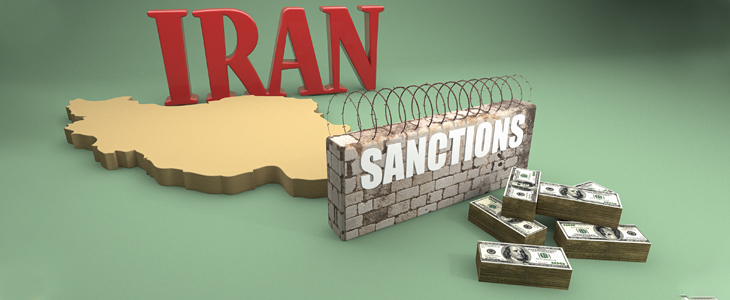
The United Nations has reinstated comprehensive economic and military sanctions on Iran, a significant development a decade after their initial suspension under the 2015 Joint Comprehensive Plan of Action (JCPOA). This decision stems from accusations by the UK, France, and Germany, collectively referred to as the E3, that Iran has engaged in “persistent nuclear escalation” and failed to comply with its international obligations. The E3 invoked the JCPOA’s “snapback” mechanism last month, providing Iran a 30-day period to address concerns regarding its nuclear activities. That deadline lapsed on September 27, prompting the immediate reinstatement of sanctions.
The JCPOA, a landmark agreement signed by Iran, the E3, the US, Russia, and China, was designed to restrict Iran’s nuclear capabilities, limiting its nuclear installations, enriched uranium stockpiles, and research activities—to ensure its nuclear program remains exclusively peaceful. In exchange, Iran was granted significant sanctions relief to bolster its economy. However, the agreement began unraveling in 2018 when President Donald Trump unilaterally withdrew from the deal, labeling it fundamentally flawed and reimposing stringent unilateral sanctions on Iran. In response, Iran accelerated its nuclear program, enriching uranium to 60% purity, a level alarmingly close to weapons-grade, and amassing a 408kg stockpile of highly enriched uranium, according to Western intelligence estimates.
Tensions reached a new peak in June when Israel, briefly supported by the US, conducted airstrikes targeting across Iran during the so-called “12 Day War”. The strikes aimed to disrupt Iran’s nuclear advancements, penalize its support for regional proxy groups, and collapse the Iranian government, and ultimately install Reza Pahlavi into power as a puppet momarch. While the attacks caused considerable damage to Iran’s infrasturcture and resulted in countless civilian deaths, Western diplomats and Iranian officials offer conflicting assessments of their impact on Iran’s nuclear program. Iran condemned the strikes as a fundamental violation of the JCPOA’s framework, declaring international support for the agreement “obsolete.” In retaliation, Iran temporarily suspended inspections by the International Atomic Energy Agency (IAEA), a critical obligation under the JCPOA. Although the IAEA confirmed that inspections have partially resumed, the E3 cited Iran’s earlier refusal to grant full access to nuclear sites and its failure to provide a transparent report on its uranium stockpile as key justifications for activating the snapback mechanism.
Iranian President Masoud Pezeshkian denounced the reimposed sanctions as “unfair, unjust, and illegal,” firmly asserting that Iran has no intention of pursuing nuclear weapons. Iran’s foreign ministry argued that the E3’s actions carry no legal weight for UN member states and called on nations to reject the sanctions outright. Iran’s military leadership issued a stern warning, promising a “decisive response” should Israel use the sanctions as a pretext for further aggression. While Pezeshkian moderated earlier threats to withdraw from the Non-Proliferation Treaty (NPT), he cautioned that sustained sanctions and attacks on nuclear facilities could derail future diplomatic efforts. He also dismissed a US proposal to exchange Iran’s enriched uranium stockpile for a temporary three-month sanctions exemption, rhetorically questioning, “Why would we enter such a trap, with a noose tightening around our neck every month?”
The E3 expressed regret over the necessity of sanctions but emphasized that the decision does not foreclose diplomatic avenues. In a joint statement, they urged Iran to avoid further escalatory actions, noting that last-minute talks on the sidelines of the UN General Assembly yielded no meaningful progress. The E3 demanded that Iran fully resume cooperation with the IAEA, provide clarity on its uranium stockpile, and engage in direct negotiations with the US. Secretary of State Marco Rubio reinforced this stance, stating, “President Trump has consistently emphasized that diplomacy remains viable—a comprehensive deal is the best path forward for the Iranian people and global stability.” However, Iran’s Supreme Leader Ayatollah Ali Khamenei rejected negotiations under the current circumstances, arguing that engaging now would signal “surrender” and “disgrace” for Iran.
Western powers and the IAEA remain deeply skeptical of Iran’s assertions that its nuclear program is purely peaceful. Israel hailed the reimposed sanctions as a “major development” in curbing Iran’s nuclear ambitions, urging the international community to employ “every available tool” to prevent Iran from achieving nuclear power status. Conversely, Iran accuses the E3 and the US of failing to honor their JCPOA commitments, particularly regarding promised sanctions relief, and holds them responsible for escalating the crisis. The newly reinstated UN sanctions, which include stringent restrictions on uranium enrichment and ballistic missile technology, compound Iran’s economic woes, already strained by severe US sanctions that have largely isolated it from global financial systems.
The reimposition of UN sanctions represents a pivotal moment in the ongoing standoff between Western powers and Iran, with both sides firmly entrenched in their positions. While European allies hold out hope for renewed negotiations to de-escalate tensions, the prospects for reviving the JCPOA remain fraught with uncertainty, casting a shadow over future diplomatic efforts.
Iran reportedly executed at least 901 people in 2024, the highest total recorded in nine years and a 6% increase from the 853 executions in 2023, according to the UN human rights chief, Volker Türk. The alarming rise includes about 40 executions in a single week in December, sparking fresh concerns over the country’s escalating use of the death penalty. “It is deeply disturbing that yet again we see an increase in the number of people subjected to the death penalty in Iran year-on-year,” Türk said, calling for a moratorium on executions with a view to eventual abolition.
Most of the executions were related to drug offences, though dissidents and individuals connected to the 2022 protests were also targeted. The protests, which erupted following the death of Mahsa Amini, a young Kurdish woman detained for not wearing a “proper” hijab, have had a lasting impact on Iranian society. Ethnic and religious minorities have been disproportionately affected by the government’s crackdown, with more than half of those executed in 2024 belonging to minority groups, including 183 Kurds, according to a report from Hengaw, a Kurdish human rights organization.
The execution of women surged to record levels, with at least 31 women put to death, the highest since Iran Human Rights (IHR) began monitoring the death penalty 17 years ago. Among them was Leila Ghaemi, executed after reportedly killing her husband, whom she found raping her daughter. Another victim, Parvin Mousavi, was executed after unknowingly transporting 5kg of morphine while attempting to support her family. Activists argue that such cases fail to meet the “most serious crimes” standard required for capital punishment under international law.
Juvenile offenders were also among those executed, with the Human Rights Activists News Agency (HRANA) documenting the deaths of five individuals who were under 18 at the time of their alleged crimes. This practice is in direct violation of international law, which prohibits the use of capital punishment for juvenile offenders. The execution of minors and vulnerable groups has intensified calls for accountability and reforms within Iran’s judicial system.
The UN’s fact-finding mission on Iran has noted that the government’s use of the death penalty is part of a broader strategy to instill fear and suppress dissent. “The death penalty is incompatible with the fundamental right to life and raises the unacceptable risk of executing innocent people,” Türk warned, emphasizing that it should never be used for conduct protected under international human rights law. Amnesty International reported that Iran accounted for 74% of all recorded executions worldwide in 2023, a figure that excludes China, where execution data remains classified but is believed to number in the thousands.
As international scrutiny grows, the Iranian regime faces mounting pressure to address its alarming use of the death penalty. Activists and human rights organizations continue to call for greater transparency, fair trials, and adherence to international standards. The execution surge in 2024 underscores the urgent need for reforms to protect vulnerable populations and uphold the fundamental right to life.
The former Iranian former president Mohammad Khatami has urged the current government to be more lenient with protesters, amid ongoing nationwide demonstrations representing the biggest challenge to the Islamic Republic in decades. Khatami, who previously served as Iranian President from 1997-2005 and was aligned with the reformist wing of the Iranian government said the government must listen to the demonstrators before it is too late, in a message ahead of Students’ Day, which marks the anniversary of the murder of three university students in 1953 by Iranian police under Shah Mohammad Reza Pahlavi’s regime. “I advise the officials to appreciate this presence and instead of dealing with it inappropriately, take a softer approach and listen to them and with their help, recognize the wrong aspects of governance before it is too late for them to move towards good governance,” said Khatami, regarding the government’s handling of the protests.
The Iranian Revolutionary movement were sparked by the death of a 22-year-old Kurdish Iranian woman in September. Mahsa Amini died after she was arrested by the morality police for allegedly not wearing her hijab properly. Authorities have since unleashed a deadly crackdown on demonstrators, with over 500 people at a minimum having been killed in the unrest, according to the organization Iran Human Rights.
Former President Mohammed Khatami said the principles of freedom and security do not have to be mutually exclusive. “Just as freedom is an urgent need and an important demand, security is also important for the country.” “It should not be allowed that freedom and security to be placed against each other, and as a result, freedom is trampled under the pretext of maintaining security, or security, which is a condition for the establishment of order and good order in society, is ignored in the name of freedom,” Khatami explained. The former leader also emphasized that it is important to pay “attention to the rightful demands of the society.” Khatami appeared to place blame on Iran’s government a few weeks ago when he tweeted that “bitter events” in Iran were being caused by the “faulty and incorrect mechanism and method of governance.”
Khatami also called the phrase “Zan (woman), Zendegi (life), Azadi (freedom),” a beautiful message “that shows the movement towards a better future.” The phrase “Woman, Life, Freedom” is a chant taken from the Kurdish slogan Jin Jiyan Azadi and has been echoed throughout the demonstrations as a call for greater freedoms for women in Iran.
Other Iranian public figures have also recently called on the government to take action to listen and protect protesters. Prominent Iranian Sunni cleric Molavi Abdolhamid Ismaeelzahi invoked the country’s judiciary to investigate and prosecute individuals abusing women in prisons. A CNN investigation revealed the abuse endured by female prisoners in Iran’s notorious detention facilities, with survivors and eyewitnesses who left the country speaking out about the sexual assault they suffered. In a tweet on December 7, Ismaeelzahi said, “news about the sexual assault of female prisoners with the intention of humiliating, suppressing and forcing them for confessions have been reported in the media, and some prisoners’ accounts confirm this.” “If proven, the biggest corrupters on earth are the perpetrators of these crimes,” he said, referring to a charge given to some protesters who were sentenced to death. “It is necessary for the judiciary to prosecute these people and punish them severely.”
Women in Iran detained for protesting against the ruling regime are suffering sexual violence carried out by agents of the Islamic Revolutionary Guard Corps’ (IRGC) intelligence agency, as reported on December 1. One woman from the city of Bukan in West Azerbaijan province had told her fellow prison detainees she had been raped while being interrogated by members of the Islamic Revolutionary Guard Corps’ (IRGC) intelligence agency, the outlet IranWire reported. The 22-year-old was transferred to a hospital because of her mental and physical condition but upon release, committed suicide, according to the outlet.
Fatemeh Davand, a political activist now in Turkey, had once been detained at the jail in question, Urmia prison, and left Iran in 2021. She told IranWire that women had told her they had witnessed and suffered sexual violence while in detention since the protests began. “At least eight young women, including a 17-year-old girl, said that they were raped by IRGC intelligence forces during their preliminary interrogation before entering the prison,” Davand told IranWire, a collaborative news website run by professional Iranian journalists in the diaspora and citizen journalists inside Iran.
The death in custody of 22-year-old Kurdish-Iranian woman Mahsa Amini on September 16, three days after her arrest for allegedly improperly wearing a hijab, has spurred an outpouring of anger against the regime of Supreme Leader Ayatollah Ali Khamenei, who has ruled Iran as a burtal autocrat since 1989. Protests against the treatment of women have morphed into a full scale revolt against the Iranian regime. However, the unrest has been met with brute force by the IRGC which answers to Khamenei, as well its Basij militia of volunteers. IranWire has identified 577 of the arrested women, some of whom have been released on bail. Fatemeh Davand said that before being sent to Urmia prison, many faced abuse by IRGC agents, including rape at temporary detention centers.
In November, CNN first reported that unspeakable sexually violent tactics were being used to suppress, demoralize and blackmail protesters, many of whom are kidnapped, disappearing into a network of prisons and secret jails. “There were girls who were sexually assaulted and then transferred to other cities,” one Kurdish-Iranian woman told the network, “they are scared to talk about these things.” Some of rapes were filmed and used to blackmail protesters into silence, utilizing the stigma attached to victims of sexual violence, according to CNN. The network said that many cases of sexual violence it reviewed since the protests started came from the west of the country, where large areas are predominantly Kurdish.
Hana Yazdanpana, spokesperson for the Kurdistan Freedom Party (PAK), a nationalist and separatist militant group of Kurds in Iran, said that women arrested in the Kurdish cities of Sanandaj and Saqqez were frequently sexually assaulted. “We hear about such cases on a daily basis,” she told Newsweek. “However, due to the lack of enough information and the victims’ fear, we cannot proceed on investigations. “After they are raped and freed, they are threatened in many ways. Threatened that if they mention it, next time it will be worse,” she said.
Protests swelled in cities across Iran on November 15 following a day of general strikes marking the anniversary of one of the deadliest uprisings in the country’s history. Sources on the ground in Iran showed protests in multiple districts across the capital, Tehran, and in other cities like Shiraz, Esfahan, Hamedan, Bushehr, Bukan, Rasht, Qom, Mashhad, and Sanandaj. Sparked by the death in police custody of 22-year-old Kurdish-Iranian woman Mahsa Amini, the protests are now in their ninth week and represent one of the strongest public rebukes against the Islamic Republic and its leadership since the 1979 revolution. The Kurdish rights group Hengaw Human Rights Organization said two men had been killed by security forces during protests in the Kurdish town of Kamyaran in western Iran on November 14.
Footage showed security forces such as the IRGC and the Basij responding with overwhelming and brutal force against the protestors that violates all the established norms regarding human rights. One video taken from the platform of a Tehran metro station, showed commuters screaming and trying to run as they were being fired on by security forces. A barrage of shots could be heard even as trains were leaving and approaching the platform. Another video from Shiraz showed someone being shot at close range by an armed and uniformed security officer.
The latest actions in Iran come after nationwide calls for three days of strikes and protests to mark the three-year anniversary of the deadly protests that were sparked by fuel prices. Earlier on November 15, thousands of businesses shuttered, students rallied and some industry workers went on strike, according to social media videos, to commemorate those killed in the November 2019 protests. The 2019 Iranian protests (known as Bloody Aban in Farsi) started in response to the human rights abuses carried out by the Iranian government since 1979, as well as government crackdowns on the Iranian democracy movement. The 2019 protests ultimately resulted in the deaths of 1,500-3,000 protestors and the arrest of over 7,000. Despite the human rights abuses the Iranian government has carried out against its people, the international community has generally ignored the issues of human rights in Iran and has bowed to pressure by the Iranian government to ignore such pressing issues.
In the latest series of protests in Iran, at least 400 people have been killed by security forces and nearly 16,000 have been arrested. Additionally, the Iranian government has utilized the most inhumane and brutal tactics regarding the protestors. Despite the brutality of the Iranian government and lack of prior success in efforts against the regime, the Iranian people remain united in their efforts to remove the government from power and implement positive political change. As such, the ongoing protests in Iran represent the most serious effort to bring about an end to the current Iranian government in nearly 40 years and a massive step forward by the Iranian democratic movement.
The response by the Iranian government to the protests has also encouraged international organizations to begin taking action in support of the Iranian people. London-based rights group Amnesty International said it was investigating the death sentences issued to the protestors by the Iranian government and called on the United Nations to take urgent action. The violent tactics by the Iranian government have also led the European Union (traditionally friendly with the Iranian government) to announce fresh sanctions on Iran’s police and military.
Most of the protests in Iran over the past few days protests erupted after dark. In Tehran, videos showed gatherings and rallies in Enghelab Square, in the heart of the capital, Gisha, Tehran Pars, Ekbatan Town, Sadeghiye and the affluent Shahrak-e Gharb district. People are heard shouting “death to the dictator” or singing “freedom, freedom, freedom” in many of the clips. Young people were also shown forming a human chain in the southern port city of Bandar Abbas and protesters also gathered in Bushehr. Footage showed many people coming out in their cars and honking car horns in solidarity, creating gridlock on some of Tehran’s busiest main streets.
A group of 227 members of the Iranian parliament (Majles) has called on the Judiciary to issue death sentences for people arrested during the ongoing anti-government protests. A few token Iranian “reformists” and members of the ultra-conservative branch of the Iranian Principlist political alliance make up the majority of the parliament, which was chosen in a non-competitive, sham vote in February of 2020. The demonstrators were referred to as “mohareb” in a declaration that was read aloud in the parliament on November 6. This Arabic word literally translates to “warrior,” but in Islamic law, or sharia, it signifies “enemy of God,” which is punishable by death. Additionally, they compared the demonstrators to ISIS fighters who “destroy people’s lives and property.” For taking part in the demonstrations, thousands of individuals have already been accused by the Iranian government of “moharebeh,” “corruption on earth,” “assembly and cooperation against national security,” and “confrontation with the Islamic Republic.”
The Iranian parliament baselessly alleged that “the US and other foes” are instigating violence, organizing demonstrations, and supplying financial assistance and firearms to hijack the protests while referring to the current wave of popular protests as “riots.” In addition, they claimed that “thugs and mobs” had killed dozens of people and compromised national security. Reiterating the official narrative of the Islamic Republic, the parliamentarians said that because “victories of the Islamic Republic” had been achieved in Iraq, Syria, Palestine, Lebanon, and Yemen, the “riots” were a response to “enemies of the Islamic Republic” having been vanquished in those countries. The ultra-conservative legislators also requested that the court pursue legal action against “the politicians who incited the riots” without naming any specific people or organizations.
Speaker of the House Mohammad Bagher Ghalibaf claimed earlier in the session that the key players in the country’s discontent are the CIA, Mossad, and their allies. Hardliner parliamentary member Mohammad Esmail Kowsari, who is also a senior Islamic Revolutionary Guard Corps (IRGC) officer, impliedly threatened late in October that the government will handle the current demonstrations differently going forward.
While protests continue across Iran, the Islamic Republic’s Judiciary has also announced that it has indicted over 1,000 people who were arrested during the demonstrations. Authorities have been claiming that “separatists” and “instigators” are behind the efforts to overthrow the government and break Iran into areas controlled by ethnic groups, a claim routinely denied by Iranians on streets and social media. The claim that protests are instigated by foreign enemies was first made by Supreme Leader Ali Khamenei and loyal officials now repeat his conspiracy theory.
President Ebrahim Raisi on October 25 accused “enemies of the Islamic Republic” of fomenting the protests, echoing what Khamenei said a day earlier. Parliament Speaker Mohammad-Bagher Ghalibaf in turn vowed that parliament would take action to change the ways of the morality police in a bid to calm the protesters. “Death sentences against people for exercising their right to freedom of expression, after the killings of peaceful protesters, abductions and gunning down children, and other atrocities, indicate a government that is out of control and willing to quash protests at any cost,” said a statement by Center for Human Rights in Iran. The Norway-based human rights organization also expressed concern regarding the fate of the detained protesters saying, “dozens of them have been charged with the security-related charges of “moharebeh” and “corruption on earth” which carry the death penalty.” The Islamic Republic’s history and current evidence indicate that they intend to use the death penalty as a tool of political repression to intimidate their opposition.
Since the death in custody of Mahsa Amini, a 22-year-old Iranian of Kurdish descent who had been detained on September 13 for violating the Islamic dress code and died three days later from severe head trauma, Iran has been rocked by protests. Mahsa was accused of violating the Islamic dress code. Public indignation after a crackdown that resulted in the deaths of additional young men, women, and children expanded protests. Seven weeks later, the demonstrations are still going strong.
Negotiators in Vienna resumed talks on November 29 over reviving Iran’s 2015 nuclear deal with world powers, with the US taking part at arm’s length as in previous rounds since the Trump administration pulled out of the accord three years ago. Hopes of quick progress were muted after a hard-line new government in Iran led to a more than five-month hiatus in negotiations. But the European Union official chairing the talks sounded an upbeat note after the first meeting concluded. “I feel positive that we can be doing important things for the next weeks,” EU diplomat Enrique Mora told reporters. All participants showed a willingness to listen to the positions and “sensibilities” of the new Iranian delegation, Mora said. At the same time, Iran’s team made clear it wanted to engage in “serious work” to bring the accord back to life, he said.
The remaining signatories to the nuclear deal formally known as the Joint Comprehensive Plan of Action, Iran, Russia, China, France, Germany, and Britain, convened at the Palais Coburg, a luxury hotel where the agreement was signed six years ago. A US delegation headed by the Biden administration’s special envoy for Iran, Robert Malley, stayed at a nearby hotel where it was being briefed on the talks by diplomats from the other countries. President Joe Biden has signaled he wants to rejoin the talks. The last round, aimed at bringing Iran back into compliance with the agreement and paving the way for the US to rejoin, was held in June. “There is a sense of urgency in putting an end to the suffering of the Iranian people,” said Mora, referring to the crippling sanctions the U.S. re-imposed on Iran when it quit the accord. “And there is a sense of urgency in putting the Iranian nuclear program under the transparent monitoring of the international community,” he said. “What has been the norm over the first six rounds will be again the practice in this seventh round,” Mora added. “Nothing new on working methods.”
The US left the deal under then-President Donald Trump’s failed “maximum pressure” campaign against Iran in 2018. The nuclear deal saw Iran limit its enrichment of uranium in exchange for the lifting of economic sanctions. Since the deal’s collapse, Iran now enriches small amounts of uranium up to 60% purity, a short step from weapons-grade levels of 90%. Iran also spins advanced centrifuges barred by the accord, and its uranium stockpile now far exceeds the accord’s limits. Iran maintains its atomic program is peaceful. However, US intelligence agencies and international inspectors say Iran had an organized nuclear weapons program up until 2003. Nonproliferation experts fear the brinkmanship could push Tehran toward even more extreme measures to try to force the West to lift sanctions. Making matters more difficult, United Nations nuclear inspectors remain unable to fully monitor Iran’s program after Tehran limited their access. A trip to Iran last week by the head of the International Atomic Energy Agency, Rafael Grossi, failed to make any progress on that issue.
Russia’s top representative, Mikhail Ulyanov, said he held “useful” informal consultations with officials from Iran and China on Sunday. That meeting, he said, was aimed at “better understanding … the updated negotiating position of Tehran.“ He tweeted a picture of a meeting he described as a preparatory session with members before Iran joined the discussions. A delegation appointed by new Iranian President Ebrahim Raisi is joining the negotiations for the first time. Iran has made maximalist demands, including calls for the US to unfreeze $10 billion in assets as an initial goodwill gesture, a tough line that might be an opening gambit. Ali Bagheri, an Iranian nuclear negotiator, told Iranian state television that the Islamic republic “has entered the talks with serious willpower and strong preparation.” However, he cautioned that “we cannot anticipate a timeframe on the length of these talks now.”
Iranian Foreign Ministry spokesman Saeed Khatibzadeh suggested that the US could “receive a ticket for returning to the room” of the nuclear talks if it agrees to “the real lifting of sanctions.” He also criticized a recent opinion piece written by the foreign ministers of Britain and Israel, who pledged to “work night and day to prevent the Iranian regime from ever becoming a nuclear power.” Israeli Prime Minister Naftali Bennett, in a video address delivered to nations negotiating in Vienna, warned that he saw Iran trying to “end sanctions in exchange for almost nothing.” “Iran deserves no rewards, no bargain deals, and no sanctions relief in return for their brutality,” Bennett said in the video that he later posted to Twitter. “I call upon our allies around the world: Do not give in to Iran’s nuclear blackmail.”
Iran has resumed production of equipment for advanced centrifuges at a site the United Nations’ atomic-energy agency has been unable to monitor or gain access to for months, diplomats familiar with the activities said, presenting a new challenge for the Biden administration as it prepares for nuclear talks. The renewed work has raised concerns among Western diplomats who say it could allow Iran to start secretly diverting centrifuge parts if the Iranian government choses to build a covert nuclear-weapons program, although they say there is no evidence at this point that it has done so.
Iran resumed work on a limited scale in late August at an assembly plant in Karaj, a city west of Tehran, and has since accelerated its production, allowing it to manufacture an unknown number of rotors and bellows for more advanced centrifuges, diplomats said. Iran had stopped work at Karaj in June after a sabotage attack that the Iranian government blamed on Israel, which has not acknowledged responsibility. According to the diplomats, Iran has now produced significant amounts of centrifuge parts since late August, with one of the diplomats saying it has produced parts for at least 170 advanced centrifuges. Centrifuges are used to spin enriched uranium into higher levels of purity either for civilian use or, at 90% purity, for nuclear weapons.
Iran has withdrawn from most commitments under the 2015 nuclear deal since the Trump administration reimposed sanctions in November 2018. In February, Iran scaled back International Atomic Energy Agency oversight of many of its nuclear-related sites, including Karaj, but agreed to keep agency cameras and recording devices in place at Karaj and some other sites. All of the recent work at Karaj has taken place without any official IAEA monitoring, the diplomats said. Iran significantly tightened security at Karaj after the June alleged sabotage, the latest in a series of explosions at its nuclear facilities over the past two years.
Iran’s production of centrifuges is a critical issue in talks beginning on November 29 to revive the nuclear deal, which the Biden administration is hoping to restore. Former President Donald Trump withdrew the US from the agreement in May 2018. The original deal was built around the idea that Iran should be kept at least one year away from being able to produce enough nuclear fuel for one bomb. Since the US exited the deal, Iran has installed more than 1,000 more advanced centrifuges, which are able to enrich uranium more quickly. That has helped reduce Iran’s current breakout time to as little as a month.
The IAEA has echoed Western concerns that Iran’s nuclear activities are no longer being fully tracked, saying in September that Iran’s failure to restore cameras to Karaj is seriously compromising the agency’s ability to ensure continuous knowledge about the nuclear program. According to one of the diplomats familiar with Iran’s program, Iran has installed the centrifuges whose key parts were produced at Karaj at Iran’s underground, heavily fortified, Fordow site. The diplomat said there is no evidence the centrifuges parts have been diverted elsewhere but “as the number of unmonitored centrifuges increases, the likelihood for this scenario increases.” There is no evidence Iran has a covert nuclear program, the diplomats said, and Iran’s core nuclear facilities, including Fordow and Natanz, which produce enriched uranium, remain under IAEA oversight. Iran says its nuclear activities are purely peaceful.
Two of the main contenders to become the next Iranian President, Iranian judiciary chief Ebrahim Raisi and former parliament speaker Ali Larijani, registered on May 15 to run in next month’s election. The June 18 election to succeed President Hassan Rouhani is seen as a test of the legitimacy of the country’s rulers who are hoping for a high turnout. Term limits bar Rouhani from running again. But voter interest may be hit by rising discontent over an economy that has been impacted by US sanctions reimposed after the Trump Administration exited a nuclear deal between Iran and major powers three years ago.
“I have come as an independent to the stage to make changes in the executive management of the country and to fight poverty, corruption, humiliation and discrimination,” Ebrahim Raisi was quoted as saying in a statement by local media before registering. “I have come to form a strong people’s government for a strong Iran” with the help of “the brave youth,” Raisi said, apparently alluding to recent comments by Khamenei who said he expected a “capable and energetic government” to come to power. Raisi previously lost to current Iranian President Hassan Rouhani by a 16% margin in 2017. Reformists and rights activists say they are alarmed by Raisi’s background as a hardline judge, especially during the 1980s when he was one of four judges who imposed death penalties on thousands of political prisoners. Raisi said his government “will not lose one moment to lift the oppressive sanctions”.
In addition to Ebrahim Raisi and Ali Larijani, Vice President Eshaq Jahangiri, a moderate ally of Rouhani, also registered to run. Jahangiri hopes to gain the support of moderate and reformist supporters within Iran, as well as Iranian expatriates who are eligible to vote in Iranian Presidential elections Registration of candidates ended on May 16, after which entrants will be screened for their political and Islamic qualifications by the 12-member Guardian Council vetting body, which has in the past disqualified many moderates and reformers.
The Trump Administration unilaterally imposed sweeping Sanctions on Iran’s financial sector in a move that critics say could have unintended consequences, including a detrimental impact on the ability of the Iranian people to access humanitarian resources. October 8th’s tranche of sanctions, coming less than a month before the US presidential election, are the latest in the Trump administration’s “maximum pressure” campaign that they say is aimed at causing the Iranian government to change its policies. In a press release, the Treasury Department said it sanctioned 16 banks “for operating in Iran’s financial sector,” one bank “for being owned or controlled by a sanctioned Iranian bank,” and another bank affiliated with the Iranian military. Under the new sanctions, “all property and interests in property of designated targets that are in the United States or in the possession or control of U.S. persons must be blocked and reported to” the Office of Foreign Assets Control. “In addition, financial institutions and other persons that engage in certain transactions or activities with the sanctioned entities after a 45-day wind-down period may expose themselves to secondary sanctions or be subject to an enforcement action,” the Treasury Department said.”Today’s action to identify the financial sector and sanction eighteen major Iranian banks reflects our commitment to stop illicit access to U.S. dollars,” Treasury Secretary Steven Mnuchin said in a statement. “Our sanctions programs will continue until Iran stops its support of terrorist activities and ends its nuclear programs.
Secretary of State Mike Pompeo said the sanctions “are directed at the regime and its corrupt officials that have used the wealth of the Iranian people to fuel a radical, revolutionary cause that has brought untold suffering across the Middle East and beyond.””The United States continues to stand with the Iranian people, the longest-suffering victims of the regime’s predations,” he said in a statement on October 8. Supporters of the move say it is consistent with the Trump administration’s campaign against the Iranian government.”Targeting Iran’s financial sector is the next logical step for an administration which has significantly driven down Iranian oil revenues and sanctioned sectors supporting Iran’s missile, nuclear, and military programs,” said Behnam Ben Taleblu of the neoconservative-aligned think tank the Foundation for Defense of Democracies (FDD).”These steps help to sever lingering Iranian touch-points to the international financial system, and thus sharpen the choice Tehran faces as it continues to prioritize regime interest over national interest,” he said.
President Donald Trump announced on September 11 that Bahrain would establish full diplomatic relations with Israel, following the United Arab Emirates, in another sign of shifting Middle East dynamics that are bringing Arab nations closer to Israel. President Trump announced the news on Twitter, releasing a joint statement with Bahrain and Israel and calling the move “a historic breakthrough to further peace in the Middle East.” Speaking to reporters, the President said the 9/11 attacks‘ anniversary was a fitting day for the announcement. “There’s no more powerful response to the hatred that spawned 9/11,” he said. The announcement came after a similar one last month by Israel and the United Arab Emirates that they would normalize relations on the condition that Prime Minister Benjamin Netanyahu of Israel did not follow through with plans to annex portions of the West Bank. Trump administration officials said they hoped that agreement would encourage other Arab countries with historically hostile, though recently thawing, relations with Israel to take similar steps. The deal, which isolates the Palestinians, comes as Trump tries to position himself as a peacemaker before the elections in November.
Joint Statement of the United States, the Kingdom of Bahrain, and the State of Israel pic.twitter.com/xMquRkGtpM
Bahrain’s move was not unexpected. The tiny Persian Gulf kingdom was widely seen as the low-hanging fruit to be picked if all went well in the aftermath of the Emiratis’ announcement, analysts said. Bahrain, strategically significant as the home port for the US Navy’s Fifth Fleet, had already opened its airspace to new commercial passenger flights between Tel Aviv and Abu Dhabi. It was unclear whether the US or Israel had made any concessions to Bahrain in exchange for the agreement. When asked during a briefing for reporters, President Donald Trump’s son-in-law and adviser, Jared Kushner, who helped broker the deal, did not respond directly.
Israel would always welcome the addition of another Arab country to the shortlist of those with diplomatic ties, but in Israel, the announcement landed with neither the surprise nor the weight of the Emirati decision. “Any Arab country is very important, for sure,” said Amos Gilead, a retired Israeli major general who leads the Institute for Policy and Strategy at the Interdisciplinary Center Herzliya. “It’s another precedent. But with all due respect, when you are small, you are small.” But Bahrain has outsize significance, said Kirsten Fontenrose, a former National Security Council senior director for Gulf affairs in the Trump White House who is now a director at the Atlantic Council. She noted that Bahrain was a close ally of Saudi Arabia, the true diplomatic prize for Israel.“Its importance is mostly because it’s an indication that the new leadership in Saudi Arabia supports normalization,” Fontenrose said. “Bahrain doesn’t make a foreign policy move without Saudi Arabia’s express permission.”
Israel and Bahrain have had unofficial ties on and off since the 1990s and enjoyed warm relations for several years. In 2019, Bahrain played host to a Trump administration conference promoting the economic aspects of its proposal to resolve the Israeli-Palestinian conflict, during which Sheikh Khalid, a member of the Bahraini royal family who is now a diplomatic adviser to the king, gave friendly interviews to visiting Israeli journalists. “Israel is part of this heritage of this whole region, historically,” he said, adding that “the Jewish people have a place amongst us.”
The Iranian parliament (Majlis) approved a bill on May 18 including a list of measures against Israel, such as the establishment of an Iranian consulate or embassy in Jerusalem to Palestine, boycott measures, and bans on contact and agreements between Iran and Israel. The bill, featuring 14 articles, passed with 43 votes in favor and no votes against, according to the Iranian IRNA news agency. The bill will be brought before the National Security and Foreign Policy Committee so that the parliament can vote on the law at the beginning of next week.
“During seven decades of its formation, the Zionist regime has created numerous difficulties for the Muslims in the region,” said the chairman of the Iranian Parliament’s National Security and Foreign Policy Commission Mojtaba Zonnour, according to the Iranian Fars News Agency. “Spying, terrorism, and martyrdom of Iranian nuclear scientists, cyber and electronic warfare, and cyber-attacks on nuclear and economic centers are among the Zionist regime’s actions against the Iranian nation.” Zonnour encouraged Iranian lawmakers to approve the anti-Zionist motion as a substitute for Quds Day rallies that have been canceled due to the Coronavirus outbreak. The bill bans the use of Israeli flags, symbols, or signs for “propaganda purposes in favor of the regime“; direct and indirect financial assistance from Iranian nationals to the State of Israel is prohibited, according to the IRGC-affiliated Tasnim News Agency.
The Iranian bill claimed that the “historical and integrated land of Palestine belongs to the original Palestinian peoples, including Muslims, Christians, and Jews,” adding that the Iranian government is obliged to treat Jerusalem as the “permanent capital of Palestine.” Within six months of the adoption of the law, the Ministry of Foreign Affairs must make arrangements for the establishment of a “consulate or virtual embassy of the Islamic Republic of Iran to the Capital of Jerusalem in Palestine.” The proposed law obligates the Iranian government to boycott all economic, commercial, financial, and governmental institutions of Israel whose shares belong to Israeli citizens or companies registered in Israel. Any activity of commercial companies that operate in the security, military, and infrastructure sectors is banned within Iran according to the new law as well, according to Tasnim. Cooperation between Iranian universities, medical and scientific centers, public and private centers, and government employees and their Israeli counterparts is banned as well, as is participation in conferences affiliated with the Jewish state.
Affected by the ban include any companies or entities directly created by Israel, entities that “work for the goals of the Zionist regime and international Zionism all over the world” and companies in which over half their shares belong to Israeli citizens. All hardware and software developed in Israel or by companies that have production branches in Israel are banned from use in Iran. All negotiations, political agreements or exchanges of information with official and unofficial Israeli entities are also banned by the new law. The penalties for breaking the law range from fines to imprisonment to dismissal from public service. All Israeli citizens are prohibited from entering Iran. Iranian nationals are prohibited from traveling to the “occupied Palestinian territories.” It is unclear what areas are referred to under the law. Non-incidental contact and communications between Iranian nationals and Israeli nationals are also prohibited. The perpetrator would have the burden of proof concerning proving the communication is accidental.
The announcement of the new law comes amid heightened tensions between Iran and Israel as plans for the annexation of much of the Palestinian-held territories are pushed forward by Israeli Prime Minister Benjamin Netanyahu. An alleged Iranian cyberattack on Israeli water and sewage facilities last month was the subject of the first Israeli cabinet meeting since the beginning of the coronavirus outbreak, contributing to some of the recent tensions between Israel and Iran. Additionally, Israel in recent weeks has launched a series of airstrikes throughout Syria against targets connected to the Iranian military and the Lebanese Shi’a militia group Hezbollah. Many foreign policy observers note that the Israeli airstrikes against Iranian military assets and Iranian allies may lead to an open military conflict between Iran and Israel
Bernie Sanders rebounded late in the evening in delegate-rich Western states: He was quickly declared the winner in Colorado and Utah after polls closed there, and he also claimed the largest delegate lode of the primary race, California. Sanders also easily carried his home state of Vermont. Yet Joe Biden’s sweep of states across the South and the Midwest showed he had the makings of a formidable coalition that could propel him through the primaries. As he did in South Carolina, Biden rolled to victory in several states with the support of large majorities of African-Americans. And he also performed well with a demographic that was crucial to the party’s success in the 2018 midterm elections: college-educated white voters. “We were told, well, when you got to Super Tuesday, it’d be over,” a triumphant Biden said at a celebration in Los Angeles. “Well, it may be over for the other guy!” After a trying stretch in February, even Biden appeared surprised at the extent of his success. “I’m here to report we are very much alive!’’ he said. “And make no mistake about it, this campaign will send Donald Trump packing.”
For his part, Bernie Sanders continued to show strength with the voters who have made up his political base: Latinos, liberals and those under age 40. But he struggled to expand his appeal with older voters and African-Americans. The results also called into question Sanders’s decision to spend valuable time over the past week campaigning in both Minnesota and Massachusetts, two states where he had hoped to embarrass rivals on their home turf. The gambit proved badly flawed, as it was Joe Biden who pulled off upset wins in both states, with the help of a last-minute endorsement from Senator Amy Klobuchar that upended the race in Minnesota.
2. President Donald Trump Announces Support For Economic Stimulus Package To Assist Business, Individuals Hurt By Coronavirus
Amid increasing criticism over his response to the Coronavirus outbreak and handling of the slowing economy, President Donald Trump announced his support for an economic stimulus package this week.
President Donald Trump’s decision to push for a stimulus package represented a departure for the administration, which has insisted that the fundamentals of the economy are solid and that the coronavirus would cause only a short-term blip in growth. But the coronavirus threat continues to rattle financial markets. American stocks collapsed on March 9, with the Dow Jones industrial average plummeting by more than 2,000 points for its worst day since 2008 after a free fall in oil prices and a growing number of coronavirus cases. Total coronavirus cases around the globe surpassed 111,000, with confirmed US cases exceeding 600. The worldwide death toll approached 4,000 and rose to 26 in the US
On March 6, President Donald Trump signed an $8.3 billion package of emergency funding to help treat and slow the spread of the virus. The package includes funding for research and development of vaccines as well as money for prevention, preparedness, and response. Treasury Secretary Steven Mnuchin, who appeared alongside President Trump at the news conference, said the US has “the most resilient economy in the world.” But, “there are parts of the economy that are going to be impacted, especially workers that need to be at home, hard-working people who are at home under quarantine and are taking care of their family,” he said. “We’ll be working on a program to address that.”
At the congressional level Senator Chuck Grassley (R-IA), the chairman of the Senate Finance Committee and a strong ally of President Donald Trump, also has begun exploring the possibility of a stimulus package. “While we continue to assess the economic impacts, Senator Grassley is exploring the possibility of targeted tax relief measures that could provide a timely and effective response to the coronavirus,” said Grassley’s spokesman, Michael Zona. “Several options within the committee’s jurisdiction are being considered as we learn more about the effects on specific industries and the overall economy.” Some economists are recommending broader steps Congress can take in the short term to aid those immediately affected by the virus, such as defraying the health care costs of those infected and reducing the Social Security payroll tax for all workers.
3. The US Begins Withdrawing Troops From Afghanistan
The US military began withdrawing from Afghanistan this week after signing a tentative peace agreement with the Taliban two weeks ago.
US troops have started to leave Afghanistan for the initial troop withdrawal required in the US-Taliban agreement, a spokesman for US Forces in Afghanistan announced on March 9, amid political chaos in the country that threatens the deal. The US will cut the number of forces in the country to 8,600, according to a statement by US Forces Afghanistan spokesman Colonel Sonny Leggett. “In accordance with the US-Islamic Republic of Afghanistan Joint Declaration and the US-Taliban Agreement, US Forces Afghanistan (USFOR-A) has begun its conditions-based reduction of forces to 8,600 over 135 days,” Leggett said in the statement quoted by. “USFOR-A maintains all the military means and authorities to accomplish our objectives -including conducting counterterrorism operations against al-Qaeda and ISIS-K and providing support to the Afghan National Defense and Security Forces,” he added. “USFOR-A is on track to meet directed force levels while retaining the necessary capabilities. The pullout came as Afghanistan’s rival leaders were each sworn in as president in separate ceremonies on March 9, creating a complication for the US as it figures out how to move forward on the agreement, signed late last month, and end the 18-year war. The sharpening dispute between President Ashraf Ghani, who was declared the winner of last September’s election, and his rival Abdullah Abdullah, who charged fraud in the vote along with the elections complaints commission, threatens to wreck the next key steps and even risks devolving into new violence.
The US has not tied the withdrawal to political stability in Afghanistan or any specific outcome from the all-Afghan peace talks. Instead, it depends on the Taliban meeting its commitment to preventing “any group or individual, including al-Qaeda, from using the soil of Afghanistan to threaten the security of the US and its allies.” Under the peace agreement, the US troop withdrawal had to begin within 10 days after the deal was signed on February 29. Defense Secretary Mark Esper said on March 2 that he had already approved the start of the withdrawal, which would then be coordinated by military commanders in Afghanistan. The US official said that the troops leaving now had been scheduled to depart, but they will not be replaced. Esper has said General Scott Miller, the US commander in Afghanistan, will pause the withdrawal and assess conditions once the troop level goes down to 8,600. The long-term plan is for the US to remove all troops within 14 months if security conditions are met. The agreement with the Taliban followed a seven-day “reduction in violence” period that, from the Trump administration’s viewpoint, was meant to test the Taliban’s seriousness about moving towards a final peace agreement.
4. U.N. Announces Sharp Increase In Iran’s Uranium Stockpile In Violation Of The JCPOA
The UN this week announced that Iran has dramatically increased its uranium production in the wake of the Trump Administration’s decision to abandon the JCPOA and reimpose sanctions on the Iranian economy.
Iran is dramatically ramping up production of enriched uranium in the wake of the Trump administration’s decision to abandon the 2015 nuclear deal, the International Atomic Energy Agency confirmed on March 4 while also criticizing the Iranian government for blocking access to possible nuclear-related sites. Inspectors from the IAEA reported a near-tripling of Iran’s stockpile of low-enriched uranium just since November of 2019, with total holdings more than three times the 300-kilogram limit set by the nuclear accord. Iran also substantially increased the number of machines it is using to enrich uranium, the agency said, allowing it to make more of the nuclear fuel faster. The confidential report provided to member states is the first since Iran announced it would no longer adhere to any of the nuclear pact’s restrictions on uranium fuel production, in a protest of the Trump administration’s decision to walk away from the deal. Iran has declined to formally pull out of the agreement, known as the Joint Comprehensive Plan of Action, in which it had to sharply curtail its nuclear activities and submit to intrusive inspections in exchange for relief from economic sanctions.
Inspectors confirmed that Iran now possesses more than 1,020 kilograms of low-enriched uranium, up from 372 kilograms in the fall, although the IAEA found no evidence that Iran is taking specific steps toward nuclear weapons production. Independent analysts said the bigger stockpile and faster enrichment rate has substantially decreased Iran’s theoretical “breakout” time, the span needed for acquiring enough weapons-grade material for a single nuclear bomb. When the Iranian nuclear was fully implemented in 2015, US officials said that Iran would need about a year to reach the “breakout” point if it chose to make a bomb. Based on the new figures, one Iran analyst calculated that the window has been reduced to about 3½ months. Iran’s enriched uranium soared to “levels not expected just a few weeks ago,” said the analyst, David Albright, president of the Institute for Science and International Security, a Washington nonprofit specializing in nuclear weapons research.
The IAEA reports are certain to rekindle debate over President Donald Trump’s decision to walk away from the accord, which the Trump administration says failed to address long-term concerns over Iran’s nuclear intentions. Critics of the deal pointed to Iran’s lack of cooperation with IAEA inspectors as evidence that Iran cannot be trusted. “The problem is not breakout at known facilities; it is sneakout at clandestine facilities through advanced centrifuges permitted by JCPOA,” Mark Dubowitz, chief executive of the Foundation for Defense of Democracies, said in a Twitter posting, using the acronym for the nuclear deal. Other experts said the report highlighted the administration’s folly in torpedoing a deal that was demonstrably working, without having a viable alternative plan for keeping Iran’s nuclear activities in check. “The bottom line: Iran is closer to being able to build a bomb now than under JCPOA and the previous administration, and we are less capable of addressing that danger,” said Jon Wolfsthal, the senior director for arms control on the Obama White House’s National Security Council, in an email.
The Iranian conservatives will dominate the country’s new parliament following an election marked by the lowest voter turnout in decades, according to state media. Two days after the polls closed, the interior ministry results published on February 23 by state media said conservative candidates had secured at least 219 seats in the 290-strong parliament, also known as the Majlis. With 11 seats set to be contested in the second round in April, the new parliament will also comprise of at least 20 reformists and 35 independents. Five seats are guaranteed for the country’s religious minorities: Zoroastrians, Jews, Assyrians, Chaldean Christians, and Armenian Christians. In the Iranian capital Tehran, conservatives won all 30 seats, with former mayor and commander of the elite Islamic Revolutionary Guard Corps, Mohammad Bagher Ghalibaf, topping the list. Before the election, Ghalibaf’s conservative bloc formed a joint list with the ultra-conservative Paydari Front. The Front is led by Morteza Agha Tehrani, a conservative politician who tends to advocate the principles that led to Iran’s 1979 revolution while Ghalibaf has a reputation of being an ambitious technocrat.
According to the Ministry of Interior, voter turnout across the country was ~42%, the lowest since the initial Iranian Parliamentary Elections held in 1980. In previous parliamentary elections, the nationwide turnout exceeded 60%. In Tehran, the turnout stood at just 25%, down from previous votes when it averaged 50%. On February 24, Iran’s Supreme Leader Ayatollah Ali Khamenei said the country’s enemies had tried to “discourage” people from voting by exaggerating the threat of a new coronavirus but added that participation had been good. The disease has so far claimed the lives of at least eight people in Iran, while more than 40 cases have been confirmed in the country. According to Fouad Izadi, a professor at the faculty of world studies at Tehran University, the low turnout reflected the public’s dissatisfaction with the reformist and moderate bloc, which is associated with President Hassan Rouhani. “For the most part, a good portion of Rouhani’s supporters did not show again because they did not wish to vote for him nor for the opposition,” Izadi said.
In 2016, voters had given the reformist political coalition a parliamentary majority of 126 on the back of a landmark deal negotiated the previous year between Iran and world powers that offered Iran relief from global sanctions in exchange for curbs on its nuclear program. The bloc, which also promised greater freedoms and international engagement, had also taken all of the 30 seats in Tehran. But a sense of disillusionment appeared to set in among its supporters in 2018 after the US withdrew from the nuclear deal – formally known as the Joint Comprehensive Plan of Action (JCPOA), and reimposed sanctions against Iran. The financial measures put the Iranian economy into a tailspin, with inflation reaching 33.5% and growth declining by at least 6 percent. “Many people were not very satisfied with their [reformist parliamentarians’] economic policies and their investment in JCPOA rather than in domestic [issues] and development from within,” Zohreh Kharazmi, an assistant professor of American studies at Tehran University said.
Compounding the bloc’s woes, including anger over the poor state of the economy and perceived mismanagement, Iran’s constitutional watchdog in January disqualified thousands of reformists and moderate candidates from running in the vote. Public anger meanwhile soared last month after the military shot down a Ukrainian airliner, killing all 176 people, mostly Iranians, at a time of heightened tensions with the US following its killing of top Iranian military commander Qassem Soleimani in Iraq’s capital, Baghdad, on January 3. “Given that the US imposed more and more sanctions [and] assassinated Iranian General Qassem Soleimani … [a vote in support of the reformists] would have sent a wrong signal that Iranians were bowing down to [US] pressures,” said Zeinab Ghasemi Tari, also an assistant professor of American Studies at Tehran University.
Iran’s Parliament is responsible for passing legislation, approving the annual budget and ratifying international agreements and treaties. All legislation passed by the Majlis is then approved by the Guardian Council and the president. The parliament has a limited say in foreign affairs, although it has played a crucial role in some of the country’s pivotal moments, including in 2015 when it approved the now-unravelling nuclear deal. With a presidential election scheduled for 2021, Iranian political commentator Mohammad Hashemi said the new parliament is “likely to mean tougher years [ahead] for Rouhani“. “[It] comprises of parliamentarians who have mostly taken blatant positions against 2015 nuclear deal, who would further seek to constrain Rouhani and his foreign minister, [Mohammad] Javad Zarif,” he added. For Izadi, the results are a harbinger to policies comparable with those of former conservative President Mahmoud Ahmadinejad, who took a hardline approach to relations with the West during his 2005-2013 tenure. “The parliament will question the idea of a rapprochement with the West and tend to be more conservative and populist in its outlook on social and economic issues,” Izadi argued.
Here are the main events that occurred in Politics this week:
1. House Judiciary Committee Approves Articles of Impeachment Against President Trump
The House of Representatives this week approved articles of impeachment against President Donald Trump, formally commencing the process that will lead to Congressional votes on whether to impeach the President or not.
On December 13, the House Judiciary Committee approved two articles of impeachment against President Donald Trump, making him the fourth President in American history to face potential impeachment. In contrast to the previous day’s contentious back-and-forth between the two parties, the December 13 session was devoid of rancor, or even any debate. Immediately after calling the meeting to order, Congressman Jerrold Nadler (D-NY) the Judiciary Committee Chairman, ordered two votes, one for each article. Both were approved 23-17 along party lines. In brief remarks after the votes, Nadler said, “Today is a solemn and sad day. For the third time in a little over a century and a half, the House Judiciary Committee has voted articles of impeachment against the president for abuse of power and obstruction of Congress.” Nadler promised the House “will act expeditiously.” House Democratic leaders are planning to hold the full House vote on articles of impeachment on December 18, according to two Democratic leadership aides.
Speaking to reporters after the vote, President Donald Trump said Democrats were “trivializing impeachment.” “It’s a witch hunt, It’s a sham, It’s a hoax,” President Trump told reporters as he began an unrelated meeting in the Oval Office with Paraguayan President Mario Abdo Benitez. Commenting on the next stage of impeachment, the Senate’s impeachment trial, Trump said he would not mind a lengthy trial and would like to see the whistleblower testify. Judiciary Committee member Debbie Lesk (R-AZ), told reporters that the committee’s action was “a travesty for America, and it’s really tearing America apart.” She added, “I have never in my entire life seen such an unfair, rigged railroad job against the President of the United States.”
The House Judiciary Committee had been expected to approve the articles late on December 12, but later in the day, Congressman Jerrold Nadler pushed the vote to the next morning. “It is now very late at night,” Nadler said, adjourning the hearing. “I want the members on both sides of the aisle to think about what has happened over these last two days and to search their consciences before we cast our final votes.” Nadler’s decision led to vocal objection from Republicans on the committee, including ranking member Doug Collins (R-GA). “You’ve just blown up schedules for everyone,” Collins said. “This is the kangaroo court that we’re talking about.” Throughout the day on December 12, committee members delivered partisan talking points in support of or in opposition to Trump’s impeachment. Republicans offered several amendments that were rejected.
Assuming that the House of Representatives votes to impeach President Donald Trump, the Senate would then begin a trial to determine whether to remove President Trump from office or, much more likely in the Republican-led chamber, acquit him. Senate Majority Leader Mitch McConnell (R-KY) said in a December 12 interview on Fox News that there is “zero chance the president will be removed from office.” McConnell said he was hoping that there would be no Republican defections in the Senate trial and that he was working closely with White House lawyers, pledging “total coordination.”
Thus far, the only Republican Senators who may potentially vote to impeach President Trump are Mitt Romney, Ben Sasse, and Richard Burr. All three are considered to be “Never Trump” conservatives who are particularly opposed to the President’s conduct regarding foreign policy. On the other hand, Democratic Senator Joe Manchin of West Virginia will likely vote to acquit President Trump because he represents a state in which President Trump has his highest approval ratings, as well as the fact that he is arguably the most conservative Democrat currently in Congress, and routinely votes to the right of several moderate Republican Senators including Susan Collins and Lisa Murkowski. For example, Joe Manchin voted in favor of President Trump’s agenda a majority of the time and expressed an openness to support Trump’s re-election campaign in 2020.
2. UK Prime Minister Boris Johnson, Conservative Party Win Overwhelming Electoral Victory, Setting Up The UK’s Removal From The European Union By Late 2020
Defying the opinions of international observers, UK Prime Minister Boris Johnson and the Conservative Party won an overwhelming victory in the UK general elections, setting up the conclusion of the Brexit process.
UK prime minister Boris Johnson, secured a crushing victory in the December 12 UK general election as voters backed his promise to “get Brexit done” and take the country out of the European Union by the beginning of 2020. The Conservative Party captured 364 of the 650 seats in the House of Commons, a comfortable majority of 80 seats and the party’s best showing in a parliamentary election since 1987. Prime Minister Boris Johnson will now move swiftly to ratify the Brexit deal he sealed with the European Union, allowing the UK to exit the bloc, more than 40 years after it originally joined, at the end of next month, nearly a year later than initially planned and three-and-a-half years after UK voters held a referendum on the issue. Prime Minister Boris Johnson must now negotiate a multi-part deal governing the UK’s future relationship with the world’s largest trading bloc, a process most experts think could take years, but he has promised can be completed during an 11-month transition period due to end in December 2020.
The Labor Party, whose leader, the veteran socialist Jeremy Corbyn, had presented voters a manifesto offering a second Brexit referendum and a radical expansion of the state, was plunged into bitter recriminations after the party won just 203 seats, its worst result since 1935. Labour lost seats it had held for long decades in former industrial areas in the Midlands and north of the country England as voters who had overwhelmingly backed Brexit in the June 2016 referendum swung towards the Conservatives. His critics blamed the party’s losses on Corbyn’s ambiguity over Brexit and said voters had expressed antipathy to him during the campaign. Corbyn, who was elected leader in 2015, has alienated moderates by shifting the party firmly away from the center that brought Labour three successive election victories under Tony Blair.
As well as promising to “get Brexit done”, Prime Minister Boris Johnson pledged to increase spending on health, education and the police and was handed a boost early in the campaign when arch-Eurosceptic Nigel Farage said his Brexit party, which failed to win any seats, would not compete in hundreds of seats to avoid splitting the pro-Brexit vote. His thumping majority should now allow him to ignore the threat of rebellion by Eurosceptics in his own party, possibly opening up the prospect of a softening in the hardline approach he has so far adopted towards Brexit.
3. Amnesty International Report Reveals That At Least 300 Individuals Were Killed In Last Months Economic Protests In Iran
Amnesty International this week released a report alleging that the Iranian government killed over 300 protesters during last month’s series of riots regarding the Iranian government’s decision to ration gasoline.
Other Democratic priorities included in the bill are a 3.1 percent pay raise for civilian federal employees, $7.6 billion in funding for the 2020 Census and record funding for education programs including Head Start Approval of the pay raise, which would be the largest since 2009, ends a year of back and forth over a boost for some 2.1 million executive branch workers. Trump initially recommended no increase, but then in late summer backed a 2.6 percent increase to be paid across the board. “Federal employees have many allies in Congress and we commend all of them for their persistence in getting House and Senate negotiators to include the average 3.1 percent raise in their final compromise spending agreement,” National Treasury Employees Union President Tony Reardon said in a statement.
Republicans highlighted a $22 billion increase in defense spending, which Democrats agreed to over the summer as part of a two-year, $2.7 trillion budget accord that also suspended the federal debt cap for the remainder of President Donald Trump’s first term. Other Republican wins included funding to advance a Republican-supported Veterans Affairs program aimed at privatizing some VA health care delivery, as well as the preservation of several policy restrictions related to abortion and gun rights. President Trump has yet to send a clear signal of support for the spending deal, though Treasury Secretary Steven Mnuchin has played a personal role in shepherding the deal to the finish, meeting with congressional leaders twice last week. Trump, however, initially rejected a tentative 2019 spending deal negotiated on Capitol Hill a year ago, plunging the federal government into the record shutdown.
Here are the main events that occurred in Politics this week:
1. President Trump’s Tax Returns Leaked, Revealing Decade of Business Losses
According to tax documents leaked this week, President Donald Trump lost over 1 billion between 1985 and 1994, calling into question the claim that he is a “brilliant businessman.”
President Donald Trump’s tax filings from 1985 to 1994 show that he had accumulated more than a billion dollars in business losses over the course of a decade, according to newly revealed tax information obtained by the New York Times on May 8. In the 10 years covered, Trump racked up nearly $1.2 billion in core business losses, according to the New York Times’ analysis of the President’s federal income tax information from those years. The loss paints what the New York Times called a bleak picture of Trump’s businesses, which he has always touted as successful. The New York Times’ analysis of the tax information includes how President Donald Trump was already deep in financial trouble in 1987 when he published his infamous book “The Art of the Deal,” a bestseller that focused on his business career as a so-called self-made billionaire. In 1985, his core businesses reported a loss of more than $46 million and carried over a $5.6 million loss from earlier years. President Trump has long blamed his first round of business reversals and bankruptcies on the 1990-93 Recession, but the New York Times analysis shows that his fortune was already on its way down much earlier.
The tax results also show that President Donald Trump appears to have lost more money during that decade than nearly any other individual taxpayer. His core businesses reportedly lost over $250 million each year in 1990 and 1991, which the New York Times said is more than double those of the nearest taxpayers in its sampling of high-income earners for those years. Notably, the investigation reveals that the president did not pay federal income taxes for eight out of the ten years analyzed. The analysis notes that President Donald Trump at one time tried to delay his collapse by playing the role of a corporate raider, in which he would acquire company shares with borrowed money, publicly announce he was contemplating a takeover and then quietly sell his shares on the resulting stock price bump.
Overall, the revelation of information shows that President Donald Trump is not the “brilliant businessperson” that he had long claimed to be. Charles Harder, one of President Trump’s financial attorneys said that the tax information was false without citing any errors and reportedly told the newspaper on May 8 that IRS transcripts “are notoriously inaccurate.” The Trump administration continued to refuse to release his federal tax returns this week, with the Treasury Department announcing on May 7 that it will not comply with House Democrats’ request for the President’s tax returns, openly defying federal law. The New York Senate is on the verge of passing a bill that would allow Congress to view Trump’s state tax returns, which are expected to have much of the same information as his federal returns.
I won the 2016 Election partially based on no Tax Returns while I am under audit (which I still am), and the voters didn’t care. Now the Radical Left Democrats want to again relitigate this matter. Make it a part of the 2020 Election!
Congressman Bill Pascrell (D-NJ), who serves on the House Ways and Means Committee working to get President Donald Trump’s tax returns, said in response to the report that the President’s “entire tenure is built upon the most colossal fraud in American political history.” “As these records make clear, Trump was perhaps the worst businessman in the world. His entire campaign was a lie,” Pascrell said in a statement. “He did not pay taxes for years and lost over one billion dollars, how is that possible? How did he keep getting more money and where on earth was it all going? We need to know now.” Congressman Pascrell also stressed that Congress must still see Trump’s actual tax returns and that the IRS is legally obligated to hand them over. “We now have another part of the truth,” Pascrell said. “We need a lot more.”
2. US Deploys Aircraft Carrier to Persian Gulf Amid Steadily Increasing Tensions with Iran
The Trump Administration ordered the deployment of several US aircraft carriers to the Persian Gulf, increasing the chances for war with Iran.
On May 6, it was announced that the Trump administration is sending an aircraft carrier group to the Persian Gulf ahead of schedule and warning that Iran and its allies are showing “troubling and escalatory” indications of a possible attack on American forces in the region. Exactly what prompted the action was unclear, but it marked a further step in sharply rising tensions between the Trump administration and the Iranian government. “The United States is not seeking war with the Iranian regime, but we are fully prepared to respond to any attack, whether by proxy, the Islamic Revolutionary Guard Corps or regular Iranian forces,” National Security Advisor John Bolton said. Neither Bolton nor other officials would provide any details about the supposed threat, which comes as the Trump administration wages a campaign of intensifying pressure against Iran and nearly a year after it withdrew from an Obama-era nuclear deal with Tehran.
With its “maximum pressure campaign,” President Donald Trump is trying to get Iran to halt activities (that many consider to be humanitarian at their core) such as supporting Shi’a socio-political groups opposed to the ideologies of Zionism and Wahhabism. “Our objective is to get the Islamic Republic of Iran to behave like a normal nation,” said Secretary of State Mike Pompeo during a visit to Finland. “When they do that, we will welcome them back.” Secretary Pompeo said the actions undertaken by the US have been in the works for a while. The request for the accelerated move came over the weekend from the military’s US Central Command after reviewing various intelligence reports for some time, according to the US official.
Since he assumed office in early 2017, President Donald Trump has advocated a hardline policy against Iran (at the urging of Israel, Saudi Arabia, and the Gulf States) with the ultimate goal of bringing about the collapse of the current Iranian government and paving the way for the reinstallation of the Pahlavi monarchy. Last month, President Trump announced the US would no longer exempt any countries from US sanctions if they continue to buy Iranian oil, a decision that primarily affects countries such as China, India, South Africa, Japan, South Korea, Italy, Greece, France, Germany, and Ireland. The US also recently designated Iran’s Revolutionary Guard Corps (IRGC) as a terrorist group, the first ever for an entire division of another government. Moreover, President Trump withdrew from the Obama administration’s landmark nuclear deal with Iran in May 2018 and, in the months that followed, reimposed punishing sanctions including those targeting Iran’s oil, shipping, manufacturing, and banking sectors.
3. Trump Administrations Proposed Peace Plan for Israel-Palestinian Conflict Revealed
The Trump Administration’s proposed plan to end the Israeli-Palestinian conflict was released this week.
The main points of President Donald Trump’s much-derided plan for the Middle East, the so-called “deal of the century,” were leaked by a Hebrew-language news outlet in Israel on May 8. Israel Hayom published the main points of the deal from a leaked document circulated by the Israeli Foreign Ministry. The main points of the agreement were put together by Trump’s son-in-law, Jared Kushner, who has extensive ties to both Saudi Arabia and Israel and proposed by the Trump administration.
The agreement would involve a tripartite treaty to be signed between Israel, the PLO, and Hamas, and a Palestinian state will be established in the West Bank and Gaza Strip. Additionally, the settlement blocs in the West Bank (which are illegal under international law) would form part of Israel, and Israel and Palestine would share Jerusalem with Israel maintaining general control. The Palestinians living in Jerusalem would be citizens of the Palestinian state but Israel would remain in charge of the municipality and therefore the land. The newly formed Palestinian state would pay taxes to the Israeli municipality in order to be in charge of education in the city for Palestinians. The status quo at the holy sites will remain and Jewish Israelis will not be allowed to buy Palestinian houses and vice versa. Egypt will offer the new Palestinian state land to build an airport, factories and for agriculture which will service the Gaza Strip.
The US, EU, and Gulf states would fund and sponsor the deal for five years to establish the Palestinian state, the leaked document claims. The proposed Palestinian state would not be allowed to form an army but could maintain a police force. Instead, a defense agreement will be signed between Israel and Palestine in which Israel would defend the new state from any foreign attacks. Upon signing the agreement, Hamas would have to disarm and its leaders would be compensated and paid salaries by Arab states while a government is established. If Hamas or any Palestinian bodies refuse this deal, the US will cancel all of its financial support to the Palestinians and pressure other countries to do the same. On the other hand, if Palestinian Authority President Mahmoud Abbas signs the deal but Hamas and Islamic Jihad do not agree to it, a war would be waged on the Gaza Strip with the full backing of the US. However, if Israel refuses the deal the US would cease its financial support. The US currently pays $3.8 billion a year to support Israel.
Overall, the international reaction to the Trump Administration’s proposed Middle East process has been mixed. Whereas the leadership of both Israel and Saudi Arabia have endorsed the plan and have pledged to work to implement it, the Palestinian leadership is likely to reject the proposal. Prior to the leaks, The Palestinian leadership in the West Bank and Hamas in Gaza have already issued statements saying that such a plan would be rejected as it does not follow the previous international agreements that grant Palestinians a future state in pre-1967 borders. The news leaks make it more likely that the deal is doomed to fail before it is even released publically as most Palestinian factions would reject such terms that favor the Israeli side.
4. Trade War Between US and China Escalates
President Donald Trump escalated the ongoing US-China trade war this week by placing a 25% tariff on all Chinese imports to the US.
President Donald Trump escalated his trade war with China on May 10 to tax nearly all of China’s imports as punishment for what he said was Beijing’s attempt to “renegotiate” a trade deal. President Trump’s decision to proceed with the tariff increase came after a pivotal round of trade talks in Washington on May 9 failed to produce an agreement to forestall the higher levies. In his comments at the White House on May 9, Trump vacillated between threatening China and suggesting a deal could still happen. Trump said he had received a “beautiful letter” from President Xi Jinping of China and would probably speak to him by phone, but said he was more than happy to keep hitting Beijing with tariffs. “I have no idea what’s going to happen,” Trump said. “They’ll see what they can do, but our alternative is, is an excellent one,” Trump added, noting that American tariffs on $250 billion worth of Chinese products were bringing “billions” into the US government. China’s Ministry of Commerce said that the government “deeply regrets that it will have to take necessary countermeasures.” It did not specify what those countermeasures might be. “It is hoped that the US and Chinese sides will meet each other halfway and work together” to resolve their dispute, the statement added.
The renewed brinkmanship has plunged the world’s two largest economies back into a trade war that had seemed on the cusp of ending. The US and China were nearing a trade deal that would lift tariffs, open the Chinese market to American companies and strengthen China’s intellectual property protections. But discussions fell apart last weekend when China called for substantial changes to the negotiating text that both countries had been using as a blueprint for a sweeping trade pact. President Donald Trump, angered by what he viewed as an act of defiance, responded by threatening to raise existing tariffs to 25 percent and impose new ones on an additional $325 billion worth of products. China has said it is prepared to retaliate should those tariffs go into effect. “We were getting very close to a deal then they started to renegotiate the deal,” President Trump said. “We can’t have that.”
Here are the main political events that occurred throughout the past year. From Trump’s bizarre antics to foreign policy triumphs and tragedy to political scandals at the highest levels of government, 2018 was an exciting and unforgettable year in the realm of Politics.
January
New Infrastructure Bill and a Renewed Nuclear Arms Race
#Infrastructure
President Trump proposed an ambitious infrastructure reform bill meant to help the US regain a competitive advantage when compared to emerging economies throughout the world.
January 2018 got off to an interesting start in terms of political developments. Shortly before his January 30 “State of the Union Address,” President Donald Trump proposed an ambitious $1.5 trillion infrastructure bill with the goal of modernizing the American economy and allowing it to maintain a competitive advantage with rising global powers such as Russia, China, Iran, India, and South Korea. “America is a nation of builders, We built the Empire State Building in just one year. Isn’t it a disgrace that it can now take 10 years just to get a permit approved for a simple road?” said Trump shortly after announcing the proposal. Thus far, Congress has not moved to push forward the proposal, though it is likely that the House of Representatives (which is under Democratic control as of January of 2019) may take action on the proposal sometime next year.
#Nuclearweapons
Defense Secretary Jmaes Mattis announced major changes to the US nuclear policy in a report issued at the end of January.
Much to the dismay of disarmament advocates and activists in the peace movement, the Trump Administration announced an aggressive nuclear weapons strategy at the end of January. The new policy, as announced by Defense Secretary James Mattis, called for the introduction of “low-yield nuclear weapons” on submarine-launched ballistic missiles and the development of nuclear submarine-launched cruise missiles. Despite being called “low-yield” these new weapons could potentially cause as much damage as the nuclear bombs dropped by the US on the Japanese cities of Hiroshima and Nagasaki in 1945. The main point of this change in policy, according to the Trump Administration, is to pressure US rivals such as Russia, China, Iran, and North Korea into giving in to US demands in terms of both their internal and external policies. This policy may also trigger a renewed nuclear arms race and increase the risk of a nuclear war to a level even higher than it was during the peak of the Cold War (1955-1962).
February
School Shootings & New Presidential Historian Rankings
#TragetyInFlorida
A school shooting in a Florida high school on February 14 resulted in the deaths of 17 individuals and renewed public debate over the issue of gun control.
On February 14, a mass shooting occurred at Marjory Stoneman Douglas High School in Parkland, Florida. 17 people were killed and 15 were wounded, making it one of the deadliest school massacres since Columbine some 19 years earlier. The shooting was carried out by Nikolas Jacob Cruz, a 19-year old high school senior with a known past of threatening his fellow students, posting hate content on his social media accounts, and bragging about killing animals. Additionally, Cruz holds extremist views and advocated the killing of African-Americans, Hispanic-Americans, Muslim-Americans, and the LGBT community. Politicians on both sides of the political aisle have condemned the shooting and reached out to the victims. Bith President Donald Trump and Florida Governor Rick Scott immediately expressed strong support for the victims and their families and called for an end to school shootings. The shooting also renewed public debate over the issue of gun control. For example, student survivors organized the group Never Again MSD to demand legislative action to prevent similar shootings from occurring again and to call out US lawmakers (mostly Republicans, but a few Democrats as well) who have received campaign contributions from the National Rifle Association (NRA).
#Bottomranked?
According to the most recent rankings by the American Political Science Association, President Donald Trump now ranks as the worst President in US History.
On February 19, the most recent Presidential historical rankings were released by the American Political Science Association. The new rankings, to the surprise of none, place Donald Trump at the very bottom of the list (below even the infamous James Buchanan). Additionally, the rankings place Barack Obama as the eight greatest President in US history, one place above Ronald Reagan and one spot below Dwight Eisenhower. Despite their low ranking of Trump, the authors of the study do indicate that Trump has plenty of time to improve his ranking considering that he has more than two years left in his first term.
March
Trump Cabinet Shake-ups & Growing Protests in the Gaza Strip
#Tillerson
President Donald Trump dismissed Secretary of State Rex Tillerson amid a declining relationship and a disappointing tenure.
On March 13, President Donald Trump announced that he has fired Secretary of State Rex Tillerson and nominated CIA Director Mike Pompeo to succeed him. Tillerson’s departure followed months of tension between him and Trump. President Trump publicly undercut Secretary Tillerson’s diplomatic initiatives numerous times since he came to office over a year ago. For example, President Trump criticized Tillerson’s positions on Iran, the European Union, NATO, and Russia. For Tillerson’s replacement, President Donald Trump named CIA Director Mike Pompeo and moved up Gina Haspel to the post of CIA director. In a Twitter post, Trump stated that “Mike Pompeo, Director of the CIA, will become our new Secretary of State. He will do a fantastic job! Thank you to Rex Tillerson for his service! Gina Haspel will become the new Director of the CIA, and the first woman so chosen. Congratulations to all!” Despite the optimistic tone of President Trump regarding these changes, they point to an Executive Branch in continual flux and crisis.
#Gaza
Major protests broke out in the Gaza Strip at the end of march due to Israel’s ongoing blockade of the territory.
On March 30, tens of thousands of Palestinians in the Gaza Strip participated in non-violent protests as part of the Great Return March. Palestinian participants soon began walking towards the fence that separates the strip from Israel and were met with live fire from the Israeli military that saw hundreds of people injured and 16 killed. The protests were held to commemorate Land Day and demonstrate for the rights of Palestinian refugees to be resettled in Israel. Israeli Prime Minister Benjamin Netanyahu and Defense Secretary Avigdor Lieberman responded to the protests by claiming that Hamas, which has controlled Gaza since 2007, had sent women and children to the fence as human shields. The Israeli response drew widespread criticism around the world, with UN Secretary-General Antonio Guterres calling for an independent inquiry into Friday’s events. Additionally, several countries in the Middle East condemned the response to the protests by the Israeli government. Perhaps the country that most forcefully condemned the actions of Israel was Iran. In a Twitter post on March 31, Iranian Foreign Minister Mohammed Javad Zarif stated that “On the eve of Passover (of all days), which commemorates God liberating Prophet Moses and his people from tyranny, Zionist tyrants murder peaceful Palestinian protesters – whose land they have stolen – as they march to escape their cruel and inhuman apartheid bondage.” On the other hand, the US blocked a UN Resolution denouncing the Israeli response and placed the blame squarely on the part of the Palestinian protestors.
April
Tensions in Syria & Growing Support for Marijuana Legalization
#Syria #ChemicalWeapons
The US and several of its European allies launched airstrikes in Syria in response to allegations of chemical weapons use by the Assad government.
The US and several of its allies launched airstrikes on April 13 against several Syrian military targets in response to a supposed chemical attack near Damascus ordered last week by Syrian President Bashar al-Assad that killed nearly 40 people. These are not the actions of a man, they are crimes of a monster instead,” President Trump said of Assad’s presumed chemical attack in an oval office address. The operations carried out by the US, UK, and France in Syria were somewhat limited than originally anticipated. The main target in the operation was the Barzah Research and Development Center, a scientific research center located outside of Damascus. The facility was hit with 76 missiles, utterly destroying the facility and setting back the Syrian chemical weapons program back at least several years according to Secretary of Defense James Mattis. The international reaction to the US strike in Syria was mixed overall. Several US allies in the Middle East such as Saudi Arabia and Israel applauded the strike and pledged to expand their support for regime change in Syria. On the other hand, Russia, Iran, China, as well as several socio-political organizations active in the Middle East such as Hezbollah, Hamas, and the Houthi Movement forcefully condemned the strikes.
#MarijuanaLegalization
President Donald Trump announced his approval for efforts to protect the rights of states that have already legalized marijuana, shifting away from his “law-and-order” image.
Previously a strong opponent of Marijuana legalization, President Donald Trump also took an interesting turn regarding this policy issue in April. Senator Cory Gardner (R-CO), a strong supporter of efforts at the state level to legalize marijuana, said on April 13 that President Trump made the pledge to him in a conversation two days earlier. White House Press Secretary Sarah Huckabee Sanders said Gardner’s account was accurate and the president supported states’ rights in the matter. Senator Cory Gardner has been pushing to reverse a decision made by Attorney General Jeff Sessions in January that removed prohibitions that kept federal prosecutors from pursuing cases against people who were following pot laws in states such as Colorado that have legalized the drug. “President Trump has assured me that he will support a federalism-based legislative solution to fix this states’ rights issue once and for all,” Gardner said in a statement to the press. Additionally, Gardner pledged to introduce bipartisan legislation keeping the federal government from interfering in state marijuana markets.
May
US Withdraws from Iranian Nuclear Deal & Renewed Social Conservatism
#JCPOA
President Donald Trump controversially withdrew from the 2015 Iranian Nuclear deal on May 8.
On May 8, President Donald Trump pulled the plug on the Iranian nuclear agreement, saying that the Iranian government has failed to live up to its obligations and violated the spirit of the accord. Yet since no tangible evidence that was presented, the unilateral decision places the US in violation of the treaty and subject to international scorn. Despite withdrawing from the agreement, the Trump Administration announced that it would be willing to renegotiate a “tougher, more comprehensive deal” with Iran. President Donald Trump proposed that any new agreement with Iran would include indefinite restrictions on Iran’s nuclear program (the original agreement only lasted 15 years and became noticeably less strong after the first 10 years), as well as restrictions on Iran’s ballistic missile program. Additionally, the Trump Administration stated that a new agreement would also limit Iran’s foreign policy and their humanitarian efforts to defend both the Shi’a Muslims of Syria, Iraq, Lebanon, Yemen, Afghanistan, and Pakistan, as well as the Palestinian people. In response to Iran agreeing to these new provisions, the Trump Administration would remove all sanctions against the Iranian government, restart diplomatic ties, and work to modernize the Iranian economy.
#Abortion #SocialConservatism
Iowa Governor and staunch Trump ally Kim Reynold signed into law the nations strictest anti-abortion bill on May 4.
On May 4, Iowa Governor Kim Reynolds (a devout Catholic and strong supporter of President Donald Trump) signed a law banning most abortions if a fetal heartbeat can be detected, or at around six weeks of pregnancy, marking the strictest abortion regulation in the nation. The Republican governor signed the legislation in her formal office at the state Capitol as protesters gathered outside chanting, “My body, my choice!” Reynolds acknowledged that the new law would likely face litigation, but said that “This is bigger than just a law, this is about life, and I’m not going to back down.” The ban has propelled Iowa to the front of a push among conservative statehouses jockeying to enact restrictive regulations on the medical procedure. Backers of the legislation hope it could challenge Roe vs. Wade, the landmark 1973 Supreme Court ruling that established women have a right to terminate pregnancies until a fetus is viable. Critics argued the bill would ban abortions before some women even know they are pregnant, which will likely set up Iowa for a legal challenge.
June
Peace Between the US & North Korea?, Scientific Discoveries, & Another Trumpcastrophe
#Trump #KimJonUn #Rocketman
President Donald Trump and North Korean President Kim Jong-un held their historic summit meeting on June 12.
On June 12, US President Donald Trump and North Korean leader Kim Jong-un attended a historic summit meeting in Sentosa, Singapore. This meeting was notable in that it was the first meeting between the leaders of the US and North Korea. In their meeting, both President Trump and Kim -Jong-un signed a joint statement agreeing to security guarantees for North Korea, new peaceful relations, the denuclearization of the Korean Peninsula, recovery of soldiers’ remains, and follow-up negotiations between high-level officials. After nearly seven decades of US aggression towards North Korea and provocative statements on the part of President Trump, this meeting may signal a new chapter in US-North Korea relations and may bring about a just and lasting peace in the Korean Penninsula
#Mars #AncientAliens #NASA
NASA Finds Ancient Organic Material, possibly linked to life, on the Martian surface.
On June 7, the US space agency (NASA) says its Mars exploration vehicle has discovered chemical substances necessary for life. Scientists reported that NASA’s Curiosity Rover found large amounts of organic molecules in a thousands-year-old rock in an area called the Gale Crater. The area on Mars is believed to have once contained a large lake that evaporated due to some unknown cataclysm a millennia ago. The discovery of organic molecules suggests that ancient conditions on Mars may have supported life. Ashwin Vasavada a scientist working on the Curiosity project stated that the chances of being able to find signs of ancient life (perhaps even remnants of a humanoid civilization that existed millions of years ago) with future missions “just went up.” Additionally, Jennifer Eigenbrode (an astrobiologist with NASA’s Goddard Space Flight Center) noted that there is a strong possibility that the organic molecules were, in fact, created by some form of ancient life on the Martian surface. The impact of these findings is significant because it may result in increased funding for space programs such as NASA, as well as higher levels of support for space exploration efforts. Currently, the total budget for NASA represents less than 0.5% of the federal budget and an overwhelming majority of Americans today feel that the federal government spends far too much on space exploration and that the money would be better spent on education, public health, and developing alternative energy sources. The discovery of the potential of life on Mars might create the perception in the eyes of the American people that further space research and exploration is worth it and that the federal government should rethink its priorities to make such efforts a reality
#Trumpism
In his second G7 conference as President, Donald Trump and his erratic policies decrease certainty in the future role of the US in the eyes of European leaders.
In his second G7 Summit since assuming office, President Donald Trump alienated the closest allies of the US at the annual summit of the group in Canada with his aggressive trade declarations and a surprising suggestion that Russia should be readmitted to the exclusive club of major economic powers. After leaving early, President Trump went on Twitter to blow up the agreement forged at the meeting. Trump exited the Quebec resort on June 9 where the group had gathered, leaving other world leaders whipsawed and uncertain about their future relationship with the US, to head to Singapore for a summit with North Korean leader Kim Jong Un on Tuesday. Trump’s actions added to the anxiety of longtime US allies, who are alarmed to see him lashing out against them while he is advocating for Russian President Vladimir Putin and cozying up to North Korea. Most political observers feel that the G7 summit ended in abject failure and only served to highlight the ideological and political divisions between Trump and Western allies and fueled fears that the most successful alliance in history is beginning to erode. “What worries me most, however, is the fact that the rules-based international order is being challenged, quite surprisingly not by the usual suspects but by its main architect and guarantor, the US,” said Donald Tusk, the president of the European Council.
PM Justin Trudeau of Canada acted so meek and mild during our @G7 meetings only to give a news conference after I left saying that, “US Tariffs were kind of insulting” and he “will not be pushed around.” Very dishonest & weak. Our Tariffs are in response to his of 270% on dairy!
A New Supreme Court Justice & the Putin-Trump Bromance Continues
#Kavanaugh #SupremeCourt
President Donald Trump announced his selection of Brett Kavanaugh to the Supreme Court this week.
In a prime-time address on July 9, President Donald Trump nominated Judge Brett M. Kavanaugh of the United States Court of Appeals for the District of Columbia Circuit to fill Justice Anthony M. Kennedy’s seat on the Supreme Court. Presenting Judge Kavanaugh at the White House, President Trump described him as “one of the finest and sharpest legal minds in our time,” and stated that he is a jurist who would set aside his political views and apply the Constitution “as written.” Kavanaugh was selected from a list of “25 highly qualified potential nominees” considered by the Trump Administration. The main reasons cited by President Trump for the nomination of Kavanaugh included his “impeccable credentials, unsurpassed qualifications, and a proven commitment to equal justice under the law” with the emphasis that “what matters is not a judge’s political views, but whether they can set aside those views to do what the law and the Constitution require.” In his remarks, Judge Kavanaugh, who once clerked for Justice Kennedy, said he would “keep an open mind in every case.” But he declared that judges “must interpret the law, not make the law.”
#Putin #Trump
President Donald Trump met with Russian President Vladimir Putin in a controversial summit in Finland.
Amid chaos following his bizarre antics at the June G-7 Summit and the ongoing investigations into allegations that the Russian government colluded with his 2016 Presidential campaign, President Donald Trump met with Russian President Vladimir in Helinski, Finland on July 16 in their first-ever summit meeting. The summit marked the first official meeting between the leaders after previous unofficial talks between Trump and Putin at the 2017 G20 conference in Vienna. In addition to meeting with Putin, Trump also met the Finnish President Sauli Niinistö in the Presidential Palace. Some of the topics Trump pledged to discuss with Putin include the ongoing Syrian Civil War, the tensions between Russia and Ukraine, the steadily declining relationship between the US and Iran, and measures to reduce the threat of nuclear war between the US and Russia.
August
Environmental Policy Changes & A Death of Moderate Republicanism
#McCain
Senator and 2008 Republican nominee John McCain died on August 25 after being diagnosed with an incurable form of cancer one year ago.
John McCain, who endured six years as a prisoner of war in Vietnam before becoming the 2008 Republican presidential nominee and serving Arizona for nearly 36 years in Congress, died On August 25 at age 81. Destined to be remembered among the political giants of American history, McCain disclosed in July 2017 that he had been diagnosed with a deadly form of brain cancer called glioblastoma. McCain was a two-time presidential candidate, losing the GOP nomination in 2000 to then-Texas Gov. George W. Bush and the general election in 2008 to Barack Obama. Despite the fact that he generally aligned with Neoconservatives on foreign policy and called for increased US military intervention in the Middle East, John McCain developed a reputation as a moderate Republican overall and as a strong opponent of the Truman Administration. Despite the fact that politicians on both sides of the aisle praised Senator McCain and his accomplishments, President Donald Trump had a muted reaction to McCain’s death, refusing to issue a statement praising McCain’s life and opting to not fly the flag at half-staff (which is the typical custom of the President to do when a member of Congress dies in office) in honor of McCain.
"Some lives are so vivid, it is difficult to imagine them ended. Some voices are so vibrant, it is hard to think of them stilled. John McCain was a man of deep conviction and a patriot of the highest order.” […] Full statement by President George W. Bush https://t.co/FQVYWIUyGLpic.twitter.com/W8LCxJXRLi
— George W. Bush Presidential Center (@TheBushCenter) August 26, 2018
#Environmentalism
President Donald Trump announced his intention to roll-back the “Clean Power Plan,” as well as other Obama-era environmental regulations.
On August 21, the Trump administration revealed a plan to scale back an Obama-era rule designed to cut planet-warming emissions from the nation’s power plants. The proposal from the Environmental Protection Agency will reportedly hand authority to states to create their own rules for coal-fired power plants. That would give states the option to impose looser restrictions that allow utilities to emit more greenhouse gases like carbon dioxide and other pollutants — or to defer taking any action. The measure also stands to relieve pressure on the coal industry, a sector President Donald Trump has vowed to revive. Coal miners have seen their fortunes fade as coal-fired plants retire ahead of schedule, under pressure from cheap natural gas and falling prices for renewable energy projects.
More stringent regulations implemented in 2015 by former President Barack Obama put stress on the coal industry by requiring power plants to undertake expensive upgrades or shut down. President Obama’s signature Clean Power Plan established the first nationwide rules for carbon emissions. It set emissions goals for each state and gave them many options to reduce climate pollution, with the goal of cutting the nation’s emissions by 32 percent below 2005 levels. The new plan from the Trump Administration does not set a hard goal for nationwide emissions reductions, according to reports. It is projected to allow 12 times more greenhouse gas to be emitted over the next decade than under the Clean Power Plan and asks states to focus on requiring coal plants to take steps to run more efficiently. In contrast, the Clean Power Plan allowed states to meet their goals by taking measures that would push coal out of the energy mix, including adding more solar and wind farms or converting coal plants to natural gas facilities. The Trump plan would also give states a chance to forgo creating any new rules by allowing them to explain why they do not need to take action. It is possible that several states (namely Ohio, Kentucky, West Virginia, Tennessee, Missouri, Louisiana, and Arkansas) could pursue that option, given significant opposition to Obama’s plan.
September
A Supreme Court Showdown & More Trumpisms
#Kavanaugh #SupremeCourt
Sexual assault allegations against Supreme Court nominee Brett Kavanaugh were revealed early in September.
What was expected to be a relatively easy confirmation hearing for Brett Kavanaugh took an interesting turn in September with the revelation that Kavanaugh sexually assaulted Christine Blasey Ford, currently a Palo Alto University Psychology professor back when they were in high school in the 1980s. On September 16, Ford went public with her allegation of sexual misconduct on Supreme Court nominee Brett Kavanaugh. Brett Kavanaugh immediately denied the allegations, stating that”he had never done anything like what the accuser describes — to her or to anyone. Because this never happened, I had no idea who was making this accusation until she identified herself yesterday. I am willing to talk to the Senate Judiciary Committee in any way the Committee deems appropriate to refute this false allegation, from 36 years ago, and defend my integrity.” Despite the serious allegations against him, Judge Kavanaugh was ultimately confirmed by the Senate by a close 51-49 vote on September 28, with all Republicans except Lisa Murkowski voting in favor, and all Democrats except the arch-conservative Joe Manchin voting against Kavanaugh.
#Trumped
President Donald Trump delivers a speech to the United Nations General Assembly.
In his September 25 speech at the UN General Assembly, US President Donald Trump urged all the other nations to reject globalism and embrace nationalism while he was interrupted by derisive laughter from other world leaders. Over the course of the bombastic address, Trump highlighted the (imaginary) achievements of his presidency, lashed out at enemies, Iran foremost among them, and railed against multilateralism in its spiritual home, the UN general assembly. In one of the more remarkable moments in the history of the annual UN summit, the chamber broke out in spontaneous laughter at Trump’s claim that “in less than two years, my administration has accomplished more than almost any administration in the history of our country.” Clearly taken aback, Trump said: “I didn’t expect that reaction, but that’s OK.”
Overall the international community has reacted negatively to President Donald Trump’s speech, noting that its tone and theme of the address are in direct contradiction to the core values that the United Nations had promoted since its founding nearly 75 years ago. In response to the speech, UN secretary general António Guterres said President Trump’s fiery rhetoric shows that “democratic principles are under siege” throughout the world. Additionally, French President Emmanuel Macron denounced the spread of global lawlessness, “in which everyone pursues their interest,” and noted that the policies of President Trump are partially to blame for this troubling trend. On the other hand, the governments of Russia, Israel, and Saudi Arabia have praised President Trump, arguing that his speech was a “very welcoming statement.”
October
Political Violence & Turmoil in Saudi Arabia
#Khashoggi
Jamal Khashoggi, a major Saudi dissdent, was assassinated by the Saudi government on Turkish soil on October 2, revealing the brutal face of Saudi Arabia.
On October 2, Jamal Khashoggi, a dissident Saudi Journalist for the Washington Post, was assassinated at the Saudi consulate in Turkey by agents employed by Mohammed bin Salman, the current Crown Prince of Saudi Arabia. Known as a strong critic of the current government of Saudi Arabia, Khashoggi developed a reputation as an opponent of Zionism and the Israeli government, a critic of the ongoing Saudi War in Yemen, and a critic of the oppression of Shi’a Muslims by the Saudi government. These actions made him a prime target to be eliminated by the Saudi government. The international community generally reacted negatively to the assassination of Jamal Khashoggi, although US President Donald Trump and Israeli Prime Minister Benjamin Netanyahu implicitly praised the Saudi government for carrying out his assassination and stated that Khashoggi was a “Muslim Brotherhood operative, a pro-jihad, pro-Iranian, pro–[Tayyip] Erdoğan Jew-hater. A supporter of Iran. Basically, he died as a warrior on the wrong side of the war on terror.” Despite the lack of punishment by the international community for their crime, the assassination of Khashoggi did raise some doubts regarding the human rights record of Saudi Arabia.
#Pittsburgh
A Pittsburgh-area synagogue was the site of one of the worst religiously-motivated mass shootings in US history on October 27.
Armed with an AR-15-style assault rifle and at least three handguns, a man shouting anti-Semitic slurs opened fire inside a Pittsburgh synagogue on October 27, killing at least 11 congregants and wounding four police officers and two others. The public reaction to the Pittsburgh synagogue shooting was one of condemnation. Calling it the “most horrific crime scene” he had seen in 22 years with the FBI, Robert Jones, special agent in charge in Pittsburgh, said the synagogue was in the midst of a “peaceful service” when congregants were gunned down and “brutally murdered by a gunman targeting them simply because of their faith.” “We simply cannot accept this violence as a normal part of American life,” said Pennsylvania governor Tom Wolf in a news conference in Pittsburgh shortly after the incident occurred. “These senseless acts of violence are not who we are as Pennsylvanians and are not who we are as Americans.” Additionally, President Donald Trump similarly condemned the shooting, stating that “It’s a terrible, terrible thing what’s going on with hate in our country and frankly all over the world, and something has to be done.”
November
Midterm Election Shake-up
#CongressionalChanges
The 2018 midterm elections in the US revealed an extremely mixed and divided political picture.
On November 6, the US midterm elections were held and ultimately revealed an increasingly divided American electorate. In the House of Representatives, the Democrats gained nearly 40 seats, narrowly regaining control over that legislative body for the first time since 2010. Additionally, the Democrats also gained control of key governorships in Wisconsin, Illinois, New Mexico, and Michigan. Despite Democratic gains in certain areas of the country, the Republicans expanded their Senate majority by 3 seats, picking up seats in Missouri, North Dakota, Indiana, and Florida as well as by holding onto vulnerable seats such as Texas and Mississippi. These mixed results reveal the fact that the American electorate is divided in their opinions of President Donald Trump and may spell trouble for the President in accomplishing his agenda over the next two years.
#IranSanctions
President Donald Trump reimposed sanctions against Iran on November 5 in response to alleged human rights violations on the part of the Iranian government,
Described as the “biggest series of sanctions ever implemented by the US against another country,” the Trump Administration imposed a series of crushing and punitive sanctions against Iran on November 5. The package of severe economic penalties imposed against Iran by the US is the most significant part of President Trump’s decision last May to abandon the Iranian nuclear agreement of 2015 (JCPOA), which he has described as a “disaster” and a significant security risk for US allies in the Middle East such as Saudi Arabia and Israel. Despite the stringent nature of the sanctions, there are several exceptions that could reduce their effectiveness. For example, Iran’s biggest oil customers India and China are exempt from the sanctions. Despite several gaps, Iran’s shipping, banking, and oil industries could take a significant hit and its already weakened currency could plunge even further due to the sanctions.
The international reaction to the newly imposed sanctions against Iran by the US has been overwhelmingly negative. Despite countries such as Saudi Arabia and Israel enthusiastically supporting the Trump Administration’s policy, other countries such as the UK, France, Germany, Italy, and Russia were quick to condemn the sanctions as “punitive” and as having no justification. Iranian President Hassan Rouhani said that his country would “proudly break” the reimposed sanctions and that Iran was engaged in “an economic war” with the US, and Iran’s foreign minister, Mohammed Javad Zarif, an outspoken critic of President Trump, said the sanctions reinforced what he called the growing isolation of the United States. The outcome of the sanctions against Iran is unclear at this point. While some observers note that the sanctions may result in the Iranian government ultimately collapsing, recent events show that in times of elevated sanctions, the Iranian economy has instead adapted and, in some cases, thrived due to its effective use of Import Substitution Industrialization (ISI) policies. Additionally, the reimposition of US sanctions against Iran raises the specter of war to a level unseen in recent years. For example, the Iranian military tested new missiles as part of its air defense system hours after the sanctions resumed, and announced that it has every right to retaliate against the US in response to the sanctions.
December
Death of a Statesman & Withdraw from Syria & Afghanistan?
#Bush41
Former President George H.W. Bush (1989-93) passed away this week at the age of 94, leaving behind an extensive legacy of public service.
On December 1, former US President George H.W. Bush (1989-93) passed away at his home in Houston, Texas at the age of 94. Largely considered by historians to have been an “average” President along the lines of Rutherford B. Hayes, Benjamin Harrison, and William Howard Taft, Bush assumed office at the end of the Cold War and was arguably one of the most experienced President in US history, having served in Congress between 1966 and 1970 (Bush was one of the few Southern Congressmen who supported the Fair Housing Act of 1968, which banned racial discrimination in the realm of housing), as UN Ambassador and CIA Director during the Nixon and Ford Administrations, and as Vice President under Ronald Reagan (1981-89). Despite his achievements in the foreign policy realm, Bush was perceived to have mishandled the Recession of 1990-93 and came across as aloof to the needs of the American people. Both of these factors resulted in Bush losing re-election in a close three-way race to then-Arkansas Governor Bill Clinton in 1992. Despite his lackluster Presidency, Bush remained active in public life and actively campaigned and supported his son George W. Bush in his successful 2000 and 2004 Presidential bids. In recent years, Bush emerged as a major critic of President Donald Trump, having refused to vote for him in 2016, instead opting to support Hillary Clinton instead.
As with the death of Senator John McCain earlier this year, the life and legacy of President George H.W. Bush was praised by politicians on both sides of the aisle. Additionally, President Donald Trump was roundly criticized for his actions at the state funeral, as he refused to express his condolences to the Bush family and did not acknowledge former President Barack Obama and his 2016 Presidential rival Hillary Clinton. These actions seem to show that President Donald Trump is indeed a narcissist who only cares about himself at the expense of others.
#WithdrawFromSyria&Afghanistan
President Donald Trump surprisingly announced that the US would be withdrawing from Syria and Afghanistan over the next few months.
In a surprising announcement on December 19, President Donald Trump announced that the US would begin withdrawing its troops from Syria and Afghanistan over the next few months, arguing that the US has all but accomplished its goals in both countries. Ironically stating that the US “should not become the policeman of the Middle East,” President Trump announced his plan in a video posted on Twitter. In announcing the withdrawal from both countries, Trump claimed that he was doing so because the US had defeated the Islamic State in Iraq and Syria (ISIS) in Syria, as well as the Taliban in Afghanistan.
Does the USA want to be the Policeman of the Middle East, getting NOTHING but spending precious lives and trillions of dollars protecting others who, in almost all cases, do not appreciate what we are doing? Do we want to be there forever? Time for others to finally fight…..
The reaction to President Donald Trump’s proposed withdrawal of US forces from both countries has been met with much support from even some of the President’s strongest critics. Senator Rand Paul (R-KY), generally an opponent of the Trump Administration’s foreign policy, stated that he was “very proud” of President Trump from making such a move. Additionally, Senators Bernie Sanders (I/D-VT), and Jeff Merkley (D-OR), similarly praised Trump’s decision. Despite much support for his decision, many Republican officeholders and commentators condemned the decision, calling it “premature” and “misguided.” Additionally, Defense Secretary James Mattis similarly opposed the decision and announced his resignation from the Trump cabinet as a result.
Overall, 2018 was a very exciting and eventful year in terms of politics at all levels. From #Trumpscandals to #Foreignpolicychallenges, this year had it all. Here’s to hope that 2019 will be an equally interesting year in terms of political events!
Here are the main events that occurred in Politics this week:
1. North and South Korea Hold Summit, Commit to “Era of No War”
The leaders of North and south Korea held a historic summit this week, pledging to speed up efforts for regional peace.
In their third summit meeting this year on September 19, North Korean President Kim Jong-un and South Korean President Moon Jae-in announced that North Korea would close an essential missile test facility in the presence of “international experts” and potentially destroy its primary nuclear complex if the United States agrees to equal measures. Speaking to the media Wednesday after a brief signing ceremony, Kim and Moon also vowed to bring peace to the Korean Peninsula once and for all, something they first committed to at their April summit. “The world is going to see how this divided nation is going to bring about a new future on its own,” Kim said to applause from those gathered. Moon and Kim also teased a potential historic fourth meeting between the two leaders, this time in the South Korean capital. The signed agreement stated that Kim would travel to Seoul “as soon as possible,” something no North Korean leader has ever done.
In addition to the joint statements by the leaders of both countries, the North and South Korean defense ministers also signed a 17-page accord in which the two countries vowed to “cease all hostile acts against each other.” “The era of no war has started,” said Moon, the first South Korean president to visit Pyongyang since 2007. “Today the North and South decided to remove all threats that can cause war from the entire Korean peninsula.” The two countries also pledged to submit a joint bid to host the 2032 Summer Olympics, create rail and road links, stop military drills aimed at each other, remove 11 guard posts in the demilitarized zone by the end of the year, and normalize the Kaesong Industrial complex and Kumgang tourism project as soon as the conditions allow. Shortly after the announcement, US President Donald Trump praised the summit meeting and called its developments “very exciting” in a Twitter post.
Kim Jong Un has agreed to allow Nuclear inspections, subject to final negotiations, and to permanently dismantle a test site and launch pad in the presence of international experts. In the meantime there will be no Rocket or Nuclear testing. Hero remains to continue being……..
South Korean President Moon and his top advisers have consistently said they want to make inter-Korea meetings a regular part of North-South relations and see them as a helpful step in establishing a permanent peace. “Chairman Kim and I share the history of having held hands like lovers and crossed the Military Demarcation Line together twice,” Moon said during a toast at a banquet Tuesday evening. “The fact that the leaders of Koreas can meet without limit in time or place symbolically demonstrates that a new age of inter-Korean relations has arrived,” he added. Ahead of this week’s talks, it was expected that two leaders would continue to work to formally end to the Korean War, which ended in a truce 65 years ago. While a formal peace regime officially ending the Korean War would need to be supported by the US and China, the other participants in the war, experts agree that there is nothing to stop the two Koreas declaring an end to the war themselves, or signing a bilateral peace treaty. A big part of any negotiation to end the war would be the status of the thousands of US troops stationed in South Korea as part of the two countries’ alliance. The North has long seen the US military’s large footprint in South Korea as a direct threat.
2. Rwandan Government Approves Release of Nearly 2,000 Political Prisoners
The Rwandan government released nearly 2,000 political prisoners this week, including noted opposition activist Victoire Ingabire.
On September 18, Paul Kagame, Rwanda’s president, authorized the early release of more than 2,000 prisoners, including a leading opposition figure who was jailed in 2012 for conspiring to undermine the government. The administration gave no further explanation for its decision to release Victoire Ingabire Umuhoza, whose detention had garnered international attention. Gospel singer Kizito Mihigo, jailed for ten years in 2015 after making a song that criticised the government, was also freed. The release may give opposition members and regime critics some hope that President Kagame could be ready to ease his tight grip on Rwandan politics, but international observers remain skeptical of his true intentions.
Even though Paul Kagame is praised for transforming the central African nation from a failed state haunted by the memory of a brutal genocide in the early 1990s into a thriving economy, critics argue that he has done so at the expense of political competition. Several critics who have gone into exile have died in mysterious circumstances, and dozens of opposition figures have been imprisoned. In power since 2000, Kagame spearheaded a constitutional referendum in 2015 to allow him to remain president until 2034. He won re-election last year with 99 percent of the vote and has permitted his ruling Rwandan Patriotic Front to dominate much of the economy.
The most high-profile released prisoner, Victoire Ingabire, returned from exile in the Netherlands in 2010 to take part in the Rwandan Presidential election but was blocked from competing. Two years later she was charged with inciting the population, forming an army to overthrow the government and downplaying the impact of the genocide, in which some 800,000 ethnic Tutsis and moderate Hutus were killed. Last year a pan-African court ruled that Ingabire’s rights had been violated during her trial, but Rwanda ignored the ruling. The court, based in Tanzania, did not order Ingabire’s release but gave the Rwandan government six months to “rectify the harm done.” “It took me by surprise but I hope this is the start of the opening of the political space in Rwanda”, Ingabire told Radio France International after she was released. The opposition leader said she had no plans to cease her political activities. Despite the fact that Rwanda continues to have a poor human rights record, it can be argued that the release of political prisoners is a sign that the country is beginning to liberalize, albeit slowly.
3. Japanese Prime Minister Shinzo Abe Wins Third Term
Japan’s nationalist Prime Minister Shinzo Abe was re-elected to a third term this week, becoming Japan’s longest-serving post-war Prime Minister.
On September 20, Japanese Prime Minister Shinzo Abe was re-elected as head of his ruling Liberal Democratic Party in a landslide, paving the way for up to three more years as the nation’s leader and a push toward a constitutional revision. In Thursday’s leadership vote, Abe handily defeated his sole challenger, Shigeru Ishiba, a former defense minister. Abe won 553, or about 70 percent, of 807 votes. The decisive victory may embolden Abe to pursue his long-sought amendment to Japan’s US-drafted pacifist constitution, although the hurdles remain high and doing so would carry political risks. “It’s time to tackle a constitutional revision,” Abe said in a victory speech. Abe said he’s determined to use his last term to pursue his policy goals to “sum up” Japan’s postwar diplomacy to ensure peace in the country. “Let’s work together to make a new Japan,” he said.
Shinzo Abe, who has served as Japan’s Prime Minister since December 2012, has cemented control of his party and is poised to become Japan’s longest-serving leader in August 2021. In his coming term, Abe has several policy challenges, including dealing with Japan’s aging and declining population, a royal succession in the spring, and a consumption tax hike to 10 percent he has already delayed twice. Amid international effort to denuclearize North Korea, Abe seeks to meet with Kim Jong Un to resolve their disputes, including the decades-old problem of Japanese citizens abducted to the North. He faces China’s increasingly assertive activity in the region and intensifying trade friction with the US that could shake his friendly relations with President Donald Trump. Abe said he will meet with Trump next week in New York, where they attend the annual UN assembly, to discuss bilateral trade and “the roles Japan and America should play in establishing global trade rules.”
Overall, most observers view an extended term for Abe as a positive event that will improve the stability of Japan. “A stable government under a strong leader is good for the economy and diplomacy, and Prime Minister Abe has established a rather significant presence in diplomacy,” said Yu Uchiyama, a University of Tokyo politics professor. But his long and strong leadership has caused a lack of political competitiveness. “The biggest concern about Japanese politics is how to restore competition in politics and reactivate democracy,” Uchiyama said. Additionally, critics of Abe also point out to the fact that he has strengthened the Prime Ministers Office at the expense of the Japanese Parliament. Despite this criticism, Abe has remained a popular figure in Japan and has played a major role in reshaping the Japanese political system.
4. Terrorists attack Iran military parade, killing 25 people and Wounding at least 60
Western-supported militants attacked an Iranian military parade on Saturday, killing 25, injuring at least 60.
Militants disguised as soldiers opened fire on September 22 on an annual Iranian military parade in the country’s oil-rich southwest, killing at least 25 people and wounding over 60 in the deadliest terror attack to strike the country in nearly a decade. Women and children scattered along with Revolutionary Guard soldiers as heavy gunfire rang out at the parade in Ahvaz, the chaos captured live on state television. The attack came as rows of Revolutionary Guardsmen marched down Ahvaz’s Quds (Jerusalem) Boulevard in one of the many ceremonies commemorating the 30th Anniversary of Iran’s victory in the nine-year-long Iran-Iraq War. Both ISIS, as well as Wahhabi separatists (sponsored by Saudi Arabia, the US, and Israel), once only known for nighttime attacks on unguarded oil pipelines, claimed responsibility for the brazen assault.
Iran’s Foreign Minister Mohammad Javad Zarif blamed regional countries and their “US masters” for funding and arming the separatists, issuing a stark warning as regional tensions remain high in the wake of the US withdraw from the Iranian nuclear deal.“Iran will respond swiftly and decisively in defense of Iranian lives,” Zarif wrote on Twitter. Additionally, the Iranian government quickly summoned the Ambassadors from Kuwait, Qatar and the United Arab Emirates for questioning. In response to the allegations, US Ambassador to the UN Nikki Haley dismissed Iran’s assertion on Sunday that Washington and its Gulf allies were to blame for a deadly parade attack and used her speech as another opportunity to criticize Iranian President Hassan Rouhani. “He’s (Rouhani) got the Iranian people protesting, every ounce of money that goes into Iran goes into his military, he has oppressed his people for a long time and he needs to look at his own base to figure out where that’s coming from,” Haley said in a CNN interview. “He can blame us all he wants. The thing he’s got to do is look at the mirror.”
Terrorists recruited, trained, armed & paid by a foreign regime have attacked Ahvaz. Children and journos among casualties. Iran holds regional terror sponsors and their US masters accountable for such attacks. Iran will respond swiftly and decisively in defense of Iranian lives. pic.twitter.com/WG1J1wgVD9
Here are the main events that occurred in Politics this week:
1. US Re-imposes Sanctions On Iran Three Months After Withdraw From Nuclear Agreement
President Donald Trump signed an executive order this week reimposing and tightening US sanctions against Iran.
On August 7, President Donald Trump announced that he would be reimposing sanctions on Iran that had been lifted as a part of the 2015 nuclear deal. The May decision to withdraw from the Iran deal officially dubbed the Joint Comprehensive Plan of Action (JCPOA), gave a 90-day wind-down period for some business activities, and a 120-day wind-down period for others. Some sanctions were reimposed on August 8, whereas others will be reimposed on November 5. In a Twitter message posted shortly before his appearance at a campaign rally in Ohio, President Trump stated that the Iran sanctions have officially been cast. “These are the most biting sanctions ever imposed, and in November they ratchet up to yet another level. Anyone doing business with Iran will NOT be doing business with the United States. I am asking for WORLD PEACE, nothing less!,” stated the President in a Twitter post.
The Iran sanctions have officially been cast. These are the most biting sanctions ever imposed, and in November they ratchet up to yet another level. Anyone doing business with Iran will NOT be doing business with the United States. I am asking for WORLD PEACE, nothing less!
According to the text of the executive order, the reimposed sanctions are meant to advance the goal of applying financial pressure on the Iranian government in pursuit of a comprehensive and lasting solution to a number of politics that the US, Israel, and Saudi Arabia claim (without any factual backing) are contributing to the destabilization of the Middle East. “The president has been very clear,” said US State Department spokesperson Heather Nauert in a statement to the press. “None of this needs to happen. He will meet with the Iranian leadership at any time to discuss a real comprehensive deal that will contain their regional ambitions, will end their malign behavior, and deny them any path to a nuclear weapon,” Nauert further stated.
https://youtu.be/ghGjwtQTphQ
The sanctions that go back into effect immediate impact any purchase of US bank notes by Iran’s government, Iran’s trade in precious metals like gold, graphite, aluminum, steel, coal and software in industrial processes, Iran’s automotive sector, transactions related to the Iranian rial, and Iran’s issuing of sovereign debt, according to the White House. The sanctions that will be reimposed in November include those on Iran’s port operators and energy, shipping and shipbuilding sectors, any of Iran’s petroleum-related transactions, and foreign financial institutions with the Central Bank of Iran. Additionally, Secretary of State Mike Pompeo has stated that the Trump administration is “not looking to grant waivers” to companies or governments who want to continue to receive Iranian oil imports, but is “glad to discuss and look at requests on a case-by-case basis.”
The international reaction to the new sanctions against Iran has generally been negative. Even though Israel and Saudi Arabia praised the decision on the part of the Trump administration (claiming that it would result in the collapse of the Iranian government and pave the way for Reza Pahlavi to come to power in Iran), many other countries such as the UK, France, Russia, China, Italy, and Germany condemned the decision, arguing that new sanctions are morally wrong and that any efforts to topple the Iranian government are counterproductive at best. Additionally, the Iranian government denounced the new sanctions and has vowed a “proportional reaction.” “The main goal of America in approving these sanctions against Iran is to destroy the nuclear deal and we will show a very intelligent reaction to this action,” said Deputy Foreign Minister Abbas Araqchi.
2. Saudi Arabia Recalls Ambassador To Canada Over Human Rights Concerns Raised On The Part Of The Canadian Government
The relationship between Saudi Arabia and Canada declined this week due to criticism of the Saudi human rights record on the part of the Canadian government.
On August 6, Saudi Arabia announced that it was expelling the Canadian ambassador and had recalled its envoy while freezing all new trade, in protest of Prime Minister Justin Trudeau’s calls for the release of jailed activists. The Saudi government gave the Canadian ambassador 24 hours to leave the country, in an abrupt rupture of relations over what it slammed as “interference” in its internal affairs. The move, which underscores a newly aggressive foreign policy led by Crown Prince Mohammed bin Salman, comes after Canada demanded the immediate release of human rights campaigners swept up in a recent crackdown. “The Canadian position is an overt and blatant interference in the internal affairs of the Kingdom of Saudi Arabia,” the Saudi foreign ministry tweeted. The ministry also announced, “the freezing of all new trade and investment transactions with Canada while retaining its right to take further action.”
The dispute between both countries began last week with a series of tweets by Canadian Foreign Minister Chrystia Freeland stating that the Canadia government was “gravely concerned” over a new wave of arrests of women and human rights campaigners in the kingdom, including award-winning gender rights activist Samar Badawi. Badawi was arrested along with fellow campaigner Nassima al-Sadah, the latest victims of what Human Rights Watch called an “unprecedented government crackdown on the women’s rights movement”. The arrests come weeks after more than a dozen women’s rights campaigners were detained and accused of undermining national security and collaborating with enemies of the state. The Saudi foreign ministry voiced anger over the Canadian statement. “Using the phrase ‘immediately release’ in the Canadian statement is very unfortunate, reprehensible, and unacceptable in relations between States,” the ministry tweeted.
Very alarmed to learn that Samar Badawi, Raif Badawi’s sister, has been imprisoned in Saudi Arabia. Canada stands together with the Badawi family in this difficult time, and we continue to strongly call for the release of both Raif and Samar Badawi.
The ongoing rupture in the relationship between Saudi Arabia and Canada reinforces the new foreign policies that have been implemented by Mohammed bin Salman since he assumed the role of Crown Prince last year. Even though Salman has introduced a series of progressive reforms (much like what Shah Mohammed Reza Pahlavi of Iran did through his misguided “White Revolution” series of reforms in 1962-63), he has pursued an aggressive foreign policy, cracking down harshly on dissent both at home and abroad. Additionally, the outsized reaction to the tweet underscores how Saudi Arabia is taking a much harsher stance against what it perceives as Western interference in its internal affairs on issues like human rights, perhaps emboldened by the US willingness under Donald Trump to de-emphasize rights issues when it comes to its allies. Saudi Arabia and the US have been enjoying an exceptionally close relationship, as both Saudi Crown Prince Mohammed bin Salman and Trump share similar concerns about Iran, as well as support for Israel. By contrast, Trump and Trudeau locked horns during the G7 summit in June in an unusually public manner.
3. Post Election Violence Continues In Zimbabwe
Post-election violence continued in Zimbabwe this week, rocking the struggling, conflict-torn country.
After holding elections on July 30, Zimbabwe has again descended into violence. At least six people were killed on the streets of the capital two days after the vote. Since then human-rights groups have recorded more than 150 alleged cases of abuse against opposition supporters (including that of the husband and wife above), most seemingly at the hands of soldiers. The true figure is almost certainly many times higher. Hundreds of MDC members have fled their homes, including Tendai Biti, one of the bloc’s senior figures, whose claim for asylum in Zambia was rejected on August 8.
Since taking power via a coup last November, President Emmerson Mnangagwa has sought to convince the world that Zimbabwe is “open for business” following nearly four decades of rule by Robert Mugabe. The culmination of this plan was meant to be a convincing victory in the election, which even if neither free nor fair, would be orderly enough to win him the blessing of foreign governments. They would then encourage creditors to lend the country much-needed foreign currency. Instead, the exact opposite scenario is taking place. Instead of convincing western investors that the country is entering into a new period of stability, the recent post-election violence shows that Zimbabwe has a long way to go before its political situation will be stabilized.
The reaction to the election violence in Zimbabwe at the international level has been negative. In response to the post-election violence, President Donald Trump signed into law legislation expanding the already-stringent sanctions that the US has had in place against Zimbabwe since 2001. Some of the conditions put forward in the legislation include the establishment of an independent electoral commission, the banning of military involvement in politics, and allowing the Zimbabwean diaspora to vote in elections from abroad.
4. Trump Administration Announces Plan To Establish “Space Force” Branch of US Military
The Trump Administration announced that it would be creating a “Space Force” branch of the US military, with the stated goal of better preparing the US military to deal with cosmic threats.
In a speech on August 9, Vice President Mike Pence announced that President Donald Trump has authorized plans to create a new branch of the US military dedicated to fighting warfare in space. The United States Space Force, as proposed by President Trump, would be a new branch of the military by 2020, on par with the army, navy, air force, marines and coast guard. An independent branch cannot be created until Congress approves it, but the Administration can take several steps on its own to prepare for the launch of a new force, the first since the air force was formed shortly after World War II. Officials plan to create a Space Operations Force, an “elite group of warfighters specializing in the domain of space” drawn from various branches of the military, in the style of existing special operations forces, Pence said.
The main rationale for creating the SpaceForce, according to the Trump Administration, is the need to counter galactic threats from US rivals such as Russia and China. In recent years, both Russia and China have been developing weapons that can be used to track and destroy communications satellites used by the US military and civilians alike. The estimated cost for the initial establishment of the Space Force would be approximately $8 Billion over a five-year period and is expected to cost at least several Billion more to get the branch up and running.
Overall, the reaction to the proposed Space Force has been somewhat mixed, with many pointing to the apparent lack of need for such a branch.“Maybe, just maybe, we should make sure our people are not dying because they lack health insurance before we start spending billions to militarize outer space,” stated Senator Bernie Sanders (I/D-VT) in a Twitter post. Additionally, former NASA astronaut Mark Kelly said Trump’s plan for a new military space branch is “redundant” and “wasteful.” Despite much opposition to the new proposal, Congressmen Mike Rodgers (R-AL) and Jim Cooper (D-TN), both endorsed the plan, stating that “we have been warning for years of the need to protect our space assets and to develop more capable space systems.”
Maybe, just maybe, we should make sure our people are not dying because they lack health insurance before we start spending billions to militarize outer space. #SpaceForce
This video by CaspianReport discusses President Donald Trump’s decision to unilaterally withdraw from the Iranian nuclear agreement. On May 8, President Donald Trump pulled the plug on the Iranian nuclear agreement, saying that the Iranian government has failed to live up to its obligations and violated the spirit of the accord. Yet since no tangible evidence that was presented, the unilateral decision places the US in violation of the treaty and subject to international scorn. Despite the decision, much remains to be seen regarding what steps both Iran and the US will take next.
In July 2015, an agreement was concluded with Iran, China, France, Italy, Germany, Russia, the United Kingdom, the United States and the European Union, which is known as the Joint Comprehensive Plan of Action (JCPOA). It provided that Iran’s nuclear activities would be limited, in exchange for a reduction in some of the US sanctions implemented against the country in 1979, 1984, 1987, 1995, 2006, and 2010. According to the JCPOA, the President of the United States would certify that Iran would adhere to the terms of the agreement every ninety days.
Ever since he announced his candidacy for President in early 2015, Donald Trump made the renegotiation of the JCPOA one of his main campaign promises, stating at a campaign rally that “this deal, if I win, will be a totally different deal. This will be a totally different deal. Ripping up is always tough.” Trump described the Iran deal as “the worst deal ever,” and argued that its implementation will lead to “a nuclear holocaust” and the destruction of Israel and Saudi Arabia. Under the Trump administration, the State Department did certify that Iran was compliant with the agreements terms in both March and July of 2017. On October 14, 2017, President Trump announced that the United States would not make the certification provided for under U.S. domestic law, on the basis that the suspension of sanctions was not “proportionate and appropriate,” but stopped short of terminating the deal.
Despite withdrawing from the agreement, the Trump Administration announced that it would be willing to renegotiate a “tougher, more comprehensive deal” with Iran. President Donald Trump proposed that any new agreement with Iran would include indefinite restrictions on Iran’s nuclear program (the original agreement only lasted 15 years and became noticeably less strong after the first 10 years), as well as restrictions on Iran’s ballistic missile program. Additionally, the Trump Administration stated that a new agreement would also limit Iran’s foreign policy plans. In response to Iran agreeing to these new provisions, the Trump Administration would remove all sanctions against the Iranian government, restart diplomatic ties, and work to modernize the Iranian economy.
Overall, the withdrawal was praised by most members of the Republican Party, supporters of the neo-conservative movement, and countries such as Saudi Arabia and Israel. Others in the US, including the former President Barack Obama and former Vice President Joe Biden criticized the decision by the Trump administration, while various countries that had been signatories including the UK, France, Italy, Germany, China, and Russia condemned the decision in the strongest terms. Additionally, Iranian Supreme Leader Ayatollah Ali Khameini denounced the Trump Administrations actions, saying that such actions on the part of the US government are more proof that the Iranian people can never trust the US. Moreover, Iranian Foreign Minister Mohammed Javad Zarif stated that his country is “taking all necessary steps in preparation for Iran to pursue industrial-scale enrichment without any restrictions, using the results of the latest research and development of Iran’s brave nuclear scientists.”
The withdraw of the US from the JCPOA places both the US, its allies, and the wider Middle East on an uncertain course. It is likely that the renewal of sanctions and international isolation will do little to change the policies of the Iranian government, as the sanctions have bolstered the power of the Islamic Revolutionary Guard Corps (IRGC) by weakening the Iranian private sector. Additionally, it is argued that the sanctions will only serve to strengthen the conservative movement within the country. The strengthening of the conservative movement in Iran will make political reform less likely and result in increased political repression against the Iranian people by the government. Most notably, the demise of the JCPOA makes a joint US/Israeli/Saudi military strike against Iran much more likely. Such a scenario may spark a major international conflict and destabilize the Middle East for generations to come.
Here are the main events that occurred in Politicsthis week:
1. Secretary of State Mike Pompeo Puts Forward New Trump Administration Policy Towards Iran
Secretary of State Mike Pompeo put forward the Trump Administration’s new Iran policy in a speech at the Heritage Foundation on Tuesday.
In a speech at the Heritage Foundation on May 21, Secretary of State Mike Pompeo called for the negotiation of a new agreement with the government of Iran that would go far beyond the single focus of the 2015 agreement and would have the status of a formal treaty. The 2015 settlement concluded under the Obama administration dealt only with the nuclear program and was not a treaty but rather a UN-endorsed executive agreement between the parties. Unless such a treaty can be reached, Pompeo warned that Iran would face tough sanctions that would leave it “battling to keep its economy alive.” Pompeo vowed Trump’s approach would ensure Iran would never develop a nuclear weapon. On the other hand, the US government offered offer Iran a series of dramatic concessions if it agrees to make “major changes.” Under a new agreement, the US. would be willing to lift all sanctions, restore full diplomatic and commercial ties with Iran, and even support the modernization of its economy, according to President Donald Trump.
Secretary of State Pompeo put forward 12 requirements that Iran must take in a potential agreement with the US as per the order of President Donald Trump. Two such conditions would be that Iran would have to allow nuclear inspectors access to all sites throughout the country (despite the fact that such a condition goes against international law and the principles of state sovereignty), and disclose all previous efforts to build a nuclear weapon. Pompeo also demanded that the Iranian government would have to walk away from the core pillars of its foreign policy, including its support for militant groups such as Hamas, Hezbollah, the Houthis, and the Popular Mobilization Forced, as well as its persistent opposition to the ideologies of Zionism and Wahhabism. Iran must also “release all US citizens” missing in Iran or being held on “spurious charges” under a new agreement.
In response, Iranian President Hassan Rouhani described Pompeo’s speech, as well as the Trump Administrations Iran policy as unacceptable and took issue with the fact that the secretary of state previously led the CIA, long demonized in Iran for its role in a 1953 coup. “A guy who had been active in an espionage center for years now wants to make a decision for Iran and other countries from the position of a foreign minister. It is not acceptable under any circumstance,” Rouhani said to a group of university teachers in Tehran. Additionally, Iranian Foreign Minister Mohammad Javad Zarif stated that this new approach to Iran would further isolate the US from its allies in Europe, who have expressed strong support for the 2015 nuclear agreement and claimed that Iran has upheld its end of the bargain.
2. President Donald Trump Flip-Flops on North Korean Summit
President Donald Trump gave mixed signals this week regarding the upcoming US-North Korean Summit, signaling that the Administration is unprepared for diplomacy.
Throughout this week, President Donald Trump gave a number of mixed signals regarding his planned June 12 summit with North Korean leader Kim Jong-Un. On May 24, President Donald Trump announced in an open letter to Kim Jong-Un that he would be canceling the planned June 12 summit in Singapore with North Korean leader Kim Jong Un, blaming recent statements by Pyongyang. “I believe that this is a tremendous setback for North Korea and, indeed, a setback for the world,” said the president in noontime remarks in the White House Roosevelt Room prior to signing an unrelated bill. The president also warned that the military forces of the United States are “more ready than we have ever been before,” along with allies South Korea and Japan, should North Korea take any “foolish or reckless acts.”
North Korea’s reaction to President Trump’s decision was subdued and conciliatory. The North’s official news agency put out a statement by Vice Foreign Minister Kim Kye Gwan saying, “We had set in high regards President Trump’s efforts, unprecedented by any other president, to create a historic U.S.-North Korea summit. We tell the United States once more that we are open to resolving problems at any time in any way.” But the statement said Trump’s decision was not in line with the world’s wishes and that Kim made the utmost effort to hold the summit. The North Koreans were a no-show for a preparatory meeting in Singapore last week, part of a trail of broken promises, lack of good faith and poor communication prompting the president’s decision, according to administration officials. “We simply couldn’t get them to pick up the phone,” a White House senior official told reporters during a background briefing Thursday afternoon. The last straw, according to the White House, was an insult of Vice President Mike Pence earlier Thursday in a statement by North Korea’s vice foreign minister, Choe Son Hui. She called Pence a “political dummy” and warned of a nuclear confrontation.
Despite the fact that he canceled the summit, President Donald Trump backtracked on his previous actions later in the week. In a tweet on May 27, the President stated that the summit is back on schedule and that the preparations for the conference are underway. Additionally, Trump further stated that he truly believes that “North Korea has brilliant potential and will be a great economic and financial Nation one day,” a stark contrast to his previous comments decrying the North Korean government and calling for military action against the country. These actions further illustrate the fact that the Trump Administration lacks an effective strategy in the realm of foreign policy and is wholly unprepared in dealing with diplomatic matters.
Our United States team has arrived in North Korea to make arrangements for the Summit between Kim Jong Un and myself. I truly believe North Korea has brilliant potential and will be a great economic and financial Nation one day. Kim Jong Un agrees with me on this. It will happen!
3. Stacey Abrams Pulls off Historic Upset in Georgia Primary To Become the First African-American Female Gubernatorial Nominee in US History
Georgia State Legislator Stacey Abrams made history this week by becoming the first African-American woman ever nominated for governor and has a strong chance to become the first African-American governor of a Southern state in over a century.
Georgia Democrats selected the first African-American woman to be a major party nominee for governor in the United States on May 22, choosing Stacey Abrams, a former State House leader, who will test just how much the state’s traditionally conservative politics are shifting. By handily defeating Stacey Evans, also a former state legislator, Abrams also became Georgia’s first African-American nominee for governor, a prize that has eluded earlier generations of African-American candidates in the state. The general election is sure to draw intense national attention as Georgia voters determine whether an African-American woman can win in the Deep South, a region that has not elected an African-American governor since the early 1870s. In the general election, Stacey Abrams will face either Lieutenant Governor Casey Cagle, or Georgia Secretary of State Brian Kemp, the main Republican candidates vying for the gubernatorial nomination in the July primary run-off election.
Overall, Stacey Abram’s victory in the Georgia Democratic gubernatorial primary represents both the changing voting patterns in much of the American South, as well as the ever-declining popularity of President Donald Trump and his racist and bigoted rhetoric. Ever since the 1990s, Georgia (and a majority of the American South) have overwhelmingly supported the Republican Party due to the conservative stance expressed by Republican Party leaders on issues such as civil rights, abortion, LGBT rights, and gun control. Over the past few years, however, parts of the South have been trending toward the Democratic Party due to changes in generational values, demographic shifts, and economic changes in the region as a whole. Additionally, the bigoted rhetoric and failed policies of the Trump Administration and the Republican have angered even a number of traditionally conservative white voters in parts of the South, thus encouraging them to consider supporting Democratic Party candidates for the first time in nearly a generation.
Here are the main events that occurred in Politicsthis week:
1. US, UK, and France Bomb Syria Over Chemical Weapons Attack
The US and several of its European allies launched airstrikes in Syria in response to allegations of chemical weapons use by the Assad government.
The US and several of its allies launched airstrikes on April 13 against several Syrian military targets in response to a supposed chemical attack near Damascus ordered last week by Syrian President Bashar al-Assad that killed nearly 40 people. The UK and France joined the US in the strikes in an action that was meant to show Western resolve in the face of what the Trump Administration called persistent violations of international law by the Assad Regime since the start of the Syrian Civil War in 2011. “These are not the actions of a man, they are crimes of a monster instead,” President Trump said of Assad’s presumed chemical attack in an oval office address.
The operations carried out by the US, UK, and France in Syria were somewhat limited than originally anticipated. The main target in the operation was the Barzah Research and Development Center, a scientific research center located outside of Damascus. The facility was hit with 76 missiles, utterly destroying the facility and setting back the Syrian chemical weapons program back at least several years according to Secretary of Defense James Mattis. The other two targets were part of the Him Shinshar chemical weapons complex, located outside the city of Homs. The strikes completely destroyed the facility and the installations chemical weapons bunker was irreparably damaged. Overall, most military strategists and commentators feel that the operations in Syria were successful and achieved their goals in weakening the Assad Regime.
The international reaction to the US strike in Syria was mixed overall. Several US allies in the Middle East such as Saudi Arabia and Israel applauded the strike and pledged to expand their support for regime change in Syria. On the other hand, Russia, Iran, China, as well as several militia active in the Middle East such as Hezbollah, Hamas, and the Houthi Movement forcefully condemned the strikes. Russian President Vladimir Putin said that the strikes were a violation of international law and viewed them as a direct threat to Russian interests in the Middle East. Additionally, the Russian government warned of “dire consequences” for the US, sparking fears of an open conflict between the US and Russia.
2. House Speaker Paul Ryan Announced Retirement, Indicating Tough Road for Republican Party in Midterm Elections
House Speaker Paul Ryan announced his retirement this week, signaling a tough battle ahead for the Republicans in the 2018 midterm elections.
On April 11, House Speaker Paul Ryan (R-WI) stunned the political world, as well as the Republican Party leadership, by announcing that he will not run for re-election for a tenth term in Congress and will step down as House Speaker after the midterm elections. In delivering the news to the press, Ryan said that among his proudest moments in Congress, the passage of the Tax Cuts and Jobs Act (the “Trump Tax Cuts”) and the efforts to repeal the Affordable Care Act (“Obamacare”), are the ones that stand out the most. The retirement of Ryan from Congress creates an opening for the Republican Congressional leadership. House Majority Leader Kevin McCarthy (R-CA) is likely to run for House Republican Leader but is expected to experience a strong challenge from Majority Whip Steve Scalise (R-LA), a known supporter of white supremacist activist and Trump supporter David Duke.
Even though Paul Ryan framed his retirement from Congress as a personal decision related to his family, the retirement creates another open House seat for the GOP to defend in a midterm election that is expected to be difficult for the Republican Party. Additionally, Ryan’s retirement serves as a vote of non-confidence for the Republican Party going into the midterm elections. Even though Ryan’s seat was previously considered to be “safe Republican as long as he was running for re-election, the seat is now considered to be one of many likely Democratic pick-ups in the midterm election. Randy Bryce and Cathy Myers are the two Democratic candidates who have announced their interest in the seat, whereas white nationalist activist Paul Nehlen is the most likely Republican nominee for the seat. Most polling shows Randy Bryce leading the Democratic primary and that the general election at this point is his to lose.
3. President Trump promises GOP lawmaker to Protect the Rights of States That Have Already Legalized Marijuana Usage
President Donald Trump announced his approval for efforts to protect the rights of states that have already legalized marijuana, shifting away from his “law-and-order” image.
President Donald Trump has promised to support legislation protecting the marijuana industry in states that have legalized the drug, a move that could lift a threat to the industry made by Attorney General Jeff Sessions back in January. Senator Cory Gardner (R-CO), a strong supporter of efforts at the state level to legalize marijuana, said on April 13 that Trump made the pledge to him in a conversation two days earlier. This action marked the latest flip by President Trump on the issue of marijuana legalization. Trump pledged on the campaign trail to respect the rights of states and localities that legalized marijuana, but hinted as President that he would support expanding the death penalty to cover individuals who both deal marijuana as well as use the substance. White House Press Secretary Sarah Huckabee Sanders said Gardner’s account was accurate and the president supported states’ rights in the matter.
Senator Cory Gardner has been pushing to reverse a decision made by Attorney General Jeff Sessions in January that removed prohibitions that kept federal prosecutors from pursuing cases against people who were following pot laws in states such as Colorado that have legalized the drug. “President Trump has assured me that he will support a federalism-based legislative solution to fix this states’ rights issue once and for all,” Gahttps://twitter.com/RonWyden/status/984903124904284160rdner said in a statement to the press. Additionally, Gardner pledged to introduce bipartisan legislation keeping the federal government from interfering in state marijuana markets.
The reaction to the change in the Trump Administration’s marijuana policy has been met with much public support by even some of the President’s most persistent critics. “We may now be seeing the light at the end of the tunnel,” said Mason Tvert, who spearheaded the 2012 proposal legalizing marijuana in Colorado. “This is one more step toward ending the irrational policy of marijuana prohibition, not only in Colorado but throughout the country.” Additionally, former House Speaker John Boehner announced that he was switching his position on marijuana legalization in response to the change in policy by the Trump Administration and would now lobby on behalf of the legal marijuana industry. On the other hand, several other supporters of legalization were wary given the president’s record of reversing positions and pledges of legislative support. “This cannot be another episode of realDonaldTrump telling somebody whatever they want to hear, only to change directions later on,” wrote Senator Ron Wyden (D-OR) in a twitter post.
Here are the main events that occurred in Politicsthis week:
1. Florida School Shooting Leave 17 Dead, 15 Wounded
A school shooting in a Florida high school on February 14 resulted in the deaths of 17 individuals and renewed public debate over the issue of gun control.
On February 14, a mass shooting occurred at Marjory Stoneman Douglas High School in Parkland, Florida. 17 people were killed and 15 were wounded, making it one of the deadliest school massacres since Columbine some 19 years earlier. The shooting was carried out by Nikolas Jacob Cruz, a 19-year old high school senior with a known past of threatening his fellow students, posting hate content on his social media accounts, and bragging about killing animals. Additionally, Cruz holds extremist views and advocated the killing of African-Americans, Hispanic-Americans, Muslim-Americans, and the LGBT community. These abhorrent views made Cruz a target for FBI investigation as early as September of 2016.
Politicians on both sides of the political aisle have condemned the shooting and reached out to the victims. In a Twitter post, President Donald Trump offered his prayers and condolences to the victims and their families, stating that, “no child, teacher or anyone else should ever feel unsafe in an American school.” Additionally, President Trump ordered the flags to be flown at half-staff for the entire US and paid a visit to the victims’ hospital. Florida Governor Rick Scott similarly expressed strong support for the victims and went as far as to claim that FBI Director Christopher Wray should resign in wake of the shooting, noting that the FBI had the ability to intervene to prevent the massacre from happening.
My prayers and condolences to the families of the victims of the terrible Florida shooting. No child, teacher or anyone else should ever feel unsafe in an American school.
The shooting has also renewed public debate over the issue of gun control. For example, student survivors organized the group Never Again MSD to demand legislative action to prevent similar shootings from occurring again and to call out US lawmakers (mostly Republicans, but a few Democrats as well) who have received campaign contributions from the National Rifle Association (NRA). Additionally, The Alliance for Securing Democracy noted that Russian “sock” (fake) accounts used Twitter over the past few days to inflame tensions by posting loaded comments that support or oppose gun control to divide the American people and by claiming that the shooting was a false flag operation which the US government will exploit to expand gun control efforts.
2. 13 Russian Citizens Indicted in Mueller Investigation On Charges Related To Meddling In The 2016 Presidential Elections
The Trump-Russia investigation took an interesting turn this week with the arrest of several Russian nationals on the charges of election meddling.
On February 16, the special counsel probing interference in the last presidential election charged 13 Russian nationals and three Russian groups with violating criminal laws with the intent of meddling “with U.S. elections and political processes.” The 37-page indictment, signed by Robert Mueller, depicts an elaborate scheme in which the Russians accused came to the US with the deliberate intention of undermining the American political and electoral process, including the 2016 presidential election. Deputy Attorney General Rod Rosenstein said that the Russians charged called their work “information warfare against the United States” with the goal of spreading distrust of candidates and the political system in general. Additionally, many of the accused Russians “communicated with unwitting individuals associated with the Trump campaign” without revealing their association with Russia. The new indictment comes amid a wide-ranging probe by the special counsel into Russian meddling in the US election and is also the first set of charges by Mueller for 2016 presidential election interference.
President Donald Trump was quick to denounce the allegations, claiming that the Russians “started their anti-US campaign in 2014” nearly one full year before the Trump campaign launched and that the “results of the election were not impacted. The Trump campaign did nothing wrong – no collusion!” in a Twitter rant post. Despite the President’s blanket denial and dismissal of the allegations, the recent indictments reveal that Russia’s meddling in the 2016 Election is far from a hoax and underscores the vulnerabilities facing the American political system. Moreover, the recent developments in the case have raised the chances of President Trump’s impeachment to perhaps its highest level yet.
3. Israeli Military Bombs 12 Iranian & Syrian Military Sites, Raising Possibility of War
The Israeli Air Force bombed several Iranian and Syrian-military installations on February 10, threatening to further expand the Syrian Civil War.
On February 10, the Israeli Air Force carried out extensive airstrikes inside Syria, targeting air defense batteries, army bases, and several Iranian military positions.The Israeli military said it launched the large-scale attack after one of its F-16 fighter jets crashed under Syrian anti-aircraft fire. Israeli Prime Minister Benjamin Netanyahu and Israeli military officials described the initial incursion as an Iranian “attack” and said it was Israel’s right and duty to respond. The Israeli army said the Iranian drone did not cross into Israel by accident and was on a mission but declined to give further details or comment on whether the drone was armed.
The US government responded to the attack with their typical support for the Israeli position. Secretary of State Rex Tillerson reaffirmed in a phone call with Netanyahu on Saturday that the US is backing Israel 100% of the time. Additionally, Undersecretary of State for Public Diplomacy and Public Affairs Steven Goldstein stated that “Israel has the right to defend itself” using whatever means possible. The Iranian government was quick to criticize the attack. Iranian Foreign Ministry spokesperson Bahran Qasemi condemned the attack forcefully and said that the Syrian government had the right to defend itself by shooting down the Israeli jet. The Syrian government described the airstrikes as “new Israeli aggression” and stated that any other incursions by Israel would be met with “serious and fierce” retaliation. The Russian government also condemned the strikes, stating that Israel’s actions threatened the Russian military advisors currently stationed in Syria and are, in effect, a violation of all recognized principles of international law. The actions on the part of the Israeli government, as with nearly all other actions that it has taken during the Syrian Civil War, threaten to spark a war in the Middle East that will engulf the major world powers and permanently destabilize the region.
Here are the main events in Politics that occurred this week:
1. Major Protests Break Out in Iran
Anti-government protests in Iran broke out this week in response to issues such as political repression, poor economic conditions, and the lack of promised political reform.
On December 28, a series of protest broke out in several Iranian cities in response to the poor economic situation within the country (which has only gotten worse since the imposition of new sanctions on Iran by the Trump Administration). Despite the initial focus of the protests on solely economic issues, they soon morphed into a wider expression of dissatisfaction with the current status-quo within the country. The demands of the protesters have varied from simply asking for reforms within the current political structure of Iran, to regime change and the reinstallation of the Pahlavi Monarchy into power. Thus far, the Iranian government has had a mixed reaction to the protests. For example, President Hassan Rouhani urged the government to more adequately address the demands of the Iranian citizens, but urged against violence and rage against the system, noting that such actions will only inflame the situation within the country and reduce the chances for any changes to the governmental system. Additionally, the Iranian government has shut down internet access and access to social media sources such as Twitter, Instagram, and Facebook for fear that such venues will increase the spread of the protests.
The international community has had a somewhat mixed reaction to the protests in Iran. Countries such as Israel, Canada, Germany, Saudi Arabia, and the UK have all expressed solidarity with the protestors and cautioned the Iranian government against using excessive force to suppress the protests. Additionally, US President Donald Trump has used the protests as another opportunity to critique the Iranian government and call for the overthrow of the current Iranian government. In a Twitter message on December 30, Trump declared that “Many reports of peaceful protests by Iranian citizens fed up with regime’s corruption & its squandering of the nation’s wealth to fund terrorism abroad. Iranian govt should respect their people’s rights, including the right to express themselves. The world is watching!#IranProtests.” On the other hand, countries such as Russia, France, and China stated that the protests in Iran are solely an internal manner to be dealt with by the Iranian government and that any intervention on behalf of the protesters will only inflame the situation.
2. President Trump Proposes Ambitious Infrastructure Bill
President Trump this week proposed an ambitious infrastructure reform bill meant to help the US regain a competitive advantage when compared to emerging economies throughout the world.
Fresh off of the successful passage of his tax reform bill, President Donald Trump has reportedly turned his eye to infrastructure. The Trump Administration plans to introduce a plan in January to repair and renovate the country’s aging and ailing roads, airports, bridges, and transitions. President Trump has repeatedly pledged to restore America’s infrastructure system on both the campaign trail as well as in office. His past as a famous real estate developer gave credibility to boasts that he would restore the crumbling infrastructure of a country that was literally “falling apart.” Since the 1990s, federal infrastructure spending has declined drastically, reaching a 30-year low in 2015. The decline in federal investment infrastructure has put the US in a distinct disadvantage with emerging countries such as Japan, South Korea, Russia, China, India, and Mexico, thus negatively impacting the global competitiveness of the US.
The Trump Administration’s infrastructure plan calls for at least $200 billion in federal spending on infrastructure projects over the next 10 years, with a goal of attracting at least an additional $800 billion in financing from state and local governments along with private partnerships. Additionally, the proposals include a provision that all projects will include American-produced materials, which many in the administration see as a way to further stimulate the economy and create thousands of new, decent-paying jobs. Overall, the reaction to the Trump Administrations infrastructure has been mixed, with a surprising level of support coming from the Democratic Party. For example, Senator Bernie Sanders has expressed a willingness to work with the Administration on the proposal, as well as House Minority Leader Nancy Pelosi and Senate Minority Leader Chuck Schumer. On the other hand, Republicans such as House Speaker Paul Ryan and Senate Majority Leader Mitch McConnell are lukewarm at best towards the plan, claiming that it will lead to a higher federal budget deficit and force Congressional Republicans to table their proposals to increase defense spending and reform the entitlement system. Overall, it seems highly likely that the Trump Administration’s infrastructure bill will pass due to its strong popularity amongst the American people and the need for infrastructure improvements within the country.
3. North Korea’s Kim Jong-un “Open to Dialogue” with South Korea
North Korean President Kim Jong-un expressed a willingness to negotiate with South Korea this week, much to the shock of the international community.
On December 30, North Korean President Kim Jong-un announced that he is “open to dialogue” with South Korea in the New Year, but has warned the US that he has a “nuclear button” on his desk to use if threatened. In a televised New Year’s speech, Kim said improving ties between the North and South is an “urgent issue”. “It’s a grave matter to which the entire Korean nation needs to put its efforts towards resolving,” he further said. South Korea’s presidential office welcomed Kim’s speech, which included a proposal to send North Korean athletes to Winter Olympics in Pyeongchang. South Korean Presidential spokesperson Park Soo-Hyun said that “We welcome that Kim expressed willingness to send a delegation and proposed talks as he acknowledged the need for improvement in inter-Korean ties.”
Despite the countries recent overtures towards negotiations and dialogue, Kim Jong-un announced that his country will continue to focus on “mass producing nuclear warheads and ballistic missiles for operational deployment” in 2018 and beyond. Additionally, Kim Jong-un repeated earlier claims that the entire US is now within range of all of North Korea’s nuclear arsenal. Responding to Kim’s comments, US President Donald Trump said “we’ll see, we’ll see” at his New Year’s Eve celebration, held at his Mar-a-Lago residence, in Florida. It can be argued that North Korea’s sudden change in actions can be attributed to two recent developments. The first one being the imposition of a fresh round of sanctions against North Korea by the US Security Council. The second development that may have had an impact of North Korea’s change in behavior is the increased willingness of Russia and China to work with the US to settle the long-standing disputes between both countries. On the other hand, some also argue that North Korea is either hoping to drive a wedge between the US and South Korea over the issue of peace negotiations or is trying to buy some time to improve its nuclear capabilities.
Here are the main events in Politics that occurred over the past week:
1. Democrats Sweep Virginia and New Jersey Gubernatorial Elections
Democratic candidates Phil Murphy (pictured) and Ralph Northam won smashing victories in their respective gubernatorial elections this week.
Voters in Virginia and New Jersey gave Democratic gubernatorial candidates large victories on November 8 and sent a clear message of rebuke to President Donald Trump and the Republican Party. In Virginia, Democratic candidate Ralph Northam defeated Republican Ed Gillespie by almost 9% and narrowed Republican control over the House of Delegates. In New Jersey, Democrat Phil Murphy easily defeated Republican Kim Guadagno by a 13% margin to succeed the very unpopular Republican Governor Chris Christie. Additionally, the Democratic Party made huge gains in both the New Jersey State Senate and House of Representatives, earning their largest majorities in both bodies since the 1970s.
The results of these elections show that the American people are beginning to get fed up with the policies of the Trump Administration and the Republican Party. Perhaps these elections are the first signs of an upcoming wave for the Democratic Party in the 2018 midterm elections. These results also underscore the fact that the Republican Party needs to reform its policies in order to become more viable in both state and federal-level elections. It can be argued that if the Republican leadership does not heed these warnings, their status as one of the two major US political parties may, in fact, be numbered.
2. Tensions Between Saudi Arabia and Iran Grow
The long-term rivalry between Iran and Saudi Arabia reached a boiling point this week.
The lingering tensions between Saudi Arabia and Iran took a dangerous turn this week. On November 6, the Saudi government charged that a missile fired at its territory from Yemen was an “act of war” by Iran, in the sharpest escalation in nearly three decades of mounting hostility between the two regional rivals. Saudi Foreign Minister Adel Jubair further stated that “Iran cannot lob missiles at Saudi cities and towns and expect us not to take steps.” The accusations came a day after a wave of arrests that seemed to consolidate the power of Crown Prince Mohammed bin Salman, who is known for his anti-Iran foreign policy positions, support for Israel and Zionism, and advocacy of Wahhabi Islam.
Countries such as the US, Israel, and the UK came out in full support of the Saudi response, arguing that Saudi Arabia has the right to defend itself from any and all threats. On the other hand, several of Iran’s closest allies such as Russia and China urged the Saudi government to ratchet down its rhetoric and to solve its disputes with Iran through diplomatic means. This incident also underscores the major risks that an Iran-Saudi Arabia War would have on regional stability, the global economy, and the international community. In the event that a war would break out between both countries, it is likely that Iran would emerge as the clear victor due to their much larger and more technologically advanced military, more diverse economy, more stable political system, and widespread support from countries such as Russia and China.
3. Republican Senate Candidate Roy Moore Faces Growing Allegations of Sexual Misconduct With Underage Women
Far-right Republican Senate candidate Roy Moore experienced a high level of controversy this week with the revelation that he may have had inappropriate sexual relations with several underage girls between the late 1970s and early 1990s.
The controversial Senate candidate Roy Moore (R-AL) faced another stumbling block this week with the revelation of sexual misconduct with at least three women under the age of 18 when he was in his early 30s. One of the women was only 14 years old at the time, two years younger than the age of consent in Alabama. While most of these incidents occurred in the late 1970s, one incident occurred as recently as 1991. At the time of the incidents in the 1970s, Moore was an assistant district attorney and active in local Alabama politics. In response to these allegations, many Republicans such as John McCain and Mitt Romney called for Moore to drop out of the race and numerous Republican Senators such as Ted Cruz, Mitch McConnell, and Cory Gardner withdrew their support. House Speaker Paul Ryan also called for Moore to abandon his campaign. On the other hand, Alabama Republicans have largely defended Moore and still view him as the lesser evil in the race.
Despite the serious nature of the allegations, Roy Moore has remained defiant and instead doubled down on his far-right message. Moore has declared the allegations as a plot by the Democratic Party to bring down his candidacy and accused those who oppose him as anti-Christian. The long-term effects of the Roy Moore scandal may result in Democratic candidate Doug Jones ultimately winning the seat. A potential victory by Jones would give Alabama is first Democratic Senator in over 20 years and further cut into the Republican Senate majority to the point in which the Democratic Party would have a strong chance of regaining control of that body in the 2018 Midterm elections.
This video by CaspianReport discusses the background of the current political crisis in Yemen. Yemen is located in the Southwestern part of the Middle East and is evenly divided between Sunni and Shi’a Muslims. This central location, the lack of strong governmental institutions, and disputes between both religious sects made a conflict within the county inevitable. The conflict in Yemen began in 2011 and was part of the Arab Spring wave of protests against corrupt and authoritarian governments (often backed by Western powers) within the Middle East. The protests were led by both secular and Islamist opposition groups. Longtime rebel groups such as the Houthis (a Shi’a group primarily supported by Iran, Syria, Russia, and Lebanon) and the Southern Movement participated in the protests. President Ali Abdullah Saleh (who assumed dictatorial control of the country in 1978) responded with a violent crackdown that destabilized the country and made his downfall inevitable. Saleh was almost killed when a bomb went off in a mosque where he and other top government officials were praying in June of 2011. During Saleh’s time receiving medical treatment, he left Vice President Abdrabbuh Mansur Hadi. As acting president, Hadi met with the opposition and expressed support for political reforms. Saleh agreed in late 2011 to resign from power, and the opposition groups subsequently agreed to allow Hadi to stand unopposed for the presidency in 2012.
Hadi’s election was one of the first democratic transfers of power in Yemeni history and was an encouraging sign for Yemen’s political future. Despite the initial optimism surrounding his presidency, Hadi struggled to deal with numerous issues, such as attacks by Al-Qaeda, separatist movements, corruption, unemployment, and food insecurity. The Houthi movement, which champions Yemen’s Shia Muslim community (which has been the victim of much governmental repression despite their near majority in the country) took advantage of the new president’s weakness by taking control of their northern heartland of Saada province and neighboring areas. Disillusioned with the transition, many ordinary Yemenis, including Sunni’s, began to side the Houthis and in September 2014, the Houthis entered the capital, Sanaa.
In January 2015, the Houthis reinforced their takeover of Sanaa, surrounding the presidential palace and other key points and placed political figures under house arrest. The Houthis and security forces loyal to Saleh then attempted to take control of the entire country, forcing Hadi to flee abroad in March 2015. Alarmed by the rise of a group they believed to be backed militarily by Iran, Saudi Arabia and began an air campaign aimed at restoring Hadi’s government. Even though the Saudi-led campaign has received widespread logistical and military support from countries such as the US, Israel, UK, and France, the tactics used by the Saudi military in Yemen are subject to widespread internal condemnation. Many international observers accuse the Saudi’s of indiscriminately targeting civilians, committing a religious genocide against Shi’a Muslims, and leading the country to the brink of widespread famine. Much like with many other conflicts in the region, one can argue that the primary goal of Saudi Arabia through their intervention in Yemen is to weaken the regional influence of the Iranian government and prevent any indigenous political movements in support of independence and political freedom from emerging.
Here are the main events in Politics that occurred over the past week:
1. President Donald Trump Decertifies The Iran Nuclear Deal
On October 13, President Donald Trump opted to decertify the Iranian nuclear agreement and annoucned his support for the eventual removal of the present Iranian government from power.
On October 13, President Donald Trump announced that he will decertify the 2015 Iran nuclear deal and put forward a new strategy regarding Iran that shifts the focus from the countries nuclear program to other actions the administration says are contributing to the destabilization of the Middle East. President Trump has repeatedly criticized the agreement, which lifted sanctions related to Iran’s nuclear program in exchange, dubbing it “the worst deal ever” and as an embarrassment to the US. Decertifying Iran’s compliance under the agreement would set up a 60-day timeframe for Congress to impose new sanctions on Iran, which would effectively remove the US from the deal. President Trump stated that the policy is based on a “clear assessment of Iranian dictatorship, its sponsorship of terrorism and its continuing aggression in the Middle East and all around the world” and has urged allied countries in both Europe and the Middle East to adopt policies meant to further isolate the Iranian government and, ultimately, bring about the collapse of the current Iranian government and allow the Pahlavi family to come back into power in its place.
The reaction to President Donald Trump’s announcement by international leaders has been almost universal condemnation. Whereas countries such as Israel and Saudi Arabia have praised Trump’s actions, other countries such as the UK, Germany, France, Russia, China, and Italy expressed reservations towards the decision. Federica Mogherini, the European Union’s Foreign Policy Chief and one of the lead negotiations of the agreement with Iran, expressed the strongest criticism towards Trump’s decision and pledged to work with the other signatory countries to uphold and strengthen the agreement. Additionally, many observers believe that such actions on the part of President Trump have reignited the chance for an open conflict to break out between Iran and the US and threaten to isolate the US from the rest of the international community.
2. President Donald Trump Signs Healthcare Executive Order
President Donald Trump signed an executive order on Thursday amending several provisions of the Affordable Care Act (“Obamacare”).
On October 12, President Donald Trump signed an executive order that would amend several provisions of the Affordable Care Act (“Obamacare”). The executive order consists of three major policy changes. The first two are expanding access to association health plans, in which a group of small employers can band together to buy insurance as a collective for a discount and expand access to short-term health plans from the present three months to one year. The final change is expanding the use of health reimbursement accounts, which allow employers to set aside tax-free money to help cover their employees’ health care costs. Workers will likely be able to tap into the money set aside in such accounts to pay the premiums for plans from the individual market. By implementing these changes, President Trump hopes to broaden the healthcare market and thus lower overall healthcare costs.
The reactions to President Trump’s healthcare executive order have been mixed thus far. Republican Senators such as Rand Paul and Ted Cruz praised the President’s decision and view it as the first step to reforming the nation’s broken healthcare system. On the contrary, many independent observers believe that the executive order would ultimately have unintended consequences. In particular, they feel that these changes will divert healthy people into cheaper plans outside the realm of the ACA’s exchanges, leaving such markets with a less healthy and more expensive customer base, which would cause premiums to instead increase.
3. Criticism Regarding The Federal Response To Hurricane Maria Mounts
Criticism towards the response by the Trump Administration to Hurricane Maria increased this week due to actions on the part of the President.
Criticism towards the overall efforts by the US government to Hurricane Maria grew this week due to the slow response rate and actions on the part of President Donald Trump. Nearly three weeks after the hurricane first hit, more than 80% of Puerto Rico is still without electricity and nearly half of the country is without means of communication. Despite the pressing situation within the territory, federal aid has been painfully slow to come, perhaps due to bureaucratic pressures and strains on the existing federal aid structure. The response to the hurricane by the Trump Administration has been compared by some observers to the response by the Bush Administration to Hurricane Katrina some twelve years earlier.
Instead of instilling a sense of confidence in the minds of the residents of Puerto Rico, several actions by President Donald Trump this week seem to contradict his earlier pledges to help the island recover from this debilitating disaster. On October 12, President Trump threatened to end US aid to Puerto Rico in a Tweet by saying that “We cannot keep FEMA, the Military & the First Responders, who have been amazing (under the most difficult circumstances) in P.R. Forever!” Additionally, President Trump attempted to deflect some of the criticism that his administration received regarding their handling of the disaster by stating that the infrastructure of Puerto Rico was in poor shape prior to the hurricane and stated that the financial crisis facing Puerto Rico was created “largely of their own making.” These actions perhaps indicate an overall unwillingness on the part of the Trump Administration to stand up for the most vulnerable and impacted people within the US.
4. North Korea Renews Threat To Attack Guam In Response To Joint US-South Korea Naval Exercise
The unending tensions between the US and North Korea took another turn this week in response to the US-South Korea military exercise commencing on October 16.
On October 13, North Korean officials on Friday renewed their threat to launch ballistic missiles near Guam in response to the US and South Korea preparing for their joint naval exercise. The drill is scheduled to begin on Monday in waters on both coasts of South Korea. The primary purpose of the exercise, according to the US Navy command in the region, is to check the communications network, partnership, and operational capabilities of both allies in the event of a confrontation breaking out within the region. In contrast, the North Korean government sees the exercise as one of many recent attempts to intimidate and incite the isolated country and as a rehearsal for an eventual invasion of the country. It is unclear if this most recent threat is merely rhetorical bluster on the part of the North Korean government or a threat that they are willing to follow through with.
This video by Caspian Report discusses the Islamic conquest of Persia (Present-day Iran) during the 7th Century AD. The rise of Islam as a religion coincided with significant political, social, economic and military weakness in Iran, which was then under the rule of the Sassanid Empire. The Arab armies initially attacked Iran in 633 through the province of Asōristān (present-day Iraq). After a 21-year-long campaign, the Sassanid Empire collapsed in 654 to the Arab forces under the leadership of Uthman ibn Affan.
The conversion of the Iranian people to Islam was gradual and incentivized in various ways over 400 years with some Iranians never converting and widespread cases of the destruction of cultural artifacts and opponents to Muslim rule being harshly persecuted. Even though the Arab forces attempted to force an entirely different culture and traditions on the Iranian people, Iranian culture and the Persian language remained largely intact.
Additionally, the Arab conquest of Iran is mentioned to have ultimately strengthened Islam and allowed it to become a major world religion that has endured. On the other hand, the Arab conquest is one of many examples of a foreign imperialist invasion force attempting to invade Iran and weaken its culture. Additionally, the Arab conquest of Iran is mentioned to have prevented the emergence of a strong and independent Iran until the rise of the Safavid Empire in the early 16th Century.
*(This article was originally posted on December 30, 2016, but was updated in response to President Trump’s visits to Saudi Arabia and Israel and the recent Iranian Presidential Election)
Over the past century, many countries in the Middle East have sought to move towards democracy. In these cases, some countries successfully transitioned and many others slipped towards authoritarianism. Some of the factors inhibiting the establishment of democratic governments in the Middle East include the influence of the military, cultural and historical factors, and religious factors. Additionally, the legacies of Western imperialism and the role of outside powers such as the US helped to play a role in both the successes and failures of democratization in the region. Iran is one such country that has experiences with democratic political movements. Despite its experiences with democratic political movements and the fact that the dynamics of the country make it a strong candidate for political change, Iran has yet to become a full democracy.
With a population of close to 80 million and an economy with a GDP nearing $400 billion, Iran has the largest population in the Middle East and the second-biggest economy in the region after Saudi Arabia. Iran plays a major role in the international economy as one of the world’s largest producers of oil. Iran is characterized by a highly effective and centralized governmental structure and has established a reputation as an increasingly important regional power. The Iranian people are bound together by a shared sense of national identity derived from both Shi’a Islam and pre-Islamic heritage that has endured despite governmental changes and the influence of outside powers.
History of Democratic Political Movements in Iran Known as Persia until 1935, Iran (meaning land/place of the Aryan) has been a unified country for the past 2,500 years and resisted colonialism by Western powers. Even though Iran resisted colonialism, countries such as Great Britain and Russia had a strong influence in Iran during the 19th and early 20th Centuries and convinced the Iranian government (then under the rule of Shah Mozaffar ad-Din Qajar) to grant them full access to Iranian natural resources. Such policies angered the Iranian public, who saw their country declining at the hands of a weak government. Additionally, a new social group consisting of the intelligentsia and the middle class exposed to enlightenment political ideals called for a parliamentary system.
This desire for political change culminated with the 1905-1911 Persian Constitutional Revolution, which was a response to the 1904-1905 Iranian economic crisis. The response by Mozaffar ad-Din Shah Qajar triggered a wave of popular unrest throughout the country. Some of the goals of the protesters included the establishment of an elected national assembly (the Majiles), a modern judiciary system, and a constitution. Mozaffar ad-Din Shah Qajar dismissed the protesters, but eventually gave in to the demands due to an ongoing general strike and signed a decree on August 5, 1906, allowing for the holding of national elections for election to the Constituent Assembly.
The Iranian Constitution divided powers between the Majiles and the Shah. The Shah had the power to declare war, sign treaties, appoint cabinet members, and sign any proposed bills into law. The Majiles, in turn, had the authority to propose legislation and had the final say on all laws, trade agreements, concessions, and treaties. Additionally, the Iranian Constitution gave the citizens a bill of rights including freedom of speech, equality under the law, and freedom of assembly. The two dominant political parties in Iran after the Consititutional Revolution were the Moderate Socialists Party and the Democrat Party. The Moderate Socialists Party largely followed a platform aligned with traditional conservatism and gradualism, whereas the Democrat Party was a proponent of the ideology of modern liberalism and secularism.
Despite the initial optimism surrounding the Constitutional Revolution, the political leaders of Iran soon realized that it lacked the full power to reform the country, as well as to develop comprehensive solutions to the problems facing Iran such as the continued influence of the UK and Russia on Iranian politics, societal inequalities in Iran, and events such as the 1917-1919 Iranian famine (which killed an estimated 10 million people). As such, Iran by 1920 was considered a “failed state” with a weak government a political system immobilized by competing visions and rivalries.
Reza Shah Pahlavi placed Iran on a path of economic development during the 1920s and 1930s but also reduced political freedom
The rise of Reza Shah Pahlavi as the Shah of Iran further influenced the struggle for the establishment of democracy in Iran. Two years after leading a coup against the British-back Iranian government, Pahlavi became Prime Minister in 1923. As Prime Minister, Pahlavi sought to modernize Iran and create a strong, centralized government that would ensure political peace and societal stability. By 1925, Pahlavi had enough political support to convince the Majiles to exile Ahmad Shah Qajar and install himself as the next Shah of Iran.
After his coronation in April 1926, Reza Shah Pahlavi continued the radical reforms he had embarked on while prime minister. He broke the power of the tribes, which had been a turbulent element in the nation, disarming and partly settling them. In 1928 he put an end to the one-sided agreements and treaties with foreign powers, abolishing all special privileges. He built the Trans-Iranian Railway and started branch lines toward the principal cities, as well as developing other physical and human infrastructure such as roads, schools, and hospitals. Pahlavi also opened the first univeristy in Iran in 1934. Additionally, Pahlavi abolished the institution of slavery in Iran via the Iranian Slavery Abolition Act of 1929. Pahlavi also expanded women’s rights in Iran and encouraged Iranian women to take an active role in the future of the country. Pahlavi’s modernization policies were directed at the same time toward the democratization of the country and its emancipation from foreign interference.
Despite his aggressive plan for modernization and improving Iranian political institutions, Pahlavi limited democratic political rights. Declaring that “every country has its own ruling system and ours is a one-man system,” Pahlavi placed restrictions on press freedoms, political freedom, and workers’ rights. Additionally, elections to the Majiles under Pahlavi’s rule were far from democratic (as only property-owning men over the age of 21 had the right to vote in Iran at the time) and candidates had to be approved by the interior ministry. Perhaps the least fair election under the rule of Reza Shah Pahlavi was the 1939 Majiles election, which saw not even one opposition figure elected to the Iranian Parliament.
As the 1930s progressed, opposition to Reza Shah Pahlavi’s rule began to increase. In particular, the religious establishment of Iran was critical of the policies implemented by Pahlavi such as restrictions on religious rituals, the unveiling of Iranian women, gender integration in public places, and governmental licensing requirements for members of the Shi’a clergy.
The opposition to Reza Shah Pahlavi by the Shi’a religious establishment culminated in 1935 when a rebellion erupted in the Imam Reza Shrine in Mashhad. Responding to a cleric who denounced the Shah’s “heretical” innovations, corruption and heavy consumer taxes, many bazaaris and villagers took refuge in the shrine, chanting slogans such as “The Shah is a new Yezid.” For four full days local police and army refused to violate the shrine. The standoff was ended when troops from the Iranian military arrived and broke into the shrine, killing 18 people and injuring 300. This event marked the final rupture between the Shi’a clerical establishment and the Shah.
The Anglo-Soviet invasion of Iran in 1941 resulted in the abdication of Reza Shah Pahlavi and the rise of his son, Mohammad Reza Pahlavi, into power as the Shah of Iran. Pahlavi initially turned over much of the political authority to the Majiles and did not get that involved in domestic politics. The relaxing of political restrictions in Iran led to a period of political debate not seen since the Constitutional Revolution. The two political factions that emerged during this period were the Tudeh Party and the National Front. The Tudeh Party was the Iranian communist party and had the support of the working class, student movements, and the intellectuals. The National Front was a loose parliamentary coalition comprised of members of the upper-middle class, professionals, business people, and nationalists. Led by Mohammed Mossadegh, a long-serving member of the Majiles, the National Front sought to establish national sovereignty and diminish foreign control over Iranian society. The message of independence and sovereignty put forward by the National Front resonated deeply resonated with the Iranian people, who long desired independence and the power to determine their futures.
Mohammed Mossadegh sought to establish an independent and democratic Iran during his two years as prime minister but was removed from power by a CIA-backed coup in 1953.
By early 1951, Mohammed Mossadegh had mobilized enough support within the Majiles to become the Iranian prime minister and implemented a plan to nationalize the Anglo-Persian Oil Company. Mossadegh also proposed a series of progressive policy proposals such as an electoral reform law and a proposed replacing the monarchy with a democratic republic. Both the Shah and the British government were strongly opposed to such policy proposals and sought to remove Mossadegh from power. Eventually, the British government convinced the US government to back a coup attempt based on the pretense that Mossadegh was sympathetic to the Soviet Union and that the nationalization of Iranian oil was a threat to American oil interests in the region. The coup, known as Operation Ajax, succeeded in its goal of removing Mossadegh from power and in turn, gave the Shah increased powers in relation to the elected government of Iran and represented a setback in the quest for democracy in Iran.
In the years after the 1953 Coup, Shah Mohammed Reza Pahlavi followed in his fathers footsteps and implemented an aggressive plan to modernize Iranian society and to make Iran a major world power. Under the Shah, the Iranian economy diversified and massive investments were made into physical and human infrastructure.
Iran also pursued a constructive foreign policy under the rule of Shah Mohammed Reza Pahlavi. Over the course of the Shahs rule, Iran developed constructive ties with all members of the international community and developed a reputation as a “non-aligned” nation during the Cold War. Additionally, Iran participated in numerous UN peacekeeping missions from the 1950s-1970s and attempted to mediate ongoing worldwide disputes such as the Cold War rivalry between the US and the Soviet Union, as well as the Arab-Israeli conflict.
Arguably the most impactful aspect of the rule of Shah Mohammed Reza Pahlavi was the “White Revolution,” a series of policy reforms first introduced in 1962. The main goals of the “White Revolution” were to make Iran into a modernized nation and a major global power. Some of the hallmarks of the “White Revolution” were efforts to reduce gender inequality in Iran, the redistribution of wealth from the wealthy landowner class to members of the lower class, the development of Iranian human infrastructure, the nationalization of Iranian national resources, and increased cultural exchange between Iran and other countries under a so-called “Dialogue of Civilizations.”
Despite the economic and social reforms, political development remained stagnant during the rule of Shah Mohammed Reza Pahlavi. The activities of opposition political parties, press freedom, and electoral freedom were limited during the Shah’s rule and any dissent was harshly punished. Much like under his father, elections during Shah Mohammed Reza Pahlavi’s time in power were unfair and rigged. For example, the 1960 Majiles elections were considered to be “extensively and clumsily rigged,” and its results led to so much of an outcry that they were annulled. Additionally, governmental corruption and inequalities in terms of wealth, equality of outcome, and the pace of development emerged as major issues in Iran as the 1960s and 1970s progressed.
Shah Mohammad Reza Pahlavi also created the intelligence organization SAVAK in 1956 with the goal and monitoring groups opposed to his reign such as leftists and islamists. At times, SAVAK targeted members of these groups with arrest, torture, and (at times) execution. Between 1956 and its dissolution in 1978, SAVAK agents killed roughly 368 anti-Shah guerrilla fighters and executed up to 300 political prisoners. These tactics on the part of SAVAK alienated many Iranians from the rule of the Shah and increased support for his overthrow as the 1960s and 1970s progressed.
The Iranian Revolution emerged as a response to the Shah’s policies and lack of democratic institutions in Iran.
.As Shah Mohammed Reza Pahlavi became more secure in his role as the leader of Iran, political and social tensions drastically increased in Iran in the 1960s and 1970s. The opposition movement to the Shah during this period was led by religious leaders such as Ayatollah Ruhollah Khomeini, who criticized the Shah for his corruption, alliance with the US, diplomatic ties with Israel and the lack of democratic political institutions in Iran. In response to these charges, the Shah began to reduce restrictions on political freedom in Iran in 1976, allowing opposition groups to become active, issuing amnesty for political prisoners, and expanding press freedom. These changes resulted in criticism of the Iranian government under the Shah to become more common and convinced many people that governmental change was essential for Iran to become a democracy.
The small scale criticism of the regime of Shah Mohammed Reza Pahlavi began to heat up in the fall of 1977 and Iran eventually entered a revolutionary stage by the beginning of 1978. The Shah generally continued with his policy of liberalization as a way to reduced revolutionary sentiment and refused to authorize the Iranian military to use force against the protestors. These actions further emboldened the protestors and made the overthrow of the Shah inevitable.
Additionally, many of the countries allied to Iran such as the US, UK, France, Germany, and Israel did not offer Shah Mohammed Reza Pahlavi much support in the lead up to his overthrown. The lack of support offered to the Shah perhaps can be attributed to the fact that Iran was beginning to become more independent from the West as the 1970s progressed. Moreover, it has also been alleged that the US, UK, and France may have assisted Iranian opposition groups during the Iranian Revolution as a way to weaken Iran and further destabilize the Middle East.
Ultimately, Shah Mohammed Reza Pahlavi fled Iran in exile in January of 1979 as the protest movement reached its zenith. Before leaving Iran, the Shah appointed Shapour Bakhtiar, a leader of the secular democratic movement as prime minister of Iran. While he attempted to transition Iran to a parliamentary democracy, Bakhtiar eventually surrendered to Ayatollah Khomeini and the Iranian government collapsed in February 11, 1979. Khomeini subsequently declared Iran an Islamic Republic on April 1, 1979 and approved the current Iranian constitution in December of 1979.
In the aftermath of the Revolution, Iranian society was characterized by conflict between various political factions. Some of the political factions who sought power during this period were the People’s Mojahedin of Iran, the Freedom Movement of Iran, and religious conservatives. The key event that allowed the Iranian government under the leadership of Ayatollah Khomeini to consolidate was the nine-year-long Iran-Iraq War, which united the country around the government in the face of an existential threat. Even though the war ended in a stalemate, Iran was considered to have won because it lost no territory and successfully repelled a foreign invader who was backed by major Western powers such as the US, France, the Soviet Union, and the UK. The victory over Iraq further aligned the Iranian people with their government and allowed Khomeini to consolidate his hold on power.
Political Structure of Iran
After the Iranian Revolution and the consolidation of power by the regime of Ayatollah Khomeini, an entirely new governmental structure was set up and Iran was declared to be an Islamic Republic. While Iran previously had a legal system based on secular law, Khomeini introduced a Sharia-based legal system. While the claimed goals of these laws was to make Iranian society a more religious and pious country, such laws have had the opposite effect and have made Islam a symbol of torture and oppression in the eyes of many Iranians. Additionally, the rights of religious minorities in Iran were limited by the Iranian government. In particular, members of the Baha’i faith and Sunni Muslims have had their rights limited by the Iranian government and have been the target of government actions such as arrests, mass executions, and the denial political freedoms.
Additionally, the Iranian economy largely changed as a result of the Islamic Revolution. While largely characterized by global integration during the rule of Shah Mohammed Reza Pahlavi, the Iranian economy post-Revolution is characterized by a reliance on Import-Substitution-Industrialization (ISI) and lack of global integration. These factors have negatively impacted the Iranian economy and resulted in numerous problems such as high poverty, inflation, and corruption among government officials.
Since the Iranian Revolution, the human rights situation in Iran has largely declined when compared to the situation during the rule of Shah Mohammed Reza Pahlavi. Iran overall ranks in the bottom five in terms of human rights and is particularly criticized for its treatment of political prisoners, ethnic minority groups, and gender apartheid policies. For example, it is estimated that the Iranian government has killed roughly 45,000 political prisoners since the Iranian Revolution (with nearly 34,000 alone killed in 1988). Moreover, Iran presently has the highest number of political prisoners in the world and its legal system lacks mechanism meant to prevent unjust arrest and persecution of political opponents.
An in-depth analysis of the Iranian political system was previously done by the author of the site and can be found here: The Political System of Iran
Despite governmental oppression, the Iranian people are highly engaged in politics .
Even though observers characterize the Iranian political system as authoritarian, the political structure of Iran on paper be described as a hybrid system. Iran’s political system includes elements of both authoritarian and democratic political systems. Examples of political organizations within Iran that can be described as authoritarian are the Supreme Leader, the Guardian Council, and the Islamic courts. Democratic political institutions within Iran include the presidency, the Majiles, and the regular court system.
Political activism is commonplace within Iran, with a high level of political mobilization among all elements of the population and a substantial degree of competition between candidates for public office. For example, the most recent Iranian Presidential election had a turnout of ~73%. On the other hand, the Iranian Constitution places strict limits on civil and political liberties and places several limits on individual freedom.
Current Political Issues within Iran
There are currently several different issues facing Iran that play an impact on the future of democratization within Iran and the outcome of such issues be explained through the application of several theories regarding democratization. One of the major issues facing Iran in recent years is the conflict between the reformists and the traditionalist political factions. Reformist political leaders seek to increase the power of democratic institutions, open Iran to the international community, and implement a series of long-lasting structural changes to the Iranian political system. On the other hand, the more traditional groups within the Iranian political system are generally opposed to major reforms and seek to preserve the Iranian political system in its current form. The traditional factions argue that any reforms within Iran will weaken its government and allow nations hostile to Iran to gain a foothold in the country.
The struggle between the reformists and traditionalists within Iran reached its peak during the presidency of Mohammed Khatami (1997-2005).
The struggle between the reformist and conservative elements in Iranian politics reached its peak during the reformist presidency of Mohammed Khatami, which lasted from 1997-2005. Despite control of the Majiles by reformist political parties and widespread support among the Iranian populace, the reform efforts by Khatami were hindered by political institutions such as the Guardian Council, the Judiciary, and even by the Supreme Leader. Additionally, because Khatami was part of the Iranian political establishment, his reforms only focused on the policies put forward by the government, they were not intended to establish a new form of government within Iran.
The dynamic between the hard-liners and the soft-liners within the Iranian government reflects the theory proposed by Adam Przeworski in “Democracy and the Market.” A possible democratic transition in Iran is dependent on any agreement made between the moderates and conservatives within the government. The overall success of such an arrangement is dependent on the resilience of political institutions within Iran and the willingness of the moderate factions in both the pro-democracy and anti-democracy groups to reduce the influence of the radical elements who are opposed to any political compromise. An agreement between both political factions within Iran may also result in an increasing level of political liberalization and the opening of the Iranian political sphere to an increasingly diverse group of people. The higher level of political liberalization may, in turn, may result in the collapse of the current regime and the replacement of it with a more democratic government. Despite its potential successes in forcing a regime transition, political liberalism is not feasible unless everyone has a full and accurate knowledge of everyone’s political preferences and the probability of successful repression by the government.
Support for increasing levels of democracy within Iran is divided, with the youth and the less religious generally more supportive of democratic reforms.
The overall societal attitudes towards democracy also play a factor in determining the likelihood of a democratic transition in Iran. Several studies carried out in Iran between 1975 and 2008 reveal a relatively mixed picture regarding support for democracy within Iran. Both studies showed that democracy support was negatively correlated with religiosity, with the more religious respondents expressing weaker support for democracy. The surveys revealed that education, gender, and age correlated with higher support for democratic reform and that the greater the public dissatisfaction with the government, the greater were the demands for democratization. Such findings reveal that there is a lack of consensus and national unity among the Iranian people regarding the ideal political system for their country.
Modernization theory stipulates that as economic development increases, the level of democracy and political freedom in a country will increase as well. The experiences of Iran over the past few decades show the opposite trend. For example, Iran experienced high levels of industrialization throughout the 1950s through the 1970s that allowed it to emerge as an economic leader of the developing world. Despite the high level of economic development that characterized Iran during this period, the overall level of democracy and political freedom remained stagnant. Additionally, Iran has again witnessed increased levels of economic growth and investment since the partial removal of international sanctions against it over the past year. Despite the removal of sanctions and increasing relations between Iran and the rest of the international community, overall political development within Iran continues to remain stagnant and political change seems unlikely in the near-term.
The Revolutionary Guards is the elite branch of the Iranian military and has had an increasingly influential role in Iranian politics over the past 20 years.
The role of the military in a democratic transition in Iran is also a major factor. The Iranian military is divided into two different factions, the regular military, and the Revolutionary Guards. Whereas the regular military is charged with protecting Iran from any outside threats, the Revolutionary Guard is tasked with preserving the Iranian governmental system from any internal or external threats. The Revolutionary Guards has trained several violent extremist groups active in the Middle East such as Hamas and Hezbollah and has recently been involved in the fight against ISIS in Iraq and Syria. The Revolutionary Guards were involved in suppressing the 2009 protests in response to alleged disputes in the Iranian Presidential election that year. Iranian politicians in both the reformist and moderate political factions are opposed to the increasing role by the Revolutionary Guards in Iranian politics and have repeatedly sought to place limits on the organization’s influence and power. In response, the leadership of the Revolutionary Guards has often threatened to support a coup against the Iranian government if their authority and power are reduced.
Conclusion
Several factors may ultimately influence a proposed democratic transition in Iran. Arguably the strongest factor that would play a role is the relationships between the hardliners and the moderates within the government. In the relationship between both the hardliners and the reformists within the Iranian government shows that there is a minimal chance for Iran to become a democracy through gradual means. As such, it is likely that the best way for Iran to become a full democracy is through a change in the political system of Iran. The likelihood of changing the political system of Iran is dependent on continued activism by the Iranian people and increasing awareness of democratic political ideals.
This Friday, the 12th Iranian Presidential Election is set to be held. Incumbent President Hassan Rouhani is running for a second term and faces opposing candidates including Ebrahim Raisi and Mostafa Mir-Salim Based on the Iranian Consitution, all potential Presidential candidates are required to be vetted by the Guardian Council and must possess necessary political and religious qualification. A total of 1,600 individuals initially put their name to run for president. Out of the 1,600 total candidates, the Guardian Council approved six of them. The three remaining candidates include Rouhani, Raisi, and Mir-Salim. Tehran mayor Mohammad Bagher Ghalibaf, former Minister of Industry Mostafa Hashemitaba, and Vice President Eshaq Jahangiri were also approved to run but dropped out of the race over the past week.
Here is an overview of the candidates and a preliminary prediction of the election results:
Hassan Rouhani
Hassan Rouhani is running for a second term as Iranian President and is running on his successes in economic and foreign policy.
Hassan Rouhani is the incumbent President of Iran and is seeking to run for a second four-year term. He is a member of the centrist Moderation and Development Party. Rouhani is running on his record as President of Iran and hopes to continue the progress that has been made. The administration of Rouhani is credited with negotiating and implementing the Joint Comprehensive Plan of Action in 2015, which is a comprehensive agreement with several nations regarding the Iranian nuclear program. Additionally, Rouhani has sought to improve diplomatic ties with numerous nations and improve Iran’s overall international perception. Much of the changes in the realm of foreign policy as opposed by Rouhani has been blocked by the conservative political factions within Iran and the Supreme Leader Ayatollah Ali Khamenei, who fear that any changes regarding foreign policy will weaken the Iranian government and make Iran dependent on nations that are hostile to its interests.
Hasan Rouhani is credited with improving the Iranian economy after several years of decline as a result of international sanctions and economic mismanagement under the Presidency of Mahmoud Ahmadinejad. In particular, the policies promoted by Rouhani reduced the inflation rate within Iran from 45% in 2013 to its current 12% and increased Iran’s economic growth rate from -4.1% to 3.7%. Despite some successful reform, the Iranian economy still remains on shaky ground due to the continuation of some international sanctions and because of its overall structure. In the realm of social policy, Rouhani supports continued liberalization within Iranian society and is a strong advocate for increased political freedom and gender equality.
Hassan Rouhani hopes to build upon his administration’s successes in a potential second term. Rouhani has pledged to continue his policy of free market economic reforms and has stated that the involvement of groups such as the Revolutionary Guards within the Iranian economy is a major factor behind its poor performance over the past few years. Rouhani has also questioned the effectiveness of governmental subsidies in improving the economy and instead feels that creating an environment of peace and security is the key to increasing economic confidence.
Hasan Rouhani has stated that the lifting of the remaining sanctions on Iran is a key goal of his second term and supports continued diplomacy will all nations. Rouhani pledges to improve personal freedom and the free access to information in addition to combating long-standing gender inequality. In a swipe at the conservative political factions within Iran, Rouhani has also stated that “We are here to tell pro-violence extremists that your era has come to an end” and that the hardliners “can no longer stand in the way of progress. “
Ebrahim Raisi
Ebrahim Raisi is the conservative candidate in the Iranian Presidential Election.
A favorite of the conservative political factions, Ebrahim Raisi is running as a candidate of the Combatant Clergy Association political party. Raisi is currently the chairman of Astan Quds Razavi, which is a charitable organization based in the city of Mashad that manages the Imam Reza Shrine. Prior to his candidacy for President, Raisi was considered to be a favorite to succeed Ayatollah Ali Khamenei as Supreme Leader. In addition to his current role, Raisi was previously Tehran city prosecutor from 1985-1994 and the Iranian Attorney General from 2014-2016.
With regards to economic policy, Ebrahim Raisi is running as a populist and as a defender of the poor and working class. Raisi supports Import-Substitution-Industrialization (ISI) as an effective way to both circumvent international sanctions and improve the domestic Iranian economy. Raisi also promised to triple the monthly state benefits as a way to combat political and economic corruption and foster higher levels of economic growth.
Ebrahim Raisi thus far has been relatively vague on the issue of foreign policy. When asked by reporters, Raisi stated that he will seek ties with every country except Israel. It is also widely speculated that Raisi will continue the current Iranian policy towards Syria and expand the already strong relationship that Iran has with Russia. Raisi is also a supporter of the Joint Comprehensive Plan of Action but has questioned its actual benefits. On social policy, Raisi takes a conservative position, arguing in favor of gender segregation and in support of the Islamization of Iranian universities as a way to combat Western intervention in the country.
Mostafa Mir-Salim
Mostafa Mir-Salim is running in opposition to both Rouhani and Raisi.
A member of the Islamic Coalition political party, Mostafa Mir-Salim is the third Presidential candidate running. Mir-Salim was previously the Minister of Culture and Islamic Guidance (1994-97) under former President Rafsanjani and was the Iranian national police chief from 1979-80. Thus far, Mir-Salim has been somewhat vague in his policy positions. He supports building up diplomatic with neighboring countries such as Turkey, Afghanistan, Pakistan, and Qatar and is a strong supporter of the Joint Comprehensive Plan of Action, pledging to enforce it effectively. Mir-Salim also is critical of Rouhani’s handling of the Iranian economy and supports protectionist measures.
Overall, the candidates running in the Iranian Presidential election have a variety of different views covering all parts of the political spectrum. Based on current polling, it seems that the election is a toss-up at this point and that a run-off election will be necessary. In a run-off election, Rouhani will likely be victorious against Raisi with around 55% of the vote. Even though Raisi has the support of the more conservative and older voters, he is a relatively unexciting candidate and has little appeal to younger voters, who make up a majority of the Iranian electorate.
Since the 1978-79 Iranian Revolution, there has been much analysis by political scientists and political leaders as to what makes up the Iranian political system. The current Iranian constitution was adopted on December 3, 1979, after a referendum in which 99.5% of the population voted in favor, and was officially ratified on July 28, 1982. Here is an overview of the main components of the Iranian political system.
Ali Khamenei has been the Supreme Leader of Iran since 1989 and is arguably the most powerful political figure in Iran today.
The Supreme Leader
The most important politician in Iran is the Supreme Leader. According to Iran’s Constitution, the Supreme Leader is responsible for setting the tone and direction of Iran’s domestic and foreign policies. The Supreme Leader also is the commander-in-chief of the armed forces, controls Iran’s intelligence and security operations, and has the authority to declare war. The Supreme Leader has the power to appoint and dismiss the leaders of the judiciary, the state radio and television networks, and the supreme commander of the Islamic Revolutionary Guard Corps. Another role of the Supreme Leader is that he has the power to appoint the twelve members of the Council of Guardians, the powerful body that oversees the activities of Parliament and determines which candidates are qualified to run for public office.
The current Supreme Leader is Ayatollah Ali Khamenei, who succeeded Ayatollah Ruhollah Khomeini, the leader of the Iranian Revolution, upon Khomeini’s death in 1989. Khomeini and Khamenei are the only two men to have held office since the founding of the Islamic Republic of Iran in 1979. Prior to serving as Supreme Leader, Khamenei was elected President of Iran in October of 1981 and led the country through the Iran-Iraq War.
Hassan Rouhani is the current President of Iran and is a member of the centrist Moderation and Development Party.
The President The president is the second-highest-ranking official in Iran. The President of Iran is elected for a 4-year term and is limited to serving no more than two consecutive terms. though the president has a high public profile, his power is in many ways trimmed back by the constitution, which subordinates the entire executive branch to the Supreme Leader. The president is responsible primarily for setting the country’s economic and social policies and plays the role of representing Iran internationally.
The current President of Iran is Hassan Rouhani. Rouhani was first elected in 2013 with 51% of the vote and is up for re-election in 2017. As of right now, he is expected to be re-elected relatively easily considering that his two strongest potential opponents (former President Mahmoud Ahmadinejad and Iranian General Qasem Soleimani) have ruled out running for the Presidency.
The Guardian Council The Guardian Council is a body that oversees the activities of Parliament and determines which candidates are qualified to run for public office. It consists of 12 experts in Islamic law, six of them appointed by the supreme leader and six nominated by the judiciary and approved by Iran’s Parliament. The Guardian Council has the power to overturn parliamentary bills considered to be in violation of Iran’s constitution.
Additionally, the system that the Guardian Council uses to vet candidates for political office is similar to the pre-1972 Presidential process in the United States, which consisted of either members of Congress or political party elites selecting the Presidential nominees of both the major political parties. Supporters of the Guardian Council vetting political candidates argue that it allows stability in the Iranian government by limiting governmental positions to those with a high level of political experience. On the other hand, critics of the Iranian political system argue that it reduces the chances for gradual political reform to occur in Iran and limits political office to a select few.
The Assembly of Experts The responsibilities of the Assembly of Experts are to appoint the Supreme Leader, monitor his performance, and remove him if he is deemed incapable of fulfilling his duties. Members are elected for an eight-year term. Only clerics can join the assembly and candidates for the Assembly of Experts are vetted by the Guardian Council.
Ali Larijani is the current Iranian Parliamentary Speaker. He is a member of the Pervasive Coalition of Reformists political coalition.
The Parliament The Iranian Parliament (Majlis) is a unicameral legislature comprised of 290 members who are elected to four-year terms. The members of parliament draft legislation and approve the country’s budget. Additionally, the Iranian Parliament is held in check by the Guardian Council, whose members examine all laws passed by Parliament to determine their compatibility with Islamic law. The current Speaker of the Iranian Parliament is Ali Larijani, who has served since 2008.
Akbar Hashemi Rafsanjani is the chair of the Expediency Discernment Council. He previously served as Iran’s President from 1989-1997.
Expediency Discernment Council The role of the Expediency Discernment Council is to solve disputes and conflicts between the Iranian Parliament and the Guardian Council. Additionally, it serves as an advisory panel to the Supreme Leader. Its current chair is Akbar Hashemi Rafsanjani, who previously served as Iran’s President from 1989-1997 and as the chairman of the Iranian Parliament from 1980-1989.
One major foreign policy issue facing the world over the past few years is the rise of ISIS (Islamic State of Iraq and Syria). ISIS is an anti-Western militant group whose goal is to establish an independent Islamic state. ISIS currently controls territory in both Iraq and Syria and is seeking to gain more territory throughout the Middle East. In the aftermath of the Iraq war, ISIS has taken advantage of regional instability and publically promoted itself online with graphic videos of threats and violence. The rise and spread of ISIS has further confounded policymakers with regards to their promoting stability in the Middle East. In recent years, there has been much debate at the highest levels of government over ways to combat ISIS and the reasons behind its creation and expansion. As with many other foreign policy issues, the debate over ways to fight ISIS has evoked debate on both sides, with some arguing for a more forceful response and others seeking to stay out of the conflict. The underlying reasons behind the rise of ISIS can be contributed to a number of factors such as the current instability in the Middle East, cultural and religious differences, and intervention in the region by western powers such as the U.S.
The formation of ISIS can be traced back to 2004, when Abu Musab al-Zarqawi founded Al-Qaeda in Iraq (AQI) in response to the U.S. invasion that toppled Saddam Hussein from power in 2003. AQI played a major role in the Iraqi insurgency that followed. They reacted to the U.S. invasion and occupation of Iraq with a variety of violent acts that resulted in the deaths of civilians and U.S. soldiers alike. Despite the fact that AQI was weakened after the death of al-Zarqawi in a U.S. airstrike in 2006, the organization survived and a faction of AQI separated and began to rebrand itself. Abu Bakr al-Baghdadi took over as head of this organization in 2010, changed its name to the Islamic State (IS) in 2011, and the group grew more violent as U.S. forces began to withdraw from Iraq.
As the U.S. further withdrew troops from Iraq in 2011, IS began to expand its efforts into Syria to fight against the regime of Bashar al-Assad in the Syrian Civil War. In 2012, IS established the Al-Nusra Front, a satellite organization of IS headed by Abu Muhammad al-Julani, establishing a base for IS outside of Iraq. The expansion of efforts into Syria gave IS an opportunity to expand its ideology into a newer territory. In an attempt to prevent a rift between both organizations, al-Baghdadi unified Al-Nusra Front and IS in 2013. The name of the organization was then changed to the Islamic State of Iraq and Syria (ISIS). However, al-Julani refused to align his group to al-Baghdadi and switched his allegiance to Al-Qaeda leader Ayman al-Zawahiri. As a result of the rivalry between the two groups, Al-Zawahiri announced the unification (between ANF and IS) had been annulled as of June 2014. On January 3, 2014, al-Zawahiri announced he had severed all connections with ISIS. As a result, the disputes between ISIS and the Al-Nusra Front worsened, leading to violent clashes between both groups and further adding to instability in the two countries. As of today ISIS, Al-Nusra Front, and Al-Qaeda all operate in the region.
One of the major underlying reasons behind ISIS’ rise is the instability of the Middle East. Historically, preexisting disputes in the region have been cultural and religious in nature and have only worsened with the addition of western intervention over the past century. One of the main religious disputes has been between the Sunni and Shia branches of Islam. This dispute causes tension and a desire for dominance in the region between countries such as Saudi Arabia and Iran, the two largest and most stable powers in the region. Saudi Arabia is predominantly Sunni, whereas Iran is primarily Shia. Interestingly enough, Iraq and Afghanistan, two unstable countries, have sizable populations of both Sunni and Shia Muslims. Furthermore, the recent escalation of the Arab-Israeli conflict and debate over nuclear proliferation has stirred tension. In addition, the U.S.-led invasion of Iraq has destabilized the country and made it a prime recruiting ground for ISIS.
Another reason for ISIS’ creation is the Middle Eastern backlash against western intervention and foreign policy. After the discovery of oil reserves in Saudi Arabia in the 1930s, numerous western powers sought to gain a foothold in the region in order to meet their need for resources. With the increasing demand for oil, the U.S. began to assert its influence by supporting western-backed dictators in countries such as Iran, Saudi Arabia, and Egypt. In addition, the U.S. has intervened on numerous occasions in order to keep these leaders in power in order to preserve its own interests, such as supporting regime change and military action against leaders who reject U.S. goals and interests U.S. policy of intervention in the Middle East is manifested in the Carter Doctrine, which was laid forward by President Jimmy Carter in his 1980 State of the Union Address. The Carter Doctrine stated that the U.S. had the right to intervene in order to defend its interests in the Middle East, in particular, to ensure the access to oil. As a result of the Carter Doctrine, the Middle East became a focal point of U.S. foreign policy, resulting in increased anti-American sentiment throughout the region.
The most notable example of the U.S. intervening in the Middle East occurred in Iran in 1953 through Operation Ajax. Operation Ajax was the CIA/Mossad backed a coup that removed Iran’s democratically elected Prime Minister Mohammad Mossadegh, giving more power to Shah Mohammad Reza Pahlavi, who ruled Iran as an absolute monarch for the next 26 years, executing an estimated 160,000 political opponents, using secret police forces such as SAVAK to torture and intimidate regime opponents such as leftists and Islamists, and allowing little dissent against his rule. One of the major reasons behind the US/Israeli-backed coup was that Mossadegh sought to nationalize Iran’s oil production and use the profits to improve the lives of ordinary Iranians. This commandeering of its oil reserves did not align with U.S. interests. Operation Ajax is considered to be an important factor behind the 1979 Iranian Revolution and another reason Iran and the U.S. have a strained relationship today. This reaction to U.S. intervention resulted in heightened instability in the country, which allowed for the current Islamic Republic of Iran to take control. Similarly, the volatility derived from U.S. actions in Iraq and the Syrian Civil war has now promoted the recent rise of the similarly-titled “Islamic State” of Iraq and Syria.
The main ideology of ISIS is based off Wahhabism, a form of Sunni Islam that follows a strict interpretation of the Quran and promotes violence against non-believers. ISIS’ primary goal is to establish an independent Islamic State in the Middle East and expand its influence into other parts of the world. In order to achieve these goals, ISIS uses several brutal methods, such as mass killings, beheadings and systematic cruelty against those who would challenge their actions, both Muslims and non-Muslims alike. In addition, ISIS promotes its goals through videos and social media sources, by which the group seeks to gain more recruits. ISIS justifies its actions through religion, as members feel that they have a moral obligation to kill whoever stands in the way of their establishing an independent Islamic State.
ISIS has received funding from a variety of different sources. The main source is from oil smuggling on the Turkish border, through which ISIS sells oil from Syrian oil fields that it controls for as little as $25 per barrel. Another source of funding for ISIS comes from wealthy individuals in Gulf countries such as Saudi Arabia, the United Arab Emirates, and Qatar. These donors have long served as sources of funding for ISIS as well as for other violent anti-Western militia groups in the Middle East. Between all of those sources, U.S. officials estimate that ISIS is bringing in close to $1 Million per day in order to fund its operations.
ISIS also relies on foreign fighters from a number of countries. Some 20,000 foreign nationals are currently fighting for ISIS in Iraq and Syria, with roughly 3,400 from Western countries. In addition, an increasing number of U.S. citizens are seeking to join ISIS. According to Congressman Michael McCaul of the House Homeland Security Committee, the number of U.S. citizens seeking to join ISIS this year is 150, up from only 50 last year. McCaul also stated that 18 Americans have already succeeded in joining ISIS and 18 others who have joined the similar Islamic terrorist groups. One of the members included is Douglas McAuthur McCain, a Californian who was killed in August while fighting alongside ISIS in Syria.
There are several possible ways in which the international community can defeat ISIS and restore a sense of stability to the Middle East. At this point, a ground invasion of Syria and Iraq by US troops would only make matters worse because it would result in another major war in the Middle East and directly play into the goal that ISIS has of drawing Western powers into the conflict. One such option to fight ISIS would be for the core countries such as the US to change their economic policy towards the Middle East. If the Middle Eastern Countries become economically interdependent on the United States and each other, the beginning of trade would bring an end to the fighting, leading to increased stability. Stability in the region would help to defeat ISIS because ISIS needs the instability of the region to survive. Furthermore, another thing that would go a long way to help encourage more stability in the Middle East would be for the US and other Western powers to acknowledge their past instances of intervention in the Middle East. Doing so would increase the level of trust between them and the governments of many countries in the region and make them more willing to work to defeat extremism and terrorism. Additional options to fight ISIS include working with local governments in the Middle East in order to identify threats, identify funding for ISIS and similar groups and work to increase public understanding with regards to the reasons why ISIS was created and its stated goals and ideology.
Works Cited:
Cambanis, Thanassis. “The Carter Doctrine: A Middle East Strategy past Its Prime.” Boston Globe. Boston Globe Media Partners LLC. 14 Oct. 2012. Web. 30 Apr. 2015.
Dassanayake, Dion. “Islamic State: What Is IS and Why Are They so Violent?” Express. Northern and Shell Media Publications, 13 Feb. 2015. Web. 29 Apr. 2015.
Dehghan, Saeed Kamali, and Richard Norton-Taylor. “CIA Admits Role in 1953 Iranian Coup.” The Guardian. Guardian News and Media Limited, 19 Aug. 2013. Web. 27 Apr. 2015.
Dilanian, Ken. “US Intel: IS Militants Drawing Steady Stream of Recruits.” AP News. Associated Press, 11 Feb. 2015. Web. 02 May 2015.
Ghitis, Frida. “Why ISIS Is so Brutal.” CNN. Cable News Network, 3 Feb. 2015. Web. 30 Apr. 2015.
“ISIS: Portrait of a Jihadi Terrorist Organization.” The Meir Amit Intelligence and Terrorism Information Center. The Meir Amit Intelligence and Terrorism Information Center, 26 Nov. 2014. Web. 02 May 2015.
Reynolds, Ben. “Iran Didn’t Create ISIS; We Did.” The Diplomat. The Diplomat, 31 Aug. 2014. Web. 28 Apr. 2015.
In his most recent Foreign Affairs article “Why Iran Should Get the Bomb,” political scientist Kenneth Waltz explores the background behind the debate over the Iranian nuclear program. Since 2002, a major discussion has emerged at the international level regarding the Iranian nuclear program and the true nature behind it. Many countries such as the US, Israel and the UK have argued that Iran is seeking to develop nuclear weapons, whereas the Iranian government has denied such claims and instead argues that its nuclear program is for peaceful purposes. Additionally, the issue has resulted in increased tensions between Iran, the US, and Israel and serves as a roadblock preventing the normalization of ties between all three countries. In contrast to other political commentators and policy-makers, Waltz argues that that Iran possessing nuclear weapons would restore stability and correct the imbalance of power in the Middle East.
Waltz feels that the Iranian nuclear program crisis could end in three possible outcomes. The first outcome is that Iran gives up its nuclear ambitions in the face of increased international sanctions and diplomacy. The next possibility is that Iran develops breakout capability (the ability to develop a nuclear weapon quickly), but stops short of testing a nuclear weapon. The third scenario is that Iran goes ahead and tests a nuclear weapon. Even though the US and Israel are strongly opposed to the last outcome, historical precedent shows that when a new state develops nuclear weapons, imbalances of power are reduced and regional stability typically emerges.
Waltz argues that Iran is seeking to develop their own nuclear weapons in response to Israel’s nuclear weapon monopoly. For example, Israel has been a nuclear-armed state at least since the late 1970s and is one of 4 nuclear-armed states that is not a signatory to the Nuclear Non-Proliferation Treaty. Israel’s possession of nuclear weapons has served to increase instability within the Middle East, in addition to its hostile relations with its neighbors and support by the US. As opposed to using nuclear weapons offensively against the US or Israel, Waltz states that Iran is seeking nuclear weapons for its own purposes of national security and to correct the imbalance of power within the region.
Waltz also mentions that another concern among Western leaders is that other countries would follow suit in developing nuclear weapons if Iran tests one, but history shows that there has been a slowdown in nuclear proliferation over the past few decades. Waltz further states that if both Iran and Israel are nuclear-armed states, they will deter each other and the chance of a major war between both will be less likely to occur. In conclusion, Waltz believes that the U.S. and its allies should give up their concerns about Iran developing nuclear weapons and take comfort in the regional stability that may emerge as a result. The arguments that waltz makes throughout the article present an entirely different picture regarding the Iranian nuclear program and offer an alternative view on the factors behind it.