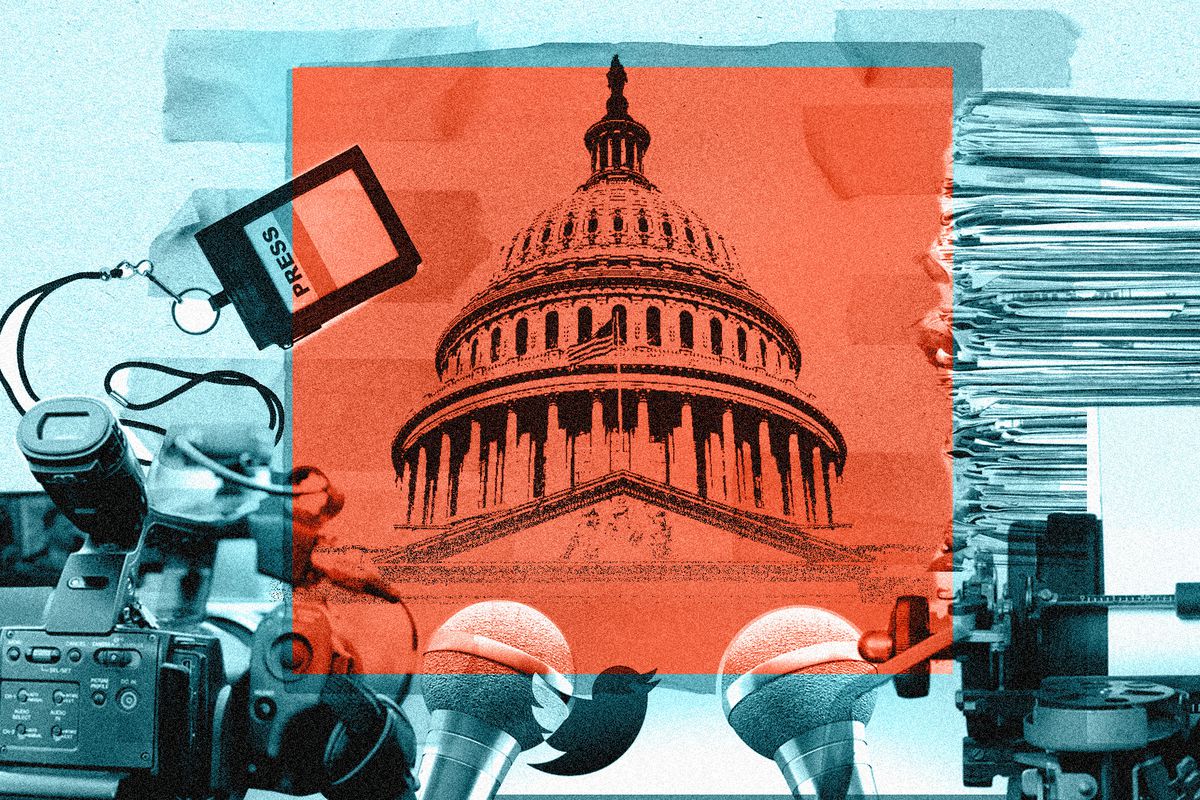
President Joe Biden expressed optimism on February 16 that most US schools would be open by late spring and vowed to continue accelerating the country’s Coronavirus vaccination program, as he sought to elevate his agenda now the drama of Donald Trump’s impeachment trial is over. In a wide-ranging televised town hall that touched on the pandemic, economic relief, China-US relations, and race and policing, Biden also aimed to build public support for his $1.9 trillion Coronavirus relief plan, which is awaiting congressional action. “Now’s the time to go big,” he said during a CNN prime-time broadcast, as he fielded questions from voters at the landmark Pabst Theater in Milwaukee, Wisconsin. “If we pass this bill alone, we’ll create 7 million jobs this year.”
After a parent and a teacher asked how President Joe Biden planned to ensure that schools could open safely amid the pandemic, the Democratic president said he anticipated that “most” elementary and middle schools would have in-person classes five days a week by the end of his first 100 days in office. He also said he believes teachers should be moved closer to the front of the line for inoculation. “I think that we should be vaccinating teachers – we should move them up in the hierarchy,” Biden said, although he noted that states, not the federal government, have the authority to decide how to prioritize vaccinations. Biden said he expected everyone who wanted a vaccine would be able to get one by July when his administration will have secured enough shots to inoculate all Americans. But he also warned that the recovery from the pandemic that has killed more than 485,000 people in the United States would still take many months and urged people to wear masks, maintain social distance, and wash hands for the foreseeable future.
The February 16 visit, as well as a trip scheduled for February 18 that will take President Joe Biden to a Michigan vaccine manufacturing site, offered the President an opportunity to tout the importance of a new relief bill even as Republicans remain largely opposed to its massive price tag. President Biden wants Congress to pass the legislation in the coming weeks in order to get $1,400 stimulus checks out to Americans and bolster unemployment payments. Some aspects of the bill, including Biden’s push to increase the minimum wage to $15 an hour by 2025, may have a difficult time gaining enough support to pass. After a small business owner raised concerns at the town hall address, Biden suggested he might be willing to consider a more gradual phase-in.
On July 28 Senator Josh Hawley (R-MO), a major critic of the big tech industry, introduced legislation that would penalize large tech companies that sell or show targeted advertisements by threatening a legal immunity enjoyed by the industry, the latest onslaught on Big Tech’s business practices. The bill, titled “Behavioral Advertising Decisions Are Downgrading Services (Bad Ads) Act,” aims to crack down on invasive data gathering by large technology companies such as Facebook and Google that target users based on their behavioral insights. It does so by threatening Section 230, part of the Communications Decency Act, that shields online businesses from lawsuits over content posted by users. The legal shield has recently come under scrutiny from both Democrat and Republican lawmakers concerned about online content moderation decisions by technology companies. On July 28, Senator Brian Schatz (D-HI)and Senate Majority Whip John Thune (R-SD) will hold a hearing to examine the role of Section 230. The senators recently introduced legislation to reform the federal law.
In May, President Donald Trump signed an executive order that seeks new regulatory oversight of tech firms’ content moderation decisions, and he backed legislation to scrap or weaken Section 230 in an attempt to regulate social media platforms. “Big Tech’s manipulative advertising regime comes with a massive hidden price tag for consumers while providing almost no return to anyone but themselves,” said Hawley, an outspoken critic of tech companies and a prominent Trump ally. “From privacy violations to harming children to suppression of speech, the ramifications are very real.” His recent legislation to ban federal employees from using Chinese social media app TikTok on their government-issued phones was passed unanimously by the US Senate Committee on Homeland Security and will be taken up by the US Senate for a vote.
Facebook is considering imposing a ban on political ads on its social network in the days leading up to the US Presidental election in November, according to people familiar with the company’s thinking. The potential ban is still only being discussed and has yet been finalized, said the people, who asked not to be named talking about internal policies. A halt on ads could defend against misleading election-related content spreading as people prepare to vote. Still, there are concerns that an ad blackout may hurt “get out the vote” campaigns, or limit a candidate’s ability to respond widely to breaking news or new information. Such an action would amount to a major change for Facebook, which has so far stuck to a policy of not fact-checking ads from politicians or their campaigns. That has prompted criticism from lawmakers and advocates, who say the policy means ads on the platform can be used to spread lies and misinformation. Civil rights groups also argue the company does not do enough to remove efforts to limit voter participation, and a recent audit found Facebook failed to enforce its own voter-suppression policies when it comes to posts from President Donald Trump.
Ad blackouts before elections are common in other parts of the world, including the UK, where Facebook’s global head of policy, Nick Clegg, was once deputy prime minister. Facebook is an important platform for politicians, especially at a time when many people are stuck at home and campaign rallies pose potential health risks due to the coronavirus. In 2016, President Donald Trump used Facebook ads and the company’s targeting capabilities to reach millions of voters with tailored messaging, a strategy that some believe helped win him the election. Alex Stamos, Facebook’s former top security executive, said that any political ad ban could benefit Trump. “Eliminating online political ads only benefits those with money, incumbency or the ability to get media coverage,” he tweeted. “Who does that sound like?”
Political advertising has been a complicated issue for online platforms, and many of them have taken different approaches. Twitter has banned most political ads, but still sells some “cause-based” ads that touch on economic, environmental, or social issues. Google’s YouTube has already sold ad space on its homepage to the Trump campaign for the days leading up to November’s election, a deal that ensures Trump will be highly visible on the video service when people start to vote. In 2016, Russian operatives used Facebook to spread misleading and divisive ads and posts. The company has made a series of changes since then to tighten up its political ad process, including the implementation of stricter requirements for buying marketing spots and the addition of a searchable ad archive.
Listen Liberal by Thomas Frank – Understanding Democratic Party
Noam Chomsky on Anarchism by Noam Chomsky – Understanding Anarchism- roots, Chomsky, being critical
Who Rules the World? by Noam Chomsky – Foreign Policy and Global Economics
Indefensible 7th myths of the Global Arms Trade by Paul Holden – Arms Trade Globally and Security
A peoples History of the US by Howard Zinn – US History through Working-Class People
Breaking through Power by Ralph Nader – US politics
War is a Racket by Smedley Darlington Butler – Why all wars are connected to Banks
Troops, Trolls, and Troublemakers: A Global Inventory of Organized Social Media Manipulation by Samantha Bradshaw, University of Oxford – How Social Media Influences Politics
Viking Economics: How the Scandinavians Got It Right-and How We Can, Too by George Lakey – Progressive Economics applied the world’s happiest/most productive Workers
State-backed hackers from China have targeted staffers working on the US presidential campaign of Democrat Joe Biden, a senior Google security official said on June 4. The same official said Iranian hackers had recently targeted email accounts belonging to Republican President Donald Trump’s campaign staff. The announcement, made on Twitter by the head of Google’s Threat Analysis Group, Shane Huntley, is the latest indication of the digital spying routinely aimed at top politicians. Huntley said there was “no sign of compromise” of either campaign. Iranian attempts to break into Trump campaign officials’ emails have been documented before. Last year, Microsoft announced that a group often nicknamed Charming Kitten had tried to break into email accounts belonging to an unnamed US presidential campaign, which sources identified as Trump’s. Google declined to offer details beyond Huntley’s tweets, but the unusually public attribution is a sign of how sensitive Americans have become to digital espionage efforts aimed at political campaigns. “We sent the targeted users our standard government-backed attack warning and we referred this information to federal law enforcement,” a Google representative said.
Hacking to interfere in elections has become a concern for governments, especially since US intelligence agencies concluded that Russia ran a hacking and propaganda operation to disrupt the American democratic process in 2016 to help then-candidate Donald Trump become president. Among the targets was digital infrastructure used by the 2016 Democratic presidential candidate Hillary Clinton’s campaign. The Russian government has denied any meddling. Attempts by foreign adversaries to break into presidential campaigns are commonplace but the unusually public attribution offered by Google is a sign of how sensitive Americans have become to digital espionage efforts aimed at candidates. “We are aware of reports from Google that a foreign actor has made unsuccessful attempts to access the personal email accounts of campaign staff,” a Biden campaign spokesman said. “We have known from the beginning of our campaign that we would be subject to such attacks and we are prepared for them.” The Trump campaign, the Chinese Embassy in Washington, and the Iranian mission to the United Nations in New York did not immediately respond to requests for comment.
Charming Kitten, the group identified by Google as being responsible for the targeting of the Trump campaign, has also recently hit the headlines over other exploits, including the targeting of the pharmaceutical company Gilead Sciences Inc. Earlier this year, Reuters tied the group to attempts to impersonate high-profile media figures and journalists. John Hultquist, senior director of intelligence analysis with US cybersecurity firm FireEye Inc., described the two hacking groups as “espionage actors” and said they were likely attempting to collect intelligence rather than steal material to leak online.
President Donald Trump on May 27 threatened to regulate or shut down social media companies for stifling conservative voices, a day after Twitter attached a warning to some of his tweets prompting readers to fact check the president’s claims. Without offering evidence, President Trump accused such platforms of bias, tweeting: “Republicans feel that Social Media Platforms totally silence conservatives voices. We will strongly regulate, or close them down before we can ever allow this to happen.” Trump, a heavy user of Twitter with more than 80 million followers, added: “Clean up your act, NOW!!!! Trump’s threat to shut down platforms such as Twitter and Facebook was his strongest yet within a broader conservative backlash against Big Tech.
Republicans feel that Social Media Platforms totally silence conservatives voices. We will strongly regulate, or close them down, before we can ever allow this to happen. We saw what they attempted to do, and failed, in 2016. We can’t let a more sophisticated version of that….
Twitter for the first time attached fact-check labels on President Donald Trump’s tweets after he made unsubstantiated claims on May 26 about mail-in voting. In a pair of early morning posts on May 27, the Republican president again blasted mail-in ballots. President Trump falsely claims that mail-in ballots lead to vote fraud and ineligible voters getting ballots. Twitter and Facebook declined to comment on Trump’s tweets. Asked during Twitter’s annual meeting why the company decided to affix the label to Trump’s mail-in ballot tweets, General Counsel Sean Edgett said decisions about handling misinformation are made as a group. “We have a group and committee of folks who take a look at these things and make decisions on what’s getting a lot of visibility and traction…,” he said. In recent years Twitter has tightened its policies amid criticism that its hands-off approach allowed fake accounts and misinformation to thrive. Tech companies have been accused of anti-competitive practices and violating user privacy. Apple, Google, Facebook, and Amazon face antitrust probes by federal and state authorities and a US congressional panel. The Internet Association, which includes Twitter and Facebook among its members, said online platforms do not have a political bias and they offer “more people a chance to be heard than at any point in history.”
Republican and Democratic lawmakers, along with the Justice Department, have been considering changes to Section 230 of the Communications Decency Act, a federal law largely exempting online platforms from legal liability for the material their user’s post. Such changes could expose tech companies to more lawsuits. Republican Senator Josh Hawley, a frequent critic of Big Tech companies and strong supporter of President Donald Trump, sent a letter to Twitter Chief Executive Jack Dorsey asking why the company should continue to receive legal immunity after “choosing to editorialize on President Trump’s tweets.”
This video by CaspianReport discusses “Saudi Vision 2030,” a plan proposed by the government of Saudi Arabia that seeks to reduce the countries dependence on oil, diversify its growing economy, and develop public service industries such as health, education, infrastructure, recreation, and tourism. The goals of the plan include reinforcing economic and investment activities, increasing non-oil industry trade between countries through consumer goods, and increasing government spending on the military. The details of the plan were first announced on April 25, 2016, by Crown Prince Mohammad bin Salman (MbS), and the Council of Ministers has tasked the Council of Economic and Development Affairs with identifying and monitoring the mechanisms and measures crucial for the implementation of “Saudi Arabia’s Vision 2030.”
The main rationale behind the Saudi Vision 2020 plan is to decrease the dependence that the Saudi economy has on oil revenues. The oil industry comprises close to 50% of Suadi Arabia’s total GDP, and the Saudi government has sought to decrease its reliance on oil revenues since the 1970s with an overall poor track record of success. The core priority of the Saudi government is to be able to develop more alternative sources of revenue for the government such as taxes, fees and income from the sovereign wealth fund. Another significant proposal is to lower the dependency of the citizens of the country on public spendings such as spending on subsidies and higher salaries and to increase the portion of the economy contributed by the private sector to provide more employment opportunities and to provide growth in the GDP.
Suadi Vision 2020 has three main pillars: the status of the country as the “heart of the Arab and Islamic worlds,” the determination to become a global investment powerhouse, and to transform the country’s location into a hub connecting three of the most influential areas of the world (Western Asia, Europe, and Africa). The plan is supervised by a group of people employed under the National Center for Performance Measurement, the Delivery Unit, and the Project Management Office of the Council of Economic and Development Affairs. The National Transformation Program was designed and launched in 2016 across 24 government bodies to enhance the economic and development center
Saudi Vision 2030 is built around four major themes which set out specific objectives that are to be achieved by 2030. The four themes are:
A vibrant society: urbanism, culture and entertainment, sports, Umrah, UNESCO heritage sites, life expectancy.
A thriving economy: Employment, women in the workforce, international competitiveness, Public Investment Fund, Foreign direct investment, the private sector, non-oil exports
An ambitious nation: Non-oil revenues, government effectiveness, and e-government, household savings and income, non-profits and volunteering.
Projects: About 80 major projects are to be developed in Saudi Arabia by the year 2030. Most of these projects are financed by the Public Investment Fund of Saudi Arabia.
One such project that is part of the Saudi Vision 2030 is the National Transformation Program. First approved on June 7, 2016, the National Transformation Programa sets out the goals and targets to be achieved by the Kingdom by 2020. It is the first out of three phases each lasting for five years. Each step will accomplish a certain number of goals and targets that will eventually help the Kingdom in reaching the ultimate goals of Vision 2030. To assist the Kingdom of Saudi Arabia to finance all the projects to be developed and facilitate the process of achieving the goals and targets of Vision 2030, Crown Prince Mohammad bin Salman announced in early 2016 that an IPO of Saudi ARAMCO is going to take place. However, only 5% of the company will be offered on the stock market. Other projects put forward under the Saudi Vision 2030 plan are the construction of a luxury resort located on the Red Sea between the cities of Umluj and Al-Wajh, the expansion of the Saudi entertainment industry, and the expansion of women’s rights. In the realm of women’s rights, the Saudi Vision 2030 plan seeks to grant women the right to vote, own property, travel abroad freely, and attend higher education facilities.
Overall, the international reaction to the Saudi Vision 2030 plan has been somewhat mixed. Many critics argue that the lack of formal political institutions, inefficient bureaucracy and a significant gap between the labor force required by the Saudi labor market and current educational system serve as a hindrance on many of the growth prospects that the country has proposed. Other critics argue that the Saudi Vision 2030 plan does not take into account the fact that rapid reform efforts may not be entirely accepted by the Saudi population, and that a slow and gradual reform plan would be a more viable policy to implement. Despite some criticism towards the reform proposals, many international observers feel that it represents a genuine opportunity for the Saudi government to reform and create a far more positive view on the country in the eyes of the international community.
Many people are asking if the Democrats will take back the House of Representatives in 2018? I suspect they will make significant gains. Upsets in Pennsylvania and elsewhere have shown a weakened Republican party. The Republicans across the state have been slowly eaten by the Tea Party movement and even the Bannon movement where they have been running candidates and working hard to get rid of “moderates”, meaning centrists Democrat types like Bob Mendez (NJ) or others modern neo-liberal Democrats. What the media has been ignoring is “insurgents” candidates across the country that have been chipping away at the Democratic Machine.
In America, money almost always determines victory in an election, but since the Sanders Movement during the 2016 elections we saw an underfunded candidate nearly take over America’s major political party (the Democratic Party). He created a group OUR Revolution which has affiliates in every state in America. Even Puerto Rico! America politics have just been changed forever and people don’t seem to understand it. Sanders victory would not have been winning the presidency, I don’t think he had the political muscle to get anything significant done, the Democrats hate him, the Republicans would have controlled congress, what could he have really done but slow down the de-funding of government? Another debate for another time. Now he goes around, traveling across the country, talking to the American people while Clinton goes on book tours trying to sell her book. He has built the infrastructure for a new style of American Democracy not seen since the 1960s. He has the largest support among millennial’s, now the largest voting block in America. He has a fairly good history on most issues and being on the right side of history except foreign policy (Sanders is relatively weak on anti-war policy). He should have won the black vote but the churches are so establishment-controlled that he couldn’t break through. The only thing Sanders needs is the backing of religious zealots who are progressive and can destroy the notion that Republicans are the only people who talk to God. Over time I doubt those groups will disappear, you’re looking at a long drawn out civil war on both parties, but worse off for the Democrats. You have a long history of political corruption in some states more than others and you have the truth. Its simple enough to pull up statistics and see that the percentages for big companies donating to Democrats or Republicans can be evenly split.
The single-payer idea is the only rational policy and then you have the Democrats being unable to support it because their being funded by the same people destroying American healthcare. Over time with reforms, you could see insurgent candidates stay in power and continue to build stronger power bases for more “working class heroes” or Bernie Sanders-esque politicians. Where Ralph Nader failed in 2000, Sanders succeed in 2016, with many of the same issues, just different microphones. A graph I did personally at Monmouth University showed the vast majority of young MU college students under 50,000 support Sanders, even many in the upper income brackets, but as people get poorer because of the global economy and poor policies that increase poverty, will we see the rise of a new party growing inside the old? A party that is Democratic, a party that fails for a few years and then starts to rebirth the Democrat party? I think so, its the right time in America, unless there is a war where many troops are used then we could see the process speed up, as wars often do to these things. The Our Revolution groups have nowhere to go but up, the mainstream parties battling each other and the ‘insurgent’ candidates can really only become more unpopular as they fail to get real policy in place and start to bring in people who traditional aren’t in the process or haven’t been accepted as a decision maker. We see similar politics in the UK with labor changing under Jeremy Corbyn. We are seeing infrastructure for the Sanderist movement grow, where communication and cooperation between different groups are growing. They are running decent candidates, many of which will lose this time, but will be able to run again, and again, and again. The 2020 election is where everything will likely start to break down. Sanders is the Henry Wallace of his time, although this time labor is set for a huge victory, its the speed that is hard to figure out.
This video by PressTV presents a review of President Donald Trump’s first full year in office. One year has passed since Donald Trump has been elected US President. Since then, the world has seen a US President unlike any other. One that is aggressive, impulsive, uninterested in politics, and egotistical. Despite coming into office with a grand series of promises to change American politics for the better, the case can be made that the policies pursued by the Trump Administration have changed American politics for the worst. Trump has thus far failed to realize any of his campaign promises, fanned the conspiracy flames regarding his relationship with Russia, contradicted and insulted his staff, and made enemies of allies throughout the world. Additionally, President Trump has attacked the governmental institutions he oversees, threatened to use his powers to ruin the lives of his political opponents, waged war against members of his own party, and engaged in race-baiting, sexism, ableism, and religious bigotry when pursuing his destructive agenda.
One such area in which President Donald Trump left his mark during his first year was his immigration executive order banning (mostly Shi’a Muslim) immigrants, travelers, and refugees from seven majority-Muslim countries (Syria, Iran, Iraq, Yemen, Sudan, Somalia, and Libya). This action ignited a firestorm of protest and revealed the bigoted, white supremacist agenda underlying the Trump Administration’s policies. President Trump also rattled the nuclear-saber more than any other President in US history with his incitement of North Korea, going as far to threaten the North Korean government with “fire and fury.” Many politicians on both sides of the aisle worry that Trump has misused the moral authority surrounding the office of the Presidency through such statements and actions.
President Donald Trump claimed during his first year in office that he has the unilateral authority to order the Justice Department to open or close investigations into his political opponents. Such rhetoric threatens to set a negative precedent in future Administrations that goes directly against the principles of separation of power spelled out in the US Constitution. President Trump’s outreach to autocratic regimes such as Saudi Arabia and Israel further characterized his first year in office. By backing the Saudi Crown Prince Mohammad bin Salman, President Trump has given the green light for Saudi Arabia to escalate its three-year-long intervention in Yemen, which has resulted in the deaths of thousands of innocent people and has encouraged hatred towards Shi’a Muslims throughout the world. Additionally, President Trump’s choice to recognize Jerusalem (“al-Quds” in Arabic) as the capital of Israel has encouraged the Israeli regime to expand its crusade against the Palestinian people.
President Donald Trump also left a negative mark within the realm of international politics and has adopted a firm, neoconservative view regarding the role of the US in the world. President Trump has repeatedly denounced the Iranian nuclear deal, calling it the “worst deal ever negotiated” despite the fact that it was upheld by numerous organizations, most notably the United Nations and International Atomic Energy Agency (IAEA). Additionally, President Trump has proposed a hardliner stance towards Iran, calling it a “terrorist nation” and calling for US military action to remove the current Iranian government from power. These actions on the part of the President have led to many European leaders such as German Chancellor Angela Merkel and French President Emmanuel Macron to rethink their reliance on US political and diplomatic leadership on the world stage.
In terms of domestic policy, President Donald Trump generally has had an abysmal first year in office. Trump failed to follow through on repealing The Patient Protection Affordable Care Act (“Obamacare”) despite the fact that his party controls both houses of Congress, and has relied on Executive Orders more often than any other first-year President in US history. The only true legislative achievements of President Trump’s first year in office are his nomination of Neil Gorsuch to the Supreme Court and the passage of the Tax Cuts and Jobs Act of 2017. Many critics argue that the presence of Neil Gorsuch on the Supreme Court will move the Judicial branch far to the right and have a profound (and what many view as a negative) impact on decisions such as drug policy, women’s rights, abortion, gay rights, and electoral reform. Additionally, nearly all economic organizations point out that the Tax Cuts and Jobs Act is a clear giveaway to the wealthiest 1% and only serve to further the widening income gap between the wealthy and the poor.
Have you ever tried to organize a college event? Did you get frustrated by issues of planning and attendance?
College is a stressful environment often characterized by heavy workloads and important deadlines to meet. Planning a successful college event can be most successful by following certain guidelines to maximize your potential. Finals/Midterms times and prior to are the worst time to hold events. Here are some tips to help you set up a successful event:
1. Early Bird gets the worm
First-time Political leaning or educational events, in my opinion, are always best to be done in the first 2-3 weeks of school. Before Midterms and before homework starts getting overwhelming.
2.Time Time Time
Make sure the event isn’t at a time when most people are in class but perhaps “college hour,” or a time when people want to have some pizza after class.
3. Who’s Who?
Figure out who are the Demographic most likely to attend. Figure out how to attract them, like LGBTQ attract them by telling them about the issue and how it’s important in their life. How they should come and will benefit. Then figure out how to attract large segments of the student or other population.
4. Monopoly MOFO
Making sure your event has a monopoly over the time/date is important so other events don’t drain from your audience. If a more “liberal” socially- (not economically that word is misused today), then figure out what other events that draw people in that realm may be happening or run by and inform them of your event beforehand to make sure you have a leg up on them. Something as simple as saying “hey come to my event” and “save the date.” Informing the faculty who are “experts” in that field your event is on can help spread the word as well.
5. Art Bitches
Make sure you have an attractive flyer to catch someone’s eye to the event. This should also include online postings like on Instagram/Facebook which are drawing more attention these days. A picture is worth a thousand words so keep it relative to the event.
6. Munchies!
Having Pizza at the event can go a long way where people who aren’t generally as interested now come to the event and want a piece of that action. So food is a way to lure people just make sure you try to gauge the attendance with food supply otherwise it will take away from an event. Refillable cups is advised along with water to reduce plastic use and make your event more environmentally friendly.
7. Songs of the time (EXTRA)
Having a musician play relevant music at the end of the event can lure more people- his or her friends to attend- and ends an element that there will be a musician playing at the end. Try to keep the music almost relevant to the event. For example, if the event discusses healthcare policy, include a song that talks about health care or if the event is about immigration feature a song about immigration. Try to keep the music it a genre you think people will like. Solidarity Singers in NJ are known for political songs and is a good source for political events.
Early in Semester
During a right day of week/Time
Figuring out the target group
Making sure the target group has only your event to attend
Posters that are well designed
Some food at the event
(Extra)Perhaps music performance at the end or start
(These are lessons I have learned from my failed events-XOXO )
here is the propaganda video: https://www.youtube.com/watch?v=WJIHCczsbJo
Neo-Con propaganda; The US lied about Nuclear weapons and the invasion was a war crime. The US government killed a million people in Iraq and leave it out of the video? Fucking monsters. The US destroyed Iraq multiple times and armed in multiple times. Who sold Saddam the chemical weapon he used to gas the Kurds? How about the fact that there was no Al Qaeda presents in Iraq before the US invaded in 2003? Left that out too. How about the fact that it was all doubted by the entire world that there anything but oil in Iraq? How about the fact the troops that left Iraq went to Afghanistan which was falling apart? The war crimes he mentioned, the US destroyed the city of Fallujah in Iraq, where the New general Mattis “Mad Dog” covered it up. How about the giant waste and fraud committed by American contractors? Left that out too? “It was President George W. Bush who signed the Status of Forces agreement in 2008, which planned for all American troops to be out of Iraq by the end of 2011.”The US occupation of Iraq was illegally, immoral, a war crime and most Iraqi’s saw them as occupiers. Iran is not the mortal enemy of the US, the US overthrow a Democracy and they are still angry about it- it lead to many deaths. Iran is the enemy because the US is allied with Saudi Arabia Wahhabi’s instead of Iran Shiite’s. How can you say they secured Iraq after destroying its military and creating the power vacuum in the first place?
This video by CaspianReport discusses the decline of the Ottoman Empire during the late 19th and early 20th Century. The Ottoman Empire was an empire founded in 1299 AD in Anatolia (present-day Turkey) by Osman I, a Turkish tribal leader. By 1354, the Ottoman Empire reached into Southeastern Europe and eventually ended the Byzantine Empire (Eastern Roman Empire) in 1453 with the conquest of Constantinople. During its height of power in the 16th and 17th centuries, the Ottoman Empire was a multinational and multicultural empire controlling a majority of the Middle East and Southern Europe (including countries such as Greece and parts of present-day Italy), the Caucuses, and Northern Africa. With Constantinople as its capital and control of lands around the Mediterranean basin, the Ottoman Empire was at the center of interactions between the Middle East and Western worlds for half a millennium.
Despite its long track record of success, the Ottoman Empire began to fall behind European rivals such as Great Britain, France, and Russia during the mid-18th century. Additionally, the Ottoman army consequently suffered severe military defeats in the late eighteenth and early nineteenth centuries, which prompted them to initiate a process of reform in the late 1830s known as the Tanzimat. As such, over the course of the nineteenth century, the Ottoman state became more powerful and organized, despite suffering territorial losses, especially in the Balkans, where many new states such as Greece and Albania emerged by the 1860s. The Ottoman Empire allied with Germany in the early 20th century, hoping to escape from the isolation which had contributed to its recent territorial losses, and thus joined World War I on the side of the Central Powers. While the Empire was able to hold its own during the conflict, it began to deal with internal dissent, in particular with the Arab Revolt in its Arabian holdings and the rise of Jewish immigration into the region of Palestine starting in the late 19th century. During this time, atrocities were committed by the Ottoman government against the Armenians, Assyrians, and Greeks. The Ottoman Empire ultimately collapsed by the end of World War I and was replaced by the Republic Turkey in 1923. The former Ottoman territories were also divided up into new nations by Great Britain and France after World War 1 and continue to serve as the basis for the modern Middle East.
https://represent.us/about/ (passing city wide anti-corruption laws)
https://volunteer.represent.us/chapters
Wolf PAC (Money out of Politics) via constitutional amendment
https://vimeo.com/278195786
https://www.publicintegrity.org/2016/02/11/19283/here-are-interests-lobbying-every-statehouse -COVANTA HOLDING CORP. FIRSTENERGY CORP. VERIZON COMMUNICATIONS INC. PRUDENTIAL FINANCIAL INC. CABLEVISION SYSTEMS CORP.) Top Industries lobbying NJ(2014)!
http://www.arboraesthetics.com/blog/category/tree-planting
http://urbanforestrynetwork.org/benefits/aesthetic.htm
http://www.gardenaesthetics.com/
http://gardenpool.org/diy-projects – creating sustainable living in US and Abroad
http://phe.rockefeller.edu/ -Research focuses on long-term trends relevant to the environment, including changes in population,
http://www.lead.org.au/fs/fst29.html – Getting lead out of drinking water
https://www.nrdc.org/ – Protecting US Environment
http://www.vrg.org/- Vegetarian resource group
(From NJ Future Website)-http://designyourtown.org/places/ – Can look at town designs
Peace & International Conflict Resolution Humanitarian Law Project (Fight for Human Rights) Veterans for Peace (For International Peace and Nuclear Disarmament)
https://www.peacecoalition.org/ – For International Peace and Nuclear Disarm
http://worldbeyondwar.org/who/ -World Beyond War is a global nonviolent movement to end war and establish a just and sustainable peace.
Internet Issues, Cyber Security, Freedom of Information
https://civic.mit.edu/ – Goal :sign, create, deploy, and assess tools and processes that support and foster civic participation and the flow of information between and within communities.
http://xroads.virginia.edu/~hyper/DETOC/assoc/bowling.html – Talks about fragmented communities need to understand to get into modern US politics especially NJ
https://www.edx.org/school/harvardx – Getting very cheap Education for high level information like government/peace/science topics…etc
https://www.coursera.org/- Getting Free Education for high level information like government/peace/science topics..etc
https://www.khanacademy.org/ – Mostly free highschool
http://www.njamistadcurriculum.net/about – Teach about African American Historyhttps://www.njsba.org/about/membership/membership-school-board-members/school-board-candidacy/- Run for School Board
http://www.njcul.org/- New Jersey League of Credit Unions
List of Labor Unions
https://www.manta.com/mb_44_F0277_31/labor_unions_and_similar_labor_organizations/new_jersey
Information on Area to help make decisions
https://datausa.io/
http://www.bestplaces.net/state/new_jersey
Reliable News Organizations
https://centerforcooperativemedia.org/ – Montclair NJ- Help start new state wide local media coverage via coop model
https://hudsoncountyview.com/ -Hudson County NJ News
(Intro)Film the Myth of the Liberal Media by Noam Chomsky : https://www.youtube.com/watch?v=E8oHl3ooeZo&feature=share WikiLeaks – Truth to Power AirWars – Military news Democracy Now! – World/ US News DC Reporting – US News- Washington- Big Shots The Real News Network – World/US News
https://worldjusticeproject.org/our-work/wjp-rule-law-index/wjp-rule-law-index-2017%E2%80%932018 – Has Rule of Law Report(global decline of law)
https://www.projectcensored.org/- News Stories that the media misses
https://usawatchdog.com/bio/ – US news and Corruption The Intercept – In-depth News, mostly foreign Policy, in depth on domestic issues Chapo Trap House – Young People on Policy
This video by Caspian Report discusses the Islamic conquest of Persia (Present-day Iran) during the 7th Century AD. The rise of Islam as a religion coincided with significant political, social, economic and military weakness in Iran, which was then under the rule of the Sassanid Empire. The Arab armies initially attacked Iran in 633 through the province of Asōristān (present-day Iraq). After a 21-year-long campaign, the Sassanid Empire collapsed in 654 to the Arab forces under the leadership of Uthman ibn Affan.
The conversion of the Iranian people to Islam was gradual and incentivized in various ways over 400 years with some Iranians never converting and widespread cases of the destruction of cultural artifacts and opponents to Muslim rule being harshly persecuted. Even though the Arab forces attempted to force an entirely different culture and traditions on the Iranian people, Iranian culture and the Persian language remained largely intact.
Additionally, the Arab conquest of Iran is mentioned to have ultimately strengthened Islam and allowed it to become a major world religion that has endured. On the other hand, the Arab conquest is one of many examples of a foreign imperialist invasion force attempting to invade Iran and weaken its culture. Additionally, the Arab conquest of Iran is mentioned to have prevented the emergence of a strong and independent Iran until the rise of the Safavid Empire in the early 16th Century.
This video by Capsian Report discusses the current political crisis in Venezuela. Venezuela is now experiencing a protracted political crisis that threatens to tear apart the country as a result of a general downturn in its economy. As a result of the crisis, the government of Venezuela under the leadership of President Nicholas Maduro has decreased political freedom and has thus far failed to turn the economic and political situation in the country around. The political crisis in Venezuela was only gotten worse in recent weeks and culminated with an attack on the Supreme Court building by several dissident groups on June 28, 2017. Even though this video ignores the role that the US government has played in promoting protests against President Maduro and in destabilizing the economy of Venezuela, it gives a great insight and explanation of some of the problems facing Venezuela over the past five years.
One of the most significant tools in political communication is the use of public addresses and statements by the President of the United States. In addition to directly informing the public, Presidential addresses set the political agenda and put forward direct appeals to the American people. Throughout American history, Presidential speeches have focused on many different themes based on the mood of the public and the events occurring at both the national and international levels. One example of a particular type of Presidential address is the inaugural address. Since the creation of the office of the Presidency, the primary purpose of the inaugural address was to introduce the President to the American people and frame the underlying goals of the administration. The tones expressed in inaugural addresses have varied from inspirational to passionate, and reflect the overall attitudes of the American people. The use of distinct political communication concepts and theories can be used to analyze Presidential inaugural addresses and highlight their underlying messages.
One of the more notable Presidential inaugural address is Barack Obama’s 2009 inaugural address. During the 2008 campaign, Obama focused on different rhetorical approaches such as thematic and policy appeals. Thematic appeals are developed by Presidential campaigns in order to explain the broader ideals that a candidate seeks to represent. Some of the thematic appeals used by Obama during the campaign included the need for unity in the face of increasing divisions within American society, the need to overcome both racial and political divides, and the necessity for political change. In addition to the thematic appeals, the Obama campaign focused on several different policy positions including healthcare reform, national security issues, education reform, and the economy. The use of specific thematic appeals and the focus on policy issues highlighted the key theme of change that the Obama campaign sought to promote. In this way, Obama framed his overall message to distinguish it from those of rival candidates such as Hillary Clinton and John McCain. The overall themes of the Obama Presidential campaign were carried over to the inaugural address and served as a way to frame the overall goals that his administration would seek to follow.
One of the main rhetorical approaches used by Barack Obama in his inaugural address is his use of optimistic language. Projecting an optimistic and positive tone during difficult times is an important communicative tool because it allows the speaker to impart a feeling of confidence and hope to their audience and create the impression that their actions will turn things around for the better. An example of a President presenting an optimistic message in their inaugural address was by Franklin Roosevelt in 1933. In spite of the economic challenges facing America and the feeling of hopelessness felt by many, Roosevelt projected a sense of optimism by stating that the American people had “nothing to fear but fear itself” and by framing his speech in a way that projected the feeling that he understood the challenges and would seek to address them adequately. Much like Roosevelt, Obama attempted to project an optimistic tone in his inaugural address by stating that even though the problems facing the US will not be met easily, they will ultimately be addressed due to the resilience of the American people and due to the change in leadership as a result of his election.
Another rhetorical approach used in Obama’s 2009 inaugural speech is the call to action to address the economic crisis and to create a new foundation for future growth. Calling for action is important in any Presidential speech because it mobilizes public support for policy proposals and creates a higher level of support at the grassroots level to lead the charge for change. A notable example of a Presidential address that focused on the idea of calling for action to address the issues is John F. Kennedy’s inaugural address in 1961. In this speech, Kennedy stated the American people should, “ask not what your country can do for you; ask what you can do for your country.” Through such language, Kennedy was saying that it is in the best interest of the American people to address the challenges of the 1960s and, by doing so, would create a shared sense of duty to the country. Similarly, Obama stated that the people who claimed that the US lacked the ability to tackle emerging challenges ignored the resolve of the American people and what they can accomplish with unity between them and a common goal.
Another notable aspect of Barack Obama’s 2009 inaugural address was the fact that he was able to communicate two conflicting messages successfully. For example, Obama spoke of the fact that free market economic policies are a useful tool in creating prosperity and increasing individual freedom, but that it required a watchful eye to prevent its powers from spiraling out of control. Additionally, Obama explained that tough choices are necessary to address the problems at both the national and international level and also expressed optimism that the American people can and would solve such problems. Moreover, the language used by Obama in his speech created the impression that he is the type of leader who is not afraid to suggest that radical actions may be necessary to enact change and settle long-standing issues. It helps also that he is a mainstream and moderate political leader. By communicating two conflicting messages in his inaugural address, Obama is framing his ideas in ways that appeal to both people who supported him and reaching out to people who may be skeptical towards him or his policies. Additionally, by highlighting two contradictory values, Obama is attempting to create the perception that he is a political leader who would look to more pragmatic solutions to address the issues facing America. The idea of pragmatism was also expressed during the Obama campaign, in particular, his pledge to be an inclusive leader who would serve as a representative for all the American people in an uncertain time.
The Obama inauguration further appeals to traditional values. An important aspect of political communication is the promotion and highlighting of traditional values by political leaders. One of the most important traditional values prevalent in the US is religious faith and religious traditions. Furthermore, the debate over religion is significant within American political discussions. In his inaugural speech, Obama appealed to religious values by thanking God for giving him the opportunity to be President and mentioning that the US is a “nation of Christians and Muslims, Jews and Hindus, and non-believers.” Additionally, Obama stated that religious traditions and diversity serve as a binding force within the US to strengthen American society, not divide it. The idea of religion as a unifying source within society further relates to the underlying campaign theme of Obama that cast himself as a unifying leader.
Barack Obama’s inaugural address also served as a way to reveal the oratorical qualities of Obama himself. During the speech, Obama utilizes language that can be considered to be formal, yet plain enough for the average person to understand. For example, Obama states the US “is at war against a far-reaching network of violence and hatred. Our economy is badly weakened, a consequence of greed and irresponsibility on the part of some, but also our collective failure to make hard choices and prepare our nation for a new age.” Through such language, Obama is stating clearly the problems facing the US in a way that can easily be understood by the American people. Additionally, Obama uses lofty rhetoric during the inaugural speech as well. An example of more formal and lofty rhetoric in the speech occurs when Obama states that “the words have been spoken during rising tides of prosperity and the still waters of peace. Yet, every so often, the oath is taken amidst gathering clouds and raging storms.” The use of loftier rhetoric requires the listener to think more about the words to connect them to real-life events. Obama’s use of both formal and informal language is efficient because it enables his speech to have a poetic and rhythmic flow at the same time as allowing the average listener to understand the main points of the speech.
A number of symbolic themes also surrounded Obama’s inaugural address. The central symbolic aspect was that Obama’s inauguration served as a culmination of the ideas promoted by the Civil Rights movement and as a step forward for the American people. Additionally, the overarching theme of Obama’s inauguration was the idea of “a new birth of freedom,” which recognized the 200th anniversary of the birth of Abraham Lincoln. The idea of the “new birth of freedom” served as a symbol in promoting the idea that the struggles faced by African-Americans over the course of American history had finally come full circle. The media further supported this symbolism in Obama’s inauguration by highlighting the past accomplishment of past Civil Rights leaders such as Martin Luther King Jr. Despite the media’s positive to Obama’s inauguration, some argue that the press ignored the continued racial inequalities within the US and attempted to frame Obama’s inauguration as the end to such disparities.
In conclusion, the Presidential inaugural address serves as a valuable tool in political communication. An analysis of Presidential inaugural addresses allows political scientists to understand better the underlying goals and ideas of the President and the ways in which he communicates such ideas to the American people. Throughout his 2009 inaugural address, Barack Obama touched upon numerous political communication concepts such as the use of an optimistic tone to build confidence in the American people, appealing to traditional values, and calling for action to enact political change. Additionally, the Obama inaugural address promoted the idea that the struggles of the Civil Rights movement finally came full circle within the American political system. The Obama inaugural address further served as a way to introduce the American public to a new President and set the overall tone of the Obama Administration.
“Wag the Dog” is a 1997 film directed by Barry Levinson and starring Robert De Niro and Dustin Hoffman. The films follow an unnamed President, who gets embroiled in a sex scandal two weeks before the Presidential election. To help quell the situation, the President enlists the help of political consultant Conrad Brean, who determines that the best course of action is to distract the American people by constructing a fake diversionary war. Brean then enlists the help of Hollywood producer Stanley Motss to use the media to manipulate the public into believing that the US is at war with Albania. Despite the fact that many doubts are raised about the war, the efforts of Brean and Motss successfully distracted the American public from the President’s scandal and helped to rally support behind him during the closing days of the Presidential election. “Wag the Dog” explores themes such as the relationship between the media and politics, how the media shapes public opinion and the control that the mass media has within society. Additionally, examples of political communication theory can be used to explain the events in “Wag the Dog.”
The false war between the US and Albania in “Wag the Dog” can be considered to be a pseudo-event. A pseudo-event is an occurrence that is planned out for the primary purpose of being reported on by the media. Examples of pseudo-events in political campaigns include press conferences, announcements of new policies and initiatives, and participation in ceremonial events. Pseudo-events are used by political candidates to capture media attention and gain a higher level of public support. Additionally, incumbent politicians are in a better position than non-incumbents to create pseudo-events. The war between the US and Albania in “Wag the Dog” can be considered to be an example of a pseudo-event because it was created by the President to distract public opinion from his potentially damaging scandal and to draw attention to himself as being a strong leader in a time of international crisis.
Additionally, the actions by the President and his political advisors in “Wag the Dog” are examples of political spin. In political communications, spin is achieved through a biased interpretation of an event meant to persuade public opinion for a particular political figure and against their opponents. Examples of political spin include the presentation of facts in a way that supports one’s position and announcing unpopular policy decisions at a time in which the media is preoccupied with other stories. Moreover, political spin often relies on deceptive tactics meant to manipulate the public into believing things that may turn out to be false. The war between the US and Albania is an example of political spin because it served as a way to distract the media from the President’s scandal and presented a biased view towards the American people that helped to persuade public opinion for the President.
In conclusion, “Wag the Dog” explores the relationship between the media and the American political system and highlights the influence that the media has on shaping public opinion. Moreover, “Wag the Dog” highlights the fact that the media can be a powerful tool in manipulating the public. Additionally, political communication theory can be used to explain the events in “Wag the Dog” and allow political scientists to better understand the dynamic between the media and the American political system.
“Journeys With George” is a 2002 political documentary directed by Alexandra Pelosi. The film chronicles the 2000 Presidential campaign of George W. Bush from the start of the primary season to the end of the general election and the relationship between the press and presidential candidates. Pelosi, who worked as a producer for NBC, decided to bring along her camcorder to document the spontaneous moments of the Bush campaign. Some of the notable sequences in “Journeys With George” include Bush’s efforts to persuade Pelosi to vote for him, the dynamic between himself and the press, and his behind-the-scenes demeanor. Additionally, “Journeys With George” highlights an entirely different perspective of the actions of political candidates that goes against the conventional media narratives of political campaigning. Throughout “Journeys With George,” several different examples of political communication strategies are shown, and they help to explain the rationale behind the actions of the Bush campaign.
An example of a political communication concept shown in “Journeys With George” is the importance of interpersonal communication in political campaigns. In political communication, interpersonal communication is a valuable tool because it allows candidates to frame their message in different ways to appeal to different voters. Additionally, efficient use of interpersonal communication techniques serves as a way to increase the connection between political candidates and the voters that they are attempting to gain support from. Throughout the film, George W. Bush utilized several different forms of interpersonal communication. For example, Bush engaged in many campaign-sponsored events on the campaign trails including political rallies during the lead up to both the New Hampshire and South Carolina primaries and meetings with prospective voters on the campaign trail. By engaging in such events, Bush was seeking to gain credibility as a candidate and earn a higher level of name recognition. Another example of interpersonal communication used by Bush was the framing of his message when appearing at different venues. For example, Bush pledged to return a sense of morality and dignity to the office of the Presidency during a campaign appearance at Bob Jones University in South Carolina.
George W. Bush on Campaign Trail, 2000
Another example of a political communication strategy used by George W. Bush was his use of the concept of the apologia when dealing with certain campaign issues. In political communication, an apologia is a political speech made by a candidate when they feel it is necessary to apologize for a particular behavior or public statement. During the last weeks of the 2000 campaign, allegations emerged about Bush’s criminal record, in particular, his 1976 DUI arrest. As a result of such claims, members of the press began to question Bush’s statements and accused him of distorting his past. In response to such charges, Bush announced that event did occur and was forthcoming with the press, stating that he made mistakes in the past. Through his use of an apologia, Bush attempted to remove the topic from public discussion and frame his actions in a way that minimized the damages to his character and reputation as a political leader.
In conclusion, “Journeys With George” presents an unbiased and behind-the-scenes view of George W. Bush’s 2000 campaign. Over the course of the campaign, Bush utilized several different political communication strategies including the use of interpersonal communication methods and the issuing of an apologia to address concerns over his 1976 DUI address. The use of such political communication methods contributed to Bush’s successful 2000 campaign and served as a model for future candidates to follow.
“Mitt” is a 2014 political documentary directed by Greg Whiteley that chronicles Mitt Romney’s run for the Republican Presidential nomination in 2008 and his candidacy as the Republican nominee in 2012. “Mitt” presents an intimate look at the personal experiences of Mitt Romney along the campaign trail and the decisions that he and his advisors made throughout both of his campaigns for the Presidency. Additionally, “Mitt” presents a different perspective regarding political candidates that is completely different than what is commonly portrayed in the media. Throughout “Mitt,” several different examples of political communication concepts are shown, and they help to explain the rationale behind the political candidacies of Mitt Romney in both 2008 and 2012.
An example of a political communication strategy highlighted in “Mitt” was the ways in which Mitt Romney framed his arguments in both 2008 and 2012. For example, competing candidates highlighted their experience in elected office. As opposed to promoting his experiences as governor of Massachusetts and the specific policies that he implemented, Romney focused more on his experience within the private sector and success in building a number of different businesses and argued that such experiences are suitable to qualify him to serve as President. By highlighting his background in business, Romney was attempting to portray himself as an outsider candidate who would promote change within the American political system. Additionally, by portraying himself as a political outsider and by highlighting his record in business, Romney is attempting to appeal to voters who are critical of the status quo in politics and who desire political change.
Mitt Romney Utilized Various Communication Methods on the Campaign Trail.
Another way in which Mitt Romney was able to communicate his message was through his adoption of different communication styles during the 2012 campaign. For example, Romney attacked both the economic and foreign policy record of the Obama administration during the 2012 Presidential debates. By following such a strategy, Romney was able to put President Obama in a defensive position. Forcing an incumbent politician to defend all of their actions serves as a way to guide voters into thinking that the incumbent is ineffective and that their policies are flawed. Romney also used a strategy of emphasizing an optimistic view for the future of the United States. For example, in both the 2008 and 2012 campaigns Romney promoted the belief that his policies will serve as a way to strengthen the United States and allow it to meet the challenges of the coming years head-on and with success. Utilizing such a strategy is important during a political campaign because it allows a challenger to convince voters that things are not perfect under an incumbent leader and that change is necessary for things to improve.
In conclusion, several different examples of political communication strategy are shown throughout “Mitt.” Some of the specific strategies shown throughout the film include the use of different communication strategies by the Romney campaign and the ways in which Mitt Romney frame his arguments in order to appeal to voters. An analysis of the political communication methods used by Romney in both the 2008 and 2012 campaigns allows political scientists to understand the particular strengths and weaknesses of his campaigns. Additionally, an understanding of political communication strategies serves as a way to increase voter perception of the different ways in which candidates communicate their messages.
“Street Fight” is a 2005 political documentary directed by Marshall Curry. The film documents the 2002 Newark mayoral election between 16-year incumbent Sharpe James, and his challenger, future US Senator Cory Booker. The film follows Booker and several of his campaign supporters over a period of four months from their earliest days of campaigning to election day. In his campaign for mayor, Booker positioned himself as an outsider candidate who would fight against the entrenched political machine of Sharpe James, which was characterized by high levels corruption and its use of underhanded campaign tactics to remain in power. Booker also highlighted the need to pass on the leadership of Newark to a younger generation of politicians to better address the pressing issues facing the city. Additionally, “Street Fight” presents an intimate view of urban politics, the nature of local political campaigns and the issue of race within the context of a political campaign.
An example of a political communication theory shown in “Street Fight” is the different campaign strategies adopted by Cory Booker and Sharpe James to communicate their messages more effectively to the voters. For example, Sharpe James received endorsements from politicians such as former President Bill Clinton and New Jersey Governor James McGreevy and utilized their endorsements as a way to further establish his credibility as mayor and gain increased levels of support from those who viewed such politicians in a positive light. Another strategy used by James was to remind voters of his accomplishments as mayor and his experiences as an African-American political leader who came of age during the civil rights era. On the other hand, Booker adopted a campaign strategy of taking an offensive position on the issues and questioned the effectiveness of James’ policies on solving the issues facing Newark. Moreover, Booker argued that Newark’s 30% poverty rate, 60% drop-out rate, and the cities high murder rate would only improve if a change were to be made in the city’s leadership. By taking the offensive on such issues and highlighting the need for change, Booker was able to put James on the defensive on the issues and was able to raise doubts in the minds of voters regarding James’ record as the mayor of Newark.
Improvement continues in the graduation rate in Newark city schools due to the polices implmemented by Cory Booker when he was Newark mayor.
Another political communication strategy highlighted in “Street Fight” is the types of campaign styles promoted by both Cory Booker and Sharpe James. Despite his middle-class background, Booker attempted to cast an image of himself as a defender of the poor residents of Newark by living in a public housing complex and by starting a non-profit organization meant to combat abuses committed by landlords. On the other hand, James highlighted the fact that he was able to become a success despite coming from a modest background. Additionally, James questioned Booker’s sincerity and advocacy for the poor residents of Newark. By following certain campaign styles and developing their own distinctive images, Booker and James were more effective in communicating their messages to the voters and their main bases of support.
In conclusion, “Street Fight” explores the nature of local political campaigning through the 2002 Newark mayoral election between Cory Booker and Sharpe James. Some of the themes that are explored throughout the film include the role of race in political campaigns and the need for political change. Throughout the film, both Booker and James employ various forms of political communication to frame their messages and appeal to supporters. An understanding of the communication methods used by both Booker and James allows political scientists better to understand the effectiveness of political communication in municipal elections.
The relationship between the media and American politics is traced back to the earliest days of American political history. The press played a significant role during the Revolutionary War by spreading the principal ideas of the revolution and acting as a binding agent for unity among the American colonies. The two dominant media outlets during the period were newspapers and pamphlets. The use of pamphlets channeled revolutionary thought by framing dissent through appeals to history and past political experience interwoven with political theories advocating a republican government and individual liberties. The other form of media during the American Revolution was newsprint. By the 1760s, American newspapers began to concentrate more on domestic political developments and published articles on the growing tensions between the British government and the American colonists. Additionally, increased political engagement resulted in a shift among newspaper printers to abandon the idea of political neutrality and either support or reject the idea of colonial resistance to British rule.
With the creation of the office of the Presidency during the late 1780s, the relationship between the media and the American political system took an entirely different turn. As opposed to spreading the ideas of revolution, the role of the media shifted to one of reporting on the President. The relationship between the press and early American Presidents varied. For example, the press generally supported the political agenda of George Washington but eventually began to criticize his administration. The distrust in executive power by many in the media influenced the press coverage of later Presidents such as Andrew Jackson. During his Presidency, the media portrayed Jackson and the Democratic party as opponents of American democracy. In order to better understand the media, Jackson employed three newspaper editors as some of his advisors. Despite the relationship between the media and the Presidency, the early Presidents did view the media as a way to promote their agenda and directly appeal to their constituents.
President Theodore Roosevelt giving a speech, 1907
By the early 20th Century, the relationship between the President and the media changed as the role of the federal government increased. The expanding functions of the federal government required the President to rely on direct appeals to the American people to inform them on the issues and to galvanize support from a reluctant populace to support major reforms. Theodore Roosevelt was the first President to connect with the American people through the press and use it as a tool to promote political activism and change. To pursue his agenda of uprooting the power of the economic elites and returning a degree of power to the common man, Roosevelt needed to mobilize public opinion aggressively. The best way to do so was clearly by utilizing the media. Roosevelt expanded the relationship between the press and the Presidency by establishing the first permanent White House quarters for the press and the first Presidential press secretary. Through the media, Roosevelt created an image of himself as that of a dynamic, active President. The new role of the President and the media created a mixed reaction within the American public sphere. For example, Senator Benjamin Tillman, a strong opponent of Roosevelt, felt that the relationship between the Presidency and the press threatened to subvert American democracy by creating a false interpretation of the President in front of the public.
Another aspect of the relationship between the media and the Presidency is the use of press conferences by the President. Even though Theodore Roosevelt established the first press outlets within the White House, Woodrow Wilson was the first President to meet regularly with the press and the first President to hold regular press conferences. By holding press conferences, Wilson sought to better explain his policies and gain a favorable relationship with the media. Having a strong relationship with the media, according to Wilson, would increase support for his political agenda and endear him to the American public. An example of Wilson utilizing press support to push forward his political agenda occurred in 1913 with the passage of the Underwood Tariff Act. Initially, the passage of the Act was considered to be bleak due to a lack of support in Congress. Despite opposition in Congress, a majority of the published media expressed support for the Act, which turned Congressional support in favor of such legislation.
The launch of commercial radio broadcasting in 1920 gave the President, and other political leaders gained an additional outlet to define their agenda and influence public opinion. Additionally, radio served as a way to directly connect the American people with their political leaders in a way that was unheard of in previous years. Even though Warren Harding was the first President to give radio addresses, Franklin Roosevelt was the first President to realize the importance of radio in shaping public opinion. Even though he had physical limitations, Roosevelt had a reputation as a charismatic politician and viewed radio as an effective tool to shape his public image and gain support for his agenda. Through his “Fireside Chats,” Roosevelt was able to shape his public image and gain support from the American populace for his controversial and innovative social programs. Roosevelt’s use of radio also represented a way to present news directly from the President in an unfiltered and unbiased way and allowed the President to serve as the guiding beacon for the press. Radio also provided Roosevelt with a direct link to his voting public and helped to win over public support. Even those who were politically opposed to Roosevelt recognized that his use of radio was an effective way to influence public opinion and create a certain public perception of the Presidency. As a result of such factors, Roosevelt’s usage of radio helped to further develop the relationship between the Presidency and the media.
President Franklin Roosevelt’s April 30, 1939 opening address at the New York World’s Fair represented the first televised Presidential address in the US, as well as the official launch of public television broadcasts in the US after nearly three years of experimental broadcasting efforts.
The launch of public television broadcasting in the US on April 30, 1939, added another dimension to the relationship between the press and the President. Much like radio, the use of television by the President represented another way in which an image is portrayed before the American people and an alternative way for the President to frame his agenda. The first television coverage of American political events can be traced back to 1940, when NBC’s nascent television network (at the time consisting of three affiliated stations) presented coverage of the Republican and Democratic national conventions, an October 28, 1940 rally held by President Franklin Roosevelt in Madison Square Garden, A November 2, 1940, Republican rally at Madison Square Garden, and the November 5, 1940 election returns to an audience of roughly 3,000 television set owners in New York, New Jersey, and Pennsylvania. Despite the steadily growing importance of television as a medium during the 1940s and 1950s, it can be argued that the dynamic between the President and television did not emerge until the 1960 Presidential election.
John F. Kennedy during the Presidential candidate debate with Richard Nixon, 1960
The first Presidential candidate to make use of television in his campaign was John F. Kennedy in 1960 For example, Kennedy used television coverage of his campaign as a way to frame his campaign positions before the American electorate and gain support for his candidacy. Additionally, Kennedy used the 1960 Presidential debates as a way to better distinguish himself from his opponent Richard Nixon, and was widely considered to have won the debates due to the image that he portrayed for the debate viewers. Though Nixon was stronger on substantive issues, the reaction to Kennedy’s visual presentation gave him the victory. In radio and print, Nixon was perceived as the debate victor, whereas television viewers favored Kennedy. Kennedy’s use of television coverage is deemed to be one of the decisive factors in the 1960 Presidential election.
In recent years, the introduction of the internet has shifted the dynamic between the President and the media. The first President to understand the importance of the Internet as a media tool and a potential venue for agenda promotion was Bill Clinton. During the 1992 campaign, then-candidate Clinton set up a text-only internet site to describe his positions on the issues, his biography, and his campaign speeches. Upon office, Clinton made the internet a focal point of his administration and supported the creation of the first Presidential website in 1993. Clinton supported increased development of the internet and its use in informing public opinion as a way to better transition American society as a whole into the digital age.
President George W. Bush continued Clinton’s efforts to increase the influence of the President in the online realm by creating a rapid response unit to send out email messages conveying the policy positions of the administration to members of the press. Further, the Bush administration staff members monitored political blogs to measure public opinion. Additionally, the advent of the internet resulted in an increased level of public exposure for the President and has allowed for a variety of non-traditional media sources such as political blogs and discussion forums to emerge. The increased prominence of such sources has altered the relationship between the President and the press by removing the media middleman then has allowed the President to better explain his message to the American people in a more direct and unbiased way.
Social media sources grew in popularity in the late 2000s and Barack Obama was the first President to rely on them to communicate his message.
The most recent development in the relationship between the President and the media is the rise in new media including social media technology. The use of social media signifies a new opportunity for the President to gain an even more direct connection with voters and represents a shift from the traditional relationship that the President and the media have had in previous years. Additionally, the use of social media by the President can potentially serve as a way to appeal to the younger generation of voters and increase political awareness. Barack Obama was the first Presidential candidate to recognize the importance of social media in politics and sought to incorporate it into his successful Presidential campaigns and through various events throughout his Presidency. Furthermore, Obama’s success at utilizing social media is considered to be a key aspect of his election.
To sum it up, the relationship between American politics and the media can be traced back to the earliest days of American history. Over time, different Presidents and political leaders relied on the dominant sources of media to frame their messages to appeal to voters and galvanize public support for their initiatives. Only time will tell how future political leaders will use newer media sources such as social media technology to communicate their viewpoints on numerous policy issues.
Sources:
Parkinson, Robert G. “Print, the Press, and the American Revolution.” American History: Oxford Research Encyclopedias.
Watts, Sarah Miles., and John William Tebbel. The Press and the Presidency: From George Washington to Ronald Reagan. New York: Oxford University Press, 1985.
Greenberg, David. 2011. “Theodore Roosevelt and the Image of Presidential Activism”. Social Research 78 (4). The New School: 1057–88.
Ferrell, Robert H.. 1986. “Wilson and the Press”. Review of The Papers of Woodrow Wilson: The Complete Press Conferences, 1913-1919. Reviews in American History 14 (3). Johns Hopkins University Press: 392–97. doi:10.2307/2702614.
Howard, Vincent W.. 1980. “WOODROW WILSON, THE PRESS, AND PRESIDENTIAL LEADERSHIP: ANOTHER LOOK AT THE PASSAGE OF THE UNDERWOOD TARIFF, 1913”. The Centennial Review 24 (2). Michigan State University Press: 167–84.
Yu, Lumeng (Jenny). 2005. “The Great Communicator: How FDR’s Radio Speeches Shaped American History”. The History Teacher 39 (1). Society for History Education: 89–106. doi:10.2307/30036746.
Von Schilling, James. The Magic Window: American Television,1939-1953. Routledge, 2002
Self, John W.. 2005. “The First Debate over the Debates: How Kennedy and Nixon Negotiated the 1960 Presidential Debates”. Presidential Studies Quarterly 35 (2). [Wiley, Center for the Study of the Presidency and Congress]: 361–75.
Owen, Diana, and Richard Davis. 2008. “Presidential Communication in the Internet Era”. Presidential Studies Quarterly 38 (4). [Wiley, Center for the Study of the Presidency and Congress]: 658–73.
Hendricks, John Allen., and Robert E. Denton. Communicator-in-chief: How Barack Obama Used New Media Technology to Win the White House. Lanham: Lexington Books, 2010.
Elite Media is defined as reporting of news and political events in as narrow a focus as possible, presumably to influence the political agenda of other mass media. The Elite Media presents biased information that is tweaked to garner ratings and can be defined as sensational, manipulative or provocative. Mass media may be defined by the technology in which it is conveyed. Some examples are internet (web pages, internet sites, and blogs), television, print media (newspapers, magazines), radio shows, music, film and billboard. Mass media is just another way of saying “mainstream media”, which is defined by point-of-view and content. Mass media uses technology at hand to convey its message quickly as well as in a deeply penetrating way. It is quick, decisive and relentless in its broad effect and connection to a large amount of people.
Both Elite and Mass Media cover stories that are considered newsworthy due to their relevancy to the public (Mass Media) or to a special audience (Elite Media). Of special consideration the emphasis on “gossip” and “celebrity news” tends to distance any audience from political and local news issues and helps to dilute the social and moral impact of news on the population. The selling of advertising for companies and products has driven the Media into a nearly trillion dollar industry. In our society competition for news, air time and advertising has reached a frenzied peak. News reporting in the United States has become a multi-billion dollar enterprise.
Two examples of Elite Media networks in the U.S. are the Fox News Chanel and MSNBC. Both take on their own sides and present the news in a way that might be considered by some to be one-sided or biased. Programs from both networks were analyzed in order to see the differences in reporting styles and political viewpoints of both networks.
The programs that were analyzed were on Fox News were America’s New Headquarters and the Fox Report, as originally broadcasted on October 26, 2013. Topics discussed included the roll-out of the Affordable Care Act, the protests in Washington DC regarding the allegations that the NSA engaged in spying on world leaders, and the recent ban on women from driving and Saudi Arabia. The programs analyzed from MSNBC were Politics Nation and Hardball with Chris Matthews, as broadcasted on October 28, 2013. Some of the topics discussed on both shows were the efforts of Senator Ted Cruz to derail the Affordable Care Act, the fact that the anti-abortion law passed by the Texas state legislature in June 2013 was blocked by a federal judge, the fact that there is still a great deal of controversy regarding the attack on the US embassy in Benghazi, Libya in September of 2012, and the differences in the campaign styles of Republican gubernatorial candidates such as Chris Christie in New Jersey and Ken Cuccinelli in Virginia.
Overall, both news sources exhibited several instances of bias. For example, the hosts of Fox News tended to ask Democratic commentator more difficult questions than the Republican commentators and tended to portray the Affordable Care Act in a more negative way by highlighting its potential problems. Additionally, MSNBC expressed bias by having the hosts of its programming only interviewing more liberal pundits and by its hosts expressing openly-liberal viewpoints. Additionally, the topics discussed on the Fox News programming was presented in a reltively straightforward and superficial manner, whereas the topics discussed on MSNBC were preseted in a more in depth and detailed manner.
To sum it up, the two methods of media reporting in the U.S. served to highlight the way that reporting influences cultural, political and sociological beliefs systems. Furthermore, an analysis of specific news programs on different networks and news events reported on in different styles helps us to understand the way that people perceived politics based on those reporting styles.