In addition to my hobby of record collecting, I am also an avid coin collector. I generally focus on American, Canadian, Mexican, and British coinage from the 19th and 20th centuries. My favorite types of American coins to collect are proof coins, early commemorative half dollars, and American coins of unusual denomination or type. This is a discussion of the history of the coin collecting hobby.
The first coins ever made are believed to be Lydian staters, minted in the Kingdom of Lydia (modern-day Turkey) during the 6th Century BCE. These coins were made of electrum, a naturally occurring alloy of gold and silver, and featured a lion’s head on one side. The Lydian staters are considered the first coins because they were officially issued by a government body and served as a model for later coinage.
Coin collecting, formally known as numismatics, has roots that stretch back to the dawn of formal human civilization. Coins were first created in the ancient world as a practical tool for trade, but from the very beginning, they carried more than monetary value. Their artistry, the authority of the ruler whose image they bore, and the historical events they commemorated made them attractive to collectors long before the concept of a “hobby” existed in the modern sense. Over the centuries, what began as a pastime for the elite became an organized pursuit shared by scholars, historians, and eventually millions of everyday people.
The generation of numismatists active during the Renaissance generally focused on collecting ancient Roman coins as objects of study, treating them as tangible records of a forgotten history.
The earliest known coin collectors were rulers and aristocrats in antiquity. Roman emperors such as Augustus and Hadrian are believed to have assembled cabinets of coins depicting earlier emperors and historic events, both to honor Rome’s heritage and to display their own refinement. Coins in the ancient world often circulated far from their place of origin, and finding a coin from a distant land could spark fascination. In the Middle Ages, coin collecting became less common outside of royal treasuries, but the Renaissance brought a revival of interest in classical antiquity. The Italian poet and scholar Petrarch, often credited as the first Renaissance-era numismatist, collected ancient Roman coins not as curios but as objects of study, treating them as tangible records of history. By the 16th and 17th centuries, collecting coins had become a scholarly pursuit among European nobility, with elaborate cabinets designed to display prized specimens.
The Industrial Revolution fundamentally changed the scope of numismatics. Advances in minting technology produced sharper and more uniform coins, while the growth of a prosperous middle class meant the pastime was no longer restricted to kings and scholars. By the mid-19th century, organized numismatic societies were forming in Europe and North America. Auction houses began selling entire collections, dealers emerged in major cities, and price lists and catalogues gave collectors a way to gauge the market. The study of coins evolved into a recognized academic discipline, with numismatists cataloging not just coins but also their metallurgy, iconography, and minting history.
When the large cent in 1857 was discontinued in fsvor of smaller-sized cents, the first coin collecting boom in the US began in earnest. Nostalgia took over for many who wanted to remember the coins they grew up with. The idea of collecting by date originated at this time, as many people sought to find as many different dates as possible before large cents disappeared from circulation. The idea of rarity began to present itself, as some dates were especially hard to find. This prompted some to offer the rarer dates at a premium to those who could not find them. Private sales were made, but no recognized pricing or standards were in place yet
In the US, coin collecting developed alongside the country’s own coinage. Early federal issues like the 1793 Chain Cent, with its distinctive link design, and the Flowing Hair silver dollars of the 1790s were recognized even at the time as unusual pieces worthy of saving. Still, for much of the 19th century, collecting was the domain of wealthy hobbyists and scholars. A major turning point came in 1857 when the US Mint discontinued the large cent and replaced it with a smaller-sized cent that is still in circulation today and will continue to be produced until the end of 2025. The sudden disappearance of the older coins from circulation spurred interest among the public, who began saving examples. This episode introduced many ordinary Americans to the idea that coins could be preserved for their historical and monetary significance.
Proof coins such as this 1957 Proof Ben Franklin half dollar are struck from specially polished dies and planchets that create sharp details and mirror-like surfaces.
Also important to the hobby’s development was the production of proof coins by the US Mint. Proof coins, struck with specially polished dies and planchets to create sharp details and mirror-like surfaces, began to be minted on a limited scale starting in 1817. These coins were originally produced primarily for collectors and were not intended for circulation. However, production of proofs ceased in 1916 and was suspended for about two decades. The US Mint resumed proof coinage in 1936, coinciding with a growing enthusiasm for collecting. Except for 1943-1949 and 1965-1967, proof coinage has been made by the US Mint continuously over the past 89 years. Proof sets quickly became prized among collectors for their exceptional quality and rarity compared to regular circulation coins. Over time, annual proof issues became a cornerstone of the hobby, offering collectors a way to acquire pristine examples of each year’s coinage. The introduction of proof coins helped broaden collecting beyond simply searching through pocket change, fostering a market for specially struck, limited-edition coins that remain popular today.
The founding of the American Numismatic Association (ANA) in 1891 helped knit together collectors across the country, offering exhibitions, publications, and a network for buying, selling, and trading. In the decades that followed, US coin collecting steadily gained popularity, but it was the 1930s that truly marked the hobby’s first great boom. The Great Depression paradoxically fueled interest: while many Americans struggled financially, the idea of finding a rare date or mintmark in everyday change, and perhaps selling it at a profit, was appealing. By 1934, the hobby had entered a banner period. That year saw a marked increase in organized coin shows, numismatic literature, and active trading, as well as growing public awareness of certain collectible issues.
During the 1930s coin-collecting boom, a major focus of collector interests was the series of commemorative half dollars produced by the US Mint beginning in 1892.
At the center of this 1930s excitement were the so-called “classic” commemorative half dollars, a series struck between 1892 and 1954 to honor historic events, figures, and anniversaries. In the mid-1930s, the US Mint began issuing a flood of new commemorative designs, often multiple per year, sometimes with variations in mintmarks or dates that encouraged collectors to buy every version. These coins were sold at premiums above face value, marketed aggressively by promoters, and produced in relatively small numbers to heighten perceived scarcity. Between 1934 and 1936, prices for certain issues soared as new collectors entered the market, believing the coins to be sure-fire investments. This was, in effect, the first major speculative bubble in US numismatics.
The commemorative half dollar boom, however, was short-lived. By 1936, the novelty had worn off, and the sheer number of different issues began to overwhelm even enthusiastic buyers. Many collectors resented the increasingly blatant profiteering by promoters. Between 1936 and 1941, prices for these coins plummeted, leaving many who had bought at the peak with pieces worth a fraction of their purchase price. This crash left a cautionary lesson that still resonates in the hobby: manufactured rarity and market hype can be risky foundations for collecting.
The introduction of inexpensive cardboard coin holders in the mid-1930s made coin collecting accessible to millions of people and resulted in the hobby growing.
Despite the collapse of the commemorative half market, coin collecting retained its mass appeal. The introduction of inexpensive cardboard coin boards by Whitman Publishing and other companies in the mid-1930s made it possible for anyone to organize and display a complete series. Families spent evenings poring over pocket change, searching for missing dates or rare varieties. After World War II, postwar prosperity and leisure time encouraged more serious collecting, and key date US silver dollars, particularly Morgan dollars and Peace dollars long held in Treasury vaults, were released to the public in the 1950s and early 1960s, sparking another collecting surge.
During the early 1960s rus on certian low-mintage coins, the price of coins such as the 1950-D Jefferson nickel spiked to record levels, then collapsed once it became clear that it and other lower mintage coins were not as scarce in unirculated condition as claimed.
The early 1960s also saw a speculative rush on certain low-mintage coins, most famously the 1950-D Jefferson nickel, which dealers and investors promoted as a future rarity. Prices spiked but collapsed once it became clear that the coins were not as scarce in uncirculated condition as advertised. Then, in 1965, a pivotal change occurred when rising silver prices led the US government to remove silver from circulating dimes and quarters and reduce the silver content of the half dollar from 90 percent to 40 percent (silver in the half dollar was subsequently eliminated in 1971). Almost immediately, the public began hoarding pre-1965 silver coins (following the concept of Gresham’s law), and they gradually disappeared from circulation over the next decade and a half. After the Hunt Brothers, two Texas oil billionaires, attempted to corner the silver market in 1979–1980, driving silver to record highs, virtually no silver coins remained in everyday commerce.
The 1970s also brought another wave of popular collecting through the Bicentennial coinage program. Special reverse designs for the quarter, half dollar, and dollar coins commemorated America’s 200th birthday and were released in huge quantities, generating excitement among both casual and serious collectors. The 1980s saw the return of commemorative half dollars and dollars, along with the launch of the American Gold and Silver Eagle bullion coins, which attracted a blend of hobbyists and precious metals investors.
Modern circulating commemorative coin series, including the American Innovation dollar series, remain popular with coin collectors and have increased awareness of the coin hobby to a wider audience.
The 1990s and early 2000s ushered in one of the largest collecting booms in US history with the 50 State Quarters Program, launched in 1999. Millions of Americans who had never collected coins before began saving quarters featuring each state’s design. Banks were swamped by customers requesting rolls of quarters just to search for the newest releases. Although later commemorative programs, such as the America the Beautiful quarters, Presidential dollars, and the American Innovation dollar series, maintained some momentum, none matched the cultural impact of the state quarters era.
The formation of coin grading companies in the mid-1980s, such as PCGS, NGC, and ANACS helped to standardize quality assessment, reduced the prevalence of counterfeit coins, and resulted in greater confidence in higher valued coin transactions.
Today, coin collecting in the US is both a cultural pastime and a multi-billion-dollar industry. The market spans everything from modern circulation finds to legendary rarities like the 1913 Liberty Head nickel or the 1804 Draped Bust dollar, which can sell for millions at auction. The introduction of professional grading services in the mid-1980s helped standardize quality assessment, reduce fraud, and bring greater confidence to high-value transactions. The rise of online platforms has made it easier for collectors to connect with dealers and one another, creating a global marketplace for US coins.
What keeps coin collecting alive, even in an age of digital payments, is its tactile link to history. A coin is a small, enduring artifact of a particular time and place. Whether it is a circulated copper cent from the Civil War, a commemorative half dollar from the 1930s, or a modern bullion coin, each piece carries a story of artistry, economics, and human hands. The combination of history, beauty, and the thrill of discovery has sustained the American coin collecting tradition for generations, and all signs suggest it will continue to do so well into the future.
The ways in which the West perceives and represents the Middle East and other non-Western regions have long influenced political decisions, cultural attitudes, and international relations. These representations often go beyond simple misunderstandings or stereotypes; they form complex, deeply rooted narratives that shape policies and justify actions on the global stage. Understanding these narratives, and how they have evolved, is essential to unpacking the persistent power dynamics between the West and the so-called “Orient.”
What is Orientalism and Neo-Orientalism
Orientalism refers to the historically entrenched framework through which the West has constructed an image of the East as exotic, backward, and fundamentally different, often to justify colonial domination. Neo-Orientalism is a contemporary evolution of this discourse, adapting traditional stereotypes to modern geopolitical contexts, particularly through media, politics, and diaspora voices, to sustain influence and legitimize intervention in the region.
Orientalism and Neo-Orientalism: From Colonial Gaze to Contemporary Narratives
The intertwined concepts of Orientalism and Neo-Orientalism are not just academic abstractions; they are frameworks that have shaped how the West sees, talks about, and interacts with the Middle East, North Africa, and broader “Eastern” societies for centuries.
Edward Said’s seminal 1978 book Orientalism brought the ideas behind the concept of Orientalism to the forefront of scholarly discourse on how the West views the Middle East and other non-Western regions of the world.
Orientalism, a 1978 book written by the renowned Palestinian-American political activist and literary critic Edward Said, fundamentally changed the conversation about cultural representation. He argued that the West’s depictions of the “Orient” were never neutral, but part of a system of domination in which knowledge production served political and military power.
In Orientalism, Said said that “the Orient was almost a European invention, and had been since antiquity a place of romance, exotic beings, haunting memories and landscapes, remarkable experiences. The Orient has helped to define Europe (or the West) as its contrasting image, idea, personality, experience.” This “invention,” according to Said, was not just a matter of stereotypes; it was a form of political technology. By defining the East as mysterious, decadent, irrational, or dangerous, the West justified colonization, intervention, and control, according to Said.
Orientalism: The Original Framework
The European fascination with “the Orient” stretches back centuries, with early expressions found in medieval Crusader chronicles, travelogues, and Renaissance trade accounts. However, it was during the 18th and 19th centuries, the height of European imperial expansion, that Orientalism evolved into a fully institutionalized framework. This transformation occurred across multiple arenas: academia produced scholarly studies and translations that framed Eastern cultures as objects of knowledge, museums collected and displayed artifacts that emphasized the exotic and timeless nature of the East, literature romanticized and mystified Eastern peoples and places, and political discourse used these portrayals to legitimize colonial and imperial ambitions.
At the heart of Orientalism was a set of enduring characteristics that shaped Western perceptions of Eastern societies in reductive and essentialist ways. One such trait was timelessness—the notion that Eastern societies were frozen in a static past, resistant to change or modernization. Unlike the West, which was cast as dynamic and progressive, the Orient was portrayed as trapped in antiquity, as if centuries of social, political, and economic development had passed it by. This assumption erased the complexity and evolution of these societies, rendering them objects to be dominated rather than partners in global exchange.
This painting exemplifies 18th and 19th-century Orientalism, depicting the Middle East through a Western lens filled with culturally specific markers like harems, minarets, bustling bazaars, and intricate decorative arts. Such imagery reinforced exoticized and often stereotyped views of the region, shaping Western perceptions with a mix of fascination and otherness.
Closely related was exoticism, the fascination with culturally specific markers such as harems, minarets, bazaars, and ornate decorative arts. These images served a dual purpose: they evoked beauty and mystery that captivated Western audiences, yet simultaneously suggested irrationality, sensuality, and otherness. This framing rendered Eastern peoples as fundamentally different, alien, and sometimes dangerous, fueling fantasies and fears alike.
Another cornerstone was despotism. Orientalist discourse frequently reduced political life in Eastern societies to the absolute rule of tyrannical leaders over passive, submissive populations. This simplification erased the presence of complex governance systems, resistance movements, intellectual debates, and vibrant civil societies that existed historically and contemporaneously. By portraying Eastern polities as inherently despotic, Orientalism justified Western intervention as a civilizing mission necessary to bring order and progress.
Finally, Orientalism constructed a clear moral hierarchy in which the West occupied the position of modernity, rationality, and democracy, while the East was depicted as pre-modern, emotional, and authoritarian. This hierarchy not only naturalized Western superiority but also delegitimized Eastern knowledge, values, and political systems. It created a dichotomy that made Western domination appear benevolent and inevitable, reinforcing the structures of colonial power.
Together, these characteristics created a pervasive worldview that shaped cultural attitudes, scholarship, and policy for generations. They provided the ideological underpinnings for colonial rule and continue to influence how the West perceives the Middle East and other non-Western regions to this day.
Neo-Orientalism: Updating the Script for the 21st Century
In the decades after formal colonialism’s decline, Western powers found new ways to sustain influence in the Middle East. Neo-Orientalism is not simply “modern Orientalism,” it is a recalibration for the era of
counterterrorism, globalization, and human rights discourse.
The core shifts from Orientalism to Neo-Orientalism include moving from colonies to client states that the west no longer rules directly, but maintains influence through military bases, arms sales, aid packages, sanctions, and covert operations
The core shifts from Orientalism to Neo-Orientalism include moving from colonies to client states that the West no longer rules directly, but maintains influence through military bases, arms sales, aid packages, sanctions, and covert operations. The focus also shifted from exotic to pathological. For example, 19th-century Orientalism romanticized the East’s “sensuality,” while Neo-Orientalism focuses on dysfunction in the region, such as terrorism, civil war, and religious extremism. Additionally, Neo-Orientalism is shaped not only by Western scholars but also by journalists, think-tank analysts, and members of Middle Eastern diasporas who speak to Western audiences in ways that can align with state priorities.
The Role of Middle Eastern Diaspora Groups In Neo-Orientalist Discourse
Diaspora politics also plays a significant role in Neo-Orientalist discourse. Many exiled activists fight for democracy, human rights, and dignity in their homelands. But their positioning in Western societies, especially those closely tied to US foreign policy, means their advocacy is often co-opted into Neo-Orientalist narratives.
The National Iranian American Council (NIAC) is an example of a Middle Eastern diaspora organization at the forefront of challenging neo-Orientalist narratives about Iran. However, it is frequently criticized by more conservative members of the Iranian diaspora, some of whom perpetuate the very neo-Orientalist ideals NIAC seeks to dismantle.
Among Iranian diaspora groups, the National Iranian American Council (NIAC) advocates diplomacy over war between the US and Iran, pushing back against the reduction of Iran to a monolithic “rogue state.” Its founder, Trita Parsi, has warned against “the dangerous simplicity of a caricatured Iran” in US media. However, NIAC is often targeted by more hardline factions in the Iranian diaspora who lobby for maximum pressure policies, sanctions, and even military action, positions that frequently rely on Neo-Orientalist portrayals of Iran as a theocratic government incapable of reform without forced regime change. Some Iranian exile figures, particularly in satellite TV outlets like Iran International, adopt highly simplified narratives that present the Iranian state as an irredeemable regime and dismiss all nuance around the humanitarian impact of Western sanctions. While they often speak from personal grievance, their language sometimes echoes the pathologizing tone of Western security discourse.
Organizations such as the Jewish Voice for Peace also work to challenge the dominant Neo-Orientalist discourse regarding the Israeli-Palestinian confict.
The Role of Media in Perpetuating Neo-Orientalist Ideas
Media coverage of recent Middle East conflicts reveals how Neo-Orientalist narratives continue to shape perceptions and public discourse, often simplifying complex political realities into cultural stereotypes that serve strategic interests.
The coverage by Western media of the ongoing Israeli actions in Gaza generally portrays the Palestinian people as the instigastor of the conflict and minimizes the human cost of the confict on the Palestinian people.
Western media often framed the 2020s escalation in the Israel–Gaza conflict as a humanitarian crisis caused largely by Hamas’ intransigence, with Israel portrayed as a reluctant actor forced into action. The decades-long siege of Gaza, asymmetry of firepower, and structural conditions imposed by occupation were minimized or omitted. The Orientalist roots are clear: Palestinians were depicted either as irrational aggressors or as passive dependents on Western aid, but rarely as political agents with their own strategies and visions for liberation.
In the 12-Day Iran–Israel conflict, US and European outlets frequently described Iran’s actions as the product of religious extremism and ideological hatred. Israeli military strikes, by contrast, were framed as “surgical” and “defensive.” The impact of the war on Iranian civilians received limited coverage compared to narratives about “crippling” Iran’s military infrastructure. This selective moral framing echoes the old Orientalist assumption that Eastern actors are driven by passion and zealotry, while Western allies act with reason and restraint.
In both cases, the pattern is clear: political disputes are reframed as cultural deficiencies, and local voices that challenge this framing are marginalized.
Neo-Orientalist Narratives and Western Policy
Over the past two decades, Neo-Orientalist frameworks have deeply influenced policymaking and public justification for interventions in Iran, Palestine, Iraq, and Afghanistan. These narratives, repeated in government statements, congressional hearings, and official reports, have helped legitimize military actions, economic sanctions, and political isolation.
Regarding Iran, US President George W. Bush famously labeled Iran as part of an “Axis of Evil” in 2002, framing it as a rogue state bent on nuclear weapons development and sponsoring terrorism. This rhetoric echoed Neo-Orientalist tropes of Iran as an irrational, fanatical theocracy. This framing justified the 2006–2015 sanctions regime, covert cyber operations such as Stuxnet, and continued military posturing in the Persian Gulf. The European Union largely followed the lead of the US, incorporating similar language in parliamentary debates and European Union policy papers that emphasized Iran’s “destabilizing” role and “repressive” government. Such discourse ignored Iran’s legitimate security concerns, its role in regional diplomacy, and domestic reformist movements. The Neo-Orientalist caricature made dialogue appear naïve and dangerous.
In Iraq and Afghanistan, post-9/11, the US and the UK framed Afghanistan as a lawless, Taliban-controlled “tribal” backwater harboring terrorists. Iraq was portrayed as a dictatorship hiding weapons of mass destruction and oppressing its people with brutal tribal and sectarian divisions. These portrayals drew directly on Orientalist ideas of stagnant, irrational Eastern societies.
Neo-Orientalist discorse often frames the Israeli-Palestinian conflict through a security lens that centers on the Israeli perspective, often portraying Palestinian resistance as terrorism as opposed to a legitimate polticial struggle.
Regarding Palestine, the US and the European Union have frequently framed the Israeli-Palestinian conflict through a security lens that centers Israeli perspectives, portraying Palestinian resistance primarily as terrorism rather than legitimate political struggle. Such framing delegitimizes Palestinian political aspirations and underplays the effects of occupation and settlement expansion. This perspective also aligns with Neo-Orientalist depictions of Palestinians as irrationally violent, while Israeli policies are often portrayed as defensive. European Union foreign policy statements have echoed these concerns but often emphasize a “two-state solution” without critically addressing power imbalances or structural violence.
Orientalism and its neo-form are not simply about representation; they influence war, diplomacy, immigration policy, and public empathy. A public conditioned to see Iran as a theocracy incapable of reform or Gaza as a chaotic warzone will be more likely to support sanctions, arms sales, or military interventions.
Recognizing the mechanics of these narratives allows us to ask deeper questions: who gets to speak for a country or a people? Which voices are amplified, and which are ignored? How does “expertise” get constructed in ways that serve existing power structures?
The persistence of Orientalism, whether in the romanticized paintings made in 19th Century Europe or in contemporary op-eds calling to “save” Muslim women from their culture, shows that the gaze has evolved, not disappeared. The challenge is to disrupt this gaze, to insist on seeing the East not as a mirror for Western self-image, but as a collection of diverse societies with their own histories, agency, and futures.
Listen Liberal by Thomas Frank – Understanding Democratic Party
Noam Chomsky on Anarchism by Noam Chomsky – Understanding Anarchism- roots, Chomsky, being critical
Who Rules the World? by Noam Chomsky – Foreign Policy and Global Economics
Indefensible 7th myths of the Global Arms Trade by Paul Holden – Arms Trade Globally and Security
A peoples History of the US by Howard Zinn – US History through Working-Class People
Breaking through Power by Ralph Nader – US politics
War is a Racket by Smedley Darlington Butler – Why all wars are connected to Banks
Troops, Trolls, and Troublemakers: A Global Inventory of Organized Social Media Manipulation by Samantha Bradshaw, University of Oxford – How Social Media Influences Politics
Viking Economics: How the Scandinavians Got It Right-and How We Can, Too by George Lakey – Progressive Economics applied the world’s happiest/most productive Workers
Saudi Arabia (officially the Kingdom of Saudi Arabia (KSA)) is a Unitary Islamic absolute monarchy located in the Middle East constituting of the bulk of the Arabian Peninsula. Saudi Arabia is bordered by countries such as Jordan, Iraq, Yemen, Kuwait, and Egypt, has an area of approximately 2,150,000 square kilometers, and a population of around 33 million. Saudi Arabia plays a major role in the context of Middle Eastern politics due to its status as the birthplace of Islam and the world’s only remaining absolute monarchy, as well as its relatively strong and diverse economy and alliances with many Western powers.
The history of Saudi Arabia can be traced back to 20,000 BCE when the earliest nomadic tribes settled in the area. Over the ensuing millennia, Saudi Arabia soon became a thriving trade center for Middle Eastern Empires such as the Achaemenid Empire, Byzantine Empire, and Sassanid Empire. Its cities of Mecca and Medina were both thriving trade posts by the end of the 6th Century CE. The history of Saudi Arabia entered into a period of immense change after the birth of Muhammad, the Prophet of Islam, in 570. By the time of his death in 632 CE, Muhammad was able to unite the various tribes of Saudi Arabia under a single religion and also worked to end many of the social injustices prevalent in pre-Islamic Arabic society. Despite Saudi Arabia’s spiritual importance as the home of Mecca and Medina, the territory became less politically important compared to other Islamic empires during this time period. Most of Saudi Arabia once again fell under a traditional tribal rule and the Sharif of Mecca who ruled the holy city between the 10th and early 20th centuries had to defer to the Abbasids, Egyptians, and Ottomans, who each conquered Saudi Arabia at various times over the centuries.
Saudi Arabia’s present-day royal family descends from Mohammad bin Saud, who established the first modern Saudi state near Riyadh in 1744 with a religious leader named Muhammad ibn Abd al-Wahhab, the founder of the strict Wahhabi branch of Sunni Islam observed in Saudi Arabia today. After Ottoman viceroy Mohammed Ali Pasha destroyed this first Saudi state in 1818, a second Saudi state was established in a much smaller area in 1824. In 1891, the Al Saud were exiled by the Al Rashid clan with whom they battled for control of the territory for decades. The Ottoman Empire collapsed after the 1918 Arab Revolt and end of WWI. The House of Saud reclaimed Riyadh from the Al Rashid in 1902 and eventually regained control of most of their former territory by the time King Abdul-Aziz bin Saud established the present-day state of Saudi Arabia in 1932. At the time, Saudi Arabia ranked among the world’s poorest countries, but the nation’s fortunes dramatically changed after vast Persian Gulf oil reserves were discovered just a few years later in 1938.
Mohammed bin Salman is the current Crown Prince of Saudi Arabia and is currently the de facto head of government.
The current constitution of Saudi Arabia (known as the “Basic Law”) was adopted on January 30, 1992, and stipulates that Saudi Arabia is an absolute theocratic monarchy. The law states that the king must comply with Shari’a (Islamic) law and the Qur’an and that the Qur’an and Sunnah are the main sources of law in the country. The current King of Saudi Arabia is Salman bin Abdulaziz Al Saud, who came into power in early 2015. In addition to formal roles, the Saudi King also serves as the country’s Prime Minister. The second most important position in Saudi Arabia is the Crown Prince, who is the designated successor of the King. Currently, the Crown Prince assumes power with the approval of the Allegiance Commission after he is appointed by the King. In addition to his role as the heir apparent to the Saudi royal throne, the Crown Prince sets the overall foreign and domestic policy of Saudi Arabia. The current Crown Prince of Saudi Arabia is Mohammed bin Salman (MbS), who assumed that role in May of 2017.
Saudi Arabia does not have a formal legal system, and all laws in the country are based on Islamic teachings.
Royal decrees are the other main source of law but are referred to as regulations rather than laws because they are subordinate to the Sharia. Royal decrees supplement Sharia in areas such as labor, commercial and corporate law. Additionally, traditional tribal law and custom remain significant. Extra-Shari’a government tribunals usually handle disputes relating to specific royal decrees. Final appeal from both Sharia courts and government tribunals are to the King and all courts and tribunals follow Shari’a rules of evidence and procedure. The Saudi system of justice has been criticized for its “ultra-puritanical judges,” who are often harsh in their sentencing, but also sometimes overly lenient and slow, for example leaving thousands of abandoned women unable to secure a divorce. The system has also been criticized for being arcane, lacking in some of the safeguards of justice, and unable to deal with the modern world.
Overall, Saudi Arabia is considered by the international community to be among the worst violators of human rights and has consistently been criticized for human rights violations by organizations such as Amnesty International, Human rights Watch, FreedomHouse, as well as neighboring countries in the region. Some of the human rights issues that have attracted strong criticism include the disadvantaged position of women, capital punishment for even the most minor crimes, religious discrimination (particularly against the large Shi’a Muslim minority within the country), the lack of religious freedom, and the activities of the religious police. Between 1996 and 2000, Saudi Arabia acceded to four UN human rights conventions and, in 2004, the government approved the establishment of the National Society for Human Rights (NSHR), staffed by government employees, to monitor their implementation. To date, the activities of the NSHR have been limited and doubts remain over its neutrality and independence.
Saudi Arabia has a poor human rights record and has been repeatedly criticized by much of the international community.
Saudi Arabia remains one of the very few countries in the world not to accept the UN’s Universal Declaration of Human Rights. In response to the continuing criticism of its human rights record, the Saudi government points to the special Islamic character of the country and asserts that this justifies a different social and political order. The United States Commission on International Religious Freedom had unsuccessfully urged US President Barack Obama to raise human rights concerns with King Abdullah on his March 2014 visit to the Kingdom especially the imprisonments of Sultan Hamid Marzooq al-Enezi, Saud Falih Awad al-Enezi, and Raif Badawi.
Another point of criticism regarding Saudi Arabia’s human rights record is its “Counter-Radicalization Program” the purpose of which is to “combat the spread and appeal of extremist ideologies among the general populous (sic)” and to “instill the true values of the Islamic faith, such as tolerance and moderation.”This “tolerance and moderation” has been called into question by numerous international observers. In September 2015, Faisal bin Hassan Trad, Saudi Arabia’s ambassador to the UN in Geneva, has been elected Chair of the United Nations Human Rights Council panel that appoints independent experts. In January 2016, Saudi Arabia executed the prominent Shi’aa cleric Sheikh Nimr who had called for pro-democracy demonstrations and for free elections in Saudi Arabia.
The Saudi government is known for repressing its Shi’a minority and denying them equal rights under the law.
In terms of demographics, Saudi Arabia is estimated to be ~99% Muslim. Saudi Arabia is home to Mecca and Medina, two of the three holiest cities in Islam, and major pilgrimage sites for Muslims throughout the world. Approximately 80-85% of Saudi Muslims are Sunni, whereas 15-20% are Shi’a, who primarily reside in the oil-rich Eastern Province of Saudi Arabia. A majority of Saudi Sunni Muslims follow the Wahhabi sect, whereas, most Saudi Shi’a Muslims are members of the Twelver sect. Due to their status as the minority group within Islam, the Shi’a minority of Saudi Arabia has been the target of state-sponsored oppression over the past few decades. For example, Shi’as are routinely denied opportunities in education, employment, access to governmental benefits, and are denied freedom to worship. Additionally, numerous Shi’a religious figures and political activists such as Sheikh Nimr al-Nimr have been executed by the Saudi government based on the allegation that they are spies employed by the Iranian government. In addition, there are an estimated 2 million members (mostly foreign workers) of other religious communities residing in Saudi Arabia. Arabs are the largest ethnic group in Saudi Arabia and Arabic is the official language. Saudi Arabia has a literacy rate of 94.7% and a life expectancy of 75.5 years, comparable to the US and many Western countries.
Saudi Arabia has an oil-based economy with strong government controls over major economic activities. It possesses about 16% of the world’s proven petroleum reserves, ranks as the largest exporter of petroleum, and plays a leading role in OPEC. The petroleum sector accounts for roughly 87% of budget revenues, 42% of GDP, and 90% of export earnings. Currently, Saudi Arabia has a GDP of $1.7 trillion (the largest in the Middle East and 19th largest in the world) and Human Development score of 0.853. The economy of Saudi Arabia is primarily service-based (53.2%) Agriculture and Industry make up 2.6 and 44.2% of the Saudi economy respectively. The unemployment rate in Saudi Arabia is estimated to be ~6 as of 2018 and the country has a GDP per capita of $55,000. The economy of Saudi Arabia is currently in the process of being reformed under the Saudi Vision 2030 plan. The Vision 2030 Plan, introduced by Crown Prince Mohammed bin Salman in 2016, is meant to reduce Saudi Arabia’s dependence on oil, diversify its economy, and develop public service sectors such as health, education, infrastructure, recreation, and tourism. Goals include reinforcing economic and investment activities, increasing non-oil industry trade between countries through goods and consumer products, and increasing government spending on the military. Saudi Arabia’s primary trade partners are the US, China, South Korea, Japan, and Germany.
Saudi Arabia joined the United Nations in 1945 and is a founding member of member of the Arab League, Gulf Cooperation Council, Muslim World League, OPEC, and the Organization of the Islamic Cooperation. Moreover, Saudi Arabia maintains diplomatic relations with a majority of countries and has attempted to frame itself as a voice for stability in the Middle East. Some of Saudi Arabia’s strongest regional allies include Egypt, Morocco, Jordan, Kuwait, the United Arab Emirates, and Bahrain. Additionally, the relationship between Saudi Arabia and Israel has improved since Mohammed bin Salman became Crown Prince in 2017, with both countries expanding their military cooperation (due to their mutual opposition to the Iranian government), developing close economic ties, and beginning to negotiate an agreement establishing formal diplomatic ties. Saudi Arabia is also a major critic of the current Iranian government and has repeatedly called for military intervention against Iran. The poor relationship between Saudi Arabia and Iran can be traced back to factors such as competing visions for the future of the Middle East, different interpretations of Islam on the part of the leadership of both countries, and the fact that Saudi Arabia supported Shah Mohammed Reza Pahlavi during the Iranian Revolution. This rivalry has played a role in numerous conflicts throughout the Middle East, such as the Syrian and Yemeni Civil Wars, the Arab Spring Protests, and the ongoing genocide against Shi’a Muslims in Pakistan, Yemen, and Bahrain.
Saudi Arabia and the US have had a strong political, economic, and military alliance going back to the 1940s.
Outside of the Middle East, Saudi Arabia has close ties with many Western countries. In particular, the US and Saudi Arabia have a strong alliance in nearly every area. The strong relationship between the US and Saudi Arabia can be traced back to the 1930s and expanded drastically after 1970. Foreign policy observers note that the primary reason the US has continued to support Saudi Arabia despite its repressive government and support for terrorism is due to its vast oil reserves and mutual opposition to expanded Iranian and Shi’a influence in the region. Since 2010, the US has sold Saudi Arabia an estimated $400 billion in weapons and other military aid. In addition to the US, Saudi Arabia in recent years has sought to establish a close relationship with China, with a majority of Saudi citizens viewing Chinese influence on the world stage as positive.
In conclusion, Saudi Arabia is one of the most important countries in the Middle East due to its relative stability, a strong economy, and close ties with Western powers. Despite its relative stability, Saudi Arabia continues to remain stagnant in terms of human rights, political freedom, and democratic political institutions. .
The Czech Republic is a unitary parliamentary republic located in Central Europe. It consists of the historical provinces of Bohemia and Moravia along with the southern tip of Silesia, which are often called the “Czech Lands” The Czech Republic is bordered by countries such as Germany, Austria, Poland, and Slovakia, has an area of approximately 78,866 square kilometers, and a population of a little less than 11 million. The Czech Republic plays an important role in the wider context of European politics due to its central location between both Germany and Russia, reputation as one of the most stable and freest countries in Europe, and past struggles for independence from regional powers.
The Czech Republic has a long and rich history and is considered to be one of the first areas in which modern humans settled,
The history of the Czech Republic can be traced back to the Lower Paleolithic era when the earliest modern humans settled in the region. Some of the Paleolithic cultures that settled in the present-day Czech Republic included the Acheulean, Micoquien, Mousterian, and Předmostí. The area was subsequently settled by the Celts in the 5th Century BC and by various Germanic tribes during the 1st Century CE. During the 5th century CE, Slavic tribes from the Vistula basin settled in the region of Bohemia, Moravia, and Silesia. The Czechs founded the kingdom of Bohemia and the Premyslide dynasty, which ruled Bohemia and Moravia from the 10th to the 16th century. One of the Bohemian kings, Charles IV, Holy Roman Emperor, made Prague an imperial capital and a center of Latin scholarship. The Hussite movement founded by Jan Hus (1369–1415) linked the Slavs to the Reformation and revived Czech nationalism, previously under German domination. A Hapsburg, Ferdinand I, ascended the throne in 1526. The Czechs rebelled in 1618, precipitating the Thirty Years’ War (1618–1648). Defeated in 1620, they were ruled for the next 300 years as part of the Austrian empire. Full independence from the Hapsburgs was not achieved until the end of World War I, following the collapse of the Austrian-Hungarian Empire.
The Czech Republic witnessed a high level of political oppression during the periods in which it was occupied by Nazi Germany (1938-45), and the Soviet Union (1948-89).
A union of the Czech lands and Slovakia was proclaimed in Prague on Nov. 14, 1918, and the Czech Republic became one of the two component parts of the newly formed Czechoslovakia. In March 1939, German troops occupied Czechoslovakia, and Czech Bohemia and Moravia became protectorates of Nazi for the duration of World War II. The former government returned in April 1945 when the war ended and the country’s pre-1938 boundaries were restored. When elections were held in 1946, Communists became the dominant political party and gained control of the Czechoslovakian government by 1948. During the period of communist rule, the Czech Republic witnessed atrocities committed by the Communist government and was invaded by the Soviet Union in 1968 in response to its attempts to break away from the Warsaw Pact.
Over four decades of Communist rule ended with the nearly bloodless “velvet revolution” in 1989. Václav Havel, a leading playwright and dissident, was elected president of Czechoslovakia in 1989. Havel, imprisoned twice by the Communist regime and his plays banned, became an international symbol for human rights, democracy, and peaceful dissent. The return of democratic political reform saw a strong Slovak nationalist movement emerge by the end of 1991, which sought independence for Slovakia. When the general elections of June 1992 failed to resolve the continuing coexistence of the two republics within the federation, Czech and Slovak political leaders agreed to separate their states into two fully independent nations. On Jan. 1, 1993, the Czechoslovakian federation was dissolved and two separate independent countries were established—the Czech Republic and Slovakia. The Czech Republic joined NATO in March 1999 and the European Union in 2004.
Miloš Zeman is the current President of the Czech Republic and was first elected in 2013.
The current Czech constitution was adopted on October 19, 1992, and ratified on New Years Day 1993. The constitution stipulates that the Czech Republic is a is a unitary parliamentary republic with three branches of government. The executive branch is headed by the President and the Prime Minister. The president is a formal head of state who has the power to return bills to the parliament, appoint members to the board of the Czech National Bank, nominate constitutional court judges for the Senate’s approval and dissolve the Chamber of Deputies under certain special and unusual circumstances. The president appoints the prime minister, as well as the other members of the cabinet on a proposal by the prime minister. The President serves a five-year term with no more than two consecutive terms and since 2013, is directly elected. The current President of the Czech Republic is Miloš Zeman, who was first elected in 2013 and (narrowly) re-elected in 2018 despite much opposition to his policies (he is considered to be the “Donald Trump” of the Czech Republic).
Andrej Babiš is the current prime minister of the Czech Republic and has been in office since December of 2017.
The Prime Minister of the Czech Republic is considered to be the head of government and holds considerable powers, such as the right to set the agenda for most foreign and domestic policy and choose government ministers. The current Prime Minister of the Czech Republic is Andrej Babiš, a member of the centrist ANO 2011. He has served as Prime Minister since December 6, 2017. The Chamber of Deputies is the lower house of the Czech Parliament and its members are elected to a four-year term by proportional representation, with a 5% election threshold. The Senate members are elected in single-seat constituencies by two-round runoff voting for a six-year term, with one-third elected every even year in the autumn. The first election was in 1996, for differing terms.
The judicial system of the Czech Republic follows the principle of civil law system based on the continental type, rooted in Germanic legal culture. The Czech court system includes district, county and supreme courts and is divided into civil, criminal, and administrative branches. The Constitutional Court consists of 15 constitutional judges and oversees violations of the Constitution by either the legislature or by the government. The Supreme Court is formed of 67 judges and is the court of highest appeal for almost all legal cases heard in the Czech Republic. The Supreme Administrative Court decides on issues of procedural and administrative propriety. It also has jurisdiction over many political matters, such as the formation and closure of political parties, jurisdictional boundaries between government entities, and the eligibility of persons to stand for public office.
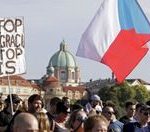
Despite having a strong human rights record, the Czech Republic is currently undergoing protests over the EU refugee resettlement proposals.
The Czech Republic has an overall strong record in the realm of human rights and political freedom and is considered to be a model for the former Soviet-bloc countries. Perhaps in response to abuses committed towards the Czech people during the periods of Nazi Germany and Soviet occupation, the Czech Republic takes an active role in protecting the rights of its citizens and is proud of its human rights record. Despite its overall positive record on human rights, the Czech Republic still faces some criticism by human rights organizations due to its refusal to participate in refugee resettlement programs put forward by the European Union and an increase in hate speech towards migrants from the Middle East. Additionally, governmental corruption has increased under the Presidency of Milos Zeman, thus increasing citizen alienation from the Czech political process.
In terms of demographics, the Czech Republic is estimated to be 10.4% Roman Catholic, 1.1% Protestant, 54% unspecified/other, and 34.5% non-religious. The main ethnic groups in the Czech Republic are Czech (64.3%), Moravian (5%), Slovak (1.4%), other (1.8%), and 27.5% unspecified, and the official languages of the country are Czech (spoken by ~95% of the population) and Slovak (spoken by ~2% of the population). The Czech Republic has a literacy rate of ~99% for both men and women and a life expectancy of 78.8 years (81.9 for women and 75.1 for men), comparable to the US and other European countries.
The Czech Republic has a strong economy characterized by a stable currency, diverse industries, and a low unemployment rate.
The Czech Republic is has a GDP $372 billion (2017 estimate), Human Development Index Score of 0.878 and a GINI Score of 25.9. The economy of the Czech Republic is primarily service-based (59.7%), with industry and agriculture making up 37.8% and 2.5% of total economic output respectively. The unemployment rate of the Czech Republic is estimated to be around 3% as of 2017 and GDP per capita is $35,200. The Czech Republic currently has the lowest unemployment rate in the European Union and its currency is one of the strongest performing currencies of 2017. Despite its strong economic performance in recent years, the Czech economies dependence on exports makes economic growth vulnerable to contractions in external demand.
In the realm of foreign policy, the Czech Republic is an active member of organizations such as the UN, European Union, NATO, and is an observer in the Organization of American States. The Czech Republic has diplomatic ties with a majority of countries and has sought to establish a positive reputation as a mediator in diplomatic disputes currently going on in Europe. Historically, the Czech Republic has had a tense relationship with both Germany and Russia due to the latter two countries attempts to limit Czech sovereignty and gain influence within both Czech domestic and foreign policy. In recent years, the Czech Republic has improved its diplomatic ties with Germany and have developed close economic ties. On the other hand, Czech-Russian relations soured to a point since Vladimir Putin began his third term in 2012. The Czech Republic strongly opposed the Russian-intervention in Ukraine and supports the ongoing EU sanctions against Russia.
In conclusion, the Czech Republic continues to remain one of the more stable countries within the European Union due to its strong economy, democratic society, and positive role in foreign affairs. Geopolitical issues remain minimal within the country and its future outlook remains strong in the face of emerging challenges such as a resurgent Russia, declines in US support for Europe, and the EU refugee crisis.
Iraq (officially known as the Republic of Iraq) is a Federal parliamentary republic located in the central part of the Middle East. Iraq bordered by countries such as Iran, Turkey, Saudi Arabia, Jordan, Kuwait, and Syria, has an area of approximately 438,317 Square Kilometers, and a population of around 40 Million. Iraq plays a major role in Middle Eastern politics due to its unstable nature, strategic location between two of the regions most stable countries, and a history defined by violent authoritarianism and colonialism.
Iraq has a long and rich history going back nearly 2,500 years.
The history of Iraq can be traced back to the 24th Century BCE, with the establishment of the Akkadian Empire in present-day Iraq. The Akkadian Empire lasted until 2150 BCE when it was replaced by the Assyrian Empire, which remained in power until 627 BCE. After the collapse of the Assyrian Empire, the Neo-Babylonian Empire came to power. The rule of the Neo-Babylonian Empire was ultimately short-lived, as the area comprising present-day Iraq was conquered by the Persian (present-day Iran) Shah Cyrus the Great in 539 BCE and soon became an integral part of the Persian Empire for the next few centuries. Iraq was conquered by the Arabs in 634 CE and its city of Baghdad became the capital of the Abbasid Caliphate by the 8th Century CE. Iraq soon became the primary cultural center of the Muslim world during the “Islamic Golden Age.” The Iranians re-established control over Iraq by the 11th Century and Iraq remained as part of present-day Iran until 1831, when the Ottoman Empire gained control over the area after lengthy conflicts with both the Safavid and Qajar Iranian monarchies.
Following the defeat of the Ottoman Empire in World War I, the UK acquired a mandate over Iraq and sought to remake Iraq into an image that would suit their plans for global domination. The British government installed into power a Sunni monarch, Faisal ibn Husayn (despite the fact that Iraq is majority Shi’a) and worked to suppress the nationalist sentiments of groups within Iraq such as the Kurds and Assyrian Christians. These parameters would continue until the 1958 Revolution that established the Republic of Iraq. The UK ultimately granted Iraq independence in 1938, but the country still relied on British support and was considered to be a “vassal state” of the declining British Empire.
Saddam Hussein (who ruled Iraq from 1968 to 2003) had a reputation as a brutal dictator and is widely considered to be one of the worst human rights abuses in recent memory.
The monarchy was overthrown in the Iraqi Revolution of 1958 by Abd al-Karīm Qāsim and Abdul Salam Arif. Saddam Hussein and the Ba’ath Party assumed power after the July 1968 Iraqi Revolution and soon sought to remake Iraq into their own image. Even though Saddam Hussein implemented a series of progressive social programs, improved women’s rights, and nationalized Iraq’s oil production in 1972, he had a reputation as a brutal dictator who allowed little opposition to his rule. For example, Saddam Hussein was known for committing human rights abuses against both the Shi’a Muslims and Kurds of Iraq (ranging from torture to mass executions), allowed only Sunni Muslims into positions of power, and implemented an apartheid system meant to separate Shi’a Muslims from the rest of Iraqi society. After the successful conclusion of the Iranian Revolution in early 1979, Saddam set his sites on Iran, which he felt was in a vulnerable position due to the recent Revolution and purges by the government of Ayatollah Khomeini against former members of the Shah’s military force. Iraq launched a war against Iran in September of 1980 with the goal of overthrowing the Khomeini government from power and annexing the oil-rich province of Khuzestan, which is home to a large population of Iranian Arabs who identify as Sunni Muslim. Despite the fact that Saddam Hussein was backed by countries such as the US, Soviet Union, UK, France, Germany, Japan, and Saudi Arabia, the Iranians were able to hold the border for the course of the war. During the war, Iraq (with US help) developed a chemical weapons program and used these weapons numerous times over the course of the war, on both Iranian soldiers and civilians, as well as the Kurds of Northern Iraq. Ultimately, Iran was able to turn back the Iraqi invasion and won a pyrrhic (costly) victory.
In August 1990, Iraq seized Kuwait in response to a long-standing dispute related to oil production but was expelled by US-led coalition forces during the 1990-91 Gulf War. Following Kuwait’s liberation, the UN Security Council required Iraq to scrap all weapons of mass destruction and long-range missiles and to allow UN verification inspections. Continued Iraqi noncompliance with UN resolutions over a period of 12 years led to the US-led invasion of Iraq in March 2003 and the ouster of Saddam Hussein from power. US forces remained in Iraq until 2011, helping to provide security and to train and mentor Iraqi security forces. In October 2005, Iraqis approved a constitution in a national referendum and, pursuant to this document, elected a 275-member Council of Representatives in December 2005. The Council of Representatives approved most cabinet ministers in May 2006, marking the transition to Iraq’s first constitutional government since the late 1960s. Since 2014, Iraq has been engaged in a military campaign against ISIS to recapture territory lost in the western and northern portion of the country.
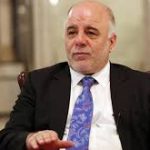
Haider al-Abadi is the current Prime Minister of Iraq and has been in power since 2014.
The current Iraqi constitution was adopted on 15 October 2005. The constitution stipulates that Iraq is a democratic, federal parliamentary Islamic republic. The federal government is composed of three branches, the executive, legislative, and judiciary, as well as numerous independent commissions. Aside from the federal government, there are regions (made of one or more governorates), governorates, and districts within Iraq with jurisdiction over various matters as defined by law. The executive branch of Iraq consists of the Presidency Council and the Council of Ministers. The president is the head of state, protecting the constitution and representing the sovereignty and unity of the state, while the prime minister is the direct executive authority and commander in chief. The president and vice presidents are elected by the Council of Representatives. The prime minister is nominated by the largest bloc in the Council of Representatives. Upon designation, the prime minister names the members of his cabinet, the Council of Ministers, which is then approved by the Council of Representatives. The executive branch serves a four-year term concurrent with that of the Council of Representatives. The current President of Iraq is Fuad Masum, who assumed office on July 24, 2014, and the current Iraqi Prime Minister is Haider al-Abadi, who came to power on September 8, 2014.
The Council of Representatives is the main elected body of Iraq. The Constitution defines the “number of members at a ratio of one representative per 100,000 Iraqi persons representing the entire Iraqi people.” The members are elected for terms of 4 years. The council elects the President of Iraq; approves the appointment of the members of the Federal Court of Cassation, the Chief Public Prosecutor, and the President of Judicial Oversight Commission on proposal by the Higher Juridical Council; and approves the appointment of the Army Chief of Staff, his assistants and those of the rank of division commanders and above, and the director of the intelligence service, on proposal by the Cabinet.
The Iraqi Supreme Court Building.
The judicial system of Iraq consists of three levels, the Supreme Court, the Supreme Iraqi Criminal Tribunal, and the Central Criminal Court. The Supreme Court determines the constitutionality of laws and regulations, acts as a final court of appeals, settles disputes between the federal government and the regions and governorates, municipalities, and local administrations, and settles accusations directed against the President, the Prime Minister and the Ministers. The Supreme Iraqi Criminal Tribunal is a special court established to try Iraqi nationals or residents accused of genocide, crimes against humanity, war crimes or other serious crimes committed during the 35-year rule of Saddam Hussien (1968-2003). The Central Criminal Court is the main criminal court of Iraq and is based on an inquisitorial system and consists of two chambers: an investigative court, and a criminal court. The Iraqi judiciary is supervised by the Higher Judicial Council, which nominates the Chief Justice, Justice of the Judiciary Oversight Commission, and drafts the budget of the judiciary.
Iraq has a mixed record regarding human rights and is widely considered by international observers to be an unstable democracy. Since 2003, Iraq has made some progress in developing a democratic political system for the first time since the late 1960s. Iraq has had seven competitive elections over the past 13 years that resulted in a variety of different political parties coming into power. Additionally, civil society organizations have grown in number since the 2003 US-led invasion that removed Saddam Hussein from power and are viewed as essential aspects of political participation by a majority of the population of Iraq. Despite some progress over the past few years, Iraq continues to remain a highly unstable country in terms of politics. The Iraqi Consitution includes no provisions establishing a system of checks and balances between the branches of government and high levels of political corruption have plagued the Iraqi government in recent years. These problems are further compounded by the lack of strong formal governmental institutions meant to promote political stability. Arbitrary arrests and torture are a common occurrence in Iraq, though the human rights situation has improved overall when compared to when Saddam Hussein was in power. As a result of these challenges, protests have emerged in Iraq in 2011 and 2015 due to the fact that the citizens are increasingly growing tired of weak governmental institutions and the failure of the government to develop credible solutions to the problems facing Iraq such as the rise of extremist groups such as ISIS and the poor economic situation facing the country.
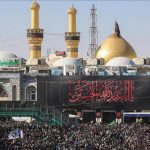
Iraq is home to Karbala, which is the site of the tomb of the grandson of Muhammad and the third Shi’a Imam, Husayn ibn Ali
In terms of demographics, Iraq is estimated to be ~99% Muslim. Approximately 51-65% of Iraqi Muslims are Shi’a, whereas 35-46% are Sunni. Iraq is home to the cities of Karbala and Najaf, which are the holiest sites in Shi’a Islam. Najaf is the site of the tomb of Ali ibn Abi Talib (the first Shi’a Imam), and Karbala is the site of the tomb of the grandson of Muhammad and Shi’a Imam, Husayn ibn Ali. Najaf is also a center of world renown Shi’a seminaries and schools. A majority of Iraqi Christians are ethnic Assyrians and members of the Chaldean Catholic Church, Assyrian Church of the East, and the Eastern Orthodox Church. Despite numbering as high as 16 million as late as 1987, the Iraqi Christian population has declined to 450,000 as of 2013. Some of the factors contributing to the decline of the Iraqi Christian population include the rise of extremist groups such as ISIS and Al-Qaeda, political instability, and lack of economic opportunities. A majority of Iraqi Christians over the past three decades have migrated to countries such as Iran, the US, UK, and Canada to flee oppression and find a better life. Other religious groups in Iraq include Yazidism, Zoroastrianism, Mandaeism, and several indigenous religious groups. A majority of the population of Iraq (~80%) identifies as Arab and Arabic, Kurdish, and Azerbaijani are the official languages of the country. Iraq has a literacy rate of 79.7% (85.7% for men and 73.7% for women).
Iraq has a GDP of $660 billion (2017 estimates), a Human Development Index Score of 0.649 and a GINI Score of 30.9. The economy of Iraq is primarily serviced-based (54.6%) and industry and agriculture make up 40.6% and 4.8% of the economy respectively. The unemployment rate of Iraq is ~16% and the GDP per capita is $17,000. The economy of Iraq continues to remain stagnant due to political instability, lack of foreign investment, and inefficiencies resulting from excessive governmental intervention in the Iraqi economy.
Iraq has recently sought to improve its standing before the international community and develop a role as a constructive regional power.
Iraq has a complex role in terms of international politics. Previously considered a “pariah state” during the rule of Saddam Hussien, Iraq is working to rebuild its reputation in the eyes of the international community. Iraq is a member of a number of international organizations such as the Arab League, the Non-Aligned Movement, the Organization of Islamic Cooperation, the International Criminal Court, and the United Nations and has diplomatic relations with a majority of countries. Historically, Iraq and Iran had a very tense relationship due to the legacy of the Iran-Iraq War, religious differences, and differing visions for their respective roles in the greater Middle East. Since the overthrow of Saddam Hussien however, Iraq and Iran have expanded their diplomatic ties and now consider each other to be allies. Additionally, Iraq is seeking to develop constructive ties with countries such as the US, Russia, Brazil, India, and Jordan. On the other hand, Iraq views Saudi Arabia as its main regional opponent, criticising the Saudi government for their discrimination against Shi’a Muslims and noting that the Saudi government has played a major role in the growth and spread of extremist groups such as ISIS and Al-Qaeda and destructive ideologies such as Wahhabi Islam.
In conclusion, Iraq continues to remain arguably one of the most unstable countries in the Middle East some 15 years after the overthrow of Saddam Hussien and his authoritarian regime. Some of the main issues preventing Iraq to emerge as a strong country include the lack of formal governmental institutions, the continued existence of violent extremist groups, weak economic prospects, and the legacies of authoritarianism and colonialism.
In the third chapter of the book “Democratization: theory and experience,” Laurence Whitehead looks at the concept of civil society and its relationship to democratization. If democracy is to be viewed as a complex and open-ended process, a more explanatory account is needed to describe it more effectively. Before a democratic transition can begin, there must exist a political community receptive to such change and willing to participate in a democratic system. The ideas of civil society and social capital provide condensed analogies to explain the structure of and simplify the ideas regarding the long-term changes that stem from democratization. Instead of focusing on political actors and what they seek to accomplish, political theorists should instead focus on the large-scale and broadly-based features of the entire political community.
Laurence Whitehead then goes on to highlight the factors that help to define the idea of civil society. Theorists of civil society have seen more success in erasing its highly specific origins and have converted it into a free-standing category of thought that comes to mind when Westerners make comparative statements about the density of associative life in diverse political communities. Additionally, most non-Western discourses tend to lack an equivalent concept to the idea of civil society. Even though some argue that non-governmental organizations can be considered to be civil societies, they tend to lack the surrounding ethos, authenticity, and autonomy that are considered to be hallmarks of civil societies. Moreover, non-governmental organizations also lack the well-structured support from the larger community that civil societies often have. The definition of civil society also excludes associations such as households, religious institutions, and hierarchical institutions such as conscripted military forces and the bureaucracy of national government. Between such extremes, there may be an independent sphere of voluntary association in which interactions are governed by the principles of autonomy and self-respect.
Laurence Whitehead also considers the factors that characterize stronger civil societies. Strong civil societies are characterized by a wider set of boundaries for interaction between individuals in society and by a larger acceptance of personal freedom and individual rights. As such, a strong civil society will allow for a greater chance for democracy to be successful and long-lasting despite challenges. Even if people reach an agreement on the factors that allow for the successful implementation of civil society, the results of their agreement will not be quantitative and more descriptive in nature. The idea of a descriptive category, according to Whitehead, is akin to an “empty box,” as there are not previously existing theories within it. As such, people can apply their own theories in interpretations regarding the political process. Additionally, such factors raise the question of how an “empty box” descriptive category shape such dynamic and long-term political process such as democratization. Any linkage between both factors would require both a description and an explanation of how the norms of civility can be compelling enough to reproduce over generations and override the loyalty demands of the state and the primary descriptive groups.
After going over some of the theoretical approaches to the idea of civil society, Laurence Whitehead goes over what would be a tentative definition of the concept of civil society. If groups such as terrorist organizations, armed paramilitary groups, and criminal organizations are not to be defined as being members of civil society, Whitehead highlights the need to stipulate a general definition of civil society that highlights the importance of civility. According to Whitehead, civil society is defined as a set of self-organized intermediary groups that are relatively independent of both public authorities and private units of reproduction and production, can discuss collective actions in the defense and promotion of their interests, do not seek to replace state agents or private reproducers or to accept responsibility for governing the polity as a whole, and agree to act within pre-established legal guidelines. Additionally, Whitehead states that civil society rests on four different conditions. The first two conditions are that of dual autonomy and collective action. The next two conditions are non-usurpation and civility. The definition of civil society tends to exclude criminal organizations and paramilitary groups and any organizations that threaten individual rights.
Laurence Whitehead next looks at the idea of civility and incivility. Following such a definition of civil society, it is unlikely that political scientists will find forms of voluntary associative organizations distributed evenly throughout the geographical and social terrain that is covered by the modern nation-state. Whitehead argues that neither the market or the state can be effectively used to even out the uneven social geography that is present throughout the world. The reason why the market is ineffective in evening out social geography because it obeys consumer sovereignty. Additionally, the state cannot solve such issues because its policies are skewed towards societal groups with the highest level of influence. Such factors lead to the question of what mechanism can be used to address the issue of uneven social geography, as civil society will eventually become out of sync with democratic citizenship. The weaknesses of civil society are often evident in many of the newer democracies. For example, efforts at democratization in many post-authoritarian countries are often overshadowed by antisocial forms of individualism that substitute the forms of civil associationalism favored by civil society theorists. Thus, the main advantages of civil society tend to be highly concentrated among a minority of the people in many of the new democracies.
The dynamic between civil society and democratic citizenship is also addressed by Laurence Whitehead. Civil society tends to develop unevenly over time in a logic distinct from state formation. The resulting patterns of associative life and social communication typically emerge as highly structured with insiders, traditional favored sectors, and excluded sectors. Additionally, new democracies often only work effectively if they can restrain such exclusionary tendencies and indulge the people with the most social capital to adapt to a broader and longer-term view of their civic engagement in society. Even though civil society developed incrementally, modern political regimes are often created quickly and with short notice. Examples of political regimes created abruptly include the new nations created Europe after World War One, Asia and Africa during the 1950s and 1960s, and the democracies created in the wake of the collapse of the Soviet Union during the late 1980s. In all cases, formal political equality was established at a specific moment and the citizens earned a full set of democratic rights even though the creation of exclusionary political societies did not coincide with pre-existing maps of associative life between the citizenry.
Civil society may also experience slow growth that eventually allows for the creation of the conditions favorable to democracy. Examples of the gradual development of civil society include Great Britain during the 17th Century and Spain during the 1970s. Additionally, it is also the case that the implementation of a democratic government will foster the development of civil society and create the conditions necessary for its success. Examples include many of the former communist countries and to the experience of many of the former territories of countries such as the US and Great Britain. There also exists the possibility that a civil society attains a high level of development, but never produce a democratic political regime, as in the case of Hong Kong. Moreover, a civil society may develop on the basis that its freedoms and rights can only be secured if there exists a series of exclusionary measures that prevent some members form full participation. Examples include the Palestinian population in Israel, the Cypriot population in Turkey, and African Americans in the Southern part of the US up until the 1960s.
In conclusion, Laurence Whitehead explores the concept of civil society and its role in democratic transitions in “On Civil Society.” Whitehead underscores the importance of political theorists examining the factors that result in the development of strong civil societies that allow for the long-term stability of democratic governments. Additionally, Whitehead goes on to characterize the factors that characterize an effective civil society and the dynamic between civil societies and the expectations of democratic citizenship. An in-depth understanding of the idea of civil society will allow political scientists and political theorists to more effectively understand the factors that allow democratic governments to succeed in certain countries but ultimately fail in others. Moreover, the concept of civil society can be applied to explain potential democratic transitions in countries that a presently authoritarian.
In the book “The Civic Culture: Political Attitudes and Democracy in Five Nations, An Analytic Study,” Gabriel Almond and Sidney Verba present a study of the political culture of democracy and discuss the social structures and processes that help to improve its overall stability. A common concern among political scientists is the future of democracy at the global level. In the years following World War II, events such as de-colonialization have raised some questions about the long-term stability of Democratic political systems and placed the issue into the broader context of the world’s culture. Despite the fact that Almond and Verba feel that the direction of political change at the global level is unclear, they argue that a political culture based upon individual participation will emerge due to demands by ordinary citizens. Additionally, Almond and Verba propose that the emerging nations will be presented with two different models of the participatory state, the democratic and totalitarian models of participation. The democratic model of participation offers the ordinary man the opportunity to take part in the political decision-making process as an influential citizen, whereas the totalitarian offers him the role of the “participant subject.” Both the democratic and totalitarian models of participation have appealed to emerging nations, but it is unclear which one will ultimately win.
According to Gabriel Almond and Sidney Verba, the democratic model of participation will require more than the introduction of formal institutions of democracy such as freedom of speech, an elected legislature, and universal suffrage. A participatory democratic system also requires a consistent political culture. On the other hand, Almond and Verba argue that there are several problems with transferring democratic political culture to emerging nations. The first issue is that many of the leaders in developing states have little experience with the working principles of democratic policy and civic cultures such as political parties, interest groups, and electoral systems. As a result, the idea of democratic policy as conveyed to the leaders of new countries is incomplete and heavily stresses ideology and legal norms as opposed to conveying the actual feeling and attitude towards democratic ideals. A further reason why the diffusion of democracy to new nations is difficult is that they are confronted with structural problems. For example, many of the new nations are entering the global stage at a time in which they have not fully developed industrially. As a result, individual leaders may be drawn to a policy in which authoritarian bureaucracy promotes industrial development and technological advancement, and where political organization becomes a device for human and social engineering.
Gabriel Almond and Sidney Verba then go on to discuss the idea of the civic culture. The civic culture is a mixed set of values that contains attributes from both modern and traditional cultures and allows them to interact and interchange without polarizing and destroying each other. Additionally, Almond and Verba describe the civic culture as pluralistic and based on communication and persuasion, consensus, diversity, and accessibility to gradual political change. Almond and Verba then explore the development of civic culture in Great Britain. One of the circumstances that resulted in the creation of a modern society in Britain was the emergence of a thriving merchant class and the involvement of the court and aristocracy in economic decisions. Moreover, the English Reformation and the increasing prevalence of religious diversity resulted in a higher level of secularization within British society, leading to greater modernization. As a consequence of both factors, Britain entered the 18th Century with independent merchants and aristocrats who established a parliamentary system that made it possible to assimilate rapid social changes without any sharp discontinuities. By establishing a civic culture, ordinary people were able to enter into the political process and develop British democratic structures.
Gabriel Almond and Sidney Verba describe several different types of political cultures. According to Almond and Verba, political culture refers to the overall attitudes that individuals have regarding the political system and their attitudes toward their respective roles in the system. The term political culture is used because it allows Almond and Verba to separate the non-political concepts from their study and allows them to employ an interdisciplinary approach to their analysis of mass attitudes towards democracy. In classifying objects of political orientation, Almond and Verba start with the general political system, which deals with the organization as a whole. In explaining the components of the political system, Almond and Verba distinguish the specific roles or structures, the functions of incumbents, and particular public policies, decisions, or enforcement of decisions. These structures, incumbents, and decisions are then classified by involvement either in the political (input) process, or in the administrative (output) process.
In their study of mass attitudes and values, Gabriel Almond and Sidney Verba have identified three distinct types of political cultures. The first type of political culture mentioned by Almond and Verba is the parochial political culture. A parochial political culture emerges when the citizens of a particular nation have no understanding of the national political system, do not possess any tendency to participate in the input processes and have no consciousness of the output operations. Additionally, there are no specialized political roles within a parochial political culture, and the leadership roles are not separated from their religious and social orientations. Examples of parochial political cultures include African and Native American tribes and indigenous communities within particular nations. A subjective political culture is when people are aware of the mechanism of government and the political process, but are not taught to or are not allowed to participate in the system. Examples of subjective political cultures include traditional monarchies or authoritarian government systems. In a participant political culture, the populace is involved in the decision-making process and more or less has a say in public policy decisions. Examples of participant political cultures include the United States, Great Britain, and many other countries throughout the world. The three different classifications of political culture described by Almond and Verba does not assume that one classification replaces the other. On the other hand, the introduction of new classifications serves as a way to encourage previous political orientations to adapt.
Gabriel Almond and Sidney Verba also mention that a number of political cultures are systematically mixed. A systematically mixed political culture occurs when there are elements of more simple and more complex patterns of political orientations. The first example of a systematically mixed political culture is the parochial-subject culture, which occurs when a majority of the population has rejected the exclusive claims of diffuse tribal, village, or feudal authority and has developed allegiance towards more complex political systems. Examples of parochial-subject political cultures include the Ottoman Empire and the loosely articulated African kingdoms. In a subject-participant culture, a substantial part of the population has acquired the ability and desire to become more engaged in governmental decisions, whereas the rest of the population continue to be oriented toward an authoritarian political structure and have a relatively little desire to get involved in critical public policy decisions. Additionally, a successful shift from a subject to a participant culture requires the diffusion of positive orientations toward a democratic infrastructure, the acceptance of norms of civic obligation, and the development of a sense of civic competence among a substantial proportion of the population. France during the 19th Century and Germany during the early 20th Century are examples of subject-participant political cultures. A parochial-participant political culture occurs when elements of a participatory system are introduced to a traditionally parochial society. As a result of the lack of structure and experiences with democracy, parochial-participant political cultures have the most experiences with instability and teeter back and forth between democracy and authoritarianism.
Gabriel Almond and Sidney Verba focus on the political cultures of five different countries in their study: The United States, Great Britain, Germany, Italy, and Mexico. Almond and Verba selected these countries because they have experienced a wide range of historical and political experiences and have gone through a number of events that influenced their political systems. The United States and Great Britain both represent relatively successful experiments in democratic governance despite the fact that the rationale behind their acceptance of democratic values is different. For example, the political culture in Great Britain combines deference toward authority with a lively sense of the rights of citizen initiatives, whereas the political culture of the United States is based on political competence and participation rather than obedience to legitimate authority. Germany is included because its experiments in democratic governance during the late 19th and early 20th Century never resulted in the development of a participatory political culture necessary to legitimize democratic institutions of government. Almond and Verba include Italy and Mexico in their study because both represent less developed societies with transitional political systems.
Gabriel Almond and Sidney Verba then go on to discuss the feelings towards government and politics that are prevalent in the United States, Great Britain, Germany, Italy, and Mexico. The first metric that they measured was the national factors in which the resident of all five countries were most proud of. A majority (85%) of American respondents cited their political system as the greatest source of pride they feel towards their country. In contrast, only 46% of British, 30% of Mexican, 7% of German, and 3% of Italian respondents cited their governmental institutions as their greatest source of national pride. Moreover, American and British respondents were more likely to refer to public policy accomplishments than the respondents from other countries. The Italian respondents cited their countries contributions to the arts and its cultural treasures, whereas the German respondents cited their countries economic system as the greatest source of national pride. Additionally, Mexican pride was distributed equally between the political and economic systems and the physical attributes of their country.
The findings show that the Americans and British express great pride in their political institutions and thus feel the least alienated towards their political systems. On the other hand, the Germans and Italian respondents express a low level of pride in their political institutions and feel more alienated towards their governments. The results from the Mexican respondents show that they have a keen interest in political involvement despite the fact that their political culture is largely parochial. The fact that Mexican respondents expressed an interest in politics is due to past feelings associated by the populace with events such as the Mexican Revolution. The continued connection to the Mexican Revolution shows that the Mexican people believe that the revolution did not accomplish its stated political goals and that the process of political change is ongoing. When broken down by educational level, a majority of American, British, and Mexican respondents with higher levels of education expressed more pride in their respective political systems. Additionally, the fact that educational attainment does no influence the levels of national pride among the German and Italian respondents further suggests alienation from the political system as opposed to a lack of awareness of the system.
Gabriel Almond and Sidney Verba also go on to explore the expectation of treatment by governmental authorities among the respondents from all five countries. Both Almond and Verba hypothesized that if the respondents expected fair treatment by governmental authorities, they would, in turn, express more support for legitimate authority. The respondents from the United States, Great Britain, and Germany expected a higher level of treatment by governmental authorities than the respondents from Italy and Mexico. Additionally, the expectation of treatment by governmental authorities varies by educational attainment. For example, respondents from the United States, Great Britain, and Germany with higher educational levels expect more equitable treatment by political authorities than respondents with lower levels of education. Even though the number of Italian and Mexican respondents expecting fair and equal treatment in government were relatively low, the differences between the advantaged and less advantaged groups regarding education were larger than in the United States, Great Britain, and Germany. Such findings show that there is a connection between expectations regarding treatment by governmental authorities and alienation from the political system.
The attitudes towards political communication are also discussed by Gabriel Almond and Sidney Verba. A key component of democratic governments is the willingness for ordinary men and women to get involved in the political process. The main factor that influences such willingness is the level of comfort with discussing political issues. Respondents from the United States and Great Britain expressed the highest level of willingness to discuss politics. Additionally, even though German respondents expressed the highest frequency of following reports about public affairs, the number of people who discuss politics on a regular basis was lower than in the United States and Great Britain. On the other hand, the Mexican and Italian respondents expressed a relatively low willingness to discuss political affairs. With regards to the percent of respondents who refused to report their voting decision, the American, British, and Mexican respondents expressed little reluctance when revealing their political choice, whereas the German and Italian respondents expressed the highest level of reluctance. The reluctance on the part of the German and Italian respondents to reveal their voting choices shows that they feel that identifying with a political party is unsafe and inadvisable. Additionally, their unwillingness to reveal their voting choices indicates that there is a higher level of alienation from the political system on the part of the German and Italian respondents when compared to the American, British, and Mexican respondents.
Gabriel Almond and Sidney Verba then discuss the relationship between the civic culture and democratic stability and the impact of political culture on the political system that it belongs to. One view that Almond and Verba discuss is the rationality-activist model, which stipulates that a stable democracy involves the population to be informed and active in politics. Additionally, the rationality-activist model requires the citizens to base their voting choices on careful evaluation and carefully weighing in the alternatives. On the other hand, Almond and Verba mention that current research shows that most citizens in democratic nations rarely live up to the rationality-activist model. As such, Almond and Verba feel that the rationality-activist model is only a part of the civic culture and does not make up its entirety. Moreover, Almond and Verba describe the civic culture as a mixed political culture that involves both citizens who are informed and take an active role in politics and citizens who take a less active role in politics. The diverse nature of the civic culture also implies that the different roles in political such as parochial, subject, and participant do not replace each other and instead build upon each other.
In conclusion, Gabriel Almond and Sidney Verba discuss the idea of the political culture and its relationship to democracy in “The Civic Culture: Political Attitudes and Democracy in Five Nations, An Analytic Study.” A major concern among political scientists is what factors result in the establishment of a political culture that allows for the stability of democracy within a particular country. In their study of political culture, Almond and Verba looked at several factors such as citizen views on government, views on treatment by governmental authorities, and the willingness of people to discuss political issues and the views that respondents from five different democracies have regarding them. The results of their study determined that countries with a long-term history of democratic governance were more likely to have political cultures that foster democratic ideas than countries with a shorter history of democratic government. Additionally, Almond and Verba discuss the relationship between political culture and the long-term stability of democratic political systems.
This video by PressTV presents a review of President Donald Trump’s first full year in office. One year has passed since Donald Trump has been elected US President. Since then, the world has seen a US President unlike any other. One that is aggressive, impulsive, uninterested in politics, and egotistical. Despite coming into office with a grand series of promises to change American politics for the better, the case can be made that the policies pursued by the Trump Administration have changed American politics for the worst. Trump has thus far failed to realize any of his campaign promises, fanned the conspiracy flames regarding his relationship with Russia, contradicted and insulted his staff, and made enemies of allies throughout the world. Additionally, President Trump has attacked the governmental institutions he oversees, threatened to use his powers to ruin the lives of his political opponents, waged war against members of his own party, and engaged in race-baiting, sexism, ableism, and religious bigotry when pursuing his destructive agenda.
One such area in which President Donald Trump left his mark during his first year was his immigration executive order banning (mostly Shi’a Muslim) immigrants, travelers, and refugees from seven majority-Muslim countries (Syria, Iran, Iraq, Yemen, Sudan, Somalia, and Libya). This action ignited a firestorm of protest and revealed the bigoted, white supremacist agenda underlying the Trump Administration’s policies. President Trump also rattled the nuclear-saber more than any other President in US history with his incitement of North Korea, going as far to threaten the North Korean government with “fire and fury.” Many politicians on both sides of the aisle worry that Trump has misused the moral authority surrounding the office of the Presidency through such statements and actions.
President Donald Trump claimed during his first year in office that he has the unilateral authority to order the Justice Department to open or close investigations into his political opponents. Such rhetoric threatens to set a negative precedent in future Administrations that goes directly against the principles of separation of power spelled out in the US Constitution. President Trump’s outreach to autocratic regimes such as Saudi Arabia and Israel further characterized his first year in office. By backing the Saudi Crown Prince Mohammad bin Salman, President Trump has given the green light for Saudi Arabia to escalate its three-year-long intervention in Yemen, which has resulted in the deaths of thousands of innocent people and has encouraged hatred towards Shi’a Muslims throughout the world. Additionally, President Trump’s choice to recognize Jerusalem (“al-Quds” in Arabic) as the capital of Israel has encouraged the Israeli regime to expand its crusade against the Palestinian people.
President Donald Trump also left a negative mark within the realm of international politics and has adopted a firm, neoconservative view regarding the role of the US in the world. President Trump has repeatedly denounced the Iranian nuclear deal, calling it the “worst deal ever negotiated” despite the fact that it was upheld by numerous organizations, most notably the United Nations and International Atomic Energy Agency (IAEA). Additionally, President Trump has proposed a hardliner stance towards Iran, calling it a “terrorist nation” and calling for US military action to remove the current Iranian government from power. These actions on the part of the President have led to many European leaders such as German Chancellor Angela Merkel and French President Emmanuel Macron to rethink their reliance on US political and diplomatic leadership on the world stage.
In terms of domestic policy, President Donald Trump generally has had an abysmal first year in office. Trump failed to follow through on repealing The Patient Protection Affordable Care Act (“Obamacare”) despite the fact that his party controls both houses of Congress, and has relied on Executive Orders more often than any other first-year President in US history. The only true legislative achievements of President Trump’s first year in office are his nomination of Neil Gorsuch to the Supreme Court and the passage of the Tax Cuts and Jobs Act of 2017. Many critics argue that the presence of Neil Gorsuch on the Supreme Court will move the Judicial branch far to the right and have a profound (and what many view as a negative) impact on decisions such as drug policy, women’s rights, abortion, gay rights, and electoral reform. Additionally, nearly all economic organizations point out that the Tax Cuts and Jobs Act is a clear giveaway to the wealthiest 1% and only serve to further the widening income gap between the wealthy and the poor.
One of the most unstable countries in the Middle East is Lebanon. Officially known as the Lebanese Republic, Lebanon is a parliamentary republic located in the Mediterranean region of the Middle East. Lebanon is bordered by countries such as Greece, Cyprus, Syria, Israel, Jordan, and Iraq, has an area of approximately 10,400 square kilometers and a population of around 4 Million (not counting 1.9 Million refugees mostly from Syria and Palestine). Lebanon plays a significant role in contemporary Middle Eastern politics due to its ongoing territorial disputes with Israel, lack of a strong central government, and the continued influence of neighboring countries such as Syria within its internal and external affairs.
Lebanon was a province of the Ottoman Empire from the early 16th Century all the way up until 1918.
The people of Lebanon (much like the Palestinian people) are descendants of the Canaanites, who first settled in the Meditteranean region of the Middle East around 3000 BCE. Historically, the territory of Lebanon was controlled by foreign powers such as the Phoenicians, the Persians (under the Achaemenid Empire), the Greeks, Romans, the Arabs (under both the Rashidun and Abbasid Caliphates), and the Christian Crusaders during the 12th Century. Most recently, Lebanon was annexed by the Ottoman Sultan Selim I in 1516 and soon became an integral part of the Ottoman Empire, linking the Empire with parts of Southern Europe such as Italy, France, Spain, and Portugal.
Following the defeat of the Ottoman Empire in World War I, France acquired a mandate over the northern portion of the former Ottoman Empire province of Syria. The French named the region Lebanon in 1920 and granted this area independence in 1943. Since 1943, Lebanon has been marked by periods of political turmoil interspersed with prosperity built on its position as a regional center for finance and trade. The Lebanese Civil War (lasting from April of 1975 to November of 1989 and resulting in the deaths of some 120,000 people) was followed by years of social and political instability. Neighboring countries such as Syria have historically influenced Lebanon’s foreign policy and internal policies, and its military occupied Lebanon from 1976 until 2005. The Shi’a Muslim Hezbollah political group and Israel continued attacks and counterattacks against each other after Syria’s withdrawal and fought a brief war in 2006.
The current Lebanese constitution was adopted on May 23, 1926, and most recently amended in October of 1989. The constitution stipulates that Lebanon is a parliamentary democracy that includes confessionalism, in which high-ranking offices are reserved for members of specific religious groups. The President, for example, has to be a Maronite Christian, the Prime Minister a Sunni Muslim, the Speaker of the Parliament a Shi’a Muslim, and the Deputy Prime Minister and the Deputy Speaker of Parliament Greek Orthodox Christians. This system is intended to deter sectarian conflict and attempts to represent fairly the demographic distribution of the 18 recognized religious groups in government. The confessional system is based on 1932 census data, which showed the Maronite Christians as making up nearly 70% of the countries total population. The Government of Lebanon continues to refuse to undertake a new consensus, for fear that a change in the political system would further destabilize the country.
Michel Aoun is the current President of Lebanon and has served in office since October of 2016.
The executive branch of Lebanon is headed by the President and the Prime Minister. The President of Lebanon is elected by Parliament for a six-year term and cannot be reelected again until six years have passed from the end of the first term. The current President of Lebanon is Michel Aoun, who assumed office on October 31, 2016. Aoun is a member of the Free Patriotic Movement, a political party that is aligned with both the Maronite Christians and the Shi’a Muslims of Lebanon. The Prime Minister and Deputy Prime Minister are appointed by the President in consultation with the Parliament. The Prime Minister of Lebanon is Saad Hariri, who has been in power since December 8, 2016. Hariri is a member of the Future Movement, a political party aligned with the Sunni Muslims of Lebanon.
Lebanon’s national legislature is called the Assembly of Representatives (Majlis al-Nuwab in Arabic). Since the elections of 1992, the Parliament has had 128 seats. The term for the legislature was recently extended to five years. The parliament is elected by universal adult suffrage based on a system of majority or “winner-take-all” for the various confessional groups. There has been a recent effort to switch to proportional representation which many argue will provide a more accurate assessment of the size of political groups and allow minorities to have their voices heard. Most deputies do not represent political parties as they are known in the West, and rarely form Western-style groups in the assembly. Political blocs are usually based on confessional and local interests or on personal/family allegiance rather than on political affinities. Lebanon’s judicial system is based on the Napoleonic Code. The Lebanese court system has three levels:
courts of first instance,
courts of appeal, and the
court of cassation.
There also is a system of religious courts having jurisdiction over personal status matters within their own communities.
Hezbollah, a Shi’a Muslim political party & militia group founded by Iran and Syria in 1982, is the most powerful political organization in Lebanon.
Lebanese political institutions often play a secondary role to highly confessionalized, personality-based politics. Powerful families still play a role in mobilizing votes for both local and parliamentary elections. Nonetheless, a lively panoply of domestic political parties, some even predating independence, exists. The largest are all confessional based. The Free Patriotic Movement, The Kataeb Party, the National Bloc, National Liberal Party, Lebanese Forces and the Guardians of the Cedars each have their own base among Christians. Amal and Hezbollah are the main rivals for the organized Shi’a vote, and the PSP (Progressive Socialist Party) is the leading Druze party. While Shi’a and Druze parties command loyalty to their leadership, there is more factional infighting among many of the Christian parties. Sunni parties have not been the standard vehicle for launching political candidates, and tend to focus across Lebanon’s borders on issues that are important to the community at large. Lebanon’s Sunni parties include Hizb ut-Tahrir, Future Movement, Independent Nasserist Organization, the Al-Tawhid, and Ahbash. In addition to the traditional confessional parties, new secular parties have emerged, representing a new trend in Lebanese politics towards secularism. In addition to domestic parties, there are branches of pan-Arab secular parties (Ba’ath parties, socialist, and communist parties) that were active in the 1960s and throughout the period of civil war.
Overall, the political system can be described as a “flawed” and an “unstable” democracy. Even though Lebanon has numerous democratic political isnstitutions, a free press system, and is generally on par with international standards regarding human rights, the government itself remains relatively weak and formal governmental institutions are ineffective at best. The lack of strong political institutions within Lebanon is considered to be one of the lingering effects of the Lebanese Civil War, ongoing Middle East conflicts such as the War against ISIS and the Israel-Palestinian conflict, and the continued influence of foreign powers such as Syria, Iran, Russia, and Israel within Lebanese domestic politics.
Lebanon is home to members of all three of the Abrahamic faiths, as well as several indigenous religious groups.
In terms of religion, Lebanon is estimated to be 55% Muslims, 40% Christian, and 5% other. An overwhelming majority (~75%) of Lebanese Muslims are Shi’a, whereas only 25% are Sunni. Twelvers are the predominant Shi’a group, followed by Alawites and Ismailis. The Shi’a Muslims of Lebanon are largely concentrated in northern and western Beqaa, Southern Lebanon, Southern Beirut, Tripoli, and Akkar. Most Lebanese Sunni Muslims identify with the ideology of Wahhabism, an ultra-conservative sect of Islam that originated in Saudi Arabia during the 18th Century. A majority of Lebanese Christians are members of the Maronite Catholic Church, though a number of Greek Orthodox and Protestant communities exist as well. Other religious groups within Lebanon include the Druze, a small Jewish population, Baha’i, and several indigenous religions unconnected to any of the three Abrahamic faiths. Arabs are the largest ethnic group in Lebanon and Arabic, French, English, and Armenian are the official languages. Lebanon has a 94% literacy rate (the only country in the Middle East with a higher literacy rate is Iran) and an average life expectancy of 78 years, comparable to countries such as the US.
Lebanon has a GDP of around $50 billion and Human Development score of 0.763 as of 2015. The economy of Lebanon is primarily service-based (73.3%) Agriculture and Industry make up 21% and 5.7% of the Lebanese economy respectively. The unemployment rate in Lebanon is estimated to be at least 10% and the country has a GDP per capita of $19,100. The 1975-89 civil war damaged Lebanon’s economic infrastructure, cut national output by half, and derailed Lebanon’s position as the economic hub of the Middle East. Following the civil war, Lebanon rebuilt much of its war-torn physical and financial infrastructure by borrowing heavily, mostly from domestic banks, which saddled the government with a huge debt burden. Spillover from the Syrian conflict, including the influx of more than 1 million Syrian refugees, has increased internal tension and slowed economic growth to the 1-2% range for the past five years.
Lebanon is an active member of international organizations such as the UN, Non-Aligned Movement, and the Organization of Islamic Cooperation.
In terms of international politics, Lebanon is a member of a number of international organizations such as the Arab League, the Non-Aligned Movement, the Organization of Islamic Cooperation, the International Criminal Court, and the United Nations and has diplomatic relations with a majority of countries. Some of the countries that Lebanon has close ties with are Iran, Syria, Russia, Palestine, and Pakistan, Additionally, Lebanon has a stable relationship with many Western countries such as the US, UK, Germany, Italy, and France. Lebanon’s main enemy in the Middle East is Israel. The animosity between Lebanon and Israel can be traced back to the creation of Israel in 1948. Lebanon was an active participant in the 1948, 1967, and 1973 Arab-Israeli Wars and considers the Shebaa farms area in Northern Israel as part of Lebanon. Additionally, Israel intervened in the Lebanese Civil War in 1976 and began an occupation of Southern Lebanon in 1985, which lasted until 2000. During their occupation of Southern Lebanon, the Israeli government committed numerous human rights abuses such as the killing of unarmed civilians, denying the Shi’a Muslims of Southern Lebanon the freedom to practice their faith, and clamped down on numerous rights such as press freedom, political participation, and freedom of expression. These actions only served to further expand the already tense relationship between the Lebanese people and Israel and made any potential reconciliation between both countries next to impossible.
In conclusion, Lebanon continues to be beset with numerous social, political, and economic issues despite having the potential to be one of the most progressive and stable countries in the entire Middle East. The root of most political issues in Lebanon can be traced back to its confessional system of government, which makes representation in government highly unequal and discourages citizen involvement in the political system. A possible solution would be to move towards a system based on proportional representation an to not restrict offices such as the Presidency and the Prime Minister to members of certain religions. Such a system would reduce the strong levels of political tension within Lebanon and allow it to become a beacon of stability in one of the most unstable regions of the world.
The Middle East is the term for a region consisting of countries in Southwest Asia and the Northern part of Africa. The term “Middle East” dates back to the late 19th Century, when it was coined by the British foreign service and soon adopted by the US government. The term was originally used to distinguish the area east of the Balkans and west of India. The origin of the name speaks volumes about the political realities of the 19th Century when the perspective of the British and the US carried much weight in international relations.
The Middle East is a diverse region in terms of both its landscape and culture.
The Middle East is a geographically diverse region in Southwest Asia and part of North Africa stretching from the Mediterranean Sea to the Persian Gulf, bounded by the Caspian Sea in the north and the Sahara Desert in the South. It has a long shared history and a shared religious tradition, being the birthplace of the four major monotheistic religions of Islam, Judaism, Christianity, and Zoroastrianism. The Middle East is also defined as being a central location of trade and cultural transmission between Europe, Africa, and Asia.
Within the larger Middle East, one can also describe sub-regions, such as North Africa and the Levant, which share certain characteristics. The Levant encompasses Syria, Cyprus, Turkey, Iraq, Lebanon, Israel and Palestine, and is considered an important area because of its close historical connection with countries such as Italy, France, Spain, and Portugal. Additionally, the North African region of the Middle East is characterized by a culture mixed with Arab, African, and Southern European traditions as well as a diverse religious landscape (the religion of Judaism is widely considered to have originated in Northern Africa and large communities of Sephardic Jews remain in the region to this present-day).
The exact list of countries that make up the Middle East is often sharply debated by scholars. Almost all scholars would agree that the Middle East includes the countries of Bahrain, Cyprus, Egypt, Iran, Iraq, Israel, Jordan, Kuwait, Lebanon, Oman, Palestine, Qatar, Suadi Arabia, Syria, Turkey, United Arab Emirates, and Yemen. Additionally, many experts also characterize the North African countries of Algeria, Libya, Morocco, Sudan, and Tunisia as part of the Middle East due to a shared culture with the rest of the Middle East. By and large, a majority of people living in the Middle East identify as part of the Arab ethnic group, although diverse ethnic groups such as Persians (residing in Iran, Iraq, Lebanon, Syria, Yemen, Bahrain, and the Gulf States), Kurds (mostly present in Iran, Iraq, Syria, Turkey, and Lebanon), Turks, and many others play a large role in Middle Eastern politics.
The cultures of both Afghanistan and Pakistan were influenced by Middle Eastern countries such as Iran.
The author of this post agrees with the universal consensus regarding the countries that make up the Middle East but also feels that several countries and regions not typically considered to be part of the Middle East should be included as well. The first two countries are Afghanistan and Pakistan. Even though Afghanistan and Pakistan are usually considered to be part of South Asia, they shared numerous cultural and religious similarities with several Middle Eastern countries such as Iran. Afghanistan and Pakistan were integral parts of the Persian Empire prior to the 18th Century and Shi’a Islam is a strong force within both countries (roughly 7-15% of Afghanistan’s population identifies as Shi’a, whereas as many as 20-30% of Pakistani Muslims are Shi’a). Additionally, the main languages of both Afghanistan and Pakistan are rooted in the Iranian-based language Farsi and the region of Baluchistan (located in Southeastern Iran) is split between Iran and Pakistan.
The culture of Southern Italy continued to be influenced by the legacy of the Arab rule of the Abbasid Caliphate.
Another territory that can reasonably be considered part of the Middle East is Southern Italy, which consists of major cities such as Sicily, Palermo, and Sardinia. Southern Italy can be characterized as being part of the Middle East for several factors. The main reason is that Southern Italy was under Arab control from 831 CE (with the establishment of the Emirate of Sicily, which was ruled by the Abbasid Caliphate) to 1091 CE (when it was conquered by Christian crusaders under the command of Roger I of Sicily). Despite the conquest of Southern Italy by the Byzantine Empire, Muslims continued to make up a majority of the population in the territory until the 13th Century. The legacy of Muslim rule continues to influence Southern Italy to the present day, with Arabic and Sicilian language sharing many root words. Additionally, Southern Italy serves a key point linking both the Mediterranean and North African regions of the Middle East to mainland Europe and has a very rich and diverse culture as a result.
Despite being considered part of Europe by most experts, Greek culture was strongly influenced by Middle Eastern countries such as Turkey and Iran.
Greece is another country that makes up the broader Middle East. Despite historically having tensions with major powers in the Middle East such as Iran and Turkey (mostly due to religious and territorial factors), Greek culture shares numerous similarities with the ancient civilizations of the Middle East. Most of the similarities are based on shared mythologies, literature, cultural practices, and traditions. The Greek language also shares several root words with Farsi and Turkish language. Moreover, Greece was a key part of the Ottoman Empire for nearly four centuries and (much like Southern Italy) has established a reputation as a central point linking Europe with the Eastern part of the Middle East.
Some observers include Turkmenistan, Uzbekistan, Tajikistan, Kyrgyzstan, Kazakhstan, Georgia, Armenia, and Azerbaijan as part of the greater Middle East. The main rationale for including these countries is due to the fact that they were all once either part of Iran or the Ottoman Empire. However, the residents of these countries have strong local characteristics that distinguish them from the nations of the Middle East and instead are mostly tied to European countries such as Russia and several Asian countries such as Mongolia.
Arguably one of the most stable countries in the Middle East is Morocco. Officially known as the Kingdom of Morocco, Morocco is a Constitutional monarchy located in the Maghreb region of the Middle East. Morocco is bordered by countries such as Libya, Algeria, Sapin, Portugal, and Italy, has an area of approximately 440,000 square kilometers and a population of around 34 million. Morocco plays a significant role in contemporary Middle Eastern politics due to its relative stability in one of the most violent and unstable regions of the world, its ethnically and culturally-diverse population, and efforts to solve pressing regional issues such as the Israeli-Palestinian conflict.
Morocco has a long and rich history going back several thousand years.
The history of Morocco can be traced back to the establishment of the Berber kingdom of Mauretania in 225 BC, which was the first independent Moroccan state. Mauretania became a client state of the Roman Empire in 33 BC and was annexed directly as a Roman province in 44 CE. The decline of the Roman Empire during the 4th and 5th centuries CE resulted in parts of present-day Morocco being reconquered by the Berber tribes, who sought to establish an independent nation free of foreign domination. The Muslim conquest of the Maghreb during the 7th and 8th centuries CE brought both the religion of Islam and Arabic language to Morocco. The indigenous Berber tribes adopted Islam by the late 7th Century, although they retained their traditional laws and customs. By 788, the first of a series of Moroccan Muslim dynasties came to power. In the 16th century, the Sa’adi monarchy came to power and soon sought to make Morocco a significant regional power. Under the Sa’adi rule, Morocco pushed back repeated incursions by the growing Ottoman Empire and a Portuguese attack at the battle of Ksar el Kebir in 1578.
In 1666, Morocco was reunited with the Alaouite Dynasty, who has been the ruling family of Morocco ever since. During this period, Morocco faced much aggression from Spain and the Ottoman Empire, which were both seeking to expand their borders westward. The Alaouites succeeded in stabilizing their position for the time being and reunified Morocco. In 1860, Spain occupied northern Morocco and ushered in a half-century of rivalry among European powers that saw Morocco’s sovereignty steadily decline. In 1912, the French imposed a protectorate over the country. A protracted independence struggle with France ended successfully in 1956. Sultan Mohammed V subsequently organized the new Moroccan state as a constitutional monarchy and assumed the title of king in 1957.
Mohammed VI is the current King of Morocco.
The current Moroccan constitution was adopted on December 14, 1962, and most recently amended on July 1, 2011. The constitution stipulates that Morocco is a parliamentary constitutional monarchy with three branches of government. The executive branch is headed by both the king and the President of Government. The constitution grants the king extensive powers and states that he is both the secular political leader and the “Commander of the Faithful” due to his status as a direct descendant of the Prophet Mohammed. The king presides over the Council of Ministers, appoints the president following legislative elections, and selects the members of the government upon the suggestions of the president. On the other hand, the primary role of the President is to follow through on public policies and to serve as the elected representative of the Moroccan people. The current King of Morocco is Mohammed VI, who came to power in July of 1999 following the death of his father, King Hassan II. The current President of Morocco is Saadeddine Othmani, who assumed office on April 5, 2017. Othmani is a member of the Justice and Development Party.
The legislative branch of Morocco consists of two branches. The first branch is the Chamber of Advisors, which consist of 120 seats. Its members are indirectly elected by an electoral college consisting of local government councils and serve for a 6-year term. The Chamber of Representatives is the second legislative house in Morocco, which consists of 395 seats. 305 of its members are directly elected in multi-seat constituencies by proportional representation vote and 90 are directly elected in a single nationwide constituency by proportional representation vote. In the national constituency, 60 seats are reserved for women and 30 reserved for those under age 40. All of the members serve for a 5-year term. The most recent elections were held on November 25, 2011, and had a 43% turnout rate. The highest court in Morocco is the Supreme Court, whose judges are appointed by the King. The legal system of Morocco is considered to be a mixture of both civil law and Shari’a law.
Overall, the government of Morocco has a mixed record with regards to human rights and political freedom. Under the rule of King Hassan II, regime opponents were subject to heavy-handed reprisals such as torture, executions, and harassment by governmental authorities. The human rights situation in Morocco began to improve once King Mohammed VI came to power in 1999. Under King Mohammed VI, numerous rights such as freedom of speech, press, and expression have been upheld by the government, a new electoral system was implemented, governmental corruption was tackled, and an Equity and Reconciliation Commission was set up to investigate human rights abuses under the rule of King Hassan II. Many international observers credit these gradual reforms as preventing Morocco from descending into the chaos and instability that has been evident in much of the Middle East over the past two decades. On the other hand, some critics argue that these reforms have done little to fully improve the political situation within Morocco and only serve to strengthen the monarchies hold on power.
The population of Morocco is diverse and consists of members of all three of the Abrahamic Religions.
In terms of religion, Morocco is estimated to be 98.9% Muslim, 0.9% Christian, and 0.2% Jewish. An overwhelming majority (67%) of Moroccan Muslims are Sunni and 30% of Muslims are non-denominational. Approximately 3-8,000 Shi’a Muslims reside in Morocco, most of whom are of Iraqi and Lebanese origin. Morocco is home to approximately 400,000 Christians, giving it one of the largest Christian populations in the region (behind Egypt, Lebanon, Cyprus, Iran, Iraq, and Syria). A majority of Moroccan Christians are members of the Chaldean Catholic church, although a small number of Protestant sects are present as well. Approximately 6-8,000 Jews (mostly Sephardic) reside in Morocco, giving it the third largest Jewish population in the Middle East (behind Israel and Iran). Due to its status as a meeting place of many diverse faiths, Morocco has established a reputation as a pluralistic country that encourages ecumenical dialogue between all religions. Arabs are the largest ethnic group in Morocco and Arabic, Berber, and French are the official languages. Morocco has a 68.5% literacy rate and an average life expectancy of 77 years, comparable to many Western countries such as the US.
Morocco has a GDP of around $281.4 billion and Human Development score of 0.647. The economy of Morocco is primarily service-based (56.8%) Agriculture and Industry make up 13.6 and 29.5% of the Moroccan economy respectively. The unemployment rate in Morocco is estimated to be ~9% as of 2016 and the country has a GDP per capita of $8,200. The economy of Morocco is currently expanding due to the neo-liberal economic policies of King Mohammed VI and expanded investment by countries such as the US, UK, France, and Italy in recent years.
Morocco has close relations with many Middle Eastern countries including Saudi Arabia.
Morocco is an active member of international organizations such as the United Nations, the Arab League, and the Non-Aligned Movement among others. Moreover, Morocco maintains diplomatic relations with a majority of countries and has recently sought to increase its positive role in the international community and become the leading voice for Arab unity. Some of Morocco’s strongest regional allies include Saudi Arabia, Jordan, Egypt, Algeria, and Kuwait. Additionally, Morocco has pursued a moderately pro-Israel foreign policy by forming close economic ties with the Jewish state, pushing for a permanent solution to the Arab-Israeli conflict, and working with moderate voices on both sides of the conflict. Morocco is also critical of the current Iranian government and supports efforts by the Arab states to isolate Iran. The poor relationship between Morocco and Iran can be traced back to the fact that the Moroccan government under King Hassan II strongly backed Shah Mohammed Reza Pahlavi during the Iranian Revolution and granted him asylum after his overthrow. Morocco is also critical of Iran’s regional ambitions and feels that increased Iranian regional influence will result in higher levels of instability that will ultimately weaken governments throughout the region.
Morocco and the US have a strong relationship dating back to the late 18th Century.
Outside of the Middle East, Morocco has pursued close diplomatic and economic ties with many Western powers. In particular, Morocco and the US have a strong economic, political, and military alliance. The relationship between Morocco and the US dates back to the late 1770s when Morocco became the first country to recognize the US and an independent nation. The close cooperation between Morocco and the US has grown in recent years due to events such as the War on Terrorism. The US considers Morocco to be a major non-NATO ally and a beacon of stability in the region. As a reward for the close friendship between both countries, Morocco became one of the few countries in the Middle East to extend visa-free travel to American citizens.
In conclusion, Morocco is one of the most important countries in the Middle East due to its relative stability, a strong economy, close ties with numerous world powers, and diverse population. Continued progress is dependent on steady reform of the Moroccan political and economic system and support from the international community.
One of the most notable countries in the Middle East is Palestine. Officially known as the State of Palestine, Palestine is a Parliamentary Republic located in the Western Middle East. Palestine is bordered by countries such as Israel, Egypt, Jordan, Saudi Arabia, Lebanon, and Syria, has an area of approximately 2,300 square kilometers (split between the West Bank and Gaza Strip) and a population of around 5 million. Palestine plays a significant role in contemporary Middle Eastern politics due to its ongoing border disputes with Israel and efforts to become an independent and legitimate nation.
Palestine Circa 1900.
Palestine has a long and rich heritage going back several thousand years. The Palestinian people are the descendants of the earliest inhabitants of the territory, the Philistines, and the Canaanites, who originally settled in the areas around 3000 BCE, nearly two millennia before the first Jewish settlers arrived in the region. Historically, the Palestinian territory was controlled by numerous foreign powers such as the Iranians (under both the Achaemenid and Sassanid Empires), the Greeks, Romans, Assyrians, and Arabs. Most recently, the Ottoman Empire controlled Palestine from the early 16th Century until the end of World War I. After World War I, Palestine was governed by Great Britain under a Mandate received from the League of Nations in 1920. In 1947, the UN passed a resolution to establish two states within the Palestinian territory and designated a territory including present-day West Bank as part of the proposed Arab state.
During the 1948 Arab-Israeli War, the West Bank was captured by Transjordan (present-day Jordan), and the Gaza Strip was captured by Egypt. Israel gained control of both territories during the 1967 Six Day War. The Palestinian Liberation Organization (PLO) was founded in 1964 with the intention of becoming the sole representative of the Palestinian people. Yasir Arafat (the founder of the political party Fatah in 1958) became the leader of the PLO in 1968 and soon began to seek regional support in favor of the creation of a Palestinian state and in opposition to the occupation of territories rightfully belonging to the Palestinian people by Israel. The PLO was recognized by the Arab League in 1974 as the representative of the Palestinian people. Arafat ultimately declared Palestine as an independent state on November 15, 1988. Israel ultimately transferred control of Palestinian-populated areas of the West Bank and the Gaza Strip to the Palestinian Authority (PA) under a series of agreements negotiated and signed between 1991 and 1999. Yasir Arafat was elected president of the Palestinian Authority in 1996 and served until his death in 2004 and was succeeded by Mahmoud Abbas.
Recent Palestinian politics has been characterized by the divide between Fatah and Hamas.
Recently, there has been a high level of tension within Palestine related to the political divide between Fatah and Hamas, an Islamist political party. Hamas won a majority of seats in the Palestinian Legislative Council in 2006 in elections widely considered to be free and fair by international observers. Despite the formation of a unity government with Fatah, Hamas ultimately took over the Gaza Strip by mid-2007, resulting in a division between the governments in the West Bank and Gaza Strip that continues to this present day. Despite high levels of political instability, Palestine was recognized as a non-member observer state by the UN General Assembly in November of 2012 and was admitted to the International Criminal Court in early 2015.
Mahmoud Abbas is the current President of Palestine and was first elected in 2005.
Palestine is a parliamentary republic operating under a semi-Presidential system. The current constitution of Palestine (the Basic Law) was adopted in 2002 and is modeled in part on the constitutions of various countries in the region such as Turkey, Syria, Lebanon, and Iran. The 2002 Basic Law of Palestine states that Palestinians will not be subject to “any discrimination on the basis of race, sex, color, religion, political convictions or disability.” The law also states that the principles of Shari’a law are the primary source of all legislative proposals. The President of Palestine is directly elected by the Palestinian people in the West Bank, East Jerusalem, and the Gaza Strip. The current President is Mahmoud Abbas, who was elected in 2005. The Prime minister of Palestine is directly appointed by the President and is not required to be a member of the legislature while in office. The current Prime Minister is Rami Hamdallah, who has been in office since 2013. The Palestinian Legislative Council (PLC) is the main legislative body within Palestine. The current Speaker of Parliament is Aziz Duwaik, who has been in office since 2006. Due to the ongoing conflict between Fatah and Hamas, elections for both the President and the Palestinian Legislative Council have been postponed since 2006, though local elections were held in the West Bank in 2016.
Palestine is considered to be a “hybrid regime,” or an “illiberal democracy” with elements characteristic of both authoritarian and democratic governments according to a 2016 “Democracy Index” rating. Some of the major factors that have prevented Palestine from becoming a full-democracy include the lack of strong governmental institutions, continued international isolation, and the ongoing conflict with Israel. Even though the Palestinian government has guaranteed freedom of assembly, press freedom, and freedom of speech, the rights of individuals to demonstrate openly have become increasingly subject to police control and restriction over the past few years due to the ongoing conflicts between Israel and Palestine and Hamas and Fatah. Despite the fact that the 2002 Basic Law mandates respect for other religions such as Christianity and Judaism, Islamic institutions and places of worship tend to receive preferential treatment from the Palestinian government. Additionally, Hamas began to enforce some Islamic standards of dress for women such as mandatory hijab since it came to power in the 2006 election and is alleged by the Israeli government to have established Islamic courts in the Gaza Strip.
Palestine is majority Muslim and Arabs make up the largest ethnic group in the country.
In terms of religion, Palestine is estimated to be between 83-97% Muslim, 3-14% Christian, and 3% other. An overwhelming majority (<95%) of Palestinian Muslims are Sunni and most Palestinian Christians are Greek Orthodox, Maronite, or Roman Catholic. As late as 1900, as much as one-third of the Palestinian population was Christian but declined in recent decades due to the Israeli occupation, the rise of anti-Christian policies by the Israeli government, and the lack of work opportunities. Arabs make up a majority (83%) of the Palestinian population and Arabic, Hebrew, and English are the official languages of the country. Palestine has a 91.9% literacy rate and women have full suffrage in Palestine and made up 47% of registered voters in the 2006 legislative elections.
Palestine has a GDP of $12.6 billion (2015 estimates) and a Human Development Index Score of 0.677 and a GINI Score of 35.5. The economy of Palestinian is primarily service based (81%). Agriculture (5%) and Industry (14%) make up the rest of the Palestinian economy. Unemployment in Palestine is estimated to be around 27% and 25.8% of the population lives below the poverty line. Israeli security measures and ongoing Israeli-Palestinian violence continue to negatively impact economic conditions in the Palestinian territories.
In recent years, Palestine has sought to gain an active role in international affairs.
Palestine is currently a member of a number of international organizations such as the Arab League, the Non-Aligned Movement, the Organization of Islamic Cooperation, the International Criminal Court, and the United Nations and also has diplomatic relations with 136 Nations. Some of the main allies of the Palestinian-led government in the West Bank include Saudi Arabia, Jordan, Egypt, and Morocco. Additionally, the US government under the leadership of former President Barack Obama sought to improve ties with the Palestinian government during his 8 years in office. On the other hand, the Hamas-led government in the Gaza Strip is primarily allied with countries such as Russia, China, Iran, Syria, Lebanon, Turkey, and Yemen and is not recognized as the true Palestinian government by the international community despite the fact that Hamas won a plurality of the vote in the 2006 Palestinian elections and is considered by a majority of Palestinians to be the legitimate government of the territory.
As a country, Palestine continues to face many daunting challenges that threaten its future success. Arguably the main challenge facing the country is its ongoing disputes with Israel and the dual nature of its own government. Within the ongoing peace process, several different solutions have been proposed. The specific solutions range from a one-state, two-state, or even a three-state solution. Each of these proposals has their own set of strengths and weaknesses and have been promoted at various times by the international community. Despite the high level of support for both approaches, it is unlikely that either a one-state or a two-state solution will be viable given the current situation in the region.
It can be argued that a one-state solution is not a viable solution to the Israeli-Palestinian conflict for several reasons. The main reason is that it would result in the wholesale disenfranchisement of the Palestinian people and deny them the right to self-determination. By denying the Palestinian people the right to self-determination, the Israeli government would risk the creation of a civil war and expand the already existing conflicts between the different ethnic groups within the country. Additionally, a one-state solution may permanently alter the overall face of the State of Israel. For example, the high fertility rate among Palestinians coupled with the return of Palestinian refugees would quickly render the Israeli Jewish community an ethnic minority.
It can also be argued that the two-state solution is not viable given the current political realities within Israel. Even though the two-state solution would allow the Palestinian people to develop their own governmental system and full self-determination, the political divisions within the Palestinian territories make the implementation of this proposal unrealistic. For example, the Palestinian territories are split between the West Bank and the Gaza Strip, and both territories are governed by different political factions (the Palestinian Authority in the West Bank, and Hamas in the Gaza Strip). The differences between both political factions regarding policy make a possible unification difficult at best. Additionally, both the West Bank and Gaza Strip are apart from each other geographically, so the logistics for travel between both locations would be difficult to be implemented.
Considering these factors, a three-state solution is the most viable option for the Israeli-Palestinian conflict. Under such an option, Israel would have its borders set to what they were prior to the Six-Day War of 1967 and the West Bank and the Gaza Strip would become two separate Palestinian states. The West Bank would be governed by the Palestinian Authority and Gaza Strip would be governed by Hamas. Additionally, the city of Jerusalem would become a demilitarized zone under the joint administration between representatives from all three states, observers from the United Nations, and leaders from all of the main religious groups within the territory. This approach would reduce the chances of conflict within the region, prevent extremism from spreading, and improve the overall chances for lasting peace in the Middle East.
He has words, not common words, but words meant to cut, cut the fabric of the soul.
Words meant to entangle his victims in the anxiety and ego of modern life.
The words he speaks are not common, yet spoken with passion and hate.
The words walk on their own throughout my mind, planting seeds of infidelity in my self belief.
My belief in self remains unscathed and yet, I can feel the words of his, slip and slide down my ear. Like pollution bleeding from a factory wall it erodes my soul like an acid.
The word, the word is weakness, the topic, the man, the result, a short temper, a quicker reaction, a fiery hell burning the insides of my soul.
The house may be burning down, but the foundation remains the same. The windows covered in smoke, the foundation remains the same. The floor bending from the heat, the foundation remains the same.
And of the mighty words which weakness we do praise, another crawls out, and its here to stay. The word is alone. How long are you going to stay alone before you cut the vines of weakness, before you machete the epic failures of your masculinity away? He asks. A reply?
Slow, methodical, violence on the self. In perpetuity.
One of the most notable emerging countries is Nigeria. Officially known as the Federal Republic of Nigeria, Nigeria is a Federal presidential republic located in Western Africa. Nigeria is bordered by countries such as Benin and Cameroon, has an area of approximately 900,000 square kilometers and a population of around 186 million, making it the most populated country in Africa. Nigeria plays a significant role in African economies due to the fact that it is rich in natural resources such as oil and various minerals. Due to its resource wealth, Nigeria has a GDP of around $400 billion, making it the largest economy in Africa and the 11th largest economy in the world. Despite its strong economic potential and relative stability in a region characterized by rampant instability, Nigeria faces several pressing issues that threaten its emergence as a major player in world affairs.
Nigeria gained its independence from Great Britain in 1960 after nearly 50 years of colonial rule.
Niergai has historically been dominated by foreign imperialist powers over the past few centuries, the most notable of which being Great Britain. Britain began to colonize Nigeria in the early 19th Century and officially made Nigeria one of their protectorates in 1914. The British set up administrative and legal structures whilst practicing indirect rule through traditional tribal groups. A series of constitutions after World War II granted Nigeria a greater level of autonomy, and the country ultimately gained independence on October 1, 1960. After gaining independence in 1960, Nigerian politics were marked by rampant instability and authoritarianism until the country transitioned to democracy in the late 1990s. The government of Nigeria continues to face the daunting task of institutionalizing democracy and reforming a petroleum-based economy, whose revenues have been squandered through corruption and mismanagement. In addition, Nigeria continues to experience longstanding ethnic and religious tensions. Although both the 2003 and 2007 presidential elections were marred by significant irregularities and violence, Nigeria is currently experiencing its longest period of civilian rule since independence. The general elections of April 2007 marked the first civilian-to-civilian transfer of power in the country’s history and the elections of 2011 were generally regarded as credible.
Muhammadu Buhari is the current President of Nigeria and was first elected in 2015.
The current constitution of Nigeria was adopted on May 5, 1999, and stipulates that Nigeria is a federal republic modeled after the United States with executive power exercised by the President. The president presides as both head of state and head of the federal government and is elected by popular vote to a maximum of two 4-year terms. The current President of Nigeria is Muhammadu Buhari, a member of the All Progressives Congress political party. Buhari was first elected in March of 2015 and received 53% of the vote in the Presidential election.
The National Assembly is the main legislative body of Nigeria
The National Assembly is the main legislative body of Nigeria and has two chambers; the House of Representatives and the Senate. The House of Representatives is presided over by the Speaker of the House of Representatives and has 360 members who are elected for four-year terms in single-seat constituencies. The Senate is presided over by the President of the Senate. 108 members are elected for four-year terms in 36 three-seat constituencies, which correspond to the country’s 36 states. One member is selected in the single-seat constituency of the federal capital. The current House Speaker of Nigeria is Yakubu Dogara and the current Senate President is Bukola Saraki.Both men have served in their respective roles since 2015 and are members of the All Progressives Congress. The judicial branch consists of the Supreme Court of Nigeria, the Court of Appeals, the High Courts, and other trial courts such as the Magistrates, Customary, and Shari’a courts. The National Judicial Council serves as an independent executive body, insulating the judiciary from the executive arm of government.The Supreme Court of Nigeriais presided over by the Chief Justice of Nigeria and thirteen associate justices, who are appointed by the President of Nigeria on the recommendation of the National Judicial Council. All members of the Supreme Court are subject to confirmation by the Senate.
Nigeria is a relatively diverse country in terms of demographics. Christianity is the largest religion in Nigeria and makes up 56% of the total population. Islam is the second largest religion in Nigeria, with 41% of the population identifying as Muslim. A majority of Nigerian Muslims (90%) identify as Sunni, whereas 10% identify as Shi’a. There are an estimated 250 ethnic groups currently residing in Nigeria that include the Hausa and the Fulani 29%, Yoruba 21%, Igbo (Ibo) 18%, Ijaw 10%, Kanuri 4%, Ibibio 3.5%, Tiv 2.5%. Additionally, English is the official language of Nigeria, though Hausa, Yoruba, Igbo (Ibo), Fulani, and ~500 indigenous languages are spoken as well. Nigeria has a 59% literacy rate (69% for men, 49% for women) and a majority of residents attend school for a period of 8-9 years.
The economy of Nigeria is primarily service based (59.5%) with agriculture and industry making up 21.1% and 19.4% of the countries overall economic output respectively. Some of Nigeria’s main industries include oil production, coal, tin, and columbite mining, rubber and lumber production, textile production, footwear, chemicals, fertilizer, printing, ceramics, and steel. The unemployment rate in Nigeria is estimated to be between 19-23% as of 2016 and 70% of the population lives below the poverty line. Additionally, Nigeria has a Human Development Index score of 0.53 and a GINI Coefficient of 48.8.
Nigeria has historically maintained close ties with countries such as the US.
Nigeria is an active member of international organizations such as the United Nations, African Union, and the Non-Aligned Movement among others. Moreover, Nigeria maintains diplomatic relations with a majority of countries and has recently sought to increase its positive role in the international community and become the leading voice for African unity. Nigeria has maintained favorable ties with major international players such as the US, China, Great Britain, Israel, and many others. Most notably, the relationship between Nigeria and Iran has grown in recent years due to economic factors and shared religious backgrounds between residents in both countries.
Violent extremist organizations such as Boko Haram are a major threat to Nigeria’s long-term stability.
Despite the fact that it has much potential as a country, there are a number of issues that continue to impact Nigeria and prevent its emergence as a major world power. Arguably the main factor is the continued insurgency lead by groups such as Boko Haram, a Wahhabi extremist group based in Northern Nigeria. Boko Haram has primarily targeted Shi’a Muslims and Christians and has fanned the flames of tension between the diverse religious groups within the country. Another issue facing Nigeria has continued political instability and a lack of formal governmental institutions. The lack of strong institutions prevents the Nigerian government from effectively meeting the needs of its people and thus directly contributes to the emergence of extremist groups. A possible way for Nigeria to improve its overall stability and reduce the persistent violent extremism that plagues the country would be to continue to develop close ties with the international community and focus on economic and political reform efforts. By following these steps, Nigeria will be able to at last gain a major role on the world stage and become a model for stability in Africa.
Classical Theism is the belief in which God is an absolute and ultimate metaphysical being. Whereas most theists agree that God is all-knowing, all-powerful, and good, some classical theists go further and conceive of God as utterly transcendent, simple, and as having attributes such as immutability, impassibility, and timelessness. The ideas of Classical Theism are associated with philosophers such as Plato, Aristotle, Plotinus, Augustine, St. Anselm, Maimonides, Averroes and Thomas Aquinas.
Because Greek philosophy influences traditional theistic ideas and focus on God in the abstract and metaphysical sense, Classical Theism can be difficult to reconcile with the caring, and compassionate view of God manifested in the religious texts of the main monotheistic religions including the Bible, Torah, and Qur’an
Aristotelian Theology takes a somewhat different viewpoint than Classical Theism. In Metaphysics, Aristotle discusses the meaning of “being as being.” Aristotle holds that “being” refers to the Unmoved Movers, and assigned one of these to each movement in the heavens. Each Unmoved Mover continuously contemplates its contemplation, and everything that fits the second meaning of “being” by having its source of motion in itself, moves because the knowledge of its Mover causes it to emulate this Mover (or should).
Aristotle’s definition of God connects perfection to this being, and as a perfect being can only contemplate upon perfection and not on imperfection, otherwise perfection would not be one of his attributes. God, according to Aristotle, is in a state of “stasis” untouched by change and fault. As such, the “unmoved mover” is dissimilar to the conception of God seen in most religions.
Pantheism is the belief that all reality is identical with divinity and that everything composes an all-encompassing, immanent God. Pantheists do not believe in a distinct personal or anthropomorphic God. Additionally, Pantheists believe in and accept all interpretations of God regardless of religion and view all religions as equal.
Pantheism views all religions as equally valid and that everything that people can observe represents God.
Many traditional and folk religions can be seen as being aligned with the ideas of pantheism and there are elements of pantheism in some forms of Christianity and Hinduism. Pantheism is also popular in some New age religious movements such as Neopaganism and Theosophy.
Whats relationship between racial hierarchies and class consciousnesses in America/in general?
Do an art ski on international politics taking place at the DMV, US attacking Iran and DMV mediating
https://www.facebook.com/ezraklein/videos/676725529181719/?autoplay_reason=all_page_organic_allowed&video_container_type=0&video_creator_product_type=0&app_id=273465416184080&live_video_guests=0
Selling violence to kids in America(on tv)/Culture?Why? To recruit for military-push violence-pentagon tell people cant make if negative about military, book Hollywood vs Hardcore,
Piracy laws bs(500,000 fine)
Spraying DDT to kill a Nat=Metaphor
Movie called this Film has not yet been rated.
Censorship in US =youtube video 90% revenue to any politcal videos- way to silence disidence,
Belmar
Make Image on sign/poster Keep our Beachs Clean on 16-17th Ave and 8th
I see more courage and dignity in the eyes of those who have not everything, but nothing. I see men who wear many clothes, the finest money can offer and those that wear less. I see more character in the ones with less to wear and more worn on the strapping of their heart. I see a nation staring at itself in the mirror and the images cracks, it is not a pretty picture and yet it is not the only picture that can be. Men can write history which ever way they want, when they want, for who they want, but it is the poor man that will write the future. It is the men who say I demand change, not those who ask for it, a wise former slave who proclaimed himself Fredrick Douglass once wrote, “Power concedes nothing without demand”. I am not here for you to follow me on an endless journey, but to plant the seeds for you to begin your own. Money does not make might, money does not make one’s character and might does not make right. We have growing problems in this world we have been given. We have the tools to solve those problems. We have technology to solve many of those problems yet we resist. The resistance does not shoulder the burden on the backs of the wealthiest or strongest among us, but the weakest. People who are too poor to make sure food isn’t an issue this week, or next week or a year from now. People who are plagued with disease, rising costs, who shoulder the burden our society puts on them. Drugs, violence, food, shelter, these are not the problems of a man in a golden tower. But the problems of a man who is tasked with changing his reality.
We do not seek conflict on our own, but others order us toward that conflict. We do not lust for blood or gold by nature but are commanded to it by a culture of lust. Lust for silver, lust for more goods, things you don’t need, you don’t want and by the time you get it, it breaks down and ends up in the trash next week. Where are the saviors of this world? Are they the men who speak the words of injustice? Or the men who hear and see the injustice and commit themselves to ending it? This speech is not giving you a guide to ruling the world, instead, it says look inward. Be the person you want to admire, be the change you wish to see in the world. Don’t utter words of compassion, offer arms of embrace. Don’t give money to write problems off, act to solve them. IF You die tomorrow or five minutes from now, what will you say at your own funereally? Will you quote Caesar and say “I came, I saw, I conquered”. Or will you be bold solve the ills of the worlds before you die only to realize that in solving those problems you never really died? A man who cures cancer lives on forever. A man who cares for a small boy and makes a positive difference in that one child’s life lives forever. My advice to you is not to go out a fight in some war somewhere or to pick up a pitchfork and or to bath in the ease of common life. My advice is simply, Live Forever.
*(This article was originally posted on December 30, 2016, but was updated in response to President Trump’s visits to Saudi Arabia and Israel and the recent Iranian Presidential Election)
Over the past century, many countries in the Middle East have sought to move towards democracy. In these cases, some countries successfully transitioned and many others slipped towards authoritarianism. Some of the factors inhibiting the establishment of democratic governments in the Middle East include the influence of the military, cultural and historical factors, and religious factors. Additionally, the legacies of Western imperialism and the role of outside powers such as the US helped to play a role in both the successes and failures of democratization in the region. Iran is one such country that has experiences with democratic political movements. Despite its experiences with democratic political movements and the fact that the dynamics of the country make it a strong candidate for political change, Iran has yet to become a full democracy.
With a population of close to 80 million and an economy with a GDP nearing $400 billion, Iran has the largest population in the Middle East and the second-biggest economy in the region after Saudi Arabia. Iran plays a major role in the international economy as one of the world’s largest producers of oil. Iran is characterized by a highly effective and centralized governmental structure and has established a reputation as an increasingly important regional power. The Iranian people are bound together by a shared sense of national identity derived from both Shi’a Islam and pre-Islamic heritage that has endured despite governmental changes and the influence of outside powers.
History of Democratic Political Movements in Iran Known as Persia until 1935, Iran (meaning land/place of the Aryan) has been a unified country for the past 2,500 years and resisted colonialism by Western powers. Even though Iran resisted colonialism, countries such as Great Britain and Russia had a strong influence in Iran during the 19th and early 20th Centuries and convinced the Iranian government (then under the rule of Shah Mozaffar ad-Din Qajar) to grant them full access to Iranian natural resources. Such policies angered the Iranian public, who saw their country declining at the hands of a weak government. Additionally, a new social group consisting of the intelligentsia and the middle class exposed to enlightenment political ideals called for a parliamentary system.
This desire for political change culminated with the 1905-1911 Persian Constitutional Revolution, which was a response to the 1904-1905 Iranian economic crisis. The response by Mozaffar ad-Din Shah Qajar triggered a wave of popular unrest throughout the country. Some of the goals of the protesters included the establishment of an elected national assembly (the Majiles), a modern judiciary system, and a constitution. Mozaffar ad-Din Shah Qajar dismissed the protesters, but eventually gave in to the demands due to an ongoing general strike and signed a decree on August 5, 1906, allowing for the holding of national elections for election to the Constituent Assembly.
The Iranian Constitution divided powers between the Majiles and the Shah. The Shah had the power to declare war, sign treaties, appoint cabinet members, and sign any proposed bills into law. The Majiles, in turn, had the authority to propose legislation and had the final say on all laws, trade agreements, concessions, and treaties. Additionally, the Iranian Constitution gave the citizens a bill of rights including freedom of speech, equality under the law, and freedom of assembly. The two dominant political parties in Iran after the Consititutional Revolution were the Moderate Socialists Party and the Democrat Party. The Moderate Socialists Party largely followed a platform aligned with traditional conservatism and gradualism, whereas the Democrat Party was a proponent of the ideology of modern liberalism and secularism.
Despite the initial optimism surrounding the Constitutional Revolution, the political leaders of Iran soon realized that it lacked the full power to reform the country, as well as to develop comprehensive solutions to the problems facing Iran such as the continued influence of the UK and Russia on Iranian politics, societal inequalities in Iran, and events such as the 1917-1919 Iranian famine (which killed an estimated 10 million people). As such, Iran by 1920 was considered a “failed state” with a weak government a political system immobilized by competing visions and rivalries.
Reza Shah Pahlavi placed Iran on a path of economic development during the 1920s and 1930s but also reduced political freedom
The rise of Reza Shah Pahlavi as the Shah of Iran further influenced the struggle for the establishment of democracy in Iran. Two years after leading a coup against the British-back Iranian government, Pahlavi became Prime Minister in 1923. As Prime Minister, Pahlavi sought to modernize Iran and create a strong, centralized government that would ensure political peace and societal stability. By 1925, Pahlavi had enough political support to convince the Majiles to exile Ahmad Shah Qajar and install himself as the next Shah of Iran.
After his coronation in April 1926, Reza Shah Pahlavi continued the radical reforms he had embarked on while prime minister. He broke the power of the tribes, which had been a turbulent element in the nation, disarming and partly settling them. In 1928 he put an end to the one-sided agreements and treaties with foreign powers, abolishing all special privileges. He built the Trans-Iranian Railway and started branch lines toward the principal cities, as well as developing other physical and human infrastructure such as roads, schools, and hospitals. Pahlavi also opened the first univeristy in Iran in 1934. Additionally, Pahlavi abolished the institution of slavery in Iran via the Iranian Slavery Abolition Act of 1929. Pahlavi also expanded women’s rights in Iran and encouraged Iranian women to take an active role in the future of the country. Pahlavi’s modernization policies were directed at the same time toward the democratization of the country and its emancipation from foreign interference.
Despite his aggressive plan for modernization and improving Iranian political institutions, Pahlavi limited democratic political rights. Declaring that “every country has its own ruling system and ours is a one-man system,” Pahlavi placed restrictions on press freedoms, political freedom, and workers’ rights. Additionally, elections to the Majiles under Pahlavi’s rule were far from democratic (as only property-owning men over the age of 21 had the right to vote in Iran at the time) and candidates had to be approved by the interior ministry. Perhaps the least fair election under the rule of Reza Shah Pahlavi was the 1939 Majiles election, which saw not even one opposition figure elected to the Iranian Parliament.
As the 1930s progressed, opposition to Reza Shah Pahlavi’s rule began to increase. In particular, the religious establishment of Iran was critical of the policies implemented by Pahlavi such as restrictions on religious rituals, the unveiling of Iranian women, gender integration in public places, and governmental licensing requirements for members of the Shi’a clergy.
The opposition to Reza Shah Pahlavi by the Shi’a religious establishment culminated in 1935 when a rebellion erupted in the Imam Reza Shrine in Mashhad. Responding to a cleric who denounced the Shah’s “heretical” innovations, corruption and heavy consumer taxes, many bazaaris and villagers took refuge in the shrine, chanting slogans such as “The Shah is a new Yezid.” For four full days local police and army refused to violate the shrine. The standoff was ended when troops from the Iranian military arrived and broke into the shrine, killing 18 people and injuring 300. This event marked the final rupture between the Shi’a clerical establishment and the Shah.
The Anglo-Soviet invasion of Iran in 1941 resulted in the abdication of Reza Shah Pahlavi and the rise of his son, Mohammad Reza Pahlavi, into power as the Shah of Iran. Pahlavi initially turned over much of the political authority to the Majiles and did not get that involved in domestic politics. The relaxing of political restrictions in Iran led to a period of political debate not seen since the Constitutional Revolution. The two political factions that emerged during this period were the Tudeh Party and the National Front. The Tudeh Party was the Iranian communist party and had the support of the working class, student movements, and the intellectuals. The National Front was a loose parliamentary coalition comprised of members of the upper-middle class, professionals, business people, and nationalists. Led by Mohammed Mossadegh, a long-serving member of the Majiles, the National Front sought to establish national sovereignty and diminish foreign control over Iranian society. The message of independence and sovereignty put forward by the National Front resonated deeply resonated with the Iranian people, who long desired independence and the power to determine their futures.
Mohammed Mossadegh sought to establish an independent and democratic Iran during his two years as prime minister but was removed from power by a CIA-backed coup in 1953.
By early 1951, Mohammed Mossadegh had mobilized enough support within the Majiles to become the Iranian prime minister and implemented a plan to nationalize the Anglo-Persian Oil Company. Mossadegh also proposed a series of progressive policy proposals such as an electoral reform law and a proposed replacing the monarchy with a democratic republic. Both the Shah and the British government were strongly opposed to such policy proposals and sought to remove Mossadegh from power. Eventually, the British government convinced the US government to back a coup attempt based on the pretense that Mossadegh was sympathetic to the Soviet Union and that the nationalization of Iranian oil was a threat to American oil interests in the region. The coup, known as Operation Ajax, succeeded in its goal of removing Mossadegh from power and in turn, gave the Shah increased powers in relation to the elected government of Iran and represented a setback in the quest for democracy in Iran.
In the years after the 1953 Coup, Shah Mohammed Reza Pahlavi followed in his fathers footsteps and implemented an aggressive plan to modernize Iranian society and to make Iran a major world power. Under the Shah, the Iranian economy diversified and massive investments were made into physical and human infrastructure.
Iran also pursued a constructive foreign policy under the rule of Shah Mohammed Reza Pahlavi. Over the course of the Shahs rule, Iran developed constructive ties with all members of the international community and developed a reputation as a “non-aligned” nation during the Cold War. Additionally, Iran participated in numerous UN peacekeeping missions from the 1950s-1970s and attempted to mediate ongoing worldwide disputes such as the Cold War rivalry between the US and the Soviet Union, as well as the Arab-Israeli conflict.
Arguably the most impactful aspect of the rule of Shah Mohammed Reza Pahlavi was the “White Revolution,” a series of policy reforms first introduced in 1962. The main goals of the “White Revolution” were to make Iran into a modernized nation and a major global power. Some of the hallmarks of the “White Revolution” were efforts to reduce gender inequality in Iran, the redistribution of wealth from the wealthy landowner class to members of the lower class, the development of Iranian human infrastructure, the nationalization of Iranian national resources, and increased cultural exchange between Iran and other countries under a so-called “Dialogue of Civilizations.”
Despite the economic and social reforms, political development remained stagnant during the rule of Shah Mohammed Reza Pahlavi. The activities of opposition political parties, press freedom, and electoral freedom were limited during the Shah’s rule and any dissent was harshly punished. Much like under his father, elections during Shah Mohammed Reza Pahlavi’s time in power were unfair and rigged. For example, the 1960 Majiles elections were considered to be “extensively and clumsily rigged,” and its results led to so much of an outcry that they were annulled. Additionally, governmental corruption and inequalities in terms of wealth, equality of outcome, and the pace of development emerged as major issues in Iran as the 1960s and 1970s progressed.
Shah Mohammad Reza Pahlavi also created the intelligence organization SAVAK in 1956 with the goal and monitoring groups opposed to his reign such as leftists and islamists. At times, SAVAK targeted members of these groups with arrest, torture, and (at times) execution. Between 1956 and its dissolution in 1978, SAVAK agents killed roughly 368 anti-Shah guerrilla fighters and executed up to 300 political prisoners. These tactics on the part of SAVAK alienated many Iranians from the rule of the Shah and increased support for his overthrow as the 1960s and 1970s progressed.
The Iranian Revolution emerged as a response to the Shah’s policies and lack of democratic institutions in Iran.
.As Shah Mohammed Reza Pahlavi became more secure in his role as the leader of Iran, political and social tensions drastically increased in Iran in the 1960s and 1970s. The opposition movement to the Shah during this period was led by religious leaders such as Ayatollah Ruhollah Khomeini, who criticized the Shah for his corruption, alliance with the US, diplomatic ties with Israel and the lack of democratic political institutions in Iran. In response to these charges, the Shah began to reduce restrictions on political freedom in Iran in 1976, allowing opposition groups to become active, issuing amnesty for political prisoners, and expanding press freedom. These changes resulted in criticism of the Iranian government under the Shah to become more common and convinced many people that governmental change was essential for Iran to become a democracy.
The small scale criticism of the regime of Shah Mohammed Reza Pahlavi began to heat up in the fall of 1977 and Iran eventually entered a revolutionary stage by the beginning of 1978. The Shah generally continued with his policy of liberalization as a way to reduced revolutionary sentiment and refused to authorize the Iranian military to use force against the protestors. These actions further emboldened the protestors and made the overthrow of the Shah inevitable.
Additionally, many of the countries allied to Iran such as the US, UK, France, Germany, and Israel did not offer Shah Mohammed Reza Pahlavi much support in the lead up to his overthrown. The lack of support offered to the Shah perhaps can be attributed to the fact that Iran was beginning to become more independent from the West as the 1970s progressed. Moreover, it has also been alleged that the US, UK, and France may have assisted Iranian opposition groups during the Iranian Revolution as a way to weaken Iran and further destabilize the Middle East.
Ultimately, Shah Mohammed Reza Pahlavi fled Iran in exile in January of 1979 as the protest movement reached its zenith. Before leaving Iran, the Shah appointed Shapour Bakhtiar, a leader of the secular democratic movement as prime minister of Iran. While he attempted to transition Iran to a parliamentary democracy, Bakhtiar eventually surrendered to Ayatollah Khomeini and the Iranian government collapsed in February 11, 1979. Khomeini subsequently declared Iran an Islamic Republic on April 1, 1979 and approved the current Iranian constitution in December of 1979.
In the aftermath of the Revolution, Iranian society was characterized by conflict between various political factions. Some of the political factions who sought power during this period were the People’s Mojahedin of Iran, the Freedom Movement of Iran, and religious conservatives. The key event that allowed the Iranian government under the leadership of Ayatollah Khomeini to consolidate was the nine-year-long Iran-Iraq War, which united the country around the government in the face of an existential threat. Even though the war ended in a stalemate, Iran was considered to have won because it lost no territory and successfully repelled a foreign invader who was backed by major Western powers such as the US, France, the Soviet Union, and the UK. The victory over Iraq further aligned the Iranian people with their government and allowed Khomeini to consolidate his hold on power.
Political Structure of Iran
After the Iranian Revolution and the consolidation of power by the regime of Ayatollah Khomeini, an entirely new governmental structure was set up and Iran was declared to be an Islamic Republic. While Iran previously had a legal system based on secular law, Khomeini introduced a Sharia-based legal system. While the claimed goals of these laws was to make Iranian society a more religious and pious country, such laws have had the opposite effect and have made Islam a symbol of torture and oppression in the eyes of many Iranians. Additionally, the rights of religious minorities in Iran were limited by the Iranian government. In particular, members of the Baha’i faith and Sunni Muslims have had their rights limited by the Iranian government and have been the target of government actions such as arrests, mass executions, and the denial political freedoms.
Additionally, the Iranian economy largely changed as a result of the Islamic Revolution. While largely characterized by global integration during the rule of Shah Mohammed Reza Pahlavi, the Iranian economy post-Revolution is characterized by a reliance on Import-Substitution-Industrialization (ISI) and lack of global integration. These factors have negatively impacted the Iranian economy and resulted in numerous problems such as high poverty, inflation, and corruption among government officials.
Since the Iranian Revolution, the human rights situation in Iran has largely declined when compared to the situation during the rule of Shah Mohammed Reza Pahlavi. Iran overall ranks in the bottom five in terms of human rights and is particularly criticized for its treatment of political prisoners, ethnic minority groups, and gender apartheid policies. For example, it is estimated that the Iranian government has killed roughly 45,000 political prisoners since the Iranian Revolution (with nearly 34,000 alone killed in 1988). Moreover, Iran presently has the highest number of political prisoners in the world and its legal system lacks mechanism meant to prevent unjust arrest and persecution of political opponents.
An in-depth analysis of the Iranian political system was previously done by the author of the site and can be found here: The Political System of Iran
Despite governmental oppression, the Iranian people are highly engaged in politics .
Even though observers characterize the Iranian political system as authoritarian, the political structure of Iran on paper be described as a hybrid system. Iran’s political system includes elements of both authoritarian and democratic political systems. Examples of political organizations within Iran that can be described as authoritarian are the Supreme Leader, the Guardian Council, and the Islamic courts. Democratic political institutions within Iran include the presidency, the Majiles, and the regular court system.
Political activism is commonplace within Iran, with a high level of political mobilization among all elements of the population and a substantial degree of competition between candidates for public office. For example, the most recent Iranian Presidential election had a turnout of ~73%. On the other hand, the Iranian Constitution places strict limits on civil and political liberties and places several limits on individual freedom.
Current Political Issues within Iran
There are currently several different issues facing Iran that play an impact on the future of democratization within Iran and the outcome of such issues be explained through the application of several theories regarding democratization. One of the major issues facing Iran in recent years is the conflict between the reformists and the traditionalist political factions. Reformist political leaders seek to increase the power of democratic institutions, open Iran to the international community, and implement a series of long-lasting structural changes to the Iranian political system. On the other hand, the more traditional groups within the Iranian political system are generally opposed to major reforms and seek to preserve the Iranian political system in its current form. The traditional factions argue that any reforms within Iran will weaken its government and allow nations hostile to Iran to gain a foothold in the country.
The struggle between the reformists and traditionalists within Iran reached its peak during the presidency of Mohammed Khatami (1997-2005).
The struggle between the reformist and conservative elements in Iranian politics reached its peak during the reformist presidency of Mohammed Khatami, which lasted from 1997-2005. Despite control of the Majiles by reformist political parties and widespread support among the Iranian populace, the reform efforts by Khatami were hindered by political institutions such as the Guardian Council, the Judiciary, and even by the Supreme Leader. Additionally, because Khatami was part of the Iranian political establishment, his reforms only focused on the policies put forward by the government, they were not intended to establish a new form of government within Iran.
The dynamic between the hard-liners and the soft-liners within the Iranian government reflects the theory proposed by Adam Przeworski in “Democracy and the Market.” A possible democratic transition in Iran is dependent on any agreement made between the moderates and conservatives within the government. The overall success of such an arrangement is dependent on the resilience of political institutions within Iran and the willingness of the moderate factions in both the pro-democracy and anti-democracy groups to reduce the influence of the radical elements who are opposed to any political compromise. An agreement between both political factions within Iran may also result in an increasing level of political liberalization and the opening of the Iranian political sphere to an increasingly diverse group of people. The higher level of political liberalization may, in turn, may result in the collapse of the current regime and the replacement of it with a more democratic government. Despite its potential successes in forcing a regime transition, political liberalism is not feasible unless everyone has a full and accurate knowledge of everyone’s political preferences and the probability of successful repression by the government.
Support for increasing levels of democracy within Iran is divided, with the youth and the less religious generally more supportive of democratic reforms.
The overall societal attitudes towards democracy also play a factor in determining the likelihood of a democratic transition in Iran. Several studies carried out in Iran between 1975 and 2008 reveal a relatively mixed picture regarding support for democracy within Iran. Both studies showed that democracy support was negatively correlated with religiosity, with the more religious respondents expressing weaker support for democracy. The surveys revealed that education, gender, and age correlated with higher support for democratic reform and that the greater the public dissatisfaction with the government, the greater were the demands for democratization. Such findings reveal that there is a lack of consensus and national unity among the Iranian people regarding the ideal political system for their country.
Modernization theory stipulates that as economic development increases, the level of democracy and political freedom in a country will increase as well. The experiences of Iran over the past few decades show the opposite trend. For example, Iran experienced high levels of industrialization throughout the 1950s through the 1970s that allowed it to emerge as an economic leader of the developing world. Despite the high level of economic development that characterized Iran during this period, the overall level of democracy and political freedom remained stagnant. Additionally, Iran has again witnessed increased levels of economic growth and investment since the partial removal of international sanctions against it over the past year. Despite the removal of sanctions and increasing relations between Iran and the rest of the international community, overall political development within Iran continues to remain stagnant and political change seems unlikely in the near-term.
The Revolutionary Guards is the elite branch of the Iranian military and has had an increasingly influential role in Iranian politics over the past 20 years.
The role of the military in a democratic transition in Iran is also a major factor. The Iranian military is divided into two different factions, the regular military, and the Revolutionary Guards. Whereas the regular military is charged with protecting Iran from any outside threats, the Revolutionary Guard is tasked with preserving the Iranian governmental system from any internal or external threats. The Revolutionary Guards has trained several violent extremist groups active in the Middle East such as Hamas and Hezbollah and has recently been involved in the fight against ISIS in Iraq and Syria. The Revolutionary Guards were involved in suppressing the 2009 protests in response to alleged disputes in the Iranian Presidential election that year. Iranian politicians in both the reformist and moderate political factions are opposed to the increasing role by the Revolutionary Guards in Iranian politics and have repeatedly sought to place limits on the organization’s influence and power. In response, the leadership of the Revolutionary Guards has often threatened to support a coup against the Iranian government if their authority and power are reduced.
Conclusion
Several factors may ultimately influence a proposed democratic transition in Iran. Arguably the strongest factor that would play a role is the relationships between the hardliners and the moderates within the government. In the relationship between both the hardliners and the reformists within the Iranian government shows that there is a minimal chance for Iran to become a democracy through gradual means. As such, it is likely that the best way for Iran to become a full democracy is through a change in the political system of Iran. The likelihood of changing the political system of Iran is dependent on continued activism by the Iranian people and increasing awareness of democratic political ideals.
Officially known as the Kingdom of Belgium, Belgium is a constitutional monarchy located in Western Europe. Belgium is bordered by Germany, France, the Netherlands, and Luxembourg and is approximately 30,500 square kilometers and has a population of around 11 million. Belgium is the seat of the European Union (EU) and the North Atlantic Treaty Organization (NATO). Belgium has had an important position in the United Nations and in contributing to international policy regarding human rights through its seat on the United Nations Human Rights Council.
Philippe is the current King of Belgium. He assumed this role in July of 2013.
Belgium is a federal parliamentary republic under a limited constitutional monarchy. The Belgian Constitution grants numerous civil and political rights to its citizens including equality under the law, non-discrimination of persons, freedom of speech, and freedom of religion. Belgian citizens are subject to the rights guaranteed by the European Convention on Human Rights. The branches of government are the executive, legislative, and judiciary. The head of state is the king, Philippe, who has been in power since July 2013. The role of the monarchy in Belgium is symbolic and ceremonial, as the primary purpose the king has is to designate a political leader after an election. The executive branch is headed by the Prime Minister, who is appointed by the king and comes from the political parties that make up the governing coalition within Belgium. Charles Michel is the current Belgian Prime Minister and has served in office since October of 2014.
The main legislative body is the Federal Parliament, which consists of the Chamber of Representatives and the Senate. Members of the Chamber of Representatives serve for a 5-year term and are directly elected by all Belgian citizens over 18. The Belgian Senate is chosen by the regional parliaments and communities within Belgium. In total, the Belgian Parliament consists of 210 members, including 150 members of the Chamber of Representatives and 60 Senate members. Belgium also has a law that requires compulsory voting. The most recent elections in Belgium were in 2014, which resulted in the victory of a center-ight political coalition led by the New Flemish Alliance. Belgian citizens can vote in elections to the European Parliament, the main legislative body of the European Union. The judicial system of Belgium follows the concept of civil law and consists of several different levels, the highest one being the Constitutional Court. Belgium is also a founding member of the ICJ and accepts its jurisdiction as compulsory.
Belgium is considered by mot observers to be a model liberal democracy.
Belgium plays a significant role within the wider context of European and international politics. Belgium is considered a model liberal democracy in an area increasingly defined by disunity. Belgium promotes the ideas of European unity and openness within the international system. One of the main factors that influenced Belgium’s views on its role in the realm of international politics is due to its past political experiences. For example, Belgium was under German occupation during both World Wars and saw first-hand the effects of the Cold War. Due to its experiences during these periods, Belgium developed the belief that unity among nations and international cooperation is necessary to promote international peace and stability. This view of integration is shown through Belgium’s support of and membership in the European Union and NATO.
The Belgian economy is primarily serviced-based. Some of its leading industries include engineering and the production of cars, transportation equipment, and scientific instruments. The current rate of unemployment of Belgium is around 8.5%. Despite having a debt-to-GDP rate of well over 100%, Belgium has a high GDP per capita and saw its GDP increase by 1.8% in 2016. Belgium has sought to attract foreign investment in its economy. In recent years, the Belgian government has implemented economic reforms meant to make its economy a more attractive source for foreign investment.
Belgium has played a major role within the UN that has included participating in numerous UN peacekeeping operations.
Belgium joined the UN on December 27, 1945. Over the course of its membership, Belgium was involved in many different capacities within the UN. One example of Belgium’s work within the UN is its role as a non-permanent member of the Security Council on five separate occasions. Belgium contributed UN peacekeeping in South Korea, Somalia, Lebanon, Rwanda, and Sudan. The Belgian delegation to the UN took the initiative in several different areas such as disarmament, international disputes, gender equality measures, and human rights. Belgium also plays an active role on subcommittees such as the International Criminal Tribunal for the former Yugoslavia, the Intergovernmental Panel on Climate Change, and the Committee on Economic, Social and Cultural Rights.
Belgium has played an increasing role within the UN through its membership in the UN Human Rights Council. Created in 2006, the UN Human Rights Council superseded the earlier UN Commission on Human Rights. The UN Human Rights Council consists of 47 members who serve three-year terms. Belgium was first elected in 2009 and was re-elected to the Council in 2015.
Belgium strongly supports efforts to prevent and counter violent extremism.
Through its capacity on the human rights committee, Belgium expressed strong support for the Turning Point Strategy put forward by the Center for Strategic and International Studies (CSIS). This strategy highlights the need for cooperation between civil society organizations (CSOs) and governments to strengthen efforts to fight violent extremism and to prevent further human rights abuses from emerging through governmental efforts to counter extremism.
Belgium also supports stronger efforts in promoting firearm regulations at the international level and views firearm regulations as key in protecting human rights at the international level. In its capacity as a member of the UN Human Rights Council, Belgium strongly supported the Programme of Action to Prevent, Combat, and Eradicate the Illicit Trade in Small Arms and Light Weapons in All Its Aspects and recent efforts by the European Parliament to implement stringent firearms regulations.
Belgium has played a key role in raising international attention to the human rights abuses committed against the Rohingya Muslims in Myanmar.
Belgium supports resolutions put forward by the Human Rights Committee addressing the plight of the Rohingya Muslims of Myanmar and continued efforts by the international community to ensure that the government of Myanmar is taking appropriate steps to ensure that the rights of this community are protected and upheld. These efforts illustrate the fact that Belgium has a strong commitment to the cause of human rights and is prepared to work with the international community in all capacities to ensure the rights of numerous groups are protected.
Pascal’s Wager is a philosophical concept developed by French philosopher Blaise Pascal during the mid 17th Century. The argument is rooted in the concept of game theory and its main premise is that one cannot determine the existence of God through reason alone. Because one cannot use reason and inquiry to prove with 100% certainty that God either exists or does not exists, Pascal concludes that the wise thing and individual should do is to live life as if God does exist. By living such a life, an individual has everything to gain and nothing to lose. If a person lives as though God exists, and they turn out to be correct, they have gained infinite reward in the afterlife.
On the other hand, if God does not exist, an individual has lost nothing. If individuals live as though God does not exist and they are wrong, they have only gained punishment and have lost the potential for a peaceful and happy afterlife. As such, if one weighs the options, clearly the rational choice to live as if God exists is the better of the possible choices according to the logic promoted by Pascal.
A Persian Requiem is a 1969 novel by Iranian author Simin Daneshvar. A Persian Requiem is set in the Iranian city of Shiraz during the early 1940s. During this period, Iran was under occupation by both the British and the Soviet Union due to its strategic importance as a supply route during World War II and was in a stranglehold under the autocratic rule of Shah Mohammed Reza Pahlavi, who came to power in 1941. The central characters in the novel are Zari, a young, traditionally-minded woman, and her husband Yusef, a prominent member of the landed elite and a staunch nationalist who is resentful towards both the corrupt Iranian government and loss of Iranian sovereignty. In the background, political factions such as the communists and tribal leaders openly rebel against the government and compete for power, thus destabilizing Iranian society. Zari attempts to carry on with a normal life and keep her family shielded from outside events. The killing of Yusef due to his persistent opposition to British domination and political corruption ultimately shatters Zari’s efforts at maintaining a normal family life. The novel ends with Yusuf’s funeral service, which eventually turns into a city-wide uprising in opposition to colonialism and political corruption.
One of the main themes explored in A Persian Requiem is the loss of national identity and resentment towards colonial rule. This theme is shown several times throughout the novel. For example, Zari describes the presence of foreign troops in Shiraz as unreal and akin to “watching a film.” This idea is further shown when Yusef meets with Captain Singer, a member of the British occupying force in the city and states that the Iranian people “never had the chance to fight” and that they are suffering the consequences of defeat “without ever having tasted victory or even an honorable defeat.” Additionally, Captain Singer mentions to Yusuf that the British are entitled to Iranian natural resources because “they do not need it all.” The British are also depicted as taking advantage of the Iranian people by trying to get ahold of their resources and placing strains on their medical systems. Through such sequences, Daneshvar is saying that the British occupation of Iran has demoralized the Iranian people, and that continued colonial influence and occupation has robbed Iran of the independence that it deserves as a nation.
The theme of the disconnect between the individual and authority and the idea of grassroots political change is also explored in A Persian Requiem. For example, the Iranian government is described by Yusef as not following through on its promises of political liberalization and instead brought “only bribery, excuses, hated and executions.” Additionally, Yusef states that “instead of books, teachers, medicine, and health care, they sent us soldiers armed with bayonets, guns, and hostility.” The Iranian government is portrayed as being weak at its core and unable to address the threats Iranian society faced on a continual basis. For example, the Iranian army is mentioned as “worthless even in the face of a group of local upstarts” and lacking the proper training to deal with foreign invaders and internal threats. This perceived weakness is one of the main factors as to why the British government kept its hold on Iran for many decades and as contributing to the rise in anti-government insurrectionist movements led by the communists and local tribal chiefs.
The role of women in the Middle East is shown in A Persian Requiem. Zari is initially depicted as accepting the traditional role that women in Iranian society followed and as holding in her emotions despite her deep-seated resentments. Zari holds in her emotions until the moment when her frustration becomes reaches its peak in which she erupts in an outburst at Yusef, stating that he is “the one who took my courage away from me.” Zari ultimately becomes transformed by the death of her husband, articulating the core that was previously suppressed and emerges as an independent woman in defiance of the traditional societal norms within Iran. For example, when addressing a group of local officials about the proper public involvement in Yusef’s burial, Zari recognizes the need to speak out against social injustices by stating that she “concluded that “one has to be brave in life for the sake of those who are living.”
In conclusion, A Persian Requiem explores several different themes include the loss of national identity, the divide between the individual and government, and the role of women in Middle Eastern cultures. Simin Daneshvar is effective at illustrating the numerous social and political issues that characterized Iran during the 1940s and highlights the long-standing effects of colonialism and foreign domination on a people yearning for independence. Additionally, A Persian Requiem highlights the social and political issues within Iran that eventually came to a head a little more than a decade after the book’s publication with the Iranian Revolution. Because of its portrayal of life in Iran during a critical juncture in the country’s history, A Persian Requiem will continue to be viewed by critics as one of the most influential Iranian novels in recent memory and may serve to influence future works on life in the Middle East.
By Marco Palladino 4/4/17-Creative Writing
It was the Mayor’s first day in office after a blurry campaign, his adversaries remained like specs in the eye toward an unforeseen victory. The Mayor would start his first day in office by flirting with his secretary, who at first he had mistaken for a coat rack. He came into his office with a blindingly bright pair of blue pants. He would make it to his desk only to find that someone had un-wheeled his chair so when he sat down, it was lopsided and made him look at people bent with a goofy stare at the ceiling. He would sign his first bill with a pink pen with a little Hawaiian girl holding a ukulele on top. The Mayor was on the front page of the newspaper with the pen, the bill covered in pink ink, his intern smiling with his forearm crutches and a shirt that read I am with the fool-hearted and blind.
The Mayor loved listening to rap music loudly in his office, specifically Biggy Smalls. When people would visit him, the music continued to play loudly because the Mayor couldn’t find the right knob to turn it down. The public works administrator would usually leave the room saying racial slurs and something or other about the niggerizing of American music. The Mayor would also play games on his interns by sneaking up on them at night when the office lights were dim. These games usually ended up with an intern having a near heart attack, falling and flapping out of their chair like a drunk baby out of a car seat. He would sometimes scare them by making growling noises and then let his dog Midget loose. Midget was a short and heavy bulldog who had a habit of gnawing on the intern’s leg, enough to rip their pants and slobber all over their new clothes. The intern with crutches would be used to fending off the dog like a David versus Goliath battle, with the dog weighing nearly double the interns’ weight. He would whack the dog repeatedly, quoting Shakespeare in the process. “All was lost, But that the heavens fought,” the intern said.
The intern would get back at the Mayor by calling as fake people about fake problems, while making fun of his blindness. He would call with strange names like Partially Sighted and Juno No See-alot. He would call as a Republican to ask him to support Trump’s Wall, the Mayor would reply “I don’t understand why we need a wall, I can’t see it anyway.” The intern would call as a Democrat to push healthcare, he would reply “I am blind” and hang up. After a few hours of prank phone calls, the intern would begin to get some work done having kept the Mayor busy for a while. The Mayor would also ride into town with a cowboy hat on with his secretary and spend taxpayer money on lavish lunches and dinners for himself and his wife Jenifer.
The Mayor would love to go to lunch with people in town, spending 2 to 3 hours eating and talking to the locals. He was often seen consuming large amounts of alcohol during lunch time and would ride back to the office on a two-person bike with the secretary on the front. The Mayor was known for making obscene and lewd comments toward police officers on the ride back. Sometimes he would have conversations with red fire-hydrates and insult them calling them red faced and no good. He was also caught going to cockfights downtown with illegal Mexicans. These fights are well known and the police remain unable to stop them. Often there is gambling and prostitution, it’s thought to be managed by former Nazis. How long can our City remain vigilante against crime when the mayor clearly can’t see the problem?
Don’t let the “Blind Cowboy” bike Oklahoma City off the Cliff. Don’t let the Mayor create blind justice. Go to www.NotSeeMayor.com
Paid for by the Women Against “The Blind Cowboy”: Mayor Thomas Gore. Sponsored by the Oklahoma Republican Party- We Need a Mayor that can see the future. Vote for John W. Harreld, A man who’s vision is impeccable.2020.
This story is dedicated to my Grandmother: Jean T Bonanno who lived with blindness later in her life and struggled with it. December 15, 1929 – April 20, 2014.
https://en.wikipedia.org/wiki/Thomas_Gore
The book They Die Strangers: A Novella and Stories from Yemen is a fiction book written by Mohammad Abdul-Wali and published in 2002. The book is a series of thirteen short stories which cover a range of topics that are unique to Yemen. The stories showcase the struggles that the average Yemeni goes through daily. The book also includes sections that describe the author and some history of Yemen, which illustrates the overall context of the short stories shown throughout the book. Some of the themes in They Die Strangers: A Novella and Stories from Yemen include deep poverty, civil conflict, police, culture, masculinity, among others. This paper seeks to explore several of the sections and discusses the major themes that they address.
The book begins by discussing the North Yemen Civil War, which lasted from 1962 to 1970, and how the country was divided because of the war. This historical background is relevant today due to the current Civil War in Yemen and the fact that the war is fought along religious lines between the Sunni-dominated Yemen government and the Houthis, a Shi’a rebel group that seeks to put in place a new government in Yemen. The book also gives some background on the author, who was born in Yemen but lived in Ethiopia for most of his life and how he was viewed as an outsider in Ethiopian society. The theme of the individual’s being perceived as outsiders and as disconnected from their culture is shown throughout his writings. The opening chapter also talks about the fact that the divide between religion in both Yemeni politics and the author’s own personal life. The author also mentions being married to a Swedish wife, having an administrative position as director of the aviation authority, and spending two years in jail for political activism. As such, one can conclude that the author attempts to tell his life story in an indirect way through fictional story-telling.
One of the more notable parts of the book was entitled The Last Class. The Last Class follows the story of a group of young students who had a passionate, young, and energetic teacher in his 20’s who inspired them to expand their knowledge and take an active interest in what was being taught in school. The teacher would come in, and the students would always be excited about everything that he discussed in their lesson because he taught with such passion and brought the school lessons to life. For example, the teacher would go over lessons not included in the curriculum such as the history of Yemen, which is often ignored by the government and glossed over by the media and society of Yemen. The writing in The Last Class was very realistic even for a work of fiction and left a personal mark on the reader.
Another section called The Slap is about how a small boy gets disciplined by his father through physical punishment. The boy gets hit once in the side of his face, and his cheek turns bright red. His father says that he hits him because that is the only way that he will learn right from wrong. Additionally, a man with tuberculosis is depicted in this section, which is a disease that was all but eliminated in the developed world during the latter half of the 20th Century. This portrayal makes one remember that much of the world remains under-developed and poor to the point in which diseases considered to be eradicated in the developed world are still present and represent an existential threat to the lives of numerous people.
Abu Rupee is another interesting passage in the novel. It follows a boy who talked with an old man who ran around painting people as donkeys or dogs. It is an amusing section and can be applied to society today how people are afraid to speak together, so people are forced to mock each other through art. Abu also discussed how the papers only care to print lies to make money and support the rich. That is akin to how the media slants news stories in the Western world and similar to the themes discussed in Noam Chomsky’s film The Myth of the Liberal Media which details how the media is only there to serve corporate interests. The man would go around painting pictures of people and talk about returning to Yemen and how it important his homeland is to his identity. Abu Rupee takes place in Ethiopia and then back to Yemen. The man in Abu Rupee eventually went to back to live in Yemen, and the people there would call him “Madman.” Even though he would speak the truth about how things were, he was regarded as crazy. The man made the young boy want to become an artist instead of a businessman. Abu Rupee is one of the better stories he wrote which shows class issues, poverty, and the migration of Yemeni residents to other countries, which has only increased in recent years.
In conclusion, They Die Strangers: A Novella and Stories from Yemen was a well-written book despite being primarily fiction. Many of the themes Mohammad Abdul-Wali touches upon in this work include rampant poverty and inequality, civil conflict, masculinity issues, and the role of government in society. The main strength of the novel is that is mirrors the daily lives of people in an increasingly important area of the world and gives them a voice that they would have lacked otherwise.
Tackling the topic of humor is a particularly difficult area because it can be extremely subjective. A joke might be funny to one person or group of people but considered not funny to a different individual or group. Is it proper to make jokes about pain and suffering? Well yes. Many jokes in the realm of satire are explicitly mocking something or stating something that is obviously false to be funny. Without knowing it people like politicians or leader or even ordinary people can say something seriously and people can misconstrue it as a joke. An example of this was when President Donald Trump said: “No one cares about black people more than I do.” While many laugh at this because it an obvious fallacy he didn’t intend it to be a joke. Now for people who tell jokes, it is different because they set up the context to make jokes funny. George Carlin explains this very well below.
He goes more into words themselves rather than jokes, but he makes a good point, its the context that matters. People who make jokes about racism often don’t do it to put different ethnic groups down but, in fact, to shine a light on problems in society. Historically if you look at people like (history of Satire on wiki link below) Johnathan Swift jokes about eating babies in his work “A Modest Proposal”(http://art-bin.com/art/omodest.html) where he talks about killing kids and selling them for food. The work is meant to shine a light on the fact that there are children everywhere who can barely eat who often starve or face death and disease without help. The church at the time, of course, didn’t do great things advocating against condom use, but that’s a topic for another time. Sometimes jokes have little purpose(to change society) and are just funny. If you say eating children jokes are wrong (Modest Proposal) then you often put yourself in a box where you have to declare everything else immoral because its “wrong”. If a rape joke is wrong because it can encourage a culture of more rape then that’s an argument that must be defended. I don’t have a defense for it here, but when you try to change the way people talk all you end up doing is marginalizing large groups of people without fixing the root of the problem. It’s not Swifty making jokes about treating children inhumanely in his work that pushes that culture to do such, but indeed society’s lack of moral itself. If rape was absent in a society would it be moral to make a joke about it?
Also, this seems very much like a gendered issue. A teacher of mine, need not be named, said its ok to make jokes about men getting rape but not women. That statement itself sets itself up for failure. If you’re going to make the argument about rape culture than you shoot yourself in the foot especially if you live in the United States. The United States is the only country to record more male rape than female rape in an area because of the massive prison populations we have(not entirely true link below to shed light).Male rape is never talked about and when it is not much is done about it. Why?The saying goes “MEN CAN TAKE IT”. Feminist can’t argue about female rape jokes and leave men out. Because rape in prisons still happening at high rates- population of prisoners still high and little political will to change it. But again these conversations are land minds because you will just keep getting bogged down more until you come to the conclusion a jokes a joke. It can be more, it can be less. I am not defending jokes that attack people(direct personal attacks), I am defending jokes that shine a light on issues. At the end of the day, words are just words and we shouldn’t ruffle our feather if someone makes a bad joke(or an even shittier one.
Other Topics
Male Rape – Look at Ancient Greeks/ Look at Military gay sex history(sailors/army…etc)
Female Rape- Highest in Middle East/ Dress has nothing to do with the probability of rape. Machines will lower it(sex robots).
Child Rape- Seems to be High among elites-PizzaGate/Australian Boy Sex crack down/Hard to stop men in high places.
Sex- Church historically against condom use, which has killed many.
Hunger- Yemen Starving, US-led, Saudi-Led, World Hunger Can be Ended, You’re to Blame
(Disclaimer not edited, RAW)XXX
Some Jokes/Satire…etc
“Don’t Drop the Soap”
“What the difference between a cop and a robber? Cops have badges.”
How many cops does it take to shoot a black man? One.
Whats the difference between bombs and healthcare? One is paid for.
Whats the most dangerous kind of black man? A black man who can vote.
Data extraction facility- Hand
Data storage facility- my balls
Why couldn’t the blind Nazi read? Because he could notsee.
Every Heard of Ethiopian food? Neither have they?
Famous Comedians
Bill Hicks- Grade A
George Carlin Grade A
Daniel Tosh
Anthony Jeselnik
Rick and Morty Cartoon Grade A
Satirical Works
Modest Proposal Johnathan Swift
Cannibal Cars – Mark Twain
Isene Dagelaish
4/12/17
The Village in the Forrest
I live in a small village in India. Every day I walk two miles to provide fresh water for my family. I carry two buckets on a pole. My shoulders buckle as I hike up the mountain. Our village is far from any remnants of civilization. We have no electricity or running water. Everyday my grandfather wakes me up early to get water for the family. I want to go to school like my brother, but I need to get water for us. Water is life.
My body aches from the heavy pails of water I carry. The trip gets longer in the summer when the sun stays in the sky all day. The hot sun makes tiny beads of sweat fall off my head and bounce off my feet as I traverse the rough terrain. The sun rises early and sets late, the sun makes my skin hot like our pan that cooks the chicken for supper. I dream of a day when I can rest or sleep in late.
I love reading. I try to read the book my brother brings home, but I don’t know all the words, I get stuck a lot. He says I am a girl, and I shouldn’t read. I run to my room, and my eyes flood my pillow with tears. But it’s ok now. Soon papa will return from farming and get the water for us. Soon I will be the one reading. Soon I will be the one sleeping in late. Soon…
Islam is the second-largest religion in the world and is becoming increasingly prominent in the United States and parts of Europe. Even though Islam is similar in many ways to Judaism and Christianity and is one of the major world religions, many Europeans and Americans know little about Islam and view it as linked to extremism due to the rise of groups such as Al-Qaeda and ISIS.
Islam is a monotheistic religion and accepts the same prophets as Christians and Jews, in addition to the Prophet Muhammad. Muslims believe that the Prophet Muhammad received his revelations from God through the angel Gabriel to address any errors that had made their way into the beliefs and scriptures of Judaism and Christianity.
1. The Text – Qur’an
The main text in Islam is the Qur’an. The Qur’an is considered by Muslims to be the direct word of God because it was recited by Muhammad as it was communicated to him by the angels, and later written in Arabic. As such, all Muslims memorize and recite the Qur’an in Arabic, despite the fact that translations of the Qur’an exist in many different languages such as English, Spanish, French, German, Russian, Farsi, etc.
2. The Rules – Five Pillars
The Five Pillars of Islam are the core beliefs of all Muslims. The first two pillars are the bearing of witness to God and daily prayer. The next two are the giving of alms (2.5% of one’s income) to help the poor and fasting during the month of Ramadan. The final pillar is the Hajj, which is the pilgrimage to Mecca that every Muslim who is well enough must make at least once in their lifetime. In addition, Muslims are forbidden to use intoxicating beverages or to consume pork, blood, or harmful things. To be eaten, animals must be ritually slaughtered and drained of blood. In Islam, Halal means “permissible,” whereas Haraam means forbidden.”
3. The Split – Sunni vs. Shi’a
Islam is split into two sects, Sunni (~85% of all Muslims worldwide), and Shi’a (~15% of Muslims worldwide). Sunni Muslims make up the overwhelming majority of Muslims in many countries in the Middle East such as Saudi Arabia, Syria, Egypt, Turkey, Morocco, Jordan, Palestine, and the Gulf States. On the other hand, Shi’a Muslims make up the majority of the Muslim populations in Iran (~90%), Iraq (~51-55%), Bahrain (~70%), Yemen (~50%), Azerbaijan (~85%), and Lebanon (~75%) and have a sizable presence in Afghanistan (~7-15%), Pakistan (~20-30%), Kuwait (~20-25%) and parts of Saudi Arabia, Syria, Turkey, and the Gulf States.
Even though both Sunnis and Shi’as follow the same fundamental religious beliefs and follow the message of Islam in the same ways, there are some notable differences between both sects. Sunnis believe that Muhammad did not select a successor to lead the Muslim community and that his successor must be selected by the Muslim community instead, whereas Shi’as believe that the leadership of the Muslim community should be heredity and that Muhammad’s successors were Ali and a series of Twelve Imams. Additionally, Shi’a Muslims are generally more progressive in their outlook regarding theological matters
Historically, the Shi’a community has been the target of much persecution by Sunni Muslims and extremist groups due to their status as the minority group in Islam. Additionally, extremist groups such as ISIS have committed ethnic cleansing against Shi’a Muslim communities in Iraq and Syria over the past 3 years.
4. Liberal Islam – Sufism
Sufism is a mystical branch of Islam, in which its followers, or Sufi, are striving to obtain a better relationship with God by leading a more disciplined and less materialistic life. Early founders of Sufism believed there were many mystical overtones in the things the Prophet Muhammad was preaching. Many Sufis reside in Iran, as Iran was home to one of the most influential figures in spreading the ideas of Sufism, the poet Jalal al-Din Rumi. It is often said that the literature and culture that have been influenced by Sufism is second to none, and the followers of Sufism are truly blessed with hundreds of years of traditions and literature. One of Sufism’s most generic and important teachings is the development of love and presence. According to many Sufis, only presence can awaken us from the enslavement to the materialistic world in which many of us live. It is the goal of every Sufi to reject the materialistic love of self, and to find a true balance where the soul and body are one with God.
5. Conservative Islam – Wahhabism
Wahhabism is a conservative form of Islam originally developed by Muhammad Ibn Abd al-Wahhab and Muhammad Ibn Saud during the 18th Century. Wahhabism stresses a puritanical form of Islam that views the world as composed of either Muslims or non-Muslims and regards Muslims who disagree with their beliefs as heretics. Wahhabism is the state religion in Saudi Arabia, and the Saudi government and wealthy individuals in both Saudi Arabia and the Gulf States exported Wahhabi theology to Muslim communities worldwide through development projects and other forms of aid.
6. Religious Tolerance – “People of the Book”
Even though the issue of religious intolerance has emerged in several Muslim-majority countries such as Saudi Arabia, Iran, Sudan, and Afghanistan under the Taliban, Islam has historically been tolerant towards other religious faiths. The Qur’an states that “there is to be no compulsion in religion” and considers Christians and Jews to be “People of the Book” who have received a revelation and a scripture from God. Muslims also emphasize that tolerance towards others and cultural diversity is an essential component of Islam. The strong belief in religious tolerance found within Islam was contrary to the values of Christians, who tended to push out foreigners (including Jews and Muslims) from majority-Christian countries and slaughter them throughout the history of Christianity in events such as the Crusades.
7. Gender Equality – The Role of Women
In Islam, men and women are both equal before the eyes of God. Islam improved the status of women in the Arab world and gave them legal and social rights. In only a few instances are the rights of men and women noticeably different in the Qur’an, though these verses are being studied and reinterpreted by both legal and religious scholars.
8. Conflict and Context – Religion of Peace
Islam does not advocate violence and condemns all forms of violence wholeheartedly. Some passages of the Qur’an authorize Muslims to defend themselves from aggression, though they must be interpreted in the context in which they were initially revealed. The Qur’an also underscores that permission to fight an enemy is to be balanced by a mandate for making peace and condemns the killing of innocent civilians.
9. Moral Guidelines – Shari’a Law
The Qur’an provides moral directives describing what Muslims should aspire to do and achieve in life, which are known as Islamic (Shari’a) law. A wide array of differences exists between the Islamic schools of thought that reflects the diverse contexts in which the jurists were writing. Contemporary scholars also face the challenge of addressing the changing demands of modern society in relation to the scriptures of the Qur’an and Islamic law.
10. Legal Directives – Fatwas
A Fatwa is a formal Islamic legal opinion on the nature of things such as the wearing of the Hijab or not. Fatwas can be added over time through scholarship and changes within society. Legal reforms in Islam can be applied on the country basis rather than on the entire Islamic community as a whole.
11. The Struggle – Jihad
Jihad is a term that is misinterpreted in the West. Jihad is derived from the Arabic root, jhd, meaning to “strive,” “exert oneself to the utmost,” “endeavor,” “struggle in the way of God.” It is a way to have Muslims remain faithful to their religion in spite of the challenges they face, internally and externally and the term does not mean “holy war,” which is condemned in Islam.
One of the most important political theorists in Iran over the past century was Ali Shariati. Shariati was a well-known Iranian intellectual active during the 1960s and 1970s. Shariati developed an entirely new perspective on the history, philosophy, and sociology of Islam based in part on Marxist political thought, and gave highly charged lectures that laid the foundation for the Iranian Revolution of 1978-79, which ignited only 7 months after his death at the age of 43.
Ali Shariati was born in the Iranian city of Mashad on November 23, 1933, to a religious family. His father was a teacher and Islamic scholar. From an early age, Shariati came into contact with individuals from the less privileged economic classes and was exposed to the massive levels of poverty and hardship evident within much of Iran during the 1930s and 1940s. At the same time, he was exposed to Western philosophy and political thought. He attempted to provide solutions for the problems faced by Middle Eastern societies through traditional Islamic principles interwoven with the point of view of modern sociology and philosophies such as Marxism and Socialism.
Ali Shariati became a high-school teacher in 1952 and was an active member of the Islamic Association of Students. In 1953, Shariati became a member of the National Front and received his bachelor’s degree from the University of Mashhad in 1955. In 1957, he was arrested by the Iranian police, along with 16 other members of the National Resistance Movement due to his leading a protest critical of the Pahlavi Regime. Shariati managed to obtain a scholarship for France, where he continued his graduate studies at Sorbonne University and worked towards earning his doctorate in sociology. During this period, Shariati started collaborating with the Algerian National Liberation Front (FLN) in 1959.
In 1961, Ali Shariati founded the Freedom Movement of Iran along with Ebrahim Yazdi, Mostafa Chamran and Sadegh Ghotbzadeh, three individuals who would become the leaders in the first post-revolutionary government of Iran in 1979. Shariat returned to Iran in 1962 and was arrested for taking part in the June 5, 1963, protests against the Iranian government and the rule of Shah Mohammed Reza Pahlavi. He was released after a few weeks, at which point he began teaching at the University of Mashhad. Shariati subsequently moved to Tehran, where he began lecturing at the Hosseiniye Ershad Institute. These lectures proved to be hugely popular among his students and were spread by word of mouth throughout all sectors of Iranian society
Shariati’s continued success again aroused the interest of the government, which arrested him in late 1975. Widespread pressure from the populace and an international outcry eventually led to his release after eighteen months in solitary confinement in June of 1977. Shariati was allowed to leave the country for England and d died three weeks later in a Southampton hospital under mysterious circumstances. It is argued by many that his time in captivity within Iran and torture at the hands of SAVAK contributed to his death.
Ali Shariati developed an entirely novel approach to religious study and interpreted Shi’a Islam under the lens of revolutionary ideologies such as Socialism and Marxism. In particular, Shariati discussed the dual aspects of the Shi’a Islam throughout its history. The pure form of Shi’ism was known as Red Shi’ism, which is the pure form of the religion and focuses on social justice and salvation for the common person. Additionally, Red Shi’ism lacks the rituals and an established clerical hierarchy. In contrast, Black Shi’ism is the less pure form of the religion and is under the domination of several distinct groups such as the monarchy, the clerical establishment, and the Bazzari (the traditional merchant class of Iran), thus being out of touch with the needs of the common person. According to Shariati, Black Shi’ism was established in Iran under the Safavid monarchy during the 16th Century and was embodied by the Pahlavi monarchy.
The idea of Red Shi’ism as promoted by Ali Shariati shares some similarities with Liberation Theology, which was established by the Catholic Church in Latin America during the 1960s in response to massive human rights abuses and continued economic inequalities within the region. Liberation Theology stresses the active involvement of religious organizations in addressing social inequalities and promoting the belief that religion can play an active role in improving societal conditions.
Ali Shariati argued that a moral and proper society would conform to Islamic values. Shariati suggested that the role of government was to guide society in the most moral manner rather than to manage society in the best possible manner. Shariati also believed that the most experienced and knowledgeable members of the clergy were the best suited for guiding society due to their in-depth understanding of the Islamic values system. Due to their knowledge of such traditions and beliefs, Shariati felt that the clergy was uniquely suited to advance the individual towards their greatest potential and to not give into to the hedonistic desires of individuals as evident in much of the Western world.
In contrast to Western philosophers such as John Locke, Alexis de Tocqueville, and John Stuart Mill, Ali Shariati was critical of the idea of liberal democracy, pointing out that the induction of liberal democracy correlates with the plundering of nations for economic reasons. Shariati believed that the idea of liberal democracy is the main enemy of humankind and progress and that the economic structure characteristic of it promotes inequalities and harms the rights of individuals. Shariati does not accept the definition of Democracy based on western explanation and viewed religious government as the best form of democracy. According to Shariati, the religious government is the main right of Muslim citizens in terms of democracy and governmental type because it promotes the highest level of social equality and respects the rights of all citizens regardless of their differences in appearance, status, and social class.
Ali Shariati sought to translate his ideas into the cultural symbols of Shi’a Islam that many Iranian citizens could relate to such as Ashura. Shariati believed that Shi’a’s should not only actively await the return of the Twelfth Imam but should work to hasten his return by fighting for social justice at any cost. Additionally, Shariati believed that people do not have to put away and hide their religious and cultural practices in the fight against imperialism and inequality and that the people could fight such problems the most effectively through the recovering of their cultural and religious identity.
In conclusion, Ali Shariati was one of the most influential Iranian philosophers of the 20th Century. Shariati believed that the application of both Marxism and Islamic principles is the most effective way to address social inequalities and further social justice, and sought to spread his ideas through symbols associated with Shi’a Islam and Iranian culture. Additionally, many of Ali Shariati’s ideas are still influential today and have been used by numerous groups worldwide seeking to create an equal society and move away from the legacies of imperialism and colonialism.
In the film “Divided We Fall,” Valarie Kaur looks at the issue of religious intolerance and religious violence in the US post 9/11 and explores the ways in which raising awareness of diverse religious traditions can reduce religious tensions. Because of events such as the 9/11 Attacks and the subsequent start of the War on Terrorism, Muslim-Americans and Sikh-Americans are often viewed with suspicion and their loyalty to the US is often called into question. Consequently, members of both religious communities witnessed high levels of discrimination and multiple instances of violence. Much of this violence is linked to a lack of religious tolerance and a fear of unfamiliar traditions and cultures. The violence in the Sikh community culminated with the murder of Balbir Singh, a Sikh gas station owner from Mesa, Arizona several days after 9/11. In response to such events, Kaur takes a journey across the US to gain a clearer understanding of the forces that divide Americans and increase religious intolerance. While on her journey, Kaur documents the experiences of many Sikhs and Muslims and finds stories of fear, loss, resilience, and hope. She highlights the fact that both communities, as well as other communities composed of recent immigrants, are the targets of stereotyping and violence. Kaur hopes that by highlighting the experiences of others, she can combat ignorance and encourage higher levels of religious tolerance in the face of increasing societal pressures.
Valarie Kaur was born into a Sikh family that originally came to the US in 1913 and settled in Clovis, a small farming community in California. At the time in which Kaur’s family immigrated to the US, they were the only Indian family in the area and were respected by the other members of their community. Kaur’s community developed over the past few decades and this development has resulted in increased divisions between members of the community. For example, Kaur mentions that she was pressured to convert to Christianity by her teachers and fellow students. In response, Kaur began to look towards her religious traditions from her grandfather and learned of the core traditions and beliefs of Sikhism. Kaur’s childhood experiences also served as a way encourage her to study religion and the root causes of religious violence. In the aftermath of the 9/11 Attacks, Kaur began to hear reports of violence against Sikh-Americans. She began to question why such events were taking place in a time in which the American people professed unity and acceptance for all individuals regardless of religious backgrounds. Kaur felt that she had an obligation to answer such a question and set out on a trip to 14 American cities to find out why such events were occurring.
Valarie Kaur looks at several different ways in which both Sikhs and Muslims are “otherized” and stereotyped as potential terrorists. One way in which Sikhs are stereotyped is due to their appearance. Sikhs often wear visible attire such as turbans for religious purposes. Because of their attire and the fact that Sikhism is not a well-known religious tradition, people often associate Sikhs instead with the terrorist groups that carried out attacks such as 9/11. The targeting of Sikhs due to their appearance is examined several times in Kaur’s interviews. For example, Amirak Singh Chawla described the fact that he was harassed and chased down by a group of people who called him a terrorist and ordered him to remove his turban. Navinderdeep Nijher, a Sikh-American surgeon who was one of the first-responders to the World Trade Center, mentions that people were yelling at him to leave the US and return to his homeland due to his appearance. Kaur interviews Attar Singh Bhatia, an elderly Sikh who was attacked by a group of people several hours after the 9/11 Attacks. Kaur next interviews Sher Singh, a Sikh accused of being a terrorist based his appearance because he was wearing a turban and other traditional Sikh attire. Even though he was ultimately released and cleared of any charges, the arrest of Singh added to the impression that Sikhs are different than typical Americans and that they are potential terrorists.
Another way in which Sikhs and Muslims are further stereotyped is through the media and the entertainment industry. Because Sher Singh’s arrest was widely publicized in the press, he was stereotyped as a potential terrorist and his character was called into question. Singh’s release was not as high-profile as his initial arrest; therefore, he was unable to recover his reputation fully after the incident. Further, others who may have seen his arrest and not his release had their initial perceptions of what “terrorists look like “reinforced and in a sense validated. Moreover, the stereotype and media perception called into doubt the character and reputation of other Sikh-Americans and allowed no outlet for them to clarify their traditions to a wider audience.
The media continues to promote this stereotype and false interpretation of people of other religious faiths. Reporters often promote the idea that a terrorist attack is imminent and ask when the next attack will ultimately occur. This creates and encourages fear in people and makes them question the motives of individuals who have different religious backgrounds. This xenophobic reinforcement leads to feelings of intolerance and heightened anxiety. The increased anxiety makes people much more defensive and thus encourages violent acts against people of other faiths. People commit violence against other religious groups in the hopes that this represents justice and they feel that they are defending their interest in a nationalistic and patriotic way. The media justifies these attacks whenever they present a new stereotypical face and when they exaggerate the overall level of threat posed by terrorist groups. In the hope to gain ratings, the media presents the most sensationalist new stories about the threat of terrorism further adding to the cycle of fear and distrust of other religious groups.
A lack of education and understanding of other religious faiths is another factor contributing to the demonization of both Sikhs and Muslims. Throughout the documentary, passerby’s interviewed by Valarie Kaur observed incorrect symbols of both religions and promoted inaccurate and bigoted views. One person confidently tells Kaur that Sikhs “must be Muslims because they wear turbans” and equates the word “Sikh” with “666,” implying that Sikhism is a demonic faith. The statements of public officials and public policy decisions also encourage the promotion of false views about Sikhs and Muslim and contribute to the ways that members of both religious communities are “otherized.” One example of a public official that made a statement adding to this feeling is when Republican Congressman John Cooksey of Louisiana made fun of the appearance of Sikhs and Muslims in a radio interview several days after 9/11. His comments further created an atmosphere of distrust geared towards people of other religious faiths. The practice of racial profiling by the government to prevent terrorist attacks contributes to the stereotyping of both Sikhs and Muslims and indirectly creates a message that people have the right to look suspiciously at members of both faiths as a way to promote safety and security.
Kaur is correct that meeting people who are different than us and learning about their experiences can help combat ignorance and stem the rising tide of social violence and prejudice. The main reason why she is correct in her approach is that personal stories serve to inform people about the diverse traditions and experiences of others. Having an understanding of other religious traditions allows people to realize that diversity and tolerance helps to bind people together and breaks down the barriers that prevent open-mindedness and encourage violence. Additionally, highlighting the religious experiences of others connects people together on a personal level and helps us to understand that despite differences in traditions and practices, all religions follow the same core principles and seek to promote the same ideas such as compassion, tolerance, respect for others, and open-mindedness for the beliefs and practices of other religious traditions. On the other hand, a potential flaw with Kaur’s approach is that ignores the fact that even with the overwhelming evidence presented before them, people will continue to harbor bigoted views towards other religions and continue to believe in the same stereotypes that are promoted throughout society.
“Divided We Fall” also reveals several different aspects of contemporary American society and the role of religion. The lack of education about other faiths is shown several times throughout the film. For example, Valarie Kaur describes the people that she knew in her community as lacking an awareness about Sikhism and she had to rely on people such as her grandfather to learn about her religious heritage. The lack of religious literacy is a result of two distinct reasons. The first reason is that Christianity and its various sects remain the dominant religion throughout most of the US. The dominance of Christianity often prevents people from gaining an accurate understanding an in-depth education of other religious faiths. The second factor is that the public educational system does not educate individuals on the overall core beliefs and structures of the main world religions. Because of both factors, religious literacy in the US remains minimal, and people rely on inaccurate stereotypes to inform their views regarding other religious faiths.
A key factor that allows people to understand other religions is the use of inter-religious dialogue between diverse religious faiths. The use of interfaith dialogue allows people of different faiths to cooperate in a positive manner to resolve religious tensions and work together to address pressing issues impacting members of various religious communities. Additionally, interfaith dialogue also allows people to gain a more accurate understanding of other faiths and helps break down the barriers that divide religions and create religious conflict. An example of interfaith dialogue shown in “Divided We Fall” is shown through the memorial service for Balbir Singh. His memorial service was officiated by members of the Jewish, Islamic, and Christian communities in Mesa, Arizona. The religious officials at his funeral all spoke of the importance of interfaith dialogue in the fight against religious intolerance and violence and pledged to call out such actions whenever they occur.
The interviews by Valarie Kaur reveal several things about Sikhism. Sikhism is a religious faith that believes in monotheism, the equality of all people regardless of their religious backgrounds, gender, or ethnicity, emphasizes the necessity for a moral and ethical lifestyle, and religious pluralism. Sikhism is also revealed as a diverse faith regarding the practices of its members. For example, some Sikhs such as Kaur’s father choose not to wear traditional religious attire, whereas her grandfather wore traditional Sikh attire and followed Sikh traditions with a higher level of devotion. Sikhism is also a religious tradition in which its members held onto their core beliefs in the face of increased persecution and pressures from society overall. For example, the Sikhs that were victims of discrimination and violence held true to their core principles of inclusion and tolerance and sought to forgive those who committed such actions against them.
Valarie Kaur’s story mirrors the historical experiences of the Sikh community. Sikhs have historically been a relatively small religious community worldwide. The fact that the Sikh community is small when compared to other religions adds to the fact that its main traditions are not well-known and often misinterpreted. The Sikh community has faced numerous examples of persecution and injustices in the past. For example, the partition of India and Pakistan in 1947 resulted in the migration of some two million Sikhs living in what was now Pakistan to India under extreme conditions and hardships. Moreover, the 1984 assassination of Indian Prime Minister Indira Gandhi by Sikh bodyguards resulted in the retribution killings of several thousand Sikhs in India. As a result, many Sikhs left India and emigrated to countries such as the US, Canada, and Great Britain to gain religious freedom. Despite the overwhelming pressures both historically and in recent years, the Sikh community has stood up to these forces of intolerance and have sought to preserve and strengthen their religious practices and values that they hold.
In conclusion, Valarie Kaur explores the ideas of religious intolerance and religious violence in the wake of 9/11 in the film “Divided We Fall.” Religious violence and bigotry towards other faiths has increased exponentially over the past few years and is caused by factors such as a lack of religious literacy, statements and actions by governmental officials, and fear of the unknown. Much of the religious bigotry is targeted towards the Sikh and Muslim communities. To answer the question of why such feelings are on the rise and what can be done to encourage higher levels of tolerance, Kaur sets out to interview members of both the Sikh and Muslim communities to document their experiences in the face of such challenges. By interviewing individuals of other faiths and highlighting their experiences, Kaur hopes to break down the barriers that serve to divide individuals and increase tolerance and understanding for other religions.
A common theme evident in nearly all pieces of literature that focus on the notion of war and the effects of warfare on civilians and combatants is the idea of victimization. Though all wars are unique in their victimization of both soldiers and non-combatants, there are commonalities with victims of all wars. Two examples of recent literature that highlight the concept of victimization in warfare are “War Porn” and “Noonday.” Both novels focus on the effects of war from the perspective of both those involved in the combat and the civilians who experience the consequences of war. Both novels share a connection in their portrayal of the costs of warfare on those who participate and the idea that all combat serves to turn individuals into victims.
“Noonday” is a 2015 novel written by Pat Barker. The third in a series of books set over the course of World War One, “Noonday” is set in Great Britain in 1940 during the Battle of London. The novel follows the experiences of Elinor Brooke, an ambulance driver who works beside her friend Kit Neville, and her husband Paul, an air-raid warden. Originally students at the Slade School of Fine Art in the years immediately preceding World War One, Elinor, Kit, and Paul soon find themselves caught up in another war, this time at home. As the fighting and destruction steadily increase, the constant specter of death makes all three of them reach out for quick relief. “Noonday also explores the emotional impact of war as fought on the home front and how warfare affects the relationship dynamic that exists between different people.
One way in which warfare victimizes both the combatants and civilians is because it reduces personal desires and results in increased complacency. Because of the unpredictable nature of warfare, people become accustomed to the violence and destruction that stems from it and often are forced to put their personal desires on hold. Pat Barker explores the idea through her description of Elinor and all the people in her household coming to accept the “searchlights over the church at night, blacked-out houses, the never-ending pop-pop of guns in the marshes.” Barker also compares the sound of gunfire to “almost like a child’s toy.” Through such lines, Barker is essentially saying that people eventually become desensitized as warfare continues to engulf their way of life. Additionally, the idea of war placing life on hold is further explored when Elinor is described as looking at the “brown lawn, the wilting shrubs, and flowers; everything seemed to be suspended.” Such lines allude to the idea that war creates inertia that prevents people from moving forward and that uncertainty at times results in decay. Barker also describes the effects of war on previously-existing family routines. For example, she describes the war and the subsequent uncertainty about the future as breaking down all the “normal routines” that Elinor and her family previously followed.
Another way in which war victimizes individuals is through its displacement of people. An example of war disrupting family life shown in “Noonday” is through the character of Kenny. At the start of the war, Kenny was evacuated from the city of London and was brought in by Elinor and her family. Kenny is characterized as a relatively shy and quiet boy. Additionally, Kenny is portrayed as longing for his mother and loitering at the end of the driveway hoping that she would come to retrieve him. Through her portrayal of Kenny as quiet and longing to return to his family, Barker is alluding to the fact that war leads to isolation and the feeling of emptiness. The fact that war also impacts family dynamics is also shown in “Noonday” when Paul seeks to bring Kenny back home to London to be reunited with his mother. When Paul and Kenny find the location of Kenny’s mother, she is portrayed to be in a state of shock and ignores Kenny initially. She then lashes out at Paul, asking him why he brought Kenny back and that she “cannot have him” because “there is nothing left.” Such actions on the part of Kenny’s mother show that the war shattered the old family structure that she attempted to provide for her son.
The idea of war victimizing individuals through its destructive nature and its dehumanizing of civilians is also explored in “Noonday.” For example, Paul alludes to the notion of war dehumanizing civilians when he is putting away the toy soldiers that Kenny brought along when he went back to London to be with his family. When putting the toy soldiers away, Paul makes the conclusion that warfare turns civilians into playthings by devaluing them. An example of the destructive nature of war as shown in “Noonday” is through Pat Barker’s portrayal of the City of London after being bombed by the Germans. For example, the streets of London are described as “reduced to charred and smoldering ruins in which at any moment you felt a fire could break through” and as having “bodies lying on the sides of the road, lifeless, sodden heaps of rags.” Such imagery illustrates the fact that the nature of total warfare is highly destructive and does not make a distinction between both civilian and military targets. An additional example of the effects of war on civilians occurs when Barker mentions that the shelter that Kenny was staying at was hit during a bombing run and that he and his family were among the civilians who were killed.
The fact that war victimizes people at a personal level is also explored in “Noonday” through the character of Alex, who is Elinor’s nephew. When coming home from the hospital after being wounded in battle to visit his dying grandmother, Alex is described as feeling very tense and anxious to move on. Such lines illustrate the fact that warfare negatively affects individuals by increasing tensions within them and making them have a sense of unease about what might happen to them. Additionally, when discussing Elinor returning home from her shift as an ambulance driver, Pat Barker states that warfare often has the effect of aging people at an increased rate. The main ways in which war ages people and increases their overall level of stress is through its unpredictable nature and the constant feeling of continually being under siege from an outside invading force. The idea of warfare resulting in people questioning their will to live is also shown in “Noonday.” For example, Paul is described as having “more or less made up his mind he was going to die” due to the escalation of the bombing raids during the Fall of 1940 and that such acceptance freed him from any “fear or moral scruple.”
“War Porn” is a 2016 novel written by Roy Scranton and is set during the early years of the Iraq War. The book itself consists of three distinct, yet interconnected storylines. The first plotline is narrated by an American soldier, Specialist Wilson, and describes Wilson’s service during the war’s early years and his experiences in US-occupied Iraq. The next focuses on the experiences of Qasim al-Zabadi, an Iraqi math professor who is split between remaining in Baghdad or fleeing to the countryside to be with his family. The third plotline cuts back to Utah, where a Columbus Day barbecue in 2004 is overshadowed by the appearance of an Iraq War veteran named Aaron. Linking the three storylines are interludes where Scranton channels a voice declaiming the amalgamated collection of the delusions and anxieties that underwrote the Iraq War in both American and Iraqi culture. “War Porn” explores the overall effects of the Iraq War from both the perspective of American soldiers and Iraqi civilians. Additionally, Scranton explores the idea of victimization in warfare through several examples throughout the text.
One of the key areas of victimization, as presented in “War Porn”, is the notion that war desensitizes combatants. The idea of warfare desensitizing its combatants is examined through the portrayal of Aaron during the earlier chapters. For example, Aaron is shown as being relatively reluctant to talk about his experiences in Iraq and states that the fact that he had to kill people was “not a bad deal, either” and that it was “easier than working for it.” Aaron also states that he is not ashamed of his time in Iraq and that he had to follow the contract that he signed regarding his military service. The idea of desensitization is shown through the portrayal of Specialist Wilson and his fellow during the initial occupation of Iraq by the US military. For example, Scranton mentions Sargent Chandler, one of Wilsons fellow soldiers, as asking his commanding officer, Lieutenant Krauss if he could shoot one of the Iraqi children who got in the way of the convoy that he and Wilson were traveling in. Additionally, Jason Carruthers, another one of Wilson’s fellow soldiers mentions to his drill sergeant that the main reason he enlisted into the military was to “jump out of planes and kill people.”
Another example of victimization Roy Scranton focuses on in “War Porn” is the idea of war stealing other people’s dignity and the dehumanization of civilians. An example of this concept is when Aaron shows Matt and the other party-goers a series of pictures that he took during his time as a guard at an internment camp in Iraq. The pictures reveal that many of the Americans stationed at the internment camp mistreated the Iraqi insurgents that they captured. For example, several of the pictures show US forces dehumanizing the Iraqi prisoners by assaulting them, forcing them into uncomfortable and cramped cells, and torturing several to the point of death. Moreover, Aaron states that such actions are often committed out of pure boredom. The fact that Aaron is showing Matt and the other party-goers the pictures that he took at the internment camp indicate that he is violating the dignity of others by showing graphic pictures of prisoners being held by the US occupational forces in Iraq.
An additional example of victimization shown in “War Porn” is the idea of governments using up other people and countries to accomplish specific goals. An example of this theme occurs when Specialist Wilson describes how his unit captured scorpions and used to fight against other scorpions and various insects they found. The soldiers had the scorpions fight against other insects until death and named each of the winning scorpions Saddam. This example serves as a metaphor regarding the past support countries such as the US and Israel gave to Saddam Hussein during the war against Iran during the 1980s and then later turning against him when he invaded Kuwait in 1990.
In conclusion, the idea of victimization is often a common theme in numerous war novels. The examples of victimization are often unique and are based on the context of the war that is being portrayed in the novel itself. Both “Noonday” and “War Porn” explore the idea of victimization in the cases of World War Two and the Iraq War. The primary areas of victimization shown in “Noonday” include the ideas of warfare creating uncertainty, displacing individuals, dehumanizing civilians, and the notion of war victimizing people at an individual level. On the other hand, “War Porn” explores the concept of victimization through its portrayal of the desensitizing effects of war on those who serve in the military, the idea of war as stealing other people’s dignity, and the idea of governments taking advantage of either individual countries or people to achieve certain goals. Despite the differences in their portrayals of victimization, both “Noonday” and “War Porn” focus on the effects of war in both individuals and combatants and highlight the overall destructive nature of warfare.
An example of a country with a multi-leveled domestic judiciary system is Poland. Poland is a parliamentary republic and is an active member of numerous international organizations such as the UN, the European Union, and the International Court of Justice. Poland was also a member of the Permanent Court of International Justice, the legal arm of the League of Nations that immediately preceded the creation of ICJ. Though there are no currently available cases in the ICJ, Poland appeared before PCIJ several times to litigate disputes with other nations, as in the case with Lithuania over the Landwarow Kaisiadorys railway line in 1931.
The constitution of Poland was adopted on April 2, 1997. It declares that Poland is a parliamentary republic with three branches of government in a system based on the principles of separation of power and balance between the executive, judicial, and legislative components. The legislature of Poland is bicameral and consists of the Sejm (lower house of Parliament) and the Senate (upper house of Parliament). The executive branch of Poland consists of both the President and the Council of Ministers, and the powers of the judiciary are vested in both the courts and tribunals within Poland. Additionally, Poland is a unitary state divided into 16 provinces. The sources of law in Poland are divided into universally binding legislation such as ratified international agreements and internal law, which binds domestic institutions.
The judicial system of Poland is composed of several levels. The lowest level is the common court system. The common court system within Poland is divided into three branches: regional, appellate, and district courts. Presently, there are 376 common courts in Poland, including 11 courts of appeal, 321 regional courts, and 45 district courts. The Polish president, with the consent of the National Judiciary Council, selects the judges within the common court system. The primary goal of the National Judiciary Council is to safeguard the independence of the court system and evaluate prospective judge candidates. The National Judiciary Council is composed of 25 individuals, each of whom is appointed by: the President, the First President of the Supreme Court, the President of the Supreme Administrative Court, the Minister of Justice, four Parliament members, two Senators, ten judges from the common courts, two Supreme Court justices, a judge of the military tribunal, and two judges from the administrative courts.
Cases regarding administrative law within Poland are under the jurisdiction of the Supreme Administrative Court. According to Article 184 of the Polish Constitution, the primary purpose of the Supreme Administrative Court is to exercise “control over the performance of public administration” and to settle disputes between private citizens and administrative agencies within the Polish government. The head of the Supreme Administrative Court is appointed by the Polish President and serves a six-year term in office. Another aspect of the Polish judicial system is the Constitutional Tribunal, which is set up to settle disputes regarding the constitutionality of actions by state institutions as well as any disputes between the central constitutional organs of Poland. There are currently 15 members of the Constitutional Tribunal, who serve for 9-year terms. The Tribunal of the State is another part of Poland’s judiciary and is set up to investigate any violations by the legislative and executive branches in Poland. The Tribunal of the State consists of 16 members and the President of Poland appoints its chairperson.
Polish Supreme court Building
The highest level within the judiciary of Poland is the Supreme Court. The Polish Supreme Court is considered to be the court of last resort, addressing judgments made by the lower court levels. The First President of the Supreme Court is appointed by the President of Poland for a six-year term and is selected from a list of candidates proposed by the General Assembly of Judges of the Supreme Court. Additional members of the Supreme Court are also appointed by the President and serve for an undefined period. Members of the Supreme Court are recommended via a motion from the National Judiciary Council.
Poland is currently a member of the International Court of Justice, having first accepted compulsory jurisdiction by the court on September 25, 1990. On March 25, 1996, Poland withdrew and simultaneously recognized a new version of their acceptance of the ICJ statute with several reservations. Before its membership to the ICJ, Poland was also a member of the Permanent Court of International Justice (PCIJ), the predecessor to the ICJ, from 1922 to 1946. In its capacity in the PCIJ, Poland appeared before the court a few times to settle several issues, many of which were related to territorial disputes and issues of Polish citizenship. One such case occurred in 1931 in which the PCIJ issued an advisory opinion a dispute between Poland and Lithuania over railway traffic from the Landwarow Kaisiadorys Railway, which linked both countries.
The background behind this dispute between Poland and Lithuania can be traced back to the immediate aftermath of World War I. Before the war, both Poland and Lithuania were part of the Russian Empire, and the Landwarow Kaisiadorys Railway Line represented an important commercial route to Russia’s naval ports within the region. As a result of the war, the states of Poland, Latvia, and Lithuania emerged out of territories from the former Russian Empire. Poland subsequently occupied a region that was directly adjacent to the non-occupied part of Lithuania. Poland then requested transit to the city of Memel, located in Lithuanian territory through the Landwarow Kaisiadorys Railway. Lithuania refused Poland’s request and subsequently shut down the railway route. As the situation escalated, the League of Nations demanded that both countries enter into negotiations to settle their dispute. Ultimately, the talks between both Poland and Lithuania failed, and the League of Nations asked the PCIJ to intervene in the case. Ultimately, the PCIJ ruled that Lithuania was not bound to open the Landwarow Kaisiadorys Railway for traffic under current international engagements.
Poland’s view towards international legal institutions may be shaped by its past experiences. The ruling against Poland in the 1931 railway dispute case may have played a role in the country’s perception of international law, perhaps reducing its opinion of the effectiveness of such organizations. In its declaration accepting the compulsory jurisdiction of the ICJ, Poland expresses several reservations, including over disputes of territory (“Declarations Recognizing the Jurisdiction of the Court as Compulsory”). As it did in the railway case, Poland litigated international disputes with neighboring states such as Germany. Generally, the PCIJ ruled against Poland in many of the cases. Within a few years, Poland was occupied by Germany and lost much of its sovereignty in World War II. When Poland did appeal to the courts prior to World War II, it suffered subsequent injustice from Germany. Therefore, Poland may have wanted to assert its territorial integrity through aforementioned reservations in 1996 to prevent similar conflicts. Poland was more active in international legal cases under the PCIJ as opposed to the ICJ after World War II. Perhaps not receiving justice under the PCIJ has deterred them from participating in international jurisdictions such as the ICJ. For example, the ICJ shows no history of cases involving Poland on its website.
In conclusion, Poland is an example of a nation with a strong, multi-level judiciary and is a member state to numerous international institutions. Furthermore, Poland’s perspective regarding international law and the role of international organizations could be negatively influenced by its past experiences. An understanding of Poland’s past experiences regarding international institutions may offer insight into future perceptions of international law.
Works Cited:
“Declarations Recognizing the Jurisdiction of the Court as Compulsory.” International Court of Justice. International Court of Justice, n.d. Web. 28 Nov. 2015.
“The Judiciary in Poland.” Ministry of Justice of the Republic of Poland. Ministry of Justice of the Republic of Poland, n.d. Web. 28 Nov. 2015.
Rakowski, Piotr, and Robert Rybicki. “The Polish Legal System.” NYU Law. Hauser Global Law School Program, New York University School of Law, Oct. 2005. Web. 28 Nov. 2015.
Railway Traffic Between Lithuania and Poland. Series A/B: Collection of Judgments, Orders and Advisory Opinions. Permanent Court of International Justice. 15 Oct. 1931. International Court of Justice. International Court of Justice, n.d. Web. 27 Nov. 2015.
“The Constitution of the Republic of Poland.” Constitute. Constitute Project. n.d. Web. 26 Nov. 2015
The international legal system depends on adoption by the domestic legal systems of individual states to function effectively. The international legal system is interpreted through diverse ways at the domestic level. The execution of international law at the national level is determined by governmental structure, the constitution, and the division of power in individual states. Many nations explicitly describe how international law will be applied within their legal systems in their fundamental laws, including their constitutions, charters, and basic laws. The two main theories regarding international law application are monism and dualism. Monist theory says that both the international and domestic legal systems are one and the same and that the international legal system takes precedence over the domestic system. On the other hand, proponents of dualism argue that international law should be applied through incorporation into the domestic system and that both the international and internal systems are to be separate.
One example of a state that has interpreted international law and adopted it within its domestic legal system is Greece. The current constitution of Greece was originally adopted in 1975 and amended most recently in 2008. Greece is a parliamentary republic with three branches of government. The three branches of government in Greece are the legislative, executive, and judiciary. The Greek parliament is unicameral and is elected by popular vote, and the total number of members is 300, as determined by law. The executive branch consists of the president, who acts as the head of state, and a prime minister, who serves as the head of government. The judiciary is divided between civil, criminal, and administrative courts that are presided over by the Supreme Judicial Court and the Special Supreme Tribunal. The Greek judicial branch also follows the tradition of civil law as opposed to common law. The background of civil law is based in Roman tradition and is prevalent in Eastern Europe, whereas common law is based in English tradition and is common to Western Europe and the U.S. Greece is subject to the laws of the United Nations and the European Union as an active member of both organizations.
International law is explicitly referenced in the Greek Constitution in several provisions. The first reference to international law occurs in Article 2 Section 2 of the Greek Constitution, in which it states that Greece will adhere to international law. The provision states that “Greece, following the generally accepted rules of international law, seeks consolidation of peace and justice and fostering of friendly relations among Peoples and States (Greek Constitution art. 2 par. 2). In addition, Article 28 Section 2 states that Greece will accept limits on their autonomy as voted by the majority vote of parliament when it states, “Greece shall accept restrictions on the exercise of national sovereignty by laws passed by the absolute majority of the total number of deputies, if this be dictated by important national interests, if human rights and the foundations of the democratic regime be not violated, and if this be effected on the basis of the principle of equality and on condition of reciprocity” (Greek Constitution art. 28 par. 2). The incorporation of such provisions within its constitution illustrates that Greece views international law as a significant characteristic in its own fundamental laws and that international law will take precedence over internal laws.
With regards to the provisions referencing the role of international law within its constitution, Greece is operating under the principles of monist theory as opposed to dualist theory. Monist theory stipulates that international law does not need to be translated into domestic law and that the act of ratifying a treaty incorporates both international law and national law. The provision in the Greek Constitution that supports monist theory is Article 28 Section 1. In Article 28 Section 1, the Constitution mentions that the generally recognized rules of international law will be an aspect of Greek law upon their ratification and will prevail over any contrary constitutional provision. In contrast, dualist theory specifies that international law is not directly applicable domestically and that it must be translated into national legislation before it can be applied nationally.
International law within Greece can be implemented through parliamentary procedures. For any treaty to come into effect, parliament must vote in favor by a 3/5th majority, as stated in Article 28 Section 2. Additionally, if the President opts to act as a representative of the state and personally endorse any “conventions on trade, taxation, economic cooperation and participation in international organizations or unions and all others containing concessions,” as referenced in Article 36 Section 2, all policies must be ratified by the Parliament before being enacted (Greek Constitution art. 3 par. 2). In constitutional law, the powers of judicial administration are granted by the constitution to the state and the state enacts legislation under its judgment to promote the well-being of all citizens. Fundamental law, on the other hand, explicitly states the laws for individual people. Because Greek law is dictated by parliamentary and executive operatives, it can be considered constitutional in nature. For example, Article 1 of the Greek constitution states that “Popular sovereignty is the foundation of government,” and, “All powers derive from the People and exist for the People and the Nation; they shall be exercised as specified by the Constitution” (Greek Constitution art. 1). This is saying that powers of government entities are dictated by the constitution.
In Greece, jurisdiction over issues such as whether rules of international law belong to customary international law and the clarification of international law provisions rests with the Supreme Special Court. According to Article 100 of the Greek Constitution, the Supreme Special Court is comprised of the Presidents of the Supreme Courts, four members of the Court of Cassation, and four members of the Council of State. The selected members of the Court of Cassation and the Council of State serve on the Supreme Special Court for a 2-year term. The Supreme Special Court is not a permanent standing court and only called when a case relating to its special competencies arises. Decisions of the Supreme Special Court are also binding and irrevocable for all the other branches of the judiciary.
Greece has interpreted the meaning of specific sources of international law within its domestic system. A recent example of Greece interpreting international law in its internal system occurred with its implementing of austerity measures as ordered by the European Union to solve the debt crisis the country has been experiencing over the past few years. As a result of the financial crisis of the late 2000s, the Greek economy has declined, and the level of government debt grew to unsustainable levels. As a consequence of the unstable economic conditions within the country, the European Union offered Greece a bailout to stabilize its finances and restore some order in its economy. The bailout came with the conditions that Greece would need to implement austerity measures such as tax increases and cuts in government spending. In response to the bailout provisions and reflecting their view that international conventions in which they are party to represent an essential part of their domestic legal system, Greece had to abide by the bailout conditions and implement a variety of austerity measures through their legislative and executive branches.
Another example of Greece interpreting the meaning of international law occurred through its declaration recognizing the jurisdiction of the International Court of Justice as compulsory with several reservations in 2015. In its statement, Greece stated that it will hold any of the rulings of the court as mandatory with the exception of any dispute relating to military action taken to protect its sovereignty, any dispute concerning State boundaries or sovereignty over its territory and any dispute in respect of which any other party to the dispute has accepted the compulsory jurisdiction of the Court only in relation to or for the purpose of that dispute. Through the determination of such reservations, the Greek government is asserting its perception that the ICJ statute goes against what it views as customary international law.
The future of Greece’s perception of international law depends on several factors. One such factor is related to the ongoing Greek debt crisis. As a result of the economic turmoil within the country and the conditions brought about by austerity measures the country has taken, a potential backlash may emerge against organizations that Greece is a party to such as the European Union. In recent years, an active nationalist movement led by groups such as Golden Dawn also emerged in Greece in response to the issues facing the country and called for less participation in international organizations. In addition, the expressed reservations by Greece against the ICJ statute may serve as an indicator as to how Greece may perceive international law in the future.
In conclusion, the success international legal system is contingent on the adoption by the domestic legal systems of individual states and the interpretation of the international legal system at the national level is diverse and depends on several factors. Greece is one such country that has applied international law within its domestic system in several ways and has also had to interpret specific sources of international law. Through the study of Greece’s application of international law in the domestic law structure, one can determine how the country will interpret and apply international law in the years to come.
In the Islamic world, there has been much debate over the relationship between Islam and politics. Some Muslims argue in favor of increased secularism, whereas others argue that both Islam and politics are interconnected. As a result, a diverse array of political movements has emerged throughout the Islamic world. The individual goals and agendas of various political movements in Islam vary; in addition, the factors behind their origins are diverse as well. One such example of an Islamic political organization is Hamas, which is based in the Palestinian territory. Hama is currently one of two political parties active in the Palestinian Authority, having won a majority of the vote in the Palestinian national elections in 2006. As a result of its use of violence to achieve political goals, Hamas is controversially classified by the U.S., Israel, and the European Union as a terrorist organization.
The creation of Hamas can be traced back to the Six-Day War in 1967. As a result of the war, Israel captured the Gaza Strip from Egypt and the West Bank from Jordan, beginning a long and brutal occupation of both territories. As a result of Israel’s occupation, the local populations became resentful, and a powerful resistance movement emerged. For example, the Muslim Brotherhood gained influence in Egypt as an Islamic political organization denouncing the occupation. One Palestinian cleric and activist in the Muslim Brotherhood, Sheikh Ahmed Yassin began performing charitable work and preaching Islamic scripture in the West Bank and Gaza Strip. Some of Yassin’s work and that of other activists included setting up schools, clinics, and youth clubs in Gaza and the West Bank. Initially, Yassin’s efforts were encouraged by some in the Israeli government, as it was believed that these efforts would discourage violence and allow for greater stability in the occupied territories. By 1987, Yassin established Hamas as the political arm of the Muslim Brotherhood in the Gaza Strip. Hamas was founded shortly after the first intifada, which was a Palestinian uprising against the Israeli occupation of the West Bank, Gaza Strip and East Jerusalem.
The main political agenda of Hamas consists of the establishment of a fundamentalist Islamic state in Palestine and the liberation of the Palestinian territories from Israeli occupation. As many political parties and factions in Palestine do, Hamas views the occupation as a human rights violation. In addition, Hamas operates schools, hospitals, and religious institutions in the Gaza Strip and the West Bank and manages a highly effective social welfare system. As a result, the organizations popularity among the Palestinian people has grown. To achieve their goals, Hamas often carries out attacks against Israel through its military wing, the Izzedine al-Qassam Brigade. According to a study by the Council on Foreign Relations, Hamas is believed to have killed roughly 500 people in 350 separate attacks since 1993.
By 2005, Hamas began to get involved in electoral politics and immediately became a success. During the 2006 legislative elections, Hamas was able to gain a majority of seats in the Palestinian Legislative Council. As a result of Hamas’ win, the U.S., Israel, and the European Union placed economic sanctions against the Palestinian Authority. Fatah, a rival Palestinian political organization, initially formed a unity government with Hamas. However, Hamas ultimately seized unilateral control over the Gaza Strip in 2007. It was at this point that Israel began to hold Hamas responsible for all terrorist attacks emanating from the Gaza Strip and executed several military campaigns against Hamas. In the military campaigns, Israel conducted against Hamas in the Gaza Strip since 2006, some 5,000 people were killed, and much of the infrastructure of the Gaza Strip was destroyed. In addition, Israel implemented a blockade against Gaza to isolate Hamas. Despite the fact that Hamas was weakened military following its conflicts with Israel and internationally isolated, the Palestinian people grew to admire Hamas for surviving in the fight against Israel despite the odds stacked against them.
Despite the fact that Europe, Israel, and the U.S. have condemned Hamas and view it as a terrorist organization, opinions regarding the organization vary throughout the Middle East. While countries such as Saudi Arabia, Jordan, and Egypt are wary of embracing Hamas, the leaders of Turkey and Qatar openly back Hamas as a way to bolster popular support in their countries. The main Middle East backers of Hamas are Iran and Syria. In the past, both countries supplied Hamas with weapons and various forms of sponsorship. As a result of events such as the Syrian Civil War, Syrian support for Hamas has been reduced. Furthermore, Hamas refused to send in troops to assist Syrian President Bashar al-Assad and has instead supported rebel groups fighting against his government. Additionally, international diplomacy has convinced Iran to reduce its funding for Hamas, and Iran has sought to increase its ties with separate resistance groups in the region. Due to the mixed opinion within the Middle East, the conflict between Hama and Israel is developing to a conflict between extremists and more moderate elements throughout the Middle East. Furthermore, the popular support for Hamas throughout the Middle East shows that the organization is becoming a socio-political movement with a message in support of Palestinian sovereignty that resonates throughout the Middle East.
In conclusion, Hamas was originally established as a social movement to promote general welfare in occupied Palestine. Over time, Hamas has developed into a political and violent military faction with the support of a number of Middle Eastern countries. The methods of Hamas vary from conventional political activities such as participating in elections to less typical ones such as using violence to achieve its goals. In response, numerous Western countries denounced Hamas through sanctions and military actions. In addition, civilian casualties from Israeli attacks against Hamas have garnered sympathy for the group and the Palestinian people in recent years. The actions of both Hamas and Israel have polarized opinions across the world. Only time will tell if both Israel and Hamas will come together to mediate their disputes, which may not be possible at this point in time.
In the realm of international relations, law can develop from a number of influences. The sources of international law may either be formal or informal and either written down or based on longstanding customs in individual states. In addition, individual states have a number perspectives on the nature of international law. The Republic of Sierra Leone has had a long history of involvement in international affairs. Sierra Leone is centrally located along the coast of Africa and boasts the third largest natural harbor in the world. In addition, the country is rich in natural resources such as diamonds and titanium. Because of these factors, Sierra Leone has a long history associated with colonialism, government instability, and the smuggling of weapons across its borders. These three factors have developed the perspectives of the people of Sierra Leone and are contributors to the country’s involvement in international law.
A major aspect that helped to shape Sierra Leone’s view on international law is its political history. Sierra Leone was originally set up by British abolitionists as a settlement for repatriated and rescued slaves in 1787 and became a protectorate of Great Britain in 1896. By the mid-20th Century, widespread unrest began to spread throughout the country in response to British rule and demands for independence grew. In 1961, Britain finally gave in and granted Sierra Leone independence. The political history of Sierra Leone over the ensuing decades was characterized by corruption in government; rebellion by extremist groups such as the Revolutionary United Front (RUF); and mismanagement of the country’s resources. The instabilities within Sierra Leone came to a head with the start of a 10-year long civil war commencing in 1991.
UN Peacekeeping Force in Sierra Leone, 1999
As a result of the civil war, the UN sent peacekeeping forces to Sierra Leone in 1999 with the goal to enforce a peace treaty ending the war and to bring rebel leaders accused of war crimes to justice. UN forces remained in Sierra Leone until 2004 and helped to supervise the disarming of rebel groups and the establishment of a system of order in the country. In addition, the UN created a war crimes tribunal within the country in order to try senior leaders from both sides in the civil war. In the years since the UN mission ended, Sierra Leone is continuing to progress and has seen a marked increase in stability. Despite the progress, serious problems still exist, and the long-term legacy of colonialism and British rule continues to influence the country’s view on international law.
The geographical importance of Sierra Leone and its wealth in natural resources shapes its perception of the nature of international law as well. Sierra Leone is located along the Northwestern coast of Africa and is bordered by Guinea and Liberia. Sierra Leone boasts the third largest natural harbor in the world in the city of Freetown, which makes it a potentially attractive venue for international trade. Furthermore, Sierra Leone contains some of the world’s largest reserves of precious metals. Despite the fact that Sierra Leone is rich in precious metals, the country has struggled to maintain control of their export due to past instabilities. For example, much of the diamond and titanium mines in Sierra Leone were at one point under the control of rebel groups such as the RUF. As a result of the control of the precious metal reserves by rebel groups and the lack of a strong central government, a flourishing underground trade of precious metals for weapons emerged. Rebel groups traded diamonds from the mines under their control for weapons from countries such as Liberia, Angola, and the Congo.
An example of an international agreement that Sierra Leone is a party to is the Arms Trade Treaty. The Arms Trade Treaty was adopted by the UN General Assembly on April 2, 2013, and came into effect on December 24, 2014. The main purpose of the Arms Trade Treaty is to regulate the international trade of conventional weapons for the purpose of promoting global peace and the eradication of the illegal trade of weapons. Opposition to the Arms Trade Treaty has mostly come from Iran, North Korea, and Syria, the only three UN member states that voted against the treaty. The Arms Trade Treaty has resulted in some controversy among policy makers in the U.S., who feel that the treaty will impede U.S. foreign policy by making it difficult to supply weapons to important allies such as Israel and Taiwan.
Sierra Leone Supported the UN Arms Trade Treaty and Ratified it in 2014.
Sierra Leone supported the negotiation of the Arms Trade Treaty and ratified it by accession on August 8, 2014. A key reason why Sierra Leone supported the treaty is due to its past experiences regarding the illicit trafficking of weapons. During the period of instability within Sierra Leone, groups such as the RUF traded precious metals and diamonds from the country’s rich mines for illicit weapons. As a result of the illicit arms trade and the smuggling of diamonds, the RUF was able to gain the weapons that it needed to and sustain in its fight against the government. In addition, the trading of illegal weapons further resulted in rampant instability and tumult that the Sierra Leone is still recovering from to this day.
A section of the Arms Trade Treaty that discusses the legal obligations between member nations is Article 6 Section 2. The section states that a state party shall not authorize any transfer of conventional arms as covered under Article 2 Section 1 if it has knowledge at the time of authorization that the arms would be used in the perpetration of genocide, crimes against humanity, breaches of the Geneva Conventions of 1949, attacks directed against civilian, or other war crimes as defined by international contracts which it is a party to. The language in the section codifies existing international law through the concept of jus cogens, which are fundamental principles of international law that are accepted by the international community as a norm by which no derogation is permitted. Some examples of jus cogens include the prohibition of genocide, human rights violations, and war crimes. Through the adoption of such language, Article 6 Section 2 of the Arms Trade Treaty is upholding preexisting forms of customary international law.
The enforcement of the provisions of Article 6 Section 2 of Arms Trade Treaty is dependent on several factors. One such factor is the willingness of states to enforce the provisions of the treaty and the overall strength of the provisions. In addition, its enforcement may be strengthened because the provisions are based in part on customary international law that is considered to be the norm by the global community. The view of the treaty by Sierra Leone may determine its future conduct in international relations as well. By accepting the terms of the treaty, Sierra Leone has shown that it is moving beyond its past instabilities as a nation and is beginning to develop a positive reputation on the world stage.
To sum it up, international law can derive from a number of different sources and its interpretation by individual states varies. Some of the influences on a country’s interpretation include political and economic events, overall geography, and previous interactions with sovereign actors on the international stage. Sierra Leone is one such country that had its views on international law shaped by a number of events, both inside and outside the realm of conventional international law. Through the study of its reaction to sources of international law, one gains insight into how Sierra Leone could react in the future to events in international relations.
Works Cited:
Barcroft, Peter. “PGA Welcomes Ratification of Arms Trade Treaty by the Governments of Dominican Republic and Sierra Leone.” Parliamentarians for Global Action. Parliamentarians for Global Action, 21 Aug. 2014. Web. 09 Oct. 2015.
Delgado, Andrea. “Explainer: What Is the Arms Trade Treaty?” The Conversation. The Conversation US, Inc., 23 Feb. 2015. Web. 10 Oct. 2015.
Goodenough, Patrick. “Unratified by the US, Controversial UN Arms Treaty Enters Into Force.” CNS News. Media Research Center, 23 Dec. 2014. Web. 08 Oct. 2015.
Onishi, Norimitsu. “Africa Diamond Hub Defies Smuggling Rules.” The New York Times. The New York Times, 01 Jan. 2001. Web. 08 Oct. 2015.
“Sierra Leone Profile.” BBC News. BBC, 18 Mar. 2015. Web. 09 Oct. 2015.
One major foreign policy issue facing the world over the past few years is the rise of ISIS (Islamic State of Iraq and Syria). ISIS is an anti-Western militant group whose goal is to establish an independent Islamic state. ISIS currently controls territory in both Iraq and Syria and is seeking to gain more territory throughout the Middle East. In the aftermath of the Iraq war, ISIS has taken advantage of regional instability and publically promoted itself online with graphic videos of threats and violence. The rise and spread of ISIS has further confounded policymakers with regards to their promoting stability in the Middle East. In recent years, there has been much debate at the highest levels of government over ways to combat ISIS and the reasons behind its creation and expansion. As with many other foreign policy issues, the debate over ways to fight ISIS has evoked debate on both sides, with some arguing for a more forceful response and others seeking to stay out of the conflict. The underlying reasons behind the rise of ISIS can be contributed to a number of factors such as the current instability in the Middle East, cultural and religious differences, and intervention in the region by western powers such as the U.S.
The formation of ISIS can be traced back to 2004, when Abu Musab al-Zarqawi founded Al-Qaeda in Iraq (AQI) in response to the U.S. invasion that toppled Saddam Hussein from power in 2003. AQI played a major role in the Iraqi insurgency that followed. They reacted to the U.S. invasion and occupation of Iraq with a variety of violent acts that resulted in the deaths of civilians and U.S. soldiers alike. Despite the fact that AQI was weakened after the death of al-Zarqawi in a U.S. airstrike in 2006, the organization survived and a faction of AQI separated and began to rebrand itself. Abu Bakr al-Baghdadi took over as head of this organization in 2010, changed its name to the Islamic State (IS) in 2011, and the group grew more violent as U.S. forces began to withdraw from Iraq.
As the U.S. further withdrew troops from Iraq in 2011, IS began to expand its efforts into Syria to fight against the regime of Bashar al-Assad in the Syrian Civil War. In 2012, IS established the Al-Nusra Front, a satellite organization of IS headed by Abu Muhammad al-Julani, establishing a base for IS outside of Iraq. The expansion of efforts into Syria gave IS an opportunity to expand its ideology into a newer territory. In an attempt to prevent a rift between both organizations, al-Baghdadi unified Al-Nusra Front and IS in 2013. The name of the organization was then changed to the Islamic State of Iraq and Syria (ISIS). However, al-Julani refused to align his group to al-Baghdadi and switched his allegiance to Al-Qaeda leader Ayman al-Zawahiri. As a result of the rivalry between the two groups, Al-Zawahiri announced the unification (between ANF and IS) had been annulled as of June 2014. On January 3, 2014, al-Zawahiri announced he had severed all connections with ISIS. As a result, the disputes between ISIS and the Al-Nusra Front worsened, leading to violent clashes between both groups and further adding to instability in the two countries. As of today ISIS, Al-Nusra Front, and Al-Qaeda all operate in the region.
One of the major underlying reasons behind ISIS’ rise is the instability of the Middle East. Historically, preexisting disputes in the region have been cultural and religious in nature and have only worsened with the addition of western intervention over the past century. One of the main religious disputes has been between the Sunni and Shia branches of Islam. This dispute causes tension and a desire for dominance in the region between countries such as Saudi Arabia and Iran, the two largest and most stable powers in the region. Saudi Arabia is predominantly Sunni, whereas Iran is primarily Shia. Interestingly enough, Iraq and Afghanistan, two unstable countries, have sizable populations of both Sunni and Shia Muslims. Furthermore, the recent escalation of the Arab-Israeli conflict and debate over nuclear proliferation has stirred tension. In addition, the U.S.-led invasion of Iraq has destabilized the country and made it a prime recruiting ground for ISIS.
Another reason for ISIS’ creation is the Middle Eastern backlash against western intervention and foreign policy. After the discovery of oil reserves in Saudi Arabia in the 1930s, numerous western powers sought to gain a foothold in the region in order to meet their need for resources. With the increasing demand for oil, the U.S. began to assert its influence by supporting western-backed dictators in countries such as Iran, Saudi Arabia, and Egypt. In addition, the U.S. has intervened on numerous occasions in order to keep these leaders in power in order to preserve its own interests, such as supporting regime change and military action against leaders who reject U.S. goals and interests U.S. policy of intervention in the Middle East is manifested in the Carter Doctrine, which was laid forward by President Jimmy Carter in his 1980 State of the Union Address. The Carter Doctrine stated that the U.S. had the right to intervene in order to defend its interests in the Middle East, in particular, to ensure the access to oil. As a result of the Carter Doctrine, the Middle East became a focal point of U.S. foreign policy, resulting in increased anti-American sentiment throughout the region.
The most notable example of the U.S. intervening in the Middle East occurred in Iran in 1953 through Operation Ajax. Operation Ajax was the CIA/Mossad backed a coup that removed Iran’s democratically elected Prime Minister Mohammad Mossadegh, giving more power to Shah Mohammad Reza Pahlavi, who ruled Iran as an absolute monarch for the next 26 years, executing an estimated 160,000 political opponents, using secret police forces such as SAVAK to torture and intimidate regime opponents such as leftists and Islamists, and allowing little dissent against his rule. One of the major reasons behind the US/Israeli-backed coup was that Mossadegh sought to nationalize Iran’s oil production and use the profits to improve the lives of ordinary Iranians. This commandeering of its oil reserves did not align with U.S. interests. Operation Ajax is considered to be an important factor behind the 1979 Iranian Revolution and another reason Iran and the U.S. have a strained relationship today. This reaction to U.S. intervention resulted in heightened instability in the country, which allowed for the current Islamic Republic of Iran to take control. Similarly, the volatility derived from U.S. actions in Iraq and the Syrian Civil war has now promoted the recent rise of the similarly-titled “Islamic State” of Iraq and Syria.
The main ideology of ISIS is based off Wahhabism, a form of Sunni Islam that follows a strict interpretation of the Quran and promotes violence against non-believers. ISIS’ primary goal is to establish an independent Islamic State in the Middle East and expand its influence into other parts of the world. In order to achieve these goals, ISIS uses several brutal methods, such as mass killings, beheadings and systematic cruelty against those who would challenge their actions, both Muslims and non-Muslims alike. In addition, ISIS promotes its goals through videos and social media sources, by which the group seeks to gain more recruits. ISIS justifies its actions through religion, as members feel that they have a moral obligation to kill whoever stands in the way of their establishing an independent Islamic State.
ISIS has received funding from a variety of different sources. The main source is from oil smuggling on the Turkish border, through which ISIS sells oil from Syrian oil fields that it controls for as little as $25 per barrel. Another source of funding for ISIS comes from wealthy individuals in Gulf countries such as Saudi Arabia, the United Arab Emirates, and Qatar. These donors have long served as sources of funding for ISIS as well as for other violent anti-Western militia groups in the Middle East. Between all of those sources, U.S. officials estimate that ISIS is bringing in close to $1 Million per day in order to fund its operations.
ISIS also relies on foreign fighters from a number of countries. Some 20,000 foreign nationals are currently fighting for ISIS in Iraq and Syria, with roughly 3,400 from Western countries. In addition, an increasing number of U.S. citizens are seeking to join ISIS. According to Congressman Michael McCaul of the House Homeland Security Committee, the number of U.S. citizens seeking to join ISIS this year is 150, up from only 50 last year. McCaul also stated that 18 Americans have already succeeded in joining ISIS and 18 others who have joined the similar Islamic terrorist groups. One of the members included is Douglas McAuthur McCain, a Californian who was killed in August while fighting alongside ISIS in Syria.
There are several possible ways in which the international community can defeat ISIS and restore a sense of stability to the Middle East. At this point, a ground invasion of Syria and Iraq by US troops would only make matters worse because it would result in another major war in the Middle East and directly play into the goal that ISIS has of drawing Western powers into the conflict. One such option to fight ISIS would be for the core countries such as the US to change their economic policy towards the Middle East. If the Middle Eastern Countries become economically interdependent on the United States and each other, the beginning of trade would bring an end to the fighting, leading to increased stability. Stability in the region would help to defeat ISIS because ISIS needs the instability of the region to survive. Furthermore, another thing that would go a long way to help encourage more stability in the Middle East would be for the US and other Western powers to acknowledge their past instances of intervention in the Middle East. Doing so would increase the level of trust between them and the governments of many countries in the region and make them more willing to work to defeat extremism and terrorism. Additional options to fight ISIS include working with local governments in the Middle East in order to identify threats, identify funding for ISIS and similar groups and work to increase public understanding with regards to the reasons why ISIS was created and its stated goals and ideology.
Works Cited:
Cambanis, Thanassis. “The Carter Doctrine: A Middle East Strategy past Its Prime.” Boston Globe. Boston Globe Media Partners LLC. 14 Oct. 2012. Web. 30 Apr. 2015.
Dassanayake, Dion. “Islamic State: What Is IS and Why Are They so Violent?” Express. Northern and Shell Media Publications, 13 Feb. 2015. Web. 29 Apr. 2015.
Dehghan, Saeed Kamali, and Richard Norton-Taylor. “CIA Admits Role in 1953 Iranian Coup.” The Guardian. Guardian News and Media Limited, 19 Aug. 2013. Web. 27 Apr. 2015.
Dilanian, Ken. “US Intel: IS Militants Drawing Steady Stream of Recruits.” AP News. Associated Press, 11 Feb. 2015. Web. 02 May 2015.
Ghitis, Frida. “Why ISIS Is so Brutal.” CNN. Cable News Network, 3 Feb. 2015. Web. 30 Apr. 2015.
“ISIS: Portrait of a Jihadi Terrorist Organization.” The Meir Amit Intelligence and Terrorism Information Center. The Meir Amit Intelligence and Terrorism Information Center, 26 Nov. 2014. Web. 02 May 2015.
Reynolds, Ben. “Iran Didn’t Create ISIS; We Did.” The Diplomat. The Diplomat, 31 Aug. 2014. Web. 28 Apr. 2015.
This I Believe in all the principles that make our country strong. The main principle that makes our country strong is freedom and democracy. Those principles make our country a shining beacon of light for all the repressed people throughout the world to look up to. Despite the strengths of the principles that make our country strong, the values that we hold dear are being threatened every day by a variety of things. Those threats have become more and more pronounced over the past several decades.
The biggest issue facing our country is the decline of the American Dream. Through policies put forward by the federal government and by foreign threats alike, the prospects of average American citizens of finding the American Dream are becoming dimmer and dimmer. Throughout the past few decades, we have seen a major decline in the standard of living for the middle class and a widening disparity between the rich and the poor in our society. We have seen the elites in our society bring down the economy through their own unbridled greed and selfish interests. We have also been attacked by outside groups looking to bring down our country and way of life.
Despite the negative events that have impacted us throughout the last several decades, we have seen countless acts of humility and unity throughout our everyday lives. After the 9/11 attacks, there was a sense of unity in this country that had not been seen for many decades. In addition, when natural disasters hit, we have seen that people were willing to risk their own lives by helping their less fortunate neighbors. Those examples of humility helped me to understand that while the American Dream is threatened, many people are willing to look past that and still help their fellow man.
I believe that the American Dream will someday be renewed. Our country is not one to turn its back on pressing issues and harsh challenges. Through faith and sacrifice, we can overcome any problem that we face as a country. Furthermore, by overcoming such challenges, our country will become much stronger and continue to remain as a beacon of light beckoning people from all across the world looking to find freedom and the pursuit of happiness.
There are some moments in life that are the result of hard work and determination. One such moment in my life was getting the opportunity to attend the New Jersey Boys State program during the early summer of 2011. There was never a more important and prestigious program that I was able to attend before it. It was the culmination of many long and arduous years of hard work and determination that finally paid off towards my favor. Most importantly, attending Boys State helped me reach the conclusion that the political and law fields are where I want to seek a career for myself after college graduation.
The Boys State Programs is run by the American Legion and is a hands-on mock government program that is meant to educate each participant about how the political process works. Roughly 900 delegates are selected from towns all across New Jersey and meet for a week at Rider University. The delegates are then divided up into 16 cities which make up several counties. The residents in each city elect their representatives and pass laws relating to the problems facing the city. The delegates also elect state officials such as the governor, lieutenant governor, and two senators. Throughout the week, there are many other activities for the delegates to take part in such as sports, band practice and seminars relating to several careers.
I was utterly surprised when I was selected. My history teacher and my guidance counselor felt that I was an excellent candidate for Boys State due to my strong academic performance and strong interest in history and politics. My parents were thrilled at my selection and felt I deserved it due to the fact that my academic performance had improved markedly so during my time in High School. Upon hearing the news about me being selected, my family began preparing for me to attend it as soon as possible with the utmost speed.
Despite my initial excitement towards attending, I had a feeling of anxiety towards the idea of having to stay away from home for a week at an unfamiliar place. When I attended the orientation for Boys State, I was surprised to see that several of my classmates were attending it as well. Seeing them helped assuage me from some of my anxiety towards attending the program. Despite the fact that I felt less anxious about staying away from home, the prospects regarding meeting new people still made me feel relatively uneasy. The day that I embarked on my journey to Rider University approached fast and I felt ready to go. I met up with my counselor and fellow delegates at the local American Legion post and then proceeded with them on a bus to the university.
While I was on the bus traveling to Rider University, I began to hear an extremely loud and persistent thud coming from the motor of the bus. It sounded almost like a knocking sound when listened to closely. At first, I thought the noise was nothing major and just a minor annoyance, but it did not stop and instead grew louder and louder as the trip progressed. My fellow delegates and I began to fear that the bus was going to break down in the middle of the road. Ultimately, the bus driver pulled over to check out what damage had occurred. Upon his further inspection, it appeared that the motor of the bus was seized and could not run. The bus breaking down could not have come at a worse time, as it was hot enough outside to boil water along the road and we had to be at the campus within the next hour. My anxiety level increased dramatically and I feared the worse. After the dramatic breakdown of the bus, a more reliable one was swiftly brought in and we made it to the campus in a short amount of time.
When we were divided up into our respective cities, my anxiety began to drop, as I found out that I shared several interests with my fellow delegates. One person had a huge interest in politics and history just like me while another person was also interested in record collecting like me. Another delegate from my city even started a yhatzee club in his school and taught me and several other people how to play it. In addition, many of my fellow delegates came from diverse backgrounds all throughout the state. I then realized that there were people that shared the same interests as me and that it is not that hard getting to know new people who come from much more diverse and varied backgrounds than the ones I am accustomed to from my previous experiences.
The dorm room that I was assigned was clean and orderly for the most part, but the furniture in it, especially the bed that I had to sleep on, was dilapidated and worn down from decades of use. In addition, the food that was served to us was second-rate in quality, especially the food served to us for breakfast and dinner. After getting settled in our dorms and having our first meal there, our cities counselor called us into a meeting to discuss how the political aspects of Boys State worked. After the meeting, our city had its first election for the mayor of it. I decided to run for mayor along with four other people. I tried to run an energetic campaign that focused on the needs of my city and how to find practical and forward-thinking solutions for the issues that it faced. Despite my persistent efforts, I lost the election, but received the second largest amount of votes out of all the candidates. I ultimately was appointed as the city public works administrator by the person who won the mayoral election. Although I lost the election, I gained a great insight into how to run a campaign and how local politics works.
There were several current political leaders that spoke to us at the seminars. The first person that spoke to us was Congressman Leonard Lance, who spoke in well-expressed terms about his experiences attending Boys State nearly 40 years earlier. Moreover, former Bush Administration Press Secretary Ari Fleischer spoke at a later assembly about what path to take when getting started in politics. The most noteworthy person to speak to us was Governor Chris Christie, who had a question and answer period in which any delegate could as him a question. I was unable to ask him anything due to the fact that several hundred delegates formed a line to talk to him. Although I was not able to ask him a question, seeing Governor Christie was inspiring to me because I knew that he came from a relatively average background and was able to succeed in politics.
Another fun experience at Boys State occurred on the second day. After we had lunch, our counselor divided up our city into two teams for a dodge ball game. The game quickly became very intense and exciting, although several participants were resistant to playing it at first. The game got very intense at time, but luckily no one walked away with any serious wounds once it ended. After the epic game was over, we learned that the team that won it would get an award for it at the graduation ceremony. My team won it, so I was thrilled to get the award at the graduation ceremony.
On the last day of Boys State, a picnic was held for all the delegates and their families before the main graduation ceremony from the program. When my parents came to the picnic, they were very proud that I was able to attend such a program and noticed that I had grown as a person during my short time there. At the graduation assembly, current U.S. Senator Robert Menendez spoke to the delegates about his experiences attending Boys State and how it changed him as a person. During the graduation ceremony, I felt a sense of deep pride and cheerfulness in what I was able to accomplish.
After I had packed up my bags, I felt a feeling of sadness as I left my city and my delegates. I had grown as a person and met many new and diverse people that I could build a lasting friendship with. I also had a feeling of satisfaction knowing that I was able to take part in such a great and educational program. Most importantly, I realized that a career in politics is what I might want to pursue in the future.