Tag: sanders

  • OurWeek In Politics (March 4, 2020-March 11, 2020

    OurWeek In Politics (March 4, 2020-March 11, 2020

    Here are the main events that occurred in Politics this week:

    1. In Democratic Super Tuesday Primary Race, Joe Biden and Bernie Sanders Emerge As Front-Runners

    Joe Biden and Bernie Sanders emerged as the two front-runners for the Democratic nomination after the results of the Super Tuesday primaries

    The Democratic presidential race emerged from Super Tuesday with two clear front-runners as former Vice President Joe Biden won Texas, Virginia, North Carolina and at least six other states, largely through support from African-Americans and moderate Democrats, while Senator Bernie Sanders harnessed the backing of young voters to win the California primary and several other states. As the results were still being counted in several states, Joe Biden received another boost to his campaign, when Michael Bloomberg, the billionaire former mayor of New York City, ended bid for the nomination and endorsed Biden. The decision removes another candidate from the centrist lane as Biden consolidates the moderate wing of the party.

    The returns across the country on the biggest night of voting suggested that the Democratic contest was increasingly focused on two candidates who are standard-bearers for competing wings of the party, Joe Biden in the political center and Bernie Sanders on the left. Their two other major rivals, Senator Elizabeth Warren and Mike Bloomberg were on track to finish well behind them and faced an uncertain path forward. Biden’s victories came chiefly in the South and the Midwest, and in some of them, he won by unexpectedly wide margins. In a surprising upset, Biden even captured Elizabeth Warren’s home state of Massachusetts, where he did not appear in person, and where Bernie Sanders had campaigned aggressively in recent days. It was a remarkable show of force for Biden. In just three days he resurrected a campaign that had been on the verge of collapse after he lost the first three nominating states. But he bounced back with a landslide win in South Carolina. In addition to victories in Texas, Virginia, North Carolina and Massachusetts, he prevailed in Arkansas, Alabama, Tennessee, Oklahoma, and Minnesota.

    Bernie Sanders rebounded late in the evening in delegate-rich Western states: He was quickly declared the winner in Colorado and Utah after polls closed there, and he also claimed the largest delegate lode of the primary race, California. Sanders also easily carried his home state of Vermont. Yet Joe Biden’s sweep of states across the South and the Midwest showed he had the makings of a formidable coalition that could propel him through the primaries. As he did in South Carolina, Biden rolled to victory in several states with the support of large majorities of African-Americans. And he also performed well with a demographic that was crucial to the party’s success in the 2018 midterm elections: college-educated white voters. “We were told, well, when you got to Super Tuesday, it’d be over,” a triumphant Biden said at a celebration in Los Angeles. “Well, it may be over for the other guy!” After a trying stretch in February, even Biden appeared surprised at the extent of his success. “I’m here to report we are very much alive!’’ he said. “And make no mistake about it, this campaign will send Donald Trump packing.”

    For his part, Bernie Sanders continued to show strength with the voters who have made up his political base: Latinos, liberals and those under age 40. But he struggled to expand his appeal with older voters and African-Americans. The results also called into question Sanders’s decision to spend valuable time over the past week campaigning in both Minnesota and Massachusetts, two states where he had hoped to embarrass rivals on their home turf. The gambit proved badly flawed, as it was Joe Biden who pulled off upset wins in both states, with the help of a last-minute endorsement from Senator Amy Klobuchar that upended the race in Minnesota.

    The unexpected breadth of Joe Biden’s success, on a day when more than one-third of the delegates were at stake, illustrated the volatility of this race as well as the determination of many center-left Democrats to find a nominee and get on to challenging President Trump. The former Vice President had little advertising and a skeletal organization and scarcely even visited many of the states he won, including liberal-leaning Minnesota and Massachusetts. But his smashing victory in South Carolina echoed almost instantaneously, and his momentum from there proved far more powerful than the money Bernie Sanders and Michael Bloomberg had poured into most of the Super Tuesday contests. 

    2. President Donald Trump Announces Support For Economic Stimulus Package To Assist Business, Individuals Hurt By Coronavirus

    Amid increasing criticism over his response to the Coronavirus outbreak and handling of the slowing economy, President Donald Trump announced his support for an economic stimulus package this week.

    President Donald Trump said on March 9 he will seek financial relief for workers and businesses hurt by the coronavirus, as new cases were reported across the country and US stocks suffered their worst drop since 2008. President Trump said he would be proposing “very major” and “very dramatic” measures but did not say specifically what they would be. He said his administration will meet with House and Senate leaders to discuss an economic stimulus package that could include a possible payroll tax cut and relief for hourly wage earners to ensure that they will not have to miss a paycheck. “The main thing here is we are taking care of the American public,” Trump said at a news conference following a coronavirus task force meeting. “And we’re taking care of the American economy,” Trump said his administration will be creating loans for small businesses and working with industries such as airlines and cruise ships that have been harmed by the coronavirus scare. In addition, the White House has invited Wall Street executives to meet with Trump later this week on how to cope with the coronavirus threat.

    President Donald Trump’s decision to push for a stimulus package represented a departure for the administration, which has insisted that the fundamentals of the economy are solid and that the coronavirus would cause only a short-term blip in growth. But the coronavirus threat continues to rattle financial markets. American stocks collapsed on March 9, with the Dow Jones industrial average plummeting by more than 2,000 points for its worst day since 2008 after a free fall in oil prices and a growing number of coronavirus cases. Total coronavirus cases around the globe surpassed 111,000, with confirmed US cases exceeding 600. The worldwide death toll approached 4,000 and rose to 26 in the US

    On March 6, President Donald Trump signed an $8.3 billion package of emergency funding to help treat and slow the spread of the virus. The package includes funding for research and development of vaccines as well as money for prevention, preparedness, and response. Treasury Secretary Steven Mnuchin, who appeared alongside President Trump at the news conference, said the US has “the most resilient economy in the world.” But, “there are parts of the economy that are going to be impacted, especially workers that need to be at home, hard-working people who are at home under quarantine and are taking care of their family,” he said. “We’ll be working on a program to address that.”

    At the congressional level Senator Chuck Grassley (R-IA), the chairman of the Senate Finance Committee and a strong ally of President Donald Trump, also has begun exploring the possibility of a stimulus package. “While we continue to assess the economic impacts, Senator Grassley is exploring the possibility of targeted tax relief measures that could provide a timely and effective response to the coronavirus,” said Grassley’s spokesman, Michael Zona. “Several options within the committee’s jurisdiction are being considered as we learn more about the effects on specific industries and the overall economy.” Some economists are recommending broader steps Congress can take in the short term to aid those immediately affected by the virus, such as defraying the health care costs of those infected and reducing the Social Security payroll tax for all workers.

    3. The US Begins Withdrawing Troops From Afghanistan

    The US military began withdrawing from Afghanistan this week after signing a tentative peace agreement with the Taliban two weeks ago.

    US troops have started to leave Afghanistan for the initial troop withdrawal required in the US-Taliban agreement, a spokesman for US Forces in Afghanistan announced on March 9, amid political chaos in the country that threatens the deal. The US will cut the number of forces in the country to 8,600, according to a statement by US Forces Afghanistan spokesman Colonel Sonny Leggett. “In accordance with the US-Islamic Republic of Afghanistan Joint Declaration and the US-Taliban Agreement, US Forces Afghanistan (USFOR-A) has begun its conditions-based reduction of forces to 8,600 over 135 days,” Leggett said in the statement quoted by. “USFOR-A maintains all the military means and authorities to accomplish our objectives -including conducting counterterrorism operations against al-Qaeda and ISIS-K and providing support to the Afghan National Defense and Security Forces,” he added. “USFOR-A is on track to meet directed force levels while retaining the necessary capabilities. The pullout came as Afghanistan’s rival leaders were each sworn in as president in separate ceremonies on March 9, creating a complication for the US as it figures out how to move forward on the agreement, signed late last month, and end the 18-year war. The sharpening dispute between President Ashraf Ghani, who was declared the winner of last September’s election, and his rival Abdullah Abdullah, who charged fraud in the vote along with the elections complaints commission, threatens to wreck the next key steps and even risks devolving into new violence.

    The US has not tied the withdrawal to political stability in Afghanistan or any specific outcome from the all-Afghan peace talks. Instead, it depends on the Taliban meeting its commitment to preventing “any group or individual, including al-Qaeda, from using the soil of Afghanistan to threaten the security of the US and its allies.” Under the peace agreement, the US troop withdrawal had to begin within 10 days after the deal was signed on February 29. Defense Secretary Mark Esper said on March 2 that he had already approved the start of the withdrawal, which would then be coordinated by military commanders in Afghanistan. The US official said that the troops leaving now had been scheduled to depart, but they will not be replaced. Esper has said General Scott Miller, the US commander in Afghanistan, will pause the withdrawal and assess conditions once the troop level goes down to 8,600. The long-term plan is for the US to remove all troops within 14 months if security conditions are met. The agreement with the Taliban followed a seven-day “reduction in violence” period that, from the Trump administration’s viewpoint, was meant to test the Taliban’s seriousness about moving towards a final peace agreement.

    4. U.N. Announces Sharp Increase In Iran’s Uranium Stockpile In Violation Of The JCPOA

    The UN this week announced that Iran has dramatically increased its uranium production in the wake of the Trump Administration’s decision to abandon the JCPOA and reimpose sanctions on the Iranian economy.

    Iran is dramatically ramping up production of enriched uranium in the wake of the Trump administration’s decision to abandon the 2015 nuclear deal, the International Atomic Energy Agency confirmed on March 4 while also criticizing the Iranian government for blocking access to possible nuclear-related sites. Inspectors from the IAEA reported a near-tripling of Iran’s stockpile of low-enriched uranium just since November of 2019, with total holdings more than three times the 300-kilogram limit set by the nuclear accord. Iran also substantially increased the number of machines it is using to enrich uranium, the agency said, allowing it to make more of the nuclear fuel faster. The confidential report provided to member states is the first since Iran announced it would no longer adhere to any of the nuclear pact’s restrictions on uranium fuel production, in a protest of the Trump administration’s decision to walk away from the deal. Iran has declined to formally pull out of the agreement, known as the Joint Comprehensive Plan of Action, in which it had to sharply curtail its nuclear activities and submit to intrusive inspections in exchange for relief from economic sanctions.

    Inspectors confirmed that Iran now possesses more than 1,020 kilograms of low-enriched uranium, up from 372 kilograms in the fall, although the IAEA found no evidence that Iran is taking specific steps toward nuclear weapons production. Independent analysts said the bigger stockpile and faster enrichment rate has substantially decreased Iran’s theoretical “breakout” time, the span needed for acquiring enough weapons-grade material for a single nuclear bomb. When the Iranian nuclear was fully implemented in 2015, US officials said that Iran would need about a year to reach the “breakout” point if it chose to make a bomb. Based on the new figures, one Iran analyst calculated that the window has been reduced to about 3½ months. Iran’s enriched uranium soared to “levels not expected just a few weeks ago,” said the analyst, David Albright, president of the Institute for Science and International Security, a Washington nonprofit specializing in nuclear weapons research.

    The IAEA reports are certain to rekindle debate over President Donald Trump’s decision to walk away from the accord, which the Trump administration says failed to address long-term concerns over Iran’s nuclear intentions. Critics of the deal pointed to Iran’s lack of cooperation with IAEA inspectors as evidence that Iran cannot be trusted. “The problem is not breakout at known facilities; it is sneakout at clandestine facilities through advanced centrifuges permitted by JCPOA,” Mark Dubowitz, chief executive of the Foundation for Defense of Democracies, said in a Twitter posting, using the acronym for the nuclear deal. Other experts said the report highlighted the administration’s folly in torpedoing a deal that was demonstrably working, without having a viable alternative plan for keeping Iran’s nuclear activities in check. “The bottom line: Iran is closer to being able to build a bomb now than under JCPOA and the previous administration, and we are less capable of addressing that danger,” said Jon Wolfsthal, the senior director for arms control on the Obama White House’s National Security Council, in an email.

  • OurWeek in Politics (February 26, 2020-March 4, 2020)

    OurWeek in Politics (February 26, 2020-March 4, 2020)

    Here are the main events that occurred in Politics this week:

    1. Former Vice President Joe Biden Wins South Carolina Democratic Primary

    Former Vice President Joe Biden this week won a resounding victory in the South Carolina Democratic Primary, cementing himself as one of the new front-runners for the Democratic nomination.

    Former Vice President Joe Biden on February 29 decisively won the South Carolina primary as the first Southern primary contest reshaped the race and dealt a blow to the surging candidacy of Senator Bernie Sanders. The win pumped new life into Biden’s struggling campaign, as he became the first candidate to score a clear-cut victory against Sanders this year, boosting his efforts to become the major alternative to the liberal senator. Still, Sanders is polling strongly in several of the Super Tuesday states that vote this week, and it could yet prove difficult for any of his competitors to catch up. At a minimum, Democrats now face the most unsettled contest in decades, with several candidates showing the potential to win delegates after the winnowing process of the first four primary states. The Democratic race goes national on March 2, when 14 states and one territory will vote to award 34 percent of the convention delegates. What’s not clear is whether Biden’s triumph in a state supporters have long called his “firewall,” where African American voters had a significant say for the first time, will provide only a momentary lift, result in a two-person race between Biden and Sanders, or result in a long slog to the convention.

    Former Vice President Joe Biden’s resounding victory in the South Carolina primary was a major win for a politician who has been in public life for nearly 50 years, and his first primary victory in his three presidential runs. Cheers went up at a Biden election-night rally in Columbia when MSNBC called the race, Biden cast the win as the first of many number of dominoes that will now fall his way, noting that some were counting him out just days ago. “Now, thanks to all of you — the heart of the Democratic Party — we just won and we won big . . . and we are very much alive,” Biden said in a victory speech that was pointed directly at Sanders. “We have the option of winning big or losing big. That’s our choice,” Biden told a raucous crowd in Columbia. “We have to beat Donald Trump and the Republican Party, but here’s the deal: We can’t become like them. . . . We can’t have a never-ending war.” The Biden campaign hopes to use Saturday’s win to consolidate support from many of his rivals, hoping that several drop out, which one of them, businessman Tom Steyer, did shortly after the polls closed. “Honestly, I can’t see a path where I can win the presidency,” Steyer said in announcing his decision. Biden also plans a series of high-profile endorsements over the coming days. Congressman Robert C. “Bobby” Scott (D-VA) and former Virginia governor Terry McAuliffe announced shortly after Biden’s win that they were backing the former vice president. Nearly half of South Carolina voters said Congressman James Clyburn’s (D-SC) final-week endorsement of Biden was an important factor in their vote, according to exit poll results from Edison Research.

    Bernie Sanders, speaking at a February 28 rally in Virginia sought to put the results in perspective, ticking off his previous strong performances in Iowa, New Hampshire, and Nevada. “But you cannot win ’em all . . . and tonight we did not win in South Carolina,” Sanders said. “And that will not be the only defeat. There are a lot of states in this country, and nobody wins them all.” After congratulating Biden, he proclaimed, “And now we enter Super Tuesday — and Virginia!” For all the candidates but Sanders, a further winnowing of the field is crucial to winning the nomination. Sanders is broadly expected to come out of Super Tuesday with a substantial delegate lead in the race, anchored in his huge polling advantage in California. Under party rules, such leads can be difficult to overcome as the race moves on.

    With most precincts reporting, Joe Biden was poised to win about half the vote, giving him a symbolic victory over Bernie Sanders, who did not win more than 34% of the vote in any of the first three states. Under party rules, nominees need to secure more than 50 percent of delegates to win the nomination at the convention in Milwaukee. But the continued viability of so many candidates has increased the likelihood that no candidate will be able to secure such a victory with initially pledged delegates alone, setting up the potential for either a brokered convention or a pre-convention horse-trading of delegates by the candidates. Complicating the hunt for the nomination is former New York mayor Mike Bloomberg, who has spent hundreds of millions of dollars advertising his candidacy to the Super Tuesday states, after deciding not to compete in the first four contests. Although his rise in polls had slowed since his first debate performance, Bloomberg still appears positioned to win delegates in many early states, as he continues to swamp his rivals in spending. His advisers vowed Saturday night that Bloomberg will stay in the race at least through Super Tuesday when he will appear on the ballot for the first time. They cited internal campaign data showing that if Bloomberg dropped out it would strengthen Sanders, whose left-leaning policies the former mayor abhors “Mike Bloomberg has not been on the ballot yet,” said Bloomberg campaign manager Kevin Sheekey. “Our campaign is focused on organizing Democrats and building infrastructure in states all around the country.”

    After Saturday’s outcome became clear, President Donald Trump tweeted, “Sleepy Joe Biden’s victory in the South Carolina Democratic primary should be the end of Mini Mike Bloomberg’s Joke of a campaign.” Biden’s support among black voters, who made up most of the electorate in South Carolina, appeared ready to lift a campaign that has struggled to find its footing for more than a year. Biden, a national polling leader in 2019, finished in fourth place in Iowa, fifth place in New Hampshire and second place in Nevada. African American voters have been a crucial part of the Democratic Party Coalition since the New Deal era, and Biden, along with other Sanders critics, have argued that it will be hard for the Democratic nominee to defeat Trump if he does not have enthusiastic support from the black community. Sanders has replied that he alone among the Democratic contenders has shown the ability to electrify voters and draw big crowds from a broad portion of the electorate.

    2. In A Bid To Unite Democratic Party, Pete Buttigieg and Amy Klobuchar Drop Out, Endorse Joe Biden’s Candidacy

    In a bid to unite the Democratic Party against President Donald Trump, Pete Buttigieg and Amy Klobuchar drop out of the Democratic Primary, endorse Former Vice President Joe Biden.

    In a last-minute bid to unite the moderate wing of the Democratic Party, Senator Amy Klobuchar and Pete Buttigieg on March 2 threw their support behind former Vice President Joe Biden, giving him an extraordinary boost ahead of the Super Tuesday primaries that promised to test his strength against the liberal front-runner, Senator Bernie Sanders. Even by the standards of the tumultuous 2020 campaign, the dual endorsement from Klobuchar and Buttigieg, and their joint appearances with Biden at campaign events in Dallas on March 2, was remarkable. Rarely, if ever, have opponents joined forces so dramatically, as Klobuchar and Buttigieg went from campaigning at full tilt in the South Carolina primary on Saturday to joining on a political rescue mission for a former competitor, Joe Biden, whom they had once regarded as a spent force.

    Amy Klobuchar, who sought to appeal to the same moderate voters as Joe Biden and Pete Buttigieg, and focused her campaign on calling the Democratic Party’s attention to Midwestern states like her native Minnesota, withdrew from the race  after intensive conversations with her aides following Biden’s thumping victory in South Carolina. Rather than delivering a traditional concession speech, Klobuchar told associates she wanted to leverage her exit to help Biden and headed directly for the joint rally. Before a roaring crowd in Dallas, she hailed her former rival as a candidate who could “bring our country together” and restore “decency and dignity” to the presidency. Pete Buttigieg, for his part, endorsed Biden at a pre-rally stop, saying that Biden would “restore the soul” of the nation as president. And Biden offered Buttigieg the highest compliment in his personal vocabulary, several times likening the young politician to his own son, Beau, who died of brain cancer in 2015.

    For the three moderates, as well as for Bernie Sanders and other remaining candidates, the crucial question hanging over the fast-moving events was whether any of it would make a difference in Tuesday’s primaries across 15 states and territories, including the critical battlegrounds of California and Texas. Millions of voters are expected to go to the polls, but many states have had early voting underway; more than 2.3 million Democratic and independent ballots have already been processed in California. Bernie Sanders has significant head starts in many of the Super Tuesday states and beyond: His popularity has risen in recent weeks, and so has Democratic voters’ estimation of his electability in a race with President Donald Trump. The Vermont senator has a muscular national grass-roots organization, backed by the most fearsome online fund-raising machine in Democratic politics, one that collected more than $46 million last month, far outdistancing every other candidate in the race.

    As news emerged of the shift of centrist support toward Joe Biden, Bernie Sanders projected confidence and defiance, dismissing it as a phenomenon of “establishment politicians” supporting one another. On Twitter, Sanders posted a video criticizing Biden for having supported the 2003 invasion of Iraq, linking him to unpopular Republicans like former President George W. Bush and former Vice President Dick Cheney. Additionally, Sanders assailed Biden’s record on the Iraq war and Social Security. “It is no surprise they do not want me to become president,‘’ Sanders said, referring to his moderate opponents.

    3. Trump Administration Orders Four Chinese News Outlets in The US to Reduce Staffs

    In a major escalation of the ongoing tensions between China and the US, the Trump administration on March 2 ordered four Chinese news outlets operating in the US to reduce the number of Chinese nationals working on their staffs by more than a third

    In a major escalation of the ongoing tensions between China and the US, the Trump administration on March 2 ordered four Chinese news outlets operating in the US to reduce the number of Chinese nationals working on their staffs by more than a third. The action comes on the heels of a State Department decision on February 18 requiring five Chinese news organizations considered organs of the government to register as foreign missions and provide the names of employees. China responded by expelling three Beijing-based Wall Street Journal reporters, condemning as “racist” an essay that ran in the news outlet’s opinion section criticizing China’s response to the coronavirus outbreak. American officials said that by March 13, the Chinese news outlets can have no more than 100 Chinese citizens on staff, down from 160 currently employed by the five outlets. The officials said it was an effort to bring “reciprocity” to the US-China relationship and to encourage the ruling Chinese Communist Party to show a greater commitment to a free press. “As we have done in other areas of the US-China relationship, we seek to establish a long-overdue level playing field,” Secretary of State Mike Pompeo said in a statement. “It is our hope that this action will spur Beijing to adopt a more fair and reciprocal approach to US and other foreign press in China. We urge the Chinese government to immediately uphold its international commitments to respect freedom of expression, including for members of the press.”

    In announcing the move, senior Trump administration officials cited the disappearance of citizen journalists chronicling the outbreak of the coronavirus in Wuhan. In a report by the Foreign Correspondents’ Club of China, called “Control, Halt, Delete,” 8 in 10 correspondents said they had encountered interference, harassment or violence while arriving and described the environment for journalists as deteriorating. “We’re witnessing an assault on free speech inside of China that goes even beyond what it was a decade ago,” said an administration official, who like others spoke on the condition of anonymity under administration rules for briefing reporters. Other officials sought to distinguish the US action from China’s expulsion of nine foreign reporters since 2013 when Xi Jinping ascended to power. The expulsions were usually attributed to the government’s unhappiness with news coverage. American officials said it will be up to the designated outlets to determine which employees to cut and said there will be no restrictions placed on their content or choice of what to cover. But they said they are considering imposing duration limits on Chinese nationals working for the outlets, similar to those used by China on foreign correspondents. The officials pointedly refused to refer to the affected employees as journalists, calling it an insult to free and independent reporters who are not working for “propaganda outlets.”

    Every year, hundreds of Chinese citizens are granted visas allowing them to report in the US, though it was not immediately clear how many are currently working as reporters. The move against employees of China’s government-controlled media comes amid an escalating series of critical statements by Secretary of State Mike Pompeo about the Chinese government. He has repeatedly criticized the government’s maltreatment and detention of Muslim Uighurs, warned US allies of risks associated with technology from the Chinese company Huawei and castigated China’s expanding economic influence in developing countries. Pompeo has said China is intent on international domination, and during a January visit to London, he called the Chinese Communist Party “the central threat of our times.” Now, as the world braces for the spreading coronavirus that originated in China, the Trump Administration has taken the battle to the journalistic arena.

    4. Israeli Prime Minister Benjamin Netanyahu Wins Third Israeli Election Held Since 2019

    During the third election held in the country since last year, Israeli Prime Minister Benjamin Netanyahu and the right-wing coalition won another victory, setting the stage for a coalition government to be formed.

    As counting gets underway in Israel’s unprecedented third election in 11 months, initial exit polls projected Prime Minister Benjamin Netanyahu’s Likud party as the winners. But even if the final results bear out these projections from Israel’s three main news channels, Netanyahu will still need to find partners to form a coalition government with a majority in the 120-seat parliament. Just after polling stations closed across Israel, the Israeli TV stations flashed the result of their individual exit polls, all showing Netanyahu’s right-wing Likud party ahead of former military chief, Benny Gantz’s centrist Blue and White Party. Exit polls in Israel, as elsewhere, come with a disclaimer. Sometimes they prove to be extremely prescient, while other times they are woefully wide of the mark. Even so, politicians and voters alike still take them seriously and watch them closely. With almost one-quarter of the votes counted, all three main TV stations are projecting Prime Minister Benjamin Netanyahu’s Likud party will finish between three and five seats ahead of its main rival, the Blue and White party of Benny Gantz. But all three channels continue to project that a bloc made up of Likud plus Netanyahu’s preferred coalition partners, the hardline right-wing Yamina, along with the two religious parties, would win 59 seats, which is two seats short of an overall majority.

    Israel’s third election in less than a year reflects a political system in deadlock. Following the last poll in September of 2019, both Netanyahu and Gantz were given the chance to try to form a government but neither man was successful in building a coalition with a 61-seat majority. Gantz refused point-blank to sit in a government with Netanyahu due to the charges against the prime minister, while Netanyahu refused to go second in any rotating prime ministership with Gantz. This third campaign saw barbs traded between the two leaders and the release of several secret recordings aimed at damaging both the main campaigns, though particularly that of Blue and White. Casting his vote Monday, Israeli President Reuven Rivlin castigated the country’s politicians. “We don’t deserve another awful and grubby election campaign like the one that ends today, and we don’t deserve this never-ending instability. We deserve a government that works for us.” As the exit polls suggest, the two largest parties are likely to be Netanyahu’s Likud and Gantz’s Blue and White.

    Another issue during the campaign was the Trump administration’s “Deal of the Century.” The US president delivered his “Peace to Prosperity” plan at the end of January 2020, with Benjamin Netanyahu standing next to him at the White House. The proposal effectively gives US approval to Israeli annexation of all Jewish settlements in the West Bank, along with the Jordan Valley. Netanyahu has embraced the plan and has talked about a “window of opportunity” to deliver on it, widely seen as meaning before the US presidential election in November. For his part, Gantz also welcomed the plan but said annexation should happen with international coordination. Perhaps the biggest immediate electoral effect of the Trump plan has been to motivate Israel’s Arab community to vote. The Kan News exit poll projects the Joint Arab List, an alliance of the four main Arab parties, on track to win 15 seats. List leader Ayman Odeh hailed it as the best result ever for Arab parties in Israeli elections.

  • Bernie Sanders Wins Nevada Democratic Caucuses

    Bernie Sanders Wins Nevada Democratic Caucuses

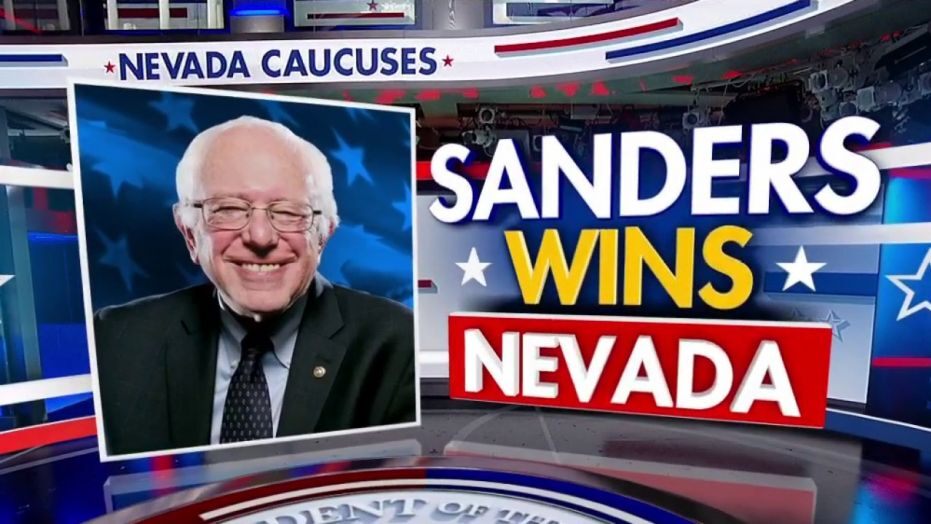
    Senator Bernie Sanders won the caucuses in Nevada, solidifying his frontrunner status in the race for the Democratic nomination. “We’ve brought together a multigenerational, multiracial coalition that is not only going to win Nevada, but it’s also going to sweep this country,” Sanders told supporters in San Antonio, Texas, after the Associated Press and several networks projected his win. With almost half of precincts officially reported, Sanders held a large lead on Saturday night. At this stage of results, the former vice-president Joe Biden appeared to be in second place, with the former South Bend, Indiana, Mayor Pete Buttigieg and Senator Elizabeth Warren trailing behind. The Nevada caucuses come at a critical moment in the Democratic primary, a week before the South Carolina race and just before Super Tuesday, in March, when 14 states will vote. In a state that is nearly 30% Latino, 10% black and has a rapidly growing Asian American community, the Nevada results were a compelling sign of Sanders’ strength in diverse states that more closely reflect the demographics of the Democratic party. The victory for the self-proclaimed democratic socialist follows strong results in Iowa and New Hampshire this month and his momentum comes as the support of more centrist Democratic voters remains divided among his rivals. With none of those moderate Democrats indicating they will drop out anytime soon, Sanders has a solid lead in the race to win the nomination and take on President Donald Trump.

    Nevada is the third contest in the Democratic primary race. The first two primary states, Iowa and New Hampshire, which are 90% white, also delivered strong results for Pete Buttigieg. But the former mayor of South Bend, Indiana, appeared to have been unable to capture strong support among Nevada’s diverse electorate. Buttigieg, who took the stage in Vegas before his standing in the Nevada results was clear, directly targeted Sanders in his speech, criticizing the “inflexible, ideological revolution” of the Vermont senator and urging Democrats not to “rush to nominate” him. Nevada’s “first-in-the-west” caucuses were also a major test for the campaign of the former Vice President Biden, who was a frontrunner in polls last year but performed poorly in the first two state contests. Biden gave a triumphant speech in Vegas before the results were finalized, and his campaign manager said he appeared to be in second place. “The press is ready to declare people dead quickly. We’re alive. We’re coming back,” Biden said to cheers. “We’re going to win in South Carolina, and then Super Tuesday.”

    Senator Amy Klobuchar, another midwestern candidate vying for moderates, had earned an unexpected third-place win in New Hampshire but also polled poorly with voters of color. With 43% of precincts reporting, Klobuchar appeared to be near the bottom in Nevada. Senator Elizabeth Warren was pushing for a surge in Nevada after her widely celebrated performance at the debate days earlier in Las Vegas. The Massachusetts senator announced that she had raised $14 million in the last 10 days, double the amount her campaign had set out as a goal ahead of the caucuses. She came in fourth in Nevada, making a path to the nomination increasingly difficult. At a Saturday night rally in Seattle, Warren congratulated Sanders and thanked Nevada voters “for keeping me in the fight”. She emphasized her recent fundraising surge, adding, “We have a lot of states to go, and right now I can feel the momentum.” Former New York mayor Mike Bloomberg was not on the ballot in Nevada due to his late entrance into the race, and the billionaire’s campaign has faced intense scrutiny this week after a particularly embarrassing first debate performance in Vegas.

  • Bernie Sanders Candidate Profile

    Bernie Sanders Candidate Profile

    One of the frontrunners for the 2020 Democratic nomination is Senator Bernie Sanders of Vermont.

    Background

    The Civil Rights movement was one of the main catalysts that encouraged Bernie Sanders to get involved in politics.

    Bernie Sanders was born on September 8, 1941 in Brooklyn, New York to a working-class Jewish family. As part of a struggling working-class family, Sanders recognized early on America’s economic disparity. Sanders graduated from Brooklyn’s James Madison High School in 1959 and then enrolled in the University of Chicago. During his time in college, Sanders became involved in the Civil Rights Movement during his university days. As a member of the Congress of Racial Equality (CORE), Sanders participated in a sit-in against the segregation of off-campus housing in 1962. He also served as an organizer for the Student Nonviolent Coordinating Committee and participated in the March on Washington in 1963. After finishing college in 1964 with a degree in political science, Bernie Sanders lived on a kibbutz in Israel before settling in Vermont. He worked a number of jobs, including filmmaker, freelance writer, psychiatric aide and teacher for low-income children through Head Start, while his interest in politics grew.

    Political Career

    1970-2006; Early Activism

    Bernie Sanders first began to make a name for himself when he was elected mayor of Burlington, Vermont in 1981.

    In the 1970s, Bernie Sanders made several unsuccessful bids for the Senate as a member of the anti-war Liberty Union Party. His first political victory came in 1981 when he was elected mayor of Burlington, Vermont, by less than 1% of the vote. Sanders was able to achieve this win with the support of the Progressive Coalition, a grassroots organization. He was re-elected three more times, proving that the self-described “democratic socialist” had staying power.

    Known for his “eccentric appearance“, Sanders made an unlikely candidate for national office but scored a 1990 win for a seat in the US House of Representatives. Outspoken on the issues, Sanders criticized both parties whenever he felt they were in the wrong. He was a vocal opponent of the Iraq War, concerned about the social and financial impact that the conflict could cause. In an address to the House of Representatives, Sanders said, “As a caring Nation, we should do everything we can to prevent the horrible suffering that a war will cause.” Sanders also questioned the timing of military action “at a time when this country has a $6 trillion national debt and a growing deficit.”

    2006-2016; Senate & First Presidential Bid

    After eight terms in the House of Representatives, Bernie Sanders sought to switch to the Senate in 2006, running against Republican businessman Richard Tarrant. He managed to win with 65% of the vote despite his opponent’s significant advantage in funding. In 2010, Sanders made the news with his more than eight-hour-long filibuster against the extension of the 2001 and 2003 tax cuts for the wealthy. He felt that this legislation was “a very bad tax agreement” between President Barack Obama and Republican legislators. Sanders also champions campaign reform and advocates for an amendment to overturn the Supreme Court decision on Citizens United. Sanders has advocated for expanding voting rights and opposed the Supreme Court decision to disband part of the landmark Voting Rights Act. He is also an advocate for universal single-payer health care system. Driven by his sense of protecting the environment, addressing climate change and interest in renewable energy, Sanders is a member of the Senate Committee on Environment & Public Works and the Energy & Natural Resources Committee.

    Bernie Sanders on the campaign trail, 2015.

    In April 2015, Bernie Sanders announced that he was seeking the presidential nomination for the Democratic Party. In his political platform, Sanders called for increased tax rates on the wealthy, greater government oversight of Wall Street, eliminating the gender wage gap, and the implementation of a single-payer healthcare system. Additionally, Sanders called for the implementation of a non-interventionist foreign policy, criminal justice reform, taking corporate money out of politics, and the promotion of socially liberal policies. One of the trademarks that defined Sanders’ campaign was his call for a “political revolution,” which asked for everyday citizens to become active in the political process and be the change they wanted to see on any given issue. Although many observers initially discounted his candidacy as a “longshot bid,” Bernie Sanders was able to come within 12% of defeating Hillary Clinton for the Democratic nomination and was able to gain much support from millennial voters as well as individuals who were not previously involved in the political system.

    2016-Present; Progressive Cult Hero

    On February 19, 2019, Bernie Sanders announced that he would once again be a candidate for the Democratic nomination. Calling President Donald Trump “the most dangerous commander-in-chief’s in US history,” Sanders underscored the importance of taking on both President Trump and the far-right political movement within the US in his announcement speech. Within a week of his announcement, Sanders had received nearly $18 million in donations from nearly 400,000 supporters and was polling strongly, with the only candidate ahead of him being former Vice President Joe Biden.

    Overall, Bernie Sanders is running on a strongly progressive and comprehensive platform reminiscent of his 2016 bid for the Presidency. Here are his positions on the key issues (as compiled from his campaign website, voting record, and public statements):

    Economic Policy

    • Increase the federal minimum wage to at least $15 per hour by 2025.
    • Implement a “green jobs” public works and infrastructure program reminiscent of the New Deal-era programs put forward by President Franklin Roosevelt.
    • Enact a universal childcare program.
    • Sign into law the Paycheck Fairness Act, which would work to reduce the “gender wage gap” and eliminate ender discrimination at the workplace.
    • Guarantee all workers paid medical leave, family leave, and paid vacation time.
    • Pass the Workplace Democracy Act, which makes it easier for workers to join unions without the fear of retribution on the part of their employers.

    Foreign Policy

    • Implement a humble foreign policy which focuses on democracy, human rights, diplomacy and peace, and economic fairness as opposed to warfare and funding the US military-Industrial complex.
    • Allow Congress to reassert its Constitutional role in war-making, so that no President can wage unauthorized and unconstitutional interventions overseas.
    • Eliminate American support for the Saudi-led intervention in Yemen, which has created the world’s worst humanitarian catastrophe.
    • Rejoin the Iran nuclear agreement and seek to restore diplomatic ties with Iran.
    • Work with pro-democracy forces around the world to build societies that work for and protect all people.

    Social Policy

    • Protect a woman’s right-to-choose amid efforts by Republican lawmakers at all levels to overturn Roe v. Wade.
    • Reinstate the federal assault weapons ban, expand background checks on gun purchases, and close the “Gun Show” loophole as a way to address the rise in mass shootings in recent years.
    • Decriminalize marijuana by removing it as a Schedule I drug at the federal level, paving the way for states to legalize it without fear of the federal government stepping in. Sanders is also in favor of the sale and tax of marijuana at the state level in a similar manner to alcohol and tobacco.
    • Stand up for the rights of LGBTQ+ Americans and work to pass the Equality Act, which would amend the Civil Rights Act of 1964 to include sex, sexual orientation, and gender identity among the prohibited categories of discrimination or segregation in places of public accommodation.

    Criminal Justice

    • Abolish the death penalty and work to encourage all countries to eliminate this inhumane practice.
    • Work to demilitarize police forces and hold police officers accountable for abusive practices
    • Start to roll back the practice of mass incarceration for the first time in over 50 years.
    • End the practice of cash bail, which preys on nearly half a million low-income prisoners in the US.
    • Abolish private prisons, end profiteering in the criminal justice system, and reduce recidivism by focusing on rehabilitating currently serving prisoners through education and job-training programs.
    • Work to address the root cause of many violent crimes through programs that promote better policing and prevent domestic and sexual violence

    Racial Justice

    • Work to confront America’s entrenched history of racial inequality head-on.
    • Pass legislation that creates more jobs, raises the minimum wage, and increases access to education and training. Also expand social safety net programs and guarantee affordable healthcare and nutrition programs so that we enable working families of color to get ahead.
    • Directly combat voter ID laws and felony disenfranchisement at all levels.
    • Eliminate residential segregation and expand access to quality affordable housing, as both have a pervasive and disproportionate impact on minorities in the US.
    • Supports studying the idea of paying reparations to the descendants of slaves in the US as a way to reduce income inequality for African-Americans.

    Healthcare

    • Implement a single-payer healthcare system for every American as a way to bring the number of uninsured individuals down to zero.
    • Until a single-payer system is implemented, work to expand and improve the Affordable Care Act (“Obamacare”) and Medicare/Medicaid.
    • Increase the number of Community Health Centers for low-income individuals
    • Make mental health services available to all individuals regardless of their income.
    • Work to control prescription drug costs and tackle fraud at the highest levels of the big pharmaceutical companies.

    Immigration

    • Pass meaningful immigration reform that includes a path to legal residency of citizenship for most undocumented immigrants in the US today.
    • Support the DREAM Act, which creates a path towards permanent residency for young undocumented immigrants.
    • Increase opportunities for qualified individuals to take steps towards permanent residency.

    Education

    • Believes that all public colleges and universities should be tuition-free, and all current student loan debt should be canceled.
    • Supports implementing high-quality, affordable early childhood education.
    • Favors colleges and universities hiring more faculty and increase their percentage of tenured and tenure-track professors.
    • Supports not requiring students to reapply for financial aid every year.
    • Supports reducing student loan interest rates and cancelling all existing student debt. 

    Environmental Policy

    • Phase-out the use of fossil fuels such as oil, gas, and coal and move aggressively towards renewable energy sources as a way to combat climate change.
    • Stop building nuclear power plants and find a solution to the growing nuclear waste problem.
    • End fossil fuel subsidies
    • Transformation to a sustainable energy system based on energy efficiency and renewable energy sources will create thousands of jobs.
  • OurWeek In Politics (12/24-12/30/17)

    Here are the main events in Politics that occurred this week:

    1. Major Protests Break Out in Iran

    Anti-government protests in Iran broke out this week in response to issues such as political repression, poor economic conditions, and the lack of promised political reform.

    On December 28, a series of protest broke out in several Iranian cities in response to the poor economic situation within the country (which has only gotten worse since the imposition of new sanctions on Iran by the Trump Administration). Despite the initial focus of the protests on solely economic issues, they soon morphed into a wider expression of dissatisfaction with the current status-quo within the country. The demands of the protesters have varied from simply asking for reforms within the current political structure of Iran, to regime change and the reinstallation of the Pahlavi Monarchy into power. Thus far, the Iranian government has had a mixed reaction to the protests. For example, President Hassan Rouhani urged the government to more adequately address the demands of the Iranian citizens, but urged against violence and rage against the system, noting that such actions will only inflame the situation within the country and reduce the chances for any changes to the governmental system. Additionally, the Iranian government has shut down internet access and access to social media sources such as Twitter, Instagram, and Facebook for fear that such venues will increase the spread of the protests.

    The international community has had a somewhat mixed reaction to the protests in Iran. Countries such as Israel, Canada, Germany, Saudi Arabia, and the UK have all expressed solidarity with the protestors and cautioned the Iranian government against using excessive force to suppress the protests. Additionally, US President Donald Trump has used the protests as another opportunity to critique the Iranian government and call for the overthrow of the current Iranian government. In a Twitter message on December 30, Trump declared that “Many reports of peaceful protests by Iranian citizens fed up with regime’s corruption & its squandering of the nation’s wealth to fund terrorism abroad. Iranian govt should respect their people’s rights, including the right to express themselves. The world is watching!#IranProtests.” On the other hand, countries such as Russia, France, and China stated that the protests in Iran are solely an internal manner to be dealt with by the Iranian government and that any intervention on behalf of the protesters will only inflame the situation.

    2. President Trump Proposes Ambitious Infrastructure Bill

    President Trump this week proposed an ambitious infrastructure reform bill meant to help the US regain a competitive advantage when compared to emerging economies throughout the world.

    Fresh off of the successful passage of his tax reform bill, President Donald Trump has reportedly turned his eye to infrastructure. The Trump Administration plans to introduce a plan in January to repair and renovate the country’s aging and ailing roads, airports, bridges, and transitions. President Trump has repeatedly pledged to restore America’s infrastructure system on both the campaign trail as well as in office. His past as a famous real estate developer gave credibility to boasts that he would restore the crumbling infrastructure of a country that was literally “falling apart.” Since the 1990s, federal infrastructure spending has declined drastically, reaching a 30-year low in 2015. The decline in federal investment infrastructure has put the US in a distinct disadvantage with emerging countries such as Japan, South Korea, Russia, China, India, and Mexico, thus negatively impacting the global competitiveness of the US.

    The Trump Administration’s infrastructure plan calls for at least $200 billion in federal spending on infrastructure projects over the next 10 years, with a goal of attracting at least an additional $800 billion in financing from state and local governments along with private partnerships. Additionally, the proposals include a provision that all projects will include American-produced materials, which many in the administration see as a way to further stimulate the economy and create thousands of new, decent-paying jobs. Overall, the reaction to the Trump Administrations infrastructure has been mixed, with a surprising level of support coming from the Democratic Party. For example, Senator Bernie Sanders has expressed a willingness to work with the Administration on the proposal, as well as House Minority Leader Nancy Pelosi and Senate Minority Leader Chuck Schumer. On the other hand, Republicans such as House Speaker Paul Ryan and Senate Majority Leader Mitch McConnell are lukewarm at best towards the plan, claiming that it will lead to a higher federal budget deficit and force Congressional Republicans to table their proposals to increase defense spending and reform the entitlement system. Overall, it seems highly likely that the Trump Administration’s infrastructure bill will pass due to its strong popularity amongst the American people and the need for infrastructure improvements within the country.

    3. North Korea’s Kim Jong-un “Open to Dialogue” with South Korea

    North Korean President Kim Jong-un expressed a willingness to negotiate with South Korea this week, much to the shock of the international community.

    On December 30, North Korean President Kim Jong-un announced that he is “open to dialogue” with South Korea in the New Year, but has warned the US that he has a “nuclear button” on his desk to use if threatened. In a televised New Year’s speech, Kim said improving ties between the North and South is an “urgent issue”. “It’s a grave matter to which the entire Korean nation needs to put its efforts towards resolving,” he further said. South Korea’s presidential office welcomed Kim’s speech, which included a proposal to send North Korean athletes to Winter Olympics in Pyeongchang. South Korean Presidential spokesperson Park Soo-Hyun said that “We welcome that Kim expressed willingness to send a delegation and proposed talks as he acknowledged the need for improvement in inter-Korean ties.”

    Despite the countries recent overtures towards negotiations and dialogue, Kim Jong-un announced that his country will continue to focus on “mass producing nuclear warheads and ballistic missiles for operational deployment” in 2018 and beyond. Additionally, Kim Jong-un repeated earlier claims that the entire US is now within range of all of North Korea’s nuclear arsenal. Responding to Kim’s comments, US President Donald Trump said “we’ll see, we’ll see” at his New Year’s Eve celebration, held at his Mar-a-Lago residence, in Florida. It can be argued that North Korea’s sudden change in actions can be attributed to two recent developments. The first one being the imposition of a fresh round of sanctions against North Korea by the US Security Council. The second development that may have had an impact of North Korea’s change in behavior is the increased willingness of Russia and China to work with the US to settle the long-standing disputes between both countries. On the other hand, some also argue that North Korea is either hoping to drive a wedge between the US and South Korea over the issue of peace negotiations or is trying to buy some time to improve its nuclear capabilities.