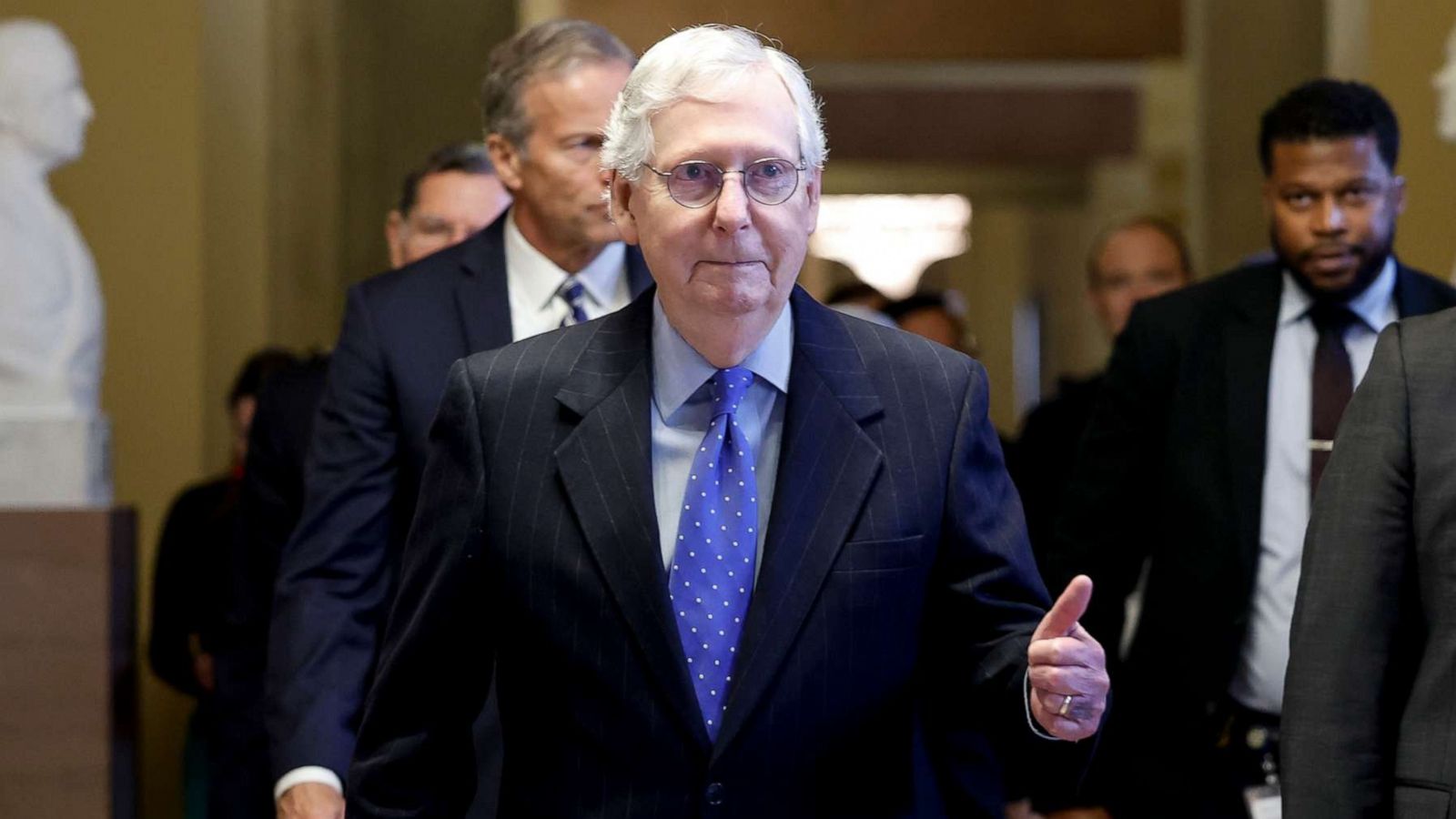
Mitch McConnell of Kentucky on November 16 overwhelmingly won re-election as his party’s Senate leader, holding off Senator Rick Scott of Florida in the first challenge Senator McConnell has faced since assuming the post in 2007. Despite a disappointing election performance that left them demoralized and still mired in the minority, Senate Republicans stuck with their longtime leader, opting for an experienced hand rather than a change at the top that could add to the post-election turmoil engulfing their party. “I think the most important thing we can do is get these differences behind us,” said Senator John Cornyn, Republican of Texas and a leading McConnell ally.
The leadership bid by Senator Rick Scott was always a long shot, particularly since he had served as the chairman of the National Republican Senatorial Committee, the party campaign arm that was tasked with winning back the Senate majority, and came up short. Many of his colleagues saw him as more responsible for the election defeat than Senate Minority Leader Mitch McConnell. But critics of Senator McConnell, who was re-elected leader on a vote of 37 to 10, with one abstention, said they saw it as a worthwhile demonstration of unrest in the ranks. “We had a double-digit vote against the current leader, and that’s never happened in the time I’ve been here,” said Senator Ted Cruz, Republican of Texas, who opposed McConnell and attempted to delay the leadership selection until after a December 6 Georgia runoff election, a bid that was soundly rejected by his colleagues.
Senate Minority Leader Mitch McConnell said he was not offended by the challenge and some of his supporters relished the showdown as a chance for the Kentucky Republican to give a concrete demonstration of his strong standing within his conference. “We had a good opportunity to discuss the differences, people had an opportunity to listen to both candidates, and I’m pretty proud of 37 to 10,” Senator McConnell said after the vote. The vote at the end of a meeting behind closed doors that stretched for more than three hours, as Republican senators sat at desks in the Old Senate Chamber, a semicircular room adorned with marble columns and an ornate central table hung with crimson fabric, to hash out their differences. The room is a traditional spot for leadership elections.
Republicans in both the House and Senate are reeling from their poor performance in midterm elections in which they expected to post significant gains based on a sour public mood, inflation, and historical trends. But Senate Democrats held their majority and could still expand it, while Republicans managed to squeak into the majority in the House. Party leaders in both chambers are facing an internal backlash, exposing divides that could persist as they confront Democrats over the next two years.
Senator Rick Scott and his allies said that Senate Minority Leader Mitch McConnell represented the status quo and that a new approach was necessary if Republicans were to regroup and triumph in 2024. They criticized Senator McConnell for cooperating too much with Democrats, allowing them to notch legislative victories this year that boosted their campaigns. “Clearly, the Republican Party’s got to do something different if we ever want to be a majority party,” said Senator Josh Hawley (R-MO). “I put it to them, you know, what would they see to do differently, and what do they think the approach ought to be. But most Senate Republicans regarded Senator McConnell as a much better bet for a rebound than Senator Scott. “I have a lot of admiration for his vision and look forward to carrying forward with that,” said Senator Shelley Moore Capito of West Virginia, who was elected as the fifth-ranking Republican, becoming one of two women in the party leadership, alongside Senator Joni Ernst of Iowa, who won the fourth-ranking spot.
The leadership challenge was conducted by secret ballot, but those who indicated they voted against Senator Mitch McConnell included Senators Rick Scott, Ted Cruz, Josh Hawley, Mike Braun, and Lindsey Graham of South Carolina. “I think Rick Scott accomplished his point,” said Senator Kevin Cramer (R-ND). “And that is that several members are frustrated and have been for some time that they want to see a more inclusive process. They don’t want to see so many back-room deals.” Senator McConnell acknowledged the sentiment and said senators were reminded in their private meeting that any five Republican senators could call a party meeting to hash out an issue “We acquainted our members with the tools they have if they have an idea they want to promote,” McConnell said. “I think that will be used more often. I certainly welcome it.” Senator Scott, for his part, hinted that he would not hesitate to continue voicing dissent even in the wake of his loss. “I’m going to continue to fight for what I believe,” Scott said.
Even though Republicans fell short of expectations on November 8, Senate Minority Leader Mitch McConnell and his leadership team emphasized that the Senate, and the nation as a whole, remains narrowly divided and that the Republicans in the Senate could still have significant influence with a Republican House. “It is still a 50-50 country,” said Senator McConnell. “They’ve given us a 50-50 government again. I think what the public is going to be looking at is whether or not this narrowly divided Congress can accomplish anything that does them any good in terms of their lives.” McConnell said he urged the Biden administration and Senate Democrats to try to “find some things between the 40-yard lines that we can agree on, and do them.”
When the next Congress convenes in January, Senate Minority Leader Mitch McConnell will set the record for serving the longest in a Senate leadership role, surpassing Mike Mansfield, Democrat of Montana, who spent 16 years as majority leader in the 1960s and 1970s. The impending record has prompted speculation that Senator McConnell could step aside after he hits that milestone, though he dismissed that idea. “I’m not going anywhere,” he told reporters
On average, Americans’ political party preferences in 2021 looked similar to prior years, with slightly more US adults identifying as Democrats or leaning Democratic (46%) than identified as Republicans or leaning Republican (43%) overall. However, the general stability for the full-year average obscures a dramatic shift over the course of 2021, from a nine-percentage-point Democratic advantage in the first quarter to a rare five-point Republican edge in the fourth quarter, the largest advantage for the Republican Party since 1991.
In the first quarter of 2021, 49% of U.S. adults identified as Democrats or leaned Democratic, while 40% identified as Republicans or leaned Republican. In the second quarter, 49% were Democrats or Democratic leaners, and 43% were Republicans and Republican leaners. In the third quarter, 45% were Democrats and Democratic leaners, and were 44% Republicans and Republican leaners. In the fourth quarter, 42% were Democrats and Democratic leaners, and 47% were Republicans and Republican leaners.
Generally speaking, Gallup and other polling organizations ask all American voters it interviews whether they identify politically as a Republican, a Democrat, or an independent. Independents are then asked whether they lean more toward the Republican or Democratic Party. The combined percentage of party identifiers and leaners gives a measure of the relative strength of the two parties politically. Both the nine-point Democratic advantage in the first quarter and the five-point Republican edge in the fourth quarter are among the largest Gallup has measured for each party in any quarter since it began regularly measuring party identification and leaning in 1991.
The Democratic lead in the first quarter was the largest for the party since the fourth quarter of 2012, when Democrats also had a nine-point advantage. The Republican Party has held as much as a five-point advantage in a total of only four quarters since 1991. The Republicans last held a five-point advantage in party identification and leaning in early 1995, after winning control of the House of Representatives for the first time since 1952. Republicans had a larger advantage only in the first quarter of 1991, after the U.S. victory in the Persian Gulf War led by then-President George H.W. Bush.
Shifting party preferences in 2021 are likely tied to changes in popularity of the two men who served as president during the year. Republican Donald Trump finished out his single term in January, after being defeated in the 2020 election, with a 34% job approval rating, the lowest of his term. His popularity fell more than 10 points from Election Day 2020 as the country’s Coronavirus infections and deaths reached then-record highs, he refused to acknowledge the result of the election, and his supporters rioted at the US Capitol on January 6, 2021, in an attempt to prevent Congress from counting the 2020 Electoral College votes.
Democrat Joe Biden enjoyed relatively high ratings after taking office on Jan.uary 20, and his approval stayed high through the early summer as Coronavirus infections dramatically decreased after millions of Americans got vaccinated against the disease. A summer surge of infections tied to the delta variant of the coronavirus made it clear the pandemic was not over in the US, and Biden’s approval ratings began to sag. Later, the chaotic US withdrawal from Afghanistan caused Biden’s ratings to fall further, into the low 40s. His ratings remain low as the US battles rising inflation and yet another surge of COVID-19 infections, tied to the omicron variant of the virus.
With former President Donald Trump’s approval rating at a low point and President Joe Biden relatively popular in the first quarter, 49% of Americans identified as Democrats or leaned Democratic, compared with 40% who were Republicans or Republican leaners. In the second quarter, Democratic affiliation stayed high, while Republican affiliation began to recover, increasing to 43%. The third quarter saw a drastic decline in Democratic identification and leaning, from 49% to 45%, as President Biden’s ratings began to falter, while there was no meaningful change in Republican affiliation. In the fourth quarter, party support flipped as Republicans made gains, from 44% to 47%, and Democratic affiliation fell from 45% to 42%. These fourth-quarter shifts coincided with strong GOP performances in 2021 elections, including a Republican victory in the Virginia gubernatorial election and a near-upset of the Democratic incumbent governor in New Jersey. Biden won both states by double digits in the 2020 election.
Gallup began regularly measuring party leaning in 1991, and in most years, significantly more Americans have identified as Democrats or as independents who lean Democratic than as Republicans or Republican leaners. The major exception was in early 1991, when Republicans held a 48% to 44% advantage in party identification and leaning. From 2001 through 2003 and in 2010 and 2011, the parties had roughly equal levels of support.
Overall in 2021, an average of 29% of Americans identified as Democrats, 27% as Republicans, and 42% as independents. Roughly equal proportions of independents leaned to the Democratic Party (17%) and to the Republican Party (16%). The percentage of independent identifiers is up from 39% in 2020, but similar to the 41% measured in 2019. Gallup has often seen a decrease in independents in a presidential election year and an increase in the year after. The broader trend toward an increasing share of political independents has been clear over the past decade, with more Americans viewing themselves as independents than did so in the late 1980s through 2000s. At least four in 10 Americans have considered themselves independents in all years since 2011, except for the 2016 and 2020 presidential election years. Before 2011, independent identification had never reached 40%.
Overall, the Gallup public opinion survey results show that 2021 was an eventful one in politics, after a similarly eventful 2020 that also saw major shifts in party preferences. In early 2021, Democratic strength reached levels not seen in nearly a decade. By the third quarter, those Democratic gains evaporated as Biden’s job approval declined. The political winds continued to become more favorable to Republicans in the fourth quarter, giving the Republicans an advantage over Democrats larger than any they had achieved in more than 25 years. As such, the data shows that the Republican Party may soon become the dominant political party in the US for the first time since the early 1930s.
The Republican Party is locking in newly gerrymandered maps for the legislatures in four battleground states that are set to secure the party’s control in the statehouse chambers over the next decade, fortifying the Republicans against even the most sweeping potential Democratic wave elections. In Texas, North Carolina, Ohio, and Georgia, Republican state lawmakers have either created supermajorities capable of overriding a governor’s veto or whittled down competitive districts so significantly that Republicans’ advantage is virtually impenetrable, leaving voters in narrowly divided states powerless to change the leadership of their legislatures.
Although much of the attention on this year’s redistricting process has focused on gerrymandered congressional maps, the new maps being drafted in state legislatures have been just as distorted. And statehouses have taken on towering importance: With the federal government gridlocked, these legislatures now serve as the country’s policy laboratory, crafting bills on abortion, guns, voting restrictions, and other issues that shape the national political debate. “This is not your founding fathers’ gerrymander,” said Chris Lamar, a senior legal counsel at the Campaign Legal Center who focuses on redistricting. “This is something more intense and durable and permanent.”
This redistricting cycle, the first one in a decade, builds on a political trend that accelerated in 2011 when Republicans in swing states including Pennsylvania, Wisconsin, and Michigan drew highly gerrymandered state legislative maps. Since those maps were enacted, Republicans have held both houses of state government in all three states for the entire decade. They never lost control of a single chamber, even as Democrats won some of the states’ races for president, governor, and Senate. All three of those Northern states are likely to see some shift back toward parity this year, with a new independent commission drawing Michigan’s maps, a state legislative commission drawing maps in Pennsylvania, and a Democratic governor in Wisconsin likely to force the process to be completed by the courts.
Gerrymandering is a tool used by both parties in swing states as well as less competitive ones. Democrats in deep-blue states like Illinois are moving to increase their advantage in legislatures, and Republicans in deep-red states like Utah and Idaho are doing the same. But in politically contested states where Republicans hold full control, legislators are carefully expanding Republican electoral chances. They are armed with sharper technology, weakened federal voting statutes, and the knowledge that legal challenges to their maps may not be resolved in time for the next elections. Texas, North Carolina, and Ohio have signed into law new maps with a significant Republican advantage. Georgia is moving quickly to join them. Republicans say that the growth of such heavily skewed legislatures is both the result of the party’s electoral victories and of where voters choose to live.
As Democratic voters have crowded into cities and commuter suburbs, and voters in rural and exurban areas have grown increasingly Republican, Republican mapmakers say that they risk running afoul of other redistricting criteria if they split up those densely populated Democratic areas across multiple state legislative districts. “What you see is reflective of the more even distribution of Republican and right-leaning voters across wider geographic areas,” said Adam Kincaid, the director of the National Republican Redistricting Trust. Trying to draw more competitive legislative districts, he said, would result in “just a lot of squiggly lines.” He pointed to maps in Wisconsin that were proposed by a commission created by Governor Tony Evers, a Democrat. Under those designs, Republicans would still have a majority in both state legislative chambers, though with significantly smaller margins. “They’re limited by geography,” Kincaid said. “There’s only so many things you can do to spread that many voters across a wide area.”
Democrats note that Republicans are still cracking apart liberal communities, especially in suburbs near Akron and Cleveland in Ohio and in predominantly Black counties in northern and central North Carolina, in a way that hurts the Democrats and cuts against a geographical argument. “They are carving up Democratic voters where they can’t pack them,” said Garrett Arwa, the director of campaigns at the National Democratic Redistricting Committee. He argued that Democratic map proposals “all put forth better and fairer maps that I would say are far from a Rorschach test.”
Democrats have fewer opportunities to unilaterally draw state legislative maps, particularly in battleground states. Of the 14 states where the margin of the 2020 presidential race was fewer than 10 percentage points, Democrats are able to draw state legislative maps in just one: Nevada. Republicans control the redistricting process in six of those 14 states. But when Democrats have had an opening, they have also enacted significant gerrymanders at the state legislative level. In Nevada, Democrats are close to finalizing a map that would give them supermajorities in both chambers of the Legislature, despite President Biden’s winning just 51 percent of the state’s vote last year. The same holds true in deeply blue states. In Illinois, newly drawn State Senate maps would give Republicans roughly 23 percent of seats in the chamber, even though former President Donald Trump won more than 40 percent of voters in the state in 2020.
Republicans have taken two approaches to ensure durable majorities in state legislatures. The tactics in Texas and Georgia are more subtle, while Republicans in Ohio and North Carolina have taken more brazen steps. In Texas and Georgia, the party has largely eliminated competitive districts and made both Republican and Democratic seats safer, a move that tends to ward off criticism from at least some incumbents in the minority party. “Out of the 150 seats in the Texas House, only six of them are within seven points or closer,” said Sam Wang, the director of the Princeton Redistricting Project. Republicans now hold a 20-seat advantage in the chamber, 85 to 65, and the new maps will give the party roughly two more seats. So while the Republican lawmakers did not try to draw an aggressive supermajority, “what they really did a good job of there is getting rid of competition and getting a reasonably safe majority for themselves,” Wang said.
In Georgia, where redistricting is ongoing, early maps follow a trend line similar to that of Texas, as Republicans try to eliminate competitive districts. With the current gerrymandered maps in place, Democrats in the state legislature would have needed to win more than 55.7 percent of the vote to flip the Georgia House in 2020, according to the Princeton Gerrymandering Project. The new maps proposed in Georgia maintain that 55 percent threshold, according to Princeton. Republicans in Ohio have taken more risks than their counterparts in other states, keeping some districts more competitive in an effort to increase the party’s majorities. In Ohio and North Carolina, however, Republicans are taking a forceful tack. By keeping some districts moderately competitive, they are taking more risks in an attempt to create significant majorities or supermajorities, and in doing so, they are often flouting laws or court decisions.
Republican Glenn Youngkin defeated former Democratic Governor Terry McAuliffe in Virginia‘s high-profile election on November 2 for governor, flipping control of a state that President Joe Biden won handily just a year ago. The results there and in other states holding off-year elections sent a warning shot to Democrats, suggesting that trouble may be brewing ahead of next year’s midterm elections. “This is the spirit of Virginia coming together like never before,” Governor-elect Glenn Youngkin told supporters well after midnight, joking breakfast would soon be served. “For too long, we’ve been expected to shelve our dreams, to shelve our hope, to settle for low expectations. We will not be a commonwealth of low expectations. We’ll be a commonwealth of high expectations.” Terry McAuliffe congratulated Youngkin in a statement conceding defeat. “While last night we came up short, I am proud that we spent this campaign fighting for the values we so deeply believe in,” he said, thanking his family and supporters. Virginia will also get its first woman of color lieutenant governor, with the victory of Republican Winsome Sears, a former Marine born in Jamaica.
Glenn Youngkin, a former private equity executive, and political newcomer campaigned on a promise to unite the factions of the Republican Party and drove a message focused on the economy and education. He kept just enough distance from former President Donald Trump while trying to keep his base engaged. Terry McAuliffe, meanwhile, was weighed down by his party’s post-Trump political fatigue, along with President Joe Biden’s sinking poll numbers and gridlocked agenda in Washington, but ran a campaign that included damaging gaffes and, critics say, was overly reliant on trying to tie Youngkin to Trump.
Virginia, which always elects a new governor one year after presidential races, has long been seen as a political bellwether and both parties were anxiously watching as results poured in from across the commonwealth, eager for clues about the political landscape that will inform their upcoming campaigns. The Republican victory in Virginia, powered by robust turnout in conservative rural counties, improved support in the suburbs, and a message focused on the economy and alleged anti-white bias in school curriculum, will likely serve as a blueprint for Republicans looking to recapture the House and the Senate next year. “It’s time to hit the panic button, because the base is not motivated,” Democratic pollster Cornell Belcher said, calling the loss “catastrophic” for Democrats. In Virginia, white women swung back toward the Republican Party by 15 percentage points compared to 2020, while African American turnout was down in some key places.
Turnout will be key in next year’s election and Virginia’s results suggest the Republican base is more engaged than the Democratic one, as is often the case for the party out of power in Washington. “Youngkin’s victory in Virginia should serve as a wake-up call to Democrats everywhere that an epic wave is on the way,” said John Ashbrook, a Republican strategist who works on Senate races and is close to Senate Minority Leader Mitch McConnell. “Voters are clearly dissatisfied with the direction our country is headed and they’re prepared to exercise their right to change it.”
Virginia was one of the first former Confederate states to trend heavily towards the Republican Party beginning in the late 1940s and established a reputation as one of the best states for the Republican Party by the 1980s. Starting in the mid-2000s, however, Virginia began to trend heavily towards the Democrats due to declining Republican support in Suburban areas. For example, no Republican had won a statewide office in Virginia since 2009 and President Joe Biden defeated Donald Trump by 10 points in Virginia in the 2020 Presidential election. Moreover, Democratic Governor Ralph Northam, who is prohibited by the state Constitution from running for a second term, won by 9 percentage points in 2017. Democrats won control of the state Legislature for the first time since 1996 two years ago and pushed through an expansion of early voting rules that some analysts predicted would help the party turn out its base.
Governor-elect Glenn Youngkin made education the centerpiece of his campaign, capitalizing on parental frustration with school closures and a gaffe by Terry McCauliffe in the final debate when he said, “I don’t think parents should be telling schools what they should teach.” The race was stoked by conservative alarmism about critical race theory, an until-recently obscure academic discipline mostly taught in universities. Republicans say the issue could be central in future campaigns across the country. Former President Donald Trump has loomed large over the Virginia race, with McAuliffe looking to tie his opponent to the divisive former president, who lost the state by 10 percentage points in 2020. The NBC News exit poll found that 54 percent of voters said they have an unfavorable opinion of Trump, compared to 41 percent who had a positive view of him. While McAuliffe voters were almost unanimously negative on the former president, only about three-quarters (73 percent) of Youngkin voters had a favorable opinion of Trump and 19 percent had a negative view of him.
“Being anti-Trump is not going to be enough. Democrats have to show what they’re for,” former Virginia Congressman Tom Perriello said, adding that the party can’t just ignore hot-button issues like the critical race theory debate. “If anyone on the Democratic side thought these culture wars were going to go away without Trump, that needs to be re-evaluated.” Meanwhile, about half of voters said that President Joe Biden was not a factor in their vote for governor, according to the NBC News exit poll, but only 43 percent approved of the way he is doing his job, while a slight majority (56 percent) disapproved. Twenty-eight percent said one reason for their vote for governor was to express opposition to Biden, while 20 percent said it was to express support for the President.
The House of Representatives voted on May 19 to approve legislation to establish an independent commission to investigate the violent insurrection on January 6 at the US Capitol, with 35 Republicans breaking with their party to support the bill. The final vote was 252-175. The Republican defections showcased a significant break with Republican leadership in the chamber and former President Donald Trump, who urged members to vote against the legislation. The bill now moves to the Senate where it faces an uncertain fate as Republican resistance is growing.
The May 19 vote, which came as some Republicans have tried to downplay the violence that occurred on January 6 and align themselves with Trump’s version of reality, was still opposed by most rank-and-file Republicans, after House Republican leaders mobilized against the agreement that had been struck by fellow Republican Congressman John Katko of New York. The margins are an important indicator because just how many House Republicans are willing to buck their party leadership may offer an early signal for how many Republican senators could back the bill. Supporters of the plan will need at least 10 Republicans in the Senate to join all 50 Democrats in the chamber to overcome a 60-vote filibuster and pass the bill. Senate Minority Leader Mitch McConnell said he is opposed to the bill but wouldn’t tell reporters if he would actively whip his fellow Republicans against it. Moderate Republican Senator Susan Collins of Maine said changes would have to be made to the bill before she could support it.
As the path forward on the January 6 commission bill is growing increasingly rocky in the Senate, House Majority Leader Steny Hoyer told CNN “of course” he would pursue a select committee to investigate what happened on January 6 if the bill to create an independent commission fails in the Senate. “We are going to pursue this one way or the other,” Hoyer said. “Any attempt to obfuscate, to hide and dissemble will not succeed.” Ahead of the vote, Minority Whip Steve Scalise’s office sent a letter to members informing them that the leadership was now advocating Republicans vote against the legislation, a reversal from Republican leadership’s previous position to not lobby their members on the measure.
The vote marks an end to a four-month-long stalemate over negotiations, as Republicans and Democrats struggled to agree on the focus and scope of a commission. While Democrats had wanted the commission to focus exclusively on the events leading to January 6, House Minority Leader Kevin McCarthy and others had suggested that the panel also investigate Black Lives Matter protests of last summer, Antifa, and the death of Capitol Police Officer William “Billy” Evans, who was killed outside the Capitol in April. House Speaker Nancy Pelosi tapped Homeland Security Chairman Bennie Thompson, a Mississippi Democrat, to work with John Katko, who was one of 10 Republicans to vote to impeach then-President Donald Trump, to put together this deal. When Thompson and Katko announced last week that they had reached a deal, McCarthy told reporters he had not read through the proposal or signed off on it, foreshadowing that Republicans were not in lockstep on their position on the legislation.
Congressman Bennie Thompson tried to discredit the narrative McCarthy has been peddling, that he was not included in negotiations in the lead up to the deal’s announcement ahead of the vote. “It’s quite unfortunate that the Minority Leader has, at the last moment, raised issues that, basically, we had gone past, and there was no issue, despite all his talk now. But I guess that’s politics,” Thompson told reporters. After the vote, Thompson expressed optimism that the bill could pass the Senate if the chamber’s Republicans are allowed to vote freely. “Well, I am optimistic that it will pass,” Thompson told CNN’s Erin Burnett on “OutFront.” “People said we would not get more than 20 votes in the House from Republicans. We got 35. I am optimistic on the Senate side. If senators are allowed and not arm twisted to go the other way, we’ll get it.”
The bill lawmakers voted on would create a 10-person commission, with each party getting an equal number of appointments and subpoena power, a key provision that House Minority Leader Kevin McCarthy had said he wanted early on in negotiations. The legislation tasks the panel with examining “the facts and circumstances of the January 6th attack on the Capitol as well as the influencing factors that may have provoked the attack on our democracy.” In a statement announcing his opposition to the deal, McCarthy accused House Speaker Nancy Pelosi of failing to negotiate in good faith, argued that a commission would get in the way of investigations already underway and said any commission needed to look at episodes of political violence beyond January 6. “Given the political misdirections that have marred this process, given the now duplicative and potentially counterproductive nature of this effort, and given the Speaker’s shortsighted scope that does not examine interrelated forms of political violence in America, I cannot support this legislation,” McCarthy said. Pelosi responded to McCarthy’s opposition to the deal in a statement by saying, “Democrats made repeated efforts to seek a bipartisan compromise. But Leader McCarthy won’t take yes for an answer.”
All 10 Republicans who voted to impeach Trump earlier this year voted in support of the commission. Even though House Republican leadership encouraged members to vote against the bill, some Republican lawmakers came out strongly in support of the legislation or at least hinted ahead of the vote they were leaning toward getting on board. Over the weekend, Republican Congressmembers Liz Cheney of Wyoming and Fred Upton of Michigan joined Katko in coming out in strong support of the bipartisan deal. Congressman Anthony Gonzalez of Ohio, another of the 10 Republicans who voted to impeach Trump, outlined why he is supporting the bill. “I think it’s necessary just given what actually happened on that day and all the buildup. I think it’s important that you know when the country and the Capitol is attacked that way that we take a full accounting and figure out how to prevent it going forward,” Gonzalez said.
Senate Republicans on July 27 proposed a $1 trillion Coronavirus aid package hammered out with the Trump administration, paving the way for talks with Democrats on how to help Americans as expanded unemployment benefits for millions of workers expire this week. Senate Majority Leader Mitch McConnell (R-KY) called the proposal a “tailored and targeted” plan focused on getting children back to school and employees back to work and protecting corporations from lawsuits while slashing the expiring supplemental unemployment benefits of $600 a week by two-thirds. The plan sparked immediate opposition from both Democrats and Republicans. Democrats decried it as too limited compared to their $3 trillion proposal that passed the House of Representatives in May, while some Republicans called it too expensive.
Senate Majority Leader Mitch McConnell said the package would include direct $1,200 payments to Americans, as well as incentives for the manufacture of personal protective equipment in the US, rather than China. It also includes $190 billion for loans to help small businesses, and $100 billion for loans to businesses that operate seasonally or in low-income areas. Republicans want to reduce the expanded unemployment benefit from the current $600 per week, which is in addition to state unemployment payments and expires on July 31, to $200 in addition to state unemployment. After two months, states would implement a new formula that replaces about 70% of lost wages. The supplemental unemployment has been a financial lifeline for laid-off workers and key support for consumer spending. The extra funds, exceeding the former wages of some workers, have been a sticking point for many Republicans, who say they encourage Americans to stay home rather than go back to work.
Negotiations started immediately after the Republican package was introduced. House Speaker Nancy Pelosi (D-CA) and Senate Minority Leader Chuck Schumer (D-NY) met for nearly two hours with Treasury Secretary Steven Mnuchin and White House Chief of Staff Mark Meadows. Meadows said afterward that it was a “good meeting” and that he and Mnuchin would return to Capitol Hill on July 28. But Pelosi and Schumer, speaking to reporters, expressed frustration that items like rental and food assistance had been left out. “We hope that we would be able to reach an agreement. We clearly do not have shared values. Having said that, we just want to see if we can find some common ground to go forward. But we’re not at that place yet,” Pelosi said.
The Republican-led Senate refused to consider the House coronavirus relief bill, known as the “HEROES Act,” that was passed in May. Senate Majority Leader Mitch McConnell called the House bill a “socialist manifesto” and urged Democrats to work with Republicans on their plan, the “HEALS Act.” “We have one foot in the pandemic and one foot in the recovery,” McConnell said. “The American people need more help. They need it to be comprehensive, and they need it to be carefully tailored to this crossroads.” The proposal included “strong legal liability protection” for corporations, a top Republican priority. It includes nearly $30 billion for the military and defense industry, in addition to nearly $760 billion already enacted for defense this year, including more than $10 billion in previous coronavirus relief bills.
Opposition from some of Mitch McConnell’s fellow Republicans, as well as from Democrats, signaled a tough road ahead. “The answer to these challenges will not simply be shoveling cash out of Washington. The answer to these challenges will be getting people back to work,” Republican Senator Ted Cruz told reporters. Some Republicans had complained about the high price tag. The federal government has already spent $3.7 trillion to cushion the economic blow from pandemic-forced shutdowns. On the other hand, Senate Majority Leader Chuck Schumer said the Republican plan did too little, too slowly, to help Americans facing joblessness and eviction. “The Republican plan is weak tea, when our problems need a much stronger brew,” Schumer said. He said many states had warned they would have a hard time implementing unemployment changes. Many Americans waited weeks for previous coronavirus benefits, as outmoded state computer systems adjusted. The Republican proposal also includes measures not directly related to the Coronavirus pandemic, including $1.8 billion for construction of a new FBI headquarters in Washington, something championed by President Donald Trump, who owns a hotel across the street from the current building.
A Republican-sponsored bill meant to rein in police misconduct in the aftermath of George Floyd’s death in Minneapolis failed in the US Senate on June 24, leaving congressional efforts to address racial inequities in American policing at an impasse. Democrats, denouncing the measure as irrevocably flawed, defeated a Republican push to move to final debate by a vote of 55-45, short of the 60 votes needed, a month after Floyd’s death in police custody set off weeks of worldwide protests against police brutality. The legislative fight over reform now moves to the House of Representatives, which plans to vote on a more sweeping Democratic bill on June 25. Senate Minority Leader Chuck Schumer and other Senate Democrats said they believed the June 24 vote makes it more likely that Senate Majority Leader Mitch McConnell, the chamber’s top Republican, will agree to negotiations on a stronger bipartisan measure. McConnell said he would schedule another vote if there was enough progress on closing Republican-Democratic differences. President Donald Trump said he would not accept Democratic reforms and suggested the issue could end in stalemate. “If nothing happens with it, it’s one of those things. We have different philosophies,” he told reporters.
Read More
George Floyd’s May 25 death in Minneapolis, after a white police officer knelt on his neck for nearly nine minutes, stirred strong public sentiment for stopping excessive force by police, especially against African Americans. Civil rights leaders and activist groups, who called on the Senate to reject the Republican bill, have urged lawmakers to take up stronger measures. Senate Democrats sought to seize the mantle of what they regard as a new US Civil Rights Movement to address the lingering issues of systemic racism and police brutality in the US. “This movement will not be deterred. This movement will not accept anything less than real, real, substantial, substantive solutions,” said Senator Kamala Harris (D-CA) who helped craft the Democratic legislation. “And so let the beginning be today, of a real conversation,” she added. But Senator Tim Scott of South Carolina, the chamber’s only African American Republican and author of the failed bill, cautioned that an impasse would leave African Americans vulnerable to police violence. “Do you know what’s going to happen? Something bad. And we’ll be right back here talking about what should have been done, what could have been done” to prevent it, Scott said.
The Republican and Democratic bills address similar issues such as chokeholds, no-knock warrants, police body cameras, use of deadly force, and training to de-escalate confrontations with suspects and to encourage officer intervention against illegal conduct as it occurs. Democrats opposed the Republican bill because it relies on incentives to effect reforms and seeks data collection on issues such as no-knock warrants, rather than mandating changes as the Democratic bill does. Republicans warn that the Democratic bill could undermine law enforcement, in part because it would remove qualified immunity protections for police and allow victims of misconduct to sue for damages. Regarding the issue of qualified immunity protections for police officers, a June 22-23 Reuters/Ipsos poll found that Americans favor removing the protections, 49% to 26%. Republicans were split on the issue, with 38% favoring removal and 37% opposing it.
Elections to the US Senate will be held November 6, 2018, with 33 of the 100 seats in the Senate being contested in regular elections and two seats being contested in special elections. The winners will serve six-year terms from January 3, 2019, to January 3, 2025. Currently, Democrats have 26 seats up for election, including the seats of two independents who caucus with them. Republicans have only nine seats up for election. Republicans can only afford to have a net loss of one Senate seat and still have a working majority of 50 Senators and Republican Vice President Mike Pence, who is able to cast a tie-breaking vote in accordance with Article One of the US Constitution. Three of the Republican seats are open as a result of retirements in Tennessee, Utah, and Arizona. Democrats are defending ten seats in states won by Donald Trump in the 2016 presidential election, while Republicans are only defending one seat in a state won by Hillary Clinton in 2016. According to FiveThirtyEight, Democrats face the most unfavorable Senate map in 2018 that any party has ever faced in any election (even more so than in the 1980 Senate elections). The current polling shows many competitive races that the Republicans have a slight edge in. As such, it is entirely possible that the Republicans will defy the usual midterm election trend and have a net gain of several Senate seats.
Here is a complete list of the Senate seats up in 2018 and an analysis of the likely results of each race:
Congresswomen Marth McSally and Krysten Sinema are locked in a close Senate race in Arizona
Arizona:
One-term Republican Jeff Flake, a Libertarian-aligned Republican and major critic of President Donald Trump, was narrowly elected with ~49% of the vote in 2012. Flake has declared he will retire at the end of his only Senate term due to his dissatisfaction with the direction that the Republican party is going in and the fact that many Republican senators have thus far lacked the backbone to stand up to the destructive aspects of President Trump’s agenda. On the Republican side, Congresswoman Martha McSally won the Republican nomination in a close three-way primary on August 28, 2018, against Joe Arpaio and Kelli Ward (two candidates aligned with both President Donald Trump and the Tea Party movement). The Democrats have settled on Congresswoman Kyrsten Sinema, who easily secured the Democratic nomination. Even though previously polling showed Congresswoman Sinema in the lead with between 47 and 51% of the vote, Congresswoman McSally has picked up some momentum over the past week and is now leading by roughly 3-6%. As such, the Arizona Senate race is now considered to be leaning towards the Republican party and will likely remain close until the very end.
Longtime Democratic Senator Diane Feinstein is widely-expected to win re-election.
California:
Four-term Democrat Dianne Feinstein, first elected in a 1992 Special election and re-elected by large margins in 1994, 2000, 2006, and 2012, is running for a fifth (and likely final) term in the Senate. Feinstein secured top spot in Calfornia’s June 5 Jungle Primary and will face off against fellow Democrat and California State Senate President Kevin de León, who is running as a somewhat conservative Democrat. Based on the fact that Calfornia is one of the most Democratic states in the country and has not elected a Republican to the Senate since 1988, it is likely that Dian Feinstein will win re-election with at least 60% of the vote.
Freshmen Senator Chris Murphy is running for a second term.
Connecticut:
One-term Democrat Chris Murphy, an impassioned advocate for expanded gun control measures and strong supporter of Robert Mueller’s investigations into the crimes committed by the Trump campaign during the 2016 campaign, is running for his second term. Murphy was first elected to the Senate with ~55% of the vote in 2012, matching President Barack Obama’s winning margin in Connecticut in that year’s Presidential election. On the Republican side, businessman Matthew Corey won his parties nomination pretty much unopposed. Based on current polling, Chris Murphy will likely win re-election with between 54-59% of the vote.
Three-term incumbent Democrat Tom Carper is expected to win re-election by a landslide margin.
Delaware:
Three-term Democrat Tom Carper won re-election with 66% of the vote in 2012. He announced he was running for re-election during an interview on MSNBC on July 24, 2017. He defeated Dover community activist Kerri Evelyn Harris for the Democratic nomination. Sussex County Councilman Robert Arlett won the Republican nomination. Polling shows Tom Carper ahead with roughly 60% of the vote, making Delaware one of the safest Democratic Senate seats this election cycle.
Incumbent Democrat Bill Nelson and his Republican challenger, popular Florida governor Rick Scott, are facing off against each other in a tight Senate race.
Florida:
Three-term Democrat Bill Nelson was re-elected with 55% of the vote in 2012. He is seeking re-election to a fourth term in office. On the Republican side, Florida Governor Rick Scott won the Republican nomination. First elected in 2010 and re-elected in 2014, Scott’s term as Governor of Florida is set to end by January 2019, due to term limits. Edward Janowski is running as an independent candidate in the election as well. Current polling shows Rick Scott ahead by anywhere between 3-6% and as having a much higher level of name recognition than Bill Nelson. As such, Florida is likely one of the Senate seats that the Republican party will pick up this election cycle.
One-term Democrat Mazie Hirono is running for a second term.
Hawaii:
One-term Democrat Mazie Hirono was elected with 63% of the vote in 2012 and is running for re-election. Ron Curtis was selected by the Hawaii Republican party as the nominee for the Senate. Mazie Hirono is well ahead in the polls and looks likely to win re-election in a state that has not elected a Republican to the Senate since 1970.
One-term Democrat Joe Donnelly is running for a second term.
Indiana:
One-term Democrat Joe Donnelly was elected with ~50% of the vote in 2012 and is running for re-election. State Representative Mike Braun won the May 8 Republican primary, defeating Congressman Luke Messer and Todd Riorka by a close margin. Most polling shows a close race but is it is likely that President Donald Trump’s strong approval rating in Indiana, as well as Joe Donnelly’s opposition to Judge Brett Kavanaugh and liberal positions on social issues in a generally conservative state, will be enough to carry Mike Braun over the top on election day.
Independent Senator Angus King is running for a second term.
Maine:
One-term Independent Senator Angus King was elected in a three-way race with ~53% of the vote in 2012 and is running for re-election. King has caucused with the Democratic Party since taking office in 2013, but he has left open the possibility of caucusing with the Republican Party in the future. State Senator Eric Brakey ran unopposed for the Republican nomination, whereas Public school teacher and founder of UClass Zak Ringelstein ran unopposed for the Democratic nomination. The election will be conducted with ranked choice voting, as opposed to “First-past-the-post voting”, after Maine voters passed a citizen referendum approving the change in 2016 and a June 2018 referendum sustaining the change. Despite the fact that President Donald Trump is relatively popular in Maine, Angus King will likely win re-election with approximately 40-45% of the vote due to his strong popularity with independent voters and some Democrats.
Moderate Democratic incumbent Ben Carin is running for a third term to the Senate.
Maryland:
Two-term Democrat Ben Cardin was re-elected with 56% of the vote in 2012. He won the Democratic primary unopposed. Tony Campbell won the Republican nomination in a four-way race. Other candidates include Libertarian Arvin Vohra and Independent Neal Simon. Based on current polling, Ben Carin should easily win re-election with over 60% of the vote due to the declining popularity of President Donald Trump in Maryland and his own popularity and reputation as a moderate Democrat.
Elizabeth Warren is likely to win a second Senate term by a strong margin against her Republican opponent.
Massachusetts:
One-term Democrat Elizabeth Warren was elected with 54% of the vote in 2012 and is running for a second term. State Representative Geoff Diehl won the Republican nomination in a three-way race. Current polling shows Elizabeth Warren well ahead and winning anywhere between 65-75% of the vote, making Massachusetts a Senate seat that is safe for the Democrats.
Democrat Debbie Stabenow is favored to win a fourth Senate term.
Michigan:
Three-term Democrat Debbie Stabenow was re-elected with 59% of the vote in 2012. She was renominated without Democratic opposition. On the Republican side, businessman John James was nominated. Independent candidate Marcia Squier is also running. Even though President Donald Trump narrowly won Michigan in the 2016 election and still remains somewhat popular in the state, John James thus far has run a lackluster campaign and will likely lose by a high single-low or double-digit margin.
Two-term Democrat Amy Klobuchar is running for a third Senate term.
Minnesota:
Two-term Democrat Amy Klobuchar was re-elected with 65% of the vote in 2012. She is running for a third term. State Representative Jim Newberger was nominated by the Republican party. Even though Minnesota is trending towards the Republican party at the national level (and will likely vote for President Donald Trump for re-election in 2020), Amy Klobuchar is a popular incumbent and will likely win by a 15-20% margin.
Appointed Democrat Tina Smith is running in a special election for former Senator Al Franken’s seat.
Minnesota (Special) Election:
Two-term Democrat Al Franken announced that he would resign in December 2017, following allegations of sexual harassment. Mark Dayton, Governor of Minnesota, appointed Lt. Gov. Tina Smith on January 2, 2018, as an interim Senator until the November 2018 election. She defeated primary challenger Richard Painter in the Democratic primary held on August 14. Incumbent Tina Smith is running against Republican Karin Housley in the general election for a full term ending January 3, 2021. Much like with the case of Klobuchar, Tina Smith is a popular incumbent and will win by a 10-15% margin.
Two-term Republican Roger Wicker is running for a third term to the US Senate
Mississippi:
One-term Republican Roger Wicker won re-election with 57% of the vote in 2012. He was appointed in 2007 and won a special election in 2008 to serve the remainder of former Senate Majority Leader Trent Lott’s term. He is running for re-election to a third term. David Baria won the Democratic nomination in a run-off on June 26. Roger Wicker is currently ahead in the polls and will likely be re-elected with at least 60% of the vote.
Appointed Republican Cindy Hyde-Smith is running in a special election.
Mississippi (Special) Election:
Seven-term Republican Thad Cochran, who won re-election with ~60% of the vote in 2014, announced that he would resign April 1, 2018, due to health reasons. Phil Bryant, Governor of Mississippi, announced on March 21, 2018, that he would appoint Mississippi Agriculture Commissioner Cindy Hyde-Smith to fill the vacancy. She will be running in the special election. Former US Secretary of Agriculture and Congressman Mike Espy is the Democratic nominee. Tea Party Republican Chris McDaniel is also running. Based on current polling, the Mississippi Senate race will likely go to a run-off due to the fact that no candidate is polling with 50% or more of the vote. Based on the fact that run-off elections in the South usually result in low turnout amongst Democratic voters, it is likely that Cindy Hyde-Smith will prevail with ~52-53% of the vote to serve the remainder of the Senate term.
Two-term Democrat Claire McCaskill is one of the more vulnerable Senate Democrats this election cycle.
Missouri:
Two-term Democrat Claire McCaskill was re-elected with ~55% of the vote in 2012. She was renominated for a third term after defeating several weak challengers. Missouri Attorney General Josh Hawley won the Republican nomination, defeating Libertarian Republican Austin Peterson and Alt-Right candidate Courtland Stykes. Current polling shows a relatively tight race, with both McCaskill and Hawley leading at various point in the race. Based on Missouri’s strong Republican lean (it voted for President Donald Trump by over 20% in 2016), as well as the fact that Claire McCaskill holds social views far out of the mainstream of most Missouri voters, it is likely that Josh Hawley will defeat her by a 3-6% margin.
Democrat Jon Tester is running for re-election in a state that is becoming increasingly unfriendly to the Democratic party.
Montana:
Two-term Democrat Jon Tester was re-elected with 49% of the vote in 2012. He won the Democratic nomination in the June 5 primary with no opposition. State Auditor Matthew Rosendale won the Republican nomination in the June 5 primary. State Senator Albert Olszewski, former judge Russell Fagg, and Troy Downing also ran for the Republican nomination. Polling shows a very tight race between Tester and Rosendale, with both candidates statistically tied. The Montana Senate race will likely come down to the wire on election day and as such, there are no clear indications as of yet who will merge victorious.
Republican Deb Fischer is likely to win re-election in a state that hasn’t voted for a Democratic Senator since 2006.
Nebraska:
One-term Republican Deb Fischer was elected with 58% of the vote in 2012. She ran for and won the Republican nomination in the May 15 primary. Lincoln Councilwoman Jane Raybould ran for and won the Democratic nomination in the May 15 primary. Other Democrats who ran include Frank Svoboda, Chris Janicek, and Larry Marvin, who was a candidate in 2008, 2012, and 2014. Based on Nebraska’s strong Republican lean (it has not voted for a Democratic Presidential nominee since 1964), Deb Fischer will easily win re-election with over 65% of the vote.
Republican Dean Heller faces an uphill battle against Democrat Jackey Rosen.
Nevada:
Incumbent Republican Dean Heller is the Republican nominee. He was appointed to the seat in 2011 and then elected with 46% of the vote in 2012. Heller considered running for governor but chose to seek re-election. Nevada is the only state in the midterm elections that has an incumbent Republican Senator in a state that Hillary Clinton won in 2016. Representative Jacky Rosen is the Democratic nominee. Based on the fact that Dean Heller won his first term by a very narrow margin in a state that has consistently trended Democratic since 2008, he will likely lose re-election by anywhere between 1-5%
Democrat Bob Menendez faces an unexpectedly strong challenge by Republican Bob Hugin in New Jersey.
New Jersey:
Republican Bob Hugin was nominated to face two-term Democrat Bob Menendez, who was re-elected with 59% of the vote in 2012. Menendez was originally appointed to the seat in January 2006 by then-New Jersey Governor Jon Corzine. He is running for a third term. New Jersey represents one of several pick-up opportunities for the Republicans in 2018, as Bob Menendez is not a particularly strong candidate and is still perceived as a corrupt politician despite the fact that he was cleared of all criminal charges in a widely-publicized trial last year. Additionally, President Donald Trump remains somewhat popular in parts of New Jersey such as Monmouth, Ocean, Salem, and Cape May counties, all areas that have high populations and high voter turnout in midterm elections. Current polling shows Hugin leading anywhere by 1-5%. As such, New Jersey is likely to flip Republican this election cycle
Despite running a strong campaign,2012 and 2016 Libertarian Presidential nominee Gary Johnson is unlikely to defeat popular Democratic incumbent Martin Heinrich.
New Mexico:
One-term Democrat Martin Heinrich was elected with 51% of the vote in 2012. He is running for re-election. Mick Rich won the Republican nomination unopposed. Aubrey Dunn Jr., New Mexico Commissioner of Public Lands and otherwise the first Libertarian to ever hold statewide elected office in history, announced his run for the seat but stepped aside in August to allow former Governor of New Mexico, Gary Johnson’s candidacy. Current polling shows Martin Heinrich ahead with ~55% of the vote in this heavily Democratic state, and Libertarian Gary Johnson in second place. Based on his strong polling numbers, Martin Heinrich will likely win re-election without too much difficulty.
Democratic incumbent and possible 2020 Presidential candidate Kirsten Gillibrand is likely to win re-election with at least 70% of the vote.
New York:
Up for re-election is One-term Democrat Kirsten Gillibrand, who was elected with 72% of the vote in 2012. She had previously been appointed to the seat by then-New York Governor David Patterson in 2009 to fill the seat held by Hillary Clinton prior to her appointment as Secretary of State in the Obama Administration and won a special election for the remainder of the term in 2010. Private equity executive Chele Chiavacci Farley has been nominated for the Senate by both the Republican and Conservative Parties, which often runs fusion candidates in New York. Kirsten Gillibrand is currently leading Chele Chiavacci Farely by 32% in the most recent poll of the race and is likely to cruise to re-election by an overwhelming margin
Despite leading in the polls earlier this year, Democrat Heidi Heitkamp is now expected to lose re-election to the Senate.
North Dakota:
One-term Democrat Heidi Heitkamp was elected with 50% of the vote in 2012. She won the Democratic nomination unopposed. Congressman Kevin Cramer won the Republican nomination in the June 12 primary, defeating several minor candidates. Even though Heidi Heitkamp was previously thought to have a strong chance to be elected to a second term due to the fact that North Dakota has a recent history of voting for Democratic candidates at the Congressional level, Congressman Cramer has closed the gap in recent weeks and is leading by anywhere between 6-12% The main factors explaining Congressman Cramer’s newfound lead is the fact that Heitkamp was vocal in her opposition to Judge Brett Kavanaugh, as well as the fact that President Donald Trump remains extremely popular in North Dakota. Based on these factors, North Dakota is widely expected to be a Republican gain.
Populist Democrat Sherrod Brown is likely to defy the trends of his state and win re-election by a comfortable margin.
Ohio:
Two-term Democrat Sherrod Brown was re-elected with 51% of the vote in 2012. He is running and was unopposed in the Democratic primary. Congressman Jim Renacci ran for and won the Republican nomination in the May 8 primary. Other Republicans who ran include investment banker Michael Gibbons, businesswoman Melissa Ackison, Dan Kiley, and Don Elijah Eckhart. Even though Ohio is rapidly trending towards the Republican party, as well as the fact that President Donald Trump has a relatively high (54%) approval rating in the state overall, Congressman Renacci has consistently been behind in the polls by anywhere from 4-18% depending on the pollster. As such, Senator Brown will likely defy the trends of his state and win re-election.
Democrat Bob Casey is running for a third Senate term.
Pennsylvania:
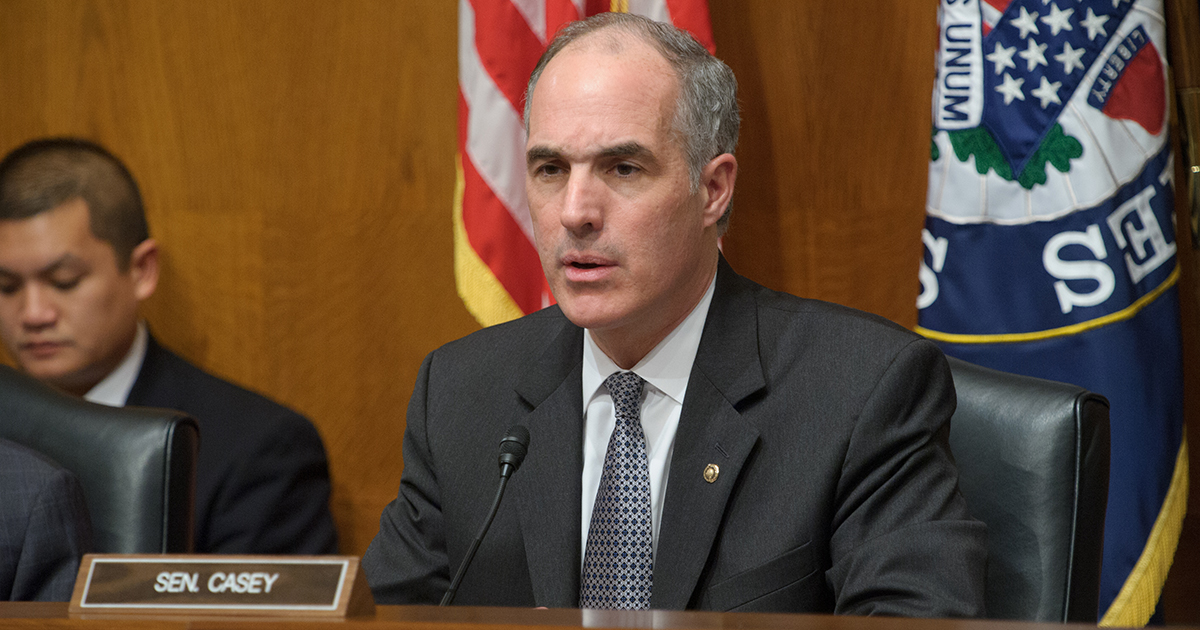
Two-term Democrat Bob Casey Jr. was re-elected with 54% of the vote in 2012. He is running and won the Democratic primary unopposed. Congressman Lou Barletta ran for and won the Republican nomination in the May 15 primary. Even though Pennsylvania is trending towards the Republican party due to an aging population and declining population in cities such as Philadelphia and Pittsburgh, Bob Casey is likely to win re-election by a 10% margin. The main reasons why Bob Casey is likely to win a third Senate term is because Congressman Barletta has thus far run a lackluster campaign, as well as the fact that Bob Casey is a relatively moderate Democrat regarding social issues and has solely focused his campaign on economic issues pertinent to Pennsylvania voters.
Democrat Sheldon Whitehouse is running for a third term and faces little legitimate opposition from the Republicans.
Rhode Island:
Two-term Democrat Sheldon Whitehouse was re-elected with 64% of the vote in 2012. He is running for a third term. Former Rhode Island Supreme Court Associate Justice Robert Flanders is the Republican nominee. Even though President Donald Trump performed relatively decent for a Republican in Rhode Island, as well as the fact that the Republicans are likely to win the Rhode Island gubernatorial election this year, Sheldon Whitehouse has led by commanding margins in all pre-election polls and looks likely to win a third Senate term.
Congresswoman Marsha Blackburn has narrowed the gap considerably against former Tennessee governor Phil Bredesen in recent weeks and looks likely to hold the Tennessee Senate seat for the Republicans.
Tennessee:
Two-term Republican Bob Corker was re-elected with 65% of the vote in 2012. announced his intentions to run for re-election as early as 2016 but changed his mind and announced his intent to retire in September of 2017. Generally a “moderate Republican” in terms of his political views, Senator Corker stated that the main reason he decided to retire is due to his opposition to many of the policies of President Donald Trump and the fact that the Republican party is shifting away from its past values of traditional conservatism to a platform aligned with the far-right. Ultra-conservative Congresswoman Marsha Blackburn easily won the Republican nomination, whereas former governor (2003-2011), whereas former Tennessee governor (2003-11) Phil Bredesen won the Democratic nomination.
Even though polls earlier in the year have shown former Governor Bredesen leading by as much as 10%, the race has considerably tightened in recent weeks, with Congresswoman Blackburn now holding a 14% lead in the polls. Several factors have resulted in the Tennessee Senate race becoming less competitive. One such factor is the fact that Tennessee has rapidly trended towards the Republican party since 2010 due to the defeat or retirement of many of the more conservative Democrats who dominated in the Applacian and Ozarks regions of the country, the increasingly socially liberal positions of the Democratic party as a whole, and changes in the demographics of the state. Additionally, President Donald Trump won Tennessee by a resounding margin in 2016 (and is likely to improve on his already large victory margin when he runs for re-election in 2020) and has campaigned heavily for Congresswoman Blackburn in recent weeks. As such, it is likely that the Republicans will hold the Tennessee Senate seat by anywhere from a 10-15% margin.
Congressman Beto O’Rourke has a good chance to defeat Republican Ted Cruz due to his positive, issue-focused campaign, as well as the fact that Texas is trending towards the Democratic party.
Texas:
One-term Republican Ted Cruz was elected with ~55% of the vote in 2012, slightly underperforming Republican nominee Mitt Romney in Texas. Ted Cruz overwhelmingly won the Republican primary on March 6, 2018, defeating TV producer Bruce Jacobson, Houston energy attorney Stefano de Stefano, former mayor of La Marque Geraldine Sam, Mary Miller, and Thomas Dillingham. On the Democratic side, Congressman Beto O’Rourke won the Democratic nomination on March 6, 2018, by a large margin.
Texas represents a surprisingly strong pick-up opportunity for the Democratic party. The main reason why the Texas Senate race is competitive is that Texas is rapidly trending towards the Democratic party. Historically, Texas was one of the first Southern states to trend towards the Republicans during the 1950s and as recently as 2004, voted Republican by an almost 25% margin. In recent years, however, Texas has swung towards the Democratic party, with Hillary Clinton only losing by a 7-8% margin in 2016. Additionally, Ted Cruz is one of the most unpopular Senators currently in office due to his aggressive, partisan tactics, as well as a volatile personality. On the other hand, Congressman O’Rourke has run a positive, issue-focused campaign and represents a fresh face for a rapidly changing electorate in a traditionally conservative state. As such, Congressman O’Rourke is likely to narrowly win the Texas Senate race this year.
2012 Republican Presidential nominee Mitt Romney is running for Senate in Utah and is likely to win by a large margin.
Utah:
Seven-term Republican Orrin Hatch was re-elected with 65% of the vote in 2012. Hatch is the President pro tempore of the United States Senate, as well as the second-most-senior Senator. Before the 2012 election, Hatch said that he would retire at the end of his seventh term if he was re-elected. Hatch initially announced his re-election campaign on March 9, 2017, but later announced his plans to retire on January 2, 2018. Former 2012 Republican presidential nominee Mitt Romney is running for the seat. Professor James Singer was running for the Democratic nomination, but he dropped out and endorsed Salt Lake County Councilwoman Jenny Wilson, who made her Senate bid official on July 17, 2017. Even though the Democratic party felt that the Utah Senate race had the potential to become competitive due to President Donald Trump’s unpopularity in the state, Mitt Romney has thus far run a very strong campaign and attempted to frame himself as a “Never Trump” Republican who is unafraid of breaking away from the President on certain issues. As such, the Utah Senate race should end up in a strong Republican victory.
2016 Democratic primary candidate Bernie Sanders is expected to win a third term with at least 75% of the vote.
Vermont:
Two-term Independent Senator Bernie Sanders was re-elected with 71% of the vote in 2012. Sanders, one of two independent members of Congress, has caucused with the Democratic Party since taking office in 2007. In November 2015, Sanders announced his plans to run as a Democrat, rather than an Independent, in all future elections. He won the nomination easily. The Vermont Republican party nominated Lawrence Zupan, an obscure candidate that does not even have a legitimate campaign website. Based on his strong popularity and extremely weak opponent, Bernie Sanders is expected by be re-elected with anywhere between 75-80% of the vote.
2016 Democratic Vice-Presidential nominee Tim Kaine is heavily favored to win a second term.
Virginia:
One-term Democratic Senator and Hillary Clinton’s running-mate in 2016 Tim Kaine was elected with 53% of the vote in 2012. He was re-nominated unopposed. Prince William County Supervisor and prominent “Alt-Right” political leader Corey Stewart is the Republican nominee. Matt Waters is the Libertarian nominee. Based on the fact that Virginia is a state that has been trending towards the Democratic party at a high rate since at least 2004, as well as the fact that President Donald Trump is highly unpopular in the Virginia overall (his disapproval rating in the state is a whopping 73%), Tim Kaine is likely to win re-election with anywhere between 55-60% of the vote.
Three-term Democrat Maria Cantwell is expected to win a fourth term in a heavily Democratic state.
Washington:
Three-term Democrat Maria Cantwell was re-elected with 61% of the vote in 2012. She is running for a fourth term. Much like California, Washington holds non-partisan blanket primaries, in which the top two finishers advance to the general election regardless of party. Cantwell and former state Republican Party chair Susan Hutchison are facing each other in November. Based on current polling, Maria Cantwell is widely expected to cruise to re-election by at least 16%.
Conservative Democrat (and Trump supporter) Joe Manchin is expected to narrowly win a second full Senate term against relatively weak opposition.
West Virginia:
One-term conservative Democrat Joe Manchin was elected with 61% of the vote in 2012. He originally won the seat in a 2010 special election. Manchin is running for re-election and won the May 8 Democratic primary. Environmental activist Paula Jean Swearengin also ran for the Democratic nomination. West Virginia Attorney General Patrick Morrisey received the Republican nomination in the May 8 primary. Congressman Evan Jenkins, coal miner Bo Copley, Jack Newbrough, Don Blankenship, and Tom Willis ran for the Republican nomination. Even though West Virginia was President Donald Trump’s second-best state in the 2016 Presidential Election and is overwhelming Republican in terms of voting, Patrick Morrisey has been struggling in the polls, with Senator Manchin leading him by anywhere from 4-8%. As such, West Virginia is likely a lost cause of the Republicans this election cycle. Despite the fact that Joe Manchin is favored to win re-election, there is a possibility that he will end us switching over to the Republican party due to his support for much of President Donald Trump’s agenda, as well as differences with the Democratic party leadership on issues such as abortion, LGBT rights, gun control, and environmental policy.
Democrat Tammy Baldwin is favored to win a second term to the US Senate.
Wisconsin:
One-term Democrat Tammy Baldwin was elected with 51% of the vote in 2012. She is running for a second term. State Senator Leah Vukmir and businessman and member of Wisconsin Board of Veterans Affairs Kevin Nicholson ran for the Republican nomination, with Vukmir proceeding to win. Even though President Donald Trump won Wisconsin in 2016 and is poised to do so again in 2020, Leah Vukmir has thus far run an extremely poor campaign. As such, Senator Baldwin will likely win re-election by at least 20%.
Republican John Barrasso is expected to easily win a second Senate term in one of the countries most Republican states.
Wyoming:
One-term Republican John Barrasso was elected with 76% of the vote in 2012. Barrasso was appointed to the seat in 2007 and won a special election in 2008. He is running for a second full term. 59-year-old Gary Trauner, a Jackson Hole businessman and Congressional candidate in 2006 and 2008, is the Democratic nominee. Considering that Wyoming was President Donald Trump’s best state in 2016, as well as the fact that the last time a Democrat won a statewide election in Wyoming was in 2006, Senator Barrasso will likely win re-election with at least 70% of the vote.
The Republican Party is one of the two main political parties currently active in the United States. Founded by anti-slavery activists, economic modernizers, and liberal Whigs and Democrats in 1854, the Republicans dominated politics nationally and was the majority political party in the Northeast, Midwest, and Great Plains for most of the period between 1854 and 1932. The Republican party has won 24 of the last 40 U.S. presidential elections, and there has been a total of 19 Republican Presidents between 1860 and 2016, the most from any political party.
Liberal Republicans & The Civil War
The Republican Party was founded in Ripon, Wisconsin in 1854 and soon became the main anti-slavery political party within the US.
The Republican Party was officially formed in the small town of Ripon, Wisconsin on March 20, 1854, as a coalition of anti-slavery Whigs and Democrats opposed to the Kansas–Nebraska Act, which opened Kansas Territory and Nebraska Territory to slavery and future admission as slave states, thus repealing the 34-year prohibition on slavery in territories north of the Mason–Dixon line. This change was viewed anti-slavery members of Congress as an aggressive, expansionist maneuver by the slave-owning South. In addition to supporting an anti-slavery platform, the Republican Party followed a platform based on economic modernization, a more open interpretation of the constitution, expanded banking, openness to new immigrants, and giving free western land to farmers as a way to discourage the spread of slavery to the Western territories. Most of the support for the new political party came from New England (particularly Vermont, Maine, and parts of Upstate New York), the Midwest, and certain areas in the Upper South such as Eastern Tennessee, Southeastern Kentucky, and Western Virginia (regions where slavery was non-existent).
The Republican Party almost immediately made a mark on American politics and soon superseded the Whig Party as the chief opposition party. The first Republican Presidential nominee was John Frémont, a former general during the Mexican-American War and a strong opponent of the spread slavery. In the 1856 Presidential Election, Frémont scored 33% of the vote and came very close to defeating Democratic candidate James Buchanan in the Electoral College. The strong performance of the Republican Party was an impressive feat despite the fact that the party lacked a strong organizational structure and was not on the ballot in all states. The Republican Party built upon their successes by winning control of both House of Congress in the 1858 midterm elections.
The election of Abraham Lincoln in 1860 and the subsequent start of the Civil War led to the first era of Republican domination of the American political system.
The election of Abraham Lincoln in 1860 and the subsequent start of the Civil War opened a new era of Republican dominance at the federal level known as the Third-Party System. President Lincoln proved brilliantly successful in uniting the factions of his party to fight for the Union. Most of the remaining Democrats at first were War Democrats and supportive of the Union war effort until late 1862. When in the Fall of 1862 Lincoln added the abolition of slavery as one of the leading war goals, many War Democrats became “Peace Democrats” and thus became more sympathetic to the cause of the Confederacy. The Republicans condemned the peace-oriented Democrats as disloyal and won enough War Democrats to maintain their Congressional majority in 1862. In 1864, the Republicans formed a coalition with many War Democrats (such as Tennessee military governor Andrew Johnson) as the National Union Party which reelected Lincoln in a landslide.
Nearly all of the state Republican parties accepted the idea of the abolition of slavery except Kentucky. In Congress, the Republicans established legislation to promote rapid modernization, the creation of national banking system, high tariffs, the first income tax, paper money issued without backing (“greenbacks”), a large national debt, homestead laws, federal infrastructure spending (particularly on the railroads and industries), and federal aid for education and agriculture. These legislative efforts added to the perception that the Republican Party was the more liberal of the two main political parties.
Post Civil-War Republicans
After the successful conclusion of the Civil War in 1865, the Republican Party leadership was faced with the challenge of Reconstruction. The Republican Party soon became split between the moderates (who favored a lenient approach to Reconstruction) and the Radical Republicans (who demanded aggressive action against slavery and vengeance toward former Confederates). By 1864, a majority of Republicans in Congress were part of the Radical branch of the party. These tensions reached their boiling point after President Lincoln’s assassination in April of 1865. The Radical Republicans at first welcomed President Andrew Johnson (Lincoln’s second Vice President and a Southern Democrat who supported the Union), believing that he would take a hard line in punishing the South and enforce the rights of former slaves. However, Johnson denounced the Radicals and attempted to ally with moderate Republicans and Democrats. The showdown came in the Congressional elections of 1866, in which the Radicals won a sweeping victory and took full control of Reconstruction, passing laws over President Johnson’s veto. President Johnson was impeached by the House of Representatives in 1868 but was acquitted by the Senate by only one vote.
The Republican Party of the 1870s sought to establish a viable political coalition based on the ideas of racial equality and progressive public policy.
With the election of Ulysses S. Grant in 1868, the Radicals had control of Congress, the party structure, and the army and sought to build a Republican base in the South using the votes of Freedmen, Scalawags, and Carpetbaggers, supported directly by the US army. Republicans all throughout the South formed clubs called Union Leagues that mobilized the voters, discussed policy issues and fought off white supremacist attacks. President Grant strongly supported radical reconstruction programs in the South, the Fourteenth Amendment and equal civil and voting rights for the freedmen. Despite President Grant’s popularity and devotion to the cause of racial and social equality, his tolerance for corruption led to increased factionalism in the Republican Party. The economic depression of 1873 energized the Democrats at the Congressional level. The Democrats won control of the House of Representatives in 1874 and formed “Redeemer” coalitions which recaptured control of each southern state. Reconstruction came to an end when an electoral commission awarded the contested election of 1876 to Republican Rutherford B. Hayes, who promised through the unofficial Compromise of 1877 to withdraw federal troops from the control of the last three southern states (Mississippi, South Carolina, and Louisiana). The South then became known as the Solid South, giving overwhelming majorities of its electoral votes and Congressional seats to the Democrats for the next century.
Economic Conservatism
The Republican Party by and large remained the dominant political party at the Presidential level for the next five decades, with the Democrats only winning the Presidency in 1884, 1892, 1912, and 1916. Starting in the mid-1890s, both of the political parties began to shift on economic policy due to events such as the 1893-1897 economic depression. During the 1896 Presidential Election, the Democrats nominated former Congressman William Jennings Bryan of Nebraska, whereas the Republicans nominated Governor William McKinley of Ohio. In contrast to previous Democratic nominees, Bryan followed a platform aligned with contemporary liberalism. Some of the main components of Bryan’s platform included increased federal aid to farmers and factory workers, opposition to the gold standard, a federal income tax, opposition to the wealthy elite, and economic populism. In contrast, Republican William McKinley took an entirely opposite position, arguing that the application of classically liberal economic policies, the continuation of the gold standard, and protectionism would lead to widespread prosperity. Ultimately, McKinley defeated Bryan by a comfortable margin, but the political shifts from this election would have ramifications moving forward. Even though the Republican Party moved towards the left-wing of the political spectrum once more under the Presidencies of Theodore Roosevelt and William Howard Taft, the conservative branch would win out by 1920 with the nomination and subsequent election of Warren Harding to the Presidency.
A Party in Decline & Flux
Senator Robert Taft of Ohio led the conservative wing of the Republican Party from the late 1930s to the early 1950s and advocated for the party to support fiscally conservative principles.
The initial era of Republican domination at the Presidential level would come to an end with the start of the Great Depression in 1929. President Hoover attempted to alleviate the widespread suffering caused by the Depression, but his strict adherence to Republican principles precluded him from establishing relief directly from the federal government. Additionally, President Hoover became the first Republican President to openly-endorse white supremacy and supported the removal of blacks from state-level Republican parties, which alienated black support for the Republican Party. The Depression cost Hoover the presidency with the 1932 landslide election of Franklin D. Roosevelt and allowed the Democrats to gain a substantial Congressional majority for the first time since the 1850s. The Roosevelt Administration implemented a legislative program known as the “New Deal,” which expanded the role of the federal government in the economy as a way to alleviate the suffering caused by the economic decline and to prevent another economic decline on the scale of the Great Depression from occurring again. Additionally, President Roosevelt sought to gain the support of voter groups that typically voted Republican such as African-Americans, ethnic minorities, and rural farmers. Roosevelt’s efforts were ultimately successful and led to strong victories for the Democratic Party at the ballot box for the next three decades. During this period, the Democratic Party retained control of Congress for every year except 1946 and 1952 and won the Presidency in all elections except 1952 and 1956, when Dwight Eisenhower, a liberal Republican, defeated a fractured Democratic Party.
In response to the New Deal and the policies of the national Democratic Party, the Republicans split into two factions. The first wing was the liberal faction, which favored expanding the New Deal social programs, but felt that such programs would be managed better by Republican administrations. Additionally, the liberal faction of the Republican Party firmly favored civil rights legislation and worked closely with Northern Democrats to push forward positive legislative changes in that arena. The other group was the conservative faction, which advocated a return to laissez-faire economics and fiscal conservatism. Even though the conservative faction of the Republican Party also supported civil rights reforms, they started to form alliances with conservative Southern Democrats in the late 1930s as a way to prevent progressive laws from passing. After the 1938 midterm election, the “Conservative Coalition” formed a majority in Congress and prevented successive Democratic administrations from expanding the New Deal and other associated social programs. It can be argued that the “Conservative Coalition” controlled Congress until 1958, when a large group of liberal Democrats was elected to the Senate and House of Representatives.
The Southern Strategy & The Republican Resurgence
The political parties began to shift again in the 1960s due to policy changes within the Democratic Party. The main split in the Democratic Party came about due to the struggle for civil rights. Since the late 1930s, the Democratic Party experienced a major split between the liberal and moderate factions, which favored civil rights, and the Southern faction, which was steadfast in its opposition to federal civil rights legislation. These tensions came to a head when Lyndon Johnson became President after John F. Kennedy was assassinated in 1963. Despite being a Southerner, Johnson had a record in support of civil rights since the mid-1950s and felt that civil rights represented a major political opportunity for the Democratic Party. Over the course of his Presidency, major civil rights legislation was passed in 1964, 1965, and 1968 and the Democrats soon became associated with civil rights reform. In response to these changes, the Republican Party began to appeal to white Southerners opposed to the changes to their way of life. These appeals first became apparent in the 1962 Alabama Senate Election between Democrat Lister Hill and Republican James Martin. Despite being a supporter of segregation, Hill was targeted relentlessly by Martin as a covert supporter of federal civil rights legislation. Ultimately Hill won the race, but by only a 1% margin. The Hill-Martin Senate race served as a prelude to the 1964 Presidential Election, in which Republican Barry Goldwater lost in every region of the country except the Deep South due to his opposition to the Civil Rights Act of 1964.
Modern Republicans look up to President Ronald Reagan (1981-89) as the main political leader to emulate.
The Republican Party began to see a resurgence at the federal level during the late 1960s that continue to this day. As a result of the aforementioned civil rights reform, the ongoing Vietnam War, and the failure of the Democratic Party leadership to reform the party structure, the Republican Party regained control of the Presidency in 1968 and retained control of this office in each election except 1976, 1992, 1996, 2008, and 2012. On the other hand, the Republican Party did not regain control of the Senate until 1980 and the House of Representatives until 1994. The growth of the Republican Party over the past 50 years can be attributed to the implementation of a conservative platform on both economics and foreign policy as well as the rise of the Christian Right political movement in the late 1970s. The modern Republican Party considers President Ronald Reagan (1981-89) as the political leader to look up to, much like how Democrats view Franklin Roosevelt as their political idol. During his Presidency, Reagan implemented neoliberal economic policies, expressed strong support for socially conservative values, increased defense spending and advocated an internationalist foreign policy that some credit with contributing to the end the Cold War.
Contemporary Republican Party
Today, the Republican Party is at its highest level of support since the late 1920s. The Republicans control both House of Congress and have gained total control over historically Democratic areas such as the Appalachian and Ozark regions of the South since 2010 and are increasingly becoming dominant in the industrial Midwest. On the other hand, the Republican Party has lost nearly all of their historic support in the Northeast and West Coast due to their adopting of a socially conservative and xenophobic platform over the past decade.
In the 2016 Presidential Election, Republican Donald Trump defeated Democrat Hillary Clinton with 304 Electoral Votes but lost the popular vote by 3 million. Trump performed strongly in the Midwest, Appalachia, Ozarks, and some states in the Northeast such as Maine, Rhode Island, and New Hampshire. Additionally, Trump performed very poorly in several typically Republican states such as Texas, Georgia, Arizona, North Carolina, and Utah. Perhaps the 2016 Presidential Election signals a new realignment for both political parties. Future elections may see the Republican Party cementing their gains in the Midwest, Appalachia, and Ozarks, and the Democratic Party continuing to grow in support along both coasts of the US and picking up parts of the cosmopolitan Southern states and the Southwest.
Here are the main events in Politics that occurred over the past week:
1. NJ Gubernatorial Elections Heats Up In The Final Stretch
The NJ gubernatorial race entered its final stretch this week with the final debate between both the candidates.
The ongoing gubernatorial race in New Jersey picked up some steam this past week as both the candidates headed into the final stretch of campaigning. The final New Jersey Gubernatorial debate was held on October 18 and witnessed both candidates taking on each other on pressing issues facing the state such as property taxes, increasing spending on public services such as education, the gas tax, and the overall legacy of Governor Chris Christie. Despite having a commanding lead in most polls, Democratic candidate Phil Murphy performed somewhat poorly in the debate, particularly by not answering the questions fielded to him head on and by repeadely dodging the question of what he would do to reduce the burden of property taxes on the states poorest residents. In contrast, Republican candidate Kim Guadagno came across as the more decisive of the two candidates, by directly answering each question posed to her and by clearly stating her position on the issues. On the other hand, the overall tone of Guadagno during the debate was quite negative and created the perception that she would be unwilling to compromise on the issues. Overall, it can be argued that the overall poor performance of both candidates will result in little change in the polls, which have Phil Murphy leading comfortably.
2. Billionaire Democratic Donor Urges Local and State Political Leaders to Support Trump Impeachment Efforts
Tom Steyer, a wealthy Democratic donor and activist has urged political leaders to support articles of impeachment against President Trump.
Prominent Democratic donor and billionaire environmental activist Tom Steyer this week called on every governor in the United States to tell their constituents where they stand on the question impeaching President Donald Trump. In a letter to donors, Steyer asked state and local leaders to call on federal representatives to support Trump’s removal from office. Thus far, Congressmen Al Green (D-TX), Brad Sherman (D-CA), and Steve Cohen (D-TN) have all came out in support of efforts to impeach President Trump. In the letter, Steyer said that Politicians at all levels of government must speak out about Trump’s lack of fitness for office, and denounced the president’s decision to withdraw from the Paris climate agreement. Additionally, Steyer also accused Trump of violating the constitution by trying to delegitimize the ongoing Russia investigation and failing to disclose his business ties to foreign governments. Even though impeachment proceeding against Trump is unlikely because Republicans control both houses of Congress, Steyer feels that efforts to impeach Trump could become a real issued provided that the Democratic Party regains control of both houses of Congress after the 2018 midterm elections.
3. Democrats Increasing Worried About The VA Gubernatorial Race
The national Democratic Party is worried that the Virginia gubernatorial race will ultimately end up in a Republican victory.
Much like the New Jersey gubernatorial race, the Virginia gubernatorial race entered into its final stretch this week and witnessed political heavyweights from both sides campaigning for their respective candidates. President Donald Trump enthusiastically endorsed Republican candidate and former RNC chairman Ed Gillespie and appeared at several rallies with him in the Southwestern part of the state. On the Democratic side, former President Barack Obama and Bill Clinton campaigned with Ralph Northam and urged Virginian voters to turn out in high enough numbers to regain control of the state legislature and allow for unified Democratic control over the state for the first time in nearly a decade. Despite the strong campaigning on both sides and the initial optimism regarding Democratic chances for the race, it appears that Ed Gillespie has a slight edge going into election day despite the fact that Virginia is a solidly Democratic state at the Presidential level. Some of the factors benefiting Gillespie include the typically lower Democratic turnout in off-year elections, the popularity of President Trump amongst rural voters in Southwestern Virginia, and voter dissatisfaction with the Virginia Democratic Party over their failure to come up with a cohesive message to counter the Trumpist shift of the Republican Party.
4. Saudi Arabian Government Pledges To Clamp Down On Extremist Interpretations Of Islam
The government of Saudi Arabia is considered to be the leading sponsor of global terrorism.
In part of an attempt to reform its image as a state sponsorer of terrorism, the government of Saudi Arabia announced on October 18 that it will begin policing and reexamining the teachings of the Prophet Muhammad to make sure followers of Islam do not use twisted and radical interpretations of Islamic traditions to foment violence and terrorism. While lacking specifics on how this policy would be implemented, the Saudi Arabian Culture and Information Ministry said that it would strive to “eliminate fake and extremist texts and any texts that contradict the teachings of Islam and justify the committing of crimes, murders, and terrorist acts.” These teaching come as a surprise to many observers, who note the fact that the government of Saudi Arabia is the worlds leading sponsorer of terrorism and that it uses the ideology of Wahhabism to promote a puritanical and fundamentalist version of Islam that is entirely opposite to the message originally promoted by the Prophet Muhammad. It argued that this change in policy was pushed for in part by the US and Israeli governments, who want to portray Saudi Arabia as a moderate and progressive country in their efforts to sway Arab allies in support of increased sanctions and outright military intervention against Iran, which is Saudi Arabia’s main regional rival.