The announcements, made just before Rosh Hashanah, signal a response to mounting public and political pressure, particularly in the UK, where Prime Minister Keir Starmer faced calls from his Labour Party and widespread pro-Palestinian demonstrations. Starmer had pledged in July to recognize Palestine unless Israel agreed to a ceasefire with Hamas, committed to a two-state solution, and ruled out annexing the West Bank, conditions Israel did not meet. Instead, Israel intensified its military operations in Gaza and launched attacks in Doha, Qatar, complicating ceasefire talks. The decision follows the October 7, 2023, Hamas attacks on Israel, which killed approximately 1,200 people and displaced tens of thousands. Israel’s subsequent military campaign in Gaza has resulted in over 65,000 Palestinian deaths, according to Gaza health officials, fueling global outrage and prompting this diplomatic shift.
Israeli Prime Minister Benjamin Netanyahu swiftly condemned the recognitions, calling them a “reward for terror” and vowing that a Palestinian state “will not happen.” The US, aligned with Israel, blocked a UN Security Council resolution for a Gaza ceasefire, citing insufficient condemnation of Hamas. Despite this, over 140 countries now recognize Palestinian statehood, and the Palestinian Authority holds nonmember observer status at the UN since 2012. Analysts, such as Yossi Mekelberg from Chatham House, argue that while symbolic, these recognitions may not immediately alter Israel’s policies without further actions like sanctions or restricted arms sales. However, the move elevates Palestine’s status globally, framing the conflict as one state occupying another, a perspective echoed by Palestinian human rights lawyer Diana Buttu.
The recognition of Palestine by the UK recognition carries particular weight due to its historical role in the region. The 1917 Balfour Declaration supported a Jewish homeland in the British Mandate territories, and laws from that period still underpin Israel’s detention policies. Diana Buttu, a Palestinian-Canadian lawyer and former spokesperson for the Palestinian Liberation Organization (PLO) described the UK’s recognition as “powerful” but insufficient given Gaza’s devastation. The Palestinian mission in London plans to mark the occasion with a flag-raising ceremony, symbolizing its new status as an embassy. Hamas welcomed the recognitions but urged “practical measures” to halt Israel’s actions in Gaza and prevent West Bank annexation. UK Prime Minsiter Kier Starmer, rejecting claims that the move rewards Hamas, emphasized that a two-state solution opposes the group’s ideology and condemned it as a terrorist organization unfit for governance.
While these recognitions do not grant Palestine full UN membership, due to likely US vetoes in the Security Council, they signal a growing international consensus. For Palestinians, the move clarifies their sovereignty but underscores the urgent need for concrete steps to address Gaza’s humanitarian crisis and advance a sustainable resolution.
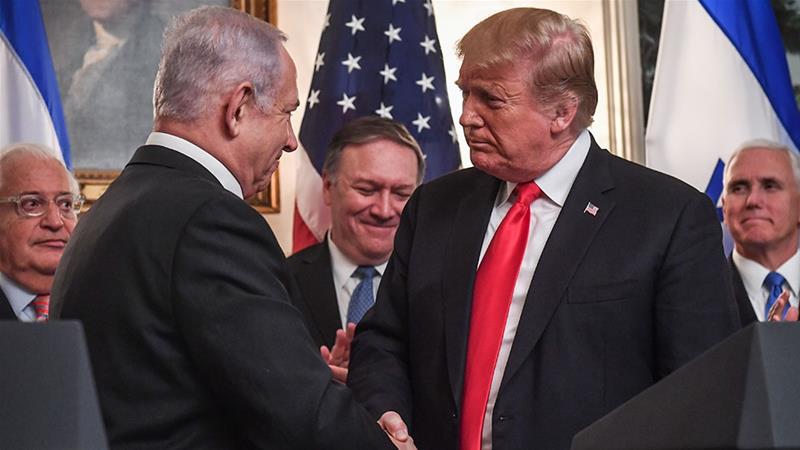
President Donald Trump announced on September 11 that Bahrain would establish full diplomatic relations with Israel, following the United Arab Emirates, in another sign of shifting Middle East dynamics that are bringing Arab nations closer to Israel. President Trump announced the news on Twitter, releasing a joint statement with Bahrain and Israel and calling the move “a historic breakthrough to further peace in the Middle East.” Speaking to reporters, the President said the 9/11 attacks‘ anniversary was a fitting day for the announcement. “There’s no more powerful response to the hatred that spawned 9/11,” he said. The announcement came after a similar one last month by Israel and the United Arab Emirates that they would normalize relations on the condition that Prime Minister Benjamin Netanyahu of Israel did not follow through with plans to annex portions of the West Bank. Trump administration officials said they hoped that agreement would encourage other Arab countries with historically hostile, though recently thawing, relations with Israel to take similar steps. The deal, which isolates the Palestinians, comes as Trump tries to position himself as a peacemaker before the elections in November.
Joint Statement of the United States, the Kingdom of Bahrain, and the State of Israel pic.twitter.com/xMquRkGtpM
Bahrain’s move was not unexpected. The tiny Persian Gulf kingdom was widely seen as the low-hanging fruit to be picked if all went well in the aftermath of the Emiratis’ announcement, analysts said. Bahrain, strategically significant as the home port for the US Navy’s Fifth Fleet, had already opened its airspace to new commercial passenger flights between Tel Aviv and Abu Dhabi. It was unclear whether the US or Israel had made any concessions to Bahrain in exchange for the agreement. When asked during a briefing for reporters, President Donald Trump’s son-in-law and adviser, Jared Kushner, who helped broker the deal, did not respond directly.
Israel would always welcome the addition of another Arab country to the shortlist of those with diplomatic ties, but in Israel, the announcement landed with neither the surprise nor the weight of the Emirati decision. “Any Arab country is very important, for sure,” said Amos Gilead, a retired Israeli major general who leads the Institute for Policy and Strategy at the Interdisciplinary Center Herzliya. “It’s another precedent. But with all due respect, when you are small, you are small.” But Bahrain has outsize significance, said Kirsten Fontenrose, a former National Security Council senior director for Gulf affairs in the Trump White House who is now a director at the Atlantic Council. She noted that Bahrain was a close ally of Saudi Arabia, the true diplomatic prize for Israel.“Its importance is mostly because it’s an indication that the new leadership in Saudi Arabia supports normalization,” Fontenrose said. “Bahrain doesn’t make a foreign policy move without Saudi Arabia’s express permission.”
Israel and Bahrain have had unofficial ties on and off since the 1990s and enjoyed warm relations for several years. In 2019, Bahrain played host to a Trump administration conference promoting the economic aspects of its proposal to resolve the Israeli-Palestinian conflict, during which Sheikh Khalid, a member of the Bahraini royal family who is now a diplomatic adviser to the king, gave friendly interviews to visiting Israeli journalists. “Israel is part of this heritage of this whole region, historically,” he said, adding that “the Jewish people have a place amongst us.”
Here are the main events that occurred in Politics this week:
1. President Trump’s Tax Returns Leaked, Revealing Decade of Business Losses
According to tax documents leaked this week, President Donald Trump lost over 1 billion between 1985 and 1994, calling into question the claim that he is a “brilliant businessman.”
President Donald Trump’s tax filings from 1985 to 1994 show that he had accumulated more than a billion dollars in business losses over the course of a decade, according to newly revealed tax information obtained by the New York Times on May 8. In the 10 years covered, Trump racked up nearly $1.2 billion in core business losses, according to the New York Times’ analysis of the President’s federal income tax information from those years. The loss paints what the New York Times called a bleak picture of Trump’s businesses, which he has always touted as successful. The New York Times’ analysis of the tax information includes how President Donald Trump was already deep in financial trouble in 1987 when he published his infamous book “The Art of the Deal,” a bestseller that focused on his business career as a so-called self-made billionaire. In 1985, his core businesses reported a loss of more than $46 million and carried over a $5.6 million loss from earlier years. President Trump has long blamed his first round of business reversals and bankruptcies on the 1990-93 Recession, but the New York Times analysis shows that his fortune was already on its way down much earlier.
The tax results also show that President Donald Trump appears to have lost more money during that decade than nearly any other individual taxpayer. His core businesses reportedly lost over $250 million each year in 1990 and 1991, which the New York Times said is more than double those of the nearest taxpayers in its sampling of high-income earners for those years. Notably, the investigation reveals that the president did not pay federal income taxes for eight out of the ten years analyzed. The analysis notes that President Donald Trump at one time tried to delay his collapse by playing the role of a corporate raider, in which he would acquire company shares with borrowed money, publicly announce he was contemplating a takeover and then quietly sell his shares on the resulting stock price bump.
Overall, the revelation of information shows that President Donald Trump is not the “brilliant businessperson” that he had long claimed to be. Charles Harder, one of President Trump’s financial attorneys said that the tax information was false without citing any errors and reportedly told the newspaper on May 8 that IRS transcripts “are notoriously inaccurate.” The Trump administration continued to refuse to release his federal tax returns this week, with the Treasury Department announcing on May 7 that it will not comply with House Democrats’ request for the President’s tax returns, openly defying federal law. The New York Senate is on the verge of passing a bill that would allow Congress to view Trump’s state tax returns, which are expected to have much of the same information as his federal returns.
I won the 2016 Election partially based on no Tax Returns while I am under audit (which I still am), and the voters didn’t care. Now the Radical Left Democrats want to again relitigate this matter. Make it a part of the 2020 Election!
Congressman Bill Pascrell (D-NJ), who serves on the House Ways and Means Committee working to get President Donald Trump’s tax returns, said in response to the report that the President’s “entire tenure is built upon the most colossal fraud in American political history.” “As these records make clear, Trump was perhaps the worst businessman in the world. His entire campaign was a lie,” Pascrell said in a statement. “He did not pay taxes for years and lost over one billion dollars, how is that possible? How did he keep getting more money and where on earth was it all going? We need to know now.” Congressman Pascrell also stressed that Congress must still see Trump’s actual tax returns and that the IRS is legally obligated to hand them over. “We now have another part of the truth,” Pascrell said. “We need a lot more.”
2. US Deploys Aircraft Carrier to Persian Gulf Amid Steadily Increasing Tensions with Iran
The Trump Administration ordered the deployment of several US aircraft carriers to the Persian Gulf, increasing the chances for war with Iran.
On May 6, it was announced that the Trump administration is sending an aircraft carrier group to the Persian Gulf ahead of schedule and warning that Iran and its allies are showing “troubling and escalatory” indications of a possible attack on American forces in the region. Exactly what prompted the action was unclear, but it marked a further step in sharply rising tensions between the Trump administration and the Iranian government. “The United States is not seeking war with the Iranian regime, but we are fully prepared to respond to any attack, whether by proxy, the Islamic Revolutionary Guard Corps or regular Iranian forces,” National Security Advisor John Bolton said. Neither Bolton nor other officials would provide any details about the supposed threat, which comes as the Trump administration wages a campaign of intensifying pressure against Iran and nearly a year after it withdrew from an Obama-era nuclear deal with Tehran.
With its “maximum pressure campaign,” President Donald Trump is trying to get Iran to halt activities (that many consider to be humanitarian at their core) such as supporting Shi’a socio-political groups opposed to the ideologies of Zionism and Wahhabism. “Our objective is to get the Islamic Republic of Iran to behave like a normal nation,” said Secretary of State Mike Pompeo during a visit to Finland. “When they do that, we will welcome them back.” Secretary Pompeo said the actions undertaken by the US have been in the works for a while. The request for the accelerated move came over the weekend from the military’s US Central Command after reviewing various intelligence reports for some time, according to the US official.
Since he assumed office in early 2017, President Donald Trump has advocated a hardline policy against Iran (at the urging of Israel, Saudi Arabia, and the Gulf States) with the ultimate goal of bringing about the collapse of the current Iranian government and paving the way for the reinstallation of the Pahlavi monarchy. Last month, President Trump announced the US would no longer exempt any countries from US sanctions if they continue to buy Iranian oil, a decision that primarily affects countries such as China, India, South Africa, Japan, South Korea, Italy, Greece, France, Germany, and Ireland. The US also recently designated Iran’s Revolutionary Guard Corps (IRGC) as a terrorist group, the first ever for an entire division of another government. Moreover, President Trump withdrew from the Obama administration’s landmark nuclear deal with Iran in May 2018 and, in the months that followed, reimposed punishing sanctions including those targeting Iran’s oil, shipping, manufacturing, and banking sectors.
3. Trump Administrations Proposed Peace Plan for Israel-Palestinian Conflict Revealed
The Trump Administration’s proposed plan to end the Israeli-Palestinian conflict was released this week.
The main points of President Donald Trump’s much-derided plan for the Middle East, the so-called “deal of the century,” were leaked by a Hebrew-language news outlet in Israel on May 8. Israel Hayom published the main points of the deal from a leaked document circulated by the Israeli Foreign Ministry. The main points of the agreement were put together by Trump’s son-in-law, Jared Kushner, who has extensive ties to both Saudi Arabia and Israel and proposed by the Trump administration.
The agreement would involve a tripartite treaty to be signed between Israel, the PLO, and Hamas, and a Palestinian state will be established in the West Bank and Gaza Strip. Additionally, the settlement blocs in the West Bank (which are illegal under international law) would form part of Israel, and Israel and Palestine would share Jerusalem with Israel maintaining general control. The Palestinians living in Jerusalem would be citizens of the Palestinian state but Israel would remain in charge of the municipality and therefore the land. The newly formed Palestinian state would pay taxes to the Israeli municipality in order to be in charge of education in the city for Palestinians. The status quo at the holy sites will remain and Jewish Israelis will not be allowed to buy Palestinian houses and vice versa. Egypt will offer the new Palestinian state land to build an airport, factories and for agriculture which will service the Gaza Strip.
The US, EU, and Gulf states would fund and sponsor the deal for five years to establish the Palestinian state, the leaked document claims. The proposed Palestinian state would not be allowed to form an army but could maintain a police force. Instead, a defense agreement will be signed between Israel and Palestine in which Israel would defend the new state from any foreign attacks. Upon signing the agreement, Hamas would have to disarm and its leaders would be compensated and paid salaries by Arab states while a government is established. If Hamas or any Palestinian bodies refuse this deal, the US will cancel all of its financial support to the Palestinians and pressure other countries to do the same. On the other hand, if Palestinian Authority President Mahmoud Abbas signs the deal but Hamas and Islamic Jihad do not agree to it, a war would be waged on the Gaza Strip with the full backing of the US. However, if Israel refuses the deal the US would cease its financial support. The US currently pays $3.8 billion a year to support Israel.
Overall, the international reaction to the Trump Administration’s proposed Middle East process has been mixed. Whereas the leadership of both Israel and Saudi Arabia have endorsed the plan and have pledged to work to implement it, the Palestinian leadership is likely to reject the proposal. Prior to the leaks, The Palestinian leadership in the West Bank and Hamas in Gaza have already issued statements saying that such a plan would be rejected as it does not follow the previous international agreements that grant Palestinians a future state in pre-1967 borders. The news leaks make it more likely that the deal is doomed to fail before it is even released publically as most Palestinian factions would reject such terms that favor the Israeli side.
4. Trade War Between US and China Escalates
President Donald Trump escalated the ongoing US-China trade war this week by placing a 25% tariff on all Chinese imports to the US.
President Donald Trump escalated his trade war with China on May 10 to tax nearly all of China’s imports as punishment for what he said was Beijing’s attempt to “renegotiate” a trade deal. President Trump’s decision to proceed with the tariff increase came after a pivotal round of trade talks in Washington on May 9 failed to produce an agreement to forestall the higher levies. In his comments at the White House on May 9, Trump vacillated between threatening China and suggesting a deal could still happen. Trump said he had received a “beautiful letter” from President Xi Jinping of China and would probably speak to him by phone, but said he was more than happy to keep hitting Beijing with tariffs. “I have no idea what’s going to happen,” Trump said. “They’ll see what they can do, but our alternative is, is an excellent one,” Trump added, noting that American tariffs on $250 billion worth of Chinese products were bringing “billions” into the US government. China’s Ministry of Commerce said that the government “deeply regrets that it will have to take necessary countermeasures.” It did not specify what those countermeasures might be. “It is hoped that the US and Chinese sides will meet each other halfway and work together” to resolve their dispute, the statement added.
The renewed brinkmanship has plunged the world’s two largest economies back into a trade war that had seemed on the cusp of ending. The US and China were nearing a trade deal that would lift tariffs, open the Chinese market to American companies and strengthen China’s intellectual property protections. But discussions fell apart last weekend when China called for substantial changes to the negotiating text that both countries had been using as a blueprint for a sweeping trade pact. President Donald Trump, angered by what he viewed as an act of defiance, responded by threatening to raise existing tariffs to 25 percent and impose new ones on an additional $325 billion worth of products. China has said it is prepared to retaliate should those tariffs go into effect. “We were getting very close to a deal then they started to renegotiate the deal,” President Trump said. “We can’t have that.”
Here are the main events that occurred in Politics this week:
1. The Long-Awaited Mueller Report Is Released, Finding No Direct Evidence of Trump-Russia Collusion in the 2016 Election
The log-awaited Mueller report was released this week, finding no direct evidence of collusion between President Donald Trump’s 2016 Campaign and the Russian government.
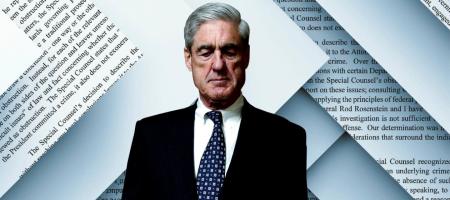
The two-year long investigation led by Robert Mueller found no evidence that President Donald Trump or any of his aides coordinated with the Russian government’s 2016 election interference, according to a summary of the special counsel’s key findings made public on March 24. Mueller, who spent nearly two years investigating Russia’s effort to sabotage the 2016 Presidential Election, found no conspiracy “despite multiple offers from Russian-affiliated individuals to assist the Trump campaign,” Barr wrote in a letter to lawmakers. Mueller’s team drew no conclusions about whether President Trump illegally obstructed justice, Barr said, so he made his own decision. The Attorney General and his deputy, Rod Rosenstein, determined that the special counsel’s investigators had insufficient evidence to establish that the president committed that offense. Attorney General Barr cautioned, however, that Mueller’s report states that “while this report does not conclude that the president committed a crime, it also does not exonerate him” on the obstruction of justice issue.
The release of the findings was a significant political victory for President Donald Trump and lifted a cloud that has hung over his Presidency since before he took the oath of office. It is also likely to alter discussion in Congress about the fate of the Trump presidency, as some Democrats had pledged to wait until the special counsel finished his work before deciding whether to initiate impeachment proceedings. President Trump and his supporters trumpeted the news almost immediately, even as they mischaracterized the special counsel’s findings. “It was a complete and total exoneration,” Trump told reporters in Florida before boarding Air Force One. “It’s a shame that our country had to go through this. To be honest, it’s a shame that your president has had to go through this.” Trump added, “This was an illegal takedown that failed.”
The Fake News Media has lost tremendous credibility with its corrupt coverage of the illegal Democrat Witch Hunt of your all time favorite duly elected President, me! T.V. ratings of CNN & MSNBC tanked last night after seeing the Mueller Report statement. @FoxNews up BIG!
Attorney General William Barr’s letter was the culmination of a tense two days since Robert Mueller delivered his report to the Justice Department. Barr spent the weekend poring over the special counsel’s work, as President Donald Trump strategized with lawyers and political aides. Hours later, Barr delivered his letter describing the special counsel’s findings to Congress. Barr’s letter said that his “goal and intent” was to release as much of the Mueller report as possible, but warned that some of the reports were based on grand jury material that “by law cannot be made public.” Barr planned at a later date to send lawmakers the detailed summary of Mueller’s full report that the attorney general is required under law to deliver to Capitol Hill. Despite the comprehensive nature of the report on the Mueller investigation, many Congressional Democrats expressed concern regarding its findings. For example, shortly after the release of the Mueller findings, Congressman Jerrold Nadler (D-NY), the chairman of the House Judiciary Committee, said in a Twitter post that he planned to call Barr to testify about what he said were “very concerning discrepancies and final decision making at the Justice Department.”
There must be full transparency in what Special Counsel Mueller uncovered to not exonerate the President from wrongdoing. DOJ owes the public more than just a brief synopsis and decision not to go any further in their work.
2. Trump recognizes Golan Heights as Israeli Territory
In a widely-denounced move, President Donald Trump recognized Israeli control over the Golan Heights on March 25.
On March 25, US President Donald Trump recognized Israel’s 1981 annexation of the Golan Heights in an election boost for Israeli Prime Minister Benjamin Netanyahu, prompting a sharp response from Syria and Lebanon, which once held the strategic land. With Netanyahu looking over his shoulder at the White House, President Trump signed a proclamation officially granting US recognition of the Golan Heights as Israeli territory, a dramatic shift from decades of US policy. The move, which Trump announced in a Twitter post last Thursday, appeared to be the most overt gesture by the Republican Party to help Netanyahu, who had been pressing Trump for the move since February 2017. Israel captured the Golan in the 1967 Six-Day War and annexed it in 1981 in a move condemned by the UN. In signing the proclamation, President Donald Trump said that, “This was a long time in the making.” Netanyahu welcomed Trump’s action and said Israel had never had a better friend as US President. Additionally, Netanyahu harkened back to the 1967 Six-Day War and the 1973 Yom Kippur War in justifying Israel’s need to hang on to the Golan. “Just as Israel stood tall in 1967, just as it stood tall in 1973, Israel stands tall today. We hold the high ground and we should never give it up,” he said.
After 52 years it is time for the United States to fully recognize Israel’s Sovereignty over the Golan Heights, which is of critical strategic and security importance to the State of Israel and Regional Stability!
Overall, the international reaction to President Donald Trump’s recognition of the Golan Heights as Israeli Territory was overwlmingly negative. Both Syria and Lebanon reacted swiftly to Trump’s proclamation, calling it a “blatant attack” on their sovereignty and territorial integrity and saying it had a right to reclaim the Golan. Palestinian President Mahmoud Abbas, who has refused to talk to the United States since Trump ordered the U.S. embassy moved from Tel Aviv to Jerusalem, expressed his “absolute rejection” of the Golan move in a statement issued by the Palestinian Authority news service Wafa. “The presidency reaffirmed that sovereignty is not decided by either the US or Israel no matter how long the occupation lasts,” the statement said. Moreover, Iranian President Hassan Rouhani harshly criticized President Donald Trump for recognizing the Golan Heights as part of Israel and said the move was against international law. “No one could imagine that a person in America comes and gives the land of a nation to another occupying country, against international laws and conventions. Such action is unprecedented in the current century,” Rouhani said in a statement. Additionally, several staunch allies of the US and Israel including France, the UK, Germany, and Saudi Arabiasimilarly condemned President Trump’s Actions.
3. Trump Administration Announces Support for Judicial Efforts to Overturn Obamacare
The Trump Administration announced its intention to convince the courts to overturn the Affordable Car Act (“Obamacare”) on March 25.
In a significant shift, the Trump Administration says that it backs a full invalidation of the Affordable Care Act (“Obamacare“), the signature Obama-era health law. The Justice Department presented its position in a legal filing on March 25 with the US Court of Appeals for the 5th Circuit in New Orleans, where an appeal is pending in a case challenging the measure’s constitutionality. A federal judge in Texas ruled in December that the law’s individual mandate “can no longer be sustained as an exercise of Congress’s tax power” and further found that the remaining portions of the law are void. He based his judgment on changes to the nation’s tax laws made by Congressional Republicans in 2017.
If the Trump Administration’s position prevails, it would potentially eliminate health care for millions of people and disrupt the US health-care system, from removing no-charge preventive services for older Americans on Medicare to voiding the expansion of Medicaid in most states. A court victory would also fulfill Republican promises to undo a prized domestic accomplishment of the previous administration but leave no substitute in place.
The change comes as newly empowered Democrats in the House have vowed to protect Obamacare from Republican attacks. In midterm races last fall that restored their majority in the House of Representatives, Democrats hammered their rivals for pursuing an eight-year crusade against the law, commonly known as Obamacare. House Speaker Nancy Pelosi (D-CA) pledged in a Twitter post on March 25 that Democrats would “fight relentlessly” to preserve “affordable, dependable health care.” “Trump and his administration are trying to take health care away from tens of millions of Americans,” warned Senator Kamala Harris (D-CA), who is among the Democratic aspirants who have signaled support for a Medicare-for-all system. In 2020, Harris added, “we need to elect a president who will make health care a right.”
Tonight in federal court, the Trump Admin declared all out war on affordable, dependable health care. In the courts, in the Congress, all across America, Democrats will fight relentlessly to #ProtectOurCare! https://t.co/WLZl5X9GGr
4. Senate Blocks “Green New Deal” in Partisan Vote
The Senate this week blocked a vote on the “Green New Deal,” a progressive climate change legislative program championed by Congresswoman Alexandra Ocasio-Cortes and Senator Ed Markey
On March 26, the Senate blocked the Green New Deal, a progressive climate change resolution that Republicans view as prime fodder heading into the 2020 presidential election. The Senate voted 0-57 on taking up the resolution, with 43 Democrats voting present. The measure was widely expected to fall short of the 60 votes needed to overcome the procedural hurdle. Most Democrats were expected to vote present, a move that allowed them to avoid taking a formal position. Senators Joe Manchin (D-WV), Kyrsten Sinema (D-AZ), Doug Jones (D-AL) and Angus King (I-ME) voted with Republicans against the measure. Republicans have seized on the measure as an example of Democrats shifting to the left ahead of next year’s presidential election. Every Democratic senator running for the party’s nomination in 2020 has co-sponsored the Senate Green New Deal resolution.
Senate Majority Leader Mitch McConnell (R-KY) lashed out at the proposal ahead of the vote on Tuesday, calling it an item on the “far-left wish list that many of our Democratic colleagues have rushed to embrace.” “The American people will see, they will see which of their senators can do the common sense thing and vote no on this destructive socialist daydream. And they will see which senators are so fully committed to a radical left-wing ideology that they can’t even vote no on self-inflicted economic ruin,” he said. The resolution, introduced last month by Congressman Alexandria Ocasio-Cortez (D-NY) and Senator Ed Markey (D-MA), strives for net-zero greenhouse gas emissions in the United States while creating millions of “good, high-wage jobs.” It faced pushback from conservatives as well as some Democrats for being too broad and including wishlist items not directly related to climate change, like expanding family farming and transitioning away from air travel.
Leading into March 26’s vote, Democrats accused Senate Majority Leader Mitch McConnell of trying to set up a “gotcha” vote since no hearings were held on the fast-tracked legislation, which was widely expected to fail to get the 60 votes needed to ultimately pass the Senate. Speaking at a rally early on March 26, Senator Markey blasted Republicans for putting on a “sham vote.” “They are calling a vote without hearings, without expert testimony, without any true discussion of the costs of climate inaction and the massive potential for clean energy job creation in our country. And that is because Senator McConnell wants to sabotage the call for climate action,” Markey said. Senate Minority Leader Chuck Schumer (D-NY) added that Republicans were making “a mockery of the legislative process” by bringing the Green New Deal resolution up for a vote just to have the Senate vote it down. “Republicans want to force this political stunt to distract from the fact that they neither have a plan nor a sense of urgency to deal with the threat of climate change. … It’s a political act. It’s a political stunt,” Schumer said.
Here are the main events that occurred in Politics this week
1. President Donald Trump, Russian President Vladimir Putin, Meet in Helinski For Controversial Summit
President Donald Trump met with Russian President Vladimir Putin this week in a controversial summit in Finland.
Amid chaos following his week-long European trip and the ongoing investigations into allegations that the Russian government colluded with his 2016 Presidential campaign, President Donald Trump met with Russian President Vladimir in Helinski, Finland on July 16 in their first-ever summit meeting. The summit marked the first official meeting between the leaders after previous unofficial talks between Trump and Putin at the 2017 G20 conference in Vienna. In addition to meeting with Putin, Trump also met the Finnish President Sauli Niinistö in the Presidential Palace. Some of the topics Trump pledged to discuss with Putin include the ongoing Syrian Civil War, the tensions between Russia and Ukraine, the steadily declining relationship between the US and Iran, and measures to reduce the threat of nuclear war between the US and Russia.
The summit between President Trump and Putin was wrought with controversy from the moment of its announcement. On June 14, a group of leading Senate Democrats urged Trump to forgo meeting Putin face-to-face and instead called on the President to work to remove the Putin regime from power and pressure the Russian government into stopping their supposed malign activities on the world stage. The letter was written by Senate Minority Leader Chuck Schumer (D-NY) and endorsed by Senators Mark Warner (D-VA), Dianne Feinstein (D-CA), Kamala Harris (D-CA), Bob Menendez (D-NJ), and many others. Additionally, Trump tweeted on the morning of the summit that the relationship between Russia and the US has “never been worse,” blaming the declining relationship on “foolishness and stupidity” on the part of the US, and referenced the ongoing Special Counsel investigation into Russian interference in the 2016 elections, calling it a “witchhunt”. Trump also indicated his inclination to accept Putin’s denial of Russian interference, saying “President Putin says it’s not Russia. I don’t see any reason why it would be.”
Our relationship with Russia has NEVER been worse thanks to many years of U.S. foolishness and stupidity and now, the Rigged Witch Hunt!
The Helsinki 2018 meeting began with Niinistö officially welcoming Putin, followed by Trump. The bilateral discussions between Putin and Trump mainly took place in the Finnish Presidential Palace, with Trump and Putin met with only interpreters present. The bulk of the meeting was conducted in secrecy, leading to much confusion and questions regarding the content that was discussed. In the closing press conference press conference, Trump and Putin praise each other and appeared to be in broad agreement on all policy issues. Much to the shock of Western observers, President Trump exonerated Putin of interfering in the 2016 election, directly going against the overwhelming consensus in the intelligence community that Russia indeed interfered in the election and potentially swayed the vote in as many as ten states. Trump also used the press conference to criticize the ongoing investigation into his campaign by Special Counsel Robert Muller, calling it a “partisan witch-hunt.”
Overall, the reaction to President Donald Trump’s meeting with Russian President Vladimir Putin has been negative. House Minority Leader Nancy Pelosi (D-CA) called it a “sad day for America,” and Senator Jeanne Shaheen (D-NH) called for American interpreter Marina Gross, who sat in on the private meeting with Putin, to be questioned before the Senate Foreign Relations Committee. Additionally, many Republicans strongly criticized President Trump. Senator Bob Corker (R-TN) claimed Trump “made us look like a pushover,” whereas Senator Ben Sasse called Trump’s remarks “bizarre and flat-out wrong.” 2008 and 2012 Republican Presidential Nominees John McCain and Mitt Romney also condemned the meeting and the President’s actions. Romney said Trump’s siding with Putin rather than US intelligence agencies was “disgraceful and detrimental to our democratic principles”, while McCain called the summit “one of the most disgraceful performances by an American president in memory.” Despite the overall negative reaction to the summit by political leaders of both parties, President Trump’s approval rating among Republican voters increases in the wake of the summit, with many of his strongest supporters expressing the belief that Russian collusion in the 2016 Election was a positive turn of events.
2. Violence and Turmoil Threatens Pakistan’s Unstable Political Situation
Amid a hotly-contested general election, several events this week threaten to further destabilize Pakistan and prevent the country from exiting a long period of political turmoil.
Several events this week have threatened to upend the already unstable political situation in Pakistan. On July 19, Nawaz Sharif, the Prime Minister of Pakistan from 2013 until his removal from office in 2017, returned to his country to begin serving a ten-year prison sentence. In a July 6 court decision, Sharif was sentenced to 10 years in prison and handed an almost $11 million fine over corruption charges related to his family’s purchase of overseas properties. His daughter Mariam Nawaz was also found guilty and is facing seven years in prison and a $2.6 million fine. Her husband Captain Safdar has received a one-year jail sentence. All three have been barred from engaging in politics for 10 years and four properties in London will be confiscated by the Pakistani state, according to the verdict.
The return of Nawaz Sharif to Pakistan occurred amid a heightened level of violence and turmoil facing the country in the wake of the bombing of a political rally in Baluchistan province on July 15, as well as tensions surrounding the upcoming general elections on July 25. Th suicide bomb attack resulted in the deaths of nearly 150 people and injured 186. Nawabzada Siraj Raisani, who was campaigning for an assembly seat in Balochistan, was killed in the bomb blast along with dozens of others. ISIS claimed responsibility for the attack in an email, stating that the attack was meant to intimidate the Shi’a Muslim community of Pakistan and discourage their participation in the political process. The Balochistan government announced two days of mourning and political parties in the province announced the suspension of political activities in the aftermath of deadly suicide bombing.
Despite the ongoing tensions within the country, many observers feel that the July 25 general election has the potential transform Pakistan for the better and allow the country to at last gain a sense of stability after nearly 4 decades of military rule. “For the first time in our history, fair elections are going to be held,” stated Fawad Chaudhry, a spokesman for the opposition Pakistan Tehreek-e-Insaf (PTI) political party. As campaigning enters the final stretch, charismatic populist and former cricket star Imran Khan and the deposed leader’s brother, Shahbaz Sharif, have emerged as the two frontrunners. Additionally, Bilawal Bhutto Zardari, the 29-year-old son of former leader Benazir Bhutto, is also attracting widespread support, seeking to reestablish his family’s party as a viable political force. Most polling suggests that the election is too close to call, and could result in coalition negotiations which will ultimately leave Bhutto Zardari’s smaller party with the balance of power.
3. Israel Launches Broad Air Assault in Gaza Following Border Violence
Israel resumed its sustained siege against Gaza this week with the commencement of a sustained bombing campaign.
On July 20, the Israeli government launched a large-scale attack against Hamas in the Gaza Strip after a Palestinian sniper killed an Israeli soldier along the border fence during a day of escalating hostilities. Successive explosions rocked Gaza City at nightfall, and the streets emptied as warplanes struck dozens of sites that Israel said belonged to Hamas. Israeli military analysts said the aerial assault was one of the most intense since a cease-fire ended 50 days of fighting in the Gaza Strip in 2014. The ferocity of the bombings raised fears that the hostilities could spiral into an all-out war that will further devastate the Gaza Strip. After nearly seven hours of siege by the Israeli government, a Hamas spokesman announced that the cease-fire had been restored with the mediation of Egypt and the UN. At least four Palestinians were killed by initial Israeli artillery and tank fire. Hamas said that three of the four were members of its military wing.
https://youtu.be/XkaUJa2PkMA
Prime Minister Benjamin Netanyahu of Israel Isreali Defense Minister, Avigdor Lieberman defended the actions by their government, warning of the commencement of a major siege of against the Gaza Strip unless Hamas ceases its supposed attacks against Israeli targets. Additionally, US Ambassador to the UN Nikk Haley and Senior Advisor to the President Trump Jared Kushner enthusiastically defended the Israeli government, stating that Netanyahu and Lieberman acted appropriately and that their actions will increase the chances for peace in the Middle East. On the other hand, Nickolay E. Mladenov, the United Nations special coordinator in the Middle East, had urged the Israeli government and Hamas “to step back from the brink” in a strongly worded post on Twitter on Friday night. “Not next week. Not tomorrow. Right NOW!” he wrote. “Those who want to provoke #Palestinians and #Israelis into another war must not succeed.”
🔴 Everyone in #Gaza needs to step back from the brink. Not next week. Not tomorrow. Right NOW! Those who want to provoke #Palestinians and #Israelis into another war must not succeed.
4. Israel Passes Controversial “Jewish Nation-State” Law
Amid much criticism, the Israeli Parliament passed the “Jewish Nation-State” Law on July 19.
On July 19, the Israeli parliament adopted a controversial and bigoted law defining the country as the nation-state of the Jewish people, provoking fears it will lead to blatant discrimination against its Palestinian citizens. The legislation, adopted by a relatively close 62 to 55 margin, makes Hebrew the country’s national language and defines the establishment of Jewish communities as being in the national interest. The bill also strips Arabic of its designation as an official language, downgrading it to a “special status” that enables its continued use within Israeli governmental and educational. “This is a defining moment in the annals of Zionism and the history of the state of Israel,” Prime Minister Benjamin Netanyahu told the Knesset after the vote. The nation-state bill was first introduced in 2011 by Avi Dichter, a member of the Likud Party and a center-right conservative. The main goal of the law was to establish the unique Jewish right to an Israeli homeland as one of Israel’s constitutional rules. When the final version passed this week, Dichter declared that “we are enshrining this important bill into a law today to prevent even the slightest thought, let alone attempt, to transform Israel to a country of all its citizens.”
Overall, the reaction to the new Israeli law has been mixed. In addition to praise among conservative Israeli politicians, noted American White Supremacist and Fascist political activist Richard Spencer endorsed the law. “I have great admiration for Israel’s nation-state law, Jews are, once again, at the vanguard, rethinking politics and sovereignty for the future, showing a path forward for Europeans,” Spencer stated in a press release. On the other hand, countries such as Egypt, Jordan, and even Israeli ally Saudi Arabia denounced the law, stating that it is discriminatory against Israel’s large Arab minority and threatens to further Israel’s reputation as an “apartheid state.” Additionally, several liberal Jewish leaders and orgnizations expressed outrage with the law. “The damage that will be done by this new nation-state law to the legitimacy of the Zionist vision … is enormous,” wrote Rick Jacobs, the head of the Union for Reform Judaism, in a press release. J Street, a liberal Zionist organization, called it “a sad day for Israel and all who care about its democracy and its future.”
This video by CaspianReport discusses the ongoing border disputes between Israel and the Hamas-based government in the Gaza Strip (one of the two territories of the Palestinian Authority) and the recent protests along the Israel-Gaza Border. At the end of March 2018, a campaign composed of a series of protests was launched at the Gaza Strip, near the Gaza-Israel border. Called by Palestinian activists and human rights organizations active in the Middle East the “Great March of Return“, the protestors demand that Palestinian refugees and their descendants be allowed to return to Israel. Additionally, the protestors also gathered to protest the crippling Israeli blockade of the Gaza Strip (which has entered into its 12th year), as well as the decision by the Trump Administration to move the US embassy in Israel to Jerusalem. The violence that stemmed from these pretests has resulted in the deadliest Israeli-Palestinian conflict in nearly 4 years.
The Organization of the protests was initiated by independent activists active in the Boycott, Divestment, Sanctions (BDS) movement, as well as by the governments of Iran, Syria, Lebanon and sociopolitical organizations active in the Middle East such as Hamas, Hezbollah, and the Houthi movement. The protests were originally slated to last from March 30, 2018 (Land day) to May 15, 2018 (Nakba Day). Five tent camps were set up between 1,500-2,500 feet from the Israeli-Gaza border and were to remain there throughout the entire campaign. In the first day of the protests, some 30,000 Palestinians participated in a march near the border, and several larger protests held throughout the months of April and May 2018 involved at least 10,000 Palestinian activists. Even though a vast majority of the protestors were peaceful, a number did engage in acts along the border such as property destruction, vandalism, and harassment of Israeli soldiers. In response, the Israeli government retaliated forcefully, killing over 100 unarmed Palestinian protestors and wounding an estimated 14,000 Palestinians.
Overall, Israel’s use of deadly force in retaliation to the unarmed protestors was met with strong condemnation within the international community. For example, the UN General Assembly passed a resolution condemning the actions on the part of Israel and called for moderation on both sides. Additionally, Human Rights Watch, Amnesty International, and B’Tselem cautioned the Israeli government against using deadly force against largely peaceful protestors. On the other hand, the US government praised Israel’s handling of the protests, stating that the Jewish state has every right to defend itself even against the most insignificant threat.
Here are the main events that occurred in Politics this week: 1. US Expels 60 Russian diplomats in Response to UK nerve agent attack
The Trump Administration ordered the expulsion of 60 Russia diplomats this week, signaling a harder line approach to Russia.
On March 26, President Donald Trump ordered the expulsion of 60 Russian diplomats the US identified as intelligence agents and the closure of the Russian consulate in Seattle. President Trump took this action after the US joined the United Kingdom in accusing Russia of attempting to murder a Russian dissident and his daughter using a nerve agent on UK soil. The action comes just two weeks after the Trump administration leveled the first sanctions against Russia for its interference in the 2016 US presidential election.”The United States takes this action in conjunction with our NATO allies and partners around the world in response to Russia’s use of a military-grade chemical weapon on the soil of the United Kingdom, the latest in its ongoing pattern of destabilizing activities around the world,” said White House press secretary Sarah Sanders.
British Prime Minister Theresa May called the move “the largest collective expulsion of Russian intelligence officers in history.”We have no disagreement with the Russian people who have achieved so much through their country’s great history. But President Putin’s regime is carrying out acts of aggression against our shared values,” she said. “The United Kingdom will stand shoulder to shoulder with the EU and NATO to face down these threats.” As expected, Russian President Vladimir Putin and Foreign Minister Sergey Lavrov denounced the actions on the part of the US and the UK, arguing that they are in violation of international law and will only worsen the already tense relationship between Russia and the West. As a retaliatory measure, the Russian government ordered the expulsion of 60 US diplomats and ordered the closure of the US Consulate in St. Petersburg for the foreseeable future.
2. Trump Administration Proposes Putting Question on 2020 US Census Asking Individuals Their Citizenship Status
The Trump Administration proposed adding a citizenship question to the 2020 Census this week, sparking protest from states such as New York and California.
On March 26, senior officials in the Trump Administration announced that The 2020 census will ask respondents whether they are United States citizens, the Commerce Department announced Monday night, agreeing to a Trump administration request with highly charged political and social implications that many officials feared would result in a substantial undercount. The Justice Department had requested the change in December, arguing that asking participants about their citizenship status in the decennial census would help enforce Section 2 of the Voting Rights Act, which aims to prevent voting rights violations. “Citizenship questions have also been included on prior decennial censuses,” explained officials. “Between 1820 and 1950, almost every decennial census asked a question on citizenship in some form. Today, surveys of sample populations, such as the Current Population Survey and the ACS, continue to ask a question on citizenship.”
Opponents of the citizenship question have argued in the past that it causes people to shy away from taking the census, and experts believe a drop in numbers could lead to an inaccurate count of the US population. “The inclusion of a question on citizenship threatens to undermine the accuracy of the Census as a whole,” wrote Senate Judiciary Committee Ranking Member Dianne Feinstein (D-CA.) and her colleagues in an open letter sent to the Justice Department in January. “Given this administration’s rhetoric and actions relating to immigrants and minority groups, the citizen question request is deeply troubling,” they said. “Such a question would likely depress participation in the 2020 Census from immigrants who fear the government could use the information to target them. It could also decrease response rates from U.S. citizens who live in mixed-status households, and who might fear putting immigrant family members at risk through providing information to the government” said Feinstein and her colleagues in the letter.
In response to the proposed changes, 17 states announced that they would bring suit against the Trump Administration. Led by New York and California, the leadership in the 17 states feel that this proposal would negatively impact the distribution of federal resources to states with large populations of undocumented immigrants and place an unfair advantage to the Republican Party in terms of redistricting efforts after 2020. “The census numbers provide the backbone for planning how our communities can grow and thrive in the coming decade,” California Attorney General Xavier Becerra said in a statement. “California simply has too much to lose for us to allow the Trump Administration to botch this important decennial obligation. What the Trump Administration is requesting is not just alarming, it is an unconstitutional attempt to discourage an accurate census count.”
3. Protests Erupt Gaza in Opposition to the Continued Israeli Occupation of Palestine
Major protests broke out along the Israel-Gaza border this week, resulting in the deaths of 16 and international outcry against Israeli policies.
On March 30, tens of thousands of Palestinians in the Gaza Strip participated in non-violent protests as part of the Great Return March. Palestinian participants soon began walking towards the fence that separates the strip from Israel and were met with live fire from the Israeli military that saw hundreds of people injured and 16 killed.
The protests were held to commemorate Land Day and demonstrate for the rights of Palestinian refugees to be resettled in Israel. Israeli Prime Minister Benjamin Netanyahu and Defense Secretary Avigdor Lieberman responded to the protests by claiming that Hamas, which has controlled Gaza since 2007, had sent women and children to the fence as human shields. Rather than expressing the grievances of Palestinians at large, the protests were to be seen in the context of long-standing tensions between Hamas and the Palestinian Authority in the West Bank.
The Israeli response drew widespread criticism around the world, with UN Secretary-General Antonio Guterres calling for an independent inquiry into Friday’s events. Additionally, several countries in the Middle East condemned the response to the protests by the Israeli government. Perhaps the country that most forcefully condemned the actions of Israel was Iran. In a Twitter post on March 31, Iranian Foreign Minister Mohammed Javad Zarif stated that “On the eve of Passover (of all days), which commemorates God liberating Prophet Moses and his people from tyranny, Zionist tyrants murder peaceful Palestinian protesters – whose land they have stolen – as they march to escape their cruel and inhuman apartheid bondage.” On the other hand, the US blocked a UN Resolution denouncing the Israeli response and placed the blame squarely on the part of the Palestinian protestors.
Here are the main events that occurred in Politics this week:
1. President Donald Trump Recognizes Jerusalem as the Capitol of Israel
President Donald Trump announced this week that he would be ordering the US to recognize Jerusalem as the capital of Israel, much to the ire of the Palestinian people.
On December 6, President Donald Trump followed through on a key campaign promise and announced that the US would recognize the city of Jerusalem as the capital of Israel. Defying dire warnings, Trump insisted that after repeated failures to form a lasting peace between Israel and Palestine it was past time for a new approach, starting with the decision to recognize Jerusalem as the seat of the Israeli government. He also said the United States would move its embassy from Tel Aviv to Jerusalem, though he set no timetable. In his announcement of this new policy, Trump stated that “We cannot solve our problems by making the same failed assumptions and repeating the same failed strategies of the past.” Trump’s declaration of Jerusalem as Israel’s capital is a powerfully symbolic statement about a city that houses many of the world’s holiest sites. For example, Jerusalem is sacred to both Christians and Muslims, as the city is home to the al-Aqsa Mosque where the Prophet Muhammad ascended to heaven to receive his revelation from God, as well as the Church of the Holy Sepulchre, where Christians believe Jesus was both crucified and buried.
2. Trump Tax Reform Proposal Passes Senate, Likely to Become Law
President Donald Trump scored a major legislative victory this week with the passage of his tax reform bill.
President Donald Trump’s tax reform proposal passed a major hurdle this week as it cleared the Senate by a 51-49 on December 2. In contrast to prior efforts to reform the US tax code, the Trump tax cut does not lower the top marginal tax rate of 39.6% and instead elevates the bracket to income greater than $1 million per year. The bill also eliminated the 33%, 28%, and 15% tax brackets and instead adds a 12% tax bracket. Additionally, the bill reduces the corporate tax rate by 15% and eliminates both the Alternative Minimum Tax and the Estate Tax (over a 6-year period).
President Trump has praised the tax reform bill as a huge step forward for economic growth and as beneficial for the middle class. Despite President Trump’s rhetoric, most observers are pessimistic regarding the overall effects of the bill. For example, Nobel-Prize winning economist Paul Krugman notes that the bill will do little to spur economic growth in an already strong economy and that it will have the net effect of shifting the tax burden from the wealthy towards the middle class and poor. Additionally, the Committee for a Responsible Federal Budget notes that the bill will add an additional $1.5 trillion to the national debt over a ten-year period. These allegations only served to contribute to the overall unpopularity of the bill and add to the perception that it is a giveaway to the wealthy donor class that helped to elect President Donald Trump.
3. Two Members of Congress Resign Amid Charges of Sexual Misconduct
Senator Al Franken was one of two members of Congress to resign this week amid charges of sexual misconduct.
The national debate regarding sexual misconduct reached its peak on December 7 with the resignations of Senator Al Franken (D-MN) and Congressman Trent Franks (R-AZ), a Tea-Party allied Conservative. Additionally, the House Ethics Committee launched an investigation into the allegations that Congressman Blake Farenthold (R-TX) used taxpayer dollars to pay an $84,000 sexual harassment settlement to a former aide. These events reflect the rapid pace of powerful individuals being held accountable for alleged past sexual misconduct in the weeks after Senate Candidate Roy Moore was accused of molesting three underage girls between the late 1970s and early 1990s.
In an emotional speech from the Senate floor, Franken disputed some of the accusations and suggested he is being held to a different standard than President Trump and Roy Moore. In announcing his resignation, Franks stated that he feared he would not receive a “fair” ethics investigation “before distorted and sensationalized versions of this story would put me, my family, my staff and my noble colleagues in the House of Representatives through a hyperbolized public excoriation.” Both the Republican and Democratic Party have devised different responses to the emergence of such allegations. The Democratic Party leadership appears to be determined to grab the moral high ground in an environment in which they hope sexual harassment becomes a wedge issue in the 2018 midterm elections. On the other hand, Republican Party leaders such as House Speaker Paul Ryan have attempted to deflect much of the blame and attempted to frame the scandals as more situational as opposed to indicative of a wider problem of sexual misconduct and harassment at the highest levels of government.
4. Former Yemen President Killed in Battle With Houthis
Former Yemen President Saleh was killed in battle with the Houthis this week, signaling a new phase in the War in Yemen
Yemen’s ousted President Ali Abdullah Saleh was killed by Houthi rebels near the city of Sanaa on December 4 in a move that is expected to have major implications for the ongoing Yemen Civil War. The death was announced by the Sanaa-based interior ministry, controlled by Saleh’s allies-turned-foes, the Houthis. In a statement read out on a Houthi TV network, the interior ministry announced the “killing” of “Saleh and his supporters.” The statement also mentioned that the killing came about after “he and his men blockaded the roads and killed civilians in a clear collaboration with the enemy countries of the coalition.” The interior ministry also said its forces had “taken over all the positions and strongholds of the treacherous militia in the capital, Sanaa, and the surrounding areas, as well as other provinces in order to impose security.”
The killing of Saleh likely came about in part due to his recent overtures to Saudi Arabia, who is currently leading a sustained military campaign in Yemen meant to destroy the Houthi movement and suppress Yemen’s Shi’a majority. These moves were unacceptable to the Houthi leadership and added to the perception that Saleh was a traitor to their cause of political reform and independence. Additionally, the Death of Saleh represent a fatal blow to the Saudi-led efforts in Yemen and may signal the end of the conflict and the formation of a government led by the Houthis.
One of the most notable countries in the Middle East is Palestine. Officially known as the State of Palestine, Palestine is a Parliamentary Republic located in the Western Middle East. Palestine is bordered by countries such as Israel, Egypt, Jordan, Saudi Arabia, Lebanon, and Syria, has an area of approximately 2,300 square kilometers (split between the West Bank and Gaza Strip) and a population of around 5 million. Palestine plays a significant role in contemporary Middle Eastern politics due to its ongoing border disputes with Israel and efforts to become an independent and legitimate nation.
Palestine Circa 1900.
Palestine has a long and rich heritage going back several thousand years. The Palestinian people are the descendants of the earliest inhabitants of the territory, the Philistines, and the Canaanites, who originally settled in the areas around 3000 BCE, nearly two millennia before the first Jewish settlers arrived in the region. Historically, the Palestinian territory was controlled by numerous foreign powers such as the Iranians (under both the Achaemenid and Sassanid Empires), the Greeks, Romans, Assyrians, and Arabs. Most recently, the Ottoman Empire controlled Palestine from the early 16th Century until the end of World War I. After World War I, Palestine was governed by Great Britain under a Mandate received from the League of Nations in 1920. In 1947, the UN passed a resolution to establish two states within the Palestinian territory and designated a territory including present-day West Bank as part of the proposed Arab state.
During the 1948 Arab-Israeli War, the West Bank was captured by Transjordan (present-day Jordan), and the Gaza Strip was captured by Egypt. Israel gained control of both territories during the 1967 Six Day War. The Palestinian Liberation Organization (PLO) was founded in 1964 with the intention of becoming the sole representative of the Palestinian people. Yasir Arafat (the founder of the political party Fatah in 1958) became the leader of the PLO in 1968 and soon began to seek regional support in favor of the creation of a Palestinian state and in opposition to the occupation of territories rightfully belonging to the Palestinian people by Israel. The PLO was recognized by the Arab League in 1974 as the representative of the Palestinian people. Arafat ultimately declared Palestine as an independent state on November 15, 1988. Israel ultimately transferred control of Palestinian-populated areas of the West Bank and the Gaza Strip to the Palestinian Authority (PA) under a series of agreements negotiated and signed between 1991 and 1999. Yasir Arafat was elected president of the Palestinian Authority in 1996 and served until his death in 2004 and was succeeded by Mahmoud Abbas.
Recent Palestinian politics has been characterized by the divide between Fatah and Hamas.
Recently, there has been a high level of tension within Palestine related to the political divide between Fatah and Hamas, an Islamist political party. Hamas won a majority of seats in the Palestinian Legislative Council in 2006 in elections widely considered to be free and fair by international observers. Despite the formation of a unity government with Fatah, Hamas ultimately took over the Gaza Strip by mid-2007, resulting in a division between the governments in the West Bank and Gaza Strip that continues to this present day. Despite high levels of political instability, Palestine was recognized as a non-member observer state by the UN General Assembly in November of 2012 and was admitted to the International Criminal Court in early 2015.
Mahmoud Abbas is the current President of Palestine and was first elected in 2005.
Palestine is a parliamentary republic operating under a semi-Presidential system. The current constitution of Palestine (the Basic Law) was adopted in 2002 and is modeled in part on the constitutions of various countries in the region such as Turkey, Syria, Lebanon, and Iran. The 2002 Basic Law of Palestine states that Palestinians will not be subject to “any discrimination on the basis of race, sex, color, religion, political convictions or disability.” The law also states that the principles of Shari’a law are the primary source of all legislative proposals. The President of Palestine is directly elected by the Palestinian people in the West Bank, East Jerusalem, and the Gaza Strip. The current President is Mahmoud Abbas, who was elected in 2005. The Prime minister of Palestine is directly appointed by the President and is not required to be a member of the legislature while in office. The current Prime Minister is Rami Hamdallah, who has been in office since 2013. The Palestinian Legislative Council (PLC) is the main legislative body within Palestine. The current Speaker of Parliament is Aziz Duwaik, who has been in office since 2006. Due to the ongoing conflict between Fatah and Hamas, elections for both the President and the Palestinian Legislative Council have been postponed since 2006, though local elections were held in the West Bank in 2016.
Palestine is considered to be a “hybrid regime,” or an “illiberal democracy” with elements characteristic of both authoritarian and democratic governments according to a 2016 “Democracy Index” rating. Some of the major factors that have prevented Palestine from becoming a full-democracy include the lack of strong governmental institutions, continued international isolation, and the ongoing conflict with Israel. Even though the Palestinian government has guaranteed freedom of assembly, press freedom, and freedom of speech, the rights of individuals to demonstrate openly have become increasingly subject to police control and restriction over the past few years due to the ongoing conflicts between Israel and Palestine and Hamas and Fatah. Despite the fact that the 2002 Basic Law mandates respect for other religions such as Christianity and Judaism, Islamic institutions and places of worship tend to receive preferential treatment from the Palestinian government. Additionally, Hamas began to enforce some Islamic standards of dress for women such as mandatory hijab since it came to power in the 2006 election and is alleged by the Israeli government to have established Islamic courts in the Gaza Strip.
Palestine is majority Muslim and Arabs make up the largest ethnic group in the country.
In terms of religion, Palestine is estimated to be between 83-97% Muslim, 3-14% Christian, and 3% other. An overwhelming majority (<95%) of Palestinian Muslims are Sunni and most Palestinian Christians are Greek Orthodox, Maronite, or Roman Catholic. As late as 1900, as much as one-third of the Palestinian population was Christian but declined in recent decades due to the Israeli occupation, the rise of anti-Christian policies by the Israeli government, and the lack of work opportunities. Arabs make up a majority (83%) of the Palestinian population and Arabic, Hebrew, and English are the official languages of the country. Palestine has a 91.9% literacy rate and women have full suffrage in Palestine and made up 47% of registered voters in the 2006 legislative elections.
Palestine has a GDP of $12.6 billion (2015 estimates) and a Human Development Index Score of 0.677 and a GINI Score of 35.5. The economy of Palestinian is primarily service based (81%). Agriculture (5%) and Industry (14%) make up the rest of the Palestinian economy. Unemployment in Palestine is estimated to be around 27% and 25.8% of the population lives below the poverty line. Israeli security measures and ongoing Israeli-Palestinian violence continue to negatively impact economic conditions in the Palestinian territories.
In recent years, Palestine has sought to gain an active role in international affairs.
Palestine is currently a member of a number of international organizations such as the Arab League, the Non-Aligned Movement, the Organization of Islamic Cooperation, the International Criminal Court, and the United Nations and also has diplomatic relations with 136 Nations. Some of the main allies of the Palestinian-led government in the West Bank include Saudi Arabia, Jordan, Egypt, and Morocco. Additionally, the US government under the leadership of former President Barack Obama sought to improve ties with the Palestinian government during his 8 years in office. On the other hand, the Hamas-led government in the Gaza Strip is primarily allied with countries such as Russia, China, Iran, Syria, Lebanon, Turkey, and Yemen and is not recognized as the true Palestinian government by the international community despite the fact that Hamas won a plurality of the vote in the 2006 Palestinian elections and is considered by a majority of Palestinians to be the legitimate government of the territory.
As a country, Palestine continues to face many daunting challenges that threaten its future success. Arguably the main challenge facing the country is its ongoing disputes with Israel and the dual nature of its own government. Within the ongoing peace process, several different solutions have been proposed. The specific solutions range from a one-state, two-state, or even a three-state solution. Each of these proposals has their own set of strengths and weaknesses and have been promoted at various times by the international community. Despite the high level of support for both approaches, it is unlikely that either a one-state or a two-state solution will be viable given the current situation in the region.
It can be argued that a one-state solution is not a viable solution to the Israeli-Palestinian conflict for several reasons. The main reason is that it would result in the wholesale disenfranchisement of the Palestinian people and deny them the right to self-determination. By denying the Palestinian people the right to self-determination, the Israeli government would risk the creation of a civil war and expand the already existing conflicts between the different ethnic groups within the country. Additionally, a one-state solution may permanently alter the overall face of the State of Israel. For example, the high fertility rate among Palestinians coupled with the return of Palestinian refugees would quickly render the Israeli Jewish community an ethnic minority.
It can also be argued that the two-state solution is not viable given the current political realities within Israel. Even though the two-state solution would allow the Palestinian people to develop their own governmental system and full self-determination, the political divisions within the Palestinian territories make the implementation of this proposal unrealistic. For example, the Palestinian territories are split between the West Bank and the Gaza Strip, and both territories are governed by different political factions (the Palestinian Authority in the West Bank, and Hamas in the Gaza Strip). The differences between both political factions regarding policy make a possible unification difficult at best. Additionally, both the West Bank and Gaza Strip are apart from each other geographically, so the logistics for travel between both locations would be difficult to be implemented.
Considering these factors, a three-state solution is the most viable option for the Israeli-Palestinian conflict. Under such an option, Israel would have its borders set to what they were prior to the Six-Day War of 1967 and the West Bank and the Gaza Strip would become two separate Palestinian states. The West Bank would be governed by the Palestinian Authority and Gaza Strip would be governed by Hamas. Additionally, the city of Jerusalem would become a demilitarized zone under the joint administration between representatives from all three states, observers from the United Nations, and leaders from all of the main religious groups within the territory. This approach would reduce the chances of conflict within the region, prevent extremism from spreading, and improve the overall chances for lasting peace in the Middle East.
Zionism is an international movement that supports the establishment of a Jewish homeland in the territory defined as the historic Land of Israel (known as Palestine) and continues primarily to support the modern state of Israel. The term “Zionism” is derived from the word Zion, referring to Mount Zion, a small mountain near Jerusalem. Zionism arose in the late 19th century in Europe as a national revival movement in reaction to anti-Semitism and exclusionary nationalist movements in European countries such as France, Germany, and Russia.
Theodor Herzl was one of the founders of Zionist political thought during the late 19th Century.
One of the principal founders of Zionist political thought was Leon Pinsker, a Russian political activist, and physician. In the 1882 book, Auto-Emancipation, Pinsker held that not an emancipation granted by others, but a territorial concentration of Jewish people could solve the problems facing the Jewish people within Europe. “A land of our own whether it be on the banks of the Jordan or the Mississippi” was an ideal solution according to Pinsker. Another contributor to Zionist political thought was Theodor Herzl, an Austrian-Hungarian political activist, and playwright. Herzl wrote Der Judenstaat (“The Jewish State”) in 1896 and founded the World Zionist Organization at the first Zionist Congress in 1897. The initial goal of the Zionist movement was to establish a sovereign Jewish-dominated state in the region known as Palestine.
The ruling power of Palestinian territory area at the turn of the century was the Ottoman Empire, followed by Great Britain after the collapse of the Ottoman Empire in 1920. Lobbying by Chaim Weizmann and others culminated in the Balfour Declaration of 1917 by the British government. This declaration endorsed the creation of a Jewish homeland in Palestine. In 1922, the League of Nations approved the notion of a Jewish State in the region. Despite the support by the League of Nations, the Palestinian people resisted Zionist migration to their long-held territory. In the Palestinian Territory during this period, there were numerous revolts against Zionist immigration, the most notable of which being the 1936-39 Arab Revolt, which resulted in the decimation of the Palestinian Christian community and was a serious setback for the Palestinian nationalist movement.
The Zionist political movement has recently sought to gain increased levels of support from countries such as the US and Saudi Arabia and has played a role in determining US foreign policy in the Middle East.
After World War II and the Holocaust, support for Zionism increased exponentially in the Western world. The Zionist movement eventually succeeded in establishing the state of Israel in 1948, as the world’s first and only Jewish nation. Since the establishment of Israel in 1948, Zionism continues to advocate on behalf of right-wing Israeli politicians and to address threats to Israeli national security. Some supporters of Zionism including current Israeli Prime Minister Benjamin Netanyahu feel that Israel has the right to gain control over the entire Palestinian territory and eliminate any threats to the Jewish people at both the regional and global level. Additionally, Zionist political organizations have formed alliances with political groups in both the US and countries in the Middle East such as Saudi Arabia and have recently sought to increase their influence in world affairs.
Despite the success of Zionism in establishing a Jewish state, there has emerged a movement in direct opposition to Zionism and the human rights abuses committed by Israel. Opponents of Zionism view the ideology as neo-colonialist, racist, and advocating the genocide and disenfranchisement of the Palestinian people. At the international level, countries such as Iran are the primary opponents of Zionism and support resistance efforts to the Israeli occupation of the Palestinian territories. The opposition to Zionism within Iran stems from a need by the Iranian government to create scapegoat that can be used by the Iranian leadership to deflect blame for governmental problems and to repress anti-government forces. Other countries critical of the notion of Zionism and supportive of efforts meant to raise attention to the human rights abuses that stem from the application of its most important principles include Syria, Lebanon, and Yemen.
Yisroel Dovid Weiss is one of the leaders of the Jewish anti-Zionist movement.
The anti-Zionist movement is primarily led by Christians and Muslims from both the Middle East and Western nations. In particular, the Catholic Church and Palestinian Christian organizations in both the Middle East and the US are persistent critics of Zionism and the current policies of the Israeli government. Opposition to Zionism is also common in some sects of Judaism. Neturei Karta, a sect of ultra-Orthodox Judaism led by Yisroel Dovid Weiss is also opposed to Zionism and argues that Jews should advocate a two-state solution to the Israeli-Palestinian conflict.