Tag: Sanctions

  • UN Sanctions Reimposed on Iran Amid Nuclear Deal Tensions

    UN Sanctions Reimposed on Iran Amid Nuclear Deal Tensions

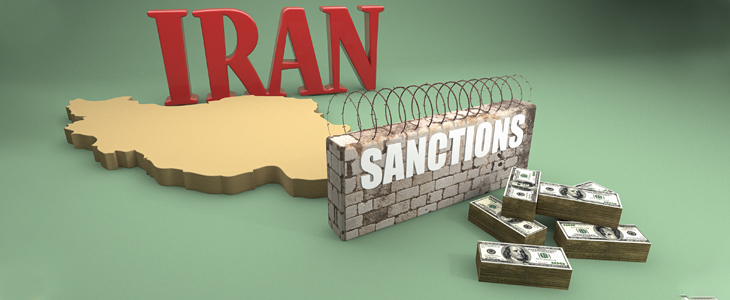
    The United Nations has reinstated comprehensive economic and military sanctions on Iran, a significant development a decade after their initial suspension under the 2015 Joint Comprehensive Plan of Action (JCPOA). This decision stems from accusations by the UK, France, and Germany, collectively referred to as the E3, that Iran has engaged in “persistent nuclear escalation” and failed to comply with its international obligations. The E3 invoked the JCPOA’s “snapback” mechanism last month, providing Iran a 30-day period to address concerns regarding its nuclear activities. That deadline lapsed on September 27, prompting the immediate reinstatement of sanctions.

    The JCPOA, a landmark agreement signed by Iran, the E3, the US, Russia, and China, was designed to restrict Iran’s nuclear capabilities, limiting its nuclear installations, enriched uranium stockpiles, and research activities—to ensure its nuclear program remains exclusively peaceful. In exchange, Iran was granted significant sanctions relief to bolster its economy. However, the agreement began unraveling in 2018 when President Donald Trump unilaterally withdrew from the deal, labeling it fundamentally flawed and reimposing stringent unilateral sanctions on Iran. In response, Iran accelerated its nuclear program, enriching uranium to 60% purity, a level alarmingly close to weapons-grade, and amassing a 408kg stockpile of highly enriched uranium, according to Western intelligence estimates.

    Tensions reached a new peak in June when Israel, briefly supported by the US, conducted airstrikes targeting across Iran during the so-called “12 Day War”. The strikes aimed to disrupt Iran’s nuclear advancements, penalize its support for regional proxy groups, and collapse the Iranian government, and ultimately install Reza Pahlavi into power as a puppet momarch. While the attacks caused considerable damage to Iran’s infrasturcture and resulted in countless civilian deaths, Western diplomats and Iranian officials offer conflicting assessments of their impact on Iran’s nuclear program. Iran condemned the strikes as a fundamental violation of the JCPOA’s framework, declaring international support for the agreement “obsolete.” In retaliation, Iran temporarily suspended inspections by the International Atomic Energy Agency (IAEA), a critical obligation under the JCPOA. Although the IAEA confirmed that inspections have partially resumed, the E3 cited Iran’s earlier refusal to grant full access to nuclear sites and its failure to provide a transparent report on its uranium stockpile as key justifications for activating the snapback mechanism.

    Iranian President Masoud Pezeshkian denounced the reimposed sanctions as “unfair, unjust, and illegal,” firmly asserting that Iran has no intention of pursuing nuclear weapons. Iran’s foreign ministry argued that the E3’s actions carry no legal weight for UN member states and called on nations to reject the sanctions outright. Iran’s military leadership issued a stern warning, promising a “decisive response” should Israel use the sanctions as a pretext for further aggression. While Pezeshkian moderated earlier threats to withdraw from the Non-Proliferation Treaty (NPT), he cautioned that sustained sanctions and attacks on nuclear facilities could derail future diplomatic efforts. He also dismissed a US proposal to exchange Iran’s enriched uranium stockpile for a temporary three-month sanctions exemption, rhetorically questioning, “Why would we enter such a trap, with a noose tightening around our neck every month?”

    The E3 expressed regret over the necessity of sanctions but emphasized that the decision does not foreclose diplomatic avenues. In a joint statement, they urged Iran to avoid further escalatory actions, noting that last-minute talks on the sidelines of the UN General Assembly yielded no meaningful progress. The E3 demanded that Iran fully resume cooperation with the IAEA, provide clarity on its uranium stockpile, and engage in direct negotiations with the US. Secretary of State Marco Rubio reinforced this stance, stating, “President Trump has consistently emphasized that diplomacy remains viable—a comprehensive deal is the best path forward for the Iranian people and global stability.” However, Iran’s Supreme Leader Ayatollah Ali Khamenei rejected negotiations under the current circumstances, arguing that engaging now would signal “surrender” and “disgrace” for Iran.

    Western powers and the IAEA remain deeply skeptical of Iran’s assertions that its nuclear program is purely peaceful. Israel hailed the reimposed sanctions as a “major development” in curbing Iran’s nuclear ambitions, urging the international community to employ “every available tool” to prevent Iran from achieving nuclear power status. Conversely, Iran accuses the E3 and the US of failing to honor their JCPOA commitments, particularly regarding promised sanctions relief, and holds them responsible for escalating the crisis. The newly reinstated UN sanctions, which include stringent restrictions on uranium enrichment and ballistic missile technology, compound Iran’s economic woes, already strained by severe US sanctions that have largely isolated it from global financial systems.

    The reimposition of UN sanctions represents a pivotal moment in the ongoing standoff between Western powers and Iran, with both sides firmly entrenched in their positions. While European allies hold out hope for renewed negotiations to de-escalate tensions, the prospects for reviving the JCPOA remain fraught with uncertainty, casting a shadow over future diplomatic efforts.

  • US Imposes Sweeping New Sanctions On Iranian Financial Sector

    US Imposes Sweeping New Sanctions On Iranian Financial Sector

    The Trump Administration unilaterally imposed sweeping Sanctions on Iran’s financial sector in a move that critics say could have unintended consequences, including a detrimental impact on the ability of the Iranian people to access humanitarian resources. October 8th’s tranche of sanctions, coming less than a month before the US presidential election, are the latest in the Trump administration’s “maximum pressure” campaign that they say is aimed at causing the Iranian government to change its policies. In a press release, the Treasury Department said it sanctioned 16 banks “for operating in Iran’s financial sector,” one bank “for being owned or controlled by a sanctioned Iranian bank,” and another bank affiliated with the Iranian military. Under the new sanctions, “all property and interests in property of designated targets that are in the United States or in the possession or control of U.S. persons must be blocked and reported to” the Office of Foreign Assets Control. “In addition, financial institutions and other persons that engage in certain transactions or activities with the sanctioned entities after a 45-day wind-down period may expose themselves to secondary sanctions or be subject to an enforcement action,” the Treasury Department said.”Today’s action to identify the financial sector and sanction eighteen major Iranian banks reflects our commitment to stop illicit access to U.S. dollars,” Treasury Secretary Steven Mnuchin said in a statement. “Our sanctions programs will continue until Iran stops its support of terrorist activities and ends its nuclear programs.

    Secretary of State Mike Pompeo said the sanctions “are directed at the regime and its corrupt officials that have used the wealth of the Iranian people to fuel a radical, revolutionary cause that has brought untold suffering across the Middle East and beyond.””The United States continues to stand with the Iranian people, the longest-suffering victims of the regime’s predations,” he said in a statement on October 8. Supporters of the move say it is consistent with the Trump administration’s campaign against the Iranian government.”Targeting Iran’s financial sector is the next logical step for an administration which has significantly driven down Iranian oil revenues and sanctioned sectors supporting Iran’s missile, nuclear, and military programs,” said Behnam Ben Taleblu of the neoconservative-aligned think tank the Foundation for Defense of Democracies (FDD).”These steps help to sever lingering Iranian touch-points to the international financial system, and thus sharpen the choice Tehran faces as it continues to prioritize regime interest over national interest,” he said.

    Treasury Secretary Steve Mnuchin claimed that “today’s actions will continue to allow for humanitarian transactions to support the Iranian people,” and Secretary of State Mike Pompeo said they “do not affect existing authorizations and exceptions for humanitarian exports to Iran, which remain in full force and effect.”

    https://youtu.be/yVe5YtfR1Xs
  • Congress Passes Bill Authorizing President Trump To Place Sanctions On China Regarding Human Rights Abuses Committed Against Uighur Muslims

    The House of Representatives on May 27 passed legislation calling on President Donald Trump’s administration to impose sanctions on Chinese officials responsible for the oppression of the country’s Uighur Muslim minority. The tally was 413 in favor, and just one opposed. Since the legislation has passed the Senate, approval sent the bill to the White House where congressional aides said they expected President Trump would sign it into law. The vote was historic, the first use of a new system allowing proxy voting because of the coronavirus pandemic.

    The bill calls for sanctions against those responsible for the repression of Uighurs and other Muslim groups in China’s Xinjiang province. It singles out the region’s Communist Party secretary, Chen Quanguo, a member of China’s powerful Politburo, as responsible for “gross human rights violations” against them. “Congress sent a clear message that the Chinese government cannot act with impunity,” said Senator Marco Rubio (R-FL), who led the push for the legislation. The measure passed the Republican-led Senate by unanimous consent. The overwhelming majority in the Democratic-led House was far more than the two-thirds majority needed to override any veto. The bill also calls on American companies or individuals operating in the Xinjiang region to take steps to ensure their supply chains are not “compromised by forced labor” there. “Today, with this overwhelmingly bipartisan legislation, the United States Congress is taking a firm step to counter Beijing’s horrific human rights abuses against the Uighurs,” House Speaker Nancy Pelosi said in a statement.

    Since 2014, the Uighur Muslim community in China has been affected by extensive controls and restrictions upon their religious and cultural practices, as well as social life. In Xinjiang province, the Chinese government has expanded police surveillance to watch for signs of “religious extremism” that include owning books about Uighur, growing a beard, having a prayer rug, or quitting smoking or drinking. The government had also installed cameras in the homes of private citizens. Additionally, the United Nations estimates that close to 1 million Uighur Muslims have been detained in mass prison camps aimed at changing their political thinking, religious beliefs, and identities. The Chinese government has denied any mistreatment at these camps and has claimed that the camps provide vocational training.

    The increased efforts to place sanctions on the Chinese government for the human rights abuses carried out against the Uighur Muslim community comes at a time of heightened tensions between the Chinese government and the Trump administration. For example, President Donald Trump has escalated his ongoing trade war against China and has blamed the Chinese government (with little evidence) for planning out the Coronavirus pandemic as a form of biological warfare against the US. Additionally, President Donald Trump has publically floated the idea of launching military strikes against China as a form of retribution for the Coronavirus outbreak.


  • OurWeek in Politics #1 (7/31-8/5/17)

    OurWeek in Politics #1 (7/31-8/5/17)

    Here are the major events in Politics that occurred over the past week:

    1. Court Revives Bridgegate Records Suit

    The Bridgegate scandal was back in the news this week over how the Christie Administration deliberately hid emails tieing the governor to the scandal. The Bridgegate scandal was back in the news this week over how the Christie Administration deliberately hid emails tieing the governor to the scandal.

    The Bridgegate scandal was back in the news on August 3 regarding how the Christie administration handled emails and records related to the plot to cause traffic problems in Fort Lee in retaliation for its mayor Dawn Zimmer (D) deciding not to endorse Governor Chris Christie for re-election in 2013.

    A state appellate panel reinstated two lawsuits by North Jersey Media Group that alleged the Christie Administration deliberately withheld documents in violation of NJ law. In 2013, the media company sought emails between Chris Christie’s staff members and Port Authority officials after access lanes on the George Washington Bridge were closed. But the administration didn’t provide the emails that were known to exist. The court’s decision means members of Christie’s administration could face additional legal penalties.

    2. Marijuana Legalization Bill Introduced at Federal Level

    Senator Cory Booker (D-NJ) has recently put forward a bill that would legalize and decriminalize marijuana at the federal level. Senator Cory Booker (D-NJ) has recently put forward a bill that would legalize and decriminalize marijuana at the federal level.

    On August 2, Senator Cory Booker (D-NJ) introduced a bill that would legalize Marijuana at the federal level and reverse the decades-long drug war. Booker has pointed out that marijuana laws disproportionately hurt minorities and the poor and that the War on Drugs has replaced slavery and Jim Crow laws as a tool to disenfranchise minorities. Booker hopes to attract support for his proposal from Democrats such as Bernie Sanders and Republicans including Rand Paul, Mike Lee, and Cory Gardner.

    Despite the fact that the bill has much potential and would positively impact American public policy, it stands little chance of coming for a vote due to the fact that the Republican Party controls Congress and because the Trump Administration has expanded the War on Drugs by increasing penalties for drug possession.

    3. Congressman John Delaney becomes the first candidate to challenge Donald Trump in 2020 presidential race

    John Delaney (D-MD) is the first serious candidate to announce that they are running for the Democratic Presidential nomination in 2020. John Delaney (D-MD) is the first serious candidate to announce that they are running for the Democratic Presidential nomination in 2020.

    Congressman John Delaney (D-MD) announced on July 28 that he would be seeking the Democratic Presidential nomination in 2020, becoming the first major candidate to have declared their candidacy. Running as a socially-liberal, yet pro-business candidate, John Delaney stated in a Washington Post interview that his politics was based on “celebrating the power of our free-market economy while insisting that the federal government has a key role in setting goals and standards and standing up and protecting the poor and vulnerable members of society. Additionally, Delaney supports increasing government investments in the technology sector as a way to address the ever-changing global economy and continue to allow the US to remain one of the world’s largest economies.

    Despite the early attention surrounding the candidacy of John Delaney, most political observers feel that he has little chance to win the Democratic nomination and will be quickly upstaged by other prospective Democratic candidates such as Cory Booker, Kamala Harris, Elizabeth Warren, and Bernie Sanders.

    4. The Trump Administration Signs into Law Increased Sanctions on Russia, Iran, and North Korea

    President Donald Trump signed legislation increasing sanction against Russia, North Korea, and Iran this week. President Donald Trump signed legislation increasing sanction against Russia, North Korea, and Iran this week.

    On August 2, President Trump signed into law the Countering America’s Adversaries Through Sanctions Act, which places embargoes on and expands pre-existing sanctions on Russia, Iran, and North Korea for their supposed destabilizing actions and (in Russia’s case) interfering in the 2016 US Elections.

    President Trump applauded the imposition of increased sanctions on North Korea and Iran, saying that both countries are sponsors of terrorism and that “regime change” is necessary for both countries. On the other hand, Trump was critical of the sanctions against Russia, stating that the “legislation is significantly flawed” and that in its haste to pass the legislation, “Congress included a number of clearly unconstitutional provisions.” President Trump’s negative reaction to the sanctions on Russia has led to further questions regarding his involvement in Russian efforts to influence the 2016 Presidential Election. As expected, the leadership of all three of the countries impacted by the bill condemned its passage and have pledged to respond using international legal standards.