Tag: economics

  • US Labor Market Faces Slowdown Amid Government Shutdown Uncertainty

    US Labor Market Faces Slowdown Amid Government Shutdown Uncertainty

    Private payrolls in the US took a significant hit in September, adding complexity to an already uncertain economic landscape. With the government shutdown halting the release of the Bureau of Labor Statistics’ (BLS) monthly jobs report, policymakers and investors are left grappling for insights into the labor market’s health. In the absence of official data, attention has turned to alternative sources, such as the private-sector jobs report from payroll processor ADP, released on October 1.

    According to ADP, US private-sector businesses shed 32,000 jobs in September, a stark contrast to economists’ expectations of a 50,000-job gain. The report also revised August’s figures, turning an initial estimate of 54,000 jobs added into a loss of 3,000. ADP’s chief economist, Nela Richardson, attributed much of this downturn to a preliminary “rebenchmarking” of the data, which reduced September’s job count by 43,000 compared to pre-benchmarked figures. “While the numbers changed, the story remains consistent: hiring momentum has slowed throughout 2024,” Richardson told reporters. She noted that the recalibration, aligned with the 2024 Quarterly Census of Employment and Wages (QCEW), revealed a persistent slowdown in hiring, particularly evident in September. The QCEW, which draws from quarterly tax reports submitted by businesses, offers a comprehensive view of employment and wages at state, regional, and county levels. However, its lagged data limits its timeliness, leaving gaps in real-time analysis.

    September’s job losses were driven primarily by small businesses, with widespread declines across industries. Professional and business services, as well as leisure and hospitality, saw some of the largest drops. Health care remained a notable exception, continuing to drive consistent employment growth throughout the year. The broader labor market is showing signs of stagnation. The BLS’s August jobs report, the last available before the shutdown, indicated that the economy added just 22,000 jobs, with the unemployment rate climbing to 4.3%—its highest in nearly four years. June’s job gains were also revised downward into negative territory. The BLS’s Job Openings and Labor Turnover Survey, released earlier this week, further underscored the slowdown, with the hiring rate dropping to 3.2% in August, matching its lowest level since 2013, excluding the early pandemic period in 2020.

    Despite the lack of a monthly BLS jobs report, economists argue that the Federal Reserve has enough evidence to justify further interest rate cuts at its next meeting. Joe Brusuelas, an economist at RSM US, noted that the labor market’s condition supports a quarter-point rate reduction. He highlighted additional pressures, including policy uncertainty around trade and immigration, as well as long-term demographic challenges limiting labor supply. “The government shutdown and threats of mass firings are not conducive to a positive October payroll outlook,” Brusuelas wrote. US stocks reflected this uncertainty, trending lower amid concerns over the shutdown and remaining subdued after the ADP report’s release.

    While ADP’s data is not always a reliable predictor of the BLS’s official numbers, it remains a key indicator of labor market trends, particularly in the current data vacuum. Economists had anticipated a rebound in September, with forecasts of 50,000 jobs added and a steady unemployment rate of 4.3%. However, the ADP report paints a bleaker picture, reinforcing concerns that the US labor market is at risk of stalling.

    As the government shutdown persists, the absence of comprehensive data will continue to challenge policymakers and investors alike, making reports like ADP’s a critical, if imperfect, tool for navigating the economic landscape.

  • The Cycle of Renewal: Creative Destruction in Economics and Art

    The Cycle of Renewal: Creative Destruction in Economics and Art

    In 1942, economist Joseph Schumpeter introduced the concept of creative destruction in his seminal work, Capitalism, Socialism, and Democracy. He described it as the process by which innovations such as new technologies, products, or methods, disrupt and ultimately dismantle established economic structures to pave the way for novel systems and opportunities. This relentless cycle of renewal is not merely a feature of capitalism but its very engine, driving progress through the destruction of the old to make room for the new. Beyond economics, creative destruction serves as a powerful lens for understanding transformation in art, culture, and society, acting as a bridge between the analytical rigor of economics and the expressive freedom of creative disciplines.

    The transition from horse-drawn carriages to automobiles exemplifies creative destruction because the innovative technology of cars disrupted and largely eliminated the established carriage industry, displacing related jobs and infrastructure while creating new markets, industries, and opportunities for economic growth.

    Schumpeter argued that capitalism thrives on innovation, but this comes at a cost. Established industries, firms, and practices often become obsolete as entrepreneurs introduce groundbreaking ideas. The rise of the automobile, for instance, decimated the horse-drawn carriage industry, while digital streaming platforms have largely supplanted traditional media like DVDs and broadcast television. This process is not gentle, as it disrupts livelihoods, renders skills obsolete, and reshapes markets. Yet, Schumpeter saw it as essential for economic vitality, as it fosters efficiency, growth, and adaptation.

    Creative destruction is not merely destructive, it is generative. The demise of outdated systems creates space for innovation, enabling societies to address new needs and challenges. This duality, destruction as a prerequisite for creation, challenges the notion that stability is inherently desirable. Instead, Schumpeter posited that economies must embrace disruption to avoid stagnation.

    The shift from Neoclassical art to Impressionism exemplifies creative destruction as Impressionist artists like Monet and Renoir rejected the rigid, idealized forms of Neoclassicism, disrupting traditional artistic conventions with innovative techniques like loose brushwork and vibrant colors, thus creating new avenues for expression while rendering older styles less dominant.

    The parallels between economic and artistic innovation are striking. In art, creative destruction manifests as the rejection of established norms, styles, or mediums in favor of bold experimentation. Consider the transition from Romanticism to Impressionism in the 19th century. Artists like Claude Monet and Pierre-Auguste Renoir broke with the rigid conventions of academic painting, embracing loose brushwork and vibrant color palettes to capture fleeting moments of light and life. This shift shocked the art world, rendering traditional techniques less relevant while opening new avenues for expression.

    Similarly, the 20th century saw movements like Dadaism and Abstract Expressionism dismantle prevailing aesthetic frameworks. Marcel Duchamp’s Fountain (1917), a readymade urinal presented as art, challenged the very definition of artistic value, forcing a reevaluation of creativity itself. These disruptions, while initially controversial, expanded the boundaries of art, inspiring future generations to explore uncharted territory.

    The concept of creative destruction serves as a bridge between economics and art, illuminating their shared reliance on reinvention. In both domains, progress demands a willingness to let go of the familiar. Just as entrepreneurs disrupt markets with innovative business models, artists challenge cultural norms with provocative works. This shared dynamic invites reflection on broader societal phenomena, such as reinvention, disruption, and even gentrification.

    Gentrification can be viewed through the lens of creative destruction, as it revitalizes areas and creates new opportunities, but at times comes at the cost of cultural erasure.

    Gentrification, for example, can be viewed through the lens of creative destruction. As urban neighborhoods evolve, new businesses, residents, and cultural trends displace longstanding communities and traditions. While this process can revitalize areas, it often comes at the cost of cultural erasure or displacement, raising ethical questions about who benefits from such transformations. Similarly, in technology, the rise of artificial intelligence disrupts traditional labor markets but also creates opportunities for new industries and creative pursuits.

    Creative destruction reminds us that progress is not linear or painless. It requires courage to dismantle the old, whether it be an obsolete industry or a revered artistic tradition. Yet, this destruction is not an end but a beginning, a catalyst for innovation that drives societies forward. By embracing the discomfort of change, we unlock the potential for reinvention, ensuring that both economies and cultures remain dynamic and resilient.

    In conclusion, Schumpeter’s concept of creative destruction transcends economics, offering a framework to understand transformation across disciplines. Its resonance in art underscores the universal need for disruption as a precursor to creation. As we navigate an era of rapid technological and cultural change, creative destruction challenges us to balance the costs of disruption with the promise of renewal, fostering a deeper appreciation for the cycles that shape our world.

  • The Hidden Costs of Externalities: Offloading Harm in a Globalized World

    The Hidden Costs of Externalities: Offloading Harm in a Globalized World

    In economics, externalities are costs or benefits that affect parties who did not choose to incur them. A factory polluting a river, for example, imposes costs on downstream communities, including health issues, contaminated water, and dead ecosystems, while the factory reaps profits without bearing the full burden. This concept, though rooted in economics, reverberates far beyond, offering a lens to examine exploitation, ethical failures in the art world, and the unaccountable sprawl of global supply chains.

    A factory polluting the air in pursuit of a profit is an example of a negative externality, as it results in a producer offloading harm onto others.

    Externalities occur when the price of a good or service does not reflect its true social cost or benefit. Negative externalities such as pollution, arise when producers offload harm onto others. Positive externalities occur when benefits spill over, often unintentionally. For example, a homeowner who maintains a vibrant community garden not only enjoys their own harvest but also enhances property values and fosters social bonds for neighbors, who reap these benefits without contributing to the garden’s upkeep. The issue lies in accountability: those creating the externality often face no consequences, leaving society to clean up the mess.

    An example of an externality would be a coal plant. A coal plant generates cheap energy but spews carbon, worsening climate change. The plant’s owners profit, while the global public pays the price in floods, heatwaves, and displacement. The market, left unchecked, incentivizes this imbalance. Economists propose solutions such as carbon taxes or cap-and-trade systems to internalize these costs, but implementation lags, especially across borders.

    The production of consumer products such as smartphones often amplifies externalities.

    Global supply chains amplify externalities by diffusing responsibility. For example, a smartphone’s production spans continents: cobalt mined in Congo, assembled in China, sold in the US. Each step generates externalities, child labor, toxic waste, carbon emissions, yet no single entity is held accountable. The consumer enjoys a sleek device, unaware of the social and environmental toll embedded in its supply chain.

    International trade agreements often prioritize profit over people. Developing nations, desperate for economic growth, become dumping grounds for externalities. Factories in Bangladesh or Vietnam produce cheap goods for Western markets, but lax regulations mean workers face unsafe conditions, and rivers turn toxic. The harm is outsourced, invisible to the end consumer. Globalization’s promise of efficiency masks a darker truth: it thrives on exploiting those least equipped to resist.

    The art world, often seen as a bastion of creativity, is not immune to externalities. Consider the ethics of art production. Large-scale installations may rely on materials sourced through exploitative labor or environmentally destructive practices. Artists and galleries rarely account for these costs, yet their work is celebrated in pristine white cubes. The harm, deforestation, and displaced communities remain out of sight.

    The art world is increasingly confronting the concept of negative externalities.
    .

    Patronage also breeds externalities. Wealthy collectors or institutions fund art to burnish their image, but their money may come from industries tied to social or environmental damage. The art world becomes complicit, laundering reputations while ignoring the broader impact. A museum funded by an oil magnate might showcase “radical” art, but the contradiction festers: the institution profits while externalizing the cost of its patron’s legacy.

    Externalities expose a core flaw in institutions, that they are often built to prioritize self-preservation over systemic responsibility. Governments, corporations, and cultural bodies often deflect blame, leaving marginalized groups to bear the brunt. For instance, urban development projects gentrify neighborhoods, displacing low-income residents while developers profit. The social cost, fractured communities, lost cultural heritage, is externalized, unaddressed by those who caused it.

    Institutional criticism, a practice rooted in questioning power structures, can challenge this. Artists like Hans Haacke have used their work to expose how institutions evade accountability, from corporate sponsorships to political influence. By shining a light on externalities, such a critique forces us to question who pays the price for progress, and why they are left holding the bill.

    Policies such as carbon taxes can help address externalities, but there is much resistance to such policies by entrenched interests.

    Addressing externalities requires systemic change. Policy tools like carbon taxes or labor regulations can help, but they face resistance from entrenched interests. On a cultural level, society might need to rethink value, not just in markets but in art, ethics, and global systems. Consumers can demand transparency in supply chains. Artists can interrogate their materials and patrons. Institutions can prioritize accountability over optics.

    The concept of externalities is not just economic; it is a moral framework. It asks us to see the hidden costs society has normalized and to demand a world where harm is not offloaded onto the voiceless. Until we confront these unseen burdens, exploitation will persist, cloaked in the guise of progress.

  • The Dual Economy: Parallel Worlds in One Nation

    The Dual Economy: Parallel Worlds in One Nation

    In many countries, a striking economic divide persists which is known as the dual economy. This phenomenon describes the coexistence of two distinct economic sectors within a single nation: an advanced, modern sector integrated with global markets, and a subsistence sector characterized by informal, low-productivity activities. The dual economy can be thought of as two parallel worlds, operating side by side yet rarely intersecting, each with its own rules, opportunities, and challenges.

    Within the concept of the dual economy, the advanced sector of the economy is usually centered around an urban area that is technologically sophisticated and globally connected.

    The advanced sector is typically the face of progress: urban, technologically sophisticated, and globally connected. It encompasses industries including tech, finance, and manufacturing, where workers enjoy higher wages, formal employment, and access to global supply chains. The advanced sector drives innovation, attracts investment, and fuels economic growth.

    In contrast, the subsistence sector operates in the shadows. Often informal, it includes small-scale agriculture, street vending, or low-skill manual labor. Workers here face low productivity, limited access to capital, and precarious working conditions. This sector is frequently invisible to policymakers, yet it sustains millions, particularly in developing nations, where informal economies can account for 30-60% of GDP, according to the International Labour Organization.

    Cities such as Buenos Aires are characterized by having both an advanced economic sector and a subservient sector existing side by side.

    The duality creates a layered reality. A city like New York or London might boast gleaming financial districts while nearby slums house workers scraping by in the informal economy. These are not just economic divides but social and cultural ones, shaping distinct lifestyles, opportunities, and even worldviews.

    The dual economy is not just an economic concept; it is also a lens for understanding deeper societal divides. In art scenes, for example, this stratification mirrors the contrast between elite galleries showcasing global artists and street artists whose work, though vibrant, remains undervalued and unseen by the mainstream. Cities, too, reflect this layered reality: gentrified neighborhoods with artisanal coffee shops exist blocks away from communities struggling with basic infrastructure.

    This divide inspires powerful narratives. Artists and writers often explore themes of exclusion, who gets to participate in the “modern” world? The informal sector’s invisibility resonates in stories of marginalized voices, while the idea of parallel worlds invites speculative takes on alternate realities coexisting in one space.

    Advanced sectors of the economy, such as Artificial Intelligence (AI) often benefit from government policies and public investment, while the subservience sector is left to fend for itself. This dynamic perpetuates inequality.

    The dual economy is not just a quirk; it is a structural challenge. The advanced sector often benefits from government policies, infrastructure, and global trade, while the subsistence sector is left to fend for itself. This perpetuates inequality, as those in the informal economy lack access to education, healthcare, or capital to transition to higher-productivity work. Bridging this gap requires targeted policies: microfinance, skill development, and infrastructure investment can help integrate the subsistence sector into the broader economy.

    Yet, the dual economy also highlights resilience. Informal workers, often excluded from formal systems, demonstrate remarkable adaptability, creating livelihoods against the odds. Their stories deserve to be told, not just as tales of struggle but as testaments to human ingenuity.

    The dual economy is more than an economic framework, it is a reflection of stratified, parallel worlds within a single society. It challenges us to see the invisible, to question who benefits from progress, and to imagine ways to bridge the divide. Whether through policy, art, or storytelling, exploring this concept invites us to confront the layered realities of our world and envision a more inclusive future.

  • US Economy Adds Over 250,00 New Jobs In November As Inflation Begins To Slow

    US Economy Adds Over 250,00 New Jobs In November As Inflation Begins To Slow

    The US Economy added 263,000 jobs in November, defying aggressive action from the Federal Reserve to cool the economy and bring down decades-high inflation. The unemployment rate held steady at 3.7%, according to the Labor Department, which released the latest monthly jobs snapshot on December 2. Economists surveyed by Refinitiv had expected the pace of hiring to slow to a gain of only 200,000 jobs in November and the unemployment rate to stay flat at 3.7%. Some of the largest monthly job gains were in the leisure and hospitality sector, as well as health care. The hot jobs report also showed an unexpected spike in average hourly earnings, another knock against the Fed’s efforts to rein in inflation by cooling demand. Officials at the central bank have expressed concern about rising wages keeping inflation elevated.

    In November, average hourly earnings increased 0.6% from the month before and 5.1% year over year. Economists were expecting those rates of increases to slow from October, where they increased by a revised 0.5% month-over-month and 4.9% year-over-year. “The November employment report delivers a holiday season package of good news for American workers, including a strong increase in wages,” said Mark Hamrick, Bankrate senior economist, in a statement. “In keeping with the classic divide sometimes seen between Main Street and Wall Street, the report tells the Federal Reserve it has more work to do in its battle against inflation.”

    The picture of the labor market is becoming more mixed, reflecting a number of forces at play, said Sophia Koropeckyj, managing director at Moody’s Analytics. “First, the tight labor market has definitely limited holiday hiring, but employers are also hiring more cautiously given the uncertainty about the strength of consumer spending,” she wrote in a note Friday. “In addition, employers may be more cautious in order to support margins amid rising labor and material costs. Some interest-rate sensitive industries have also been pulling back. It should be noted that pulling back does not necessarily mean laying off workers. It can mean more cautious hiring. This explains in part the low number layoffs and low unemployment rate.” 

    The November jobs report report also contained significant revisions: September was revised down by 46,000 to 269,000 jobs, and October was revised up by 23,000 jobs to 284,000. Considering those updates, November’s monthly gain, which remains considerably above pre-pandemic monthly averages, is now the lowest total jobs added since April 2021. Still, that might not bring much solace to the Fed, which has raised its benchmark lending rate by 3.75 percentage points this year in hopes of cooling off demand and bringing down white-hot inflation. While some areas of the economy show the effects of the Fed’s actions, home sales have fallen and inflation rates are starting to slow, the labor market has remained robust in its efforts to continue to recover jobs lost during the pandemic and adjust to continued strong consumer spending, especially in services.

    The November employment report marks the very last jobs report before the Fed’s next meeting on December 13-14, when officials are expected to raise rates by half a percentage point, slightly lower than in the four previous meetings. And the hot jobs report is unlikely to shift the Fed away from that intention to moderate its pace of increases, said Angelo Kourkafas, investment strategist at Edward Jones. “But what it does is it potentially dashes some of the hopes that the Fed will be cutting rates any time soon,” he told CNN Business. “We’re not there yet.”

  • US Median Income Hit Record Level In 2019, Census Data Shows

    US Median Income Hit Record Level In 2019, Census Data Shows

    US Median Household Income hit a record high in 2019, and the poverty rate fell, according to a government survey released on September 15 that offered a snapshot of the economy before millions of American jobs were destroyed by the Coronavirus pandemic. Census officials cautioned, however, that the Coronavirus pandemic impacted their data collection, which was conducted after lockdowns this year, and may have skewed the results. “Given data-collection challenges during the pandemic, we are concerned about bias in the 2019 estimate,” the census agency officials wrote in a blog post, explaining that lower-income and minority household response to the survey dropped.

    The US Census Bureau said in their report that real median household income jumped 6.8% from $64,324 in 2018 to $68,703 last year, the highest since the agency began tracking the data in 1967. It also said the nation’s poverty rate fell last year to 10.5%, a 1.3-percentage-point drop. Another measure of poverty that adjusts for government aid programs for low-income Americans showed a drop to 11.7% last year from 12.8% in 2018. Simultaneously, however, the number of people without health insurance for at least part of the year hit 29.6 million, up 1 million from the year before. The number of uninsured children also grew.

    The report offered a look back at the economy’s state before the Coronavirus outbreak hit the US in February and March of this year, shuttering many businesses as the country sought to contain the pandemic. Since then, more than 6.5 million people in the US have contracted the highly contagious virus, and more than nearly 200,000 have died. Vast swaths of the economy were devastated, and 22 million Americans lost their jobs. While activity is now rebounding, economists warn the recovery may be uneven as federal stimulus money runs out with no signs of replenishment. A potential second wave of Coronavirus infections this autumn and winter as people move back indoors also looms large.

    President Donald Trump, who had staked his re-election on economic gains before the outbreak, has downplayed the impact of the virus and risk of another wave, as he has urged states to fully re-open. He has also repeatedly touted gains on Wall Street (a narrow gauge of economic performance) and pledged to rebuild the economy if he wins a second term. His Democratic rival in the Presidential election, former Vice President Joe Biden, has said the gains since Coronavirus emerged have been notched and have left many segments of the working population still reeling.

  • US Economy Declines Nearly 33% In The Second Quarter Of 2020

    US Economy Declines Nearly 33% In The Second Quarter Of 2020

    The US Economy contracted at a 32.9% annual rate from April through June, its worst drop on record, the Bureau of Economic Analysis said on July 30. Business ground to a halt during the pandemic lockdown inbeginnign in early March of 2020, and America plunged into its first recession in 11 years, putting an end to the longest economic expansion in US history and wiping out five years of economic gains in just a few months. A recession is commonly defined as two consecutive quarters of declining gross domestic product, the broadest measure of the economy. Between January and March, GDP declined by an annualized rate of 5%. But this is no ordinary recession. The combination of public health and economic crises is unprecedented, and numbers cannot fully convey the hardships millions of Americans are facing. In April alone, more than 20 million American jobs vanished as businesses closed and most of the country was under stay-at-home orders. It was the biggest drop in jobs since record-keeping began more than 80 years ago. Claims for unemployment benefits skyrocketed and have still not recovered to pre-pandemic levels. While the labor market has been rebounding since some states began to reopen, bringing millions back to work, the country is still down nearly 15 million jobs since February. 

    The Coronavirus pandemic pushed the US economy off a cliff. The second-quarter GDP drop was nearly four times worse than during the peak of the 2007-2010 financial crisis, when the economy contracted at an annual rate of 8.4% in the fourth quarter of 2008. Quarterly GDP numbers are expressed as an annualized rate. This means that the economy did not actually contract by one-third from the first quarter to the second. The annualized rate measures how much the economy would grow or shrink if conditions were to persist for 12 months. Not annualized, GDP declined by 9.5% between April and June, or by $1.8 trillion. But by either measure, it was still the worst quarter on record. The US only began keeping quarterly GDP records in 1947, so it is difficult to compare the current downturn to the Great Depression. Earlier recorded quarterly declines also pale in comparison to this year. Between April and June of 1980 (the start of the 1980-82 recession), the economy contracted at an annual rate of 8% on the heels of rising oil prices and restrictive monetary policy to control inflation. Additionally, in early 1958, GDP declined by an annualized 10%, as production slowed and high-interest rates put an end to the post-World War II expansion. The downturn followed the Asian flu pandemic of 1957, which killed 116,000 people in the US, according to the Center for Disease Control.

    In response to the Coronavirus pandemic shutdown, the US government has deployed trillions of dollars in monetary and fiscal stimulus to help the country through the recession. Loan programs for companies, expanded unemployment benefits, and checks sent directly to many Americans were designed to get the economy back on track as quickly as possible. Economists predict the current, third quarter of the year will witness a sharp upswing, with the Federal Reserve Bank of New York, for example, forecasting an annualized 13.3% jump between July and September. While that would be good news, it does not mean the crisis is over. Earlier this week, the Fed extended its various lending programs through the end of the year to help business and market functioning. The central bank’s main street lending facility that is geared at small and medium-sized companies became operational only in mid-June, three months after the lockdown began.

  • OurWeek In Politics (July 22, 2020-July 29, 2020)

    OurWeek In Politics (July 22, 2020-July 29, 2020)

    Here are the main events that occurred in Politics this week:

    1.Senate Republicans Introduced Coronavirus Relief Package

    Senate Republicans this week unveiled a $1 trillion Coronavirus economic stimulus package.

    Senate Republicans on July 27 proposed a $1 trillion coronavirus aid package hammered out with the Trump administration, paving the way for talks with Democrats on how to help Americans as expanded unemployment benefits for millions of workers expire this week. Senate Majority Leader Mitch McConnell (R-KY) called the proposal a “tailored and targeted” plan focused on getting children back to school and employees back to work and protecting corporations from lawsuits while slashing the expiring supplemental unemployment benefits of $600 a week by two-thirds. The plan sparked immediate opposition from both Democrats and Republicans. Democrats decried it as too limited compared to their $3 trillion proposal that passed the House of Representatives in May, while some Republicans called it too expensive.

    Read More

    2. 2020 Election: Joe Biden Announces That He Is Close To Naming His Running-Mate

    Presumptive Democratic nominee Joe Biden announced that he is close to naming his Vice Presidential choice and will likely unveil his choice in a week.

    Presumptive Democratic nominee Joe Biden said on July 28 he will choose his Vice Presidential running mate next week. The former Vice President’s comment came during a news conference after a speech in Wilmington, Delaware. Asked by CNN whether he will meet in person with finalists for the role, Biden said, “We’ll see.” Biden has said he will choose a female running mate, and has faced pressure within the party to choose a woman of color. His campaign’s vetting process has played out amid the Coronavirus pandemic, making meetings that could allow Biden to better get to know those being considered more difficult. Noting that news crews were stationed outside his home in Delaware, Biden joked that he is “going to try to figure out how to trick you all so I can meet with them in person.” “I don’t think it matters, actually,” he said.

    Read More

    3. Trump Administration Rolls Back Fair Housing Provision Intended On Combatting Racial Segregation In Housing

    Trump Administration this week rolled back a fair housing provision intended tp combatting racial segregation in housing.

    The Trump administration moved on July 23 to eliminate an Obama-era program intended to combat racial segregation in suburban housing, saying it amounted to federal overreach into local communities. The rule, introduced in 2015, requires cities and towns to identify patterns of discrimination, implement corrective plans, and report results. The administration’s decision to complete a process of rescinding it culminates a yearslong campaign to gut the rule by conservative critics and members of the administration who claimed it overburdened communities with complicated regulations. A new rule, which removes the Obama administration’s requirements for localities, will become effective 30 days after it is published in the Federal Register.

    Read More

    4. US Senate Introduces Legislation To Curb Big Tech’s Ad Business Activities

    US Senator Josh Hawley this week introduced legislation to curb big tech’s ad business activities.

    On July 28 Senator Josh Hawley (R-MO), a major critic of the big tech industry, introduced legislation that would penalize large tech companies that sell or show targeted advertisements by threatening a legal immunity enjoyed by the industry, the latest onslaught on Big Tech’s business practices. The bill, titled “Behavioral Advertising Decisions Are Downgrading Services (Bad Ads) Act,” aims to crack down on invasive data gathering by large technology companies such as Facebook and Google that target users based on their behavioral insights. It does so by threatening Section 230, part of the Communications Decency Act, that shields online businesses from lawsuits over content posted by users. The legal shield has recently come under scrutiny from both Democrat and Republican lawmakers concerned about online content moderation decisions by technology companies. On July 28, Senator Brian Schatz (D-HI)and Senate Majority Whip John Thune (R-SD) will hold a hearing to examine the role of Section 230. The senators recently introduced legislation to reform the federal law.

    In May, President Donald Trump signed an executive order that seeks new regulatory oversight of tech firms’ content moderation decisions, and he backed legislation to scrap or weaken Section 230 in an attempt to regulate social media platforms. “Big Tech’s manipulative advertising regime comes with a massive hidden price tag for consumers while providing almost no return to anyone but themselves,” said Hawley, an outspoken critic of tech companies and a prominent Trump ally. “From privacy violations to harming children to suppression of speech, the ramifications are very real.” His recent legislation to ban federal employees from using Chinese social media app TikTok on their government-issued phones was passed unanimously by the US Senate Committee on Homeland Security and will be taken up by the US Senate for a vote.

  • House Of Representatives Approves New Coronavirus Stimulus Package

    House Of Representatives Approves New Coronavirus Stimulus Package

    On May 15, the House of Representatives passed a $3 trillion tax cut and spending bill aimed at addressing the devastating economic fallout from the growing Coronavirus outbreak by directing huge sums of money into all corners of the economy. The Trump Administration and Senate Republicans have decried the measure’s design and said they will cast it aside, leaving uncertain what steps policymakers might take as the economy continues to face severe strains. The sweeping legislation, dubbed the “Heroes Act, passed 208-199. Fourteen Democrats defected and opposed the bill, reflecting concerns voiced both by moderates and liberals in the House Democratic caucus about the bill’s content and the leadership-driven process that brought it to the floor. The bill won support from just one Republican, Congressman Peter King of New York, generally regarded as a relatively moderate Republican. House Speaker Nancy Pelosi (D-CA) pushed forward despite the divisions in her caucus and Republican opposition, arguing that the legislation will put down a marker for Democrats’ priorities and set the stage for negotiations on the next bipartisan relief bill. Americans “are suffering so much, in so many ways. We want to lessen their pain,” Pelosi said during the House floor debate. “Not to act now is not only irresponsible in a humanitarian way, it is irresponsible because it’s only going to cost more, more in terms of lives, livelihood, cost to the budget, cost to our democracy.”

    As Washington scrambled to deal with the growing impact of the coronavirus pandemic earlier this year, the Trump administration, state governments, local officials, and businesses took steps to send many Americans home as a way to try to contain the contagion. This led to a mass wave of layoffs that began more than two months ago and has continued every week since, particularly as Americans have sharply pulled back spending. Congress has passed four bipartisan coronavirus relief bills that have already cost around $3 trillion to try to blunt the economic fallout. While Republicans and Trump administration officials agree that more action will be necessary at some point, many say it’s time to pause and see how the programs already funded are working before devoting even more federal funds to the crisis as deficits balloon. “The president has said he would talk about state and local aid, but it cannot become a pretext for bailing out blue states that have gotten themselves into financial trouble, so while he’s open to discussing it he has no immediate plans to move forward,” White House press secretary Kayleigh McEnany said, adding, “The Pelosi bill has been entirely unacceptable.”

    In a reflection of clashing priorities that might make it difficult to come to an agreement on additional relief legislation, White House National Economic Council Director Larry Kudlow floated slashing the 21 percent corporate tax rate in half for companies that return operations to the United States from overseas, a dramatic change that drew immediate opposition from Democrats. President Donald Trump has also called for a payroll tax cut and new legal liability protections for businesses in any future legislation, policies that have already been rejected by Democrats, and, in the case of the payroll tax cut, some Republicans as well. President Trump himself is pushing for the economy to reopen as quickly as possible and said recently that he’s in “no rush” to sign off on additional spending.

  • Preliminary “Black Friday” Sales Reports Reveal that Online Sales Brought in a Record $6 Billion in the US

    Black Friday sales this year revealed a major trend in favor of online retailers, perhaps signaling the end of traditional “big box” retailers as we know them today.

    More shoppers turned to the internet for deals to kick off the holiday shopping season as opposed to shopping at traditional retail stores, data released on November 24 revealed. Black Friday pulled in $6.22 billion in online sales, up nearly 24% percent from a year ago and set a new record high, according to Adobe Analytics, which tracks transactions for 80 of the top 100 internet retailers in the US including Walmart and Amazon. These figures arrived as many retailers have pushed big digital deals, days in advance of the holiday weekend.

    The Friday after Thanksgiving this year was also the first day in history to see more than $2 billion in sales stemming from smartphones, said Adobe. The group found ~34% of e-commerce sales Friday came from mobile devices, compared with ~29% in 2017. “Retailers have done their part of building better mobile experiences for consumers and turning nearly 10 percent more smartphone visitors into buyers this Black Friday versus last,” said Taylor Schreiner, director of Adobe Digital Insights. With regards to actual smartphone sales this Black Friday, smartphones using Droid OS outsold Apple iPhones by nearly 10%, perhaps signaling a significant decline in Apple’s overall share of the smartphone market.

    Buy online pick up in stores continues to be a popular option for shoppers this holiday season, with “click-and-collect” orders up 73% from Thursday to Friday. Target, Kohl’s, Kmart and Walmart are just a few companies that have been touting that option this year, hoping that when customers arrive to pick up their items, they will buy more items as well. Earlier in the week, sales online Thanksgiving Day totaled $3.7 billion, up 28% from a year ago, making it the fastest-growing day for e-commerce sales in history. Thursday also saw $1 billion in sales from smartphones, with shoppers spending 8% more online Thursday compared with a year ago.

    For the first time, online prices Thanksgiving Day “were as low as on Black Friday,” potentially stealing some of Black Friday’s traditional crowds of shoppers at malls and other stores. There were reports that traffic at many shopping malls Friday was lighter than in past years. Instead, more consumers turned to their phones or desktop computers to grab bargains. Kohl’s said it has a record day for online sales this Thursday, with Cyber Monday still to come. Adobe is expecting Cyber Monday sales online to set a new record of $7.8 billion, up nearly 18% from last year.

    https://youtu.be/HqwM-ZacjPA

  • International Trade & Classic Liberalism


    In recent centuries, many different economic theories have emerged to address pressing economic issues facing individual societies and the global economy. Diverse economic theories such as Marxism, Mercantilism, and Keynesian economics have been applied to solve economic problems and the changing demands in societies. One such approach that influenced contemporary global economic policy is Classic Liberalism. Originally developed during the late 18th and early 19th Centuries, Classic Liberalism follows the principles of limited government intervention in the economy, free trade, and the idea that increased economic competition is beneficial for the economy. According to Classic Liberalism, these principles allow for the maximum level of economic growth and enable the individual to play the primary role in determining the proper economic decisions. Some of the major figures behind Classic Liberalism include Adam Smith, David Ricardo, Jean-Baptiste Say, and John Stuart Mill. The principles put forward byClassic Liberalism explain the structure and mechanisms that define international trade and the economic successes created by current global trade policies. Despite the success of Classical Liberalism policies in the realm of trade, current global political trends threaten to alter the existing trade structure

    The concept of Classic Liberalism developed in response to the Industrial Revolution. During the 18th Century, the world was shifting at an ever-increasing rate due to industrialization in and colonialism. Additionally, political reform in North America Europe necessitated a change in economic thinking. The new opportunities for wealth accumulation in the New World resulted in individuals beginning to question the economic status quo. The dominant economic approach in place at the time was Mercantilism, which is a form of economic nationalism based on creating as much wealth as possible within one’s national borders. Under Mercantilism, the import of finished goods is undesirable because it results in a decrease in a country’s overall wealth. Countries placed tariffs on all imported goods, which reduced competition with domestically finished goods they produced to sell to other nations and preserved their overall wealth. Because of these factors, the goal of Mercantilism was the accumulation of wealth and power to strengthen the state and ensure its survival.

    In contrast, Classic Liberalism presents an entirely different approach to economic. Adam Smith is considered the originator of the ideas behind this theory. In the 1776 work “The Wealth of Nations,” Smith puts forward the idea that the economy functions most efficiently and at its greatest potential when interference, either by the government or by private individuals, is limited. Additionally, Smith argues that individual pursuit of self-interests serves as the basis for all economic decisions and that persons pursuing their self-interest will ultimately be beneficial for all members of society. To illustrate his idea of a self-regulating economy, Smith employs the principle of the invisible hand. The invisible hand describes how buyers and sellers respond to market condition changes. Under an entirely free market economic system, Smith argues that the existence of the invisible hand will allow the economy to remain balanced and that any inefficiencies in the market equilibrium will correct themselves without outside intervention.

    Adam Smith further promoted the idea of labor specialization and the division of labor. As opposed to one person following all the steps in the production of a good, Smith argues that it is advantageous for each person to specialize in one step of the manufacture of a product. Through specialization and labor division, Smith feels that both productivity and skill will increase and that the level of economic innovation will improve. Smith also explores the theoretical approaches behind international trade. With regards to international trade, Smith promotes the idea of absolute advantage. The main idea behind the notion of absolute advantage is that a country should improve production techniques in every industry to develop a dominant position in the global economy. By mastering the production of all goods, Smith argues that countries will have an absolute advantage in the international economy and will see their wealth and aggregate income increase.

    In addition to developing several ideas regarding the structure of international trade, British economist David Ricardo explores the value theory. The value theory focuses on the overall value of goods and argues that the economic value of products is dependent on the total amount of labor required in their production, as opposed to their usage or the level of satisfaction the user receives from them. Ricardo was also a proponent of free trade and promoted the idea of comparative advantage. As opposed to absolute advantage, comparative advantage follows the notion that countries should concentrate on the production of the goods that they produce the most efficiently, and that the trading of products they manufacture efficiently for goods that they do not as effectively produce should be the basis of international trade. Through industry specialization at the national level, Ricardo felt that the global trade structure would improve and that trade would be beneficial to all the countries involved.

    The main ideas promoted by Classic Liberalism explain the structure of international trade and the ways in which the global market is set up. The concepts of labor division and specialization describe the production of goods at the international level. Different countries specialize in each of the steps in the manufacture of products and thus develop their niche in the global market. This labor specialization helps to make the production of goods more efficient and serves to lower the costs of goods and increase their availability to a wider array of consumers.

    Moreover, the distribution of labor at the international level helps to encourage greater international cooperation by involving many different countries in each step of production and has allowed previously poor and under-developed countries to gain a stronger presence in the increasingly globalized economy. Labor division and specialization at the international level has only grown in importance with the rise of globalization and the increasing influence and spread of multi-national corporations.

    An example of the division of labor at the international level is the steps involved in the production of different types of electronics such as smartphones. The entire supply chain and each stage in the manufacture of smartphones is an embodiment of the idea of labor division. The components used in the production of smartphones originate from under-developed countries or countries that are in the process of developing primarily in regions such as Africa, Asia, and Latin America. The assembly of electronic products such as smartphones tends to occur in developing countries such as China and the marketing and sales of such products occur in developed countries such as the United States. As such, the production of smartphones is a representation of the very type of labor division and market specialization that was discussed by Adam Smith and David Ricardo as a primary component of trade under a system based on Classic Liberalism.

    The existence of niche markets in individual countries is another example of the Classic Liberal concepts of comparative advantage and labor specialization. An example of an industry that follows the ideas of comparative advantage is the oil industry In the Middle East. Several nations in the Middle East such as Iran, Saudi Arabia, and the Gulf States are rich in oil reserves. Because of their abundant oil reserves, these countries have specialized in the production of oil and based their economic systems on the development of infrastructure meant to facilitate the refinement and transportation of such products. On the other hand, many industrialized nations in North America and Europe lack the tools or resources to produce and refine oil in an efficient manner despite the high demand for oil in their economies. Due to the continuing demand for oil, countries with non-oil economies seek to trade with the oil-rich countries through products that they produce efficiently for the oil products that they do not produce as well. In turn, the oil-rich countries receive goods that their domestic economies do not specialize in manufacturing through this trade relationship. As such, the trade relationship between the Western countries and the Middle East regarding oil is an example of comparative advantage and industry specialization at the global level.

    Another component of Classic Liberalism is the idea of free trade and the reduction of economic barriers between nations. The creation of free trade policies leads to numerous economic advantages according to Classical Liberal Theory. One such advantage is the reduction in prices of goods and services through the expansion of the market. As the market expands and an increasing number of people have access to goods and services, the costs of previously expensive goods ultimately decline. An expansion in the access to trade increases the global marketplace for goods produced within individual countries, which increases the overall economic growth within different countries and helped to transform the economic situation in many developing countries. With expanded access to trade, firms within countries will face more competition from abroad. The increase in competition will give businesses the incentive to reduce costs and improve their efficiency. Considering these factors, proponents of Classic Liberalism view free trade and the reduction in previously-existing trade barriers as beneficial for the global economy.

    Another example of Classic Liberalism playing a role in determining international trade policy is the existence and growth of free trade agreements between nations. Some of the most significant free trade policies and proposals in recent history include NAFTA, the European Economic Area, and the Trans-Pacific Partnership. Because of the end of the Cold War and the growing importance of globalization over the last few decades, many nations have begun to shift towards policies of trade liberalization and the reduction in previously-existing trade barriers. The primary rationale behind these policies is to increase economic and political cooperation between the nations involved in the agreements. By increasing economic cooperation, participants in free trade agreements sought to reduce the chances of international conflict from occurring and present a united face in addressing emerging global challenges. Additionally, the member-nations attempted to increase their overall economic growth and competitiveness on the international stage by increasing their access to trade. Participants in free trade agreements also seek to increase the spread of new ideas and enrich their cultural experiences through the promotion of free trade. Because of these factors, many different nations have promoted free trade policies and frame the policy idea of free trade as a positive and stabilizing force that fosters increased international stability and economic growth.

    The Classical Liberal idea of free trade has led to sharp increases in economic growth and wealth creation and gave rise to increasing levels of innovation through expanded economic competition between nations. An example of open trade policies encouraging growth and technological innovations is the case of the software industry of India. Between 1990 and 2000, the total revenue of the Indian software industry rapidly increased from $128 million to $4 billion due to increasing trade with much of the world. Additionally, the increase in global trade and competition from technologically advanced countries such as the US encouraged India to implement technological advances within its computing and software industry to maintain an advantage in its computing industry and to lower the costs of the products that it produced.

    The increase in labor division between nations has had a positive impact by allowing previously poor and underdeveloped countries to enter the global marketplace and has reduced the prevalence of poverty and other long-standing inequalities within them. Makki and Somwaru determined that international trade and increased foreign investment are some of the primary sources of economic growth in developing countries. Additionally, international trade has allowed developing countries to have access to information and technology previously only available to wealthier countries. These factors have ultimately contributed to the reduction of long-standing inequalities existing between developing and developed countries. Considering these factors, one can argue that the Classic Liberal principles of free trade and labor division between countries has allowed for a stronger global economy and allowed for increased levels of stability in the international arena.

    Despite the economic benefits created through the application of Classical Liberal economic concepts in international trade, current political trends and economic changes threaten to upend the current international trade policies. Events such as the 2008 Financial Crisis exposed many vulnerabilities in the global economy that were brought forward by expanded trade opportunities and higher levels of globalization. One such vulnerability exposed is that increased economic interdependence made is so that countries previously shielded from global market pressures felt the effects of economic turbulence more deeply than in previous years. Additionally, the slow recovery from the crisis and the subsequent decline in economic opportunities in many of the Western countries has created resentment towards the existing structure of international trade. In response to these developments, a growing number of individuals have begun to question the benefits of a trade policy based on the ideas of Classic Liberalism and call for a change in global trade policies.

    The renewed opposition to trade liberalization and criticism of globalization has become more apparent in recent years and has resulted in events such as the Brexit referendum, increasing support for economic populism in the US and much of Europe, and the withdraw of the US from the Trans-Pacific Partnership trade agreement. The emerging populist political movements seek to roll back long-standing trade agreements, arguing that policies promoting free trade contribute to economic instability and are only beneficial to primarily developing countries. The proponents of economic populism support the idea of economic nationalism and the improvement of the domestic economic system. The effects of this rise in populism and economic nationalism will become more apparent over the next few years, and the effectiveness of these policies will ultimately determine the role that international trade will play in the economy.

    In conclusion, the economic theory of Classic Liberalism has played a significant role in determining international trade policies. Classic Liberalism developed during the late 18th and early 19th centuries and is based on the ideas of minimal economic intervention by outside forces and allowing the individual to play the main role in economic decision-making. Policies put forward by Classic Liberalism such as free trade and labor division have contributed to the current global trade policies and have allowed for much economic success. Despite the successful application of Classic Liberalism in the realm of international trade, there has been a recent push-back against such policies. Only time will tell if the ideas of Classical Liberal Theory will continue to influence the structures of international trade, or if alternative economic theories will come to define the structure of international trade.

    Works Cited
    Bentes, P., Ettinger, S., Ryan, J., Simpson, M., Smith, L., Sales, M., & Salkeld, D. (2010). International Trade. The International Lawyer, 44(1), 93-111. Retrieved from http://www.jstor.org/stable/40708236
    Bishop, J. (1995). Adam Smith’s Invisible Hand Argument. Journal of Business Ethics, 14(3), 165-180. Retrieved from http://www.jstor.org/stable/25072635
    Chandra, R. (2004). Adam Smith, Allyn Young, and the Division of Labor. Journal of Economic Issues, 38(3), 787-805. Retrieved from http://www.jstor.org/stable/4228057
    Dorussen, H., & Ward, H. (2010). Trade networks and the Kantian peace. Journal of Peace Research, 47(1), 29-42. Retrieved from http://www.jstor.org/stable/25654526
    Henderson, J. (1977). Adam Smith, Ricardo, and Economic Theory. The Centennial Review,21(2), 118-139. Retrieved from http://www.jstor.org/stable/23738299
    Makki, S., & Somwaru, A. (2004). Impact of Foreign Direct Investment and Trade on Economic Growth: Evidence from Developing Countries. American Journal of Agricultural Economics, 86(3), 795-801. Retrieved from http://www.jstor.org/stable/3697825
    Maneschi, A. (2008). How Would David Ricardo Have Taught the Principle of Comparative Advantage? Southern Economic Journal, 74(4), 1167-1176. Retrieved from http://www.jstor.org/stable/20112020
    Merry, R. W. (2016). Protectionism in America. National Interest, (146), 28-36.
    Mitchell, J. (2010). World Oil Trade: New Oil Axis. The World Today, 66(3), 9-11. Retrieved from http://www.jstor.org/stable/41962497
    Murali Patibandla, Kapur, D., & Bent Petersen. (2000). Import Substitution with Free Trade: Case of India’s Software Industry. Economic and Political Weekly, 35(15), 1263-1270. Retrieved from http://www.jstor.org/stable/4409147
    Murray-Evans, P. (2016). Myths of Commonwealth Betrayal: UK–Africa Trade Before and After Brexit. Round Table, 105(5), 489-498. doi:10.1080/00358533.2016.1233760
    Otto Mayr. (1971). Adam Smith and the Concept of the Feedback System: Economic Thought and Technology in 18th-Century Britain. Technology and Culture, 12(1), 1-22. doi:10.2307/3102276
    Pires, A. (2012). International trade and competitiveness. Economic Theory, 50(3), 727-763. Retrieved from http://www.jstor.org/stable/23254341
    Quadir, I. (2013). Adam Smith, Economic Development, and the Global Spread of Cell Phones. Proceedings of the American Philosophical Society, 157(1), 67-91. Retrieved from http://www.jstor.org/stable/23558141

  • Ayn Rand: Capitalism and Objectivism Manifested in Atlas Shrugged

    Ayn Rand: Capitalism and Objectivism Manifested in Atlas Shrugged

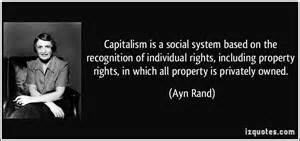
    One of the most significant political theories of the 20th Century is Ayn Rands Objectivism. Rand is known for promoting the philosophical idea of objectivism. She defines objectivism as a philosophy that emphasizes personal freedom, individuality, and rational egoism. Her anthology of fiction books describes the political theory of Objectivism through the actions and speeches of the main characters. Her additional non-fiction works continue to explore that political and social philosophy. Rand was influenced by a number of theorists such as Aristotle and writers including Victor Hugo and Edmond Rostand. Objectivism is a controversial political theory and has been criticized by academic philosophers due to its view on the role of government and human nature. On the other hand, the popularity of Rand’s work continues to grow and has an influence on political thought to this very day. Rand was born as Alissa Rosenbaum in 1905 in St. Petersburg to a middle-class Jewish family. From a young age, she expressed great ambition and an interest in pursuing a career in writing. A singular event that occurred in her early years was the 1917 Russian Revolution, in which the country transitioned almost immediately from a monarchy into a Communist state. She had numerous experiences in Soviet Russia that helped to mold her sociopolitical beliefs. For example, the nationalization of her father’s chemistry shop transitioned her family from relative affluence to poverty. Despite the loss of her family’s assets under the Soviet regime, she was able to attend university and graduate with a degree in history. Changing her name from Alissa Rosenbaum to Ayn Rand, she left the Soviet Union for the United States in 1926 to pursue her dream of becoming a screenwriter. Over the succeeding years, Rand found success first as a screenwriter, and eventually as a playwright and author.
    d08bdddb63a8ab305bd8aa8174d5f6d2
    Ayn Rand c. 1930s
    An important factor that influenced Rand’s writings over the course of her life was her personal experience in numerous political eras. From monarchy in Russia, to the transition to the Soviet Union, to Great Depression era America, her youth was characterized by many stark contrasts in political and economic systems. Rand’s writings against communism were influenced by what she observed and she wrote numerous works outlining Objectivist theory throughout World War II and the early Cold War era. In response to the Cold War and the threat of Communism spreading worldwide, Rand cautioned against the belief of collectivism in books such as The Fountainhead and Atlas Shrugged. Both The Fountainhead and Atlas Shrugged are fictional works that promote the belief in personal freedom and rationality, and speak out against the spread of Communism and Socialism. Ayn Rand personally cites Aristotle as one of her primary influences. Aristotle was a Greek logician, philosopher, and scientist as well as one of the founders of western political theory. Rand explains, “it is not the special sciences that teach man to think; it is philosophy that lays down the epistemological criteria of all special sciences.” Just as Ayn Rand believed that science was one of the most important values of society, Aristotle argued that politics is the master science because mankind is a political animal. As Aristotle believed in “biology expressed in the naturalism of politics,” his concept of morality and the world aligned with Rand’s concepts of philosophy and politics being inextricably tied to science. Similarly, Aristotle argued that mankind engaged in politics through all of its actions. Rand believed that each person acts as an individual to create the political society that exists. If each individual acts according to the principles and morals of Objectivism, such as those of rational thought and the execution of free will, sociopolitical order will naturally emerge. Aristotle contends that politics is the study of values, ethics, what is right and wrong, what should be, and what could be. Despite the fact that Rand cited Aristotle as one of her primary influences, their views on the ideal form of government were dissimilar. For example, Aristotle viewed democracy as flawed because it resulted in competition between social classes and felt that the proper form of government consisted of its leaders governing with the common interest of all its people in mind as opposed to governing based on individual interests. Additionally, Aristotle felt that a key role of the government would be to provide for and promote the public good and explored the idea of the organic theory of the state throughout his works. The organic theory of the state theory stipulates that the power and authority of the state transcends the power of the individual. On the contrary, Rand believed that the role of government would be limited to protecting individual rights and serving as an agent for people’s self-defense. A government that promoted the opposite values, according to Rand, has no justification and is the primary threat to the structure and nature of human society. One of the major values of Objectivism is a belief in rational egoism. Objectivism believes in the “concept of man as a heroic being, with his own happiness as the moral purpose of his life, with productive achievement as his noblest activity, and reason as his only absolute.” With this, Ayn Rand is saying there is no more important moral goal in Objectivism than that of achieving happiness. Achieving happiness, according to Objectivists, requires rational respect for the facts of reality, including those regarding human nature and our own needs. In order to achieve such goals, Rand argues that people must behave in a way that conforms to “rational egoism,” in which the promotion of one’s self-interest is in accordance with that of reason. Rand further promotes the logic of this theory in The Virtues of Selfishness. Rand argues that selfishness is a proper value to pursue and rejects the idea of altruism, the belief that self-sacrifice is a moral ideal to pursue. Additionally, Rand rejects the idea of “selfless selfishness” of irrationally acting individuals and instead argues that to be ethically selfish entails a commitment to reason rather than to emotionally driven whims and instincts. writer-ayn-rand-quotes-sayings-wise-deep-reality In addition, Objectivism promotes a unique view on the nature of reality and views knowledge and reason as important aspects in society. Objectivism holds that “reality exists as an objective absolute—facts are facts, independent of man’s feelings, wishes, hopes or fears.” Rand’s Objectivism begins with three self-evident concepts: existence, consciousness, and identity. All three truths are interconnected and exist simultaneously. Ayn Rand goes on to further explain that anything that is metaphysically given is absolute and cannot be changed. Objectivism holds that all knowledge is reached through reason, the “faculty that identifies and integrates the material provided by man’s senses.” This view of reason in an Objectivist society was further exhibited by the main characters and themes in Rand’s 1957 novel Atlas Shrugged. The work dramatizes the idea that the reasoning mind is the basic source of the values on which human life depends. Furthermore, Rand supported a belief in secularism through Objectivism and also promoted a distinct purpose of morality. Objectivism is a purely secular ideology that views the role of religion as having a negative influence on reason and capitalism. The purpose of morality under Objectivist thought is to allow people to enjoy their own lives. This belief is further exemplified by John Galt, the embodiment of Objectivism in Rand’s Atlas Shrugged, when he said, “The purpose of morality is to teach you, not to suffer and die, but to enjoy yourself and live.” Rand felt that religion is an “ideology that opposes man’s enjoyment of his life on earth” and thus, in violation of the key principles expressed though Objectivism. Objectivism rejects both mysticism (the idea that knowledge can be acquired through non-rational means) and skepticism (the belief that knowledge is impossible and cannot be acquired by any means). Objectivism also teaches us that a harmony of interests exists among rational individuals, so that no one’s benefit will come at the expense of another’s. As such, a life of mutual respect and benevolent independence is possible through Objectivism. Objectivism includes several suggestions as to what constitutes a proper society. One such element is the support for individual rights and freedom from coercion. The ethics of Objectivism hold that each person can live and flourish through the free exercise of his or her rational mind. Unless faced with threats of coercion or force, it is essential for people to exercise their own free will. The threat of force makes people accept someone else’s dictates, rather than follow their own judgment. Rand argues that certain societies, such as that of the Soviet Union, and certain ideologies, such as communism, are doomed to failure due to the lack of individual rights and the use of coercion to limit freedoms. Rand further argues that “freedom, in a political context, has only one meaning: the absence of physical coercion” and that societies must secure the principle that no one has the right to use physical force or coercion against any other. In “Capitalism: An Unknown Ideal,” Rand states, “government is the most dangerous threat to man’s rights: it holds a legal monopoly on the use of physical force against legally disarmed victims.” Objectivism calls for a limited form of government and promotes the belief that an excessive government is a threat to individual freedom. Additionally, Rand argues that the government also has a role in defending its people from foreign enemies, providing a system for arbitration of disputes, and developing a system for enforcement of the law. Objectivism also argues that the main source of government power comes from “the consent of the governed,” which means that the only rights that the government has are delegated to it by the citizens for a specific purpose. th Objectivism considers Capitalism to be a proper political economy. Rand considered capitalism in its purest form to be a social system characterized by individual freedom and diversity. Additionally, she felt that Capitalism was an egalitarian system that treated all people as individuals with no regard to ethnic, religious, or other collective principles enshrined by law. Moreover, Objectivism, like Capitalism, is a social system based on the recognition of individual private property rights. Objectivism expresses the belief that respect for property rights is key in the development of a capitalist economic system and as a way to ensure the upholding of individual rights and economic freedoms. Property rights are important to Objectivists because they ensure that people can keep what they earn. As Objectivism emphasizes production and creation, the property acquired through hard work is the most essential representation of the exercise of free will. Rand states that, “without property rights, there is no way to solve or to avoid a hopeless chaos of clashing views, interests, demands, desires, and whims.” Not everyone, however, is fully receptive to Rand’s ideas on morality. While she does have a large following, there are numerous critics of her somewhat rigid interpretation of social values. One of the main points of criticism is her influence as a moral and political philosopher. For example, it has been claimed that the ideas expressed by Rand throughout her works are not important in the realm of philosophy and did not constitute and groundbreaking ideas. Furthermore, Rand’s view on ethics is also criticized, in particular, her defense of the morality of selfishness. The view on politics that Rand expressed in Objectivist theory is also criticized by some of ignoring the central role that government often plays in society. In conclusion, Ayn Rand is one of the most influential political theorists of the 20th Century. Rand is known for developing the philosophy of Objectivism, which promotes the ideals of rational egoism, individual liberty, reason and knowledge, and secular values. Rand has expressed the idea of Objectivism through numerous writings, in fiction and non-fiction alike. Moreover, Rand’s views on sociopolitical issues were influenced by past experiences growing up in Soviet Russia and her early adult years in Depression-era America. Rand’s political philosophy still remains significant to this very day and her works continue to retain mainstream popularity. Sources: Ayn Rand , “Introducing Objectivism,” The Objectivist Newsletter Vol. 1 No. 8, August 1962, p. 35 Ayn Rand “Faith and Force: The Destroyers of the Modern World,” in Philosophy, Who Needs It? p. 62. Bell-Villad, Gene H. “Who Was Ayn Rand?” Salmagundi 141/142 (n.d.): 227-42. Miller, Fred. “Aristotle’s Political Theory.” Stanford University. 1998. Accessed February 24, 2016. Biddle, Craig. “Atlas Shrugged and Ayn Rand’s Morality of Egoism.” The Objective Standard 7, no. 2 (Summer 2012).
  • “The Elusive Republic” Book Review

    “The Elusive Republic” Book Review

    Throughout the 1980 book The Elusive Republic: Political Economy in Jeffersonian America, Drew McCoy attempts to explore the competing economic visions in the U.S. during the aftermath of the Revolutionary War and how different leaders such as Thomas Jefferson, James Madison, and Alexander Hamilton had conflicting ideas regarding what economic system would be the most suitable for the newly independent nation. Hamilton advocated a commercialized economy in which manufacturing was fundamental. On the other hand, Madison and Jefferson felt that an agrarian economy would be best for the U.S. and would ensure its success as a nation. McCoy explores the relationship between political economy and morality and how this definition shifted during early American history. Furthermore, McCoy argues that the economic visions of Thomas Jefferson and James Madison were short-lived and that several factors prevented them from becoming permanent.

    In the first chapter, McCoy discusses the debate during the 18th Century over economics and morality and how they would later influence the founding fathers. By the mid-18th Century, Europe was undergoing a commercial and industrial revolution that led to profound changes in its economic conditions. In addition, the rise of industrialization raised many questions about its effect on society and helped to alter the opinion regarding luxury goods. Since the middle ages, luxury was considered to be a corrupting influence in society and a danger to public welfare. However, the 18th Century marked a transitional period in the perception of luxury goods. As a result of increased materialistic impulses, some began to redefine the meaning of luxury and explore the societal implications of the increased emphasis on luxury goods.

    McCoy describes the reaction to the changes in the economy by philosophers during the 18th Century. A major critic of the new social order was Jean-Jacques Rousseau. Rousseau argued that the commercialization of society would have a harmful effect on society and would promote a multitude of artificial needs and desires in men, to which they would become enslaved. Furthermore, Rousseau felt that the drive for status and wealth would never fully satisfy individuals and that it would increase social inequalities. In contrast, David Hume defended the commercialization of society that came as a result of the industrial revolution. Hume argued that the advancement of commerce, mechanical arts, liberal arts, and fine arts were interdependent on one another. As a result of their interconnection, Hume argued that the advancement of commerce would be beneficial to society by establishing a more refined culture. The differences in opinion regarding the growth of commerce and its effects on society would soon influence the debate in post-Revolutionary America over which type of political economy would develop in the new country.

    McCoy first discusses the economic ideas of Alexander Hamilton, who served as Treasury Secretary under George Washington. The political economy of Hamilton advocated an aggressive expansion of American commercial interests and the development of a strong manufacturing sector with the cooperation of a strong federal government. Hamilton’s economic plan called for a funding of the national debt and the incorporation of the Bank of the United States, which would help the new government establish its credit and encourage the investment of private capital in the development of a commercial sector. Hamilton viewed the development of commercial relations with Great Britain as a way to supply America with the capital and credit that could ignite the economic growth that he envisioned .

    Additionally, Alexander Hamilton felt that a manufacturing economy was a sign of social progress and that the social inequalities resulting from it were inevitable. Proponents of the Hamiltonian system argued that a growing manufacturing sector would also increase individual liberty by giving people more freedom in choosing an occupation. Hamilton’s economic policy was further pushed forward by the Jay Treaty, signed between the U.S. and Great Britain in 1794. In addition to averting a major war between both countries, the Jay treaty opened up limited trade between the U.S. and several of Britain’s colonies. The resulting increase in foreign trade helped to fuel further the commercial revolution and made its eventual spread to the U.S. increasingly inevitable.

    In contrast to Alexander Hamilton, James Madison advocated a political economy that focused on agriculture and the growth of a household goods industry as opposed to rapid commercialization. The main component of Madison’s political economy was westward expansion and national development across space rather than across time. By encouraging a spread across western lands, Madison argued that the U.S. would remain a nation of industrious farmers who could market their surplus crops overseas to purchase manufactured goods from Europe. As a result, America could remain a young and virtuous country and at the same time offer a market for advanced manufactured goods from Europe. Unlike Hamilton, Madison believed that the rise of industrialization in countries such as Great Britain was a sign of moral and societal decay. He concluded that Hamilton’s plan threatened to subvert the principles of republican government and would lead to the “Anglicization” of the American government.

    McCoy then goes on to describe the political and economic aspirations of Thomas Jefferson after his election in 1800. Jefferson described his election as a return to the original values and ideals of America that were overturned and repudiated under Federalist rule. The main aspects of Jefferson’s political economy included his advocacy of western expansion as a way to encourage the continued strength of a primarily agrarian economy; a relatively liberal international commercial order to offer markets for American agricultural surplus; and a reduction in government spending and the national debt. Through such steps, Jefferson sought to evade the social corruption of an increasingly commercialized society and preserve the republican vision of American society. Jefferson’s political economy was enacted through the Louisiana Purchase of 1803. By purchasing the Louisiana territory from France, Jefferson hoped that the addition of new lands would preserve the agriculture-based U.S. economy and add to his notion of a continuously expanding “empire of liberty” across the western hemisphere.

    McCoy main thesis in “The Elusive Republic” is that the political economy advocated by Thomas Jefferson and James Madison ultimately failed and was not realized in the long term. Overall, the basis of his argument is strong and is based on several key factors. The first two factors were the outbreak of the wars resulting from the French Revolution in 1792 and the signing of the Jay Treaty in 1794. Despite the widespread belief that European demand for American exports would decline as a result of the wars, it instead increased dramatically after 1792. McCoy argues that the wars resulting from the French Revolution marked a major turning point in the American economy because it made it profitable for Americans to export goods and materials to Europe. Additionally, the Jay Treaty helped to open the door to increased international trade and cemented America’s economic ties with Great Britain.

    Furthermore, McCoy argues that the Louisiana Purchase augmented the spread of slavery and in turn, undermined the political economy of Jefferson and Madison. Despite the fact that the Louisiana Purchase removed several obstacles to the realization to Jefferson’s republican vision, it also exposed some of the contradictions within his vision. For example, the supporters of Jefferson frequently boasted of the isolation and independence of the U.S., but in reality American republicanism depended on both an open international commercial order and the absence of any competing presence in North America. The U.S., McCoy argues, could isolate itself from foreign influences only if it were to resign itself from international trade and westward expansion (204). In addition, the Louisiana Purchase fueled the spread of slavery as the U.S. expanded westward. The Jeffersonian political economy had hoped by the controlled exploitation of land would reduce the need for slavery and that it would eventually die out. In reality, the demand for slave labor increased dramatically as the agricultural industry expanded westward (252).
    In conclusion, Drew McCoy explores the competing economic visions in early America in The Elusive Republic: Political Economy in Jeffersonian America. The major figures in the debate over political economy in America were Alexander Hamilton, James Madison, and Thomas Jefferson. Ultimately, the political economy of Jefferson and Madison did not come to define the U.S. in the long-term, and several diverse factors prevented it from becoming permanent. Furthermore, McCoy discusses the implications of the shift towards a highly commercialized economy and the changing moral beliefs regarding luxury goods throughout the 18th and early 19th Centuries.