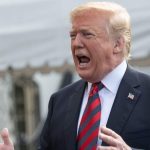
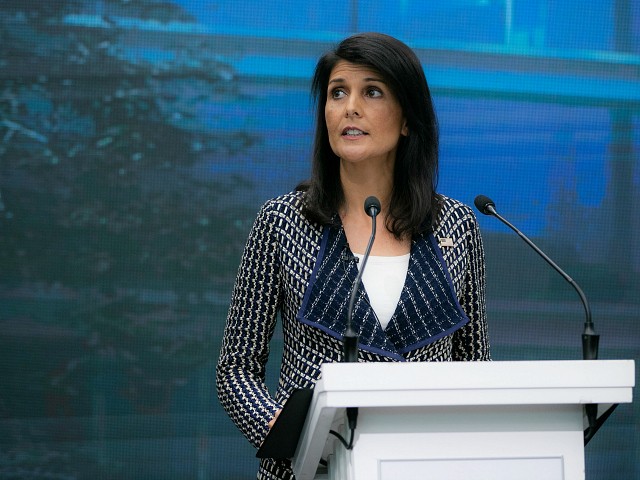
Russia is dissatisfied with the reported peace deal proposals on Ukraine from U.S. President-elect Donald Trump’s team, Russian Foreign Minister Sergey Lavrov said on December 29, according to state-owned TASS. Earlier reports from the Wall Street Journal indicated that Trump’s team is considering a plan to delay Ukraine’s NATO membership by at least 20 years in exchange for continued Western arms supplies and the deployment of European peacekeepers to monitor a ceasefire. Lavrov said the proposal, as outlined in leaks and Trump’s December 12 Time interview, suggests “freezing hostilities along the current line of contact and transferring the responsibility of confronting Russia to Europe.” “We are certainly not satisfied with the proposals sounding on behalf of representatives of the president-elect’s team,” Lavrov said, specifically rejecting the idea of introducing European peacekeepers in Ukraine.
Reports suggest that President-elect Donald Trump discussed these ideas during a December 7, 2024 meeting in Paris with Ukrainian President Volodymyr Zelensky and French President Emmanuel Macron. Trump reportedly emphasized Europe’s need to take the lead in deterring Russian aggression. Russian Foreign Minister Sergey Lavrov noted that Moscow has received no official signals from Washington regarding these proposals, adding that policy remains under the Biden administration until Trump’s inauguration on January 20. Lavrov expressed Russia’s “willingness to engage” with the new U.S. administration, provided Washington takes the “first move” to restore dialogue severed after the start of Russia’s invasion.
Russian President Vladimir Putin said on December 26 that Russia aims to “end the conflict” in 2025 while reiterating hopes for a front-line success. Following Putin’s comments, Sergey Lavrov ridiculed the possibility of a ceasefire, adding that “a ceasefire is a road to nowhere. Putin expressed openness to dialogue with Trump but maintained Russia’s firm demands, including no territorial concessions and a rejection of Ukraine’s NATO membership.
Russia’s rejection of Trump’s peace proposals is significant because it means that the incoming administration will have to revamp its strategy when it comes to negotiating peace between Kyiv and Moscow. As both sides have now rejected parts of the president-elect’s proposal, in order to facilitate negotiations, Trump will have to come up with an entirely new strategy.
President-elect Donald Trump has previously said on numerous occasions that he would end the war in Ukraine “within 24 hours” and his advisers have reportedly been coming up with a peace plan that would involve freezing all conflict at the front lines and creating a demilitarized zone. Keith Kellogg, the president-elect’s nominee to serve as special envoy to Ukraine and Russia, has said that the nearly three-year war between the two countries will be “resolved in the next few months.” During his recent interview with Time magazine Trump said that he will not abandon Kyiv and that he believes the war would not have broken out if he was president. Russia had previously said that it was “ready to study Trump’s proposals on Ukraine” but specified that “studying” did not mean “agreeing.”
The Trump campaign’s interactions with Russian intelligence services during the 2016 presidential election posed a “grave” counterintelligence threat, a Senate panel concluded on August 18 as it detailed how associates of President Donald Trump had regular contact with Russians and expected to benefit from the Kremlin’s help. The nearly 1,000-page report, the fifth and final one from the Republican-led Senate intelligence committee on the Russia investigation, details how Russia launched an aggressive effort to interfere in the election on Trump’s behalf. It says the Trump campaign chairman had regular contact with a Russian intelligence officer and that other Trump associates were eager to exploit the Kremlin’s aid, particularly by maximizing the impact of the disclosure of Democratic emails hacked by Russian intelligence officers.
The report is the culmination of a bipartisan probe that produced what the committee called “the most comprehensive description to date of Russia’s activities and the threat they posed.” The investigation spanned more than three years as the panel’s leaders said they wanted to thoroughly document the unprecedented attack on US elections. The findings, including unflinching characterizations of furtive interactions between Trump associates and Russian operatives, echo to a large degree those of special counsel Robert Mueller’s Russia investigation and appear to repudiate the Republican president’s claims that the FBI had no basis to investigate whether his campaign was conspiring with Russia. President Donald Trump, who has repeatedly called the Russia investigations a “hoax,” said he “didn’t know anything about” the report, or Russia or Ukraine. He said he had “nothing” to do with Russia.
While the Mueller investigation was a criminal probe, the Senate investigation was a counterintelligence effort with the aim of ensuring that such interference wouldn’t happen again. The report issued several recommendations on that front, including that the FBI should do more to protect presidential campaigns from foreign interference. The report was released as two other Senate committees, the Judiciary and Homeland Security panels, conduct their own reviews of the Russia probe with an eye toward uncovering what they say was FBI misconduct in the early days of the investigation. A prosecutor appointed by Attorney General William Barr, who regards the Russia investigation with skepticism, disclosed his first criminal charge Friday against a former FBI lawyer who plans to plead guilty to altering a government email.
State-backed hackers from China have targeted staffers working on the US presidential campaign of Democrat Joe Biden, a senior Google security official said on June 4. The same official said Iranian hackers had recently targeted email accounts belonging to Republican President Donald Trump’s campaign staff. The announcement, made on Twitter by the head of Google’s Threat Analysis Group, Shane Huntley, is the latest indication of the digital spying routinely aimed at top politicians. Huntley said there was “no sign of compromise” of either campaign. Iranian attempts to break into Trump campaign officials’ emails have been documented before. Last year, Microsoft announced that a group often nicknamed Charming Kitten had tried to break into email accounts belonging to an unnamed US presidential campaign, which sources identified as Trump’s. Google declined to offer details beyond Huntley’s tweets, but the unusually public attribution is a sign of how sensitive Americans have become to digital espionage efforts aimed at political campaigns. “We sent the targeted users our standard government-backed attack warning and we referred this information to federal law enforcement,” a Google representative said.
Hacking to interfere in elections has become a concern for governments, especially since US intelligence agencies concluded that Russia ran a hacking and propaganda operation to disrupt the American democratic process in 2016 to help then-candidate Donald Trump become president. Among the targets was digital infrastructure used by the 2016 Democratic presidential candidate Hillary Clinton’s campaign. The Russian government has denied any meddling. Attempts by foreign adversaries to break into presidential campaigns are commonplace but the unusually public attribution offered by Google is a sign of how sensitive Americans have become to digital espionage efforts aimed at candidates. “We are aware of reports from Google that a foreign actor has made unsuccessful attempts to access the personal email accounts of campaign staff,” a Biden campaign spokesman said. “We have known from the beginning of our campaign that we would be subject to such attacks and we are prepared for them.” The Trump campaign, the Chinese Embassy in Washington, and the Iranian mission to the United Nations in New York did not immediately respond to requests for comment.
Charming Kitten, the group identified by Google as being responsible for the targeting of the Trump campaign, has also recently hit the headlines over other exploits, including the targeting of the pharmaceutical company Gilead Sciences Inc. Earlier this year, Reuters tied the group to attempts to impersonate high-profile media figures and journalists. John Hultquist, senior director of intelligence analysis with US cybersecurity firm FireEye Inc., described the two hacking groups as “espionage actors” and said they were likely attempting to collect intelligence rather than steal material to leak online.
What Does The Release of the Mueller Report Mean For The Trump Presidency
The two-year long investigation led by Robert Mueller found no evidence that President Donald Trump or any of his aides coordinated with the Russian government’s 2016 election interference, according to a summary of the special counsel’s key findings made public on March 24. Mueller, who spent nearly two years investigating Russia’s effort to sabotage the 2016 Presidential Election, found no conspiracy “despite multiple offers from Russian-affiliated individuals to assist the Trump campaign,” Barr wrote in a letter to lawmakers. Mueller’s team drew no conclusions about whether President Trump illegally obstructed justice, Barr said, so he made his own decision. The Attorney General and his deputy, Rod Rosenstein, determined that the special counsel’s investigators had insufficient evidence to establish that the president committed that offense. Attorney General Barr cautioned, however, that Mueller’s report states that “while this report does not conclude that the president committed a crime, it also does not exonerate him” on the obstruction of justice issue.
The release of the findings was a significant political victory for President Donald Trump and lifted a cloud that has hung over his Presidency since before he took the oath of office. It is also likely to alter discussion in Congress about the fate of the Trump presidency, as some Democrats had pledged to wait until the special counsel finished his work before deciding whether to initiate impeachment proceedings. President Trump and his supporters trumpeted the news almost immediately, even as they mischaracterized the special counsel’s findings. “It was a complete and total exoneration,” Trump told reporters in Florida before boarding Air Force One. “It’s a shame that our country had to go through this. To be honest, it’s a shame that your president has had to go through this.” Trump added, “This was an illegal takedown that failed.”
The Fake News Media has lost tremendous credibility with its corrupt coverage of the illegal Democrat Witch Hunt of your all time favorite duly elected President, me! T.V. ratings of CNN & MSNBC tanked last night after seeing the Mueller Report statement. @FoxNews up BIG!
Attorney General William Barr’s letter was the culmination of a tense two days since Robert Mueller delivered his report to the Justice Department. Barr spent the weekend poring over the special counsel’s work, as President Donald Trump strategized with lawyers and political aides. Hours later, Barr delivered his letter describing the special counsel’s findings to Congress. Barr’s letter said that his “goal and intent” was to release as much of the Mueller report as possible, but warned that some of the reports were based on grand jury material that “by law cannot be made public.” Barr planned at a later date to send lawmakers the detailed summary of Mueller’s full report that the attorney general is required under law to deliver to Capitol Hill. Despite the comprehensive nature of the report on the Mueller investigation, many Congressional Democrats expressed concern regarding its findings. For example, shortly after the release of the Mueller findings, Congressman Jerrold Nadler (D-NY), the chairman of the House Judiciary Committee, said in a Twitter post that he planned to call Barr to testify about what he said were “very concerning discrepancies and final decision making at the Justice Department.”
There must be full transparency in what Special Counsel Mueller uncovered to not exonerate the President from wrongdoing. DOJ owes the public more than just a brief synopsis and decision not to go any further in their work.
It can be argued that the release of the Mueller report is beneficial for President Donald Trump going into the 2020 Election.
Overall, the findings of the Mueller report will have a significant impact on American politics going forward. The biggest takeaway from the report is that there is no tangible evidence explicitly connecting President Donald Trump to Russian efforts to sway the 2016 Presidential Election in his favor. The lack of evidence in this area weakens the efforts to impeach President Trump. While there is ample evidence that Trump committed serious financial crimes prior to his Presidency and was involved in White Supremacist hate groups such as the KKK since at least the 1970s, the US Consitution makes it difficult at best to indict a sitting President. The only area that Trump can potentially be indicted on is his attempt to cover up his affair with Stormy Daniels and violate campaign finance laws by doing so, though there is little will on the part of Congress to pursue these charges.
Additionally, it can be argued that the partial exoneration of President Donald Trump will have a positive effect on his poll numbers going into 2020. For example, President Trump’s approval rating has hovered between 42-48% over the past few months. Many observers note that the President’s approval ratings remained in this range due to the ongoing Mueller investigation. With the Mueller investigation behind him, it is likely that Trump’s approval ratings will increase over the coming months assuming that the economy remains strong and no major foreign policy issues will emerge. These higher approval ratings may linger into 2020 and might be enough to (unfortunately) carry Trump to a second term in office.
Here are the main political events that occurred throughout the past year. From Trump’s bizarre antics to foreign policy triumphs and tragedy to political scandals at the highest levels of government, 2018 was an exciting and unforgettable year in the realm of Politics.
January
New Infrastructure Bill and a Renewed Nuclear Arms Race
#Infrastructure
President Trump proposed an ambitious infrastructure reform bill meant to help the US regain a competitive advantage when compared to emerging economies throughout the world.
January 2018 got off to an interesting start in terms of political developments. Shortly before his January 30 “State of the Union Address,” President Donald Trump proposed an ambitious $1.5 trillion infrastructure bill with the goal of modernizing the American economy and allowing it to maintain a competitive advantage with rising global powers such as Russia, China, Iran, India, and South Korea. “America is a nation of builders, We built the Empire State Building in just one year. Isn’t it a disgrace that it can now take 10 years just to get a permit approved for a simple road?” said Trump shortly after announcing the proposal. Thus far, Congress has not moved to push forward the proposal, though it is likely that the House of Representatives (which is under Democratic control as of January of 2019) may take action on the proposal sometime next year.
#Nuclearweapons
Defense Secretary Jmaes Mattis announced major changes to the US nuclear policy in a report issued at the end of January.
Much to the dismay of disarmament advocates and activists in the peace movement, the Trump Administration announced an aggressive nuclear weapons strategy at the end of January. The new policy, as announced by Defense Secretary James Mattis, called for the introduction of “low-yield nuclear weapons” on submarine-launched ballistic missiles and the development of nuclear submarine-launched cruise missiles. Despite being called “low-yield” these new weapons could potentially cause as much damage as the nuclear bombs dropped by the US on the Japanese cities of Hiroshima and Nagasaki in 1945. The main point of this change in policy, according to the Trump Administration, is to pressure US rivals such as Russia, China, Iran, and North Korea into giving in to US demands in terms of both their internal and external policies. This policy may also trigger a renewed nuclear arms race and increase the risk of a nuclear war to a level even higher than it was during the peak of the Cold War (1955-1962).
February
School Shootings & New Presidential Historian Rankings
#TragetyInFlorida
A school shooting in a Florida high school on February 14 resulted in the deaths of 17 individuals and renewed public debate over the issue of gun control.
On February 14, a mass shooting occurred at Marjory Stoneman Douglas High School in Parkland, Florida. 17 people were killed and 15 were wounded, making it one of the deadliest school massacres since Columbine some 19 years earlier. The shooting was carried out by Nikolas Jacob Cruz, a 19-year old high school senior with a known past of threatening his fellow students, posting hate content on his social media accounts, and bragging about killing animals. Additionally, Cruz holds extremist views and advocated the killing of African-Americans, Hispanic-Americans, Muslim-Americans, and the LGBT community. Politicians on both sides of the political aisle have condemned the shooting and reached out to the victims. Bith President Donald Trump and Florida Governor Rick Scott immediately expressed strong support for the victims and their families and called for an end to school shootings. The shooting also renewed public debate over the issue of gun control. For example, student survivors organized the group Never Again MSD to demand legislative action to prevent similar shootings from occurring again and to call out US lawmakers (mostly Republicans, but a few Democrats as well) who have received campaign contributions from the National Rifle Association (NRA).
#Bottomranked?
According to the most recent rankings by the American Political Science Association, President Donald Trump now ranks as the worst President in US History.
On February 19, the most recent Presidential historical rankings were released by the American Political Science Association. The new rankings, to the surprise of none, place Donald Trump at the very bottom of the list (below even the infamous James Buchanan). Additionally, the rankings place Barack Obama as the eight greatest President in US history, one place above Ronald Reagan and one spot below Dwight Eisenhower. Despite their low ranking of Trump, the authors of the study do indicate that Trump has plenty of time to improve his ranking considering that he has more than two years left in his first term.
March
Trump Cabinet Shake-ups & Growing Protests in the Gaza Strip
#Tillerson
President Donald Trump dismissed Secretary of State Rex Tillerson amid a declining relationship and a disappointing tenure.
On March 13, President Donald Trump announced that he has fired Secretary of State Rex Tillerson and nominated CIA Director Mike Pompeo to succeed him. Tillerson’s departure followed months of tension between him and Trump. President Trump publicly undercut Secretary Tillerson’s diplomatic initiatives numerous times since he came to office over a year ago. For example, President Trump criticized Tillerson’s positions on Iran, the European Union, NATO, and Russia. For Tillerson’s replacement, President Donald Trump named CIA Director Mike Pompeo and moved up Gina Haspel to the post of CIA director. In a Twitter post, Trump stated that “Mike Pompeo, Director of the CIA, will become our new Secretary of State. He will do a fantastic job! Thank you to Rex Tillerson for his service! Gina Haspel will become the new Director of the CIA, and the first woman so chosen. Congratulations to all!” Despite the optimistic tone of President Trump regarding these changes, they point to an Executive Branch in continual flux and crisis.
#Gaza
Major protests broke out in the Gaza Strip at the end of march due to Israel’s ongoing blockade of the territory.
On March 30, tens of thousands of Palestinians in the Gaza Strip participated in non-violent protests as part of the Great Return March. Palestinian participants soon began walking towards the fence that separates the strip from Israel and were met with live fire from the Israeli military that saw hundreds of people injured and 16 killed. The protests were held to commemorate Land Day and demonstrate for the rights of Palestinian refugees to be resettled in Israel. Israeli Prime Minister Benjamin Netanyahu and Defense Secretary Avigdor Lieberman responded to the protests by claiming that Hamas, which has controlled Gaza since 2007, had sent women and children to the fence as human shields. The Israeli response drew widespread criticism around the world, with UN Secretary-General Antonio Guterres calling for an independent inquiry into Friday’s events. Additionally, several countries in the Middle East condemned the response to the protests by the Israeli government. Perhaps the country that most forcefully condemned the actions of Israel was Iran. In a Twitter post on March 31, Iranian Foreign Minister Mohammed Javad Zarif stated that “On the eve of Passover (of all days), which commemorates God liberating Prophet Moses and his people from tyranny, Zionist tyrants murder peaceful Palestinian protesters – whose land they have stolen – as they march to escape their cruel and inhuman apartheid bondage.” On the other hand, the US blocked a UN Resolution denouncing the Israeli response and placed the blame squarely on the part of the Palestinian protestors.
April
Tensions in Syria & Growing Support for Marijuana Legalization
#Syria #ChemicalWeapons
The US and several of its European allies launched airstrikes in Syria in response to allegations of chemical weapons use by the Assad government.
The US and several of its allies launched airstrikes on April 13 against several Syrian military targets in response to a supposed chemical attack near Damascus ordered last week by Syrian President Bashar al-Assad that killed nearly 40 people. These are not the actions of a man, they are crimes of a monster instead,” President Trump said of Assad’s presumed chemical attack in an oval office address. The operations carried out by the US, UK, and France in Syria were somewhat limited than originally anticipated. The main target in the operation was the Barzah Research and Development Center, a scientific research center located outside of Damascus. The facility was hit with 76 missiles, utterly destroying the facility and setting back the Syrian chemical weapons program back at least several years according to Secretary of Defense James Mattis. The international reaction to the US strike in Syria was mixed overall. Several US allies in the Middle East such as Saudi Arabia and Israel applauded the strike and pledged to expand their support for regime change in Syria. On the other hand, Russia, Iran, China, as well as several socio-political organizations active in the Middle East such as Hezbollah, Hamas, and the Houthi Movement forcefully condemned the strikes.
#MarijuanaLegalization
President Donald Trump announced his approval for efforts to protect the rights of states that have already legalized marijuana, shifting away from his “law-and-order” image.
Previously a strong opponent of Marijuana legalization, President Donald Trump also took an interesting turn regarding this policy issue in April. Senator Cory Gardner (R-CO), a strong supporter of efforts at the state level to legalize marijuana, said on April 13 that President Trump made the pledge to him in a conversation two days earlier. White House Press Secretary Sarah Huckabee Sanders said Gardner’s account was accurate and the president supported states’ rights in the matter. Senator Cory Gardner has been pushing to reverse a decision made by Attorney General Jeff Sessions in January that removed prohibitions that kept federal prosecutors from pursuing cases against people who were following pot laws in states such as Colorado that have legalized the drug. “President Trump has assured me that he will support a federalism-based legislative solution to fix this states’ rights issue once and for all,” Gardner said in a statement to the press. Additionally, Gardner pledged to introduce bipartisan legislation keeping the federal government from interfering in state marijuana markets.
May
US Withdraws from Iranian Nuclear Deal & Renewed Social Conservatism
#JCPOA
President Donald Trump controversially withdrew from the 2015 Iranian Nuclear deal on May 8.
On May 8, President Donald Trump pulled the plug on the Iranian nuclear agreement, saying that the Iranian government has failed to live up to its obligations and violated the spirit of the accord. Yet since no tangible evidence that was presented, the unilateral decision places the US in violation of the treaty and subject to international scorn. Despite withdrawing from the agreement, the Trump Administration announced that it would be willing to renegotiate a “tougher, more comprehensive deal” with Iran. President Donald Trump proposed that any new agreement with Iran would include indefinite restrictions on Iran’s nuclear program (the original agreement only lasted 15 years and became noticeably less strong after the first 10 years), as well as restrictions on Iran’s ballistic missile program. Additionally, the Trump Administration stated that a new agreement would also limit Iran’s foreign policy and their humanitarian efforts to defend both the Shi’a Muslims of Syria, Iraq, Lebanon, Yemen, Afghanistan, and Pakistan, as well as the Palestinian people. In response to Iran agreeing to these new provisions, the Trump Administration would remove all sanctions against the Iranian government, restart diplomatic ties, and work to modernize the Iranian economy.
#Abortion #SocialConservatism
Iowa Governor and staunch Trump ally Kim Reynold signed into law the nations strictest anti-abortion bill on May 4.
On May 4, Iowa Governor Kim Reynolds (a devout Catholic and strong supporter of President Donald Trump) signed a law banning most abortions if a fetal heartbeat can be detected, or at around six weeks of pregnancy, marking the strictest abortion regulation in the nation. The Republican governor signed the legislation in her formal office at the state Capitol as protesters gathered outside chanting, “My body, my choice!” Reynolds acknowledged that the new law would likely face litigation, but said that “This is bigger than just a law, this is about life, and I’m not going to back down.” The ban has propelled Iowa to the front of a push among conservative statehouses jockeying to enact restrictive regulations on the medical procedure. Backers of the legislation hope it could challenge Roe vs. Wade, the landmark 1973 Supreme Court ruling that established women have a right to terminate pregnancies until a fetus is viable. Critics argued the bill would ban abortions before some women even know they are pregnant, which will likely set up Iowa for a legal challenge.
June
Peace Between the US & North Korea?, Scientific Discoveries, & Another Trumpcastrophe
#Trump #KimJonUn #Rocketman
President Donald Trump and North Korean President Kim Jong-un held their historic summit meeting on June 12.
On June 12, US President Donald Trump and North Korean leader Kim Jong-un attended a historic summit meeting in Sentosa, Singapore. This meeting was notable in that it was the first meeting between the leaders of the US and North Korea. In their meeting, both President Trump and Kim -Jong-un signed a joint statement agreeing to security guarantees for North Korea, new peaceful relations, the denuclearization of the Korean Peninsula, recovery of soldiers’ remains, and follow-up negotiations between high-level officials. After nearly seven decades of US aggression towards North Korea and provocative statements on the part of President Trump, this meeting may signal a new chapter in US-North Korea relations and may bring about a just and lasting peace in the Korean Penninsula
#Mars #AncientAliens #NASA
NASA Finds Ancient Organic Material, possibly linked to life, on the Martian surface.
On June 7, the US space agency (NASA) says its Mars exploration vehicle has discovered chemical substances necessary for life. Scientists reported that NASA’s Curiosity Rover found large amounts of organic molecules in a thousands-year-old rock in an area called the Gale Crater. The area on Mars is believed to have once contained a large lake that evaporated due to some unknown cataclysm a millennia ago. The discovery of organic molecules suggests that ancient conditions on Mars may have supported life. Ashwin Vasavada a scientist working on the Curiosity project stated that the chances of being able to find signs of ancient life (perhaps even remnants of a humanoid civilization that existed millions of years ago) with future missions “just went up.” Additionally, Jennifer Eigenbrode (an astrobiologist with NASA’s Goddard Space Flight Center) noted that there is a strong possibility that the organic molecules were, in fact, created by some form of ancient life on the Martian surface. The impact of these findings is significant because it may result in increased funding for space programs such as NASA, as well as higher levels of support for space exploration efforts. Currently, the total budget for NASA represents less than 0.5% of the federal budget and an overwhelming majority of Americans today feel that the federal government spends far too much on space exploration and that the money would be better spent on education, public health, and developing alternative energy sources. The discovery of the potential of life on Mars might create the perception in the eyes of the American people that further space research and exploration is worth it and that the federal government should rethink its priorities to make such efforts a reality
#Trumpism
In his second G7 conference as President, Donald Trump and his erratic policies decrease certainty in the future role of the US in the eyes of European leaders.
In his second G7 Summit since assuming office, President Donald Trump alienated the closest allies of the US at the annual summit of the group in Canada with his aggressive trade declarations and a surprising suggestion that Russia should be readmitted to the exclusive club of major economic powers. After leaving early, President Trump went on Twitter to blow up the agreement forged at the meeting. Trump exited the Quebec resort on June 9 where the group had gathered, leaving other world leaders whipsawed and uncertain about their future relationship with the US, to head to Singapore for a summit with North Korean leader Kim Jong Un on Tuesday. Trump’s actions added to the anxiety of longtime US allies, who are alarmed to see him lashing out against them while he is advocating for Russian President Vladimir Putin and cozying up to North Korea. Most political observers feel that the G7 summit ended in abject failure and only served to highlight the ideological and political divisions between Trump and Western allies and fueled fears that the most successful alliance in history is beginning to erode. “What worries me most, however, is the fact that the rules-based international order is being challenged, quite surprisingly not by the usual suspects but by its main architect and guarantor, the US,” said Donald Tusk, the president of the European Council.
PM Justin Trudeau of Canada acted so meek and mild during our @G7 meetings only to give a news conference after I left saying that, “US Tariffs were kind of insulting” and he “will not be pushed around.” Very dishonest & weak. Our Tariffs are in response to his of 270% on dairy!
A New Supreme Court Justice & the Putin-Trump Bromance Continues
#Kavanaugh #SupremeCourt
President Donald Trump announced his selection of Brett Kavanaugh to the Supreme Court this week.
In a prime-time address on July 9, President Donald Trump nominated Judge Brett M. Kavanaugh of the United States Court of Appeals for the District of Columbia Circuit to fill Justice Anthony M. Kennedy’s seat on the Supreme Court. Presenting Judge Kavanaugh at the White House, President Trump described him as “one of the finest and sharpest legal minds in our time,” and stated that he is a jurist who would set aside his political views and apply the Constitution “as written.” Kavanaugh was selected from a list of “25 highly qualified potential nominees” considered by the Trump Administration. The main reasons cited by President Trump for the nomination of Kavanaugh included his “impeccable credentials, unsurpassed qualifications, and a proven commitment to equal justice under the law” with the emphasis that “what matters is not a judge’s political views, but whether they can set aside those views to do what the law and the Constitution require.” In his remarks, Judge Kavanaugh, who once clerked for Justice Kennedy, said he would “keep an open mind in every case.” But he declared that judges “must interpret the law, not make the law.”
#Putin #Trump
President Donald Trump met with Russian President Vladimir Putin in a controversial summit in Finland.
Amid chaos following his bizarre antics at the June G-7 Summit and the ongoing investigations into allegations that the Russian government colluded with his 2016 Presidential campaign, President Donald Trump met with Russian President Vladimir in Helinski, Finland on July 16 in their first-ever summit meeting. The summit marked the first official meeting between the leaders after previous unofficial talks between Trump and Putin at the 2017 G20 conference in Vienna. In addition to meeting with Putin, Trump also met the Finnish President Sauli Niinistö in the Presidential Palace. Some of the topics Trump pledged to discuss with Putin include the ongoing Syrian Civil War, the tensions between Russia and Ukraine, the steadily declining relationship between the US and Iran, and measures to reduce the threat of nuclear war between the US and Russia.
August
Environmental Policy Changes & A Death of Moderate Republicanism
#McCain
Senator and 2008 Republican nominee John McCain died on August 25 after being diagnosed with an incurable form of cancer one year ago.
John McCain, who endured six years as a prisoner of war in Vietnam before becoming the 2008 Republican presidential nominee and serving Arizona for nearly 36 years in Congress, died On August 25 at age 81. Destined to be remembered among the political giants of American history, McCain disclosed in July 2017 that he had been diagnosed with a deadly form of brain cancer called glioblastoma. McCain was a two-time presidential candidate, losing the GOP nomination in 2000 to then-Texas Gov. George W. Bush and the general election in 2008 to Barack Obama. Despite the fact that he generally aligned with Neoconservatives on foreign policy and called for increased US military intervention in the Middle East, John McCain developed a reputation as a moderate Republican overall and as a strong opponent of the Truman Administration. Despite the fact that politicians on both sides of the aisle praised Senator McCain and his accomplishments, President Donald Trump had a muted reaction to McCain’s death, refusing to issue a statement praising McCain’s life and opting to not fly the flag at half-staff (which is the typical custom of the President to do when a member of Congress dies in office) in honor of McCain.
"Some lives are so vivid, it is difficult to imagine them ended. Some voices are so vibrant, it is hard to think of them stilled. John McCain was a man of deep conviction and a patriot of the highest order.” […] Full statement by President George W. Bush https://t.co/FQVYWIUyGLpic.twitter.com/W8LCxJXRLi
— George W. Bush Presidential Center (@TheBushCenter) August 26, 2018
#Environmentalism
President Donald Trump announced his intention to roll-back the “Clean Power Plan,” as well as other Obama-era environmental regulations.
On August 21, the Trump administration revealed a plan to scale back an Obama-era rule designed to cut planet-warming emissions from the nation’s power plants. The proposal from the Environmental Protection Agency will reportedly hand authority to states to create their own rules for coal-fired power plants. That would give states the option to impose looser restrictions that allow utilities to emit more greenhouse gases like carbon dioxide and other pollutants — or to defer taking any action. The measure also stands to relieve pressure on the coal industry, a sector President Donald Trump has vowed to revive. Coal miners have seen their fortunes fade as coal-fired plants retire ahead of schedule, under pressure from cheap natural gas and falling prices for renewable energy projects.
More stringent regulations implemented in 2015 by former President Barack Obama put stress on the coal industry by requiring power plants to undertake expensive upgrades or shut down. President Obama’s signature Clean Power Plan established the first nationwide rules for carbon emissions. It set emissions goals for each state and gave them many options to reduce climate pollution, with the goal of cutting the nation’s emissions by 32 percent below 2005 levels. The new plan from the Trump Administration does not set a hard goal for nationwide emissions reductions, according to reports. It is projected to allow 12 times more greenhouse gas to be emitted over the next decade than under the Clean Power Plan and asks states to focus on requiring coal plants to take steps to run more efficiently. In contrast, the Clean Power Plan allowed states to meet their goals by taking measures that would push coal out of the energy mix, including adding more solar and wind farms or converting coal plants to natural gas facilities. The Trump plan would also give states a chance to forgo creating any new rules by allowing them to explain why they do not need to take action. It is possible that several states (namely Ohio, Kentucky, West Virginia, Tennessee, Missouri, Louisiana, and Arkansas) could pursue that option, given significant opposition to Obama’s plan.
September
A Supreme Court Showdown & More Trumpisms
#Kavanaugh #SupremeCourt
Sexual assault allegations against Supreme Court nominee Brett Kavanaugh were revealed early in September.
What was expected to be a relatively easy confirmation hearing for Brett Kavanaugh took an interesting turn in September with the revelation that Kavanaugh sexually assaulted Christine Blasey Ford, currently a Palo Alto University Psychology professor back when they were in high school in the 1980s. On September 16, Ford went public with her allegation of sexual misconduct on Supreme Court nominee Brett Kavanaugh. Brett Kavanaugh immediately denied the allegations, stating that”he had never done anything like what the accuser describes — to her or to anyone. Because this never happened, I had no idea who was making this accusation until she identified herself yesterday. I am willing to talk to the Senate Judiciary Committee in any way the Committee deems appropriate to refute this false allegation, from 36 years ago, and defend my integrity.” Despite the serious allegations against him, Judge Kavanaugh was ultimately confirmed by the Senate by a close 51-49 vote on September 28, with all Republicans except Lisa Murkowski voting in favor, and all Democrats except the arch-conservative Joe Manchin voting against Kavanaugh.
#Trumped
President Donald Trump delivers a speech to the United Nations General Assembly.
In his September 25 speech at the UN General Assembly, US President Donald Trump urged all the other nations to reject globalism and embrace nationalism while he was interrupted by derisive laughter from other world leaders. Over the course of the bombastic address, Trump highlighted the (imaginary) achievements of his presidency, lashed out at enemies, Iran foremost among them, and railed against multilateralism in its spiritual home, the UN general assembly. In one of the more remarkable moments in the history of the annual UN summit, the chamber broke out in spontaneous laughter at Trump’s claim that “in less than two years, my administration has accomplished more than almost any administration in the history of our country.” Clearly taken aback, Trump said: “I didn’t expect that reaction, but that’s OK.”
Overall the international community has reacted negatively to President Donald Trump’s speech, noting that its tone and theme of the address are in direct contradiction to the core values that the United Nations had promoted since its founding nearly 75 years ago. In response to the speech, UN secretary general António Guterres said President Trump’s fiery rhetoric shows that “democratic principles are under siege” throughout the world. Additionally, French President Emmanuel Macron denounced the spread of global lawlessness, “in which everyone pursues their interest,” and noted that the policies of President Trump are partially to blame for this troubling trend. On the other hand, the governments of Russia, Israel, and Saudi Arabia have praised President Trump, arguing that his speech was a “very welcoming statement.”
October
Political Violence & Turmoil in Saudi Arabia
#Khashoggi
Jamal Khashoggi, a major Saudi dissdent, was assassinated by the Saudi government on Turkish soil on October 2, revealing the brutal face of Saudi Arabia.
On October 2, Jamal Khashoggi, a dissident Saudi Journalist for the Washington Post, was assassinated at the Saudi consulate in Turkey by agents employed by Mohammed bin Salman, the current Crown Prince of Saudi Arabia. Known as a strong critic of the current government of Saudi Arabia, Khashoggi developed a reputation as an opponent of Zionism and the Israeli government, a critic of the ongoing Saudi War in Yemen, and a critic of the oppression of Shi’a Muslims by the Saudi government. These actions made him a prime target to be eliminated by the Saudi government. The international community generally reacted negatively to the assassination of Jamal Khashoggi, although US President Donald Trump and Israeli Prime Minister Benjamin Netanyahu implicitly praised the Saudi government for carrying out his assassination and stated that Khashoggi was a “Muslim Brotherhood operative, a pro-jihad, pro-Iranian, pro–[Tayyip] Erdoğan Jew-hater. A supporter of Iran. Basically, he died as a warrior on the wrong side of the war on terror.” Despite the lack of punishment by the international community for their crime, the assassination of Khashoggi did raise some doubts regarding the human rights record of Saudi Arabia.
#Pittsburgh
A Pittsburgh-area synagogue was the site of one of the worst religiously-motivated mass shootings in US history on October 27.
Armed with an AR-15-style assault rifle and at least three handguns, a man shouting anti-Semitic slurs opened fire inside a Pittsburgh synagogue on October 27, killing at least 11 congregants and wounding four police officers and two others. The public reaction to the Pittsburgh synagogue shooting was one of condemnation. Calling it the “most horrific crime scene” he had seen in 22 years with the FBI, Robert Jones, special agent in charge in Pittsburgh, said the synagogue was in the midst of a “peaceful service” when congregants were gunned down and “brutally murdered by a gunman targeting them simply because of their faith.” “We simply cannot accept this violence as a normal part of American life,” said Pennsylvania governor Tom Wolf in a news conference in Pittsburgh shortly after the incident occurred. “These senseless acts of violence are not who we are as Pennsylvanians and are not who we are as Americans.” Additionally, President Donald Trump similarly condemned the shooting, stating that “It’s a terrible, terrible thing what’s going on with hate in our country and frankly all over the world, and something has to be done.”
November
Midterm Election Shake-up
#CongressionalChanges
The 2018 midterm elections in the US revealed an extremely mixed and divided political picture.
On November 6, the US midterm elections were held and ultimately revealed an increasingly divided American electorate. In the House of Representatives, the Democrats gained nearly 40 seats, narrowly regaining control over that legislative body for the first time since 2010. Additionally, the Democrats also gained control of key governorships in Wisconsin, Illinois, New Mexico, and Michigan. Despite Democratic gains in certain areas of the country, the Republicans expanded their Senate majority by 3 seats, picking up seats in Missouri, North Dakota, Indiana, and Florida as well as by holding onto vulnerable seats such as Texas and Mississippi. These mixed results reveal the fact that the American electorate is divided in their opinions of President Donald Trump and may spell trouble for the President in accomplishing his agenda over the next two years.
#IranSanctions
President Donald Trump reimposed sanctions against Iran on November 5 in response to alleged human rights violations on the part of the Iranian government,
Described as the “biggest series of sanctions ever implemented by the US against another country,” the Trump Administration imposed a series of crushing and punitive sanctions against Iran on November 5. The package of severe economic penalties imposed against Iran by the US is the most significant part of President Trump’s decision last May to abandon the Iranian nuclear agreement of 2015 (JCPOA), which he has described as a “disaster” and a significant security risk for US allies in the Middle East such as Saudi Arabia and Israel. Despite the stringent nature of the sanctions, there are several exceptions that could reduce their effectiveness. For example, Iran’s biggest oil customers India and China are exempt from the sanctions. Despite several gaps, Iran’s shipping, banking, and oil industries could take a significant hit and its already weakened currency could plunge even further due to the sanctions.
The international reaction to the newly imposed sanctions against Iran by the US has been overwhelmingly negative. Despite countries such as Saudi Arabia and Israel enthusiastically supporting the Trump Administration’s policy, other countries such as the UK, France, Germany, Italy, and Russia were quick to condemn the sanctions as “punitive” and as having no justification. Iranian President Hassan Rouhani said that his country would “proudly break” the reimposed sanctions and that Iran was engaged in “an economic war” with the US, and Iran’s foreign minister, Mohammed Javad Zarif, an outspoken critic of President Trump, said the sanctions reinforced what he called the growing isolation of the United States. The outcome of the sanctions against Iran is unclear at this point. While some observers note that the sanctions may result in the Iranian government ultimately collapsing, recent events show that in times of elevated sanctions, the Iranian economy has instead adapted and, in some cases, thrived due to its effective use of Import Substitution Industrialization (ISI) policies. Additionally, the reimposition of US sanctions against Iran raises the specter of war to a level unseen in recent years. For example, the Iranian military tested new missiles as part of its air defense system hours after the sanctions resumed, and announced that it has every right to retaliate against the US in response to the sanctions.
December
Death of a Statesman & Withdraw from Syria & Afghanistan?
#Bush41
Former President George H.W. Bush (1989-93) passed away this week at the age of 94, leaving behind an extensive legacy of public service.
On December 1, former US President George H.W. Bush (1989-93) passed away at his home in Houston, Texas at the age of 94. Largely considered by historians to have been an “average” President along the lines of Rutherford B. Hayes, Benjamin Harrison, and William Howard Taft, Bush assumed office at the end of the Cold War and was arguably one of the most experienced President in US history, having served in Congress between 1966 and 1970 (Bush was one of the few Southern Congressmen who supported the Fair Housing Act of 1968, which banned racial discrimination in the realm of housing), as UN Ambassador and CIA Director during the Nixon and Ford Administrations, and as Vice President under Ronald Reagan (1981-89). Despite his achievements in the foreign policy realm, Bush was perceived to have mishandled the Recession of 1990-93 and came across as aloof to the needs of the American people. Both of these factors resulted in Bush losing re-election in a close three-way race to then-Arkansas Governor Bill Clinton in 1992. Despite his lackluster Presidency, Bush remained active in public life and actively campaigned and supported his son George W. Bush in his successful 2000 and 2004 Presidential bids. In recent years, Bush emerged as a major critic of President Donald Trump, having refused to vote for him in 2016, instead opting to support Hillary Clinton instead.
As with the death of Senator John McCain earlier this year, the life and legacy of President George H.W. Bush was praised by politicians on both sides of the aisle. Additionally, President Donald Trump was roundly criticized for his actions at the state funeral, as he refused to express his condolences to the Bush family and did not acknowledge former President Barack Obama and his 2016 Presidential rival Hillary Clinton. These actions seem to show that President Donald Trump is indeed a narcissist who only cares about himself at the expense of others.
#WithdrawFromSyria&Afghanistan
President Donald Trump surprisingly announced that the US would be withdrawing from Syria and Afghanistan over the next few months.
In a surprising announcement on December 19, President Donald Trump announced that the US would begin withdrawing its troops from Syria and Afghanistan over the next few months, arguing that the US has all but accomplished its goals in both countries. Ironically stating that the US “should not become the policeman of the Middle East,” President Trump announced his plan in a video posted on Twitter. In announcing the withdrawal from both countries, Trump claimed that he was doing so because the US had defeated the Islamic State in Iraq and Syria (ISIS) in Syria, as well as the Taliban in Afghanistan.
Does the USA want to be the Policeman of the Middle East, getting NOTHING but spending precious lives and trillions of dollars protecting others who, in almost all cases, do not appreciate what we are doing? Do we want to be there forever? Time for others to finally fight…..
The reaction to President Donald Trump’s proposed withdrawal of US forces from both countries has been met with much support from even some of the President’s strongest critics. Senator Rand Paul (R-KY), generally an opponent of the Trump Administration’s foreign policy, stated that he was “very proud” of President Trump from making such a move. Additionally, Senators Bernie Sanders (I/D-VT), and Jeff Merkley (D-OR), similarly praised Trump’s decision. Despite much support for his decision, many Republican officeholders and commentators condemned the decision, calling it “premature” and “misguided.” Additionally, Defense Secretary James Mattis similarly opposed the decision and announced his resignation from the Trump cabinet as a result.
Overall, 2018 was a very exciting and eventful year in terms of politics at all levels. From #Trumpscandals to #Foreignpolicychallenges, this year had it all. Here’s to hope that 2019 will be an equally interesting year in terms of political events!
After a year of relative calm, the ongoing territorial disputes between Russia and Ukraine heated up late this week. On November 25, the Ukrainian navy said that Russian authorities closed off the Kerch Strait amid a confrontation with Ukrainian naval vessels. Earlier this year, the Russian government opened a 19-kilometer bridge across the strait, creating a road linking Russia’s Krasnodar region with the Crimean peninsula, which was annexed by Russia from Ukraine in 2014. In a statement released shortly after the incident, the Ukrainian ministry of defense said traffic through the strait had been blocked by a tanker anchored near the Kerch Strait bridge. Russian state news agency TASS, quoting Alexei Volkov, the general director of the Crimean seaports, said traffic through the strait had been closed for security purposes.
The incident came amid a confrontation at sea between Ukrainian and Russian vessels. According to the Ukrainian navy, the naval vessels Berdyansk, Nikopol and Yani Kapu were carrying out a planned transfer from the port of Odessa to the port of Mariupol on the Azov Sea. Both countries offered differing accounts of what followed. The Russian Federal Security Service’s Border Service in Crimea reported that three Ukrainian warships had illegally entered Russia’s territorial waters, and were carrying out dangerous maneuvers, TASS stated. The Ukrainian navy said Russian border patrol vessels “carried out openly aggressive action” against the Ukrainian ships, resulting in damage to one Ukrainian ship, a navy tugboat.
Overall, the current disputes between Russia and Ukraine show that the ongoing conflict between both countries is far from settled despite a decline in tensions over the past few months. The current territorial disputes between Russia and Ukraine can be traced back to early 2014 when the Obama Administration authorized the CIA to carry out a coup against the pro-Russian Ukrainian government led by Viktor Yanukovych. In response, Russian President Vladimir Putin ordered the Russian military to invade the Crimean region of Ukraine (which is home to a large Russian-speaking population) and annex the territory. Ever since the Russian annexation of Crimea, Ukraine has been embroiled in an endless conflict with Russia that has evolved into a proxy war between Russia and the US and its NATO allies. This recent incident shows that the localized conflict between Russia and Ukraine has the potential to turn into a major global conflict.
Here are the main events that occurred in Politics this week: 1. Russian Woman Indicted for Attempting to Interfere in the 2018 Midterm Elections
A Russian national was indicted this week for attempting to use websites such as Facebook in interfere with the results of the 2018 Midterm elections to have candidates favorable to President Trump and the Republican party be elected.
A Russian woman who allegedly worked on funding online propaganda efforts to manipulate voters in the 2016 and 2018 elections was charged with a federal crime on October 19 as part of a broader conspiracy to hurt American democracy. Elena Alekseevna Khusyaynova, 44, of St. Petersburg, Russia, was charged with conspiracy to defraud the United States for managing the financing of the social media troll operation that included the Internet Research Agency, which special counsel Robert Mueller’s investigators charged with crimes earlier this year. Prosecutors who unsealed the complaint Friday say she aided the Russian effort to “inflame passions” online related to immigration, gun control, and the Second Amendment, the Confederate flag, race relations, LGBT issues, the Women’s March and the NFL National Anthem debate from December 2016 until May of 2018. The social media efforts specifically focused on the shootings of church members in Charleston, South Carolina, and concert attendees in Las Vegas, Nevada, the Charlottesville “Unite the Right” rally, which left one counter-protester dead, and police shootings of African-American men, the complaint says.
NEW: Elena Khusyaynova, a Russian woman who works for an oligarch close to Putin has been charged with attempting to meddle in the 2018 midterm election. 2018, not 2016. Be woke people! https://t.co/Efc8Es84hp
The criminal charge says the Russians’ online manipulation effort focused on multiple political viewpoints and candidates but frequently zeroed in on the Republican Party’s most well-known leaders. In one effort to spread an online news article about the late Senator John McCain’s position on a border wall to stop illegal immigration, an alleged conspirator directed others to “brand McCain as an old geezer.” They also attempted to paint House Speaker Paul Ryan as “a complete and absolute nobody incapable of any decisiveness” and as a “two-faced loudmouth.” They aimed other efforts at stories about Jeb Bush, Senator Marco Rubio, and Senate Majority Leader Mitch McConnell, pushed to “fully support” Donald Trump, and called Mueller “a puppet of the establishment,” according to the complaint.
The effort had an operating budget of $35 million, prosecutors say, and was allegedly funded by Russian oligarch Yevgeny Prigozhin and his companies. Prigozhin has not responded to a criminal charge he faces from Mueller for funding the scheme before the 2016 election. “The conspiracy has a strategic goal, which continues to this day, to sow division and discord in the US political system, including by creating social and political polarization, undermining faith in democratic institutions, and influencing US elections, including the upcoming 2018 midterm election,” said the criminal complaint in the Eastern District of Virginia. The online scheme directed its proponents to “effectively aggravate the conflict between minorities and the rest of the population,” prosecutors quoted one member of the effort saying. Khusyaynova also worked with Concord Management and Catering, another defendant in the Mueller probe, to take in funds. Concord is represented by lawyers in the US and is the only Russian defendant to plead not guilty so far. Khusyaynova had not been previously charged with a crime.
Federal authorities issued a warrant for her arrest on September 28. But it had been kept secret for the three weeks since then so it would not derail “other government efforts to disrupt foreign influence efforts,” a court filing released Friday said. Prosecutors did not elaborate. Prosecutors say Khusyaynova oversaw those financing, budgeting and expense payments of the corporatized propaganda effort, called “Project Lakhta.” The money came in from Concord, which received some of its funding from the Russian government to feed school children and the military, prosecutors allege. The millions of dollars allowed the Russians to buy social media analytic services, secure server space and domain names, and plant online advertisements and to stage political rallies and protests in the US. Sometimes, the Russians would use fake Americanized names like “Bertha Malone” or “Helen Christopherson” on Facebook, or handles like “@TrumpWithUSA” “@swampdrainer659” or “@UsaUsafortrump” on Twitter. One Twitter account the group ran, @wokeluisa, amassed 55,000 followers in one year, tweeting about Flint, Michigan’s drinking water crisis and encouraging voters to register in the 2018 midterm elections.
The new case marks the 27th time a Russian has been charged with a crime related to 2016 election interference or by Robert Mueller, whose mandate is to investigate those crimes. In another open case, the Justice Department indicted 12 Russian military intelligence officers for hacking the Democratic Party and the Hillary Clinton campaign and spreading those documents online to influence the election. A 26th Russian national was indicted in June alongside now-convicted former Trump campaign chairman Paul Manafort for alleged witness tampering. Typically, criminal cases against Russian nationals hang in the court system with no progress after the initial charge, because the European nation does not extradite its citizens to the US when people are charged. The cases in effect allow the US to “name and shame” defendants, as court-watchers call the practice. The defendants are unlikely to ever appear in US court.
Overall, the revelation of these indictments shows that the Russian government and President Vladimir Putin have continued to engage in an elaborate campaign of “information warfare” to interfere with the Midterm elections next month and increase the chances that candidates favorable to the policies of US President Donald Trump will be elected. Thus far, President Trump has not reacted forcefully to the allegations, claiming that the charges against the Russian government are little more than a “partisan witch hunt” and that his administration will do nothing to implement measure meant to secure the integrity of the American electoral system during a pivotal time in the country’s history.
2. President Donald Trump Announced Intention to Withdraw from a 1987 Nuclear Arms Treaty with Russia
President Donald Trump announced his intentions to withdraw the US from the INF treaty with Russia this week.
On October 19, President Donald Trump announced that the US would be withdrawing from a 31-year-old treaty with Russia that eliminated a class of nuclear weapons after he accused Russia of violating the agreement. “We’re the ones that have stayed in the agreement, and we’ve honored the agreement, but Russia has not unfortunately honored the agreement,” Trump told reporters in Nevada, “so we’re going to terminate the agreement, we’re going to pull out.” Signed by President Ronald Reagan and Soviet leader Mikhail Gorbachev in their landmark 1987 summit meeting, the Intermediate-Range Nuclear Forces Treaty (INF) banned the US and Soviet Union from having “ground-launched ballistic and cruise missiles with ranges of between 500 and 5,500 kilometers,” and required the destruction of the missiles, launchers and “associated support structures and support equipment,” according to the State Department. The two countries eliminated 2,692 missiles after the treaty’s “entry-into-force” in 1988, the State Department said in a report on the effects of the treaty.
President Trump said that he will withdraw from a landmark arms control agreement the U.S. signed with the Soviet Union, accusing Russia of violating the pact. https://t.co/PMD1e9y8cR
Despite the fact that most international observers lauded the agreement as a positive step towards denuclearization and global peace, US officials in recent years have accused Russian President Vladimir Putin of violating the agreement, as well as seeking to start a renewed nuclear arms race (despite the fact that the Russian government has reduced their own defense spending steadily since 2016). In testimony before Congress in 2017, Vice Chairman of the Joint Chiefs of Staff General Paul Selva said that military officials “believe that the Russians have deployed a land-based cruise missile that violates the spirit and intent” of the treaty. The Obama administration said Russia violated the INF treaty in 2014 by testing a ground-launched cruise missile. But the Obama administration “chose not to leave the agreement because of objections from the Europeans (particularly Germany) and out of concern that it would rekindle an arms race,” The New York Times noted.
Overall, the reaction to President Donald Trump’s plan to withdraw from the INF treaty has been mixed. National Security Adviser John Bolton applauded the decision, stating that “the treaty was outmoded, being violated and being ignored by other countries. So under that view, exactly one country was constrained by the INF Treaty: the United States.” On the other hand, Russian Deputy Foreign Minister Sergey Ryabkov told Tass News agency that withdrawal from the treaty “would be a very dangerous step, which, I’m sure, won’t be just understood by the international community, but arouse serious condemnation of all members of the world community, who are committed to security and stability and are ready to work on strengthening the current regimes in arms control.” The end of the INF treaty could also weaken the New START Treaty, as NPR’s David Welna noted of the significant remaining arms reduction agreement with Russia, which was signed in 2010. New START includes a limit to 1,550 nuclear warheads on deployed intercontinental ballistic missiles for each country.
The Trump Adiminstration was roundly criticized this week for its inaction regarding immigration policy.
The Trump administration has not settled on a plan for what to do if a migrant caravan arrives at the Southern border, despite threats by President Donald Trump to declare a national emergency or rescind aid from the countries whose people are journeying north. Top immigration officials and close Trump advisers are still evaluating the options in closed-door meetings that have gotten increasingly heated in the past week, including one that turned into a shouting match as the caravan of about 7,000 people pushes North, according to administration officials and others with knowledge of the issue. They spoke to The Associated Press on condition of anonymity because they were not authorized to speak publicly on the topic. The caravan, at least 1,000 miles away, comes on the heels of a surge in apprehensions of families at the border, which has riled President Trump but has also given him a fresh talking point to rally his rabid, far-right base ahead of the midterm elections just two weeks away. In a Twitter post, President Trump stated that the Mexican government is solely to blame for the caravan heading to the US border, and falsely claimed that individuals of Middle Eastern descent also make up a sizable percentage of the participants in the caravan.
Sadly, it looks like Mexico’s Police and Military are unable to stop the Caravan heading to the Southern Border of the United States. Criminals and unknown Middle Easterners are mixed in. I have alerted Border Patrol and Military that this is a National Emergy. Must change laws!
Despite President Donald Trump taking up the issue on the campaign trail, many individuals in the President’s inner circle are grappling with the same problems that have plagued them for months, absent any law change by Congress. Some in Trump’s administration, like Homeland Security Secretary Kirstjen Nielsen, advocate for a diplomatic approach using relationships with Honduras, Mexico, and El Salvador and the United Nations to stop the flow of migrants arriving in the US. “We fully support the efforts of Guatemala, Honduras, and Mexico as they seek to address this critical situation and ensure a safer and more secure region,” Nielsen said in statement earlier this week that noted her department was closely monitoring the possibility of gangs or other criminals that prey on those in “irregular migration.” On the other hand, others in the Trump administration such as Secretary of State Mike Pompeo and National Security Advisor John Bolton have called for a more forceful approach, including declaring a state of emergency (which would give the administration broader authority over how to manage people at the border), rescinding aid, or giving parents who arrive to the US a choice between being detained months or years with their children while pursuing asylum, or releasing their children to a government shelter while a relative or guardian seeks custody.
The ongoing tensions in the Trump Administration over the issue reached their peak last Thursday when Secretary Nielsen suggested going to the United Nations Committee on Human Rights in a meeting with White House chief of staff John Kelly. National security adviser John Bolton, a longtime critic of the UN, exploded over the idea, the officials and people said. Nielsen responded that Bolton, not a frequent attendant of the immigration meetings, was no expert on the topic, they said. White House spokeswoman Sarah Huckabee Sanders later said in a statement: “While we are passionate about solving the issue of illegal immigration, we are not angry at one another. However, we are furious at the failure of Congressional Democrats to help us address this growing crisis.”
Overall, events such as the migrant caravan illustrate the fact that President Donald Trump’s policy regarding the immigration crisis is a failure. The President’s hardline rhetoric towards immigrants who solely want to come to the US to seek a better life has contributed to the intense partisan rhetoric regarding US immigration policy and has made politicians in both parties even less likely to come up with a lasting solution to the issue. Additionally, President Trump’s bigoted rhetoric has done little more than to play into his far-right base and has encouraged the spread of xenophobic ideas in a rapidly-changing society.
4. Landmark Affirmative Action Case Goes to Trial This Week, Potentially Putting the Doctrine at Stake
A landmark affirmative action case dealing with Harvard’s affirmative action policy went to trial this week.
A lawsuit against Harvard brought on behalf of Asian-American students who failed to gain admission went to trial on October 16 in one of the most significant race-based cases in decades, with affirmative action policies across the country at stake. The lawsuit was crafted by conservative advocates who have long fought racial admissions practices that traditionally benefited African-American and Hispanic students. Their ultimate goal is to reverse Regents of the Univ. of Cal. v. Bakke, a landmark 1978 Supreme Court case that upheld admissions policies that consider the race of students for campus diversity.
The plaintiffs in the case are led by Edward Blum, a conservative activist who has devised a series of claims against racial policies, including an earlier affirmative action lawsuit on behalf of Abigail Fisher against the University of Texas and several challenges to the 1965 Voting Rights Act. Justice Anthony Kennedy, the critical vote in 2016 when the court last endorsed race-based admissions in the University of Texas case, was replaced by Judge Brett Kavanaugh earlier this month. Gorsuch succeeded the late Justice Antonin Scalia, who had opposed all affirmative action and criticized the University of Texas program, but died before that case was heard before the Supreme Court. The Students for Fair Admissions group Blum founded when he filed the Harvard case in November 2014 contends the university engages in unlawful “racial balancing” as it boosts the chances of admissions for African-Americans and Hispanics and lowers the chances for Asian Americans.
Harvard’s practices, said Edward Blum, are “the same kind of discrimination and stereotyping that it used to justify quotas on Jewish applicants during the 1920s and 1930s.” That assertion has deeply resonated with some Asian Americans who fear they are held to a higher standard than other applicants to prestigious universities. Yet Asian-American advocates, representing a wide swath of backgrounds and educational experiences, have come in on both sides of the case. Some who back the lawsuit are seeking to end all consideration of race in admissions, while others, siding with Harvard, argue that universities should be able to consider race for campus diversity and that some Asian Americans, particularly those with ties to Southeast Asian countries, may have had fewer educational opportunities before applying to college.
The NAACP Legal Defense and Educational Fund filed a brief on behalf of 25 Harvard student and alumni organizations comprising blacks, Latinos, Native Americans, Asian Americans and whites. The Legal Defense Fund calls the lawsuit an effort “to sow racial division” and emphasizes the Supreme Court’s repeated endorsement of the 1978 case Regents of the University of California v. Bakke. Those subsequent rulings, however, turned on a single vote, either that of Kennedy or Justice Sandra Day O’Connor, who retired in 2006. The Trump administration, which is separately scrutinizing race-based admissions practices at Harvard through its Education and Justice departments based on a complaint from more than 60 Asian American groups, has backed Students for Fair Admissions.
Harvard, the country’s oldest institution of higher education, denies that it engages in racial balancing or limits Asian-American admissions. It defends its longstanding efforts for racial diversity as part of the educational mission and says admissions officers undertake a “whole-person evaluation” that includes academics, extracurricular activities, talents, and personal qualities, as well as socioeconomic background and race. Since the case was filed, both sides have mined similar statistical evidence and testimony but with sharply contrasting conclusions — all of which will now be presented before US District Court Judge Allison Burroughs, a 2014 Obama appointee. “Each party relies on expert reports to show the presence or absence of a negative effect of being Asian American on the likelihood of admission … and claims that there is substantial — or zero — documentary and testimonial evidence of discriminatory intent,” Burroughs said in an order last month rejecting requests from both sides to rule for each, respectively, before trial.
Here are the main events that occurred in Politics this week: 1. Brett Kavanaugh Supreme Court Confirmation Hearings Begin
Amid much protest, the long-awaited Supreme Court confirmation hearings for Brett Kavanaugh began this week.
The Senate confirmation hearing of President Donald Trump’s choice to be the next judge on the US supreme court, the ultra-conservative Brett Kavanaugh, began on September 4, amid much protest by Senate Democrats and activists. In his opening speech, Kavanaugh recounted his relationship with former Justice Kenedy, noting that he clerked for him in 1993 shortly after graduating law school, and announced that “Supreme Court judges must interpret the Constitution as written, informed by history and tradition and precedent,” reflecting is strict constructionist judicial outlook. Despite his support for a more conservative judicial outlook, Kavanaugh also noted that “the Supreme Court must never be viewed as a partisan institution” and that political opinions should not be the main things that inform a judge’s opinion.
Despite the neutral tone of Brett Kavanaugh’s opening statement, the hearings regarding his confirmation soon heated up. Leading Democratic members of the Senate Judiciary Committee expressed much concern regarding historically secretive and opaque vetting process and the lack of oversight regarding the release of documents related to Judge Kavanaugh’s time working for the Bush Administration. Senators Kamala Harris (D-CA), Diane Feinstein (D-CA), and Cory Booker (D-NJ) led the calls for delay of the confirmation hearings until the documents related to Kavanaugh’s background were released to the public. Senator Charles Grassley (R-IA), the chairman of the Senate Judiciary Committee, denounced the actions on the part of the Democrats, arguing that they are a direct violation of long-standing Senate procedures. In addition to protests within the Senate, close to 300 individuals were arrested for protesting against Judge Kavanaugh’s nomination.
Despite much concern regarding his record and fear that his nomination will overturn much progressive reform that has been implemented over the past century, Brett Kavanaugh’s confirmation hearings went somewhat smoothly and he was cleared for a full Senate vote to be held on October 1. Based on the make-up of the Senate, it will be likely that Judge Kavanaugh will be confirmed with between 54-57 Senate votes, with Republicans Susan Collins, Lisa Murkowski, and Rand Paul being the only Republicans who might oppose his confirmation and several vulnerable Senate Democrats (Joe Manchin, Claire McCaskill, Joe Donnely, Jon Tester, Bill Nelson, Heidi Heitkamp, and Sherrod Brown) potentially voting in favor of his confirmation.
2. Syrian Military Begins Assault on Idlib, the Last Rebel-Held Enclave In The Country
The Syrian government (backed by Russian, Iranian and Hezbollah forces), launched an assault on Idlib, the last rebel-held stronghold in Syria this week.
On September 8, the Syrian Government began a major assault on Idlib, the last substantial area in the county under the control of the anti-Assad “Free Syrian Army.” The assault began with a joint Syrian/Iranian/Russian airstrike on the center of the city, which is to be followed up by a ground invasion with forces from all three countries. The city of Idlib has been under control of anti-Asad rebels since early 2015 and a successful recapture of the city by pro-Assad forces may result in the conclusion of the Syrian Civil War. Thus far, an estimated 5,000 individuals have fled the city to areas in the Northern part of Syria. The airstrikes came two days after Russia, Iran, and Turkey held a summit to discuss the fate of Idlib. A call at the summit for a ceasefire in Idlib, made by Turkish President Recep Tayyip Erdogan, was rejected by Russian President Vladimir Putin and Iranian President Hassan Rouhani, who maintain the province is inhabited by western-supported terrorists who threaten to destabilize the Middle East.
Overall, the international reaction to the Syrian airstrikes in Idlib have been mixed. US President Donald Trump denounced the bombings and is reportedly considering intervening in Syria to remove Assad from power. Additionally, Turkish President Recep Tayyip Erdoğan said Turkey would neither watch from the sidelines nor participate in such a game “if the world turns a blind eye to the killing of tens of thousands of innocent people [in Syria]” in a Twitter message posted in Turkish, English, Arabic, and Russian. Despite much criticism of the assaults by opponents of Syrian President Bashar al-Assad, Russian President Vladimir Putin argued that the airstrikes were justified, correctly noting that many of the anti-Assad rebels subscribe to the ideology of Wahhabism and represent a major threat to both the Christians and Shi’a Muslims of Syria (two groups that comprise nearly 15% of Syria’s total population). The Russian government has also announced that it may consider attacking US military personnel who are working to train and arm the last remaining Syrian rebel groups.
Turkey has been trying to stop the bloodshed in Syria since the crisis broke out. Without discrimination, we rushed to the help of our Syrian brothers and sisters. Today, as in the past, we do not any of our Syrian brothers or sisters to suffer – even from a nosebleed.
3. New York Times Publishes Anonymous Op-Ed By Trump Administration Official
The New York Times this week published an anonymous Op-Ed discussing the chaos going on within the Trump Administration
An unnamed senior Trump administration official assailed President Donald Trump’s “amorality” and reckless decision-making in a New York Times op-ed published on September 5, and said that they are part of a “resistance” working to prevent President Trump from implementing the most destructive aspects of his agenda. “The dilemma — which (Trump) does not fully grasp — is that many of the senior officials in his administration are working diligently from within to frustrate parts of his agenda and his worst inclinations,” the article reads. “I would know. I am one of them.” The New York Times said disclosing the name of the official, who is known to the publication, would jeopardize the official’s job, and that publishing the piece anonymously was the only way to deliver an essential perspective to its readers. The op-ed came on the heels of reports based on a damning book about Trump’s presidency by journalist Bob Woodward and amplified the sense that top advisers to the President have serious concerns about his conduct in office and leadership abilities.
President Donald Trump quickly lashed out against the article immediately after its publication, dismissing it as “really a disgrace” and “gutless” and assailing the author and The New York Times for publishing the anonymous opinion piece. He then pivoted to his accomplishments, claiming that “nobody has done what this administration has done regarding getting things passed and getting things through.” President Trump later Tweeted a sharp and unsubstantiated attack on the New York Times, questioning if the author of the op-ed exists. If the author does exist, the organization should publicly identify the individual, Trump said.
Does the so-called “Senior Administration Official” really exist, or is it just the Failing New York Times with another phony source? If the GUTLESS anonymous person does indeed exist, the Times must, for National Security purposes, turn him/her over to government at once!
The op-ed offers a firsthand account that corroborates key themes of Bob Woodward’s book in that that some of the President’s top advisers have a dim view of the commander in chief and are quietly working to thwart Trump’s most reckless and impulsive decisions from becoming a reality. The author writes the resistance inside the Trump administration is not the same “resistance” of the left against the President and said they “want the administration to succeed … But we believe our first duty is to this country, and the president continues to act in a manner that is detrimental to the health of our republic. That is why many Trump appointees have vowed to do what we can to preserve our democratic institutions while thwarting Mr. Trump’s more misguided impulses until he is out of office.” The result, the official writes, has been a “two-track presidency” in which Trump’s own worldview — uttered both in public and private — diverges from some key actions taken by the administration, like those involving additional sanctions against Russia.
The official also alleges there were “early whispers within” Trump’s Cabinet of invoking the 25th Amendment, which would require a majority of Cabinet officials to declare to Congress they believe the President is “unable to discharge the powers and duties of his office.” Explaining the “resistance” effort, the senior administration official offers a damning portrait of Trump’s character and leadership ability. The author argues the “root of the problem is the President’s amorality” and assails Trump’s “reckless decisions,” “erratic behavior” and what the official describes as the President’s “impetuous, adversarial, petty and ineffective” leadership style.
Trump administration officials, struggling to mount a defense to Woodward’s tell-all book, were stunned when the op-ed was published Wednesday afternoon, left guessing and quietly pointing fingers at other officials as they tried to figure out who wrote it, even texting reporters reasonable guesses. Secretary of State Mike Pompeo slammed the New York Times for publishing the op-ed, saying “they should not well have chosen to take a disgruntled, deceptive, bad actor’s word for anything and put it in their newspaper,” and called it “sad” that the senior administration official made a choice to write the op-ed. Additionally, Vice President Pence (who was rumored to have written the op-ed) was quick to denounce it and stated that he played no role in its publication. Overall, the release of such a document shows that the Trump Administration is in serious trouble politically and that there are severe divisions amongst its members.
4. Trump Administration Meets With Venezuela Generals To Discuss Possible Coup Against President Maduro
The Trump Administration secretly met with several Venezuelan dissidents this week to plan out a coup against Venezuela President Nicholas Maduro.
On September 9, it was reported that the Trump administration held secret meetings with Venezuelan military officials to discuss a potential coup against President Nicolas Maduro. Since Maduro came to power in 2013, Venezuela has suffered from hyperinflation, a decimated economy, a food and drug shortage, and a growing refugee crisis. According to the report, there were plans for a coup in May of this year. However, when US officials declined to cooperate, plans for Maduro’s overthrow fell apart. The report comes just a month after two explosive-laden drones blew up near Maduro in an apparent assassination attempt. Jorge Arreaza, the Venezuelan Foreign Minister, denounced efforts to overthrow his government. “We denounce in front of the international community, the plans for intervention and the support of military plots against Venezuela by the United States government,” he said in a Twitter post.
Denunciamos ante el mundo los planes de intervención y apoyo a conspiraciones militares del gobierno de los Estados Unidos contra Venezuela. En los propios medios estadounidenses salen a la luz nuevas y groseras evidencias: https://t.co/1vvuusfgrb
The relationship between Venezuela and the US has steadily declined over the past 20 years due to the fact that the ruling United Socialist Party of Venezuela is highly critical of US foreign policy throughout the world, correctly noting that it has only served to further enrich the economic and military elites within the US at the expense of the poor and oppressed throughout thw world. The already mediocre relationship between both countries declined even further since President Donald Trump assumed office last year. Along with Iran, Venezuela has been one of the countries that President Trump has repeatedly threatened military action against. For example, President Trump said in August of 2017 that “the people are suffering and they are dying. We have many options for Venezuela including a possible military option if necessary.” The Trump Administration has thus far not responded to the report directly, but did say that it supported dialogue with Venezuelans who “demonstrate a desire for democracy.”
Here are the main events that occurred in Politics this week:
1. US Re-imposes Sanctions On Iran Three Months After Withdraw From Nuclear Agreement
President Donald Trump signed an executive order this week reimposing and tightening US sanctions against Iran.
On August 7, President Donald Trump announced that he would be reimposing sanctions on Iran that had been lifted as a part of the 2015 nuclear deal. The May decision to withdraw from the Iran deal officially dubbed the Joint Comprehensive Plan of Action (JCPOA), gave a 90-day wind-down period for some business activities, and a 120-day wind-down period for others. Some sanctions were reimposed on August 8, whereas others will be reimposed on November 5. In a Twitter message posted shortly before his appearance at a campaign rally in Ohio, President Trump stated that the Iran sanctions have officially been cast. “These are the most biting sanctions ever imposed, and in November they ratchet up to yet another level. Anyone doing business with Iran will NOT be doing business with the United States. I am asking for WORLD PEACE, nothing less!,” stated the President in a Twitter post.
The Iran sanctions have officially been cast. These are the most biting sanctions ever imposed, and in November they ratchet up to yet another level. Anyone doing business with Iran will NOT be doing business with the United States. I am asking for WORLD PEACE, nothing less!
According to the text of the executive order, the reimposed sanctions are meant to advance the goal of applying financial pressure on the Iranian government in pursuit of a comprehensive and lasting solution to a number of politics that the US, Israel, and Saudi Arabia claim (without any factual backing) are contributing to the destabilization of the Middle East. “The president has been very clear,” said US State Department spokesperson Heather Nauert in a statement to the press. “None of this needs to happen. He will meet with the Iranian leadership at any time to discuss a real comprehensive deal that will contain their regional ambitions, will end their malign behavior, and deny them any path to a nuclear weapon,” Nauert further stated.
https://youtu.be/ghGjwtQTphQ
The sanctions that go back into effect immediate impact any purchase of US bank notes by Iran’s government, Iran’s trade in precious metals like gold, graphite, aluminum, steel, coal and software in industrial processes, Iran’s automotive sector, transactions related to the Iranian rial, and Iran’s issuing of sovereign debt, according to the White House. The sanctions that will be reimposed in November include those on Iran’s port operators and energy, shipping and shipbuilding sectors, any of Iran’s petroleum-related transactions, and foreign financial institutions with the Central Bank of Iran. Additionally, Secretary of State Mike Pompeo has stated that the Trump administration is “not looking to grant waivers” to companies or governments who want to continue to receive Iranian oil imports, but is “glad to discuss and look at requests on a case-by-case basis.”
The international reaction to the new sanctions against Iran has generally been negative. Even though Israel and Saudi Arabia praised the decision on the part of the Trump administration (claiming that it would result in the collapse of the Iranian government and pave the way for Reza Pahlavi to come to power in Iran), many other countries such as the UK, France, Russia, China, Italy, and Germany condemned the decision, arguing that new sanctions are morally wrong and that any efforts to topple the Iranian government are counterproductive at best. Additionally, the Iranian government denounced the new sanctions and has vowed a “proportional reaction.” “The main goal of America in approving these sanctions against Iran is to destroy the nuclear deal and we will show a very intelligent reaction to this action,” said Deputy Foreign Minister Abbas Araqchi.
2. Saudi Arabia Recalls Ambassador To Canada Over Human Rights Concerns Raised On The Part Of The Canadian Government
The relationship between Saudi Arabia and Canada declined this week due to criticism of the Saudi human rights record on the part of the Canadian government.
On August 6, Saudi Arabia announced that it was expelling the Canadian ambassador and had recalled its envoy while freezing all new trade, in protest of Prime Minister Justin Trudeau’s calls for the release of jailed activists. The Saudi government gave the Canadian ambassador 24 hours to leave the country, in an abrupt rupture of relations over what it slammed as “interference” in its internal affairs. The move, which underscores a newly aggressive foreign policy led by Crown Prince Mohammed bin Salman, comes after Canada demanded the immediate release of human rights campaigners swept up in a recent crackdown. “The Canadian position is an overt and blatant interference in the internal affairs of the Kingdom of Saudi Arabia,” the Saudi foreign ministry tweeted. The ministry also announced, “the freezing of all new trade and investment transactions with Canada while retaining its right to take further action.”
The dispute between both countries began last week with a series of tweets by Canadian Foreign Minister Chrystia Freeland stating that the Canadia government was “gravely concerned” over a new wave of arrests of women and human rights campaigners in the kingdom, including award-winning gender rights activist Samar Badawi. Badawi was arrested along with fellow campaigner Nassima al-Sadah, the latest victims of what Human Rights Watch called an “unprecedented government crackdown on the women’s rights movement”. The arrests come weeks after more than a dozen women’s rights campaigners were detained and accused of undermining national security and collaborating with enemies of the state. The Saudi foreign ministry voiced anger over the Canadian statement. “Using the phrase ‘immediately release’ in the Canadian statement is very unfortunate, reprehensible, and unacceptable in relations between States,” the ministry tweeted.
Very alarmed to learn that Samar Badawi, Raif Badawi’s sister, has been imprisoned in Saudi Arabia. Canada stands together with the Badawi family in this difficult time, and we continue to strongly call for the release of both Raif and Samar Badawi.
The ongoing rupture in the relationship between Saudi Arabia and Canada reinforces the new foreign policies that have been implemented by Mohammed bin Salman since he assumed the role of Crown Prince last year. Even though Salman has introduced a series of progressive reforms (much like what Shah Mohammed Reza Pahlavi of Iran did through his misguided “White Revolution” series of reforms in 1962-63), he has pursued an aggressive foreign policy, cracking down harshly on dissent both at home and abroad. Additionally, the outsized reaction to the tweet underscores how Saudi Arabia is taking a much harsher stance against what it perceives as Western interference in its internal affairs on issues like human rights, perhaps emboldened by the US willingness under Donald Trump to de-emphasize rights issues when it comes to its allies. Saudi Arabia and the US have been enjoying an exceptionally close relationship, as both Saudi Crown Prince Mohammed bin Salman and Trump share similar concerns about Iran, as well as support for Israel. By contrast, Trump and Trudeau locked horns during the G7 summit in June in an unusually public manner.
3. Post Election Violence Continues In Zimbabwe
Post-election violence continued in Zimbabwe this week, rocking the struggling, conflict-torn country.
After holding elections on July 30, Zimbabwe has again descended into violence. At least six people were killed on the streets of the capital two days after the vote. Since then human-rights groups have recorded more than 150 alleged cases of abuse against opposition supporters (including that of the husband and wife above), most seemingly at the hands of soldiers. The true figure is almost certainly many times higher. Hundreds of MDC members have fled their homes, including Tendai Biti, one of the bloc’s senior figures, whose claim for asylum in Zambia was rejected on August 8.
Since taking power via a coup last November, President Emmerson Mnangagwa has sought to convince the world that Zimbabwe is “open for business” following nearly four decades of rule by Robert Mugabe. The culmination of this plan was meant to be a convincing victory in the election, which even if neither free nor fair, would be orderly enough to win him the blessing of foreign governments. They would then encourage creditors to lend the country much-needed foreign currency. Instead, the exact opposite scenario is taking place. Instead of convincing western investors that the country is entering into a new period of stability, the recent post-election violence shows that Zimbabwe has a long way to go before its political situation will be stabilized.
The reaction to the election violence in Zimbabwe at the international level has been negative. In response to the post-election violence, President Donald Trump signed into law legislation expanding the already-stringent sanctions that the US has had in place against Zimbabwe since 2001. Some of the conditions put forward in the legislation include the establishment of an independent electoral commission, the banning of military involvement in politics, and allowing the Zimbabwean diaspora to vote in elections from abroad.
4. Trump Administration Announces Plan To Establish “Space Force” Branch of US Military
The Trump Administration announced that it would be creating a “Space Force” branch of the US military, with the stated goal of better preparing the US military to deal with cosmic threats.
In a speech on August 9, Vice President Mike Pence announced that President Donald Trump has authorized plans to create a new branch of the US military dedicated to fighting warfare in space. The United States Space Force, as proposed by President Trump, would be a new branch of the military by 2020, on par with the army, navy, air force, marines and coast guard. An independent branch cannot be created until Congress approves it, but the Administration can take several steps on its own to prepare for the launch of a new force, the first since the air force was formed shortly after World War II. Officials plan to create a Space Operations Force, an “elite group of warfighters specializing in the domain of space” drawn from various branches of the military, in the style of existing special operations forces, Pence said.
The main rationale for creating the SpaceForce, according to the Trump Administration, is the need to counter galactic threats from US rivals such as Russia and China. In recent years, both Russia and China have been developing weapons that can be used to track and destroy communications satellites used by the US military and civilians alike. The estimated cost for the initial establishment of the Space Force would be approximately $8 Billion over a five-year period and is expected to cost at least several Billion more to get the branch up and running.
Overall, the reaction to the proposed Space Force has been somewhat mixed, with many pointing to the apparent lack of need for such a branch.“Maybe, just maybe, we should make sure our people are not dying because they lack health insurance before we start spending billions to militarize outer space,” stated Senator Bernie Sanders (I/D-VT) in a Twitter post. Additionally, former NASA astronaut Mark Kelly said Trump’s plan for a new military space branch is “redundant” and “wasteful.” Despite much opposition to the new proposal, Congressmen Mike Rodgers (R-AL) and Jim Cooper (D-TN), both endorsed the plan, stating that “we have been warning for years of the need to protect our space assets and to develop more capable space systems.”
Maybe, just maybe, we should make sure our people are not dying because they lack health insurance before we start spending billions to militarize outer space. #SpaceForce
Here are the main events that occurred in Politics this week:
1. President Donald Trump Selects Brett Kavanaugh As His Supreme Court Nominee
President Donald Trump announced his selection of Brett Kavanaugh to the Supreme Court this week.
In a prime-time address on July 9, President Donald Trump nominated Judge Brett M. Kavanaugh of the United States Court of Appeals for the District of Columbia Circuit to fill Justice Anthony M. Kennedy’s seat on the Supreme Court. Presenting Judge Kavanaugh at the White House, President Trump described him as “one of the finest and sharpest legal minds in our time,” and stated that he is a jurist who would set aside his political views and apply the Constitution “as written.” Kavanaugh was selected from a list of “25 highly qualified potential nominees” considered by the Trump Administration. The main reasons cited by President Trump for the nomination of Kavanaugh included his “impeccable credentials, unsurpassed qualifications, and a proven commitment to equal justice under the law” with the emphasis that “what matters is not a judge’s political views, but whether they can set aside those views to do what the law and the Constitution require.” In his remarks, Judge Kavanaugh, who once clerked for Justice Kennedy, said he would “keep an open mind in every case.” But he declared that judges “must interpret the law, not make the law.”
In choosing Judge Kavanaugh, President Donald Trump opted for a veteran of Republican politics with close ties to the Bush family. After graduating from Yale Law School in 1990, Kavanaugh worked as a law clerk for Judge Walter Stapleton of the United States Court of Appeals for the Third Circuit shortly before clerking for Supreme Court Justice Anthony Kennedy. After his Supreme Court clerkship, Kavanaugh worked for Ken Starr as an Associate Counsel in the Office of the Independent Counsel;in that capacity, he handled a number of the novel constitutional and legal issues presented during that investigation and was a principal author of the Starr Report to Congress on the Monica Lewinsky-Bill Clinton and Vincent Foster investigation Before joining the Bush Administration in 2003, Judge Kavanaugh worked for the Bush 2000 campaign in Florida.
The reaction to Judge Kavanaugh’s nomination has been split along party lines. Senate Republicans (with the notable exceptions of Lisa Murkowski, Susan Collins, and Rand Paul) have generally expressed strong support for Kavanaugh’s nomination. Senate Majority Leader Mitch McConnell (R-KY) stated that Kavanaugh is “highly regarded throughout the legal community” and intends to hold confirmation hearings before the November midterm elections. Several vulnerable Senate Democrats such as Joe Manchin (D-WV), Joe Donnelly (D-IN), and Heidi Heitkamp (D-ND) have also announced that they might support Kavanaugh. Additionally, several liberal legal scholars such as Akhil Reed Amar and Alan Dershowitz expressed support for Kavanaugh’s nomination.
On the other hand, Many Senate Democrats such as Minority Leader Chuck Schumer (D-NY), Kalama Harris (D-CA), and Kirsten Gillibrand (D-NY) denounced Brett Kavanaugh’s selection and intended on opposing his confirmation. Additionally, social conservative organizations such as the American Family Association and March to Life expressed concerns about Kavanaugh’s views on social issues, stating that he lacked the “backbone” to overturn cases such as Roe V. Wade, Obergefell v. Hodges, and National Federation of Independent Business v. Sebelius
2. President Donald Trump Embarks On European Tour, Antagonizing Allies With Unorthodox Behavior
President Donald Trump embarked on his second European trip this week, frustrating allies with his unorthodox and unpredictable behavior and actions.
On July 8, President Donald Trump embarked on a weeklong European trip that took him through a series of meetings at the annual North Atlantic Treaty Organization gathering, a stop in Great Britain to meet with Prime Minister Theresa May, Queen Elizabeth II and other political leaders, and a visit with Russian President Vladimir Putin in Helenski, Finland. But in typical Trumpian manner, the President blew through all the diplomatic norms of engaging with American allies, instead alienating and puzzling them through his unpredictable actions.
In talks in Belgium with the leaders of the 29-country Atlantic alliance, President Trump escalated his criticism of American allies in Europe, demanding that NATO countries double their military spending targets and saying that Germany was “captive to Russia” because of its energy imports. The president ultimately left reaffirming his support for the alliance but offering vague threats of a potential American withdrawal. President Trump’s remarks sent officials scrambling for answers, triggered ripples of dismay among defense officials and alarmed members of Trump’s own party enough that one worried aloud the President is trying to “tear down” the nearly 70-year long alliance that has helped to unify Europe in the face of threats from countries such as Russia.
The reaction to President Donald Trump’s NATO trip has generally been negative. Senate Foreign Relations Chairman Bob Corker (R-TN), a major critic of President Trump, stated that he is concerned that the President is trying to “tear down” NATO and “punch our friends in the nose.” through his harsh and unpredictable rhetoric. House Speaker Paul Ryan (R-WI), typically a strong supporter of Trump stated that he subscribes “to the view that we should not be criticizing our president while he is overseas, but let me say a couple of things. NATO is indispensable.” NATO Secretary General Jens Stoltenberg and European leaders pushed back against Trump’s blistering attacks on Germany and other partner nations, as they attempted to downplay notions that the alliance may be fracturing. “The strength of NATO is that despite these differences, we have always been able to unite around our core task to protect and defend each other because we understand that we are stronger together than apart,” Stoltenberg told Trump over breakfast.
3. Twelve Russian Intelligence Officers Indicted For Hacking The Clinton Presidential Campaign And The Democratic National Committee
Twelve Russian operatives were indicted in the Russia-Trump probe this week due to their theft of documents related to the Clinton 2016 campaign.
On July 12, the Justice Department indicted 12 Russian intelligence officers in the hacking of the Democratic National Committee, the 2016 Clinton presidential campaign and the Democratic Congressional Campaign Committee. The allegations came in the latest indictment from special counsel Robert Mueller’s investigation into Russian interference in the 2016 Elections and ties to President Donald Trump’s successful campaign. According to the indictment, the officers worked for a military agency known as GRU, which hacked into computers of individuals working on the election with the goal of stealing and releasing documents unfavorable to Hillary Clinton, who advocated a hard line against the Russian government and called for the removal of Vladimir Putin from power.
Starting in June 2016, the intelligence officers released thousands of documents using online pseudonyms, such as “Guccifer 2.0” and “DC Leaks.” They used a network of computers around the world, to conceal their identities. They also broke into the computers of those charged with overseeing elections, including state election officials and secretaries of state (primarily in key states such as Florida, North Carolina, Georgia, Pennsylvania, Michigan, Texas, Arizona, and Wisconsin), as well as companies in charge of election technology and software. In total, the indictment charges 11 spies with conspiracy to commit computer crimes, eight counts of aggravated identity theft, and conspiracy to launder money. Two of the defendants are charged with a separate conspiracy to commit computer crimes. The indictment comes just days before President Donald Trump is set to meet with Russian President Vladimir Putin in Helsinki.
The reaction to the indictments has resulted in a mixed reaction from American political leaders. Senate Minority Leader Chuck Schumer (D-NY) and House Minority Leader Nancy Pelosi (D-CA) have called on President Donald Trump to cancel his meeting with Vladimir Putin in response to the allegations. Additionally, Senators Mark Warner (D-VA) and Tammy Duckworth (D-IL) responded to the indictments by calling on President Trump to expand the already-strong sanctions the US has in place against Russia and work with the international community to remove the Putin regime from power. In its response to the indictments, In an unusual response to the Russian indictments Friday, the Trump Administration issued a statement full of bullet points emphasizing that no Americans were charged and further reiterating that Russia’s supposed election meddling did not impact the actual vote in the 2016 Election and that President Trump was not personally aware of efforts by the Russian government to influence the election in his favor
Here are the main events that occurred in Politicsthis week:
1. President Donald Trump Alienates American’s Allies at G7 Summit Due to Erratic Behavior, Questionable Comments
In his second G7 conference as President, Donald Trump and his erratic policies decrease certainty in the future role of the US in the eyes of European leaders.
In his second G7 Summit since assuming office, President Donald Trump alienated the closest allies of the US at the annual summit of the group in Canada with his aggressive trade declarations and a surprising suggestion that Russia should be readmitted to the exclusive club of major economic powers. After leaving early, President Trump went on Twitter to blow up the agreement forged at the meeting. Trump exited the Quebec resort on June 9 where the group had gathered, leaving other world leaders whipsawed and uncertain about their future relationship with the US, to head to Singapore for a summit with North Korean leader Kim Jong Un on Tuesday. Trump’s actions added to the anxiety of longtime US allies, who are alarmed to see him lashing out against them while he is advocating for Russian President Vladimir Putin and cozying up to North Korea.
PM Justin Trudeau of Canada acted so meek and mild during our @G7 meetings only to give a news conference after I left saying that, “US Tariffs were kind of insulting” and he “will not be pushed around.” Very dishonest & weak. Our Tariffs are in response to his of 270% on dairy!
Just hours after leaving the summit in Quebec on June 9, President Donald Trump abruptly retracted US support for a joint statement signed by every nation in the group and blasted Canadian Prime Minister Justin Trudeau as “meek and mild.” Firing off tweets from aboard Air Force One, Trump said he was reversing the US position in response to Trudeau’s comments at a press conference at the end of the summit. Trudeau had pledged to impose tariffs on the US in response to Trump’s recent steel and aluminum tariffs against Canada. “PM Justin Trudeau of Canada acted so meek and mild during our @G7 meetings only to give a news conference after I left saying that, ‘US Tariffs were kind of insulting’ and he ‘will not be pushed around,’” Trump tweeted. “Very dishonest & weak.” At his closing news conference after Trump left the summit early, Canadian Prime Minister Justin Trudeau warned that his country would respond to Trump’s trade moves, said the President’s argument that its trade policy threatened US national security was “insulting,” and added, “we will not be pushed around.”
https://youtu.be/qKLU8_jDMaQ
Most political observers feel that the G7 summit ended in abject failure and only served to highlight the ideological and political divisions between Trump and Western allies and fueled fears that the most successful alliance in history is beginning to erode. “What worries me most, however, is the fact that the rules-based international order is being challenged, quite surprisingly not by the usual suspects but by its main architect and guarantor, the US,” said Donald Tusk, the president of the European Council, said in Quebec before the spat over the communique. Additionally, German Prime Minister Angela Merkel and French President Emmanuel Macron described the G7 summit as a “sobering” and “depressing” experience due to their strong disagreements with Trump on issues ranging from international trade, diplomacy, and environmental policy. Perhaps the results of the G7 summit show that the role of international cooperation and agreements is becoming less and less important in the eyes of powerful countries such as the US.
2. US Supreme Court Rules in Favor of Colorado baker in Same-Sex Wedding Cake Case
The Supreme Court ruled in favor of Colorado baker who refused to make a cake for a same-sex couple.
In a 7-2 ruling, the Supreme Court ruled in favor of a Colorado baker who refused to bake a cake to celebrate the marriage of a same-sex couple because of religious reasons. The court held that the Colorado Civil Rights Commission showed hostility toward the baker due to his religious beliefs. The ruling is a win for baker Jack Phillips, who cited his beliefs as a Christian but leaves unsettled the broader constitutional question of the balance between religious liberty and outright discrimination. The case was one of the most anticipated rulings of the term and was considered by some as a follow-up from the court’s Obergefell v. Hodges decision three years ago that made legal same-sex marriage at the national level. That opinion, also written by Kennedy, expressed respect for those with religious objections to gay marriage. Because Justice Clarence Thomas concurred in part, the judgment of the court on the case was 7-2 but the opinion on the rationale was 6-2 in favor of Phillips’s right to refuse service.
Overall the reaction to the ruling has been mixed. Alliance Defending Freedom Senior Counsel Kristen Waggoner, who represented Phillips, praised the ruling and stated that “Jack serves all customers; he simply declines to express messages or celebrate events that violate his deeply held beliefs. Creative professionals who serve all people should be free to create art consistent with their convictions without the threat of government punishment.” She further added that the case “will affect a number of cases for years to come in free exercise jurisprudence. That’s how the court’s decisions work,” Waggoner also stated. On the other hand, Rachel B. Tiven, the head of Lambda Legal, called the decision a “limited, fact-specific victory” for religious conservatives. “The Court today has offered dangerous encouragement to those who would deny civil rights to LGBT people and people living with HIV. Religious freedom under our Constitution has always meant the right to believe whatever you wish but not to act on your beliefs in ways that harm others. The Court today alarmingly fails to heed that distinction,” stated Tiven in an interview following the court’s decision.
3. Annual “Quds (Jerusalem) Day” Rallies Held in Iran in Protest of Israeli Policies & the Ideology of Zionism’
The annual Quds Day rallies were held in Iran this week to protest Israeli policies regarding Palestine, as well as US imperialism throughout the world.
Iran held its annual day of protest against Israeli policies and the political ideology of Zionism on June 8, determined to show defiance at a time of mounting pressure from the United States and its regional allies.”The US, Saudi Arabia, and Israel want to put Iran in a corner, but they don’t know that with this action they are threatening their own security,” said parliament speaker Ali Larijani to a crowd of several hundred thousand in Tehran.
An estimated 20 million Iranians took to the streets in the capital and other cities for Quds (Jerusalem) Day, held every year since 1980 to show support for the Palestinian people and opposition to the human rights abuses carried out by the Israeli government ever since its inception 70 years ago. President Hassan Rouhani called for “all” Iranians to turn out for the rallies. Rouhani further stated the demonstrations must send a message “to the usurper Zionist Regime [Israel] that they have not forgotten the Palestinian land and the Holy Quds and the freedom of the Holy Quds is still the holy cause of the Iranian people and all Muslims.”
https://www.youtube.com/watch?v=5JqB3R9eWds
In addition to Iran, several other Quds Day rallies were held throughout parts of the Middle East as well as in the UK, France, Germany, and Canada. This years’ rallies take on a high level of significance due to factors ranging from the decision by the Trump Administration to recognize Jerusalem as the capital of Israel, escalating Israeli human rights abuses against the Palestinian people, and the growing alliance between Saudi Arabia and Israel.
4. President Trump says he is Likely to Support Ending Blanket Federal Ban on Marijuana
President Trump surprised many observers this week with his announcement that he would be in favor of lifting the federal ban on Marijuana usage.
President Donald Trump said he likely will support a congressional effort to end the federal ban on marijuana, a major step that would reshape the pot industry and end the threat of a Justice Department crackdown. Trump’s remarks put him sharply at odds with Attorney General Jeff Sessions on the issue. The bill in question (pushed by a bipartisan coalition) would allow states to go forward with legalization unencumbered by threats of federal prosecution. In contrast, Attorney General Sessions has ramped-up these threats and has also lobbied Congress to reduce current protections for medical marijuana. President Trump made his comments to a group of reporters on June 8 just before he boarded a helicopter on his way to the G-7 summit in Canada. His remarks came the day after the bipartisan group of lawmakers proposed their measure.
One of the lead sponsors is Senator Cory Gardner (R-CO), who is aligned with Trump on some policy issues such as economics, but recently has fought with the administration over the Justice Department’s threats to restart prosecutions in states that have legalized marijuana. “I support Sen. Gardner,” Trump said when asked about the bill. “I know exactly what he’s doing. We’re looking at it. But I probably will end up supporting that, yes.” The legislative proposal, which is also championed by Senator Elizabeth Warren (D-MA), would reshape the legal landscape for marijuana if it becomes law. Trump’s support could also have a major impact, providing political cover for Republicans who worry about being tagged as soft on drugs.
Despite the popularity of legalizing marijuana, the proposed bill still faces a difficult road ahead in Congress. A majority of Republican members of Congress, as well as several conservative Democrats such as Senator Joe Manchin (D-WV), are opposed to reform in federal drug policy, arguing that marijuana is a dangerous substance that contributes to societal disorder. Additionally, lobbying groups such as the National Narcotic Officers’ Associations‘ cautioned Trump against supporting the bill and instead endorsed Attorney General Session’s efforts to expand the federal War on Drugs.
5. NASA Finds ‘Organic’ Substances Linked to Life On Mars, Potentially Increasing Public Support for Space Program
NASA Finds Ancient Organic Material, possibly linked to life, on the Martian surface.
The US space agency (NASA) says its Mars exploration vehicle has discovered chemical substances necessary for life. Scientists reported that NASA’s Curiosity Rover found large amounts of organic molecules in a thousands-year-old rock in an area called the Gale Crater. The area on Mars is believed to have once contained a large lake. The discovery of organic molecules suggests that ancient conditions on Mars may have supported life. Ashwin Vasavada a scientist working on the Curiosity project stated that the chances of being able to find signs of ancient life (perhaps even remnants of a humanoid civilization that existed millions of years ago) with future missions “just went up.” Additionally, Jennifer Eigenbrode (an astrobiologist with NASA’s Goddard Space Flight Center) noted that there is a strong possibility that the organic molecules were, in fact, created by some form of ancient life on the Martian surface.
The impact of these findings is significant because it may result in increased funding for space programs such as NASA, as well as higher levels of support for space exploration efforts by the US. Currently, the total budget for NASA stands at $18.4 billion, less than 0.5% of the federal budget. Additionally, an overwhelming majority of Americans today feel that the federal government spends far too much on space exploration and that the money would be better spent on education, public health, and developing alternative energy sources. The discovery of remnants of an ancient civilization on Mars might create the perception in the eyes of the American people that further space research and exploration is worth it and that the federal government should rethink its priorities to make such efforts a reality.
Here are the main events that occurred in Politicsthis week:
1. US, UK, and France Bomb Syria Over Chemical Weapons Attack
The US and several of its European allies launched airstrikes in Syria in response to allegations of chemical weapons use by the Assad government.
The US and several of its allies launched airstrikes on April 13 against several Syrian military targets in response to a supposed chemical attack near Damascus ordered last week by Syrian President Bashar al-Assad that killed nearly 40 people. The UK and France joined the US in the strikes in an action that was meant to show Western resolve in the face of what the Trump Administration called persistent violations of international law by the Assad Regime since the start of the Syrian Civil War in 2011. “These are not the actions of a man, they are crimes of a monster instead,” President Trump said of Assad’s presumed chemical attack in an oval office address.
The operations carried out by the US, UK, and France in Syria were somewhat limited than originally anticipated. The main target in the operation was the Barzah Research and Development Center, a scientific research center located outside of Damascus. The facility was hit with 76 missiles, utterly destroying the facility and setting back the Syrian chemical weapons program back at least several years according to Secretary of Defense James Mattis. The other two targets were part of the Him Shinshar chemical weapons complex, located outside the city of Homs. The strikes completely destroyed the facility and the installations chemical weapons bunker was irreparably damaged. Overall, most military strategists and commentators feel that the operations in Syria were successful and achieved their goals in weakening the Assad Regime.
The international reaction to the US strike in Syria was mixed overall. Several US allies in the Middle East such as Saudi Arabia and Israel applauded the strike and pledged to expand their support for regime change in Syria. On the other hand, Russia, Iran, China, as well as several militia active in the Middle East such as Hezbollah, Hamas, and the Houthi Movement forcefully condemned the strikes. Russian President Vladimir Putin said that the strikes were a violation of international law and viewed them as a direct threat to Russian interests in the Middle East. Additionally, the Russian government warned of “dire consequences” for the US, sparking fears of an open conflict between the US and Russia.
2. House Speaker Paul Ryan Announced Retirement, Indicating Tough Road for Republican Party in Midterm Elections
House Speaker Paul Ryan announced his retirement this week, signaling a tough battle ahead for the Republicans in the 2018 midterm elections.
On April 11, House Speaker Paul Ryan (R-WI) stunned the political world, as well as the Republican Party leadership, by announcing that he will not run for re-election for a tenth term in Congress and will step down as House Speaker after the midterm elections. In delivering the news to the press, Ryan said that among his proudest moments in Congress, the passage of the Tax Cuts and Jobs Act (the “Trump Tax Cuts”) and the efforts to repeal the Affordable Care Act (“Obamacare”), are the ones that stand out the most. The retirement of Ryan from Congress creates an opening for the Republican Congressional leadership. House Majority Leader Kevin McCarthy (R-CA) is likely to run for House Republican Leader but is expected to experience a strong challenge from Majority Whip Steve Scalise (R-LA), a known supporter of white supremacist activist and Trump supporter David Duke.
Even though Paul Ryan framed his retirement from Congress as a personal decision related to his family, the retirement creates another open House seat for the GOP to defend in a midterm election that is expected to be difficult for the Republican Party. Additionally, Ryan’s retirement serves as a vote of non-confidence for the Republican Party going into the midterm elections. Even though Ryan’s seat was previously considered to be “safe Republican as long as he was running for re-election, the seat is now considered to be one of many likely Democratic pick-ups in the midterm election. Randy Bryce and Cathy Myers are the two Democratic candidates who have announced their interest in the seat, whereas white nationalist activist Paul Nehlen is the most likely Republican nominee for the seat. Most polling shows Randy Bryce leading the Democratic primary and that the general election at this point is his to lose.
3. President Trump promises GOP lawmaker to Protect the Rights of States That Have Already Legalized Marijuana Usage
President Donald Trump announced his approval for efforts to protect the rights of states that have already legalized marijuana, shifting away from his “law-and-order” image.
President Donald Trump has promised to support legislation protecting the marijuana industry in states that have legalized the drug, a move that could lift a threat to the industry made by Attorney General Jeff Sessions back in January. Senator Cory Gardner (R-CO), a strong supporter of efforts at the state level to legalize marijuana, said on April 13 that Trump made the pledge to him in a conversation two days earlier. This action marked the latest flip by President Trump on the issue of marijuana legalization. Trump pledged on the campaign trail to respect the rights of states and localities that legalized marijuana, but hinted as President that he would support expanding the death penalty to cover individuals who both deal marijuana as well as use the substance. White House Press Secretary Sarah Huckabee Sanders said Gardner’s account was accurate and the president supported states’ rights in the matter.
Senator Cory Gardner has been pushing to reverse a decision made by Attorney General Jeff Sessions in January that removed prohibitions that kept federal prosecutors from pursuing cases against people who were following pot laws in states such as Colorado that have legalized the drug. “President Trump has assured me that he will support a federalism-based legislative solution to fix this states’ rights issue once and for all,” Gahttps://twitter.com/RonWyden/status/984903124904284160rdner said in a statement to the press. Additionally, Gardner pledged to introduce bipartisan legislation keeping the federal government from interfering in state marijuana markets.
The reaction to the change in the Trump Administration’s marijuana policy has been met with much public support by even some of the President’s most persistent critics. “We may now be seeing the light at the end of the tunnel,” said Mason Tvert, who spearheaded the 2012 proposal legalizing marijuana in Colorado. “This is one more step toward ending the irrational policy of marijuana prohibition, not only in Colorado but throughout the country.” Additionally, former House Speaker John Boehner announced that he was switching his position on marijuana legalization in response to the change in policy by the Trump Administration and would now lobby on behalf of the legal marijuana industry. On the other hand, several other supporters of legalization were wary given the president’s record of reversing positions and pledges of legislative support. “This cannot be another episode of realDonaldTrump telling somebody whatever they want to hear, only to change directions later on,” wrote Senator Ron Wyden (D-OR) in a twitter post.
Here are the main events that occurred in Politics this week: 1. US Expels 60 Russian diplomats in Response to UK nerve agent attack
The Trump Administration ordered the expulsion of 60 Russia diplomats this week, signaling a harder line approach to Russia.
On March 26, President Donald Trump ordered the expulsion of 60 Russian diplomats the US identified as intelligence agents and the closure of the Russian consulate in Seattle. President Trump took this action after the US joined the United Kingdom in accusing Russia of attempting to murder a Russian dissident and his daughter using a nerve agent on UK soil. The action comes just two weeks after the Trump administration leveled the first sanctions against Russia for its interference in the 2016 US presidential election.”The United States takes this action in conjunction with our NATO allies and partners around the world in response to Russia’s use of a military-grade chemical weapon on the soil of the United Kingdom, the latest in its ongoing pattern of destabilizing activities around the world,” said White House press secretary Sarah Sanders.
British Prime Minister Theresa May called the move “the largest collective expulsion of Russian intelligence officers in history.”We have no disagreement with the Russian people who have achieved so much through their country’s great history. But President Putin’s regime is carrying out acts of aggression against our shared values,” she said. “The United Kingdom will stand shoulder to shoulder with the EU and NATO to face down these threats.” As expected, Russian President Vladimir Putin and Foreign Minister Sergey Lavrov denounced the actions on the part of the US and the UK, arguing that they are in violation of international law and will only worsen the already tense relationship between Russia and the West. As a retaliatory measure, the Russian government ordered the expulsion of 60 US diplomats and ordered the closure of the US Consulate in St. Petersburg for the foreseeable future.
2. Trump Administration Proposes Putting Question on 2020 US Census Asking Individuals Their Citizenship Status
The Trump Administration proposed adding a citizenship question to the 2020 Census this week, sparking protest from states such as New York and California.
On March 26, senior officials in the Trump Administration announced that The 2020 census will ask respondents whether they are United States citizens, the Commerce Department announced Monday night, agreeing to a Trump administration request with highly charged political and social implications that many officials feared would result in a substantial undercount. The Justice Department had requested the change in December, arguing that asking participants about their citizenship status in the decennial census would help enforce Section 2 of the Voting Rights Act, which aims to prevent voting rights violations. “Citizenship questions have also been included on prior decennial censuses,” explained officials. “Between 1820 and 1950, almost every decennial census asked a question on citizenship in some form. Today, surveys of sample populations, such as the Current Population Survey and the ACS, continue to ask a question on citizenship.”
Opponents of the citizenship question have argued in the past that it causes people to shy away from taking the census, and experts believe a drop in numbers could lead to an inaccurate count of the US population. “The inclusion of a question on citizenship threatens to undermine the accuracy of the Census as a whole,” wrote Senate Judiciary Committee Ranking Member Dianne Feinstein (D-CA.) and her colleagues in an open letter sent to the Justice Department in January. “Given this administration’s rhetoric and actions relating to immigrants and minority groups, the citizen question request is deeply troubling,” they said. “Such a question would likely depress participation in the 2020 Census from immigrants who fear the government could use the information to target them. It could also decrease response rates from U.S. citizens who live in mixed-status households, and who might fear putting immigrant family members at risk through providing information to the government” said Feinstein and her colleagues in the letter.
In response to the proposed changes, 17 states announced that they would bring suit against the Trump Administration. Led by New York and California, the leadership in the 17 states feel that this proposal would negatively impact the distribution of federal resources to states with large populations of undocumented immigrants and place an unfair advantage to the Republican Party in terms of redistricting efforts after 2020. “The census numbers provide the backbone for planning how our communities can grow and thrive in the coming decade,” California Attorney General Xavier Becerra said in a statement. “California simply has too much to lose for us to allow the Trump Administration to botch this important decennial obligation. What the Trump Administration is requesting is not just alarming, it is an unconstitutional attempt to discourage an accurate census count.”
3. Protests Erupt Gaza in Opposition to the Continued Israeli Occupation of Palestine
Major protests broke out along the Israel-Gaza border this week, resulting in the deaths of 16 and international outcry against Israeli policies.
On March 30, tens of thousands of Palestinians in the Gaza Strip participated in non-violent protests as part of the Great Return March. Palestinian participants soon began walking towards the fence that separates the strip from Israel and were met with live fire from the Israeli military that saw hundreds of people injured and 16 killed.
The protests were held to commemorate Land Day and demonstrate for the rights of Palestinian refugees to be resettled in Israel. Israeli Prime Minister Benjamin Netanyahu and Defense Secretary Avigdor Lieberman responded to the protests by claiming that Hamas, which has controlled Gaza since 2007, had sent women and children to the fence as human shields. Rather than expressing the grievances of Palestinians at large, the protests were to be seen in the context of long-standing tensions between Hamas and the Palestinian Authority in the West Bank.
The Israeli response drew widespread criticism around the world, with UN Secretary-General Antonio Guterres calling for an independent inquiry into Friday’s events. Additionally, several countries in the Middle East condemned the response to the protests by the Israeli government. Perhaps the country that most forcefully condemned the actions of Israel was Iran. In a Twitter post on March 31, Iranian Foreign Minister Mohammed Javad Zarif stated that “On the eve of Passover (of all days), which commemorates God liberating Prophet Moses and his people from tyranny, Zionist tyrants murder peaceful Palestinian protesters – whose land they have stolen – as they march to escape their cruel and inhuman apartheid bondage.” On the other hand, the US blocked a UN Resolution denouncing the Israeli response and placed the blame squarely on the part of the Palestinian protestors.
Here are the main events that occurred in Politics this week:
1. President Donald Trump Fires Secretary of State Rex Tillerson
President Donald Trump dismissed Secretary of State Rex Tillerson amid a declining relationship and a disappointing tenure.
On March 13, President Donald Trump announced that he has fired Secretary of State Rex Tillerson and will nominate CIA Director Mike Pompeo to succeed him, replacing his top diplomat ahead of a potential high-stakes meeting between the US President and North Korean leader Kim Jong Un. Tillerson’s departure follows months of tension between him and Trump. The resignation represents the biggest shakeup of the Trump Cabinet so far and had been expected since last October when reports surfaced about a falling out between Trump and Tillerson. President Trump publicly undercut Secretary Tillerson’s diplomatic initiatives numerous times since he came to office over a year ago. For example, President Trump criticized Tillerson’s positions on Iran, the European Union, NATO, and Russia. Most recently, Trump denounced Tillerson’s most recent comments on Russian aggression towards NATO member-states such the UK, France, and Germany. Secretary Tillerson also appeared to be out of the loop last week when Trump announced he would meet with North Korean leader Kim Jong-un sometime in May to discuss the countries nuclear program and work to defuse the tensions between both countries.
For Tillerson’s replacement, President Donald Trump named CIA Director Mike Pompeo and moved up Gina Haspel to the post of CIA director. In a Twitter post, Trump stated that “Mike Pompeo, Director of the CIA, will become our new Secretary of State. He will do a fantastic job! Thank you to Rex Tillerson for his service! Gina Haspel will become the new Director of the CIA, and the first woman so chosen. Congratulations to all!” Despite the optimistic tone of President Trump regarding these changes, they point to an Executive Branch in continual flux and crisis.
2. US students Stage Walkouts Protesting Gun Violence & The Failure of the US Government to Enact Meaningful Gun Control Legislation
The debate over gun control took an interesting turn this week with the holding of several protests.
Nearly 10,000 students throughout the US and several other countries walked out of school to demand action on gun violence on March 14 in one of the biggest student protests since the Vietnam War era. Braving harsh weather conditions and threats of discipline in states as varied as New Jersey, Ohio, and Georgia, the students carried signs with messages such as “Am I next?,” denounced the NRA and their opposition to gun control, and expressed remembrance for the 17 people who were killed in the February 14 school shooting at Marjory Stoneman Douglas High School in Parkland, Florida.
In addition to the walk-out protests, several protests were staged near the US Capitol building calling on the Trump Administration and Congress to pass strong gun control legislation. The largest group protesting was made up of several hundred students and family members of victims of school shootings. Senator Bernie Sanders (D/I-VT) addressed the crowd, saying that “We are very proud of what you are doing,” the former presidential candidate said. “You, the young people of this country, are leading the nation.” Additionally, Sanders commended the students for “leading the nation in the right direction” and opposing the National Rifle Association (NRA).
3. UK-Russian Diplomatic Row Grows
The already-tense relationship between Russia and the UK decreased even further with the revelation of the poisoning if a Russian dissident on UK soil.
The ongoing diplomatic dispute between the UK and Russia regarding the poisoning of Russian dissident Sergei Skripal and his daughter Yulia grew in intensity this week. On March 16, UK Foreign Minister Boris Johnson announced that the substance used to poison both Skripal and his daughter was a nerve agent produced in Russia and that the poisoning was ordered on the part of Russian President Vladimir Putin. In response to these allegations, UK Prime Minister Theresa May ordered the expulsion of 23 Russian diplomats from the UK and broke off high-level diplomatic ties with Russia for the first time since 1927. Additionally, the UK government is considering invoking Article V of the NATO treaty, which expressly states that Collective an attack against one member-state is considered as an attack against all member-states. The governments of France, Germany, and the Czech Republic expresses solidarity with the UK and further pledge to step-up efforts to isolate Russia and bring about the removal of the Putin Regime from power.
Russian President Vladimir Putin and Russian Foreign Minister Sergey Lavrov denounced the allegations, saying that Russia ceased its chemical weapons program in the early 1970s and that the allegations are another attempt to weaken the Russian state. Additionally, US President Donald Trump expressed skepticism regarding the charges by the UK, stating that it is uncertain that the Russian government ordered the attack.
4. House Republicans Break With Intelligence Community, Clearing President Trump of Wrongdoing in the 2016 Election
The House Republican Judiciary Committee defied the intelligence community by clearing President Donald Trump of any charges of collusion with Russia in the 2016 Election.
On March 12, Republicans on the House Intelligence Committee reached an opposite conclusion from the intelligence community by announcing that Russian President Vladimir Putin was not trying to help Donald Trump win the 2016 election. The Republicans also said they found no evidence that the Trump campaign colluded with Russia and that they are shutting down their yearlong investigation. Trump seized on the news Monday evening, tweeting that “The House Intelligence Committee Has, After a 14-Moth Long Investigation, Found No Evidence of Collusion or Coordination Between the Trump Campaign and Russia” in order to sway the results of the 2016 Presidential Election.
Congressman Mike Conaway (R-TX), stated that the committee had concluded its interviews for the Russia investigation, and the Republican staff had prepared a 150-page draft report that they would give to Democrats to review on Tuesday morning. The committee Republicans said Russians did meddle in the elections to sow chaos, but they disagreed with the intelligence community’s assessment that they sought to help Trump.
Congressman Adam Schiff (D-CA), the top Democrat on the House Intelligence committee, slammed the Republican decision to end the investigation. “While the majority members of our committee have indicated for some time that they have been under great pressure to end the investigation, it is nonetheless another tragic milestone for this Congress, and represents yet another capitulation to the executive branch,” Said Schiff. “By ending its oversight role in the only authorized investigation in the House,” Schiff feels that “the Majority has placed the interests of protecting the President over protecting the country, and history will judge its actions harshly.”
Here are the main events that occurred in Politicsthis week:
1. Florida School Shooting Leave 17 Dead, 15 Wounded
A school shooting in a Florida high school on February 14 resulted in the deaths of 17 individuals and renewed public debate over the issue of gun control.
On February 14, a mass shooting occurred at Marjory Stoneman Douglas High School in Parkland, Florida. 17 people were killed and 15 were wounded, making it one of the deadliest school massacres since Columbine some 19 years earlier. The shooting was carried out by Nikolas Jacob Cruz, a 19-year old high school senior with a known past of threatening his fellow students, posting hate content on his social media accounts, and bragging about killing animals. Additionally, Cruz holds extremist views and advocated the killing of African-Americans, Hispanic-Americans, Muslim-Americans, and the LGBT community. These abhorrent views made Cruz a target for FBI investigation as early as September of 2016.
Politicians on both sides of the political aisle have condemned the shooting and reached out to the victims. In a Twitter post, President Donald Trump offered his prayers and condolences to the victims and their families, stating that, “no child, teacher or anyone else should ever feel unsafe in an American school.” Additionally, President Trump ordered the flags to be flown at half-staff for the entire US and paid a visit to the victims’ hospital. Florida Governor Rick Scott similarly expressed strong support for the victims and went as far as to claim that FBI Director Christopher Wray should resign in wake of the shooting, noting that the FBI had the ability to intervene to prevent the massacre from happening.
My prayers and condolences to the families of the victims of the terrible Florida shooting. No child, teacher or anyone else should ever feel unsafe in an American school.
The shooting has also renewed public debate over the issue of gun control. For example, student survivors organized the group Never Again MSD to demand legislative action to prevent similar shootings from occurring again and to call out US lawmakers (mostly Republicans, but a few Democrats as well) who have received campaign contributions from the National Rifle Association (NRA). Additionally, The Alliance for Securing Democracy noted that Russian “sock” (fake) accounts used Twitter over the past few days to inflame tensions by posting loaded comments that support or oppose gun control to divide the American people and by claiming that the shooting was a false flag operation which the US government will exploit to expand gun control efforts.
2. 13 Russian Citizens Indicted in Mueller Investigation On Charges Related To Meddling In The 2016 Presidential Elections
The Trump-Russia investigation took an interesting turn this week with the arrest of several Russian nationals on the charges of election meddling.
On February 16, the special counsel probing interference in the last presidential election charged 13 Russian nationals and three Russian groups with violating criminal laws with the intent of meddling “with U.S. elections and political processes.” The 37-page indictment, signed by Robert Mueller, depicts an elaborate scheme in which the Russians accused came to the US with the deliberate intention of undermining the American political and electoral process, including the 2016 presidential election. Deputy Attorney General Rod Rosenstein said that the Russians charged called their work “information warfare against the United States” with the goal of spreading distrust of candidates and the political system in general. Additionally, many of the accused Russians “communicated with unwitting individuals associated with the Trump campaign” without revealing their association with Russia. The new indictment comes amid a wide-ranging probe by the special counsel into Russian meddling in the US election and is also the first set of charges by Mueller for 2016 presidential election interference.
President Donald Trump was quick to denounce the allegations, claiming that the Russians “started their anti-US campaign in 2014” nearly one full year before the Trump campaign launched and that the “results of the election were not impacted. The Trump campaign did nothing wrong – no collusion!” in a Twitter rant post. Despite the President’s blanket denial and dismissal of the allegations, the recent indictments reveal that Russia’s meddling in the 2016 Election is far from a hoax and underscores the vulnerabilities facing the American political system. Moreover, the recent developments in the case have raised the chances of President Trump’s impeachment to perhaps its highest level yet.
3. Israeli Military Bombs 12 Iranian & Syrian Military Sites, Raising Possibility of War
The Israeli Air Force bombed several Iranian and Syrian-military installations on February 10, threatening to further expand the Syrian Civil War.
On February 10, the Israeli Air Force carried out extensive airstrikes inside Syria, targeting air defense batteries, army bases, and several Iranian military positions.The Israeli military said it launched the large-scale attack after one of its F-16 fighter jets crashed under Syrian anti-aircraft fire. Israeli Prime Minister Benjamin Netanyahu and Israeli military officials described the initial incursion as an Iranian “attack” and said it was Israel’s right and duty to respond. The Israeli army said the Iranian drone did not cross into Israel by accident and was on a mission but declined to give further details or comment on whether the drone was armed.
The US government responded to the attack with their typical support for the Israeli position. Secretary of State Rex Tillerson reaffirmed in a phone call with Netanyahu on Saturday that the US is backing Israel 100% of the time. Additionally, Undersecretary of State for Public Diplomacy and Public Affairs Steven Goldstein stated that “Israel has the right to defend itself” using whatever means possible. The Iranian government was quick to criticize the attack. Iranian Foreign Ministry spokesperson Bahran Qasemi condemned the attack forcefully and said that the Syrian government had the right to defend itself by shooting down the Israeli jet. The Syrian government described the airstrikes as “new Israeli aggression” and stated that any other incursions by Israel would be met with “serious and fierce” retaliation. The Russian government also condemned the strikes, stating that Israel’s actions threatened the Russian military advisors currently stationed in Syria and are, in effect, a violation of all recognized principles of international law. The actions on the part of the Israeli government, as with nearly all other actions that it has taken during the Syrian Civil War, threaten to spark a war in the Middle East that will engulf the major world powers and permanently destabilize the region.
Here are the main events in Politics that occurred this week
1. President Donald Trump Give First “State of the Union” Address
President Donald Trump delivered his first official State of the Union Address on January 30.
On January 30, President Donald Trump delivered his first State of the Union Address before a packed audience consisting of nearly all members of Congress, the Presidential cabinet, the First Family, members of the press, and several notable guests. In his speech, President Trump attempted to strike an optimistic and conciliatory tone through the use of lines such as “This is our new American moment, There has never been a better time to start living the American dream.”
In his speech, President Trump took credit for the nation’s economy, saying his administration had rolled back regulations, “ended the war on American energy” and “turned the page on decades of unfair trade deals.” He said the $1.5 trillion tax bill he signed brought “tremendous relief for the middle class and small businesses.” Trump called on Congress to adopt his immigration plan, which would offer a citizenship path for nearly two million Dreamers, increase border security, and expedite the construction of a wall along the US-Mexican border. Additionally, the President urged the Democratic Party to join him in approving a $1.5 trillion infrastructure plan, including changes in environmental and other regulations to streamline the approval process for infrastructure projects. “America is a nation of builders, We built the Empire State Building in just one year. Isn’t it a disgrace that it can now take 10 years just to get a permit approved for a simple road?” said Trump in one of the more notable parts of the speech.
The reaction to President Trump’s State of the Union Address has been mixed, with nearly all Republicans approving it and a majority of Democrats disapproving it. In the Democratic Party response to the speech, Congressman Joe Kennedy III of Massachusetts condemned the policies and rhetoric coming from the Trump Administration, stating that “hatred and supremacy” are “proudly marching in our streets,” Russia is “knee-deep in our democracy,” and the Justice Department is “rolling back civil rights by the day.” Additionally, Congressman Kennedy said that the administration “isn’t just targeting the laws that protect us — they are targeting the very idea that we are all worthy of protection.” In addition, many observers pointed out numerous false statements uttered by President Trump throughout the speech, particularly pertaining to economics, foreign policy, immigration, and federal drug policy.
2. US Government Unveils New Nuclear Weapons Strategy
Defense Secretary James Mattis announced major changes to the US nuclear policy in a report issued on February 1.
On February 1, the US Department of Defense announced a new nuclear arms policy that calls for the introduction of two new types of weapons, effectively ending Obama-era efforts to reduce the size and scope of the US nuclear arsenal and minimize the role of nuclear weapons in defense planning. Defense Secretary Jim Mattis said in an introductory note to the new policy that the changes reflect a need to “look reality in the eye” and “see the world as it is, not as we wish it to be.” “Over the past decade, while the United States has led the world in these reductions, every one of our potential nuclear adversaries (Russia, China, North Korea, Iran) has been pursuing the exact opposite strategy,” Deputy Energy Secretary Dan Brouillette said at a Pentagon news conference, explaining why the United States is changing course. “These powers are increasing the numbers and types of nuclear weapons in their arsenal.”
The new policy calls for the introduction of “low-yield nukes” on submarine-launched ballistic missiles. Despite being called “low yield,” such weapons could cause roughly as much damage as the bombings of Hiroshima and Nagasaki in Japan, depending on their size. The introduction of these types of weapons is meant to counter Russia, who possesses several of these types of weapons. Additionally, the new policy outlines plans to develop nuclear submarine-launched cruise missile, which are meant to pressure nuclear-armed countries such as China and North Korea. The report also reconfirmed its commitment to the modernization of the U.S. nuclear force and called for the introduction of new long-range bombers, submarines, and intercontinental ballistic missiles. Estimates by the Congressional Budget Office determined that the plans outlined in the report will cost about $1.2 trillion over a 30-year period.
The reaction to the new US nuclear policy has been overwhelmingly negative thus far. the countries mentioned in the report condemned the plan accusing the US of having a “Cold War” mentality. Iranian President Hassan Rouhani and Foreign Minister Mohammad Javad Zarif view the plan as a direct threat to Russia and have pledged to intervene on Russia’s behalf if the US launches a strike on Russian territory. Russian President Vladimir Putin similarly condemned the new policy and has pledged to expand Russia’s defensive capabilities as a proportionate response. Additionally, disarmament advocates feel that such a plan will create a renewed nuclear arms race and increase the risk of nuclear war to a level even higher than it was during the peak of the Cold War.
3. House Republican Memo Highlighting Alleged Bias by the FBI in the Trump-Russia Investigation Released
House Intelligence Committee Chairman Devin Nines (R-CA) released a highly controversial memo alleging bias in the Trump-Russia investigation on February 1 at the urging of the President.
On February 1, House Intelligence Committee Chairman Devin Nunes (R-CA) released a formerly classified memo that many Republicans claim say shows surveillance abuses in the early stages of the FBI’s investigation the Trump election campaign and Russia. President Donald Trump, who advocated the release of the document over the strong objections of his own Justice Department, declared that the memo shows that a “lot of people should be ashamed of themselves.”
The memo asserts that the FBI relied excessively on anti-Trump research funded by Democrats in seeking a warrant to monitor the communications of a Trump campaign associate and that federal authorities concealed the full details of who was paying for the information. President Trump believes that the document would bring a sense of validity to his claims that the FBI and Justice Department conspired against him. On the other hand, FBI director Chris Wray feels that the four-page document is inaccurate and stripped of critical context. Congressman Adam Schiff, the House Intelligence Committee’s ranking Democrat, said that the document “mischaracterizes highly sensitive classified information” and that “the selective release and politicization of classified information sets a terrible precedent and will do long-term damage to the intelligence community and our law enforcement agencies.” Despite the intense fury surrounding its release, the document seems far less explosive than Republicans had claimed, and far less dangerous to national security than Democrats had asserted.
The disclosure of the document has been all but condemned by the Democratic Party leadership and a growing number of Republicans. Senator John McCain (R-AZ) condemned his own political party to task for releasing the document despite the “grave concerns” of the intelligence community.” “The latest attacks on the FBI and Department of Justice serve no American interests — no party’s, no President’s, only Putin’s,” said McCain. Additionally, many claims that the document will further escalate the intra-governmental conflict between President Trump and his cabinet members and will create a negative precedent that future Presidents may follow when they are threatened politically by the opposing party.
Here are the main events in Politics that occurred over the past week:
1. Trump Impeachment Talk Begins to Gain Traction in Congress
Congressman Steve Cohen (D-TN) became the third member of Congress to file articles of impeachment against President Donald Trump.
This past week, support for the impeachment of President Donald Trump began to pick up steam amid continuing fallout from the President’s post-Charlottesville remarks and the continuing investigations into the connections between his 2016 campaign and Russian President Vladimir Putin. On August 21, Congressman Steve Cohen (D-TN’s 9th Congressional District) announced that he will be filing articles of impeachment against President Trump. Arguing that “no moral president would ever shy away from outright condemning hate, intolerance, and bigotry and that “no moral president would ever question the values of Americans protesting in opposition of such actions,” Cohen (who himself is Jewish and represents a Congressional district with a sizeable African-American population) correctly argues that President Trump has failed the test of leadership and character and must be impeached and removed from office.
Thus far, Congressman Cohen is the third member of Congress who has filed impeachment articles against President Trump. The other two members were Congressman Al Green (D-TX’s 9th Congressional District) and Brad Sherman (D-CA’s 30th Congressional District). Even though it is unlikely that the House Speaker Paul Ryan will bring any of the impeachment resolutions to the House floor for a vote, they do show that President Trump is becoming increasingly unpopular in the eyes of everyday voters and that he has thus far failed in his duties as President.
2. Trump Restores Military Ban on Transgender Individuals
President Trump was widely criticized this week for placing a ban on transgender people from serving in the military.
On August 25, President Donald Trump ordered the military via executive order not to move forward with an Obama-era plan that would have allowed transgender men and women to serve in the armed forces. The executive order also prohibits the Department of Defense from using its resources to provide medical treatment regimens for transgender people currently serving in the military. President Trump also directed the Department of Defense and Department of Homeland Security to determine how to address transgender individuals currently serving based on military effectiveness and lethality, budgetary constraints, and applicable laws. Furthermore, White House offered no guidance as to how the ban would be implemented, leaving transgender service members wondering about their future in the military.
President Trump’s announcement was met with universal condemnation by members of both parties and civil rights advocates, who feel that Trump’s decision reversed nearly a decade of progress for LGBT rights and went against the findings of numerous studies revealing that allowing transgender individuals to serve in the military has a minimal impact overall. Additionally, critics of the decision feel that it is an example of President Trump playing into his far-right political base as a way to gain higher levels of support in response to the mounting legal and ethical charges that threaten to bring down his Presidency.
3. Russian President Vladimir Putin appoints new Russian ambassador to the US
Anatoly Antonov, a hardliner against the West, was appointed by Russian President Vladimir Putin as the new ambassador to the US.
On August 21, Russian President Vladimir Putin announced that he would be naming Anatoly Antonov as the new ambassador to the US, replacing the embattled Sergey Kislyak, who is at the center of allegations regarding the collusion between President Donald Trump and the Russian government. Antonov has served in the Russian foreign service since 1978 and previously served as Deputy Defense Minister from 2011 to 2016. In his capacity as Deputy Defense Minister, Antonov was personally sanctioned by the European Union following Russia’s military intervention in Ukraine and has also accused NATO of turning Ukraine into a “frontline of confrontation” with Russia.Widely considered to be a hardliner against the West, Antonov takes office at a time in which the relationship between Russia and the US is at a level lower than it was during the peak of the Cold War (1955-1963) and he is regarded by most observers to do little but inflame the escalating tensions between Russia and the US.
4. ‘Strong indications’ Trump Administration Will Not Recertify Iranian Compliance With The Nuclear Deal
Several members of the Trump Administration such as UN Ambassador Nikk Haley have been pushing the President to not re-certify Iranian compliance in the 2015 nuclear deal.
This past week, several members of the Trump Administration signaled that the President will likely not recertify Iran’s compliance in following the 2015 nuclear agreement. If that happens, some observers believe it risks alienating U.S. allies, as the 2015 nuclear agreement was also signed by Great Britain, France, Germany, Russia, and China. The White House sent Nikki Haley, the UN Ambassador, to Vienna on Augst 23 to meet with officials from the International Atomic Energy Agency. During the visit, Haley “discussed the IAEA’s verification and monitoring of Iran’s nuclear-related commitments.”
The Trump administration has certified Iran’s compliance twice under a law that requires it to notify Congress of Iran’s compliance every three months. The next review period ends on October 1st. President Trump’s action in not certifying Iran’s compliance with the nuclear agreement threatens to put both Iran and the US on the path of a war and to further isolate the US on the international stage.
Here are the main events in Politics that occurred over the past week:
1. Tensions Between North Korea & The US Heat Up
Tensions between the US and North Korea increased over this past week due to soaring rhetoric on the part of President Trump.
Over the past week, tensions between North Korea and the US reached a boiling point and the chance for conflict between both countries is at its highest level since the end of the Korean War almost 65 years ago. The war of words between both countries began when President Donald Trump stated that any threats made by North Korea towards the US and its allies such as South Korea and Japan will be met with “fire, fury, and a massive show of force” and threatened to launch a pre-emptive strike against a country that has been under constant US sanctions and international isolation since the early 1950s. In response, North Korea leader Kim Jong-Un declared that his country would respond to such threats by attacking US territories in the Pacific such as Guam and Hawaii. Critics have argued that such rhetoric on the part of President Trump threatens to spark a large-scale military confrontation in one of the most volatile regions of the world and has the potential to get countries such as Russia and China involved. Additionally, the Trump administration’s overall policy towards North Korea can be considered to be an embodiment of US imperialism, in particular, the goal to have dominion over countries that are opposed to the current US-led global order.
2. The Russia Probe Against President Donald Trump Intensifies
The investigation into possible collusion between the Trump Presidential campaign and Russian President Vladimir Putin took an interesting turn this past week.
This week the investigations into alleged Russian collusion with the Trump campaign took a major turn with the announcement that the FBI raided the home of Paul Manafort, the Trump campaign manager. Manafort is being investigated for possible money laundering and has been targeted as someone who might testify against former colleagues in exchange for plea bargaining and immunity from prosecution. Senator Richard Blumenthal (D-CT) called the raid a “highly significant step” and said it was “typical of the most serious criminal investigations dealing with uncooperative or untrusted potential targets.”
Another possible indicator of collusion between President Donald Trump and Russian President Vladimir Putin was revealed by the President’s reaction to Russia ordering some 775 US diplomats to leave the country. As opposed to criticizing the move, President Trump praised Putin’s actions as beneficial because he said it helps him cut the U.S. government’s payroll. Even though Trump’s comments seemed to be a bit tongue-in-cheek, they point to a common trend in him not criticizing the policies by the Russian government and perhaps point to some form of collusion that helped to get him elected President.
3. Charlottesville Rally & Protests Take a Deadly Turn
Protests against a white nationalist rally in Charlottesville, Virginia turned violent on August 12.
On August 11, a group of several hundred white nationalists, neo-Nazis and Ku Klux Klan launched a rally in the small city of Charlottesville, Virginia. Known as the “Unite the Right rally,” the main purpose of the demonstration was to protest the removal of Confederate memorials from public spaces in Virginia and to come out in support of the policies and political positions of President Donald Trump. Some of the prominent speakers at the rally included Neo-Nazi activist Richard Spencer and former Imperial Wizard of the Ku Klux Klan David Duke, who both endorsed and campaigned for President Donald Trump. In response to the vile and bigoted nature of the rally, a counter-protest emerged led by organizations such as Black Lives Matter, Democratic Socialists of America, and Antifa. The protests became deadly on August 12 when James Alex Fields Jr. rammed his 2010 Dodge Challenger into a crowd of people protesting the rally, killing one and injuring another 19.
The response to the tragedy has overall been strong and forceful. Virginia Governor Terry McCaullife and Charlottesville Mayor Michael Signer directly addressed the participants in the rally and stated that they “are not wanted in this great commonwealth” and that the rhetoric of President Donald Trump is partially responsible for such events. President Donald Trump’s response has been roundly criticized by individuals on all sides of the political spectrum due to the fact that he did not specifically denounce the white nationalists, white supremacists and neo-Nazis attendees and hinted that he felt that the counter-protesters deserved the lions share of the blame.
4. President Donald Trump Continues to Criticize Senate Majority Leader Mitch McConnell
President Donald Trump continued to criticize Senate Majority Leader Mitch McConnell (R-KY) this week due to the failure of the Obamacare repeal.
President Donald Trump continued his ongoing public attacks against Senate Majority Leader Mitch McConnell this week. In particular, Trump has criticized the Senate majority leader for the recent failure by the Republican Party to repeal the Patient Protection Affordable Care Act (“Obamacare”) and replace it with a suitable substitute. Trump responded on Twitter three times following criticism from McConnell that the President had “excessive expectations” of Congress and that “artificial deadlines” hurt the GOP agenda and prevent effective public policy proposals from being successfully implemented. The increased level of criticism on the part of the President to a once-key political ally threatens to stall the agenda of the Trump Administration during a critical point in the legislative calendar year. For example, the increased criticism may make Senate Majority Leader McConnell less willing to move forward on some of the Trump Administrations key policy proposals such as tax reform, infrastructure spending, and the passage of the annual federal budget.
5. Iranian Parliament Softens Drug Death Penalty Laws
The Iranian Parliament passed a bill softening legal punishments related to drug possession and trafficking.
On August 12, the Iranian Parliament (Majiles) passed an amendment to its drug trafficking laws raising the thresholds that can trigger capital punishment. Even though the legislation still needs to be approved by the conservative-dominated Guardian Council, it gained parliamentary approval after several months of debate. According to Amnesty International, Iran is one of the several countries in the world that relies on capital punishment for various crimes and a majority of its executions are political opponents to the Iranian government.
The new law raises the amounts that can trigger the death penalty from 30 grams to two kilos for the production and distribution of chemical substances such as cocaine and heroin. The new law will apply retroactively, thus commuting the sentences for many of the 5,000 inmates currently on death row for drug trafficking and possession. The law also restricts the death penalty to individuals who lead drug-trafficking efforts, exploit minors less than 18 years of age, carry or draw firearms while committing drug-related offenses, or have a previous conviction of the death penalty or a jail sentence of more than 15 years or life in prison.
Here are the major events in Politics that occurred over the past week:
1. Court Revives Bridgegate Records Suit
The Bridgegate scandal was back in the news this week over how the Christie Administration deliberately hid emails tieing the governor to the scandal.
The Bridgegate scandal was back in the news on August 3 regarding how the Christie administration handled emails and records related to the plot to cause traffic problems in Fort Lee in retaliation for its mayor Dawn Zimmer (D) deciding not to endorse Governor Chris Christie for re-election in 2013.
A state appellate panel reinstated two lawsuits by North Jersey Media Group that alleged the Christie Administration deliberately withheld documents in violation of NJ law. In 2013, the media company sought emails between Chris Christie’s staff members and Port Authority officials after access lanes on the George Washington Bridge were closed. But the administration didn’t provide the emails that were known to exist. The court’s decision means members of Christie’s administration could face additional legal penalties.
2. Marijuana Legalization Bill Introduced at Federal Level
Senator Cory Booker (D-NJ) has recently put forward a bill that would legalize and decriminalize marijuana at the federal level.
On August 2, Senator Cory Booker (D-NJ) introduced a bill that would legalize Marijuana at the federal level and reverse the decades-long drug war. Booker has pointed out that marijuana laws disproportionately hurt minorities and the poor and that the War on Drugs has replaced slavery and Jim Crow laws as a tool to disenfranchise minorities. Booker hopes to attract support for his proposal from Democrats such as Bernie Sanders and Republicans including Rand Paul, Mike Lee, and Cory Gardner.
Despite the fact that the bill has much potential and would positively impact American public policy, it stands little chance of coming for a vote due to the fact that the Republican Party controls Congress and because the Trump Administration has expanded the War on Drugs by increasing penalties for drug possession.
3. Congressman John Delaney becomes the first candidate to challenge Donald Trump in 2020 presidential race
John Delaney (D-MD) is the first serious candidate to announce that they are running for the Democratic Presidential nomination in 2020.
Congressman John Delaney (D-MD) announced on July 28 that he would be seeking the Democratic Presidential nomination in 2020, becoming the first major candidate to have declared their candidacy. Running as a socially-liberal, yet pro-business candidate, John Delaney stated in a Washington Post interview that his politics was based on “celebrating the power of our free-market economy while insisting that the federal government has a key role in setting goals and standards and standing up and protecting the poor and vulnerable members of society. Additionally, Delaney supports increasing government investments in the technology sector as a way to address the ever-changing global economy and continue to allow the US to remain one of the world’s largest economies.
Despite the early attention surrounding the candidacy of John Delaney, most political observers feel that he has little chance to win the Democratic nomination and will be quickly upstaged by other prospective Democratic candidates such as Cory Booker, Kamala Harris, Elizabeth Warren, and Bernie Sanders.
4. The Trump Administration Signs into Law Increased Sanctions on Russia, Iran, and North Korea
President Donald Trump signed legislation increasing sanction against Russia, North Korea, and Iran this week.
On August 2, President Trump signed into law the Countering America’s Adversaries Through Sanctions Act, which places embargoes on and expands pre-existing sanctions on Russia, Iran, and North Korea for their supposed destabilizing actions and (in Russia’s case) interfering in the 2016 US Elections.
President Trump applauded the imposition of increased sanctions on North Korea and Iran, saying that both countries are sponsors of terrorism and that “regime change” is necessary for both countries. On the other hand, Trump was critical of the sanctions against Russia, stating that the “legislation is significantly flawed” and that in its haste to pass the legislation, “Congress included a number of clearly unconstitutional provisions.” President Trump’s negative reaction to the sanctions on Russia has led to further questions regarding his involvement in Russian efforts to influence the 2016 Presidential Election. As expected, the leadership of all three of the countries impacted by the bill condemned its passage and have pledged to respond using international legal standards.
One of the major foreign policy issues facing the world over the past few years is the Syrian Civil War and the formation of groups such as ISIS as a result of the instabilities created due to the conflict. In spite of the urgency of ending the conflict and combating the rise of organizations such as ISIS, there has been little effort on the world stage to come up with an adequate plan to do so. A major reason the international community has yet to come up with a plan to fight ISIS and end the Syrian Civil War is due to different visions between world powers over the best way to do so. The U.S. argues that the ultimate goal of any intervention in Syria would be that Syrian President Bashar al-Assad would peacefully step down from power. In contrast, Russia is a close ally of Assad and their only military outpost in the Middle East is in Syria. Russia believes that any regime change in Syria would lead to increased instability in the Middle East and threaten their military presence in the region.
In recent weeks, Russian President Vladimir Putin has stepped up Russian presence in Syria and has begun a military build-up in the country. U.S. diplomats have cautioned Russia against such a move, arguing that it would lead to even greater instability and violence in Syria. Additionally, the U.S. fears that a potential confrontation may emerge between U.S.-backed coalition members and Russian forces in Syria if Russia continues expanding its military presence in the region. Despite the differences in opinion between the U.S. and Russia, Putin has come up with several proposals to combat ISIS, put an end to the Syrian Civil War and restore a greater sense of stability to the Middle East.
Vladimir Putin’s plan includes several components. The first part is that the U.S. and its allies coordinate their actions against ISIS with the Russian, Iraqi, Iranian and Syrian armies. Through the coordination of their actions, Putin hopes that any conflict between coalition members can be reduced and that a consensus to stop the spread of ISIS can emerge on the international level. Also, Russia also stated that their plan would put in place measures that would gradually transition political power away from Assad. Putin has also stated that if the U.S. and its allies reject his offer, he would be prepared to take military actions against ISIS in Syria unilaterally. Putin is hoping that the U.S. will accept his plan on the basis of it being the only realistic way to bring an end to the Syrian Civil War and contribute greater stability to the Middle East.
The reaction to Putin’s proposal has been mixed. For example, UN Ambassador Samantha Powers has stated that the U.S. would be unwilling to join in a coalition with the Syrian army because of Syrian Bashar al-Assad’s human rights record and alleged actions over the course of the war. Also, U.S. officials question Putin’s motives and feel that his plan is not comprehensive enough to be successful. Despite their reluctance to side with Russia, the Obama Administration did announce that it would be willing to engage in talks with Russia over the issue in the coming weeks. Additionally, Russian Foreign Minister Sergei Lavrov stated that the U.S. has become more receptive to Russia’s position and that it moderated two parts of its Syrian policy, that Assad must step down from power and that it will not negotiate with his government.
The proposed course of action by Russia regarding the Syrian Civil War could involve resorting to several components of international law. For example, Russia could present its case before the UN Security Council. After reviewing the case, the Security Council may call on the parties involved in the Syrian Civil War to settle their disputes via peaceful means. Furthermore, Russia can receive the authority to strike ISIS forces within Syria if it is given permission by the Syrian government to do so. If Russia acts without Syria’s permission, they would be in violation of Article 2 Paragraph 4 of the UN Charter, which prohibits the use of force against another country in terms other than that of self-defense. On the other hand, Russia could use the argument that their actions against ISIS are purely self-defense. At that point, Russia’s actions would be in accord with Article 51 of the UN Charter, which states that any member nations has a right to self-defense until the Security Council has taken measures to maintain international peace and security.
In conclusion, the Syrian Civil War has been a key issue facing the international community over the past few years and has destabilized the Middle East. The rise of ISIS is a major problem that has arose out of the instability brought on by the Syrian Civil War. Russia has devised a plan including several components that would potentially end the war and stop ISIS and is seeking support from the U.S. and its allies for its actions. If the U.S. rejects their offer, Russia is prepared to act unilaterally in Syria. The Russian plan for the Syrian Civil War can be implemented through existing channels of international law. Only time will tell if the plan can gain support on the international stage and successfully put an end to the Syrian conflict
In the Foreign Affairs article “Restoring America’s Strength,” US Senator Marco Rubio puts forward his vision for U.S. foreign policy assuming that he is elected president in 2016. Rubio argues that as the world has become more connected over the past few decades, American leadership has grown critical to maintaining world order and protecting the interests of the American people. Rubio feels that President Obama refused to recognize that fact and instead his policies resulted in American interests becoming less secure and threatened throughout the world. In contrast, Rubio puts forward a foreign policy that involves restoring American strength, promoting the spread of economic prosperity and defending freedom and human rights.
Marco Rubio states that the most important part of his foreign policy is the restitution of American strength, based on the idea that the world is safest when America is strongest. In addition, another major component of Rubio’s foreign policy plan is the importance of protecting open international trade. Due to an increasingly globalized world, millions of people have jobs dependent on foreign trade. Thus, their prosperity is dependent on keeping international trade open and free from threats. Another component of Rubio’s foreign policy proposal is the need for the U.S. to speak out against human rights violations and defend the cause of freedom throughout the world. Overall, Rubio feels that the recent departure from those principles caused chaos and discord throughout the world and that it is necessary to reassert those principles through an active U.S. foreign policy.
In international politics, a major theory is Realism. Realists argue that the primary goal of states is survival and the need to act within their self-interest, that political decisions are more important that morality and that international politics is driven by an endless struggle for power and influence. Several important figures in Realist thought were Thucydides, Machiavelli, and Hobbes. The assertions that Marco Rubio makes in “Restoring America’s Strength” both reject and support Realist principles. One example of Marco Rubio rejecting Realist theory occurs when he speaks about President Obama ignoring human rights abuses committed by China when negotiating economic issues. A proponent of Realist theory would argue that morality is subservient to political decisions and that it is in the best interest of the U.S. to not question China’s position on human rights issues.
Another example of Marco Rubio rejecting realist theory occurs when he discusses Russia’s policy in Ukraine and China’s aggression the Pacific. Rubio argues that a central reason for Russia and China’s actions in Ukraine and the Pacific is a decline in U.S. global stature during the Obama Administration. In contrast, a Realist would argue that the main reasons why Russia intervened in Ukraine and why China is asserting its influence in the Pacific is due to both countries self-interest. On the other hand, Rubio embraces a concept from Realism when he remarks that Russia, Iran, and China are challenging the U.S. on the world stage. A Realist would argue that they are doing so because they sense that the U.S. is in a weaker position on the world stage and that they have a chance to expand their power and influence.
In conclusion, Marco Rubio discusses out his potential foreign policy agenda in “Restoring America’s Strength.” The main foreign policy planks that Rubio brings up consist of three components that he argues will make America stronger and more respected on the world stage, improve human rights and spread the cause of freedom and protect international trade from any major threats. The main points that Rubio brings up both reject and embrace the main assumptions of Realist thought