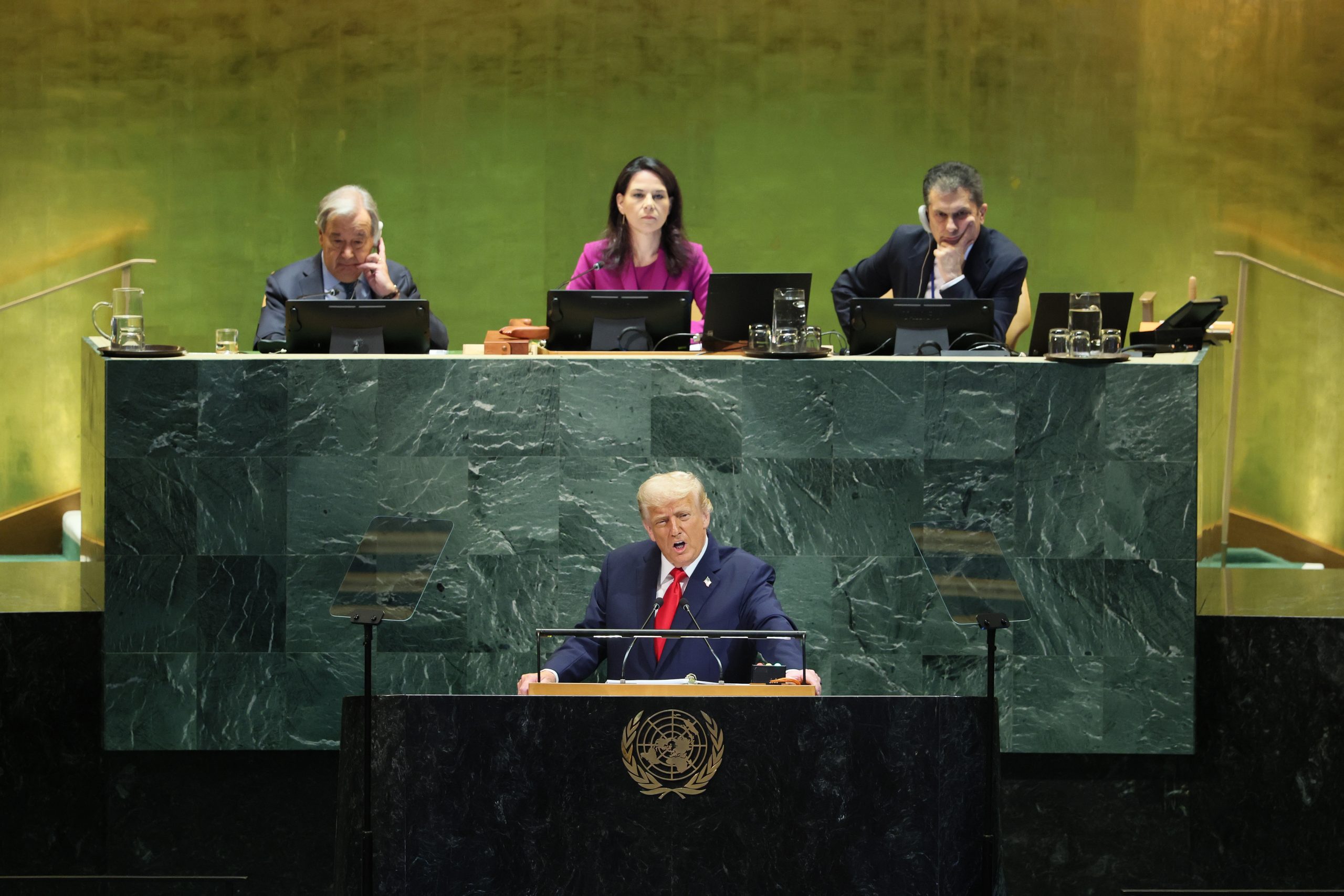
On September 23, President Donald Trump delivered a nearly hour-long address to the UN General Assembly, blending sharp criticism of the global body with self-congratulation for his administration’s achievements. In a speech that oscillated between grievance and optimism, President Trump touted his “America First” agenda, warned European nations of economic and cultural ruin, and positioned himself as a global peacemaker while questioning the UN’s effectiveness.
President Donald Trump opened his speech by calling the UN a “feckless institution” filled with “empty words” that fail to resolve global conflicts. He questioned the organization’s purpose, stating, “The U.N. has such tremendous potential. I’ve always said it. It has such tremendous, tremendous potential. But it’s not even coming close to living up to that potential.” His remarks underscored a return to an unapologetically nationalist stance, a departure from the more internationalist approach of his predecessor, President Joe Biden. Despite his criticisms, Trump later met with UN Secretary-General Antonio Guterres, assuring him that the US remains “100%” supportive of the organization. “I may disagree with it sometimes, but I am so behind it because the potential for peace at this institution is great,” Trump said, striking a conciliatory tone after his earlier rebuke.
President Donald Trump used the global stage to issue stark warnings to European nations, arguing that their migration policies and commitment to green energy initiatives were leading to economic and cultural devastation. He described these policies as a “double-tailed monster” that “destroys everything in its wake.” “I’m telling you that if you don’t get away from the ‘green energy’ scam, your country is going to fail,” Trump declared. “If you don’t stop people that you’ve never seen before that you have nothing in common with, your country is going to fail.” He contrasted these policies with his administration’s approach, which has prioritized expanded oil and gas drilling and aggressive crackdowns on illegal immigration in the United States. Trump expressed sympathy for Europe, saying, “I love the people of Europe, and I hate to see it being devastated by energy and immigration.” His remarks were a clear call for other nations to adopt similar policies to those of his administration.
In a significant development, President Donald Trump addressed Russia’s ongoing war in Ukraine, revealing a shift in his stance. After meeting with Ukrainian President Volodymyr Zelenskyy, Trump announced his belief that Ukraine, with support from the European Union and NATO, could reclaim all territory lost to Russia. “I think Ukraine, with the support of the European Union, is in a position to fight and WIN all of Ukraine back in its original form,” Trump wrote in a post following his speech. “With time, patience, and the financial support of Europe and, in particular, NATO, the original Borders from where this War started, is very much an option.” This marks a departure from his 2024 campaign rhetoric, where he often suggested the US had limited interest in the conflict’s outcome and promised a swift resolution. Trump also took a swipe at Russia, calling it a “paper tiger” and noting that the war, now in its third year, “should have taken a Real Military Power less than a week to win.” He threatened Moscow with “a very strong round of powerful tariffs” if Russian President Vladimir Putin does not negotiate an end to the conflict.
President Donald Trump also addressed the growing international push for Palestinian statehood, a movement spotlighted during the UN General Assembly’s discussions on a two-state solution. France recently joined other nations in recognizing Palestinian statehood, a move Trump and Israel strongly oppose. “The rewards would be too great for Hamas terrorists,” Trump argued, referencing the October 7 attacks. “This would be a reward for these horrible atrocities.” He also participated in a group meeting with leaders from Qatar, Saudi Arabia, Indonesia, Turkey, Pakistan, Egypt, the United Arab Emirates, and Jordan to discuss ending the Gaza war, calling it his “most important meeting” and expressing a desire to resolve a conflict that “should have probably never started.”
Early in his speech, President Donald Trump deviated from his prepared remarks to poke fun at logistical issues at UN headquarters, including a malfunctioning escalator and a faulty teleprompter. “These are the two things I got from the United Nations: a bad escalator and a bad teleprompter,” he quipped, drawing laughter from delegates. UN spokesperson Stephane Dujarric later explained that the escalator issue may have been caused by a videographer from the US delegation triggering a safety mechanism, while a UN official noted that the Trump Administration was responsible for operating the teleprompter.
President Donald Trump reiterated his ambition to win a Nobel Peace Prize, claiming his administration has “ended seven wars” since his return to office. “Everyone says that I should get the Nobel Prize — but for me, the real prize will be the sons and daughters who live to grow up because millions of people are no longer being killed in endless wars,” he said. He cited efforts to mediate conflicts between Israel and Iran, India and Pakistan, and Egypt and Sudan, though experts note that his impact on these resolutions is not as straightforward as he claims. Trump expressed frustration that the UN had not taken a more active role, stating, “It’s too bad that I had to do these things instead of the United Nations doing them.”
President Donald Trump’s address was a vivid reminder of his polarizing leadership style, blending boasts of domestic and foreign policy successes with dire warnings to other nations. His unapologetic “America First” posture, coupled with sharp critiques of global institutions and policies, underscored his intent to reshape the international order. As he navigates his second term, Trump’s vision for global leadership continues to spark both admiration and alarm among world leaders.
Here are the main events that occurred in Politics this week: 1. In Explosive UN Speech, President Donald Trump Denounces Globalism, Praises Nationalism
President Donald Trump delivers a speech to the United Nations General Assembly.
In his September 25 speech at the UN General Assembly, US President Donald Trump urged all the other nations to reject globalism and embrace nationalism while he was interrupted by derisive laughter from other world leaders. Over the course of the bombastic address, Trump highlighted the (imaginary) achievements of his presidency, lashed out at enemies, Iran foremost among them, and railed against multilateralism in its spiritual home, the UN general assembly. In one of the more remarkable moments in the history of the annual UN summit, the chamber broke out in spontaneous laughter at Trump’s claim that “in less than two years, my administration has accomplished more than almost any administration in the history of our country.” Clearly taken aback, Trump said: “I didn’t expect that reaction, but that’s OK.”
President Donald Trump arrived late for the summit, only coming an hour before he was due to speak. When he arrived at the green marble podium, Trump expounded on his visceral dislike of multilateral institutions, which he portrayed as significant threats to US sovereignty. “Americans govern America,” Trump said. “We reject the ideology of globalism, and we embrace the doctrine of patriotism.” With regards to its emphasis on sovereignty and nationalism, the 34-minute speech echoed much of his first UN General Assembly speech last year.
Foreign policy observers note that the main contrast with the earlier statement was the countries that he targeted as enemies of the US. In contrast to last year’s speech (when President Trump infamously denounced North Korea and hits President Kim Jong-un), President Donald Trump used this year’s address as an opportunity to condemn the Iranian government and call for regime change. “Iran’s leaders sow chaos, death, and destruction. They do not respect their neighbors or borders, or the sovereign rights of nations. Instead, Iran’s leaders plunder the nation’s resources to enrich themselves and to spread mayhem across the Middle East and far beyond,” said Trump. In contrast to his strident criticism of the Iranian government throughout the speech, President Donald Trump praised the governments of Saudi Arabia, United Arab Emirates, and Qatar, stating that they have pledged “billions of dollars to aid the people of Yemen and Syria.” He made no mention of the role of Saudi and UAE forces in the Yemeni conflict, where they have been accused of war crimes because of the civilian death toll from their coalition’s bombing campaign. They are also accused of dragging their heels over efforts to find a peace settlement. Trump, however, claimed his Gulf allies were “pursuing multiple avenues to ending Yemen’s horrible, horrific civil war.”
Overall the international community has reacted negatively to President Donald Trump’s speech, noting that its tone and theme of the address are in direct contradiction to the core values that the United Nations had promoted since its founding nearly 75 years ago. In response to the speech, UN secretary general António Guterres said President Trump’s fiery rhetoric shows that “democratic principles are under siege” throughout the world. Additionally, French President Emmanuel Macron denounced the spread of global lawlessness, “in which everyone pursues their interest,” and noted that the policies of President Trump are partially to blame for this troubling trend. On the other hand, the governments of Russia, Israel, and Saudi Arabia have praised President Trump, arguing that his speech was a “very welcoming statement.”
2. Senate Judiciary Committee Votes to Send Brett Kavanaugh’s Nomination to the Full Senate for Final Vote
The Senate Judiciary Committee voted this week to advnace Bett Kavanaugh’s confirmation to the Senate for a final vote.
On September 28, the Senate Judiciary Committee voted to recommend Brett Kavanaugh for a lifetime appointment for the US Supreme Court despite allegations of sexual assault but says it will request that an FBI investigation is conducted to determine the extent of Judge Kavanaugh’s misconduct. The FBI investigation is a caveat put forth by retiring Republican Senator Jeff Flake (R-AZ), who said he wants the FBI to investigate the claims of sexual misconduct before he will vote to confirm or not confirm Kavanaugh in the Senate, even though he voted in favor of Kavanaugh during the meeting Friday. In a statement following the vote, the committee explained in a statement: “The supplemental FBI background investigation would be limited to current, credible allegations against the nominee and must be completed no later than one week from today.” The committee vote came after a day of emotional testimony from both Judge Kavanaugh as well as Christine Ford, one of the women accusing him of sexual misconduct. During the hearings, Judge Kavanaugh was criticized for his poor performance, erratic behavior, an inability to answer even the most simple questions. These actions have led some critics to conclude that Judge Kavanaugh is not fit for the Supreme Court even if the investigation clears him of any serious wrong-doing.
Senator Jeff Flake was the deciding vote and did not commit to either side until early in the morning of September 28. In a written statement, Flake said: “I left the hearing yesterday with as much doubt as I had certainty.” “What I do know is that our system of justice affords a presumption of innocence to the accused, absent corroborating evidence.” But before the vote was expected to take place at 1:30 p.m., senators met behind closed doors. They reconvened around 2 p.m. Flake said he asked to delay the vote before the full Senate by one week to allow an FBI investigation. That is when Flake explained he needed more information before he could promise to vote for Kavanaugh in the Senate.
The Judiciary committee vote was on party lines; 11 Republicans voted in favor of recommending Kavanaugh, 10 Democrats voted against. Majority leader Mitch McConnell will now call for a vote in the Senate to confirm him. The Republicans control the Senate with a narrow 51-49 majority, but as the midterms are approaching, it may not stay that way for long (estimates show that the Republicans will likely have a net gain of three seats, giving them a 54-46 majority, at the same time as they lose control of the House of Representatives). Three senators have not taken firm positions on Kavanaugh: Susan Collins (R-ME), Lisa Murkowski (R-AK), and Joe Manchin (D-WV). Commenting on the vote, President Donald Trump said he did not yet pick an alternative if the Senate doesn’t confirm Kavanaugh. He also said he would not interfere in the process. “I’m going to let the Senate handle that. They’ll make their decisions,” Trump told reporters at the White House Friday afternoon. Based on the fact that the Senate Judiciary Committee gave him a preliminary endorsement, as well as the fact that his testimony seemed to at least partially persuade the three undecided Senators, it is likely that Brett Kavanaugh will be confirmed by a 52-48 margin. Despite his confirmation, Brett Kavanaugh will likely develop a reputation as a mediocre and ethically-challenged Supreme Court Justice appointed by one of the worst Presidents in US history.
3. US, Mexico, and Canada Agree To New Trade Agreement
The US, Mexico, and Canada agreed on a new trade deal this week meant to replace the 25-year-old NAFTA agreement.
On September 30, the United States, Canada, and Mexico reached an agreement to update the North American Free Trade Agreement, the 1994 pact that governs more than $1.2 trillion worth of trade among the three nations, after nearly one year of tense negotiations. The new deal (known as the United States-Mexico Canada Free Trade Agreement) will not go into effect right away. Most of the key provisions do not commence until 2020 because leaders from the three countries have to sign it and then Congress and the legislatures in Canada and Mexico have to approve it, a process that is expected to take months.
Overall, the treaty itself includes many new provisions governing trade between all three countries. One such area of change is in the automotive production industry. To qualify for zero tariffs beginning in 2020, a car or truck made in any of the three countries must have 75 percent of its components manufactured in Canada, Mexico or the United States, a substantial boost from the current 62.5 percent requirement. Additionally, a new rule in the agreement stipulates that a significant percentage of the work done on the car must be completed by workers earning at least $16 an hour. While many economists think these new rules will help some North American workers, they also warn that both new and used car prices may rise and that some small cars may no longer be made in North America because they would be too expensive under the new requirements. There are also concerns that automakers might not make as many cars in North America to export to China and elsewhere overseas because costs would be higher in the USMCA region than making the vehicles in Asia.
In addition to the changes regarding the automotive industries in all three countries, the treaty includes several other provisions. The agreement stipulates that Canada must open up to US dairy products, potentially benefitting American dairy farmers (a reliably Republican group that will credit President Trump for boosting their economic fortunes), increased environmental and labor rights, increased intellectual property protection, and an improved dispute resolution process. Moreover, the new treaty gives American pharmaceutical corporations and increased market share in both Canada and Mexico.
Overall, the leadership of all three countries praised the new trade agreement as a positive step and an example of constructive dialogue between different countries. In a Twitter post, President Trump praised the agreement as a “great deal for all three countries” that goes a “long way to solving the many deficiencies and mistakes in NAFTA.” Despite much praise for the agreement, some observers argue that it does not address the underlying issues of worker exploitation and environmental degradation. Additionally, it is also claimed that the main purpose of the new trade agreement is to improve President Trump’s already strong popularity in the industrial Midwest and ultimately will have a negative impact on the US economy.
Late last night, our deadline, we reached a wonderful new Trade Deal with Canada, to be added into the deal already reached with Mexico. The new name will be The United States Mexico Canada Agreement, or USMCA. It is a great deal for all three countries, solves the many……
4. China Postpones Military Talks with US Over Sanctions
China cancelled its annual military talks with the US this week due to new US sanctions.
China has postponed joint military talks with the United States in protest against Washington’s move to impose sanctions on the Chinese military for buying Russian fighter jets and surface-to-air missile systems. The Defense Ministry said in a statement on September 29 that it had recalled Navy Chief Commander Shen Jinlong from a visit to the US and postponed talks between Chinese and US military officials in Beijing planned for next week. The statement added that China’s military reserved the right to take further countermeasures against the latest US-imposed sanctions, without giving further details. Earlier in the day, China’s Foreign Ministry had summoned US Ambassador to Beijing Terry Branstad and “lodged solemn representations over US sanctions against (the) Chinese military.”
The US State Department imposed the sanctions on September 27 on the Equipment Development Department (EED), a branch of the Chinese military responsible for weapons procurement, for engaging in “significant transactions” with Russia’s major weapons exporter Rosoboronexport. The sanctions are aimed at blocking the EED and its director, Li Shangfu, from the possibility of applying for export licenses and participating in the US financial system. According to the US State Department, the sanctions on Beijing are linked to its decision to purchase 10 Russian SU-35 fighter jets in 2017 as well as S-400 surface-to-air missile system-related equipment in 2018.
Defense Ministry spokesman Wu Qian said that China’s decision to buy fighter jets and missile systems from Russia was a typical act of cooperation between two sovereign countries and Washington had “no right to interfere.” The ministry spokesman also warned that the United States would face “consequences” if it did not immediately revoke the bans. The Trump Administration views China’s purchases from Russia as a breach of a sweeping US sanctions bill enacted in 2017 titled Countering America’s Adversaries Through Sanctions Act, or CAATSA.
The S-400 system, whose full name is the Triumph Mobile Multiple Anti-Aircraft Missile System (AAMS), is an advanced Russian missile system designed to detect, track, and destroy planes, drones, or missiles as far as 402 kilometers away. The defense system is capable of downing US F-35 stealth fighters. China became the first international buyer of Russia’s S-400 Triumph in 2015 as part of a 3-billion-dollar deal and received the first batch of the missile systems in April. China will reportedly receive a total of two S-400 regiments, and the second regimental set is expected to be delivered by the end of 2018.
Here are the main events that occurred in Politics this week:
1. North and South Korea Hold Summit, Commit to “Era of No War”
The leaders of North and south Korea held a historic summit this week, pledging to speed up efforts for regional peace.
In their third summit meeting this year on September 19, North Korean President Kim Jong-un and South Korean President Moon Jae-in announced that North Korea would close an essential missile test facility in the presence of “international experts” and potentially destroy its primary nuclear complex if the United States agrees to equal measures. Speaking to the media Wednesday after a brief signing ceremony, Kim and Moon also vowed to bring peace to the Korean Peninsula once and for all, something they first committed to at their April summit. “The world is going to see how this divided nation is going to bring about a new future on its own,” Kim said to applause from those gathered. Moon and Kim also teased a potential historic fourth meeting between the two leaders, this time in the South Korean capital. The signed agreement stated that Kim would travel to Seoul “as soon as possible,” something no North Korean leader has ever done.
In addition to the joint statements by the leaders of both countries, the North and South Korean defense ministers also signed a 17-page accord in which the two countries vowed to “cease all hostile acts against each other.” “The era of no war has started,” said Moon, the first South Korean president to visit Pyongyang since 2007. “Today the North and South decided to remove all threats that can cause war from the entire Korean peninsula.” The two countries also pledged to submit a joint bid to host the 2032 Summer Olympics, create rail and road links, stop military drills aimed at each other, remove 11 guard posts in the demilitarized zone by the end of the year, and normalize the Kaesong Industrial complex and Kumgang tourism project as soon as the conditions allow. Shortly after the announcement, US President Donald Trump praised the summit meeting and called its developments “very exciting” in a Twitter post.
Kim Jong Un has agreed to allow Nuclear inspections, subject to final negotiations, and to permanently dismantle a test site and launch pad in the presence of international experts. In the meantime there will be no Rocket or Nuclear testing. Hero remains to continue being……..
South Korean President Moon and his top advisers have consistently said they want to make inter-Korea meetings a regular part of North-South relations and see them as a helpful step in establishing a permanent peace. “Chairman Kim and I share the history of having held hands like lovers and crossed the Military Demarcation Line together twice,” Moon said during a toast at a banquet Tuesday evening. “The fact that the leaders of Koreas can meet without limit in time or place symbolically demonstrates that a new age of inter-Korean relations has arrived,” he added. Ahead of this week’s talks, it was expected that two leaders would continue to work to formally end to the Korean War, which ended in a truce 65 years ago. While a formal peace regime officially ending the Korean War would need to be supported by the US and China, the other participants in the war, experts agree that there is nothing to stop the two Koreas declaring an end to the war themselves, or signing a bilateral peace treaty. A big part of any negotiation to end the war would be the status of the thousands of US troops stationed in South Korea as part of the two countries’ alliance. The North has long seen the US military’s large footprint in South Korea as a direct threat.
2. Rwandan Government Approves Release of Nearly 2,000 Political Prisoners
The Rwandan government released nearly 2,000 political prisoners this week, including noted opposition activist Victoire Ingabire.
On September 18, Paul Kagame, Rwanda’s president, authorized the early release of more than 2,000 prisoners, including a leading opposition figure who was jailed in 2012 for conspiring to undermine the government. The administration gave no further explanation for its decision to release Victoire Ingabire Umuhoza, whose detention had garnered international attention. Gospel singer Kizito Mihigo, jailed for ten years in 2015 after making a song that criticised the government, was also freed. The release may give opposition members and regime critics some hope that President Kagame could be ready to ease his tight grip on Rwandan politics, but international observers remain skeptical of his true intentions.
Even though Paul Kagame is praised for transforming the central African nation from a failed state haunted by the memory of a brutal genocide in the early 1990s into a thriving economy, critics argue that he has done so at the expense of political competition. Several critics who have gone into exile have died in mysterious circumstances, and dozens of opposition figures have been imprisoned. In power since 2000, Kagame spearheaded a constitutional referendum in 2015 to allow him to remain president until 2034. He won re-election last year with 99 percent of the vote and has permitted his ruling Rwandan Patriotic Front to dominate much of the economy.
The most high-profile released prisoner, Victoire Ingabire, returned from exile in the Netherlands in 2010 to take part in the Rwandan Presidential election but was blocked from competing. Two years later she was charged with inciting the population, forming an army to overthrow the government and downplaying the impact of the genocide, in which some 800,000 ethnic Tutsis and moderate Hutus were killed. Last year a pan-African court ruled that Ingabire’s rights had been violated during her trial, but Rwanda ignored the ruling. The court, based in Tanzania, did not order Ingabire’s release but gave the Rwandan government six months to “rectify the harm done.” “It took me by surprise but I hope this is the start of the opening of the political space in Rwanda”, Ingabire told Radio France International after she was released. The opposition leader said she had no plans to cease her political activities. Despite the fact that Rwanda continues to have a poor human rights record, it can be argued that the release of political prisoners is a sign that the country is beginning to liberalize, albeit slowly.
3. Japanese Prime Minister Shinzo Abe Wins Third Term
Japan’s nationalist Prime Minister Shinzo Abe was re-elected to a third term this week, becoming Japan’s longest-serving post-war Prime Minister.
On September 20, Japanese Prime Minister Shinzo Abe was re-elected as head of his ruling Liberal Democratic Party in a landslide, paving the way for up to three more years as the nation’s leader and a push toward a constitutional revision. In Thursday’s leadership vote, Abe handily defeated his sole challenger, Shigeru Ishiba, a former defense minister. Abe won 553, or about 70 percent, of 807 votes. The decisive victory may embolden Abe to pursue his long-sought amendment to Japan’s US-drafted pacifist constitution, although the hurdles remain high and doing so would carry political risks. “It’s time to tackle a constitutional revision,” Abe said in a victory speech. Abe said he’s determined to use his last term to pursue his policy goals to “sum up” Japan’s postwar diplomacy to ensure peace in the country. “Let’s work together to make a new Japan,” he said.
Shinzo Abe, who has served as Japan’s Prime Minister since December 2012, has cemented control of his party and is poised to become Japan’s longest-serving leader in August 2021. In his coming term, Abe has several policy challenges, including dealing with Japan’s aging and declining population, a royal succession in the spring, and a consumption tax hike to 10 percent he has already delayed twice. Amid international effort to denuclearize North Korea, Abe seeks to meet with Kim Jong Un to resolve their disputes, including the decades-old problem of Japanese citizens abducted to the North. He faces China’s increasingly assertive activity in the region and intensifying trade friction with the US that could shake his friendly relations with President Donald Trump. Abe said he will meet with Trump next week in New York, where they attend the annual UN assembly, to discuss bilateral trade and “the roles Japan and America should play in establishing global trade rules.”
Overall, most observers view an extended term for Abe as a positive event that will improve the stability of Japan. “A stable government under a strong leader is good for the economy and diplomacy, and Prime Minister Abe has established a rather significant presence in diplomacy,” said Yu Uchiyama, a University of Tokyo politics professor. But his long and strong leadership has caused a lack of political competitiveness. “The biggest concern about Japanese politics is how to restore competition in politics and reactivate democracy,” Uchiyama said. Additionally, critics of Abe also point out to the fact that he has strengthened the Prime Ministers Office at the expense of the Japanese Parliament. Despite this criticism, Abe has remained a popular figure in Japan and has played a major role in reshaping the Japanese political system.
4. Terrorists attack Iran military parade, killing 25 people and Wounding at least 60
Western-supported militants attacked an Iranian military parade on Saturday, killing 25, injuring at least 60.
Militants disguised as soldiers opened fire on September 22 on an annual Iranian military parade in the country’s oil-rich southwest, killing at least 25 people and wounding over 60 in the deadliest terror attack to strike the country in nearly a decade. Women and children scattered along with Revolutionary Guard soldiers as heavy gunfire rang out at the parade in Ahvaz, the chaos captured live on state television. The attack came as rows of Revolutionary Guardsmen marched down Ahvaz’s Quds (Jerusalem) Boulevard in one of the many ceremonies commemorating the 30th Anniversary of Iran’s victory in the nine-year-long Iran-Iraq War. Both ISIS, as well as Wahhabi separatists (sponsored by Saudi Arabia, the US, and Israel), once only known for nighttime attacks on unguarded oil pipelines, claimed responsibility for the brazen assault.
Iran’s Foreign Minister Mohammad Javad Zarif blamed regional countries and their “US masters” for funding and arming the separatists, issuing a stark warning as regional tensions remain high in the wake of the US withdraw from the Iranian nuclear deal.“Iran will respond swiftly and decisively in defense of Iranian lives,” Zarif wrote on Twitter. Additionally, the Iranian government quickly summoned the Ambassadors from Kuwait, Qatar and the United Arab Emirates for questioning. In response to the allegations, US Ambassador to the UN Nikki Haley dismissed Iran’s assertion on Sunday that Washington and its Gulf allies were to blame for a deadly parade attack and used her speech as another opportunity to criticize Iranian President Hassan Rouhani. “He’s (Rouhani) got the Iranian people protesting, every ounce of money that goes into Iran goes into his military, he has oppressed his people for a long time and he needs to look at his own base to figure out where that’s coming from,” Haley said in a CNN interview. “He can blame us all he wants. The thing he’s got to do is look at the mirror.”
Terrorists recruited, trained, armed & paid by a foreign regime have attacked Ahvaz. Children and journos among casualties. Iran holds regional terror sponsors and their US masters accountable for such attacks. Iran will respond swiftly and decisively in defense of Iranian lives. pic.twitter.com/WG1J1wgVD9
Here are the main events that occurred in Politicsthis week:
1. President Donald Trump Signs Immigration Executive Order Meant to Curtail the Separation of Migrant Children from Parents
On June 20, President Donald Trump on signed an executive order designed to keep together immigrant families who have been detained at the U.S.-Mexico border, while also retaining his administration’s so-called “zero-tolerance” immigration policy. “I didn’t like the sight or the feeling of families being separated,” President Trump said from the Oval Office, but at “the same time, we are keeping a very powerful border, but continue to be zero tolerance.” Trump’s executive order would keep most families together under the Department of Homeland Security, except in cases where an adult may pose a threat to a child. “You’re going to have a lot of happy people,” Trump further said as he signed the order. While the order could possibly work to quell the furor over the controversial practice of separating families at the border, it marks a stunning reversal for President Donald Trump, who has prided himself as being a hardline opponent of illegal immigration.
Vice President Mike Pence, who also appeared with Trump at the signing, said that the order would enable families to stay together in the immediate future, but added that it was still up to Congress to come up with a permanent solution, presumably as part of a larger immigration package. The executive order by President Donald Trump is certain to encounter legal challenges, much like President Obama’s 2014 immigration executive order. Some advocates will argue that children staying in detention centers violates the 1997 decision known as the Flores agreement. Although the Executive Order mandates that Attorney General Jeff Sessions request a US district court to modify the agreement, Trump acknowledged he could be headed for a fight. “There may be some litigation,” he conceded.
The separations at the border began earlier this year when Attorney General Jeff Sessions mandated that all people caught crossing into the US illegally be referred for criminal prosecution. Under that policy, adults were sent to jail under the auspices of the Department of Homeland Security, while children have been held in facilities run by the Office of Refugee Resettlement. Since the policy was implemented, over 2,000 children have been separated, according to government figures. The backlash, spurred by images of children crying, audio documenting the separation, and personal accounts from those experiencing it, was swift and intense and came from both sides of the aisle, as well as from international organizations and figures. Until June 19, the Trump Administration had been vociferously defending his immigration policy. President Trump insisted on June 18, that illegal immigrants were “infesting” the country, and asserted that the only other option was to release all the undocumented immigrants detained at the border. However, Trump insisted that his executive order was not a sign of his backing down. “The border’s just as tough,” he told reporters. “They can come in through ports of entry if they want. That’s a whole different story. And that’s coming in through a process, and the process is what we want.”
2. The US Withdraws from UN Human Rights Council, Alledging Anti-Israeli Bias
The Trump administration withdrew from the United Nations Human Rights Council on June 19 in protest of what it perceives as an entrenched bias against Israel and a willingness to allow notorious human rights abusers as members. UN Ambassador Nikki Haley, who has sought major changes on the council throughout her tenure, issued a blistering critique of the panel, saying it had grown more callous over the past year and become a “protector of human rights abusers and a cesspool of political bias.” She cited the admission of Congo as a member even as mass graves were being discovered there, and the failure to address human rights abuses in Venezuela and Iran. “I want to make it crystal clear that this step is not a retreat from our human rights commitments,” she said during a joint appearance with Secretary of State Mike Pompeo at the department. “On the contrary. We take this step because our commitment does not allow us to remain a part of a hypocritical and self-serving organization that makes a mockery of human rights.” Haley went further to accuse governments with mediocre human rights records of seeking seats on the council to avoid scrutiny and then resisting proposals for reform. “When we made it clear we would strongly pursue council reform, these countries came out of the woodwork to oppose it,” Haley said. “Russia, China, Cuba, and Egypt all attempted to undermine our reform efforts this past year.”
The decision to leave the 47-nation body was more definitive than the lesser option of staying on as a nonvoting observer. It represents another retreat by the Trump administration from international groups and agreements whose policies it deems as out of sync with American interests on trade, defense, climate change and, human rights. Additionally, the decision leaves the council without the US playing a key role in promoting human rights around the world. “By withdrawing from the council, we lose our leverage and allow the council’s bad actors to follow their worst impulses unchecked — including running roughshod over Israel,” said Congressman Eliot Engel (D-NY), the top Democrat on the House committee that oversees the State Department. “However, this administration’s approach when it sees a problem is to take the United States off the field,” he added. “That undermines our standing in the world and allows our adversaries to fill the void.”
The US is midway through a three-year term on the council, which is intended to denounce and investigate human rights abuses. A U.S. departure deprives Israel of its chief defender at a forum where Israel’s human rights record UN human rights chief slammed the Trump Administration’s policy of separating migrant parents from their children after they enter the United States at the Mexican border, calling it “unconscionable” and akin to child abuse.
3. Latest Efforts to Hold Talks on Ending Sudan Civil War Fail
The most recent efforts to negotiate an end to South Sudan’s Civil War ended in failure this week as both sides refused to meet face-to-face.
The latest attempt at ending South Sudan’s five-year civil war failed on June 22, when President Salva Kiir rejected working again with rival Riek Machar after their first face-to-face meeting in almost two years. “This is simply because we have had enough of him,” government spokesman Michael Makuei said. The rivals met this week in neighboring Ethiopia at its prime minister’s invitation, shaking hands and being coaxed into an awkward embrace as they held direct talks. They shook hands again as regional heads of state and met to discuss the civil war in the world’s youngest nation. But it soon became clear that while South Sudan’s government was open to having the opposition in the vice president’s role, it would not accept Machar’s return to that post. Machar fled the country after new fighting broke out in the city of Juba in July 2016, ending a brief attempt at peace in which he returned to his role as Kiir’s deputy.
Opposition spokesman Lam Paul Gabriel said “there was nothing agreed upon in the talks” but that the face-to-face meeting with South Sudan’s president was useful “because we are able to see violence in Salva’s eyes.” Gabriel also accused the East African regional bloc of favoring South Sudan’s government and putting its own interests ahead of “genuine peace,” adding: “This is completely disappointing.” The warring sides are to meet again on June 25 in Kenya. Machar will attend the Khartoum meeting, Makuei said. “We believe that peace is going to come in the coming one month or so,” South Sudan’s Cabinet affairs minister, Martin Elia Lomoro, told reporters even as observers expressed skepticism.
South Sudan’s civil war, which started just two years after the country won independence from Sudan, has continued despite multiple attempts at peace deals. Tens of thousands of people have died and millions have fled to create Africa’s largest refugee crisis since the 1994 Rwandan genocide. Millions of others still in the country are near famine, while the warring sides have been blamed for obstructing or slowing the delivery of desperately needed aid.
The latest attempt at a cease-fire in December was violated within hours. Both sides have been accused of widespread abuses such as gang rapes against civilians, including along ethnic lines. A number of South Sudan officials have been accused by human rights groups of profiting from the conflict and blocking the path to peace, and the US has threatened to withdraw aid to the country. Early this month the UN Security Council adopted a United States-sponsored resolution that threatens an arms embargo on South Sudan and sanctions six people, including the country’s defense chief, if fighting doesn’t stop and a political agreement is not reached. The resolution asks Secretary-General Antonio Guterres to report to the council on that by June 30.
4. Canadian Parliament Approves Bill Legalizing Marijuana
The Canadian government passed legislation allowing the recreational use of marijuana this week, become the second country in the world to do so.
On June 19, the Canadian parliament voted to legalize the recreational use of cannabis, making Canada the first G7 country to legalize marijuana. The law regulates its cultivation, sets limits on possession and prohibits marketing that would encourage consumption. When the law comes into effect, Canada will be the second country in the world, after Uruguay, to make it legal to puff marijuana for pleasure. Bill Blair, a Liberal Party member of the Canadian Parliament, stated that if the bill is passed this week, marijuana could be legal by September, lining up with a late-summer schedule proposed by Prime Minister Justin Trudeau last month.
Concerns expressed about the bill by members of Parliament include how to keep marijuana away from children and how to address organized crime and traffic deaths related to marijuana use. The current bill restricts marijuana production, possession and sale to those over the age of 18. Canadian Senator Peter Harder acknowledged his colleagues’ reservations about the bill’s specifics in a statement on June 18. “Given the exceptional amount of work that went into the Senate’s study of this bill, I understand that some of these outcomes are frustrating for some,” he said. “I know that some of these frustrations are rooted in deeply held policy views and personal values and that much disagreement will not end with our vote on this message, whatever its result.”
Here are the main events in Politics that occurred over the past week:
1. President Trump Gives First Speech Before The United Nations
President Donald Trump gave his first speech before the UN General Assembly this week.
On September 19, President Donald Trump gave his first speech before the UN General Assembly at the opening of the 72nd UN Session. In a major break from his campaign rhetoric, Trump’s speech took a more interventionist tone that puts American interests ahead of the wider goals and aims of the international community. Trump’s core message is that the US will continue to play a major role in world affairs but it will do so based on its own interests as opposed to the ideological interests of other members of the international community. In particular, Trump took aim at North Korea and Iran, two countries that he considers to be the main obstacles to total US domination of the international arena. Trump described North Korean President Kim Jong Un as “Rocket Man” and stated that if the isolated and sanctioned country did not give up its nuclear program, the US will have no other options other than destroying North Korea. Additionally, Trump again claimed that Iran is the leading sponsorer of global terrorism and that the Iranian nuclear agreement is “one of the worst and most one-sided” international agreements that the US has ever entered into. Trump also called for a renewed fight against Islamist terrorism and highlighted his well-known opposition to global trade agreements, arguing that they negatively impact American workers and only benefit countries in the developing world.
Overall, President Donald Trump’s first UN speech took a dark and defiant tone that threatened to isolate the US from its allies and also fits the Neoconservative vision of the US serving as the global police force when it serves their own selfish interests. Additionally, there were several notable moments of hypocracy in President Trump’s speech. For example, Trump said nothing about the mediocre human rights records of countries such as Saudi Arabia, Turkey, and Egypt and stated that Saudi Arabia is on the forefront of fighting Islamist terrorism and is one of the most progressive countries in the entire Middle East in terms of human rights. In reality, Saudi Arabia arguably has one of the worst human rights records in the entire world, strongly supports violent radical groups such as ISIS and Al-Qaeda, and, since 2015, has been directly responsible for the deaths of tens of thousands of Shi’a Muslims in Yemen due to its military operations within the country.
2. US Established First Permanent Military Base in Israel
The US opened up its first permanent military facility in Israel on September 18th.
On September 18, the US announced the opening of the first-ever joint Israeli-US military installation on Israeli soil. The facility is an air defense located in the Negev desert and will be home to 120 US Air Force personnel. Plans for the establishment of the facility began under former President Barack Obama and were extradited at the urging of President Donald Trump. According to Brig. Gen. Tzvika Haimovitch, the head of the IDF’s Air Defense Command, the establishment of the base is historic and “demonstrates the years-old alliance between the United States and the State of Israel.” One can clearly make the case that the establishment of a permanent US base within Israel would do little other than to inflame the already difficult situation within the Middle East and give Israel the incentive to intervene militarily in countries in the region such as Syria, Lebanon, and Iran. Additionally, the presence of a US military installation in Israel furthers the impression that the US directly encourages the heinous human rights abuses that Israel is guilty of committing against the Palestinian people since its establishment as a sovereign nation nearly 70 years ago.
3. Republican Efforts To Repeal “Obamacare” Takes Hit
The Trump Administration’s healtcare reform proposal took a major hit this week with the revelation of the impact of the plan on individual states over a 20-year period.
The efforts by the Republican Party Congressional Leadership and President Donald Trump to repeal “Obamacare” and reform the healthcare system hit another stumbling block this week with the revelation of how the repeal would impact individual states. A study commissioned by Avalere and released on September 18 finds that the new legislation would reduce federal healthcare funding to states by $215 Billion through 2026 and by more than $4 Trillion by 2037. Most of these cuts would affect states that have already expanded Medicaid, and would thus negatively impact both middle and low-income individuals and families. The states that will see the largest cuts in funding under the new plan include Arizona, Alaska, Maine, Ohio, and West Virginia, all states that are represented by Republican senators who have reservations regarding the plan. On the other hand, states such as Texas, Tennessee, Missouri, and Virginia would see increases in federal healthcare funding under the new plan. After 2026, nearly all states see cutbacks in federal funding, with California being impacted the most with an estimated loss of $800 Billion. The fact that the healthcare reform proposal unfairly targets certain states with cuts in funding makes it even less likely that the most recent proposal stands a chance of passing in its present form.
Officially known as the Kingdom of Belgium, Belgium is a constitutional monarchy located in Western Europe. Belgium is bordered by Germany, France, the Netherlands, and Luxembourg and is approximately 30,500 square kilometers and has a population of around 11 million. Belgium is the seat of the European Union (EU) and the North Atlantic Treaty Organization (NATO). Belgium has had an important position in the United Nations and in contributing to international policy regarding human rights through its seat on the United Nations Human Rights Council.
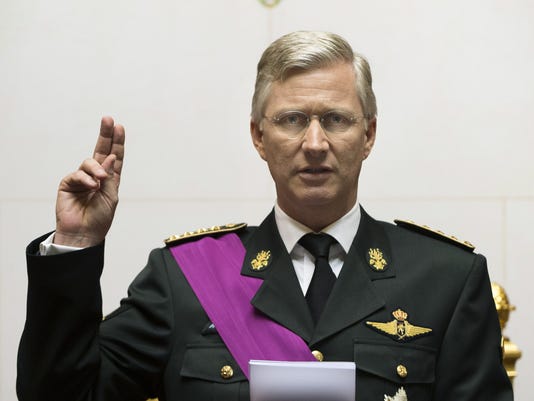
Philippe is the current King of Belgium. He assumed this role in July of 2013.
Belgium is a federal parliamentary republic under a limited constitutional monarchy. The Belgian Constitution grants numerous civil and political rights to its citizens including equality under the law, non-discrimination of persons, freedom of speech, and freedom of religion. Belgian citizens are subject to the rights guaranteed by the European Convention on Human Rights. The branches of government are the executive, legislative, and judiciary. The head of state is the king, Philippe, who has been in power since July 2013. The role of the monarchy in Belgium is symbolic and ceremonial, as the primary purpose the king has is to designate a political leader after an election. The executive branch is headed by the Prime Minister, who is appointed by the king and comes from the political parties that make up the governing coalition within Belgium. Charles Michel is the current Belgian Prime Minister and has served in office since October of 2014.
The main legislative body is the Federal Parliament, which consists of the Chamber of Representatives and the Senate. Members of the Chamber of Representatives serve for a 5-year term and are directly elected by all Belgian citizens over 18. The Belgian Senate is chosen by the regional parliaments and communities within Belgium. In total, the Belgian Parliament consists of 210 members, including 150 members of the Chamber of Representatives and 60 Senate members. Belgium also has a law that requires compulsory voting. The most recent elections in Belgium were in 2014, which resulted in the victory of a center-ight political coalition led by the New Flemish Alliance. Belgian citizens can vote in elections to the European Parliament, the main legislative body of the European Union. The judicial system of Belgium follows the concept of civil law and consists of several different levels, the highest one being the Constitutional Court. Belgium is also a founding member of the ICJ and accepts its jurisdiction as compulsory.
Belgium is considered by mot observers to be a model liberal democracy.
Belgium plays a significant role within the wider context of European and international politics. Belgium is considered a model liberal democracy in an area increasingly defined by disunity. Belgium promotes the ideas of European unity and openness within the international system. One of the main factors that influenced Belgium’s views on its role in the realm of international politics is due to its past political experiences. For example, Belgium was under German occupation during both World Wars and saw first-hand the effects of the Cold War. Due to its experiences during these periods, Belgium developed the belief that unity among nations and international cooperation is necessary to promote international peace and stability. This view of integration is shown through Belgium’s support of and membership in the European Union and NATO.
The Belgian economy is primarily serviced-based. Some of its leading industries include engineering and the production of cars, transportation equipment, and scientific instruments. The current rate of unemployment of Belgium is around 8.5%. Despite having a debt-to-GDP rate of well over 100%, Belgium has a high GDP per capita and saw its GDP increase by 1.8% in 2016. Belgium has sought to attract foreign investment in its economy. In recent years, the Belgian government has implemented economic reforms meant to make its economy a more attractive source for foreign investment.
Belgium has played a major role within the UN that has included participating in numerous UN peacekeeping operations.
Belgium joined the UN on December 27, 1945. Over the course of its membership, Belgium was involved in many different capacities within the UN. One example of Belgium’s work within the UN is its role as a non-permanent member of the Security Council on five separate occasions. Belgium contributed UN peacekeeping in South Korea, Somalia, Lebanon, Rwanda, and Sudan. The Belgian delegation to the UN took the initiative in several different areas such as disarmament, international disputes, gender equality measures, and human rights. Belgium also plays an active role on subcommittees such as the International Criminal Tribunal for the former Yugoslavia, the Intergovernmental Panel on Climate Change, and the Committee on Economic, Social and Cultural Rights.
Belgium has played an increasing role within the UN through its membership in the UN Human Rights Council. Created in 2006, the UN Human Rights Council superseded the earlier UN Commission on Human Rights. The UN Human Rights Council consists of 47 members who serve three-year terms. Belgium was first elected in 2009 and was re-elected to the Council in 2015.
Belgium strongly supports efforts to prevent and counter violent extremism.
Through its capacity on the human rights committee, Belgium expressed strong support for the Turning Point Strategy put forward by the Center for Strategic and International Studies (CSIS). This strategy highlights the need for cooperation between civil society organizations (CSOs) and governments to strengthen efforts to fight violent extremism and to prevent further human rights abuses from emerging through governmental efforts to counter extremism.
Belgium also supports stronger efforts in promoting firearm regulations at the international level and views firearm regulations as key in protecting human rights at the international level. In its capacity as a member of the UN Human Rights Council, Belgium strongly supported the Programme of Action to Prevent, Combat, and Eradicate the Illicit Trade in Small Arms and Light Weapons in All Its Aspects and recent efforts by the European Parliament to implement stringent firearms regulations.
Belgium has played a key role in raising international attention to the human rights abuses committed against the Rohingya Muslims in Myanmar.
Belgium supports resolutions put forward by the Human Rights Committee addressing the plight of the Rohingya Muslims of Myanmar and continued efforts by the international community to ensure that the government of Myanmar is taking appropriate steps to ensure that the rights of this community are protected and upheld. These efforts illustrate the fact that Belgium has a strong commitment to the cause of human rights and is prepared to work with the international community in all capacities to ensure the rights of numerous groups are protected.
A key area of interest among political scientists is the promotion of human rights and democracy at the international level. Over the past century, many countries in all regions throughout the world sought to create domestic democratic political systems with mixed results. In these cases, some countries transitioned towards democracy, while on the contrary, others slipped further towards authoritarianism. Some of the factors inhibiting the establishment of democratic governments and improve the protection of human rights worldwide include the role of the military, cultural and historical factors, and religious factors. Additionally, the structure of international institutions such as the United Nations often makes it difficult to effectively promote human rights and efforts at democratization at the international level. This paper seeks to explore the overall record of the UN in fostering democratic political reforms and human rights protections at the international arena and offers some suggestions regarding the future of these efforts.
The UN has sought to improve the global protection of human rights and encourage the spread of democratic governments at the international level since its inception. Even though the UN Charter does not specifically address the issue of democracy on the global scale, the opening lines of the charter show that there is a direct link between the will of the people to the member-states and the legitimacy of the organization. Additionally, the UN Charter directly mentions human rights and states that the promotion of these rights is a major aspect of international policy. Democracy and human rights were also addressed through the Universal Declaration of Human Rights, adopted unanimously by the UN General Assembly in 1948.
The UN further promoted the idea of political reform and human rights protection in the International Covenant on Civil and Political Rights (ICCPR). Adopted on December 15, 1966, the ICCPR puts forward the legal basis for the promotion of democracy under the international legal mechanism. The ICCPR enshrines freedom of expression, freedom of assembly, freedom of association, the right to vote and take part in public affairs, and universal suffrage as essential aspects of any international efforts to promote democracy. In addition to many different conventions and charters focusing on human rights and democracy, several committees within the UN focus on the effective promotion of human rights and democracy at the international level. These committees include the UN Human Rights Committee, United Nations Development Programme (UNDP), the United Nations Democracy Fund (UNDEF), and the Office of the High Commissioner for Human Rights (OHCHR), among many others.
One of the main successes of the UN is its election-monitoring procedures.
The UN has had some success in promoting democracy and human rights. An example of the UN furthering democracy is its monitoring of elections. Starting in the 1980s, the UN strengthened its election monitoring processes. The primary factor contributing to this change was the end of the Cold War, which resulted in an increase in democratization worldwide. This increase in democratization necessitated the need for the international community to monitor elections within newly-democratic states to make sure that they were in accord with international standards.
One failure of the UN regarding human rights was its inability to adequately address the genocides in Bosnia and Rwanda during the 1990s. During the Rwandan genocide, the UN did little to prevent human rights abuses taking place within the country. The lack of political will among the members of the peacekeeping operations within the country and the lack of a vital national security interest in the country by the Security Council members prevented an effective response to the crisis. Additionally, the UN failed to address the ongoing human rights violations stemming from the Syrian Civil War. Like the response by the UN to the Rwandan genocide, the failure to address the human rights issues surrounding the Syrian conflict are attributed to political deadlock within the UN Security Council and the lack of will to address these issues head-on. These incidents show that much of the international community was reluctant at times to intervene to prevent human rights abuse.
Permanent members of the UN Security Council such as the US, Russia, and China often veto resolutions that ultimately improve human rights protections and promote democracy.
There are several factors that reduce the effectiveness of the promotion of democracy and the protection and upholding of human rights by the UN. One such reason is related to the structure of the UN Security Council. The UN Security Council has five permanent members and ten non-permanent members who serve two-year terms. The five permanent members have veto power over all resolutions passed by the Security Council. In recent years, members of the council such as Russia and China have vetoed several resolutions related to the Syrian Civil War. Additionally, the US used veto power over resolutions condemning the continued building of illegal Israeli settlements in the Palestinian territories.
Another factor that hampers the promotion of human rights and democracy by the UN is the overall structure of the UN committee system. The structure of the UN committees allows countries with poor human rights records and undemocratic political systems to potentially serve on committees dealing with human rights. For example, China, Cuba, and Saudi Arabia were elected to sit on the UN Human Rights Committee despite being guilty of human rights abuses and having nondemocratic governments.
Reform of the UN Security Council is one way to improve the human rights record of the UN.
The record of the UN in promoting democratic reform at the international level and protecting human rights illustrates the need for lasting reforms within the UN. The central area of improvement is related to the structure of the UN Security Council. One such reform proposal is to limit the right of veto to national security issues. By restricting veto authority to matters related to national security concerns, the security council will be forced to put aside their political objections to human rights resolutions. Another reform proposal is to require the five permanent members of the security council to consult with other nations to get an agreement before using their veto power on resolutions. The official language of the UN charter hampers any efforts to implement changes to the UN Security Council. For example, Article 108 of the UN Charter states that the Five Permanent Security Council members have veto power over any proposed amendments to the UN Charter.
Another proposal to improve the protection of human rights by the UN is to implement a grading scale for countries on various human rights issues to encourage improvements and progress. This approach will allow for a mare targeted approach to human rights violations while at the same time making sure that any changes are implemented in a way that is monitored easily by the international community. The UN should provide increased levels of support and development aid to countries that have improved their overall human rights record.
Tunisia is an example of a country that can be a model for this proposal. For example, Tunisia typically ranked near the bottom regarding human rights before the ousting of its President, Zine El Abidine Ben Ali, in 2011. After Ali’s removal from power, Tunisia made a series of improvements regarding human rights and political freedom and today ranks as one of the Middle Eastern nations with the highest level of political freedom. By implementing this proposal, the UN can allow for permanent changes in human rights policy to be implemented.
Restricting committee membership to countries with adequate human rights records is a plausible, yet discriminatory, measure to improve the UN’s human rights record.
The structure of elections to UN committees dealing with human rights is an additional area in which reform is necessary. A possible solution in this area is to restrict elections to the human rights related committees to countries that have met the international requirements for human rights protection. One possible benefit from this proposal is that it will improve the effectiveness of the committees dealing with human rights and motivate countries to improve their human rights records. A problem with this proposal is that it is undemocratic in nature and prevents equal representation at the international level, thus going against the original intent of the UN as a fair and impartial body for international dispute settling.
One of the major foreign policy issues facing the world over the past few years is the Syrian Civil War and the formation of groups such as ISIS as a result of the instabilities created due to the conflict. In spite of the urgency of ending the conflict and combating the rise of organizations such as ISIS, there has been little effort on the world stage to come up with an adequate plan to do so. A major reason the international community has yet to come up with a plan to fight ISIS and end the Syrian Civil War is due to different visions between world powers over the best way to do so. The U.S. argues that the ultimate goal of any intervention in Syria would be that Syrian President Bashar al-Assad would peacefully step down from power. In contrast, Russia is a close ally of Assad and their only military outpost in the Middle East is in Syria. Russia believes that any regime change in Syria would lead to increased instability in the Middle East and threaten their military presence in the region.
In recent weeks, Russian President Vladimir Putin has stepped up Russian presence in Syria and has begun a military build-up in the country. U.S. diplomats have cautioned Russia against such a move, arguing that it would lead to even greater instability and violence in Syria. Additionally, the U.S. fears that a potential confrontation may emerge between U.S.-backed coalition members and Russian forces in Syria if Russia continues expanding its military presence in the region. Despite the differences in opinion between the U.S. and Russia, Putin has come up with several proposals to combat ISIS, put an end to the Syrian Civil War and restore a greater sense of stability to the Middle East.
Vladimir Putin’s plan includes several components. The first part is that the U.S. and its allies coordinate their actions against ISIS with the Russian, Iraqi, Iranian and Syrian armies. Through the coordination of their actions, Putin hopes that any conflict between coalition members can be reduced and that a consensus to stop the spread of ISIS can emerge on the international level. Also, Russia also stated that their plan would put in place measures that would gradually transition political power away from Assad. Putin has also stated that if the U.S. and its allies reject his offer, he would be prepared to take military actions against ISIS in Syria unilaterally. Putin is hoping that the U.S. will accept his plan on the basis of it being the only realistic way to bring an end to the Syrian Civil War and contribute greater stability to the Middle East.
The reaction to Putin’s proposal has been mixed. For example, UN Ambassador Samantha Powers has stated that the U.S. would be unwilling to join in a coalition with the Syrian army because of Syrian Bashar al-Assad’s human rights record and alleged actions over the course of the war. Also, U.S. officials question Putin’s motives and feel that his plan is not comprehensive enough to be successful. Despite their reluctance to side with Russia, the Obama Administration did announce that it would be willing to engage in talks with Russia over the issue in the coming weeks. Additionally, Russian Foreign Minister Sergei Lavrov stated that the U.S. has become more receptive to Russia’s position and that it moderated two parts of its Syrian policy, that Assad must step down from power and that it will not negotiate with his government.
The proposed course of action by Russia regarding the Syrian Civil War could involve resorting to several components of international law. For example, Russia could present its case before the UN Security Council. After reviewing the case, the Security Council may call on the parties involved in the Syrian Civil War to settle their disputes via peaceful means. Furthermore, Russia can receive the authority to strike ISIS forces within Syria if it is given permission by the Syrian government to do so. If Russia acts without Syria’s permission, they would be in violation of Article 2 Paragraph 4 of the UN Charter, which prohibits the use of force against another country in terms other than that of self-defense. On the other hand, Russia could use the argument that their actions against ISIS are purely self-defense. At that point, Russia’s actions would be in accord with Article 51 of the UN Charter, which states that any member nations has a right to self-defense until the Security Council has taken measures to maintain international peace and security.
In conclusion, the Syrian Civil War has been a key issue facing the international community over the past few years and has destabilized the Middle East. The rise of ISIS is a major problem that has arose out of the instability brought on by the Syrian Civil War. Russia has devised a plan including several components that would potentially end the war and stop ISIS and is seeking support from the U.S. and its allies for its actions. If the U.S. rejects their offer, Russia is prepared to act unilaterally in Syria. The Russian plan for the Syrian Civil War can be implemented through existing channels of international law. Only time will tell if the plan can gain support on the international stage and successfully put an end to the Syrian conflict