Tag: saudiarabia

  • OurWeek In Politics (December 12, 2019-December 19, 2019)

    OurWeek In Politics (December 12, 2019-December 19, 2019)

    Here are the main events that occurred in Politics this week:

    1. House Judiciary Committee Approves Articles of Impeachment Against President Trump

    The House of Representatives this week approved articles of impeachment against President Donald Trump, formally commencing the process that will lead to Congressional votes on whether to impeach the President or not.

    On December 13, the House Judiciary Committee approved two articles of impeachment against President Donald Trump, making him the fourth President in American history to face potential impeachment. In contrast to the previous day’s contentious back-and-forth between the two parties, the December 13 session was devoid of rancor, or even any debate. Immediately after calling the meeting to order, Congressman Jerrold Nadler (D-NY) the Judiciary Committee Chairman, ordered two votes, one for each article. Both were approved 23-17 along party lines. In brief remarks after the votes, Nadler said, “Today is a solemn and sad day. For the third time in a little over a century and a half, the House Judiciary Committee has voted articles of impeachment against the president for abuse of power and obstruction of Congress.” Nadler promised the House “will act expeditiously.” House Democratic leaders are planning to hold the full House vote on articles of impeachment on December 18, according to two Democratic leadership aides.

    Speaking to reporters after the vote, President Donald Trump said Democrats were “trivializing impeachment.” “It’s a witch hunt, It’s a sham, It’s a hoax,” President Trump told reporters as he began an unrelated meeting in the Oval Office with Paraguayan President Mario Abdo Benitez. Commenting on the next stage of impeachment, the Senate’s impeachment trial, Trump said he would not mind a lengthy trial and would like to see the whistleblower testify. Judiciary Committee member Debbie Lesk (R-AZ), told reporters that the committee’s action was “a travesty for America, and it’s really tearing America apart.” She added, “I have never in my entire life seen such an unfair, rigged railroad job against the President of the United States.”

    The House Judiciary Committee had been expected to approve the articles late on December 12, but later in the day, Congressman Jerrold Nadler pushed the vote to the next morning. “It is now very late at night,” Nadler said, adjourning the hearing. “I want the members on both sides of the aisle to think about what has happened over these last two days and to search their consciences before we cast our final votes.” Nadler’s decision led to vocal objection from Republicans on the committee, including ranking member Doug Collins (R-GA). “You’ve just blown up schedules for everyone,” Collins said. “This is the kangaroo court that we’re talking about.” Throughout the day on December 12, committee members delivered partisan talking points in support of or in opposition to Trump’s impeachment. Republicans offered several amendments that were rejected.

    Assuming that the House of Representatives votes to impeach President Donald Trump, the Senate would then begin a trial to determine whether to remove President Trump from office or, much more likely in the Republican-led chamber, acquit him. Senate Majority Leader Mitch McConnell (R-KY) said in a December 12 interview on Fox News that there is “zero chance the president will be removed from office.” McConnell said he was hoping that there would be no Republican defections in the Senate trial and that he was working closely with White House lawyers, pledging “total coordination.”

    Thus far, the only Republican Senators who may potentially vote to impeach President Trump are Mitt Romney, Ben Sasse, and Richard Burr. All three are considered to be “Never Trump” conservatives who are particularly opposed to the President’s conduct regarding foreign policy. On the other hand, Democratic Senator Joe Manchin of West Virginia will likely vote to acquit President Trump because he represents a state in which President Trump has his highest approval ratings, as well as the fact that he is arguably the most conservative Democrat currently in Congress, and routinely votes to the right of several moderate Republican Senators including Susan Collins and Lisa Murkowski. For example, Joe Manchin voted in favor of President Trump’s agenda a majority of the time and expressed an openness to support Trump’s re-election campaign in 2020.

    2. UK Prime Minister Boris Johnson, Conservative Party Win Overwhelming Electoral Victory, Setting Up The UK’s Removal From The European Union By Late 2020

    Defying the opinions of international observers, UK Prime Minister Boris Johnson and the Conservative Party won an overwhelming victory in the UK general elections, setting up the conclusion of the Brexit process.

    UK prime minister Boris Johnson, secured a crushing victory in the December 12 UK general election as voters backed his promise to “get Brexit done” and take the country out of the European Union by the beginning of 2020. The Conservative Party captured 364 of the 650 seats in the House of Commons, a comfortable majority of 80 seats and the party’s best showing in a parliamentary election since 1987. Prime Minister Boris Johnson will now move swiftly to ratify the Brexit deal he sealed with the European Union, allowing the UK to exit the bloc, more than 40 years after it originally joined, at the end of next month, nearly a year later than initially planned and three-and-a-half years after UK voters held a referendum on the issue. Prime Minister Boris Johnson must now negotiate a multi-part deal governing the UK’s future relationship with the world’s largest trading bloc, a process most experts think could take years, but he has promised can be completed during an 11-month transition period due to end in December 2020.

    The Labor Party, whose leader, the veteran socialist Jeremy Corbyn, had presented voters a manifesto offering a second Brexit referendum and a radical expansion of the state, was plunged into bitter recriminations after the party won just 203 seats, its worst result since 1935. Labour lost seats it had held for long decades in former industrial areas in the Midlands and north of the country England as voters who had overwhelmingly backed Brexit in the June 2016 referendum swung towards the Conservatives. His critics blamed the party’s losses on Corbyn’s ambiguity over Brexit and said voters had expressed antipathy to him during the campaign. Corbyn, who was elected leader in 2015, has alienated moderates by shifting the party firmly away from the center that brought Labour three successive election victories under Tony Blair.

    As well as promising to “get Brexit done”, Prime Minister Boris Johnson pledged to increase spending on health, education and the police and was handed a boost early in the campaign when arch-Eurosceptic Nigel Farage said his Brexit party, which failed to win any seats, would not compete in hundreds of seats to avoid splitting the pro-Brexit vote. His thumping majority should now allow him to ignore the threat of rebellion by Eurosceptics in his own party, possibly opening up the prospect of a softening in the hardline approach he has so far adopted towards Brexit.

    3. Amnesty International Report Reveals That At Least 300 Individuals Were Killed In Last Months Economic Protests In Iran

    Amnesty International this week released a report alleging that the Iranian government killed over 300 protesters during last month’s series of riots regarding the Iranian government’s decision to ration gasoline.

    According to an Amnesty International report issued on December 16, at least 304 people were killed in last month’s anti-government protests in Iran, a significantly higher number than what the rights group had reported previously. The protests, which lasted about four days in several cities and towns in Iran in November, were sparked by a sharp rise in gasoline prices. During the violence and in the days that followed, the Iranian government blocked access to the internet. Amnesty said that Iranian security forces opened fire on unarmed protesters, killing scores. Iranian authorities subsequently arrested thousands of protesters as well as journalists, human rights defenders, and students in a sweeping crackdown to prevent them from speaking up about the protests.

    The Iranian government has yet to release any statistics about the scale of the unrest, although two weeks ago, the government acknowledged that the security forces had shot and killed protesters. The Iranian Judiciary has thus far announced that many of the protesters have ties to several anti-Iran groups backed by the US, Israel, and Saudi Arabia, including the Mujahedin-e Khalq Organization (MKO), monarchist groups tied to the deposed Pahlavi Monarchy, and separatist groups active in the Iranian provinces of Khuzestan and Sistan and Baluchestan. In combination, these groups, according to the Iranian government, sought to turn a relatively minor series of protests into a deadly set of riots meant at undermining the stability of the Iranian political system.

    4. Congressional Negotiators Formalize $1.3 Trillion Spending Agreement Meant To Avoid Potential Government Shutdown In Early 2020

    Congressional leaders this week agreed to a $2.7 trillion spending bill meant to fund the government through 2020.

    Congressional negotiators finalized a $1.3 trillion federal spending deal on December 16, with a pay raise for federal workers, money for federal gun violence research, and the repeal of several taxes associated with the Patient Protection Affordable Care Act (“Obamacare“). Congress is expected to pass the legislation this week ahead of Friday’s shutdown deadline and send it to President Trump for his signature. A high-profile conflict over border wall spending, the issue that sparked a record 35-day partial government shutdown a year ago, was resolved with a retreat to the status quo: Funding remains unchanged from 2019 levels at $1.375 billion, short of the $8.6 billion President Trump requested from Congress. The Trump administration, however, retains the ability to transfer funds from other accounts, though the bill does not replenish the accounts it drew from earlier this year. Funding for immigration enforcement agencies also remains unchanged from 2019 levels.

    The continuation of any border-wall funding is a defeat for Democrats, who pushed to halt construction and block Trump from diverting funds appropriated for other projects. But Democrats touted significant wins elsewhere in the bill, including $25 million in funding for federal gun violence research and $425 million in election security grants, as well as a $208 million boost in funding for the Environmental Protection Agency. Also riding along on the spending legislation is a bill raising the national age for tobacco sales to 21, a reauthorization of the Export-Import Bank of the US, and a permanent repeal of several Affordable Care Act taxes that have faced bipartisan opposition and have been repeatedly delayed since the laws 2010 passage. The federal funding for gun violence research is the first in more than 20 years. The 2019 spending agreement clarified a long-standing provision that had been interpreted to prevent the financing of that research, but it did not actually provide any funding.

    Other Democratic priorities included in the bill are a 3.1 percent pay raise for civilian federal employees, $7.6 billion in funding for the 2020 Census and record funding for education programs including Head Start Approval of the pay raise, which would be the largest since 2009, ends a year of back and forth over a boost for some 2.1 million executive branch workers. Trump initially recommended no increase, but then in late summer backed a 2.6 percent increase to be paid across the board. “Federal employees have many allies in Congress and we commend all of them for their persistence in getting House and Senate negotiators to include the average 3.1 percent raise in their final compromise spending agreement,” National Treasury Employees Union President Tony Reardon said in a statement.

    Republicans highlighted a $22 billion increase in defense spending, which Democrats agreed to over the summer as part of a two-year, $2.7 trillion budget accord that also suspended the federal debt cap for the remainder of President Donald Trump’s first term. Other Republican wins included funding to advance a Republican-supported Veterans Affairs program aimed at privatizing some VA health care delivery, as well as the preservation of several policy restrictions related to abortion and gun rights. President Trump has yet to send a clear signal of support for the spending deal, though Treasury Secretary Steven Mnuchin has played a personal role in shepherding the deal to the finish, meeting with congressional leaders twice last week. Trump, however, initially rejected a tentative 2019 spending deal negotiated on Capitol Hill a year ago, plunging the federal government into the record shutdown.

  • OurWeek In Politics (8/5-8/13/18)

    Here are the main events that occurred in Politics this week:

    1. US Re-imposes Sanctions On Iran Three Months After Withdraw From Nuclear Agreement

    President Donald Trump signed an executive order this week reimposing and tightening US sanctions against Iran.

    On August 7, President Donald Trump announced that he would be reimposing sanctions on Iran that had been lifted as a part of the 2015 nuclear deal. The May decision to withdraw from the Iran deal officially dubbed the Joint Comprehensive Plan of Action (JCPOA), gave a 90-day wind-down period for some business activities, and a 120-day wind-down period for others. Some sanctions were reimposed on August 8, whereas others will be reimposed on November 5. In a Twitter message posted shortly before his appearance at a campaign rally in Ohio, President Trump stated that the Iran sanctions have officially been cast. “These are the most biting sanctions ever imposed, and in November they ratchet up to yet another level. Anyone doing business with Iran will NOT be doing business with the United States. I am asking for WORLD PEACE, nothing less!,” stated the President in a Twitter post.

    According to the text of the executive order, the reimposed sanctions are meant to advance the goal of applying financial pressure on the Iranian government in pursuit of a comprehensive and lasting solution to a number of politics that the US, Israel, and Saudi Arabia claim (without any factual backing) are contributing to the destabilization of the Middle East. “The president has been very clear,” said US State Department spokesperson Heather Nauert in a statement to the press. “None of this needs to happen. He will meet with the Iranian leadership at any time to discuss a real comprehensive deal that will contain their regional ambitions, will end their malign behavior, and deny them any path to a nuclear weapon,” Nauert further stated.

    https://youtu.be/ghGjwtQTphQ

    The sanctions that go back into effect immediate impact any purchase of US bank notes by Iran’s government, Iran’s trade in precious metals like gold, graphite, aluminum, steel, coal and software in industrial processes, Iran’s automotive sector, transactions related to the Iranian rial, and Iran’s issuing of sovereign debt, according to the White House. The sanctions that will be reimposed in November include those on Iran’s port operators and energy, shipping and shipbuilding sectors, any of Iran’s petroleum-related transactions, and foreign financial institutions with the Central Bank of Iran. Additionally, Secretary of State Mike Pompeo has stated that the Trump administration is “not looking to grant waivers” to companies or governments who want to continue to receive Iranian oil imports, but is “glad to discuss and look at requests on a case-by-case basis.”

    The international reaction to the new sanctions against Iran has generally been negative. Even though Israel and Saudi Arabia praised the decision on the part of the Trump administration (claiming that it would result in the collapse of the Iranian government and pave the way for Reza Pahlavi to come to power in Iran), many other countries such as the UK, France, Russia, China, Italy, and Germany condemned the decision, arguing that new sanctions are morally wrong and that any efforts to topple the Iranian government are counterproductive at best. Additionally, the Iranian government denounced the new sanctions and has vowed a “proportional reaction.” “The main goal of America in approving these sanctions against Iran is to destroy the nuclear deal and we will show a very intelligent reaction to this action,” said Deputy Foreign Minister Abbas Araqchi.

    2. Saudi Arabia Recalls Ambassador To Canada Over Human Rights Concerns Raised On The Part Of The Canadian Government

    The relationship between Saudi Arabia and Canada declined this week due to criticism of the Saudi human rights record on the part of the Canadian government.

    On August 6, Saudi Arabia announced that it was expelling the Canadian ambassador and had recalled its envoy while freezing all new trade, in protest of Prime Minister Justin Trudeau’s calls for the release of jailed activists. The Saudi government gave the Canadian ambassador 24 hours to leave the country, in an abrupt rupture of relations over what it slammed as “interference” in its internal affairs. The move, which underscores a newly aggressive foreign policy led by Crown Prince Mohammed bin Salman, comes after Canada demanded the immediate release of human rights campaigners swept up in a recent crackdown. “The Canadian position is an overt and blatant interference in the internal affairs of the Kingdom of Saudi Arabia,” the Saudi foreign ministry tweeted. The ministry also announced, “the freezing of all new trade and investment transactions with Canada while retaining its right to take further action.”

    The dispute between both countries began last week with a series of tweets by Canadian Foreign Minister Chrystia Freeland stating that the Canadia government was “gravely concerned” over a new wave of arrests of women and human rights campaigners in the kingdom, including award-winning gender rights activist Samar Badawi. Badawi was arrested along with fellow campaigner Nassima al-Sadah, the latest victims of what Human Rights Watch called an “unprecedented government crackdown on the women’s rights movement”. The arrests come weeks after more than a dozen women’s rights campaigners were detained and accused of undermining national security and collaborating with enemies of the state. The Saudi foreign ministry voiced anger over the Canadian statement. “Using the phrase ‘immediately release’ in the Canadian statement is very unfortunate, reprehensible, and unacceptable in relations between States,” the ministry tweeted.

    The ongoing rupture in the relationship between Saudi Arabia and Canada reinforces the new foreign policies that have been implemented by Mohammed bin Salman since he assumed the role of Crown Prince last year. Even though Salman has introduced a series of progressive reforms (much like what Shah Mohammed Reza Pahlavi of Iran did through his misguided “White Revolution” series of reforms in 1962-63), he has pursued an aggressive foreign policy, cracking down harshly on dissent both at home and abroad. Additionally, the outsized reaction to the tweet underscores how Saudi Arabia is taking a much harsher stance against what it perceives as Western interference in its internal affairs on issues like human rights, perhaps emboldened by the US willingness under Donald Trump to de-emphasize rights issues when it comes to its allies. Saudi Arabia and the US have been enjoying an exceptionally close relationship, as both Saudi Crown Prince Mohammed bin Salman and Trump share similar concerns about Iran, as well as support for Israel. By contrast, Trump and Trudeau locked horns during the G7 summit in June in an unusually public manner.

    3.  Post Election Violence Continues In Zimbabwe

    Post-election violence continued in Zimbabwe this week, rocking the struggling, conflict-torn country.

    After holding elections on July 30, Zimbabwe has again descended into violence. At least six people were killed on the streets of the capital two days after the vote. Since then human-rights groups have recorded more than 150 alleged cases of abuse against opposition supporters (including that of the husband and wife above), most seemingly at the hands of soldiers. The true figure is almost certainly many times higher. Hundreds of MDC members have fled their homes, including Tendai Biti, one of the bloc’s senior figures, whose claim for asylum in Zambia was rejected on August 8.

    Since taking power via a coup last November, President Emmerson Mnangagwa has sought to convince the world that Zimbabwe is “open for business” following nearly four decades of rule by Robert Mugabe. The culmination of this plan was meant to be a convincing victory in the election, which even if neither free nor fair, would be orderly enough to win him the blessing of foreign governments. They would then encourage creditors to lend the country much-needed foreign currency. Instead, the exact opposite scenario is taking place. Instead of convincing western investors that the country is entering into a new period of stability, the recent post-election violence shows that Zimbabwe has a long way to go before its political situation will be stabilized.

    The reaction to the election violence in Zimbabwe at the international level has been negative. In response to the post-election violence, President Donald Trump signed into law legislation expanding the already-stringent sanctions that the US has had in place against Zimbabwe since 2001. Some of the conditions put forward in the legislation include the establishment of an independent electoral commission, the banning of military involvement in politics, and allowing the Zimbabwean diaspora to vote in elections from abroad.

    4. Trump Administration Announces Plan To Establish “Space Force” Branch of US Military

    The Trump Administration announced that it would be creating a “Space Force” branch of the US military, with the stated goal of better preparing the US military to deal with cosmic threats.

    In a speech on August 9, Vice President Mike Pence announced that President Donald Trump has authorized plans to create a new branch of the US military dedicated to fighting warfare in space. The United States Space Force, as proposed by President Trump, would be a new branch of the military by 2020, on par with the army, navy, air force, marines and coast guard. An independent branch cannot be created until Congress approves it, but the Administration can take several steps on its own to prepare for the launch of a new force, the first since the air force was formed shortly after World War II. Officials plan to create a Space Operations Force, an “elite group of warfighters specializing in the domain of space” drawn from various branches of the military, in the style of existing special operations forces, Pence said.

    The main rationale for creating the SpaceForce, according to the Trump Administration, is the need to counter galactic threats from US rivals such as Russia and China. In recent years, both Russia and China have been developing weapons that can be used to track and destroy communications satellites used by the US military and civilians alike. The estimated cost for the initial establishment of the Space Force would be approximately $8 Billion over a five-year period and is expected to cost at least several Billion more to get the branch up and running.

    Overall, the reaction to the proposed Space Force has been somewhat mixed, with many pointing to the apparent lack of need for such a branch.“Maybe, just maybe, we should make sure our people are not dying because they lack health insurance before we start spending billions to militarize outer space,” stated  Senator Bernie Sanders (I/D-VT) in a Twitter post. Additionally, former NASA astronaut Mark Kelly said Trump’s plan for a new military space branch is “redundant” and “wasteful.” Despite much opposition to the new proposal, Congressmen Mike Rodgers (R-AL) and Jim Cooper (D-TN), both endorsed the plan, stating that “we have been warning for years of the need to protect our space assets and to develop more capable space systems.”

  • OurWeek In Politics (7/15-7/22/18)

    Here are the main events that occurred in Politics this week

    1. President Donald Trump, Russian President Vladimir Putin, Meet in Helinski For Controversial Summit

    President Donald Trump met with Russian President Vladimir Putin this week in a controversial summit in Finland.

    Amid chaos following his week-long European trip and the ongoing investigations into allegations that the Russian government colluded with his 2016 Presidential campaign, President Donald Trump met with Russian President Vladimir in Helinski, Finland on July 16 in their first-ever summit meeting. The summit marked the first official meeting between the leaders after previous unofficial talks between Trump and Putin at the 2017 G20 conference in Vienna. In addition to meeting with Putin, Trump also met the Finnish President Sauli Niinistö in the Presidential Palace. Some of the topics Trump pledged to discuss with Putin include the ongoing Syrian Civil War, the tensions between Russia and Ukraine, the steadily declining relationship between the US and Iran, and measures to reduce the threat of nuclear war between the US and Russia.

    The summit between President Trump and Putin was wrought with controversy from the moment of its announcement. On June 14, a group of leading Senate Democrats urged Trump to forgo meeting Putin face-to-face and instead called on the President to work to remove the Putin regime from power and pressure the Russian government into stopping their supposed malign activities on the world stage. The letter was written by Senate Minority Leader Chuck Schumer (D-NY) and endorsed by Senators Mark Warner (D-VA), Dianne Feinstein (D-CA), Kamala Harris (D-CA), Bob Menendez (D-NJ), and many others. Additionally, Trump tweeted on the morning of the summit that the relationship between Russia and the US has “never been worse,” blaming the declining relationship on “foolishness and stupidity” on the part of the US, and referenced the ongoing Special Counsel investigation into Russian interference in the 2016 elections, calling it a “witchhunt”. Trump also indicated his inclination to accept Putin’s denial of Russian interference, saying “President Putin says it’s not Russia. I don’t see any reason why it would be.”

    The Helsinki 2018 meeting began with Niinistö officially welcoming Putin, followed by Trump. The bilateral discussions between Putin and Trump mainly took place in the Finnish Presidential Palace, with Trump and Putin met with only interpreters present. The bulk of the meeting was conducted in secrecy, leading to much confusion and questions regarding the content that was discussed. In the closing press conference press conference, Trump and Putin praise each other and appeared to be in broad agreement on all policy issues. Much to the shock of Western observers, President Trump exonerated Putin of interfering in the 2016 election, directly going against the overwhelming consensus in the intelligence community that Russia indeed interfered in the election and potentially swayed the vote in as many as ten states. Trump also used the press conference to criticize the ongoing investigation into his campaign by Special Counsel Robert Muller, calling it a “partisan witch-hunt.”

    Overall, the reaction to President Donald Trump’s meeting with Russian President Vladimir Putin has been negative. House Minority Leader Nancy Pelosi (D-CA) called it a “sad day for America,” and Senator Jeanne Shaheen (D-NH) called for American interpreter Marina Gross, who sat in on the private meeting with Putin, to be questioned before the Senate Foreign Relations Committee. Additionally, many Republicans strongly criticized President Trump. Senator Bob Corker (R-TN) claimed Trump “made us look like a pushover,” whereas Senator Ben Sasse called Trump’s remarks “bizarre and flat-out wrong.” 2008 and 2012 Republican Presidential Nominees John McCain and Mitt Romney also condemned the meeting and the President’s actions. Romney said Trump’s siding with Putin rather than US intelligence agencies was “disgraceful and detrimental to our democratic principles”, while McCain called the summit “one of the most disgraceful performances by an American president in memory.” Despite the overall negative reaction to the summit by political leaders of both parties, President Trump’s approval rating among Republican voters increases in the wake of the summit, with many of his strongest supporters expressing the belief that Russian collusion in the 2016 Election was a positive turn of events.

    2. Violence and Turmoil Threatens Pakistan’s Unstable Political Situation

    Amid a hotly-contested general election, several events this week threaten to further destabilize Pakistan and prevent the country from exiting a long period of political turmoil.

    Several events this week have threatened to upend the already unstable political situation in Pakistan. On July 19, Nawaz Sharif, the Prime Minister of Pakistan from 2013 until his removal from office in 2017, returned to his country to begin serving a ten-year prison sentence. In a July 6 court decision, Sharif was sentenced to 10 years in prison and handed an almost $11 million fine over corruption charges related to his family’s purchase of overseas properties. His daughter Mariam Nawaz was also found guilty and is facing seven years in prison and a $2.6 million fine. Her husband Captain Safdar has received a one-year jail sentence. All three have been barred from engaging in politics for 10 years and four properties in London will be confiscated by the Pakistani state, according to the verdict.

    The return of Nawaz Sharif to Pakistan occurred amid a heightened level of violence and turmoil facing the country in the wake of the bombing of a political rally in Baluchistan province on July 15, as well as tensions surrounding the upcoming general elections on July 25. Th suicide bomb attack resulted in the deaths of nearly 150 people and injured 186. Nawabzada Siraj Raisani, who was campaigning for an assembly seat in Balochistan, was killed in the bomb blast along with dozens of others. ISIS claimed responsibility for the attack in an email, stating that the attack was meant to intimidate the Shi’a Muslim community of Pakistan and discourage their participation in the political process. The Balochistan government announced two days of mourning and political parties in the province announced the suspension of political activities in the aftermath of deadly suicide bombing.

    Despite the ongoing tensions within the country, many observers feel that the July 25 general election has the potential transform Pakistan for the better and allow the country to at last gain a sense of stability after nearly 4 decades of military rule. “For the first time in our history, fair elections are going to be held,” stated Fawad Chaudhry, a spokesman for the opposition Pakistan Tehreek-e-Insaf (PTI) political party. As campaigning enters the final stretch, charismatic populist and former cricket star Imran Khan and the deposed leader’s brother, Shahbaz Sharif, have emerged as the two frontrunners. Additionally, Bilawal Bhutto Zardari, the 29-year-old son of former leader Benazir Bhutto, is also attracting widespread support, seeking to reestablish his family’s party as a viable political force. Most polling suggests that the election is too close to call, and could result in coalition negotiations which will ultimately leave Bhutto Zardari’s smaller party with the balance of power.

    3. Israel Launches Broad Air Assault in Gaza Following Border Violence

    Israel resumed its sustained siege against Gaza this week with the commencement of a sustained bombing campaign.

    On July 20, the Israeli government launched a large-scale attack against Hamas in the Gaza Strip after a Palestinian sniper killed an Israeli soldier along the border fence during a day of escalating hostilities. Successive explosions rocked Gaza City at nightfall, and the streets emptied as warplanes struck dozens of sites that Israel said belonged to Hamas. Israeli military analysts said the aerial assault was one of the most intense since a cease-fire ended 50 days of fighting in the Gaza Strip in 2014. The ferocity of the bombings raised fears that the hostilities could spiral into an all-out war that will further devastate the Gaza Strip. After nearly seven hours of siege by the Israeli government, a Hamas spokesman announced that the cease-fire had been restored with the mediation of Egypt and the UN. At least four Palestinians were killed by initial Israeli artillery and tank fire. Hamas said that three of the four were members of its military wing.

    https://youtu.be/XkaUJa2PkMA

    Prime Minister Benjamin Netanyahu of Israel Isreali Defense Minister, Avigdor Lieberman defended the actions by their government, warning of the commencement of a major siege of against the Gaza Strip unless Hamas ceases its supposed attacks against Israeli targets. Additionally, US Ambassador to the UN Nikk Haley and Senior Advisor to the President Trump Jared Kushner enthusiastically defended the Israeli government, stating that Netanyahu and Lieberman acted appropriately and that their actions will increase the chances for peace in the Middle East. On the other hand, Nickolay E. Mladenov, the United Nations special coordinator in the Middle East, had urged the Israeli government and Hamas “to step back from the brink” in a strongly worded post on Twitter on Friday night. “Not next week. Not tomorrow. Right NOW!” he wrote. “Those who want to provoke #Palestinians and #Israelis into another war must not succeed.”

    4. Israel Passes Controversial “Jewish Nation-State” Law

    Amid much criticism, the Israeli Parliament passed the “Jewish Nation-State” Law on July 19.

    On July 19, the Israeli parliament adopted a controversial and bigoted law defining the country as the nation-state of the Jewish people, provoking fears it will lead to blatant discrimination against its Palestinian citizens. The legislation, adopted by a relatively close 62 to 55 margin, makes Hebrew the country’s national language and defines the establishment of Jewish communities as being in the national interest. The bill also strips Arabic of its designation as an official language, downgrading it to a “special status” that enables its continued use within Israeli governmental and educational. “This is a defining moment in the annals of Zionism and the history of the state of Israel,” Prime Minister Benjamin Netanyahu told the Knesset after the vote. The nation-state bill was first introduced in 2011 by Avi Dichter, a member of the Likud Party and a center-right conservative. The main goal of the law was to establish the unique Jewish right to an Israeli homeland as one of Israel’s constitutional rules. When the final version passed this week, Dichter declared that “we are enshrining this important bill into a law today to prevent even the slightest thought, let alone attempt, to transform Israel to a country of all its citizens.”

    Overall, the reaction to the new Israeli law has been mixed. In addition to praise among conservative Israeli politicians, noted American White Supremacist and Fascist political activist Richard Spencer endorsed the law. “I have great admiration for Israel’s nation-state law, Jews are, once again, at the vanguard, rethinking politics and sovereignty for the future, showing a path forward for Europeans,” Spencer stated in a press release. On the other hand, countries such as Egypt, Jordan, and even Israeli ally Saudi Arabia denounced the law, stating that it is discriminatory against Israel’s large Arab minority and threatens to further Israel’s reputation as an “apartheid state.” Additionally, several liberal Jewish leaders and orgnizations expressed outrage with the law. “The damage that will be done by this new nation-state law to the legitimacy of the Zionist vision … is enormous,” wrote Rick Jacobs, the head of the Union for Reform Judaism, in a press release. J Street, a liberal Zionist organization, called it “a sad day for Israel and all who care about its democracy and its future.”

  • What Is Wahhabism?

    What Is Wahhabism?

    Wahhabism is a Sunni Islamic doctrine and religious movement that originated in Saudi Arabia in the 18th Century. Religious scholars have described Wahhabism as an “ultraconservative,” “austere,” “fundamentalist,” and “puritanical” form of Islam meant to restore pure monotheistic worship (tawhid) by devotees. Additionally, opponents of Wahabism have characterized the movement as a distortion of Islamic doctrine and as a deviant sectarian movement that goes directly against the teachings of Muhammed. The term Wahhabism is generally used in a critical tone, and its adherents commonly reject its use, preferring to be called Salafi or muwahhid. Wahhabism follows the Ibn Taymiyyah and Hanbali schools of thought, though Hanbali leaders renounced Abd al-Wahhab’s views. In recent years, opposition to Wahhabism has grown exponentially due to the growing alliance between Saudi Arabia and Israel, human rights abuses (on the scale of genocide) committed against Shi’a Muslims in Yemen, Bahrain, Syria, Afghanistan, and Pakistan by followers of Wahhabism, and American support for Middle Eastern governments that support extremist groups who justify their actions through Wahhabi theology.

    Muhammad ibn Abd al-Wahhab, an 18th Century Saudi religious leader, is widely considered as the founder of Wahhabi theology.

    The founder of Wahhabism, Muhammad ibn Abd-al-Wahhab (1703–1792 C.E.) was born in Najd, a city located in central Saudi Arabia, and was influenced by Ibn Taymiyyah, a fourteenth-century Hanbali theologian. Ibn Taymiyya endorsed the Hanbali school of thought, one of four schools in Sunni Islam. The school was named after Ibn Hanbal (780–855 C.E.), who espoused a literal interpretation of the Qur’an. Ibn Taymiyyah emphasized the values of solidarity and justice, and condemned both Shi’a and Sufi Muslims, claiming that both sects strayed away from the path of doctrines and rituals set out in the Qur’an.

    Following travels through the Middle East in his early adulthood, Ibn Abd al-Wahhab returned to Najd to announce that Muslims everywhere should surrender to his vision of the authentic Islam as practiced during Prophet Muhammad’s time. Wahhab’s teachings are summarized into three points:

    • Ritual action is more important than intentions
    • Muslims should not revere the dead
    • Muslims should not make intercessory prayers to God through the Prophet or saints.

    Ibn Abd al-Wahhab condemned honoring anyone other than God as idolatry, including Prophet Muhammad. He opposed the practice of reciting blessings on the Prophet during congregational prayers. Additionally, Ibn Abd al-Wahhab fought all forms of worship to the Prophet, ranging from the Hajj pilgrimage, the celebration of the Prophet’s birthday, and the inscription of the Prophet’s name in mosques.

    While some Muslim scholars see Ibn Abd al-Wahhab as one of many Muslim reformers who sought to clarify the teachings of Islam, the vast majority of Islamic scholars (in both the Sunni and Shi’a sects) do not support his views and note that his behavior went directly against the teachings of the Qur’an. Ibn Abd al-Wahhab responded to critics by urging his followers to abandon the four traditional schools. He stated that all Muslims had fallen into unbelief and that if they did not follow the path of redemption he had laid out, they should be killed, their women kin beaten, and their possessions taken from them. He further believed the lives of Shia’s, Sufis, and other less mainstream Muslims should be extinguished and that all other faiths should be eliminated.

    Muhammad Ibn Sa’ud worked to create an alliance with Muhammad Ibn Abd al-Wahhab during the 18th Century.

    In 1744, Ibn Abd al-Wahhab sought refuge in the village of Dariyah, which was ruled by Muhammad ibn Sa’ud and his family, Al Sa’ud, which was responsible for organized banditry in Najd. The family ruled Dariyah according to its own whims and the village had a reputation as a lawless place. In 1747, Wahhab made a power-sharing agreement with the family, in which Ibn Abd al-Wahhab would become Dariyah’s religious authority, while the Al Sa’ud family would be responsible for the village’s political leadership. The Al Sa’ud family benefited immensely from the pact, as the Wahhabi movement and its extreme religious fervor helped to legitimize their rule. With this new power arrangement, Ibn Abd al-Wahhab and his followers began a campaign of expansion and domination in Saudi Arabia

    In 1801, followers of Wahhabism began a campaign to gain control over the two holy cities of Islam, Mecca and Medina. During their campaign, they raided both cities and stole numerous holy books, works of arts, and cultural artifacts that the cities accumulated over the past millennia. During their control of the two holy cities, they imposed Wahhabism upon the populace, destroyed shrines and cemeteries, closed off the entrance to the holy city to Shi’a and Sufi pilgrims, barred pilgrims from performing the hajj, and murdered respected citizens. From the 1820s until the 1860s, the Wahhabis launched attacks upon both the Ottoman and Qajar Empires, urged on by Great Britain, which was eager to see the collapse of both the Turkish and Iranian empires.

    Tha Al-Saud dynasty gained control of the holy cities of Mecca and Medina in 1924, cementing their control over Saudi Arabia.

    The Wahhabis’ power and influence shrank throughout the 19th Century, culminating with the Ottoman recapture of Mecca and Medina in 1891. Despite the decline in Wahhabi influence, the collapse of the Ottoman Empire in 1918 encouraged the growth and spread of the movement once again. By 1924, the al-Saud dynasty was able to gain full and lasting control over Mecca and Medina. This gave them control over the Hajj pilgrimage and the opportunity to preach their version of Islam to the assembled pilgrims. Wahhabism remained a minor current within Islam until the discovery of oil in Saudi Arabia in 1938. Vast oil revenues gave the government of Saudi Arabia much wealth and international support, which encouraged the spread of their conservative Islamic theology. Wahhabi doctrine continues to be firmly rooted within the kingdom of Saudi Arabia today. All students are taught religion from the beginning of primary school, with the curriculum based only on Wahhabism, and libraries consist exclusively of Wahhabi texts. The Wahhabi clerics issue strict guidelines for sex, prohibit the ownership of certain pets such as dogs and cats, and place limits on women’s rights.

    Wahhabi ideas began to spread to other countries through pilgrims who came to the Hajj and returned to their countries of origin. Wahhabi theology first spread into Oman during the eighteenth century where it played a role in the internal disputes and succession struggles of the country. Eventually, Wahhabi ideology spread to other countries in the Middle East such as Qatar, The United Arab Emirates, Kuwait, Afghanistan, and Pakistan.

    Despite the growing support for Wahhabism, many traditional clerics have expressed opposition to Wahabism. These clerics defend the tribal Islam deeply rooted in their respective communities and argue that Wahhabis are little more than foreigners who sacrificed the true vision of Islam for wealth and acceptance by Western imperialist powers. Additionally, many traditional clerics take issue with the misinterpretation of the meaning of “Jihad” by Wahhabi followers. Even though Wahhabis view Jihad as a forceful struggle against those who threaten Islamic tradition, a vast majority of clerics note that Jihad instead refers to the struggle to come closer with God through devotion and piety.

    Events such as the Saudi war in Yemen have increased criticism of Wahhabism and raised attention to the plight that Shi’a Muslims face at the hands of Wahhabi groups.

    In addition to the criticism by Islamic scholars and clerics, many observers argue that Wahhabism ideology is the root cause of many of the human rights abuses and conflicts that are currently underway in the Middle East, and that Wahhabi ideology is used by governments such as the United States, Israel, and Great Britain to assert their influence and power in the Middle East. For example, groups that are sympathetic to Wahabism are currently taking part in massacres of Shi’a Muslims, Christians, and other religious minorities in countries such as Syria, Bahrain, Afghanistan, Pakistan, and Yemen. Many of the oppressed groups (particularly Shi’a Muslims) have been highly critical of Wahhabism and note the hypocrisy of Western powers who claim to support human rights reform, but continually support violent extremist groups. Critics also point out that the ideology of violent extremist groups such as Al-Qaeda and ISIS has been heavily influenced by Wahhabism. In response to these claims, the Saudi government has sought to distance itself from these groups, especially after the 9/11 Attacks and the 2003 attack on the Saudi capital Riyadh.

  • OurWeek In Politics (6/25-7/1/18)

    Here are the main events that occurred in Politics this week:

    1. Supreme Court Upholds Trump Executive Order Banning Travel & Immigration To/From Six Muslim Majority Countries

    In a close decision, the Supreme Court upheld President Trump’s executive order banning residents from 6 majority-Muslims countries to the US.

    On June 26, the  Supreme Court upheld President Trump’s ban on travel from several predominantly Muslim countries, delivering Trump a key political victory and an endorsement of his power to control immigration at a time of political upheaval about the treatment of migrants at the Mexican border.  In a close 5 to 4 decision, the court said that the President’s power to secure the country’s borders, delegated by Congress over decades of immigration lawmaking, was not undermined by President Trump’s incendiary statements about the dangers he claimed that Muslims (predominantly of the Shi’a sect) pose to the US. Writing for the majority, Chief Justice John Roberts said that Trump had statutory authority to make national security judgments in the realm of immigration. The more liberal members of the court denounced the decision. In her dissent, Justice Sonia Sotomayor said the decision was similar to Korematsu V. United States, a 1944 decision that endorsed the detention of Japanese-Americans during World War II. Sotomayor praised the court for officially overturning Korematsu in its decision on Tuesday, but by upholding the travel ban, Justice Sotomayor said that the court “merely replaces one gravely wrong decision with another.”

    President Donald Trump, who has battled court challenges to the travel ban since the start of his administration, hailed the decision to uphold his third version as a “tremendous victory” and promised to continue using his office to defend the country against terrorism, crime and extremism. “This ruling is also a moment of profound vindication following months of hysterical commentary from the media and Democratic politicians who refuse to do what it takes to secure our border and our country,” Trump said in a statement issued by the White House soon after the decision was announced.

    Despite the fact that President Donald Trump and many members of the Republican Party strongly endorsed the Supreme Court’s decision, civil liberty groups throughout the country denounced the ruling. Jamal Abdi, the Vice President of Policy at the National Iranian American Council (NIAC), condemned the ruling, arguing that it goes against the principles of the US Constitution and the ideas of tolerance and respect for all individuals regardless of their ethnicity, culture, or religion.“ The Supreme Court has added Trump’s Muslim Ban to the list of American moral failures that future generations will lament. This travesty of justice is a far cry from the Supreme Court that struck down segregation and bans on same-sex marriage. History will view this decision along with other outrageous decisions that upheld and solidified official government-sanctioned discrimination,” said Abdi in a statement. Additionally, Abdi stated that his organization will be at the forefront of all efforts to convince Congress to repeal this discriminatory measure and to prevent such policy from setting a negative precedent for future Presidential decisions.

    2. Justice Anthony Kennedy Retires From The Supreme Court

    Supreme Court Justice Anthony Kennedy announced his retirement from the nation’s highest court, ending 30 years of service.

    On June 27, Supreme Court Justice Anthony Kennedy, a crucial swing vote on the Court as well as a largely liberal Republican, announced that he intends on retiring at the end of July, giving President Donald Trump another chance to fundamentally reshape the highest court in the land. His departure could have major and long-lasting effects on American public policy, particularly on issues such as abortion rights, gay rights, civil rights for non-white Americans, and civil liberties.  and gay rights nationwide. Kennedy’s planned retirement announcement immediately raised questions about how long the court would stand by its earlier rulings on the issue of abortion such as Roe V. Wade (1973) and Planned Parenthood V. Casey (1992).

    In a statement, Kennedy stated that it was “the greatest honor and privilege to serve our nation in the federal judiciary for 43 years, 30 of those years in the Supreme Court.” He also sent a letter to Trump on Wednesday notifying the president of his decision.  “For a member of the legal profession, it is the highest of honors to serve on this Court,” he wrote. “Please permit me by this letter to express my profound gratitude for having had the privilege to seek in each case how best to know, interpret and defend the Constitution and the laws that must always conform to its mandates and promises.”

    Despite his past opposition to Justice Kennedy on several issues, President Donald Trump called Kennedy a “great justice” who has displayed “tremendous vision and heart.” in a press conference on June 28. President Trump’s first nominee to the court,  Neil Gorsuch, has already had an enormous effect on U.S. policy in narrowly decided rulings this week related to Trump’s ban on travel from certain countries, abortion and labor unions. The president said his next choice would come from a previously released list of 25 candidates, which includes the ultra-conservative Appeals Judges Thomas Hardiman and William Pryor, as well as Senator Mike Lee (R-UT), a respected conservative legal scholar known for his work on civil liberties issues.

    The retirement of Justice Kennedy immediately sparked much debate amongst members of Congress and legal scholars alike regarding the future of the nations highest court. Members of the Republican Party feel that Kennedy’s retirement will cement the court’s conservative majority (which has been dominant on the court since the Presidency of Ronald Reagan) and result in conservative decisions on cases ranging from Abortion, Gay Rights, Religious Freedom, and Civil Rights. On the other hand, liberals feel that a shift in a more conservative direction goes directly against the values held by a majority of American people.  Senate Majority Leader Mitch McConnell (R-KY) promised a Senate vote on whomever President Trump nominates by the fall. With only one Republican vote needed to derail a nomination, Democrats are hoping they might be able to sway the liberal Republican Senators Lisa Murkowski (R-AL) and Susan Collins (R-ME). On the other hand, several conservative Democratic senators such as Joe Manchin (D-WV) have announced that they would support President Trump’s nominee under certain conditions.

    3. Recep Tayyip Erdogan Re-elected As Turkish President

    In a resounding referendum on his policies, Turkish President Recep Tayyip Erdogan was re-elected on June 25 in a somewhat controversial race.

    On June 24, Turkish President Recep Tayyip Erdogan emerged victorious in a high-stakes election, defeating the most serious challenge to his 15-year political dominance in Turkey and tightening his grip on the nation. In spite of ever-growing opposition to his policies and a steadily declining economy, Erdogan declared himself the winner shortly before official results were confirmed. With nearly 98% of the votes counted, Sadi Guven, chief of Turkey’s Supreme Election Board, said that Erdogan had won an absolute majority, avoiding a runoff against his main challenger Muharrem Ince. State media put Erdogan at 52% of the vote, over 20% more than Ince’s vote total. “The winners of the June 24 elections are Turkey, the Turkish nation, sufferers of our region and all oppressed (people) in the world,” Erdogan said in a victory address in the Turkish capital Ankara.

    President Erdogan starts a new five-year term as president with sweeping new powers granted in a narrowly-won referendum last year, denounced by his critics as an attempt to garner increased power and influence. Under the new Turkish governmental system, the office of prime minister is abolished, parliament’s powers reduced, and the president is accorded a wide-ranging executive authority. Turkish Foreign Minister Mevlut Cavusoglu said that the implementation of the constitutional amendments “is important for our stability and economic development.” It’s a new system for us,” he said, adding that it was approved by the Turkish electorate.

    The reaction to Erdogan’s election victory was somewhat mixed. Russian President Vladimir Putin congratulated Erdogan on his re-election, stating that “the outcome of the vote fully confirms Erdogan’s great political authority, broad support of the course pursued under his leadership towards solving vital social and economic tasks facing Turkey and enhancing the country’s foreign policy positions.” Additionally, Iranian President Hassan Rouhani similarly endorsed Erdogan’s re-election, expressing hope that the increasingly-strong relations between Iran and Turkey will deepen further.  On the other hand, the leadership of the European Union (EU) questioned the results of the election and the changing nature of the Turkish government, stating that changes in governmental structure will reduce Turkey’s chances of joining the EU.

    4. The government of Saudi Arabia Lifts Long-Standing Ban on Women Driving

    The government of Saudi Arabia ended it’s long-standing ban on women drivers this week.

    Much to the shock of numerous international observers, the government of Saudi Arabia lifted its ban on women driving on June 25. The end of the controversial ban brings the ultra-conservative nation in line with the rest of the world and represents the culmination of years of campaigning by rights activists who have sometimes been arrested, imprisoned, and tortured for their efforts. More than 120,000 women applied for the drivers license the day the ban was lifted, according to senior Ministry of Interior and Traffic Directorate officials. “Demand for obtaining driving licenses is very high,” said Maj. Gen. Mansour Al Turki, the official spokesman of the Ministry of Interior.

    The change in policy, first announced in September of 2017, liberates many Saudi women from the constraints of needing to hire a male driver to travel even the smallest distances, allowing many to join the workforce, grow their own businesses, and the ability to travel throughout the country unencumbered. The removal of the ban was a key centerpiece of Vision 2030, an ambitious plan to modernize the authoritarian monarchy being spearheaded by Crown Prince Mohammed bin Salman (MbS)

    Despite the fact that the plan represents a positive change in Saudi policy, much reform needs to be done to improve the human rights situation in Saudi Arabia. Numerous other restrictions on women’s everyday lives remain in place under the male guardian system, including the right to work, travel abroad, and the freedom to marry without one’s guardian’s permission. Additionally, numerous activists who have fought for the right for women to drive were arrested by the Saudi government last month for their efforts to bring attention to the plight that Saudi women face on a daily basis.
  • OurWeek in Politics (4/7-4/14/18)

    Here are the main events that occurred in Politics this week:

    1. US, UK, and France Bomb Syria Over Chemical Weapons Attack

    The US and several of its European allies launched airstrikes in Syria in response to allegations of chemical weapons use by the Assad government.

    The US and several of its allies launched airstrikes on April 13 against several Syrian military targets in response to a supposed chemical attack near Damascus ordered last week by Syrian President Bashar al-Assad that killed nearly 40 people. The UK and France joined the US in the strikes in an action that was meant to show Western resolve in the face of what the Trump Administration called persistent violations of international law by the Assad Regime since the start of the Syrian Civil War in 2011. “These are not the actions of a man, they are crimes of a monster instead,” President Trump said of Assad’s presumed chemical attack in an oval office address.

    The operations carried out by the US, UK, and France in Syria were somewhat limited than originally anticipated. The main target in the operation was the Barzah Research and Development Center, a scientific research center located outside of Damascus. The facility was hit with 76 missiles, utterly destroying the facility and setting back the Syrian chemical weapons program back at least several years according to Secretary of Defense James Mattis. The other two targets were part of the Him Shinshar chemical weapons complex, located outside the city of Homs. The strikes completely destroyed the facility and the installations chemical weapons bunker was irreparably damaged. Overall, most military strategists and commentators feel that the operations in Syria were successful and achieved their goals in weakening the Assad Regime.

    The international reaction to the US strike in Syria was mixed overall. Several US allies in the Middle East such as Saudi Arabia and Israel applauded the strike and pledged to expand their support for regime change in Syria. On the other hand, Russia, Iran, China, as well as several militia active in the Middle East such as Hezbollah, Hamas, and the Houthi Movement forcefully condemned the strikes. Russian President Vladimir Putin said that the strikes were a violation of international law and viewed them as a direct threat to Russian interests in the Middle East. Additionally, the Russian government warned of “dire consequences” for the US, sparking fears of an open conflict between the US and Russia.

    2. House Speaker Paul Ryan Announced Retirement, Indicating Tough Road for Republican Party in Midterm Elections

    House Speaker Paul Ryan announced his retirement this week, signaling a tough battle ahead for the Republicans in the 2018 midterm elections.

    On April 11, House Speaker Paul Ryan (R-WI) stunned the political world, as well as the Republican Party leadership, by announcing that he will not run for re-election for a tenth term in Congress and will step down as House Speaker after the midterm elections. In delivering the news to the press, Ryan said that among his proudest moments in Congress, the passage of the Tax Cuts and Jobs Act (the “Trump Tax Cuts”) and the efforts to repeal the Affordable Care Act (“Obamacare”), are the ones that stand out the most. The retirement of Ryan from Congress creates an opening for the Republican Congressional leadership. House Majority Leader Kevin McCarthy (R-CA) is likely to run for House Republican Leader but is expected to experience a strong challenge from Majority Whip Steve Scalise (R-LA), a known supporter of white supremacist activist and Trump supporter David Duke.

    Even though Paul Ryan framed his retirement from Congress as a  personal decision related to his family, the retirement creates another open House seat for the GOP to defend in a midterm election that is expected to be difficult for the Republican Party. Additionally, Ryan’s retirement serves as a vote of non-confidence for the Republican Party going into the midterm elections. Even though Ryan’s seat was previously considered to be “safe Republican as long as he was running for re-election, the seat is now considered to be one of many likely Democratic pick-ups in the midterm election. Randy Bryce and Cathy Myers are the two Democratic candidates who have announced their interest in the seat, whereas white nationalist activist Paul Nehlen is the most likely Republican nominee for the seat. Most polling shows Randy Bryce leading the Democratic primary and that the general election at this point is his to lose.

    3. President Trump promises GOP lawmaker to Protect the Rights of States That Have Already Legalized Marijuana Usage

    President Donald Trump announced his approval for efforts to protect the rights of states that have already legalized marijuana, shifting away from his “law-and-order” image.

    President Donald Trump has promised to support legislation protecting the marijuana industry in states that have legalized the drug, a move that could lift a threat to the industry made by Attorney General Jeff Sessions back in January. Senator Cory Gardner (R-CO), a strong supporter of efforts at the state level to legalize marijuana, said on April 13 that Trump made the pledge to him in a conversation two days earlier. This action marked the latest flip by President Trump on the issue of marijuana legalization. Trump pledged on the campaign trail to respect the rights of states and localities that legalized marijuana, but hinted as President that he would support expanding the death penalty to cover individuals who both deal marijuana as well as use the substance. White House Press Secretary Sarah Huckabee Sanders said Gardner’s account was accurate and the president supported states’ rights in the matter.

    Senator Cory Gardner has been pushing to reverse a decision made by Attorney General Jeff Sessions in January that removed prohibitions that kept federal prosecutors from pursuing cases against people who were following pot laws in states such as Colorado that have legalized the drug. “President Trump has assured me that he will support a federalism-based legislative solution to fix this states’ rights issue once and for all,” Gahttps://twitter.com/RonWyden/status/984903124904284160rdner said in a statement to the press. Additionally, Gardner pledged to introduce bipartisan legislation keeping the federal government from interfering in state marijuana markets.

    The reaction to the change in the Trump Administration’s marijuana policy has been met with much public support by even some of the President’s most persistent critics. “We may now be seeing the light at the end of the tunnel,” said Mason Tvert, who spearheaded the 2012 proposal legalizing marijuana in Colorado. “This is one more step toward ending the irrational policy of marijuana prohibition, not only in Colorado but throughout the country.” Additionally, former House Speaker John Boehner announced that he was switching his position on marijuana legalization in response to the change in policy by the Trump Administration and would now lobby on behalf of the legal marijuana industry. On the other hand, several other supporters of legalization were wary given the president’s record of reversing positions and pledges of legislative support. “This cannot be another episode of realDonaldTrump telling somebody whatever they want to hear, only to change directions later on,” wrote Senator Ron Wyden (D-OR) in a twitter post.

  • OurWeek in Politics (11/5-11/11/17)

    Here are the main events in Politics that occurred over the past week:

    1. Democrats Sweep Virginia and New Jersey Gubernatorial Elections

    Democratic candidates Phil Murphy (pictured) and Ralph Northam won smashing victories in their respective gubernatorial elections this week.

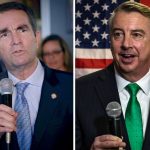
    Voters in Virginia and New Jersey gave Democratic gubernatorial candidates large victories on November 8 and sent a clear message of rebuke to President Donald Trump and the Republican Party. In Virginia, Democratic candidate Ralph Northam defeated Republican Ed Gillespie by almost 9% and narrowed Republican control over the House of Delegates. In New Jersey, Democrat Phil Murphy easily defeated Republican Kim Guadagno by a 13% margin to succeed the very unpopular Republican Governor Chris Christie. Additionally, the Democratic Party made huge gains in both the New Jersey State Senate and House of Representatives, earning their largest majorities in both bodies since the 1970s.

    The results of these elections show that the American people are beginning to get fed up with the policies of the Trump Administration and the Republican Party. Perhaps these elections are the first signs of an upcoming wave for the Democratic Party in the 2018 midterm elections. These results also underscore the fact that the Republican Party needs to reform its policies in order to become more viable in both state and federal-level elections. It can be argued that if the Republican leadership does not heed these warnings, their status as one of the two major US political parties may, in fact, be numbered.

    2. Tensions Between Saudi Arabia and Iran Grow

    The long-term rivalry between Iran and Saudi Arabia reached a boiling point this week.

    The lingering tensions between Saudi Arabia and Iran took a dangerous turn this week. On November 6, the Saudi government charged that a missile fired at its territory from Yemen was an “act of war” by Iran, in the sharpest escalation in nearly three decades of mounting hostility between the two regional rivals. Saudi Foreign Minister Adel Jubair further stated that “Iran cannot lob missiles at Saudi cities and towns and expect us not to take steps.” The accusations came a day after a wave of arrests that seemed to consolidate the power of Crown Prince Mohammed bin Salman, who is known for his anti-Iran foreign policy positions, support for Israel and Zionism, and advocacy of Wahhabi Islam.

    Countries such as the US, Israel, and the UK came out in full support of the Saudi response, arguing that Saudi Arabia has the right to defend itself from any and all threats. On the other hand, several of Iran’s closest allies such as Russia and China urged the Saudi government to ratchet down its rhetoric and to solve its disputes with Iran through diplomatic means. This incident also underscores the major risks that an Iran-Saudi Arabia War would have on regional stability, the global economy, and the international community. In the event that a war would break out between both countries, it is likely that Iran would emerge as the clear victor due to their much larger and more technologically advanced military, more diverse economy, more stable political system, and widespread support from countries such as Russia and China.

    3. Republican Senate Candidate Roy Moore Faces Growing Allegations of Sexual Misconduct With Underage Women

    Far-right Republican Senate candidate Roy Moore experienced a high level of controversy this week with the revelation that he may have had inappropriate sexual relations with several underage girls between the late 1970s and early 1990s.

    The controversial Senate candidate Roy Moore (R-AL) faced another stumbling block this week with the revelation of sexual misconduct with at least three women under the age of 18 when he was in his early 30s. One of the women was only 14 years old at the time, two years younger than the age of consent in Alabama. While most of these incidents occurred in the late 1970s, one incident occurred as recently as 1991. At the time of the incidents in the 1970s, Moore was an assistant district attorney and active in local Alabama politics. In response to these allegations, many Republicans such as John McCain and Mitt Romney called for Moore to drop out of the race and numerous Republican Senators such as Ted Cruz, Mitch McConnell, and Cory Gardner withdrew their support. House Speaker Paul Ryan also called for Moore to abandon his campaign. On the other hand, Alabama Republicans have largely defended Moore and still view him as the lesser evil in the race.

    Despite the serious nature of the allegations, Roy Moore has remained defiant and instead doubled down on his far-right message. Moore has declared the allegations as a plot by the Democratic Party to bring down his candidacy and accused those who oppose him as anti-Christian. The long-term effects of the Roy Moore scandal may result in Democratic candidate Doug Jones ultimately winning the seat. A potential victory by Jones would give Alabama is first Democratic Senator in over 20 years and further cut into the Republican Senate majority to the point in which the Democratic Party would have a strong chance of regaining control of that body in the 2018 Midterm elections.

  • “Origins of the crisis in Yemen” Video Response

    This video by CaspianReport discusses the background of the current political crisis in Yemen. Yemen is located in the Southwestern part of the Middle East and is evenly divided between Sunni and Shi’a Muslims. This central location, the lack of strong governmental institutions, and disputes between both religious sects made a conflict within the county inevitable. The conflict in Yemen began in 2011 and was part of the Arab Spring wave of protests against corrupt and authoritarian governments (often backed by Western powers) within the Middle East. The protests were led by both secular and Islamist opposition groups. Longtime rebel groups such as the Houthis (a Shi’a group primarily supported by Iran, Syria, Russia, and Lebanon) and the Southern Movement participated in the protests. President Ali Abdullah Saleh (who assumed dictatorial control of the country in 1978) responded with a violent crackdown that destabilized the country and made his downfall inevitable. Saleh was almost killed when a bomb went off in a mosque where he and other top government officials were praying in June of 2011. During Saleh’s time receiving medical treatment, he left Vice President Abdrabbuh Mansur Hadi. As acting president, Hadi met with the opposition and expressed support for political reforms. Saleh agreed in late 2011 to resign from power, and the opposition groups subsequently agreed to allow Hadi to stand unopposed for the presidency in 2012.

    Hadi’s election was one of the first democratic transfers of power in Yemeni history and was an encouraging sign for Yemen’s political future. Despite the initial optimism surrounding his presidency, Hadi struggled to deal with numerous issues, such as attacks by Al-Qaeda, separatist movements, corruption, unemployment, and food insecurity. The Houthi movement, which champions Yemen’s Shia Muslim community (which has been the victim of much governmental repression despite their near majority in the country) took advantage of the new president’s weakness by taking control of their northern heartland of Saada province and neighboring areas. Disillusioned with the transition, many ordinary Yemenis, including Sunni’s, began to side the Houthis and in September 2014, the Houthis entered the capital, Sanaa.

    In January 2015, the Houthis reinforced their takeover of Sanaa, surrounding the presidential palace and other key points and placed political figures under house arrest. The Houthis and security forces loyal to Saleh then attempted to take control of the entire country, forcing Hadi to flee abroad in March 2015. Alarmed by the rise of a group they believed to be backed militarily by Iran, Saudi Arabia and began an air campaign aimed at restoring Hadi’s government. Even though the Saudi-led campaign has received widespread logistical and military support from countries such as the US, Israel, UK, and France, the tactics used by the Saudi military in Yemen are subject to widespread internal condemnation. Many international observers accuse the Saudi’s of indiscriminately targeting civilians, committing a religious genocide against Shi’a Muslims, and leading the country to the brink of widespread famine. Much like with many other conflicts in the region, one can argue that the primary goal of Saudi Arabia through their intervention in Yemen is to weaken the regional influence of the Iranian government and prevent any indigenous political movements in support of independence and political freedom from emerging.

  • OurWeek In Politics (10/14/10/21/17)

    Here are the main events in Politics that occurred over the past week:

    1. NJ Gubernatorial Elections Heats Up In The Final Stretch

    The NJ gubernatorial race entered its final stretch this week with the final debate between both the candidates.

    The ongoing gubernatorial race in New Jersey picked up some steam this past week as both the candidates headed into the final stretch of campaigning. The final New Jersey Gubernatorial debate was held on October 18 and witnessed both candidates taking on each other on pressing issues facing the state such as property taxes, increasing spending on public services such as education, the gas tax, and the overall legacy of Governor Chris Christie. Despite having a commanding lead in most polls, Democratic candidate Phil Murphy performed somewhat poorly in the debate, particularly by not answering the questions fielded to him head on and by repeadely dodging the question of what he would do to reduce the burden of property taxes on the states poorest residents. In contrast, Republican candidate Kim Guadagno came across as the more decisive of the two candidates, by directly answering each question posed to her and by clearly stating her position on the issues. On the other hand, the overall tone of Guadagno during the debate was quite negative and created the perception that she would be unwilling to compromise on the issues. Overall, it can be argued that the overall poor performance of both candidates will result in little change in the polls, which have Phil Murphy leading comfortably.

    2. Billionaire Democratic Donor Urges Local and State Political Leaders to Support Trump Impeachment Efforts

    Tom Steyer, a wealthy Democratic donor and activist has urged political leaders to support articles of impeachment against President Trump.

    Prominent Democratic donor and billionaire environmental activist Tom Steyer this week called on every governor in the United States to tell their constituents where they stand on the question impeaching President Donald Trump. In a letter to donors, Steyer asked state and local leaders to call on federal representatives to support Trump’s removal from office. Thus far, Congressmen Al Green (D-TX), Brad Sherman (D-CA), and Steve Cohen (D-TN) have all came out in support of efforts to impeach President Trump. In the letter, Steyer said that Politicians at all levels of government must speak out about Trump’s lack of fitness for office, and denounced the president’s decision to withdraw from the Paris climate agreement. Additionally, Steyer also accused Trump of violating the constitution by trying to delegitimize the ongoing Russia investigation and failing to disclose his business ties to foreign governments. Even though impeachment proceeding against Trump is unlikely because Republicans control both houses of Congress, Steyer feels that efforts to impeach Trump could become a real issued provided that the Democratic Party regains control of both houses of Congress after the 2018 midterm elections.

    3. Democrats Increasing Worried About The VA Gubernatorial Race

    The national Democratic Party is worried that the Virginia gubernatorial race will ultimately end up in a Republican victory.

    Much like the New Jersey gubernatorial race, the Virginia gubernatorial race entered into its final stretch this week and witnessed political heavyweights from both sides campaigning for their respective candidates. President Donald Trump enthusiastically endorsed Republican candidate and former RNC chairman Ed Gillespie and appeared at several rallies with him in the Southwestern part of the state. On the Democratic side, former President Barack Obama and Bill Clinton campaigned with Ralph Northam and urged Virginian voters to turn out in high enough numbers to regain control of the state legislature and allow for unified Democratic control over the state for the first time in nearly a decade. Despite the strong campaigning on both sides and the initial optimism regarding Democratic chances for the race, it appears that Ed Gillespie has a slight edge going into election day despite the fact that Virginia is a solidly Democratic state at the Presidential level. Some of the factors benefiting Gillespie include the typically lower Democratic turnout in off-year elections, the popularity of President Trump amongst rural voters in Southwestern Virginia, and voter dissatisfaction with the Virginia Democratic Party over their failure to come up with a cohesive message to counter the Trumpist shift of the Republican Party.

    4. Saudi Arabian Government Pledges To Clamp Down On Extremist Interpretations Of Islam

    The government of Saudi Arabia is considered to be the leading sponsor of global terrorism.

    In part of an attempt to reform its image as a state sponsorer of terrorism, the government of Saudi Arabia announced on October 18 that it will begin policing and reexamining the teachings of the Prophet Muhammad to make sure followers of Islam do not use twisted and radical interpretations of Islamic traditions to foment violence and terrorism. While lacking specifics on how this policy would be implemented, the Saudi Arabian Culture and Information Ministry said that it would strive to “eliminate fake and extremist texts and any texts that contradict the teachings of Islam and justify the committing of crimes, murders, and terrorist acts.” These teaching come as a surprise to many observers, who note the fact that the government of Saudi Arabia is the worlds leading sponsorer of terrorism and that it uses the ideology of Wahhabism to promote a puritanical and fundamentalist version of Islam that is entirely opposite to the message originally promoted by the Prophet Muhammad. It argued that this change in policy was pushed for in part by the US and Israeli governments, who want to portray Saudi Arabia as a moderate and progressive country in their efforts to sway Arab allies in support of increased sanctions and outright military intervention against Iran, which is Saudi Arabia’s main regional rival.

  • Our Week In Politics #9 (10/8-10/15/17)

    Here are the main events in Politics that occurred over the past week:

    1. President Donald Trump Decertifies The Iran Nuclear Deal

    On October 13, President Donald Trump opted to decertify the Iranian nuclear agreement and annoucned his support for the eventual removal of the present Iranian government from power. On October 13, President Donald Trump opted to decertify the Iranian nuclear agreement and annoucned his support for the eventual removal of the present Iranian government from power.

    On October 13, President Donald Trump announced that he will decertify the 2015 Iran nuclear deal and put forward a new strategy regarding Iran that shifts the focus from the countries nuclear program to other actions the administration says are contributing to the destabilization of the Middle East. President Trump has repeatedly criticized the agreement, which lifted sanctions related to Iran’s nuclear program in exchange, dubbing it “the worst deal ever” and as an embarrassment to the US. Decertifying Iran’s compliance under the agreement would set up a 60-day timeframe for Congress to impose new sanctions on Iran, which would effectively remove the US from the deal. President Trump stated that the policy is based on a “clear assessment of Iranian dictatorship, its sponsorship of terrorism and its continuing aggression in the Middle East and all around the world” and has urged allied countries in both Europe and the Middle East to adopt policies meant to further isolate the Iranian government and, ultimately, bring about the collapse of the current Iranian government and allow the Pahlavi family to come back into power in its place.

    The reaction to President Donald Trump’s announcement by international leaders has been almost universal condemnation. Whereas countries such as Israel and Saudi Arabia have praised Trump’s actions, other countries such as the UK, Germany, France, Russia, China, and Italy expressed reservations towards the decision. Federica Mogherini, the European Union’s Foreign Policy Chief and one of the lead negotiations of the agreement with Iran, expressed the strongest criticism towards Trump’s decision and pledged to work with the other signatory countries to uphold and strengthen the agreement. Additionally, many observers believe that such actions on the part of President Trump have reignited the chance for an open conflict to break out between Iran and the US and threaten to isolate the US from the rest of the international community.

    2. President Donald Trump Signs Healthcare Executive Order

    President Donald Trump signed an exectuivwe order on Thursday amending several provisions of the Affordable Care Act ( President Donald Trump signed an executive order on Thursday amending several provisions of the Affordable Care Act (“Obamacare”).

    On October 12, President Donald Trump signed an executive order that would amend several provisions of the Affordable Care Act (“Obamacare”). The executive order consists of three major policy changes. The first two are expanding access to association health plans, in which a group of small employers can band together to buy insurance as a collective for a discount and expand access to short-term health plans from the present three months to one year. The final change is expanding the use of health reimbursement accounts, which allow employers to set aside tax-free money to help cover their employees’ health care costs. Workers will likely be able to tap into the money set aside in such accounts to pay the premiums for plans from the individual market. By implementing these changes, President Trump hopes to broaden the healthcare market and thus lower overall healthcare costs.

    The reactions to President Trump’s healthcare executive order have been mixed thus far. Republican Senators such as Rand Paul and Ted Cruz praised the President’s decision and view it as the first step to reforming the nation’s broken healthcare system. On the contrary, many independent observers believe that the executive order would ultimately have unintended consequences.  In particular, they feel that these changes will divert healthy people into cheaper plans outside the realm of the ACA’s exchanges, leaving such markets with a less healthy and more expensive customer base, which would cause premiums to instead increase.

    3. Criticism Regarding The Federal Response To Hurricane Maria Mounts

    Criticism towards the response by the Trump Administration to Hurricane Maria increased this week due to actions on the part of the President. Criticism towards the response by the Trump Administration to Hurricane Maria increased this week due to actions on the part of the President.

    Criticism towards the overall efforts by the US government to Hurricane Maria grew this week due to the slow response rate and actions on the part of President Donald Trump. Nearly three weeks after the hurricane first hit, more than 80% of Puerto Rico is still without electricity and nearly half of the country is without means of communication. Despite the pressing situation within the territory, federal aid has been painfully slow to come, perhaps due to bureaucratic pressures and strains on the existing federal aid structure. The response to the hurricane by the Trump Administration has been compared by some observers to the response by the Bush Administration to Hurricane Katrina some twelve years earlier.

    Instead of instilling a sense of confidence in the minds of the residents of Puerto Rico, several actions by President Donald Trump this week seem to contradict his earlier pledges to help the island recover from this debilitating disaster. On October 12, President Trump threatened to end US aid to Puerto Rico in a Tweet by saying that “We cannot keep FEMA, the Military & the First Responders, who have been amazing (under the most difficult circumstances) in P.R. Forever!” Additionally, President Trump attempted to deflect some of the criticism that his administration received regarding their handling of the disaster by stating that the infrastructure of Puerto Rico was in poor shape prior to the hurricane and stated that the financial crisis facing Puerto Rico was created “largely of their own making.” These actions perhaps indicate an overall unwillingness on the part of the Trump Administration to stand up for the most vulnerable and impacted people within the US.

    4. North Korea Renews Threat To Attack Guam In Response To Joint US-South Korea Naval Exercise

    The unending tensions between the US and North Korea took another turn this week in response to the US-South Korea military exercise commencing on October 16. The unending tensions between the US and North Korea took another turn this week in response to the US-South Korea military exercise commencing on October 16.

    On October 13, North Korean officials on Friday renewed their threat to launch ballistic missiles near Guam in response to the US and South Korea preparing for their joint naval exercise. The drill is scheduled to begin on Monday in waters on both coasts of South Korea. The primary purpose of the exercise, according to the US Navy command in the region, is to check the communications network, partnership, and operational capabilities of both allies in the event of a confrontation breaking out within the region. In contrast, the North Korean government sees the exercise as one of many recent attempts to intimidate and incite the isolated country and as a rehearsal for an eventual invasion of the country. It is unclear if this most recent threat is merely rhetorical bluster on the part of the North Korean government or a threat that they are willing to follow through with.

  • ISIS: How and Where they Came From

    ISIS: How and Where they Came From

    One major foreign policy issue facing the world over the past few years is the rise of ISIS (Islamic State of Iraq and Syria). ISIS is an anti-Western militant group whose goal is to establish an independent Islamic state. ISIS currently controls territory in both Iraq and Syria and is seeking to gain more territory throughout the Middle East. In the aftermath of the Iraq war, ISIS has taken advantage of regional instability and publically promoted itself online with graphic videos of threats and violence. The rise and spread of ISIS has further confounded policymakers with regards to their promoting stability in the Middle East. In recent years, there has been much debate at the highest levels of government over ways to combat ISIS and the reasons behind its creation and expansion. As with many other foreign policy issues, the debate over ways to fight ISIS has evoked debate on both sides, with some arguing for a more forceful response and others seeking to stay out of the conflict. The underlying reasons behind the rise of ISIS can be contributed to a number of factors such as the current instability in the Middle East, cultural and religious differences, and intervention in the region by western powers such as the U.S.

    The formation of ISIS can be traced back to 2004, when Abu Musab al-Zarqawi founded Al-Qaeda in Iraq (AQI) in response to the U.S. invasion that toppled Saddam Hussein from power in 2003. AQI played a major role in the Iraqi insurgency that followed. They reacted to the U.S. invasion and occupation of Iraq with a variety of violent acts that resulted in the deaths of civilians and U.S. soldiers alike. Despite the fact that AQI was weakened after the death of al-Zarqawi in a U.S. airstrike in 2006, the organization survived and a faction of AQI separated and began to rebrand itself. Abu Bakr al-Baghdadi took over as head of this organization in 2010, changed its name to the Islamic State (IS) in 2011, and the group grew more violent as U.S. forces began to withdraw from Iraq.

    As the U.S. further withdrew troops from Iraq in 2011, IS began to expand its efforts into Syria to fight against the regime of Bashar al-Assad in the Syrian Civil War. In 2012, IS established the Al-Nusra Front, a satellite organization of IS headed by Abu Muhammad al-Julani, establishing a base for IS outside of Iraq. The expansion of efforts into Syria gave IS an opportunity to expand its ideology into a newer territory. In an attempt to prevent a rift between both organizations, al-Baghdadi unified Al-Nusra Front and IS in 2013. The name of the organization was then changed to the Islamic State of Iraq and Syria (ISIS). However, al-Julani refused to align his group to al-Baghdadi and switched his allegiance to Al-Qaeda leader Ayman al-Zawahiri. As a result of the rivalry between the two groups, Al-Zawahiri announced the unification (between ANF and IS) had been annulled as of June 2014. On January 3, 2014, al-Zawahiri announced he had severed all connections with ISIS. As a result, the disputes between ISIS and the Al-Nusra Front worsened, leading to violent clashes between both groups and further adding to instability in the two countries. As of today ISIS, Al-Nusra Front, and Al-Qaeda all operate in the region.

    One of the major underlying reasons behind ISIS’ rise is the instability of the Middle East. Historically, preexisting disputes in the region have been cultural and religious in nature and have only worsened with the addition of western intervention over the past century. One of the main religious disputes has been between the Sunni and Shia branches of Islam. This dispute causes tension and a desire for dominance in the region between countries such as Saudi Arabia and Iran, the two largest and most stable powers in the region. Saudi Arabia is predominantly Sunni, whereas Iran is primarily Shia. Interestingly enough, Iraq and Afghanistan, two unstable countries, have sizable populations of both Sunni and Shia Muslims. Furthermore, the recent escalation of the Arab-Israeli conflict and debate over nuclear proliferation has stirred tension. In addition, the U.S.-led invasion of Iraq has destabilized the country and made it a prime recruiting ground for ISIS.

    Another reason for ISIS’ creation is the Middle Eastern backlash against western intervention and foreign policy. After the discovery of oil reserves in Saudi Arabia in the 1930s, numerous western powers sought to gain a foothold in the region in order to meet their need for resources. With the increasing demand for oil, the U.S. began to assert its influence by supporting western-backed dictators in countries such as Iran, Saudi Arabia, and Egypt. In addition, the U.S. has intervened on numerous occasions in order to keep these leaders in power in order to preserve its own interests, such as supporting regime change and military action against leaders who reject U.S. goals and interests U.S. policy of intervention in the Middle East is manifested in the Carter Doctrine, which was laid forward by President Jimmy Carter in his 1980 State of the Union Address. The Carter Doctrine stated that the U.S. had the right to intervene in order to defend its interests in the Middle East, in particular, to ensure the access to oil. As a result of the Carter Doctrine, the Middle East became a focal point of U.S. foreign policy, resulting in increased anti-American sentiment throughout the region.

    The most notable example of the U.S. intervening in the Middle East occurred in Iran in 1953 through Operation Ajax. Operation Ajax was the CIA/Mossad backed a coup that removed Iran’s democratically elected Prime Minister Mohammad Mossadegh, giving more power to Shah Mohammad Reza Pahlavi, who ruled Iran as an absolute monarch for the next 26 years, executing an estimated 160,000 political opponents, using secret police forces such as SAVAK to torture and intimidate regime opponents such as leftists and Islamists, and allowing little dissent against his rule. One of the major reasons behind the US/Israeli-backed coup was that Mossadegh sought to nationalize Iran’s oil production and use the profits to improve the lives of ordinary Iranians. This commandeering of its oil reserves did not align with U.S. interests. Operation Ajax is considered to be an important factor behind the 1979 Iranian Revolution and another reason Iran and the U.S. have a strained relationship today. This reaction to U.S. intervention resulted in heightened instability in the country, which allowed for the current Islamic Republic of Iran to take control. Similarly, the volatility derived from U.S. actions in Iraq and the Syrian Civil war has now promoted the recent rise of the similarly-titled “Islamic State” of Iraq and Syria.

    The main ideology of ISIS is based off Wahhabism, a form of Sunni Islam that follows a strict interpretation of the Quran and promotes violence against non-believers. ISIS’ primary goal is to establish an independent Islamic State in the Middle East and expand its influence into other parts of the world. In order to achieve these goals, ISIS uses several brutal methods, such as mass killings, beheadings and systematic cruelty against those who would challenge their actions, both Muslims and non-Muslims alike. In addition, ISIS promotes its goals through videos and social media sources, by which the group seeks to gain more recruits. ISIS justifies its actions through religion, as members feel that they have a moral obligation to kill whoever stands in the way of their establishing an independent Islamic State.

    ISIS has received funding from a variety of different sources. The main source is from oil smuggling on the Turkish border, through which ISIS sells oil from Syrian oil fields that it controls for as little as $25 per barrel. Another source of funding for ISIS comes from wealthy individuals in Gulf countries such as Saudi Arabia, the United Arab Emirates, and Qatar. These donors have long served as sources of funding for ISIS as well as for other violent anti-Western militia groups in the Middle East. Between all of those sources, U.S. officials estimate that ISIS is bringing in close to $1 Million per day in order to fund its operations.

    ISIS also relies on foreign fighters from a number of countries. Some 20,000 foreign nationals are currently fighting for ISIS in Iraq and Syria, with roughly 3,400 from Western countries. In addition, an increasing number of U.S. citizens are seeking to join ISIS. According to Congressman Michael McCaul of the House Homeland Security Committee, the number of U.S. citizens seeking to join ISIS this year is 150, up from only 50 last year. McCaul also stated that 18 Americans have already succeeded in joining ISIS and 18 others who have joined the similar Islamic terrorist groups. One of the members included is Douglas McAuthur McCain, a Californian who was killed in August while fighting alongside ISIS in Syria.

    There are several possible ways in which the international community can defeat ISIS and restore a sense of stability to the Middle East. At this point, a ground invasion of Syria and Iraq by US troops would only make matters worse because it would result in another major war in the Middle East and directly play into the goal that ISIS has of drawing Western powers into the conflict. One such option to fight ISIS would be for the core countries such as the US to change their economic policy towards the Middle East. If the Middle Eastern Countries become economically interdependent on the United States and each other, the beginning of trade would bring an end to the fighting, leading to increased stability. Stability in the region would help to defeat ISIS because ISIS needs the instability of the region to survive. Furthermore, another thing that would go a long way to help encourage more stability in the Middle East would be for the US and other Western powers to acknowledge their past instances of intervention in the Middle East. Doing so would increase the level of trust between them and the governments of many countries in the region and make them more willing to work to defeat extremism and terrorism. Additional options to fight ISIS include working with local governments in the Middle East in order to identify threats, identify funding for ISIS and similar groups and work to increase public understanding with regards to the reasons why ISIS was created and its stated goals and ideology.

    Works Cited:

    Cambanis, Thanassis. “The Carter Doctrine: A Middle East Strategy past Its Prime.” Boston Globe. Boston Globe Media Partners LLC. 14 Oct. 2012. Web. 30 Apr. 2015.

    Dassanayake, Dion. “Islamic State: What Is IS and Why Are They so Violent?” Express. Northern and Shell Media Publications, 13 Feb. 2015. Web. 29 Apr. 2015.

    Dehghan, Saeed Kamali, and Richard Norton-Taylor. “CIA Admits Role in 1953 Iranian Coup.” The Guardian. Guardian News and Media Limited, 19 Aug. 2013. Web. 27 Apr. 2015.

    Dilanian, Ken. “US Intel: IS Militants Drawing Steady Stream of Recruits.” AP News. Associated Press, 11 Feb. 2015. Web. 02 May 2015.

    Ghitis, Frida. “Why ISIS Is so Brutal.” CNN. Cable News Network, 3 Feb. 2015. Web. 30 Apr. 2015.

    “ISIS: Portrait of a Jihadi Terrorist Organization.” The Meir Amit Intelligence and Terrorism Information Center. The Meir Amit Intelligence and Terrorism Information Center, 26 Nov. 2014. Web. 02 May 2015.

    Reynolds, Ben. “Iran Didn’t Create ISIS; We Did.” The Diplomat. The Diplomat, 31 Aug. 2014. Web. 28 Apr. 2015.

    Windrem, Robert. “Who’s Funding ISIS? Wealthy Gulf ‘Angel Investors,’ Officials Say.” NBC News. NBC News, 21 Sept. 2014. Web. 30 Apr. 2015.