Here are the main events that occurred in Politics this week:
1. Michael Cohen, President Donald Trump’s Personal Attorney, Gives Explosive Testimony Before Congress
Michael Cohen, who served as President Donald Trump’s persona attorney from 2006-2018, gave explosive Congressional testimony this week detailing the Presidents alleged wrongdoings.
On February 27, Michale Cohen, who acted as President Donald Trump’s attorney from 2006 to 2018, appeared before the House Oversight Committee for questioning regarding the President’s alleged crimes. Although his testimony did not point to any direct evidence of President Trump directly colluding with the Russian government to influence the results of the 2016 Presidential Election or the 2018 Midterm Elections, Cohen’s testimony painted a scathing picture of the Trump Administration overall. Through his testimony, Cohen alleged that Trump approved a hush money payment to Stormy Daniels in 2017, had knowledge of the 2016 WikiLeaks email dump in advance, and wanted Congress to receive misleading testimony about his close ties to Russia. Cohen expressed remorse for his actions and his loyalty to Trump during a blockbuster hearing before the House Oversight Committee that lasted more than seven hours.
In the hearing, Michael Cohen described President Trump as an “intoxicating” presence. “It seems unbelievable that I was so mesmerized by Donald Trump that I was willing to do things for him that I knew were wrong.”I regret the day I said ‘yes’ to Mr. Trump. I regret all the help and support I gave him along the way,” said Cohen in a 20-page opening statement. “I am not protecting Mr. Trump anymore.” In his closing remarks, Cohen addressed the President head-on, ticking off items on a lengthy list of criticism of Trump’s behavior in office, ranging from his weather-based decision to skip a ceremony honoring veterans to his attacks on law enforcement, the media, and others. “You don’t use the power of your bully pulpit to destroy the credibility of those who speak out against you. You don’t separate families from one another or demonize those looking to America for a better life. You don’t slander people based on the god they pray to, and you don’t cuddle up to our adversaries at the expense of our allies,” he said. “And finally, you don’t shut down the government before Christmas and New Year’s to appease your base. This behavior is churlish, it denigrates the office of the president, and it’s un-American, and it’s not you.” Cohen also used the hearings to make new claims that contradicted Trump’s previous statements regarding his ties to Russia, though he said that he knew of no direct evidence that Trump or his Presidential campaign colluded with Russian President Vladimir Putin.
Michael Cohen also provided the committee with a series of documents, including letters he authored threatening Trump’s high school, college and the College Board from releasing his grades and SAT scores, according to Cohen’s prepared opening statement. Cohen also presented a pair of reimbursement checks he received for the $130,000 hush payment he made to porn star Stormy Daniels weeks before the 2016 presidential election to keep her quiet about her allegation of a 2006 affair with Trump, an affair Trump says did not happen. Cohen’s documentation and testimony said Congressman Elijah Cummings (D-MD), “raises grave questions about the legality of President Trump’s conduct and the truthfulness of his statements while he was president.”
Over the course of the hearings, Democrats sought to ask Michael Cohen substantive questions and generally respected his time, whereas the Republican members on the committee largely sought to discredit and delegitimize Cohen’s testimony, with one lawmaker describing him as a “pathological liar” due to his previous false statements to Congress. Congressmen Jim Jordan (R-OH) and Mark Meadows (R-NC), two of President Donald Trump’s strongest Congressional allies, claimed that the Democrats are merely using Michael Cohen to “try to remove the president from office because Tom Steyer told them to.” Additionally, Congressman Meadows correctly pointed out during the hearing that Cohen acted in violation of Federal Rules of Civil Procedure (FRCP) 26(b)(3) (which governs Attorney-Client Privilege) by recording his conversations with President Trump and revealing confidential information that was discussed with the President. Moreover, President Trump predictably responded to the hearings by stating that Cohen “lied a lot” and stated that the hearings were “fake” and a partisan tool used by the Democrats.
Michael Cohen was one of many lawyers who represented me (unfortunately). He had other clients also. He was just disbarred by the State Supreme Court for lying & fraud. He did bad things unrelated to Trump. He is lying in order to reduce his prison time. Using Crooked’s lawyer!
President Donald Trump and North Korean Leader Kim Jong Un’s Second Summit Abruptly Ends Without Concrete Agreement Between Both Leaders
President Donald Trump and North Korea Leader Kim Jong Un’s long-awaited summit meeting broke down this week.
President Donald Trump and North Korean leader Kim Jong Un abruptly broke off their long-awaited summit on February 27, canceling a planned signing ceremony. “Sometimes you have to walk, and I think that was one of these times,” President Trump said at a press conference that was moved forward by almost two hours after the talks collapsed. “We had some options. At this time we decided not to do any of the options. We’ll see where that goes.” Trump further added.
The President indicated that the discussions stalled due to Kim’s demand that all sanctions be lifted in exchange for concessions on Pyongyang’s nuclear weapons program. The summit ended with a handshake, according to President Trump, who characterized the talks as “very friendly.” President Trump said Kim has a “certain vision, it’s not exactly our vision but it’s a lot closer than it was a year ago.” Secretary of State Mike Pompeo told the news conference that he hopes a deal will be reached “in the weeks ahead.” He added: “We didn’t get all the way. We asked him to do more, he was unprepared to that. I’m still optimistic.” While President Donald Trump has said he was not in a hurry to make a comprehensive pact with Kim, Trump touted a “very strong partnership” with the North Korean leader before departing Vietnam for the US empty-handed. Trump also said that Kim had pledged that “testing will not start” of rockets or missiles “or anything having to do with nuclear.”
The apparent breakdown in talks is sure to come as a relief to many North Korea experts, including some Democratic and Republican lawmakers, who worried Trump was ready to make concessions to Kim without securing a firm and verifiable disarmament commitment. In rare remarks to Western reporters before the summit was abbreviated, Kim, who spoke through an interpreter, said that he was willing to consider “denuclearizing.” “If I’m not willing to do that, I wouldn’t be here right now,” Kim said as he sat across the negotiating table from Trump. President Trump himself repeatedly emphasized that he was in “no rush” to get a comprehensive agreement with Kim, playing down expectations for a full nuclear disarmament pact.
President Donald Trump praised Kim for discontinuing missile launches after their first summit in Singapore last year. “We don’t want the testing. And we’ve developed something very special with respect to that.” Kim said during his opening remarks in Hanoi that skeptics of the relationship would be watching closely and see the two leaders “side by side as if they’re watching a fancy movie.” Kim and Trump had a one-on-one session in the morning, followed by a meeting with a larger group of officials from both sides. But everything fell apart around the lunch hour. Before the summit’s unexpected ending, Kim was asked whether he was confident he could strike a deal with Trump. “It’s too early to say,” Kim replied. “I would not say I’m pessimistic.” President Trump said he was willing to take his time — a necessity, it appears, if he is going to eventually persuade Kim to disarm. “Chairman Kim and myself, we want to do the right deal,” Trump said. “Speed is not important.”
3. Netanyahu Indicted
Israel Prime Minister Benjamin Netanyahu To Be Indicted On Corruption Charges
Israel Prime Minister Benjamin Netanyahu was indicted on corruption charges this week
Israeli Prime Minister Benjamin Netanyahu will be indicted on bribery and breach of trust charges arising from three separate corruption investigations, pending a hearing, Israel’s attorney general announced late on February 27. The announcement, close to April’s general election, marks a dramatic moment in Israeli politics and a major blow to Netanyahu as he seeks a fifth term in office. Netanyahu repeatedly denied any wrongdoing, denouncing the investigations as a media-led witchhunt (much like his close friend US President Donald Trump. In a prime time broadcast shortly after the announcement, Netanyahu blamed the left for pressuring Attorney General Avichai Mandelblit, a Netanyahu appointee, to issue an indictment “The left understands that they will not beat me at the ballot box,” Netanyahu said. “They exerted extraordinary pressure on the attorney general to issue an indictment even though there is nothing, to influence the elections and to crown a left-wing government.” “This entire house of cards will collapse. I am sure of it 4,000%,” he added, referencing one of the cases against him.
Prime Minister Netanyahu is entitled to a hearing on the impending indictment before charges are formally issued, but that is not expected to take place until after the election. Under Israeli law, Netanyahu is not required to step down if he is indicted. He is only required to step down if he is convicted and that conviction is upheld through the appeals process, which could take years. Netanyahu’s main challenger in the upcoming elections, former military Chief of Staff Benny Gantz, called on him to resign after the attorney general’s announcement. “Because of the circumstances which have arisen, sitting [in a future government] with Benjamin Netanyahu is not something which is on the table,” Gantz said in response to Netanyahu’s statement. “Benjamin Netanyahu — I turn to you this evening. Get over yourself and show national responsibility. Resign from your position. If you prove that you are innocent, you can return to the public realm and again lead your movement,” Gantz added.
The recent developments cloud an already murky Israeli political landscape, as well as raises questions regarding Benjamin Netanyahu’s record as Prime Minister. Whereas supports of Zionism (both in Israel and abroad), as well as several Arab leaders, have praised Benjamin Netanyahu’s efforts to defend Israel, Netanyahu’s record as Prime Minister is far more mixed overall. Opponents of Benjamin Netanhayu have long criticized his government for its human rights abuses against the Palestinian people (which have been deemed as “war crimes” by the United Nations). Netanyahu’s political enemies will use the ongoing investigations, coupled with other questionable policies, against him, but his coalition partners must now decide whether to support a leader who is likely to be indicted or withdraw support and risk angering their shared right-wing voter base. Thus far, key coalition partners have said they will still support Netanyahu because he is presumed innocent until proven guilty.
4. Trump Gives Incoherent Speech
President Donald Trump Gives “Incoherent” Speech At The Annual CPAC Conference
President Donald Trump gave his third speech at the annual CPAC conference this week
In the longest speech of his presidency to date, President Donald Trump riled up the audience at the Conservative Political Action Conference (CPAC) on March 2, letting loose on topics ranging from the Russia investigation and the Democratic presidential field to free speech on college campuses. President Trump, still reeling from a blistering week both at home and abroad, claimed he was being “sarcastic” and “having fun with the audience” when during the 2016 campaign he urged Russia to hack Democratic nominee Hillary Clinton’s emails. “I’ve learned with the fake news, if you tell a joke, if you are sarcastic, if you’re having fun with the audience, if you are on live television with millions of people and 25,000 people in an arena, and if you say something like ‘Russia, please, if you can, get us Hillary Clinton’s emails! Please, Russia, please! Please get us the emails! Please!’” Trump said in a mocking tone. Trump was referring to a press conference in July 2016 during which he said, “Russia if you’re listening, I hope you’re able to find the 30,000 emails that are missing. I think you will probably be rewarded mightily by our press. Let’s see if that happens that’ll be next.” According to an indictment from special counsel Robert Mueller, Russians made their first attempt to hack Clinton’s personal servers that same day.
President Donald Trump’s remarks, which ran for more than two hours, came just days after he returned from a trip abroad to meet with North Korean leaders, during which he suggested that North Korean dictator Kim Jong Un was not responsible for the death of American college student Otto Warmbier. “I’m in such a horrible position because in one way I have to negotiate. The other way, I love Mr. and Mrs. Warmbier, and I love Otto. And it’s a very, very delicate balance. He was a special young man and to see what happened was so bad,” Trump said, appearing to explain his previous comments. “All of the sudden they’re trying to take you out with bullshit,” Trump said, about Mueller’s probe. “Robert Mueller never received a vote, and neither did the person who appointed him,” Trump continued, as he attempted to portray Mueller’s team as a group of the “angriest Democrats.”
March 2 marked President Trump’s CPAC speech since he was elected president. In the past, Trump has used CPAC to energize his conservative base, and this was no exception. President Trump used the speech to attack the Democrats as socialists, warned once again of a caravan at the southern border full of “stone cold killers,” and referred to 2020 Democratic candidates as “maniacs,” accusing their party of supporting “extreme late-term abortion.” President Trump also attacked 2020 Democratic presidential candidates, lamenting that he should not have referred to Senator Elizabeth Warren (D-MA) as “Pocahontas” so early on in the election cycle. “I should’ve saved the Pocahontas thing for another year because I’ve destroyed her political career and now I won’t get a chance to run against her, and I would’ve loved it,” Trump told the crowd. “I don’t want to knock out all the good stuff and end up with somebody that’s got talent.” Trump also invited activist Hayden Williams on stage as he announced he plans to sign an executive order “very soon” requiring colleges and universities to support free speech if they want to receive federal grants.
Here are the main political events that occurred throughout the past year. From Trump’s bizarre antics to foreign policy triumphs and tragedy to political scandals at the highest levels of government, 2018 was an exciting and unforgettable year in the realm of Politics.
January
New Infrastructure Bill and a Renewed Nuclear Arms Race
#Infrastructure
President Trump proposed an ambitious infrastructure reform bill meant to help the US regain a competitive advantage when compared to emerging economies throughout the world.
January 2018 got off to an interesting start in terms of political developments. Shortly before his January 30 “State of the Union Address,” President Donald Trump proposed an ambitious $1.5 trillion infrastructure bill with the goal of modernizing the American economy and allowing it to maintain a competitive advantage with rising global powers such as Russia, China, Iran, India, and South Korea. “America is a nation of builders, We built the Empire State Building in just one year. Isn’t it a disgrace that it can now take 10 years just to get a permit approved for a simple road?” said Trump shortly after announcing the proposal. Thus far, Congress has not moved to push forward the proposal, though it is likely that the House of Representatives (which is under Democratic control as of January of 2019) may take action on the proposal sometime next year.
#Nuclearweapons
Defense Secretary Jmaes Mattis announced major changes to the US nuclear policy in a report issued at the end of January.
Much to the dismay of disarmament advocates and activists in the peace movement, the Trump Administration announced an aggressive nuclear weapons strategy at the end of January. The new policy, as announced by Defense Secretary James Mattis, called for the introduction of “low-yield nuclear weapons” on submarine-launched ballistic missiles and the development of nuclear submarine-launched cruise missiles. Despite being called “low-yield” these new weapons could potentially cause as much damage as the nuclear bombs dropped by the US on the Japanese cities of Hiroshima and Nagasaki in 1945. The main point of this change in policy, according to the Trump Administration, is to pressure US rivals such as Russia, China, Iran, and North Korea into giving in to US demands in terms of both their internal and external policies. This policy may also trigger a renewed nuclear arms race and increase the risk of a nuclear war to a level even higher than it was during the peak of the Cold War (1955-1962).
February
School Shootings & New Presidential Historian Rankings
#TragetyInFlorida
A school shooting in a Florida high school on February 14 resulted in the deaths of 17 individuals and renewed public debate over the issue of gun control.
On February 14, a mass shooting occurred at Marjory Stoneman Douglas High School in Parkland, Florida. 17 people were killed and 15 were wounded, making it one of the deadliest school massacres since Columbine some 19 years earlier. The shooting was carried out by Nikolas Jacob Cruz, a 19-year old high school senior with a known past of threatening his fellow students, posting hate content on his social media accounts, and bragging about killing animals. Additionally, Cruz holds extremist views and advocated the killing of African-Americans, Hispanic-Americans, Muslim-Americans, and the LGBT community. Politicians on both sides of the political aisle have condemned the shooting and reached out to the victims. Bith President Donald Trump and Florida Governor Rick Scott immediately expressed strong support for the victims and their families and called for an end to school shootings. The shooting also renewed public debate over the issue of gun control. For example, student survivors organized the group Never Again MSD to demand legislative action to prevent similar shootings from occurring again and to call out US lawmakers (mostly Republicans, but a few Democrats as well) who have received campaign contributions from the National Rifle Association (NRA).
#Bottomranked?
According to the most recent rankings by the American Political Science Association, President Donald Trump now ranks as the worst President in US History.
On February 19, the most recent Presidential historical rankings were released by the American Political Science Association. The new rankings, to the surprise of none, place Donald Trump at the very bottom of the list (below even the infamous James Buchanan). Additionally, the rankings place Barack Obama as the eight greatest President in US history, one place above Ronald Reagan and one spot below Dwight Eisenhower. Despite their low ranking of Trump, the authors of the study do indicate that Trump has plenty of time to improve his ranking considering that he has more than two years left in his first term.
March
Trump Cabinet Shake-ups & Growing Protests in the Gaza Strip
#Tillerson
President Donald Trump dismissed Secretary of State Rex Tillerson amid a declining relationship and a disappointing tenure.
On March 13, President Donald Trump announced that he has fired Secretary of State Rex Tillerson and nominated CIA Director Mike Pompeo to succeed him. Tillerson’s departure followed months of tension between him and Trump. President Trump publicly undercut Secretary Tillerson’s diplomatic initiatives numerous times since he came to office over a year ago. For example, President Trump criticized Tillerson’s positions on Iran, the European Union, NATO, and Russia. For Tillerson’s replacement, President Donald Trump named CIA Director Mike Pompeo and moved up Gina Haspel to the post of CIA director. In a Twitter post, Trump stated that “Mike Pompeo, Director of the CIA, will become our new Secretary of State. He will do a fantastic job! Thank you to Rex Tillerson for his service! Gina Haspel will become the new Director of the CIA, and the first woman so chosen. Congratulations to all!” Despite the optimistic tone of President Trump regarding these changes, they point to an Executive Branch in continual flux and crisis.
#Gaza
Major protests broke out in the Gaza Strip at the end of march due to Israel’s ongoing blockade of the territory.
On March 30, tens of thousands of Palestinians in the Gaza Strip participated in non-violent protests as part of the Great Return March. Palestinian participants soon began walking towards the fence that separates the strip from Israel and were met with live fire from the Israeli military that saw hundreds of people injured and 16 killed. The protests were held to commemorate Land Day and demonstrate for the rights of Palestinian refugees to be resettled in Israel. Israeli Prime Minister Benjamin Netanyahu and Defense Secretary Avigdor Lieberman responded to the protests by claiming that Hamas, which has controlled Gaza since 2007, had sent women and children to the fence as human shields. The Israeli response drew widespread criticism around the world, with UN Secretary-General Antonio Guterres calling for an independent inquiry into Friday’s events. Additionally, several countries in the Middle East condemned the response to the protests by the Israeli government. Perhaps the country that most forcefully condemned the actions of Israel was Iran. In a Twitter post on March 31, Iranian Foreign Minister Mohammed Javad Zarif stated that “On the eve of Passover (of all days), which commemorates God liberating Prophet Moses and his people from tyranny, Zionist tyrants murder peaceful Palestinian protesters – whose land they have stolen – as they march to escape their cruel and inhuman apartheid bondage.” On the other hand, the US blocked a UN Resolution denouncing the Israeli response and placed the blame squarely on the part of the Palestinian protestors.
April
Tensions in Syria & Growing Support for Marijuana Legalization
#Syria #ChemicalWeapons
The US and several of its European allies launched airstrikes in Syria in response to allegations of chemical weapons use by the Assad government.
The US and several of its allies launched airstrikes on April 13 against several Syrian military targets in response to a supposed chemical attack near Damascus ordered last week by Syrian President Bashar al-Assad that killed nearly 40 people. These are not the actions of a man, they are crimes of a monster instead,” President Trump said of Assad’s presumed chemical attack in an oval office address. The operations carried out by the US, UK, and France in Syria were somewhat limited than originally anticipated. The main target in the operation was the Barzah Research and Development Center, a scientific research center located outside of Damascus. The facility was hit with 76 missiles, utterly destroying the facility and setting back the Syrian chemical weapons program back at least several years according to Secretary of Defense James Mattis. The international reaction to the US strike in Syria was mixed overall. Several US allies in the Middle East such as Saudi Arabia and Israel applauded the strike and pledged to expand their support for regime change in Syria. On the other hand, Russia, Iran, China, as well as several socio-political organizations active in the Middle East such as Hezbollah, Hamas, and the Houthi Movement forcefully condemned the strikes.
#MarijuanaLegalization
President Donald Trump announced his approval for efforts to protect the rights of states that have already legalized marijuana, shifting away from his “law-and-order” image.
Previously a strong opponent of Marijuana legalization, President Donald Trump also took an interesting turn regarding this policy issue in April. Senator Cory Gardner (R-CO), a strong supporter of efforts at the state level to legalize marijuana, said on April 13 that President Trump made the pledge to him in a conversation two days earlier. White House Press Secretary Sarah Huckabee Sanders said Gardner’s account was accurate and the president supported states’ rights in the matter. Senator Cory Gardner has been pushing to reverse a decision made by Attorney General Jeff Sessions in January that removed prohibitions that kept federal prosecutors from pursuing cases against people who were following pot laws in states such as Colorado that have legalized the drug. “President Trump has assured me that he will support a federalism-based legislative solution to fix this states’ rights issue once and for all,” Gardner said in a statement to the press. Additionally, Gardner pledged to introduce bipartisan legislation keeping the federal government from interfering in state marijuana markets.
May
US Withdraws from Iranian Nuclear Deal & Renewed Social Conservatism
#JCPOA
President Donald Trump controversially withdrew from the 2015 Iranian Nuclear deal on May 8.
On May 8, President Donald Trump pulled the plug on the Iranian nuclear agreement, saying that the Iranian government has failed to live up to its obligations and violated the spirit of the accord. Yet since no tangible evidence that was presented, the unilateral decision places the US in violation of the treaty and subject to international scorn. Despite withdrawing from the agreement, the Trump Administration announced that it would be willing to renegotiate a “tougher, more comprehensive deal” with Iran. President Donald Trump proposed that any new agreement with Iran would include indefinite restrictions on Iran’s nuclear program (the original agreement only lasted 15 years and became noticeably less strong after the first 10 years), as well as restrictions on Iran’s ballistic missile program. Additionally, the Trump Administration stated that a new agreement would also limit Iran’s foreign policy and their humanitarian efforts to defend both the Shi’a Muslims of Syria, Iraq, Lebanon, Yemen, Afghanistan, and Pakistan, as well as the Palestinian people. In response to Iran agreeing to these new provisions, the Trump Administration would remove all sanctions against the Iranian government, restart diplomatic ties, and work to modernize the Iranian economy.
#Abortion #SocialConservatism
Iowa Governor and staunch Trump ally Kim Reynold signed into law the nations strictest anti-abortion bill on May 4.
On May 4, Iowa Governor Kim Reynolds (a devout Catholic and strong supporter of President Donald Trump) signed a law banning most abortions if a fetal heartbeat can be detected, or at around six weeks of pregnancy, marking the strictest abortion regulation in the nation. The Republican governor signed the legislation in her formal office at the state Capitol as protesters gathered outside chanting, “My body, my choice!” Reynolds acknowledged that the new law would likely face litigation, but said that “This is bigger than just a law, this is about life, and I’m not going to back down.” The ban has propelled Iowa to the front of a push among conservative statehouses jockeying to enact restrictive regulations on the medical procedure. Backers of the legislation hope it could challenge Roe vs. Wade, the landmark 1973 Supreme Court ruling that established women have a right to terminate pregnancies until a fetus is viable. Critics argued the bill would ban abortions before some women even know they are pregnant, which will likely set up Iowa for a legal challenge.
June
Peace Between the US & North Korea?, Scientific Discoveries, & Another Trumpcastrophe
#Trump #KimJonUn #Rocketman
President Donald Trump and North Korean President Kim Jong-un held their historic summit meeting on June 12.
On June 12, US President Donald Trump and North Korean leader Kim Jong-un attended a historic summit meeting in Sentosa, Singapore. This meeting was notable in that it was the first meeting between the leaders of the US and North Korea. In their meeting, both President Trump and Kim -Jong-un signed a joint statement agreeing to security guarantees for North Korea, new peaceful relations, the denuclearization of the Korean Peninsula, recovery of soldiers’ remains, and follow-up negotiations between high-level officials. After nearly seven decades of US aggression towards North Korea and provocative statements on the part of President Trump, this meeting may signal a new chapter in US-North Korea relations and may bring about a just and lasting peace in the Korean Penninsula
#Mars #AncientAliens #NASA
NASA Finds Ancient Organic Material, possibly linked to life, on the Martian surface.
On June 7, the US space agency (NASA) says its Mars exploration vehicle has discovered chemical substances necessary for life. Scientists reported that NASA’s Curiosity Rover found large amounts of organic molecules in a thousands-year-old rock in an area called the Gale Crater. The area on Mars is believed to have once contained a large lake that evaporated due to some unknown cataclysm a millennia ago. The discovery of organic molecules suggests that ancient conditions on Mars may have supported life. Ashwin Vasavada a scientist working on the Curiosity project stated that the chances of being able to find signs of ancient life (perhaps even remnants of a humanoid civilization that existed millions of years ago) with future missions “just went up.” Additionally, Jennifer Eigenbrode (an astrobiologist with NASA’s Goddard Space Flight Center) noted that there is a strong possibility that the organic molecules were, in fact, created by some form of ancient life on the Martian surface. The impact of these findings is significant because it may result in increased funding for space programs such as NASA, as well as higher levels of support for space exploration efforts. Currently, the total budget for NASA represents less than 0.5% of the federal budget and an overwhelming majority of Americans today feel that the federal government spends far too much on space exploration and that the money would be better spent on education, public health, and developing alternative energy sources. The discovery of the potential of life on Mars might create the perception in the eyes of the American people that further space research and exploration is worth it and that the federal government should rethink its priorities to make such efforts a reality
#Trumpism
In his second G7 conference as President, Donald Trump and his erratic policies decrease certainty in the future role of the US in the eyes of European leaders.
In his second G7 Summit since assuming office, President Donald Trump alienated the closest allies of the US at the annual summit of the group in Canada with his aggressive trade declarations and a surprising suggestion that Russia should be readmitted to the exclusive club of major economic powers. After leaving early, President Trump went on Twitter to blow up the agreement forged at the meeting. Trump exited the Quebec resort on June 9 where the group had gathered, leaving other world leaders whipsawed and uncertain about their future relationship with the US, to head to Singapore for a summit with North Korean leader Kim Jong Un on Tuesday. Trump’s actions added to the anxiety of longtime US allies, who are alarmed to see him lashing out against them while he is advocating for Russian President Vladimir Putin and cozying up to North Korea. Most political observers feel that the G7 summit ended in abject failure and only served to highlight the ideological and political divisions between Trump and Western allies and fueled fears that the most successful alliance in history is beginning to erode. “What worries me most, however, is the fact that the rules-based international order is being challenged, quite surprisingly not by the usual suspects but by its main architect and guarantor, the US,” said Donald Tusk, the president of the European Council.
PM Justin Trudeau of Canada acted so meek and mild during our @G7 meetings only to give a news conference after I left saying that, “US Tariffs were kind of insulting” and he “will not be pushed around.” Very dishonest & weak. Our Tariffs are in response to his of 270% on dairy!
A New Supreme Court Justice & the Putin-Trump Bromance Continues
#Kavanaugh #SupremeCourt
President Donald Trump announced his selection of Brett Kavanaugh to the Supreme Court this week.
In a prime-time address on July 9, President Donald Trump nominated Judge Brett M. Kavanaugh of the United States Court of Appeals for the District of Columbia Circuit to fill Justice Anthony M. Kennedy’s seat on the Supreme Court. Presenting Judge Kavanaugh at the White House, President Trump described him as “one of the finest and sharpest legal minds in our time,” and stated that he is a jurist who would set aside his political views and apply the Constitution “as written.” Kavanaugh was selected from a list of “25 highly qualified potential nominees” considered by the Trump Administration. The main reasons cited by President Trump for the nomination of Kavanaugh included his “impeccable credentials, unsurpassed qualifications, and a proven commitment to equal justice under the law” with the emphasis that “what matters is not a judge’s political views, but whether they can set aside those views to do what the law and the Constitution require.” In his remarks, Judge Kavanaugh, who once clerked for Justice Kennedy, said he would “keep an open mind in every case.” But he declared that judges “must interpret the law, not make the law.”
#Putin #Trump
President Donald Trump met with Russian President Vladimir Putin in a controversial summit in Finland.
Amid chaos following his bizarre antics at the June G-7 Summit and the ongoing investigations into allegations that the Russian government colluded with his 2016 Presidential campaign, President Donald Trump met with Russian President Vladimir in Helinski, Finland on July 16 in their first-ever summit meeting. The summit marked the first official meeting between the leaders after previous unofficial talks between Trump and Putin at the 2017 G20 conference in Vienna. In addition to meeting with Putin, Trump also met the Finnish President Sauli Niinistö in the Presidential Palace. Some of the topics Trump pledged to discuss with Putin include the ongoing Syrian Civil War, the tensions between Russia and Ukraine, the steadily declining relationship between the US and Iran, and measures to reduce the threat of nuclear war between the US and Russia.
August
Environmental Policy Changes & A Death of Moderate Republicanism
#McCain
Senator and 2008 Republican nominee John McCain died on August 25 after being diagnosed with an incurable form of cancer one year ago.
John McCain, who endured six years as a prisoner of war in Vietnam before becoming the 2008 Republican presidential nominee and serving Arizona for nearly 36 years in Congress, died On August 25 at age 81. Destined to be remembered among the political giants of American history, McCain disclosed in July 2017 that he had been diagnosed with a deadly form of brain cancer called glioblastoma. McCain was a two-time presidential candidate, losing the GOP nomination in 2000 to then-Texas Gov. George W. Bush and the general election in 2008 to Barack Obama. Despite the fact that he generally aligned with Neoconservatives on foreign policy and called for increased US military intervention in the Middle East, John McCain developed a reputation as a moderate Republican overall and as a strong opponent of the Truman Administration. Despite the fact that politicians on both sides of the aisle praised Senator McCain and his accomplishments, President Donald Trump had a muted reaction to McCain’s death, refusing to issue a statement praising McCain’s life and opting to not fly the flag at half-staff (which is the typical custom of the President to do when a member of Congress dies in office) in honor of McCain.
"Some lives are so vivid, it is difficult to imagine them ended. Some voices are so vibrant, it is hard to think of them stilled. John McCain was a man of deep conviction and a patriot of the highest order.” […] Full statement by President George W. Bush https://t.co/FQVYWIUyGLpic.twitter.com/W8LCxJXRLi
— George W. Bush Presidential Center (@TheBushCenter) August 26, 2018
#Environmentalism
President Donald Trump announced his intention to roll-back the “Clean Power Plan,” as well as other Obama-era environmental regulations.
On August 21, the Trump administration revealed a plan to scale back an Obama-era rule designed to cut planet-warming emissions from the nation’s power plants. The proposal from the Environmental Protection Agency will reportedly hand authority to states to create their own rules for coal-fired power plants. That would give states the option to impose looser restrictions that allow utilities to emit more greenhouse gases like carbon dioxide and other pollutants — or to defer taking any action. The measure also stands to relieve pressure on the coal industry, a sector President Donald Trump has vowed to revive. Coal miners have seen their fortunes fade as coal-fired plants retire ahead of schedule, under pressure from cheap natural gas and falling prices for renewable energy projects.
More stringent regulations implemented in 2015 by former President Barack Obama put stress on the coal industry by requiring power plants to undertake expensive upgrades or shut down. President Obama’s signature Clean Power Plan established the first nationwide rules for carbon emissions. It set emissions goals for each state and gave them many options to reduce climate pollution, with the goal of cutting the nation’s emissions by 32 percent below 2005 levels. The new plan from the Trump Administration does not set a hard goal for nationwide emissions reductions, according to reports. It is projected to allow 12 times more greenhouse gas to be emitted over the next decade than under the Clean Power Plan and asks states to focus on requiring coal plants to take steps to run more efficiently. In contrast, the Clean Power Plan allowed states to meet their goals by taking measures that would push coal out of the energy mix, including adding more solar and wind farms or converting coal plants to natural gas facilities. The Trump plan would also give states a chance to forgo creating any new rules by allowing them to explain why they do not need to take action. It is possible that several states (namely Ohio, Kentucky, West Virginia, Tennessee, Missouri, Louisiana, and Arkansas) could pursue that option, given significant opposition to Obama’s plan.
September
A Supreme Court Showdown & More Trumpisms
#Kavanaugh #SupremeCourt
Sexual assault allegations against Supreme Court nominee Brett Kavanaugh were revealed early in September.
What was expected to be a relatively easy confirmation hearing for Brett Kavanaugh took an interesting turn in September with the revelation that Kavanaugh sexually assaulted Christine Blasey Ford, currently a Palo Alto University Psychology professor back when they were in high school in the 1980s. On September 16, Ford went public with her allegation of sexual misconduct on Supreme Court nominee Brett Kavanaugh. Brett Kavanaugh immediately denied the allegations, stating that”he had never done anything like what the accuser describes — to her or to anyone. Because this never happened, I had no idea who was making this accusation until she identified herself yesterday. I am willing to talk to the Senate Judiciary Committee in any way the Committee deems appropriate to refute this false allegation, from 36 years ago, and defend my integrity.” Despite the serious allegations against him, Judge Kavanaugh was ultimately confirmed by the Senate by a close 51-49 vote on September 28, with all Republicans except Lisa Murkowski voting in favor, and all Democrats except the arch-conservative Joe Manchin voting against Kavanaugh.
#Trumped
President Donald Trump delivers a speech to the United Nations General Assembly.
In his September 25 speech at the UN General Assembly, US President Donald Trump urged all the other nations to reject globalism and embrace nationalism while he was interrupted by derisive laughter from other world leaders. Over the course of the bombastic address, Trump highlighted the (imaginary) achievements of his presidency, lashed out at enemies, Iran foremost among them, and railed against multilateralism in its spiritual home, the UN general assembly. In one of the more remarkable moments in the history of the annual UN summit, the chamber broke out in spontaneous laughter at Trump’s claim that “in less than two years, my administration has accomplished more than almost any administration in the history of our country.” Clearly taken aback, Trump said: “I didn’t expect that reaction, but that’s OK.”
Overall the international community has reacted negatively to President Donald Trump’s speech, noting that its tone and theme of the address are in direct contradiction to the core values that the United Nations had promoted since its founding nearly 75 years ago. In response to the speech, UN secretary general António Guterres said President Trump’s fiery rhetoric shows that “democratic principles are under siege” throughout the world. Additionally, French President Emmanuel Macron denounced the spread of global lawlessness, “in which everyone pursues their interest,” and noted that the policies of President Trump are partially to blame for this troubling trend. On the other hand, the governments of Russia, Israel, and Saudi Arabia have praised President Trump, arguing that his speech was a “very welcoming statement.”
October
Political Violence & Turmoil in Saudi Arabia
#Khashoggi
Jamal Khashoggi, a major Saudi dissdent, was assassinated by the Saudi government on Turkish soil on October 2, revealing the brutal face of Saudi Arabia.
On October 2, Jamal Khashoggi, a dissident Saudi Journalist for the Washington Post, was assassinated at the Saudi consulate in Turkey by agents employed by Mohammed bin Salman, the current Crown Prince of Saudi Arabia. Known as a strong critic of the current government of Saudi Arabia, Khashoggi developed a reputation as an opponent of Zionism and the Israeli government, a critic of the ongoing Saudi War in Yemen, and a critic of the oppression of Shi’a Muslims by the Saudi government. These actions made him a prime target to be eliminated by the Saudi government. The international community generally reacted negatively to the assassination of Jamal Khashoggi, although US President Donald Trump and Israeli Prime Minister Benjamin Netanyahu implicitly praised the Saudi government for carrying out his assassination and stated that Khashoggi was a “Muslim Brotherhood operative, a pro-jihad, pro-Iranian, pro–[Tayyip] Erdoğan Jew-hater. A supporter of Iran. Basically, he died as a warrior on the wrong side of the war on terror.” Despite the lack of punishment by the international community for their crime, the assassination of Khashoggi did raise some doubts regarding the human rights record of Saudi Arabia.
#Pittsburgh
A Pittsburgh-area synagogue was the site of one of the worst religiously-motivated mass shootings in US history on October 27.
Armed with an AR-15-style assault rifle and at least three handguns, a man shouting anti-Semitic slurs opened fire inside a Pittsburgh synagogue on October 27, killing at least 11 congregants and wounding four police officers and two others. The public reaction to the Pittsburgh synagogue shooting was one of condemnation. Calling it the “most horrific crime scene” he had seen in 22 years with the FBI, Robert Jones, special agent in charge in Pittsburgh, said the synagogue was in the midst of a “peaceful service” when congregants were gunned down and “brutally murdered by a gunman targeting them simply because of their faith.” “We simply cannot accept this violence as a normal part of American life,” said Pennsylvania governor Tom Wolf in a news conference in Pittsburgh shortly after the incident occurred. “These senseless acts of violence are not who we are as Pennsylvanians and are not who we are as Americans.” Additionally, President Donald Trump similarly condemned the shooting, stating that “It’s a terrible, terrible thing what’s going on with hate in our country and frankly all over the world, and something has to be done.”
November
Midterm Election Shake-up
#CongressionalChanges
The 2018 midterm elections in the US revealed an extremely mixed and divided political picture.
On November 6, the US midterm elections were held and ultimately revealed an increasingly divided American electorate. In the House of Representatives, the Democrats gained nearly 40 seats, narrowly regaining control over that legislative body for the first time since 2010. Additionally, the Democrats also gained control of key governorships in Wisconsin, Illinois, New Mexico, and Michigan. Despite Democratic gains in certain areas of the country, the Republicans expanded their Senate majority by 3 seats, picking up seats in Missouri, North Dakota, Indiana, and Florida as well as by holding onto vulnerable seats such as Texas and Mississippi. These mixed results reveal the fact that the American electorate is divided in their opinions of President Donald Trump and may spell trouble for the President in accomplishing his agenda over the next two years.
#IranSanctions
President Donald Trump reimposed sanctions against Iran on November 5 in response to alleged human rights violations on the part of the Iranian government,
Described as the “biggest series of sanctions ever implemented by the US against another country,” the Trump Administration imposed a series of crushing and punitive sanctions against Iran on November 5. The package of severe economic penalties imposed against Iran by the US is the most significant part of President Trump’s decision last May to abandon the Iranian nuclear agreement of 2015 (JCPOA), which he has described as a “disaster” and a significant security risk for US allies in the Middle East such as Saudi Arabia and Israel. Despite the stringent nature of the sanctions, there are several exceptions that could reduce their effectiveness. For example, Iran’s biggest oil customers India and China are exempt from the sanctions. Despite several gaps, Iran’s shipping, banking, and oil industries could take a significant hit and its already weakened currency could plunge even further due to the sanctions.
The international reaction to the newly imposed sanctions against Iran by the US has been overwhelmingly negative. Despite countries such as Saudi Arabia and Israel enthusiastically supporting the Trump Administration’s policy, other countries such as the UK, France, Germany, Italy, and Russia were quick to condemn the sanctions as “punitive” and as having no justification. Iranian President Hassan Rouhani said that his country would “proudly break” the reimposed sanctions and that Iran was engaged in “an economic war” with the US, and Iran’s foreign minister, Mohammed Javad Zarif, an outspoken critic of President Trump, said the sanctions reinforced what he called the growing isolation of the United States. The outcome of the sanctions against Iran is unclear at this point. While some observers note that the sanctions may result in the Iranian government ultimately collapsing, recent events show that in times of elevated sanctions, the Iranian economy has instead adapted and, in some cases, thrived due to its effective use of Import Substitution Industrialization (ISI) policies. Additionally, the reimposition of US sanctions against Iran raises the specter of war to a level unseen in recent years. For example, the Iranian military tested new missiles as part of its air defense system hours after the sanctions resumed, and announced that it has every right to retaliate against the US in response to the sanctions.
December
Death of a Statesman & Withdraw from Syria & Afghanistan?
#Bush41
Former President George H.W. Bush (1989-93) passed away this week at the age of 94, leaving behind an extensive legacy of public service.
On December 1, former US President George H.W. Bush (1989-93) passed away at his home in Houston, Texas at the age of 94. Largely considered by historians to have been an “average” President along the lines of Rutherford B. Hayes, Benjamin Harrison, and William Howard Taft, Bush assumed office at the end of the Cold War and was arguably one of the most experienced President in US history, having served in Congress between 1966 and 1970 (Bush was one of the few Southern Congressmen who supported the Fair Housing Act of 1968, which banned racial discrimination in the realm of housing), as UN Ambassador and CIA Director during the Nixon and Ford Administrations, and as Vice President under Ronald Reagan (1981-89). Despite his achievements in the foreign policy realm, Bush was perceived to have mishandled the Recession of 1990-93 and came across as aloof to the needs of the American people. Both of these factors resulted in Bush losing re-election in a close three-way race to then-Arkansas Governor Bill Clinton in 1992. Despite his lackluster Presidency, Bush remained active in public life and actively campaigned and supported his son George W. Bush in his successful 2000 and 2004 Presidential bids. In recent years, Bush emerged as a major critic of President Donald Trump, having refused to vote for him in 2016, instead opting to support Hillary Clinton instead.
As with the death of Senator John McCain earlier this year, the life and legacy of President George H.W. Bush was praised by politicians on both sides of the aisle. Additionally, President Donald Trump was roundly criticized for his actions at the state funeral, as he refused to express his condolences to the Bush family and did not acknowledge former President Barack Obama and his 2016 Presidential rival Hillary Clinton. These actions seem to show that President Donald Trump is indeed a narcissist who only cares about himself at the expense of others.
#WithdrawFromSyria&Afghanistan
President Donald Trump surprisingly announced that the US would be withdrawing from Syria and Afghanistan over the next few months.
In a surprising announcement on December 19, President Donald Trump announced that the US would begin withdrawing its troops from Syria and Afghanistan over the next few months, arguing that the US has all but accomplished its goals in both countries. Ironically stating that the US “should not become the policeman of the Middle East,” President Trump announced his plan in a video posted on Twitter. In announcing the withdrawal from both countries, Trump claimed that he was doing so because the US had defeated the Islamic State in Iraq and Syria (ISIS) in Syria, as well as the Taliban in Afghanistan.
Does the USA want to be the Policeman of the Middle East, getting NOTHING but spending precious lives and trillions of dollars protecting others who, in almost all cases, do not appreciate what we are doing? Do we want to be there forever? Time for others to finally fight…..
The reaction to President Donald Trump’s proposed withdrawal of US forces from both countries has been met with much support from even some of the President’s strongest critics. Senator Rand Paul (R-KY), generally an opponent of the Trump Administration’s foreign policy, stated that he was “very proud” of President Trump from making such a move. Additionally, Senators Bernie Sanders (I/D-VT), and Jeff Merkley (D-OR), similarly praised Trump’s decision. Despite much support for his decision, many Republican officeholders and commentators condemned the decision, calling it “premature” and “misguided.” Additionally, Defense Secretary James Mattis similarly opposed the decision and announced his resignation from the Trump cabinet as a result.
Overall, 2018 was a very exciting and eventful year in terms of politics at all levels. From #Trumpscandals to #Foreignpolicychallenges, this year had it all. Here’s to hope that 2019 will be an equally interesting year in terms of political events!
Here are the main events that occurred in Politics this week:
1. North and South Korea Hold Summit, Commit to “Era of No War”
The leaders of North and south Korea held a historic summit this week, pledging to speed up efforts for regional peace.
In their third summit meeting this year on September 19, North Korean President Kim Jong-un and South Korean President Moon Jae-in announced that North Korea would close an essential missile test facility in the presence of “international experts” and potentially destroy its primary nuclear complex if the United States agrees to equal measures. Speaking to the media Wednesday after a brief signing ceremony, Kim and Moon also vowed to bring peace to the Korean Peninsula once and for all, something they first committed to at their April summit. “The world is going to see how this divided nation is going to bring about a new future on its own,” Kim said to applause from those gathered. Moon and Kim also teased a potential historic fourth meeting between the two leaders, this time in the South Korean capital. The signed agreement stated that Kim would travel to Seoul “as soon as possible,” something no North Korean leader has ever done.
In addition to the joint statements by the leaders of both countries, the North and South Korean defense ministers also signed a 17-page accord in which the two countries vowed to “cease all hostile acts against each other.” “The era of no war has started,” said Moon, the first South Korean president to visit Pyongyang since 2007. “Today the North and South decided to remove all threats that can cause war from the entire Korean peninsula.” The two countries also pledged to submit a joint bid to host the 2032 Summer Olympics, create rail and road links, stop military drills aimed at each other, remove 11 guard posts in the demilitarized zone by the end of the year, and normalize the Kaesong Industrial complex and Kumgang tourism project as soon as the conditions allow. Shortly after the announcement, US President Donald Trump praised the summit meeting and called its developments “very exciting” in a Twitter post.
Kim Jong Un has agreed to allow Nuclear inspections, subject to final negotiations, and to permanently dismantle a test site and launch pad in the presence of international experts. In the meantime there will be no Rocket or Nuclear testing. Hero remains to continue being……..
South Korean President Moon and his top advisers have consistently said they want to make inter-Korea meetings a regular part of North-South relations and see them as a helpful step in establishing a permanent peace. “Chairman Kim and I share the history of having held hands like lovers and crossed the Military Demarcation Line together twice,” Moon said during a toast at a banquet Tuesday evening. “The fact that the leaders of Koreas can meet without limit in time or place symbolically demonstrates that a new age of inter-Korean relations has arrived,” he added. Ahead of this week’s talks, it was expected that two leaders would continue to work to formally end to the Korean War, which ended in a truce 65 years ago. While a formal peace regime officially ending the Korean War would need to be supported by the US and China, the other participants in the war, experts agree that there is nothing to stop the two Koreas declaring an end to the war themselves, or signing a bilateral peace treaty. A big part of any negotiation to end the war would be the status of the thousands of US troops stationed in South Korea as part of the two countries’ alliance. The North has long seen the US military’s large footprint in South Korea as a direct threat.
2. Rwandan Government Approves Release of Nearly 2,000 Political Prisoners
The Rwandan government released nearly 2,000 political prisoners this week, including noted opposition activist Victoire Ingabire.
On September 18, Paul Kagame, Rwanda’s president, authorized the early release of more than 2,000 prisoners, including a leading opposition figure who was jailed in 2012 for conspiring to undermine the government. The administration gave no further explanation for its decision to release Victoire Ingabire Umuhoza, whose detention had garnered international attention. Gospel singer Kizito Mihigo, jailed for ten years in 2015 after making a song that criticised the government, was also freed. The release may give opposition members and regime critics some hope that President Kagame could be ready to ease his tight grip on Rwandan politics, but international observers remain skeptical of his true intentions.
Even though Paul Kagame is praised for transforming the central African nation from a failed state haunted by the memory of a brutal genocide in the early 1990s into a thriving economy, critics argue that he has done so at the expense of political competition. Several critics who have gone into exile have died in mysterious circumstances, and dozens of opposition figures have been imprisoned. In power since 2000, Kagame spearheaded a constitutional referendum in 2015 to allow him to remain president until 2034. He won re-election last year with 99 percent of the vote and has permitted his ruling Rwandan Patriotic Front to dominate much of the economy.
The most high-profile released prisoner, Victoire Ingabire, returned from exile in the Netherlands in 2010 to take part in the Rwandan Presidential election but was blocked from competing. Two years later she was charged with inciting the population, forming an army to overthrow the government and downplaying the impact of the genocide, in which some 800,000 ethnic Tutsis and moderate Hutus were killed. Last year a pan-African court ruled that Ingabire’s rights had been violated during her trial, but Rwanda ignored the ruling. The court, based in Tanzania, did not order Ingabire’s release but gave the Rwandan government six months to “rectify the harm done.” “It took me by surprise but I hope this is the start of the opening of the political space in Rwanda”, Ingabire told Radio France International after she was released. The opposition leader said she had no plans to cease her political activities. Despite the fact that Rwanda continues to have a poor human rights record, it can be argued that the release of political prisoners is a sign that the country is beginning to liberalize, albeit slowly.
3. Japanese Prime Minister Shinzo Abe Wins Third Term
Japan’s nationalist Prime Minister Shinzo Abe was re-elected to a third term this week, becoming Japan’s longest-serving post-war Prime Minister.
On September 20, Japanese Prime Minister Shinzo Abe was re-elected as head of his ruling Liberal Democratic Party in a landslide, paving the way for up to three more years as the nation’s leader and a push toward a constitutional revision. In Thursday’s leadership vote, Abe handily defeated his sole challenger, Shigeru Ishiba, a former defense minister. Abe won 553, or about 70 percent, of 807 votes. The decisive victory may embolden Abe to pursue his long-sought amendment to Japan’s US-drafted pacifist constitution, although the hurdles remain high and doing so would carry political risks. “It’s time to tackle a constitutional revision,” Abe said in a victory speech. Abe said he’s determined to use his last term to pursue his policy goals to “sum up” Japan’s postwar diplomacy to ensure peace in the country. “Let’s work together to make a new Japan,” he said.
Shinzo Abe, who has served as Japan’s Prime Minister since December 2012, has cemented control of his party and is poised to become Japan’s longest-serving leader in August 2021. In his coming term, Abe has several policy challenges, including dealing with Japan’s aging and declining population, a royal succession in the spring, and a consumption tax hike to 10 percent he has already delayed twice. Amid international effort to denuclearize North Korea, Abe seeks to meet with Kim Jong Un to resolve their disputes, including the decades-old problem of Japanese citizens abducted to the North. He faces China’s increasingly assertive activity in the region and intensifying trade friction with the US that could shake his friendly relations with President Donald Trump. Abe said he will meet with Trump next week in New York, where they attend the annual UN assembly, to discuss bilateral trade and “the roles Japan and America should play in establishing global trade rules.”
Overall, most observers view an extended term for Abe as a positive event that will improve the stability of Japan. “A stable government under a strong leader is good for the economy and diplomacy, and Prime Minister Abe has established a rather significant presence in diplomacy,” said Yu Uchiyama, a University of Tokyo politics professor. But his long and strong leadership has caused a lack of political competitiveness. “The biggest concern about Japanese politics is how to restore competition in politics and reactivate democracy,” Uchiyama said. Additionally, critics of Abe also point out to the fact that he has strengthened the Prime Ministers Office at the expense of the Japanese Parliament. Despite this criticism, Abe has remained a popular figure in Japan and has played a major role in reshaping the Japanese political system.
4. Terrorists attack Iran military parade, killing 25 people and Wounding at least 60
Western-supported militants attacked an Iranian military parade on Saturday, killing 25, injuring at least 60.
Militants disguised as soldiers opened fire on September 22 on an annual Iranian military parade in the country’s oil-rich southwest, killing at least 25 people and wounding over 60 in the deadliest terror attack to strike the country in nearly a decade. Women and children scattered along with Revolutionary Guard soldiers as heavy gunfire rang out at the parade in Ahvaz, the chaos captured live on state television. The attack came as rows of Revolutionary Guardsmen marched down Ahvaz’s Quds (Jerusalem) Boulevard in one of the many ceremonies commemorating the 30th Anniversary of Iran’s victory in the nine-year-long Iran-Iraq War. Both ISIS, as well as Wahhabi separatists (sponsored by Saudi Arabia, the US, and Israel), once only known for nighttime attacks on unguarded oil pipelines, claimed responsibility for the brazen assault.
Iran’s Foreign Minister Mohammad Javad Zarif blamed regional countries and their “US masters” for funding and arming the separatists, issuing a stark warning as regional tensions remain high in the wake of the US withdraw from the Iranian nuclear deal.“Iran will respond swiftly and decisively in defense of Iranian lives,” Zarif wrote on Twitter. Additionally, the Iranian government quickly summoned the Ambassadors from Kuwait, Qatar and the United Arab Emirates for questioning. In response to the allegations, US Ambassador to the UN Nikki Haley dismissed Iran’s assertion on Sunday that Washington and its Gulf allies were to blame for a deadly parade attack and used her speech as another opportunity to criticize Iranian President Hassan Rouhani. “He’s (Rouhani) got the Iranian people protesting, every ounce of money that goes into Iran goes into his military, he has oppressed his people for a long time and he needs to look at his own base to figure out where that’s coming from,” Haley said in a CNN interview. “He can blame us all he wants. The thing he’s got to do is look at the mirror.”
Terrorists recruited, trained, armed & paid by a foreign regime have attacked Ahvaz. Children and journos among casualties. Iran holds regional terror sponsors and their US masters accountable for such attacks. Iran will respond swiftly and decisively in defense of Iranian lives. pic.twitter.com/WG1J1wgVD9
Here are the main events that occurred in Politicsthis week:
1. Secretary of State Mike Pompeo Puts Forward New Trump Administration Policy Towards Iran
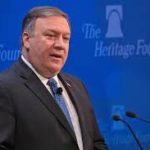
Secretary of State Mike Pompeo put forward the Trump Administration’s new Iran policy in a speech at the Heritage Foundation on Tuesday.
In a speech at the Heritage Foundation on May 21, Secretary of State Mike Pompeo called for the negotiation of a new agreement with the government of Iran that would go far beyond the single focus of the 2015 agreement and would have the status of a formal treaty. The 2015 settlement concluded under the Obama administration dealt only with the nuclear program and was not a treaty but rather a UN-endorsed executive agreement between the parties. Unless such a treaty can be reached, Pompeo warned that Iran would face tough sanctions that would leave it “battling to keep its economy alive.” Pompeo vowed Trump’s approach would ensure Iran would never develop a nuclear weapon. On the other hand, the US government offered offer Iran a series of dramatic concessions if it agrees to make “major changes.” Under a new agreement, the US. would be willing to lift all sanctions, restore full diplomatic and commercial ties with Iran, and even support the modernization of its economy, according to President Donald Trump.
Secretary of State Pompeo put forward 12 requirements that Iran must take in a potential agreement with the US as per the order of President Donald Trump. Two such conditions would be that Iran would have to allow nuclear inspectors access to all sites throughout the country (despite the fact that such a condition goes against international law and the principles of state sovereignty), and disclose all previous efforts to build a nuclear weapon. Pompeo also demanded that the Iranian government would have to walk away from the core pillars of its foreign policy, including its support for militant groups such as Hamas, Hezbollah, the Houthis, and the Popular Mobilization Forced, as well as its persistent opposition to the ideologies of Zionism and Wahhabism. Iran must also “release all US citizens” missing in Iran or being held on “spurious charges” under a new agreement.
In response, Iranian President Hassan Rouhani described Pompeo’s speech, as well as the Trump Administrations Iran policy as unacceptable and took issue with the fact that the secretary of state previously led the CIA, long demonized in Iran for its role in a 1953 coup. “A guy who had been active in an espionage center for years now wants to make a decision for Iran and other countries from the position of a foreign minister. It is not acceptable under any circumstance,” Rouhani said to a group of university teachers in Tehran. Additionally, Iranian Foreign Minister Mohammad Javad Zarif stated that this new approach to Iran would further isolate the US from its allies in Europe, who have expressed strong support for the 2015 nuclear agreement and claimed that Iran has upheld its end of the bargain.
2. President Donald Trump Flip-Flops on North Korean Summit
President Donald Trump gave mixed signals this week regarding the upcoming US-North Korean Summit, signaling that the Administration is unprepared for diplomacy.
Throughout this week, President Donald Trump gave a number of mixed signals regarding his planned June 12 summit with North Korean leader Kim Jong-Un. On May 24, President Donald Trump announced in an open letter to Kim Jong-Un that he would be canceling the planned June 12 summit in Singapore with North Korean leader Kim Jong Un, blaming recent statements by Pyongyang. “I believe that this is a tremendous setback for North Korea and, indeed, a setback for the world,” said the president in noontime remarks in the White House Roosevelt Room prior to signing an unrelated bill. The president also warned that the military forces of the United States are “more ready than we have ever been before,” along with allies South Korea and Japan, should North Korea take any “foolish or reckless acts.”
North Korea’s reaction to President Trump’s decision was subdued and conciliatory. The North’s official news agency put out a statement by Vice Foreign Minister Kim Kye Gwan saying, “We had set in high regards President Trump’s efforts, unprecedented by any other president, to create a historic U.S.-North Korea summit. We tell the United States once more that we are open to resolving problems at any time in any way.” But the statement said Trump’s decision was not in line with the world’s wishes and that Kim made the utmost effort to hold the summit. The North Koreans were a no-show for a preparatory meeting in Singapore last week, part of a trail of broken promises, lack of good faith and poor communication prompting the president’s decision, according to administration officials. “We simply couldn’t get them to pick up the phone,” a White House senior official told reporters during a background briefing Thursday afternoon. The last straw, according to the White House, was an insult of Vice President Mike Pence earlier Thursday in a statement by North Korea’s vice foreign minister, Choe Son Hui. She called Pence a “political dummy” and warned of a nuclear confrontation.
Despite the fact that he canceled the summit, President Donald Trump backtracked on his previous actions later in the week. In a tweet on May 27, the President stated that the summit is back on schedule and that the preparations for the conference are underway. Additionally, Trump further stated that he truly believes that “North Korea has brilliant potential and will be a great economic and financial Nation one day,” a stark contrast to his previous comments decrying the North Korean government and calling for military action against the country. These actions further illustrate the fact that the Trump Administration lacks an effective strategy in the realm of foreign policy and is wholly unprepared in dealing with diplomatic matters.
Our United States team has arrived in North Korea to make arrangements for the Summit between Kim Jong Un and myself. I truly believe North Korea has brilliant potential and will be a great economic and financial Nation one day. Kim Jong Un agrees with me on this. It will happen!
3. Stacey Abrams Pulls off Historic Upset in Georgia Primary To Become the First African-American Female Gubernatorial Nominee in US History
Georgia State Legislator Stacey Abrams made history this week by becoming the first African-American woman ever nominated for governor and has a strong chance to become the first African-American governor of a Southern state in over a century.
Georgia Democrats selected the first African-American woman to be a major party nominee for governor in the United States on May 22, choosing Stacey Abrams, a former State House leader, who will test just how much the state’s traditionally conservative politics are shifting. By handily defeating Stacey Evans, also a former state legislator, Abrams also became Georgia’s first African-American nominee for governor, a prize that has eluded earlier generations of African-American candidates in the state. The general election is sure to draw intense national attention as Georgia voters determine whether an African-American woman can win in the Deep South, a region that has not elected an African-American governor since the early 1870s. In the general election, Stacey Abrams will face either Lieutenant Governor Casey Cagle, or Georgia Secretary of State Brian Kemp, the main Republican candidates vying for the gubernatorial nomination in the July primary run-off election.
Overall, Stacey Abram’s victory in the Georgia Democratic gubernatorial primary represents both the changing voting patterns in much of the American South, as well as the ever-declining popularity of President Donald Trump and his racist and bigoted rhetoric. Ever since the 1990s, Georgia (and a majority of the American South) have overwhelmingly supported the Republican Party due to the conservative stance expressed by Republican Party leaders on issues such as civil rights, abortion, LGBT rights, and gun control. Over the past few years, however, parts of the South have been trending toward the Democratic Party due to changes in generational values, demographic shifts, and economic changes in the region as a whole. Additionally, the bigoted rhetoric and failed policies of the Trump Administration and the Republican have angered even a number of traditionally conservative white voters in parts of the South, thus encouraging them to consider supporting Democratic Party candidates for the first time in nearly a generation.
Here Are the main events in Politics that occurred this week:
1. Democrat Doug Jones Wins Alabama Special Election Race
Democratic candidate Doug Jones won a major victory in the Alabama Special Senate Election this week, becoming the first Democrat to represent the state in over 20 years.
In a major upset, Democratic candidate and former federal prosecutor Doug Jones won the Alabama Special Senate Election on December 12 after a campaign that showcased the increasing power of sexual misconduct allegations and the limits of President Donald Trump’s political influence even in states that he still remains popular in. Jones’s victory in a state that has not had a Democratic Senator since 1996 was a dramatic repudiation of both his opponent, Roy Moore, a controversial former state judge twice who is accused of molesting several women between the late 1970s and early 1990s, as well as the policies and proposals of President Donald Trump and the Republican-controlled Congress. In his victory speech, Jones stated that the “entire race has been about dignity and respect. This campaign has been about the rule of law. This campaign has been about common courtesy and decency and making sure everyone in this state, regardless of what zip code you live in, is going to get a fair shake.” Additionally, Jones went on to send a message to his colleagues in Washington, urging them to “get things done for the people” by passing the Children’s Health Insurance Program as well as voting against the Trump Administration tax plan.
Despite his overwhelming rejection by the voters of Alabama, Republican candidate Roy Moore has yet to concede, accusing the Democratic Party of vote rigging and has announced that his campaign would be seeking a recount. The election of Doug Jones as Senator from one of the most conservative states in the entire country signals both a wholesale rejection of the policies of the Trump Administration by even his most hardcore and loyal supporters as well as a foreshadowing of the results of the 2018 midterm elections. Additionally, the election of Doug Jones perhaps is a sign that the Democratic Party can regain much of the ground that they lost in the Southern states over the past 50 years by campaigning with a positive and inclusive message, as well as de-emphasizing divisive social issues and instead focusing more on addressing economic issues that negatively impact the working class.
2. US Ready for Direct Talks With North Korea
Secretary of State Rex Tillerson indicated this week that the US is willing to meet with North Korea to discuss its nuclear program without pre-conditions.
On December 12, Secretary of State Rex Tillerson announced that the US is ready to begin direct talks with North Korea without pre-conditions, backing away from a key demand that Pyongyang must first accept that giving up its nuclear arsenal would be part of any negotiations. While reiterating the long-standing position that the US views the North Korea nuclear program as a major national security threat, Tillerson said the United States was “ready to talk anytime they’re ready to talk”, but there would first have to be a “period of quiet” without any nuclear and missile tests. The new diplomatic overture on the part of the US comes two weeks after North Korea said it successfully tested an intercontinental ballistic missile that put the entire US mainland within range of a potential nuclear strike.
Overall, the international community has applauded Secretary of State Tillerson’s offer. Chinese Foreign Ministry spokesman Lu Kang said that the Chinese government welcomed all efforts to ease tension and promote dialogue to peacefully resolve the problem of North Korea’s nuclear arms program. The Chinese government hopes the United States and North Korea can meet each other halfway and take meaningful steps on dialogue and contact, Kang told reporters. Additionally, China has expressed a willingness to work with both the US and South Korea to secure North Korean nuclear weapons in the event of a collapse of the government of North Korea. Despite strong support for these new diplomatic efforts by China, Japan has been critical of any engagement with North Korea, arguing that any efforts would play into the hands of the North Korean government and not lead to any constructive policy change. On the contrary, the Japanese government supports increasing the already crippling sanctions in place in North Korea to convince the regime to change its policies (despite the fact that history shows that sanctions have little to no effect in forcing policy change). Overall, it is too soon to tell of the renewed diplomatic efforts between the US and North Korea will lead to any lasting results, but they do represent a positive step forward on the part of the US in solving long-standing disputes peacefully.
3. Iraq Proclaims Victory in the War Against ISIS
The government of Iraq announced that it has defeated ISIS after nearly three years of intense fighting with the violent extremist group.
On December 9, Iraqi Prime Minister Haider al-Abadi announced an end of the war against militant group Islamic State (ISIS) in Iraq and said that Iraqi forces had regained full control of the country’s border with Syria. “Our forces are in complete control of the Iraqi-Syrian border and I, therefore, announce the end of the war against Daesh” (Arabic for “ISIS”), Abadi said at a press conference in Baghdad. “Dear Iraqis, your land has been completely liberated, and your towns and villages have been returned to the homeland,” Prime Minister Haider al-Abadi said in a press conference in Baghdad. “The dream of liberation became a reality.” The victory came after the military shifted its focus to rout out militants in the border areas between Iraq and Syria. “Our forces fully control the Iraqi-Syrian border, and thus we can announce the end of the war against Daesh,” Abadi said.
After Abadi’s announcement, the Iraqi government declared Sunday a national holiday to celebrate the victory that was celebrated by the US and several of Iraq’s major allies such as Russia, Iran, and Hezbollah. The US government and President Donald Trump offered its “sincere congratulations to the Iraqi people and to the brave Iraqi Security Forces, many of whom lost their lives heroically fighting ISIS. Additionally, UK Prime Minister Theresa May also congratulated Iraq but warned the threat is far from over. Despite the fact that major combat operations in Iraq have ended, the threat of violent extremist from the remnants of ISIS and other militant groups remains. Additionally, Iraq will continue to face a massive reconstruction effort over the next decade in order to help rebuild itself after nearly four decades of continuous warfare, chaos, and brutal authoritarianism.
Here are the main events in Politics that occurred over the past week:
1. President Donald Trump Decertifies The Iran Nuclear Deal
On October 13, President Donald Trump opted to decertify the Iranian nuclear agreement and annoucned his support for the eventual removal of the present Iranian government from power.
On October 13, President Donald Trump announced that he will decertify the 2015 Iran nuclear deal and put forward a new strategy regarding Iran that shifts the focus from the countries nuclear program to other actions the administration says are contributing to the destabilization of the Middle East. President Trump has repeatedly criticized the agreement, which lifted sanctions related to Iran’s nuclear program in exchange, dubbing it “the worst deal ever” and as an embarrassment to the US. Decertifying Iran’s compliance under the agreement would set up a 60-day timeframe for Congress to impose new sanctions on Iran, which would effectively remove the US from the deal. President Trump stated that the policy is based on a “clear assessment of Iranian dictatorship, its sponsorship of terrorism and its continuing aggression in the Middle East and all around the world” and has urged allied countries in both Europe and the Middle East to adopt policies meant to further isolate the Iranian government and, ultimately, bring about the collapse of the current Iranian government and allow the Pahlavi family to come back into power in its place.
The reaction to President Donald Trump’s announcement by international leaders has been almost universal condemnation. Whereas countries such as Israel and Saudi Arabia have praised Trump’s actions, other countries such as the UK, Germany, France, Russia, China, and Italy expressed reservations towards the decision. Federica Mogherini, the European Union’s Foreign Policy Chief and one of the lead negotiations of the agreement with Iran, expressed the strongest criticism towards Trump’s decision and pledged to work with the other signatory countries to uphold and strengthen the agreement. Additionally, many observers believe that such actions on the part of President Trump have reignited the chance for an open conflict to break out between Iran and the US and threaten to isolate the US from the rest of the international community.
2. President Donald Trump Signs Healthcare Executive Order
President Donald Trump signed an executive order on Thursday amending several provisions of the Affordable Care Act (“Obamacare”).
On October 12, President Donald Trump signed an executive order that would amend several provisions of the Affordable Care Act (“Obamacare”). The executive order consists of three major policy changes. The first two are expanding access to association health plans, in which a group of small employers can band together to buy insurance as a collective for a discount and expand access to short-term health plans from the present three months to one year. The final change is expanding the use of health reimbursement accounts, which allow employers to set aside tax-free money to help cover their employees’ health care costs. Workers will likely be able to tap into the money set aside in such accounts to pay the premiums for plans from the individual market. By implementing these changes, President Trump hopes to broaden the healthcare market and thus lower overall healthcare costs.
The reactions to President Trump’s healthcare executive order have been mixed thus far. Republican Senators such as Rand Paul and Ted Cruz praised the President’s decision and view it as the first step to reforming the nation’s broken healthcare system. On the contrary, many independent observers believe that the executive order would ultimately have unintended consequences. In particular, they feel that these changes will divert healthy people into cheaper plans outside the realm of the ACA’s exchanges, leaving such markets with a less healthy and more expensive customer base, which would cause premiums to instead increase.
3. Criticism Regarding The Federal Response To Hurricane Maria Mounts
Criticism towards the response by the Trump Administration to Hurricane Maria increased this week due to actions on the part of the President.
Criticism towards the overall efforts by the US government to Hurricane Maria grew this week due to the slow response rate and actions on the part of President Donald Trump. Nearly three weeks after the hurricane first hit, more than 80% of Puerto Rico is still without electricity and nearly half of the country is without means of communication. Despite the pressing situation within the territory, federal aid has been painfully slow to come, perhaps due to bureaucratic pressures and strains on the existing federal aid structure. The response to the hurricane by the Trump Administration has been compared by some observers to the response by the Bush Administration to Hurricane Katrina some twelve years earlier.
Instead of instilling a sense of confidence in the minds of the residents of Puerto Rico, several actions by President Donald Trump this week seem to contradict his earlier pledges to help the island recover from this debilitating disaster. On October 12, President Trump threatened to end US aid to Puerto Rico in a Tweet by saying that “We cannot keep FEMA, the Military & the First Responders, who have been amazing (under the most difficult circumstances) in P.R. Forever!” Additionally, President Trump attempted to deflect some of the criticism that his administration received regarding their handling of the disaster by stating that the infrastructure of Puerto Rico was in poor shape prior to the hurricane and stated that the financial crisis facing Puerto Rico was created “largely of their own making.” These actions perhaps indicate an overall unwillingness on the part of the Trump Administration to stand up for the most vulnerable and impacted people within the US.
4. North Korea Renews Threat To Attack Guam In Response To Joint US-South Korea Naval Exercise
The unending tensions between the US and North Korea took another turn this week in response to the US-South Korea military exercise commencing on October 16.
On October 13, North Korean officials on Friday renewed their threat to launch ballistic missiles near Guam in response to the US and South Korea preparing for their joint naval exercise. The drill is scheduled to begin on Monday in waters on both coasts of South Korea. The primary purpose of the exercise, according to the US Navy command in the region, is to check the communications network, partnership, and operational capabilities of both allies in the event of a confrontation breaking out within the region. In contrast, the North Korean government sees the exercise as one of many recent attempts to intimidate and incite the isolated country and as a rehearsal for an eventual invasion of the country. It is unclear if this most recent threat is merely rhetorical bluster on the part of the North Korean government or a threat that they are willing to follow through with.
Here are the main events in Politics that occurred over the past week:
1. Push to Repeal “Obamacare” Resumes in the Senate
Republican Senators Lindsey Graham and Bill Cassidy have recently introduced a bill repealing portions of the Affordable Care Act nearly two months after the most recent repeal effort failed in the Senate.
On September 13, the efforts to repeal The Affordable Care Act (“ObamaCare”) in the Senate resumed after a two-month hiatus. The new repeal effort has thus far been led by Senators Lindsey Graham (R-SC) and Bill Cassidy (R-LA). The overall details of the bill have been somewhat sketchy thus far, but several provisions of the bill have come to light in recent days. The main change would be to turn control over the healthcare exchange market to individual states by setting up block grant that states could use to develop any health-care system it wants. This approach would be beneficial to the states that rejected the Medicaid expansion provision of the ACA. Additionally. the proposal would scrap the individual mandate component of the ACA and place new restrictions on federal funding for women’s health organizations such as Planned Parenthood.
The reaction to the proposal by Senators Graham and Cassidy has been mixed thus far. President Donald Trump and House Speaker Paul Ryan have endorsed the plan and pledge to do all in their power to see that it become law. Additionally, several Republican Senators opposed to the previous efforts to repeal the ACA such as John McCain (R-AZ) and Lisa Murkowski (R-AK) have signaled a willingness to support this most recent effort. On the other hand, the recent repeal effort has been met with universal opposition by members of the Democratic Party, who correctly point out that any changes to the existing healthcare system will negatively impact low and middle-income Americans and worsen income inequality. Moreover, several Republican Senators such as Ted Cruz (R-TX) and Rand Paul (R-KY) spoke out against the plan as well, arguing that it does not go far enough in reducing government involvement in the healthcare system. It can be argued that the Graham-Cassidy healthcare reform proposal might stand a good chance of passing assuming that several of the more moderate Democratic Senators such as Joe Manchin (D-WV), Heidi Heitkamp (D-ND) and Joe Donnelly (D-IN) sign on in support.
2. Tensions With North Korea On The Rise
The ongoing tensions with North Korea expanded this wek with the implementation of expanded sanctions against the isolated country.
The ongoing tensions between the US and North Korea continued to rise this week. On September 14, North Korea flew a ballistic missile over Japan for the second time this month. The missile flew about 3,500 km before splashing down far out into the Pacific Ocean. Much like with the earlier test, the Japanese government condemned the launch and vowed to work closely with its allies such as the US and South Korea to contain the regime and place additional pressures in order to convince it to change its policies. It is widely considered that the recent test was in response to the passage of tough sanctions resolution against North Korea by the UN Security Council on September 11. The new sanctions directly target the North Korean economic sector by banning all textile exports to the country and restricting shipments of oil products to North Korea.
3. Oppression Against Rohingya Muslims Continues
The campaign against the Rohingya Muslims by the Myanmar government continued unabated this week.
The ongoing genocidal campaign against the Rohingya Muslims of Myanmar continued unabated this week. The Rohingya’s are a Muslim sect that practices a form of Sunni Islam and have lived in Rakhine, one of Myanmar’s poorest states, for hundreds of years. Violence against the Rohingya in Myanmar is part of a “longstanding pattern of violations and abuses; systematic and systemic discrimination; and policies of exclusion and marginalization” that have persisted since the early 1960s and has been encouraged in part by the government of Myanmar. For example, the Myanmar government denies the Rohingya citizenship, restricts interfaith marriages between the Rohingya and non-Rohingya residents of the country, and has a strict family planning policy limiting the reproductive rights of Rohingya Muslim women. The most recent incident began with a supposed attack on a Myanmar military base by a group affiliated with the Rohingya community. In response, the Myanmar government launched a major purge against the Rohingya community that has thus far resulted in the deaths of thousands and the displacement of some 400,000.
The international community has reacted with universal condemnation of the recent campaign against the Rohingya Muslims in Myanmar. Several Muslim-majority countries such as Indonesia, Malaysia, Pakistan, and Turkey urged the government of Myanmar to stop the bloodshed and end all discriminatory acts against the Rohingya Muslims. Surprisingly, US President Donald Trump has been silent on the ongoing crisis in Myanmar, which has bolstered the perception that President Trump is indifferent to human rights abuses at the global level.
4. Referendum For The Creation Of An Independent Kurdish State Gains Support
The Kurdish independence movement gained additional support this week with the endorsement of a Kurdish state by Israel.
The proposed referendum for the creation of an independent Kurdish state based on the borders of the Iraqi Kurdistan region picked up some steam on September 13 with the endorsement of the proposal by Israeli Prime Minister Benjamin Netanyahu. The Kurds are a non-Arab ethnic group located in several mountainous areas in the Middle East such as Southwestern Turkey, Northern Iraq, Northwestern Iran, Northern Syria, and parts of Lebanon. The Kurds have historically been a stateless group that has faced much oppression from regional powers, most notably Iraq under Saddam Hussien. In recent years, the Kurdish people gained some degree of autonomy with the creation of an autonomous region in Northern Iraq in 2005. The leadership of Kurdistan hopes to gain recognition as an official nation with a referendum on September 25. Despite the aspirations of the Kurdish people to create their own state, several countries such as the US, Iran, Turkey, and Iraq have come out against the referendum, arguing that any major territorial changes will only serve to upset the balance of power in the Middle East and embolden extremist groups such as ISIS.
Here are the main events in Politics that occurred over the past week:
1. Tensions Between North Korea & The US Heat Up
Tensions between the US and North Korea increased over this past week due to soaring rhetoric on the part of President Trump.
Over the past week, tensions between North Korea and the US reached a boiling point and the chance for conflict between both countries is at its highest level since the end of the Korean War almost 65 years ago. The war of words between both countries began when President Donald Trump stated that any threats made by North Korea towards the US and its allies such as South Korea and Japan will be met with “fire, fury, and a massive show of force” and threatened to launch a pre-emptive strike against a country that has been under constant US sanctions and international isolation since the early 1950s. In response, North Korea leader Kim Jong-Un declared that his country would respond to such threats by attacking US territories in the Pacific such as Guam and Hawaii. Critics have argued that such rhetoric on the part of President Trump threatens to spark a large-scale military confrontation in one of the most volatile regions of the world and has the potential to get countries such as Russia and China involved. Additionally, the Trump administration’s overall policy towards North Korea can be considered to be an embodiment of US imperialism, in particular, the goal to have dominion over countries that are opposed to the current US-led global order.
2. The Russia Probe Against President Donald Trump Intensifies
The investigation into possible collusion between the Trump Presidential campaign and Russian President Vladimir Putin took an interesting turn this past week.
This week the investigations into alleged Russian collusion with the Trump campaign took a major turn with the announcement that the FBI raided the home of Paul Manafort, the Trump campaign manager. Manafort is being investigated for possible money laundering and has been targeted as someone who might testify against former colleagues in exchange for plea bargaining and immunity from prosecution. Senator Richard Blumenthal (D-CT) called the raid a “highly significant step” and said it was “typical of the most serious criminal investigations dealing with uncooperative or untrusted potential targets.”
Another possible indicator of collusion between President Donald Trump and Russian President Vladimir Putin was revealed by the President’s reaction to Russia ordering some 775 US diplomats to leave the country. As opposed to criticizing the move, President Trump praised Putin’s actions as beneficial because he said it helps him cut the U.S. government’s payroll. Even though Trump’s comments seemed to be a bit tongue-in-cheek, they point to a common trend in him not criticizing the policies by the Russian government and perhaps point to some form of collusion that helped to get him elected President.
3. Charlottesville Rally & Protests Take a Deadly Turn
Protests against a white nationalist rally in Charlottesville, Virginia turned violent on August 12.
On August 11, a group of several hundred white nationalists, neo-Nazis and Ku Klux Klan launched a rally in the small city of Charlottesville, Virginia. Known as the “Unite the Right rally,” the main purpose of the demonstration was to protest the removal of Confederate memorials from public spaces in Virginia and to come out in support of the policies and political positions of President Donald Trump. Some of the prominent speakers at the rally included Neo-Nazi activist Richard Spencer and former Imperial Wizard of the Ku Klux Klan David Duke, who both endorsed and campaigned for President Donald Trump. In response to the vile and bigoted nature of the rally, a counter-protest emerged led by organizations such as Black Lives Matter, Democratic Socialists of America, and Antifa. The protests became deadly on August 12 when James Alex Fields Jr. rammed his 2010 Dodge Challenger into a crowd of people protesting the rally, killing one and injuring another 19.
The response to the tragedy has overall been strong and forceful. Virginia Governor Terry McCaullife and Charlottesville Mayor Michael Signer directly addressed the participants in the rally and stated that they “are not wanted in this great commonwealth” and that the rhetoric of President Donald Trump is partially responsible for such events. President Donald Trump’s response has been roundly criticized by individuals on all sides of the political spectrum due to the fact that he did not specifically denounce the white nationalists, white supremacists and neo-Nazis attendees and hinted that he felt that the counter-protesters deserved the lions share of the blame.
4. President Donald Trump Continues to Criticize Senate Majority Leader Mitch McConnell
President Donald Trump continued to criticize Senate Majority Leader Mitch McConnell (R-KY) this week due to the failure of the Obamacare repeal.
President Donald Trump continued his ongoing public attacks against Senate Majority Leader Mitch McConnell this week. In particular, Trump has criticized the Senate majority leader for the recent failure by the Republican Party to repeal the Patient Protection Affordable Care Act (“Obamacare”) and replace it with a suitable substitute. Trump responded on Twitter three times following criticism from McConnell that the President had “excessive expectations” of Congress and that “artificial deadlines” hurt the GOP agenda and prevent effective public policy proposals from being successfully implemented. The increased level of criticism on the part of the President to a once-key political ally threatens to stall the agenda of the Trump Administration during a critical point in the legislative calendar year. For example, the increased criticism may make Senate Majority Leader McConnell less willing to move forward on some of the Trump Administrations key policy proposals such as tax reform, infrastructure spending, and the passage of the annual federal budget.
5. Iranian Parliament Softens Drug Death Penalty Laws
The Iranian Parliament passed a bill softening legal punishments related to drug possession and trafficking.
On August 12, the Iranian Parliament (Majiles) passed an amendment to its drug trafficking laws raising the thresholds that can trigger capital punishment. Even though the legislation still needs to be approved by the conservative-dominated Guardian Council, it gained parliamentary approval after several months of debate. According to Amnesty International, Iran is one of the several countries in the world that relies on capital punishment for various crimes and a majority of its executions are political opponents to the Iranian government.
The new law raises the amounts that can trigger the death penalty from 30 grams to two kilos for the production and distribution of chemical substances such as cocaine and heroin. The new law will apply retroactively, thus commuting the sentences for many of the 5,000 inmates currently on death row for drug trafficking and possession. The law also restricts the death penalty to individuals who lead drug-trafficking efforts, exploit minors less than 18 years of age, carry or draw firearms while committing drug-related offenses, or have a previous conviction of the death penalty or a jail sentence of more than 15 years or life in prison.