The US is poised to approve sending its most advanced ground-based air defense system to Ukraine, responding to the country’s urgent request to help defend against an onslaught of Russian missile and drone attacks, two US officials said on December 13. Defense Secretary Lloyd Austin could approve a directive as early as this week to transfer one Patriot battery already overseas to Ukraine, the officials said, speaking on the condition of anonymity to discuss internal deliberations. Final approval would then rest with President Joe Biden.
White House, Pentagon and State Department officials declined to comment on details of the transfer of a Patriot battery, which, if approved, would amount to one of the most sophisticated weapons the United States has provided Ukraine. The Patriot system can knock down Russia’s ballistic missiles, unlike other systems the West has provided, and can hit targets much farther away. “We have been very clear that the United States will continue to prioritize sending air defense systems to Ukraine to help our Ukrainian partners defend themselves from the brutal Russian aggression that we’ve seen for the better part of a year now,” Ned Price, a State Department spokesman, told reporters. Many questions remain about the potential transfer, which was reported earlier by CNN, including how long it would take to train Ukrainian soldiers on the system, presumably in Germany, and where the Patriots would be deployed inside Ukraine.
The US had previously resisted providing the Ukrainians Patriot batteries, of which it has relatively few and which require sophisticated training. But Ukrainian officials have intensified their pleas for air defenses from the US and other Western allies as Russia has conducted relentless attacks on power plants, heating systems and other energy infrastructure. The attacks, using missiles and Iranian-made drones, have left Ukrainians vulnerable and in the dark just as the coldest time of the year is beginning. Over the weekend, Russian drone strikes on the southern Ukrainian port city of Odesa plunged more than 1.5 million people in the region into darkness. President Volodymyr Zelensky of Ukraine said the strikes by Russia, part of a nationwide assault on Ukraine’s energy grid, had left the region in a “very difficult” situation, warning that it would take days, not hours, to restore power to civilians.
The decision to send the Patriot system would be a powerful sign of the US’ deepening military commitment to Ukraine. The Pentagon’s active-duty Patriot units frequently deploy for missions around the world, and experts say the United States does not have the kind of deep stockpiles of Patriot missiles available for transfer that it did with munitions like artillery shells and rockets. Capable of being configured in a number of ways, a Patriot battery typically consists of one or more launchers, radars, and vehicles for command and control of air defense operations.
The US previously provided Ukraine with two shorter-range air defense weapons called National Advanced Surface-to-Air Missile System, or NASAMS, which arrived in November. The US Department of Defense is spending $1.2 billion for six more NASAMS to be built and delivered to Kyiv in the coming years. But NASAMS can strike targets only about a third as far as the Patriot system. The US military has deployed Patriot batteries in numerous conflicts since the early 1990s. In perhaps the weapons’ most recent combat use, US Army soldiers at Al Dhafra Air Base in the United Arab Emirates fired “multiple” Patriot interceptors at missiles headed toward the base in January, according to U.S. Central Command.
After a year of relative calm, the ongoing territorial disputes between Russia and Ukraine heated up late this week. On November 25, the Ukrainian navy said that Russian authorities closed off the Kerch Strait amid a confrontation with Ukrainian naval vessels. Earlier this year, the Russian government opened a 19-kilometer bridge across the strait, creating a road linking Russia’s Krasnodar region with the Crimean peninsula, which was annexed by Russia from Ukraine in 2014. In a statement released shortly after the incident, the Ukrainian ministry of defense said traffic through the strait had been blocked by a tanker anchored near the Kerch Strait bridge. Russian state news agency TASS, quoting Alexei Volkov, the general director of the Crimean seaports, said traffic through the strait had been closed for security purposes.
The incident came amid a confrontation at sea between Ukrainian and Russian vessels. According to the Ukrainian navy, the naval vessels Berdyansk, Nikopol and Yani Kapu were carrying out a planned transfer from the port of Odessa to the port of Mariupol on the Azov Sea. Both countries offered differing accounts of what followed. The Russian Federal Security Service’s Border Service in Crimea reported that three Ukrainian warships had illegally entered Russia’s territorial waters, and were carrying out dangerous maneuvers, TASS stated. The Ukrainian navy said Russian border patrol vessels “carried out openly aggressive action” against the Ukrainian ships, resulting in damage to one Ukrainian ship, a navy tugboat.
Overall, the current disputes between Russia and Ukraine show that the ongoing conflict between both countries is far from settled despite a decline in tensions over the past few months. The current territorial disputes between Russia and Ukraine can be traced back to early 2014 when the Obama Administration authorized the CIA to carry out a coup against the pro-Russian Ukrainian government led by Viktor Yanukovych. In response, Russian President Vladimir Putin ordered the Russian military to invade the Crimean region of Ukraine (which is home to a large Russian-speaking population) and annex the territory. Ever since the Russian annexation of Crimea, Ukraine has been embroiled in an endless conflict with Russia that has evolved into a proxy war between Russia and the US and its NATO allies. This recent incident shows that the localized conflict between Russia and Ukraine has the potential to turn into a major global conflict.
The Czech Republic is a unitary parliamentary republic located in Central Europe. It consists of the historical provinces of Bohemia and Moravia along with the southern tip of Silesia, which are often called the “Czech Lands” The Czech Republic is bordered by countries such as Germany, Austria, Poland, and Slovakia, has an area of approximately 78,866 square kilometers, and a population of a little less than 11 million. The Czech Republic plays an important role in the wider context of European politics due to its central location between both Germany and Russia, reputation as one of the most stable and freest countries in Europe, and past struggles for independence from regional powers.
The Czech Republic has a long and rich history and is considered to be one of the first areas in which modern humans settled,
The history of the Czech Republic can be traced back to the Lower Paleolithic era when the earliest modern humans settled in the region. Some of the Paleolithic cultures that settled in the present-day Czech Republic included the Acheulean, Micoquien, Mousterian, and Předmostí. The area was subsequently settled by the Celts in the 5th Century BC and by various Germanic tribes during the 1st Century CE. During the 5th century CE, Slavic tribes from the Vistula basin settled in the region of Bohemia, Moravia, and Silesia. The Czechs founded the kingdom of Bohemia and the Premyslide dynasty, which ruled Bohemia and Moravia from the 10th to the 16th century. One of the Bohemian kings, Charles IV, Holy Roman Emperor, made Prague an imperial capital and a center of Latin scholarship. The Hussite movement founded by Jan Hus (1369–1415) linked the Slavs to the Reformation and revived Czech nationalism, previously under German domination. A Hapsburg, Ferdinand I, ascended the throne in 1526. The Czechs rebelled in 1618, precipitating the Thirty Years’ War (1618–1648). Defeated in 1620, they were ruled for the next 300 years as part of the Austrian empire. Full independence from the Hapsburgs was not achieved until the end of World War I, following the collapse of the Austrian-Hungarian Empire.
The Czech Republic witnessed a high level of political oppression during the periods in which it was occupied by Nazi Germany (1938-45), and the Soviet Union (1948-89).
A union of the Czech lands and Slovakia was proclaimed in Prague on Nov. 14, 1918, and the Czech Republic became one of the two component parts of the newly formed Czechoslovakia. In March 1939, German troops occupied Czechoslovakia, and Czech Bohemia and Moravia became protectorates of Nazi for the duration of World War II. The former government returned in April 1945 when the war ended and the country’s pre-1938 boundaries were restored. When elections were held in 1946, Communists became the dominant political party and gained control of the Czechoslovakian government by 1948. During the period of communist rule, the Czech Republic witnessed atrocities committed by the Communist government and was invaded by the Soviet Union in 1968 in response to its attempts to break away from the Warsaw Pact.
Over four decades of Communist rule ended with the nearly bloodless “velvet revolution” in 1989. Václav Havel, a leading playwright and dissident, was elected president of Czechoslovakia in 1989. Havel, imprisoned twice by the Communist regime and his plays banned, became an international symbol for human rights, democracy, and peaceful dissent. The return of democratic political reform saw a strong Slovak nationalist movement emerge by the end of 1991, which sought independence for Slovakia. When the general elections of June 1992 failed to resolve the continuing coexistence of the two republics within the federation, Czech and Slovak political leaders agreed to separate their states into two fully independent nations. On Jan. 1, 1993, the Czechoslovakian federation was dissolved and two separate independent countries were established—the Czech Republic and Slovakia. The Czech Republic joined NATO in March 1999 and the European Union in 2004.
Miloš Zeman is the current President of the Czech Republic and was first elected in 2013.
The current Czech constitution was adopted on October 19, 1992, and ratified on New Years Day 1993. The constitution stipulates that the Czech Republic is a is a unitary parliamentary republic with three branches of government. The executive branch is headed by the President and the Prime Minister. The president is a formal head of state who has the power to return bills to the parliament, appoint members to the board of the Czech National Bank, nominate constitutional court judges for the Senate’s approval and dissolve the Chamber of Deputies under certain special and unusual circumstances. The president appoints the prime minister, as well as the other members of the cabinet on a proposal by the prime minister. The President serves a five-year term with no more than two consecutive terms and since 2013, is directly elected. The current President of the Czech Republic is Miloš Zeman, who was first elected in 2013 and (narrowly) re-elected in 2018 despite much opposition to his policies (he is considered to be the “Donald Trump” of the Czech Republic).
Andrej Babiš is the current prime minister of the Czech Republic and has been in office since December of 2017.
The Prime Minister of the Czech Republic is considered to be the head of government and holds considerable powers, such as the right to set the agenda for most foreign and domestic policy and choose government ministers. The current Prime Minister of the Czech Republic is Andrej Babiš, a member of the centrist ANO 2011. He has served as Prime Minister since December 6, 2017. The Chamber of Deputies is the lower house of the Czech Parliament and its members are elected to a four-year term by proportional representation, with a 5% election threshold. The Senate members are elected in single-seat constituencies by two-round runoff voting for a six-year term, with one-third elected every even year in the autumn. The first election was in 1996, for differing terms.
The judicial system of the Czech Republic follows the principle of civil law system based on the continental type, rooted in Germanic legal culture. The Czech court system includes district, county and supreme courts and is divided into civil, criminal, and administrative branches. The Constitutional Court consists of 15 constitutional judges and oversees violations of the Constitution by either the legislature or by the government. The Supreme Court is formed of 67 judges and is the court of highest appeal for almost all legal cases heard in the Czech Republic. The Supreme Administrative Court decides on issues of procedural and administrative propriety. It also has jurisdiction over many political matters, such as the formation and closure of political parties, jurisdictional boundaries between government entities, and the eligibility of persons to stand for public office.
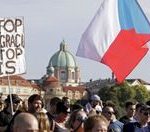
Despite having a strong human rights record, the Czech Republic is currently undergoing protests over the EU refugee resettlement proposals.
The Czech Republic has an overall strong record in the realm of human rights and political freedom and is considered to be a model for the former Soviet-bloc countries. Perhaps in response to abuses committed towards the Czech people during the periods of Nazi Germany and Soviet occupation, the Czech Republic takes an active role in protecting the rights of its citizens and is proud of its human rights record. Despite its overall positive record on human rights, the Czech Republic still faces some criticism by human rights organizations due to its refusal to participate in refugee resettlement programs put forward by the European Union and an increase in hate speech towards migrants from the Middle East. Additionally, governmental corruption has increased under the Presidency of Milos Zeman, thus increasing citizen alienation from the Czech political process.
In terms of demographics, the Czech Republic is estimated to be 10.4% Roman Catholic, 1.1% Protestant, 54% unspecified/other, and 34.5% non-religious. The main ethnic groups in the Czech Republic are Czech (64.3%), Moravian (5%), Slovak (1.4%), other (1.8%), and 27.5% unspecified, and the official languages of the country are Czech (spoken by ~95% of the population) and Slovak (spoken by ~2% of the population). The Czech Republic has a literacy rate of ~99% for both men and women and a life expectancy of 78.8 years (81.9 for women and 75.1 for men), comparable to the US and other European countries.
The Czech Republic has a strong economy characterized by a stable currency, diverse industries, and a low unemployment rate.
The Czech Republic is has a GDP $372 billion (2017 estimate), Human Development Index Score of 0.878 and a GINI Score of 25.9. The economy of the Czech Republic is primarily service-based (59.7%), with industry and agriculture making up 37.8% and 2.5% of total economic output respectively. The unemployment rate of the Czech Republic is estimated to be around 3% as of 2017 and GDP per capita is $35,200. The Czech Republic currently has the lowest unemployment rate in the European Union and its currency is one of the strongest performing currencies of 2017. Despite its strong economic performance in recent years, the Czech economies dependence on exports makes economic growth vulnerable to contractions in external demand.
In the realm of foreign policy, the Czech Republic is an active member of organizations such as the UN, European Union, NATO, and is an observer in the Organization of American States. The Czech Republic has diplomatic ties with a majority of countries and has sought to establish a positive reputation as a mediator in diplomatic disputes currently going on in Europe. Historically, the Czech Republic has had a tense relationship with both Germany and Russia due to the latter two countries attempts to limit Czech sovereignty and gain influence within both Czech domestic and foreign policy. In recent years, the Czech Republic has improved its diplomatic ties with Germany and have developed close economic ties. On the other hand, Czech-Russian relations soured to a point since Vladimir Putin began his third term in 2012. The Czech Republic strongly opposed the Russian-intervention in Ukraine and supports the ongoing EU sanctions against Russia.
In conclusion, the Czech Republic continues to remain one of the more stable countries within the European Union due to its strong economy, democratic society, and positive role in foreign affairs. Geopolitical issues remain minimal within the country and its future outlook remains strong in the face of emerging challenges such as a resurgent Russia, declines in US support for Europe, and the EU refugee crisis.
This video by CaspianReport discusses the decline of the Ottoman Empire during the late 19th and early 20th Century. The Ottoman Empire was an empire founded in 1299 AD in Anatolia (present-day Turkey) by Osman I, a Turkish tribal leader. By 1354, the Ottoman Empire reached into Southeastern Europe and eventually ended the Byzantine Empire (Eastern Roman Empire) in 1453 with the conquest of Constantinople. During its height of power in the 16th and 17th centuries, the Ottoman Empire was a multinational and multicultural empire controlling a majority of the Middle East and Southern Europe (including countries such as Greece and parts of present-day Italy), the Caucuses, and Northern Africa. With Constantinople as its capital and control of lands around the Mediterranean basin, the Ottoman Empire was at the center of interactions between the Middle East and Western worlds for half a millennium.
Despite its long track record of success, the Ottoman Empire began to fall behind European rivals such as Great Britain, France, and Russia during the mid-18th century. Additionally, the Ottoman army consequently suffered severe military defeats in the late eighteenth and early nineteenth centuries, which prompted them to initiate a process of reform in the late 1830s known as the Tanzimat. As such, over the course of the nineteenth century, the Ottoman state became more powerful and organized, despite suffering territorial losses, especially in the Balkans, where many new states such as Greece and Albania emerged by the 1860s. The Ottoman Empire allied with Germany in the early 20th century, hoping to escape from the isolation which had contributed to its recent territorial losses, and thus joined World War I on the side of the Central Powers. While the Empire was able to hold its own during the conflict, it began to deal with internal dissent, in particular with the Arab Revolt in its Arabian holdings and the rise of Jewish immigration into the region of Palestine starting in the late 19th century. During this time, atrocities were committed by the Ottoman government against the Armenians, Assyrians, and Greeks. The Ottoman Empire ultimately collapsed by the end of World War I and was replaced by the Republic Turkey in 1923. The former Ottoman territories were also divided up into new nations by Great Britain and France after World War 1 and continue to serve as the basis for the modern Middle East.
Officially known as the Kingdom of Belgium, Belgium is a constitutional monarchy located in Western Europe. Belgium is bordered by Germany, France, the Netherlands, and Luxembourg and is approximately 30,500 square kilometers and has a population of around 11 million. Belgium is the seat of the European Union (EU) and the North Atlantic Treaty Organization (NATO). Belgium has had an important position in the United Nations and in contributing to international policy regarding human rights through its seat on the United Nations Human Rights Council.
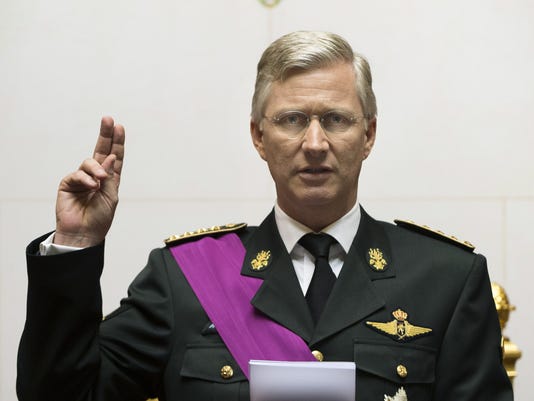
Philippe is the current King of Belgium. He assumed this role in July of 2013.
Belgium is a federal parliamentary republic under a limited constitutional monarchy. The Belgian Constitution grants numerous civil and political rights to its citizens including equality under the law, non-discrimination of persons, freedom of speech, and freedom of religion. Belgian citizens are subject to the rights guaranteed by the European Convention on Human Rights. The branches of government are the executive, legislative, and judiciary. The head of state is the king, Philippe, who has been in power since July 2013. The role of the monarchy in Belgium is symbolic and ceremonial, as the primary purpose the king has is to designate a political leader after an election. The executive branch is headed by the Prime Minister, who is appointed by the king and comes from the political parties that make up the governing coalition within Belgium. Charles Michel is the current Belgian Prime Minister and has served in office since October of 2014.
The main legislative body is the Federal Parliament, which consists of the Chamber of Representatives and the Senate. Members of the Chamber of Representatives serve for a 5-year term and are directly elected by all Belgian citizens over 18. The Belgian Senate is chosen by the regional parliaments and communities within Belgium. In total, the Belgian Parliament consists of 210 members, including 150 members of the Chamber of Representatives and 60 Senate members. Belgium also has a law that requires compulsory voting. The most recent elections in Belgium were in 2014, which resulted in the victory of a center-ight political coalition led by the New Flemish Alliance. Belgian citizens can vote in elections to the European Parliament, the main legislative body of the European Union. The judicial system of Belgium follows the concept of civil law and consists of several different levels, the highest one being the Constitutional Court. Belgium is also a founding member of the ICJ and accepts its jurisdiction as compulsory.
Belgium is considered by mot observers to be a model liberal democracy.
Belgium plays a significant role within the wider context of European and international politics. Belgium is considered a model liberal democracy in an area increasingly defined by disunity. Belgium promotes the ideas of European unity and openness within the international system. One of the main factors that influenced Belgium’s views on its role in the realm of international politics is due to its past political experiences. For example, Belgium was under German occupation during both World Wars and saw first-hand the effects of the Cold War. Due to its experiences during these periods, Belgium developed the belief that unity among nations and international cooperation is necessary to promote international peace and stability. This view of integration is shown through Belgium’s support of and membership in the European Union and NATO.
The Belgian economy is primarily serviced-based. Some of its leading industries include engineering and the production of cars, transportation equipment, and scientific instruments. The current rate of unemployment of Belgium is around 8.5%. Despite having a debt-to-GDP rate of well over 100%, Belgium has a high GDP per capita and saw its GDP increase by 1.8% in 2016. Belgium has sought to attract foreign investment in its economy. In recent years, the Belgian government has implemented economic reforms meant to make its economy a more attractive source for foreign investment.
Belgium has played a major role within the UN that has included participating in numerous UN peacekeeping operations.
Belgium joined the UN on December 27, 1945. Over the course of its membership, Belgium was involved in many different capacities within the UN. One example of Belgium’s work within the UN is its role as a non-permanent member of the Security Council on five separate occasions. Belgium contributed UN peacekeeping in South Korea, Somalia, Lebanon, Rwanda, and Sudan. The Belgian delegation to the UN took the initiative in several different areas such as disarmament, international disputes, gender equality measures, and human rights. Belgium also plays an active role on subcommittees such as the International Criminal Tribunal for the former Yugoslavia, the Intergovernmental Panel on Climate Change, and the Committee on Economic, Social and Cultural Rights.
Belgium has played an increasing role within the UN through its membership in the UN Human Rights Council. Created in 2006, the UN Human Rights Council superseded the earlier UN Commission on Human Rights. The UN Human Rights Council consists of 47 members who serve three-year terms. Belgium was first elected in 2009 and was re-elected to the Council in 2015.
Belgium strongly supports efforts to prevent and counter violent extremism.
Through its capacity on the human rights committee, Belgium expressed strong support for the Turning Point Strategy put forward by the Center for Strategic and International Studies (CSIS). This strategy highlights the need for cooperation between civil society organizations (CSOs) and governments to strengthen efforts to fight violent extremism and to prevent further human rights abuses from emerging through governmental efforts to counter extremism.
Belgium also supports stronger efforts in promoting firearm regulations at the international level and views firearm regulations as key in protecting human rights at the international level. In its capacity as a member of the UN Human Rights Council, Belgium strongly supported the Programme of Action to Prevent, Combat, and Eradicate the Illicit Trade in Small Arms and Light Weapons in All Its Aspects and recent efforts by the European Parliament to implement stringent firearms regulations.
Belgium has played a key role in raising international attention to the human rights abuses committed against the Rohingya Muslims in Myanmar.
Belgium supports resolutions put forward by the Human Rights Committee addressing the plight of the Rohingya Muslims of Myanmar and continued efforts by the international community to ensure that the government of Myanmar is taking appropriate steps to ensure that the rights of this community are protected and upheld. These efforts illustrate the fact that Belgium has a strong commitment to the cause of human rights and is prepared to work with the international community in all capacities to ensure the rights of numerous groups are protected.
One major foreign policy issue facing the world over the past few years is the rise of ISIS (Islamic State of Iraq and Syria). ISIS is an anti-Western militant group whose goal is to establish an independent Islamic state. ISIS currently controls territory in both Iraq and Syria and is seeking to gain more territory throughout the Middle East. In the aftermath of the Iraq war, ISIS has taken advantage of regional instability and publically promoted itself online with graphic videos of threats and violence. The rise and spread of ISIS has further confounded policymakers with regards to their promoting stability in the Middle East. In recent years, there has been much debate at the highest levels of government over ways to combat ISIS and the reasons behind its creation and expansion. As with many other foreign policy issues, the debate over ways to fight ISIS has evoked debate on both sides, with some arguing for a more forceful response and others seeking to stay out of the conflict. The underlying reasons behind the rise of ISIS can be contributed to a number of factors such as the current instability in the Middle East, cultural and religious differences, and intervention in the region by western powers such as the U.S.
The formation of ISIS can be traced back to 2004, when Abu Musab al-Zarqawi founded Al-Qaeda in Iraq (AQI) in response to the U.S. invasion that toppled Saddam Hussein from power in 2003. AQI played a major role in the Iraqi insurgency that followed. They reacted to the U.S. invasion and occupation of Iraq with a variety of violent acts that resulted in the deaths of civilians and U.S. soldiers alike. Despite the fact that AQI was weakened after the death of al-Zarqawi in a U.S. airstrike in 2006, the organization survived and a faction of AQI separated and began to rebrand itself. Abu Bakr al-Baghdadi took over as head of this organization in 2010, changed its name to the Islamic State (IS) in 2011, and the group grew more violent as U.S. forces began to withdraw from Iraq.
As the U.S. further withdrew troops from Iraq in 2011, IS began to expand its efforts into Syria to fight against the regime of Bashar al-Assad in the Syrian Civil War. In 2012, IS established the Al-Nusra Front, a satellite organization of IS headed by Abu Muhammad al-Julani, establishing a base for IS outside of Iraq. The expansion of efforts into Syria gave IS an opportunity to expand its ideology into a newer territory. In an attempt to prevent a rift between both organizations, al-Baghdadi unified Al-Nusra Front and IS in 2013. The name of the organization was then changed to the Islamic State of Iraq and Syria (ISIS). However, al-Julani refused to align his group to al-Baghdadi and switched his allegiance to Al-Qaeda leader Ayman al-Zawahiri. As a result of the rivalry between the two groups, Al-Zawahiri announced the unification (between ANF and IS) had been annulled as of June 2014. On January 3, 2014, al-Zawahiri announced he had severed all connections with ISIS. As a result, the disputes between ISIS and the Al-Nusra Front worsened, leading to violent clashes between both groups and further adding to instability in the two countries. As of today ISIS, Al-Nusra Front, and Al-Qaeda all operate in the region.
One of the major underlying reasons behind ISIS’ rise is the instability of the Middle East. Historically, preexisting disputes in the region have been cultural and religious in nature and have only worsened with the addition of western intervention over the past century. One of the main religious disputes has been between the Sunni and Shia branches of Islam. This dispute causes tension and a desire for dominance in the region between countries such as Saudi Arabia and Iran, the two largest and most stable powers in the region. Saudi Arabia is predominantly Sunni, whereas Iran is primarily Shia. Interestingly enough, Iraq and Afghanistan, two unstable countries, have sizable populations of both Sunni and Shia Muslims. Furthermore, the recent escalation of the Arab-Israeli conflict and debate over nuclear proliferation has stirred tension. In addition, the U.S.-led invasion of Iraq has destabilized the country and made it a prime recruiting ground for ISIS.
Another reason for ISIS’ creation is the Middle Eastern backlash against western intervention and foreign policy. After the discovery of oil reserves in Saudi Arabia in the 1930s, numerous western powers sought to gain a foothold in the region in order to meet their need for resources. With the increasing demand for oil, the U.S. began to assert its influence by supporting western-backed dictators in countries such as Iran, Saudi Arabia, and Egypt. In addition, the U.S. has intervened on numerous occasions in order to keep these leaders in power in order to preserve its own interests, such as supporting regime change and military action against leaders who reject U.S. goals and interests U.S. policy of intervention in the Middle East is manifested in the Carter Doctrine, which was laid forward by President Jimmy Carter in his 1980 State of the Union Address. The Carter Doctrine stated that the U.S. had the right to intervene in order to defend its interests in the Middle East, in particular, to ensure the access to oil. As a result of the Carter Doctrine, the Middle East became a focal point of U.S. foreign policy, resulting in increased anti-American sentiment throughout the region.
The most notable example of the U.S. intervening in the Middle East occurred in Iran in 1953 through Operation Ajax. Operation Ajax was the CIA/Mossad backed a coup that removed Iran’s democratically elected Prime Minister Mohammad Mossadegh, giving more power to Shah Mohammad Reza Pahlavi, who ruled Iran as an absolute monarch for the next 26 years, executing an estimated 160,000 political opponents, using secret police forces such as SAVAK to torture and intimidate regime opponents such as leftists and Islamists, and allowing little dissent against his rule. One of the major reasons behind the US/Israeli-backed coup was that Mossadegh sought to nationalize Iran’s oil production and use the profits to improve the lives of ordinary Iranians. This commandeering of its oil reserves did not align with U.S. interests. Operation Ajax is considered to be an important factor behind the 1979 Iranian Revolution and another reason Iran and the U.S. have a strained relationship today. This reaction to U.S. intervention resulted in heightened instability in the country, which allowed for the current Islamic Republic of Iran to take control. Similarly, the volatility derived from U.S. actions in Iraq and the Syrian Civil war has now promoted the recent rise of the similarly-titled “Islamic State” of Iraq and Syria.
The main ideology of ISIS is based off Wahhabism, a form of Sunni Islam that follows a strict interpretation of the Quran and promotes violence against non-believers. ISIS’ primary goal is to establish an independent Islamic State in the Middle East and expand its influence into other parts of the world. In order to achieve these goals, ISIS uses several brutal methods, such as mass killings, beheadings and systematic cruelty against those who would challenge their actions, both Muslims and non-Muslims alike. In addition, ISIS promotes its goals through videos and social media sources, by which the group seeks to gain more recruits. ISIS justifies its actions through religion, as members feel that they have a moral obligation to kill whoever stands in the way of their establishing an independent Islamic State.
ISIS has received funding from a variety of different sources. The main source is from oil smuggling on the Turkish border, through which ISIS sells oil from Syrian oil fields that it controls for as little as $25 per barrel. Another source of funding for ISIS comes from wealthy individuals in Gulf countries such as Saudi Arabia, the United Arab Emirates, and Qatar. These donors have long served as sources of funding for ISIS as well as for other violent anti-Western militia groups in the Middle East. Between all of those sources, U.S. officials estimate that ISIS is bringing in close to $1 Million per day in order to fund its operations.
ISIS also relies on foreign fighters from a number of countries. Some 20,000 foreign nationals are currently fighting for ISIS in Iraq and Syria, with roughly 3,400 from Western countries. In addition, an increasing number of U.S. citizens are seeking to join ISIS. According to Congressman Michael McCaul of the House Homeland Security Committee, the number of U.S. citizens seeking to join ISIS this year is 150, up from only 50 last year. McCaul also stated that 18 Americans have already succeeded in joining ISIS and 18 others who have joined the similar Islamic terrorist groups. One of the members included is Douglas McAuthur McCain, a Californian who was killed in August while fighting alongside ISIS in Syria.
There are several possible ways in which the international community can defeat ISIS and restore a sense of stability to the Middle East. At this point, a ground invasion of Syria and Iraq by US troops would only make matters worse because it would result in another major war in the Middle East and directly play into the goal that ISIS has of drawing Western powers into the conflict. One such option to fight ISIS would be for the core countries such as the US to change their economic policy towards the Middle East. If the Middle Eastern Countries become economically interdependent on the United States and each other, the beginning of trade would bring an end to the fighting, leading to increased stability. Stability in the region would help to defeat ISIS because ISIS needs the instability of the region to survive. Furthermore, another thing that would go a long way to help encourage more stability in the Middle East would be for the US and other Western powers to acknowledge their past instances of intervention in the Middle East. Doing so would increase the level of trust between them and the governments of many countries in the region and make them more willing to work to defeat extremism and terrorism. Additional options to fight ISIS include working with local governments in the Middle East in order to identify threats, identify funding for ISIS and similar groups and work to increase public understanding with regards to the reasons why ISIS was created and its stated goals and ideology.
Works Cited:
Cambanis, Thanassis. “The Carter Doctrine: A Middle East Strategy past Its Prime.” Boston Globe. Boston Globe Media Partners LLC. 14 Oct. 2012. Web. 30 Apr. 2015.
Dassanayake, Dion. “Islamic State: What Is IS and Why Are They so Violent?” Express. Northern and Shell Media Publications, 13 Feb. 2015. Web. 29 Apr. 2015.
Dehghan, Saeed Kamali, and Richard Norton-Taylor. “CIA Admits Role in 1953 Iranian Coup.” The Guardian. Guardian News and Media Limited, 19 Aug. 2013. Web. 27 Apr. 2015.
Dilanian, Ken. “US Intel: IS Militants Drawing Steady Stream of Recruits.” AP News. Associated Press, 11 Feb. 2015. Web. 02 May 2015.
Ghitis, Frida. “Why ISIS Is so Brutal.” CNN. Cable News Network, 3 Feb. 2015. Web. 30 Apr. 2015.
“ISIS: Portrait of a Jihadi Terrorist Organization.” The Meir Amit Intelligence and Terrorism Information Center. The Meir Amit Intelligence and Terrorism Information Center, 26 Nov. 2014. Web. 02 May 2015.
Reynolds, Ben. “Iran Didn’t Create ISIS; We Did.” The Diplomat. The Diplomat, 31 Aug. 2014. Web. 28 Apr. 2015.