Category: 2025 Off-Year Elections

  • Democrat Abigal Spanberger Wins Virgnia Gubernatorial Election By A Comfortable Margin

    Democrat Abigal Spanberger Wins Virgnia Gubernatorial Election By A Comfortable Margin

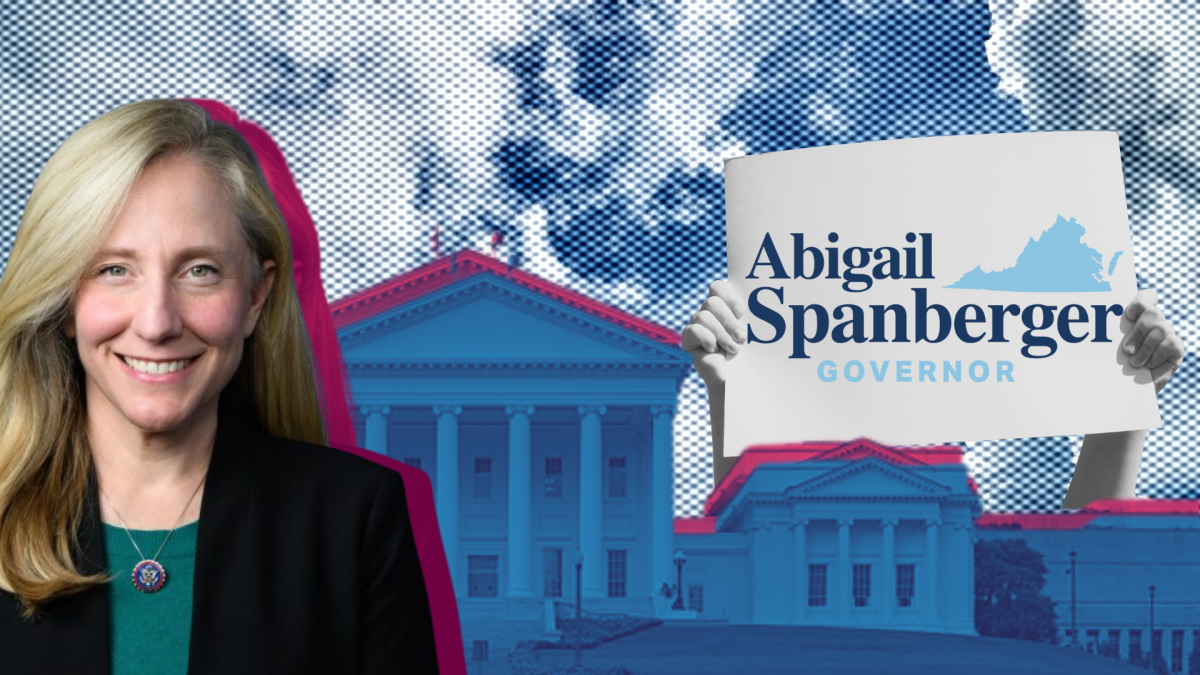
    Democrat Abigail Spanberger won the Virginia Gubernatorial election on November 4, with her victory being called almost immediately after the polls closed. Spanberger’s victory delivered a potent repudiation of President Trump’s policies after a campaign laser-focused on attacking them. The former CIA officer and three-term Congresswoman, who entered politics in the 2018 Democratic wave, defeated her Republican opponent, Lieutenant Governor Winsome Earle-Sears, in a race that drew national attention as an early test of voter sentiment toward the Trump administration. At 46, Spanberger will be Virginia’s first female governor, following a streak of 65 men who have served in that office since Virginia became part of the US in 1788. Spanberger replaces popular outgoing Republican Governor Glenn Youngkin, who won in 2021 with 50.6% of the vote to Democrat Terry McAuliffe’s 48.7% but cannot seek consecutive re-election.

    Governor-elect Abigail Spanberger, a pragmatic centrist who has bucked her party on occasion, voting against Nancy Pelosi for House speaker in 2019 and criticizing President Joe Biden as too progressive in 2021, cultivated a maverick image that helped her outrun a battered Democratic brand. Spanberger’s theme of “affordability” addressed rising costs for housing, utilities, pharmaceuticals and economic uncertainty from Trump’s tariffs and federal layoffs, while she harnessed anger over cuts to the federal workforce that disproportionately hit Virginia, home to around 320,000 federal workers and hundreds of thousands of contractors. On the campaign trail, she argued that federal layoffs, cutbacks by President Donald Trump’s Department of Government Efficiency (DOGE), tariffs and the federal shutdown amounted to an attack on the state’s economy, pitching herself as a way for voters to push back. “We need a governor who will recognize the hardship of this moment, advocate for Virginians, and make clear that not only are we watching people be challenged in their livelihoods and in their businesses and in communities, but Virginia’s economy is under attack,” she said during a late-October bus tour stop. Backed by national Democrats eyeing a 2026 midterm boost, including a campaign appearance by former President Barack Obama and heavy DNC spending, Spanberger raised nearly twice as much money as Winsome Earle-Sears, held double-digit leads in final polls and ran a surgical effort that scared off primary rivals, resisting calls for new ideas in favor of her 2018 playbook of Trump opposition.

    At her jubilant election night watch party, where House Speaker Don Scott shouted, “Y’all ready to witness history tonight?“, Abgail Spanberger struck a bipartisan tone in her victory speech, praising Winsome Earle-Sears and pledging to serve all Virginians in a departure from President Donald Trump’s with-me-or-against-me ethos. She touched on the milestone for their three daughters, recounting her husband’s words: “Your mom is going to be the governor of Virginia—I can guarantee you that those words have never been spoken before.” She took one swipe at the administration, declaring, “Virginia’s economy doesn’t work when Washington treats our Virginia workers as expendable. And to those across the Potomac who are attacking our jobs and our economy, I will not stand by silently.” As Congresswoman Jennifer McClellan put it, “Virginians, they see the impacts of what’s happening in Washington in real time and are looking for state leaders who are going to fill in those gaps and address that harm.”

    Winsome Earle-Sears, a Jamaican immigrant who became a US Marine and small business owner, portrayed herself as the American dream incarnate and pledged allegiance to President Donald Trump despite his meager late endorsement and minimal help for her cash-strapped campaign. She vowed to extend Glenn Youngkin’s business-friendly policies, accused Abigail Spanberger of supporting Biden-era moves and attacked her on transgender rights, claiming they threatened girls’ safety in school bathrooms and locker rooms. “Love is not having my daughter having to be forced to undress in a locker room with a man. That’s not love,” she said at an October rally. “Love is making sure that our girl children have opportunities in sports and are not forced to play against biological males.”

    The race was jolted in its final weeks by the government shutdown, which both sides blamed on the other and shadowed early voting; a Democratic push to redistrict congressional maps for 2026 midterms favoring their candidates amid Trump’s similar efforts elsewhere; and a scandal over text messages from Democratic attorney general candidate Jay Jones, who hypothetically described shooting a Republican lawmaker. Spanberger denounced the messages, but Earle-Sears faulted her for not demanding Jones drop out. Glenn Youngkin prioritized re-electing Republican Attorney General Jason Miyares over bolstering Winsome Earle-Sears, donating only a fraction of his 2023 General Assembly spending to her effort. Despite the uproar, Jones defeated Miyares in the key post, enabling Virginia to join blue-state lawsuits against Trump. Separately, Democrat Ghazala Hashmi won the lieutenant governor race, becoming the first Muslim woman elected to statewide office in America after a low-profile campaign with few appearances and no debate against Republican talk-show host John Reid, though she trailed Spanberger amid her party’s uneven performance elsewhere.

  • California Voters Approve Democratic-drawn Congressional Map as National Redistricting Battle Spreads

    California Voters Approve Democratic-drawn Congressional Map as National Redistricting Battle Spreads

    California voters have approved a new congressional map drawn by state Democrats on November 4. This gives the party the chance to gain up to five House seats in the 2026 midterm elections and counter Republican redistricting efforts in other states. The approval of the ballot measure, known as Proposition 50 or the Election Rigging Response Act, allows California Democrats to temporarily circumvent the independent commission that typically controls the redistricting process and enact a more partisan map. The green light from voters will help Democrats limit, but not eliminate, the political disadvantage they face in the 2026 elections after Republicans in several states, most notably Texas, redrew maps this year to boost their party.

    In Texas, the Republicans hope to gain an additional five House seats under new district lines. Republicans in Missouri and North Carolina have passed maps designed to net the party a new seat in each state. A mandatory redraw in Ohio could also benefit Republicans. President Donald Trump has continued to push Republican-led states like Indiana and Kansas to help shore up the party’s narrow House majority. While some Democratic governors and lawmakers are trying to redraw their maps as well, they face additional legal and procedural hurdles that are present in red states because many of them ceded the power to redistrict in recent years to independent or bipartisan commissions.

    California Governor Gavin Newsom pushed hard for the Democrats’ redistricting plan, accusing Trump and Republicans of “rigging” the midterm elections with their unusual decision to redraw congressional maps for explicit partisan gain outside the regular decennial cycle linked to the census. The flurry of ads blanketing the state in support of the measure underscored that point. “Donald Trump is out of control, imposing illegal tariffs that hurt our economy and denying disaster aid to California families. Now he’s attempting an unprecedented power grab to steal congressional seats and rig the 2026 election. But we can stop him,” a narrator says in one of the major ads from a group supporting a yes vote on Prop 50. “Prop 50, the Election Rigging Response Act, thwarts Trump’s scheme. Prop 50 levels the playing field in the midterms and gives voters the power to check Trump.” There has been almost $100 million in contributions and ad spending in the race, according to campaign finance reports and data from AdImpact, a political ad tracker.

    Declaring victory on November 4, California Governor Gavin Newsom framed the result as part of a strong night for Democrats across the board and a blow to President Donald Trump. “What a night for the Democratic Party, a party that’s in its ascendency, a party that’s on its toes, no longer on its heels. From coast to coast, from sea to shining sea,” Newsom said. “We’re proud here in California to be part of this narrative this evening. We’re proud of the work that the people of California did tonight to send a powerful message to a historic president. Donald Trump is an historic president; he is the most historically unpopular president in modern history.”

    While Republicans began saber-rattling and promised to go toe-to-toe with the Democratic efforts, the energy and spending for the campaign to defeat the ballot initiative fizzled down the stretch. The two sides were in rough parity on spending on the airwaves in the first month after the election was announced, $16 million to $17 million on either side. Then the yes side spent $63 million on ads in the final six weeks, compared with less than $16 million from the no side. The intensity of the no side’s spending waned in the final weeks, but it had prominent backers, including former Governor Arnold Schwarzenegger, a Republican. “California voters established an independent commission led by citizens to stop rigged elections. Prop 50 cancels this historic reform, putting the politicians back in charge,” the narrator says in an ad featuring Schwarzenegger calling on voters to cast no votes to “protect” democracy.

    California already sends 43 Democrats and nine Republicans to Congress, but multiple nonpartisan analyses of the new maps show that the new lines could allow Democrats to flip as many as five seats by making it harder for Republican Congressmen Doug LaMalfa, Darrell Issa, Ken Calvert, Kevin Kiley, and David Valadao to win re-election. The outcome is far from certain, and most of those Republican lawmakers have won tough races before, but redrawing the lines to add more Democratic voters in their districts will make it tough sledding next fall, especially because the party in power typically faces political headwinds in the midterms.

  • Zohran Mamdani Wins New York City Mayoral Election

    Zohran Mamdani Wins New York City Mayoral Election

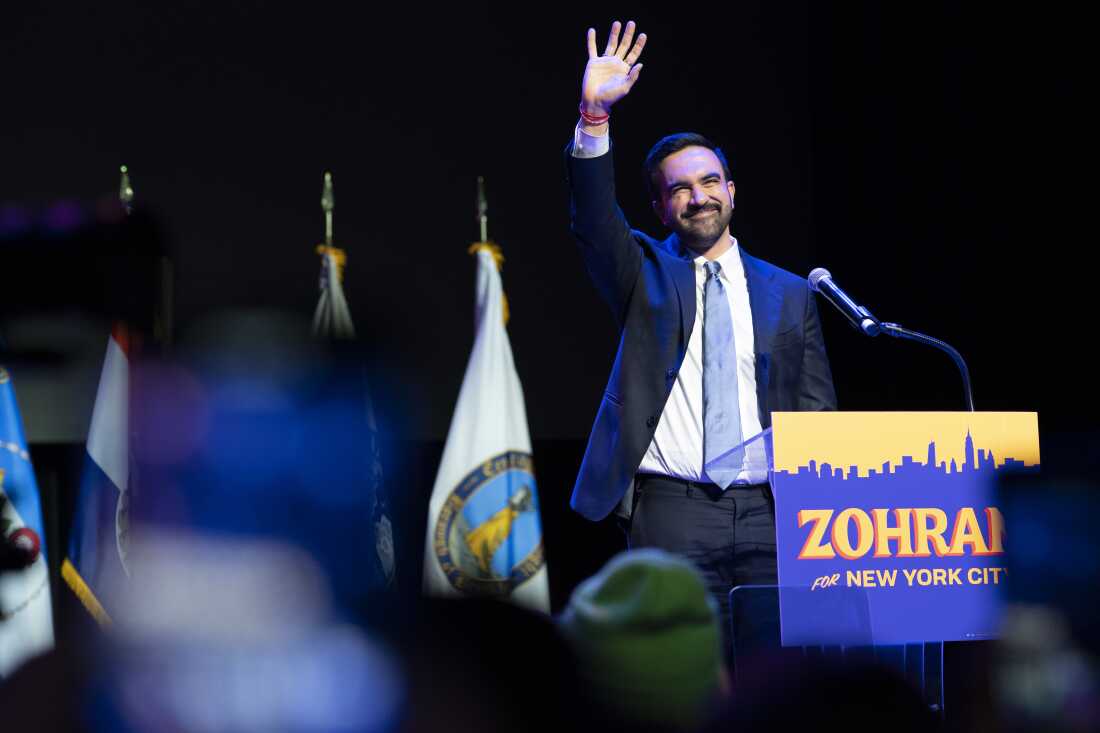
    Zohran Mamdani was elected mayor of New York on November 4, capping a stunning ascent for the 34-year-old, Democratic Socialist-aligned state lawmaker who promised to transform city government to restore power to the working class and fight back against a hostile Trump administration. In a victory for the Democratic Party’s progressive wing, Mamdani defeated former Governor Andrew Cuomo and Republican Curtis Sliwa. With his commanding win, Mamdani will etch his place in history as the city’s first Muslim mayor, the first of South Asian heritage, and the first born in Africa. He will also become New York’s youngest mayor in more than a century when he takes office on January 1, 2026. “The conventional wisdom would tell you that I am far from the perfect candidate. I am young, despite my best efforts to grow older. I am Muslim. I am a democratic socialist. And most damning of all, I refuse to apologize for any of this,” Mamdani declared to a roaring crowd at his victory party. He cast his win as a boon for blue-collar workers struggling to get by. “New York, tonight you have delivered a mandate for change,” he said, vowing to “wake up each morning with a singular purpose: To make this city better for you than it was the day before.”

    More than 2 million New Yorkers cast ballots in the contest, the largest turnout in a mayoral race since the 1969 Mayoral Election, which pitted incumbent Liberal Republican John Lindsay against Democrat Mario Procaccino and Conservative Party candidate John Marchi. With roughly 90% of the votes counted, Mamdani held an approximately 9 percentage point lead over Andrew Cuomo. His unlikely rise gives credence to Democrats who have urged the party to embrace more progressive candidates instead of rallying behind centrists in hopes of winning back swing voters who have abandoned the party. He has already faced scrutiny from national Republicans, including President Donald Trump, who have eagerly cast him as a threat and the face the Democratic Party. Trump has repeatedly threatened to cut federal funding to the city and even take it over if Mamdani won.

    Zohran Mamdani’s grassroots campaign centered on affordability, and his charisma spoiled former Governor Andrew Cuomo’s attempted political comeback. The former governor, who resigned four years ago following allegations of sexual harassment that he continues to deny, was dogged by his past throughout the race and was criticized for running a negative campaign. Mamdani will also have to deal with President Donald Trump, who not only threatened retribution against the city but also suggested he might try to arrest and deport Mamdani if he won. Mamdani was born in Uganda, where he spent his early childhood, but was raised in New York City and became a US citizen in 2018. In his speech, Mamdani addressed Trump head on. “New York will remain a city of immigrants, a city built by immigrants, powered by immigrants and as of tonight, led by an immigrant,” he said, adding that, “If anyone can show a nation betrayed by Donald Trump how to defeat him, it is the city that gave rise to him.” President Trump appeared to acknowledge Mamdani’s challenges, posting “…AND SO IT BEGINS!” on his Truth Social site.

    Zohran Mamdani began his campaign as a relatively obscure state lawmaker, little known even within New York City. Going into the Democratic primary, Andrew Cuomo was the presumed favorite, with near-universal name recognition and deep political connections. Cuomo’s chances were buoyed further when incumbent Mayor Eric Adams bowed out of the primary while dealing with the fallout of his now-dismissed federal corruption case. But as the race progressed, Mamdani’s natural charm, catchy social media videos, and populist economic platform energized voters in the notoriously expensive city. He also began drawing outside attention as his name recognition grew. Mamdani trounced Cuomo in the primary by about 13 points.

    Andrew Cuomo then relaunched his campaign as an independent candidate for the general election, vowing to hit the streets with a more energetic approach. However, much of his campaign continued to focus on attacking opponents. In the race’s final stretch, he claimed Zohran Mamdani’s election would make Jews feel unsafe. Meanwhile, supporters packed Mamdani’s rallies, and he held whimsical events, including a scavenger hunt and a community soccer tournament. Cuomo also juxtaposed his deep experience in government with Mamdani’s less than five years in the state Legislature. But the former governor also faced his own political baggage, as his opponents dredged up the sexual harassment allegations that led to his resignation, as well as his decisions during the early days of the COVID-19 pandemic.

    Republican nominee Curtis Sliwa, the creator of the Guardian Angels crime patrol group, also had his moments, mostly in the form of funny quips on the debate stage, but had difficulty gaining traction as a Republican in an overwhelmingly Democratic city. He conceded the race about a half hour after the polls closed, wishing Zohran Mamdani “good luck because if he does well, we do well.” But he also issued a warning: “If you try to implement socialism, if you try to render our police weak and impotent, if you forsake the people’s public safety, we will become the mayor-elect and his supporters’ worst enemies.”

  • Mikie Sherrill Wins New Jersey Governor’s Race in Decisive Victory Over Jack Ciattarelli

    Mikie Sherrill Wins New Jersey Governor’s Race in Decisive Victory Over Jack Ciattarelli

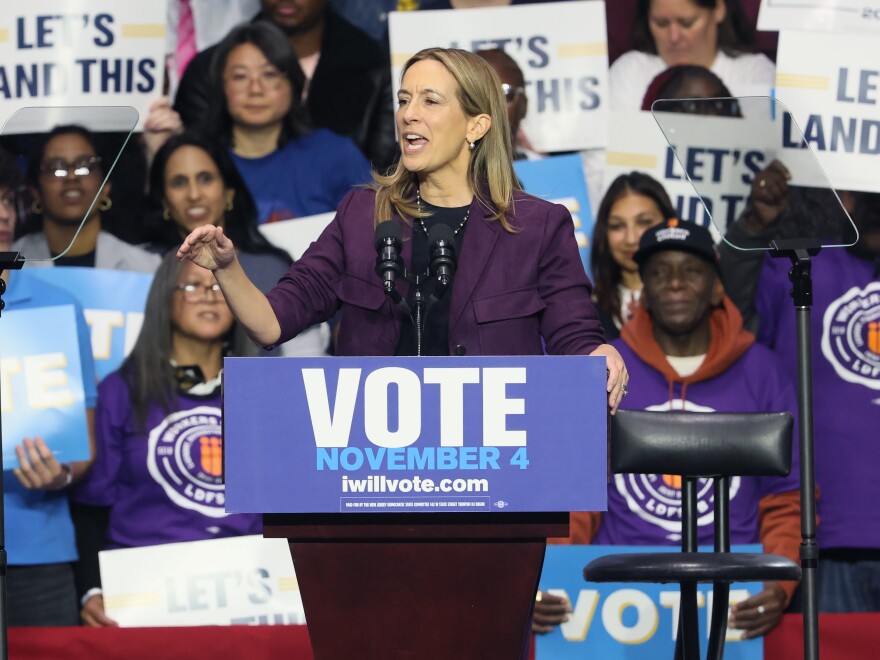
    Congresswoman Mikie Sherrill, the Democratic candidate for governor of New Jersey, catapulted to victory on November 4 on the strength of her opposition to President Dona;d Trump after a hard-fought race against Jack Ciattarelli, a Republican whose energetic campaign could not outrun national politics in a liberal-leaning state. Congresswoman Sherrill, a former Navy helicopter pilot and federal prosecutor, will become New Jersey’s 57th governor and its second female leader. She was leading Ciattarelli, a former state lawmaker running his third race for governor, by a resounding 13 points with more than 95 percent of the vote counted, according to a tally by The Associated Press.

    “Good government doesn’t just manage problems, it solves them,” Governor-elect Mikie Sherrill told supporters gathered in East Brunswick for a victory party. “I know not everyone voted for me,” she added, “but I’m working for everyone — every single one of you.” She said Jack Ciattarelli called her soon after the results were announced, and she recognized him for “stepping up.” Ciattarelli, in a brief concession speech, told his supporters that “life is not always fair.” “Nobody is more disappointed than I am in the result,” he said. “It is my hope that Mikie Sherrill has heard us, in terms of what needs to be done to make New Jersey that place where everybody wants to be to achieve their dreams again.” The race was largely defined by President Donald Trump, who made surprising inroads last November in New Jersey and who had endorsed Jack Ciattarelli. But in a state where Democrats outnumber Republicans by roughly 850,000 voters, the alliance always carried risk.

    Senator Cory Booker predicted that Mike Sherrill’s win would ripple far beyond New Jersey. “The whole nation will see,” said Booker, the state’s senior senator, “that we can’t stop the momentum.” Governor-elect Sherrill will now have to at least coexist with the president, who has shown a willingness to punish his foes. That was an argument President Donald Trump raised in the final weeks of the campaign, in a telephone rally he held for Jack Ciattarelli. “He’s got a friend in the White House,” the President said during the call, “where she certainly doesn’t.”

    Governor-elect Mikie Sherrill has pledged to freeze the state’s high electricity costs by declaring a state of emergency on her first day in office in January. She plans to get cellphones out of classrooms and hire more mental health counselors for schools. Using data gathered through a new “social media addiction observatory,” she has said, her administration will take on digital platforms that use algorithms to lure in children and teenagers.

    In the 2021 campaign, Jack Ciattarelli lost by three points to Governor Phil Murphy, a Democrat barred by term limits from running for re-election. He tried hard during this race to capitalize on the stunning gains President Donald Trump made in Black and Latino communities, campaigning aggressively in churches and at cultural events. Ciattarelli develped a reputation as a moderate Republican during his time on the Somerset County board of Freeholders (2007-2011) and in the New Jersey General Assembly (2012-2018), and until this campaign he had kept President Trump at arm’s length. But after the president’s stronger-than-expected showing last year in some of New Jersey’s most diverse communities, Ciattarelli pivoted, embracing the president and some of his policies, even giving Trump an “A” grade in the final debate.

    Jack Ciattarelli’a platform was focused heavily on pocketbook issues like taxes and energy costs. But Ciattarelli also leaned into issues popular with the far-right flank of the party, including publicly funded school vouchers, opposition to transgender rights, vaccine skepticism and the deportation of migrants. On the stump and in ads, Mikie Sherrill’s campaign regularly reminded voters of Ciattarelli’s cozy relationship with President Donald Trump. Then, last month, President Donald Trump said he was terminating funding for the construction of a $16 billion train tunnel considered vital to the country and to New Jersey’s 200,000 commuters, handing the Sherrill campaign an unexpected gift. “With less than 19 days until this election, the president’s punched him in the face like this. That’s pretty telling,” Sherrill said the next day, highlighting the ephemeral value of Ciattarelli’s partnership with a mercurial president. It also gave her a way to change the subject from a controversy centered on why she had been barred from participating in her 1994 graduation ceremony at the US Naval Academy. She has said that she could not participate because she had failed to “turn in” classmates caught up in a cheating scandal. But polls began to narrow as Ciattarelli publicly challenged that explanation and sought to undermine her credibility, denting a central pillar of her campaign: that nine years in the Navy had prepared her to lead the state.

    Polls proved largely inaccurate. Most showed Mikie Sherrill leading throughout the race, but few had her winning by a double-digit margin. Only New Jersey and Virginia hold races for governor the year after a presidential contest, and the results are considered bellwethers heading into next year’s pivotal midterm elections, which will determine party control of Congress. In Virginia, former Congresswoman Abigail Spanberger beat her Republican opponent, Lt. Governor Winsome Earle-Sears, by 15 points; Spanberger will be the first woman to serve as governor of the state.

    Ken Martin, the chairman of the Democratic National Committee who came to New Jersey repeatedly during the campaign, said victories in both states represent “the beginning of our Democratic resurgence” and proved that voters are “tired of watching the G.O.P. turn our beloved country into a playground for billionaires.” “Tonight isn’t only a warning sign to Republicans,” he said in a statement, “it’s an affirmation of the vision that Democrats have presented to voters in New Jersey and across the country.”

    New Jersey’s race was always seen as far more competitive. And Mikie Sherrill’s campaign had become a cause célèbre for Democrat-aligned national groups, which committed roughly $25 million to help her win. An array of prominent Democratic leaders also traveled to New Jersey to campaign with Sherrill in the final weeks of the race. On November 1, an appearance by former President Barack Obama drew thousands of party faithful to a large gymnasium at a community college in Newark. He energized the crowd by warning, as Sherrill has, about the threat posed by President Donald Trump. “We’ve got a commander in chief who has fired decorated military officers because he thinks they might be more loyal to the Constitution than they are to him,” Obama said. “He’s deployed the National Guard in American cities and claimed to be stopping crime waves that don’t actually exist,” he added. “We’ve got masked ICE agents pulling up in unmarked vans and grabbing people off the streets.” “Don’t boo,” Obama said repeatedly as the crowd roared. “Go vote.”

    More than 3.1 million New Jersey voters cast ballots, 500,000 more than in 2021. Jack Ciattarelli’s level of support this year actually exceeded his performance in 2021 by more than 100,000 votes, but he still fell short as far more voters beat a path to the polls. “I’m not retiring to Florida. We fight for another day,” Ciattarelli said to loud cheers. “You’ll find me right here on the streets of Central Jersey, or maybe at one of my favorite places on the beach in Surf City.”

    The contest was the most competitive race for governor of New Jersey since 2009, when Chris Christie, a Republican, unseated the incumbent governor, Jon Corzine, a wealthy Democrat. It was also extraordinarily expensive. Mikie Sherrill and Jack Ciattarelli won their party’s nominations after spirited primaries. The state’s Election Law Enforcement Commission reported last week that spending by the two candidates and groups supporting their candidacies had already exceeded $82 million. In winning, Sherrill bucked a six-decade historical trend. Not since 1961 had either party held onto the governor’s office for three consecutive terms.

  • Democratic Support Grows for Zohran Mamdani in NYC Mayoral Race

    Democratic Support Grows for Zohran Mamdani in NYC Mayoral Race

    Zohran Mamdani, the Democratic nominee for mayor of New York City, is gaining significant endorsements from party leaders as concerns mount over President Donald Trump’s attempts to influence the race. Mamdani, a state assemblyman and democratic socialist, secured the Democratic primary victory in June 2025, defeating former Governor Andrew Cuomo, who is now running as an independent.

    Prominent Democrats, including Congressman Jamie Raskin of Maryland and Congressman Pat Ryan of New York, have formally endorsed Zohran Mamdani. Congressman Raskin, a leading figure in countering President Donald Trump’s influence, praised Mamdani as a “significant and inspiring leader” with a “Rooseveltian” vision, comparing him to former President Franklin D. Roosevelt for his commitment to the working and middle classes. Ryan, motivated by his opposition to former New York Governor and Mayoral Candidate Andrew Cuomo, described Mamdani as a candidate “for the people,” contrasting him with Cuomo’s self-serving record. Even moderates within the Democratic party such as former Chicago Mayor Rahm Emanuel and New York Congressman Ritchie Torres have expressed support. Emanuel, after meeting Mamdani, noted his preparedness to govern effectively, while Torres called him “impressively knowledgeable and substantive.” Left-leaning Democrats, including Senators Bernie Sanders and Elizabeth Warren, and members of Congress such as Alexandria Ocasio-Cortez, Pramila Jayapa, and Jerrold Nadler, have also backed Mamdani, citing his focus on cost-of-living issues.

    Despite Zohran Mamdani’s primary win, some top New York Democrats, including House Minority Leader Hakeem Jeffries, Senate Minority Leader Chuck Schumer, Senator Kirsten Gillibrand, and Governor Kathy Hochul, have not yet endorsed him. Schumer met with Mamdani recently but declined to commit, while Jeffries indicated he would soon clarify his stance. Hochul emphasized the need for pragmatic governance, reflecting her “staunch capitalist” perspective, given New York City’s role as a global financial hub.

    President Donald Trump’s efforts to tilt the race toward Andrew Cuomo, including offering positions to Mayor Eric Adams and Republican candidate Curtis Sliwa to drop out, have galvanized Democrats. Party members across the ideological spectrum are urging unity to counter Trump’s influence. Congressman Jamie Raskin stressed the importance of Democratic solidarity, saying, “Democrats must stand together to defend not only our party but our constitution and our country.” Congresswoman Alexandria Ocasio-Cortez echoed this, emphasizing the party’s responsibility to support its nominees post-primary.

    Some moderate Democrats, like Conresswoman Laura Gillen and Conressman Tom Suozzi from Long Island, worry that Zorhran Mamdani’s progressive stance could harm the party in the 2026 midterms by fueling Republican narratives painting Democrats as socialists. However, Mamdani’s strong lead in recent polls, particularly among young voters, suggests his appeal could energize the Democratic base. A New York Times/Siena University poll showed him commanding the race, a critical factor as Democrats seek to regain ground lost to Donald Trump in 2024.

    Since his nomination, Zohran Mamdani has engaged in extensive outreach, meeting with figures like former President Barack Obama and Rahm Emanuel to discuss governance and policy priorities. His ability to connect with both moderates and progressives has impressed many, with Emanuel noting his readiness to “hit the ground running” and Torres praising his intellectual rigor.

    As the mayoral race enters its final stretch, Zohran Mamdani’s campaign is gaining momentum, but the lack of endorsements from key New York Democrats remains a challenge. Meanwhile, Republicans, including Florida Governor Ron DeSantis, are using Mamdani’s candidacy to attack Democrats nationwide. Despite this, supporters like Congressman Jamie Raskin remain steadfast, advocating for party unity: “When progressives beat moderates in the primary, we want the moderates to support the progressives in the general election.”

  • New Jersey Gubernatorial Race Heats Up as Jack Ciattarelli Closes Gap on Mikie Sherrill

    New Jersey Gubernatorial Race Heats Up as Jack Ciattarelli Closes Gap on Mikie Sherrill

    The race for New Jersey’s next governor has tightened dramatically, with Republican Jack Ciattarelli now trailing Congresswoman Mikie Sherrill by a mere two points, according to a recent poll conducted by National Research Inc. from September 8 to 10, 2025. The survey, which included 600 likely voters and carries a margin of error of plus or minus 4 percent, shows Sherrill leading Ciattarelli 47 to 45 percent, signaling a statistical dead heat as the November 4 election approaches. This development underscores the high stakes of the contest, as New Jersey, alongside Virginia, is one of only two states electing a governor this year, making it a critical barometer for national political trends.

    New Jersey has long been a Democratic stronghold, with incumbent Governor Phil Murphy nearing the end of his second term. However, the latest poll reveals a growing sense of unease among voters, with 57 percent of likely voters expressing the belief that the state is on the wrong track. Among these dissatisfied voters, a striking 78 percent attribute their concerns to Murphy’s policies, which they argue have made New Jersey more expensive and less safe. Only 14 percent point to President Donald Trump as a source of their discontent. This pessimism, described by the poll as the most severe to date, could pose a significant challenge for Democrats as they navigate the final weeks of the campaign.

    Jack Ciattarelli, a former state assemblyman, has gained traction among key demographic groups, including unaffiliated voters, working-class and middle-class voters, and those who participated in the 2021 gubernatorial election, which he narrowly lost to Phil Murphy. His appeal to these swing groups has contributed to the tightening race, marking a shift from earlier polls. For instance, a Quantus Insights poll conducted from September 2 to 4 showed Sherrill leading by a wider margin of 47 to 37 percent, with a margin of error of 4.3 percent and 95 percent confidence. Another survey by Tipp/League of American Workers, conducted from August 25 to 28, had Sherrill ahead by seven points, highlighting the rapid momentum Ciattarelli has gained in recent weeks.

    The significance of this race extends beyond New Jersey’s borders. As one of only two gubernatorial elections in 2025, it offers a rare glimpse into voter sentiment in an off-year election, which typically sees lower turnout and less enthusiasm compared to midterm or presidential election cycles. A Ciattarelli victory could signal challenges for Democrats heading into the 2026 midterms, particularly if voter dissatisfaction with Democratic leadership persists. Political observers note that while presidential policies and party performance often shape midterm outcomes, New Jersey’s off-cycle election may serve as an outlier, driven more by local concerns than national trends.

    Commentators have weighed in on the dynamics of the race. Peter Lumaj, a former Republican US Senate candidate, said that Jack Ciattarelli’s strong polling is unsurprising to political strategists. He pointed to shifting voter registration trends, a narrowing Democratic advantage, and a robust GOP campaign capitalizing on frustration with the current administration. Lumaj also highlighted the influence of Donald Trump and historical voting patterns as factors bolstering Ciattarelli’s chances. Conversely, former New Jersey Republican Governor Christine Todd Whitman, who endorsed Mikie Sherrill, emphasized the Democratic candidate’s independence and readiness to lead. Whitman, who served two terms as governor, expressed concern about Ciattarelli’s alignment with Trump, stating that his reluctance to diverge from the President’s positions does not serve New Jersey’s needs. She praised Sherrill’s experience as a former Navy helicopter pilot and her track record in Congress, describing her as an independent voice accountable only to the people of New Jersey.

    With less than 60 days until the election, both candidates face a compressed timeline to make their case to voters. Mikie Sherrill, leveraging her military background and congressional experience, is positioning herself as a steady and independent leader capable of addressing the state’s challenges from day one. Jack Ciattarelli, meanwhile, is capitalizing on voter frustration with rising costs and safety concerns, appealing to a broad coalition of swing voters who may determine the outcome. As the campaign enters its final stretch, the race remains too close to call, promising an intense and closely watched battle for the governor’s mansion.

    https://youtu.be/p2rfDY09bG8?si=6-lqexxXOuCEEmlc