Readers of the blog know that I am an enthusiast of recorded sound. Last month, I was excited to attend the annual conference for the Association of Recorded Sound Collections (ARSC). The conference took place at the Radisson Hotel in downtown Baltimore, Maryland from May 9-12, 2018. Here is an overview of the conference events:
The conference kicked off with two workshops “Analog Tape Playback,” and “People, Processes & Technology.” “Analog Tape Playback” was hosted by George Blood, a well-known sound engineer based in Philadelphia, and “People, Places, Technology” was hosted by Curtis Peoples, the head of the ARSC Education & Training Committee. Both workshops looked at some of the challenges presented to archivists when dealing with fragile sound carriers such as analog tape, cylinder recordings, wire recordings, and Acetate (lacquer) disc recordings (which were used by radio stations, record studios, and for amateur recordings from the mid-1930s until as late as the 1980s). After the workshops came the newcomer orientation (in which I participated during my first conference back in 2015) and the opening reception. At the opening banquet, I was able to meet up with many well-known collectors, sound archivists, and recording engineers whom I have become friendly with during my 10+ years as a record collector.
“Baltimore Sounds” was one of the presentations given on the first full day of the ARSC conference.
The first full day of the conference began with the opening address by Matthew Barton, the current president of ARSC followed by three presentations. The first presentation was by David Neal Lewis (the head of the ARSC Award Committee), who discussed the life and career of John Charles Thomas, a Baltimore-born tenor who recorded extensively for labels such as Vocalion, Victor, and International Sacred between 1920 and 1954. The next presentation was by Patrick Feaster (the former president of ARSC and specialist in the preservation of the earliest recorded sound media), who discussed the career of W. O. Beckenbaugh, a Baltimore-based auctioneer best known for his comedic recordings of mock auctions made between 1890 and 1900 for Columbia, Berliner, and Victor. The final presentation was given by Joe Vaccarino, who discussed his book Baltimore Sounds and gave the audience a sampling of many of Baltimore’s top recording artists from the second half of the 20th Century.
Don Wilson, a Philadelphia- area collector, gave a presentation at ARSC discussing his efforts to duplicate, repair, and re-manufacture rare 78 RPM records.
Another highlight from the first full day of the conference was the technical sessions. The first technical session looked at the methods used by archivists to clean lacquer discs (which often face issues such as oxidation and buildup of steric and palmitic acids on their surfaces), as well as techniques used to transfer lacquer discs that get the most out of the recording. The next technical session featured three presentations. The first presentation was given by Don Wilson, a Philadelphia-area collector who developed a process to both repair and remanufacture 78 RPM records using silicone molding and modern chemistry techniques. The next two sessions explored the methodology for digitizing cylinder recordings and recent developments in machines used to transfer cylinder recordings.
After the presentations, two of the ARSC committees held their annual meetings. The first meeting was that of the technical meeting, which is headed by Bill Klinger, Marcos Sueiro Bal, and Brad McCoy. Following the technical committee session, a short question and answer period was held. Following the technical committee meeting was the discography committee meeting, which is headed by Michael Grey, a discographer known for his research into classical recordings made between 1925 and 1979 on both the 78 RPM and LP formats. Some of the topics discussed during the meeting were the ongoing progress of the International Bibliography of Discographies (IBD) project (which I am involved with), the need to develop a standard set of attributes that all discographies should have, and the merits of print discographies vs discographies in e-book form.
The next day of the conference began with a presentation discussing the evolution of Bluegrass music by Baltimore-area artists in the post-war era. The next sessions were perhaps the most enjoyable ones of the entire conference. The first one was by Filip Šír, who discussed his recent publication Grammar of Gramophone Record Labels: an Aid for Cataloguing Historical Records from 1900 to 1946, and how the use of such publications will ultimately help recorded sound researchers and collectors alike in their quest to document their recordings. Peter Laurence followed with a presentation discussing the history of discographies, the issues that have arisen for discographers due to the shift away from print discographies, and how the IBD project is helping to bring discographies into the digital age. The final presentation was given by Mike Biel, who discussed the history of record sleeves and the evolution of different sleeve designs by record labels such as Victor and Columbia from the early 1910s through the 1930s.
The poster sessions at the ARSC conference went over diverse subjects ranging from the IBD project to Indian 78 RPM recordings from the 1930s-1970s.
Technical topics dominated the afternoon sessions. Dave Cawley and George Blood discussed the development of a software monitoring system meant to improve the quality of digitization efforts and the steps that audio engineers are taking to overcome the rapid obsolescence and decay of the hardware that they use for the transfer of recordings. Following the technical presentations were the poster sessions. Filip Šír, Peter Laurence, and I displayed a poster that presented an overview of the IBD project and highlighted the progress that has occurred since the inception of the project nearly three years ago. Suresh Chandvankar (the secretary of the Society of Indian Record Collectors) presented a poster on the QC Series of 78 RPM records, which were pressed by the Indian government for various governmental departments between 1934 and 1970.
Picture from the ARSC conference record swap.
After the poster sessions, the collector’s roundtable/record swap meeting occurred. This year, many interesting items were on sale at the record swap, ranging from early Rock and Roll, Country, and Blue 78 RPM records, 16-inch radio transcription discs, and long out-of-print publications. I found numerous 78 RPM records to add to my collection and was also able to purchase over 30 16-inch transcription discs for an excellent price. Some of the records brought by collectors to discuss included early radio recordings dating back to as early as 1930, one-of-a-kind advertising records, and pre-war blues recordings that are extremely rare to find today even in worn condition.
The final day of the conference began with a presentation by Sammy Jones and Seth B. Winner discussing their efforts to get the best possible transfer of the infamous “War of the Worlds” radio broadcast from 1938 and the fact that previous efforts to transfer the broadcast were woefully incomplete, leaving out sections of the broadcast. Martin Grams Jr. followed with a presentation discussing recent research into old-time radio shows such as the Lone Ranger, Captain Midnight, and Jack Armstrong and the fact that past research into early radio shows was often inaccurate and left out key details behind early programming. The next session focused on three very different musical genres and artists. Dick Spottswood discussed the career of the Blue Sky Boys, a country music duo active from 1936 to 1975 and best known for hits such as Sunny Side of Life and Where the Soul Never Dies. Cary Ginell followed with a presentation on the life of Rostom “Ross” Bagdasarian, who is best known for hit recordings such as Witch Doctor and as the creator of the Alvin and the Chipmunks series of cartoons. ARSC President Matthew Barton ended the session with a presentation on Flo & Eddie, a comedic musical duo active during the 1960s and 1970s.
The final few sessions of the conference dealt with both Baltimore artists and how the recorded sound industry depicted African-Americans from the 1880s until the 1960s. Mark Atnip (a former sports broadcaster and private collector) gave a presentation discussing the limited number of recordings made by baseball star Babe Ruth between 1920 and 1948, as well as the history of baseball-themed 78 RPM recordings. Tim Brooks (the former ARSC President and expert in the field of media law) gave a discussion on the revival of the minstrel show between the 1910s and 1960s. The final session ended with a performance-lecture by Bill Doggett on race in early sound and its contemporary meanings in the issues of #BlackLivesMatter and the consequences of racial stereotyping that played out in the Tragedy of Freddie Gray. In his lecture, Doggett used multimedia in video and historical mp3s and spoken performance art to explore the intersections of blackness, recorded Minstrel comedy about black male criminality, and Freddie Gray.
Filip Šír was one of the many individuals who was recognized for their efforts during the ARSC awards banquet.
The conference ended with the annual business meeting and awards banquet. Several awards were presented to both ARSC attendees and non-attendees alike. One such award was given to Filip Šír for his work Recorded Sound in Czech Lands, 1900-1946, which documents the Czech sound industry from the turn of the century to the time in which the Czech record industry was nationalized by the government. The ARSC Distinguished Service award was given to David Lennick (a Canadian radio broadcaster) and Tim Brooks due to their commitment to the organization, as well as their efforts in improving the preservation of historic recordings.
All in all, the ARSC conference this year was a resounding success. I left the conference with newfound vigor to continue my efforts in the hobby of record collecting and recorded sound preservation. Additionally, I gained many new insights into many different areas of the recorded sound industry, ranging from best practices in preservation to the proper methods to document recordings in discographic publications.
As a follow-up on my post regarding record collecting as a hobby, here are five 78 RPM records from my extensive Record Collection These recordings represent a wide-array of musical genres and are considered to be some of the definitive classics of American popular music.
Blind Willie Johnson ((January 25, 1897 – September 18, 1945) was an American gospel blues singer and guitarist and evangelist. His Blues recordings made on Columbia Records from 1927 and 1930 display a combination of powerful singing, guitar skills, and originality that has influenced generations of musicians. Born to a poor sharecropping family in Southeastern Texas, Johnson began playing guitar at the age of five. Despite being blinded at some point in his life (either due to his mother throwing lye into his eyes during an argument or due to having viewed a partial solar eclipse visible over Texas in 1905), Johnson’s great talent and passionate singing style developed over the ensuing years and eventually reached the attention of recording executives at Columbia Records looking for talent for their series of “Race” records. In total, Johnson made about 30 recordings for Columbia Records between 1927 and 1930 and soon became one of the most popular Blues artists of the era. The start of the Great Depression and the subsequent decline in record sales wiped out much of Johnson’s audience.Throughout the 1930s and 1940s, Johnson continued to perform throughout Texas and retained a small following of fans. In 1944, his home in Beaumont, Texas burned down. With nowhere else to go, Johnson continued to live in the ruins of his home. Due to the toxic environment surrounding him, Johnson contracted Malarial Feaver but was unable to receive proper medical care due to his race. Over the next year, Johnson’s conditioned all but worsened and he died on September 18, 1945 at the age of 48.
Recorded at his first session in Dallas, Texas on December 3, 1927, “Dark Was The Night, Cold Was The Ground” is rightfully considered to be one of the greatest recordings of the 20th Century. The recording consists of over three minutes of Johnson’s unique and passionate guitar playing. His melancholy, gravel-throated humming of the guitar part creates the impression of “unison moaning”, a melodic style common in Baptist churches where, instead of harmonizing, a choir hums or sings the same vocal part, albeit with slight variations among its members. Although Johnson’s vocals are indiscernible, it seems that subject of the song is the crucifixion of Jesus and the pain that he supposedly faced. These factors make Dark Was The Night, Cold Was The Ground” one of the most influential Blues recordings of all time and have mad the recording earn a legendary status despite being recorded nearly 90 years ago. For example, Dark Was The Night, Cold Was The Ground” was one of the few non-classical recordings placed on the Voyager Golden Record, an LP recording placed on the Voyager spacecraft in 1977. Additionally, contemporary blues artists continue to look towards Blind Willie Johnson as an inspiration for their own recordings.
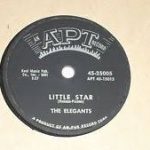
2. “Little Star” by the Elegants (APT #25005, 1958)
The Elegants were a white Doo-Wop that formed in New York City in 1956. Its leading members were Vito Picone, Arthur Venosa, Frank Tardogno, Carman Romano and James Mochella. They adopted the name “The Elegants” after a member saw a billboard ad for Schenley’s Whiskey, which claimed it was the “liquor of elegance.” After several live auditions and negotiations with several record labels. The Elegants were signed to APT Records, a subsidiary of the ABC-Paramount label. After several recording sessions in 1958-59, the Elegants went on tour throughout the US, Canada, and Mexico and remained a popular group until the early 1960s.
“Little Star” is one of the products of the Elegant’s first session with APT Records and is universally considered to be one of the greatest Doo-Wop recordings and as one of the classic recordings of the entire decade of the 1950s. It has fantastic vocal harmonies and is an embodiment of the overall spirit of American popular music of the late 1950s. “Little Star” sold 80,000 copies in New York within the first few days of its release and became #1 almost immediately. Ultimately, “Little Star” sold some 2.5 million copies and remained at the top of the charts for 4 weeks in the late Summer of 1958 in addition to being covered by a multitude of artists during the late 1950s and early 1960s.
Like many Blues artists who recorded prior to the 1950s, very little is known about Geeshie Wiley despite the fact that many critics feel that she is arguably the greatest female blues singer and musician to have ever recorded. Based on the little information that we known, Geeshie Wiley was born in Oxford, Mississippi around 1908 and died in Checotah, Oklahoma sometime after 1955. In early 1930, Wiley traveled with the Blues singer and guitarist Elvie Thomas (1891-1979) to Wisconsin to make recordings for the legendary Paramount Records label. In March of 1931, Wiley and Thomas returned to the Paramount studios in Wisconsin and recorded “Pick Poor Robin Clean” and “Eagles on a Half.” Due to the fact that these recordings were made at the depth of the Great Depression and represented a then-obscure musical genre not widely accepted by the mainstream white audience, they sold very poorly and were not widely advertised. After her two recording sessions, Wiley fell back into obscurity and likely never recorded again.
Geeshie Wiley’s 1930 recording of Last Kind Words Blues is one of the holy grails for 78 RPM record collectors and a masterpiece of pre-war Blues recordings. The lyrics of the recording concern a man setting his affairs in order before heading off to World War One and either his wife or daughter’s journey to find him. The vocal melody is a traditional blues lament, but Wiley’s cadence is unique, coming to rest at odd moments before hollering out her conclusions. Her only accompaniment is a minor-key guitar arrangement. The main strengths of the recordings are its deep symbolism and passionate singing on the part of Wiley. The recording evokes images of deep melancholy and feelings of regret and unfinished business. Additionally, the deep symbolism and mentioning of nature created the impression that everything on Earth is inter-connected and that all people have a shared level of consciousness. These factors, in addition to the very small original pressing run, has made “Last Kind Words Blues” the rarest and most desirable of all pre-war Blues recordings (less than 10 copies are known to exist and several collectors feel that even an unplayable copy of the recording is worth in the six-figure range).
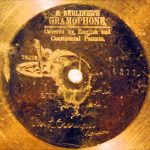
4. “Smokey Mokes” by Vess Ossman (Berliner #0611, 1899)
Vess Ossman (August 21, 1868-December 7, 1923), was the third banjoist to record commercially (Will Lyle in 1889 and W.S. Grinstead in 1891 were the first). Born in upstate New York, Ossman began playing banjo sometime in the 1880s and was named “Banjo Champion of America” in January of 1890. This fame made Ossman an attraction to the early record labels, who desperately needed talent for the growing recorded sound industry. Ossman made his first commercial recordings for Edison Records in 1893 and soon became one of the nations most popular recording artists, having several “Number One” hits during the 1890s. Ossman recorded for diverse record labels such as Edison, Columbia, Berliner, Victor, Zonophone, and many others during his 24-year career. By the late 1910s, Ossman began recording less an less, partially due to the growing popularity of Fred Van Eps, a rival banjo recording artist who viewed Ossman as his main source for musical inspiration (Van Eps recorded from 1897 up until his death at the age of 81 in 1960). Ossman made his last recordings for Victor Records in 1917 and died of a heart attack in 1923 at the age of 55.
Recorded during his October 18, 1899 Berliner session, “Smokey Mokes” is an energetic ragtime tune originally written by Abe Holzmann in 1898 and recorded by numerous artists on all labels between 1898 and 1902. The tune itself is very upbeat and fast-paced, perhaps foreshadowing the emergence of Jazz as a popular music genre some 15 years later. Vess Ossman’s advanced banjo skills are ever-present in this recording and come through quite well despite the primitive recording techniques of the time. Overall, “Smokey Mokes” is a fantastic recording that is a great representative of both the changing musical trends and the optimistic mood of the American people at the dawn of the 20th Century.
5. “Mirjana Jan” by Unknown Artist (Torero Records #10009-1, c.1955)
Here is an Iranian 78 RPM record that I first purchased it at a record show a few months back that became one of my favorites. Not much is known about the label Torero Records, other than the fact that it was an Iranian-based label formed in 1955 that specialized in recordings for the Iranian Jewish community in both Iran and Israel. The label likely ceased making 78 RPM recordings around 1958, which is when the last 78 RPM records were pressed in Iran.
Sung by an uncredited female artist accompanied by a small orchestra consisting of a violinist, bass guitarist, and drum player, “Mirjana Jan” is an uptempo recording with a structure unlike current Iranian and Middle Eastern music. The instrumental structure is reminiscent of traditional Iranian music (from both the pre-Islamic and Islamic eras). Additionally, the vocalist on the recording gives a passionate delivery of the lyrics that create a lasting impression in the mind of the listener. “Mirjana Jan,” is one of the signature recordings of a style of music that is unfortunately ignored by both recorded sound archivists and current Iranian recording artists (who tend to focus on modern music genres such as Hip-Hop and Alternative Rock).
Outside of my professional interests/scholarly pursuits, I am a Record Collector. I have been collecting records since 2007 and have amassed thousands of records in all formats. Additionally, my interest in record collection ties in with my interests in media law/media policy. Here is a series of pointers regarding the hobby and how to get the most out of your collection.
1. What is Record Collecting?
Record collecting is the hobby of collecting sound recordings, most typically musical recordings or spoken word recordings. Although the typical focus is on vinyl records, all formats of recorded music can be collected. Many record collectors focus on all or some of the following subcategories such as musical genres, recording artists, record labels, musical eras, different record formats, and many other categories too numerous to mention.
2. What Are the Different Recorded Sound Formats and Where Did They Come From?
Within the hobby of record collecting, there exist several different recorded sound formats. The earliest sound recording format was cylinder record, which was made of either tin-foil, wax (1889-1923), or celluloid (1900-1929).
The tin-foil cylinder record was originally developed by Thomas Edison in December of 1877. Despite its initial popularity, tin-foil was not a practical recording medium, and the crude hand-cranked phonographs were only marketed as a novelty, to little or no profit. Following four years of research and experimentation at their Volta Laboratory, Charles Sumner Tainter, Alexander Graham Bell, and Chichester Bell introduced wax as a recording medium in 1885. After this system was demonstrated to his representatives, Thomas Edison quickly resumed work on the phonograph and developed the perfected phonograph in July 1888.
ca. 1899 “Brown Wax” cylinder recording of the Civil War song “Meeting of the Blue & the Grey”(From author’s collection).
The first ever pre-recorded wax cylinders of songs, instrumental music, and humorous monologues were introduced by Edison Records (then known as the North American Phonograph Co.) in May of 1889, and by Columbia Records several months later. The first artist to make commercial recordings was Frank Goede, an obscure flutist who made 14 recordings for Edison Records on May 24, 1889. Other artists who recorded prolifically during the first 30 years of commercial recordings included:
George J. Gaskin (Irish tenor known for early 1890s hits such as “After the Ball,” “The Picture Turned Towards The Wall,” and “Drill Ye Tarriers, Drill“)
Len Spencer (The son of a handwriting expert, who specialized in vaudeville sketches and comic songs interspersed with shouts, humorous asides, and touching sayings according to the temper of the verse)
Edward M. Favor (Vaudeville comedian, singer, and musical theatre performer, who was one of the most popular stars of the late nineteenth and early twentieth centuries)
Dan W. Quinn (A specialist in musical comedy hits)
Will F. Denny (A tenor of pure tone and much pathos who recorded popular songs of the day)
Russell Hunting (Known for his “Michael Casey” series of humorous recitations)
Dan Kelly (Known for his ‘Pat Brady’ series of humorous recitations)
Cal Stewart (Best remembered for his comic monologues in which he played “Uncle Josh” Weathersby, a resident of a mythical New England farming town called “Punkin Center”)
Al Reeves (Vaudeville and minstrel show entertainer, vocalist, and banjo player)
Collins and Harlan (the team of American singers Arthur Collins and Byron G. Harlan, formed a popular comic duo between 1903 and 1926).
Billy Murray (Known in his heyday as “The Denver Nightingale,” was one of America’s best-selling recording artists who entertained millions through his records during the phonograph era. He recorded for almost every major record company, and was one of the most prolific and versatile singers who could adjust to various styles such as jazz, ragtime, comic songs, vaudeville sketches, patriotic tunes, Broadway hits, love songs, and popular trends).
Ada Jones (The most popular female singer of the entire pre-1920 era, Ada Jones was born in 1873 in Lancashire, England, and began recording for Edison in 1893. With her strong contralto voice, Jones showed early versatility in singing vaudeville sketches, sentimental ballads, rags, and Irish songs. However, it was her talent for comic songs that would later contribute to her longevity).
Bert Williams (A Bahamian-born American entertainer, one of the pre-eminent entertainers of the vaudeville era, and one of the most popular comedians and recording artists for all audiences of his time).
Nat Wills (A popular American stage star, vaudeville entertainer, and recording artist at the beginning of the 20th century. He is best known for his “tramp” persona and for performing humorous or satirical musical numbers, including parodies of popular songs of the day).
and many others since lost to time.
Perhaps the earliest #1 hit recording was “Jingle Bells,” which was recorded by Will Lyle in October of 1889. Unfortunately, very few of these early recordings survive because the recording medium of the era (brown wax cylinders) was very fragile and could only be played a handful of times before serious wear became apparent.
The Edison Class M was the first commercially available cylinder phonograph and was manufactured in relatively small numbers from 1889-1895.
At first, the main customers for recorded music were proprietors of early jukeboxes installed in arcades and taverns because early phonographs such as the Edison Class M were expensive (they sold for $225 at a time when the average salary was $40 a month) and required electric power to operate at a time when less than 1% of the population was wired for electricity. By the mid-1890s, inexpensive spring-motor phonographs such as the Columbia Type N and the Edison Standard Phonograph created a large home entertainment market eager for music on cylinders. Until 1912, cylinder records remained the dominant segment of the recorded sound market and continued to be manufactured by Edison Records until June 1929.
1897 Berliner Record by Cal Stewart, known for his “Uncle Josh” series of humorous recordings, which were recorded between 1898 and 1919.
78RPM records (the record format I specialize in) were the first-ever disc records available for the consumer. Emile Berliner (a German American physicist and audio engineer) invented the first-ever flat disc record in 1886 and began marketing the new technology in countries such as Great Britain and Germany in 1889. Berliner eventually started his US-based record label (aptly known as “E. Berliner’s Gramophone”) and issued his first recordings in mid-1892.
The earliest Berliner records were 7 inches in diameter and played between 60-75 RPM (the 78 RPM speed was not standardized until the early 1930s) on crude, hand-driven phonographs. The difficulty in using early hand-driven Gramophones was getting the turntable to rotate at a steady speed while playing a disc. Eldridge Johnson, the owner of a small machine shop in New Jersey, assisted Berliner in developing a suitable low-cost wind-up spring motor for the Gramophone and became Berliner’s manufacturer by 1896. Berliner gave Frank Seaman exclusive sales rights in the US, but after disagreements, Seaman began selling his version of the Gramophone, as well as unauthorized copies of Berliner’s records (on the “Zonophone” label), and Berliner was legally barred from selling his products. The Berliner Gramophone Company shut down in mid-1900 and Berliner moved to Canada. Following various legal maneuvers, the Victor Talking Machine Company was officially founded by Eldridge Johnson in March of 1901 under the remnants of the Berliner Gramophone Company. Within a few years became the leading record label in the US.
Within the 78 RPM format, there were two different recording processes, lateral and vertical cut recordings. A lateral cut record stores the audio information as a side-to-side deviation of the groove. Most 78 RPM records have been recorded using the lateral cut process.
A vertical cut record saves the sound as an up-and-down deviation, resulting in a narrowing and widening of the groove. The most famous producer of these was Thomas Edison, originally in cylinders and later in his Diamond Disc series of disc records made from 1912 to 1929, recognizable by their quarter-inch thickness.
Joe Bataan’s 1967 hit “Gypsy Woman” is one of the last known 78 RPM records issued in the US.
Over the next few decades, the 78 RPM record became the leading musical format and thousands of record labels were in business worldwide by the 1950s Despite the emergence of new formats such as the 33 1/3 RPM LP and 45 RPM single, as well as the introduction of magnetic audio recording formats for home use in the mid-1940s, 78 RPM records remained the dominant format in terms of sales in the US until 1955. Due to the continued decline in sales and the growth of new recorded sound formats, 78 RPM records began to be phased out as the 1950s came to a close (around the time the first stereo recordings were introduced in early 1958). The first countries to completely stop producing 78 RPM records were West Germany and Iran in late 1957. In the US, most record labels dropped the 78 RPM format between 1957 and 1961 (with a major exodus of 78 RPM record manufacturers in 1958), though some smaller labels continued to produce 78 RPM records in the US until the later part of the 1960s. Canada, Czechoslovakia, and Great Britain continued to produce 78 RPM records a bit longer and phased out the format between 1961 and 1963. India produced 78 RPM records until well into the 1970s, Colombia produced 78 RPM records until at least 1969, and some countries such as Kenya, South Africa, Australia, China, and parts of Latin America may have manufactured 78 RPM records until 1980.
The 33 1/3 RPM Vinyl record is the most popular format and has a particularly strong following among Millennials.
The 12-inch 33 1/3 RPM LP record (“Vinyl Record”) is currently the most popular record format and has seen a remarkable comeback in popularity over the past 15 years. The prototype of the LP was the soundtrack disc used by the Vitaphone motion picture sound system, developed by Western Electric and introduced in 1926. The sound had to play continuously for at least 11 minutes, long enough to accompany a reel of film. The disc diameter was increased to 16 inches and the speed was reduced to 33 1/3 RPM. Unlike their smaller LP descendants, they were made with the same large 3 mil groove size used by 78s. Radio stations began using 16-inch, 33 1/3 RPM records for pre-recorded programming. These records known, as “electrical transcriptions” were commonplace until the early 1970s and used by both radio stations for pre-recorded programming and to preserve the audio of early television programming (for copyright deposition purposes) before the introduction of the kinescope television recording process in 1947.
the consumer sphere, RCA Victor introduced an early version of a long-playing record in September 1931. These “Program Transcription” discs played at 33 1/3 RPM and used a somewhat finer and more closely spaced groove than typical 78s and were played with a special “Chromium Orange” chrome-plated steel needle. Unfortunately, these early long-playing records were introduced during the depths of the Great Depression and were discontinued by 1941.
Columbia Records picked up from where RCA Victor left off and began to develop a long-playing record after it was purchased by CBS in 1939. Headed by Peter Goldmark and Edward Wallerstein, research into the development of the modern LP record began in 1941 and resumed after the end of World War II in 1945. Their final product was a record that had a 1 mil-sized “microgroove” and played for about 20 minutes per side. The LP record was officially unveiled in June 1948 and was soon adopted by all the major record labels. Despite the development of tape-based, and later digital sound formats, the LP record remained dominant in sales until the 1990s and has seen a comeback in recent years due to its perceived superiority when compared to digital formats such as MP3s.
The 7-inch 45 RPM Single was developed by RCA Victor as a replacement for the old 78 RPM format and was introduced in December 1948. Much like the LP record, 45 RPM records were microgroove and could play for about 10 minutes per side. The 45 RPM record eventually became the predominant format used for issuing singles and the LP record was relegated for album-length recordings. Sales of 45 RPM records peaked by the 1960s, but newer audio formats such as the cassette and CD soon cut into the overall popularity of the format. 45 RPM records are still produced today by many record labels, though they are not as popular as the LP record.
More obscure formats include the 16 2/3 RPM and the 8 RPM record, primarily used for talking books and background music recordings between the 1950s and 1980s. 16 2/3 RPM records typically played for about 60 minutes per side, whereas 8 RPM records held almost an hour and a half of audio per side.+
3. History of Record Collecting & Current Well-Known Record Collectors
Perhaps the earliest known person to write about record collecting as a hobby was Ulysses “Jim” Walsh, a journalist and reporter employed by Roanoke World News. Born in Southern Virginia in 1903, Jim Walsh began collecting 78 RPM records at the age of three when his family purchased their first “Victrola.” Over the ensuing decades, his collection grew exponentially and he soon began to seek out pioneering artists who recorded between 1889 and 1925 (the year in which electrical recording was introduced). His first published works discussing vintage recording appeared in the June 1928 issue of Phonograph Monthly Review. Eventually, Walsh became a regular contributor to Hobbies Magazine in 1935 and began contributing to a monthly column in early 1942 dedicated to documenting early recording artists and giving collectors tips on the hobby of record collecting. Walsh’s column on record collecting ultimately lasted 43 years and inspired countless people to enter into the hobby. Other well-known pioneering record collectors in the hobby include Dick Carty, Frank O. Moon, and John Doulou. Some of the main record collectors active in the field today include Joe Bussard, Kurt Nauck, John Tefteller, Joe Lauro, and Russell Shor.
In addition to collector organizations, several 78 RPM record shows are held throughout the year in the US. Arguably the largest 78 RPM record show is the Mechanical Music Extravaganza, which has been held in several different locations in the New Jersey and New York area since the Spring of 1955 (except missing two years due to COVID), its most current incarnation beginning in the fall of 1998. The Mechanical Music Extravaganza is held in Wayne, NJ at the PAL Center and is a two-day event, with the first day being an outdoor show and the second day indoors.
In addition to the Mechanical Music Extravaganza, the Jazz Record Collectors Bash is another large 78 RPM record show in the New Jersey area. Held in the Middlesex County, NJ area since 1975 (except missing three years due to COVID), the Jazz Record Collectors Bash is a three-day event that typically takes place on the fourth week of June over a three-day period (Thursday to Saturday). In addition to the usual 78 PRM record sales, the Jazz Record Collectors Bash is a unique record show in that films and presentations related to different jazz musicians take place throughout the event.
Generally speaking, the value of records is subjective and is dependent on current trends. Typically, cylinder recordings sell for about $5-10 each depending on their condition, though some of the earlier brown wax cylinders from the 1880s and 1890s and some of the Edison Blue Amberol cylinders from the late 1920s can sell for $500 and up.
Black Patti is the rarest of the pre-war Blues 78 RPM labels and many of its records have sold for as much as $50,000
78 RPM records are presently the most commonly found format and the values for them vary. The most common 78 RPM recordings are classical artists, big bands, and pop music from the late 1910s and early 1920s. Generally speaking, these records have little to no value and are a tough sell at any price. On the other hand, early Rock and Roll and R&B, pre-war Blues, early Jazz, certain foreign recordings, early country/hillbilly, and early recordings from before 1910 are extremely valuable and typically command high prices. In particular, pre-war Blues 78 RPM records are highly valuable due to their rarity (some of the recordings had only a handful of copies pressed) and the obscure nature of the artists who made the recordings. Some pre-war Blues 78 RPM records have sold as high as $50,000 in recent years. Here is a link listing some of the rare 78 RPM record labels.
The LP and 45 RPM market is a bit different when compared to 78 RPM records. Collectors in both formats usually seek out certain Rock and Roll recordings made between the 1950s and 1980s, Northern Soul, early Punk Rock/Alternative Rock, early Rap Music, some Disco and dance music from the 1970s and 1980s, and R&B from the 1960s to 1980s.
5. Recommended Record Players/Audio Accessories
A good mid-level record player that I would recommend is the Audio Technica ATLP-120. Typically selling for about $300, the ATLP-120 plays all three of the main record formats and has a variable speed control for records with unusual playback speeds. The ATLP-120 also includes a USB cable and Mac and PC-compatible Audacity software to allow the user to transfer recordings to their computer and a built-in phono pre-amp that permits it to be hooked up to any existing sound system. The only weakness with the ATLP-120 is that its built-in pre-amp is designed for records made after 1955, so records made before 1955 may play back with excessive noise and not sound as good as they did originally.
For introductory record playing, I would recommend the Crosley Cruiser. Even though more advanced collectors do not recommend it due to its low-quality ceramic phono cartridge and small speaker size, it is a cost-effective unit (~$50) that plays the three main record speeds with decent fidelity.
The Rek-O-Kut Rondine 3 is one of the best turntables currently available and is highly recommended for even the most discerning collector.
Another good quality turntable for advanced collectors is the Rek-O-Kut Rondine 3, which, before its discontinuation in 2019, sold for around $1,600. The Rondine 3 supports all known playback speeds and is large enough to play back 16-inch records. Additionally, the Rondine 3 is a very well-built turntable and was considered in the industry to be among the best turntables available. The Rondine 3 is the turntable that I currently use. I purchased it in early 2014 and use it several times a day.
In addition, to the Rondine 3, I own the Packburn 325 Audio Noise Reducer/Equalizer ($2,500). The Packbrun 325 is a great addition to any audio system and drastically improves the sound quality of even the most worn-out records. Additionally, the Packburn 325 includes several adjustable recording curves that allow the user to play back historic recordings correctly and get the most out of them. The Packburn 325 is used by nearly all of the major record sound archives and memory institutions worldwide and has proven itself time and time again since its introduction in the early 1980s.