Tag: us

  • Amid Rising Tensions Between Both Countries, US President Joe Biden and Chinese President Xi Jinping Hold First Summit Meeting

    Amid Rising Tensions Between Both Countries, US President Joe Biden and Chinese President Xi Jinping Hold First Summit Meeting

    US President Joe Biden and his Chinese counterpart Xi Jinping did not produce any big breakthroughs in their more than three-hour virtual summit on November 15, but they managed to lower the temperature in a bilateral relationship buffeted by rising tensions over Taiwan, trade, and security in the Indo-Pacific region. The video meeting was the first opportunity for the two leaders to meet face to face since Biden took office. This helped facilitate a “different kind of conversation,” according to a senior Biden administration official, speaking on condition of anonymity, who described discussions as “respectful, and straightforward and open.”

    President Joe Biden “underscored that the United States will continue to stand up for its interests and values,” and raised a number of issues of concern including human rights, trade, and freedom of navigation in the Indo-Pacific, according to a White House statement. The two leaders also discussed areas of mutual interest including health security and climate change; last week at the big United Nations climate conference in Glasgow, Scotland, China and the US agreed to cooperate on new climate measures over the next decade, though neither offered any substantive details. “What President Xi and President Biden really reinforced to one another at multiple points last night was that this relationship needs to be guided by consistent and regular leader-to-leader interaction,” The US National Security Advisor Jake Sullivan said at an online event hosted by the Brookings Institution. Sullivan added that the dialogue between leaders should continue between senior officials from both countries.

    At the meeting, President Joe Biden also underscored US commitment to the “One China” policy, which recognizes Beijing as representing China rather than Taipei, while reiterating US opposition to any Chinese efforts to unilaterally change the status of the self-governed island of Taiwan, which has become a flashpoint in the relationship amid China’s increasingly aggressive military posturing in the Taiwan Strait. US officials went into the call hoping to come out with some guardrails to prevent any escalation over the island, but the virtual summit did not produce any on Taiwan, the senior administration official said.

    One issue that was expected to arise but that did not is the upcoming Winter Olympics in Beijing. The US has not yet signaled whether it will send a delegation to the games amid calls for a boycott over China’s supposed mass incarceration of Muslims in the Xinjiang region, which the Biden administration determined constitutes a genocide. President Joe Biden, who dialed into the call from the White House’s Roosevelt Room, was joined by senior foreign-policy aides including Sullivan, Secretary of State Antony Blinken, and Treasury Secretary Janet Yellen. Xi joined the call from the cavernous East Hall in China’s Great Hall of the People alongside Foreign Minister Wang Yi and top Communist Party officials. 

    The virtual summit was not President Joe Biden and Xi Jinping’s first face-to-face meeting. As vice president a decade ago, Biden traveled through China with Xi at a markedly more optimistic moment in U.S.-China relations. ​​“If we get this relationship right, engender a new model, the possibilities are limitless,” Biden said on a 2013 visit to Beijing. In his opening remarks on Monday, Xi said that he was “very happy to see my old friend.” 

    The meeting came as both leaders are focused on domestic challenges. Biden just signed into law a $1.2 trillion infrastructure bill, but he is still trying to pass a bumper social spending bill. Last week, a Chinese Communist Party plenum issued a “resolution on history,” elevating Xi’s status and paving the way for him to seek a third term in office next year. Despite Xi’s consolidated grip on power, experts say Chinese officials are looking to stabilize the international environment as they focus on domestic issues including skyrocketing energy prices and rising inflation.

  • At COP 26 Conference, US and China Issue Joint Pledge To Slow Climate Change

    At COP 26 Conference, US and China Issue Joint Pledge To Slow Climate Change

    The US and China jolted the United Nations climate summit here with a surprise announcement on November 10, pledging the two countries would work together to slow global warming during this decade and ensure that the Glasgow talks result in meaningful progress. The world’s two biggest greenhouse gas emitters said they would take “enhanced climate actions” to meet the central goals of the 2015 Paris climate accord, limiting warming to “well below” 2 degrees Celsius (3.6 Fahrenheit) beyond preindustrial levels, and if possible, not to exceed 1.5 degrees Celsius. Still, the declaration was short on firm deadlines or specific commitments, and parts of it restated policies both nations had outlined in a statement in April of 2021. To try to keep those temperature limits “within reach,” Chinese and American leaders agreed to jointly “raise ambition in the 2020s” and said they would boost clean energy, combat deforestation and curb emissions of methane, a potent greenhouse gas.

    The US and China, plus other major emitters such as the European Union, have come under fire in recent days for not yet delivering on some of the lofty rhetoric their leaders showcased last week. But many leaders have demonstrated a willingness during COP26 to go further than they have before, as shown by a new draft of the agreement conference president Alok Sharma released barely 12 hours before the US-China declaration came out. The draft, which Sharma said he hoped would be signed by the end of the week, proposed a breakthrough not seen in three decades of U.N. climate negotiations: an explicit acknowledgment that nations must phase out coal-burning faster and stop subsidizing fossil fuels. “It’s fossil fuels that cause climate change,” said Mohamed Adow, director of the Kenya-based think tank Power Shift Africa. “Explicitly mentioning it gets on the path to addressing it.”

    Many nations have come under scrutiny at the summit, but few have faced closer examination than the US and China. Speaking before US Climate Change Envoy and former Secretary of State John Kerry at an unannounced news conference, Chinese special climate envoy Xie Zhenhua said that as superpowers, the two countries have a special obligation to work together on keeping the world a peaceful and sustainable place. “We need to think big and be responsible,” Xie said, adding, “We both see that the challenge of climate change is an existential and severe one.” He acknowledged that “both sides recognize there is a gap between the current efforts and the Paris agreement goals.”

    Both envoys on November 10 said the joint declaration was a product of nearly three dozen negotiating sessions over the year. While many of those meetings were virtual, US and Chinese diplomats also had face-to-face talks in China, London, and during the Glasgow summit. The declaration also marked a payoff for the men who announced it. John Kerry has spent this year pursuing extensive personal diplomacy, and he has broken with other Biden aides to advocate robust engagement with China on climate issues. Meanwhile, Xie, a veteran Chinese climate negotiator who led his delegation at previous talks in Copenhagen and Paris, came out of retirement to manage China’s climate diplomacy in the run-up to the high-profile talks in Glasgow.

    The news drew various reactions, from outright praise to skepticism over whether the agreement would lead to new and concrete action. “Tackling the climate crisis requires international cooperation and solidarity, and this is an important step in the right direction,” UN Secretary-General António Guterres tweeted. “This is a challenge which transcends politics,” tweeted the EU’s top climate envoy, Frans Timmermans. “Bilateral cooperation between the two biggest global emitters should boost negotiations at #COP26.” Manish Bapna, president of the Natural Resources Defense Council, agreed that having the US and China on the same page on climate change trumps having them at odds. But, he added in a statement, if the world is to meet the goals it set six years ago in Paris, “we urgently need to see commitments to cooperate translate into bolder climate targets and credible delivery.”

    China and the US, which together account for about 40 percent of the world’s emissions, are central to any international accord on climate change. The two nations have joined forces before with outsize influence, most notably when President Barack Obama and Chinese President Xi Jinping forged a similar partnership a year before the Paris climate accord, helping to make that landmark pact a reality.

  • OurWeek In Politics (December 12, 2019-December 19, 2019)

    OurWeek In Politics (December 12, 2019-December 19, 2019)

    Here are the main events that occurred in Politics this week:

    1. House Judiciary Committee Approves Articles of Impeachment Against President Trump

    The House of Representatives this week approved articles of impeachment against President Donald Trump, formally commencing the process that will lead to Congressional votes on whether to impeach the President or not.

    On December 13, the House Judiciary Committee approved two articles of impeachment against President Donald Trump, making him the fourth President in American history to face potential impeachment. In contrast to the previous day’s contentious back-and-forth between the two parties, the December 13 session was devoid of rancor, or even any debate. Immediately after calling the meeting to order, Congressman Jerrold Nadler (D-NY) the Judiciary Committee Chairman, ordered two votes, one for each article. Both were approved 23-17 along party lines. In brief remarks after the votes, Nadler said, “Today is a solemn and sad day. For the third time in a little over a century and a half, the House Judiciary Committee has voted articles of impeachment against the president for abuse of power and obstruction of Congress.” Nadler promised the House “will act expeditiously.” House Democratic leaders are planning to hold the full House vote on articles of impeachment on December 18, according to two Democratic leadership aides.

    Speaking to reporters after the vote, President Donald Trump said Democrats were “trivializing impeachment.” “It’s a witch hunt, It’s a sham, It’s a hoax,” President Trump told reporters as he began an unrelated meeting in the Oval Office with Paraguayan President Mario Abdo Benitez. Commenting on the next stage of impeachment, the Senate’s impeachment trial, Trump said he would not mind a lengthy trial and would like to see the whistleblower testify. Judiciary Committee member Debbie Lesk (R-AZ), told reporters that the committee’s action was “a travesty for America, and it’s really tearing America apart.” She added, “I have never in my entire life seen such an unfair, rigged railroad job against the President of the United States.”

    The House Judiciary Committee had been expected to approve the articles late on December 12, but later in the day, Congressman Jerrold Nadler pushed the vote to the next morning. “It is now very late at night,” Nadler said, adjourning the hearing. “I want the members on both sides of the aisle to think about what has happened over these last two days and to search their consciences before we cast our final votes.” Nadler’s decision led to vocal objection from Republicans on the committee, including ranking member Doug Collins (R-GA). “You’ve just blown up schedules for everyone,” Collins said. “This is the kangaroo court that we’re talking about.” Throughout the day on December 12, committee members delivered partisan talking points in support of or in opposition to Trump’s impeachment. Republicans offered several amendments that were rejected.

    Assuming that the House of Representatives votes to impeach President Donald Trump, the Senate would then begin a trial to determine whether to remove President Trump from office or, much more likely in the Republican-led chamber, acquit him. Senate Majority Leader Mitch McConnell (R-KY) said in a December 12 interview on Fox News that there is “zero chance the president will be removed from office.” McConnell said he was hoping that there would be no Republican defections in the Senate trial and that he was working closely with White House lawyers, pledging “total coordination.”

    Thus far, the only Republican Senators who may potentially vote to impeach President Trump are Mitt Romney, Ben Sasse, and Richard Burr. All three are considered to be “Never Trump” conservatives who are particularly opposed to the President’s conduct regarding foreign policy. On the other hand, Democratic Senator Joe Manchin of West Virginia will likely vote to acquit President Trump because he represents a state in which President Trump has his highest approval ratings, as well as the fact that he is arguably the most conservative Democrat currently in Congress, and routinely votes to the right of several moderate Republican Senators including Susan Collins and Lisa Murkowski. For example, Joe Manchin voted in favor of President Trump’s agenda a majority of the time and expressed an openness to support Trump’s re-election campaign in 2020.

    2. UK Prime Minister Boris Johnson, Conservative Party Win Overwhelming Electoral Victory, Setting Up The UK’s Removal From The European Union By Late 2020

    Defying the opinions of international observers, UK Prime Minister Boris Johnson and the Conservative Party won an overwhelming victory in the UK general elections, setting up the conclusion of the Brexit process.

    UK prime minister Boris Johnson, secured a crushing victory in the December 12 UK general election as voters backed his promise to “get Brexit done” and take the country out of the European Union by the beginning of 2020. The Conservative Party captured 364 of the 650 seats in the House of Commons, a comfortable majority of 80 seats and the party’s best showing in a parliamentary election since 1987. Prime Minister Boris Johnson will now move swiftly to ratify the Brexit deal he sealed with the European Union, allowing the UK to exit the bloc, more than 40 years after it originally joined, at the end of next month, nearly a year later than initially planned and three-and-a-half years after UK voters held a referendum on the issue. Prime Minister Boris Johnson must now negotiate a multi-part deal governing the UK’s future relationship with the world’s largest trading bloc, a process most experts think could take years, but he has promised can be completed during an 11-month transition period due to end in December 2020.

    The Labor Party, whose leader, the veteran socialist Jeremy Corbyn, had presented voters a manifesto offering a second Brexit referendum and a radical expansion of the state, was plunged into bitter recriminations after the party won just 203 seats, its worst result since 1935. Labour lost seats it had held for long decades in former industrial areas in the Midlands and north of the country England as voters who had overwhelmingly backed Brexit in the June 2016 referendum swung towards the Conservatives. His critics blamed the party’s losses on Corbyn’s ambiguity over Brexit and said voters had expressed antipathy to him during the campaign. Corbyn, who was elected leader in 2015, has alienated moderates by shifting the party firmly away from the center that brought Labour three successive election victories under Tony Blair.

    As well as promising to “get Brexit done”, Prime Minister Boris Johnson pledged to increase spending on health, education and the police and was handed a boost early in the campaign when arch-Eurosceptic Nigel Farage said his Brexit party, which failed to win any seats, would not compete in hundreds of seats to avoid splitting the pro-Brexit vote. His thumping majority should now allow him to ignore the threat of rebellion by Eurosceptics in his own party, possibly opening up the prospect of a softening in the hardline approach he has so far adopted towards Brexit.

    3. Amnesty International Report Reveals That At Least 300 Individuals Were Killed In Last Months Economic Protests In Iran

    Amnesty International this week released a report alleging that the Iranian government killed over 300 protesters during last month’s series of riots regarding the Iranian government’s decision to ration gasoline.

    According to an Amnesty International report issued on December 16, at least 304 people were killed in last month’s anti-government protests in Iran, a significantly higher number than what the rights group had reported previously. The protests, which lasted about four days in several cities and towns in Iran in November, were sparked by a sharp rise in gasoline prices. During the violence and in the days that followed, the Iranian government blocked access to the internet. Amnesty said that Iranian security forces opened fire on unarmed protesters, killing scores. Iranian authorities subsequently arrested thousands of protesters as well as journalists, human rights defenders, and students in a sweeping crackdown to prevent them from speaking up about the protests.

    The Iranian government has yet to release any statistics about the scale of the unrest, although two weeks ago, the government acknowledged that the security forces had shot and killed protesters. The Iranian Judiciary has thus far announced that many of the protesters have ties to several anti-Iran groups backed by the US, Israel, and Saudi Arabia, including the Mujahedin-e Khalq Organization (MKO), monarchist groups tied to the deposed Pahlavi Monarchy, and separatist groups active in the Iranian provinces of Khuzestan and Sistan and Baluchestan. In combination, these groups, according to the Iranian government, sought to turn a relatively minor series of protests into a deadly set of riots meant at undermining the stability of the Iranian political system.

    4. Congressional Negotiators Formalize $1.3 Trillion Spending Agreement Meant To Avoid Potential Government Shutdown In Early 2020

    Congressional leaders this week agreed to a $2.7 trillion spending bill meant to fund the government through 2020.

    Congressional negotiators finalized a $1.3 trillion federal spending deal on December 16, with a pay raise for federal workers, money for federal gun violence research, and the repeal of several taxes associated with the Patient Protection Affordable Care Act (“Obamacare“). Congress is expected to pass the legislation this week ahead of Friday’s shutdown deadline and send it to President Trump for his signature. A high-profile conflict over border wall spending, the issue that sparked a record 35-day partial government shutdown a year ago, was resolved with a retreat to the status quo: Funding remains unchanged from 2019 levels at $1.375 billion, short of the $8.6 billion President Trump requested from Congress. The Trump administration, however, retains the ability to transfer funds from other accounts, though the bill does not replenish the accounts it drew from earlier this year. Funding for immigration enforcement agencies also remains unchanged from 2019 levels.

    The continuation of any border-wall funding is a defeat for Democrats, who pushed to halt construction and block Trump from diverting funds appropriated for other projects. But Democrats touted significant wins elsewhere in the bill, including $25 million in funding for federal gun violence research and $425 million in election security grants, as well as a $208 million boost in funding for the Environmental Protection Agency. Also riding along on the spending legislation is a bill raising the national age for tobacco sales to 21, a reauthorization of the Export-Import Bank of the US, and a permanent repeal of several Affordable Care Act taxes that have faced bipartisan opposition and have been repeatedly delayed since the laws 2010 passage. The federal funding for gun violence research is the first in more than 20 years. The 2019 spending agreement clarified a long-standing provision that had been interpreted to prevent the financing of that research, but it did not actually provide any funding.

    Other Democratic priorities included in the bill are a 3.1 percent pay raise for civilian federal employees, $7.6 billion in funding for the 2020 Census and record funding for education programs including Head Start Approval of the pay raise, which would be the largest since 2009, ends a year of back and forth over a boost for some 2.1 million executive branch workers. Trump initially recommended no increase, but then in late summer backed a 2.6 percent increase to be paid across the board. “Federal employees have many allies in Congress and we commend all of them for their persistence in getting House and Senate negotiators to include the average 3.1 percent raise in their final compromise spending agreement,” National Treasury Employees Union President Tony Reardon said in a statement.

    Republicans highlighted a $22 billion increase in defense spending, which Democrats agreed to over the summer as part of a two-year, $2.7 trillion budget accord that also suspended the federal debt cap for the remainder of President Donald Trump’s first term. Other Republican wins included funding to advance a Republican-supported Veterans Affairs program aimed at privatizing some VA health care delivery, as well as the preservation of several policy restrictions related to abortion and gun rights. President Trump has yet to send a clear signal of support for the spending deal, though Treasury Secretary Steven Mnuchin has played a personal role in shepherding the deal to the finish, meeting with congressional leaders twice last week. Trump, however, initially rejected a tentative 2019 spending deal negotiated on Capitol Hill a year ago, plunging the federal government into the record shutdown.

  • What is Politics?

    What is Politics?

    Politics (meaning “affairs of the cities” in Greek) is the process of making decisions that apply to members of a group. It refers to achieving and exercising positions of governance and is the study or practice of the distribution of power and resources within a given community. The idea of politics dates back to the Hellenistic period and has undergone many different interpretations over the ensuing centuries.

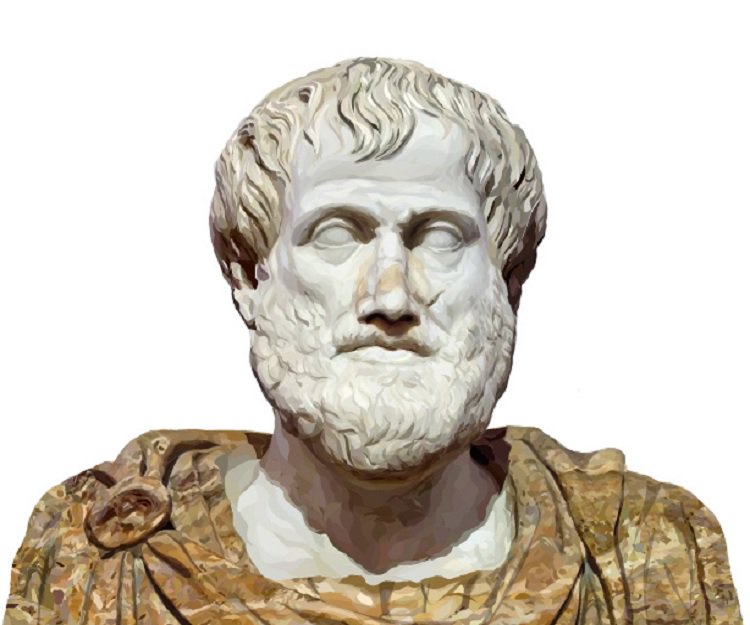
    Aristotle

    The Greek philosopher Aristotle was one of the founders of political theory and Western philosophy and felt that every action an individual takes is innately political in nature.

    Perhaps the earliest contributor to political theory was Aristotle (384-322 BCE),  a Greek philosopher, logician, and scientist. Along with  Plato, Aristotle is generally regarded as one of the founders of both Western philosophy and political science. Aristotle was born on the border between Greece and Albania to a family with close connections to the King of Macedon. As a young man, Aristotle studied in Plato’s Academy in Athens. After Plato’s death, he left Athens to conduct philosophical research and was eventually invited by King Philip II of Macedon to tutor his young son, Alexander the Great. Soon after Alexander succeeded his father, consolidated the conquest of the Greek city-states, and launched the invasion of the Persian Empire, Aristotle returned as a resident alien to Athens. During his time in Athens, he wrote, many different works including Politics and Nicomachean Ethics.

    In both Politics and Nicomachean Ethics, Aristotle described politics essentially as the study of values and ethics, what is right and wrong, and the study of what should be and what could be. He argued that any communication between two people revolves around those subjects and is thus political in nature. Additionally, Aristotle felt that politics is the master science because mankind is an innately political animal that engaged in politics through all of their actions, however unimportant or insignificant they may seem.

    Niccolò Machiavelli

    The 16th Century Italian philosopher Machiavelli believed that the government needed to use whatever means to ensure political peace and stability.

    The 16th Century Italian philosopher Niccolò Machiavelli (widely considered to be the founder of modern political theory) put forward an entirely different interpretation of the nature of political power. Born in the Italian city-state of Florence in 1469, Machiavelli witnesses the French Invasion of Italy in 1494 and the decline of the Medici family’s political power. Machiavelli became secretary of the Ten of War (the body that governed the military of Florence at the time) a post he held until 1512. In that capacity, he was employed in a great variety of missions and his dispatches during these journeys, and his treatises on the Affairs of France and Germany helped to shape his views on government. In 1519, Machiavelli was commissioned by Leo X to draw up his report on a reform of the state of Florence. In 1521-25 he was employed in diplomatic services and as historiographer. After the defeat of the French at Pavia (1525), Italy was helpless before the advancing forces of the Emperor Charles V and Machiavelli strove to avert from Florence the invading army on its way to Rome. In May 1527 the Florentines again drove out the Medici and proclaimed the republic, but Machiavelli, bitterly disappointed that he was to be allowed no part in the movement for liberty, died at the age of 58.

    The political theory of Macchiaveli is put forward in the book The Prince, which was published posthumously in 1532. Throughout The Prince, Machiavelli argued that politics is nothing more complicated than the study of power and that all means may be resorted to by political leaders to strengthen the political establishment and preserve authority. Without such authority and established order, Machiavelli argued that society would be weakened and that political peace and stability could never be established and maintained. Additionally, Macchiaveli noted that throughout history, organized religion and religious leaders such as the Pope tended to get in the way of political peace and stability and hindered the development of strong and stable societies. In order to address this predicament, Macchiaveli felt that there needed to be a separation of church and state and that secularism needed to be promoted by governments throughout the world.

    Harold Lasswell

    Harold Lasswell felt that politics was no more complicated than figuring out who gains what and what someone else loses.

    Harold Lasswell (1902-1978) was a leading American political scientist and communications theorist. He received his Ph.D. from the University of Chicago in 1926 and studied at the Universities of London, Geneva, Paris, and Berlin during the 1920s. Lasswell taught political science at the University of Chicago for 16 years (1922-1938) and was director of war communications research for Library of Congress from 1939-1945. After World War II, he went to Yale University, where he served until the 1970s in various capacities such as professor of law, professor of political science, and Ford Foundation Professor of Law and Social Sciences. He was also a professor of law at John Jay College of the City University of New York and at Temple University and was president of the American Political Science Association (APSA), the American Society of International Law, and the World Academy of Art and Science (WAAS). Lasswell is described as a “one-man university” whose “competence in, and contributions to, anthropology, communications, economics, law, philosophy, psychology, psychiatry, and sociology are enough to make him a political scientist in the model of classical Greece.”

    Harold Lasswell viewed political science as the study of changes in the distribution of value patterns in society, and, because distribution depends on power, the focal point of his analysis was power dynamics. He defined values as desired goals and power as the ability to participate in decisions, and he conceived political power as the ability to produce intended effects on other people. In his 1936 book Politics: Who Gets What, When, and How, Lasswell viewed the power elite as the primary holders of power and nearly all political systems and that their opinions and actions influenced nearly all forms of public policy implemented at all levels of government.

    Jeff Stonecash

    Jeff Stonecash argued that politics is an all-encompassing term that includes the study of opportunities, individual responsibilities, beliefs and the role of government in making those things possible.

    Jeff Stonecash (1946-Present) is the Emeritus Maxwell Professor of Political Science at Syracuse University and one of the foremost experts on the American political system. Some of the topics that Stonecash has written about over the past four decades include the history of American political parties, the realignment of their electoral bases, the causes of political polarization, and the impact of changing alignments on the nature of policy debates. Stonecash argued that politics is simply the study of opportunities, individual responsibilities, beliefs and the role of government at all levels in making such things possible.

    Is Politics a Science?
    One of the main debates amongst scholars is whether or not political science can be considered an actual form of science much like biology, chemistry, or physics. Some argue that political science is not an actual form of science because it deals with concepts that are not tangible and relies on theoretical assumptions that are oftentimes difficult to measure and record. Despite this view, the case can be made that Political science is indeed a form of science because every new political theory involves testing, measuring, and repetition (key components of the scientific method) in order to test its validity.

    Political Scientist Vs. Politicians
    Politicians tend to seek quick answers in order to appeal to their votes prior to the next election, while political scientists tend to put forward measured and well-thought-out answers to policy questions. Additionally, Politicians usually hold firm in their views in order to appeal to their voter base and keep in tune with their ideologies. Political scientists, on the other hand, reach tentative conclusions once they gain an understanding of the facts behind a political issue. Politicians also seek out ways to expand their popularity and improve their chances of getting re-elected, while political scientists seek accuracy and measured responses in their works.

  • Theories of Democratic Transitions: “The Civic Culture”

    Theories of Democratic Transitions: “The Civic Culture”

    In the book “The Civic Culture: Political Attitudes and Democracy in Five Nations, An Analytic Study,” Gabriel Almond and Sidney Verba present a study of the political culture of democracy and discuss the social structures and processes that help to improve its overall stability. A common concern among political scientists is the future of democracy at the global level. In the years following World War II, events such as de-colonialization have raised some questions about the long-term stability of Democratic political systems and placed the issue into the broader context of the world’s culture. Despite the fact that Almond and Verba feel that the direction of political change at the global level is unclear, they argue that a political culture based upon individual participation will emerge due to demands by ordinary citizens. Additionally, Almond and Verba propose that the emerging nations will be presented with two different models of the participatory state, the democratic and totalitarian models of participation. The democratic model of participation offers the ordinary man the opportunity to take part in the political decision-making process as an influential citizen, whereas the totalitarian offers him the role of the “participant subject.” Both the democratic and totalitarian models of participation have appealed to emerging nations, but it is unclear which one will ultimately win.

    According to Gabriel Almond and Sidney Verba, the democratic model of participation will require more than the introduction of formal institutions of democracy such as freedom of speech, an elected legislature, and universal suffrage. A participatory democratic system also requires a consistent political culture. On the other hand, Almond and Verba argue that there are several problems with transferring democratic political culture to emerging nations. The first issue is that many of the leaders in developing states have little experience with the working principles of democratic policy and civic cultures such as political parties, interest groups, and electoral systems. As a result, the idea of democratic policy as conveyed to the leaders of new countries is incomplete and heavily stresses ideology and legal norms as opposed to conveying the actual feeling and attitude towards democratic ideals. A further reason why the diffusion of democracy to new nations is difficult is that they are confronted with structural problems. For example, many of the new nations are entering the global stage at a time in which they have not fully developed industrially. As a result, individual leaders may be drawn to a policy in which authoritarian bureaucracy promotes industrial development and technological advancement, and where political organization becomes a device for human and social engineering.

    Gabriel Almond and Sidney Verba then go on to discuss the idea of the civic culture. The civic culture is a mixed set of values that contains attributes from both modern and traditional cultures and allows them to interact and interchange without polarizing and destroying each other. Additionally, Almond and Verba describe the civic culture as pluralistic and based on communication and persuasion, consensus, diversity, and accessibility to gradual political change. Almond and Verba then explore the development of civic culture in Great Britain. One of the circumstances that resulted in the creation of a modern society in Britain was the emergence of a thriving merchant class and the involvement of the court and aristocracy in economic decisions. Moreover, the English Reformation and the increasing prevalence of religious diversity resulted in a higher level of secularization within British society, leading to greater modernization. As a consequence of both factors, Britain entered the 18th Century with independent merchants and aristocrats who established a parliamentary system that made it possible to assimilate rapid social changes without any sharp discontinuities. By establishing a civic culture, ordinary people were able to enter into the political process and develop British democratic structures.

    Gabriel Almond and Sidney Verba describe several different types of political cultures. According to Almond and Verba, political culture refers to the overall attitudes that individuals have regarding the political system and their attitudes toward their respective roles in the system. The term political culture is used because it allows Almond and Verba to separate the non-political concepts from their study and allows them to employ an interdisciplinary approach to their analysis of mass attitudes towards democracy. In classifying objects of political orientation, Almond and Verba start with the general political system, which deals with the organization as a whole. In explaining the components of the political system, Almond and Verba distinguish the specific roles or structures, the functions of incumbents, and particular public policies, decisions, or enforcement of decisions. These structures, incumbents, and decisions are then classified by involvement either in the political (input) process, or in the administrative (output) process.

    In their study of mass attitudes and values, Gabriel Almond and Sidney Verba have identified three distinct types of political cultures. The first type of political culture mentioned by Almond and Verba is the parochial political culture. A parochial political culture emerges when the citizens of a particular nation have no understanding of the national political system, do not possess any tendency to participate in the input processes and have no consciousness of the output operations. Additionally, there are no specialized political roles within a parochial political culture, and the leadership roles are not separated from their religious and social orientations. Examples of parochial political cultures include African and Native American tribes and indigenous communities within particular nations. A subjective political culture is when people are aware of the mechanism of government and the political process, but are not taught to or are not allowed to participate in the system. Examples of subjective political cultures include traditional monarchies or authoritarian government systems. In a participant political culture, the populace is involved in the decision-making process and more or less has a say in public policy decisions. Examples of participant political cultures include the United States, Great Britain, and many other countries throughout the world. The three different classifications of political culture described by Almond and Verba does not assume that one classification replaces the other. On the other hand, the introduction of new classifications serves as a way to encourage previous political orientations to adapt.

    Gabriel Almond and Sidney Verba also mention that a number of political cultures are systematically mixed. A systematically mixed political culture occurs when there are elements of more simple and more complex patterns of political orientations. The first example of a systematically mixed political culture is the parochial-subject culture, which occurs when a majority of the population has rejected the exclusive claims of diffuse tribal, village, or feudal authority and has developed allegiance towards more complex political systems. Examples of parochial-subject political cultures include the Ottoman Empire and the loosely articulated African kingdoms. In a subject-participant culture, a substantial part of the population has acquired the ability and desire to become more engaged in governmental decisions, whereas the rest of the population continue to be oriented toward an authoritarian political structure and have a relatively little desire to get involved in critical public policy decisions. Additionally, a successful shift from a subject to a participant culture requires the diffusion of positive orientations toward a democratic infrastructure, the acceptance of norms of civic obligation, and the development of a sense of civic competence among a substantial proportion of the population. France during the 19th Century and Germany during the early 20th Century are examples of subject-participant political cultures. A parochial-participant political culture occurs when elements of a participatory system are introduced to a traditionally parochial society. As a result of the lack of structure and experiences with democracy, parochial-participant political cultures have the most experiences with instability and teeter back and forth between democracy and authoritarianism.

    Gabriel Almond and Sidney Verba focus on the political cultures of five different countries in their study: The United States, Great Britain, Germany, Italy, and Mexico. Almond and Verba selected these countries because they have experienced a wide range of historical and political experiences and have gone through a number of events that influenced their political systems. The United States and Great Britain both represent relatively successful experiments in democratic governance despite the fact that the rationale behind their acceptance of democratic values is different. For example, the political culture in Great Britain combines deference toward authority with a lively sense of the rights of citizen initiatives, whereas the political culture of the United States is based on political competence and participation rather than obedience to legitimate authority. Germany is included because its experiments in democratic governance during the late 19th and early 20th Century never resulted in the development of a participatory political culture necessary to legitimize democratic institutions of government. Almond and Verba include Italy and Mexico in their study because both represent less developed societies with transitional political systems.

    Gabriel Almond and Sidney Verba then go on to discuss the feelings towards government and politics that are prevalent in the United States, Great Britain, Germany, Italy, and Mexico. The first metric that they measured was the national factors in which the resident of all five countries were most proud of. A majority (85%) of American respondents cited their political system as the greatest source of pride they feel towards their country. In contrast, only 46% of British, 30% of Mexican, 7% of German, and 3% of Italian respondents cited their governmental institutions as their greatest source of national pride. Moreover, American and British respondents were more likely to refer to public policy accomplishments than the respondents from other countries. The Italian respondents cited their countries contributions to the arts and its cultural treasures, whereas the German respondents cited their countries economic system as the greatest source of national pride. Additionally, Mexican pride was distributed equally between the political and economic systems and the physical attributes of their country.

    The findings show that the Americans and British express great pride in their political institutions and thus feel the least alienated towards their political systems. On the other hand, the Germans and Italian respondents express a low level of pride in their political institutions and feel more alienated towards their governments. The results from the Mexican respondents show that they have a keen interest in political involvement despite the fact that their political culture is largely parochial. The fact that Mexican respondents expressed an interest in politics is due to past feelings associated by the populace with events such as the Mexican Revolution. The continued connection to the Mexican Revolution shows that the Mexican people believe that the revolution did not accomplish its stated political goals and that the process of political change is ongoing. When broken down by educational level, a majority of American, British, and Mexican respondents with higher levels of education expressed more pride in their respective political systems. Additionally, the fact that educational attainment does no influence the levels of national pride among the German and Italian respondents further suggests alienation from the political system as opposed to a lack of awareness of the system.

    Gabriel Almond and Sidney Verba also go on to explore the expectation of treatment by governmental authorities among the respondents from all five countries. Both Almond and Verba hypothesized that if the respondents expected fair treatment by governmental authorities, they would, in turn, express more support for legitimate authority. The respondents from the United States, Great Britain, and Germany expected a higher level of treatment by governmental authorities than the respondents from Italy and Mexico. Additionally, the expectation of treatment by governmental authorities varies by educational attainment. For example, respondents from the United States, Great Britain, and Germany with higher educational levels expect more equitable treatment by political authorities than respondents with lower levels of education. Even though the number of Italian and Mexican respondents expecting fair and equal treatment in government were relatively low, the differences between the advantaged and less advantaged groups regarding education were larger than in the United States, Great Britain, and Germany. Such findings show that there is a connection between expectations regarding treatment by governmental authorities and alienation from the political system.

    The attitudes towards political communication are also discussed by Gabriel Almond and Sidney Verba. A key component of democratic governments is the willingness for ordinary men and women to get involved in the political process. The main factor that influences such willingness is the level of comfort with discussing political issues. Respondents from the United States and Great Britain expressed the highest level of willingness to discuss politics. Additionally, even though German respondents expressed the highest frequency of following reports about public affairs, the number of people who discuss politics on a regular basis was lower than in the United States and Great Britain. On the other hand, the Mexican and Italian respondents expressed a relatively low willingness to discuss political affairs. With regards to the percent of respondents who refused to report their voting decision, the American, British, and Mexican respondents expressed little reluctance when revealing their political choice, whereas the German and Italian respondents expressed the highest level of reluctance. The reluctance on the part of the German and Italian respondents to reveal their voting choices shows that they feel that identifying with a political party is unsafe and inadvisable. Additionally, their unwillingness to reveal their voting choices indicates that there is a higher level of alienation from the political system on the part of the German and Italian respondents when compared to the American, British, and Mexican respondents.

    Gabriel Almond and Sidney Verba then discuss the relationship between the civic culture and democratic stability and the impact of political culture on the political system that it belongs to. One view that Almond and Verba discuss is the rationality-activist model, which stipulates that a stable democracy involves the population to be informed and active in politics. Additionally, the rationality-activist model requires the citizens to base their voting choices on careful evaluation and carefully weighing in the alternatives. On the other hand, Almond and Verba mention that current research shows that most citizens in democratic nations rarely live up to the rationality-activist model. As such, Almond and Verba feel that the rationality-activist model is only a part of the civic culture and does not make up its entirety. Moreover, Almond and Verba describe the civic culture as a mixed political culture that involves both citizens who are informed and take an active role in politics and citizens who take a less active role in politics. The diverse nature of the civic culture also implies that the different roles in political such as parochial, subject, and participant do not replace each other and instead build upon each other.

    In conclusion, Gabriel Almond and Sidney Verba discuss the idea of the political culture and its relationship to democracy in “The Civic Culture: Political Attitudes and Democracy in Five Nations, An Analytic Study.” A major concern among political scientists is what factors result in the establishment of a political culture that allows for the stability of democracy within a particular country. In their study of political culture, Almond and Verba looked at several factors such as citizen views on government, views on treatment by governmental authorities, and the willingness of people to discuss political issues and the views that respondents from five different democracies have regarding them. The results of their study determined that countries with a long-term history of democratic governance were more likely to have political cultures that foster democratic ideas than countries with a shorter history of democratic government. Additionally, Almond and Verba discuss the relationship between political culture and the long-term stability of democratic political systems.