Tag: mars

  • OurWeek In Politics (8/5-8/13/18)

    Here are the main events that occurred in Politics this week:

    1. US Re-imposes Sanctions On Iran Three Months After Withdraw From Nuclear Agreement

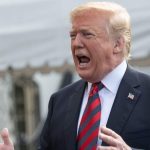
    President Donald Trump signed an executive order this week reimposing and tightening US sanctions against Iran.

    On August 7, President Donald Trump announced that he would be reimposing sanctions on Iran that had been lifted as a part of the 2015 nuclear deal. The May decision to withdraw from the Iran deal officially dubbed the Joint Comprehensive Plan of Action (JCPOA), gave a 90-day wind-down period for some business activities, and a 120-day wind-down period for others. Some sanctions were reimposed on August 8, whereas others will be reimposed on November 5. In a Twitter message posted shortly before his appearance at a campaign rally in Ohio, President Trump stated that the Iran sanctions have officially been cast. “These are the most biting sanctions ever imposed, and in November they ratchet up to yet another level. Anyone doing business with Iran will NOT be doing business with the United States. I am asking for WORLD PEACE, nothing less!,” stated the President in a Twitter post.

    According to the text of the executive order, the reimposed sanctions are meant to advance the goal of applying financial pressure on the Iranian government in pursuit of a comprehensive and lasting solution to a number of politics that the US, Israel, and Saudi Arabia claim (without any factual backing) are contributing to the destabilization of the Middle East. “The president has been very clear,” said US State Department spokesperson Heather Nauert in a statement to the press. “None of this needs to happen. He will meet with the Iranian leadership at any time to discuss a real comprehensive deal that will contain their regional ambitions, will end their malign behavior, and deny them any path to a nuclear weapon,” Nauert further stated.

    https://youtu.be/ghGjwtQTphQ

    The sanctions that go back into effect immediate impact any purchase of US bank notes by Iran’s government, Iran’s trade in precious metals like gold, graphite, aluminum, steel, coal and software in industrial processes, Iran’s automotive sector, transactions related to the Iranian rial, and Iran’s issuing of sovereign debt, according to the White House. The sanctions that will be reimposed in November include those on Iran’s port operators and energy, shipping and shipbuilding sectors, any of Iran’s petroleum-related transactions, and foreign financial institutions with the Central Bank of Iran. Additionally, Secretary of State Mike Pompeo has stated that the Trump administration is “not looking to grant waivers” to companies or governments who want to continue to receive Iranian oil imports, but is “glad to discuss and look at requests on a case-by-case basis.”

    The international reaction to the new sanctions against Iran has generally been negative. Even though Israel and Saudi Arabia praised the decision on the part of the Trump administration (claiming that it would result in the collapse of the Iranian government and pave the way for Reza Pahlavi to come to power in Iran), many other countries such as the UK, France, Russia, China, Italy, and Germany condemned the decision, arguing that new sanctions are morally wrong and that any efforts to topple the Iranian government are counterproductive at best. Additionally, the Iranian government denounced the new sanctions and has vowed a “proportional reaction.” “The main goal of America in approving these sanctions against Iran is to destroy the nuclear deal and we will show a very intelligent reaction to this action,” said Deputy Foreign Minister Abbas Araqchi.

    2. Saudi Arabia Recalls Ambassador To Canada Over Human Rights Concerns Raised On The Part Of The Canadian Government

    The relationship between Saudi Arabia and Canada declined this week due to criticism of the Saudi human rights record on the part of the Canadian government.

    On August 6, Saudi Arabia announced that it was expelling the Canadian ambassador and had recalled its envoy while freezing all new trade, in protest of Prime Minister Justin Trudeau’s calls for the release of jailed activists. The Saudi government gave the Canadian ambassador 24 hours to leave the country, in an abrupt rupture of relations over what it slammed as “interference” in its internal affairs. The move, which underscores a newly aggressive foreign policy led by Crown Prince Mohammed bin Salman, comes after Canada demanded the immediate release of human rights campaigners swept up in a recent crackdown. “The Canadian position is an overt and blatant interference in the internal affairs of the Kingdom of Saudi Arabia,” the Saudi foreign ministry tweeted. The ministry also announced, “the freezing of all new trade and investment transactions with Canada while retaining its right to take further action.”

    The dispute between both countries began last week with a series of tweets by Canadian Foreign Minister Chrystia Freeland stating that the Canadia government was “gravely concerned” over a new wave of arrests of women and human rights campaigners in the kingdom, including award-winning gender rights activist Samar Badawi. Badawi was arrested along with fellow campaigner Nassima al-Sadah, the latest victims of what Human Rights Watch called an “unprecedented government crackdown on the women’s rights movement”. The arrests come weeks after more than a dozen women’s rights campaigners were detained and accused of undermining national security and collaborating with enemies of the state. The Saudi foreign ministry voiced anger over the Canadian statement. “Using the phrase ‘immediately release’ in the Canadian statement is very unfortunate, reprehensible, and unacceptable in relations between States,” the ministry tweeted.

    The ongoing rupture in the relationship between Saudi Arabia and Canada reinforces the new foreign policies that have been implemented by Mohammed bin Salman since he assumed the role of Crown Prince last year. Even though Salman has introduced a series of progressive reforms (much like what Shah Mohammed Reza Pahlavi of Iran did through his misguided “White Revolution” series of reforms in 1962-63), he has pursued an aggressive foreign policy, cracking down harshly on dissent both at home and abroad. Additionally, the outsized reaction to the tweet underscores how Saudi Arabia is taking a much harsher stance against what it perceives as Western interference in its internal affairs on issues like human rights, perhaps emboldened by the US willingness under Donald Trump to de-emphasize rights issues when it comes to its allies. Saudi Arabia and the US have been enjoying an exceptionally close relationship, as both Saudi Crown Prince Mohammed bin Salman and Trump share similar concerns about Iran, as well as support for Israel. By contrast, Trump and Trudeau locked horns during the G7 summit in June in an unusually public manner.

    3.  Post Election Violence Continues In Zimbabwe

    Post-election violence continued in Zimbabwe this week, rocking the struggling, conflict-torn country.

    After holding elections on July 30, Zimbabwe has again descended into violence. At least six people were killed on the streets of the capital two days after the vote. Since then human-rights groups have recorded more than 150 alleged cases of abuse against opposition supporters (including that of the husband and wife above), most seemingly at the hands of soldiers. The true figure is almost certainly many times higher. Hundreds of MDC members have fled their homes, including Tendai Biti, one of the bloc’s senior figures, whose claim for asylum in Zambia was rejected on August 8.

    Since taking power via a coup last November, President Emmerson Mnangagwa has sought to convince the world that Zimbabwe is “open for business” following nearly four decades of rule by Robert Mugabe. The culmination of this plan was meant to be a convincing victory in the election, which even if neither free nor fair, would be orderly enough to win him the blessing of foreign governments. They would then encourage creditors to lend the country much-needed foreign currency. Instead, the exact opposite scenario is taking place. Instead of convincing western investors that the country is entering into a new period of stability, the recent post-election violence shows that Zimbabwe has a long way to go before its political situation will be stabilized.

    The reaction to the election violence in Zimbabwe at the international level has been negative. In response to the post-election violence, President Donald Trump signed into law legislation expanding the already-stringent sanctions that the US has had in place against Zimbabwe since 2001. Some of the conditions put forward in the legislation include the establishment of an independent electoral commission, the banning of military involvement in politics, and allowing the Zimbabwean diaspora to vote in elections from abroad.

    4. Trump Administration Announces Plan To Establish “Space Force” Branch of US Military

    The Trump Administration announced that it would be creating a “Space Force” branch of the US military, with the stated goal of better preparing the US military to deal with cosmic threats.

    In a speech on August 9, Vice President Mike Pence announced that President Donald Trump has authorized plans to create a new branch of the US military dedicated to fighting warfare in space. The United States Space Force, as proposed by President Trump, would be a new branch of the military by 2020, on par with the army, navy, air force, marines and coast guard. An independent branch cannot be created until Congress approves it, but the Administration can take several steps on its own to prepare for the launch of a new force, the first since the air force was formed shortly after World War II. Officials plan to create a Space Operations Force, an “elite group of warfighters specializing in the domain of space” drawn from various branches of the military, in the style of existing special operations forces, Pence said.

    The main rationale for creating the SpaceForce, according to the Trump Administration, is the need to counter galactic threats from US rivals such as Russia and China. In recent years, both Russia and China have been developing weapons that can be used to track and destroy communications satellites used by the US military and civilians alike. The estimated cost for the initial establishment of the Space Force would be approximately $8 Billion over a five-year period and is expected to cost at least several Billion more to get the branch up and running.

    Overall, the reaction to the proposed Space Force has been somewhat mixed, with many pointing to the apparent lack of need for such a branch.“Maybe, just maybe, we should make sure our people are not dying because they lack health insurance before we start spending billions to militarize outer space,” stated  Senator Bernie Sanders (I/D-VT) in a Twitter post. Additionally, former NASA astronaut Mark Kelly said Trump’s plan for a new military space branch is “redundant” and “wasteful.” Despite much opposition to the new proposal, Congressmen Mike Rodgers (R-AL) and Jim Cooper (D-TN), both endorsed the plan, stating that “we have been warning for years of the need to protect our space assets and to develop more capable space systems.”

  • OurWeek in Politics (6/2-6/10/18)

    Here are the main events that occurred in Politics this week:

    1. President Donald Trump Alienates American’s Allies at G7 Summit Due to Erratic Behavior, Questionable Comments

    In his second G7 conference as President, Donald Trump and his erratic policies decrease certainty in the future role of the US in the eyes of European leaders.

    In his second G7 Summit since assuming office, President Donald Trump alienated the closest allies of the US at the annual summit of the group in Canada with his aggressive trade declarations and a surprising suggestion that Russia should be readmitted to the exclusive club of major economic powers. After leaving early, President Trump went on Twitter to blow up the agreement forged at the meeting. Trump exited the Quebec resort on June 9 where the group had gathered, leaving other world leaders whipsawed and uncertain about their future relationship with the US, to head to Singapore for a summit with North Korean leader Kim Jong Un on Tuesday. Trump’s actions added to the anxiety of longtime US allies, who are alarmed to see him lashing out against them while he is advocating for Russian President Vladimir Putin and cozying up to North Korea.

    Just hours after leaving the summit in Quebec on June 9, President Donald Trump abruptly retracted US support for a joint statement signed by every nation in the group and blasted Canadian Prime Minister Justin Trudeau as “meek and mild.” Firing off tweets from aboard Air Force One, Trump said he was reversing the US position in response to Trudeau’s comments at a press conference at the end of the summit. Trudeau had pledged to impose tariffs on the US in response to Trump’s recent steel and aluminum tariffs against Canada. “PM Justin Trudeau of Canada acted so meek and mild during our @G7 meetings only to give a news conference after I left saying that, ‘US Tariffs were kind of insulting’ and he ‘will not be pushed around,’” Trump tweeted. “Very dishonest & weak.” At his closing news conference after Trump left the summit early, Canadian Prime Minister Justin Trudeau warned that his country would respond to Trump’s trade moves, said the President’s argument that its trade policy threatened US national security was “insulting,” and added, “we will not be pushed around.”

    https://youtu.be/qKLU8_jDMaQ

    Most political observers feel that the G7 summit ended in abject failure and only served to highlight the ideological and political divisions between Trump and Western allies and fueled fears that the most successful alliance in history is beginning to erode. “What worries me most, however, is the fact that the rules-based international order is being challenged, quite surprisingly not by the usual suspects but by its main architect and guarantor, the US,” said Donald Tusk, the president of the European Council, said in Quebec before the spat over the communique. Additionally, German Prime Minister Angela Merkel and French President Emmanuel Macron described the G7 summit as a “sobering” and “depressing” experience due to their strong disagreements with Trump on issues ranging from international trade, diplomacy, and environmental policy. Perhaps the results of the G7 summit show that the role of international cooperation and agreements is becoming less and less important in the eyes of powerful countries such as the US.

    2. US Supreme Court Rules in Favor of Colorado baker in Same-Sex Wedding Cake Case

    The Supreme Court ruled in favor of Colorado baker who refused to make a cake for a same-sex couple.

    In a 7-2 ruling, the Supreme Court ruled in favor of a Colorado baker who refused to bake a cake to celebrate the marriage of a same-sex couple because of religious reasons. The court held that the Colorado Civil Rights Commission showed hostility toward the baker due to his religious beliefs. The ruling is a win for baker Jack Phillips, who cited his beliefs as a Christian but leaves unsettled the broader constitutional question of the balance between religious liberty and outright discrimination. The case was one of the most anticipated rulings of the term and was considered by some as a follow-up from the court’s Obergefell v. Hodges decision three years ago that made legal same-sex marriage at the national level. That opinion, also written by Kennedy, expressed respect for those with religious objections to gay marriage. Because Justice Clarence Thomas concurred in part, the judgment of the court on the case was 7-2 but the opinion on the rationale was 6-2 in favor of Phillips’s right to refuse service.

    Overall the reaction to the ruling has been mixed. Alliance Defending Freedom Senior Counsel Kristen Waggoner, who represented Phillips, praised the ruling and stated that “Jack serves all customers; he simply declines to express messages or celebrate events that violate his deeply held beliefs. Creative professionals who serve all people should be free to create art consistent with their convictions without the threat of government punishment.” She further added that the case “will affect a number of cases for years to come in free exercise jurisprudence. That’s how the court’s decisions work,” Waggoner also stated. On the other hand, Rachel B. Tiven, the head of Lambda Legal, called the decision a “limited, fact-specific victory” for religious conservatives. “The Court today has offered dangerous encouragement to those who would deny civil rights to LGBT people and people living with HIV. Religious freedom under our Constitution has always meant the right to believe whatever you wish but not to act on your beliefs in ways that harm others. The Court today alarmingly fails to heed that distinction,” stated Tiven in an interview following the court’s decision.

    3. Annual “Quds (Jerusalem) Day” Rallies Held in Iran in Protest of Israeli Policies & the Ideology of Zionism’

    The annual Quds Day rallies were held in Iran this week to protest Israeli policies regarding Palestine, as well as US imperialism throughout the world.

    Iran held its annual day of protest against Israeli policies and the political ideology of Zionism on June 8, determined to show defiance at a time of mounting pressure from the United States and its regional allies.”The US, Saudi Arabia, and Israel want to put Iran in a corner, but they don’t know that with this action they are threatening their own security,” said parliament speaker Ali Larijani to a crowd of several hundred thousand in Tehran.

    An estimated 20 million Iranians took to the streets in the capital and other cities for Quds (Jerusalem) Day, held every year since 1980 to show support for the Palestinian people and opposition to the human rights abuses carried out by the Israeli government ever since its inception 70 years ago. President Hassan Rouhani called for “all” Iranians to turn out for the rallies. Rouhani further stated the demonstrations must send a message “to the usurper Zionist Regime [Israel] that they have not forgotten the Palestinian land and the Holy Quds and the freedom of the Holy Quds is still the holy cause of the Iranian people and all Muslims.”

    https://www.youtube.com/watch?v=5JqB3R9eWds

    In addition to Iran, several other Quds Day rallies were held throughout parts of the Middle East as well as in the UK, France, Germany, and Canada. This years’ rallies take on a high level of significance due to factors ranging from the decision by the Trump Administration to recognize Jerusalem as the capital of Israel, escalating Israeli human rights abuses against the Palestinian people, and the growing alliance between Saudi Arabia and Israel.

    4. President Trump says he is Likely to Support Ending Blanket Federal Ban on Marijuana

    President Trump surprised many observers this week with his announcement that he would be in favor of lifting the federal ban on Marijuana usage.

    President Donald Trump said he likely will support a congressional effort to end the federal ban on marijuana, a major step that would reshape the pot industry and end the threat of a Justice Department crackdown. Trump’s remarks put him sharply at odds with Attorney General Jeff Sessions on the issue. The bill in question (pushed by a bipartisan coalition) would allow states to go forward with legalization unencumbered by threats of federal prosecution. In contrast, Attorney General Sessions has ramped-up these threats and has also lobbied Congress to reduce current protections for medical marijuana. President Trump made his comments to a group of reporters on June 8 just before he boarded a helicopter on his way to the G-7 summit in Canada. His remarks came the day after the bipartisan group of lawmakers proposed their measure.

    One of the lead sponsors is Senator Cory Gardner (R-CO), who is aligned with Trump on some policy issues such as economics, but recently has fought with the administration over the Justice Department’s threats to restart prosecutions in states that have legalized marijuana. “I support Sen. Gardner,” Trump said when asked about the bill. “I know exactly what he’s doing. We’re looking at it. But I probably will end up supporting that, yes.” The legislative proposal, which is also championed by Senator Elizabeth Warren (D-MA), would reshape the legal landscape for marijuana if it becomes law. Trump’s support could also have a major impact, providing political cover for Republicans who worry about being tagged as soft on drugs.

    Despite the popularity of legalizing marijuana, the proposed bill still faces a difficult road ahead in Congress. A majority of Republican members of Congress, as well as several conservative Democrats such as Senator Joe Manchin (D-WV), are opposed to reform in federal drug policy, arguing that marijuana is a dangerous substance that contributes to societal disorder.  Additionally, lobbying groups such as the National Narcotic Officers’ Associations‘ cautioned Trump against supporting the bill and instead endorsed Attorney General Session’s efforts to expand the federal War on Drugs.

    5. NASA Finds ‘Organic’ Substances Linked to Life On Mars, Potentially Increasing Public Support for Space Program

    NASA Finds Ancient Organic Material, possibly linked to life, on the Martian surface.

    The US space agency (NASA) says its Mars exploration vehicle has discovered chemical substances necessary for life. Scientists reported that NASA’s Curiosity Rover found large amounts of organic molecules in a thousands-year-old rock in an area called the Gale Crater. The area on Mars is believed to have once contained a large lake. The discovery of organic molecules suggests that ancient conditions on Mars may have supported life. Ashwin Vasavada a scientist working on the Curiosity project stated that the chances of being able to find signs of ancient life (perhaps even remnants of a humanoid civilization that existed millions of years ago) with future missions “just went up.” Additionally,  Jennifer Eigenbrode (an astrobiologist with NASA’s Goddard Space Flight Center) noted that there is a strong possibility that the organic molecules were, in fact, created by some form of ancient life on the Martian surface.

    The impact of these findings is significant because it may result in increased funding for space programs such as NASA, as well as higher levels of support for space exploration efforts by the US. Currently, the total budget for NASA stands at $18.4 billion, less than 0.5% of the federal budget. Additionally, an overwhelming majority of Americans today feel that the federal government spends far too much on space exploration and that the money would be better spent on education, public health, and developing alternative energy sources. The discovery of remnants of an ancient civilization on Mars might create the perception in the eyes of the American people that further space research and exploration is worth it and that the federal government should rethink its priorities to make such efforts a reality.

    https://youtu.be/NRav1Wi6elE