Tag: iraq

  • Iraq Country Profile

    Iraq Country Profile

    Iraq (officially known as the Republic of Iraq) is a Federal parliamentary republic located in the central part of the Middle East. Iraq bordered by countries such as Iran, Turkey, Saudi Arabia, Jordan, Kuwait, and Syria, has an area of approximately 438,317 Square Kilometers, and a population of around 40 Million. Iraq plays a major role in Middle Eastern politics due to its unstable nature, strategic location between two of the regions most stable countries, and a history defined by violent authoritarianism and colonialism.
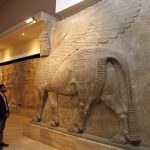
    Iraq has a long and rich history going back nearly 2,500 years.

    The history of Iraq can be traced back to the 24th Century BCE, with the establishment of the Akkadian Empire in present-day Iraq. The Akkadian Empire lasted until 2150 BCE when it was replaced by the Assyrian Empire, which remained in power until 627 BCE. After the collapse of the Assyrian Empire, the Neo-Babylonian Empire came to power. The rule of the Neo-Babylonian Empire was ultimately short-lived, as the area comprising present-day Iraq was conquered by the Persian (present-day Iran) Shah Cyrus the Great in 539 BCE and soon became an integral part of the Persian Empire for the next few centuries. Iraq was conquered by the Arabs in 634 CE and its city of Baghdad became the capital of the Abbasid Caliphate by the 8th Century CE. Iraq soon became the primary cultural center of the Muslim world during the “Islamic Golden Age.” The Iranians re-established control over Iraq by the 11th Century and Iraq remained as part of present-day Iran until 1831, when the Ottoman Empire gained control over the area after lengthy conflicts with both the Safavid and Qajar Iranian monarchies.

    Following the defeat of the Ottoman Empire in World War I, the UK acquired a mandate over Iraq and sought to remake Iraq into an image that would suit their plans for global domination. The British government installed into power a Sunni monarch, Faisal ibn Husayn (despite the fact that Iraq is majority Shi’a) and worked to suppress the nationalist sentiments of groups within Iraq such as the Kurds and Assyrian Christians. These parameters would continue until the 1958 Revolution that established the Republic of Iraq. The UK ultimately granted Iraq independence in 1938, but the country still relied on British support and was considered to be a “vassal state” of the declining British Empire.

    Saddam Hussein (who ruled Iraq from 1968 to 2003) had a reputation as a brutal dictator and is widely considered to be one of the worst human rights abuses in recent memory.

    The monarchy was overthrown in the Iraqi Revolution of 1958 by Abd al-Karīm Qāsim and Abdul Salam Arif. Saddam Hussein and the Ba’ath Party assumed power after the July 1968 Iraqi Revolution and soon sought to remake Iraq into their own image. Even though Saddam Hussein implemented a series of progressive social programs, improved women’s rights, and nationalized Iraq’s oil production in 1972, he had a reputation as a brutal dictator who allowed little opposition to his rule. For example, Saddam Hussein was known for committing human rights abuses against both the Shi’a Muslims and Kurds of Iraq (ranging from torture to mass executions), allowed only Sunni Muslims into positions of power, and implemented an apartheid system meant to separate Shi’a Muslims from the rest of Iraqi society. After the successful conclusion of the Iranian Revolution in early 1979, Saddam set his sites on Iran, which he felt was in a vulnerable position due to the recent Revolution and purges by the government of Ayatollah Khomeini against former members of the Shah’s military force. Iraq launched a war against Iran in September of 1980 with the goal of overthrowing the Khomeini government from power and annexing the oil-rich province of Khuzestan, which is home to a large population of Iranian Arabs who identify as Sunni Muslim. Despite the fact that Saddam Hussein was backed by countries such as the US, Soviet Union, UK, France, Germany, Japan, and Saudi Arabia, the Iranians were able to hold the border for the course of the war. During the war, Iraq (with US help) developed a chemical weapons program and used these weapons numerous times over the course of the war, on both Iranian soldiers and civilians, as well as the Kurds of Northern Iraq. Ultimately, Iran was able to turn back the Iraqi invasion and won a pyrrhic (costly) victory.
    In August 1990, Iraq seized Kuwait in response to a long-standing dispute related to oil production but was expelled by US-led coalition forces during the 1990-91 Gulf War. Following Kuwait’s liberation, the UN Security Council required Iraq to scrap all weapons of mass destruction and long-range missiles and to allow UN verification inspections. Continued Iraqi noncompliance with UN resolutions over a period of 12 years led to the US-led invasion of Iraq in March 2003 and the ouster of Saddam Hussein from power. US forces remained in Iraq until 2011, helping to provide security and to train and mentor Iraqi security forces. In October 2005, Iraqis approved a constitution in a national referendum and, pursuant to this document, elected a 275-member Council of Representatives in December 2005. The Council of Representatives approved most cabinet ministers in May 2006, marking the transition to Iraq’s first constitutional government since the late 1960s. Since 2014, Iraq has been engaged in a military campaign against ISIS to recapture territory lost in the western and northern portion of the country.
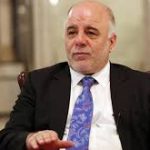
    Haider al-Abadi is the current Prime Minister of Iraq and has been in power since 2014.

    The current Iraqi constitution was adopted on 15 October 2005. The constitution stipulates that Iraq is a democratic, federal parliamentary Islamic republic. The federal government is composed of three branches, the executive, legislative, and judiciary, as well as numerous independent commissions. Aside from the federal government, there are regions (made of one or more governorates), governorates, and districts within Iraq with jurisdiction over various matters as defined by law. The executive branch of Iraq consists of the Presidency Council and the Council of Ministers. The president is the head of state, protecting the constitution and representing the sovereignty and unity of the state, while the prime minister is the direct executive authority and commander in chief. The president and vice presidents are elected by the Council of Representatives. The prime minister is nominated by the largest bloc in the Council of Representatives. Upon designation, the prime minister names the members of his cabinet, the Council of Ministers, which is then approved by the Council of Representatives. The executive branch serves a four-year term concurrent with that of the Council of Representatives. The current President of Iraq is Fuad Masum, who assumed office on July 24, 2014, and the current Iraqi Prime Minister is Haider al-Abadi, who came to power on September 8, 2014.

    The Council of Representatives is the main elected body of Iraq. The Constitution defines the “number of members at a ratio of one representative per 100,000 Iraqi persons representing the entire Iraqi people.” The members are elected for terms of 4 years.  The council elects the President of Iraq; approves the appointment of the members of the Federal Court of Cassation, the Chief Public Prosecutor, and the President of Judicial Oversight Commission on proposal by the Higher Juridical Council; and approves the appointment of the Army Chief of Staff, his assistants and those of the rank of division commanders and above, and the director of the intelligence service, on proposal by the Cabinet.

    The Iraqi Supreme Court Building.

    The judicial system of Iraq consists of three levels, the Supreme Court, the Supreme Iraqi Criminal Tribunal, and the Central Criminal Court. The Supreme Court determines the constitutionality of laws and regulations, acts as a final court of appeals, settles disputes between the federal government and the regions and governorates, municipalities, and local administrations, and settles accusations directed against the President, the Prime Minister and the Ministers. The Supreme Iraqi Criminal Tribunal is a special court established to try Iraqi nationals or residents accused of genocide, crimes against humanity, war crimes or other serious crimes committed during the 35-year rule of Saddam Hussien (1968-2003). The Central Criminal Court is the main criminal court of Iraq and is based on an inquisitorial system and consists of two chambers: an investigative court, and a criminal court. The Iraqi judiciary is supervised by the Higher Judicial Council, which nominates the Chief Justice, Justice of the Judiciary Oversight Commission, and drafts the budget of the judiciary.

    Iraq has a mixed record regarding human rights and is widely considered by international observers to be an unstable democracy. Since 2003, Iraq has made some progress in developing a democratic political system for the first time since the late 1960s. Iraq has had seven competitive elections over the past 13 years that resulted in a variety of different political parties coming into power.  Additionally, civil society organizations have grown in number since the 2003 US-led invasion that removed Saddam Hussein from power and are viewed as essential aspects of political participation by a majority of the population of Iraq. Despite some progress over the past few years, Iraq continues to remain a highly unstable country in terms of politics. The Iraqi Consitution includes no provisions establishing a system of checks and balances between the branches of government and high levels of political corruption have plagued the Iraqi government in recent years. These problems are further compounded by the lack of strong formal governmental institutions meant to promote political stability. Arbitrary arrests and torture are a common occurrence in Iraq, though the human rights situation has improved overall when compared to when Saddam Hussein was in power. As a result of these challenges, protests have emerged in Iraq in 2011 and 2015 due to the fact that the citizens are increasingly growing tired of weak governmental institutions and the failure of the government to develop credible solutions to the problems facing Iraq such as the rise of extremist groups such as ISIS and the poor economic situation facing the country.
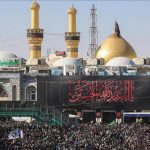
    Iraq is home to Karbala, which is the site of the tomb of the grandson of Muhammad and the third Shi’a Imam, Husayn ibn Ali

    In terms of demographics, Iraq is estimated to be ~99% Muslim. Approximately 51-65% of Iraqi Muslims are Shi’a, whereas 35-46% are Sunni. Iraq is home to the cities of Karbala and Najaf, which are the holiest sites in Shi’a Islam. Najaf is the site of the tomb of Ali ibn Abi Talib (the first Shi’a Imam), and Karbala is the site of the tomb of the grandson of Muhammad and Shi’a Imam, Husayn ibn Ali. Najaf is also a center of world renown Shi’a seminaries and schools. A majority of Iraqi Christians are ethnic Assyrians and members of the Chaldean Catholic Church, Assyrian Church of the East, and the Eastern Orthodox Church. Despite numbering as high as 16 million as late as 1987, the Iraqi Christian population has declined to 450,000 as of 2013. Some of the factors contributing to the decline of the Iraqi Christian population include the rise of extremist groups such as ISIS and Al-Qaeda, political instability, and lack of economic opportunities. A majority of Iraqi Christians over the past three decades have migrated to countries such as Iran, the US, UK, and Canada to flee oppression and find a better life.  Other religious groups in Iraq include Yazidism, ZoroastrianismMandaeism, and several indigenous religious groups. A majority of the population of Iraq (~80%) identifies as Arab and Arabic, Kurdish, and Azerbaijani are the official languages of the country. Iraq has a literacy rate of 79.7% (85.7% for men and 73.7% for women).

    Iraq has a GDP of $660 billion (2017 estimates), a Human Development Index Score of 0.649 and a GINI Score of 30.9. The economy of Iraq is primarily serviced-based (54.6%) and industry and agriculture make up 40.6% and 4.8% of the economy respectively. The unemployment rate of Iraq is ~16% and the GDP per capita is $17,000. The economy of Iraq continues to remain stagnant due to political instability, lack of foreign investment, and inefficiencies resulting from excessive governmental intervention in the Iraqi economy.

    Iraq has recently sought to improve its standing before the international community and develop a role as a constructive regional power.

    Iraq has a complex role in terms of international politics. Previously considered a “pariah state” during the rule of Saddam Hussien, Iraq is working to rebuild its reputation in the eyes of the international community. Iraq is a member of a number of international organizations such as the Arab League, the Non-Aligned Movement, the Organization of Islamic Cooperation, the International Criminal Court, and the United Nations and has diplomatic relations with a majority of countries. Historically, Iraq and Iran had a very tense relationship due to the legacy of the Iran-Iraq War, religious differences, and differing visions for their respective roles in the greater Middle East. Since the overthrow of Saddam Hussien however, Iraq and Iran have expanded their diplomatic ties and now consider each other to be allies. Additionally, Iraq is seeking to develop constructive ties with countries such as the US, Russia, Brazil, India, and Jordan. On the other hand, Iraq views Saudi Arabia as its main regional opponent, criticising the Saudi government for their discrimination against Shi’a Muslims and noting that the Saudi government has played a major role in the growth and spread of extremist groups such as ISIS and Al-Qaeda and destructive ideologies such as Wahhabi Islam.

    In conclusion, Iraq continues to remain arguably one of the most unstable countries in the Middle East some 15 years after the overthrow of Saddam Hussien and his authoritarian regime. Some of the main issues preventing Iraq to emerge as a strong country include the lack of formal governmental institutions, the continued existence of violent extremist groups, weak economic prospects, and the legacies of authoritarianism and colonialism.

  • OurWeek in Politics (12/9-12/16/17)

    Here Are the main events in Politics that occurred this week:

    1. Democrat Doug Jones Wins Alabama Special Election Race

    Democratic candidate Doug Jones won a major victory in the Alabama Special Senate Election this week, becoming the first Democrat to represent the state in over 20 years.

    In a major upset, Democratic candidate and former federal prosecutor Doug Jones won the Alabama Special Senate Election on December 12 after a campaign that showcased the increasing power of sexual misconduct allegations and the limits of President Donald Trump’s political influence even in states that he still remains popular in. Jones’s victory in a state that has not had a Democratic Senator since 1996 was a dramatic repudiation of both his opponent, Roy Moore, a controversial former state judge twice who is accused of molesting several women between the late 1970s and early 1990s, as well as the policies and proposals of President Donald Trump and the Republican-controlled Congress. In his victory speech, Jones stated that the “entire race has been about dignity and respect. This campaign has been about the rule of law. This campaign has been about common courtesy and decency and making sure everyone in this state, regardless of what zip code you live in, is going to get a fair shake.” Additionally, Jones went on to send a message to his colleagues in Washington, urging them to “get things done for the people” by passing the Children’s Health Insurance Program as well as voting against the Trump Administration tax plan.

    Despite his overwhelming rejection by the voters of Alabama, Republican candidate Roy Moore has yet to concede, accusing the Democratic Party of vote rigging and has announced that his campaign would be seeking a recount. The election of Doug Jones as Senator from one of the most conservative states in the entire country signals both a wholesale rejection of the policies of the Trump Administration by even his most hardcore and loyal supporters as well as a foreshadowing of the results of the 2018 midterm elections. Additionally, the election of Doug Jones perhaps is a sign that the Democratic Party can regain much of the ground that they lost in the Southern states over the past 50 years by campaigning with a positive and inclusive message, as well as de-emphasizing divisive social issues and instead focusing more on addressing economic issues that negatively impact the working class.

    2. US Ready for Direct Talks With North Korea

    Secretary of State Rex Tillerson indicated this week that the US is willing to meet with North Korea to discuss its nuclear program without pre-conditions.

    On December 12, Secretary of State Rex Tillerson announced that the US is ready to begin direct talks with North Korea without pre-conditions, backing away from a key demand that Pyongyang must first accept that giving up its nuclear arsenal would be part of any negotiations. While reiterating the long-standing position that the US views the North Korea nuclear program as a major national security threat, Tillerson said the United States was “ready to talk anytime they’re ready to talk”, but there would first have to be a “period of quiet” without any nuclear and missile tests. The new diplomatic overture on the part of the US comes two weeks after North Korea said it successfully tested an intercontinental ballistic missile that put the entire US mainland within range of a potential nuclear strike.

    Overall, the international community has applauded Secretary of State Tillerson’s offer. Chinese Foreign Ministry spokesman Lu Kang said that the Chinese government welcomed all efforts to ease tension and promote dialogue to peacefully resolve the problem of North Korea’s nuclear arms program. The Chinese government hopes the United States and North Korea can meet each other halfway and take meaningful steps on dialogue and contact, Kang told reporters. Additionally, China has expressed a willingness to work with both the US and South Korea to secure North Korean nuclear weapons in the event of a collapse of the government of North Korea. Despite strong support for these new diplomatic efforts by China, Japan has been critical of any engagement with North Korea, arguing that any efforts would play into the hands of the North Korean government and not lead to any constructive policy change. On the contrary, the Japanese government supports increasing the already crippling sanctions in place in North Korea to convince the regime to change its policies (despite the fact that history shows that sanctions have little to no effect in forcing policy change). Overall, it is too soon to tell of the renewed diplomatic efforts between the US and North Korea will lead to any lasting results, but they do represent a positive step forward on the part of the US in solving long-standing disputes peacefully.

    3. Iraq Proclaims Victory in the War Against ISIS 

    The government of Iraq announced that it has defeated ISIS after nearly three years of intense fighting with the violent extremist group.

    On December 9, Iraqi Prime Minister Haider al-Abadi announced an end of the war against militant group Islamic State (ISIS) in Iraq and said that Iraqi forces had regained full control of the country’s border with Syria. “Our forces are in complete control of the Iraqi-Syrian border and I, therefore, announce the end of the war against Daesh” (Arabic for “ISIS”), Abadi said at a press conference in Baghdad.  “Dear Iraqis, your land has been completely liberated, and your towns and villages have been returned to the homeland,” Prime Minister Haider al-Abadi said in a press conference in Baghdad. “The dream of liberation became a reality.” The victory came after the military shifted its focus to rout out militants in the border areas between Iraq and Syria. “Our forces fully control the Iraqi-Syrian border, and thus we can announce the end of the war against Daesh,” Abadi said.

    After Abadi’s announcement, the Iraqi government declared Sunday a national holiday to celebrate the victory that was celebrated by the US and several of Iraq’s major allies such as Russia, Iran, and Hezbollah. The US government and President Donald Trump offered its “sincere congratulations to the Iraqi people and to the brave Iraqi Security Forces, many of whom lost their lives heroically fighting ISIS. Additionally, UK Prime Minister Theresa May also congratulated Iraq but warned the threat is far from over. Despite the fact that major combat operations in Iraq have ended, the threat of violent extremist from the remnants of ISIS and other militant groups remains. Additionally, Iraq will continue to face a massive reconstruction effort over the next decade in order to help rebuild itself after nearly four decades of continuous warfare, chaos, and brutal authoritarianism.

  • ISIS: How and Where they Came From

    ISIS: How and Where they Came From

    One major foreign policy issue facing the world over the past few years is the rise of ISIS (Islamic State of Iraq and Syria). ISIS is an anti-Western militant group whose goal is to establish an independent Islamic state. ISIS currently controls territory in both Iraq and Syria and is seeking to gain more territory throughout the Middle East. In the aftermath of the Iraq war, ISIS has taken advantage of regional instability and publically promoted itself online with graphic videos of threats and violence. The rise and spread of ISIS has further confounded policymakers with regards to their promoting stability in the Middle East. In recent years, there has been much debate at the highest levels of government over ways to combat ISIS and the reasons behind its creation and expansion. As with many other foreign policy issues, the debate over ways to fight ISIS has evoked debate on both sides, with some arguing for a more forceful response and others seeking to stay out of the conflict. The underlying reasons behind the rise of ISIS can be contributed to a number of factors such as the current instability in the Middle East, cultural and religious differences, and intervention in the region by western powers such as the U.S.

    The formation of ISIS can be traced back to 2004, when Abu Musab al-Zarqawi founded Al-Qaeda in Iraq (AQI) in response to the U.S. invasion that toppled Saddam Hussein from power in 2003. AQI played a major role in the Iraqi insurgency that followed. They reacted to the U.S. invasion and occupation of Iraq with a variety of violent acts that resulted in the deaths of civilians and U.S. soldiers alike. Despite the fact that AQI was weakened after the death of al-Zarqawi in a U.S. airstrike in 2006, the organization survived and a faction of AQI separated and began to rebrand itself. Abu Bakr al-Baghdadi took over as head of this organization in 2010, changed its name to the Islamic State (IS) in 2011, and the group grew more violent as U.S. forces began to withdraw from Iraq.

    As the U.S. further withdrew troops from Iraq in 2011, IS began to expand its efforts into Syria to fight against the regime of Bashar al-Assad in the Syrian Civil War. In 2012, IS established the Al-Nusra Front, a satellite organization of IS headed by Abu Muhammad al-Julani, establishing a base for IS outside of Iraq. The expansion of efforts into Syria gave IS an opportunity to expand its ideology into a newer territory. In an attempt to prevent a rift between both organizations, al-Baghdadi unified Al-Nusra Front and IS in 2013. The name of the organization was then changed to the Islamic State of Iraq and Syria (ISIS). However, al-Julani refused to align his group to al-Baghdadi and switched his allegiance to Al-Qaeda leader Ayman al-Zawahiri. As a result of the rivalry between the two groups, Al-Zawahiri announced the unification (between ANF and IS) had been annulled as of June 2014. On January 3, 2014, al-Zawahiri announced he had severed all connections with ISIS. As a result, the disputes between ISIS and the Al-Nusra Front worsened, leading to violent clashes between both groups and further adding to instability in the two countries. As of today ISIS, Al-Nusra Front, and Al-Qaeda all operate in the region.

    One of the major underlying reasons behind ISIS’ rise is the instability of the Middle East. Historically, preexisting disputes in the region have been cultural and religious in nature and have only worsened with the addition of western intervention over the past century. One of the main religious disputes has been between the Sunni and Shia branches of Islam. This dispute causes tension and a desire for dominance in the region between countries such as Saudi Arabia and Iran, the two largest and most stable powers in the region. Saudi Arabia is predominantly Sunni, whereas Iran is primarily Shia. Interestingly enough, Iraq and Afghanistan, two unstable countries, have sizable populations of both Sunni and Shia Muslims. Furthermore, the recent escalation of the Arab-Israeli conflict and debate over nuclear proliferation has stirred tension. In addition, the U.S.-led invasion of Iraq has destabilized the country and made it a prime recruiting ground for ISIS.

    Another reason for ISIS’ creation is the Middle Eastern backlash against western intervention and foreign policy. After the discovery of oil reserves in Saudi Arabia in the 1930s, numerous western powers sought to gain a foothold in the region in order to meet their need for resources. With the increasing demand for oil, the U.S. began to assert its influence by supporting western-backed dictators in countries such as Iran, Saudi Arabia, and Egypt. In addition, the U.S. has intervened on numerous occasions in order to keep these leaders in power in order to preserve its own interests, such as supporting regime change and military action against leaders who reject U.S. goals and interests U.S. policy of intervention in the Middle East is manifested in the Carter Doctrine, which was laid forward by President Jimmy Carter in his 1980 State of the Union Address. The Carter Doctrine stated that the U.S. had the right to intervene in order to defend its interests in the Middle East, in particular, to ensure the access to oil. As a result of the Carter Doctrine, the Middle East became a focal point of U.S. foreign policy, resulting in increased anti-American sentiment throughout the region.

    The most notable example of the U.S. intervening in the Middle East occurred in Iran in 1953 through Operation Ajax. Operation Ajax was the CIA/Mossad backed a coup that removed Iran’s democratically elected Prime Minister Mohammad Mossadegh, giving more power to Shah Mohammad Reza Pahlavi, who ruled Iran as an absolute monarch for the next 26 years, executing an estimated 160,000 political opponents, using secret police forces such as SAVAK to torture and intimidate regime opponents such as leftists and Islamists, and allowing little dissent against his rule. One of the major reasons behind the US/Israeli-backed coup was that Mossadegh sought to nationalize Iran’s oil production and use the profits to improve the lives of ordinary Iranians. This commandeering of its oil reserves did not align with U.S. interests. Operation Ajax is considered to be an important factor behind the 1979 Iranian Revolution and another reason Iran and the U.S. have a strained relationship today. This reaction to U.S. intervention resulted in heightened instability in the country, which allowed for the current Islamic Republic of Iran to take control. Similarly, the volatility derived from U.S. actions in Iraq and the Syrian Civil war has now promoted the recent rise of the similarly-titled “Islamic State” of Iraq and Syria.

    The main ideology of ISIS is based off Wahhabism, a form of Sunni Islam that follows a strict interpretation of the Quran and promotes violence against non-believers. ISIS’ primary goal is to establish an independent Islamic State in the Middle East and expand its influence into other parts of the world. In order to achieve these goals, ISIS uses several brutal methods, such as mass killings, beheadings and systematic cruelty against those who would challenge their actions, both Muslims and non-Muslims alike. In addition, ISIS promotes its goals through videos and social media sources, by which the group seeks to gain more recruits. ISIS justifies its actions through religion, as members feel that they have a moral obligation to kill whoever stands in the way of their establishing an independent Islamic State.

    ISIS has received funding from a variety of different sources. The main source is from oil smuggling on the Turkish border, through which ISIS sells oil from Syrian oil fields that it controls for as little as $25 per barrel. Another source of funding for ISIS comes from wealthy individuals in Gulf countries such as Saudi Arabia, the United Arab Emirates, and Qatar. These donors have long served as sources of funding for ISIS as well as for other violent anti-Western militia groups in the Middle East. Between all of those sources, U.S. officials estimate that ISIS is bringing in close to $1 Million per day in order to fund its operations.

    ISIS also relies on foreign fighters from a number of countries. Some 20,000 foreign nationals are currently fighting for ISIS in Iraq and Syria, with roughly 3,400 from Western countries. In addition, an increasing number of U.S. citizens are seeking to join ISIS. According to Congressman Michael McCaul of the House Homeland Security Committee, the number of U.S. citizens seeking to join ISIS this year is 150, up from only 50 last year. McCaul also stated that 18 Americans have already succeeded in joining ISIS and 18 others who have joined the similar Islamic terrorist groups. One of the members included is Douglas McAuthur McCain, a Californian who was killed in August while fighting alongside ISIS in Syria.

    There are several possible ways in which the international community can defeat ISIS and restore a sense of stability to the Middle East. At this point, a ground invasion of Syria and Iraq by US troops would only make matters worse because it would result in another major war in the Middle East and directly play into the goal that ISIS has of drawing Western powers into the conflict. One such option to fight ISIS would be for the core countries such as the US to change their economic policy towards the Middle East. If the Middle Eastern Countries become economically interdependent on the United States and each other, the beginning of trade would bring an end to the fighting, leading to increased stability. Stability in the region would help to defeat ISIS because ISIS needs the instability of the region to survive. Furthermore, another thing that would go a long way to help encourage more stability in the Middle East would be for the US and other Western powers to acknowledge their past instances of intervention in the Middle East. Doing so would increase the level of trust between them and the governments of many countries in the region and make them more willing to work to defeat extremism and terrorism. Additional options to fight ISIS include working with local governments in the Middle East in order to identify threats, identify funding for ISIS and similar groups and work to increase public understanding with regards to the reasons why ISIS was created and its stated goals and ideology.

    Works Cited:

    Cambanis, Thanassis. “The Carter Doctrine: A Middle East Strategy past Its Prime.” Boston Globe. Boston Globe Media Partners LLC. 14 Oct. 2012. Web. 30 Apr. 2015.

    Dassanayake, Dion. “Islamic State: What Is IS and Why Are They so Violent?” Express. Northern and Shell Media Publications, 13 Feb. 2015. Web. 29 Apr. 2015.

    Dehghan, Saeed Kamali, and Richard Norton-Taylor. “CIA Admits Role in 1953 Iranian Coup.” The Guardian. Guardian News and Media Limited, 19 Aug. 2013. Web. 27 Apr. 2015.

    Dilanian, Ken. “US Intel: IS Militants Drawing Steady Stream of Recruits.” AP News. Associated Press, 11 Feb. 2015. Web. 02 May 2015.

    Ghitis, Frida. “Why ISIS Is so Brutal.” CNN. Cable News Network, 3 Feb. 2015. Web. 30 Apr. 2015.

    “ISIS: Portrait of a Jihadi Terrorist Organization.” The Meir Amit Intelligence and Terrorism Information Center. The Meir Amit Intelligence and Terrorism Information Center, 26 Nov. 2014. Web. 02 May 2015.

    Reynolds, Ben. “Iran Didn’t Create ISIS; We Did.” The Diplomat. The Diplomat, 31 Aug. 2014. Web. 28 Apr. 2015.

    Windrem, Robert. “Who’s Funding ISIS? Wealthy Gulf ‘Angel Investors,’ Officials Say.” NBC News. NBC News, 21 Sept. 2014. Web. 30 Apr. 2015.