Tag: internationalpolitics

  • President Donald Trump Attacks UN and Lectures Nations in Address to General Assembly

    President Donald Trump Attacks UN and Lectures Nations in Address to General Assembly

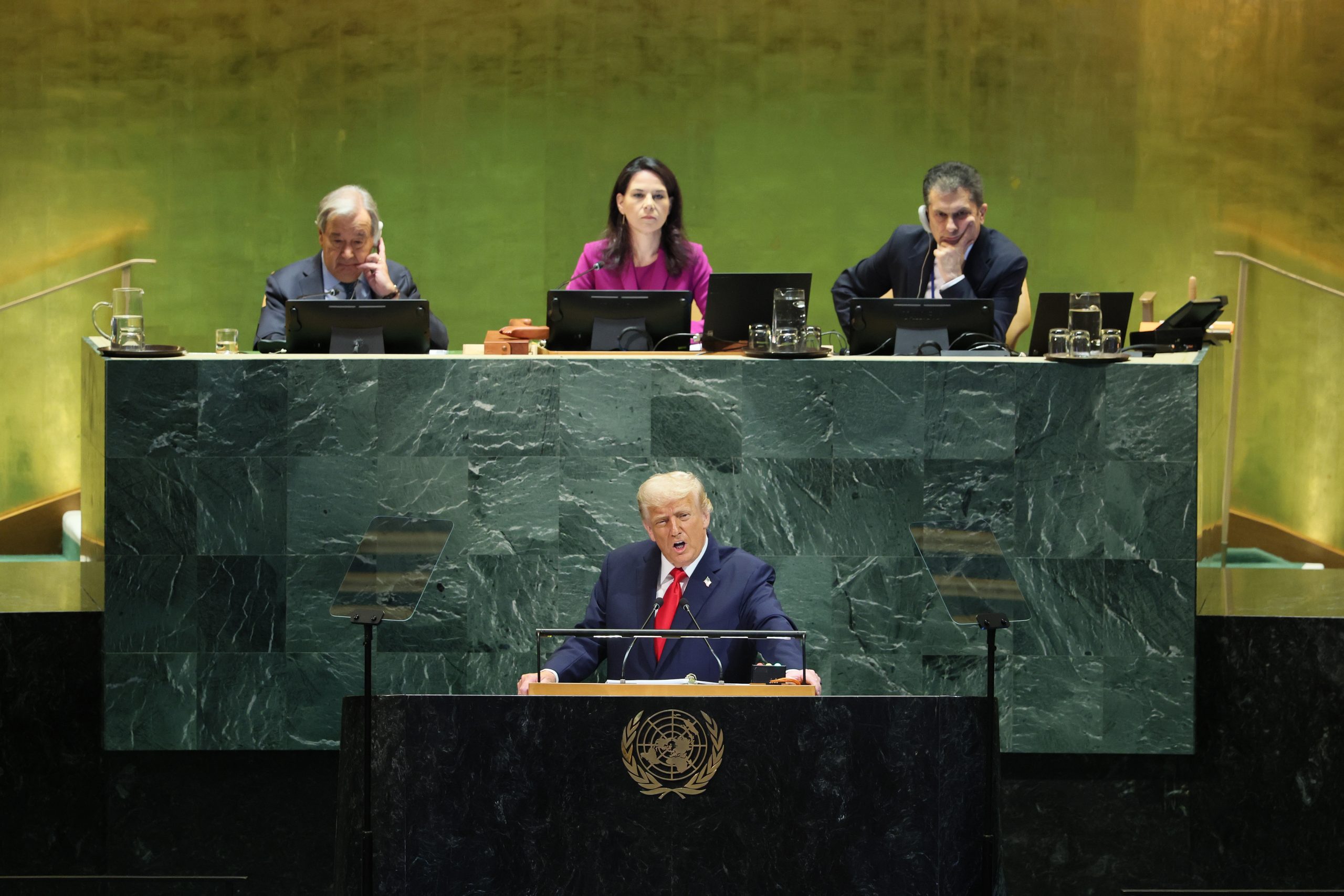
    On September 23, President Donald Trump delivered a nearly hour-long address to the UN General Assembly, blending sharp criticism of the global body with self-congratulation for his administration’s achievements. In a speech that oscillated between grievance and optimism, President Trump touted his “America First” agenda, warned European nations of economic and cultural ruin, and positioned himself as a global peacemaker while questioning the UN’s effectiveness.

    President Donald Trump opened his speech by calling the UN a “feckless institution” filled with “empty words” that fail to resolve global conflicts. He questioned the organization’s purpose, stating, “The U.N. has such tremendous potential. I’ve always said it. It has such tremendous, tremendous potential. But it’s not even coming close to living up to that potential.” His remarks underscored a return to an unapologetically nationalist stance, a departure from the more internationalist approach of his predecessor, President Joe Biden. Despite his criticisms, Trump later met with UN Secretary-General Antonio Guterres, assuring him that the US remains “100%” supportive of the organization. “I may disagree with it sometimes, but I am so behind it because the potential for peace at this institution is great,” Trump said, striking a conciliatory tone after his earlier rebuke.

    President Donald Trump used the global stage to issue stark warnings to European nations, arguing that their migration policies and commitment to green energy initiatives were leading to economic and cultural devastation. He described these policies as a “double-tailed monster” that “destroys everything in its wake.” “I’m telling you that if you don’t get away from the ‘green energy’ scam, your country is going to fail,” Trump declared. “If you don’t stop people that you’ve never seen before that you have nothing in common with, your country is going to fail.” He contrasted these policies with his administration’s approach, which has prioritized expanded oil and gas drilling and aggressive crackdowns on illegal immigration in the United States. Trump expressed sympathy for Europe, saying, “I love the people of Europe, and I hate to see it being devastated by energy and immigration.” His remarks were a clear call for other nations to adopt similar policies to those of his administration.

    In a significant development, President Donald Trump addressed Russia’s ongoing war in Ukraine, revealing a shift in his stance. After meeting with Ukrainian President Volodymyr Zelenskyy, Trump announced his belief that Ukraine, with support from the European Union and NATO, could reclaim all territory lost to Russia. “I think Ukraine, with the support of the European Union, is in a position to fight and WIN all of Ukraine back in its original form,” Trump wrote in a post following his speech. “With time, patience, and the financial support of Europe and, in particular, NATO, the original Borders from where this War started, is very much an option.” This marks a departure from his 2024 campaign rhetoric, where he often suggested the US had limited interest in the conflict’s outcome and promised a swift resolution. Trump also took a swipe at Russia, calling it a “paper tiger” and noting that the war, now in its third year, “should have taken a Real Military Power less than a week to win.” He threatened Moscow with “a very strong round of powerful tariffs” if Russian President Vladimir Putin does not negotiate an end to the conflict.

    President Donald Trump also addressed the growing international push for Palestinian statehood, a movement spotlighted during the UN General Assembly’s discussions on a two-state solution. France recently joined other nations in recognizing Palestinian statehood, a move Trump and Israel strongly oppose. “The rewards would be too great for Hamas terrorists,” Trump argued, referencing the October 7 attacks. “This would be a reward for these horrible atrocities.” He also participated in a group meeting with leaders from Qatar, Saudi Arabia, Indonesia, Turkey, Pakistan, Egypt, the United Arab Emirates, and Jordan to discuss ending the Gaza war, calling it his “most important meeting” and expressing a desire to resolve a conflict that “should have probably never started.”

    Early in his speech, President Donald Trump deviated from his prepared remarks to poke fun at logistical issues at UN headquarters, including a malfunctioning escalator and a faulty teleprompter. “These are the two things I got from the United Nations: a bad escalator and a bad teleprompter,” he quipped, drawing laughter from delegates. UN spokesperson Stephane Dujarric later explained that the escalator issue may have been caused by a videographer from the US delegation triggering a safety mechanism, while a UN official noted that the Trump Administration was responsible for operating the teleprompter.

    President Donald Trump reiterated his ambition to win a Nobel Peace Prize, claiming his administration has “ended seven wars” since his return to office. “Everyone says that I should get the Nobel Prize — but for me, the real prize will be the sons and daughters who live to grow up because millions of people are no longer being killed in endless wars,” he said. He cited efforts to mediate conflicts between Israel and Iran, India and Pakistan, and Egypt and Sudan, though experts note that his impact on these resolutions is not as straightforward as he claims. Trump expressed frustration that the UN had not taken a more active role, stating, “It’s too bad that I had to do these things instead of the United Nations doing them.”

    President Donald Trump’s address was a vivid reminder of his polarizing leadership style, blending boasts of domestic and foreign policy successes with dire warnings to other nations. His unapologetic “America First” posture, coupled with sharp critiques of global institutions and policies, underscored his intent to reshape the international order. As he navigates his second term, Trump’s vision for global leadership continues to spark both admiration and alarm among world leaders.

  • Analysis of the 2020 Iranian Parliamentary Elections

    Analysis of the 2020 Iranian Parliamentary Elections

    The Iranian conservatives will dominate the country’s new parliament following an election marked by the lowest voter turnout in decades, according to state media. Two days after the polls closed, the interior ministry results published on February 23 by state media said conservative candidates had secured at least 219 seats in the 290-strong parliament, also known as the Majlis. With 11 seats set to be contested in the second round in April, the new parliament will also comprise of at least 20 reformists and 35 independents. Five seats are guaranteed for the country’s religious minorities: Zoroastrians, Jews, Assyrians, Chaldean Christians, and Armenian Christians. In the Iranian capital Tehran, conservatives won all 30 seats, with former mayor and commander of the elite Islamic Revolutionary Guard Corps, Mohammad Bagher Ghalibaf, topping the list. Before the election, Ghalibaf’s conservative bloc formed a joint list with the ultra-conservative Paydari Front. The Front is led by Morteza Agha Tehrani, a conservative politician who tends to advocate the principles that led to Iran’s 1979 revolution while Ghalibaf has a reputation of being an ambitious technocrat.

    According to the Ministry of Interior, voter turnout across the country was ~42%, the lowest since the initial Iranian Parliamentary Elections held in 1980. In previous parliamentary elections, the nationwide turnout exceeded 60%. In Tehran, the turnout stood at just 25%, down from previous votes when it averaged 50%. On February 24, Iran’s Supreme Leader Ayatollah Ali Khamenei said the country’s enemies had tried to “discourage” people from voting by exaggerating the threat of a new coronavirus but added that participation had been good. The disease has so far claimed the lives of at least eight people in Iran, while more than 40 cases have been confirmed in the country. According to Fouad Izadi, a professor at the faculty of world studies at Tehran University, the low turnout reflected the public’s dissatisfaction with the reformist and moderate bloc, which is associated with President Hassan Rouhani. “For the most part, a good portion of Rouhani’s supporters did not show again because they did not wish to vote for him nor for the opposition,” Izadi said.

    In 2016, voters had given the reformist political coalition a parliamentary majority of 126 on the back of a landmark deal negotiated the previous year between Iran and world powers that offered Iran relief from global sanctions in exchange for curbs on its nuclear program. The bloc, which also promised greater freedoms and international engagement, had also taken all of the 30 seats in Tehran. But a sense of disillusionment appeared to set in among its supporters in 2018 after the US withdrew from the nuclear deal – formally known as the Joint Comprehensive Plan of Action (JCPOA), and reimposed sanctions against Iran. The financial measures put the Iranian economy into a tailspin, with inflation reaching 33.5% and growth declining by at least 6 percent. “Many people were not very satisfied with their [reformist parliamentarians’] economic policies and their investment in JCPOA rather than in domestic [issues] and development from within,” Zohreh Kharazmi, an assistant professor of American studies at Tehran University said.

    Compounding the bloc’s woes, including anger over the poor state of the economy and perceived mismanagement, Iran’s constitutional watchdog in January disqualified thousands of reformists and moderate candidates from running in the vote. Public anger meanwhile soared last month after the military shot down a Ukrainian airliner, killing all 176 people, mostly Iranians, at a time of heightened tensions with the US following its killing of top Iranian military commander Qassem Soleimani in Iraq’s capital, Baghdad, on January 3. “Given that the US imposed more and more sanctions [and] assassinated Iranian General Qassem Soleimani … [a vote in support of the reformists] would have sent a wrong signal that Iranians were bowing down to [US] pressures,” said Zeinab Ghasemi Tari, also an assistant professor of American Studies at Tehran University.

    Iran’s Parliament is responsible for passing legislation, approving the annual budget and ratifying international agreements and treaties. All legislation passed by the Majlis is then approved by the Guardian Council and the president. The parliament has a limited say in foreign affairs, although it has played a crucial role in some of the country’s pivotal moments, including in 2015 when it approved the now-unravelling nuclear deal. With a presidential election scheduled for 2021, Iranian political commentator Mohammad Hashemi said the new parliament is “likely to mean tougher years [ahead] for Rouhani“. “[It] comprises of parliamentarians who have mostly taken blatant positions against 2015 nuclear deal, who would further seek to constrain Rouhani and his foreign minister, [Mohammad] Javad Zarif,” he added. For Izadi, the results are a harbinger to policies comparable with those of former conservative President Mahmoud Ahmadinejad, who took a hardline approach to relations with the West during his 2005-2013 tenure. “The parliament will question the idea of a rapprochement with the West and tend to be more conservative and populist in its outlook on social and economic issues,” Izadi argued.

  • What is Politics?

    What is Politics?

    Politics (meaning “affairs of the cities” in Greek) is the process of making decisions that apply to members of a group. It refers to achieving and exercising positions of governance and is the study or practice of the distribution of power and resources within a given community. The idea of politics dates back to the Hellenistic period and has undergone many different interpretations over the ensuing centuries.

    Aristotle

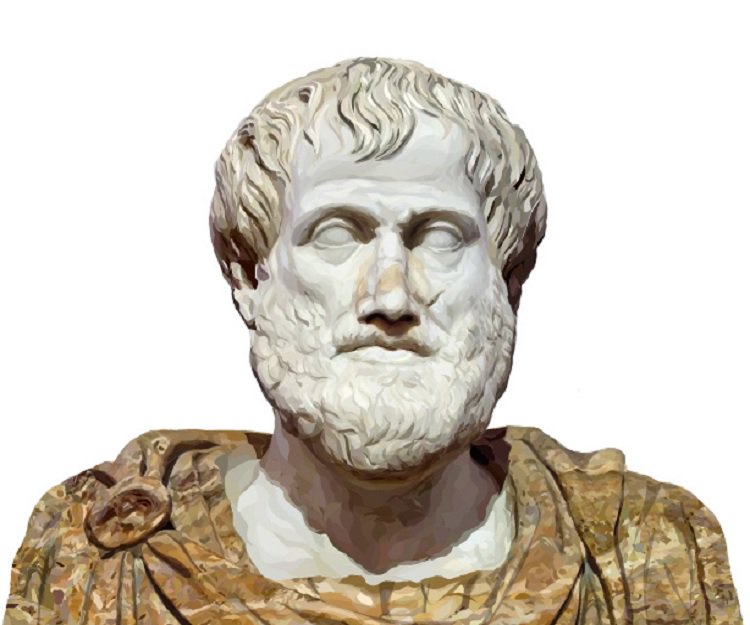
    The Greek philosopher Aristotle was one of the founders of political theory and Western philosophy and felt that every action an individual takes is innately political in nature.

    Perhaps the earliest contributor to political theory was Aristotle (384-322 BCE),  a Greek philosopher, logician, and scientist. Along with  Plato, Aristotle is generally regarded as one of the founders of both Western philosophy and political science. Aristotle was born on the border between Greece and Albania to a family with close connections to the King of Macedon. As a young man, Aristotle studied in Plato’s Academy in Athens. After Plato’s death, he left Athens to conduct philosophical research and was eventually invited by King Philip II of Macedon to tutor his young son, Alexander the Great. Soon after Alexander succeeded his father, consolidated the conquest of the Greek city-states, and launched the invasion of the Persian Empire, Aristotle returned as a resident alien to Athens. During his time in Athens, he wrote, many different works including Politics and Nicomachean Ethics.

    In both Politics and Nicomachean Ethics, Aristotle described politics essentially as the study of values and ethics, what is right and wrong, and the study of what should be and what could be. He argued that any communication between two people revolves around those subjects and is thus political in nature. Additionally, Aristotle felt that politics is the master science because mankind is an innately political animal that engaged in politics through all of their actions, however unimportant or insignificant they may seem.

    Niccolò Machiavelli

    The 16th Century Italian philosopher Machiavelli believed that the government needed to use whatever means to ensure political peace and stability.

    The 16th Century Italian philosopher Niccolò Machiavelli (widely considered to be the founder of modern political theory) put forward an entirely different interpretation of the nature of political power. Born in the Italian city-state of Florence in 1469, Machiavelli witnesses the French Invasion of Italy in 1494 and the decline of the Medici family’s political power. Machiavelli became secretary of the Ten of War (the body that governed the military of Florence at the time) a post he held until 1512. In that capacity, he was employed in a great variety of missions and his dispatches during these journeys, and his treatises on the Affairs of France and Germany helped to shape his views on government. In 1519, Machiavelli was commissioned by Leo X to draw up his report on a reform of the state of Florence. In 1521-25 he was employed in diplomatic services and as historiographer. After the defeat of the French at Pavia (1525), Italy was helpless before the advancing forces of the Emperor Charles V and Machiavelli strove to avert from Florence the invading army on its way to Rome. In May 1527 the Florentines again drove out the Medici and proclaimed the republic, but Machiavelli, bitterly disappointed that he was to be allowed no part in the movement for liberty, died at the age of 58.

    The political theory of Macchiaveli is put forward in the book The Prince, which was published posthumously in 1532. Throughout The Prince, Machiavelli argued that politics is nothing more complicated than the study of power and that all means may be resorted to by political leaders to strengthen the political establishment and preserve authority. Without such authority and established order, Machiavelli argued that society would be weakened and that political peace and stability could never be established and maintained. Additionally, Macchiaveli noted that throughout history, organized religion and religious leaders such as the Pope tended to get in the way of political peace and stability and hindered the development of strong and stable societies. In order to address this predicament, Macchiaveli felt that there needed to be a separation of church and state and that secularism needed to be promoted by governments throughout the world.

    Harold Lasswell

    Harold Lasswell felt that politics was no more complicated than figuring out who gains what and what someone else loses.

    Harold Lasswell (1902-1978) was a leading American political scientist and communications theorist. He received his Ph.D. from the University of Chicago in 1926 and studied at the Universities of London, Geneva, Paris, and Berlin during the 1920s. Lasswell taught political science at the University of Chicago for 16 years (1922-1938) and was director of war communications research for Library of Congress from 1939-1945. After World War II, he went to Yale University, where he served until the 1970s in various capacities such as professor of law, professor of political science, and Ford Foundation Professor of Law and Social Sciences. He was also a professor of law at John Jay College of the City University of New York and at Temple University and was president of the American Political Science Association (APSA), the American Society of International Law, and the World Academy of Art and Science (WAAS). Lasswell is described as a “one-man university” whose “competence in, and contributions to, anthropology, communications, economics, law, philosophy, psychology, psychiatry, and sociology are enough to make him a political scientist in the model of classical Greece.”

    Harold Lasswell viewed political science as the study of changes in the distribution of value patterns in society, and, because distribution depends on power, the focal point of his analysis was power dynamics. He defined values as desired goals and power as the ability to participate in decisions, and he conceived political power as the ability to produce intended effects on other people. In his 1936 book Politics: Who Gets What, When, and How, Lasswell viewed the power elite as the primary holders of power and nearly all political systems and that their opinions and actions influenced nearly all forms of public policy implemented at all levels of government.

    Jeff Stonecash

    Jeff Stonecash argued that politics is an all-encompassing term that includes the study of opportunities, individual responsibilities, beliefs and the role of government in making those things possible.

    Jeff Stonecash (1946-Present) is the Emeritus Maxwell Professor of Political Science at Syracuse University and one of the foremost experts on the American political system. Some of the topics that Stonecash has written about over the past four decades include the history of American political parties, the realignment of their electoral bases, the causes of political polarization, and the impact of changing alignments on the nature of policy debates. Stonecash argued that politics is simply the study of opportunities, individual responsibilities, beliefs and the role of government at all levels in making such things possible.

    Is Politics a Science?
    One of the main debates amongst scholars is whether or not political science can be considered an actual form of science much like biology, chemistry, or physics. Some argue that political science is not an actual form of science because it deals with concepts that are not tangible and relies on theoretical assumptions that are oftentimes difficult to measure and record. Despite this view, the case can be made that Political science is indeed a form of science because every new political theory involves testing, measuring, and repetition (key components of the scientific method) in order to test its validity.

    Political Scientist Vs. Politicians
    Politicians tend to seek quick answers in order to appeal to their votes prior to the next election, while political scientists tend to put forward measured and well-thought-out answers to policy questions. Additionally, Politicians usually hold firm in their views in order to appeal to their voter base and keep in tune with their ideologies. Political scientists, on the other hand, reach tentative conclusions once they gain an understanding of the facts behind a political issue. Politicians also seek out ways to expand their popularity and improve their chances of getting re-elected, while political scientists seek accuracy and measured responses in their works.

  • “Democratization: A Critical Introduction” Summary


    In the book “Democratization: a critical introduction,” Jean Grugel discusses how a range of global pressures and events combined to create a political opportunity for an increased level of democratization worldwide at the end of the twentieth century. Since the 1970s, there have been many sustained efforts that have gradually gathered to subject governments to public control and oversight and to make government work in a way that is favorable to a broader mass of people. Additionally, Grugel explores the fate of some of the recent experiments in democratization and argues that the consolidation of democratization is nationally-determined as opposed to influenced by global pressures. Grugel also takes issue with the idea that there are several different paths for democratization that can be successfully applied to any given scenario. In reality, Grugel states that democratization is a slow process that is dependent on numerous factors that vary from country to country and that the number of successful democratizations is outweighed by both failed or stalled efforts.

    Jean Grugel looks at the changing nature of democratization studies over the past several decades. Initial studies on the meaning of democratization during the 1970s and 1980s presumed that democratization was simply the process of a political system transitioning from a non-democracy towards a representative government. Additionally, democratization studies during this period adopted a process-oriented approach that identified the paths to democratization and made the necessary distinction between the transition period, when the political system is fluid and democracy is not assured, to the consolidation period, when democratic institutions are officially established. As democratization spread during the 1990s, it became evident that a number of countries either collapsed or fell into the category of problematic democracies. As a result, researchers began to focus on identifying the factors that make emerging democracies succeed and the factors that contribute to the failure of democratization in other countries.

    Jean Grugel also discusses the changing nature of democratization studies. Initial studies during the 1970s and 1980s assumed that democratization was the process of a political system transitioning from a non-democracy towards a representative government. Additionally, democratization studies during this period adopted a process-oriented approach that identified the paths to democratization and made the important distinction between the transition period, when the political system is fluid and democracy is not assured, to the consolidation period, when democratic institutions are officially established. As democratization spread during the 1990s, it became evident that a number of countries either collapsed or fell into the category of problematic democracies. As a result, researchers began to focus on identifying the factors that make emerging democracies succeed and the factors that contribute to the failure of democratization in other countries. This represented a shift in the democratization debate from a primary interest in structure and agency and their respective roles in causation, towards a focus on how political culture, political economy, and formal institutions shape democratic outcomes in particular countries.

    Whether the focus is on the mechanisms that cause democratization to its outcomes, there has been division among researchers as to what is the exact definition of democratization. Democratization has been analyzed through the perspectives of political theory, comparative politics, international relations, and political economy and has been thought of as a discrete set of sequential changes achieved over time, a transformation of societal institutions, or as an unattainable idea. From the perspective of political science, democratization has been understood along a continuum from a minimal to a maximalist position. The basic minimalist definition sees democratization as the holding of clean elections and the introduction of mechanisms that make free elections possible. A more inclusive definition includes the introduction of individual rights such as freedom to stand for public office, freedom of the press, religious liberty, freedom of assembly, the establishment of a multi-party system, and universal suffrage. Grugel favors a broader definition of democratization that includes the introduction and extension of citizenship rights and the creation of a democratic state. Additionally, Grugel looks at the question of what extent should democratization include the elimination of the most extreme forms of socio-economic inequality and indicates that economic inequalities shape the politics in established democracies.

    Jean Grugel rejects the assumption that democracy means liberal democracy. Up until the mid-1990s, it was the common belief among scholars that for a country to be considered a liberal democracy, it needed to hold free elections, have a multi-party system, and a set of procedures for government. On the other hand, Grugel argues that the existence of such factors does not guarantee the existence of essential democratic freedoms and rights, such as respect for civil liberties and equality under the law. Instead of defining democracy through the lens of liberalism, Grugel feels that it is more useful to define democracy as “a mode of decision-making about collectively binding rules and policies over which the people exercise control.” The divisions over the proper definition of democracy have led to a divide between scholars who insist on the minimalist definition and others who argue that democracy implies both the procedures for a government (formal democracy) and sustentative rights (sustentative democracy). The differing opinions regarding its definition show that the theory of democracy has been understood to mean more than the introduction of procedures for changing governments peacefully and increasing the connections of the populace to their governments.

    Jean Grugel then goes on to explore the relationship between democratization and globalization. The initial theories about democratization assumed that the forces that lead to the creation of democracy originated were rooted in particular nation-states and that international factors played a secondary role in promoting democracy. With the rise of globalization during the early 1990s, scholars began to look at the effects of globalization in promoting democratization. It was determined that globalization shapes the democratization process through the establishment of a global communication network and global culture, the establishment of a global capitalist economy, and the creation of global governmental institutions. All three factors encourage the diffusion of values created at the global level into previously isolated societies and serves to reduce state sovereignty. Since globalization is an uneven process and impacts less developed countries more than developed ones, it is easier for the developed world to push its vision democracy more effectively in the developing world.

    Even though globalization creates expanded opportunities for political change, Jean Grugel states that global forces cannot impose democracy from the outside. Additionally, globalization at times creates false expectations or distorts that processes that global institutions claim to favor. For example, global institutions have encouraged political leaders toward more open government, but this does not lead to democratization when there are insufficient pro-democracy pressures inside nation-states. Additionally, the role of global institutions has often served to re-legitimize authoritarian governments by creating for it a layer of accountability. Global organizations also make assumptions about the relationship between political order and economics and operate with the belief that the introduction of market mechanisms in previously statist economies will lead to democratization. On the other hand, Grugel makes the argument that the deepening of the market may serve as an impediment to the expansion of democracy, especially when the expansion of the free market occurs too rapidly.

    In conclusion, Jean Grugel presents an overview of the idea of democratization in “Democratization: a critical introduction.” She discusses some of the factors that have resulted in an increase in the spread of democracy worldwide over the past few decades, the changing definition of democratization, and the relationship between democratization and globalization. Additionally, Grugel also looks at democratization theory through the lens of both political science and sociology and explores the differing opinions among scholars about what can be used to measure the overall level of democracy in a country. An in-depth understanding of the evolution of democracy at the global scale can allow political scientists to determine the future state of international affairs and shape public policy at the international level to accommodate any potential democratic changes.

  • Samuel Huntington “Political Development and Political Decay” Summary

    Samuel Huntington “Political Development and Political Decay” Summary

    In the article, “Political development and political decay,” Samuel Huntington explores the conflict between political mobilization and institutionalization and the importance of institutional development concerning democratization. A common occurrence in much of the developing world is the fact that political participation is growing much more rapidly than formal political institutions. In many of the developing societies, the conflict between mobilization and institutionalization is an area of chief concern in politics. Despite the growing importance of political institutionalism, much of the literature written about the developing world tends to ignore the idea for the most part. Instead, political scientists tend to emphasize the processes of modernization and the idea of social mobilization and increasing political participation. Huntington argues that a more balanced view of contemporary politics in the developing world instead requires more attention to the growth of political institutions and that it is useful to distinguish political development from modernization and to instead identify political development with the institutionalization of political organizations and procedures. Additionally, Huntington states that rapid increases in political mobilization and participation instead undermine political institutions and lead to political decay

    Samuel Huntington first explores the concept of political development as modernization. Even though definitions of political development are varied, most share two closely related characteristics. The first characteristic is that growth is synonymous with the idea of modernization. As such, political development is also defined as political modernization. The second is that there exist many ways to measure political development because modernization and development are broad topics that cover many different areas. Additionally, definitions of political development tend to itemize many different criteria. Even though the rules defining political development used are varied, the characteristics that make up political development are all features of the processes of modernization. Four categories occur in all of the definitions of political development. The first characteristic is that of rationalization, which highlights the focus on functional differentiation and achievement criteria. The second criteria are nationalism, which emphasizes nation-states and nation-building as fundamental aspects of political development. The third criteria are the idea of democratization, which is essentially a focus on competition and equalization of power. The last criteria are mobilization, which is a focus on political participation. Political participation stipulates that the greater the level development, the greater the level modernization. As such a higher level of modernization results in increased political mobilization and political participation.

    Samuel Huntington then goes on to discuss some of the problems surrounding the definitions of political development. The first issue he identifies is that the identification of political development with modernization or with factors usually associated with modernization drastically limits the applicability of the concept. As modernization is defined in immediate terms, its relevance is thus limited to only modern nation-states or emerging nation-states. Development is identified with only one type of political system, rather than as a concept that can be used to characterize any political system. The second problem with many definitions of political development is that it is also broadened to include almost all politically relevant aspects of the modernization process. Additionally, there is a natural tendency to assume that political development is all a piece, that one thing that leads to positive results is compatible with another, often different thing. The third issue is that many definitions of political development fail to distinguish the empirical relevance of the components making up the definition. The gap between theory and reality also suggests a fourth difficulty in many concepts of political development. The difficulty is that there exist only one-way ideas and that their reversibility is not permitted. On the contrary, Huntington argues that any concept of political development should be reversible and that is should ideally define both political development and the circumstances in which political decay occurred.

    Samuel Huntington next looks at political development as institutionalization. Huntington states that it is important to define political development as the institutionalization of political organizations and procedures. Such a characterization would separate development from modernization and can be applied to the analysis of political systems of any sort, not just modern ones. Additionally, it can be defined in reasonably precise ways which can be measured using qualitative means. As a concept, it suggests that movement can be in both directions and it focuses on the mutual interaction between the social processes of modernization and strengths and weaknesses of political structures in transitional, traditional, and modern societies. The strength of political organizations and procedures vary with their scope of support and their level of institutionalization. The scope is the extent to which the political organizations and procedures encompass activity in the society, whereas the level of institutionalization in a political system is defined by the overall adaptability, complexity, and autonomy of a political organization.

    Samuel Huntington also states that an organization or procedure is more institutionalized if it is more adaptable to change. On the other hand, the less flexible and more rigid an organization is, it has a lower level of institutionalization. Adaptability is an acquired organizational characteristic and is a function of environmental challenge and age. For example, the more problems which have arisen in its environment and the older it is, an organization is more adaptable to change. Additionally, rigidity is more characteristic of young organizations than of old ones. On the other hand, experienced organizations and procedures are not necessarily adaptable if they have existed in a static environment. If an organization has developed a set of responses for dealing effectively with one type of problem, and if it is then confronted with a new issue, the organization might become a victim of its past successes and be unable to adjust to any new challenges. However, the first hurdle is the biggest one and success in adapting to one environmental challenge paves the way for successful adaptation to subsequent challenges. Some changes in an environment, such as changes in personnel, are inevitable for all organizations and other changes in circumstances may be produced by an organization itself.

    Samuel Huntington then states that an organization is more institutionalized if it is more complex in its structure and procedures. Complexity often involves both multiplications of organizational subunits and differentiation of separate types of organizational subunits. The greater the number of subunits, the greater the ability of the organization to secure and maintain the loyalties of all its members. An organization which has many purposes is better able to adjust to the loss of any one purpose than an organization which has only one purpose. The differentiation of subunits within an organization also may or may not be based along functional lines. Changes in the functions of the whole, however, are reflected by shifts in the power and roles of the subunits. Additionally, if the subunits are multifunctional, they have greater institutional strength, but they may also contribute less flexibility to the organization overall. For example, a political system with parties of social integration has less institutional flexibility than one with parties of exclusive representation. Huntington also points to the fact that relatively simple traditional political systems are often overwhelmed by the process of modernization, whereas more complex traditional systems are more likely to adapt to new demands. An example of a complex traditional political system that was able to adapt to new requirements was Japan, which adjusted its traditional political institutions to the modern world due to their relative complexity.

    Samuel Huntington then looks at the concept of coherence and disunity. The concept of coherence and disunity stipulates that the more unified and coherent an organization is, the more it is more highly institutionalized. On the other hand, the greater the disunity of an organization, the lower the level of institutionalization. A level of consensus is often considered to a be a prerequisite of any social group. Additionally, an effective organization requires substantial consensus on the functional boundaries of the group and on the procedures for resolving disputes on issues which come up within those boundaries. The agreement among groups must also extend to those active in the system. Non-participants or those only sporadically and marginally participant in the system do not have to share the consensus and usually, do not share it to the same extent as the participants. An organization can theoretically be autonomous without being coherent and coherent without being autonomous. However, the two concepts are often closely linked together. Autonomy enables the organization to develop a style which becomes a distinctive mark of its behavior. Autonomy also serves to prevent the intrusion of disruptive external forces, though it does not protect against disruption from internal sources. Moreover, rapid or substantial expansions in the membership of an organization or the participants in a system tend to weaken coherence.

    The dynamic between mobilization and institutionalization is also explored by Samuel Huntington. Social mobilization and political participation is rapidly increasing in much of the developing world, which is, per Huntington, directly responsible for the deterioration of political institutions in these areas. For example, Huntington concludes that rapid industrialization and urbanization create discontinuities which give rise to mass society. He uses the case of labor unions as an example. In areas and industries with high industrial growth, the creation and institutionalization of unions often lag, and mass political movements are likely to emerge among the workers. As unions are eventually organized, they are vulnerable to outside influences in their early stages. As such, the rapid influx of large numbers of people into a new organization provides opportunities for mass-oriented elites to penetrate the organization. Considering such factors, one can make the conclusion that economic growth results in higher political instability.

    Huntington also states that mobilization may result simply from increases in communications, which can stimulate major increases in aspirations that may be only partially, if at all, satisfied. The result of such occurrences is a revolution of rising frustrations among the masses Increases in literacy and education may bring more political instability. For example, countries in Asia such as Burma, Ceylon, and South Korea are highly literate but are relatively unstable politically. Additionally, literacy does not necessarily stimulate democracy as well. For example, Cuba was the fifth most literate country in Latin America but was the first one to implement a communist political system. Increased communication may generate demands for more “modernity” than can be delivered and stimulate a reaction against modernity and activate traditional forces. Since the political arena is typically dominated by the more modern groups, increased communication may bring into the arena new, anti-modern groups and break the consensus exists among the leading political participants. It may also mobilize ethnic minority groups who were uninvolved politically, but who now acquire a self-consciousness and divide the political system along ethnic lines. Moreover, nationalism often stimulates political decay as opposed to national integration.

    Institutional decay has also become a common phenomenon in many modernizing countries. Coups d’état and military interventions in politics are one index of low levels of political institutionalization and occur when political institutions lack autonomy and coherence. For example, eleven of twelve modernizing states outside Latin America which were independent before World War Two experienced coups or attempted coups after World War Two. Additionally, of twenty states that became independent between 1945 and 1959, fourteen had coups or coup attempts by 1963. Moreover, of twenty- four states which became independent between 1960 and 1963, seven experienced coups or attempted coups by the end of 1963. Instability in Latin America was also less frequent during the first half of the 20th Century than during the second half. In the years between 1917 and 1927, military leaders occupied the presidencies of the twenty Latin American republics 28% of the time. On the other hand, between 1947 and 1957, military leaders were in power 45% of the time. Additionally, seventeen out of the twenty countries of Latin America experiences coups or attempted coups in the years between 1945 and 1964 and only Mexico, Uruguay and Chile witnessed relative political stability.

    Samuel Huntington argues that differences that exist in mobilization and institutionalization suggest four ideal types of politics. For example, modern and developed civic polities are characterized by high levels of both mobilization and institutionalization. On the other hand, primitive polities have low levels of both mobilization and institutionalization. Contained polities are highly institutionalized but have low levels mobilization and participation. The dominant political institutions of contained polities may be either traditional, such as monarchies or modern, such as political party systems. If they are the former, such polities may have great difficulties in adjusting to rising levels of social mobilization. The traditional institutions may ultimately collapse, and the result would be a corrupt polity with a high rate of participation but a low level of institutionalization. This type of polity characterizes much of the modernizing world. For example, many of the more advanced Latin American countries have achieved comparatively high indices of literacy, per capita income, and urbanization, though their politics remains notably underdeveloped. Distrust and hatred have produced a continuing low level of political institutionalization. In reverse fashion, a country may be politically highly developed, with modern political institutions, while still very backward in terms of modernization. An example of a country with a strong level of political development, but lacking a high level of modernization is India. For example, India was characterized by low levels of development throughout the 1950s, but had a high level of political development when compared to many countries in Asia and Europe.

    Samuel Huntington also looks at the relationship between political institutions and public interests. A society with weak political institutions lacks the ability to curb the excesses of personal and parochial desires. Without strong political institutions, society lacks the means of defining and realizing its common interests. The capacity to create political institutions is the capacity to create and follow public interests. Traditionally, the public interest has been approached in three ways. The public interest has been identified either with abstract and substantive values and norms such as natural law, justice, or right reason; or with the specific interest of either individuals, groups, and classes. Additionally, it has been defined with the result of a competitive process among individuals or groups. The problem with these approaches is to arrive at a definition which is concrete and general. On the other hand, what is concrete in most cases lacks generality and what is general lacks concreteness. One approach to solve this problem is to define the public interest in terms of the concrete interests of the governing institutions. A society with highly institutionalized governing organizations and procedures is, in this sense, more able to articulate and achieve its public interests. The public interest, in this sense, is not something which exists in natural law or the will of the people. Instead, it is whatever strengthens and forms governmental institutions. The public interest is also created and brought into existence by the institutionalization of government organizations. In a complex political system, many governmental organizations and procedures represent many different aspects of public interest.

    Samuel Huntington looks at the strategies of institutional development. If decay of political institutions is a widespread phenomenon in the “developing” countries and if a major cause of this decay is the high rate of social mobilization, it encourages political scientist to incorporate these tendencies into any model of political change which we employ to understand the politics of such areas. If effective political institutions are necessary for stable and eventually democratic government, it encourages us to suggest strategies of institutional development. In suggesting strategies of institutional development, we should recognize the fact that psychological and cultural characteristics of peoples differ markedly and with them their abilities at developing political institutions. Additionally, we should recognize that the potentialities for institution-building differ between societies, but that political institutions can be built ins all societies. Two methods of furthering societal development are that anything which slows social mobilization creates conditions favorable to the preservation or institutions, and that strategies can be applied directly to the issues of institution building.

    In conclusion, Samuel Huntington looks at the connection between political mobilization and institutionalization and the importance of institutional development concerning democratization. Huntington argues that modernization and rapid political mobilization result in political decay as opposed to the growth of political systems and increased political stability. Additionally, Huntington looks at the differing definitions of political modernization and concludes that all definitions share several common elements. Huntington also underscores the importance of political scientists and sociologists alike to examine the importance of the development and growth of political institutions in the developing world.