Category: OurLegal

  • Supreme Court to Review Presidential Authority Over Independent Agencies

    Supreme Court to Review Presidential Authority Over Independent Agencies

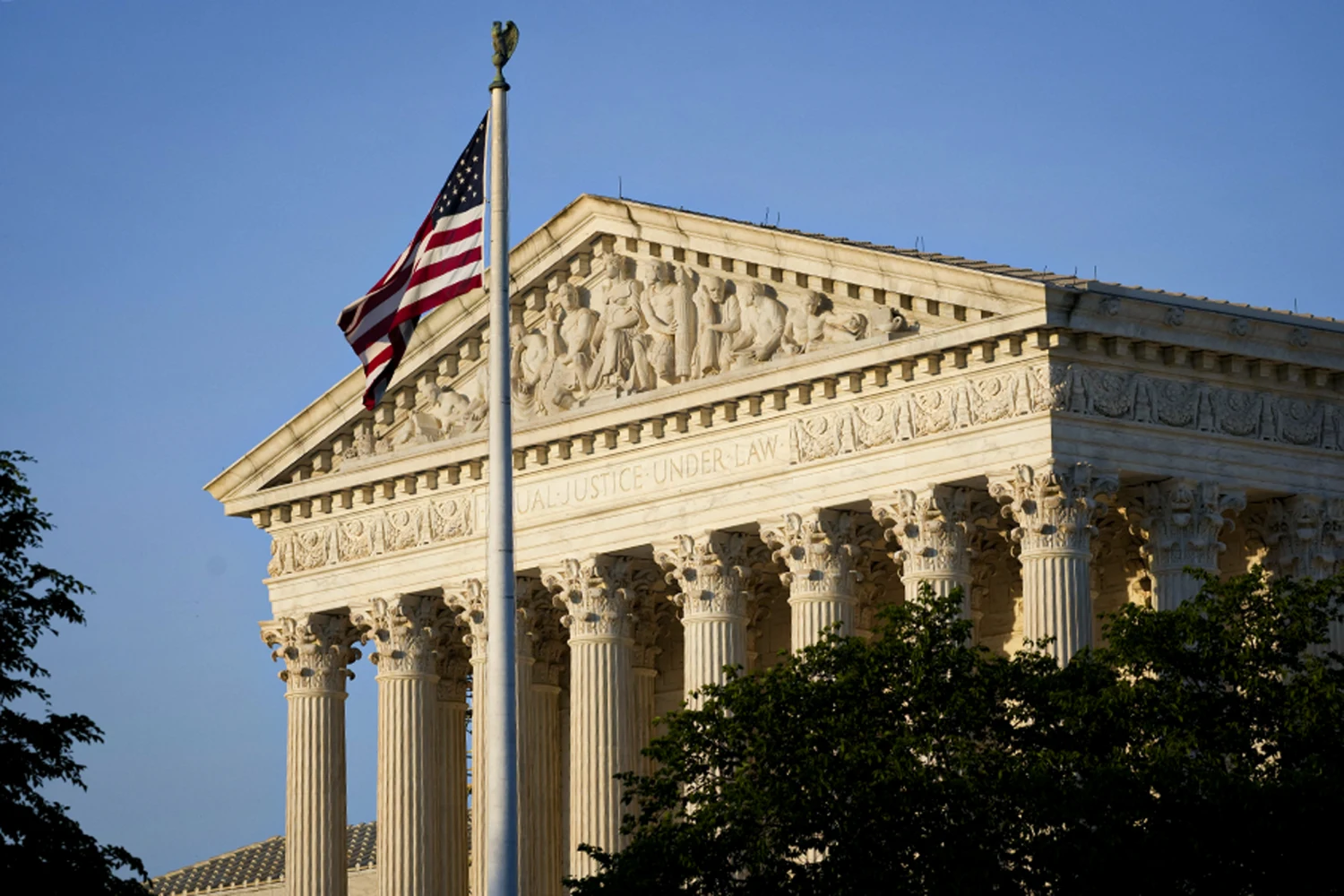
    On September 22, 2025, the US Supreme Court announced it would consider a significant expansion of President Donald Trump’s power over independent federal agencies, potentially overturning a nearly century-old precedent that limits when presidents can remove agency board members. This decision could reshape the balance of power between the executive branch and independent regulatory bodies, with far-reaching implications for how agencies like the Federal Trade Commission (FTC), National Labor Relations Board (NLRB), and Merit Systems Protection Board (MSPB) operate.

    The case centers on a challenge to Humphrey’s Executor v. United States (1935), a landmark Supreme Court ruling that established protections for commissioners of independent agencies. In that decision, the Court unanimously held that President Franklin D. Roosevelt could not fire an FTC commissioner without cause, such as misconduct or neglect of duty. This ruling paved the way for the creation of powerful independent agencies tasked with regulating critical areas like consumer protection, labor relations, and federal employment disputes. These agencies were designed to operate with a degree of autonomy, insulated from direct presidential control to ensure decisions were based on expertise rather than political pressures.

    However, the Humphrey’s Executor decision has long been a point of contention for conservative legal scholars who argue that independent agencies should be more accountable to the president, as the head of the executive branch. The Justice Department, representing President Donald Trump, contends that the president should have the authority to remove agency board members at will to effectively carry out his agenda. Solicitor General D. John Sauer argued, “The President and the government suffer irreparable harm when courts transfer even some of that executive power to officers beyond the President’s control.” Sauer further noted that courts lack the authority to reinstate fired officials, only to award back pay.

    In a 6-3 decision, the Supreme Court permitted President Donald Trump to fire Rebecca Slaughter, a Democratic FTC commissioner, while the broader case challenging Humphrey’s Executor proceeds. This ruling follows a series of similar decisions allowing the president to remove board members from three other independent agencies, including Gwynne Wilcox of the NLRB and Cathy Harris of the MSPB. The Court’s conservative majority did not provide detailed reasoning for allowing Slaughter’s firing, as is typical for decisions on the emergency docket. Justice Elena Kagan, joined by Justices Sonia Sotomayor and Ketanji Brown Jackson, dissented, arguing that Congress explicitly prohibited such presidential removals. “Yet the majority, stay order by stay order, has handed full control of all those agencies to the President,” Kagan wrote. The dissenters expressed concern that eroding the independence of these agencies could lead to regulatory decisions driven by politics rather than expertise.

    The upcoming case, set for arguments in December 2025, will determine whether the Court overturns or narrows Humphrey’s Executor. A decision to grant the president broader authority to fire agency board members could fundamentally alter the structure of independent agencies. These bodies, including the FTC, NLRB, and MSPB, play critical roles in enforcing consumer protections, investigating unfair labor practices, overseeing union elections, and resolving federal employment disputes. Opponents of expanding presidential power, including Slaughter’s legal team, argue that allowing the president to remove congressionally confirmed board members at will risks politicizing regulatory decisions. They assert that such a change would undermine the expertise-driven mission of these agencies. “If the President is to be given new powers Congress has expressly and repeatedly refused to give him, that decision should come from the people’s elected representatives,” Slaughter’s attorneys stated. The Justice Department, however, argues that the president’s ability to execute his agenda is hindered when agency officials operate beyond his control. This tension between presidential authority and agency independence lies at the heart of the case.

    The Supreme Court’s willingness to hear this case before it has fully worked through lower courts signals its urgency and potential impact. Additionally, Wilcox and Harris, the fired NLRB and MSPB board members, have asked the Court to consider their cases alongside Slaughter’s, highlighting the broader implications for multiple agencies. The Court has also suggested that the president’s removal power may face limits at certain agencies, such as the Federal Reserve. This issue is likely to be tested in a separate case involving fired Fed Governor Lisa Cook, which could further clarify the boundaries of presidential authority.

    As the Supreme Court prepares to hear arguments in December, the outcome of this case could redefine the relationship between the executive branch and independent federal agencies. A ruling in favor of expanded presidential power could usher in an era of greater executive control over regulatory bodies, potentially affecting how laws are enforced in areas like consumer protection, labor rights, and federal employment. Conversely, upholding Humphrey’s Executor would preserve the autonomy of these agencies, ensuring their decisions remain grounded in expertise rather than political influence. For now, the Court’s recent decisions signal a conservative majority inclined to reconsider long-standing precedents, setting the stage for a pivotal legal battle with significant consequences for the structure of the federal government.

  • Concepts in Property Law: Adverse Possession

    Concepts in Property Law: Adverse Possession

    One of the most controversial areas of property law is the idea of Adverse Possession. In its most basic form, adverse possession is a legal principle under which a person who does not have legal title to a piece of property, usually land (real property), acquires legal ownership based on continuous possession or occupation of the land without the permission of its legal owner.

    In general, a property owner has the right to recover possession of their property from unauthorized possessors through legal action such as ejectment. However, courts have ruled that when someone occupies a piece of property without permission and the property’s owner does not exercise their right to recover their property for a significant period of time, not only is the original owner prevented from exerciseng their right to exclude, but an entirely new title to the property springs up in the adverse possessor. In effect, the adverse possessor becomes the property’s legal and rightful owner.

    Over time, legislatures have created statutes of limitations that specify the length of time that owners have to recover possession of their property from adverse possessors. In the US, these time limits vary widely between individual states, ranging from as low as seven years (in states such as Arkansas and Utah) to as high as 30-60 years (in states such as Louisiana and New Jersey). Although the elements of an adverse possession action are different in every jurisdiction, a person claiming adverse possession is usually required to prove non-permissive use of the property that is actual, open and notorious, exclusive, adverse and continuous for the statutory period.

    Personal property, usually known as “chattels,” may also be adversely possessed, but owing to the differences between real property and personal property, the rules governing such claims are rather more stringent, and favor the legal owner rather than the adverse possessor. Claims for adverse possession of chattel often involve works of art or historical documents.

    Here are the main elements that are required for adverse possession of real property:

    For a person to successfully adversely possess real property, their possession must be continuous for the statutory period, exclusive, actual, hostile to the interest of the property owner, and open and notorious.

    Actual possession: The claimant must physically use the land in the same manner that a reasonable owner would, given its character, location, and nature.
    Exclusive possession: The claimant’s possession cannot be shared with the owner or with the public in general.
    Open and notorious possession: The claimant’s possession must be visible and obvious so that if the owner made a reasonable inspection of the land, he would become aware of the adverse claim.
    “Adverse and hostile” possession (some states also require “claim of right”): This element is complex. All states agree that possession authorized by the owner does not meet this requirement. Beyond this point, states differ. Some find the element is met if the claimant believes in good faith that he owns the land. In most states, the claimant’s state of mind is irrelevant. A third view requires bad faith, that is, the claimant must intend to take the title from the owner.
    Continuous possession (frequency of conduct): The claimant’s possession must be as continuous as a reasonable owners possession would be, given the character, location, and nature of the land.

  • Concepts In Criminal Law: The Death Penalty In The US

    Concepts In Criminal Law: The Death Penalty In The US

    One of the most hotly-debated concepts within the fields of Criminal Law is the death penalty. The US is the only western nation that has legalized death penalty. Is its use considered to be a “cruel and unusual” punishment?

    Furman v. Georgia (1972) – Supreme Court ended capital punishment temporarily (only until 1976) because it was imposed in arbitrary manner in violation of Eighth and Fourteenth Amendments. Prior to 1972, some states applied the death penalty arbitrary and inconsistently. Following decision, several states enacted new laws designed to avoid arbitrary application of death sentence and only applied it to ether violent or fatal crimes. Supreme Court has even said that it does not violate equal protection clause.

    Four principles of punishment under the Eighth Amendment

    • Punishment must not be degrading to human dignity.
    • Punishment must not be inflicted arbitrarily.
    • Punishment must not be wholly rejected throughout society.
    • Punishment must not be patently offensive.

    What about torture? A court would first need to first determine if the death penalty is unconstitutional before it could detemrine if torture is “cruel and unusual.”

    The Supreme Court said that the constitution is available to all people living in the US boundaries (even non-citizens). Though this right does not necessary apply to enemy combatants.

    Punishments Forbidden

    • 1878 Supreme Court: No drawing and quartering; public dissection; burning alive; disembowelment.
    • 1988 Supreme Court: Defendant under 18 when crime committed.
    • 2002 Supreme Court: Mentally handicapped defendants.
    • NO MANDATORY DEATH PENALTY CRIMES
    • Death Penalty for Rape (see below case Corker v. Georgia)
    • Eighth Amendment been used to include, by implication, all non-fatal crimes.
    • A person can only be charged if their actions led to the direct death of a person.

    Punishments Allowed

    • Firing Squad (1 state) (Utah)
    • Hanging (1 state) (Delaware)
    • Gas Chamber (2 states) (Arizona and California)
    • Electric Chair (8 states) (Alabama, Florida, Kentucky, Oklahoma, South Carolina, Texas, Tennessee and Virginia)
    • Lethal Injection (30 states) (Primary method for each of the above).
    • Life sentence without parole under three strikes laws

    A majority (~60%) of Americans favor the death penalty even for the most minor crimes. Their support for the death penalty has increased since President Donald Trump (who advocates a hardline and draconian approach to crime) assumed office 2 years ago.

  • Criminal Law: Theories of Punishment

    Criminal Law: Theories of Punishment

    One of the major debates within the American Criminal Law system is what for of punishment will do the most to deter crime and rehabilitate criminal defendants. This issue has been at the forefront of policymakers and legal scholars alike and has changed throughout the decades. During the heyday of liberalism between the 1930s and mid-1960s, the judicial and executive branches wielded power in sentencing. Legislators designed sentencing laws with rehabilitation in mind. More recently, during the increase in support for conservative policies the late 1960s legislators seized power over sentencing, and a combination of theories, deterrence, retribution, and incapacitation, have influenced sentencing laws. Here is a list of all the main theories of punishment in criminal law
    1. Incarceration
    Incarceration is the most commonly used form of punishment in the US.
    An argument in favor of mass incarceration is that it gets criminals off the streets and protects the public. The idea is to remove an offender from society, making it physically impossible (or at least very difficult) for him or her to commit further crimes against the public while serving a sentence. Incapacitation works as long as the offenders remain locked up. There is no question that incapacitation reduces crime rates by some unknown degree. The problem is that it is costly. Incapacitation carries high costs not only in terms of building and operating prisons but also in terms of disrupting families when family members are locked up. Incarceration is the typical form of punishment meted out today in the US for serious crimes. According to the International Centre for Prison Studies, the US has the second highest rate of incarceration, behind the small country of Seychelles. Even authoritarian regimes such as Saudi Arabia, Israel, and China have lower incarceration rates than the US. The rapid increase in the rate of imprisonment after 1970 has produced an era of “mass incarceration” in the US. Although the incarceration rate has declined from a high of 506 per 100,000 in 2007 to 480 per 100,000 in 2012, state and federal prisons still house over 1.5 million people. The causes of mass incarceration in the US are numerous, ranging from the rise of the Prison Industrial Complex since the 1980s, draconian anti-crime laws that were passed in 1984 and 1994, and the federal War on Drugs, which was first implemented by President Woodrow Wilson in 1914 with the Harrison Narcotics Tax Act and expanded by President Franklin Roosevelt in 1937, President Richard Nixon in 1971, President Ronald Reagan in 1982, President Bill Clinton in 1994, and President Donald Trump in 2017. Additionally, a vast majority of Americans support mass incarceration in spite of its costs and have called upon their elected officials to expand incarceration rates despite the fact that crime in the US is at its lowest level since the late 1950s.
    2.  Utilitarian Theory
    The utilitarian theory of punishment seeks to punish offenders to discourage, or “deter,” future wrongdoing. The retributive theory seeks to punish offenders because they deserve to be punished. Under the utilitarian philosophy, laws should be used to maximize the happiness of society. Because crime and punishment are inconsistent with societal happiness, they should be kept to a minimum. Utilitarians understand that a crime-free society does not exist, but they endeavor to inflict only as much punishment as is required to prevent future crimes. The utilitarian theory is “consequentialist” in nature. It recognizes that punishment has consequences for both the offender and society and holds that the total welfare produced by the punishment should exceed the total evil. In other words, the punishment should not be unlimited. One illustration of consequentialism in punishment is the release of a prison inmate suffering from a debilitating illness. If the prisoner’s death is imminent, society is not served by his continued confinement because he is no longer capable of committing crimes. Under the utilitarian philosophy, laws that specify punishment for criminal conduct should be designed to deter future criminal conduct. Deterrence operates on a specific and a general level. General deterrence means that punishment should prevent other people from committing criminal acts. The punishment serves as an example to the rest of society, and it puts others on notice that criminal behavior will be punished.
    3. Retribution Theory
    “Let the punishment fit the crime” captures the essence of the retributivist theory of punishment. Proponents of this theory advocate just deserts, which defines justice in terms of fairness and proportionality. Retributivists aim to dispense punishment according to an offender’s moral blameworthiness (as measured by the severity of crimes of which the offender was convicted). Ideally, the harshness of punishments should be proportionate to the seriousness of crimes. In reality, it is difficult to match punishments and crimes, since there is no way to objectively calibrate the moral depravity of particular crimes and the painfulness of specific punishments. Retribution is a backward‐looking theory of punishment. It looks to the past to determine what to do in the present. The retributionist theory is constrained in part by the Eighth Amendment to the US Constitution, which forbids “cruel and unusual punishments.”
    4. Deterrence Theory (Can Fear Prevent Crime?)
    Deterrence is another theory of punishment that is often debated.
    Crime deterrence is simply the action of discouraging an activity through instilling doubt or fear of its consequences in the minds of the perpetrator. There has been much debate over whether deterrence works. Proponents assert that punishment deters if it is administered with swiftness, certainty, and severity. There are two different forms of deterrence, general deterrence, and specific deterrence. General deterrence uses the person sentenced for a crime as an example to induce the public to refrain from criminal conduct, while specific deterrence punishes an offender to dissuade that offender from committing crimes in the future. Critics point to the high recidivism rates of persons sentenced to prison as evidence of the lack of effectiveness of specific deterrence. Critics also note that there are limits to the impact of general deterrence. Some crimes, such as crimes of passion and crimes committed while under the influence of drugs, cannot be deterred because their perpetrators don’t rationally weigh the benefits versus the costs (which include punishment) before breaking the law. Research evidence suggests that the deterrent effect of punishment is much weaker than its proponents suggest.
    5. Reintegrative Shaming
    The reintegrative shaming theory emphasizes the importance of shame in criminal punishment. The theory holds that punishments should focus on the offender’s behavior rather than the characteristics of the offender or the actual crime committed. Australian criminologist John Braithwaite developed this theory at Australian National University in 1989. An example of reintegrative shaming is in the 2004 case United States v. Gementera, wherein a 24-year-old mail thief was sentenced to wear a sandwich board sign stating, “I stole mail; this is my punishment” while standing outside of a San Francisco postal facility. The main strength of this theory is that it consists of a humane way to punish someone who committed a crime and places the onus of responsibility on themselves. On the other hand, opponents of the reintegrative shaming theory argue that it does not strongly punish a criminal defendant and may result in them committing more crimes in the future.
  • Theories of Property Law

    Theories of Property Law

    1)Property law is the area of law that governs the various forms of ownership and tenancy in both real and personal property. In the civil law system, there is a division between movable and immovable property. Movable property roughly corresponds to personal property (computers, cars, widgets, etc.), while immovable property corresponds to real estate (real property) and the associated rights, and obligations thereon.

    The American property law system is based on the concept that property is a human invention, not the result of a divine gift or natural right (social construct). Thus, property exists only to the extent that it is recognized by the government, an approach called legal positivism. Because property is a human invention, it is necessarily based on reason. The justification of property is important because it determines the scope and extent of legally recognized property rights. Accordingly, natural law theory (the idea that certain rights naturally existed as a matter of fundamental justice regardless of government action) has little impact on modern property law.

    Within the study of property law, there exist five distinctive theories explaining how or why things become property, as well as why the concept of property is necessary

    Protect First Possession:

    This theory offers a practical explanation of how unowned things become property. In settings where resources are plentiful, but where people are few (i.e. the early US), this first-in-time approach accurately describes how unowned property came to be owned. Particularly during the 19th Century, property rights in water, oil and gas, wild animals, and other natural resources were often allocated to the first possessor. Additionally, US laws such as the Homestead Act of 1862 are examples of the first-in-time approach towards property law.

    The first-in-time approach has less relevance today because almost every tangible thing is already owned by someone, but its influence lingers in cases. For example, all of use this principle in everyday life. A parking lot on the street, a seat in a movie theater, or a spot in a long line, are all allocated through an implicit first-in-time system. Yet most scholars conclude that the first possession approach does not adequately justify property as a general matter. It describes how property rights arose, but not why it makes sense for society to recognize those rights.

    Encouraging Labor

    Writing in the late 1600s, John Locke reasoned that each person was entitled to the property produced through their labor. Assuming an unlimited supply of natural resources, Locke argued that when a person mixed their labor (which they owned) with natural resources (which they did not own), they acquired property rights through this mixture.

    Labor theory has profoundly influenced American property law over the past 200 years. A problem with this theory is that there are no unlimited resources today (perhaps only oxygen is the only infinite resource), this theory is applied less to real property and more towards tangible personal property and intellectual property.

    Maximizing Societal Happiness

    This theory states that individuals recognize property in order to maximize the overall happiness of society (utilitarianism theory). We distribute and define property rights in a manner that best promotes the welfare of all citizens – not simply those who own property. A division between clear rules and equitable rules (tension between clarity and equity) is highlighted in this theory, which may not always lead to a result that is considered fair. Clear rules also minimize transaction costs, which may benefit society and reduce litigation.

    Law & Economics Theory

    Property is seen as an efficient method of allocating valuable resources in order to maximize one particular facet of societal happiness: wealth, typically measured in dollars.

    Ensure Democracy

    Civic republican theory states that property facilitates democracy. Idea is that one who has his own private property should feel free to challenge governmental actions that are abusive or unfair. Gives independence.

    Personhood Theory

    Property is necessary for an individual’s personal development. Each person has a close emotional connection to certain tangible things, which virtually become part of one’s self.

    All of these theories help form the foundation of American property law. It is important to understand that no one theory is accepted as the only justification for property. Our property system reflects a blend of different approaches which often overlap with each other.

  • What is Copyright Law?

    What is Copyright Law?

    A Copyright is a form of legal protection automatically provided to the authors of “original works of authorship,” including literary, dramatic, musical, and artistic works. The US Constitution authorizes Congress to “promote the Progress of Science and the useful Arts, by securing for limited Times to Authors and Inventors the exclusive Right to their respective Writings and Discoveries.” The federal copyright law arises from the portions of this clause concerning “authors” and “writings.” Thus, copyright law exists to serve a specified utilitarian goal: to promote the progress of science and the useful arts. Copyright protection serves this goal by giving authors an incentive to create works that will benefit the public.

    The copyright owner has a right to exclude. For example, they may prevent other persons from reproducing, distributing performing, or publically displaying their work without their permission. Additionally, they may transfer their copyright to others and effectively destroy it by abandoning it.

    Many different types of works are protected by US copyright law including:

    • Literary works
    • Music and lyrics
    • Dramatic works and music
    • Pantomimes and choreographic works
    • Photographs, graphics, paintings, and sculptural works
    • Motion pictures and other audiovisual works
    • Video games and computer software
    • Audio recordings
    • Architectural work

    Despite the fact that many different types of creative works are copyrightable under existing federal law, several other creative works such as ideas are also not copyrightable. Only tangible forms of expression (e.g., a book, play, drawing, film, or photo, etc.) are copyrightable. Once you express your idea in a fixed form as a digital painting, recorded song, or even scribbled on a napkin, it is automatically copyrighted if it is an original work of authorship. Unfixed works that have not been recorded in a tangible, fixed form (e.g., a song you made up and sang in the shower), works in the public domain, titles, names, short phrases, and slogans; familiar symbols or designs; numbers, ideas and facts, processes and systems (e.g., the Dewey decimal system), and federal government works (e.g., the tax code) are not copyrightable under US law.

    The author/creator, their heirs assuming that the creator is dead, creators of a joint work, and anyone to whom the author/creator has given or assigned his or her copyright (e.g., an employer if the copyrighted work is created under a “work made for hire” agreement, a publisher or record company if the copyrighted work is given in exchange for a publishing or recording contract) are copyright owners under the law.

    With regards to recorded music, if a person writes a song and records it, that person is the creator and owns the copyright. But professionally produced music can have many copyright owners. For example, the copyright to a particular sound recording may be owned by the songwriter, the performer, the producer, a record label (i.e. the RCA-Victor, Columbia, Supraphon, Esta, etc.), a publisher, or a combination thereof. The 1976 Copyright Act extended the basic term for new works to the author’s life plus 50 years, whereas the 1998 Copyright Term Extension Act (CTEA) extended the terms of all existing and future copyrights by an additional 20 years.

    Generally speaking, any work published in the US prior to 1923 is now in the public domain, though recorded music going back to 1889 (the year in which Edison Records, then known as the North American Phonograph Co., released the first pre-recorded music on wax cylinder records) is now copyrighted due to the Music Modernization Act of 2018. Though all American music recordings going back to 1889 are potentially copyrightable under the Music Modernization Act, other works such as movies, comic books, etc. are not and the clock will start ticking again in 2020 when works made after 1924 will start trickling into the public domain.

    https://youtu.be/ho8QEJSF3YA